
Choosing a pale wall color can make a bathroom feel fresh, polished, and easier to coordinate without leaving it plain. These **20 Light Colors For Bathroom Walls** include warm neutrals, soft pastels, nature-inspired greens, and airy blues. Each palette is presented as a complete bathroom look, with flooring, vanity finishes, fixtures, lighting, and decor working together. Before committing, compare the color against permanent surfaces such as tile, countertops, and cabinetry. Test a large sample under both natural and artificial light because undertones can shift throughout the day. A bathroom-rated satin or eggshell paint also offers a practical, wipeable finish for humid spaces. () Here are **20 Light Colors For Bathroom Walls** to inspire a balanced and inviting update.

1. Warm White Bathroom Walls
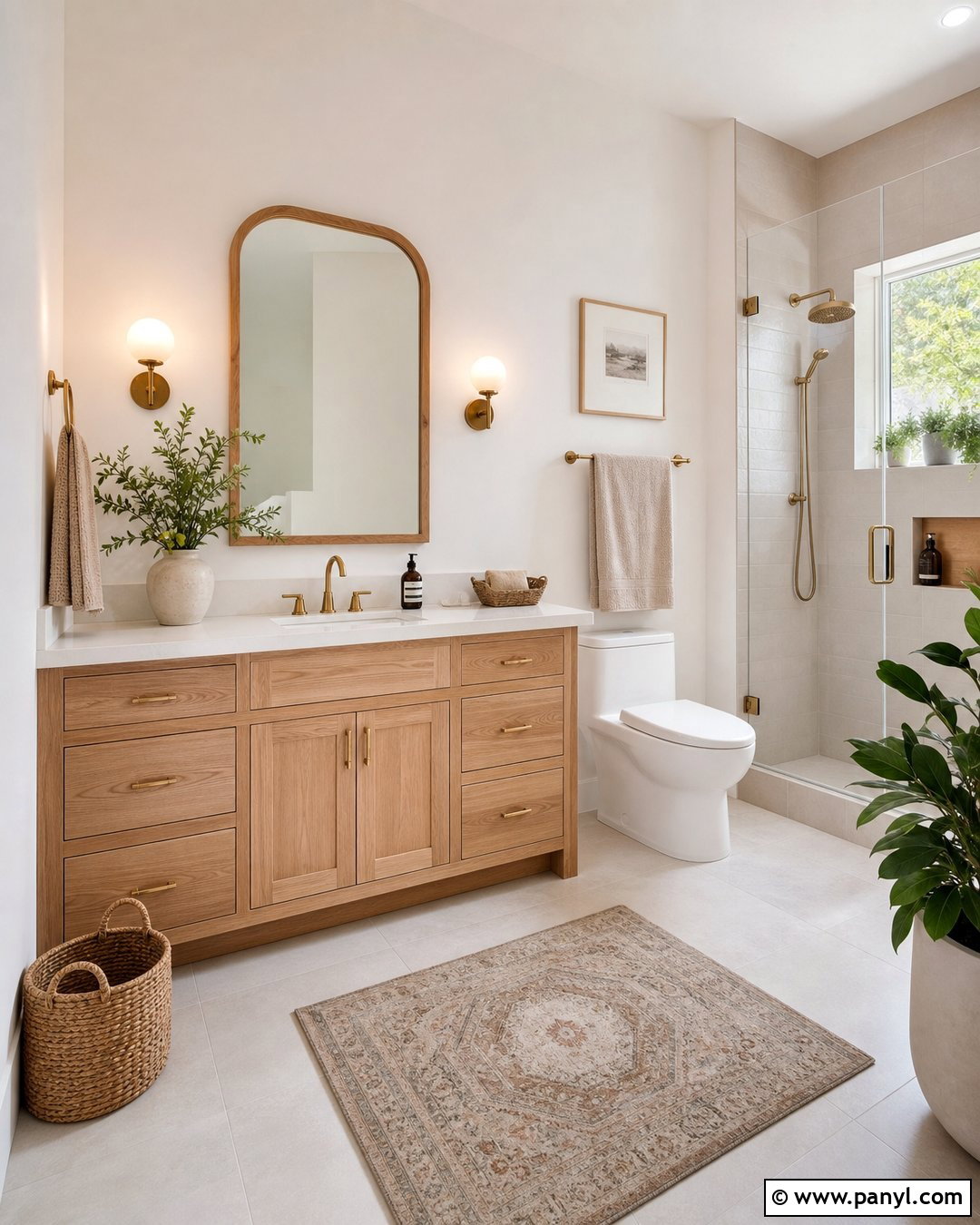
Warm white walls create a clean bathroom without the cold, clinical feeling of brilliant white. Choose a creamy white with a subtle beige or yellow undertone, then pair it with an oak vanity and white quartz countertop. Large ivory floor tiles keep the foundation bright, while brushed brass faucets and rounded sconces introduce gentle warmth. Frame the mirror in matching oak to connect the wall color with the cabinetry. A waffle-weave shower curtain, woven basket, and folded sand-colored towels add comfortable texture. Finish the room with one leafy plant and simple ceramic accessories. This complete palette works especially well in bathrooms with north-facing windows, where a warmer white can help the room look softer and more welcoming.
2. Soft Ivory Bathroom Walls
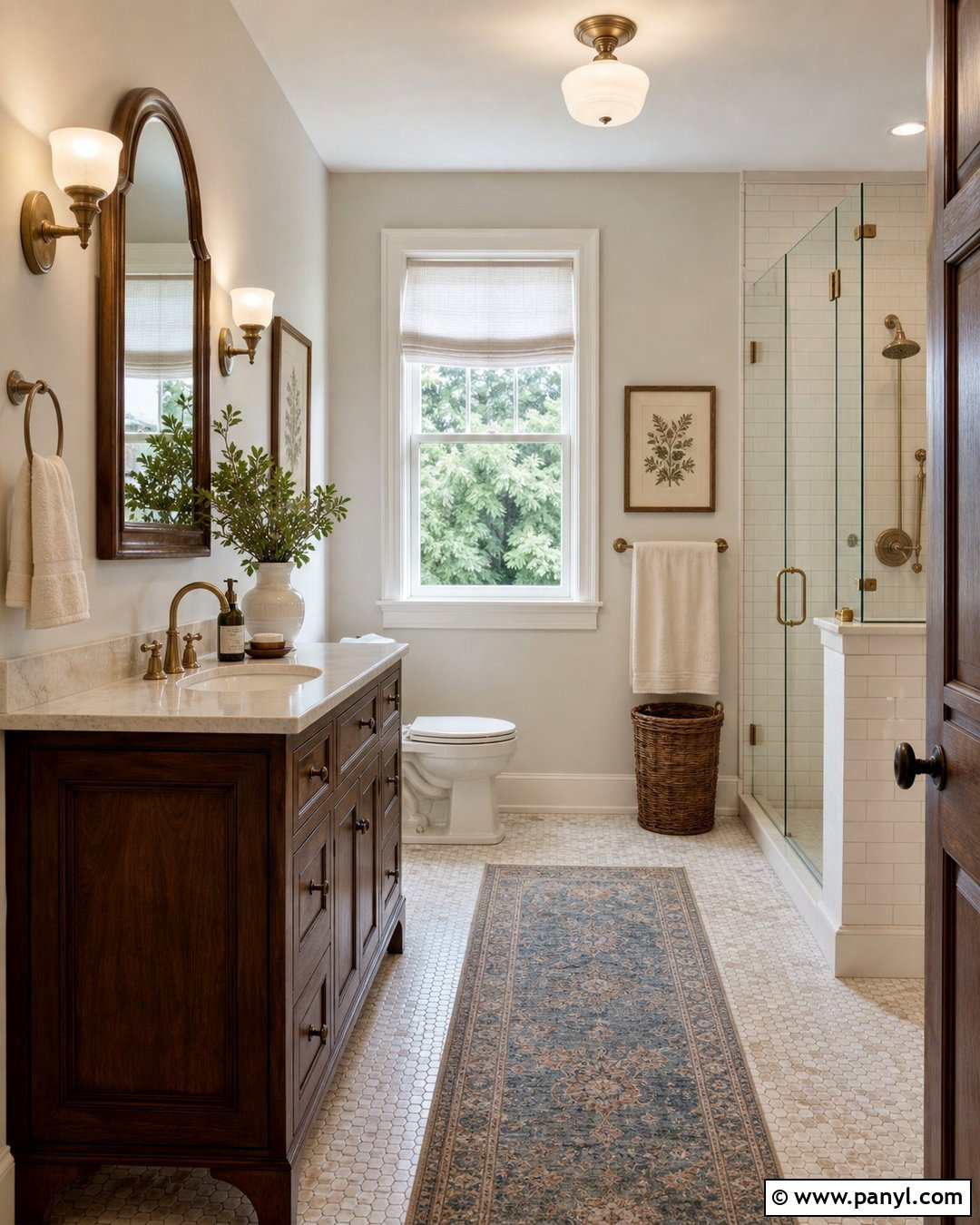
Soft ivory brings traditional warmth to bathroom walls while remaining light enough for a smaller floor plan. Build the room around a walnut vanity with paneled doors, a creamy marble counter, and an undermount white sink. Use off-white subway tile in the shower so the painted walls and tile feel connected rather than sharply divided. Antique brass hardware, milk-glass sconces, and a slim arched mirror support the classic character. For flooring, choose small beige-and-white mosaic tile with a quiet pattern. Add ivory towels, a faded blue runner, and framed botanical artwork for restrained color. This finished look feels collected but uncluttered, making soft ivory a natural choice for traditional, cottage, and transitional bathrooms.
3. Pale Greige Bathroom Walls
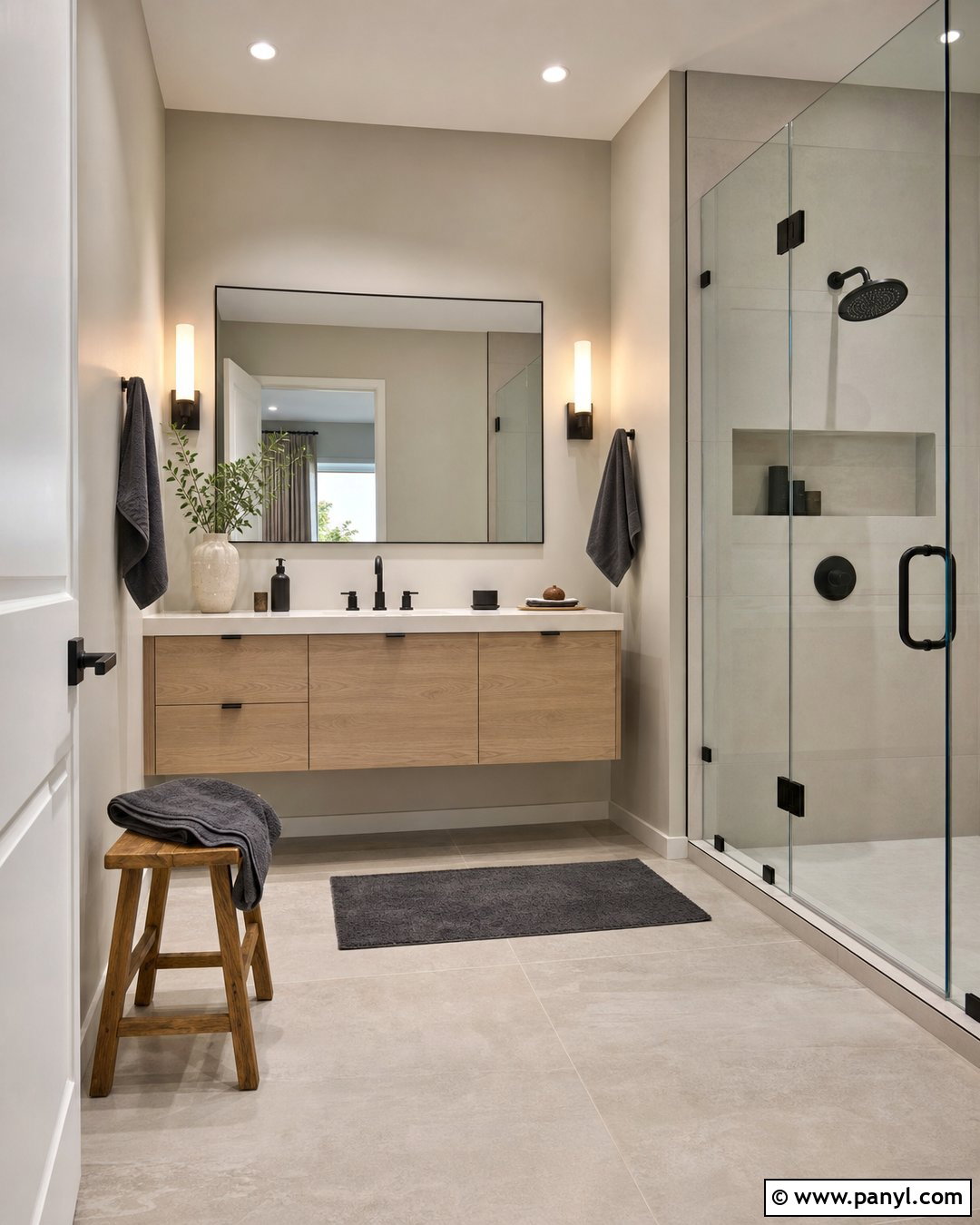
Can’t decide between gray and beige? Pale greige bathroom walls offer the cool balance of gray with enough warmth to complement natural wood. Pair the color with a floating white oak vanity, a pale quartz counter, and a frameless rectangular mirror. Matte black faucets and cabinet pulls add crisp definition without overpowering the gentle palette. Continue the modern look with large-format limestone-look floor tiles and a clear glass shower enclosure. White shower tile keeps the room bright, while a narrow greige grout line ties it back to the walls. Add charcoal hand towels, a small wooden stool, and streamlined ceramic dispensers. The result is calm, practical, and versatile enough to handle changing accessories over time.
4. Light Beige Bathroom Walls
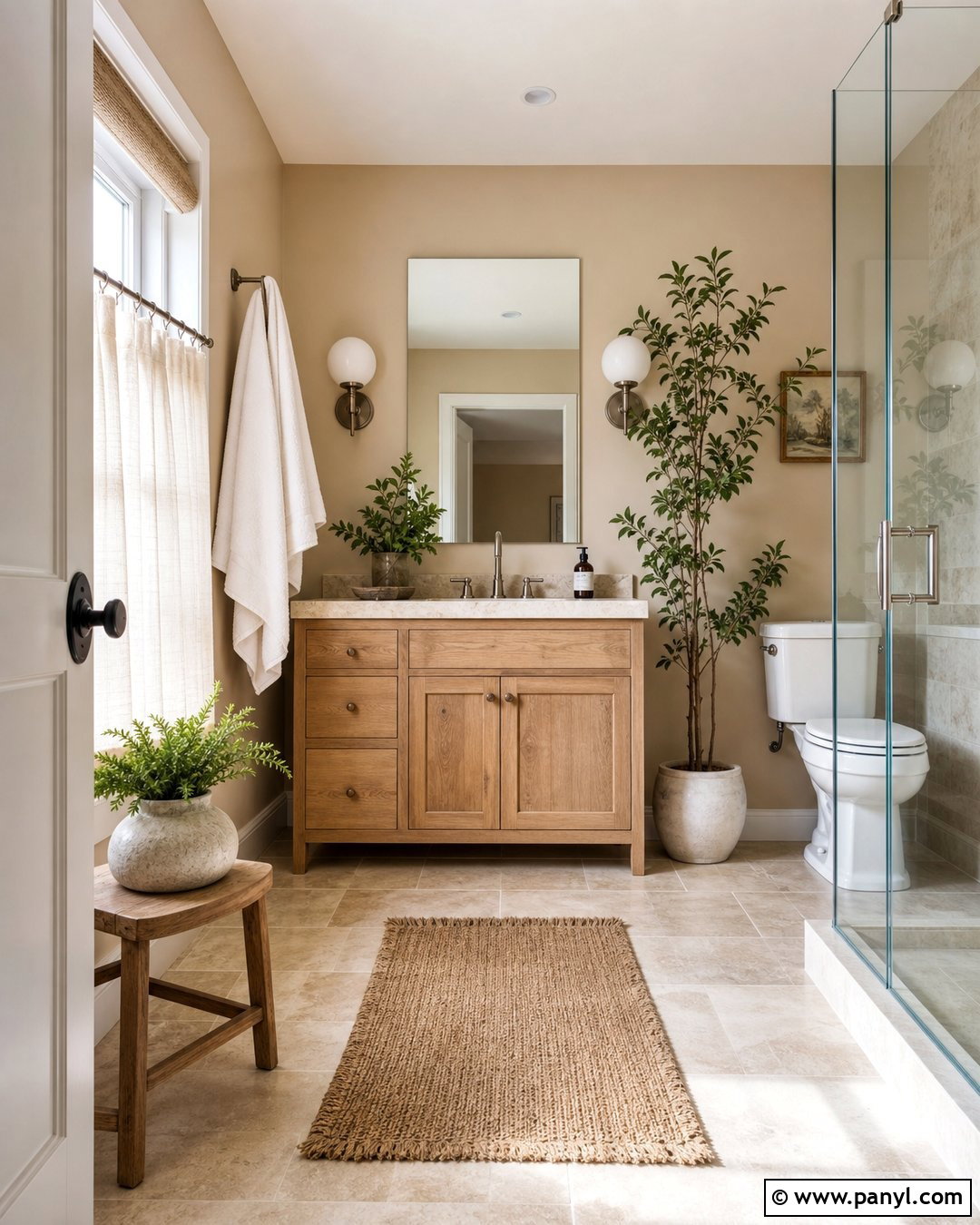
Light beige walls can give a bathroom a relaxed, sun-washed appearance when the surrounding finishes stay simple. Select a sandy beige without strong orange undertones and combine it with a medium oak vanity and creamy stone countertop. Travertine-look porcelain flooring supports the warm palette while offering a clean, consistent surface. Use brushed nickel fixtures for a soft contrast that feels less formal than polished chrome. A frameless mirror and two white globe sconces keep the vanity area visually open. Complete the room with white towels, linen café curtains, and a few dark green accents through plants or small accessories. This coordinated scheme suits coastal, organic modern, and casual family bathrooms without relying on obvious themed decorations.
5. Pale Mushroom Bathroom Walls
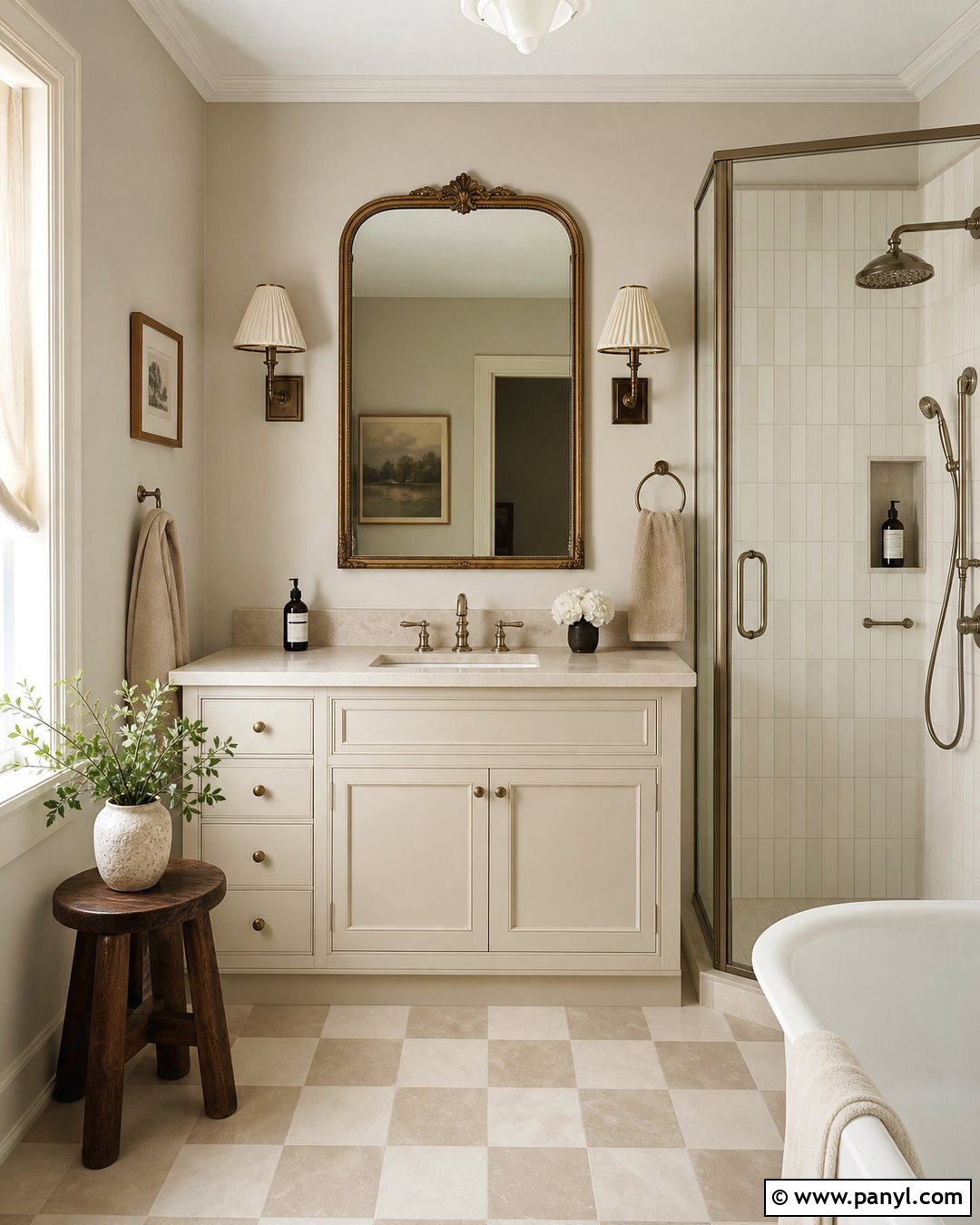
Pale mushroom is a muted taupe-brown that brings depth to light bathroom walls without making the room feel heavy. Pair it with a cream-painted vanity, a honed limestone counter, and warm nickel hardware for an understated European influence. A checkerboard floor in soft beige and off-white adds pattern while maintaining the quiet color story. Install vertical cream tiles around the shower or tub to create subtle height and texture. An aged brass mirror, pleated wall sconces, and a small framed landscape add character. Use natural linen towels and a dark wood bath stool to ground the space. This complete bathroom look feels warmer than gray and more distinctive than standard beige, yet it remains neutral and highly adaptable.
6. Pearl Gray Bathroom Walls
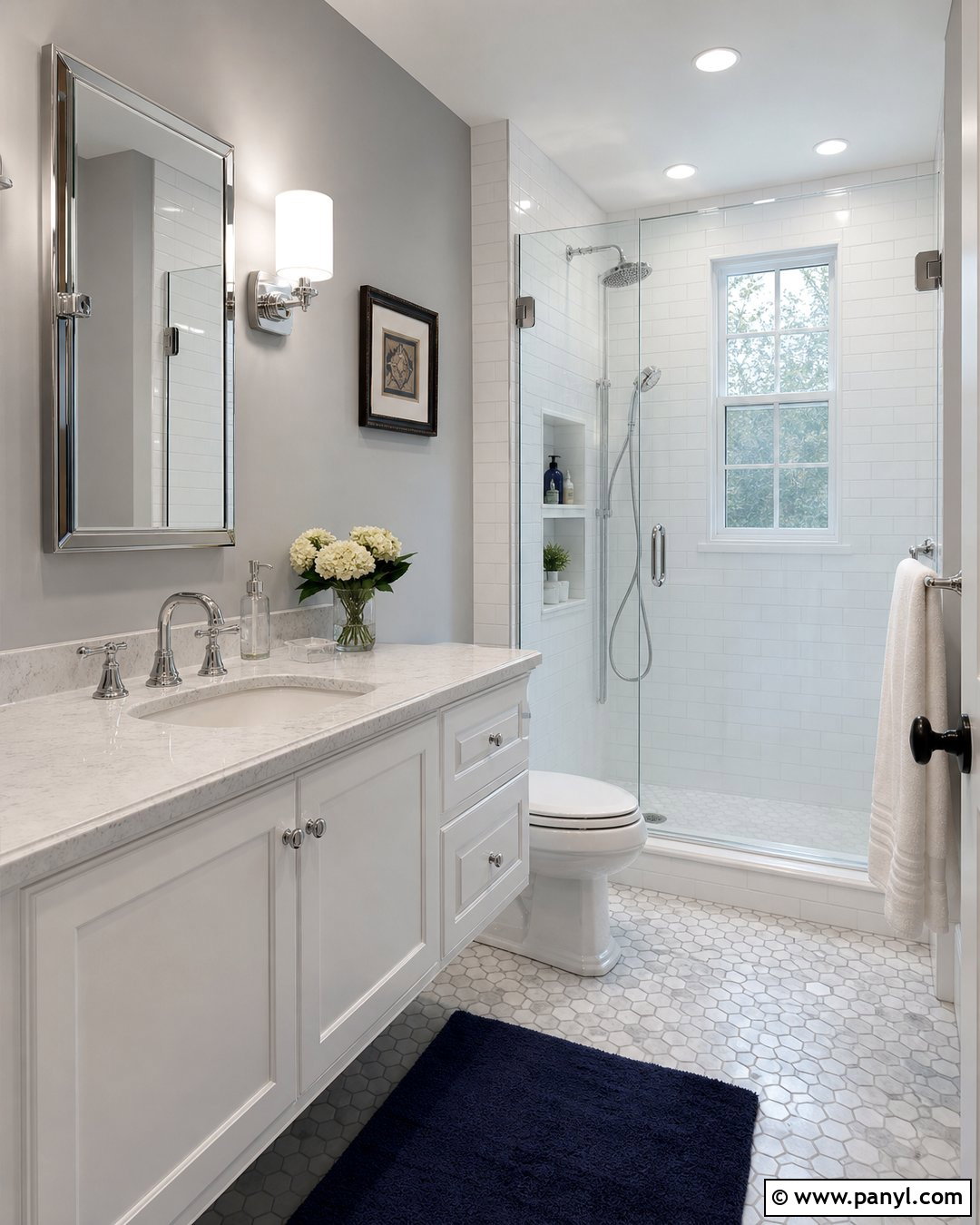
Pearl gray walls give a bathroom a crisp, refined backdrop with just enough softness to avoid looking industrial. Choose a light gray with a balanced undertone and pair it with a white vanity, Carrara-style quartz, and polished chrome fixtures. Pale gray hexagon floor tile adds gentle movement, while glossy white shower tile reflects light around the room. Install a wide medicine cabinet with a thin chrome frame to increase storage without disrupting the clean lines. White towels, clear glass accessories, and a single navy bath mat provide restrained contrast. Keep the ceiling, trim, and door a fresh white. This polished combination is especially suitable for modern apartments, compact guest bathrooms, and spaces with cool-toned existing tile.
7. Blue Gray Bathroom Walls
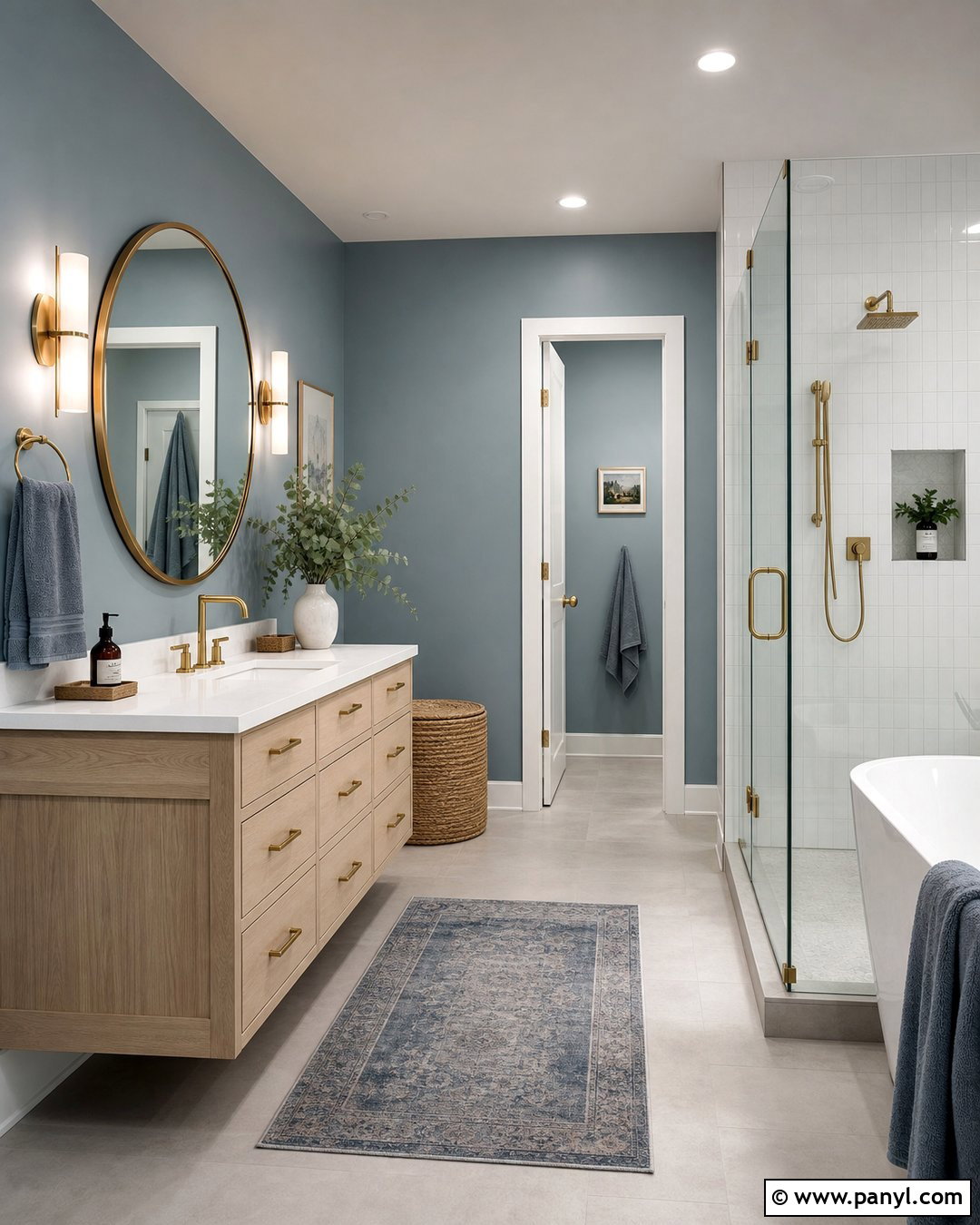
Blue-gray walls create an airy bathroom with more personality than a basic neutral. Choose a pale, misty shade and balance it with a natural ash wood vanity and a white solid-surface countertop. Use light concrete-look flooring to continue the cool palette, then soften it with brushed brass faucets and warm globe lighting. White stacked shower tile keeps the overall room fresh, while a frameless glass screen preserves open sightlines. Add blue-gray towels in a slightly deeper tone, a woven hamper, and a small eucalyptus arrangement. A large round mirror helps break up the straight lines of the tile and vanity. The finished bathroom feels calming and contemporary, with enough warmth to remain comfortable rather than stark.
8. Powder Blue Bathroom Walls
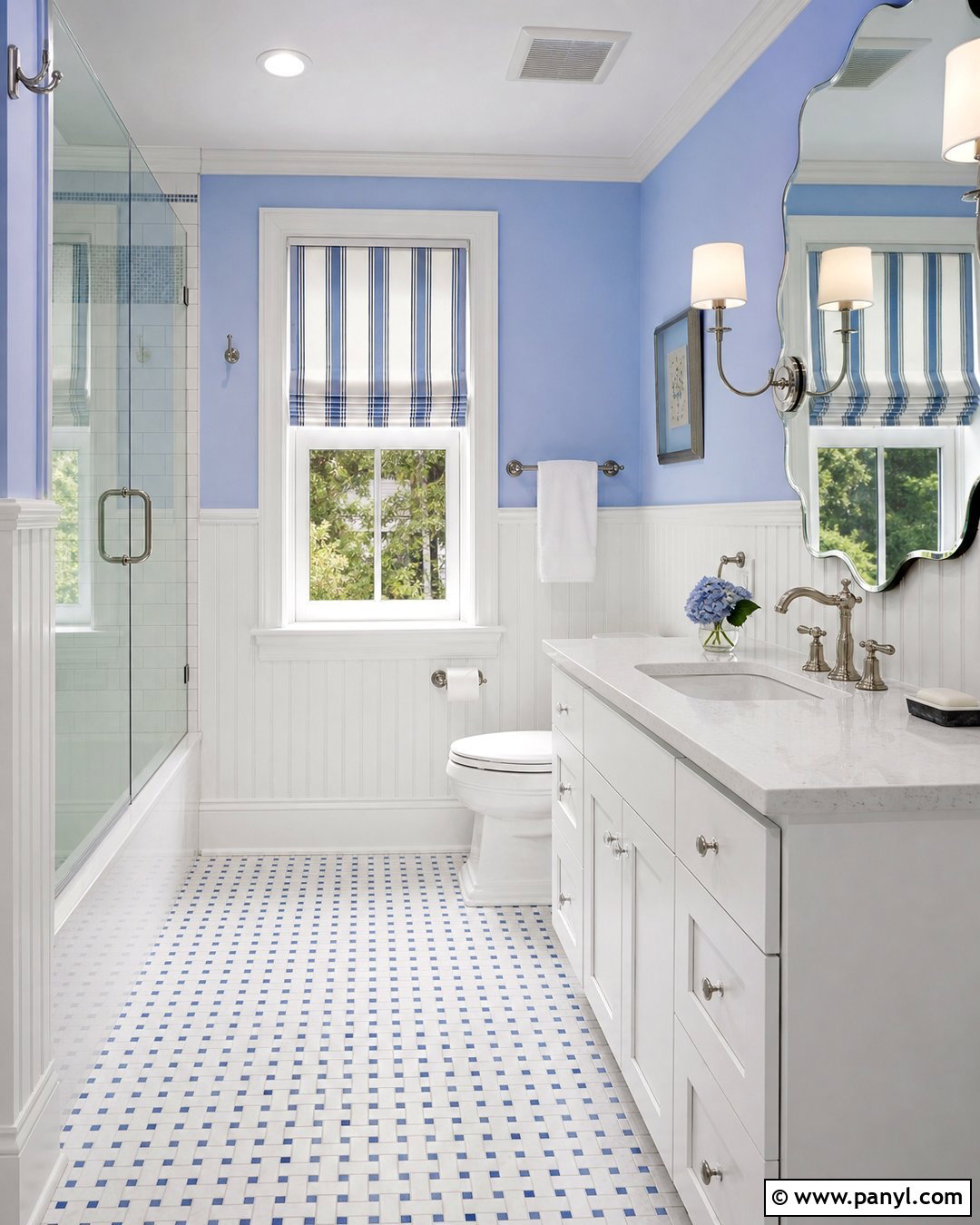
Powder blue walls bring a cheerful, classic quality to bathrooms, especially when combined with bright white millwork. Use a white Shaker vanity, white quartz counter, and polished nickel fixtures for a fresh foundation. Carry white beadboard or simple wall paneling around the lower third of the room, leaving powder blue paint above it. A pale blue-and-white mosaic floor gives the space a subtle decorative pattern without becoming busy. Add a scalloped mirror or softly curved sconces for a traditional touch. White towels, a striped Roman shade, and small glass jars complete the coordinated look. This palette works beautifully in cottage bathrooms, children’s bathrooms, and guest spaces where a lighthearted color still needs to feel polished.
9. Pale Sky Blue Bathroom Walls
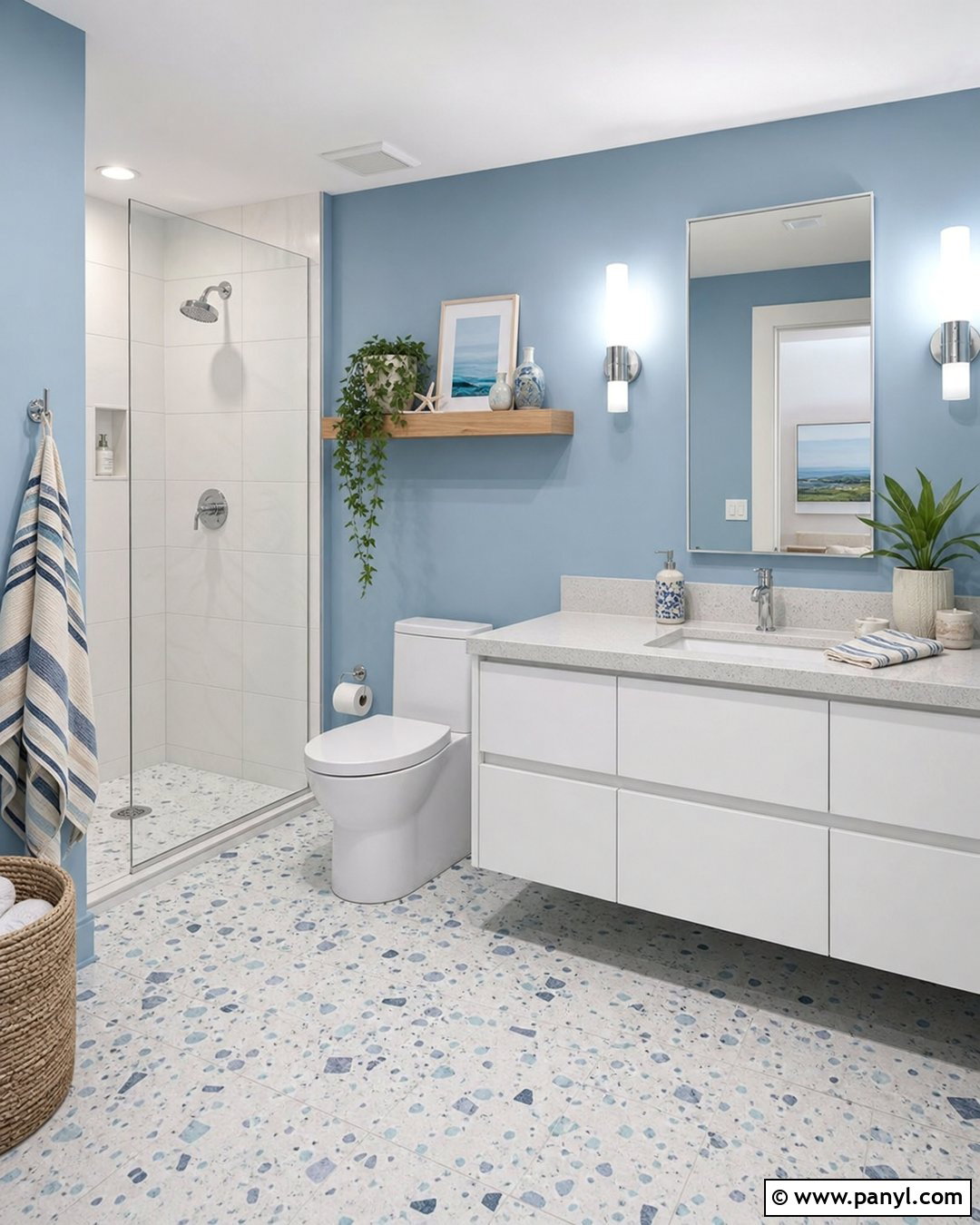
Imagine stepping into a bathroom that feels open and clear like a bright morning. Pale sky blue walls create that effect when paired with simple white surfaces and light-reflective details. Choose a flat-front white vanity with a pale gray quartz counter, then add polished chrome faucets and a wide frameless mirror. White terrazzo flooring with tiny blue and gray chips gives the room texture while reinforcing the wall color. Keep the shower enclosure clear and use oversized white tile with minimal grout lines. A slim floating shelf can hold white ceramics, folded towels, and one small trailing plant. Finish with a white linen shower curtain and blue-striped hand towels for a complete coastal-inspired room that remains subtle and modern.
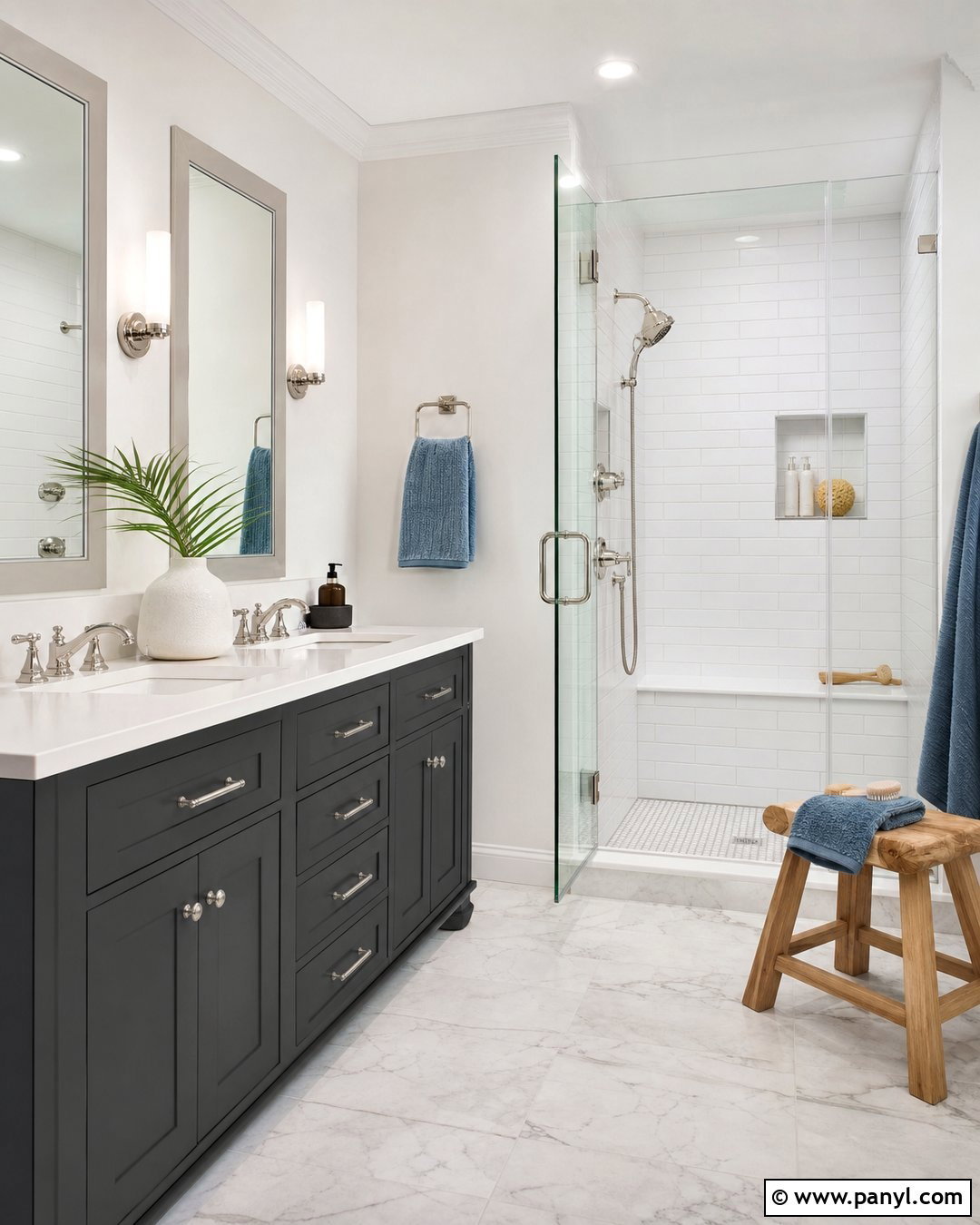
10. Pale Aqua Bathroom Walls
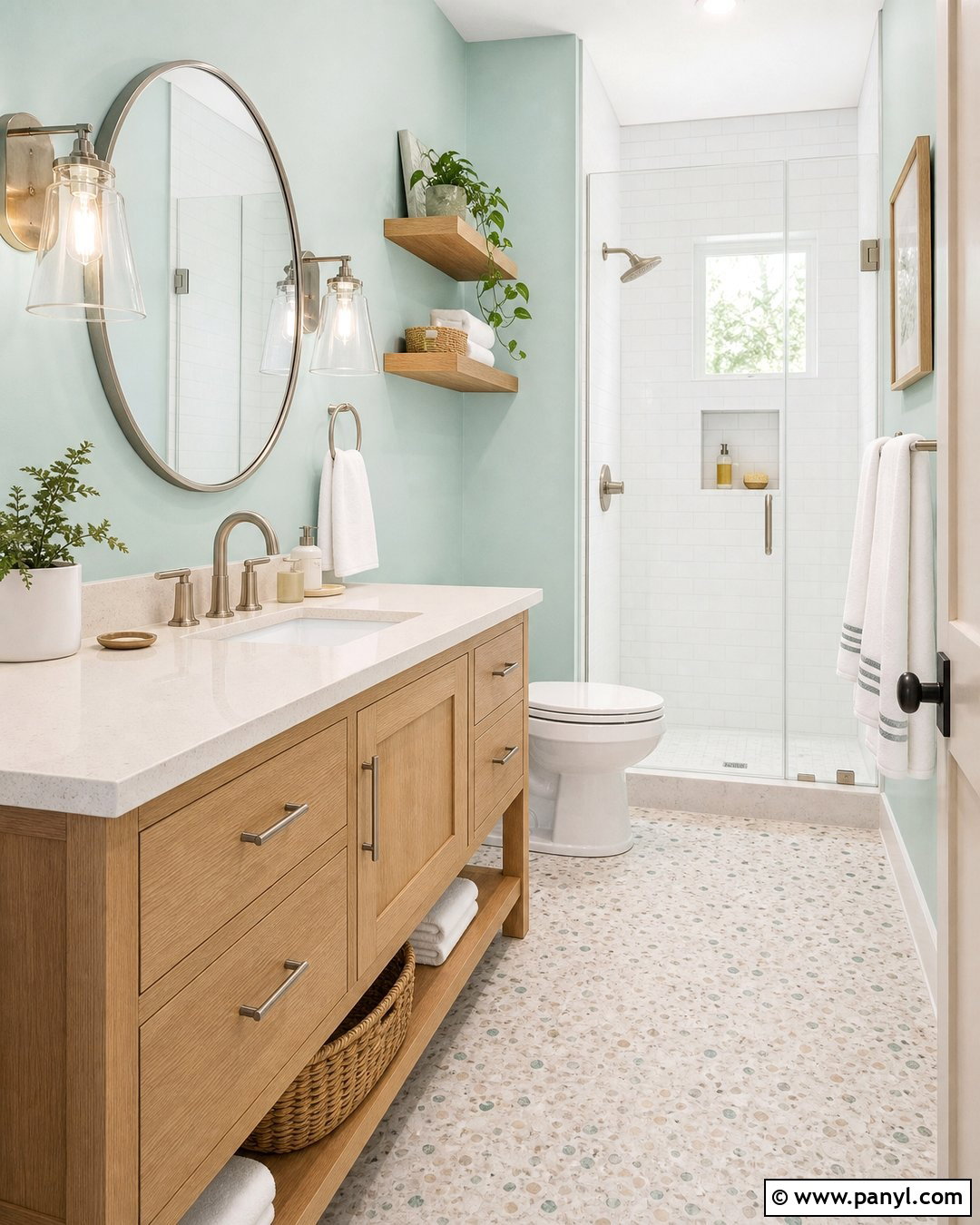
Pale aqua walls combine the freshness of blue with a hint of green, making them a natural fit for a soothing bathroom. Pair the color with a white oak vanity, creamy quartz countertop, and brushed nickel fixtures. Use glossy white rectangular tile in the shower to reflect the aqua tone softly across the room. Light terrazzo flooring with beige and sea-green flecks connects the walls to the warm wood cabinetry. A round mirror, simple glass sconces, and open oak shelving maintain an uncluttered appearance. Add white bath linens, pale aqua hand towels, and a woven storage basket. The finished scheme has a relaxed waterside character, but neutral materials prevent it from feeling overly themed or tied to one decorating trend.
11. Seafoam Green Bathroom Walls
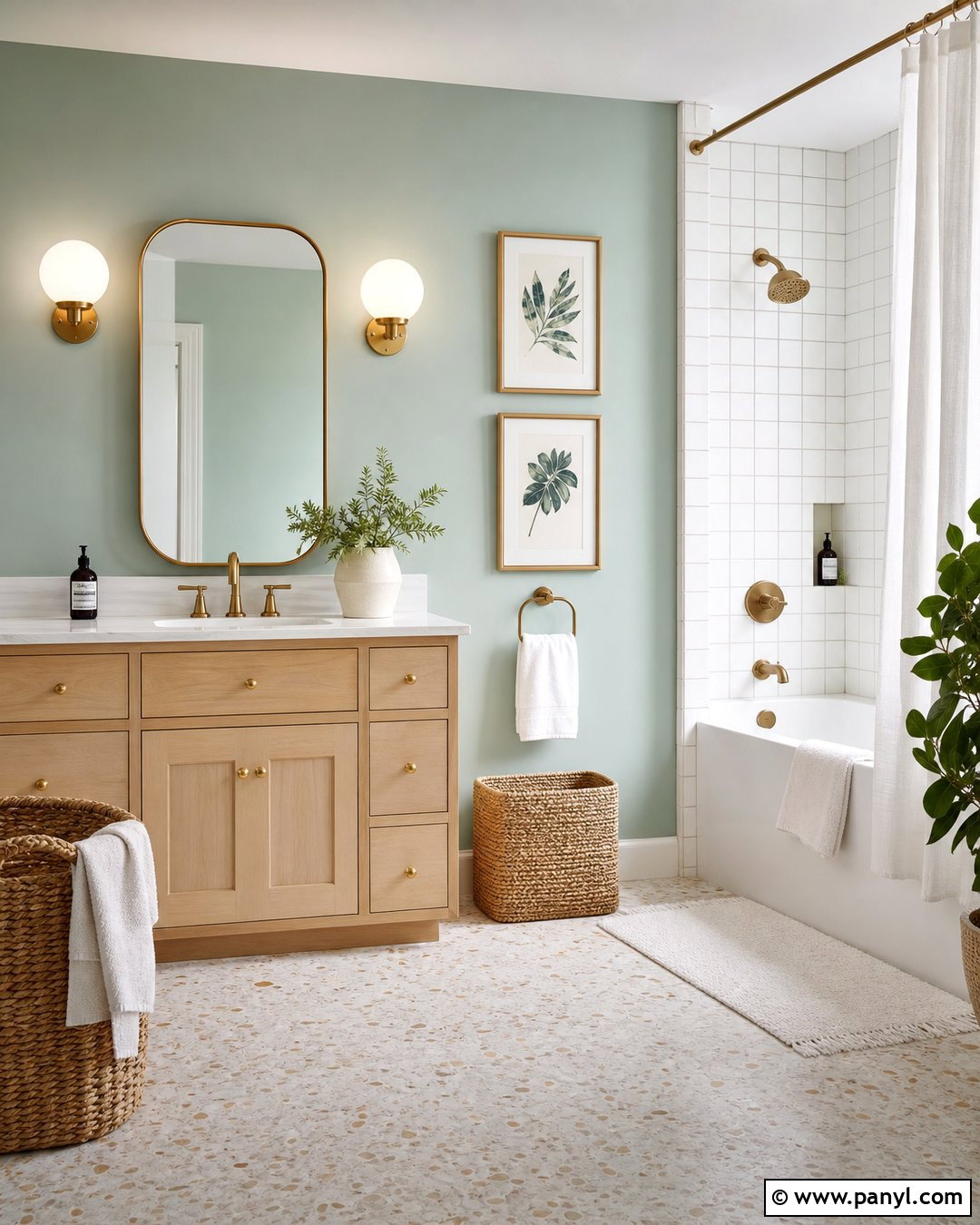
Seafoam green gives bathroom walls a fresh, breezy color that works with both cool whites and warmer natural materials. Create a complete look with a light maple vanity, white porcelain counter, and brushed brass hardware. Install small white square tiles around the tub, using pale green grout for a subtle connection to the painted walls. A cream terrazzo floor introduces delicate texture and keeps the palette from appearing too sugary. Choose a rounded rectangular mirror and simple globe sconces for clean lines. Finish with white towels, cane-front storage baskets, and two small botanical prints. The mix of seafoam, pale wood, cream, and brass creates a bright bathroom that feels relaxed, contemporary, and comfortably lived in.
12. Soft Sage Green Bathroom Walls
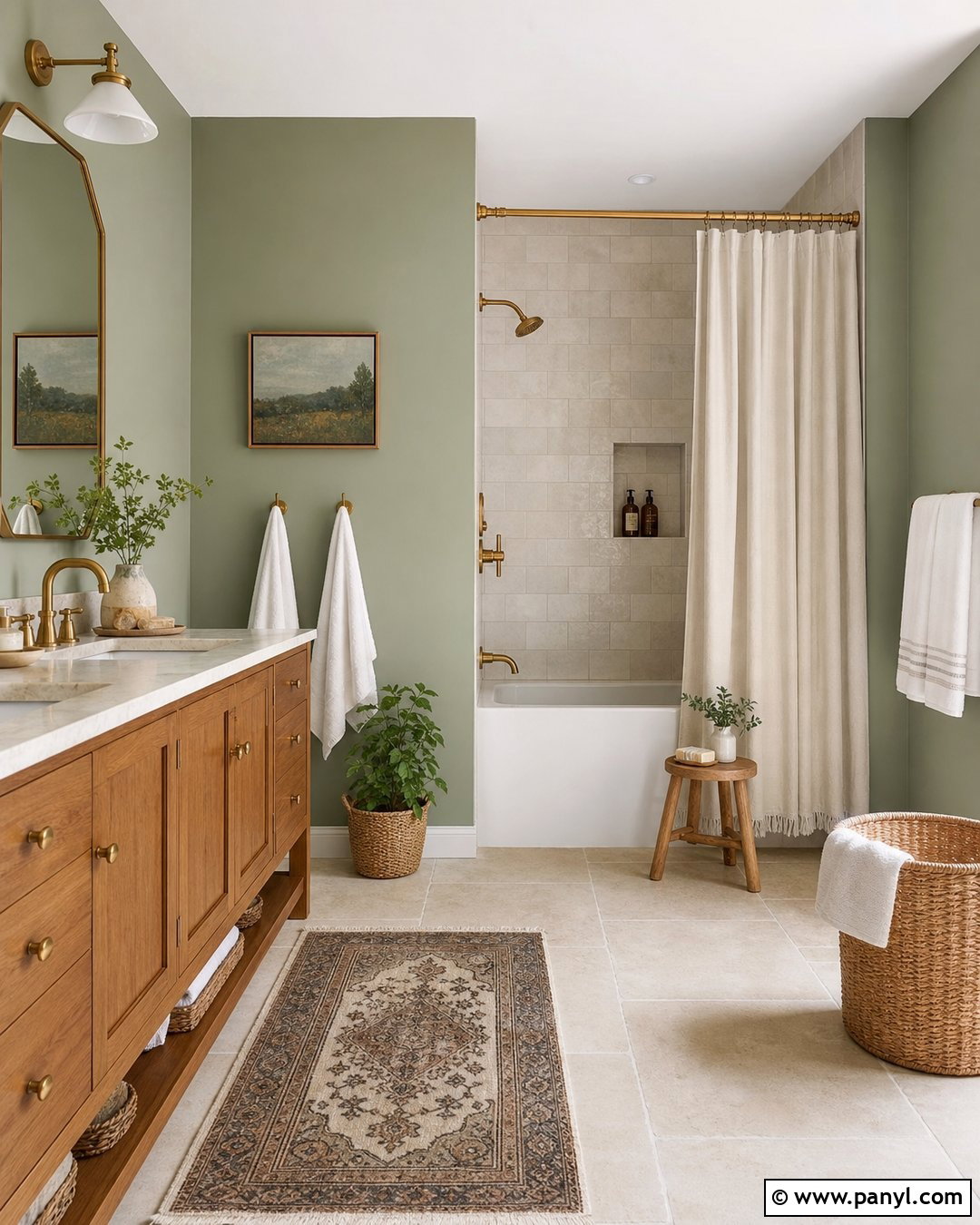
Soft sage green walls can turn an ordinary bathroom into a calm, nature-inspired retreat. Select a muted sage with gray undertones, then combine it with a warm oak vanity and a creamy stone counter. Handmade-look ivory tiles in the shower add subtle variation, while pale limestone-look flooring creates a grounded foundation. Use aged brass for the faucet, mirror frame, and cabinet hardware to bring out the warmth in the green. White cotton towels and a natural linen shower curtain keep the room light. Complete the design with a wooden stool, woven baskets, and restrained botanical decor. This balanced palette works with modern farmhouse, organic modern, and traditional interiors while remaining soft enough for a compact bathroom.
13. Light Mint Green Bathroom Walls
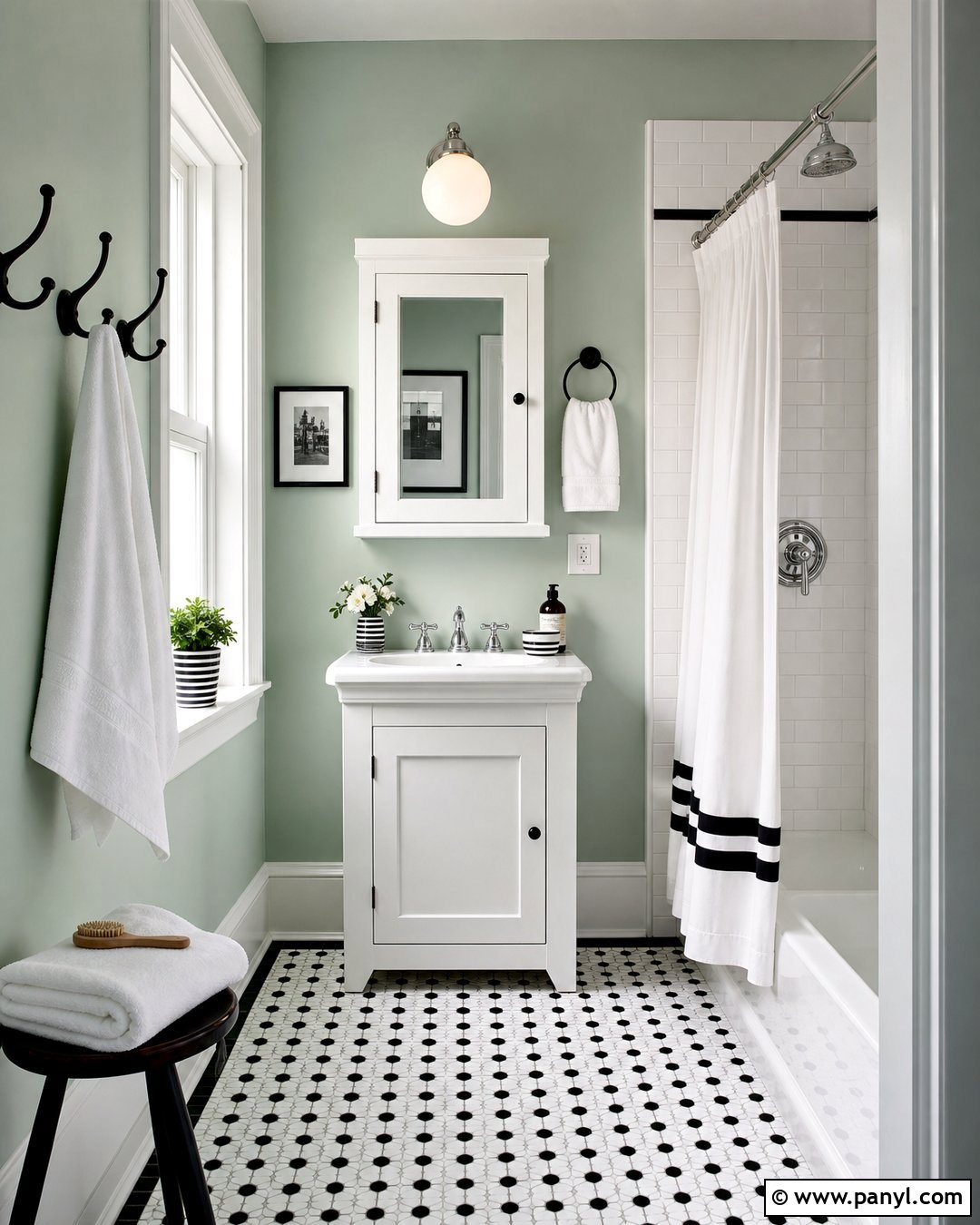
Light mint green walls create an upbeat bathroom with a clean, slightly vintage personality. Avoid overly bright mint and choose a softened version with a touch of gray. Pair it with a white pedestal sink or compact white vanity, chrome fixtures, and a mirrored medicine cabinet. Black-and-white penny tile flooring gives the light color a structured foundation and introduces timeless contrast. Use glossy white subway tile around the shower or tub, finished with narrow black trim for definition. Add crisp white towels, a black wall hook rail, and simple striped accessories. A frosted globe ceiling fixture completes the look. This combination is ideal for small bathrooms where playful color is welcome but the overall design still needs to feel organized.
14. Blush Pink Bathroom Walls
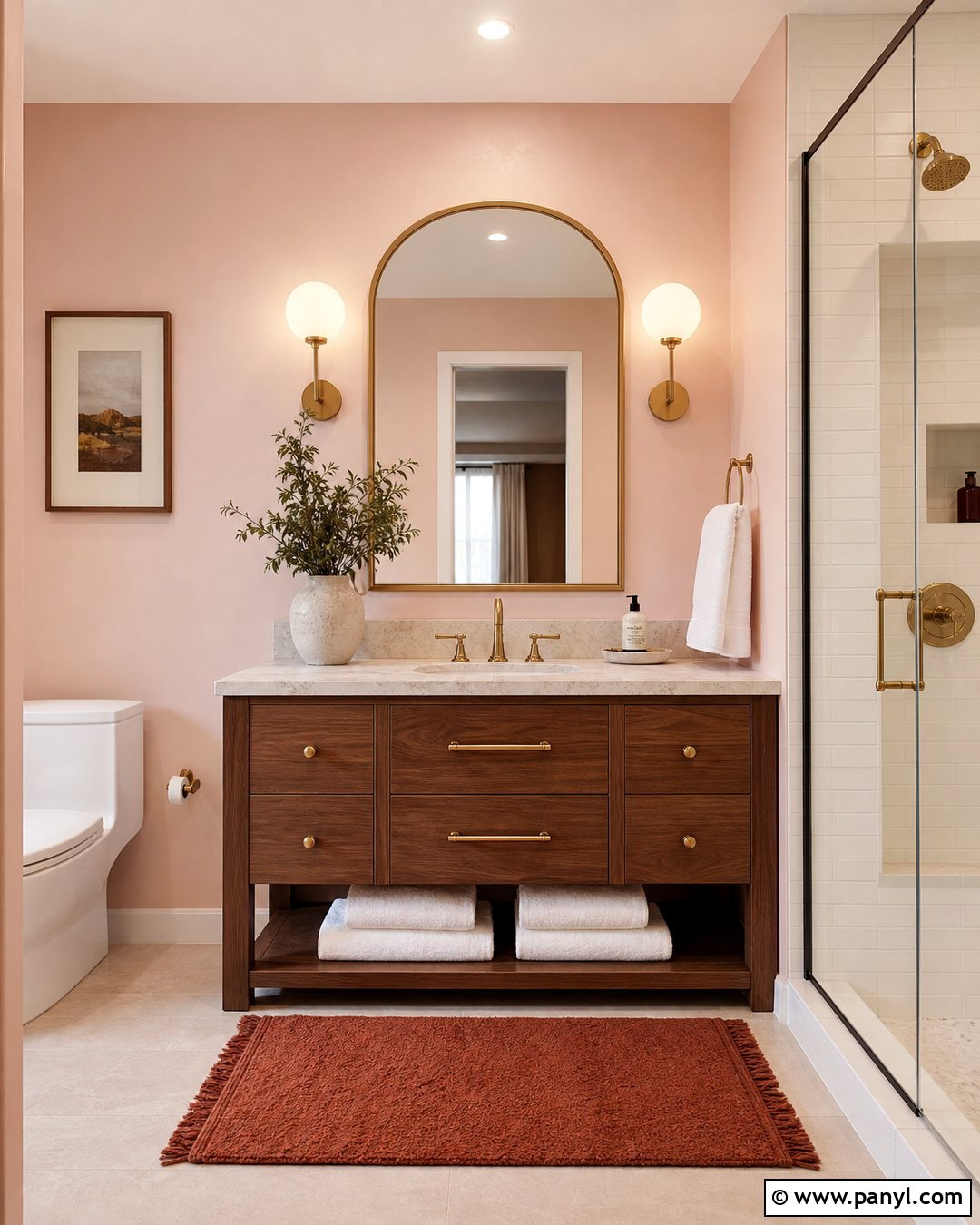
Blush pink walls can look sophisticated when paired with natural stone and restrained finishes. Choose a dusty, barely pink shade instead of a saturated candy tone. Build the room around a walnut vanity, creamy marble countertop, and brushed brass faucet. Pale beige porcelain flooring balances the pink, while warm white shower tile keeps the space bright. Install an arched brass mirror and simple opal-glass sconces to reinforce the softly curved design. White towels, a rust-colored bath mat, and one ceramic vase add layered warmth without making the palette overly feminine. The finished bathroom feels elegant and modern, making light blush a strong option for powder rooms, guest bathrooms, or primary suites with warm wood details.
15. Dusty Rose Bathroom Walls
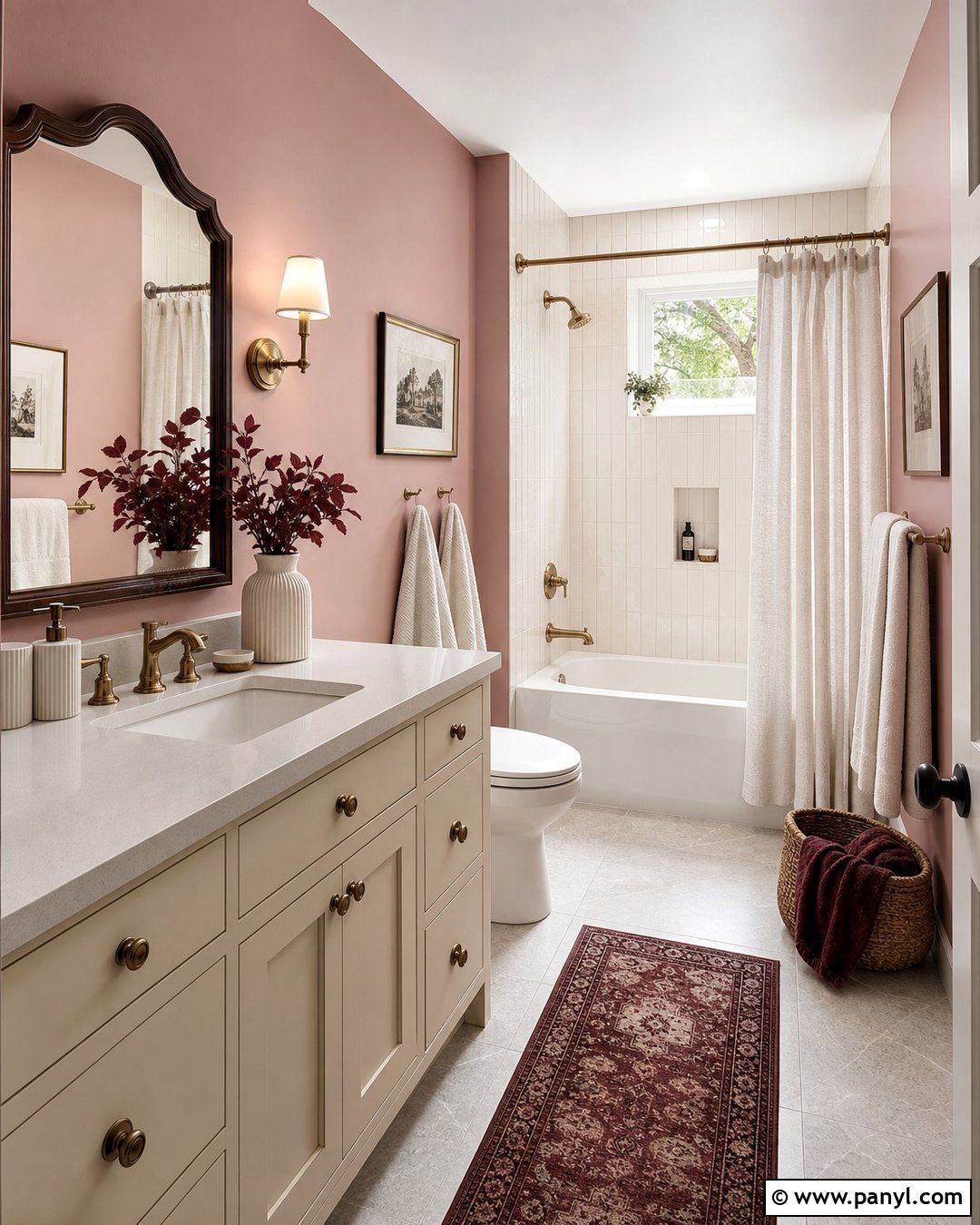
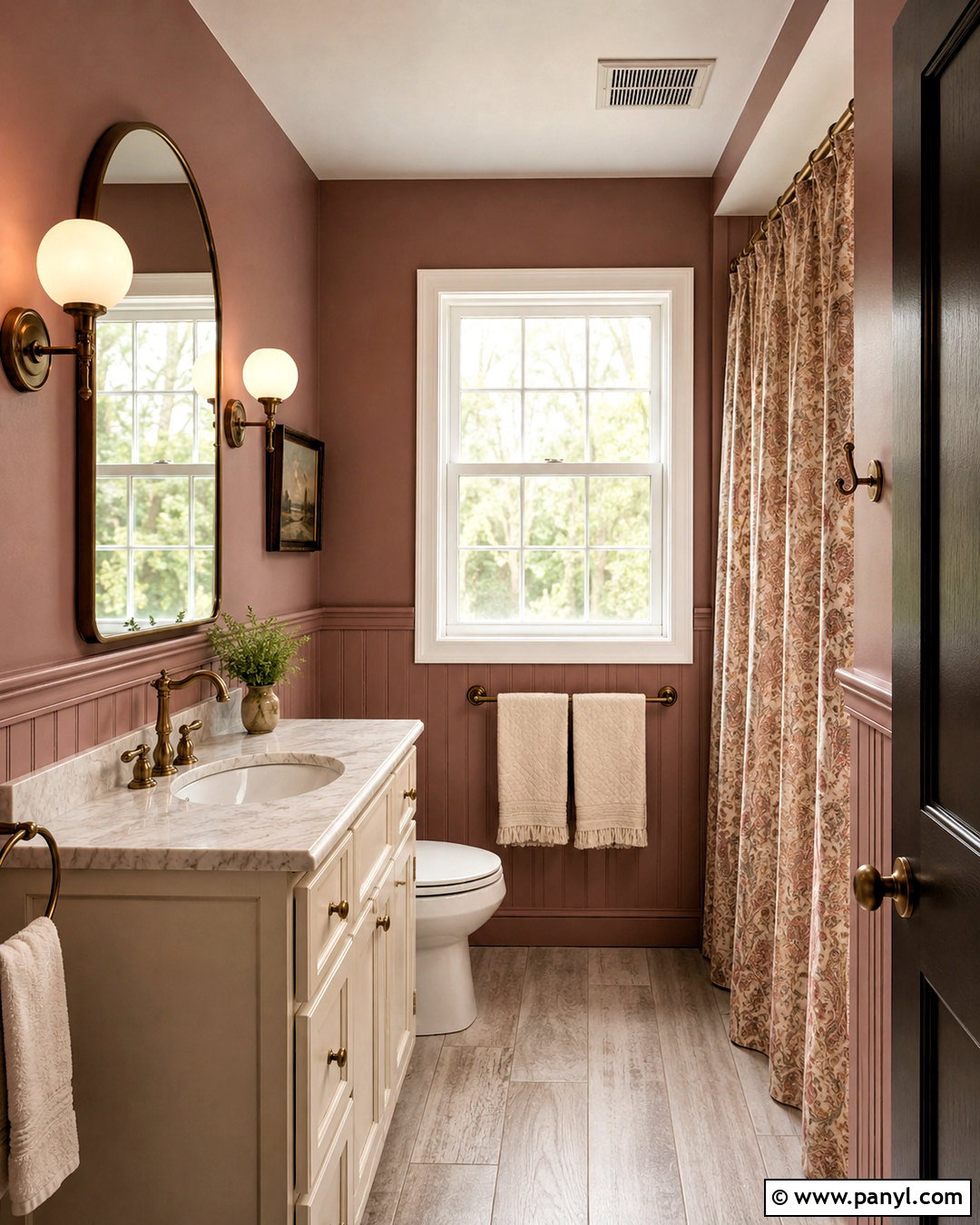
Dusty rose is slightly deeper and earthier than blush, yet it can still function as a light bathroom wall color. Pair it with a cream vanity, white quartz counter, and antique brass fixtures for a warm, cohesive scheme. Choose pale gray stone-look flooring to provide a cooler counterpoint and prevent the room from becoming too rosy. Vertical ivory shower tiles add height and a handmade texture. A dark walnut mirror frame introduces definition, while linen towels in cream and muted burgundy create subtle tonal layering. Keep decorative pieces minimal with a small framed print and ribbed ceramic accessories. This complete design feels grown-up, comfortable, and distinctive, particularly in bathrooms with good natural light and traditional architectural details.
16. Pale Peach Bathroom Walls
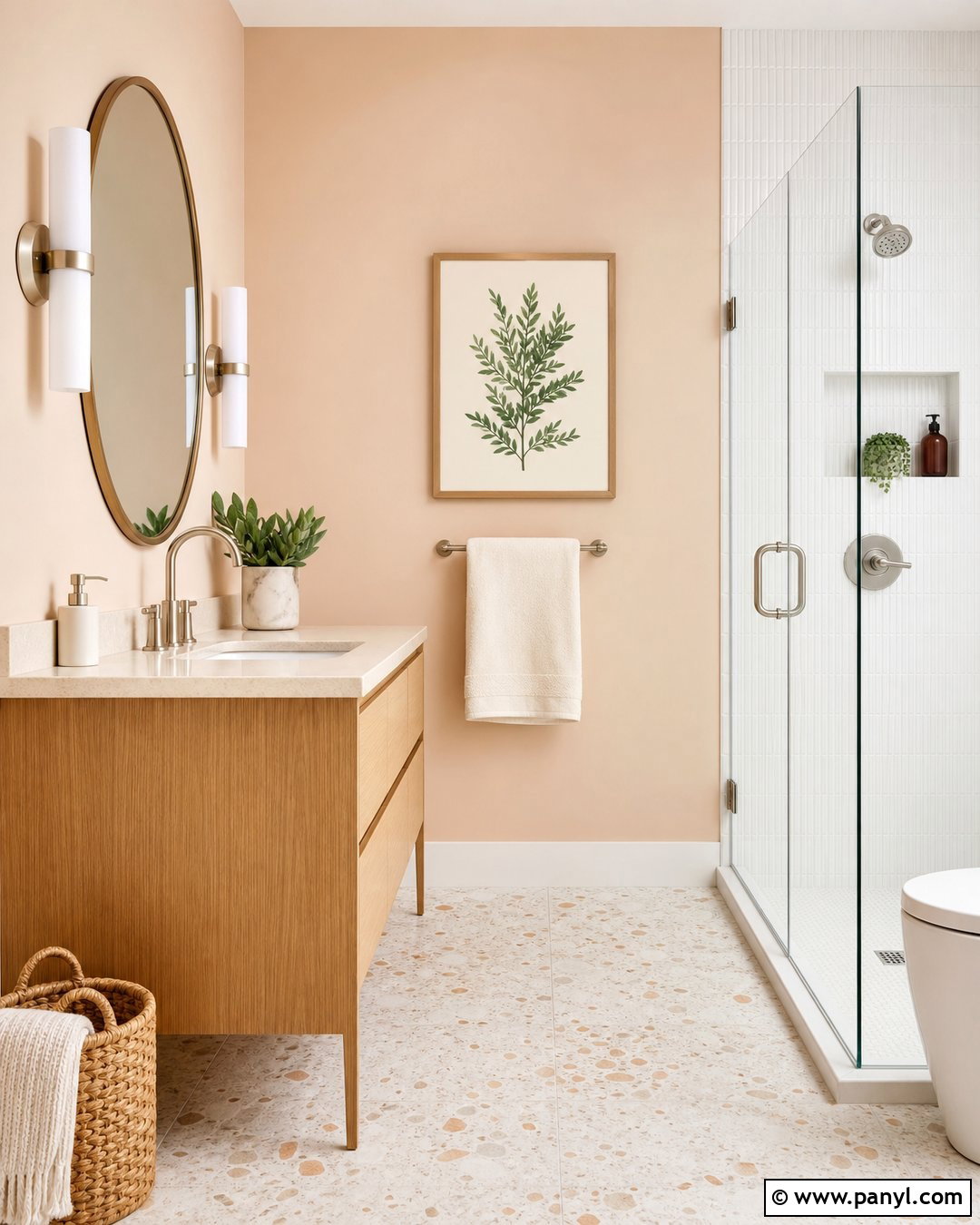
Pale peach walls cast a gentle warmth that can make a bathroom feel bright and welcoming. Look for a muted shade with beige undertones rather than a strong orange finish. Pair it with a light oak vanity, cream quartz counter, and polished nickel hardware to keep the palette balanced. White fluted shower tiles introduce vertical texture, while a pale terrazzo floor with peach and tan flecks creates a coordinated foundation. Add a large capsule-shaped mirror and simple white sconces for a modern finish. Cream towels, a woven laundry basket, and small green plants provide natural contrast. This sunny color scheme works particularly well in bathrooms that need warmth but still require a light, spacious, and uncluttered appearance.
17. Pale Clay Bathroom Walls
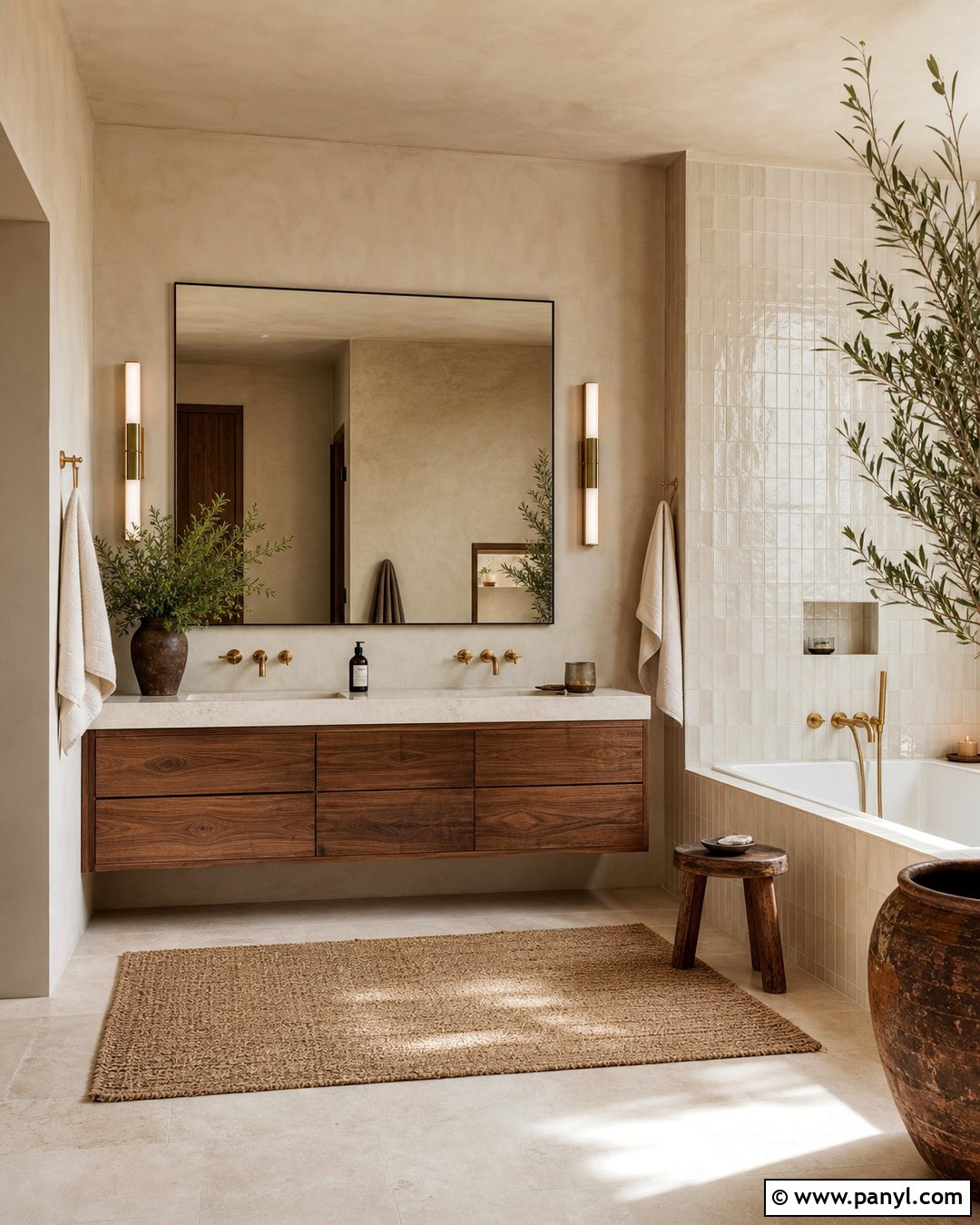
Pale clay offers the warmth of terracotta in a softer, easier-to-use form. Select a washed peach-brown shade and pair it with a floating walnut vanity, warm white quartz, and aged brass fixtures. Cream zellige-style tiles around the tub introduce gloss and natural variation, while a sandy porcelain floor supports the earthy palette. Use a large frameless mirror to prevent the warm walls from visually closing in the room. Add off-white towels, a woven bath mat, and simple pottery in cream and rust tones. One small olive-green plant provides a fresh accent. This completed bathroom feels organic and grounded, giving homeowners a warmer alternative to beige without committing to a dark or highly saturated wall color.
18. Butter Yellow Bathroom Walls
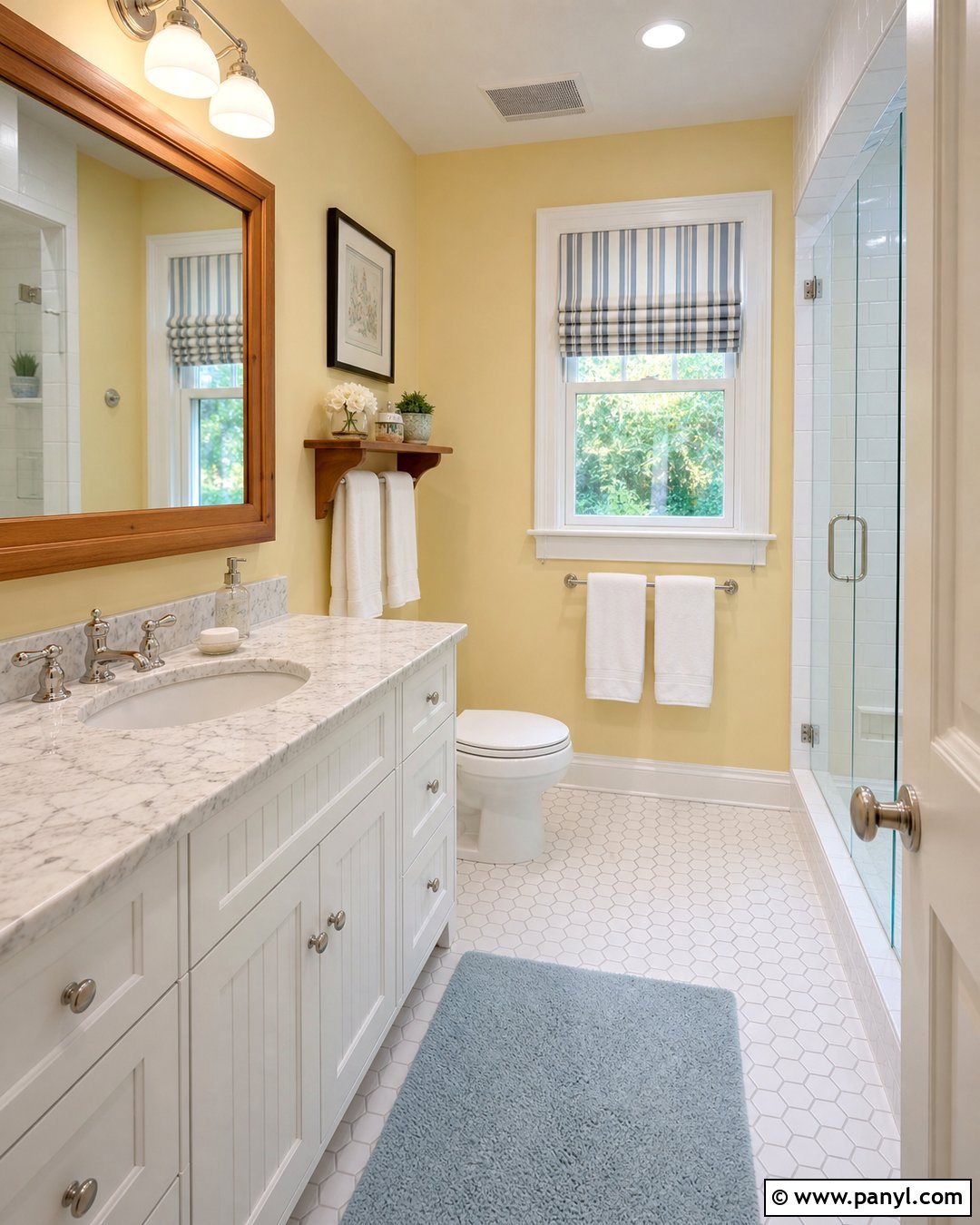
Soft butter yellow walls can brighten a bathroom while creating a friendly, traditional atmosphere. Choose a pale, creamy yellow rather than a sharp lemon shade. Pair it with a white beadboard vanity, marble-look counter, and polished nickel hardware. Small white hexagon floor tiles maintain a crisp base, while glossy white shower tile keeps the room from becoming too warm. Add a medium oak mirror and a matching wall shelf to bring in natural contrast. White towels, a pale blue bath mat, and a simple striped window shade complete the palette. This balanced combination feels especially appropriate in cottage and vintage-inspired bathrooms, where gentle yellow can highlight classic details without overwhelming the limited wall space.
19. Light Lavender Bathroom Walls
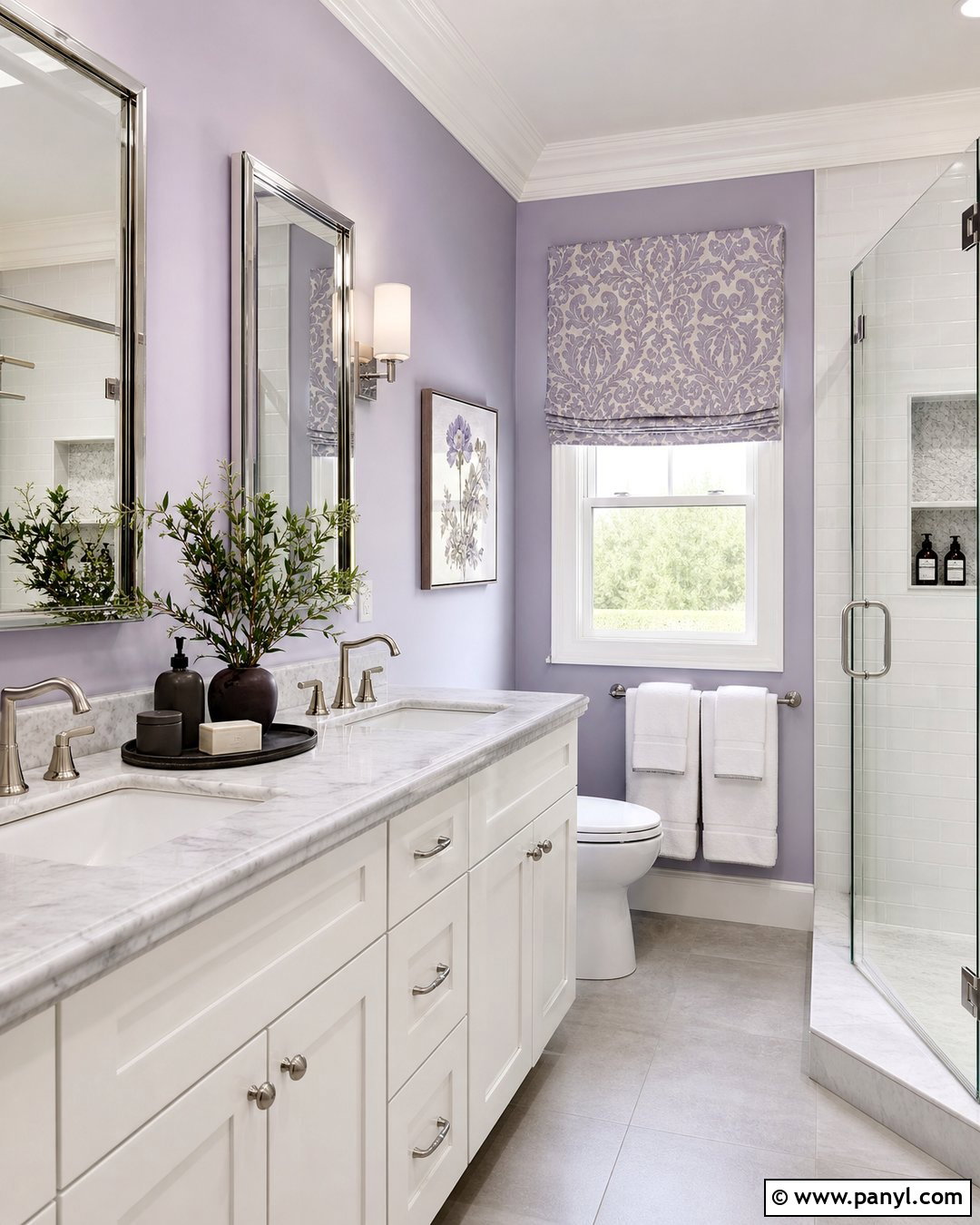
Light lavender walls introduce soft color while maintaining a calm, polished bathroom atmosphere. Select a gray-based lavender rather than a vivid purple, then combine it with a white vanity and pale marble countertop. Brushed nickel faucets and slim silver-framed mirrors support the cool undertones. Use light gray porcelain flooring and glossy white shower tile to keep the design crisp. A lavender-and-gray patterned Roman shade can repeat the wall color without appearing overly coordinated. Finish the room with white towels, charcoal accessories, and one small arrangement of greenery. The completed palette works well in guest bathrooms and traditional primary suites, delivering a distinctive look that remains light, balanced, and easy to live with.
20. Pale Taupe Bathroom Walls
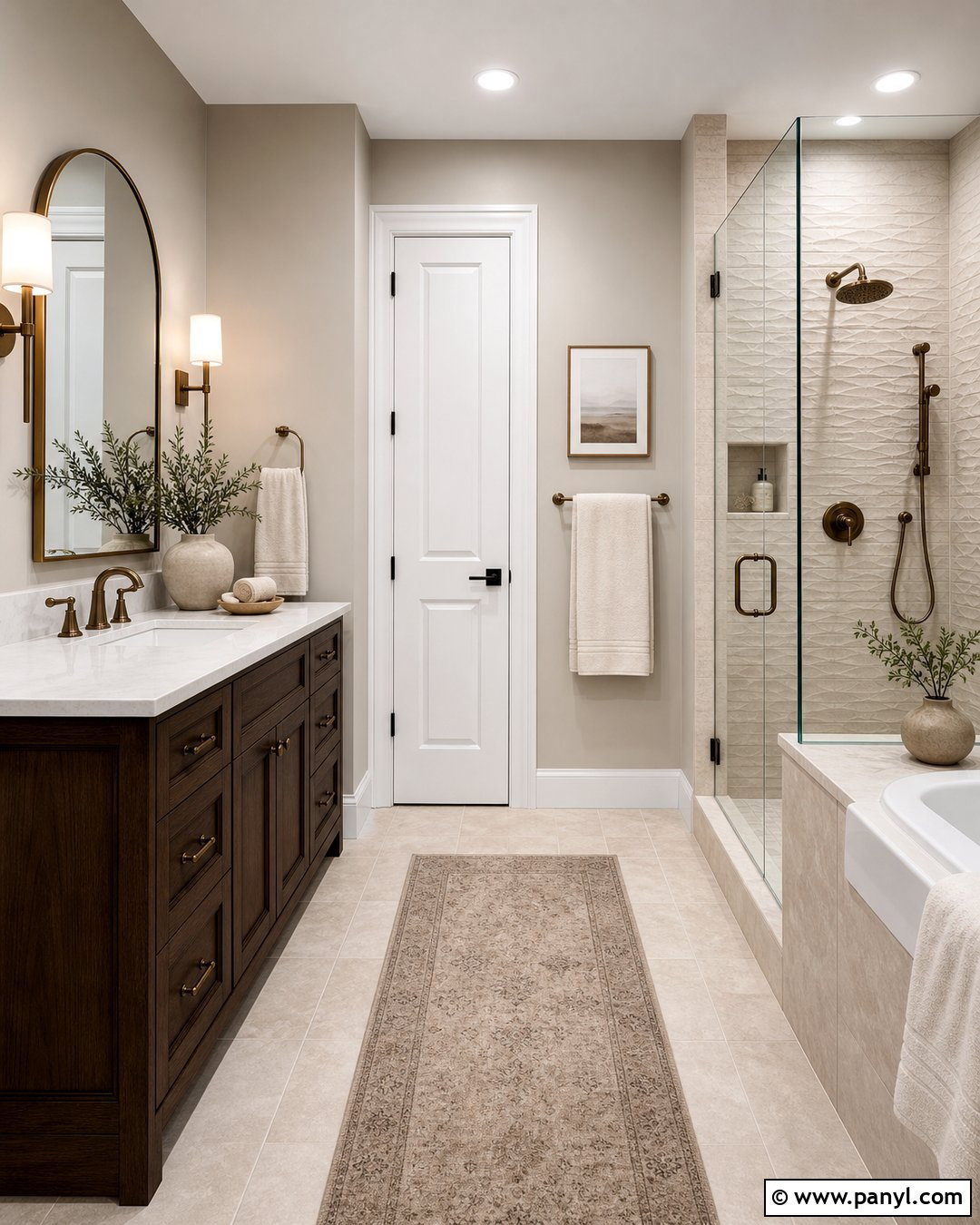
Pale taupe walls create a warm neutral bathroom with more depth than cream and less coolness than gray. Pair the color with a dark oak vanity to establish contrast, then add a white quartz counter and brushed bronze fixtures. Large cream porcelain tiles on the floor keep the room open, while lightly textured ivory shower tile adds a quiet architectural element. Choose a wide rectangular mirror with a thin bronze frame and install soft white sconces on both sides. Complete the room with ivory towels, a taupe runner, and stoneware accessories in beige and brown. This coordinated scheme suits modern, transitional, and traditional homes, offering a dependable foundation that can easily accommodate new linens or decorative accents later.
Conclusion:
The best **20 Light Colors For Bathroom Walls** range from adaptable warm whites and greiges to refreshing blues, greens, pinks, and gentle earth tones. The right choice should connect naturally with the bathroom’s fixed finishes, including tile, flooring, counters, and cabinetry. Build a complete palette rather than selecting paint in isolation. Warm colors usually pair comfortably with wood, cream tile, and brass, while cooler shades coordinate easily with white, gray, chrome, and nickel. Always examine a generous painted sample beside every major surface under daytime and evening lighting. With thoughtful undertones, practical bathroom paint, and coordinated details, even a modest bathroom can feel brighter, more comfortable, and intentionally designed.

Related Ideas and Inspiration:
Leave a Reply