
Ivory color walls offer the brightness of white with a softer, warmer finish that makes a home feel comfortable rather than stark. This creamy off-white often carries subtle beige or yellow undertones, allowing it to work beautifully with wood, stone, metal, and both muted and saturated colors. () The key is to build enough contrast and texture around ivory so the room looks layered instead of washed out. Consider the natural light, flooring, trim, and permanent finishes before choosing your exact paint shade. From earthy living rooms to polished kitchens and restful bedrooms, the following complete looks show practical ways to decorate with ivory color walls.

1. Ivory Walls With Warm Oak
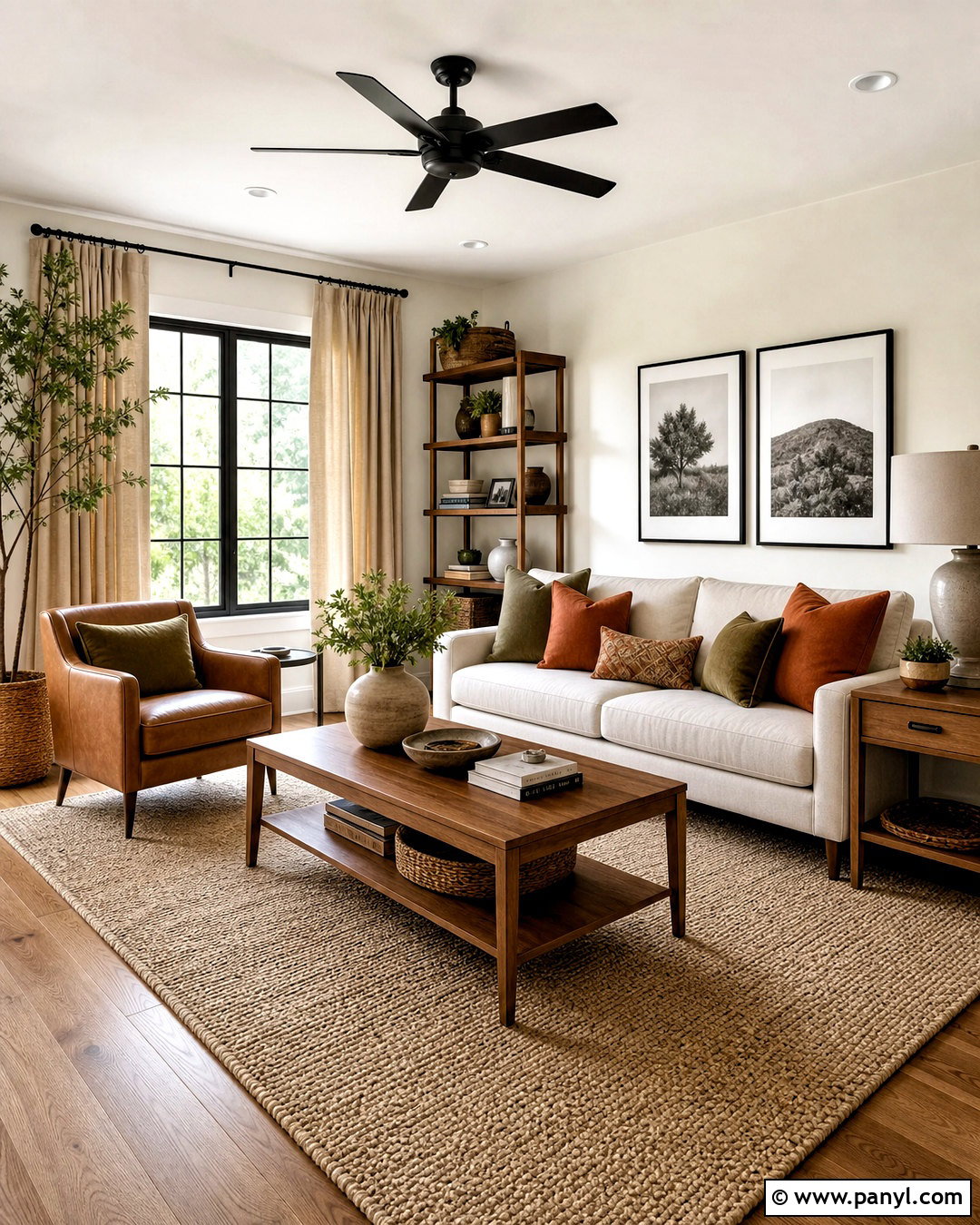
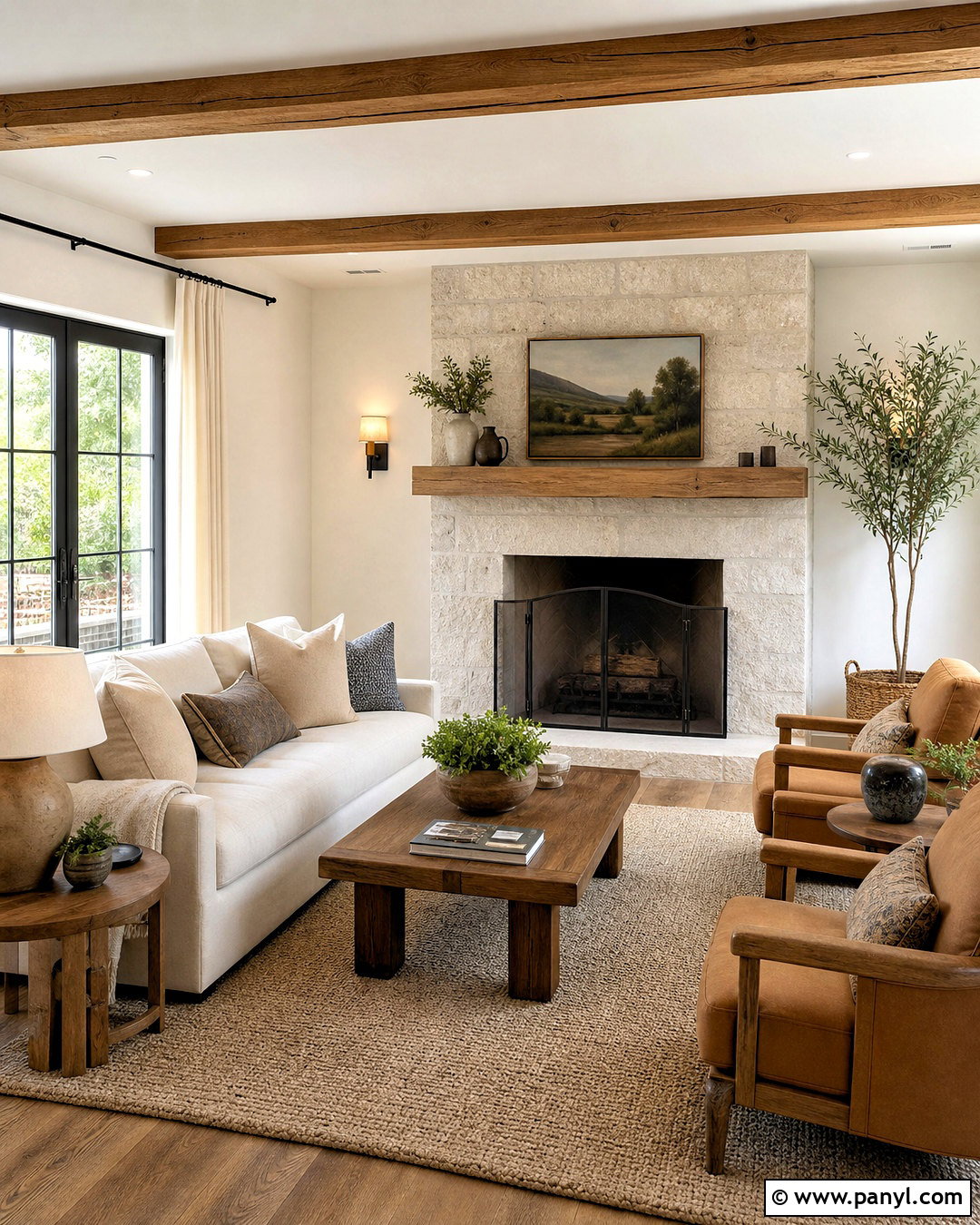
Create an inviting living room by pairing ivory walls with warm oak flooring and simple wood furniture. Choose a comfortable oatmeal sofa, then place a caramel leather chair across from it to establish a balanced conversation area. A textured cream rug keeps the palette light without disappearing into the walls. Add rust, olive, and camel pillows for gentle color, along with woven baskets and ceramic table lamps. Medium-toned oak works especially well because its golden grain repeats the warmth of ivory without creating a flat, monochromatic room. Finish the windows with natural linen curtains mounted close to the ceiling. Matte black curtain rods and a few dark picture frames provide just enough contrast to define the space.
2. Ivory Walls With Sage Green
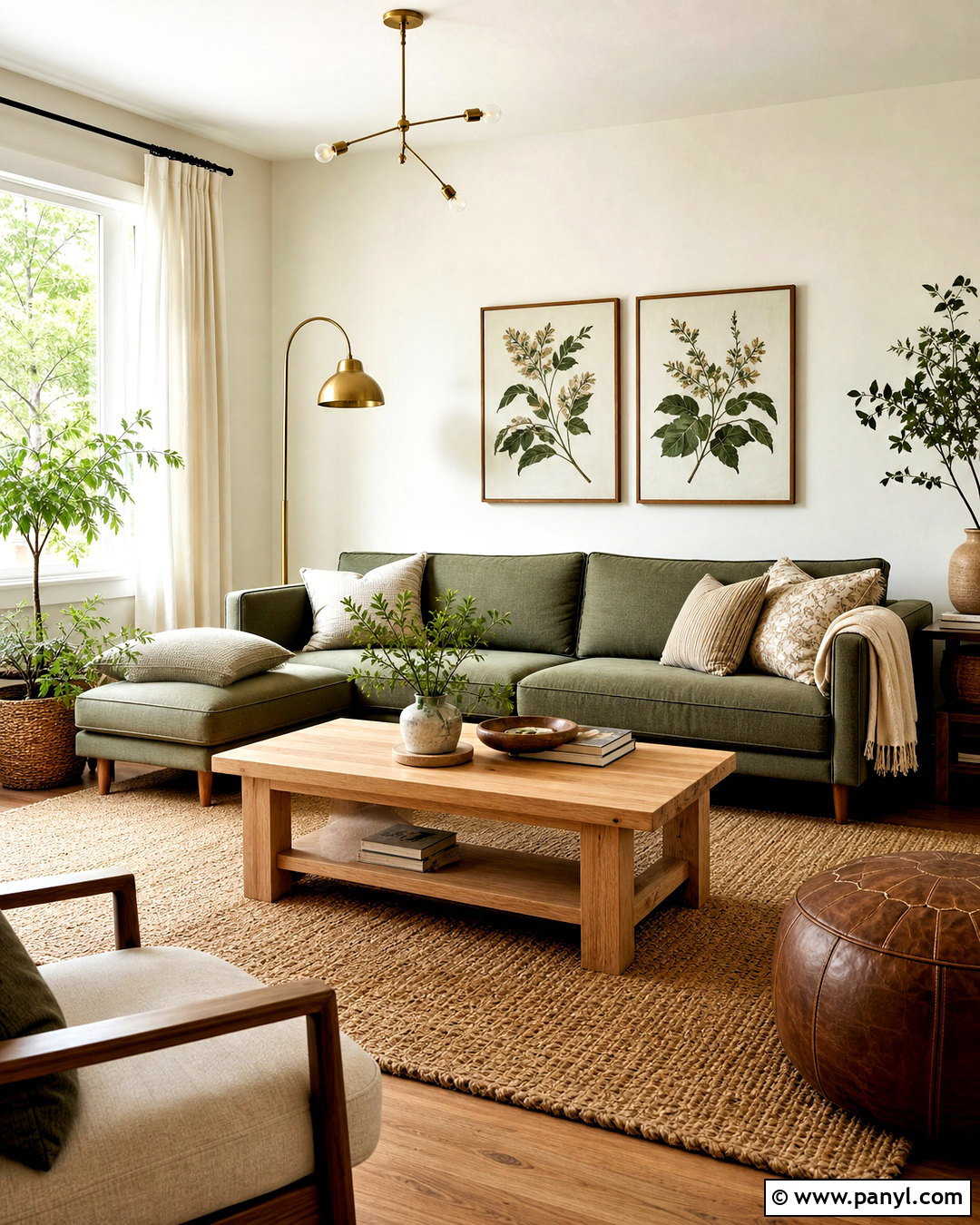
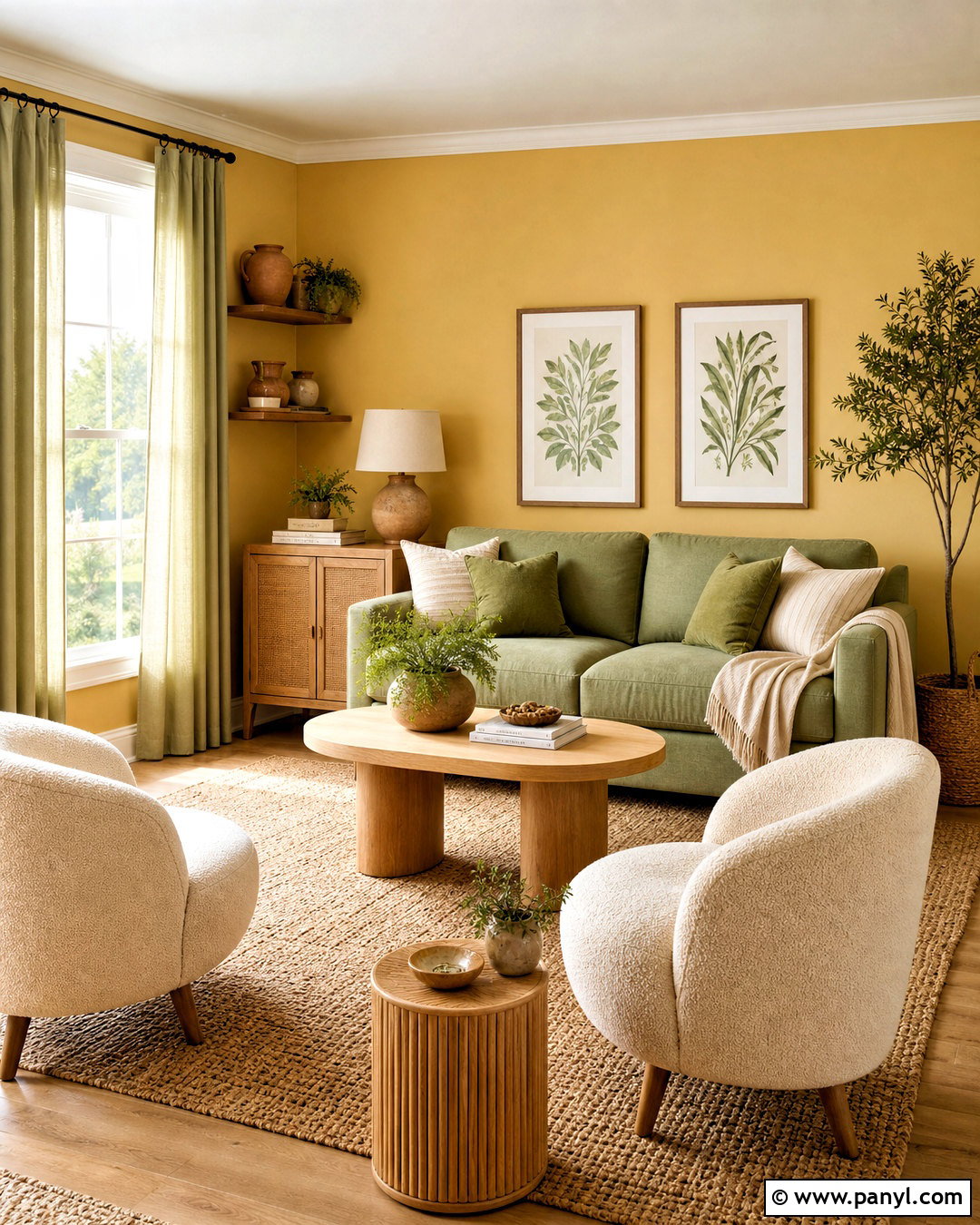
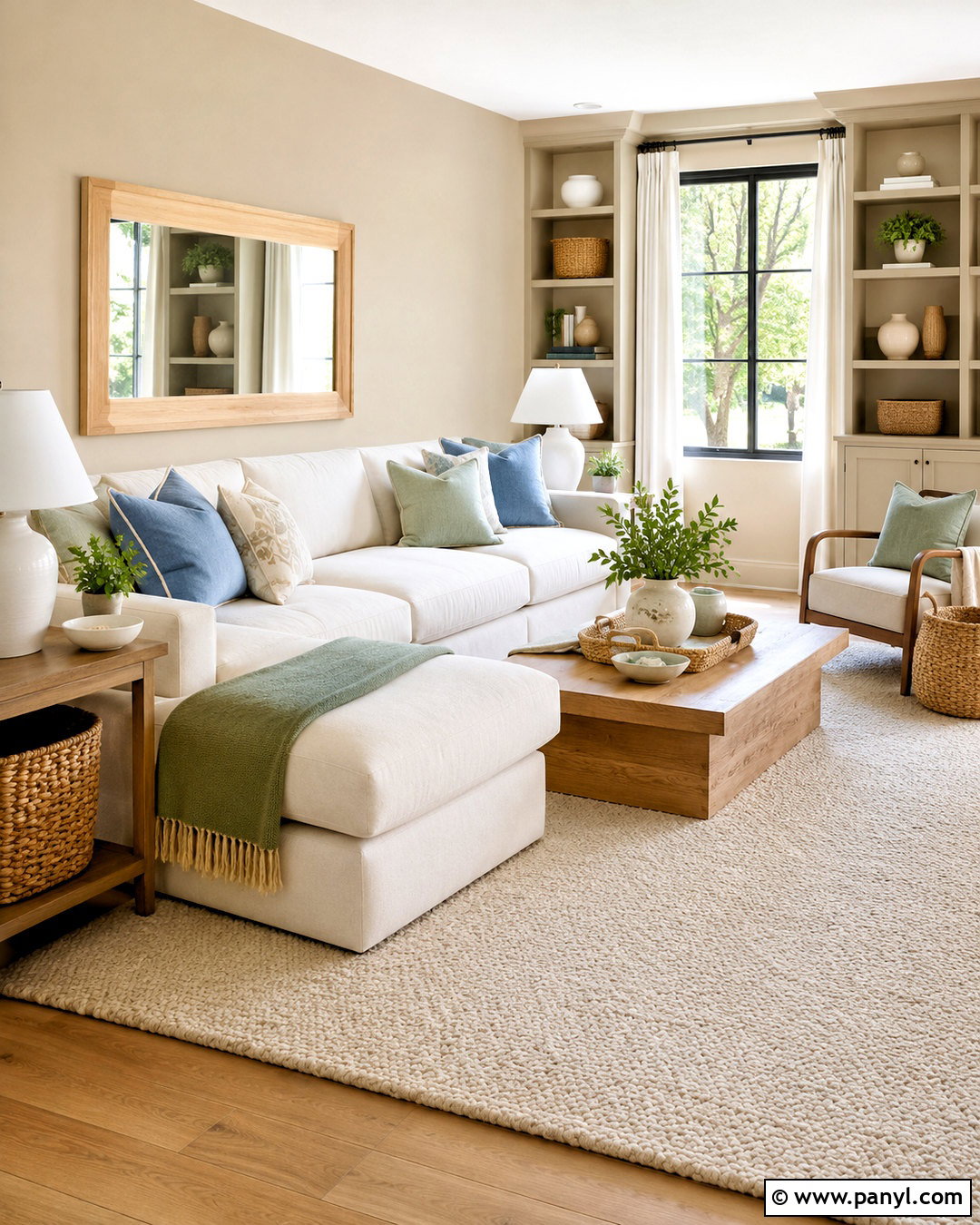
Soft sage green brings an organic, restful quality to ivory walls without overwhelming their gentle warmth. Build this living room around a sage sofa or two muted green armchairs, supported by a light oak coffee table and a woven jute rug. Use ivory curtains in a slightly deeper tone than the walls so the windows still have definition. Botanical artwork, handmade pottery, and leafy houseplants reinforce the nature-inspired palette. Introduce small amounts of warm brown through wood frames, baskets, and a leather ottoman. Brushed brass lighting adds a polished note while remaining softer than chrome. Keep the ceiling and trim a clean warm white to prevent the room from becoming overly creamy, especially when natural light is limited.
3. Ivory Walls With Navy Blue
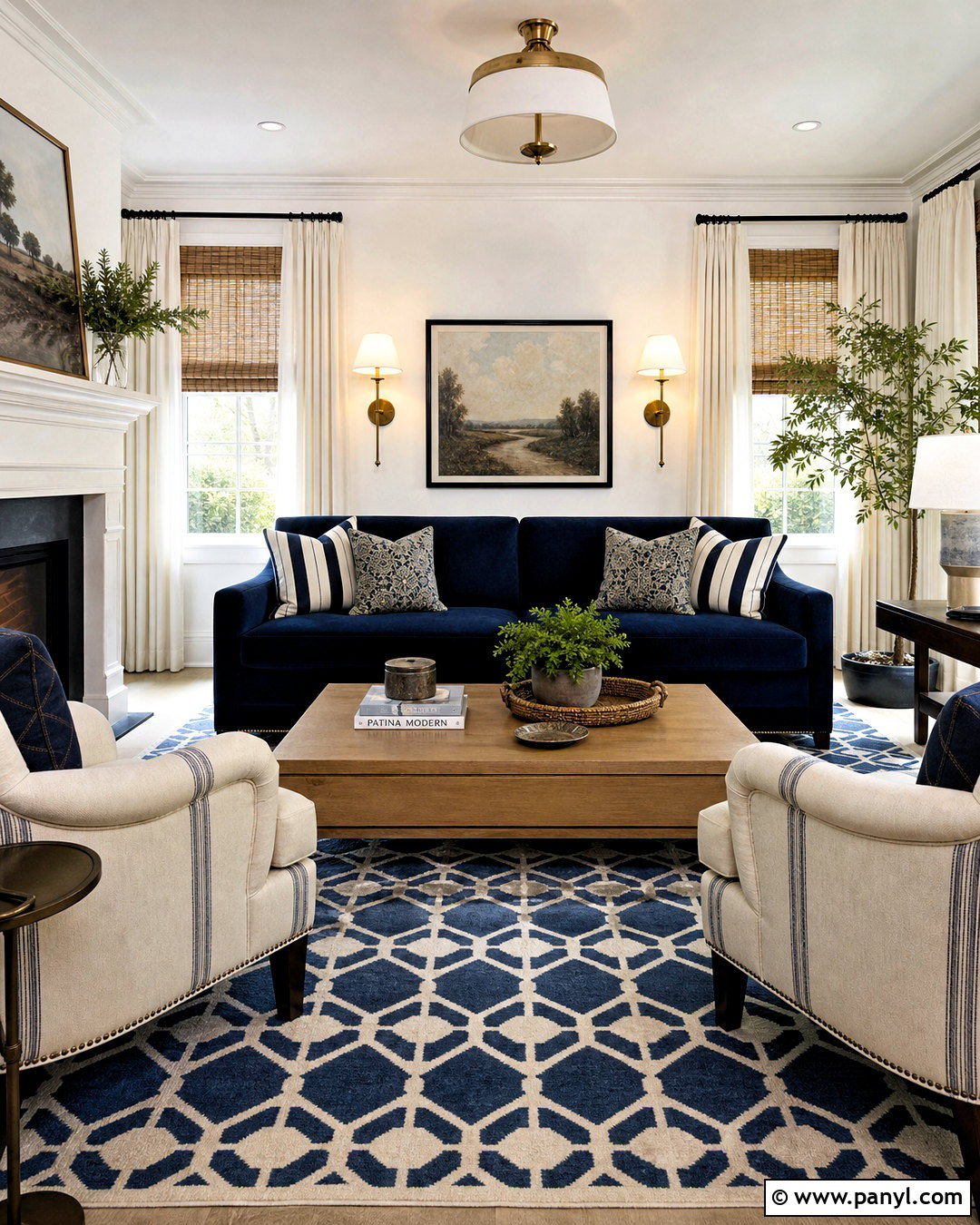
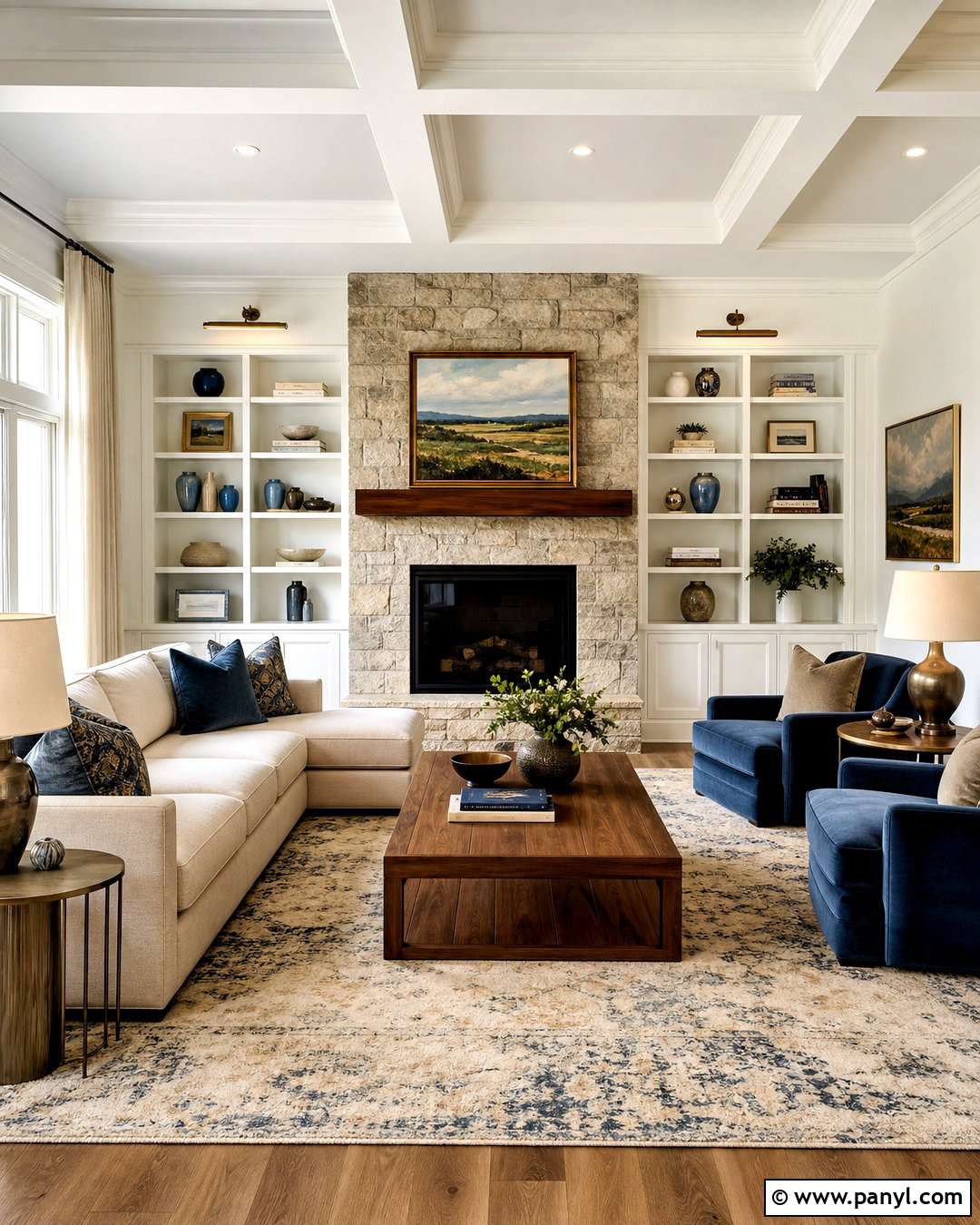
For a crisp yet comfortable room, ground ivory walls with deep navy blue furniture and patterned textiles. A navy sofa makes a confident centerpiece, while ivory armchairs keep the seating arrangement from feeling too heavy. Add a medium oak coffee table, a blue-and-cream geometric rug, and striped or block-print pillows that connect the main colors. White trim can sharpen the architectural edges, but avoid blue-toned white because it may make the ivory look yellow. Use aged brass sconces and warm wood frames to maintain a welcoming atmosphere. This combination works particularly well in a bright living room or den. Finish with natural woven shades beneath full-length ivory curtains for controlled light, softness, and a complete layered window treatment.
4. Ivory Walls With Charcoal Gray
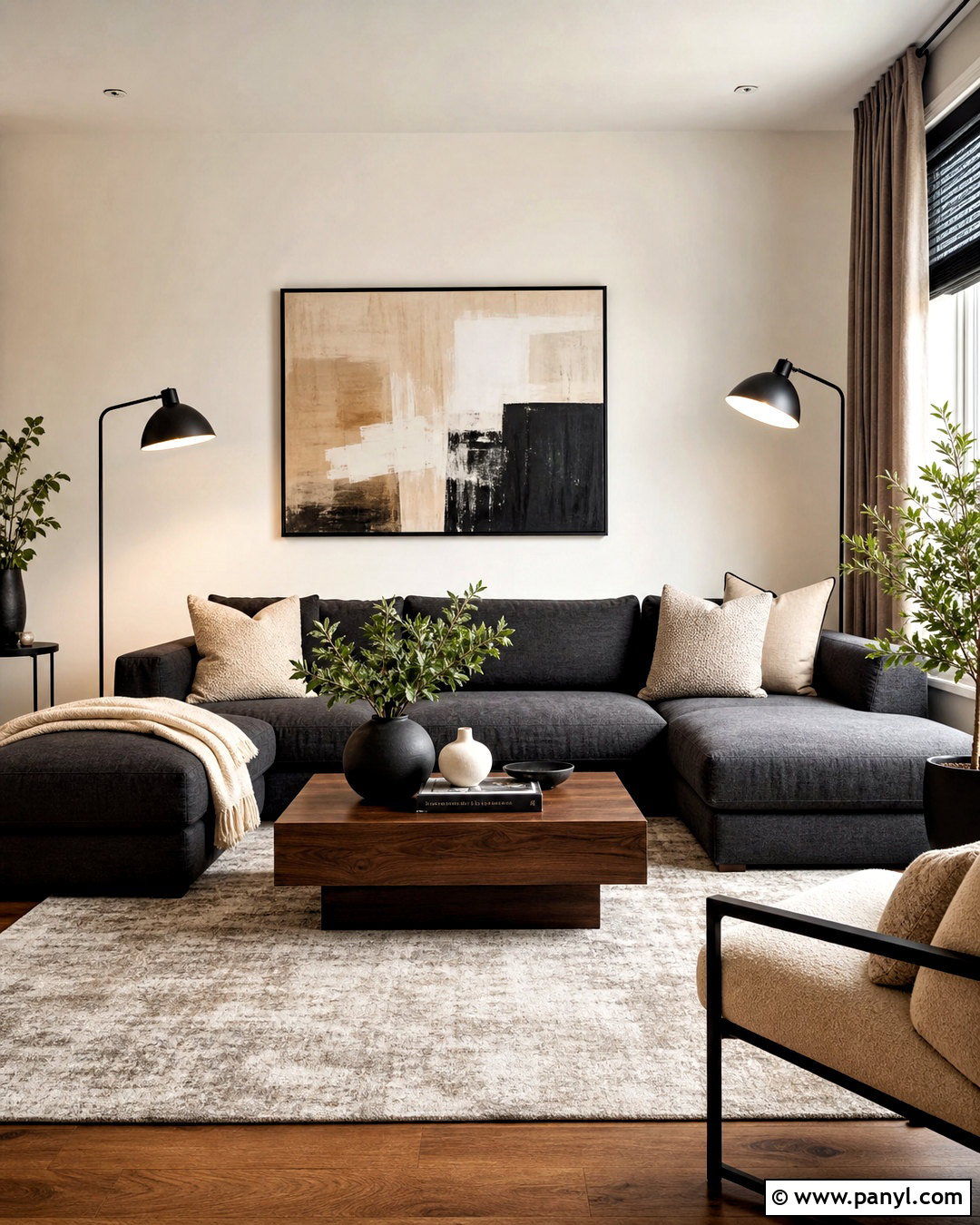
Charcoal gray gives ivory walls the strong contrast needed for a clean modern interior. Start with a low-profile charcoal sectional and position it on a large ivory-and-gray textured rug. Choose a walnut coffee table to bridge the cool upholstery and warm wall color. Black metal floor lamps, slim picture frames, and dark curtain rods can repeat the contrast around the room. Prevent the design from looking severe by adding oatmeal throws, boucle pillows, and warm taupe curtains. A few sculptural ceramics and restrained abstract prints keep the decor simple but not empty. If the room is small, reserve charcoal for the largest furniture piece and repeat it only in narrow accents. This maintains an open feeling while giving the ivory background clear structure.
5. Ivory Walls With Terracotta
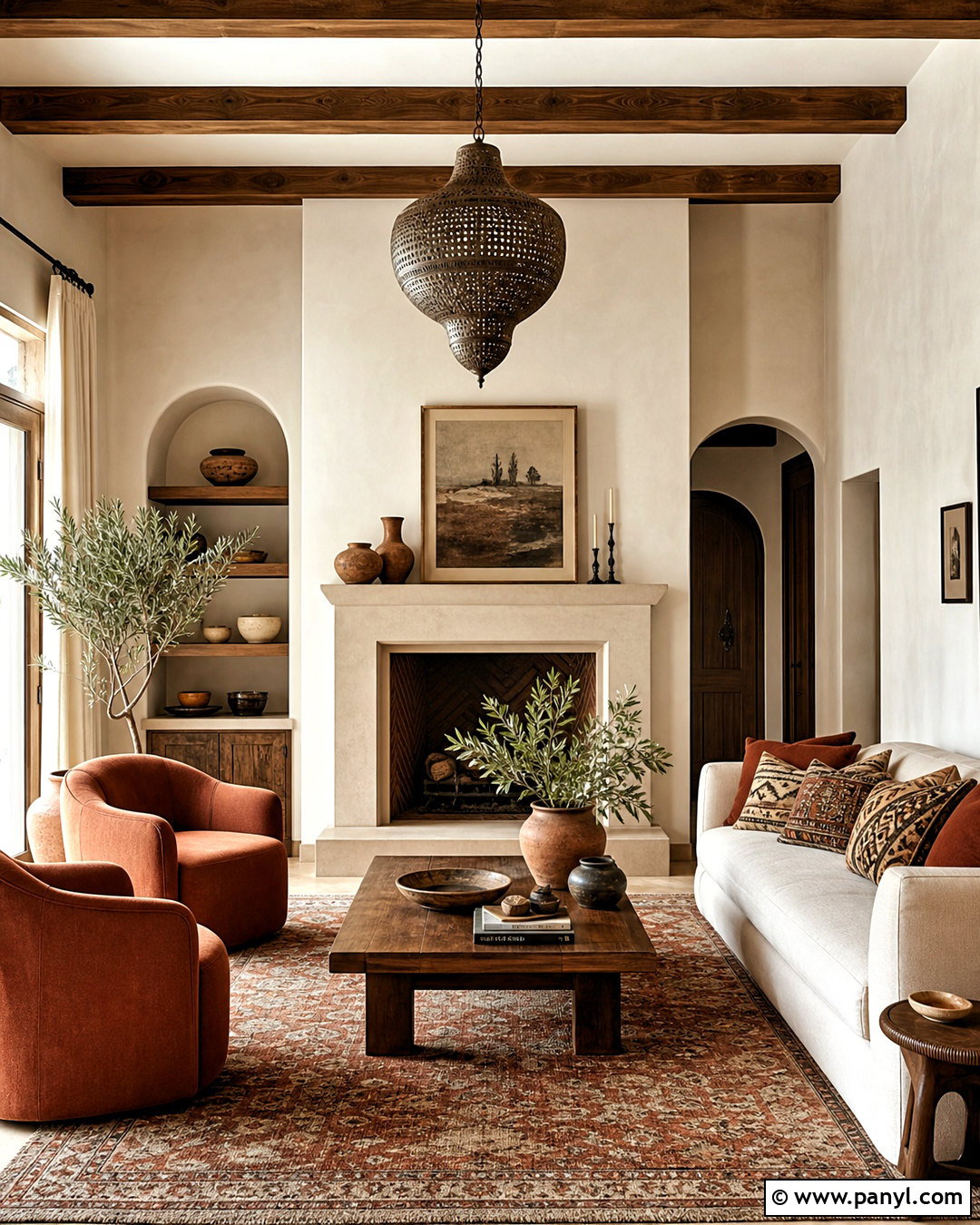
Sunbaked terracotta adds depth and energy to ivory walls while preserving an earthy, relaxed mood. Use a neutral sofa as the foundation, then bring in two terracotta accent chairs or a clay-colored upholstered bench. A vintage-inspired rug containing rust, cream, muted blue, and brown will connect the entire palette. Select medium wood furniture with visible grain and slightly rounded shapes for a casual Mediterranean influence. Linen curtains, hammered metal lighting, and handmade pottery provide texture without creating clutter. Add olive branches or a tall indoor tree for a fresh green counterpoint. Terracotta is most effective when repeated in several controlled places, such as pillows, artwork, and ceramics, rather than covering every surface. The ivory walls should remain the calm visual background.
6. Ivory Walls With Dusty Blue
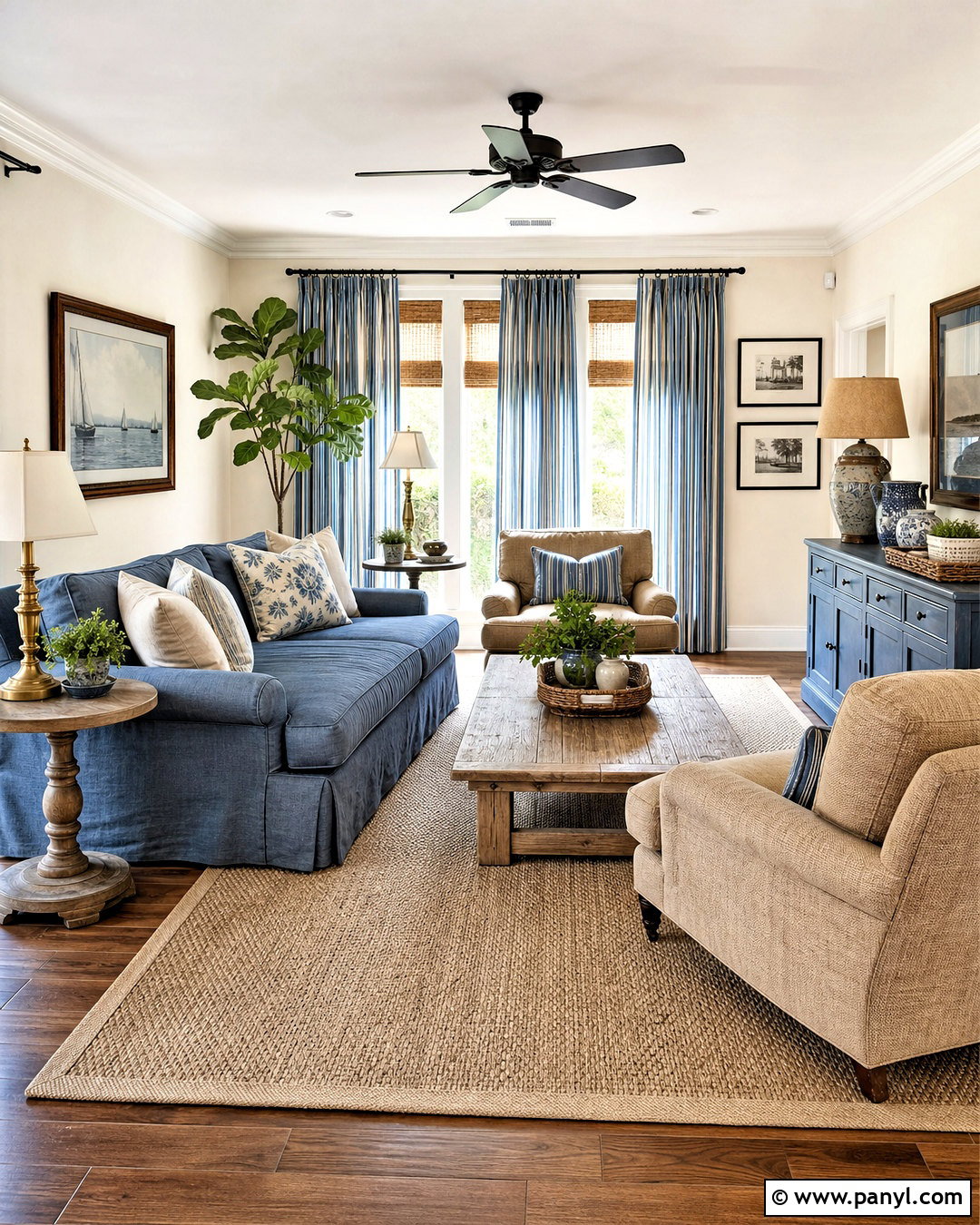
Dusty blue and ivory create a light, collected room that feels softer than a traditional blue-and-white scheme. Place a faded blue sofa against the ivory walls and pair it with warm beige armchairs. A weathered oak coffee table and pale natural-fiber rug prevent the palette from becoming overly formal. Choose curtains with a subtle blue stripe or small botanical pattern, then repeat the blue in pillows and framed artwork. Antique brass lamps and medium brown wood frames bring needed warmth. For a more tailored result, add a blue-painted bookcase or console on one side of the room rather than creating a full accent wall. Keep accessories limited to books, pottery, and clear glass pieces so the finished room stays peaceful, open, and practical.
7. Ivory Walls With Blush Pink
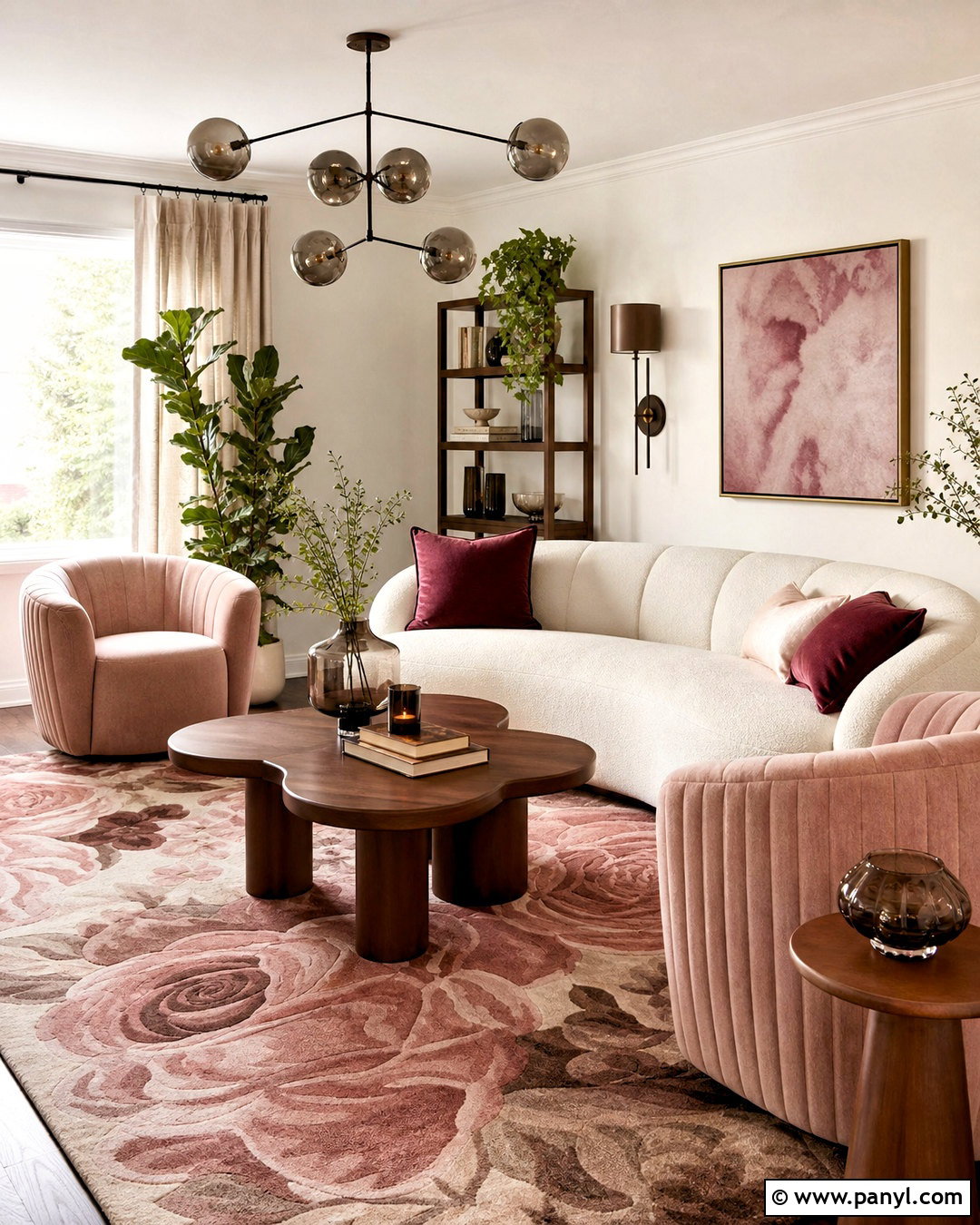
Blush pink can make ivory walls feel gentle and sophisticated when the room includes grounding neutral materials. Begin with a beige or mushroom-colored sofa instead of pink upholstery, then introduce blush through two accent chairs, curtains, and a patterned rug. Add a walnut coffee table and dark bronze lighting to give the pale colors visual weight. Soft rose artwork and muted burgundy pillows create tonal depth without making the space look overly sweet. Natural linen, wool, and velvet provide subtle variation across the neutral palette. Keep decorative objects simple, using ivory ceramics, smoky glass, and one arrangement of greenery. Clean white trim around doors and windows adds definition, while the creamy walls maintain the warm, flattering atmosphere that makes this complete palette feel cohesive.
8. Ivory Walls With Black Accents
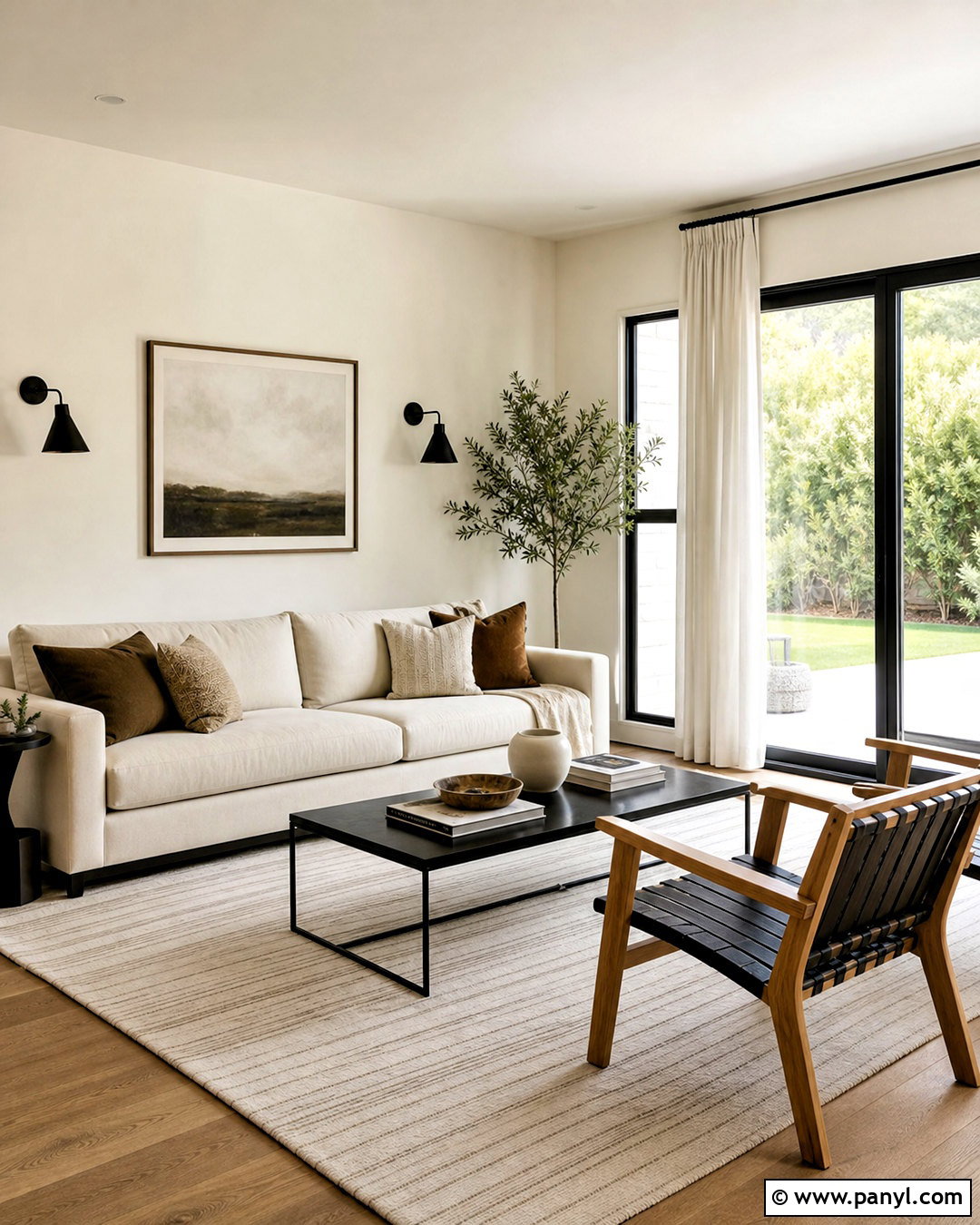
Black accents give ivory walls a sharp architectural presence while allowing the overall room to remain bright. Choose an ivory sofa, a black-framed coffee table, and two light wood chairs with black woven seats. Anchor the arrangement with a cream rug featuring a narrow black border or understated linear pattern. Repeat matte black through curtain rods, sconces, door hardware, and picture frames, spreading the contrast evenly instead of concentrating it in one area. Warm oak flooring and camel-colored pillows soften the graphic palette. Large-scale artwork with plenty of light background space keeps the walls interesting without looking crowded. Finish with simple linen curtains and one tall tree in a dark planter. The result feels modern, balanced, and suitable for an average-sized home.
9. Ivory Walls With Brass Accents
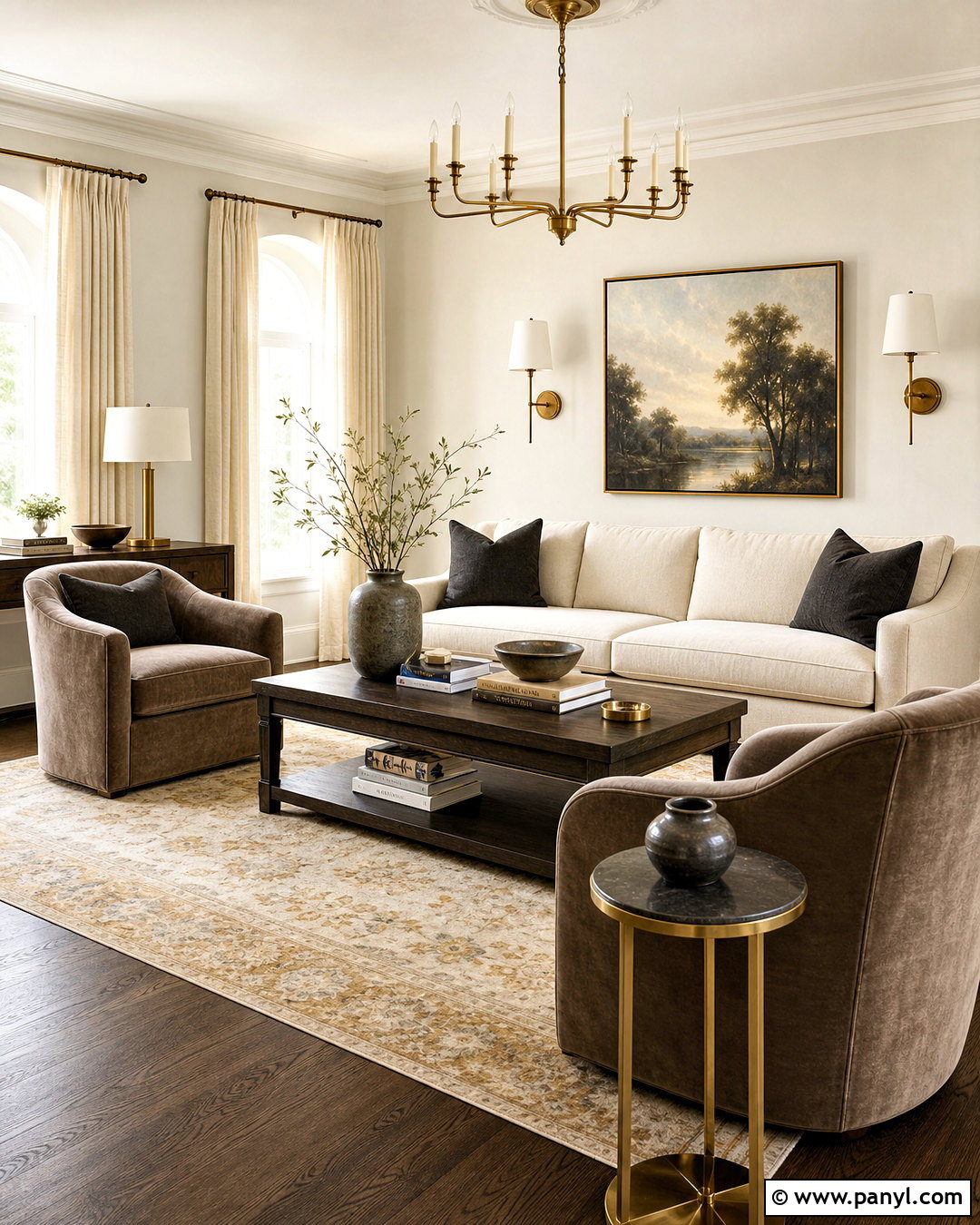
Ivory walls and brushed brass create a polished interior that feels warm rather than flashy. Build the living room around a cream sofa and two taupe velvet chairs, then add a dark wood coffee table for grounding contrast. Use brass sparingly but consistently in the chandelier, side tables, curtain rods, and small frame details. A vintage-style rug in faded ivory, tan, and muted gold helps distribute the warmth across the floor. Choose linen curtains that nearly match the walls for an airy, seamless effect. To prevent the palette from becoming too yellow, add touches of charcoal, deep olive, or espresso brown. Stoneware, stacked books, and one oversized landscape print complete the design while allowing the metal finishes and soft wall color to remain prominent.
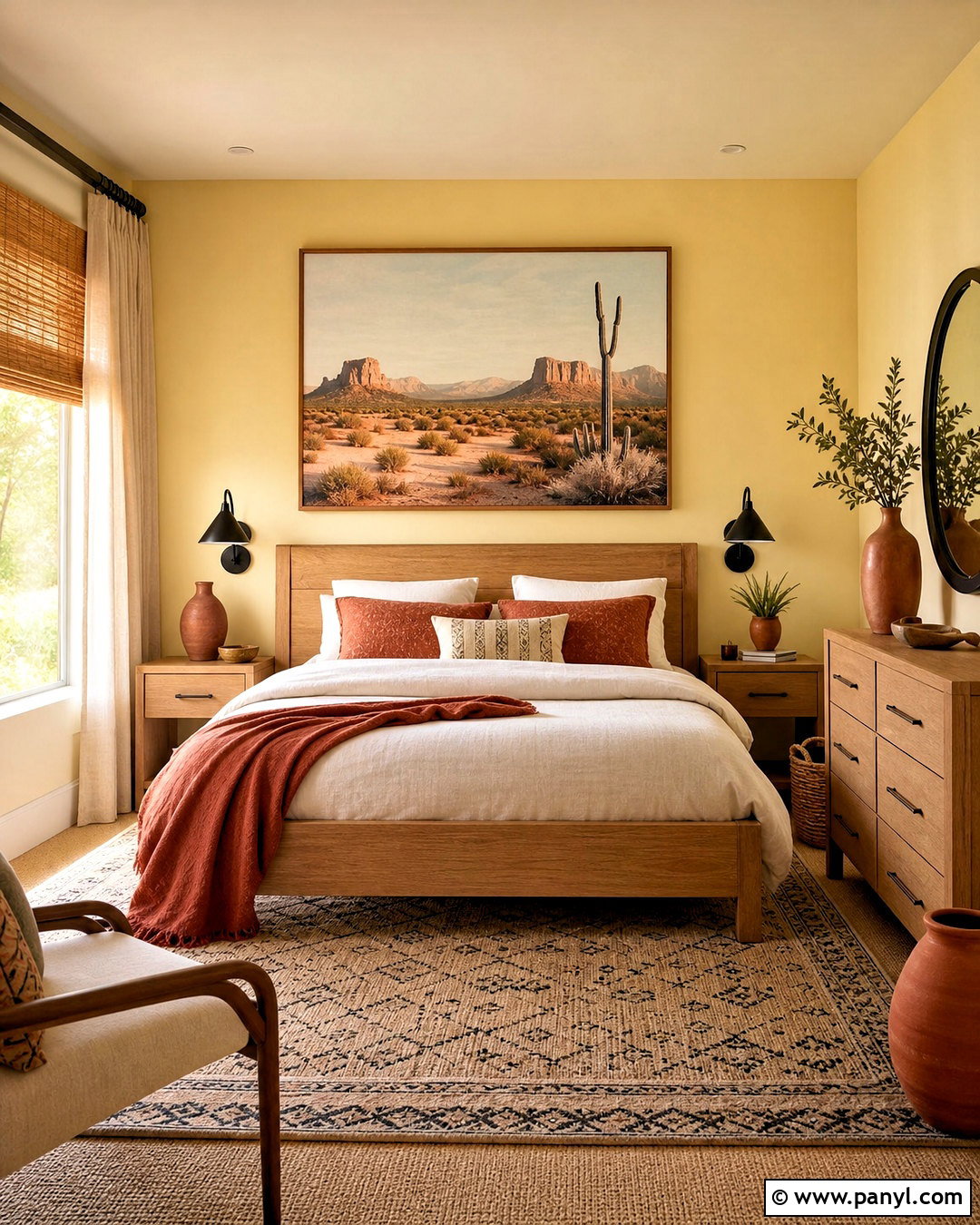
10. Ivory Walls With Chocolate Brown
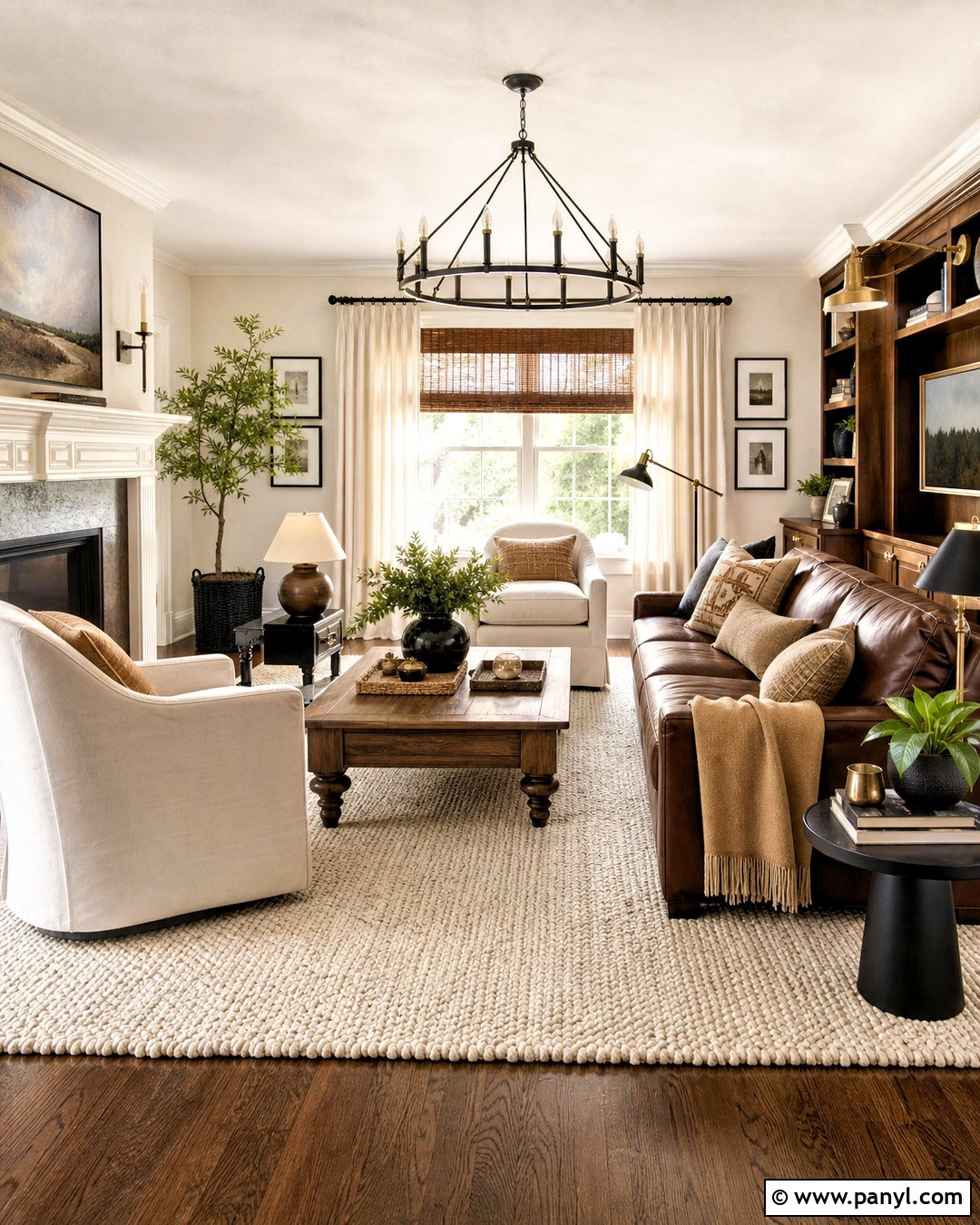
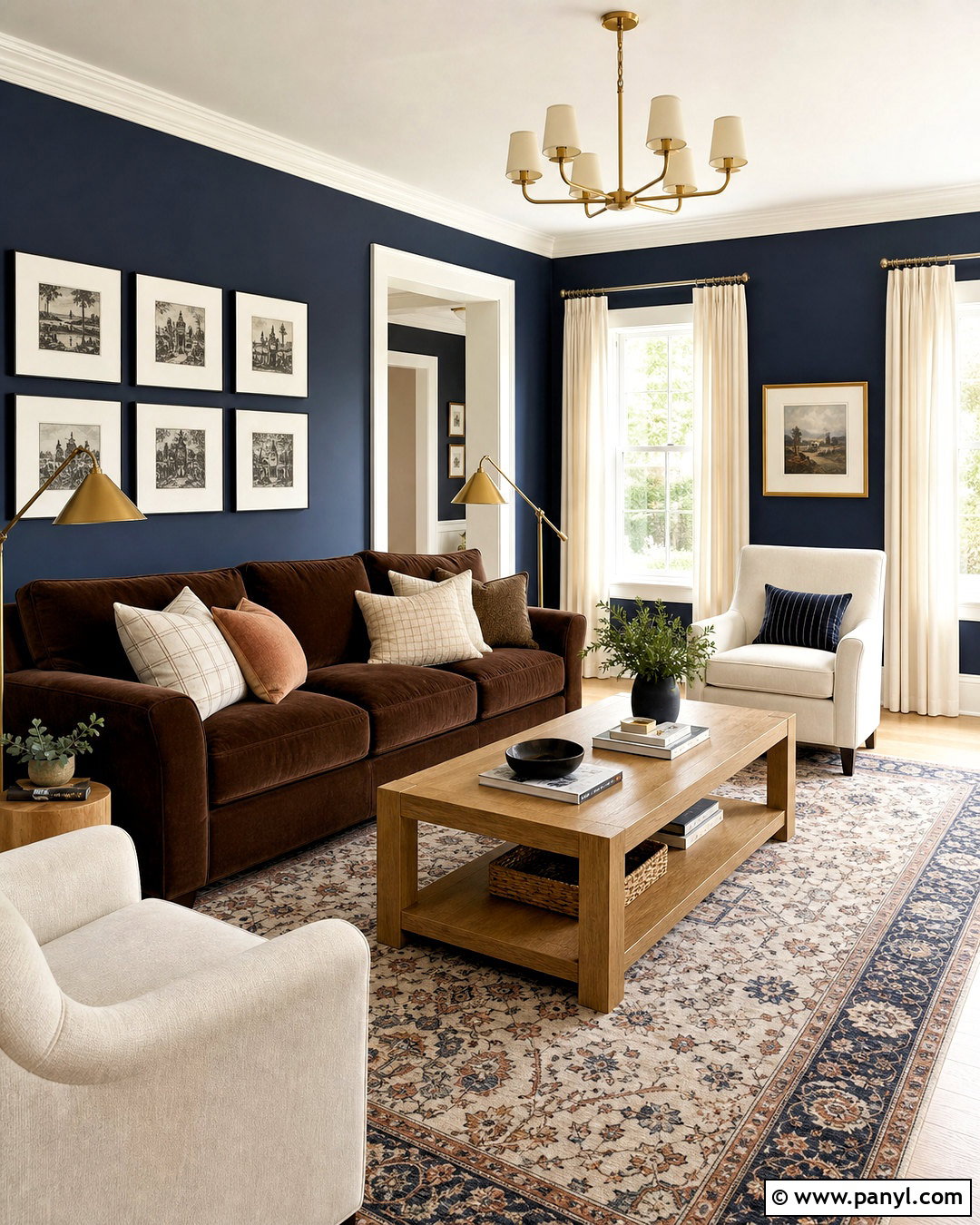
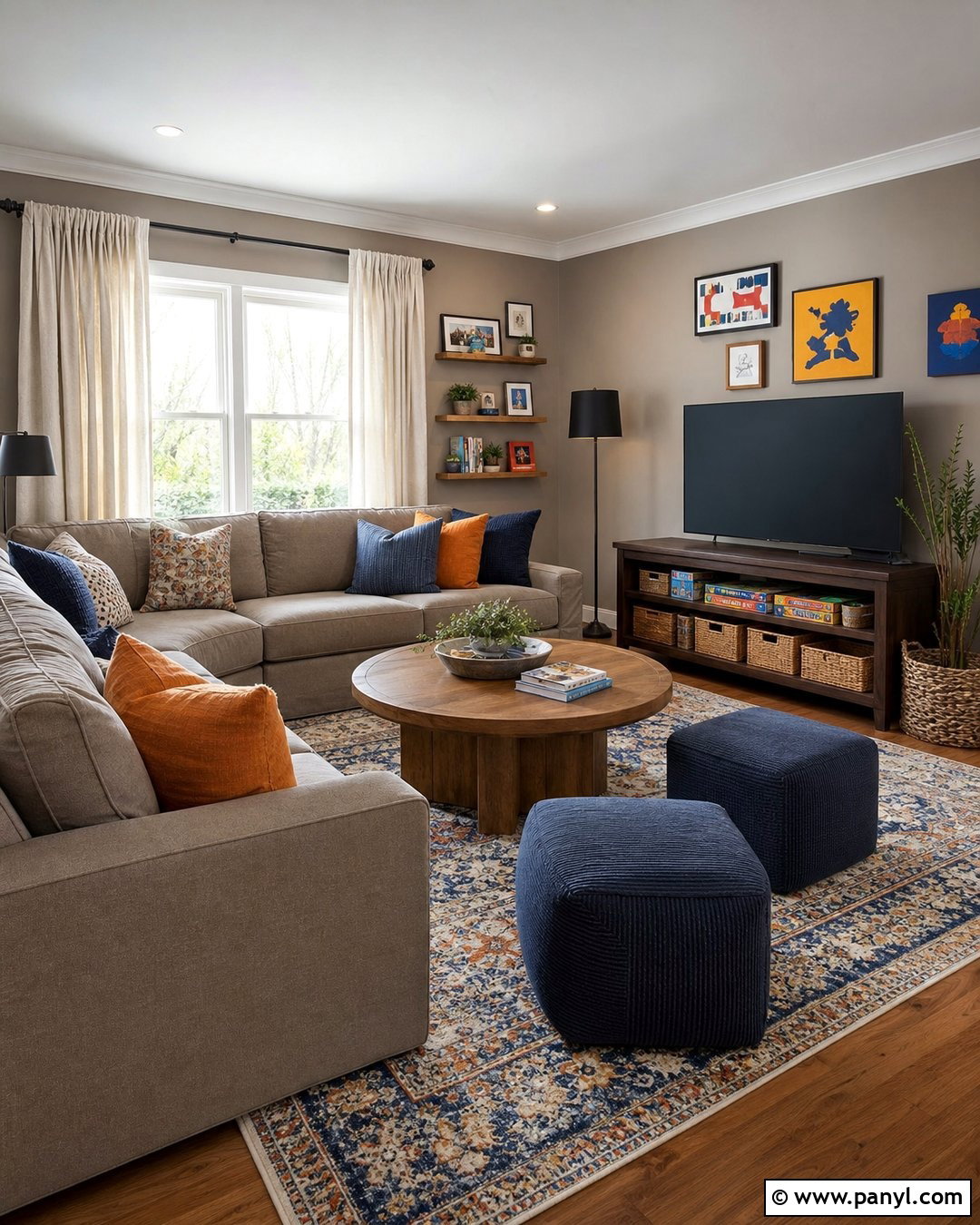
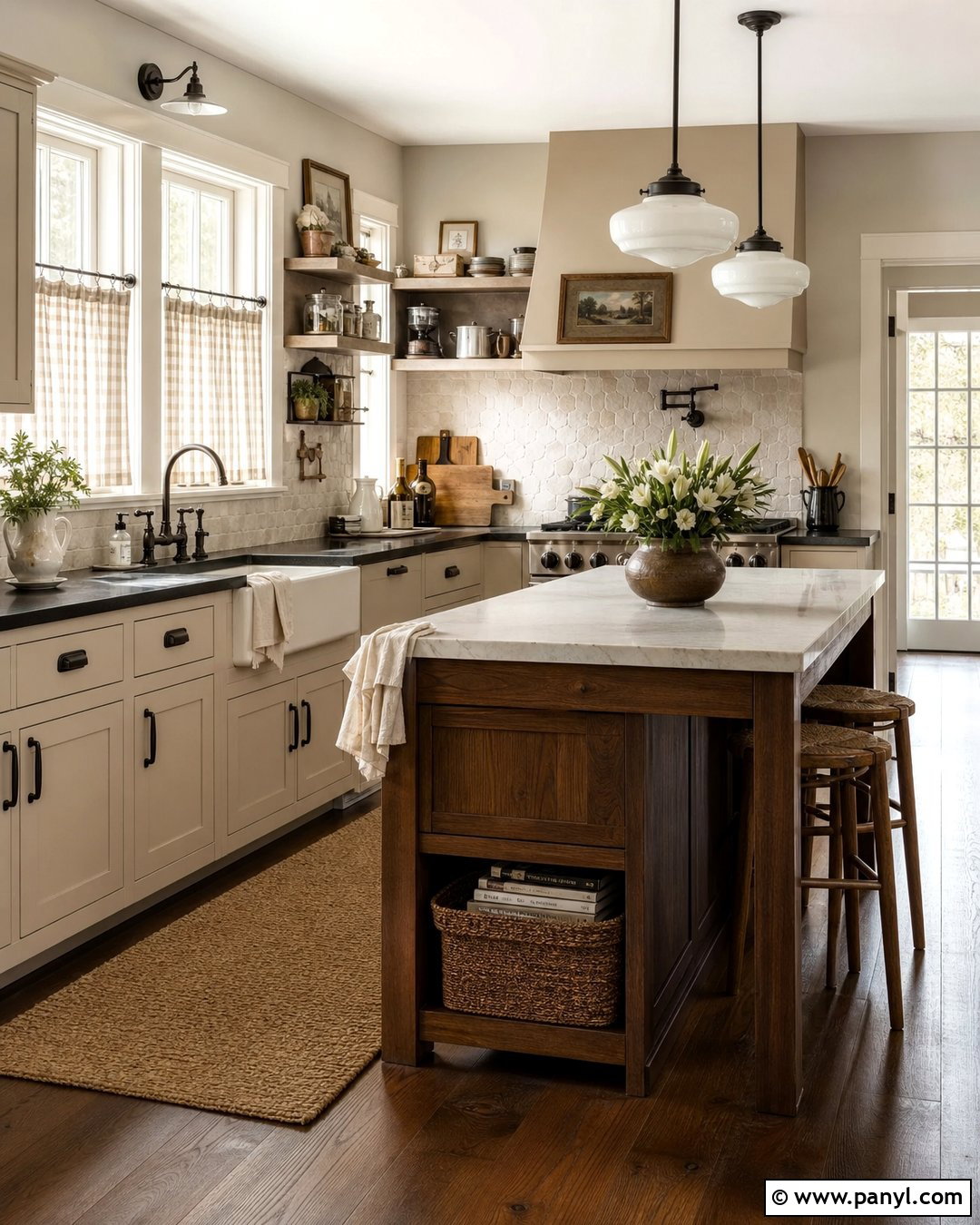
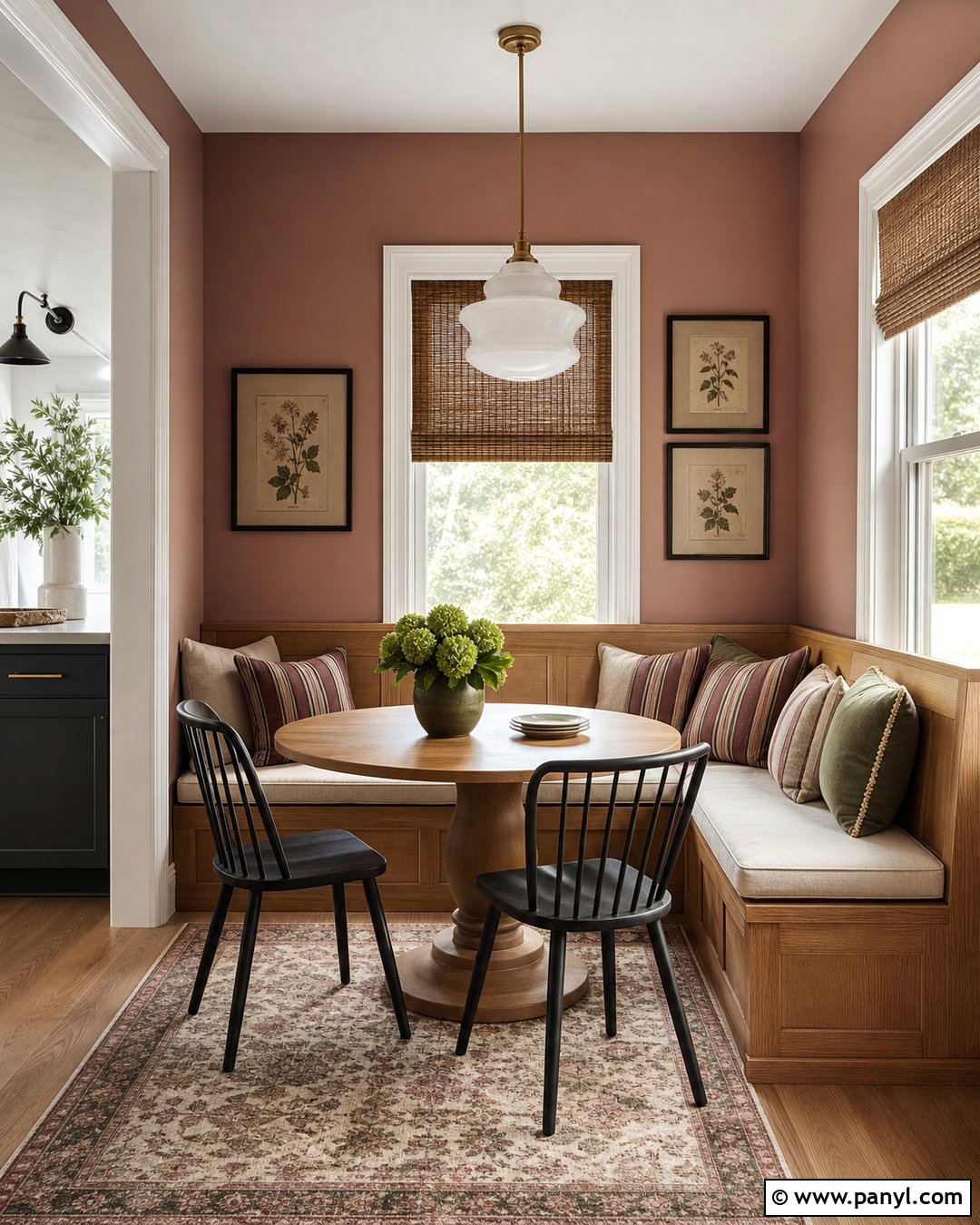
Deep chocolate brown makes ivory walls look brighter and richer, creating an especially cozy family room or den. Position a brown leather sofa opposite two ivory upholstered chairs, with a large wool rug beneath the complete seating group. Choose walnut shelving and a substantial wood coffee table to reinforce the grounded palette. Add camel, cream, and muted rust textiles so the transition between dark furniture and light walls feels gradual. Woven shades can provide privacy, while full-length ivory curtains soften the windows. Antique bronze lighting works better here than shiny silver because it complements the warm materials. Include green plants and a few black accents for freshness and definition. The finished room should feel layered, durable, and comfortable enough for everyday use.
11. Ivory Walls With White Trim
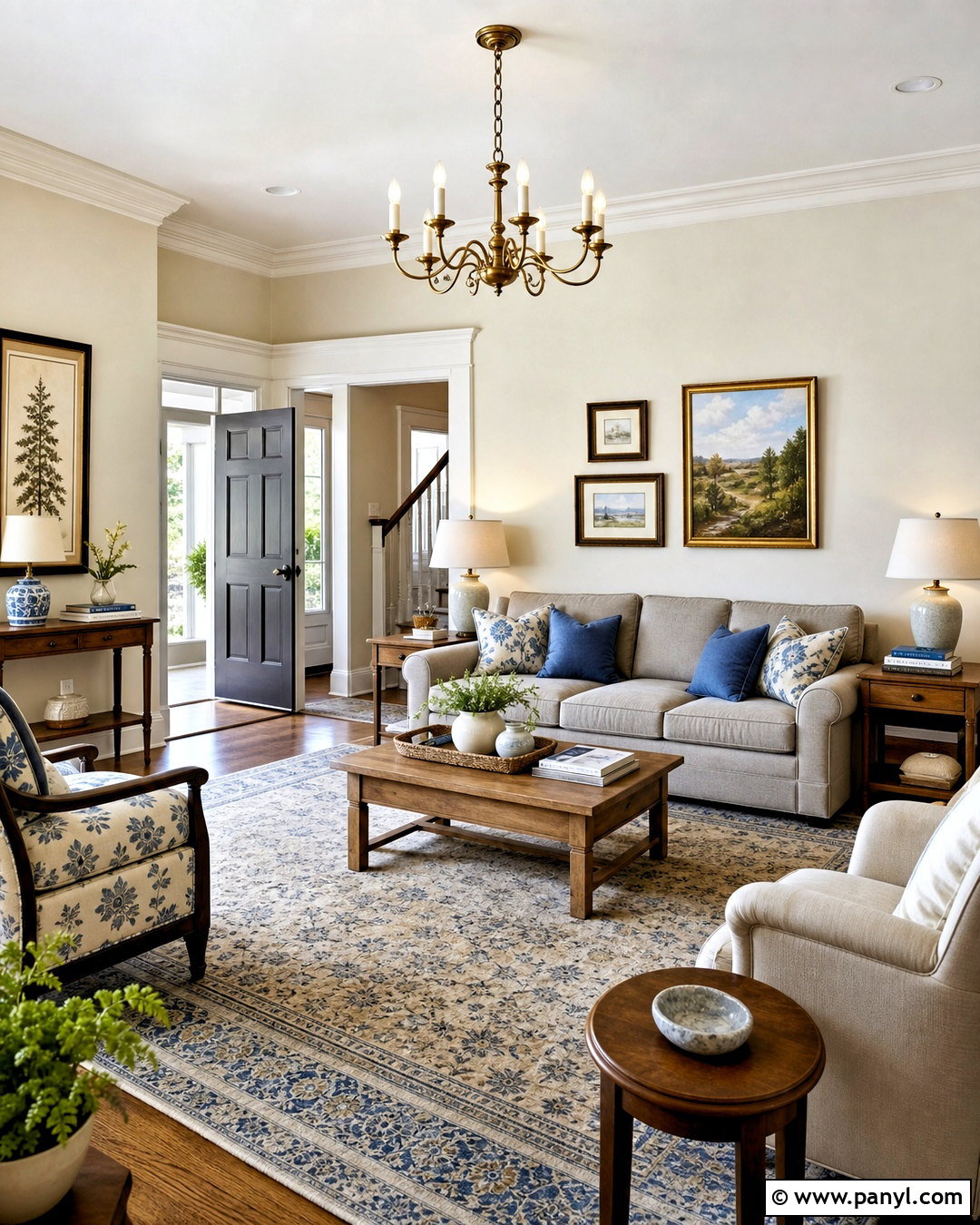
Combining ivory walls with clean white trim highlights molding, doors, windows, and built-in features without relying on a bold accent color. Use a warm but noticeably lighter white for the ceiling and woodwork so the distinction appears intentional. Furnish the room with a greige sofa, light oak tables, and cream curtains that relate to the ivory paint. A patterned rug in beige, soft blue, and brown introduces enough color to keep the space from looking blank. Repeat the trim white through lampshades and a few ceramic pieces, but avoid filling the room with bright white furniture. Medium brown frames and aged brass lighting add contrast. This approach is especially effective in traditional rooms with crown molding, paneled doors, or decorative window casings.
12. Ivory Walls With Natural Linen
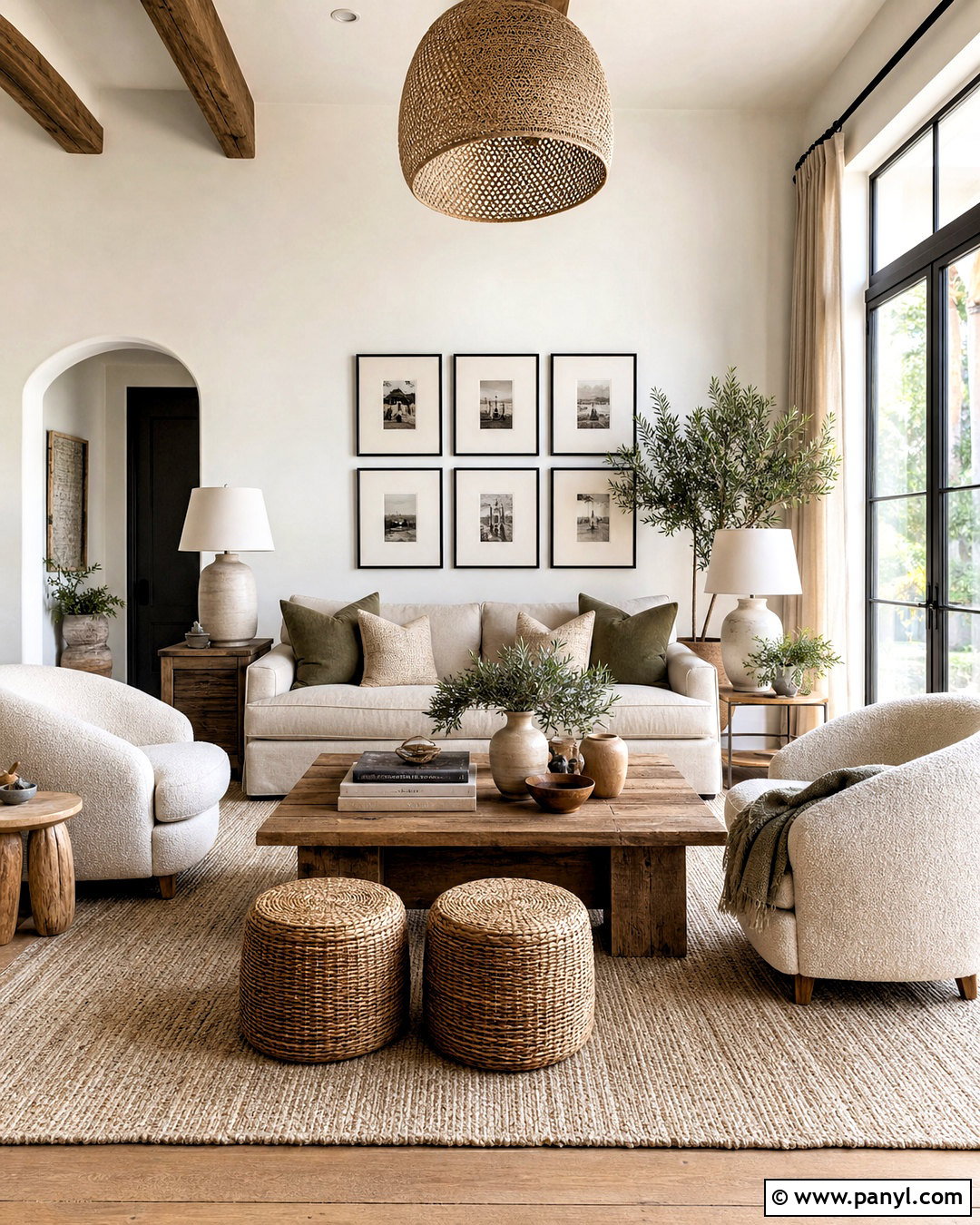
A layered neutral room can feel warm and dimensional when ivory walls are surrounded by natural linen, wool, wood, and woven fibers. Start with a slipcovered linen sofa in flax beige and add two cream boucle chairs for a subtle change in texture. Use a thick wool rug beneath a reclaimed oak coffee table, then hang relaxed linen curtains in a slightly deeper oatmeal tone. Woven baskets, cane details, and ceramic lamps prevent the pale palette from feeling unfinished. Add small amounts of muted olive or tobacco brown through pillows and artwork. Avoid matching every neutral exactly; controlled differences make the design more natural. Soft black accents in frames and lighting provide definition, while the ivory background keeps the full room light and cohesive.
13. Ivory Walls in a Small Living Room
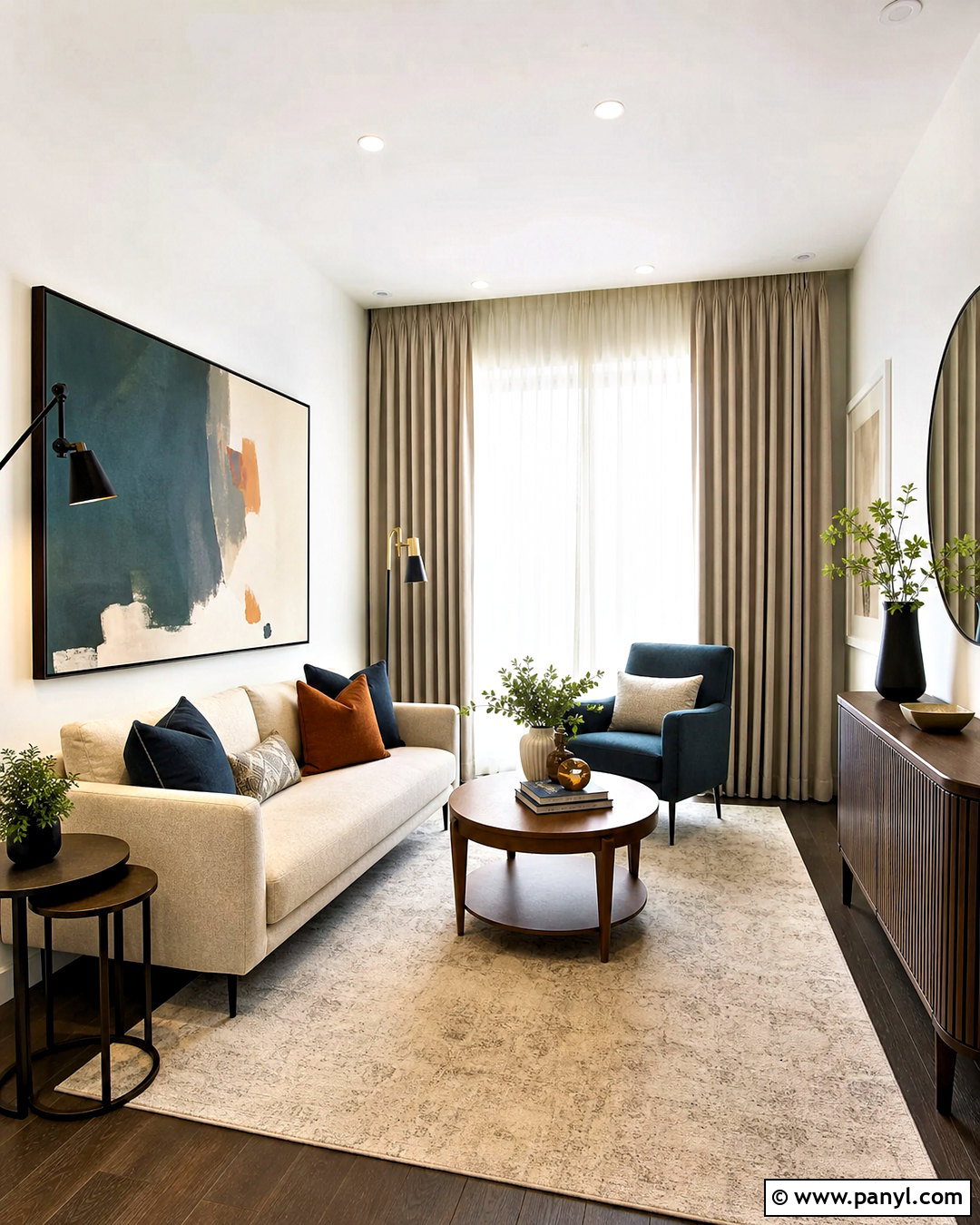
Ivory walls can help a small living room feel open, but the furniture layout and contrast still need careful planning. Select a compact beige sofa with raised legs and position it against the longest uninterrupted wall. Add one upholstered chair, a round oak coffee table, and nesting side tables instead of filling the room with bulky pieces. A light rug large enough to sit beneath the front furniture legs visually expands the seating zone. Use full-height curtains close to the wall color to reduce visual breaks around the windows. One large artwork is usually calmer than a crowded gallery wall. Include storage through a narrow closed console or built-in cabinet. Black or dark bronze accents should remain slim, giving the pale room definition without reducing its airy appearance.
14. Ivory Walls in a Cozy Bedroom
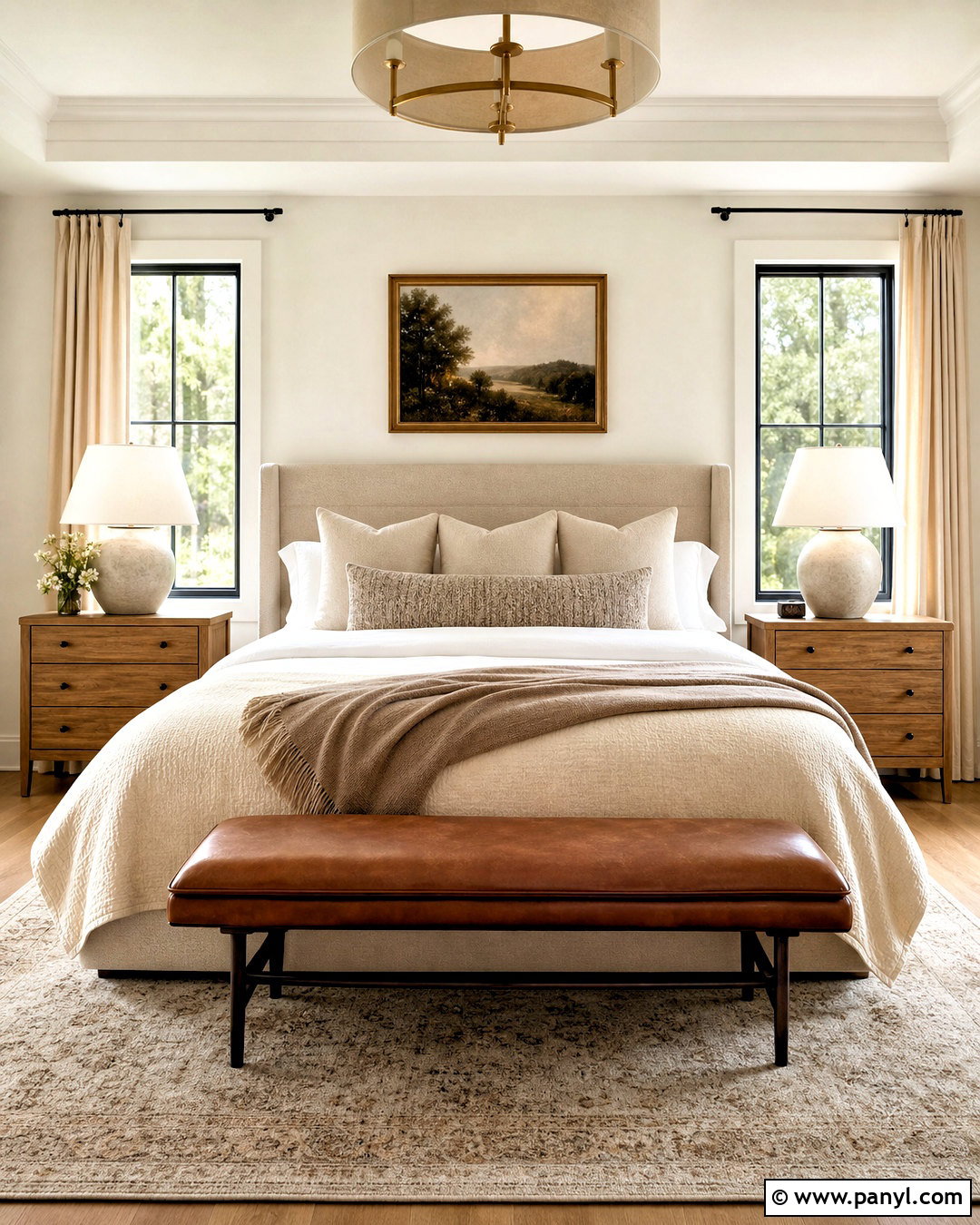
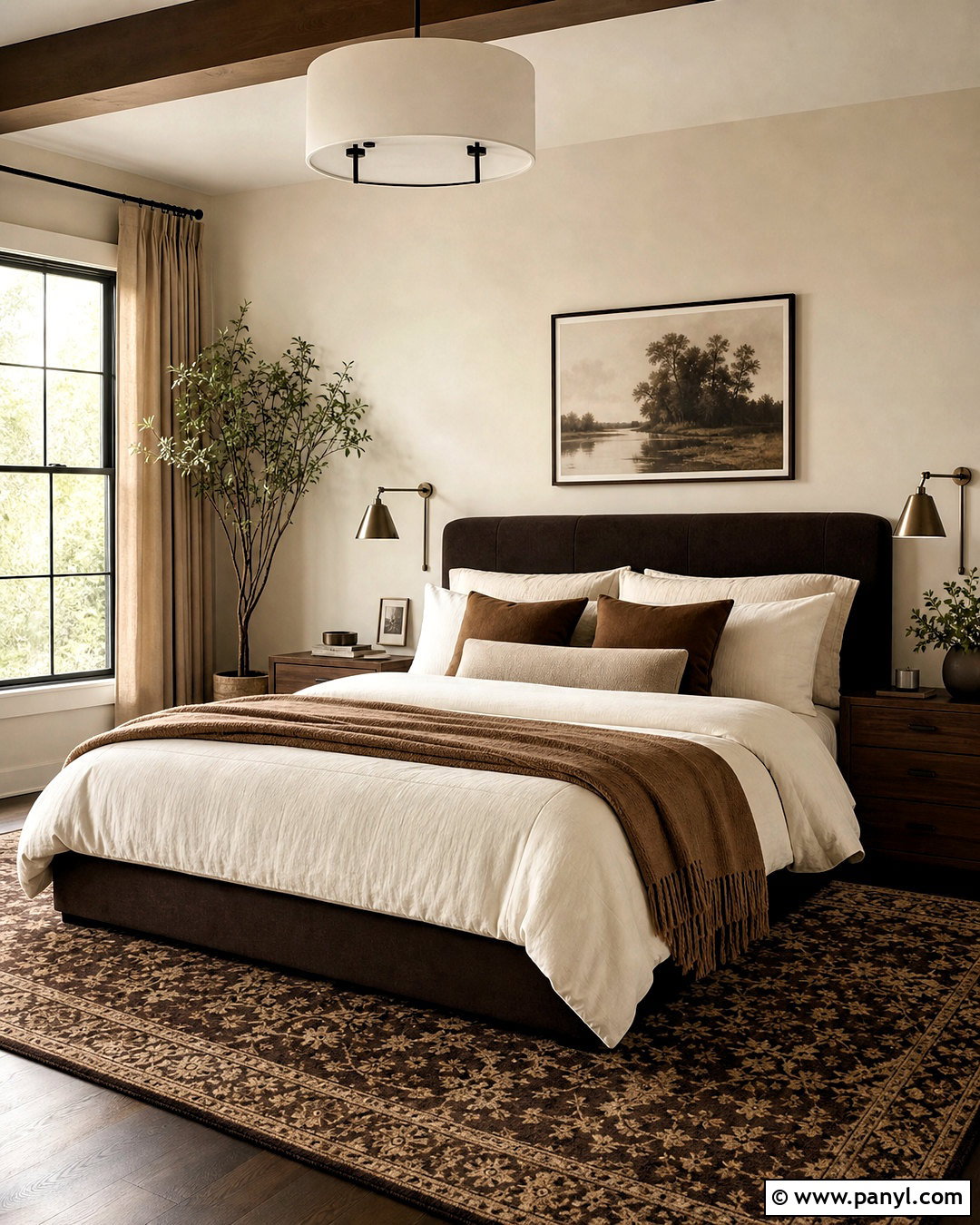
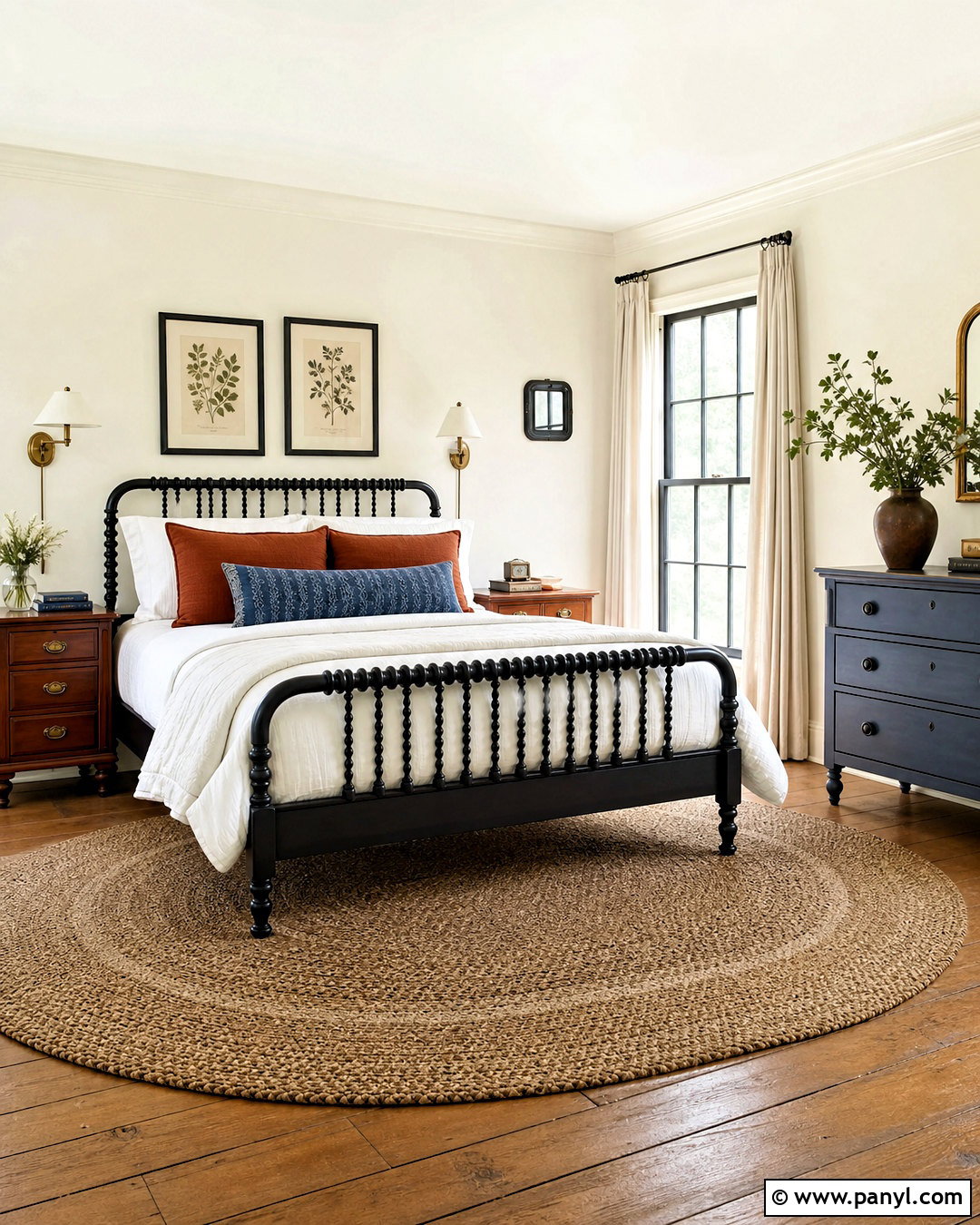
In a bedroom, ivory walls form a quiet backdrop for layered bedding and warm natural materials. Center an upholstered oatmeal bed on the main wall, then dress it with white sheets, an ivory quilt, and a muted taupe or dusty rose throw. Medium oak nightstands introduce warmth, while matching ceramic lamps provide soft symmetry. Place a large wool rug beneath the bed so it extends comfortably along both sides. Full-length linen curtains can soften daylight and make the windows look taller. Add one wide landscape artwork above the headboard rather than several small pieces. A bench in brown leather or textured fabric gives the foot of the bed a finished appearance. Keep clutter concealed so the subtle colors and tactile materials remain the focus.
15. Ivory Walls in a Modern Kitchen
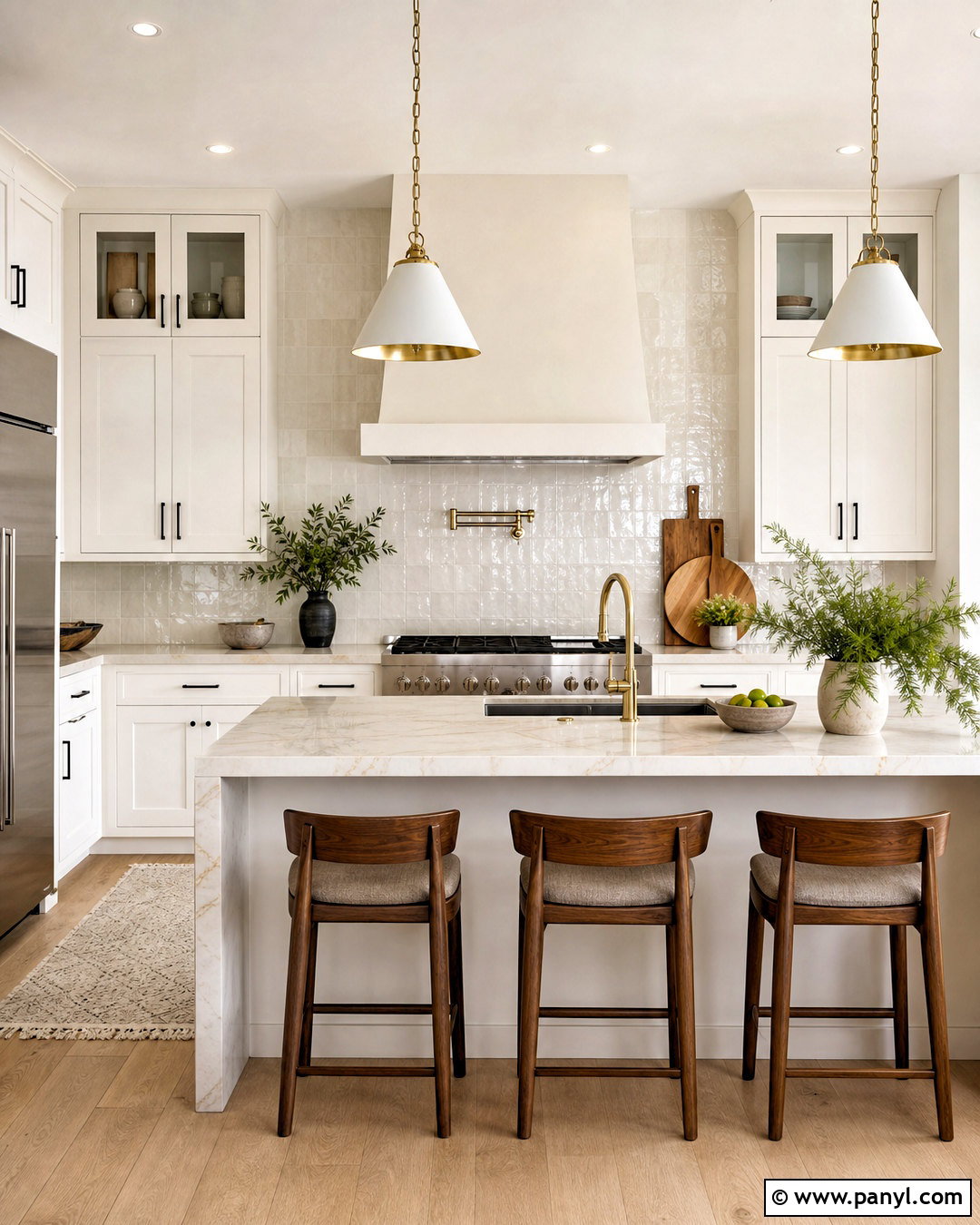
Ivory walls can soften a modern kitchen filled with straight lines, hard surfaces, and practical finishes. Pair them with warm white or light greige cabinets so the room has subtle contrast instead of appearing uniformly cream. Choose pale oak flooring, quartz counters with restrained beige veining, and a simple backsplash of handmade white tile. Matte black cabinet pulls and pendant lights define the cabinetry, while brushed brass faucets can add a warmer accent if used consistently. Introduce natural wood through counter stools and cutting boards, then add one or two green plants. Keep small appliances and countertop items grouped neatly. The complete design should balance clean modern organization with enough texture and warmth to make the ivory wall color feel intentional rather than dated.
16. Ivory Walls in a Spa Bathroom
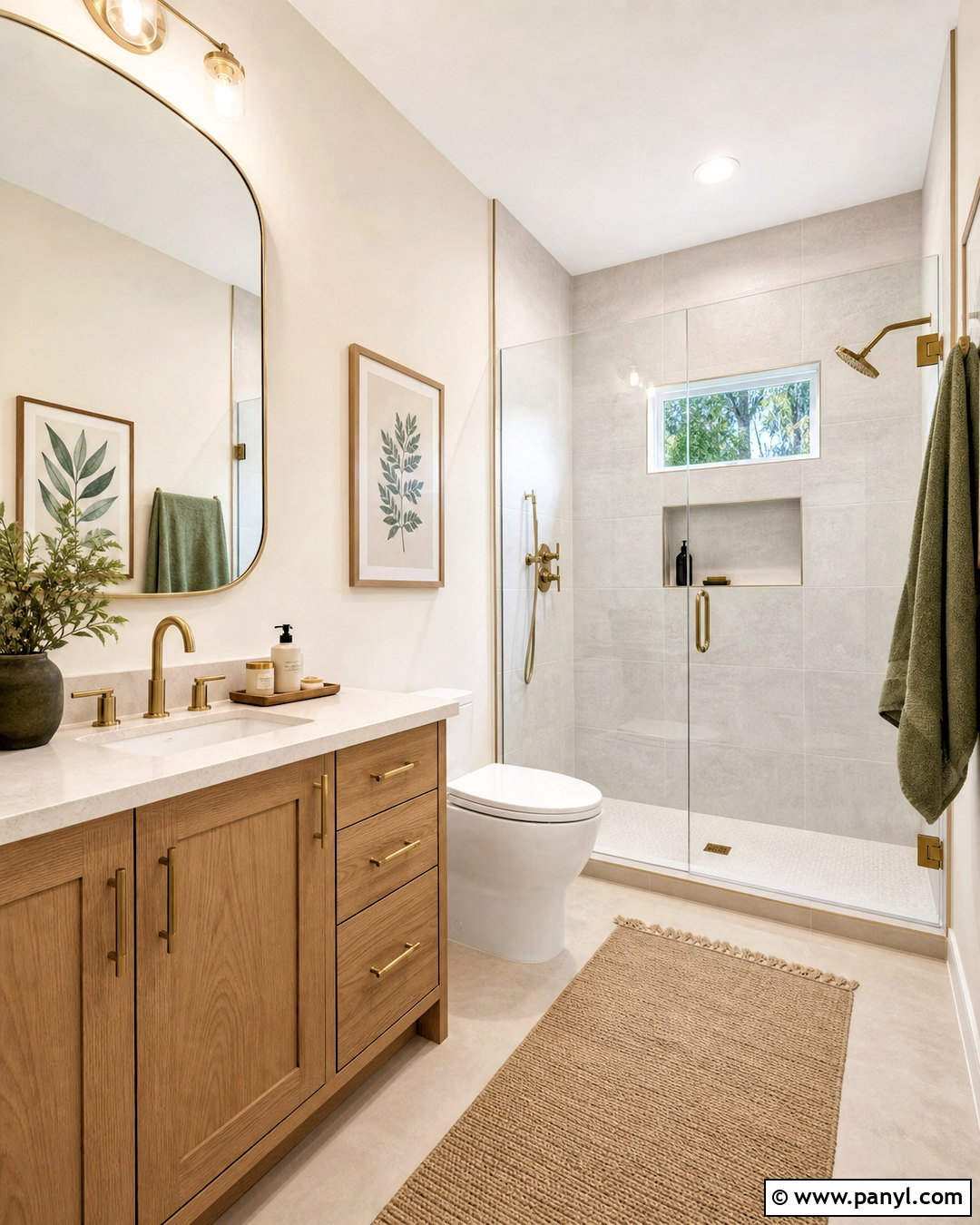
Turn a bathroom with ivory walls into a calming retreat by layering warm stone, pale wood, and muted green. Choose a light oak vanity topped with cream quartz or softly veined marble. A frameless glass shower keeps the room visually open, while beige porcelain floor tile provides practical durability. Use brushed brass or soft black fixtures, but keep the chosen metal consistent across faucets, lighting, and hardware. Sage towels and a small botanical print introduce color without disrupting the quiet palette. Add a rounded mirror to soften the straight edges of the vanity and tile. In moisture-prone areas, use the appropriate washable paint finish and properly installed tile. Closed vanity storage and a few simple countertop pieces maintain the clean, spa-like result.
17. Ivory Walls in a Dining Room
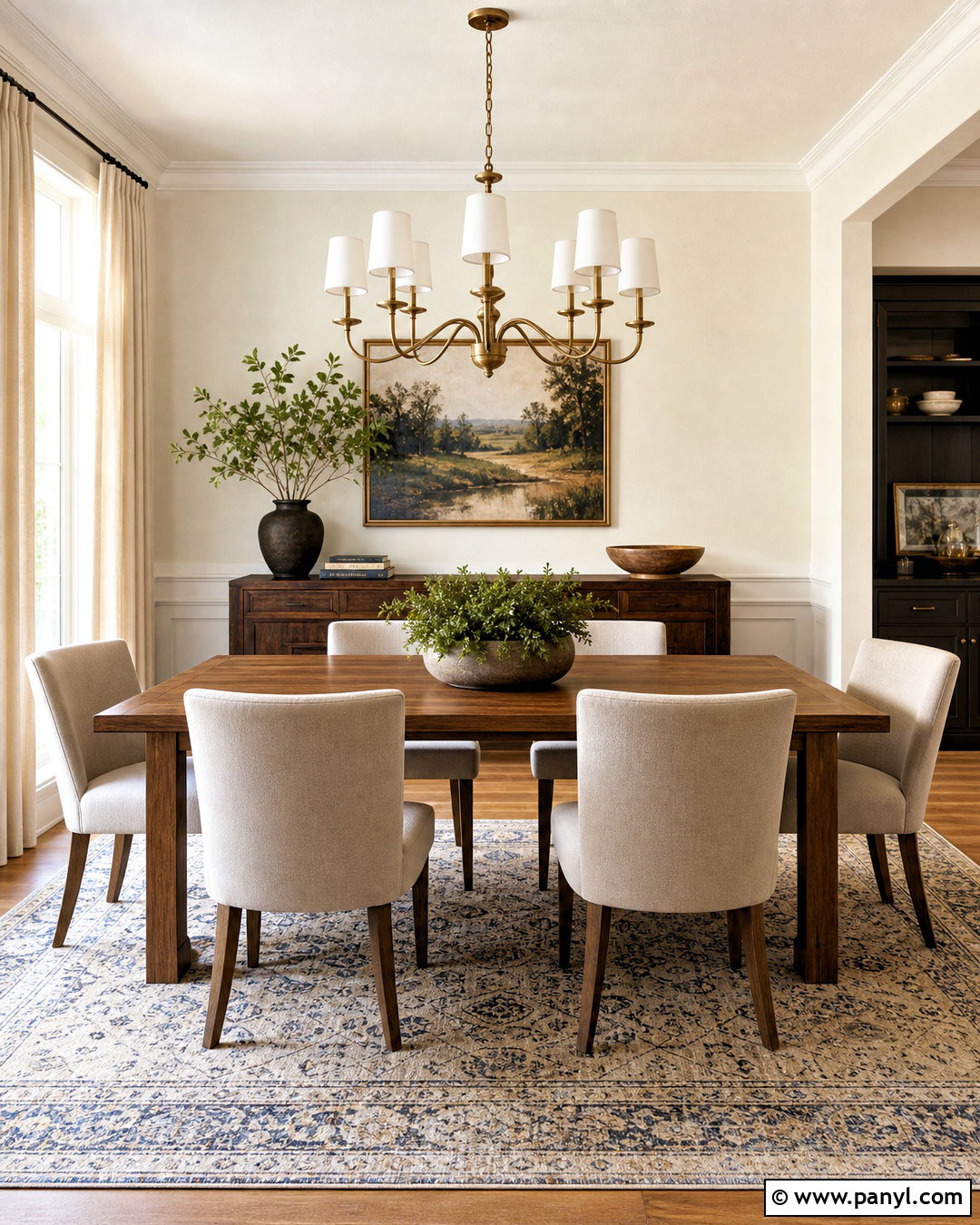
Ivory walls provide a flexible setting for a dining room that feels refined enough for gatherings but comfortable for everyday meals. Center a medium-toned oak table beneath a simple aged brass chandelier, then surround it with upholstered chairs in oatmeal or muted olive fabric. A large patterned rug in ivory, brown, and faded blue defines the dining zone and protects the floor. Add a dark wood sideboard to create contrast and useful storage. Above it, hang one oversized landscape or a balanced pair of framed prints. Linen curtains bring softness to the windows without competing with the table. Finish the room with pottery, a low centerpiece, and restrained black accents. The complete look feels warm, practical, and connected rather than overly formal.
18. Ivory Walls in an Entryway
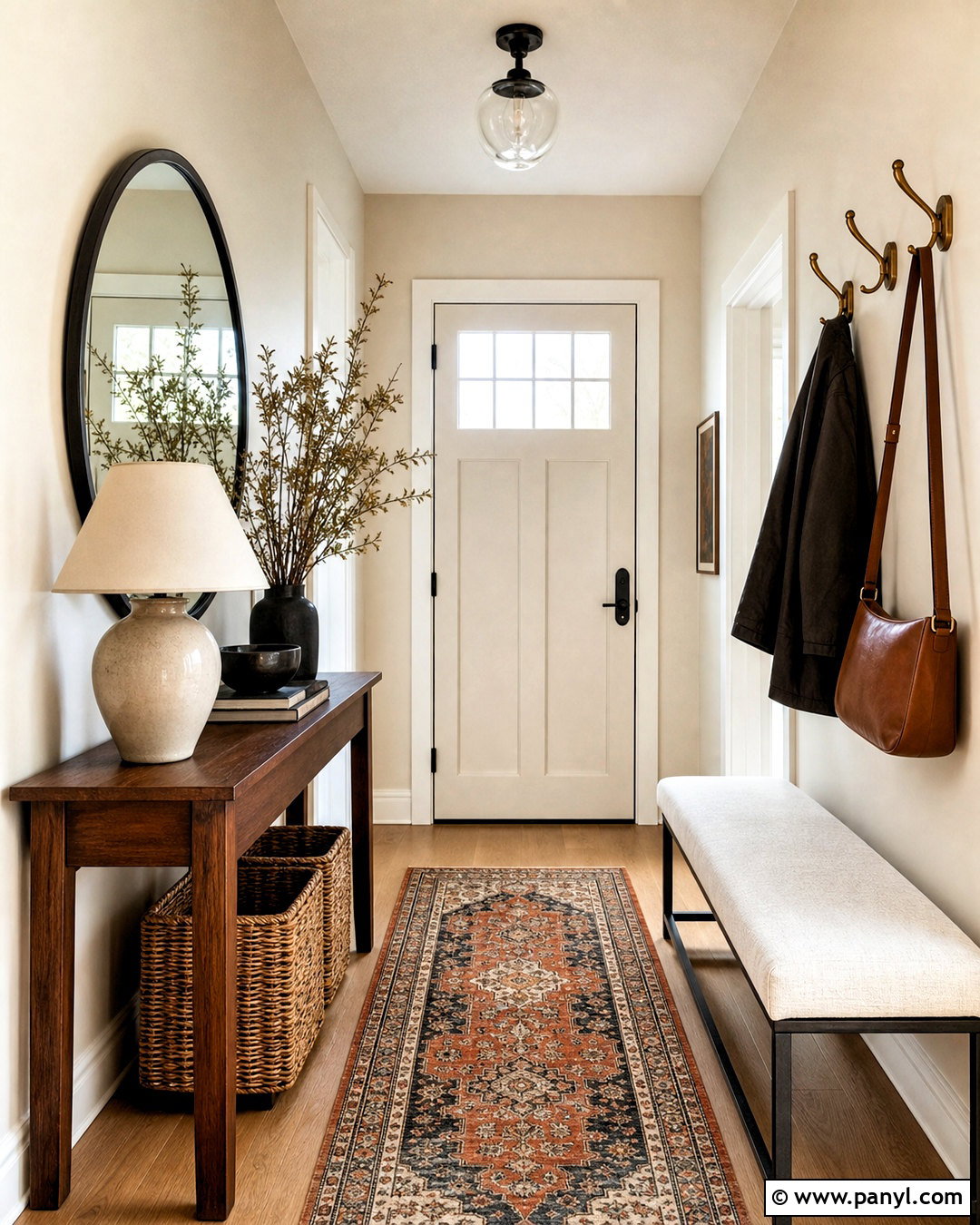
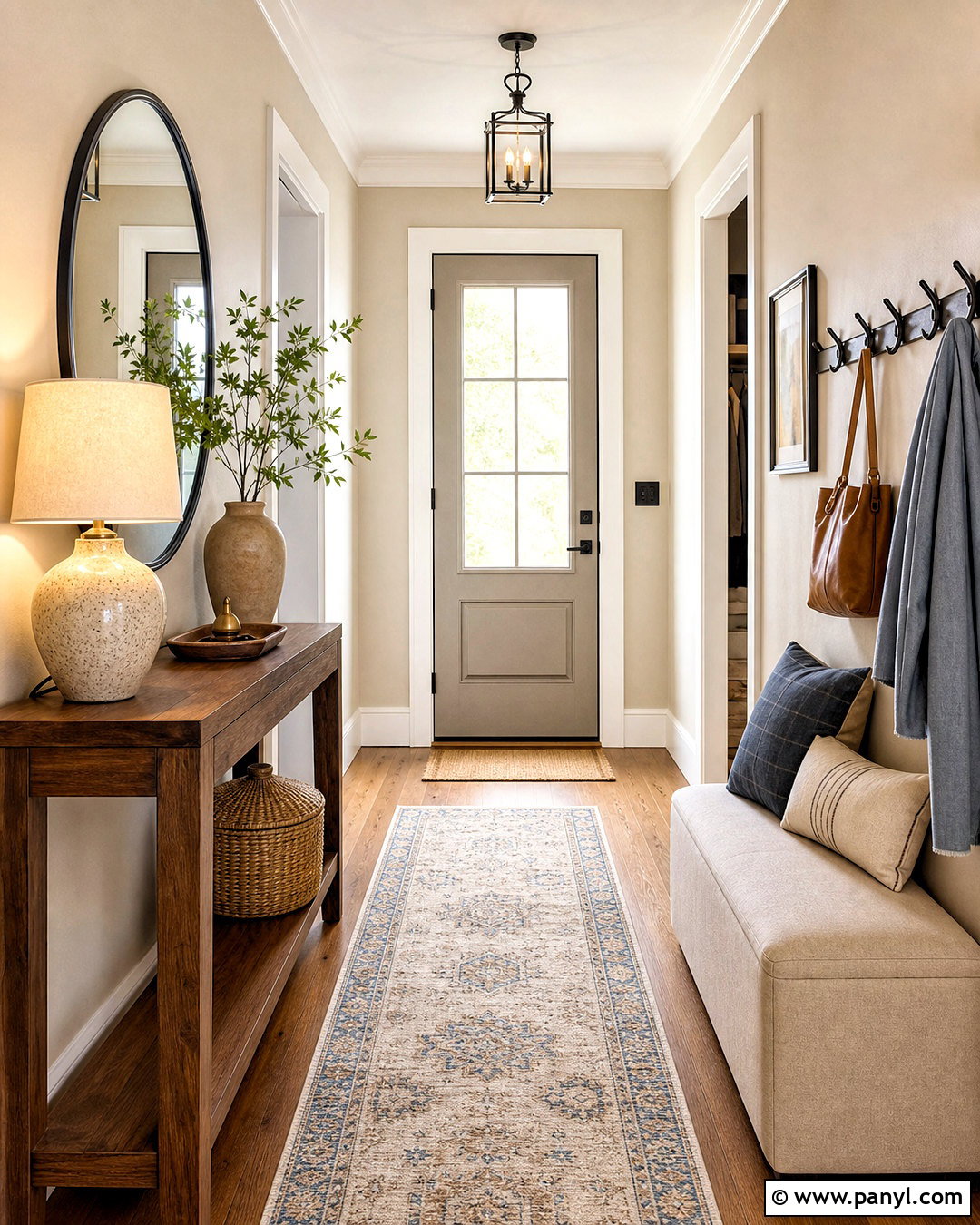
An entryway with ivory walls can feel bright and welcoming when every piece has a clear purpose. Place a narrow walnut or oak console against the main wall, leaving enough space for comfortable movement. Hang a large round mirror above it to reflect light and provide a convenient final check near the door. Add a washable runner in beige, charcoal, and muted rust to hide everyday wear while introducing color. A small upholstered bench or woven stool offers a place to remove shoes. Use black or aged brass hooks, lighting, and door hardware for definition. Closed baskets beneath the console control clutter, while one ceramic lamp and a simple branch arrangement add warmth. The complete setup creates function and character without crowding a compact entrance.
19. Ivory Walls in a Home Office
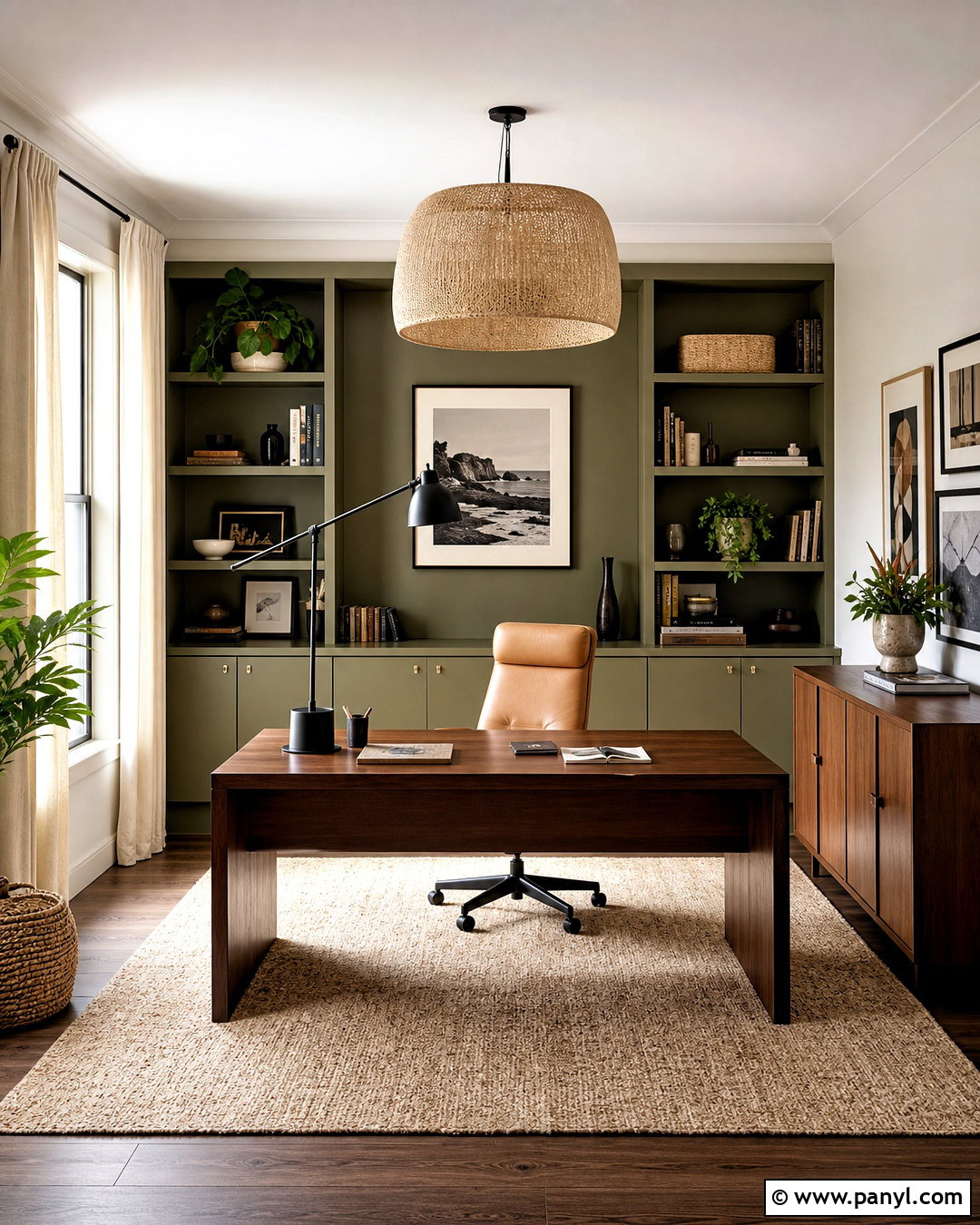
Ivory walls can keep a home office bright while warmer furniture and focused contrast support a productive atmosphere. Position a walnut desk where natural light reaches the work surface without creating screen glare. Add an ergonomic chair in camel, taupe, or black fabric, along with closed storage that matches the desk. A muted olive bookcase can introduce color and provide a strong visual anchor behind or beside the workspace. Use a wool rug to soften sound and define the work zone. Hang one organized group of artwork rather than scattering small pieces across every wall. A black task lamp, woven shade, and linen curtains complete the layered look. Keep cords concealed and desktop accessories limited so the ivory background maintains a calm, uncluttered appearance.
20. Ivory Walls in an Open Floor Plan
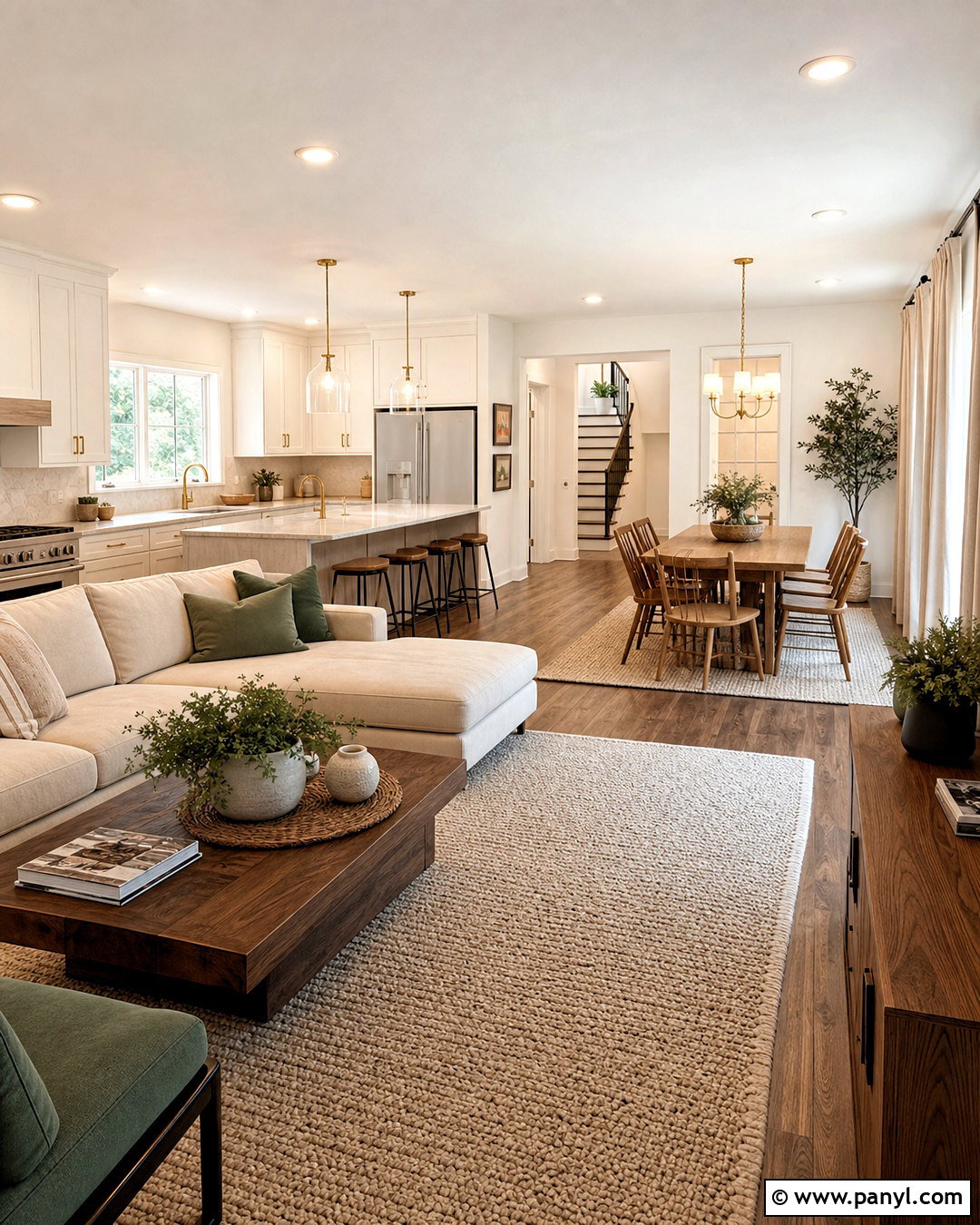
Using ivory walls throughout an open floor plan creates continuity, but each functional area still needs its own visual identity. Connect the living, dining, and kitchen zones with repeated warm wood tones and one consistent metal finish. In the living area, use a beige sectional, textured rug, and walnut tables. Define the dining space with an oak table and a low brass pendant. In the kitchen, choose warm white cabinetry, light stone counters, and black or brass hardware. Repeat muted sage, navy, or terracotta accents across all three areas in small amounts. Rugs and lighting should mark each zone without blocking sightlines. Keeping the same ivory paint on connecting walls allows furniture, textiles, and architectural features to guide movement through the complete space.
Conclusion:
Ivory color walls are versatile enough to support modern, traditional, organic, coastal, and quietly luxurious interiors. Their success depends on thoughtful contrast rather than simply filling a room with pale neutrals. Warm wood, natural linen, deep brown, navy, sage, charcoal, and terracotta can each give ivory a different personality. Use varied textures to create depth, and repeat accent colors or finishes in several places for a connected result. Always test paint samples beside the flooring, trim, cabinets, and fabrics at different times of day. With a balanced palette, practical furniture layout, and carefully selected materials, ivory color walls can make every room feel brighter, softer, and more welcoming.

Related Ideas and Inspiration:
Leave a Reply