
Sherwin-Williams Alabaster SW 7008 brings soft warmth to a living room without making the space feel noticeably cream or yellow. This versatile off-white works especially well with natural wood, layered neutrals, earthy colors, and both classic and modern furnishings. Sherwin-Williams also features Alabaster in its sitting-room color inspiration, showing how naturally it suits comfortable gathering spaces. () The key is building a complete palette around its warm character rather than treating it like a stark white. Lighting, flooring, trim, upholstery, and accent colors can all change how the walls appear. From relaxed farmhouse rooms to tailored traditional spaces, the following 20 Alabaster Sherwin Williams living rooms offer complete, practical looks you can recreate.

1. Alabaster Living Room With Natural Wood
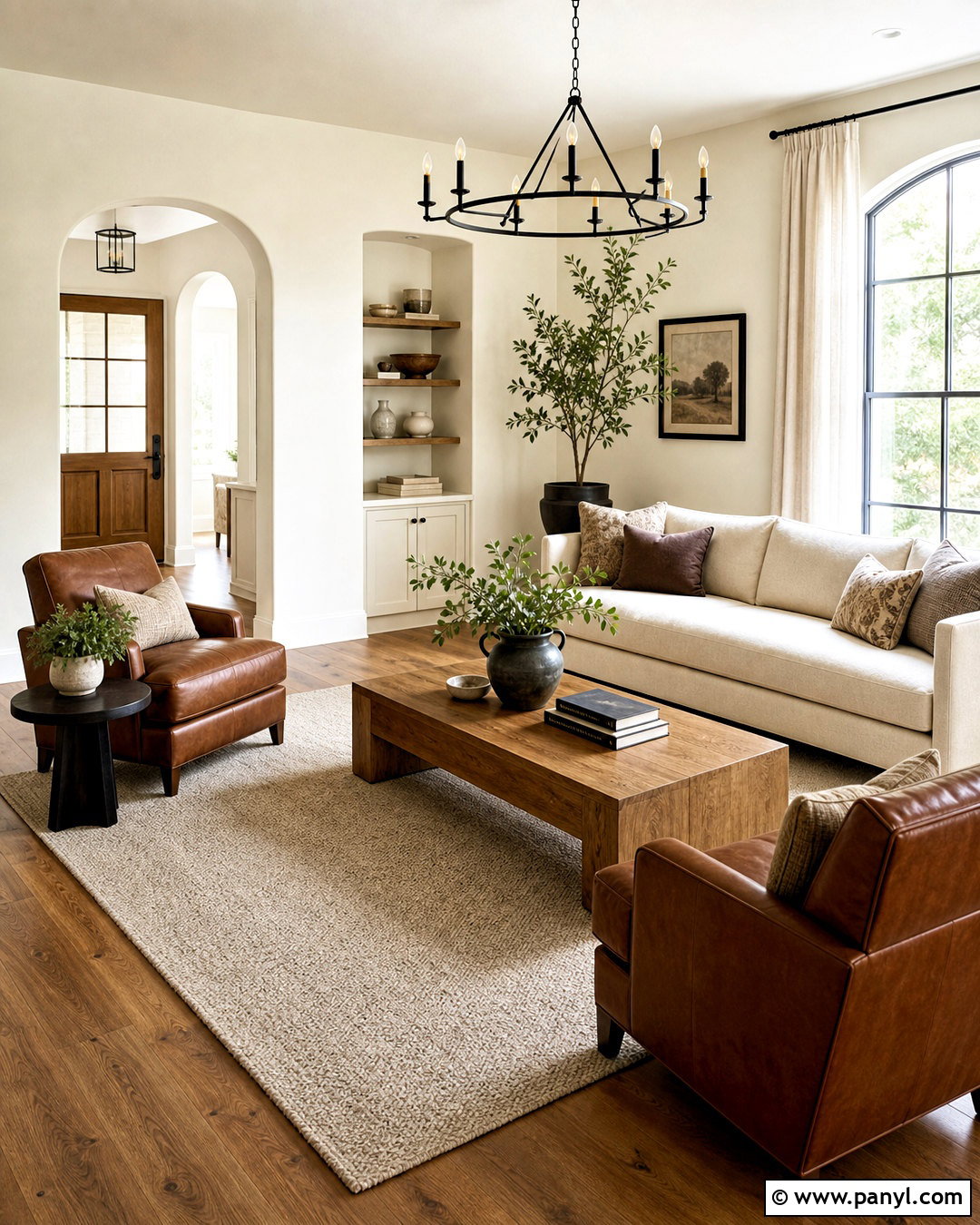
Warm wood makes Alabaster walls feel grounded, inviting, and pleasantly organic. Start with medium-toned oak flooring and arrange a cream linen sofa opposite two cognac leather chairs. A substantial oak coffee table should anchor the seating group without appearing too polished. Add a woven wool rug in oatmeal and tan to soften the floor while connecting the room’s neutral colors. Simple linen curtains allow daylight to brighten Alabaster without introducing another competing white. Finish the space with a wood-framed landscape print, ceramic table lamps, and a few leafy plants in aged clay pots. Black metal details on the curtain rod and lighting provide definition. The result is a balanced living room that feels warm, clean, and comfortable throughout every season.
2. Alabaster Living Room With White Trim
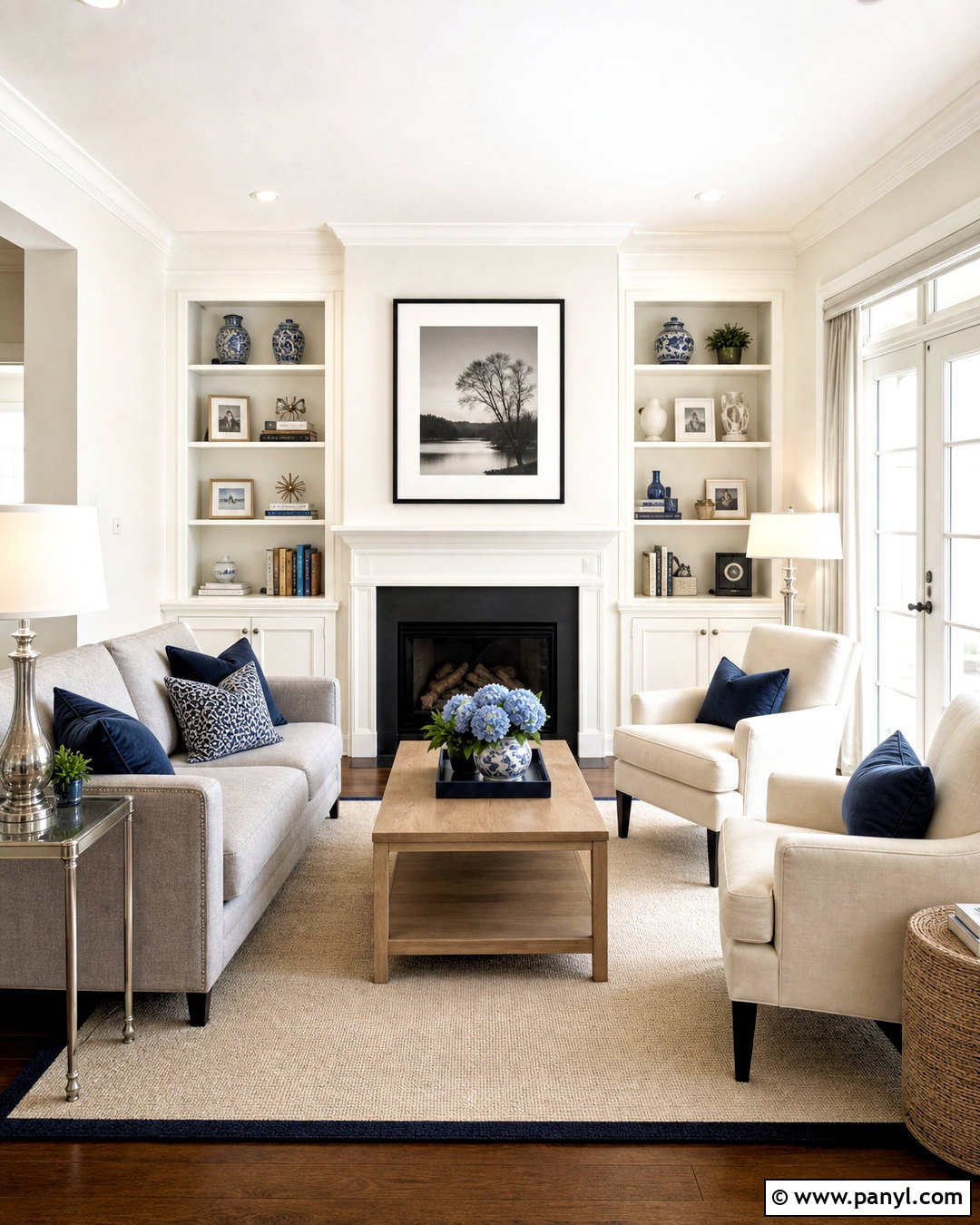
Pairing Alabaster walls with cleaner white trim creates subtle contrast around windows, doors, and architectural details. Use Sherwin-Williams Pure White or another balanced white for the baseboards, crown molding, and fireplace surround. Keep the ceiling bright white so the room feels open and neatly finished. A light gray sofa, ivory armchairs, and a charcoal-bordered rug reinforce the gentle contrast without overpowering the walls. Choose a pale oak coffee table and brushed nickel lamps for a fresh transitional look. Soft blue cushions can introduce quiet color, while framed black-and-white photography adds structure. This combination works particularly well when you want Alabaster to read as a warm wall color rather than blending into every painted surface. Sample both colors together before committing to the complete room.
3. Alabaster Living Room With Beige Furniture
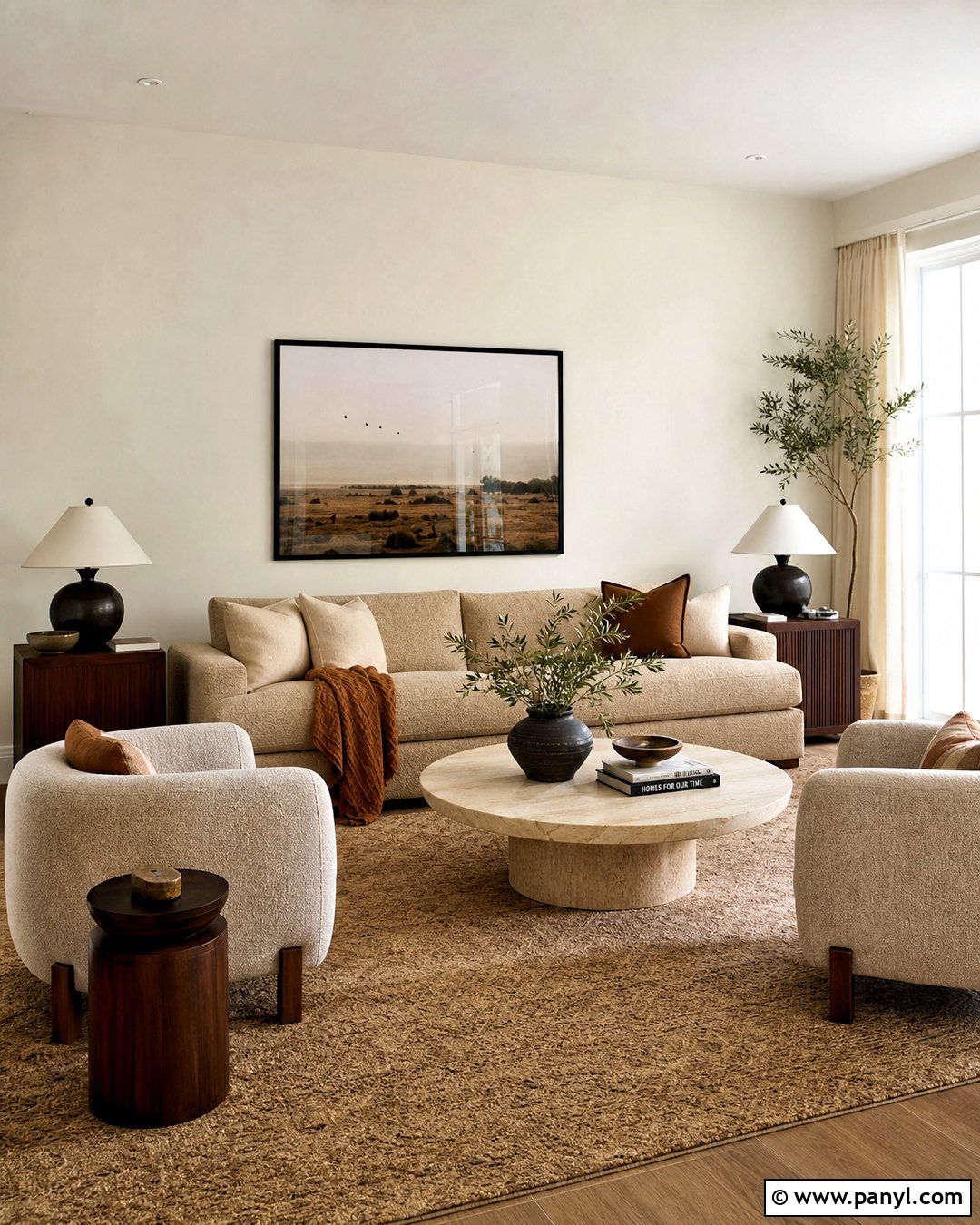
A beige furniture palette turns an Alabaster living room into a calm, layered retreat instead of a flat neutral box. Select a camel-beige sofa with visible texture, then add two lighter oatmeal chairs to create variation. Place the seating around a travertine or light wood coffee table with softly rounded edges. A patterned rug containing cream, taupe, and muted brown helps separate the furniture from the floor. Bring in deeper contrast through walnut side tables, dark bronze lamps, and espresso-colored picture frames. Cushions in ivory, mushroom, and warm caramel make the palette feel intentional. Because Alabaster carries gentle warmth, the walls connect naturally with these earthy shades. The finished room feels polished yet approachable, with enough tonal depth to remain interesting in bright daylight and evening light.
4. Alabaster Living Room With Black Accents
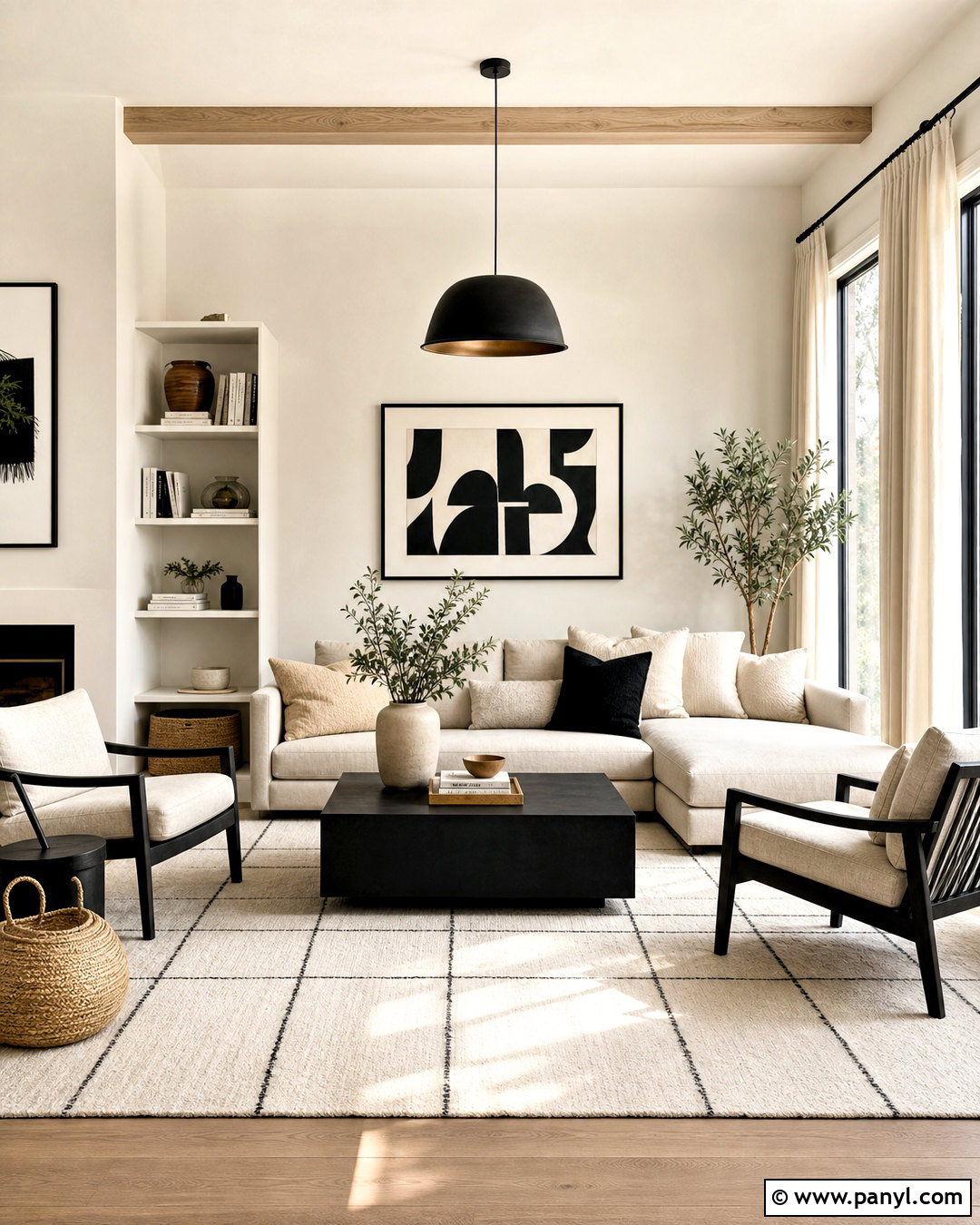
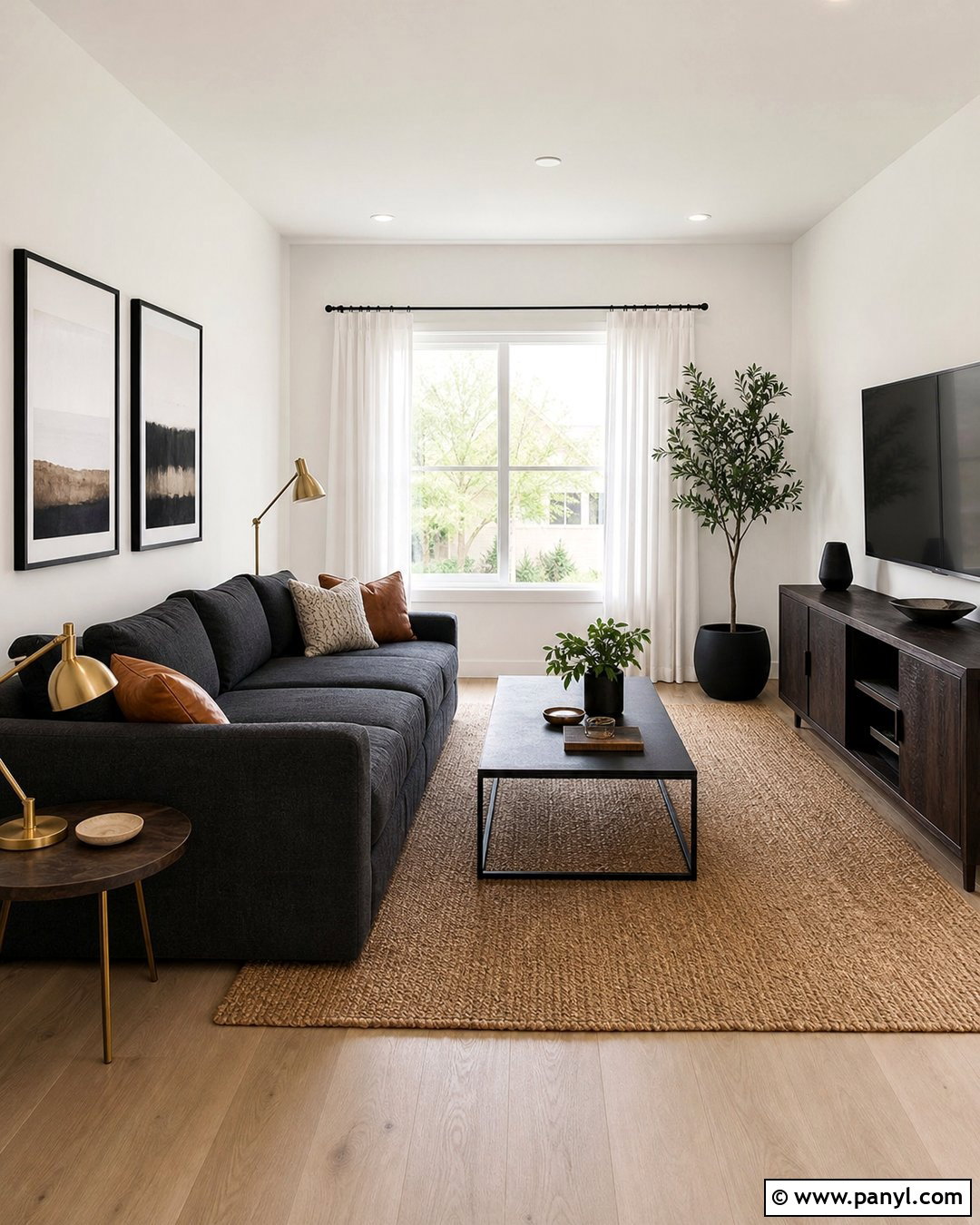
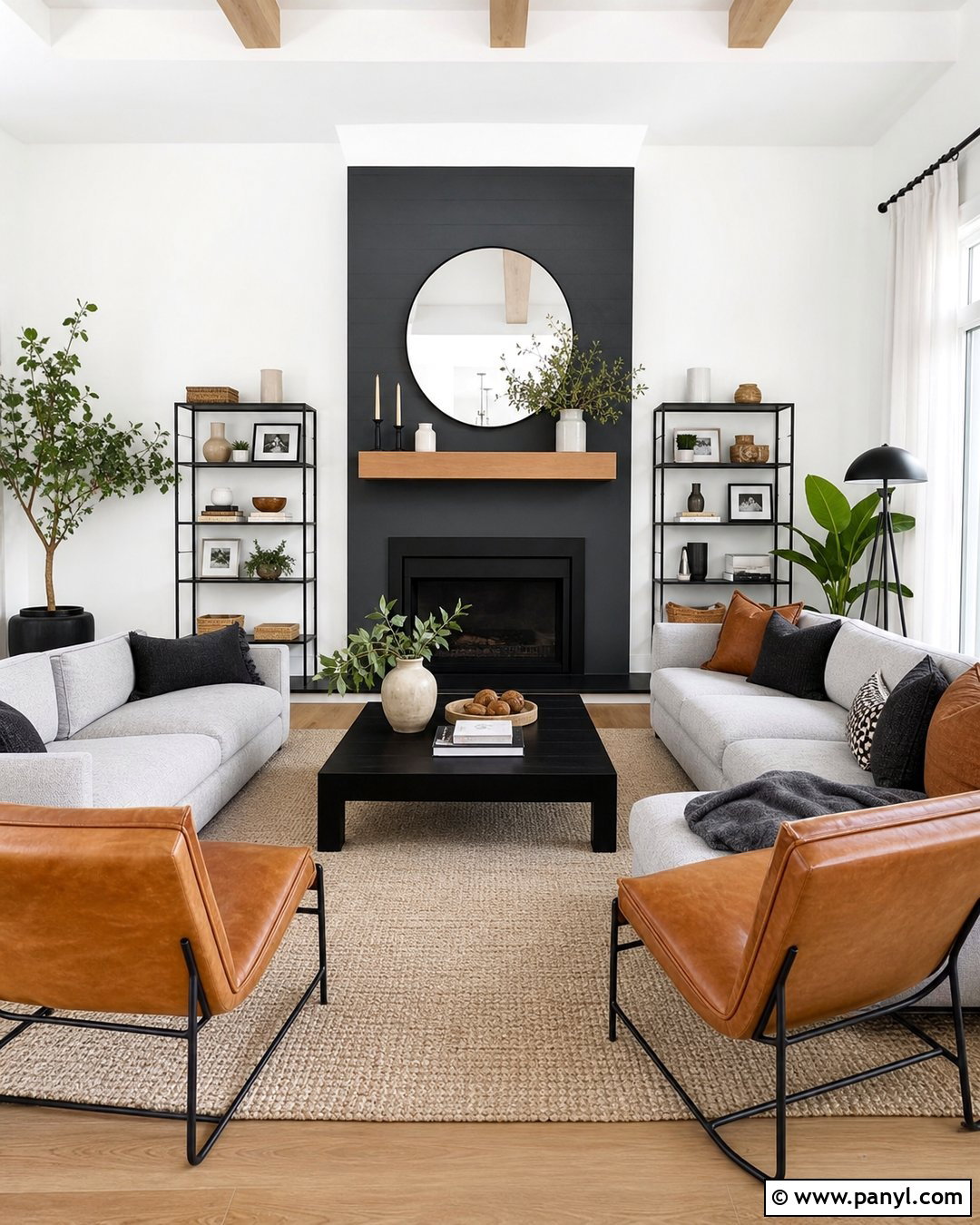
Crisp black accents give Alabaster walls a stronger architectural presence and keep the warm white from feeling overly traditional. Begin with a streamlined oatmeal sofa and a pair of black-framed lounge chairs upholstered in light fabric. Center the layout around a matte black coffee table or a pale wood table with black legs. Repeat the dark finish through a metal curtain rod, floor lamp, fireplace screen, and narrow gallery frames. Use a cream rug with a simple black grid to connect the color scheme across the floor. Natural wood and woven baskets prevent the contrast from becoming severe. Keep window treatments soft and uncomplicated, preferably in ivory linen. This complete look feels modern and graphic, but Alabaster’s warmth ensures the living room remains relaxed, welcoming, and easy to enjoy.
5. Alabaster Living Room With Green Accents
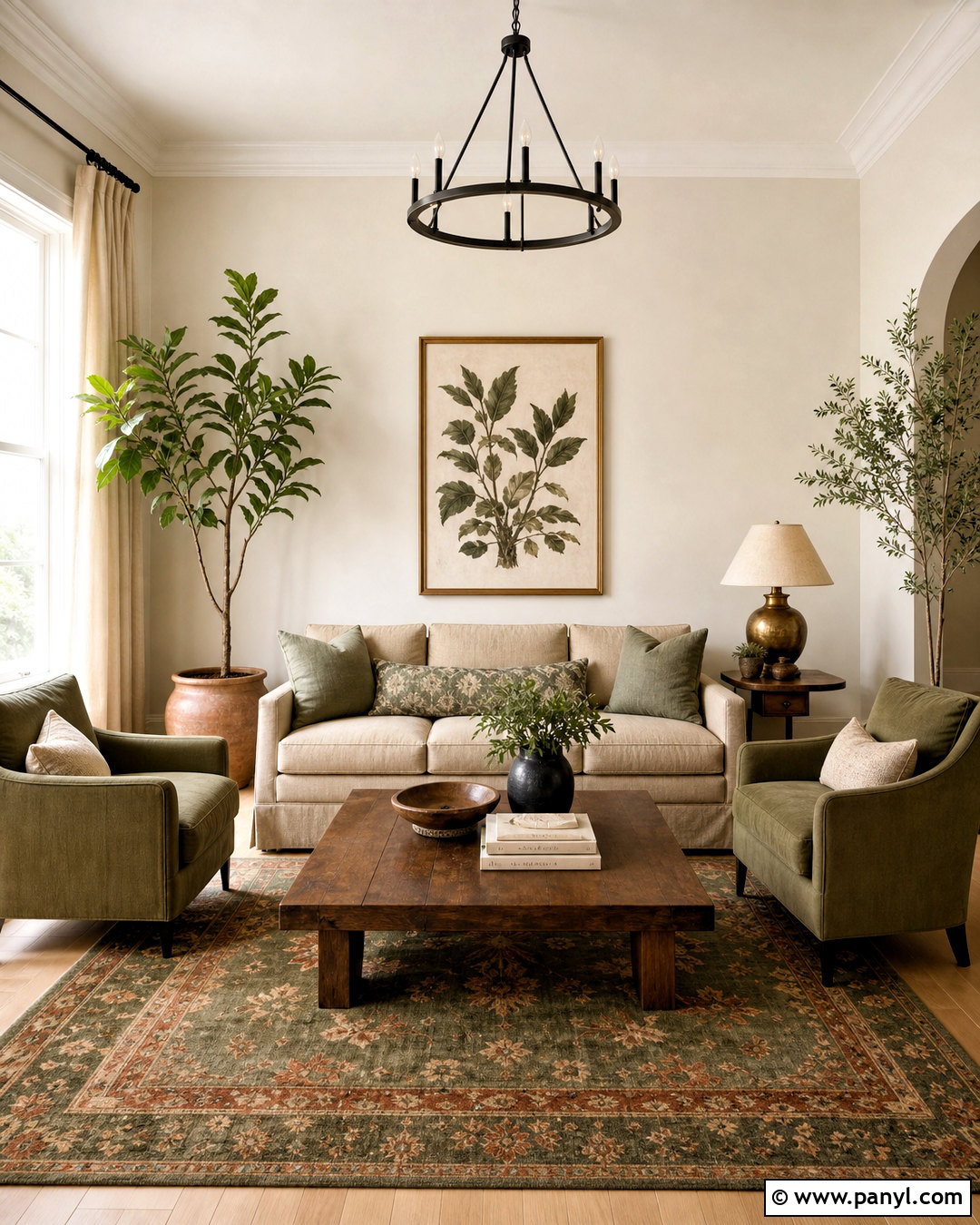
Earthy green creates a peaceful partnership with Alabaster and brings life to an otherwise neutral living room. Choose a soft beige sofa, then introduce olive green through two upholstered armchairs or one substantial accent chair. Layer in sage cushions, a moss-colored throw, and botanical artwork with cream backgrounds. A vintage-inspired rug containing faded green, tan, and rust adds character without making the palette too colorful. Use warm walnut furniture and aged brass lighting to complement the walls’ gentle undertone. Large plants can fill empty corners and reinforce the natural scheme. For a polished finish, keep the curtains close to the Alabaster wall color rather than choosing bright white. This room feels restorative and collected, with enough color to create personality while preserving a light, comfortable atmosphere.
6. Alabaster Living Room With Navy Blue
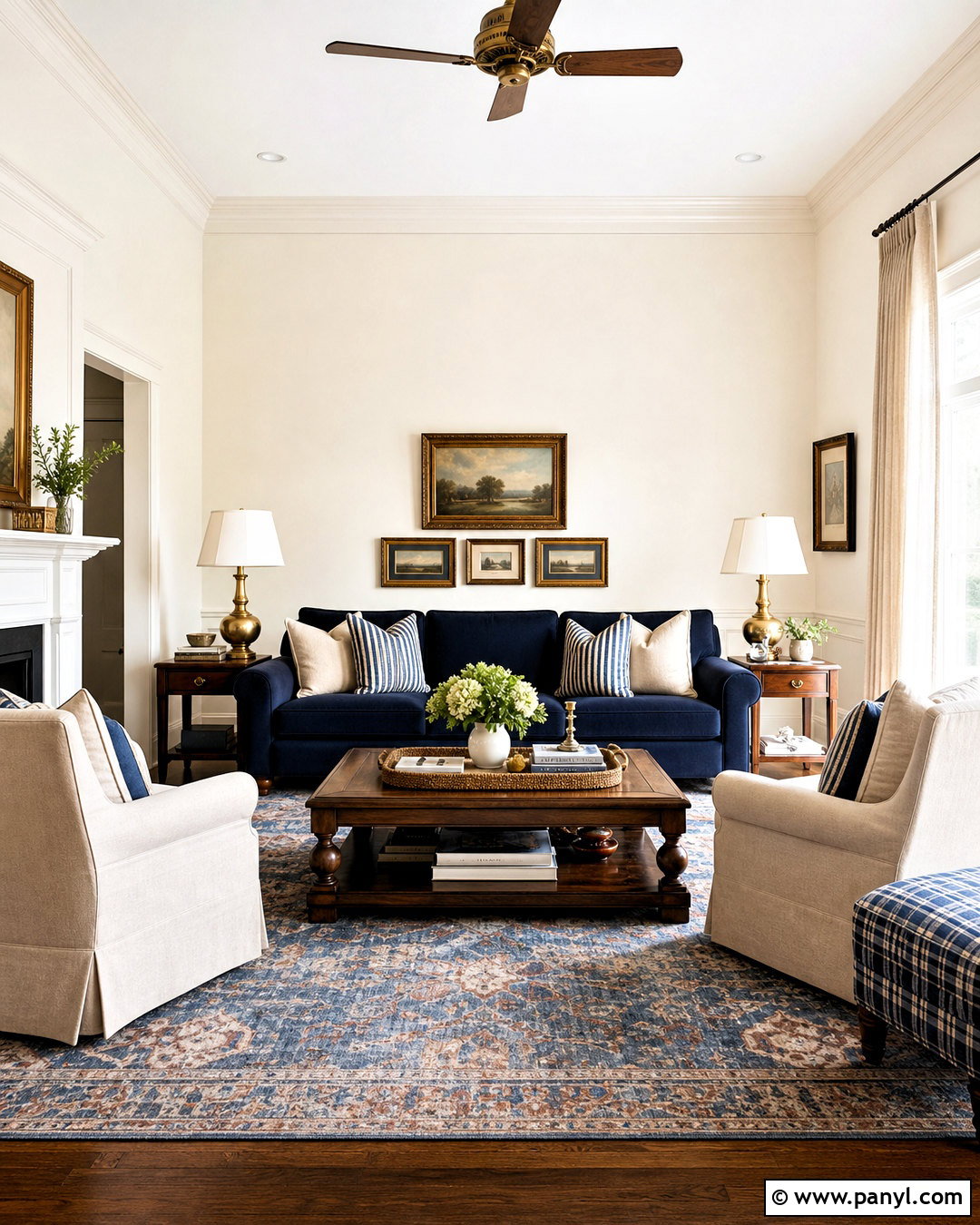
Navy blue provides confident contrast against Alabaster walls while maintaining a timeless, tailored appearance. Build the room around a deep navy sofa, or use two navy club chairs if you prefer lighter main seating. Add an ivory sofa, a warm wood coffee table, and a traditional rug that mixes faded blue, cream, and muted rust. Brass table lamps and antique gold frames introduce warmth that connects the blue furniture to the creamy walls. Hang natural linen curtains to soften the windows and prevent the palette from feeling too formal. A few striped cushions can add pattern without distracting from the main colors. Keep larger surfaces restrained and repeat navy in small amounts around the room. The resulting living area feels balanced, classic, and suitable for both everyday relaxation and entertaining.
7. Alabaster Living Room With a Stone Fireplace
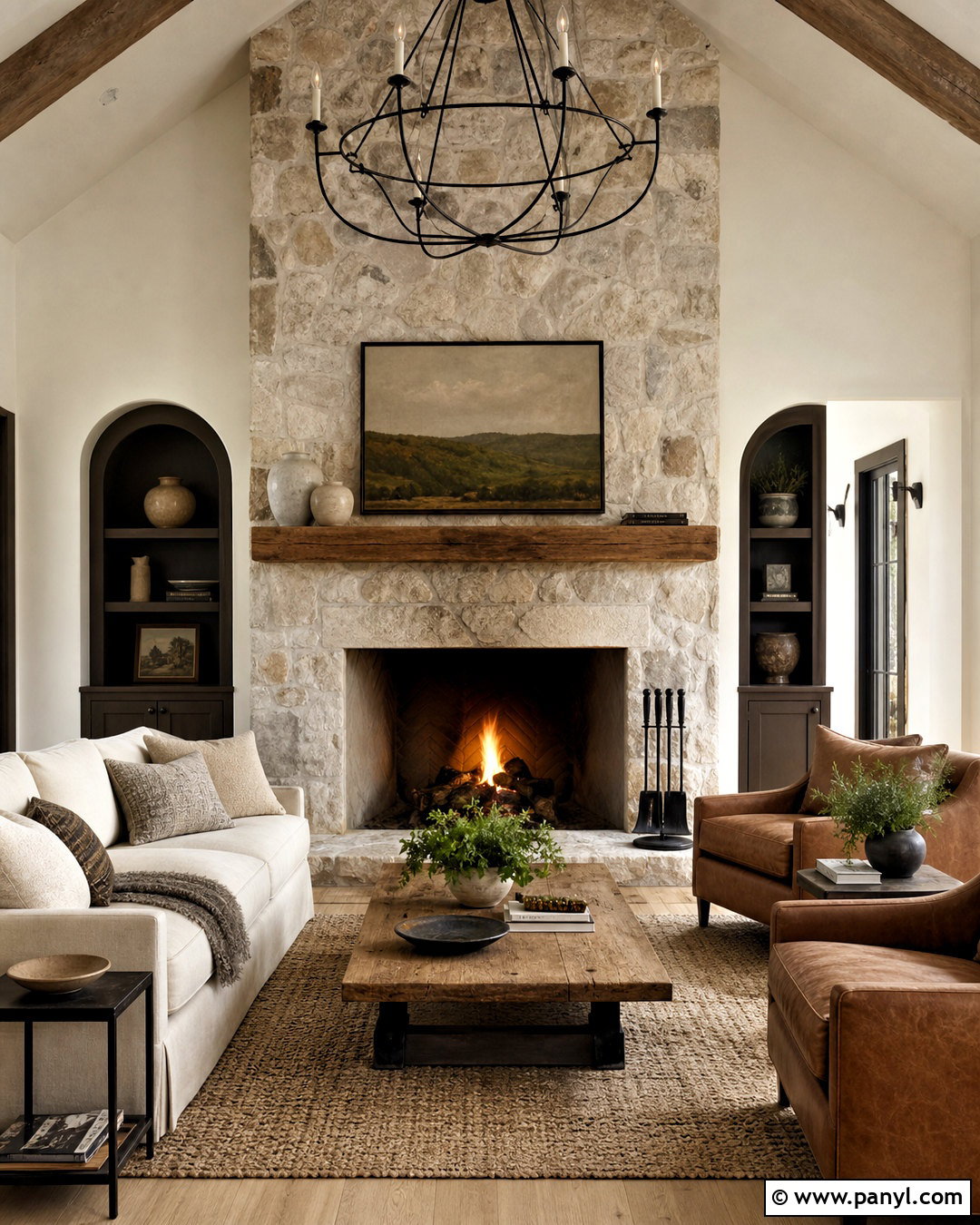
A natural stone fireplace can become the warm focal point of an Alabaster living room when its colors are repeated throughout the furnishings. Select limestone, fieldstone, or a realistic stone veneer containing cream, gray, and sandy beige. Paint surrounding walls Alabaster and use a chunky reclaimed wood mantel to introduce organic texture. Arrange a comfortable linen sofa and two leather or woven chairs toward the hearth. Underfoot, place a large wool rug in oatmeal with subtle gray detailing. An iron chandelier, black fireplace tools, and dark window hardware provide definition. Keep accessories simple with ceramic vessels, stacked books, and understated landscape art. This design balances rustic materials with clean painted walls, creating a living room that feels substantial and cozy without becoming dark, heavy, or overly themed.
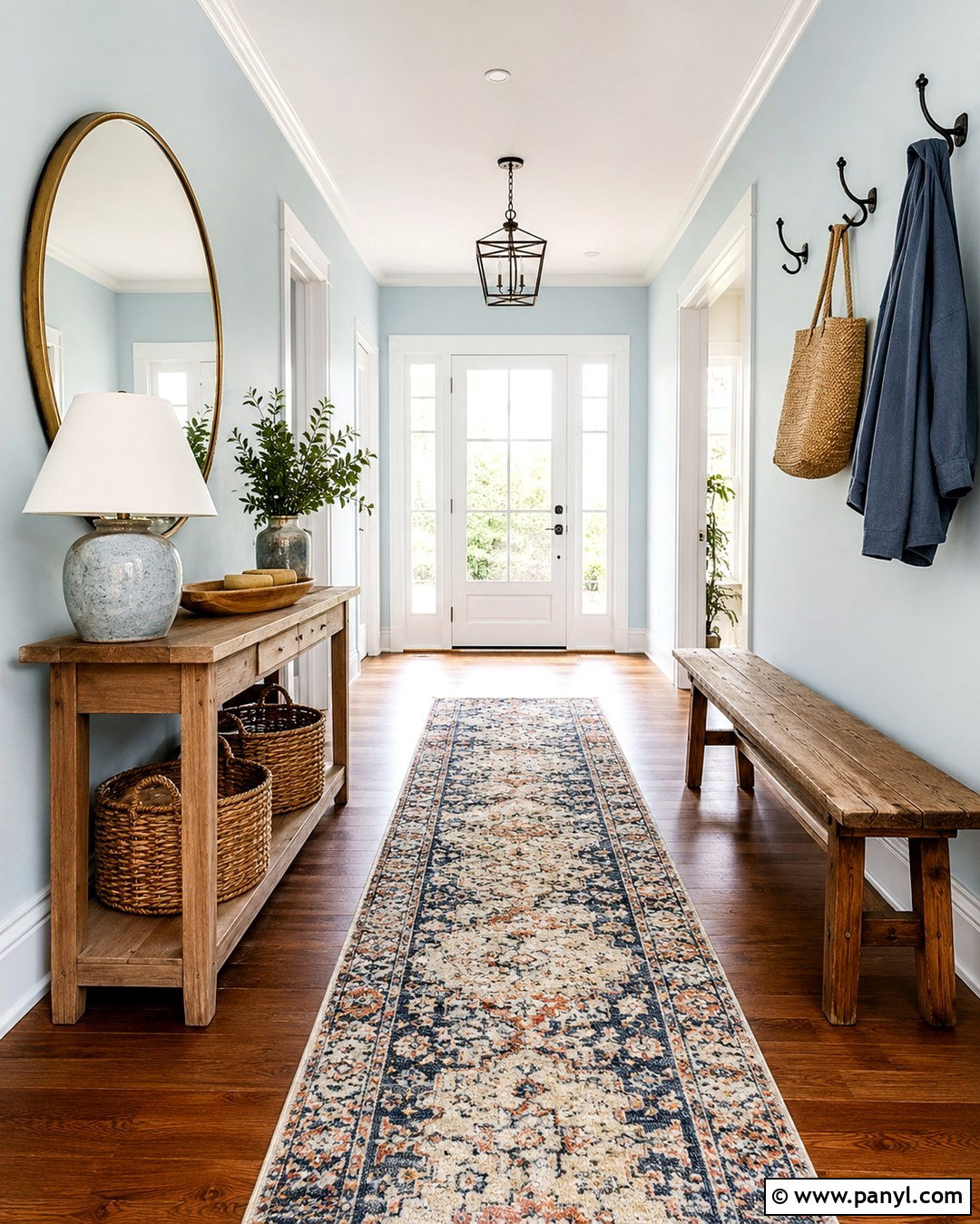
8. Alabaster Living Room With a Brick Fireplace
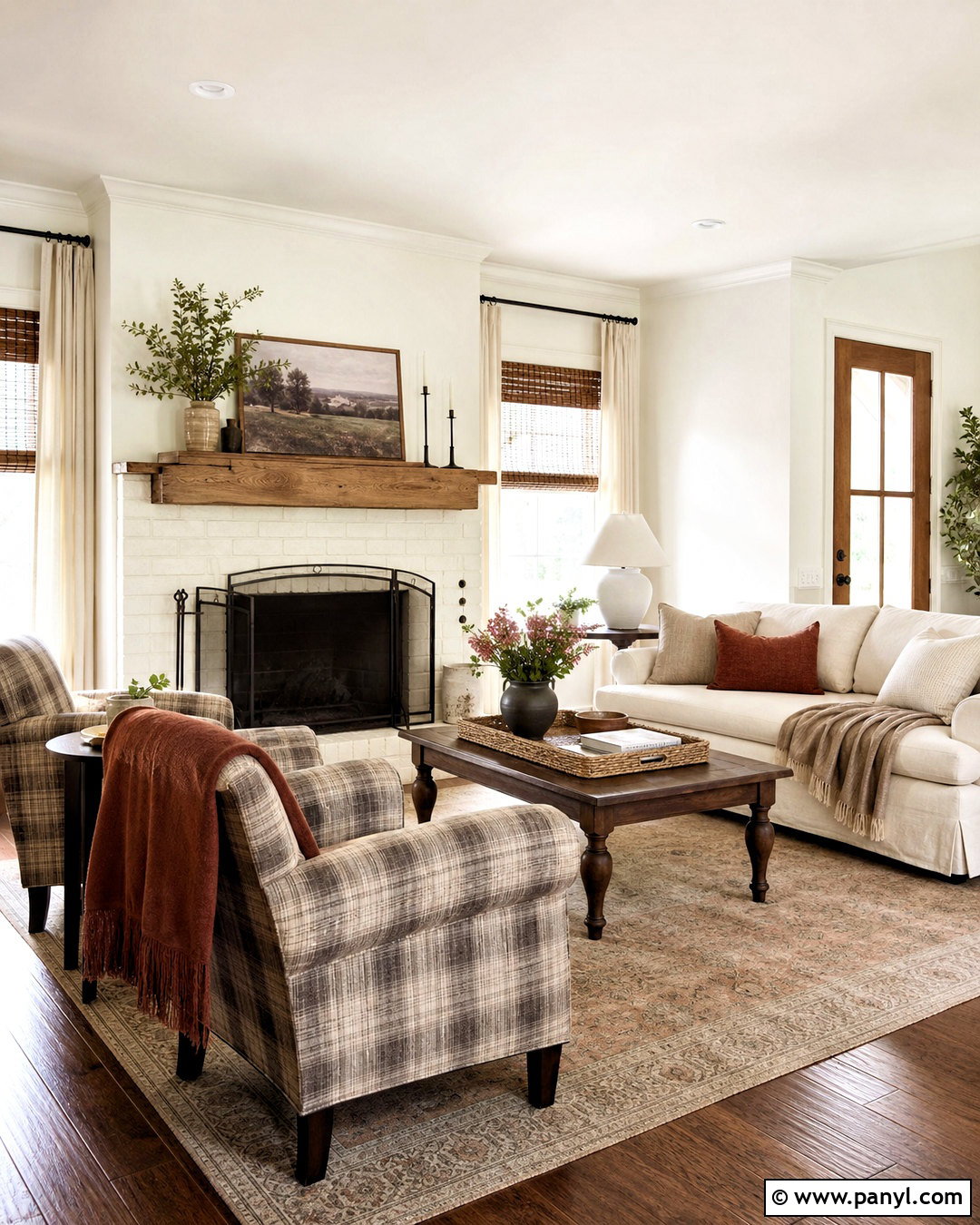
Painting an older brick fireplace Alabaster can unify the room while preserving the masonry’s appealing texture. Carry the same color across the brick and surrounding walls, but consider a more durable finish on the fireplace for easier cleaning. Add a simple oak mantel to break up the white surface and connect it with wood flooring or furniture. A relaxed slipcovered sofa, plaid accent chairs, and a faded vintage rug create a casual traditional setting. Use warm taupe, muted rust, and charcoal in small amounts to add depth. A black metal fireplace screen prevents the painted brick from disappearing into the background. Complete the room with woven shades, linen curtains, and ceramic lamps. The finished space feels lighter and more cohesive while keeping the fireplace visibly central to the design.
9. Alabaster Living Room With Built-In Shelves
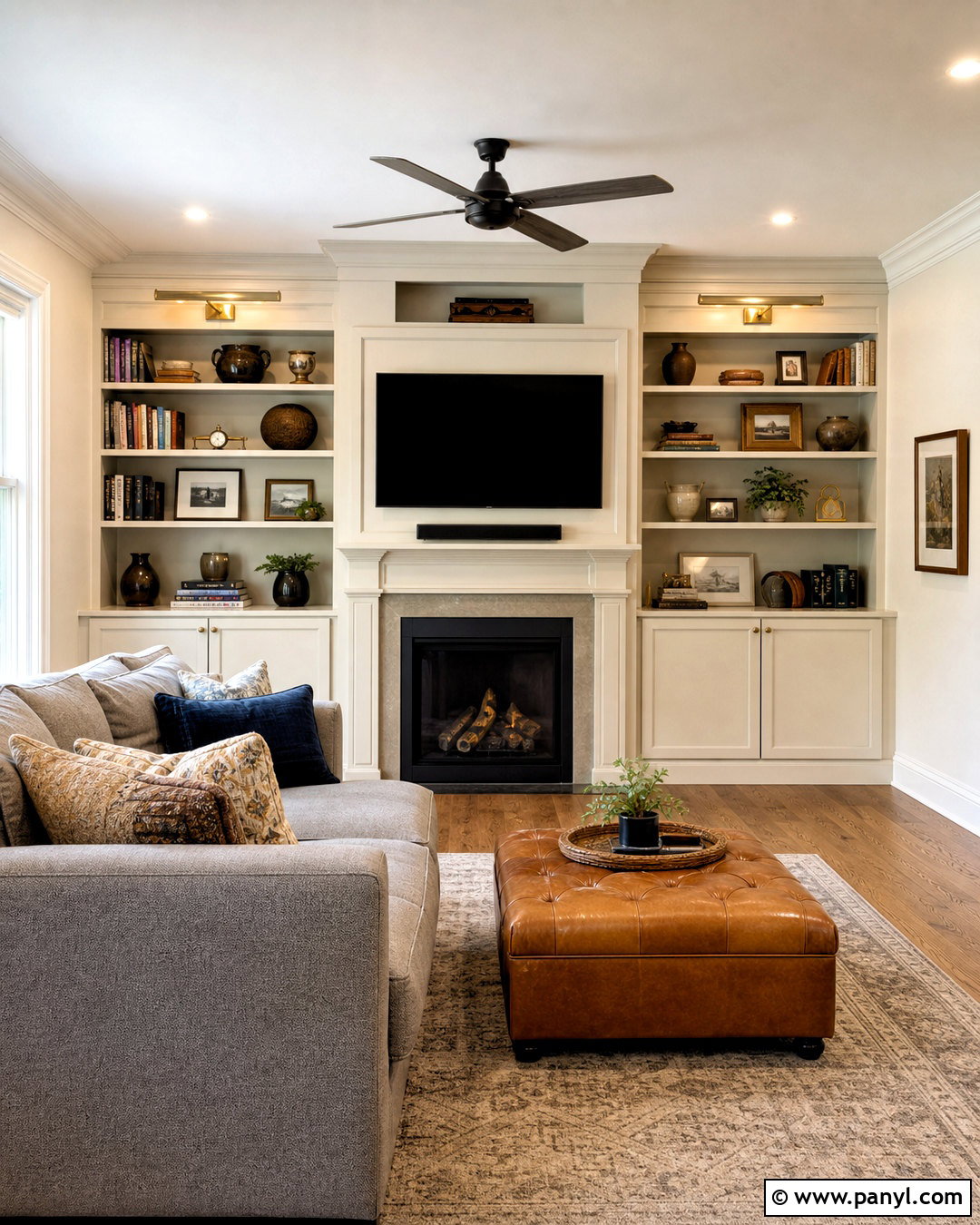
Alabaster-painted built-ins can make a living room look larger and more connected when they match the surrounding walls. Install shelves on both sides of the fireplace or across one complete wall, then paint the cabinetry, trim, and backing in Alabaster. Use different sheen levels to create quiet separation between walls and woodwork. Fill the shelves thoughtfully with books, pottery, framed art, and a few natural objects, leaving open space around each grouping. A warm gray sectional and cognac leather ottoman provide practical family seating. Add a patterned neutral rug and medium oak flooring for warmth. Dark bronze picture lights above the shelves introduce contrast and improve evening ambiance. This design delivers generous storage while maintaining a calm, architectural appearance that never feels visually crowded.

10. Alabaster Living Room With a Sectional
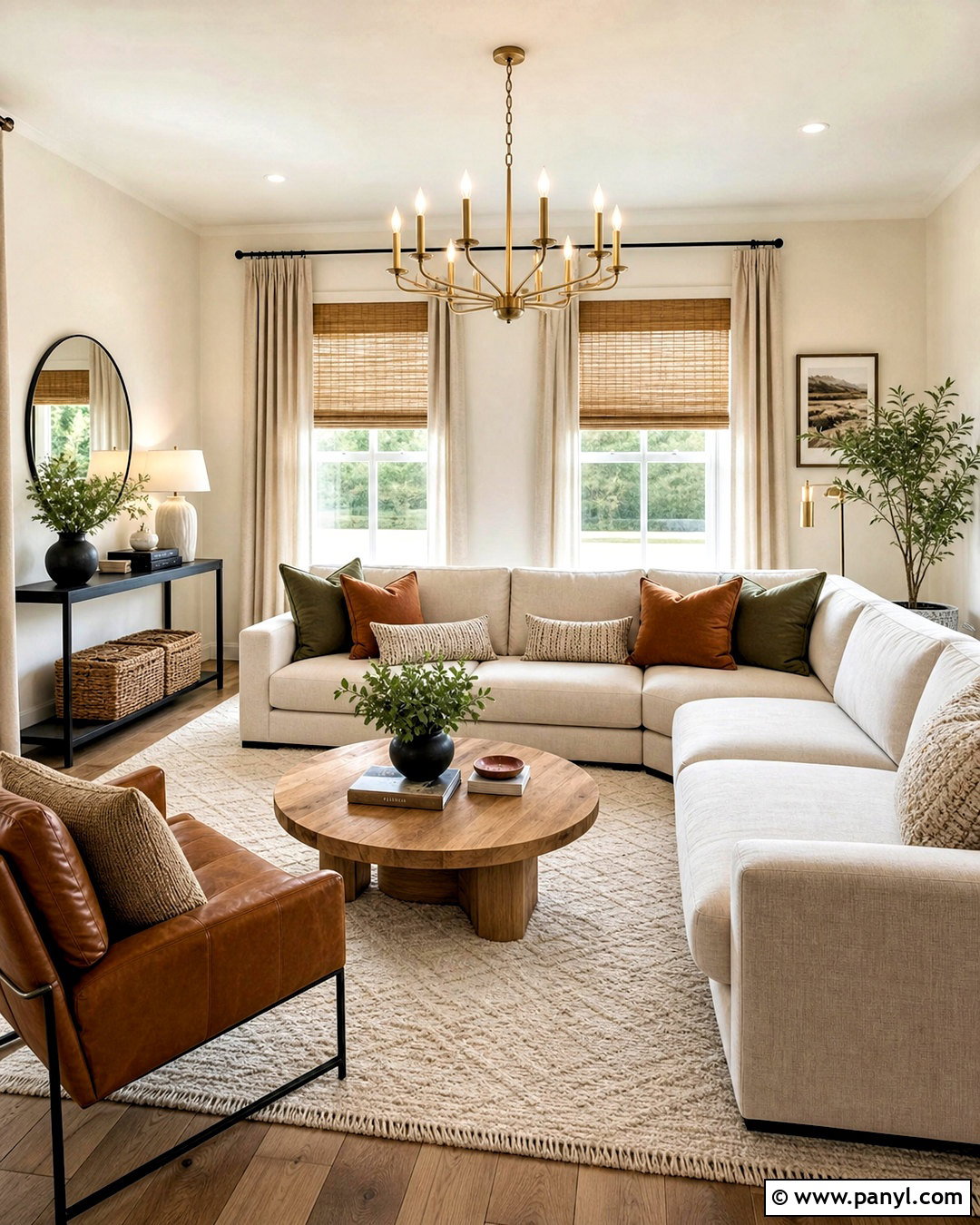
A large sectional can feel lighter and more proportional when surrounded by soft Alabaster walls. Choose an L-shaped sofa in warm gray, oatmeal, or muted taupe rather than a cool blue-gray. Float it slightly away from the walls if the room allows, and define the entire seating zone with an oversized textured rug. A round wood coffee table improves movement around the sectional’s corners and softens its substantial shape. Add one compact leather chair for contrast and place a narrow console behind the sofa for lighting. Floor-length linen curtains and woven shades give the windows a finished appearance. Use rust, olive, and cream cushions to create gentle color variation. This complete family-room arrangement feels spacious, practical, and comfortable without allowing the sectional to dominate every visual surface.
11. Alabaster Living Room With Dark Wood Floors
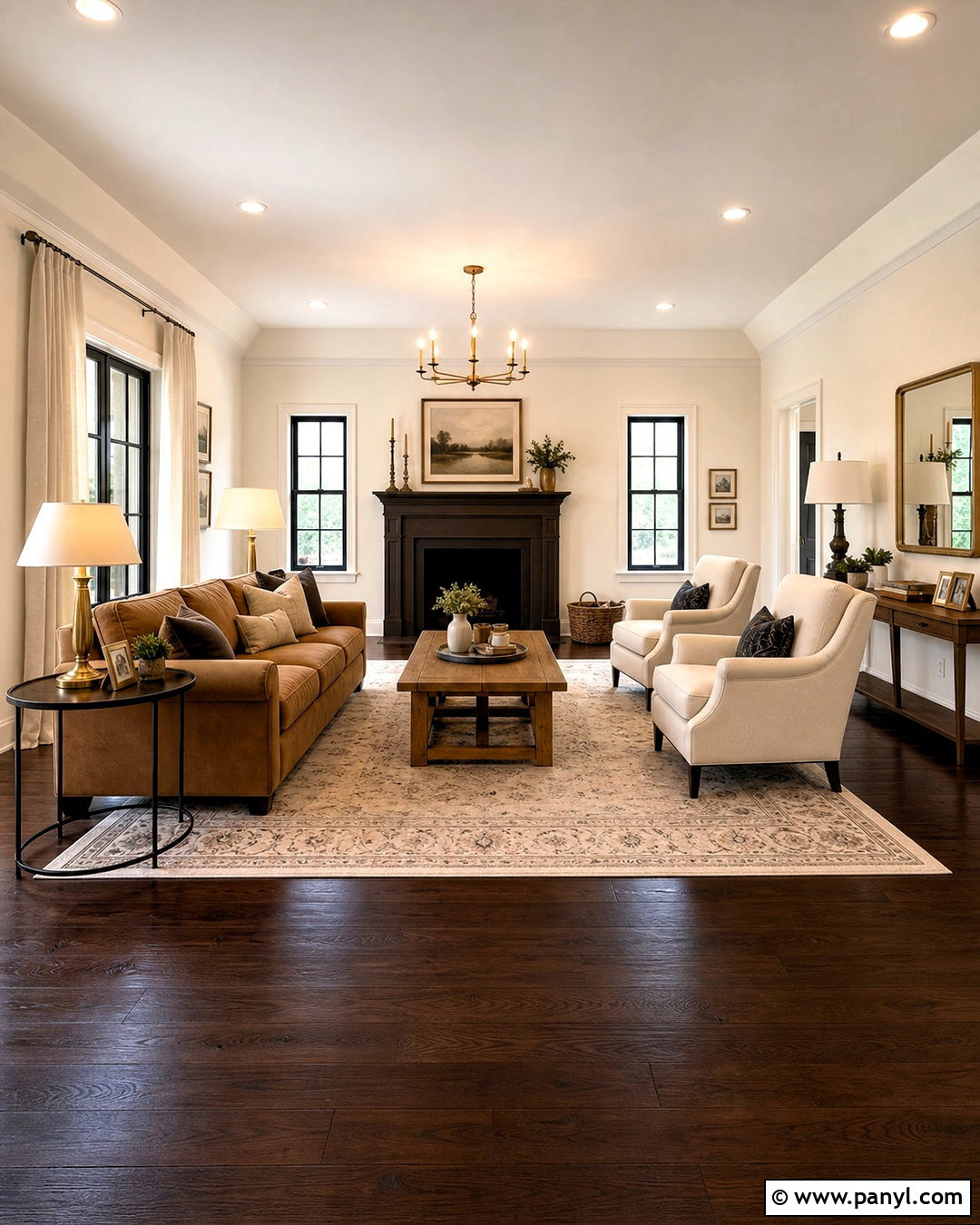
Dark wood floors create dramatic contrast with Alabaster walls, but the room needs lighter layers to avoid looking divided. Cover much of the flooring with a large ivory and taupe rug, allowing a generous wood border to remain visible. Choose a camel sofa and cream armchairs rather than dark furniture that could disappear against the floor. A medium oak coffee table bridges the gap between the light upholstery and deep brown boards. Repeat the floor color in smaller details such as picture frames, lamp bases, and a slim console. Natural linen curtains soften the walls, while brass lighting adds warmth and reflection. Keep the ceiling and trim light for continuity. This carefully balanced scheme makes the dark flooring feel rich and intentional while preserving Alabaster’s open, airy effect.
12. Alabaster Living Room With Light Oak Floors
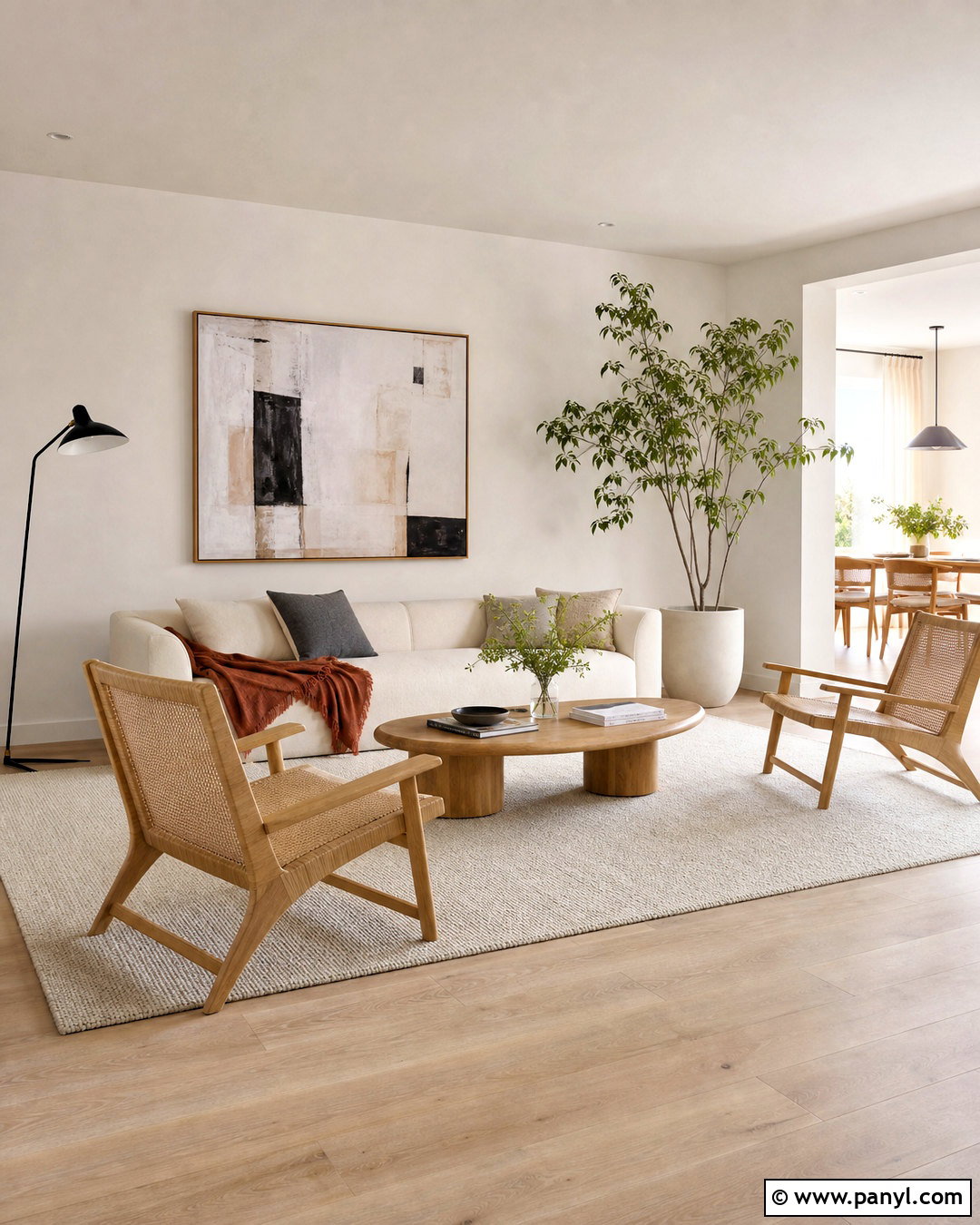
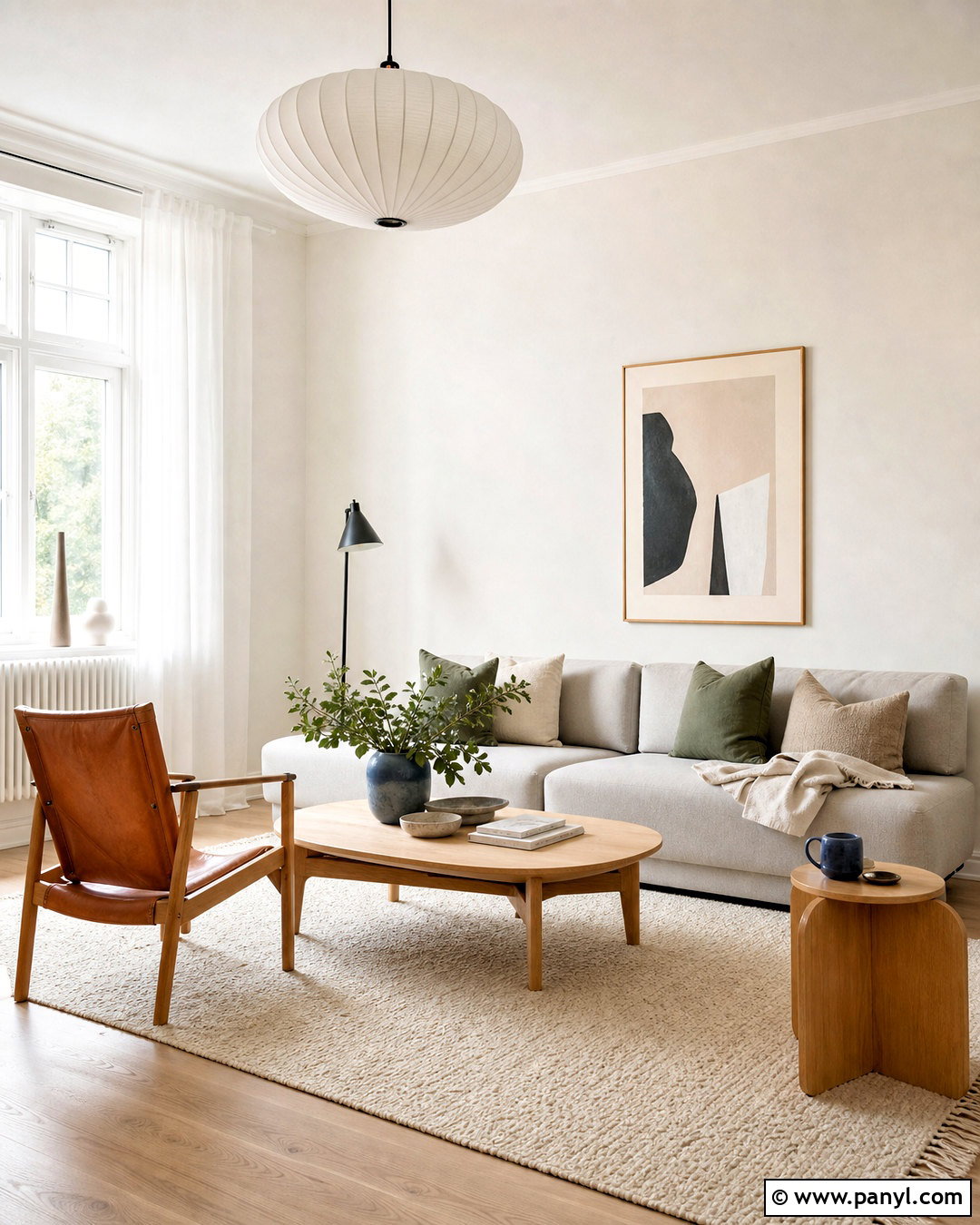
Light oak flooring and Alabaster walls create an easy foundation for a bright Scandinavian-inspired living room. Choose a low-profile cream sofa with clean lines and pair it with pale oak lounge chairs or woven-seat armchairs. A textured wool rug in ivory adds softness while remaining close to the floor color. Use a simple oval coffee table, understated white curtains, and sculptural lighting in matte black or brushed brass. Introduce gentle contrast through muted gray cushions, a rust-colored throw, and one large abstract artwork. Avoid filling every corner; open floor space is an important part of this relaxed look. A few handcrafted ceramics and a leafy indoor tree bring warmth and movement. The finished room feels fresh and minimal, yet Alabaster prevents it from appearing stark or impersonal.
13. Alabaster Living Room With Color-Drenched Walls
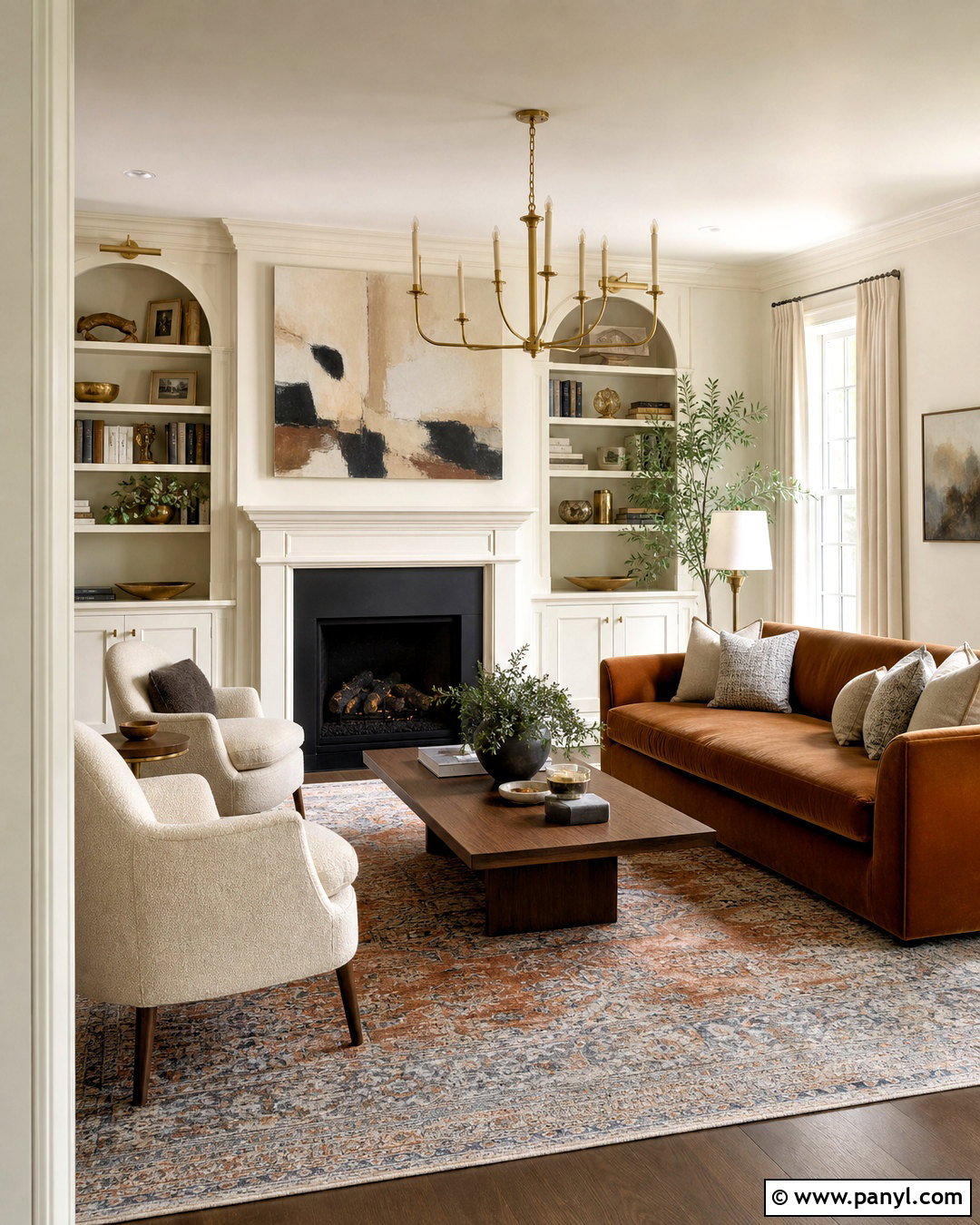
Using Alabaster across the walls, trim, doors, fireplace, and ceiling creates a seamless envelope that highlights shape and texture. Select different paint sheens for practical dimension, such as matte walls, satin woodwork, and a flat ceiling. Because every painted surface shares one color, bring contrast through furnishings rather than additional wall shades. A caramel velvet sofa, walnut coffee table, and two textured cream chairs provide warmth and visual weight. Layer a faded rust-and-blue rug beneath the seating to define the arrangement. Add aged brass lighting, dark bronze curtain hardware, and oversized abstract art for focus. Natural linen curtains maintain the soft tonal effect. This approach works especially well in rooms with molding or built-ins because changing light creates shadows that reveal the architectural details naturally.
14. Alabaster Living Room With Coastal Decor
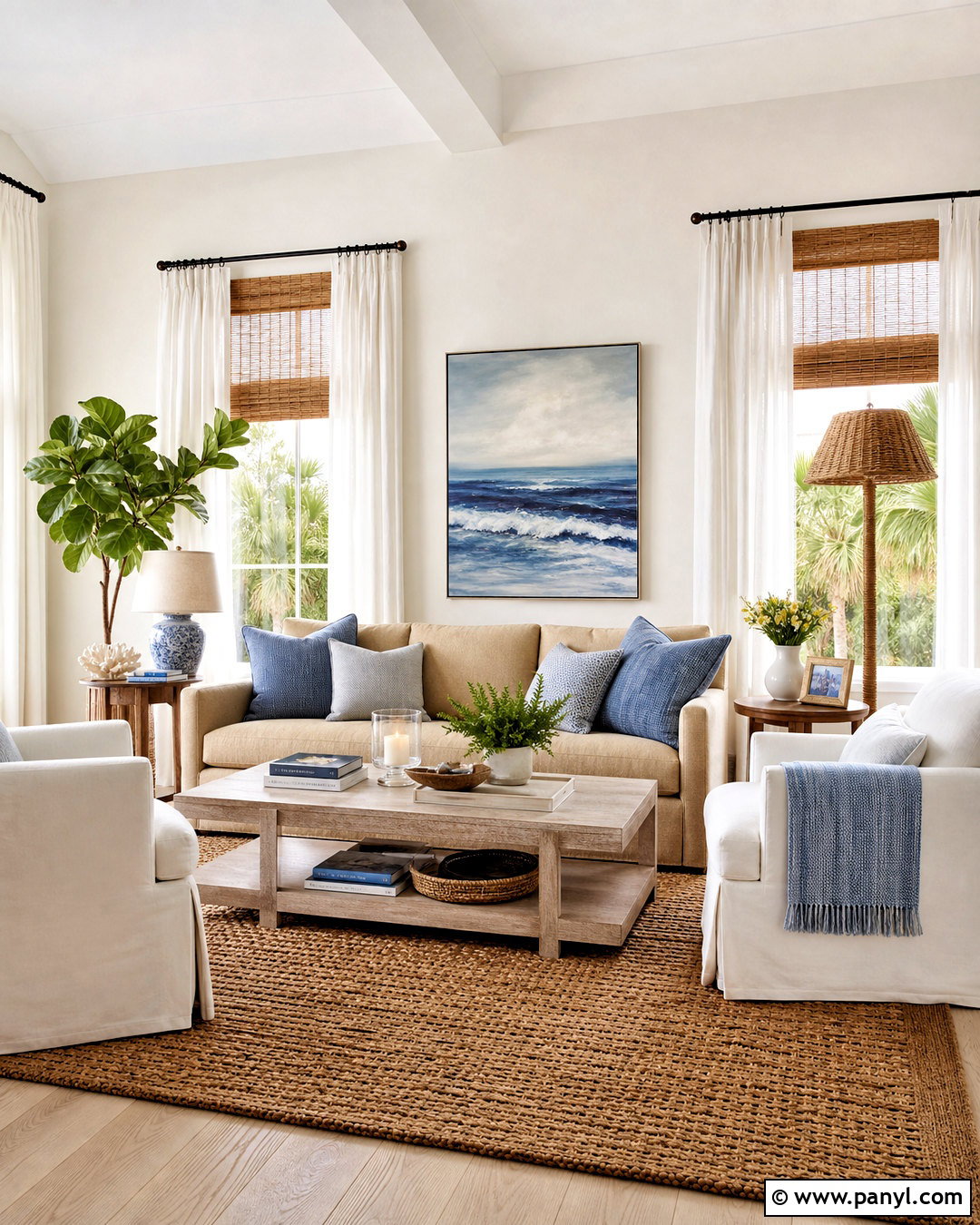
Alabaster offers a warmer alternative to brilliant white in a relaxed coastal living room. Begin with a comfortable sand-colored sofa and add slipcovered armchairs in soft ivory. Use pale oak or whitewashed wood for the coffee table, console, and picture frames. A woven jute rug grounds the seating while blue-gray cushions and a muted denim throw introduce restrained coastal color. Choose linen curtains that filter daylight and woven shades that contribute natural texture. Instead of obvious beach-themed decorations, display abstract ocean artwork, handmade ceramics, and one or two glass vessels in watery blue. A rattan floor lamp or woven pendant adds casual character. The complete room feels breezy and light without looking themed, allowing Alabaster walls to provide a soft, sun-warmed background for everyday living.
15. Alabaster Living Room With Farmhouse Decor
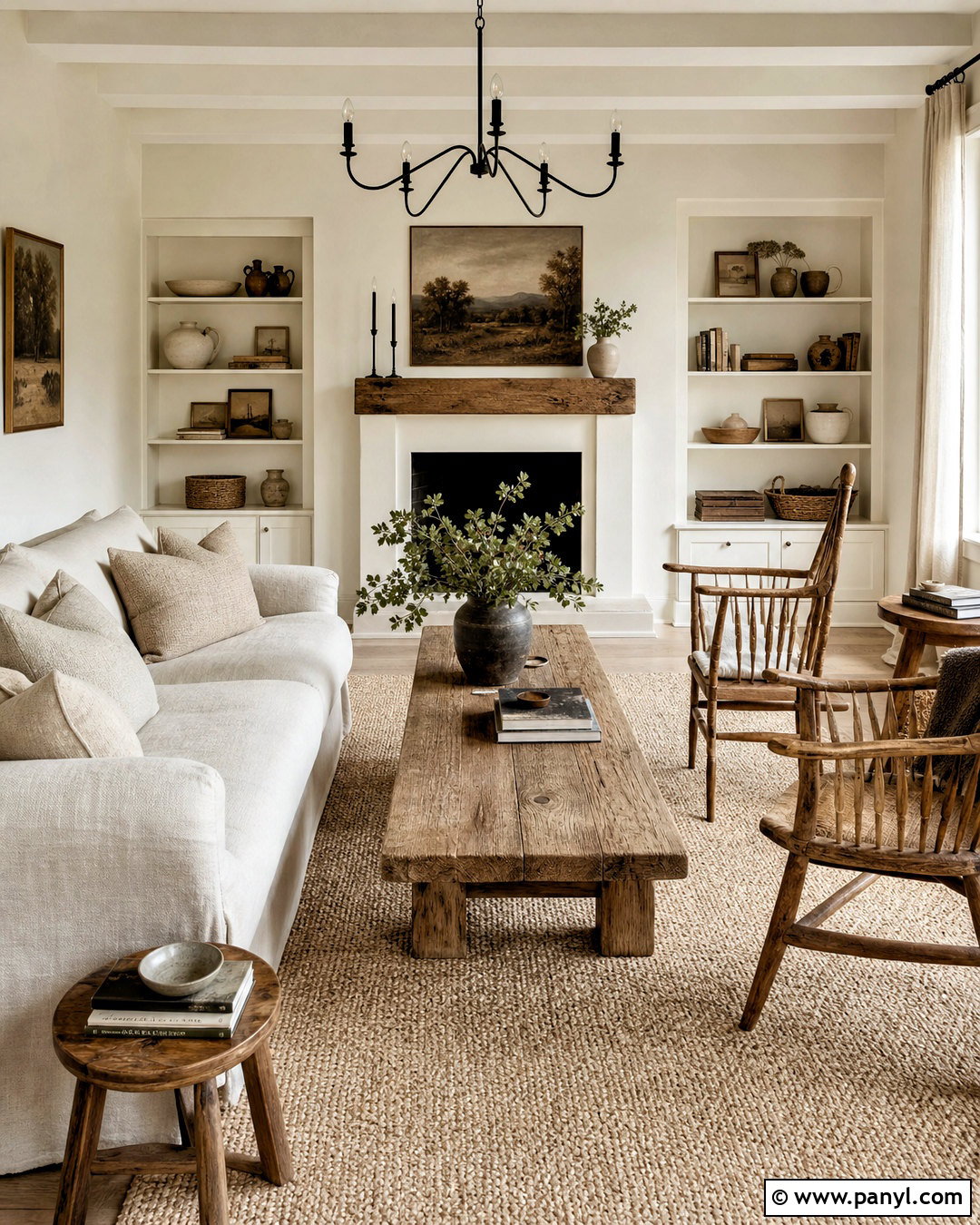
A farmhouse living room feels more current when Alabaster walls are paired with simple forms and controlled rustic texture. Arrange a deep linen sofa opposite two spindle-back wood chairs with neutral cushions. Use a reclaimed oak coffee table as the center point, then soften the arrangement with a large wool rug in cream and warm gray. Paint the fireplace and built-in cabinetry Alabaster for continuity, adding a natural wood mantel for contrast. Black iron lighting, a straightforward curtain rod, and dark cabinet hardware provide crisp definition. Finish with stoneware pottery, woven baskets, linen curtains, and understated vintage landscape art. Avoid overcrowding the room with decorative signs or distressed accessories. This thoughtful approach preserves farmhouse warmth while producing a cleaner, calmer space that feels comfortable rather than overly themed.
16. Alabaster Living Room With Modern Furniture
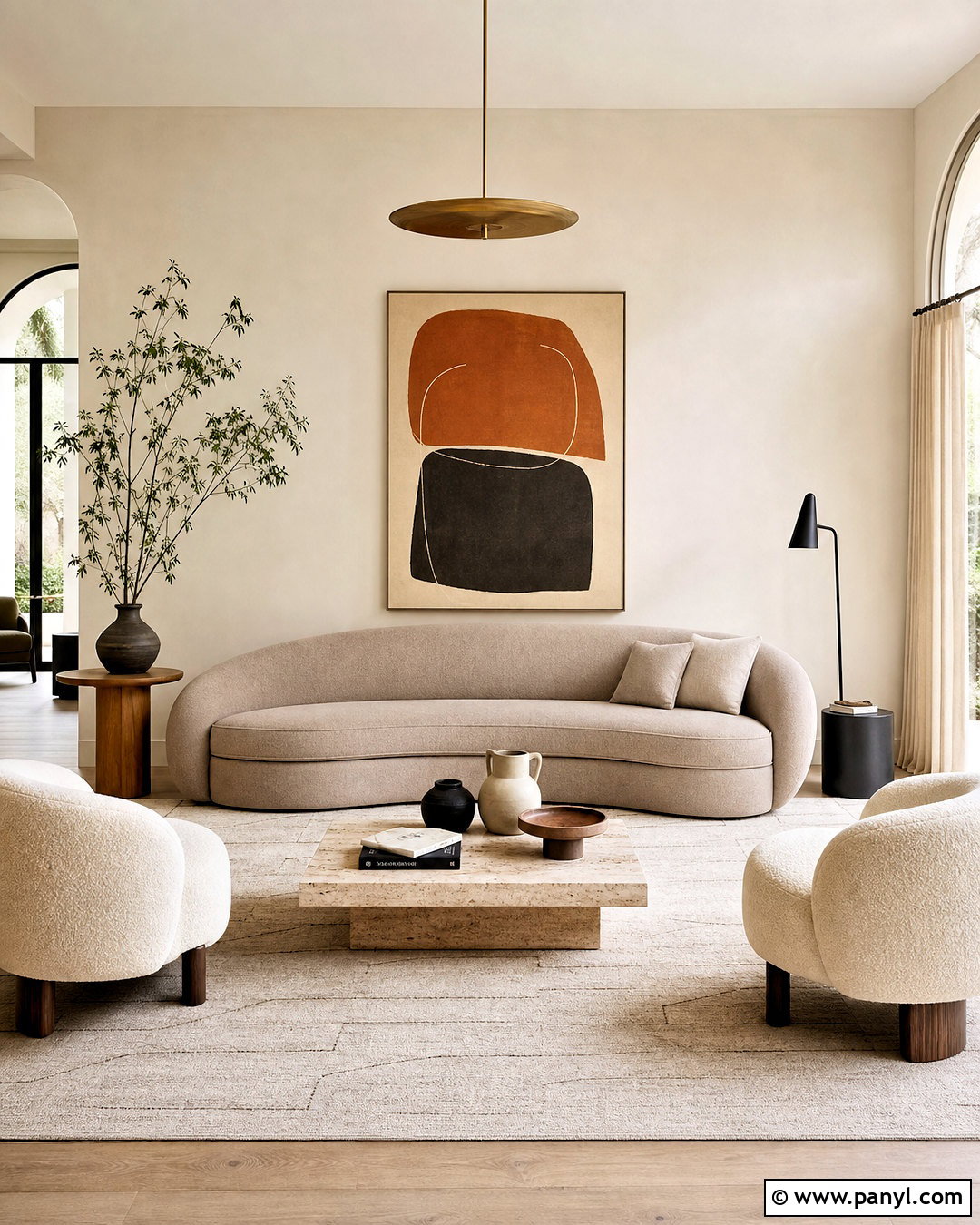
Curved furniture and streamlined details can give Alabaster walls a distinctly modern character. Choose a sculptural sofa in light taupe and pair it with two rounded lounge chairs in textured ivory. A low travertine coffee table adds subtle pattern and natural weight, while a large tonal rug keeps the seating area visually connected. Use a slim black floor lamp, a contemporary brass pendant, and minimal window treatments to sharpen the composition. One oversized abstract painting in terracotta, charcoal, and beige can supply the room’s main color moment. Keep accessories limited to a few ceramic objects and a carefully placed branch arrangement. Alabaster softens the modern silhouettes and prevents the space from feeling cold. The result is clean and sophisticated while remaining suitable for a comfortable, everyday home.
17. Alabaster Living Room With Traditional Decor
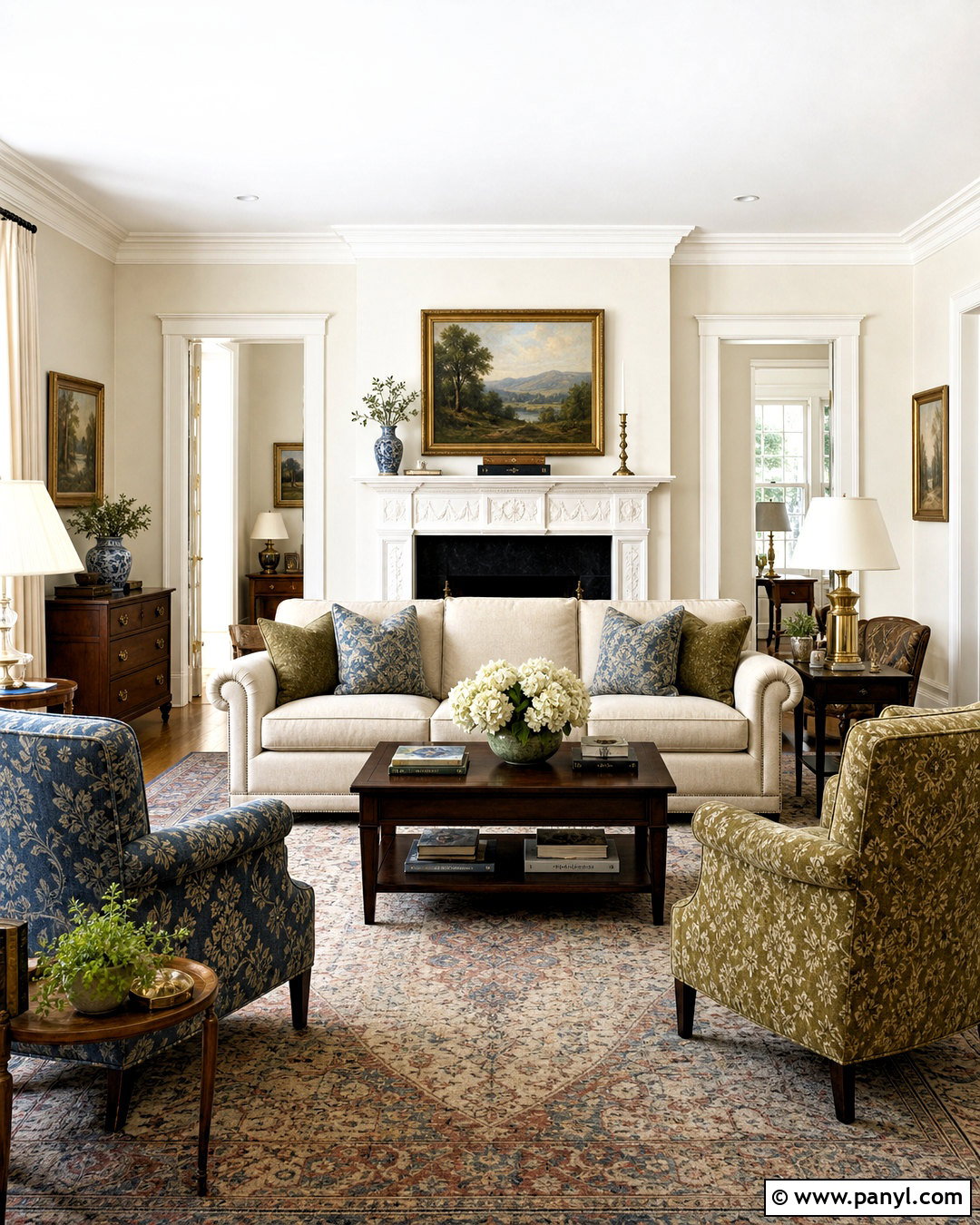
Traditional furniture looks fresh against Alabaster walls when patterns and wood finishes are carefully balanced. Center the room around a tailored beige sofa with rolled arms, then add two patterned chairs featuring muted blue, olive, and cream. A mahogany or medium walnut coffee table introduces classic richness without becoming too heavy. Place everything on a faded Persian-style rug that connects the upholstery colors. Use pleated linen curtains, brass lamps, and framed landscape paintings to complete the refined look. Crown molding and a detailed fireplace mantel can also be painted Alabaster, allowing their shadows to provide understated definition. Keep smaller accessories edited and symmetrical where appropriate. This complete design honors traditional decorating principles but feels lighter and more relaxed than a room built around darker beige or heavily saturated walls.
18. Alabaster Living Room With Boho Decor
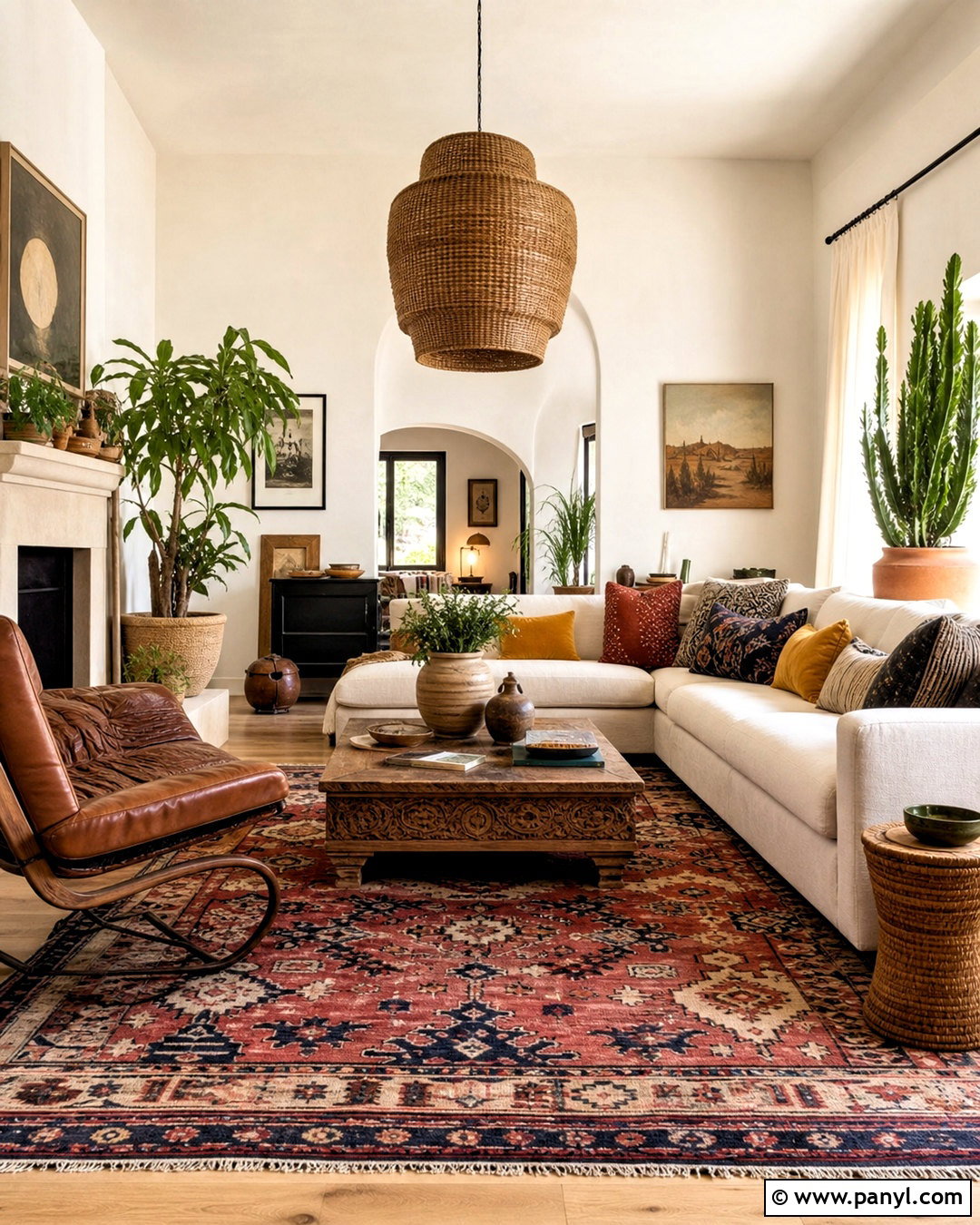
Texture, pattern, and relaxed furniture bring expressive warmth to an Alabaster boho living room. Start with a low cream sofa and layer it with block-printed cushions in rust, olive, mustard, and charcoal. Add a vintage leather chair, a carved wood coffee table, and mismatched woven side tables. A large patterned rug should unite the colors while leaving some natural wood flooring visible. Hang lightweight linen curtains and use a woven pendant to emphasize the room’s casual atmosphere. Plants in terracotta pots can fill corners and soften straight architectural lines. Display collected artwork in wood and black frames, but maintain enough open wall space for Alabaster to remain visible. The resulting room feels personal and layered, yet the consistent warm-white background keeps every pattern and material visually connected.
19. Alabaster Living Room With Gray Furniture
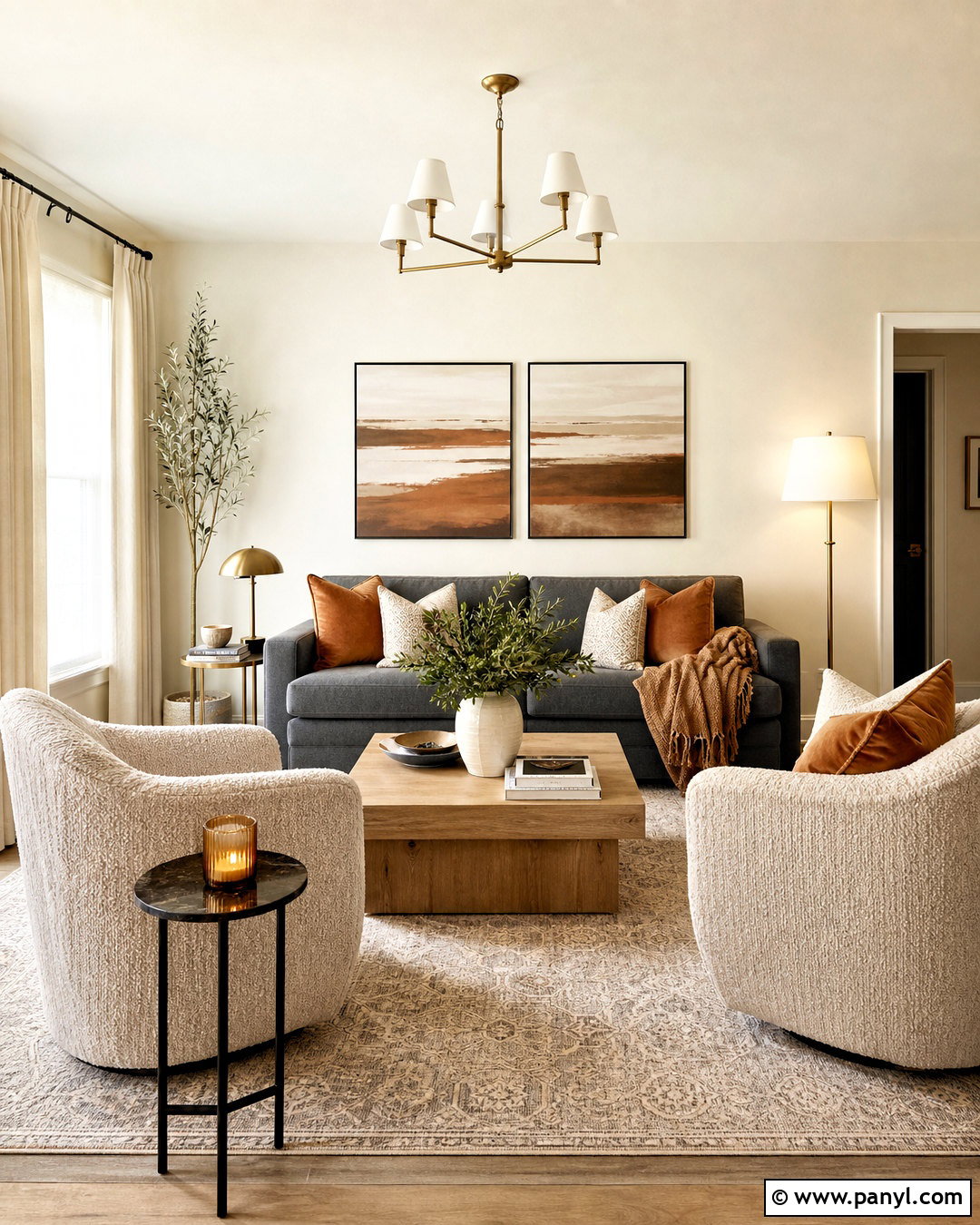
Gray furniture can work beautifully with Alabaster when the upholstery has warm or neutral undertones. Select a medium warm-gray sofa rather than a steely blue-gray version, then add cream boucle chairs and a natural oak coffee table. A rug combining ivory, greige, and charcoal will connect the main furniture pieces. Introduce warmth through cognac leather cushions, a camel throw, and brass or bronze lamps. Black frames and curtain hardware offer clean definition, while linen window panels soften the contrast. Add one substantial artwork containing warm beige, muted clay, and gray to reinforce the complete palette. Before purchasing furniture, view fabric samples beside an Alabaster paint sample in the room. This coordinated look feels balanced and contemporary, avoiding the chilly appearance that can happen when cool grays meet warm white walls.
20. Alabaster Living Room With Earth Tone Decor
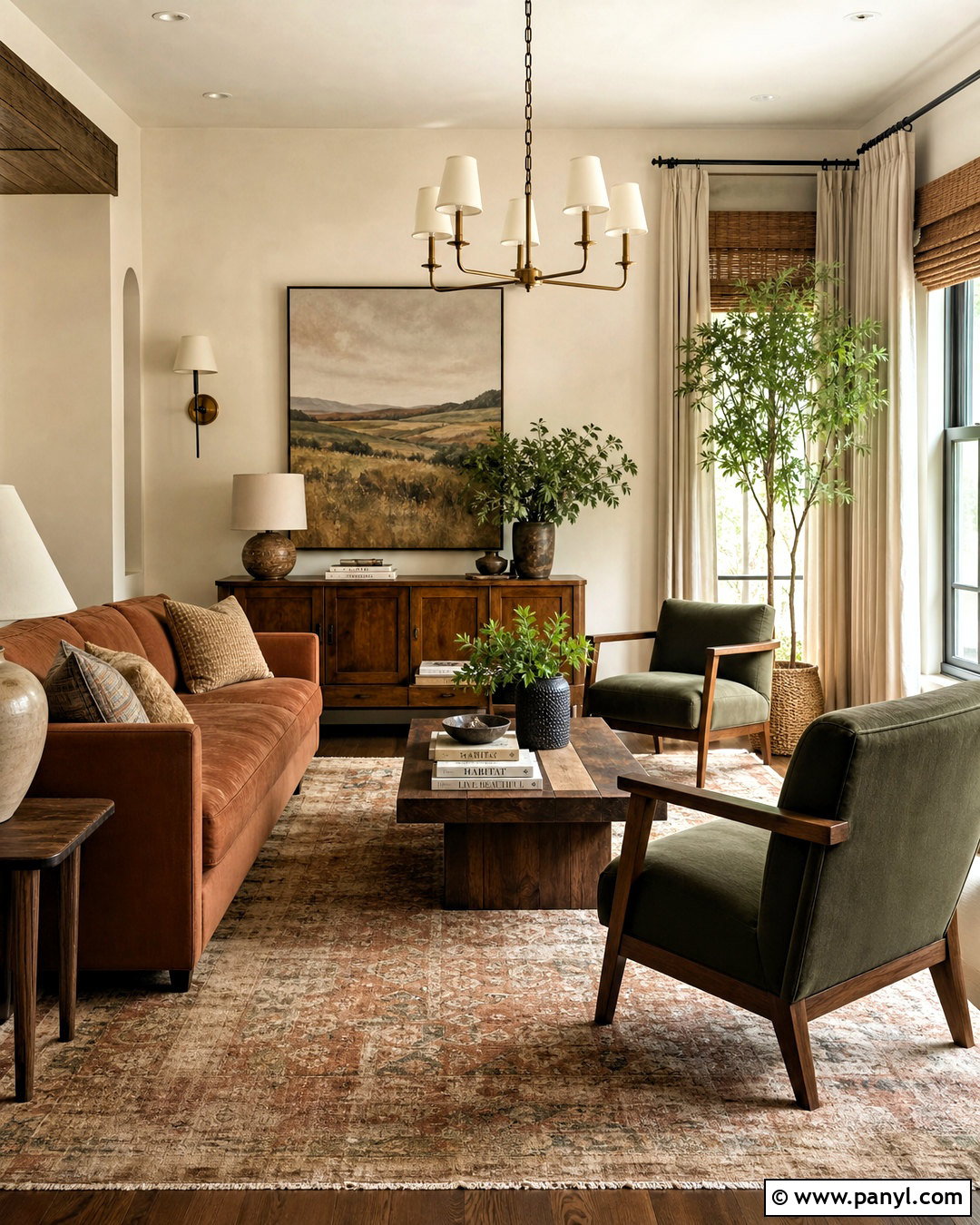
Earth tones draw out the gentle warmth in Alabaster and create a living room that feels naturally settled. Use a clay-colored sofa or neutral sofa with terracotta cushions as the room’s focal point. Add olive armchairs, a walnut coffee table, and a large rug featuring faded rust, tan, and cream. Woven shades and unbleached linen curtains build texture around the windows. Choose aged brass lighting and handmade ceramic lamps with warm beige shades. Landscape artwork, wood bowls, and leafy plants continue the organic palette without adding clutter. Keep the ceiling and major upholstery light enough to preserve brightness. This complete scheme works especially well in rooms receiving warm afternoon sun, but it can also make a cooler living room feel more welcoming when supported by soft, warm-white lighting.
Conclusion:
The best Alabaster Sherwin Williams living rooms combine the paint’s warm softness with purposeful contrast, natural texture, and a well-planned furniture arrangement. Alabaster can support farmhouse, coastal, modern, traditional, boho, and transitional interiors because it changes character according to the surrounding materials and colors. Pair it with natural wood for warmth, black accents for definition, navy for classic contrast, or earth tones for a relaxed atmosphere. Remember that daylight direction, flooring, neighboring colors, and lightbulbs influence how this off-white appears. Test a large painted sample on more than one wall and observe it throughout the day. Once the undertones feel right, build a complete palette that makes the entire living room look connected and comfortable.

Related Ideas and Inspiration:

Leave a Reply