
Choosing between Sherwin-Williams Alabaster SW 7008 and Benjamin Moore Swiss Coffee OC-45 can be surprisingly difficult. Both are warm, light-reflective off-whites, yet their undertones create different moods. Alabaster has a soft, balanced warmth that often feels cleaner and more neutral. Swiss Coffee appears creamier and can reveal subtle yellow or green notes beside certain finishes. Their light reflectance values are nearly identical—82 for Alabaster and 81.91 for Swiss Coffee—so undertone, lighting, and surrounding materials matter more than brightness. () Always test large samples throughout the day before committing. The following 20 alabaster vs swiss coffee ideas compare complete rooms and exteriors you can recreate.
1. Alabaster Living Room With Natural Oak
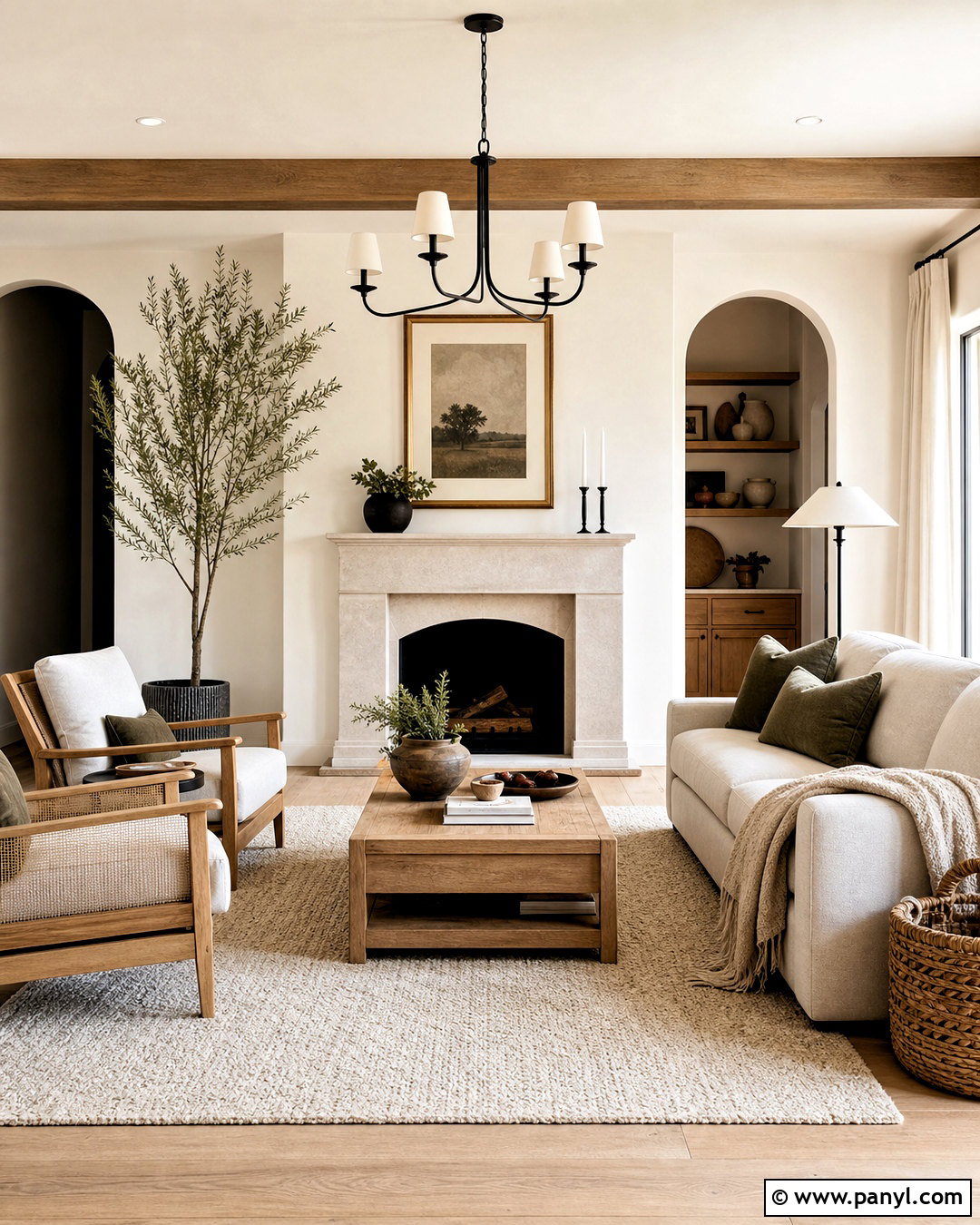
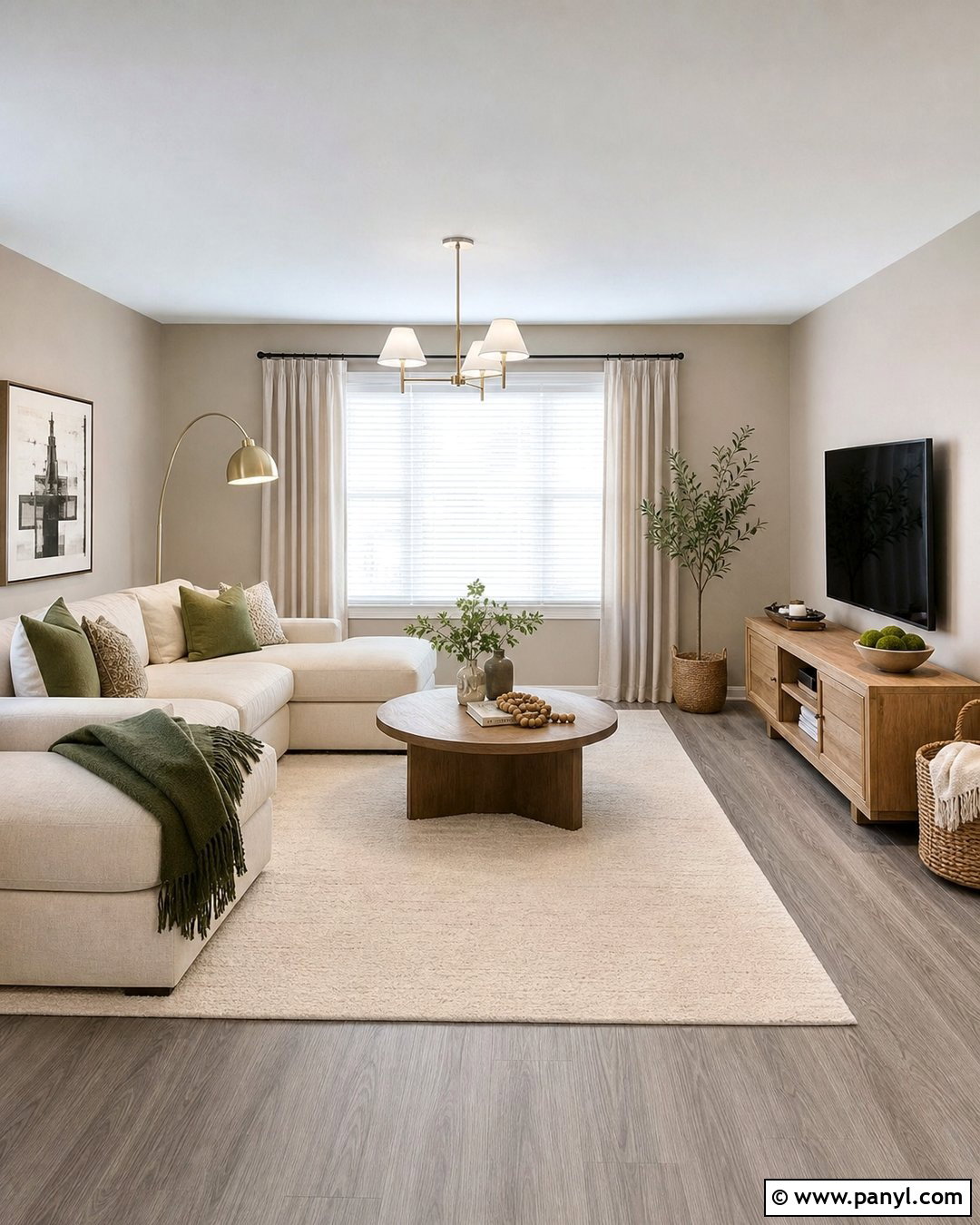
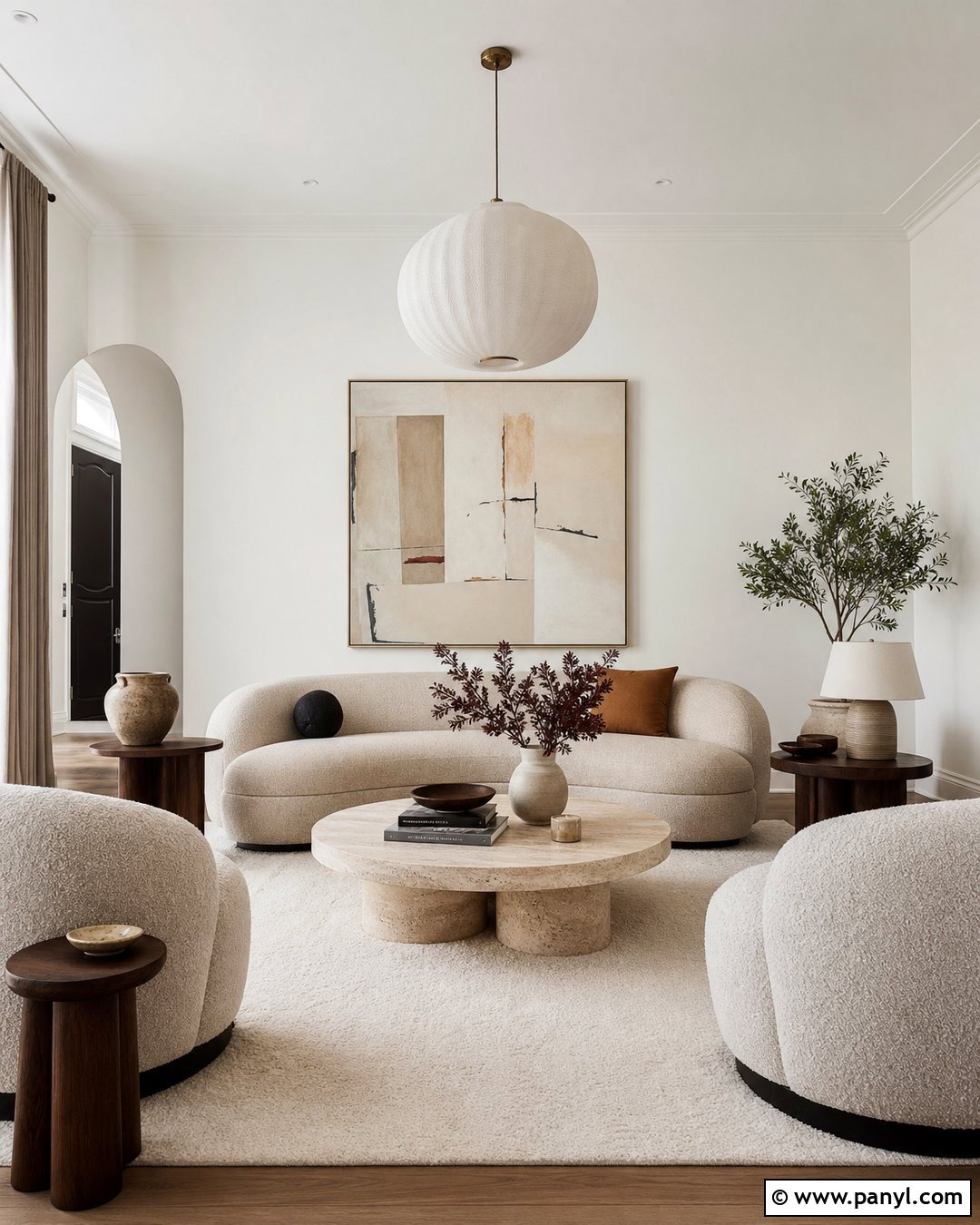
Alabaster creates a softly modern living room when paired with natural white oak and warm neutral fabrics. Paint the walls Alabaster in an eggshell finish, then repeat it on the ceiling in flat paint for a seamless envelope. Use slightly brighter white trim if you want subtle architectural definition. Choose a streamlined oatmeal sofa, two light oak armchairs, and a cream wool rug with a quiet geometric pattern. A limestone fireplace provides gentle contrast without making the palette feel cold. Add matte black lighting, olive green pillows, and a tall indoor tree for depth. This combination works especially well in a bright room because Alabaster’s restrained warmth keeps strong daylight from turning the space overly creamy.
2. Swiss Coffee Living Room With Traditional Details
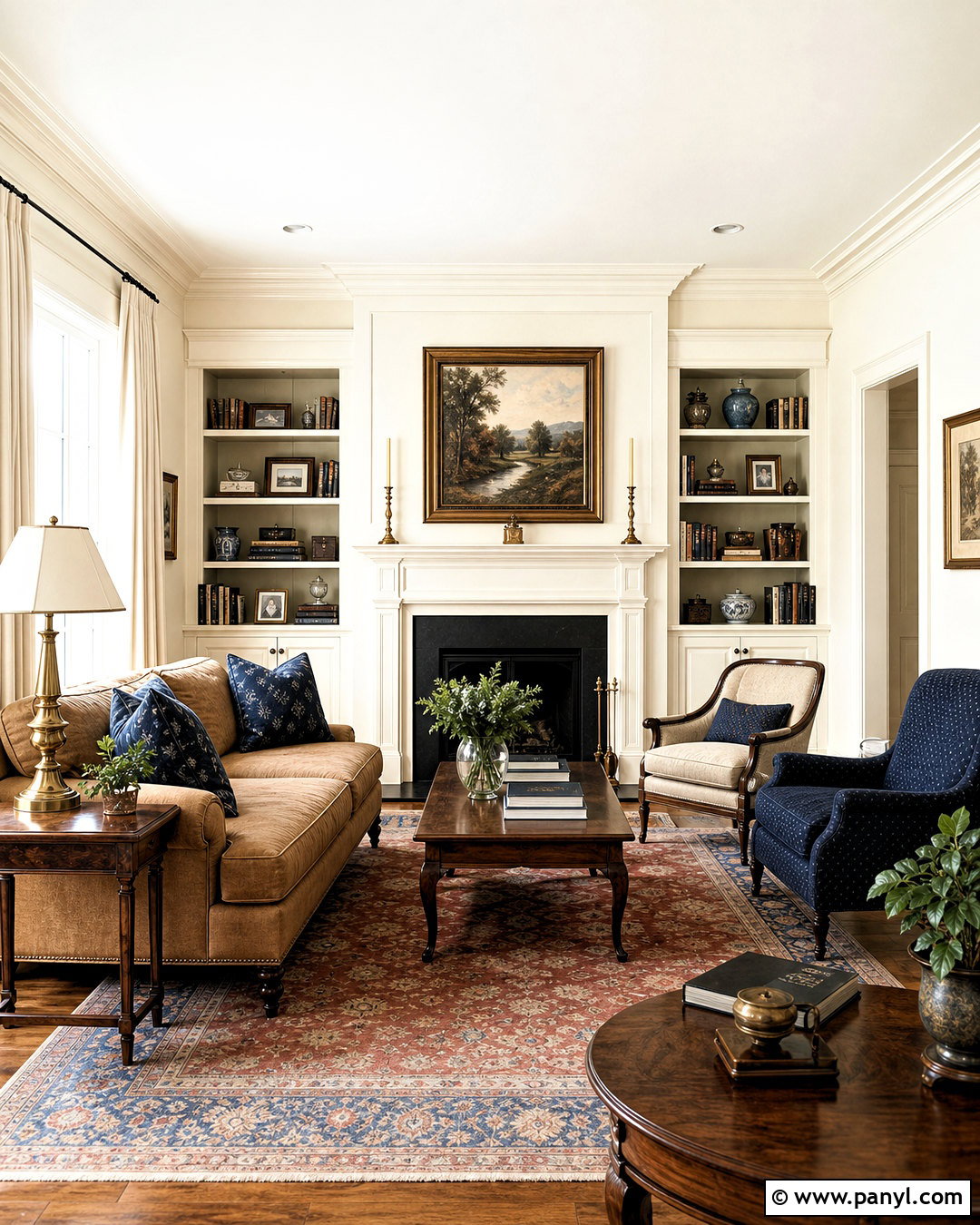
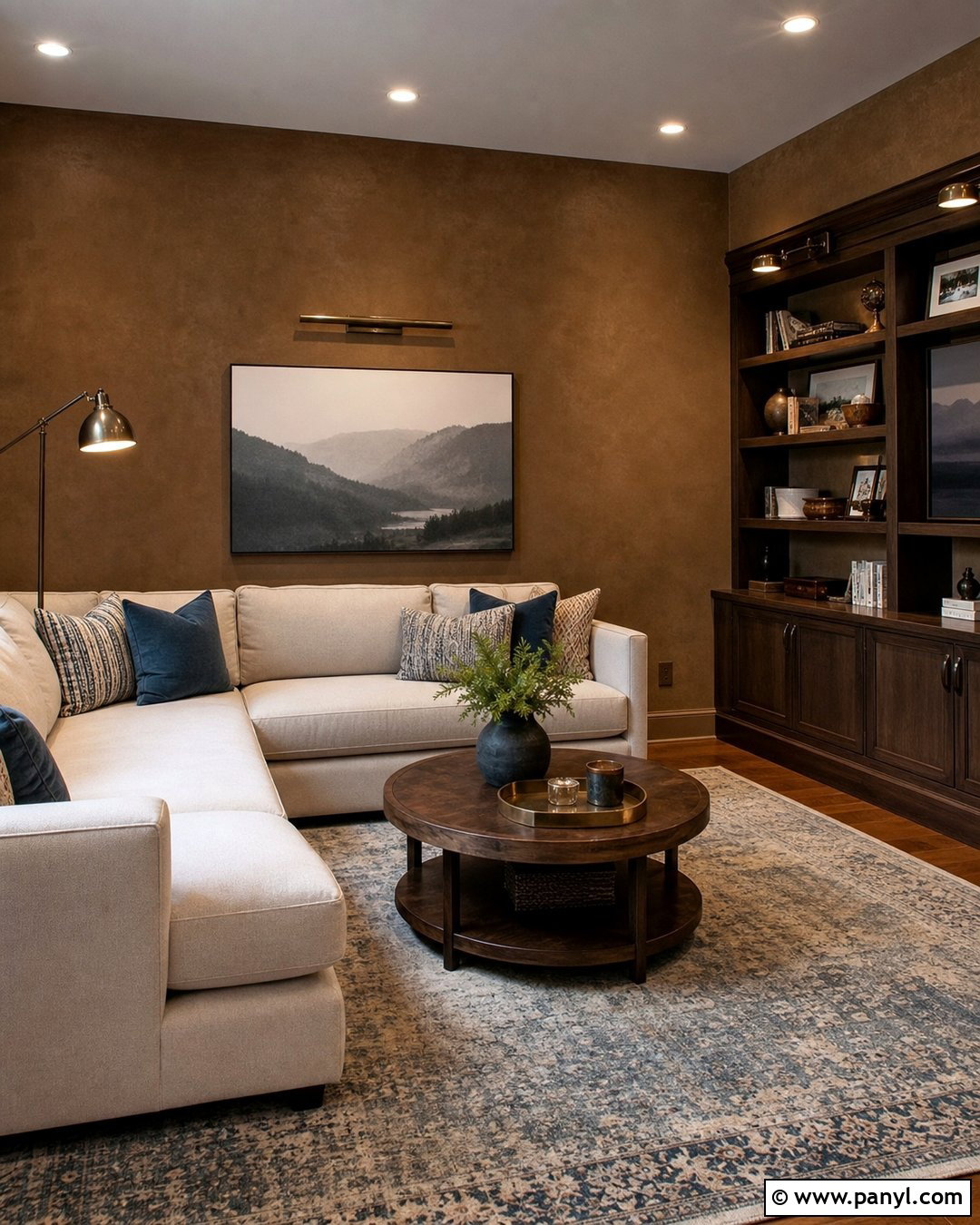
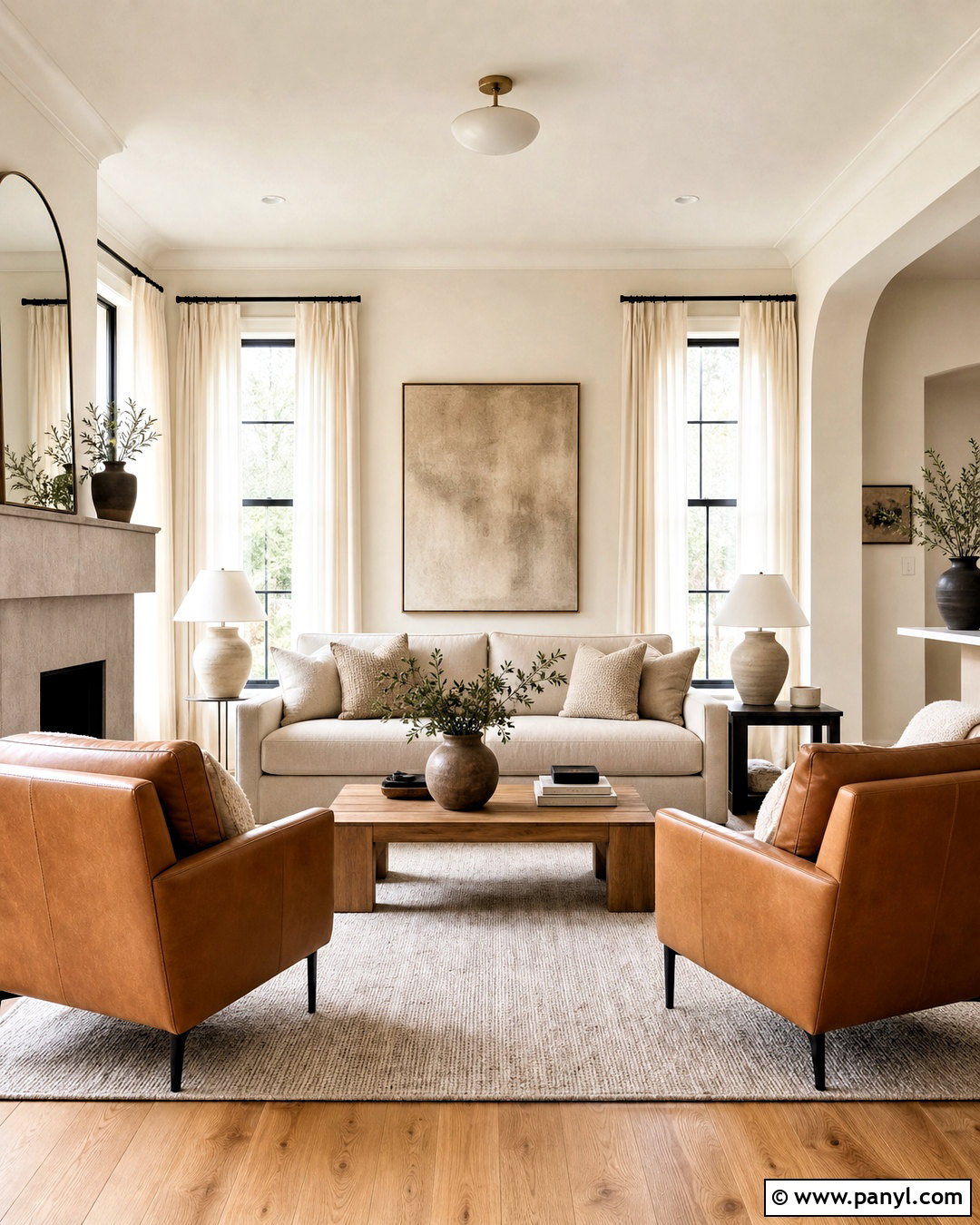
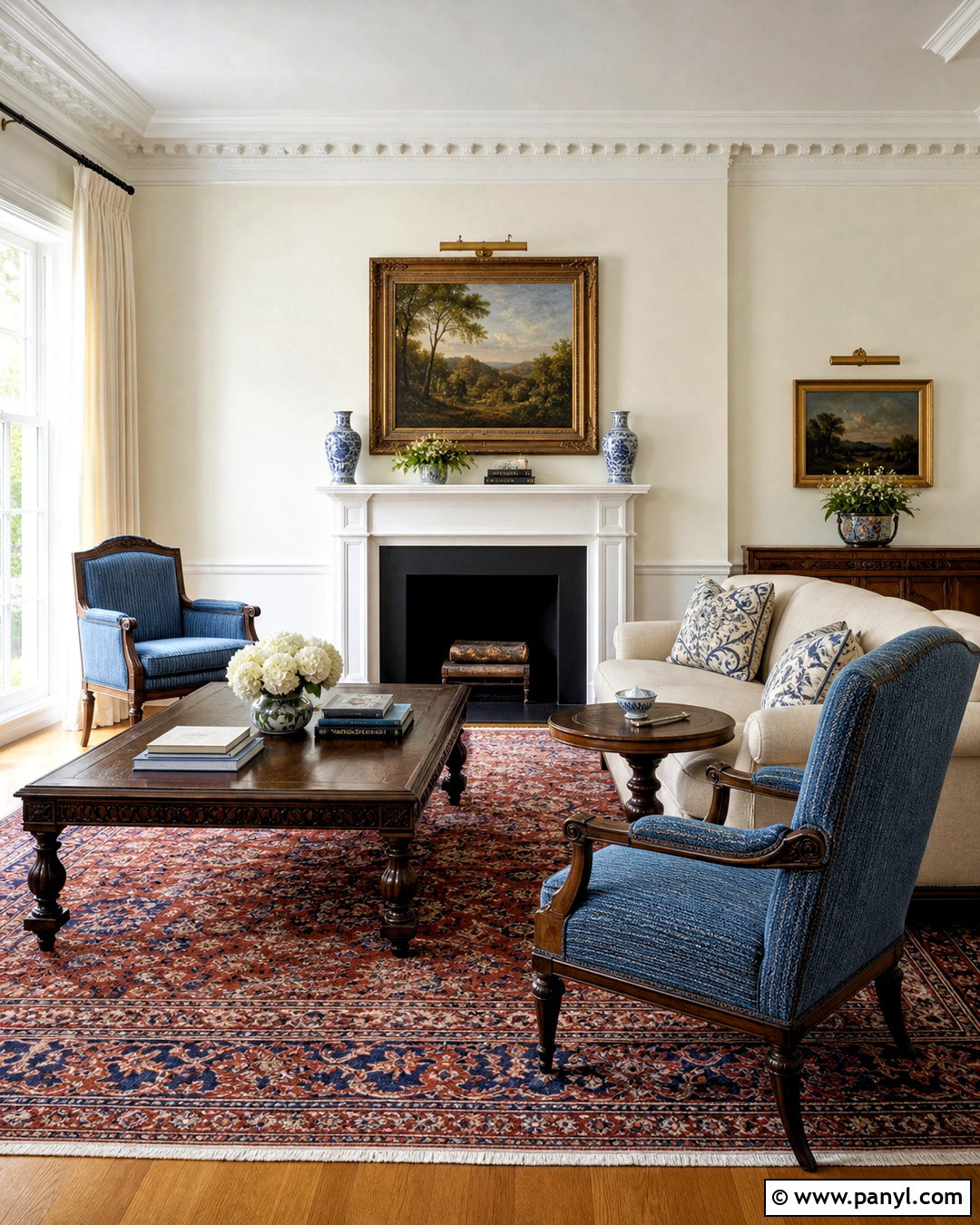
A traditional living room benefits from the richer, creamier character of Swiss Coffee. Cover the walls in Swiss Coffee and use the same color on detailed molding, bookcases, and window trim with different sheens. This tonal approach highlights the architecture without introducing harsh white outlines. Ground the room with medium-toned walnut flooring, a faded rust and blue rug, and a camel-colored sofa. Linen curtains, antique brass lamps, and dark wood side tables reinforce the welcoming warmth. Bring in muted navy through pillows and artwork to balance the cream undertones. The finished space feels established rather than outdated. Swiss Coffee is particularly appealing here because its warmth complements classic furniture, traditional millwork, and aged metal finishes naturally.
3. Alabaster Kitchen With White Oak Cabinets
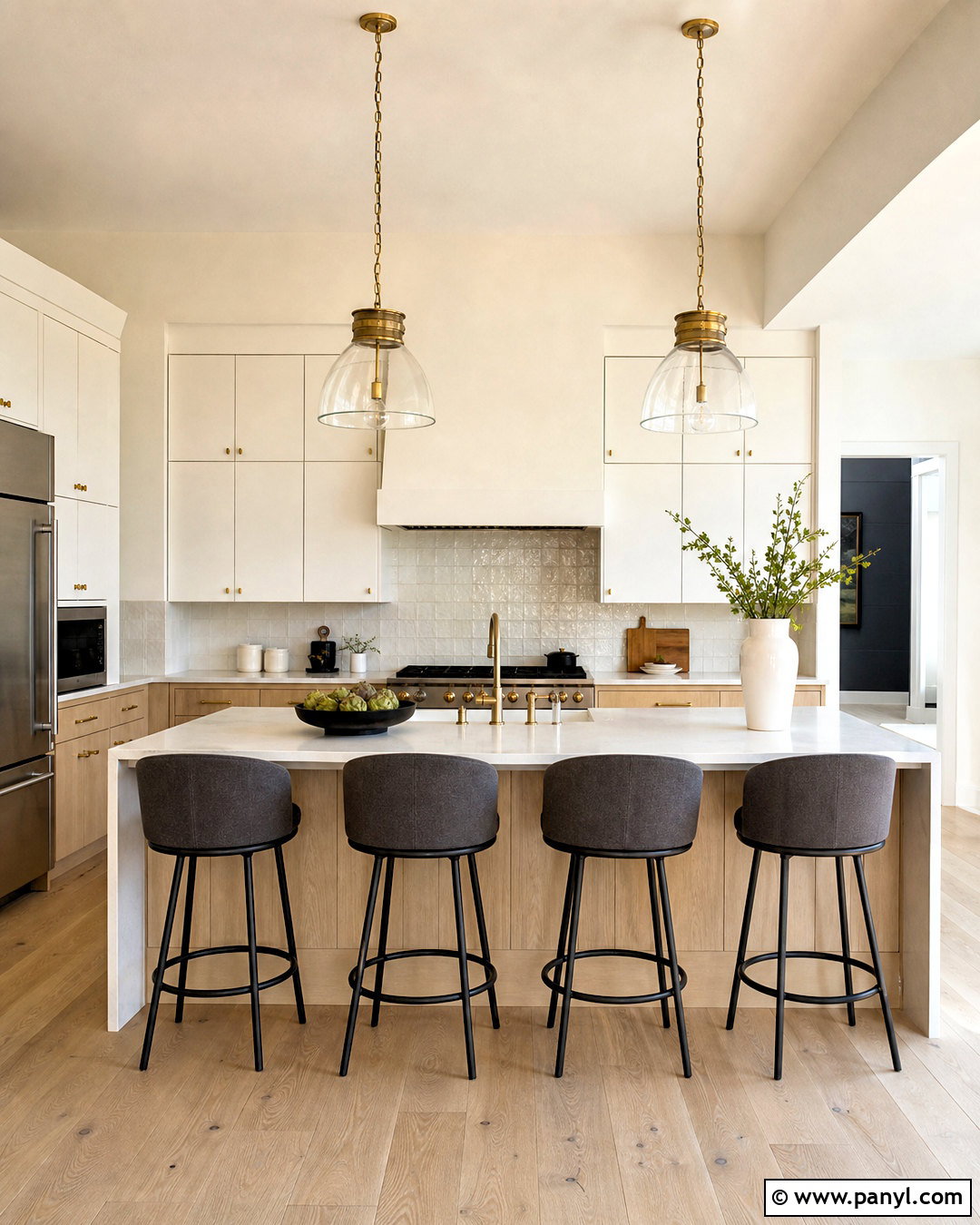
Can a warm white kitchen still feel fresh and streamlined? Alabaster walls provide a balanced background for flat-panel white oak cabinets, pale quartz counters, and brushed brass hardware. Use Alabaster on the upper cabinets as well, allowing the lower wood cabinetry to visually anchor the layout. A handmade backsplash in soft ivory adds texture while remaining close to the wall color. Select warm gray counter stools, simple glass pendants, and light oak flooring for a connected palette. Small accents of matte black can sharpen the scheme without dominating it. This complete kitchen works well for transitional and organic modern homes. Alabaster keeps the natural materials looking warm, but it remains neutral enough to prevent the room from appearing heavily yellow.
4. Swiss Coffee Kitchen With Cream Cabinets
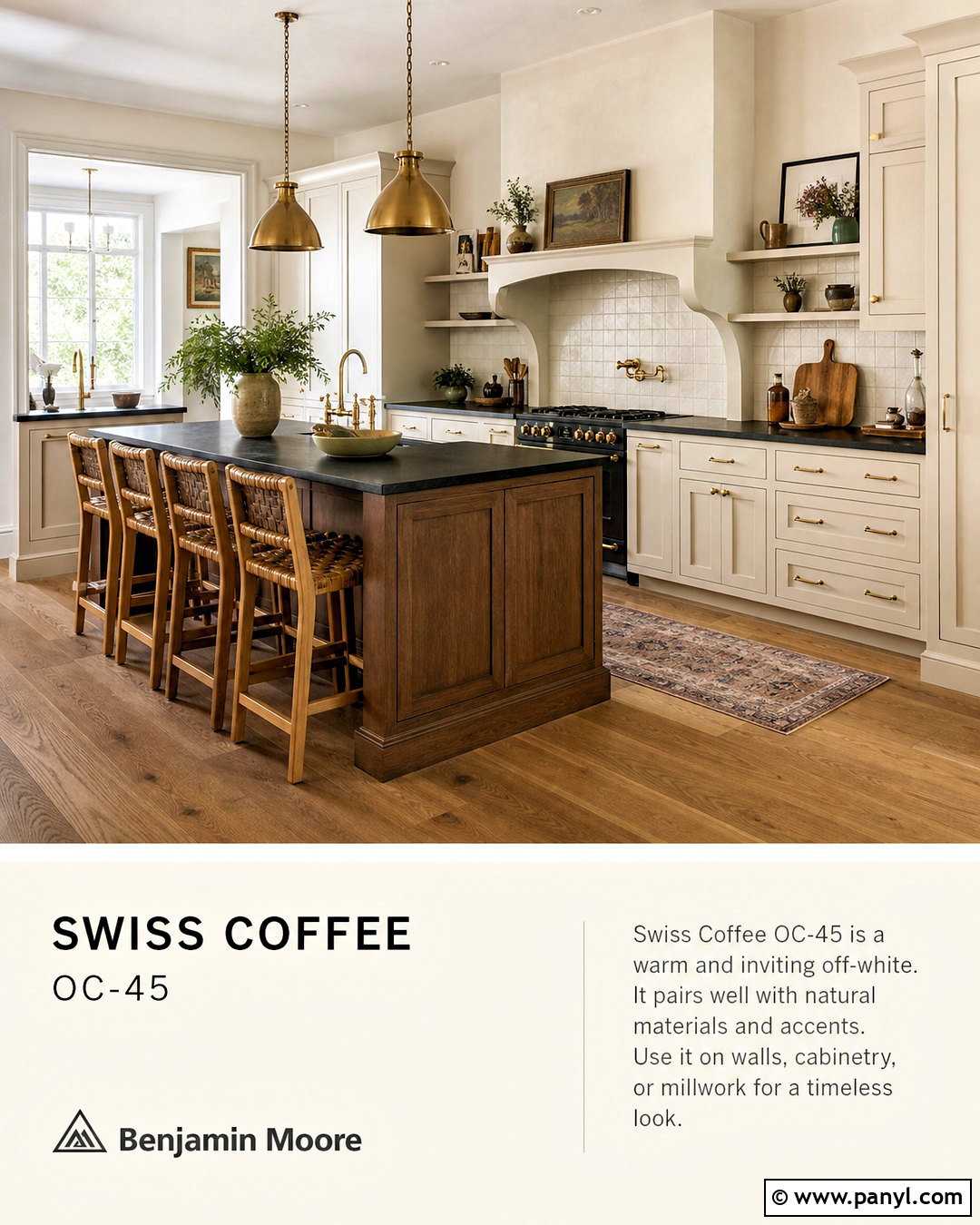
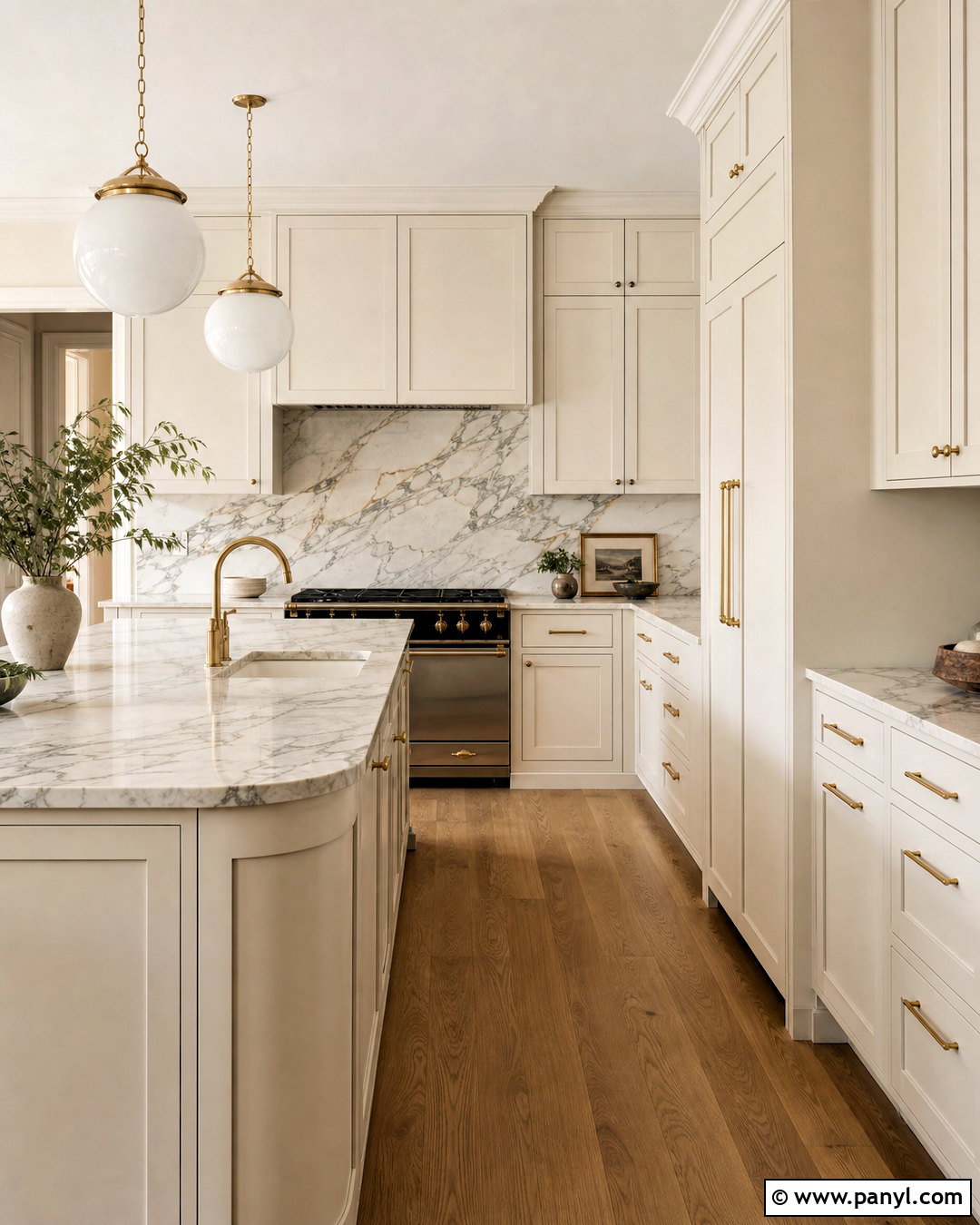
Swiss Coffee can turn a busy family kitchen into a comfortable, cohesive gathering place. Paint Shaker cabinets, walls, and the range hood Swiss Coffee, varying the sheen to keep every surface visually distinct. Pair the cabinetry with honed soapstone counters and a backsplash made from warm white square tile. A stained walnut island introduces strong contrast and provides a practical centerpiece. Finish it with woven counter stools and aged brass pendants. Medium oak flooring connects the creamy paint to the darker island. Add a few muted green accessories and natural wood cutting boards for color. Rather than attempting a stark all-white kitchen, this design embraces Swiss Coffee’s warmth and uses dark stone and wood to create balance, character, and definition.
5. Alabaster Bedroom With Soft Greige Decor
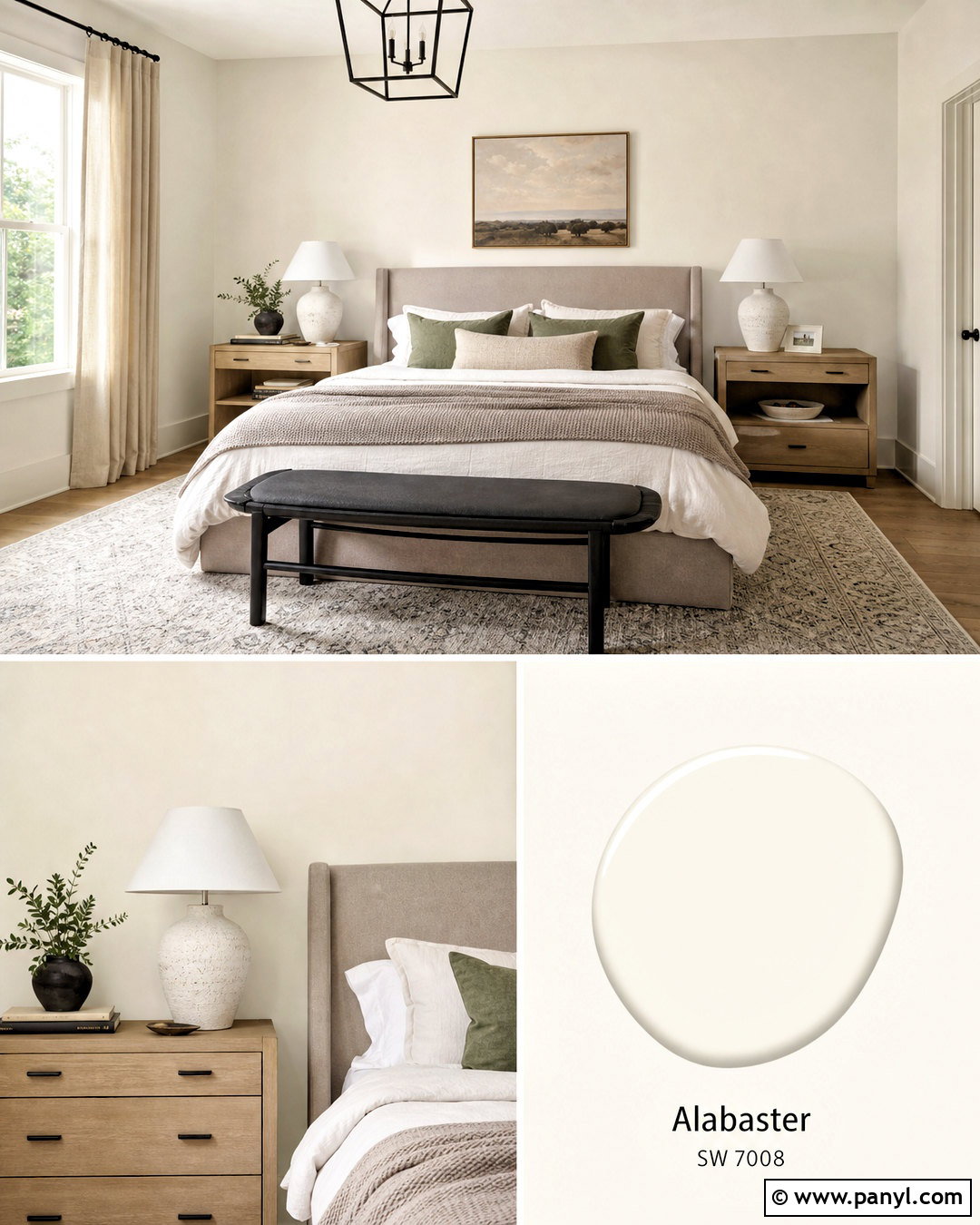
Quiet color transitions make Alabaster an excellent starting point for a calming bedroom. Use it across the walls and ceiling, then add slim Alabaster trim in a satin finish. Place a greige upholstered bed against the main wall and layer it with ivory sheets, taupe blankets, and muted sage pillows. Light oak nightstands and ceramic lamps continue the natural palette. Choose a wool rug that blends cream, beige, and soft gray so the furniture does not appear disconnected from the walls. Linen curtains should remain slightly deeper than Alabaster for gentle contrast. A black metal bench or picture frame adds one crisp detail. The result is restful, modern, and warm without relying on obvious yellow or heavily creamy tones.
6. Swiss Coffee Bedroom With Walnut Furniture
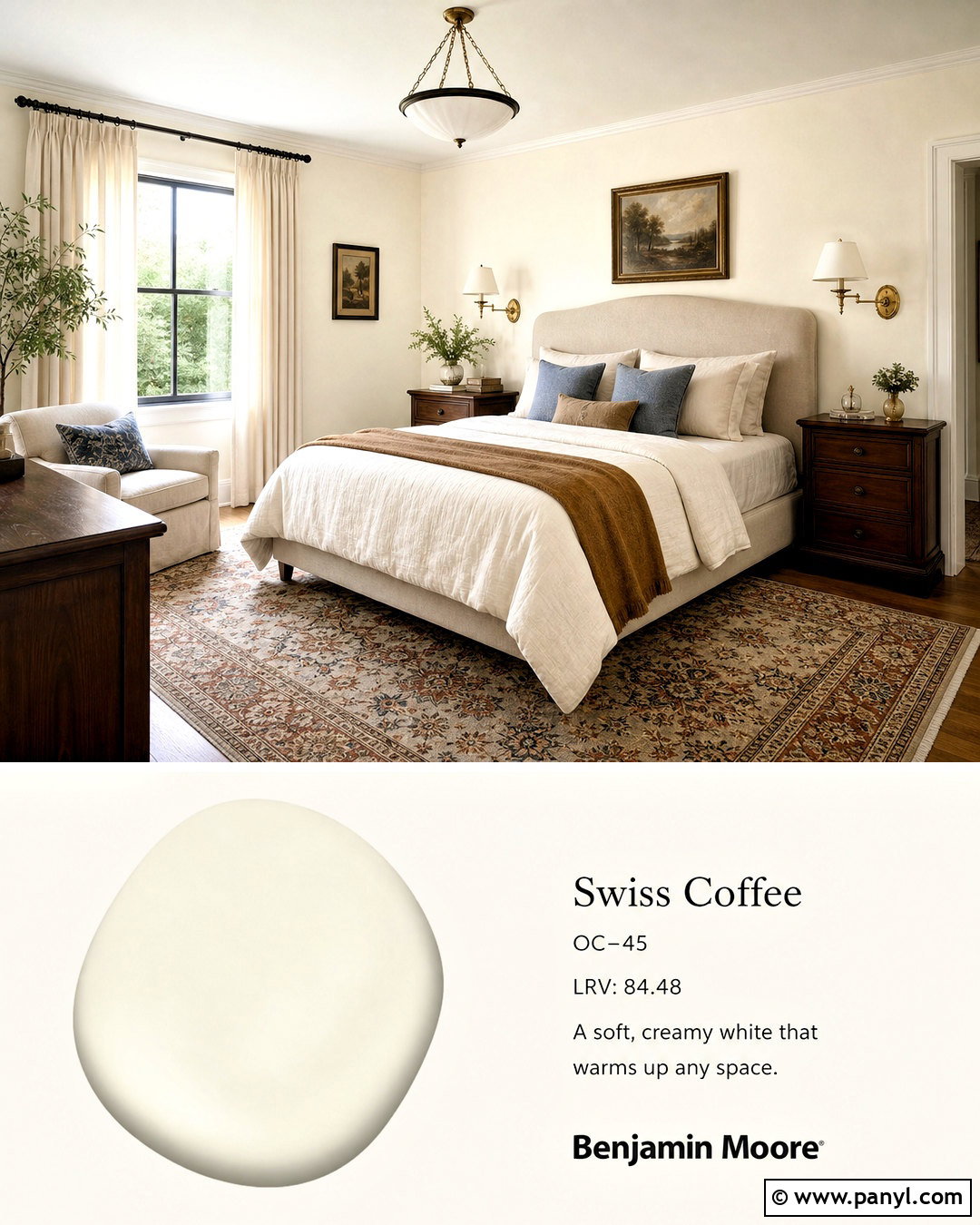
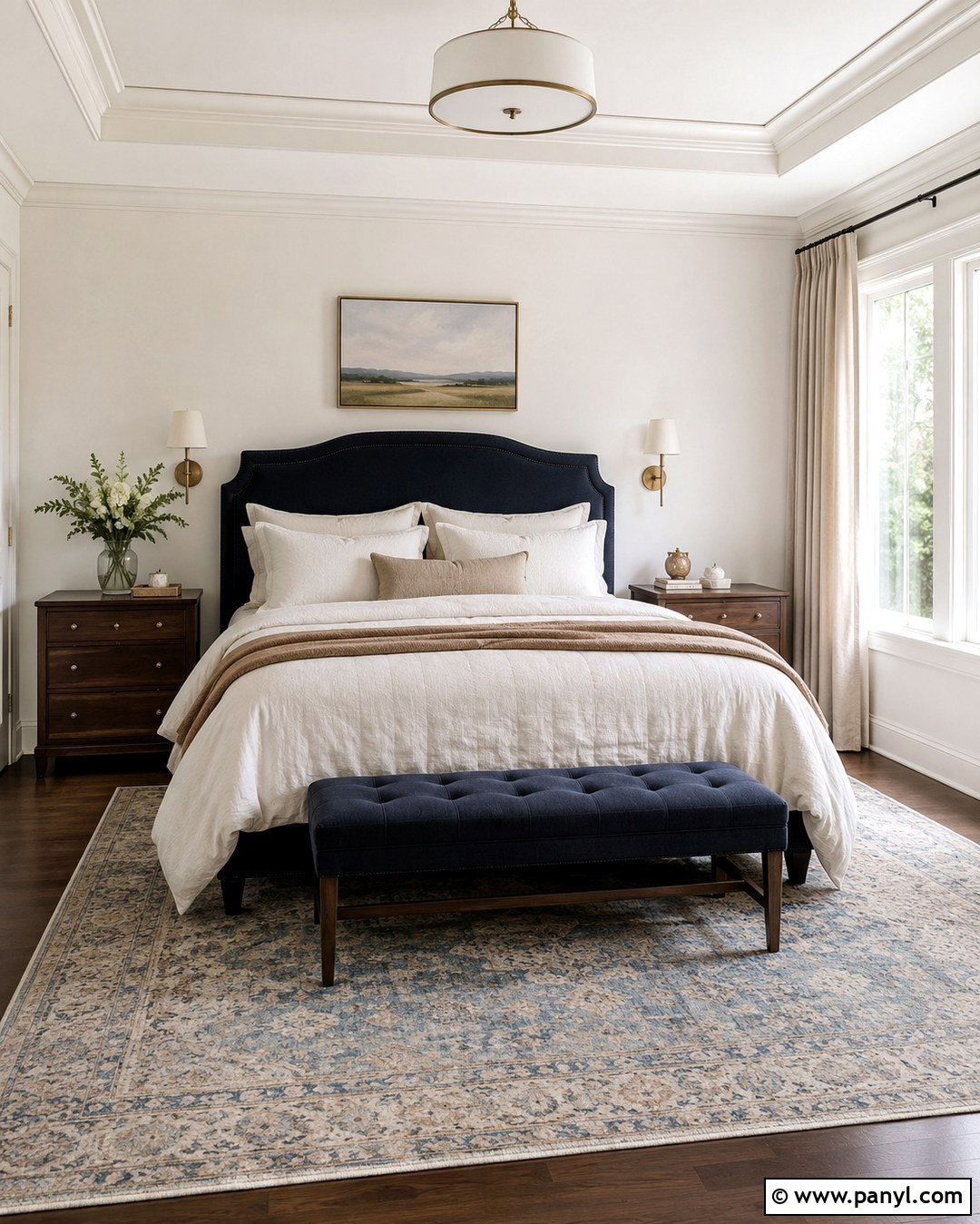
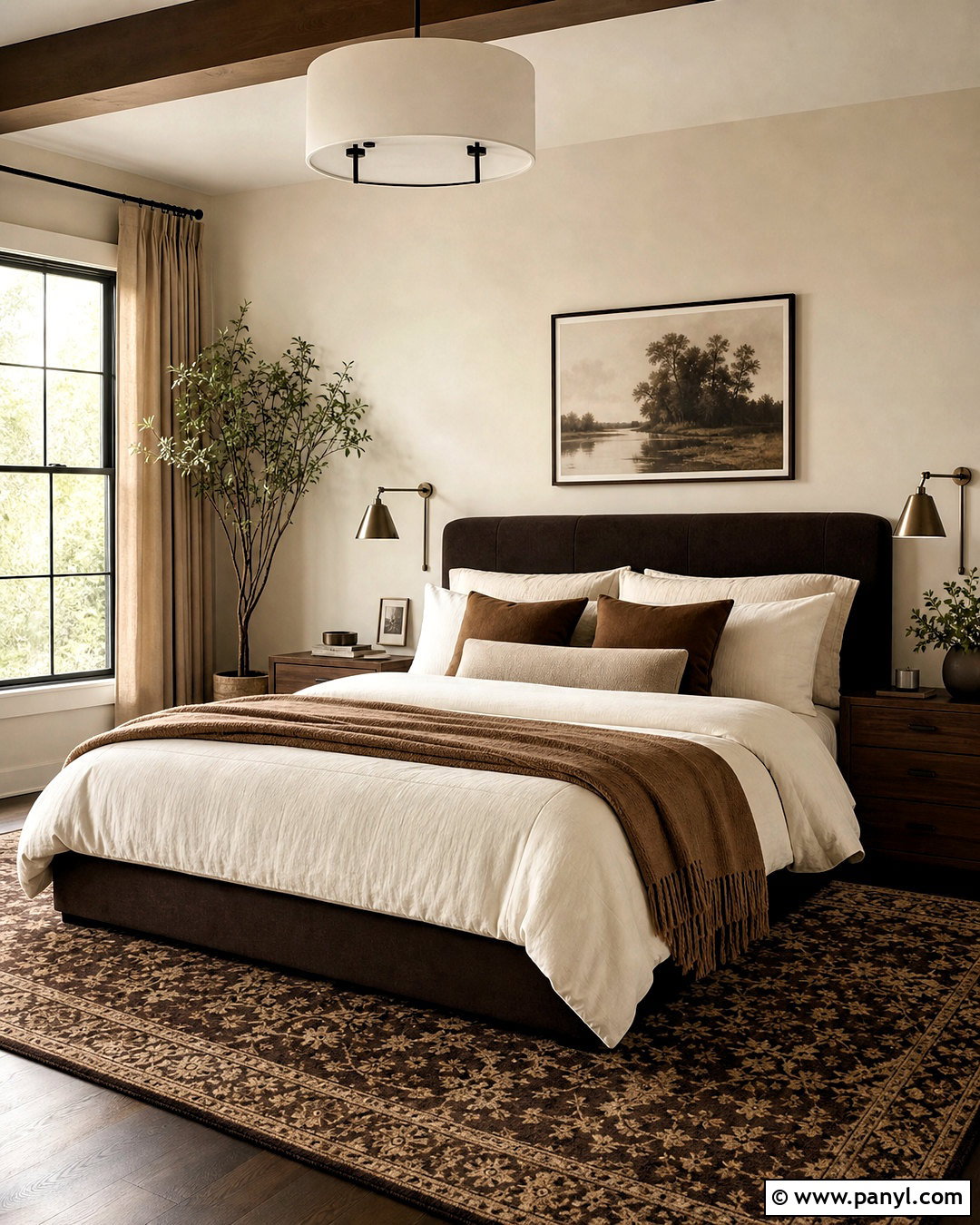
Imagine waking in a bedroom that feels softly illuminated even before the curtains open. Swiss Coffee walls establish that warm atmosphere, especially when combined with substantial walnut furniture. Use an upholstered oatmeal headboard, walnut nightstands, and a matching low dresser to create a grounded layout. Layer the bed with cream linen, dusty blue pillows, and a textured caramel throw. Hang full-length natural linen curtains near the ceiling to make the room feel taller. Antique brass sconces and a vintage-inspired rug support the traditional warmth without making the design fussy. Keep the ceiling and trim Swiss Coffee in lighter sheens for a cocooning finish. Cool blue accents prevent the creamy wall color and brown furniture from becoming too visually warm.
7. Alabaster Bathroom With Marble Tile
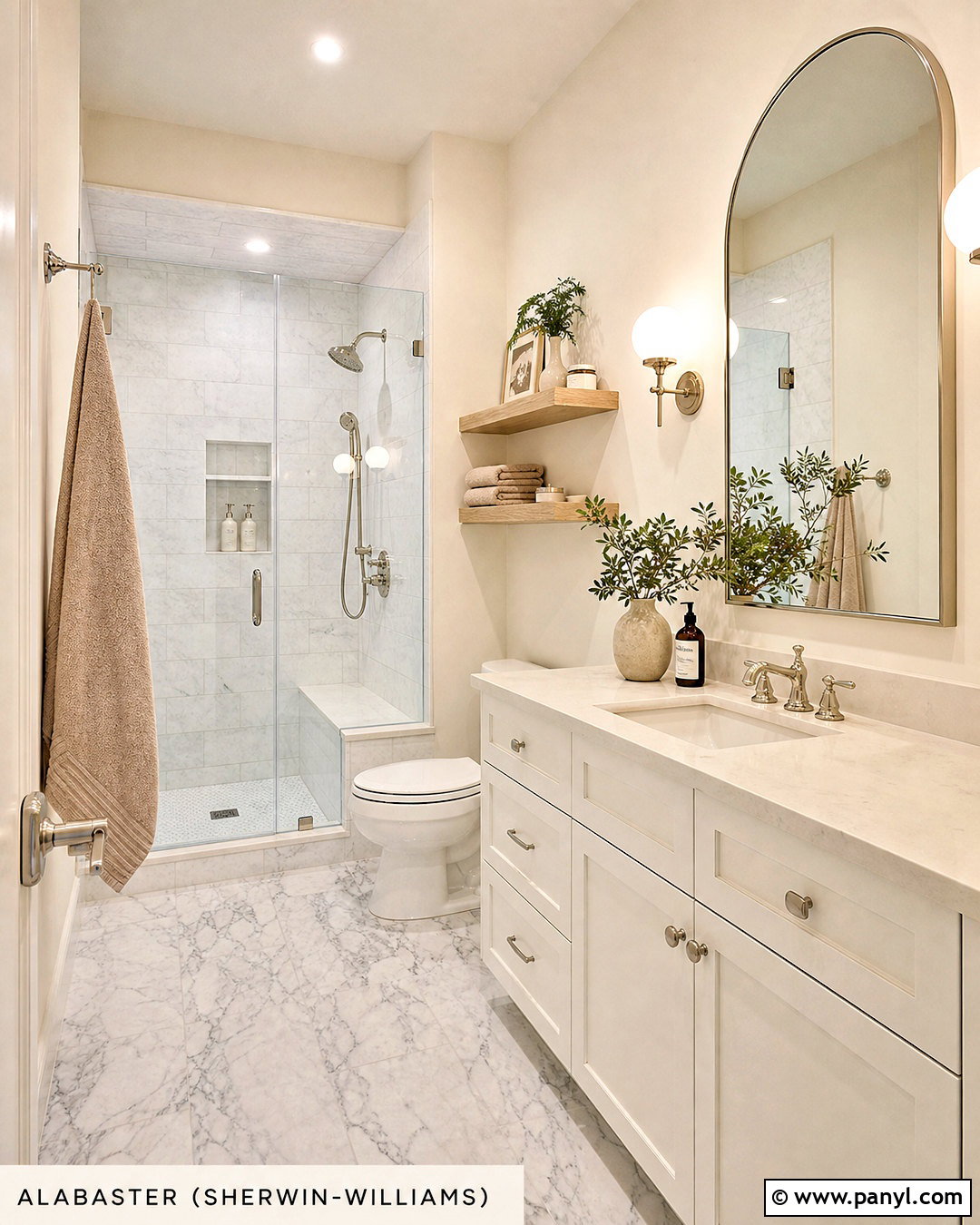
Alabaster works beautifully in a bathroom where white marble might otherwise appear too cool or formal. Paint the upper walls, ceiling, and vanity Alabaster, using a moisture-resistant satin finish where needed. Install honed Carrara marble tiles across the floor and shower, allowing their soft gray veining to contrast with the warmer paint. Polished nickel fixtures offer a cleaner effect than yellow-toned brass in this scheme. Add a frameless glass shower, an arched mirror, and simple globe sconces. White oak shelves and folded beige towels keep the space relaxed. Because different bathroom bulbs can change how warm whites appear, use high-quality neutral white lighting. The completed room feels bright, balanced, and refined rather than stark or overly creamy.
8. Swiss Coffee Bathroom With Travertine
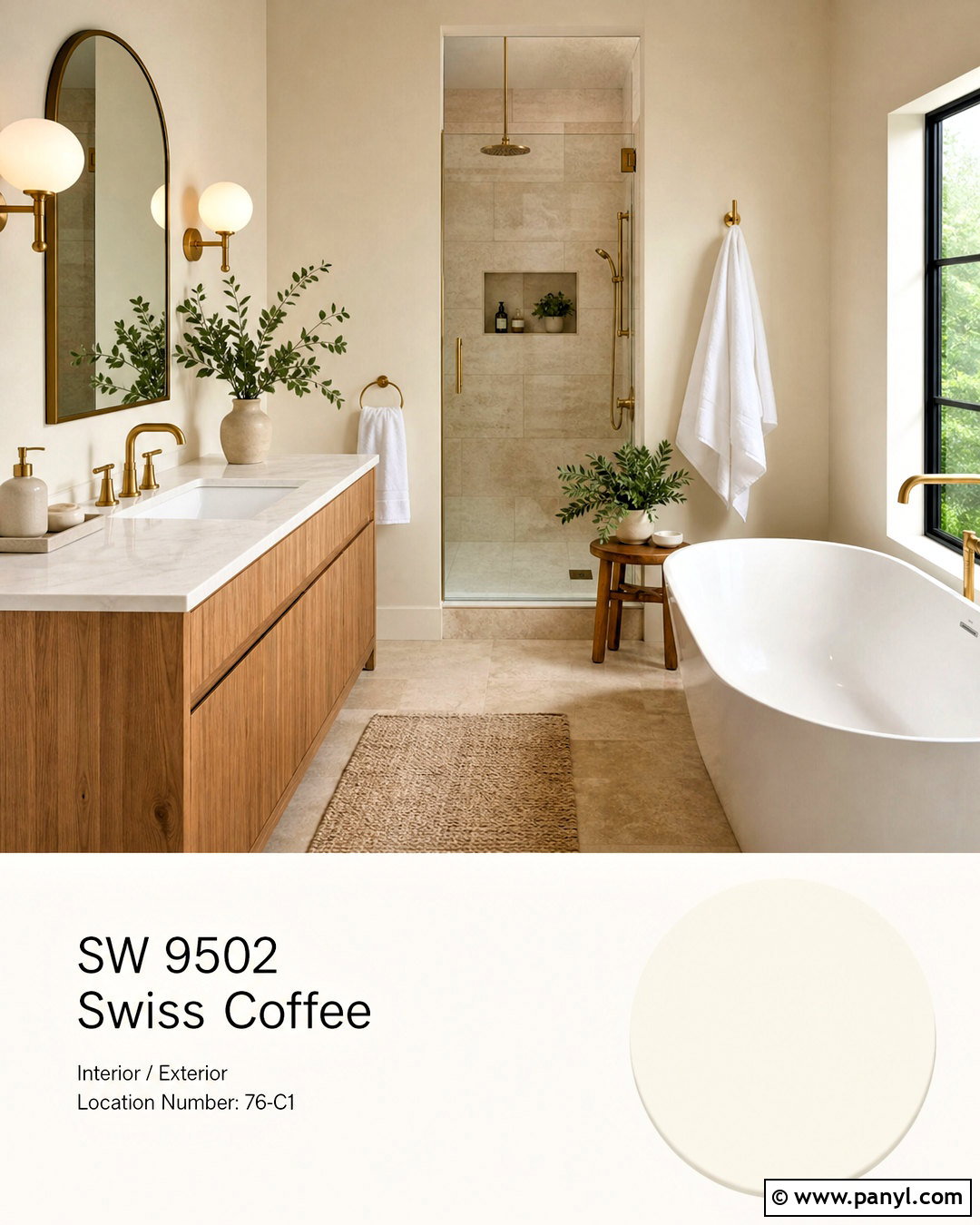
For a bathroom with a spa-like sense of warmth, surround Swiss Coffee with natural travertine. Paint the walls, ceiling, and a furniture-style vanity in Swiss Coffee, separating them through matte and satin finishes. Cover the shower and floor in honed beige travertine with minimal grout contrast. A fluted white oak vanity front can add another layer of texture if you prefer wood cabinetry. Choose brushed brass fixtures, a softly rounded mirror, and creamy globe sconces to support the organic palette. Keep towels crisp white so the room still has visual freshness. A small olive tree or eucalyptus arrangement introduces muted green. Swiss Coffee’s creamy undertone connects naturally with the tan stone, creating a cohesive bathroom that feels warm, restful, and carefully finished.
9. Alabaster Dining Room With Black Accents
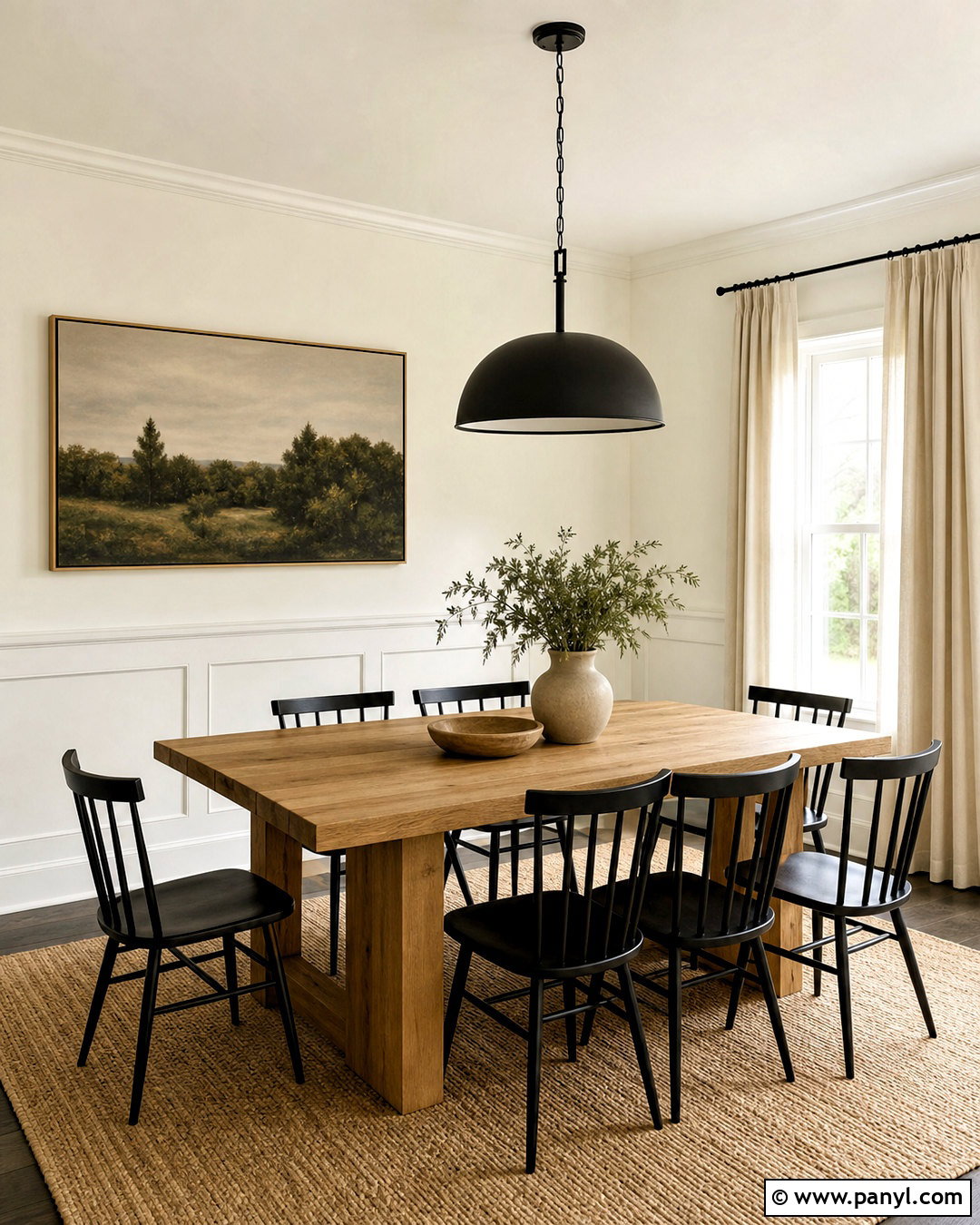
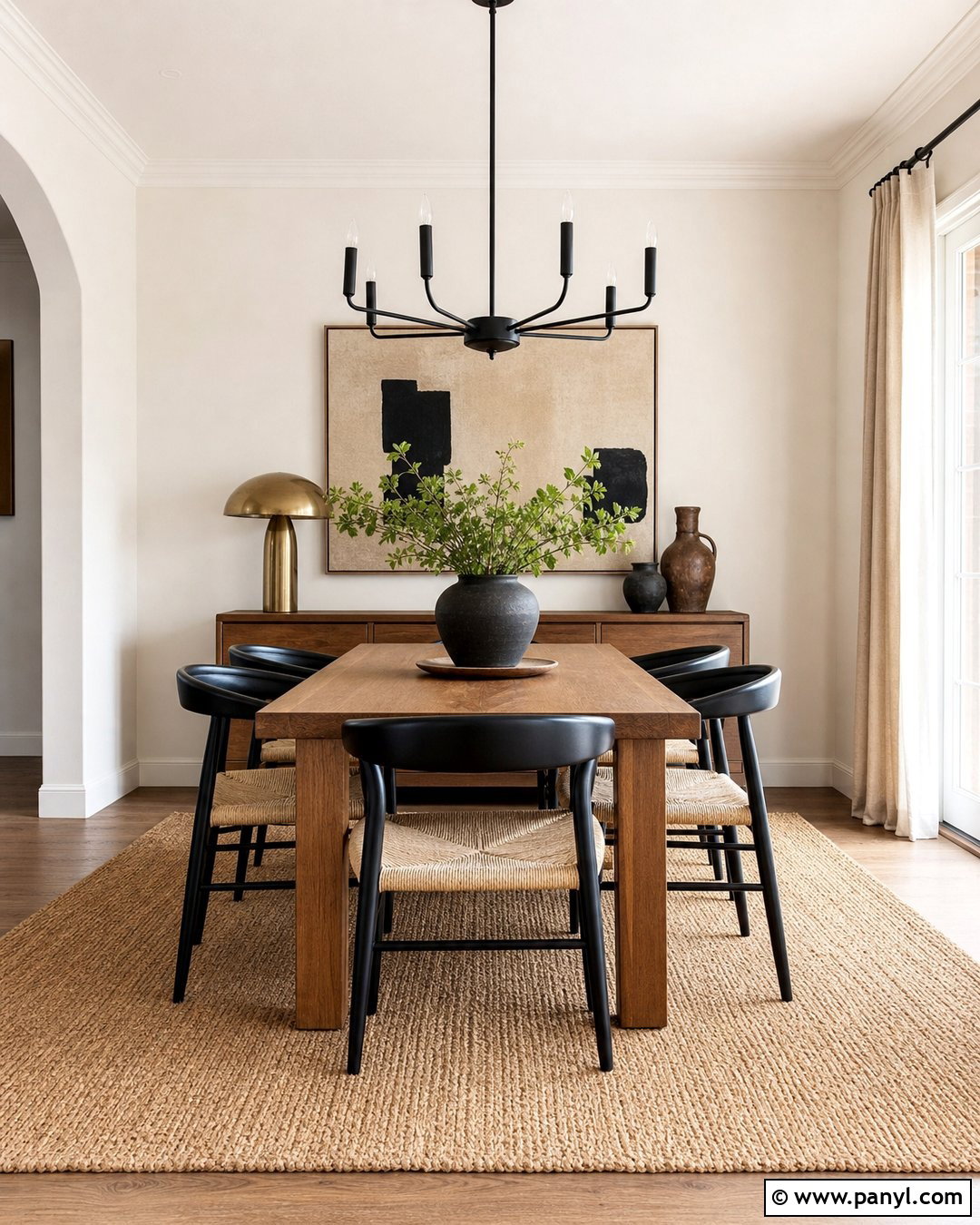
A high-contrast dining room can feel inviting when Alabaster replaces a brilliant, cold white. Paint the walls Alabaster and extend the color across simple panel molding for subtle depth. Place a solid oak dining table in the center, surrounded by black spindle-back chairs that give the pale room a strong outline. A large matte black pendant should hang low enough to anchor the table without blocking sightlines. Use a natural jute or wool rug to soften the floor and warm linen curtains to frame the windows. Add oversized landscape artwork with olive, charcoal, and tan tones. Alabaster acts as a calm bridge between the black fixtures and natural wood, producing a complete dining space that feels modern, relaxed, and practical for everyday meals.
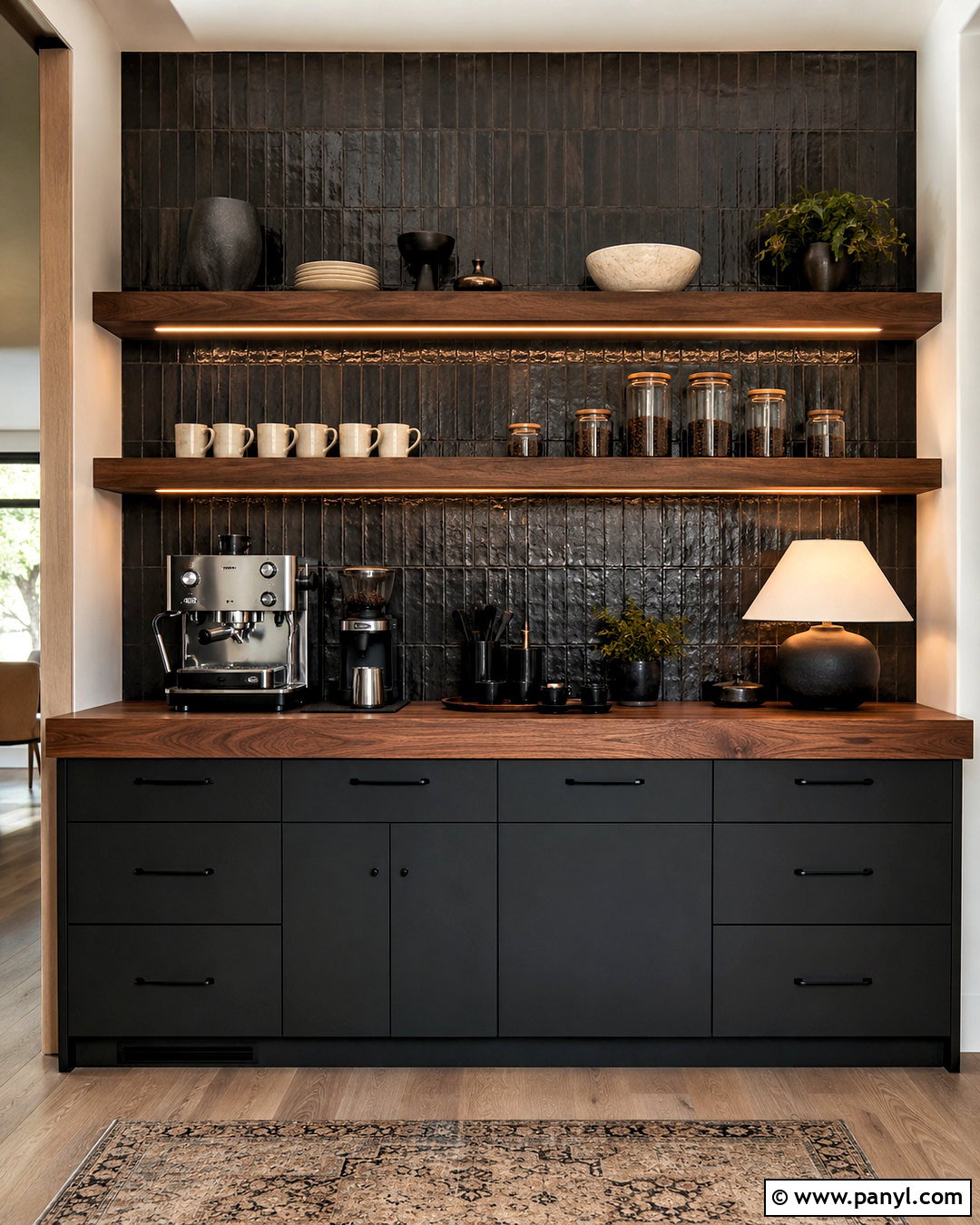
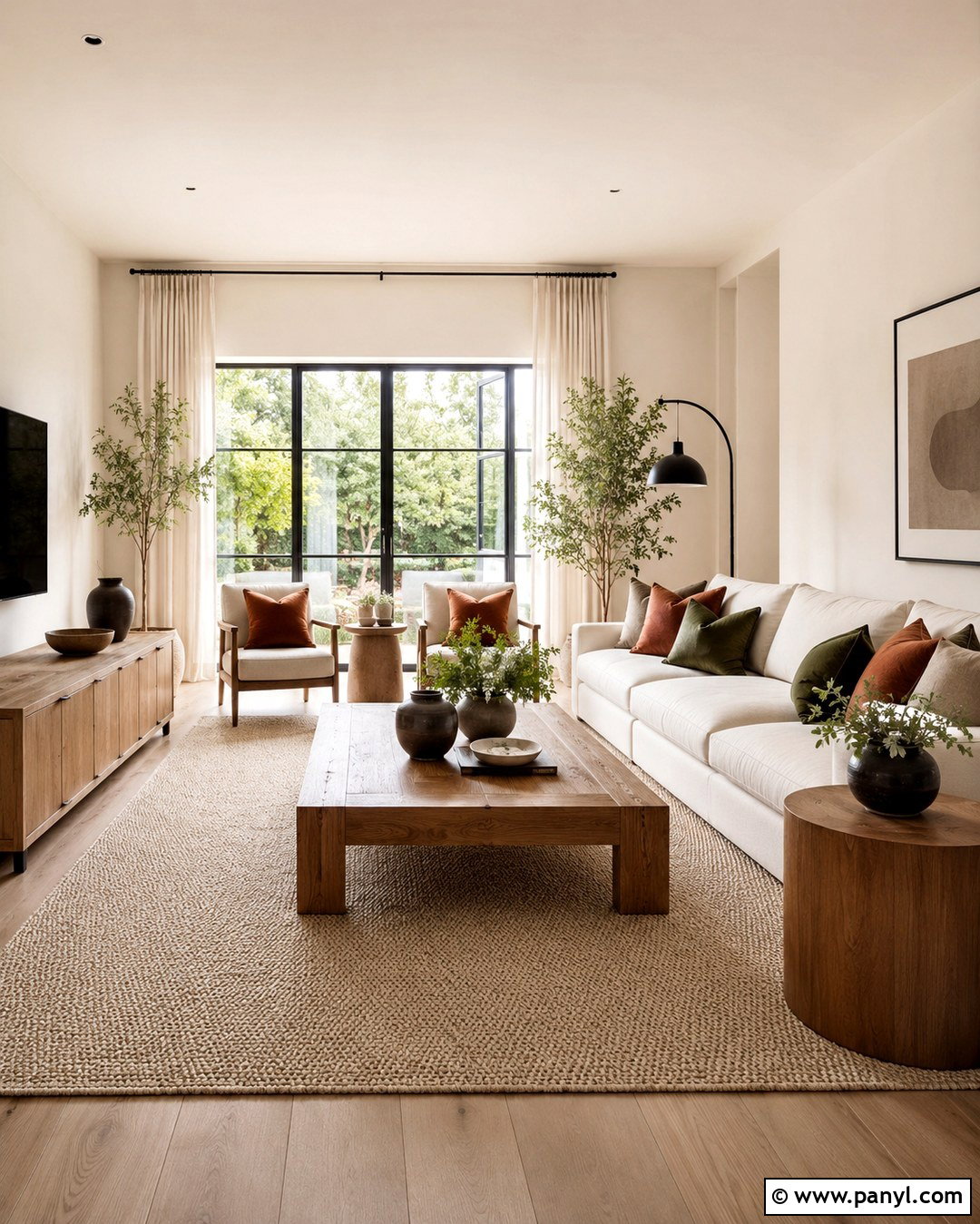
10. Swiss Coffee Dining Room With Dark Wood
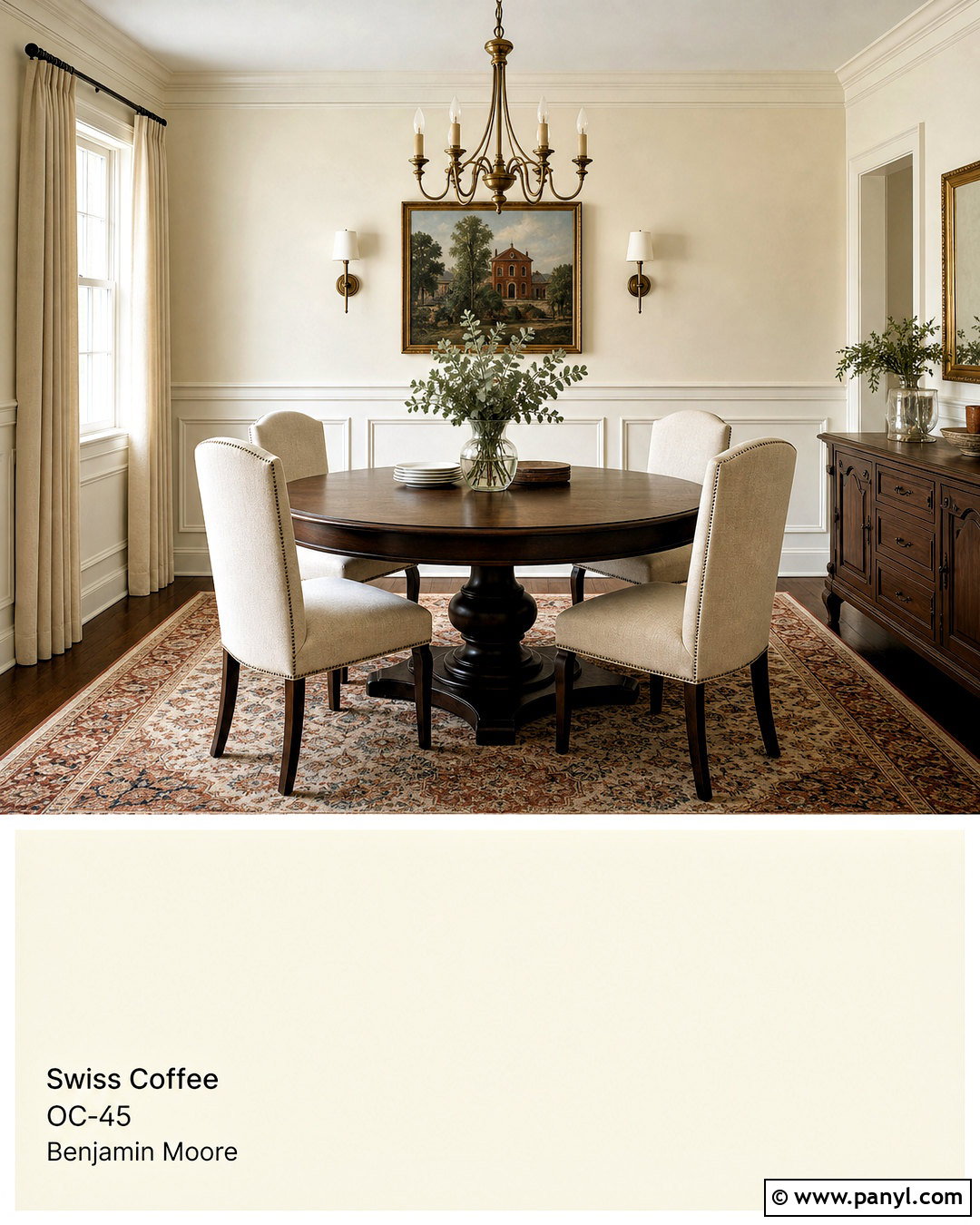
Swiss Coffee suits a dining room filled with deep wood tones and classic shapes. Cover both the walls and paneled wainscoting in Swiss Coffee, changing from eggshell above to satin below. This gives the room architectural interest without splitting it into competing colors. Select a dark walnut pedestal table and upholstered chairs in warm beige linen. Center an aged brass chandelier above the table and place a muted Persian-style rug underneath. A dark wood sideboard can hold simple ceramic vessels and framed art in rust, green, and blue. Hang ivory curtains that closely match the paint rather than using optical white fabric. The creamy walls soften the visual weight of the furniture, while the darker pieces keep Swiss Coffee from looking washed out or overly sweet.
11. Alabaster Entryway With Light Wood
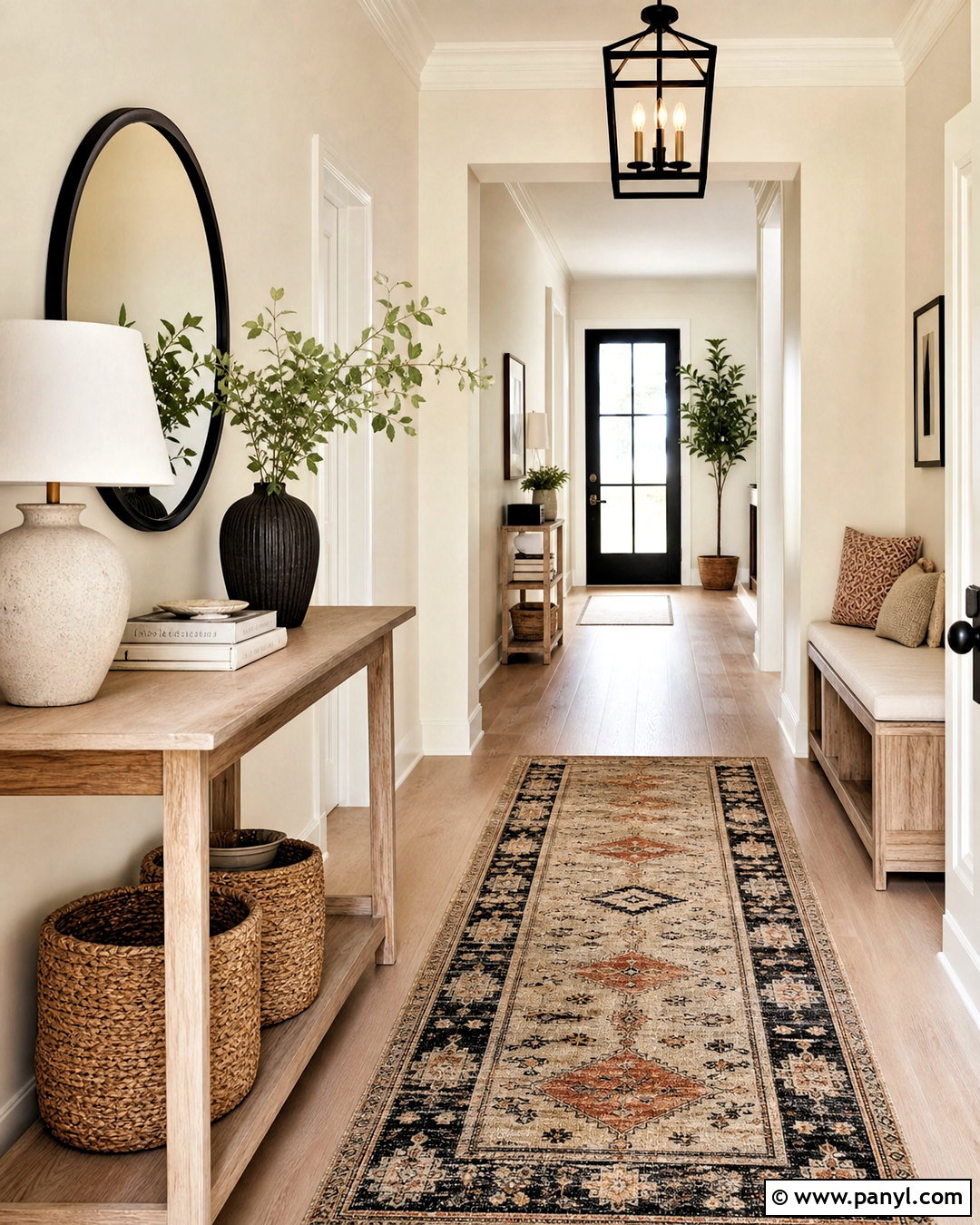
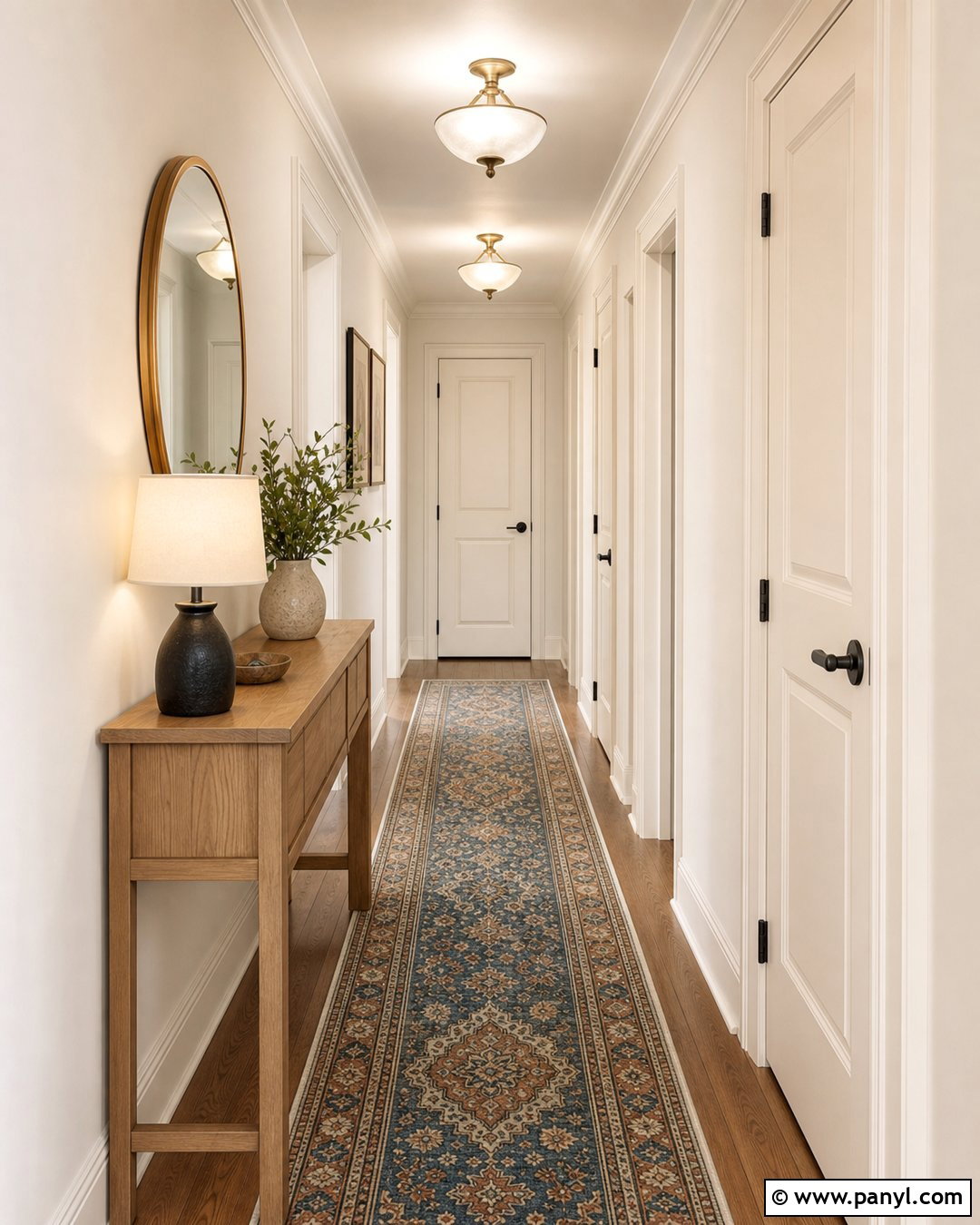
First impressions feel clean and welcoming in an Alabaster entryway built around pale natural materials. Paint the walls and ceiling Alabaster, then use a slightly brighter warm white on doors and trim to define the narrow space. Position a slim white oak console beneath a large round mirror with a black frame. A woven runner in beige, charcoal, and muted rust directs the eye into the home. Add a ceramic table lamp, a shallow wood bowl, and one leafy branch rather than crowding the surface. A simple black lantern provides contrast overhead. If storage is needed, include an oak bench with woven baskets underneath. This coordinated look allows Alabaster to brighten the entrance while remaining soft enough to complement practical wood furniture and everyday textures.
12. Swiss Coffee Entryway With Arched Details
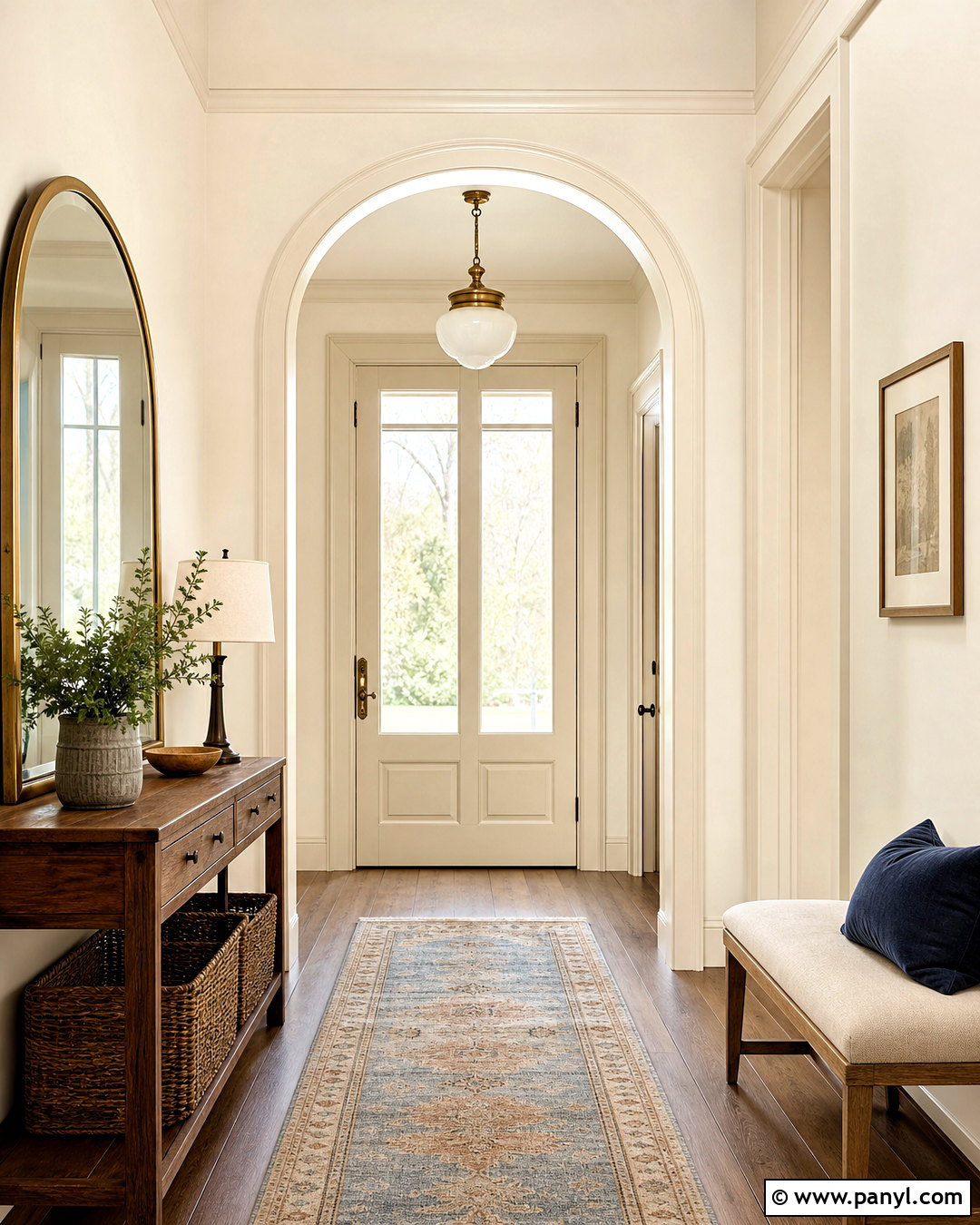
Curved architecture and Swiss Coffee make an entryway feel warm, graceful, and connected. Apply the paint to the walls, arched doorway, ceiling, baseboards, and interior door for a nearly monochromatic finish. Different sheens will keep the trim visible without disrupting the flowing design. Place a medium walnut console along one wall and top it with a large arched brass mirror. Use a patterned runner containing faded blue, tan, and cream to add movement down the hallway. A pleated pendant or milk-glass ceiling fixture complements the softer forms. Include a small upholstered bench and closed basket storage for function. Swiss Coffee’s creamy quality strengthens the traditional character of the arches, while blue accents and dark wood prevent the finished entrance from feeling too beige.
13. Alabaster Home Office With Sage Green
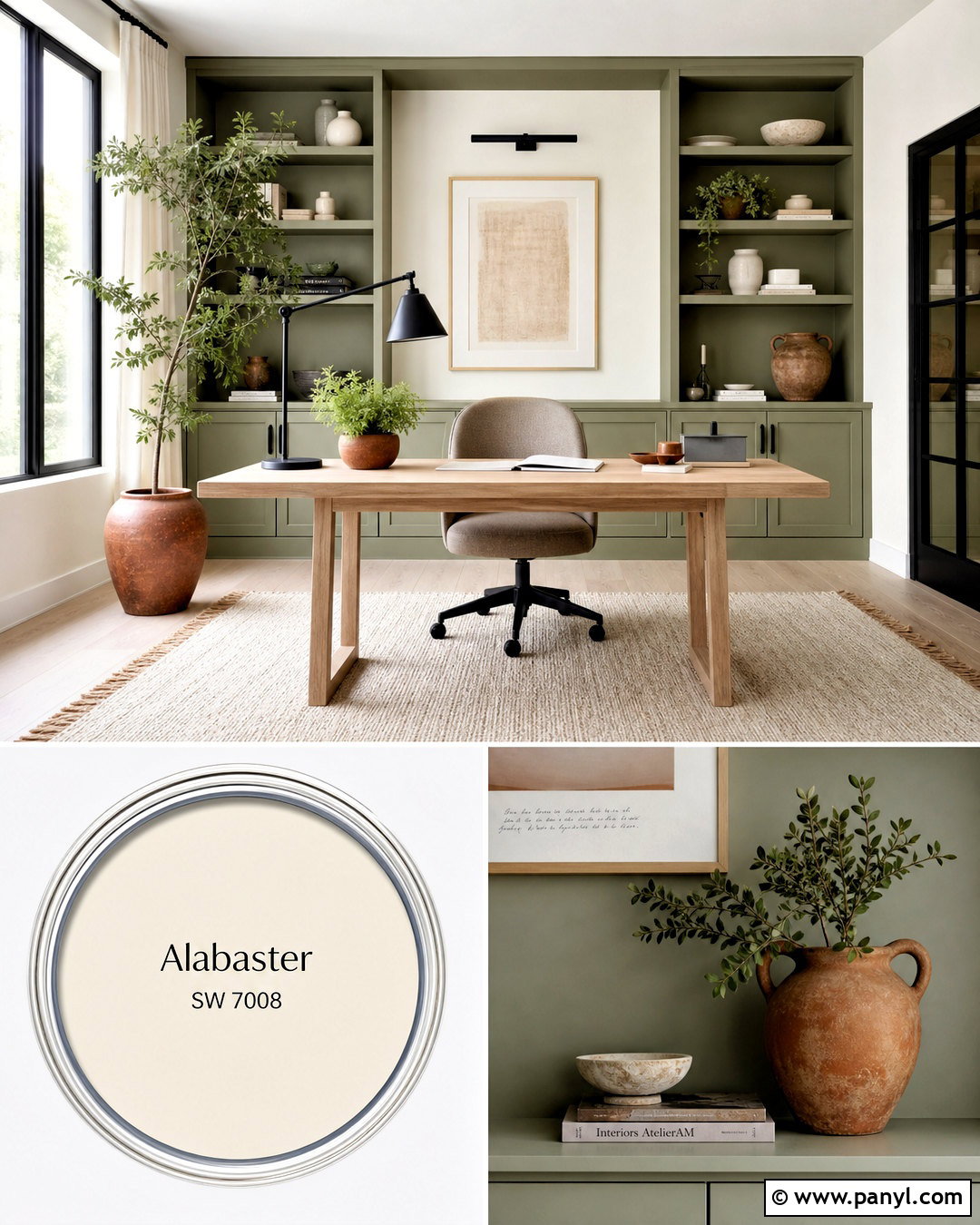
When concentration matters, Alabaster and muted sage green create a calm office without feeling dull. Paint the main walls Alabaster and use warm sage on floor-to-ceiling built-in shelves behind the desk. A white oak desktop and matching open bookcase sections add natural warmth. Choose a supportive chair upholstered in light taupe, then place a textured cream rug beneath the work area. Matte black cabinet pulls, a black task lamp, and slim picture frames give the pale room definition. Keep window treatments simple with off-white linen shades. A few terracotta accessories can warm the green without cluttering the shelves. This full design lets Alabaster provide brightness across the workspace, while the sage cabinetry forms a focused backdrop that feels both decorative and practical.
14. Swiss Coffee Home Office With Navy Cabinets
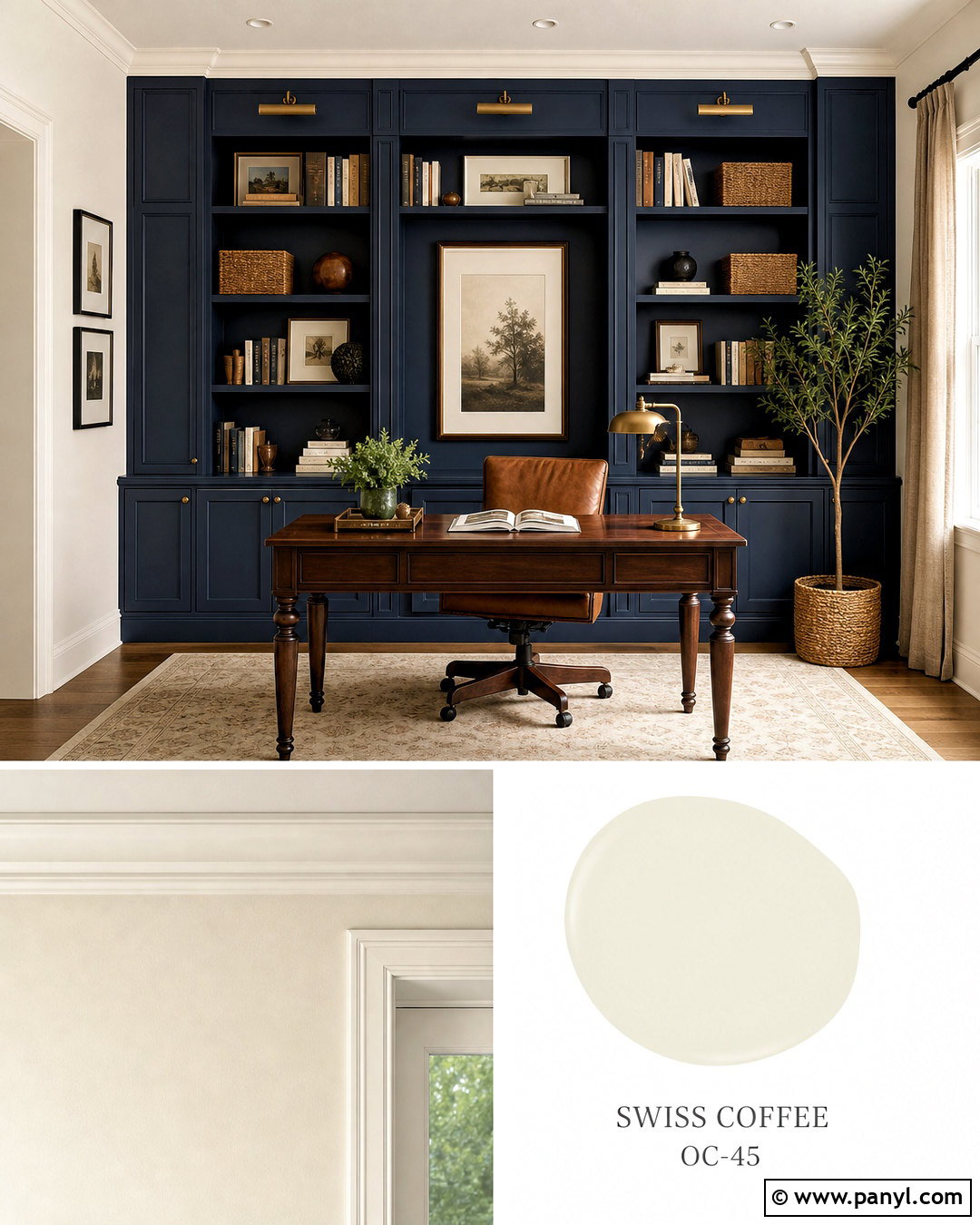
A navy and Swiss Coffee office feels substantial enough for focused work yet comfortable enough for daily use. Paint the walls and ceiling Swiss Coffee, then cover built-in shelves and lower cabinets in a deep, muted navy blue. Install a walnut desk facing into the room instead of pushing it against a wall. A cognac leather desk chair, antique brass library lights, and a faded cream rug reinforce the sophisticated palette. Keep shelf styling controlled with books, woven boxes, framed art, and ceramic objects. Swiss Coffee softens the strong navy cabinetry and brings out the warmth in walnut and leather. The dark built-ins also counterbalance the paint’s creamy character, giving the completed office clear structure, useful storage, and a polished traditional appearance.
15. Alabaster Exterior With Black Trim
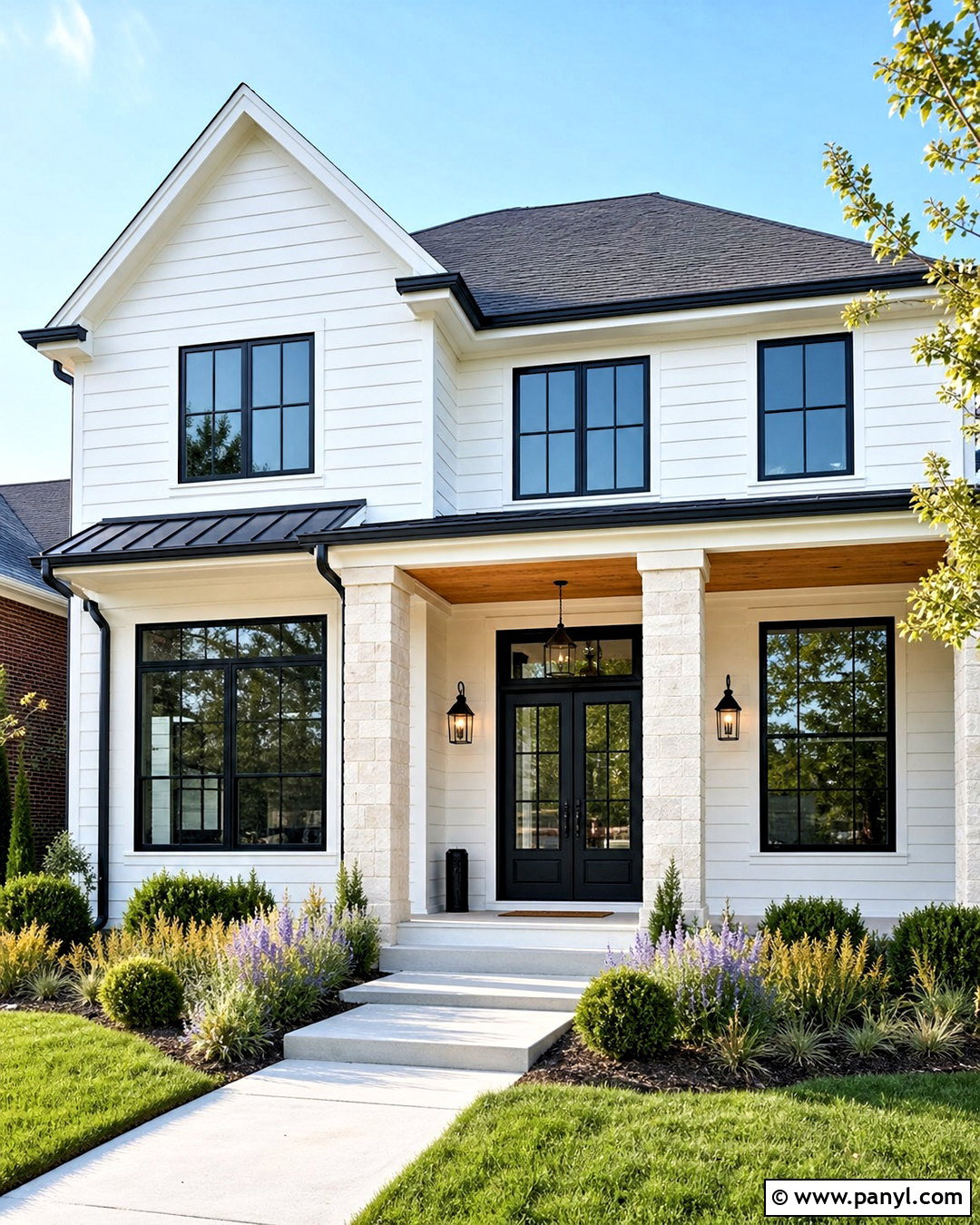
Alabaster gives a simple house exterior a warm white appearance without looking noticeably cream from the street. Use it across the siding or stucco body, then add black window frames, gutters, lanterns, and a matte black front door. A medium charcoal roof provides a softer transition than solid black shingles. Incorporate light natural stone around the foundation or porch columns to connect the warm paint with the landscaping. Choose pale concrete steps and a straight walkway bordered by ornamental grasses, boxwood, and lavender. Natural cedar can appear on the porch ceiling or garage door for extra warmth. This complete exterior scheme suits modern farmhouse and transitional homes. The contrast is crisp, but Alabaster prevents the black-and-white combination from feeling severe or commercial.
16. Swiss Coffee Exterior With Brown Trim
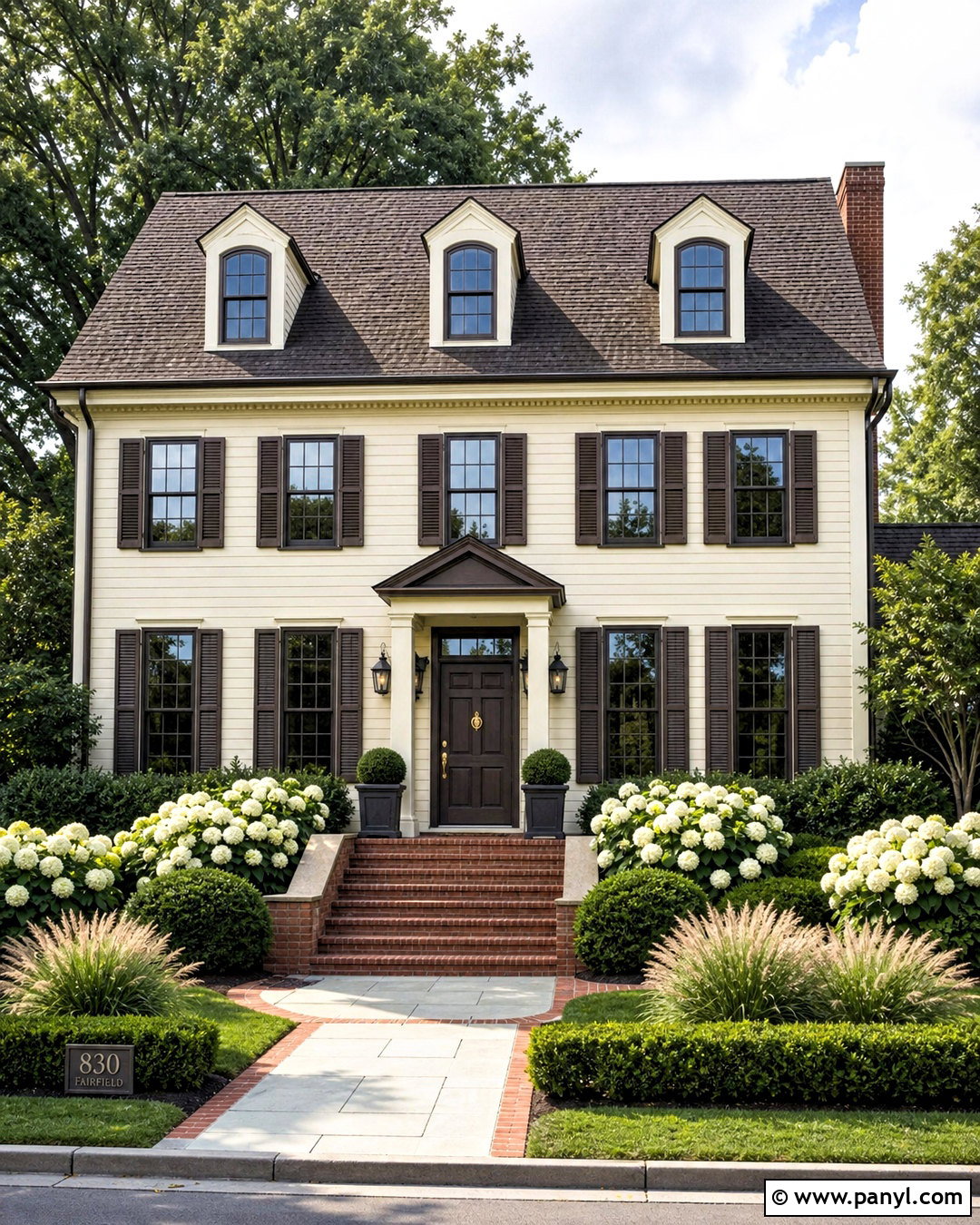
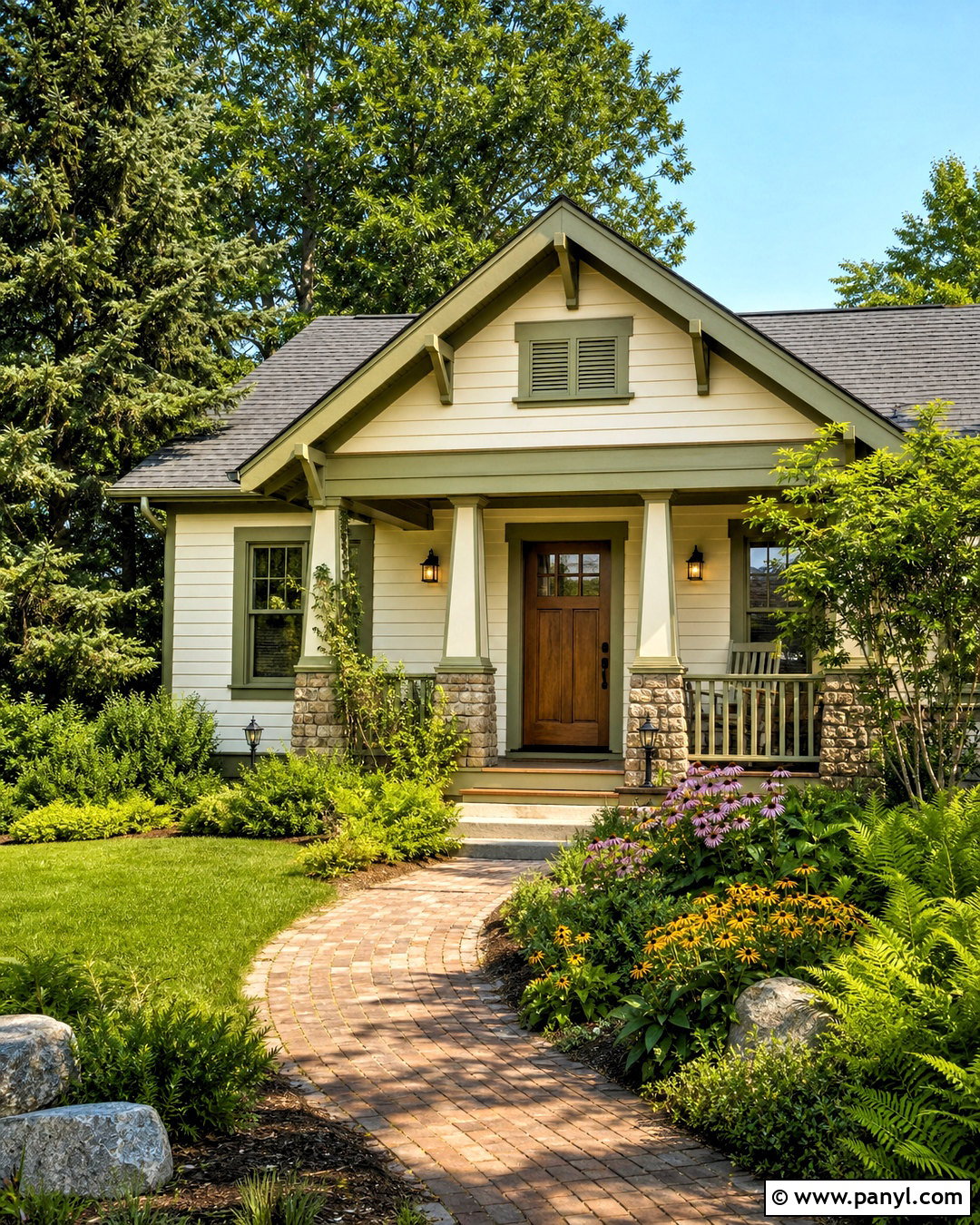
Swiss Coffee can make a traditional exterior feel settled into its landscape, especially when paired with brown and bronze accents. Paint the main stucco or lap siding Swiss Coffee and use deep brown on the shutters, fascia, and front door. Select bronze-framed windows and warm charcoal-brown roof shingles rather than cool blue-gray roofing. Add red-brown brick steps or a brick walkway to strengthen the classic palette. Foundation planting should include deep green shrubs, white hydrangeas, and layered ornamental grasses. Copper or aged bronze lanterns provide a finished detail near the entrance. Swiss Coffee will appear lighter outdoors, but its creamy warmth remains compatible with brick, brown trim, and mature landscaping. The result feels welcoming, cohesive, and appropriately traditional from every curbside angle.
17. Alabaster Exterior With Natural Wood
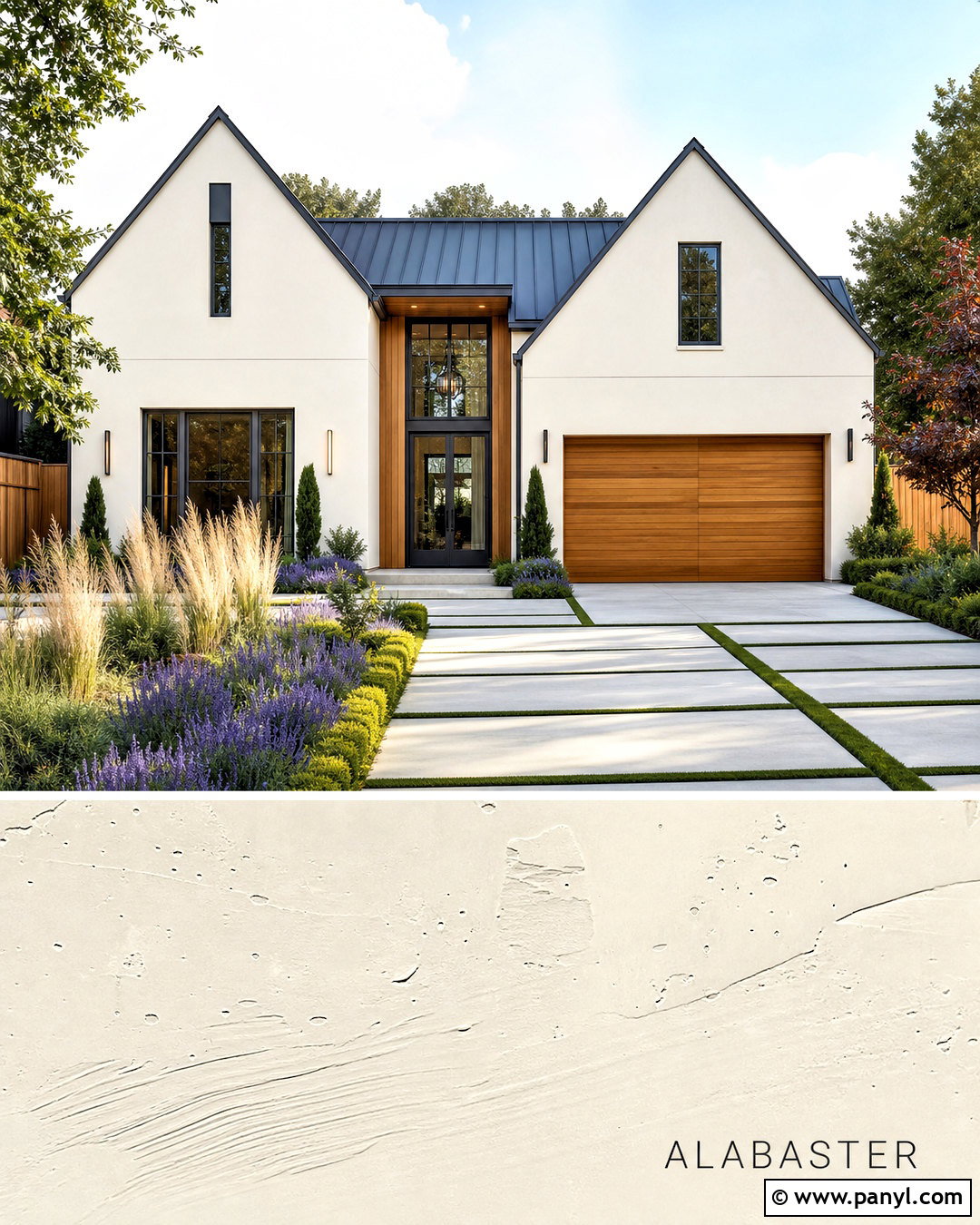
Sunlight reveals the soft neutrality of Alabaster on a contemporary home with natural wood details. Cover the primary siding in Alabaster, then use vertical cedar boards around the entry and garage to break up the pale facade. Choose warm gray window frames instead of harsh black for a quieter contrast. A charcoal standing-seam metal roof adds modern structure, while light gray concrete pavers keep the ground plane simple. Repeat cedar on the front door, porch ceiling, and mailbox surround so the wood feels intentional. Landscaping can include feather reed grass, compact evergreens, and low lavender borders. Alabaster allows the grain and color of cedar to stand out without turning the exterior yellow, producing a balanced organic modern look suitable for a normal suburban home.
18. Swiss Coffee Exterior With Stone Accents
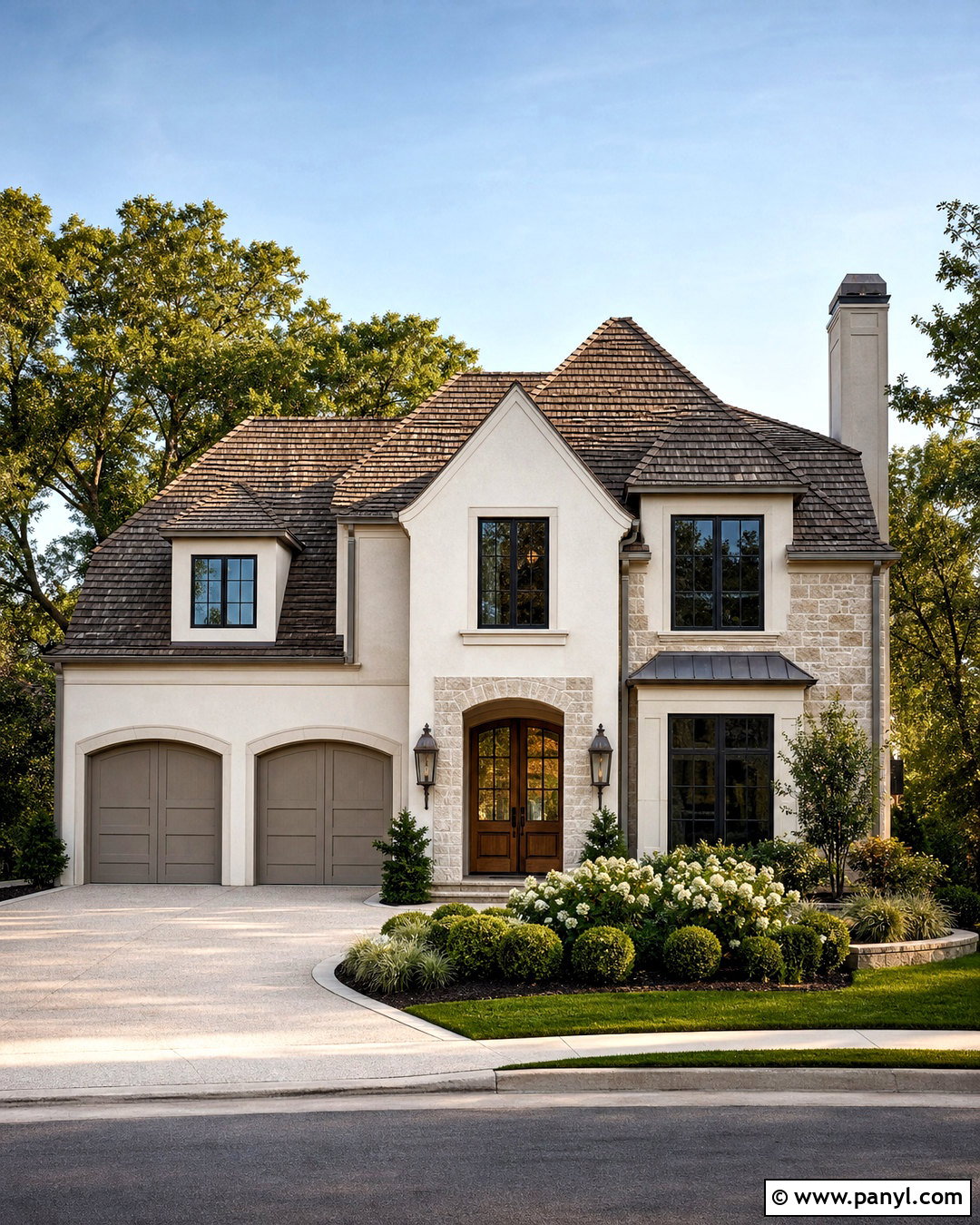
Does your exterior already contain tan, cream, or brown stone? Swiss Coffee can connect those varied tones into one harmonious facade. Apply it to the stucco or horizontal siding, then use warm taupe on the garage doors and shutters. Choose limestone or fieldstone containing beige, muted gray, and light brown for the porch columns and lower walls. A medium brown roof will feel more natural than a cool charcoal option. Finish the entrance with a stained oak door, bronze hardware, and oversized bronze lanterns. Curved planting beds filled with boxwood, white flowering shrubs, and soft grasses complement the traditional materials. Swiss Coffee’s creamier quality echoes the warm stone, allowing the entire house to look coordinated rather than assembled from unrelated exterior finishes.
19. Alabaster Whole House Color Palette
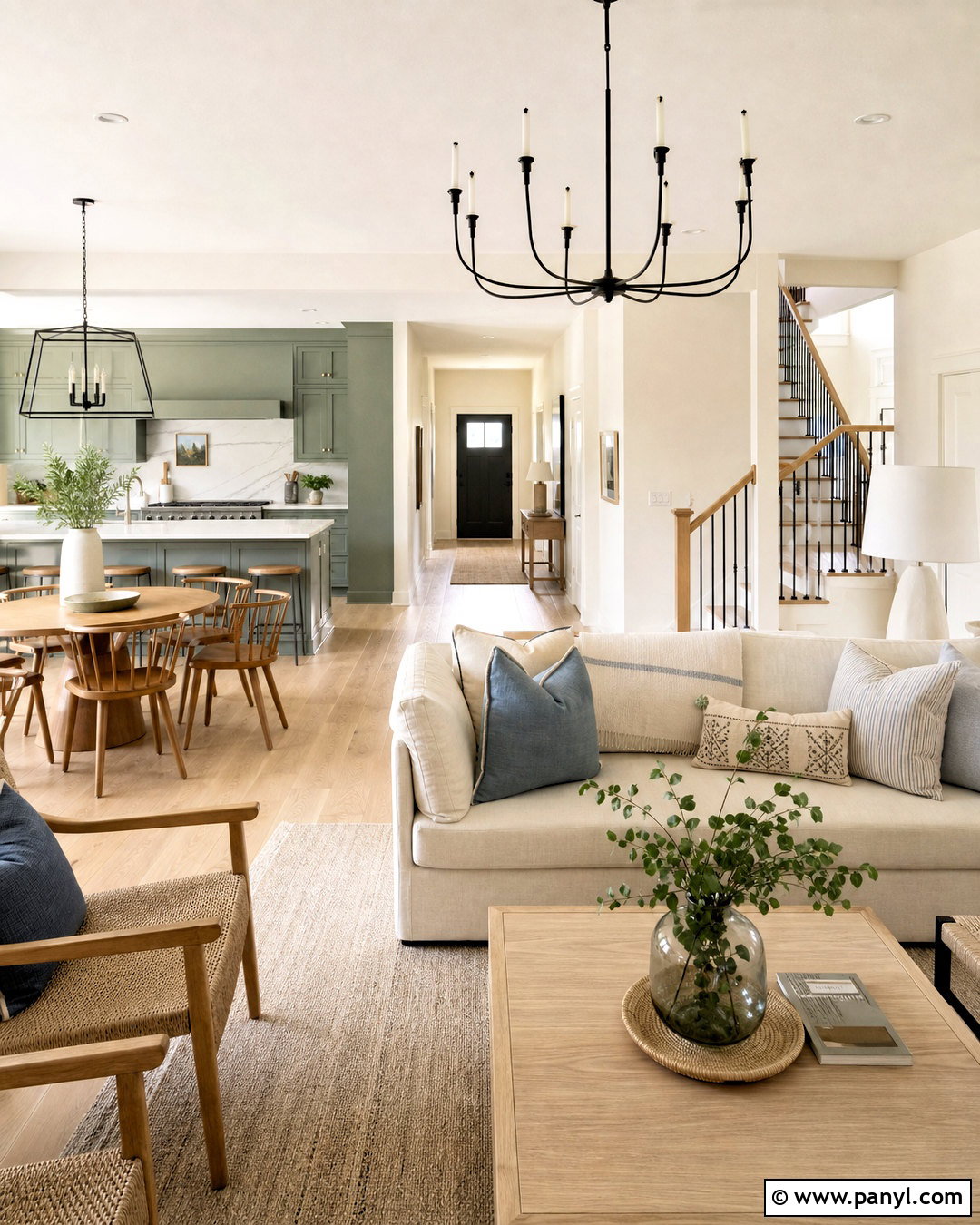
For a bright and adaptable whole-house plan, use Alabaster as the connecting color across hallways, living spaces, and bedrooms. Keep the ceilings Alabaster in flat paint and the trim Alabaster in satin for a smooth, low-contrast transition. Introduce room-specific accents through warm sage cabinetry, muted blue textiles, natural oak furniture, and occasional charcoal fixtures. Maintain consistent light or medium oak flooring through the main areas to prevent visual breaks. In bathrooms, combine Alabaster with gray-veined marble, while kitchens can feature white oak and pale quartz. This palette feels unified without requiring every room to look identical. Alabaster’s balanced warmth supports both earthy and slightly cooler accents, making it a practical choice when furniture and finishes vary throughout the home.
20. Swiss Coffee Whole House Color Palette
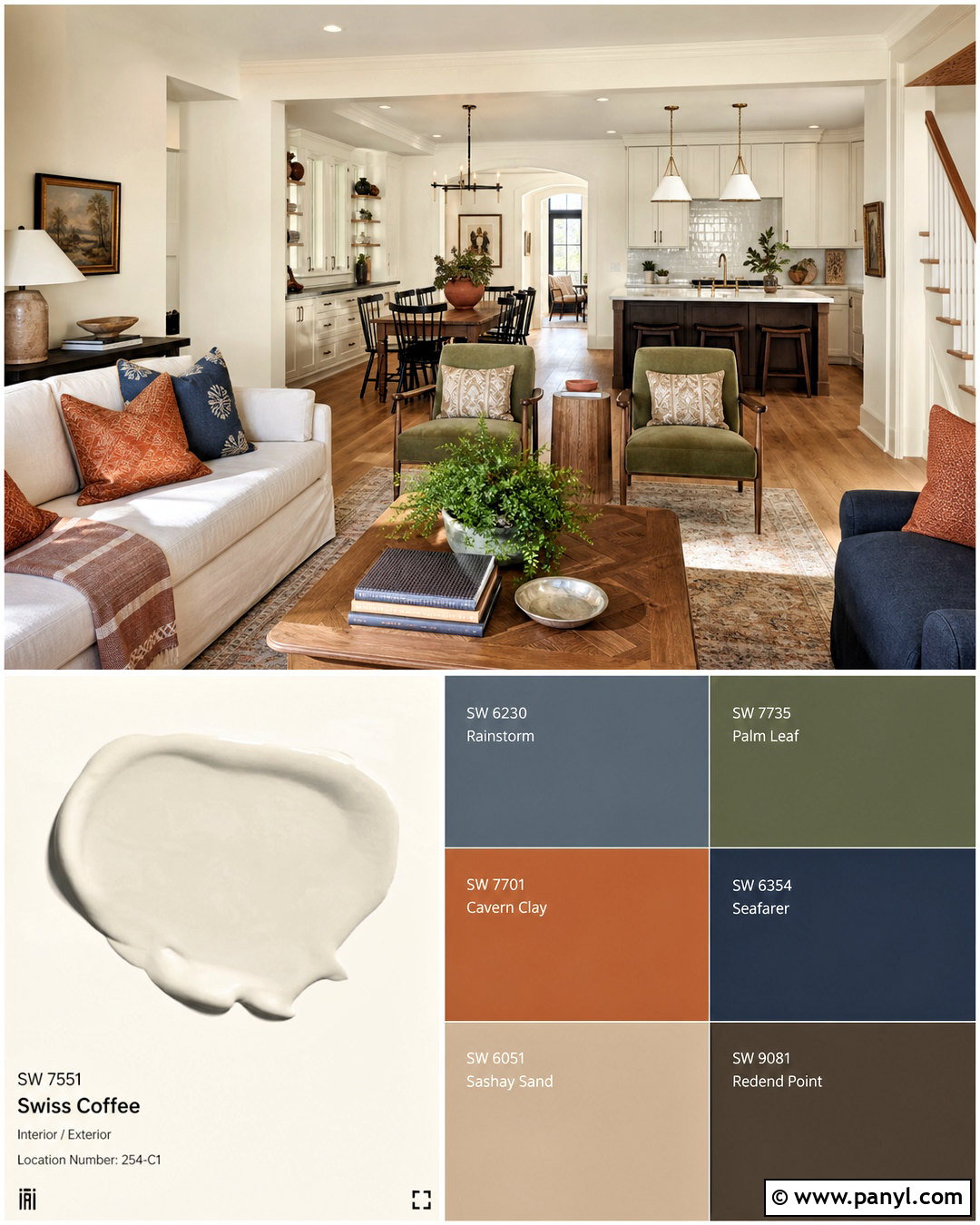
Swiss Coffee creates a warm whole-house backdrop when the furnishings, floors, and fixed finishes already lean creamy or brown. Use the color on shared walls, hallways, ceilings, and trim, changing the sheen instead of introducing multiple whites. Build the palette around walnut furniture, medium oak floors, aged brass hardware, and natural beige textiles. Add depth with muted navy, moss green, rust, and soft terracotta in individual rooms. Kitchens can combine Swiss Coffee cabinets with soapstone and dark wood, while bathrooms can feature travertine and brushed brass. Avoid placing brilliant blue-white fabrics or trim directly beside the paint, as the contrast may emphasize its creaminess. The finished home feels cohesive, layered, and comfortable rather than stark, fragmented, or overly matched.
Conclusion:
The best choice depends less on brightness and more on the warmth already present in your home. Alabaster generally supports cleaner, softer, and more neutral schemes, making it useful with light oak, marble, black accents, and mixed room palettes. Swiss Coffee offers a creamier effect that complements walnut, travertine, traditional millwork, warm stone, and aged brass. Neither color should be selected from a small chip alone. Paint large sample areas near flooring, cabinets, fabrics, and exterior materials, then examine them in morning, afternoon, and artificial light. Use these 20 alabaster vs swiss coffee ideas to build a coordinated design where paint, furnishings, architecture, and finishes work together as one complete look.

Related Ideas and Inspiration:

Leave a Reply