
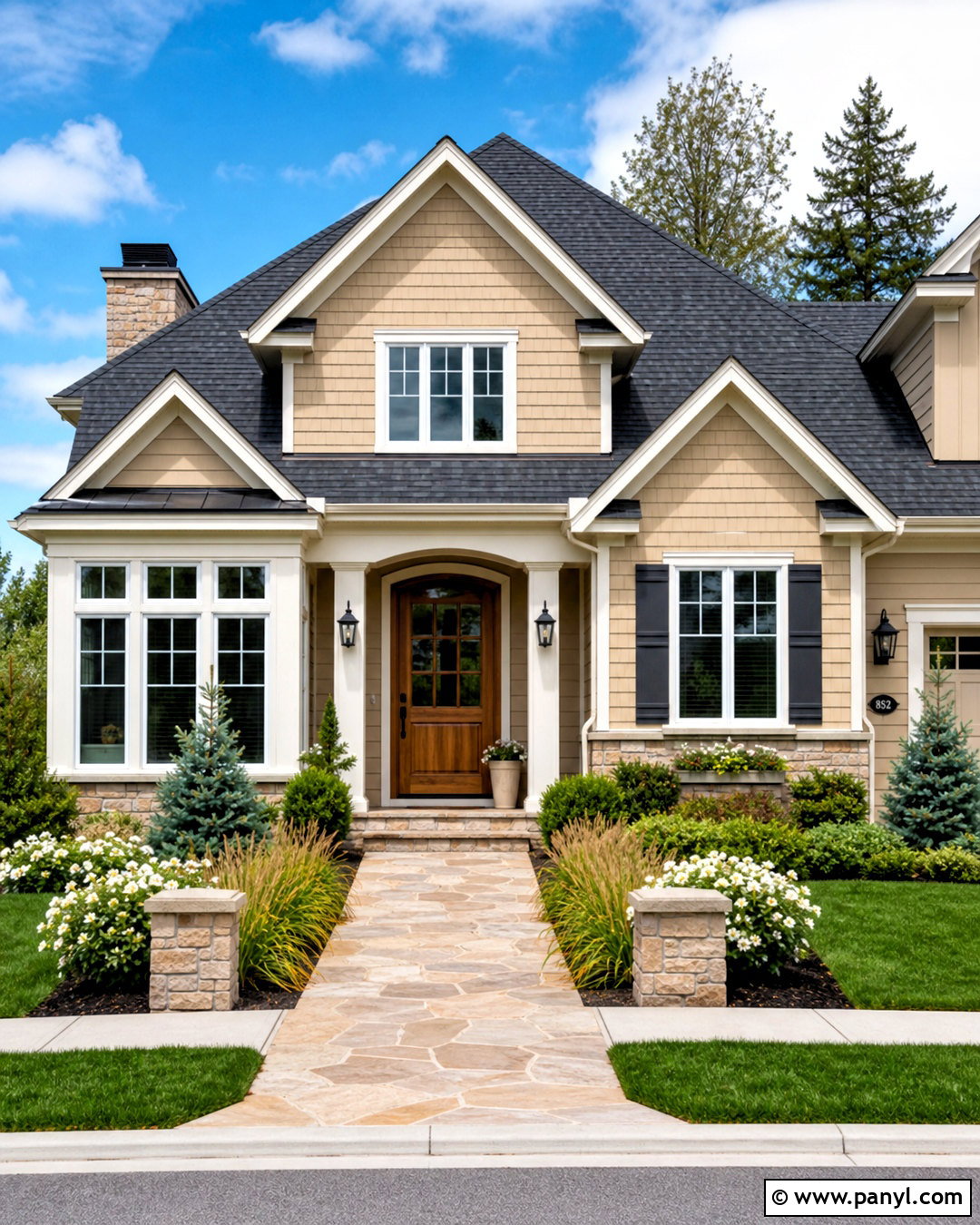
Sherwin-Williams White Flour SW 7102 is a soft, creamy white that makes rooms feel bright without looking cold or sterile. With an LRV of about 87 and a subtle warm undertone, it works especially well with natural wood, earthy colors, aged metals, and relaxed neutral fabrics. It can cover walls, cabinets, trim, brick, or siding, but the surrounding light and finishes will influence how warm it appears. Always test a large sample beside flooring, countertops, and fixed materials before committing. The most successful spaces use this color as part of a complete palette rather than treating it as an isolated white. These 20 white flour sherwin williams ideas show how to create balanced looks for interiors and exteriors. ()

1. White Flour Living Room With Natural Oak
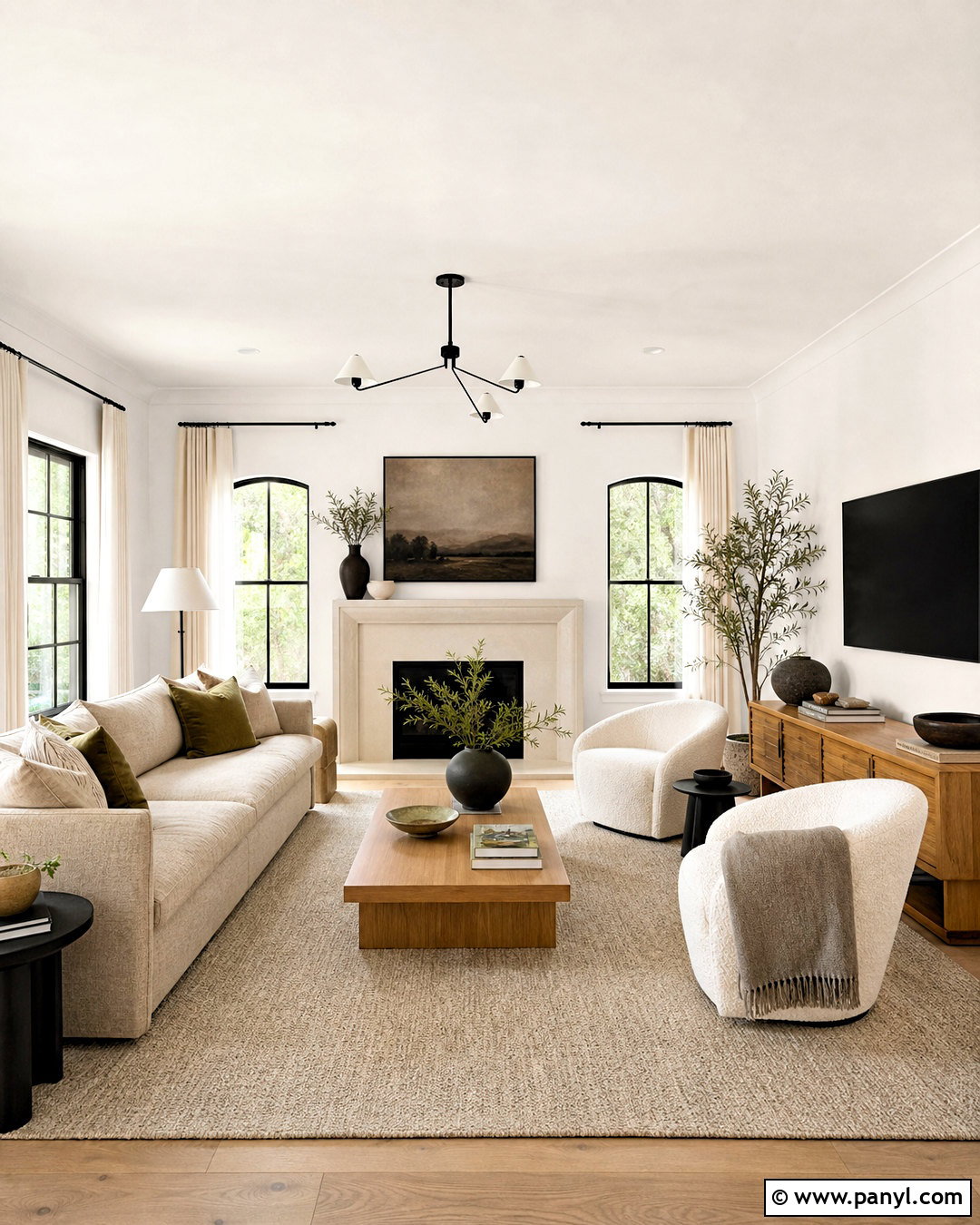
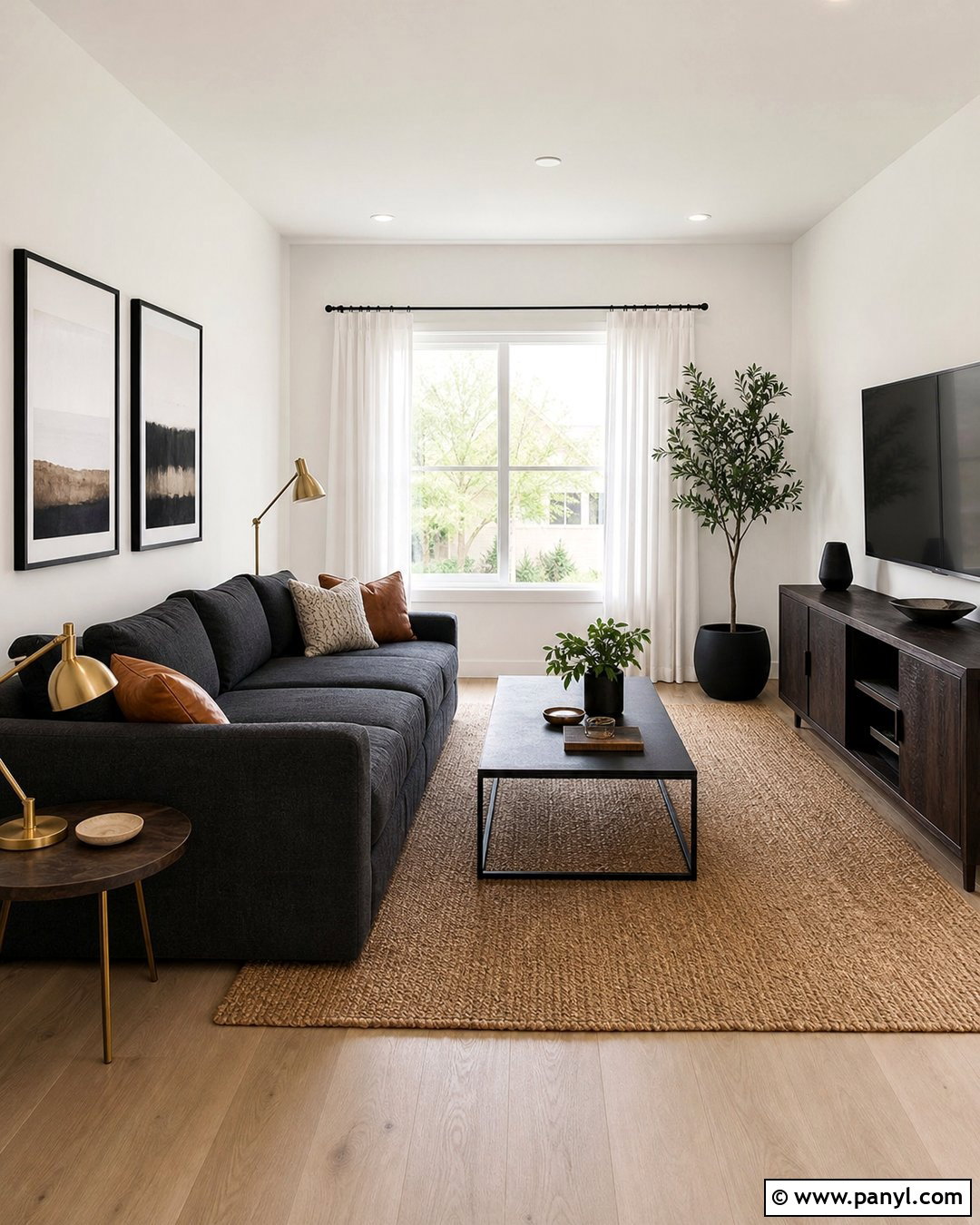
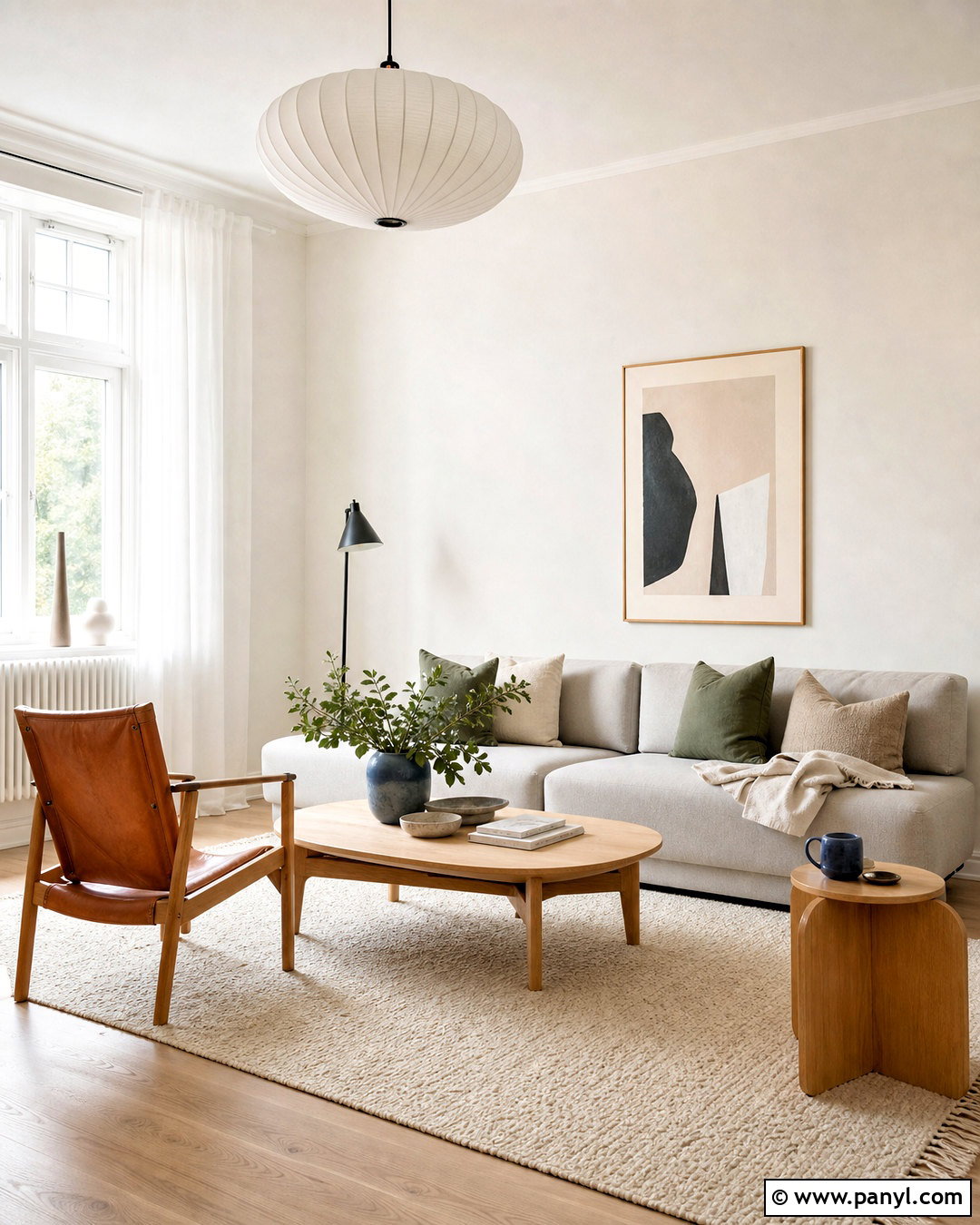
White Flour walls create a welcoming background for a living room filled with natural oak and soft neutral fabrics. Choose a streamlined oak media console, a warm beige sofa, and two cream boucle chairs arranged around a low wood coffee table. An oatmeal wool rug keeps the floor comfortable without blending completely into the walls. Add linen curtains in a slightly deeper ivory so the windows have gentle definition. Matte black curtain rods and a black floor lamp provide small amounts of contrast. Finish the room with olive green pillows, handmade pottery, and one large landscape print. This combination lets the creamy quality of White Flour feel intentional while the wood, textiles, and greenery prevent the room from appearing flat.
2. White Flour Kitchen Cabinets With Quartz
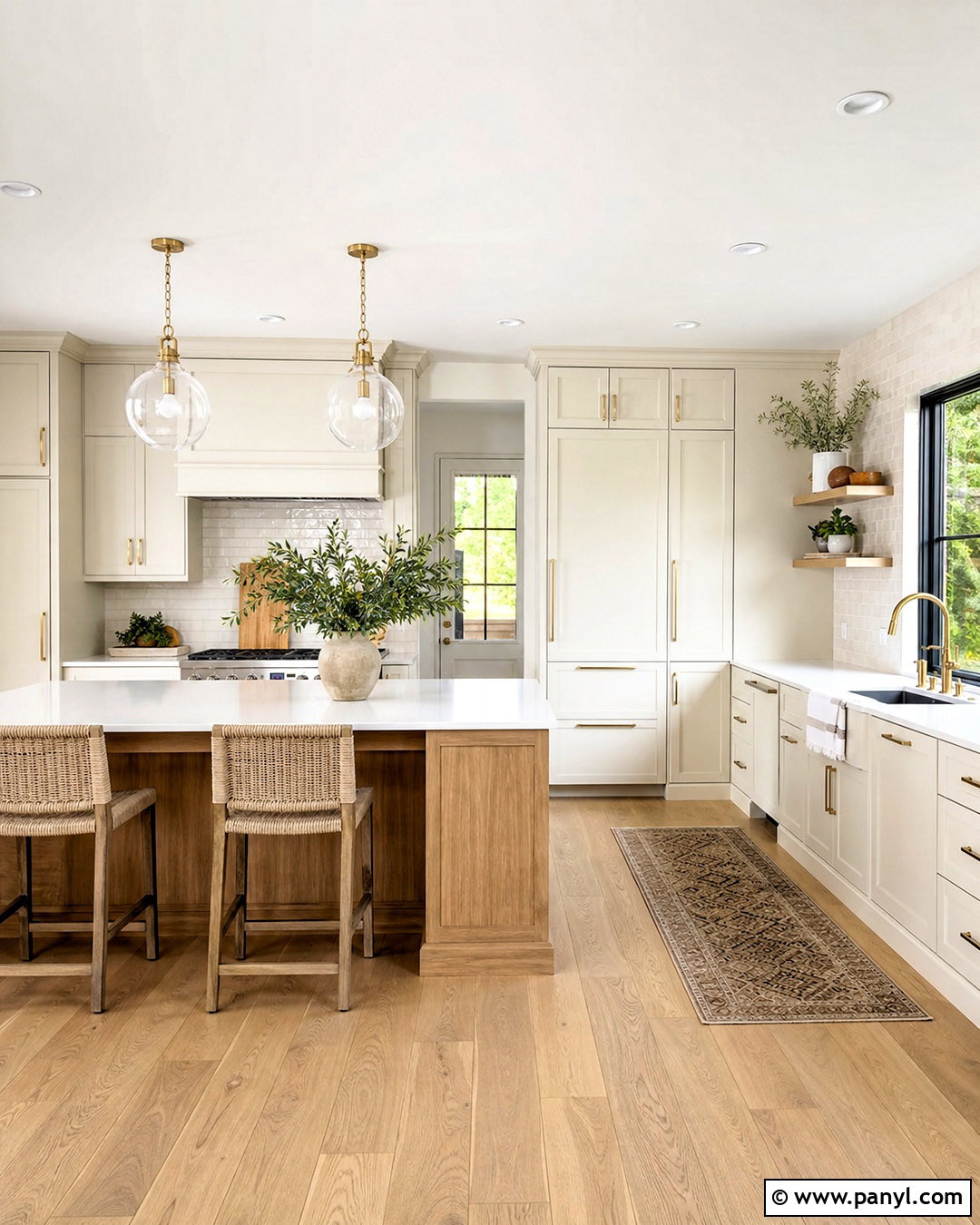
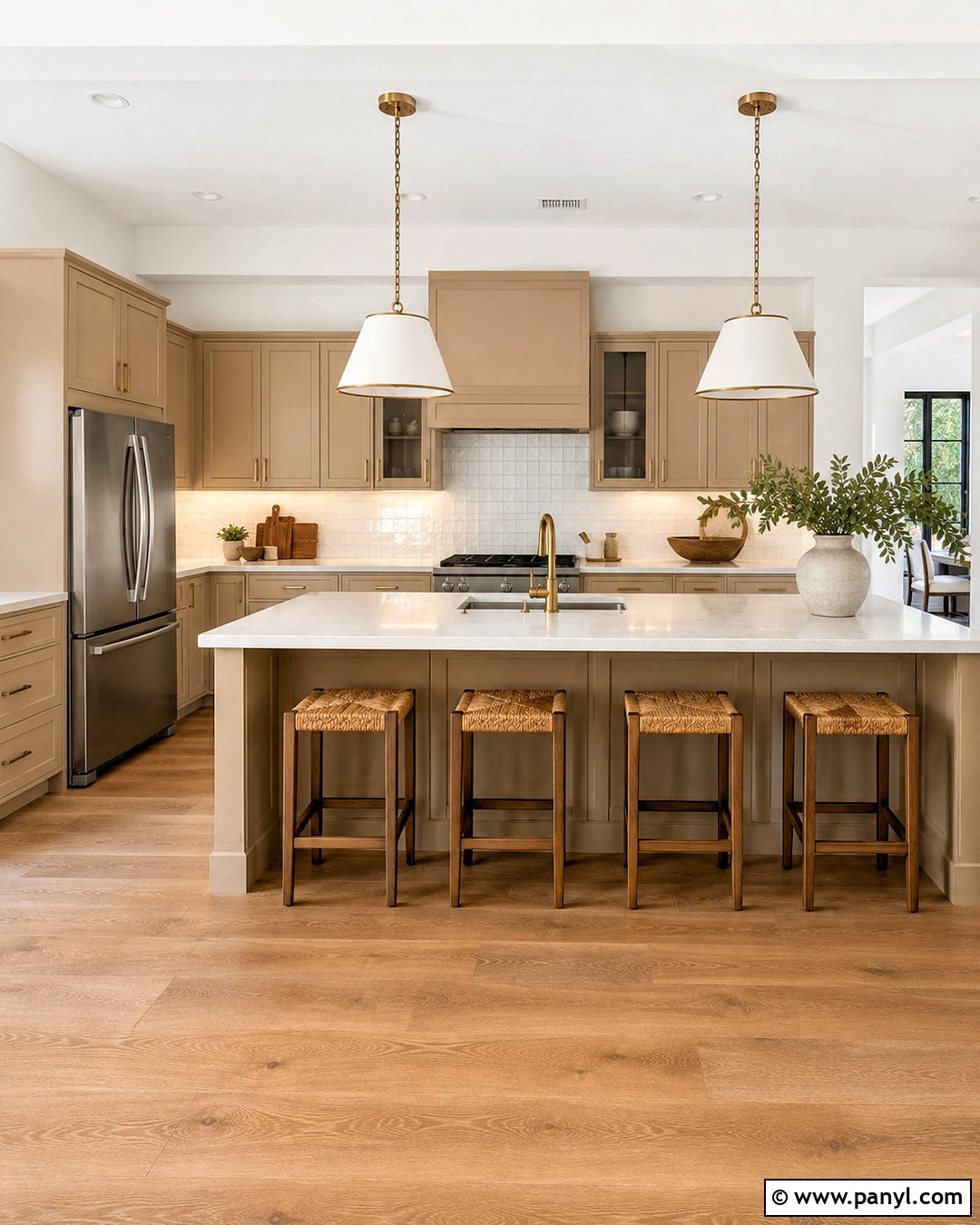
White Flour kitchen cabinets can soften the clean look of a bright, updated kitchen. Use the color across simple Shaker doors, crown molding, and tall pantry cabinets for a seamless finish. Pair them with lightly veined white quartz countertops and a handmade ivory subway tile backsplash. Medium-tone white oak flooring brings out the paint’s warm undertone without making the room look yellow. Choose brushed brass knobs, a matching bridge faucet, and clear glass pendants for subtle shine. A natural oak island adds enough contrast to define the center of the space. Complete the design with woven counter stools and a few green plants. The finished kitchen feels polished, warm, and practical rather than stark or overly formal.
3. White Flour Kitchen With Green Island
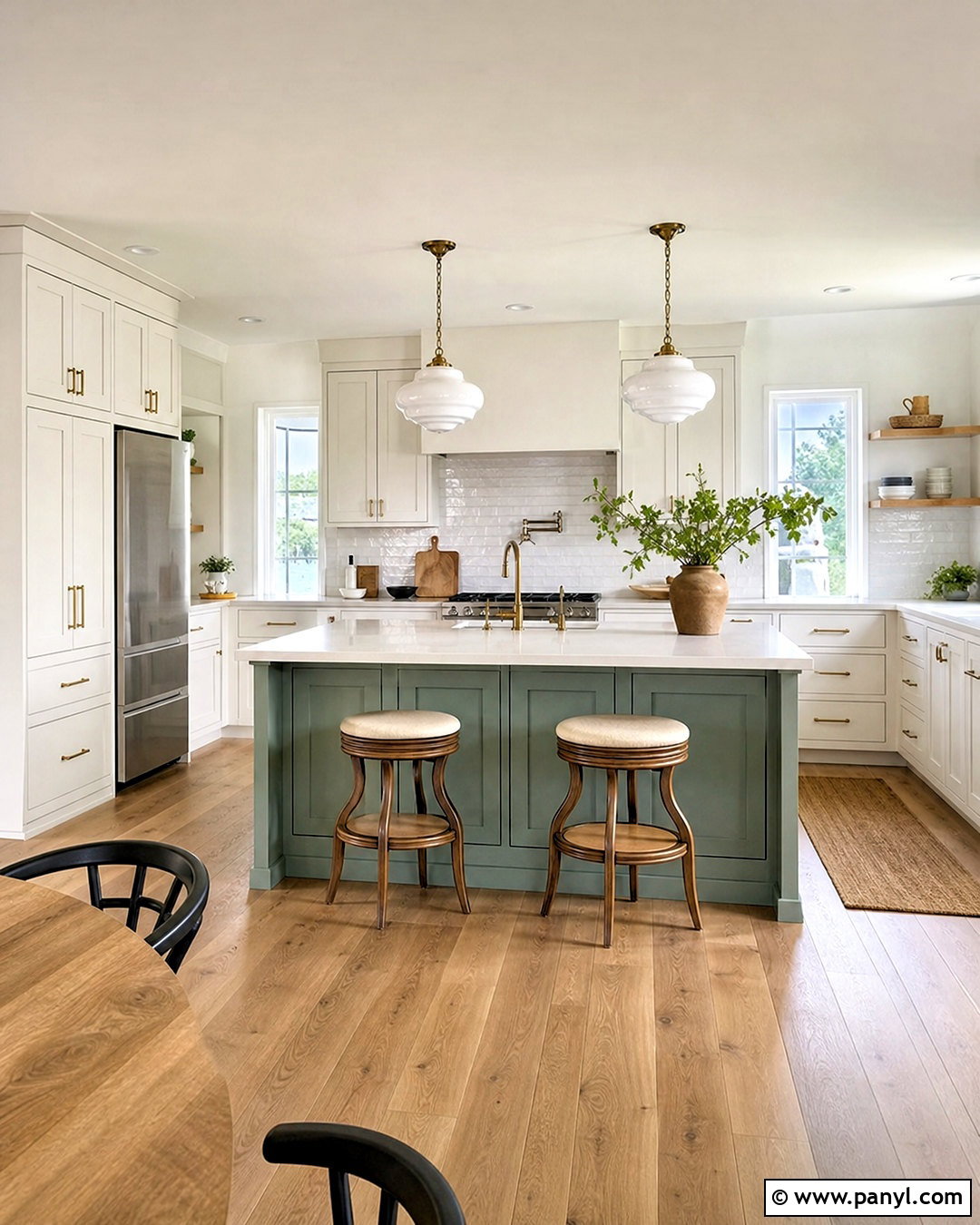
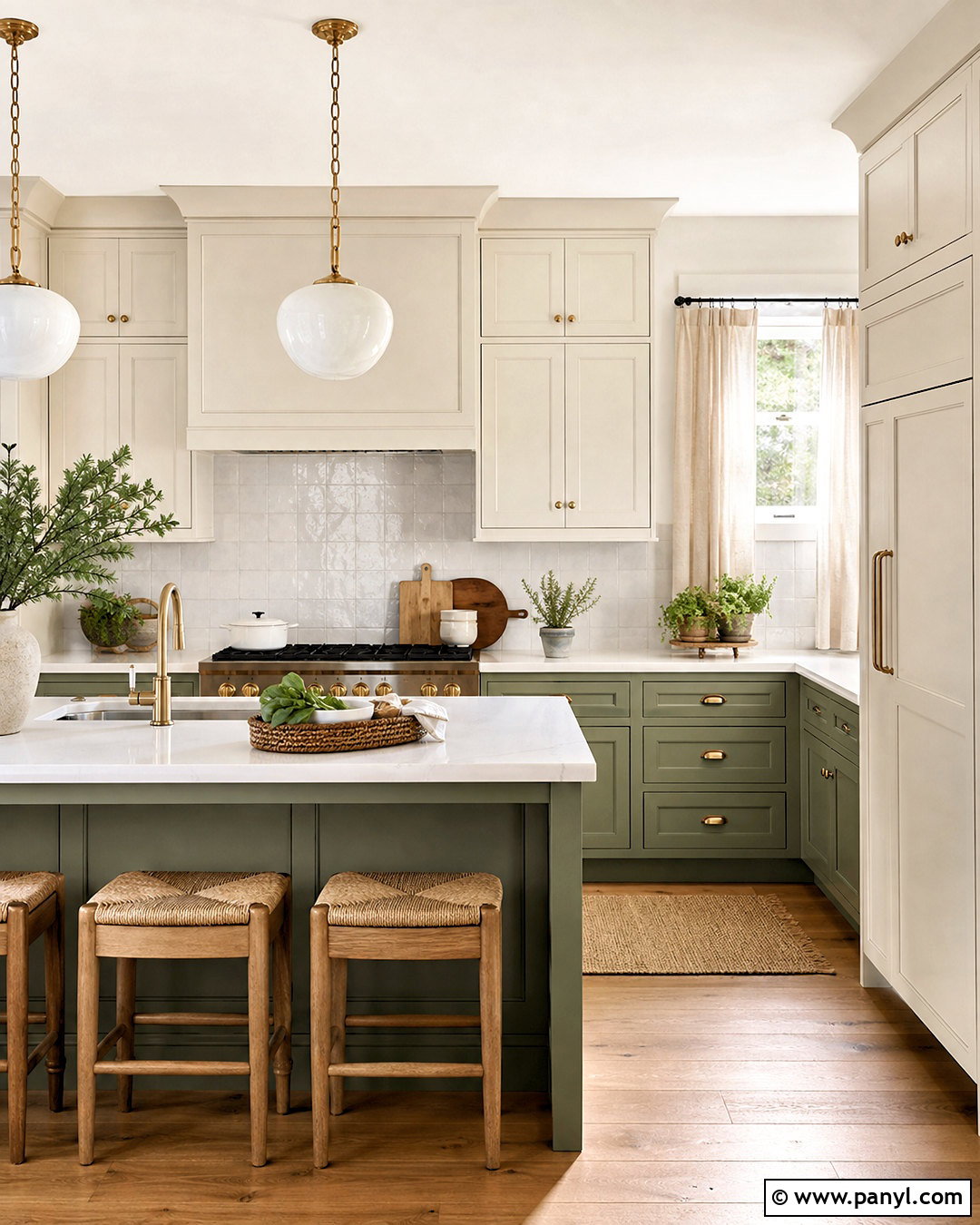
Could a warm white kitchen benefit from a stronger focal point? Paint the perimeter cabinets White Flour and introduce a muted sage green island for gentle, nature-inspired contrast. Use creamy quartz countertops throughout to connect both cabinet colors. A backsplash of warm white zellige tile adds movement while remaining quiet enough for everyday living. Choose aged brass hardware, an unlacquered brass faucet, and simple milk-glass pendants. Wide-plank oak flooring supports the earthy palette and makes the creamy cabinets feel balanced. Finish the island with curved wood stools and a shallow bowl filled with fresh greenery. This complete scheme works particularly well in kitchens that need color but still require a light, timeless foundation that will coordinate with adjoining rooms.
4. White Flour Bedroom With Linen Bedding
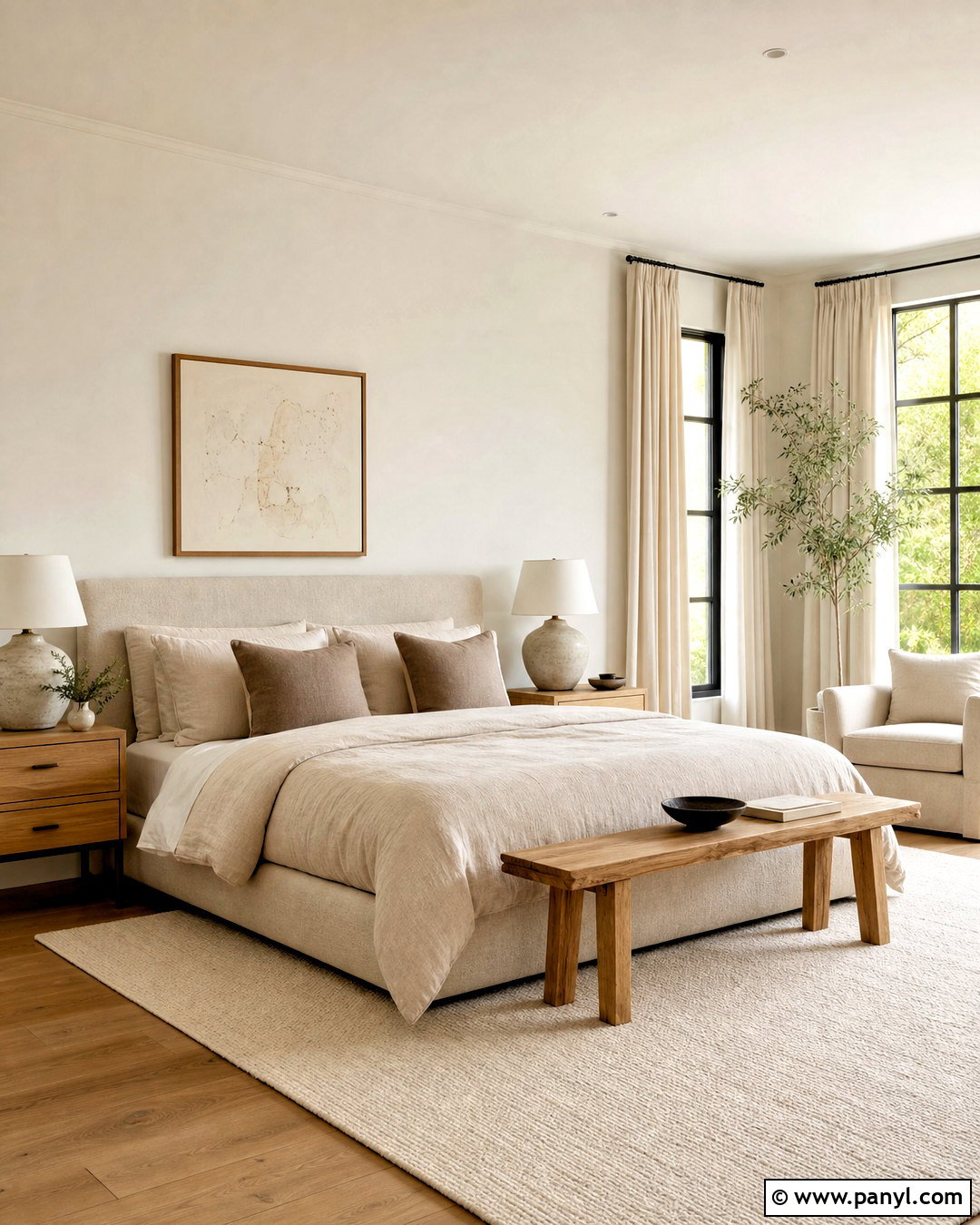
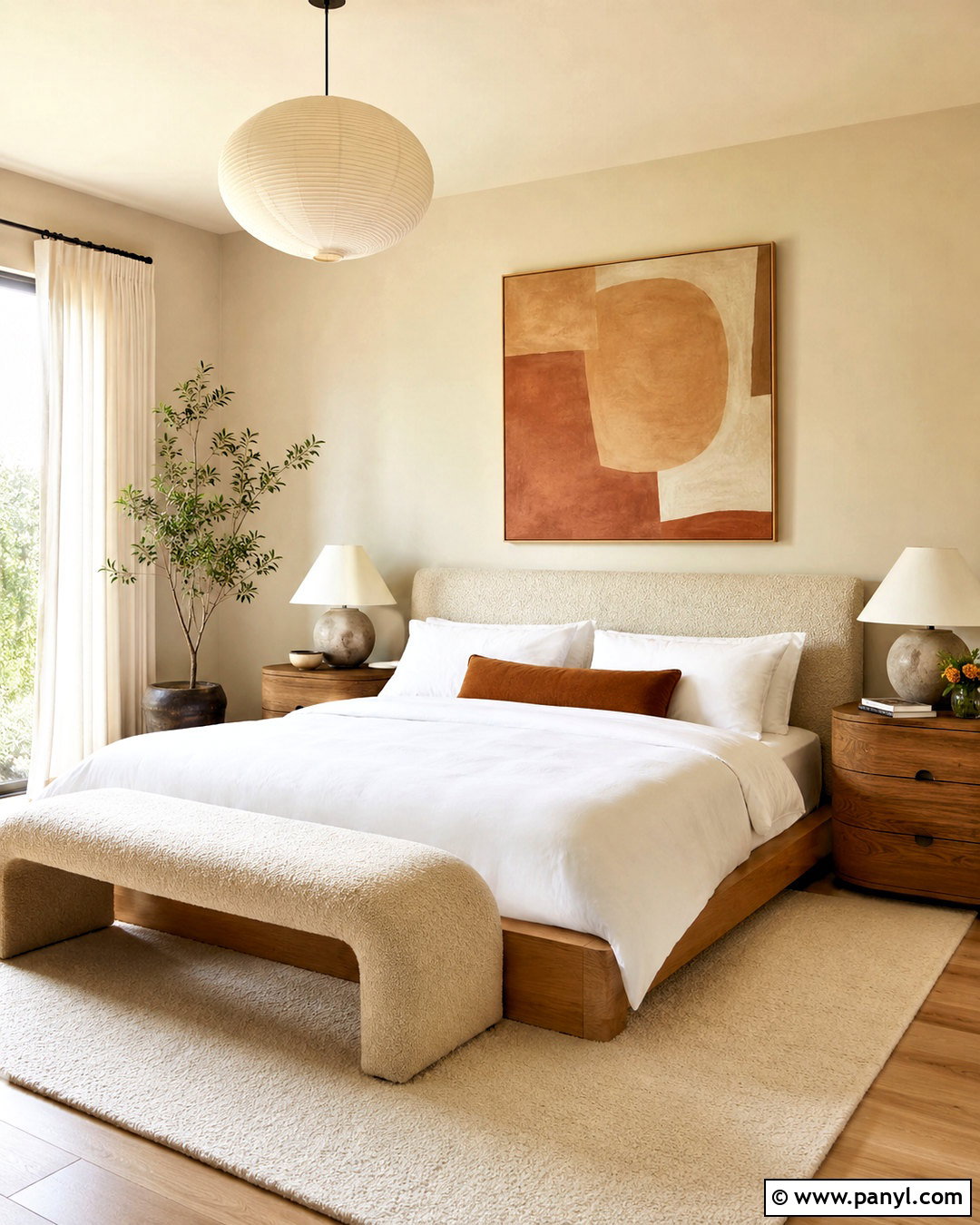
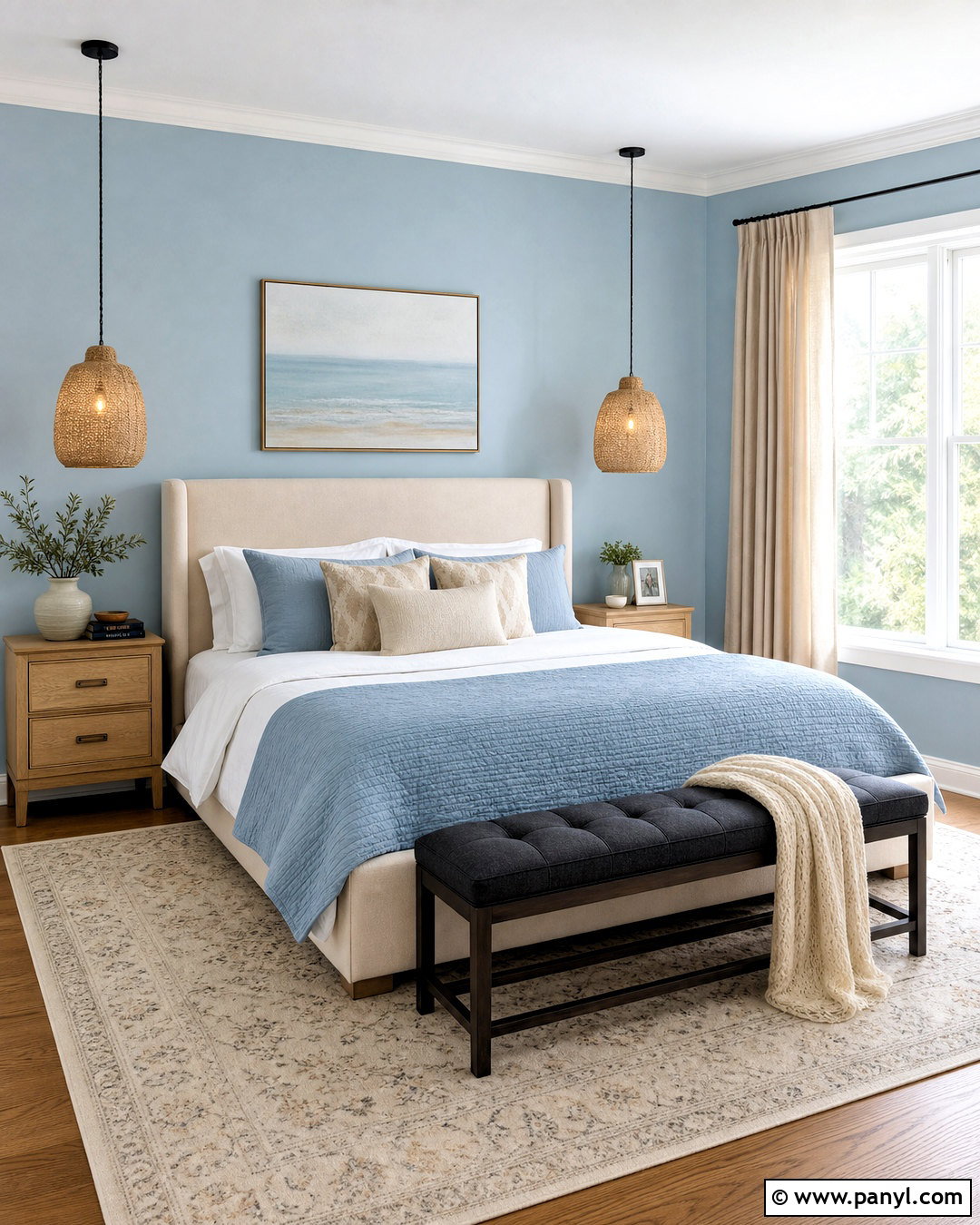
A peaceful bedroom begins with White Flour walls, layered natural textiles, and limited visual clutter. Place an upholstered oatmeal bed against the main wall and dress it with white cotton sheets, flax linen covers, and warm taupe pillows. Light oak nightstands keep the arrangement casual, while ceramic lamps with textured cream bases add soft symmetry. Use a woven wool rug under the bed to introduce warmth across hardwood flooring. Full-length ivory curtains should hang high and wide to make the windows appear larger. Add one muted landscape above the headboard and a simple bench at the foot of the bed. The slightly creamy wall color connects these neutral finishes, creating a restful room that feels bright during the day and cozy at night.
5. White Flour Bathroom With Marble Tile
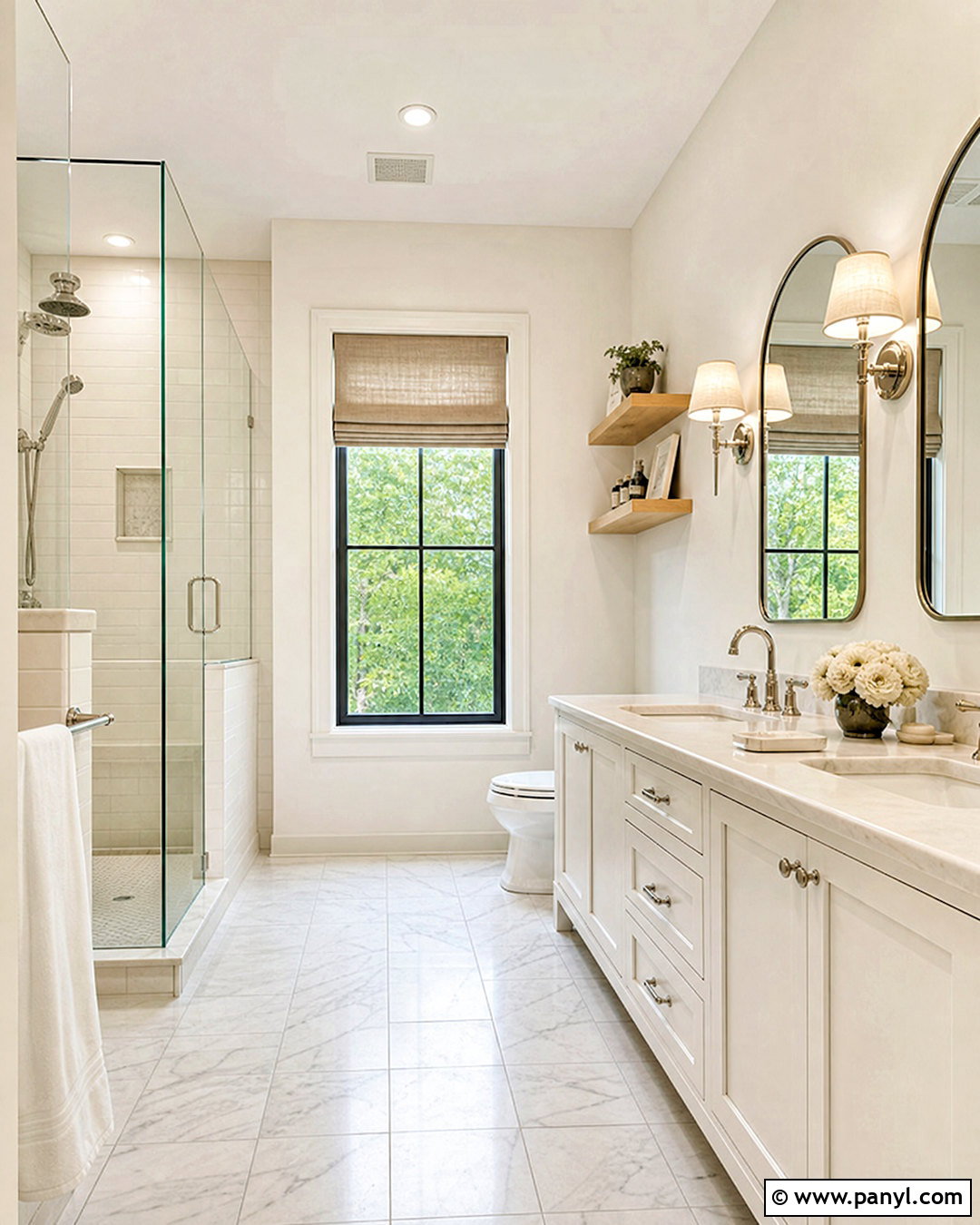
White Flour gives a bathroom a softer appearance than a sharp blue-based white. Apply it to the upper walls, ceiling, and vanity cabinetry, then ground the room with honed marble floor tile featuring subtle gray and beige veining. A frameless glass shower lined with warm white ceramic tile keeps the layout open. Choose polished nickel faucets, rounded mirrors, and shaded sconces for a classic finish that does not feel overly traditional. Pale oak shelves can hold neatly folded towels and simple ceramic containers. Add a light taupe Roman shade for privacy and gentle contrast. Because marble varies greatly, test the paint beside the actual slab or tile. The completed bathroom should feel clean, warm, and carefully coordinated from every angle.
6. White Flour Dining Room With Dark Wood
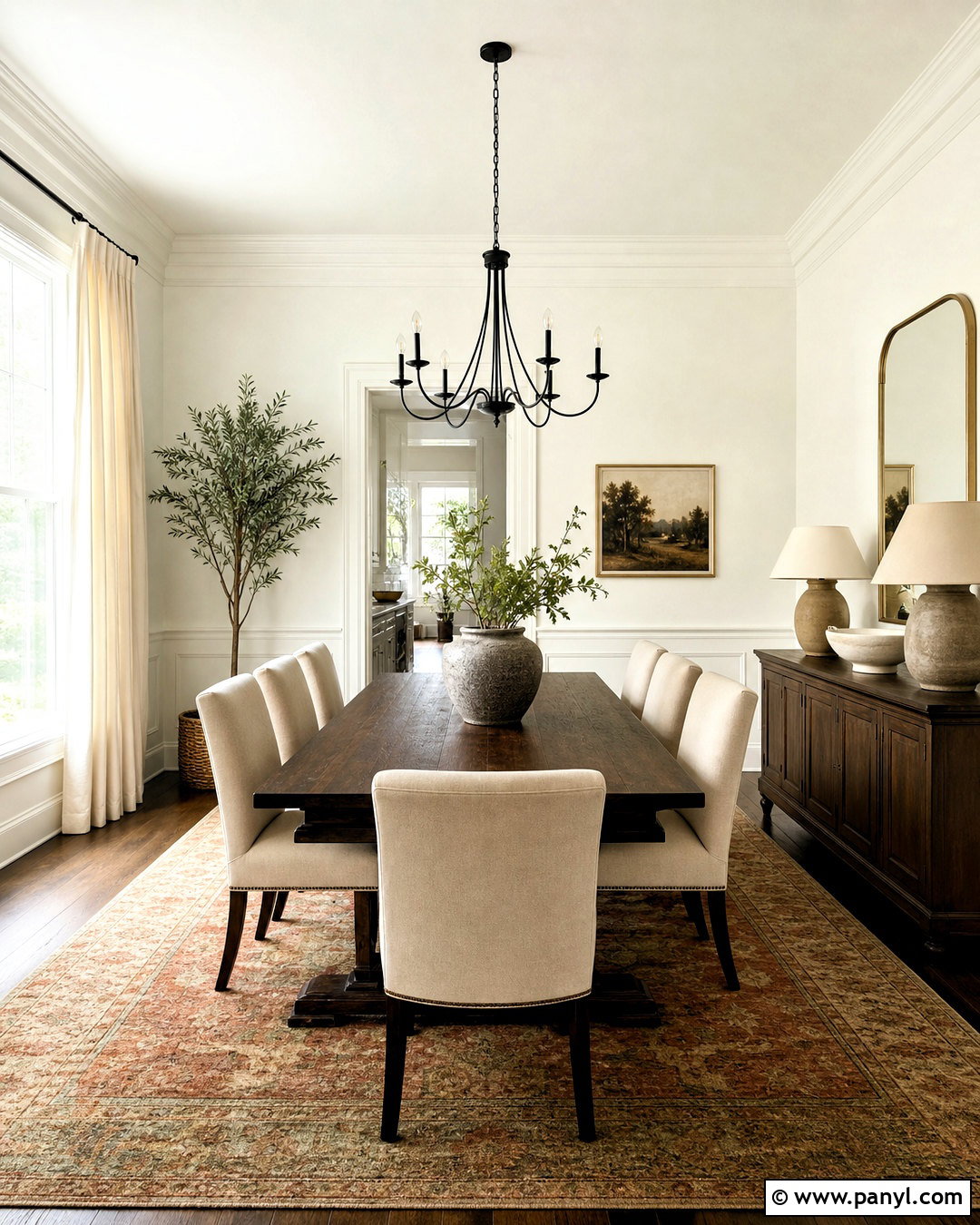
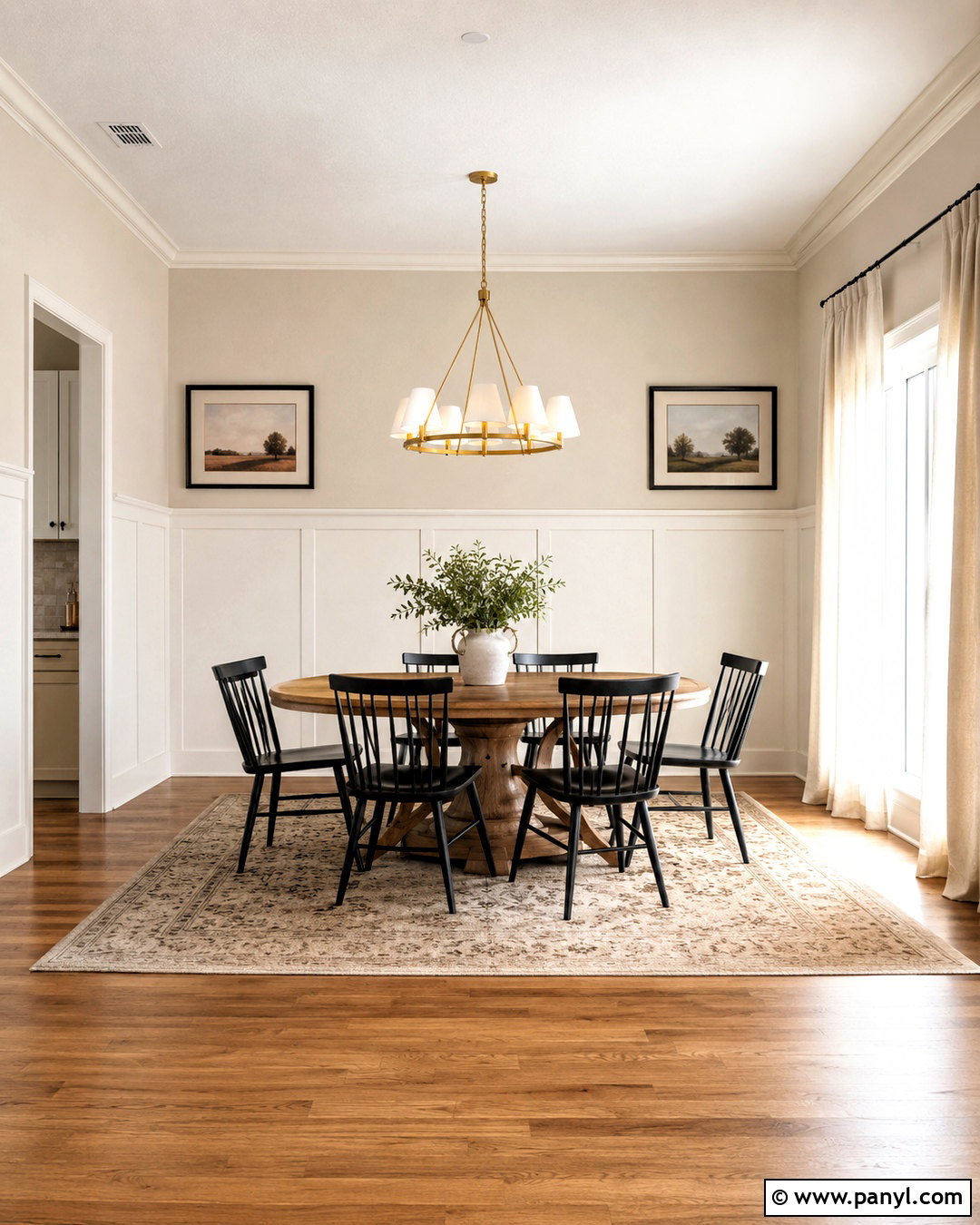
Rich wood furniture gives White Flour dining room walls the contrast they need to look crisp and sophisticated. Center a rectangular walnut table beneath a black iron chandelier, then surround it with upholstered chairs in textured beige fabric. A vintage-style rug in faded rust, olive, and cream can establish the room’s warmer palette. Add full ivory curtains and black curtain rods to frame the windows. Along one wall, place a dark wood sideboard topped with ceramic lamps and a large understated mirror. Keep the ceiling and architectural trim in White Flour for a cohesive envelope. This design balances traditional materials with simple shapes, making it suitable for both casual meals and special gatherings. Green branches or seasonal foliage provide the final natural accent.
7. White Flour Entryway With Black Accents
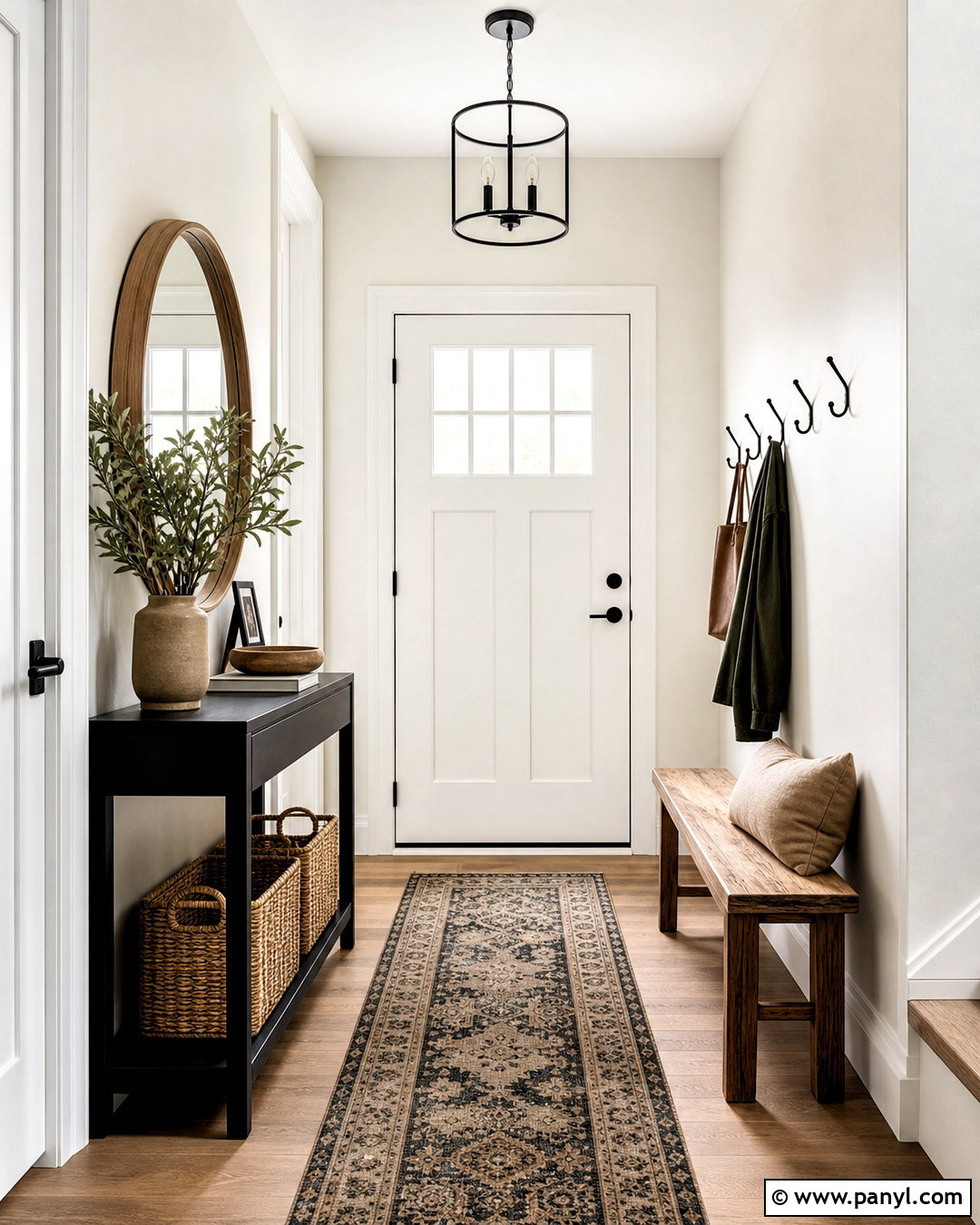
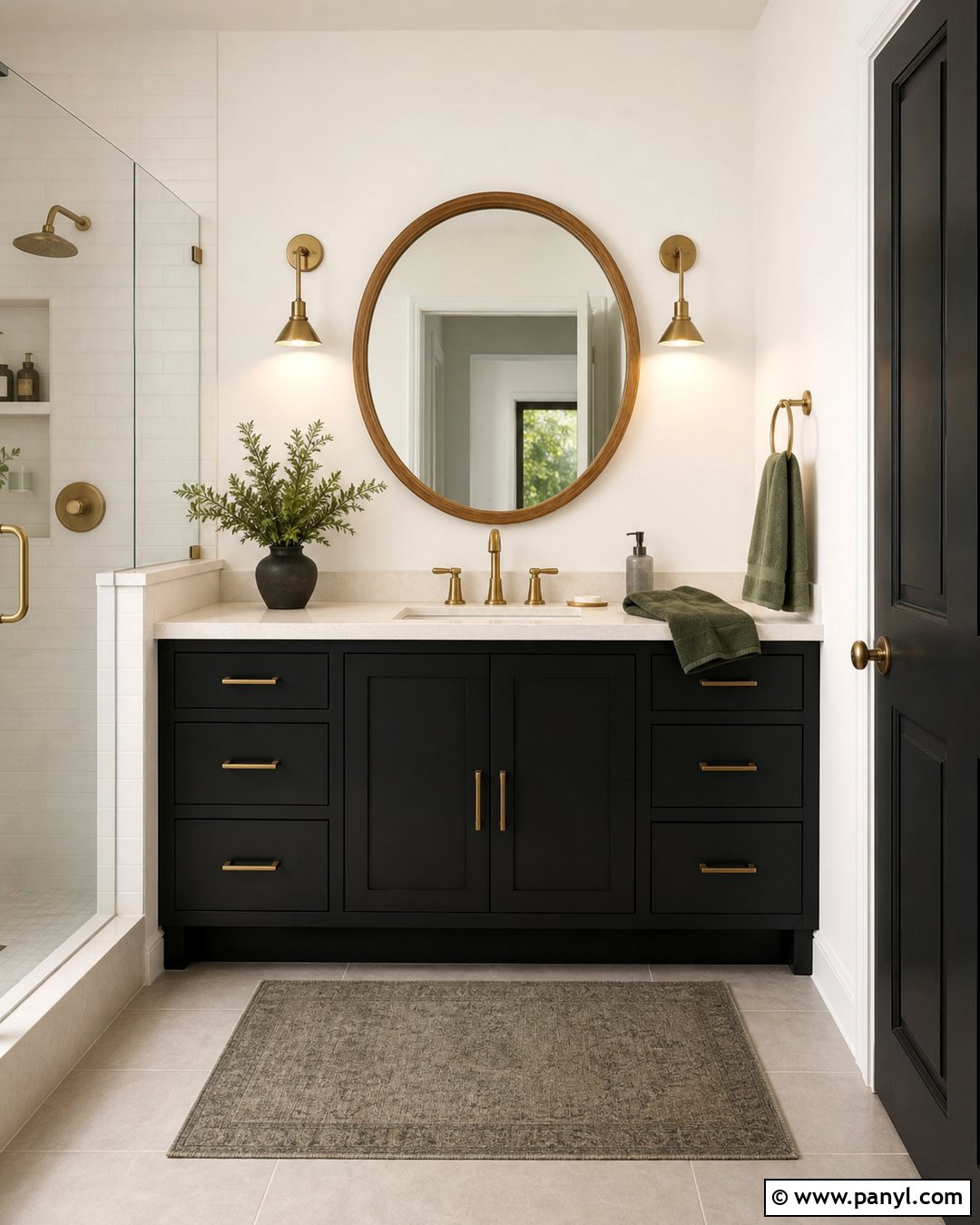
An entryway painted in White Flour can feel bright and welcoming while still handling bold contrast. Use the color on the walls, trim, and interior doors, changing the sheen slightly to define the millwork. Place a narrow black console against one wall with a round wood-framed mirror above it. A washable runner in tan, charcoal, and muted olive will disguise everyday dirt while connecting the palette. Add a woven basket beneath the console for shoes and a small ceramic lamp for evening light. If space allows, include a simple oak bench with neutral cushions. Black hooks and a matte black ceiling fixture complete the practical layout. The finished entrance feels organized, warm, and visually connected to both traditional and modern interiors.
8. White Flour Hallway With Picture Frames
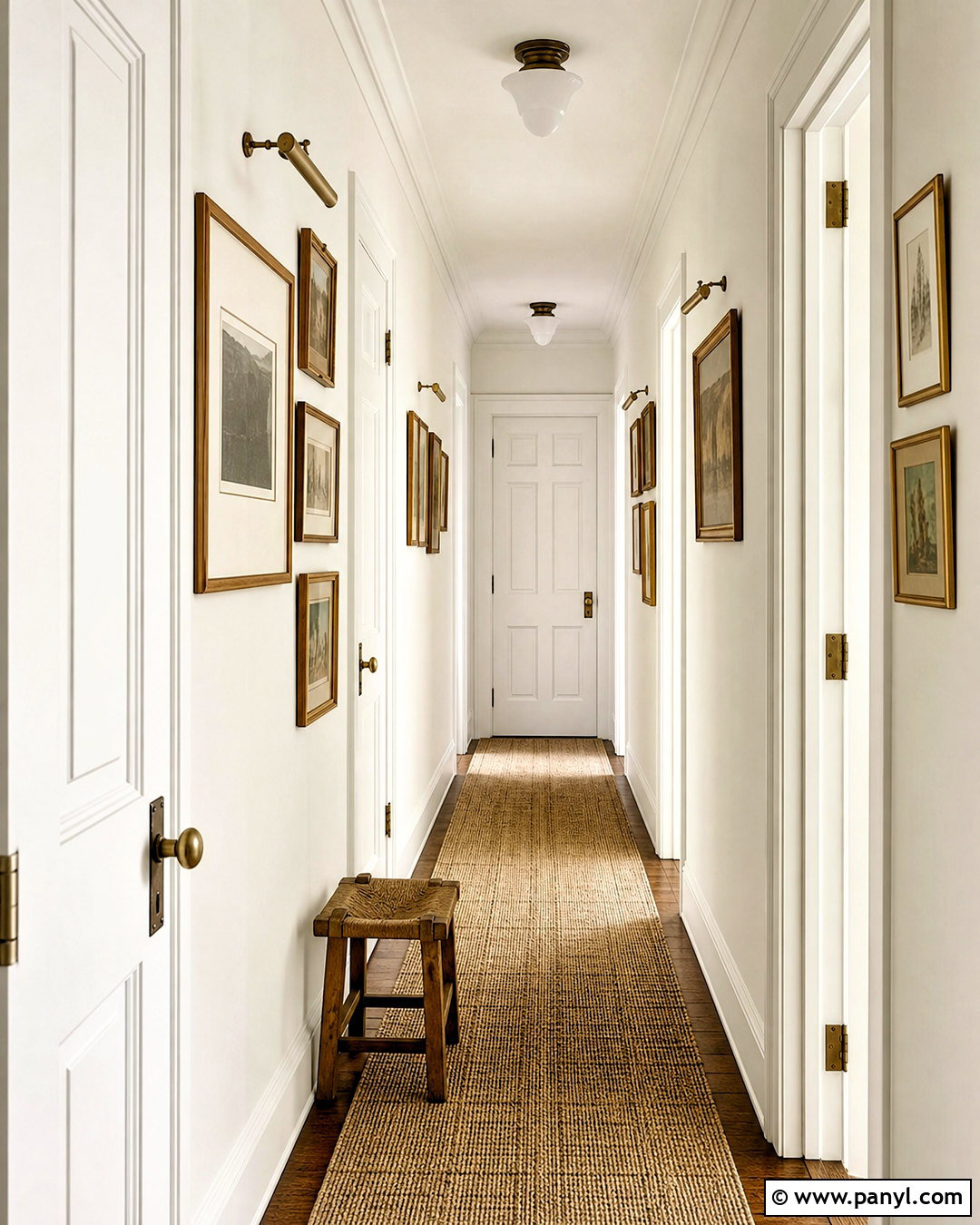
Long hallways often need more than light paint to feel complete. Cover the walls, baseboards, doors, and ceiling in White Flour, using eggshell on walls and satin on trim for subtle depth. Create a carefully spaced gallery using slim oak and antique brass frames filled with black-and-white photography or muted botanical prints. Install two small picture lights to highlight the arrangement and give the passage a finished appearance. A narrow natural-fiber runner adds warmth underfoot, while a compact wood stool can fill an unused corner. Keep door hardware consistent in aged brass or matte black. This coordinated approach turns White Flour into a calm backdrop for movement and artwork, rather than leaving the hallway looking empty or unfinished.
9. White Flour Home Office With Built-In Storage
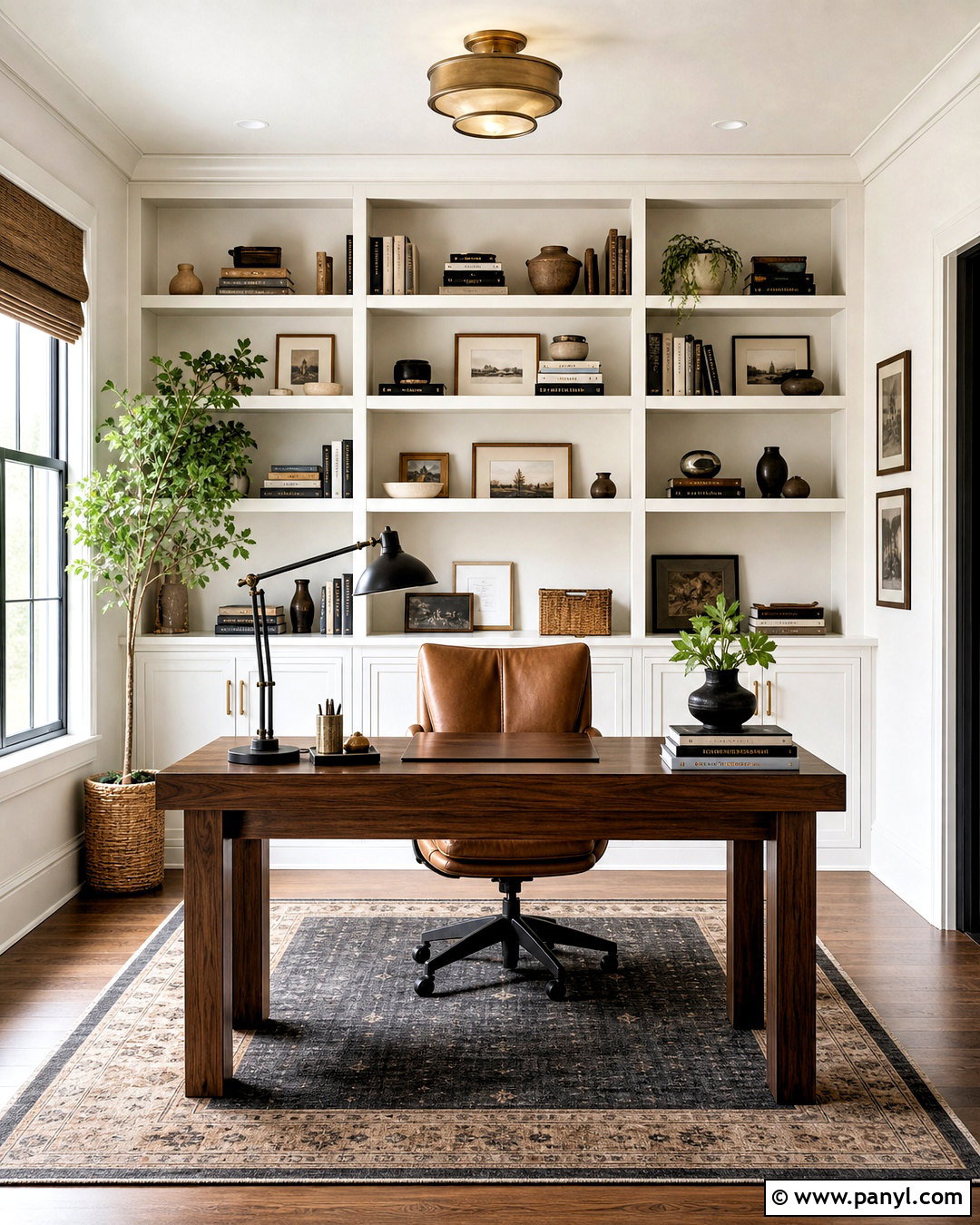
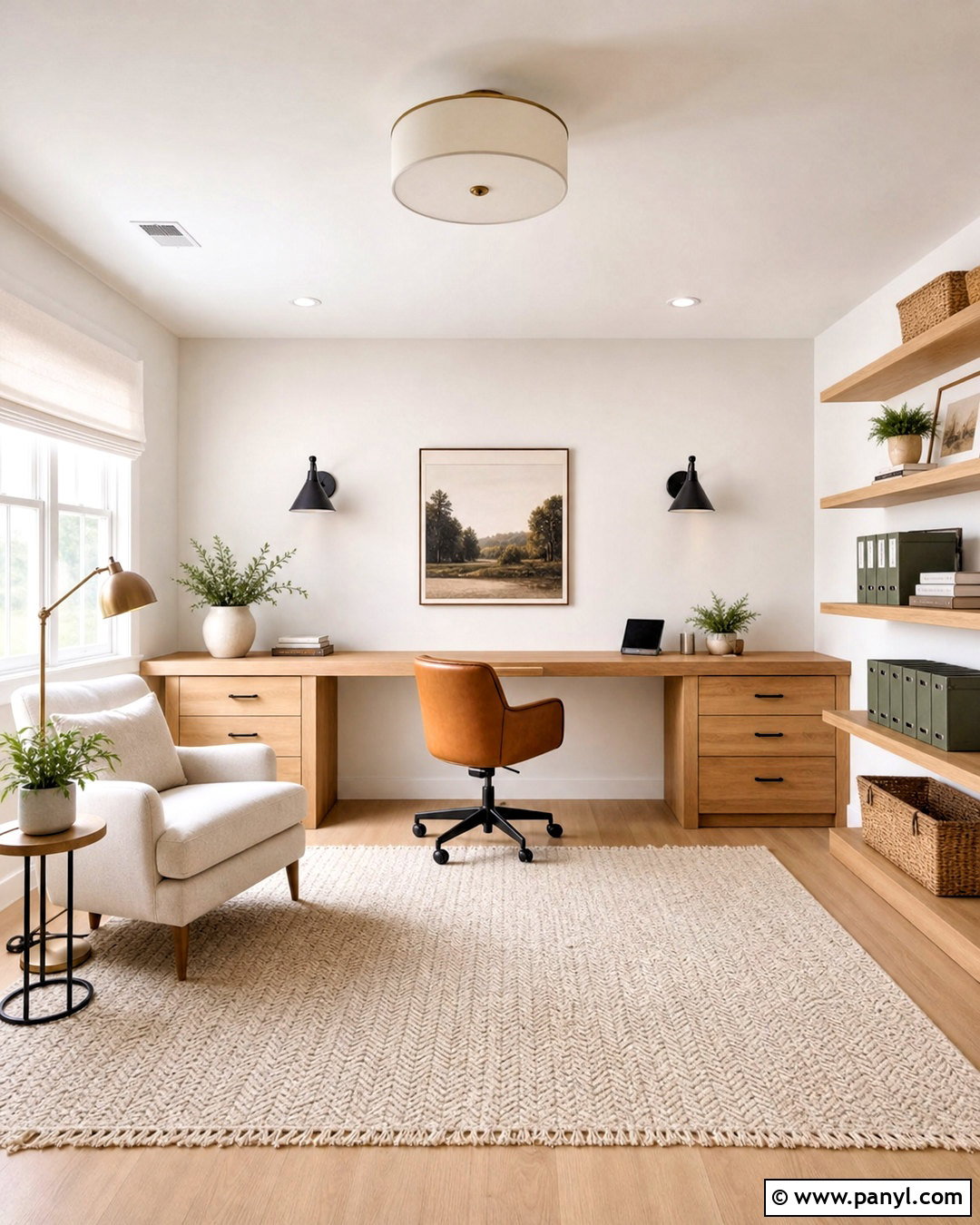
White Flour walls and matching built-in storage can make a compact home office feel larger and more organized. Install cabinets along one wall with closed storage below and open shelves above. Paint everything in the same creamy white, but use a durable satin finish on the cabinetry. Position a walnut desk in the center or facing a window, then add a comfortable tan leather chair. A flat-weave rug in charcoal and beige introduces pattern without distracting from work. Style the shelves sparingly with books, pottery, framed art, and a trailing plant. Finish the room with an adjustable black desk lamp and a simple brass ceiling fixture. The result is a practical workspace with enough contrast to feel structured, warm, and professional.
10. White Flour Laundry Room With Blue Cabinets
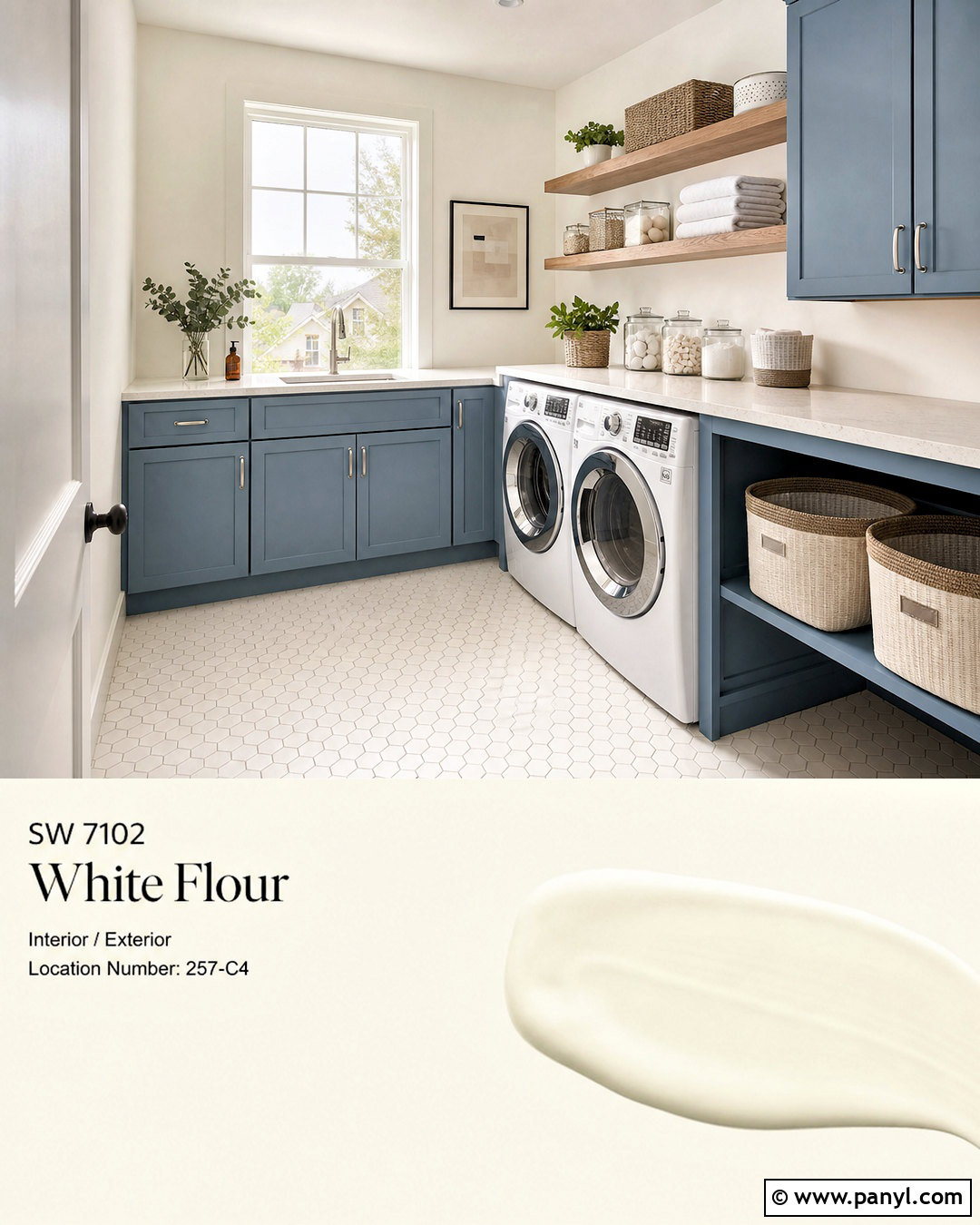
Give a hardworking laundry room a fresh but durable look by pairing White Flour walls with dusty blue cabinetry. Install the blue cabinets above and beside the appliances, leaving open wood shelving for baskets and frequently used supplies. Use a pale quartz counter over front-loading machines to create a folding station. Small warm white hexagonal floor tiles with medium-gray grout provide a practical surface and subtle pattern. Add brushed nickel pulls, a stainless utility sink, and a simple white ceiling light. Woven hampers and labeled glass containers keep the space orderly without creating visual clutter. White Flour balances the blue and prevents the room from becoming too cool, while natural wood and woven textures make routine household tasks feel more pleasant.
11. White Flour Nursery With Soft Green
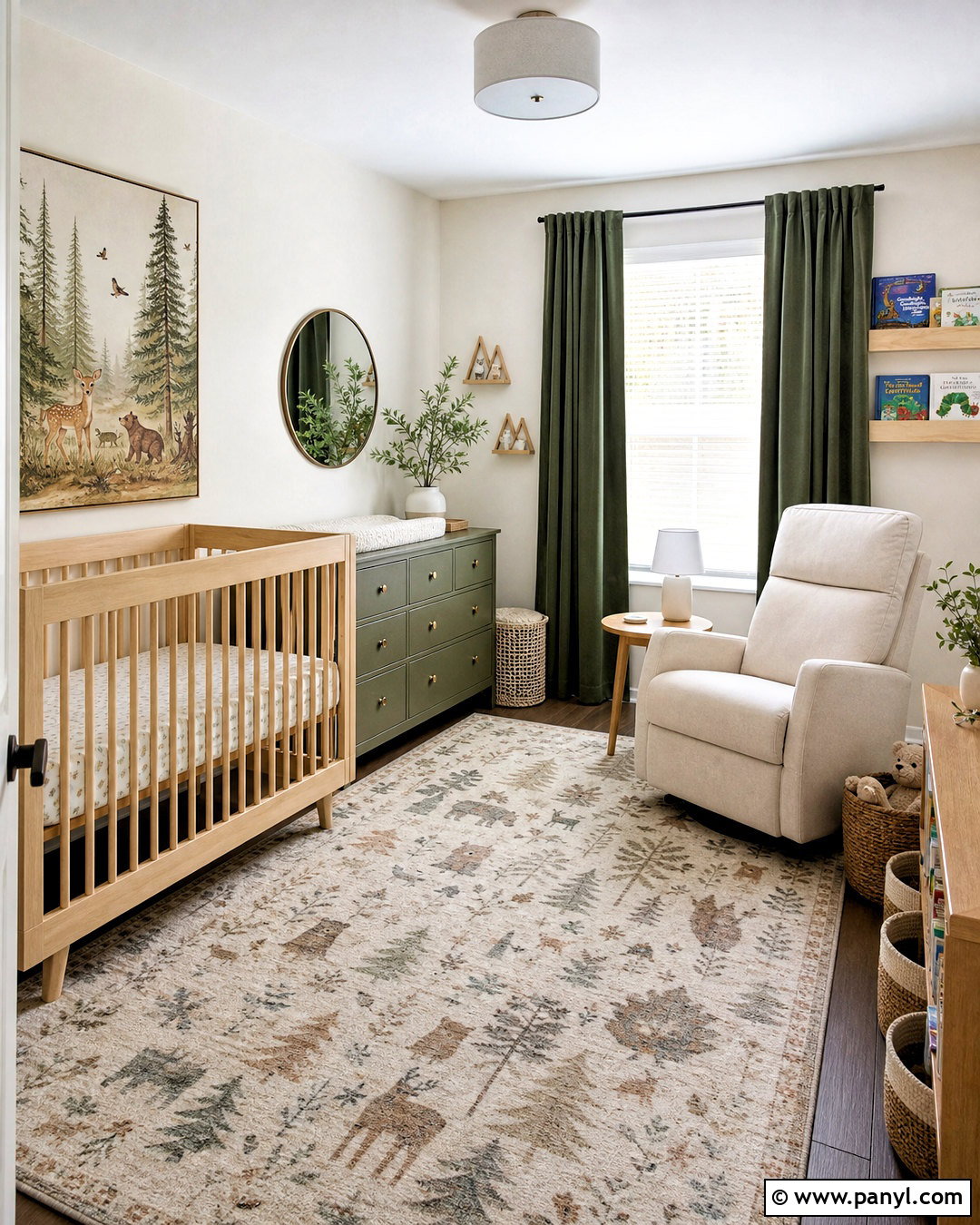
White Flour is a flexible nursery backdrop because it can support gentle color without overwhelming the room. Paint the walls and trim in the same shade, then introduce soft sage green through a painted dresser, blackout curtains, and a washable area rug. Choose a natural maple crib and a comfortable cream glider with rounded lines. A small oak side table provides space for a lamp and nighttime essentials. Decorate the walls with simple woodland prints in light wood frames rather than filling every surface. Use covered baskets for toys and low shelving for books. Warm white lighting keeps the creamy paint consistent after sunset. The finished nursery feels calm, practical, and adaptable enough to transition into a child’s bedroom later.
12. White Flour Sunroom With Wicker Furniture
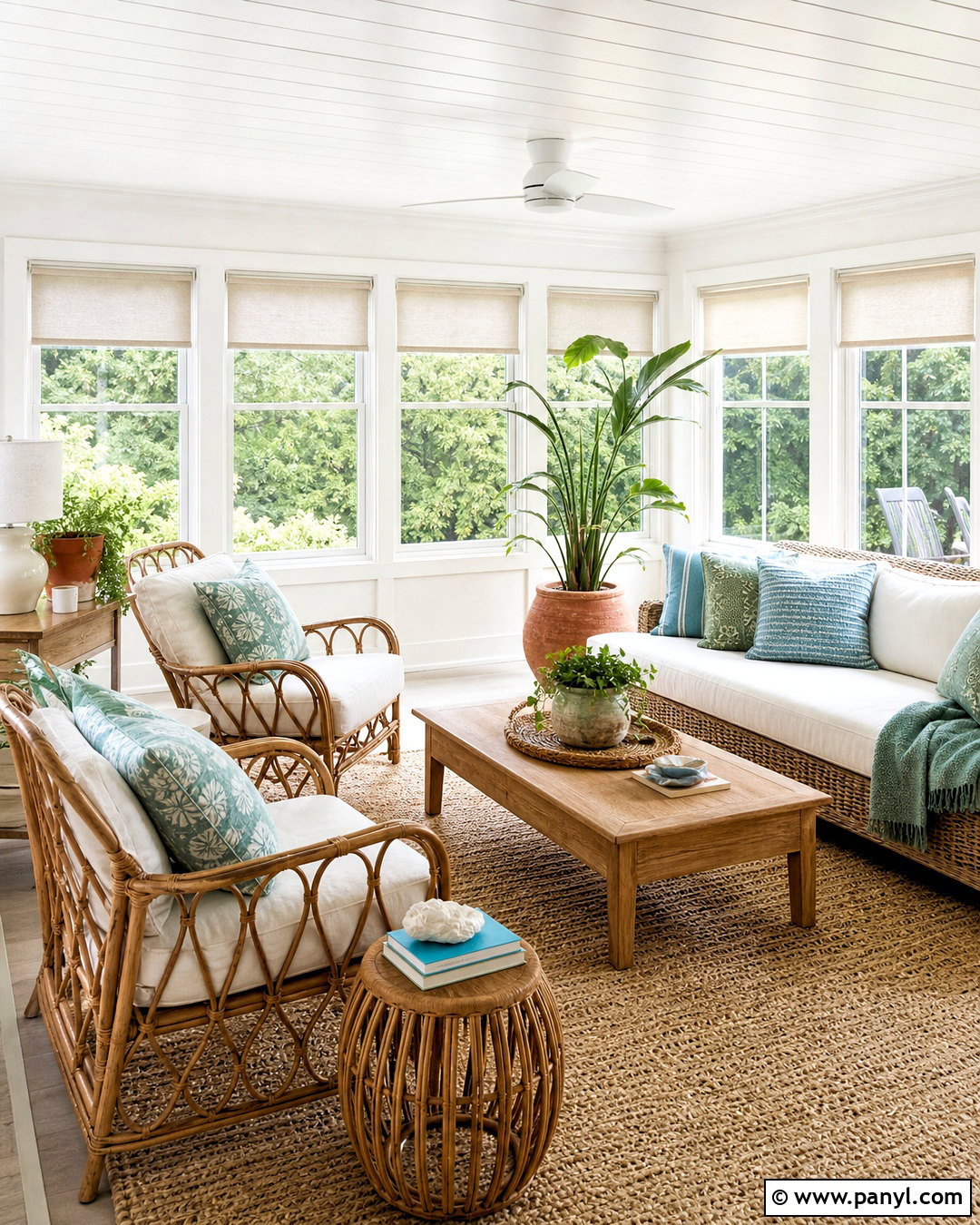
Sunlight brings out the clean, cheerful side of White Flour, making it an appealing choice for a relaxed sunroom. Paint the walls, window trim, and paneled ceiling in the same color to unify the many architectural lines. Arrange natural rattan lounge chairs and a small wicker sofa around a light oak coffee table. Use washable cushions in warm ivory with muted blue and green accent pillows. A flat-weave jute rug defines the seating zone without hiding the flooring. Add tall leafy plants in terracotta pots to soften corners and connect the room with the outdoor view. Linen roller shades provide glare control while maintaining an airy feeling. The whole space should look comfortable, sunlit, and suitable for everyday use.
13. White Flour Fireplace With Stone Surround
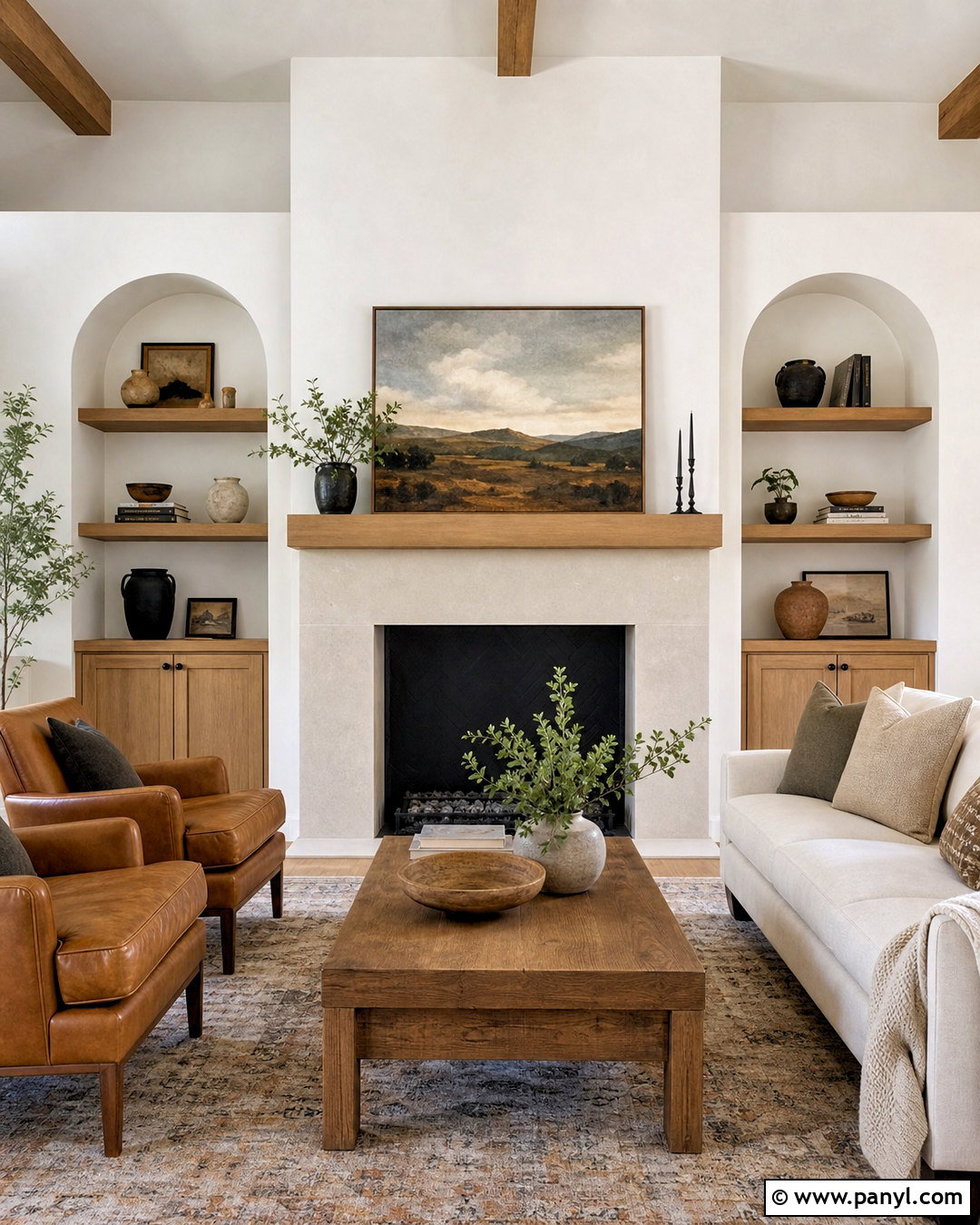
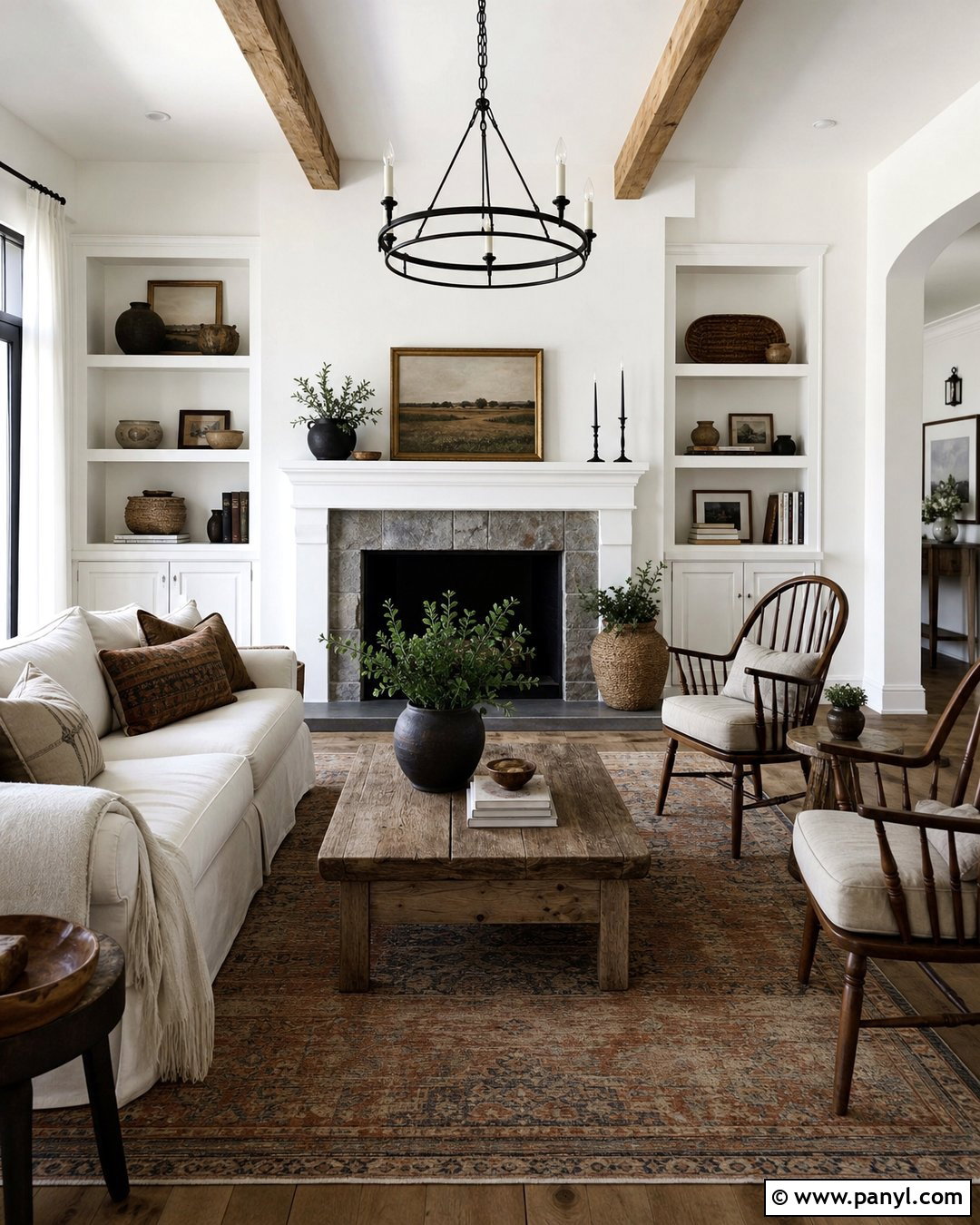
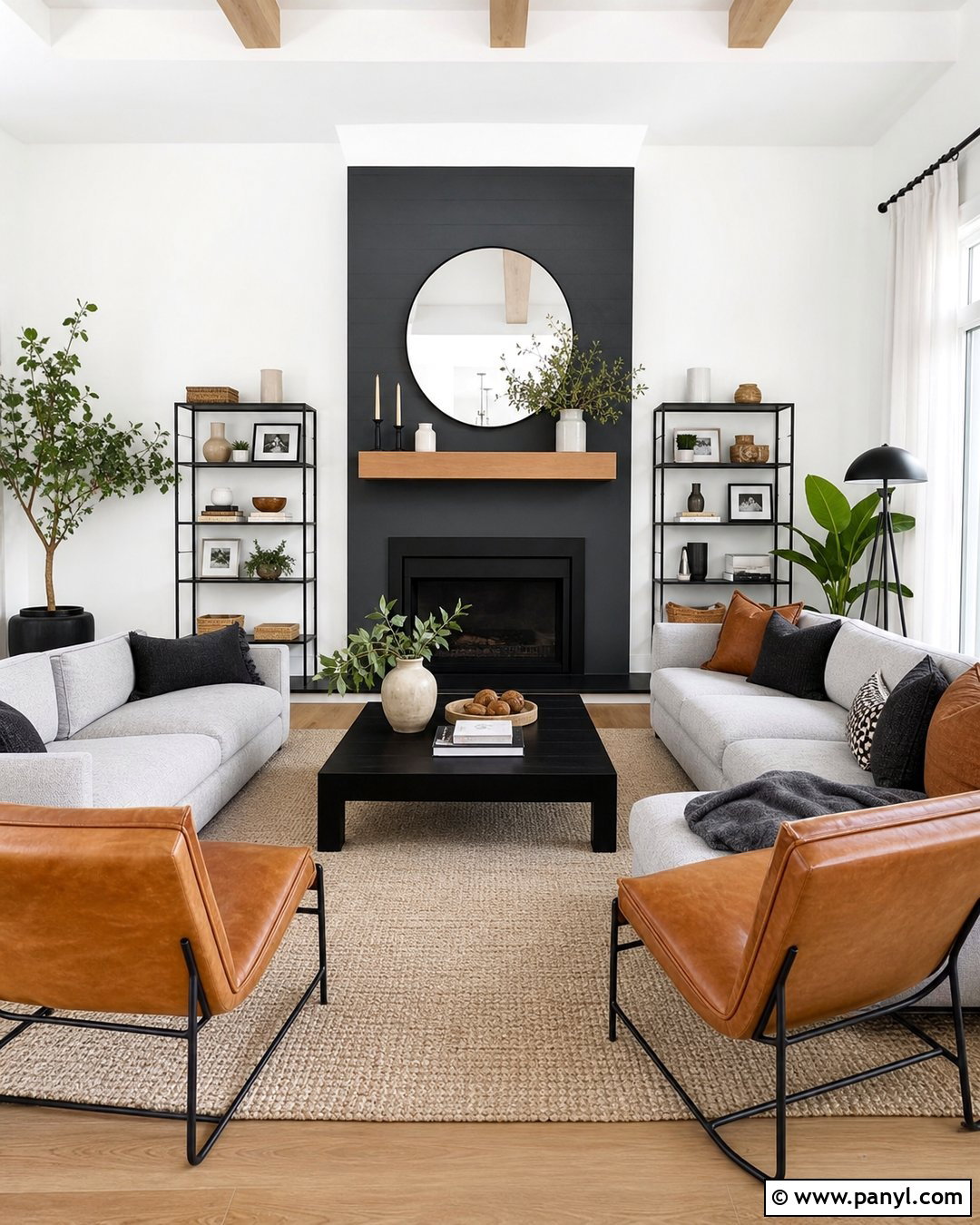
Make a fireplace feel integrated by painting the surrounding wall and mantel White Flour. Use a honed limestone or lightly textured greige stone around the firebox to introduce natural variation. A simple oak mantel shelf can add warmth if the architecture allows, or the existing mantel can remain White Flour for a more traditional result. Arrange a cream sofa and two camel leather chairs around a substantial wood coffee table. Ground the seating with a faded neutral rug and add black metal through the firebox, tools, and side tables. Keep mantel decor restrained with a wide landscape, two ceramic vessels, and a few branches. This complete living room scheme highlights the fireplace without creating a harsh contrast against the creamy walls.
14. White Flour Built-In Bookshelves
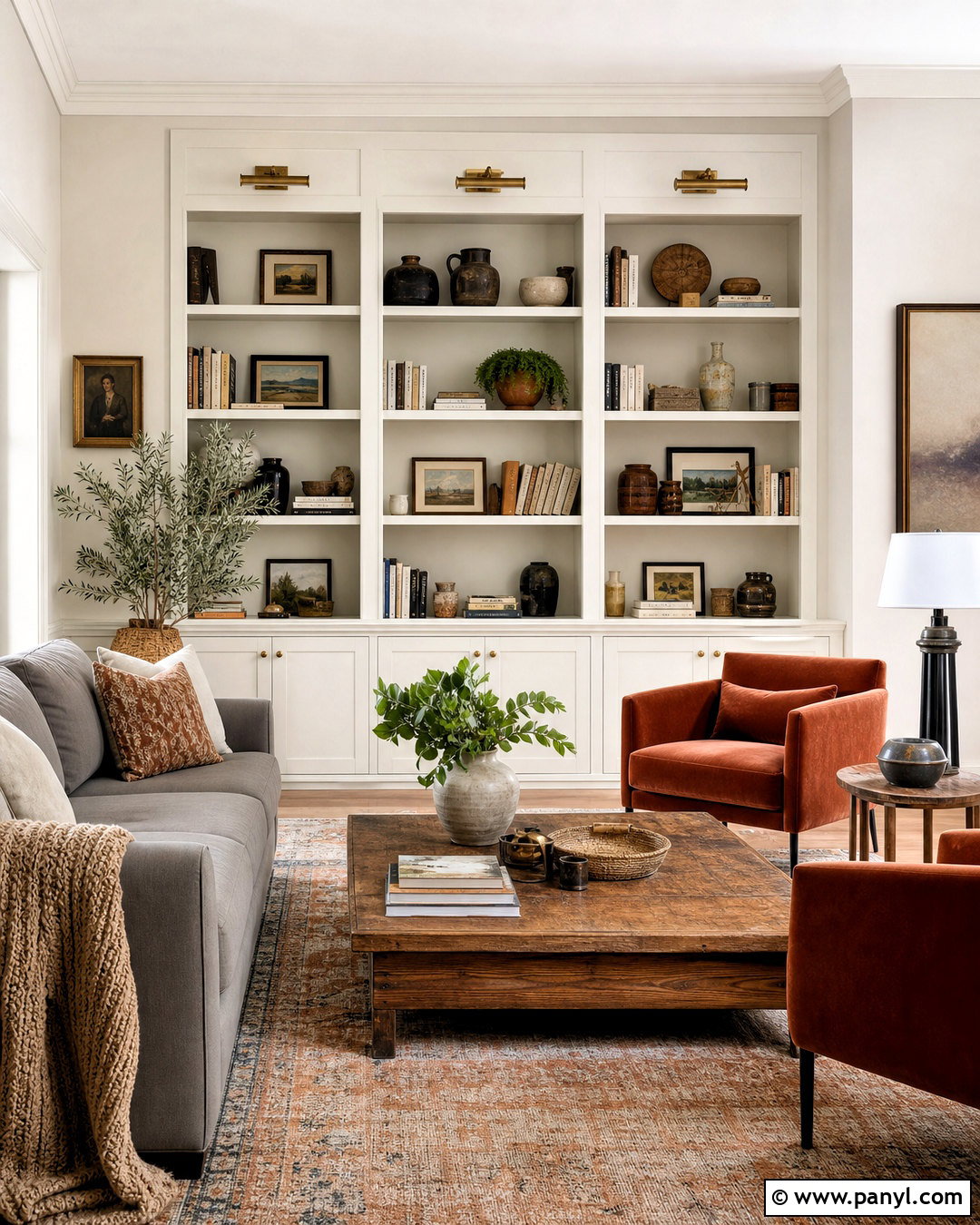
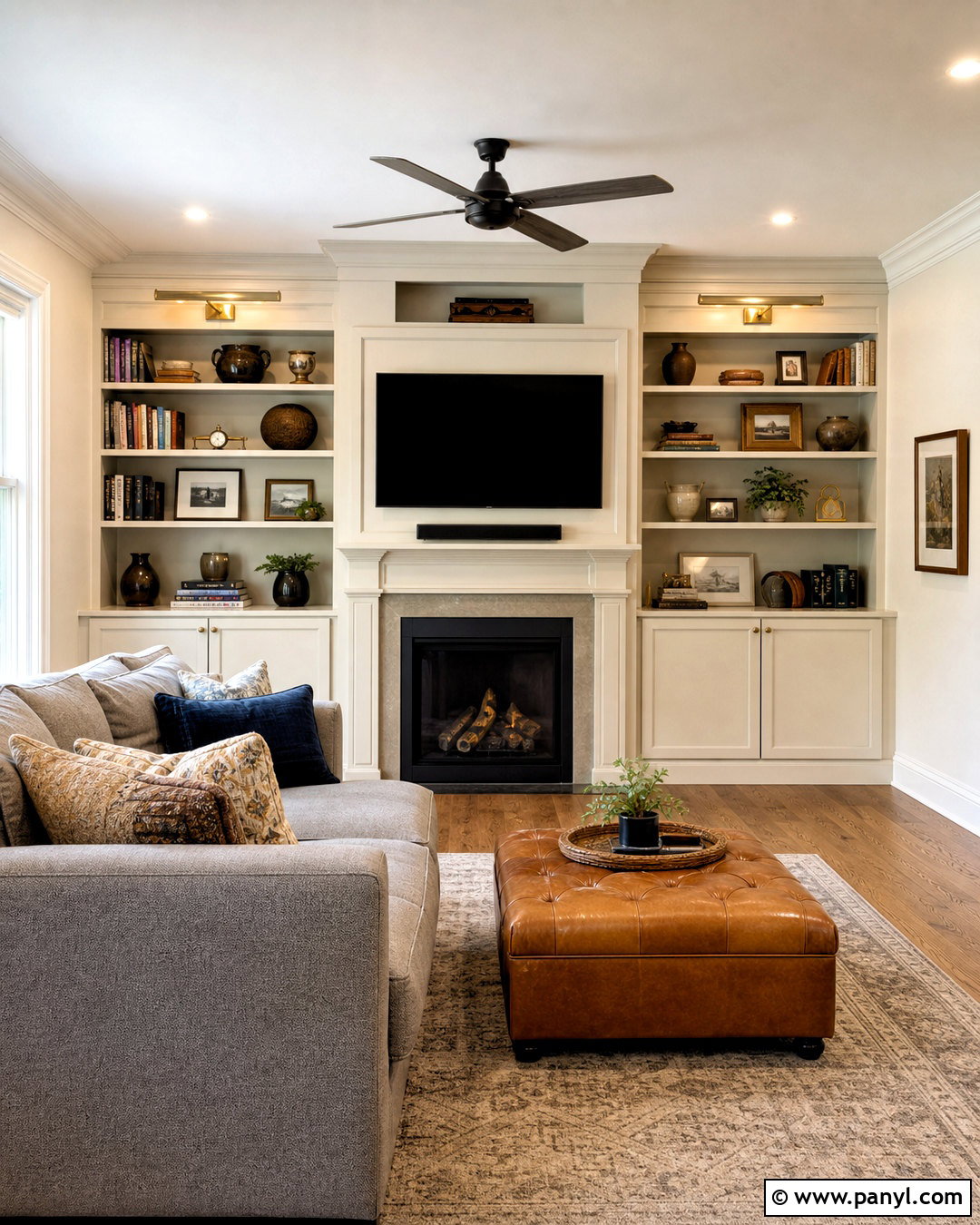
Built-in bookshelves painted White Flour can brighten an entire room while making storage feel like part of the architecture. Extend the units from floor to ceiling and include lower cabinets to hide electronics, games, or office supplies. Paint the shelving, trim, and nearby walls in the same shade, using satin enamel on the woodwork for easier cleaning. Place a warm gray sofa opposite the shelves with an oak coffee table and rust-colored accent chairs. Style the shelves with a balanced mix of books, pottery, framed art, and small natural objects. Avoid filling every opening. Antique brass library lights above the units add character and practical illumination. The completed room feels collected, comfortable, and visually calm rather than crowded.
15. White Flour Farmhouse Exterior With Black Trim
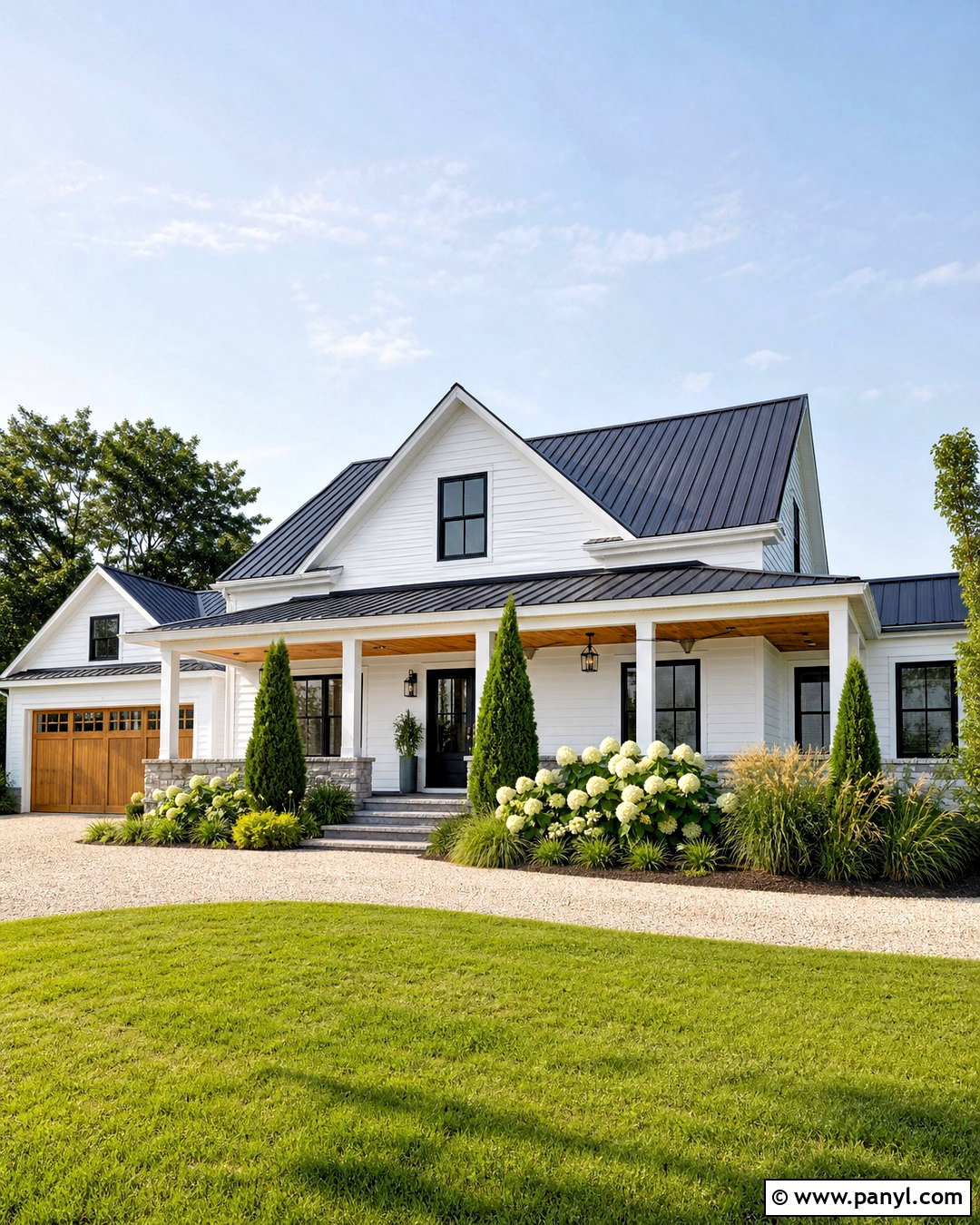
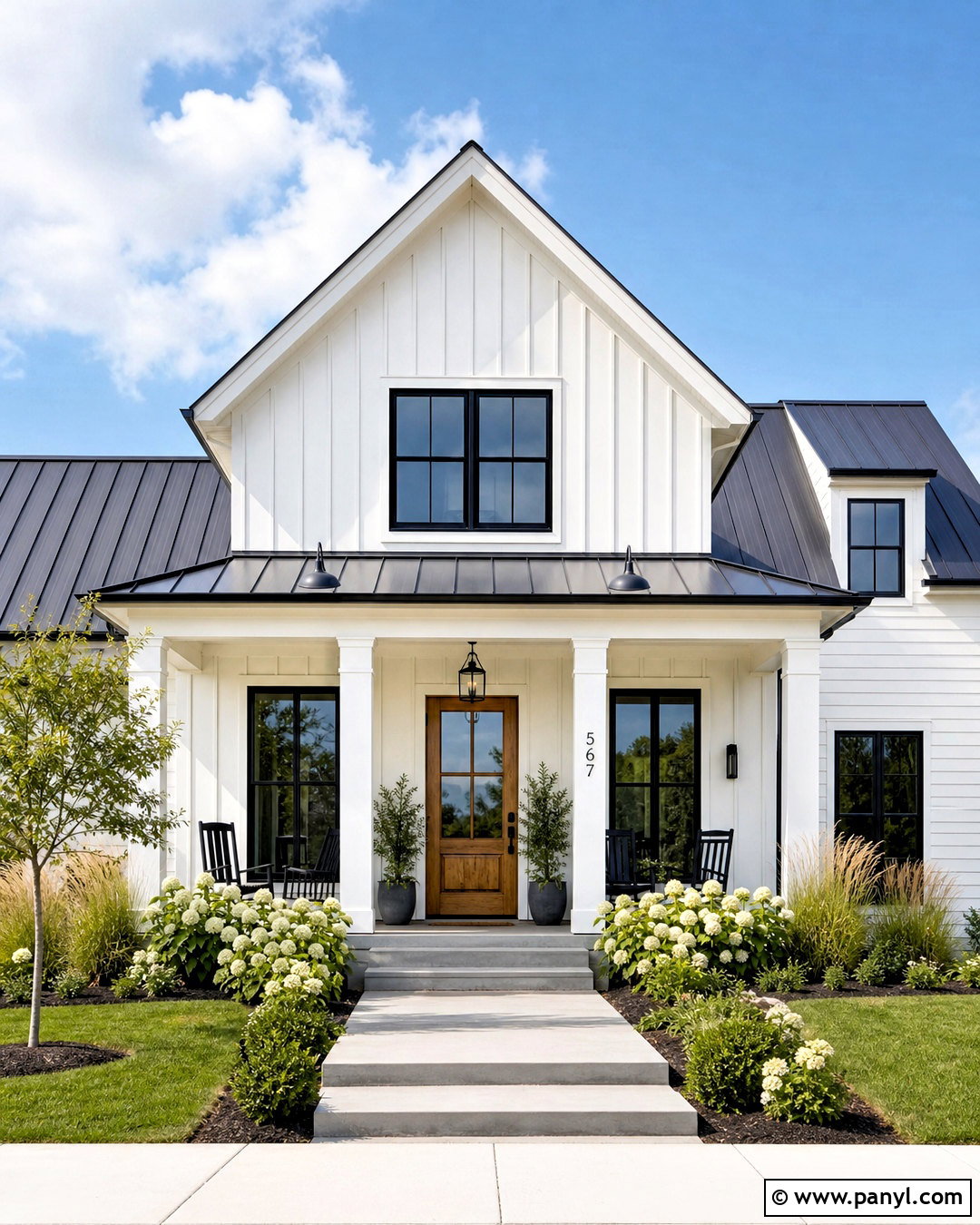
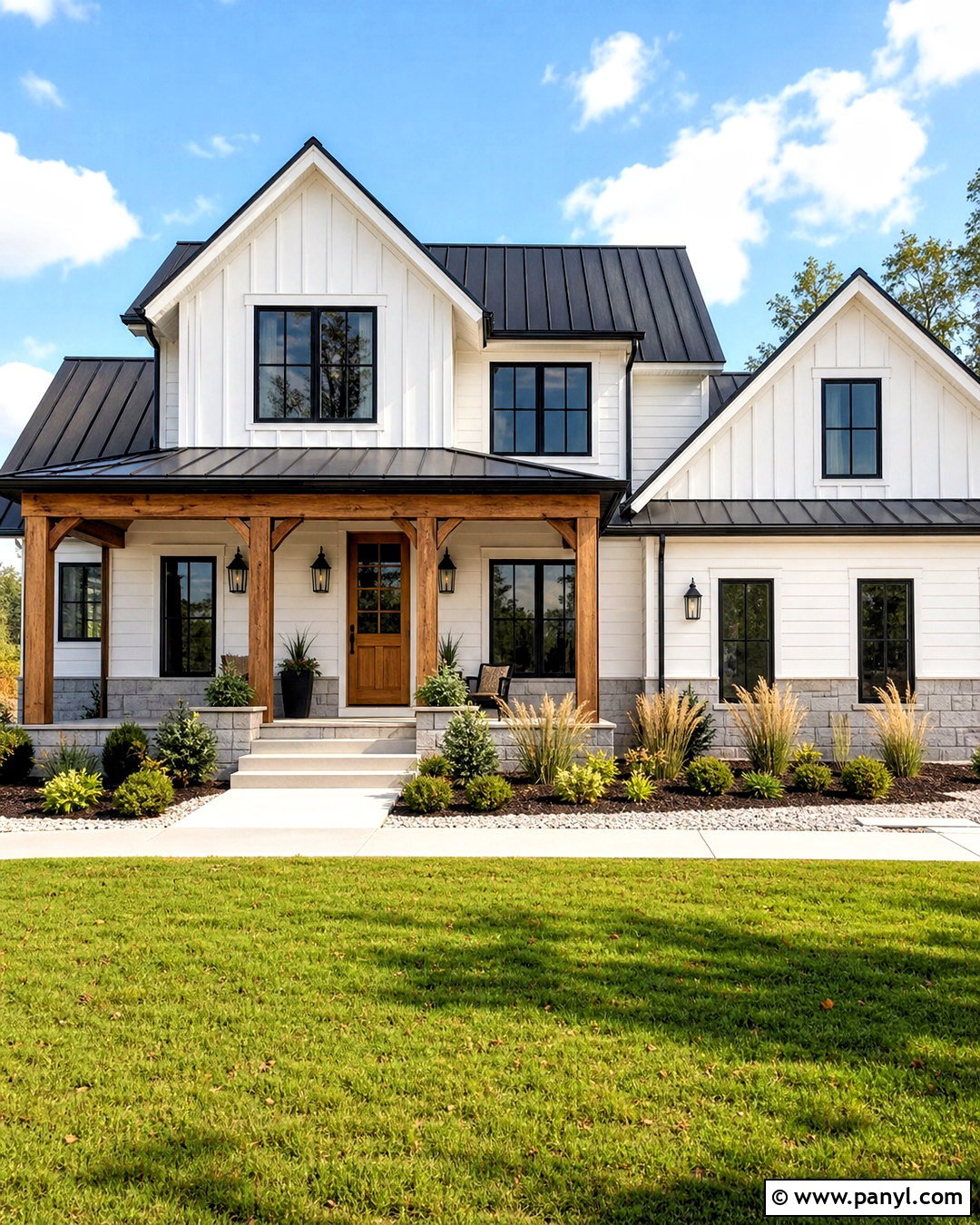
On a simple farmhouse exterior, White Flour creates a warm white body color that works naturally with rural materials. Apply it to horizontal siding and broad porch columns, then use matte black on window frames, exterior lights, and the front door. A medium charcoal standing-seam metal roof provides strong definition without introducing another competing color. Add natural cedar at the porch ceiling and around a pair of garage doors to soften the black-and-white contrast. Landscape the front with ornamental grasses, hydrangeas, and low evergreen shrubs. A straight gravel or concrete walkway keeps the approach practical. The complete exterior looks clean and current, yet the creamy siding and wood details prevent it from feeling cold or overly graphic.
16. White Flour Brick Exterior With Green Trim
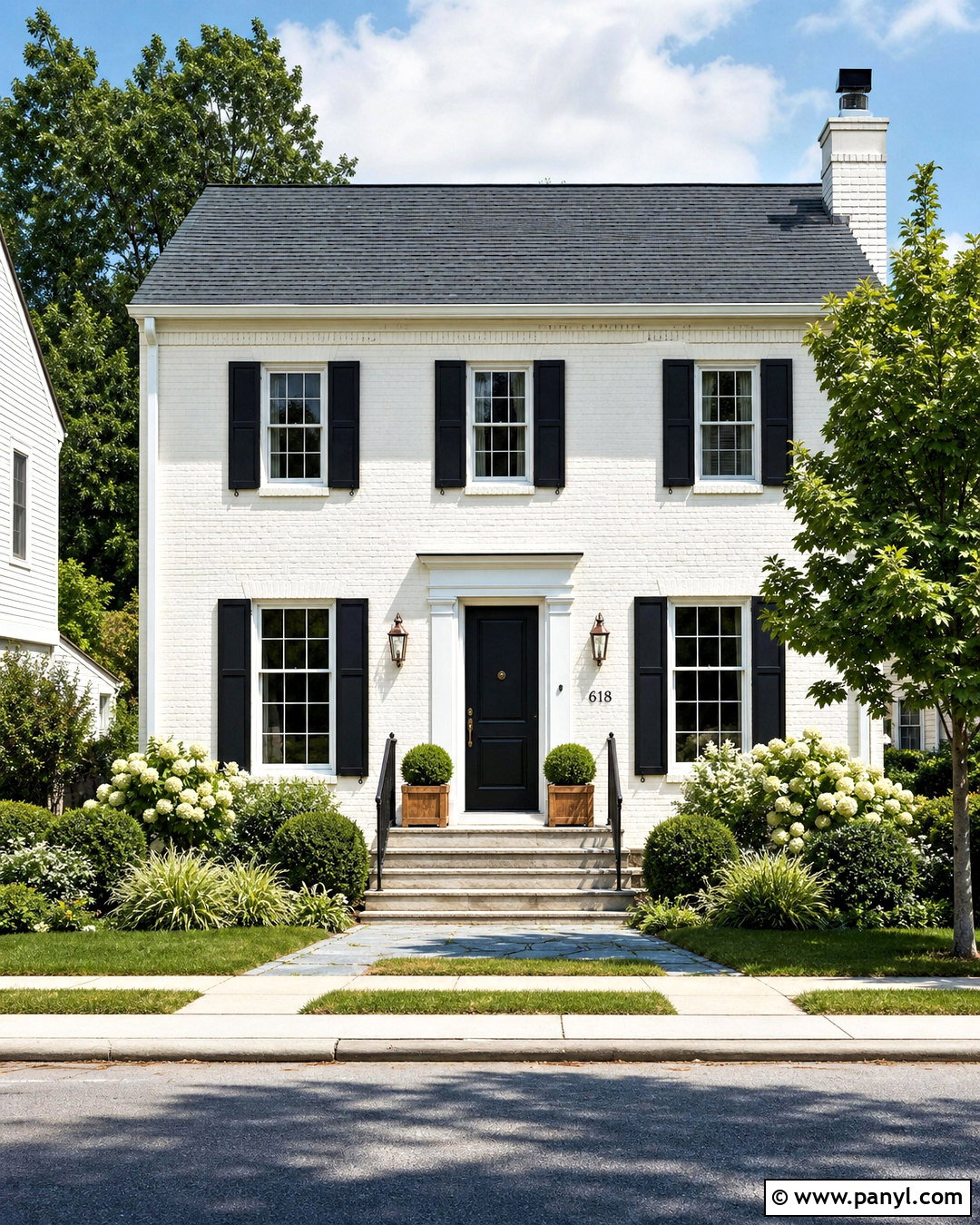
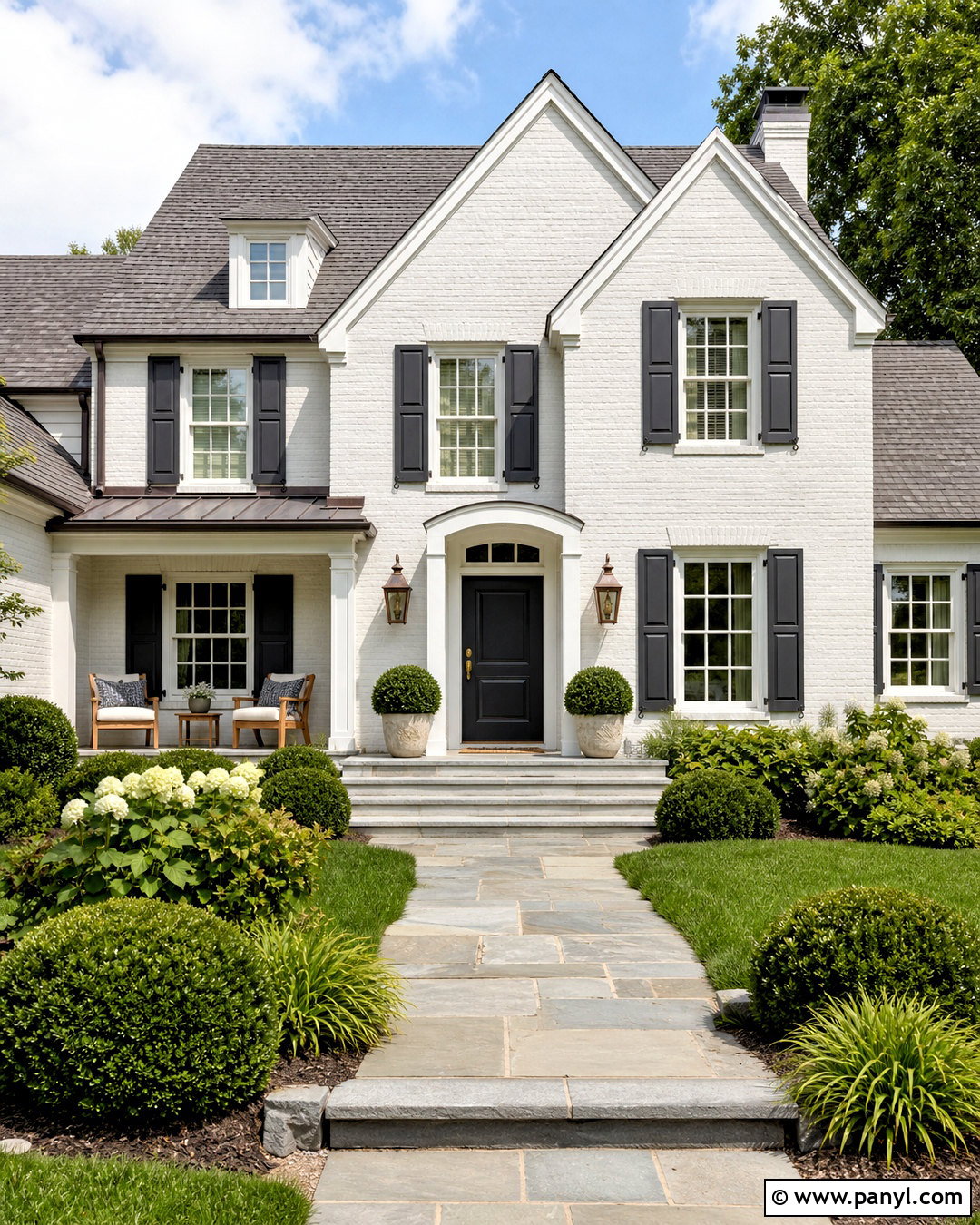
Painted brick gains a softer, more approachable character when finished in White Flour. Carry the color across the brick body, mortar, fascia, and main trim to create a unified base. Then use a deep green-black shade on the front door, shutters, and selected window trim. A weathered charcoal roof and copper-toned porch lights will complement the warm exterior without appearing too coordinated. Add a natural wood bench or cedar planters near the entrance for extra warmth. Keep the landscaping structured with boxwood, white flowering shrubs, and layered ornamental grasses. Because outdoor light makes colors look brighter, test the paint on multiple sides of the house. This scheme feels classic, grounded, and suitable for many traditional brick homes.
17. White Flour Craftsman Exterior With Wood Accents
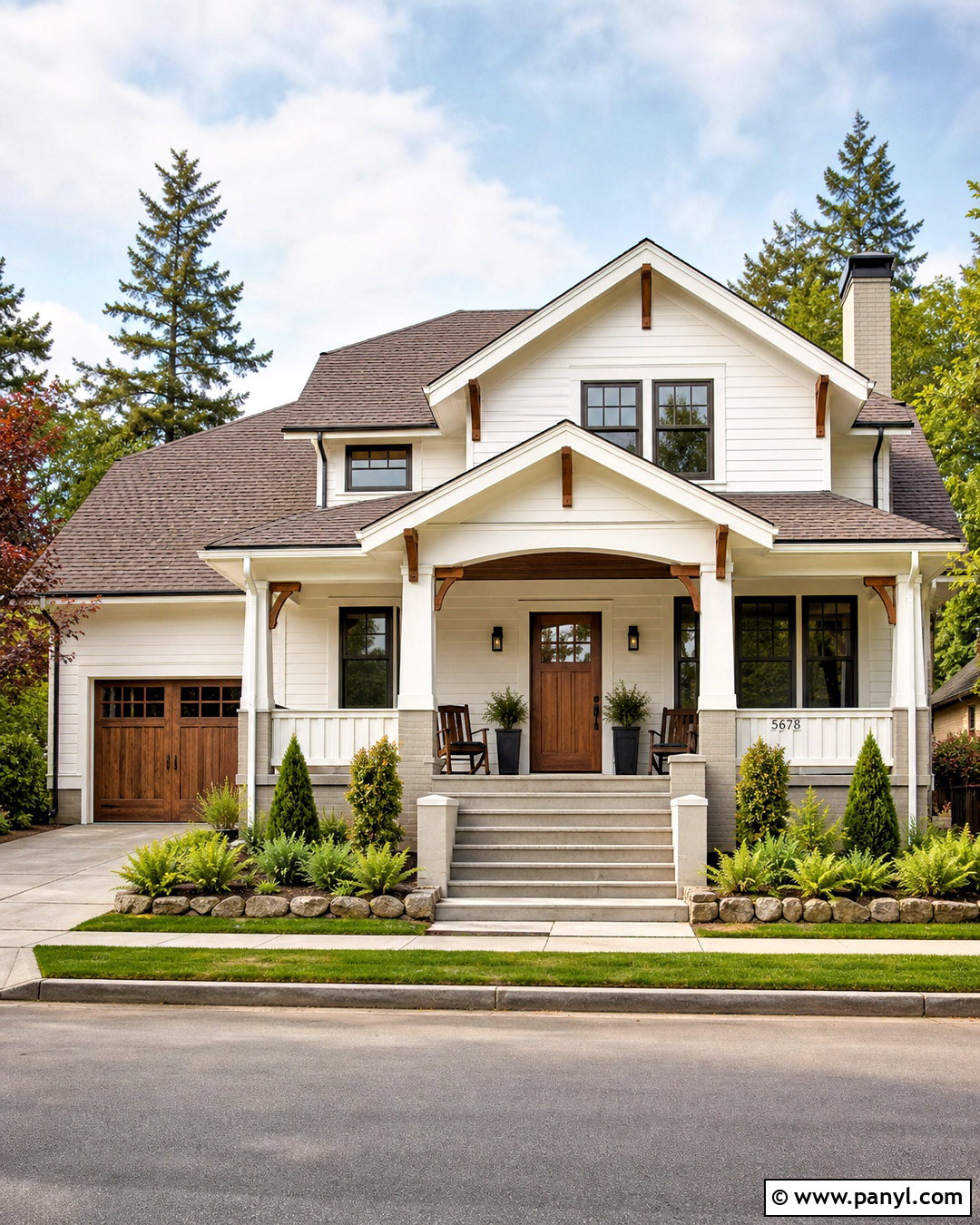
A Craftsman home needs enough material variation to emphasize its architecture. Use White Flour on the main siding, porch columns, and wide fascia boards. Introduce medium-stained cedar on the front door, porch brackets, and garage door to highlight handcrafted details. Paint the foundation and lower porch base a warm greige so the house feels anchored to the landscape. Bronze window frames, gutters, and lanterns provide softer contrast than pure black. Complete the curb appeal with broad concrete steps, stone edging, ferns, compact evergreens, and flowering perennials. A brown or charcoal architectural-shingle roof will tie the natural tones together. This exterior palette respects the substantial character of Craftsman design while giving the house a brighter, cleaner overall appearance.
18. White Flour Coastal Exterior With Blue Door
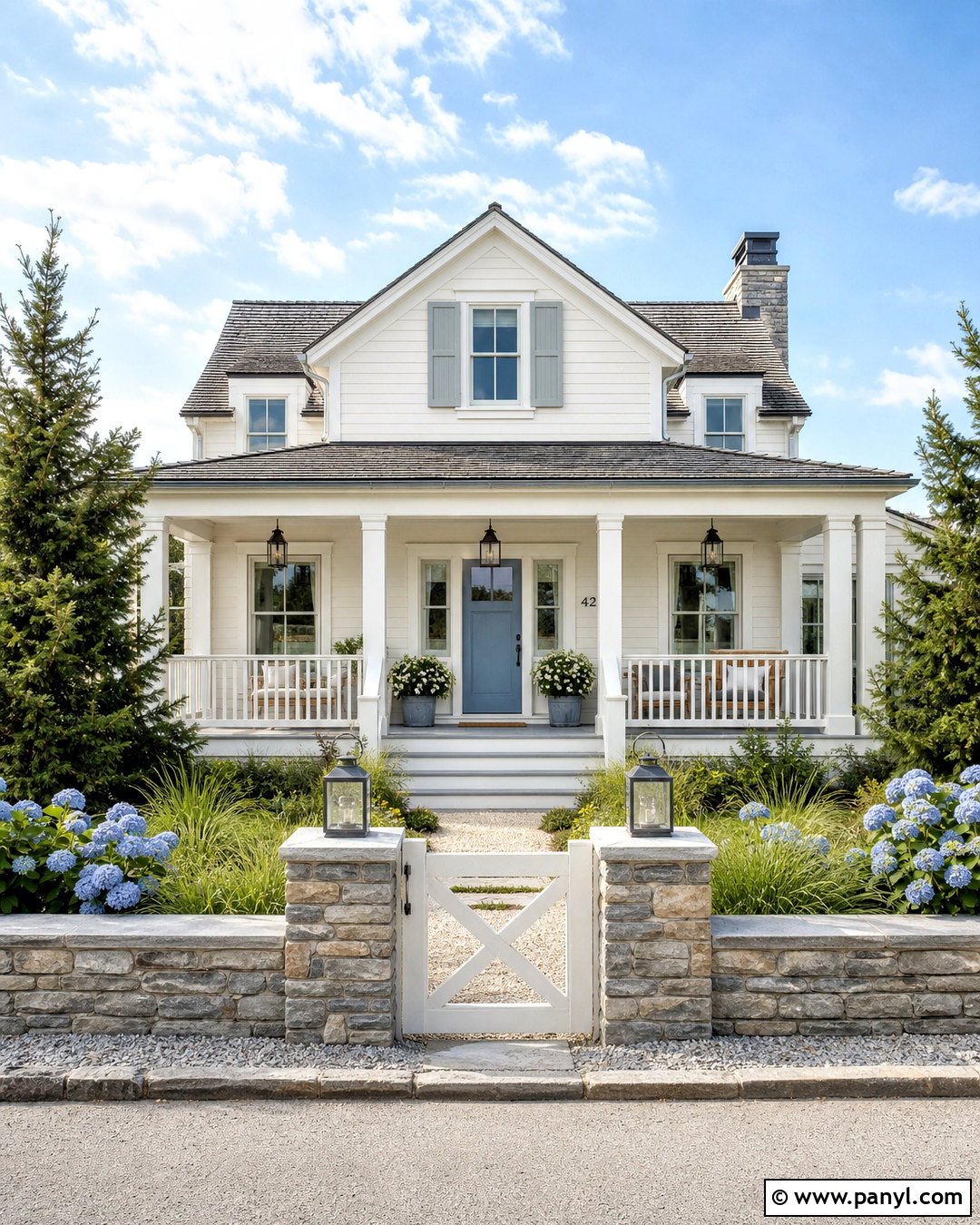
For a relaxed coastal exterior, pair White Flour siding with a dusty blue front door and pale gray-blue shutters. Keep the trim and porch railings in White Flour so the facade remains cohesive and open. A weathered gray shingle roof supports the seaside palette without making the house look themed. Choose brushed nickel or galvanized exterior lights, then add natural teak seating to the porch. Gravel borders, wispy ornamental grasses, blue hydrangeas, and low evergreen shrubs create an easy landscape around the foundation. Avoid strong nautical accessories; the color relationships provide enough coastal character. The finished house feels bright and breezy, while the creamy body color prevents the blue and gray details from becoming too cold in changing daylight.
19. White Flour Front Porch With Natural Wood
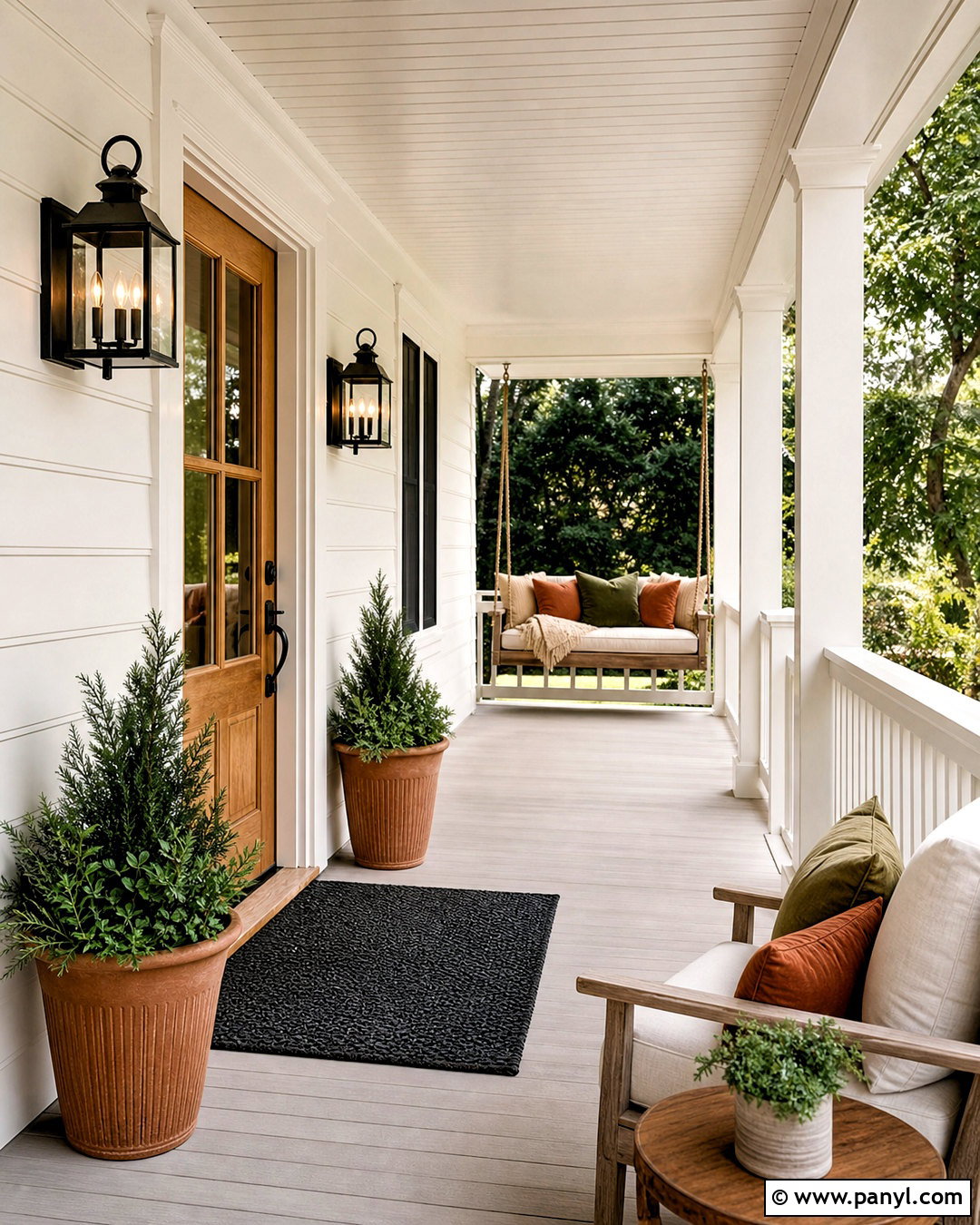
A front porch painted White Flour can become a comfortable outdoor room instead of a simple pass-through area. Apply the color to the siding, ceiling, columns, and railings for a clean envelope. Add a natural wood front door and matching wood porch swing to bring warmth into the design. Use black lantern sconces, black house hardware, and a charcoal outdoor rug for definition. Layer the swing with washable cushions in olive, beige, and soft rust. Large terracotta pots filled with evergreen shrubs and seasonal foliage make the entrance feel established. A small wood side table offers practical space for drinks or packages. This complete porch design balances brightness, durability, and welcoming curb appeal without relying on excessive decorations.
20. White Flour Open Concept Interior
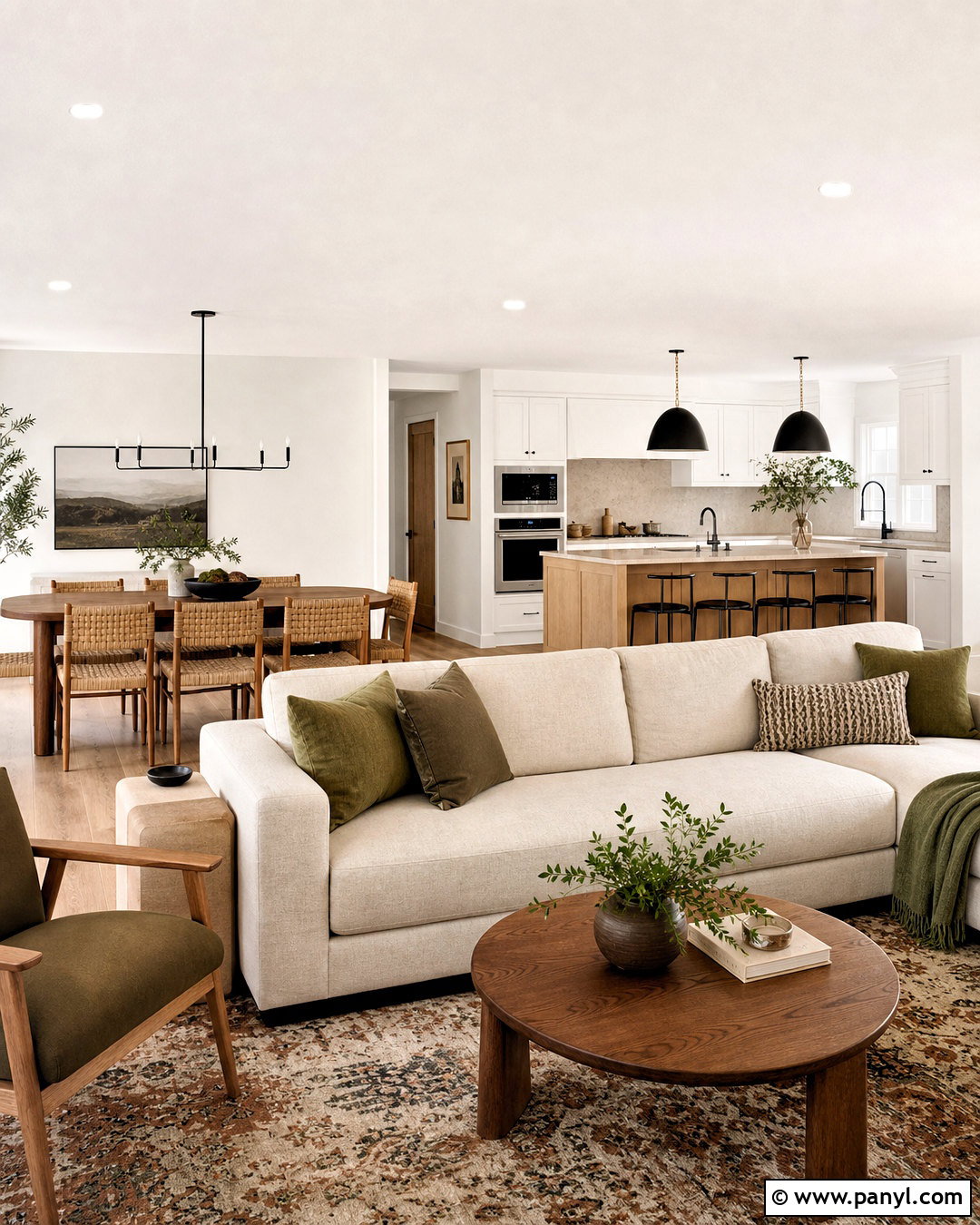
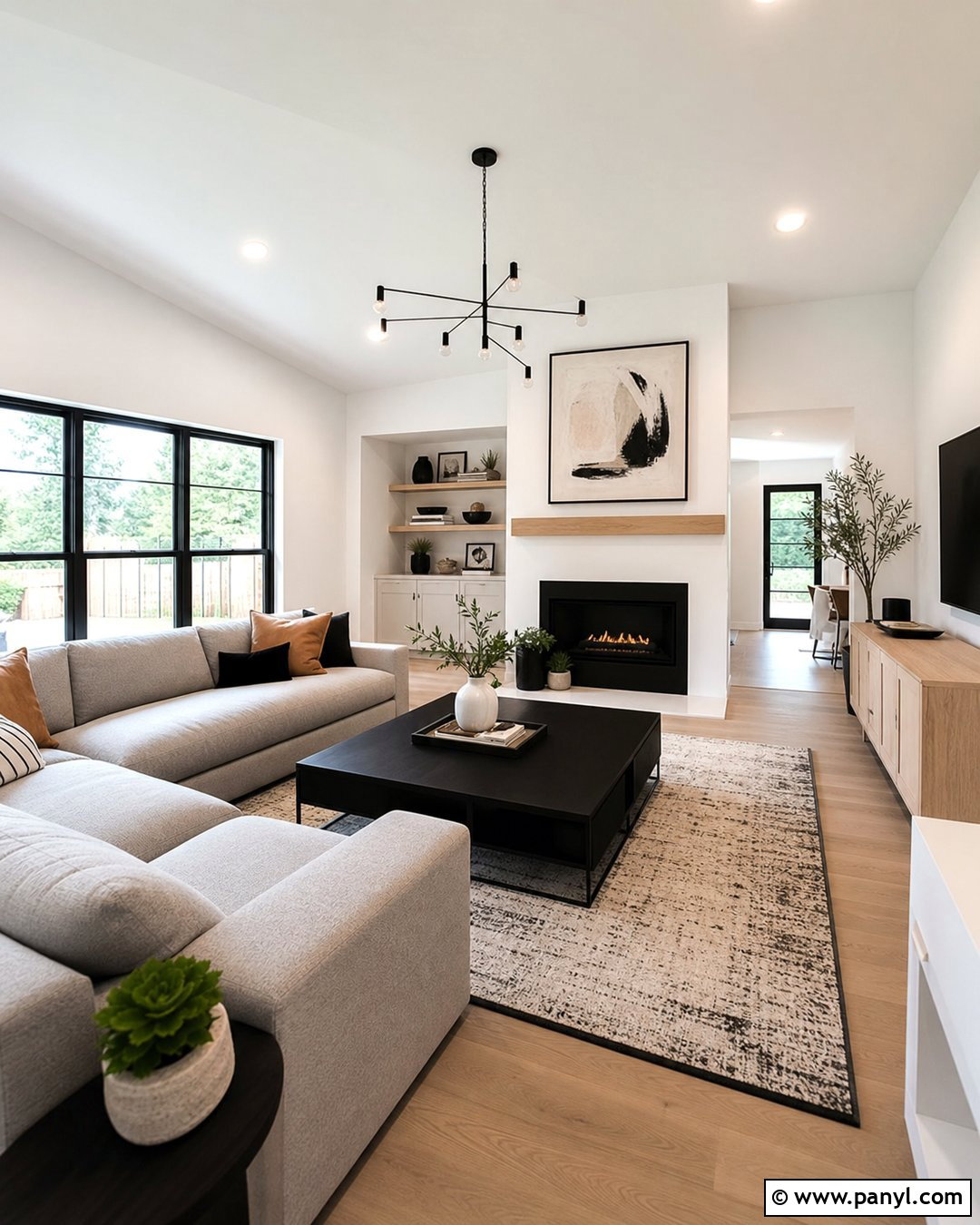
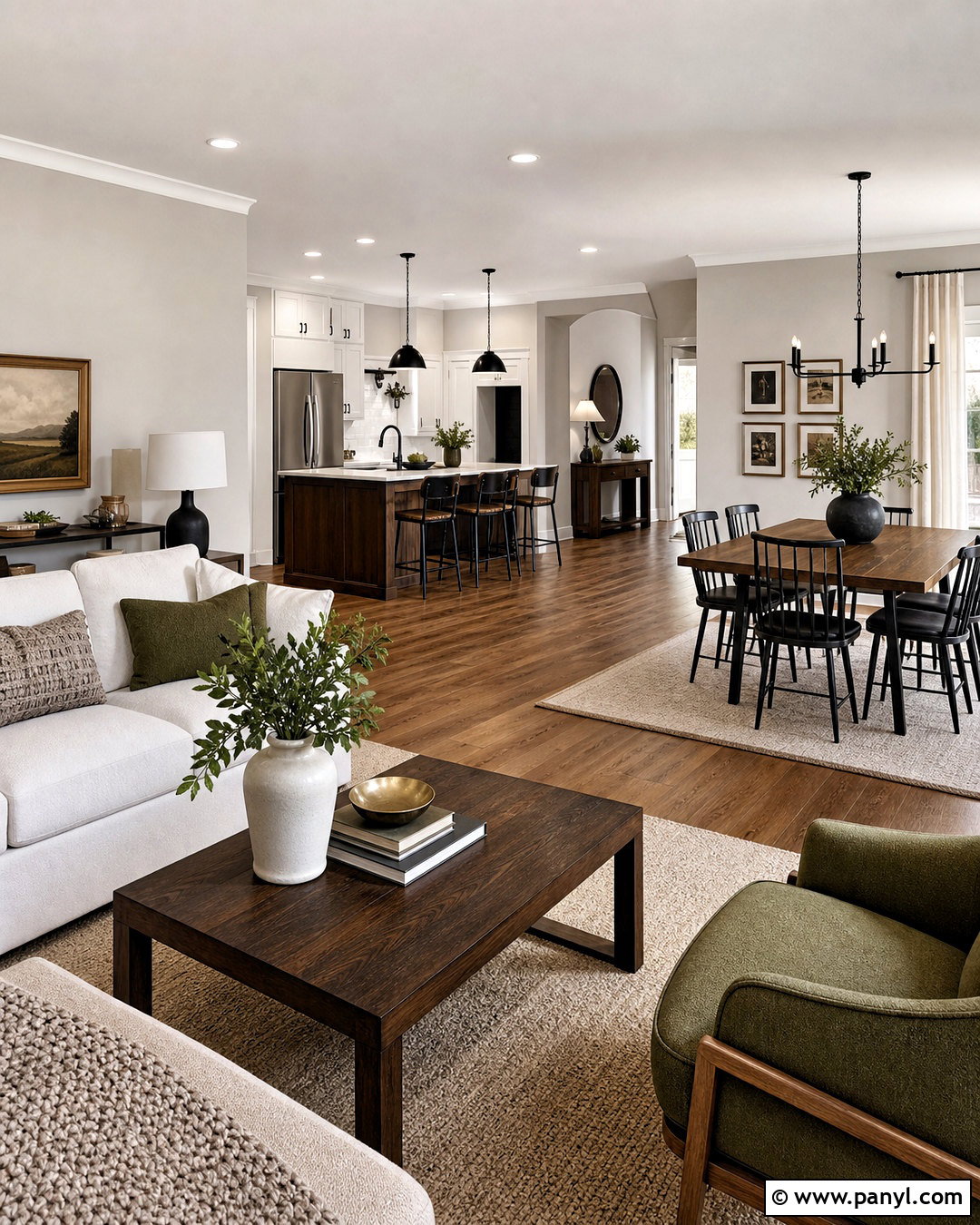
Open-concept rooms benefit from a consistent color that connects several functional zones. Use White Flour on the living room, kitchen, and dining walls, continuing it onto the ceiling and trim where a seamless effect is desired. Define each area through furniture and materials rather than additional wall colors. Choose White Flour kitchen cabinets, a white oak island, and warm quartz counters. In the dining zone, add a walnut table and woven chairs. Anchor the living area with a beige sectional, muted patterned rug, and black metal lighting. Repeat oak, black, and olive accents throughout all three zones. This controlled palette keeps the large space visually organized while allowing each area to have its own purpose, scale, and comfortable arrangement.
Conclusion:
The best White Flour Sherwin-Williams designs combine this warm white with materials and colors that support its creamy character. Natural oak, walnut, stone, linen, muted green, dusty blue, aged brass, and matte black can all give it clearer definition. It is versatile enough for walls, cabinets, trim, built-ins, siding, brick, and covered porches, but every application should be tested in the actual setting. Observe a large sample during morning, afternoon, and evening light before choosing coordinating finishes. Whether you prefer a quiet bedroom, an inviting kitchen, or a classic exterior, these 20 white flour sherwin williams ideas provide complete, practical starting points for a balanced and welcoming home.

Related Ideas and Inspiration:
Leave a Reply