
White Down is a soft, creamy off-white that brings warmth without making a room feel heavily beige. Benjamin Moore lists White Down as OC-131, with an LRV of 76.69 and a subtle cream undertone that creates its gentle appearance. () It works especially well with natural wood, quiet neutrals, muted greens, warm metals, and layered textures. The color can cover an entire room, soften kitchen cabinets, refresh trim, or create an inviting exterior palette. The key is building a complete scheme around its warm character instead of treating it like a stark white. These 20 White Down Benjamin Moore ideas explore coordinated looks for living spaces, kitchens, bedrooms, bathrooms, and exteriors. Use them to find practical White Down Benjamin Moore ideas for your own home.

1. White Down Living Room
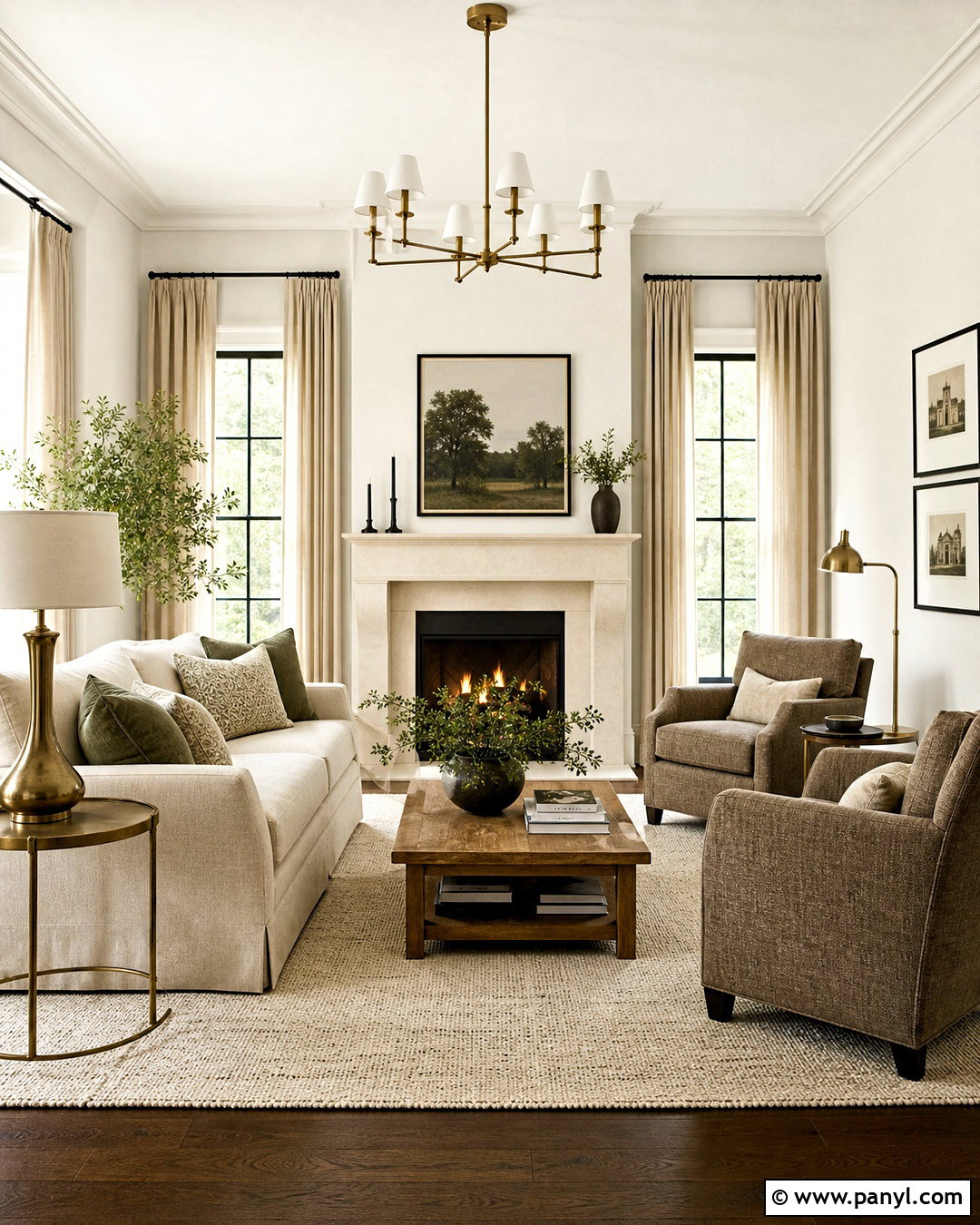
Create a relaxed living room by painting the walls White Down and keeping the ceiling a cleaner white for gentle definition. Choose a light oatmeal sofa, two warm taupe chairs, and a medium-toned oak coffee table. A textured cream rug will connect the seating without making everything look flat. Add muted olive pillows, natural linen curtains, and aged brass lamps for soft color and warmth. A plaster or pale stone fireplace works beautifully as the focal point. Use matte black only in small amounts, such as picture frames or curtain rods. This complete palette feels bright yet comfortable because every material shares a warm undertone. It is especially effective in living rooms with hardwood floors and plenty of natural texture.
2. White Down Traditional Living Room
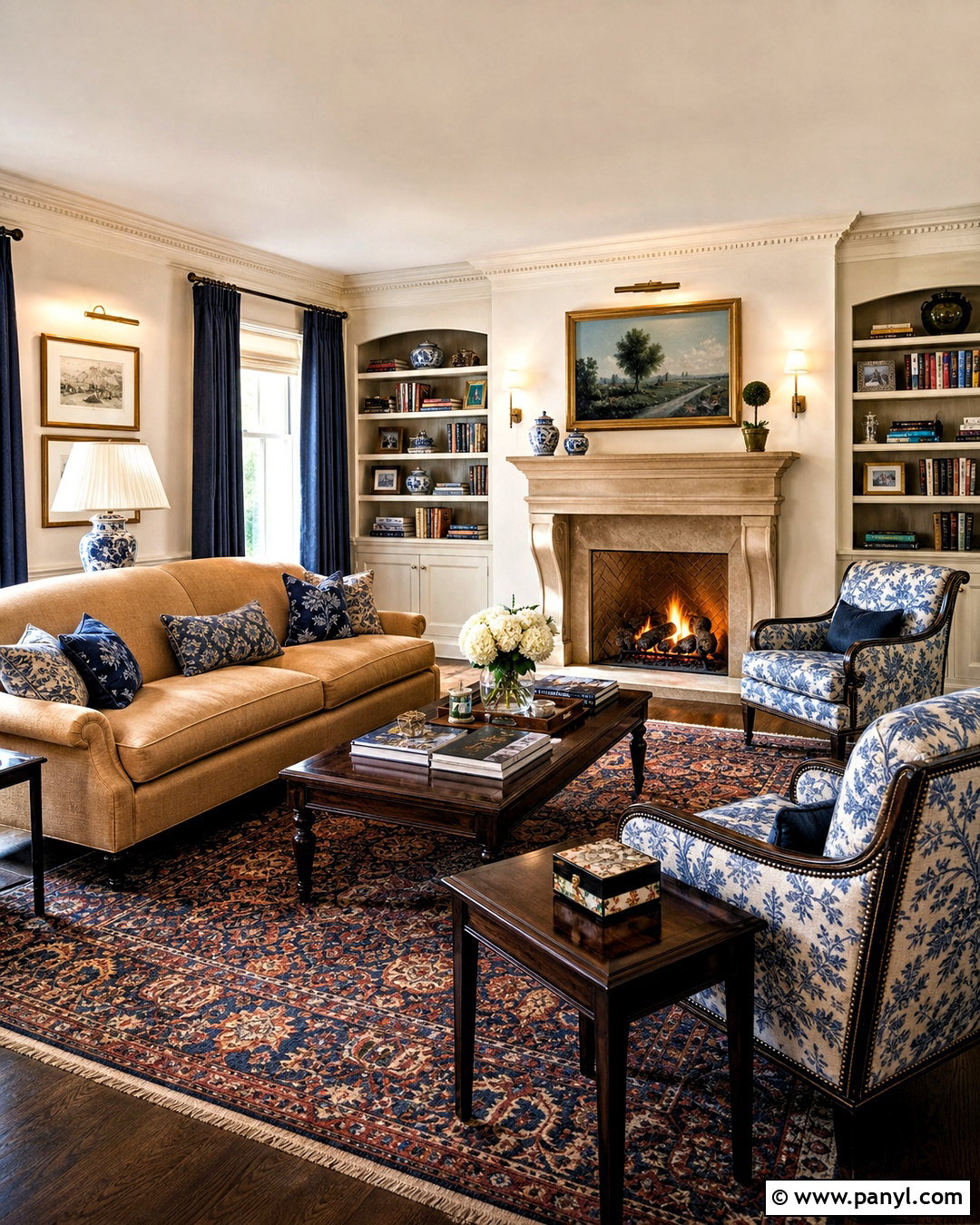
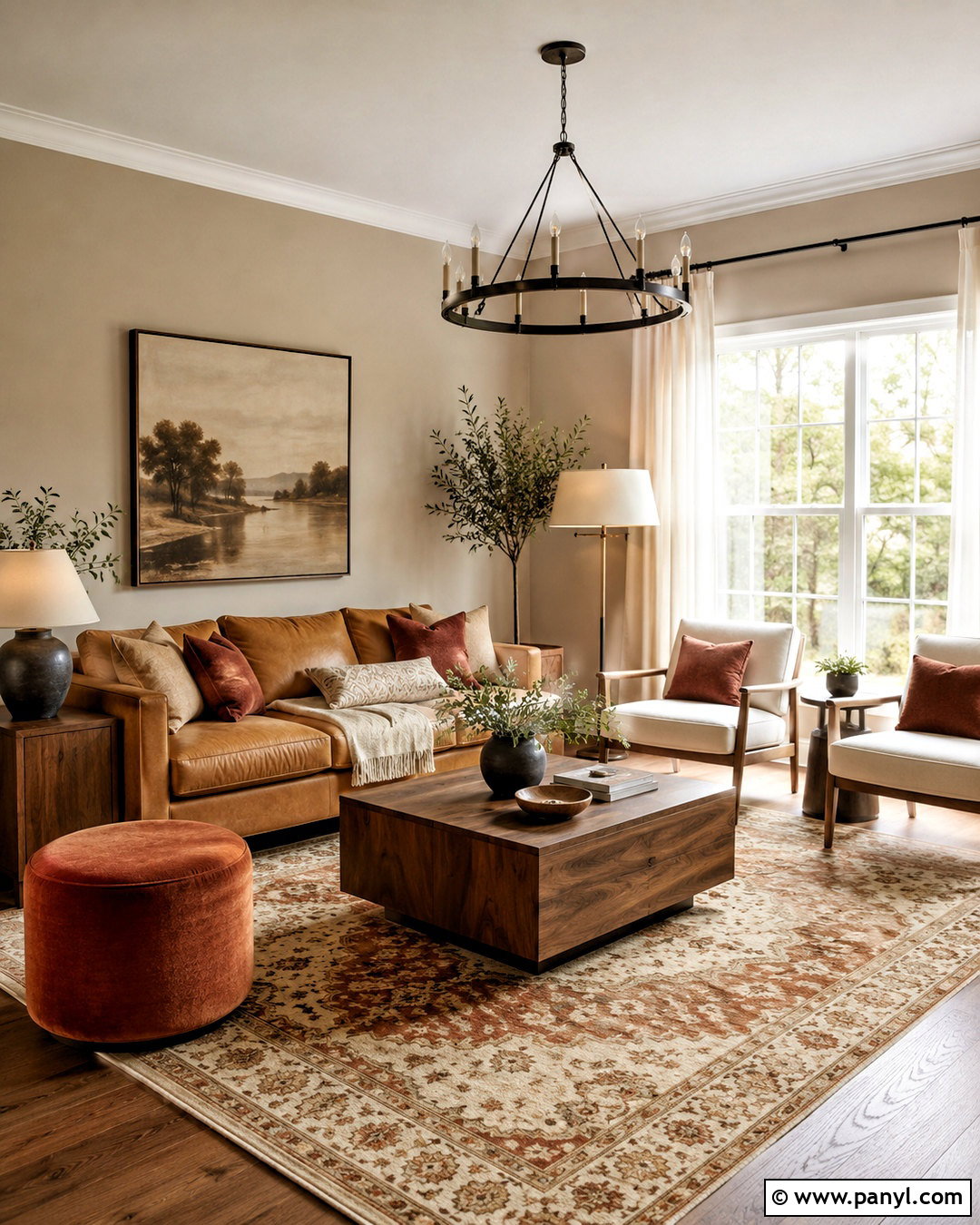
White Down can make a traditional living room feel refined without becoming formal or cold. Paint the walls and detailed molding in the same color, then vary the sheen to highlight the architecture. Use eggshell on the walls and satin on the trim, mantel, and built-in bookcases. Furnish the room with a camel-colored sofa, patterned blue chairs, dark walnut tables, and a vintage-inspired wool rug. Navy curtains can frame the windows while adding strong contrast. Finish the fireplace with warm white stone and a classic wood mantel painted White Down. Brass picture lights and ceramic lamps will reinforce the timeless mood. The result is a complete, layered room where traditional furniture looks fresh against soft, creamy walls.
3. White Down Small Living Room
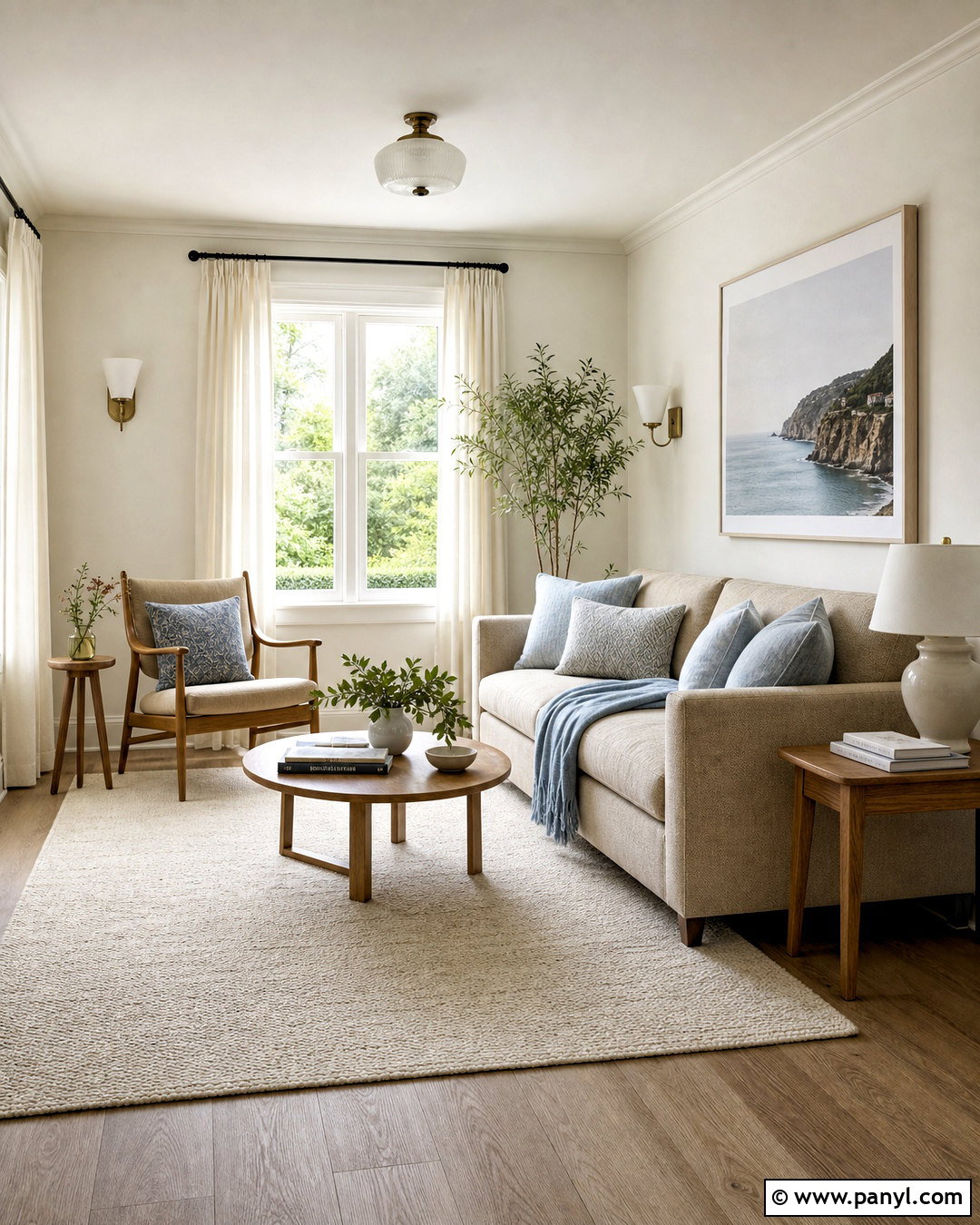
In a small living room, White Down can create softness while keeping the layout visually open. Paint the walls, ceiling, baseboards, and window trim in the same shade to reduce distracting boundaries. Choose a compact beige apartment sofa with exposed legs and add one slim oak-framed accent chair. A round coffee table will improve movement through the room, while a large natural-fiber rug makes the floor plan feel wider. Bring in pale blue pillows, a soft gray throw, and one oversized landscape print rather than many small decorations. Wall-mounted sconces save table space and provide balanced lighting. Keep window treatments simple with full-length ivory linen panels. This restrained design makes a limited footprint feel coordinated, calm, and intentionally spacious.
4. White Down Kitchen Cabinets
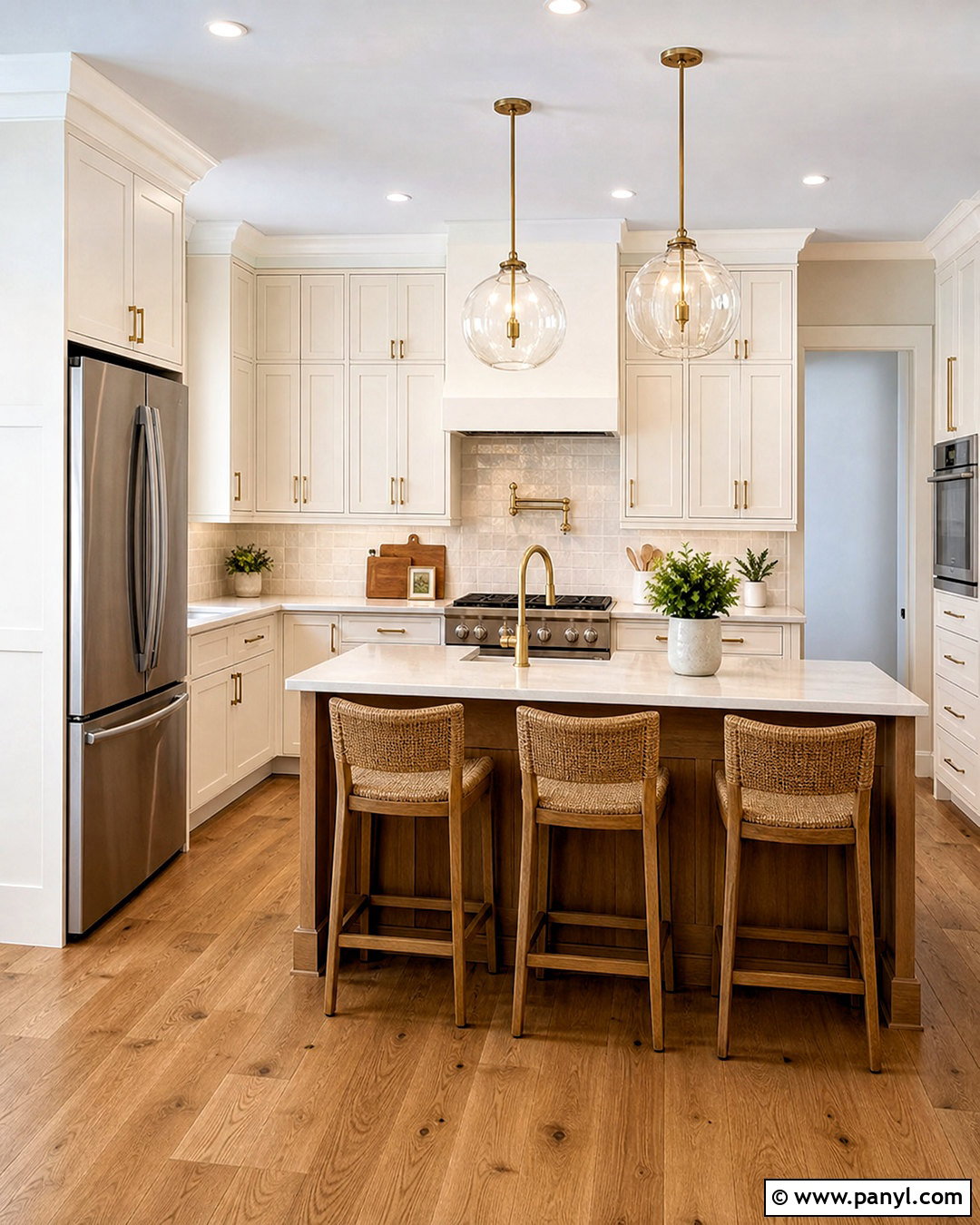
White Down kitchen cabinets offer a warm alternative to bright white cabinetry. Use the color on Shaker-style upper and lower cabinets with a durable satin finish. Pair them with lightly veined quartz countertops and a handmade cream subway tile backsplash. White oak flooring and brushed brass hardware will emphasize the inviting undertones, while a medium oak island adds natural contrast. Choose stainless steel appliances so the scheme does not become overly warm. Clear glass pendants above the island keep the room open and functional. For the walls, select a pale warm greige that remains distinct from the cabinets. This complete kitchen feels clean, timeless, and welcoming, making it suitable for traditional, transitional, or updated farmhouse homes.
5. White Down And Green Kitchen
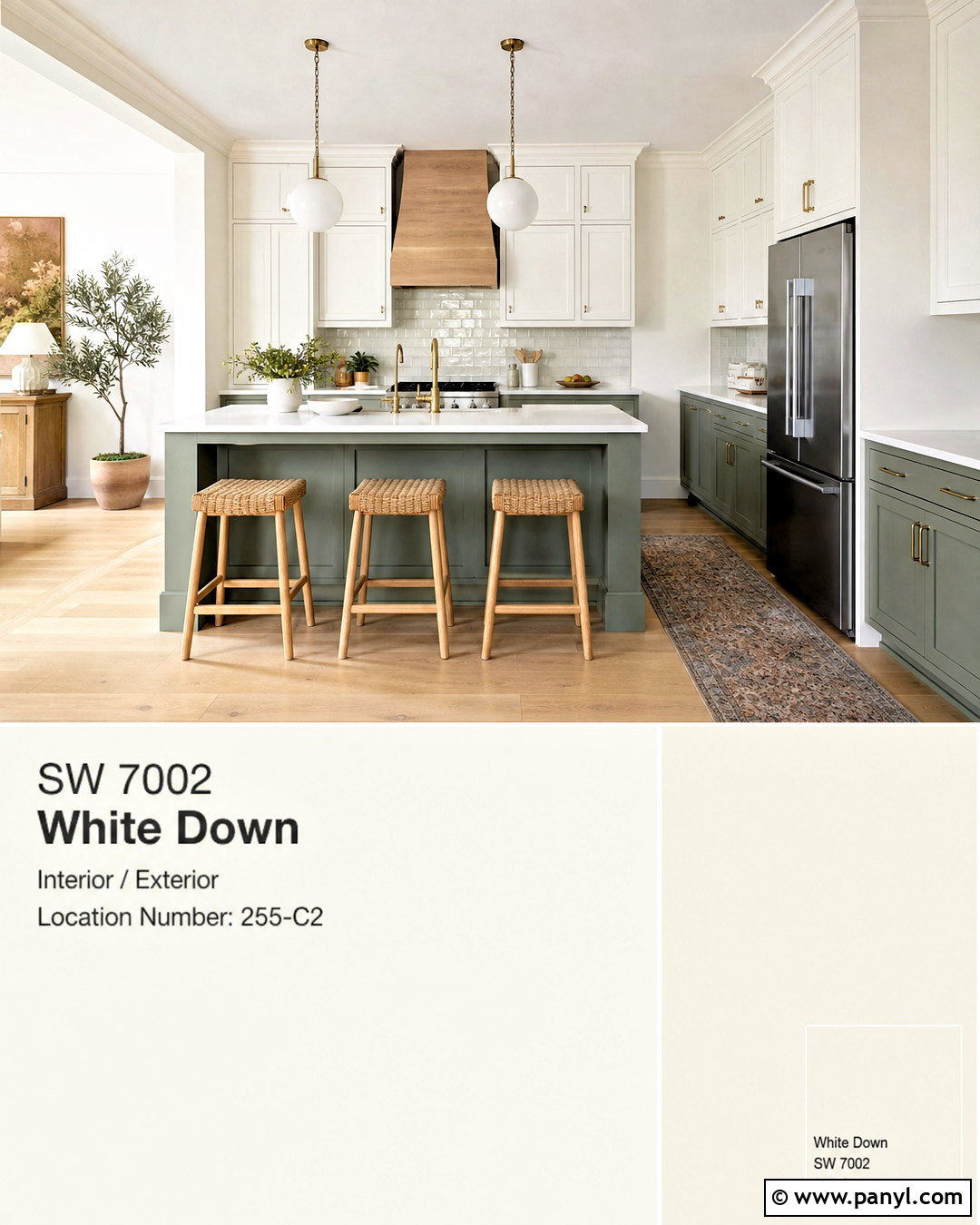
For a grounded two-tone kitchen, use White Down on the upper cabinets and a muted sage green on the lower cabinetry and island. This arrangement keeps the upper half of the room bright while adding practical color below. Install creamy quartz counters, glazed off-white backsplash tile, and warm oak flooring to connect both cabinet colors. A natural wood range hood can become the central feature without overpowering the palette. Choose antique brass knobs, simple globe pendants, and counter stools with woven seats. Paint the walls White Down as well, using a flatter sheen than the cabinets for subtle variation. The finished kitchen feels organic and comfortable, with enough green to create character and enough warm white to remain flexible.
6. White Down Farmhouse Kitchen
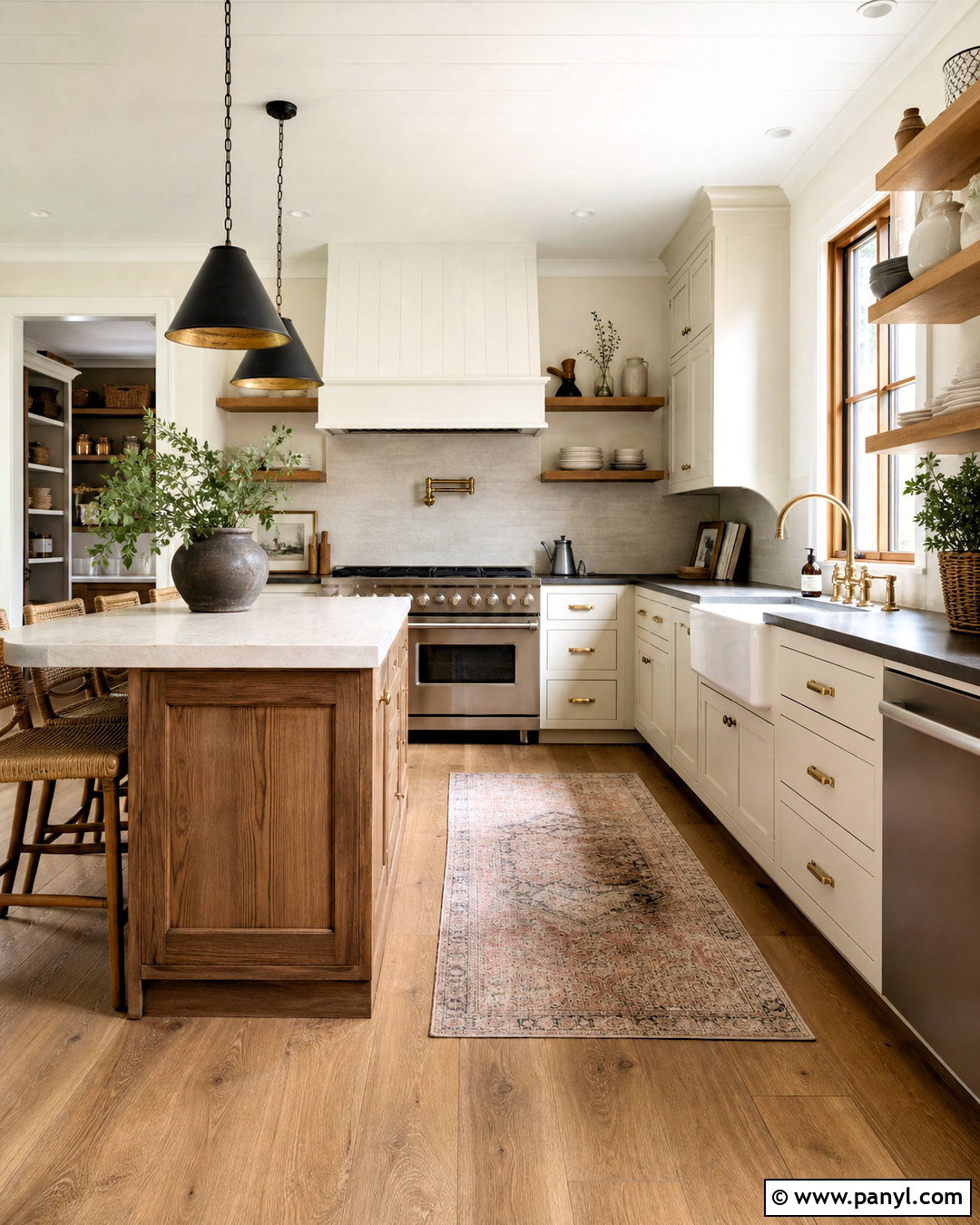
A farmhouse kitchen painted in White Down should feel collected rather than heavily themed. Cover the walls and perimeter cabinets in the warm off-white, then introduce a stained oak island with visible grain. Use soapstone-look counters around the perimeter and pale marble or quartz on the island. A white apron-front sink, bridge faucet, and aged brass hardware support the traditional character. Install simple open shelves beside the range, but keep most storage behind closed cabinet doors. Wide-plank oak flooring and woven counter stools provide useful texture. Finish the room with black-framed pendants and a small vintage runner featuring faded rust and blue tones. Together, these choices create a bright farmhouse kitchen that still feels practical, balanced, and updated.
7. White Down Bedroom
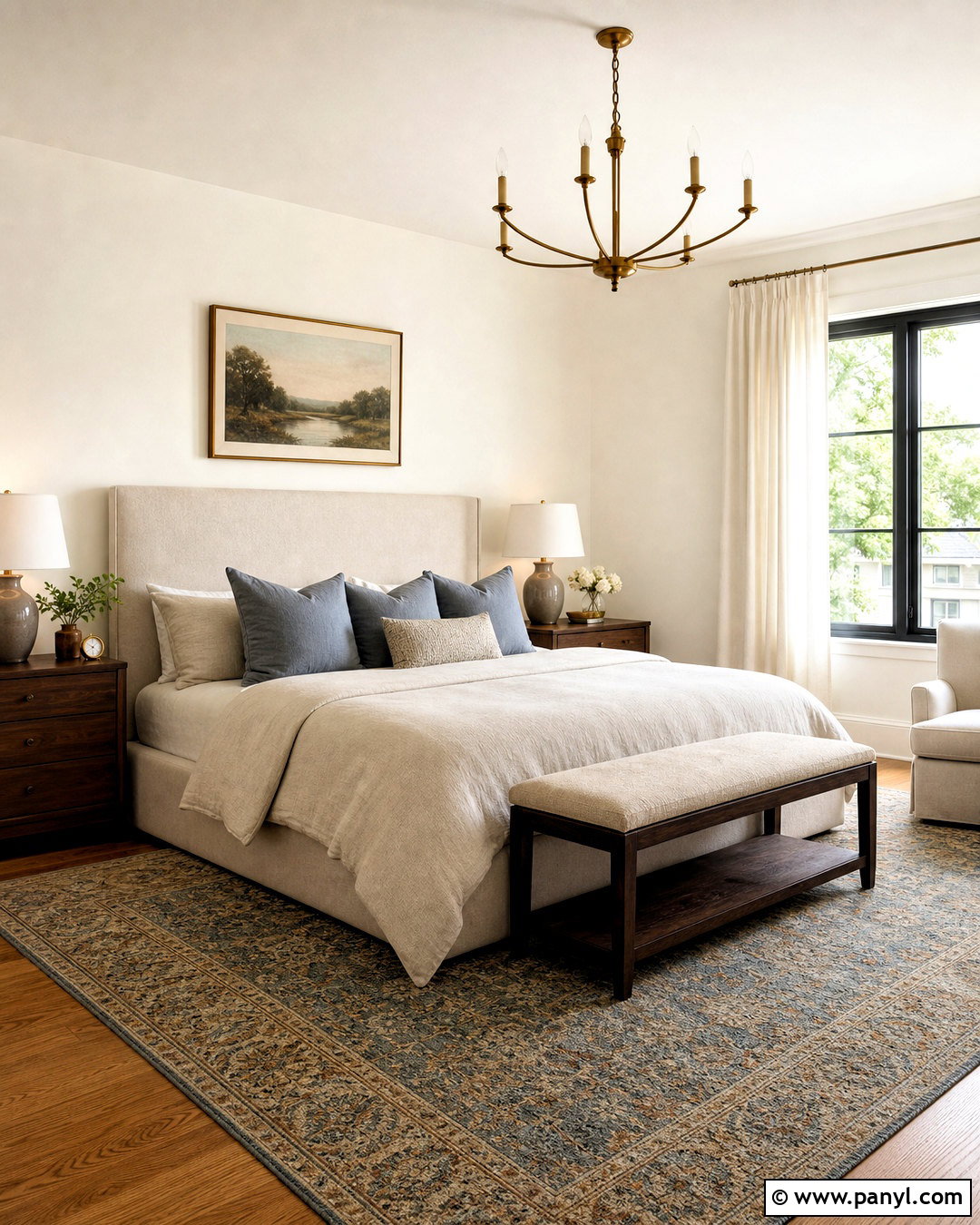
Imagine waking in a bedroom where every surface feels soft and restful. Paint the walls White Down, then use a slightly brighter white on the ceiling to maintain a gentle lift overhead. Anchor the room with an upholstered oatmeal bed and warm walnut nightstands. Layer white cotton sheets, a flax-colored duvet, and muted blue-gray pillows for understated contrast. Full-length natural linen curtains will complement the creamy wall color while filtering harsh daylight. Add a wool rug in beige and faded blue beneath the bed. Ceramic table lamps and a simple brass ceiling fixture provide warmth without excessive decoration. The finished bedroom feels comfortable in every season and allows bedding, artwork, or accent colors to change without requiring a new wall color.
8. White Down North Facing Bedroom
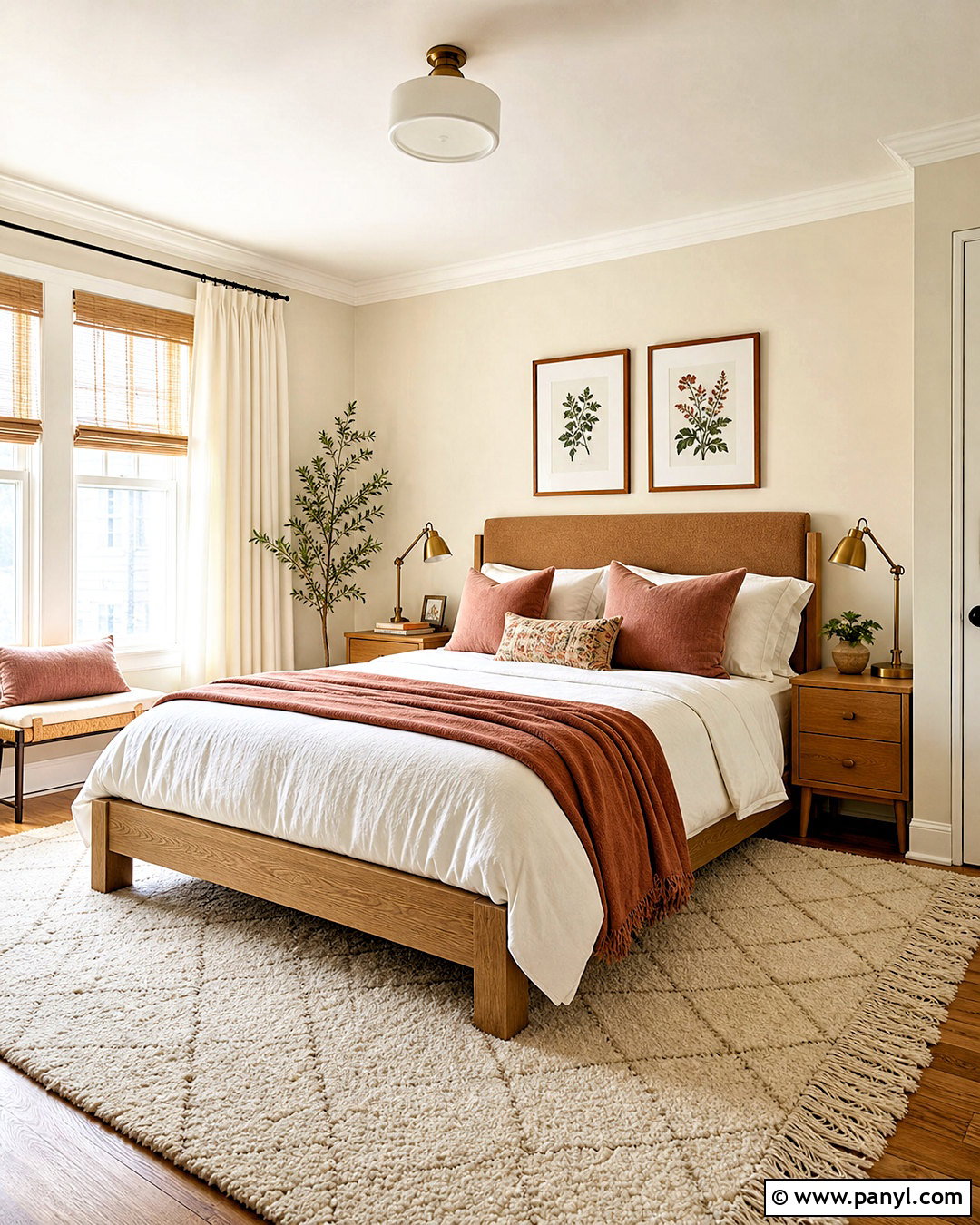
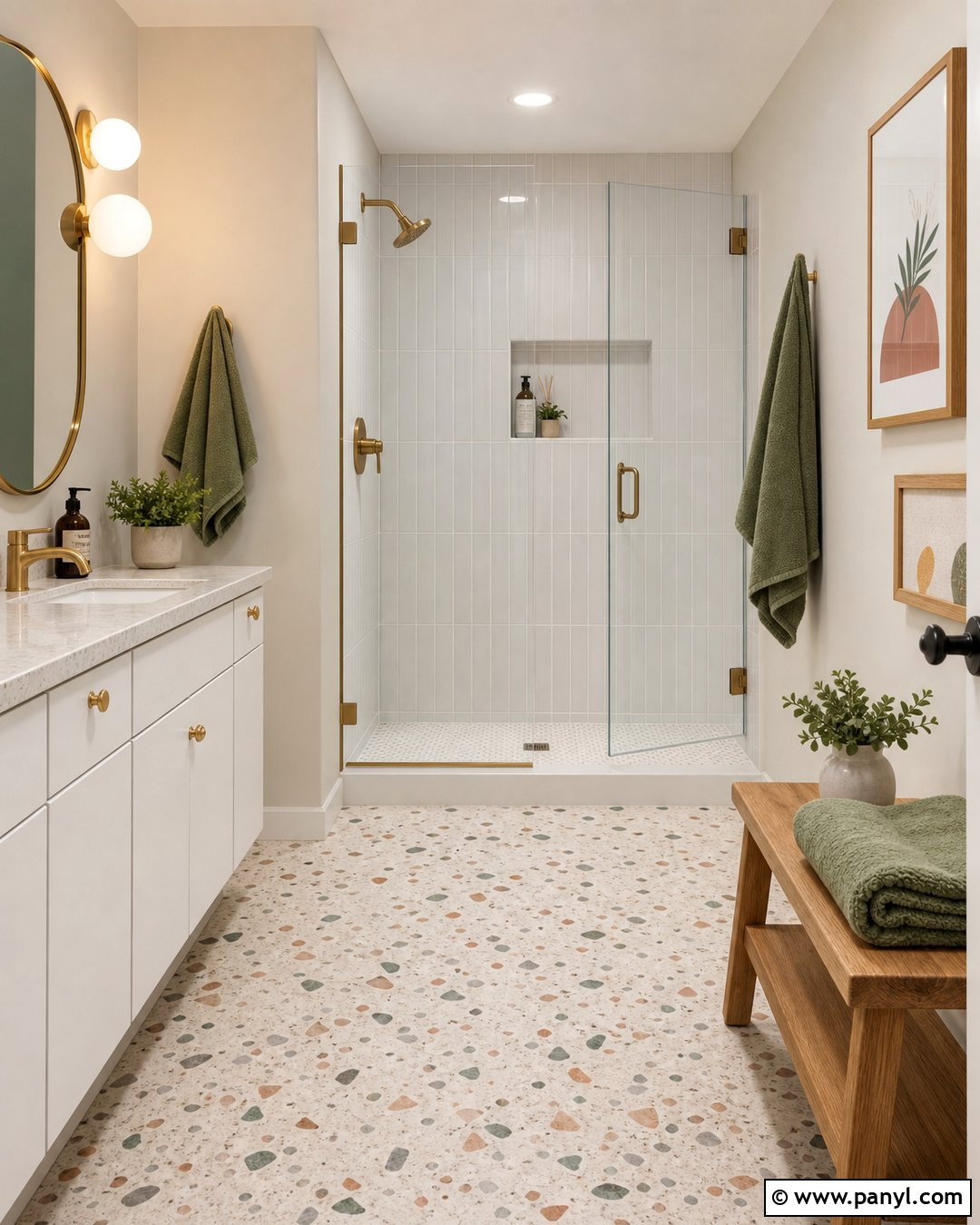
Cool daylight can make many whites appear gray, so a north-facing bedroom benefits from a carefully layered warm palette. Use White Down on the walls and repeat it on the trim in satin for a seamless envelope. Add a light oak bed, soft camel headboard, and creamy wool rug to strengthen the room’s warmth. Bedding in ivory, dusty rose, and muted terracotta adds color without making the room feel dark. Choose warm white bulbs for bedside lamps and avoid icy blue-gray textiles that may fight the paint’s creamy character. Pale wood blinds under linen curtains provide flexible light control. Complete the design with botanical artwork and aged brass details. Always test the paint beside the flooring and fabrics before finalizing the full room.
9. White Down Bathroom
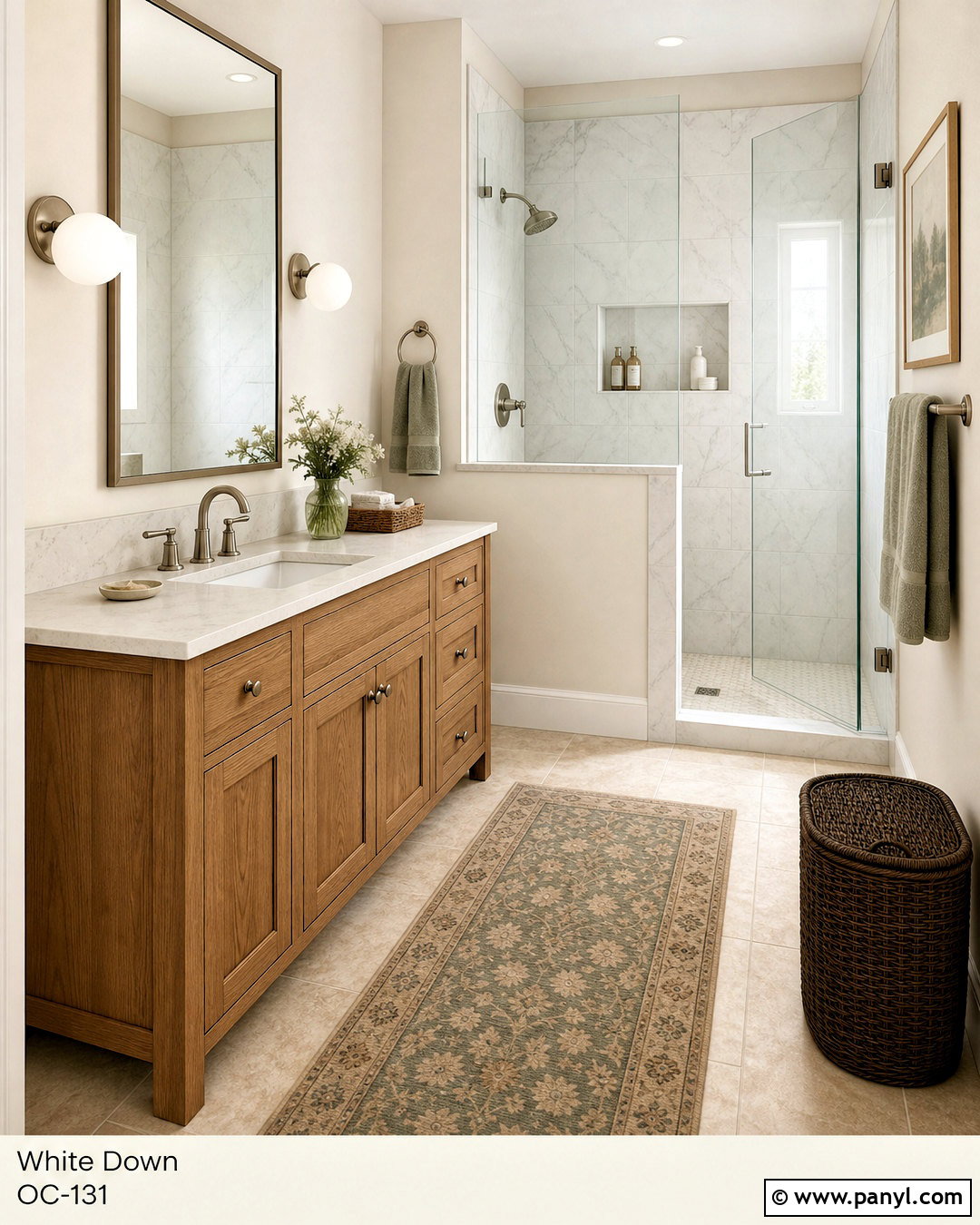
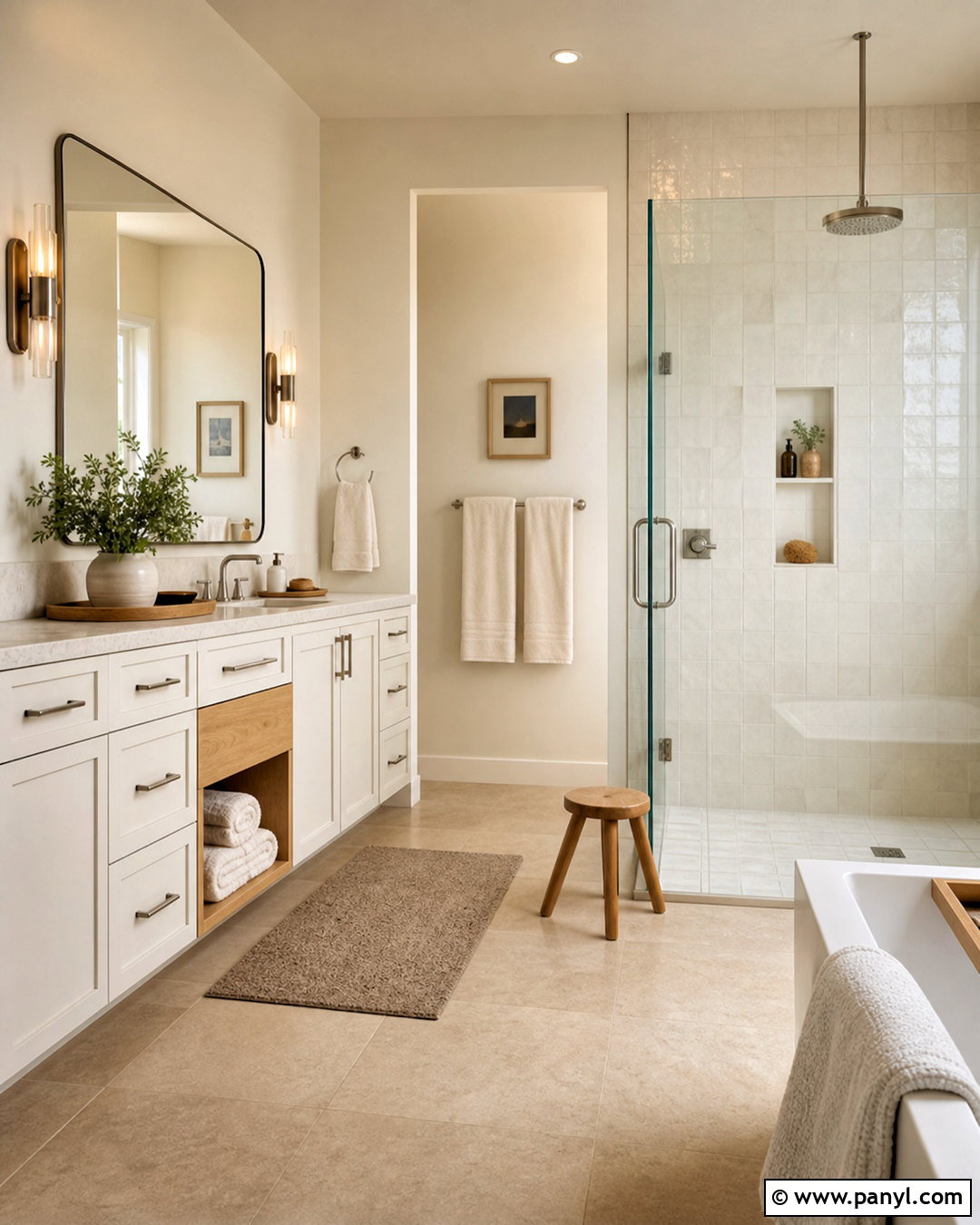
White Down creates an inviting bathroom when it is balanced with crisp surfaces and natural materials. Paint the upper walls in a moisture-resistant eggshell finish and use white marble-look tile around the tub or shower. A medium oak vanity adds warmth, while a pale quartz countertop keeps the space easy to maintain. Choose brushed nickel fixtures for a clean appearance that does not compete with the creamy paint. A framed mirror, simple globe sconces, and woven baskets complete the functional layout. Use light beige floor tile rather than cold blue-gray flooring. Towels can introduce muted sage or dusty blue for quiet contrast. This coordinated bathroom feels fresh but not sterile, making it a practical choice for both family bathrooms and guest suites.
10. White Down Powder Room
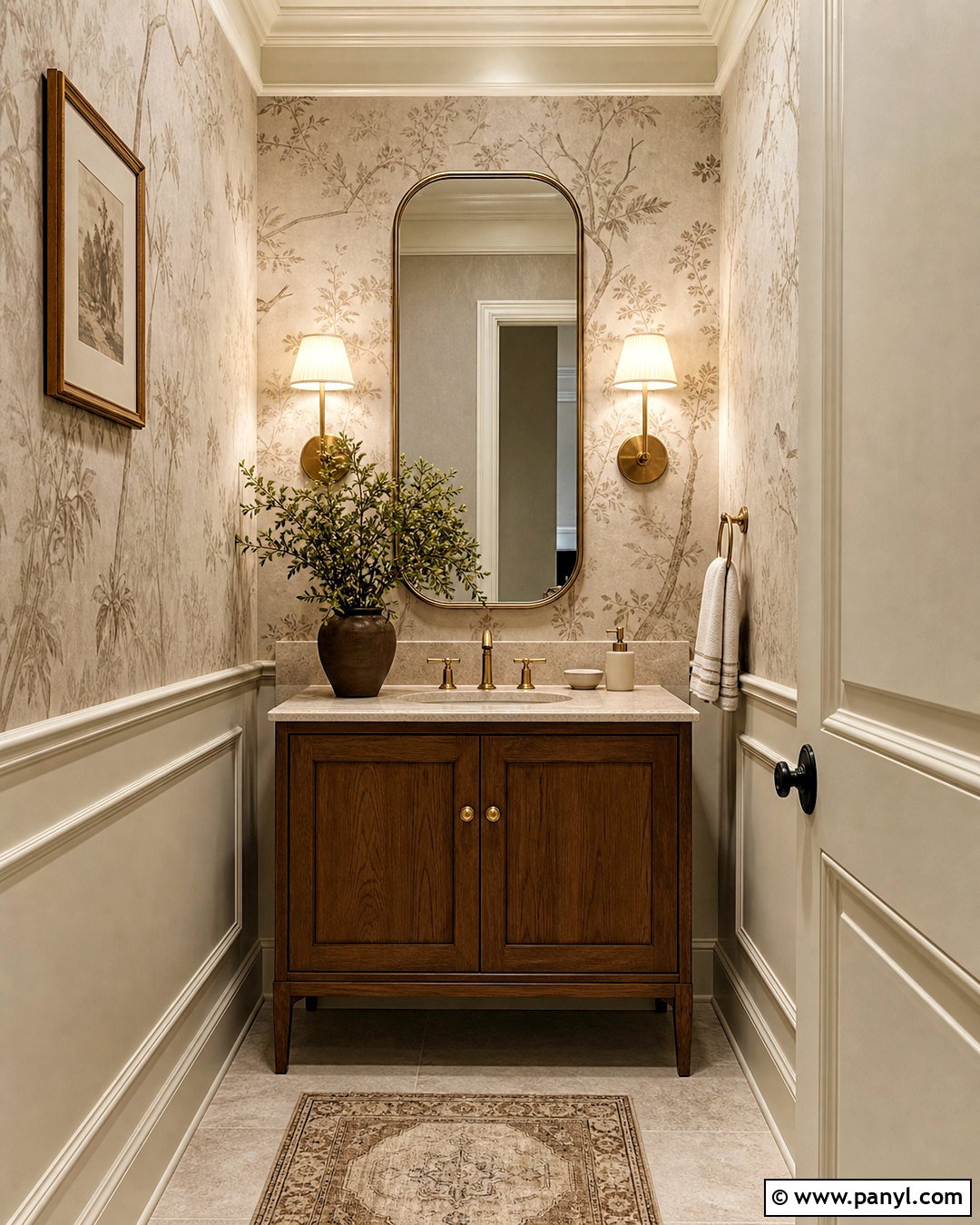
A small powder room offers the chance to use White Down in a more detailed, decorative scheme. Paint traditional wall paneling and trim in White Down with a satin finish, then cover the upper walls in muted botanical wallpaper featuring olive, tan, and soft blue. Add a compact walnut vanity with a creamy stone countertop and an undermount sink. An aged brass faucet, curved mirror, and two small sconces bring warmth to the limited space. Choose medium-toned limestone floor tile for durability and natural variation. Keep accessories restrained with one hand towel, a ceramic soap dispenser, and a small leafy arrangement. The completed room feels memorable and polished, while the warm painted paneling prevents the wallpaper from overwhelming the narrow footprint.
11. White Down Dining Room
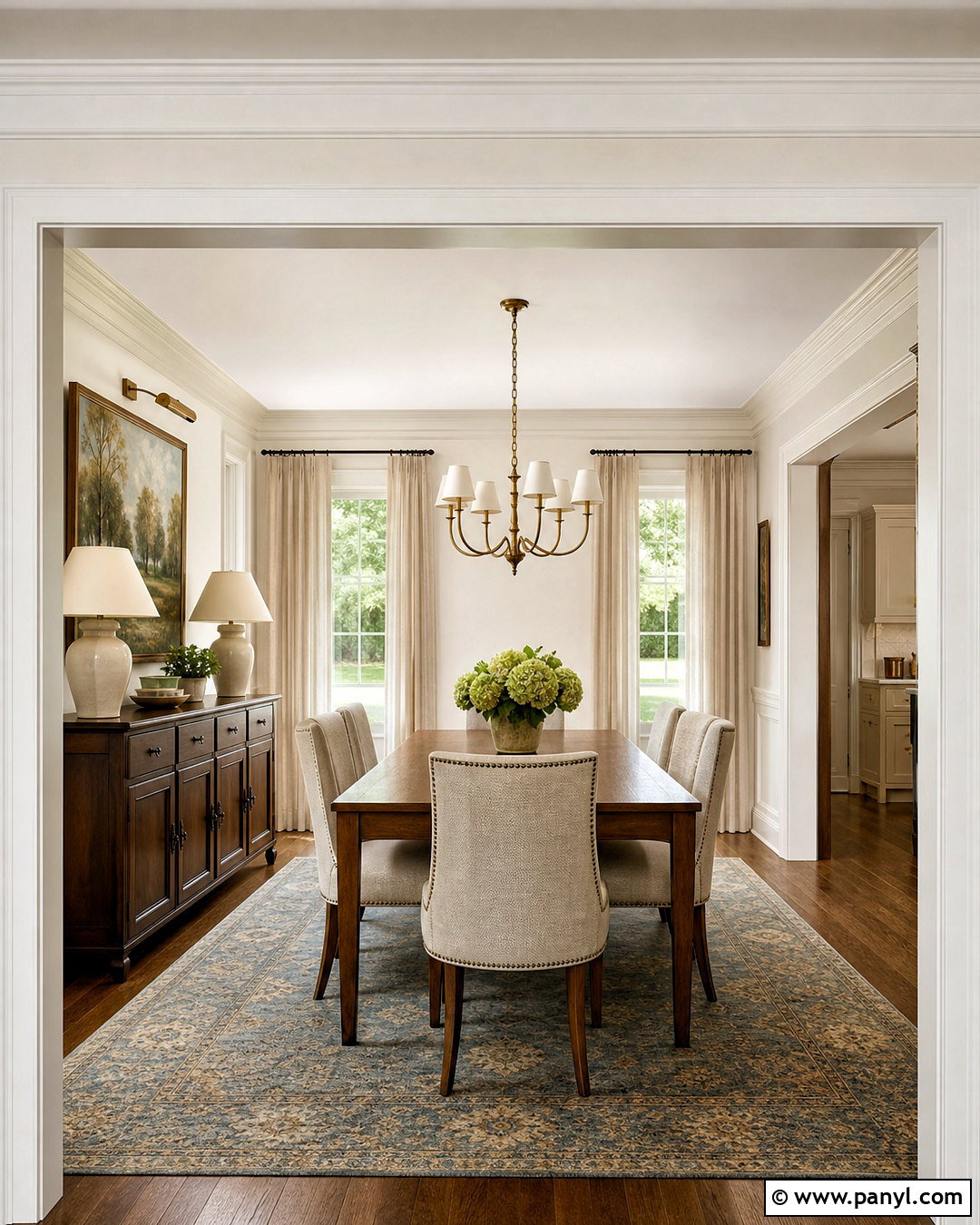
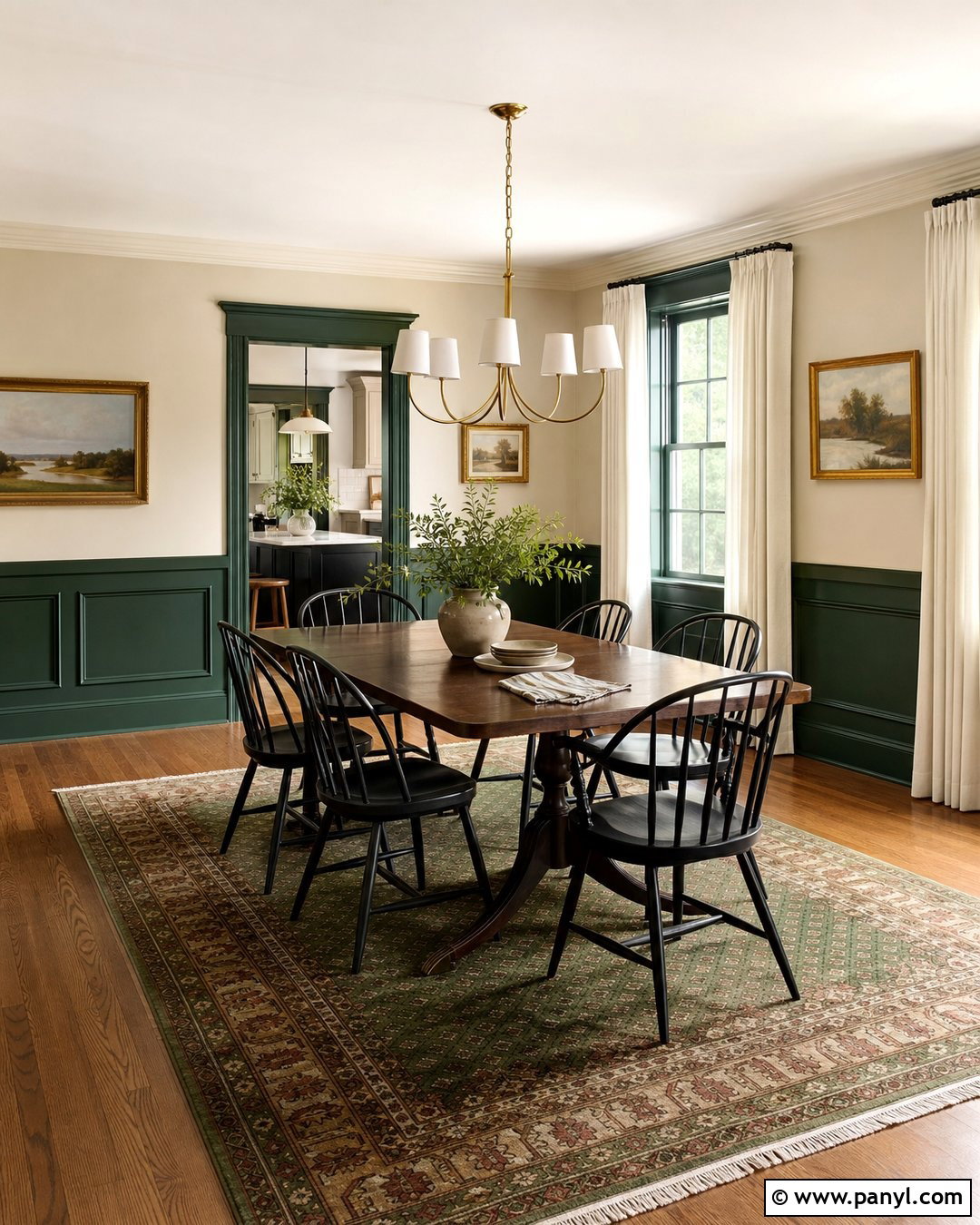
Turn White Down into the foundation of a comfortable dining room designed for everyday meals and special gatherings. Paint the walls in eggshell and the trim in satin, using the same color to create a smooth architectural background. Center a medium oak dining table beneath a simple aged brass chandelier. Surround it with upholstered beige chairs or a mix of wood chairs and a built-in bench. A large muted blue-and-tan rug will define the dining zone and protect the floor. Hang full-length flax linen curtains to soften the windows. Add a dark walnut sideboard, ceramic table lamps, and one large landscape painting. The contrast between creamy walls, warm wood, and restrained blue accents produces a dining space that feels established but still approachable.
12. White Down Entryway
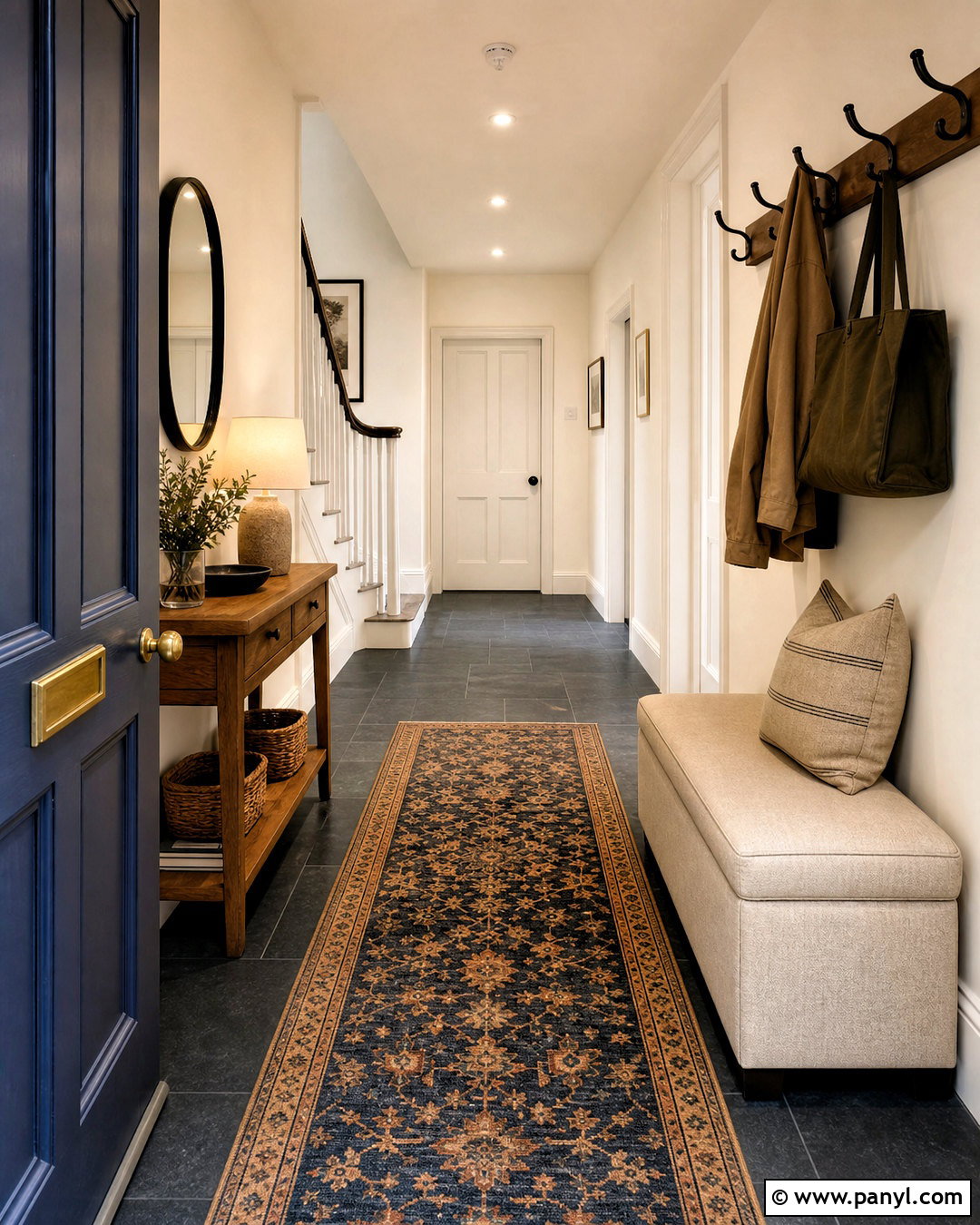
First impressions feel warmer when an entryway combines White Down with durable, natural finishes. Paint the walls and ceiling in the color, then use a satin version on the doors and trim for a subtle tonal effect. Place a narrow oak console along one wall with a rounded black-framed mirror above it. A washable runner in faded navy, camel, and cream will handle foot traffic while adding pattern. Include a woven basket for shoes, a ceramic lamp, and several sturdy wall hooks. If space allows, add a small upholstered bench with concealed storage. Dark slate or medium oak flooring can ground the pale walls. This complete arrangement gives keys, bags, coats, and shoes clear places while maintaining a welcoming, uncluttered entrance.
13. White Down Hallway
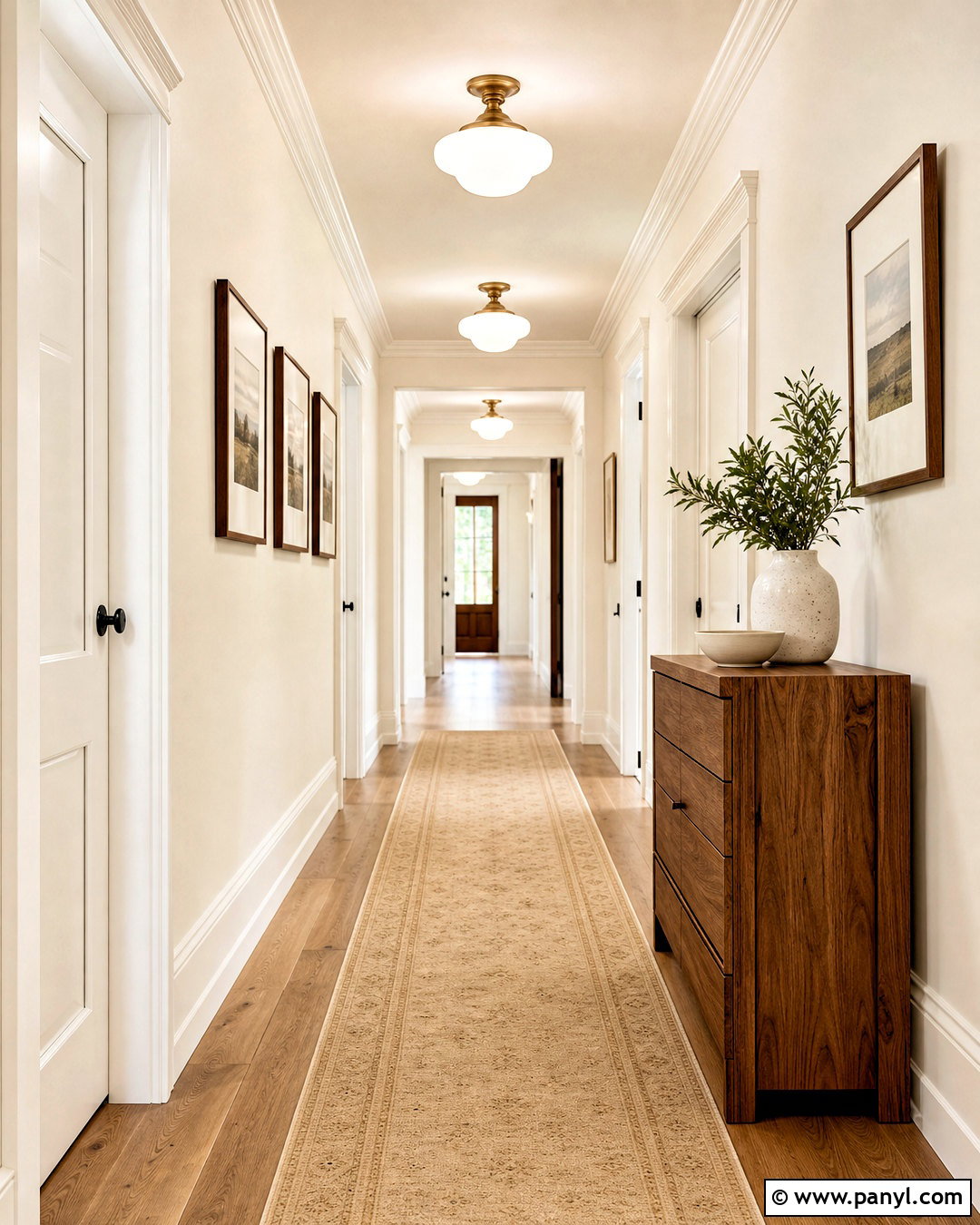
A hallway painted in White Down can become a considered part of the home rather than an overlooked passage. Use the color across the walls, ceiling, trim, and interior doors, changing only the sheen for quiet dimension. Install a warm neutral runner that extends most of the hallway’s length. Arrange a row of black or walnut frames at consistent heights to create a simple family gallery. Semi-flush brass lights will brighten the path without making a low ceiling feel crowded. If the hallway is wide enough, add a shallow wood cabinet for linens or household storage. Medium oak flooring provides useful contrast underfoot. The finished hallway feels connected to nearby rooms, while its limited color palette keeps a narrow area from looking busy or enclosed.
14. White Down Home Office
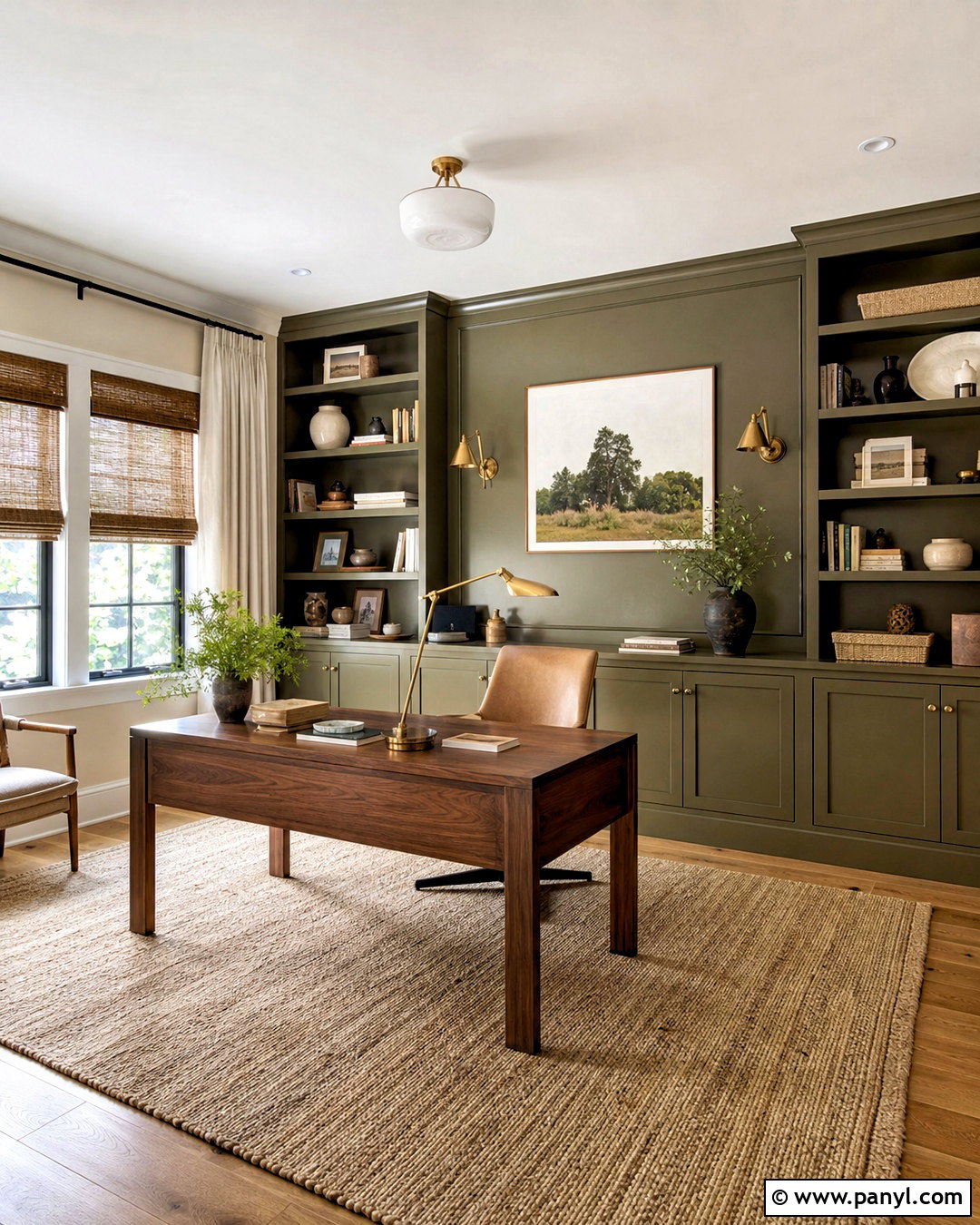
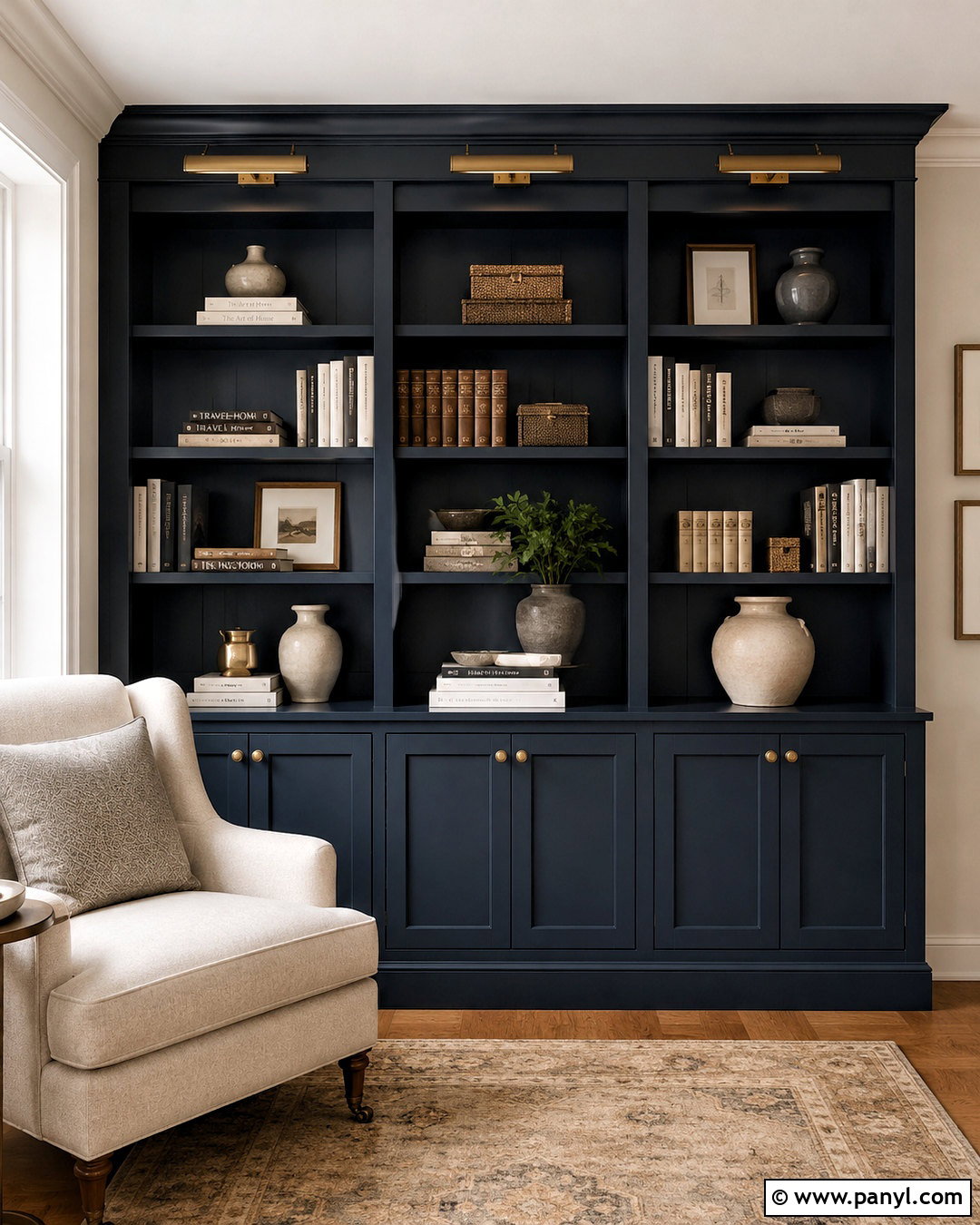
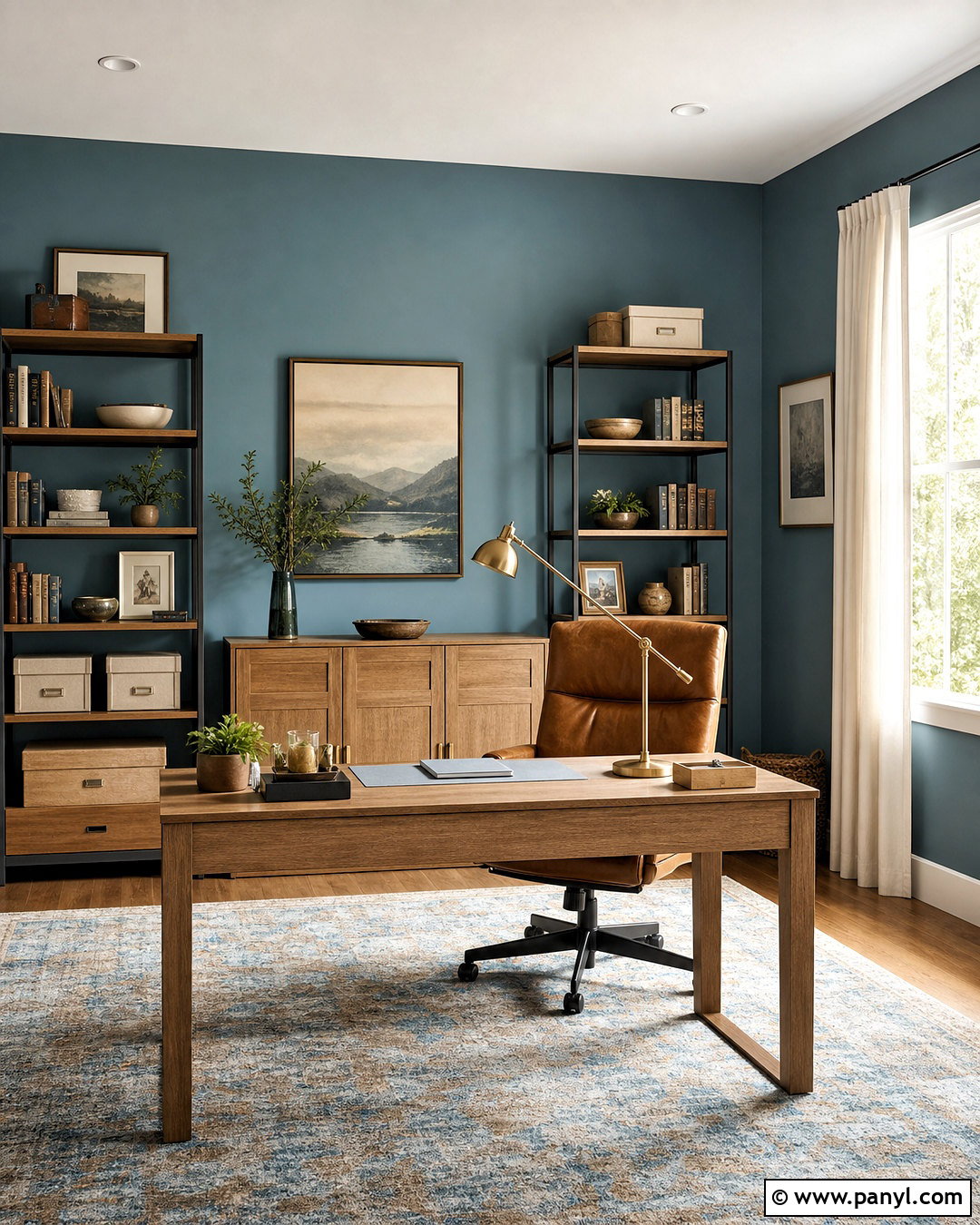
A home office should support concentration without feeling plain. Paint the walls White Down and add built-in cabinetry in muted charcoal, deep olive, or Imperial Gray for a defined work zone. Position a walnut desk near the window and pair it with a supportive chair upholstered in warm tan fabric. Use a textured wool rug to soften sound and anchor the furniture. Closed cabinets should hold supplies, while a few open shelves can display books, pottery, and framed art. Add a brass desk lamp and a linen-shaded ceiling fixture for layered lighting. Natural woven blinds will control glare during the day. Against the creamy walls, darker storage and rich wood create a balanced office that looks professional on video calls while remaining comfortable for daily use.
15. White Down Laundry Room
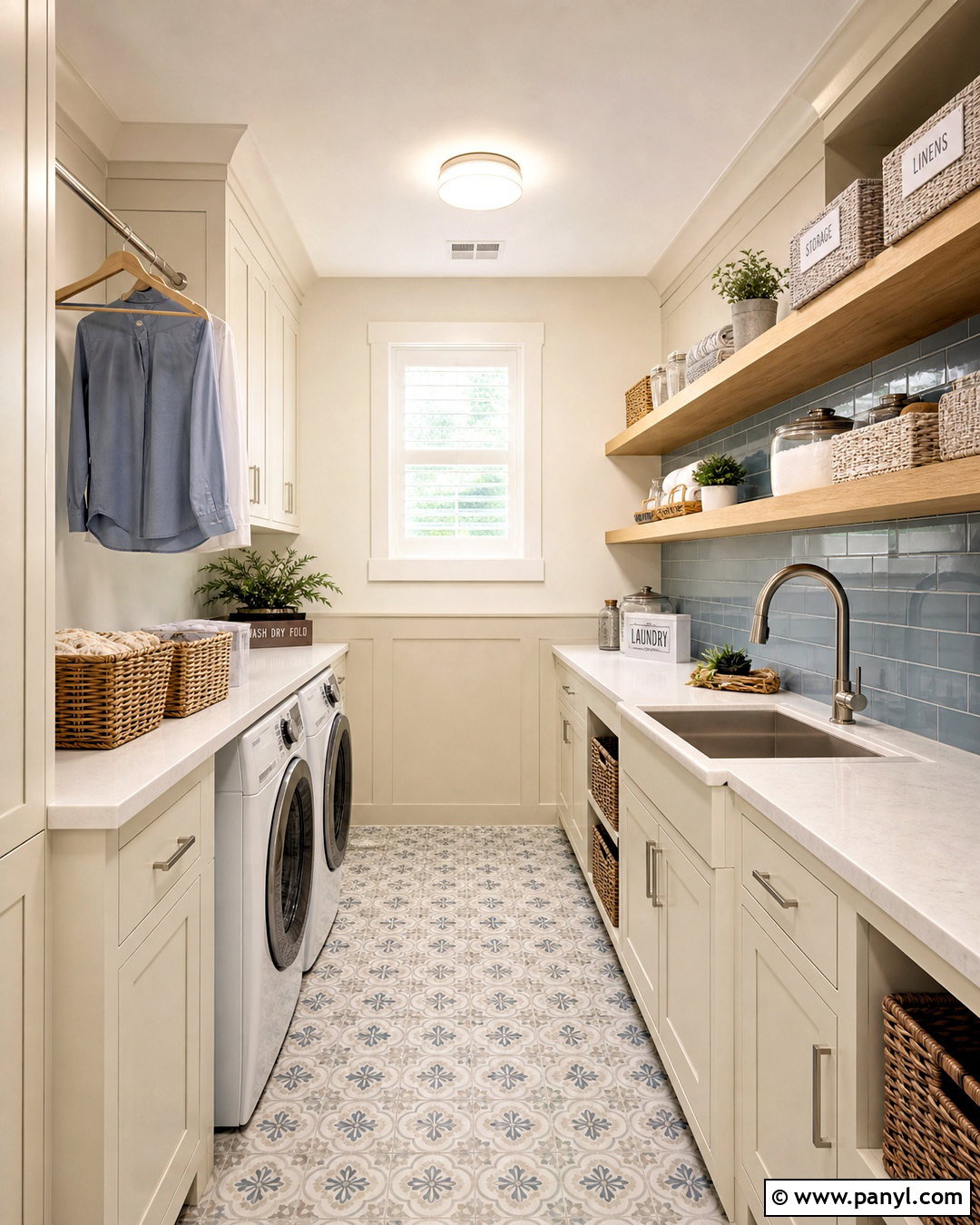
White Down can transform a utility room into a bright, organized workspace. Paint the upper walls and Shaker cabinets in the warm off-white, using a washable satin finish on cabinetry. Install a pale quartz counter above front-loading appliances to create a folding station. A light blue-gray tile backsplash adds subtle color, while patterned porcelain flooring hides minor dirt and lint. Include a deep utility sink with a brushed nickel faucet and hanging rail for air-drying clothes. Open oak shelves can hold labeled baskets and frequently used supplies. Add an under-cabinet light for task visibility and a simple flush-mount ceiling fixture. This coordinated laundry room combines attractive finishes with realistic storage, making routine household work easier without sacrificing the calm appearance of the home.
16. White Down Nursery
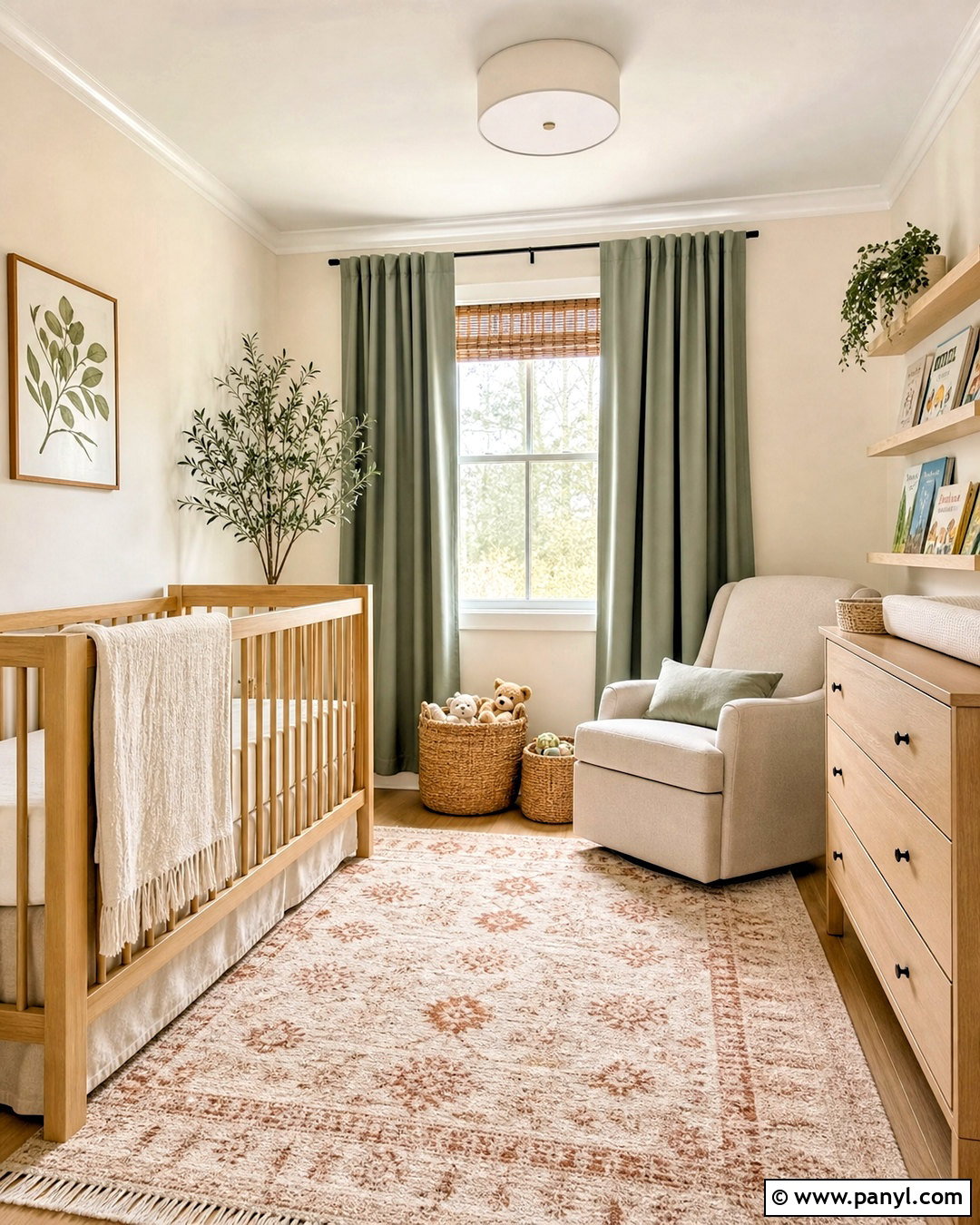
For a nursery that can grow with a child, cover the walls in White Down and build the room around adaptable natural materials. Choose a light oak crib, matching dresser, and a comfortable oatmeal-colored glider. Add blackout curtains in muted sage green and a washable rug with cream, tan, and soft rust details. Simple woodland or botanical artwork introduces personality without covering every wall. Use woven baskets for toys and install low shelves that can later hold books. A dimmable ceiling fixture and shaded floor lamp create flexible lighting for playtime and evening routines. Keep the ceiling and trim in a cleaner white for slight contrast. The resulting nursery feels peaceful and practical, with enough warmth to remain cozy without relying on overly bright colors or temporary themes.
17. White Down Whole House
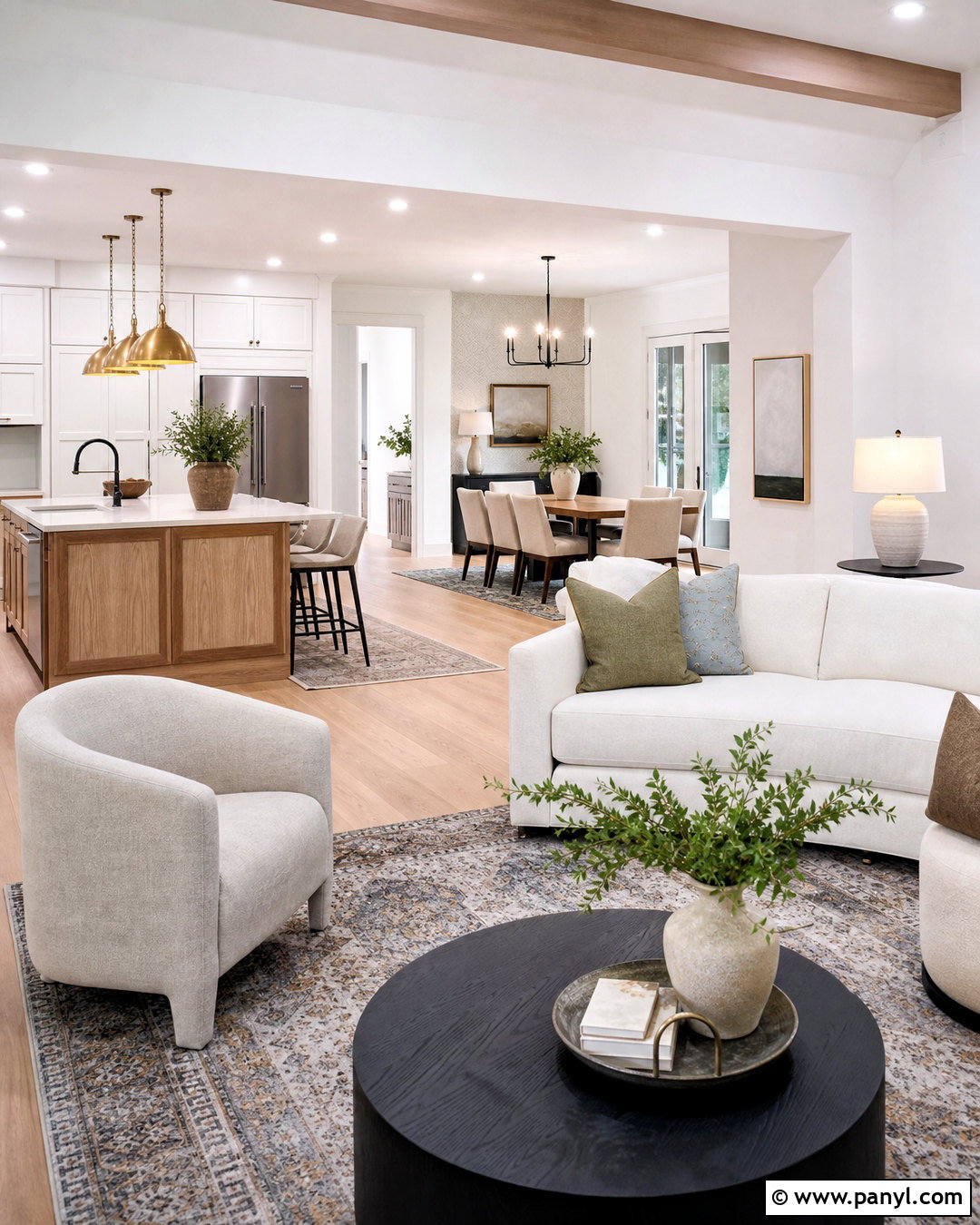
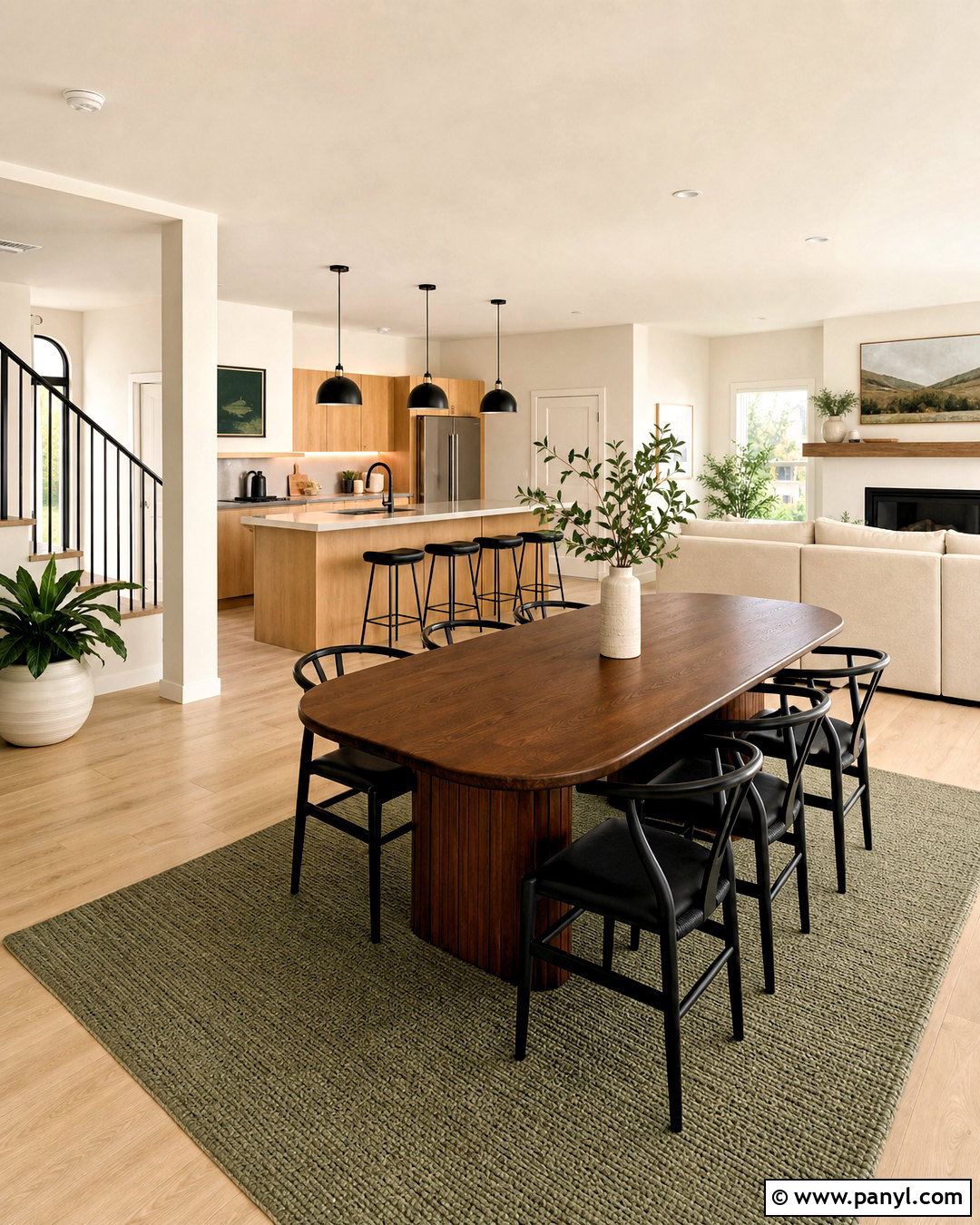
Using White Down throughout an open-plan home can improve visual flow, but the materials and accent colors should give each zone its own identity. Paint the main walls White Down, use a brighter white on the ceilings, and repeat natural oak in the flooring, kitchen island, and selected furniture. Introduce muted olive in the living area, faded blue in the dining space, and warm taupe near the entry. Keep permanent finishes consistent with creamy quartz, brushed brass, black accents, and warm neutral tile. Rugs and lighting can define individual areas without interrupting the shared wall color. This whole-house approach works best when rooms receive different amounts of daylight because the repeating wood tones and textiles help the paint remain connected as its appearance shifts.
18. White Down Trim With Revere Pewter Walls
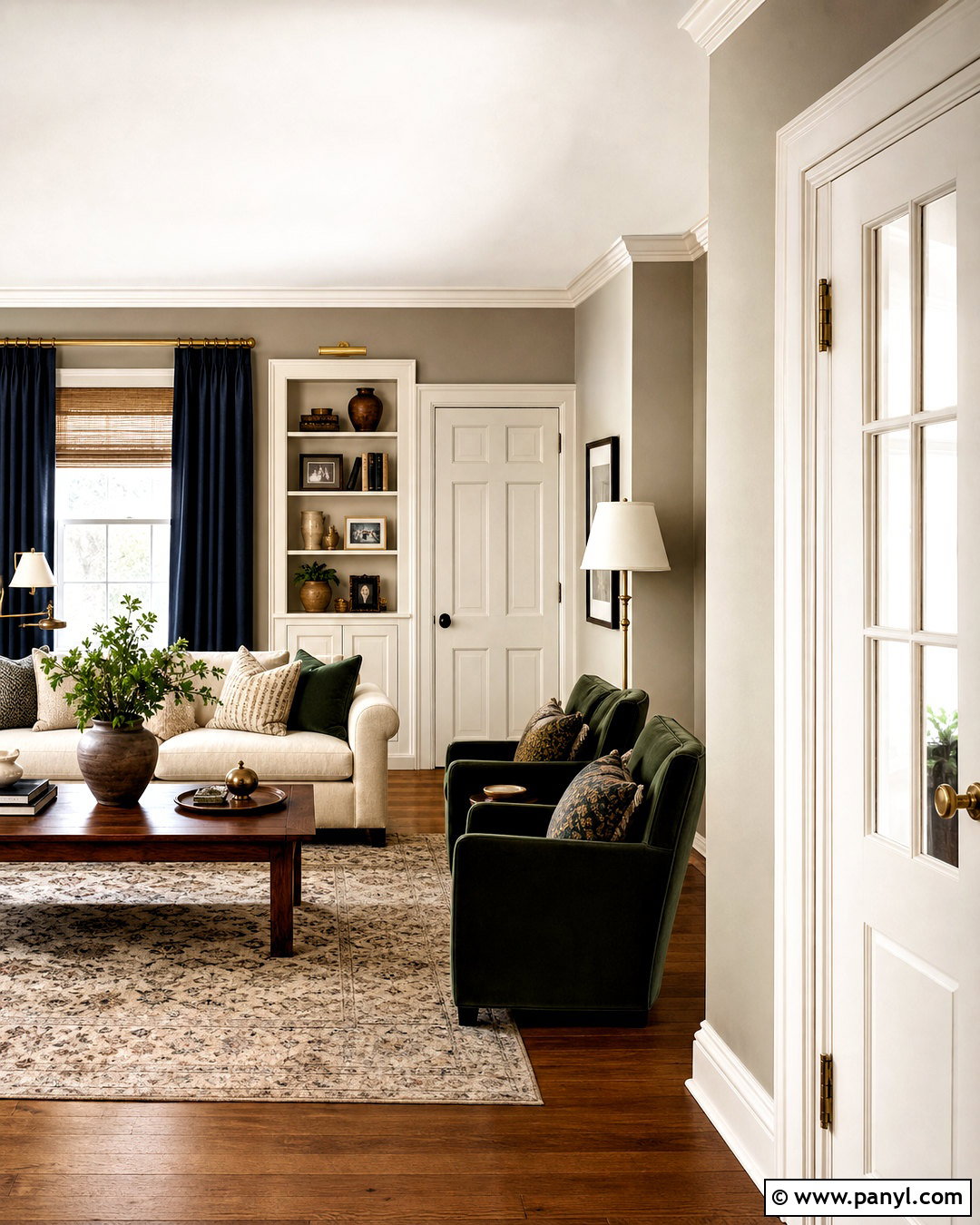
Pair White Down trim with Revere Pewter walls for a warm, low-contrast neutral interior. Use Revere Pewter across the main walls and White Down on baseboards, window frames, doors, crown molding, and built-in cabinetry. Because both colors have softness, the transition feels gentle rather than sharply outlined. Add medium oak flooring, a cream sofa, and dark walnut furniture to establish depth. Muted navy or forest green textiles can provide stronger contrast through pillows, curtains, and rugs. Choose aged brass lighting and simple off-white ceramic accessories to connect the palette. This combination suits traditional and transitional rooms where bright white trim might look disconnected. Sampling the two colors together is essential because nearby flooring and daylight can noticeably affect their relationship.
19. White Down House Exterior
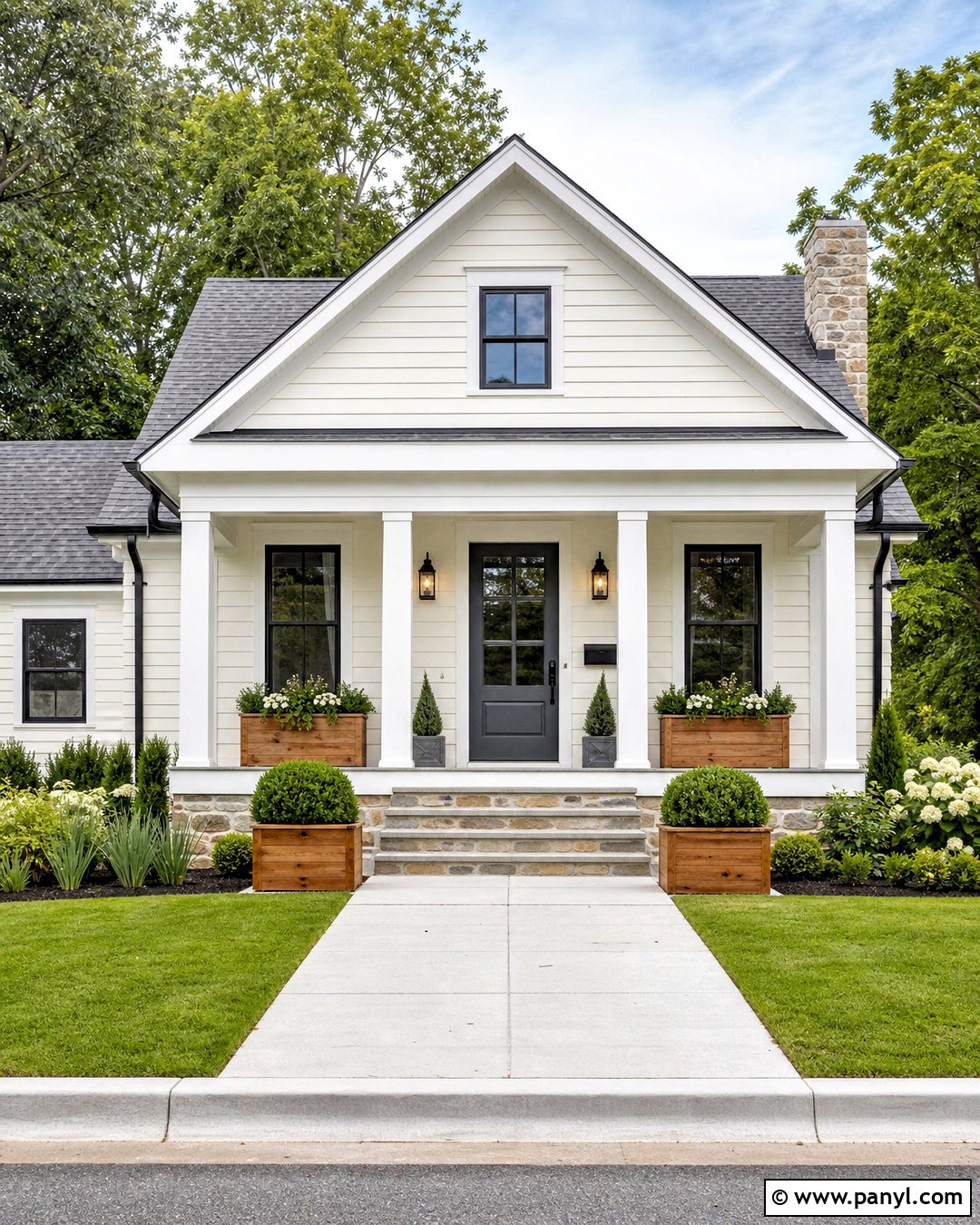
White Down can give a house exterior a warm, welcoming finish without creating the glare associated with a very bright white. Apply it to horizontal siding or smooth stucco, then use a cleaner white on window trim, fascia, and porch columns for visible definition. Add a deep charcoal front door, black lanterns, and a medium gray roof to ground the scheme. Natural stone along the foundation can introduce tan and gray variation. Complete the curb appeal with layered evergreen shrubs, ornamental grasses, and a simple gravel or concrete walkway. Warm cedar planters or porch furniture will reinforce the paint’s cream undertone. The finished exterior feels classic and approachable, especially on cottages, farmhouses, and traditional suburban homes with plenty of natural daylight.
20. White Down Brick Exterior
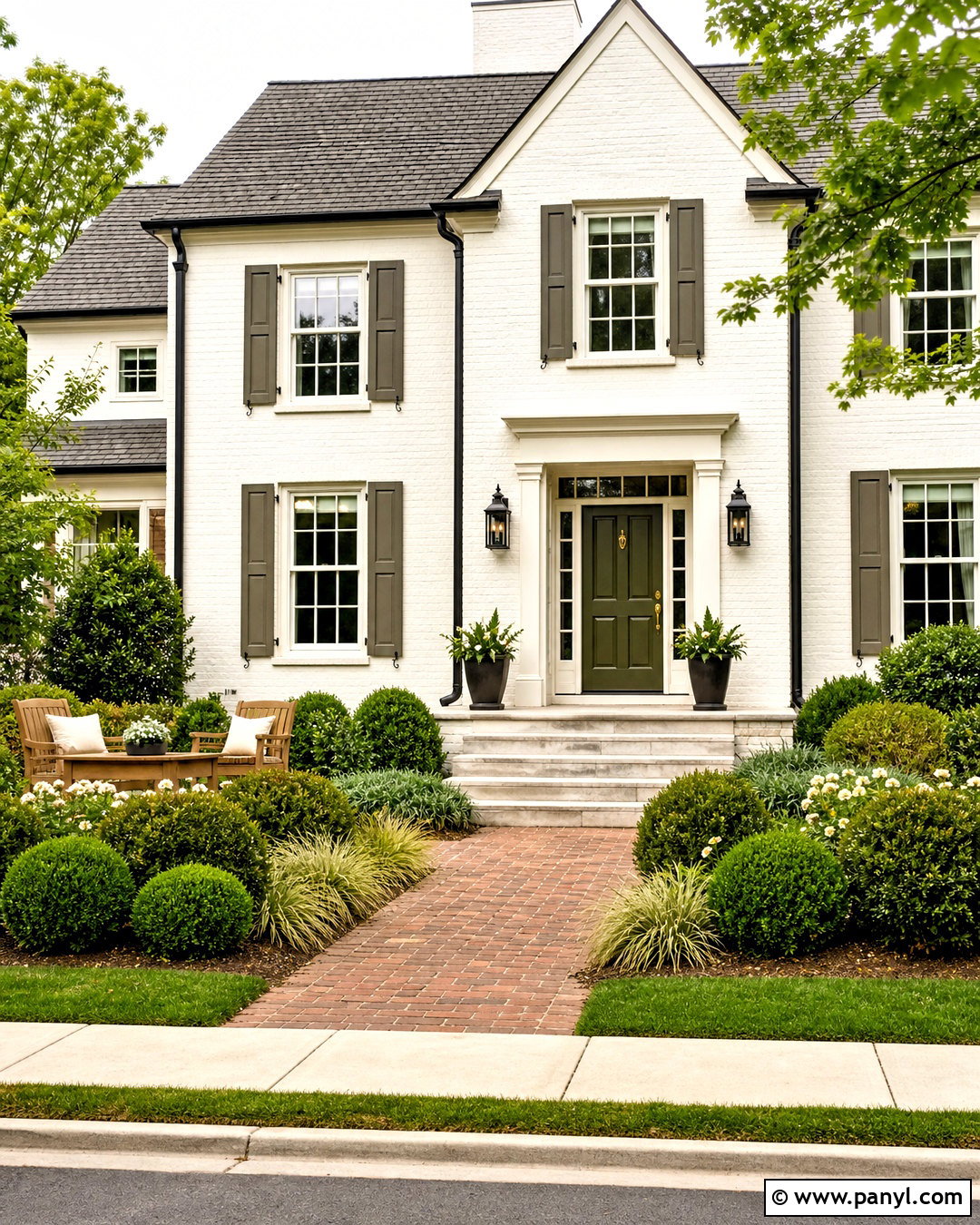
Painted brick takes on a softer character when finished in White Down. Use the color across the brick facade, then select warm white trim to keep windows, soffits, and architectural details subtly distinct. A dark olive or deep navy front door adds personality without disrupting the classic palette. Choose matte black gutters, lanterns, and house hardware for clean definition. If the home has shutters, match them to the door or use a dark taupe. Preserve warmth at ground level with limestone steps, a brick walkway, and cedar porch seating. Landscaping should include evergreen structure, white flowering shrubs, and loose ornamental grasses. This complete exterior treatment respects the texture of the masonry while giving an average brick home a lighter, more coordinated curb appearance.
Conclusion:
White Down offers enough warmth to make a home feel comfortable while remaining light and flexible. It can support a quiet neutral living room, traditional kitchen, restful bedroom, organized utility space, or welcoming exterior. The most successful White Down Benjamin Moore ideas pair the paint with materials that complement its creamy character, including oak, walnut, linen, limestone, warm metals, and softened accent colors. Test a generous sample on several walls and observe it through morning, afternoon, and evening light, since digital color representations may differ from painted surfaces. () Also compare it directly with fixed flooring, counters, tile, and trim. Thoughtful sampling will help White Down become a connected part of the complete design.

Related Ideas and Inspiration:
Leave a Reply