
Benjamin Moore Silver Sage 506 is a soft gray-green paint that brings gentle color into a room without overwhelming it. Benjamin Moore describes it as a light gray with a hint of sage green and lists an LRV of 63.26, so it can create an airy look while still providing noticeable contrast against white trim. () Its appearance may shift from silvery gray to muted green as natural and artificial light changes. That flexibility makes it useful for walls, cabinets, built-ins, furniture, and selected exterior features. Always test a large sample beside flooring, countertops, fabrics, and fixed finishes before committing. From calming bedrooms to character-filled kitchens, the 35 silver sage benjamin moore ideas below offer complete looks you can recreate.

1. Silver Sage Living Room With White Dove Trim
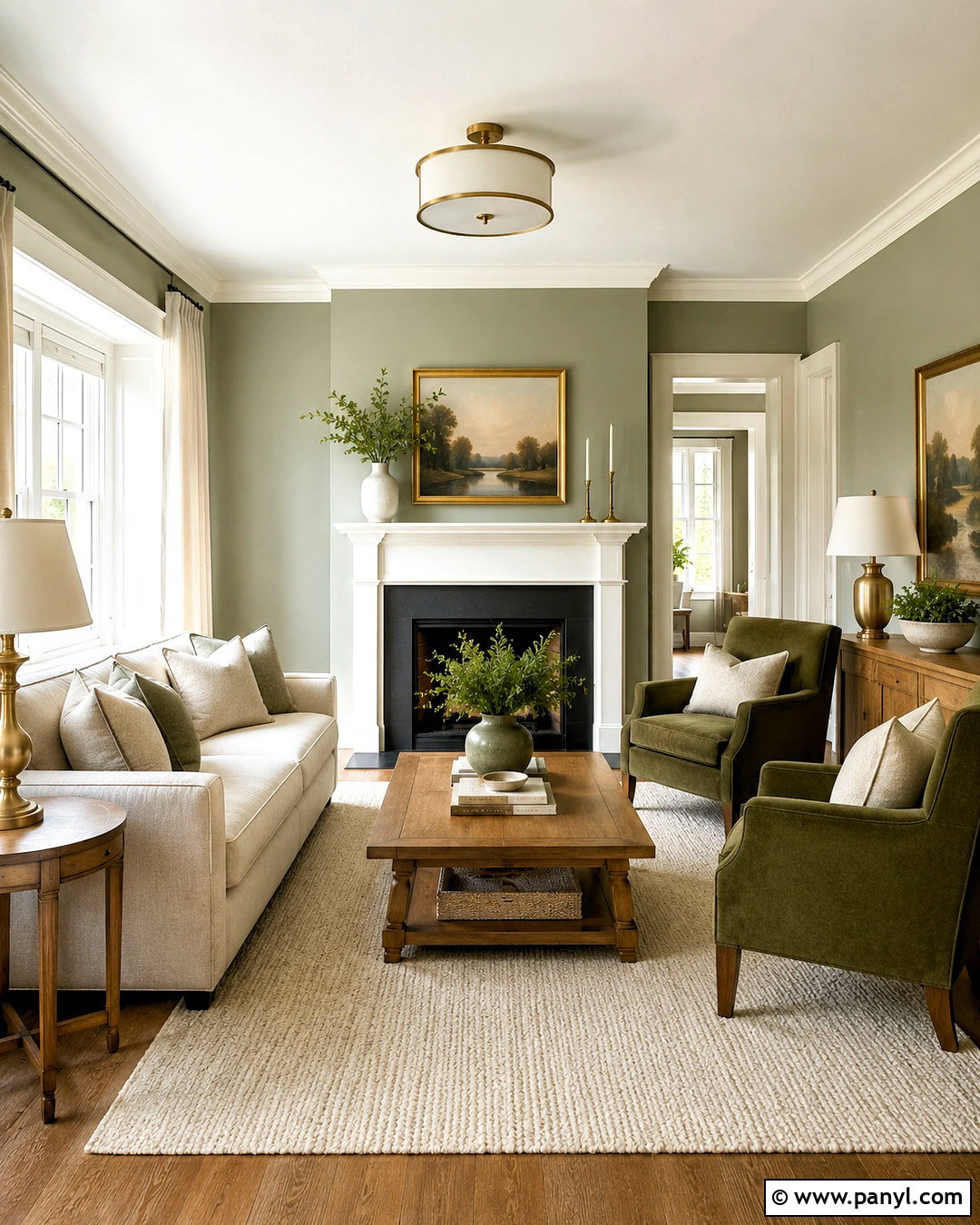
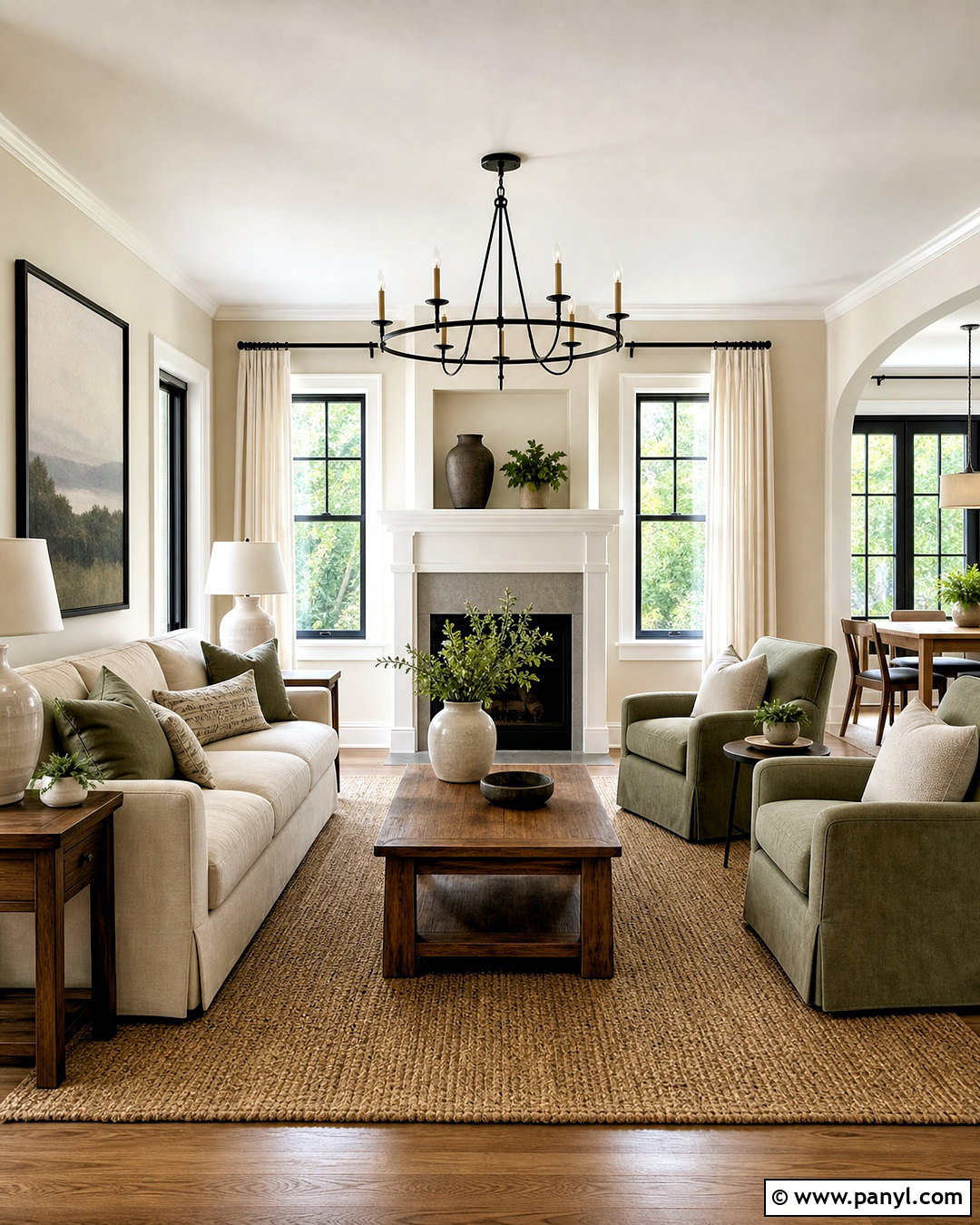
Create a calm, welcoming living room by painting the walls Silver Sage and using Benjamin Moore White Dove on the ceiling, trim, and fireplace. The soft white keeps the green-gray walls feeling fresh rather than cold. Choose a comfortable oatmeal-colored sofa, two warm oak side tables, and a cream wool rug with a subtle geometric pattern. A pair of deep olive or charcoal accent chairs adds needed depth. Finish the space with linen curtains, aged brass lighting, and landscape artwork in muted earthy tones. Keep the layout conversational by placing the chairs across from the sofa with a rounded wood coffee table between them. This balanced palette works especially well in a living room with moderate natural light.
2. Silver Sage Bedroom With Warm Oak Furniture
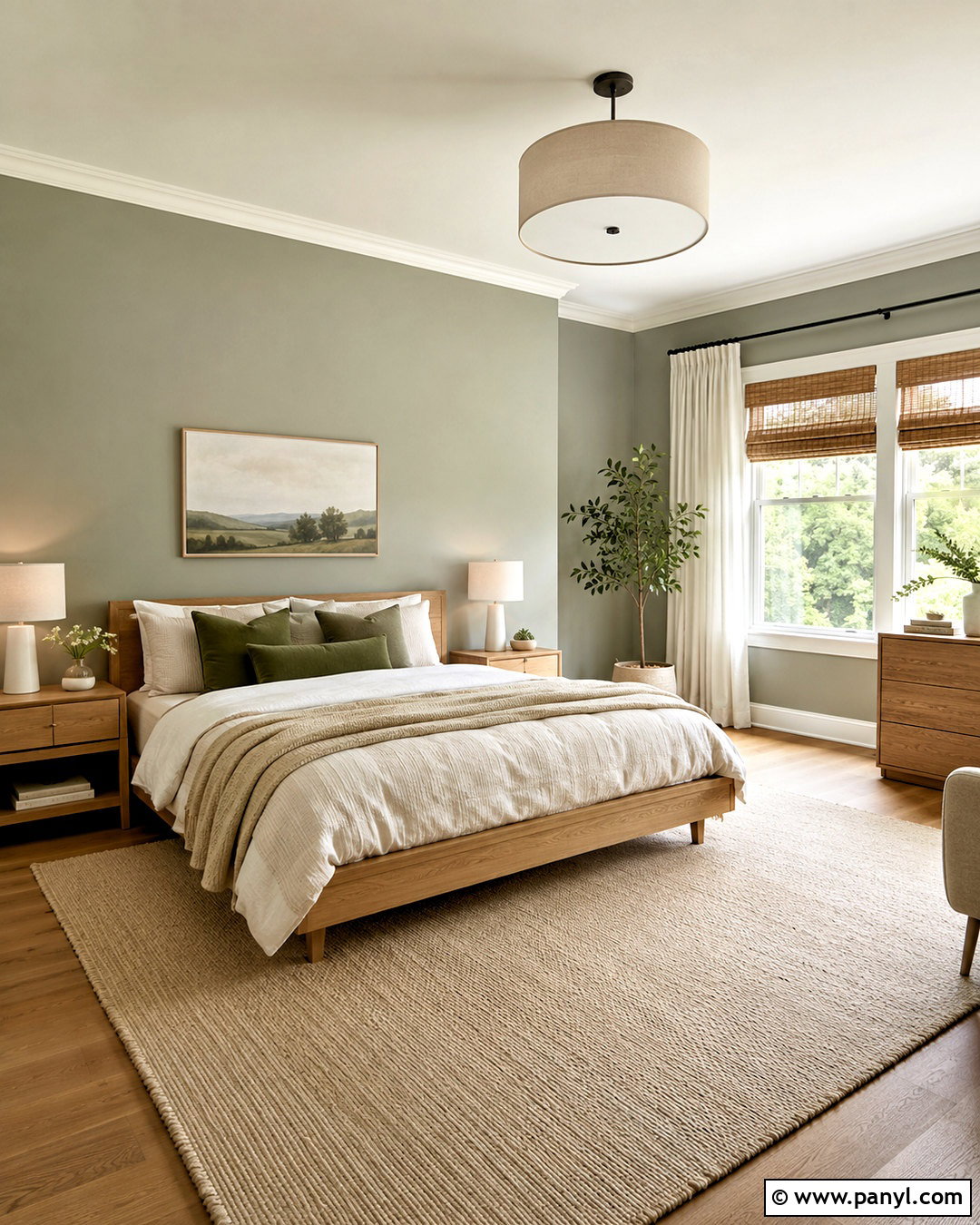
Silver Sage creates a restful bedroom when it is paired with natural oak and soft neutral bedding. Paint every wall in the sage-gray shade, then keep the ceiling and baseboards a gentle creamy white. Position a low oak bed against the main wall and dress it with white sheets, a flax-colored duvet, and a moss green throw. Matching oak nightstands provide symmetry without making the space feel formal. Use woven shades beneath full-length ivory curtains to soften sunlight. A light beige rug grounds the bed, while ceramic lamps and simple botanical artwork reinforce the natural palette. Limit small accessories so the room stays peaceful. Matte black curtain rods or picture frames can provide a crisp finishing detail.
3. Silver Sage Kitchen Cabinets With Marble Counters
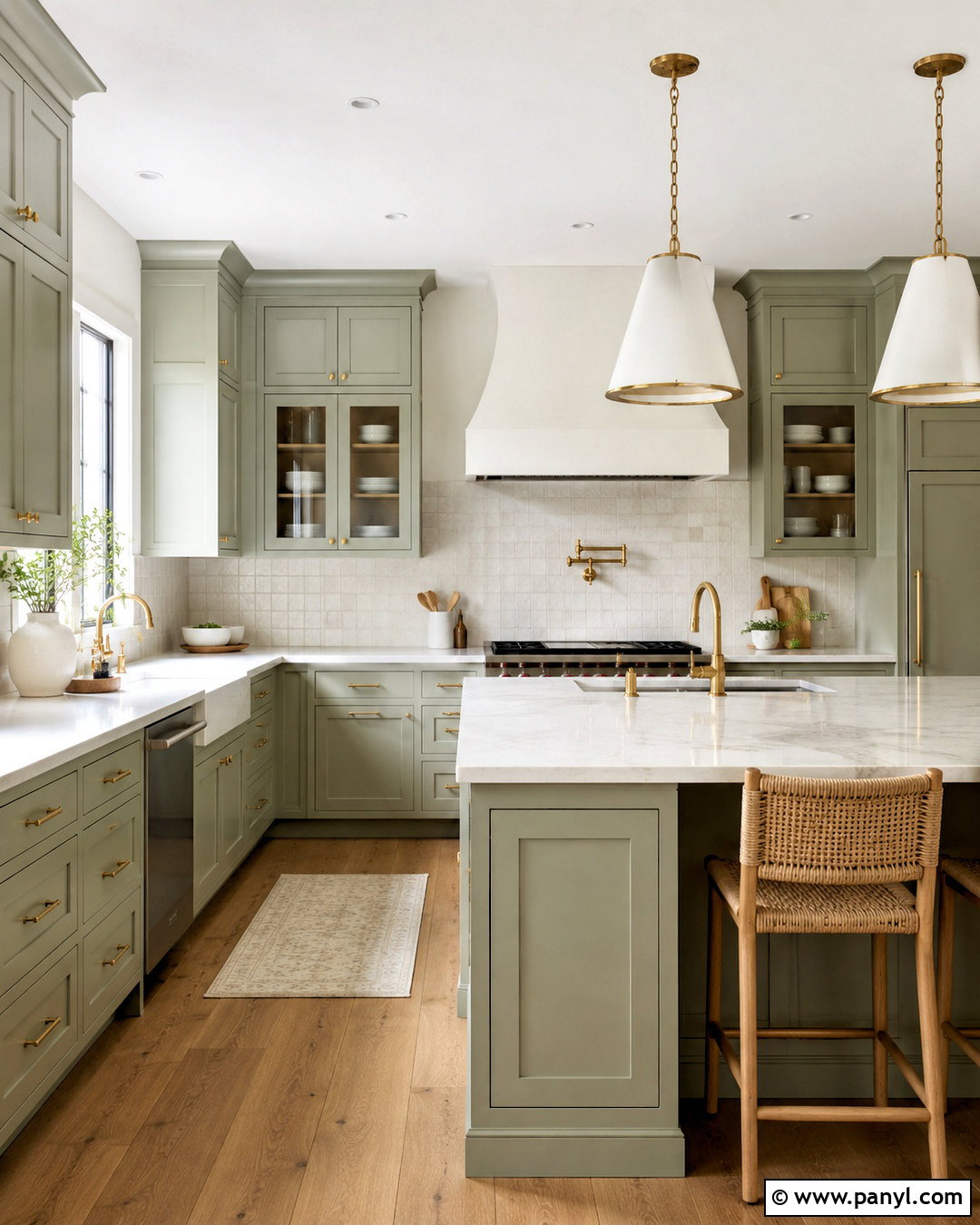
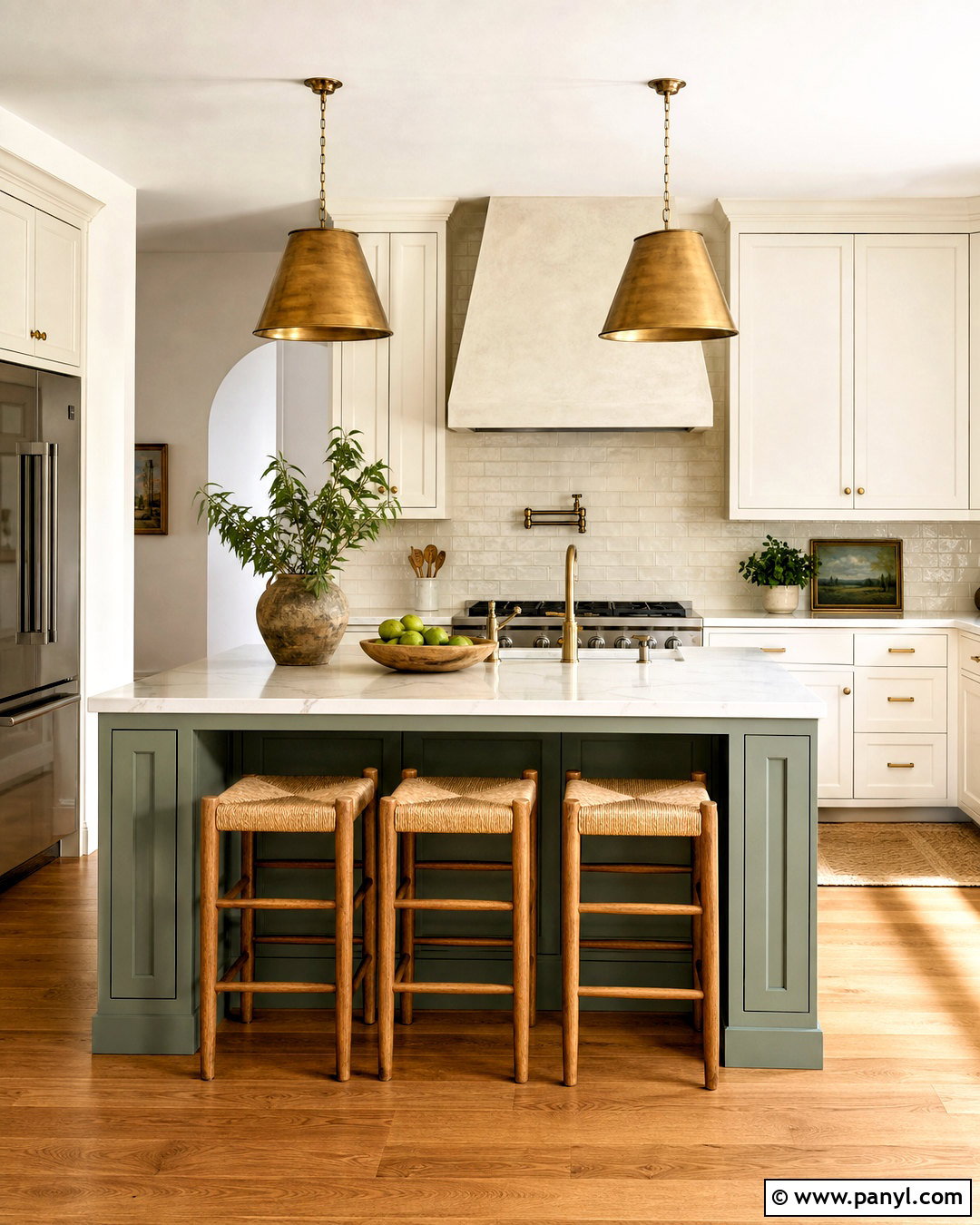
For a kitchen that feels colorful but still timeless, apply Silver Sage to the upper and lower cabinets. Combine the cabinetry with lightly veined white marble or durable quartz countertops and a simple off-white backsplash. Brushed brass knobs, cup pulls, and a bridge-style faucet add warmth against the cool green-gray paint. Use medium-toned white oak flooring to keep the room grounded and inviting. A plaster-white range hood can break up a long wall of cabinetry, while glass-front doors make the kitchen feel lighter. Complete the design with warm white walls, woven counter stools, and clear globe pendants above the island. This look suits traditional, transitional, and cottage kitchens without relying on overly rustic details.
4. Silver Sage Bathroom With White Tile
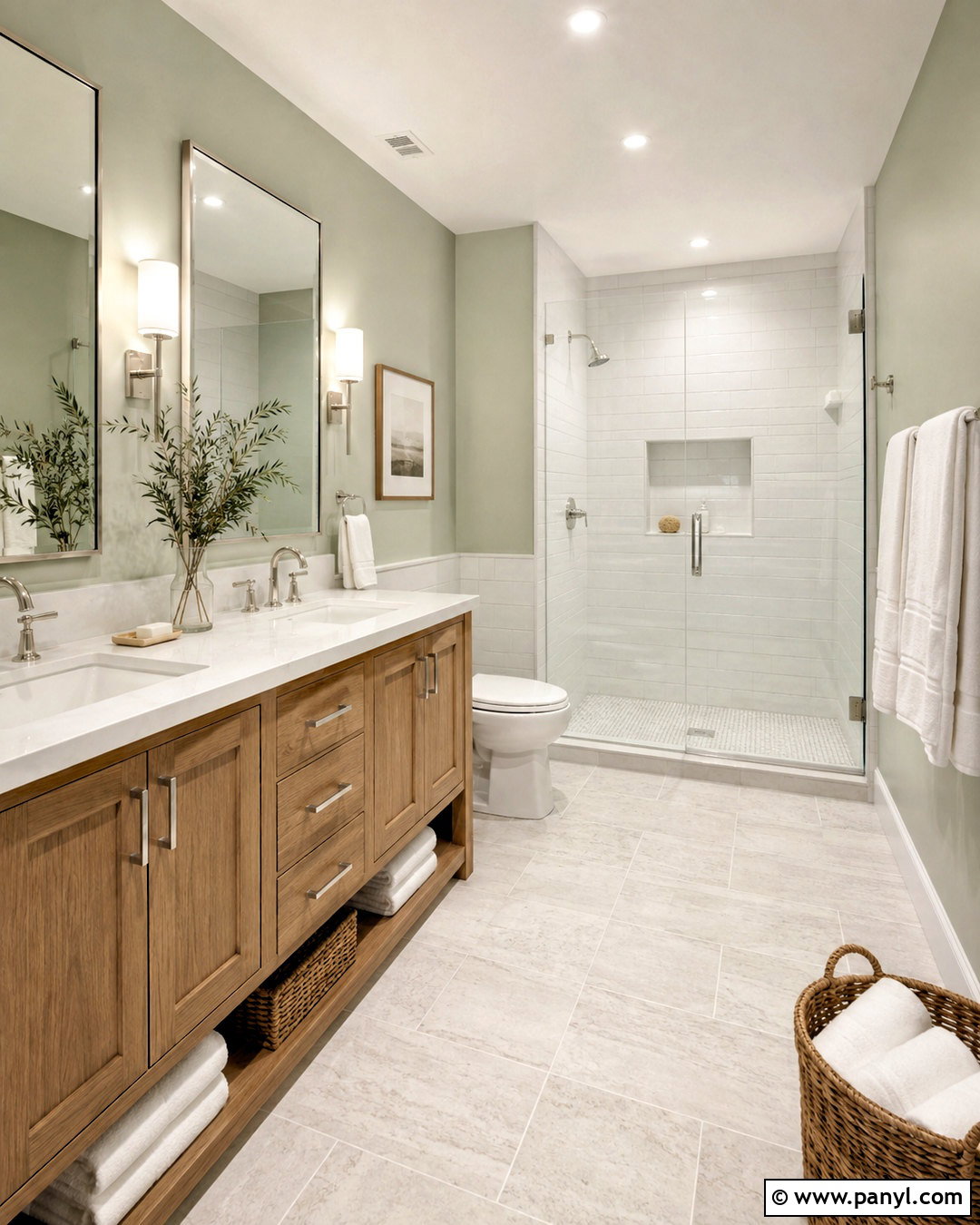
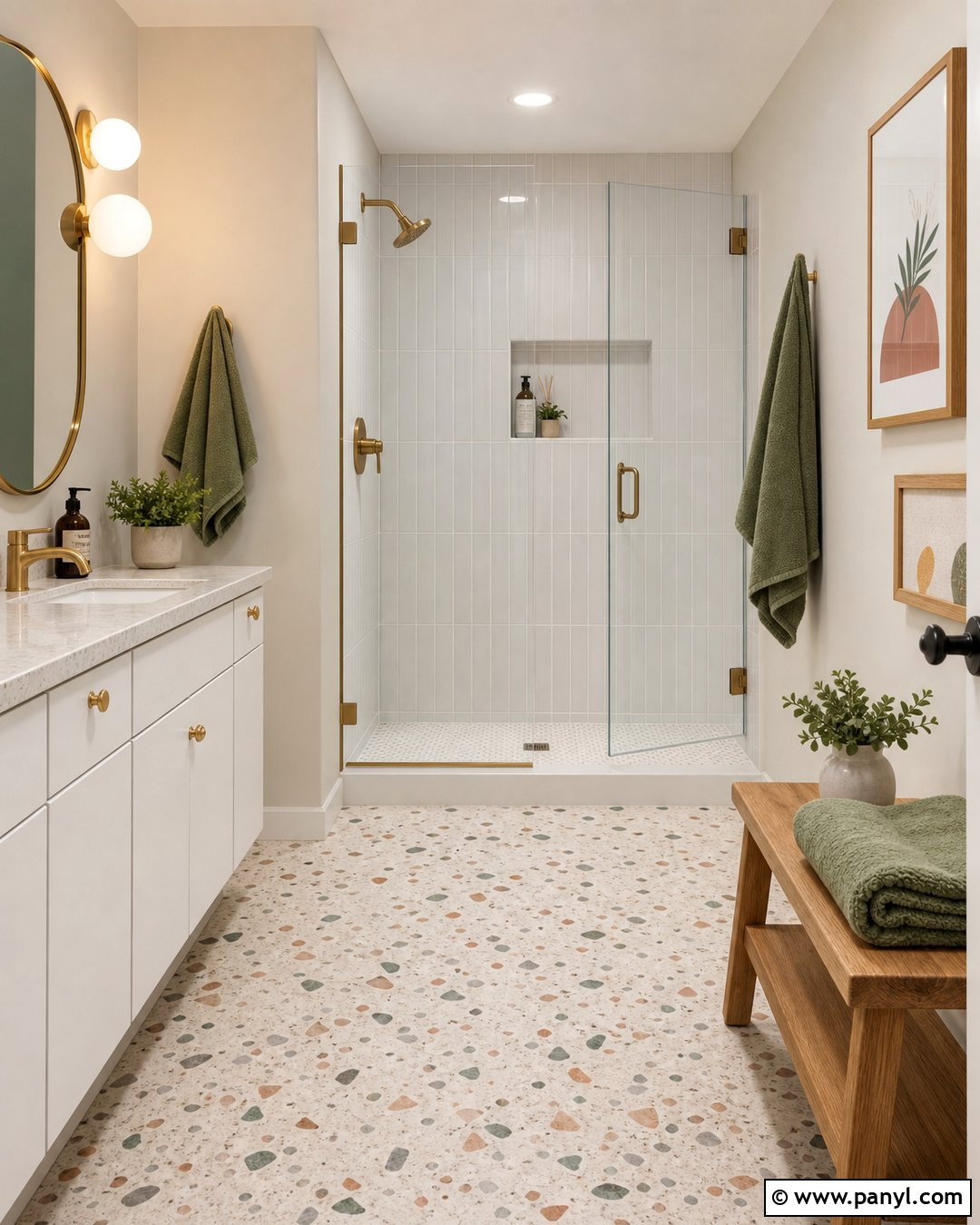
A Silver Sage bathroom can feel clean and spa-like without becoming plain. Paint the upper walls in Silver Sage and install glossy white subway tile around the shower or lower half of the room. Select a natural wood vanity with a white quartz top to bring warmth into the palette. Polished nickel fixtures create a softer effect than strong black hardware, while a frameless glass shower keeps the room open. Add a pale stone floor, thick white towels, and a washable ivory runner. A rounded mirror and two simple glass sconces provide gentle curves. For storage, use woven baskets and a small wall cabinet painted to match the walls. The finished bathroom will look calm, practical, and pleasantly connected to nature.
5. Silver Sage Dining Room With Dark Wood
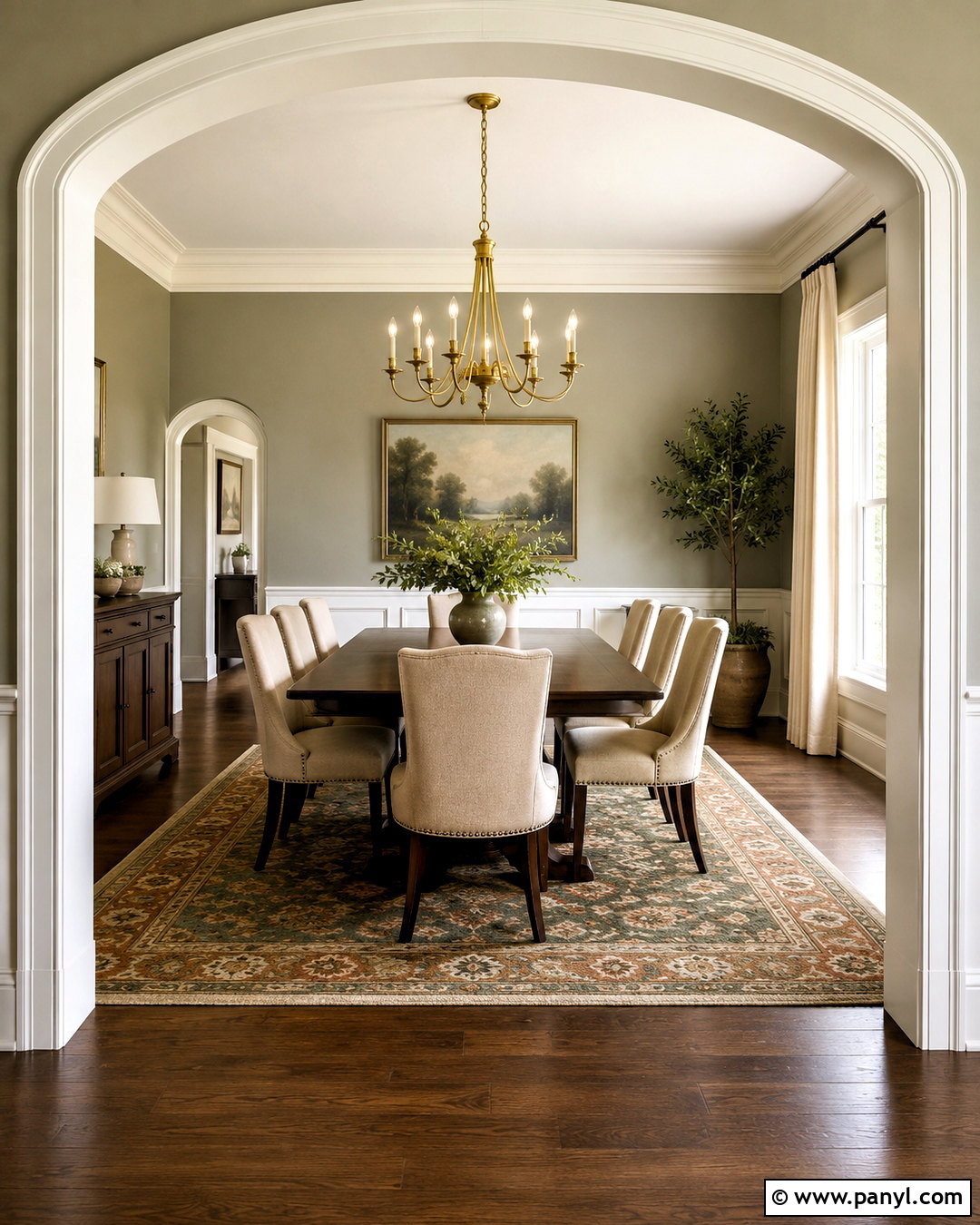
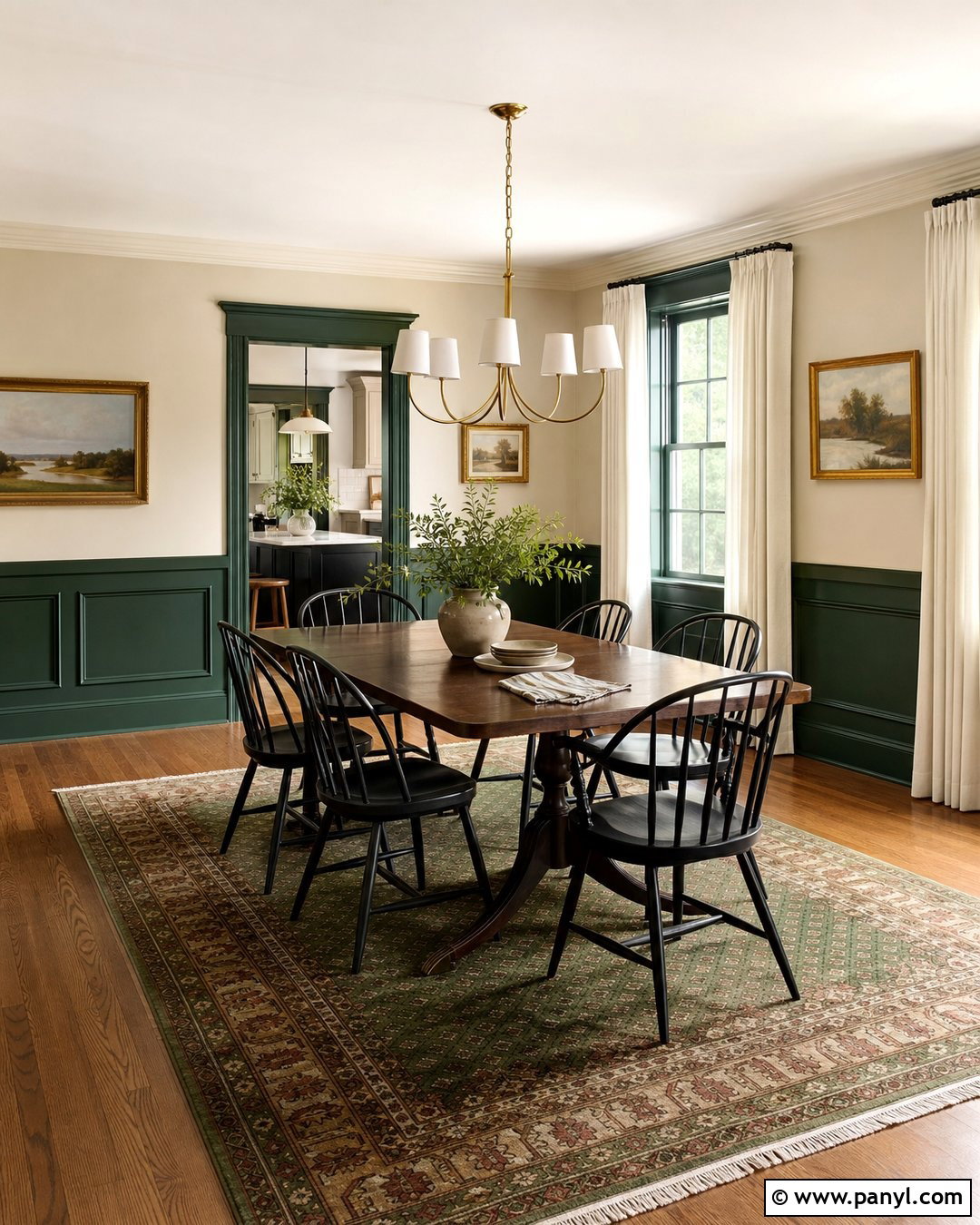
Dark wood furniture gives Silver Sage walls a richer, more traditional character. Center a walnut or mahogany dining table beneath a simple brass chandelier, then surround it with upholstered chairs in oatmeal linen. Use warm white on the crown molding, window trim, and ceiling to frame the sage-gray color clearly. A vintage-inspired rug containing faded green, rust, and cream can connect the walls to the furniture. Hang one large landscape painting or a balanced arrangement of botanical prints above a narrow sideboard. Cream curtains allow filtered daylight to enter without introducing another strong color. Finish with ceramic table lamps, understated dinnerware, and one large leafy arrangement. The result feels polished enough for entertaining but comfortable for everyday meals.
6. Silver Sage Home Office With Built-In Shelves
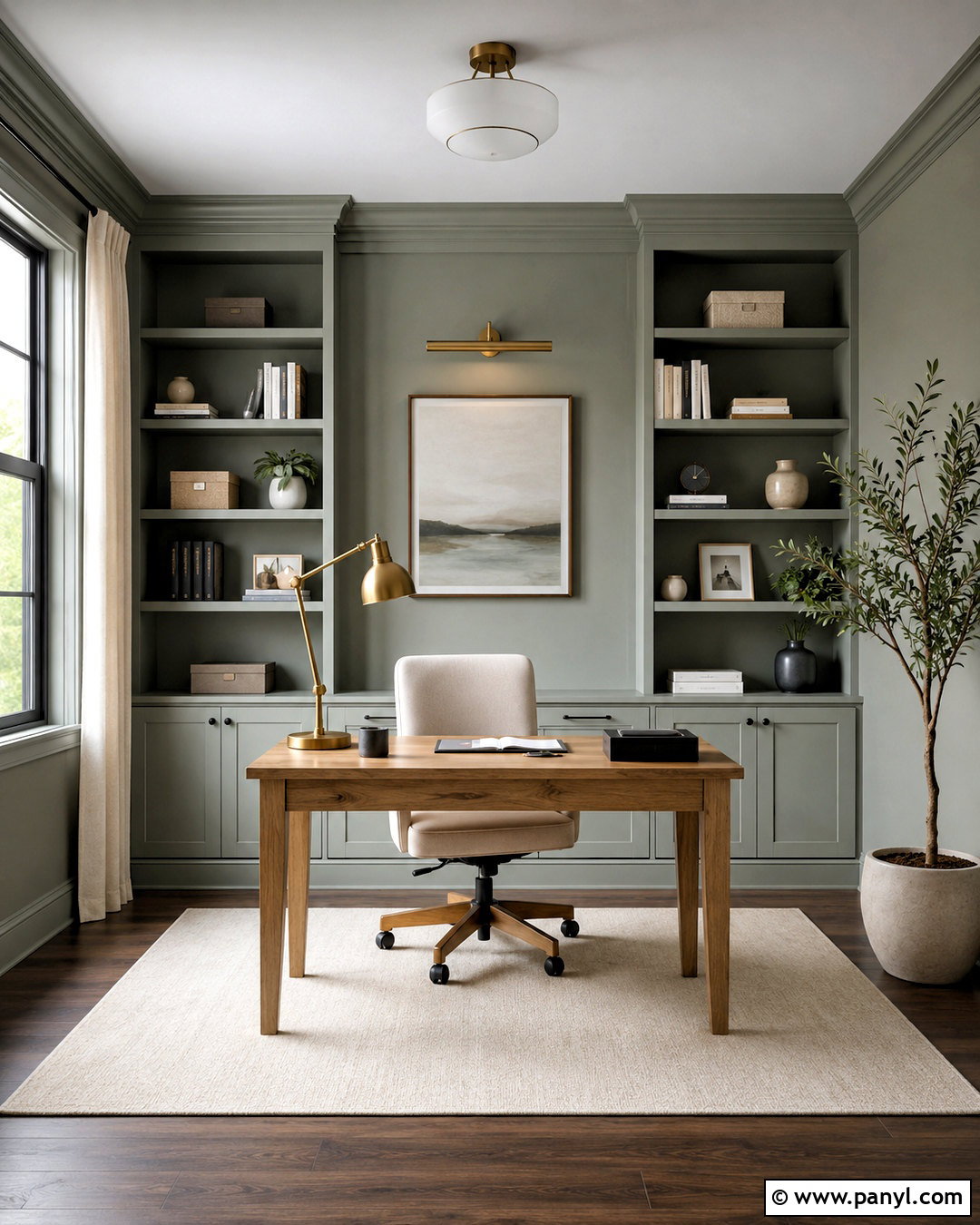
Turn a basic home office into a focused workspace by painting both the walls and built-in shelves Silver Sage. Keeping the surfaces one color reduces visual interruptions and makes the room feel thoughtfully designed. Place a medium oak desk near the window, where natural light can reach the work surface without causing screen glare. Choose an ergonomic chair upholstered in cream, gray, or muted camel fabric. Style the shelves with books, lidded storage boxes, pottery, and a few framed prints, leaving open areas to avoid clutter. Add a washable neutral rug and an adjustable aged brass desk lamp. White ceiling paint and simple white curtains keep the room bright. Matte black hardware gives the built-ins a clean, tailored finish.
7. Silver Sage Entryway With Black Accents
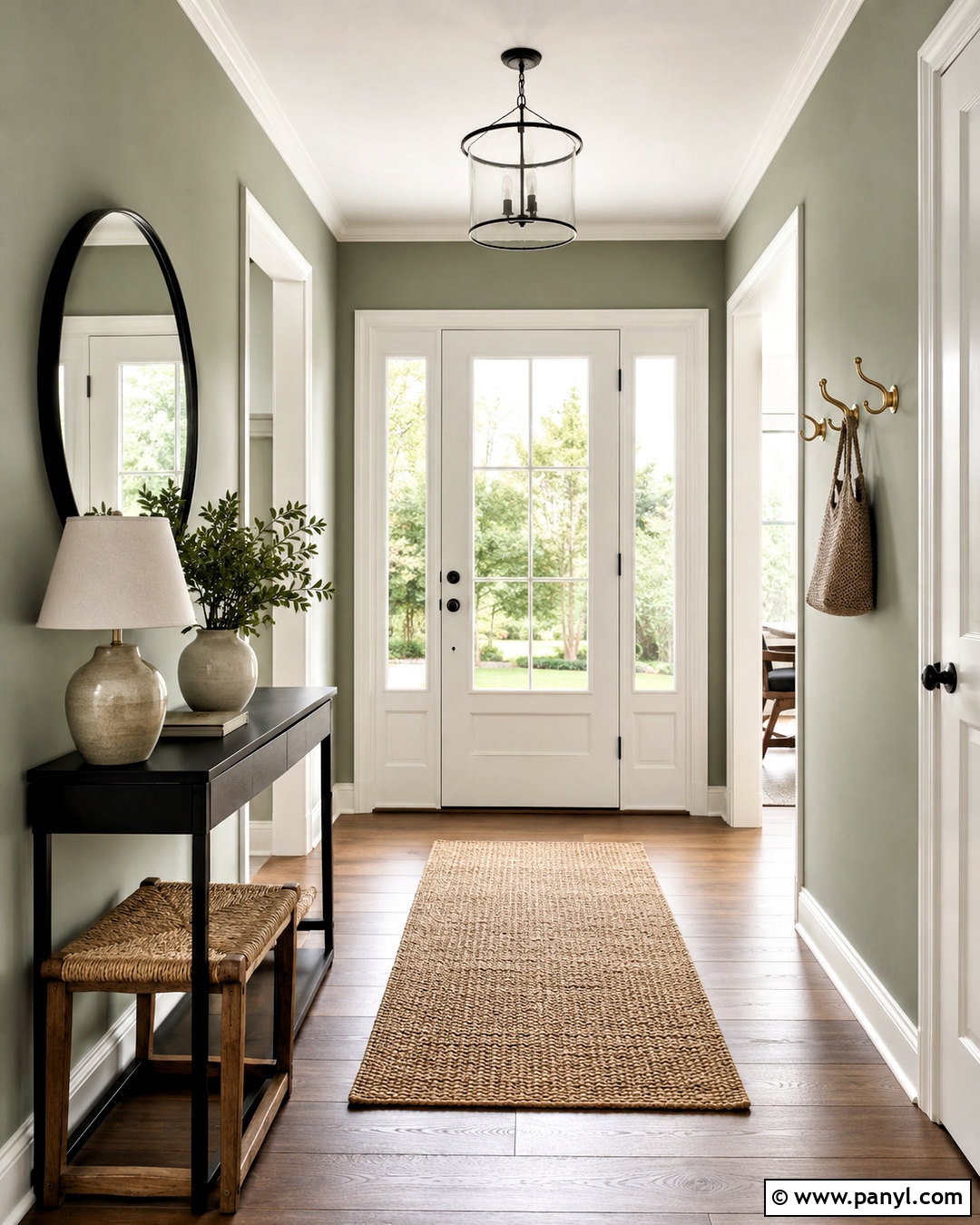
Silver Sage offers enough color to make an entryway memorable while remaining easy to coordinate with nearby rooms. Paint the walls sage green-gray and use crisp warm white on the trim, interior doors, and ceiling. Place a narrow black console beneath a round black-framed mirror to establish a strong focal point. A natural jute runner adds texture and handles everyday foot traffic well. Include a small upholstered bench or woven stool where space allows. Brass hooks, a ceramic table lamp, and one shallow catchall tray make the entry practical. Keep decorative objects limited so bags and keys have room. If the area lacks windows, use bright bulbs with a neutral color temperature and test Silver Sage under the actual fixtures before painting.
8. Silver Sage Nursery With Natural Textures
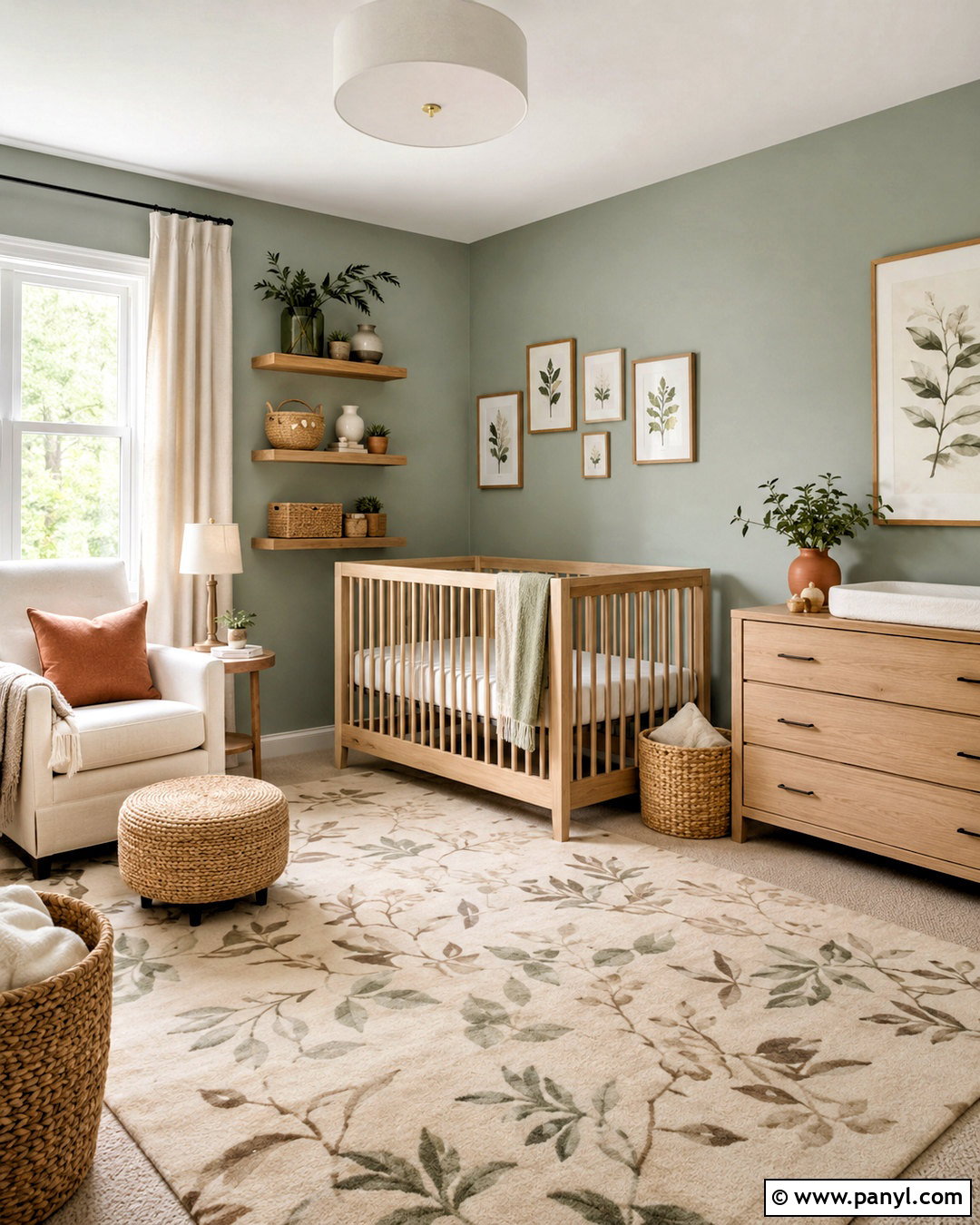
A Silver Sage nursery can grow with a child because the color is gentle without looking overly themed. Cover the walls in Silver Sage and pair them with warm white trim, a light oak crib, and a coordinating dresser. Choose an ivory glider with washable fabric and place a small round table beside it for nighttime essentials. A cream rug with a subtle leaf or stripe pattern adds softness underfoot. Use linen curtains, woven baskets, and simple wood shelving to bring natural texture into the room. Bedding should remain light and uncluttered, with muted green, beige, and soft clay accents used sparingly. Add child-safe botanical artwork and a dimmable ceiling fixture. Secure all tall furniture and keep wall decor safely away from the crib.
9. Silver Sage Laundry Room With Butcher Block
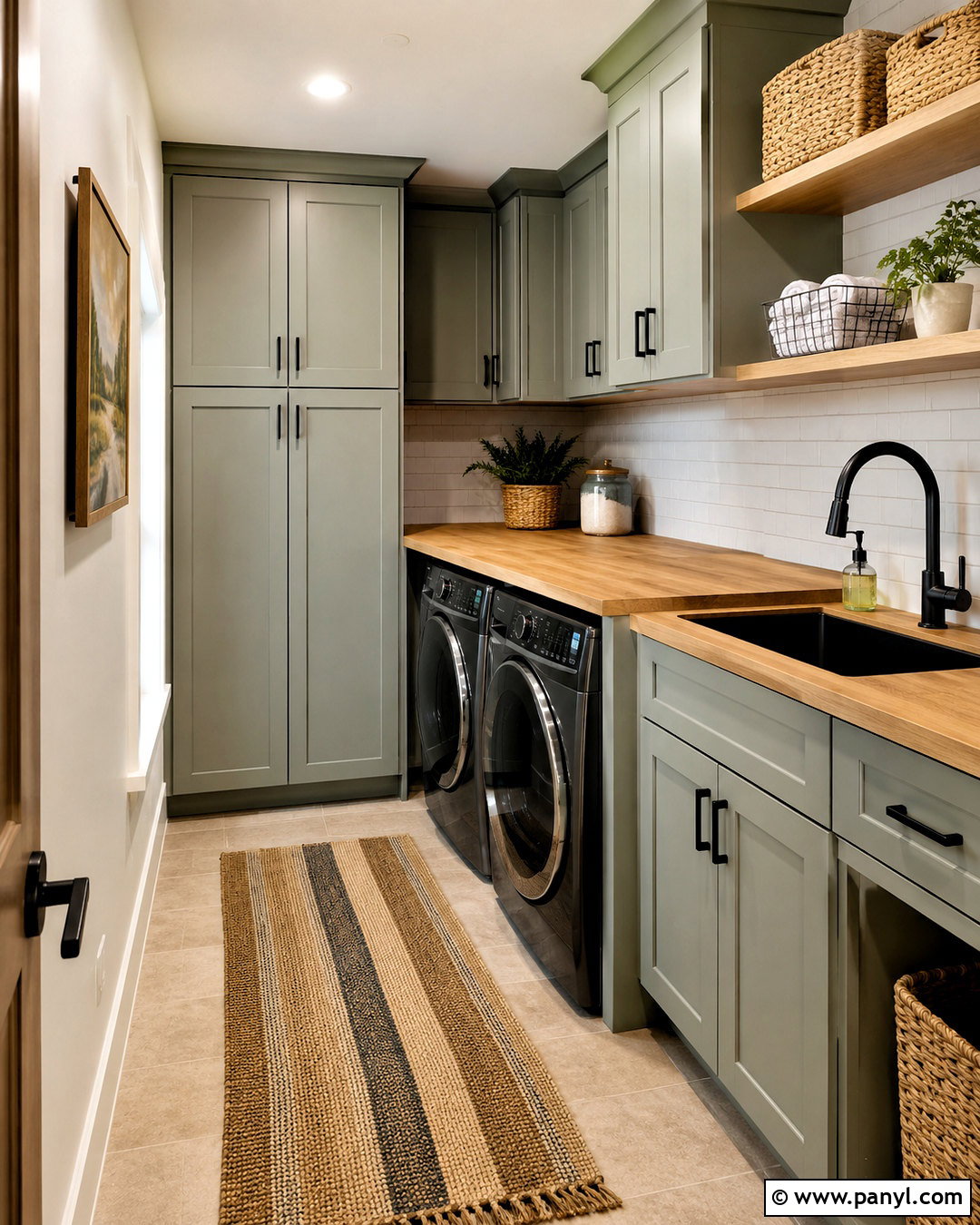
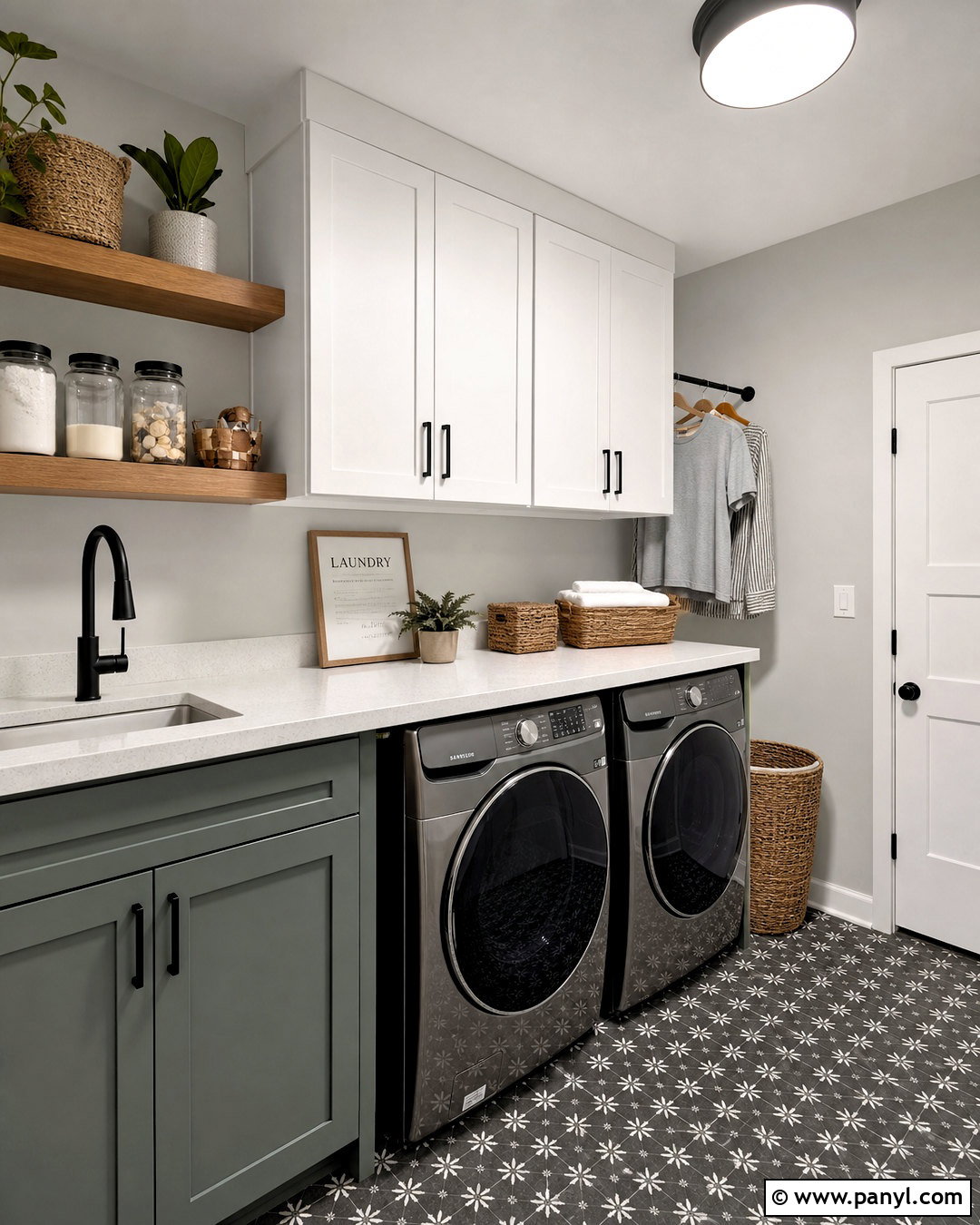
Make a hardworking laundry room feel more inviting with Silver Sage cabinetry and warm butcher-block counters. Keep the surrounding walls soft white so the cabinets become the main feature without darkening a compact space. Install a simple white tile backsplash behind the sink and folding area. Black cabinet pulls and a black utility faucet introduce practical contrast, while a striped washable runner adds pattern. Include tall closed storage for cleaning products, upper cabinets for less-used supplies, and open oak shelves for attractive baskets. Place front-loading appliances beneath the counter when the layout allows, creating one continuous folding surface. Bright ceiling lights and an under-cabinet strip prevent shadows. The combination feels organized, durable, and more decorative than a standard utility room.
10. Silver Sage Mudroom With Storage Lockers
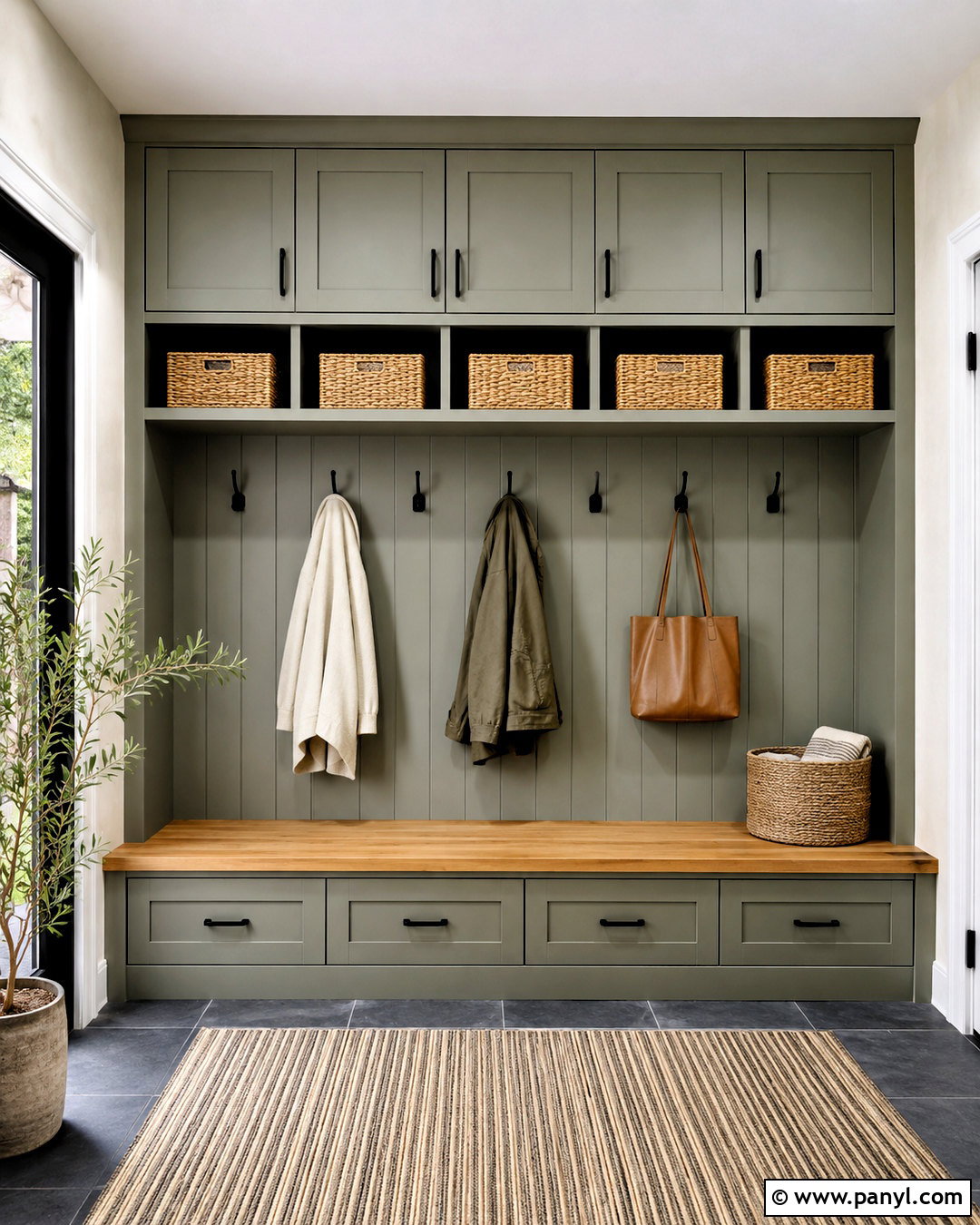
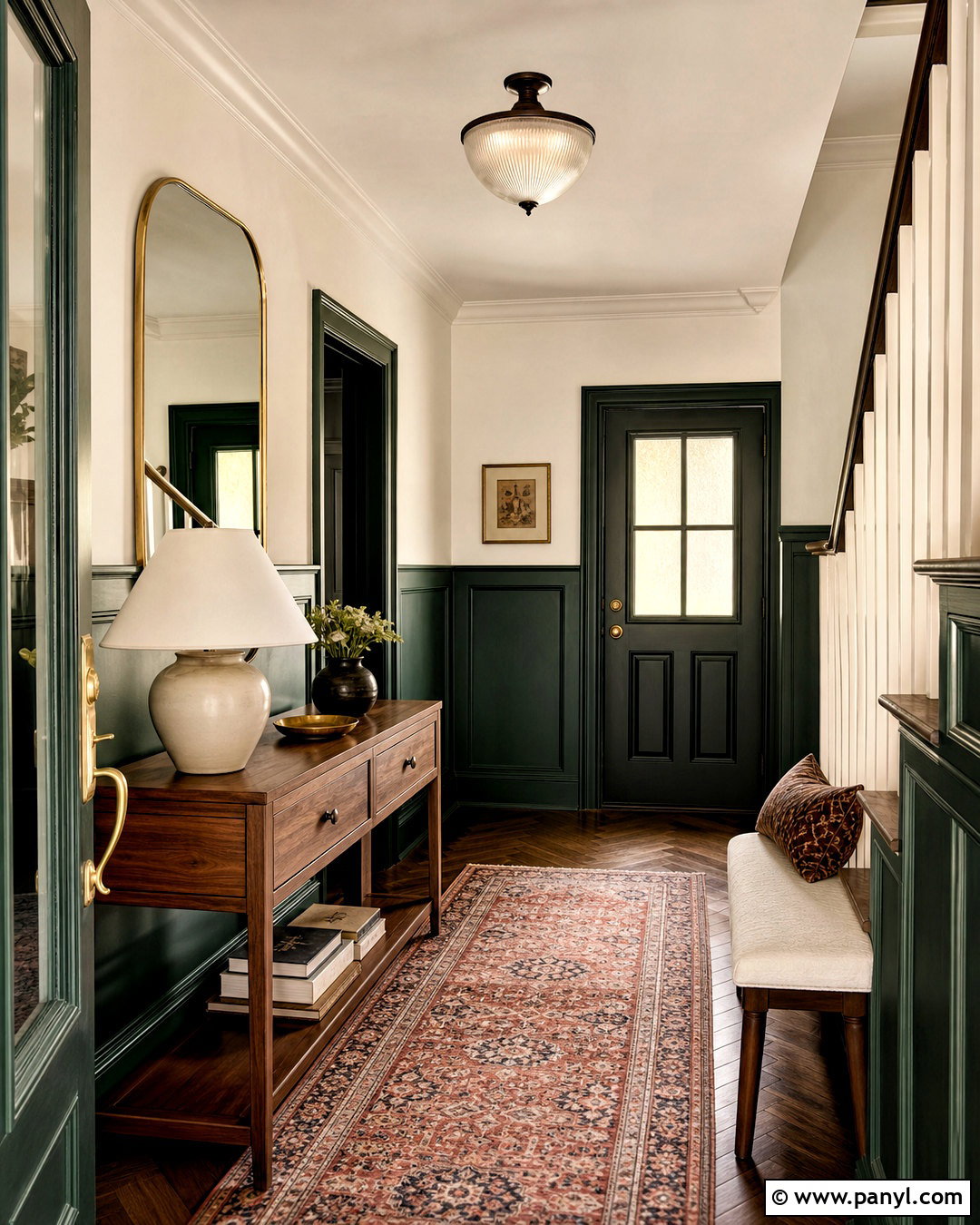
Silver Sage is an excellent choice for mudroom lockers because it brings color to functional storage while disguising minor everyday marks better than bright white. Paint full-height cubbies, bench drawers, and overhead cabinets in a durable satin finish. Add a white oak bench seat for warmth and black hooks for coats and bags. The surrounding walls can remain creamy white, or Silver Sage can continue across them for a more unified appearance. Use slate-look porcelain tile underfoot to handle moisture and dirt. Woven baskets labeled inside the cubbies keep smaller items controlled without adding visual clutter. Finish with a striped indoor-outdoor runner and a bright flush-mount light. Each household member should have a dedicated section to make the layout easier to maintain.
11. Silver Sage Sunroom With Wicker Furniture
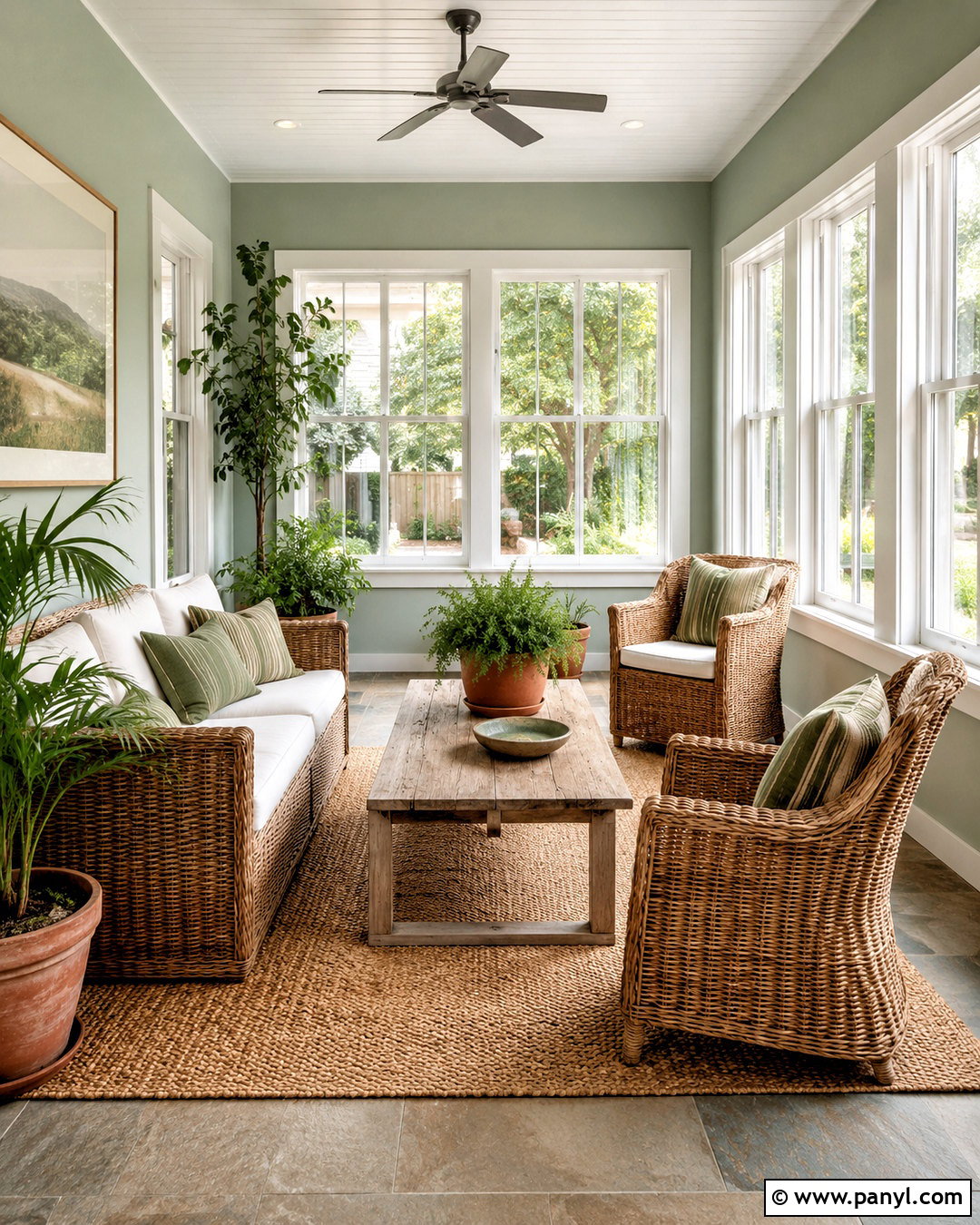
In a bright sunroom, Silver Sage walls can echo the garden without competing with the outdoor view. Pair the paint with white window trim and a pale wood or painted plank ceiling. Arrange natural wicker chairs and a small sofa around a weathered oak coffee table. Seat cushions in cream performance fabric will keep the room light, while striped green and beige pillows provide subtle pattern. Use a flat-weave rug that can tolerate strong sunlight and frequent foot traffic. Large leafy plants in terracotta or white ceramic pots strengthen the indoor-outdoor connection. Keep window treatments minimal with woven shades or washable white panels. A black or aged brass ceiling fan adds function and definition. The full room should feel relaxed, bright, and suitable for daily use.
12. Silver Sage Powder Room With Floral Wallpaper
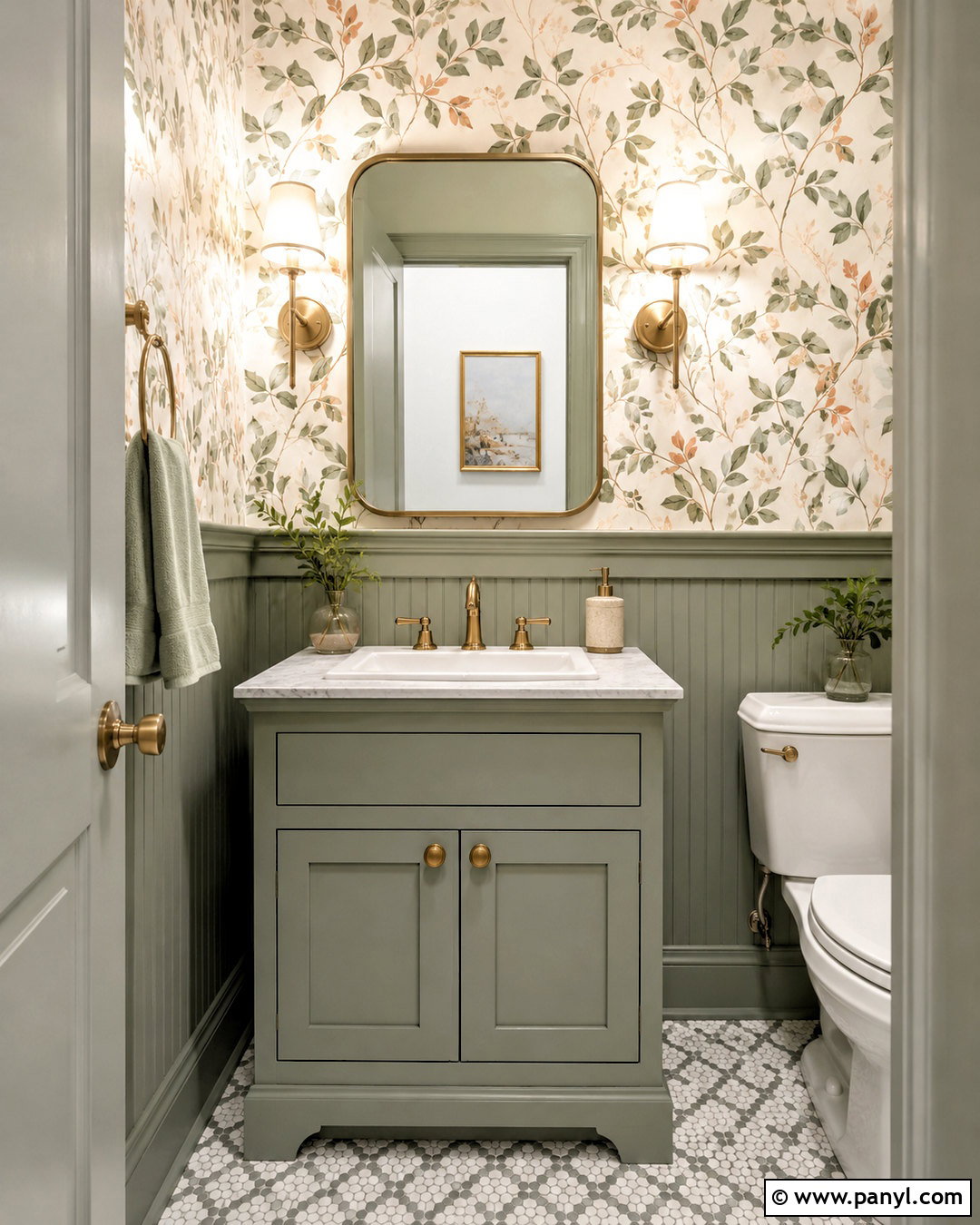
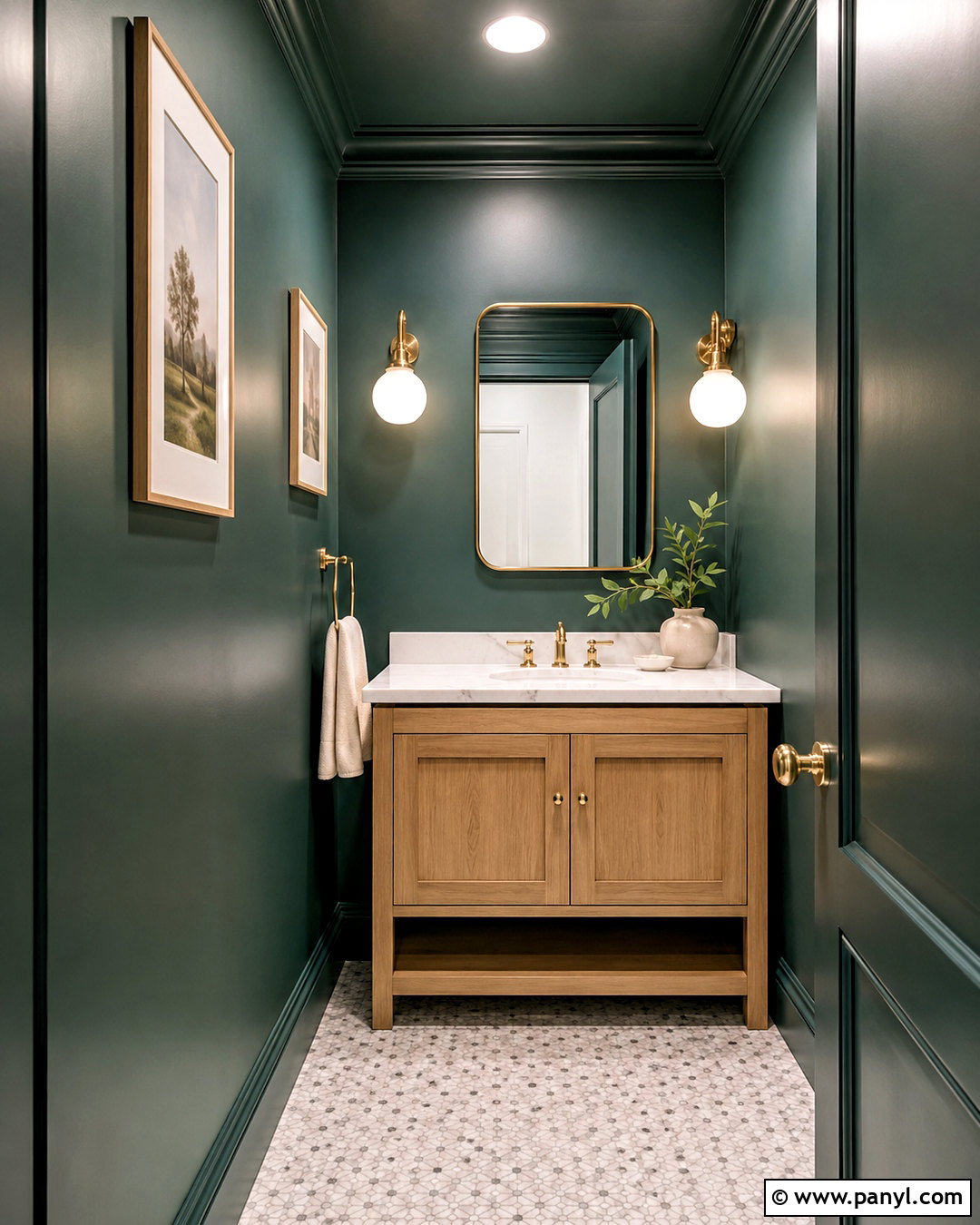
Combine Silver Sage millwork with botanical wallpaper for a small powder room that has character without feeling chaotic. Install simple wall molding or beadboard on the lower half and paint it, the baseboards, and the vanity in Silver Sage. Above it, use wallpaper with an ivory background and restrained green, dusty blue, or soft peach leaves. A white pedestal sink or compact furniture-style vanity will keep the layout open. Choose an aged brass faucet, mirror, and wall sconces to warm the green-gray palette. Small-scale mosaic floor tile adds another traditional detail without stealing attention. Include one framed print and a neatly folded hand towel rather than many accessories. Bright, even lighting will help the paint and wallpaper retain their clean appearance.
13. Silver Sage Hallway With Picture Frames
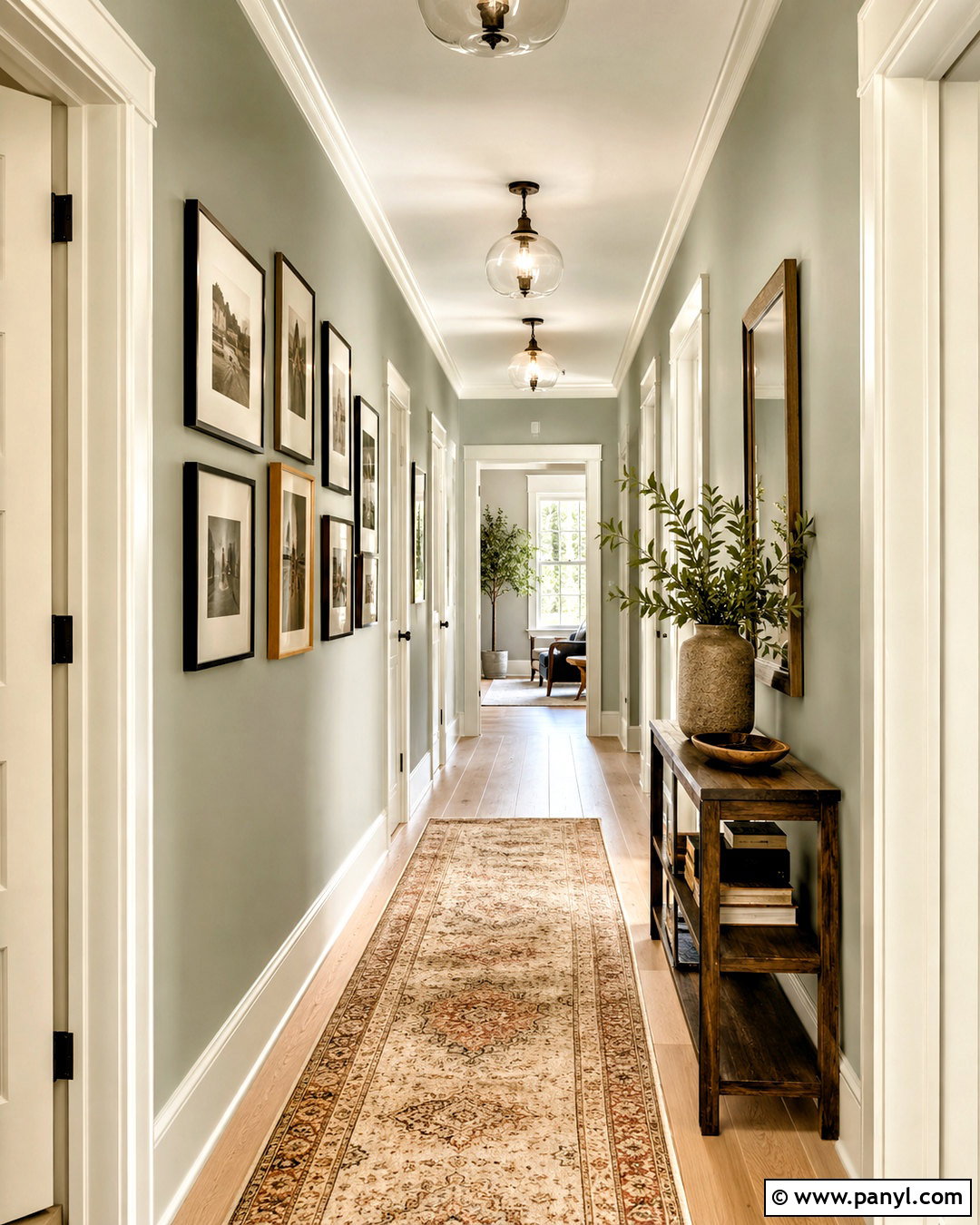
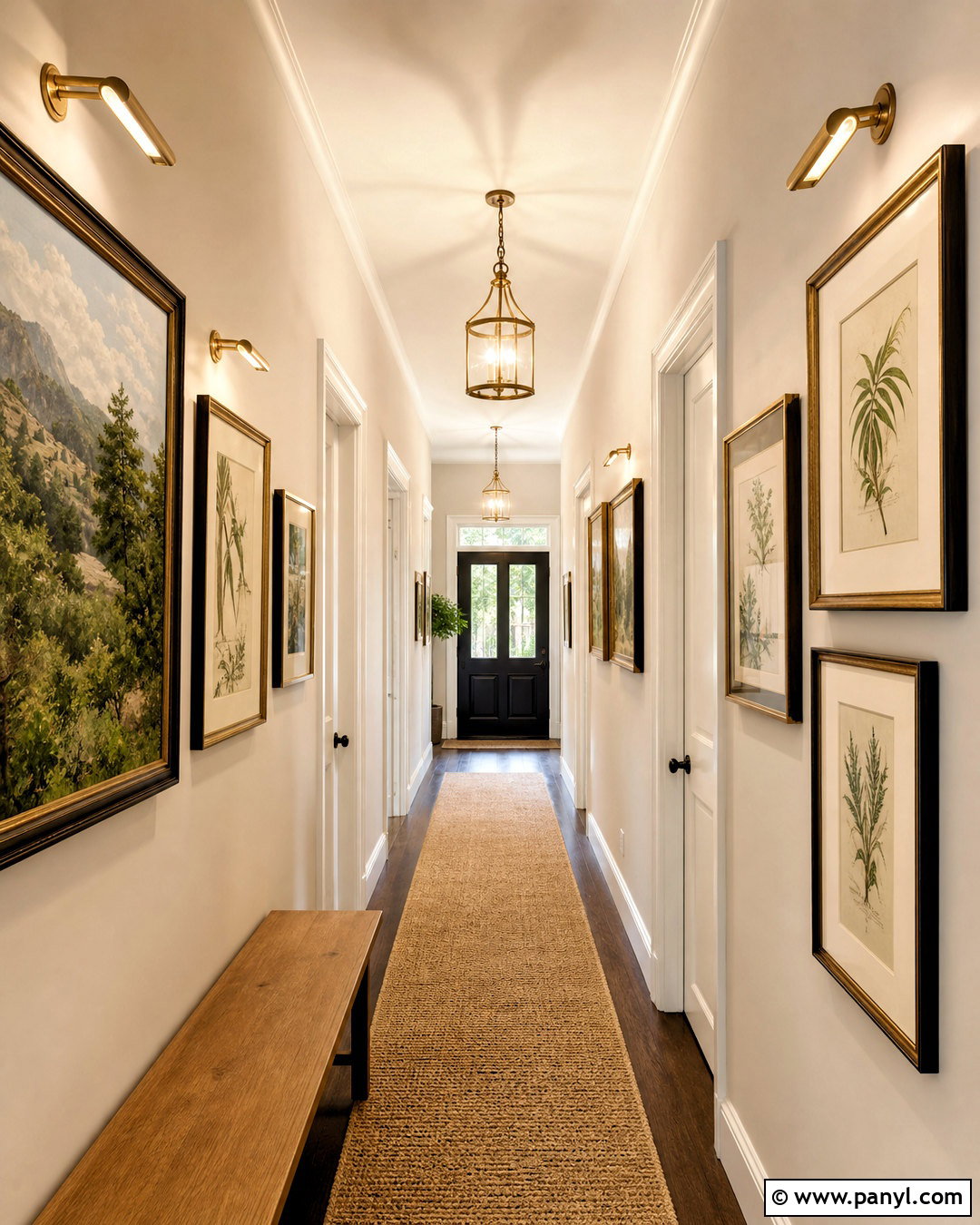
A long hallway becomes more inviting when Silver Sage walls are combined with organized artwork and bright trim. Paint the doors, baseboards, and ceiling in warm white to prevent the passage from feeling enclosed. Create a consistent gallery wall using black, oak, or antique brass frames in two or three coordinated sizes. Keep equal spacing between the pieces so the arrangement looks calm rather than crowded. A narrow vintage-style runner with cream, faded rust, and muted green can add warmth and help protect the floor. Install simple semi-flush ceiling lights at regular intervals for even illumination. If the hall is particularly narrow, avoid projecting furniture. A small bench or shallow console can work at the end, where it creates a clear destination and focal point.
14. Silver Sage Built-Ins Around A Fireplace
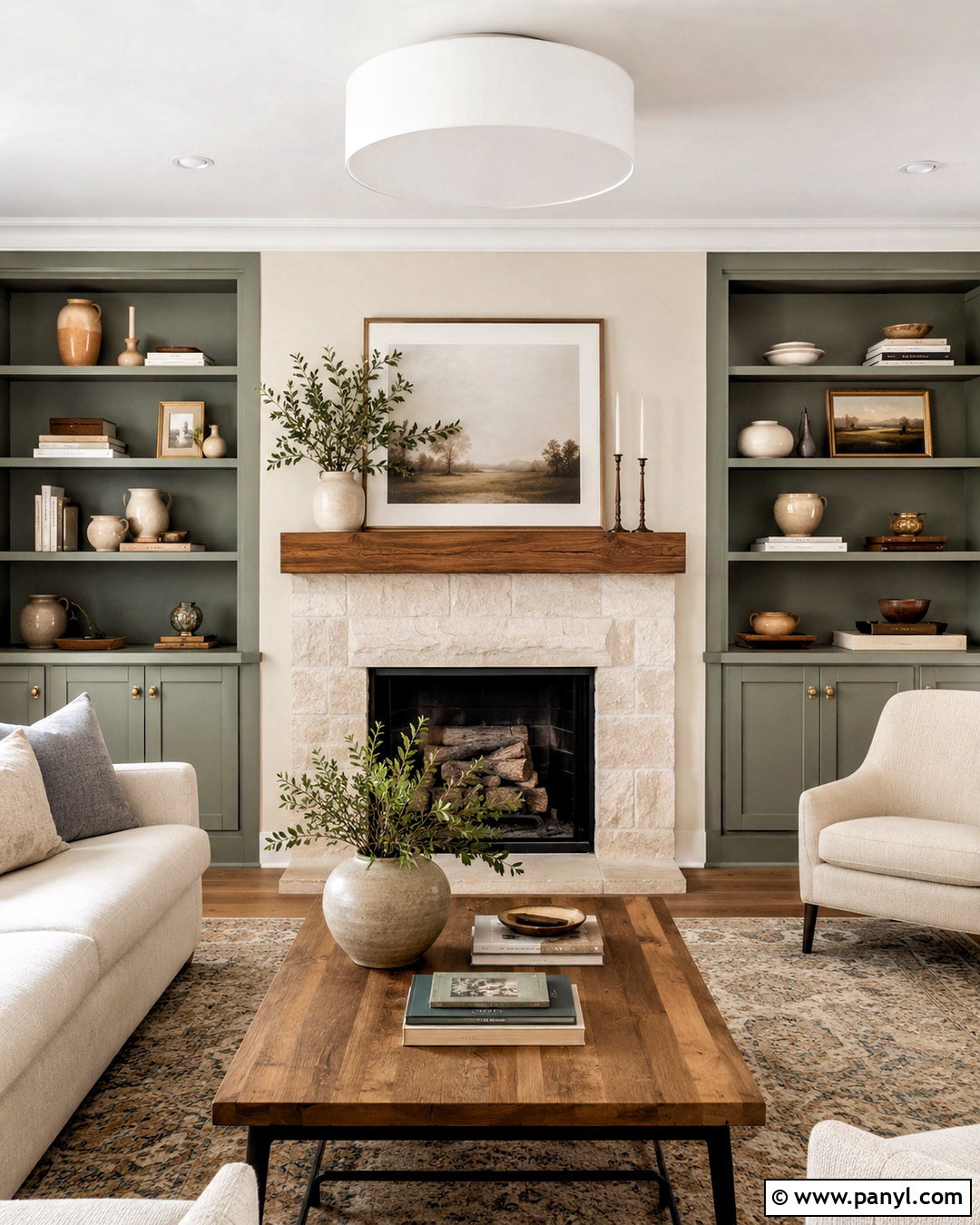
Painting fireplace built-ins Silver Sage can turn a plain wall into a complete architectural feature. Use the color on the lower cabinets, open shelving, and surrounding paneling, then keep the fireplace surround in warm white stone or lightly veined quartz. An oak mantel introduces natural contrast and connects easily with wood flooring. Select simple aged brass or matte black cabinet hardware, depending on the room’s other fixtures. Style the shelves with books, ceramics, framed artwork, and a few organic branches while leaving visible breathing room. Position a cream sofa and two textured neutral chairs around a substantial wood coffee table. A soft patterned rug can include gray-green accents. This arrangement makes the fireplace wall prominent without requiring a dark or highly saturated paint color.
15. Silver Sage Fireplace With Limestone
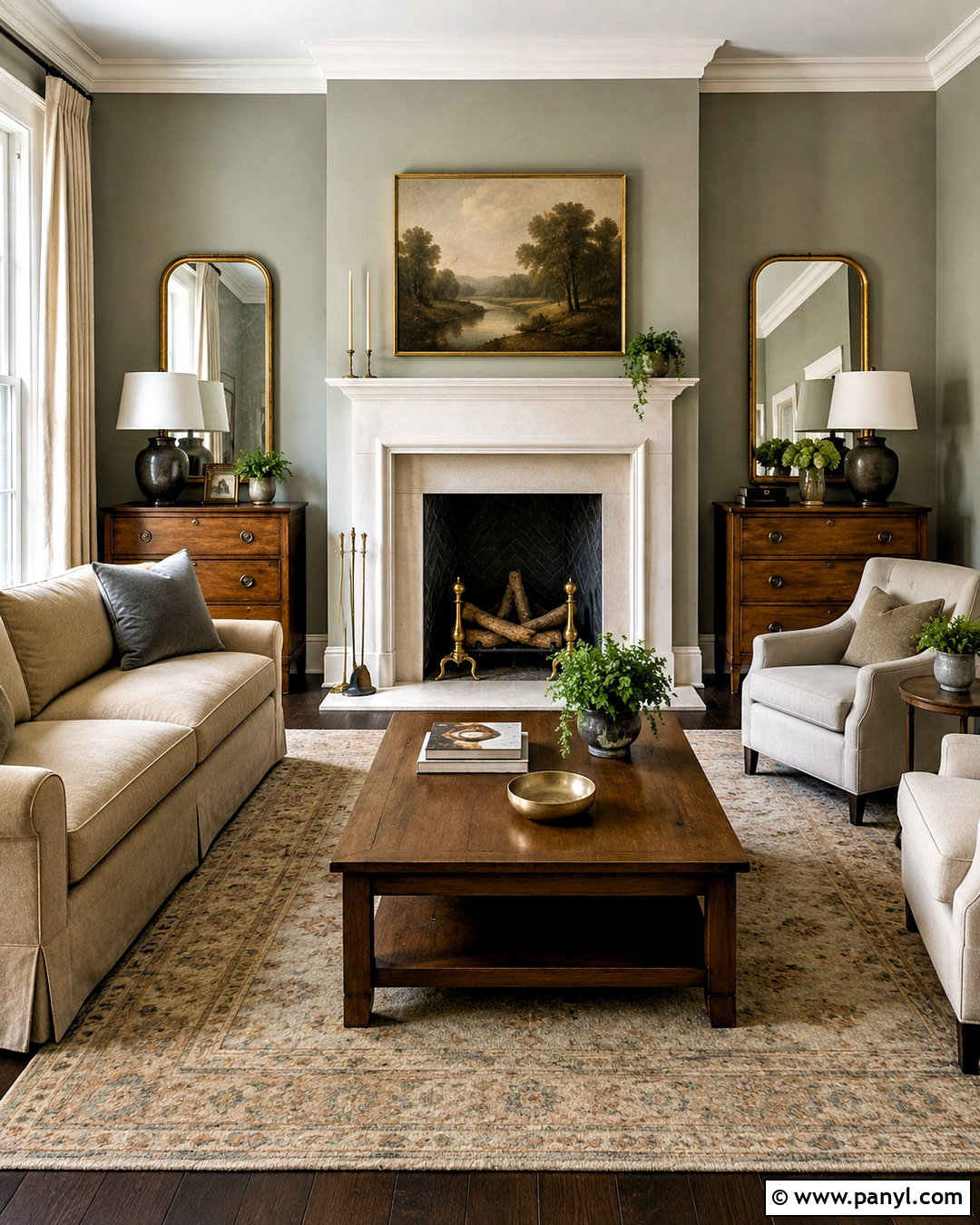
Give a traditional fireplace a softer update by painting the surrounding wall Silver Sage and installing a simple limestone mantel. The pale stone and muted green-gray create subtle contrast while maintaining an airy appearance. Add symmetrical oak cabinets or low chests on either side instead of fully built-in shelving, making the look easier to recreate in an average home. Hang a restrained landscape painting above the mantel and use two brass candleholders or ceramic vessels as simple accents. Arrange a beige sofa and comfortable accent chairs around a round walnut coffee table. Linen curtains and a faded wool rug bring softness to the space. Keep the ceiling and remaining trim warm white. The finished room feels established, calm, and suitable for either classic or transitional furnishings.
16. Silver Sage Accent Wall Behind The Bed
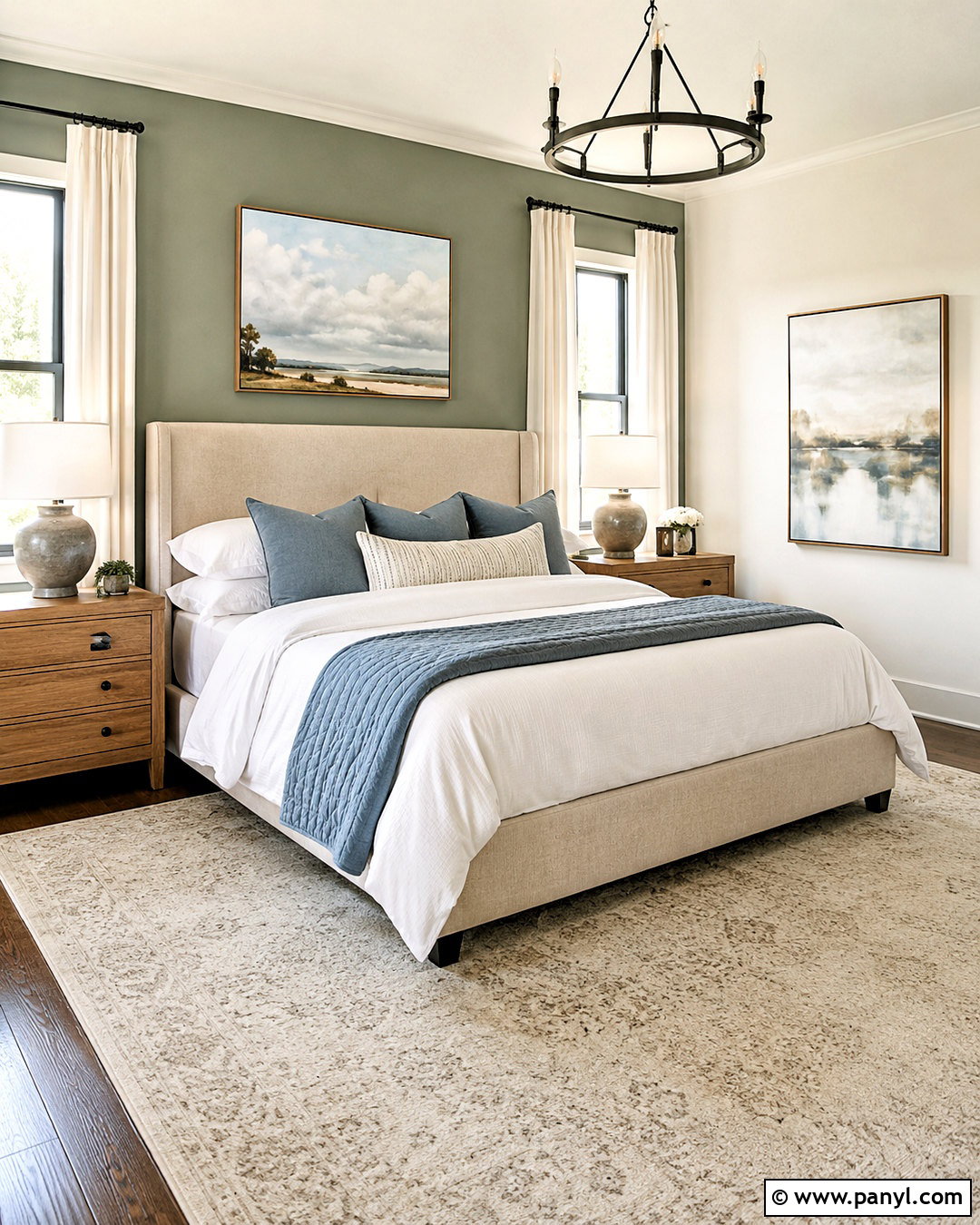
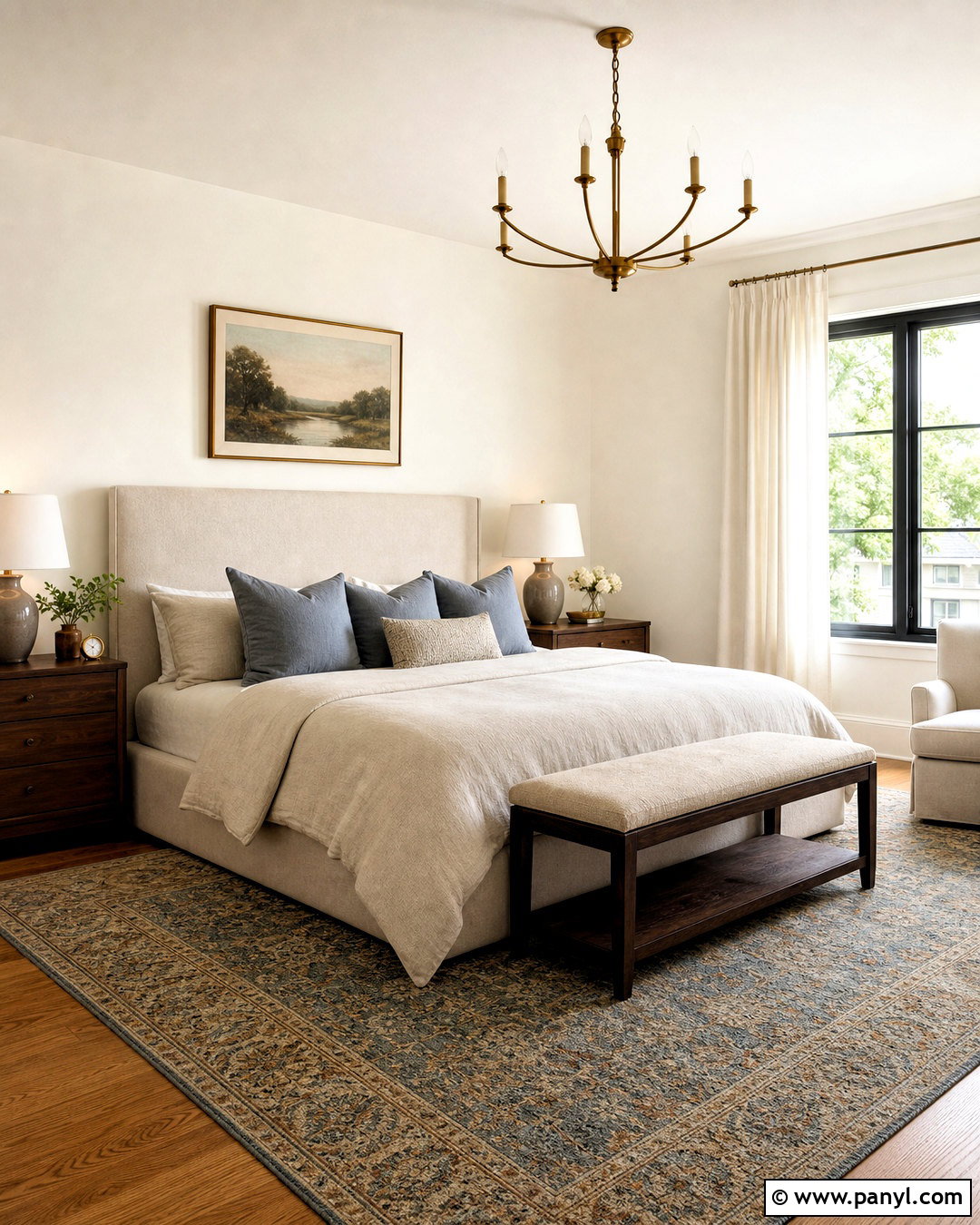
If four green walls feel like too much, use Silver Sage on the wall behind the bed and keep the remaining walls creamy white. This creates a gentle focal point while preserving an open, bright bedroom. Choose an upholstered bed in oatmeal or ivory so its silhouette stands out clearly against the sage-gray paint. Add pale oak nightstands, ceramic lamps, and white bedding layered with a quilt in muted green or dusty blue. A broad neutral rug should extend beyond both sides of the bed to make the layout feel generous. Hang one oversized textile, landscape print, or simple pair of framed artworks above the headboard. Repeat Silver Sage in only a few small details, such as a bench cushion or throw, to avoid making the room feel overly coordinated.
17. Silver Sage Color-Drenched Guest Room
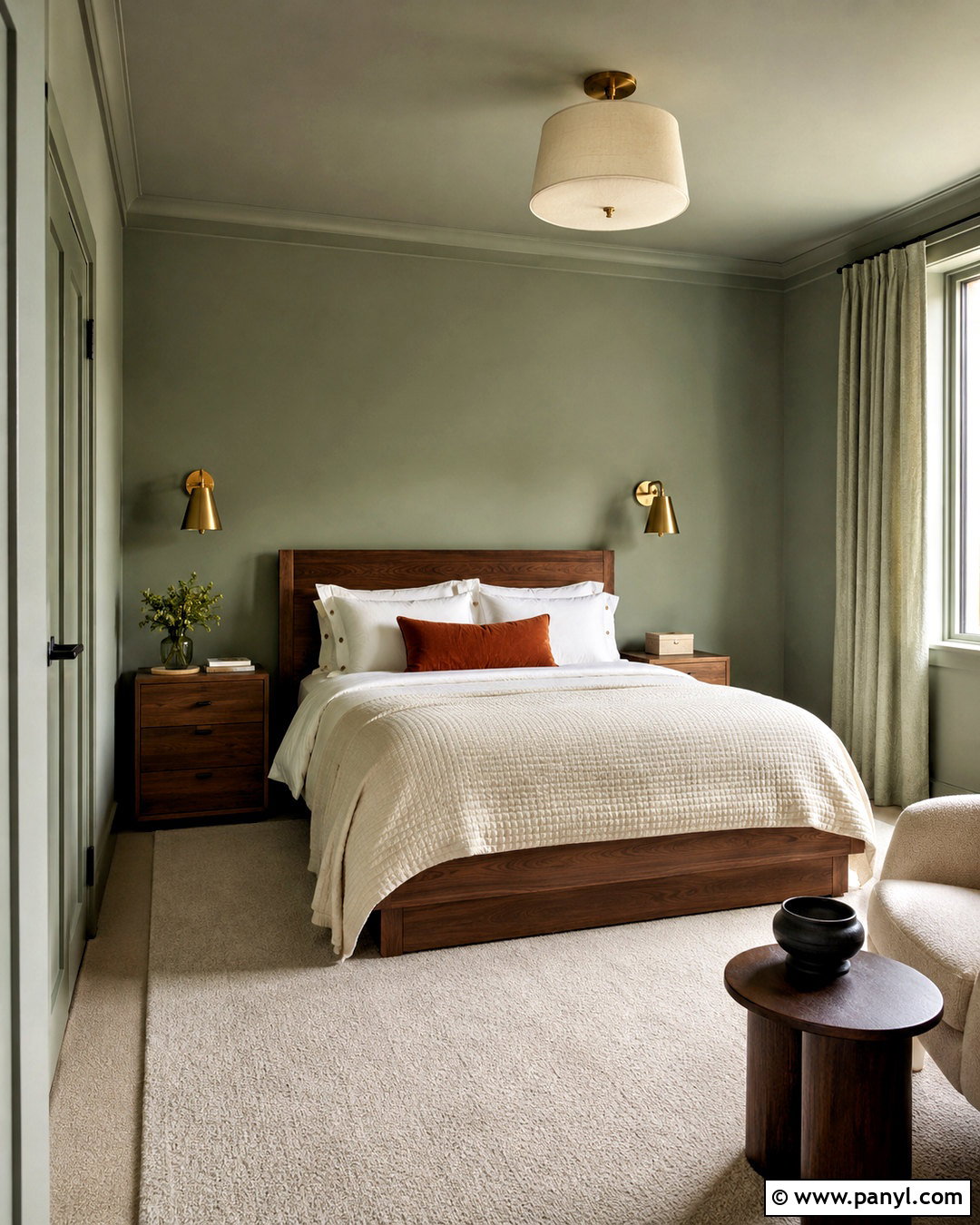
For an immersive but still gentle guest room, apply Silver Sage to the walls, trim, doors, and ceiling. Use a matte finish on broad surfaces and satin on woodwork so the single-color scheme gains subtle dimension. The result works best when the room has adequate daylight or layered artificial lighting. Furnish it with a walnut bed, crisp white bedding, and a textured ivory coverlet. Add warm brass reading sconces and medium-toned wood nightstands to prevent the paint from appearing chilly. A rust, muted rose, or tobacco-colored lumbar pillow can provide one controlled warm accent. Keep the window treatment close to the wall color with sage linen curtains. Finish with a cream rug and restrained artwork so the enveloping paint treatment remains the primary feature.
18. Silver Sage Farmhouse Kitchen
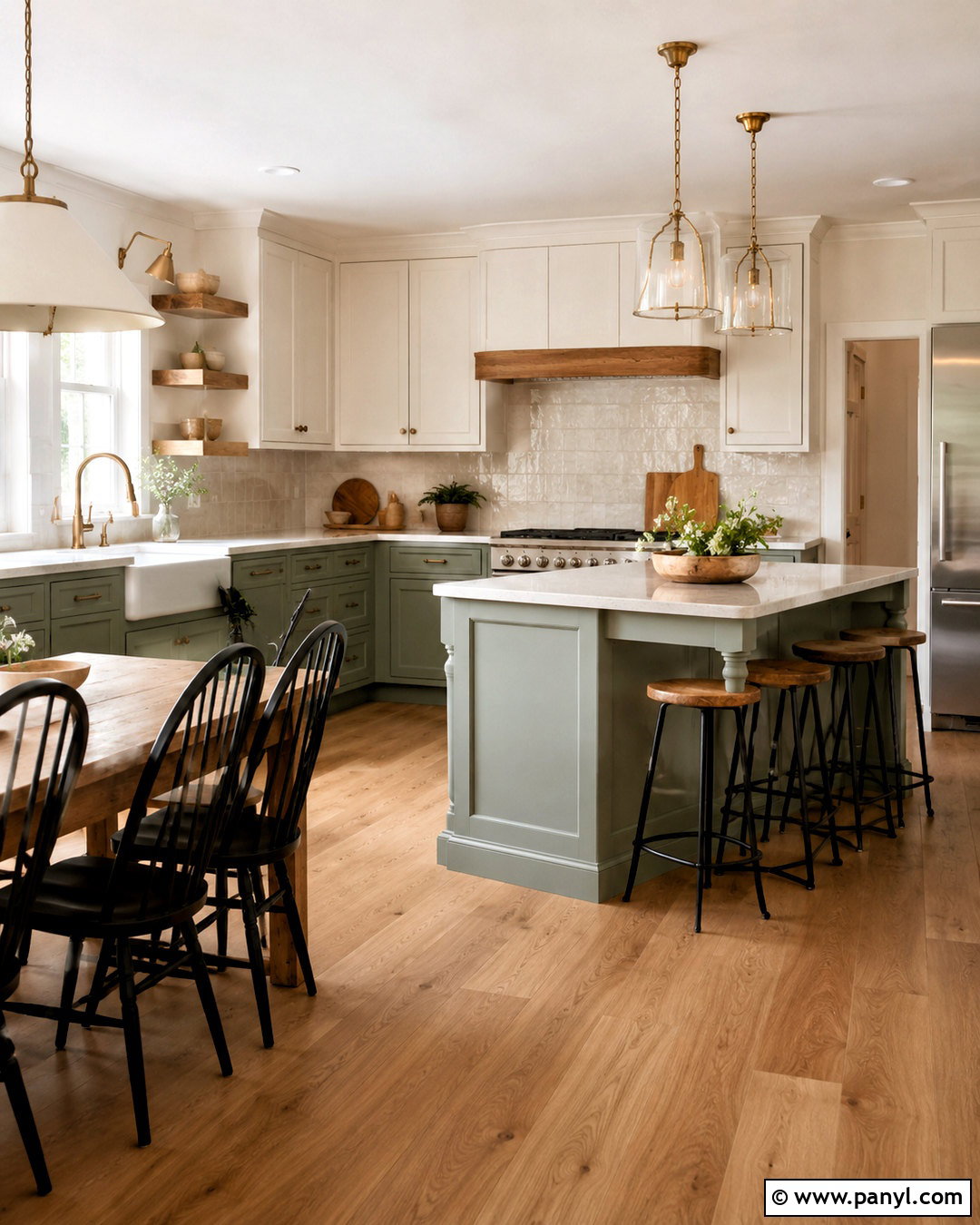
Silver Sage brings soft color to a farmhouse kitchen without depending on heavy distressing or overly rustic accessories. Paint the base cabinets and island in Silver Sage, then use warm white for the upper cabinets and walls. Add white quartz countertops, a fireclay apron-front sink, and a handmade-looking cream tile backsplash. Unlacquered brass hardware will develop warmth over time, while oak shelves provide space for practical dishes and ceramic containers. Choose wide-plank medium oak flooring and simple pendant lights with white shades. A wood dining table with spindle-back chairs can occupy a breakfast area beside the kitchen. Keep decorative signs and themed objects to a minimum. Instead, use linen towels, cutting boards, pottery, and fresh greenery to create an authentic, lived-in farmhouse appearance.
19. Silver Sage Coastal Living Room
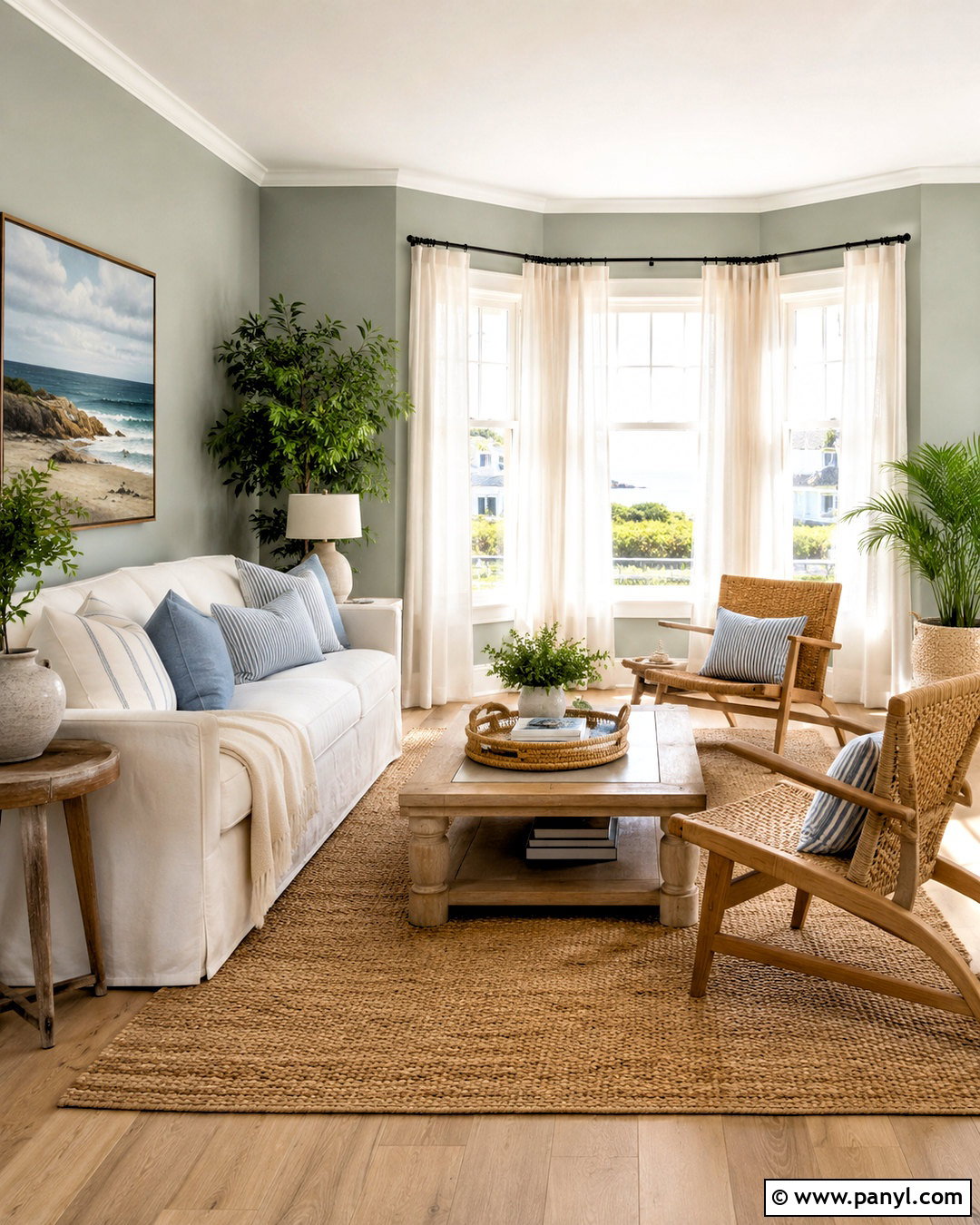
Silver Sage can support a coastal living room without relying on obvious nautical decorations. Paint the walls in the soft green-gray shade and pair them with white trim, pale oak flooring, and breezy ivory curtains. Choose a slipcovered sofa in warm white, two light wood lounge chairs with woven seats, and a large natural fiber rug. Introduce dusty blue through striped pillows, a ceramic lamp, or a single throw. A weathered oak coffee table adds relaxed texture without making the room look themed. Use framed coastal landscapes or abstract art instead of anchors and shells. Woven shades filter bright sunlight and provide privacy. Finish with one large plant and a few handmade ceramics. The complete space should feel fresh, casual, and connected to natural shoreline colors.
20. Silver Sage Modern Living Room
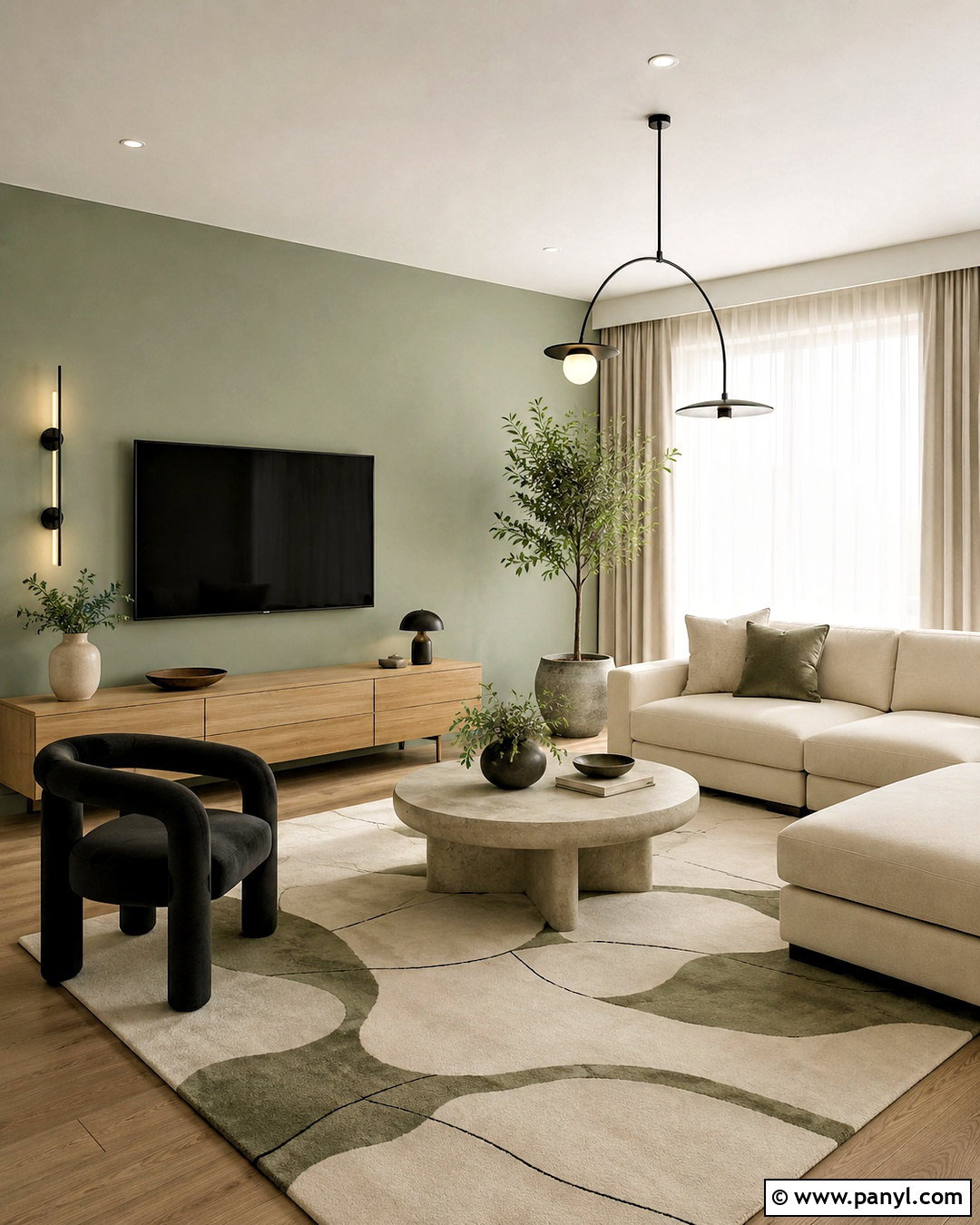
Clean lines make the softness of Silver Sage feel modern rather than traditional. Cover the walls in the sage-gray paint, then use a crisp white ceiling and minimal baseboards. Select a low-profile cream sofa, a sculptural black lounge chair, and a streamlined oak media console. A large abstract rug in ivory, gray, and muted green anchors the seating area. Choose a rounded stone coffee table to break up the straight furniture lines. Black floor lamps and slim metal picture frames add structure without overwhelming the subtle wall color. Keep accessories purposeful: one ceramic vessel, a stack of books, and a tall branch arrangement are enough. Full-length neutral curtains should hang close to the ceiling. This uncluttered composition allows Silver Sage to provide personality while preserving a polished modern atmosphere.
21. Silver Sage Cottage Bedroom
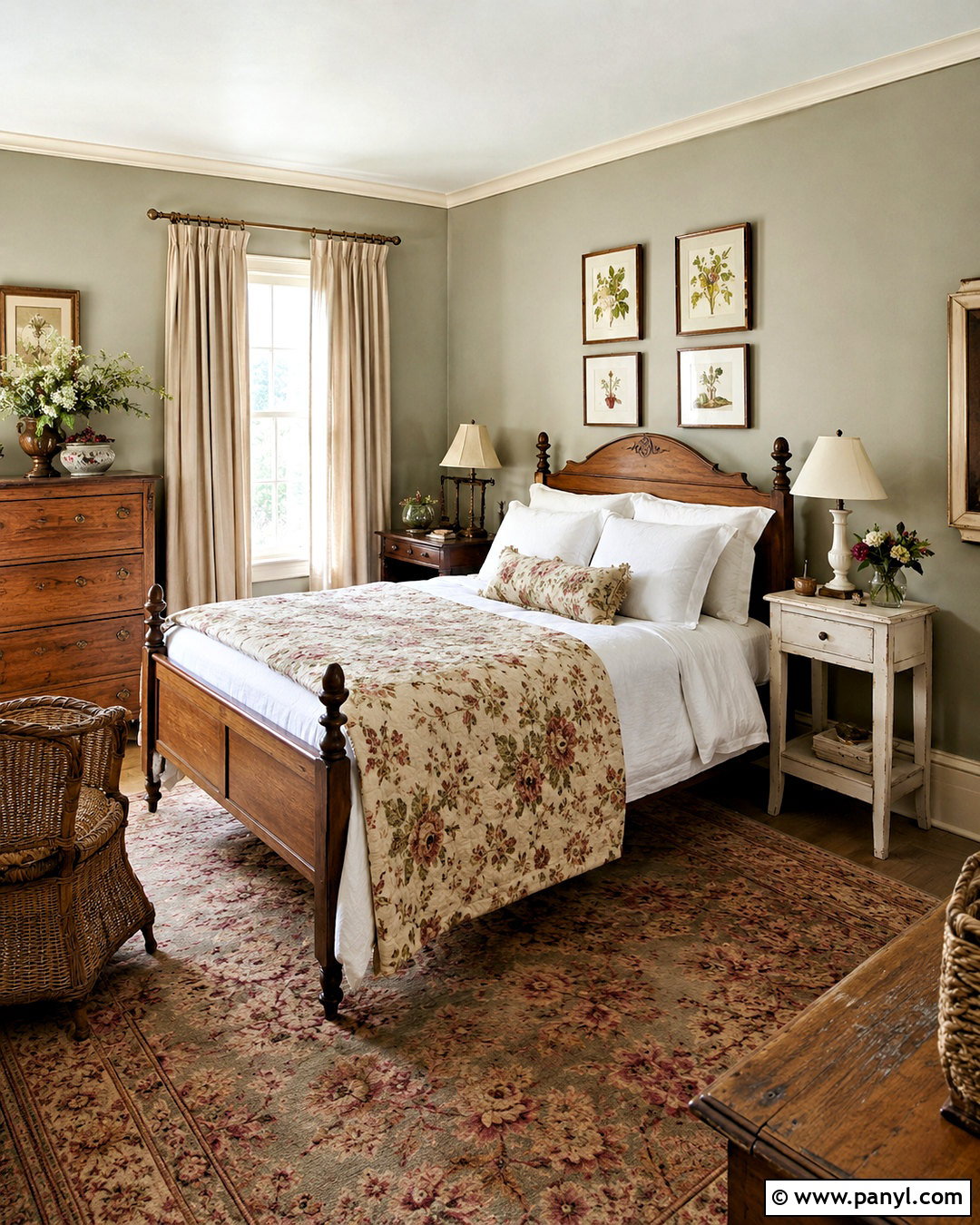
A cottage bedroom painted Silver Sage can feel charming and collected without becoming fussy. Pair the walls with creamy white trim and a simple painted or antique wood bed. Layer the bedding with white linen, a small-scale floral quilt, and one soft green blanket. Use mismatched wood nightstands of similar height to create an informal, balanced look. A faded rug in rose, beige, and green adds warmth underfoot. Hang café curtains or lightly gathered linen panels at the windows to maintain softness. Botanical prints, a pleated lampshade, and a small ceramic vase provide familiar cottage details. Keep the furniture scale modest so the room remains comfortable. A vintage pine dresser and woven basket can supply practical storage while strengthening the relaxed, time-worn character.
22. Silver Sage Scandinavian Dining Room
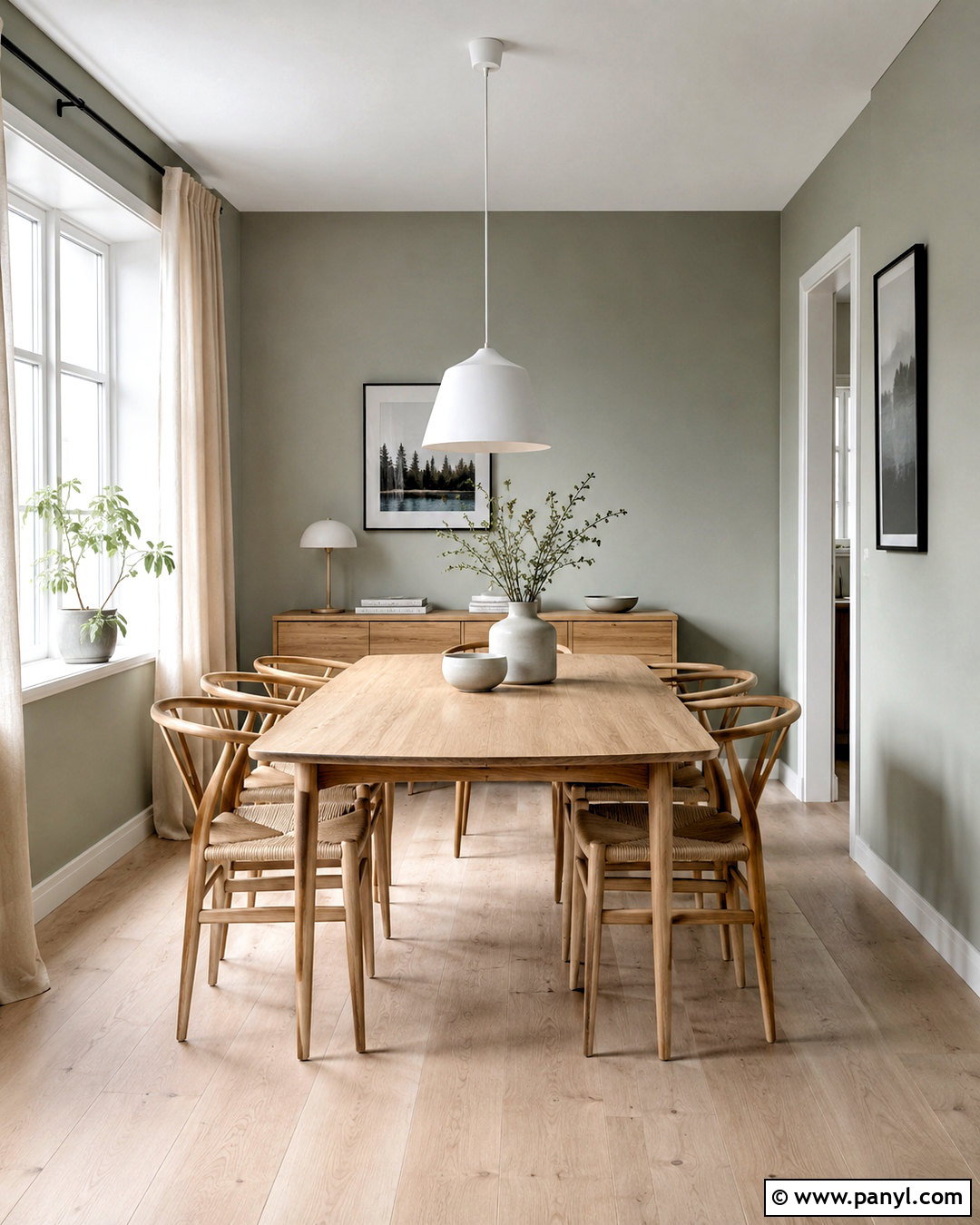
Silver Sage walls add quiet color to a Scandinavian-inspired dining room built around pale wood and simple forms. Use white oak flooring, a rectangular oak table, and chairs with curved backs or woven seats. Keep the ceiling and trim clean white to maintain a crisp outline around the walls. Hang one oversized paper or white metal pendant above the table for a strong but uncomplicated focal point. A low oak sideboard can hold serving pieces behind closed doors, helping the room stay uncluttered. Add a light gray flat-weave rug and full-length natural linen curtains. Black accents should remain minimal, appearing in a few picture frames or a slim candleholder. Finish with neutral ceramics and one branch arrangement. The result feels warm, functional, and intentionally restrained.
23. Silver Sage Boho Bedroom
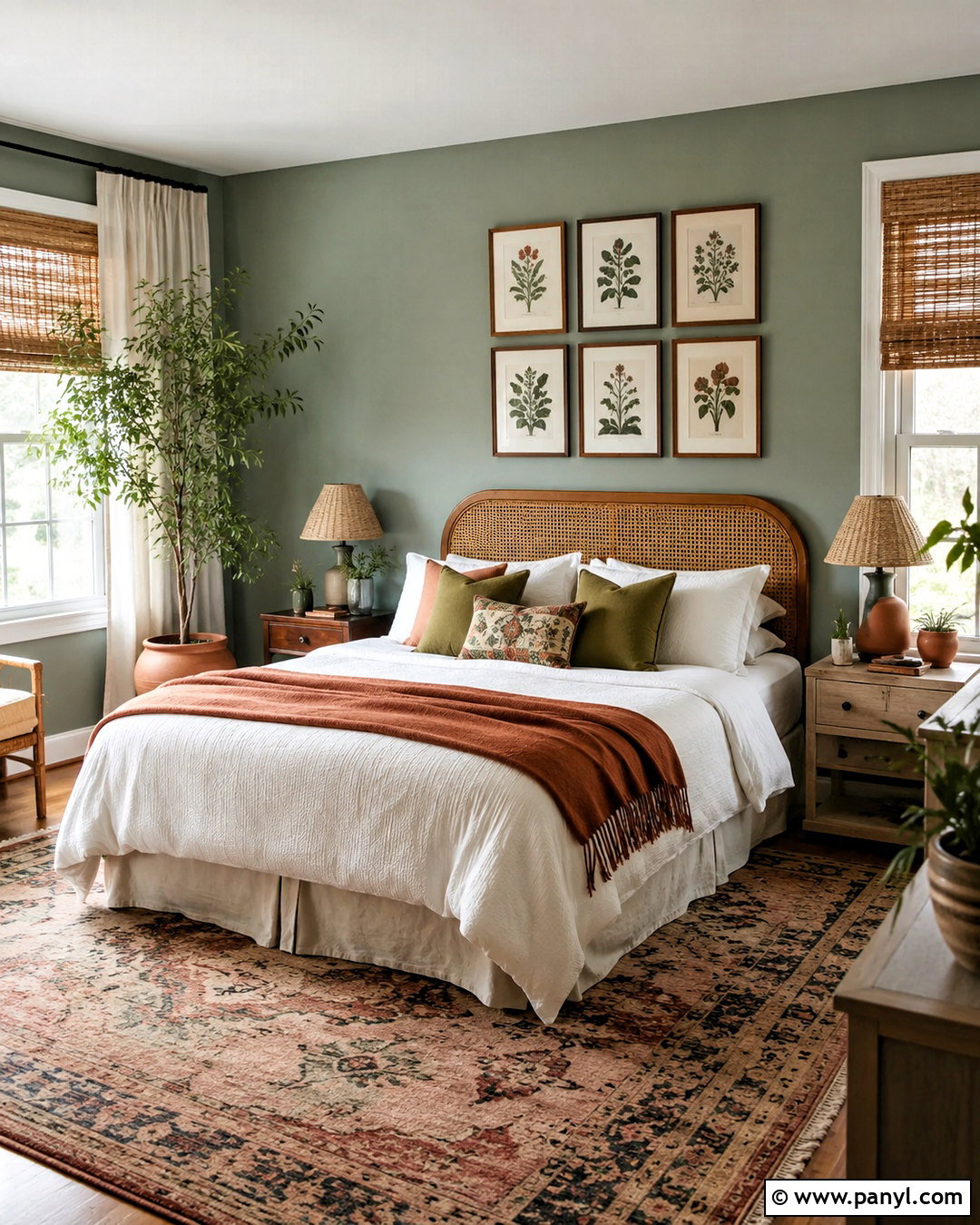
For a relaxed boho bedroom, use Silver Sage as a quiet backdrop for layered natural materials and warm earthy accents. Choose a cane or light wood headboard, then add ivory bedding, a clay-colored blanket, and patterned pillows in olive, cream, and faded rust. Place mismatched wooden nightstands beside the bed and illuminate them with woven or ceramic lamps. A vintage-inspired rug brings richer color to the floor without competing with the walls. Hang one woven textile or a balanced group of botanical prints above the headboard. Use off-white curtains with bamboo shades for layered privacy. Include plants in terracotta pots, but avoid filling every surface. The completed room should appear personal and textured while maintaining clear walking space and useful storage.
24. Silver Sage Traditional Sitting Room
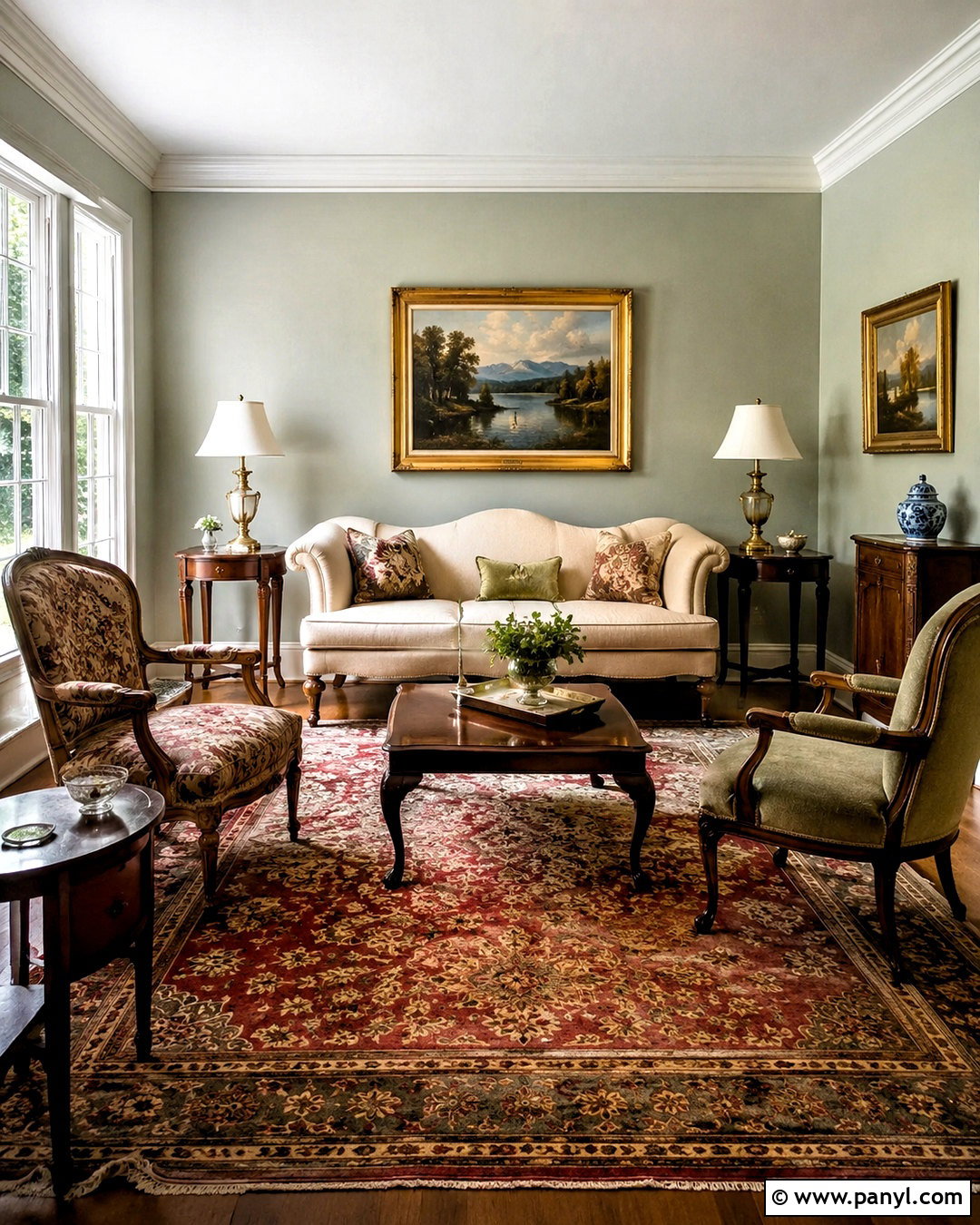
Silver Sage works beautifully in a traditional sitting room when it is supported by classic furniture and carefully controlled pattern. Paint the walls sage-gray, then emphasize crown molding, window casings, and baseboards with warm white. Arrange a camelback sofa in cream fabric with two wood-framed armchairs upholstered in a small check or subtle botanical print. A dark wood coffee table and matching side tables introduce visual weight. Use a wool rug containing faded red, beige, and green to connect the furniture with the walls. Hang a landscape painting in a muted gold frame above a narrow console. Pleated lampshades and brass fixtures add familiar traditional details. Keep the room symmetrical but not rigid by varying the smaller accessories on each side of the seating arrangement.
25. Silver Sage Open-Concept Main Floor
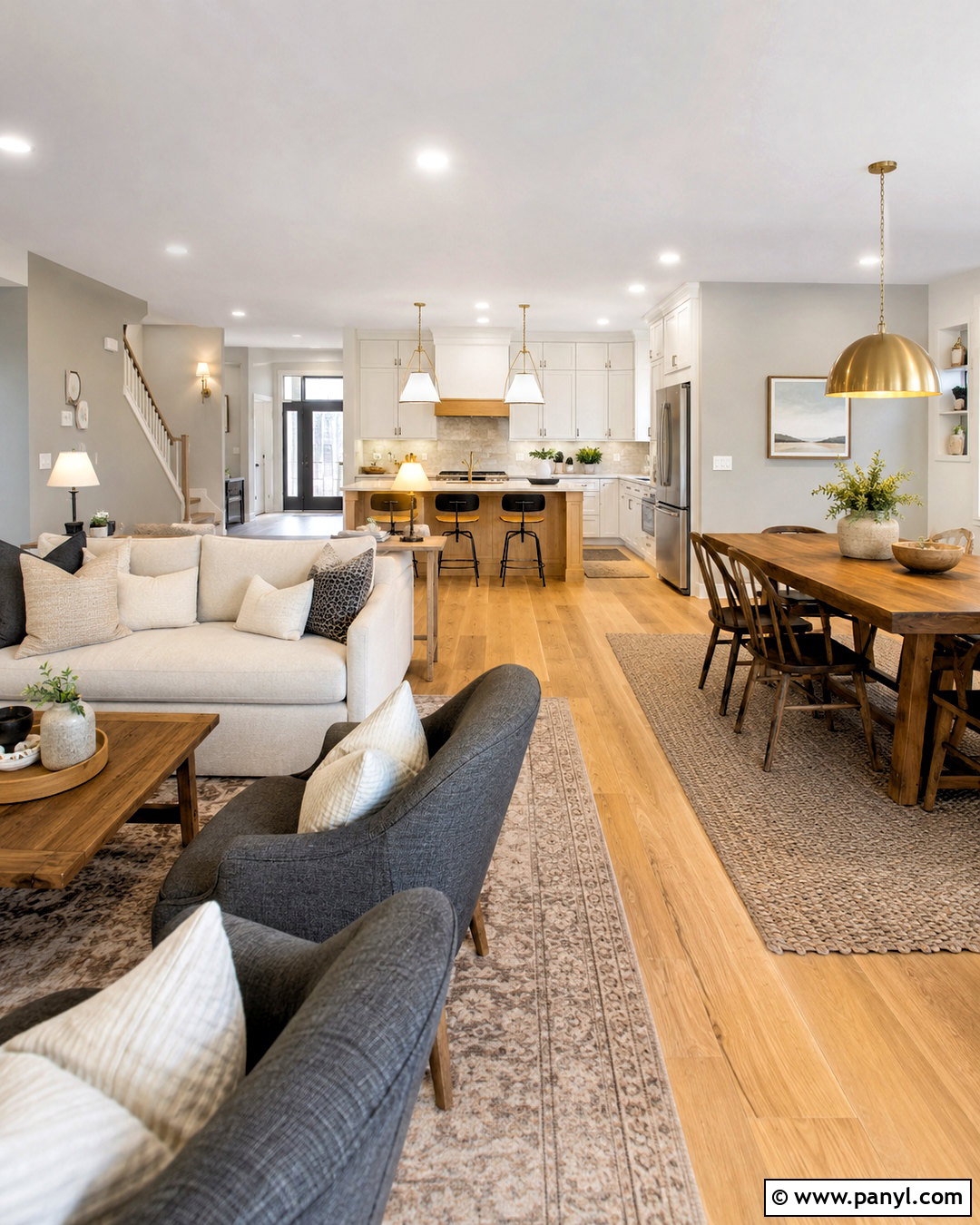
Using Silver Sage across an open-concept main floor can create flow while allowing each zone to have its own purpose. Apply the color to the shared walls in the living, dining, and kitchen areas. Use warm white on ceilings, doors, and trim for consistent contrast. Repeat medium oak through the flooring, dining table, and selected kitchen details. In the living area, choose a cream sofa and charcoal accent chairs. In the dining zone, add a simple wood table beneath a brass pendant. Keep kitchen cabinets warm white or natural oak so Silver Sage does not dominate every surface. Repeat muted green in rugs and textiles rather than exact matching accessories. Consistent metals and wood tones will help the separate spaces appear connected, balanced, and intentionally planned.
26. Silver Sage Small Apartment Living Room
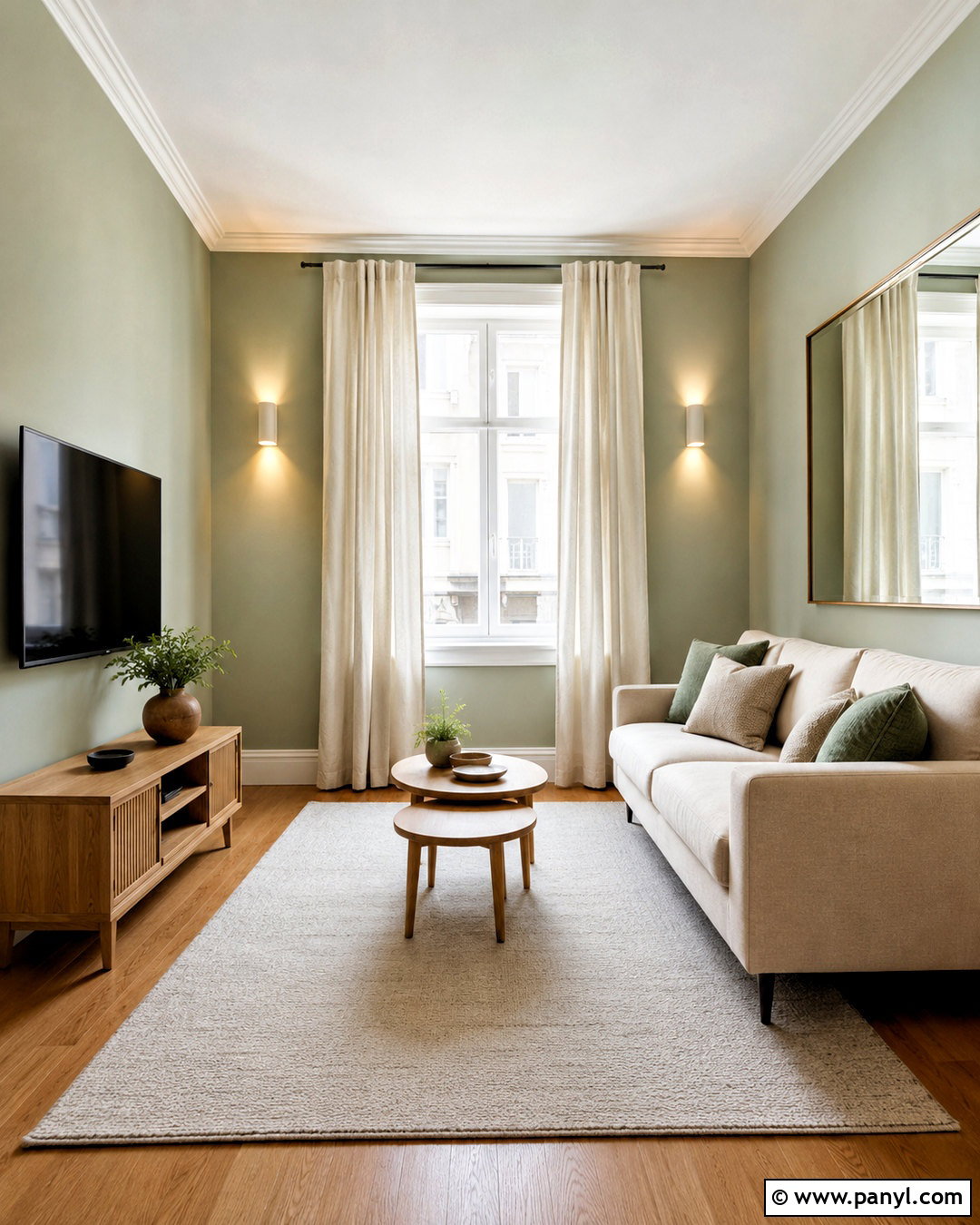
Silver Sage can give a small apartment living room definition without making it feel noticeably darker. Paint the main walls in the color and retain white trim, ceilings, and interior doors. Select an apartment-scale beige sofa with exposed legs, a compact oak media cabinet, and nesting coffee tables that can be moved when needed. A large light-colored rug visually expands the seating area and creates separation from an adjoining dining space. Hang curtains high and wide so the window appears larger. Use wall-mounted sconces or a slim floor lamp instead of bulky table lamps. One oversized mirror can reflect light and add depth. Keep storage closed wherever possible, and limit decorative objects to a few meaningful pieces so the pale sage walls remain calm rather than busy.
27. Silver Sage Basement Family Room
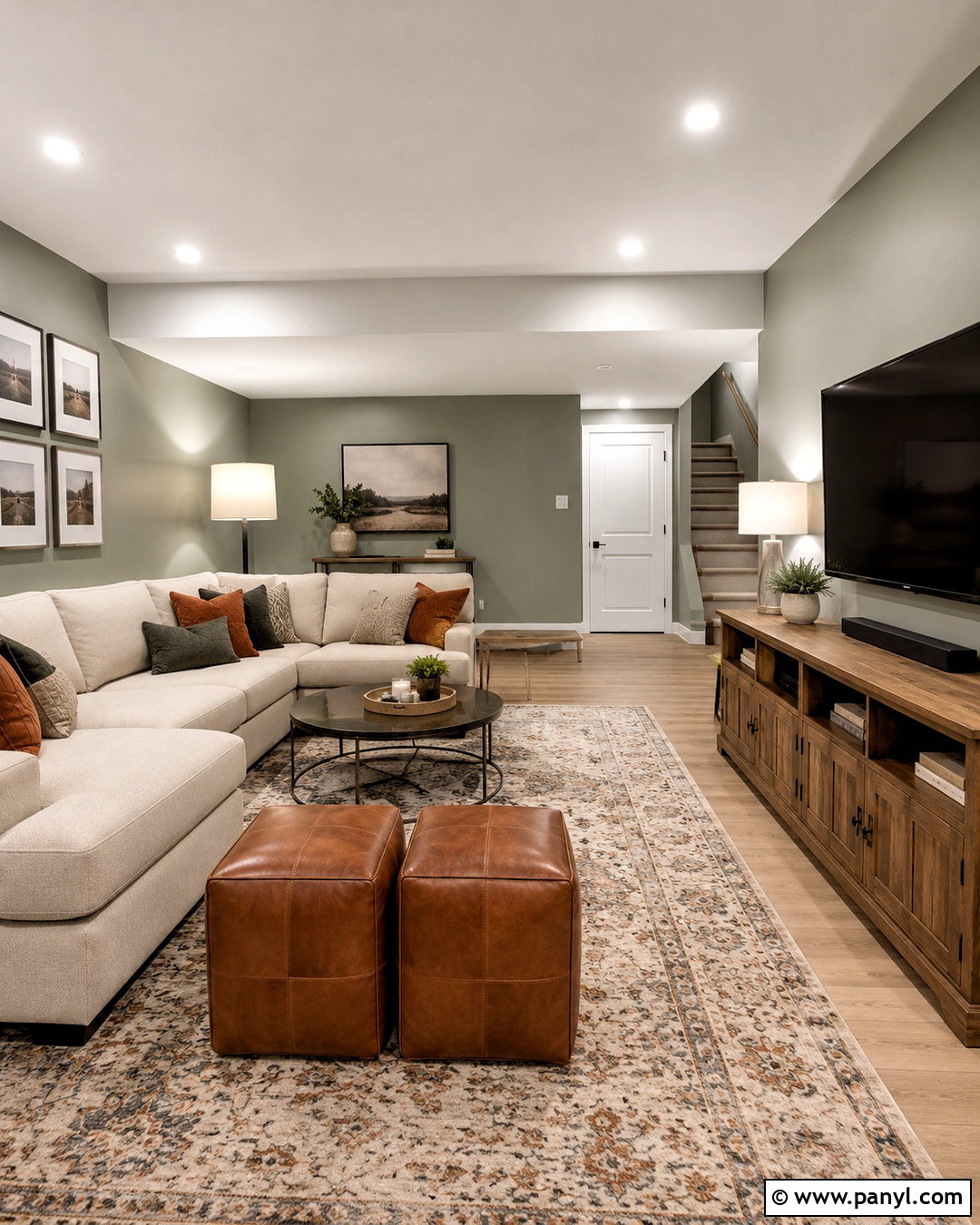
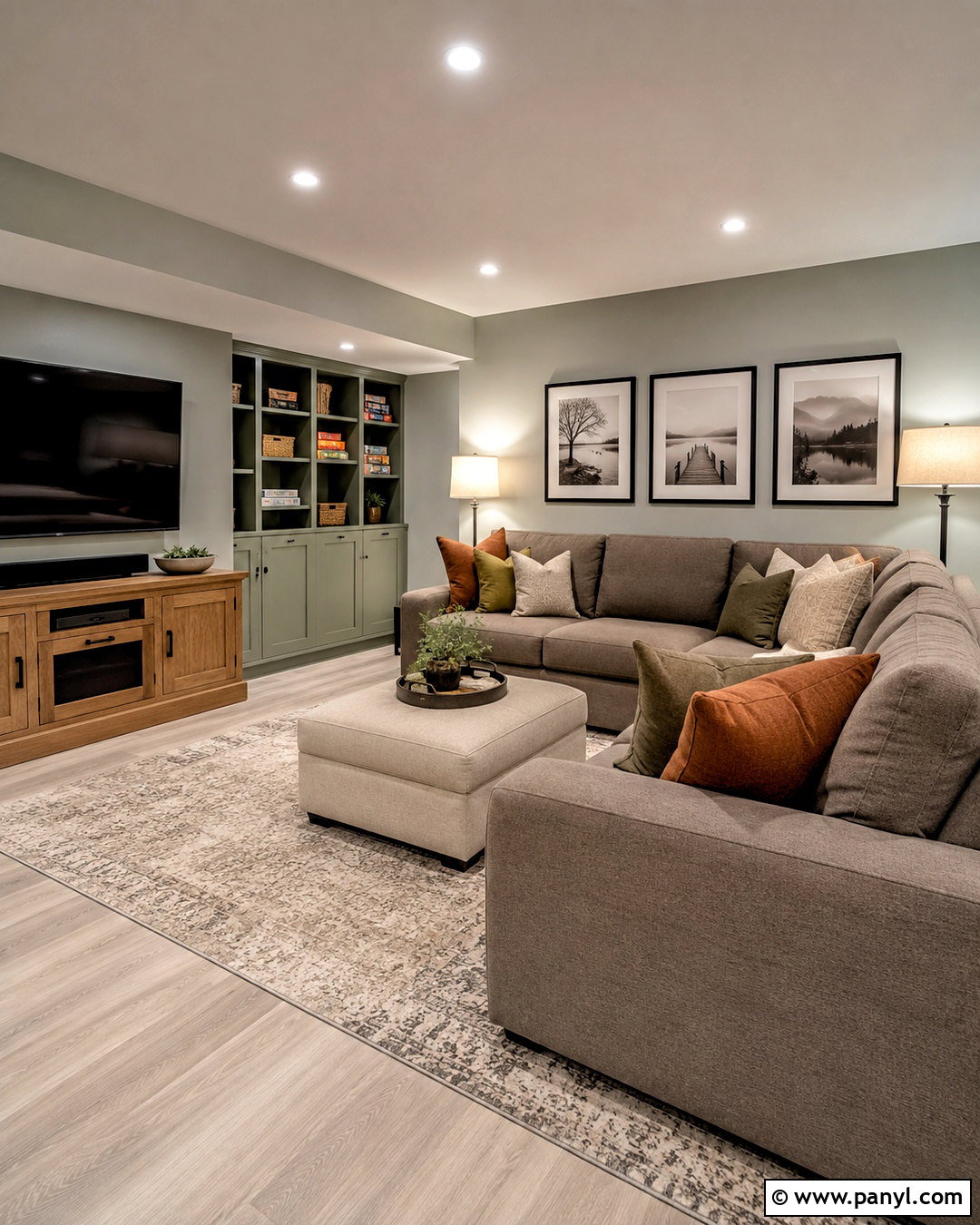
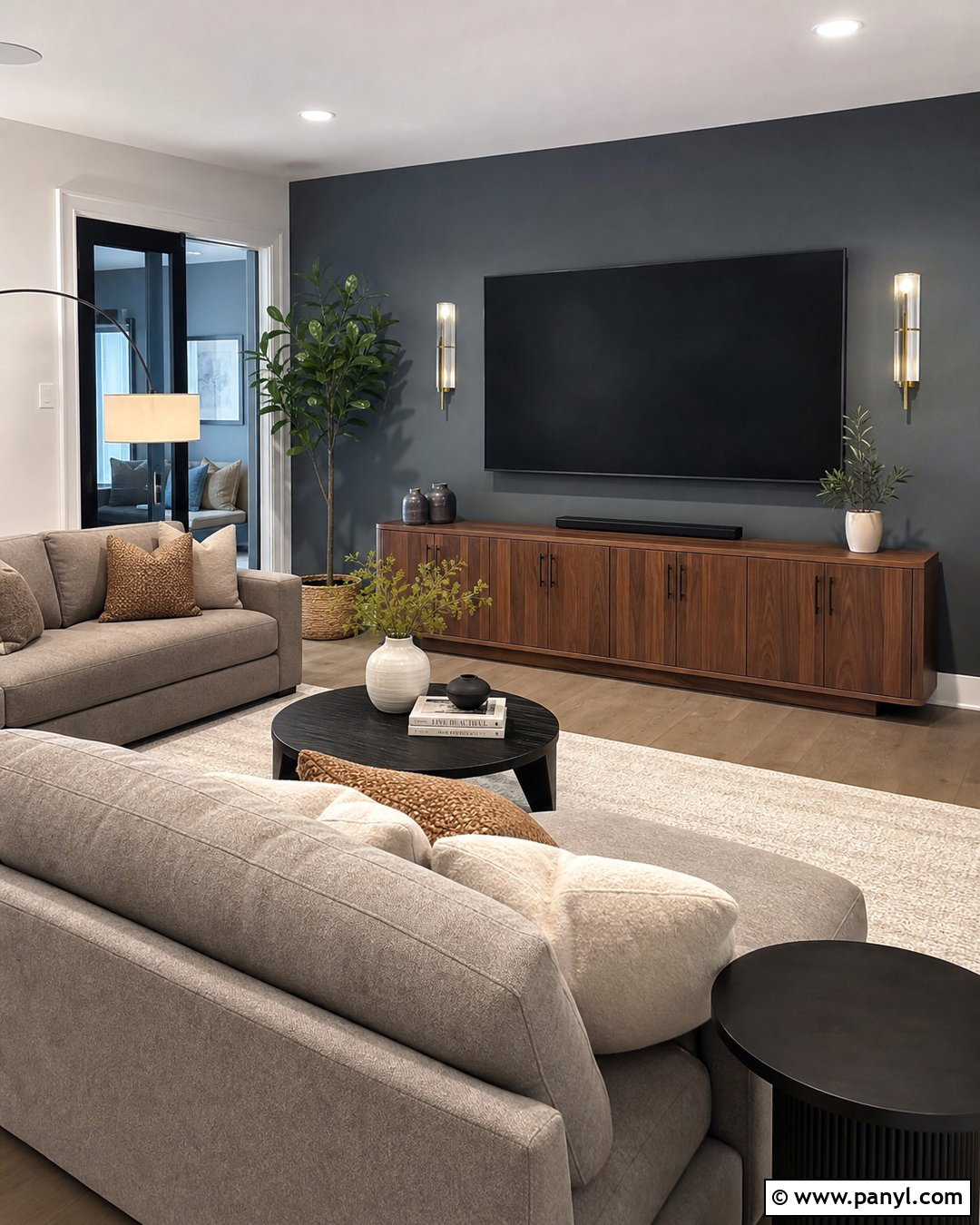
Bring softness to a basement family room by combining Silver Sage walls with bright trim and layered lighting. Since below-grade rooms often receive limited daylight, test the color beneath the permanent ceiling fixtures before painting the entire space. Use warm white on the ceiling and doors, then install recessed lights with additional table and floor lamps. Choose a comfortable oatmeal sectional, a durable patterned rug, and a medium oak media unit. Leather or performance-fabric ottomans can provide extra seating and practical surfaces. Add muted rust, deep green, or charcoal through pillows and artwork to give the pale walls more depth. Avoid filling the room with dark furniture. A combination of closed cabinets, baskets, and game storage will help the completed family room remain comfortable and organized.
28. Silver Sage Bathroom Vanity
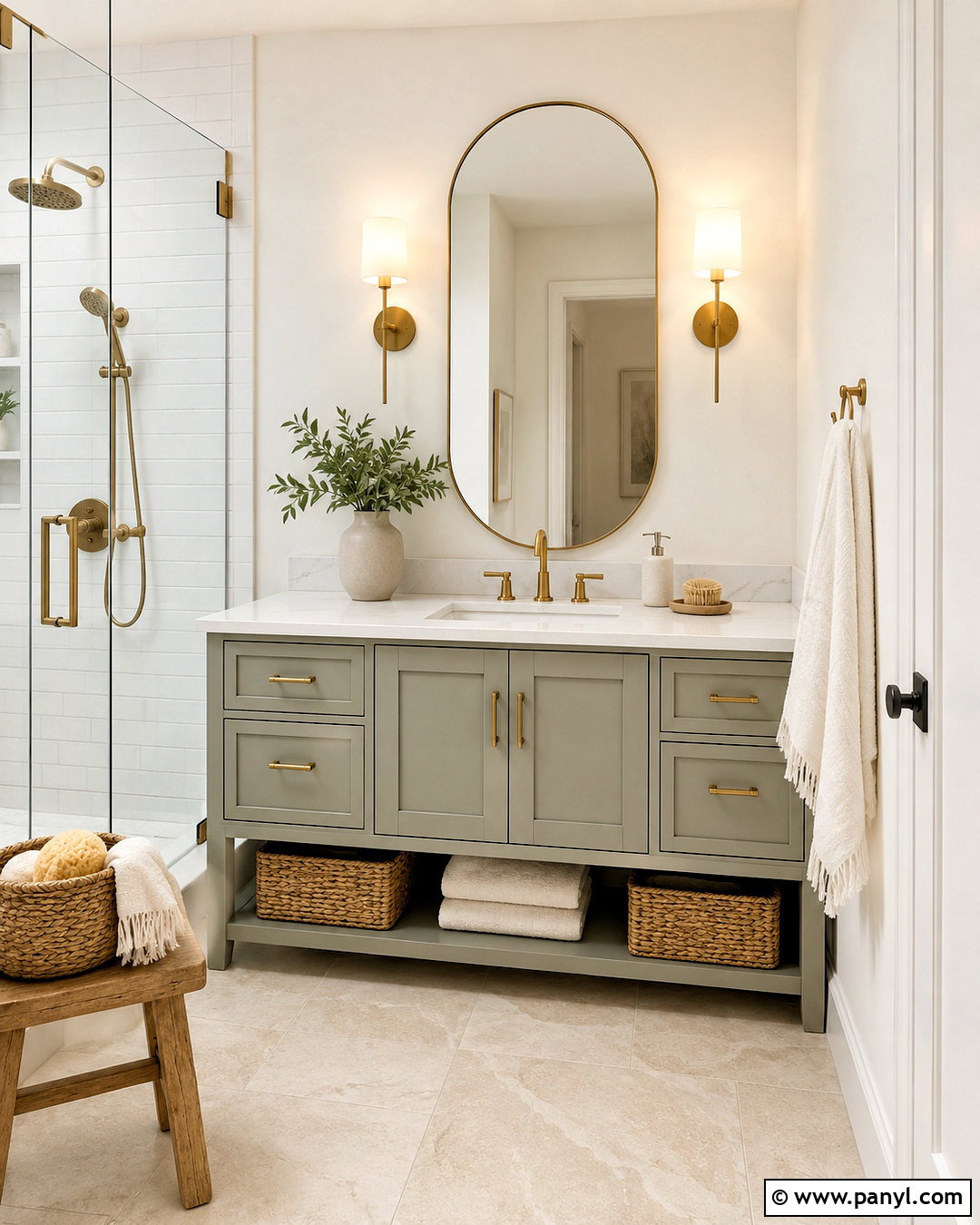
A Silver Sage vanity can introduce color into a bathroom while keeping the walls bright and neutral. Paint a freestanding or built-in vanity in a durable satin cabinet finish, then pair it with warm white walls and lightly veined quartz counters. Brushed brass hardware and faucets emphasize the gentle green tones, while polished nickel creates a cooler, quieter result. Install a large rounded mirror and balanced wall sconces for clear task lighting. White shower tile and pale stone-look flooring maintain a clean background. Add an oak stool, woven basket, and neatly folded cream towels for warmth. Repeat Silver Sage only once elsewhere, perhaps on a small wall cabinet. This focused approach makes the vanity feel special while allowing future accessories and textiles to change easily.
29. Silver Sage Kitchen Island
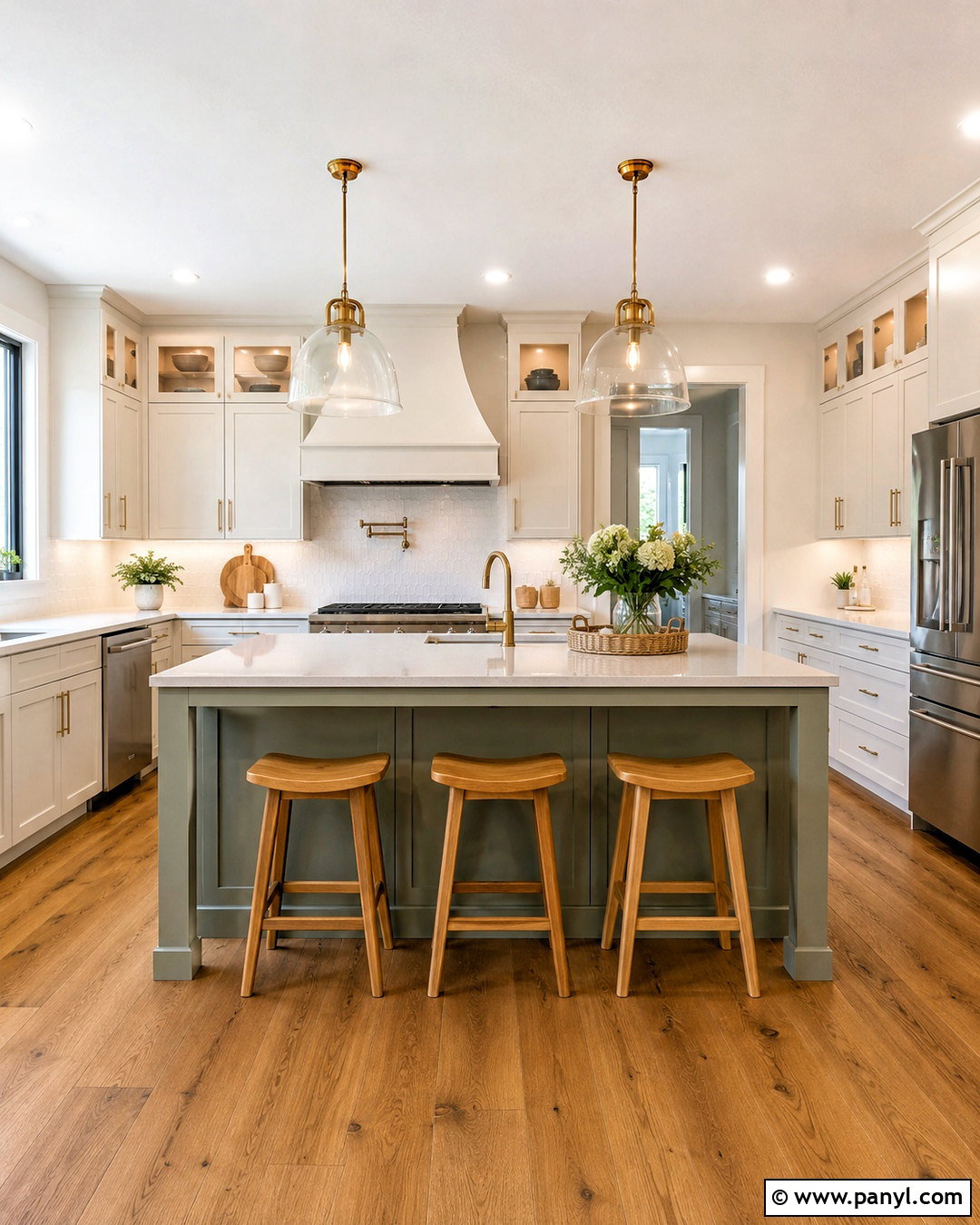
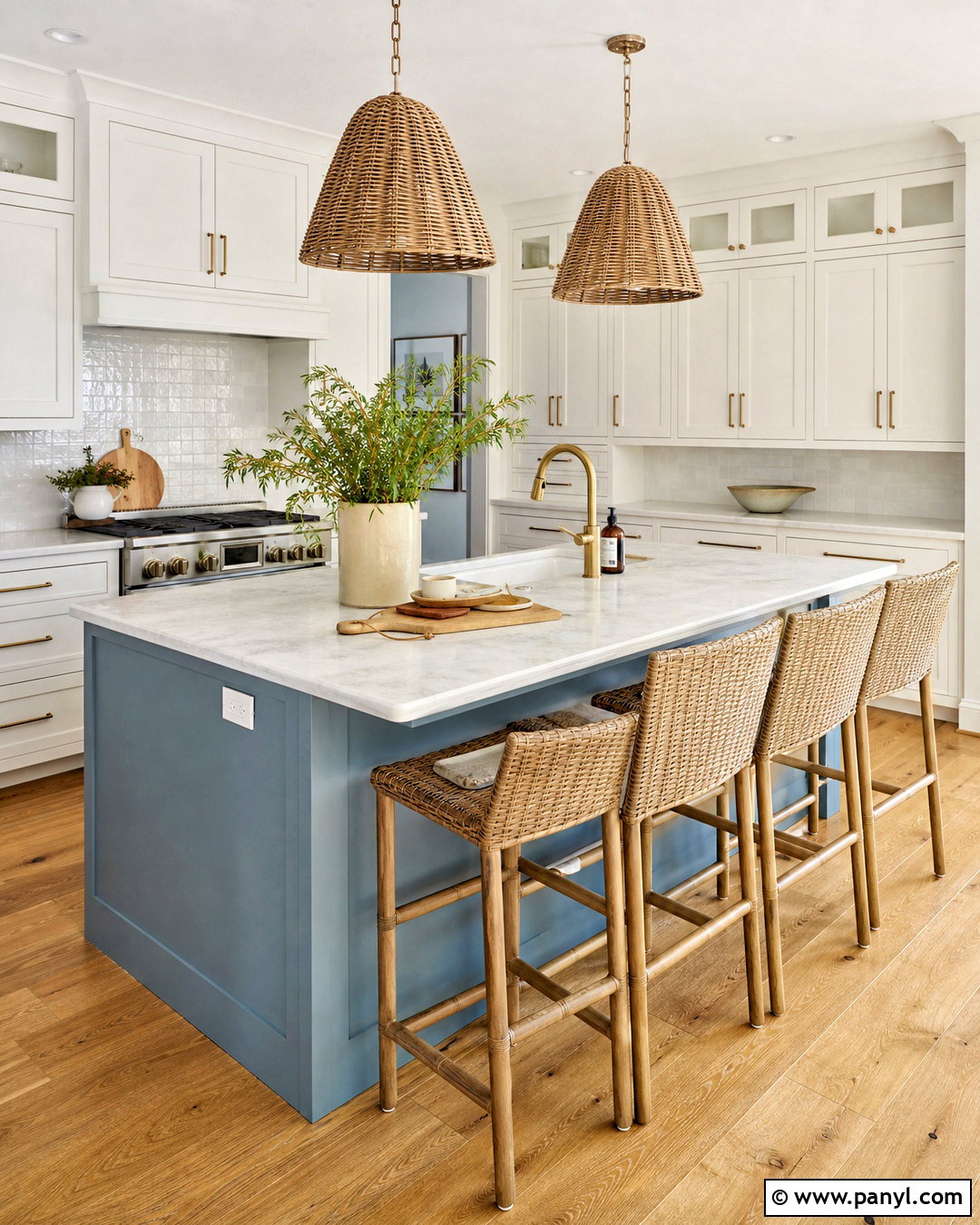
Painting only the kitchen island Silver Sage is a practical way to introduce the color without refinishing every cabinet. Surround it with warm white perimeter cabinetry, pale quartz countertops, and a softly textured white backsplash. Top the island with the same countertop for continuity, or use butcher block to add warmth. Choose brass or matte black hardware based on the kitchen’s lighting and appliances. Three simple glass pendants will keep the island visible without creating a heavy overhead feature. Add counter stools in oak, woven cane, or cream upholstery. Medium wood flooring grounds the light palette. Repeat the sage tone in one small runner or ceramic accessory rather than throughout the room. The island becomes a clear focal point while the complete kitchen remains bright and flexible.
30. Silver Sage Front Door With White Siding
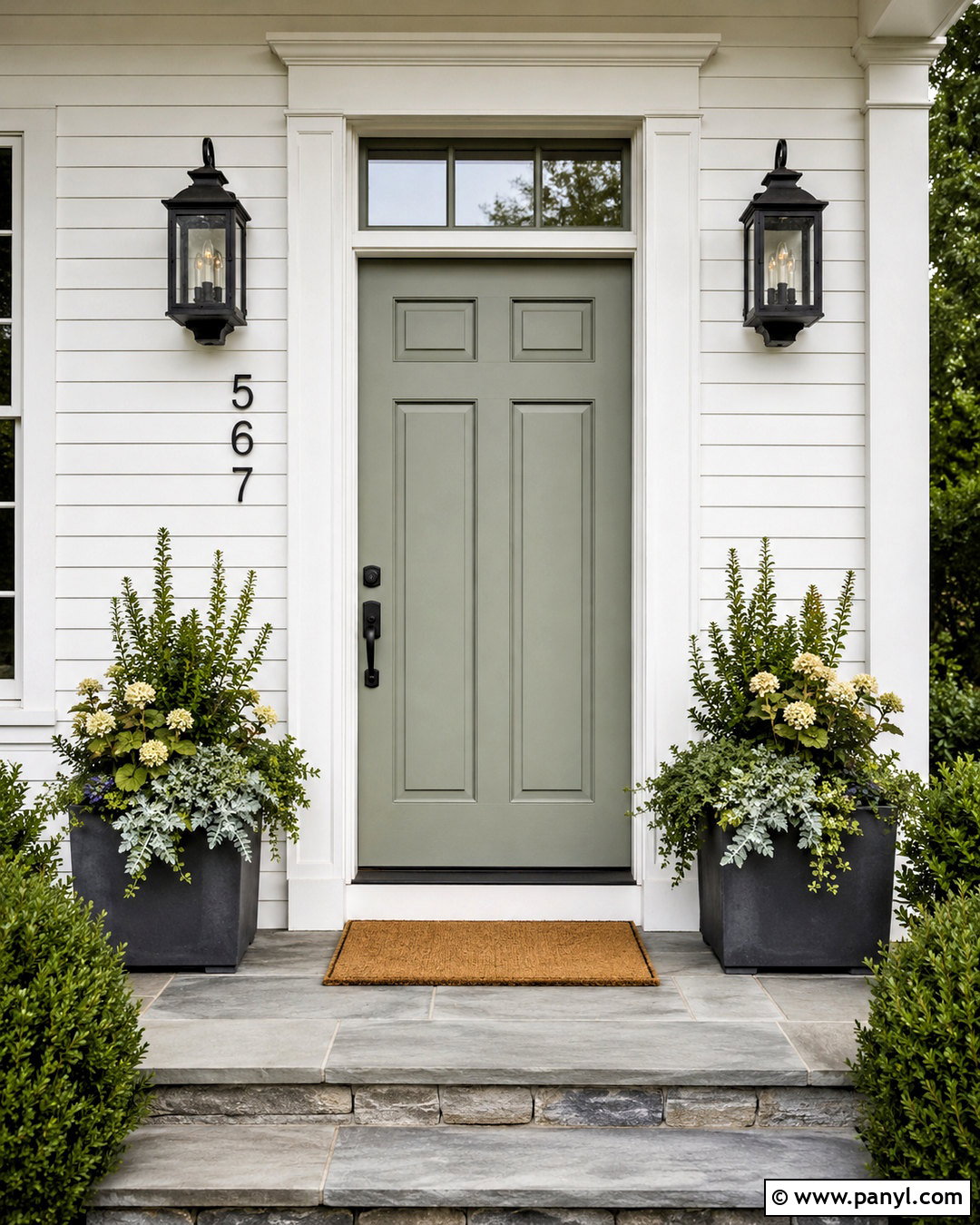
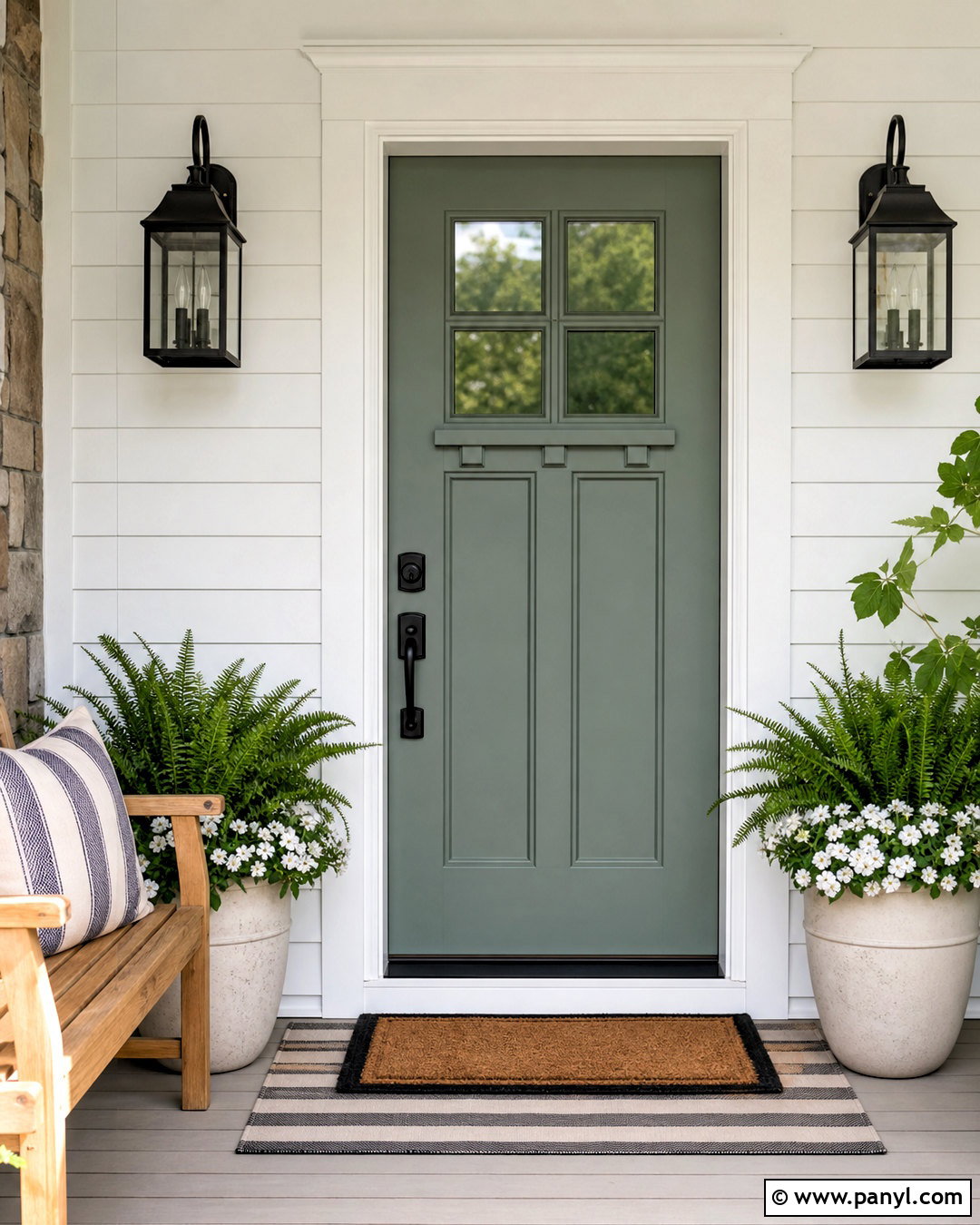
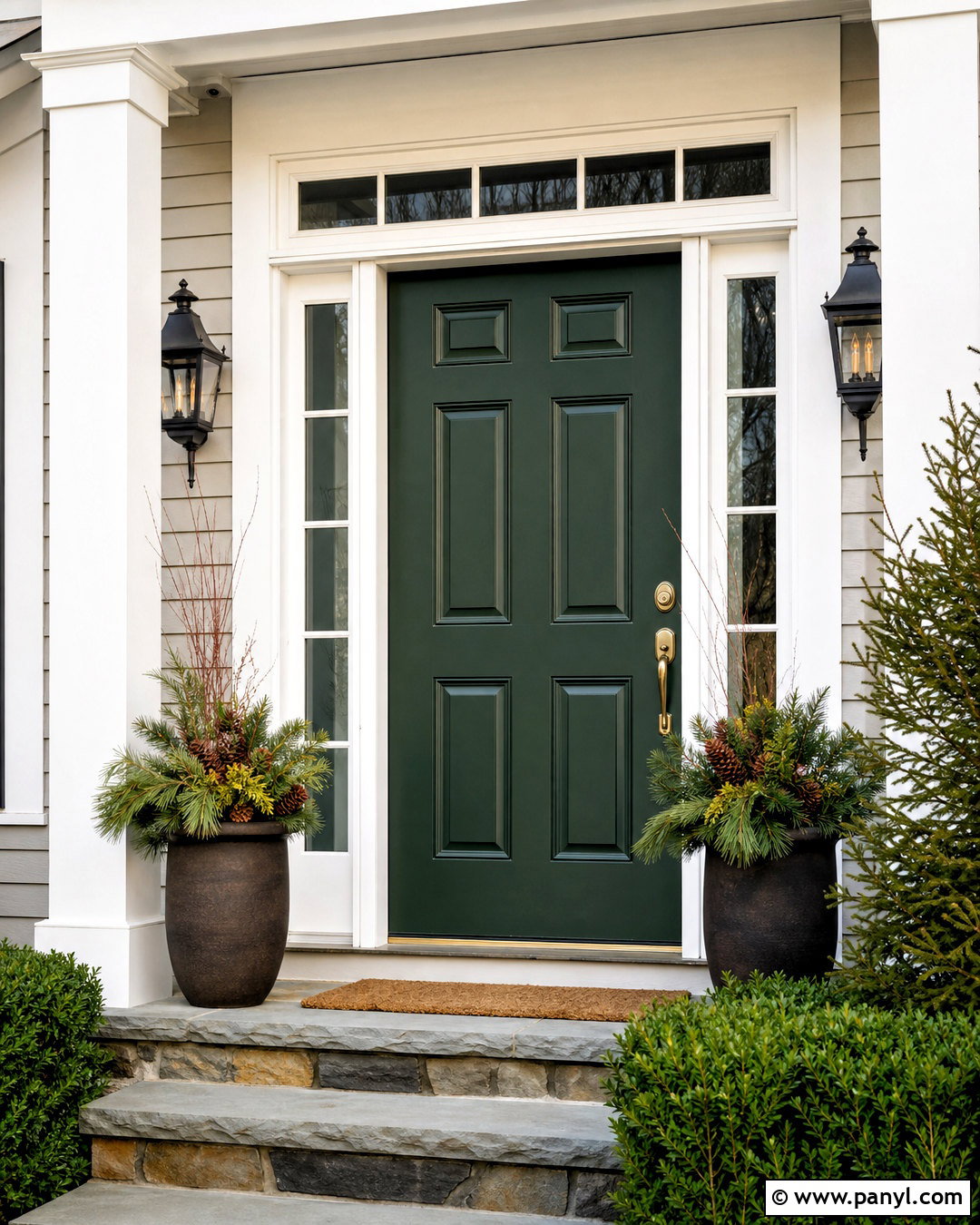
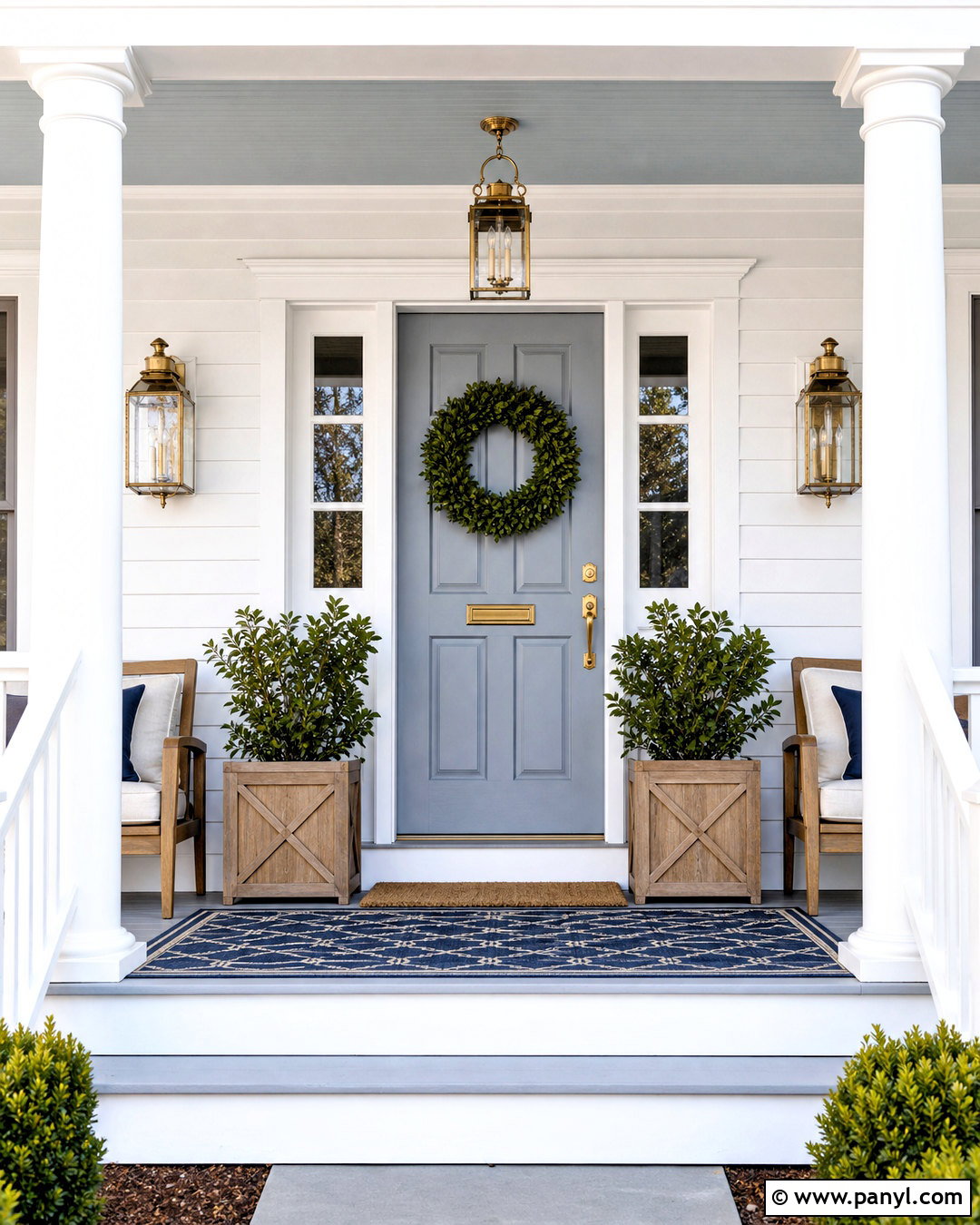
Silver Sage creates a refined front door color for a white or cream house exterior. Apply it to a paneled wood or fiberglass door in an exterior-rated satin finish, then surround it with clean white trim. Black lanterns, house numbers, and a simple handle set provide crisp contrast. Ground the entrance with a natural coir mat and two substantial planters filled with layered green foliage. If the porch has room, add a light wood bench or black metal chair rather than numerous small decorations. Use gray stone steps or a warm brick walkway to bring texture into the scheme. The restrained palette lets the door remain noticeable without appearing loud. Test the paint outdoors because direct sun and deep porch shade can change how the green-gray undertones are perceived.
31. Silver Sage Porch Ceiling
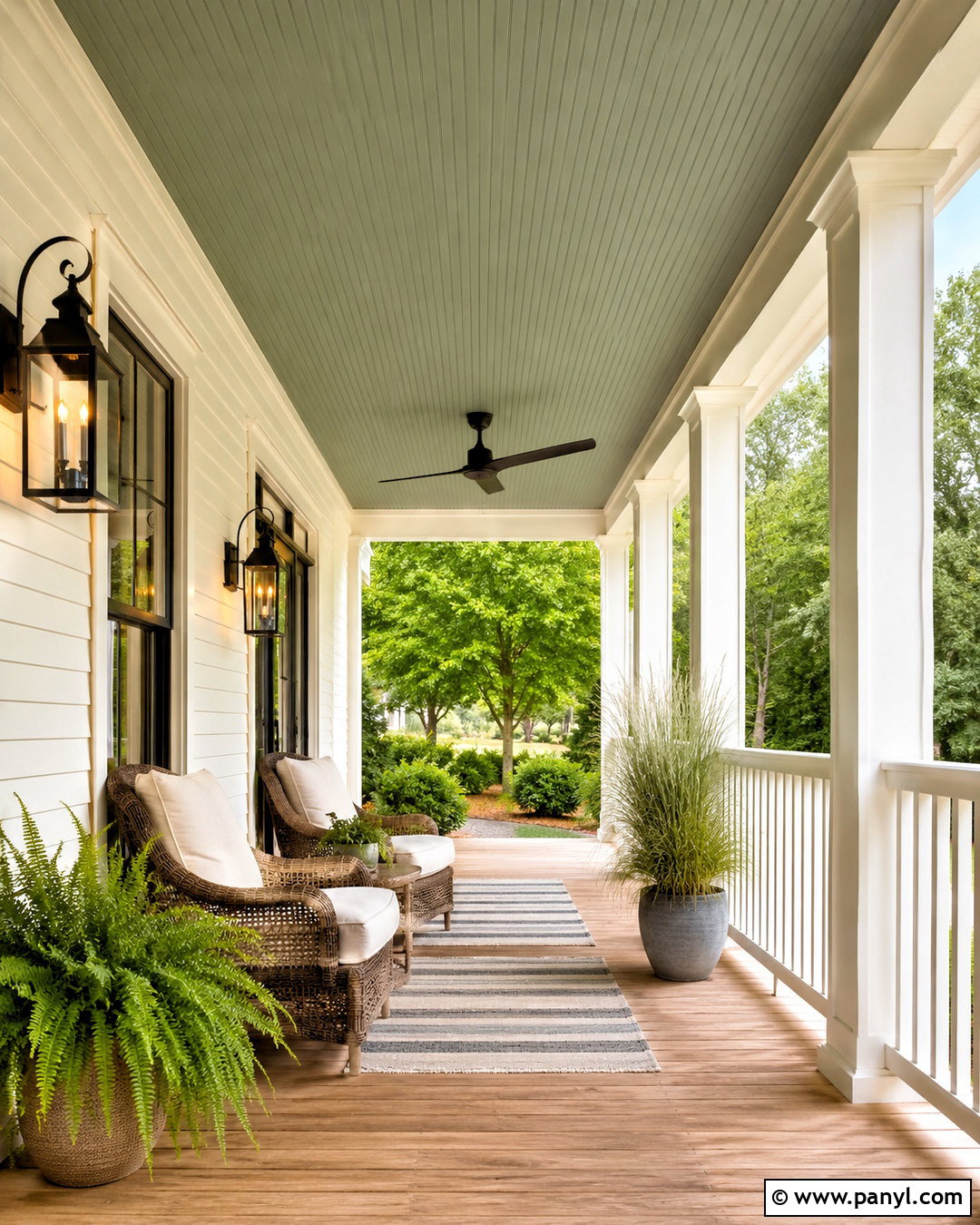
A Silver Sage porch ceiling offers a subtle layer of color above an otherwise neutral outdoor space. Pair the painted ceiling with warm white siding, white columns, and natural wood decking. Use black lantern-style fixtures and a simple ceiling fan to define the architecture. Arrange two woven lounge chairs or a compact outdoor sofa with cushions in cream performance fabric. Add muted blue or olive pillows for quiet contrast. A washable striped rug can establish the seating area, while large planters with ferns and grasses soften the porch edges. Keep railings and trim consistent with the house body so the ceiling remains the special detail. The full porch should feel light, comfortable, and connected to surrounding landscaping rather than heavily decorated or strongly themed.
32. Silver Sage Exterior With Cream Trim
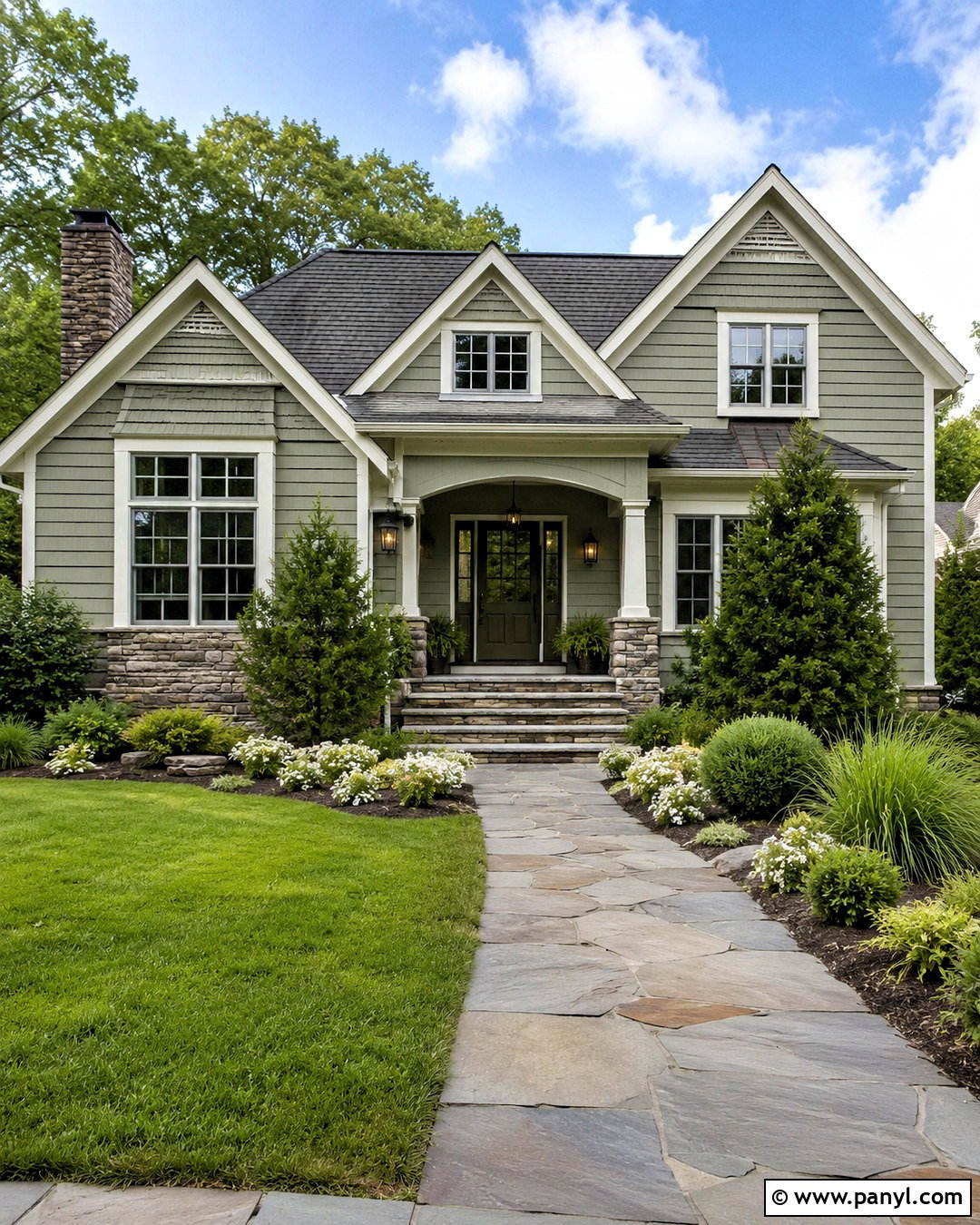
For a gentle cottage-inspired exterior, use Silver Sage on siding and pair it with creamy white trim. The green-gray body color works well with a charcoal architectural-shingle roof, natural stone foundation details, and stained wood accents. Paint the front door a deeper olive, muted navy, or dark charcoal to provide a clear focal point. Black lanterns and simple house numbers add definition without making the facade appear severe. Surround the home with layered landscaping that includes evergreen shrubs, ornamental grasses, and white flowering plants. A warm gray walkway will connect naturally with the exterior palette. Keep gutters and downspouts close to the trim color for a clean finish. Always test large samples on multiple sides of the house because outdoor exposure changes throughout the day.
33. Silver Sage Kitchen With Black Hardware
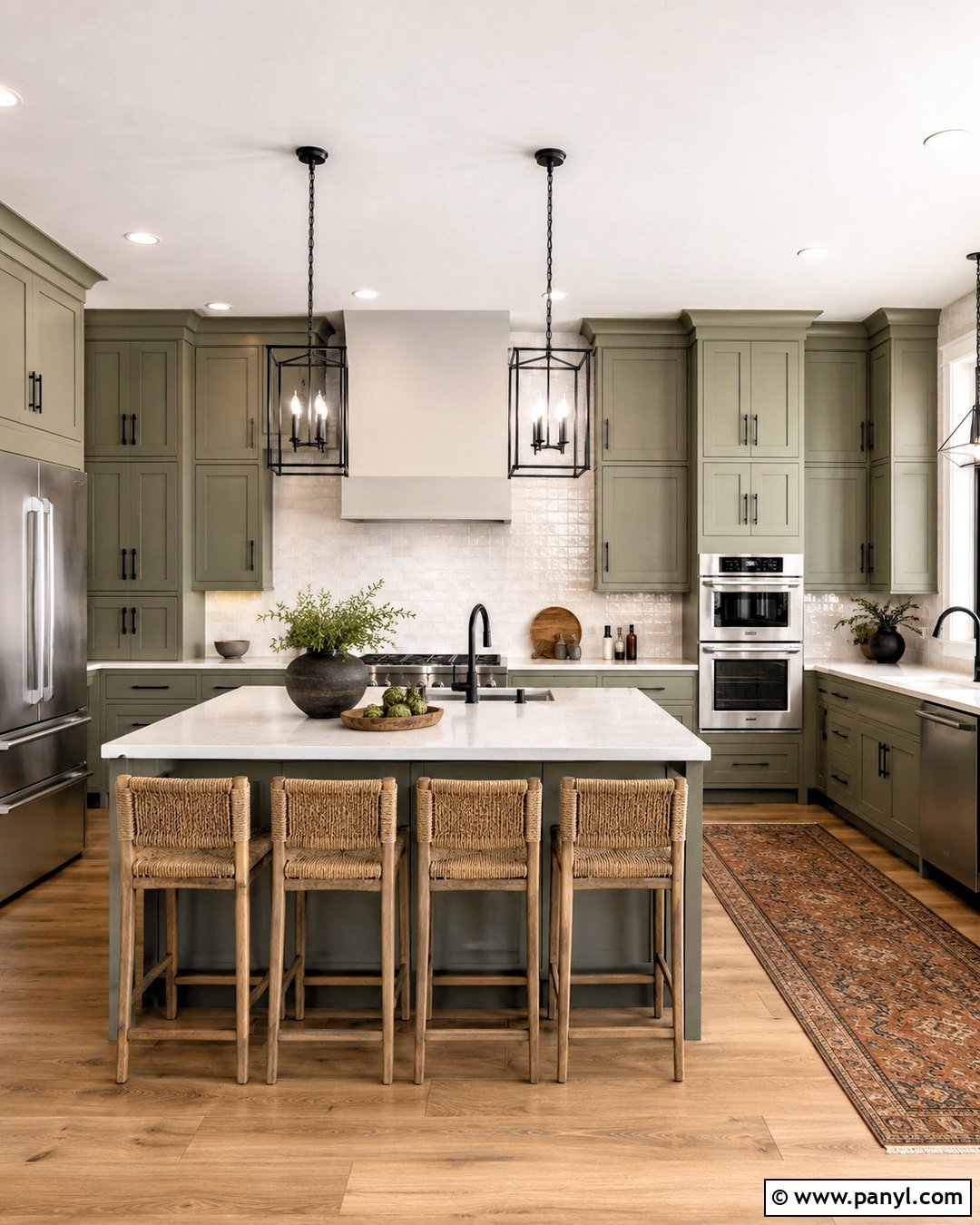
Black hardware gives Silver Sage kitchen cabinets a crisp, contemporary edge. Paint all cabinetry in Silver Sage, then balance it with warm white walls, pale quartz counters, and a white tile backsplash with light grout. Use simple black bar pulls, a matte black faucet, and black-framed pendant lights to create repetition. Limit the dark accents so they outline the room instead of overwhelming the soft cabinet color. White oak flooring and counter stools bring needed warmth into the palette. Choose stainless steel appliances for a practical neutral finish, or conceal selected appliances behind matching cabinet panels. Add under-cabinet lighting to keep work surfaces bright. A narrow vintage-style runner with muted rust and cream can soften the stronger black lines and make the finished kitchen feel welcoming.
34. Silver Sage Living Room With Terracotta Accents
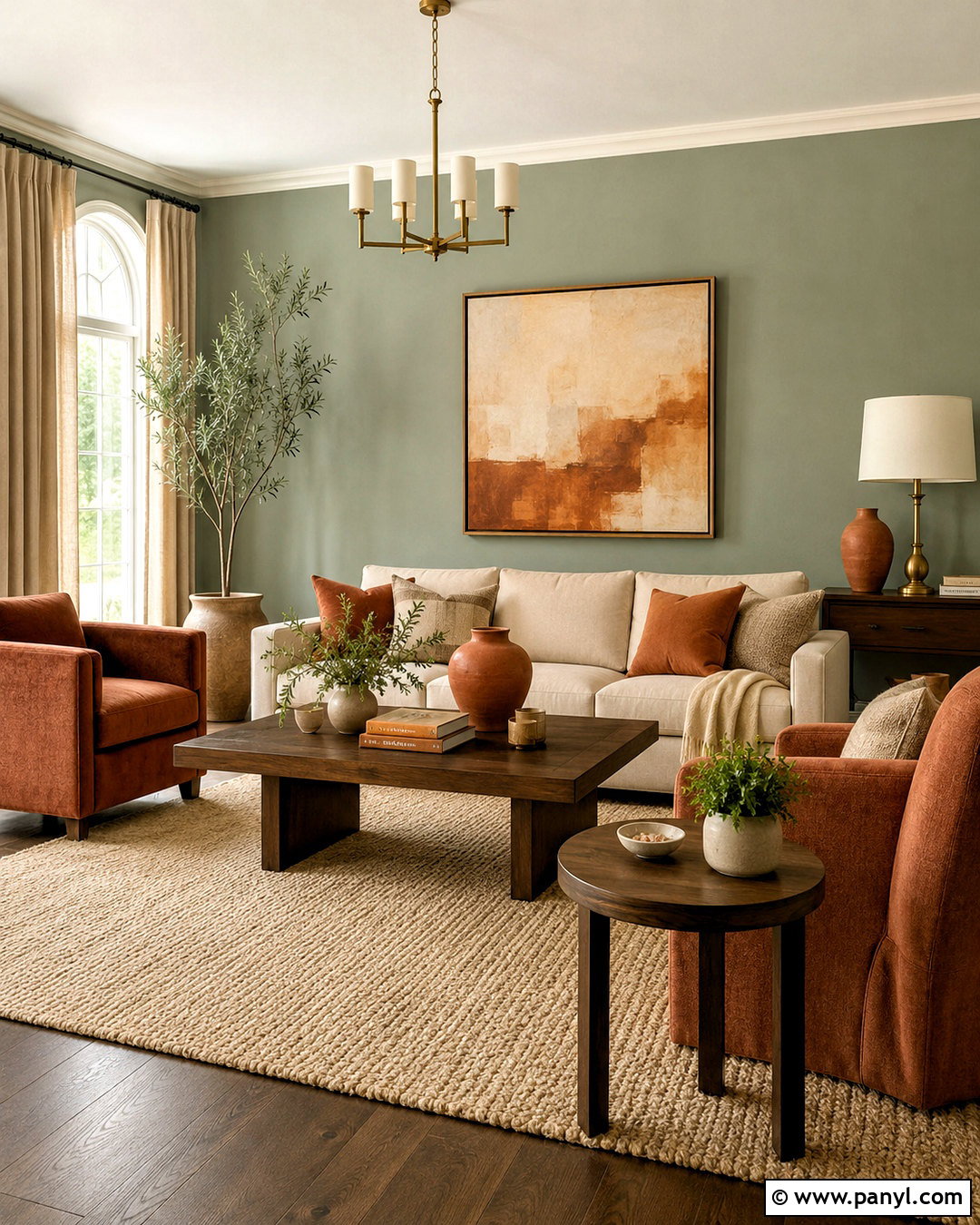
Warm terracotta accents can bring out the earthy side of Silver Sage and prevent the color from reading too cool. Paint the living room walls sage-gray and keep the trim a soft ivory. Start with a beige linen sofa and add two clay-colored lounge chairs or several rust-toned pillows. Choose a walnut coffee table, woven side table, and cream wool rug to establish a warm base. Curtains in natural flax will soften the windows without matching the walls. Add terracotta pottery, warm abstract artwork, and a few leafy plants, but distribute these elements rather than grouping them in one corner. Aged brass lighting completes the palette. The resulting room feels grounded, comfortable, and colorful while Silver Sage remains the calm element connecting every feature.
35. Silver Sage Bedroom With Antique Pewter Accents
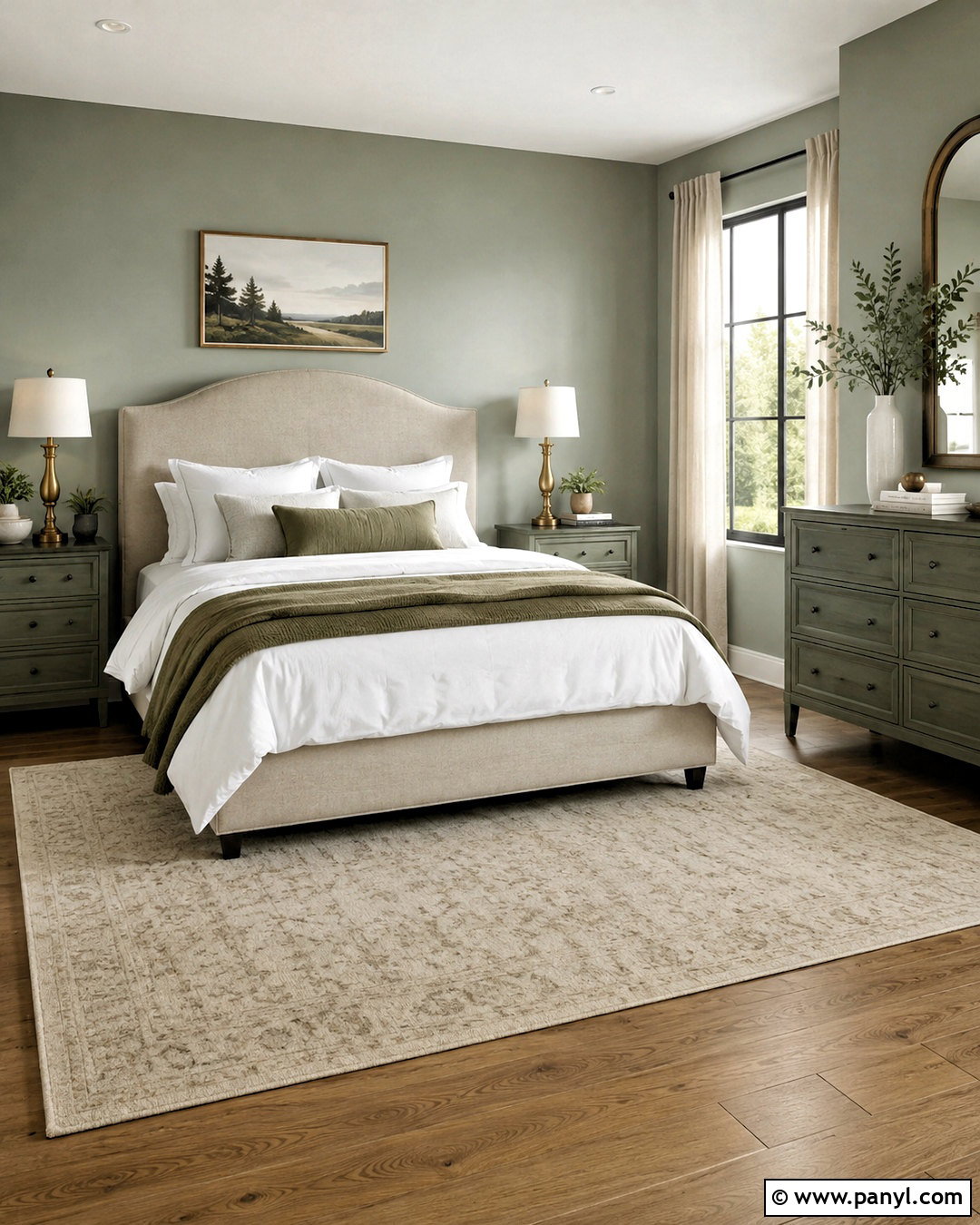
Pair Silver Sage walls with Benjamin Moore Antique Pewter-inspired accents for a layered green bedroom with greater depth. Keep the darker green-gray shade on a dresser, bench, or pair of painted nightstands rather than every large surface. Choose an upholstered oatmeal bed and crisp white bedding to separate the two muted greens. A medium oak floor and warm ivory rug prevent the room from feeling cool. Add aged brass lamps, linen curtains, and artwork that combines olive, beige, charcoal, and soft cream. Use warm white on the ceiling and trim for a clean boundary. The darker furniture should appear intentionally repeated through a throw or patterned pillow. This tonal approach creates a sophisticated bedroom while remaining softer and more flexible than a high-contrast black-and-white palette.
Conclusion:
Silver Sage 506 can work as a soothing background, a cabinet color, or a focused architectural accent. Its gentle mix of gray and sage coordinates especially well with creamy whites, warm oak, dark wood, limestone, brass, black metal, terracotta, and muted blue. The best design will consider the entire room rather than treating the paint as an isolated choice. Compare it with permanent finishes, evaluate it during the day and evening, and select lighting that supports the intended mood. Whether you prefer cottage warmth, modern simplicity, or traditional detail, these 35 silver sage benjamin moore ideas provide practical starting points for building a balanced, comfortable, and visually complete home.

Related Ideas and Inspiration:
Leave a Reply