
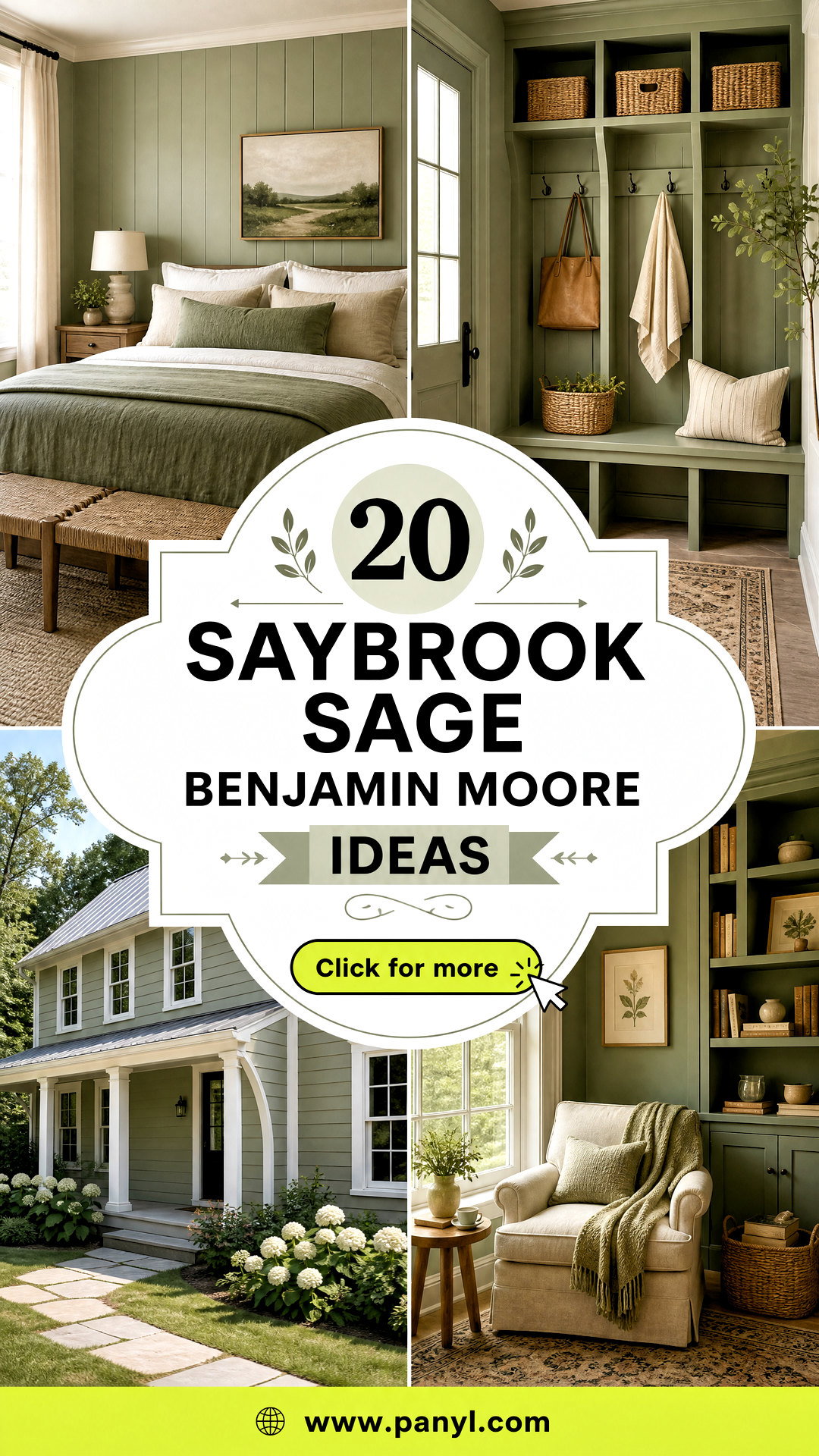
Benjamin Moore Saybrook Sage HC-114 is a balanced gray-green paint color that can make a home feel peaceful, established, and connected to nature. Benjamin Moore describes it as a soothing aloe hue softened by gray, with an LRV of 45.46, giving it enough depth to create noticeable color without becoming overly dark. () It works across traditional, cottage, farmhouse, transitional, and organic modern spaces. Warm woods, creamy whites, natural stone, black accents, and aged brass can each bring out a different side of this versatile sage. The complete room schemes below cover walls, cabinets, built-ins, furniture, finishes, and exterior palettes. Explore these 20 saybrook sage benjamin moore ideas to find a coordinated look that fits your home.
1. Saybrook Sage Kitchen Cabinets
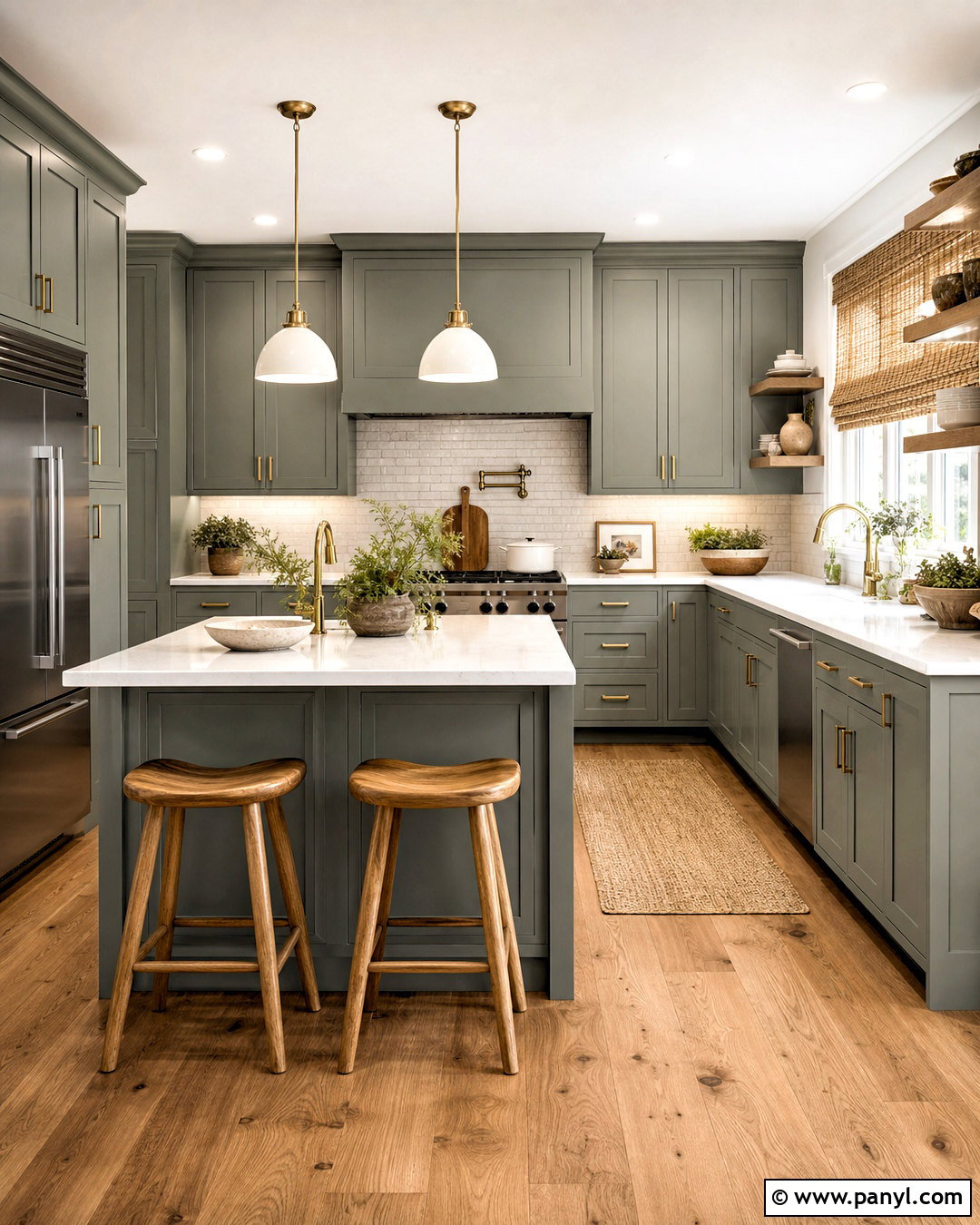
A kitchen with Saybrook Sage cabinets feels calm, collected, and comfortably timeless. Use the color on full-height Shaker cabinetry, then add warm white quartz countertops with quiet veining. A handmade cream subway tile backsplash keeps the space light while adding subtle texture. Choose medium-tone white oak flooring to warm the green-gray cabinets, and repeat that wood on floating shelves or counter stools. Brushed brass knobs, cup pulls, and pendant lights provide a polished finish without making the room feel formal. Paint the walls a soft warm white and keep the ceiling bright but not stark. Complete the design with woven shades, white ceramic dishes, and a few small potted herbs near the window.
2. Saybrook Sage Two-Tone Kitchen
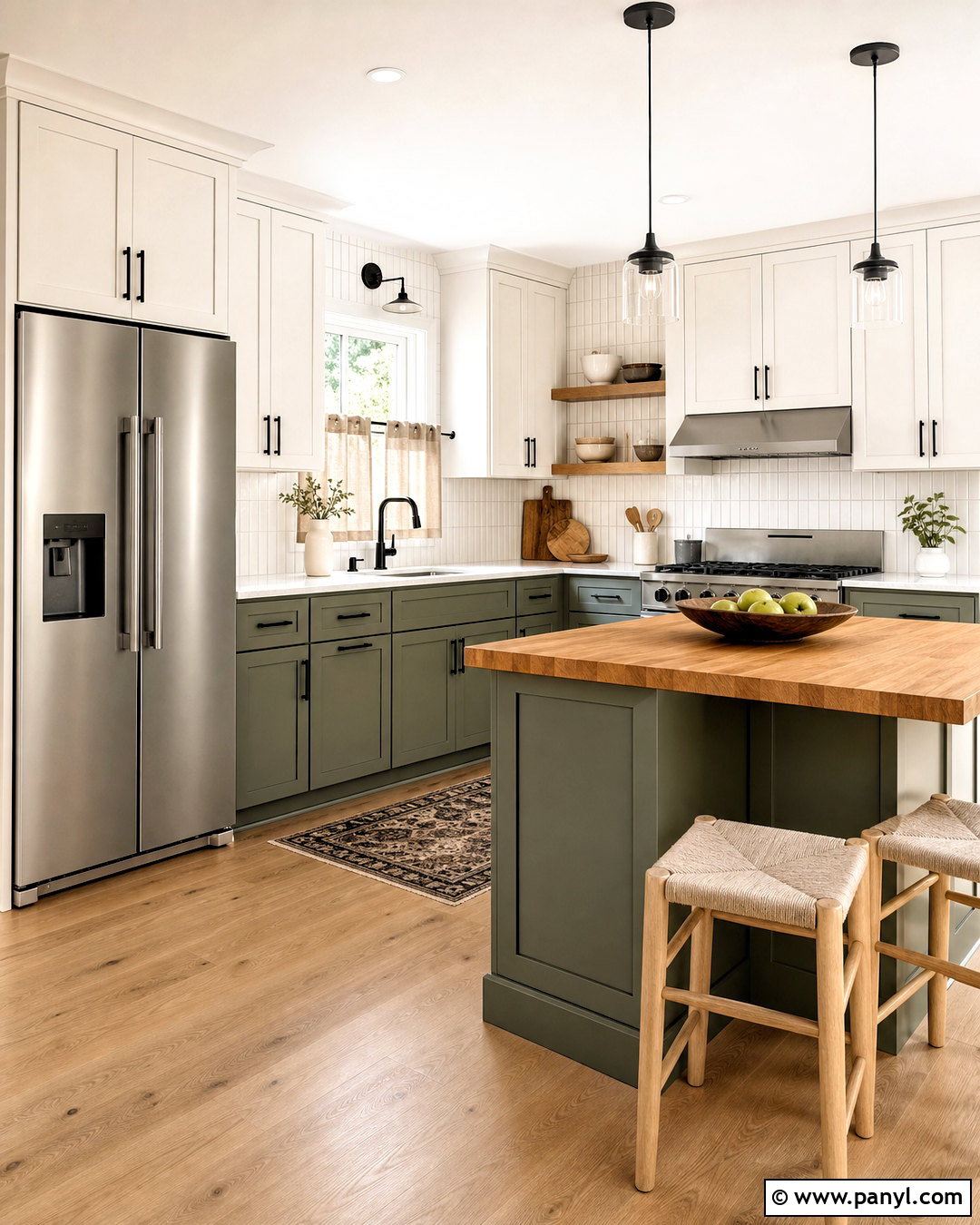
If full green cabinetry feels too strong, create a two-tone kitchen with Saybrook Sage lower cabinets and warm white uppers. The darker base visually grounds the room, while pale upper cabinets help smaller kitchens feel open. Install lightly veined white quartz counters and a vertical ivory tile backsplash for clean contrast. Natural oak flooring and a matching butcher-block accent on the island introduce warmth. Matte black hardware gives the palette a crisp, updated edge, especially when repeated on the faucet and slim pendant lights. Use simple linen café curtains and neutral counter stools to soften the harder surfaces. Benjamin Moore lists Paper White and Smokestack Gray among coordinating options, offering useful direction for surrounding finishes. ()
3. Saybrook Sage Living Room Walls
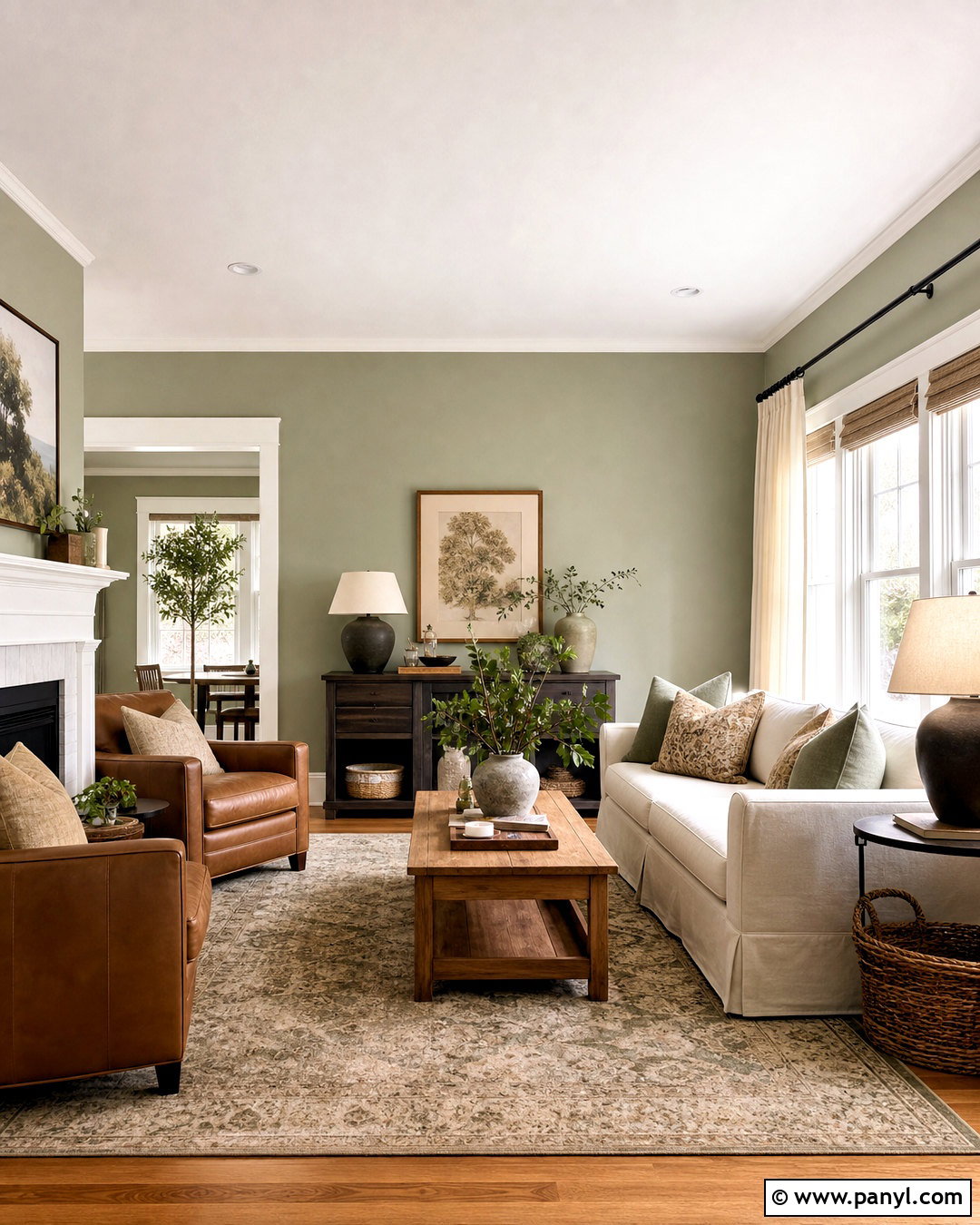
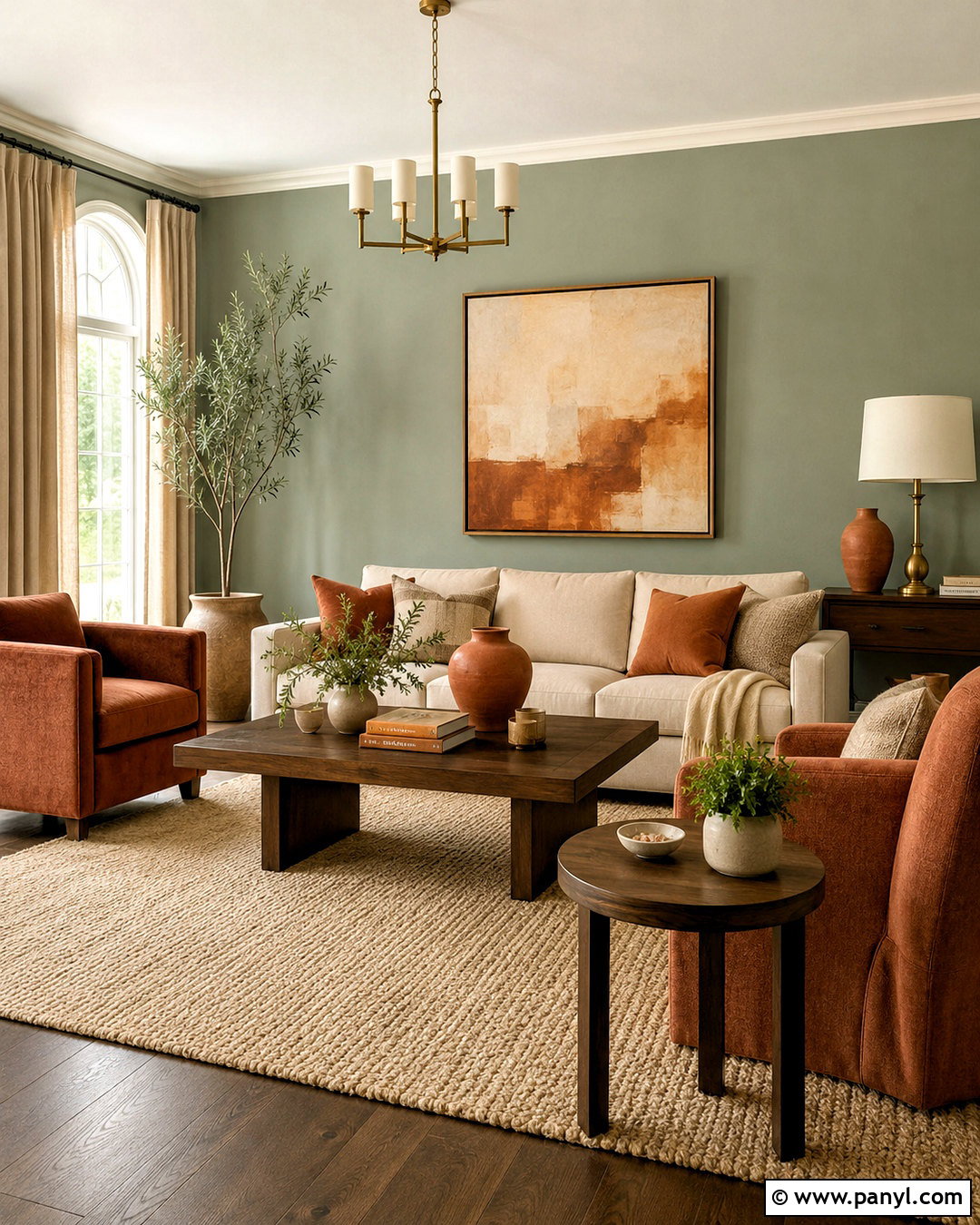
Imagine a relaxed living room where Saybrook Sage walls surround comfortable furniture and layered natural materials. Start with a cream slipcovered sofa facing two caramel leather chairs. Anchor the seating with a faded beige and olive area rug over medium oak floors. Off-white linen curtains allow filtered daylight to soften the sage walls, while black curtain rods add a slim line of contrast. Choose an oak coffee table, woven baskets, and ceramic lamps with warm white shades. Artwork should feature muted landscapes, botanical forms, or abstract neutrals rather than bright competing colors. Keep the ceiling and trim creamy white. A few olive, rust, and oatmeal pillows will make the entire room feel warmer, balanced, and thoughtfully connected.
4. Saybrook Sage Dining Room
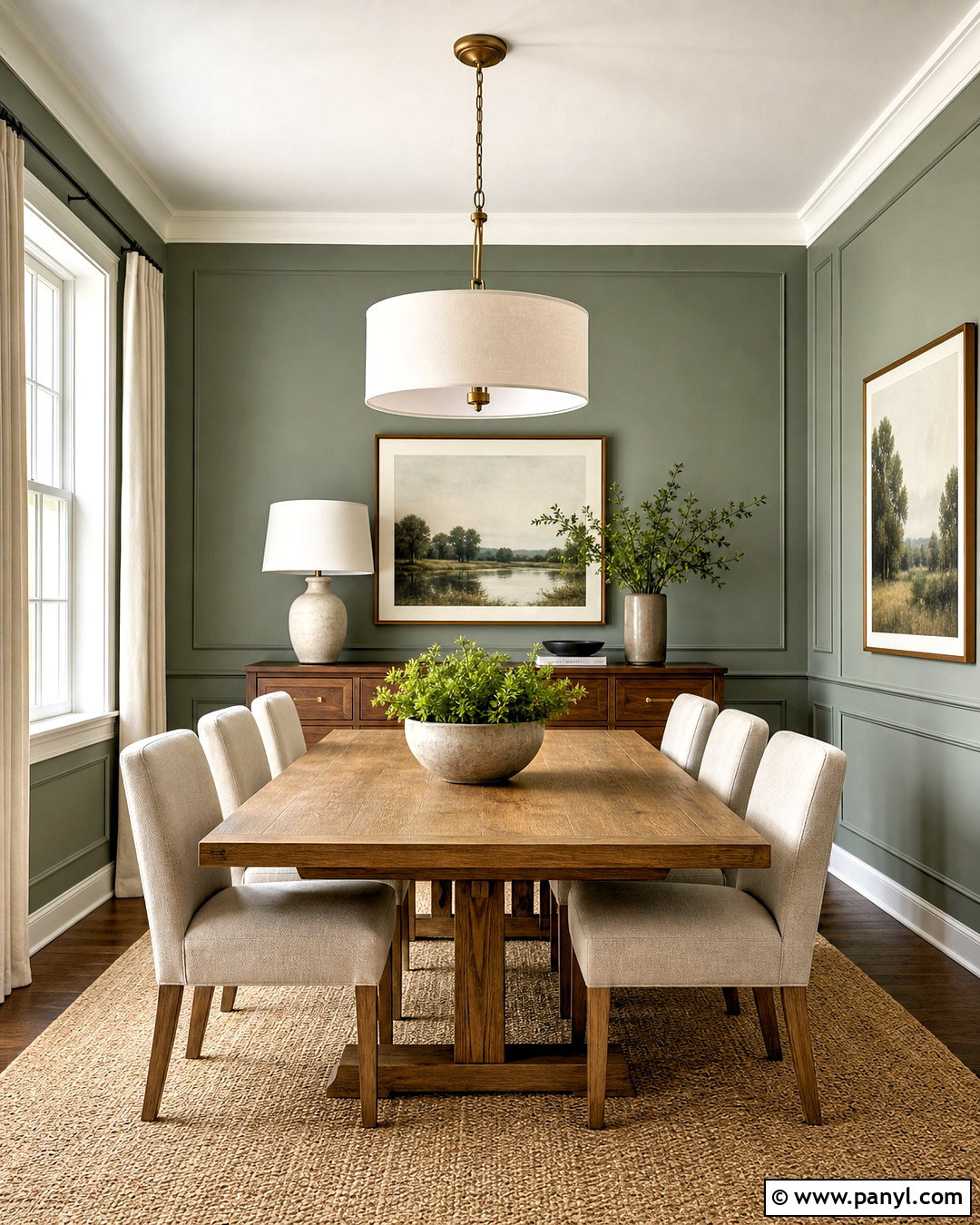
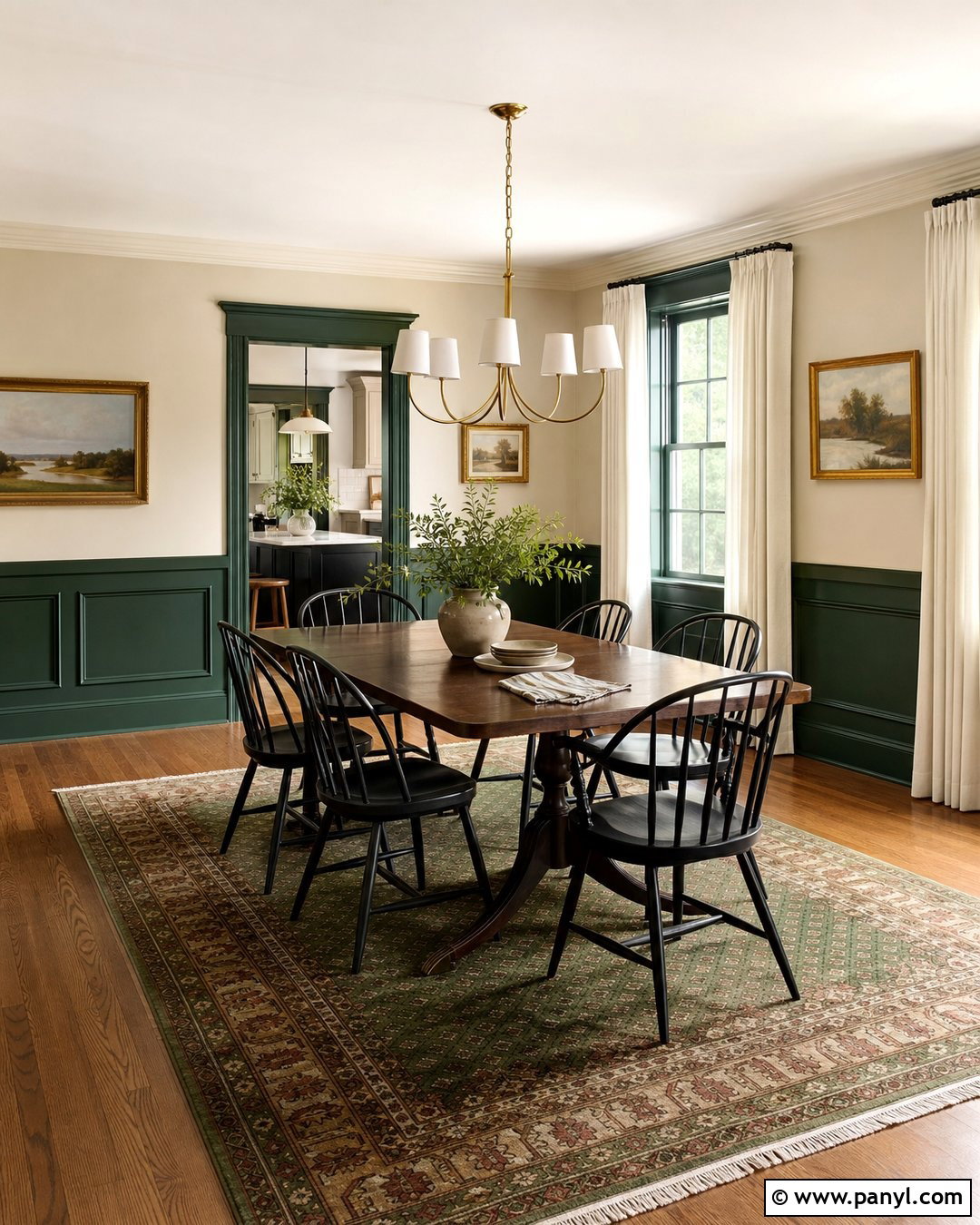
Saybrook Sage can turn a plain dining room into a welcoming space that works for everyday meals and special gatherings. Paint the walls and lower panel molding in the same sage color, using a slightly glossier finish on the woodwork for subtle definition. Place a rectangular medium-oak table in the center with upholstered oatmeal chairs and two darker wood host chairs. A large linen drum pendant provides a simple focal point without blocking sightlines. Add a natural jute-blend rug, creamy curtains, and a walnut sideboard topped with stoneware lamps. A collection of softly framed landscape prints completes the walls. Aged brass accents and warm white bulbs prevent the green-gray palette from feeling cool, especially after daylight fades.
5. Saybrook Sage Bedroom
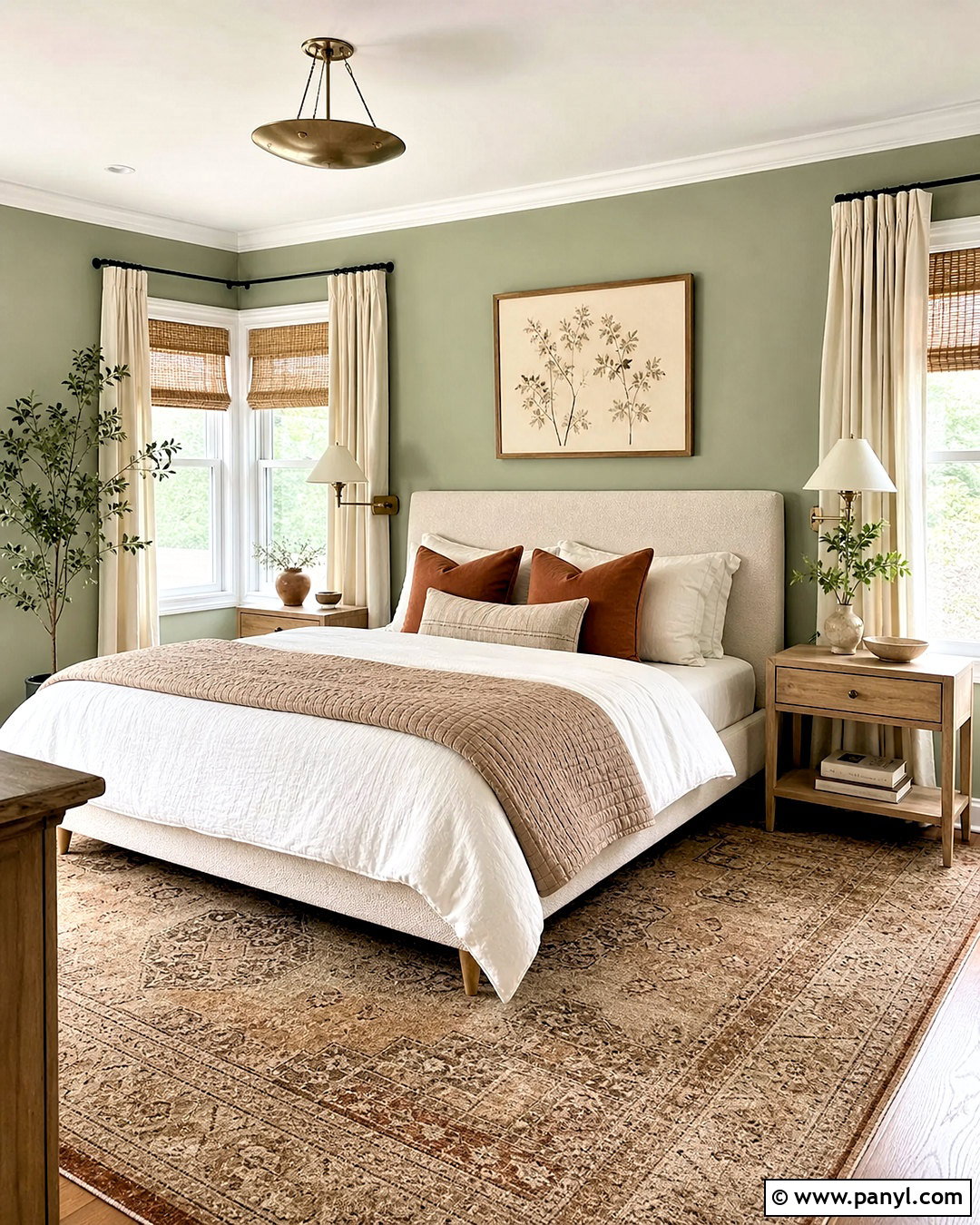
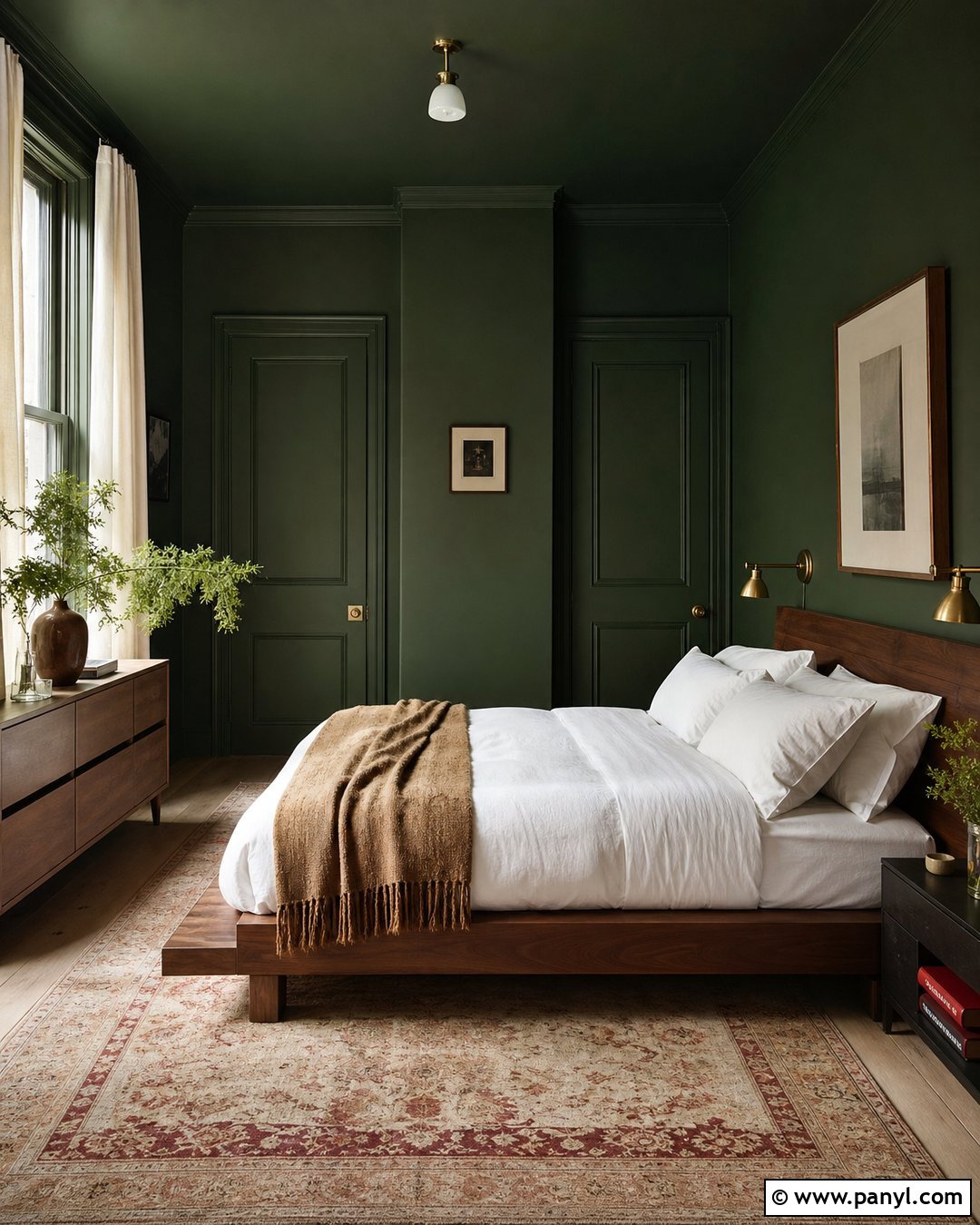
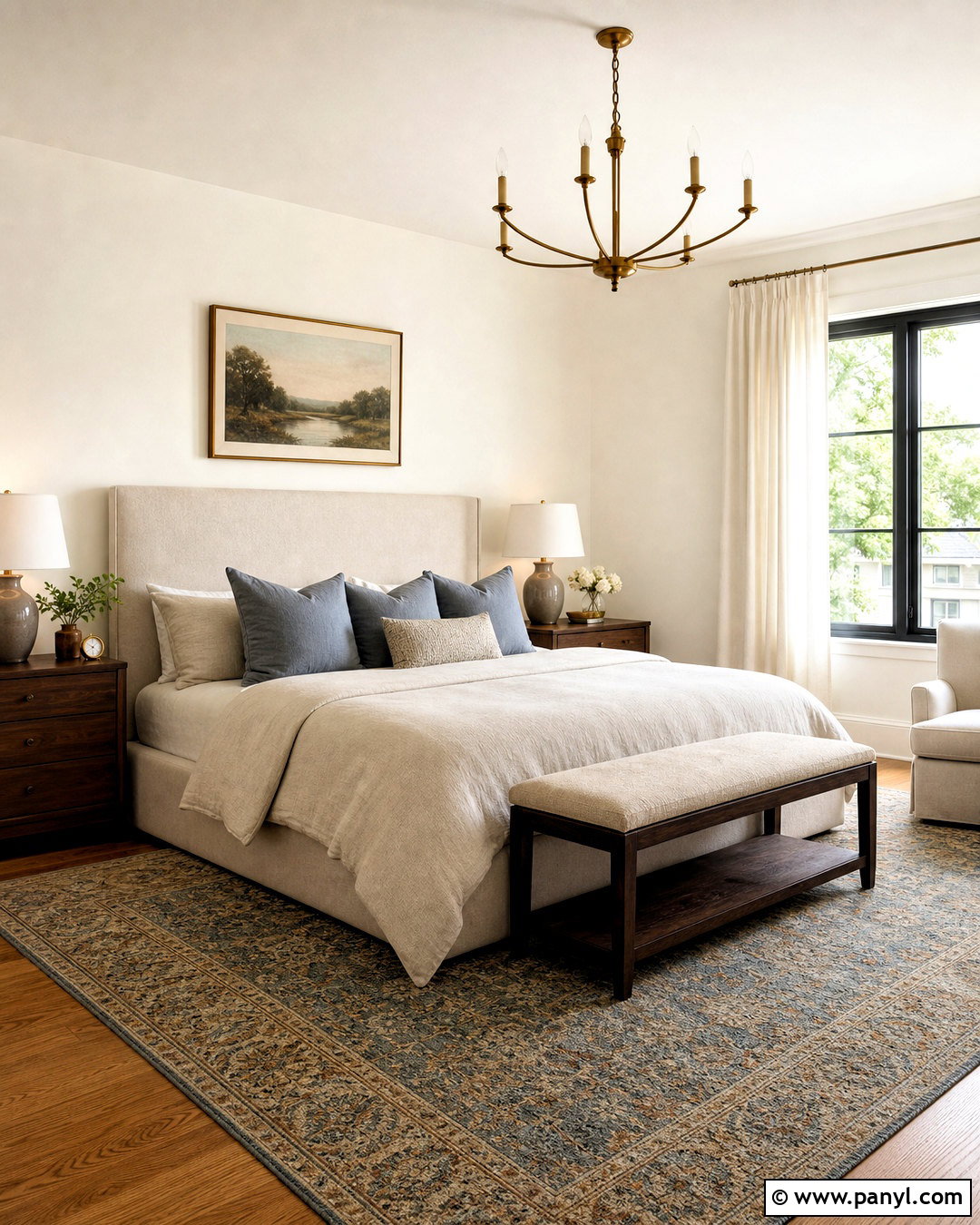
Soft color and natural texture make Saybrook Sage especially comfortable in a restful bedroom. Paint all four walls in this muted sage, then add an upholstered oatmeal bed with warm white linen bedding. Layer the bed with a quilted taupe coverlet and small rust or muted terracotta pillows for gentle contrast. Light oak nightstands keep the arrangement airy, while aged brass sconces free up tabletop space. Use full-length ivory curtains over woven shades to create softness and control morning light. A vintage-inspired beige rug should extend beyond the sides of the bed. Finish the space with a simple oak bench, botanical artwork, and one tall leafy plant. Keep trim creamy white so the bedroom feels fresh, not heavy.
6. Saybrook Sage Bathroom
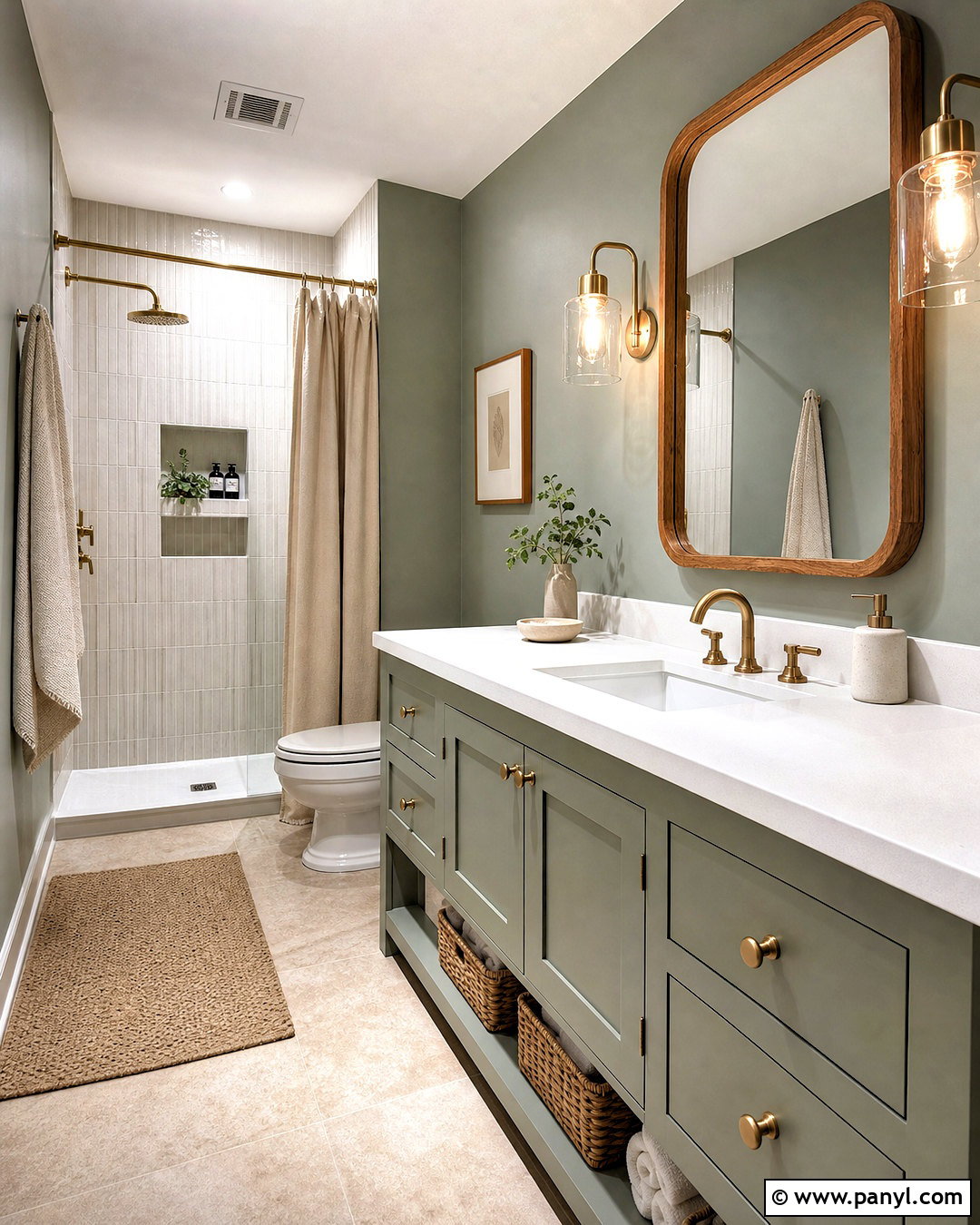
A Saybrook Sage bathroom can feel fresh and organic without relying on a predictable spa theme. Paint the walls and vanity in the sage hue, varying the finish so the cabinetry remains durable and visually distinct. Choose a white quartz vanity top, an undermount sink, and brushed brass fixtures. Warm white vertical tile around the shower will brighten the room while introducing clean lines. Ground the design with small-scale beige stone-look floor tile and an oak-framed mirror. Add ivory towels, a natural linen shower curtain, and woven storage baskets for softness. A pair of clear glass sconces keeps the vanity area bright. The completed room should balance painted surfaces, pale stone, warm metal, and natural wood instead of depending on green alone.
7. Saybrook Sage Mudroom
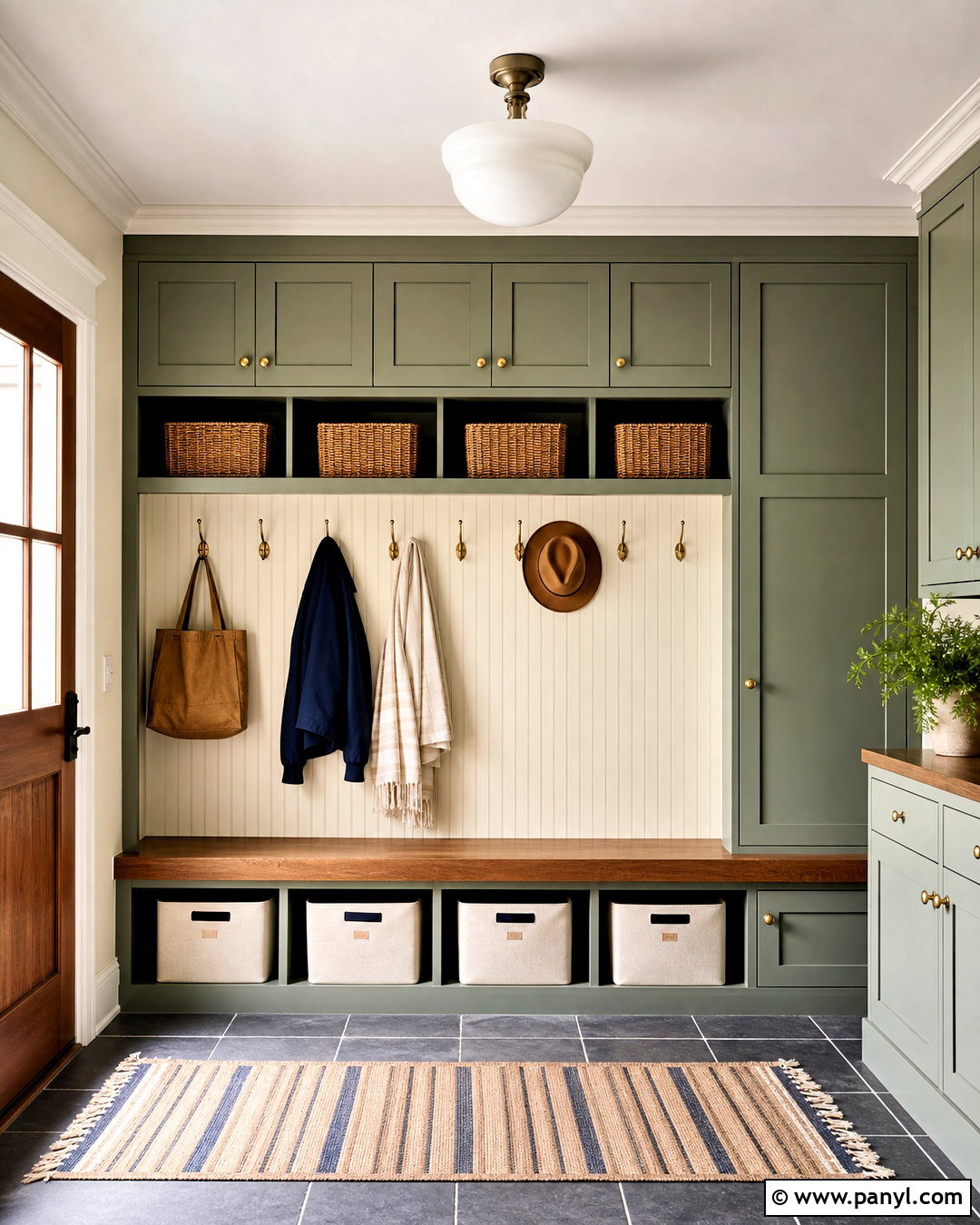
In a busy mudroom, Saybrook Sage gives practical storage a more finished, furniture-like appearance. Cover a full wall with sage-painted lockers, overhead cabinets, open cubbies, and a built-in bench. Use durable medium-gray slate flooring to disguise tracked-in dirt, then warm the space with a thick oak bench seat. Cream beadboard inside the open cubbies creates contrast and makes stored items easier to see. Add aged brass hooks, woven baskets, and labeled canvas bins for organized everyday storage. Paint the remaining walls warm white so the cabinetry stays prominent without overwhelming a narrow room. A washable striped runner and flush-mounted milk-glass light complete the design. The result feels orderly, welcoming, and realistic for an active household.
8. Saybrook Sage Laundry Room

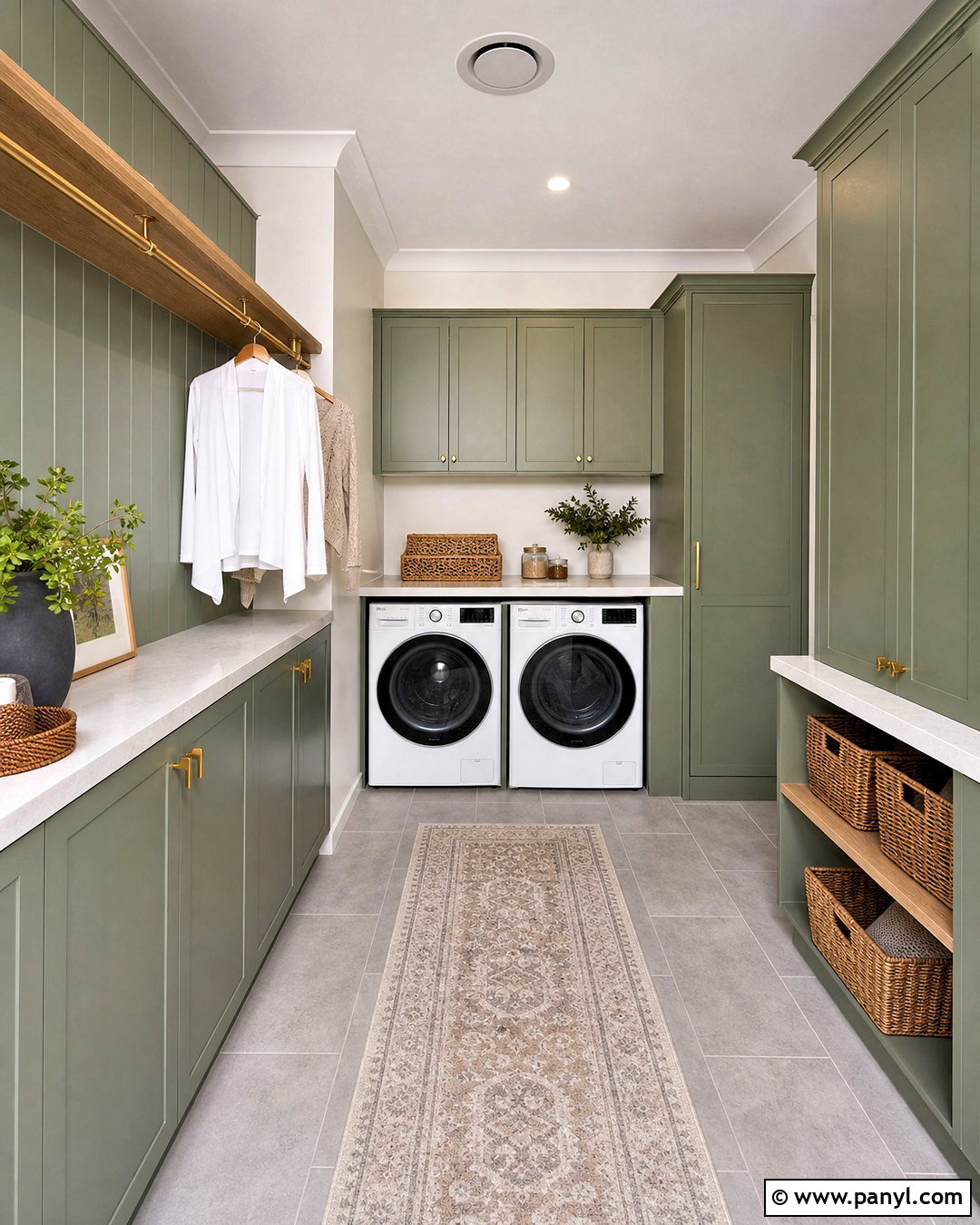
Even a compact laundry room can feel considered when the color, storage, and surfaces work together. Paint upper and lower cabinets Saybrook Sage, placing them around a white front-loading washer and dryer. Install a warm white quartz folding counter above the appliances and continue a creamy square-tile backsplash up to the cabinets. Pale oak floating shelves can hold glass jars, folded towels, and woven cleaning baskets. Use beige porcelain floor tile for durability and a small washable runner for comfort. Matte black cabinet hardware, a black hanging rod, and a simple black ceiling fixture add clear definition. Finish the remaining walls in a soft cream. This complete palette keeps the work zone bright while allowing the sage cabinetry to supply personality.
9. Saybrook Sage Home Office
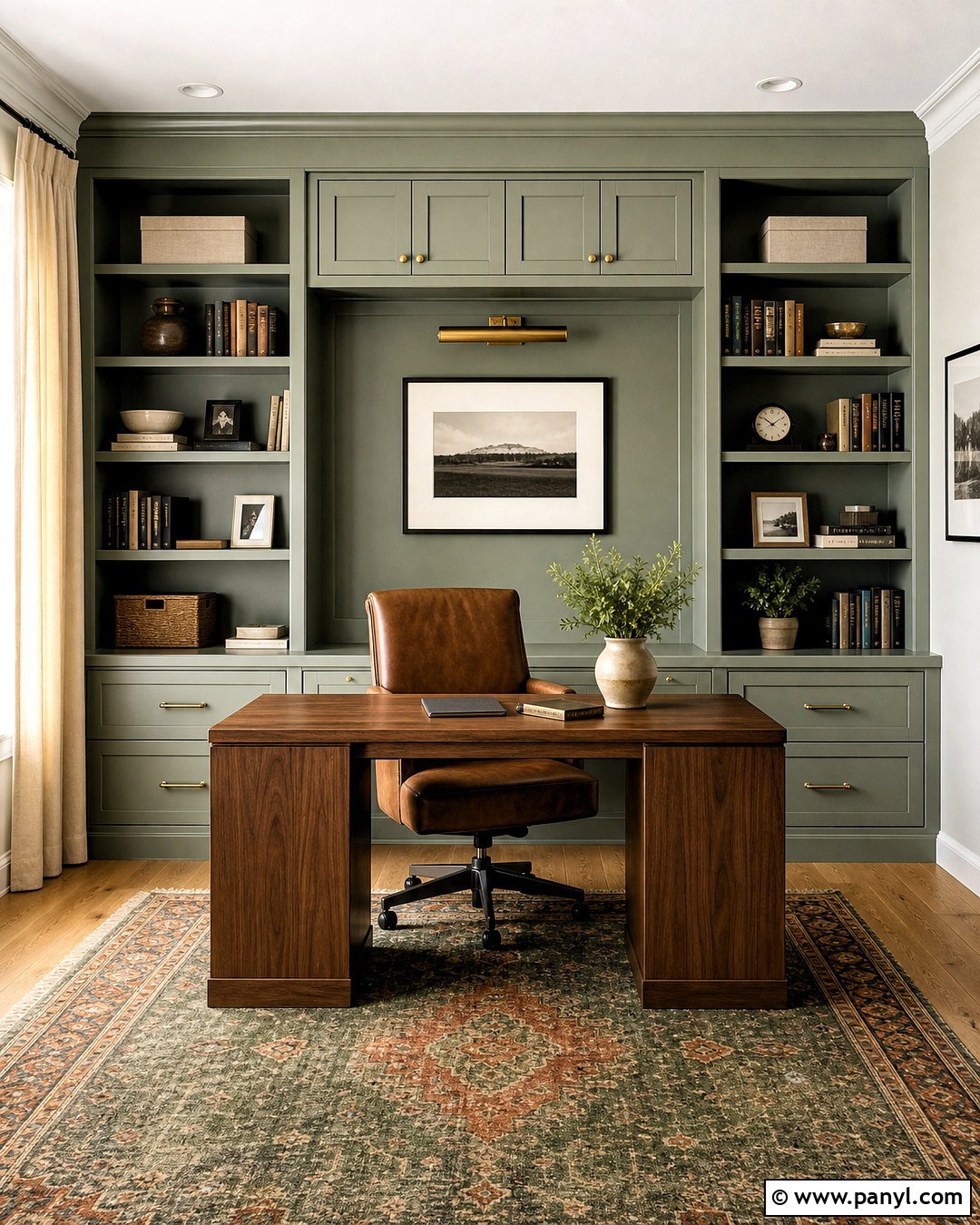
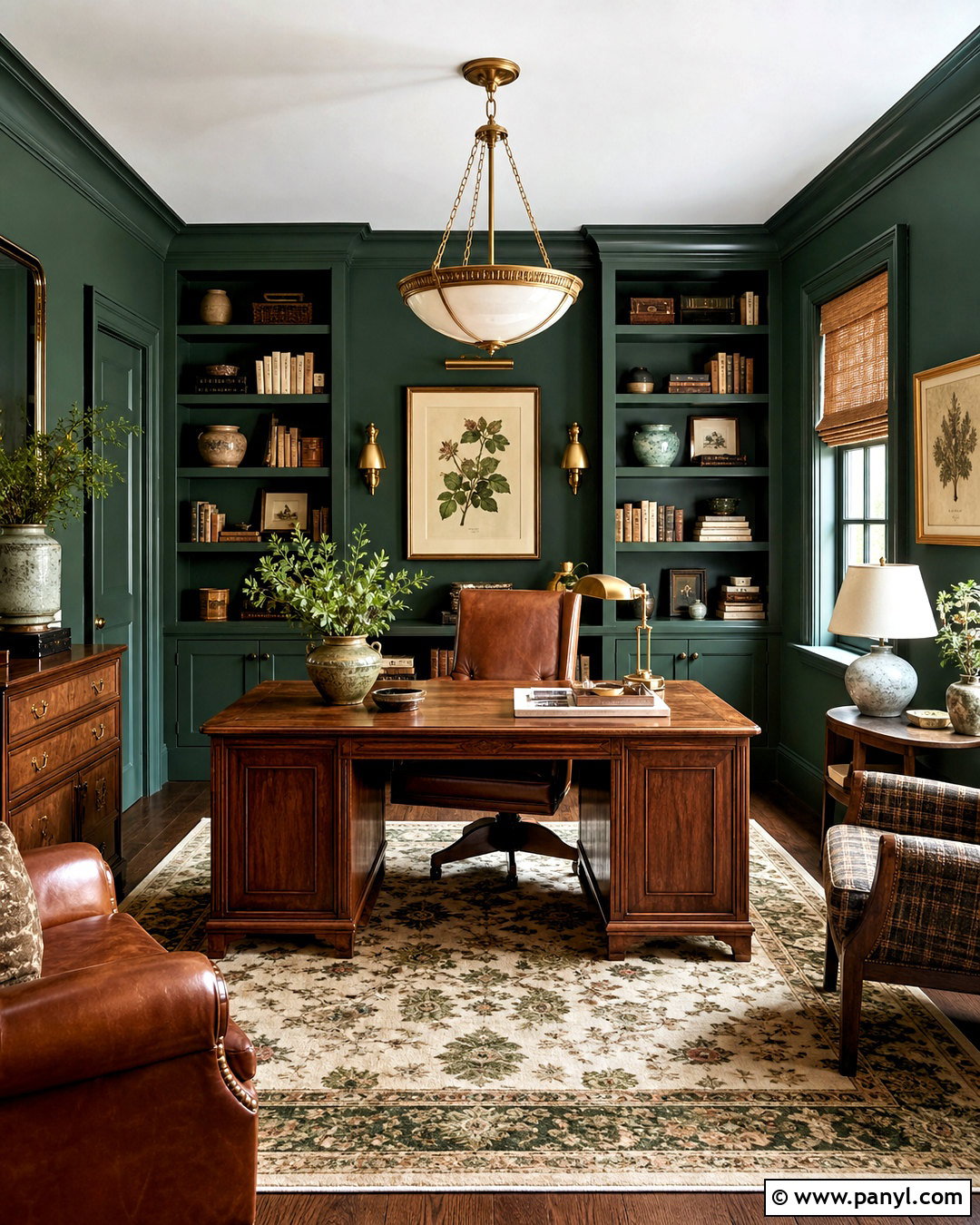
For a home office that feels focused but not severe, use Saybrook Sage on built-in bookcases, lower storage cabinets, and the wall behind the desk. Keep the other walls warm white to prevent the room from feeling enclosed. Position a substantial walnut desk in front of the sage backdrop, paired with a tan leather office chair. Fill the shelves with books, neutral storage boxes, pottery, and a few framed photographs, leaving open space between objects. Add a vintage-patterned rug containing beige, muted green, and faded rust. A brass picture light above the desk and a linen-shaded floor lamp provide layered illumination. Cream curtains and natural oak flooring complete a professional workspace that still feels comfortable and personal.
10. Saybrook Sage Entryway
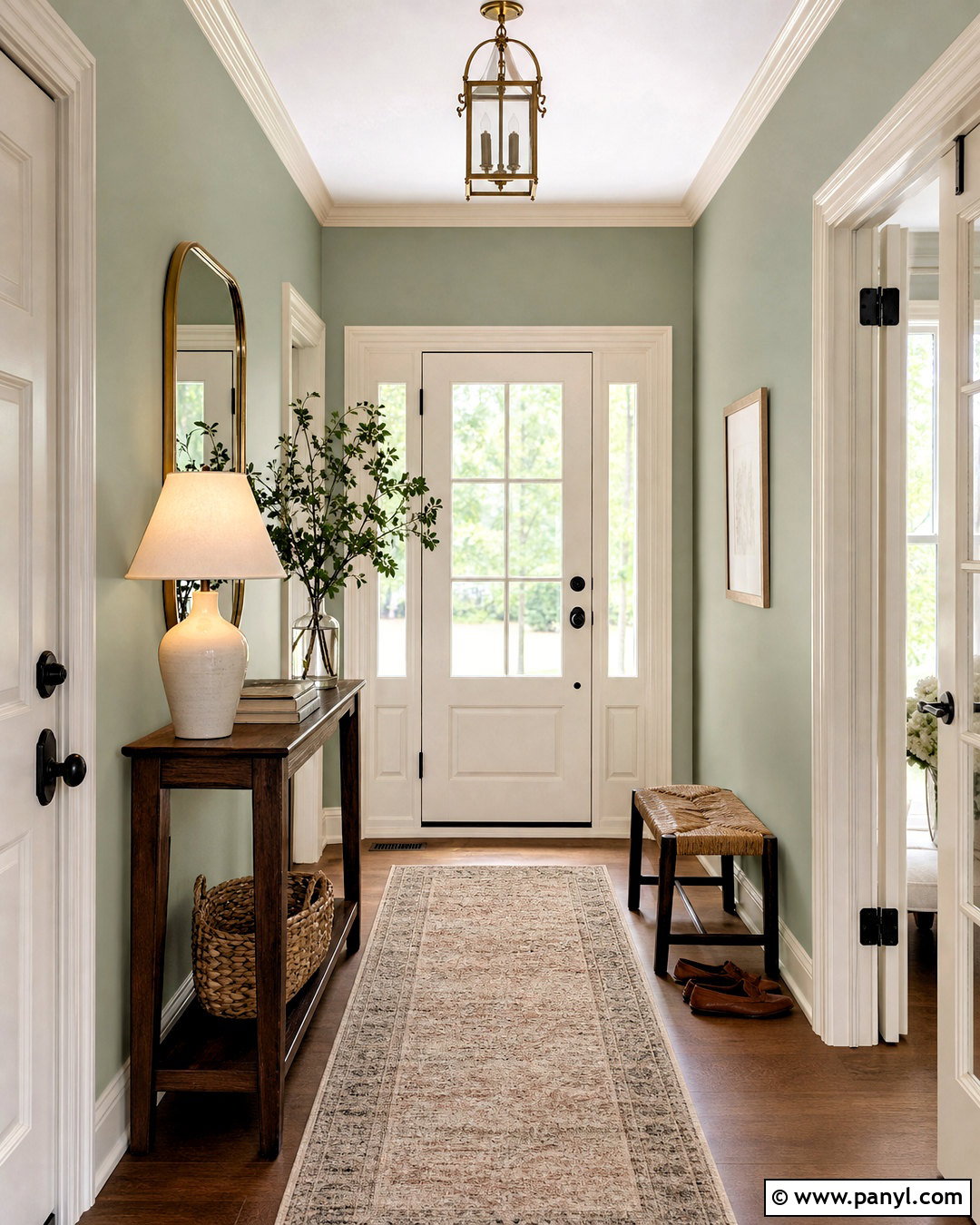
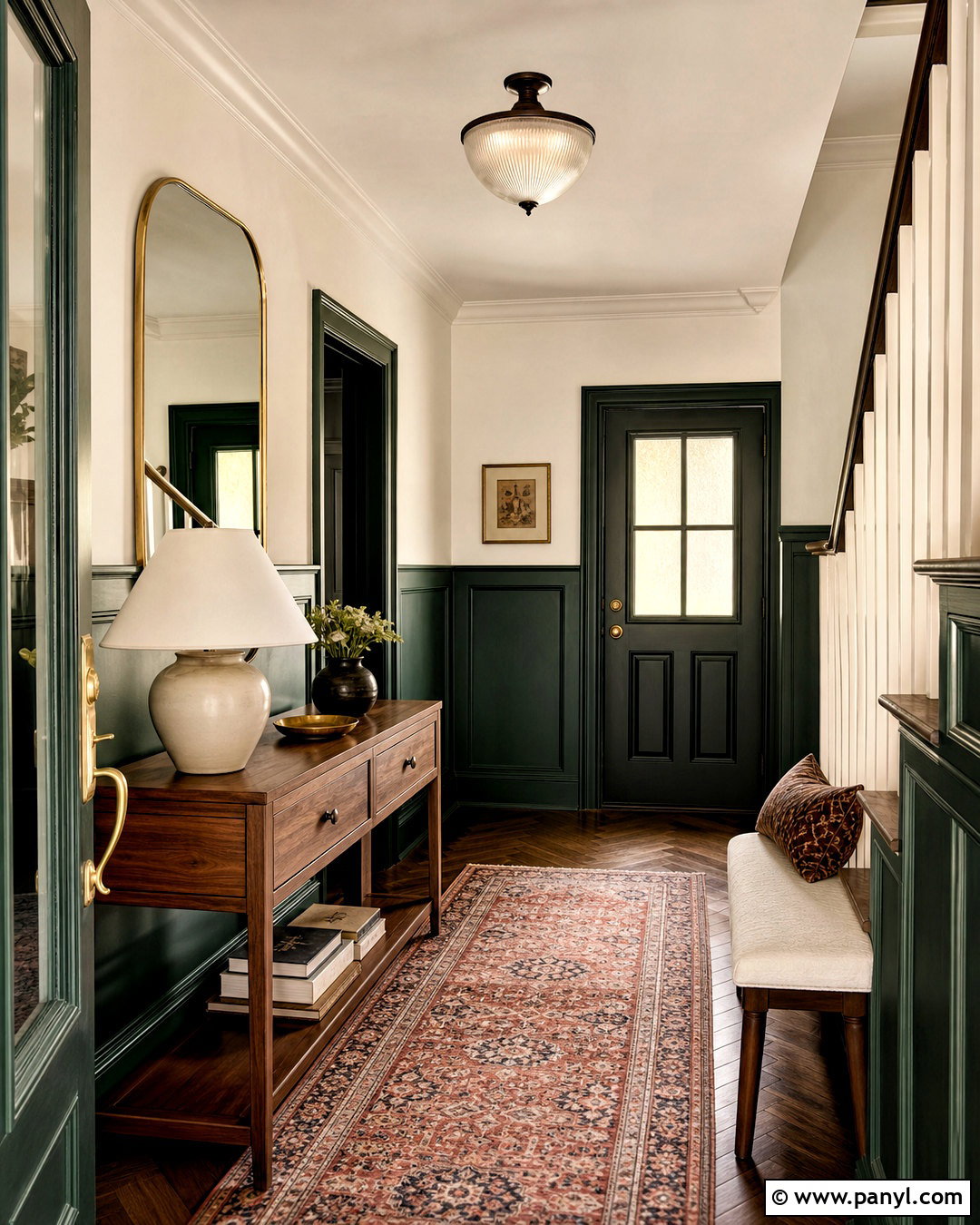
Could your entryway use more character without becoming visually crowded? Paint the walls Saybrook Sage and keep the doors, trim, and ceiling a creamy off-white. Place a narrow walnut console against the longest wall with a large rounded brass mirror above it. A textured beige runner should guide the eye toward the adjoining rooms while protecting the floor. Add a small upholstered bench or woven stool near the door for removing shoes. A ceramic lamp, shallow catchall bowl, and simple leafy branches provide useful decoration. Choose a classic lantern fixture with clear glass and aged brass framing. Black door hardware introduces a modern note, while natural baskets beneath the console keep everyday clutter contained and maintain a welcoming first impression.
11. Saybrook Sage Fireplace Room
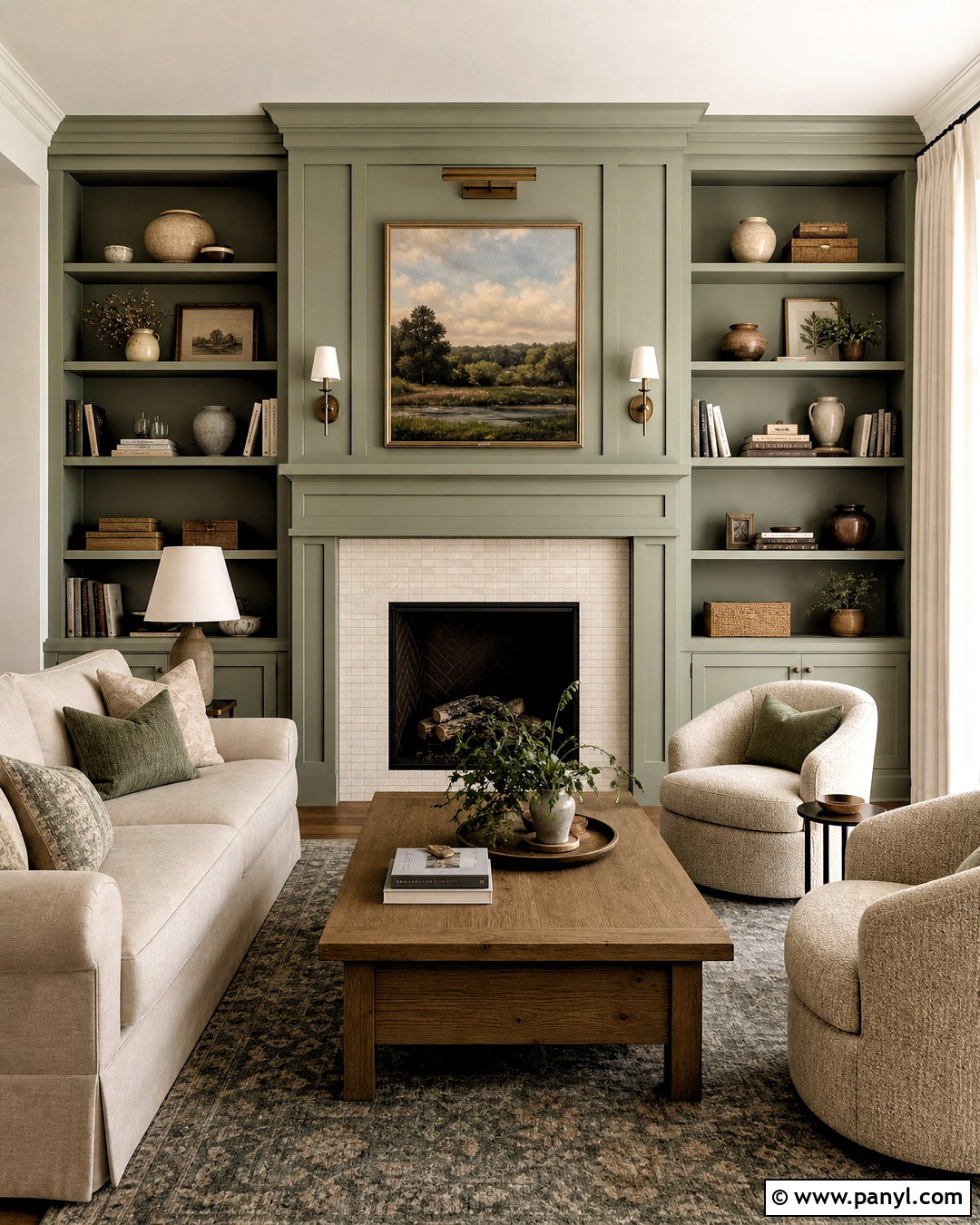
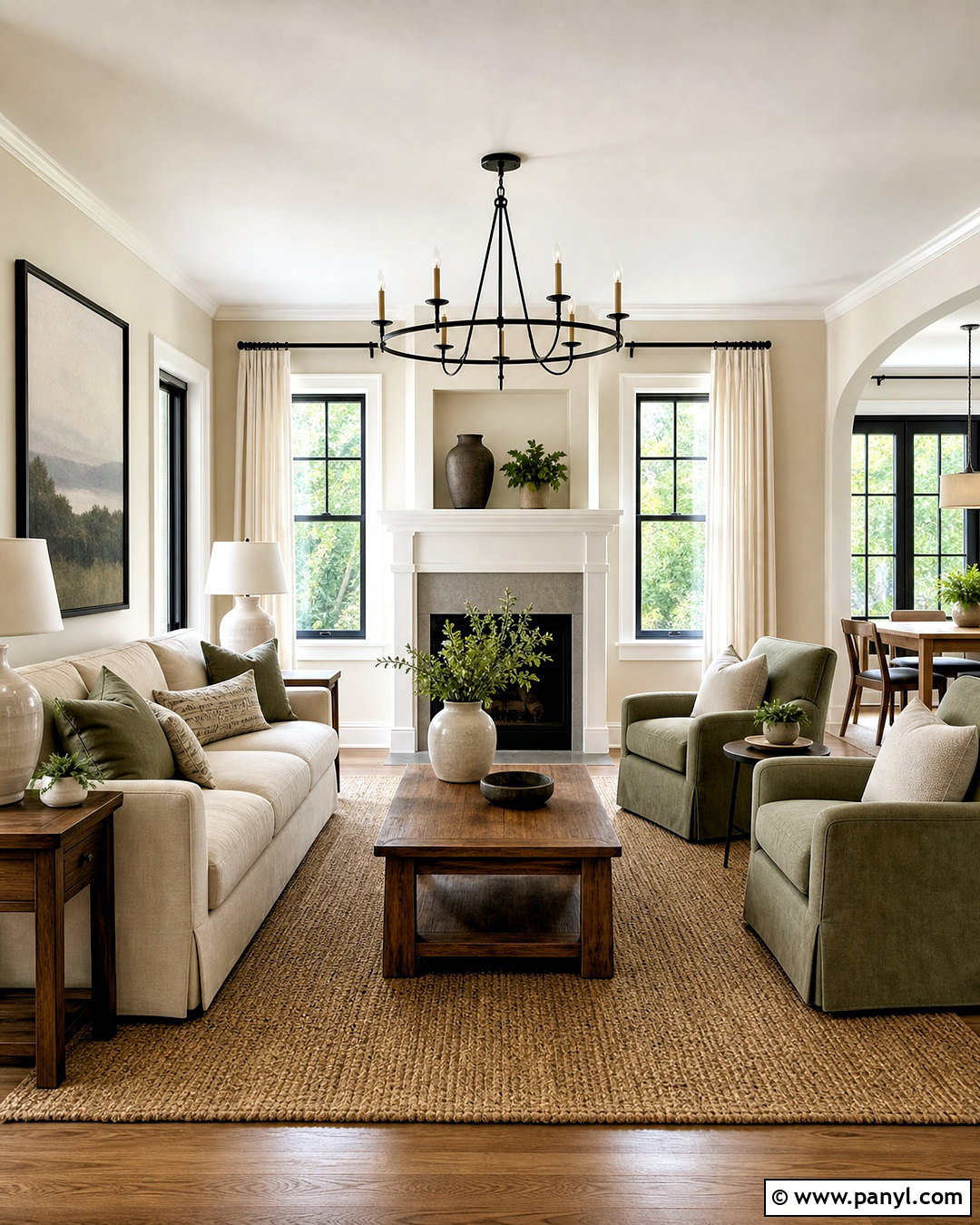
A fireplace becomes more integrated when its color connects with the rest of the room. Paint the fireplace wall, mantel, and flanking built-ins Saybrook Sage for a continuous architectural look. Use warm white stone or handmade ivory tile around the firebox, creating a clear focal point within the green millwork. Arrange a cream sofa and two oatmeal swivel chairs around a medium oak coffee table. A muted patterned rug can combine sage, tan, and charcoal without appearing busy. Style the built-ins sparingly with books, pottery, framed art, and woven boxes. Add bronze sconces above the shelves and linen curtains at nearby windows. The finished room feels cohesive because the fireplace, storage, seating, and materials share one coordinated palette.
12. Saybrook Sage Nursery
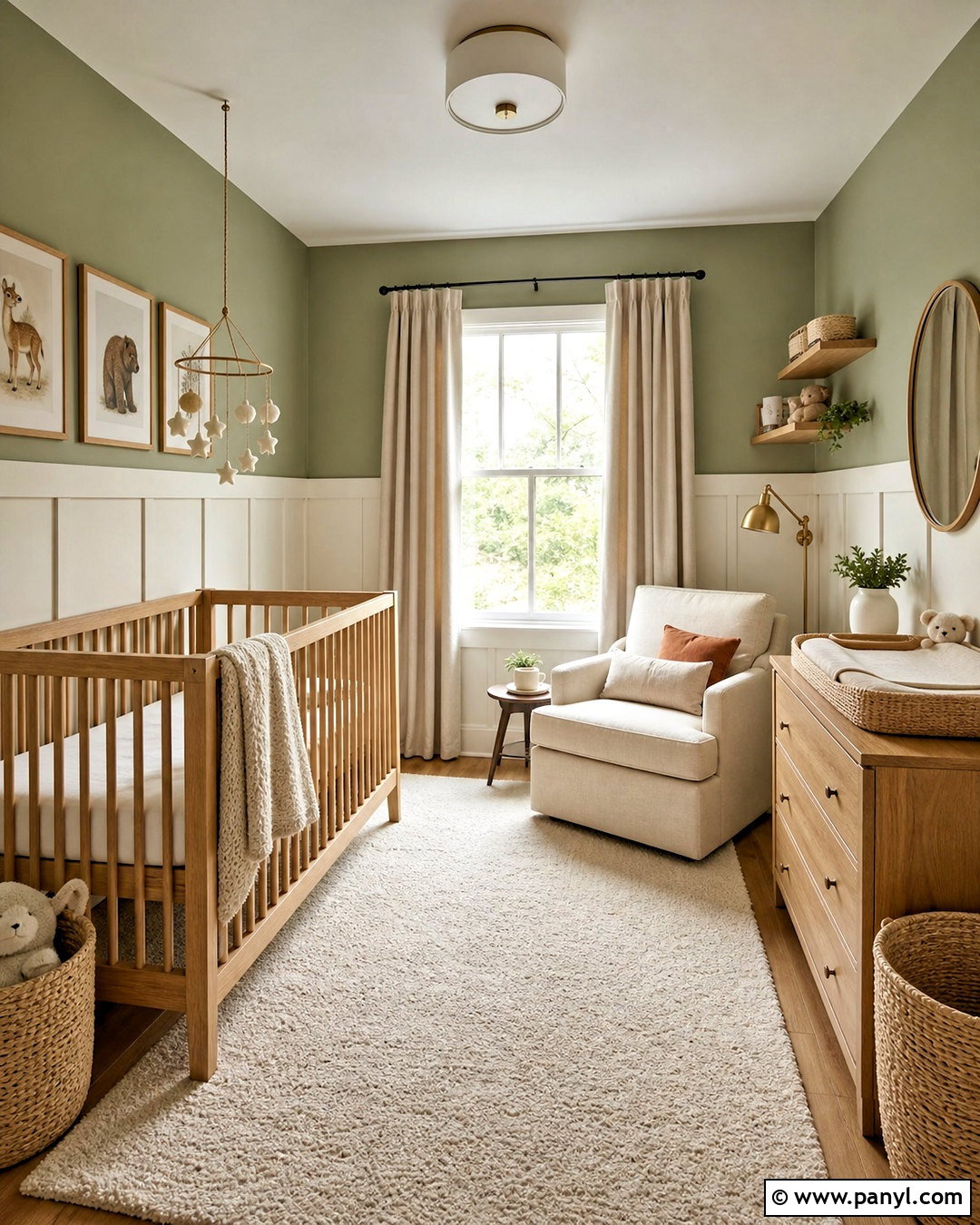
Saybrook Sage offers a gentle nursery backdrop that can adapt as a child grows. Paint the walls sage and use warm white on the trim, ceiling, and simple board-and-batten detail. Choose a natural oak crib, matching dresser, and comfortable cream glider instead of furniture with a strongly themed finish. Layer a washable ivory rug over pale wood flooring, then add blackout curtains in soft oatmeal linen. Decorative details might include framed woodland illustrations, woven baskets, a neutral mobile, and muted clay-colored cushions. Install a dimmable flush-mounted light and a small brass reading sconce beside the glider. Keeping toys and accessories in soft natural colors creates a peaceful room that feels child-friendly while still coordinating with the surrounding home.
13. Saybrook Sage Sunroom
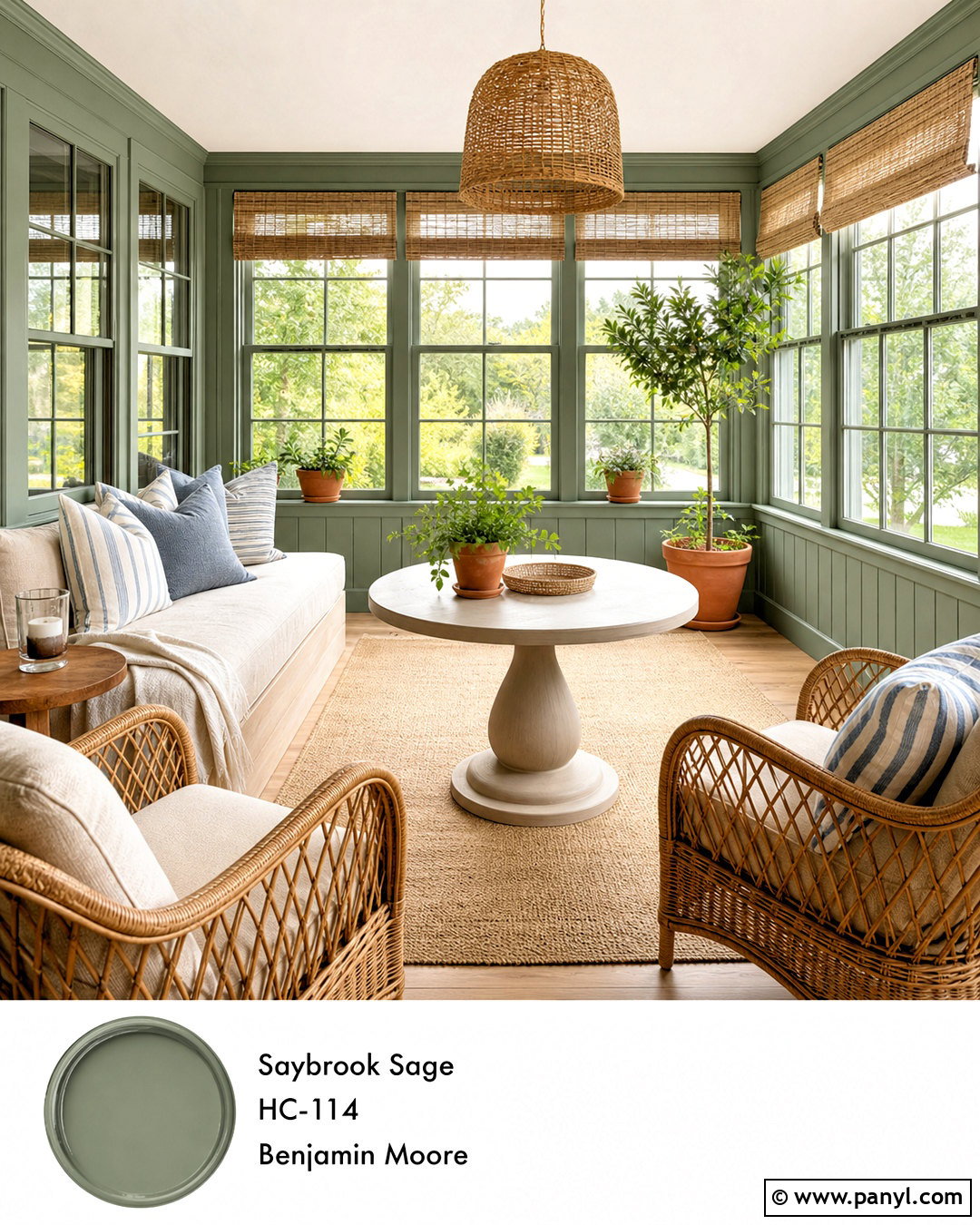
Bright windows bring out the lively, natural side of Saybrook Sage. Paint the lower walls, trim, and window frames in this muted green, then use warm white above a simple chair rail. Furnish the sunroom with a light oak daybed or compact sofa covered in cream performance fabric. Add two woven rattan chairs, a round pedestal table, and a flat-weave beige rug. Terracotta pots filled with leafy plants connect the interior palette to the view outdoors. Use relaxed striped pillows in sage, ivory, and faded blue for subtle pattern. Woven shades filter strong sunlight without hiding the windows. A white ceiling and natural fiber pendant keep the room feeling open, casual, and suitable for reading, coffee, or conversation.
14. Saybrook Sage Basement Family Room
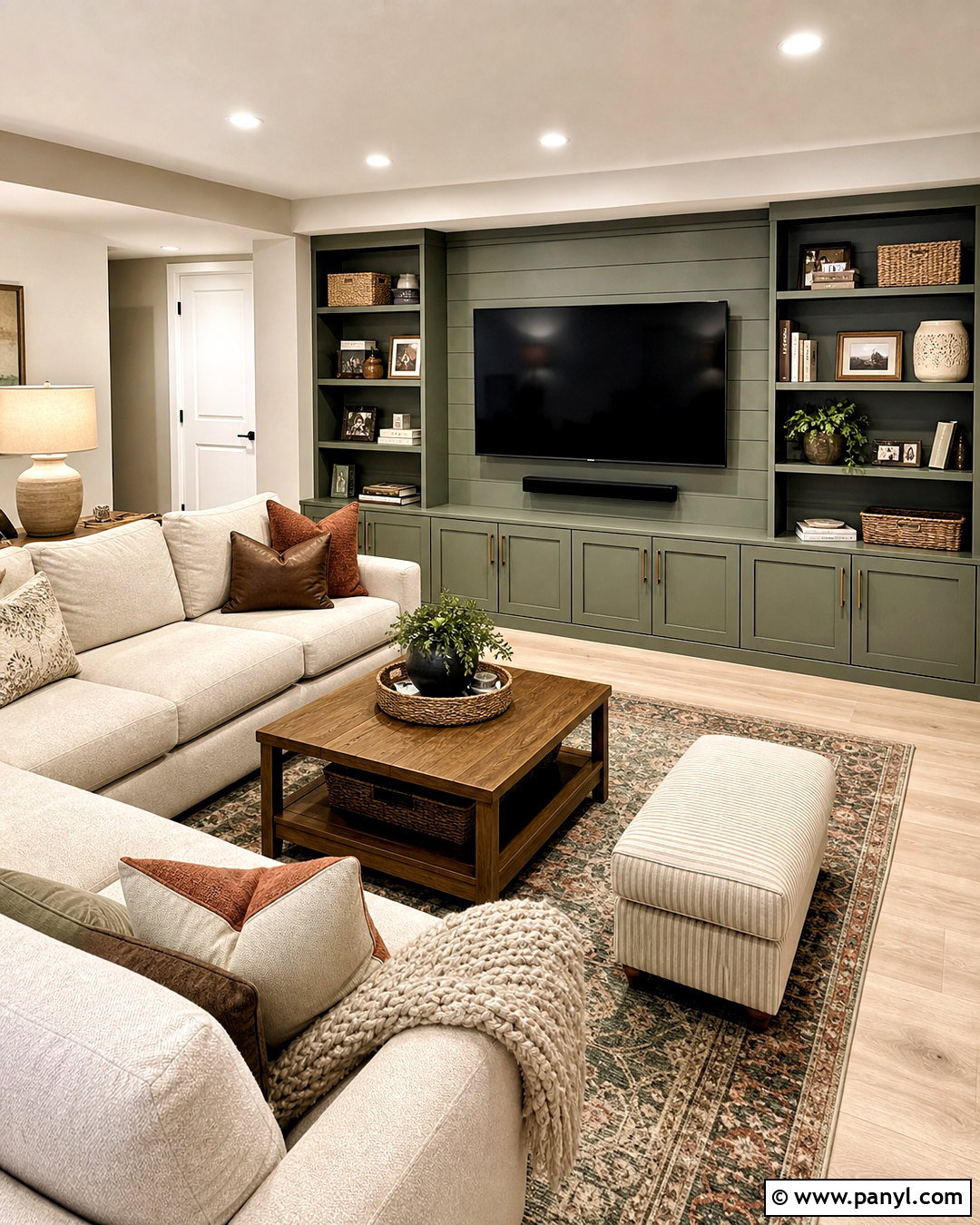
Basements often need extra warmth, so use Saybrook Sage strategically rather than covering every surface. Paint the television wall and surrounding storage cabinets sage, leaving the remaining walls a creamy off-white. Place a large oatmeal sectional opposite the media unit with a sturdy oak coffee table and soft upholstered ottoman. Light beige luxury vinyl plank flooring reflects available light while handling family use. Add a broad low-pile rug containing muted green, tan, and rust. Recessed ceiling lights should be supplemented with table and floor lamps to avoid a flat appearance. Use woven baskets, closed cabinets, and open shelves for games and media equipment. This balanced arrangement makes the basement feel like a planned living area instead of leftover space.
15. Saybrook Sage Cottage Exterior
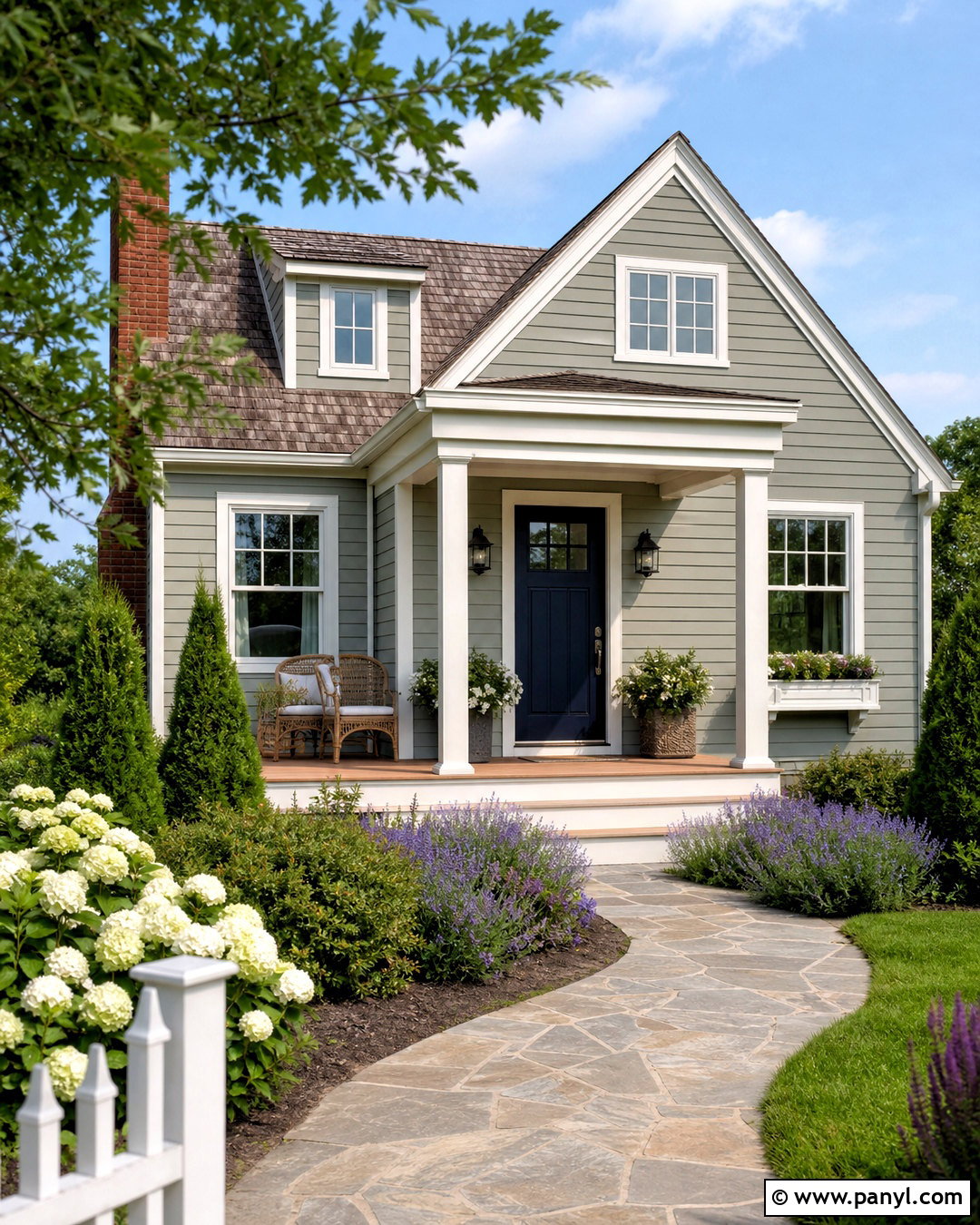
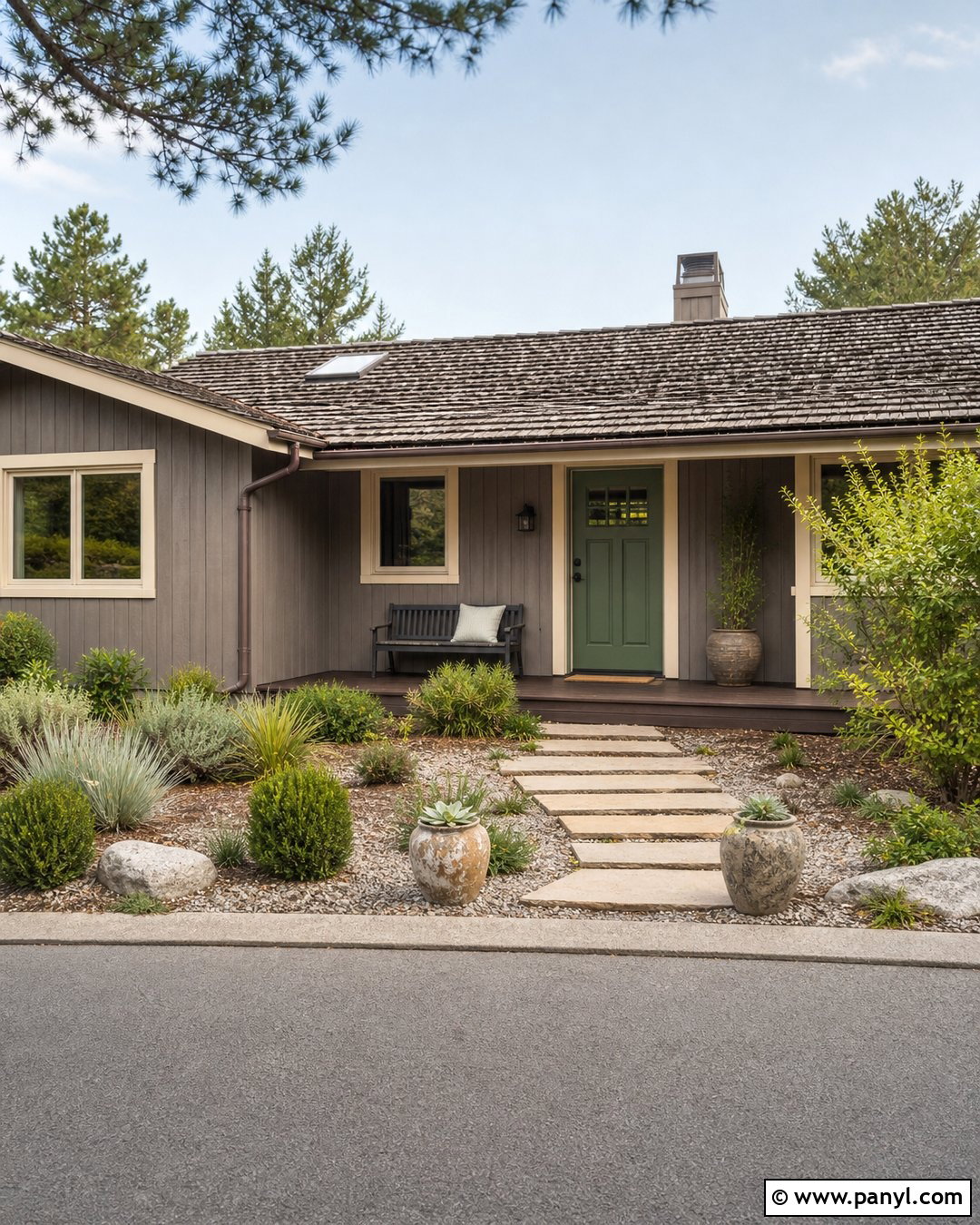
A cottage exterior painted Saybrook Sage feels connected to its landscaping and architectural details. Use the sage color on horizontal siding, paired with creamy white trim around windows, eaves, porch posts, and railings. Add a muted navy front door for gentle contrast and repeat the blue on small shutters if the facade needs more definition. A weathered cedar or medium-brown shingle roof will warm the green body color. Finish the porch with natural wood decking, black lanterns, and simple woven seating. Plant white hydrangeas, lavender, ornamental grasses, and low evergreen shrubs along a curved stone path. Benjamin Moore has featured Saybrook Sage as an exterior body color, confirming its suitability beyond interior applications. ()
16. Saybrook Sage Craftsman Exterior
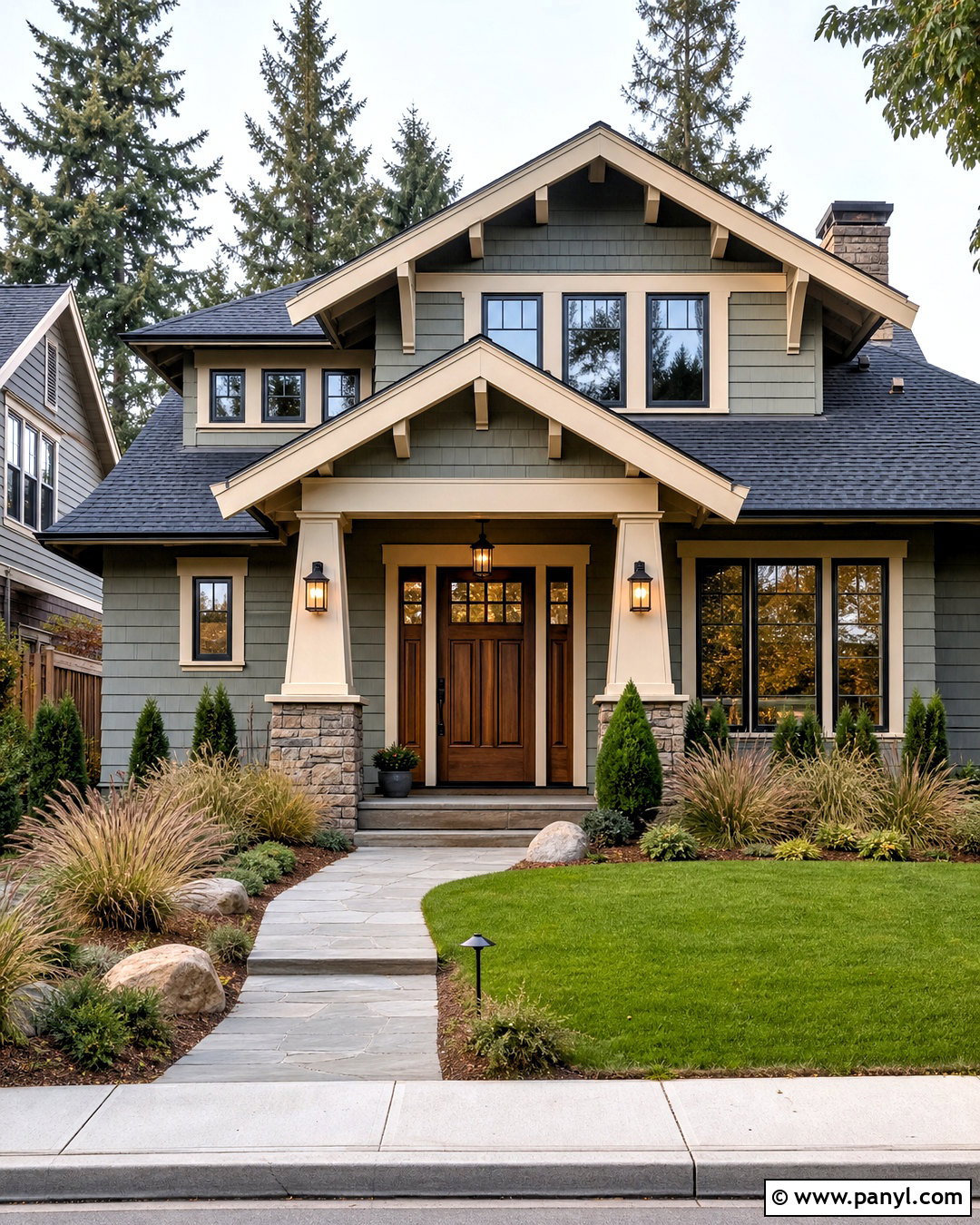
Strong Craftsman details pair naturally with the grounded quality of Saybrook Sage. Paint the main siding sage, then use a warm cream on the broad trim, tapered porch columns, fascia, and window frames. Stain the front door and porch ceiling a rich walnut brown to emphasize the home’s handcrafted character. Choose charcoal architectural shingles and repeat that dark tone on gutters, house numbers, and lantern-style lighting. Natural stone bases beneath the porch columns should include tan, gray, and mossy tones that connect the entire palette. Complete the curb appeal with a straight flagstone walkway, structured evergreen shrubs, and drifts of ornamental grass. The result is a complete exterior scheme where color, wood, stone, roofing, and landscaping feel intentionally related.
17. Saybrook Sage Farmhouse Exterior
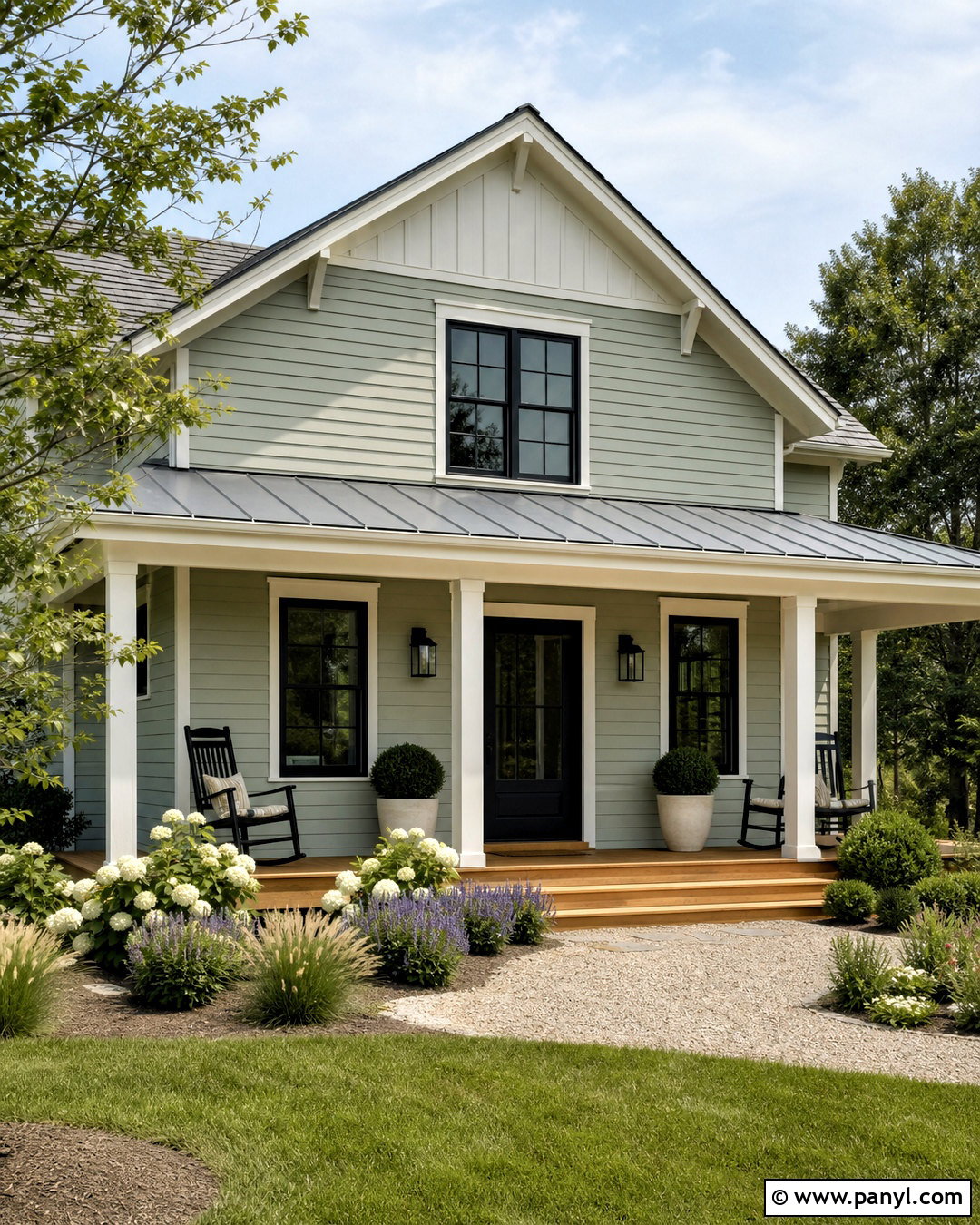
For a softer alternative to an all-white farmhouse, cover the siding in Saybrook Sage and reserve warm white for the board-and-batten trim, porch railings, and window surrounds. Add a matte black front door, black metal lighting, and dark window sashes to sharpen the gentle green exterior. A medium-gray metal porch roof can bridge the light trim and darker accents. Use natural wood on the porch floor, ceiling, or double entry doors to introduce warmth. Keep the landscaping relaxed with boxwood, white flowering shrubs, catmint, and native grasses bordering a gravel-edged walkway. Simple rocking chairs and large cream planters finish the porch. This scheme maintains farmhouse clarity while adding more depth and personality than a strictly neutral facade.
18. Saybrook Sage Front Porch
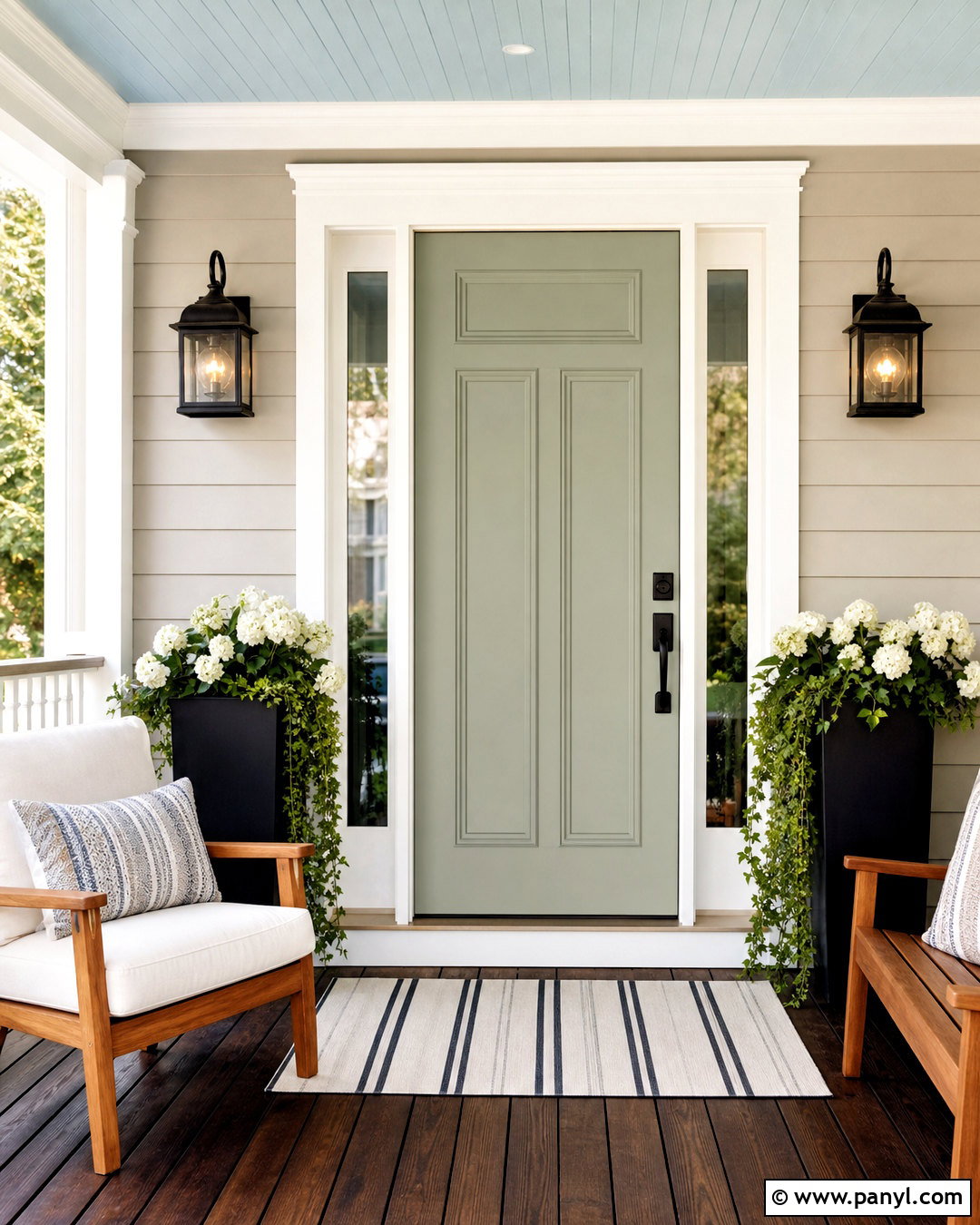
Saybrook Sage can refresh a covered porch while preserving a classic, welcoming appearance. Paint the front door, sidelights, and porch wall sage, then surround them with creamy white trim. Keep the house siding a pale warm greige so the green entrance becomes noticeable without looking disconnected. Install black lantern sconces, a natural coir mat, and rectangular black planters filled with white flowers and trailing greenery. A small teak bench or pair of woven chairs gives the porch a practical seating area. Use a pale blue-gray ceiling for a soft traditional detail and stain the floor medium walnut. Repeating sage in outdoor cushions or a subtle striped rug creates continuity. Every element supports the entrance rather than competing with the door.
19. Saybrook Sage Kitchen Island
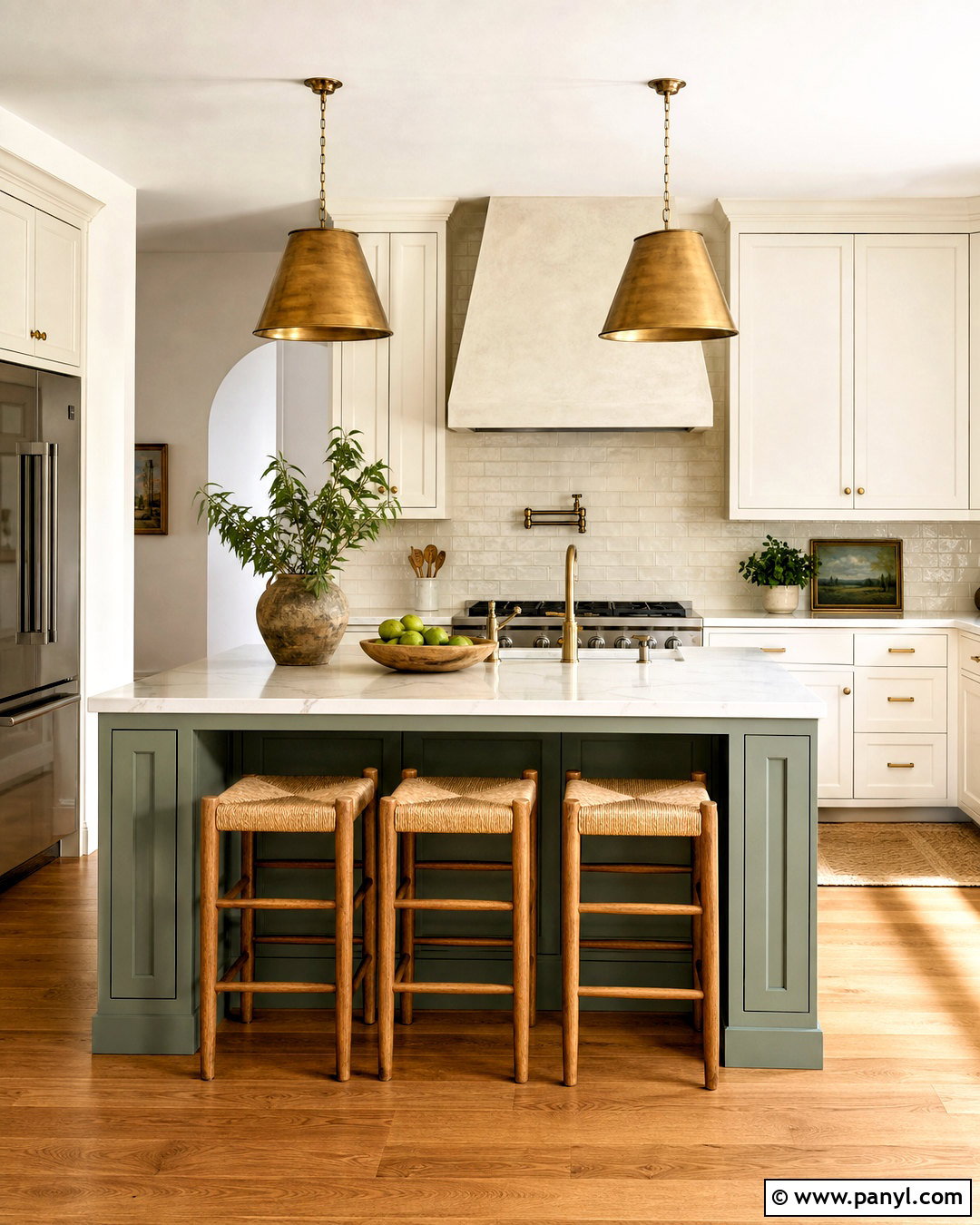
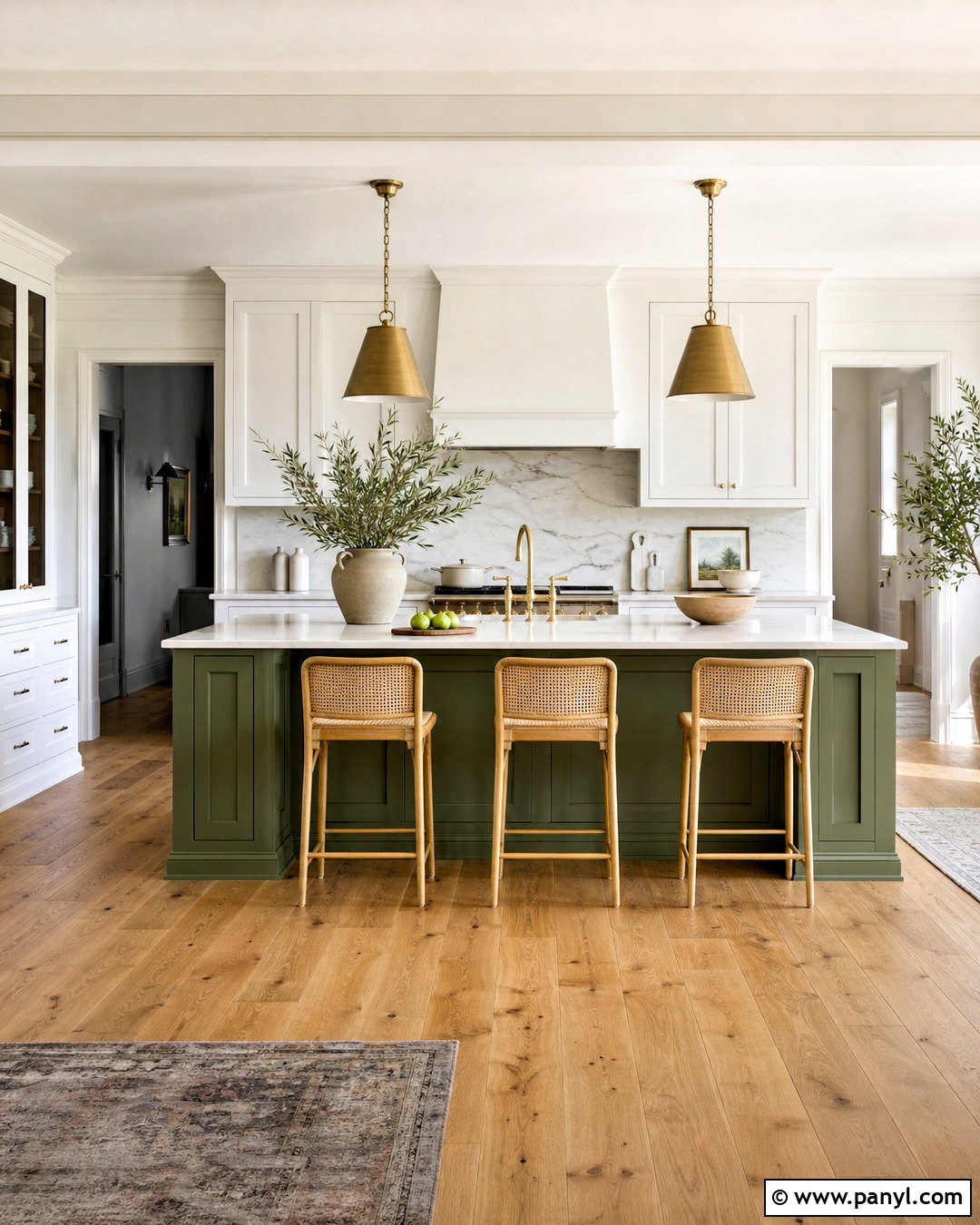
A Saybrook Sage island can anchor a light kitchen when the surrounding finishes are carefully coordinated. Paint the large central island sage and keep the perimeter cabinets warm white. Top both areas with lightly veined white quartz, using a thicker edge on the island for emphasis. Add three woven counter stools with oak frames, along with aged brass pendant lights and matching cabinet hardware. A cream zellige-style backsplash introduces movement behind the range without adding another strong color. Medium oak flooring visually connects the stools and cabinetry. Keep appliances in stainless steel and use a simple plaster-look range hood. The finished kitchen feels balanced because the sage island is repeated subtly through herbs, textiles, and artwork instead of standing alone.
20. Saybrook Sage Reading Room
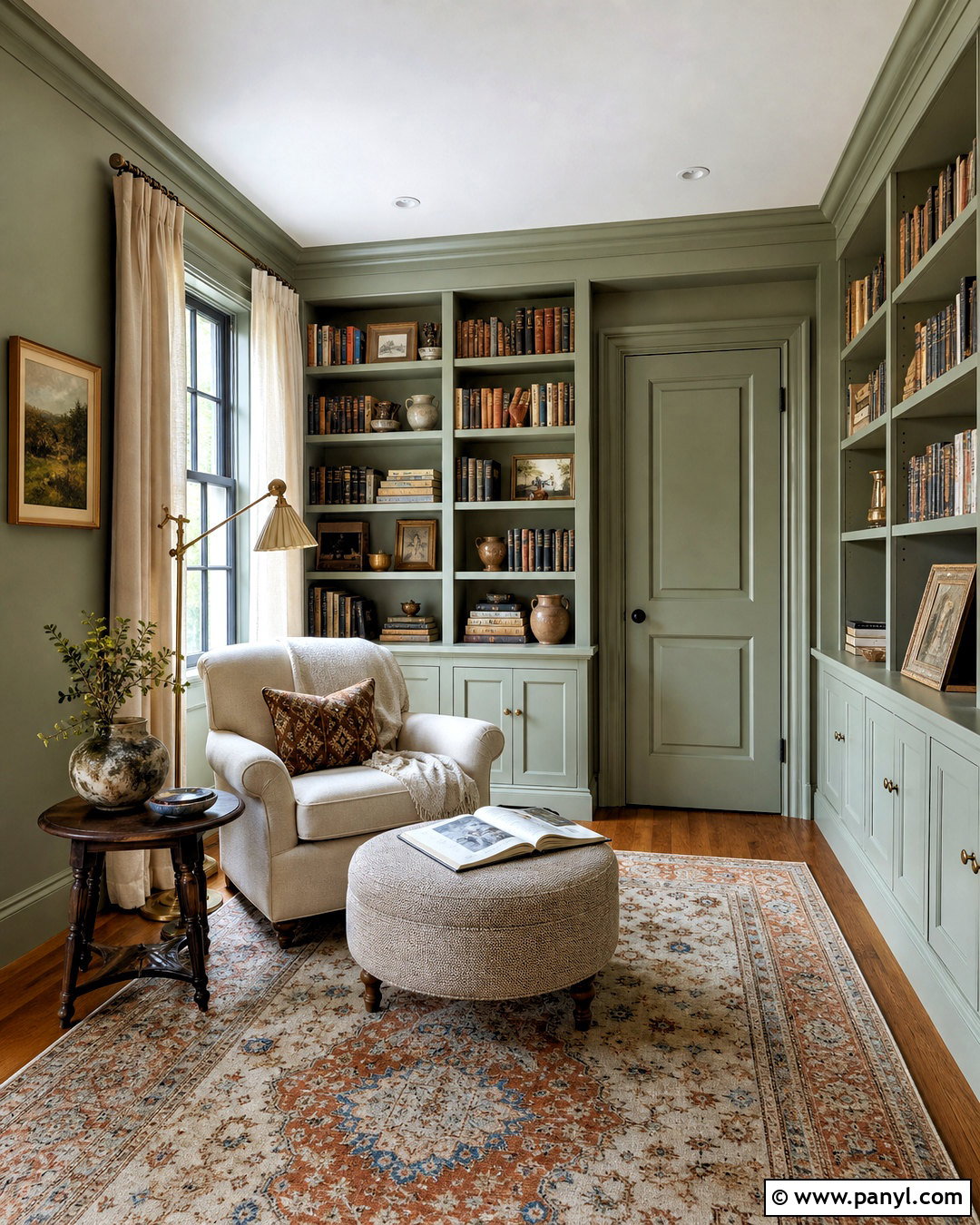
Turn a small spare room into a cozy reading retreat by using Saybrook Sage across the walls, built-in shelves, and trim. This color-drenched treatment creates continuity, while a warm white ceiling prevents the room from feeling too enclosed. Place a deep cream armchair beside the window with an oatmeal ottoman and brass floor lamp. Fill the shelves with books arranged naturally, mixing in small pottery pieces and framed artwork. A walnut side table and medium-tone wood floor add warmth to the green-gray surroundings. Use a faded Persian-style rug with beige, rust, and muted blue details. Full linen curtains soften the windows, and a compact loveseat provides extra seating. The complete space feels quiet, layered, and purposefully separate from busier rooms.
Conclusion:
These 20 saybrook sage benjamin moore ideas show how one muted green can support many complete home designs. It can ground kitchen cabinetry, create peaceful bedroom walls, define practical built-ins, or give an exterior a natural connection to its surroundings. The most successful palettes balance Saybrook Sage with creamy whites, warm woods, quiet stone, and thoughtfully repeated metal accents. Because paint colors can shift with daylight, artificial lighting, surrounding materials, and screen settings, test a large sample in the actual space before committing. Benjamin Moore also notes that digital color representations may differ from painted results. () With careful sampling and a coordinated plan, Saybrook Sage can feel timeless rather than trend-dependent.

Related Ideas and Inspiration:
Leave a Reply