
Benjamin Moore Backwoods Green is a deep, blackened forest green with a welcoming hint of warmth. Its low 12.68 LRV gives rooms, cabinetry, and exteriors rich visual depth, while its earthy character works naturally with warm whites, aged brass, stone, and wood. () The shade can feel traditional beside walnut and antique furniture or surprisingly modern with pale oak and streamlined lighting. Because this green changes with natural and artificial light, always test a large sample before committing. Consider the room’s exposure, nearby finishes, and desired paint sheen. From color-drenched living rooms to inviting front doors, these complete looks show practical ways to decorate with **Benjamin Moore Backwoods Green ideas** throughout your home.
1. Backwoods Green Kitchen Cabinets
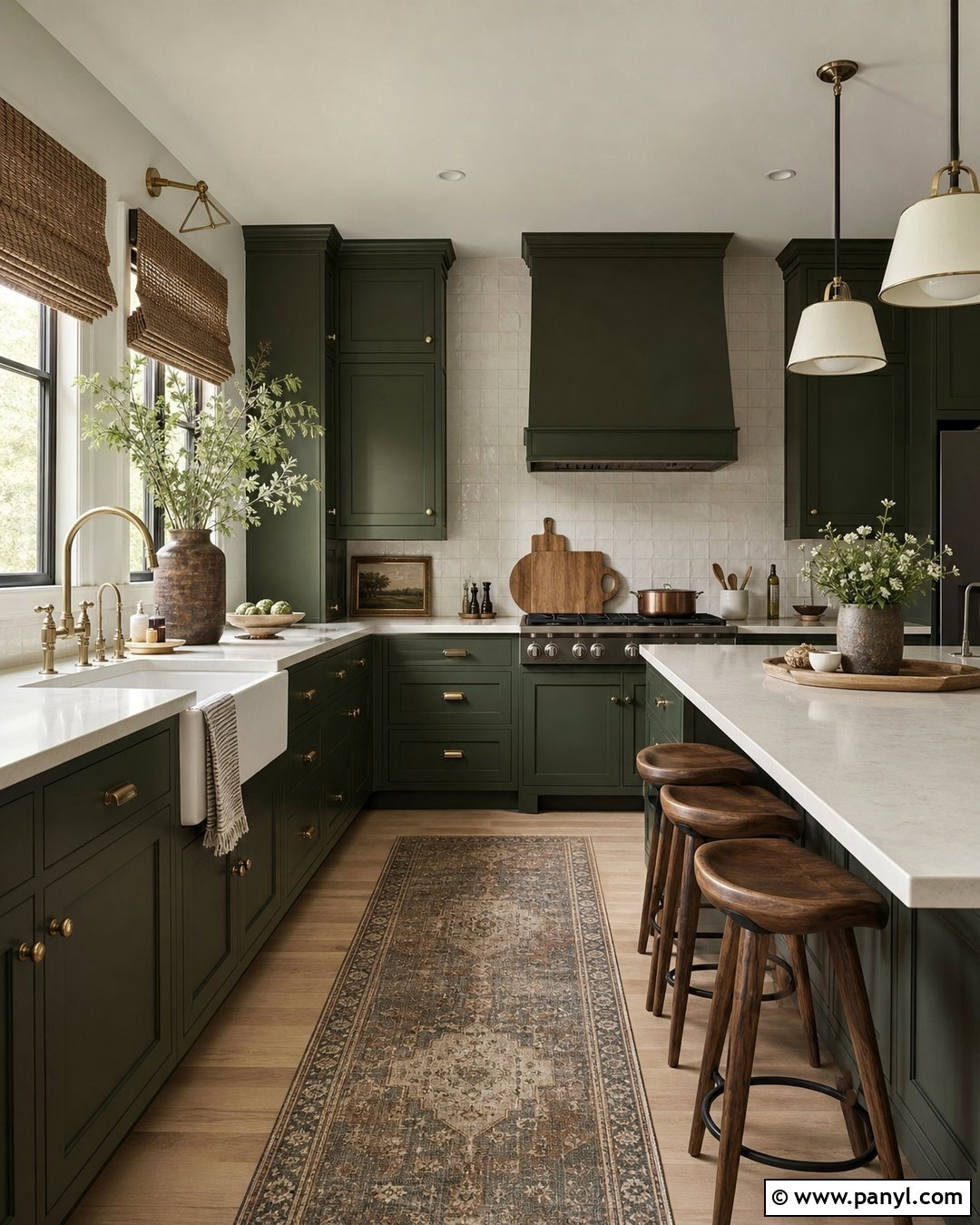
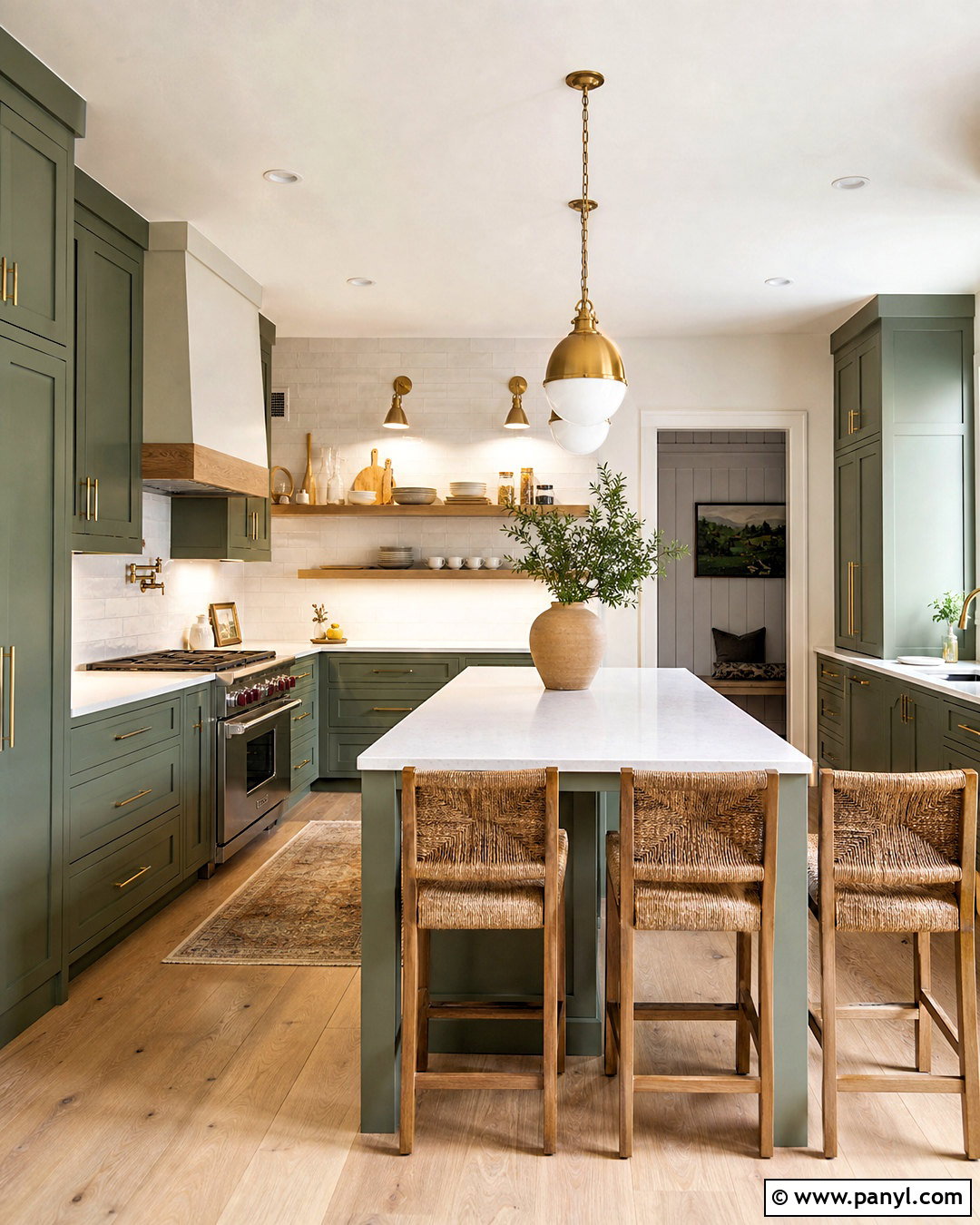
Give a classic kitchen more character by painting every cabinet in Benjamin Moore Backwoods Green. Use a satin or durable cabinet finish so the deep color reflects a little light and remains easy to clean. Creamy quartz countertops, a handmade warm-white tile backsplash, and natural white oak flooring prevent the room from feeling heavy. Choose aged brass knobs, cup pulls, and two simple pendant lights for warmth. Keep the walls and ceiling soft white to create definition around the cabinetry. A farmhouse sink and a walnut counter stool introduce traditional texture without making the design overly rustic. Finish the room with woven shades, off-white ceramics, and a small vintage runner containing muted green, rust, and beige.
2. Backwoods Green Two-Tone Kitchen
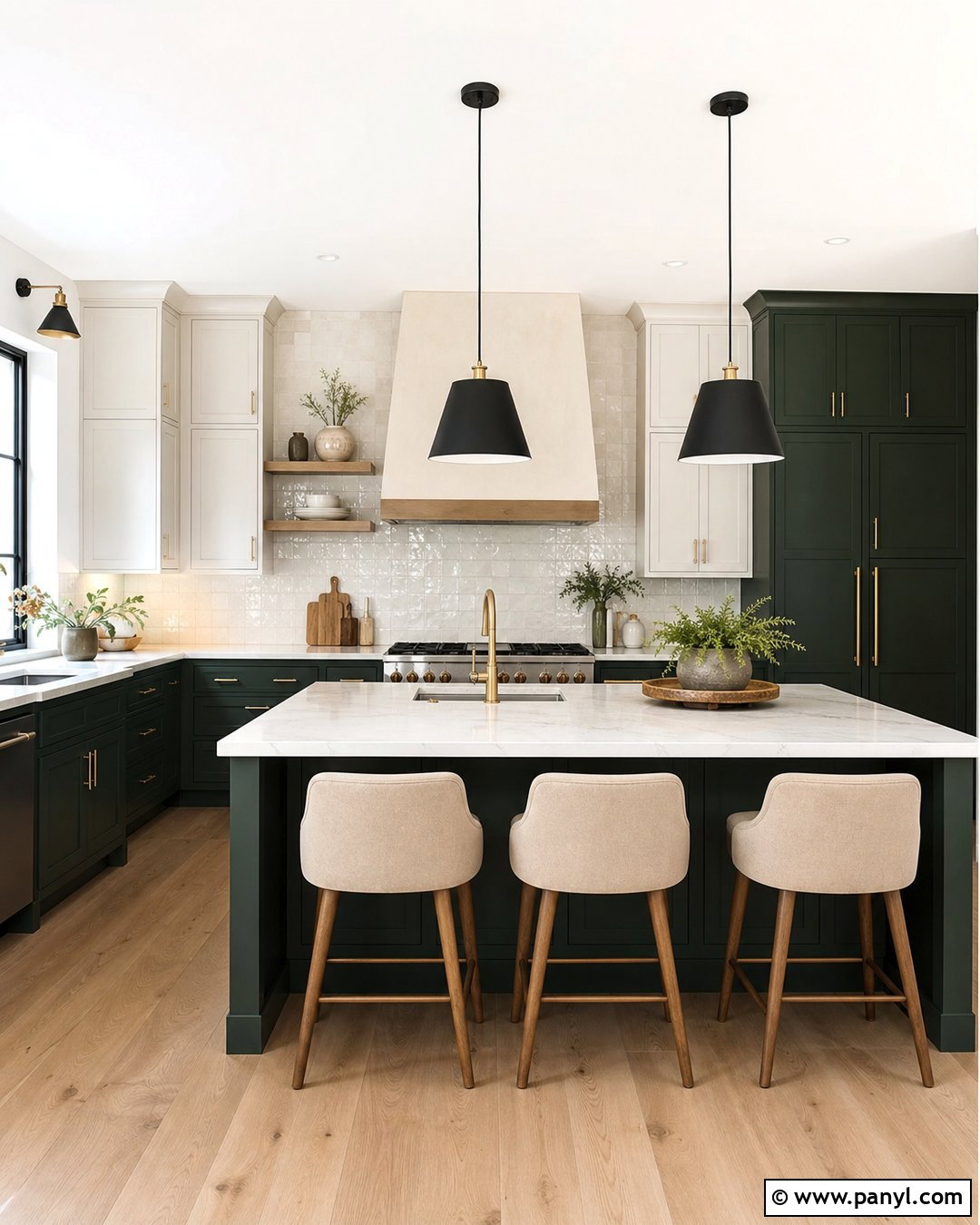
What if you want strong color without covering every cabinet? Paint the lower cabinets and tall pantry units Backwoods Green, then keep the upper cabinets a warm white such as Benjamin Moore White Dove. This two-tone arrangement gives the kitchen a grounded base while preserving brightness near eye level. Connect both colors with softly veined white quartz, warm oak shelves, and an ivory zellige backsplash. Brushed brass hardware complements the green’s warmth, while matte black lighting adds a clean contemporary edge. Select medium-tone oak flooring rather than cool gray planks. A simple plaster range hood can become the quiet focal point. Repeat Backwoods Green on the island for balance, then add cream stools and a few restrained wooden accessories.
3. Backwoods Green Living Room Walls
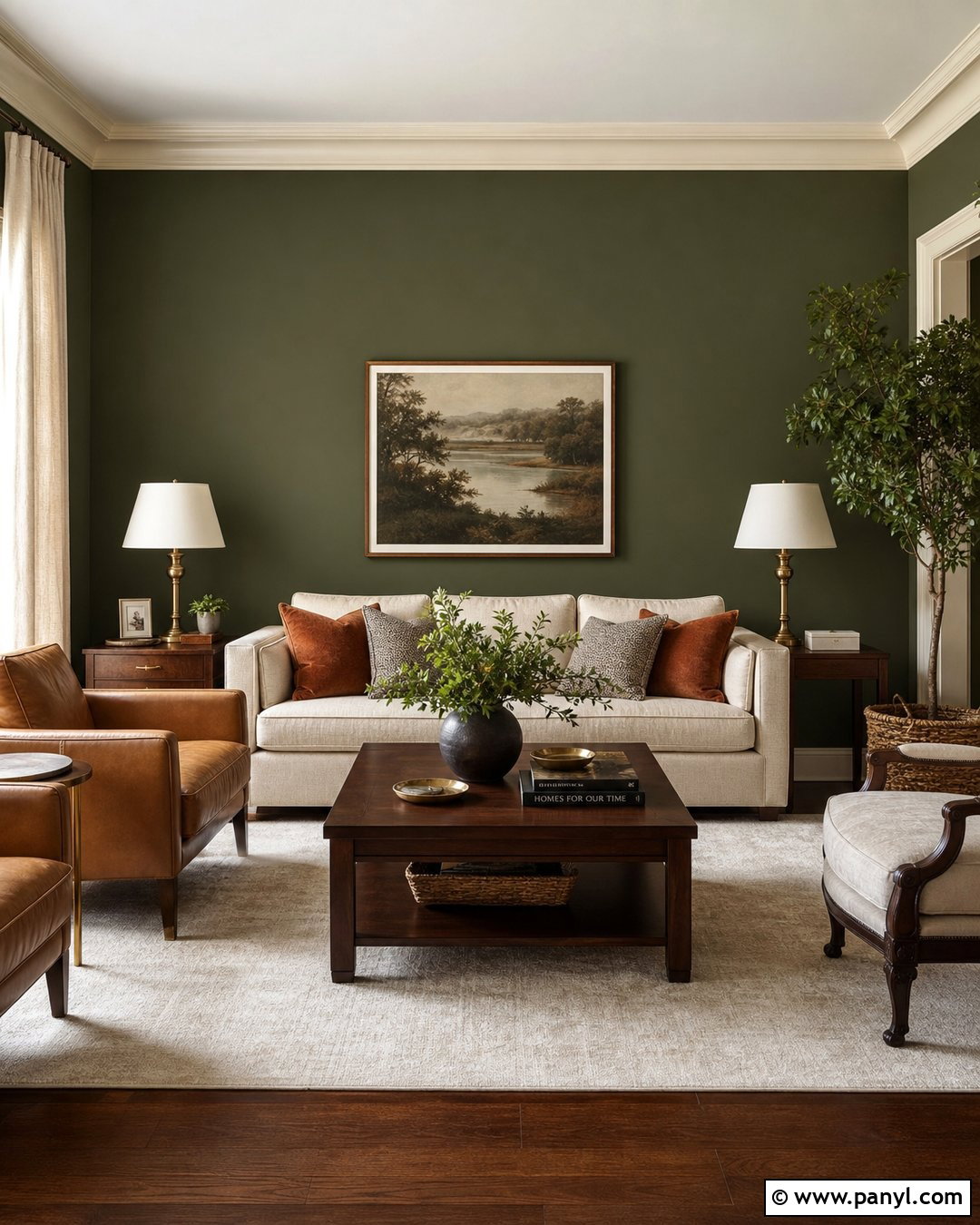
Create a relaxed, enveloping living room by using Backwoods Green across all four walls. Balance the dark backdrop with a large oatmeal-colored sofa, two camel leather chairs, and a pale wool area rug. Medium walnut tables bring out the earthy side of the paint, while aged brass lamps create subtle contrast. Choose warm white for the ceiling and substantial trim so the architecture remains crisp. Linen curtains in natural beige will soften the windows without competing with the wall color. Layer in olive, cream, muted rust, and charcoal through pillows and artwork. Keep the room’s layout open, with seating arranged around a simple stone fireplace or low wood coffee table. Multiple lamps help maintain a welcoming atmosphere after sunset.
4. Backwoods Green Living Room Accent Wall
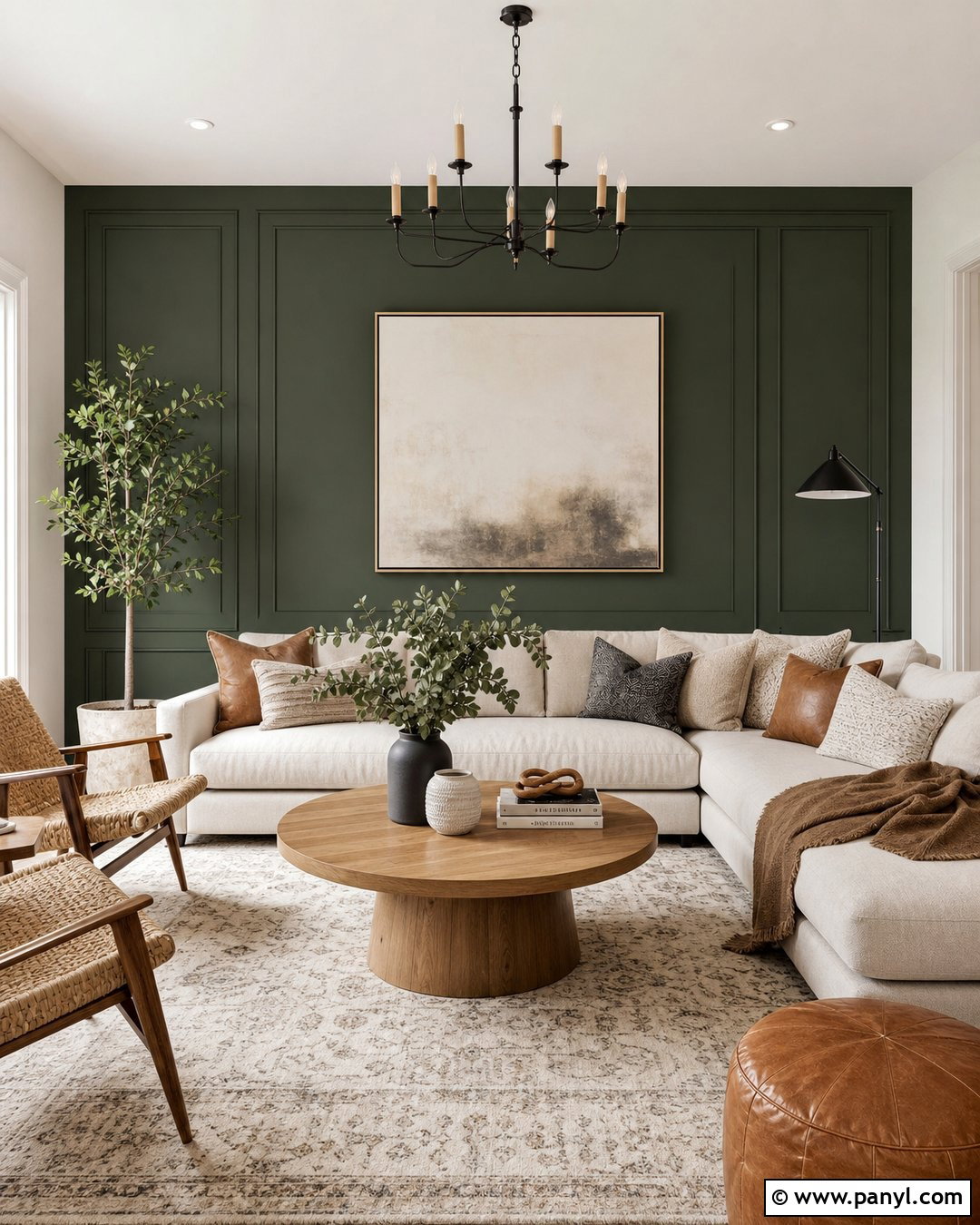
A Backwoods Green accent wall can anchor a bright living room without reducing its overall openness. Apply the color to the wall behind the sofa or television, preferably where built-ins, paneling, or a fireplace give it architectural purpose. Paint the remaining walls warm off-white and continue that lighter tone across the ceiling. Furnish the space with a light greige sectional, an oak coffee table, and woven accent chairs. Black metal details keep the palette current, while tan leather and brass add warmth. Instead of placing many small decorations against the green, hang one oversized neutral artwork or a balanced gallery arrangement. A cream rug with subtle olive lines will connect the accent wall to the rest of the complete room.
5. Backwoods Green Dining Room
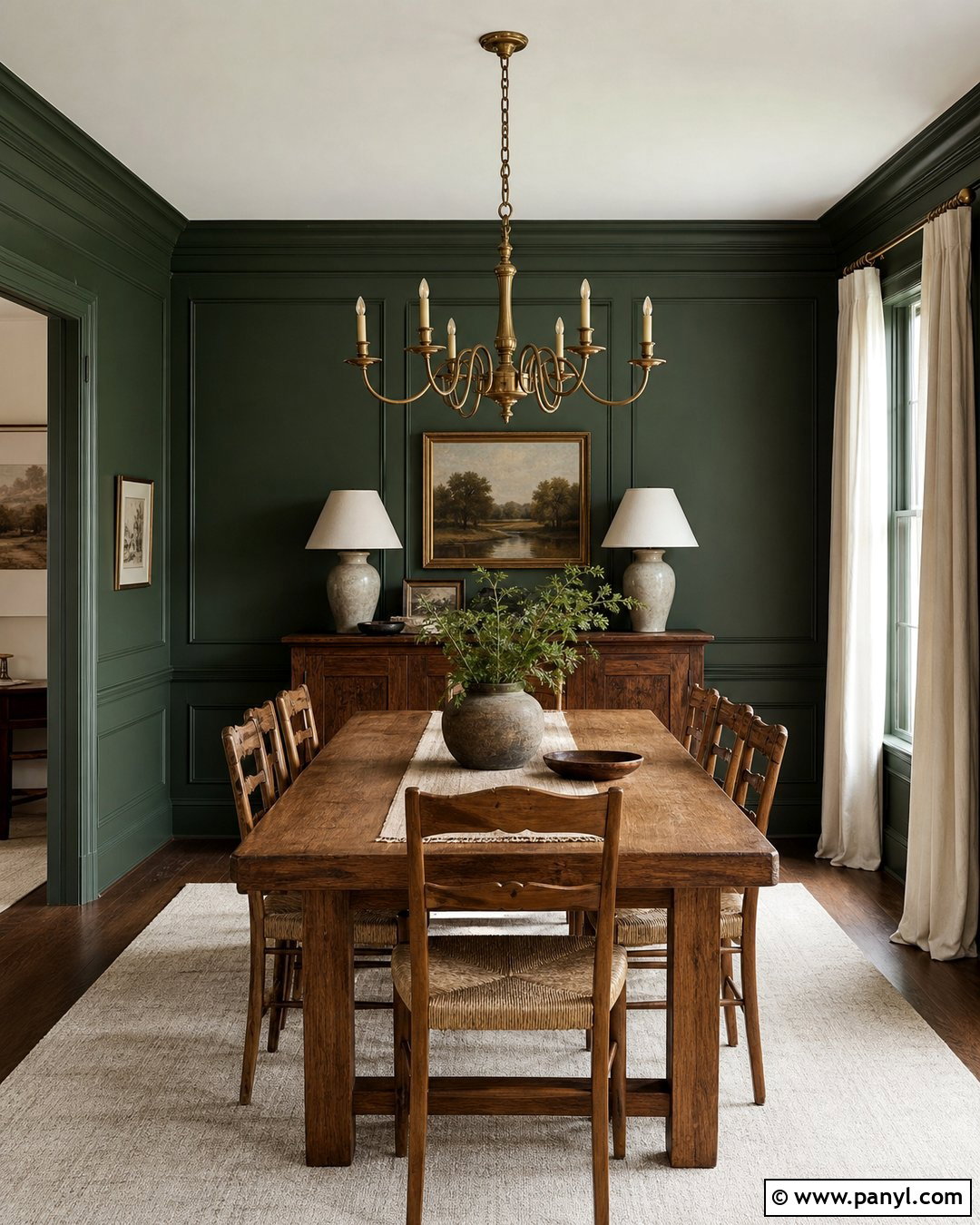
Backwoods Green can turn an ordinary dining room into a warm destination for everyday meals and gatherings. Paint the walls and lower panel molding the same green for a tailored, continuous finish. Add a rectangular medium-oak table, rush-seat chairs, and a simple aged brass chandelier. Warm white linen curtains and a lightly patterned ivory rug will keep the room from becoming too dark. For contrast, use an antique wood sideboard topped with cream ceramic lamps and a large landscape painting. The ceiling should remain soft white unless the room receives abundant daylight. Set the table with stoneware, natural linen, and clear glass rather than overly formal accessories. This balanced combination feels traditional, comfortable, and easy to update through different seasons.
6. Backwoods Green Bedroom Walls
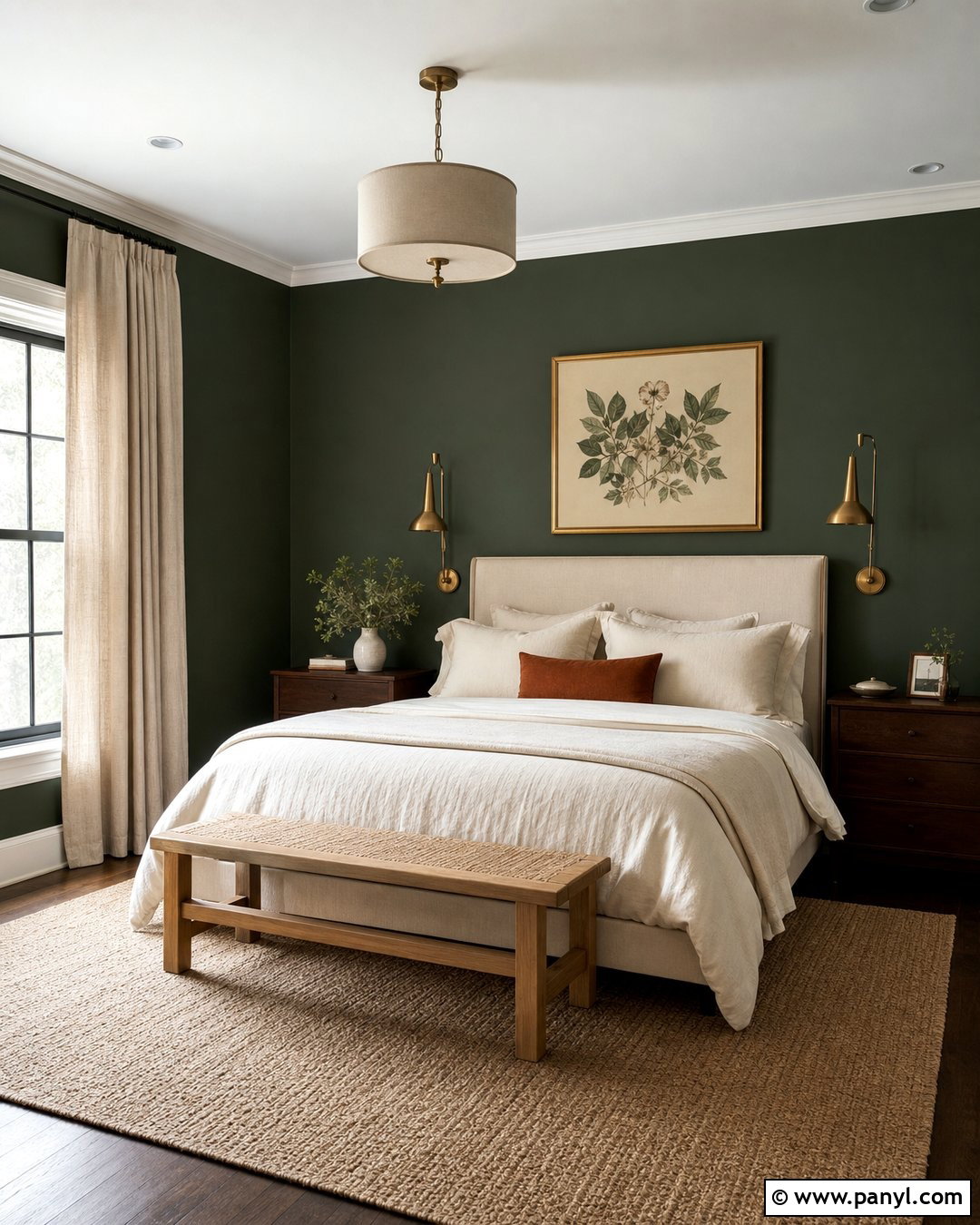
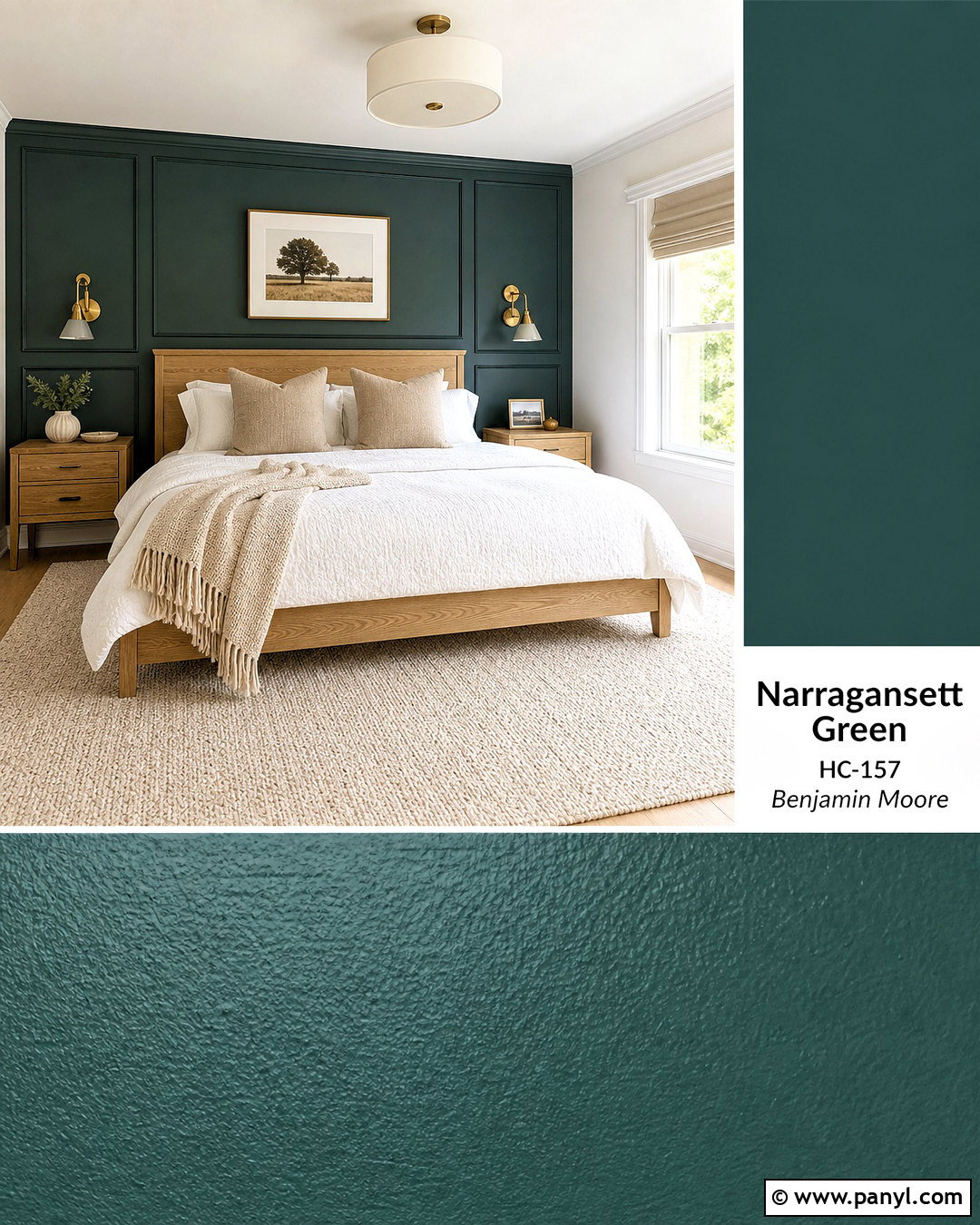
Imagine waking in a bedroom that feels restful, grounded, and connected to nature. Cover the walls with Backwoods Green, then soften the depth with an upholstered oatmeal bed and layered ivory bedding. Use medium walnut nightstands, aged brass sconces, and a large natural wool rug to build warmth. Linen curtains in a pale flax shade filter daylight while standing out gently from the dark walls. Keep the ceiling and crown molding warm white for a framed, finished appearance. Add one rust-colored lumbar pillow and a muted botanical print rather than filling the space with green accessories. A light oak bench at the foot of the bed completes the arrangement. Select warm light bulbs so the color remains inviting instead of turning flat or overly cool.
7. Backwoods Green Color-Drenched Bedroom
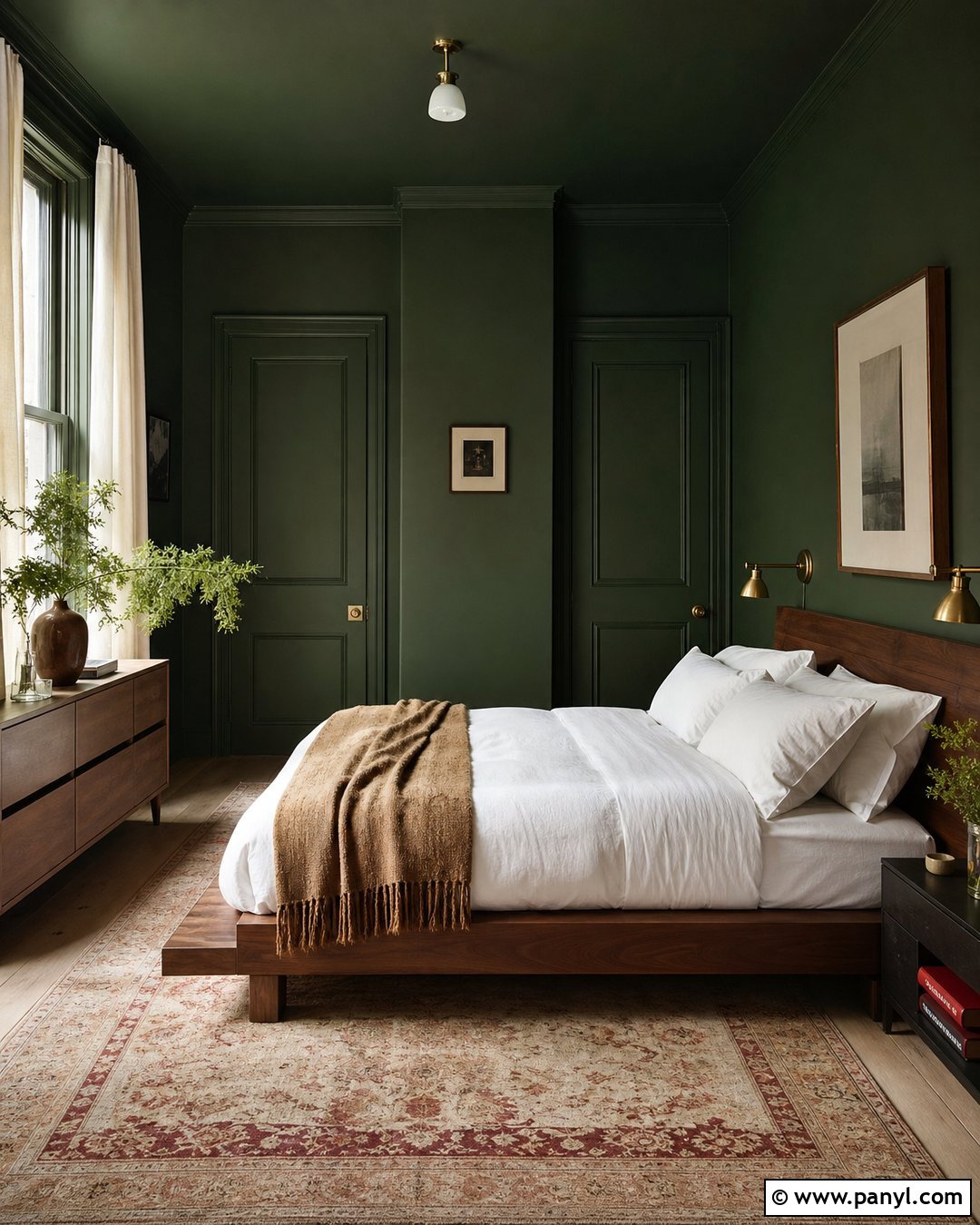
For a cocooning effect, carry Backwoods Green across the bedroom walls, trim, doors, and ceiling. This color-drenched treatment works especially well when the room has decorative molding or an irregular ceiling that would otherwise look visually divided. Use a matte finish overhead, eggshell on the walls, and satin on the woodwork to add subtle dimension. A low walnut bed, crisp white sheets, and a thick camel throw create clean contrast. Place pale linen drapes at the windows and introduce warm light through brass wall sconces. Keep artwork minimal and generously scaled. A vintage-style rug combining cream, faded red, and olive grounds the furniture. The finished bedroom should feel intentionally intimate, not crowded, so limit small furniture and decorative objects.
8. Backwoods Green Home Office
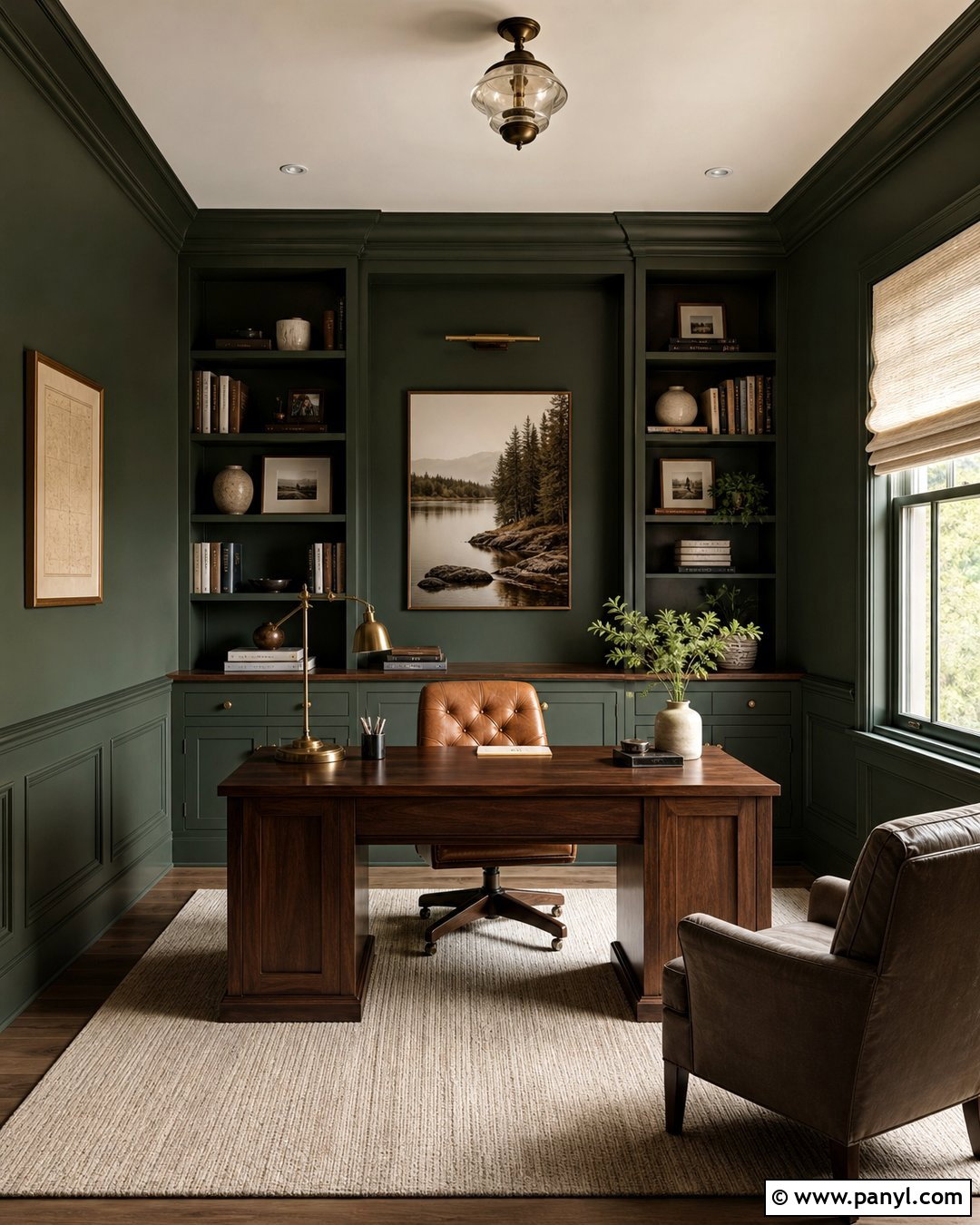
A focused home office benefits from Backwoods Green walls paired with practical storage and warm natural materials. Paint the entire room green, including a bank of built-in cabinets, for a seamless background that visually reduces workplace clutter. Install a substantial walnut desk in the center or facing a window, then add a cognac leather chair. A cream wool rug, warm white Roman shade, and brass picture light keep the office refined but comfortable. Use open shelving sparingly, arranging books with a few ceramic pieces and framed photographs. Add a shaded desk lamp for task lighting and a flush-mount ceiling fixture for general brightness. If the office is small, leave the ceiling warm white to make the room feel taller and more open.
9. Backwoods Green Built-In Bookcases
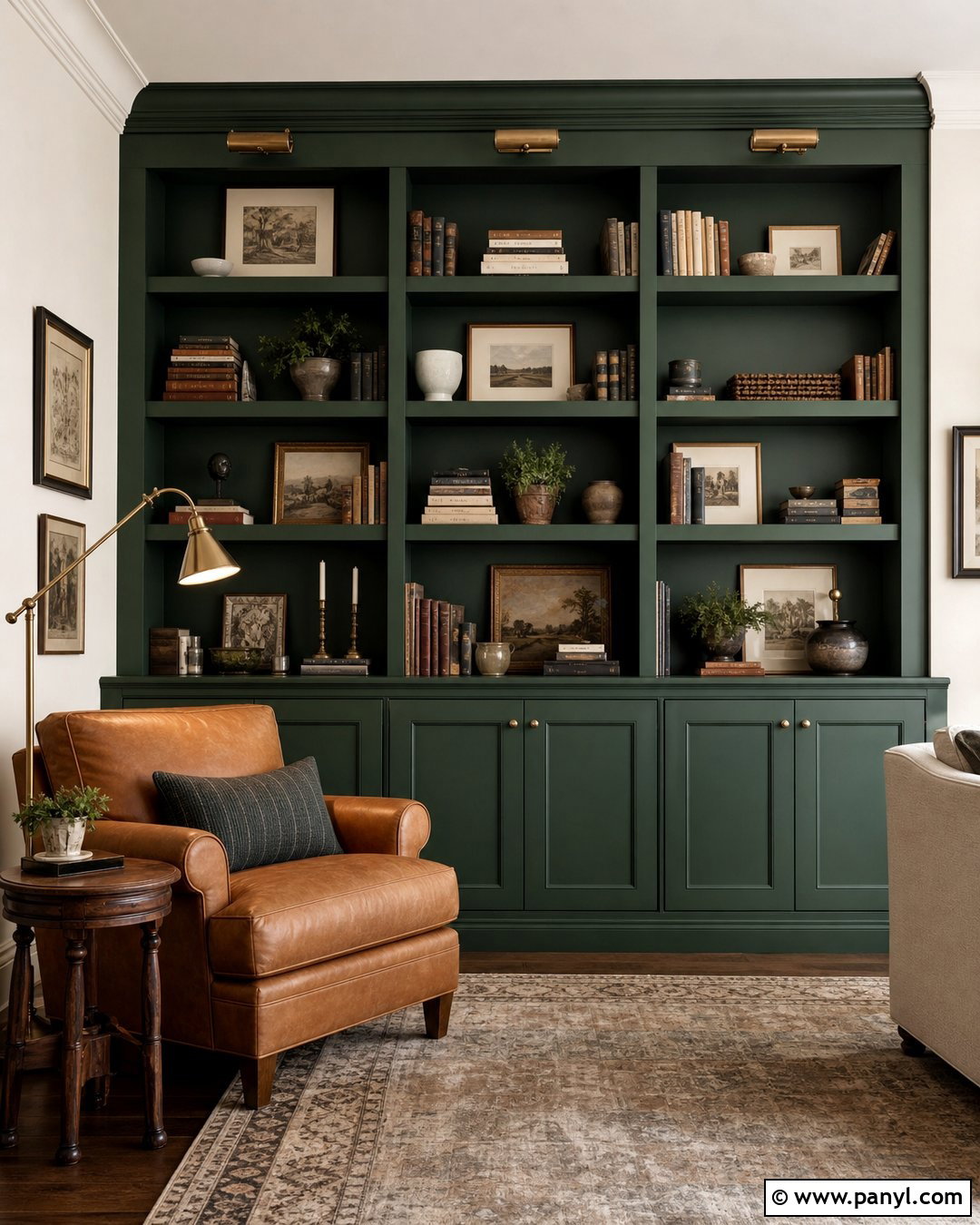
Turn plain built-in bookcases into a complete library feature with Backwoods Green. Paint the shelving, cabinet doors, trim, and wall behind the shelves in the same satin finish for a rich, furniture-like appearance. Surround the unit with warm white walls so the green becomes a defined focal point. Place a camel leather reading chair nearby with a brass floor lamp and small walnut table. Style the shelves with books, off-white ceramics, framed art, and a few dark metal objects, leaving some open space between groupings. Lower cabinets provide concealed storage and keep the room organized. Add a softly patterned vintage rug and linen window treatments. This look works in a living room, office, den, or underused corner beside a fireplace.
10. Backwoods Green Reading Room
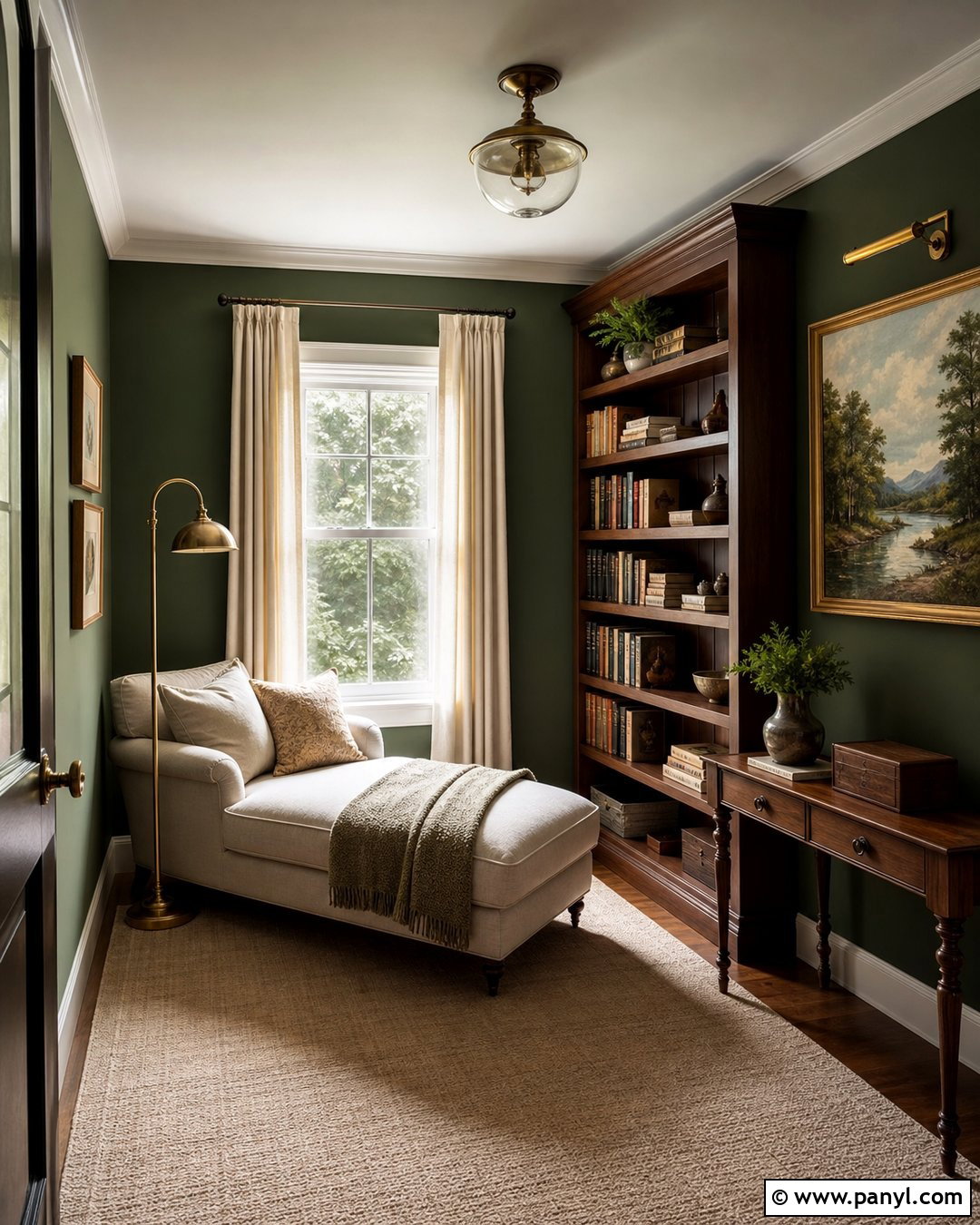
A small spare room can become an inviting reading retreat when Backwoods Green provides the main color. Paint all walls green and position a deep cream chaise or compact sofa beneath the largest window. Add a walnut bookcase, an adjustable antique brass floor lamp, and a soft wool rug in beige and faded olive. Warm white curtains will brighten the perimeter while reducing glare during afternoon reading. A narrow side table offers room for books and a ceramic mug without overcrowding the layout. Hang one large landscape painting in a light wood frame to create a calm focal point. Keep the ceiling warm white and use multiple lighting levels. The finished space should feel quiet and layered, with comfortable seating and easily accessible storage.
11. Backwoods Green Powder Room
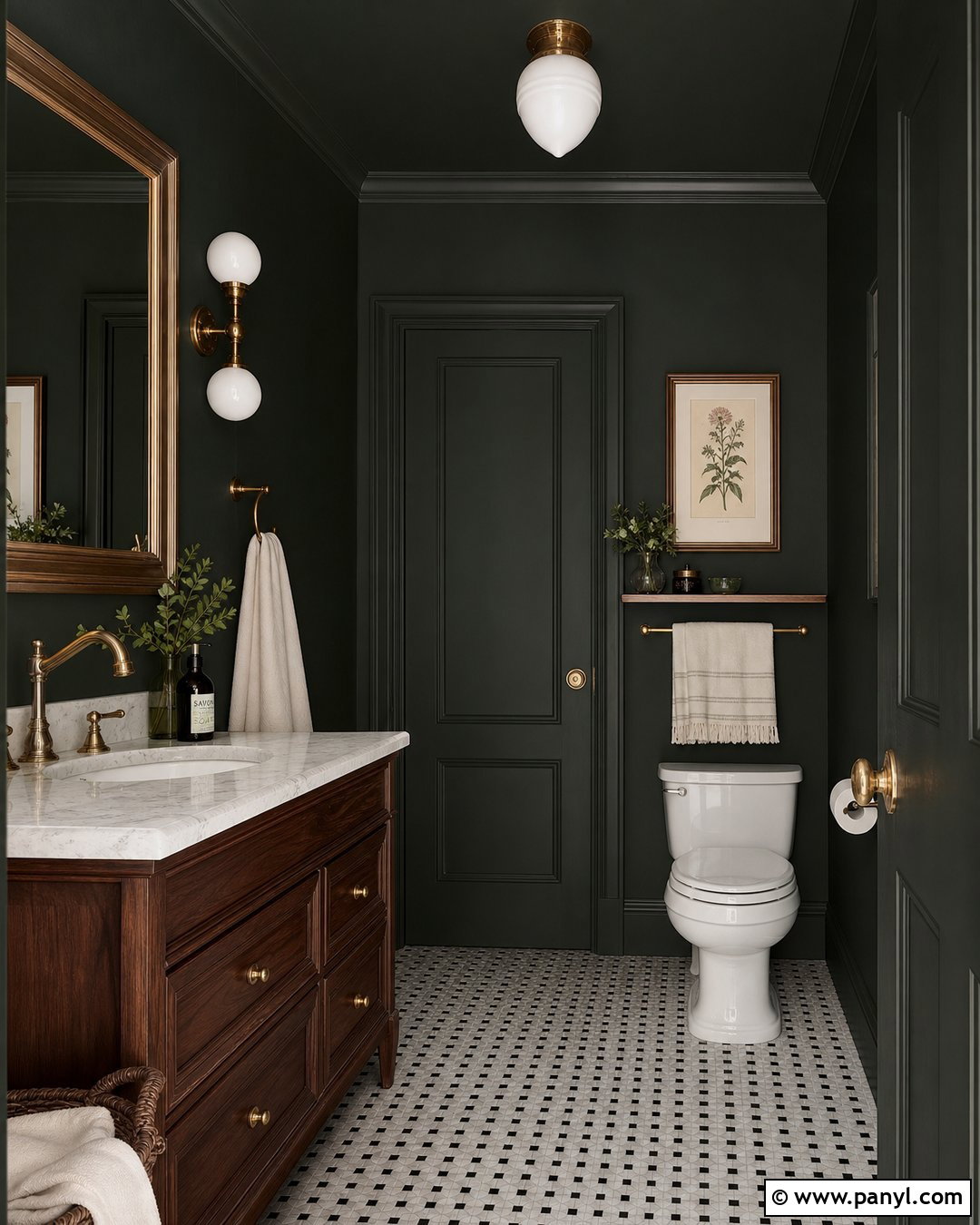
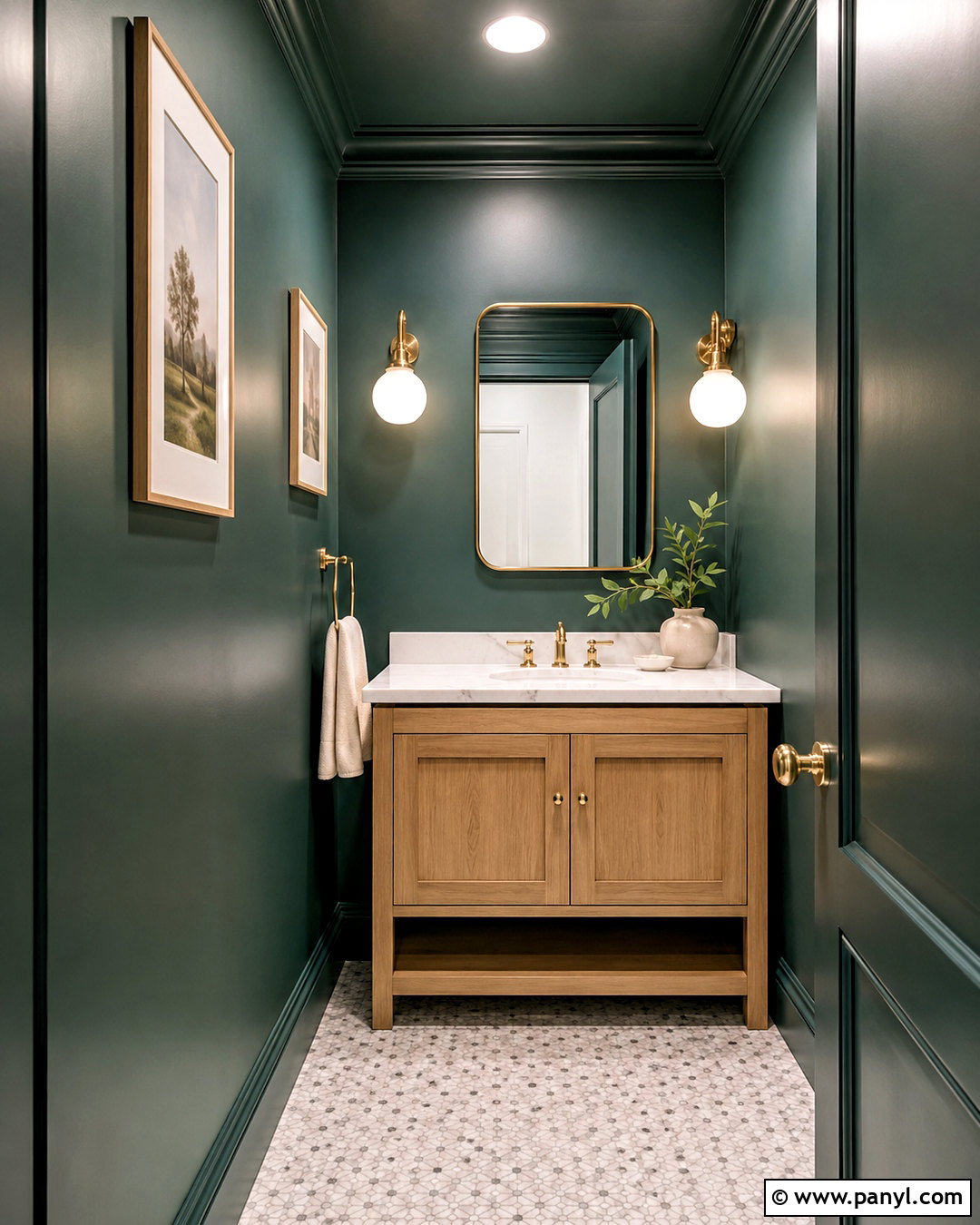
A powder room is an ideal place to use Backwoods Green boldly because the compact space can support a dramatic, complete look. Paint the walls, trim, and ceiling green, then introduce a white marble-topped walnut vanity for strong contrast. An unlacquered brass faucet, framed mirror, and pair of globe sconces add warmth and reflect light. Use black-and-white mosaic floor tile for a timeless foundation. If the room lacks a window, place bright sconces on both sides of the mirror instead of relying on a single overhead fixture. Keep accessories limited to a cream hand towel, small ceramic container, and framed botanical artwork. The combination of dark green, natural wood, marble, and brass makes the room feel polished without requiring a major structural renovation.
12. Backwoods Green Bathroom Vanity
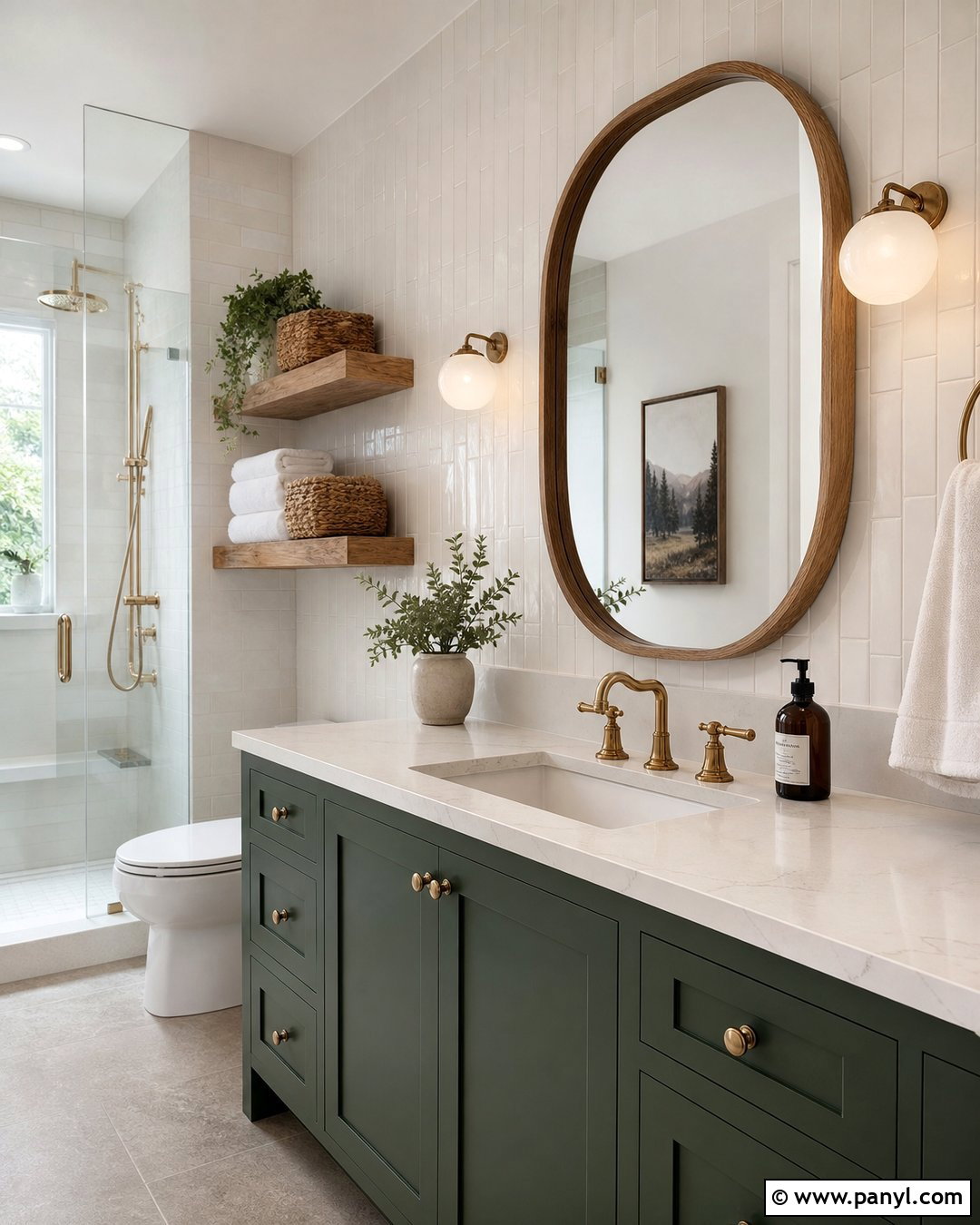
Make the vanity the centerpiece of a light bathroom by painting it Backwoods Green. Surround it with warm white walls, pale limestone floor tile, and a softly veined quartz countertop. A backsplash of glossy ivory subway tile will bounce light while keeping attention on the cabinetry. Choose aged brass hardware and plumbing fixtures for warmth, or matte black for a sharper modern look. Above the vanity, install a rounded wood-framed mirror and two simple milk-glass sconces. Repeat the green subtly through a striped hand towel or small framed print rather than adding another large painted surface. Natural oak shelves and woven baskets provide storage and texture. The resulting bathroom feels fresh and grounded, with enough contrast to show the green clearly.
13. Backwoods Green Bathroom Walls
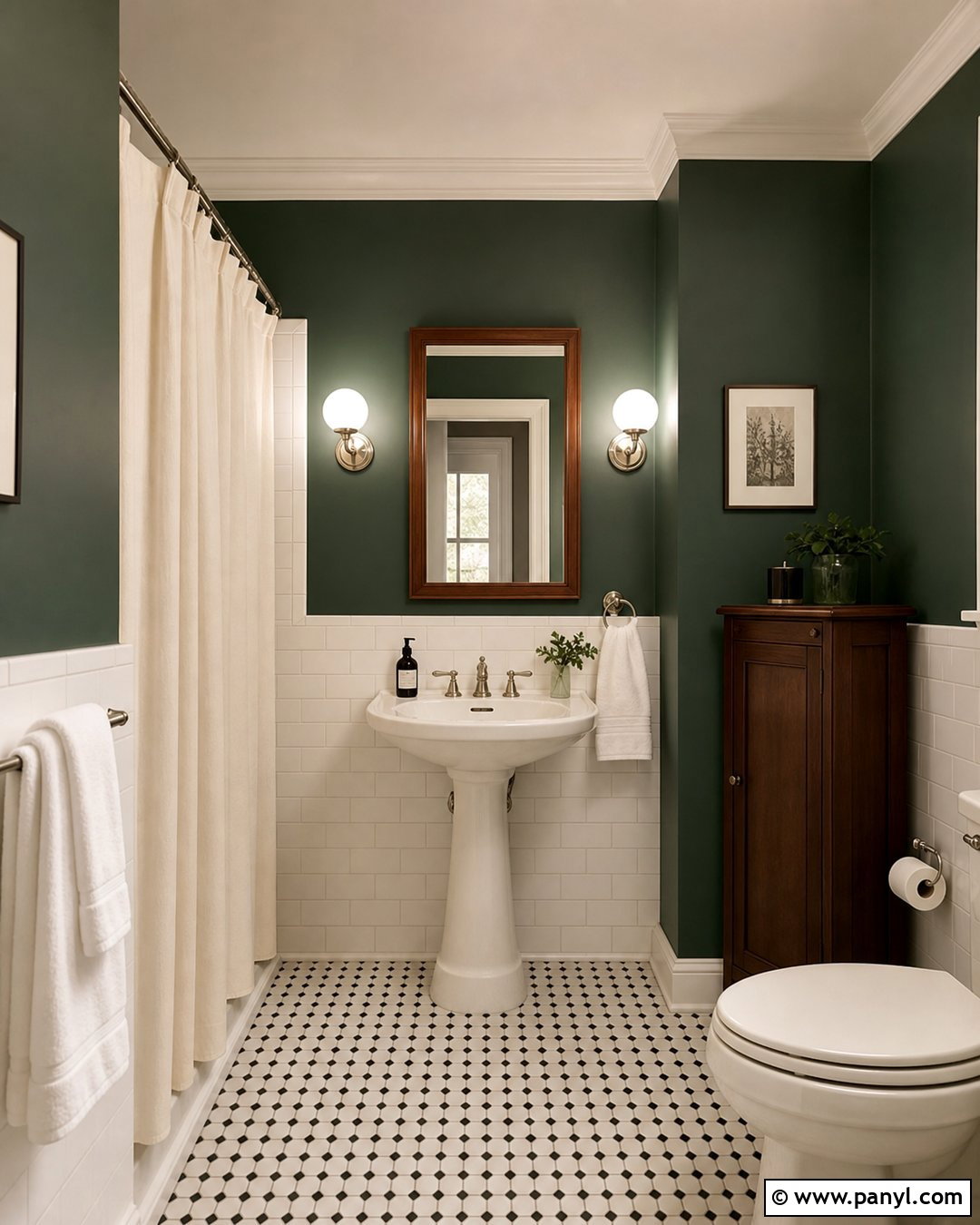
For a more immersive bathroom, use Backwoods Green on the upper walls and combine it with warm white tile below. A chair-rail-height tile treatment protects wet areas and provides a bright break beneath the dark paint. Choose ivory ceramic tile with matching grout, a white pedestal sink, and a traditional polished nickel faucet. Black-and-white patterned flooring gives the room definition without introducing another strong color. Hang a walnut-framed mirror and add a narrow wood cabinet for towels and toiletries. Bright globe sconces should sit near face level to counter the deep wall color. Finish with white towels, a cream shower curtain, and one small leafy plant. This complete scheme suits a guest bathroom that needs personality while remaining practical and easy to maintain.
14. Backwoods Green Laundry Room
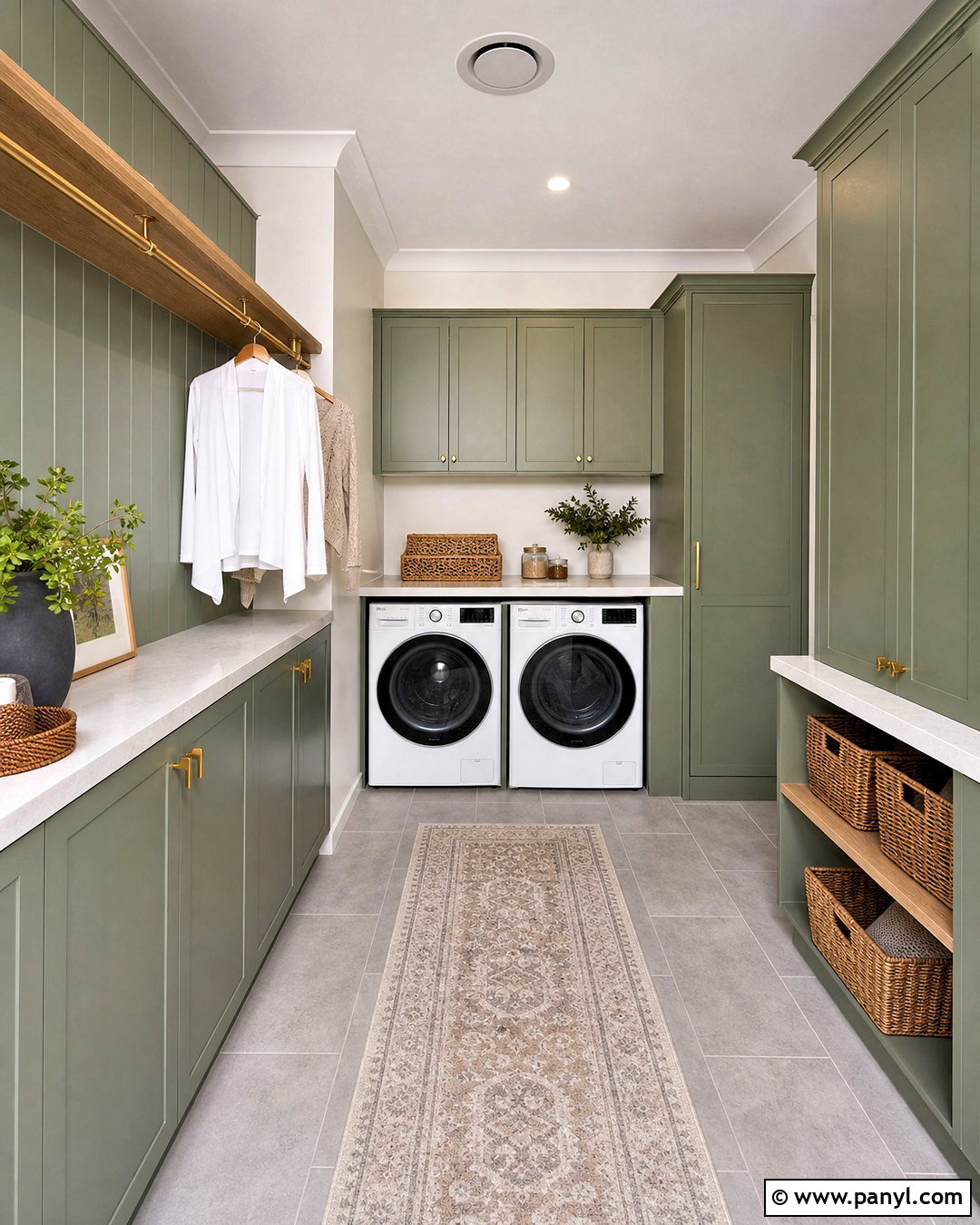
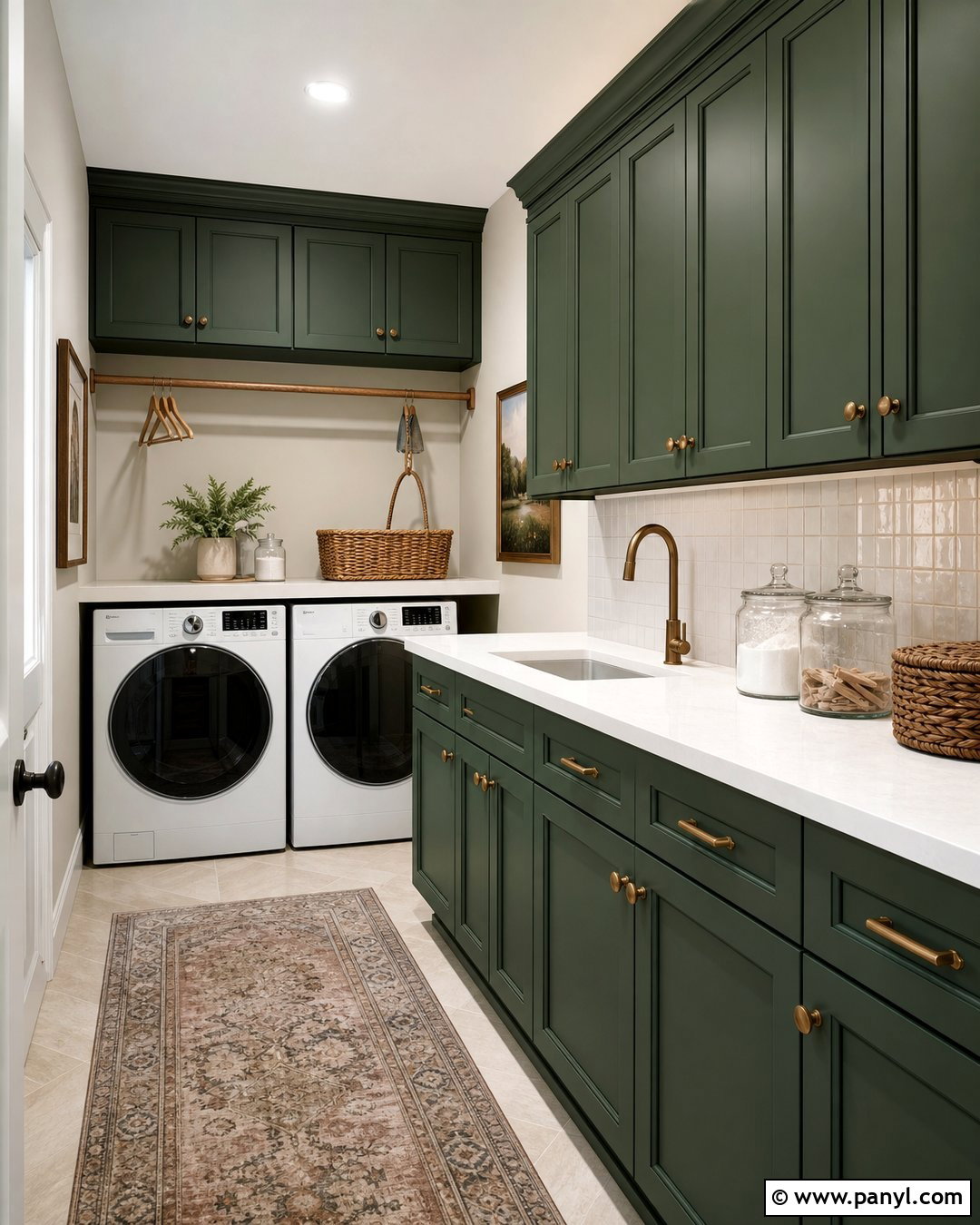
Laundry rooms often contain many hard white surfaces, making Backwoods Green an effective way to introduce depth. Paint the lower and upper cabinets green, then install a white quartz folding counter and warm ivory backsplash tile. Place side-by-side white appliances beneath the counter whenever the layout allows, creating one uninterrupted work surface. Add aged brass cabinet hardware and an oak hanging rail to warm the practical setting. Light natural wood flooring or beige porcelain tile will disguise everyday dust better than stark white floors. Keep the walls a creamy white and use a bright flush-mount fixture overhead. Woven baskets, glass storage jars, and a muted runner complete the room. The layout should prioritize folding space, closed storage, and an open section for hanging clothes.
15. Backwoods Green Mudroom Cabinets
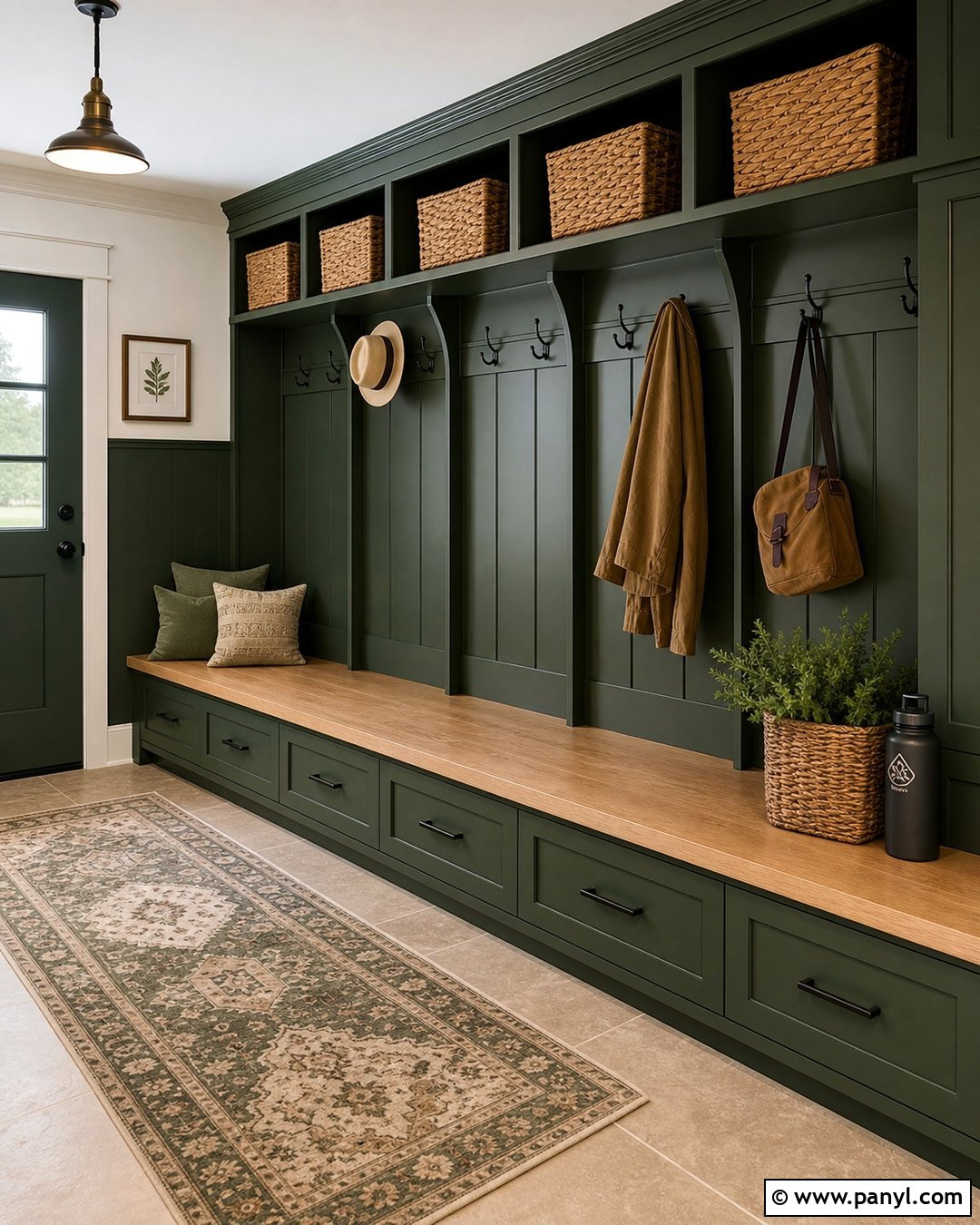
Backwoods Green brings a durable, outdoor-inspired character to a hardworking mudroom. Cover the tall lockers, bench base, upper shelves, and wall paneling in the same satin green finish. Add a thick white oak bench seat and brass or black hooks for bags and coats. Beige stone-look porcelain tile is practical underfoot and complements the warmth of the paint. Use woven baskets on the upper shelves to control visual clutter, with individual drawers below for shoes and small gear. Paint surrounding walls warm white to maintain brightness near the entry. A washable runner containing tan, olive, and charcoal can soften the floor. Complete the space with a wide ceiling light, a simple Roman shade, and a small tray for keys and daily essentials.
16. Backwoods Green Entryway
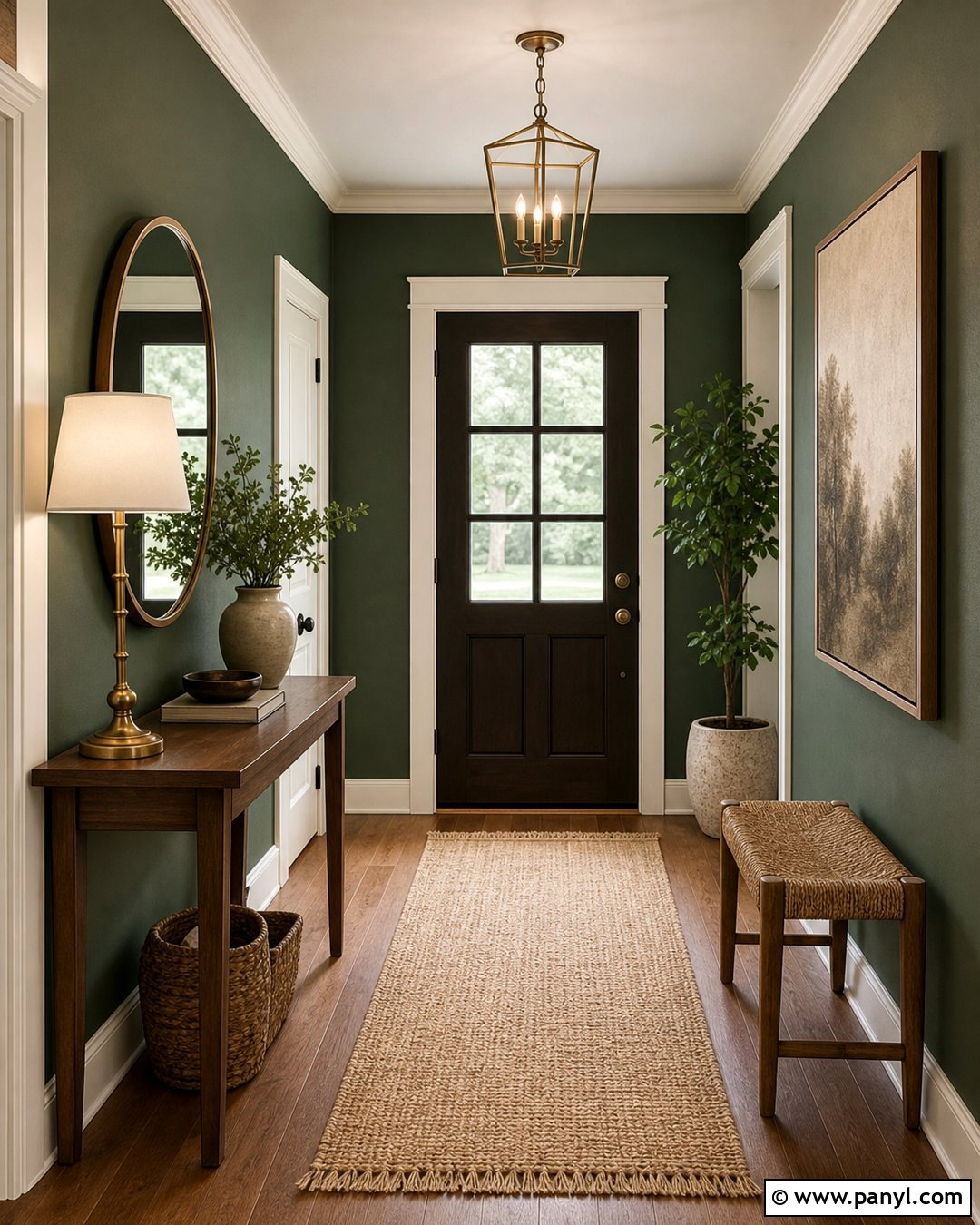
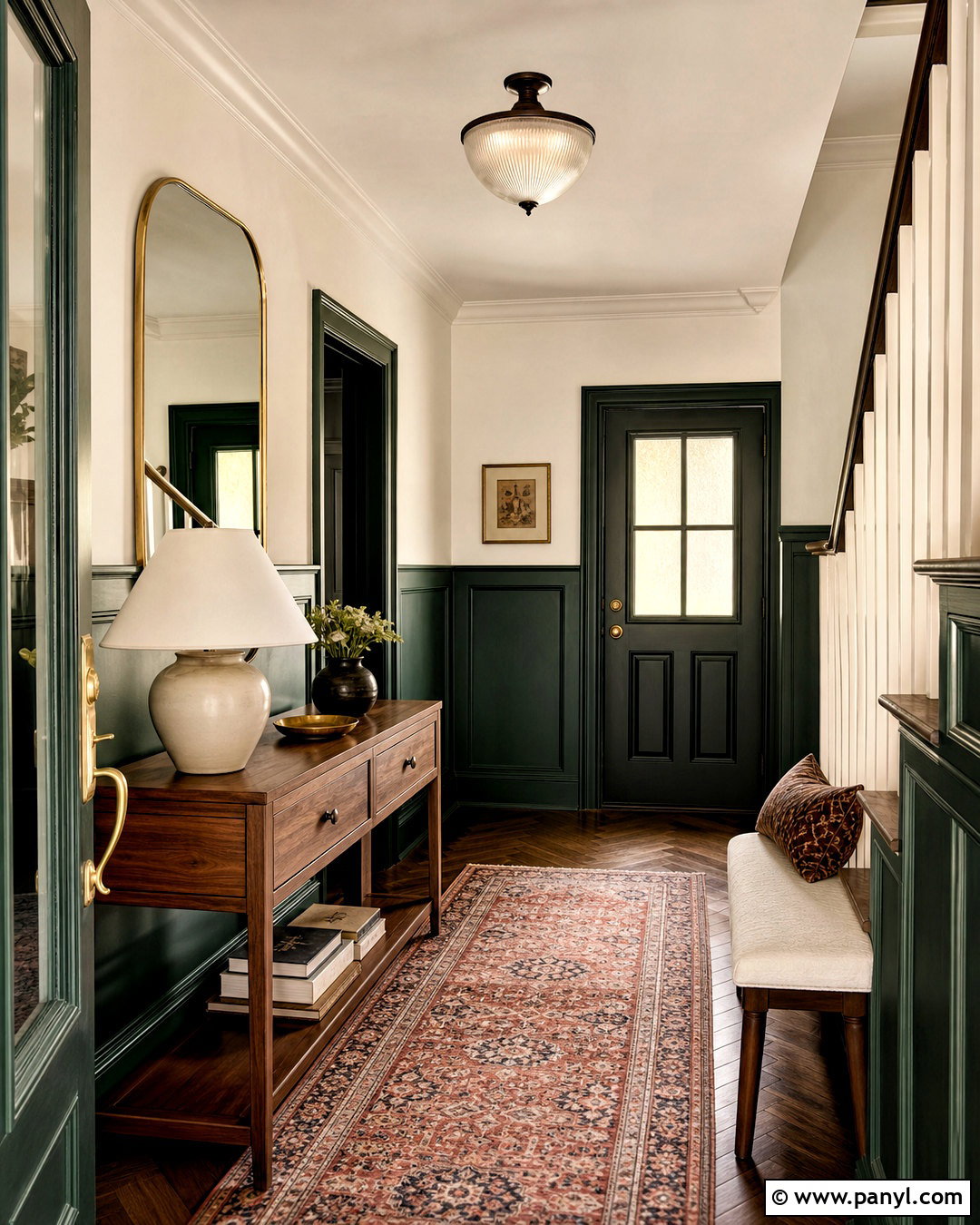
Welcome guests with a complete Backwoods Green entryway built around color, storage, and warm texture. Paint the walls green and keep the door trim, baseboards, and ceiling creamy white for crisp contrast. Position a slim walnut console against the longest wall, topped with a brass lamp and a large rounded mirror. A natural jute runner introduces texture while handling frequent foot traffic. Include a simple wood bench or woven stool near the door if space allows. Artwork with ivory, brown, and muted red tones will stand out beautifully against the green. Use a warm metal lantern overhead to brighten the area. Avoid filling the console with small accessories; one ceramic bowl, a few books, and a leafy branch create a cleaner, more functional first impression.
17. Backwoods Green Interior Doors
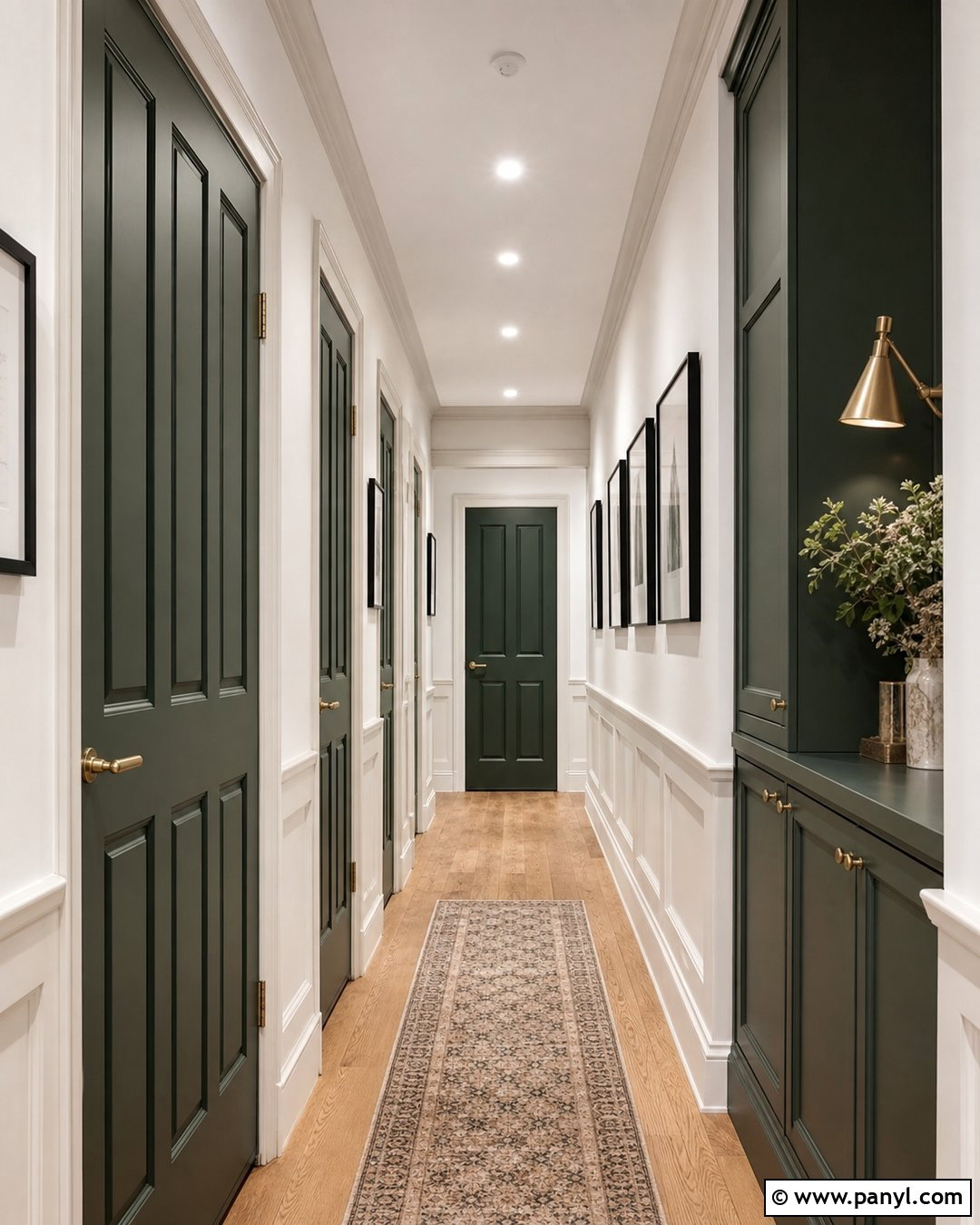
Painting interior doors Backwoods Green provides a controlled way to repeat deep color through an otherwise neutral home. Use the shade on several connected doors rather than one random surface, creating a clear visual rhythm along the hallway. Keep the walls warm white and paint the door casings to match them for strong definition. A satin finish will emphasize paneled details and handle regular cleaning. Add aged brass knobs or levers, medium oak flooring, and a narrow patterned runner with subtle green accents. Simple black picture frames can give the hallway a modern edge. For cohesion, repeat Backwoods Green on a nearby built-in cabinet or entry console. Bright ceiling fixtures and light-colored artwork ensure the corridor remains open and welcoming despite the darker doors.
18. Backwoods Green Fireplace Wall
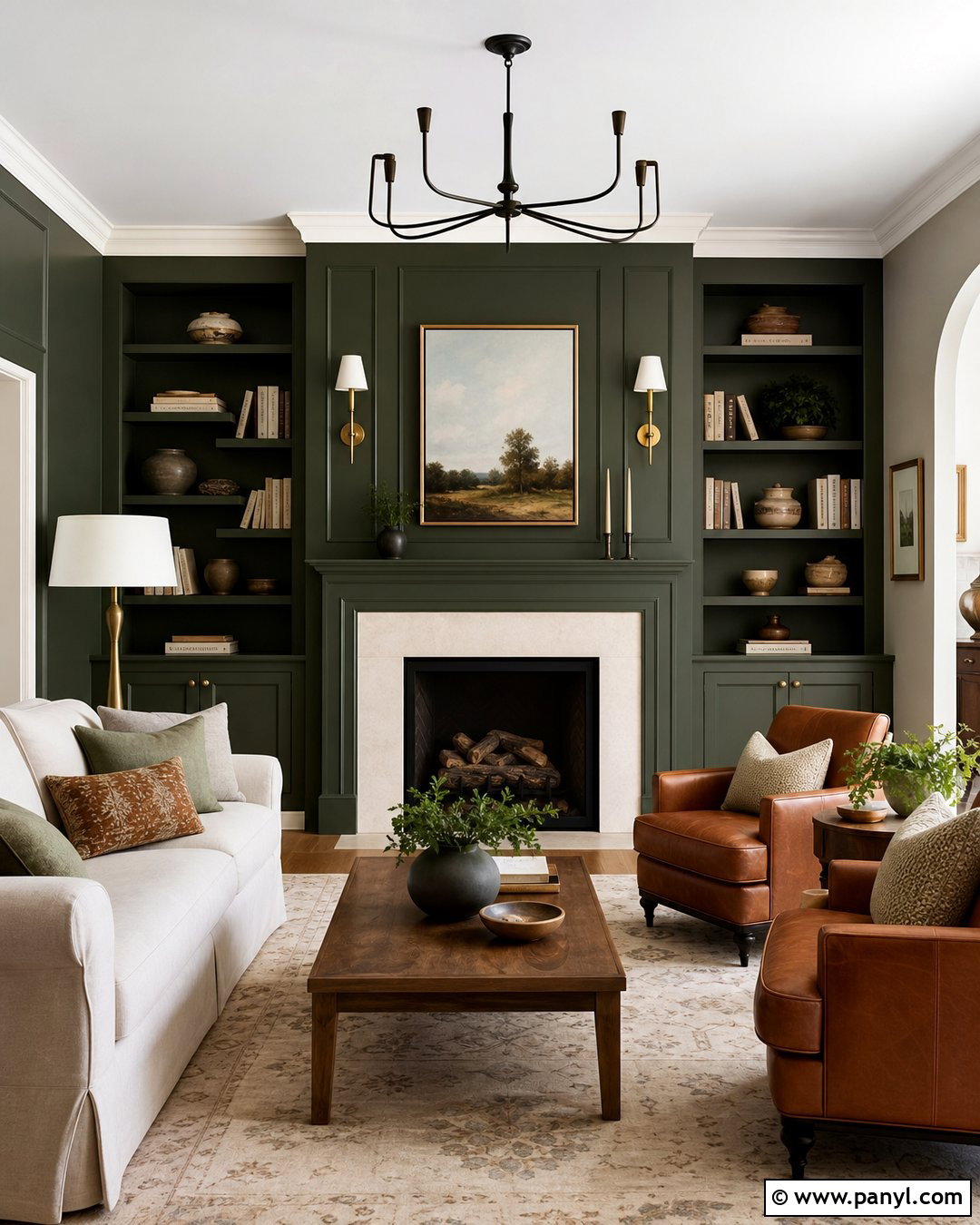
A Backwoods Green fireplace wall can organize the entire living room around one strong architectural feature. Paint the fireplace surround, mantel, wall, and adjacent built-ins green to create a unified composition. Use a simple limestone or warm white tile around the firebox for heat-safe contrast. Position a cream sofa opposite the fireplace with walnut side tables and caramel leather accent chairs. A large ivory rug will brighten the seating area and visually connect the pale stone to the furniture. Choose aged brass sconces above the built-ins, then style the shelves with books, ceramics, and restrained artwork. Keep neighboring walls warm white. The completed look feels balanced because the dark feature has sufficient scale, while the light furnishings prevent it from overpowering the room.
19. Backwoods Green Basement Family Room
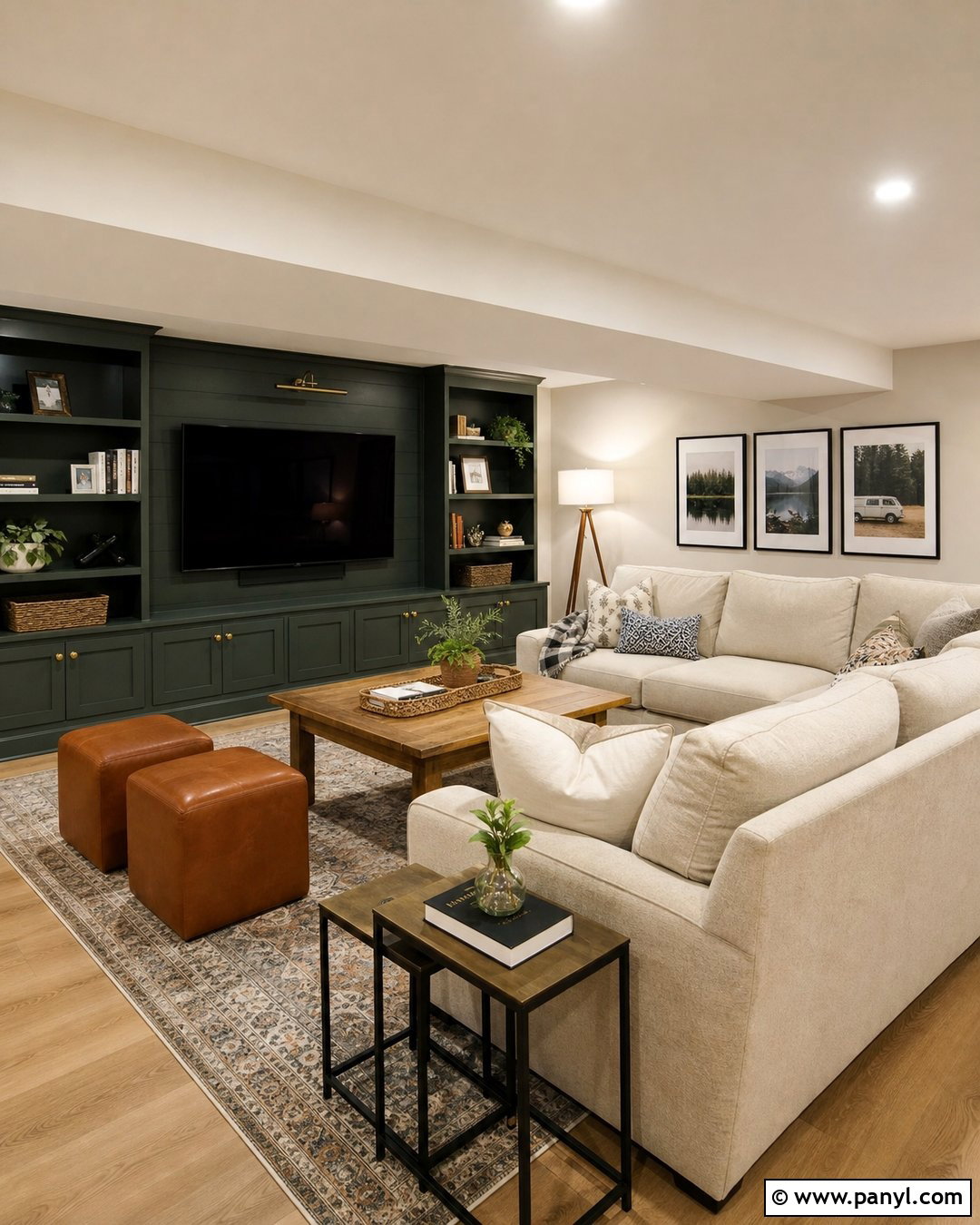
Transform a basement into a comfortable family room by using Backwoods Green strategically around entertainment and storage areas. Paint the television wall and full-height built-in cabinetry green, while keeping the remaining walls a warm light greige. Choose a large oatmeal sectional, durable patterned rug, and medium oak coffee table to brighten the window-limited space. Recessed ceiling lighting should provide even illumination, supported by shaded floor and table lamps. Use closed cabinets for games, equipment, and extra blankets so the deep green feature remains orderly. Add cognac leather ottomans that can serve as flexible seating. Light oak flooring or warm neutral carpet will prevent the room from feeling cold. A few large framed prints are more effective than numerous small basement decorations.
20. Backwoods Green Media Room
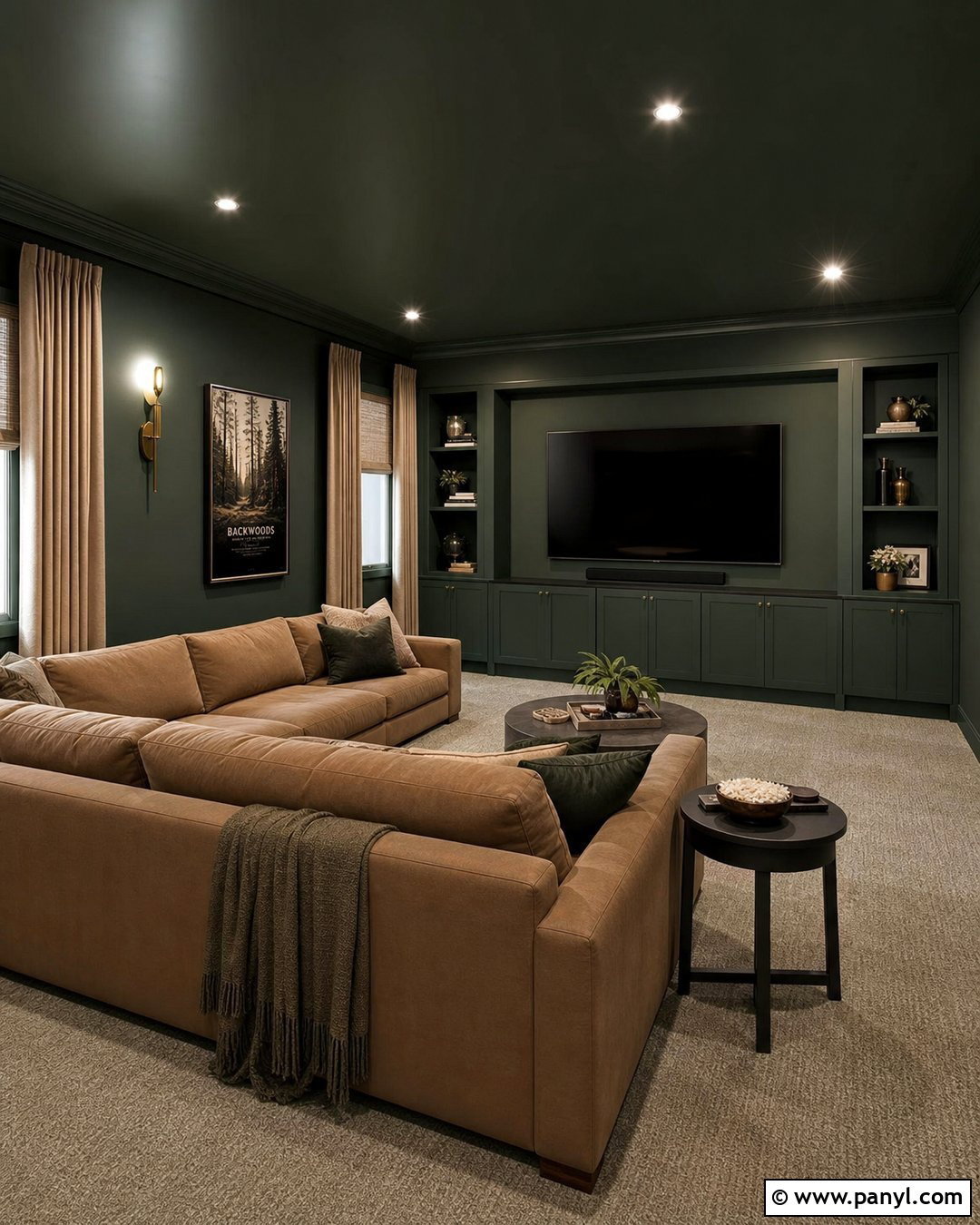
Backwoods Green is particularly effective in a media room because its depth reduces visual distraction while still feeling warmer than charcoal. Color-drench the walls, trim, built-in storage, and ceiling for a theater-like envelope. Arrange a deep tan sectional or rows of compact caramel leather chairs toward a streamlined media wall. Choose a low-pile patterned carpet in olive, beige, and black to improve comfort and hide wear. Wall sconces with warm metal finishes provide soft illumination without creating glare on the screen. Install cabinets beneath the television to conceal electronics and cords. Add heavy flax-colored curtains for softness and light control. The final design should feel comfortable enough for everyday family use, with practical surfaces, clear walkways, and adjustable lighting rather than novelty theater decorations.
21. Backwoods Green Sunroom
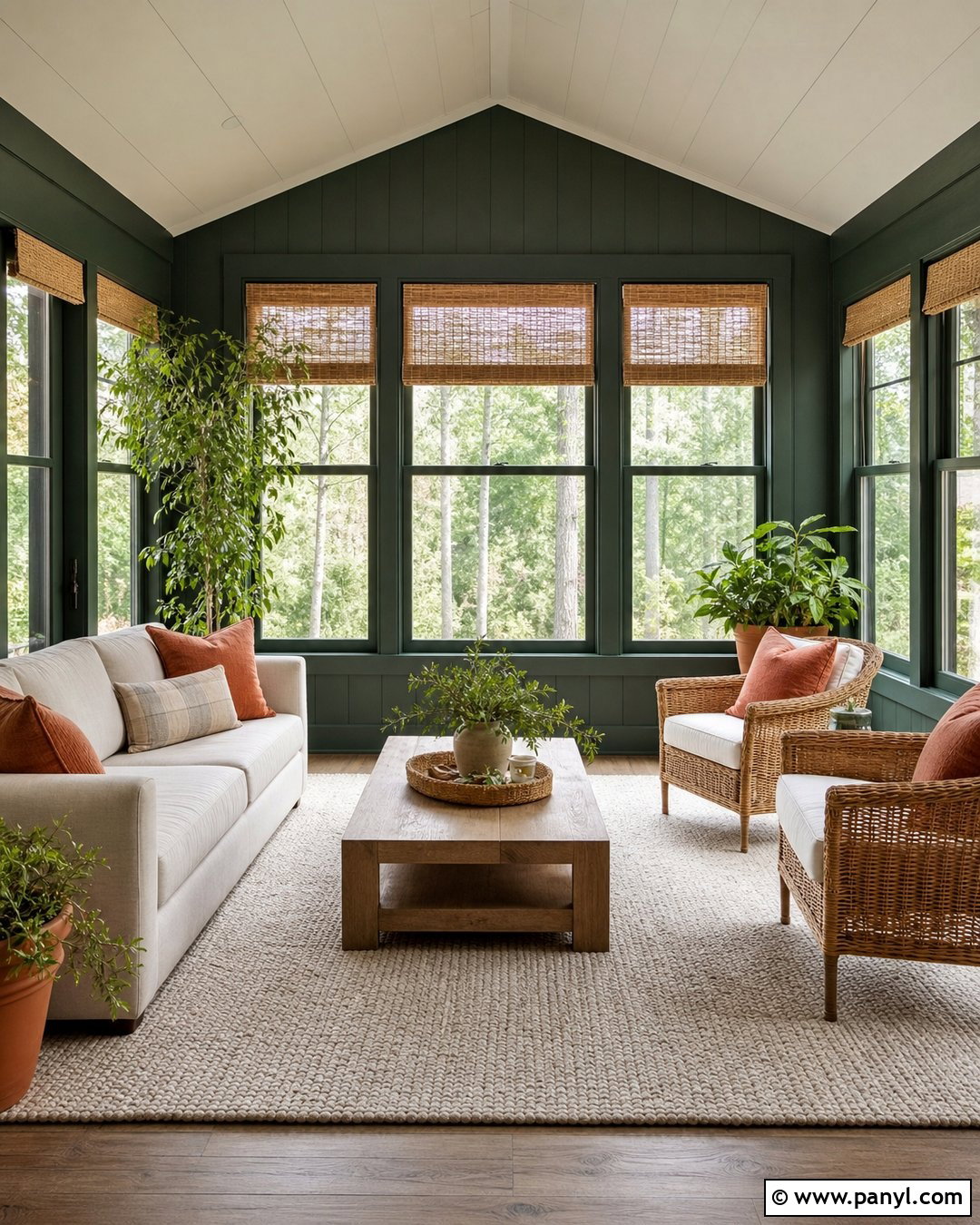
In a sunny room, Backwoods Green takes on a livelier natural quality that works beautifully with woven furniture and abundant daylight. Paint the walls or window trim green, then keep the ceiling warm white to preserve the room’s brightness. Arrange a pale linen sofa with rattan lounge chairs around a light oak coffee table. Use an indoor-outdoor rug in cream and subtle olive for easy maintenance. Woven shades control glare while adding another organic texture. Terracotta planters, leafy houseplants, and a few rust-colored pillows connect the painted surfaces to the garden beyond. Avoid cool gray upholstery, which can make this warm green feel dull. The completed sunroom should include flexible seating, a small side table, and layered lighting for use after the natural light fades.
22. Backwoods Green Butler’s Pantry
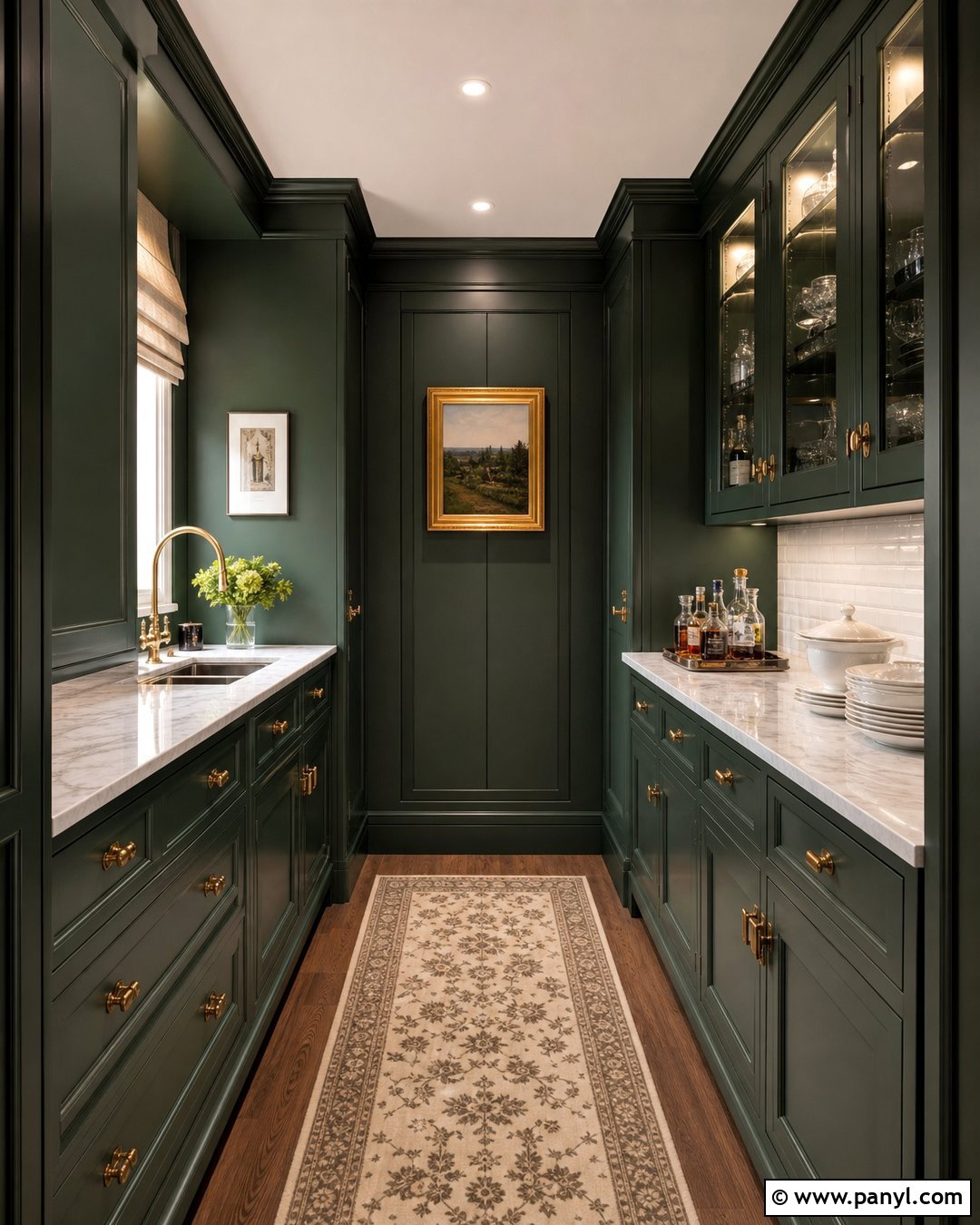
A compact butler’s pantry feels especially polished when Backwoods Green covers the cabinets, shelves, and paneled walls. Pair the green with a light marble-look quartz counter and glossy cream backsplash tile to reflect available light. Install glass-front upper cabinets for serving pieces, using warm interior lighting to keep them from appearing shadowy. Aged brass latches, knobs, and a small bridge faucet add traditional detail. Medium walnut flooring creates a rich transition from an adjoining dining room or kitchen. Keep the ceiling warm white and include a bright flush-mount fixture. Organize countertop appliances behind pocket or lift-up doors whenever possible. Open shelves can hold white dishes and clear glassware, allowing the dark cabinetry to remain the dominant feature without making the narrow space feel cluttered.
23. Backwoods Green Kitchen Island
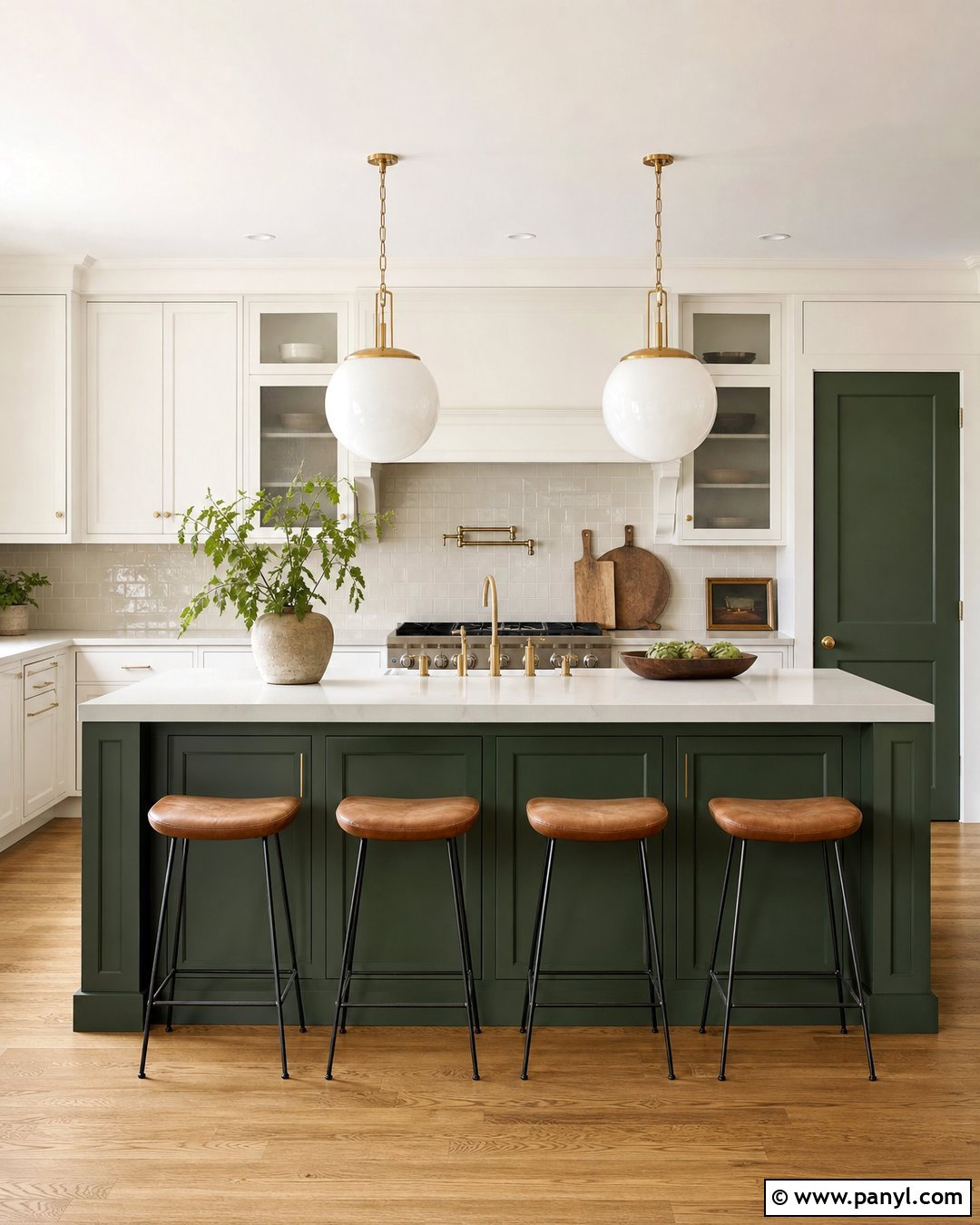
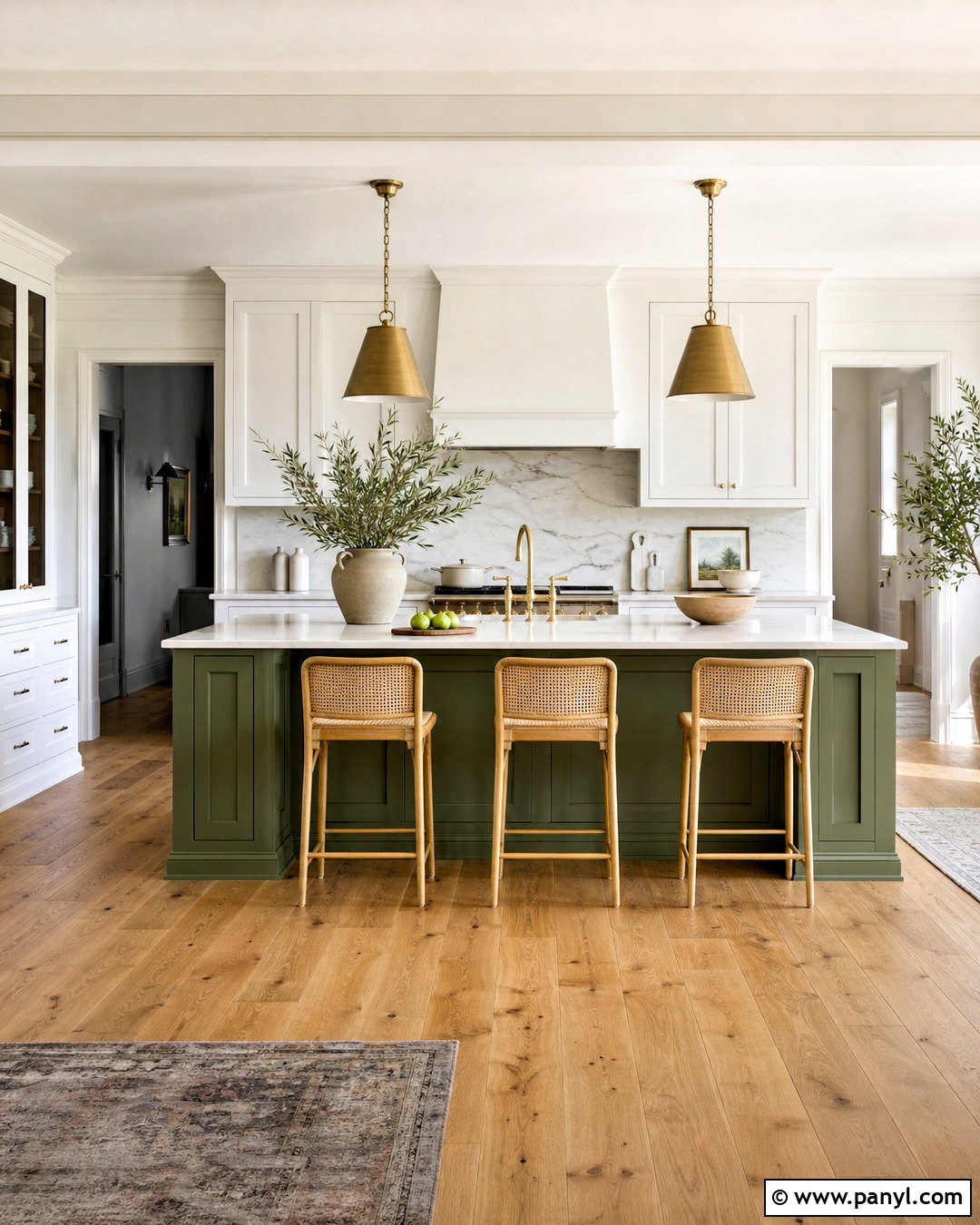
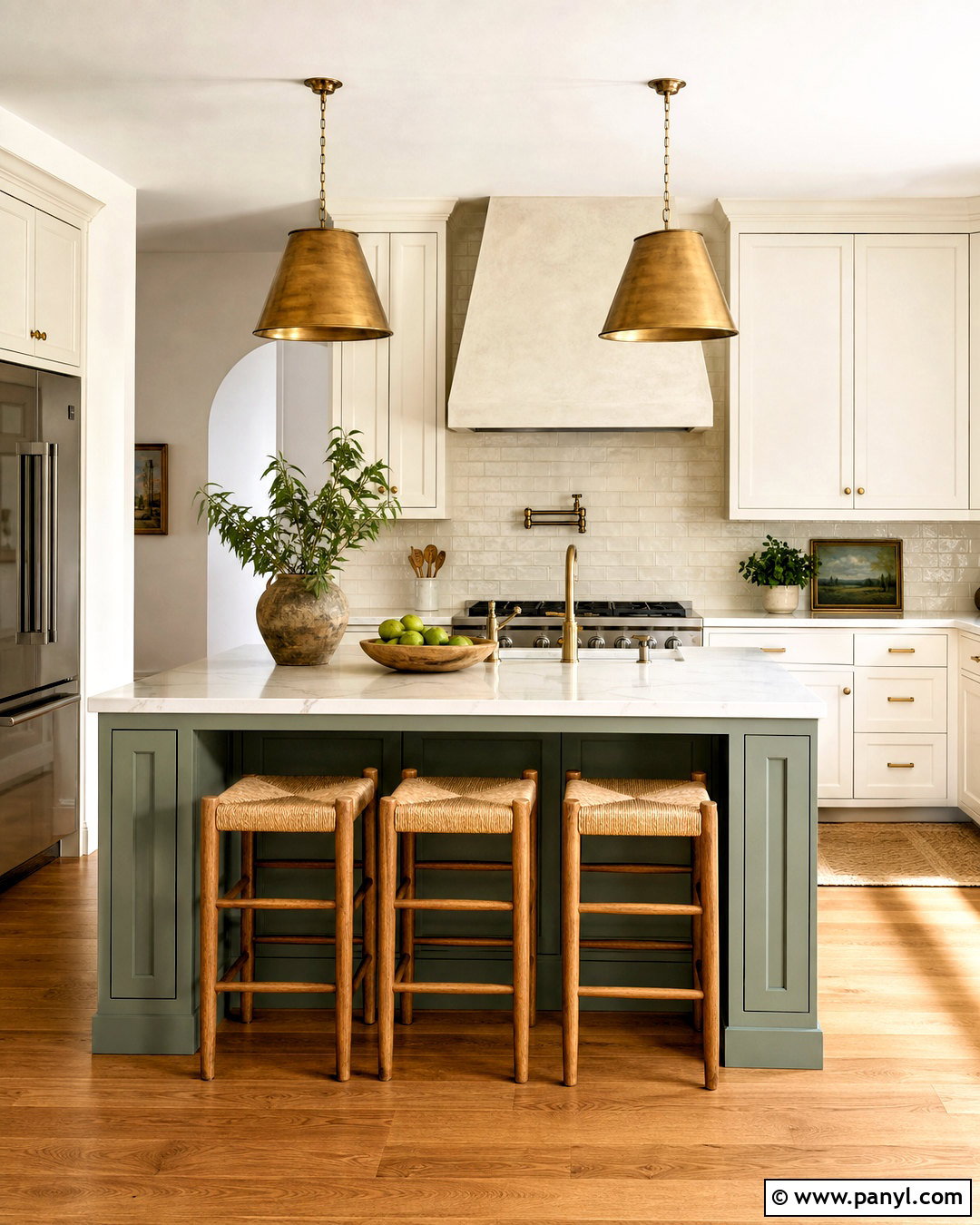
Paint only the kitchen island Backwoods Green when you want a distinctive centerpiece within an otherwise neutral kitchen. Surround it with warm white perimeter cabinets, light quartz counters, and a softly textured ivory backsplash. A thick oak or pale stone island top can further separate the focal piece from the perimeter. Use aged brass hardware and large white globe pendants to highlight the green without adding visual heaviness. Saddle-colored leather stools bring another warm tone into the palette. Medium oak flooring connects every element and keeps the room from becoming too stark. Repeat the island color once through a pantry door or small decorative object. This focused approach provides the richness of Backwoods Green while maintaining a bright, open, and broadly appealing kitchen.
24. Backwoods Green Small Kitchen
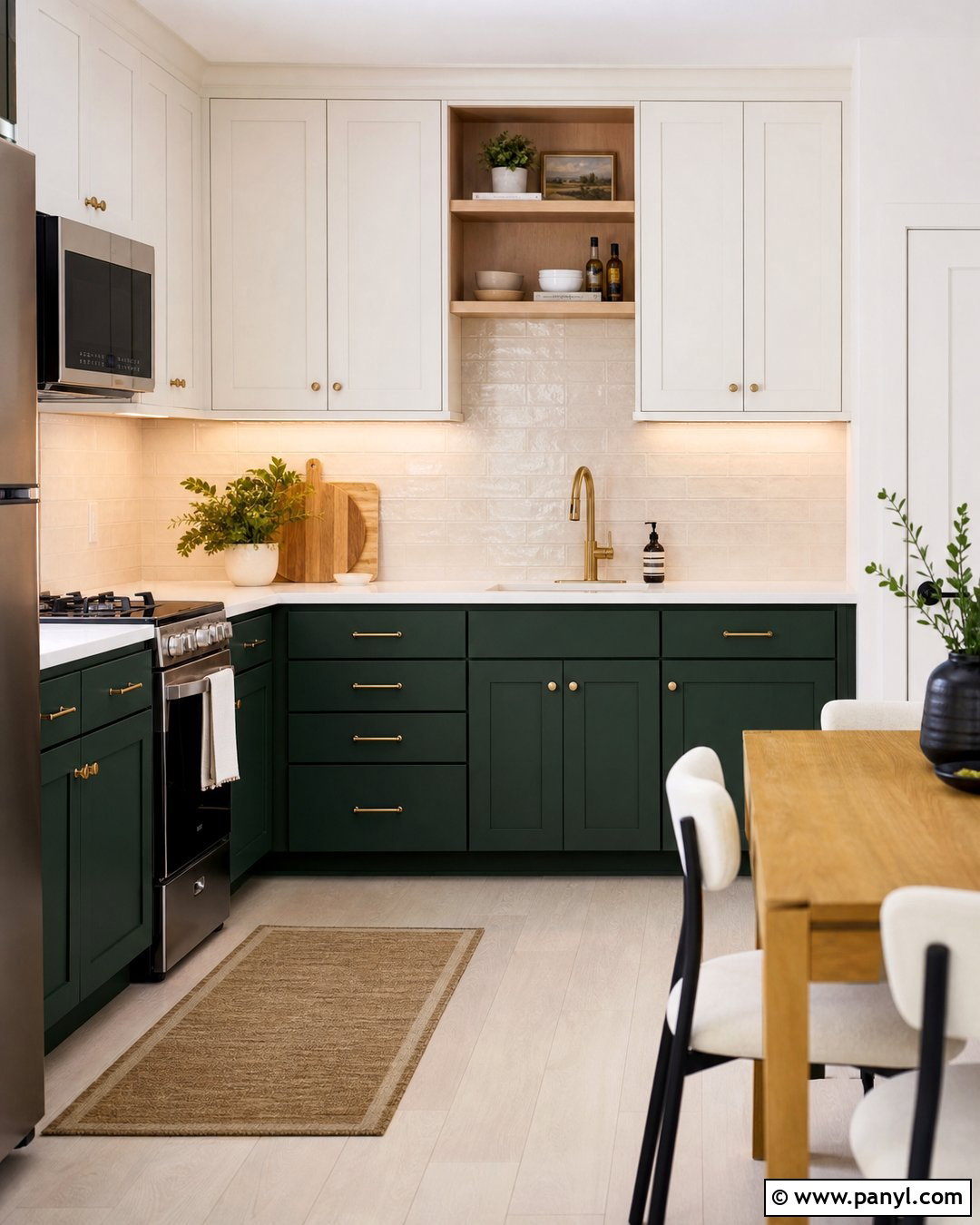
A small kitchen can handle Backwoods Green when the design includes enough reflective and light-colored surfaces. Paint the lower cabinets green and keep the upper cabinets warm white or replace some with oak shelves. Choose bright quartz countertops and glossy cream tile extending to the ceiling. Simple brass pulls and under-cabinet lighting help define the cabinetry after dark. Use pale oak or light beige flooring to make the limited footprint feel wider. A compact wood dining table and two cream chairs can create an eat-in corner without competing with the cabinets. Keep counters mostly clear by adding deep drawers and a tall pantry unit. The finished kitchen feels intentional and efficient because the green visually grounds the lower half while lighter finishes open the upper portion.
25. Backwoods Green Front Door
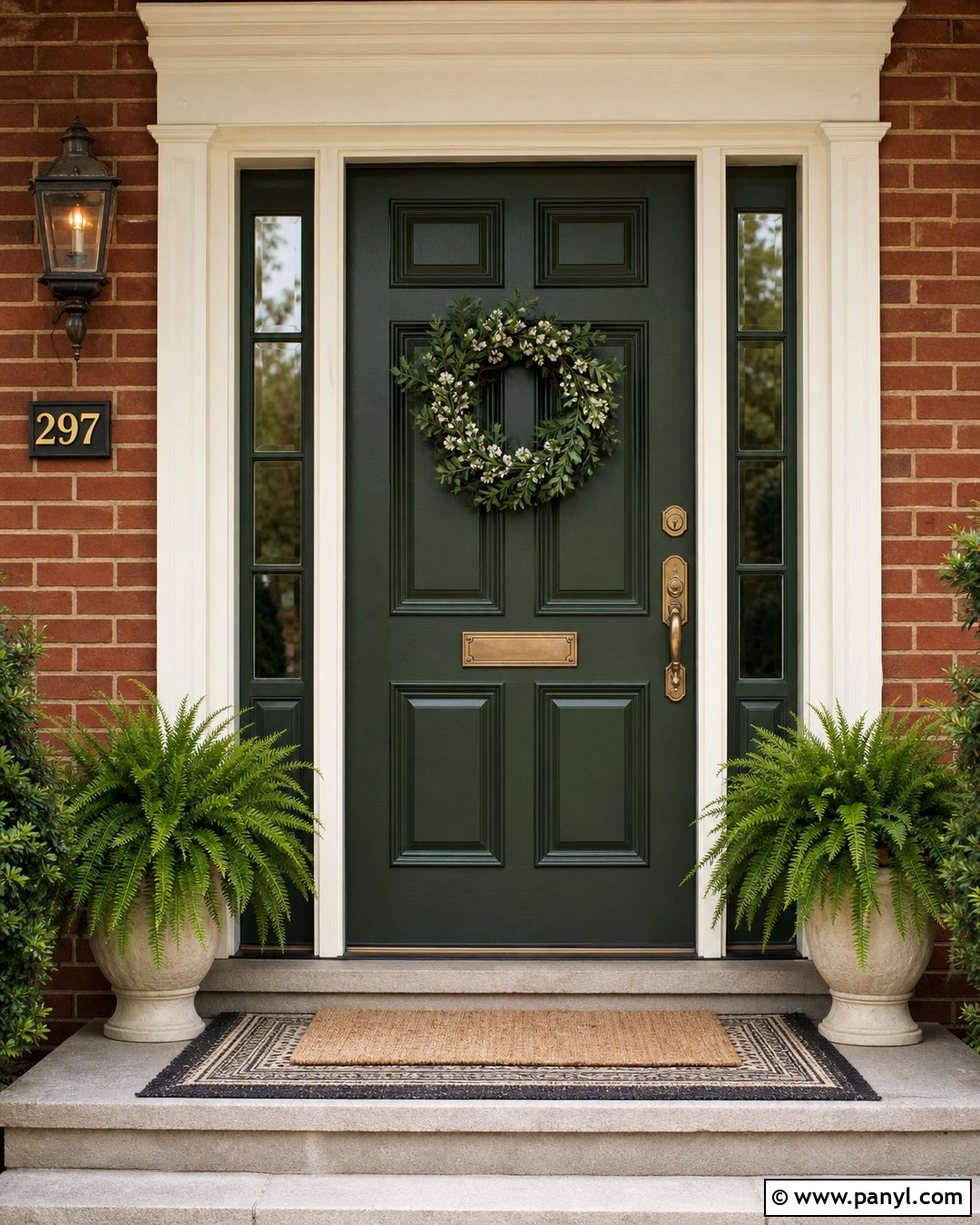
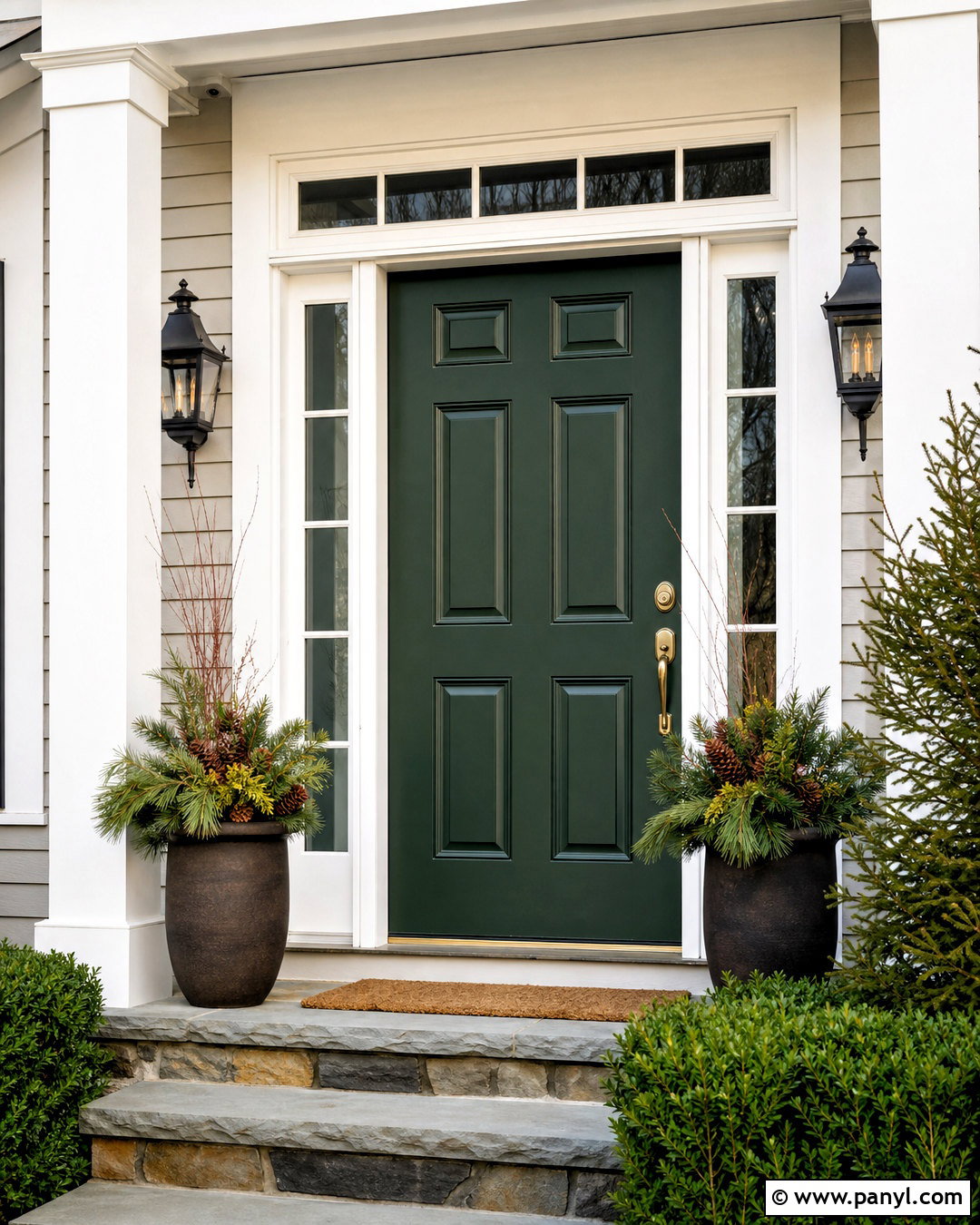
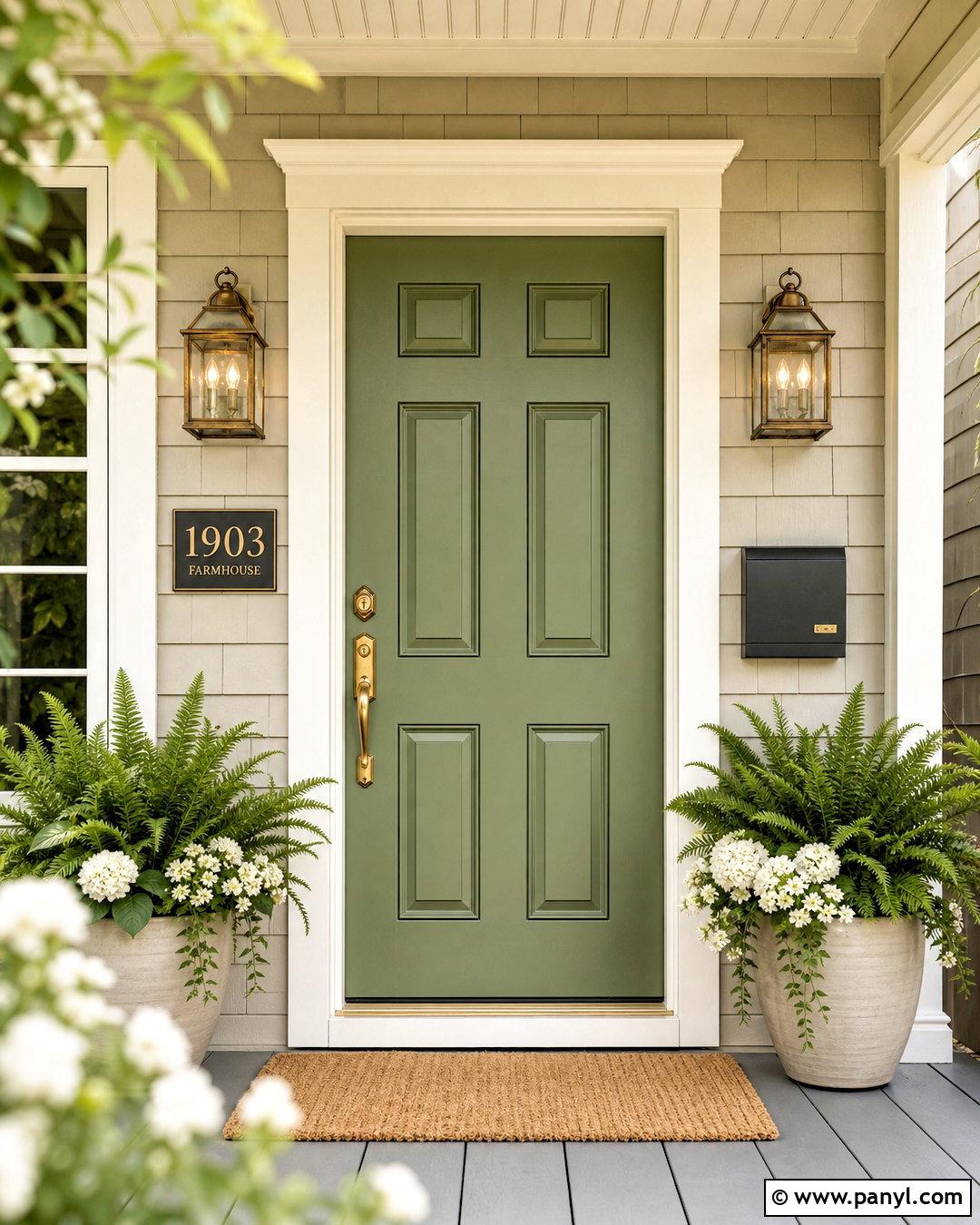
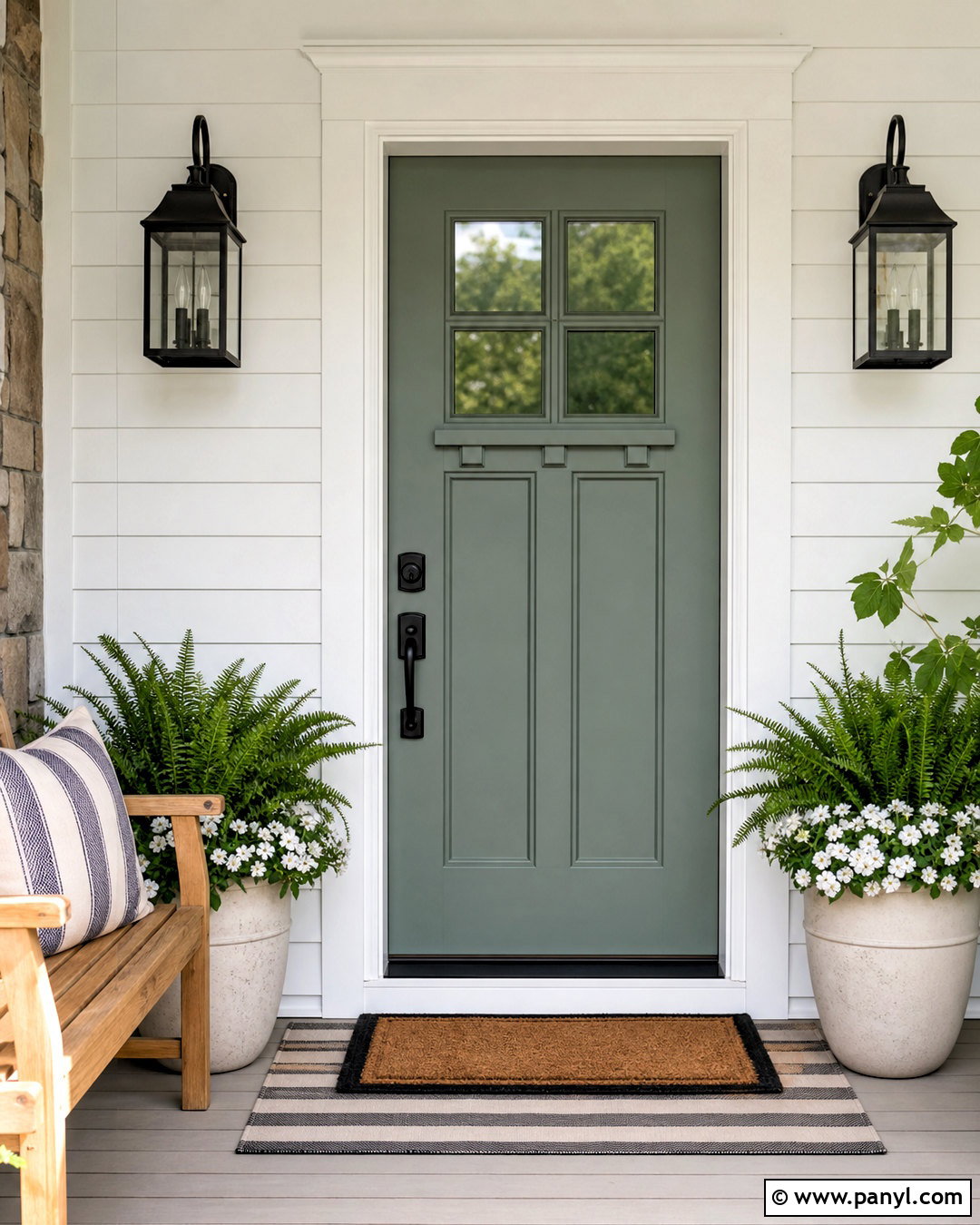
A Backwoods Green front door offers strong curb appeal without feeling as severe as black. Apply the color to the door and sidelights, using a satin or semi-gloss exterior finish that highlights the panel details. Frame it with creamy white trim and warm red brick, natural stone, or light greige siding. Add aged brass house numbers, a matching handle set, and a traditional lantern for a welcoming finish. A natural coir mat layered over a larger striped outdoor rug gives the entrance comfortable scale. Use symmetrical planters filled with ferns, boxwood, or seasonal greenery rather than competing flowers in many colors. Clean steps, clear sightlines, and one coordinated wreath complete the composition. Always test the paint outdoors because direct sun can noticeably change its appearance.
26. Backwoods Green House Exterior
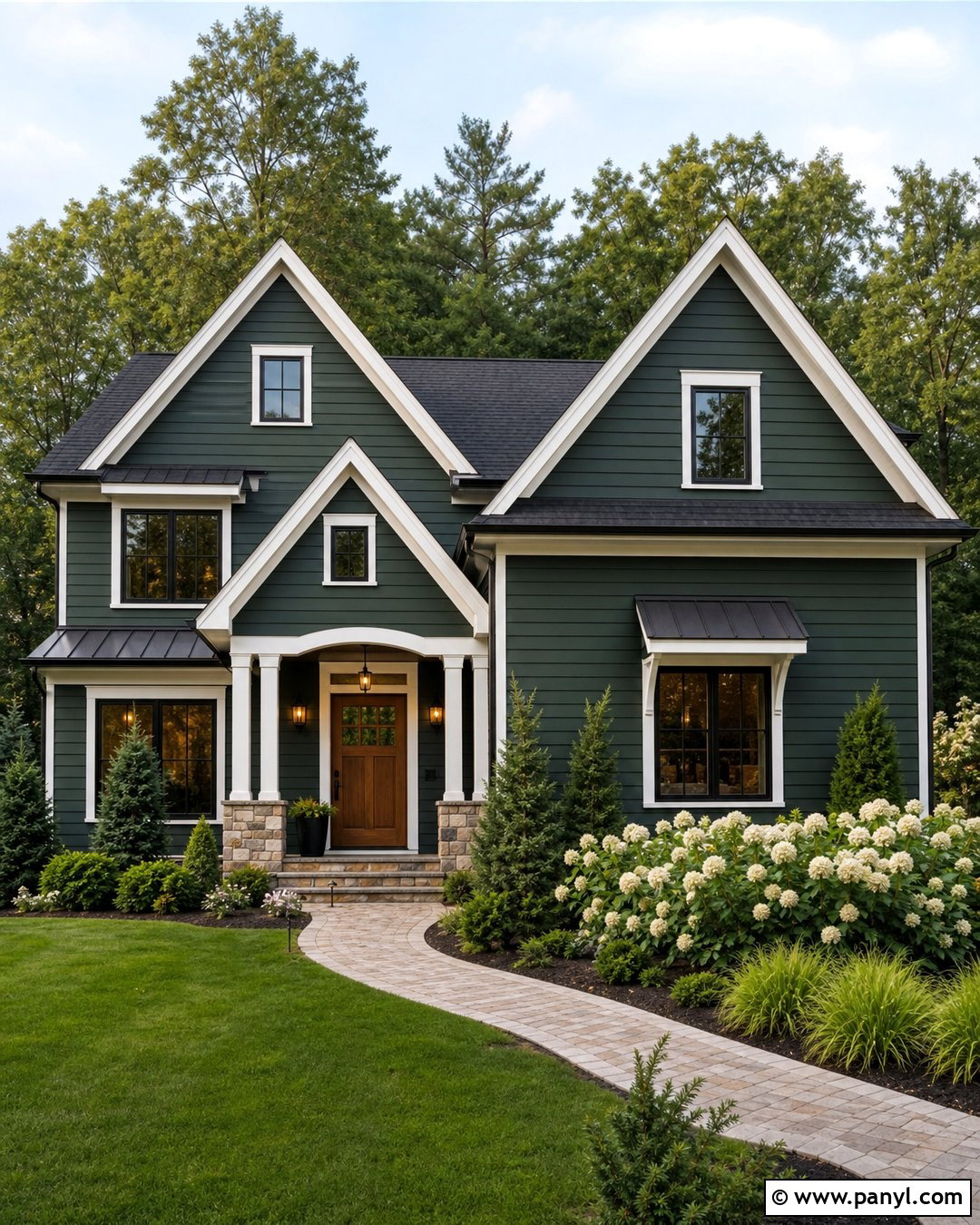
For a nature-connected exterior, cover the main siding in Backwoods Green and balance it with warm white trim. The deep body color works particularly well with simple lap siding, cedar shingles, or board-and-batten sections. Choose a charcoal architectural shingle roof and natural wood for the front door, porch ceiling, or garage accents. Warm stone around the foundation can soften the transition between the house and landscaping. Use matte black gutters and lanterns for clean definition, but avoid excessive black details that make the facade feel severe. Layer the yard with ornamental grasses, hydrangeas, evergreen shrubs, and a curved stone walkway. This complete exterior palette gives an average home a grounded, established presence while allowing surrounding plants and natural materials to feel connected.
27. Backwoods Green Exterior Trim
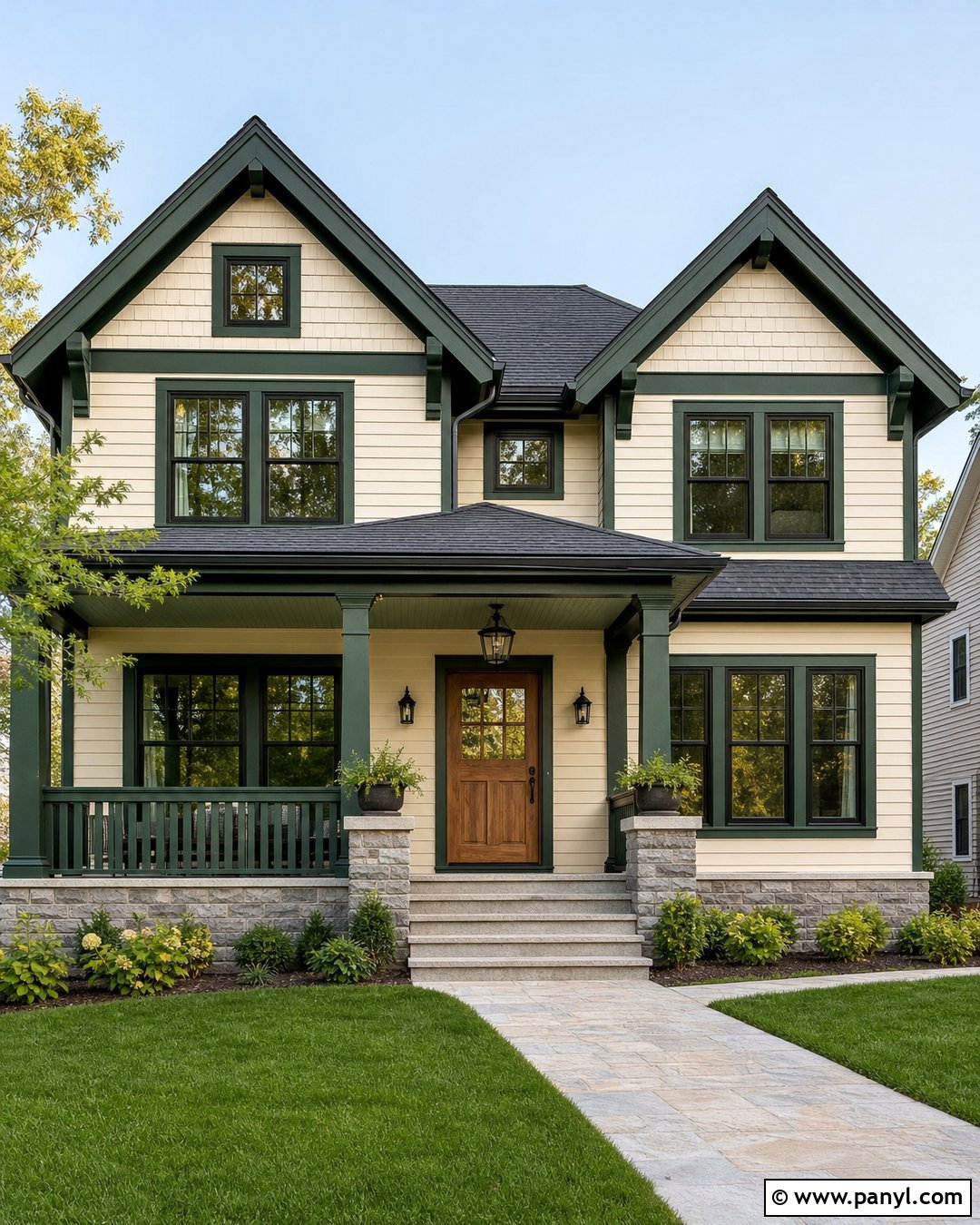
Using Backwoods Green on exterior trim creates definition while preserving a lighter main facade. Paint the window frames, fascia, porch posts, and selected molding green against warm cream siding. For a layered appearance, keep the deepest green on the outward-facing trim and use a softer sage on a porch ceiling or secondary detail. Add a natural oak or medium-stained wood front door, charcoal roof, and aged brass or black lighting. Warm gray stone at the foundation provides a stable neutral base. Repeat the green through simple planters and restrained landscaping rather than trying to match every plant. This treatment suits cottages, farmhouses, and traditional suburban homes. It gives architectural details more presence without committing the entire building to a dark exterior color.
28. Backwoods Green Brick Exterior
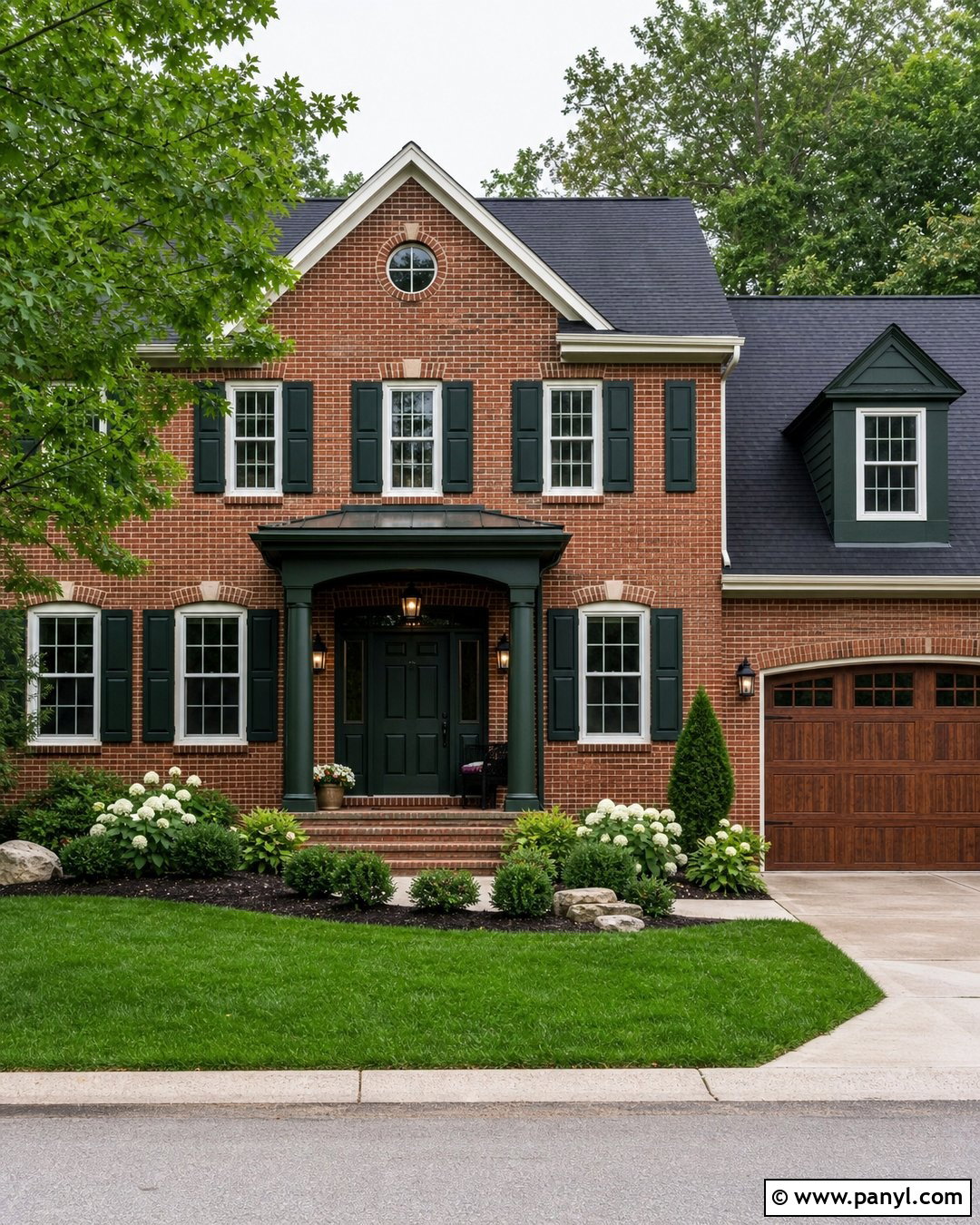
Backwoods Green can refresh a brick exterior when used across shutters, doors, trim, and porch details. Leave warm red or brown brick unpainted, allowing its natural variation to complement the earthy green. Choose creamy white for window casings and soffits so each darker feature remains clearly outlined. A medium wood garage door or front door adds warmth, while black metal gutters and lanterns create structure. Keep the roof charcoal, weathered brown, or another neutral already found in the brick. Landscape with evergreen shrubs, white flowering plants, mulch, and natural stone edging. If the brick is pale or limewashed, Backwoods Green can also cover larger trim areas. The finished palette feels cohesive because every color relates to the brick’s warm undertones.
29. Backwoods Green Porch
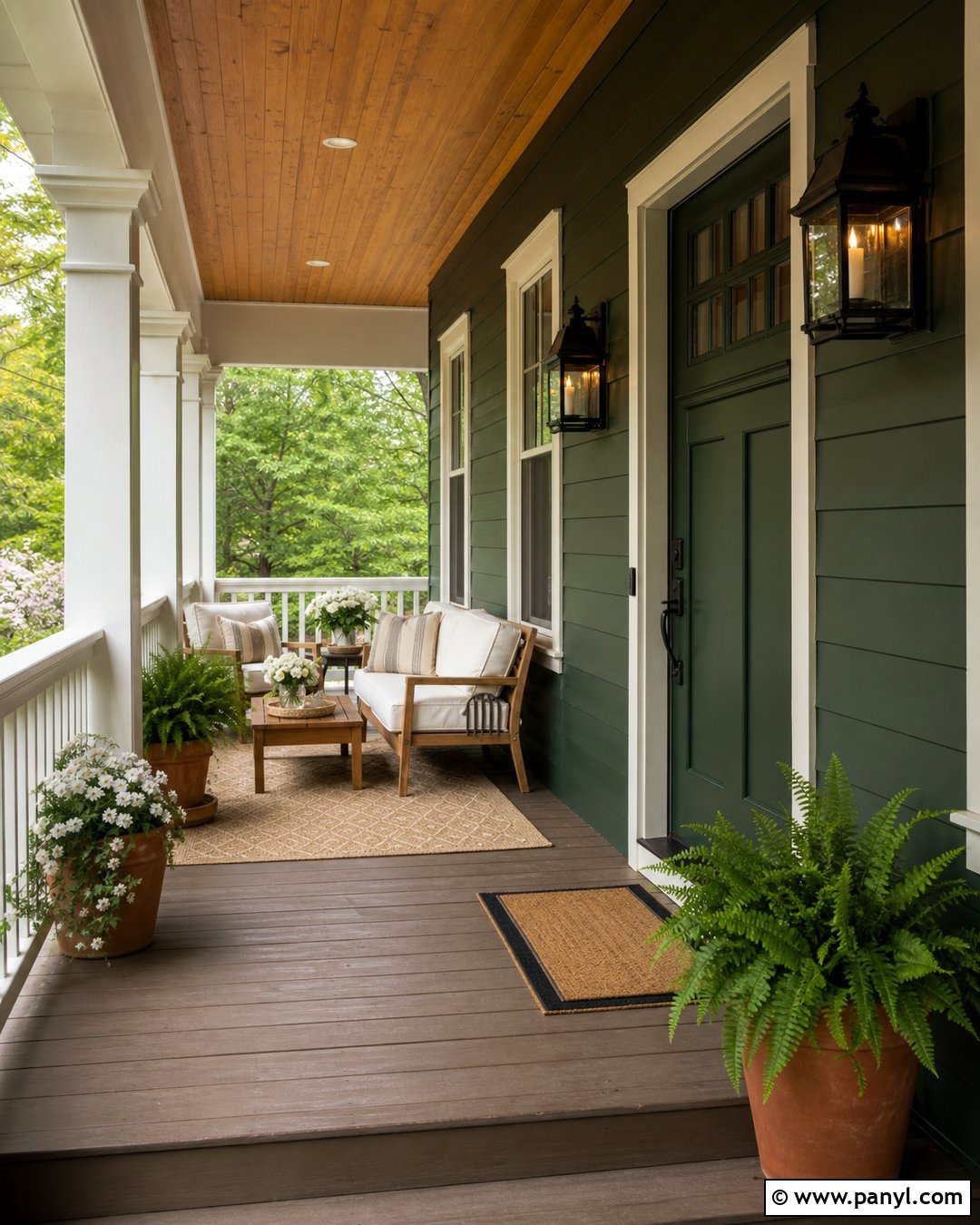
A covered porch becomes a true outdoor room when Backwoods Green connects the architecture, furniture, and landscape. Paint the lower siding, paneled wall, or front door green, then use warm white on columns and railings. Add a natural wood porch ceiling for warmth overhead. Arrange cream outdoor cushions on black or teak seating, centered around a woven rug with tan and muted green details. A pair of black lanterns provides practical lighting, while terracotta pots filled with ferns and white flowers soften the edges. Include a small wood table and weather-resistant throw pillows so the porch feels usable rather than purely decorative. Keep pathways clear and avoid overfilling the steps. The result is a welcoming entrance with comfortable seating and coordinated curb appeal.
30. Backwoods Green Farmhouse Exterior
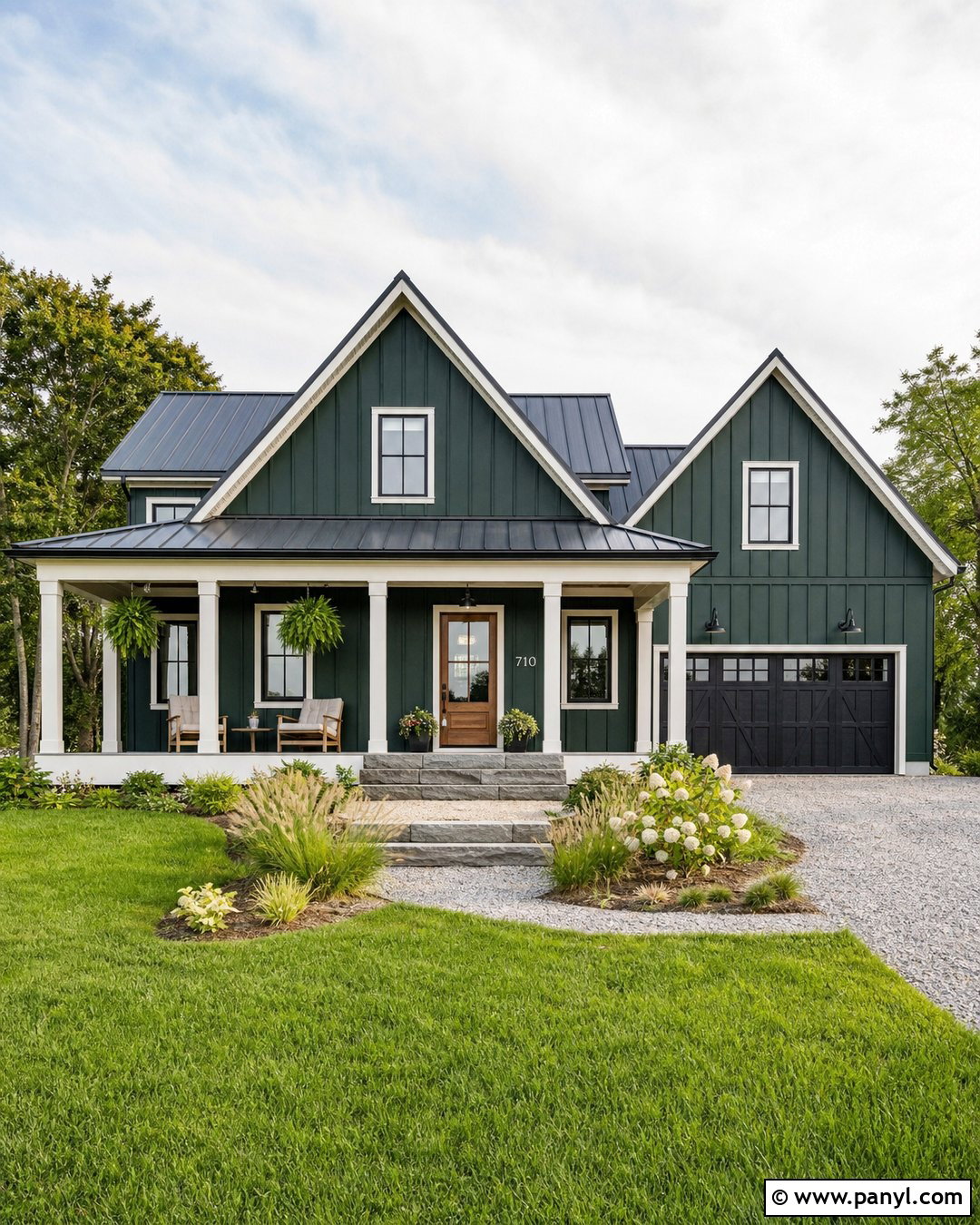
Give a farmhouse exterior depth by combining Backwoods Green board-and-batten siding with creamy white trim and natural wood accents. Use the green across the main body, then highlight windows, corner boards, and porch columns in a softer warm white. A standing-seam charcoal metal roof offers clean contrast and reinforces the simple vertical lines. Select a medium-stained oak front door and matching garage details to keep the facade inviting. Black gooseneck lights can add definition without dominating the design. Complete the setting with gravel paths, native grasses, hydrangeas, and restrained foundation planting. Stone porch steps introduce another natural material. This full exterior scheme works best when the color placement remains simple, allowing the siding texture, roofline, wood, and landscaping to share attention.
Conclusion:
Benjamin Moore Backwoods Green can bring warmth, depth, and natural character to almost any part of a home. Use it across an entire room for an immersive effect, or limit it to cabinetry, doors, trim, and architectural features for controlled contrast. Warm whites, oak, walnut, limestone, aged brass, and creamy textiles are dependable companions. Bright lighting and uncluttered layouts are especially important when working with this low-LRV shade. Before choosing a finish, test a large sample in morning, afternoon, and evening light beside permanent flooring and countertops. With thoughtful color balance and practical materials, these **Benjamin Moore Backwoods Green ideas** can create complete interiors and exteriors that feel distinctive, comfortable, and enduring.

Related Ideas and Inspiration:
Leave a Reply