
Benjamin Moore Soft Chamois OC-13 offers a warm, soothing alternative to bright white walls. It has an LRV of 77.4, so it reflects plenty of light while maintaining a softly shaded appearance. Benjamin Moore officially pairs it with earthy colors such as Tapestry Beige, Saybrook Sage, Annapolis Gray, and Mink. () Its understated warmth works especially well with natural wood, woven textures, aged metals, stone, and muted accent colors. However, lighting can change how this off-white appears, so sampling it on several walls is important. From relaxing bedrooms to welcoming exteriors, these complete room schemes show how versatile the color can be. Explore these 20 soft chamois benjamin moore ideas for practical ways to use it throughout your home.

1. Soft Chamois Living Room
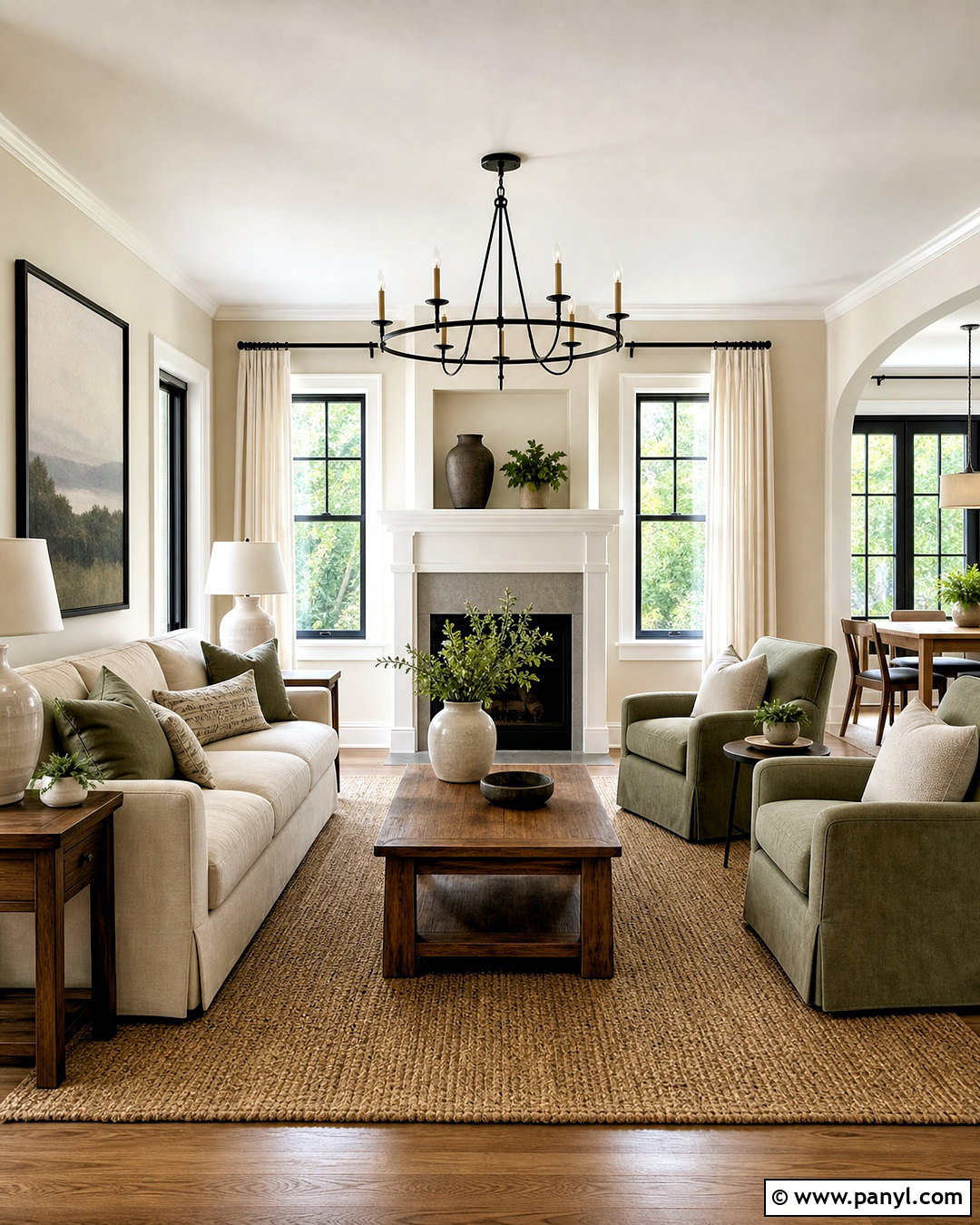
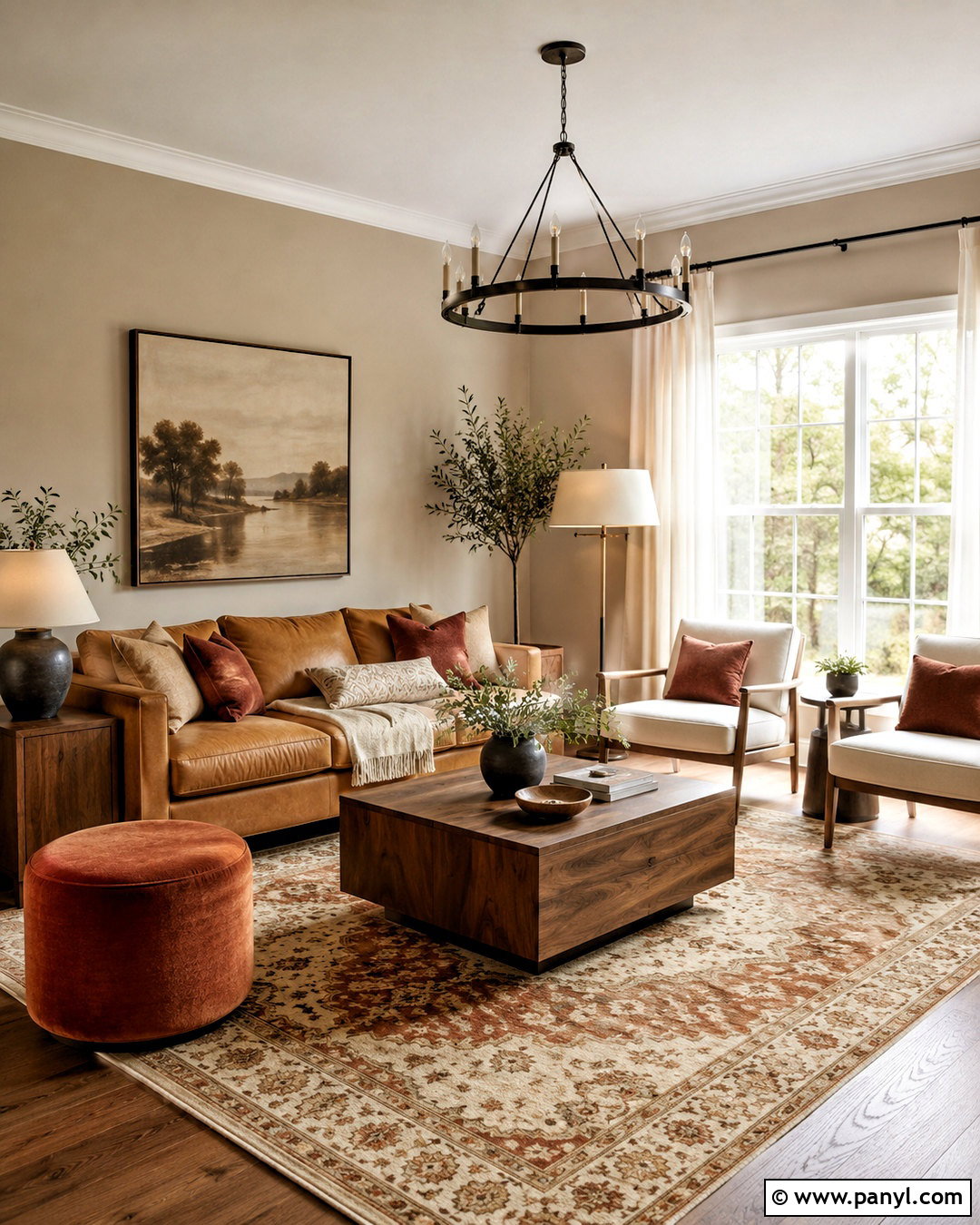
Create a relaxed living room by painting the walls Soft Chamois and keeping the ceiling and trim a cleaner white. Center a warm oatmeal sofa on a natural jute rug, then add two Saybrook Sage armchairs for gentle color. A medium-tone oak coffee table brings definition without making the room feel heavy. Use linen curtains close to the wall color so the windows appear taller and wider. Matte black curtain rods, a bronze floor lamp, and dark picture frames provide small points of contrast. Finish the space with cream pillows, a muted landscape print, and a few handmade ceramic pieces. This complete palette feels comfortable and collected while allowing Soft Chamois to remain the calm background.
2. Soft Chamois Modern Living Room
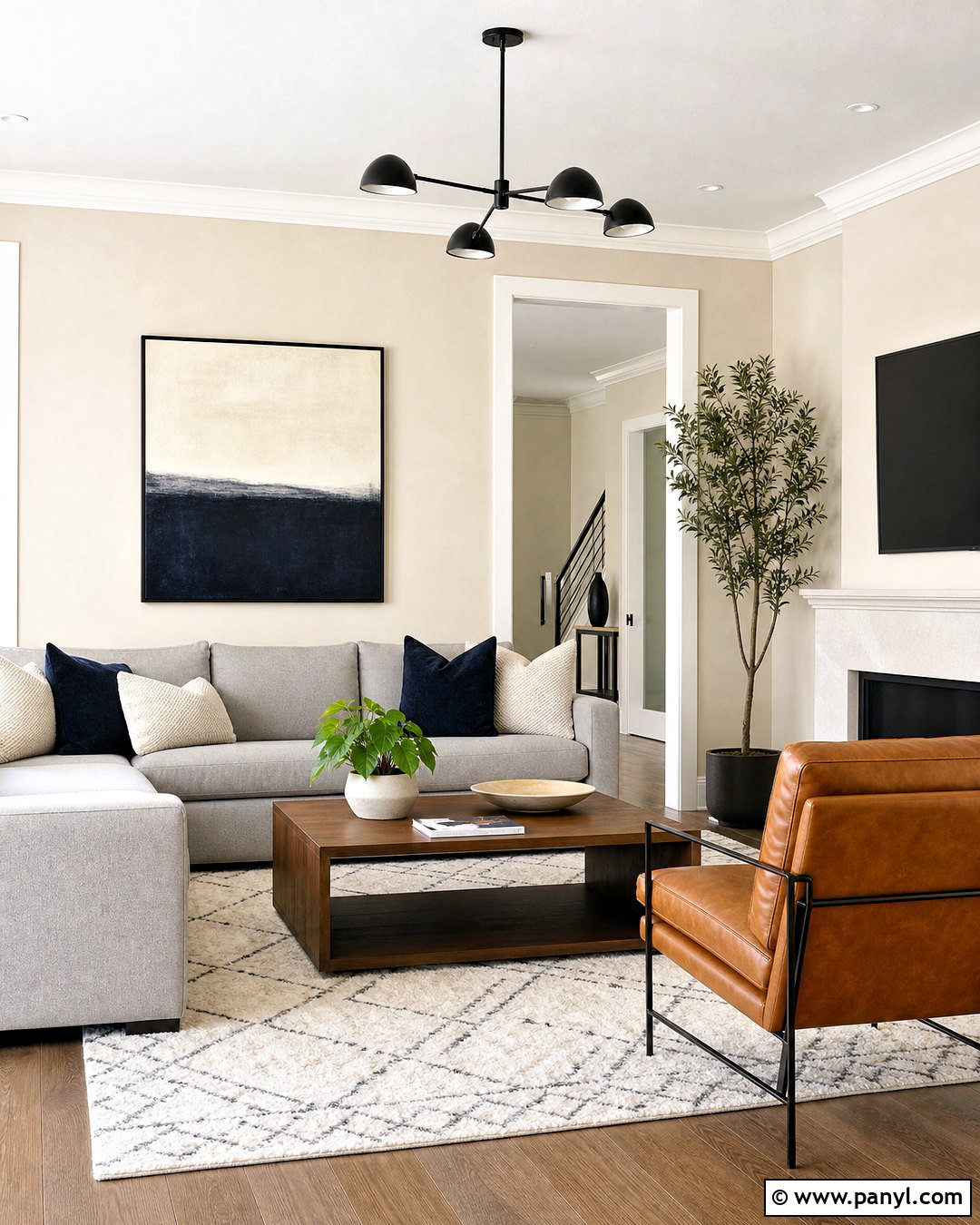
Can a warm off-white still look clean and modern? Soft Chamois works beautifully when paired with streamlined furniture and deliberate dark accents. Paint the walls in an eggshell finish and use a crisp white on the ceiling, baseboards, and simple window trim. Choose a low-profile light gray sofa, sculptural camel leather chair, and rectangular walnut coffee table. A large ivory rug with a thin charcoal pattern will connect the neutral tones. Add matte black lighting, an oversized abstract artwork, and deep navy pillows for sharper contrast. Avoid filling every surface with accessories. One tall plant, two ceramic vessels, and a compact stack of books are enough. The finished room feels warm and polished rather than cold or overly minimal.
3. Soft Chamois Farmhouse Living Room
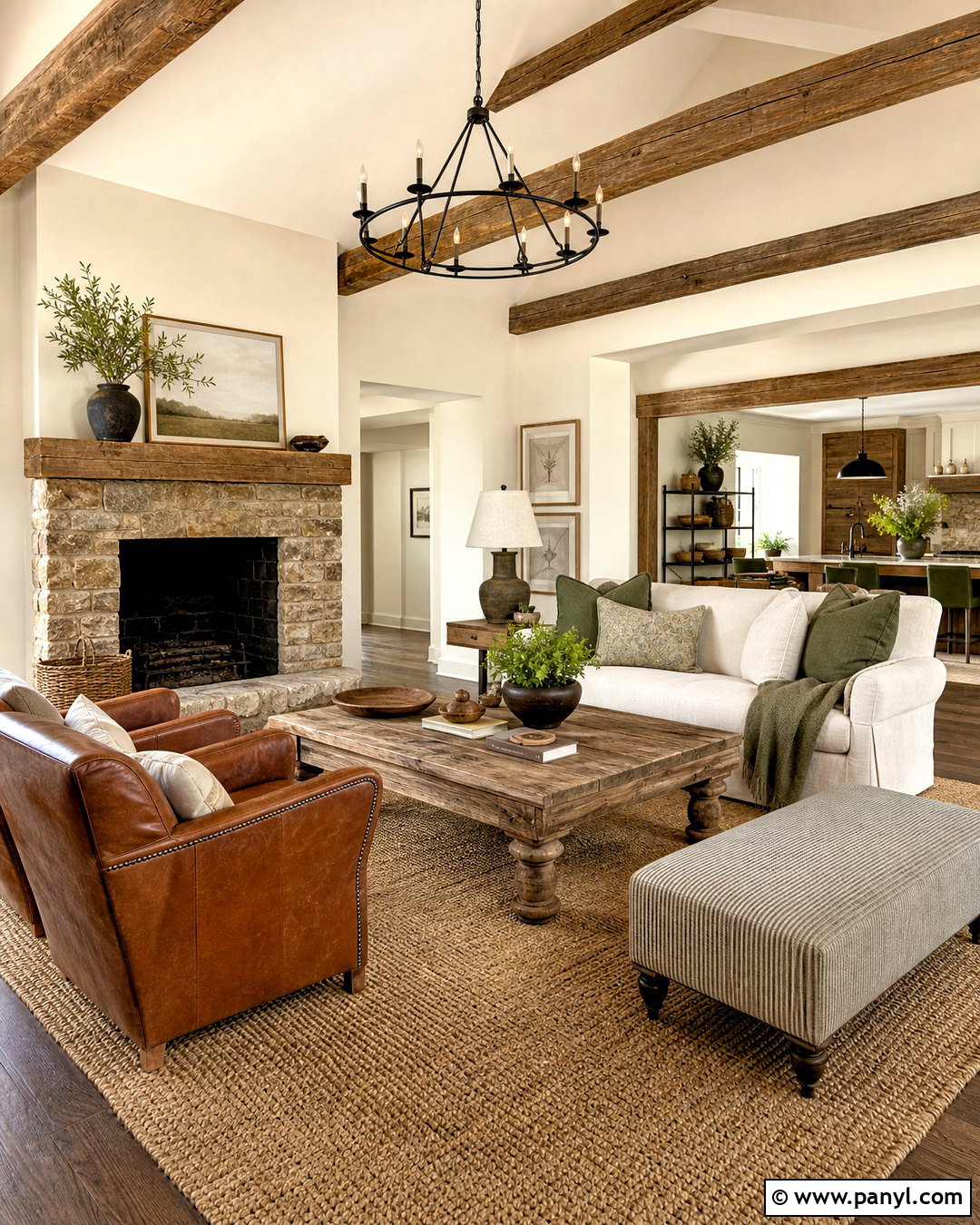
Exposed wood becomes the star when Soft Chamois covers both the walls and vaulted ceiling. This combination is especially suitable for a farmhouse or Craftsman-inspired room because the quiet background allows beams, stone, and traditional millwork to stand out. Benjamin Moore has also featured Soft Chamois alongside natural wood trusses in a Craftsman living space. () Build the room around a slipcovered linen sofa, cognac leather chairs, and a substantial reclaimed-oak coffee table. Add a fieldstone fireplace with a thick timber mantel for rustic structure. Cream and faded olive textiles keep the colors soft, while black iron chandeliers define the high ceiling. Complete the look with woven baskets and simple botanical artwork rather than heavily distressed farmhouse accessories.
4. Soft Chamois Kitchen Walls
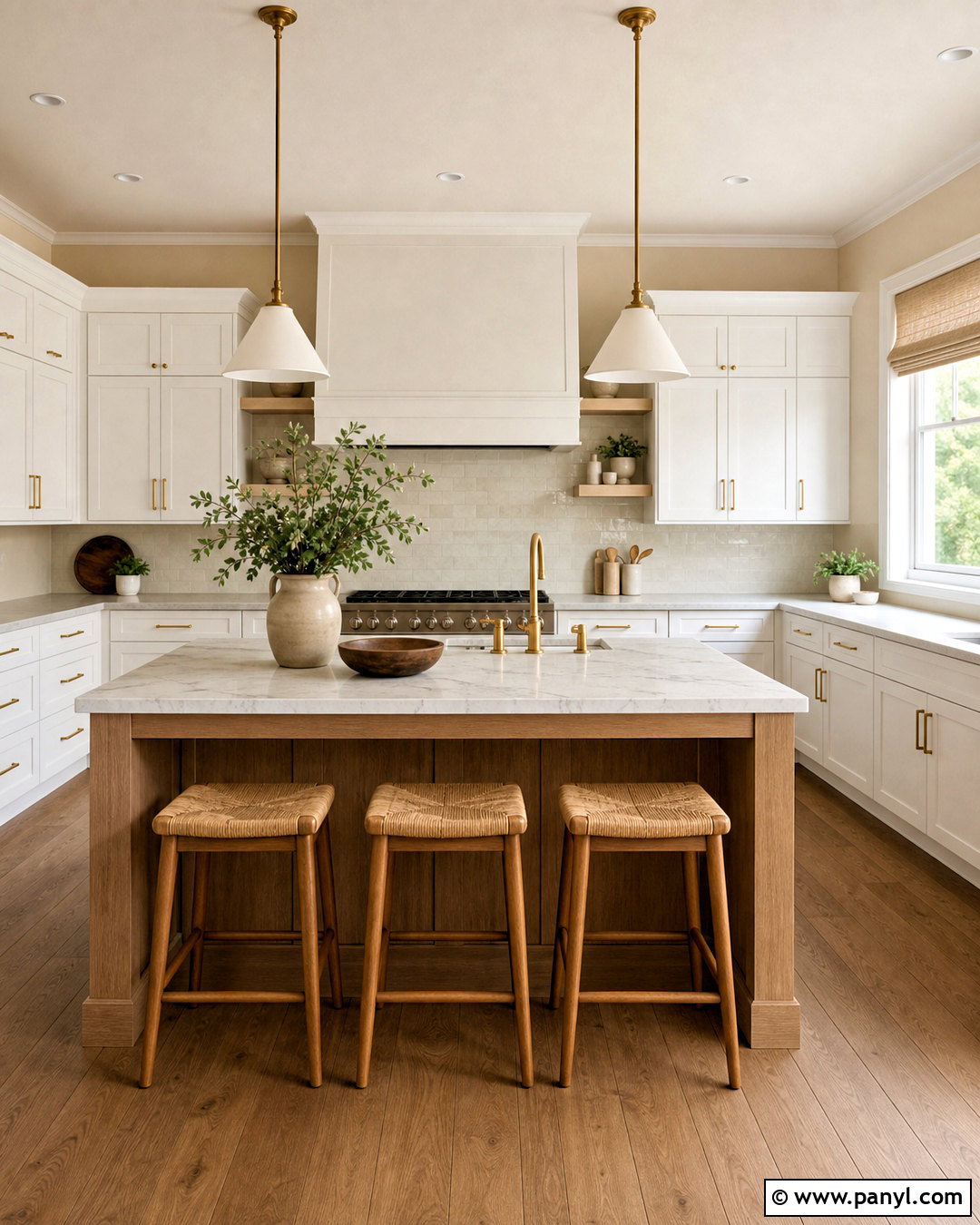
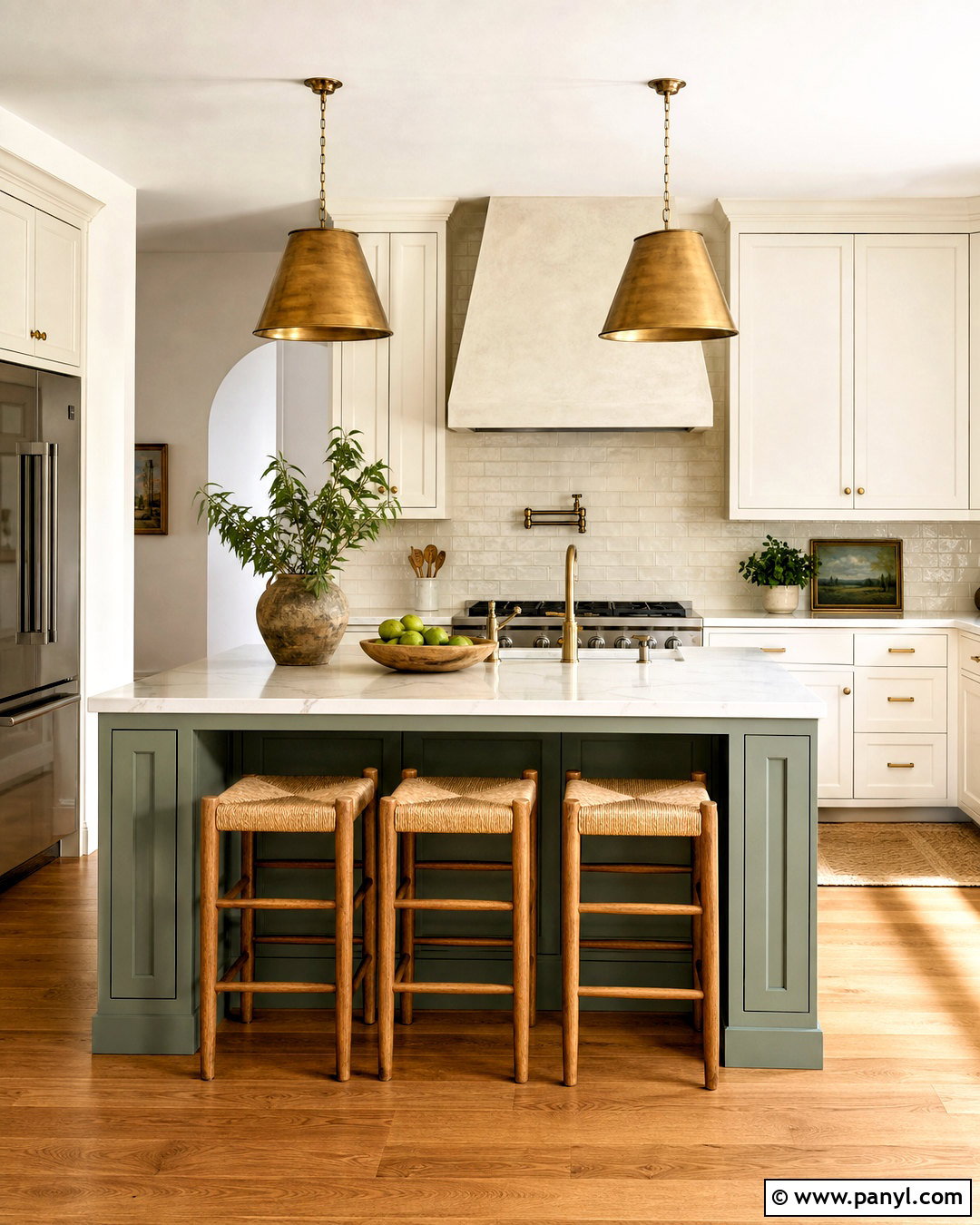
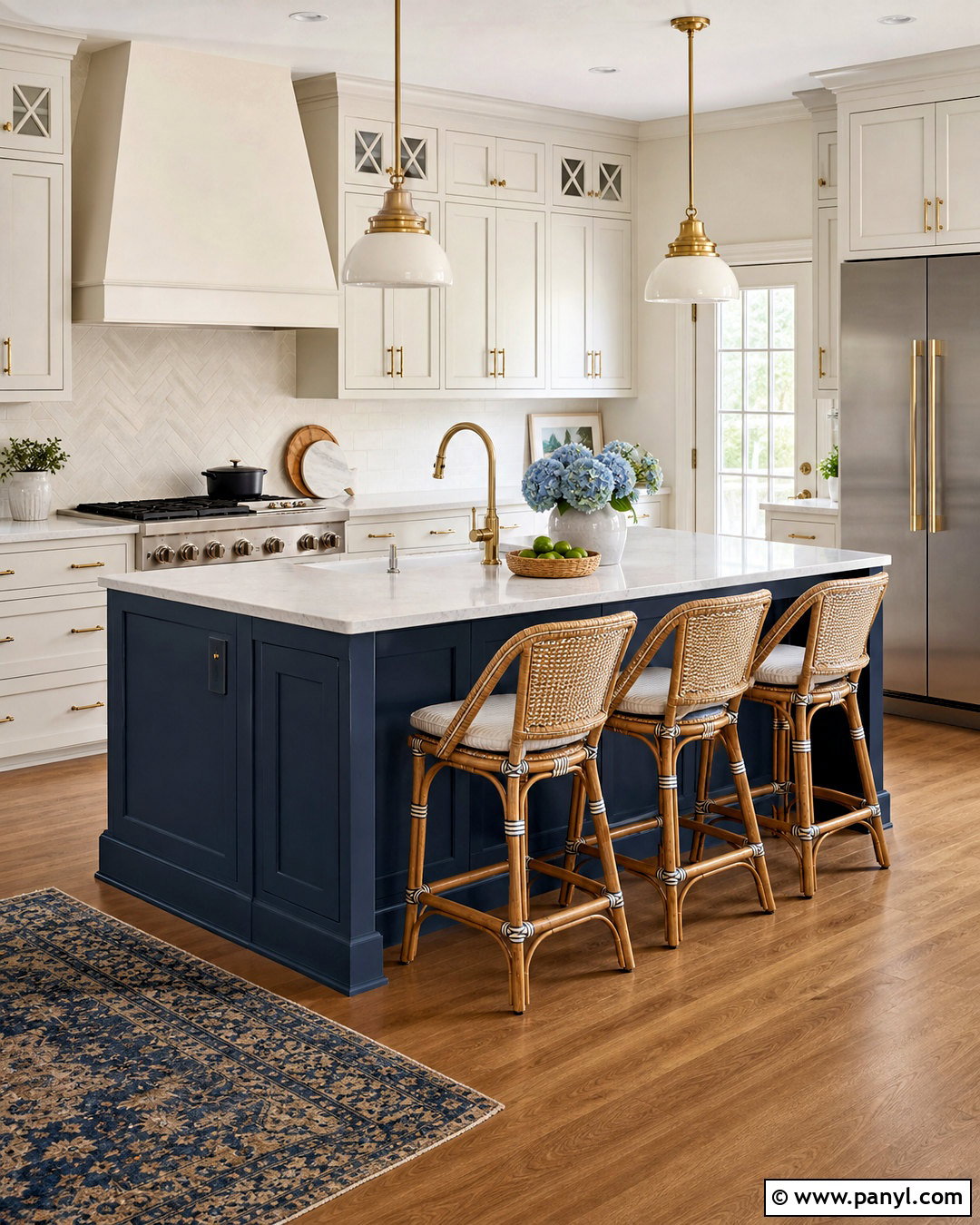
Soft Chamois kitchen walls can gently bridge white cabinets and warm wood floors. Use the color around classic Shaker cabinetry painted in a clearer white, allowing a noticeable but subtle difference between the two finishes. Choose lightly veined quartz counters and a handmade warm-white tile backsplash to continue the layered neutral palette. An oak island with woven counter stools gives the room a natural focal point. Brushed brass hardware and pendants enhance the warmth without making the kitchen feel overly yellow. For contrast, introduce muted sage through the pantry door, runner, or small countertop pieces. Keep the ceiling bright and the window treatments simple. The final kitchen feels light, approachable, and timeless, with enough tonal variation to prevent the white elements from blending together.
5. Soft Chamois Kitchen Cabinets
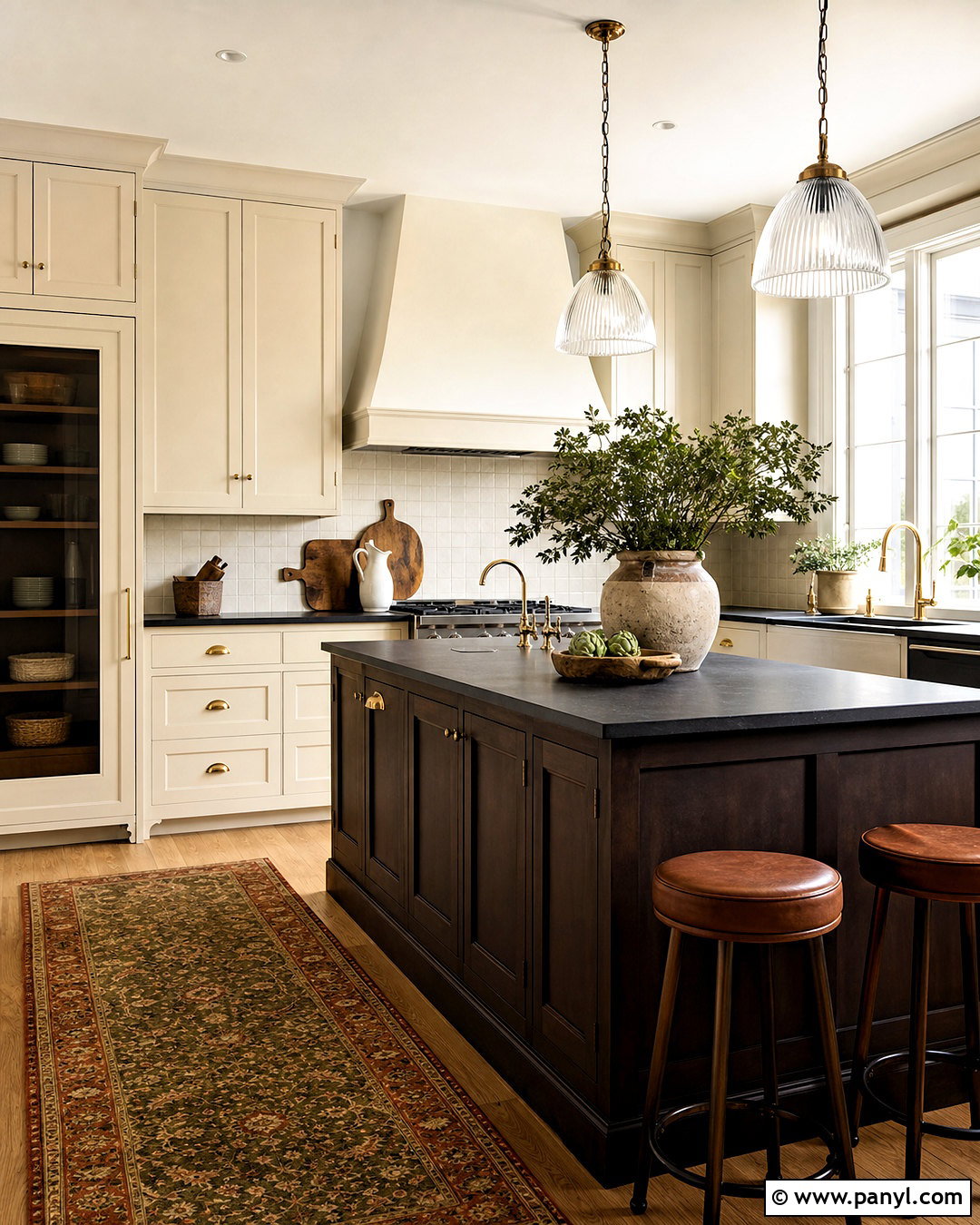
Painting the cabinetry Soft Chamois produces a softer kitchen than standard bright white cabinets. Use the color across the perimeter cabinets and a deeper Mink or chocolate brown on the island. Honed black granite or soapstone counters will ground the pale cabinetry and provide practical contrast around the cooking area. For the backsplash, select creamy square tiles with warm grout rather than icy white subway tile. Unlacquered brass knobs, oak flooring, and simple glass pendants support the inviting palette. Paint the walls a lighter, cleaner white so the Soft Chamois cabinets remain clearly visible. A vintage-style runner with olive, rust, and beige tones completes the design. This balanced scheme suits traditional, transitional, and understated English-inspired kitchens without feeling too formal.
6. Soft Chamois Dining Room
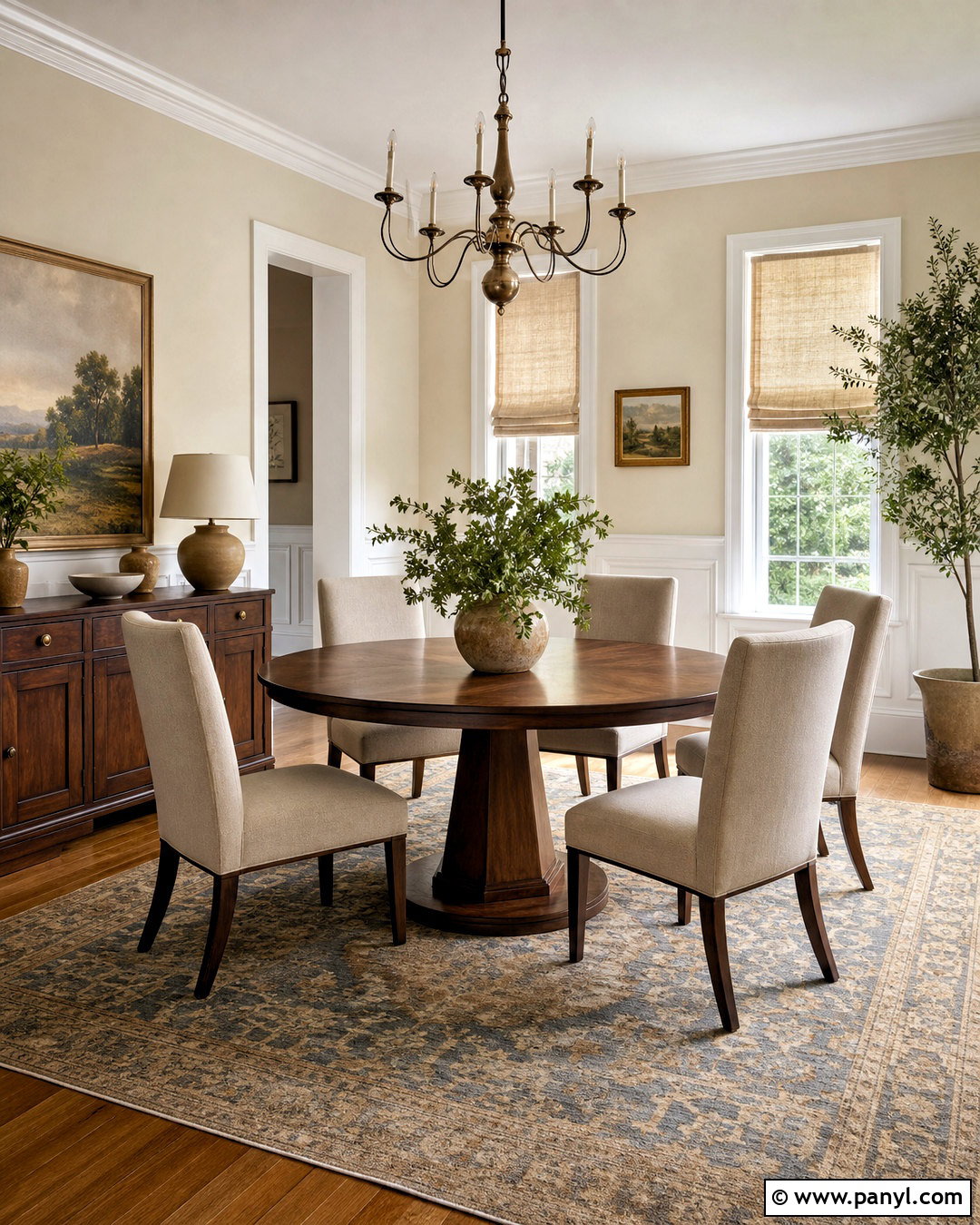
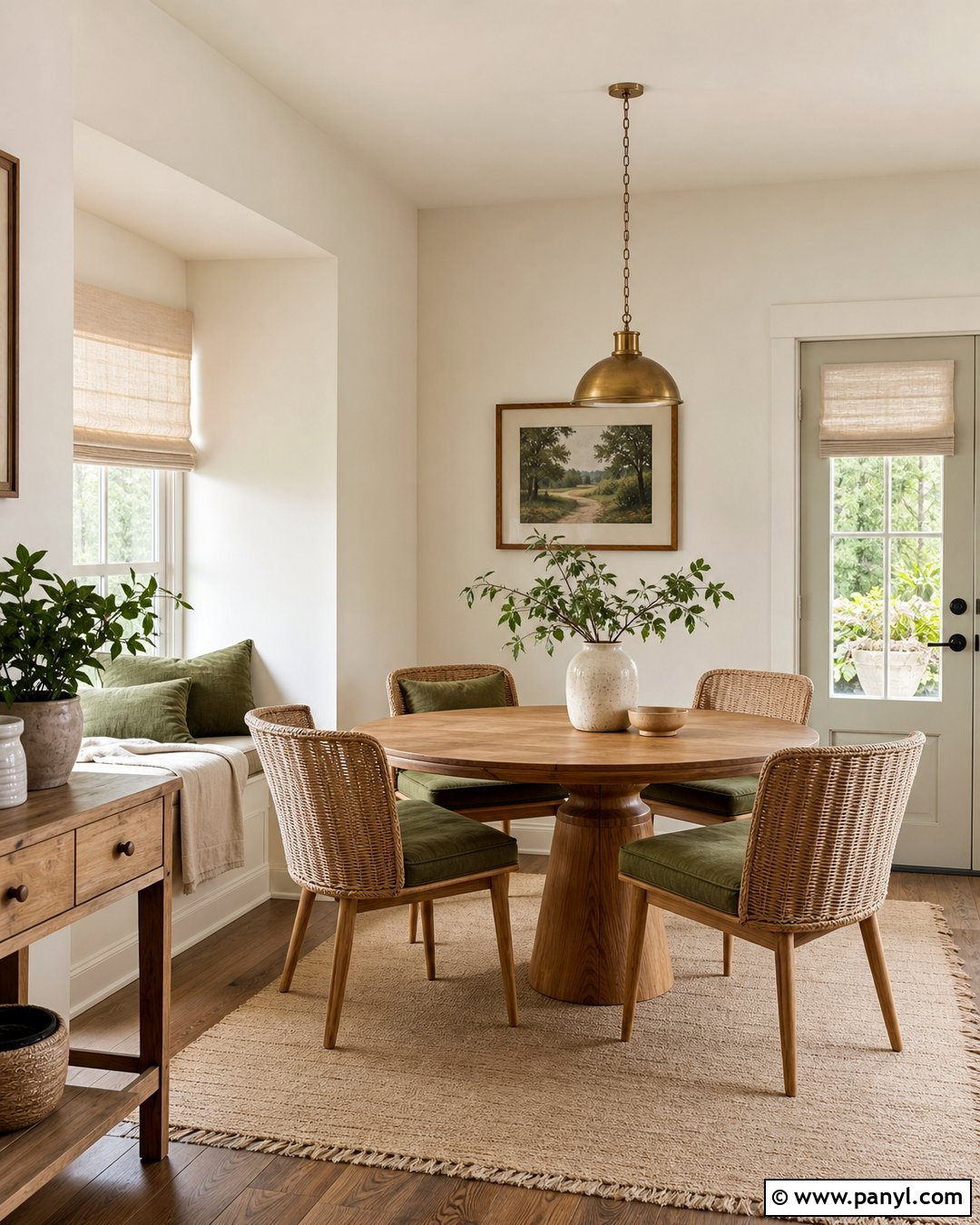
Soft Chamois can make a dining room feel welcoming in both daylight and evening light. Apply it to the walls above simple white wainscoting for a classic layered treatment. A round walnut pedestal table improves movement in a modest room, while upholstered oatmeal chairs add softness. Hang a dark bronze chandelier above the table to create a strong central feature. Choose a faded rug combining taupe, olive, and dusty blue, then repeat those colors in restrained artwork and table linens. A walnut sideboard offers storage and prevents the room from looking overly pale. Finish with linen Roman shades and two ceramic lamps. The mixture of warm paint, rich wood, and controlled contrast creates a complete dining space that feels elegant enough for guests but comfortable for daily meals.
7. Soft Chamois Primary Bedroom
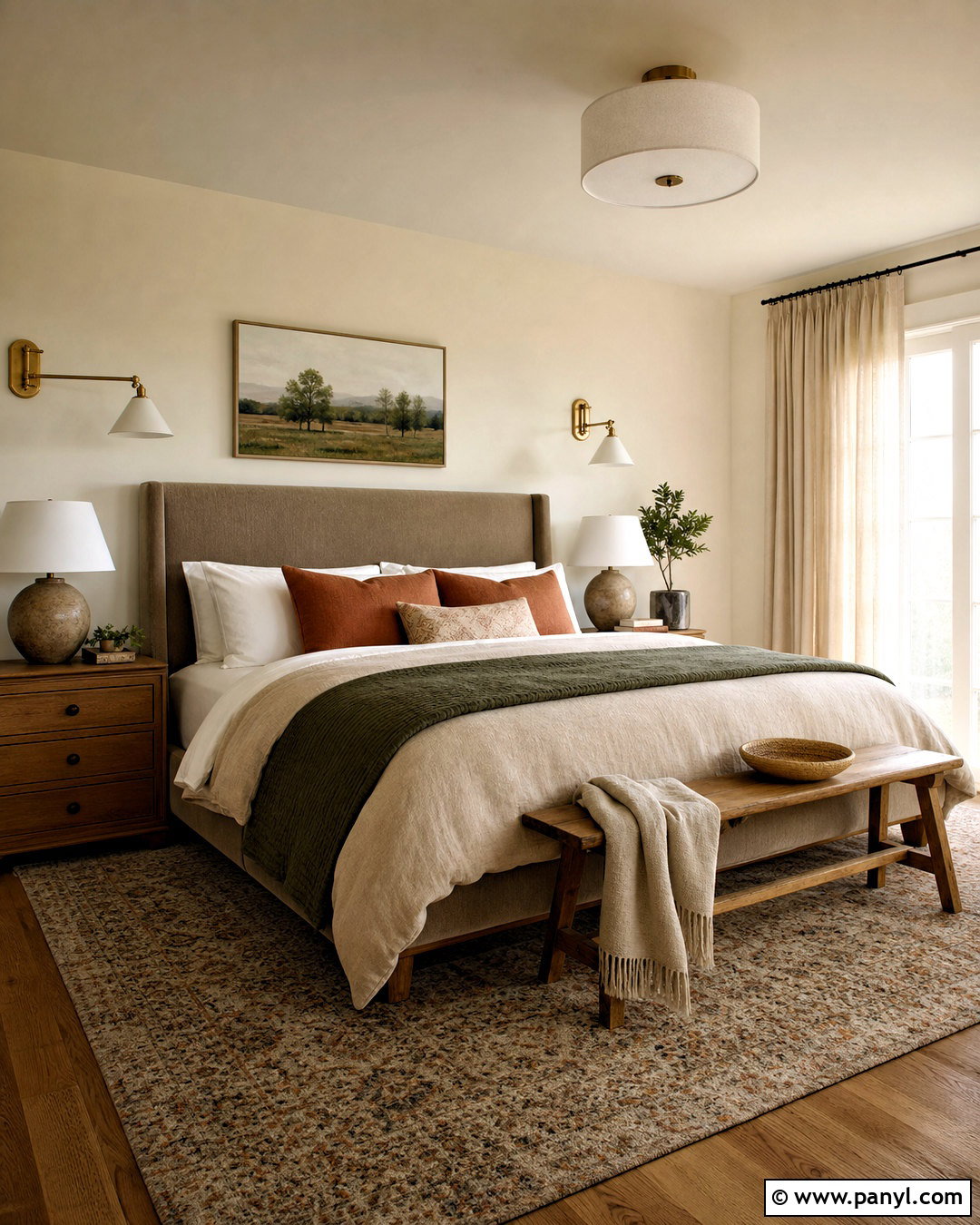
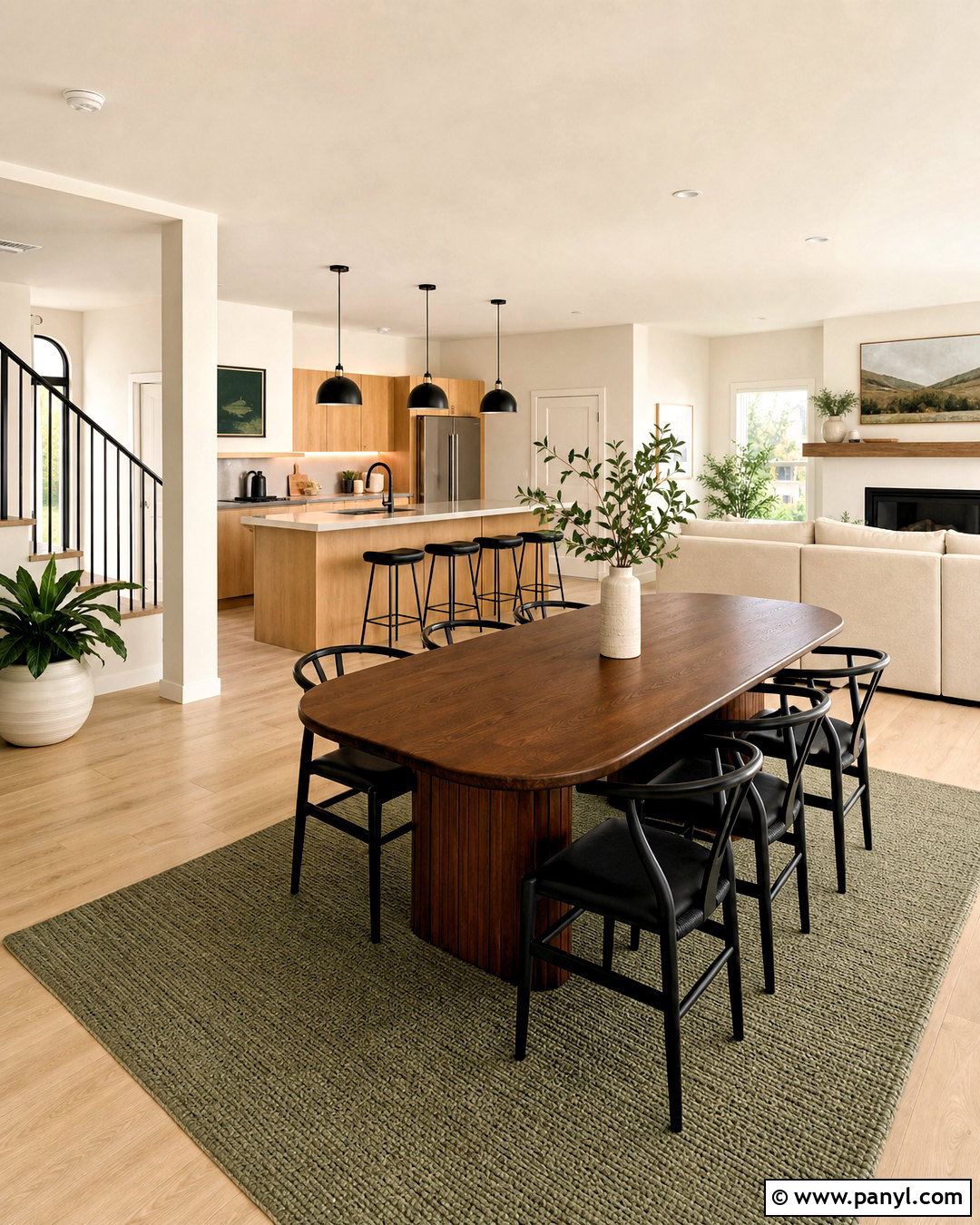
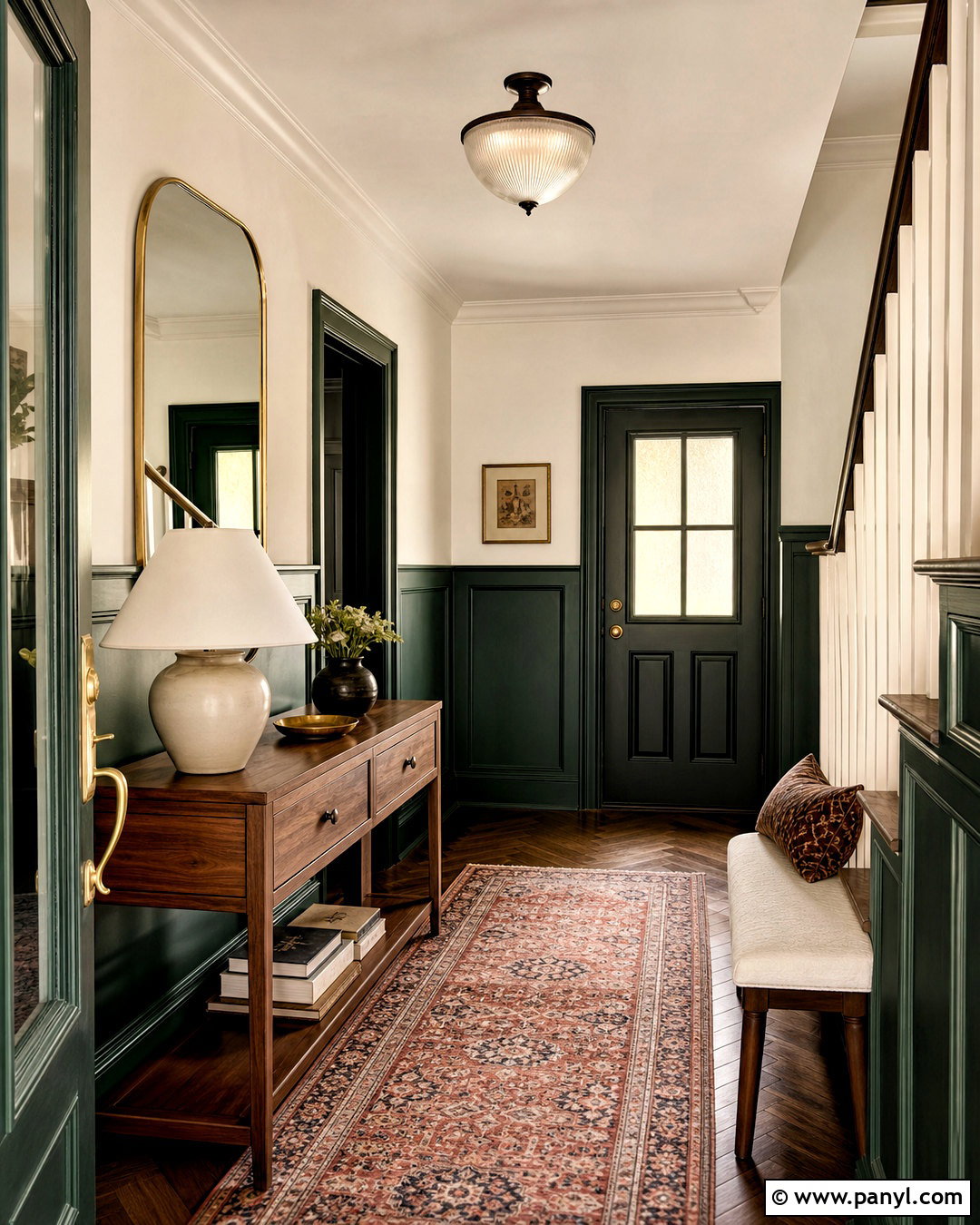
Imagine waking up in a room filled with soft, creamy light instead of stark white glare. Paint all four bedroom walls Soft Chamois, then continue the color onto the ceiling at reduced intensity for a gentle, enveloping effect. Anchor the space with a tall upholstered bed in warm taupe and matching medium-oak nightstands. Layer white cotton sheets with a flax linen duvet, olive quilt, and muted terracotta pillows. A large wool rug should extend beyond the bed to soften the floor and define the sleeping area. Use antique brass sconces to free space on the nightstands. Full-length natural linen curtains add height and filtered texture. The completed bedroom feels restful and refined, with enough earthy color to keep the pale walls from appearing plain.
8. Soft Chamois Guest Bedroom
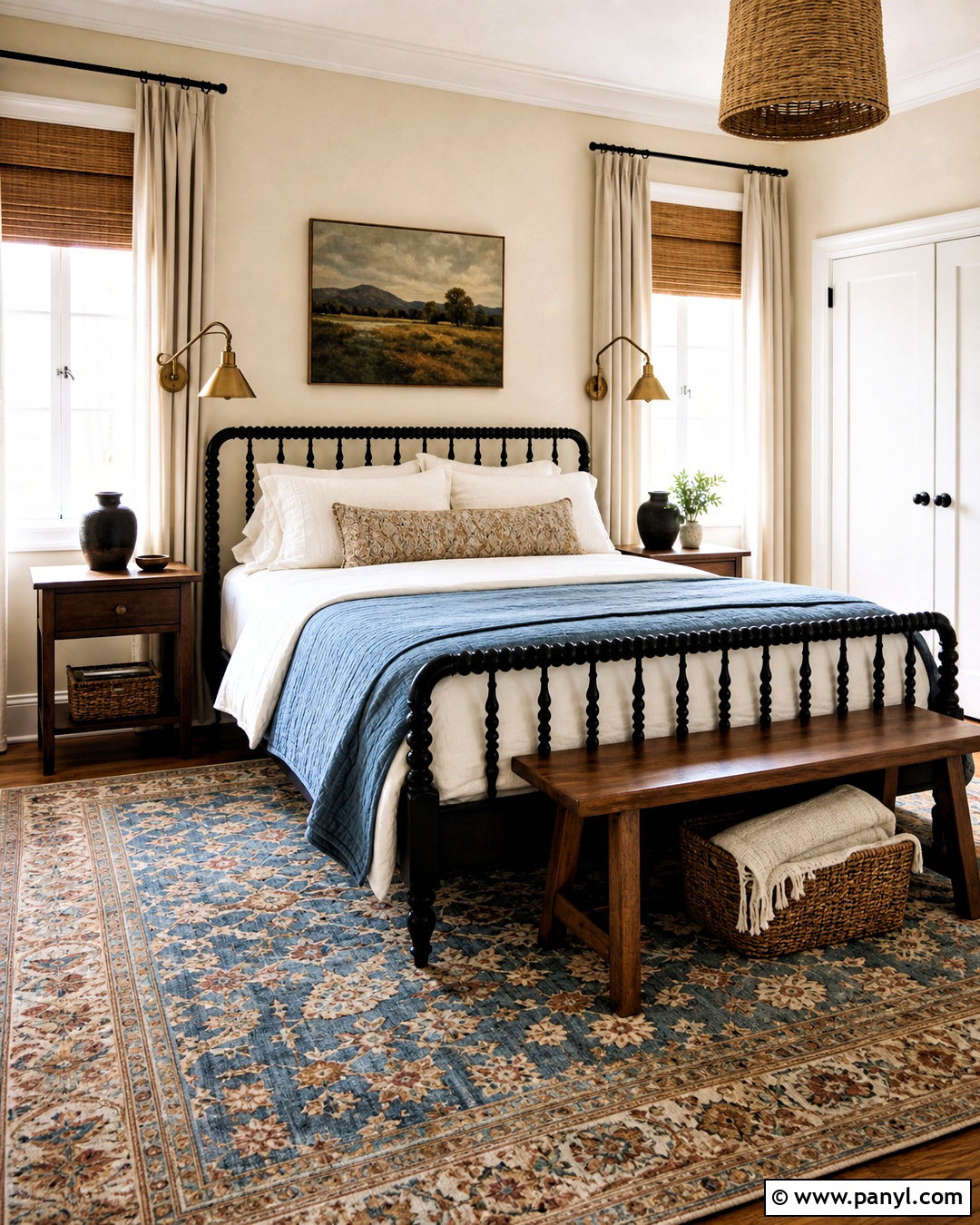
A guest bedroom should feel thoughtful without becoming crowded or overly personal. Soft Chamois provides an adaptable background for a black spindle bed, white bedding, and a faded blue quilt. Place compact walnut nightstands on either side of the bed and add wall-mounted brass reading lights. A small vintage-inspired rug in blue, beige, and rust introduces pattern while connecting the furniture to the warm walls. Use white trim for definition and natural bamboo shades beneath simple linen curtain panels. One landscape print above the bed and a narrow wooden bench at the foot complete the arrangement. Add a woven basket for extra blankets and leave part of the dresser clear for visitors. This practical room feels cozy, fresh, and easy to maintain between stays.
9. Soft Chamois Bathroom
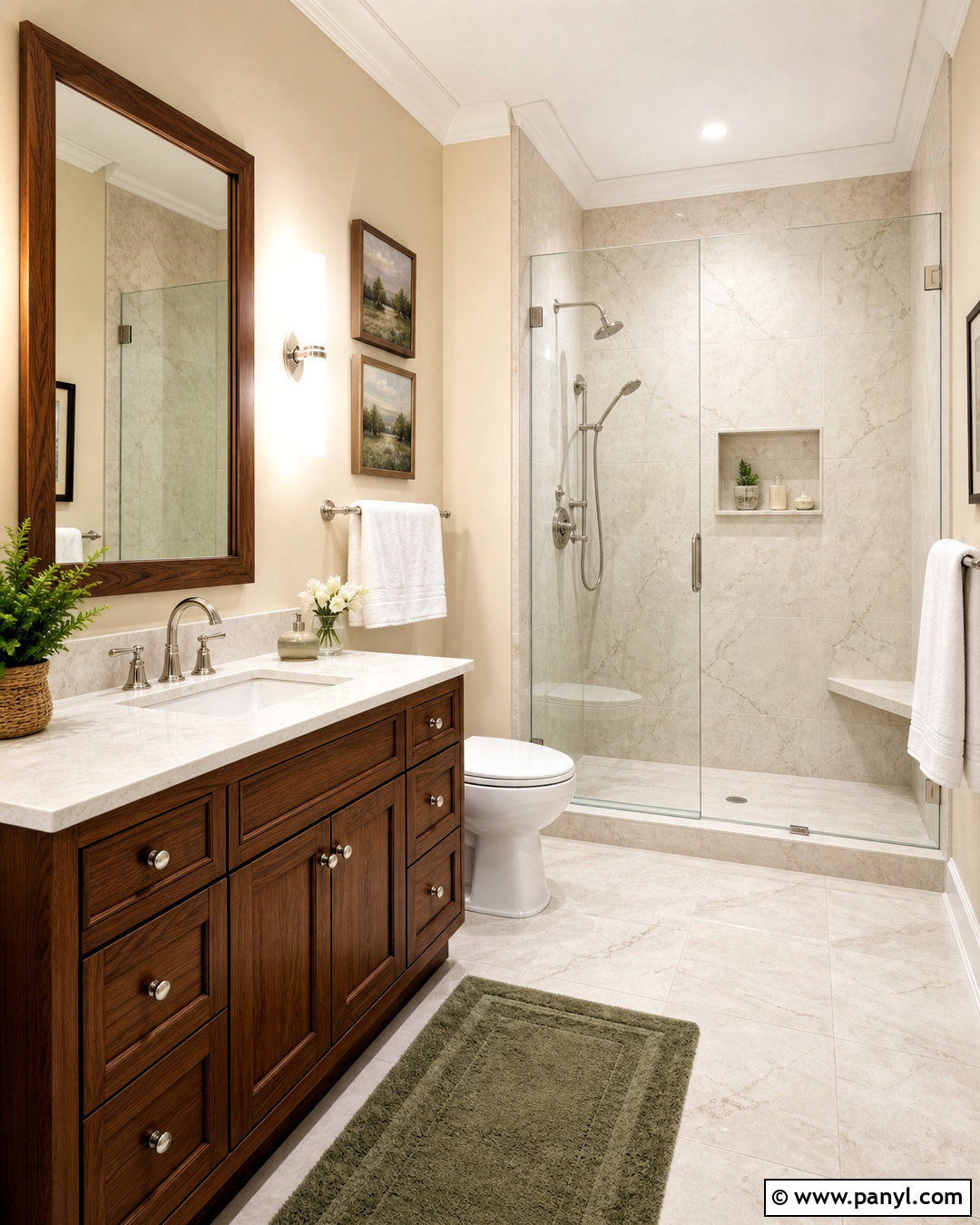
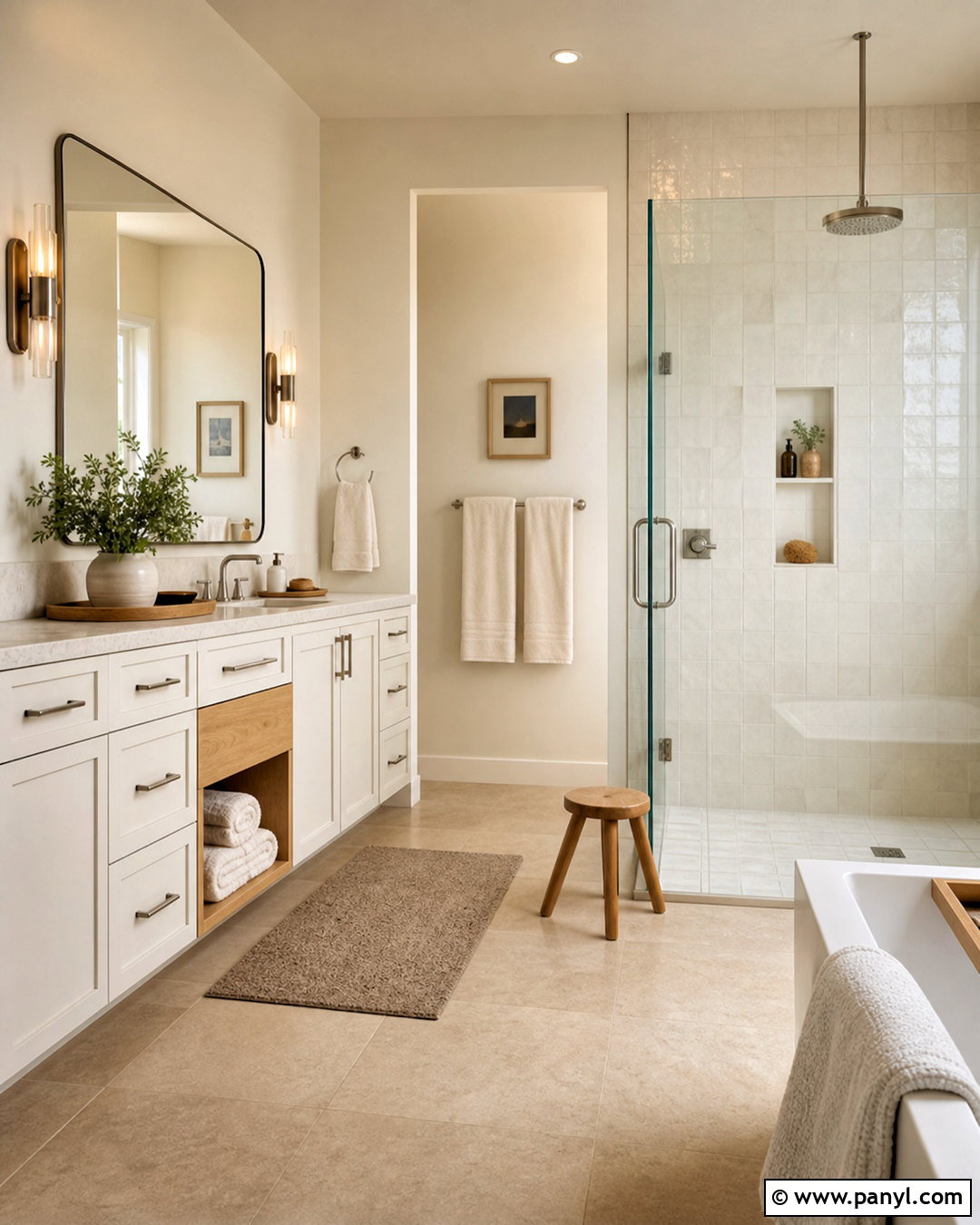
Cool bathroom surfaces often benefit from the gentle warmth of Soft Chamois. Use it on the upper walls with ivory porcelain tile or marble-look wall panels below. A walnut vanity introduces depth, while a white quartz counter keeps the room bright and easy to coordinate. Choose polished nickel fixtures for a clean finish that does not compete with the cabinetry. A frameless glass shower helps the entire space remain visible, making a small bathroom feel more open. Add warm white towels, a muted sage bath mat, and a simple wood-framed mirror. Paint the ceiling a clearer white and use a bathroom-appropriate finish on the walls. The resulting design balances creamy paint, reflective metal, natural wood, and pale stone without creating a cold or clinical atmosphere.
10. Soft Chamois Powder Room
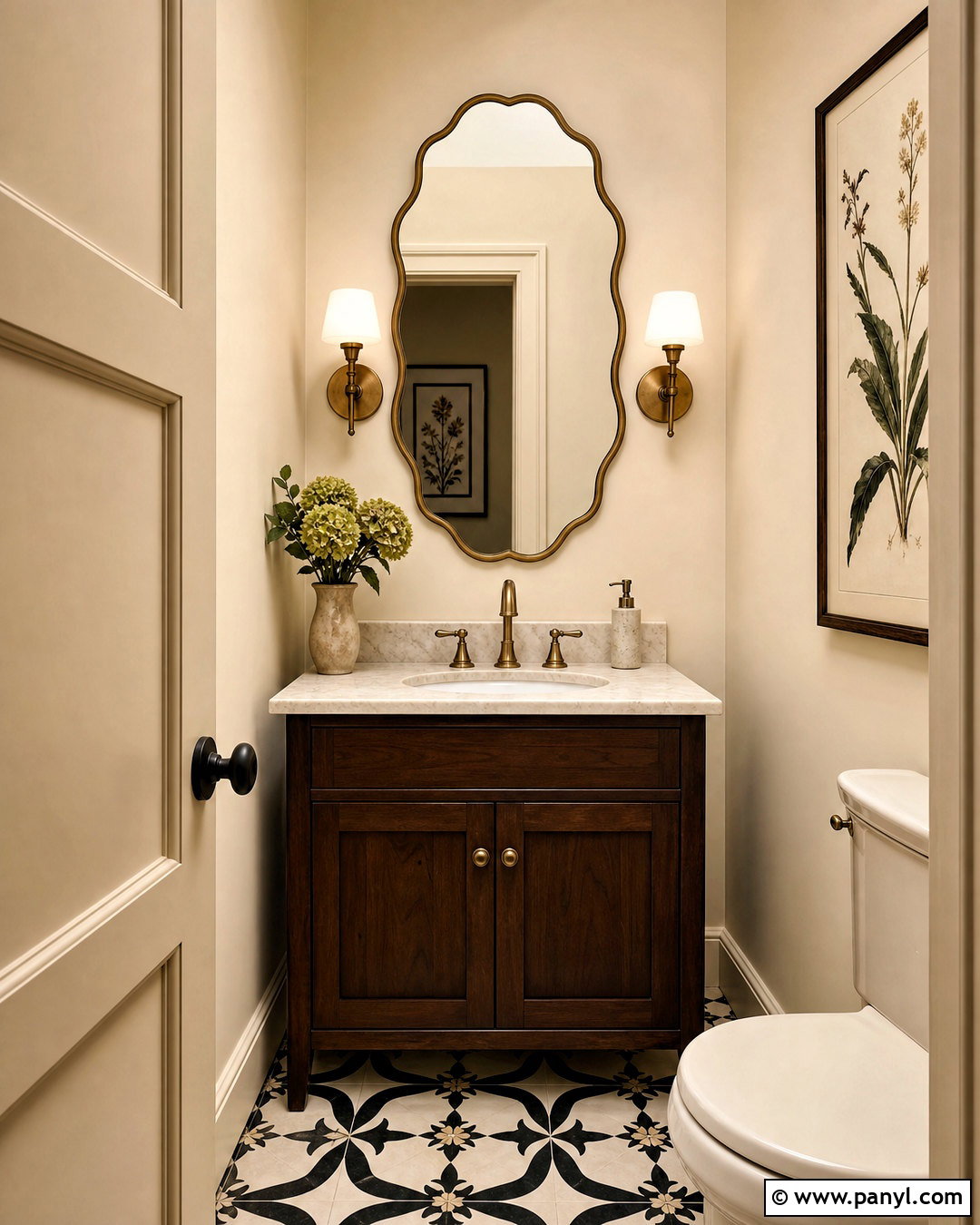
Small powder rooms are ideal places to use Soft Chamois in a more detailed, decorative way. Paint the walls, trim, and door the same color but vary the finish, using washable eggshell on the walls and satin on the woodwork. This creates a seamless envelope while preserving subtle architectural definition. Install a compact dark walnut vanity with a creamy stone top and an aged brass faucet. A scalloped brass mirror and two opal-glass sconces add character without overwhelming the limited space. Bring in a patterned floor tile featuring warm black, ivory, and beige. One small framed botanical print supplies color. The complete powder room feels polished and intimate, proving that a pale neutral can still create a memorable design when materials and finishes are carefully layered.
11. Soft Chamois Entryway
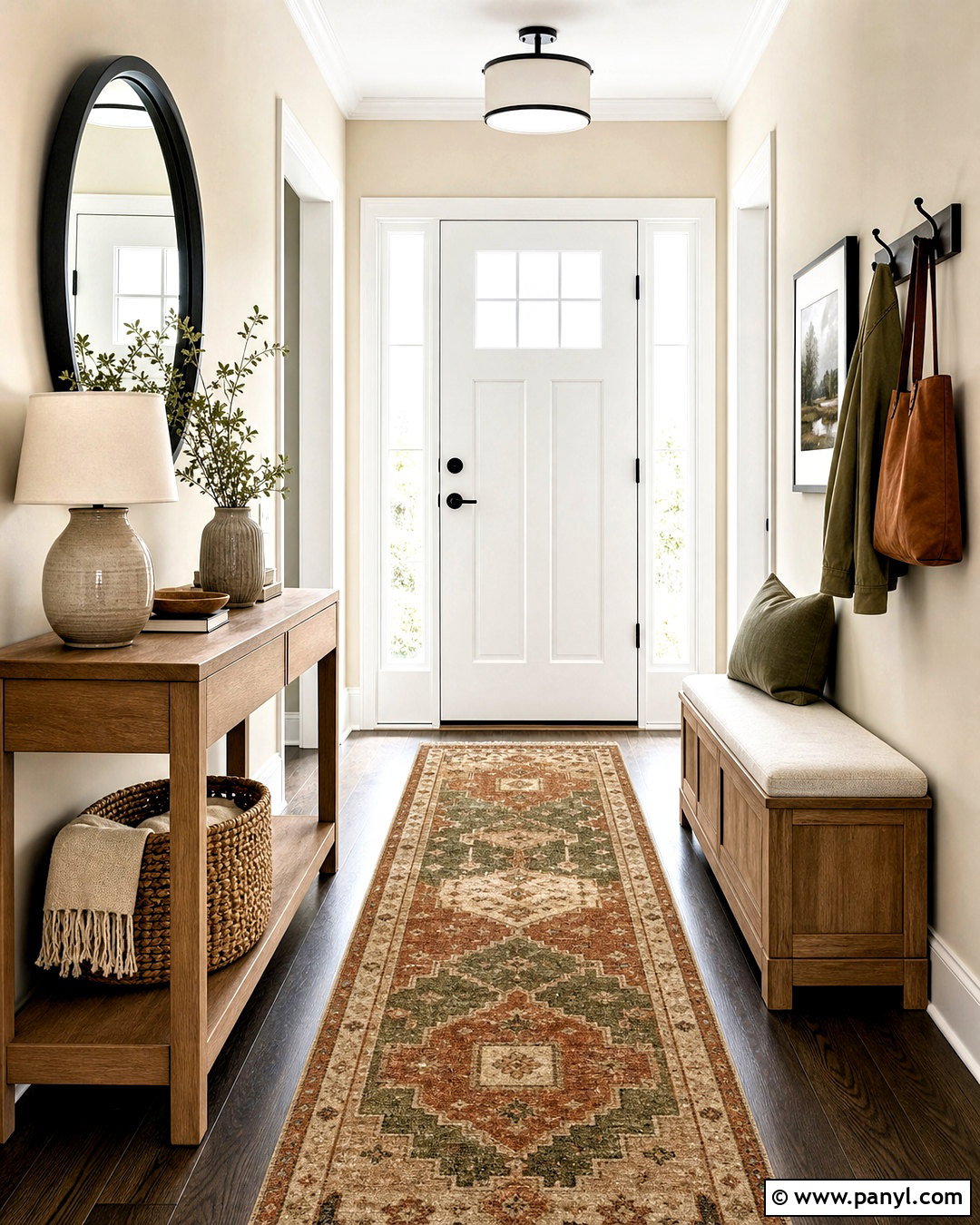
First impressions feel warmer when an entryway has a soft neutral foundation. Paint the walls Soft Chamois and highlight the baseboards, door casing, and ceiling with a brighter white. A narrow oak console can hold a ceramic lamp and shallow tray without interfering with the walkway. Place a large round black-framed mirror above it to reflect natural light and introduce a graphic shape. An earthy patterned runner will conceal everyday wear while adding muted rust, olive, and tan. Include a closed storage bench or small cabinet for shoes, bags, and seasonal items. A woven basket and a few sturdy wall hooks provide accessible storage. The finished entry feels tidy and welcoming, with practical pieces arranged around a warm color that transitions smoothly into nearby rooms.
12. Soft Chamois Hallway And Stairs
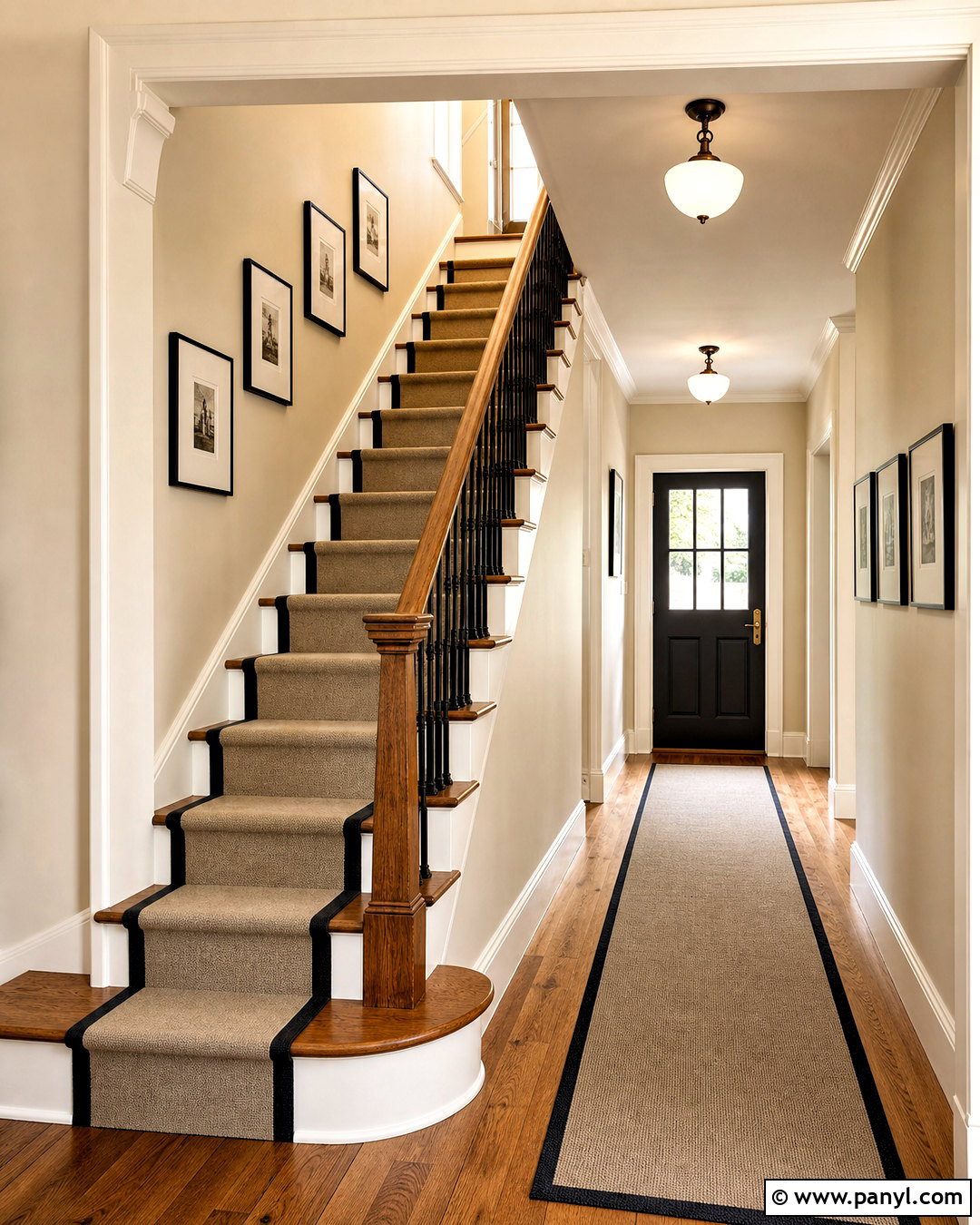
Long hallways need more than pale paint to feel intentional. Cover the walls with Soft Chamois, then use bright white on the trim, stair risers, and paneled details. Keep the handrail and stair treads in medium stained oak for warmth, adding slender black balusters for visual rhythm. A series of black-framed family photographs or simple landscapes can guide the eye along the corridor. Use matching frames and generous spacing to prevent the display from becoming cluttered. A low-pile beige runner with a narrow charcoal border improves comfort and reinforces the linear layout. Add flush-mount opal-glass ceiling lights at regular intervals. Soft Chamois connects these contrasting materials, helping the passage feel brighter, wider, and more integrated with the surrounding home.
13. Soft Chamois Home Office
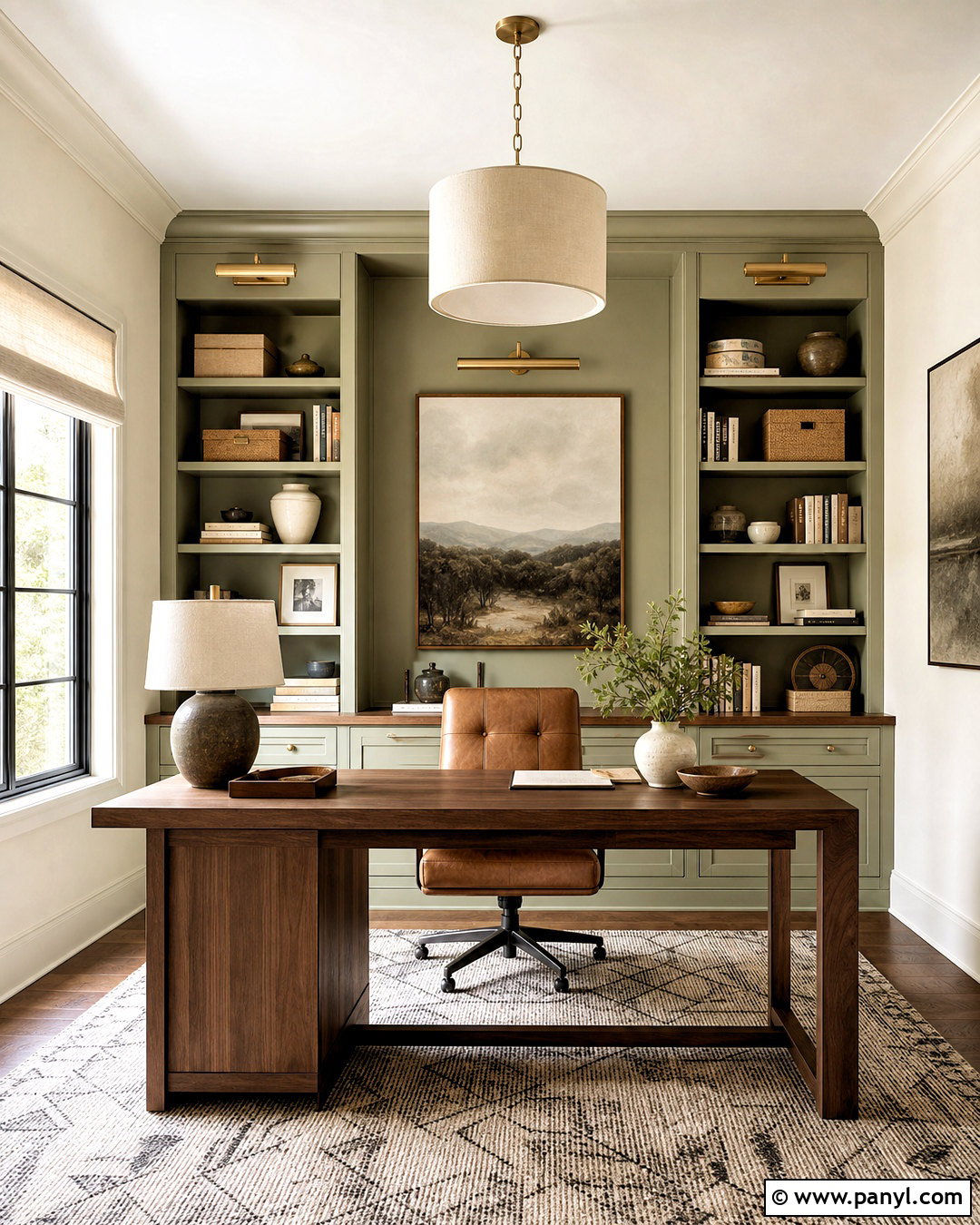
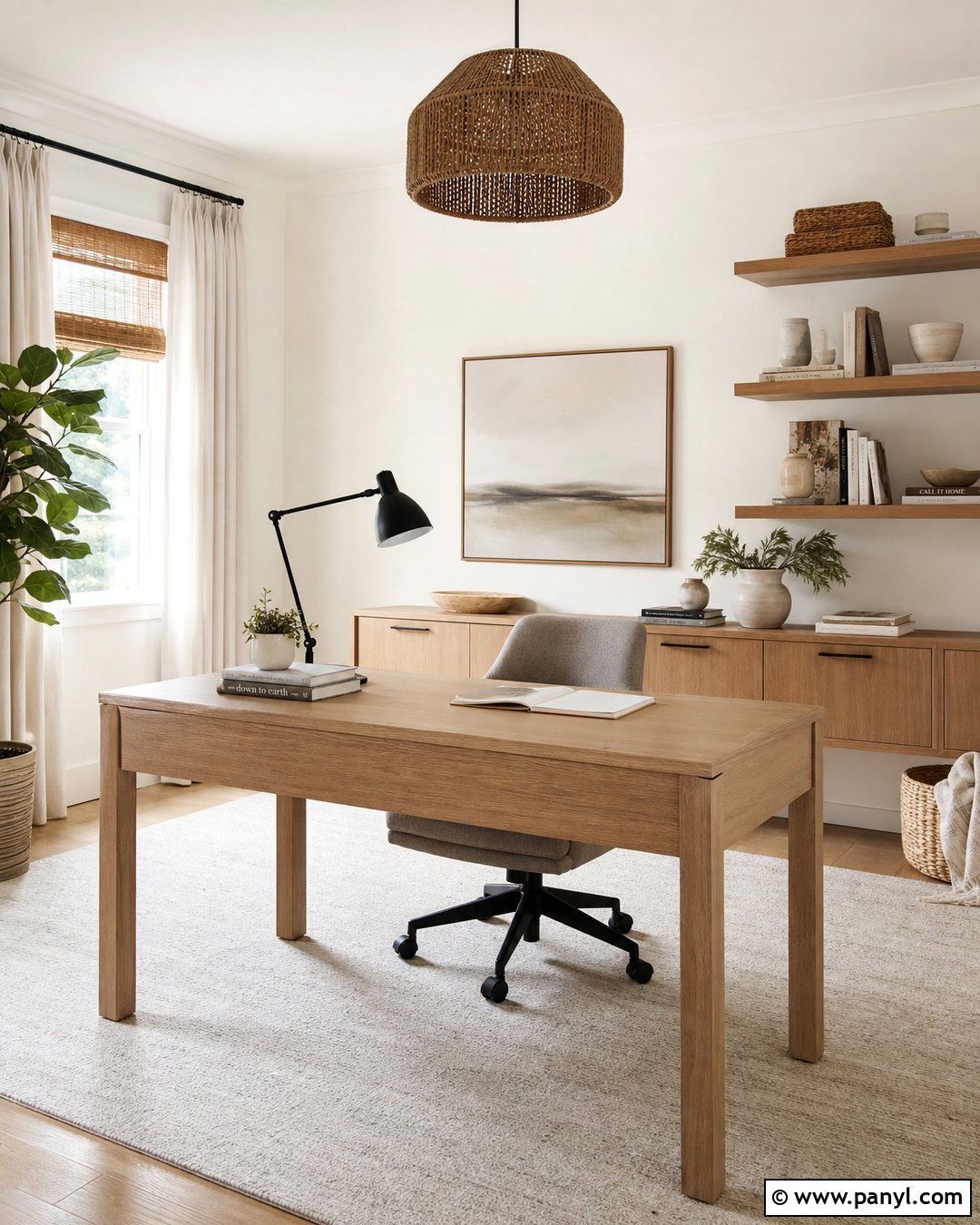
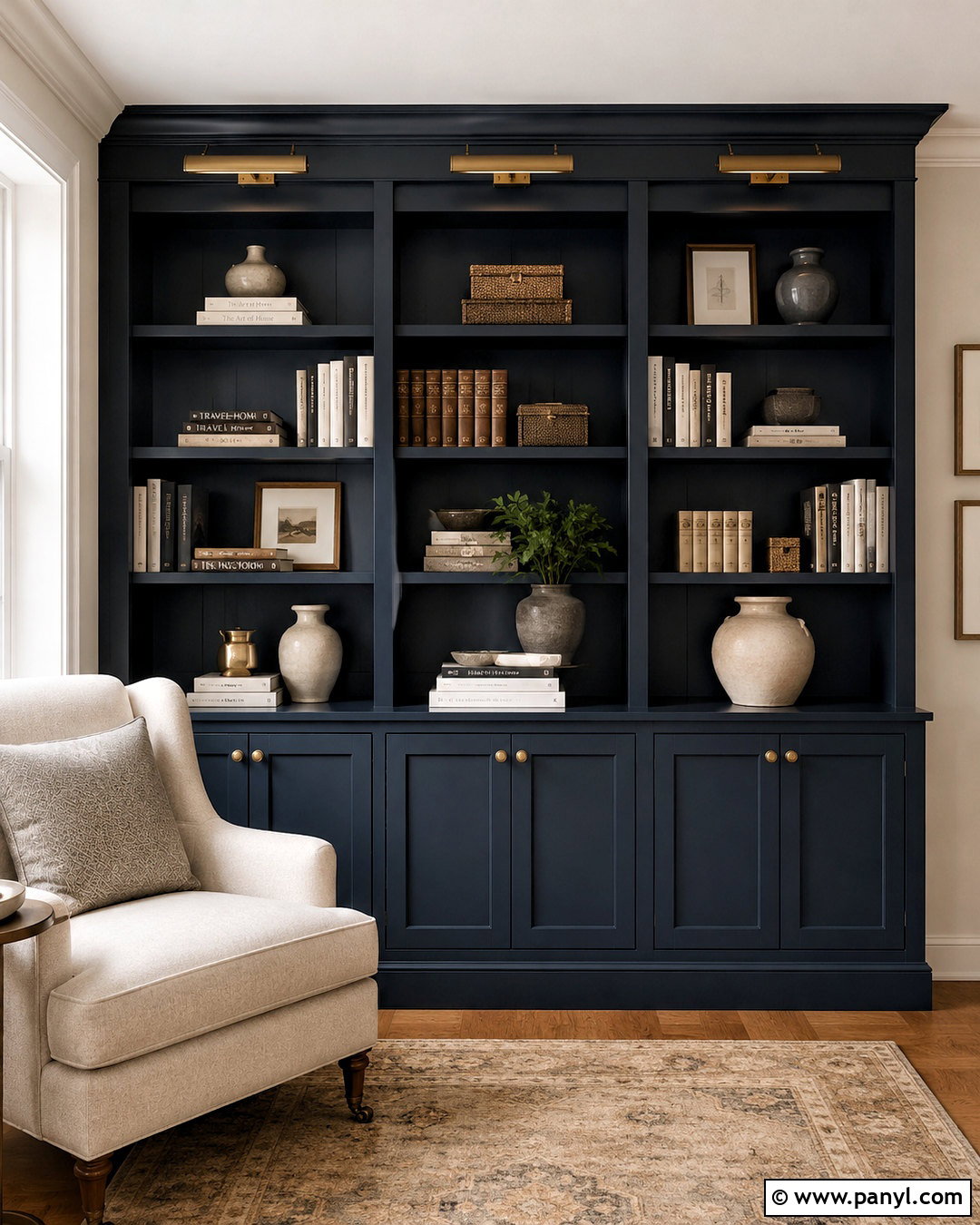
For a focused workspace, combine Soft Chamois walls with a built-in desk and bookcases painted Saybrook Sage. The warm off-white keeps the room bright, while the muted green cabinetry gives the desk area a clear visual anchor. Select a walnut desktop, supportive camel leather chair, and flat-woven wool rug in cream and charcoal. Brass library lights mounted over the shelves provide practical task lighting and a tailored finish. Keep office supplies inside labeled drawers and matching boxes so the open shelves remain calm. Display a controlled mix of books, ceramics, and framed artwork rather than filling every compartment. White ceiling paint and simple linen shades preserve the natural light. This complete office feels professional, comfortable, and suitable for long work sessions without becoming visually distracting.
14. Soft Chamois Nursery
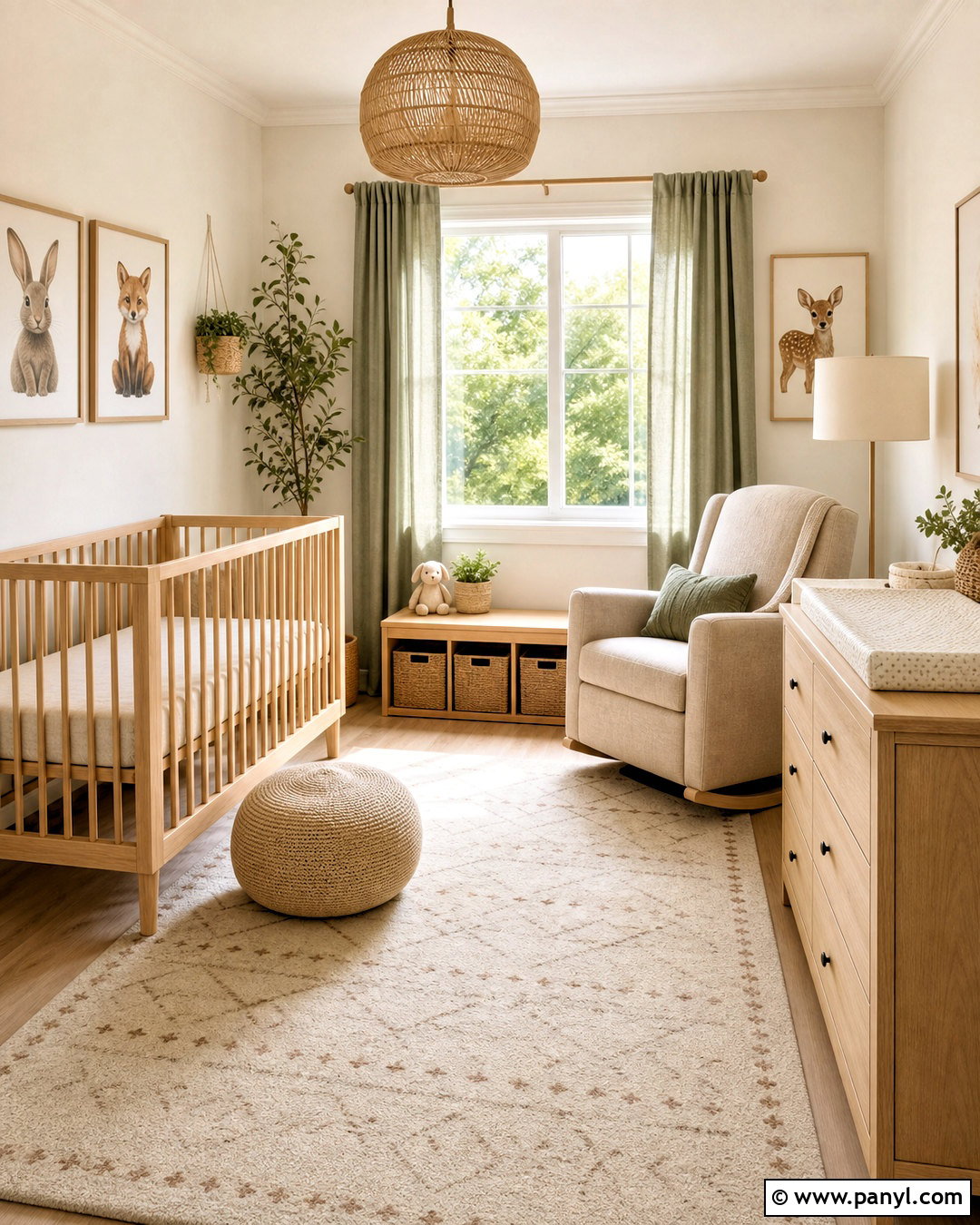
Soft Chamois offers a gentle nursery background that can adapt as a child grows. Paint the walls in a durable, washable finish and use clean white on the trim and ceiling. Arrange a natural maple crib along the longest uninterrupted wall, with a pale oak dresser serving as the changing station. Add a comfortable oatmeal glider near the window and soften the area with full-length sage green curtains. A cream wool rug featuring a subtle tan pattern creates a warm play surface. Use woven baskets, closed toy storage, and a few framed animal illustrations to keep the room organized. Small touches of dusty blue, clay, or muted green bring color without creating a strong theme. The finished nursery feels peaceful, practical, and easy to update over time.
15. Soft Chamois Laundry Room
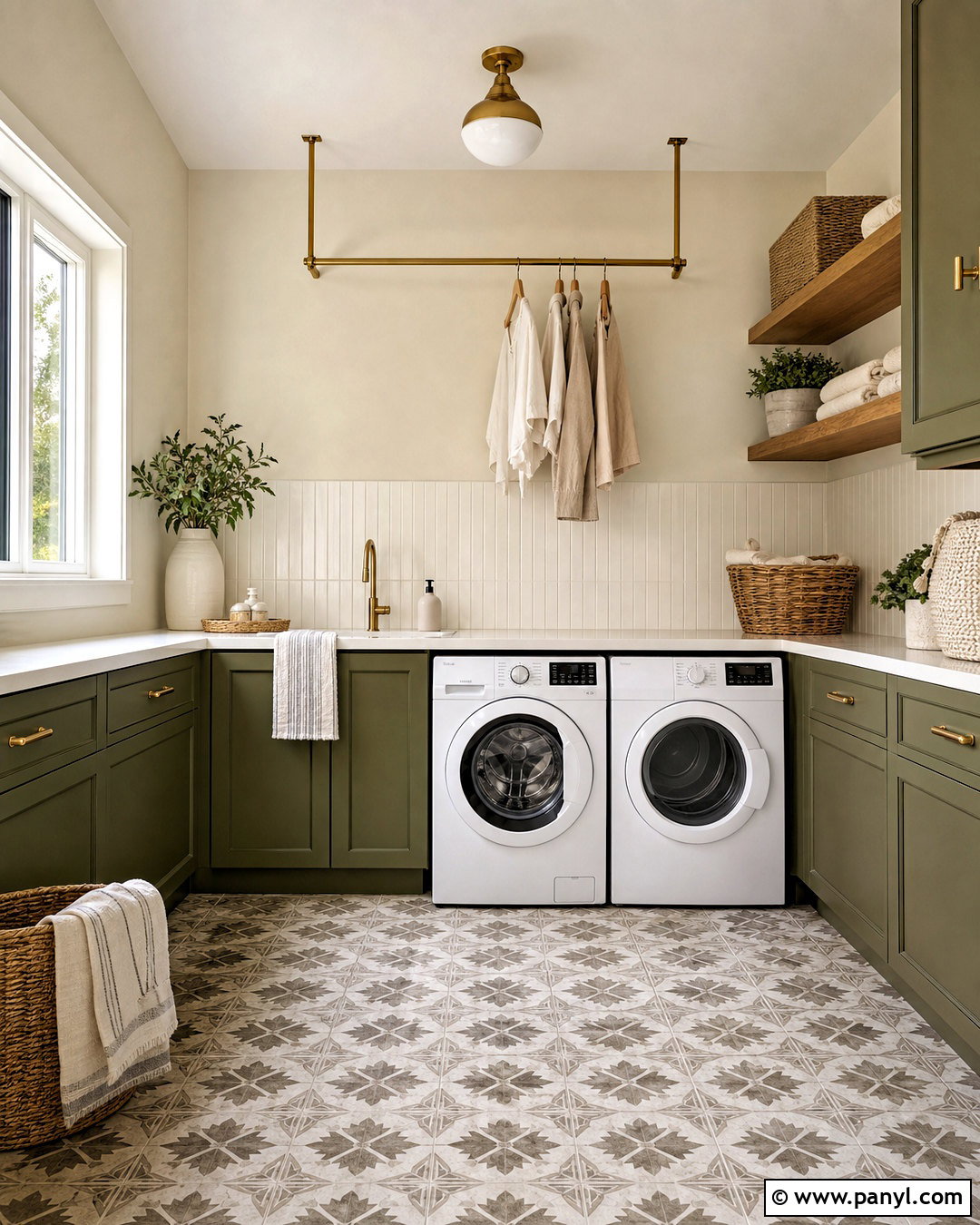
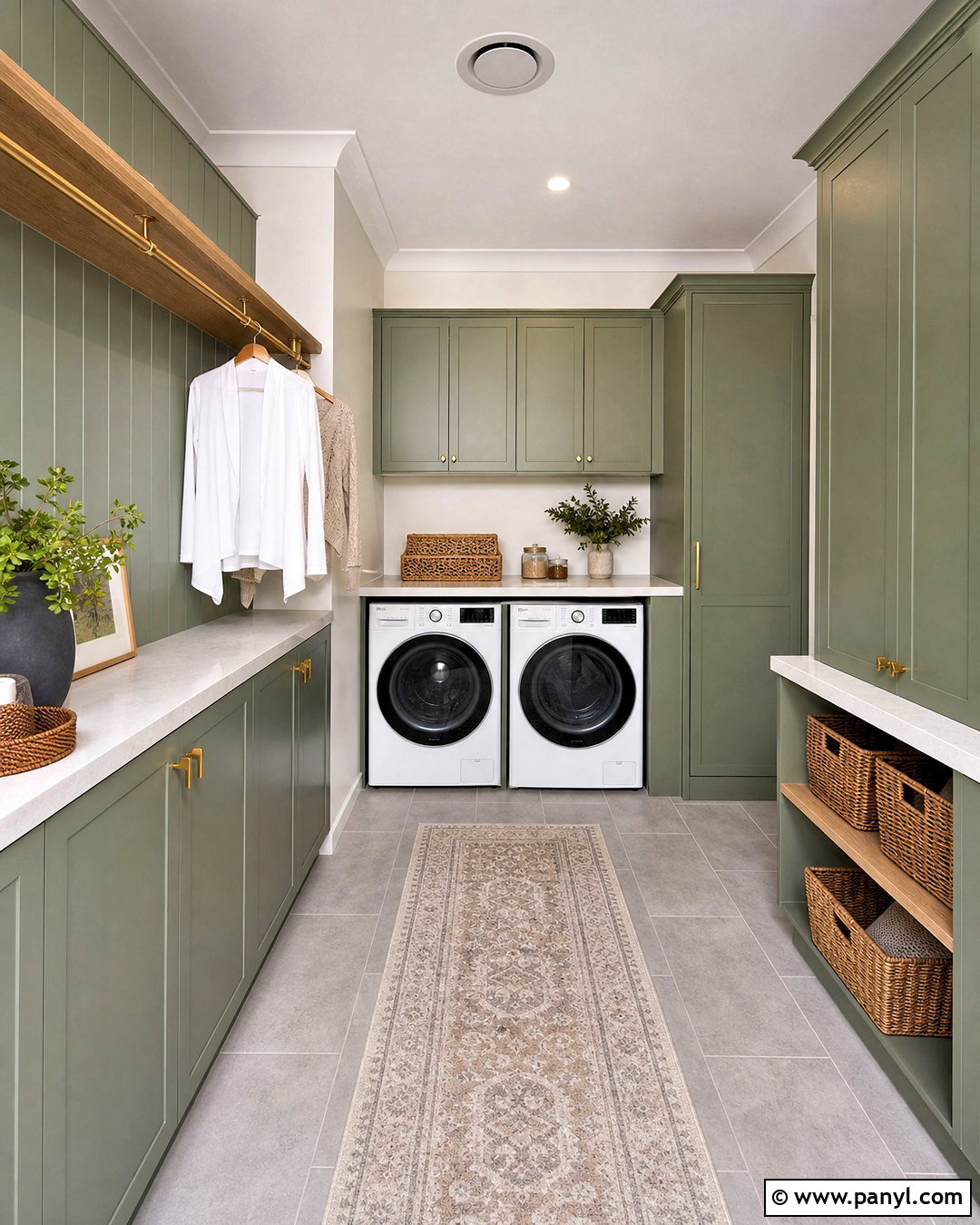
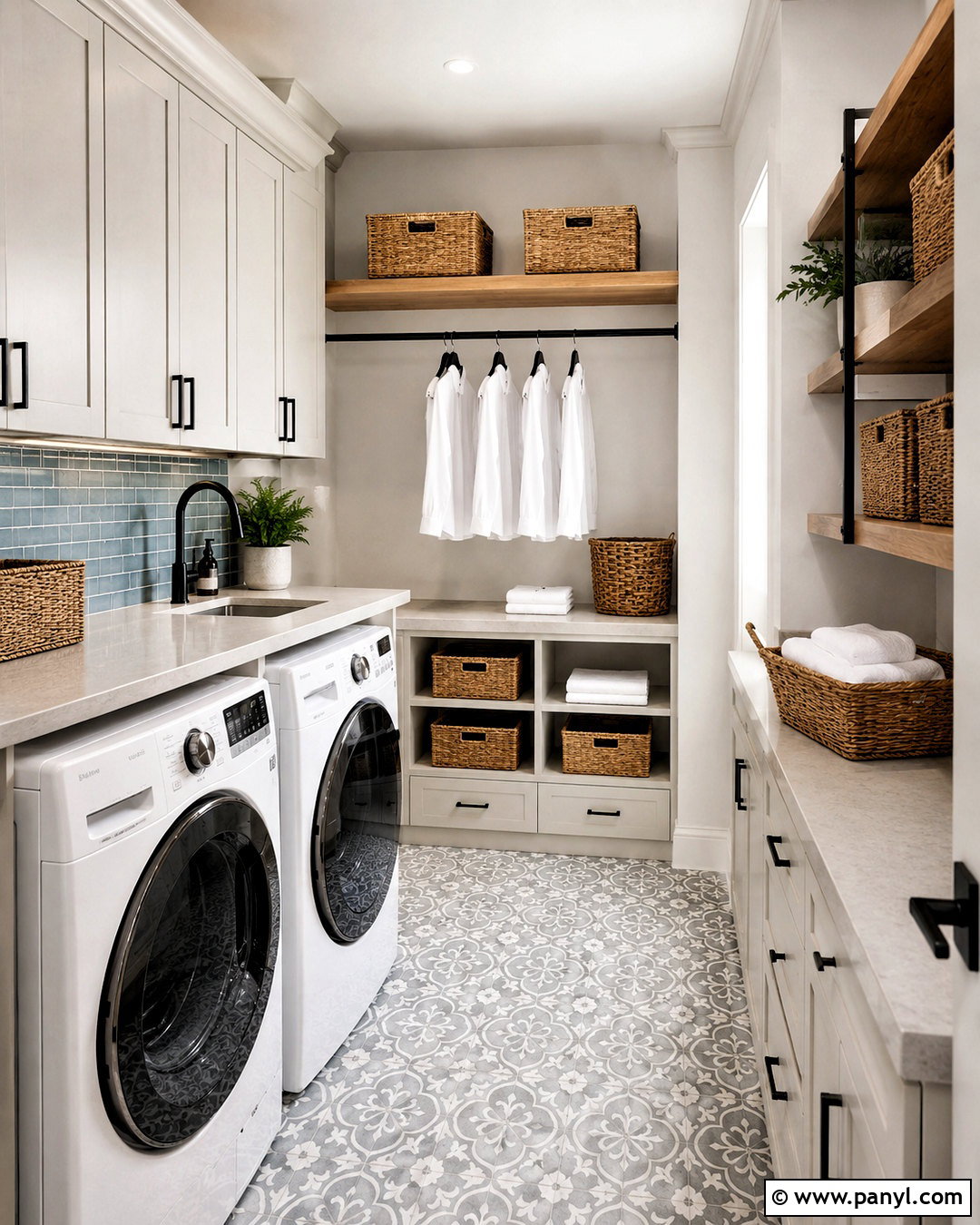
Even a hardworking laundry room can feel finished and coordinated. Use Soft Chamois on the walls around lower cabinets painted deep olive green. Install durable light quartz counters above a white washer and dryer, giving the room space for folding and sorting. A vertical warm-white tile backsplash protects the utility wall while adding subtle texture. Choose aged brass cabinet pulls and a matching hanging rail for air-drying clothes. On the floor, patterned porcelain tile in charcoal, cream, and taupe will disguise dust and everyday marks. Incorporate upper closed cabinets for cleaning products and open oak shelves for baskets and frequently used supplies. With warm paint, practical storage, and grounded color, the complete room feels organized and attractive without sacrificing the durability required for routine household work.
16. Soft Chamois Sunroom
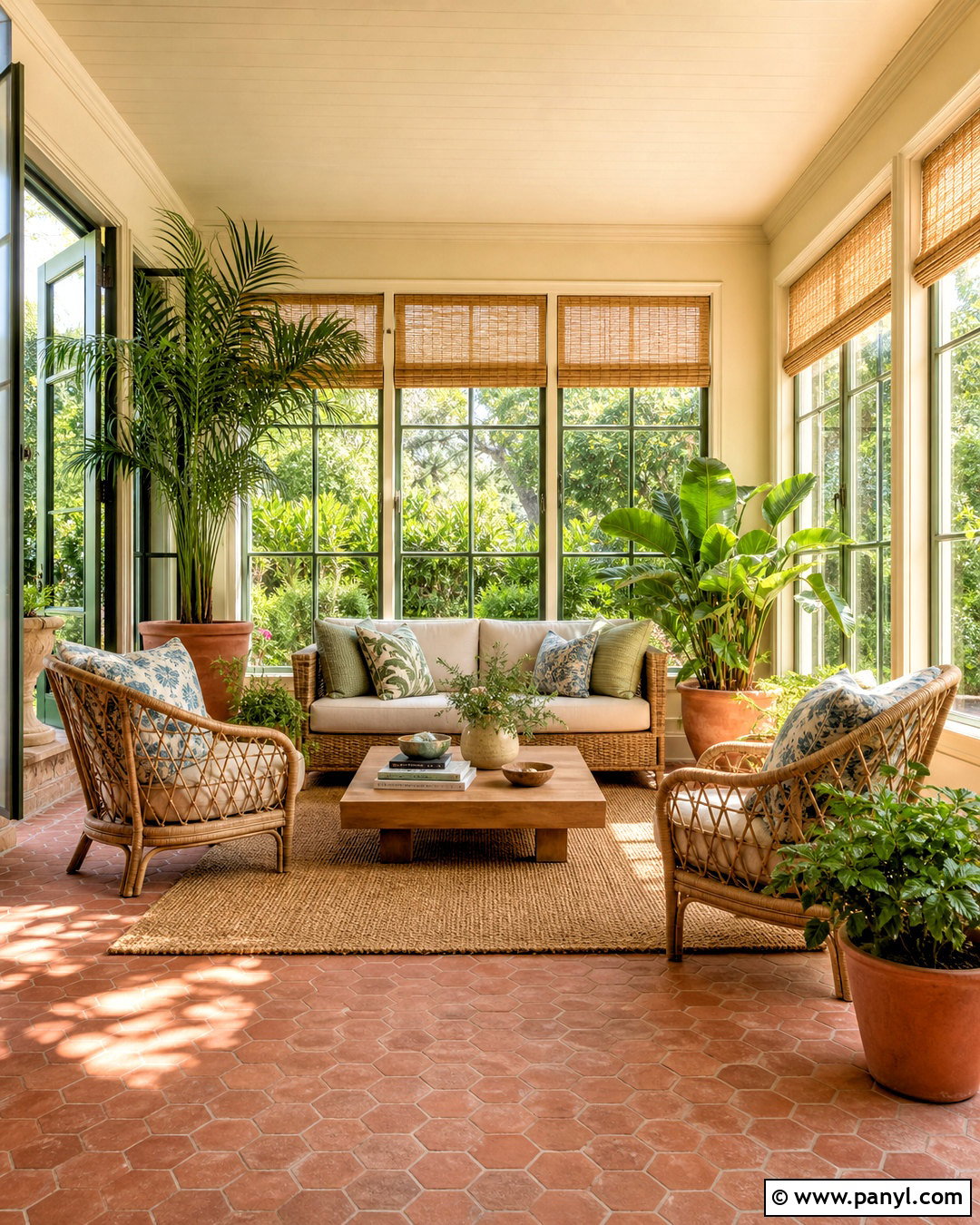
Sunlight gives Soft Chamois a brighter, airier character that works naturally in a casual sunroom. Paint the walls and ceiling the same color to reduce visual breaks around multiple windows. Furnish the room with a light rattan sofa, two woven lounge chairs, and cushions covered in cream, leafy green, and muted blue fabrics. A large natural fiber rug defines the seating group over terracotta tile or honey-toned wood flooring. Place a round oak coffee table in the center and use ceramic garden stools as flexible side tables. Keep window treatments minimal with woven shades that filter glare without hiding the view. Several healthy plants in clay pots complete the connection to the outdoors. The space feels cheerful and relaxed while remaining visually connected to the home.
17. Soft Chamois Craftsman Great Room
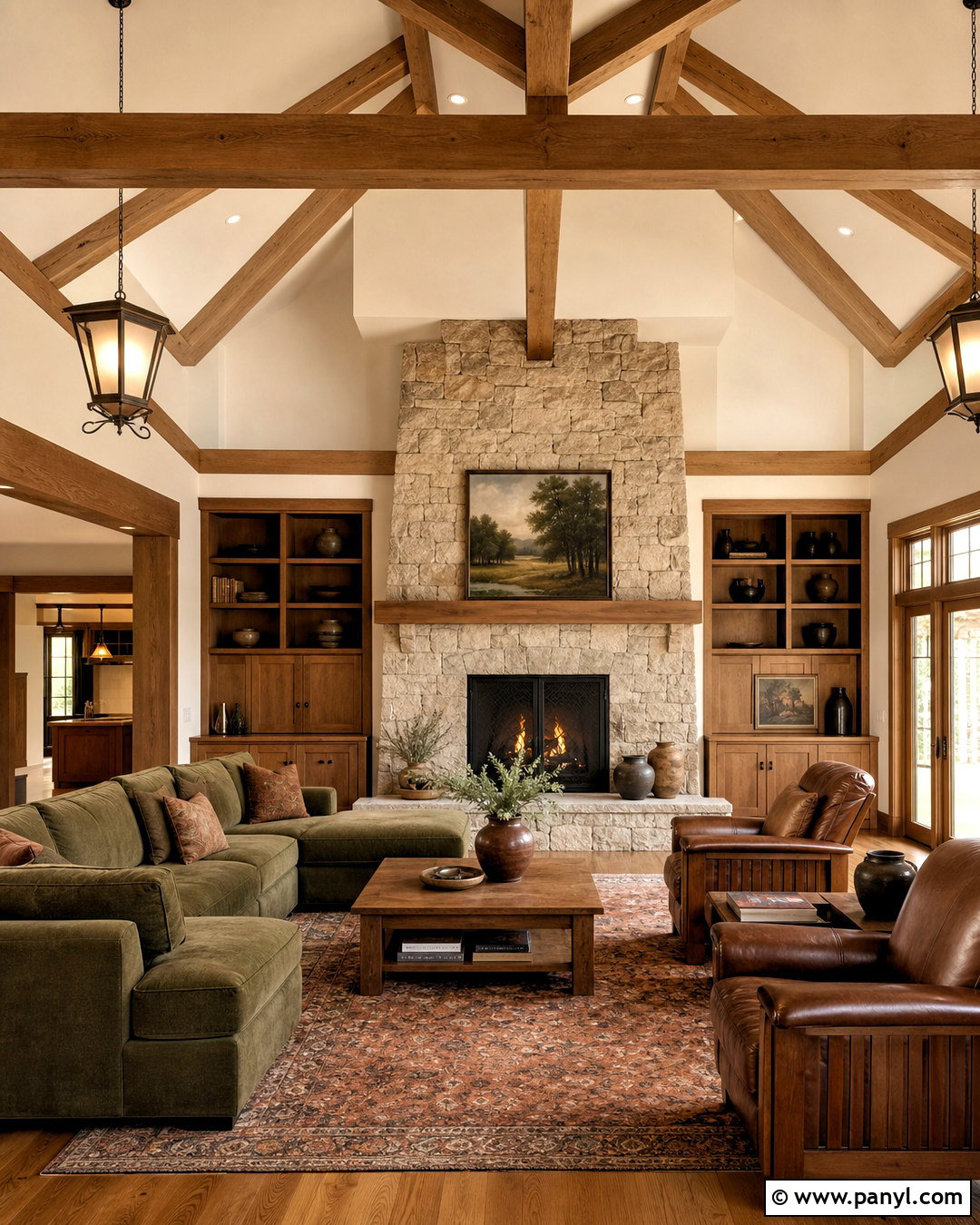
Rich architectural materials look especially distinctive against Soft Chamois. In a Craftsman great room, paint both the walls and sloped ceiling this warm off-white, then leave substantial oak beams in a natural medium stain. Build the layout around a stone fireplace with a wide timber mantel and symmetrical oak cabinets. A deep olive sectional, two brown leather chairs, and a large rust-toned rug give the open space enough visual weight. Use hammered bronze lighting and black iron fireplace doors to echo traditional Craftsman metalwork. Cream curtains and textured pillows soften the heavier materials. Rather than adding many small decorations, display pottery, framed landscapes, and handcrafted wood pieces. This balanced room celebrates structure and craftsmanship while the pale paint keeps the extensive woodwork from feeling dark.
18. Soft Chamois Basement Family Room
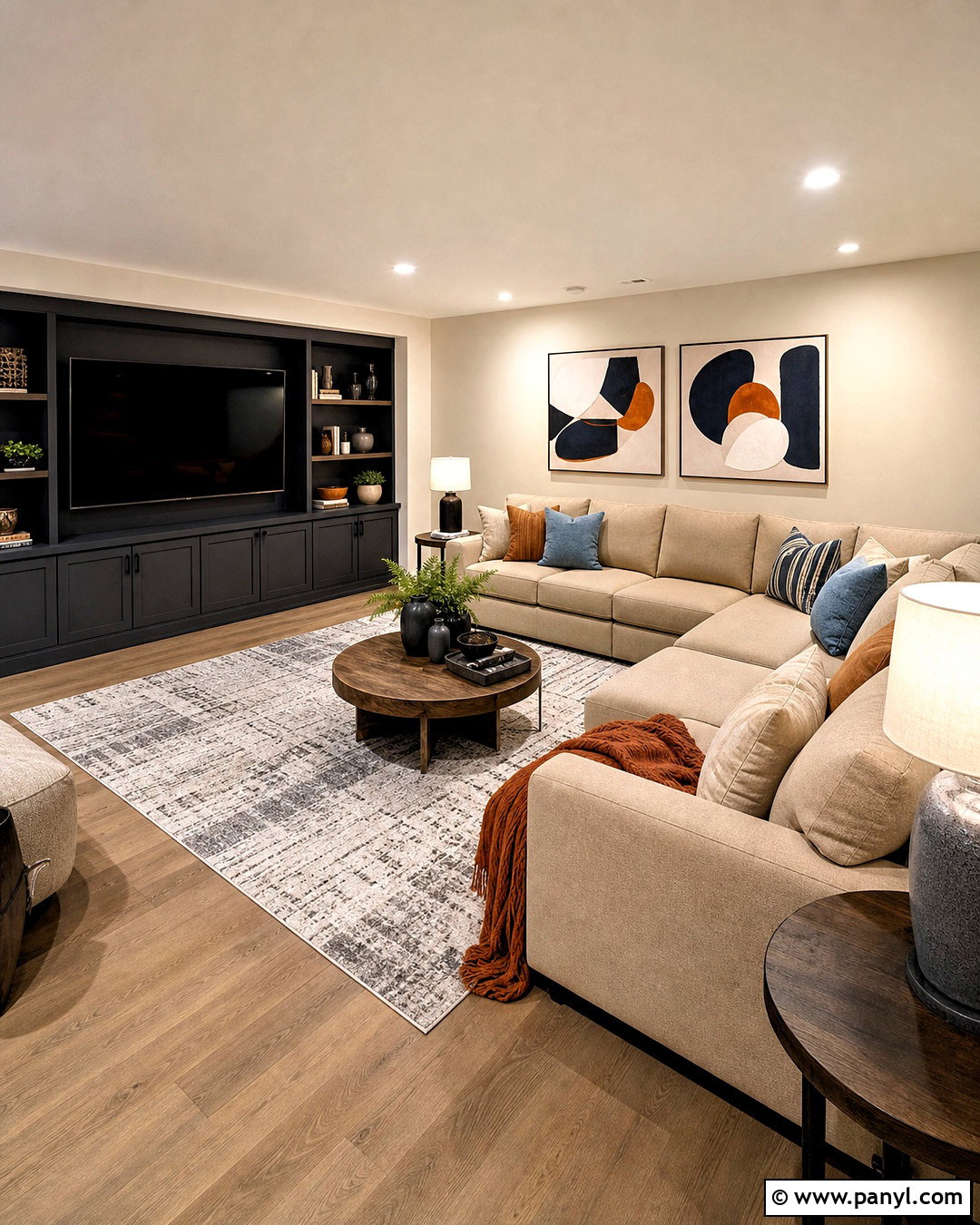
Basements often need warmth, layered lighting, and furniture that visually opens the room. Paint the walls Soft Chamois and keep the ceiling a clean white to maximize the available brightness. Choose a comfortable light taupe sectional with a chaise, then place it on a large cream and gray performance rug. A medium-oak media console adds warmth, while dark charcoal built-ins frame the television and provide closed storage. Install several lighting types, including recessed ceiling lights, a floor lamp, and table lamps with white shades. Add muted blue pillows, rust-colored throws, and framed graphic prints to create personality. Avoid oversized dark furniture around the room’s perimeter. The finished family room feels inviting and practical, with Soft Chamois reducing the cold feeling common in below-grade spaces.
19. Soft Chamois Whole House Palette
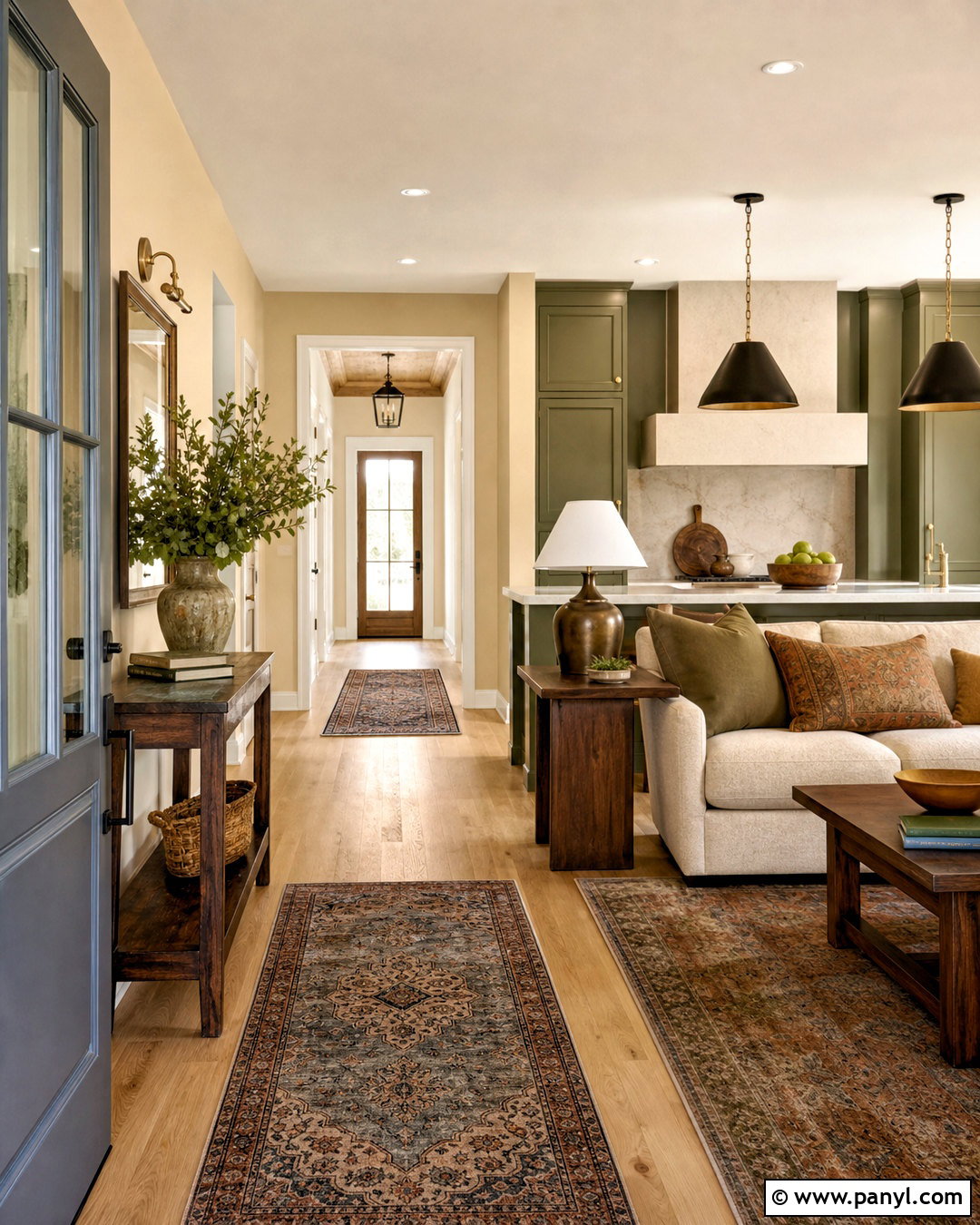
Using Soft Chamois throughout an open home creates continuity without requiring every room to look identical. Apply it to the main walls in the entry, living room, kitchen, and hallways. Use one brighter white consistently on ceilings, doors, and trim so transitions remain deliberate. Build the supporting palette with Saybrook Sage for an office or mudroom, Annapolis Gray for cabinetry, and dark brown accents inspired by Mink. Natural oak flooring can run through the shared areas, while rugs introduce faded blue, rust, and olive. Repeat brushed brass, matte black, and walnut in small amounts across several rooms. Before committing, test large samples in areas with different exposures. This coordinated plan allows each space to have its own purpose while maintaining a recognizable color story from room to room.
20. Soft Chamois House Exterior
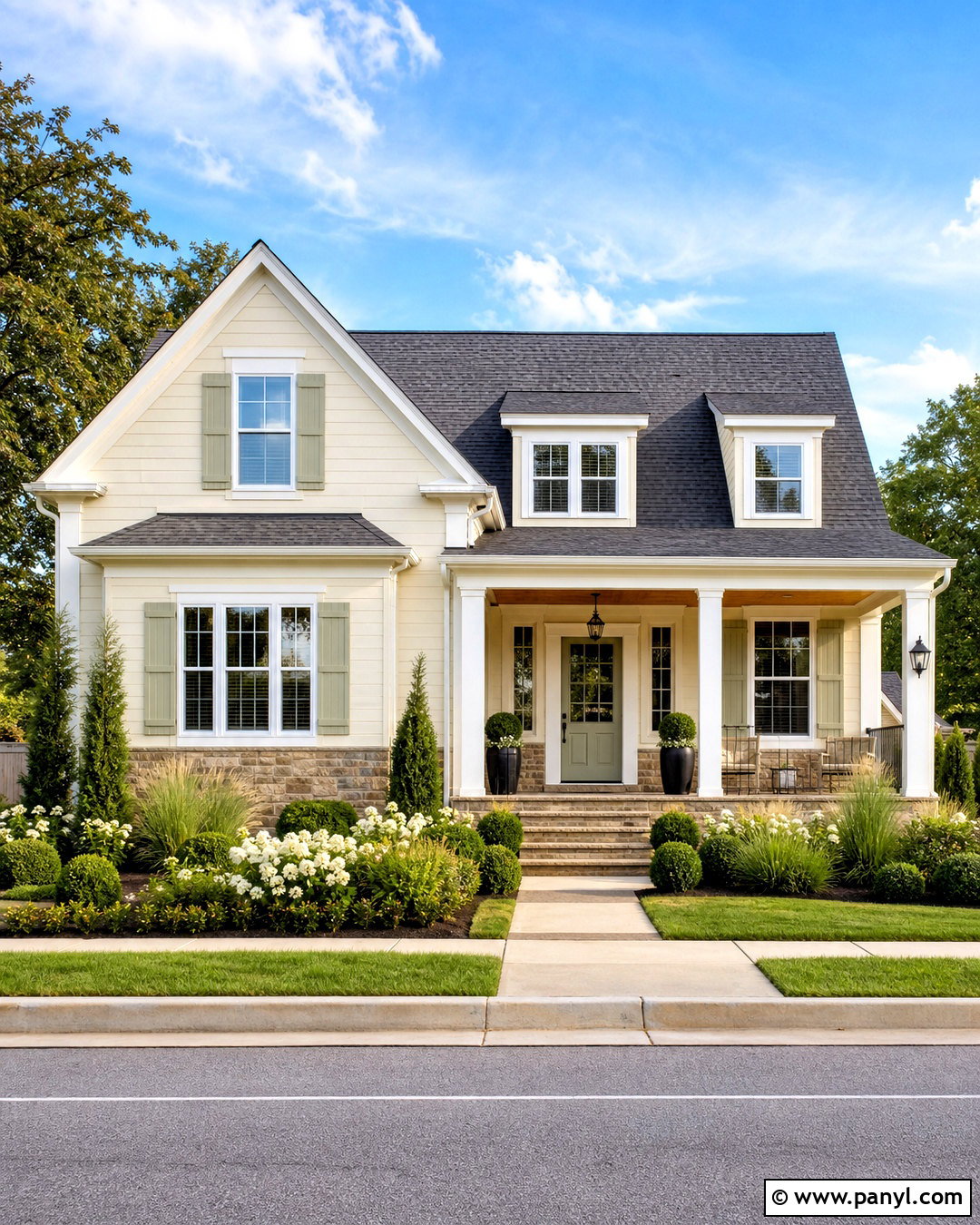
Soft Chamois can give a traditional house exterior a warm, welcoming presence. Use it as the main siding or stucco color, then add cleaner white trim around the windows, roofline, and porch columns. A muted sage green front door and matching shutters bring natural color to the facade. Choose a charcoal architectural-shingle roof and aged bronze exterior lights for grounded contrast. If the home includes brick or stone, select finishes with cream, tan, and soft brown rather than cool blue-gray tones. Complete the curb appeal with an oak-toned porch ceiling, simple black planters, and layered landscaping containing boxwood, ornamental grasses, and white flowers. Always sample exterior paint in direct sun and shade because outdoor light can make pale colors appear noticeably brighter than they do indoors.
Conclusion:
These 20 soft chamois benjamin moore ideas show how one warm off-white can support many complete looks. Pair it with oak, walnut, linen, stone, and woven materials for natural softness. Add sage, navy, charcoal, rust, or chocolate brown when the room needs stronger contrast. A cleaner white trim usually provides helpful separation, while color-drenched walls and woodwork create a quieter effect. Soft Chamois can work in bright rooms, lower-light spaces, open floor plans, and exterior schemes, but its appearance will shift with lighting and surrounding finishes. Test a large sample beside flooring, cabinets, furniture, and trim. That simple step will reveal whether its warmth suits your home before you paint the entire space.

Related Ideas and Inspiration:
Leave a Reply