
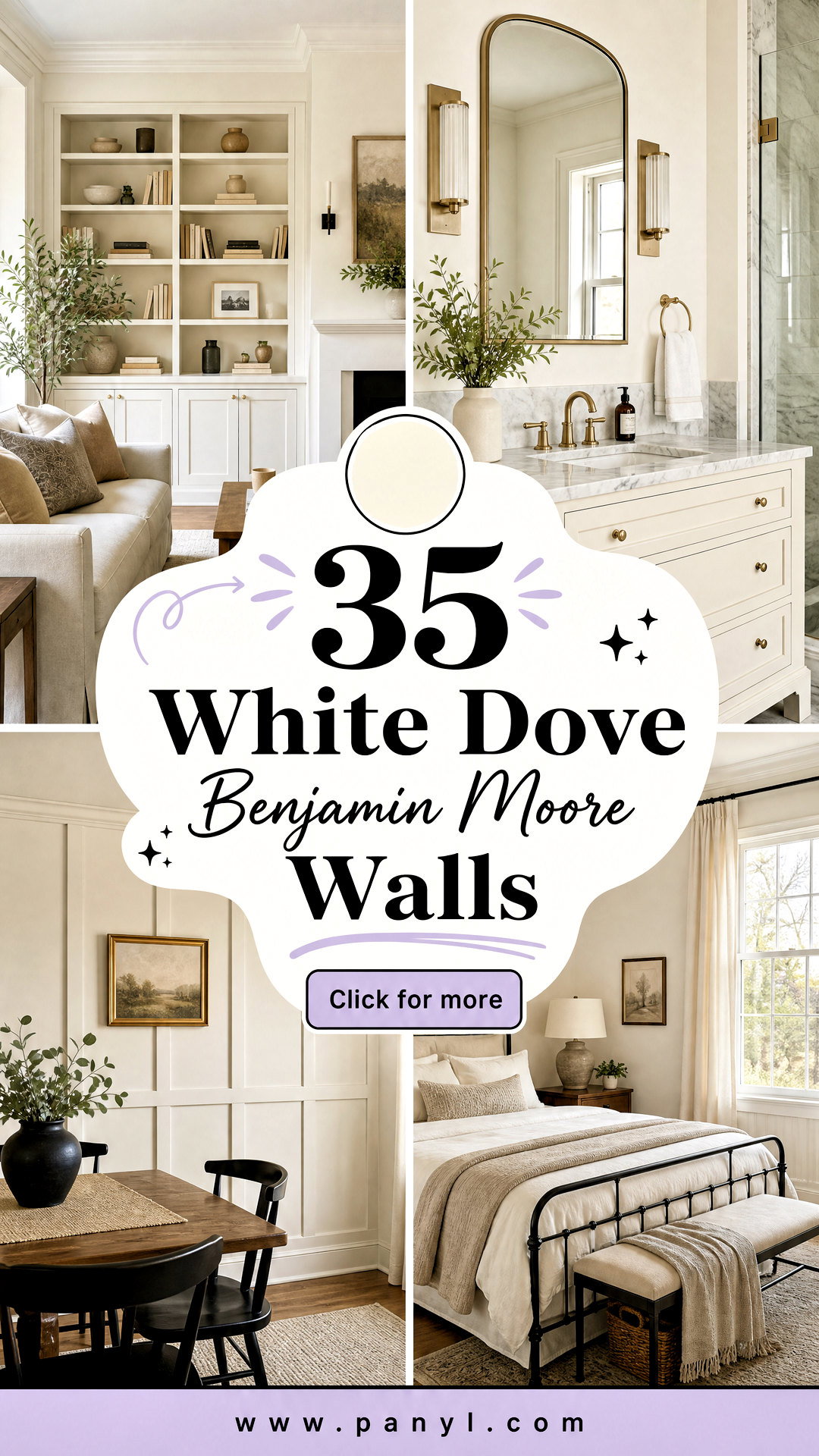
If you are searching for **35 white dove benjamin moore walls**, this guide shows how this popular warm white can shape a complete room rather than simply cover a surface. Benjamin Moore White Dove OC-17 has an LRV of 83.16, giving it a light appearance with more softness than a stark, blue-toned white. () Its subtle warmth works beautifully with natural wood, stone, black metal, muted colors, and layered neutral textiles. However, lighting, flooring, trim, and nearby finishes can change how the color reads. The looks below cover living rooms, kitchens, bedrooms, bathrooms, workspaces, architectural details, and whole-house schemes. Use them to plan furnishings, finishes, and accents around **35 white dove benjamin moore walls**.
1. White Dove Living Room Walls
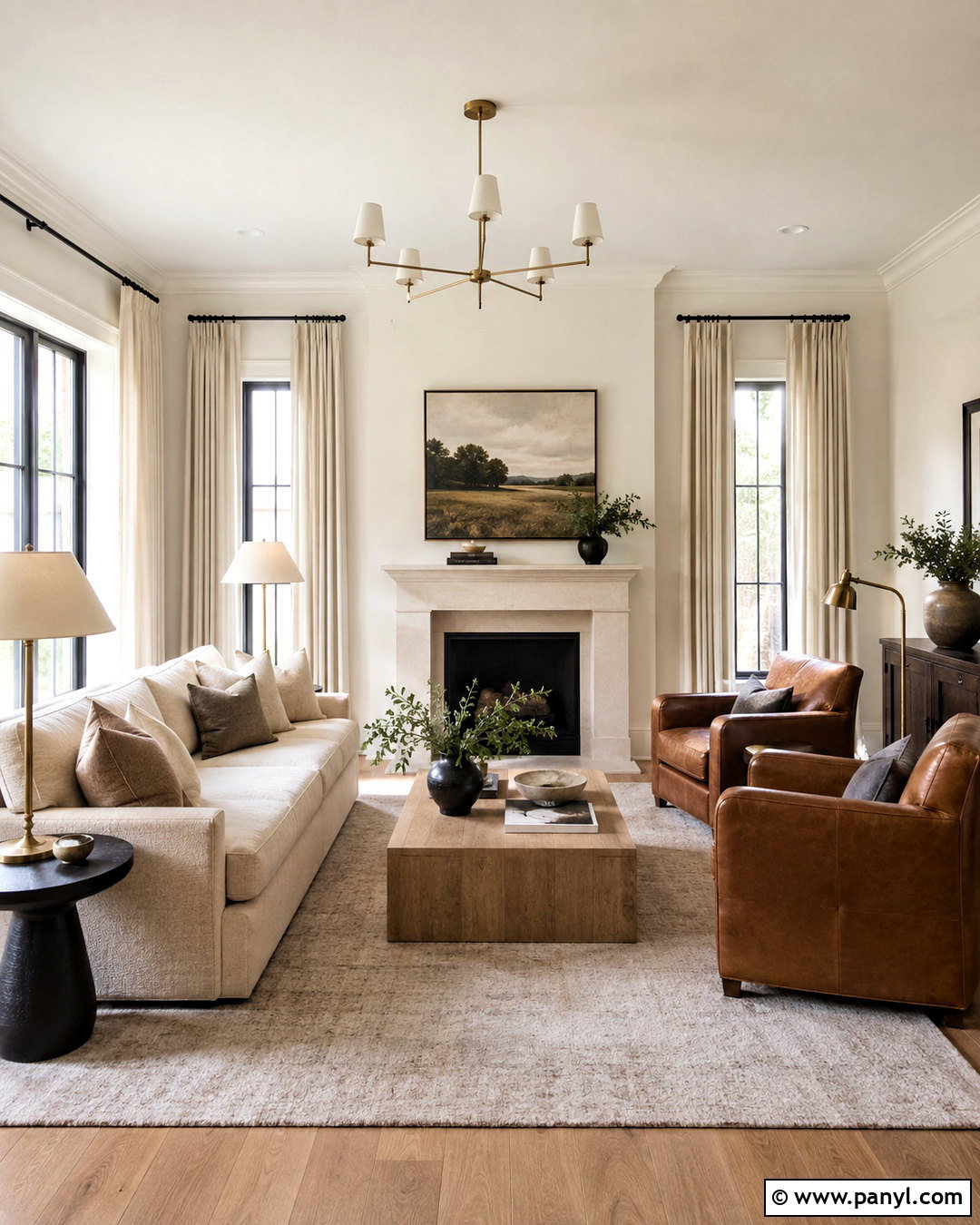
Create an inviting living room by surrounding White Dove walls with relaxed neutral furnishings and warm natural materials. Start with a comfortable oatmeal-colored sofa facing a simple plaster or pale limestone fireplace. Add two camel leather chairs, a substantial white oak coffee table, and a textured ivory rug that defines the conversation area. Linen curtains should hang high and wide so daylight can move across the warm white paint. Choose aged brass lamps, ceramic table accents, and a few charcoal details for definition. Medium-toned oak flooring keeps the space grounded without making the walls appear yellow. Finish the room with large landscape artwork containing muted blue, green, and brown. This balanced design feels fresh, comfortable, and suitable for everyday family living.
2. White Dove Walls With White Oak
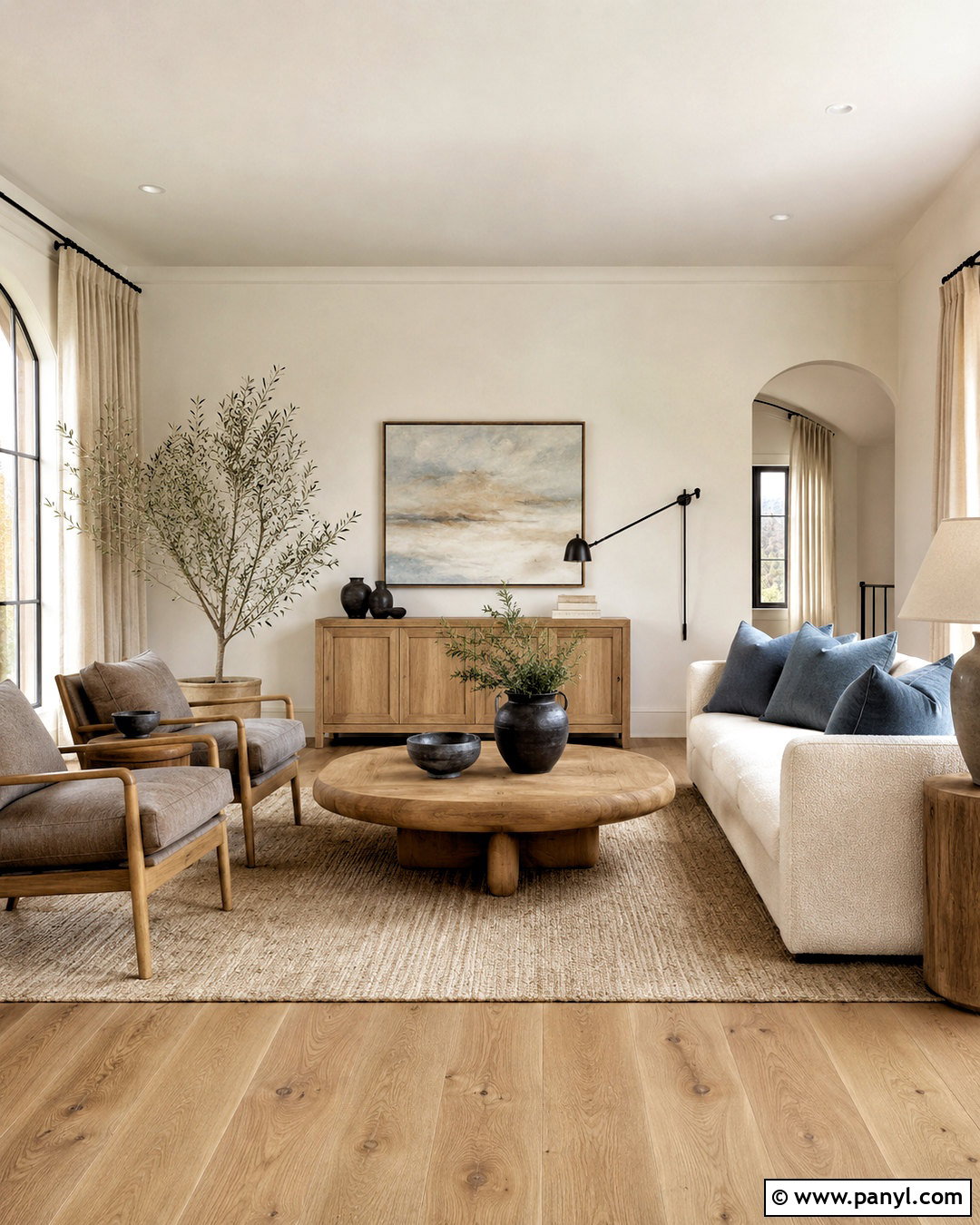
White Dove walls and white oak create a naturally warm interior without relying on heavy beige. Use wide-plank white oak flooring as the foundation, then repeat the wood on a low media cabinet, open shelving, and a rounded coffee table. A cream boucle sofa and two light taupe lounge chairs maintain the soft palette while introducing different textures. Keep window treatments simple with unlined flax-colored linen curtains. Matte black picture frames and a black metal floor lamp add thin, controlled contrast. For color, include dusty blue pillows, olive branches, and hand-thrown pottery. The completed room should feel open but not empty. White Dove supports the golden grain of the oak, while the upholstery and black details prevent the overall look from becoming overly pale or washed out.
3. White Dove Walls With Dark Wood
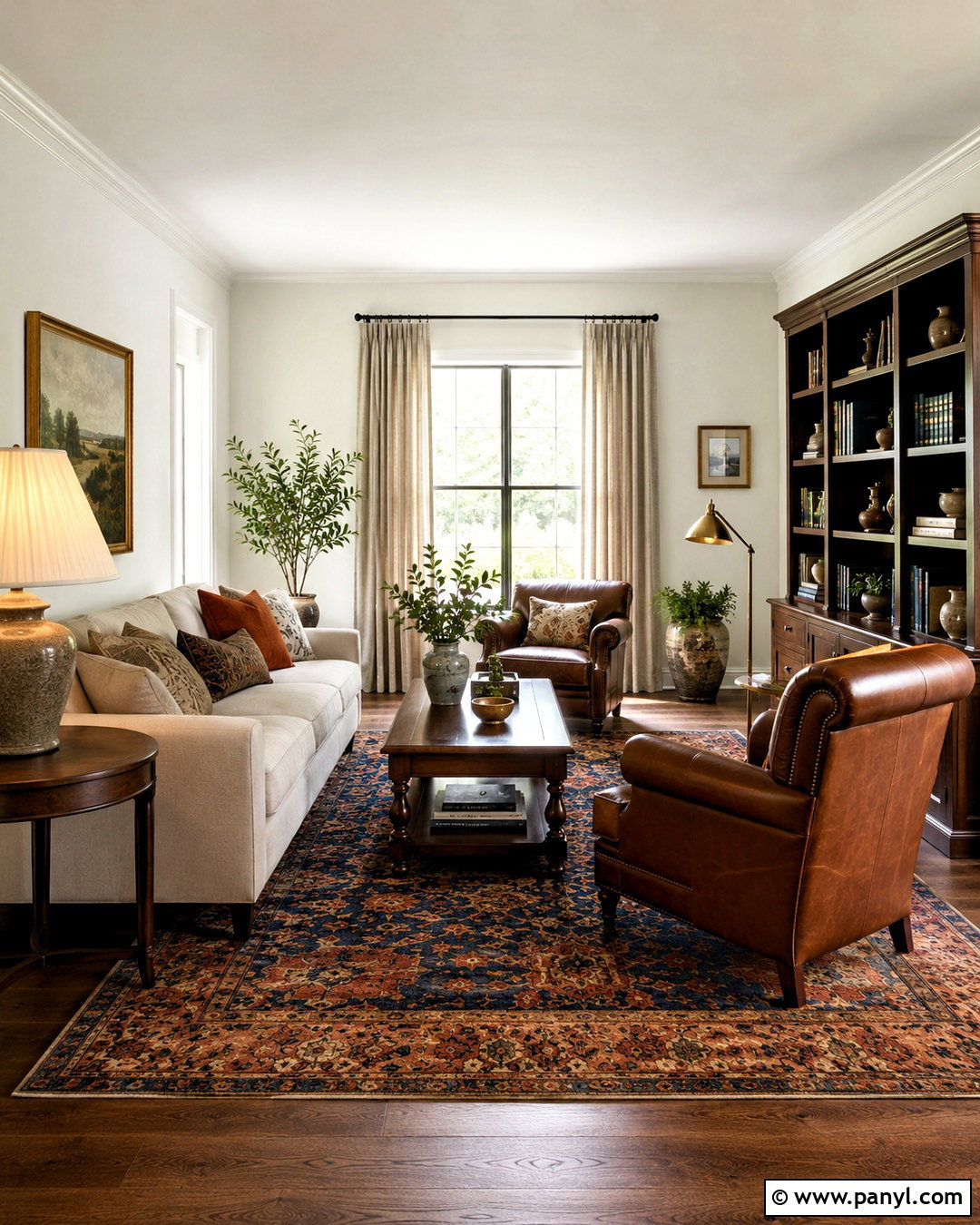
Dark walnut furniture looks especially rich against the gentle background of White Dove walls. Build the room around a walnut bookcase or media console with clean lines and a visible natural grain. Place a soft ivory sofa opposite it, then add tobacco leather chairs and a vintage-inspired rug containing rust, navy, and muted cream. Warm medium-brown flooring can connect the furniture to the architecture. Use antique brass lighting instead of bright chrome, which may feel disconnected from the deeper woods. Full-length neutral curtains soften the windows and provide another light layer. A few black accessories can sharpen the arrangement, but keep them small. This complete palette gives the room a traditional foundation with modern simplicity, allowing the dark wood to become a handsome focal point rather than making the space feel heavy.
4. White Dove Walls With Black Accents
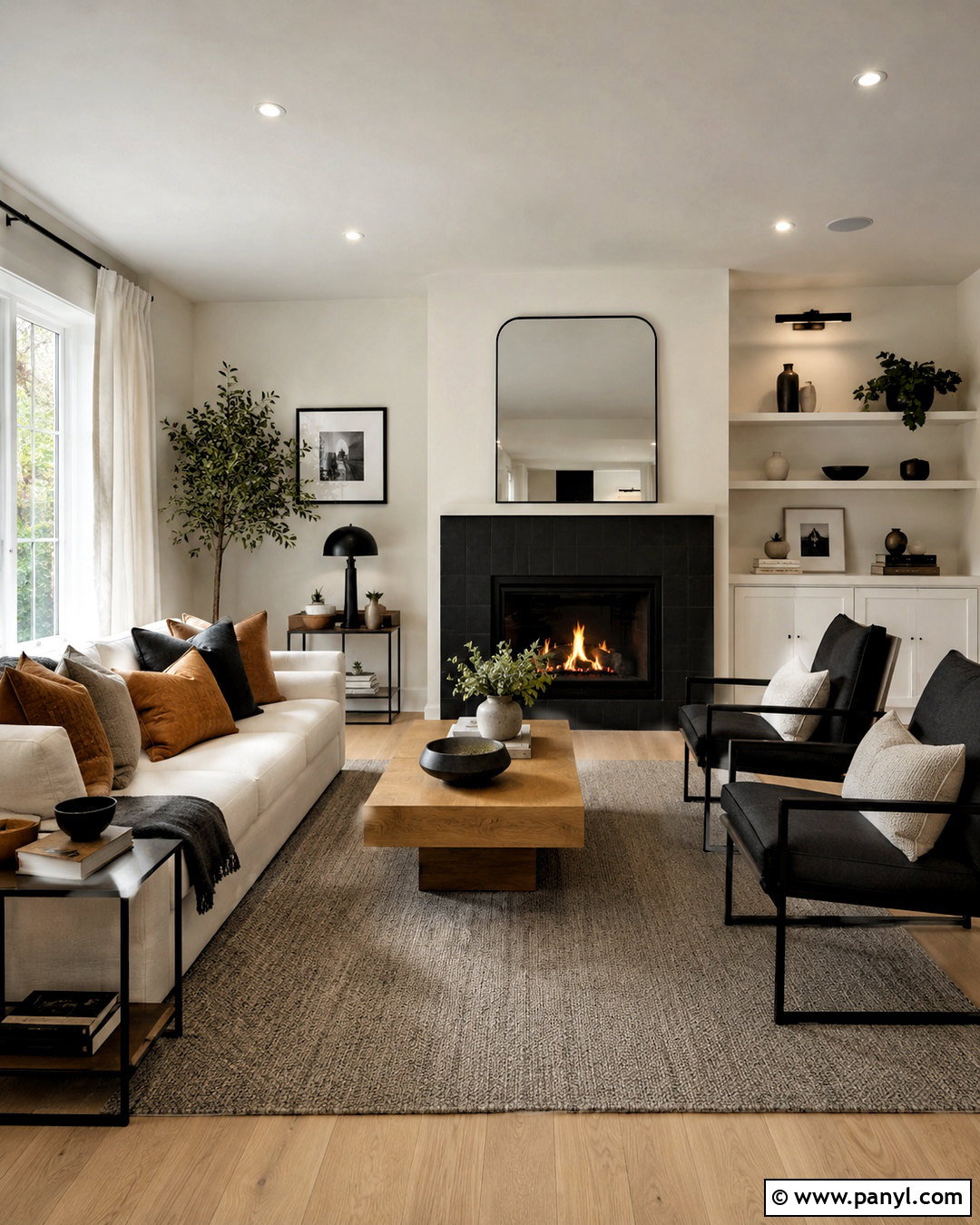
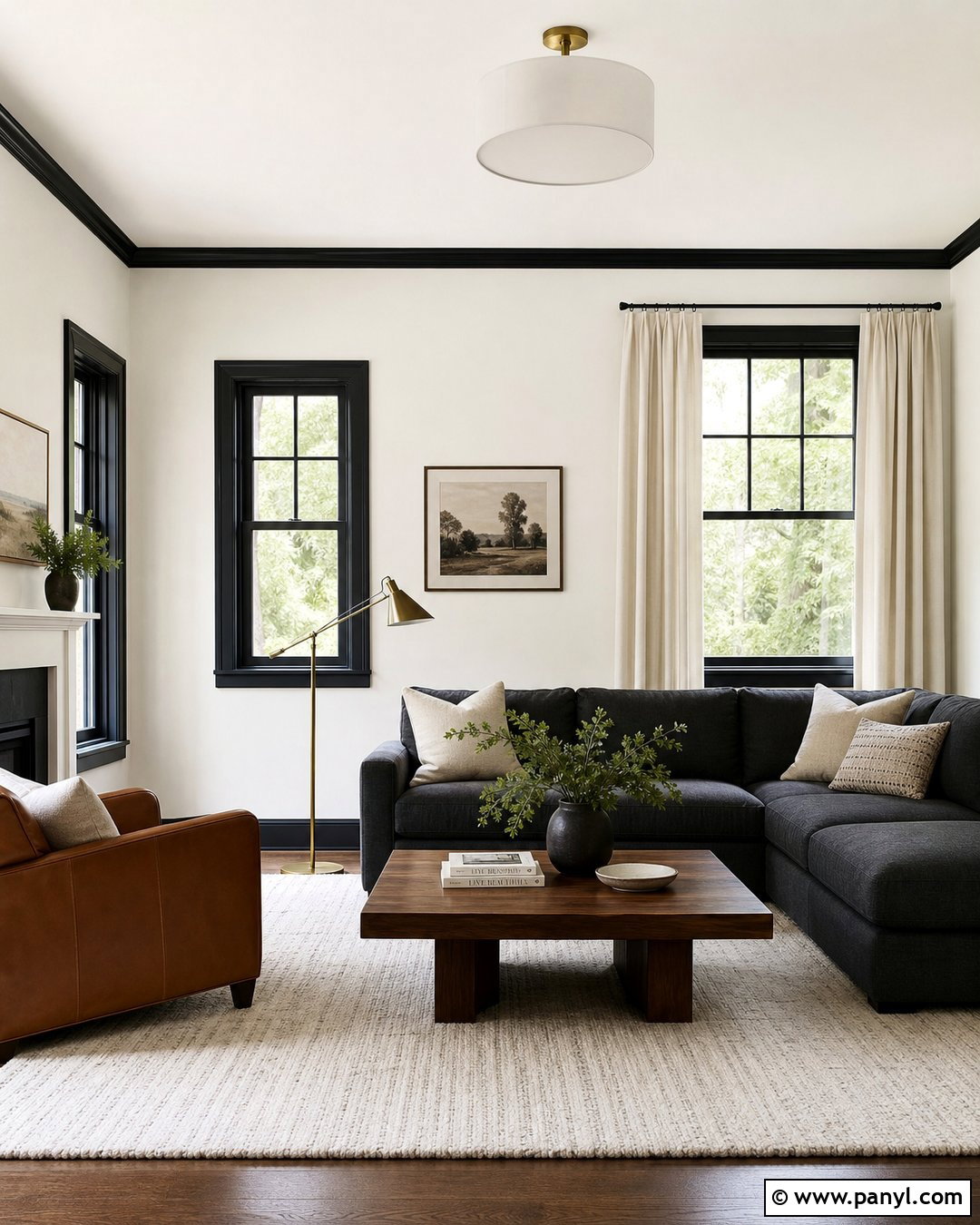
For a crisp modern look, combine White Dove walls with carefully placed matte black features. Choose a streamlined cream sofa, two black-framed lounge chairs, and a pale oak coffee table to keep the room balanced. A black metal fireplace surround can serve as the main anchor, while slim black curtain rods, picture frames, and lighting repeat the contrast throughout the space. Avoid filling every surface with dark objects. The effect works best when black creates a clear outline around lighter materials. Add a warm gray wool rug, off-white linen curtains, and cognac leather pillows for softness. Medium oak floors stop the combination from looking too graphic. The finished space feels current and architectural, yet White Dove’s warmth keeps the black-and-white palette comfortable enough for an everyday home.
5. White Dove Walls With Sage Green
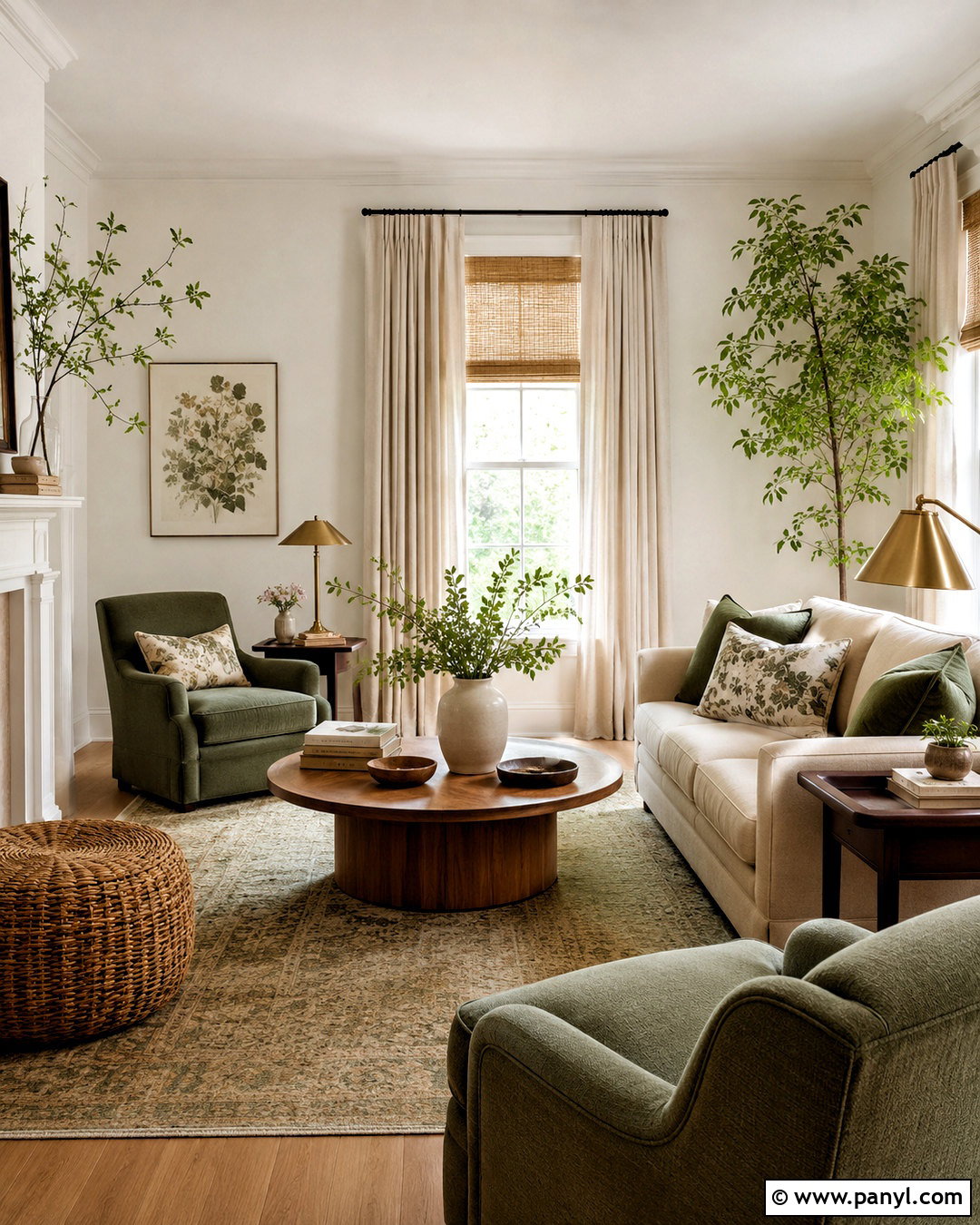
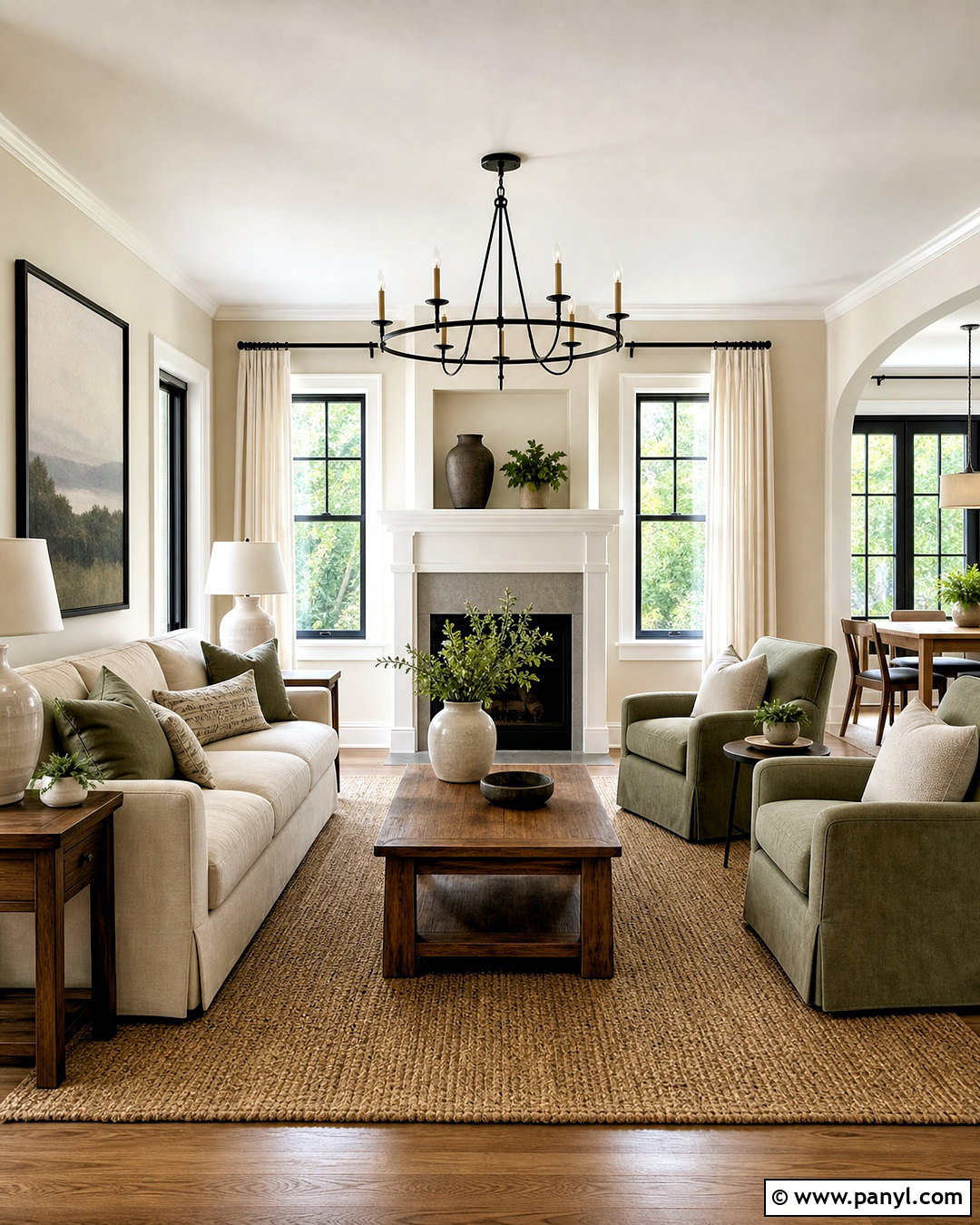
Soft sage green gives White Dove walls a calm, nature-inspired direction. Furnish the room with a warm beige sofa and a pair of muted sage armchairs positioned around a round oak coffee table. Add an understated wool rug in cream and pale olive, then carry the green into botanical artwork, ceramic lamps, and leafy branches. Natural woven shades provide texture at the windows, while long ivory curtains make the ceiling appear taller. Use aged brass hardware and lighting to complement the warm undertones in both colors. Walnut side tables can provide enough depth to ground the pale scheme. The finished room should contain several strengths of green rather than one exact matching shade. This variation creates a layered, collected appearance while preserving the restful simplicity of the White Dove background.
6. White Dove Walls With Navy Blue
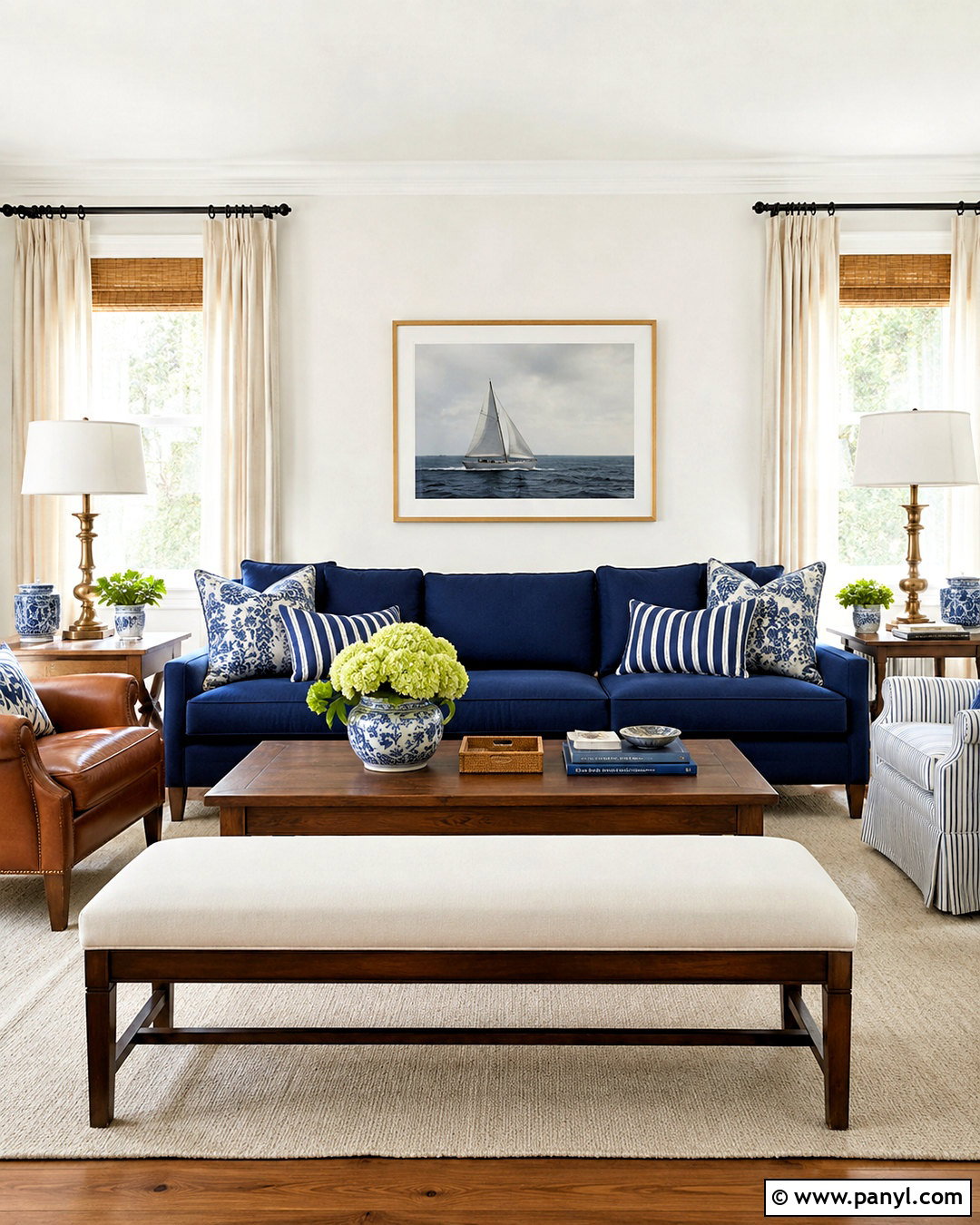
Navy blue introduces confident contrast without overpowering White Dove walls. Begin with a deep navy sofa or two substantial navy armchairs, then lighten the seating area with an ivory rug and a warm white upholstered bench. A medium walnut coffee table gives the palette a classic anchor. Use striped pillows, blue-and-white pottery, and framed coastal or abstract artwork to distribute navy around the room. Brass sconces and table lamps add warmth, while natural linen curtains prevent the scheme from feeling overly formal. Keep built-ins, doors, or trim in White Dove for a cohesive envelope. Small touches of cognac leather can make the blue feel more relaxed. Together, these elements create a polished living space that feels bright during the day and comfortably grounded after the lights are turned on.
7. White Dove Walls With Beige Furniture
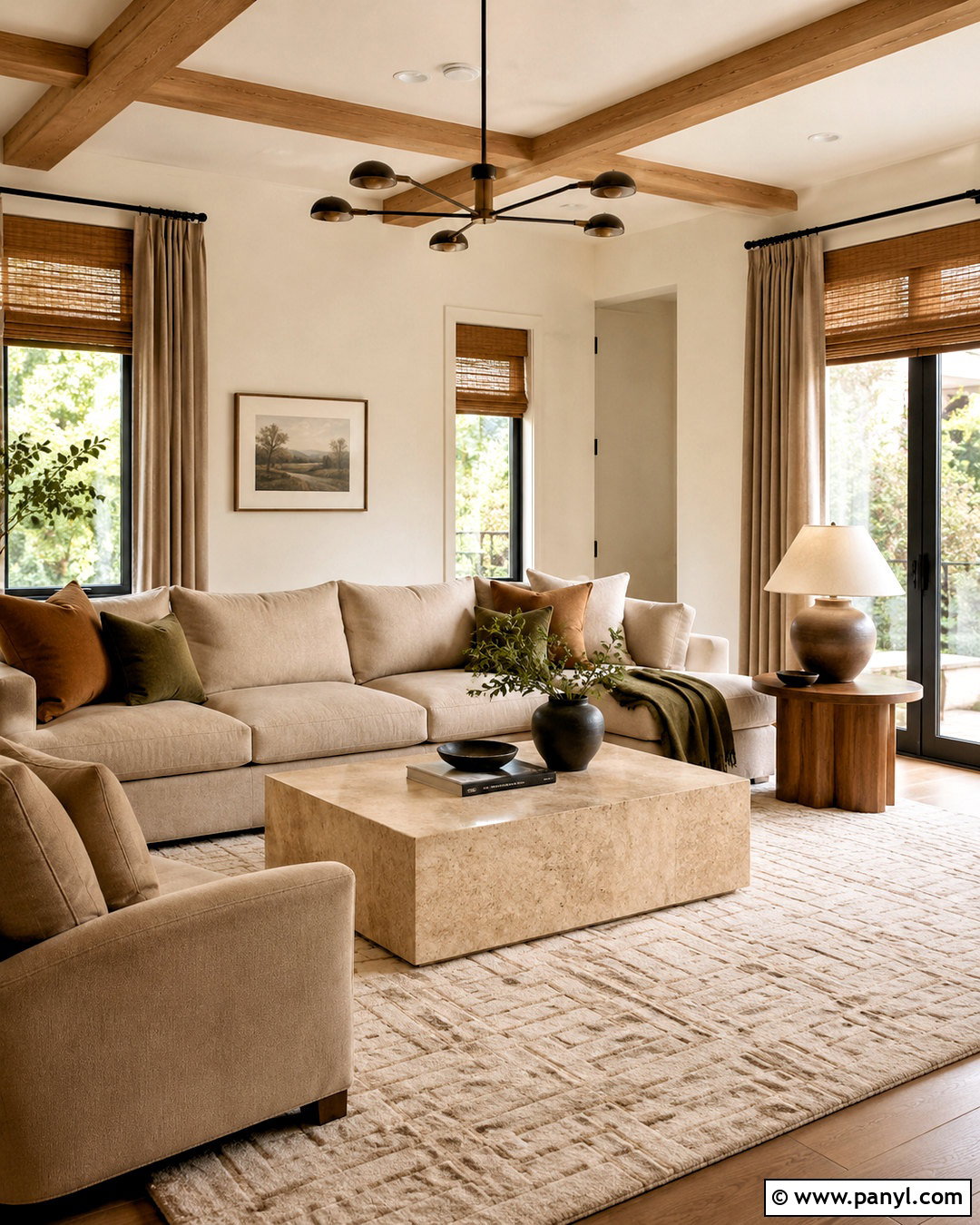
Beige furniture can look dimensional against White Dove walls when the room includes varied textures and clear tonal contrast. Choose a mushroom-beige sectional with visible woven upholstery rather than a nearly white sofa that disappears into the background. Add a darker taupe chair, a chunky travertine coffee table, and a cream rug with a subtle geometric pattern. Natural linen curtains and woven wood shades create depth around the windows. Introduce medium oak through side tables and flooring, then use dark bronze lighting and picture frames to define the pale surfaces. Pillows in caramel, olive, and soft brown keep the palette warm without becoming monotonous. The result is a quiet, practical living room where every neutral has a specific role, allowing the White Dove walls to feel intentional rather than simply safe.
8. White Dove Walls With Gray Sofa
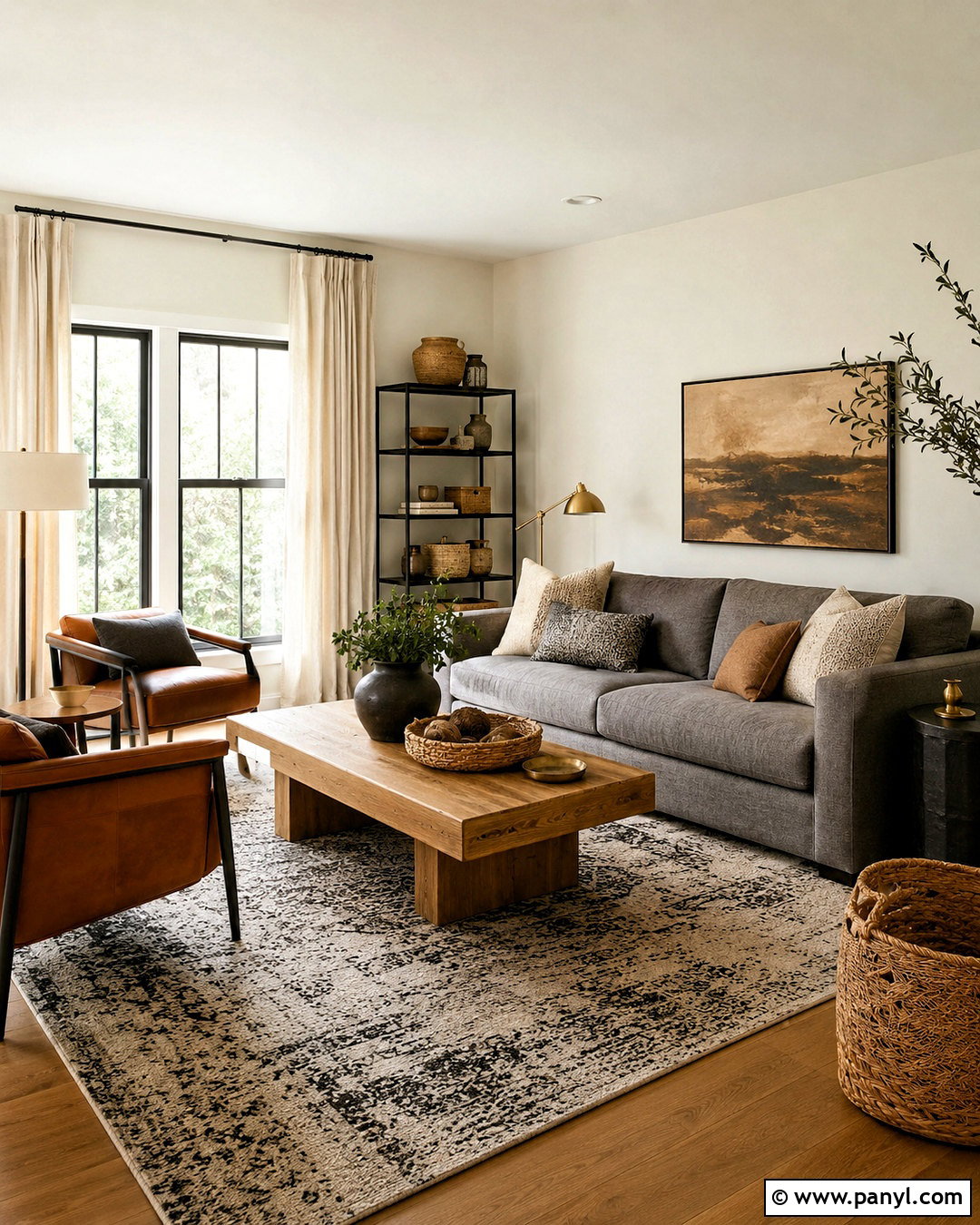
A gray sofa can work with White Dove walls when its undertone is balanced by warmer furnishings. Select a medium warm-gray sofa instead of a cold blue-gray version. Pair it with cognac leather chairs, an oak coffee table, and a textured rug that mixes ivory, taupe, and charcoal. Full-length oatmeal curtains help connect the gray seating to the warm white background. Add black metal lighting for definition and brushed brass accessories for a softer glow. Artwork containing warm gray, clay, and muted blue can unite the entire palette. If the floor is cool gray, introduce extra warmth through woven baskets and natural wood. This complete look feels contemporary without appearing sterile. White Dove gently brightens the room, while the layered brown and cream elements keep the gray sofa from looking disconnected.
9. White Dove Walls With Colorful Art
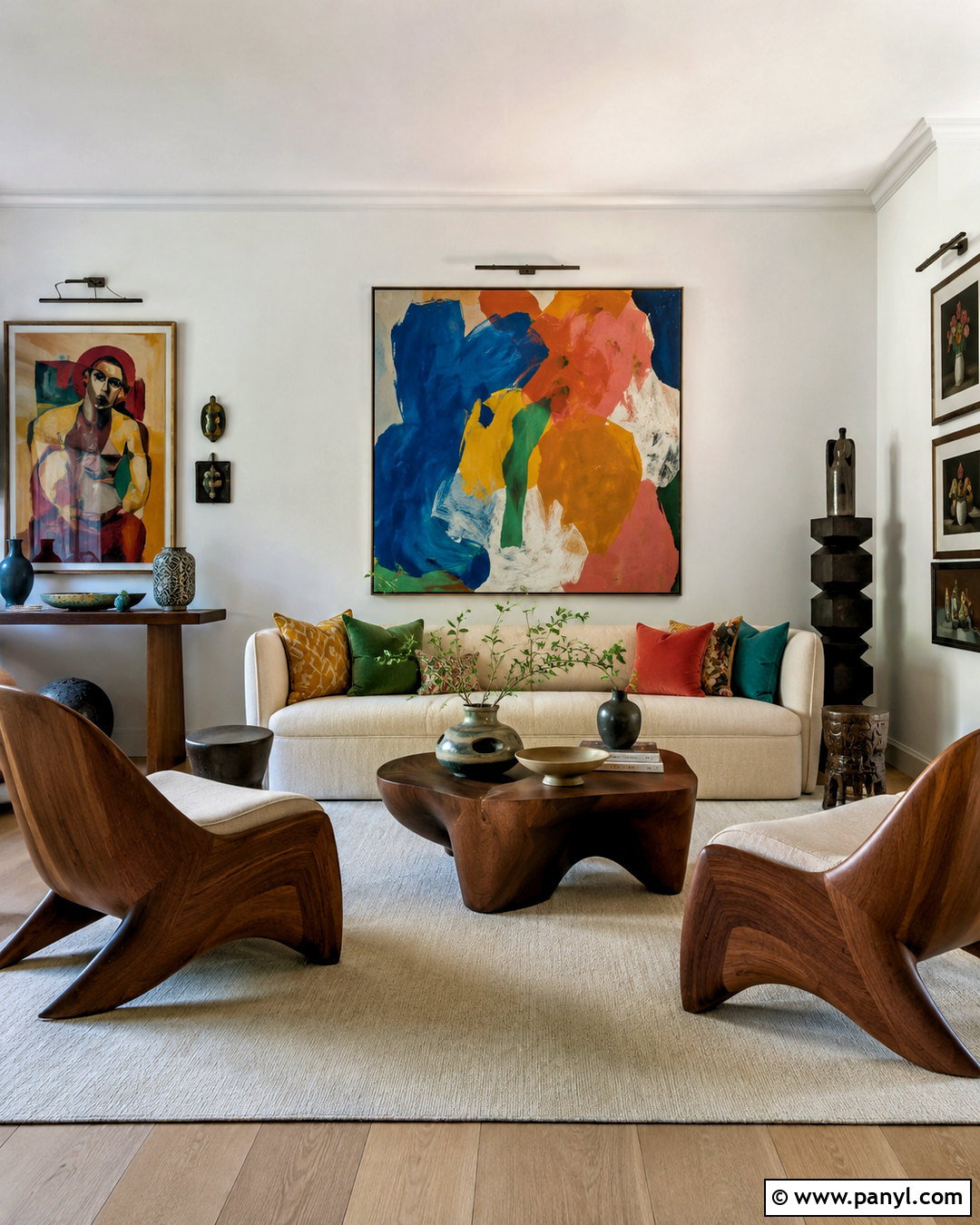
White Dove walls provide a gallery-like background that feels softer than a brilliant white exhibition space. Build the room around one large colorful painting containing cobalt blue, coral, mustard, and green. Select a simple cream sofa, sculptural walnut chairs, and a neutral wool rug so the artwork remains the visual focus. Pull two or three colors from the painting into pillows, ceramics, and a small upholstered ottoman. Use picture lights or adjustable ceiling fixtures to illuminate the art evenly. Black or dark bronze frames can add structure, while pale oak flooring keeps the room approachable. Leave enough empty wall around each piece to prevent visual clutter. The completed space should feel expressive yet controlled, using White Dove to connect vibrant art, natural furniture, and practical everyday seating.
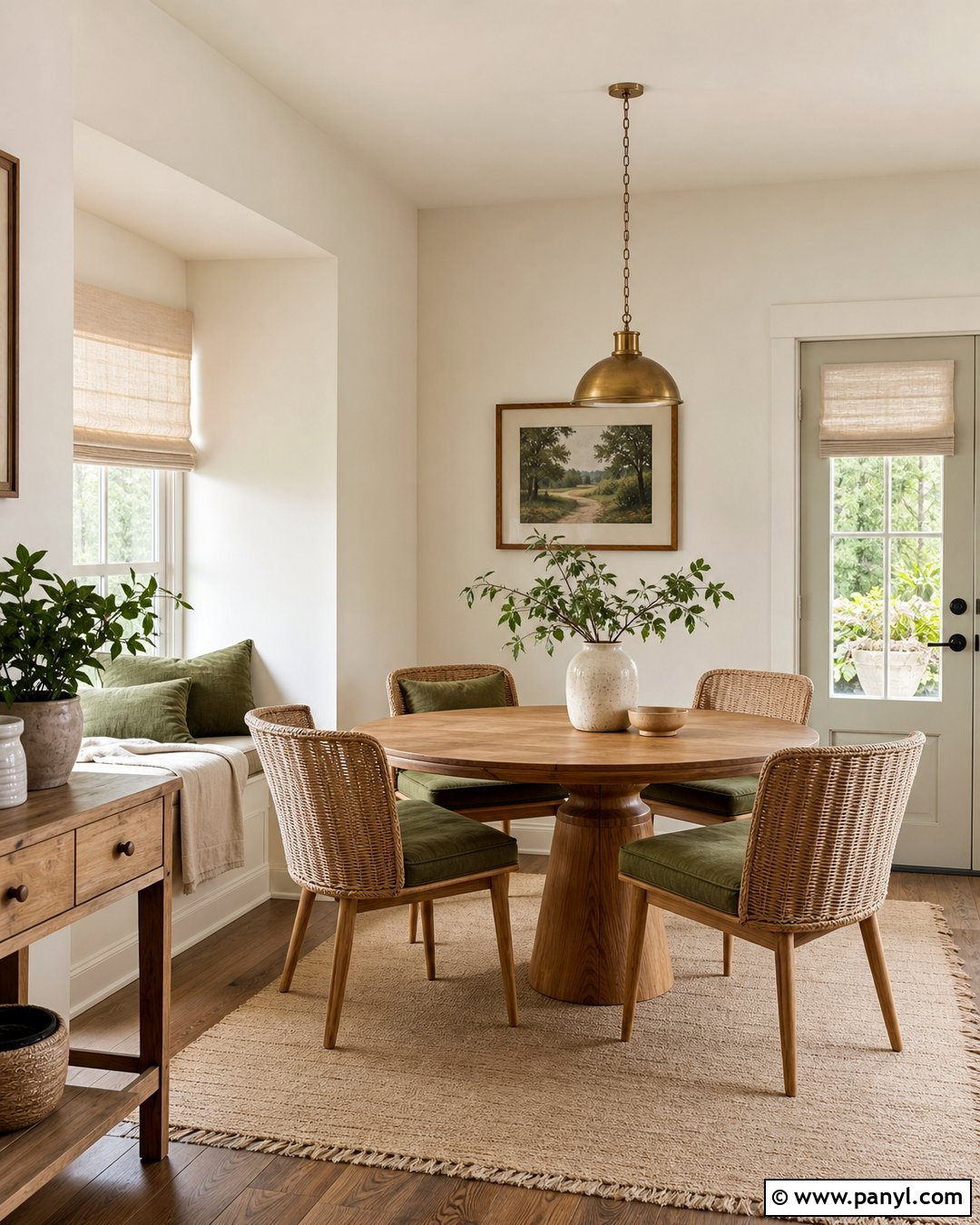
10. White Dove Walls With Built-Ins
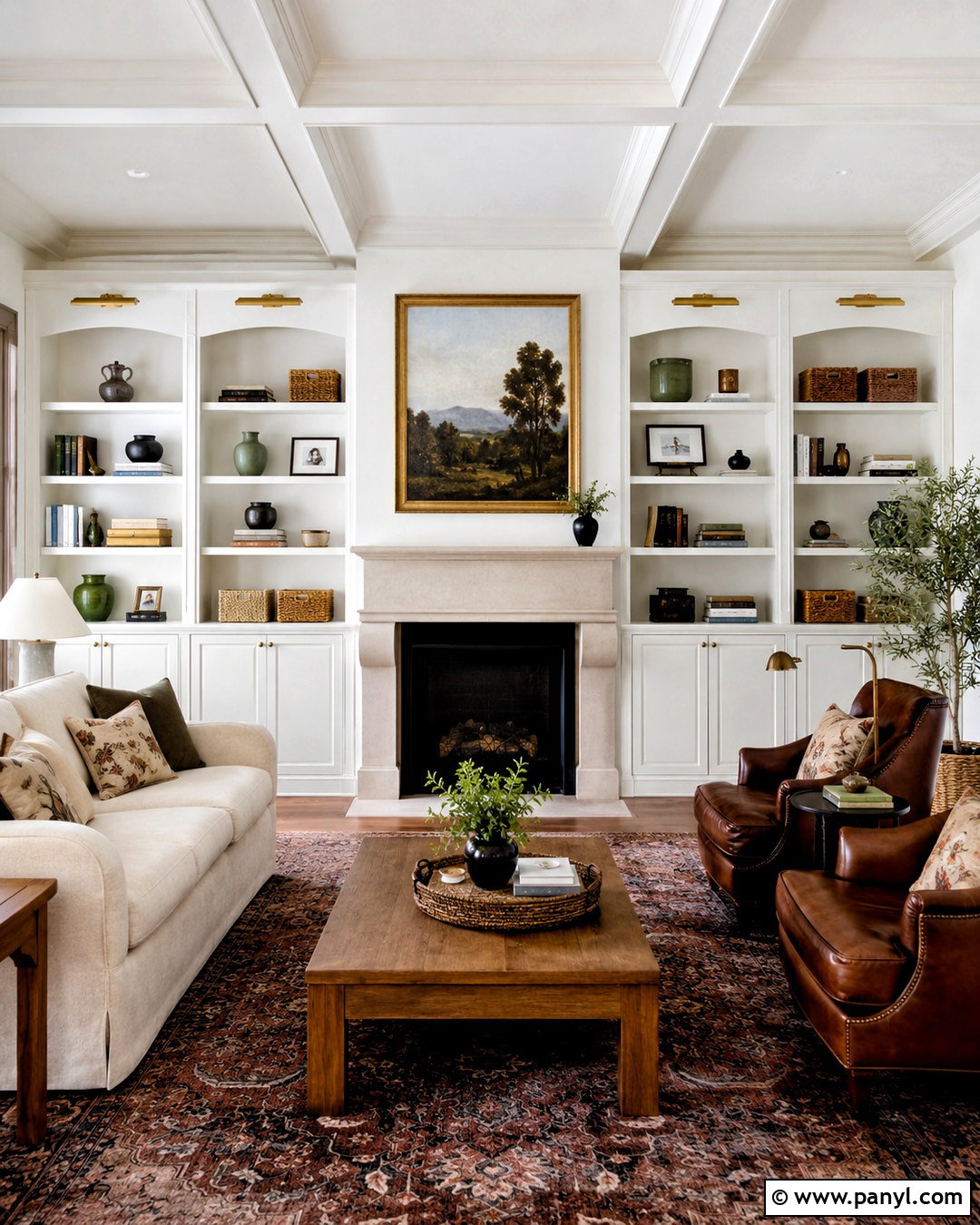
Built-ins painted White Dove can merge seamlessly with matching walls while still showing architectural depth. Install floor-to-ceiling shelves around a fireplace or media area, then use satin paint on the cabinetry and a lower-sheen finish on the walls. This sheen change creates definition without introducing another color. Fill the shelves selectively with books, framed art, baskets, and ceramics in charcoal, tan, and muted green. Choose a linen sofa, two leather chairs, and a large vintage-style rug for the central seating arrangement. A substantial oak coffee table balances the tall cabinetry. Add brass library lights above the shelves to highlight their shape. The final room feels organized and custom, but the warm white palette prevents extensive storage from making the architecture appear bulky or visually crowded.
11. White Dove Kitchen Walls
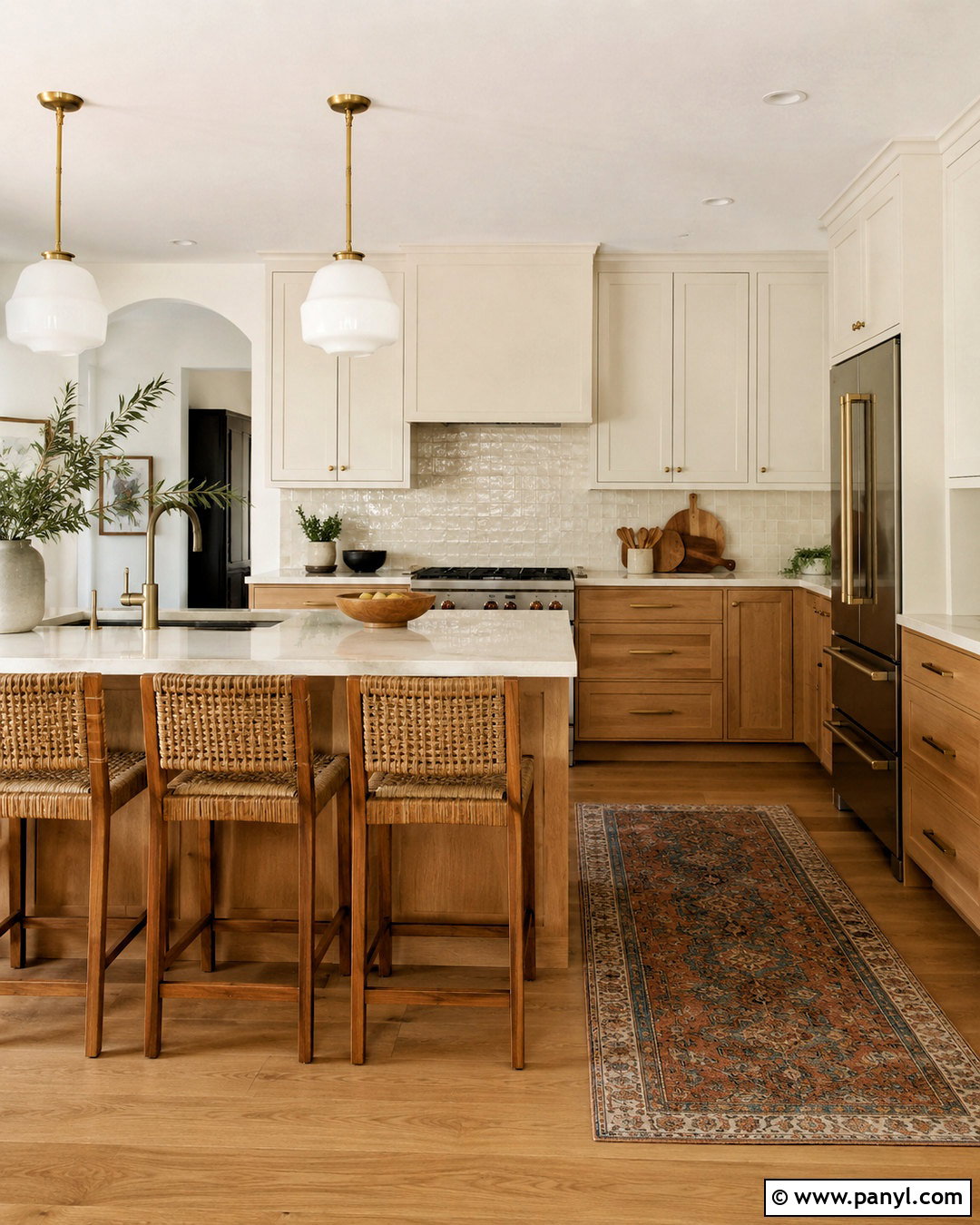
White Dove kitchen walls bring gentle warmth to a hardworking space filled with reflective surfaces. Pair them with natural white oak lower cabinets and warm white upper cabinets for a balanced two-tone layout. Choose creamy quartz countertops with quiet veining and a handmade ivory tile backsplash that adds texture without competing with the walls. Brushed brass hardware and simple milk-glass pendants contribute a classic touch. Wide-plank oak flooring connects the cabinetry to an adjacent dining area. Add counter stools in woven cane and wood, plus a washable runner containing muted blue and rust. Keep appliances in stainless steel or paneled to maintain a clean visual flow. This complete kitchen feels light and functional, while the layered warm finishes prevent White Dove from looking flat beside cabinets and countertops.
12. White Dove Walls With White Cabinets
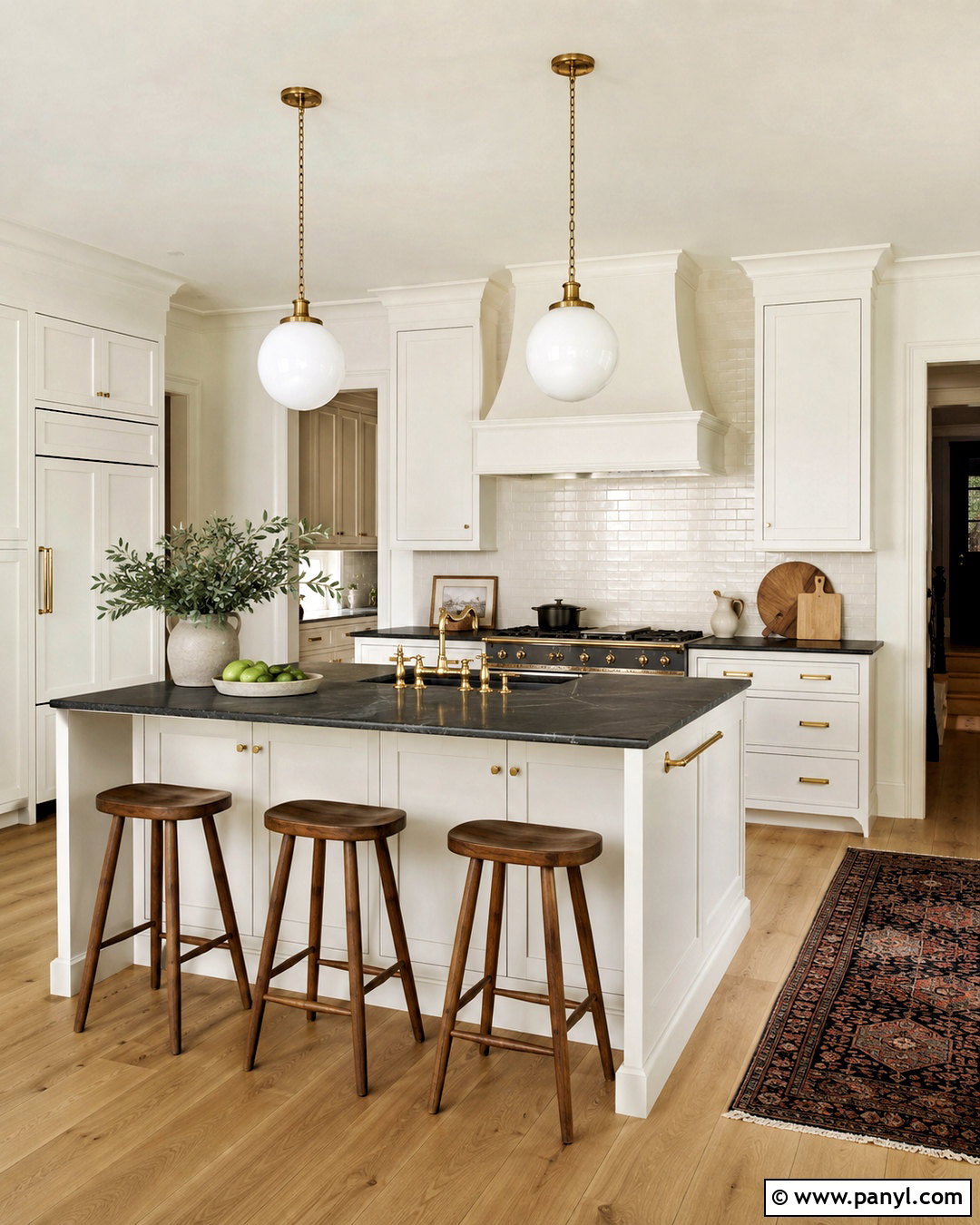
When White Dove walls meet white cabinets, subtle finish differences become important. Use White Dove on both surfaces for consistent undertones, applying eggshell or matte paint to the walls and durable satin paint to the cabinetry. Define the kitchen with soapstone or dark charcoal quartz counters and a glossy off-white subway tile backsplash. Warm oak flooring and walnut counter stools add natural contrast. Choose aged brass knobs, a bridge-style faucet, and simple globe pendants to soften the black countertops. A medium-toned vintage runner can introduce restrained color along the main walkway. Keep the ceiling and trim within the same warm white family so nothing makes the walls appear unexpectedly creamy. The finished kitchen feels unified and timeless, with contrast coming from texture, sheen, wood, and stone rather than competing white paints.
13. White Dove Walls With Wood Cabinets
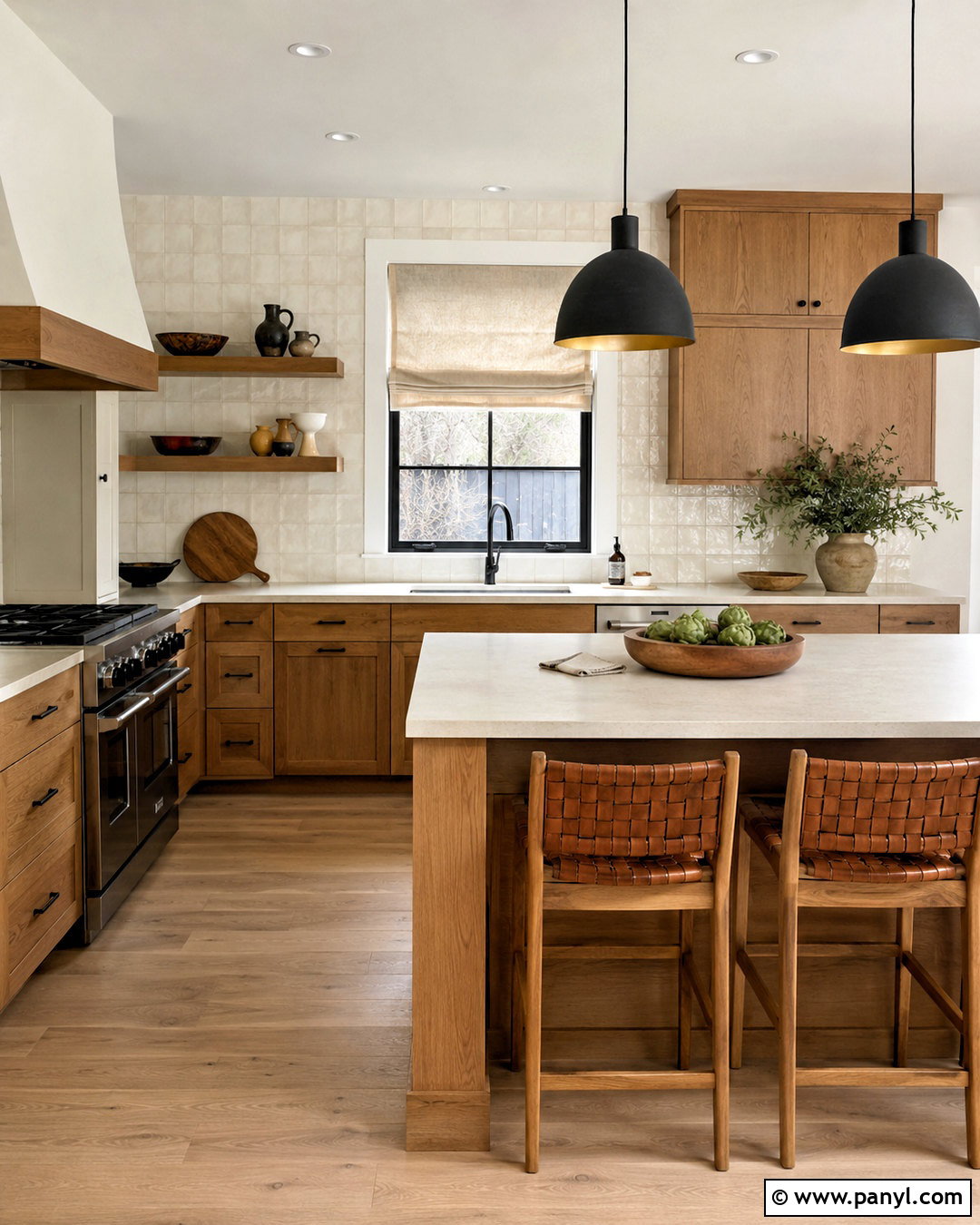
Natural wood cabinets become the main feature when paired with understated White Dove walls. Choose medium white oak or rift-cut oak cabinetry with a matte finish and minimal hardware. Cream quartz countertops and a softly textured zellige backsplash can bridge the wood and warm white paint. For greater definition, use bronze pulls, a matte black faucet, and dark metal pendant lights above the island. Upholster the stools in easy-care tan fabric or woven leather. Pale oak floors can create a seamless look, while darker flooring produces a more traditional result. Add a linen Roman shade and a few handmade ceramic pieces for softness. This kitchen design feels warm, modern, and livable because the walls support the natural cabinet grain instead of competing with it or making the wood appear overly orange.
14. White Dove Dining Room Walls
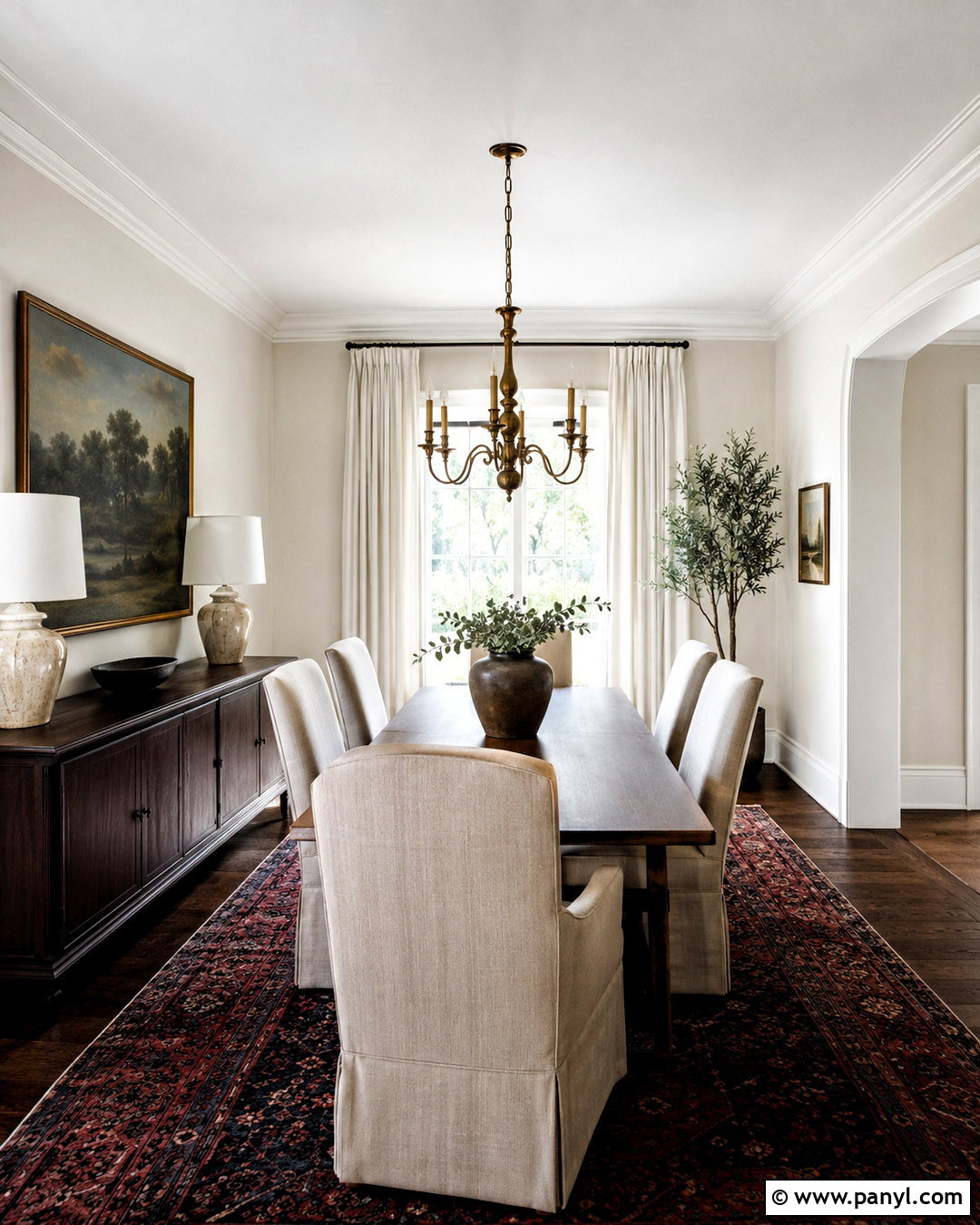
A dining room with White Dove walls can feel formal enough for gatherings and relaxed enough for daily meals. Center the space with a rectangular walnut table surrounded by upholstered oatmeal chairs. Ground the arrangement with a vintage rug containing faded burgundy, navy, and beige. An aged brass chandelier should hang low enough to define the table without blocking views across the room. Add a dark wood sideboard topped with ceramic lamps and a large framed landscape. Full linen curtains soften the windows and make the warm walls appear more layered. Consider simple picture frame molding painted in the same White Dove finish for quiet architectural interest. The finished room combines traditional shapes with an uncomplicated palette, creating a welcoming setting where wood, fabric, artwork, and lighting all contribute depth.
15. White Dove Bedroom Walls
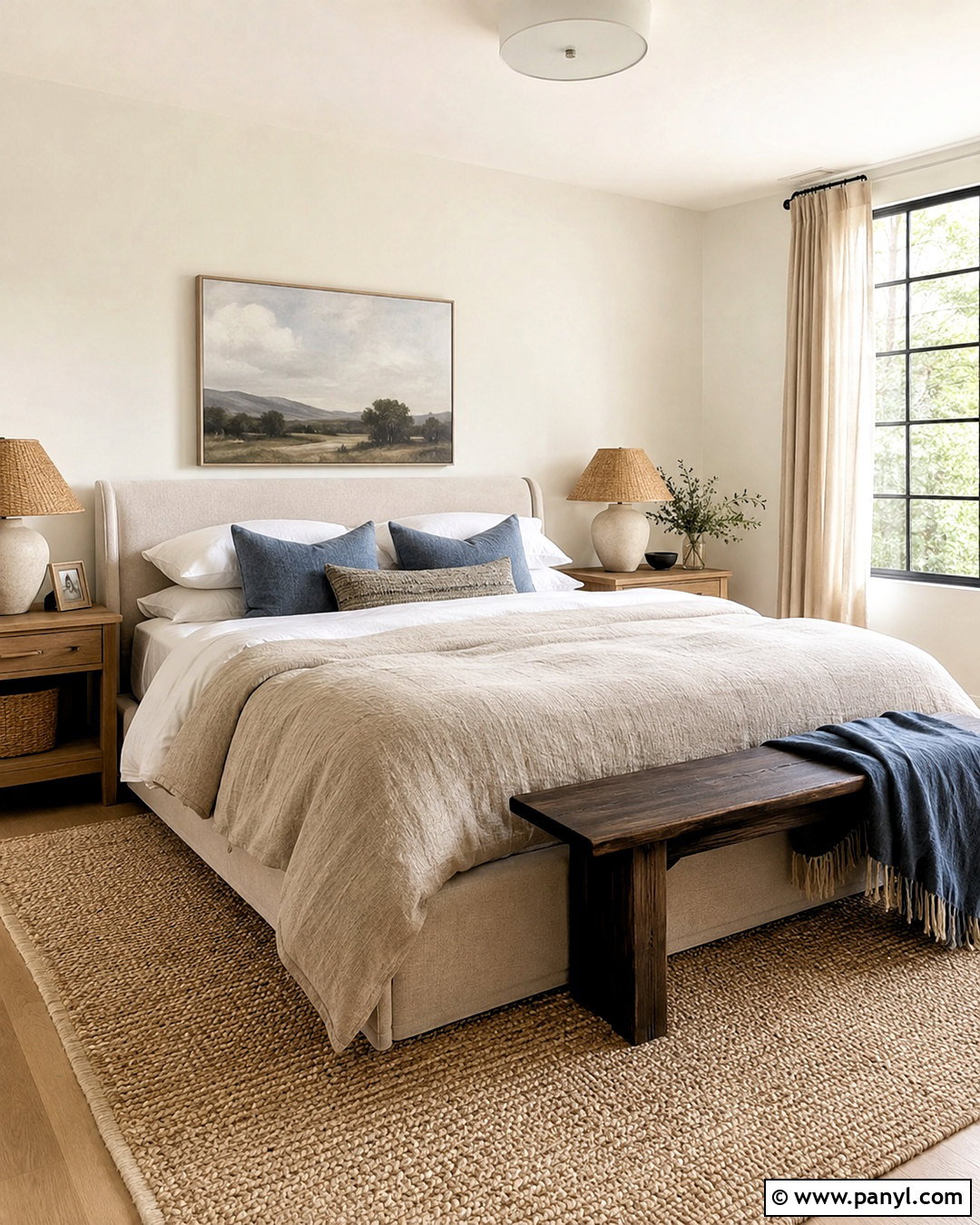
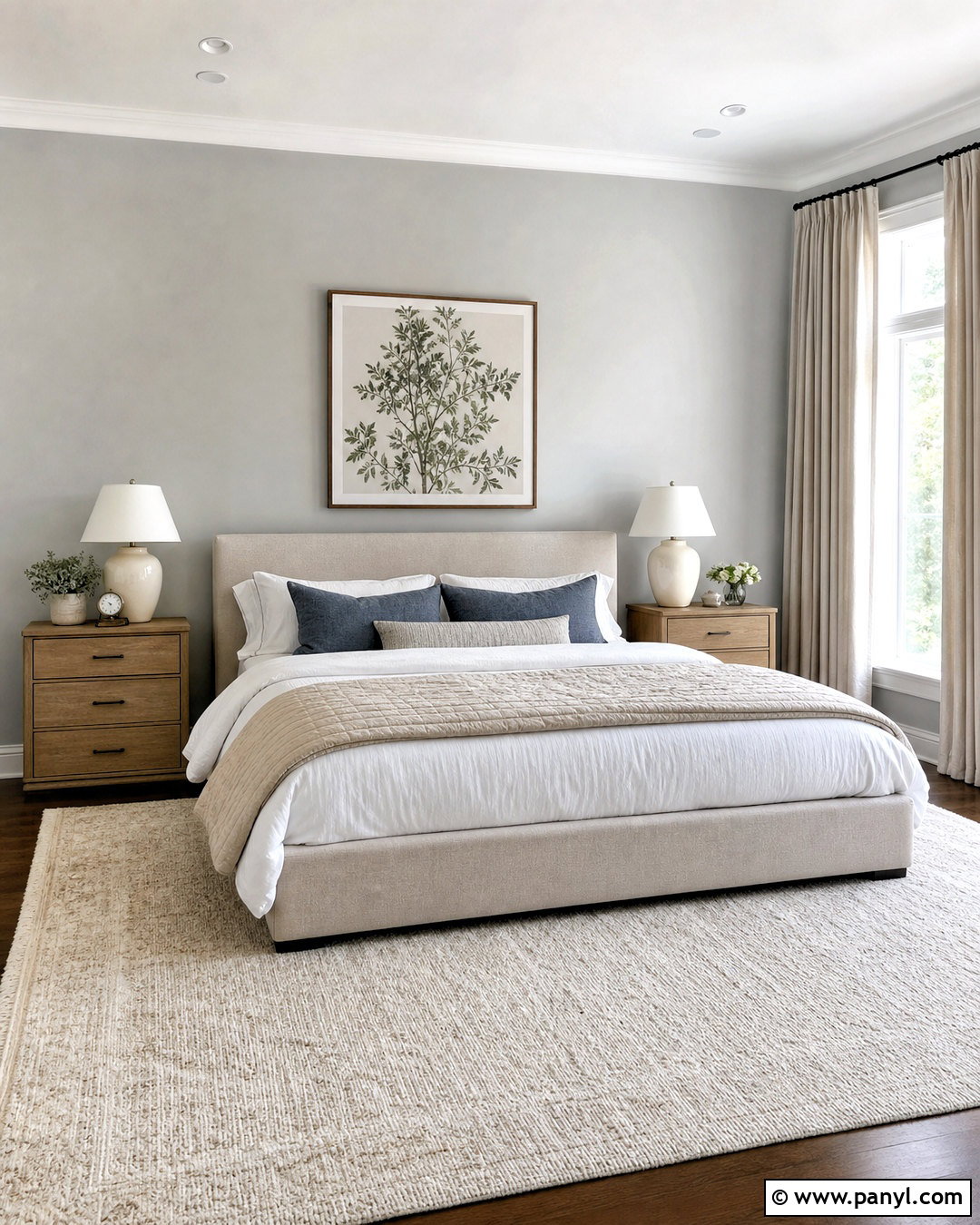
White Dove bedroom walls create a restful backdrop when the rest of the room includes warm, touchable layers. Place an upholstered oatmeal bed against the main wall and dress it with white cotton sheets, a flax linen duvet, and pillows in taupe and dusty blue. Use medium oak nightstands with ceramic lamps and woven shades. A large wool rug should extend beneath the bed to soften both the room and the floor. Hang full-length linen curtains in a shade slightly deeper than the walls. One dark wood bench or dresser can add grounding contrast. Keep artwork calm and appropriately scaled, using landscapes or simple abstract forms. The completed bedroom feels bright without being stark, making White Dove an easy foundation for a comfortable retreat that still has dimension and personality.
16. White Dove Walls With Upholstered Bed
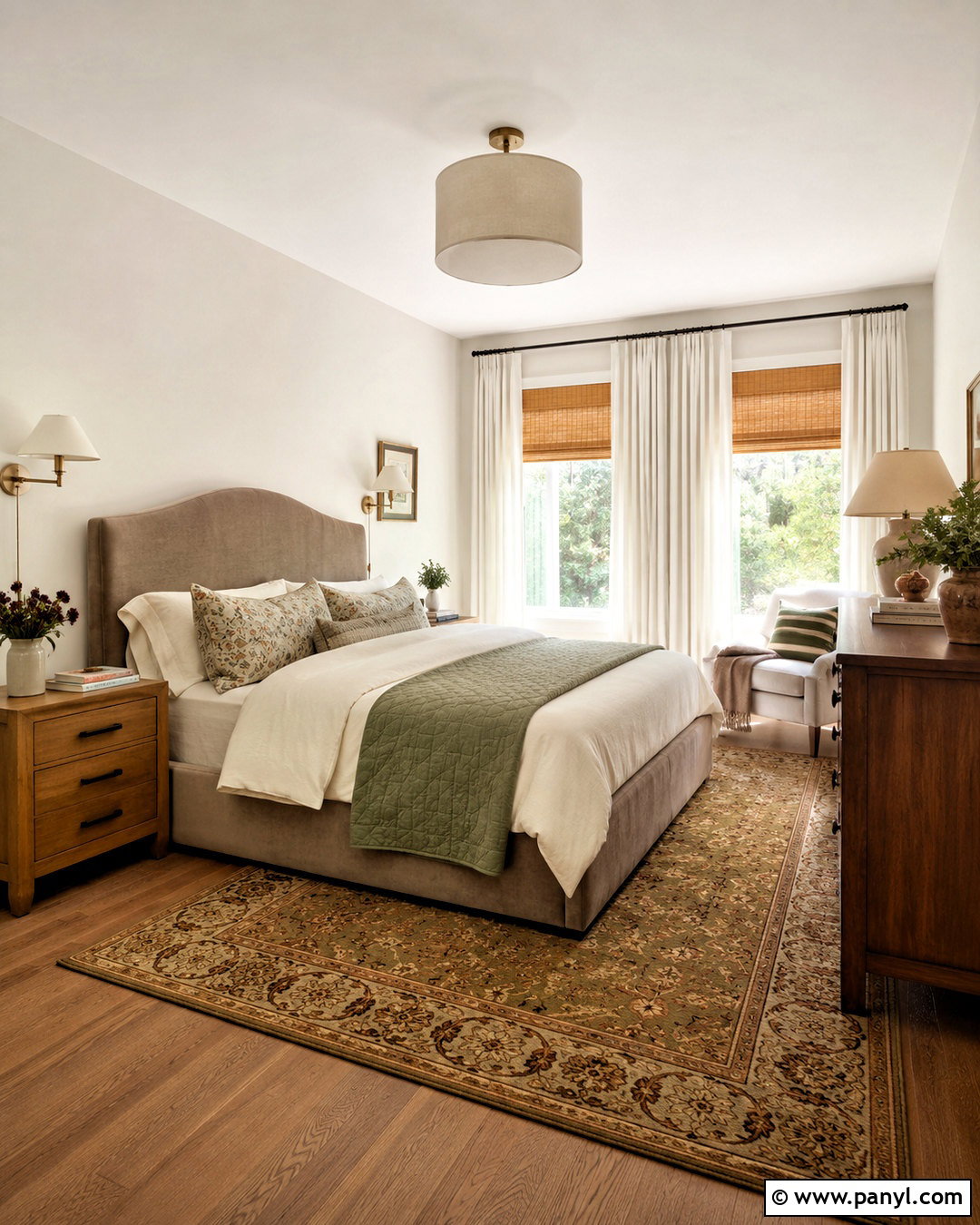
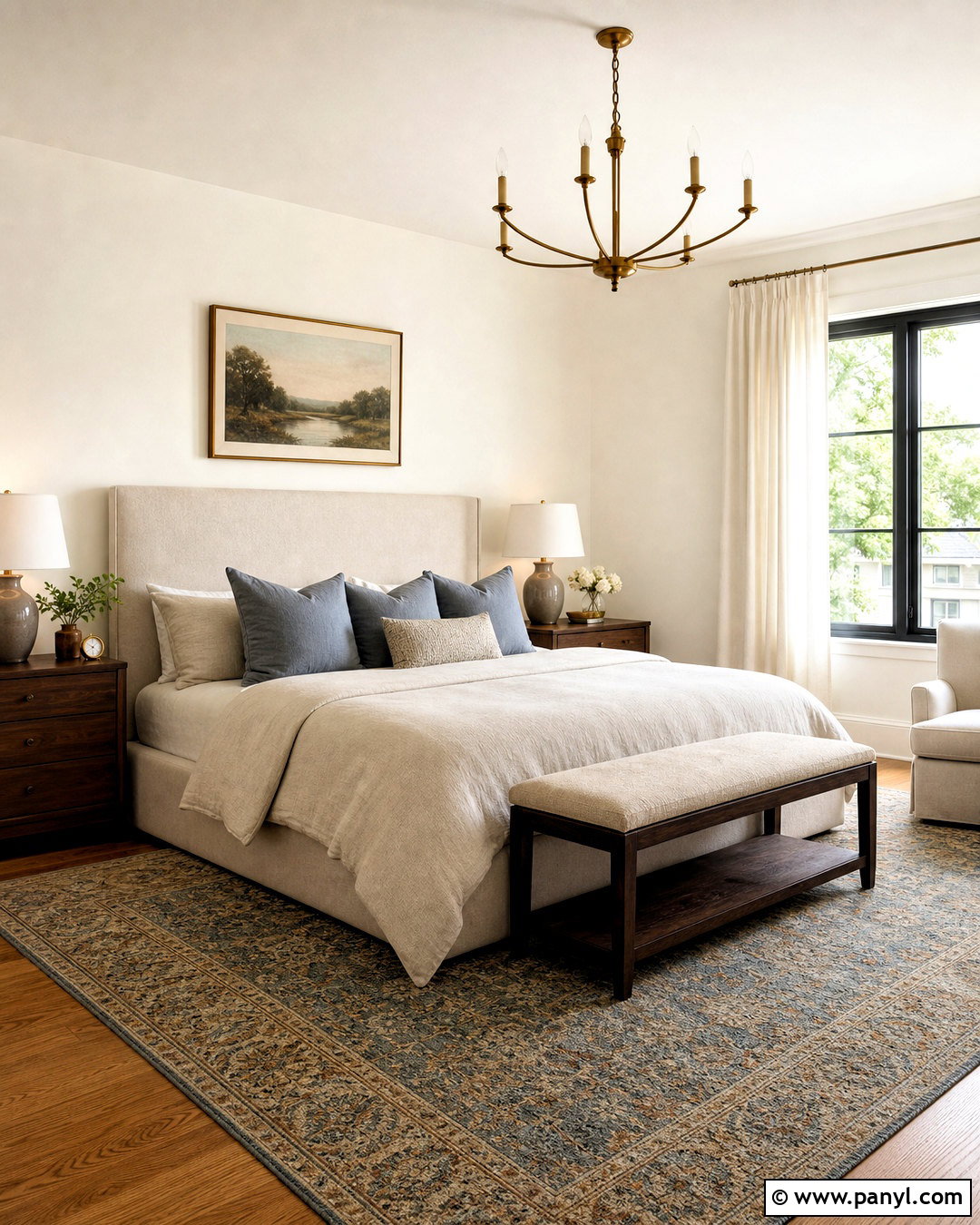
An upholstered bed brings softness and visual weight to White Dove walls. Choose a tall, gently curved headboard in warm taupe, oatmeal, or textured beige, then center it between matching wood nightstands. Layer the bed with ivory bedding, a muted sage coverlet, and pillows in soft brown and cream. A pair of antique brass wall sconces keeps the nightstand surfaces clear. Underfoot, use a patterned rug containing warm gray, olive, and faded terracotta. Linen curtains and woven shades provide privacy while continuing the natural palette. Add one walnut dresser and a comfortable reading chair near the window. This complete bedroom feels tailored but not formal. The deeper headboard creates enough separation from the walls, while natural materials stop the pale color scheme from becoming overly delicate.
17. White Dove Walls With Dark Bed Frame
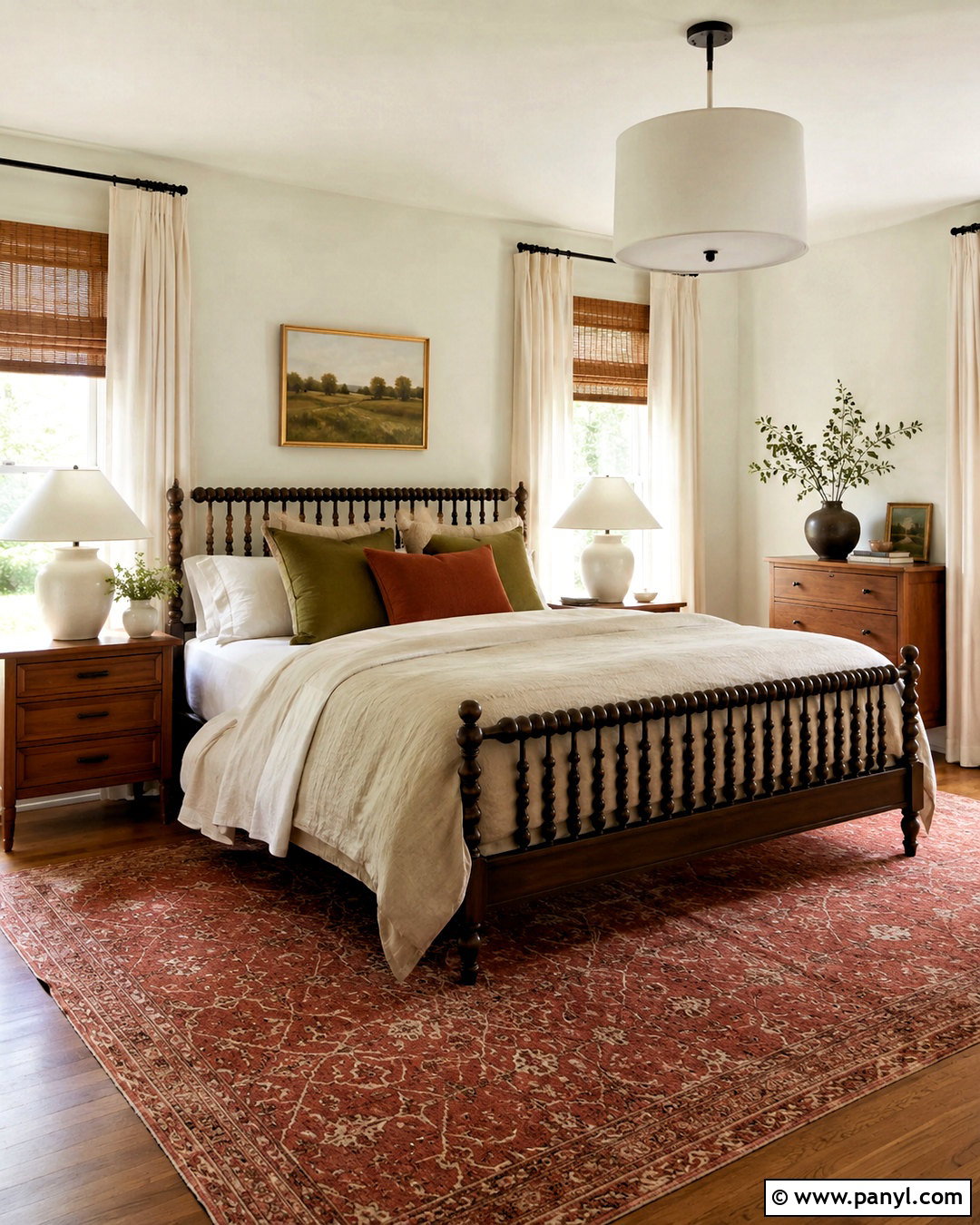
A dark bed frame creates a strong focal point against White Dove bedroom walls. Select black-stained oak or deep walnut with a simple paneled or spindle design. Soften its outline with white sheets, a natural linen duvet, and pillows in rust, olive, and charcoal. Place warm wood nightstands on both sides, topped with cream ceramic lamps and textured shades. A vintage-inspired rug can repeat the dark frame while introducing faded red and tan. Use relaxed ivory curtains and a woven Roman shade at the windows. Keep the dresser medium-toned rather than black so the room does not feel overly matched. The resulting bedroom has clear contrast and a comfortable sense of balance. White Dove keeps the darker furniture from appearing heavy, while the textiles make the room feel welcoming.
18. White Dove Nursery Walls
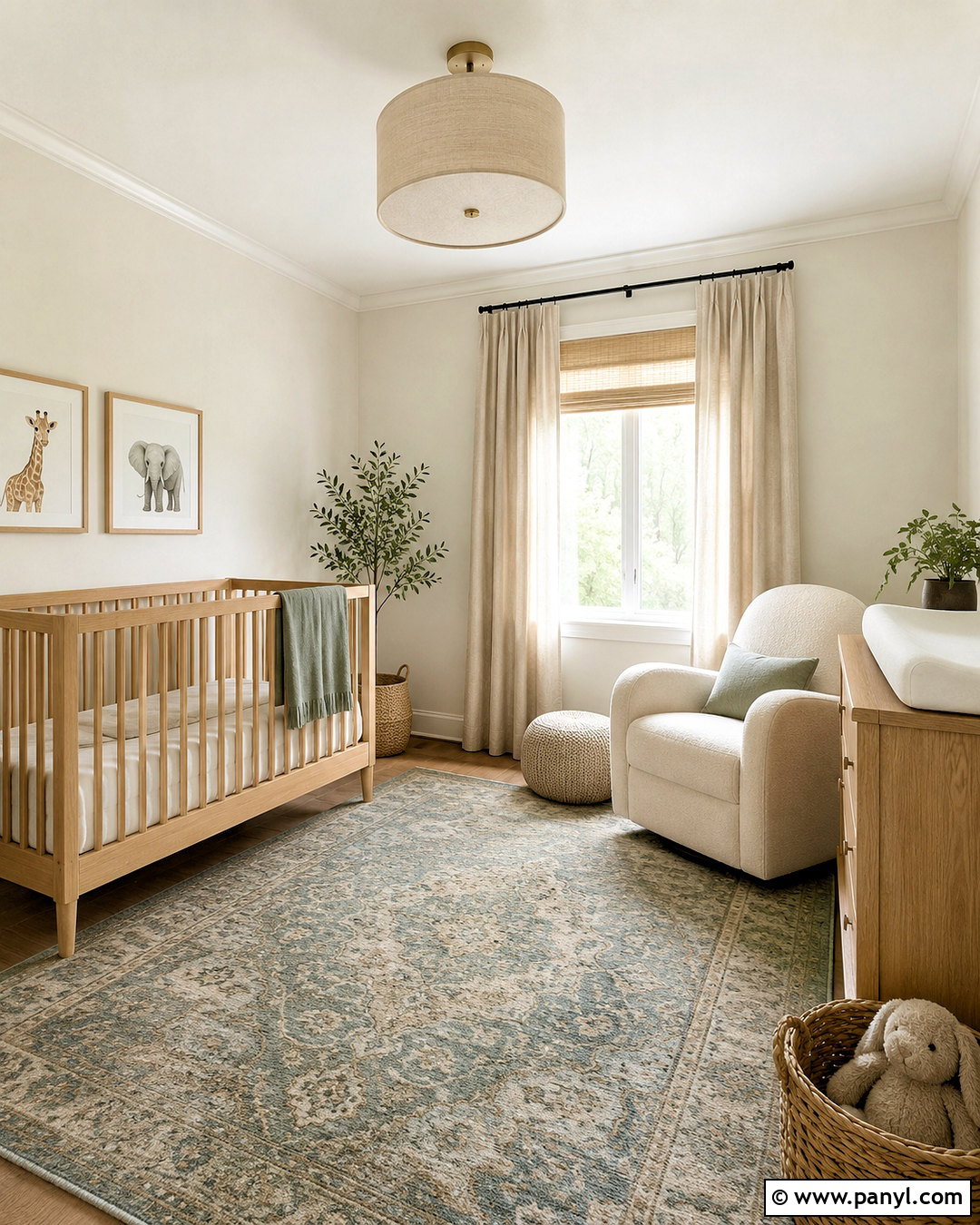
White Dove nursery walls offer a flexible background that can grow with the child. Arrange a natural oak crib against the longest uninterrupted wall and place a rounded cream glider nearby with a small wood side table. Use a washable wool or cotton rug in muted sage, dusty blue, and warm beige. Linen blackout curtains provide softness and practical light control. A low oak dresser can double as a changing station while keeping storage accessible. Add woven baskets, simple animal artwork, and a dimmable ceiling light with a fabric shade. Avoid filling every wall with decorations; a calm layout leaves visual breathing room. The completed nursery feels gentle without relying on a strict theme, and its wood furniture, soft color, secure storage, and adaptable decor can transition into a toddler room later.
19. White Dove Bathroom Walls
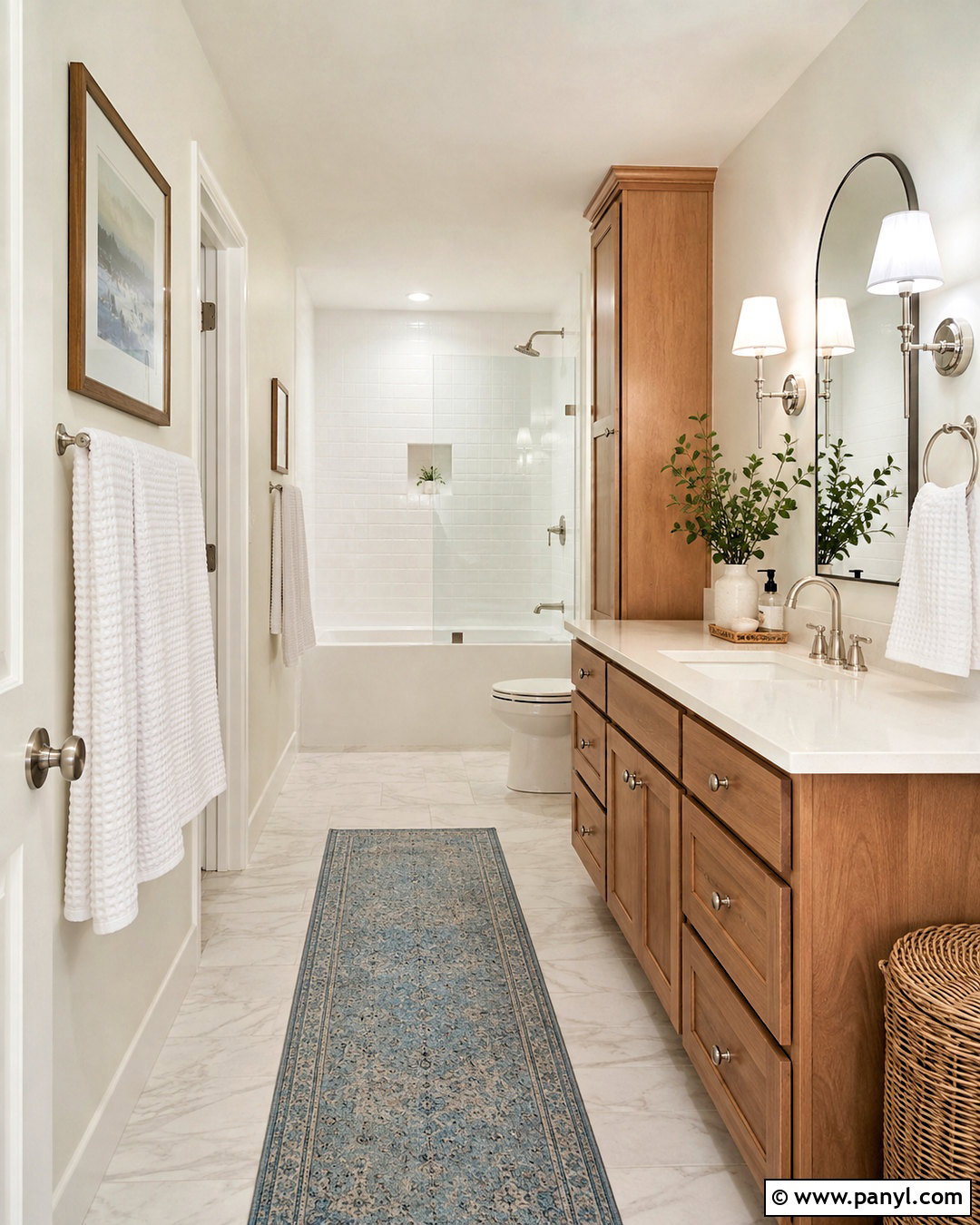
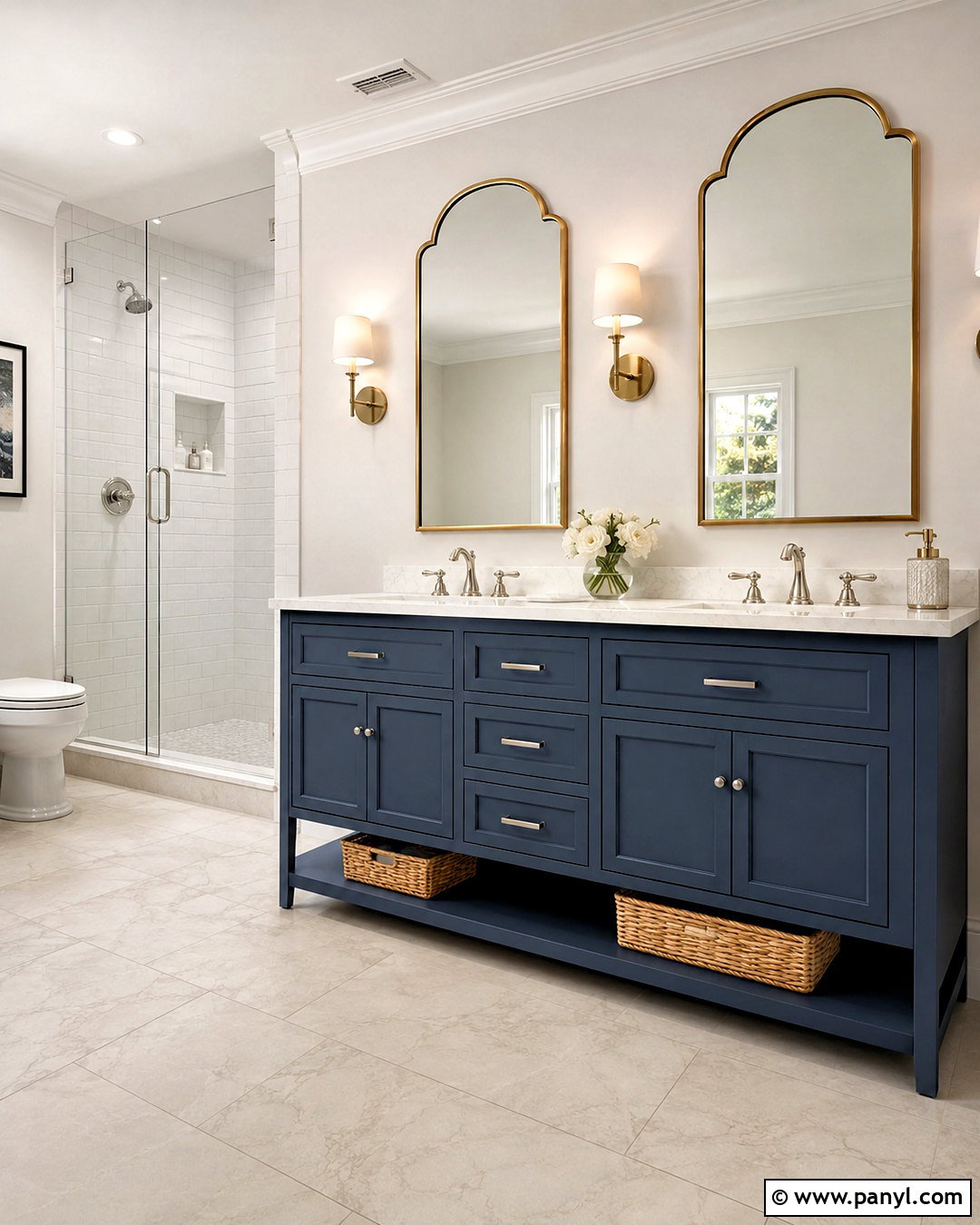
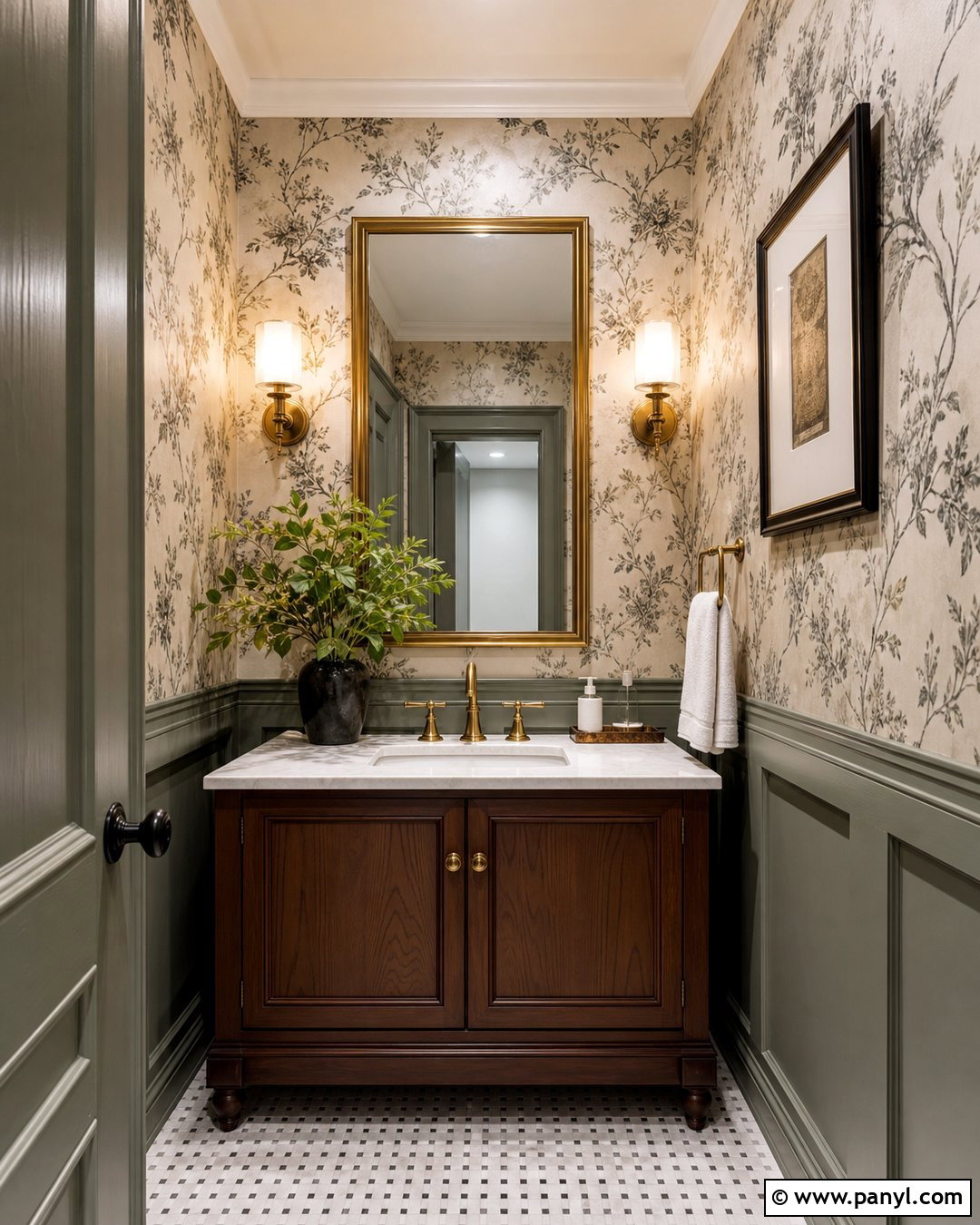
In a bathroom, White Dove walls can soften hard surfaces and make the space feel more comfortable. Pair the paint with a medium oak vanity, creamy quartz countertop, and polished nickel fixtures. Use pale marble-look porcelain on the floor for durability, then add a white glazed tile shower surround with warm grout. A rounded metal-framed mirror and two shaded sconces create a practical vanity focal point. Introduce texture through waffle towels, a woven hamper, and a small washable runner in beige and muted blue. Keep storage concealed wherever possible so the light walls remain visually calm. The completed bathroom feels clean but not clinical. Before painting, choose an appropriate bathroom finish and confirm that the exhaust ventilation can manage everyday moisture, especially around showers and tubs.
20. White Dove Walls With Marble
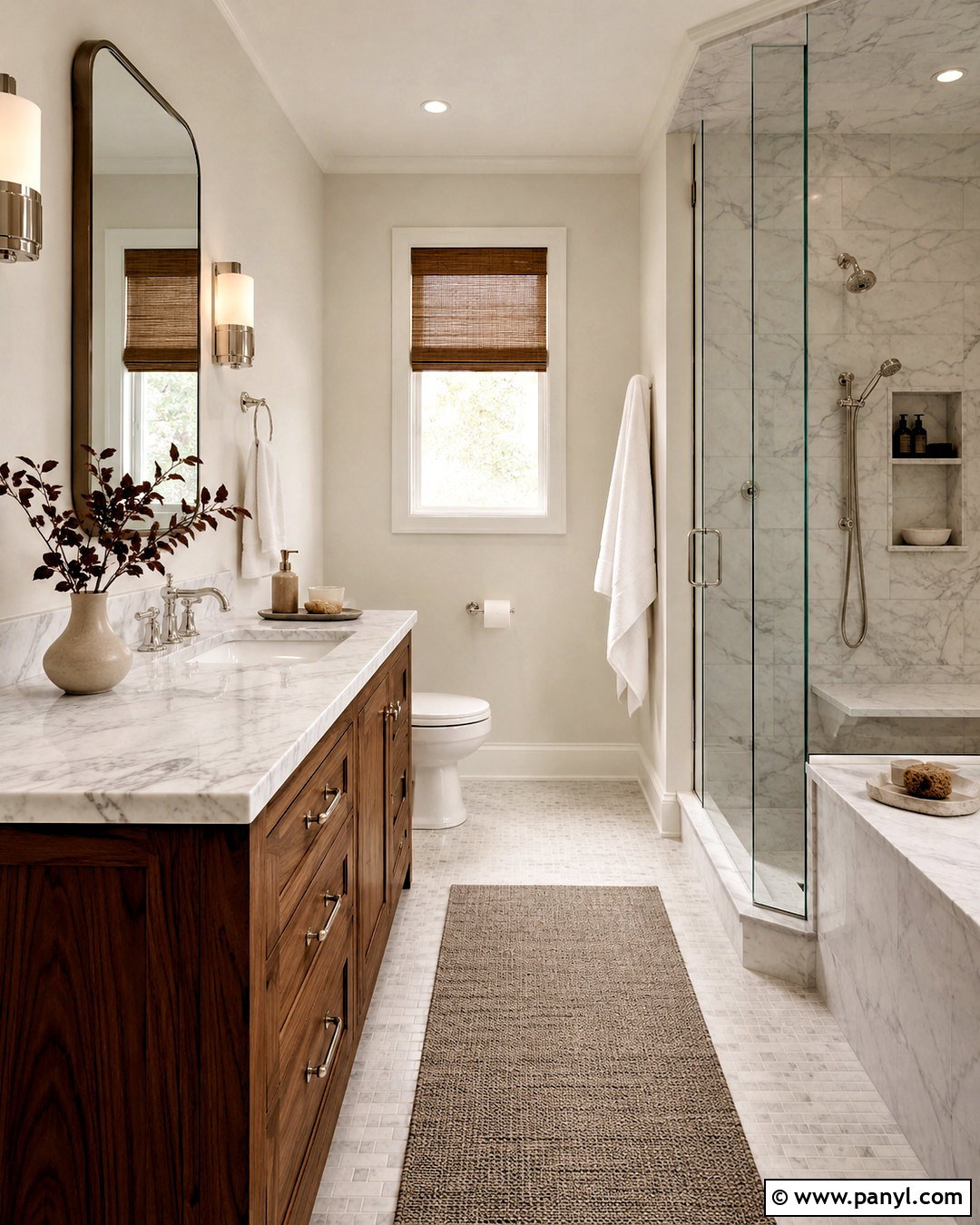
Marble and White Dove walls form an elegant combination when their undertones are considered together. Choose marble with warm gray or beige veining rather than an icy blue-white background. In a bathroom, use the stone on the vanity top and shower ledge while keeping larger surfaces in simple off-white tile. A walnut vanity grounds the pale palette, and polished nickel fixtures provide a refined but quiet finish. Add warm white towels, a natural woven shade, and a taupe runner to soften the stone. For lighting, install frosted glass sconces on either side of a rounded mirror. The complete room feels bright, luxurious, and realistic for a normal home. White Dove supports the marble’s movement without creating a sharp contrast that could make one surface look unexpectedly yellow or gray.
21. White Dove Laundry Room Walls
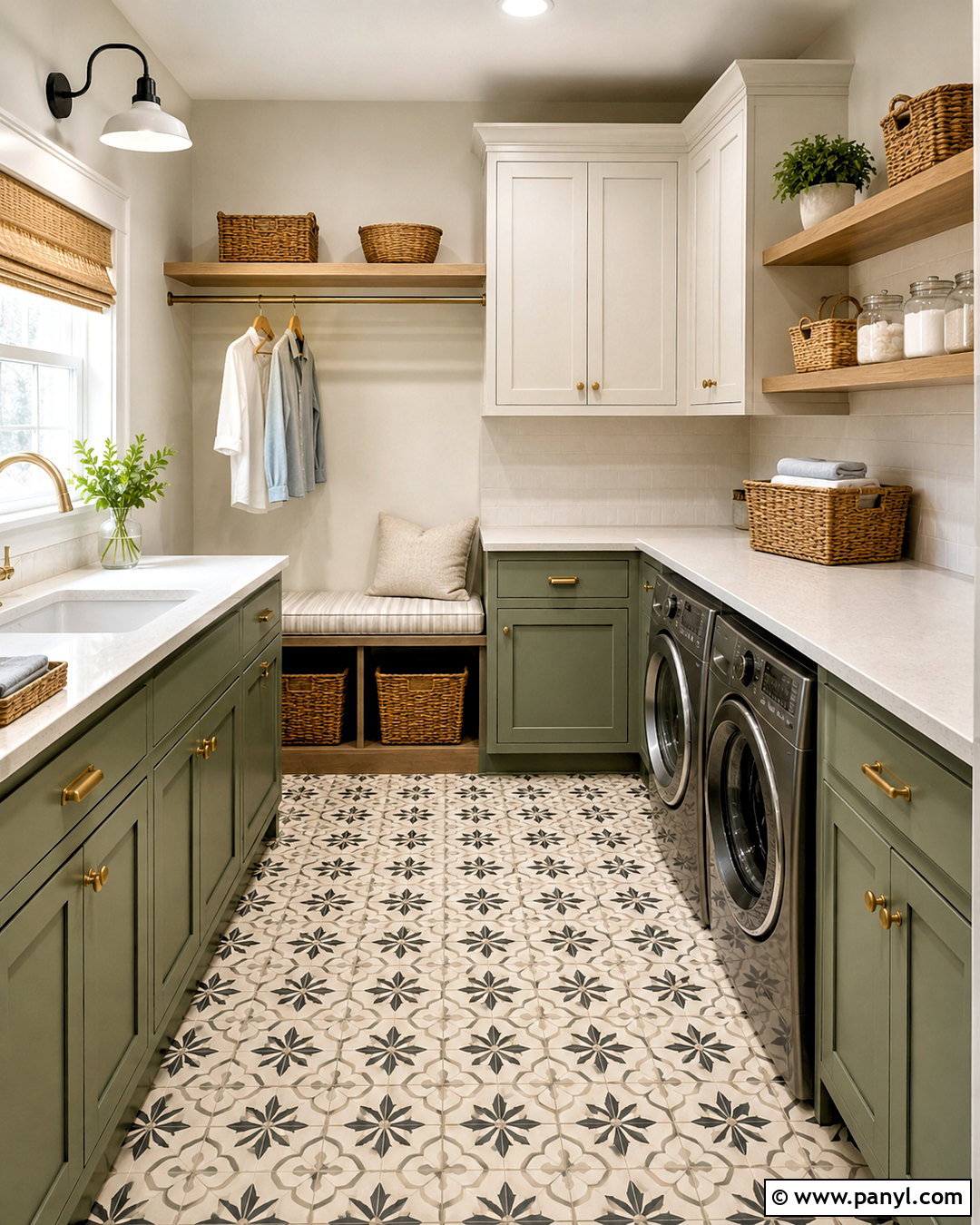
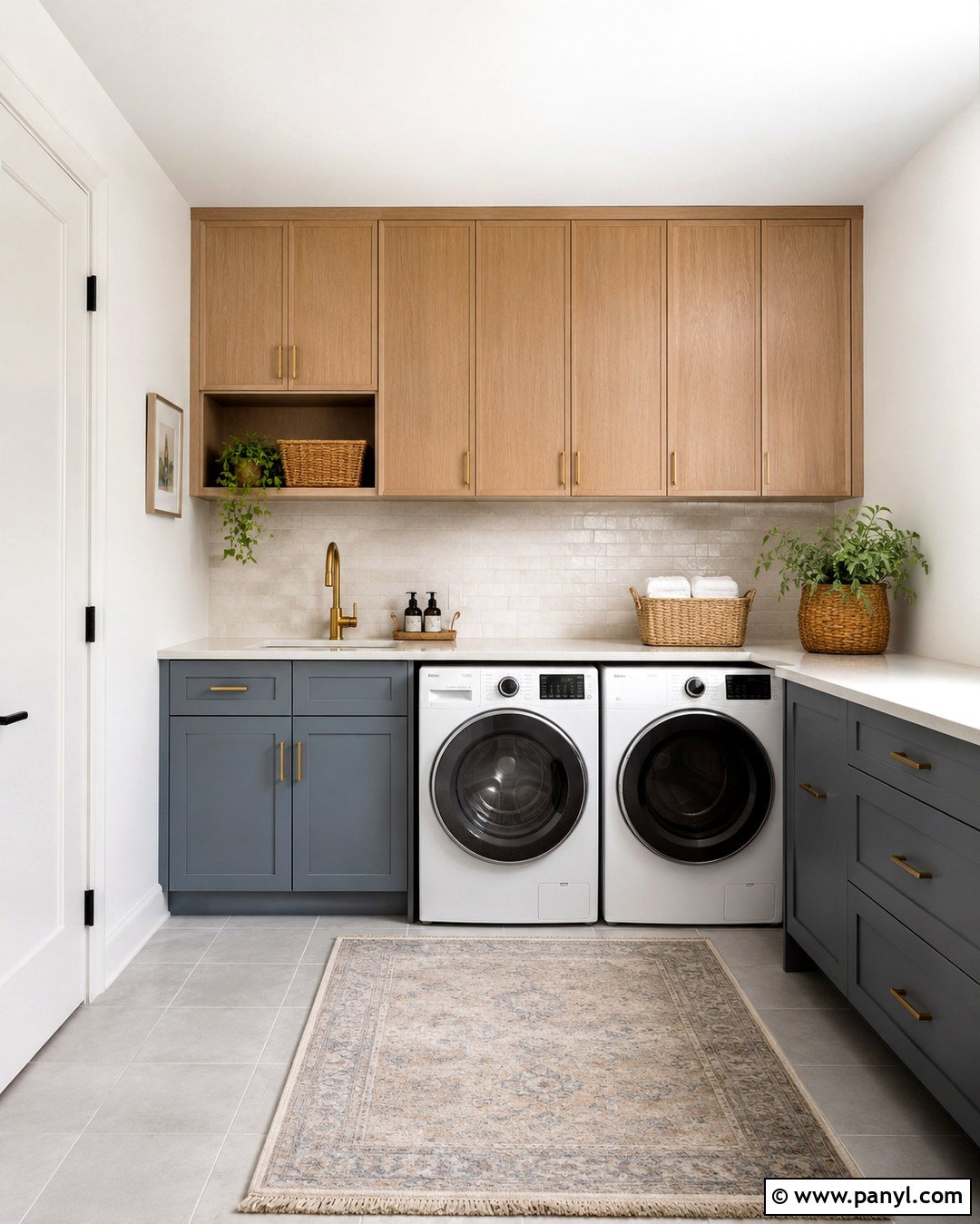
White Dove walls can turn a practical laundry room into a clean, organized extension of the home. Install sage green lower cabinets beneath a warm white quartz folding counter, then add White Dove upper cabinets or open oak shelves. A patterned porcelain tile floor in cream and charcoal hides everyday dust while creating visual interest. Place woven baskets, labeled containers, and glass jars neatly on the shelves, leaving enough open space for easy access. Brushed brass hardware and a small ceiling fixture warm the utility-focused layout. If space allows, include a hanging rod above the counter and a narrow bench near the door. The completed room balances storage, folding space, and durable finishes, while the warm white walls keep even a windowless laundry area from appearing harsh or overly industrial.
22. White Dove Entryway Walls
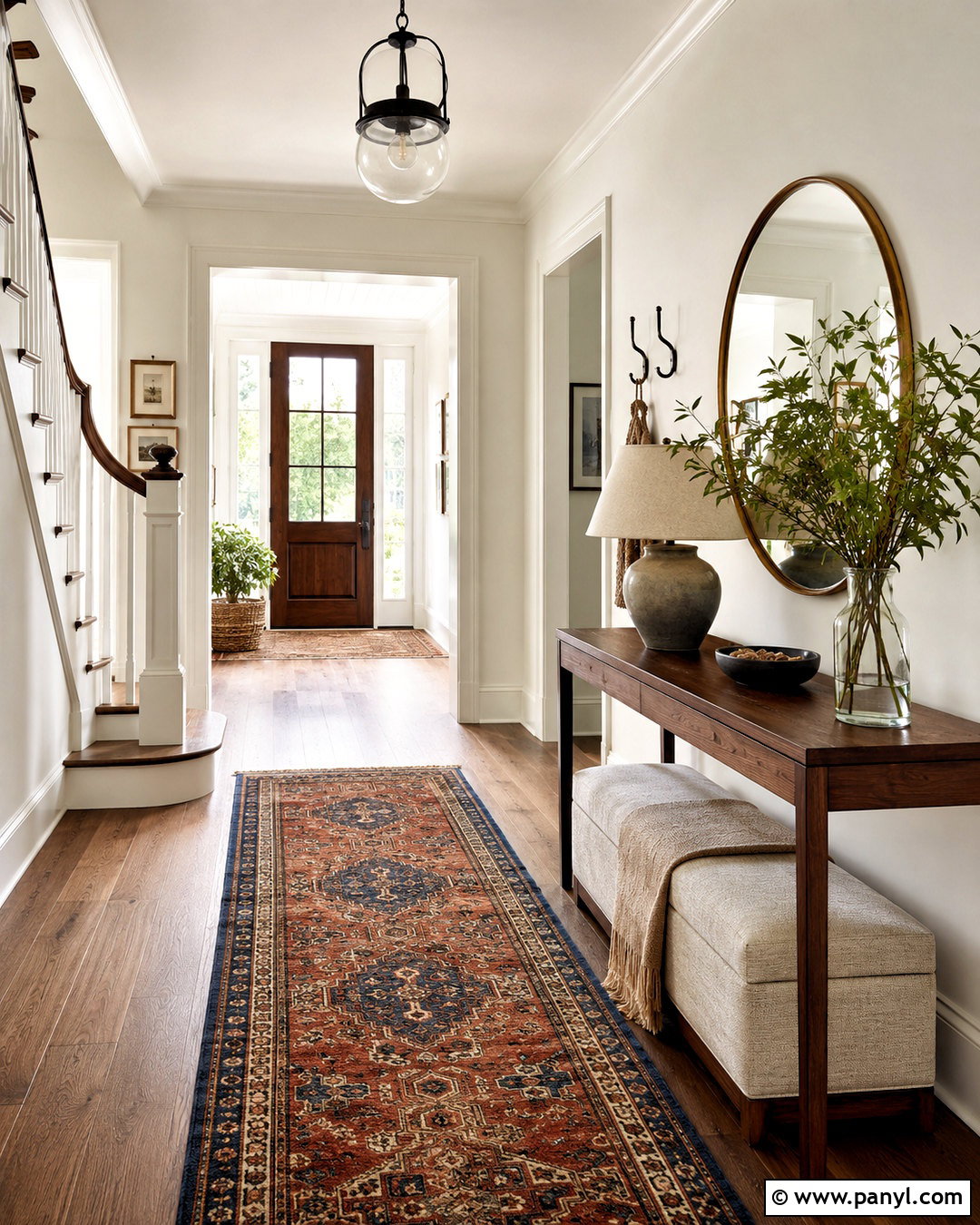
An entryway with White Dove walls feels brighter and more welcoming when it includes practical storage and a defined furniture arrangement. Position a narrow walnut console beneath a large round mirror with a dark bronze frame. Add a ceramic table lamp, a shallow bowl for keys, and one substantial vase with leafy branches. A patterned runner in rust, navy, and beige protects the main walkway while introducing color. Install black or bronze wall hooks beside a closed shoe cabinet or upholstered bench. If the entry has stairs, repeat White Dove on the balusters and use a natural wood handrail for contrast. A simple pendant can complete the vertical space. This finished design gives everyday belongings a specific place, allowing the light walls and warm materials to create an orderly first impression.
23. White Dove Hallway Walls
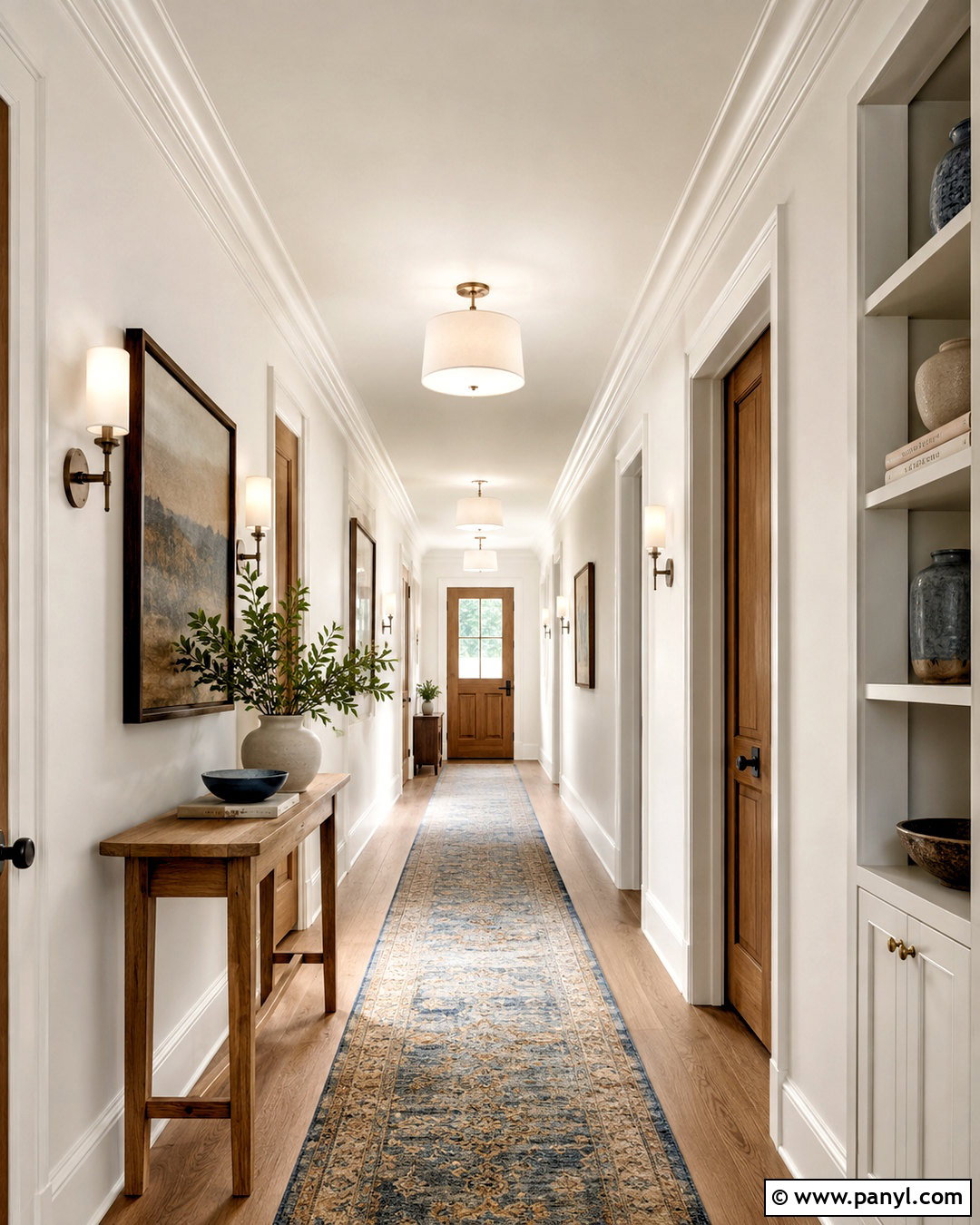
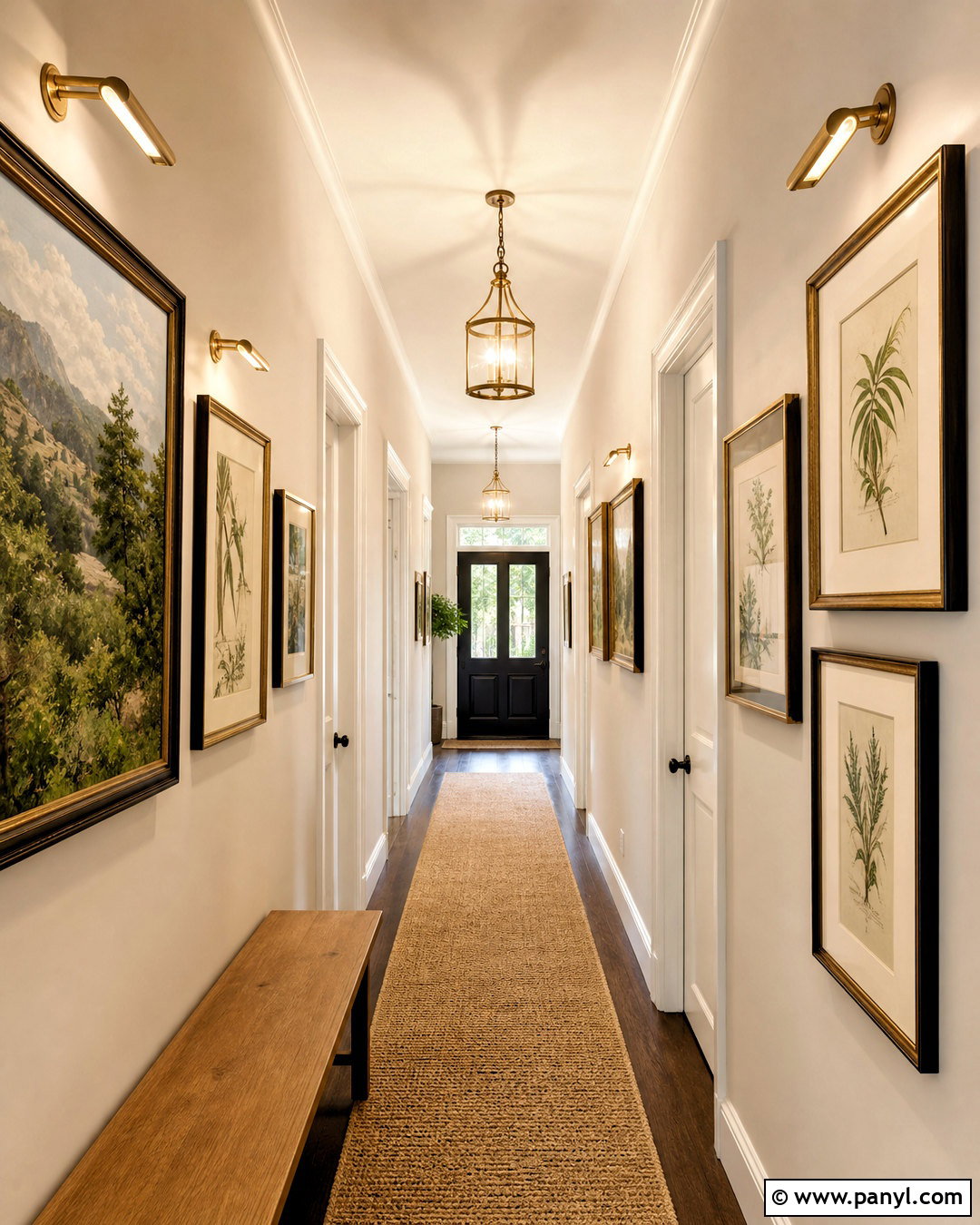
White Dove hallway walls can make a narrow passage feel intentional rather than overlooked. Use the same color on the ceiling and trim, changing the sheen to reveal doors and architectural edges without introducing strong contrast. Install a row of medium-size framed photographs or prints with consistent dark wood frames. A washable runner in muted blue, camel, and cream adds movement along the floor. Where width permits, include a slim oak console or a shallow built-in cabinet for useful storage. Add warm wall sconces at regular intervals instead of depending on one central ceiling light. Natural wood doors can supply additional warmth in a newer home. The finished hallway feels connected to surrounding rooms while still having its own rhythm, texture, lighting, and carefully controlled decorative details.
24. White Dove Home Office Walls
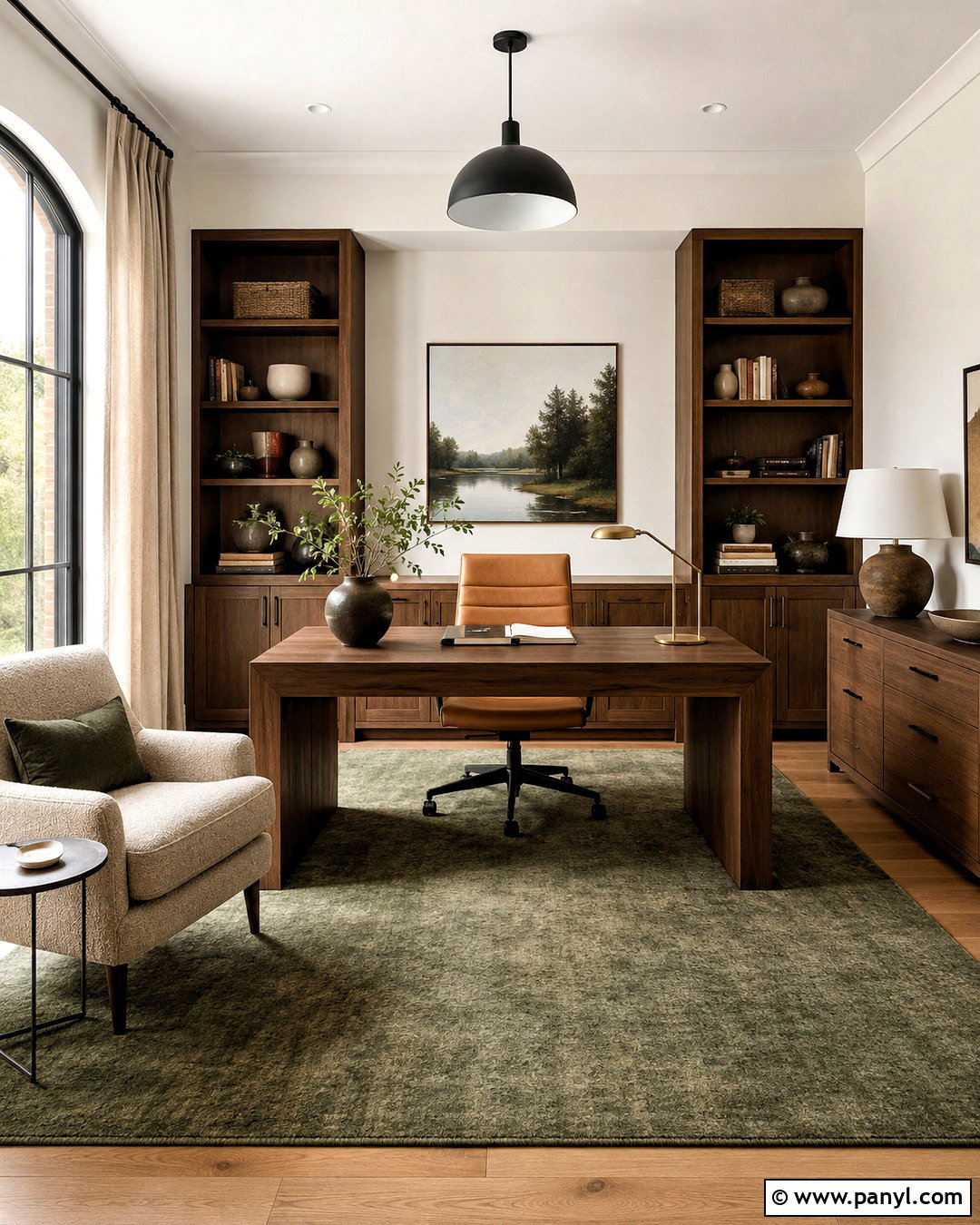
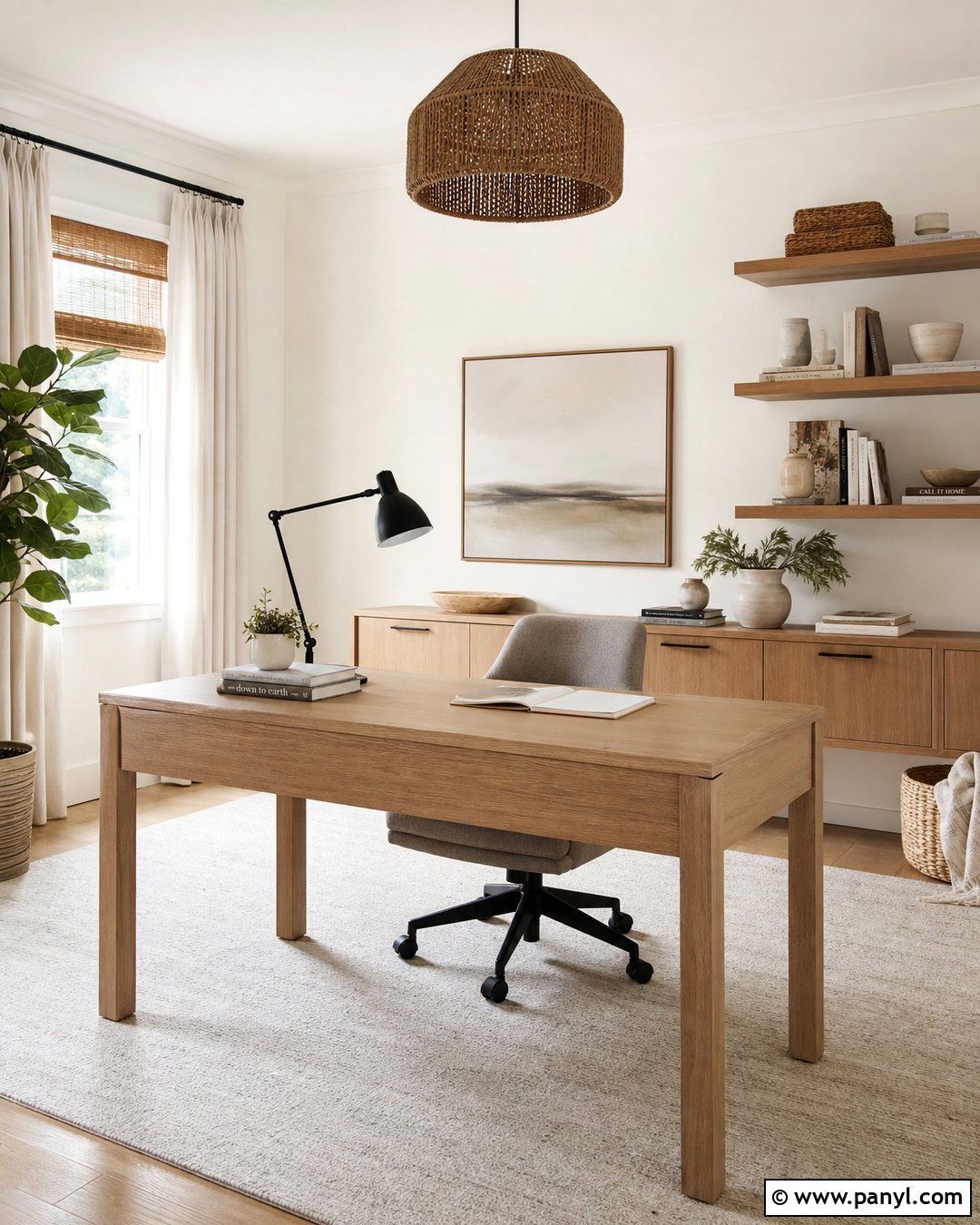
White Dove home office walls create a quiet background that supports concentration without making the workspace feel corporate. Place a walnut or white oak desk facing into the room, with a comfortable upholstered task chair in camel or warm gray. Use matching wood cabinets along one wall for files and supplies, then add open shelves for books, baskets, and modest decor. A muted green rug can define the work zone and improve softness underfoot. Hang linen curtains to control glare without blocking all daylight. Matte black lighting and hardware sharpen the neutral palette. Include a reading chair and small side table if space allows. The completed office feels professional, calm, and personal, with storage, task lighting, comfortable furniture, and warm materials working together against the White Dove background.
25. White Dove Walls With Board And Batten
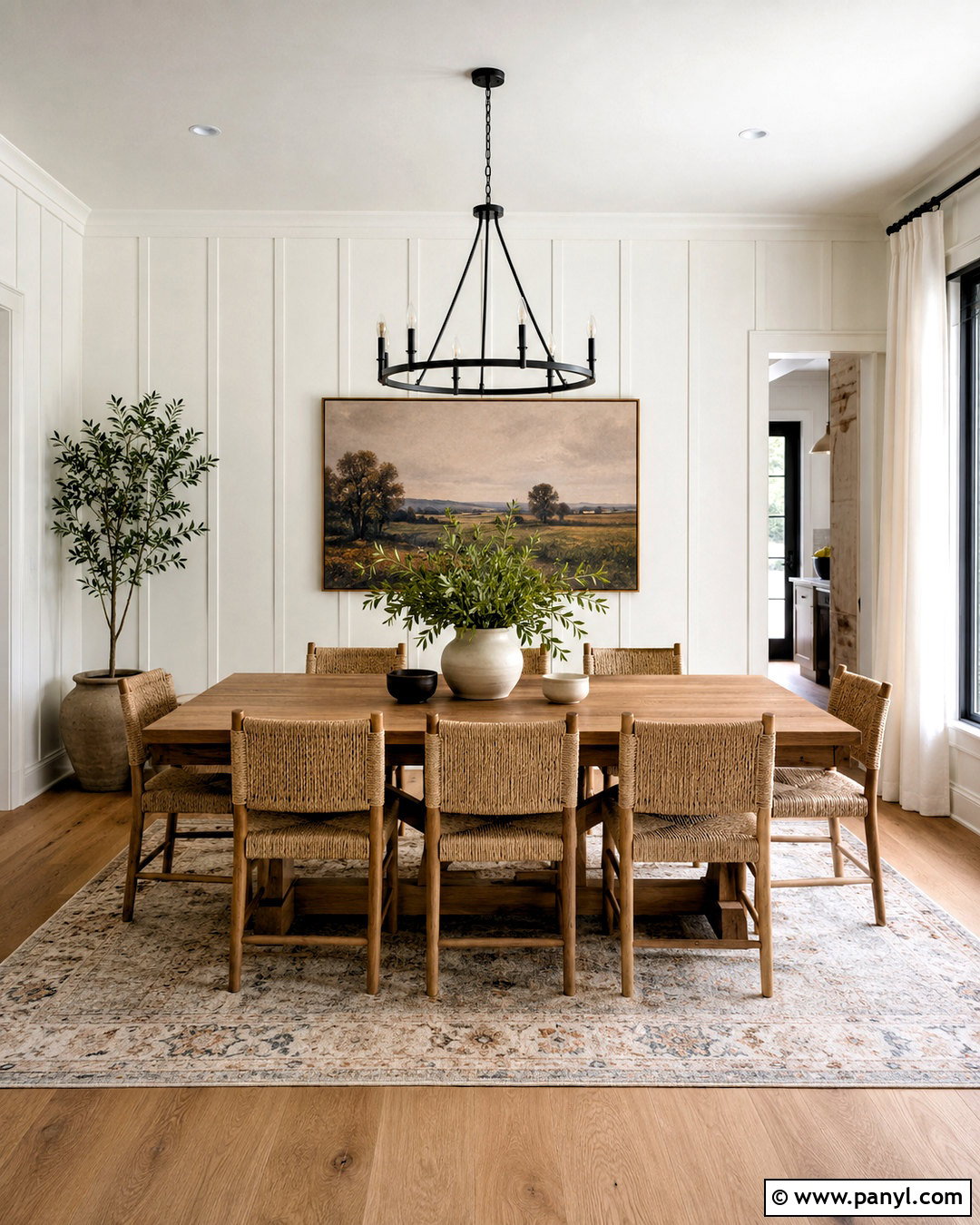
Board and batten painted White Dove can give a room structure while maintaining a light, unified appearance. Apply the panel treatment across the lower two-thirds of a dining room or bedroom wall, then continue White Dove above it in a flatter sheen. This difference allows the battens to catch light and show their depth. Pair the walls with a medium oak dining table, woven chairs, and a muted patterned rug. Black metal lighting can create contrast, while linen curtains keep the windows soft. Add one large landscape painting rather than several small pieces that compete with the panel grid. The complete room feels architectural without becoming ornate. Careful spacing, clean edges, and restrained furnishings make the wall treatment look integrated with the room rather than added as an isolated weekend project.
26. White Dove Walls With Picture Frame Molding
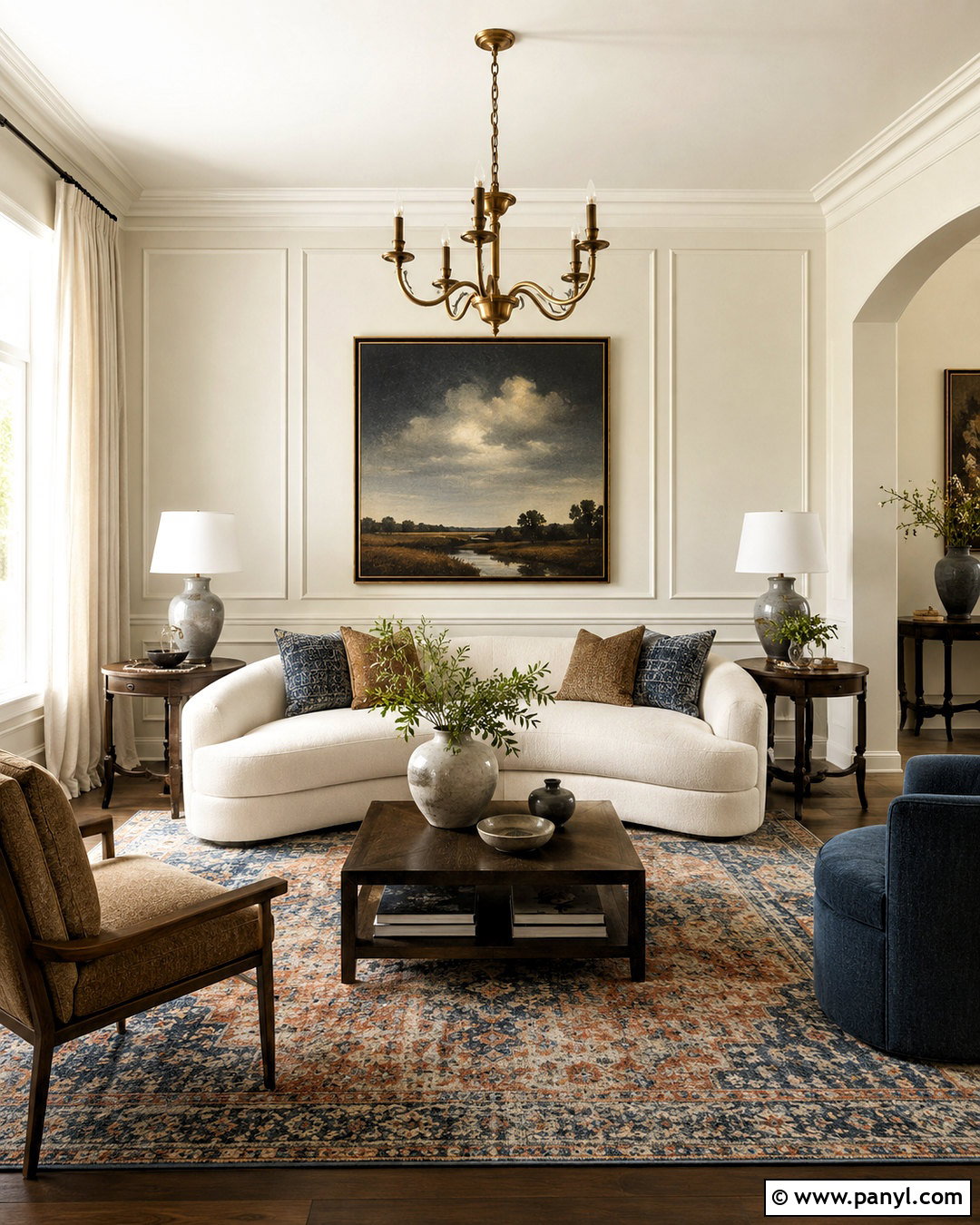
Picture frame molding adds traditional detail to White Dove walls without requiring contrasting paint. Use evenly spaced rectangular molding across the main dining room or formal living room walls, painting everything in the same warm white. A satin or pearl finish on the molding can subtly emphasize its raised profile. Furnish the space with a curved cream sofa, walnut side tables, and an antique-style rug in faded blue and rust. Hang artwork inside selected panels while leaving others empty to preserve balance. A brass chandelier and linen curtains contribute softness and warmth. Dark wood or black frames provide enough definition against the pale background. This completed look feels refined but approachable, combining classical wall proportions with comfortable furniture and uncomplicated colors suited to a present-day home.
27. White Dove Walls With Shiplap
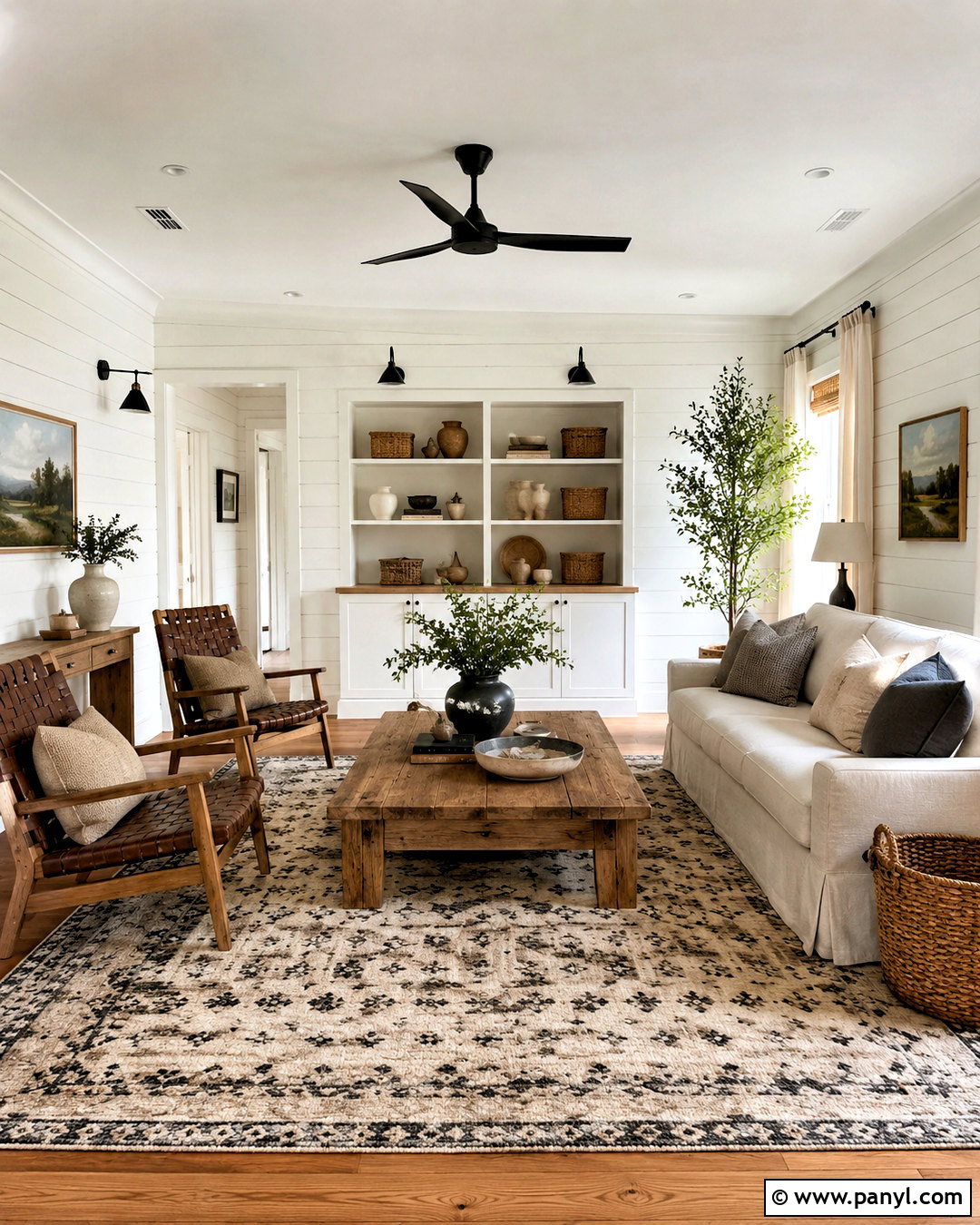
White Dove shiplap walls bring texture to a room without creating a cold, overly bright farmhouse effect. Use horizontal boards on one main wall or throughout a compact sitting room, keeping the gaps narrow and clean. Pair the paneling with a slipcovered beige sofa, two woven leather chairs, and a sturdy reclaimed oak coffee table. A flatweave rug in cream and charcoal gives the casual furniture a defined foundation. Choose black metal sconces and a simple ceiling fan for contrast, then soften the windows with linen curtains. Add landscape art, stoneware, and woven baskets rather than overly themed decorations. The completed space feels relaxed and practical. White Dove’s warmth complements the natural furniture while allowing the shiplap lines to remain visible in bright daylight and evening illumination.
28. White Dove Walls And Trim Same Color
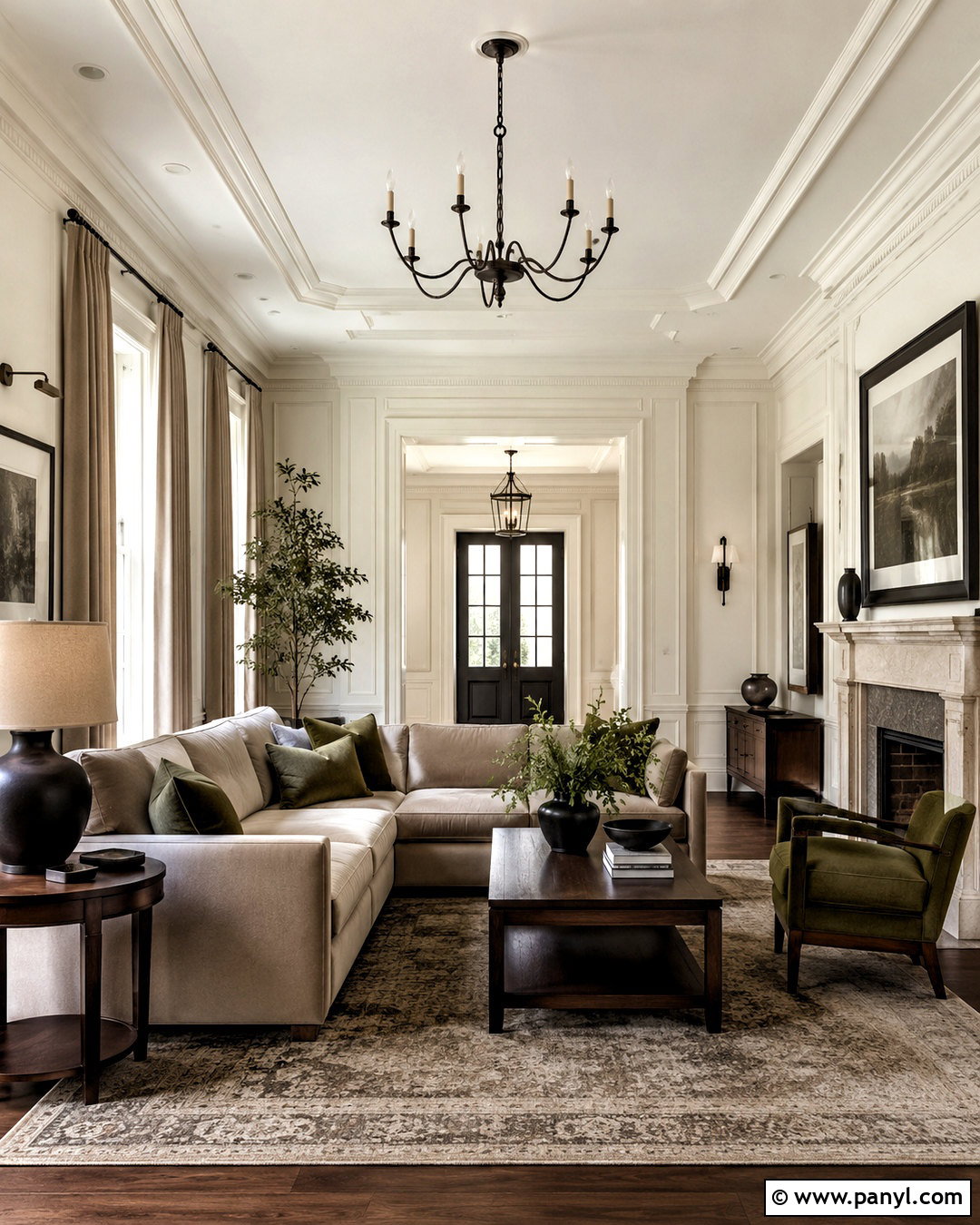
Using White Dove on walls and trim creates a seamless room when each surface receives the correct sheen. Apply matte or eggshell paint to the walls, flat paint to the ceiling, and satin or semi-gloss to baseboards, doors, and molding. The changing reflection reveals architectural details while maintaining consistent undertones. Build the room around a light taupe sofa, walnut furniture, and a warm gray rug. Add linen curtains that are slightly deeper than the walls so the windows do not disappear. Black frames, bronze lighting, and a few olive accessories provide definition. This treatment is especially effective in rooms with detailed casing or several doorways because it reduces visual interruptions. The finished space feels larger, calmer, and thoughtfully connected without requiring a second white for contrast.
29. White Dove Walls With Bright White Trim
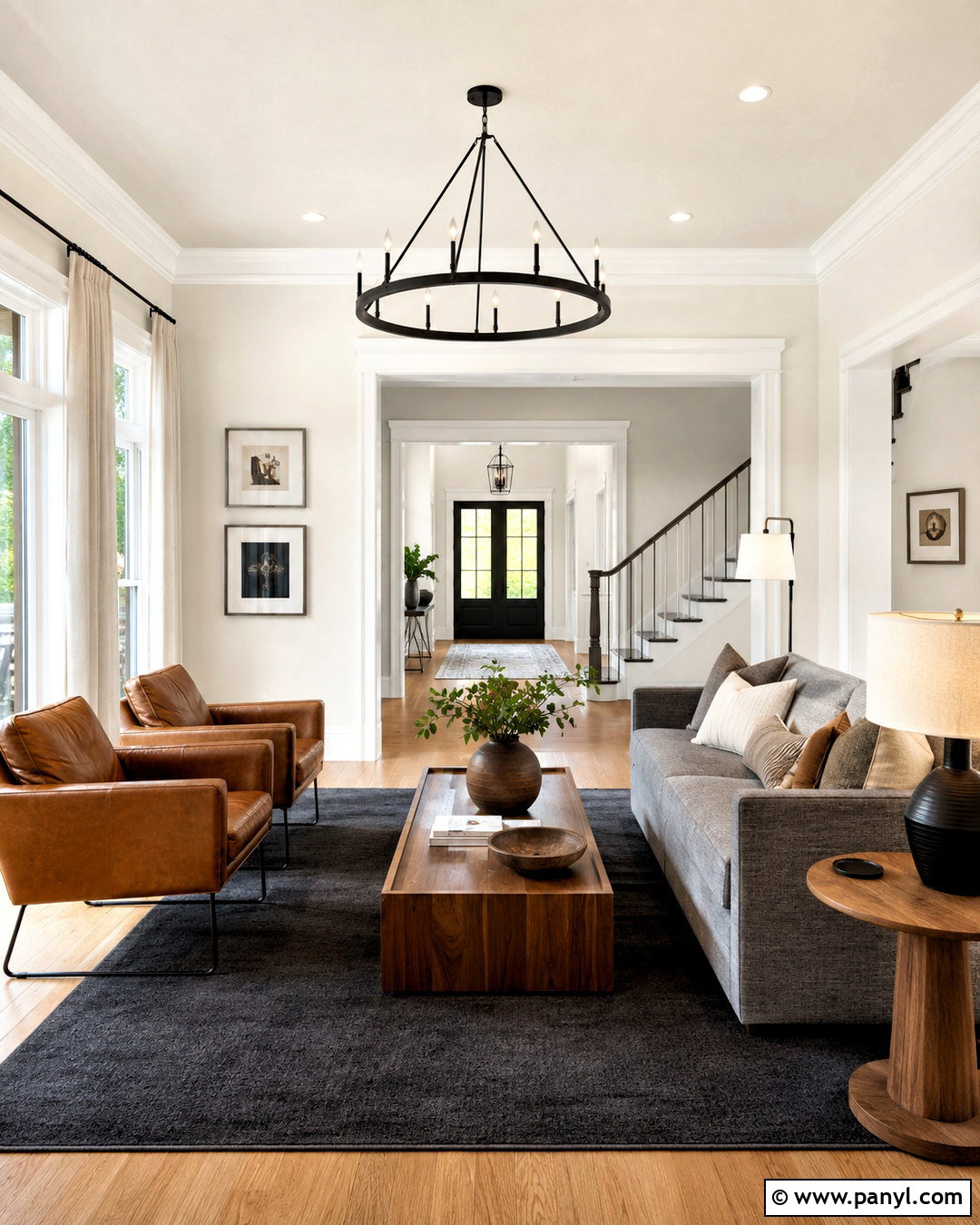
Bright white trim can outline White Dove walls, but the contrast should be planned and tested carefully. Choose a clean white that complements the room’s fixed finishes rather than one with an obvious icy-blue cast. Apply it consistently to baseboards, doors, windows, and crown molding. Pair the walls with medium oak flooring, a warm gray sofa, and camel leather chairs so the room contains enough warmth to bridge the two whites. Use natural linen curtains instead of brilliant white fabric, which could create another competing tone. A charcoal rug and black metal lighting can repeat the sharper trim contrast. The completed room feels crisp and tailored, with visible architectural edges. Large samples beside the flooring, fabrics, and trim will reveal whether the two whites remain compatible throughout the day.
30. White Dove Walls In North Facing Room
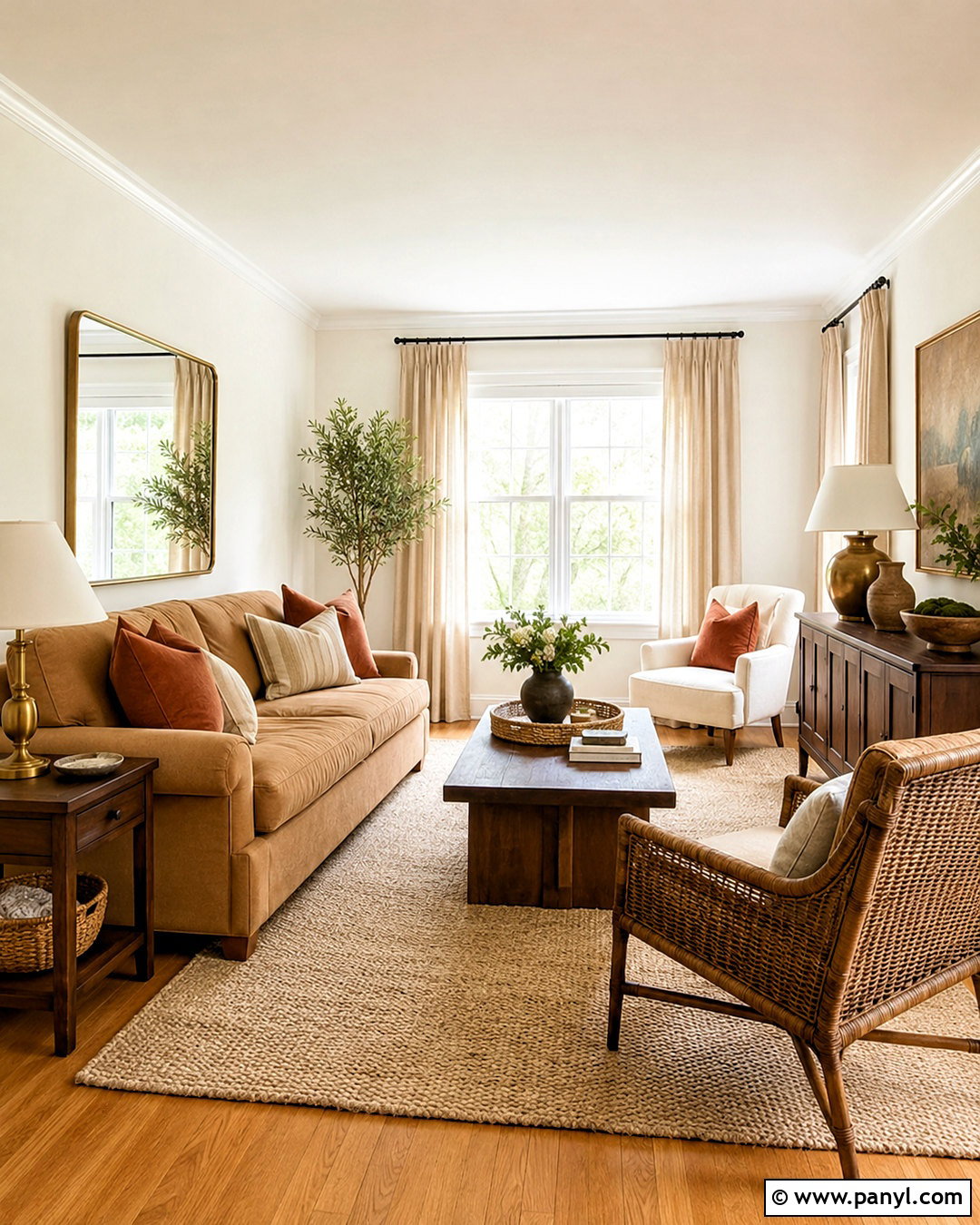
In a north-facing room, White Dove walls may read quieter and slightly more muted, so the furnishings should introduce deliberate warmth. Use honey-toned oak flooring, a camel sofa, and an ivory wool rug to counterbalance cool natural light. Add terracotta pillows, warm brass lamps, and walnut side tables rather than cool gray furniture. Window treatments should be light and simple, using warm flax linen that allows available daylight to enter. A large mirror positioned across from the window can spread light deeper into the room. Choose warm-white bulbs for lamps and ceiling fixtures, but avoid extremely yellow bulbs that exaggerate cream tones. The completed space feels softly illuminated rather than stark. Testing the paint on multiple walls remains essential because the coolest and brightest areas may display the color differently.
31. White Dove Walls In South Facing Room
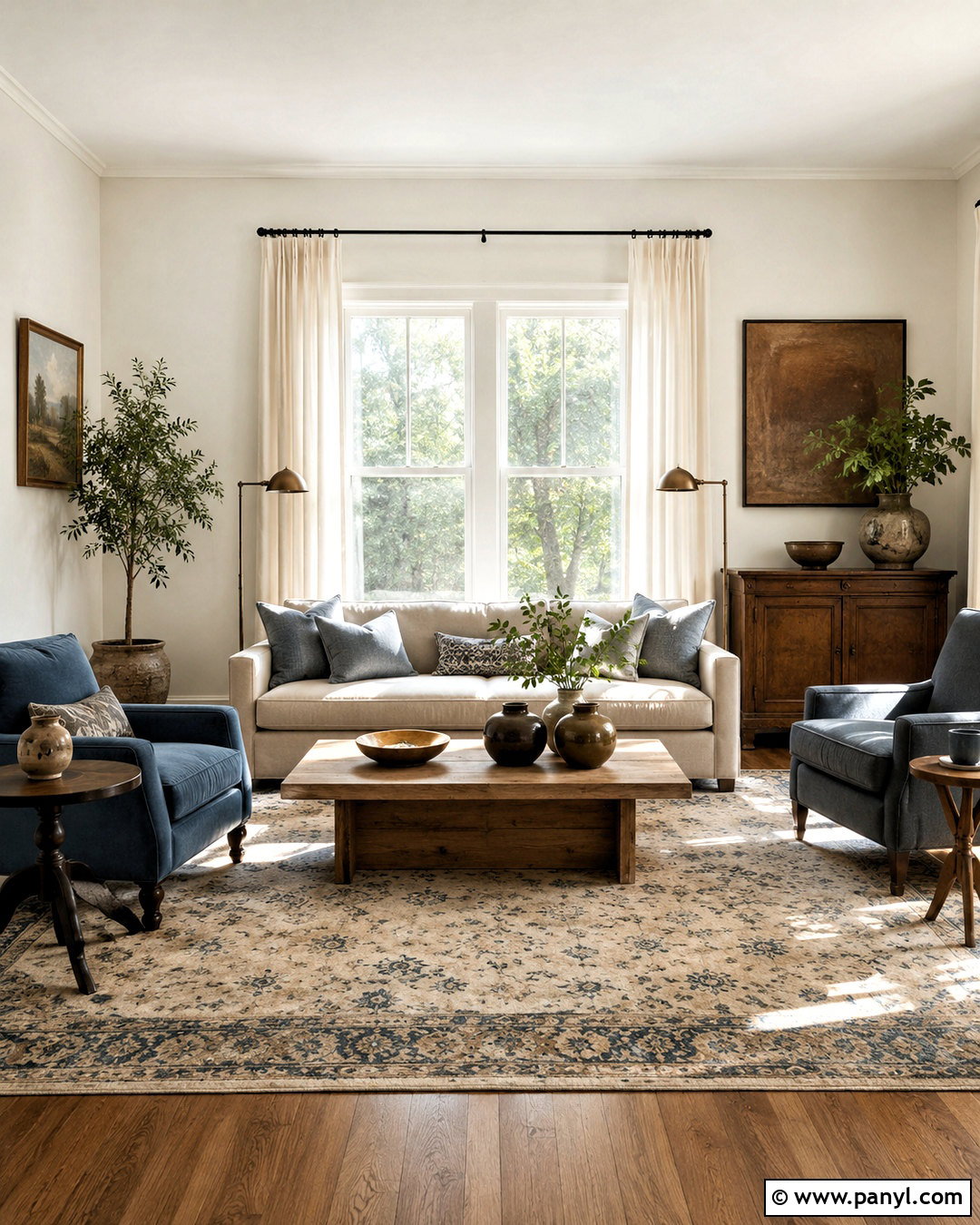
South-facing sunlight can bring out the welcoming warmth in White Dove walls, making balanced cooler accents useful. Furnish the room with a pale gray-beige sofa, muted blue chairs, and a natural oak coffee table. A cream rug with slate-blue details can connect the seating without cooling the space too much. Use airy linen curtains to diffuse strong midday sun and reduce glare on the walls. Black picture frames and dark bronze lighting provide crisp definition. Add ceramics and artwork containing blue, olive, and warm brown to distribute color evenly. Avoid using only yellow woods and beige fabrics, which may make the sunniest hours feel overly creamy. The completed room remains bright and comfortable throughout the day because warm paint, cooler textiles, and grounded dark details balance one another.
32. White Dove Walls For Small Rooms
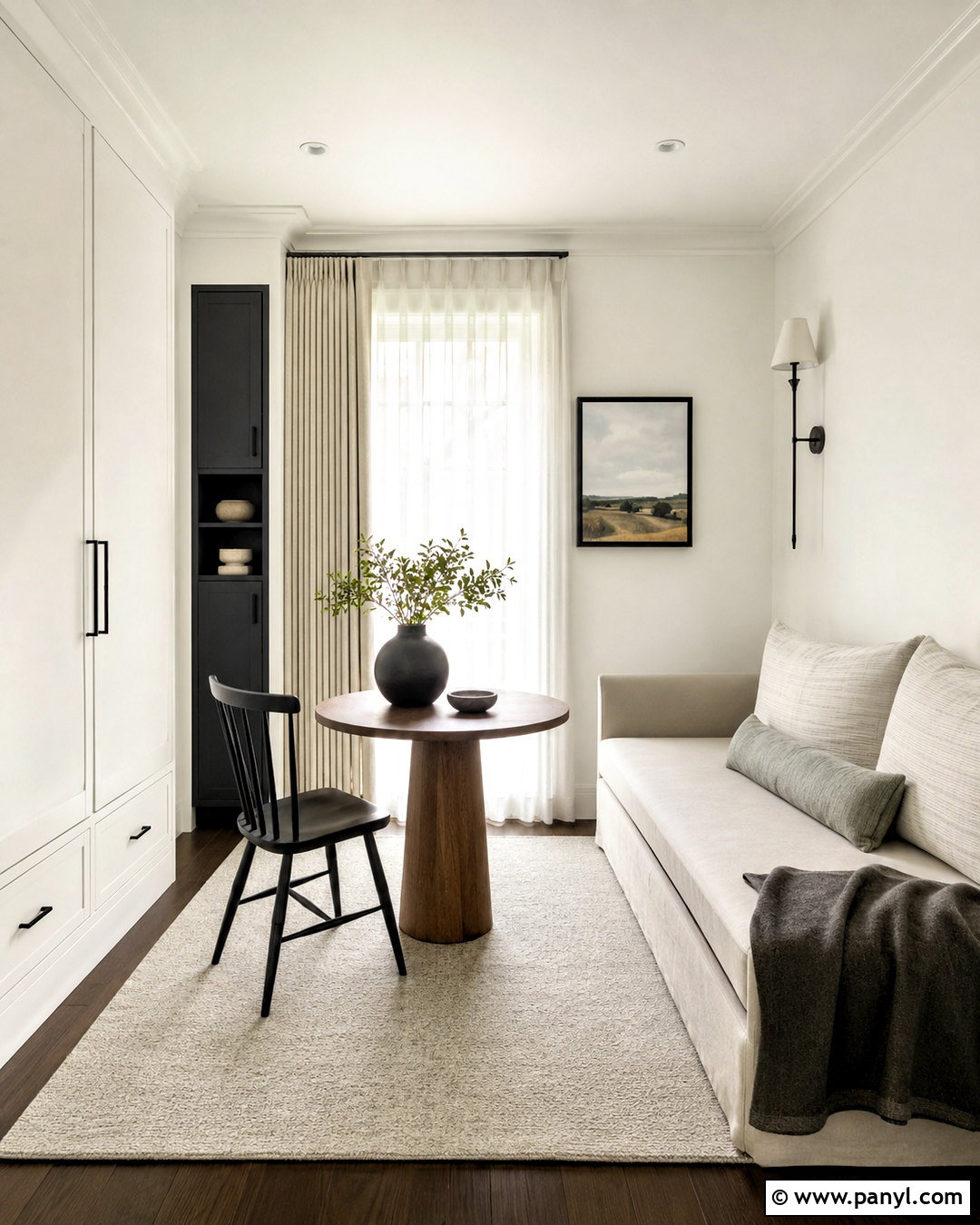
White Dove walls can help a small room feel open when the layout, scale, and storage are handled thoughtfully. Paint the walls, ceiling, and trim the same color, using different sheens to reduce hard visual boundaries. Choose one compact sofa or daybed rather than several undersized chairs. Add a round oak table, a wall-mounted sconce, and a slim storage cabinet that uses vertical space. A light neutral rug should nearly fill the floor, creating one broad foundation instead of several broken zones. Hang simple curtains close to the ceiling and allow them to reach the floor. Use one medium-size artwork and a few dark accents for definition. The finished room feels complete but uncluttered, with practical furniture and concealed storage supporting the expansive warm white envelope.
33. White Dove Walls For Open Floor Plan
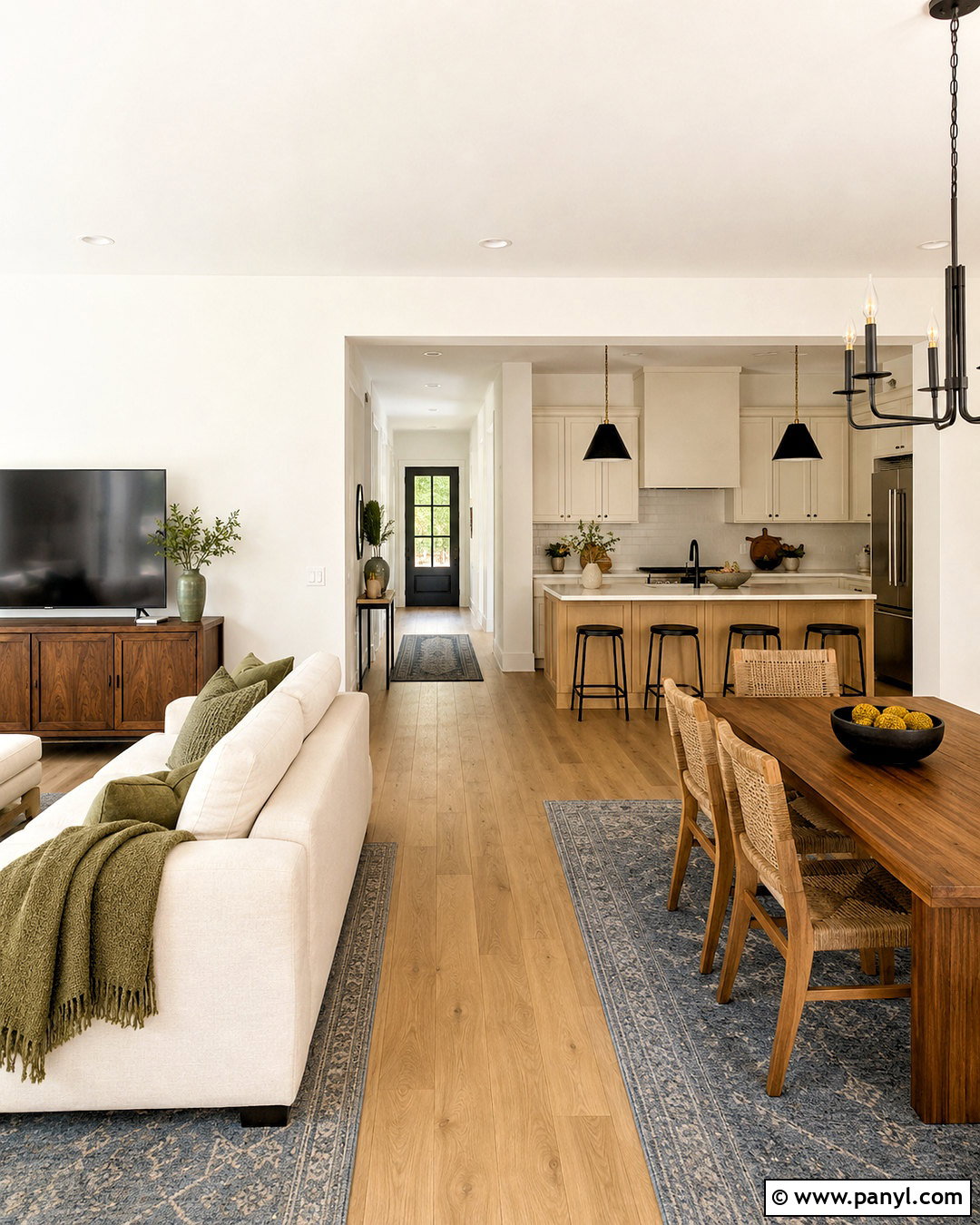
An open floor plan benefits from White Dove walls because the color can connect several functional areas without making them identical. Use consistent walls and trim throughout the living, dining, and kitchen zones. Then define each area with furniture, rugs, and repeated materials. A cream sofa and walnut media console can anchor the living space, while an oak dining table and woven chairs establish the eating area. In the kitchen, repeat oak on the island and use warm white cabinetry. Carry black metal through lighting, frames, and hardware for continuity. Muted blue and olive textiles can appear in every zone in slightly different forms. The completed plan feels coordinated rather than matched, giving each activity its own arrangement while White Dove provides a calm visual path through the entire shared space.
34. White Dove Walls With Warm Lighting
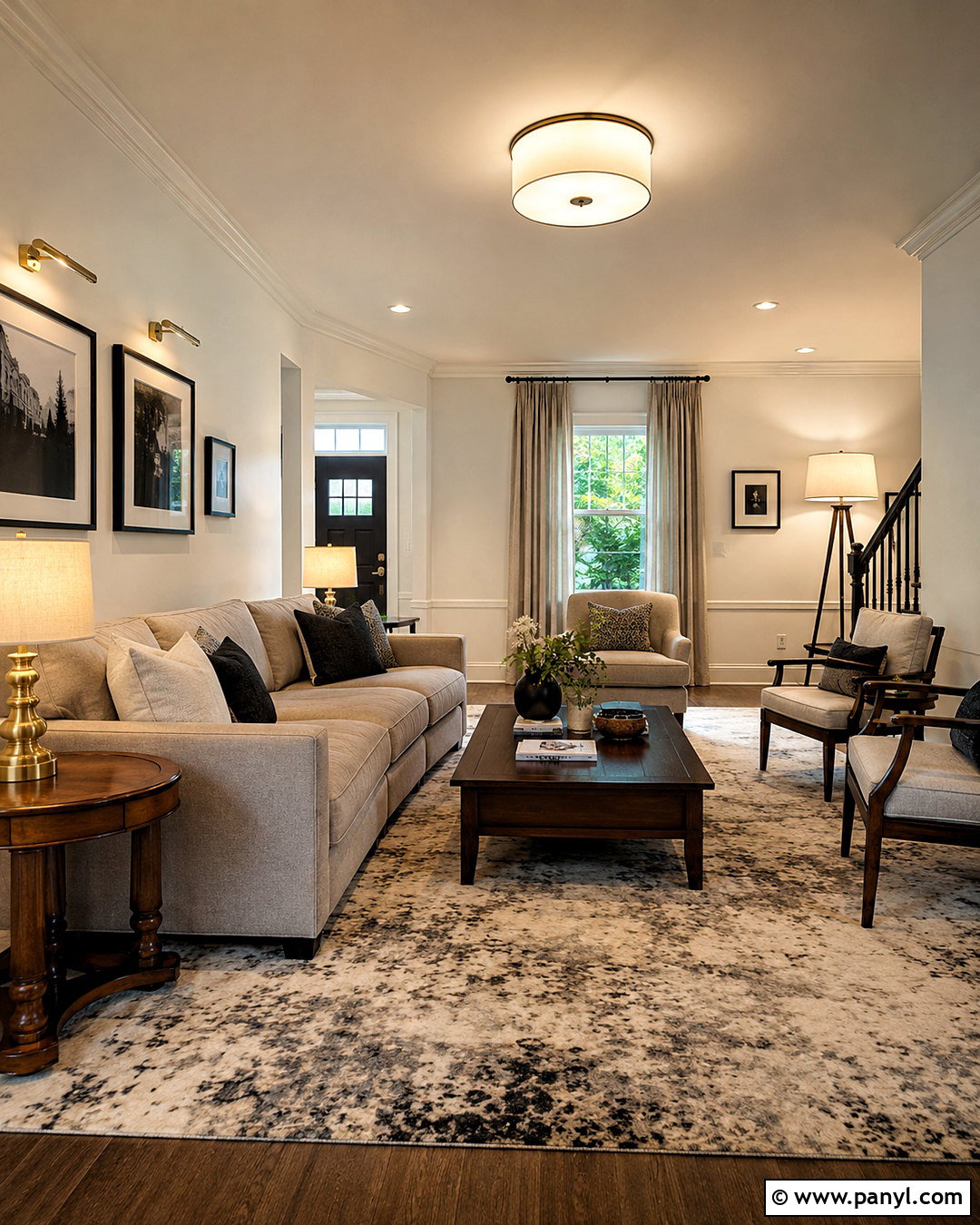
Warm lighting can make White Dove walls feel comfortable after sunset, but a layered plan prevents the room from turning overly yellow. Combine a central dimmable fixture with shaded table lamps, floor lamps, and focused picture lights. Choose bulbs with consistent color temperature throughout the space so one corner does not appear noticeably cooler than another. Furnish the room with a greige sofa, dark walnut tables, and a cream rug containing subtle charcoal details. Brass lighting works well, but balance it with black frames and natural linen to avoid too much golden color. During the day, allow natural light to show the paint’s softer character. The finished room transitions smoothly from bright daytime use to relaxed evening use, with several controllable light sources revealing furniture, artwork, and architectural details evenly.
35. White Dove Whole House Walls
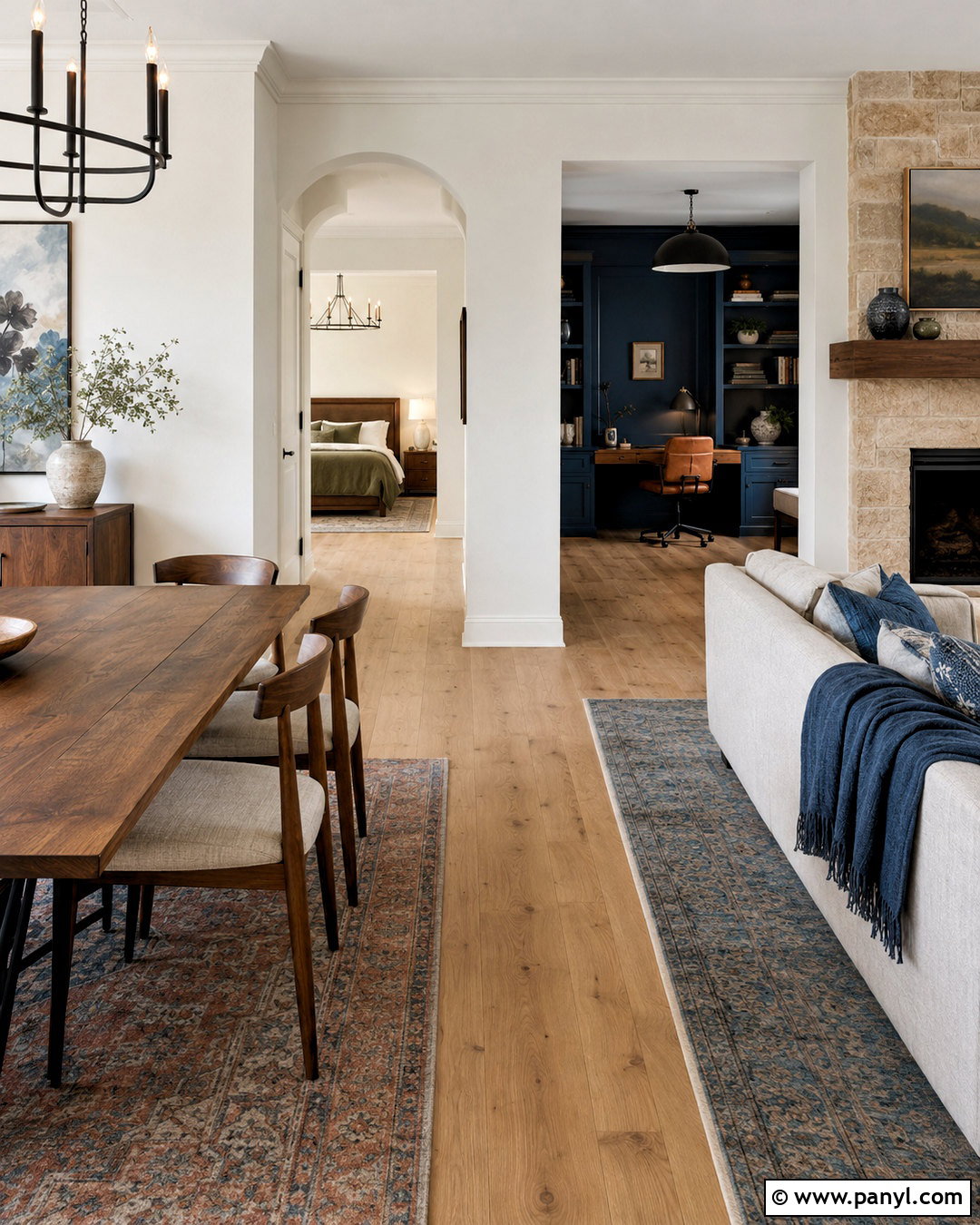
Using White Dove for whole-house walls creates continuity, especially when rooms share sightlines or flooring. Keep the wall color consistent, then select one coordinated trim and ceiling approach for the main living areas. Repeat a limited material palette of white oak, walnut, warm stone, linen, and dark metal throughout the home. Give individual rooms their own identity through movable colors: sage in the bedroom, navy in the office, rust in the dining room, and muted blue in the living room. Use similar curtain heights, hardware finishes, and flooring transitions to strengthen the connection. Large paint samples should be examined in bright, dim, north-facing, and sun-filled spaces before making the final commitment. The complete home will feel unified but varied, with White Dove serving as a flexible background rather than a repetitive decorating formula.
Conclusion:
These **35 white dove benjamin moore walls** demonstrate how one warm white can support dramatically different rooms, materials, and decorating directions. White Dove can appear soft and creamy beside walnut or brass, cleaner beside beige upholstery, and more architectural when used across molding, trim, and built-ins. The strongest rooms do not depend on paint alone. Flooring, lighting, window treatments, furniture scale, textiles, and contrast must work as one complete design. Always test large samples beside permanent surfaces and observe them at several times of day, since digital colors can differ from actual paint. () Once the undertones feel balanced, White Dove provides a flexible foundation that can adapt as furnishings and preferences change.

Related Ideas and Inspiration:
Leave a Reply