
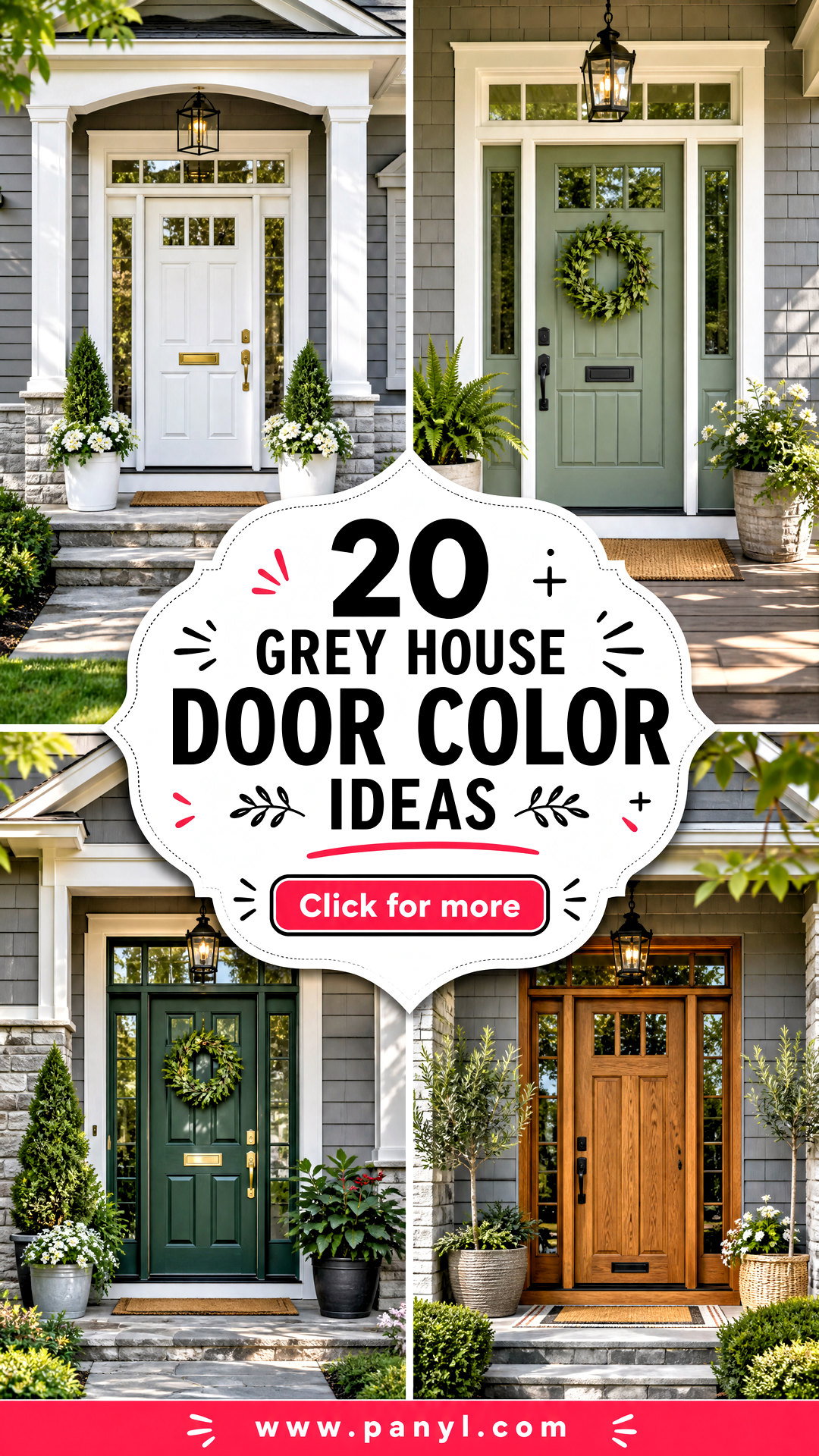
A gray exterior creates a flexible backdrop, but the front door determines whether the house feels classic, cheerful, coastal, modern, or warm. The best color depends on the gray’s undertone, the amount of sunlight at the entrance, and fixed materials such as brick, stone, roofing, and metalwork. Light gray siding can support deep, dramatic doors, while charcoal siding often benefits from clearer contrast. Natural wood and earthy paint colors soften cool gray, whereas black, navy, and burgundy add structure. Before committing, view samples outdoors at several times of day because exterior light can noticeably change a color’s appearance. () The complete exterior combinations below offer 20 practical grey house door color ideas.
1. Black Front Door With Gray House
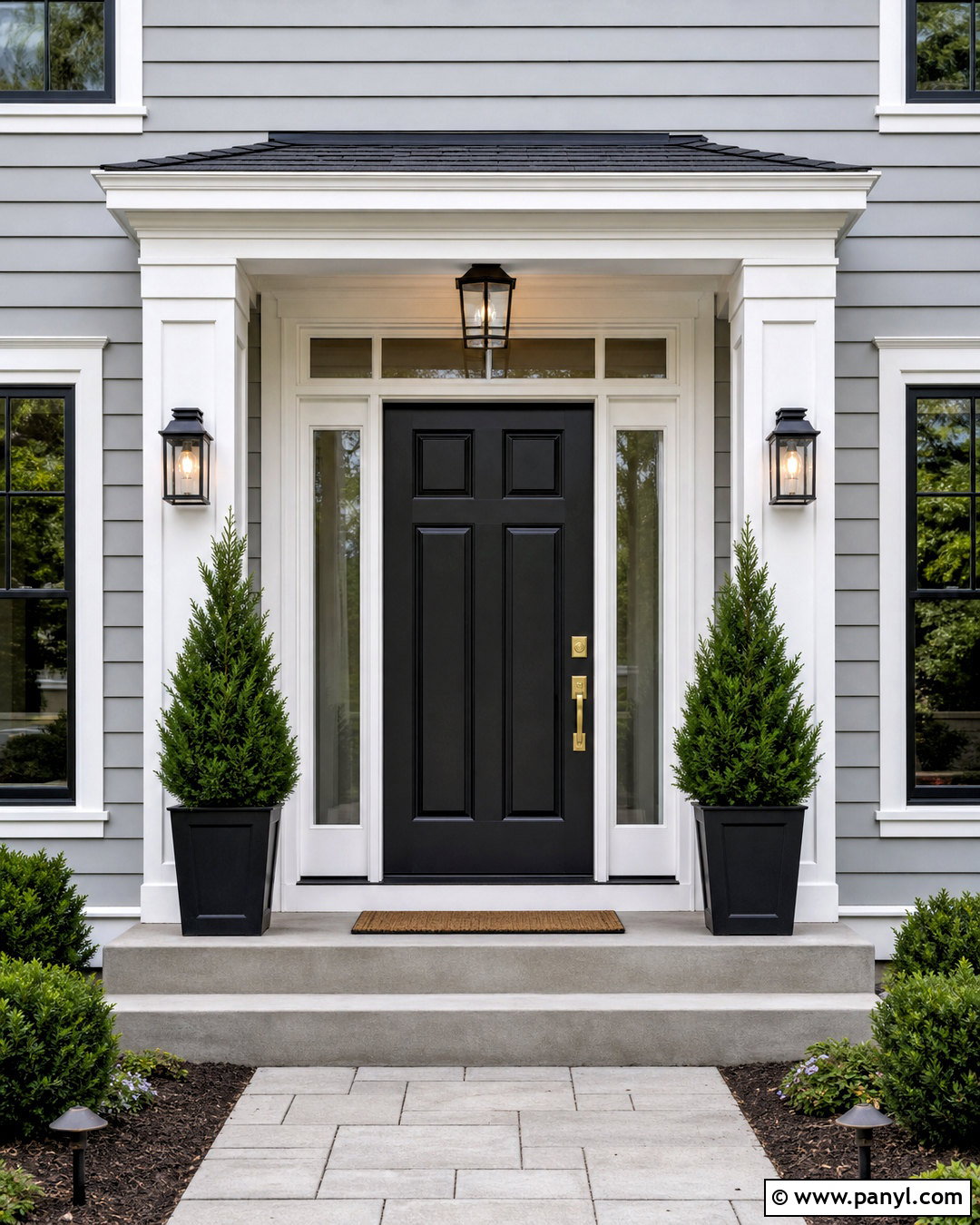
A black front door gives a gray house a crisp, grounded focal point. Use soft or medium gray siding, bright white trim, and a deep matte black door for balanced contrast. Black window frames or shutters can repeat the color without making the facade feel too busy. Choose brushed brass hardware to add warmth, or matte black hardware for a clean modern finish. A porch light with clear glass keeps the entrance visually open. Complete the look with concrete steps, a natural coir mat, and symmetrical evergreen planters. If the gray siding is already very dark, frame the doorway with wide white casing so the entrance remains easy to see. This complete scheme works especially well on modern farmhouse, Colonial, and contemporary homes.
2. White Front Door With Gray House
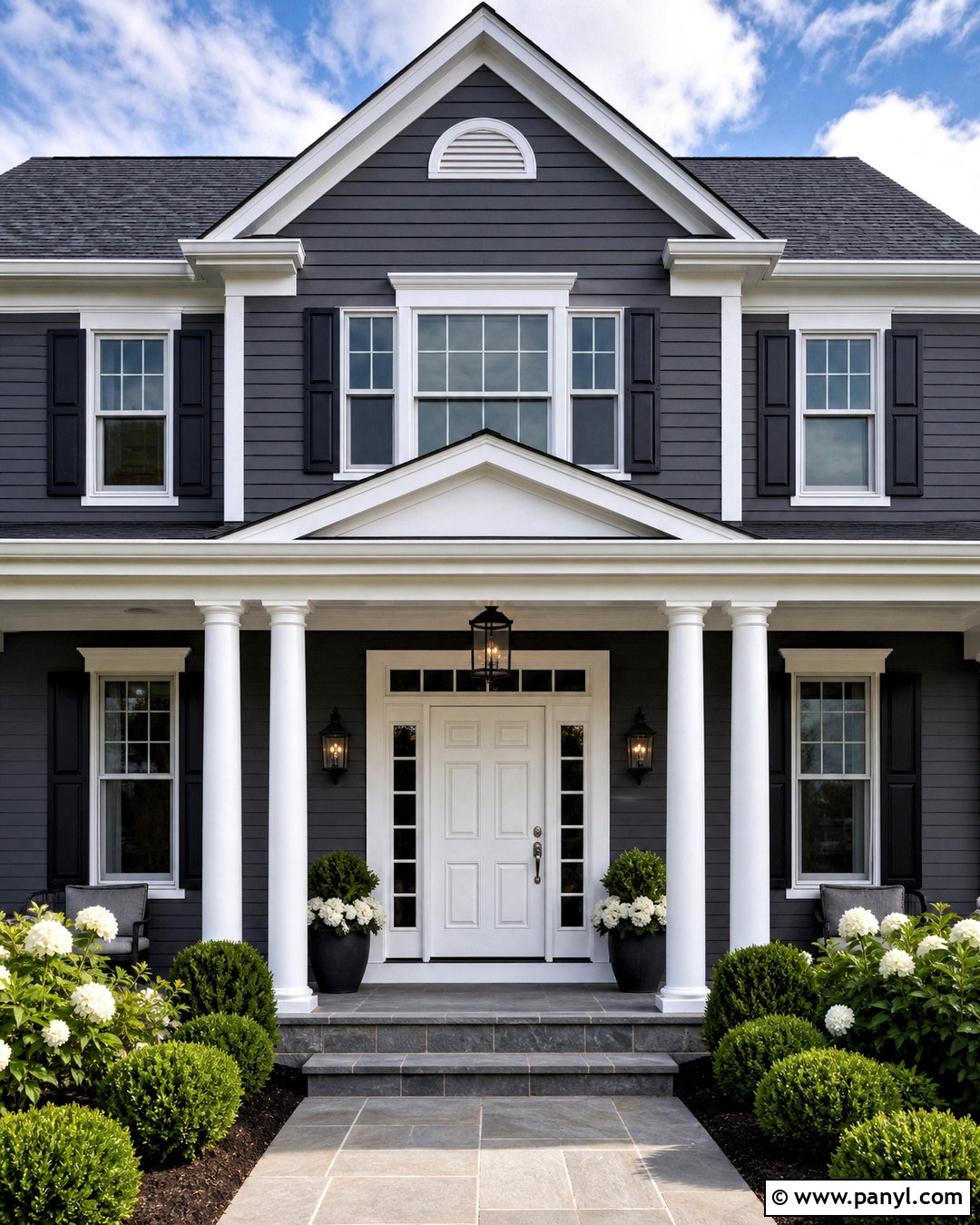
Fresh white brings a clean, airy appearance to dark gray or charcoal siding. Instead of treating the door as an isolated white block, connect it to white window trim, porch columns, fascia, and garage details. A satin or semi-gloss finish will reflect light and emphasize the door’s paneling. Add polished nickel hardware for a cool, streamlined palette, or aged brass for a softer traditional look. Slate porch flooring and simple black lanterns provide enough contrast to keep the entry from looking washed out. Finish the facade with clipped boxwoods, white flowering plants, and pale stone edging. This door color is especially effective when the entrance sits beneath a deep porch where brighter surfaces help the doorway feel more open and welcoming.
3. Navy Blue Front Door With Gray House
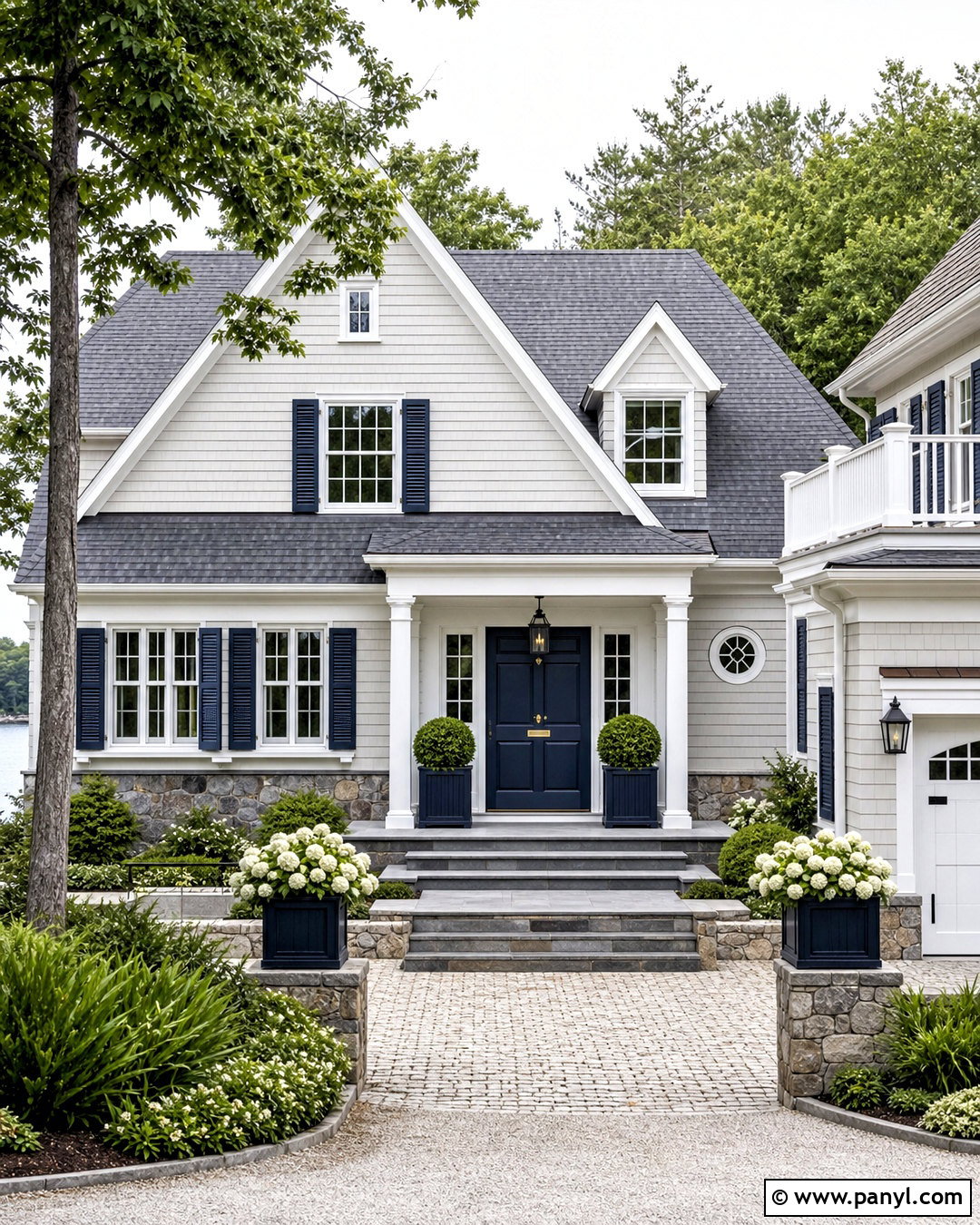
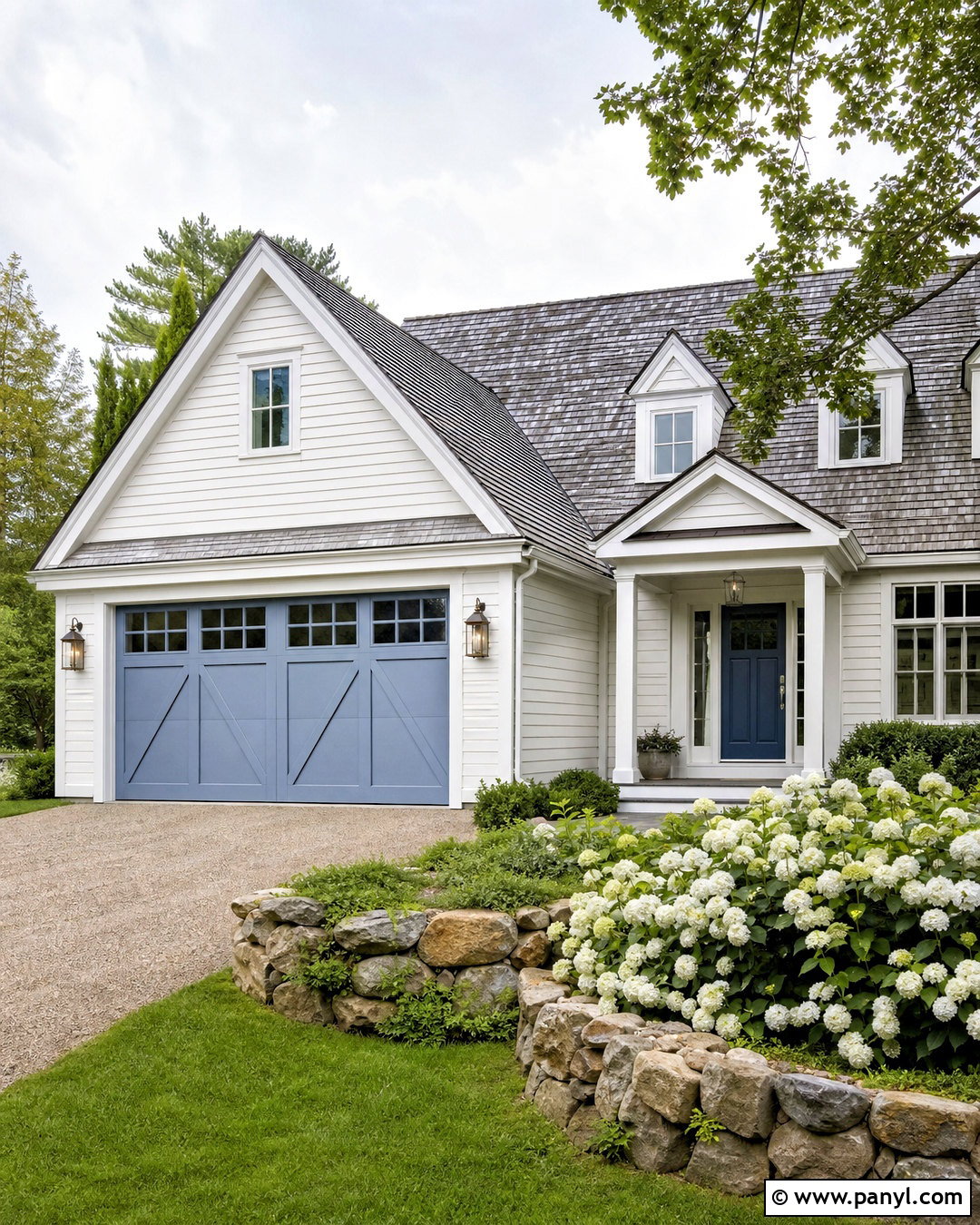
Navy blue creates depth without looking as severe as solid black. Pair a rich, true navy door with pale cool-gray siding, crisp white trim, and a charcoal roof. The combination feels tailored and works across coastal, traditional, and transitional architecture. Use polished brass hardware to warm the blue and make the entrance more noticeable. Two substantial lanterns, dark planters, and neatly layered greenery can frame the doorway without competing with it. If the house includes stone, choose gray and beige stone that connects the cool siding with the warmer hardware. A striped outdoor rug in navy and cream completes the porch. Keep shutters navy or charcoal, but avoid introducing another strong blue that could make the overall exterior feel mismatched.
4. Red Front Door With Gray House
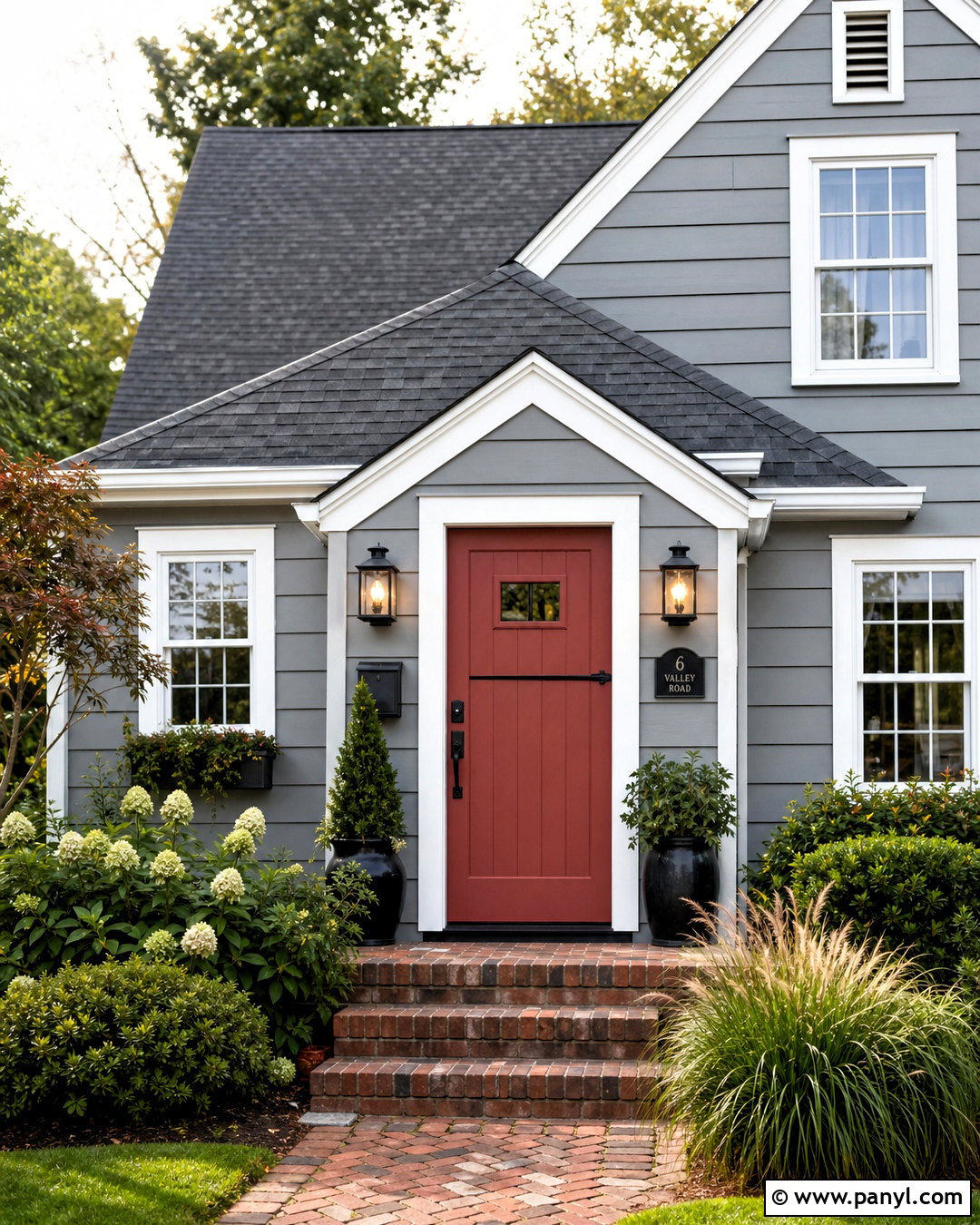
A strong red door can turn a simple gray exterior into an inviting, memorable home. Select a slightly muted brick red rather than an overly bright primary red for a more versatile finish. Medium gray clapboard siding, warm white trim, and a weathered charcoal roof create a balanced background. Repeat the red sparingly through small planters or seasonal flowers rather than painting the shutters to match. Black iron hardware and traditional lanterns give the scheme definition, while brick steps help the door feel connected to the architecture. This palette is particularly attractive on cottages, Cape Cod homes, and traditional houses. Surround the porch with deep green shrubs and soft ornamental grasses, which calm the red and create a polished transition between the facade and landscape.
5. Yellow Front Door With Gray House
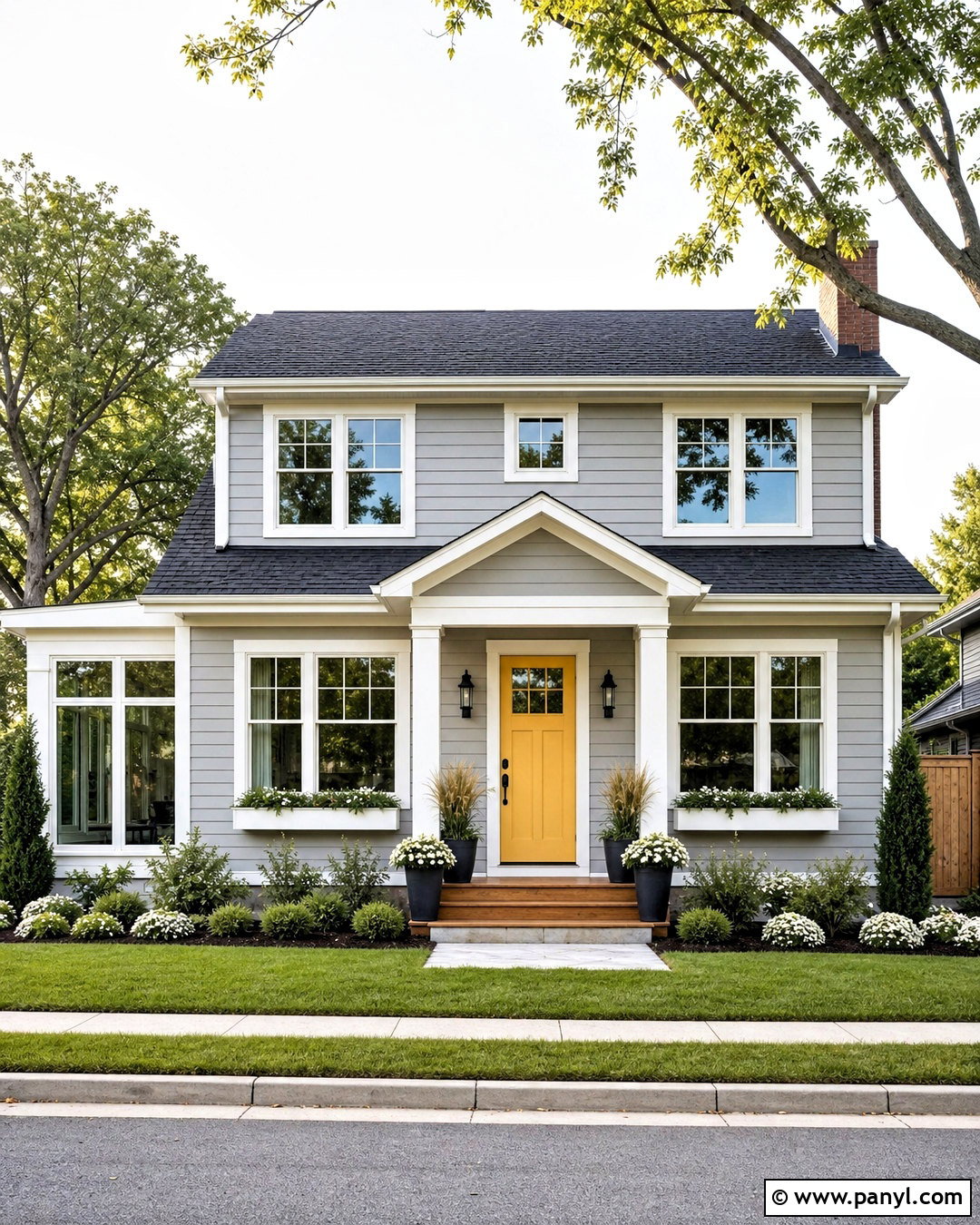
Could your gray exterior use a happier focal point? A warm golden-yellow front door adds energy while still feeling sophisticated when the rest of the palette stays restrained. Combine light gray siding with clean white trim, a medium charcoal roof, and simple black hardware. The yellow should be rich enough to stand apart from the siding without becoming neon. Natural wood porch flooring or warm-toned brick steps can reinforce its sunny character. Add charcoal planters filled with white flowers, trailing greenery, and fine-textured grasses. Black wall lanterns visually connect the entrance to the roof. This complete exterior is effective on small cottages and straightforward suburban homes because the colorful door creates personality without requiring expensive architectural changes or an elaborate porch renovation.
6. Sage Green Front Door With Gray House
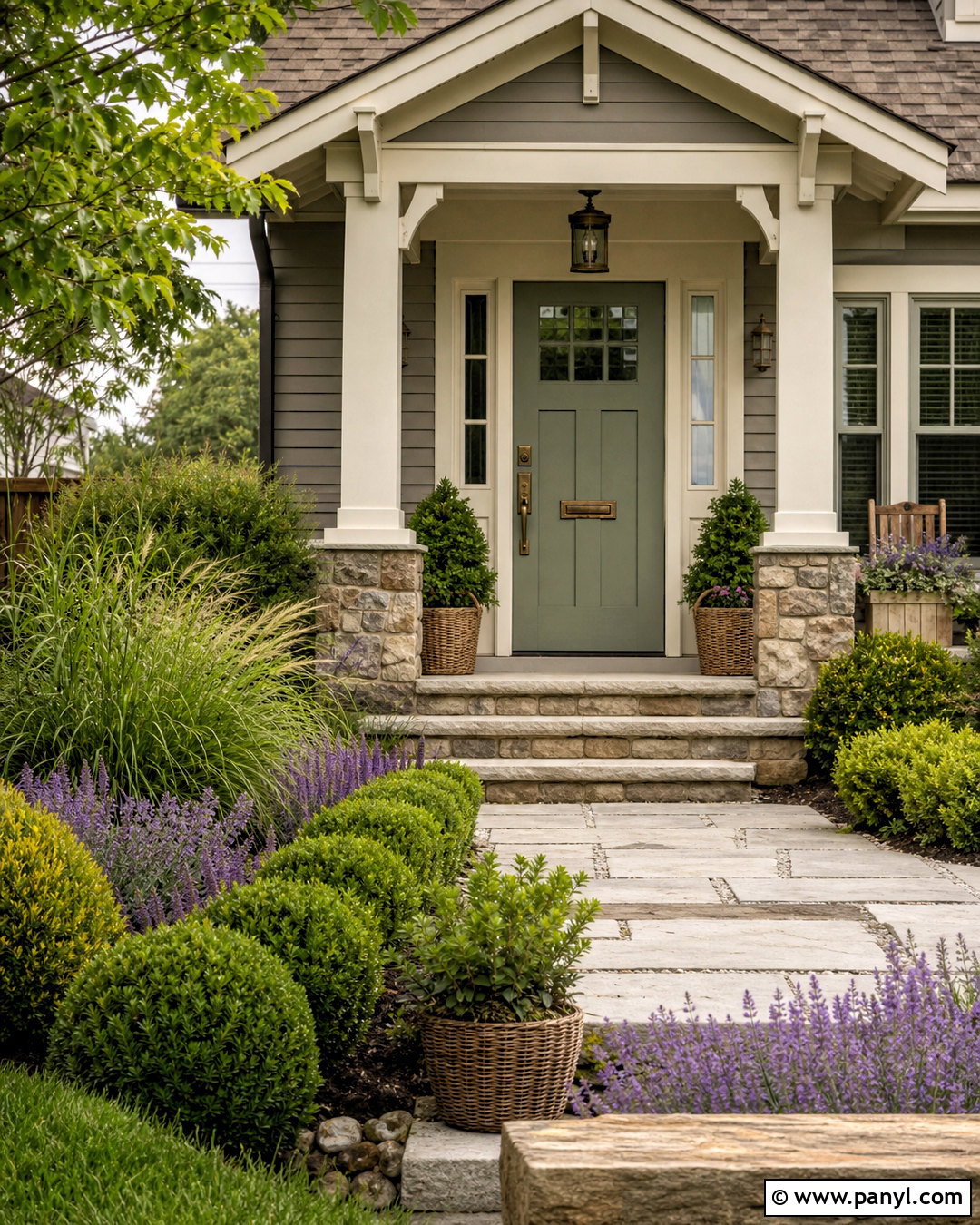
Soft sage green creates a restful transition between gray siding and surrounding landscaping. Choose warm gray or greige siding, creamy white trim, and a muted sage door with noticeable green color rather than a nearly gray shade. A weathered wood or medium-brown roof supports the natural palette. Use antique brass hardware, woven planters, and warm stone steps to keep the entrance from feeling cold. Lavender, boxwood, and ornamental grasses can layer around the walkway for a relaxed garden look. If shutters are present, paint them a deeper gray-green instead of matching the door exactly. This full scheme suits cottages, Craftsman homes, and casual traditional exteriors. It also coordinates naturally with stonework containing taupe, beige, gray, and mossy undertones.
7. Forest Green Front Door With Gray House
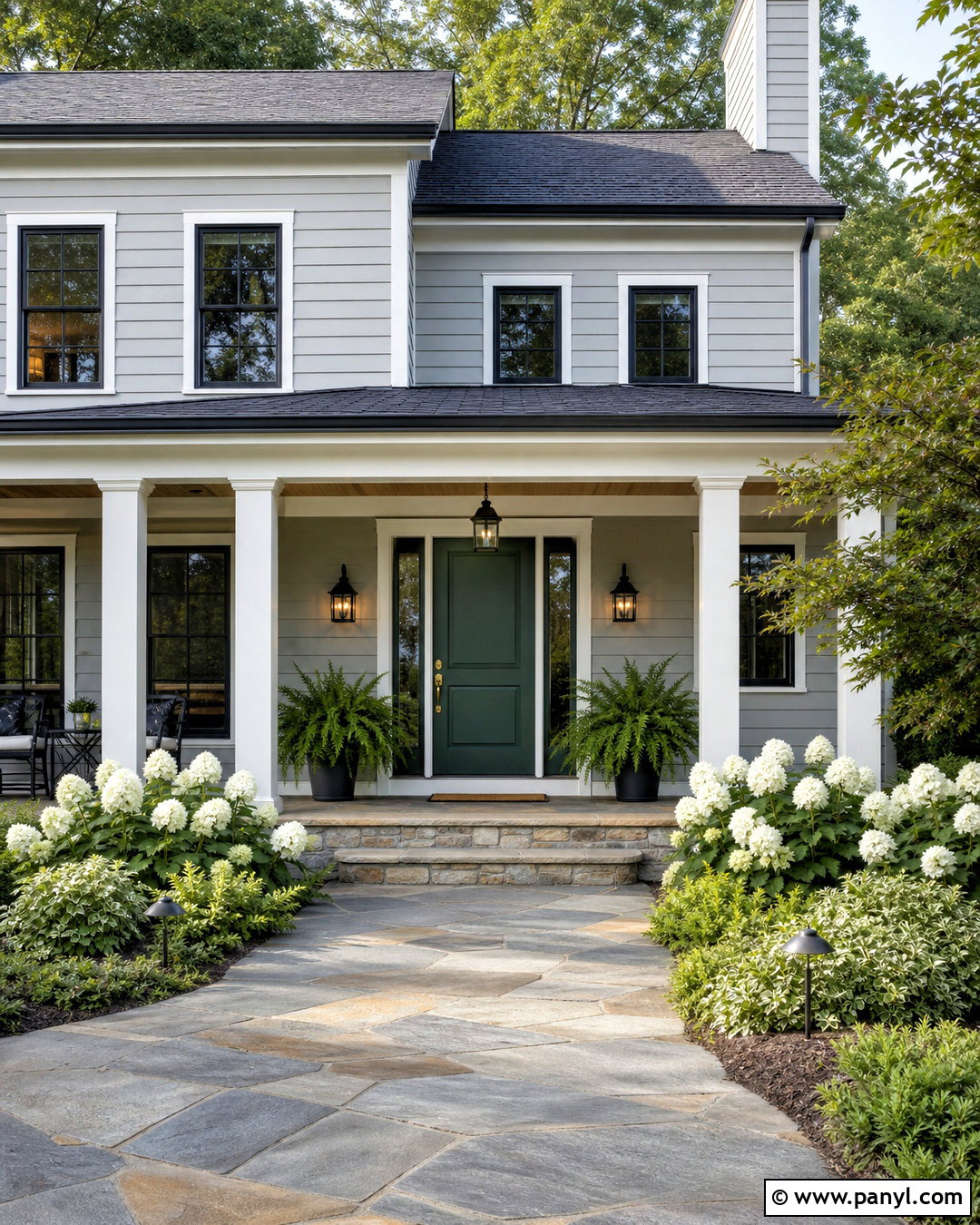
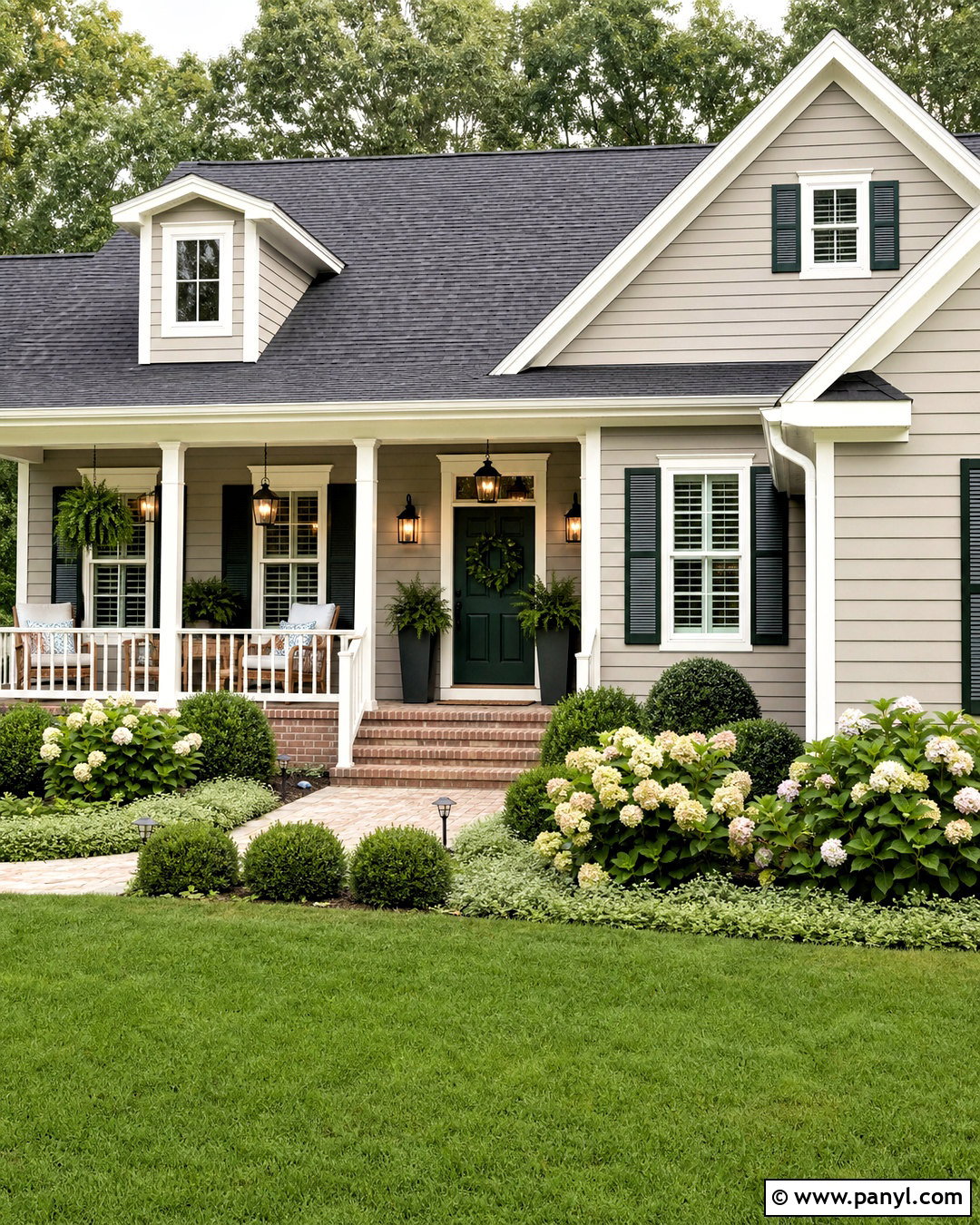
Deep forest green delivers rich contrast against pale gray siding while remaining connected to the landscape. Build the exterior around cool light-gray clapboards, warm white trim, a black roof, and a saturated green paneled door. Add unlacquered brass hardware, which introduces warmth and develops character over time. Black metal lanterns and dark window sashes give the facade structure without distracting from the green. For landscaping, use ferns, clipped evergreens, white hydrangeas, and natural stone along the entry path. A medium-toned oak porch ceiling can make the whole arrangement feel warmer. This door treatment looks especially convincing on homes near mature trees. It offers the visual strength of a dark neutral but feels softer and more organic than a standard black entrance.
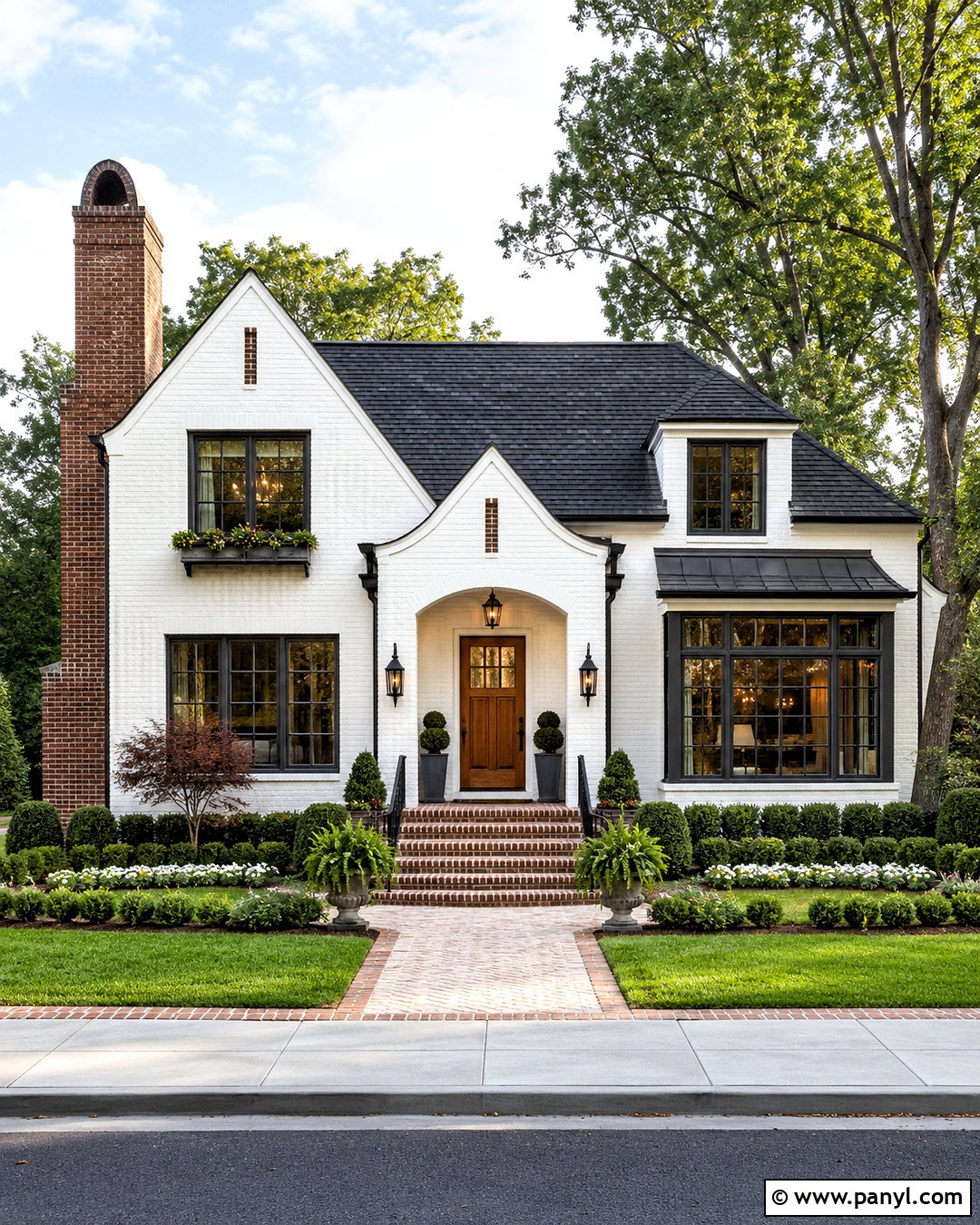
8. Teal Front Door With Gray House
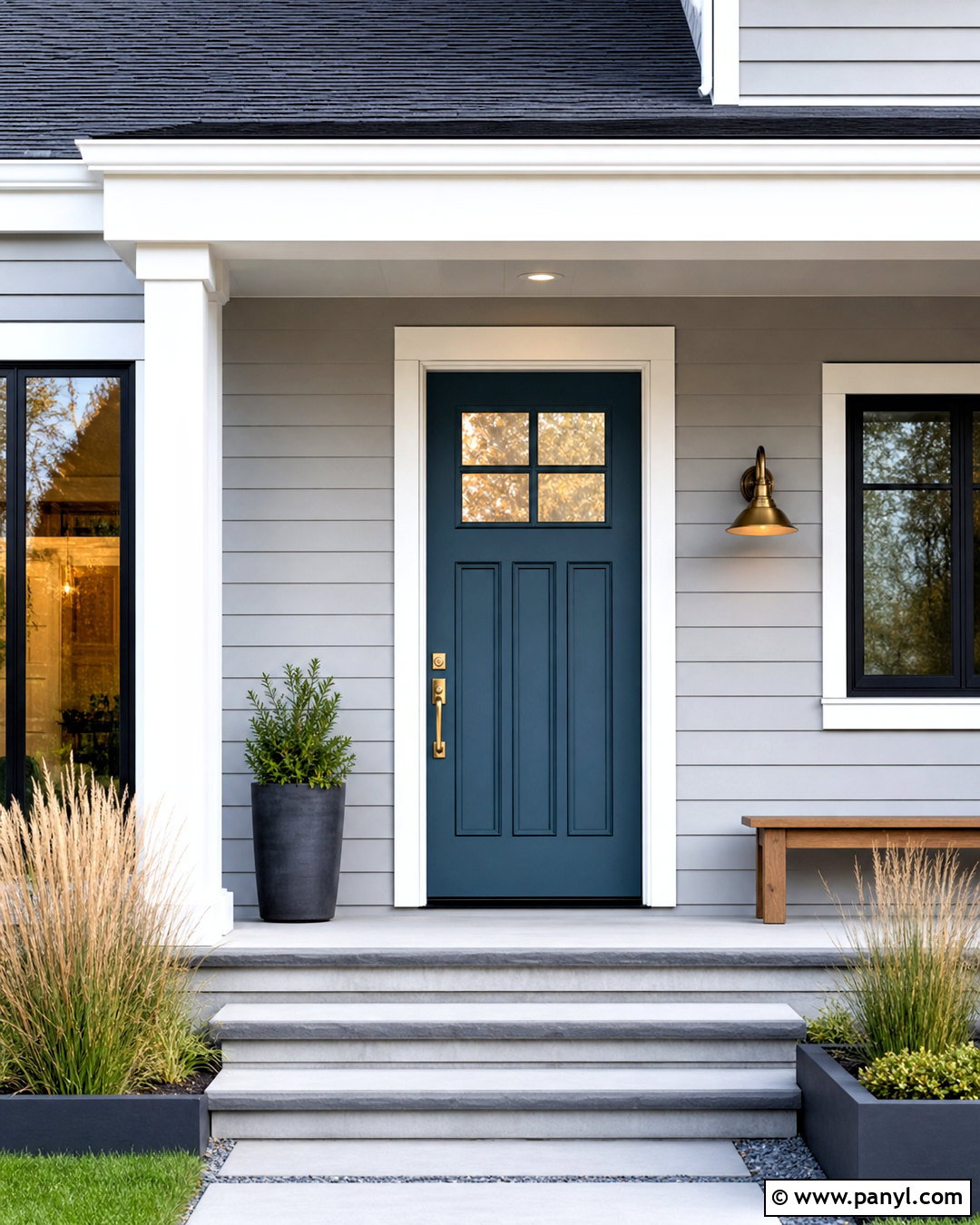
Teal adds confident color to gray siding without creating an overly bright or playful exterior. Select a deep blue-green teal for the door, then surround it with pale gray siding and wide white trim. A dark gray roof and black-framed windows keep the overall palette grounded. Choose brushed brass or warm bronze hardware to bring out the green side of the teal. Concrete steps, streamlined planters, and architectural grasses create a clean contemporary entrance. For a more transitional look, add a natural wood bench and woven outdoor rug. Avoid repeating teal across large surfaces; instead, let the door remain the central feature. This complete combination works particularly well when the house has simple lines and needs one strong color to give the facade definition.
9. Turquoise Front Door With Gray House
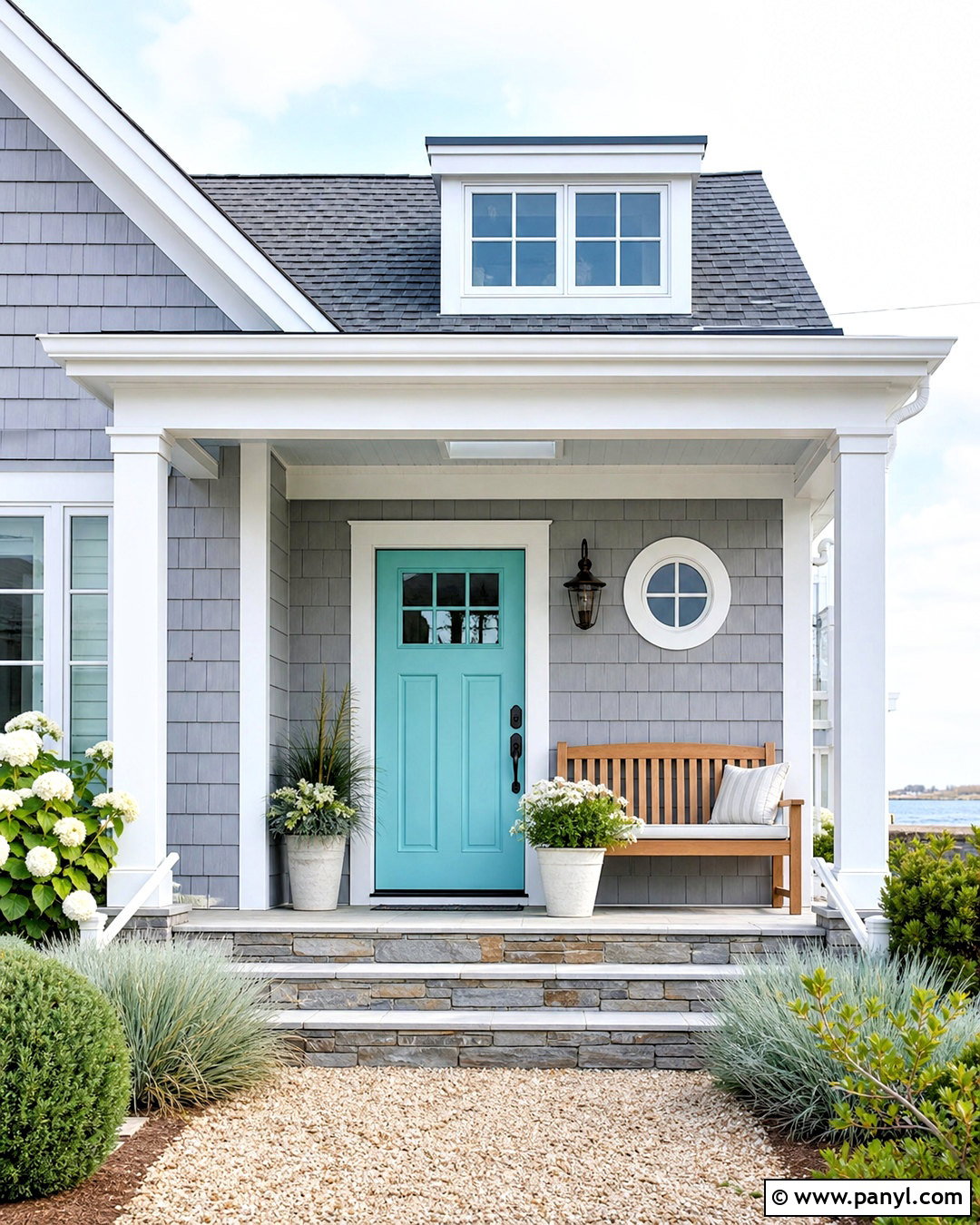
A turquoise door gives a gray house a breezy coastal character, especially when paired with clean white trim. Use light silver-gray siding, a soft charcoal roof, and a clear turquoise that leans slightly blue rather than green. Satin nickel hardware maintains the cool palette, while a natural fiber mat and pale oak porch bench prevent the entrance from feeling sterile. Add white planters containing blue-green grasses, small palms in warm climates, or compact evergreen shrubs in cooler areas. Keep shutters white or gray so the turquoise remains intentional and focused. Light stone steps and a simple glass pendant can complete the entrance. This scheme feels cheerful and casual, making it suitable for beach-inspired cottages, compact ranch homes, and relaxed suburban exteriors.
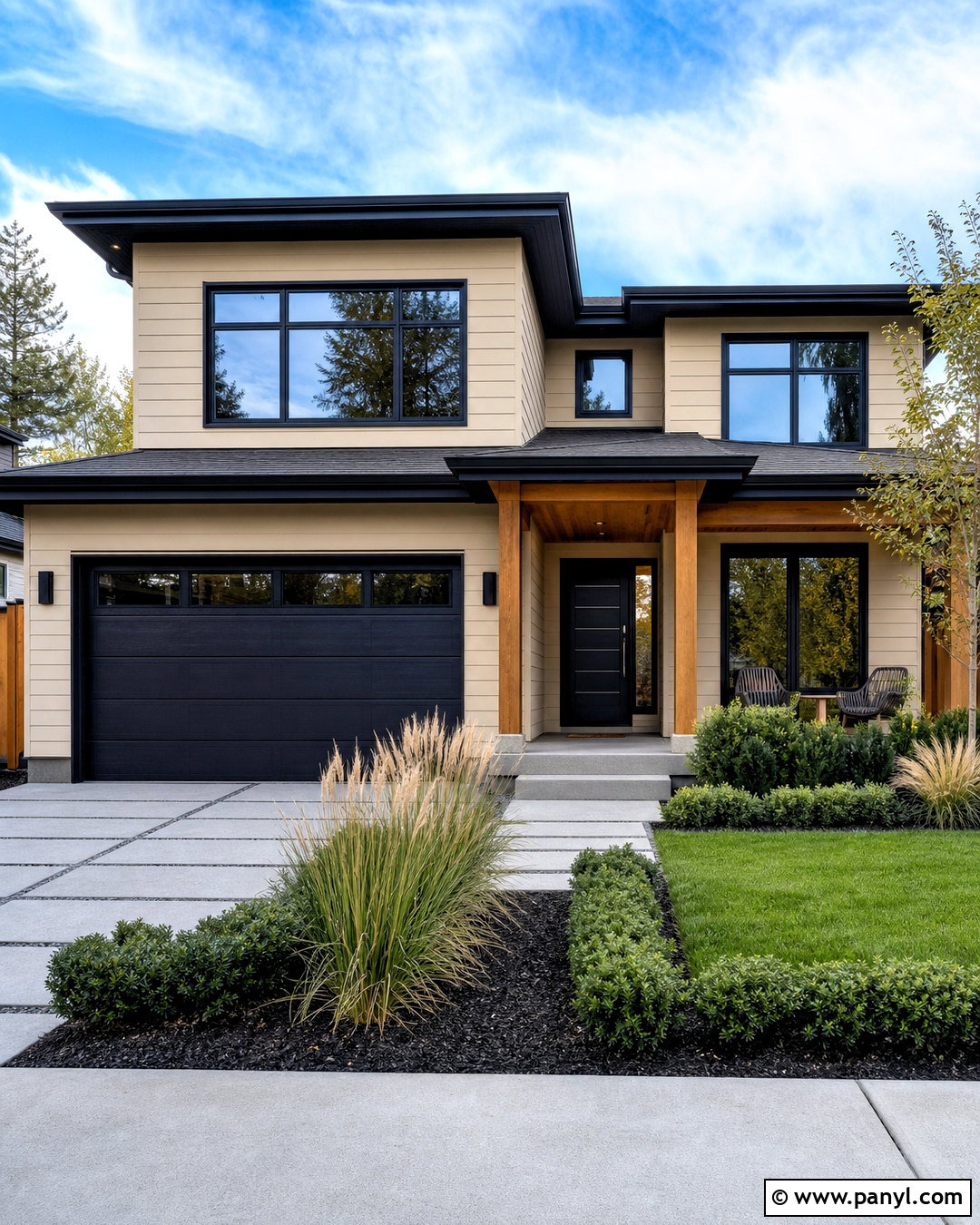
10. Light Blue Front Door With Gray House
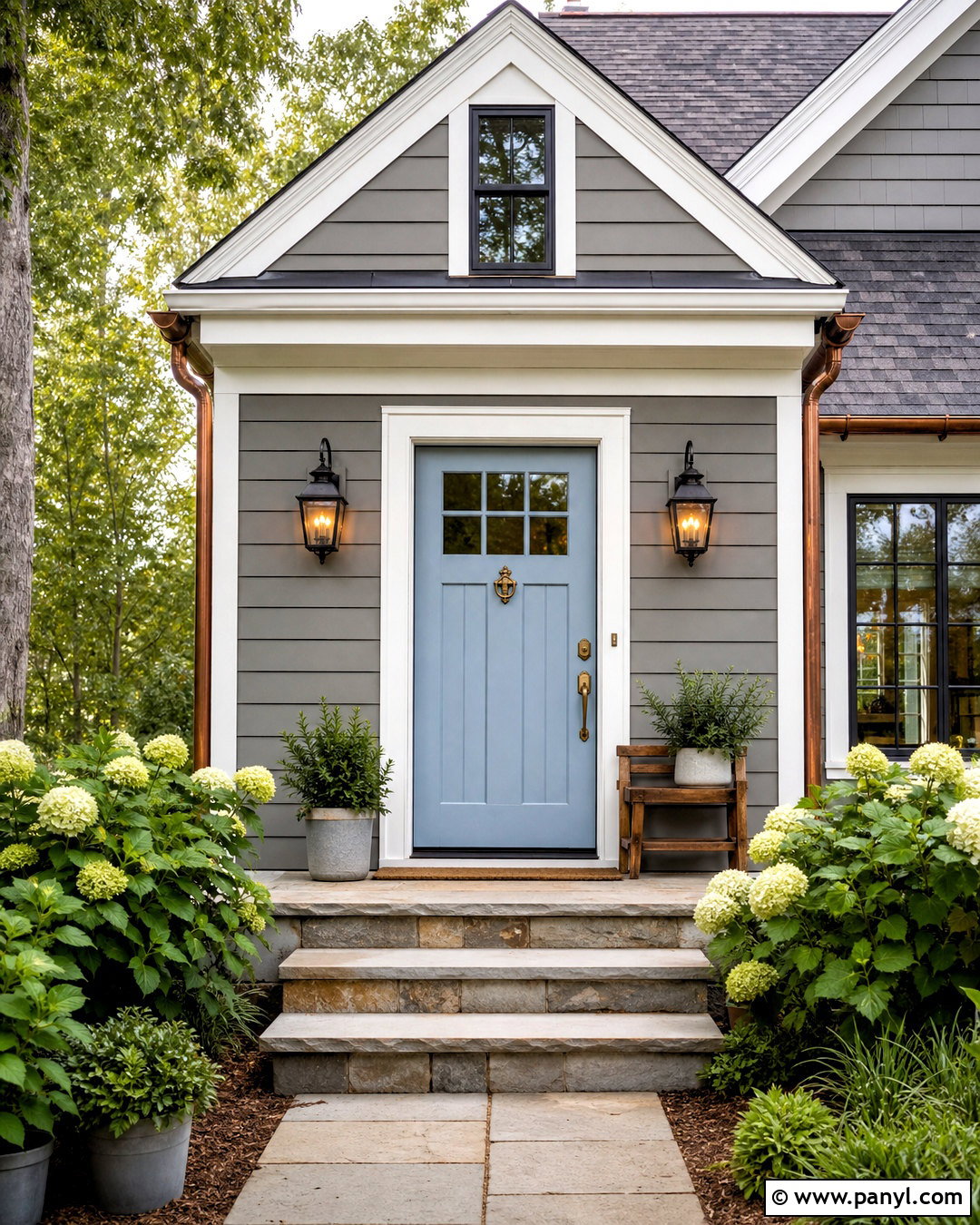
A powder-blue front door introduces gentle color while preserving a quiet, refined exterior. Pair the door with warm medium-gray siding, soft white trim, and a roof containing both gray and brown tones. The warmer gray prevents the pale blue from appearing icy. Use aged brass hardware, traditional wall lanterns, and a natural wood threshold for subtle warmth. Pale limestone steps and loosely planted white hydrangeas can extend the light color story into the yard. For depth, choose dark charcoal window sashes or a single charcoal porch bench. This complete palette works beautifully on traditional cottages and homes with modest covered entries. Select a blue with enough pigment to remain visible in bright sunlight, rather than a shade that may appear almost white from the street.
11. Cobalt Blue Front Door With Gray House
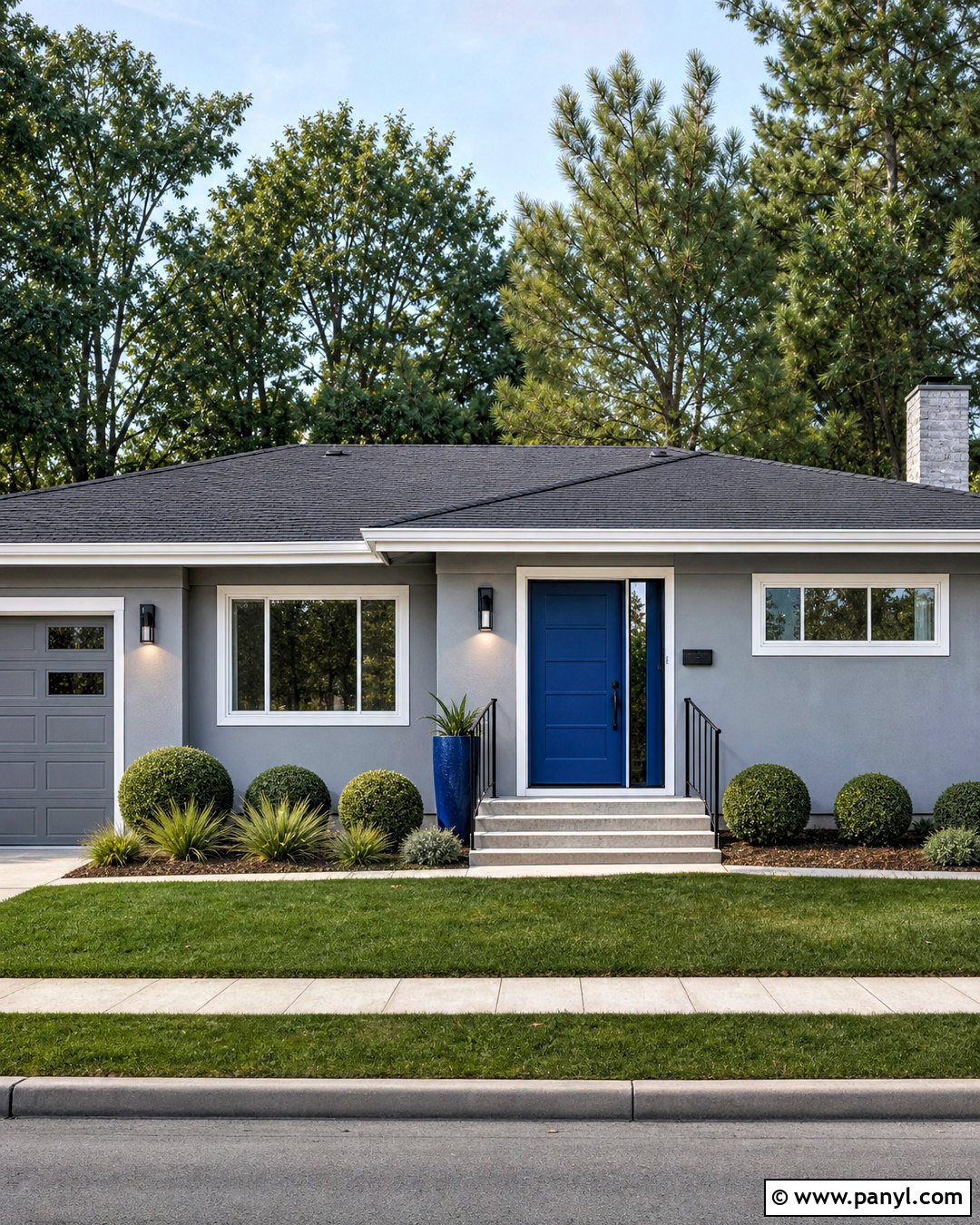
Bright cobalt blue makes a bold statement against straightforward gray siding. To keep the result polished, pair it with medium neutral-gray siding, crisp white trim, and a simple black or charcoal roof. Choose a clean paneled door with minimal decorative glass so the vivid blue remains the main feature. Matte black hardware and modern rectangular lights add structure. Repeat the blue only in a small ceramic planter or patterned outdoor rug. Concrete steps, black railings, and clipped green shrubs create a strong framework around the colorful entrance. This full look is ideal for a contemporary ranch or updated midcentury home. If the facade receives intense sunlight, test deeper cobalt samples because strong daylight can make saturated exterior paint appear lighter than expected.
12. Coral Front Door With Gray House
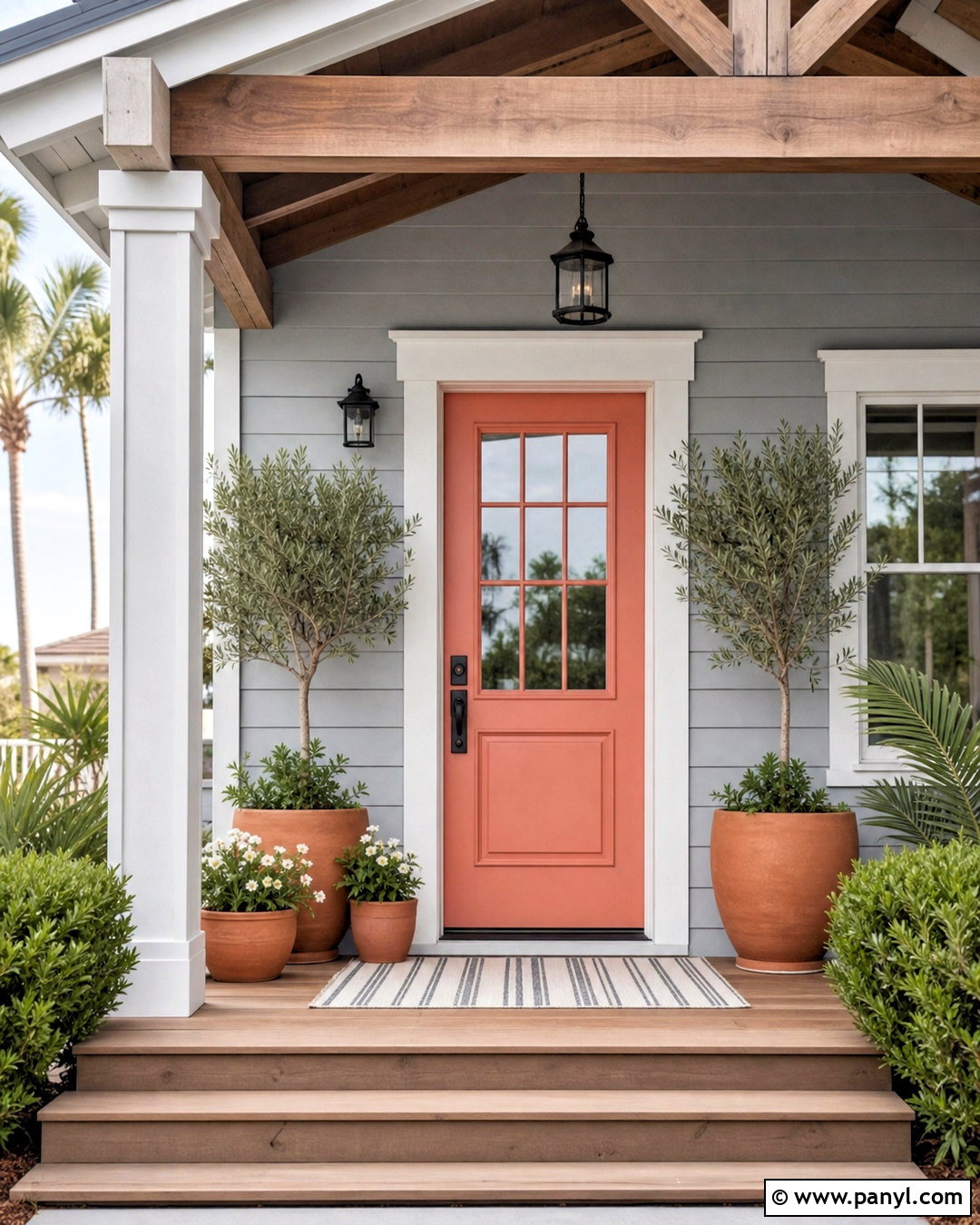
Coral brings warmth and personality to cool gray siding while feeling softer than strong red or orange. Choose a muted coral with terracotta undertones, then pair it with pale gray siding and creamy white trim. A warm charcoal roof, bronze hardware, and natural wood porch details help connect the cool and warm colors. Terracotta planters filled with leafy green plants can repeat the door’s earthy undertone without creating a themed appearance. Use a neutral striped rug and simple bronze lanterns to finish the porch. This coordinated exterior looks especially appealing on bungalows, coastal cottages, and small homes with prominent front entries. Keep shutters dark gray or remove them if they make the facade too busy, allowing the coral door to remain the clear focal point.
13. Burnt Orange Front Door With Gray House
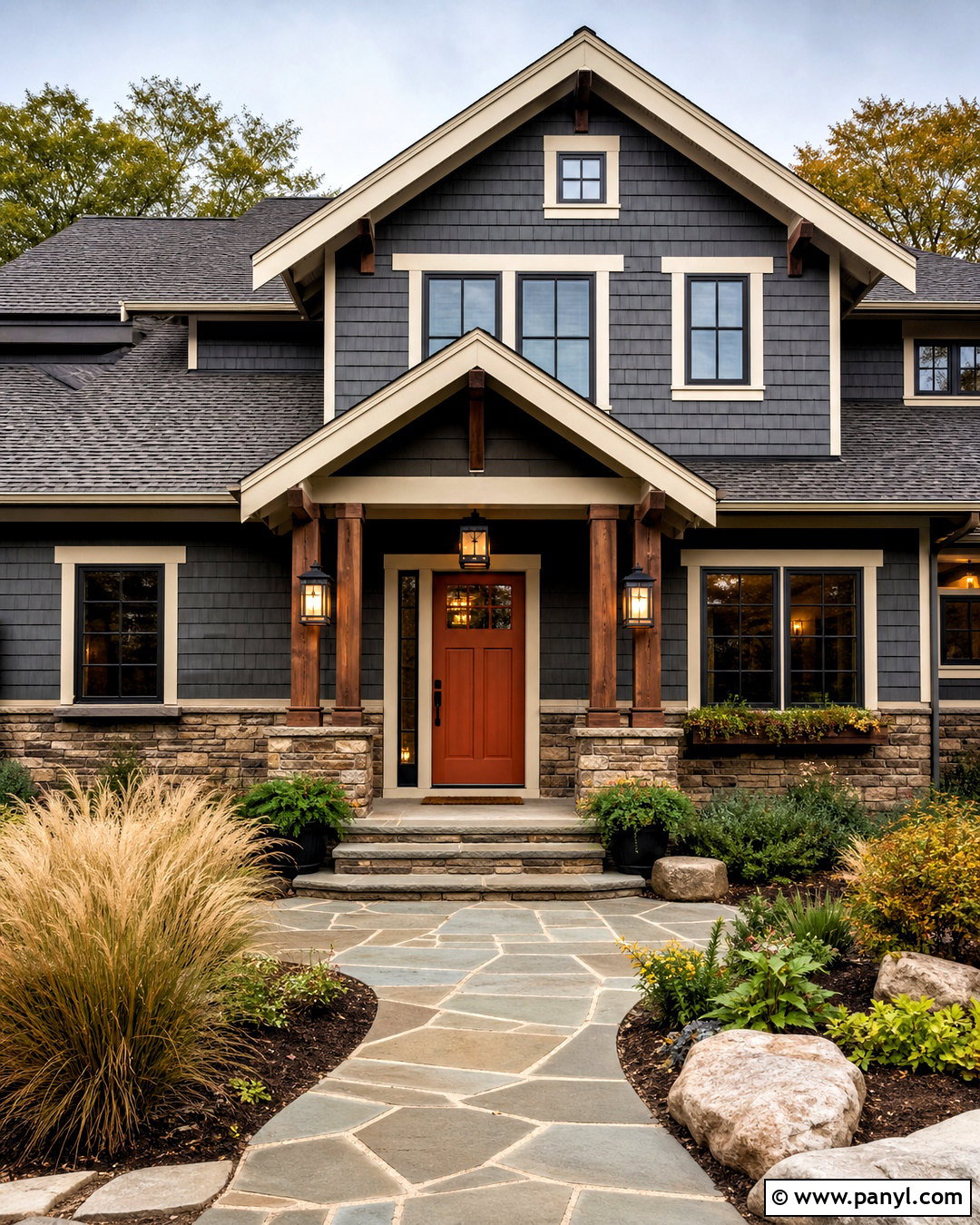
Burnt orange creates a warm, earthy contrast that looks especially attractive beside deep gray siding. Start with charcoal-gray fiber-cement siding, off-white trim, and a muted orange door inspired by clay or autumn leaves. A brown-gray roof and warm stone foundation will help unite the colors. Use dark bronze hardware, cedar porch posts, and simple black-framed lighting for a balanced mix of natural and modern materials. Complete the entry with rust-colored planters, ornamental grasses, and gravel or flagstone edging. Because the siding is dark, keep the door color moderately bright so the entrance remains visible. This complete combination suits Craftsman, rustic contemporary, and mountain-inspired homes, yet it can also add welcoming warmth to a basic suburban facade with minimal architectural detail.
14. Burgundy Front Door With Gray House
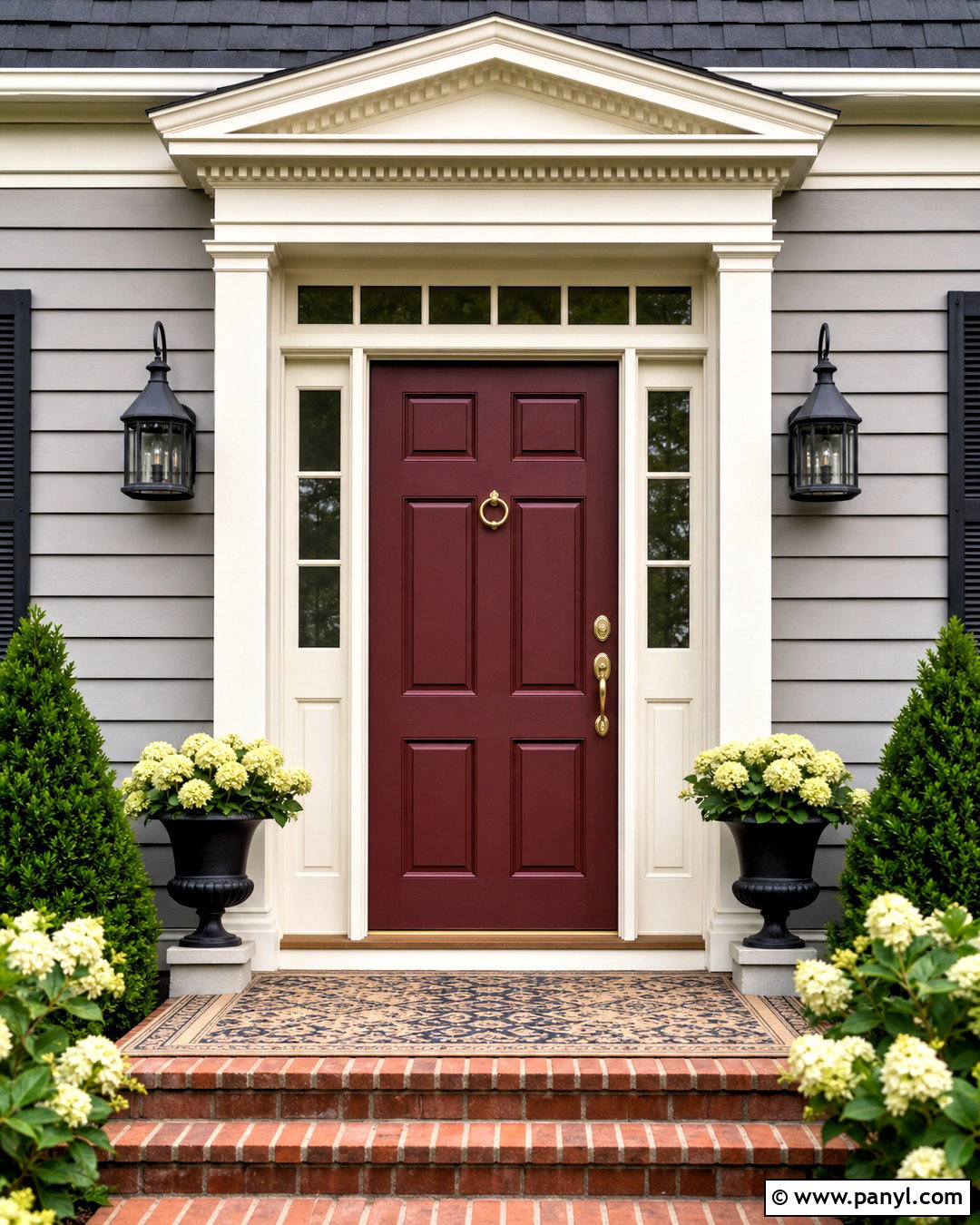
Burgundy offers the drama of red in a deeper, more restrained form. Pair a wine-toned burgundy door with light warm-gray siding, ivory trim, and a dark brown or charcoal roof. Antique brass hardware enhances the red undertones, while classic black lanterns create definition around the entry. If the home has brick, burgundy can connect beautifully with red-brown masonry and prevent the materials from feeling unrelated. Add dark green shrubs, cream flowers, and a patterned outdoor rug in burgundy, gray, and beige. Keep shutters charcoal rather than burgundy to avoid overwhelming the facade. This complete palette has a traditional, established appearance that works well for brick-and-siding homes, Colonials, and formal townhouses while still giving the front entrance a noticeable point of color.
15. Blush Pink Front Door With Gray House
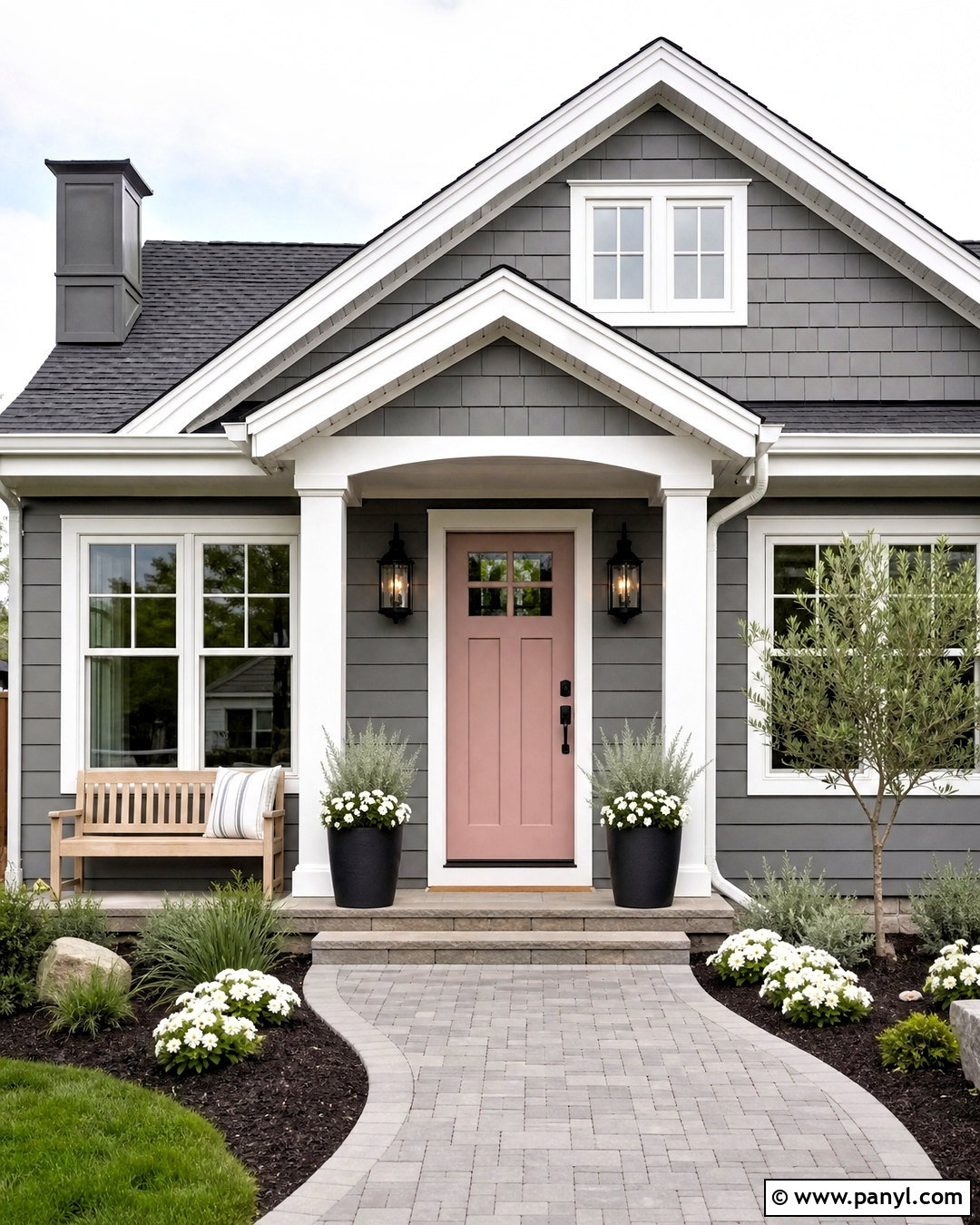
A blush pink door can soften a gray house without making the exterior feel overly sweet. Select a dusty, muted pink with beige or clay undertones instead of a bright bubblegum shade. Combine it with medium cool-gray siding, clean white trim, and a charcoal roof for clear contrast. Matte black hardware, black-framed lanterns, and dark planters provide structure around the delicate color. Introduce pale wood through a bench or porch ceiling to make the entry feel warmer. Landscaping should stay simple, with silvery foliage, white flowers, and deep green shrubs. This complete scheme is especially suitable for cottages, small modern homes, and updated ranch exteriors. A flat or satin pink can look dull outdoors, so use an exterior satin finish that reflects a modest amount of light.
16. Plum Front Door With Gray House
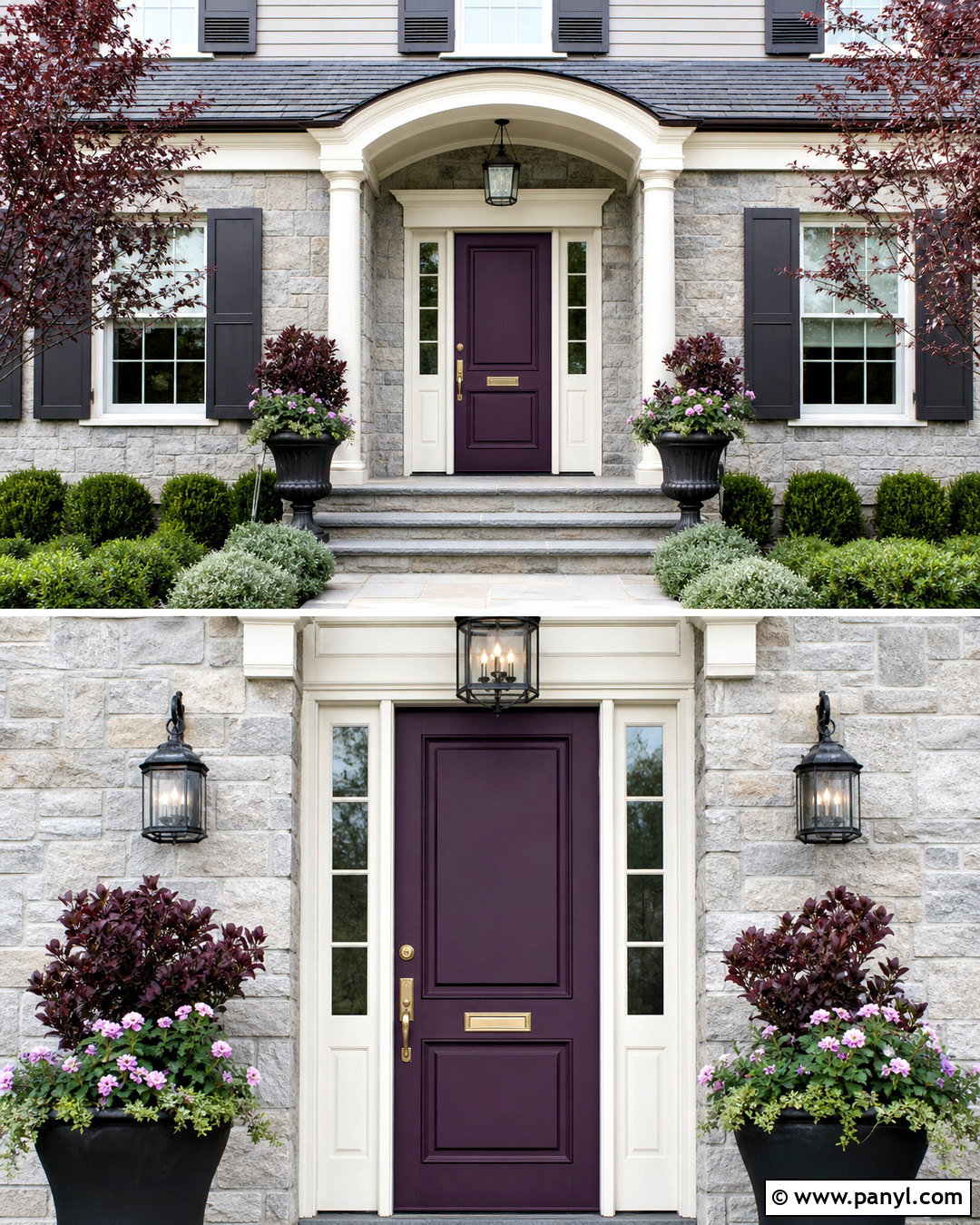
Plum creates an unexpected but elegant focal point on a gray exterior. Choose a deep purple with red undertones, which feels warmer and more residential than a cool violet. Set it against pale neutral-gray siding, soft white trim, and dark charcoal shutters. Brushed brass hardware highlights the warm side of the door color, while black lanterns connect it to the roof. Add stone steps, dark ceramic planters, and greenery with burgundy-tinted leaves for subtle repetition. Keep flowers white or pale pink so the porch does not become overly colorful. This complete design is ideal for traditional homes that need more personality without using a very bright shade. Plum also works nicely with gray stone, particularly masonry containing warm beige, brown, or reddish mineral variations.
17. Chocolate Brown Front Door With Gray House
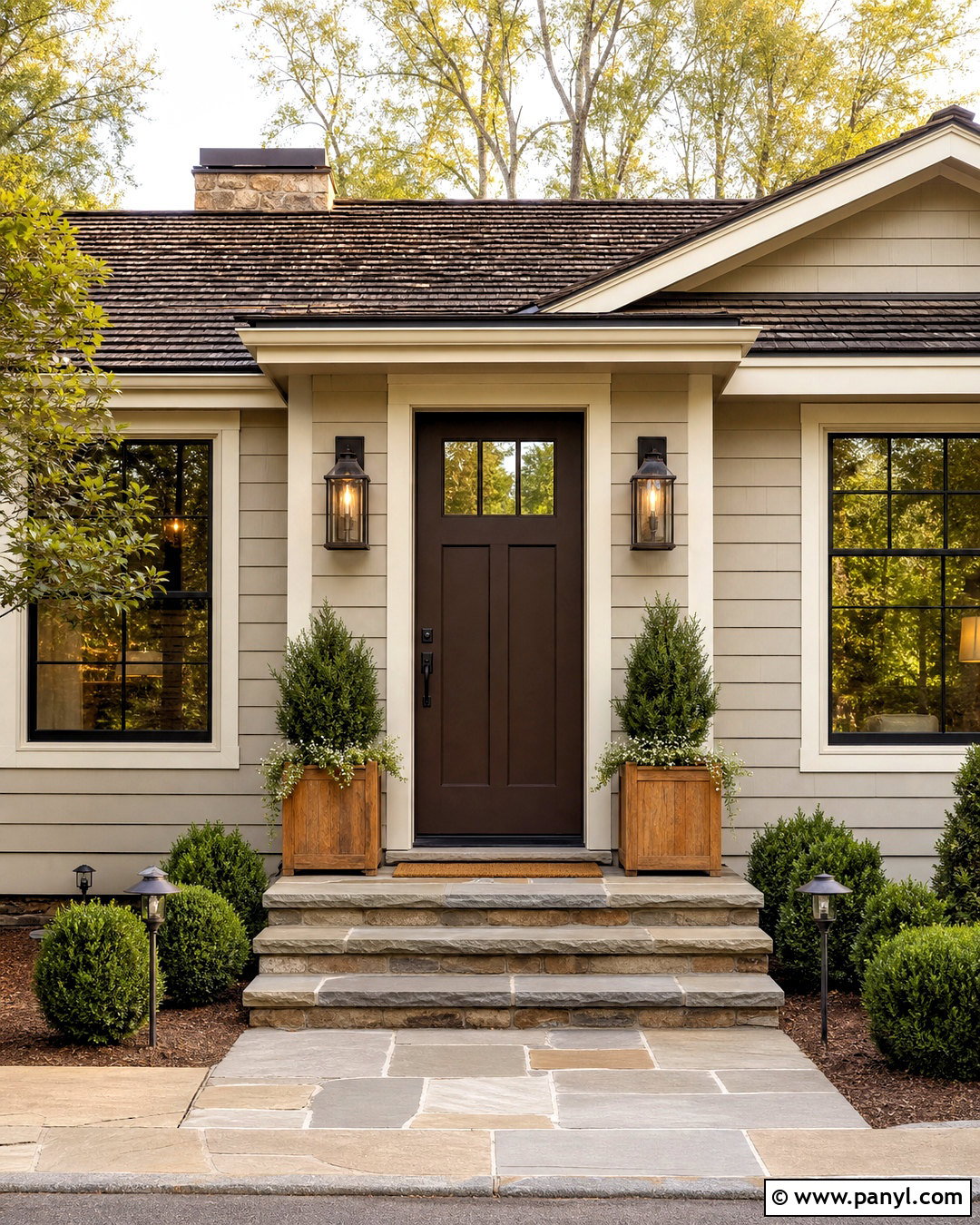
Chocolate brown gives gray siding a warmer and more grounded appearance. Pair a rich dark-brown door with light greige siding, cream trim, and a weathered brown roof. Oil-rubbed bronze hardware creates a seamless, understated finish, while clear-glass lanterns prevent the porch from becoming visually heavy. Incorporate natural stone steps containing beige and gray tones to bridge the siding and door. Cedar planters, evergreen shrubs, and a woven mat complete the earthy entry. If the facade includes shutters, use the same chocolate brown or choose a slightly deeper brown-black. This full palette works well on Craftsman, ranch, and traditional homes surrounded by mature landscaping. It is also a practical alternative for homeowners who want dark contrast but find pure black too sharp or contemporary.
18. Natural Wood Front Door With Gray House
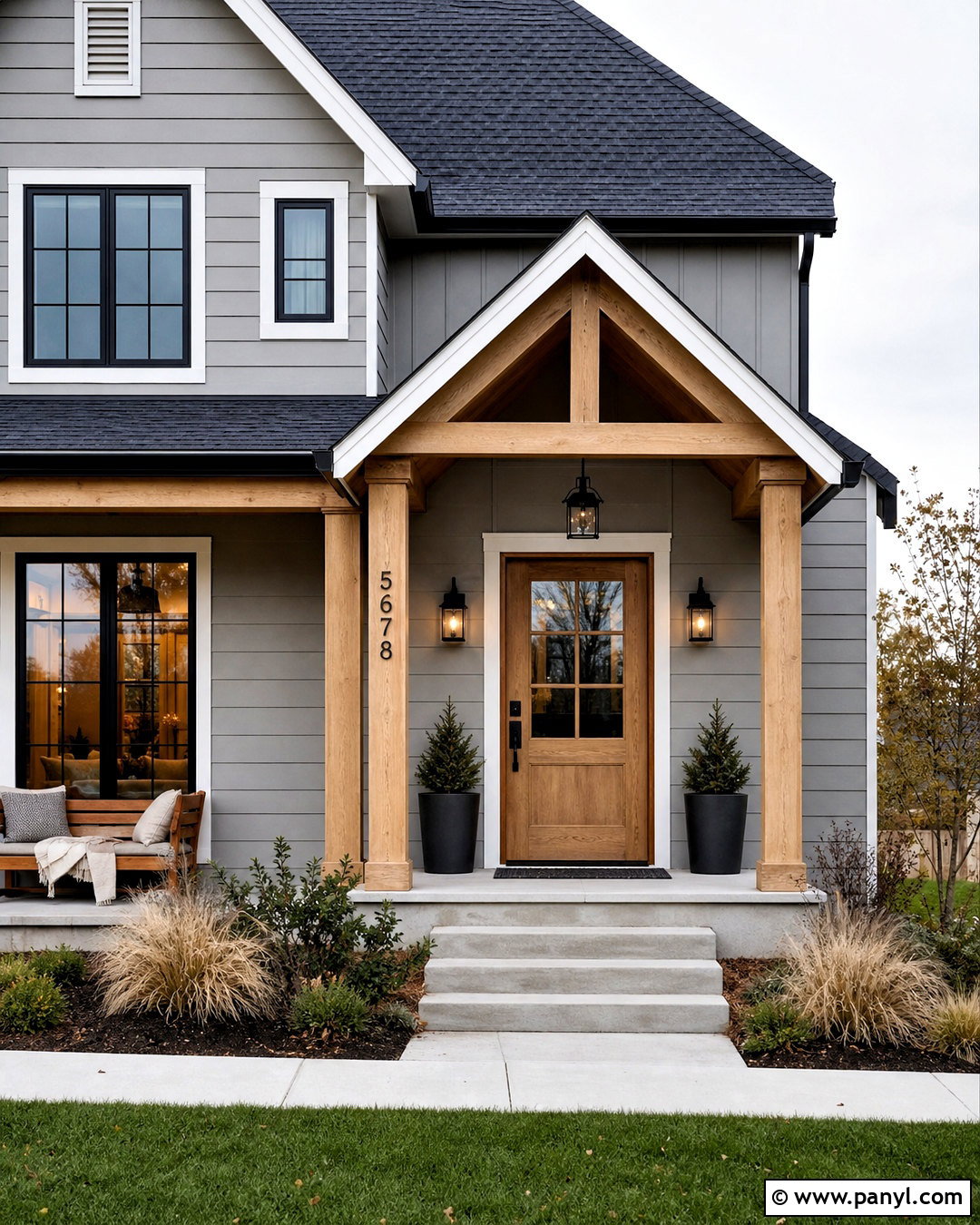
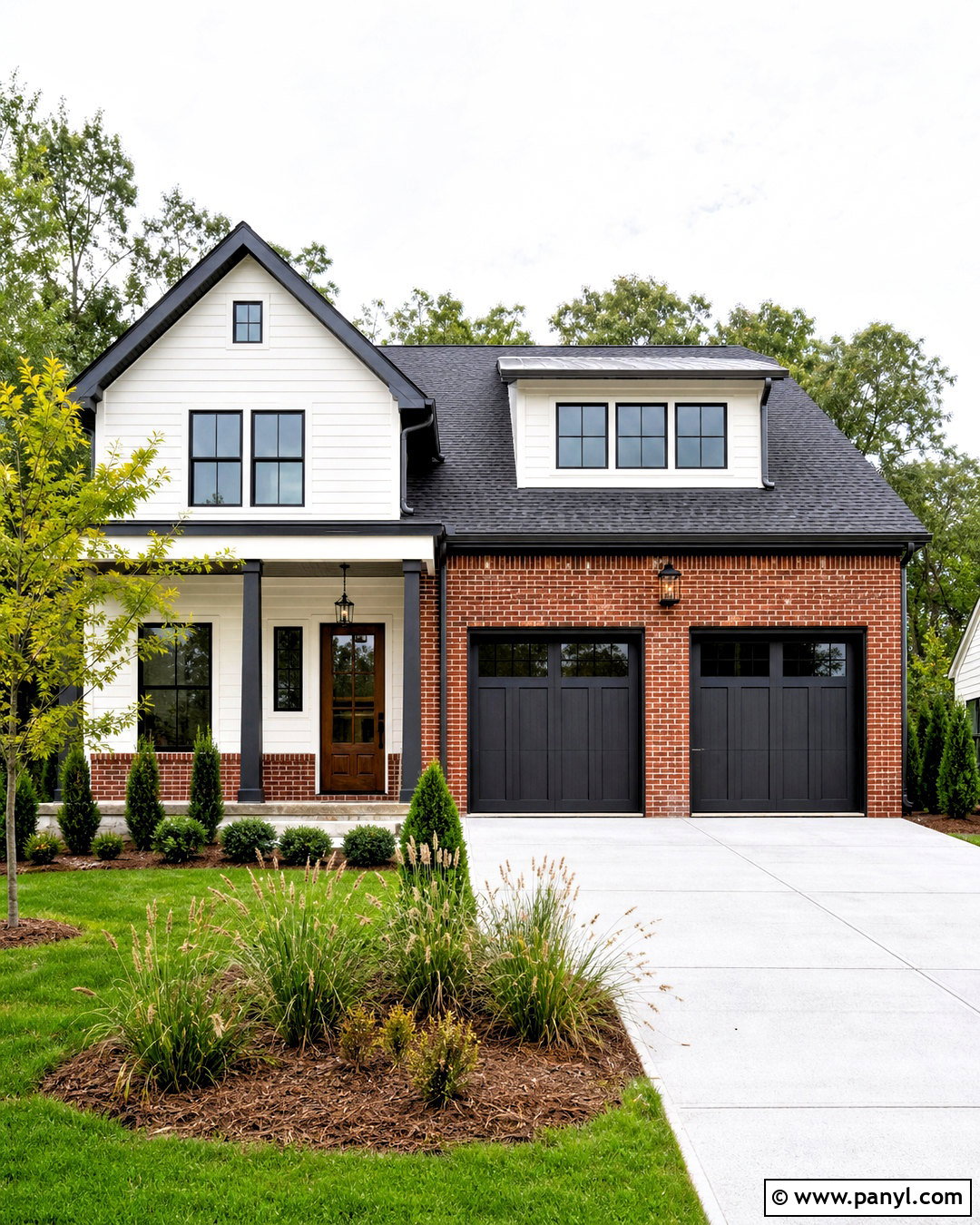
Natural wood supplies texture and warmth that painted gray siding often needs. Choose a medium-toned oak, cedar, or mahogany door with a clear exterior finish that shows the grain. Pair it with cool medium-gray siding, bright white trim, and a charcoal roof. Black hardware and black-framed lanterns create a strong outline around the warmer wood. Repeat the material through porch posts, a ceiling, or a simple bench, but avoid using several unrelated wood tones. Concrete or gray stone steps keep the foundation neutral. Finish the entrance with matte black planters, layered evergreens, and soft grasses. This coordinated exterior can support modern, farmhouse, Craftsman, and Scandinavian-inspired architecture. Select the wood tone in relation to the roof and masonry so all permanent materials feel intentionally connected.
19. Cream Front Door With Gray House
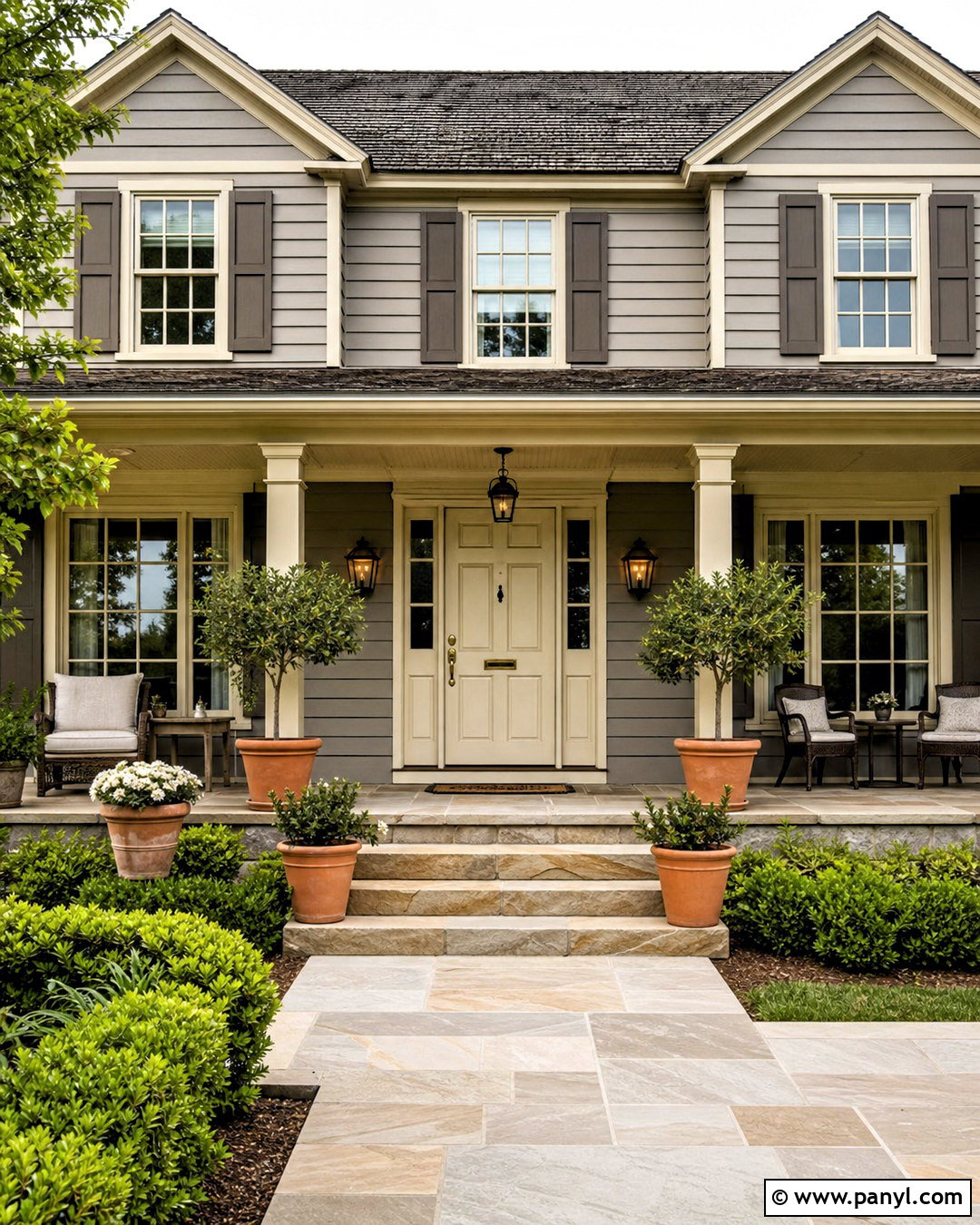
Cream offers a softer alternative to a bright white front door. It works especially well with warm gray siding, beige stone, and roofing that contains brown undertones. Choose a creamy off-white door, matching trim, and a slightly deeper warm-gray body color for gentle contrast. Antique brass hardware, warm bronze lighting, and sandstone steps reinforce the inviting palette. Add terracotta pots, olive-toned foliage, and a natural woven mat to prevent the entrance from looking too formal. If shutters are part of the facade, paint them dark brown-gray for depth. This complete exterior is ideal for traditional homes, cottages, and houses with warm masonry. Avoid a yellow-heavy cream beside cool blue-gray siding, as the difference in undertones may appear stronger under natural daylight.
20. Charcoal Front Door With Gray House
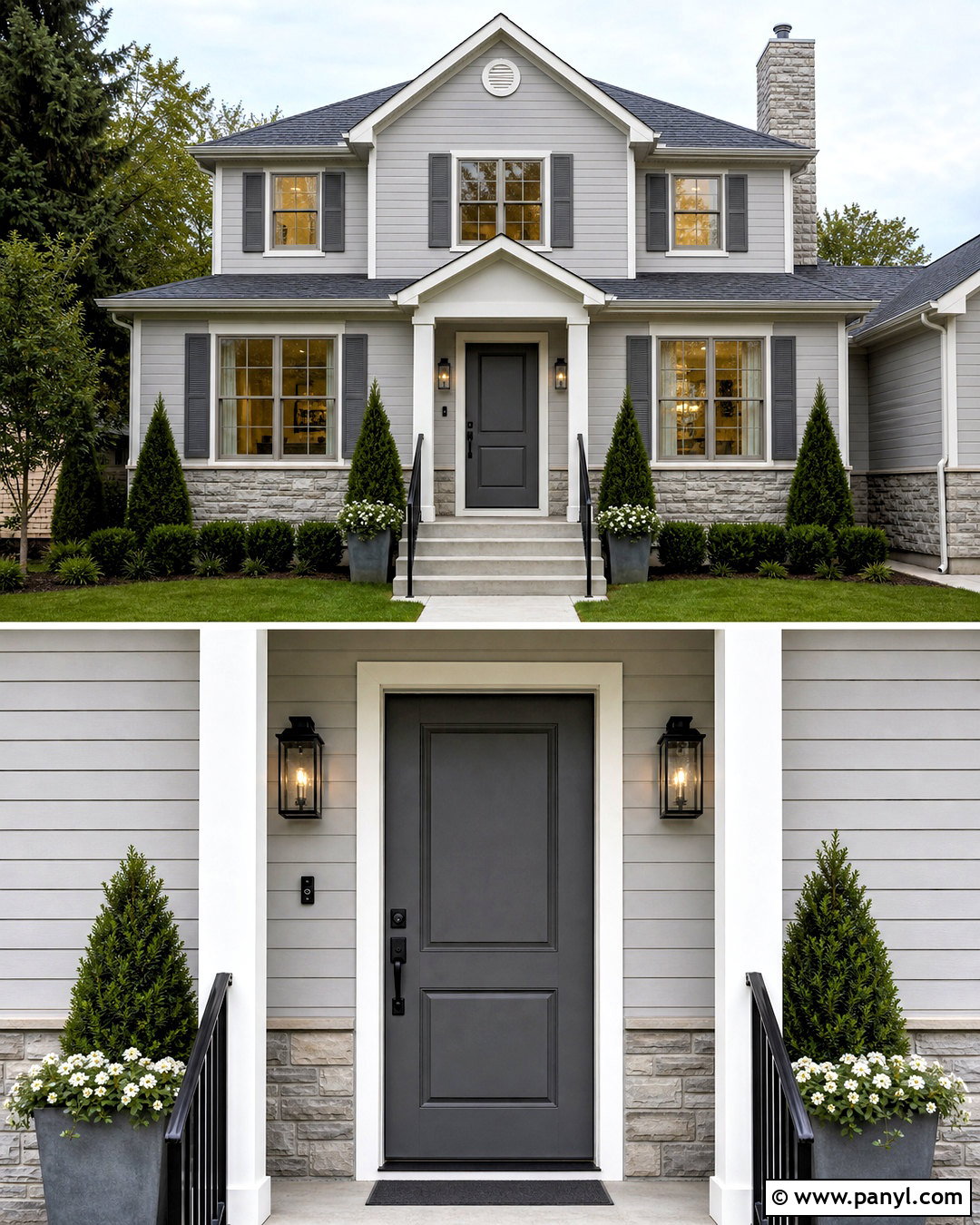
A charcoal door creates a sophisticated monochromatic exterior without blending completely into the siding. Use pale gray siding, medium-gray shutters, and a deep charcoal door that is several shades darker than the house body. Crisp white trim around the entrance will separate each gray clearly. Matte black hardware and streamlined lanterns suit a contemporary look, while aged brass can make the same palette feel more traditional. Add light concrete steps, black metal railings, and structured evergreen planters for a clean finish. Texture becomes important in a limited-color scheme, so combine smooth door paint with clapboard siding, stone, wood, or ribbed planters. This complete design suits nearly any architectural style and creates noticeable contrast while maintaining a calm, consistent neutral palette.
Conclusion:
Choosing among these grey house door color ideas becomes easier when you consider the entire exterior rather than the door alone. Compare each potential color with the siding undertone, trim, roof, masonry, hardware, porch materials, and landscaping. Dark doors create structure on pale gray homes, while brighter colors make entrances easier to notice against charcoal siding. Earthy greens, warm browns, and natural wood soften gray, while blue, black, and burgundy offer sharper definition. Paint large samples and examine them in morning light, midday sun, and shade before deciding. () With a coordinated plan, even a simple door update can make the entire facade look more polished, welcoming, and thoughtfully designed.

Related Ideas and Inspiration:
Leave a Reply