
A dated brick exterior can hide a home’s best features, especially when busy red, orange, or brown masonry competes with the roof, windows, and landscaping. These 20 painted brick house before and after ideas show how a coordinated exterior palette can create a cleaner, brighter, and more welcoming home. The strongest transformations go beyond paint. They combine the brick color with updated trim, doors, lighting, walkways, and plants for one complete look. Before painting, inspect the brick and mortar, repair damage, clean the surface, and choose a coating made for exterior masonry. Older or historic brick may require professional evaluation because painting can be difficult to reverse. () With thoughtful planning, nearly any ordinary facade can feel intentional and refreshed. Explore these 20 painted brick house before and after ideas.
1. White Painted Brick Ranch House
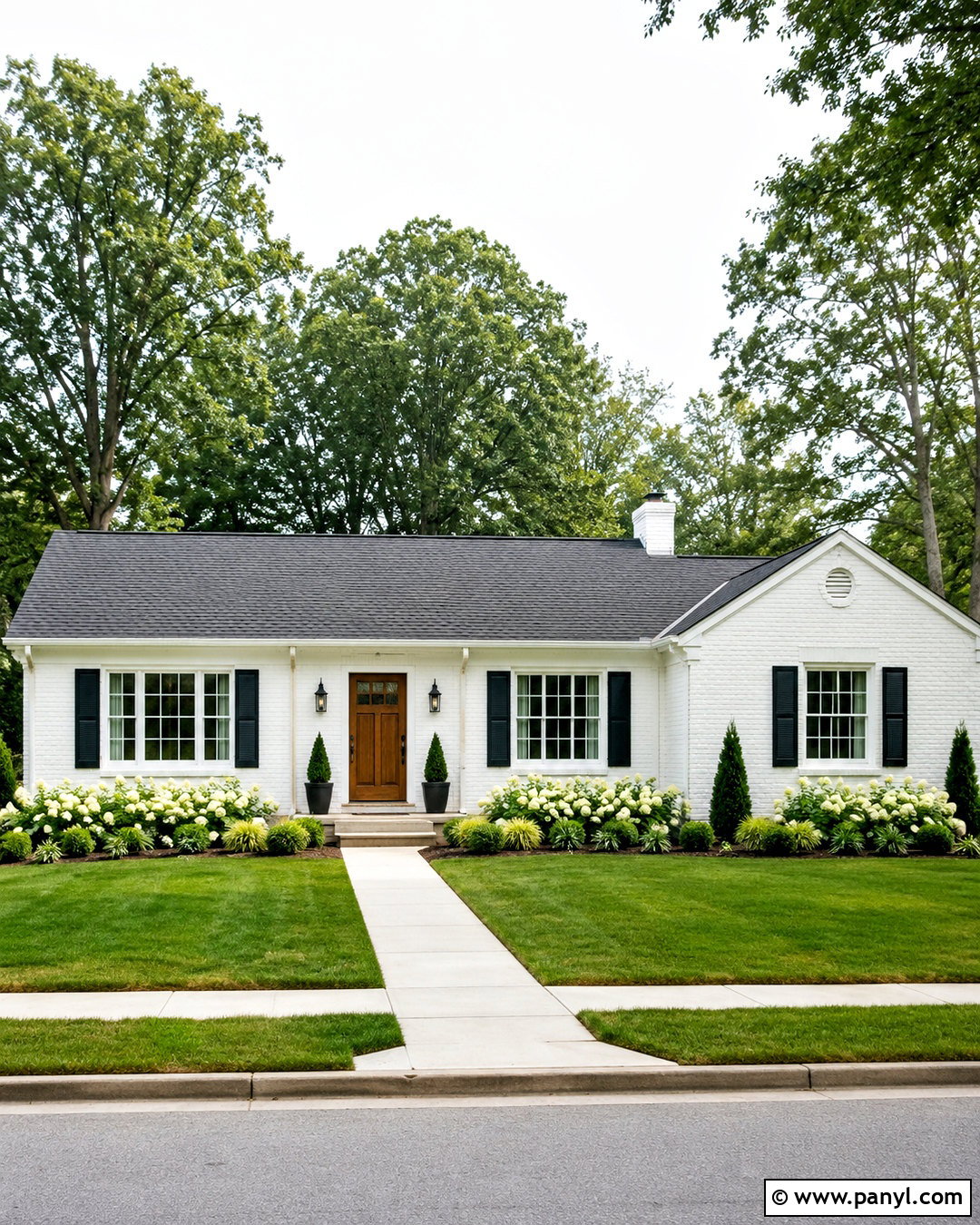
A red brick ranch can feel long, heavy, and visually flat before renovation. Painting the brick a soft white immediately creates a brighter foundation, but the finished design needs contrast to avoid looking washed out. Add charcoal shutters, a medium-stained oak front door, and matte black lanterns beside the entry. Paint the gutters and fascia white so they blend into the new exterior instead of creating extra lines. A simple concrete walkway bordered by rounded evergreen shrubs reinforces the home’s clean shape. Replace overgrown foundation plants with low ornamental grasses and hydrangeas. The after look feels wider, fresher, and more balanced while keeping the approachable character of the original single-story house.
2. Warm White Painted Brick With Black Trim
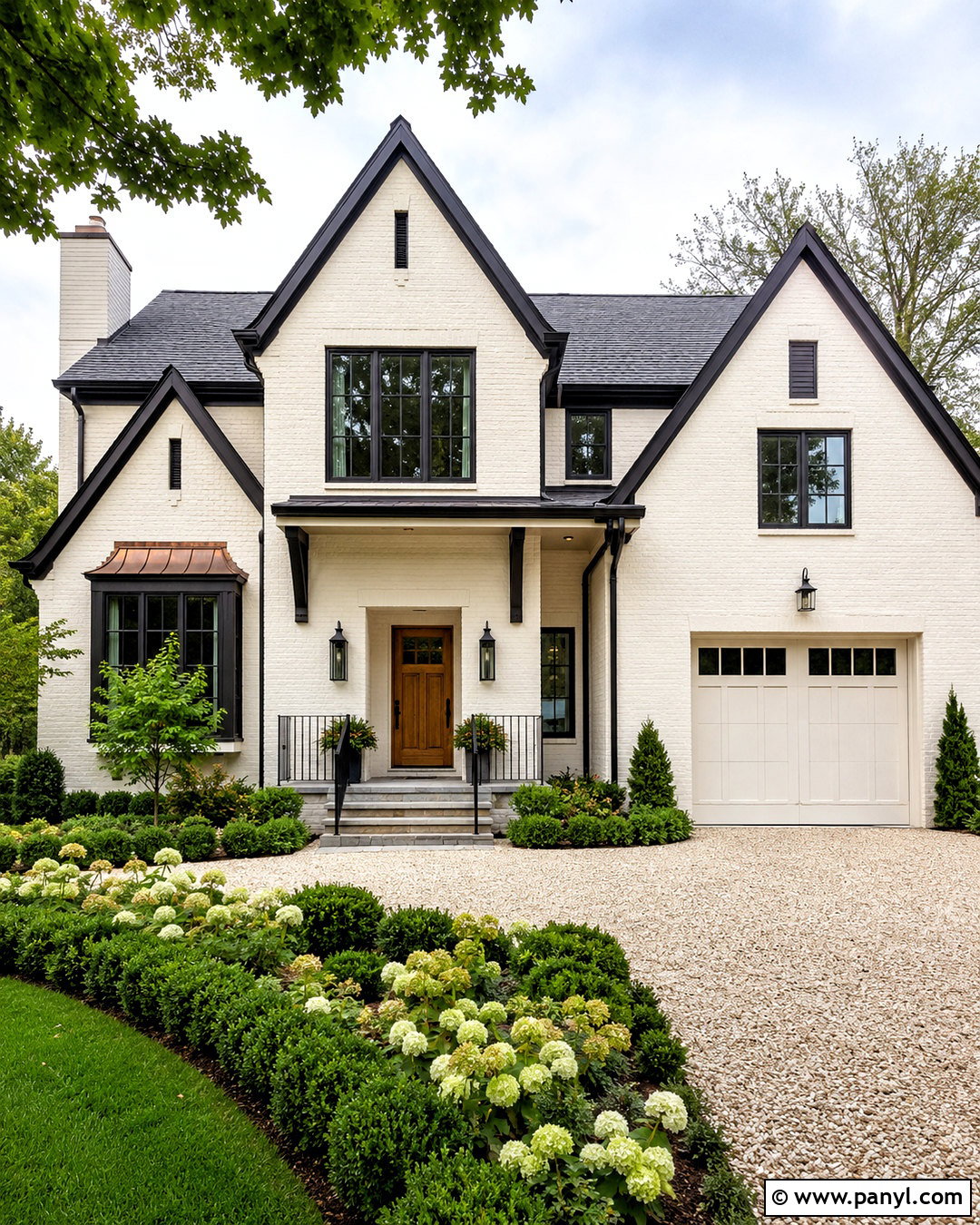
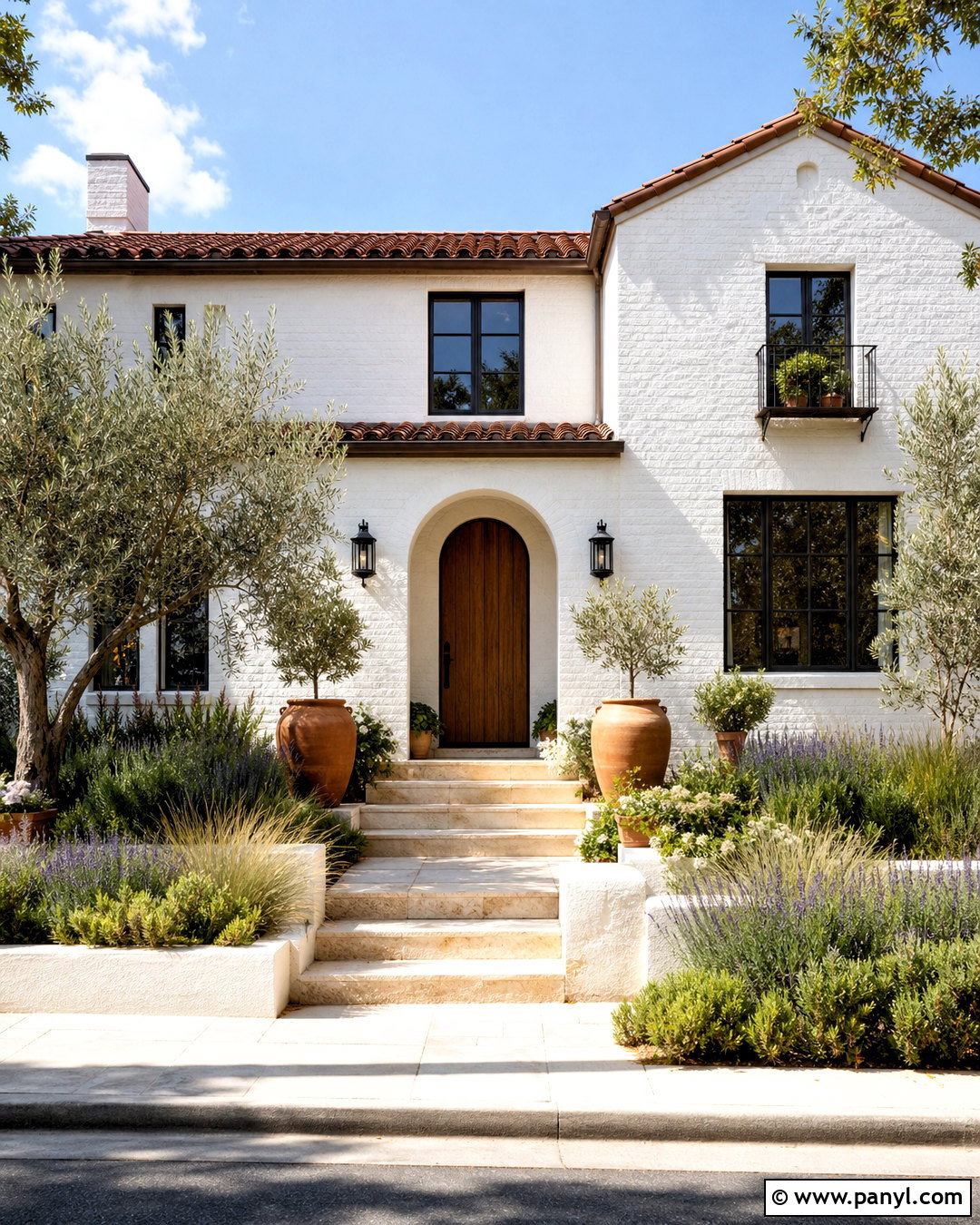
Does the original orange brick make every other exterior color seem mismatched? A warm white painted brick finish can quiet the entire facade while respecting warm roof and stone undertones. Use a creamy white rather than a sharp blue-white, then outline the windows with satin black trim. Carry black onto the gutters, porch railing, and garage lights for a consistent frame. A natural walnut front door prevents the high-contrast palette from feeling cold. Keep the garage door the same warm white as the brick so it visually recedes. Layer boxwoods, pale gravel, and flowering perennials around the foundation. The completed exterior looks polished and current, yet the warm materials keep it comfortable rather than stark.
3. Cream Painted Brick With Wood Accents
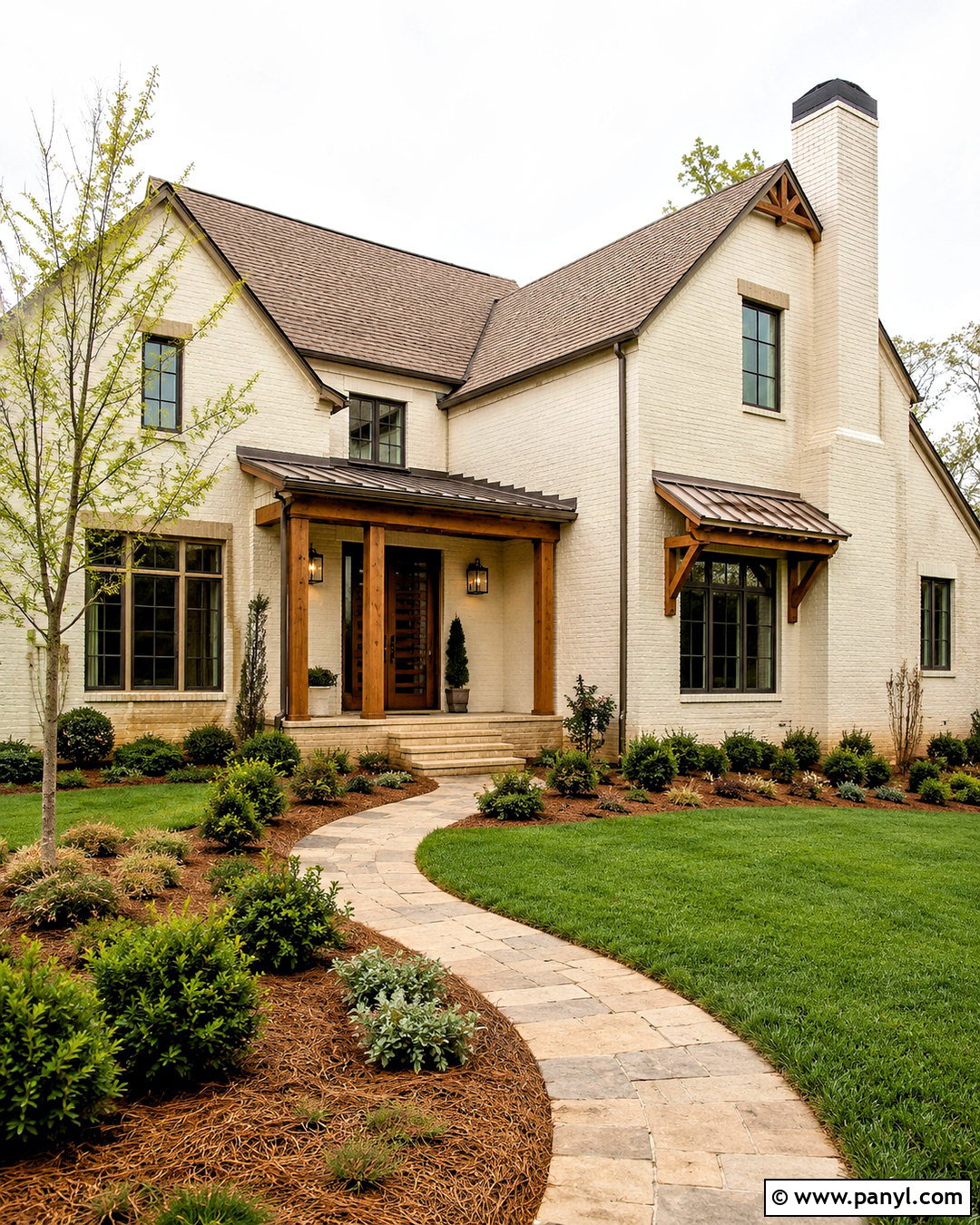
A brown brick home often appears dark when it has matching brown shutters, trim, and doors. Replace that one-note palette with cream painted brick and warm cedar accents. The cream body should have a subtle beige undertone that works naturally with tan shingles or a weathered bronze roof. Remove undersized shutters and emphasize the entrance with cedar porch posts, a slatted wood door, and a small timber awning. Choose dark bronze window frames and gutters instead of black for softer contrast. Finish the transformation with a curved stone path, layered shrubs, and warm-toned mulch. This after design feels light and welcoming while the wood grain introduces enough texture to keep the painted facade from appearing plain.
4. Greige Painted Brick House
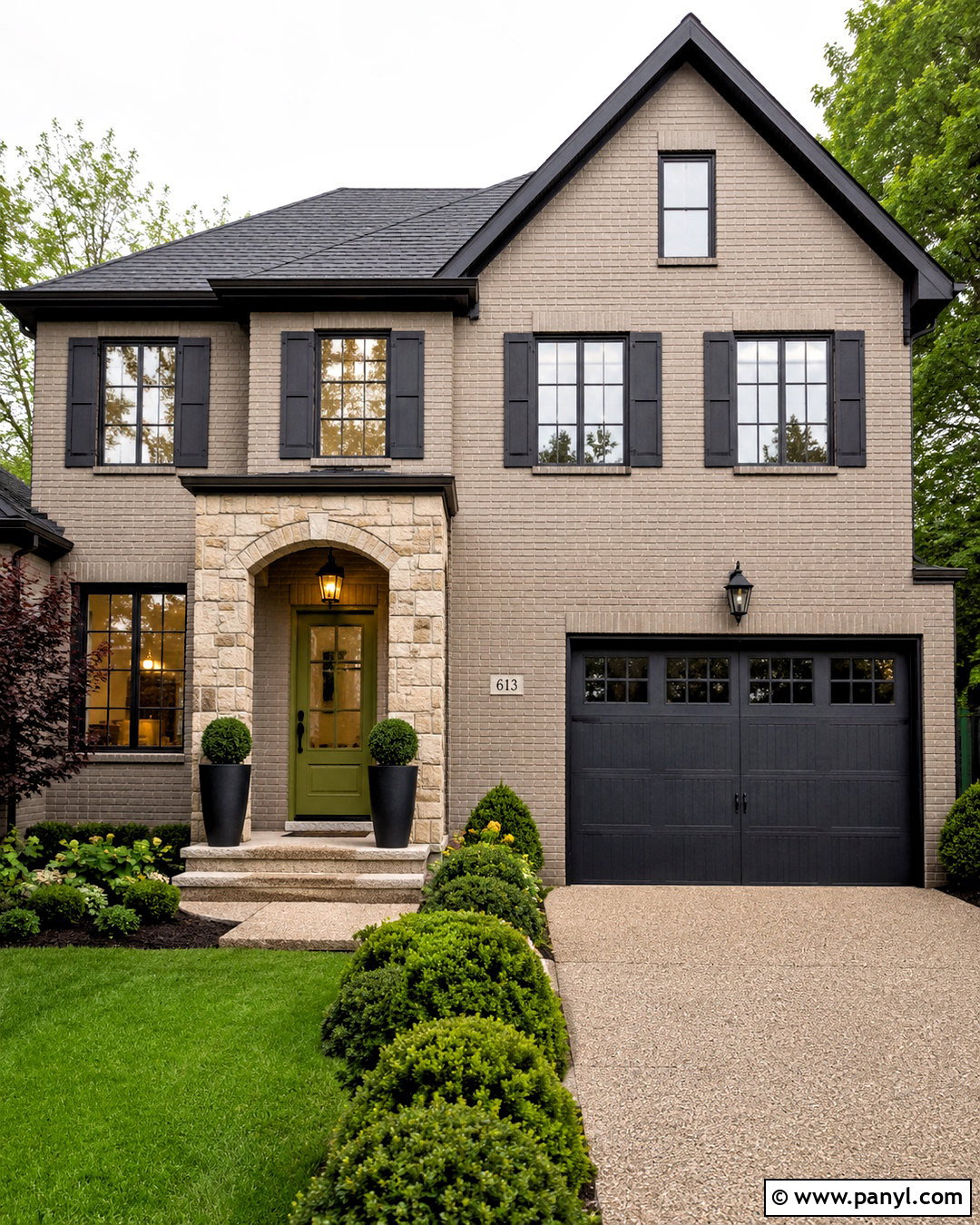
When old multicolored brick competes with gray roofing and beige stone, greige can bring every exterior material together. Paint the brick a balanced gray-beige that appears warm in sunlight without turning yellow. Use deep charcoal for the shutters, garage door, and metal awning, then repeat the greige on the trim for a streamlined result. A muted olive front door adds gentle color while still behaving like a neutral. Keep any attractive natural stone unpainted so it becomes a textured focal point rather than another competing finish. Simple black planters, clipped shrubs, and a light aggregate driveway complete the update. The after exterior feels cohesive because each color connects to an existing permanent feature of the house.
5. Light Gray Painted Brick House
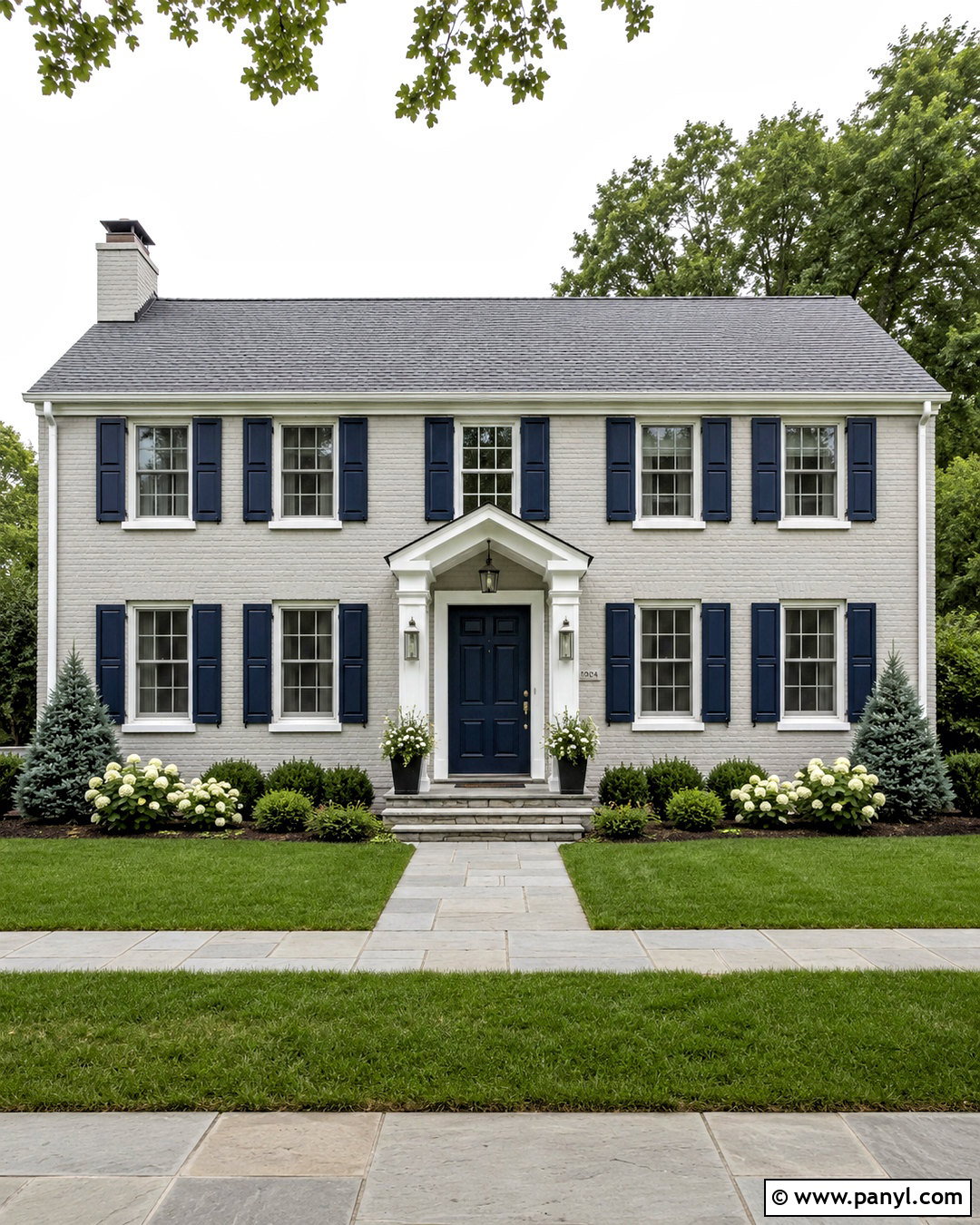
Faded red brick can make a traditional two-story home look older than it is, particularly when paired with dull white trim. A pale gray painted finish provides a softer alternative to white while still brightening the architecture. Select a light gray with a warm or neutral undertone, then add crisp white trim around the windows, eaves, and porch. Navy shutters and a matching navy front door create classic contrast without the harshness of black. Brushed nickel house numbers and polished silver-toned lanterns suit the cooler palette. Use a slate walkway and beds filled with blue-green evergreens, white flowers, and neat ground cover. The after design feels graceful, clean, and appropriate for a traditional suburban setting.
6. Charcoal Painted Brick Ranch House
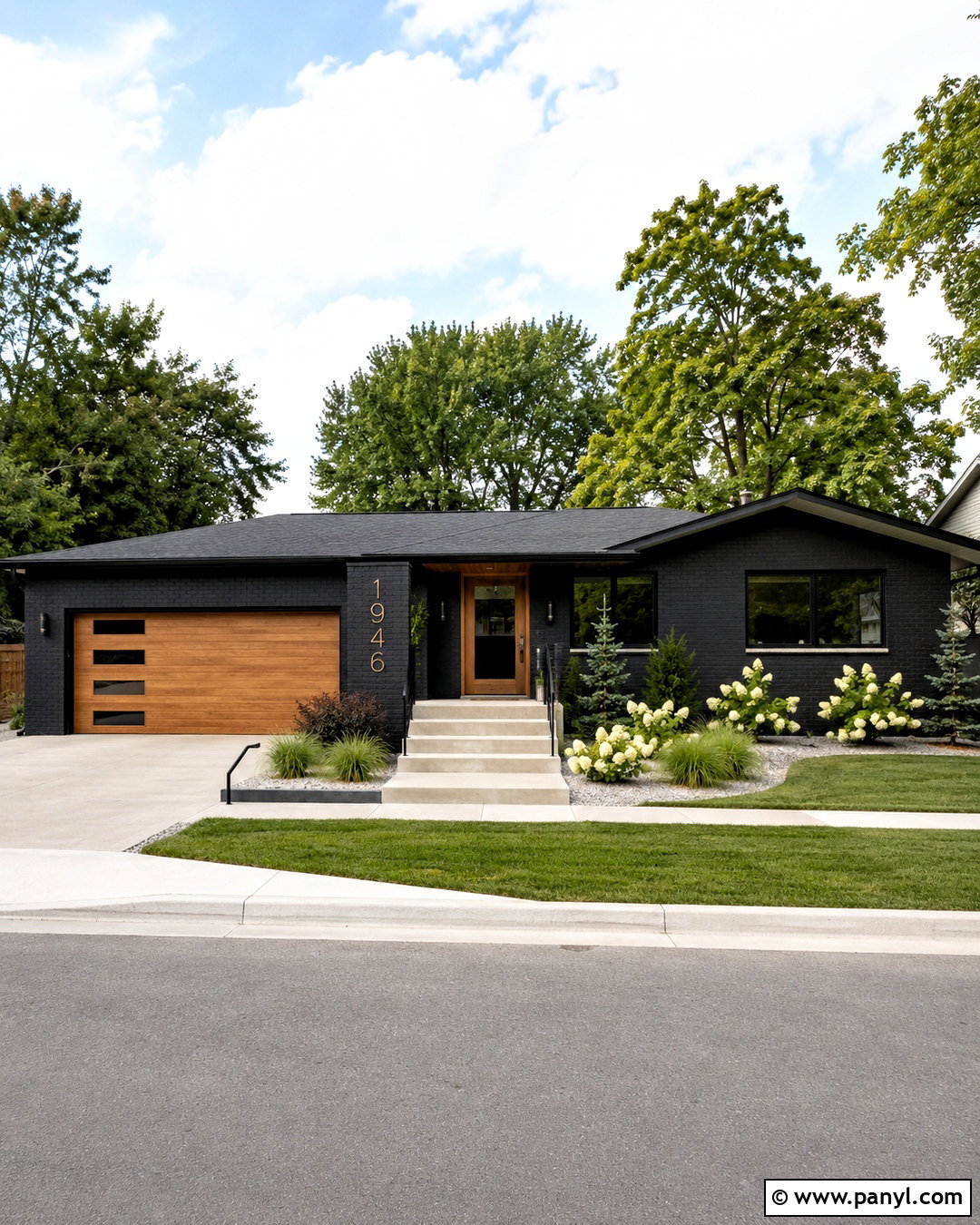
A low ranch house can gain surprising architectural presence when dull tan brick becomes deep charcoal. This transformation works best when the dark body is balanced with warm and light materials. Paint the brick charcoal gray, keep the soffits soft white, and install a natural oak garage door that breaks up the long facade. Choose black window frames for a seamless look and add oversized modern house numbers near the entry. A pale concrete walkway and light gravel beds keep the foreground from feeling too dark. Plant feathery grasses, compact evergreens, and white flowering shrubs for contrast. The completed ranch looks modern and substantial, while the wood and landscaping soften the bold painted brick exterior.
7. Black Painted Brick House
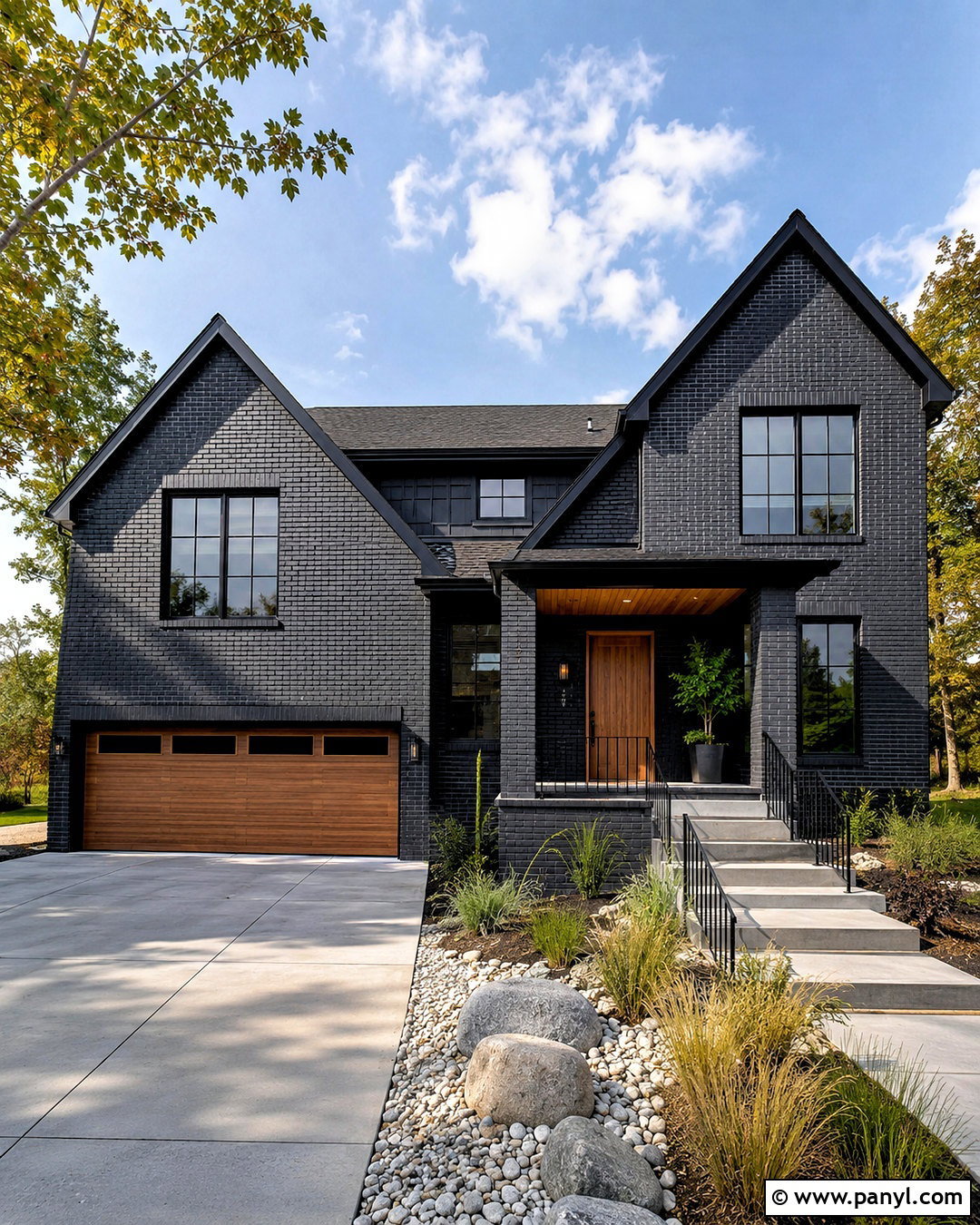
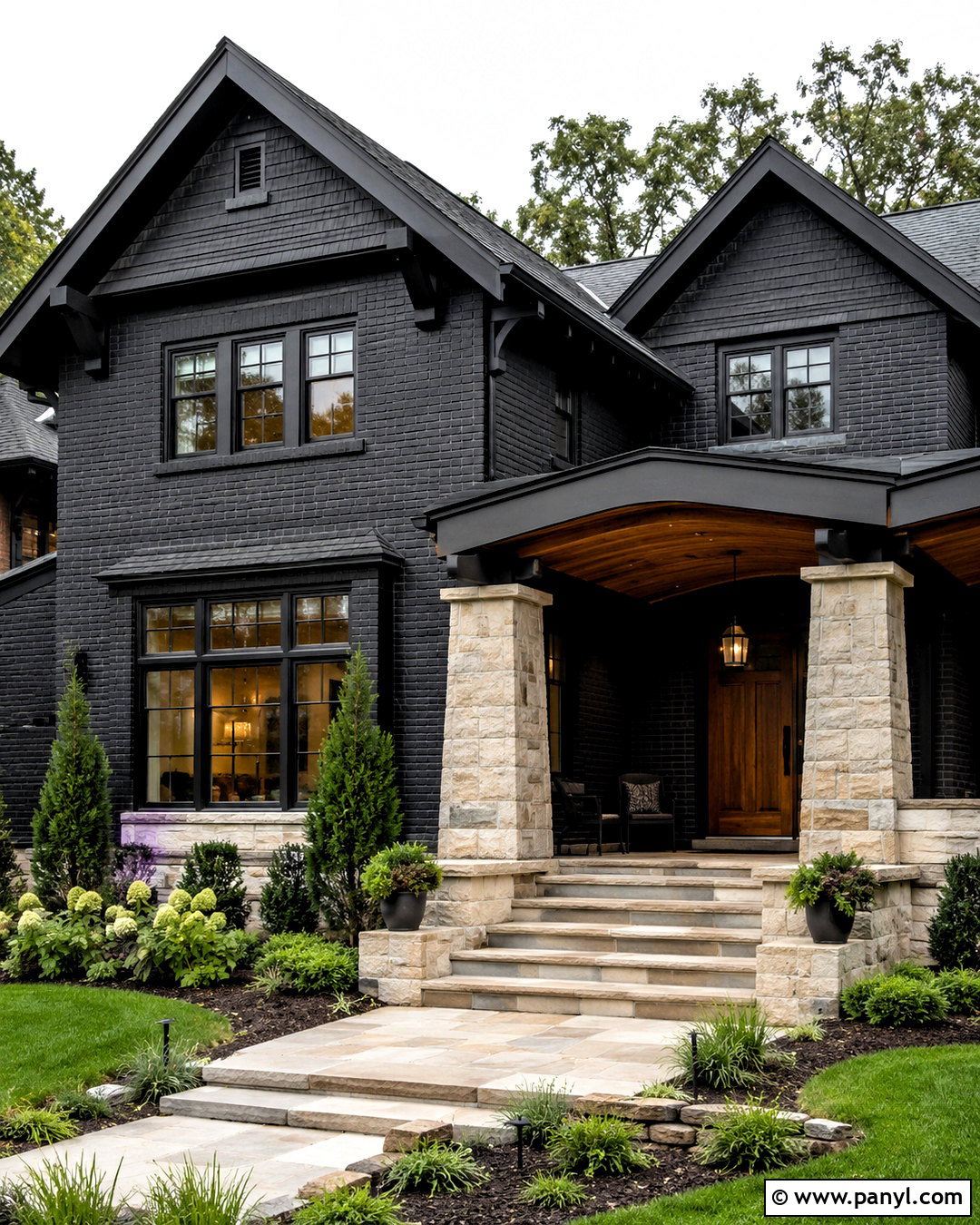
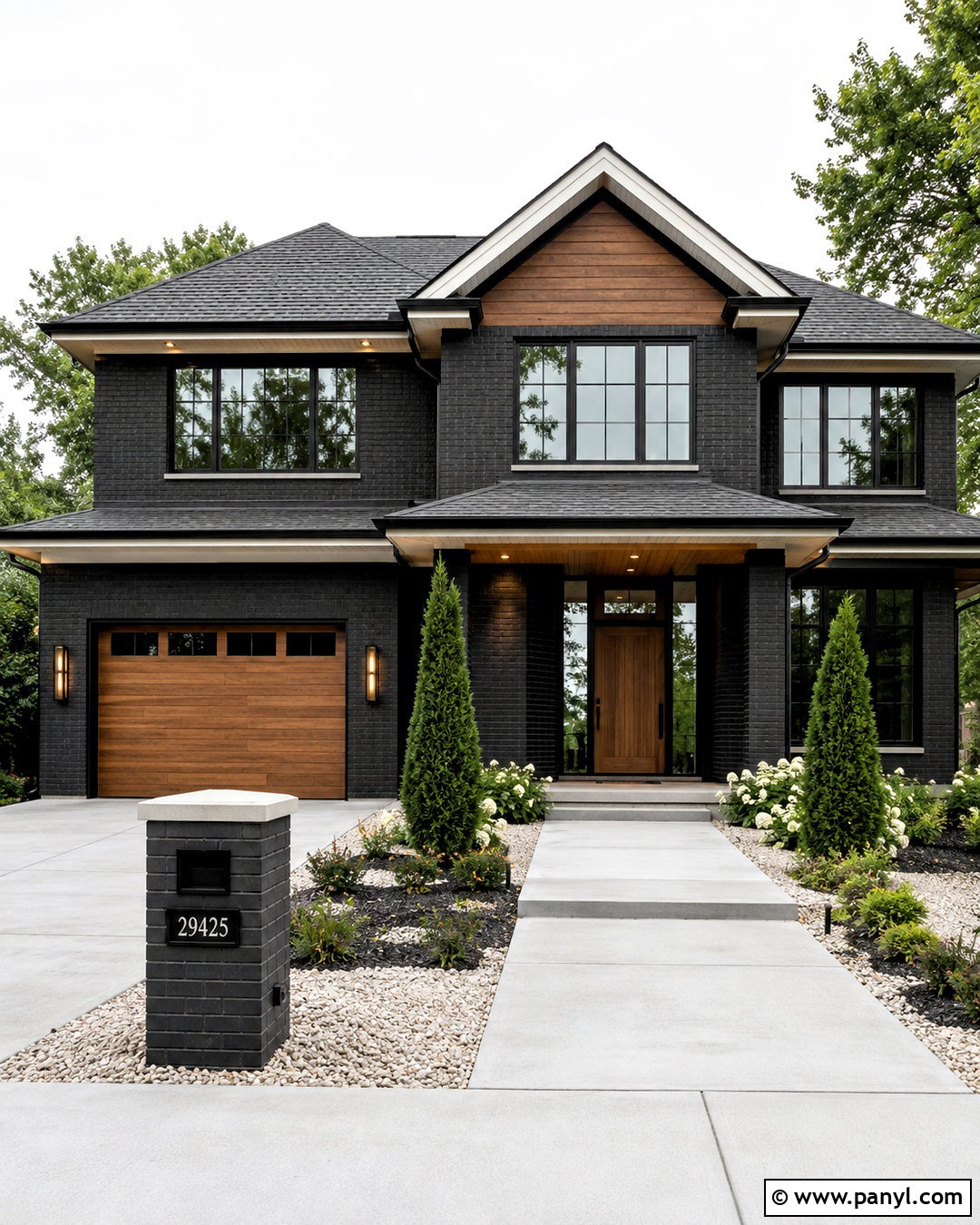
For a dramatic before and after, black paint can turn an ordinary brick home into a sharp modern exterior. The key is creating enough variation that the facade does not become a featureless dark block. Use soft black on the brick, true black on metal window frames, and warm cedar on the front door and porch ceiling. Keep the roof dark so it blends smoothly with the body. Add large concrete steps, slim black railings, and simple globe or cylinder sconces. Light-colored ornamental grasses and pale river rocks brighten the landscaping. On the garage, use stained wood or a muted dark gray rather than more black. The finished house feels bold, controlled, and welcoming instead of severe.
8. Sage Green Painted Brick House
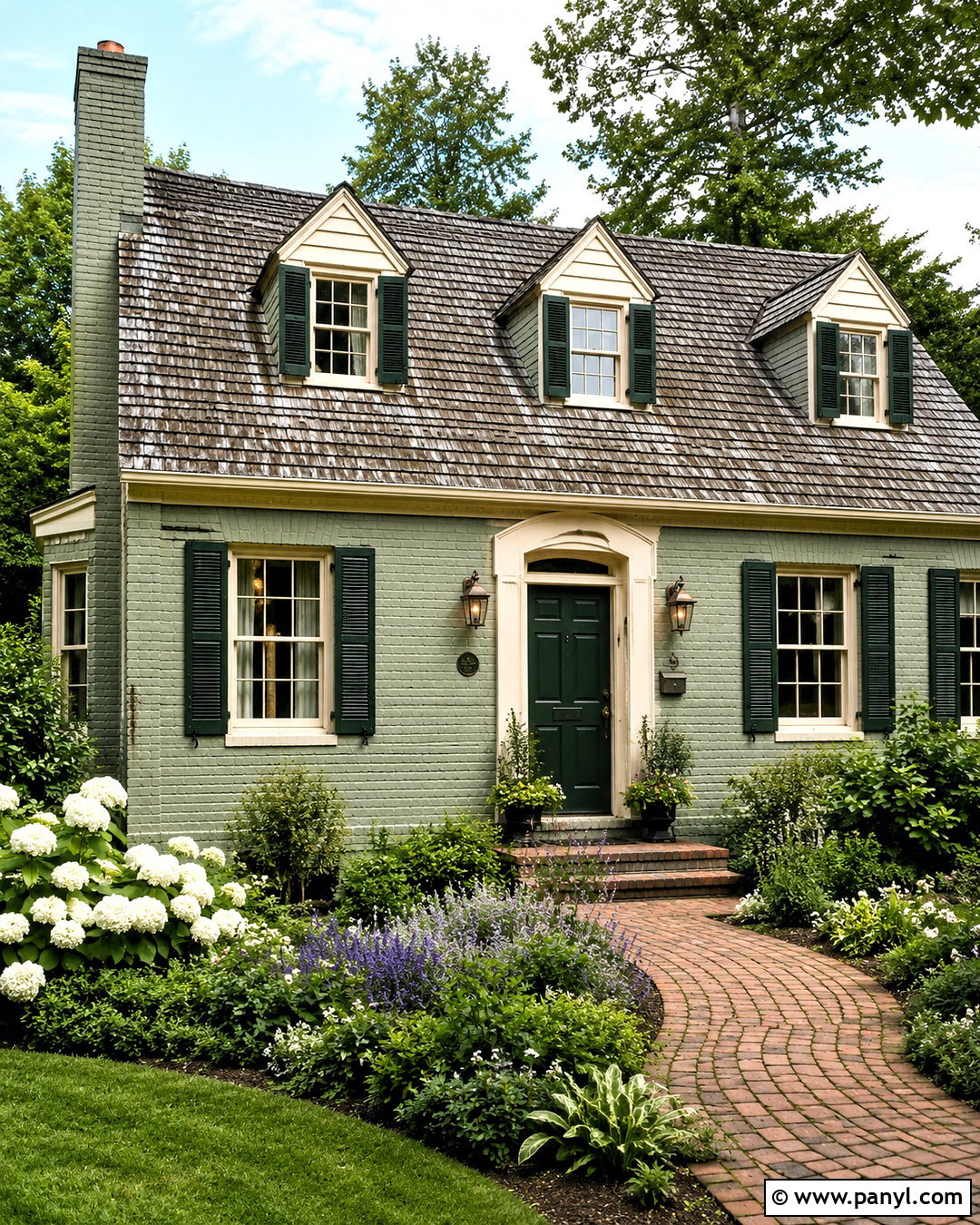
Harsh orange brick can overwhelm a cottage exterior and clash with a leafy setting. Muted sage green paint creates a calmer connection between the home and its landscaping. Choose a gray-toned sage for the brick, creamy ivory for the trim, and a deeper forest green for the front door. If shutters suit the window proportions, paint them the same forest shade for a layered monochromatic palette. A weathered gray roof and aged brass lanterns complement the gentle colors. Complete the after look with a curved brick walkway, white flowering shrubs, lavender, and loose cottage planting. The updated exterior feels established and natural, with enough contrast to reveal the windows, roofline, and welcoming front entrance.
9. Olive Green Painted Brick House
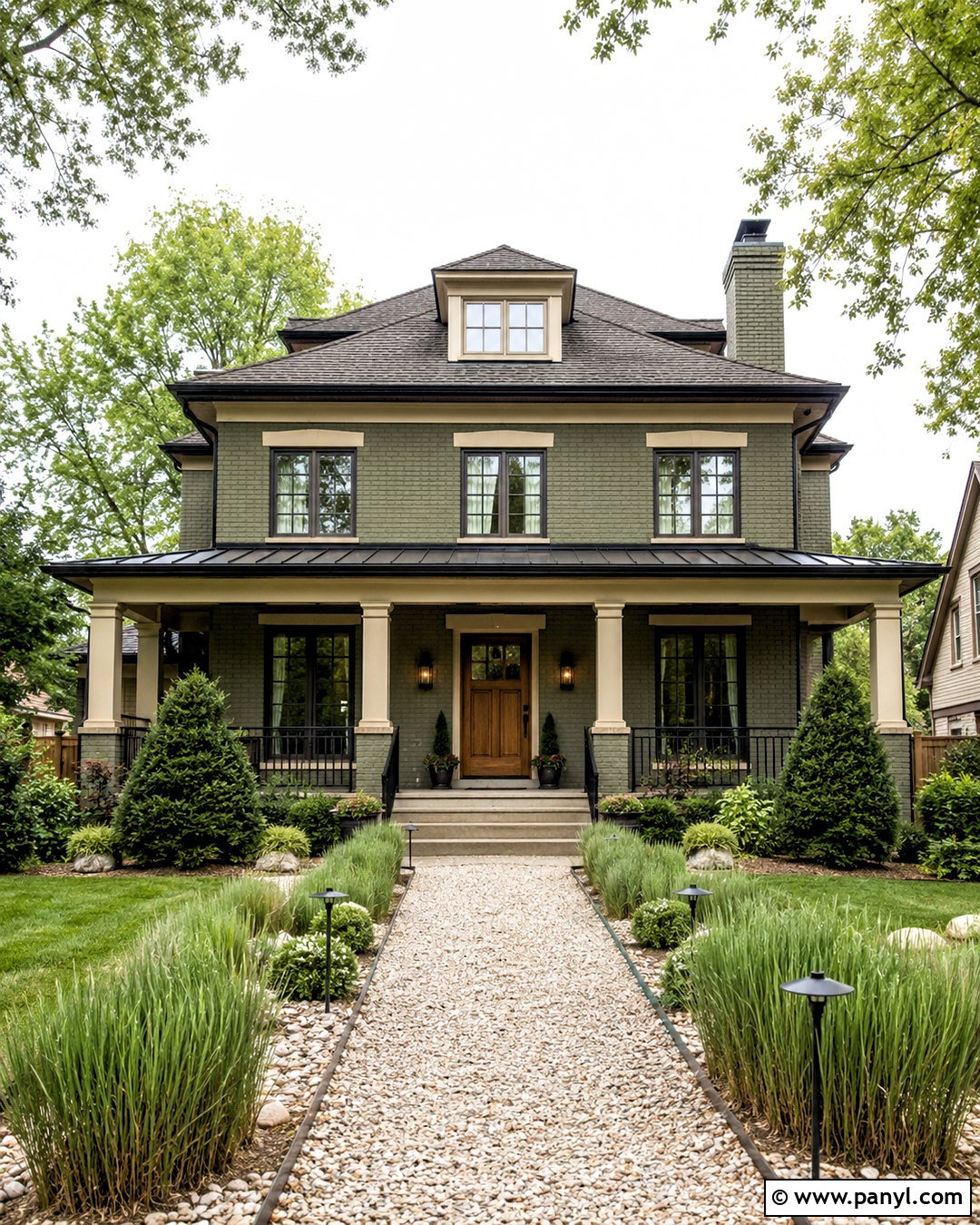
A boxy brick exterior becomes more distinctive when painted a rich olive green. This earthy color is especially effective on homes surrounded by mature trees or warm stone landscaping. Use medium olive on the brick, dark bronze on the windows and gutters, and warm cream around the entry. A medium-stained wood door introduces a natural focal point without fighting the green. Replace flimsy porch posts with substantial square columns wrapped in wood or painted cream. Antique bronze sconces and simple iron railings reinforce the grounded palette. In front, combine pale gravel with upright grasses and structured evergreen shrubs. The after design feels sophisticated and organic, transforming plain masonry into a color that complements the property’s natural surroundings.
10. Navy Blue Painted Brick House
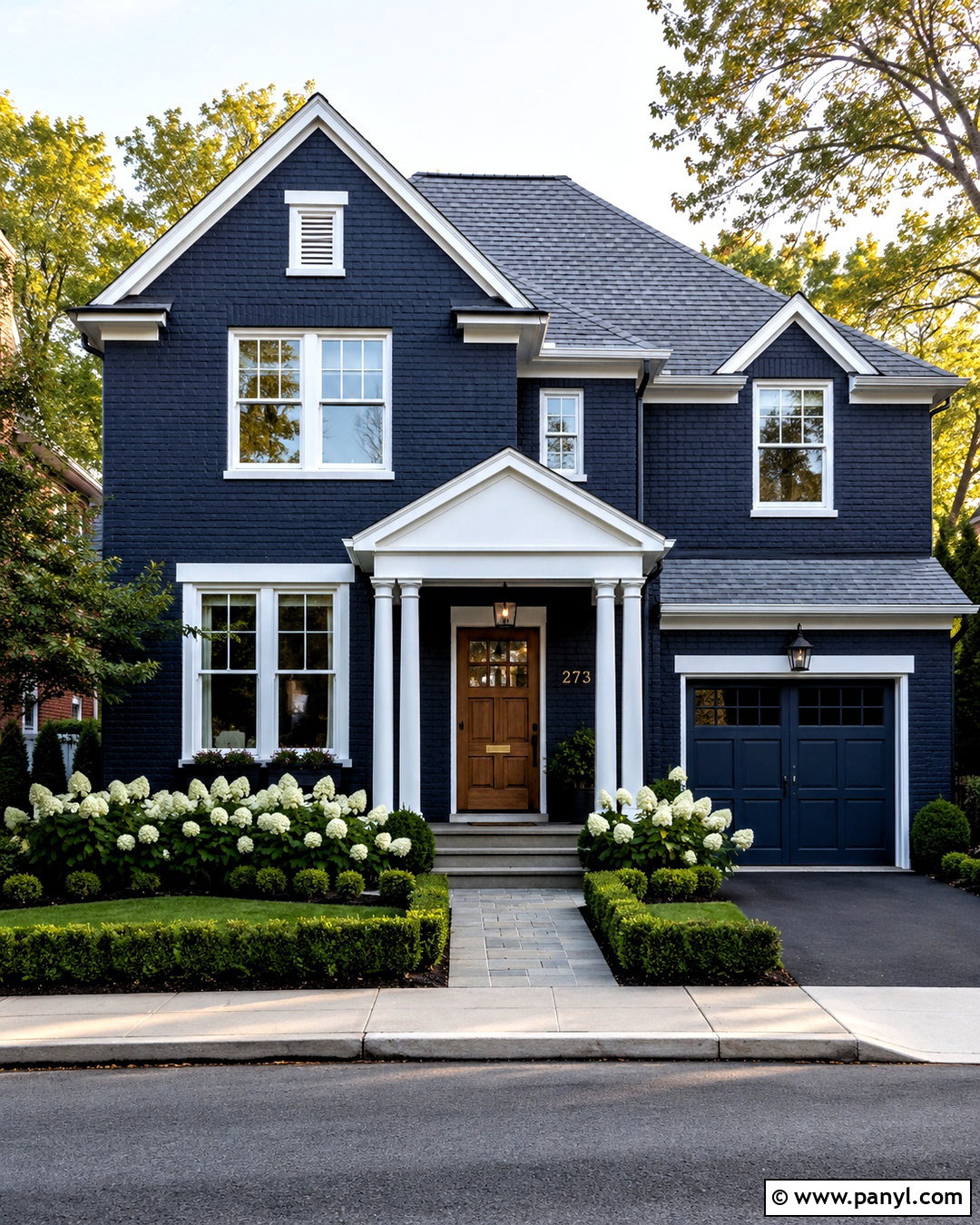
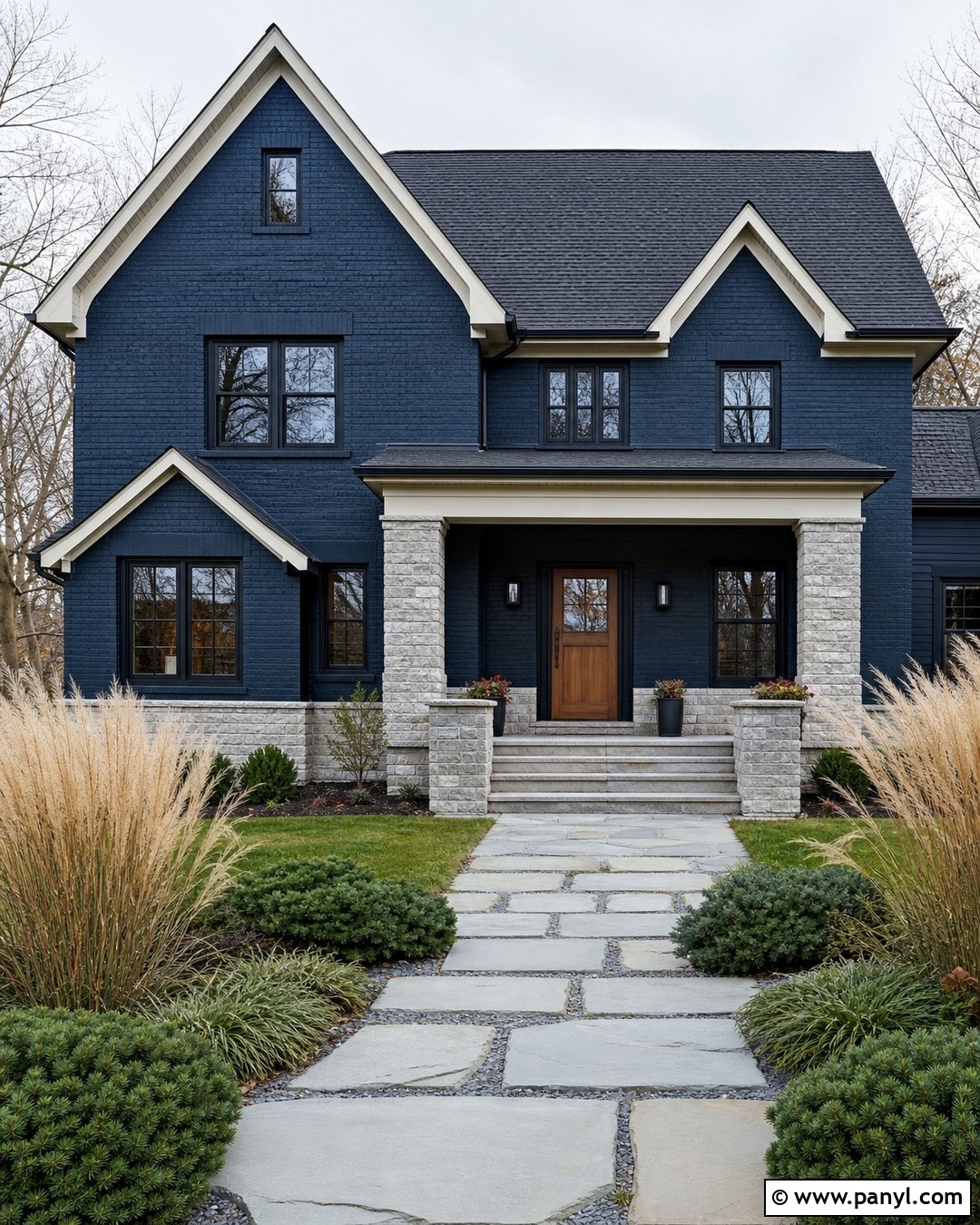
If faded brick makes a compact home disappear into the background, navy paint can give it a stronger identity. Select a deep navy with slightly gray undertones so the color remains refined in bright daylight. Use clean white on the trim, porch ceiling, and columns to outline the architecture. A warm wood door and matching porch bench prevent the blue-and-white palette from feeling overly formal. Paint the garage door navy if it occupies a large part of the facade, allowing it to blend into the wall. Add black lanterns, brushed brass house numbers, and a straight stone walkway. White hydrangeas and green foundation shrubs complete an after exterior that feels crisp, cheerful, and carefully coordinated.
11. Blue Gray Painted Brick House
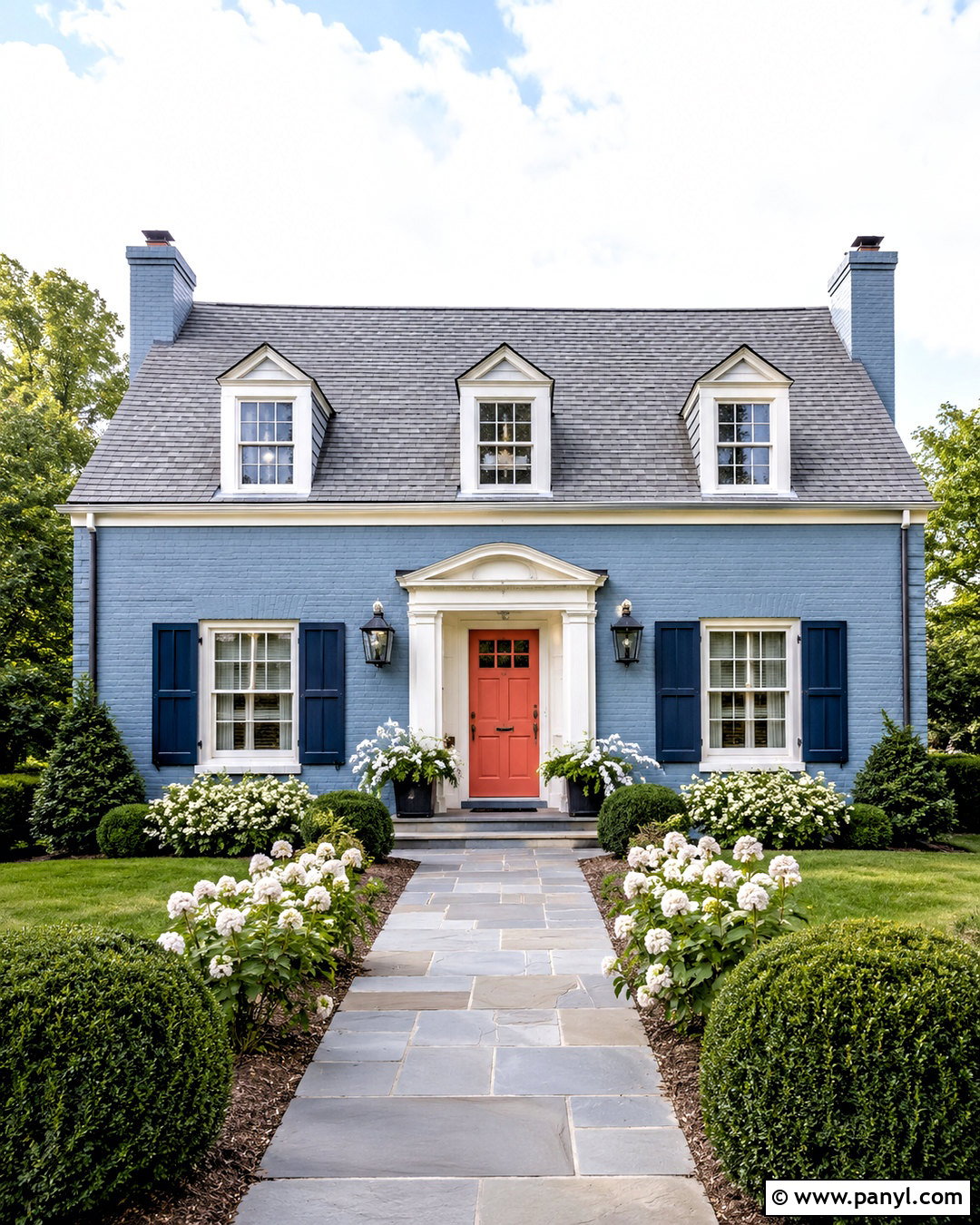
Busy reddish-brown brick can become a quiet backdrop when covered with soft blue-gray paint. This scheme works well for Cape Cod, cottage, and modest traditional homes because it adds color without dominating the architecture. Paint the brick a medium blue-gray and use warm white around the windows, roofline, and porch. Dark navy shutters add depth, while a muted coral or warm red front door provides a small, inviting accent. Choose a medium gray roof and pewter-colored lighting to maintain the cool direction. A flagstone walkway, clipped boxwoods, and white flowering plants bring structure to the yard. The after result feels brighter and more charming, with a balanced palette that remains easy to decorate season after season.
12. Taupe Painted Brick House
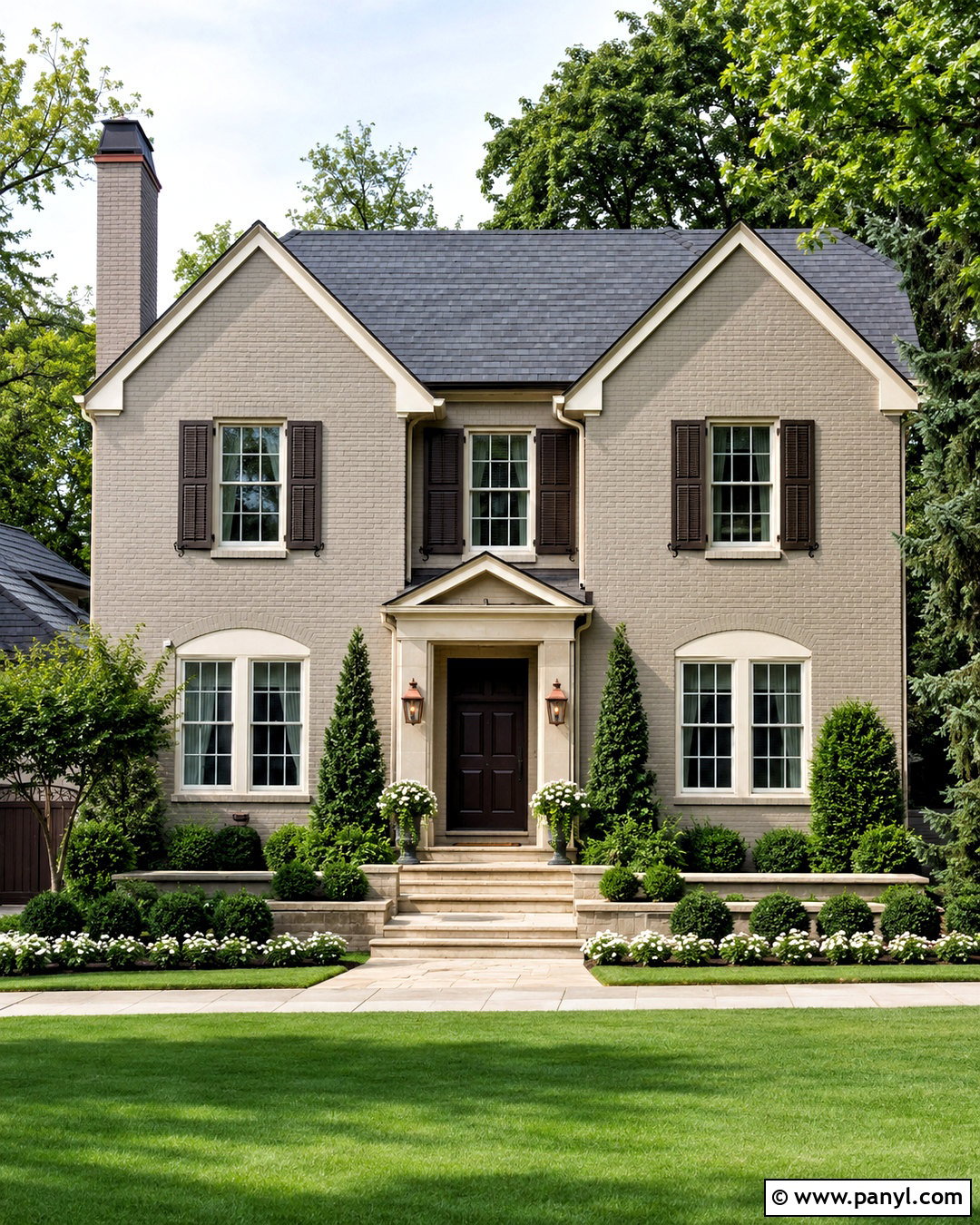
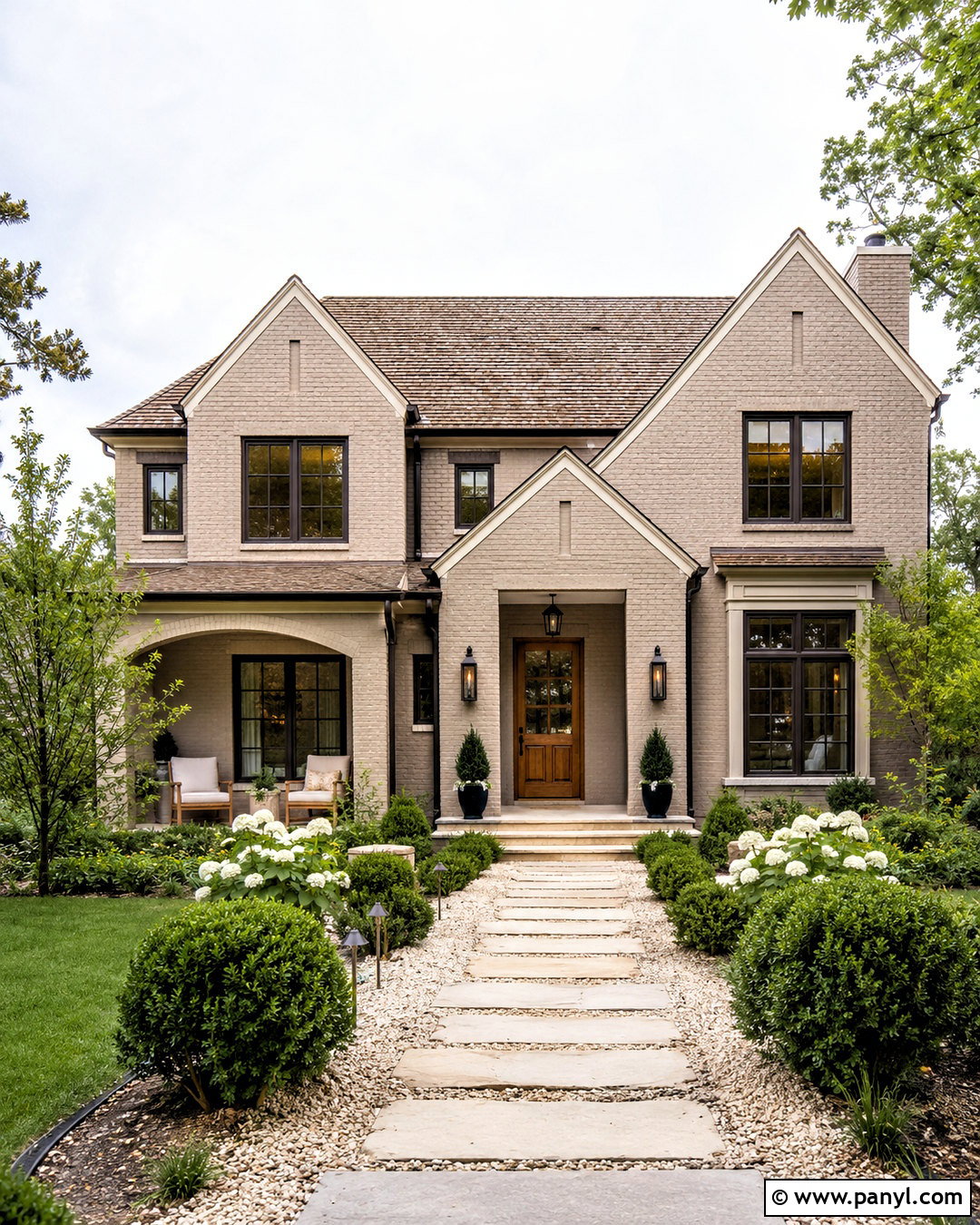
Yellow-brown brick and dated beige trim can make a large traditional house feel visually muddy. A refined taupe paint scheme simplifies the exterior while keeping its natural warmth. Choose a medium taupe with subtle gray undertones for the brick, then use creamy off-white on the trim and columns. Paint the shutters and front door a deep chocolate brown for definition that is softer than black. Copper lanterns, gutters, or small roof details add a warm metallic accent. Preserve any limestone steps or retaining walls because their variations will complement the taupe body. Finish with layered evergreens and soft white flowers. The completed exterior looks calmer, more expensive, and better connected to its roof and surrounding landscape.
13. Beige Painted Brick House
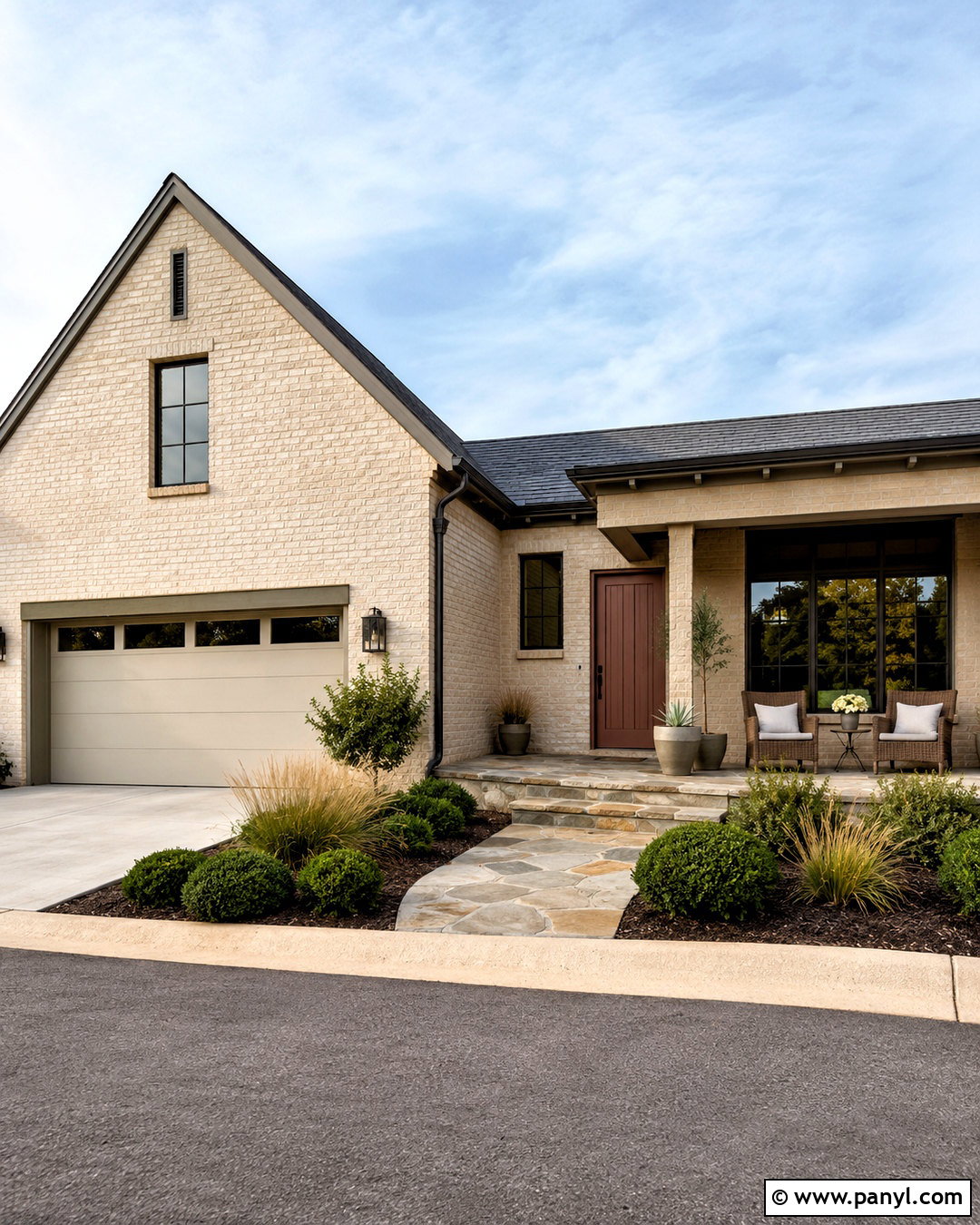
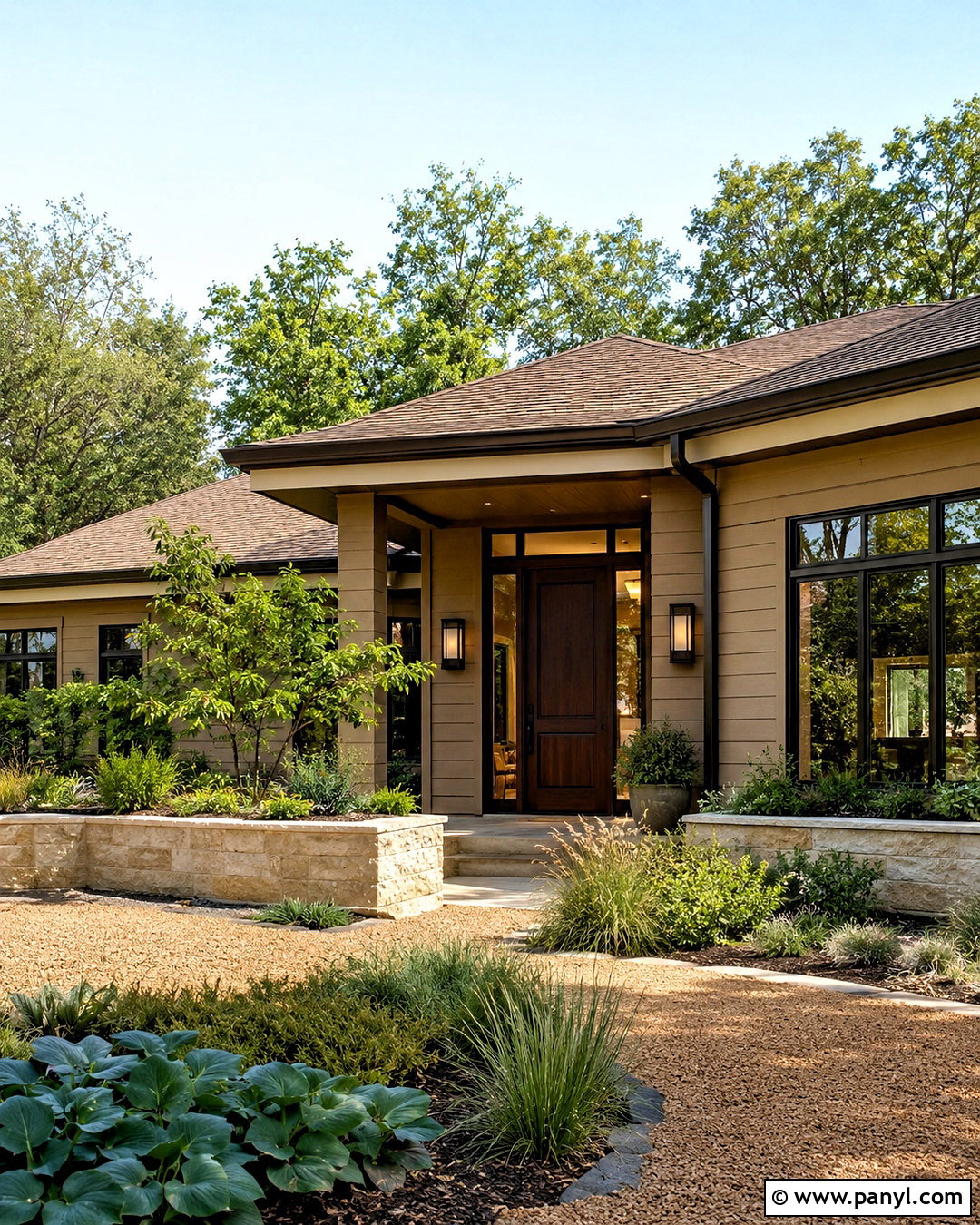
Painting brick beige may sound subtle, but it can produce a major transformation when the original masonry has strong red and orange variation. Choose a pale sandy beige that brightens the walls while retaining an earthy character. Pair it with warm white trim, bronze window frames, and a muted clay-colored front door. If the home has a front-facing garage, paint that door beige to reduce its visual size. Natural stone porch flooring and woven outdoor chairs add quiet texture. Use dark mulch, rounded shrubs, and soft ornamental grasses to frame the lighter facade. The after look feels warm, relaxed, and cohesive. It is especially effective for homes with brown roofs, stone accents, or desert-inspired landscaping.
14. Soft Yellow Painted Brick Cottage
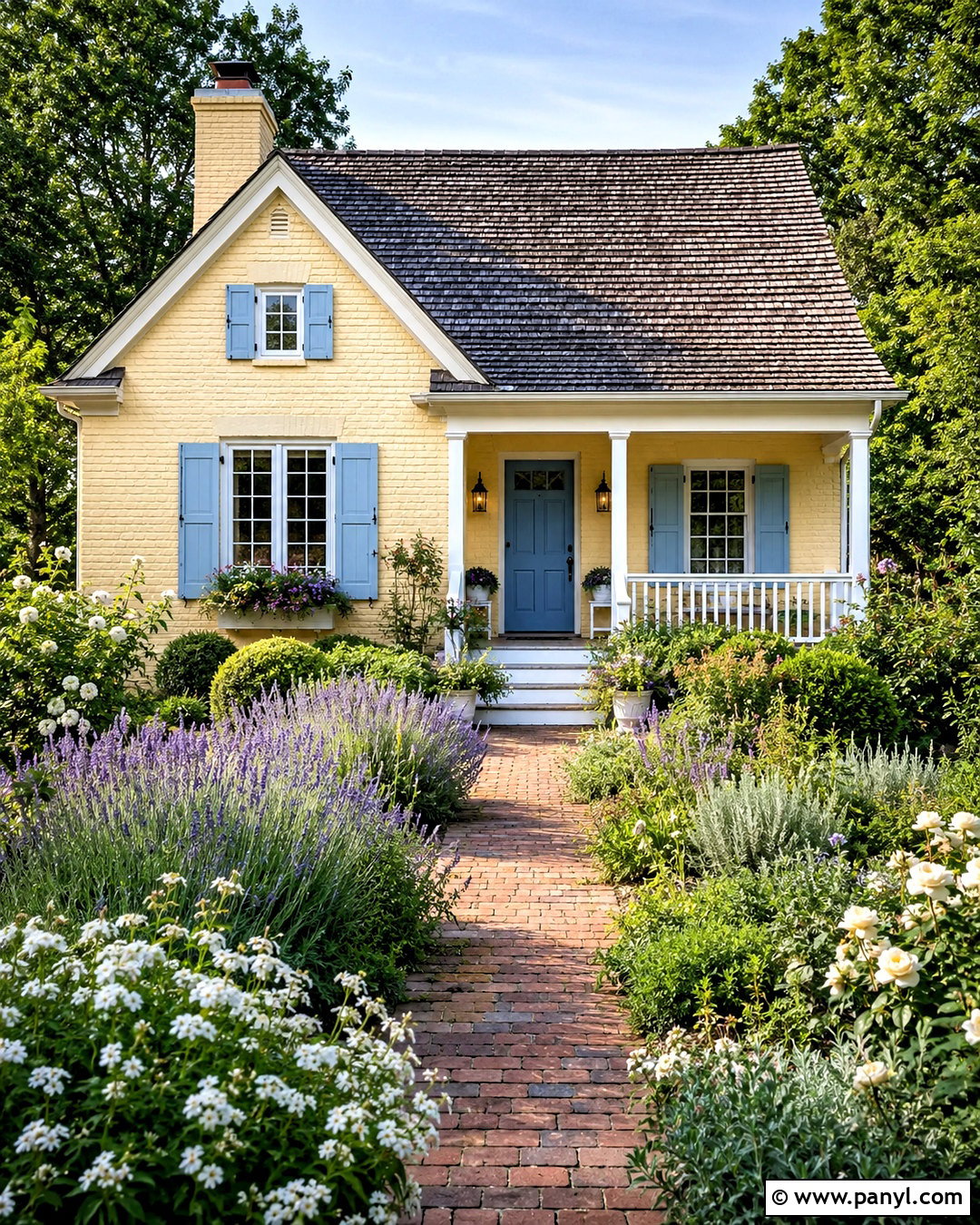
A small brick cottage can become cheerful without looking overly bright when painted a muted buttery yellow. Begin with a soft yellow body that has warm cream undertones, then outline the windows and roofline in ivory. Pale blue shutters give the exterior a friendly, traditional character, while a medium blue front door strengthens the entry. Keep the roof in a weathered gray-brown tone so it anchors the sweeter colors. Add simple white porch railings, aged brass lights, and a narrow brick walkway. Loose garden beds filled with white flowers, lavender, herbs, and rounded shrubs complete the cottage setting. The after facade feels sunny and welcoming, replacing heavy red masonry with an inviting color story that suits a smaller home.
15. Dusty Blue Painted Brick House
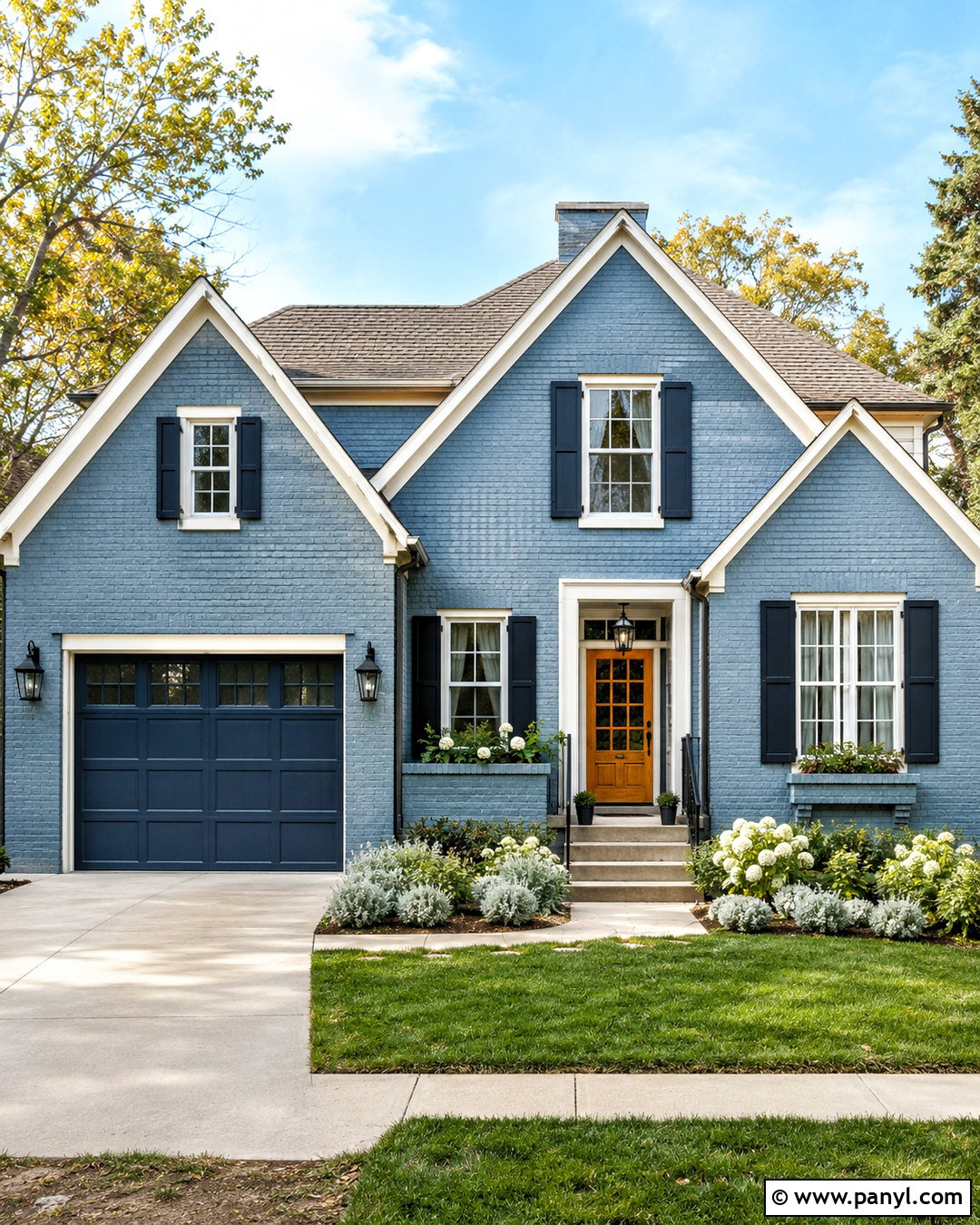
For a brick exterior that needs color but not high drama, dusty blue offers a versatile middle ground. Paint the brick a softened medium blue with plenty of gray, allowing it to work with both warm sunlight and cool shadows. Use creamy white on the trim and porch columns, then add deep blue-black shutters for contrast. A honey-toned wood front door gives the scheme needed warmth. Match the garage door to the brick so the entrance remains the primary focal point. Finish the design with black metal lanterns, a pale concrete path, and foundation beds containing silvery foliage and white blooms. The after exterior feels calm and distinctive, with a complete palette that looks more personal than standard gray or white.
16. Two Tone Painted Brick House
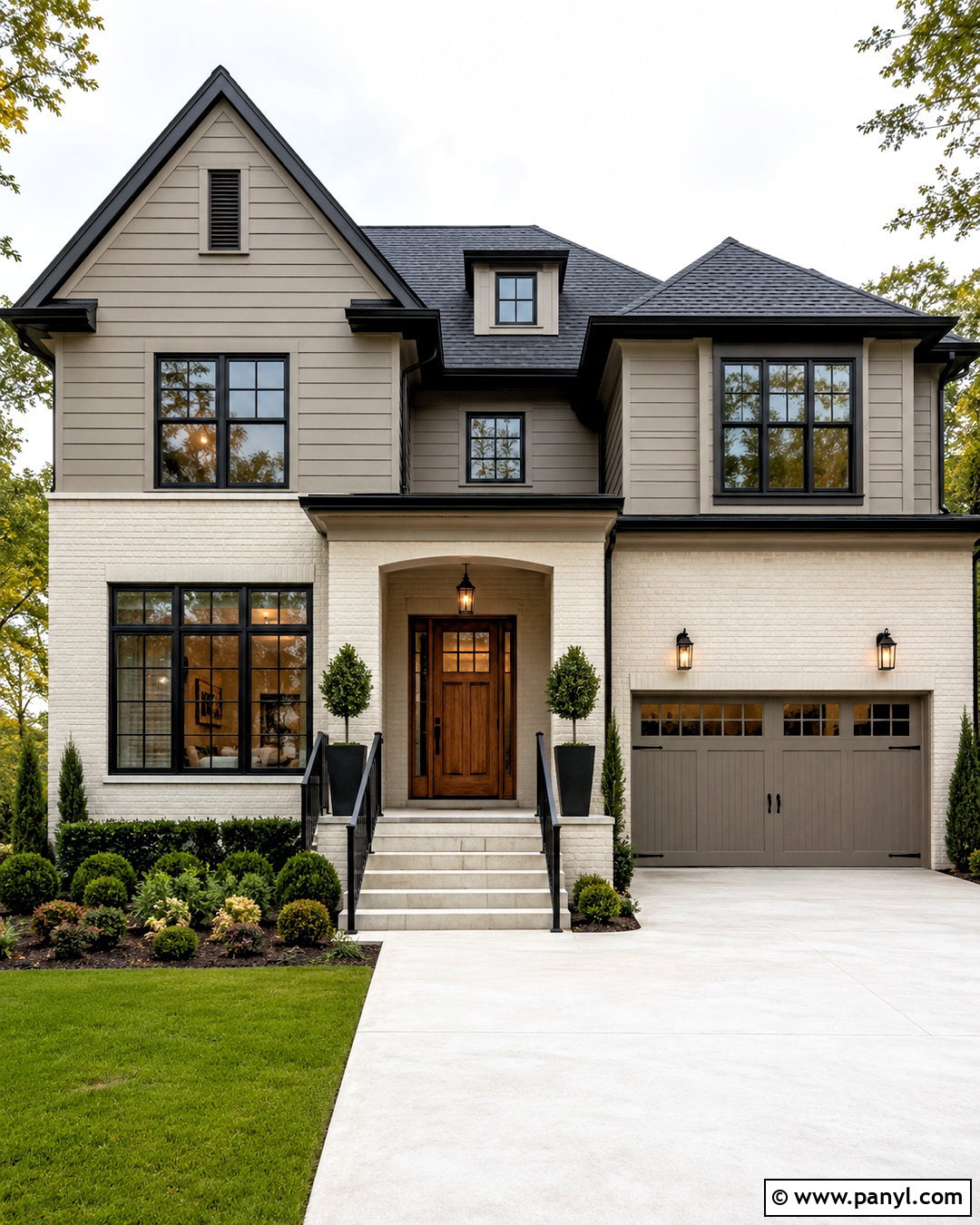
A home with brick on the lower level and siding above can look chopped into separate sections before renovation. A coordinated two-tone palette turns that division into an intentional design feature. Paint the brick a warm off-white and the upper siding a medium greige. Repeat the greige on the garage door and selected gables, while using charcoal for the windows, gutters, and porch railing. A stained oak front door bridges the light and dark colors. If the facade feels busy, remove decorative shutters that do not fit the windows. Add wide porch steps, symmetrical planters, and low structured landscaping. The final exterior looks balanced because the two main colors clarify the architecture instead of competing with it.
17. White Painted Brick With Natural Brick Accents
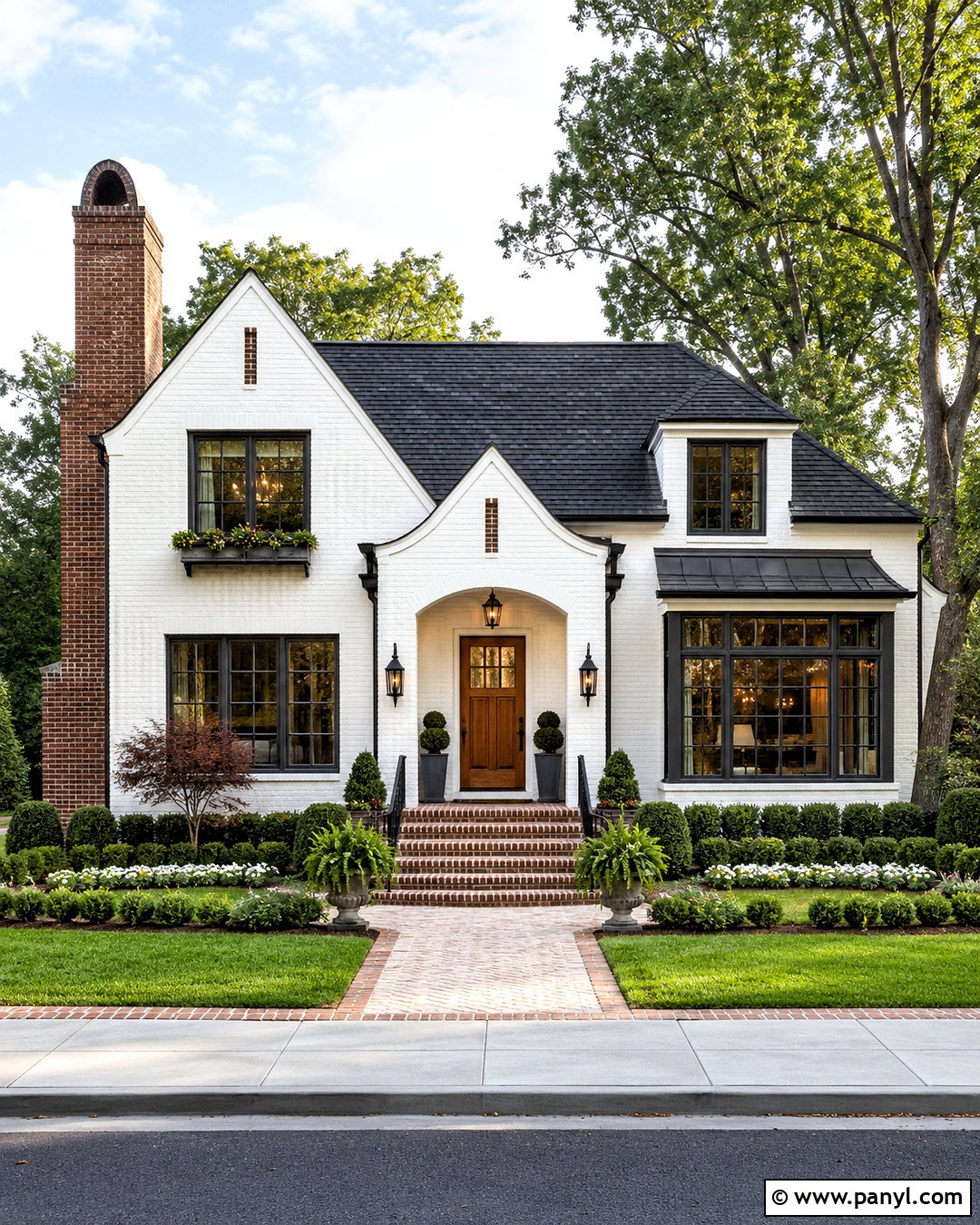
You do not have to cover every brick surface to achieve a convincing transformation. Paint the main walls warm white while leaving selected brick features natural, such as the chimney, porch floor, steps, or an entry arch. This approach preserves texture and history while reducing the dominance of dated red masonry. Use charcoal trim and a dark bronze roof to frame the lighter body. Choose a medium wood front door that relates to the remaining brick tones. Black lanterns and simple metal railings sharpen the finish. Repeat the natural red-brown color in walkway edging and planters. The after house feels refreshed but not erased, offering a thoughtful compromise for homeowners who still appreciate part of the original brickwork.
18. Painted Brick Tudor House
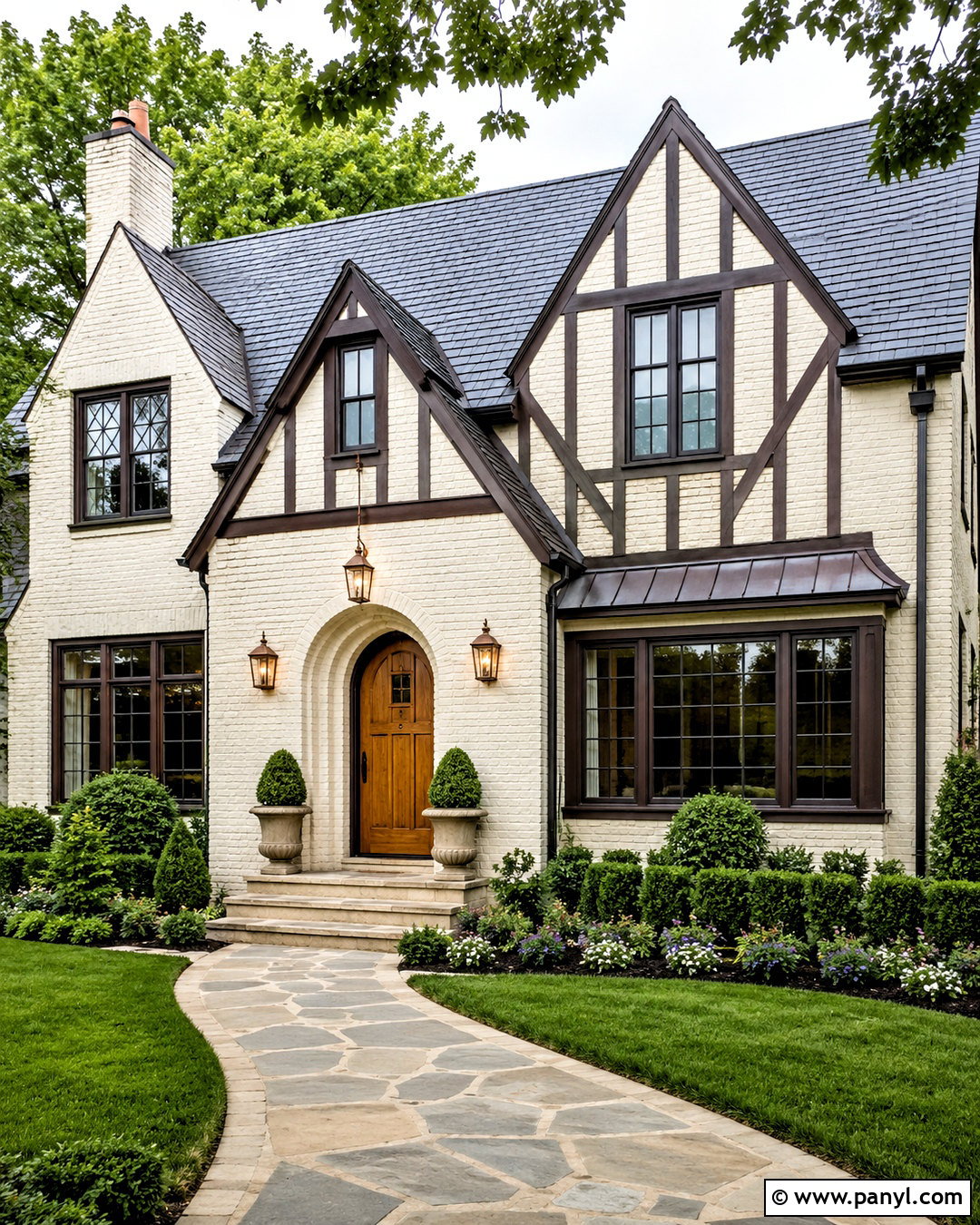
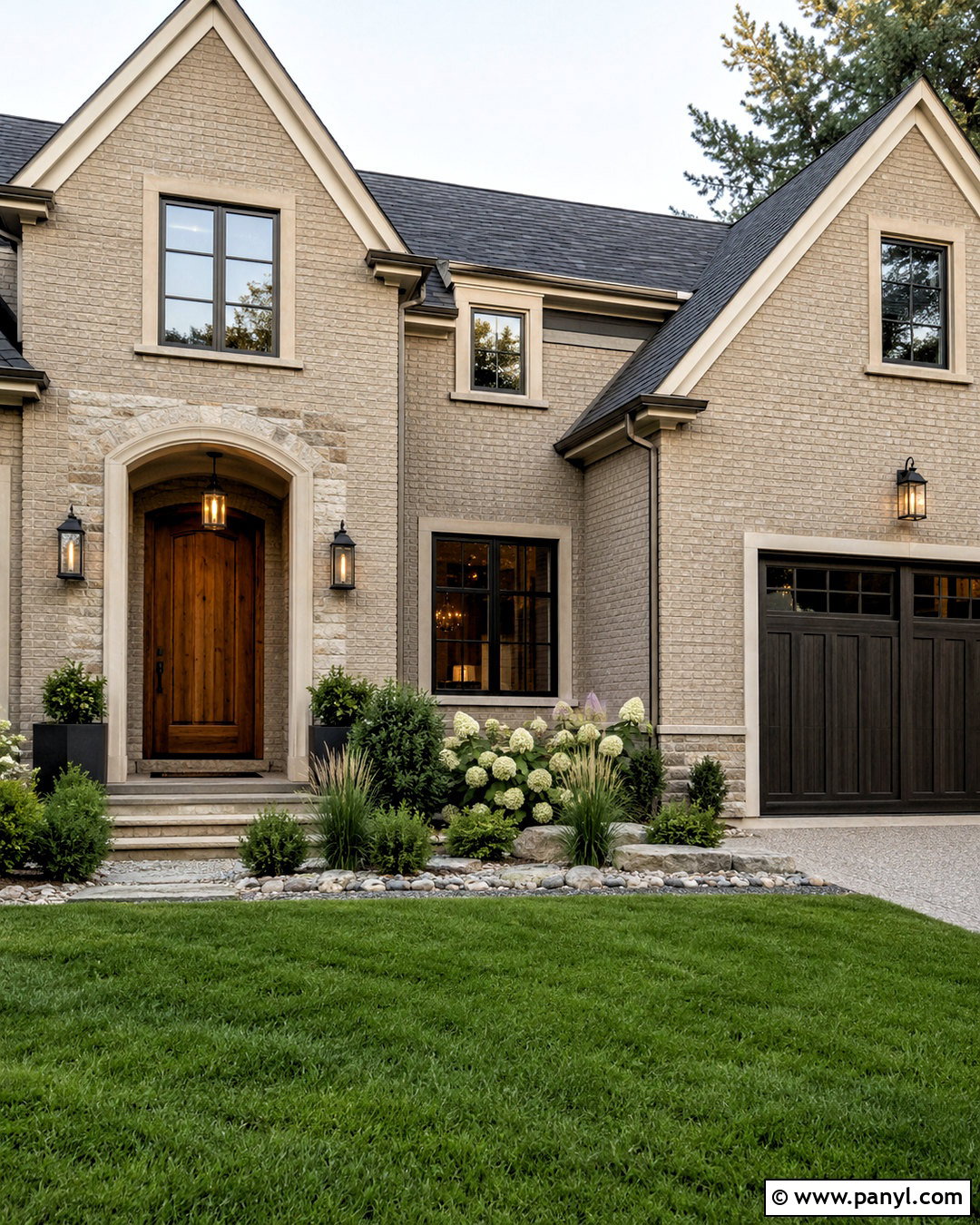
Dark red brick, heavy brown trim, and multiple gables can make a Tudor exterior appear shadowy and overly busy. Painting the brick a warm limestone white creates a brighter base while preserving the home’s recognizable architectural lines. Keep the half-timber details deep brown or charcoal so the gables remain defined. Use dark bronze window frames, copper lanterns, and a substantial arched wood door to reinforce the historic character. A slate-colored roof provides a grounded top layer. Replace crowded foundation shrubs with lower hedges that reveal the masonry and windows. Add a curved stone path and traditional planters near the entrance. The after look feels lighter and cleaner without turning the Tudor into a generic modern house.
19. White Painted Brick Colonial House
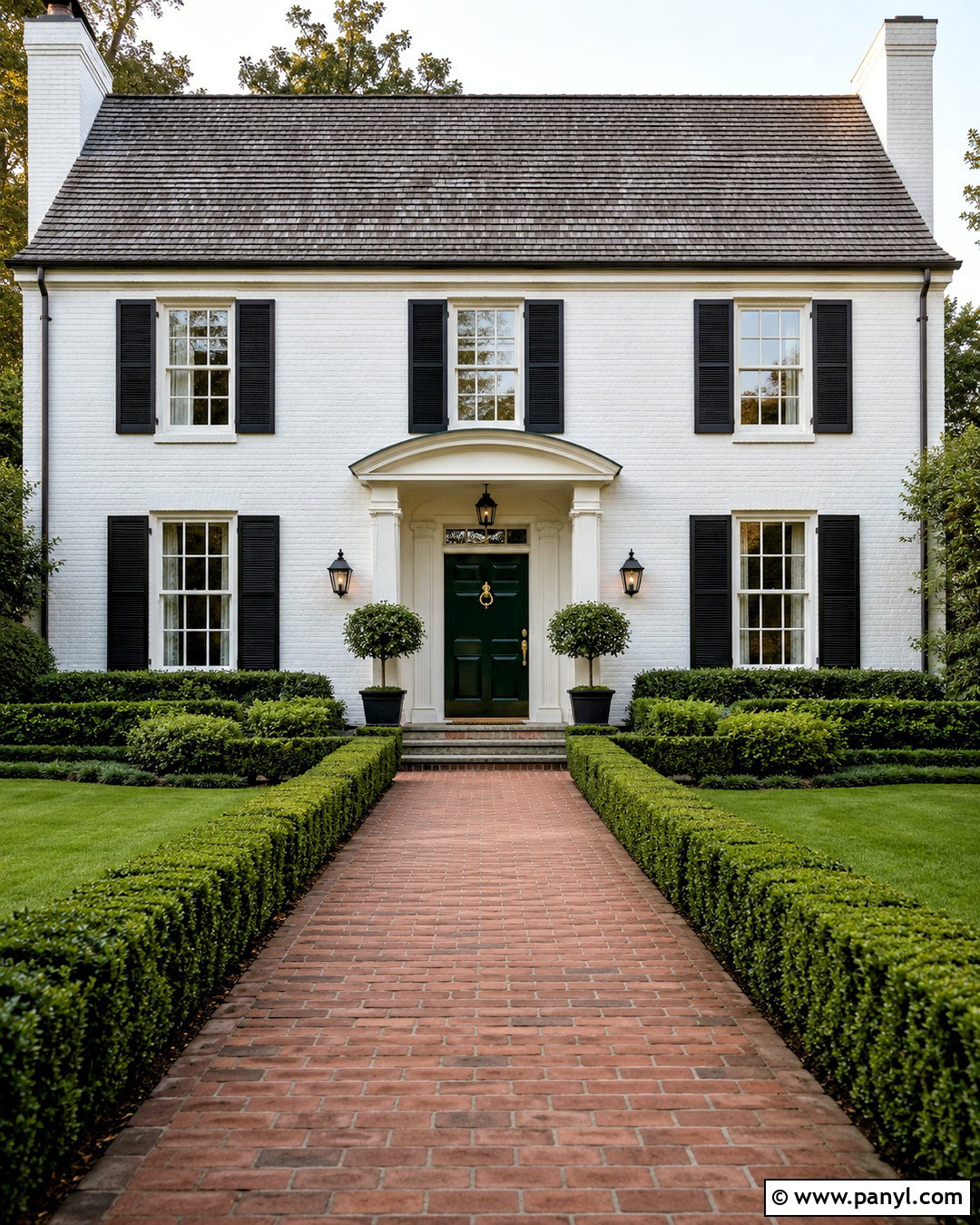
A symmetrical Colonial home benefits from a paint scheme that strengthens its orderly facade. Cover faded or uneven red brick with a soft white that has a gentle warm undertone. Paint the shutters deep black, but make sure their size visually matches the windows. A glossy dark green front door adds classic color and gives the centered entrance greater importance. Keep columns, window trim, cornices, and the garage door white for continuity. Add polished brass door hardware and traditional black lanterns for crisp detail. A straight brick walkway, clipped boxwoods, and matching planters reinforce the symmetry. The finished exterior looks brighter and more formal, with every feature contributing to a balanced and recognizable Colonial composition.
20. Painted Brick Split Level House
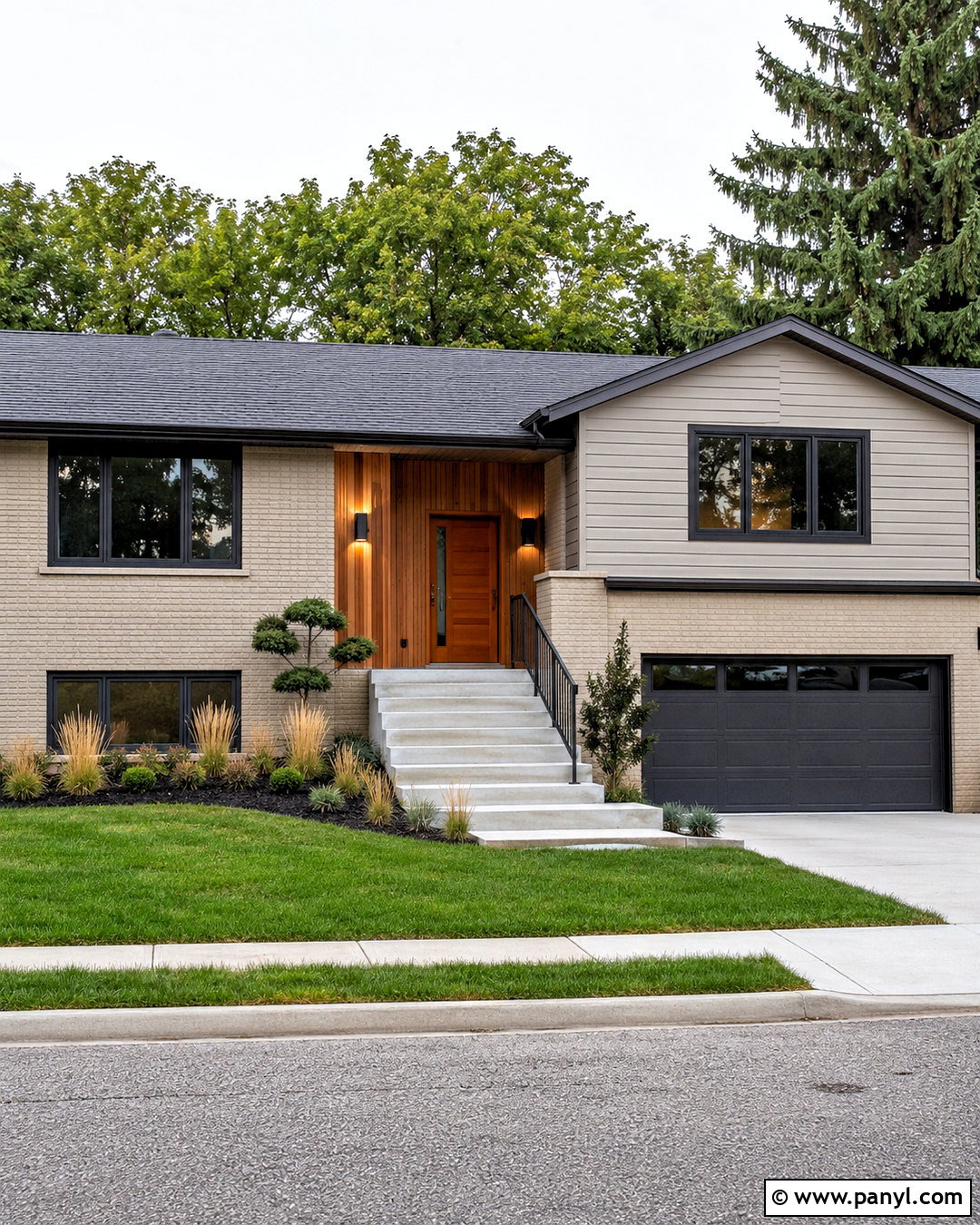
Split-level homes often have several competing materials, uneven window groupings, and a garage that dominates the street view. Create a unified after design by painting the brick warm greige and the siding a slightly lighter shade from the same color family. Use charcoal on the windows, gutters, and garage door to create strong horizontal structure. Highlight the recessed entrance with vertical cedar siding, a natural wood door, and a broad modern light fixture. Replace narrow front steps with a wider concrete landing and a simple black railing. Layer ornamental grasses and low shrubs beneath the windows without blocking them. The finished exterior feels deliberate and contemporary, turning an awkward collection of levels into one connected home.
Conclusion:
The best 20 painted brick house before and after ideas treat the exterior as a complete design rather than a quick color change. Brick paint should connect naturally with the roof, trim, windows, doors, garage, hardscaping, and surrounding plants. Warm whites offer an airy appearance, while greige, blue-gray, and taupe provide softer neutral options. Dark charcoal, navy, and black can create stronger architectural definition. Whatever palette you prefer, test large samples on different sides of the house and view them throughout the day. Inspect the masonry first, make necessary repairs, and use an appropriate exterior system. Careful planning will help the finished home feel balanced, durable, and intentionally transformed.

Related Ideas and Inspiration:
Leave a Reply