
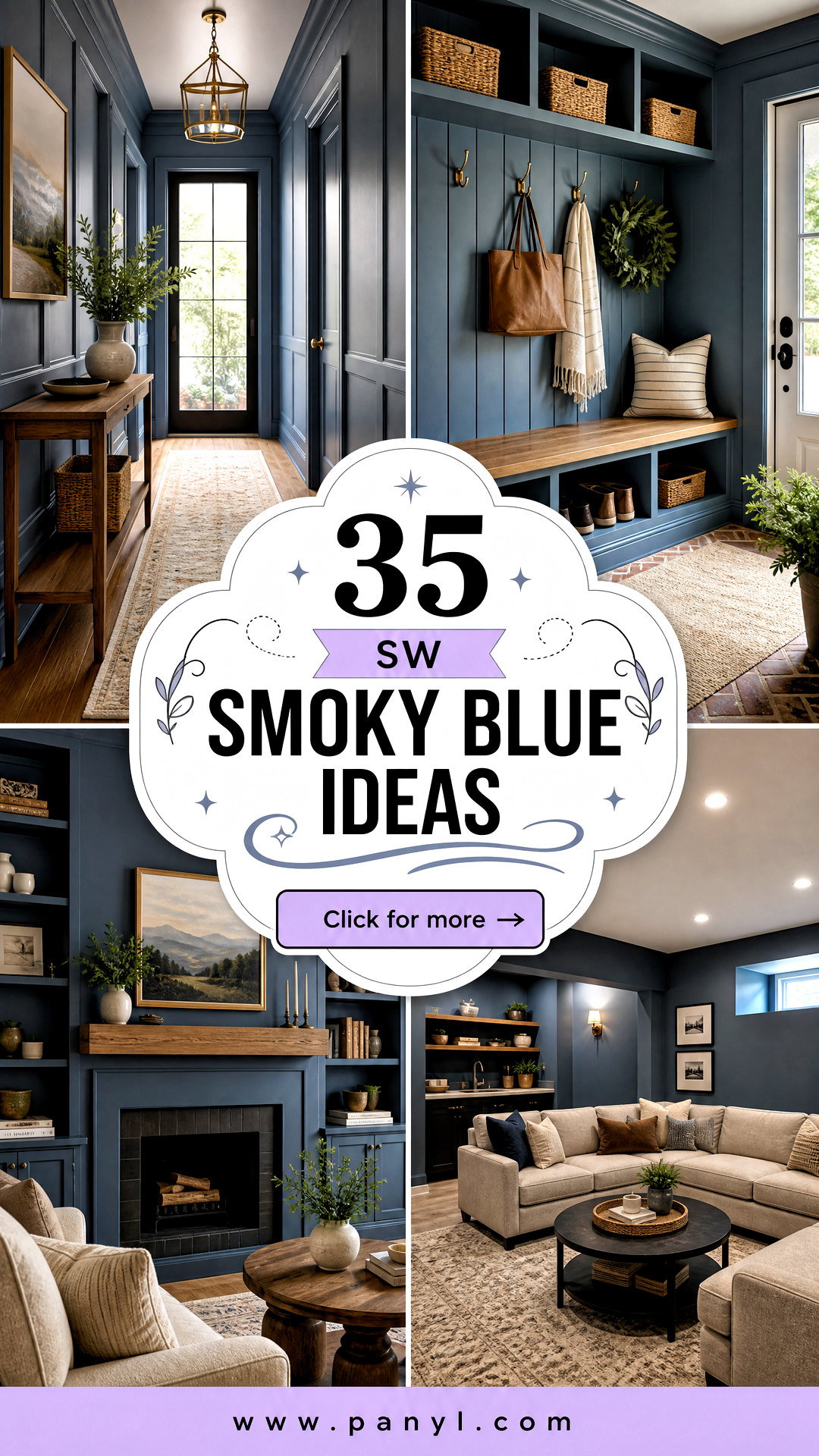
Sherwin-Williams Smoky Blue SW 7604 is a deep blue-gray paint color that can make ordinary rooms and exteriors feel more polished. Its muted gray undertone softens the blue, allowing it to work with warm wood, crisp white, cream, black, brass, and stone. Because this color has noticeable depth, lighting and placement matter. It may appear clearer blue in bright daylight and more charcoal blue in dimmer spaces. Always test a large sample on several surfaces before committing. The right furniture, flooring, trim, and lighting will keep the finished palette balanced rather than heavy. From kitchen cabinets and bedrooms to siding and front doors, these 35 SW Smoky Blue ideas offer complete, practical looks you can recreate. ()
1. Smoky Blue Living Room Walls
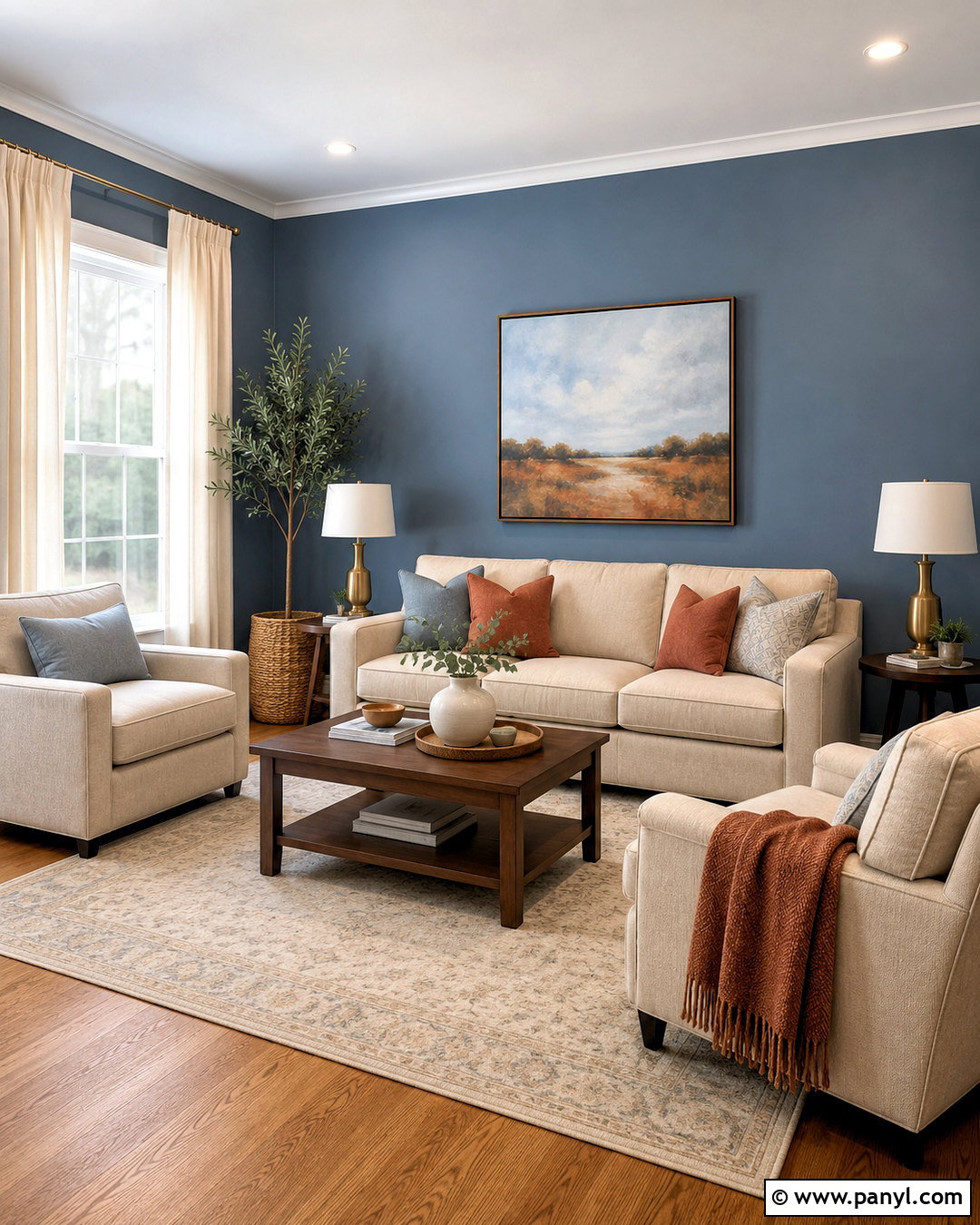
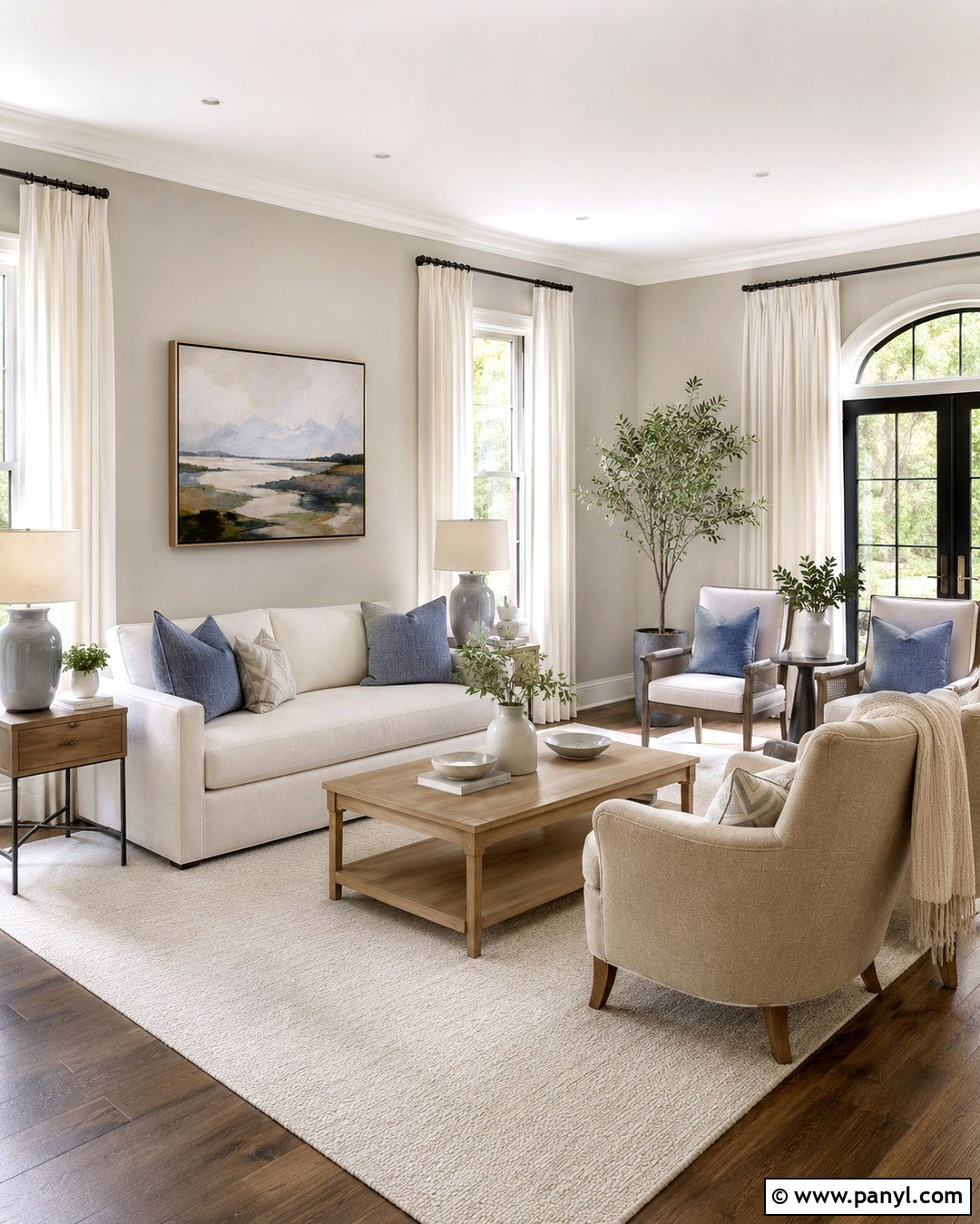
Covering all four living room walls in Smoky Blue creates an inviting, cocoon-like backdrop without the sharpness of a brighter navy. Balance the depth with an oatmeal-colored sofa, ivory curtains, and a large cream rug that reflects light around the room. Medium oak flooring and a walnut coffee table add warmth, while brushed brass lamps keep the scheme from feeling too cool. Choose artwork with pale blue, rust, cream, and muted green to connect the furnishings with the walls. White or soft off-white trim provides clean definition. This complete palette works especially well in living rooms with generous windows, layered lamps, and simple furniture arrangements that leave enough open space around each piece.
2. Smoky Blue Living Room Accent Wall
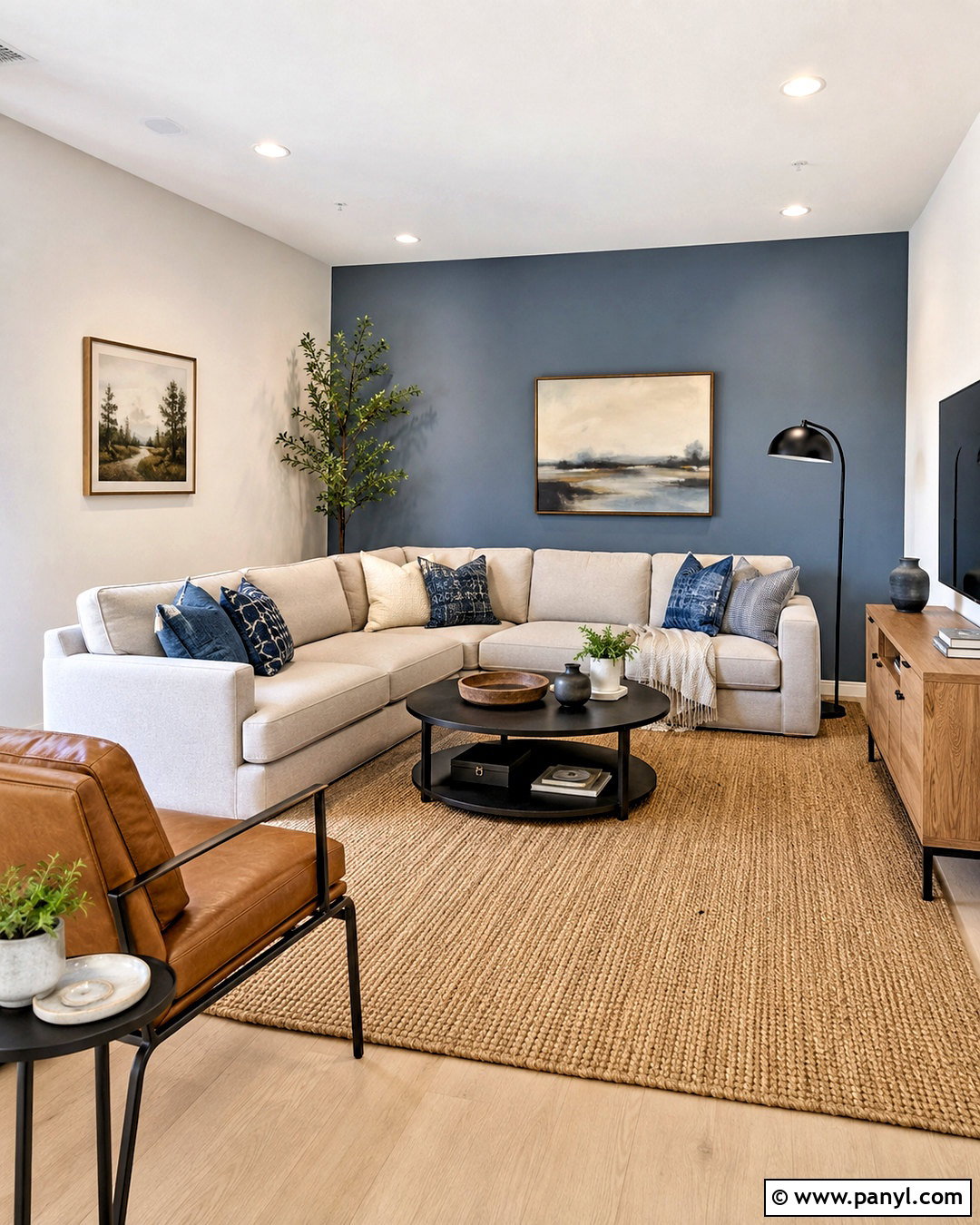
A Smoky Blue accent wall can establish a clear focal point while keeping the rest of the living room light and open. Paint the wall behind the sofa or media console, then use warm white on the surrounding walls and trim. A light greige sectional, camel leather chair, and natural jute rug create a relaxed foundation. Repeat the blue through two or three small accessories, such as patterned pillows, pottery, or framed artwork. Matte black curtain rods and a streamlined floor lamp add structure without competing with the color. Keep the accent wall visually organized with one large artwork or a balanced gallery arrangement. This approach delivers contrast while requiring less paint and making future updates easier.
3. Smoky Blue Color Drenched Living Room
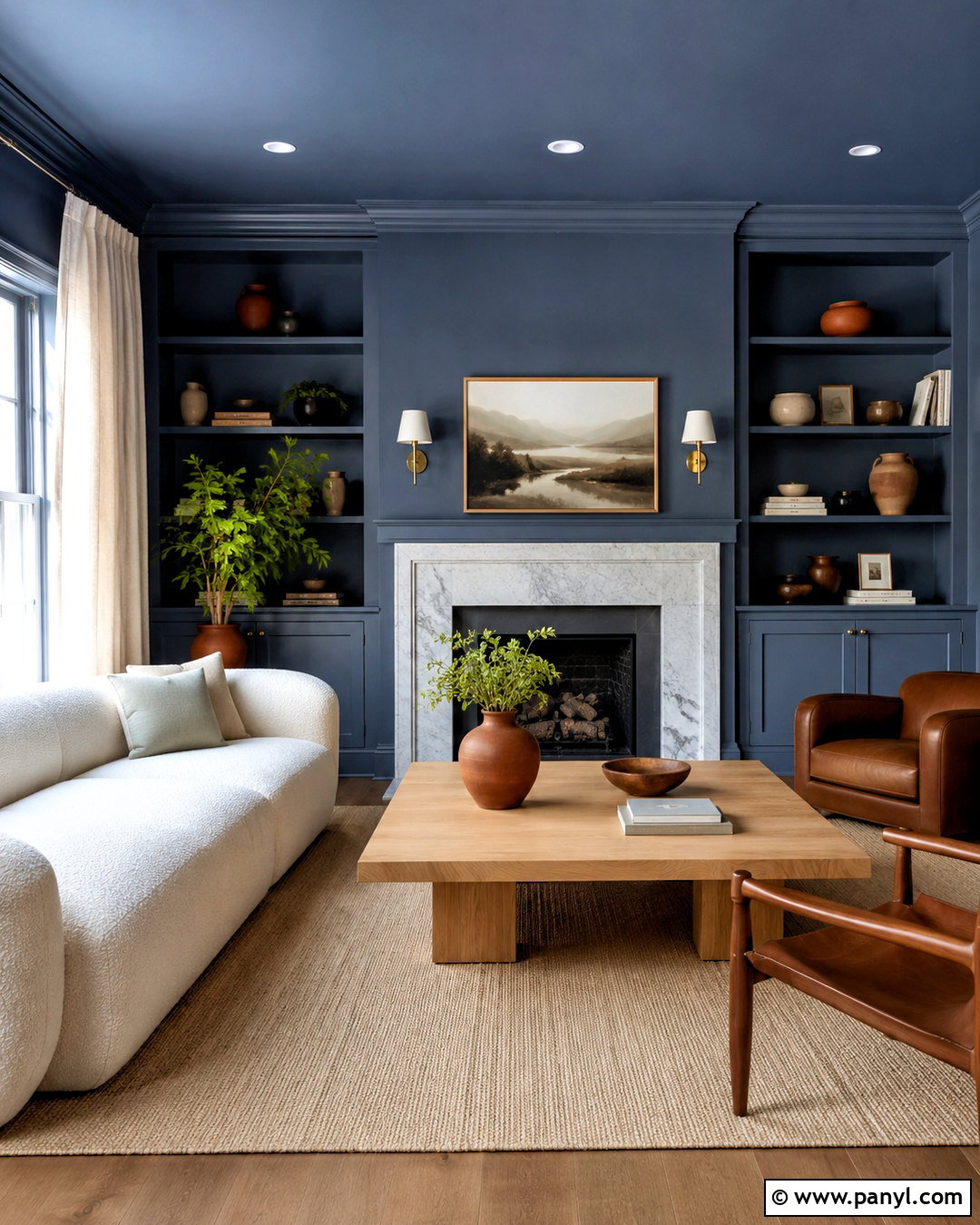
For a dramatic but cohesive living room, apply Smoky Blue to the walls, trim, built-ins, and ceiling. Use different paint sheens to create subtle definition: matte on the ceiling, eggshell on the walls, and satin on the woodwork. Prevent the room from becoming visually flat with a cream bouclé sofa, pale oak tables, linen curtains, and a softly patterned neutral rug. Warm brass sconces and shaded table lamps provide comfortable illumination at several levels. Add terracotta pottery, tobacco-colored leather, and muted olive textiles for earthy contrast. This color-drenched treatment works best when architectural features remain visible and the furnishings are deliberately lighter than the painted surfaces. The result feels enveloping, tailored, and thoughtfully balanced.
4. Smoky Blue Kitchen Cabinets
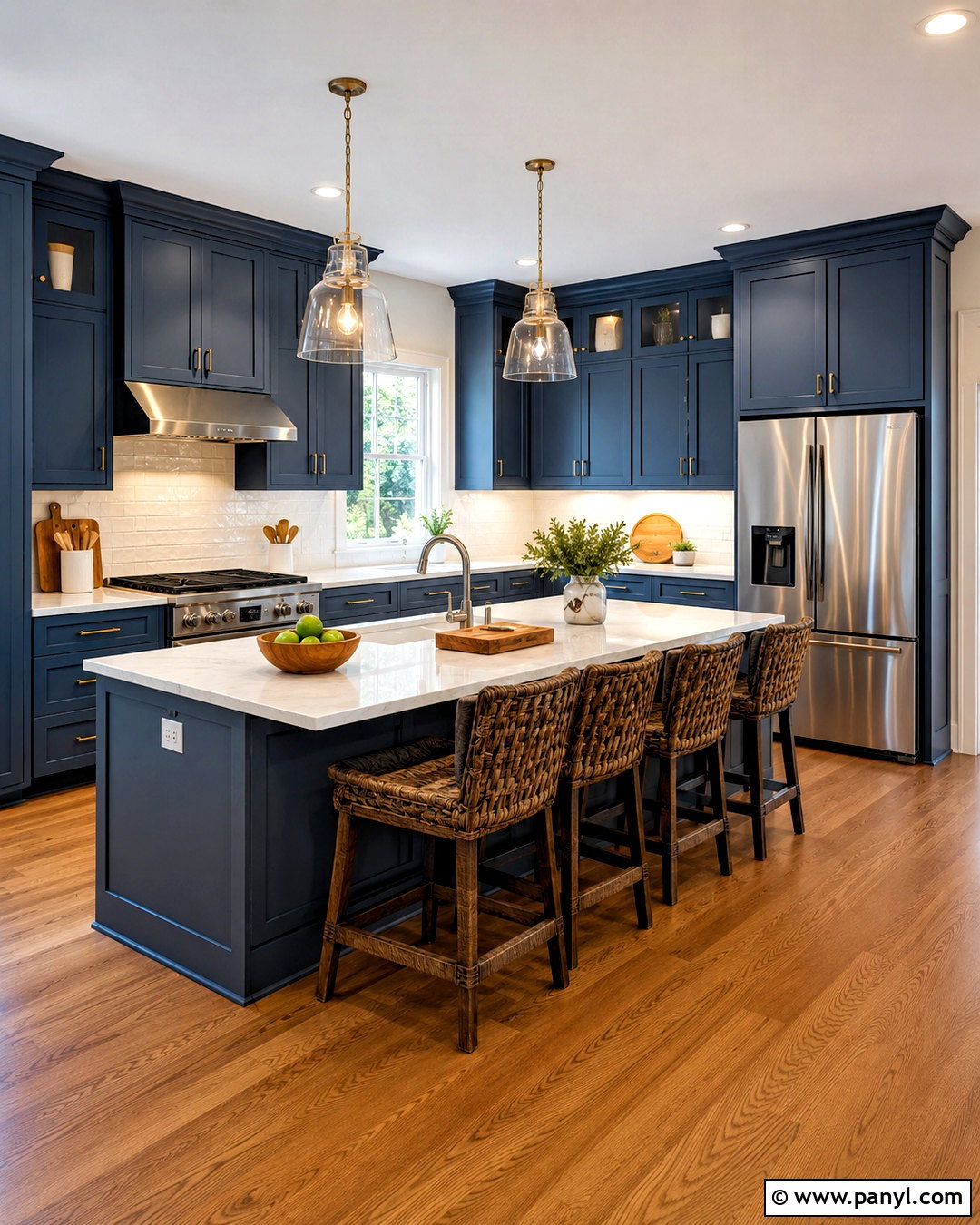
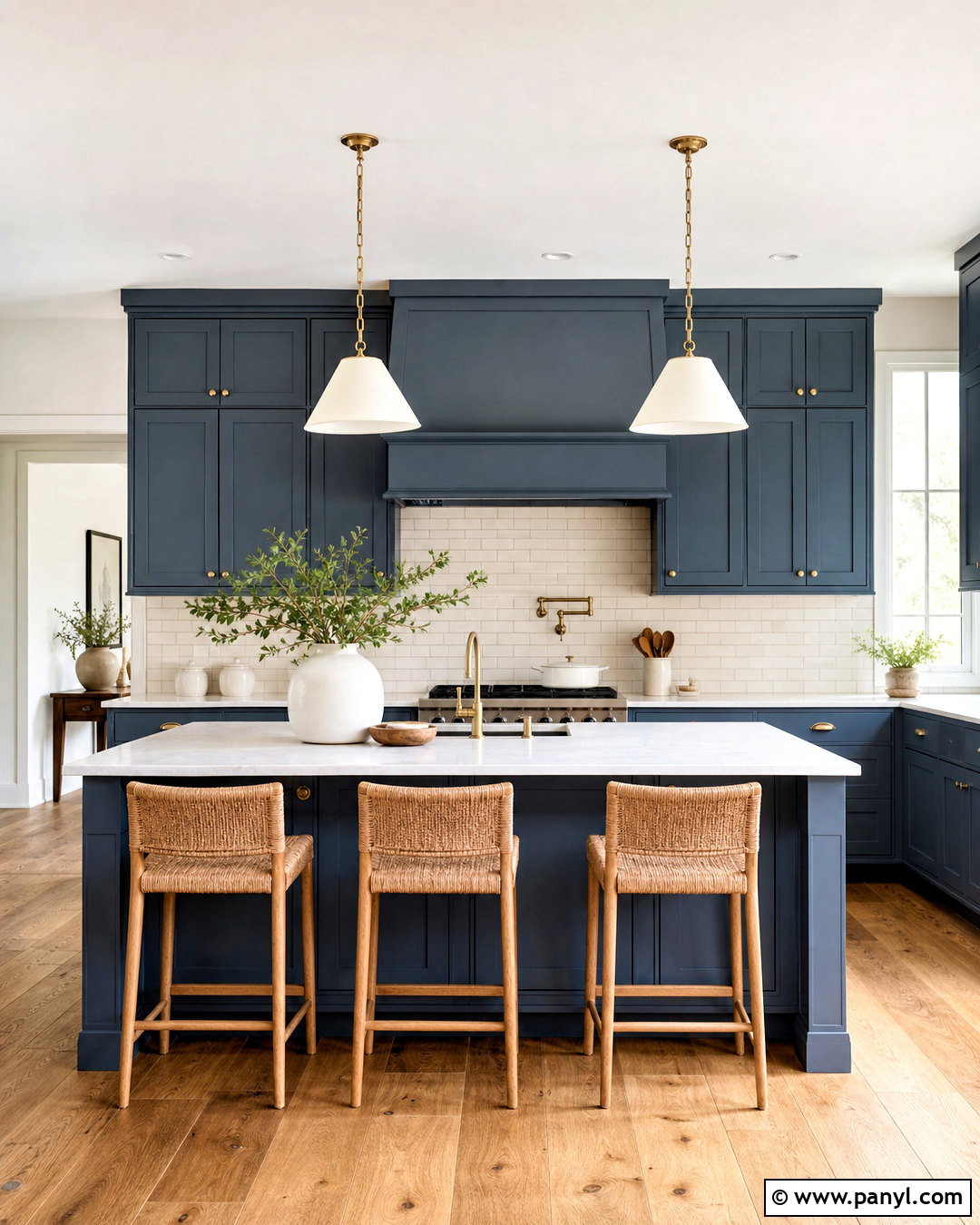
Smoky Blue cabinets bring substantial color into a kitchen while maintaining a classic blue-gray appearance. Use the shade on both upper and lower cabinets when the room has strong natural or artificial light. Pair them with warm white quartz counters, a glossy off-white subway tile backsplash, and medium oak flooring. Brushed brass knobs and cup pulls introduce warmth, while stainless steel appliances keep the room practical and familiar. Paint the walls a soft white rather than another cool gray, which could make the palette feel flat. Clear glass pendants and under-cabinet lighting will brighten work surfaces. Finish the room with woven counter stools, wood cutting boards, and restrained greenery for a comfortable kitchen that feels colorful but not overly themed.
5. Smoky Blue Kitchen Island
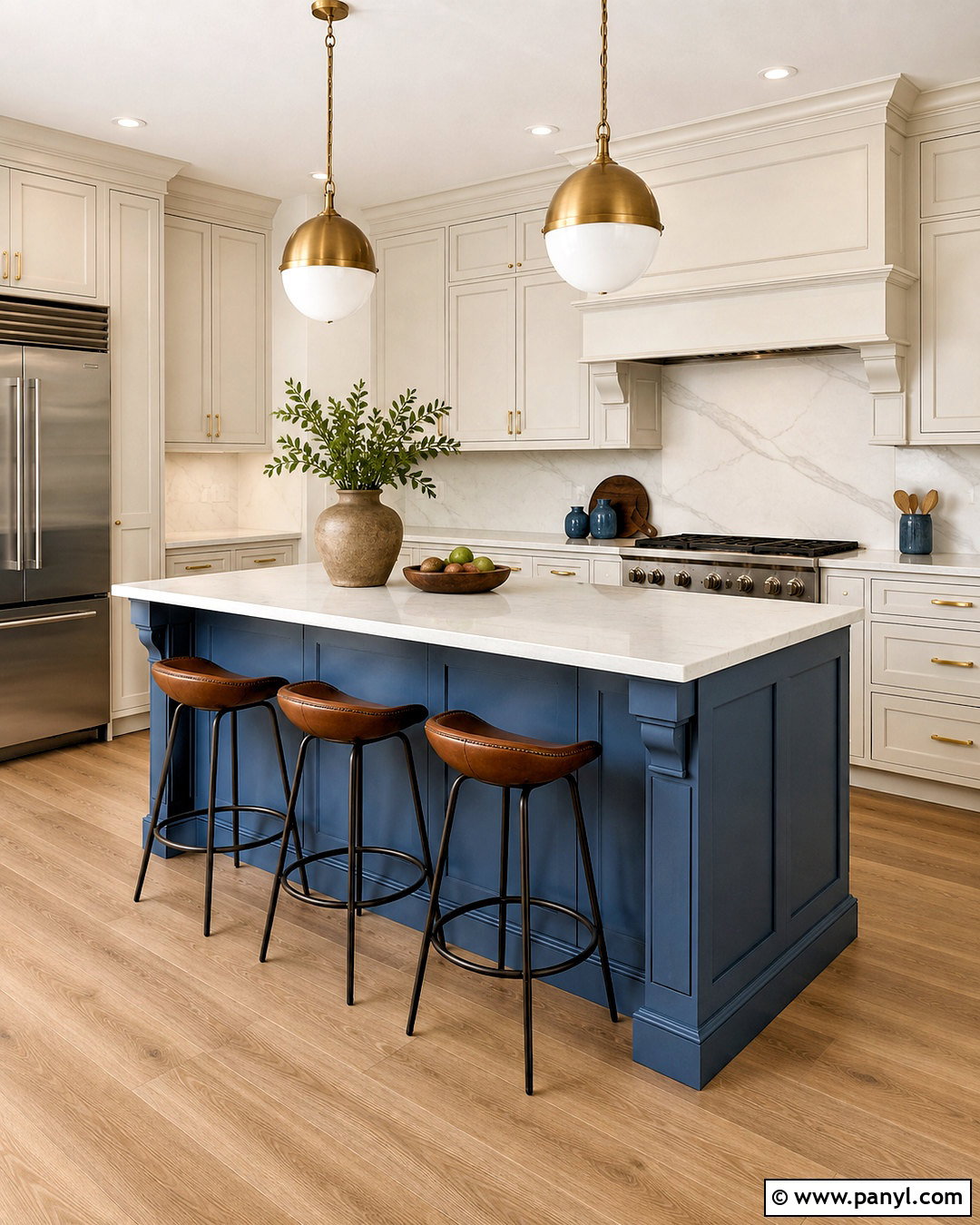
Painting only the kitchen island Smoky Blue is an easy way to give a neutral kitchen a stronger focal point. Surround it with creamy white perimeter cabinets, pale quartz counters, and a backsplash featuring subtle gray-blue veining. Choose a medium or light oak floor to warm the cooler island color. Brass pendant lights and matching cabinet hardware create continuity, while saddle-brown leather stools add another rich, practical layer. A thick white countertop makes the island feel substantial and prevents the blue from overpowering the room. Repeat Smoky Blue sparingly through a Roman shade or small ceramic pieces. This balanced arrangement suits open-concept homes because the island provides color without making the entire kitchen visually dark.
6. Smoky Blue Two Tone Kitchen
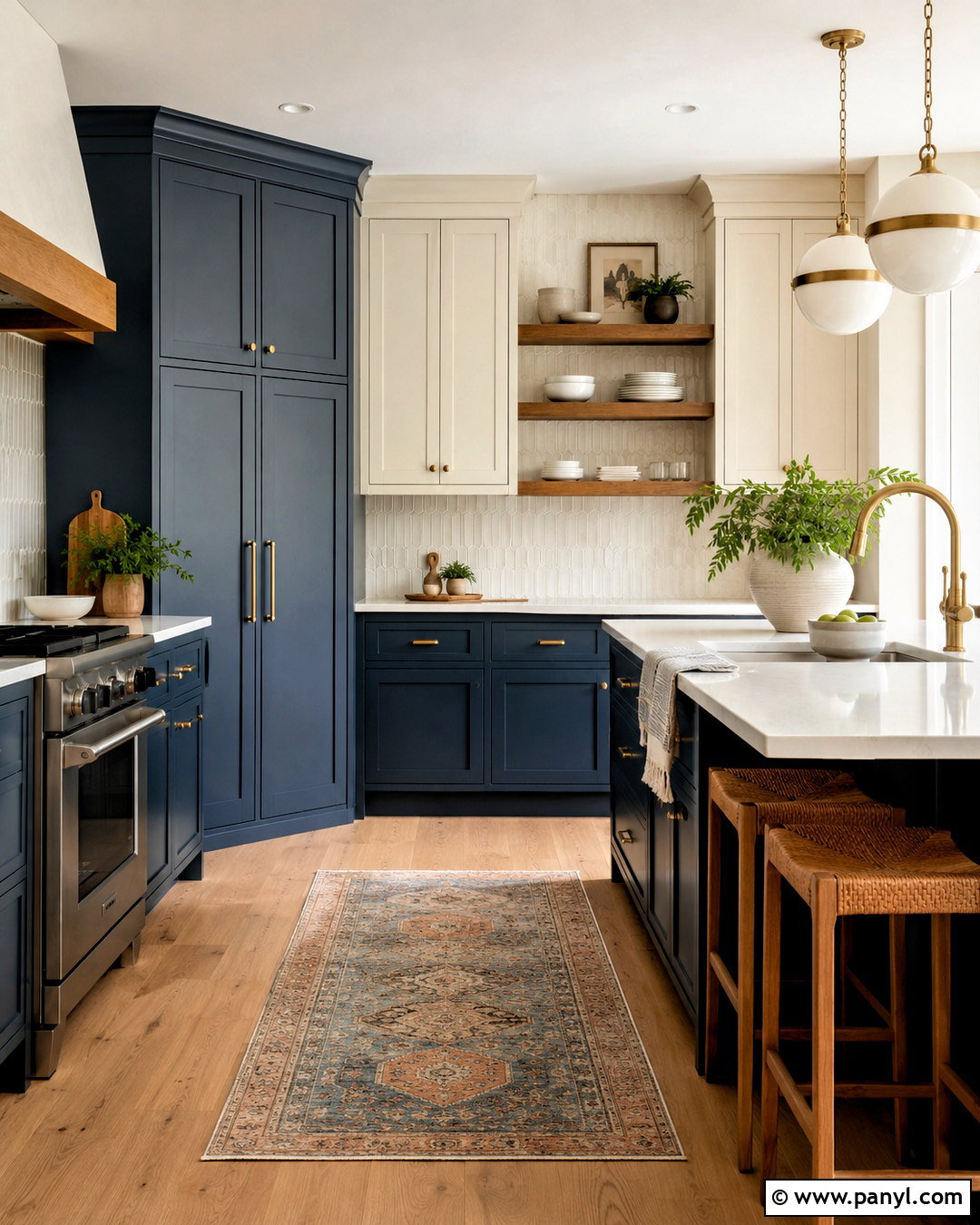
A two-tone kitchen allows Smoky Blue to provide depth while lighter cabinetry keeps the room airy. Paint the lower cabinets and tall pantry units blue, then use Egret White or another warm off-white on the upper cabinets. Connect both colors with creamy quartz countertops and a handmade-look backsplash containing white, gray, and faint blue variation. Natural oak open shelves soften the painted surfaces and provide space for practical dishes. Select aged brass hardware, simple globe pendants, and warm-toned flooring. Keep countertop accessories limited so the color arrangement remains easy to appreciate. This complete design works particularly well in average-size kitchens where dark upper cabinets might feel imposing, but an all-white palette would lack enough visual character.
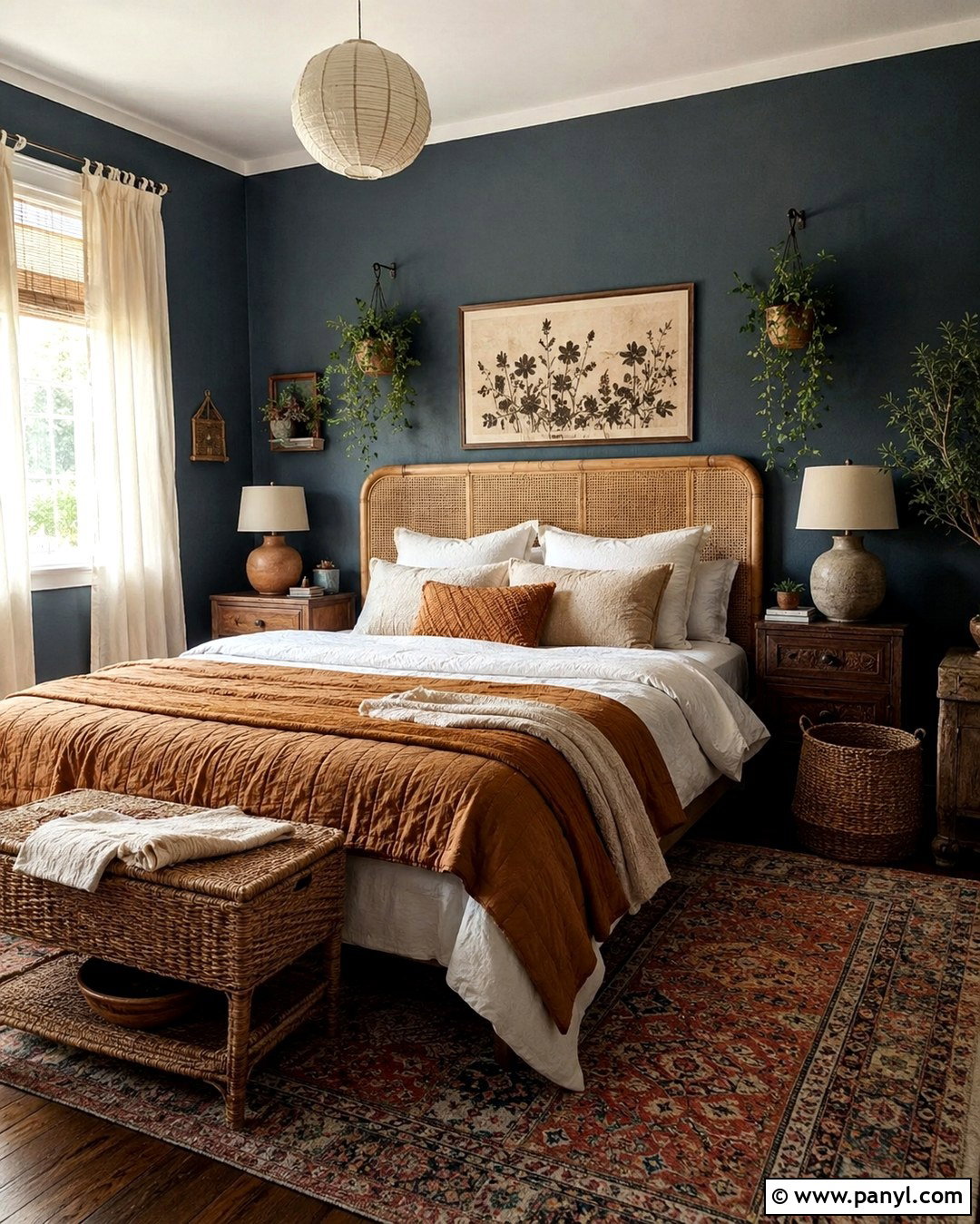
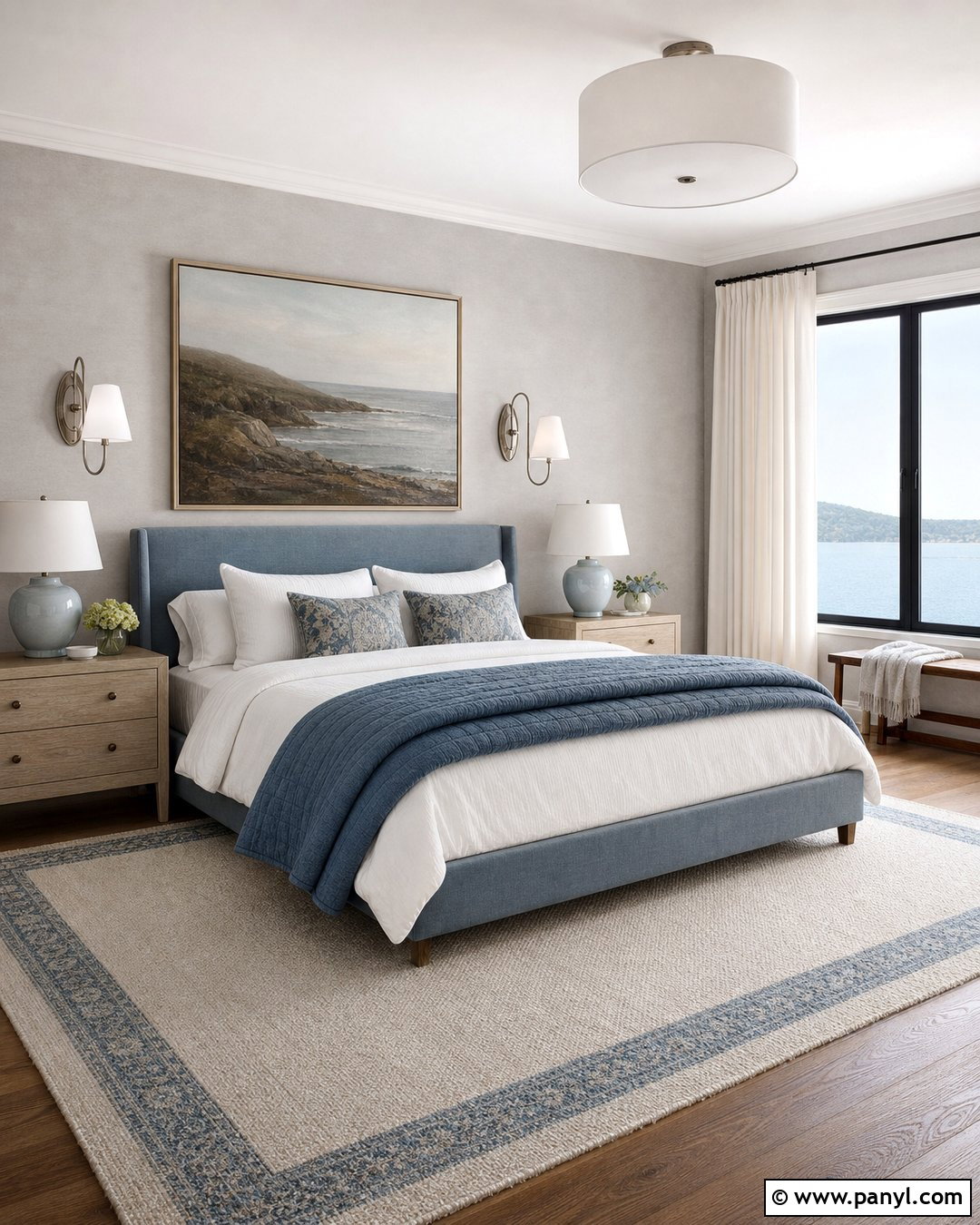
7. Smoky Blue Primary Bedroom
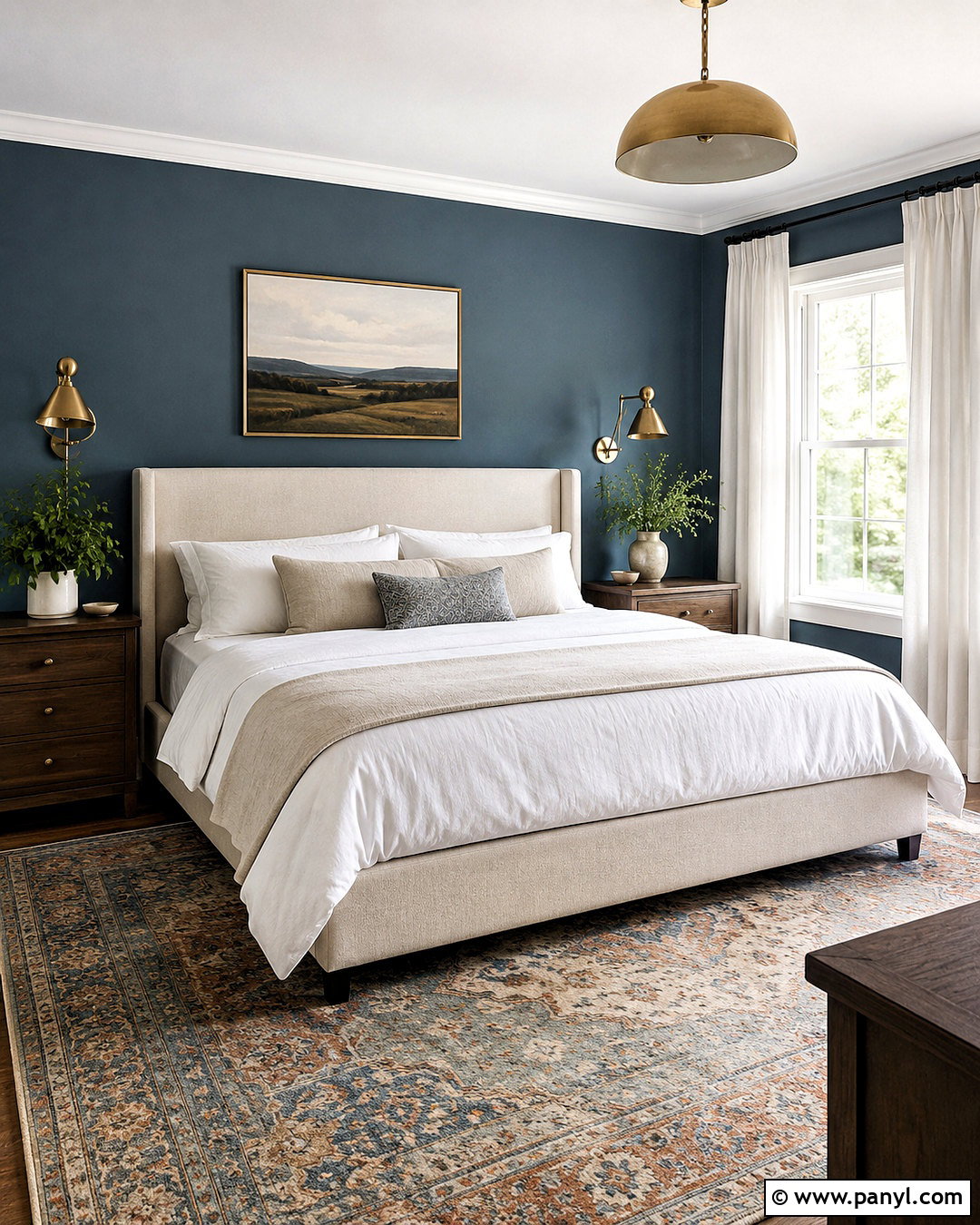
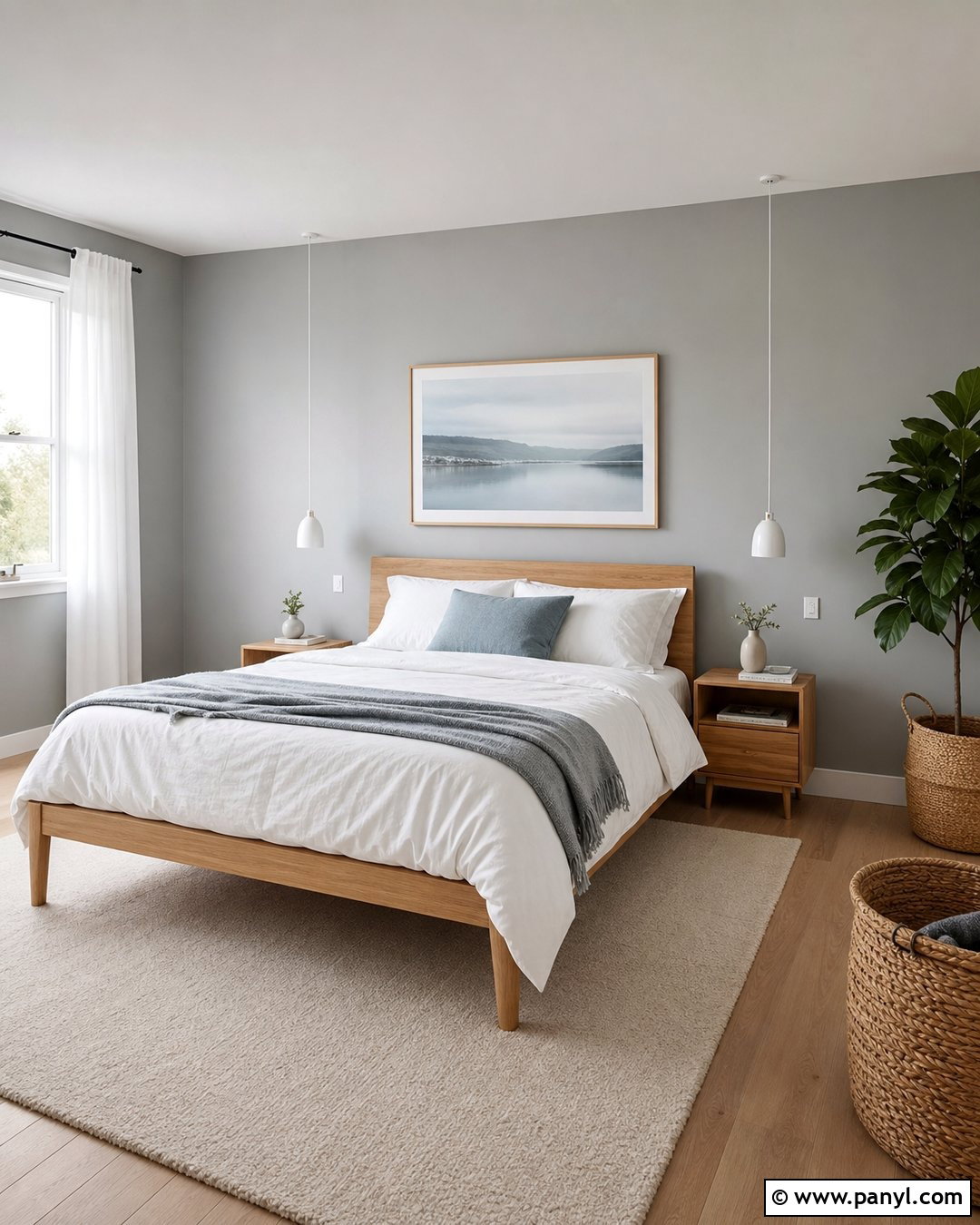
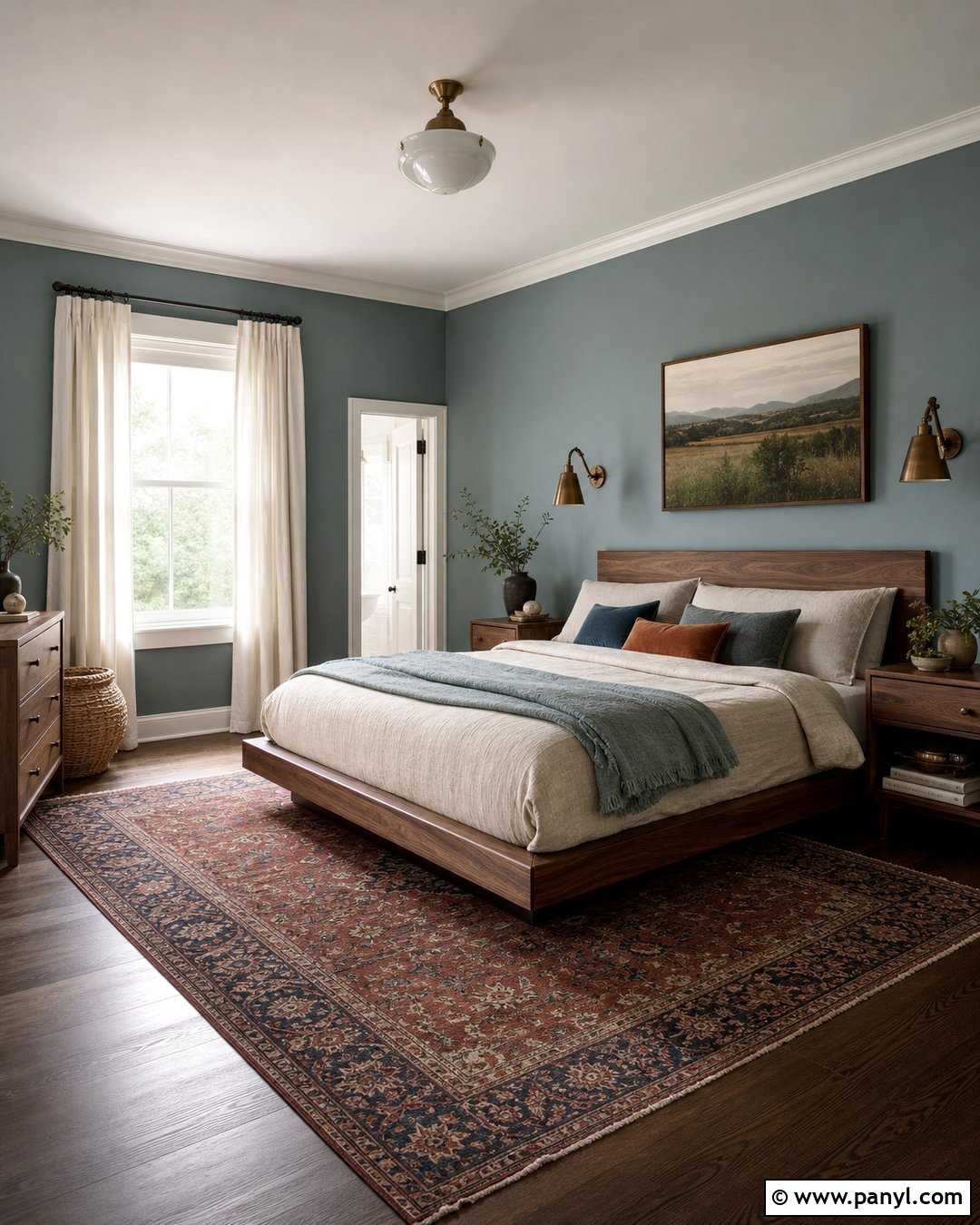
Smoky Blue can turn a primary bedroom into a restful retreat when it is balanced with soft, warm materials. Paint all four walls blue and retain creamy white trim for a defined, tailored edge. Place a light oatmeal upholstered bed against the longest uninterrupted wall, then layer white sheets, a flax-colored duvet, and blue-gray pillows. Walnut nightstands and aged brass sconces bring warmth beside the cool walls. Use full-length ivory curtains to maximize the sense of height and soften daylight. A large vintage-inspired rug should combine faded blue, beige, and muted rust. Keep artwork simple and generously scaled. This arrangement feels calm and mature while providing enough contrast to prevent the room from appearing dark or visually crowded.
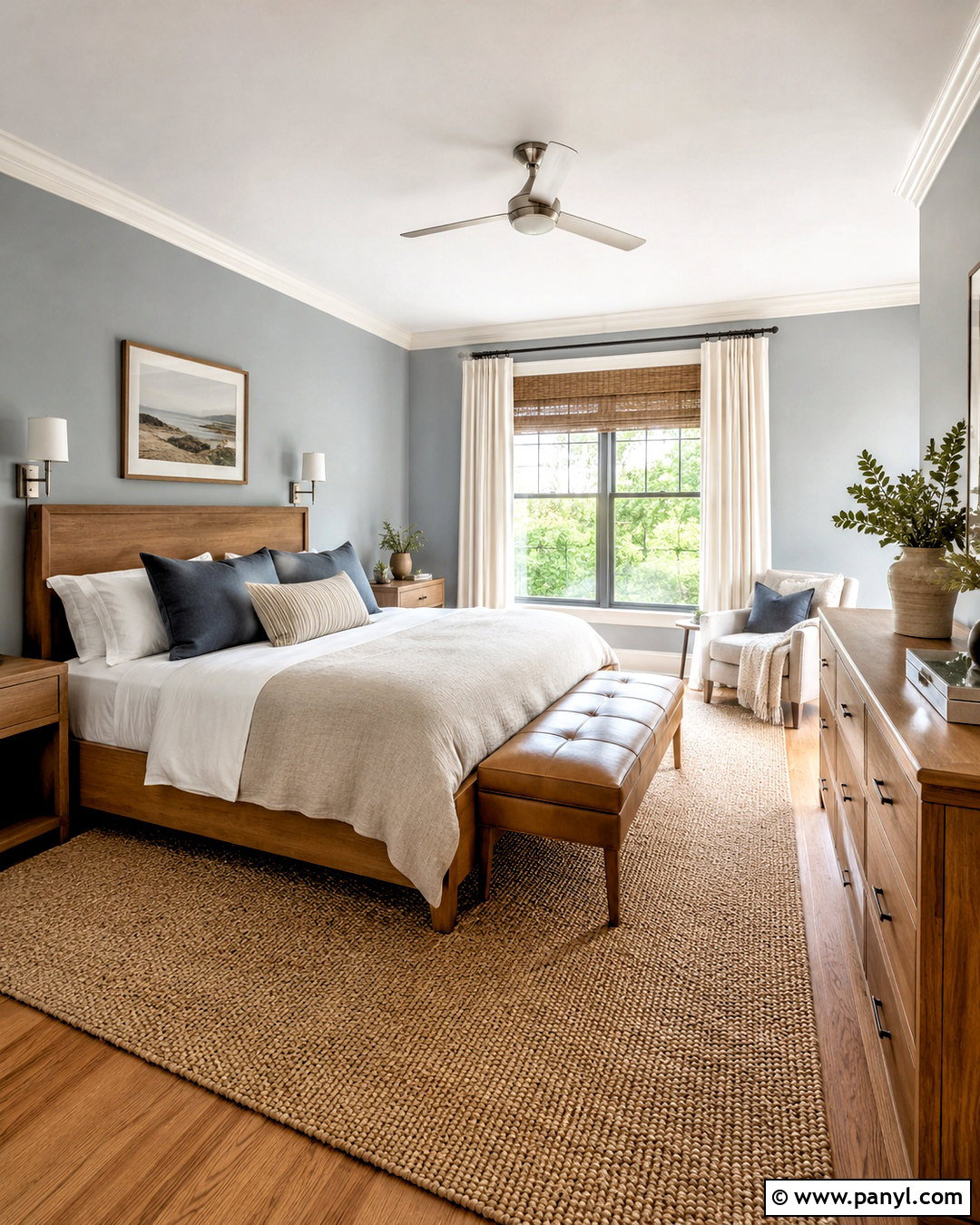
8. Smoky Blue Guest Bedroom
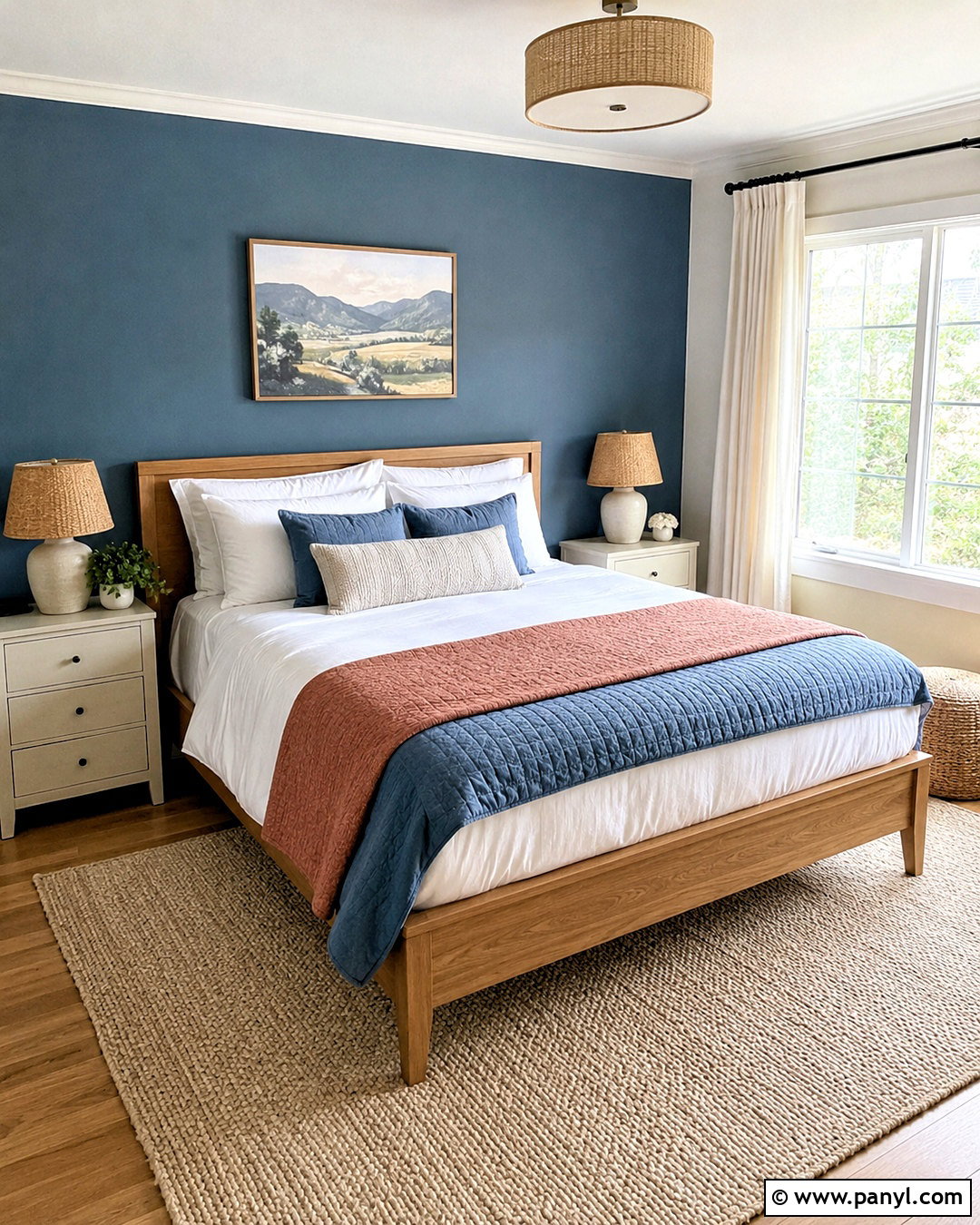
Would you like a guest room that feels welcoming without requiring complicated decor? Use Smoky Blue on the wall behind the bed and a warm off-white across the remaining surfaces. Add a natural oak bed, crisp white bedding, and a quilt with muted blue, clay, and cream details. Small painted nightstands can match the off-white walls, allowing the accent wall to remain the central feature. Hang woven shades beneath simple ivory curtain panels for privacy and softness. A beige wool rug and ceramic table lamps complete the comfortable palette. Include a bench or luggage rack at the foot of the bed if space permits. The finished guest room feels considered, practical, and easy to refresh with seasonal textiles.
9. Smoky Blue Nursery
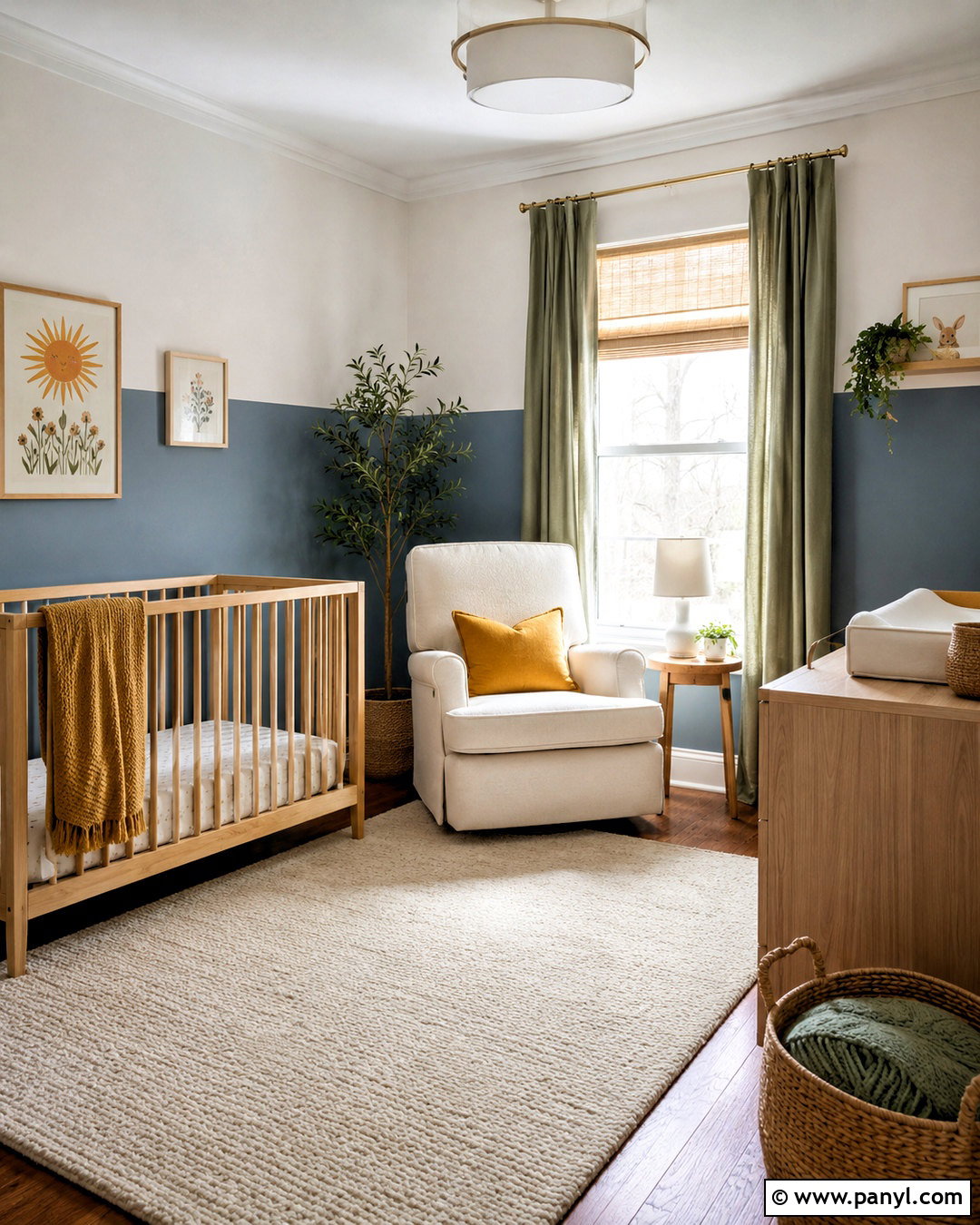
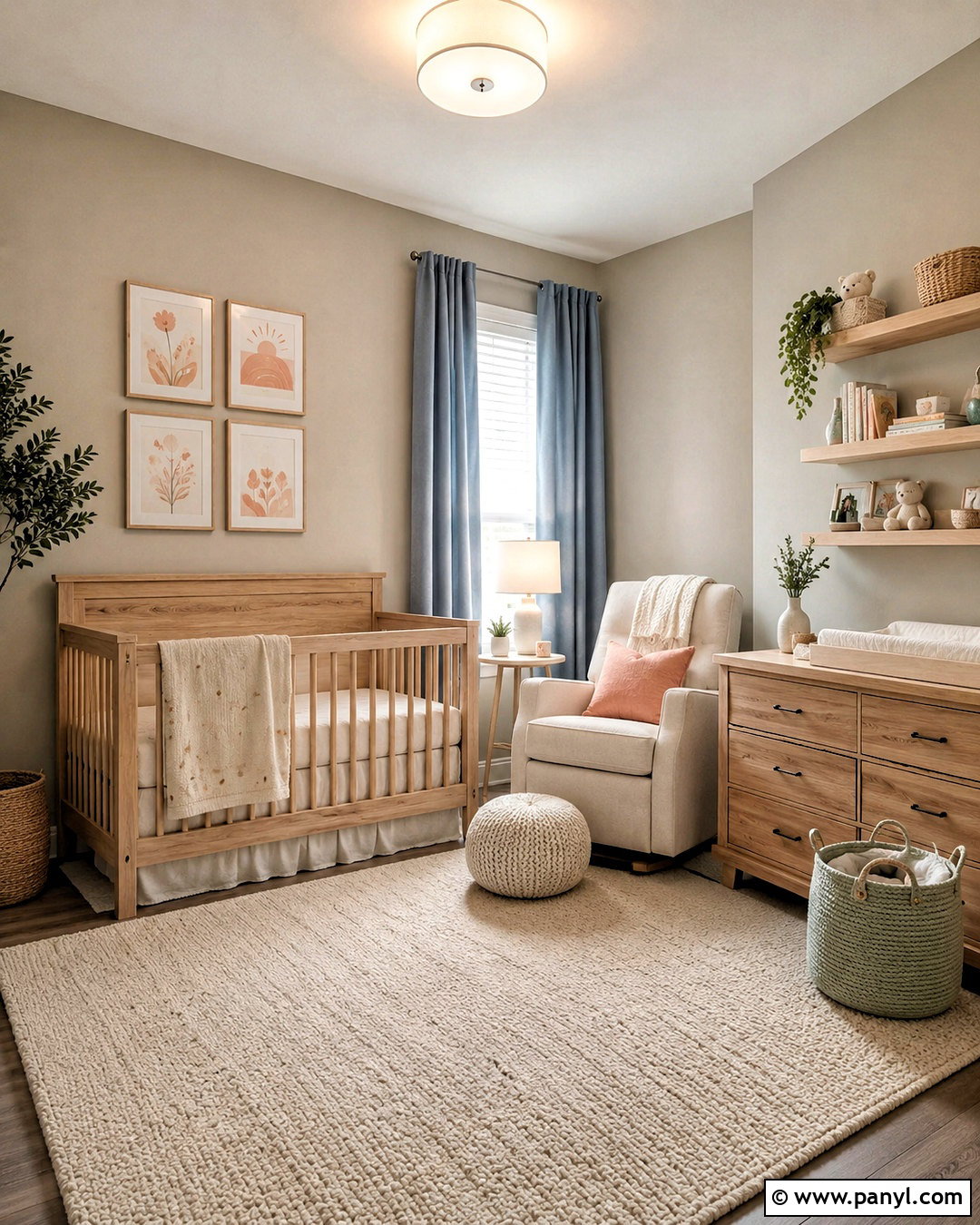
A Smoky Blue nursery can feel soothing and sophisticated while still offering enough playful detail for a child’s room. Use the color on the lower two-thirds of the walls, finished with a simple picture rail. Paint the upper walls and ceiling warm white to preserve brightness. Choose a natural maple crib, cream glider, and washable ivory rug. Add personality through mustard yellow, pale green, and rust accents in artwork, storage baskets, and a patterned crib sheet. A light wood dresser can double as a changing table, reducing unnecessary furniture. Install layered lighting with a shaded ceiling fixture, wall sconce, and dimmable lamp. This balanced room can mature easily as the child grows, requiring only small furniture and decor changes.
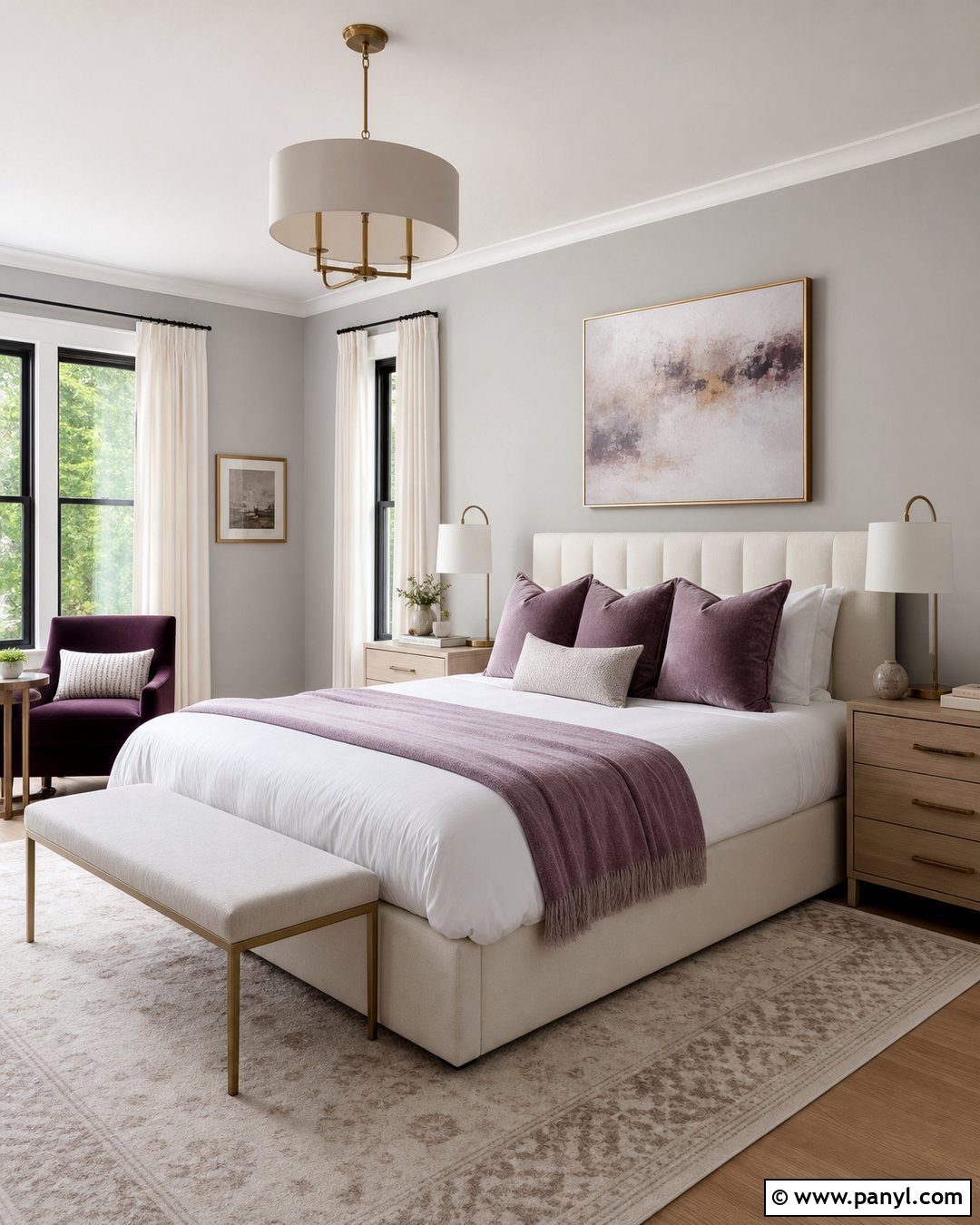
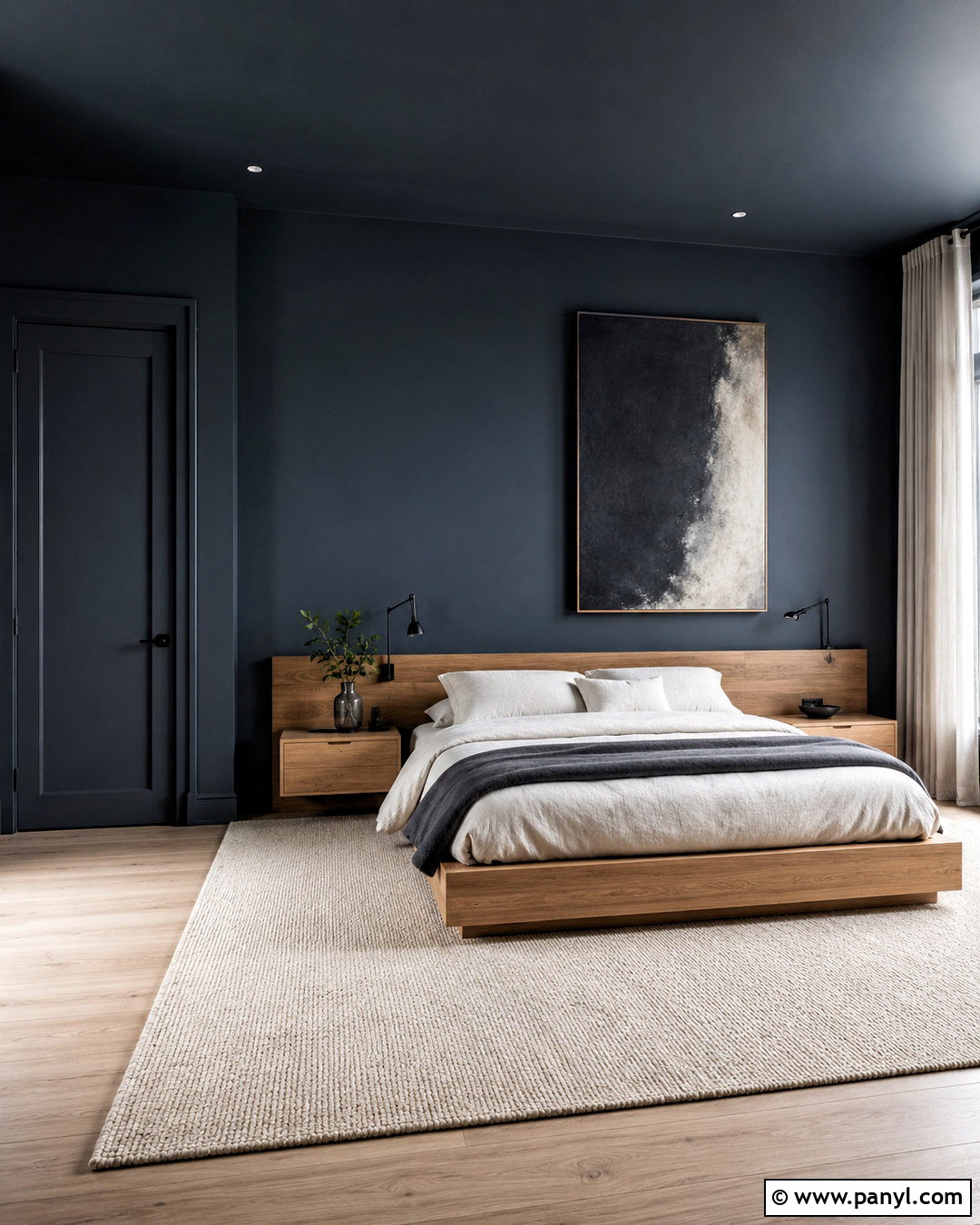
10. Smoky Blue Kids Bedroom
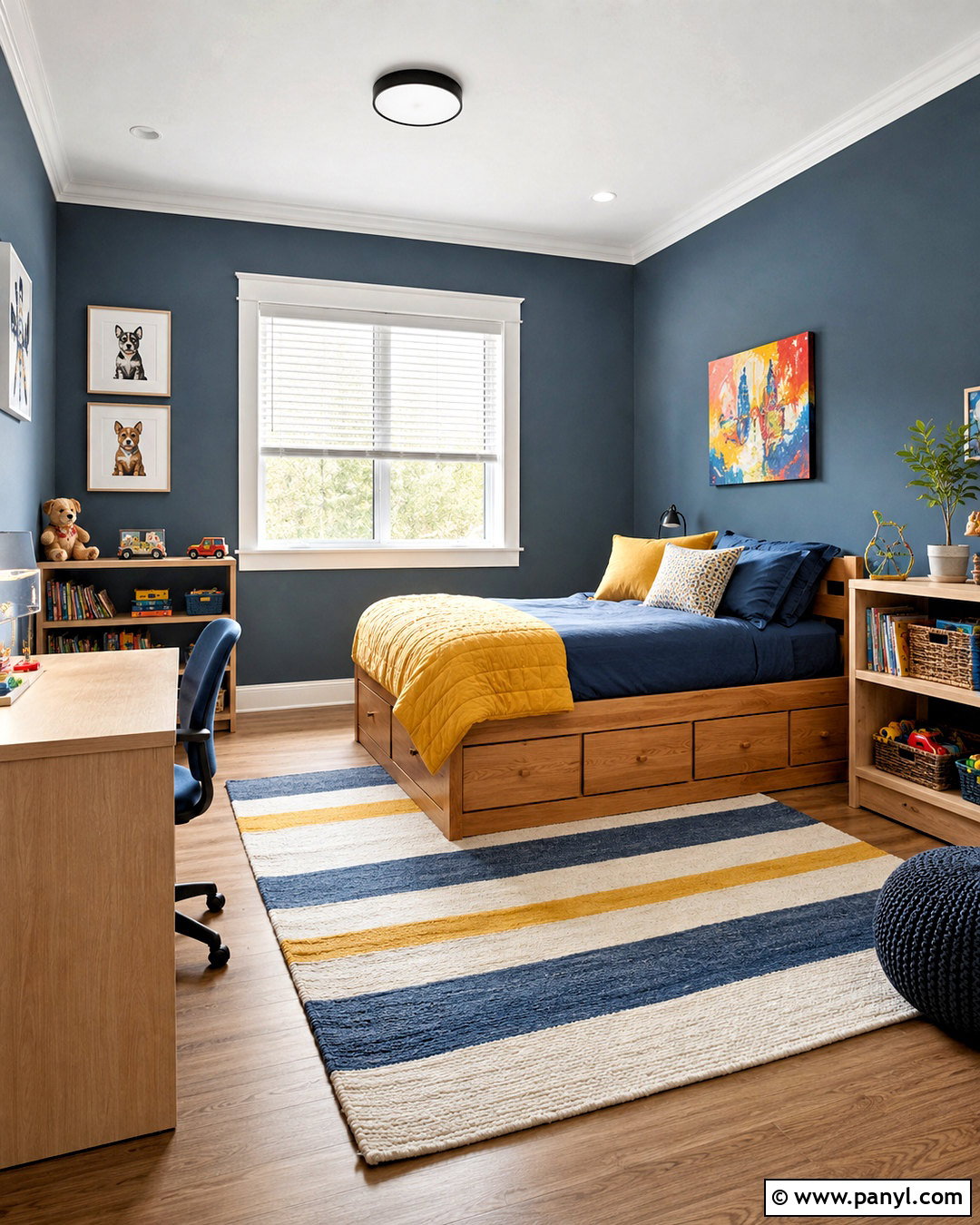
Smoky Blue gives a child’s bedroom a colorful foundation that does not feel overly young. Paint the walls blue, then use bright white trim and a pale wood floor to maintain crisp contrast. A white or natural wood bed with built-in drawers provides useful storage. Layer bedding in denim blue, warm mustard, cream, and small touches of red or green. Include a sturdy oak desk beneath the window and organize books on low, accessible shelves. A washable striped rug adds movement without making the room busy. Use cheerful artwork with broad blocks of color rather than a strict theme. This complete setup supports sleeping, studying, and playing while allowing the deeper wall color to hide everyday marks better than a pale finish.
11. Smoky Blue Bathroom Vanity
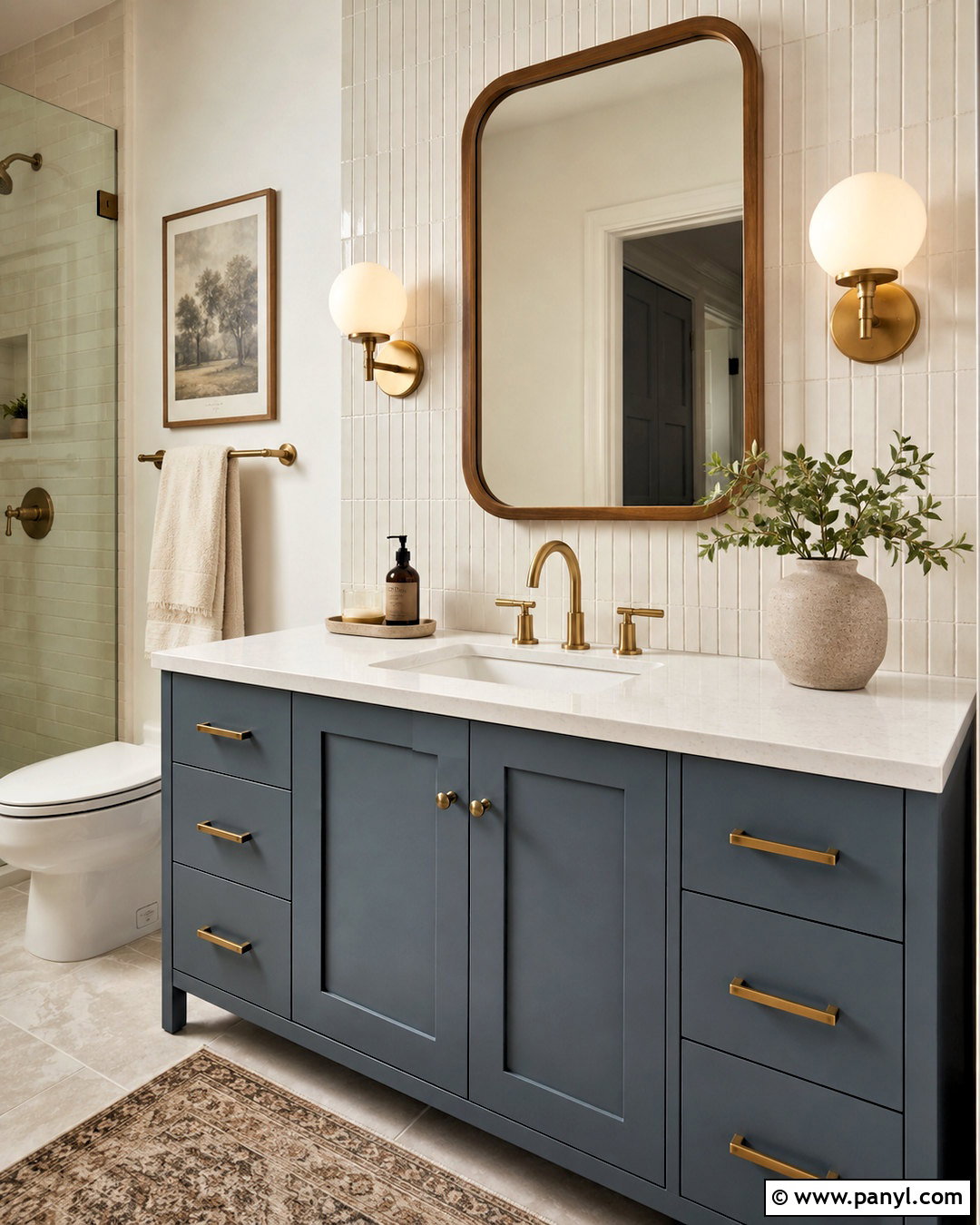
A Smoky Blue vanity creates a strong centerpiece in a bathroom without requiring every wall to be colorful. Pair it with a white quartz top, undermount sink, and brushed brass faucet. Use warm white walls and vertically stacked ivory tile around the shower or tub. A rounded wood-framed mirror introduces a natural element, while globe sconces provide even task lighting. Choose pale gray or limestone-look floor tile with minimal pattern. Repeat the vanity color through one small accessory, such as a framed print or hand towel, rather than matching everything. Woven baskets and light wood shelves make the bathroom feel warmer. This scheme works in primary, guest, and hall bathrooms because it combines personality with durable, familiar finishes.
12. Smoky Blue Bathroom Walls
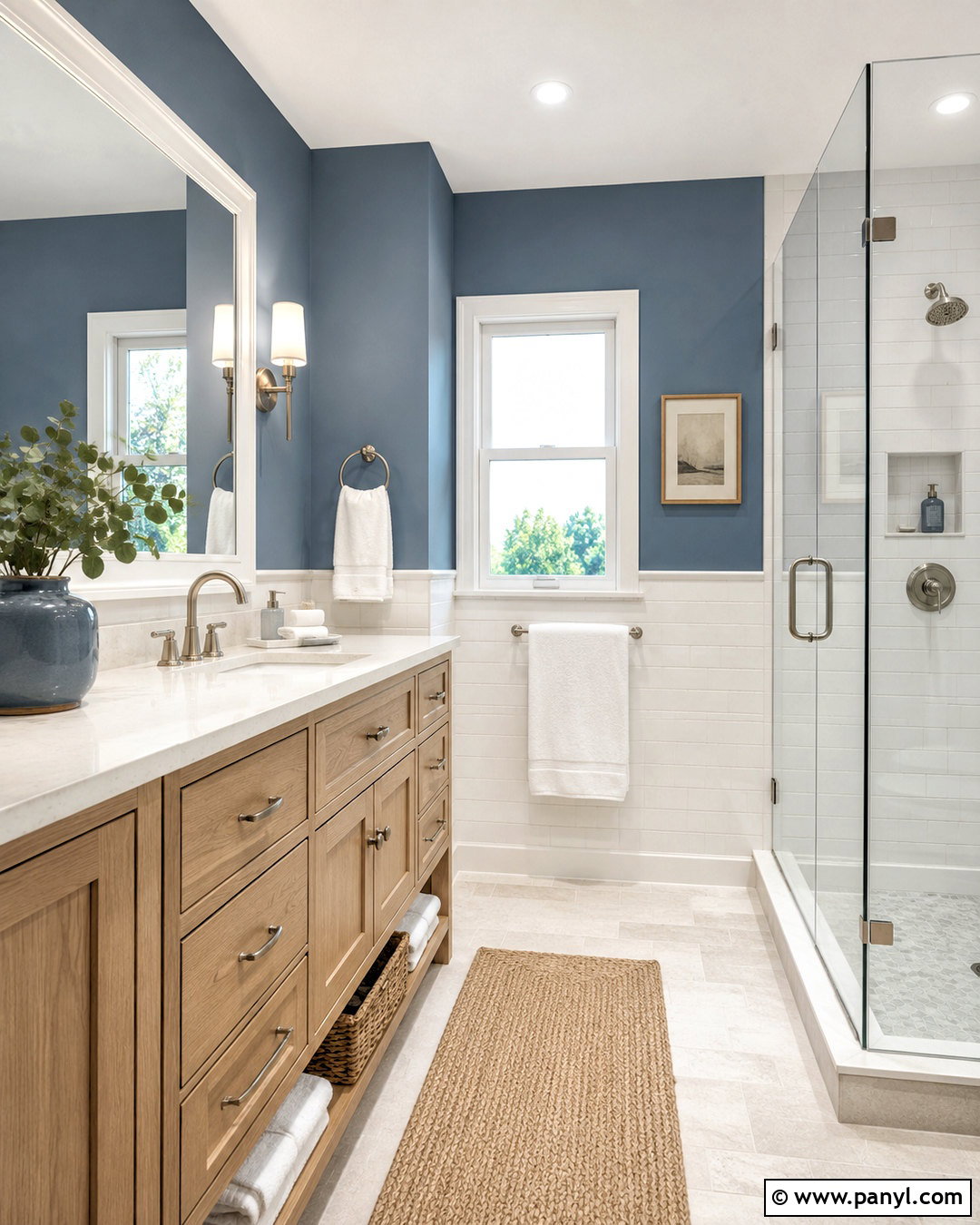
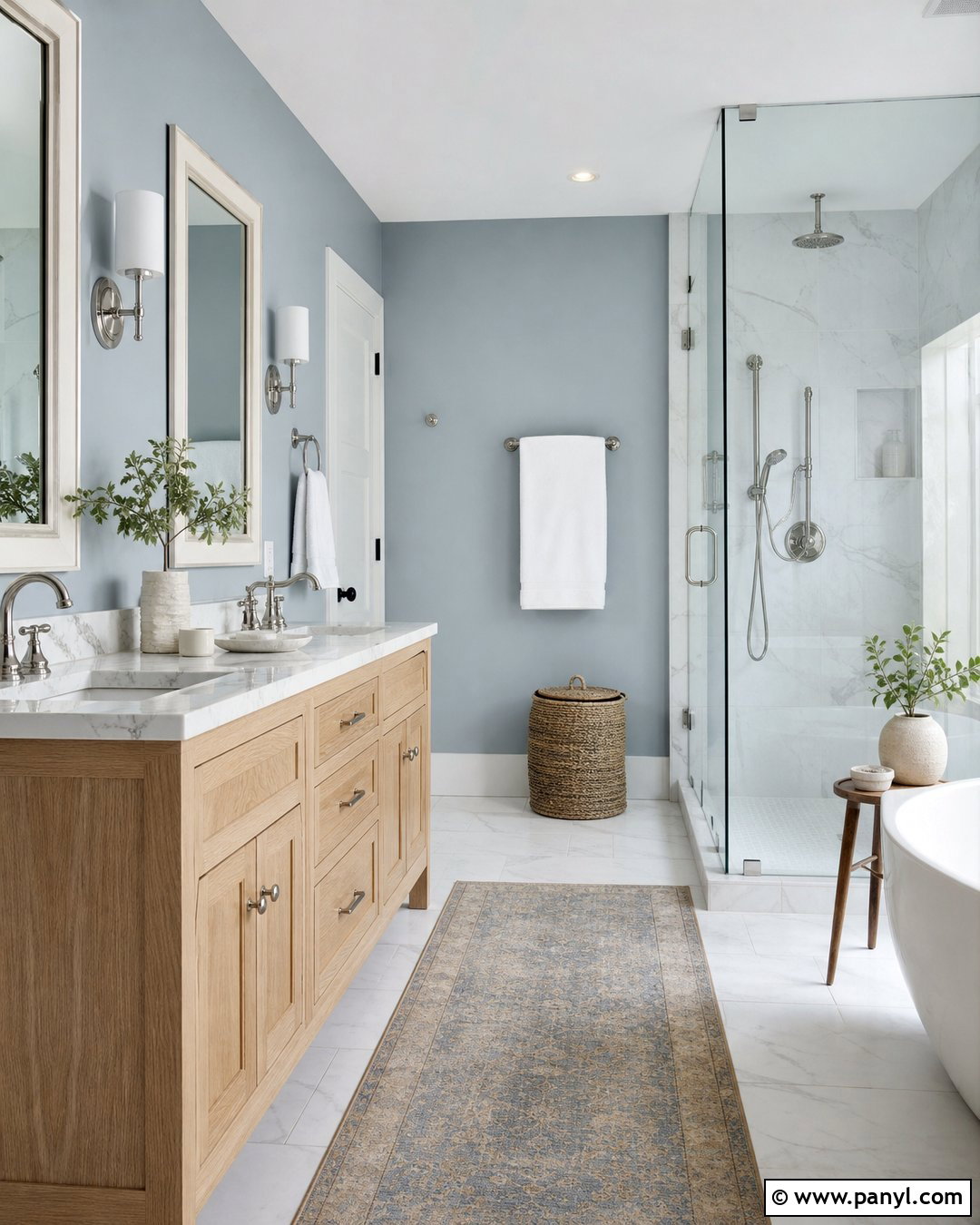
Smoky Blue walls can give a bathroom a rich, hotel-inspired atmosphere when moisture-resistant finishes and bright surfaces are carefully combined. Use the color above white tile wainscoting or around a large walk-in shower with clear glass. Choose a white oak vanity, pale stone countertop, and brushed nickel fixtures for a clean transitional look. A wide mirror will bounce light across the deeper walls, while two or three bright sconces prevent shadowy corners. Keep towels, shower curtains, and bath mats white or cream. Add small accents through natural greenery and blue-gray pottery. Because bathrooms often have limited daylight, test the color beside the tile and under the installed bulbs. The final room should feel intimate, clean, and comfortably illuminated.
13. Smoky Blue Powder Room
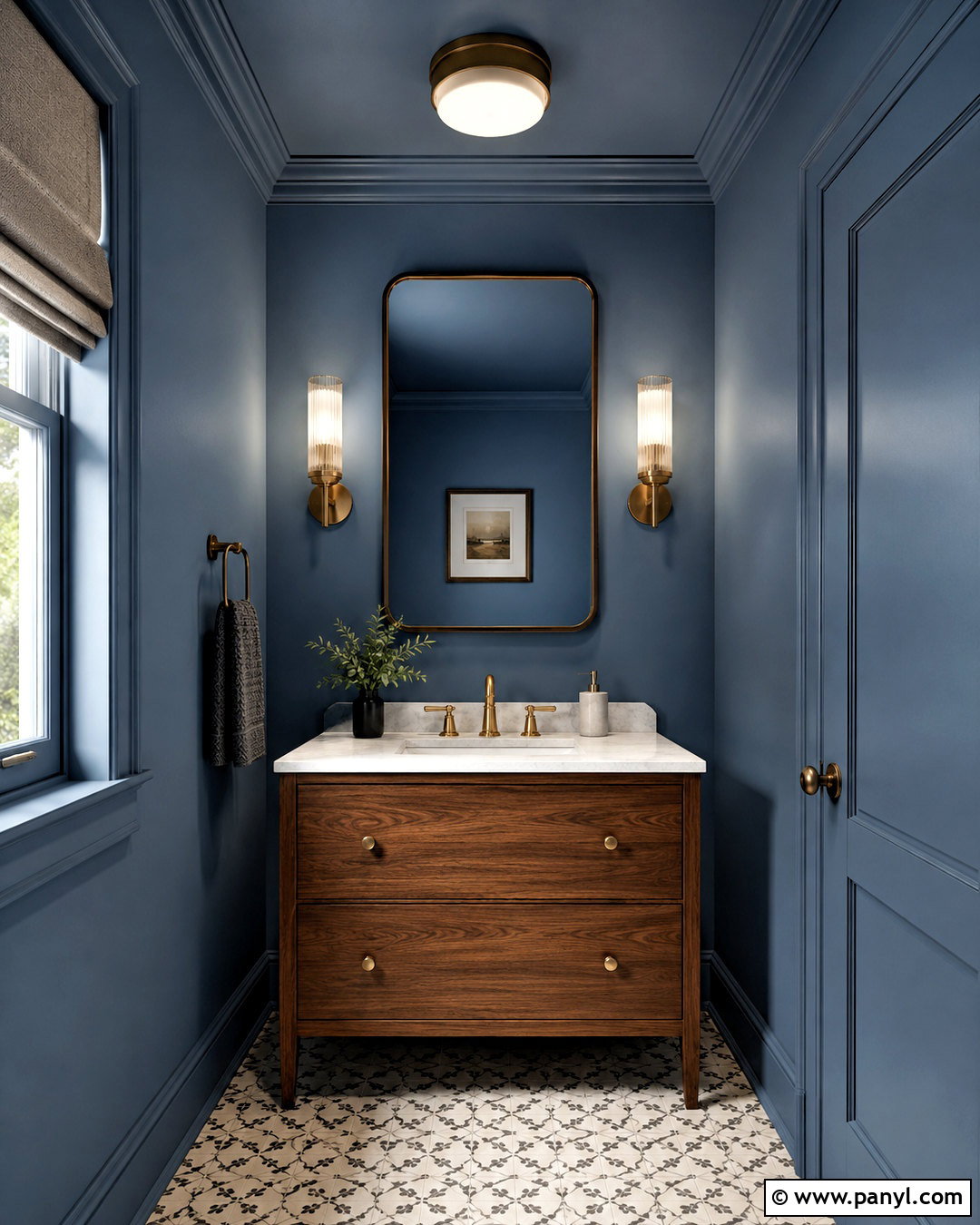
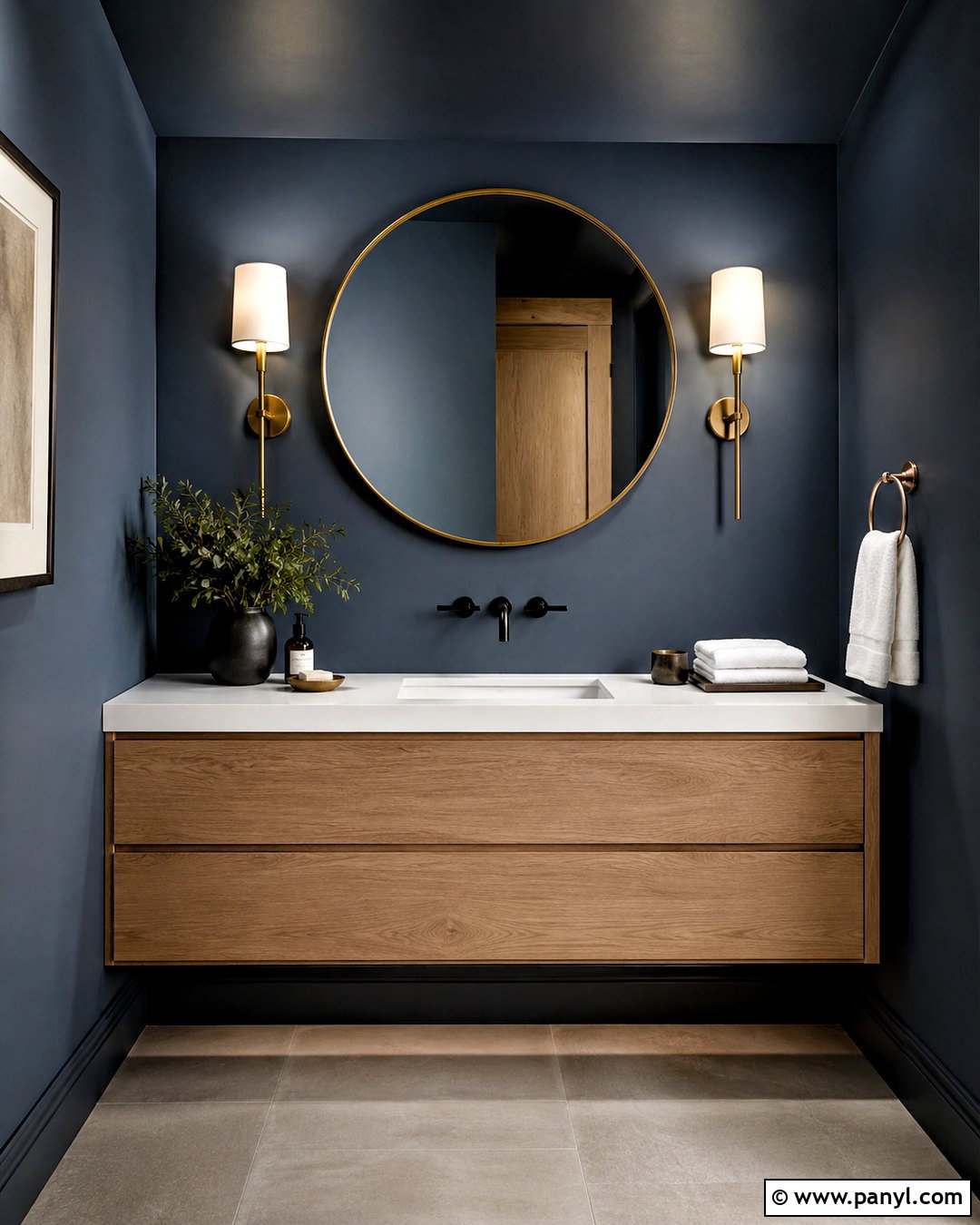
A compact powder room is an ideal place to use Smoky Blue boldly. Paint the walls, trim, and ceiling in the same color to create a seamless jewel-box effect. Install a small walnut vanity with a white stone top, then add an unlacquered brass faucet and framed mirror. Patterned floor tile in cream, charcoal, and muted blue gives the room additional character without introducing unrelated colors. Use a bright decorative sconce on each side of the mirror to provide flattering, balanced light. Keep accessories minimal: a white hand towel, covered wastebasket, and small ceramic vase are enough. Since powder rooms are experienced briefly, the deeper palette can feel memorable rather than overwhelming, especially when every fixture and finish has a clear purpose.
14. Smoky Blue Home Office
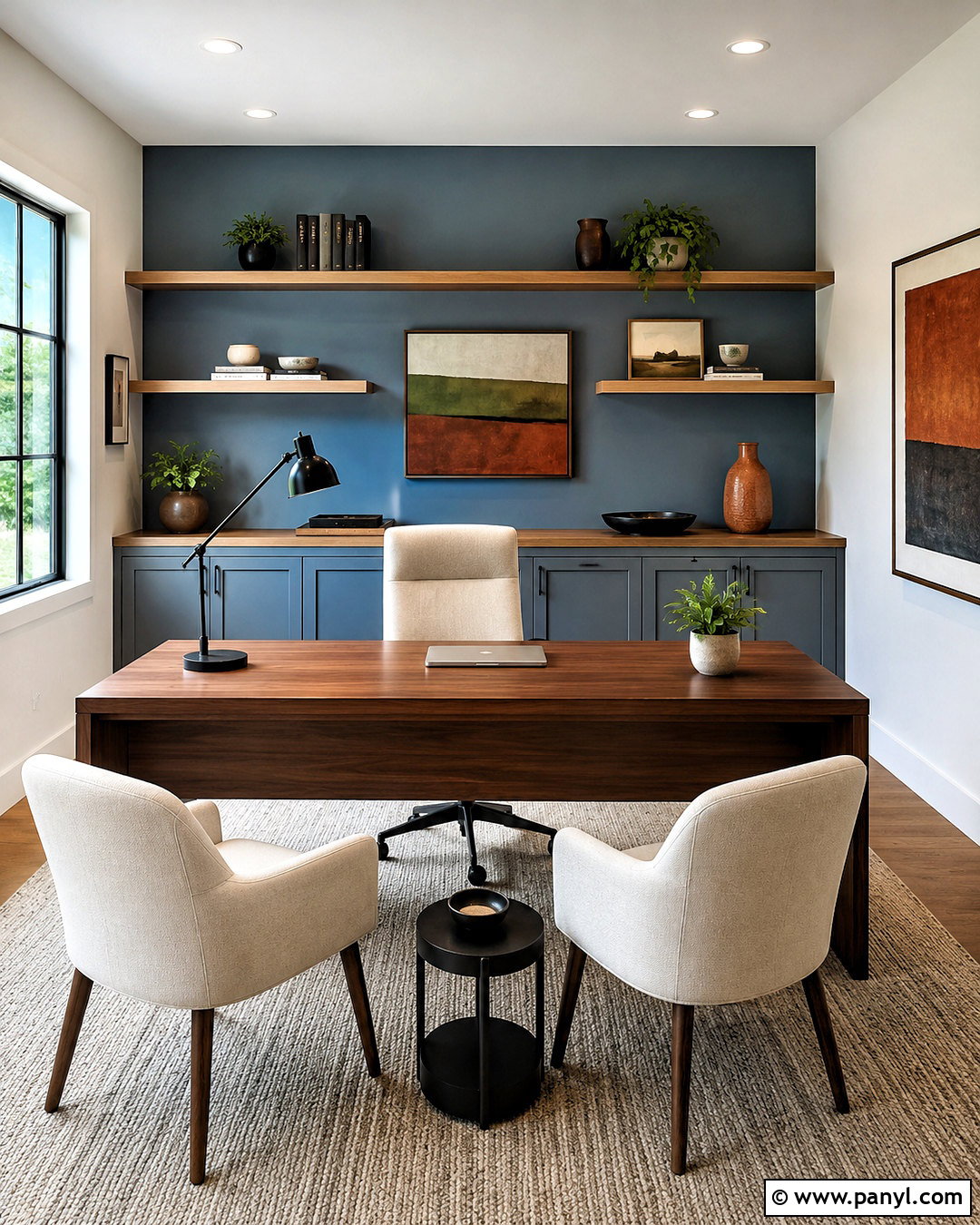
Smoky Blue helps a home office feel focused and professional, especially when paired with natural wood and uncluttered storage. Paint the wall behind the desk blue and keep the other walls warm white. Position a walnut desk in front of the accent wall, with a cream upholstered chair facing it for occasional meetings. Add closed lower cabinets and oak floating shelves to organize supplies without creating visual noise. A neutral flat-weave rug softens the floor, while black metal lighting brings clean definition. Use artwork containing cream, rust, and subdued green to warm the blue. Place the desk near a window when possible, then add an adjustable task lamp. This layout supports productive work while still appearing polished during video calls.
15. Smoky Blue Dining Room
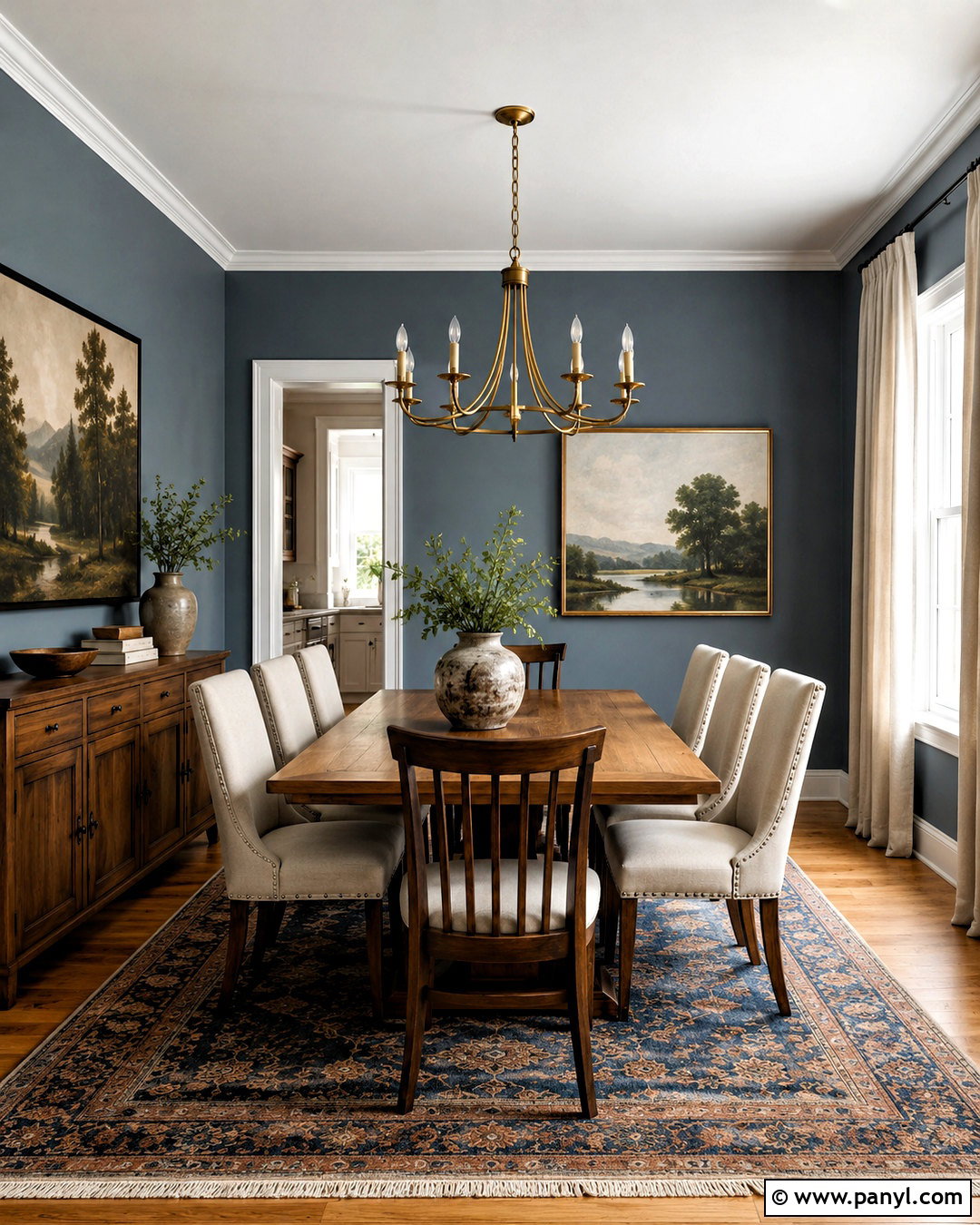
Imagine evening meals surrounded by a blue-gray color that feels formal but not stuffy. Paint the dining room walls Smoky Blue and use warm white on the crown molding, baseboards, and ceiling. Center a medium oak table beneath a large aged brass chandelier. Upholstered chairs in oatmeal fabric keep the arrangement comfortable, while two darker wood host chairs create subtle variety. Ground the room with a vintage-style rug featuring faded blue, cream, and cinnamon tones. Hang one oversized landscape painting or a symmetrical pair of prints on the longest wall. Linen curtains and a simple wood sideboard complete the scheme. Layered lighting, warm finishes, and restrained decor prevent the deeper wall color from making the dining space feel cold.
16. Smoky Blue Entryway
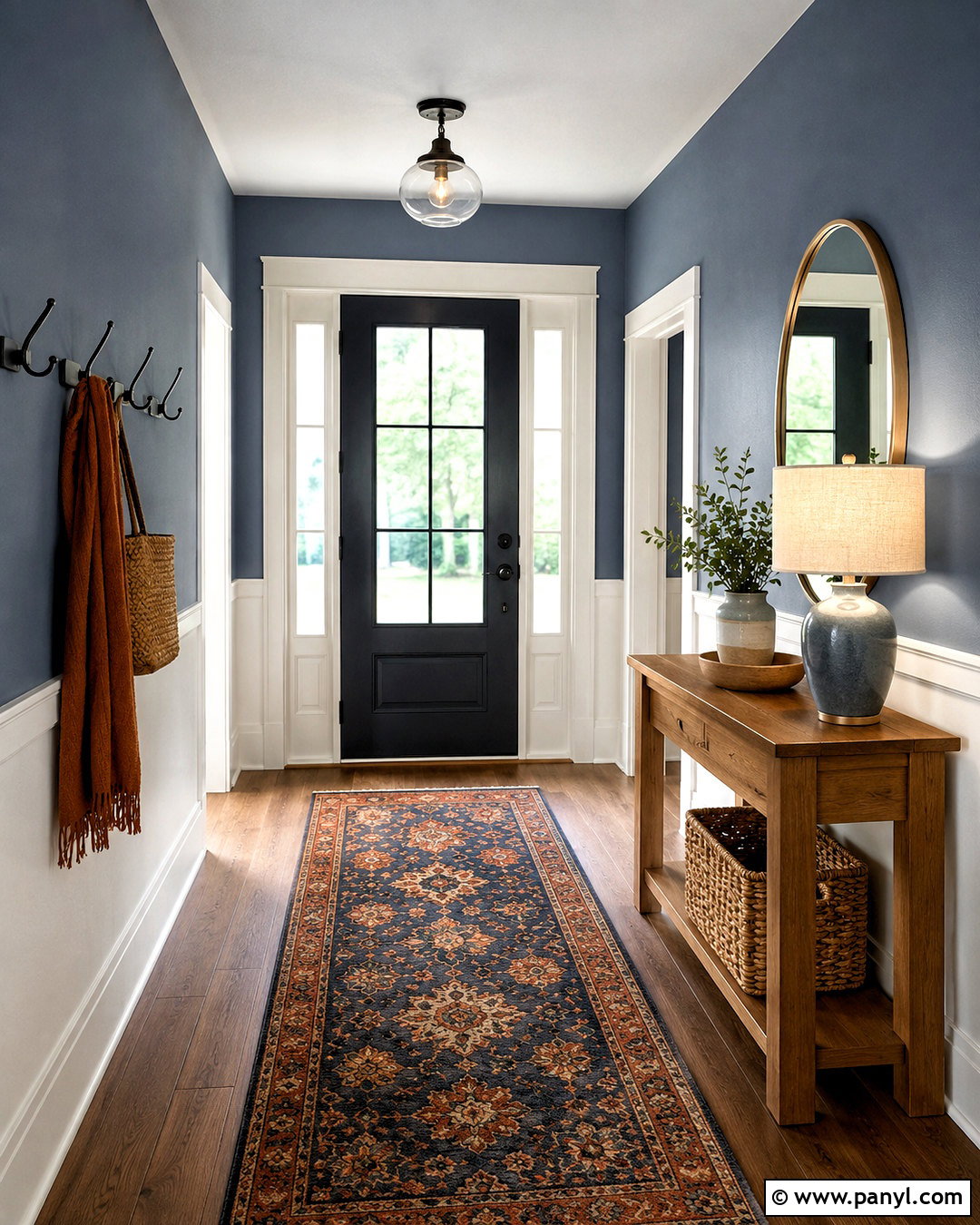
An entryway painted Smoky Blue can create an immediate sense of character while organizing the transition into the home. Use the color on the walls and pair it with crisp off-white trim, a warm oak console, and a large rounded mirror. Add a narrow patterned runner that includes beige, blue, and muted rust. A ceramic lamp provides soft evening light, while a woven basket below the console holds shoes or outdoor accessories. Install black or brass wall hooks if the entry needs practical storage. Keep the main walking route open and avoid filling the console with small decorations. One bowl, one lamp, and a simple vase are enough. The resulting entrance feels welcoming, useful, and visually connected to nearby neutral rooms.
17. Smoky Blue Hallway
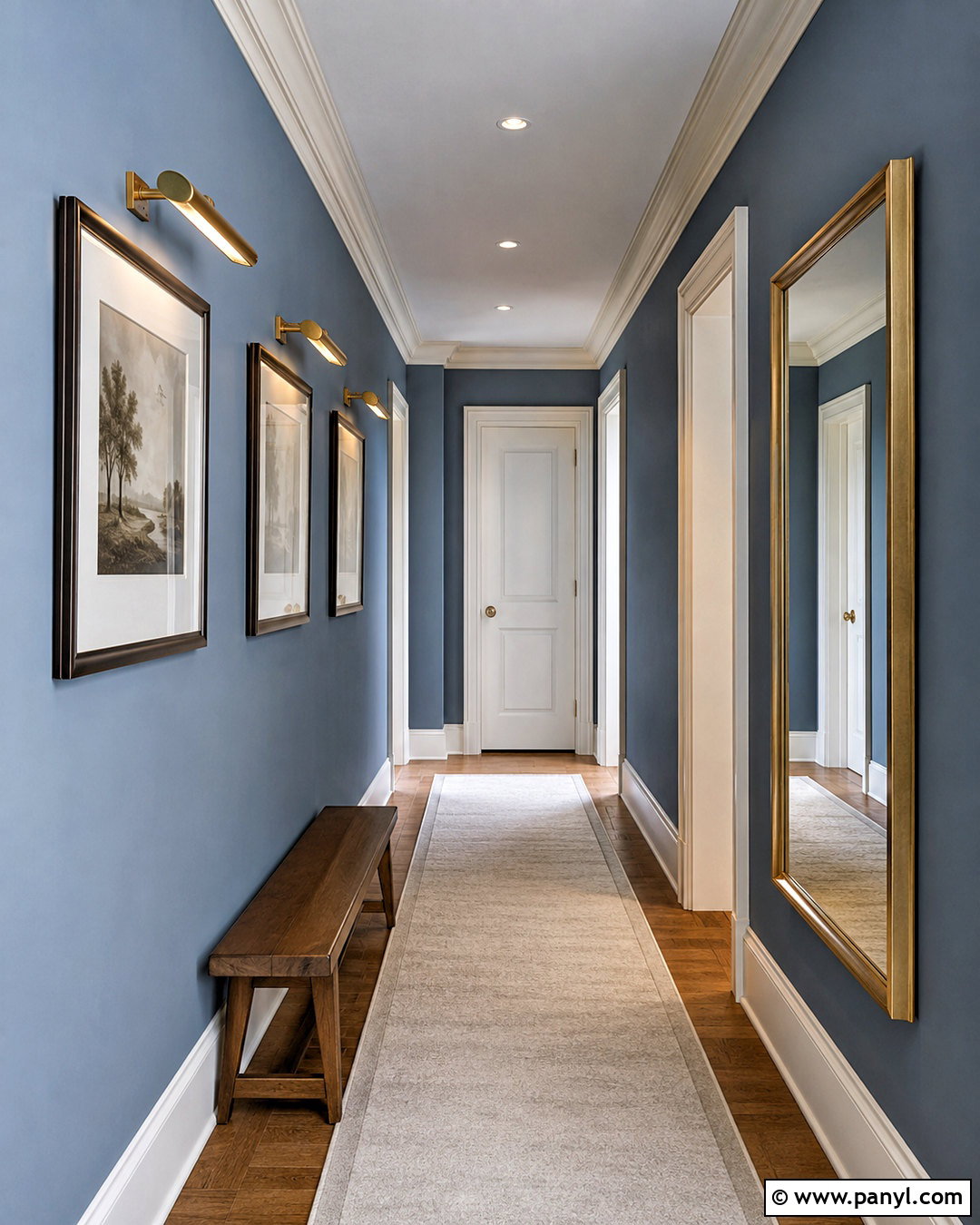
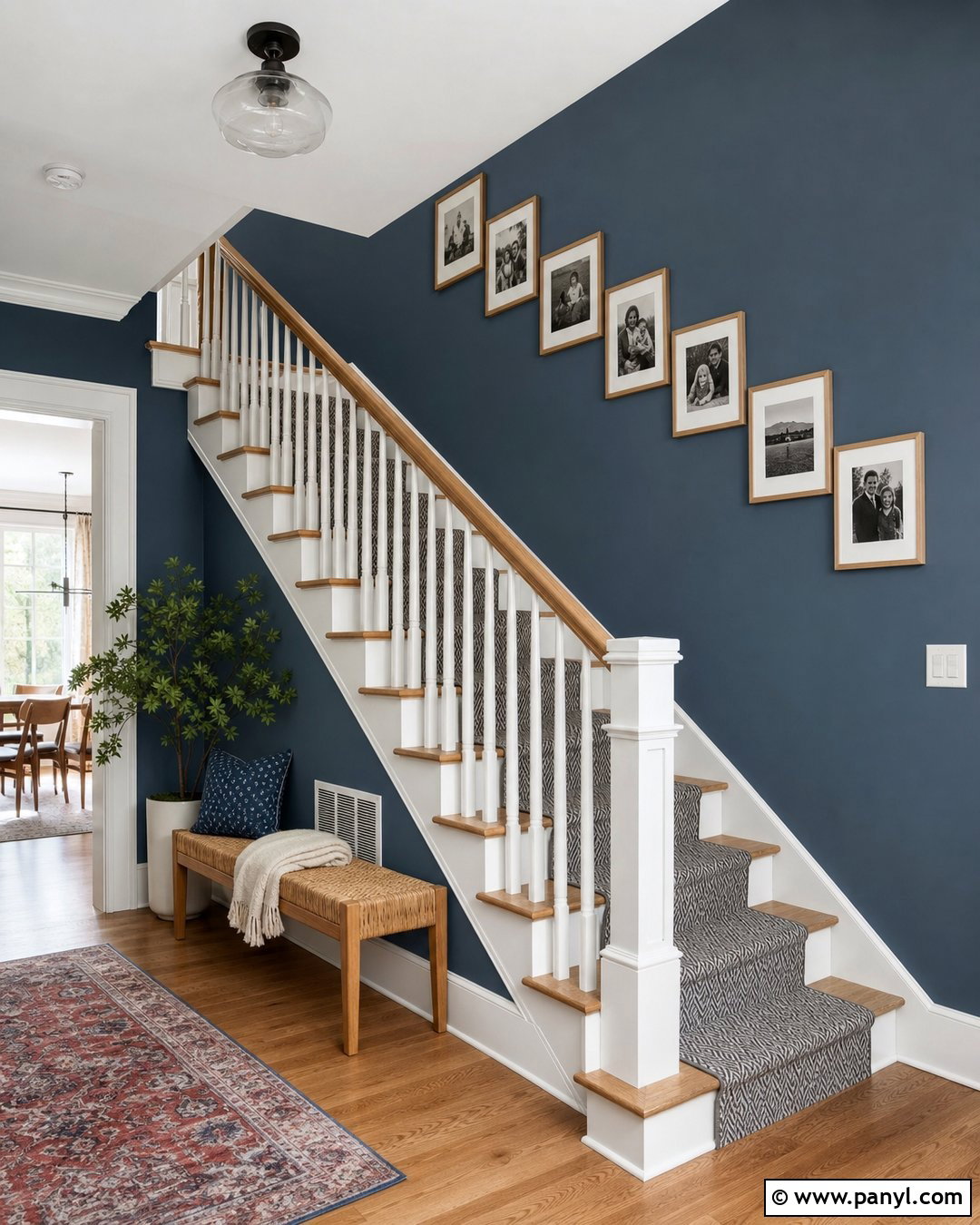
Long hallways often benefit from color because they have limited room for furniture. Paint the walls Smoky Blue and retain light trim, doors, and ceilings to create clear architectural contrast. Use evenly spaced brass or black picture lights above a coordinated series of framed prints. A pale, durable runner will brighten the floor and guide the eye toward the end of the hall. If space allows, place a slim wood bench or shallow console near the widest point. Choose warm white light bulbs so the blue-gray walls do not appear overly cool. A large mirror opposite a doorway can also reflect borrowed daylight. This complete approach transforms a pass-through area into a purposeful gallery while preserving a safe, uncluttered walking path.
18. Smoky Blue Laundry Room
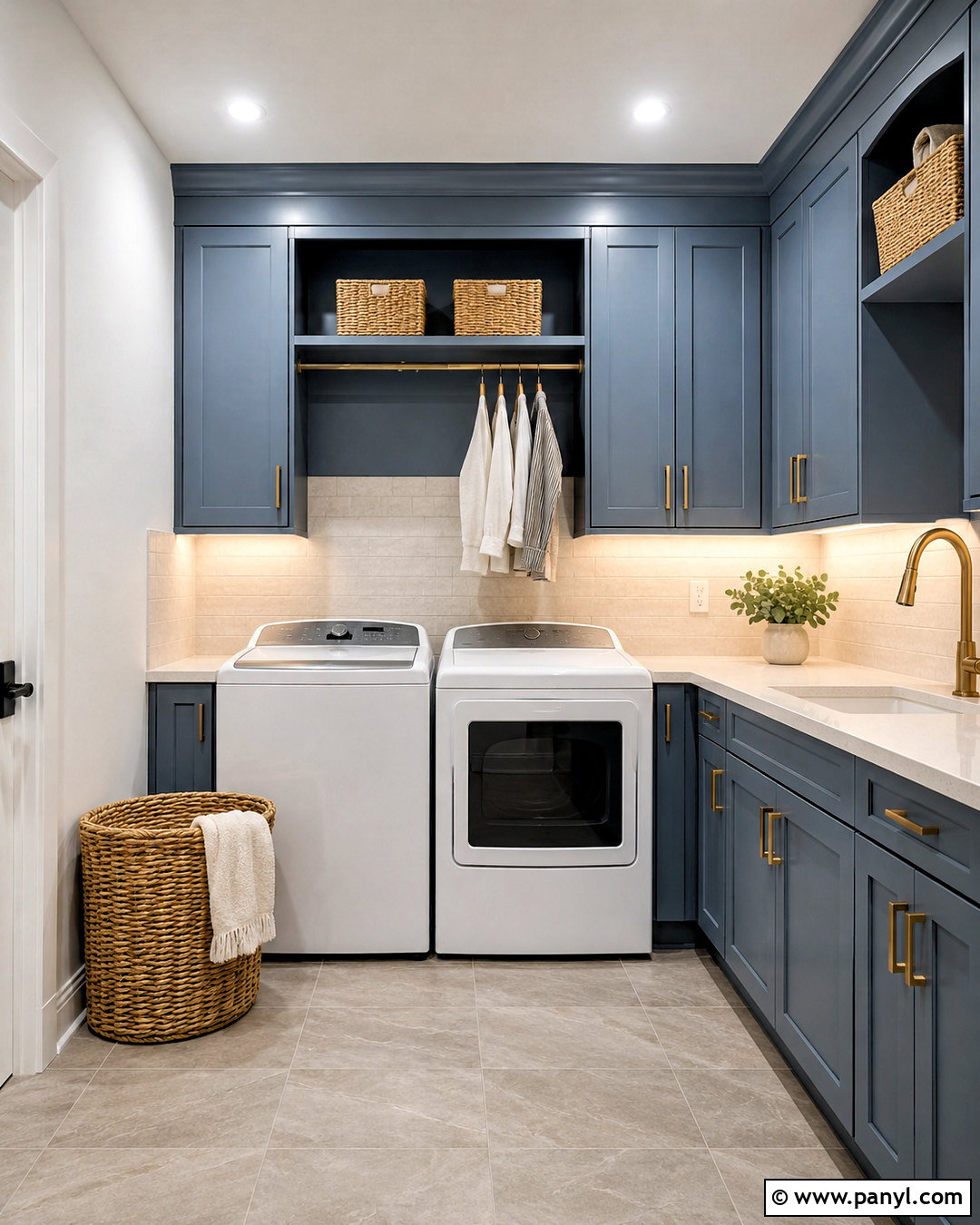
Smoky Blue cabinetry can make a laundry room feel designed rather than purely functional. Use the color on upper cabinets, lower storage, and a tall utility cupboard. Keep the walls soft white and install a light quartz folding counter above the washer and dryer. A small backsplash of creamy rectangular tile protects the wall and reflects light. Add brushed brass cabinet pulls, a hanging rail for air-drying clothes, and clearly labeled woven baskets. Warm gray floor tile will conceal everyday dirt while complementing the blue. If the room lacks a window, use a bright flush-mount ceiling fixture and under-cabinet lighting. The finished space offers practical organization, comfortable working surfaces, and enough color to make repetitive household tasks feel more pleasant.
19. Smoky Blue Mudroom
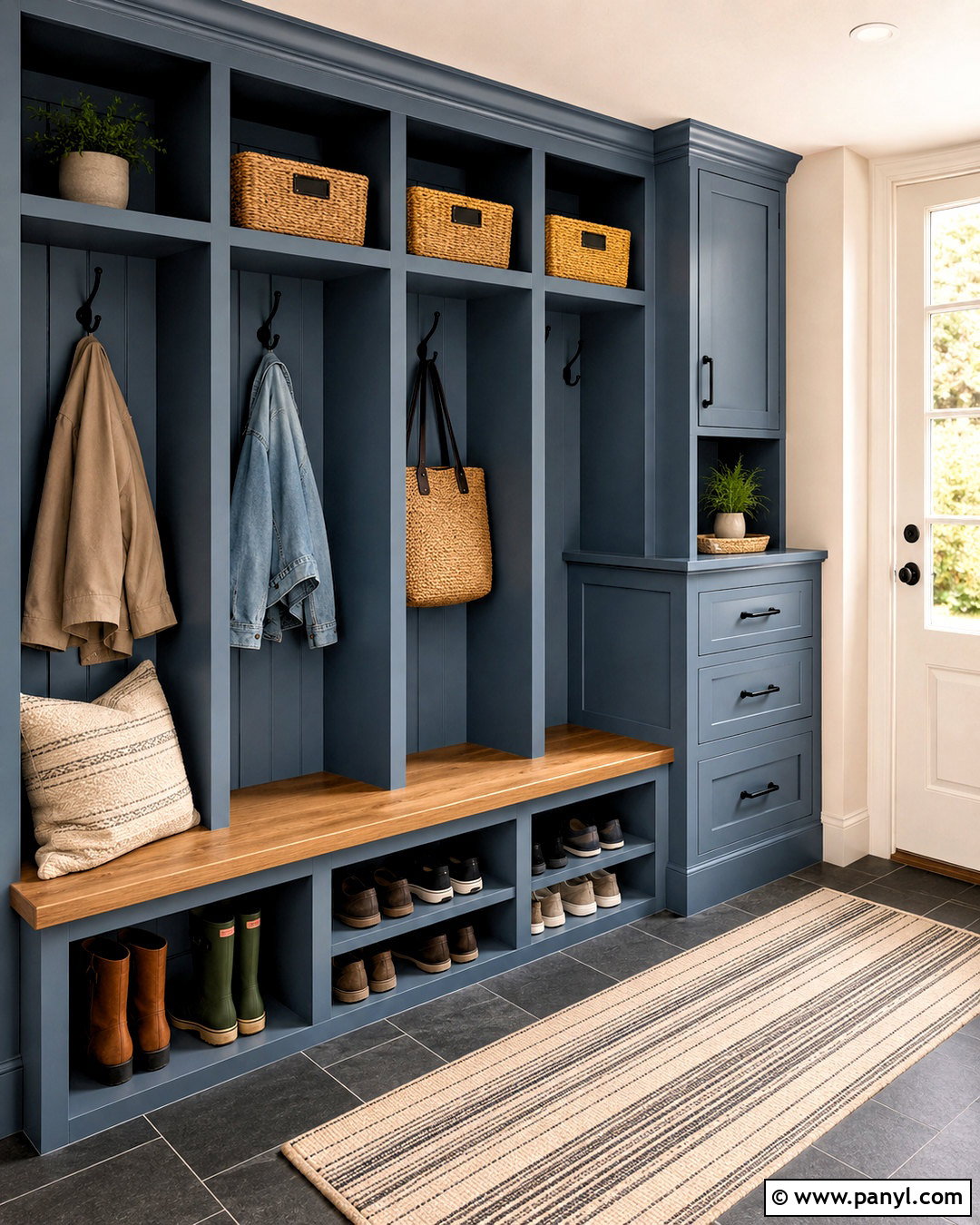
A Smoky Blue mudroom combines durable storage with a polished color palette. Paint built-in lockers, drawers, and the bench base blue, then use warm white on the surrounding walls. Add a natural oak bench seat for contrast and install black hooks at heights suitable for both adults and children. Closed upper cabinets can hold seasonal items, while labeled baskets organize shoes and sports gear below. Choose slate-look porcelain flooring that withstands moisture and mud without competing with the cabinetry. A striped indoor-outdoor runner and cream seat cushion soften the practical surfaces. Include a bright ceiling fixture and, if possible, a small window shade in natural woven material. This design keeps clutter contained while making the home’s everyday entrance feel intentional.
20. Smoky Blue Built In Shelves
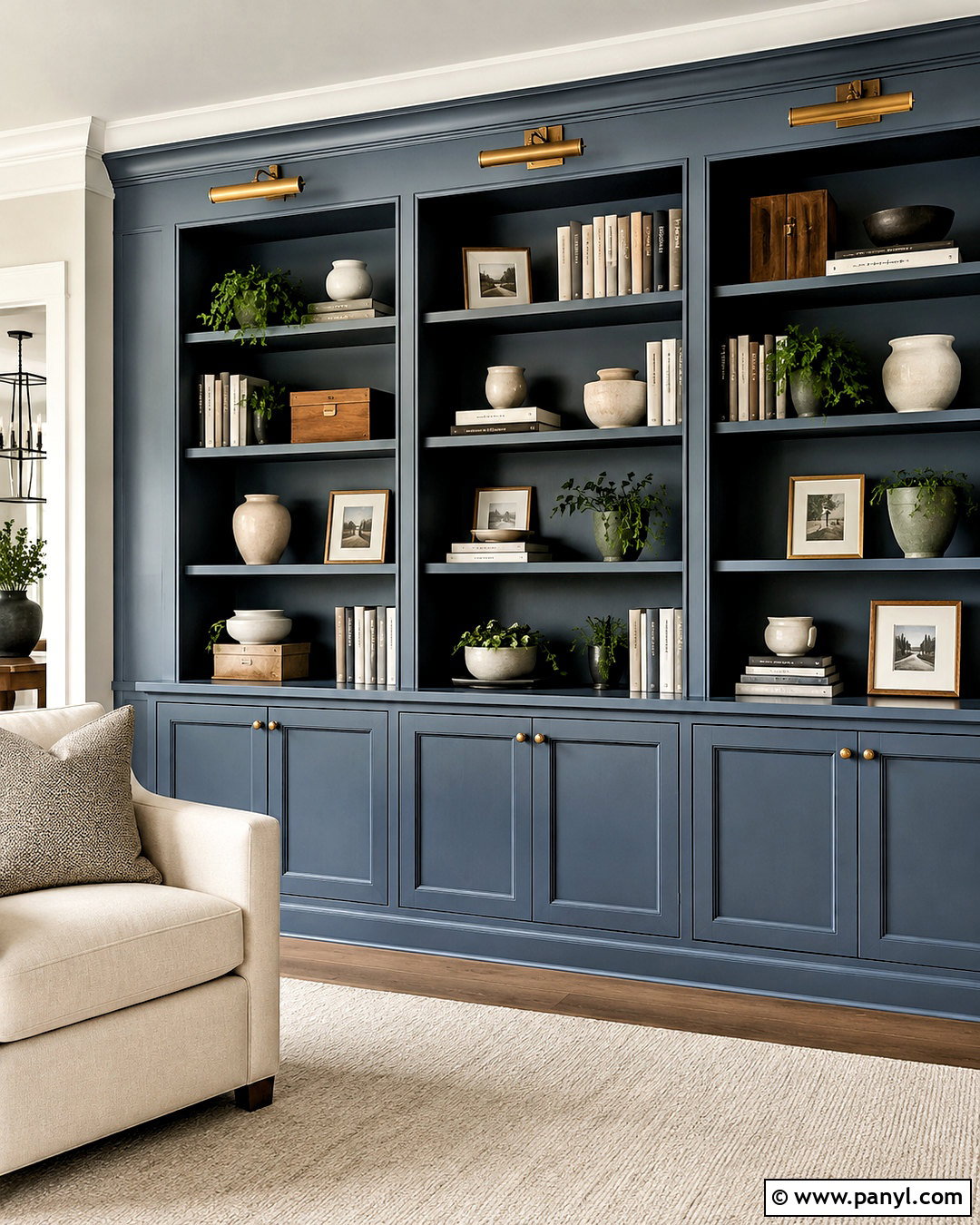
Floor-to-ceiling built-ins painted Smoky Blue can anchor a living room, office, or family room with useful storage. Apply the color to the shelves, cabinet doors, trim, and back panels for a unified appearance. Place a warm white sofa or leather reading chair nearby, then add a pale rug and medium wood tables to balance the darker feature. Style the shelves with a controlled mix of books, cream ceramics, wood boxes, framed photographs, and a few green plants. Leave open space around objects so the display remains calm. Aged brass picture lights installed above the units highlight the color and contents. Use concealed cabinet storage below to hide electronics, games, and household supplies that would otherwise make the shelves look crowded.
21. Smoky Blue Fireplace Wall
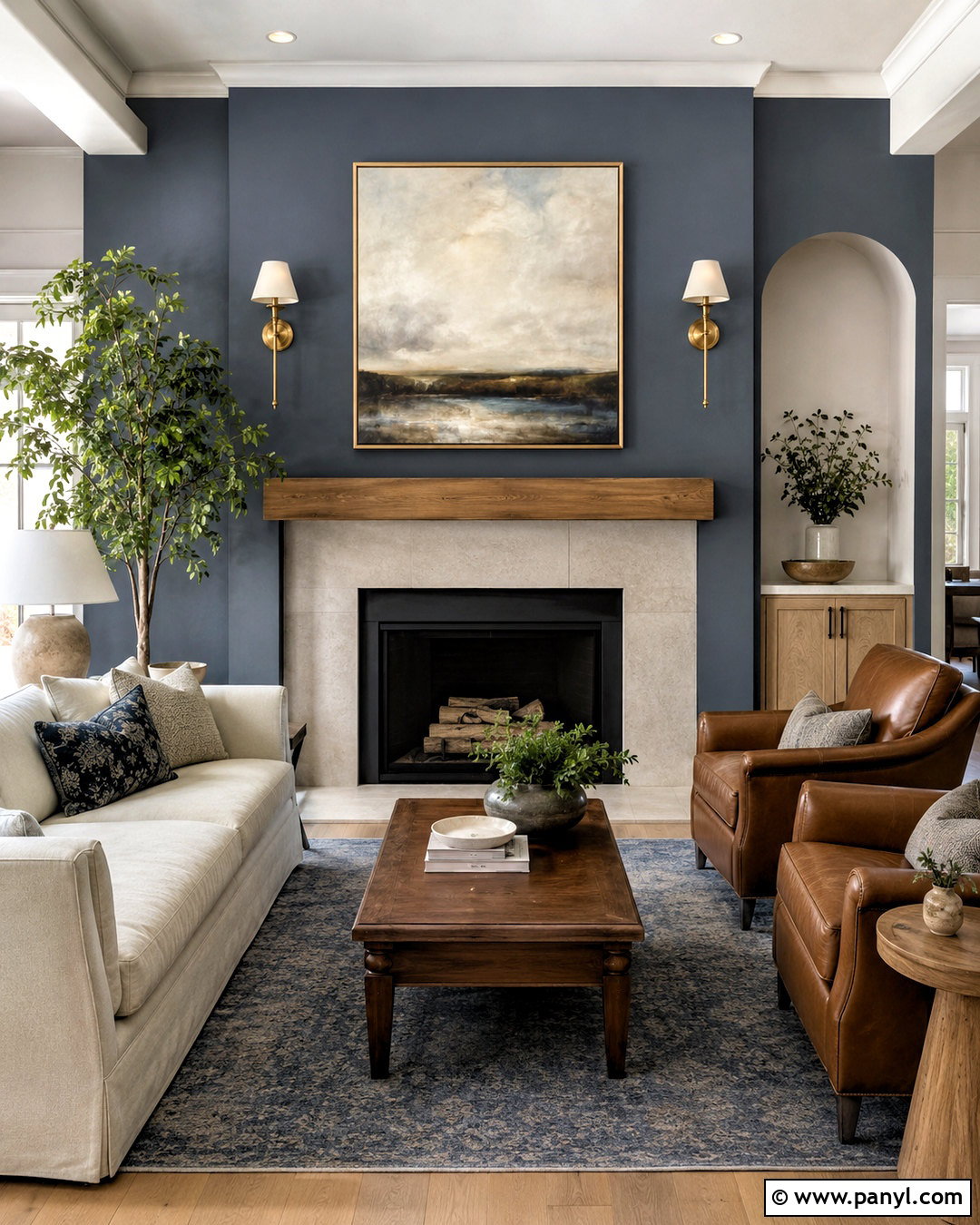
A Smoky Blue fireplace wall creates a strong architectural focal point even when the existing fireplace is simple. Paint the entire wall, including surrounding millwork, in the blue-gray shade. Keep the mantel in natural oak or warm white, depending on the room’s flooring and trim. Use light stone or creamy handmade tile around the firebox to provide heat-safe contrast. Arrange a neutral sofa and two camel leather chairs toward the fireplace, grounded by a cream and faded blue rug. One large artwork or mirror above the mantel will look more intentional than several small pieces. Add brass sconces on either side and use warm lamps throughout the room. The complete layout feels balanced, conversational, and comfortably layered.
22. Smoky Blue Wainscoting
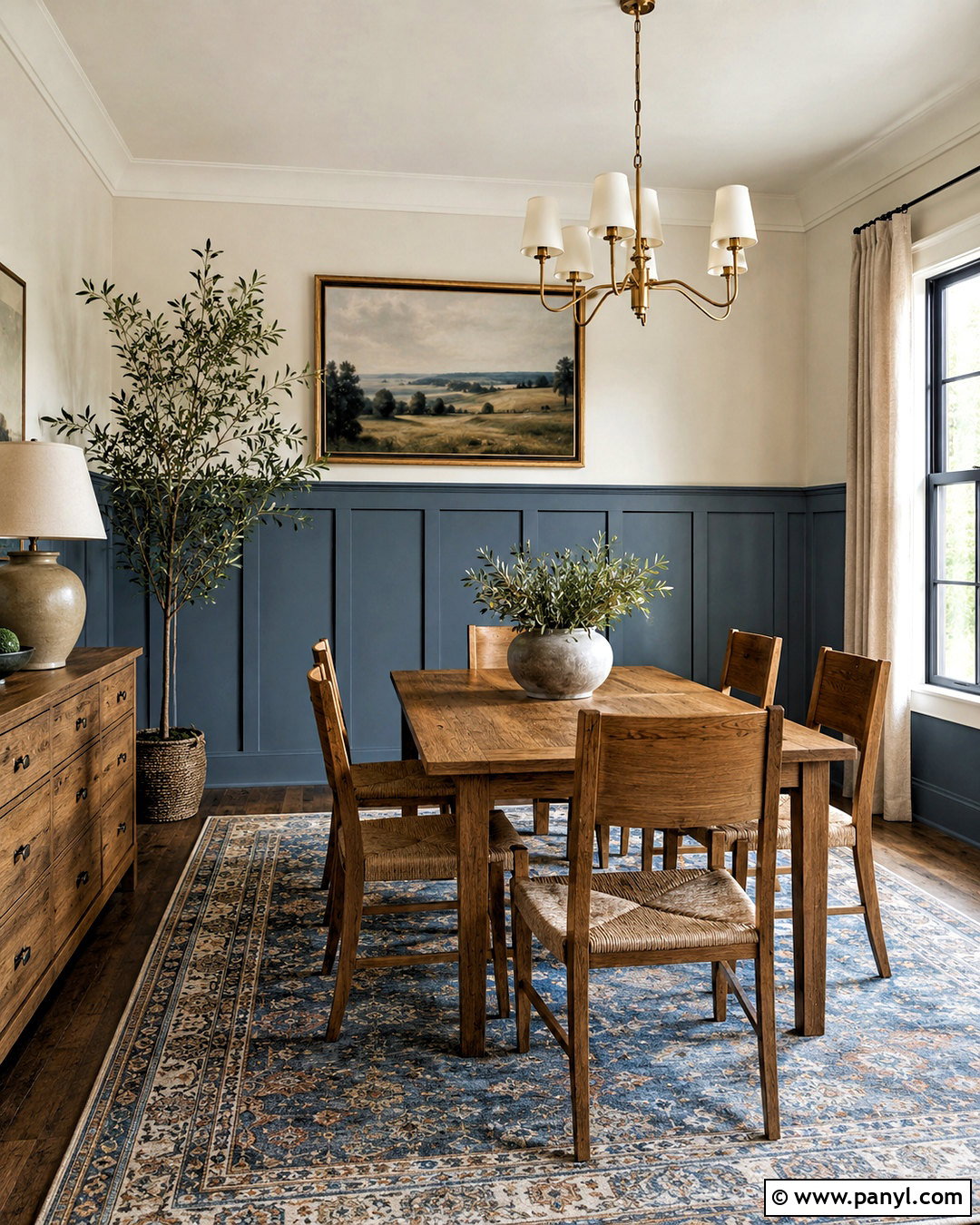
Smoky Blue wainscoting gives a dining room, hallway, bedroom, or entryway architectural depth without covering every wall in a dark color. Install simple board-and-batten or paneled molding on the lower half to two-thirds of the wall, then paint it blue in a durable satin finish. Use warm white above the molding and across the ceiling. Pair the treatment with medium oak furniture, natural linen, and brass or matte black lighting. A patterned rug containing muted blue and warm neutral shades will tie the surfaces together. Keep artwork above the paneling simple and generously sized. This full-room treatment is particularly helpful in busy spaces because the darker lower section visually grounds the room and handles minor marks more gracefully than pale paint.
23. Smoky Blue Ceiling
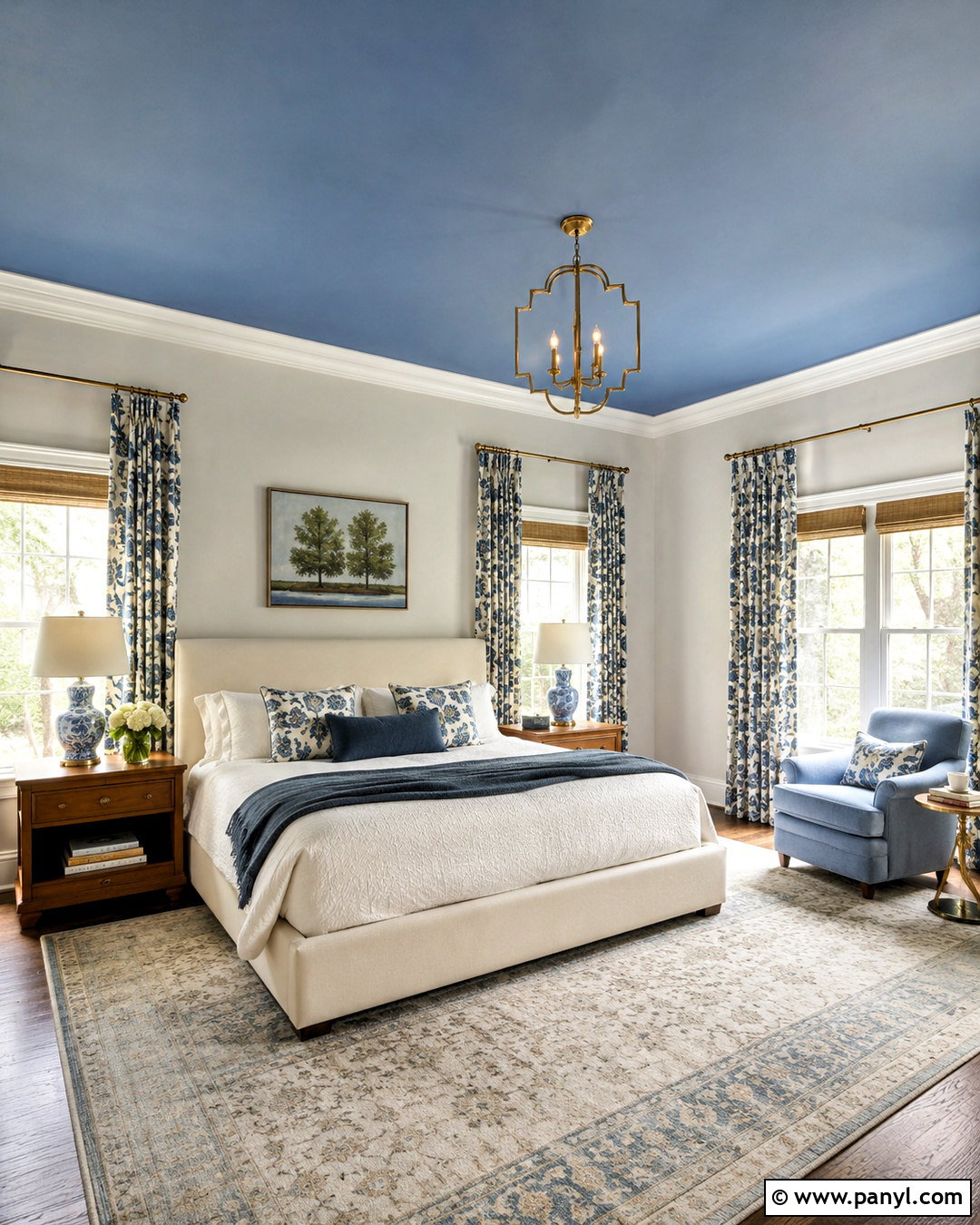
Painting the ceiling Smoky Blue creates an unexpected focal point while allowing the walls to remain light. This treatment works beautifully in a bedroom, dining room, sunroom, or office with crown molding. Use warm white walls and trim to frame the blue overhead, then repeat the shade through a rug, upholstered chair, or patterned curtains. Choose a light fixture with aged brass, natural rattan, or milk glass details so it stands out clearly against the ceiling. Medium wood furniture and cream textiles will keep the room comfortable. If the ceiling is low, maintain strong lighting and avoid heavy window treatments. The finished space feels distinctive and coordinated because the blue is repeated deliberately rather than appearing as an isolated decorative surprise.
24. Smoky Blue Basement Family Room
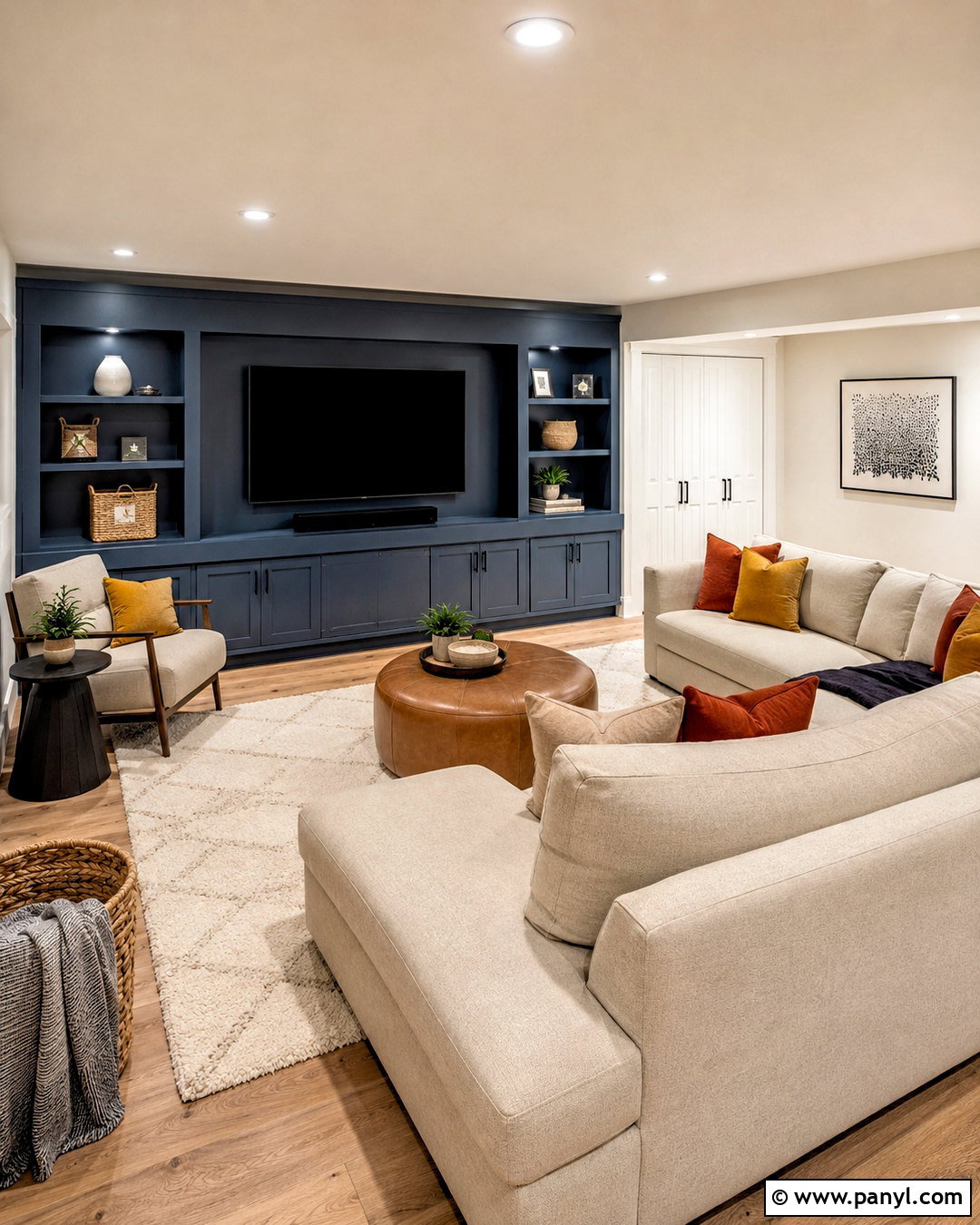
A basement family room needs substantial lighting when Smoky Blue is part of the palette. Use the color on one broad media wall and keep the remaining walls a light, warm neutral. Place a soft greige sectional opposite the television, then add an oak media console, washable cream rug, and round leather ottoman. Recessed ceiling lights should provide even illumination, while floor and table lamps create more comfortable pools of light. Include closed cabinets for games, toys, and electronics. Rust, mustard, and muted green pillows can warm the deeper blue backdrop. If windows are small, choose pale flooring and simple shades that do not block available daylight. The result is a practical gathering space that feels cozy without becoming cave-like.
25. Smoky Blue Reading Nook
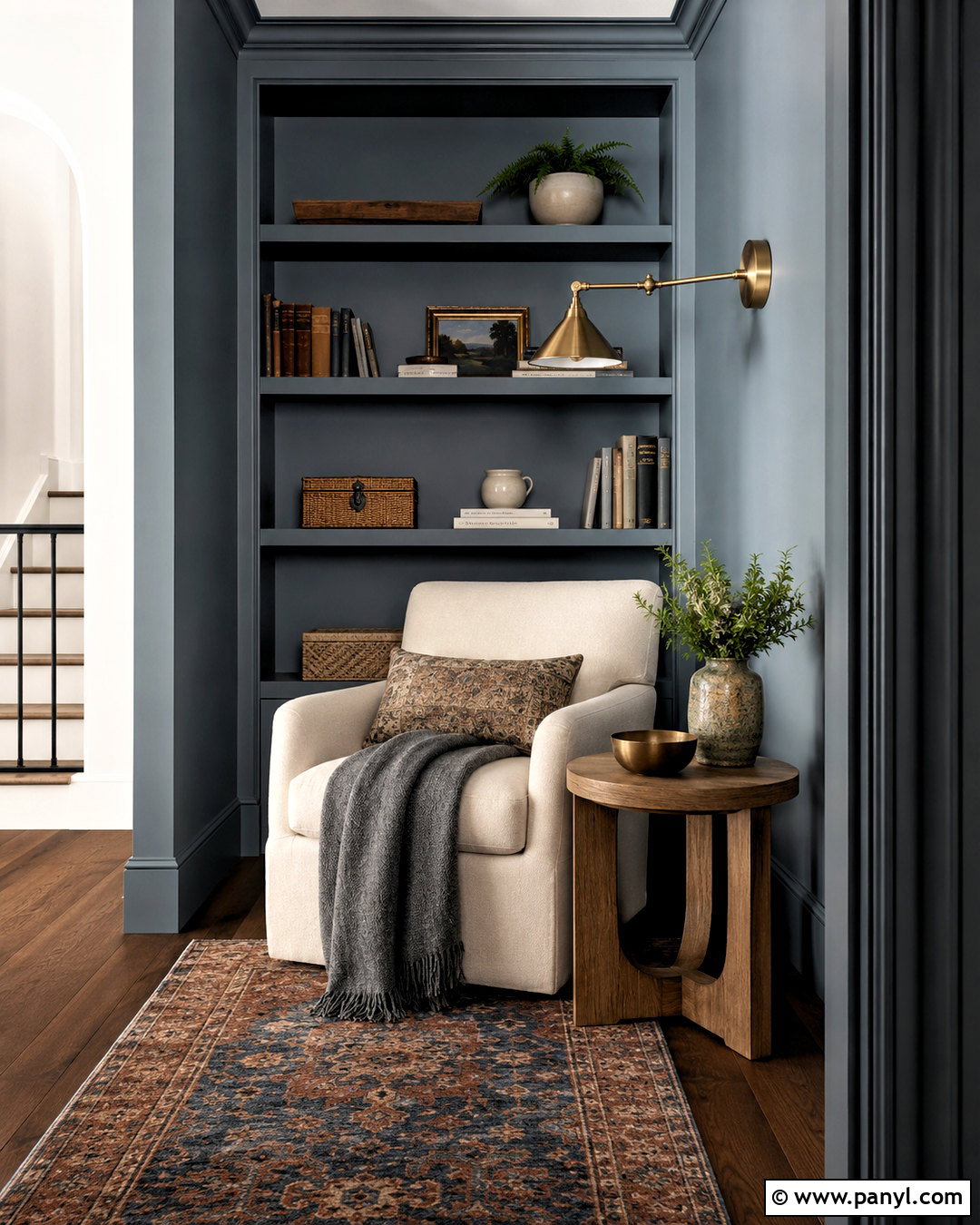
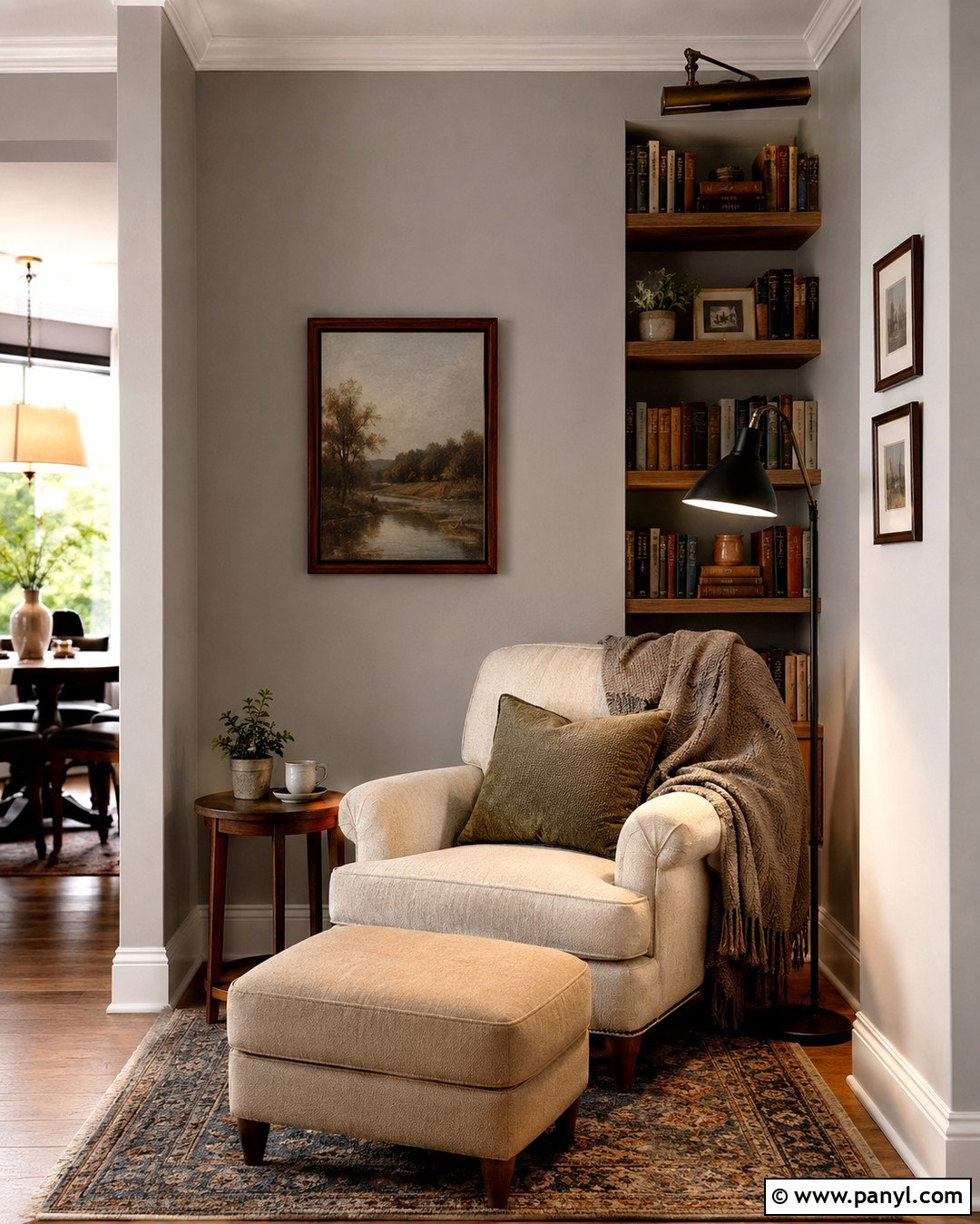
A small reading nook becomes more inviting when Smoky Blue defines its boundaries. Paint the recessed walls and nearby built-in shelving blue, then add a comfortable cream armchair or a tailored window seat with a thick neutral cushion. Use a brass swing-arm sconce for focused light and place a small oak side table within easy reach. Fill the shelves with books, woven boxes, and a limited number of personal objects. A faded rust and blue rug can distinguish the nook from the surrounding room. Include one lumbar pillow and a soft throw rather than multiple decorative layers. This complete setup works beneath stairs, beside a window, or at the end of a hallway, transforming unused square footage into a functional retreat.
26. Smoky Blue Front Door
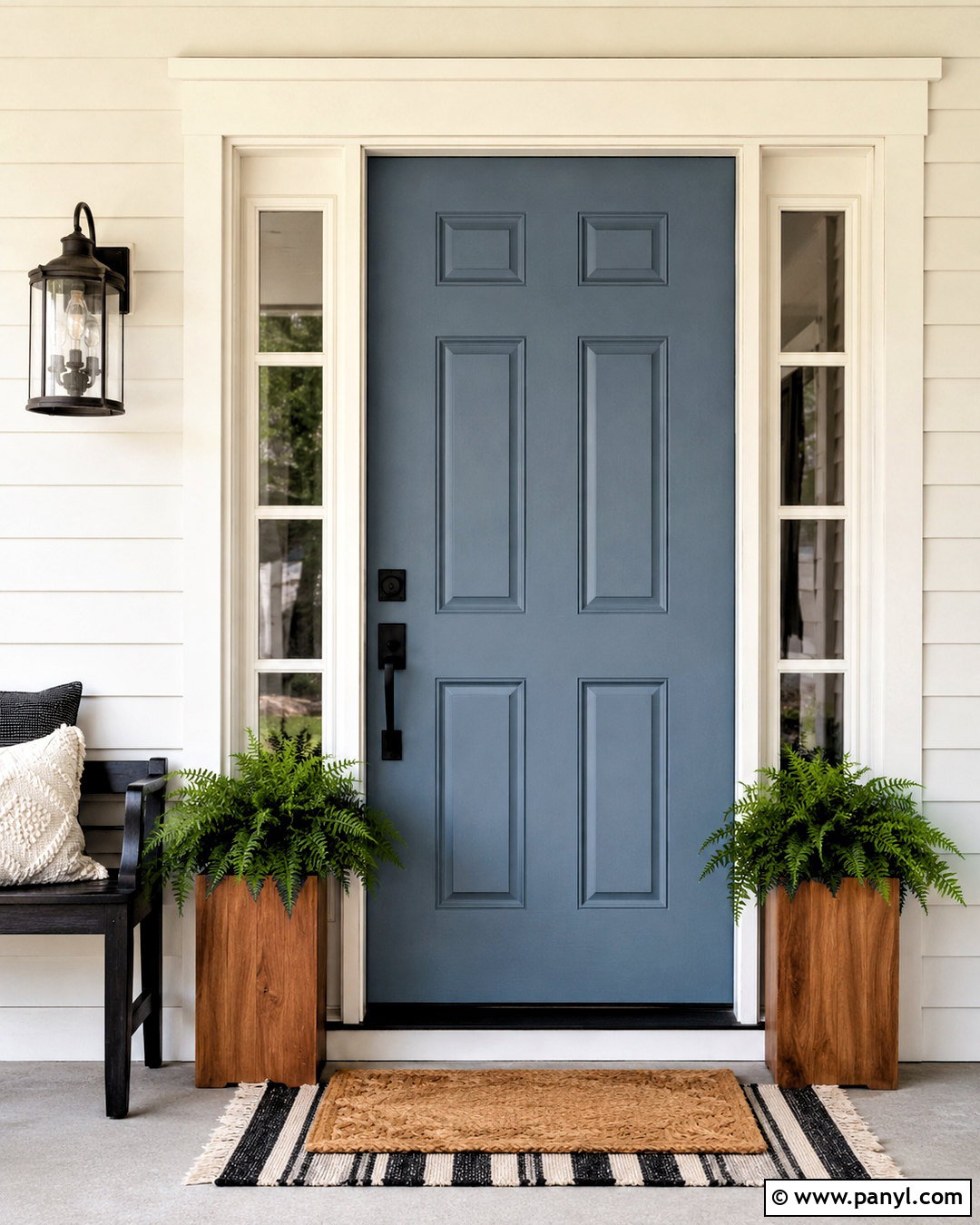
A Smoky Blue front door offers noticeable color while remaining softer than a bright primary blue. Pair it with warm white or light greige siding, clean white trim, and matte black hardware. Natural wood planters filled with layered green foliage will bring warmth to the entrance. Use a simple coir mat over a larger black-and-cream outdoor rug for a finished, practical doorstep. If the porch has room, add one wood bench or black metal chair rather than several small accessories. A clear glass or black lantern provides crisp illumination beside the door. Repeat the blue nowhere else, or use it only in a small porch detail. This restraint keeps the entrance attractive and ensures the door remains the unmistakable focal point.
27. Smoky Blue House Exterior
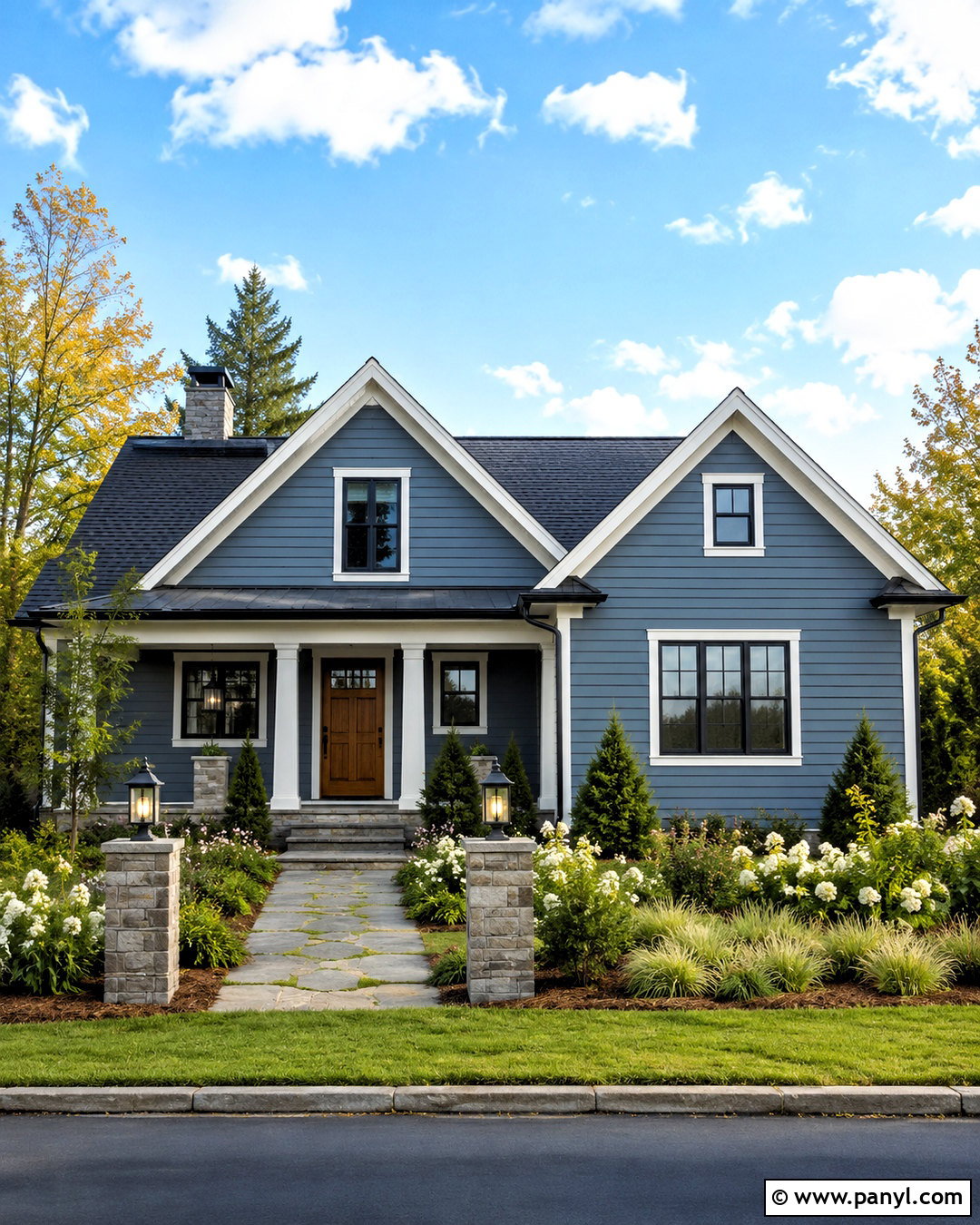
Smoky Blue siding creates a grounded exterior palette that can suit many average-size homes. Use the blue across the main body, then add warm white trim around the windows, eaves, and porch columns. A medium charcoal roof provides continuity without disappearing into the siding. Choose a natural wood front door and matching porch ceiling or posts to warm the blue-gray exterior. Black lighting, gutters, and house numbers add controlled definition. Keep the landscaping fresh and uncomplicated with rounded evergreen shrubs, ornamental grasses, white flowers, and a clean stone walkway. Before painting, test the color on several sides of the house because open daylight can change its appearance. The complete scheme feels established, approachable, and easy to maintain.
28. Smoky Blue Exterior With White Trim
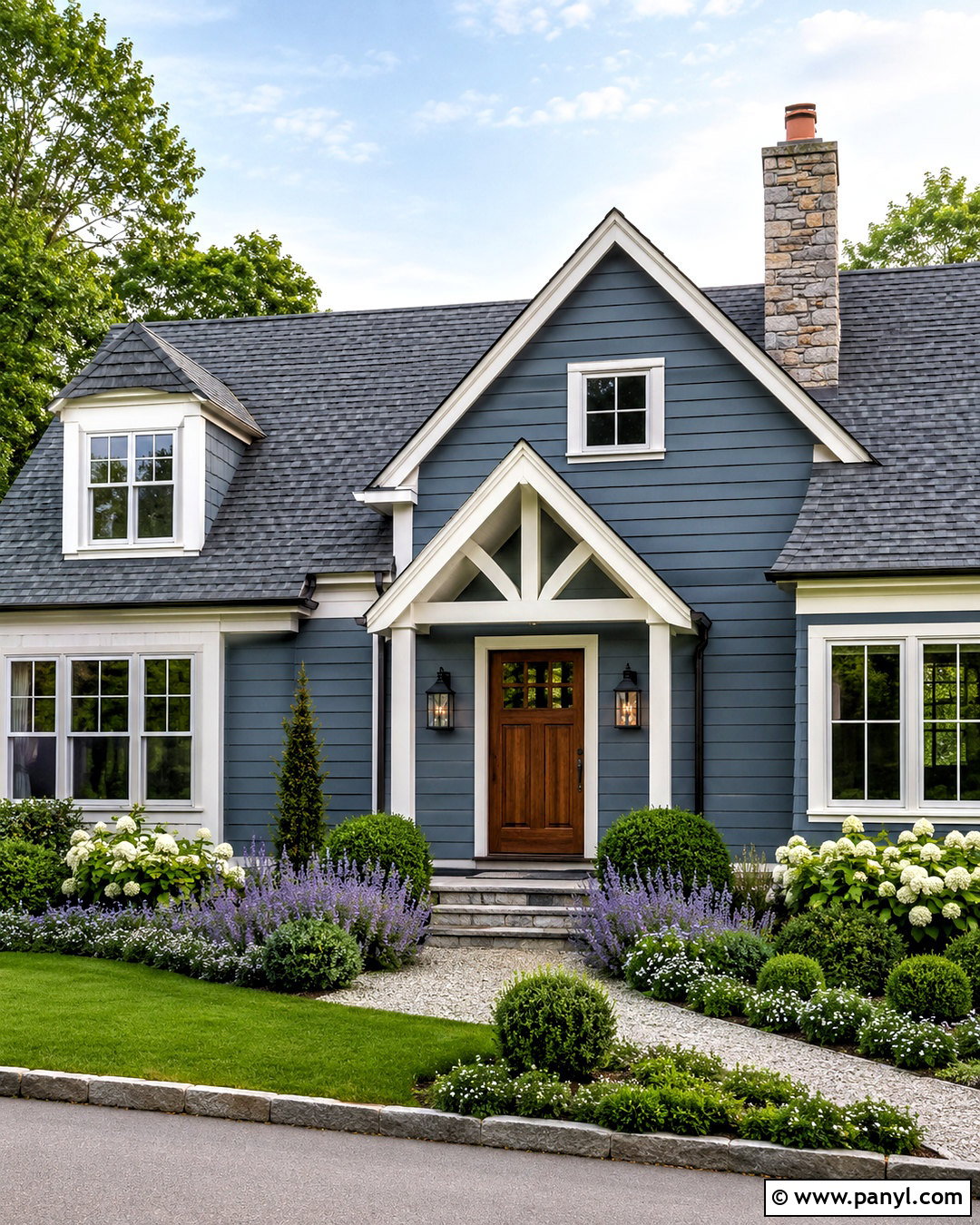
Crisp white trim makes a Smoky Blue exterior look brighter and more defined. Apply the blue to lap siding, using a warm, clean white on window frames, fascia, porch railings, and corner boards. Select a medium gray roof rather than a blue-toned roof so the exterior retains visible contrast. A stained oak front door and porch floor prevent the palette from becoming too cool. Add black lanterns, simple metal house numbers, and matching gutters for a consistent accent. Landscaped beds with deep green shrubs, lavender, white hydrangeas, and pale gravel soften the structured color scheme. This combination is particularly effective on cottages, Cape Cod homes, and straightforward suburban facades where white architectural details can clearly outline the shape of the house.
29. Smoky Blue Exterior With Wood Accents
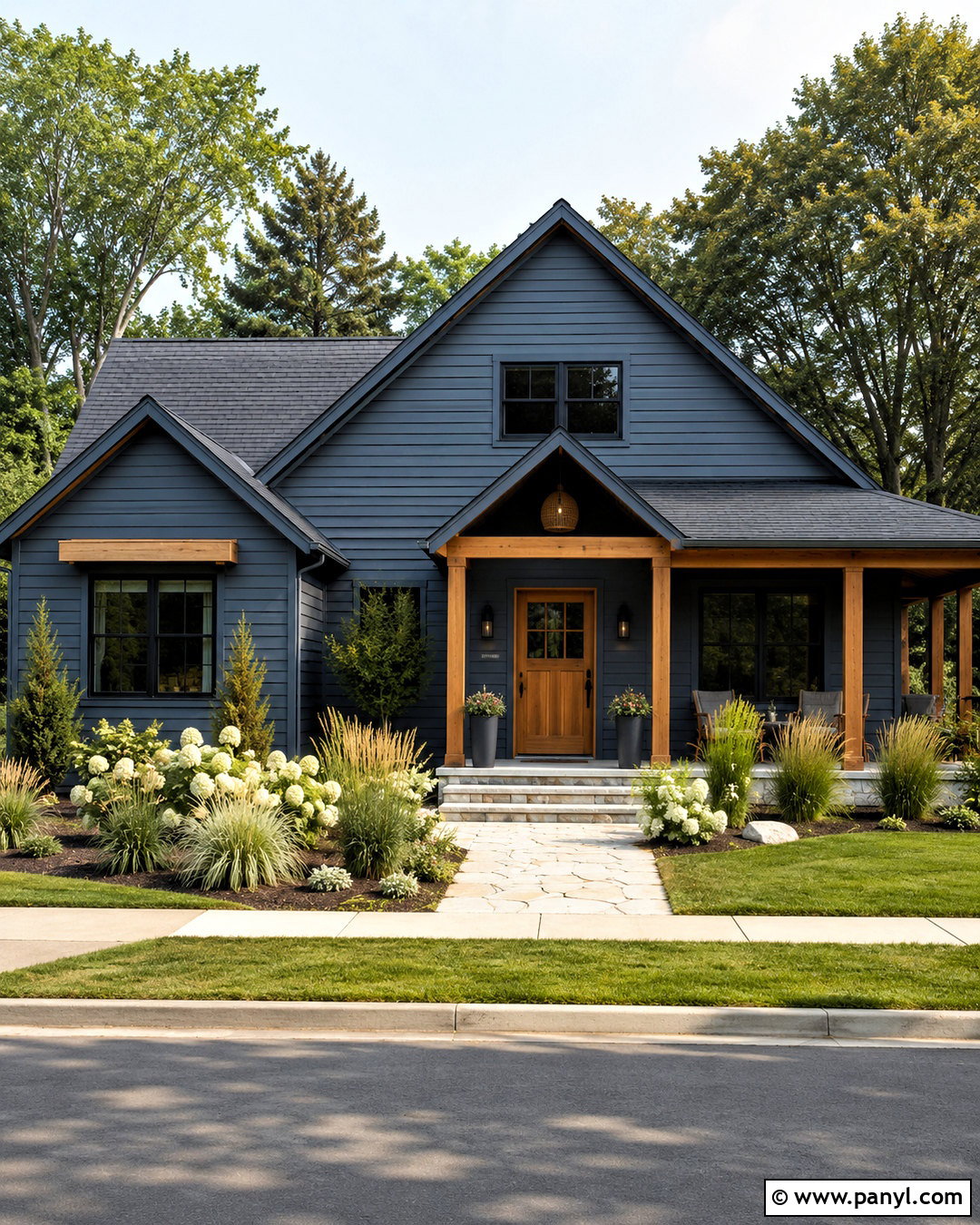
Warm wood brings out the welcoming side of Smoky Blue and gives an exterior a relaxed, natural character. Paint the siding blue, then use cedar or oak-toned wood on the front door, porch posts, soffits, or garage accents. Keep window trim warm white and choose charcoal roofing with minimal color variation. Black-framed windows and streamlined lights provide modern contrast. Continue the natural palette through a stone walkway, wood bench, and landscaping with ornamental grasses, low evergreens, and white flowering plants. Avoid orange-heavy stains, which may look too sharp against the muted blue. A medium brown stain usually creates a smoother transition. The finished exterior feels updated and substantial while maintaining the approachable scale of a typical family home.
30. Smoky Blue Shutters
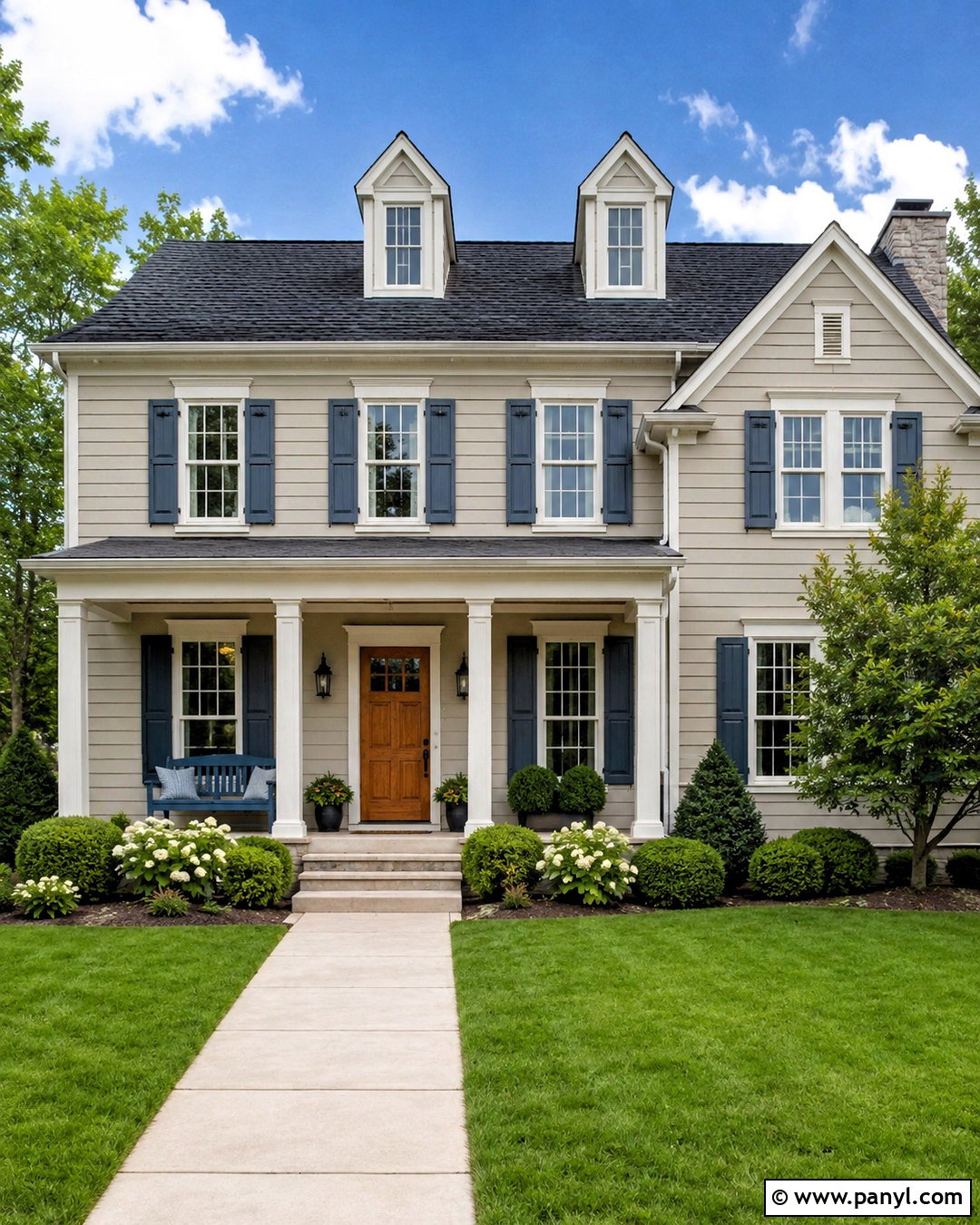
Smoky Blue shutters can refresh a light exterior without requiring a complete repaint. Use them against warm white, pale greige, or light taupe siding and pair them with a natural wood or muted yellow front door. Make sure the shutters are correctly scaled to the windows and installed as matching pairs. Paint nearby trim a clean off-white so the blue remains distinct. A charcoal roof and black lanterns will ground the lighter facade. Repeat Smoky Blue once on a small porch bench or planter, but avoid scattering it across numerous accessories. Complete the curb appeal with clipped green shrubs, soft white flowers, and a defined walkway. This coordinated exterior looks colorful, traditional, and carefully finished rather than decorated with unrelated accents.
31. Smoky Blue Garage Door
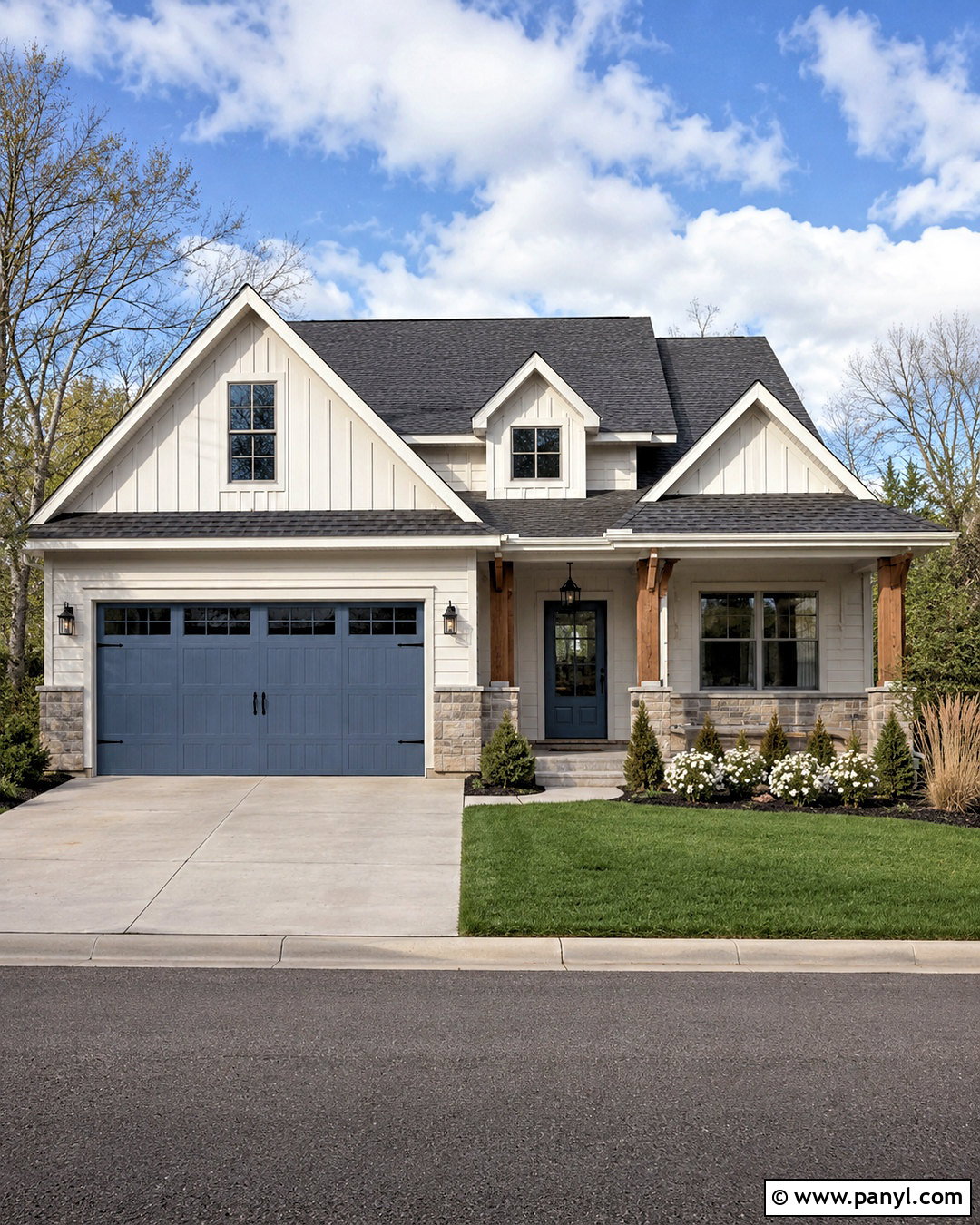
A Smoky Blue garage door can turn a large functional surface into a purposeful part of the exterior palette. Pair it with warm white or pale gray siding, white trim, and a charcoal roof. Use black handles, hinges, and lanterns for clear definition. If the garage sits beside the main entrance, repeat Smoky Blue on the front door or shutters to create balance across the facade. Natural wood brackets or a cedar porch ceiling can warm the combination. Keep the driveway simple and maintain neat planting beds with grasses, evergreen shrubs, and white flowers. Choose a satin exterior finish that is easy to clean. The result makes the garage feel integrated into the home rather than like an oversized blank element.
32. Smoky Blue Covered Porch
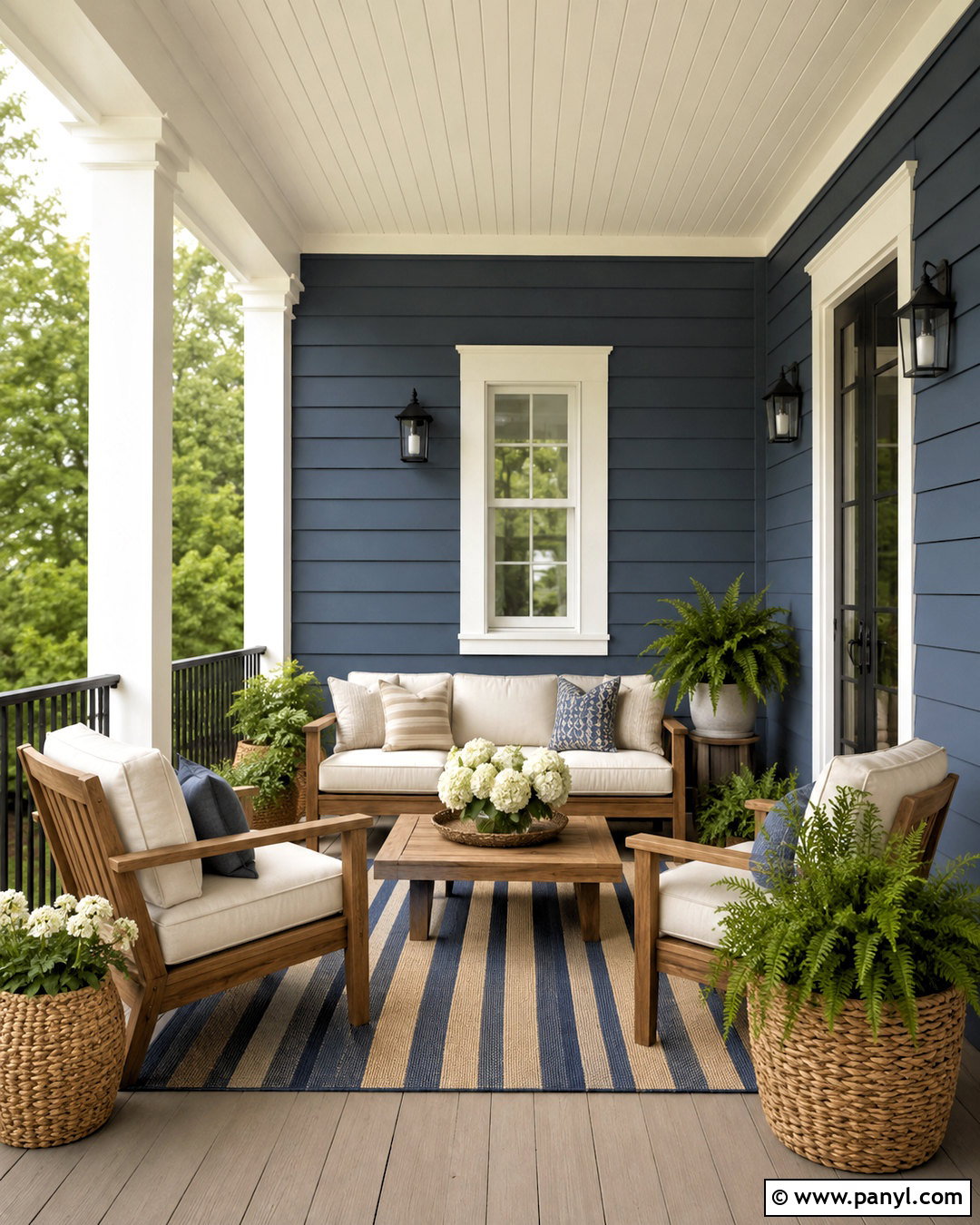
Smoky Blue can give a covered porch the comfort and character of an outdoor room. Paint the siding or back wall blue, then keep columns, railings, and the ceiling warm white. Furnish the porch with natural wood seating, cream outdoor cushions, and a washable striped rug containing blue, tan, and white. Black lantern-style sconces add structure, while woven planters bring texture beside the steps. Use a light wood coffee table and limit accessories to a few weather-resistant pillows and ceramic pots. Green ferns and white flowering plants look especially fresh against the blue wall. This complete porch arrangement feels connected to the house while offering enough soft furnishings and layered lighting to function as a genuine gathering space.
33. Smoky Blue Coastal Cottage Exterior
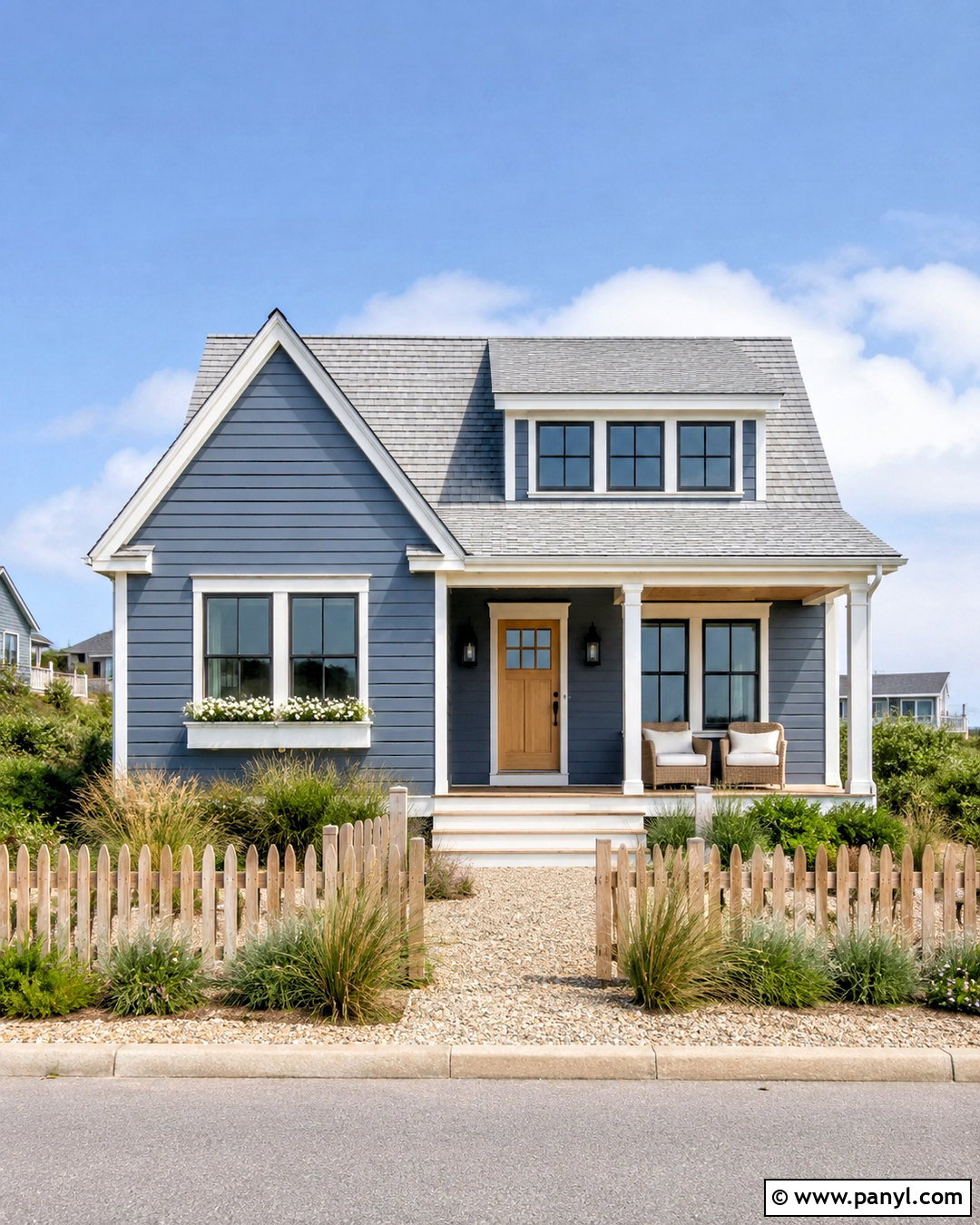
For a coastal cottage look that avoids obvious nautical themes, use Smoky Blue on simple lap siding with creamy white trim. Add a pale natural wood door, light gray roof, and understated black or aged brass lanterns. White window boxes filled with greenery and small blue or white flowers contribute charm without making the facade busy. A gravel path, low picket fence, and informal ornamental grasses reinforce the relaxed setting. Keep porch furniture light and practical, using woven chairs with cream cushions and one striped pillow. Avoid anchors, signs, and themed decorations. The blue-gray siding, weathered wood, airy landscaping, and restrained accessories are enough to create a breezy exterior that still looks appropriate far from the coast.
34. Smoky Blue Modern Farmhouse Exterior
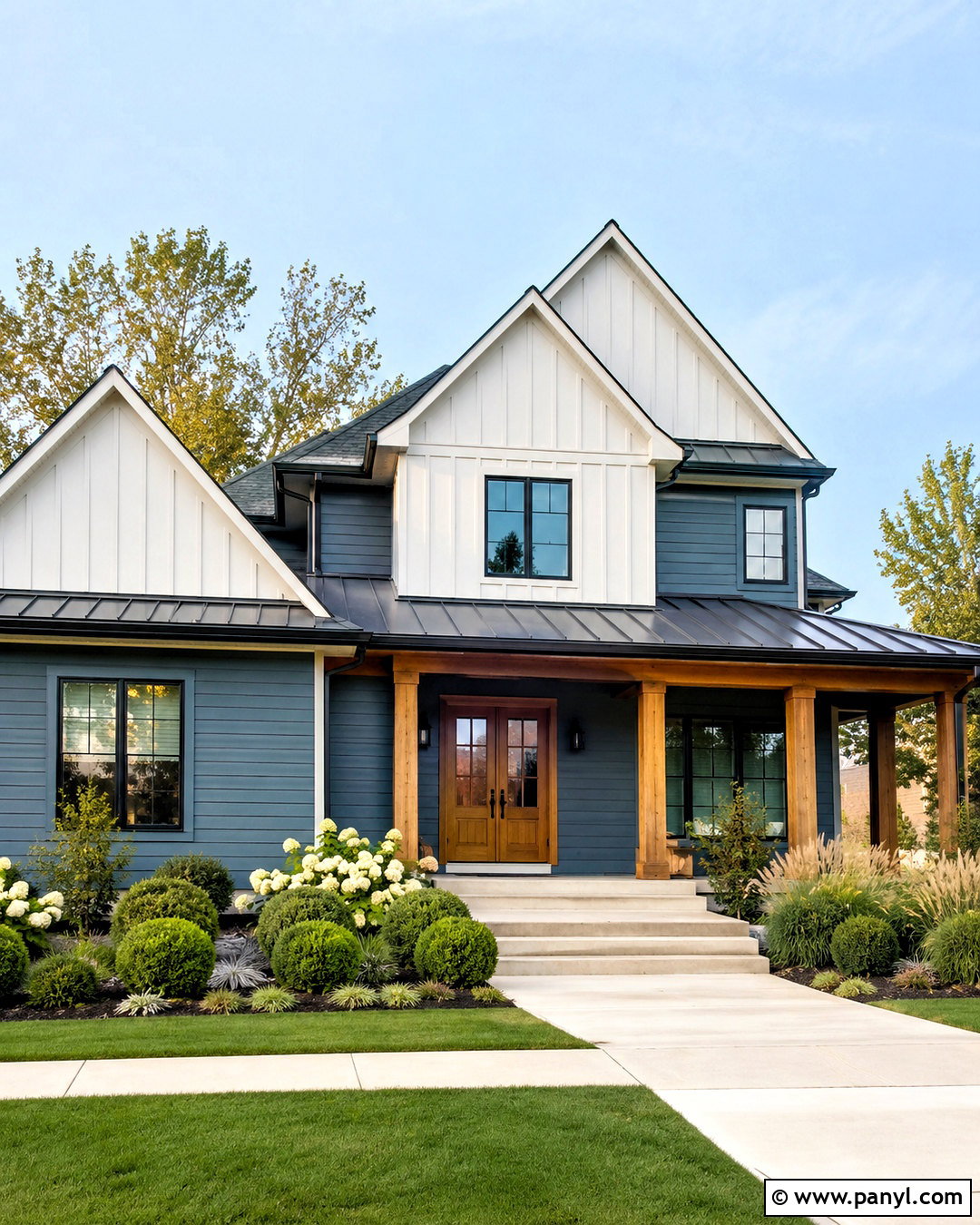
Smoky Blue offers an alternative to the all-white modern farmhouse exterior while preserving clean contrast and familiar materials. Use it on horizontal siding, then paint the board-and-batten gables warm white. Add a charcoal standing-seam metal roof over the porch and traditional dark shingles across the main roof. Natural wood posts and double front doors warm the facade. Choose black-framed windows, simple rectangular lights, and minimal metal railings. Wide concrete steps and structured landscaping with boxwoods, grasses, and white flowers keep the curb appeal orderly. Avoid excessive signs or rustic decorations. This balanced exterior combines color, wood, and black accents in a controlled way, producing a modern farmhouse home that feels updated without losing its comfortable residential character.
35. Smoky Blue Traditional Home Exterior
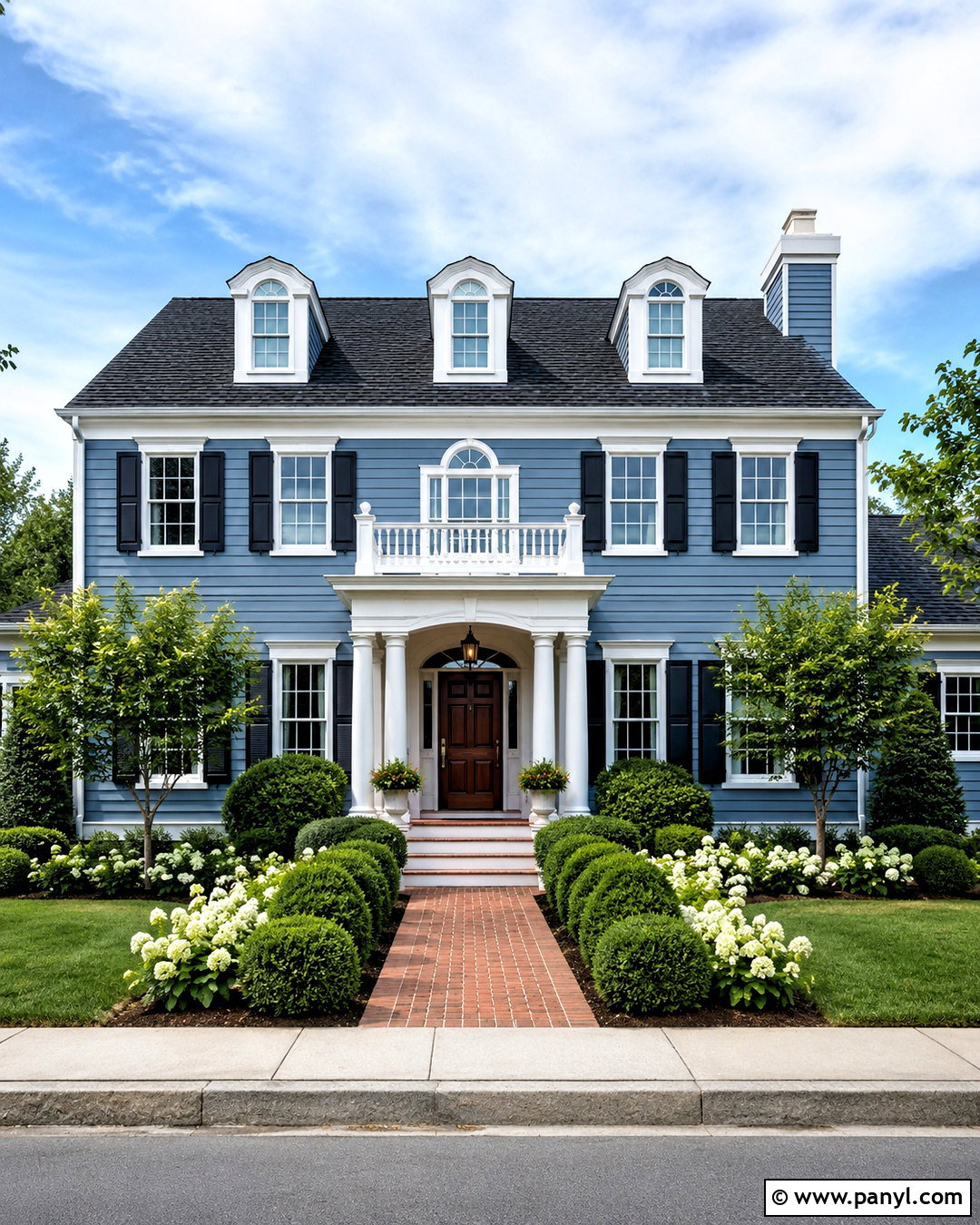
A traditional home looks distinguished in Smoky Blue when the trim and architectural details are kept crisp. Paint the main siding blue, use creamy white on columns, dentil molding, window casings, and railings, and select a deep charcoal roof. A rich walnut-colored front door adds warmth and formality. Black shutters can frame the windows, while aged brass or black lanterns support the classic palette. Choose brick or natural stone for the walkway and steps, ideally in warm red, brown, or gray tones. Symmetrical planting beds with evergreen shrubs, white hydrangeas, and small ornamental trees reinforce the architecture. The complete scheme respects traditional proportions while introducing enough blue-gray color to make the house memorable, welcoming, and freshly updated.
Conclusion:
These 35 SW Smoky Blue ideas show how one blue-gray paint color can support many complete interior and exterior looks. The key is balancing its depth with light finishes, warm wood, practical lighting, and thoughtfully repeated accents. Cream, warm white, oak, walnut, brass, black, and pale stone are dependable companions, while rust, mustard, and subdued green can introduce controlled contrast. Use Smoky Blue across walls for an enveloping room, on cabinetry for functional color, or outside for grounded curb appeal. Before buying several gallons, paint large samples and observe them throughout the day. Careful testing will help you create a finished palette that feels intentional in your home’s actual light.

Related Ideas and Inspiration:
Leave a Reply