
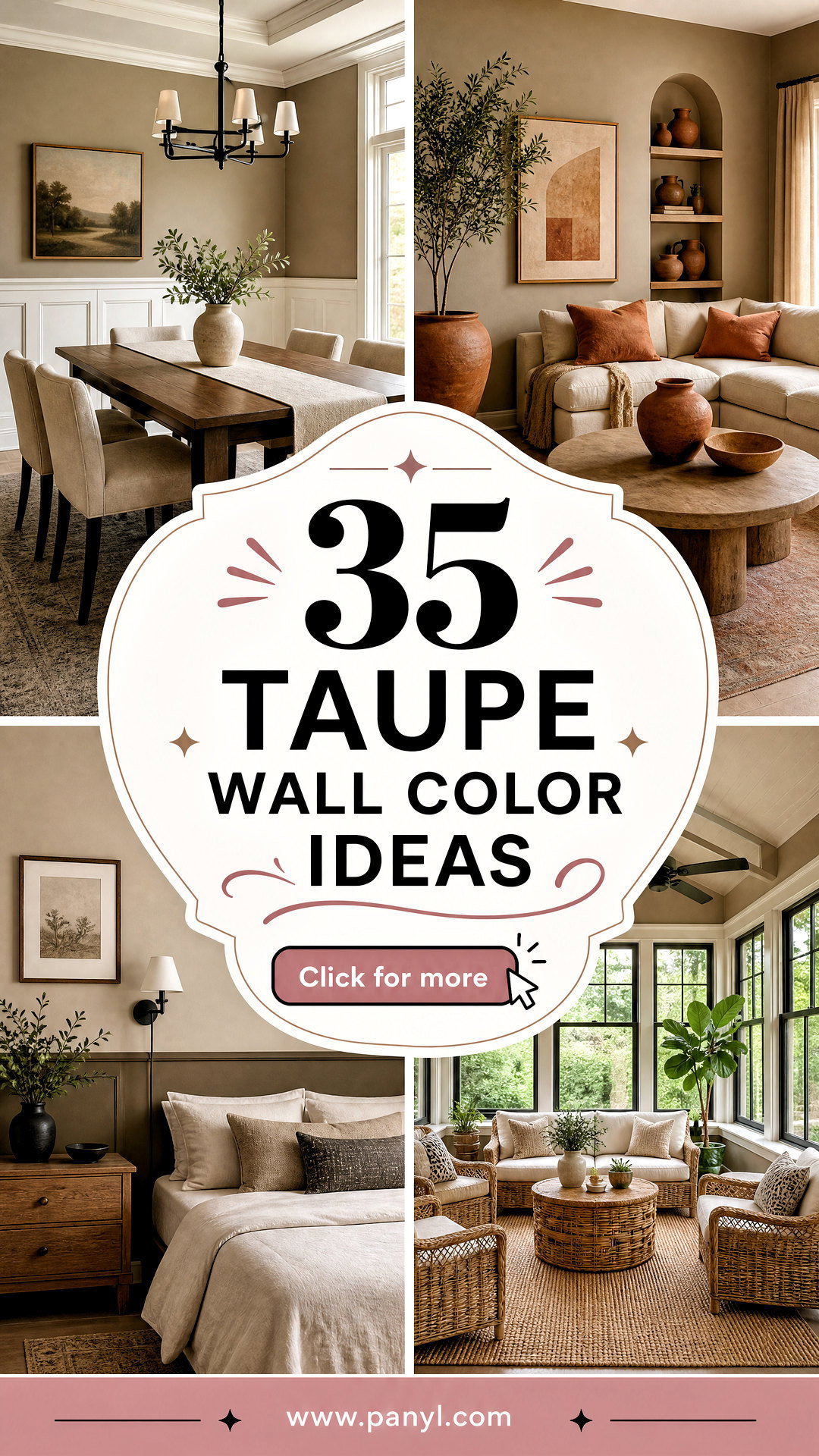
Taupe sits between brown, beige, and gray, giving it unusual flexibility as a wall color. Depending on its undertone and the room’s light, it can appear warm and earthy, softly rosy, or cool and stone-like. This range makes taupe an inviting alternative to plain white or gray. It also works with traditional, modern, rustic, coastal, and minimalist interiors. Current rooms often combine taupe with layered natural materials, warm wood, textured fabrics, muted greens, deep blues, and creamy whites rather than relying on an entirely neutral palette. () Before painting, test large samples beside the flooring, trim, and furniture throughout the day. The complete room schemes below offer practical inspiration through 35 Taupe Wall Color Ideas.
1. Light Taupe Walls With Cream Furniture
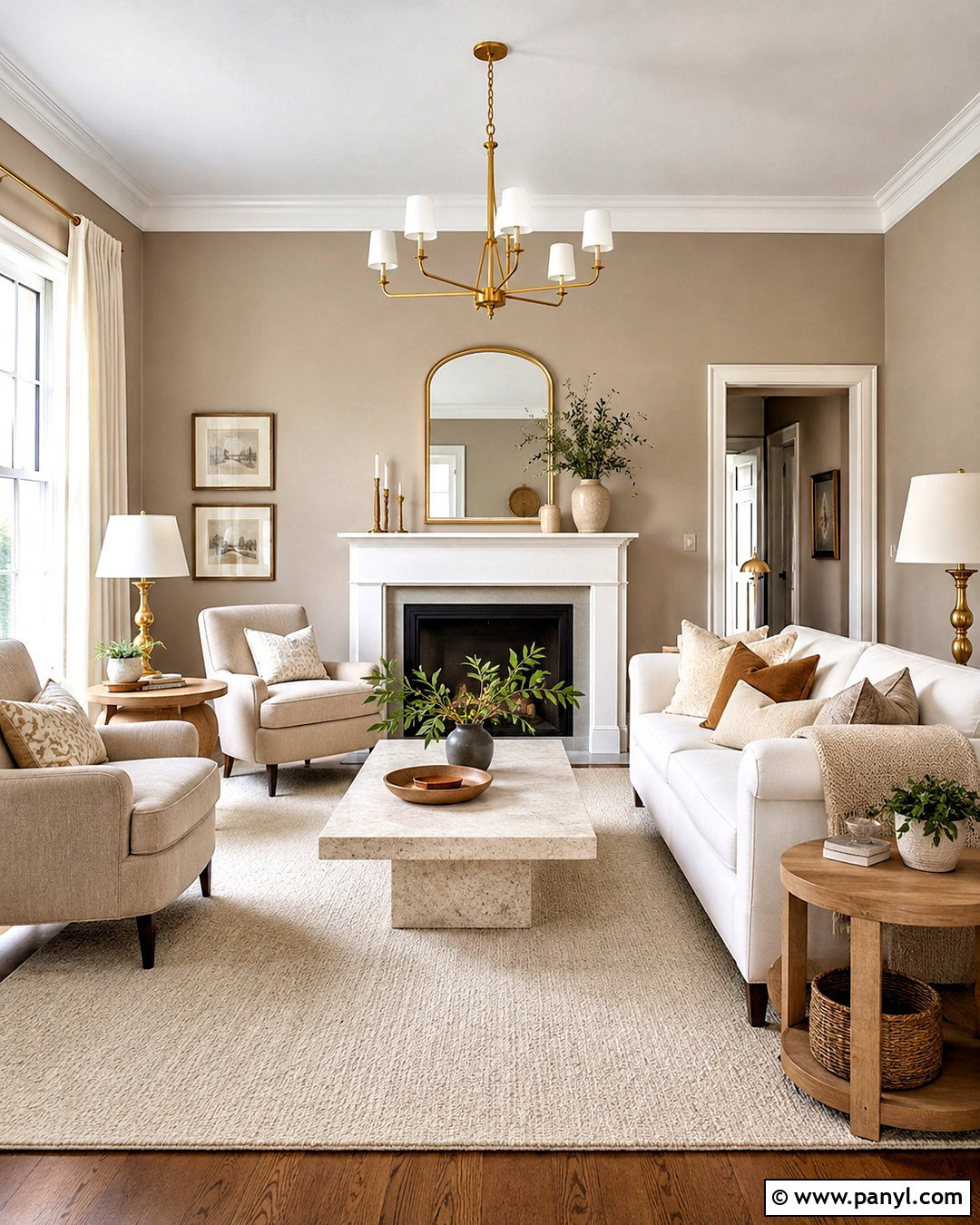
Light taupe walls create a calm living room that feels warmer than gray but more polished than standard beige. Choose a pale taupe with balanced undertones, then add a cream linen sofa, two oatmeal armchairs, and a natural wool rug. Pale oak side tables keep the room relaxed, while a rounded travertine coffee table introduces subtle variation. Use warm white on the ceiling, trim, and fireplace so the taupe remains visibly distinct. Olive branches, woven baskets, and softly patterned pillows prevent the neutral palette from appearing flat. Aged brass lamps provide gentle contrast without making the space look formal. This complete scheme works especially well in an open living area where quiet colors need to connect naturally with nearby rooms.
2. Warm Taupe Walls With Dark Wood Furniture
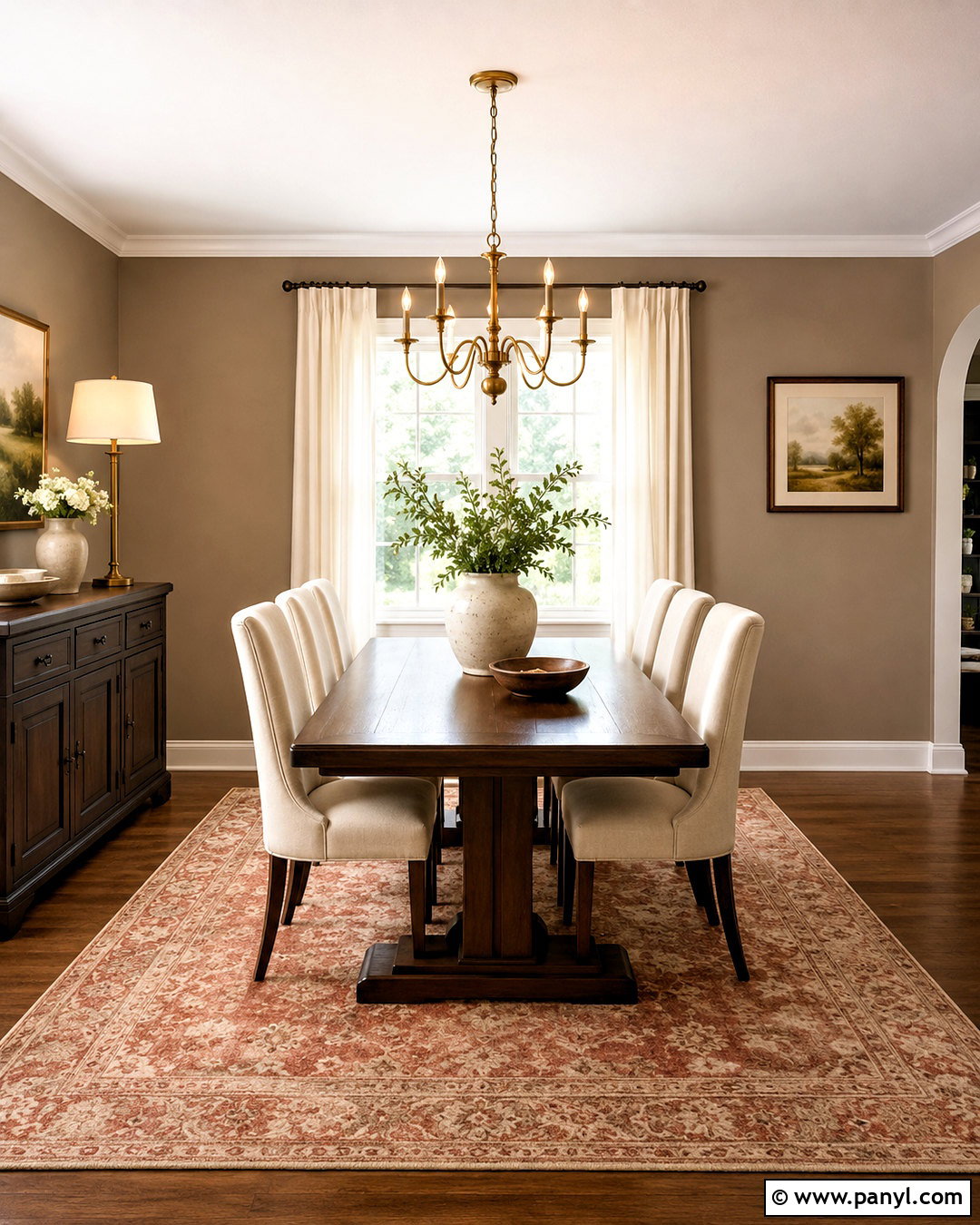
Warm taupe walls bring out the depth of walnut, mahogany, and other dark wood finishes. Build a sophisticated dining room around this pairing with a rectangular walnut table, upholstered ivory chairs, and a low dark wood sideboard. Hang a simple brass chandelier above the table and use off-white linen curtains to soften the windows. A faded rug containing rust, cream, and taupe will connect the furniture to the wall color. Keep the trim creamy rather than bright white, which can look too sharp against a brown-leaning taupe. Add a large landscape painting and a pair of ceramic lamps for a balanced focal point. The finished room feels grounded and established while remaining welcoming enough for relaxed everyday meals.
3. Cool Taupe Walls With Crisp White Trim
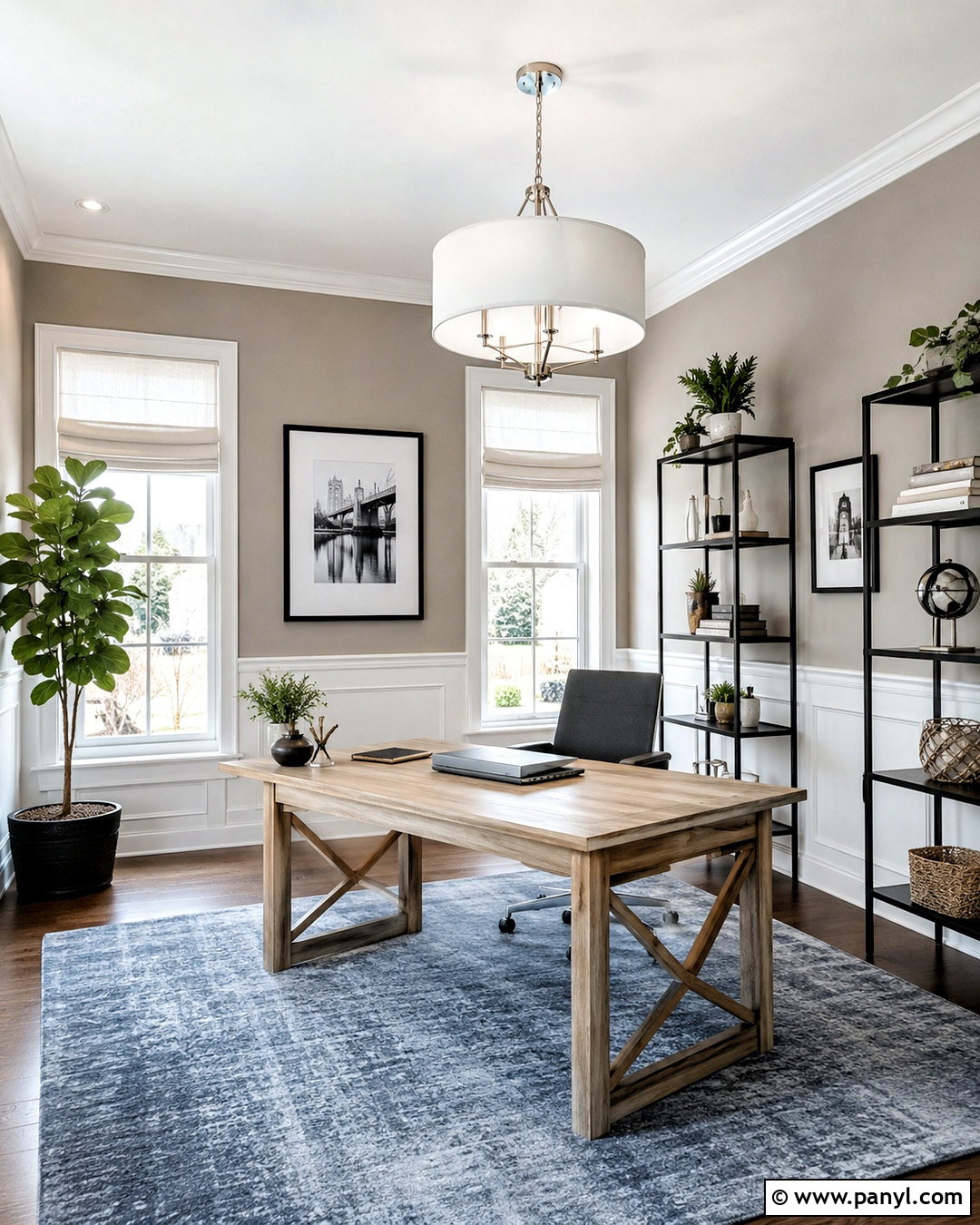
Does your room receive strong afternoon sun? Cool taupe walls can balance that warmth while giving the space a clean, tailored appearance. Use a gray-leaning taupe throughout a bright home office, finishing the baseboards, doors, and window frames in crisp white. Choose a streamlined white oak desk, a charcoal desk chair, and matte black shelving to reinforce the cooler palette. A blue-gray rug introduces soft color without distracting from the workspace. Add white linen shades, polished nickel lighting, and simple black frames around neutral artwork. A few leafy plants supply freshness and keep the scheme from feeling clinical. This look is particularly effective in south- or west-facing rooms where a warmer taupe might become overly brown or yellow.
4. Taupe Living Room Walls With Navy Accents
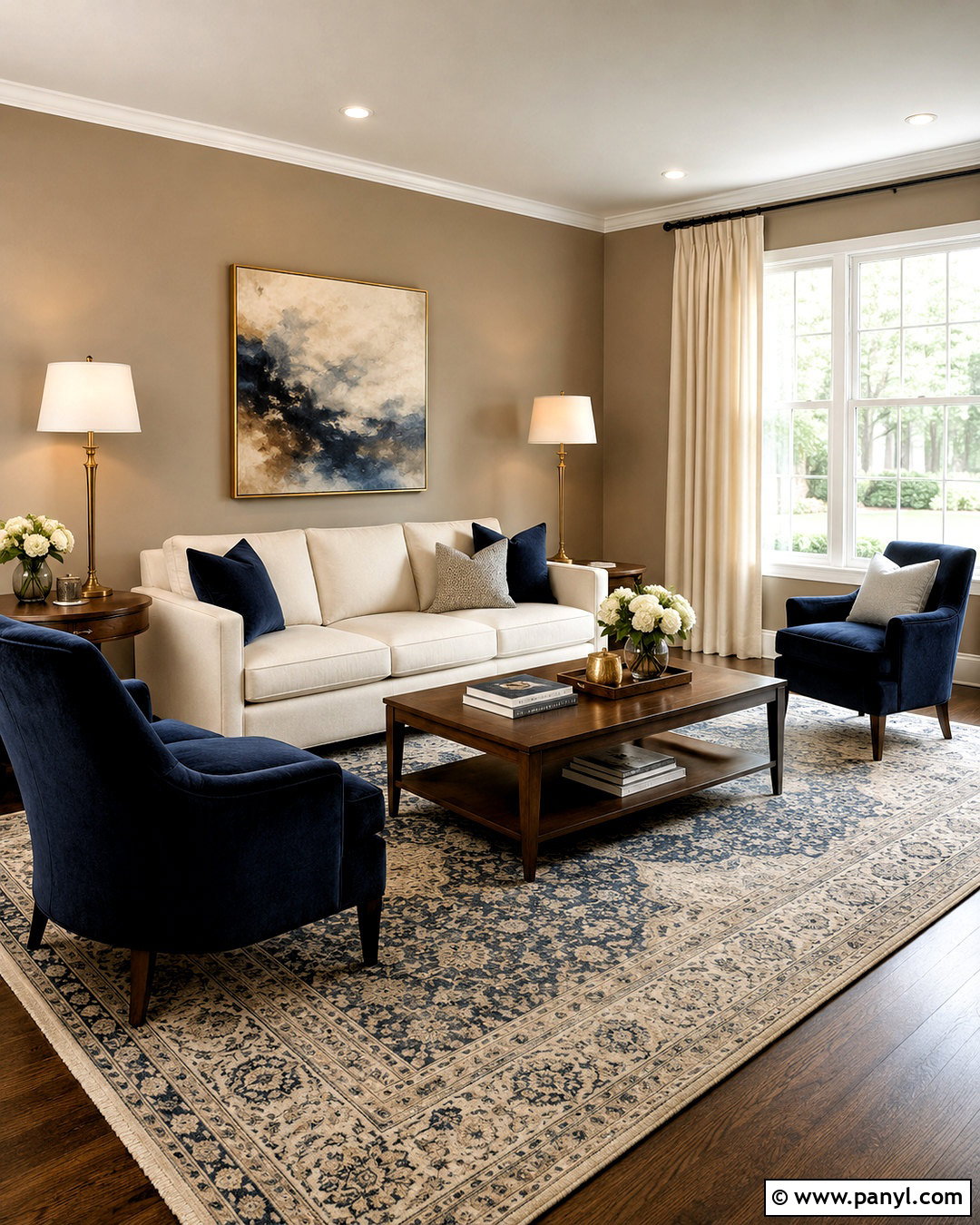
Deep navy gives taupe living room walls a confident, classic contrast. Begin with a medium warm taupe as the room’s main backdrop, then place a cream sofa opposite two navy velvet chairs. Anchor the seating arrangement with a vintage-style rug containing muted blue, tan, and ivory. Dark walnut tables add visual weight, while brass floor lamps warm the palette. Repeat navy through pillows, ceramic pieces, or one large abstract artwork rather than scattering many small decorations around the room. Cream drapery and white-painted trim keep the overall space bright. This complete design feels sophisticated without becoming overly formal. It is also easy to update because the strongest color appears on furnishings and accessories instead of permanent architectural features.
5. Taupe Bedroom Walls With Sage Green
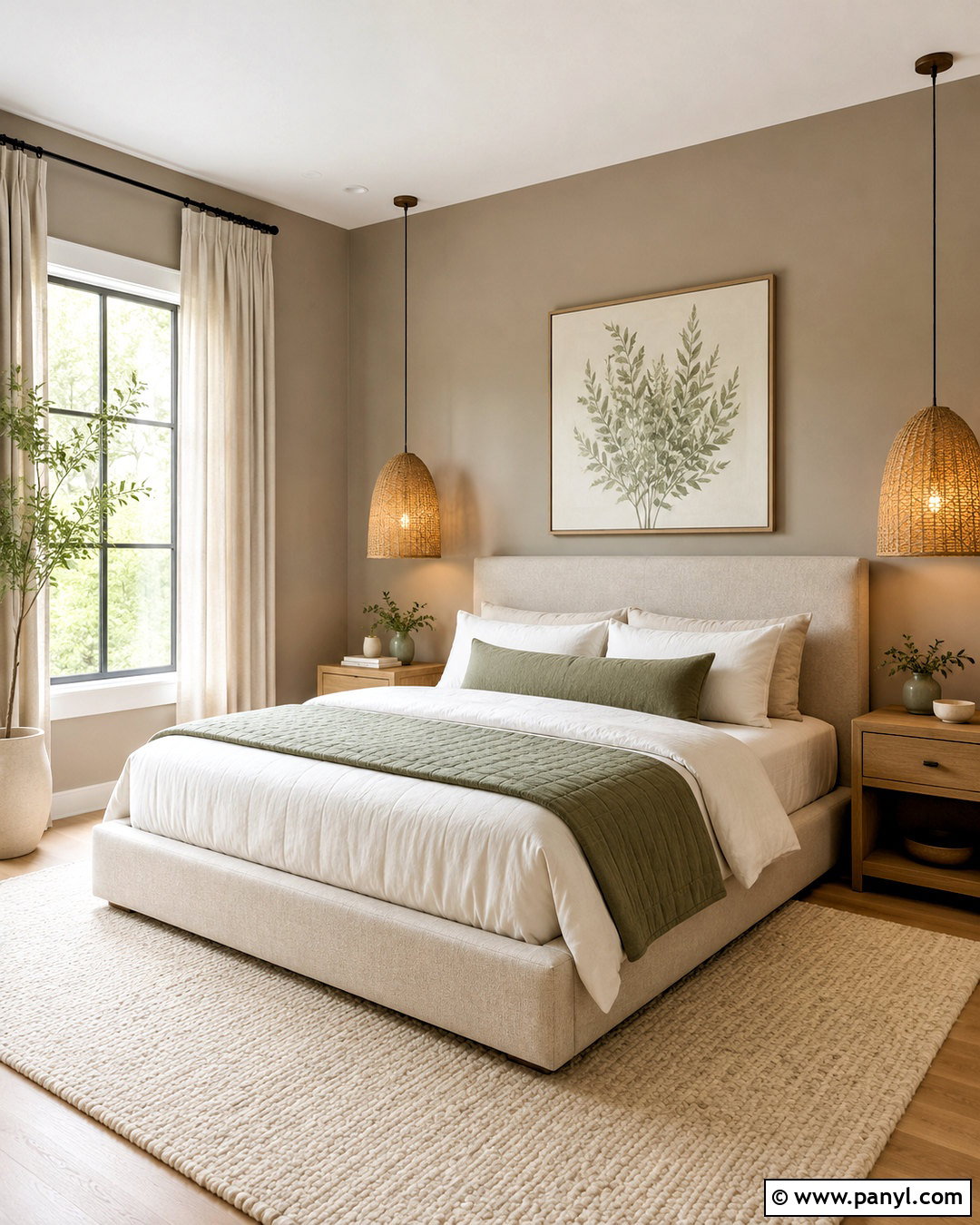
Soft taupe and muted sage create a restful bedroom influenced by natural colors. Paint every wall in a warm, pale taupe, then center an upholstered oatmeal bed against the longest wall. Dress the bed with ivory sheets, a quilted sage coverlet, and linen pillows in cream, moss, and taupe. Light oak nightstands and woven pendant lights maintain an organic mood. Use a large wool rug under the bed to soften hardwood flooring, and frame the windows with unbleached linen curtains. A simple botanical print or textured plaster artwork can fill the wall above the headboard. Keep metal finishes understated, such as antique brass or blackened bronze. Together, these elements create a quiet retreat that feels layered, comfortable, and connected to nature.
6. Dark Taupe Walls With Camel Leather
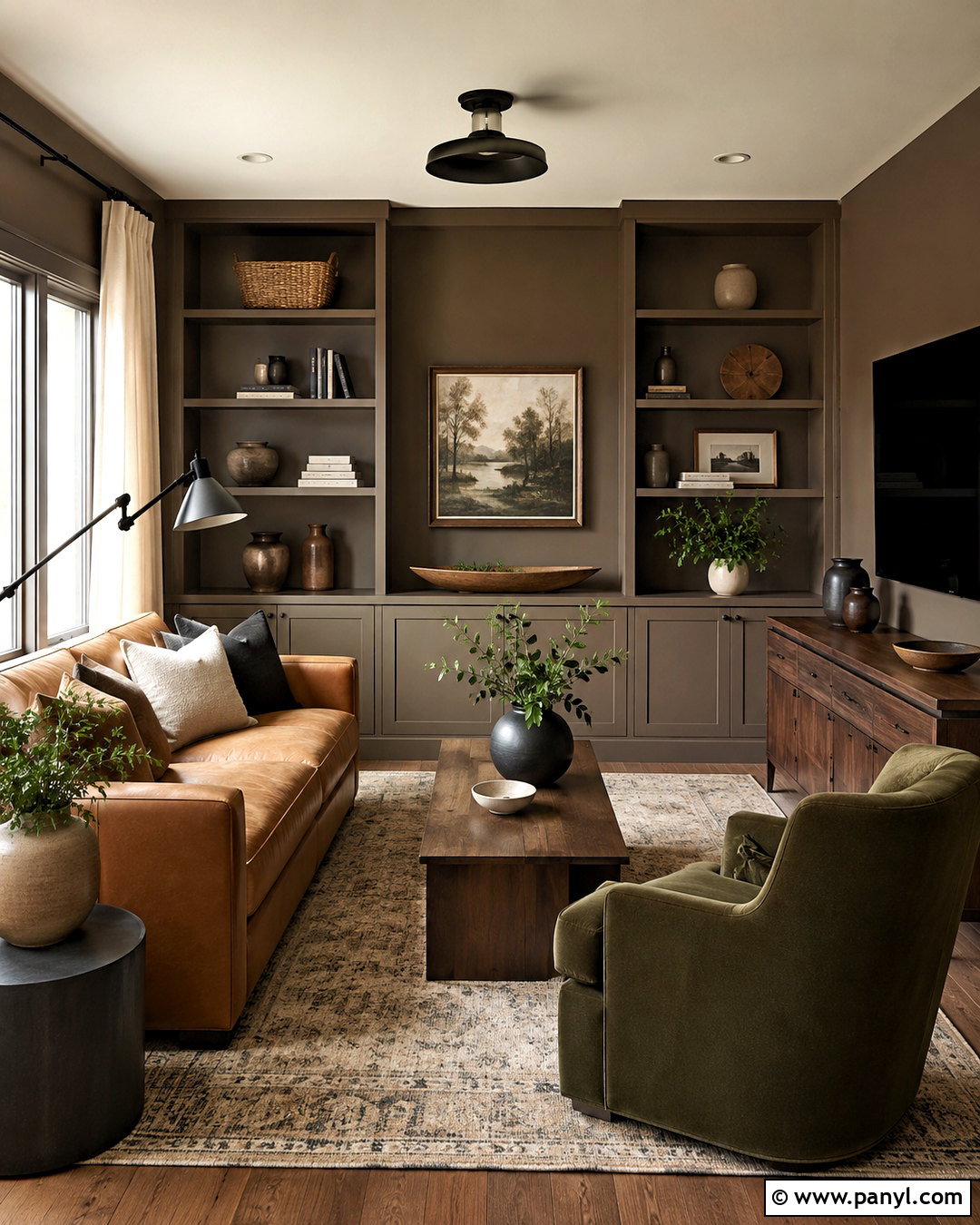
Dark taupe walls can make a den feel intimate without the heaviness of charcoal or black. Pair a deep brown-gray taupe with a camel leather sofa, a low walnut media console, and a textured cream rug. Add one olive velvet chair to bring subtle color into the seating arrangement. Black metal lamps and curtain rods sharpen the room, while warm white curtains stop it from becoming too dark. For a cohesive effect, paint the built-in shelves the same taupe and fill them with books, pottery, and a few framed pieces. Use warm, evenly distributed lighting rather than relying on one ceiling fixture. The resulting den feels comfortable and substantial, with enough pale fabric and reflective detail to balance the richly colored walls.
7. Taupe Walls With White Wainscoting
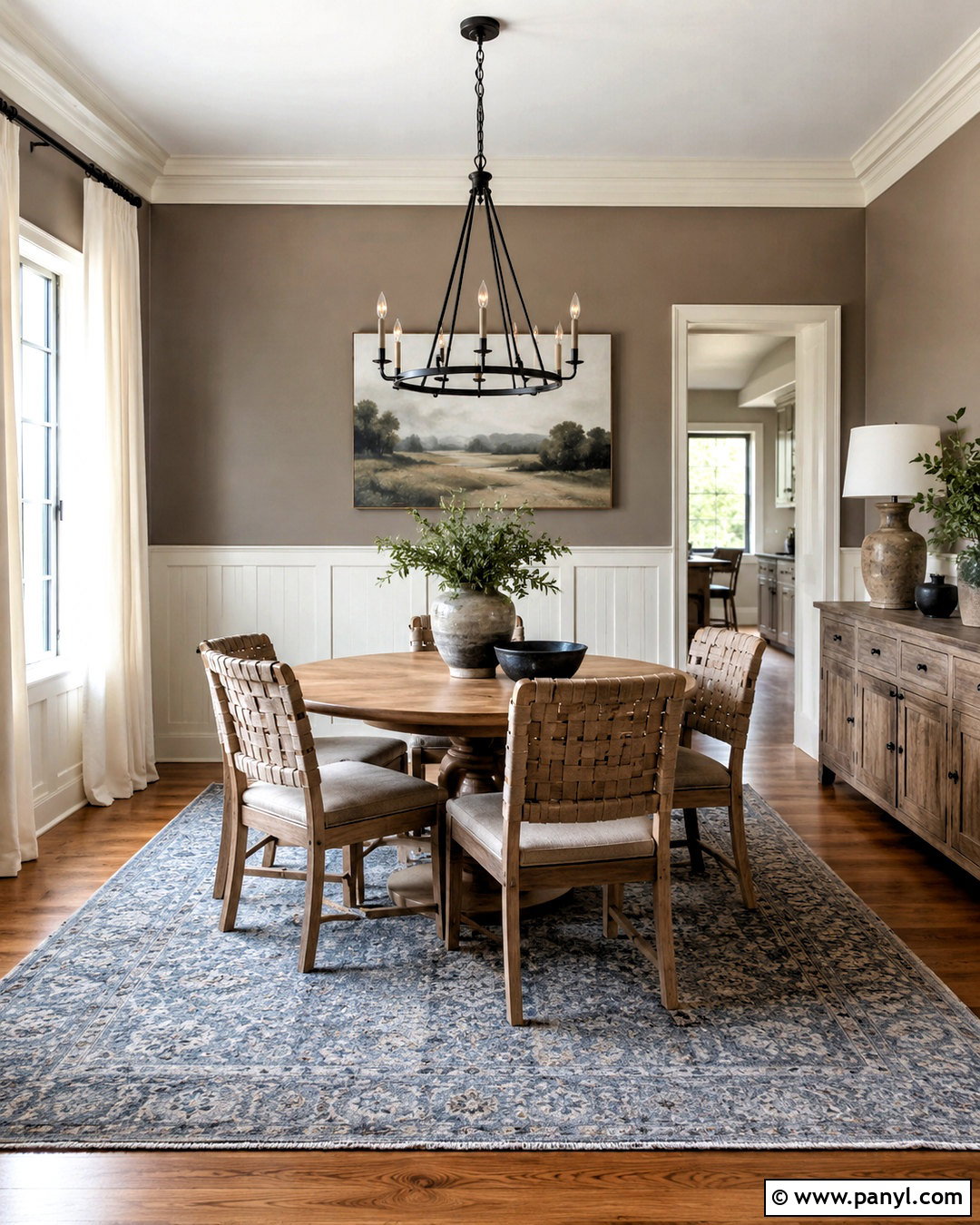
White wainscoting gives taupe walls architectural definition and makes an ordinary dining room feel more finished. Install simple raised panels or picture-frame molding across the lower third of the walls, then paint the trim a soft warm white. Apply medium taupe above it to establish contrast without dramatically darkening the room. A round oak dining table and woven-back chairs create a relaxed centerpiece. Add a patterned rug in muted blue, cream, and sand, plus a black iron chandelier for structure. Full-length ivory curtains make the windows appear taller. Complete the room with one substantial mirror or landscape painting rather than several unrelated pieces. This balanced arrangement suits traditional, transitional, and updated farmhouse homes while remaining easy to personalize.
8. Taupe Walls With Black Accents
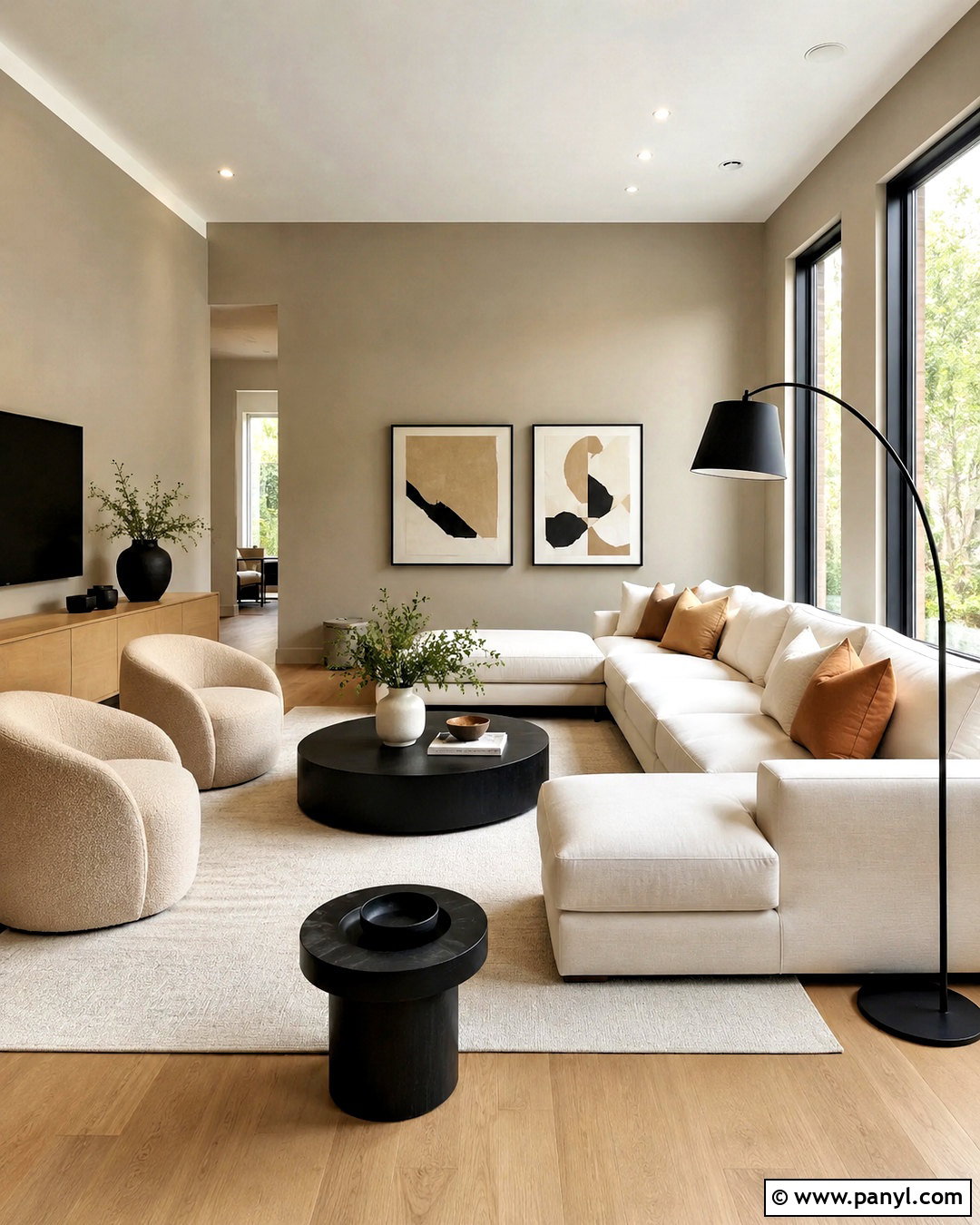
A few deliberate black elements make taupe walls look sharper and more contemporary. In a modern living room, use a balanced midtone taupe behind a low cream sectional and a pair of sculptural beige chairs. Introduce matte black through the window frames, floor lamp, side tables, and thin artwork frames. A pale oak media cabinet prevents the high-contrast details from dominating the room. Choose a large ivory rug with a subtle linear pattern, then add cushions in camel, charcoal, and warm white. Keep the ceiling and baseboards softly white to define the walls. The key is repetition: distribute black evenly across the space instead of concentrating it in one corner. This creates a complete, intentional design with clean lines and comfortable warmth.
9. Taupe Walls With Terracotta Decor
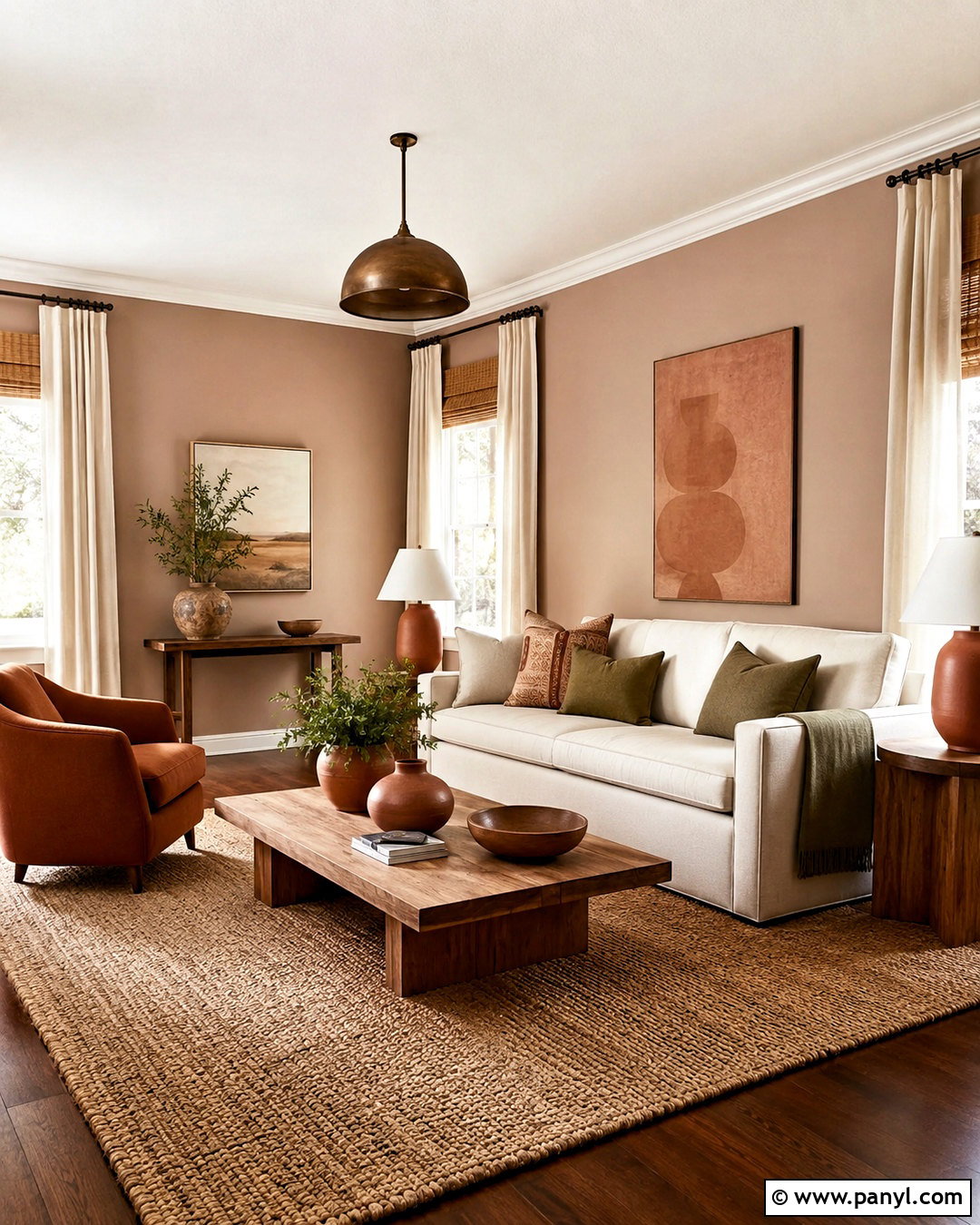
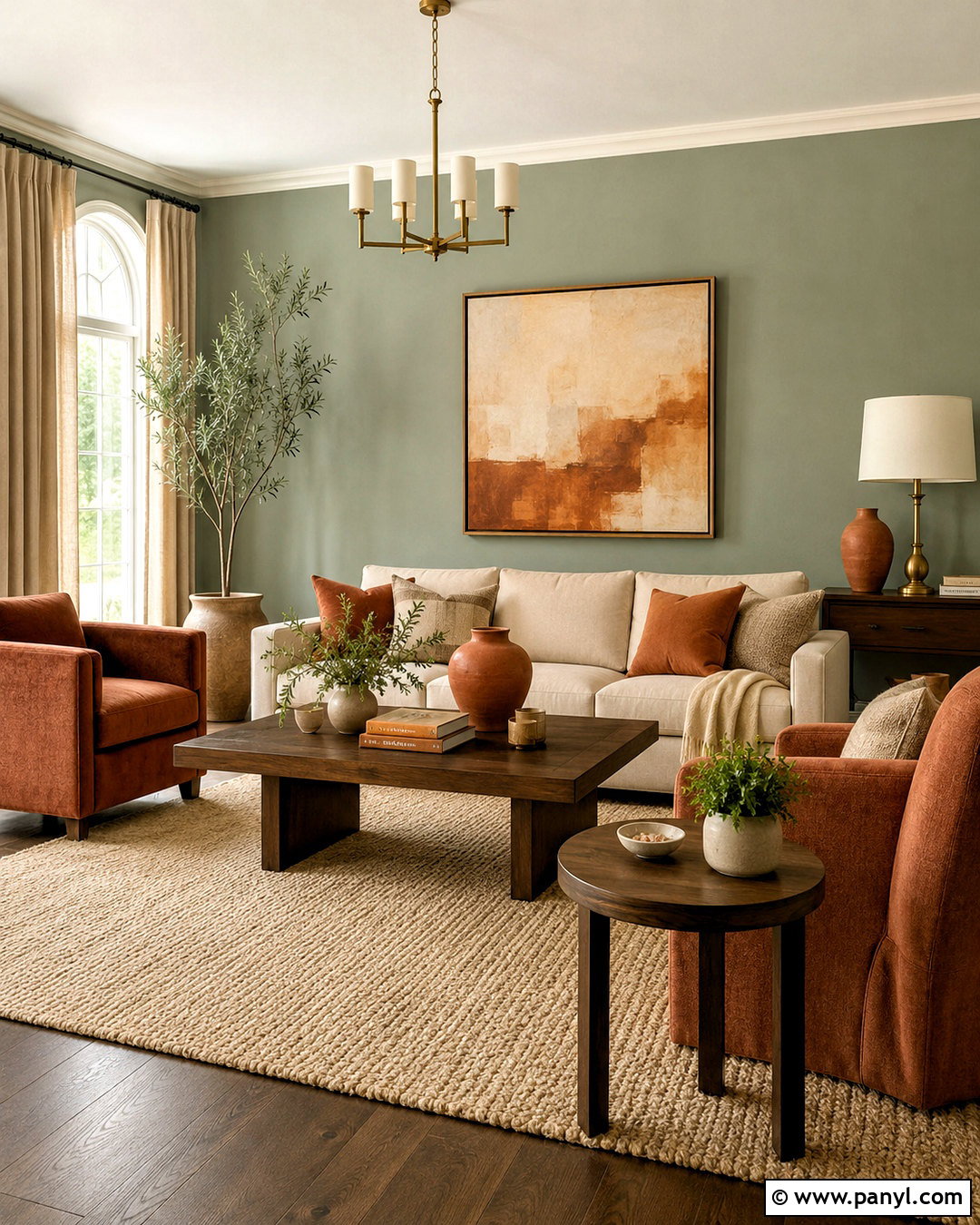
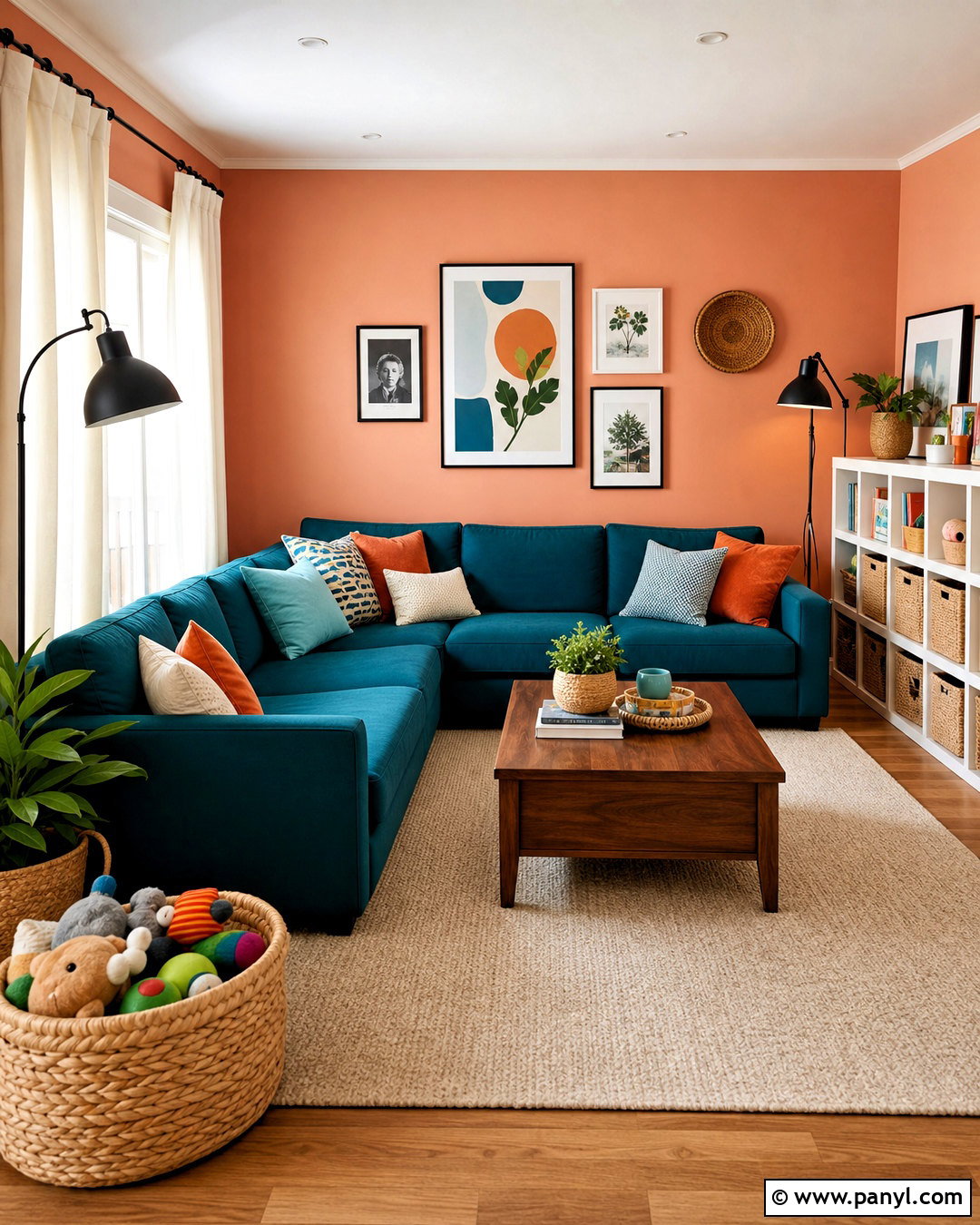
Earthy terracotta wakes up taupe walls without disrupting their soothing character. Build the room around a warm taupe with slightly rosy or brown undertones, then introduce rust through an upholstered accent chair, patterned pillows, and handcrafted pottery. A light beige sofa, oak coffee table, and jute-blend rug keep the foundation quiet. Use cream curtains and woven bamboo shades to layer the windows while filtering bright sunlight. Add a large abstract canvas that repeats taupe, clay, cream, and muted olive. Dark bronze lighting provides definition and complements the natural palette. Avoid using orange-red accents everywhere; three or four concentrated touches have greater impact. The completed space feels sunny, grounded, and welcoming throughout the year without becoming theme-driven.
10. Taupe Walls With Olive Green Furniture
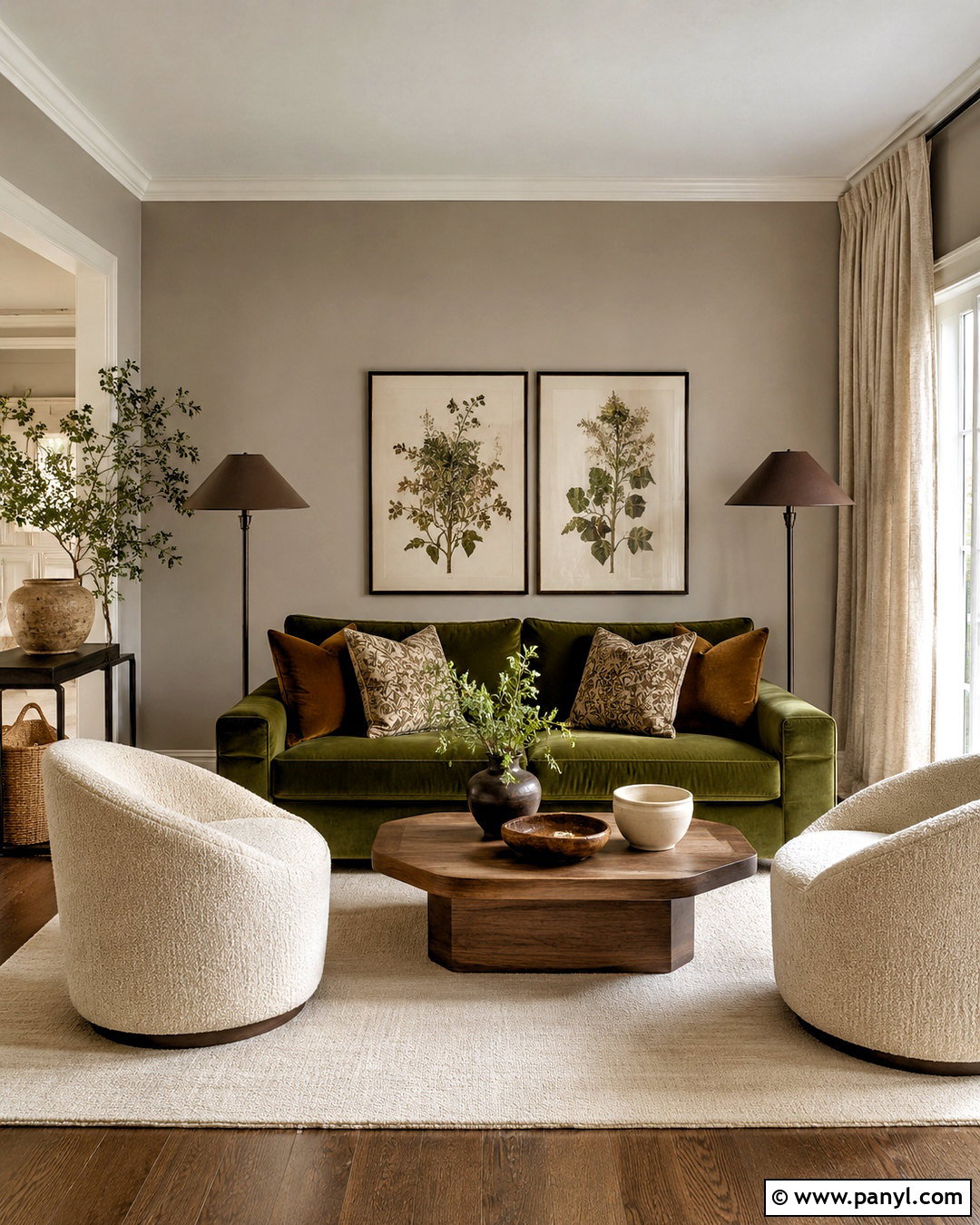
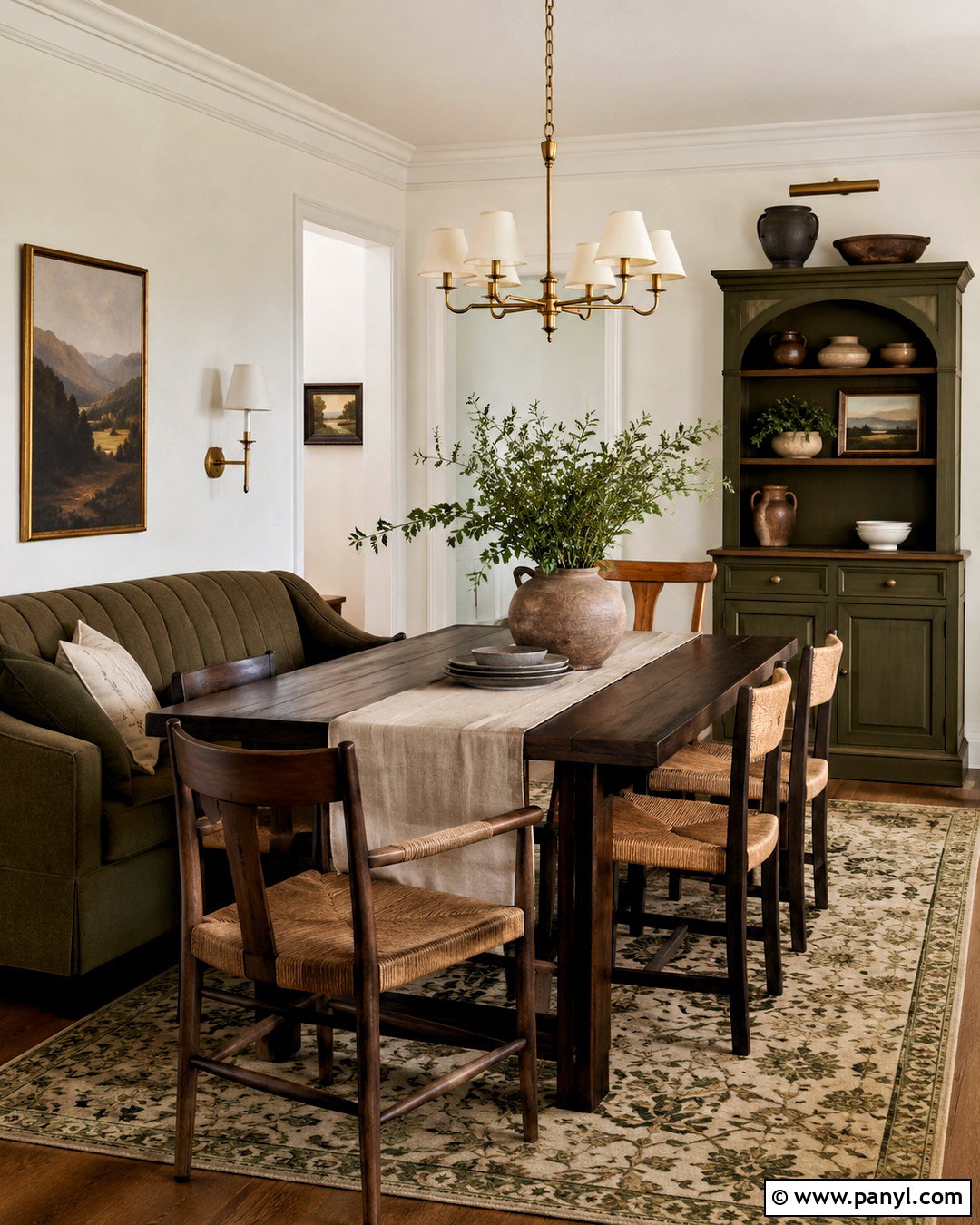
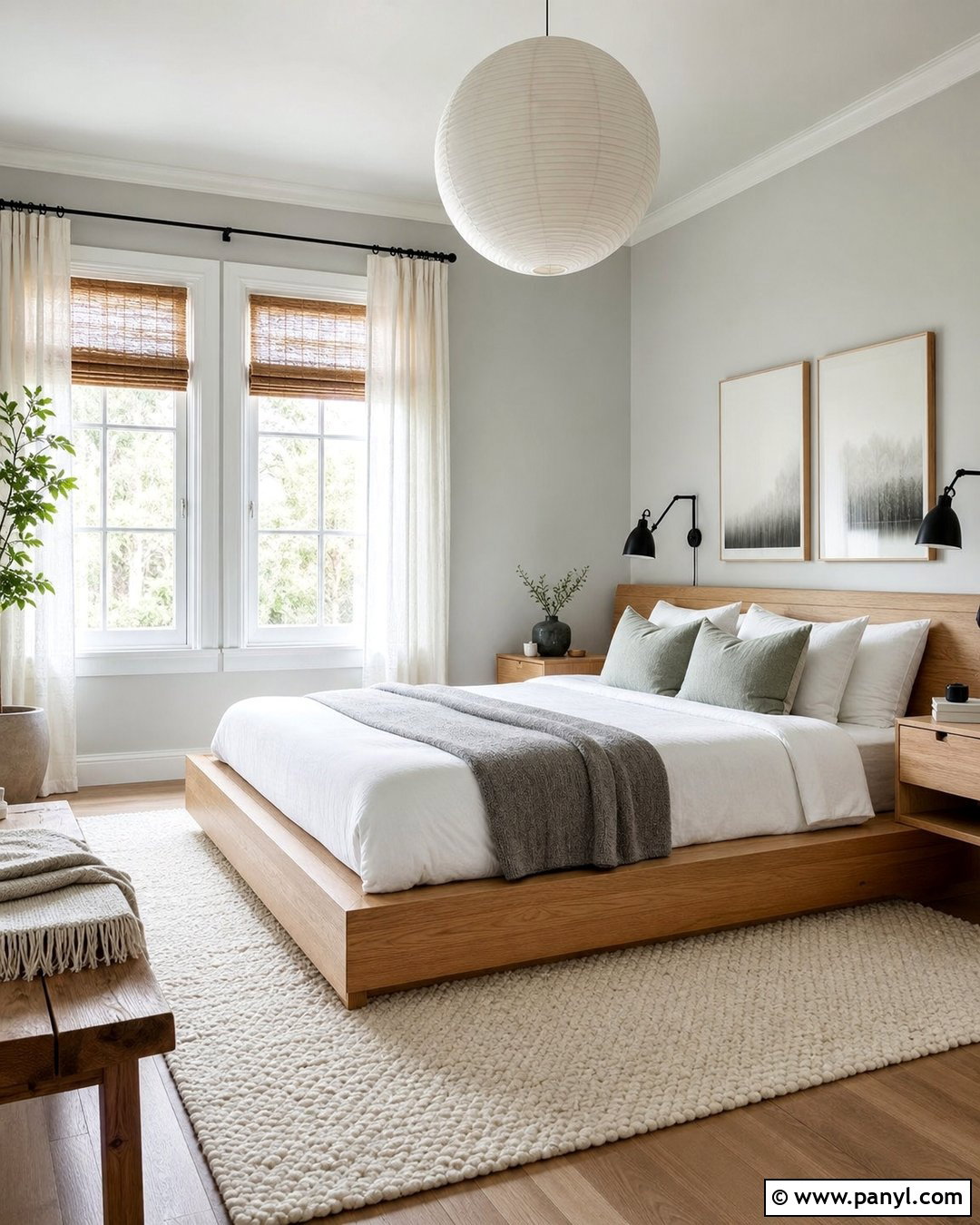
Olive green furniture gives taupe walls a rich, nature-inspired partner. For a cozy sitting room, place an olive velvet sofa against pale taupe walls and balance it with two cream boucle chairs. Choose a walnut coffee table, an ivory wool rug, and dark bronze floor lamps to build depth around the central seating group. Linen curtains in a warm natural tone will maintain the softness of the palette. Add botanical artwork sparingly, mixing it with simple ceramics so the theme does not become too literal. A few pillows in tobacco brown and faded gold can connect the green upholstery to the taupe background. This finished scheme feels collected and comfortable, combining earthy color with enough pale material to keep the room open and bright.
11. Taupe Walls With Blush Pink Accents
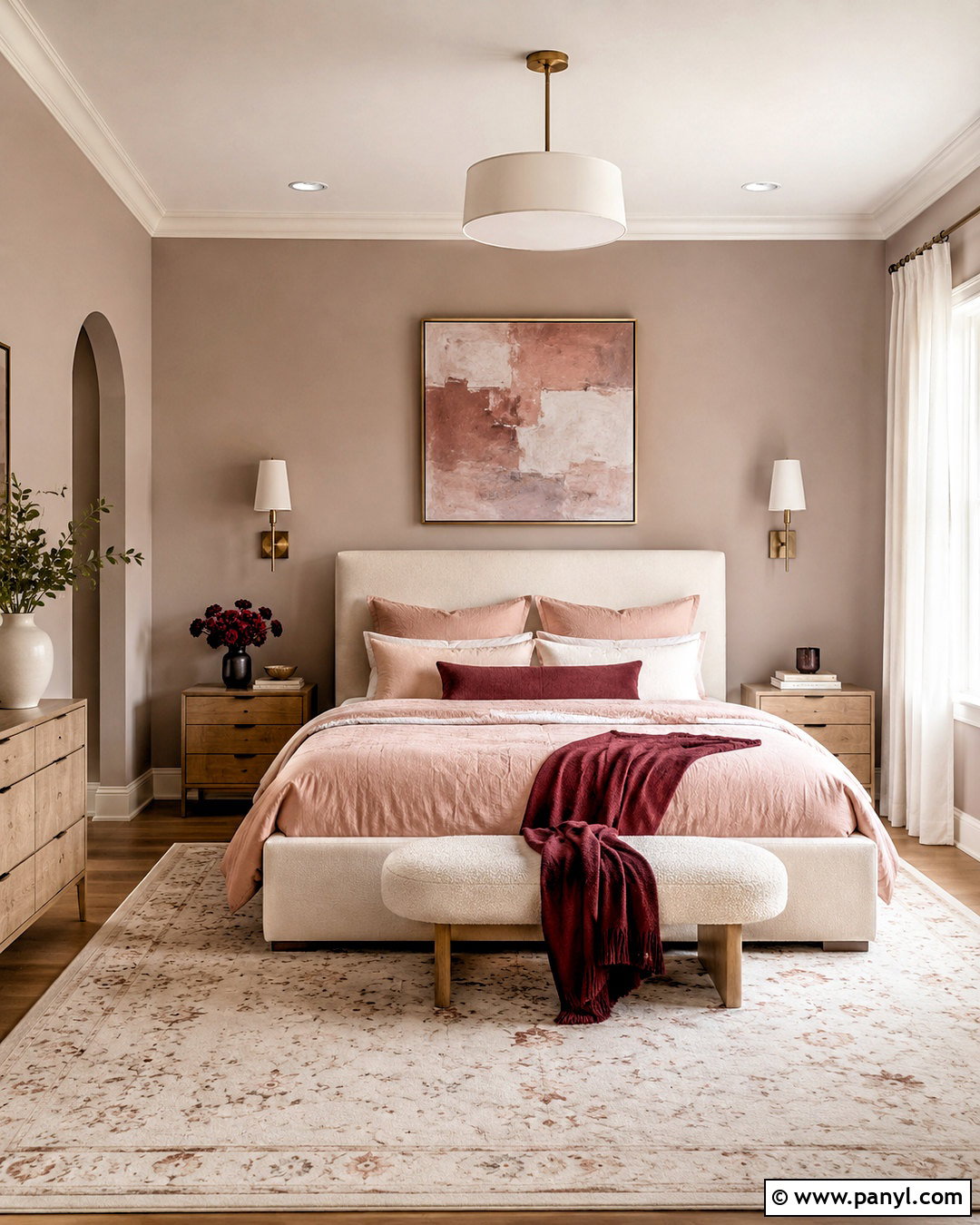
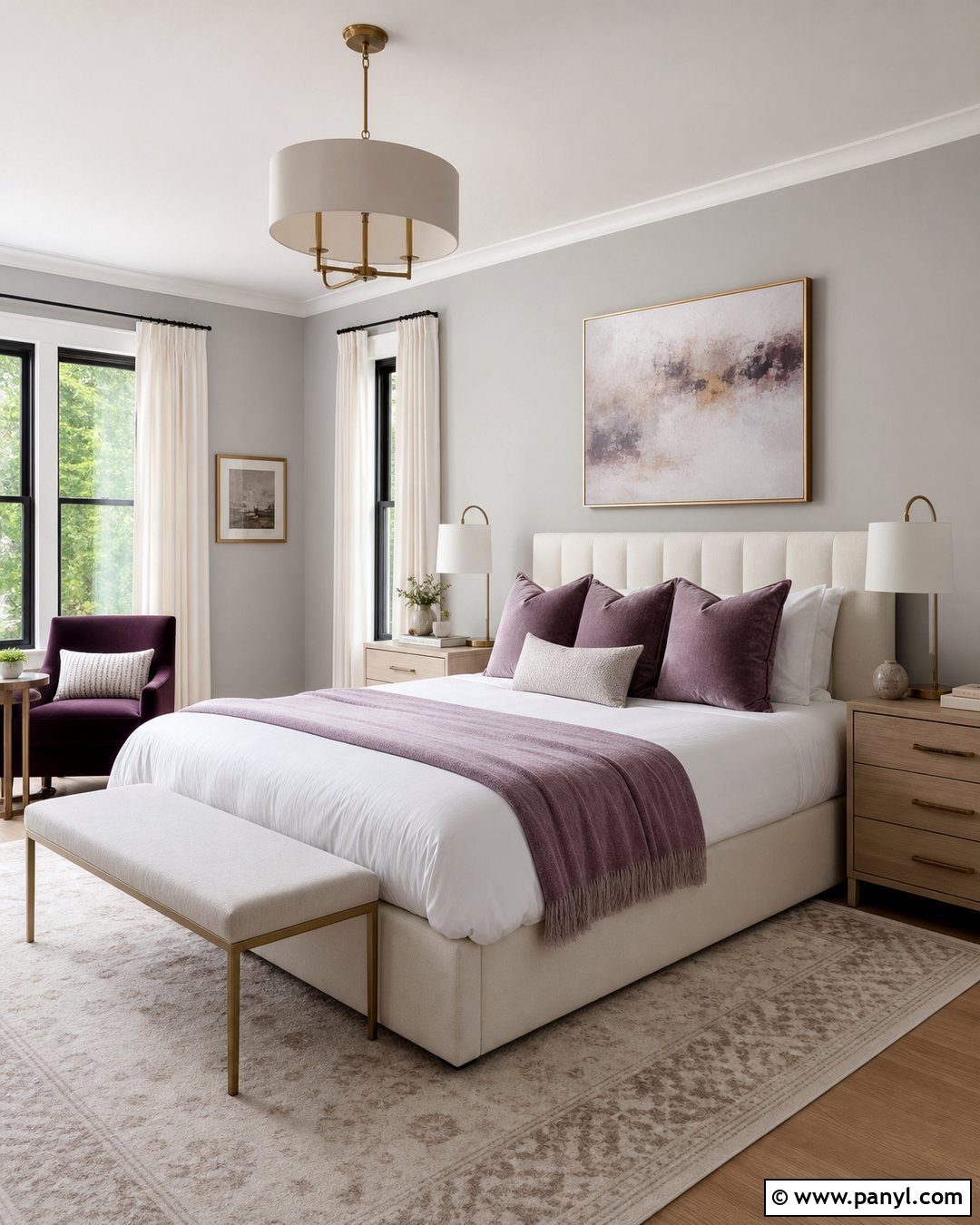
Blush pink can soften taupe walls and bring gentle warmth to a bedroom or dressing room. Select a taupe with subtle pink or violet undertones, then add an ivory upholstered bed with blush linen bedding. Use medium oak nightstands to ground the pale palette and hang aged brass sconces above them. A cream rug with a faint rose pattern creates continuity beneath the bed. Keep the window treatment simple with warm white curtains, and introduce a deeper burgundy accent through one lumbar pillow or small bench. Abstract artwork in plaster white, dusty rose, and brown finishes the main wall. The result feels grown-up rather than overly sweet because the pink is balanced by natural wood, restrained shapes, and the sophisticated taupe background.
12. Taupe Walls With Dusty Blue Decor
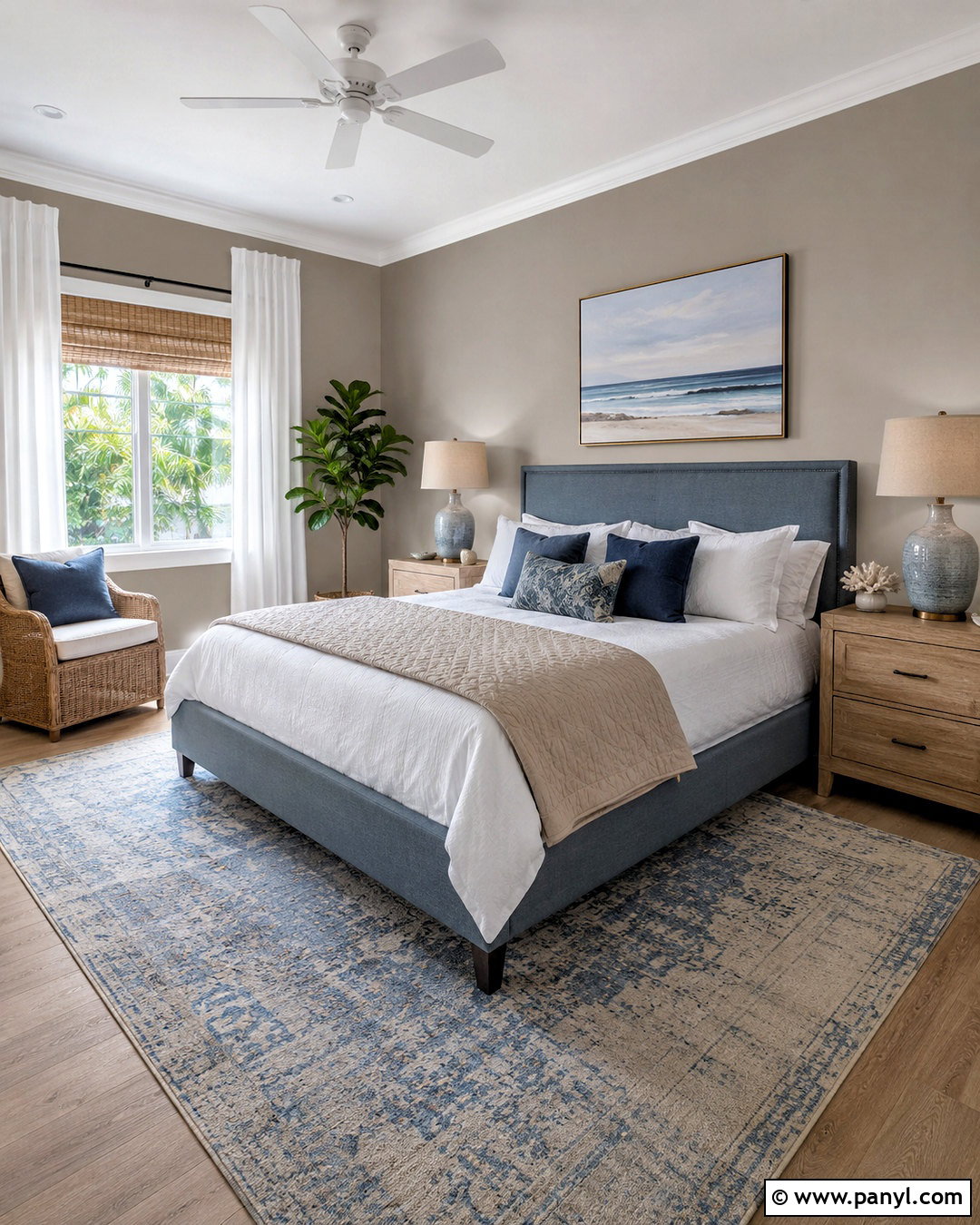
A dusty blue and taupe combination gives a bedroom the calm feeling of a cloudy coastal landscape without obvious nautical decorations. Paint the walls a soft taupe with cool gray undertones. Choose an upholstered bed in pale blue-gray, white bedding, and a taupe quilt folded across the foot. Weathered oak nightstands, ceramic lamps, and a faded blue-and-cream rug add comfortable texture. Hang simple seascape or abstract artwork in light wood frames, keeping the imagery subtle. White curtains and woven shades filter sunlight and prevent the room from becoming chilly. Add one dark navy pillow for contrast. Every element should appear softly muted, allowing the blue furnishings and taupe walls to blend into a peaceful, unified space suited to everyday relaxation.
13. Taupe Walls With Burgundy Accents
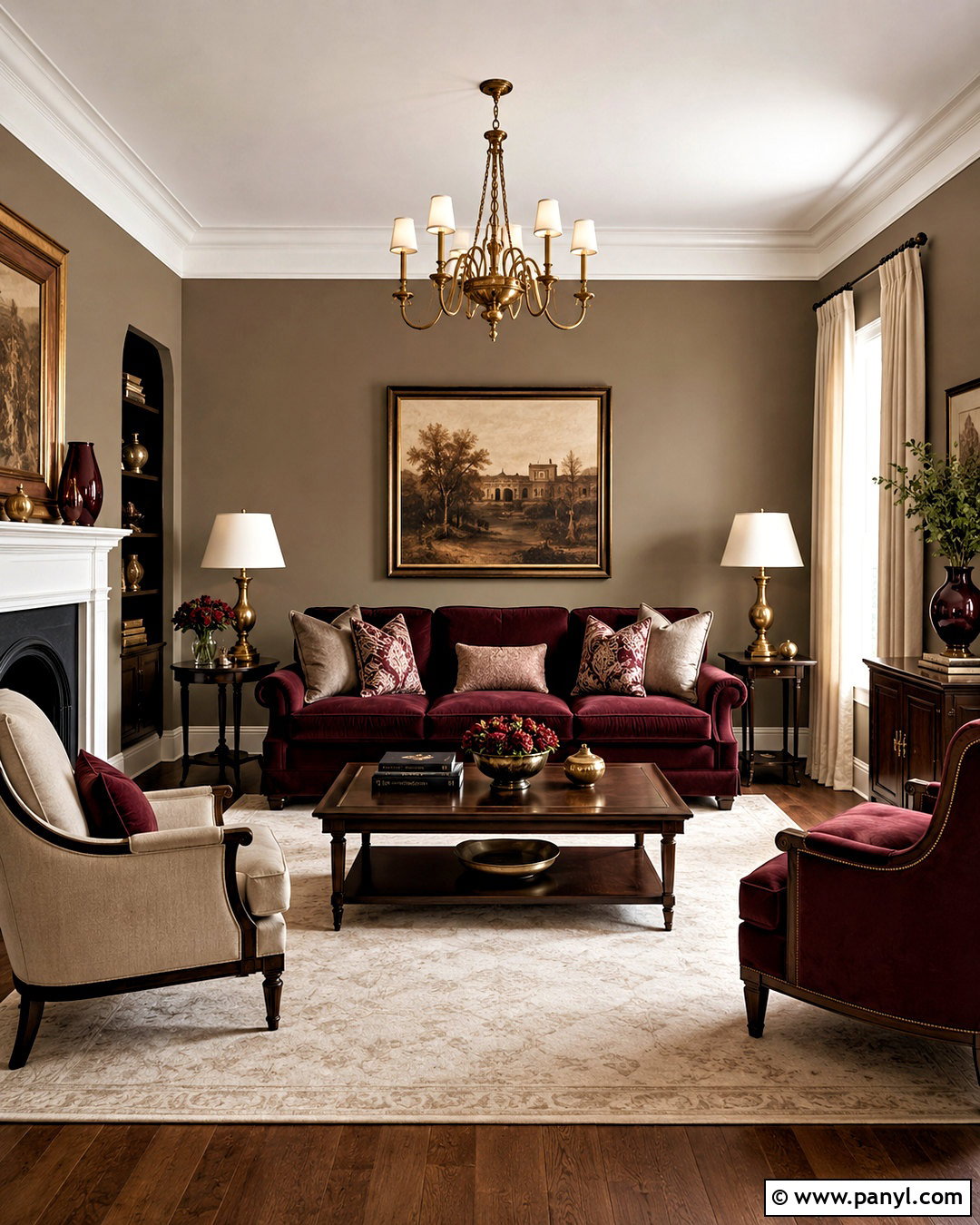
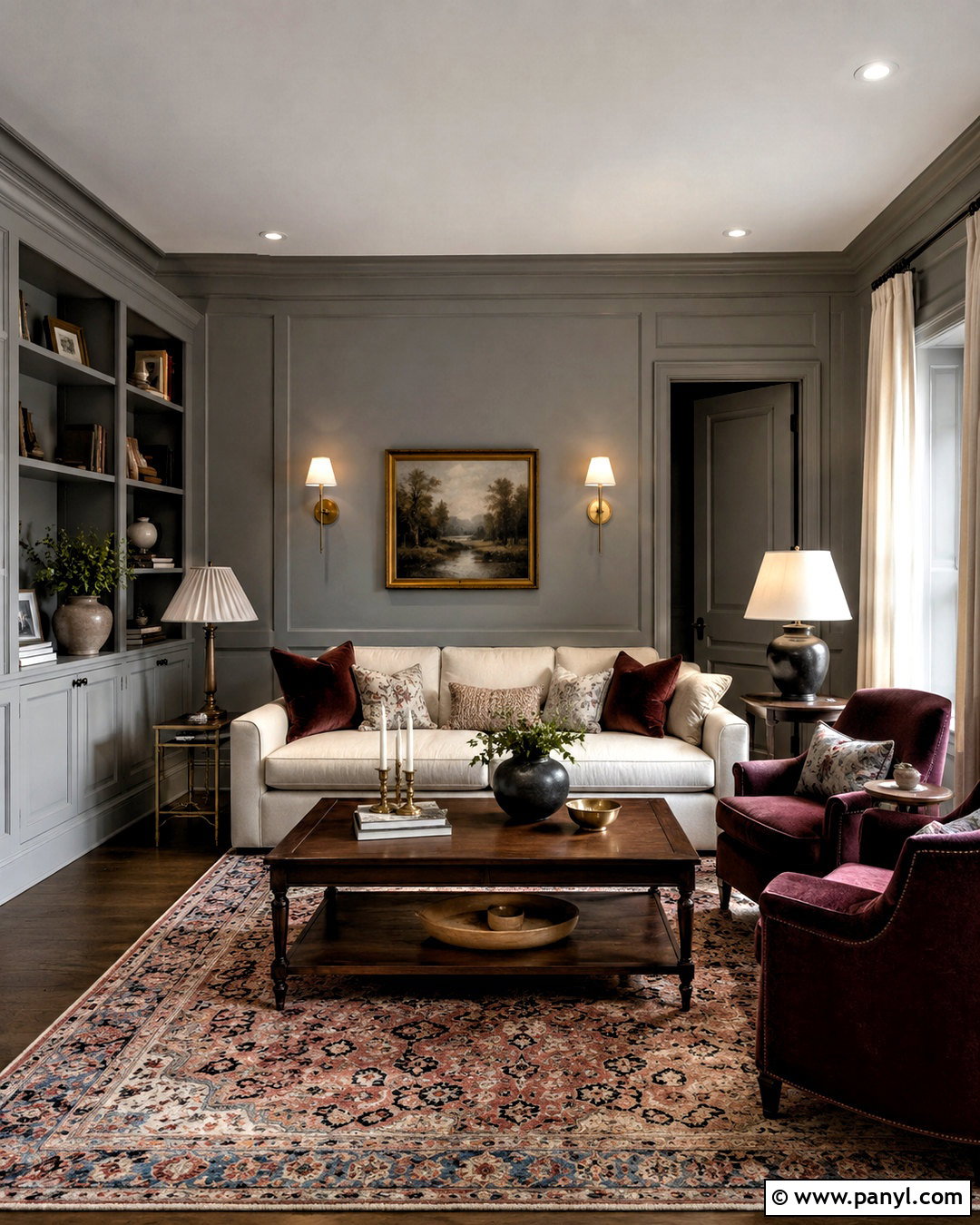
Rich burgundy turns a neutral taupe room into a layered and memorable interior. Use medium taupe walls as the restrained background for a burgundy velvet sofa or two deep red armchairs. Add an ivory rug, dark walnut tables, and cream curtains to balance the saturated upholstery. Antique brass lighting works especially well because its warmth connects the red and brown tones. Choose artwork containing burgundy, faded pink, black, and parchment rather than trying to match the furniture exactly. A few taupe and cream pillows will soften the sofa and prevent the accent color from overwhelming the arrangement. This complete palette suits a formal living room, library, or spacious bedroom. It feels luxurious, but the quiet wall color keeps the final result approachable.
14. Taupe Walls With Chocolate Brown
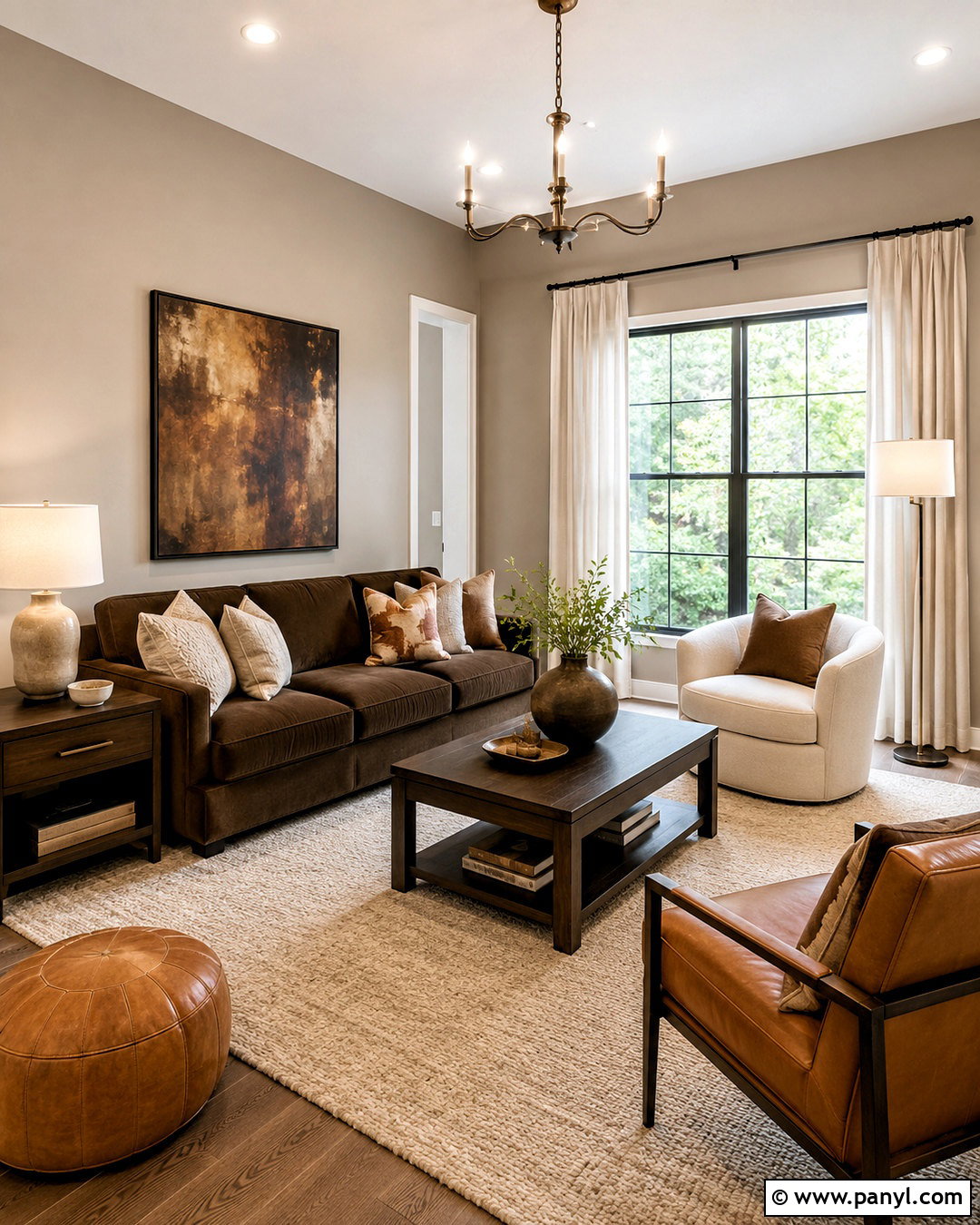
Layering taupe walls with chocolate brown creates a warm tonal room that feels comfortable rather than colorless. Begin with a light mushroom taupe on the walls, then introduce a deep brown sofa, dark wood side tables, and caramel leather accents. Use a cream bouclé chair and a large oatmeal rug to break up the darker surfaces. Window treatments in natural linen will continue the warm progression from pale to deep brown. Add sculptural ceramic pieces, textured pillows, and artwork containing ivory, umber, and black. Brushed bronze fixtures provide understated shine. Because the palette is closely related, vary the materials as much as possible. Smooth leather, woven wool, velvet, wood grain, and linen will give the finished living room richness and visible dimension.
15. Taupe Walls With Natural Oak
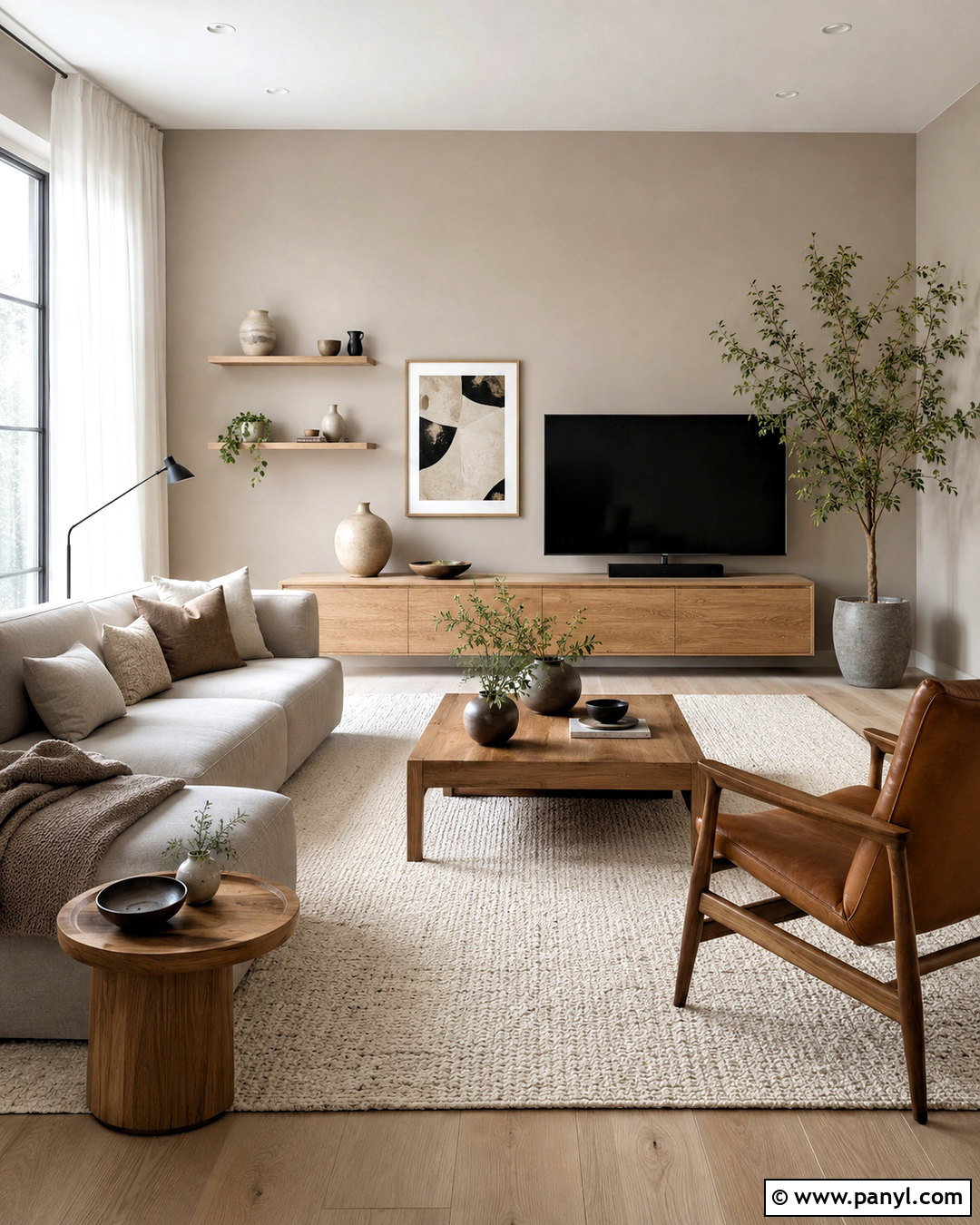
Sunlight moving across natural oak can reveal the warmer side of taupe walls. Create a bright Scandinavian-inspired living room with pale taupe paint, a light oak media cabinet, and matching open shelving. Use a soft gray-beige sofa, a woven cream rug, and one curved lounge chair in tan leather. Keep the windows minimally dressed with white linen curtains. Black accents should appear only in slim lighting fixtures or picture frames, allowing the wood to remain the dominant detail. Add a large abstract print, simple stoneware, and one tall indoor tree for organic movement. Warm white trim will complete the gentle palette. This room feels uncluttered but not empty because every surface contributes a slightly different neutral tone, grain, or tactile finish.
16. Taupe Walls With Walnut Built-Ins
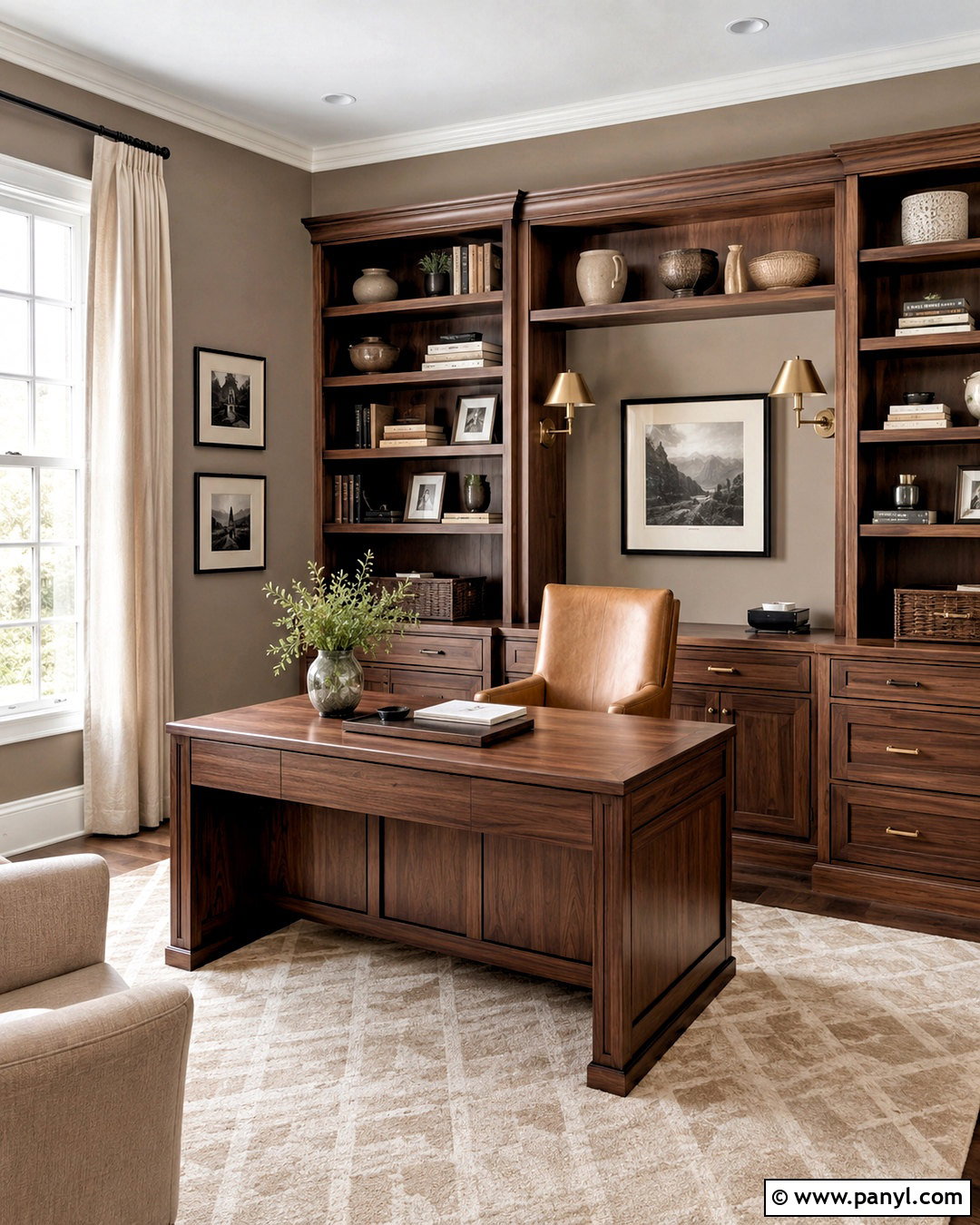
Walnut built-ins stand out beautifully against taupe walls while making a home office feel tailored and permanent. Paint the main walls in a medium stone taupe, then install a walnut bookcase and storage system behind the desk. Choose a desk with matching wood and a comfortable chair upholstered in camel or charcoal fabric. A cream geometric rug brightens the floor, while aged brass sconces illuminate the shelving. Style the built-ins with books, framed photographs, pottery, and closed storage boxes, leaving some open space around each grouping. Add full-length linen curtains and one substantial piece of artwork opposite the shelves. This complete workspace blends function with visual warmth. The taupe background bridges the lighter textiles and richly grained cabinetry without competing for attention.
17. Taupe Walls With a Stone Fireplace
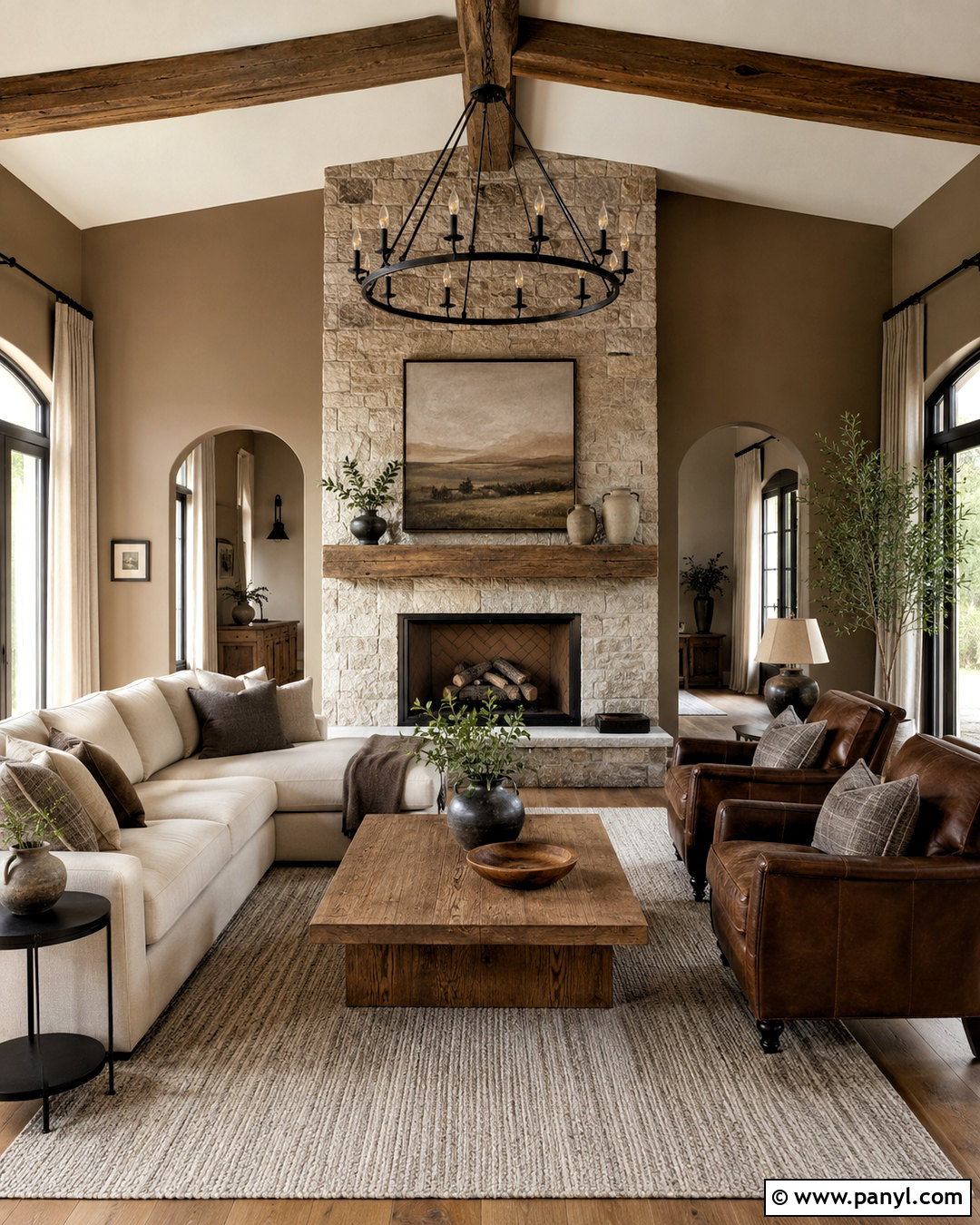
A stone fireplace and taupe walls can form a cohesive living room when their undertones are carefully coordinated. Choose warm taupe paint that repeats one of the quieter colors found within the stone. Arrange a cream sectional and two brown leather chairs around a solid oak coffee table, creating a clear conversation area facing the fireplace. Use a large wool rug in ivory and gray to soften the hard materials. Keep the mantel simple with one oversized artwork, a ceramic vessel, and a small branch arrangement. Black fireplace doors and iron lighting add crisp definition. Linen curtains maintain a comfortable, natural atmosphere. The finished room feels rustic yet refined because the stone, paint, upholstery, and wood share related earthy tones without matching too closely.
18. Taupe Walls With a Marble Fireplace
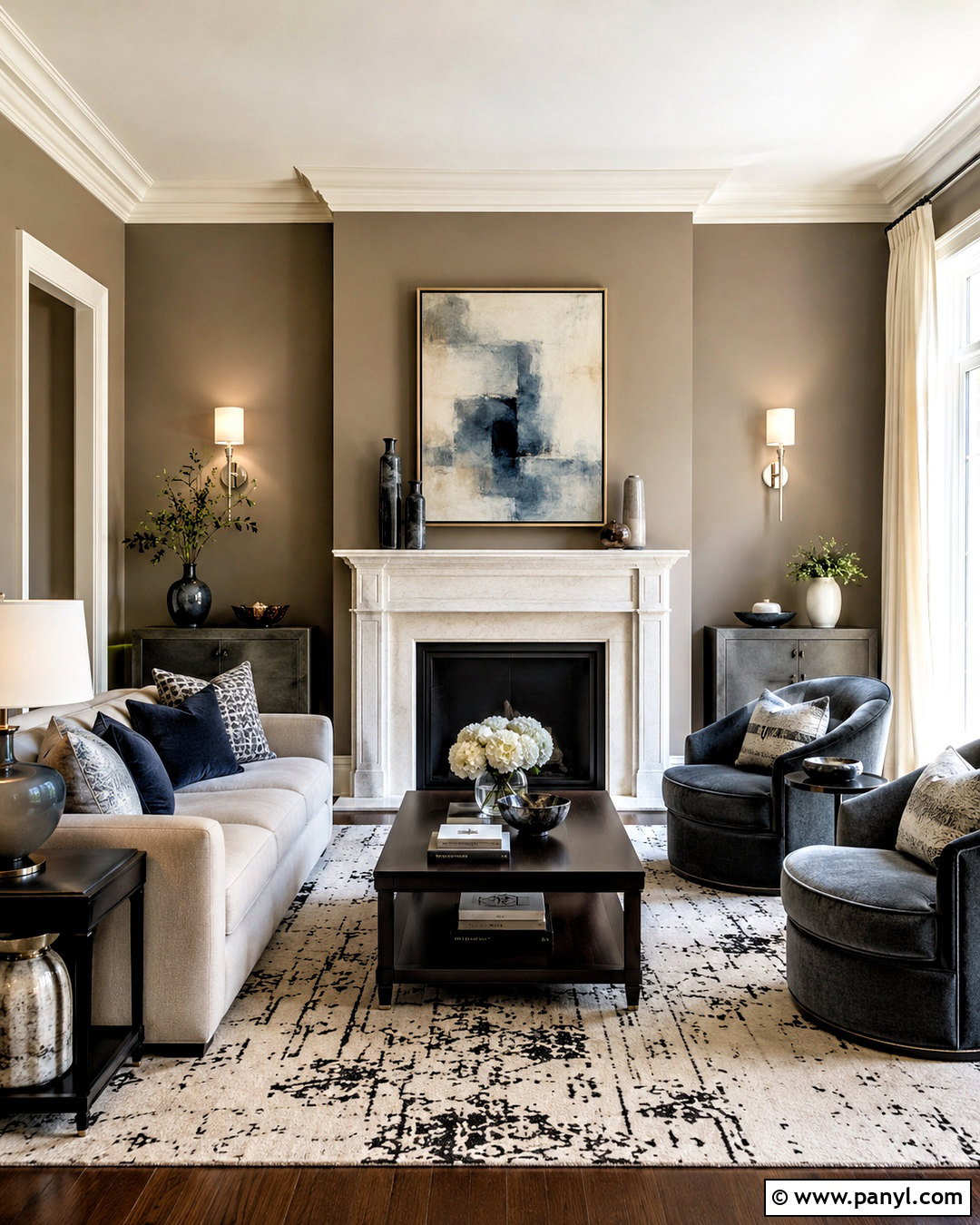
For a more polished approach, combine taupe walls with a white marble fireplace and tailored furniture. Select a balanced taupe that contains enough gray to complement the marble veining. Place a light beige sofa opposite two curved charcoal chairs, using a black and cream rug to define the seating area. A glass or dark wood coffee table keeps the center visually light. Repeat the marble’s elegance through polished nickel sconces, a structured chandelier, and simple ivory curtains. Above the mantel, display one large abstract painting that introduces muted blue or green. Avoid filling every surface with accessories. The strong fireplace, refined wall color, and symmetrical layout already provide interest. This scheme creates a sophisticated living room suited to both classic and contemporary architecture.
19. Taupe Walls With Picture Frame Molding
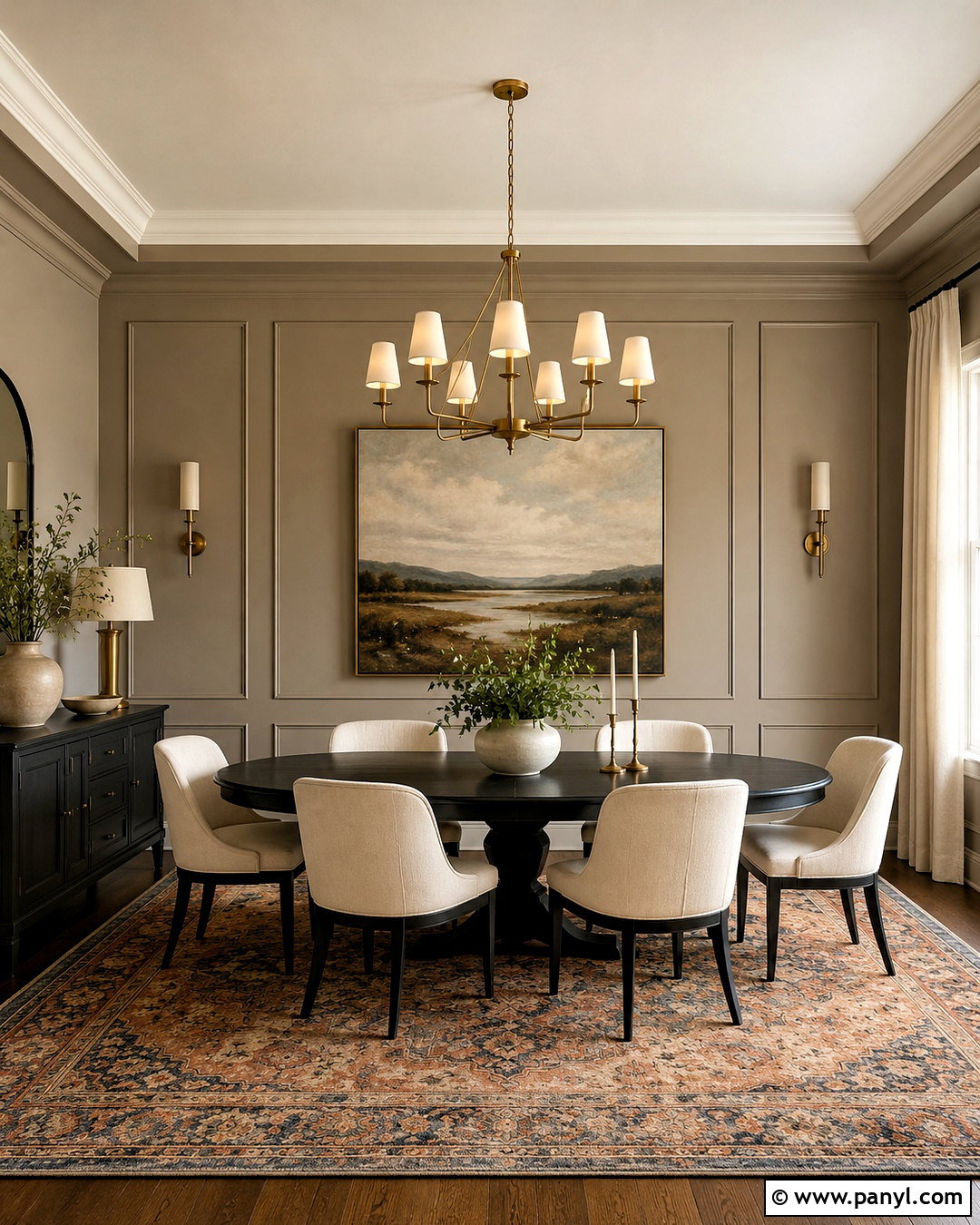
Picture-frame molding adds shadow and structure to taupe walls, giving a plain room an architectural upgrade. Install evenly spaced rectangular molding, then paint the walls and applied trim in the same medium taupe finish. This unified treatment creates subtle depth without introducing another color. In a dining room, pair it with a black oval table, upholstered cream chairs, and a warm brass chandelier. A faded vintage rug can bring in muted rust, gray-blue, and beige. Hang one large painting inside the central molding panel and leave the surrounding panels mostly clear. Cream curtains will soften the strong lines. The finished room feels elegant and intentional, yet the furniture remains simple enough for everyday use. Satin trim can provide a slight contrast against matte walls.
20. Taupe Color-Drenched Living Room
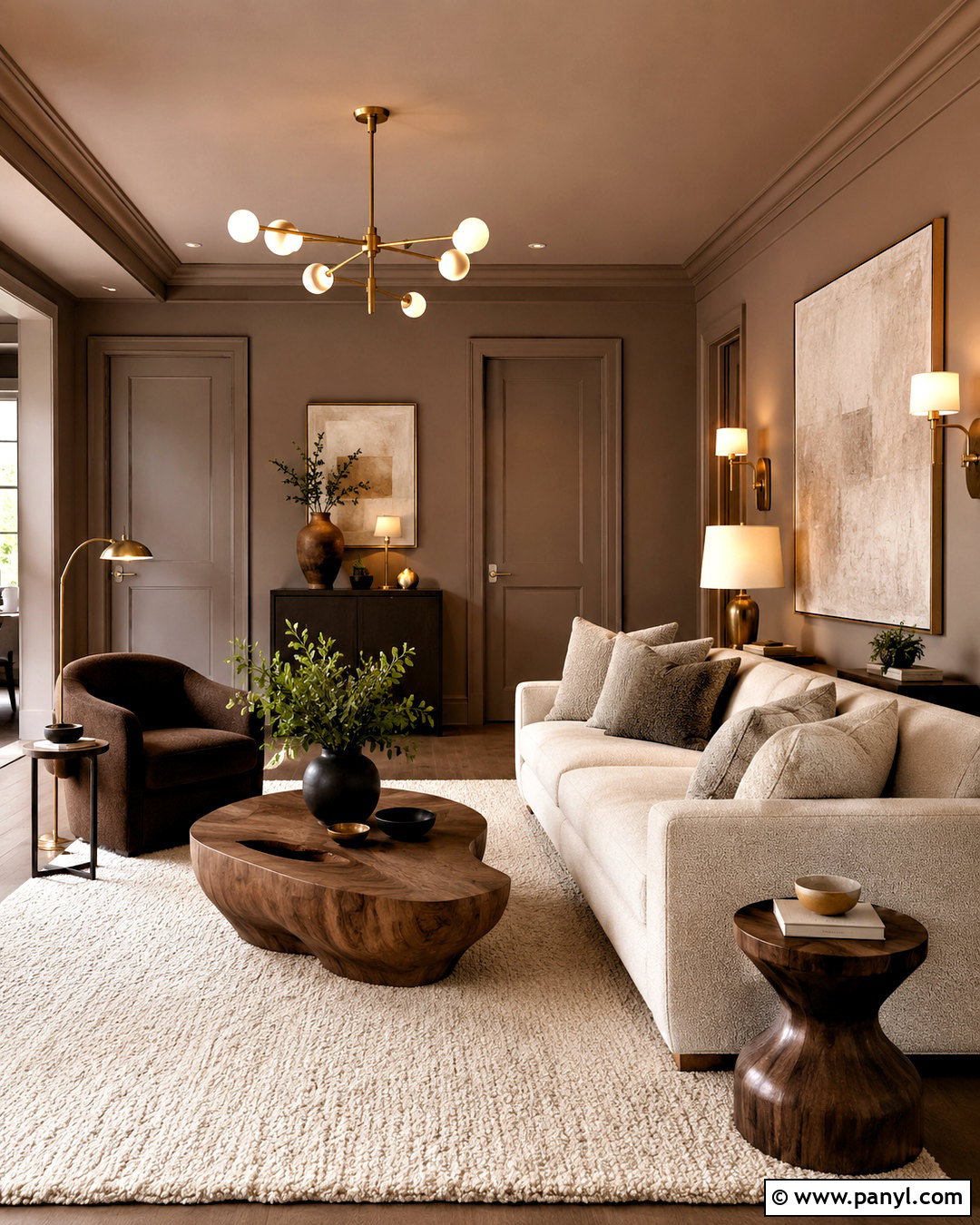
Color drenching wraps the walls, trim, doors, and ceiling in one taupe family, creating an immersive but surprisingly restful room. Choose a soft midtone taupe rather than an extremely dark shade, especially if natural light is limited. Use matte paint on walls and ceiling, then apply a durable satin finish to baseboards and doors. Furnish the space with a cream sofa, dark brown lounge chair, pale wool rug, and sculptural wood tables. Add lighting at several heights, including a ceiling fixture, wall sconces, and table lamps, so the enveloping color never feels dull. Artwork with generous areas of ivory will provide visual relief. The completed living room appears seamless and spacious because contrasting white outlines do not interrupt the architecture.
21. Two-Tone Taupe Walls
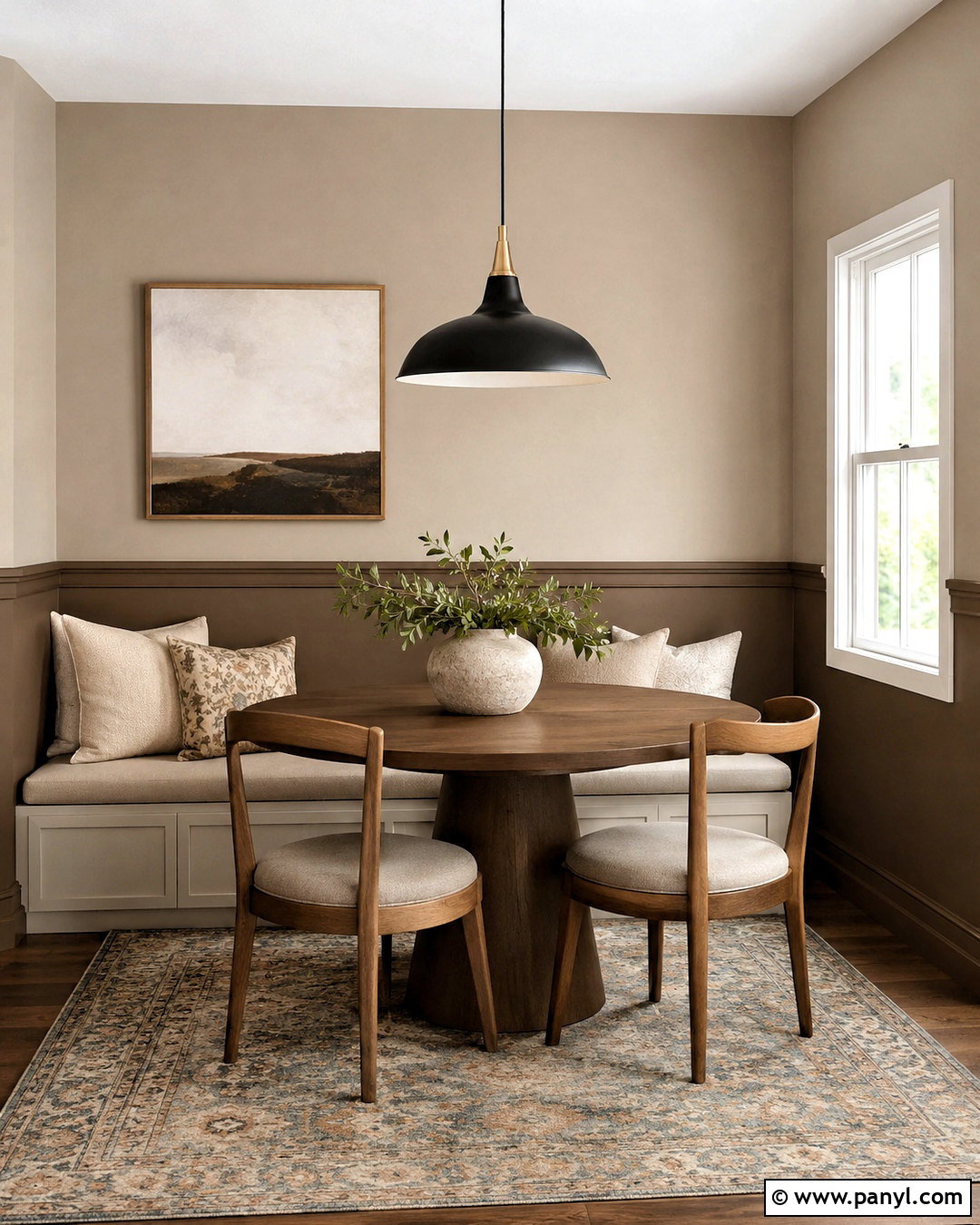
Two-tone taupe walls provide depth while keeping the palette calm and connected. Paint the lower half in a deeper brown taupe and the upper half in a pale mushroom shade, dividing them with a simple chair rail. Use this treatment in a dining nook with a round pedestal table, curved oak chairs, and a built-in bench upholstered in cream fabric. A small patterned rug can repeat both taupe tones alongside muted blue or olive. Add a black pendant light above the table and linen Roman shades at the windows. Keep artwork simple so the horizontal color division remains the main design feature. This scheme can make tall walls feel more balanced, and the darker lower section provides a practical, grounded finish in an active family space.
22. Taupe Accent Wall Behind the Bed
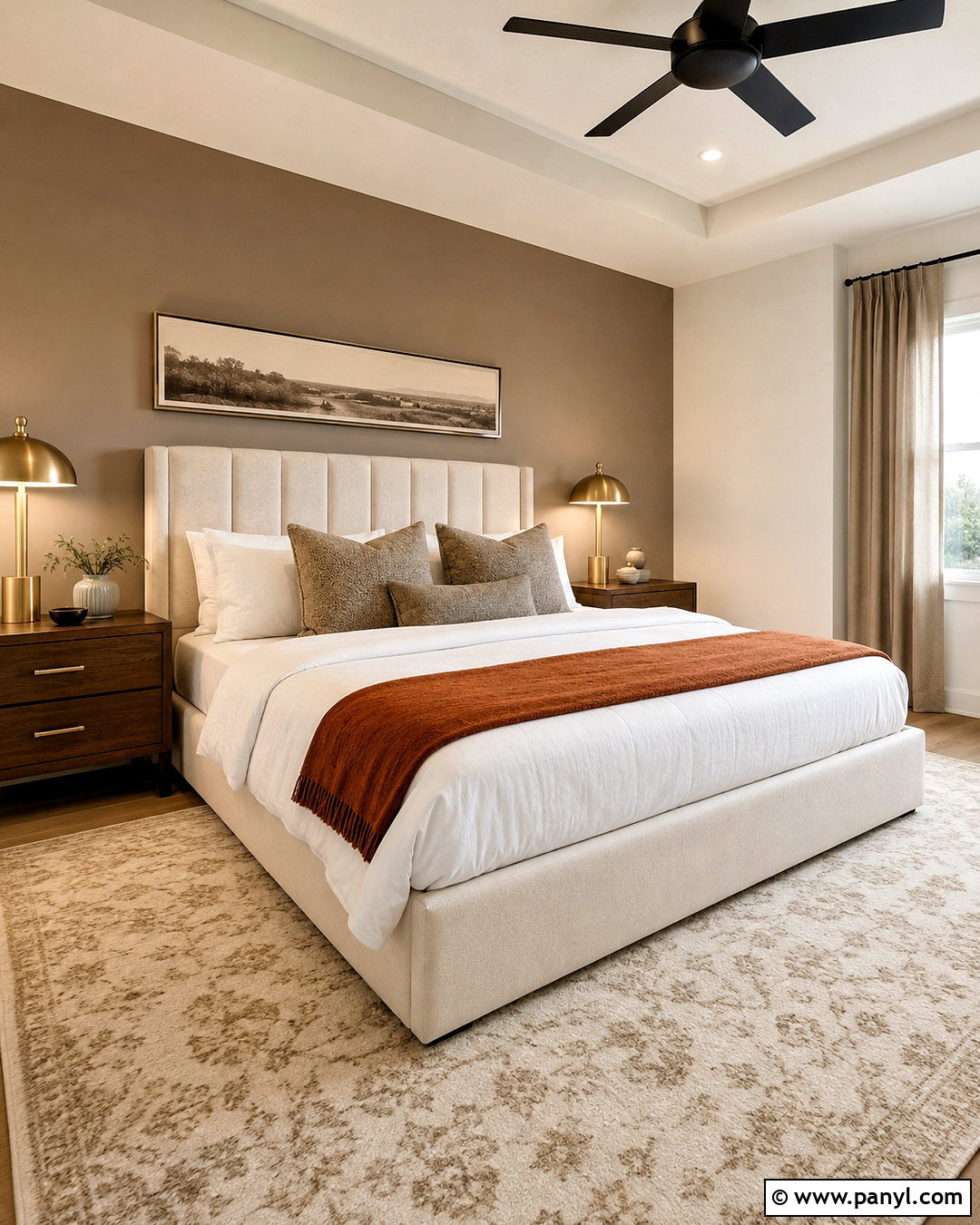
A taupe accent wall can warm a white bedroom without requiring every surface to be repainted. Choose a medium taupe for the wall behind the bed, leaving the remaining walls and ceiling a creamy white. Position a tall ivory headboard against the feature wall, then add white bedding, taupe cushions, and a rust-colored throw. Walnut nightstands and brass lamps provide warmth on both sides of the bed. Ground the arrangement with a large cream rug containing a subtle gray pattern. Hang one long piece of artwork above the headboard or allow the upholstered bed to remain the focal point. This complete bedroom feels balanced because the taupe is repeated through textiles and smaller details rather than appearing as an unrelated block of color.
23. Taupe Entryway Walls With Black Doors
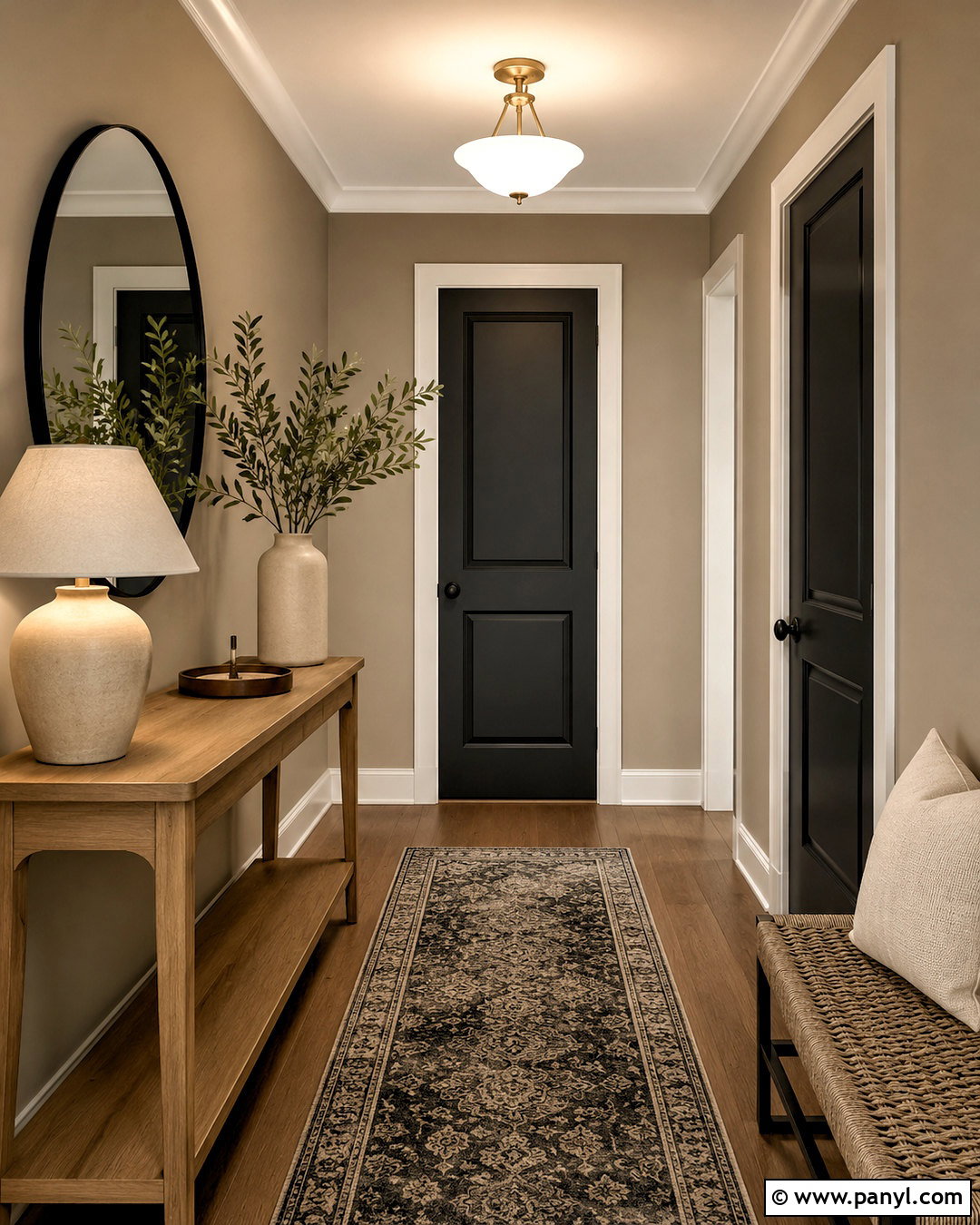
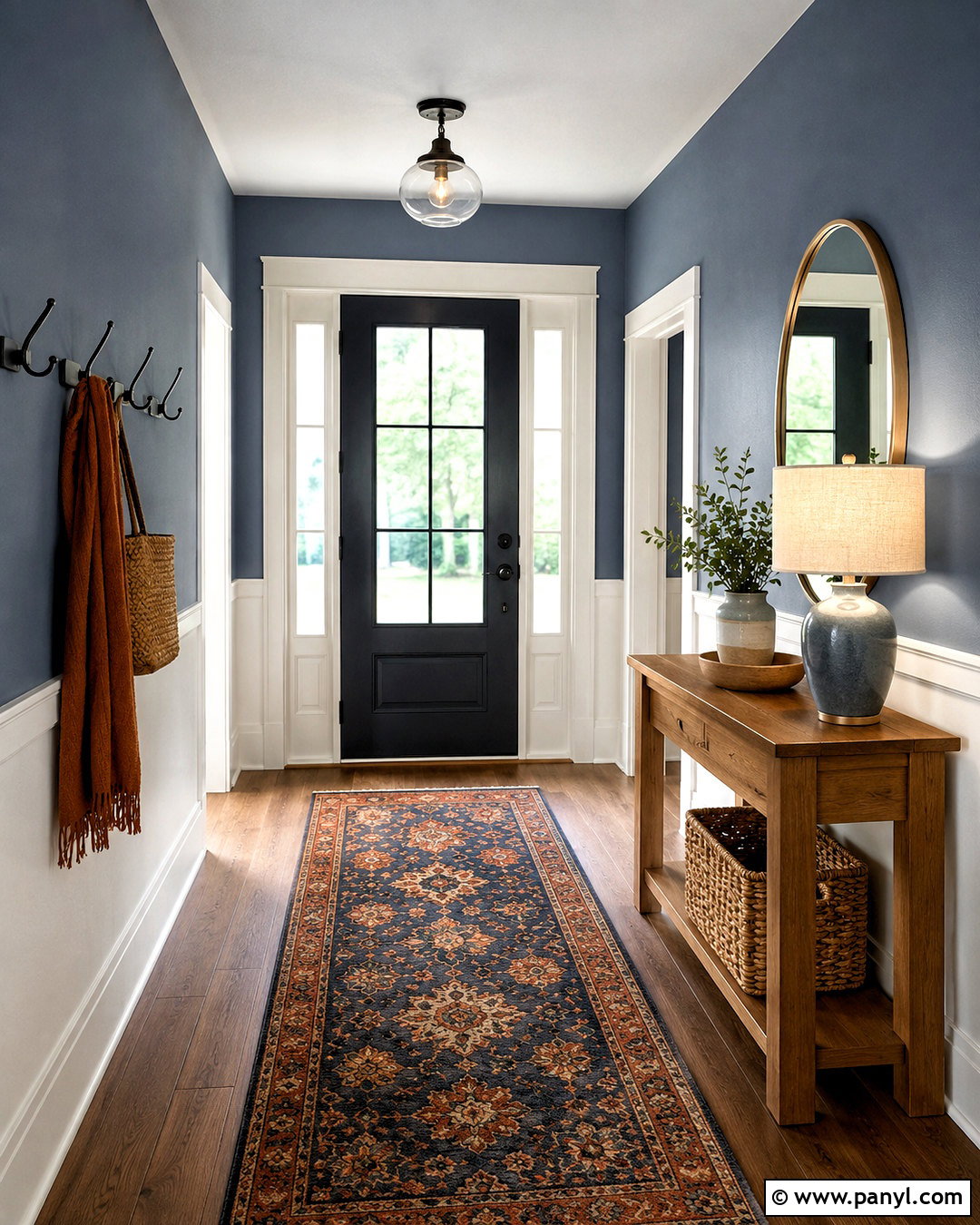
Taupe entryway walls make a practical backdrop for dramatic black interior doors and everyday storage. Use a warm midtone taupe that can handle changing light throughout the day. Paint the front door and nearby closet doors matte black, then keep the baseboards and ceiling warm white. Add a slim oak console, a round black-framed mirror, and a woven bench with hidden shoe storage. A durable runner in taupe, cream, and charcoal will connect the full hallway. Use a brass or opal-glass ceiling fixture to introduce warmth overhead. Finish the console with a ceramic lamp, shallow tray, and leafy branch arrangement. The resulting entry feels organized and distinctive, giving guests a clear introduction to the home’s neutral but high-contrast color palette.
24. Taupe Hallway Walls With Gallery Art
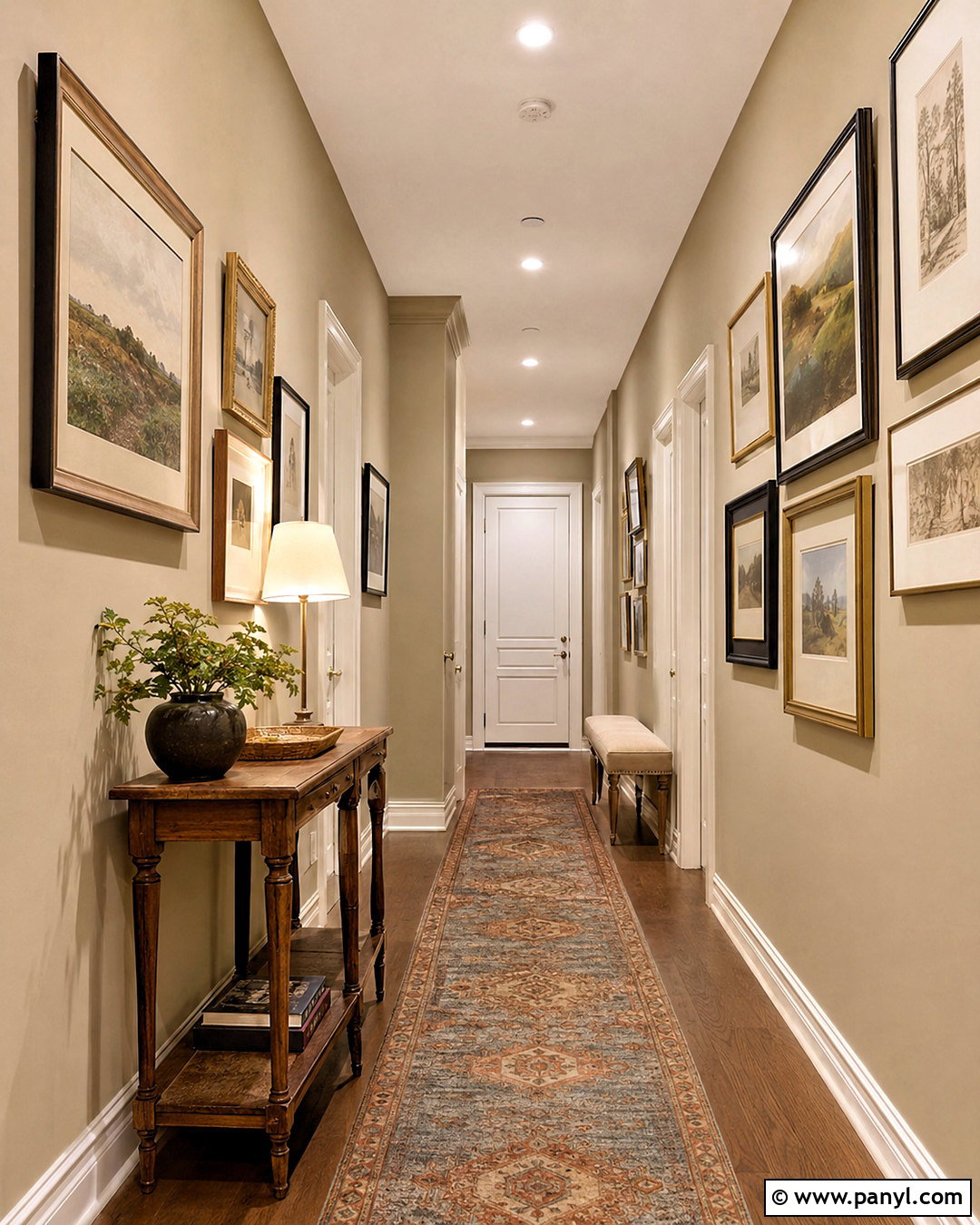
A long hallway becomes more inviting when taupe walls support a carefully arranged gallery. Choose a pale warm taupe to reduce glare and make the passage feel comfortable. Display a coordinated collection of landscapes, sketches, and family photographs in black, oak, and antique brass frames. Maintain consistent spacing so the variety appears intentional. Add a narrow vintage-style runner with faded blue, rust, and cream details, then place a slim console at the widest section of the hall. White trim and doors will keep the area crisp, while simple ceiling lights provide even illumination. If space allows, include a small upholstered bench at the end. The complete design turns a transitional area into a meaningful feature without creating clutter or reducing the walkway’s practical width.
25. Taupe Dining Room Walls With Brass Lighting
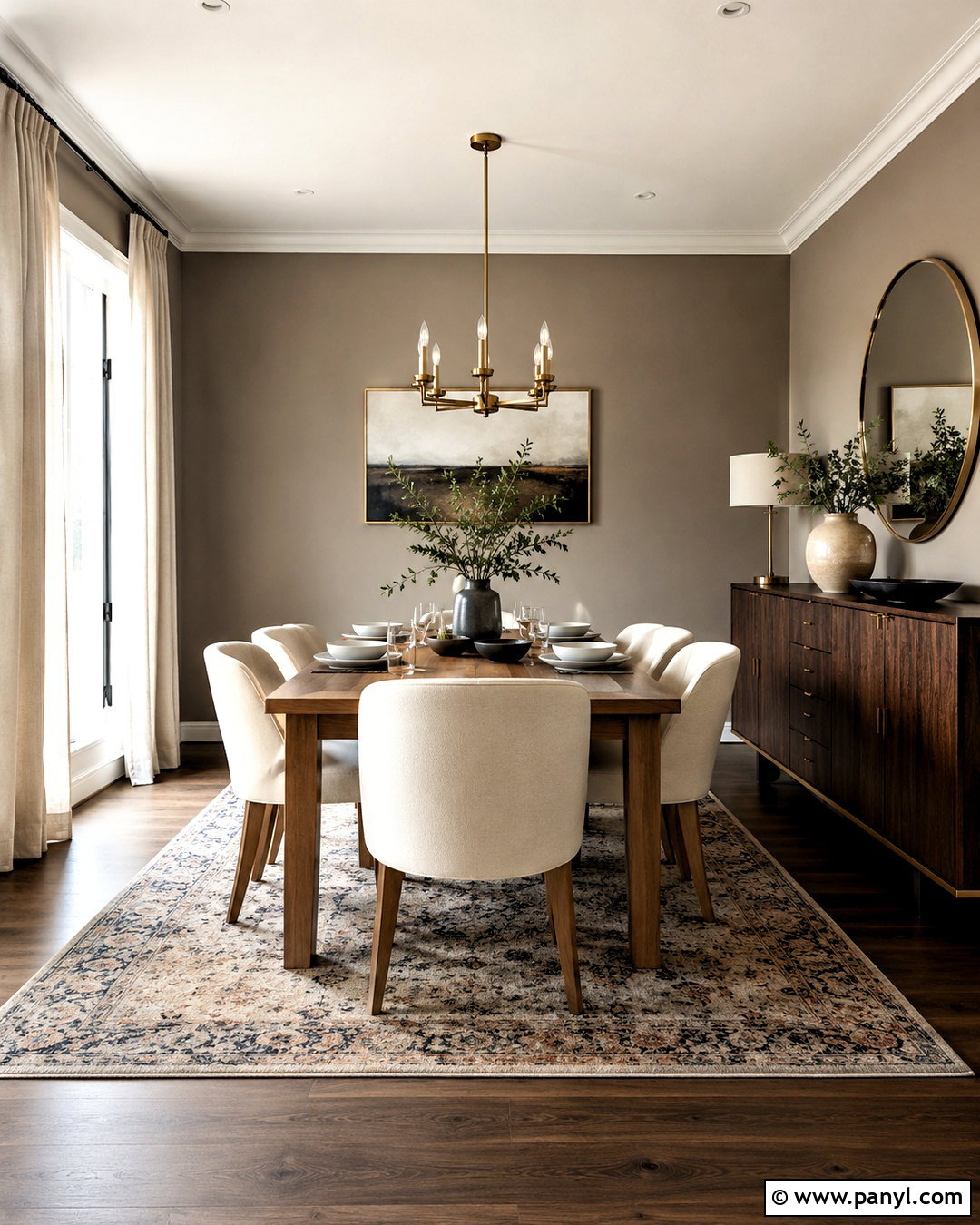
Taupe dining room walls provide a flattering background for warm brass lighting and natural wood furniture. Paint the room in a medium mushroom taupe, then center a long oak table beneath a modern brass chandelier. Surround it with cream upholstered chairs to keep the arrangement light and comfortable. Install linen curtains in a shade slightly paler than the walls, allowing the window treatment to blend rather than contrast. A muted patterned rug should extend beyond every chair when pulled out. Add a dark wood sideboard and a large round mirror to reflect light around the room. Ceramic tableware, greenery, and one understated centerpiece finish the design. The room feels polished for gatherings but remains relaxed enough for breakfast, homework, and other daily activities.
26. Taupe Kitchen Walls With Cream Cabinets
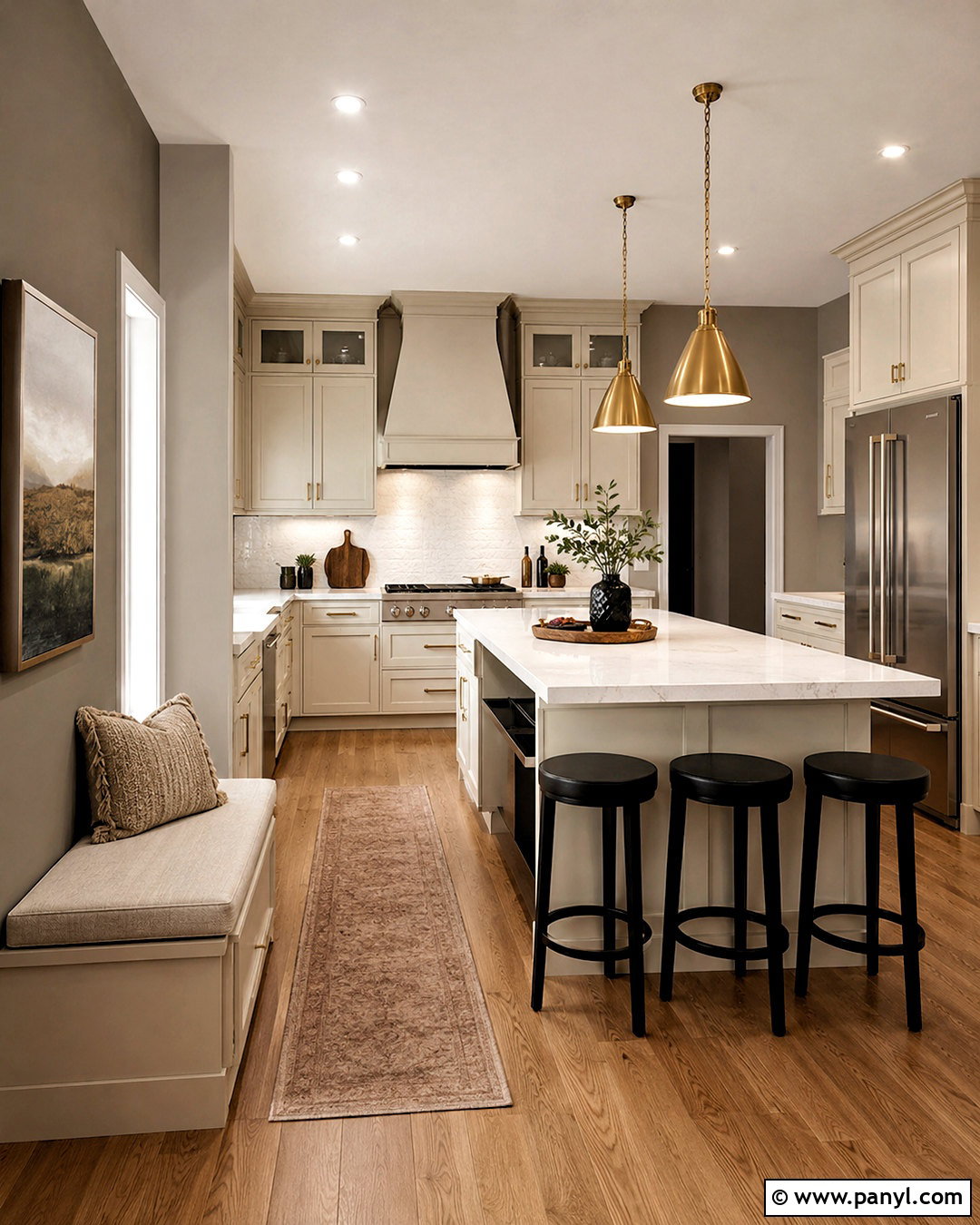
Taupe kitchen walls can add definition around cream cabinets without introducing a strong competing color. Select a light gray-brown taupe that complements the cabinet undertone and continue it through the breakfast area. Use warm white quartz counters, a softly veined stone backsplash, and medium oak flooring to create a seamless neutral foundation. Brushed brass cabinet hardware and pendant lights add warmth, while black counter stools introduce a controlled amount of contrast. Repeat taupe in a washable runner or upholstered breakfast bench. Keep small appliances and countertop decorations limited so the paint, cabinetry, and stone remain visible. This complete kitchen feels warm and bright rather than stark. Large paint samples are especially important here because cabinet finishes and under-cabinet lighting can noticeably alter taupe.
27. Taupe Bathroom Walls With White Marble
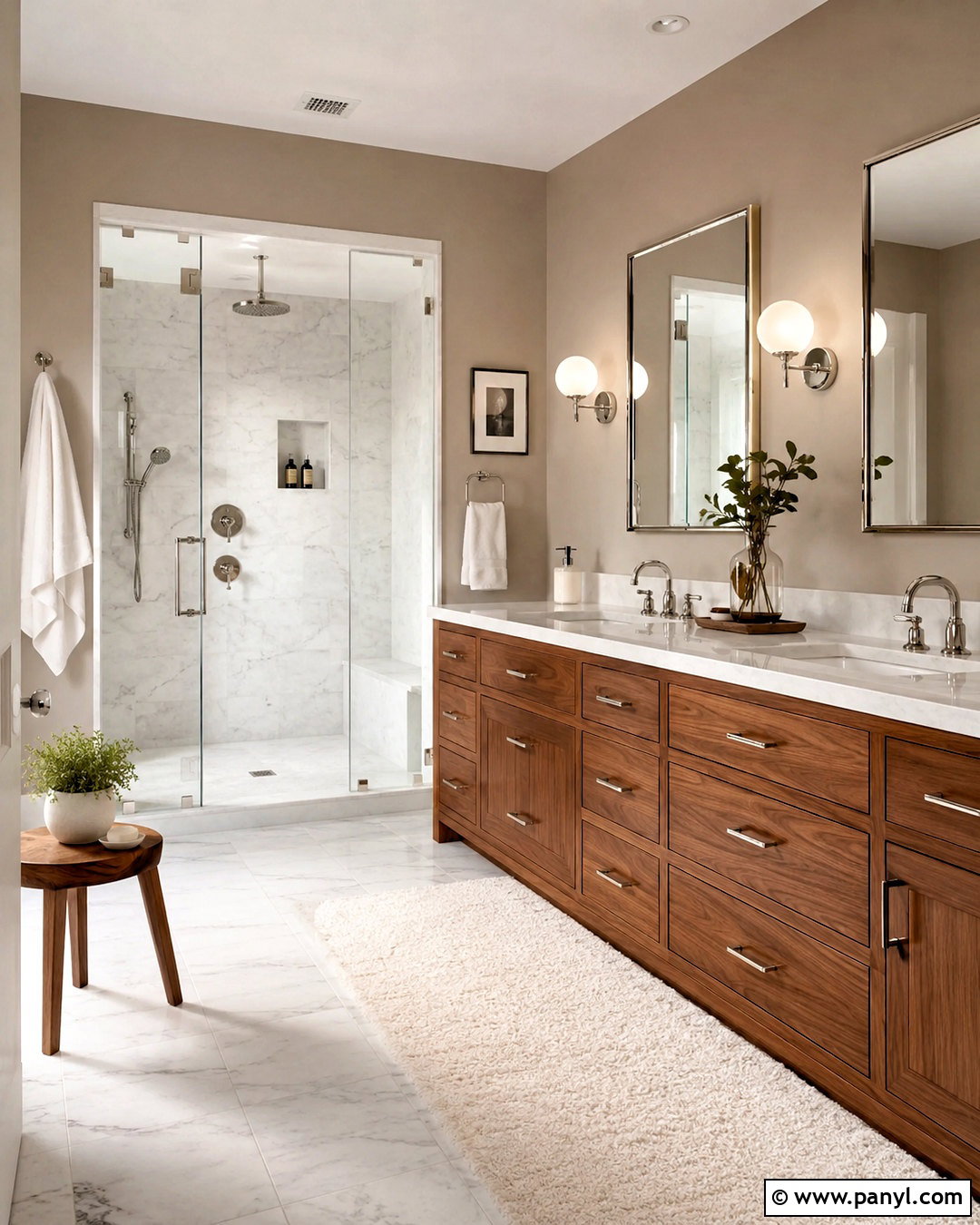
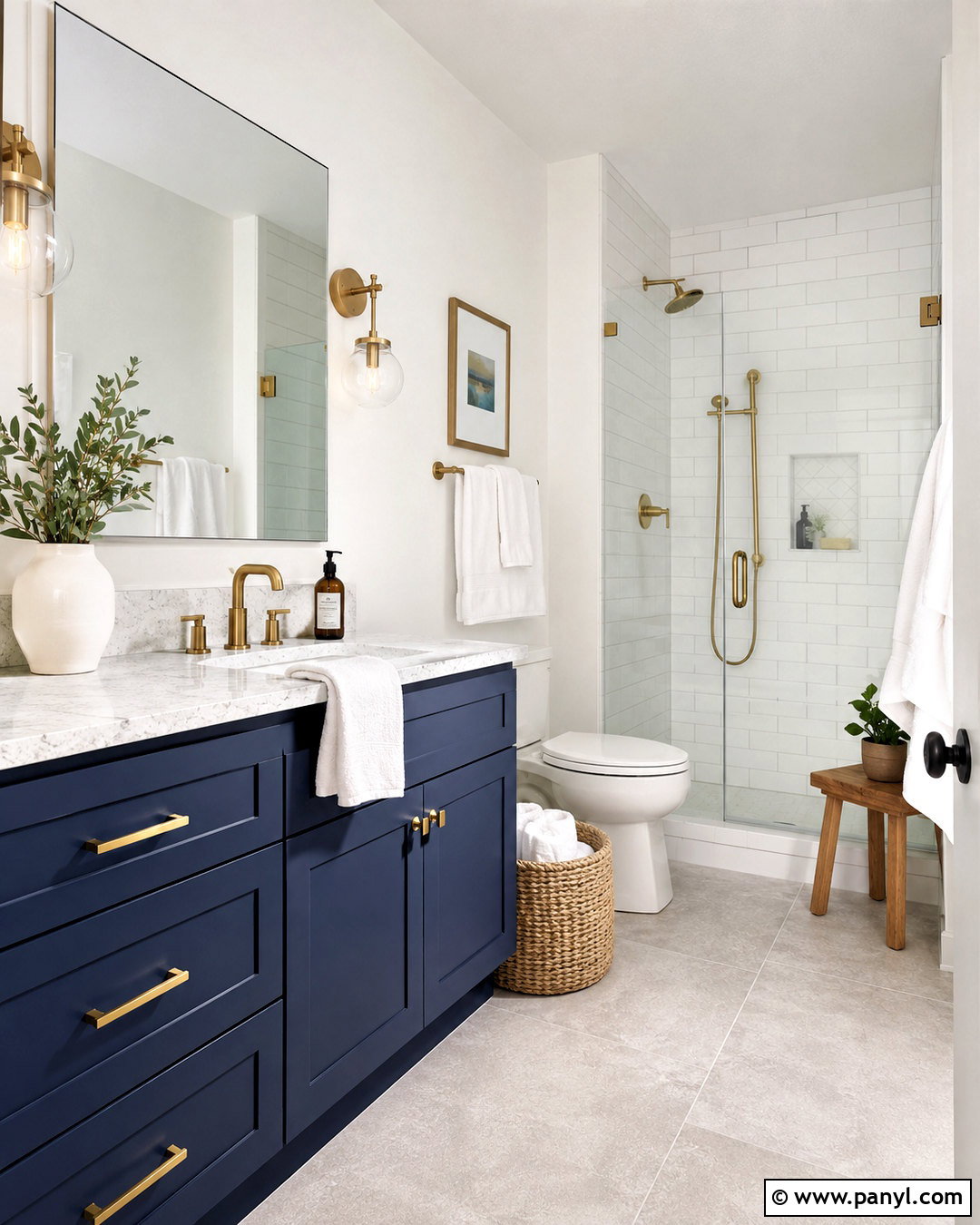
A taupe and white marble bathroom feels clean, calming, and warmer than an all-white design. Paint the upper walls in a moisture-resistant light taupe, then use white marble or marble-look tile around the shower and vanity. Choose a walnut vanity with a white countertop to bring depth into the lower half of the room. Polished nickel faucets, framed mirrors, and simple globe sconces provide a crisp finish. Add white towels, a cream bath mat, and one small wooden stool for softness. If the room has limited natural light, keep the taupe pale and avoid heavy brown undertones. The complete palette connects warm wood with cool stone, producing a balanced bathroom that feels refined without depending on decorative clutter or overly trendy fixtures.
28. Taupe Powder Room With Dark Vanity
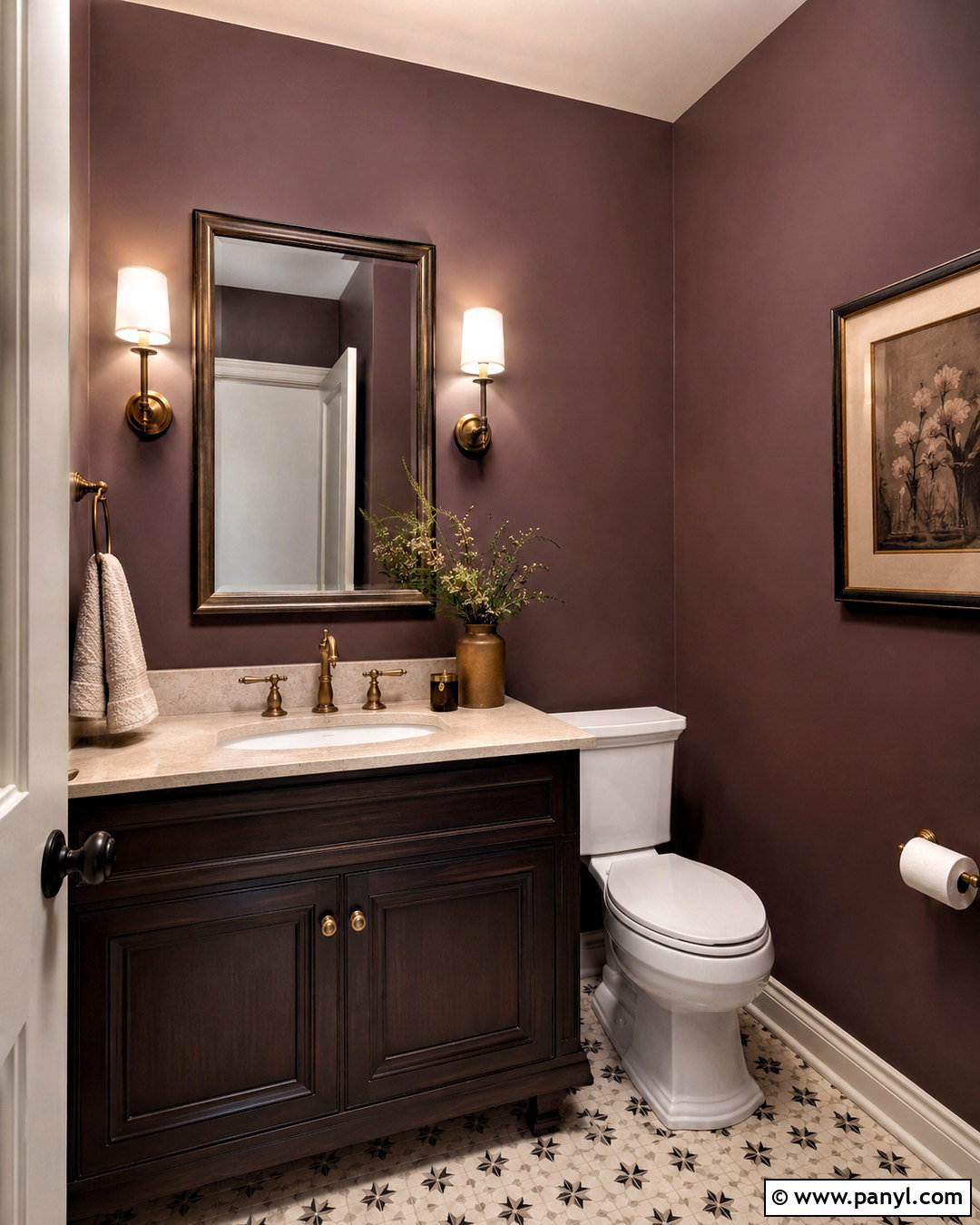
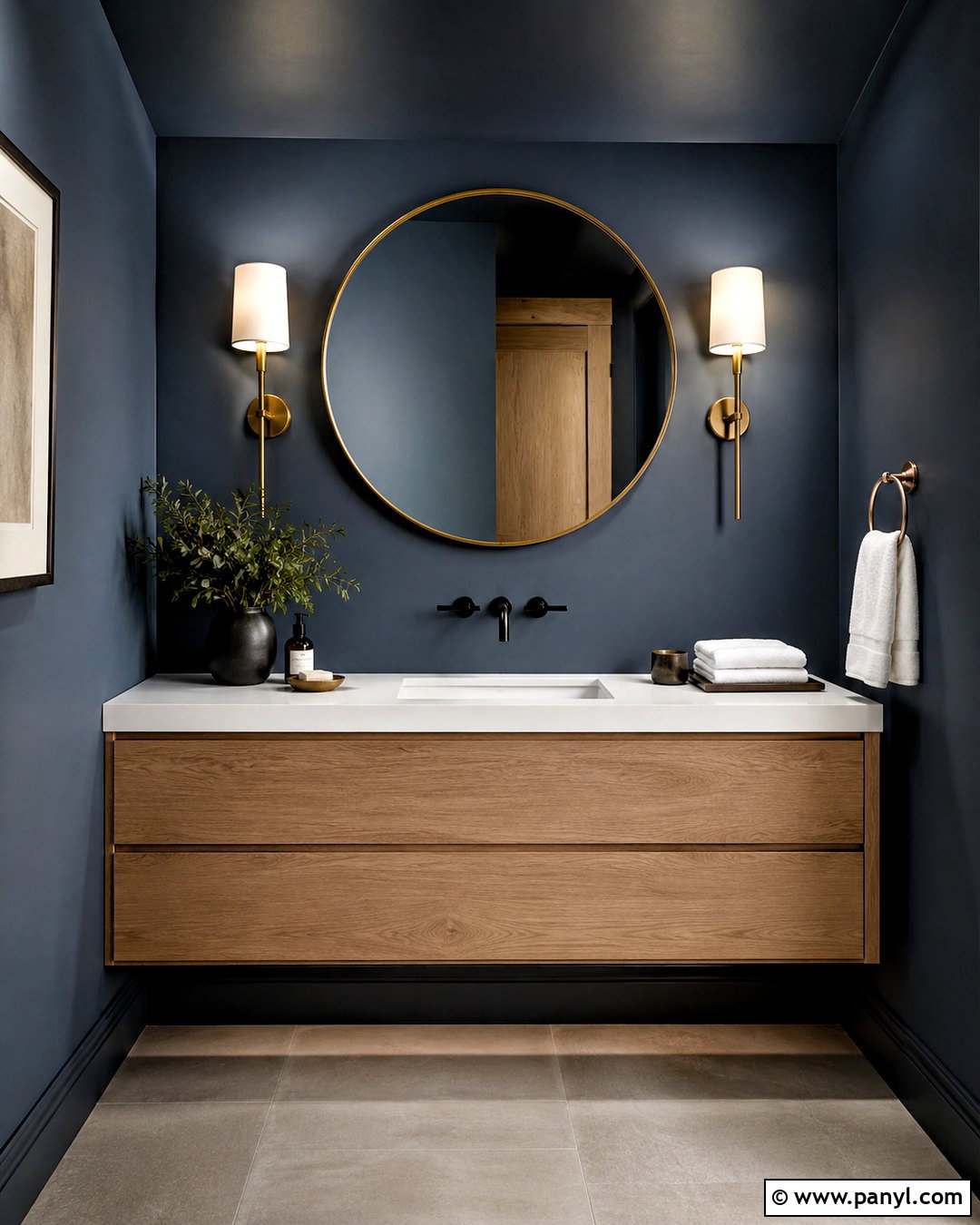
Small powder rooms can support a deeper taupe than large, open spaces. Cover the walls in a rich taupe with brown or plum undertones, then pair it with a charcoal or espresso vanity. A pale stone countertop and white sink will provide needed contrast. Choose an aged brass faucet, framed mirror, and two compact sconces to warm the darker palette. Paint the ceiling a lighter taupe instead of bright white for a more connected appearance. Add a patterned floor tile containing cream, black, and muted brown. One framed artwork and a textured hand towel are enough decoration. This complete design gives the compact room personality while keeping every element functional. Bright, well-placed lighting ensures the saturated wall color looks intentional rather than shadowy.
29. Taupe Home Office Walls With Built-In Shelves
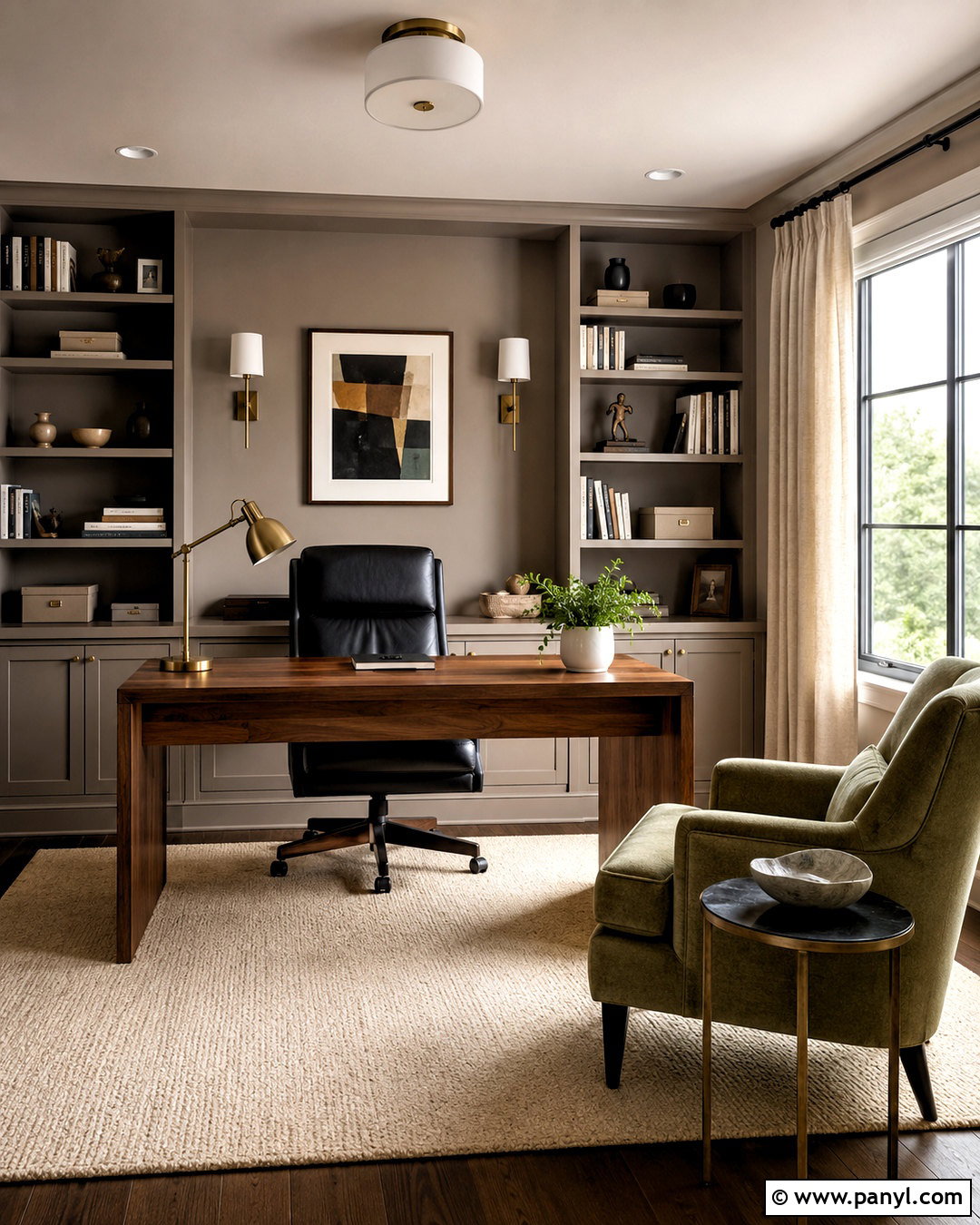
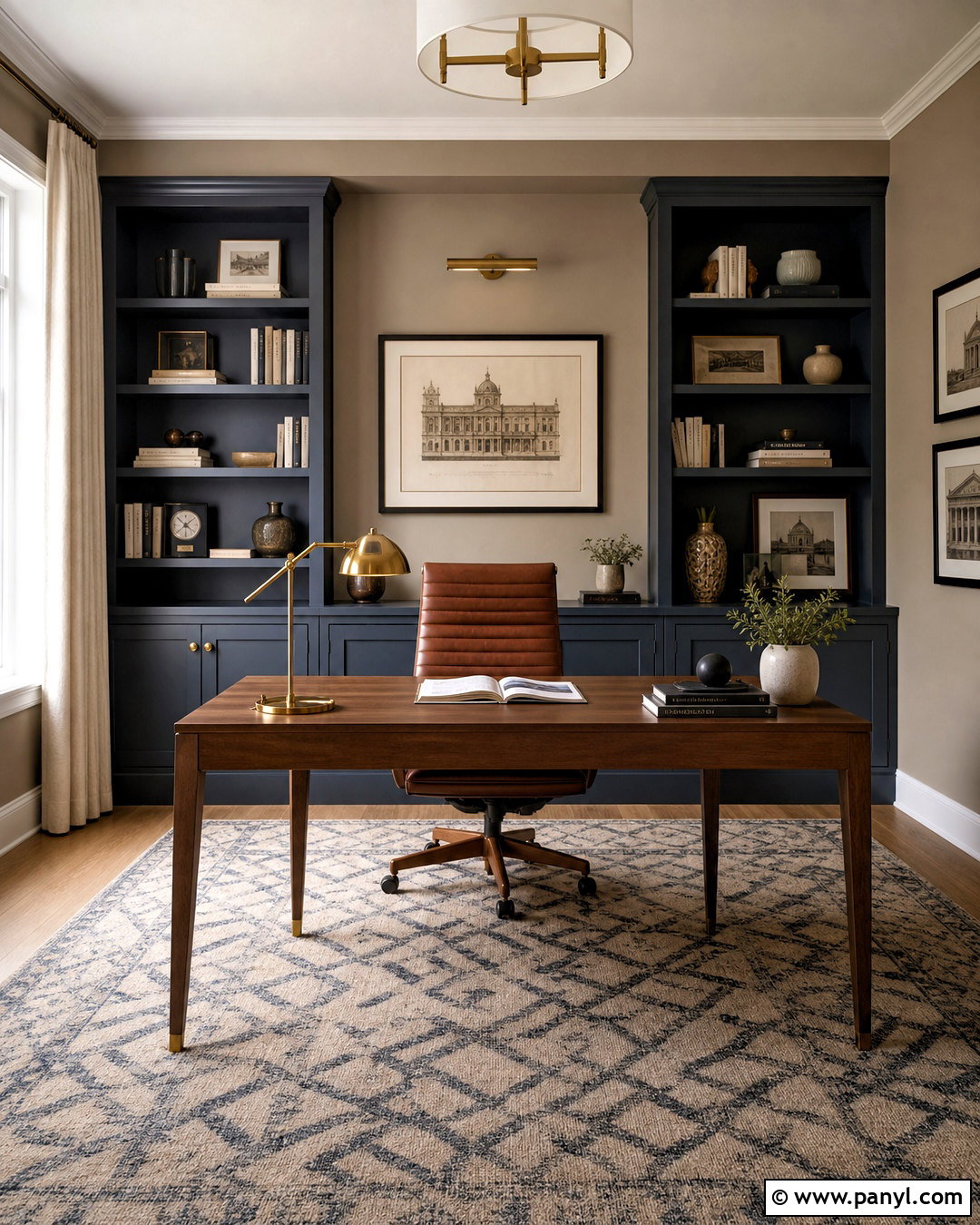
A focused home office benefits from taupe walls that feel quiet but not sterile. Use a balanced medium taupe across the walls and paint built-in shelving one shade darker for gentle contrast. Position a walnut desk in the center or facing a window, paired with a supportive black leather chair. Style the shelves with closed boxes, books, small sculptures, and framed art, allowing empty space between groups. A cream wool rug will brighten the floor and soften sound during calls. Add linen curtains, an adjustable brass desk lamp, and discreet wall sconces above the shelves. One muted green chair can create a reading corner. This complete workspace looks professional on camera while remaining warm, organized, and comfortable for long periods of daily use.
30. Taupe Nursery Walls With Soft Pastels
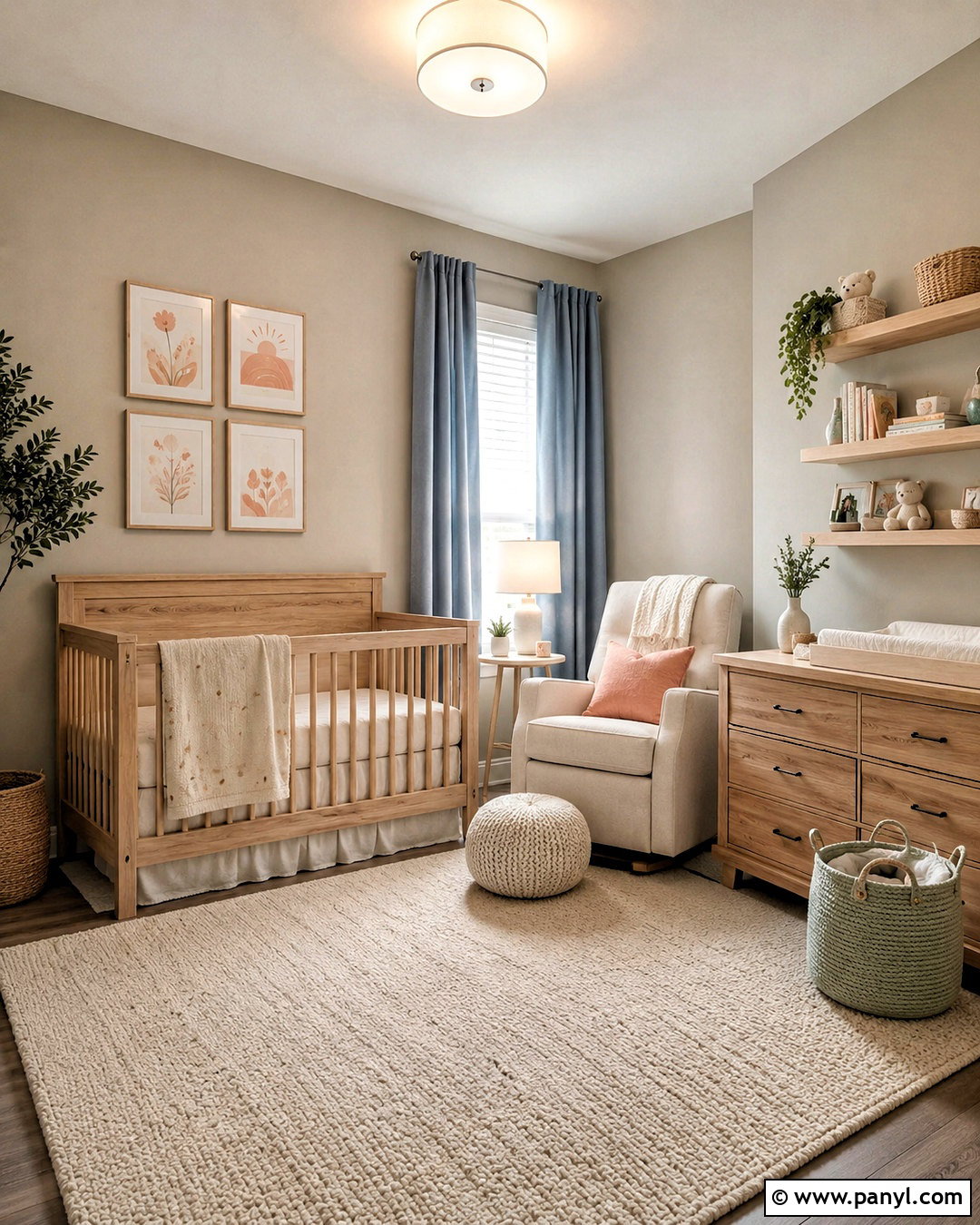
Pale taupe walls create a flexible nursery that can grow with the child and accommodate changing accent colors. Choose a light, low-contrast taupe, then add a natural wood crib, cream upholstered glider, and washable ivory rug. Introduce soft pastel color through dusty blue curtains, sage storage baskets, and muted peach artwork. A light oak dresser can double as a changing station, while floating shelves keep frequently used items within reach. Use blackout-lined window treatments and warm white lighting for practical comfort. Keep large furniture neutral so the room can transition easily later. The finished nursery feels gentle and cheerful without relying on one strong theme. Secure furniture and wall decor properly, and preserve clear pathways around the crib, chair, and doorway.
31. Taupe Laundry Room Walls With Blue Cabinets
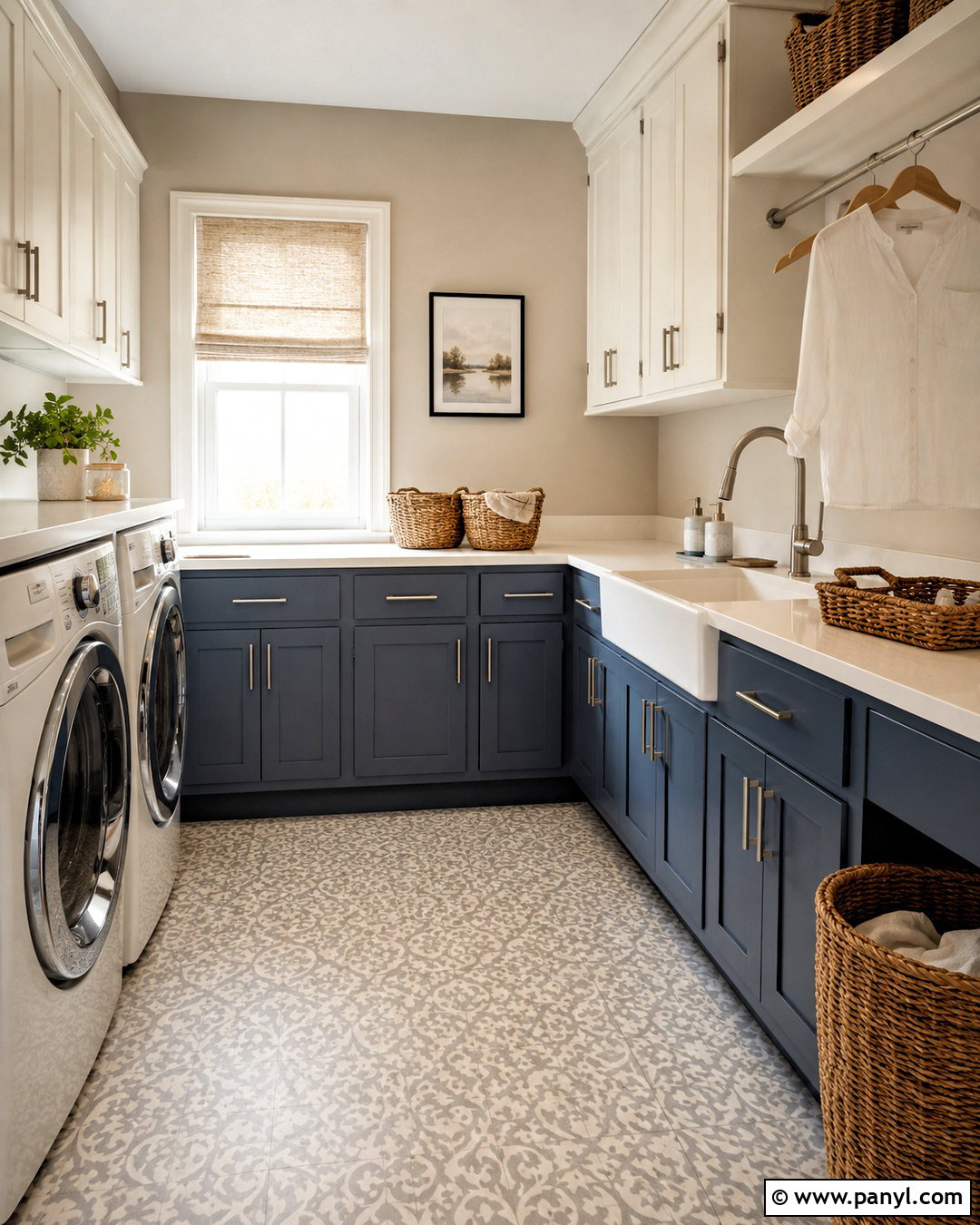
A hardworking laundry room can feel more designed with taupe walls and muted blue cabinetry. Paint the walls in a light stone taupe, then use dusty navy or blue-gray on the lower cabinets. Add white quartz counters above the washer and dryer for folding space, plus warm white upper cabinets to prevent the room from becoming too dark. Brushed nickel hardware and a simple farmhouse-style sink provide practical shine. Install a durable patterned floor in cream, gray, and taupe to disguise everyday dust. Woven baskets, labeled containers, and a hanging rail keep supplies organized. Finish the window with a washable Roman shade. The complete palette gives this utility area color and personality while preserving the clean, bright appearance needed for routine household tasks.
32. Taupe Mudroom Walls With Green Storage
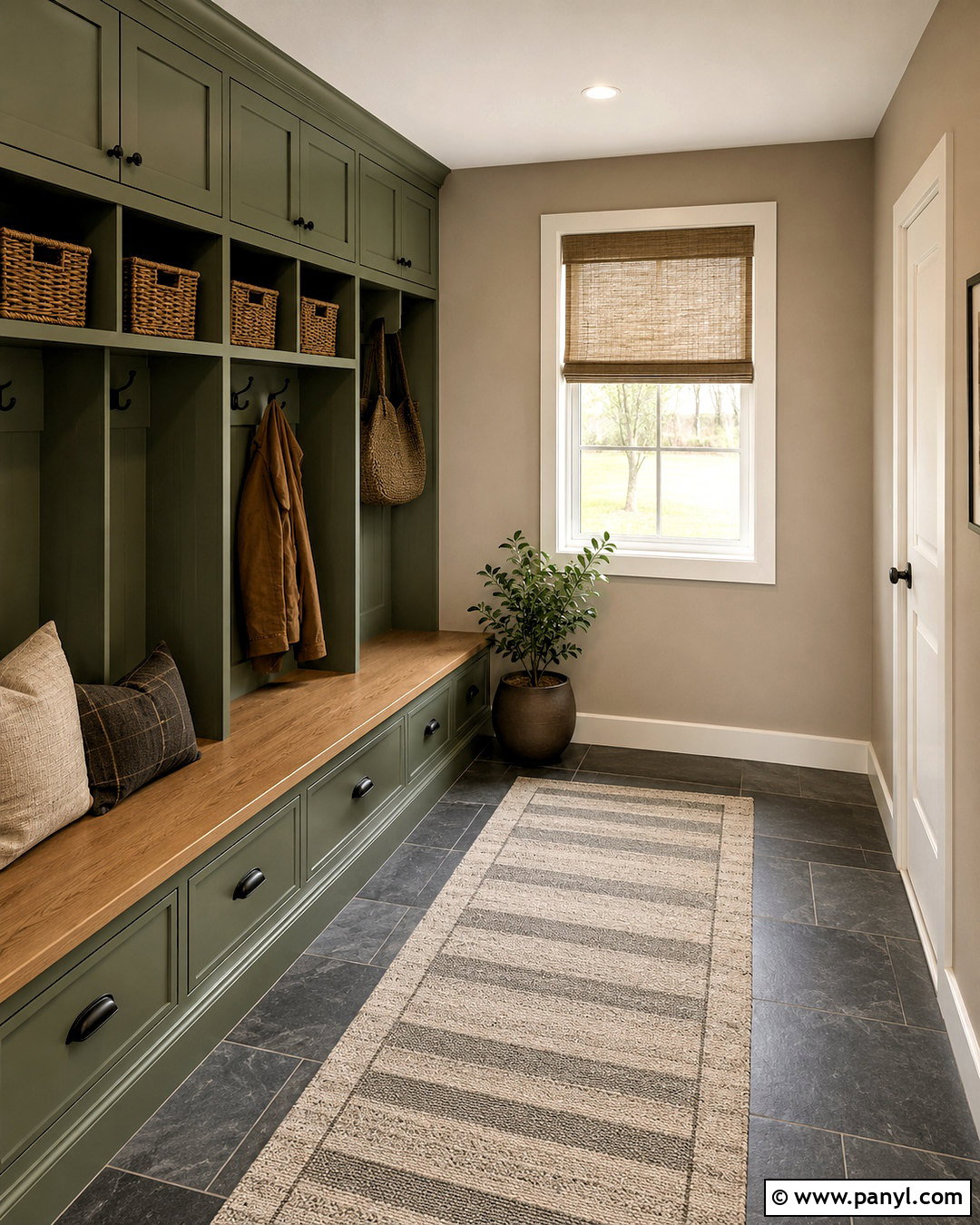
Taupe walls and muted green storage create an earthy mudroom that handles daily clutter gracefully. Apply a durable warm taupe paint above a built-in bench, then finish the lower cabinets, cubbies, and tall lockers in deep sage green. Use an oak bench seat to bridge the two colors. Black hooks, bin pulls, and a simple ceiling fixture add structure. Choose slate-look porcelain tile for the floor and place a washable striped runner down the center. Woven baskets can hold gloves and smaller accessories, while closed cabinets conceal shoes and sports equipment. Add one narrow window shade in natural linen. This full design feels welcoming from the moment someone enters, yet every decorative choice also supports storage, cleaning, and the demands of an active household.
33. Taupe Basement Walls With Light Flooring
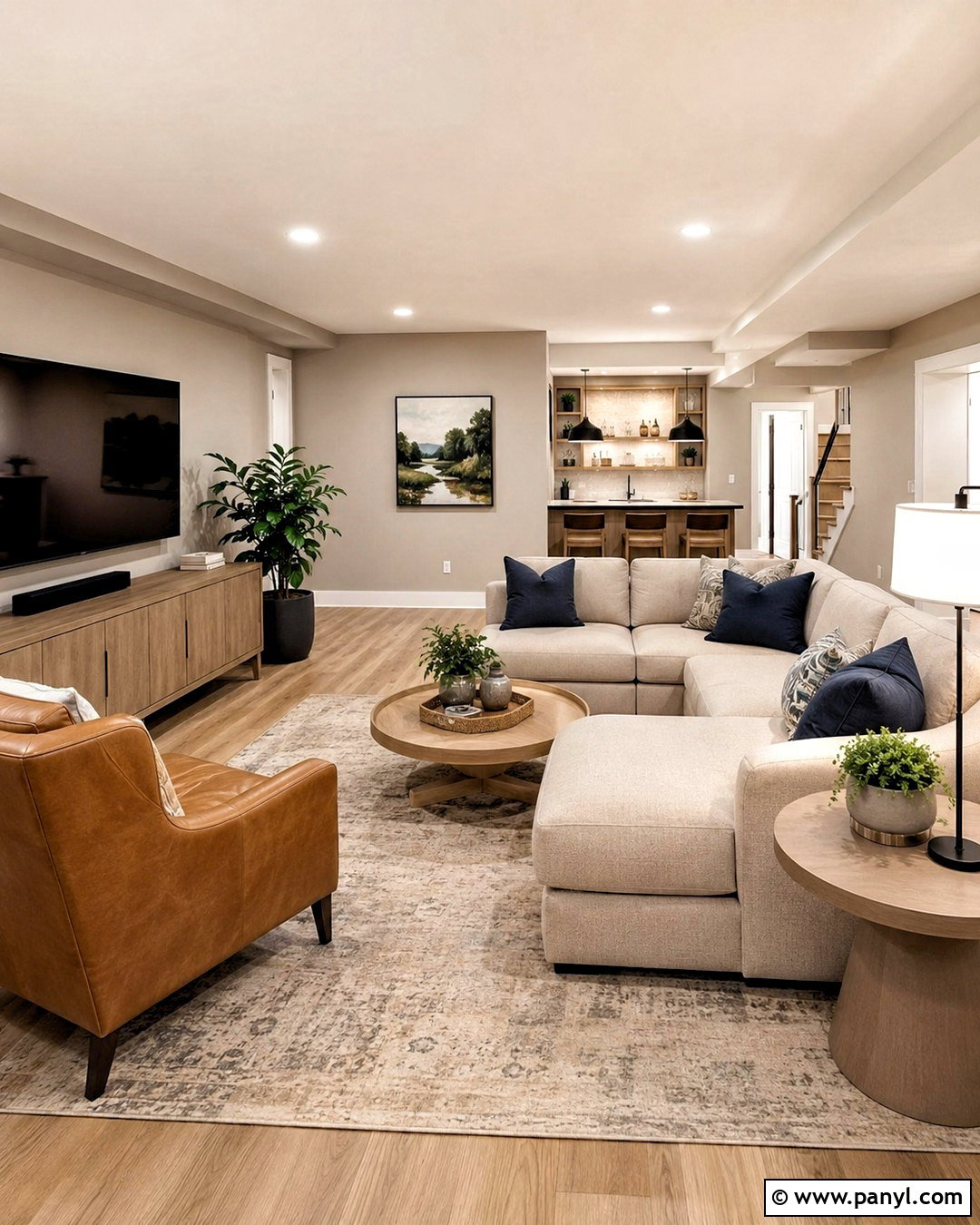
Taupe can warm a basement, but the complete palette must account for limited daylight. Select a pale taupe with minimal muddy or purple undertones, then pair it with light oak-look flooring and a large ivory area rug. Use a cream sectional, camel leather chair, and pale wood media unit to keep visual weight evenly distributed. Install recessed ceiling lights along with floor and table lamps so corners remain bright. White trim and doors will create clean boundaries around the taupe walls. Add color through navy pillows, muted green artwork, and a few durable plants suited to lower light. The finished basement feels connected to the rest of the home rather than like an afterthought, providing a comfortable setting for movies, games, reading, and casual gatherings.
34. Taupe Sunroom Walls With Woven Furniture
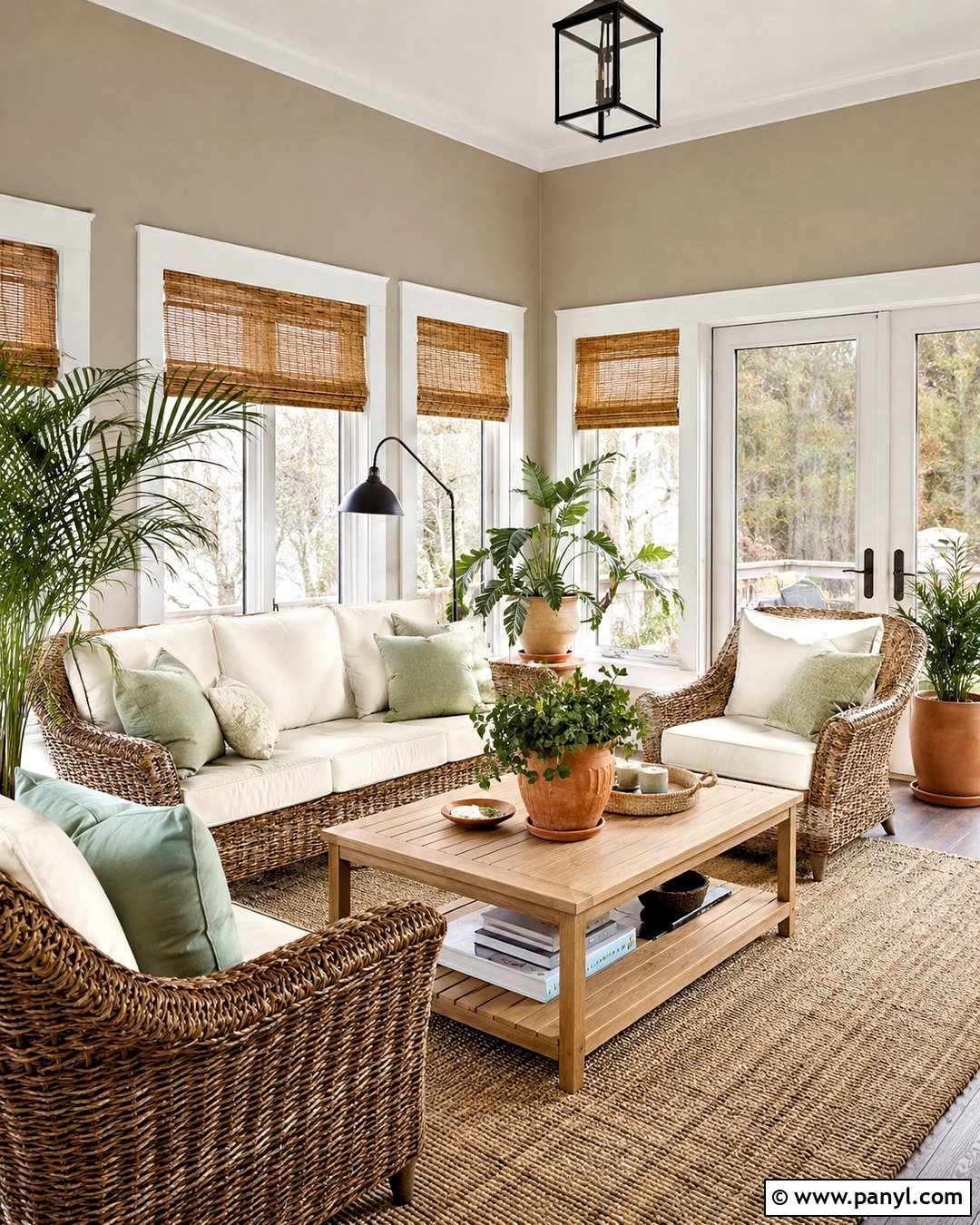
In a sunroom, taupe walls calm the strong light and complement views of surrounding greenery. Choose a warm, light taupe that will not turn overly gray when sunlight changes. Arrange a woven rattan sofa and two matching chairs around a pale wood coffee table. Use thick cream cushions, washable sage pillows, and an indoor-outdoor rug containing tan and ivory. White-painted window trim keeps the architecture crisp, while bamboo shades reduce glare without hiding the outdoor view. Add terracotta planters, leafy plants, and a black metal floor lamp for contrast. Avoid crowding the windows with tall furniture. This complete room feels bright, natural, and comfortable, offering a relaxed transition between the home’s interior and the garden beyond the glass.
35. Taupe Open-Plan Walls With Coordinated Neutrals
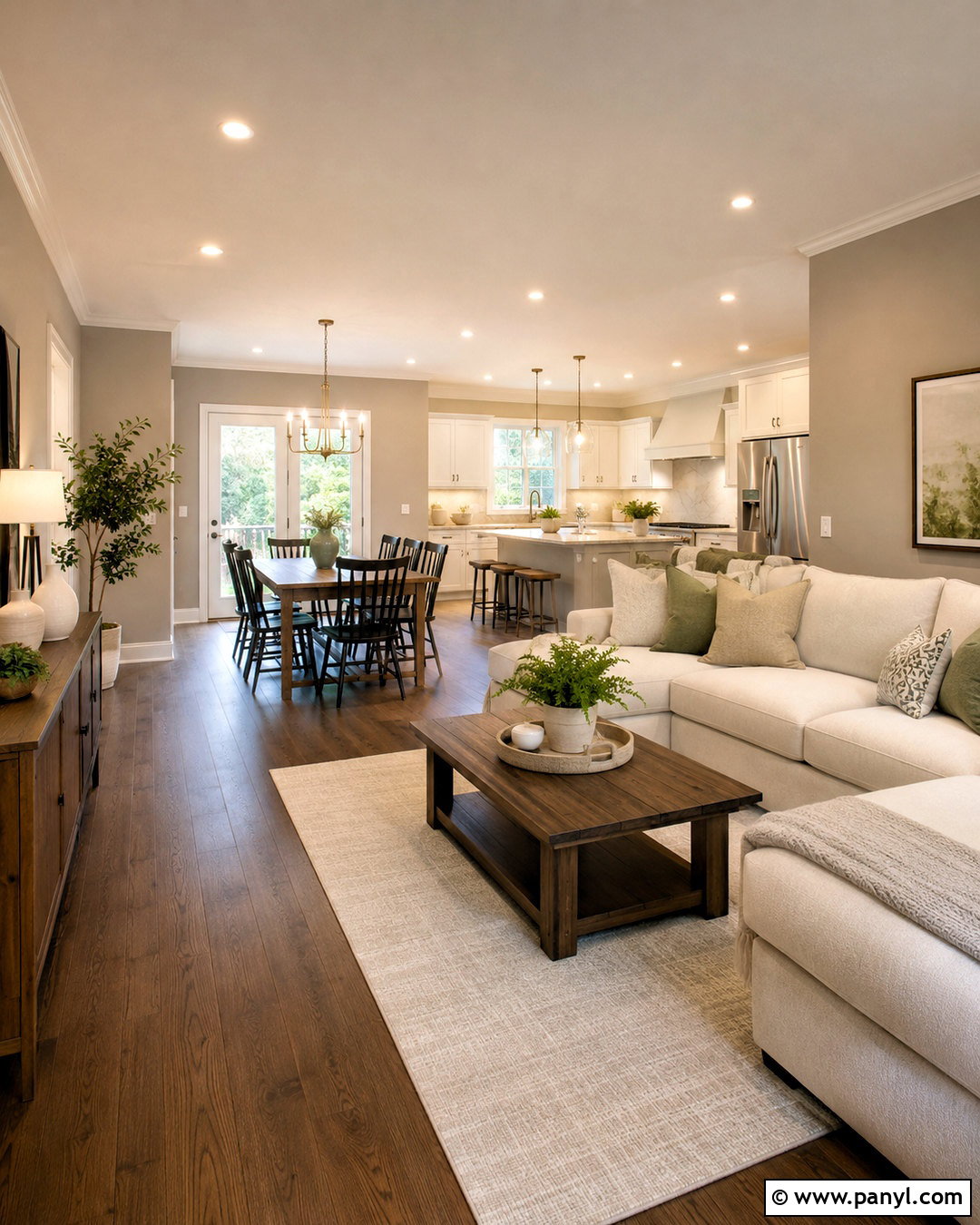
Open-plan spaces need a taupe that connects several functional areas without making them look identical. Use a light balanced taupe across the living room, dining area, and kitchen walls, maintaining the same warm white trim throughout. Define the living zone with a cream sectional, walnut tables, and a textured ivory rug. In the dining area, introduce an oak table and black chairs. Let the kitchen add another layer through warm white cabinets, taupe-veined counters, and brass hardware. Repeat small amounts of black, wood, and muted green in every zone for visual continuity. Different pendant lights and rugs can identify each activity area. The finished layout feels coordinated from every viewpoint while allowing each section to maintain a clear purpose and its own character.
Conclusion:
The best Taupe Wall Color Ideas treat paint as the foundation of a complete room rather than an isolated decorating choice. Light taupe can brighten a bedroom, hallway, or basement, while deeper versions bring intimacy to dens and powder rooms. Its undertone should connect naturally with the flooring, fixed finishes, furniture, and daylight already present. Build dimension by combining taupe with cream, warm wood, stone, linen, leather, and a controlled accent such as navy, sage, burgundy, or terracotta. Before committing, apply large sample boards and observe them in morning, afternoon, and evening light. With thoughtful testing and layered materials, taupe walls can feel warm, distinctive, and enduring instead of plain or overly beige.

Related Ideas and Inspiration:
Leave a Reply