
Teal can make a kitchen feel fresh, grounded, dramatic, or cheerful, depending on the shade and surrounding finishes. This collection of 35 teal kitchen walls explores complete spaces rather than isolated paint choices. Each look coordinates the wall color with cabinets, countertops, flooring, lighting, hardware, and practical decor. Pale blue-green tones can brighten a compact room, while deep teal creates a sophisticated backdrop for white, wood, or charcoal cabinetry. You can also introduce teal through tile, paneling, wallpaper, or a focused accent wall when full-room color feels overwhelming. Whether your kitchen is modern, farmhouse, coastal, traditional, or rental-friendly, thoughtful balance is essential. Use these 35 teal kitchen walls to find a complete color scheme that fits your space and natural light.

1. Teal Kitchen Walls With White Cabinets
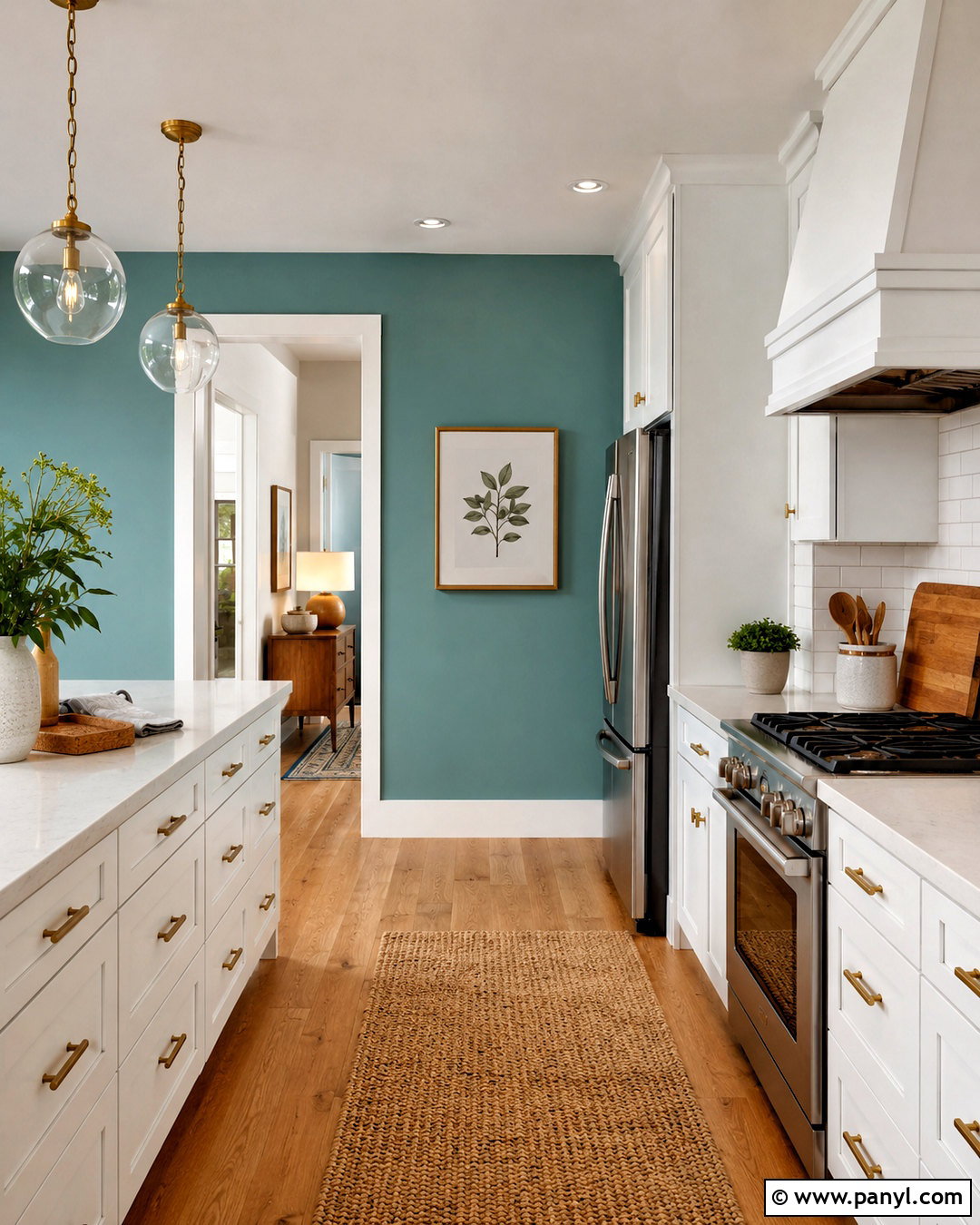
Crisp white cabinets give rich teal kitchen walls a clean, balanced appearance. Choose a medium teal with slightly muted undertones so the contrast feels welcoming rather than sharp. White quartz countertops and a simple white subway tile backsplash keep the work area bright. Warm oak flooring prevents the blue-green walls from making the room feel cold. Add brushed brass cabinet pulls, a matching faucet, and clear glass pendants for subtle warmth. A natural jute runner and a few wooden cutting boards soften the polished surfaces. If the kitchen receives limited daylight, paint the ceiling and trim a warm white. This complete combination works especially well in small and medium kitchens because the cabinetry reflects light while the teal adds depth.
2. Dark Teal Kitchen Walls With Cream Cabinets
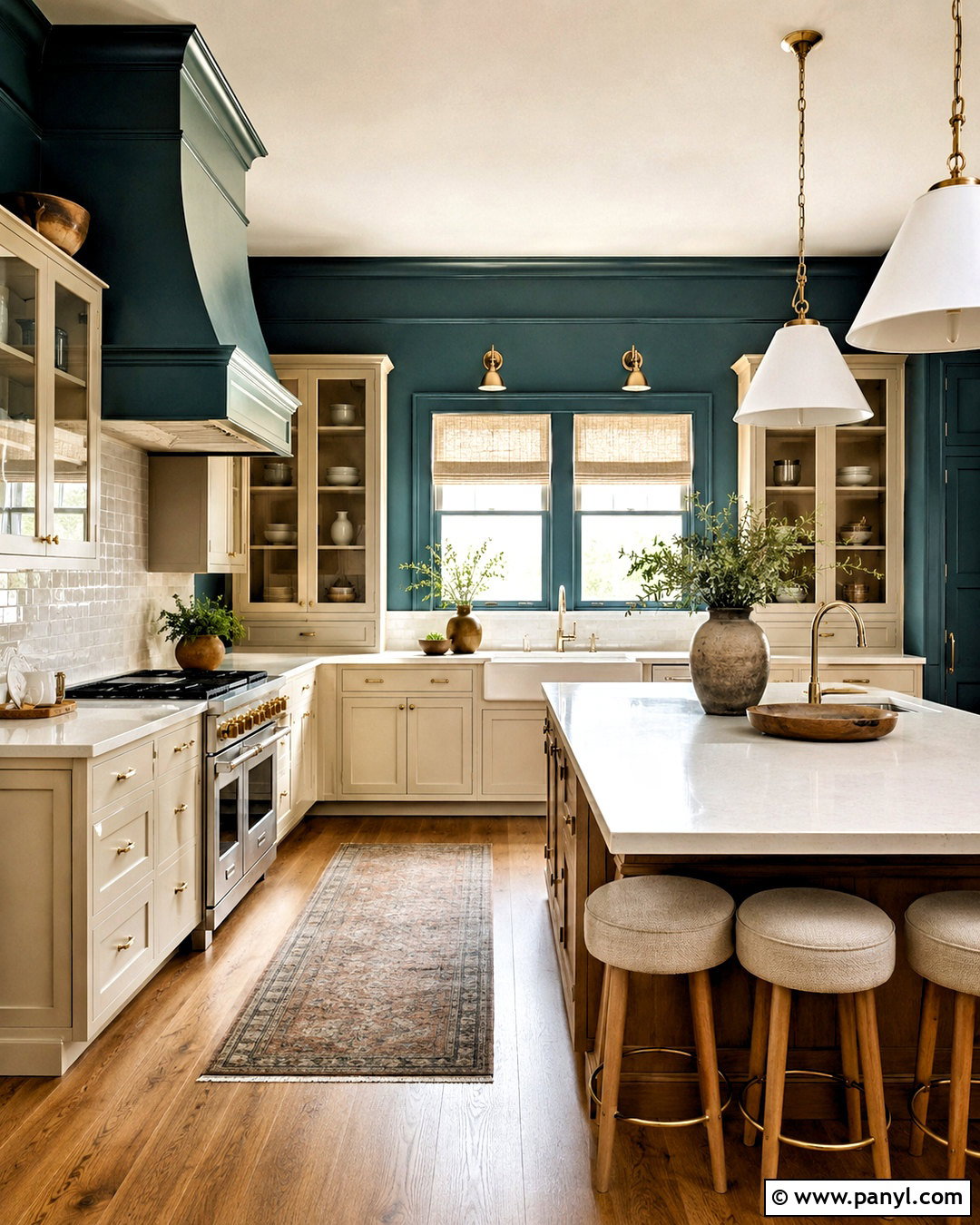
Deep teal walls create a cozy setting when paired with soft cream cabinetry. Unlike bright white, cream reduces contrast and gives the room a warmer, more traditional character. Select shaker cabinets, aged brass hardware, and lightly veined cream quartz countertops to build a coordinated palette. A handmade off-white backsplash adds texture without introducing another strong color. Use medium-tone wood flooring and woven counter stools to reinforce the warmth. Glass-front upper cabinets can keep the dark wall color from feeling heavy. Complete the kitchen with linen Roman shades, ceramic table lamps, and simple botanical artwork. This look is best in a kitchen with good natural light, but layered ceiling, under-cabinet, and pendant lighting will keep it comfortable after sunset.
3. Light Teal Kitchen Walls With Oak Cabinets
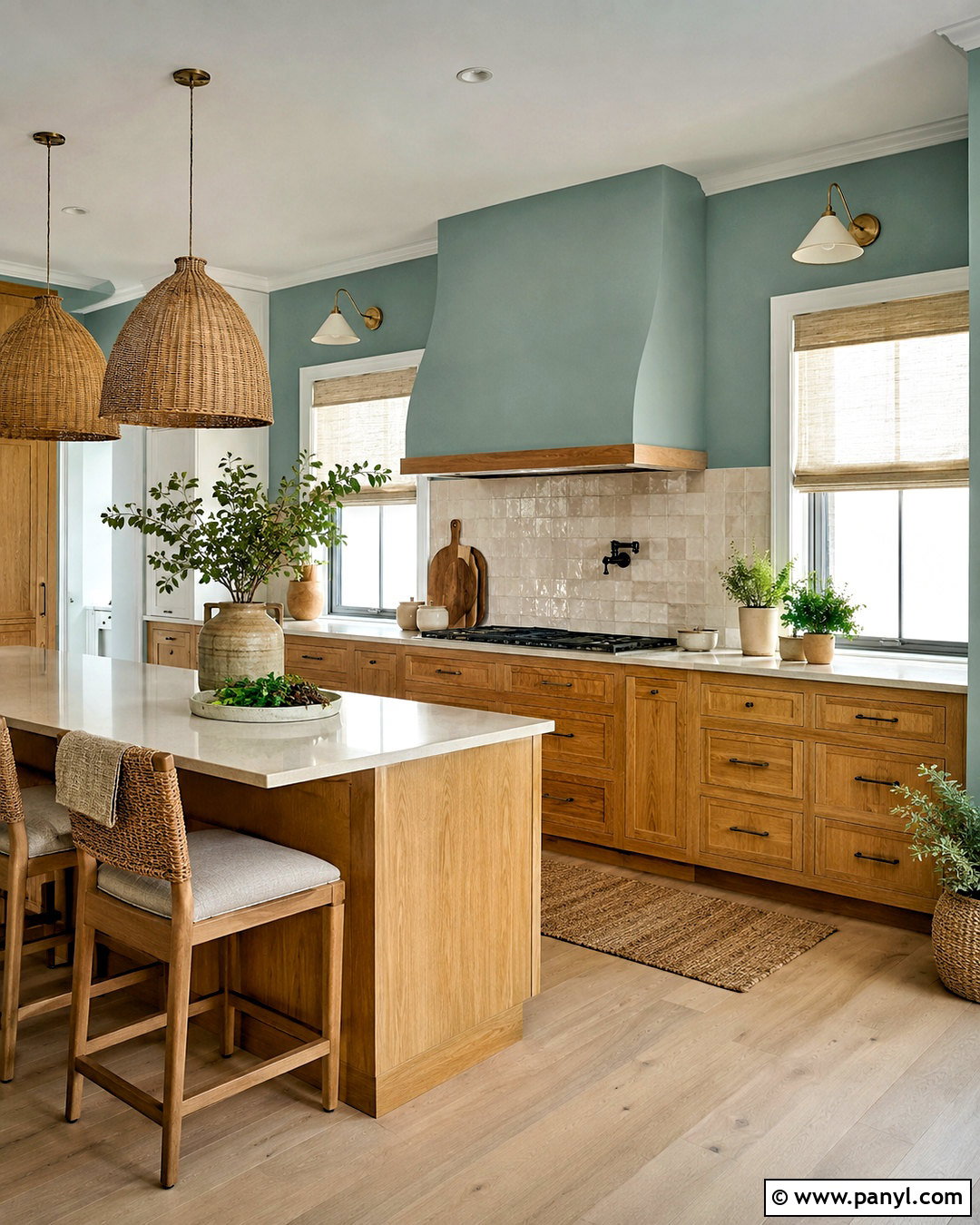
Soft teal walls can refresh natural oak cabinets without hiding their warmth or grain. Look for a pale, dusty teal rather than a saturated turquoise, especially if the wood has golden undertones. Cream quartz counters and an ivory zellige backsplash create a gentle transition between the cabinetry and wall color. Continue the natural feeling with light oak or limestone-look flooring. Matte black hardware provides definition, while woven pendant lights and linen window treatments add an easy, relaxed texture. Keep countertop decor useful and minimal, using wooden bowls, neutral pottery, and small herb planters. This complete kitchen scheme feels bright but not sterile. It also offers a practical way to update existing oak cabinetry without the cost and labor of painting every cabinet.
4. Teal Kitchen Walls With Black Cabinets
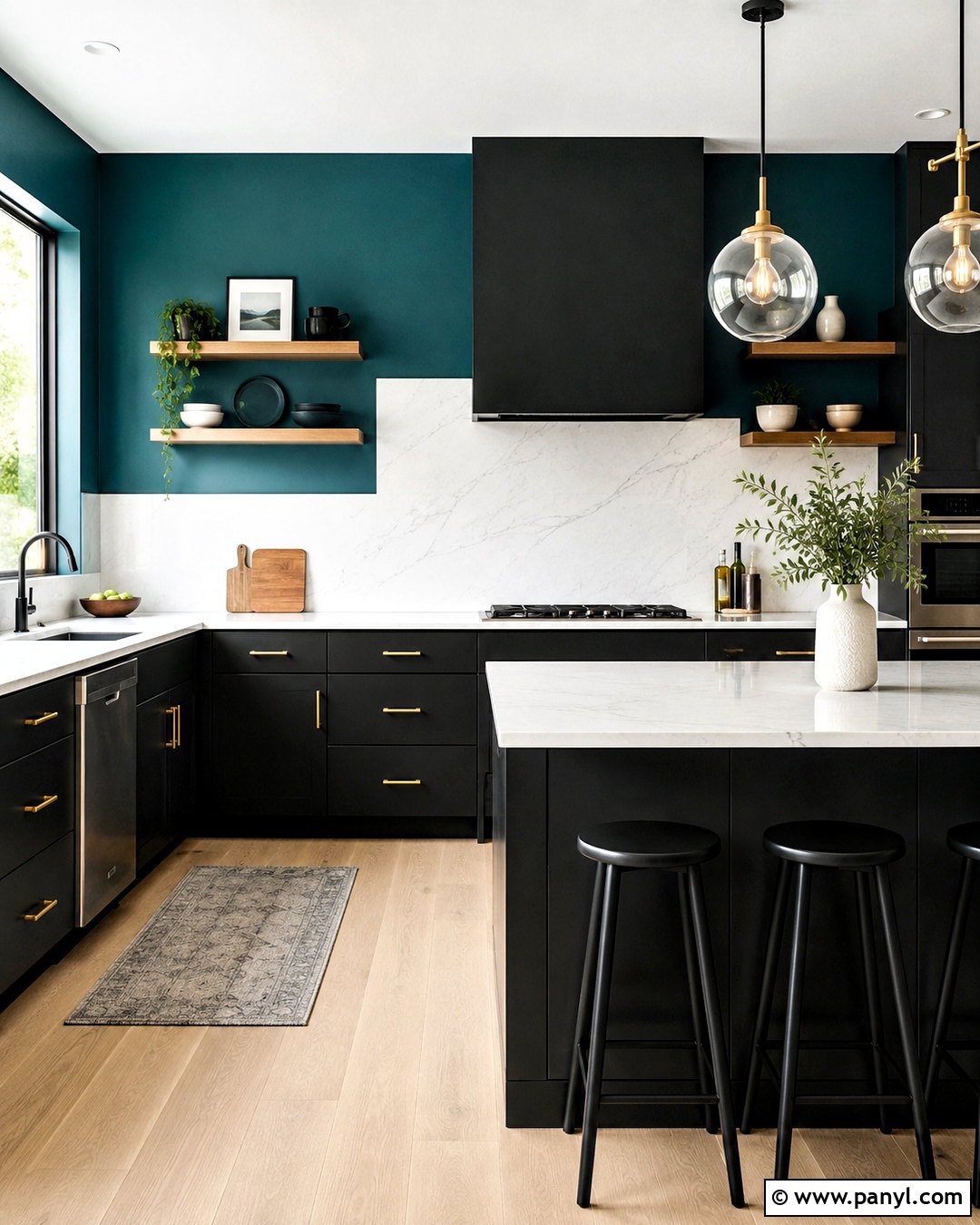
Want a kitchen that feels bold without becoming chaotic? Pair muted teal walls with matte black cabinets and plenty of pale surfaces. White quartz countertops and a full-height white backsplash create essential visual relief between the two dark colors. Choose light wood flooring to warm the room and help define the lower cabinetry. Brushed brass handles, globe pendants, and a matching faucet introduce a polished accent that stands out against black. Open oak shelving can break up a long wall of upper cabinets while providing space for white dishes. Keep the ceiling, trim, and doors bright white. This dramatic combination works best with strong daylight or generous artificial lighting, including recessed fixtures and continuous under-cabinet lighting along the main preparation areas.
5. Teal Kitchen Walls With Gray Cabinets
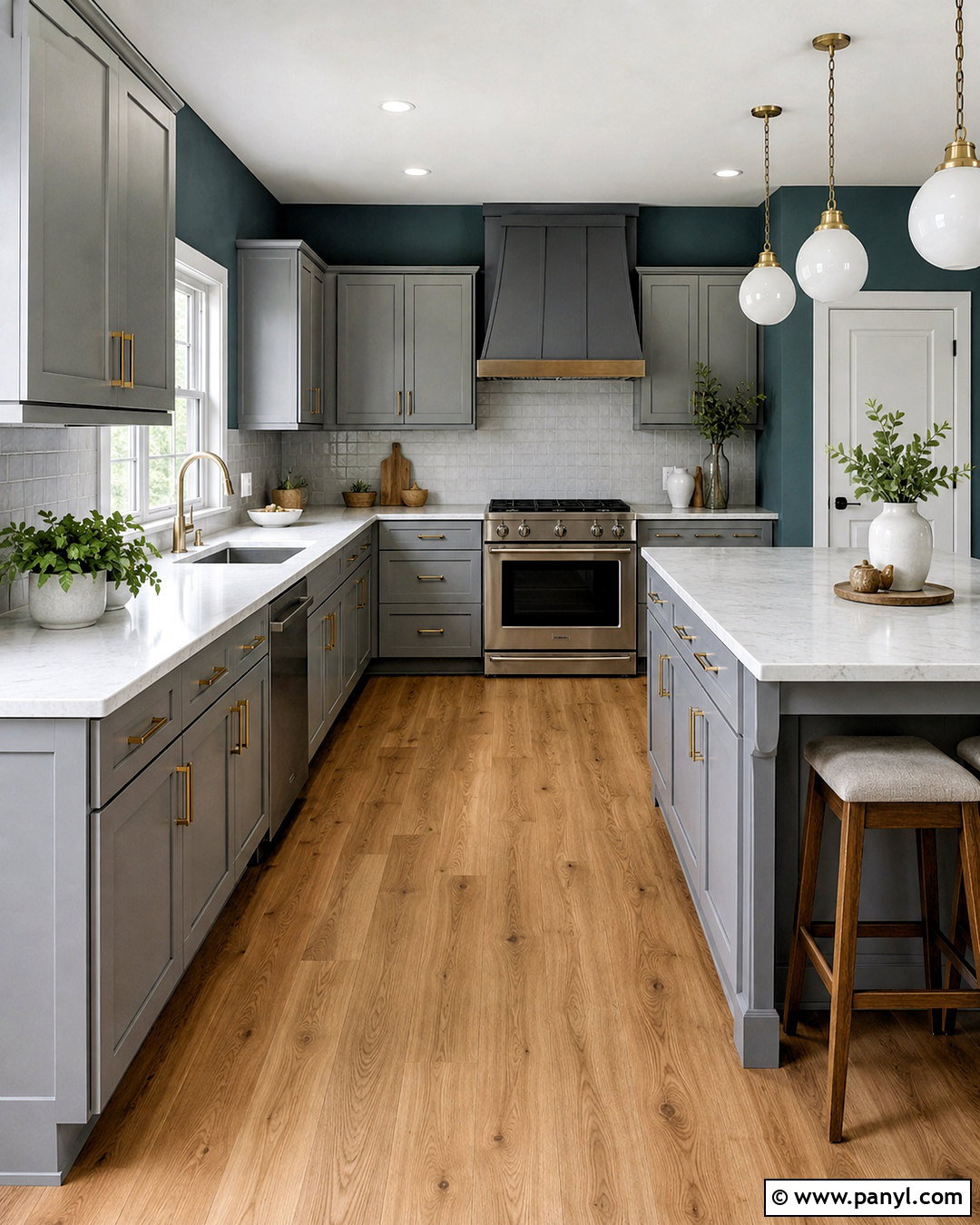
Cool gray cabinets and teal walls can look beautifully coordinated when their undertones match. Select a smoky teal and a soft gray that both lean slightly blue rather than green or beige. White marble-look quartz counters will brighten the scheme, while a pale gray backsplash creates a smooth connection between cabinetry and walls. Add medium oak flooring and warm brass hardware to prevent the room from feeling overly cool. A white ceiling, simple globe pendants, and clear window treatments will help preserve an open atmosphere. For decor, use cream ceramics, wooden boards, and one or two leafy plants. The finished kitchen feels calm, modern, and cohesive. Test large paint samples first, since changing daylight can make gray and teal undertones appear unexpectedly different.
6. Teal Kitchen Walls With Wood Cabinets
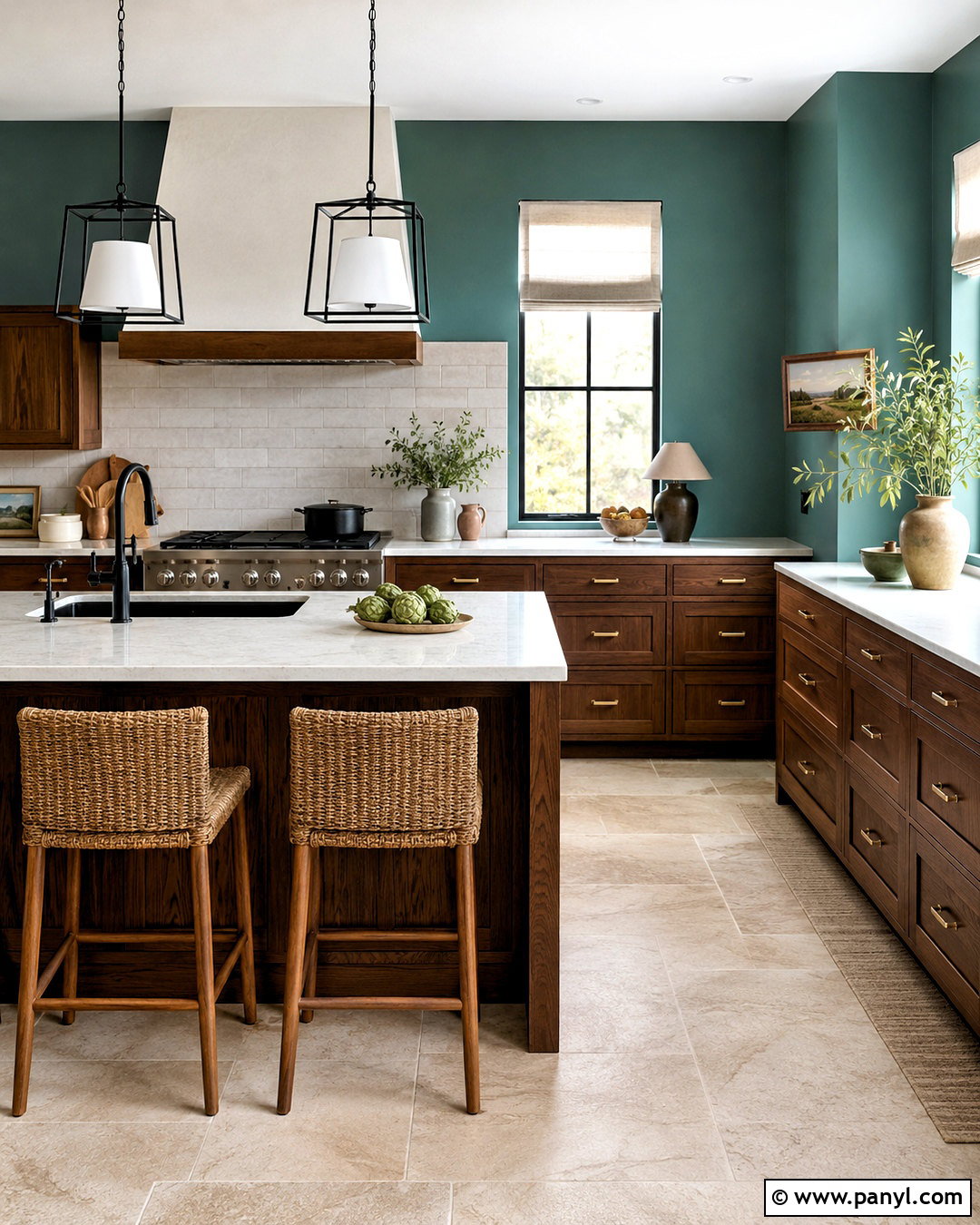
Medium wood cabinetry brings out the earthy green side of teal kitchen walls. Walnut, acacia, or stained maple all work well, provided the wall color is slightly softened rather than intensely bright. Pair the combination with warm white quartz, a simple cream backsplash, and bronze or aged brass hardware. Large-format beige floor tile keeps the palette practical and grounded. If the cabinetry has prominent grain, avoid a busy backsplash that could compete with it. Instead, introduce texture through woven stools, linen shades, and handmade pottery. Black-framed pendants add enough contrast to sharpen the arrangement. This kitchen look feels organic and collected, making it suitable for contemporary, transitional, and midcentury homes. It also handles everyday wear more gracefully than an all-white palette.
7. Teal Kitchen Accent Wall
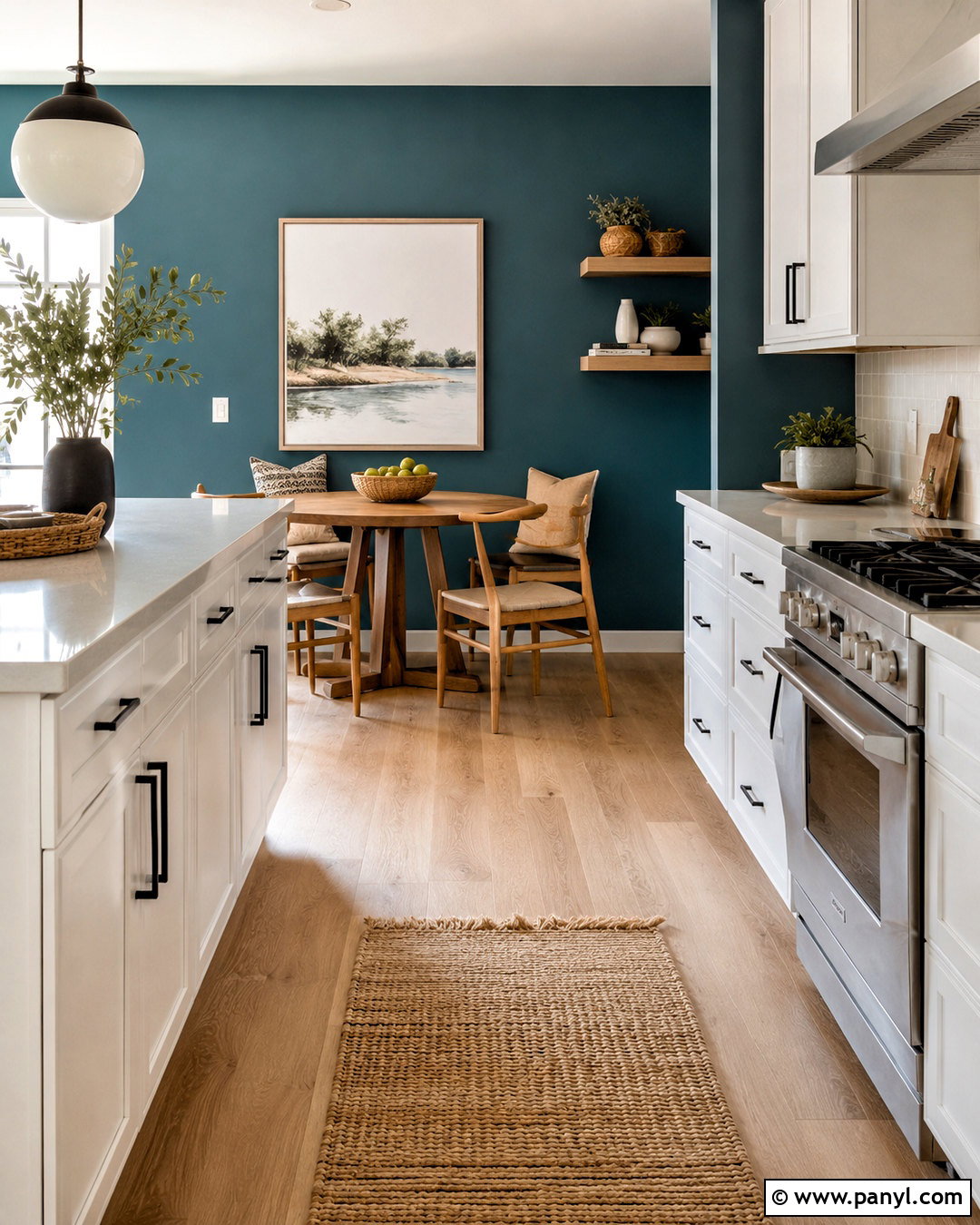
A teal accent wall can transform a neutral kitchen without surrounding the entire room in strong color. Choose the wall behind a breakfast table, open shelving, or a freestanding sideboard so the shade has a clear focal point. Keep the other walls warm white and coordinate them with white cabinets and pale quartz countertops. Light oak flooring, black hardware, and a natural wood dining set create a balanced foundation. On the teal wall, hang simple framed artwork or install two oak shelves displaying cream dishes and small plants. Repeat teal once in a runner or seat cushion, but avoid matching every accessory. The finished room will feel intentional and spacious. This approach is especially useful in open layouts where too much color could interrupt nearby living areas.
8. Teal Kitchen Walls With Butcher Block Counters
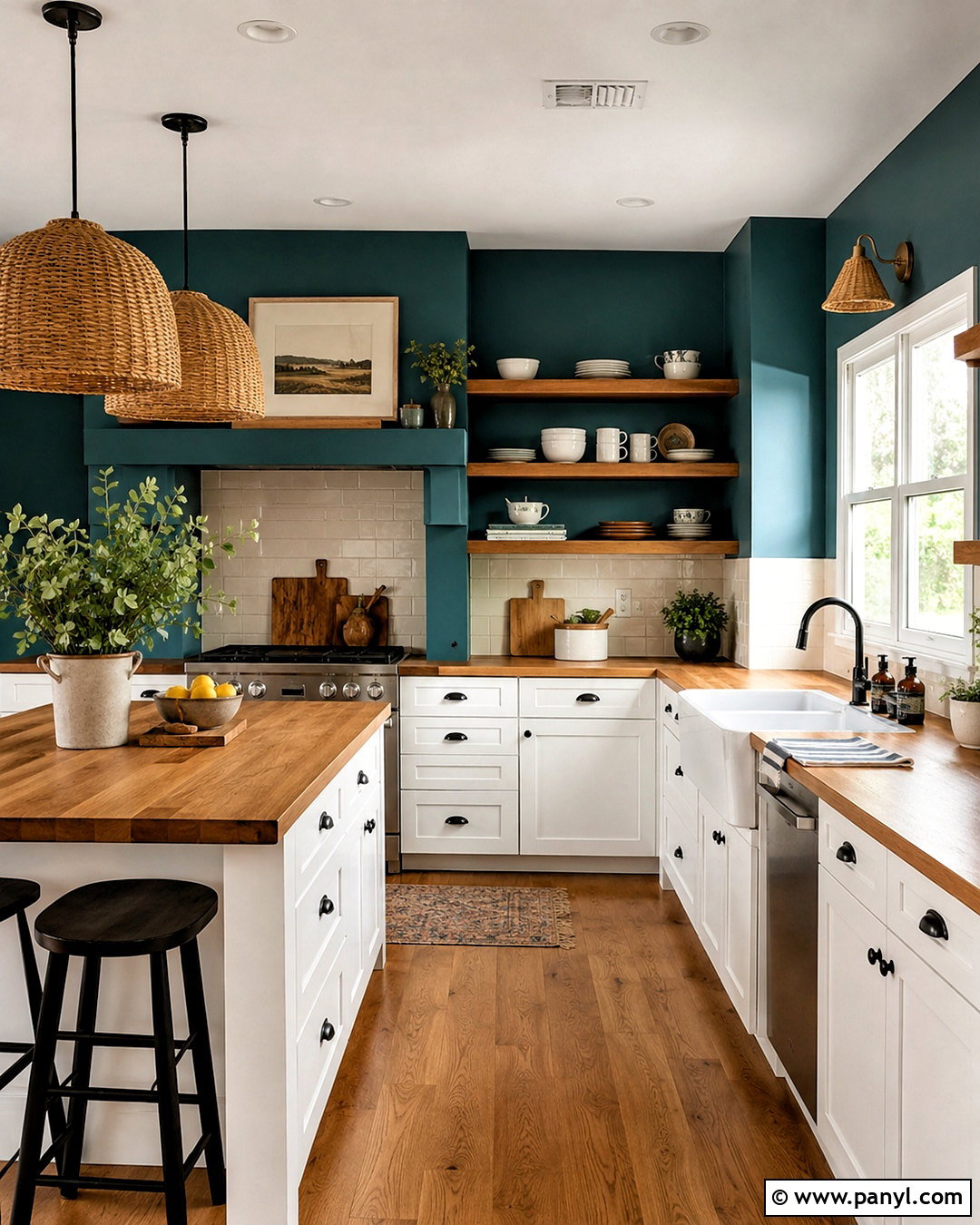
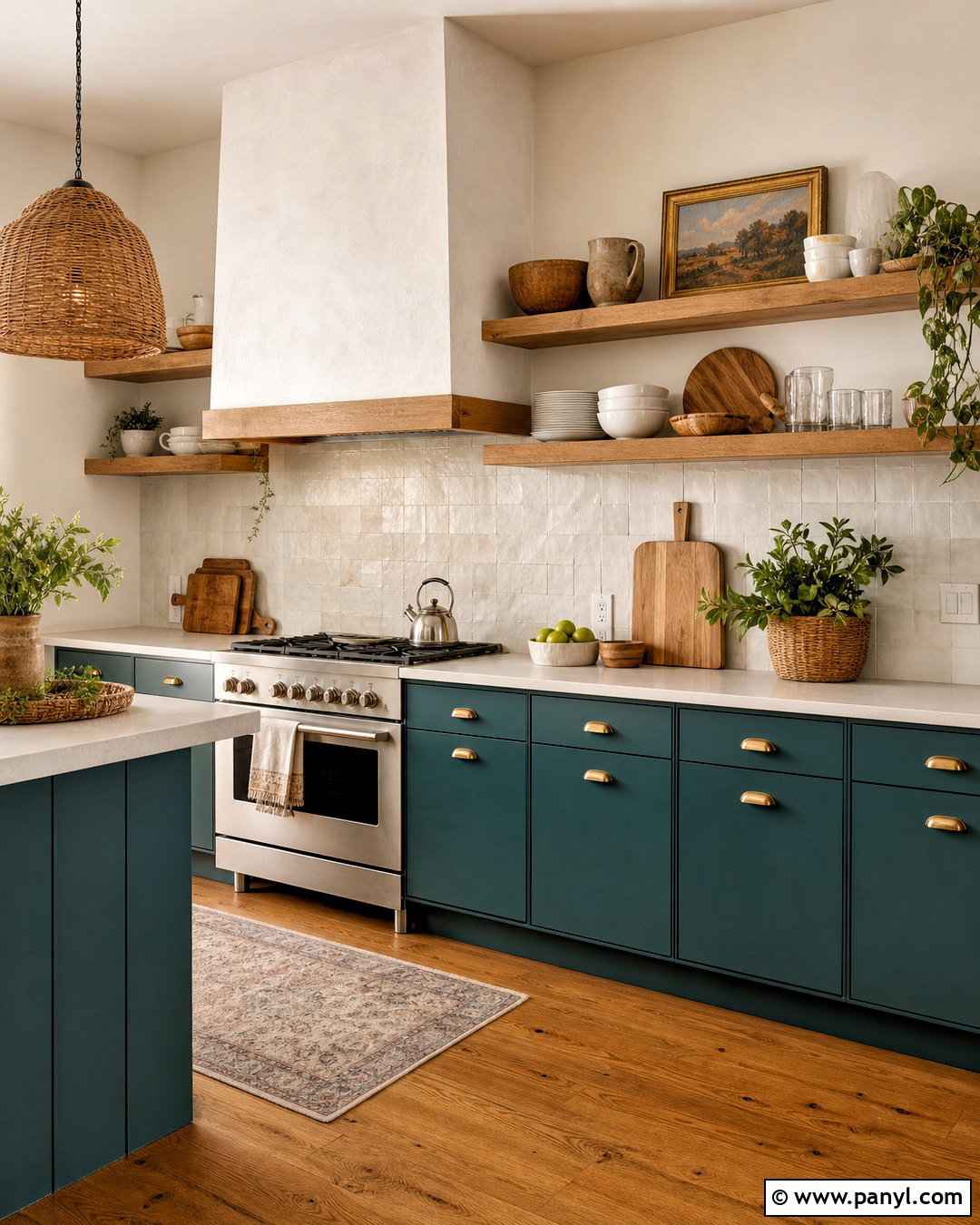
Warm butcher block countertops instantly soften the cool depth of teal kitchen walls. Build the look around simple white shaker cabinets so the wood and wall color remain the main features. Use an off-white backsplash with subtle handmade texture, then continue the warmth through oak flooring and woven pendant shades. Black cup pulls and a black bridge faucet give the room clear definition without looking too formal. Protect the wooden worktops carefully around wet areas, or combine butcher block on an island with durable quartz beside the sink. Open shelves can repeat the countertop wood and display practical white dishes. The complete kitchen feels cheerful, casual, and approachable. It suits cottages, starter homes, and budget renovations where natural materials can add character without elaborate architectural details.
9. Teal Kitchen Walls With Marble Counters
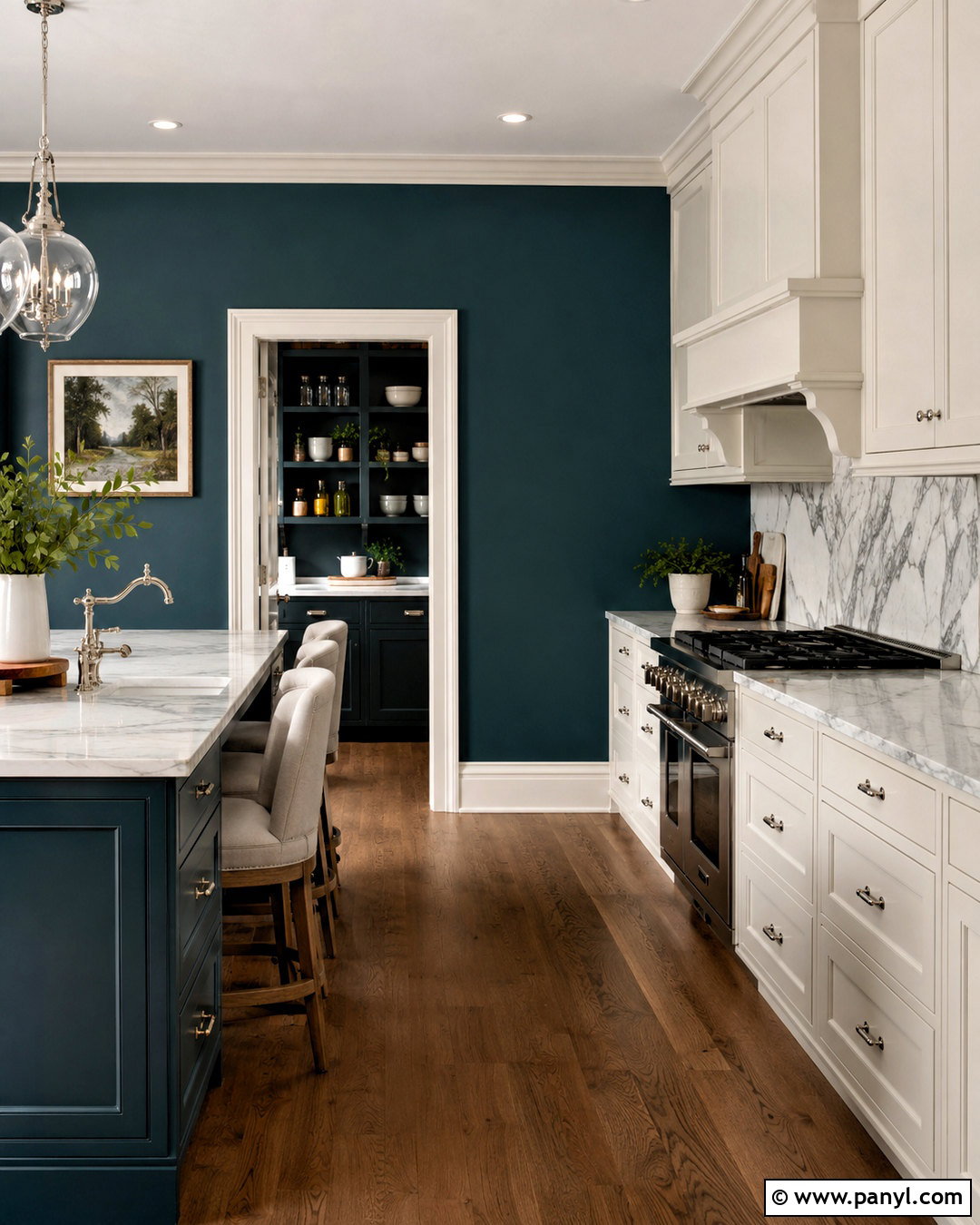
Veined marble counters give teal kitchen walls a refined, timeless partner. Choose a deeper blue-green wall color and cabinetry in warm white or soft mushroom to let the stone remain visible. A marble slab backsplash can continue the counter material for a seamless appearance, while polished nickel hardware provides a cooler, classic shine. Use medium brown hardwood flooring to ground the room and prevent the marble from making it feel formal or cold. Glass pendants, linen shades, and tailored counter stools complete the polished design. If natural marble is impractical for your household, select a durable quartz with restrained gray veining. Keep accessories minimal and functional. A wooden tray, pale ceramic canisters, and fresh greenery are enough to make the finished kitchen feel comfortably lived in.
10. Teal Kitchen Walls With Brass Accents
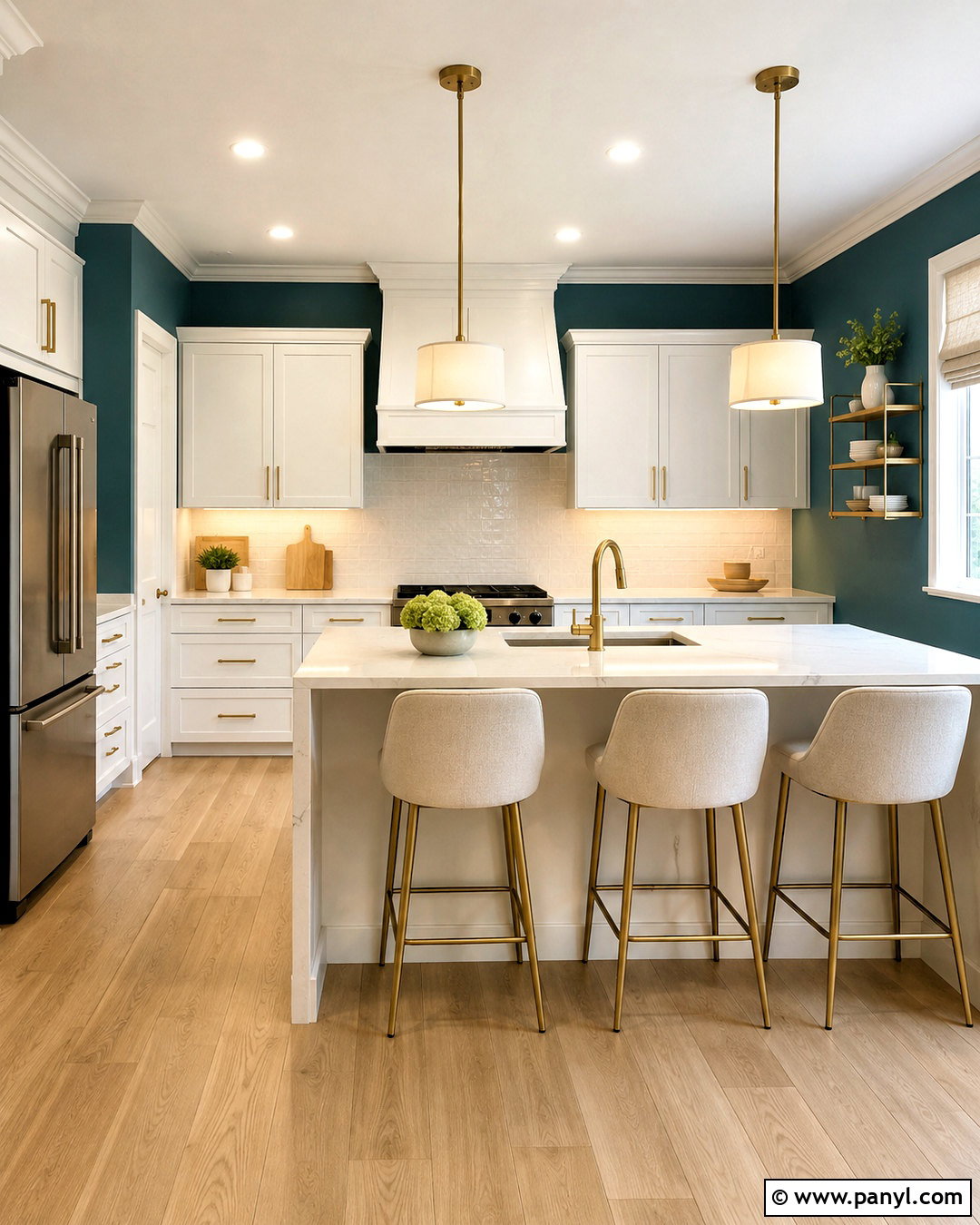
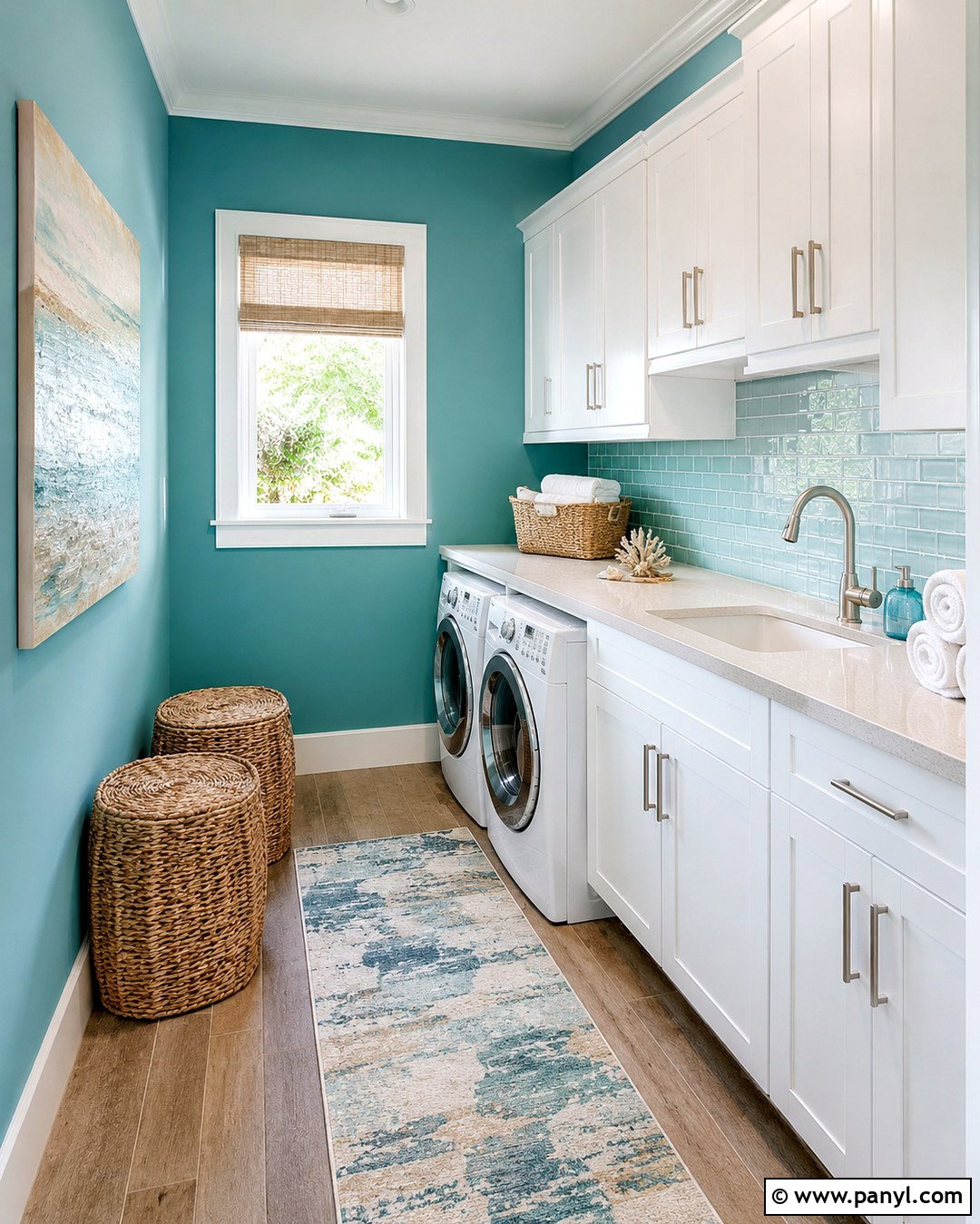
Brass details glow beautifully against teal kitchen walls because the warm metal contrasts with the cool blue-green background. Start with medium teal paint, white flat-panel cabinets, and lightly veined quartz counters. Repeat brushed brass through cabinet handles, the faucet, pendant lights, and narrow shelf brackets, but keep the finish consistent. An ivory backsplash and pale oak flooring soften the contrast and prevent the metallic elements from looking overly glamorous. Choose simple cream stools and natural linen shades for a relaxed finish. Brass should act as a connecting accent rather than cover every available surface. Black appliances can add definition, while stainless steel will make the scheme feel lighter. The completed kitchen is colorful and polished, yet practical enough for an ordinary family home.
11. Teal Kitchen Walls With Matte Black Accents
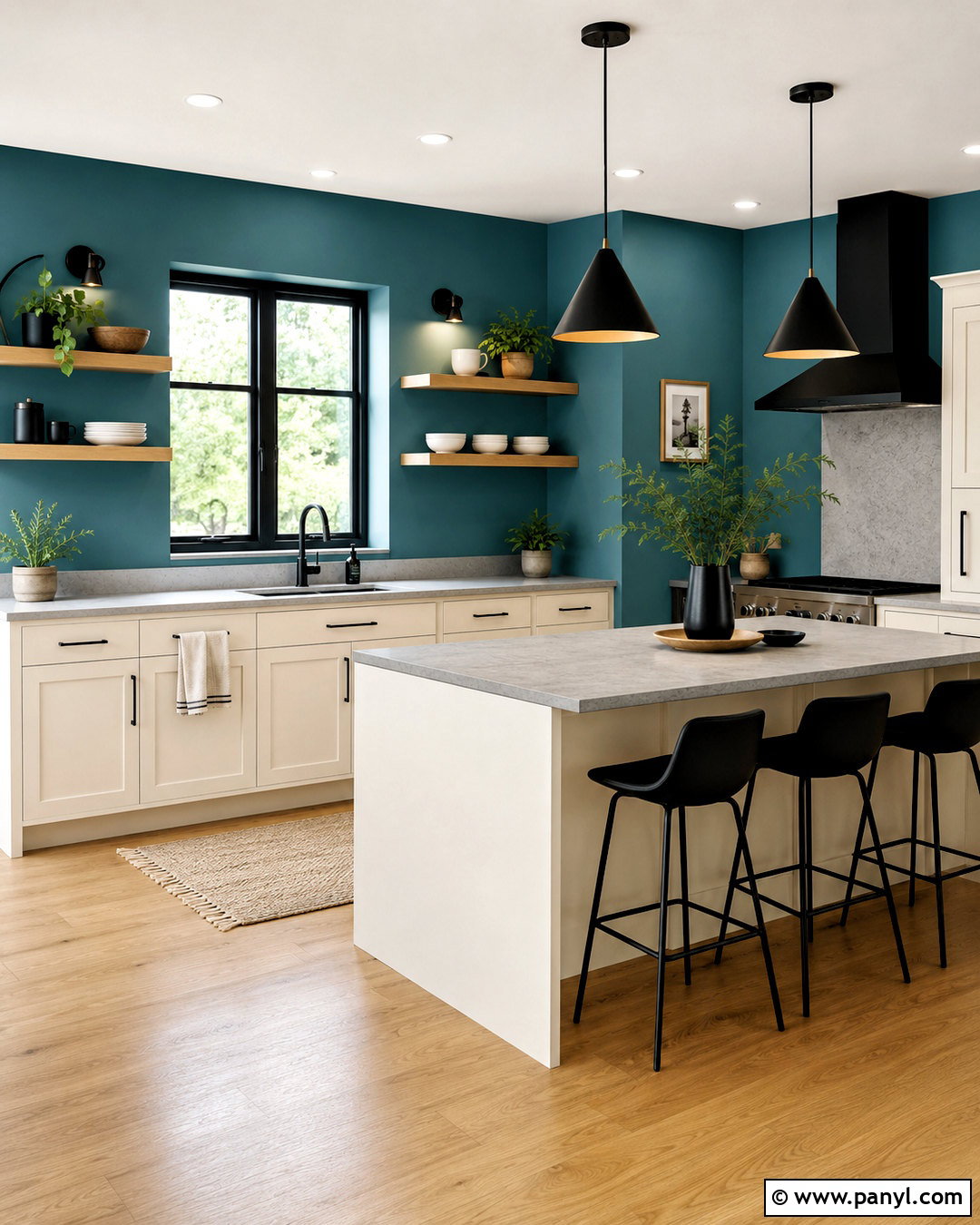
Matte black accents give teal walls a crisp, contemporary edge. Use a clear medium teal on the walls, then balance it with warm white cabinetry and pale gray quartz countertops. Black cabinet pulls, a streamlined faucet, window frames, and simple cone pendants create an intentional visual rhythm throughout the room. Keep the backsplash white or light greige so the darker accents remain distinct. Natural oak flooring and counter stools introduce warmth without disrupting the modern palette. A slim black rail can organize utensils while open oak shelves display everyday dishes. Avoid adding too many competing metals or patterned surfaces. With restrained decor and bright task lighting, the finished kitchen feels graphic rather than heavy. This combination is particularly effective in open-plan homes with black-framed doors or windows nearby.
12. Teal Kitchen Walls With Pink Accents
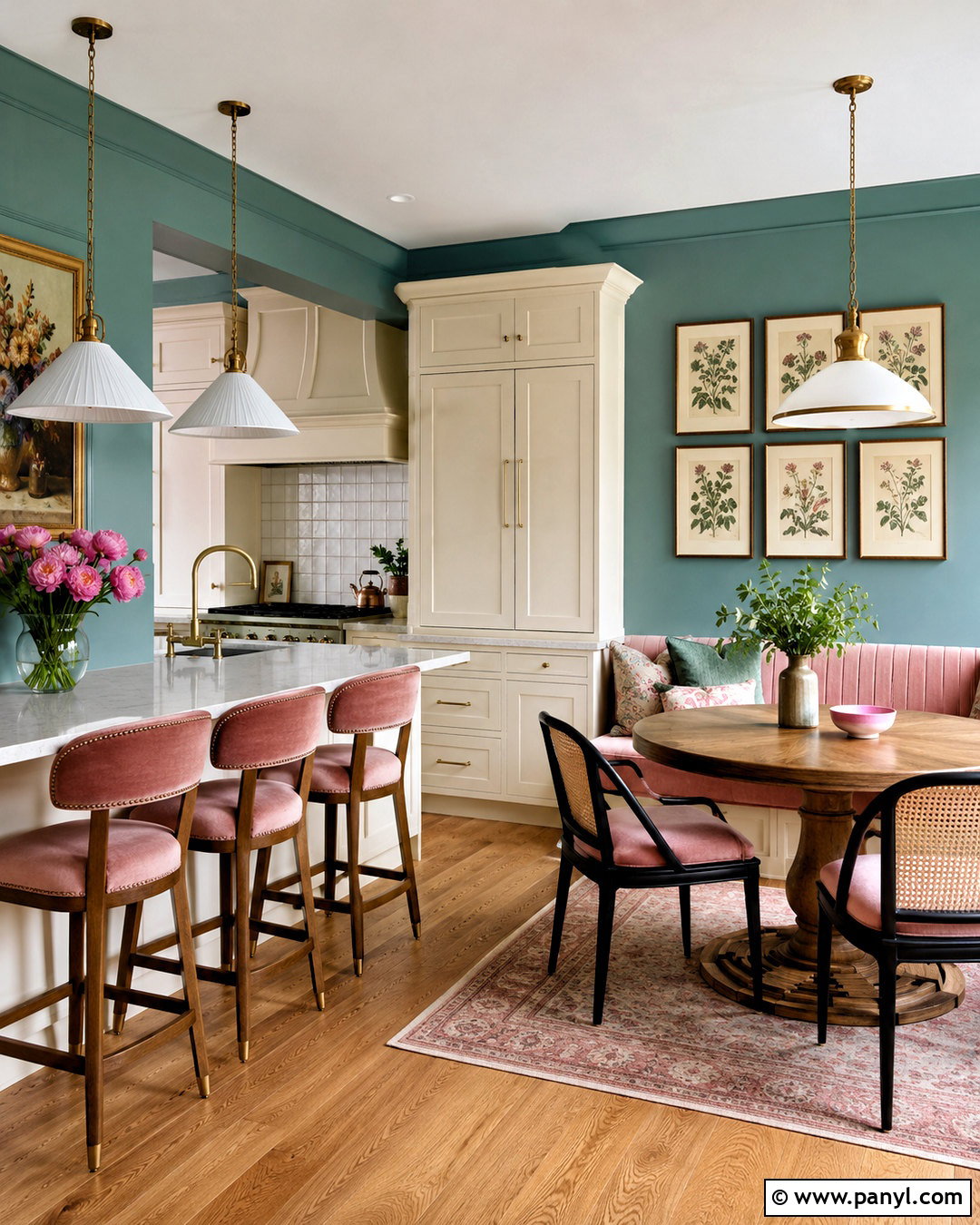
Dusty pink can soften teal kitchen walls and create a lively room without appearing overly sweet. Begin with a muted blue-green wall color, cream cabinets, and white quartz countertops. Bring in pink through upholstered breakfast seating, a patterned runner, ceramic planters, and one piece of framed artwork. Keep the backsplash understated with warm white square tile and pale grout. Oak flooring and aged brass fixtures tie the cool and warm colors together. A round wood dining table makes the breakfast area feel casual and inviting. The key is choosing earthy blush or clay pink instead of highly saturated bubblegum shades. Use teal as the dominant background, neutrals for major surfaces, and pink as a limited accent. The final kitchen feels cheerful, balanced, and thoughtfully layered.
13. Teal Kitchen Walls With Terracotta Floors
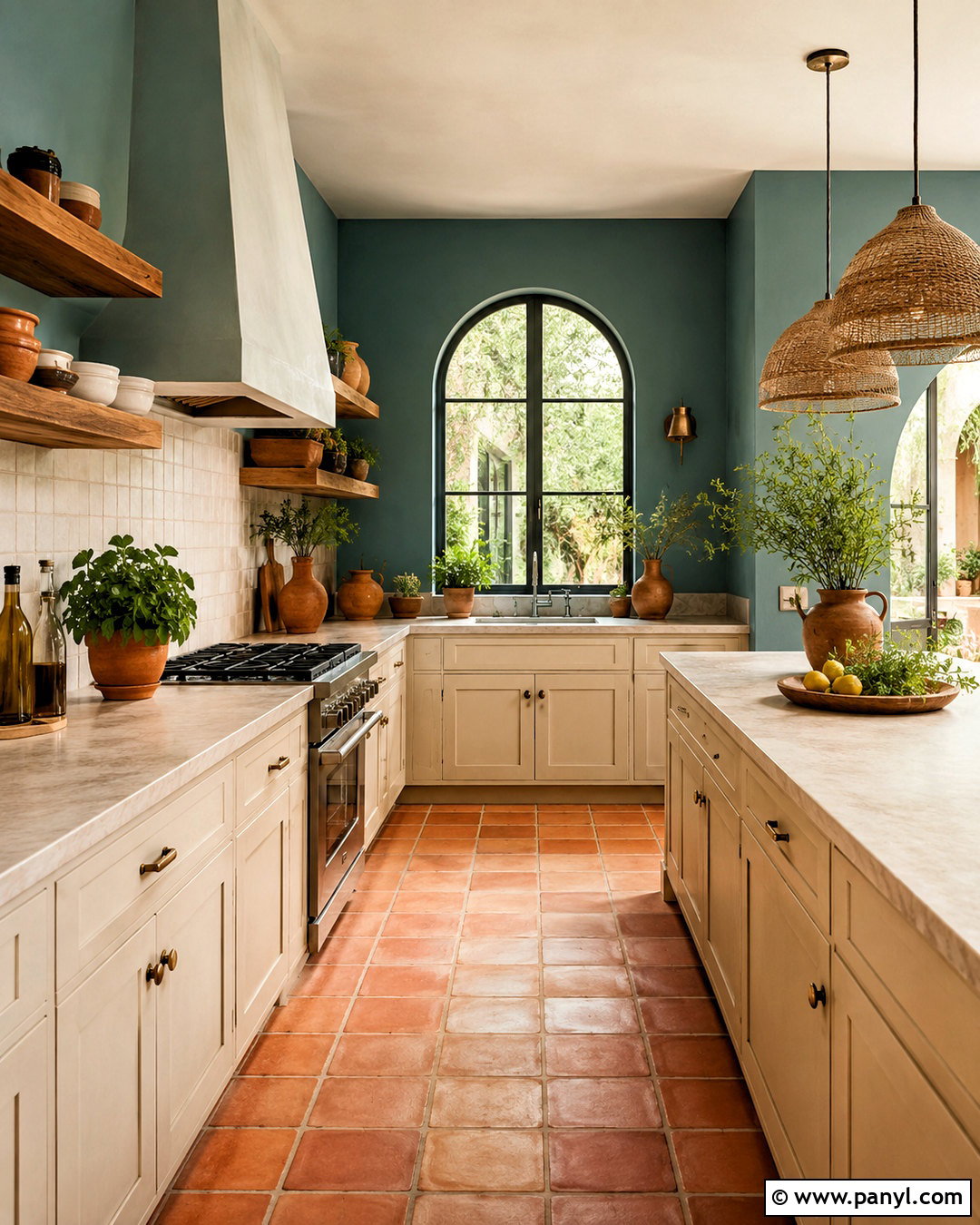
The warm red-orange color of terracotta flooring forms an earthy contrast with teal kitchen walls. Choose a slightly muted, green-leaning teal to complement the natural variation in the floor tiles. Cream shaker cabinets, honed beige counters, and an ivory backsplash maintain a warm Mediterranean foundation. Add aged brass hardware, rustic wood shelves, and woven pendant lights for texture. A freestanding wooden table or compact island will enhance the informal character. Keep window coverings simple so daylight can reveal the richness of both the walls and floors. Rather than filling the room with colorful accessories, use off-white pottery, wooden utensils, and leafy herbs. This full scheme works particularly well in Spanish, cottage, and older kitchens where imperfect finishes and patina contribute to the room’s charm.
14. Teal Kitchen Walls With White Subway Tile
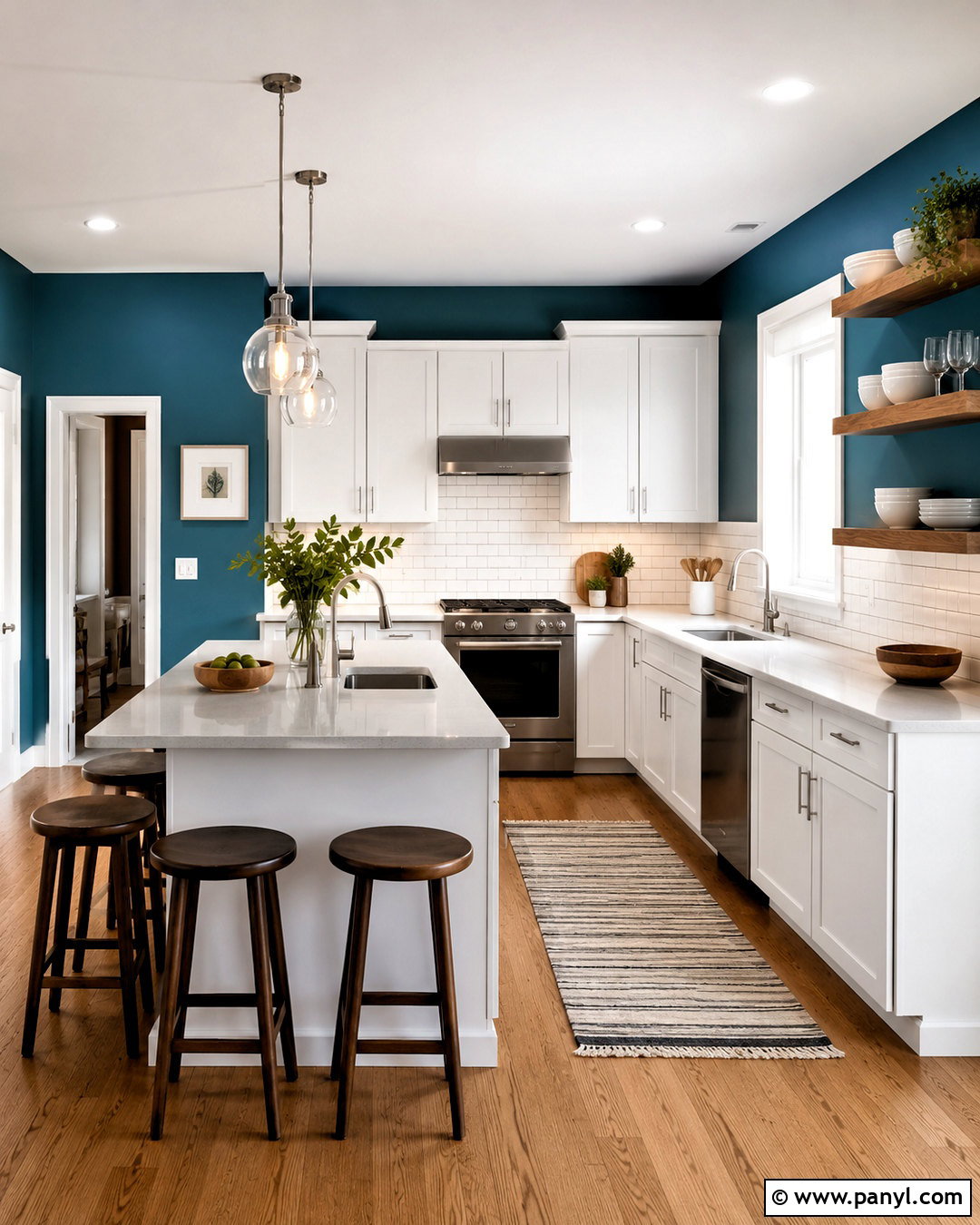
White subway tile gives saturated teal kitchen walls a familiar and affordable counterpoint. Install the tile around the working zone, then allow the teal paint to cover the open walls above a dining nook or beside tall cabinetry. White shaker cabinets and pale quartz counters continue the bright foundation. For a softer appearance, choose warm white tile with light gray grout instead of stark white with black grout. Add medium oak flooring, brushed nickel hardware, and clear glass pendants. A striped runner can gently repeat the blue-green wall color. Keep open shelves natural wood to introduce warmth and break up the white surfaces. The resulting kitchen feels clean and timeless, while the teal prevents the standard subway tile and white cabinetry from becoming predictable.
15. Teal Kitchen Walls With Zellige Tile
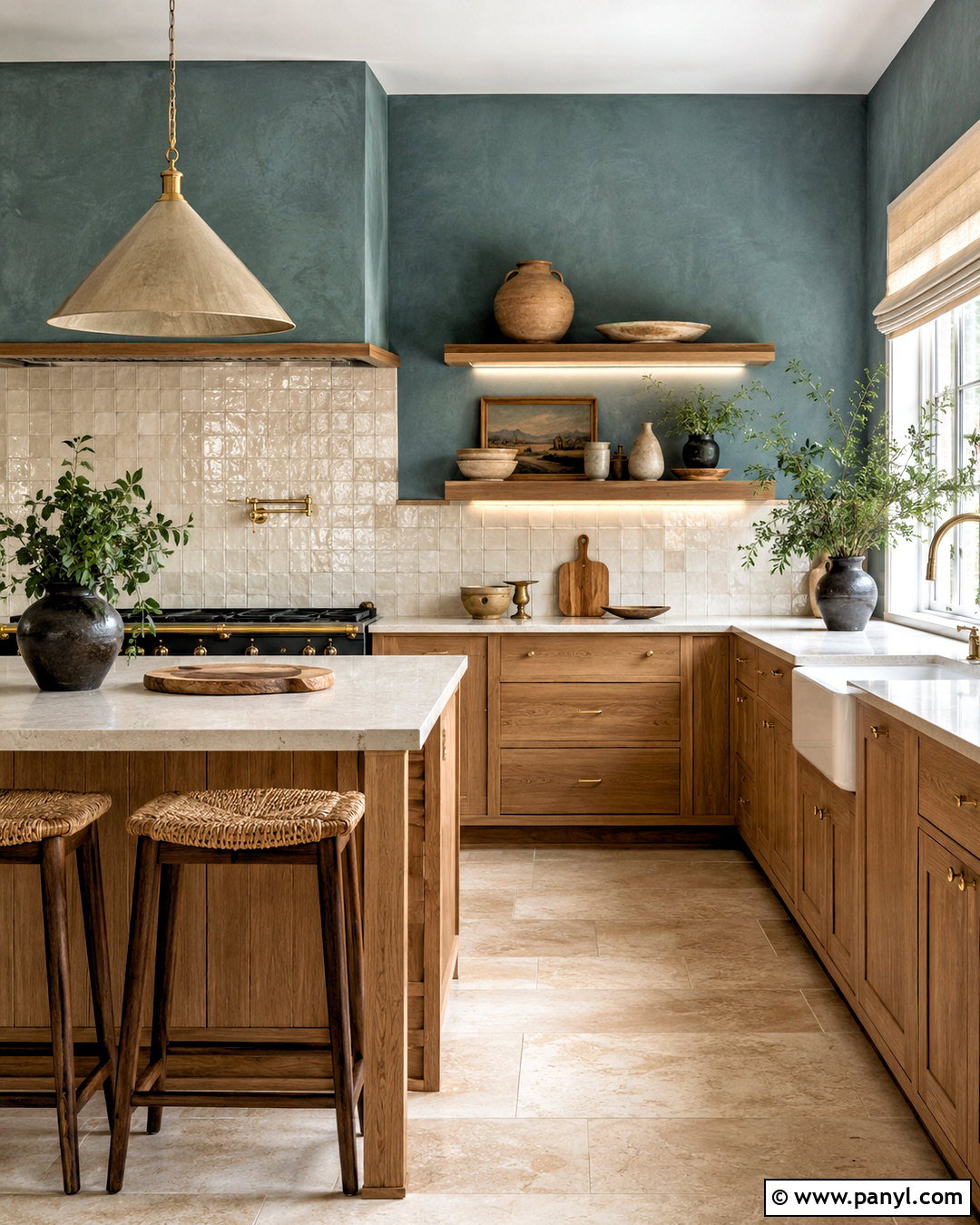
Glossy zellige tile and teal kitchen walls create a rich design through texture rather than multiple competing colors. Pair smoky teal paint with uneven warm white tiles that reflect light across the backsplash. Choose simple oak cabinets or warm white shaker doors, depending on how much wood you want in the room. Cream quartz countertops maintain a quiet transition, while unlacquered brass hardware adds a gently aged finish. Continue the organic mood with limestone-look flooring, woven stools, and linen window shades. Because zellige has visible variation, keep the grout close to the tile color. Use under-cabinet lighting to emphasize the handmade surface without producing harsh glare. The finished kitchen feels crafted and layered, yet the restrained palette keeps every element connected and easy to live with.
16. Teal Kitchen Walls With Patterned Backsplash
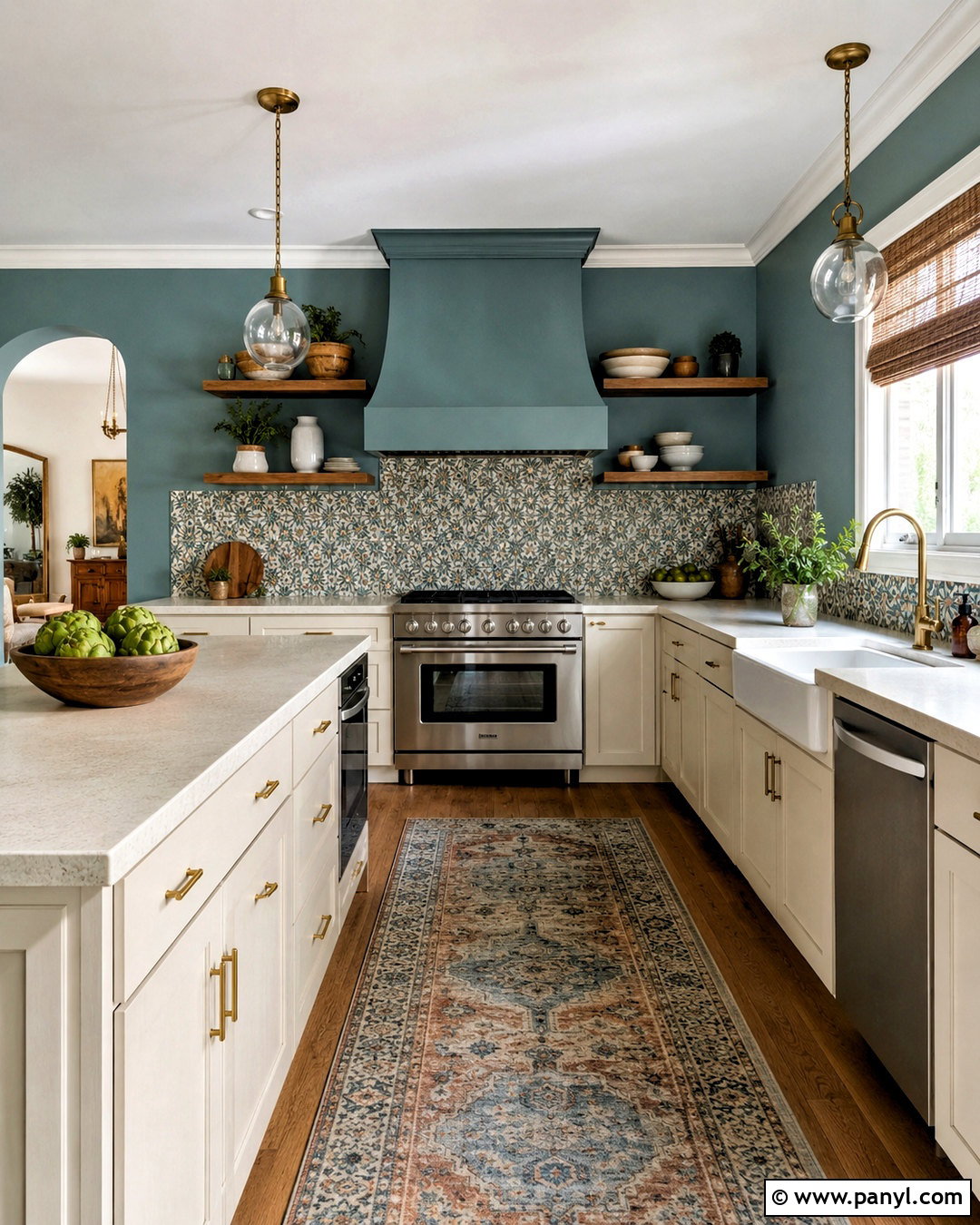
A patterned backsplash can work with teal kitchen walls when the colors share a clear relationship. Select a tile pattern containing small amounts of teal, cream, and muted gray, then use one of its darker blue-green tones on the walls. Keep the cabinets warm white and the countertops nearly solid so the pattern does not compete with heavy veining. Medium wood flooring and simple brass hardware add warmth. Limit the patterned tile to the cooking wall or the space beneath upper cabinets rather than covering every wall. Use plain pendants and unpatterned window shades to give the eye a place to rest. This complete approach suits Spanish, eclectic, and transitional kitchens. It feels expressive, but each large surface still has a defined supporting role.
17. Teal Kitchen Walls With Open Shelving
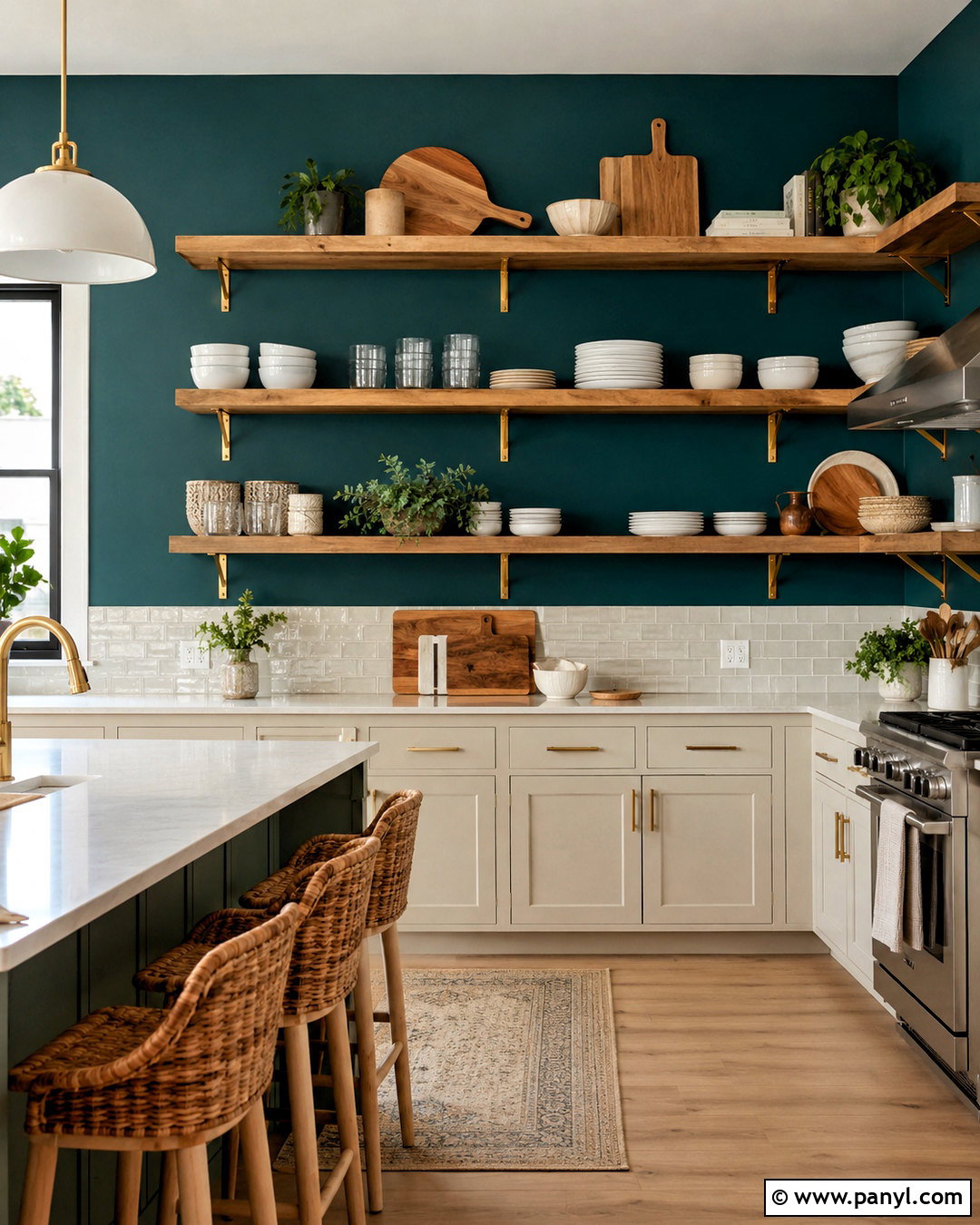
Open wood shelves stand out clearly against teal kitchen walls and make useful objects part of the decor. Install two or three substantial oak shelves on the main open wall, leaving enough space around them so the arrangement can breathe. Pair the wall treatment with cream lower cabinets, quartz countertops, and a simple ivory backsplash. Display mostly white dishes, clear glasses, wooden boards, and a few small plants to prevent visual clutter. Brushed brass shelf brackets can coordinate with cabinet pulls and the faucet. Light wood flooring and woven counter stools complete the warm, casual palette. Keep frequently used pieces on lower shelves and decorative items higher up. The finished kitchen feels accessible and personal while maintaining practical storage and a clear, coordinated color scheme.
18. Teal Kitchen Walls With Floating Wood Shelves
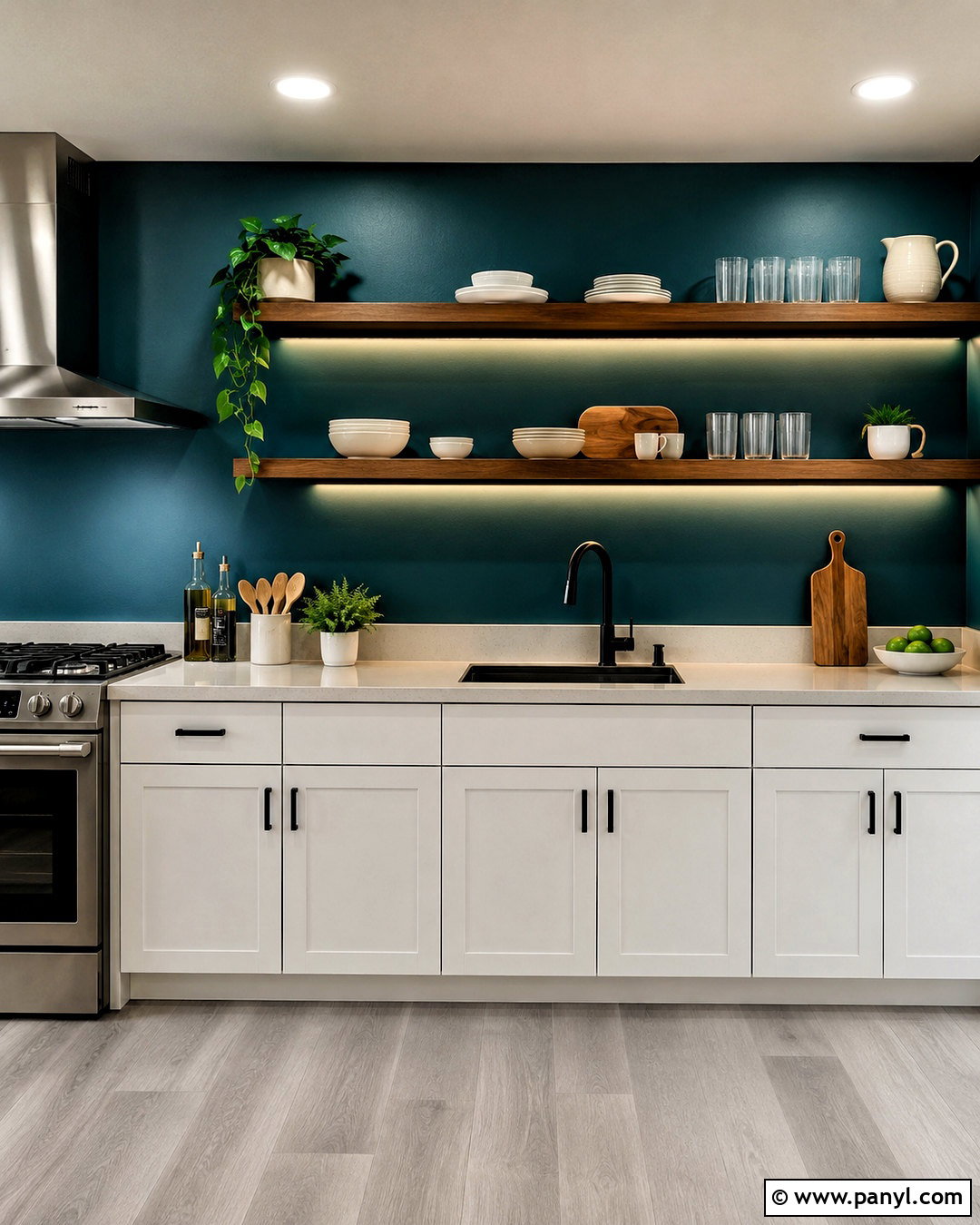
Slim floating shelves create a cleaner, more modern interpretation of teal kitchen walls. Choose thick walnut shelves with concealed brackets so the wood appears to extend directly from the painted surface. Combine them with matte white lower cabinets, pale quartz counters, and a short matching quartz backsplash. Black hardware and streamlined pendants provide definition, while the walnut adds essential warmth. Style each shelf sparingly with stacked cream bowls, ribbed glasses, and one trailing plant. A light gray porcelain floor keeps the room simple and durable. Position integrated lighting beneath the lowest shelf for practical countertop illumination. This complete kitchen works well in apartments and smaller homes because eliminating bulky upper cabinets makes the wall feel more open while the dark shelf lines provide useful structure.
19. Teal Kitchen Walls With Plate Racks
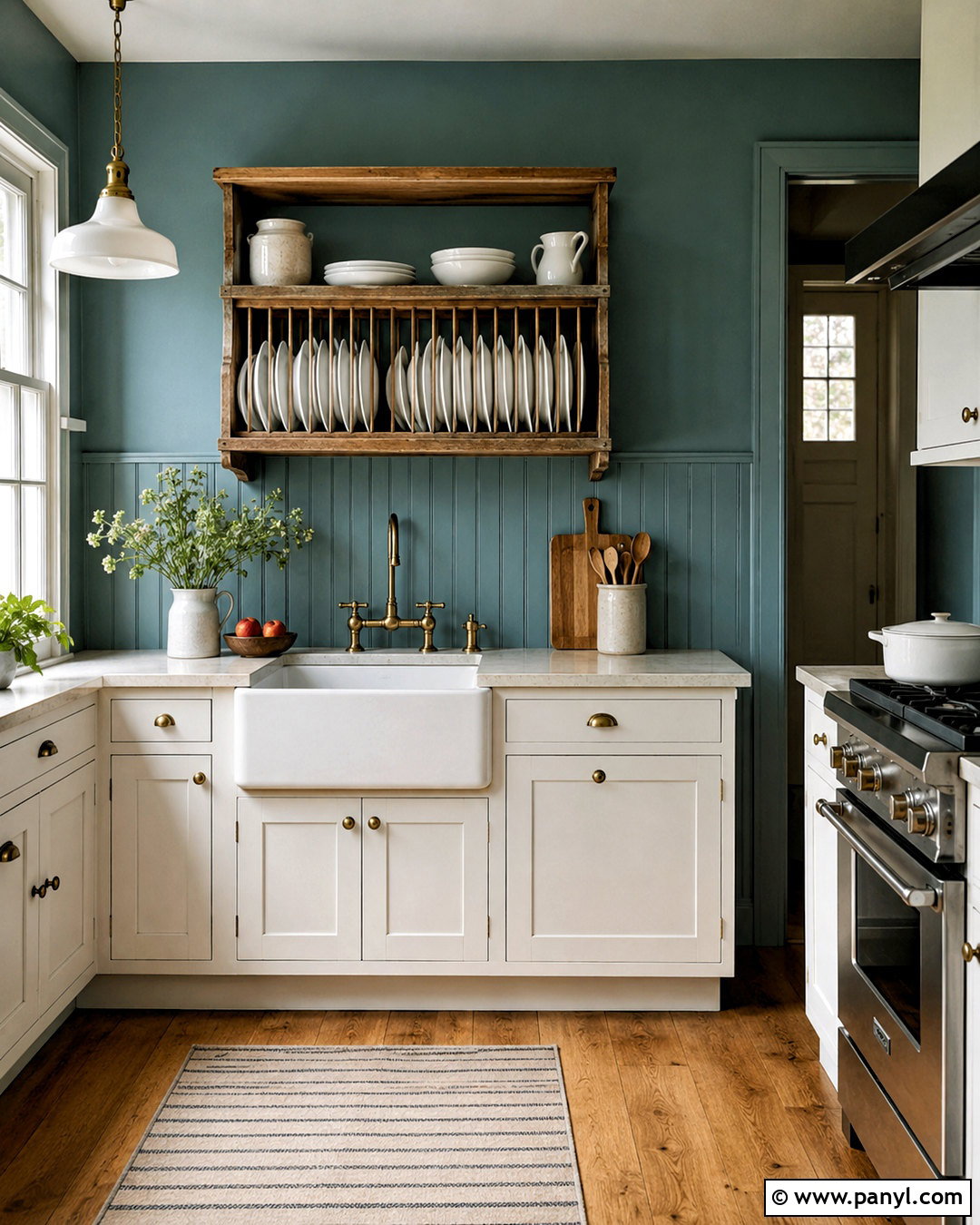
A painted or natural wood plate rack gives teal kitchen walls a practical cottage feature. Use a dusty teal background with warm white inset cabinets and pale butcher block or cream quartz countertops. Mount the rack near the sink or dining area, filling it with everyday white plates rather than purely decorative pieces. Add beadboard to the lower portion of an adjacent wall for subtle architectural texture. A farmhouse sink, aged brass faucet, and simple schoolhouse pendants reinforce the traditional character. Medium oak flooring and a washable striped runner keep the room warm and functional. Avoid excessive vintage accessories that could make the kitchen feel crowded. With restrained styling, the complete design feels charming and established while still supporting modern storage, lighting, and food preparation needs.
20. Teal Kitchen Walls With Beadboard
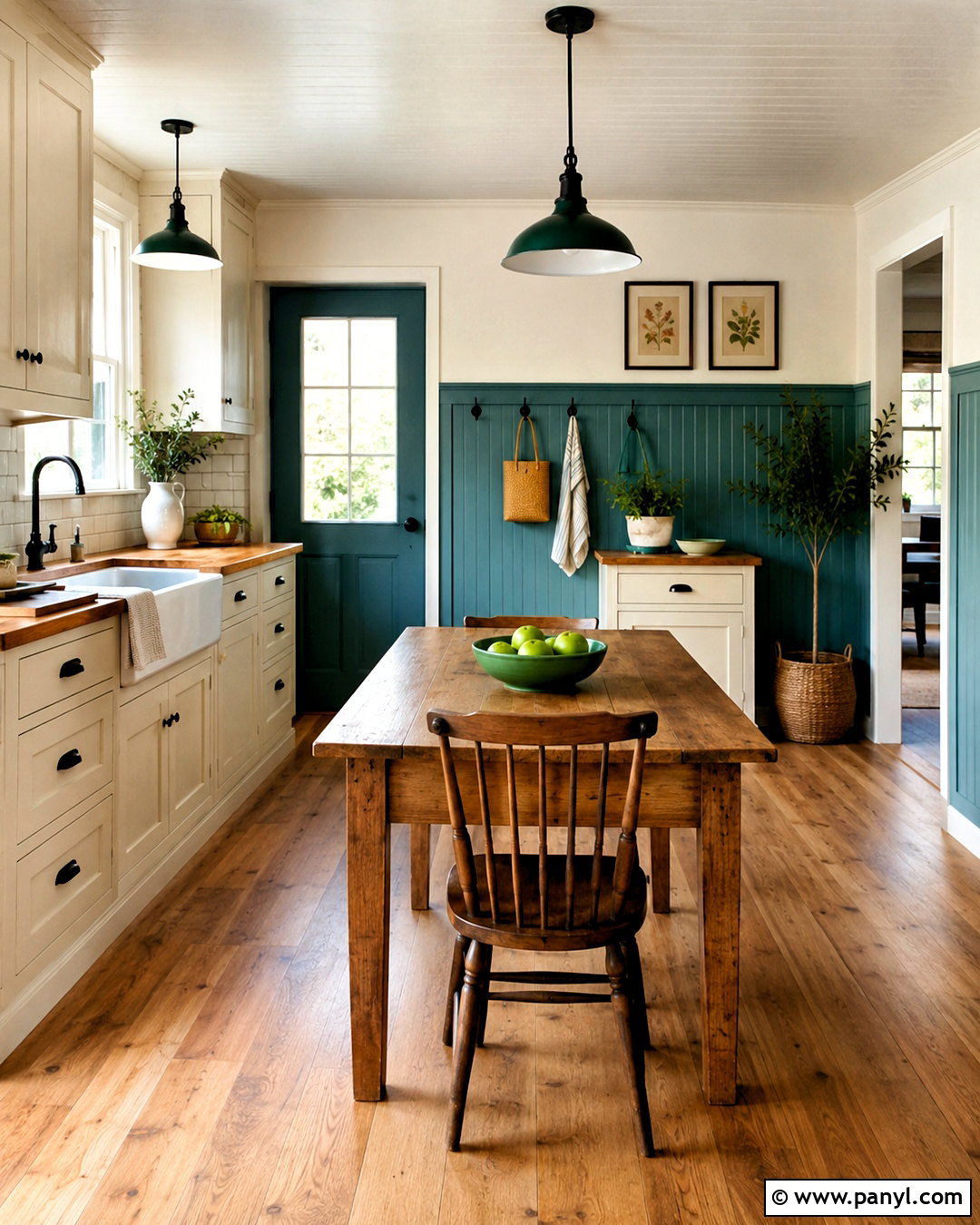
Teal-painted beadboard can bring dimension to plain kitchen walls without requiring expensive tile. Cover the lower half of the room with vertical beadboard and paint it a medium blue-green, then use warm white above to keep the space open. Cream shaker cabinets, butcher block counters, and an ivory backsplash create a relaxed cottage foundation. Add black cup pulls, a bridge faucet, and simple enamel pendants for definition. Natural oak flooring and a freestanding wood table continue the casual look. Finish the top of the paneling with a narrow rail that can support small framed prints. This treatment is particularly useful around a breakfast nook or pantry wall. Use a durable washable paint finish so the detailed grooves remain easier to clean in a busy kitchen.
21. Teal Kitchen Walls With Shiplap
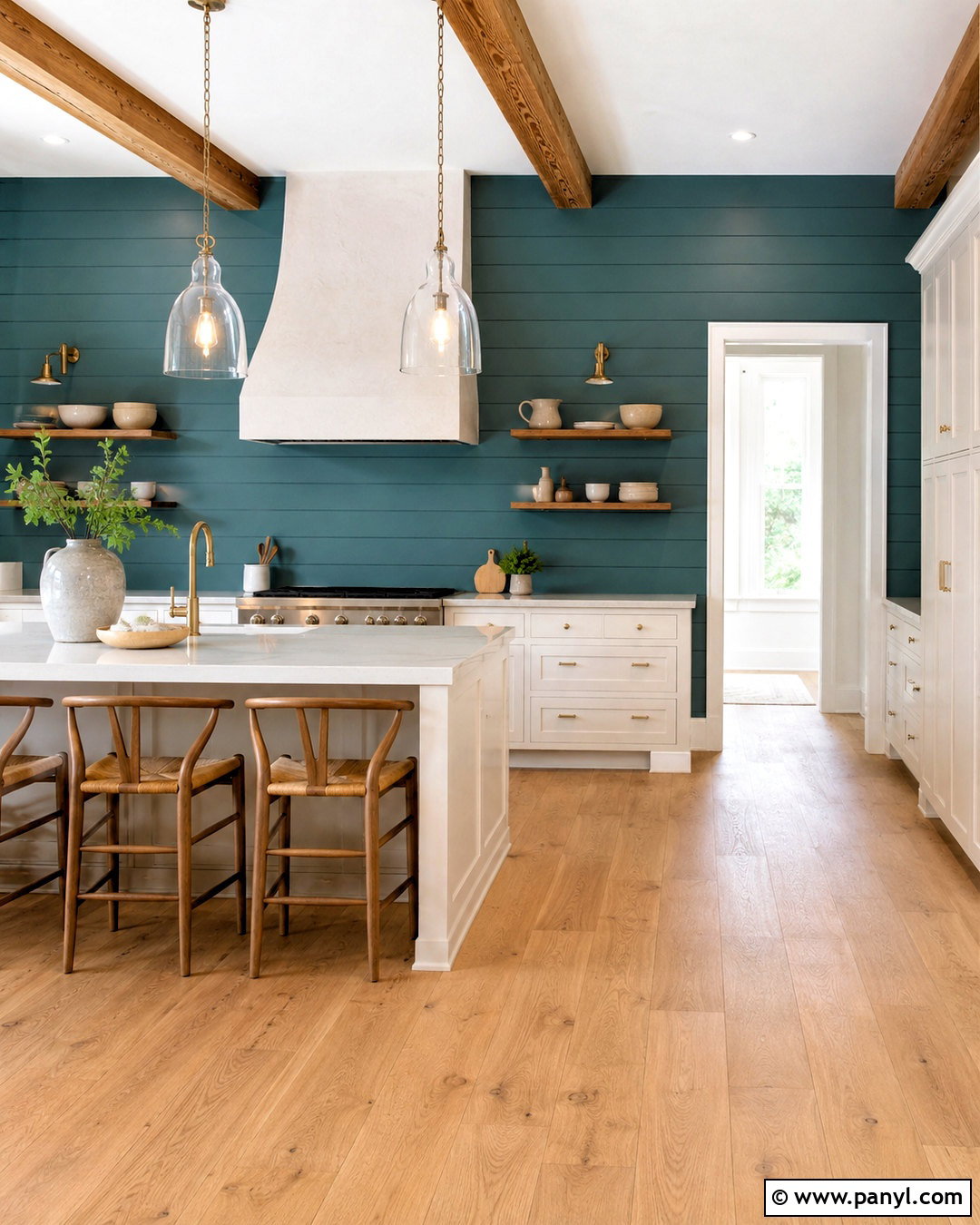
Horizontal shiplap painted teal makes a kitchen wall feel broader and more architectural. Use it on the range wall, breakfast nook, or a full wall without upper cabinetry. Pair the paneling with white shaker cabinets, pale quartz countertops, and light oak flooring to balance its strong color and visible lines. A simple plaster or stainless steel hood keeps the cooking area uncluttered. Add aged brass hardware and clear glass pendants for warmth without introducing excessive ornament. Keep shelf displays and wall decor minimal because the paneling already provides texture. Choose boards with clean, narrow gaps rather than deeply rustic distressing for a versatile finish. The completed kitchen combines farmhouse structure with fresh color, making the room feel characterful but still bright, orderly, and comfortable.
22. Teal Kitchen Walls With Wallpaper
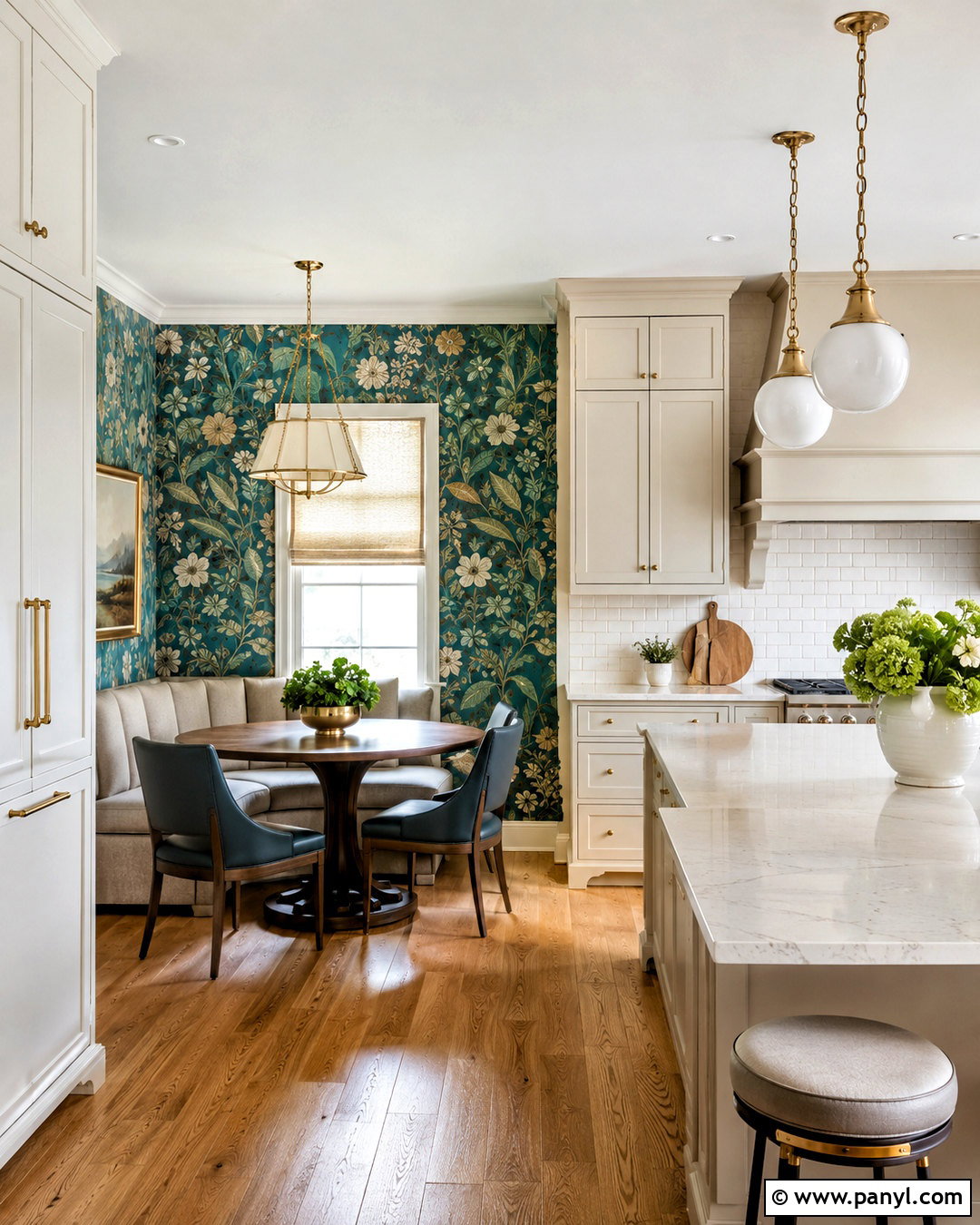
Teal wallpaper can introduce pattern while still creating a coordinated, functional kitchen. Choose a small botanical or geometric print with a teal background and cream details. Apply it to a breakfast nook or wall away from heavy cooking splashes, then use washable teal paint on nearby working walls. Cream cabinets, white quartz counters, and an understated ivory backsplash support the pattern. Add a round oak table, simple upholstered banquette, and aged brass pendant to make the nook feel complete. Keep flooring neutral and window treatments plain. If the kitchen is compact, avoid an oversized motif that could overwhelm the cabinetry. The final room feels layered and personal, while limiting wallpaper to a defined zone makes maintenance easier and gives the kitchen a strong visual focal point.
23. Teal Kitchen Walls With Botanical Decor
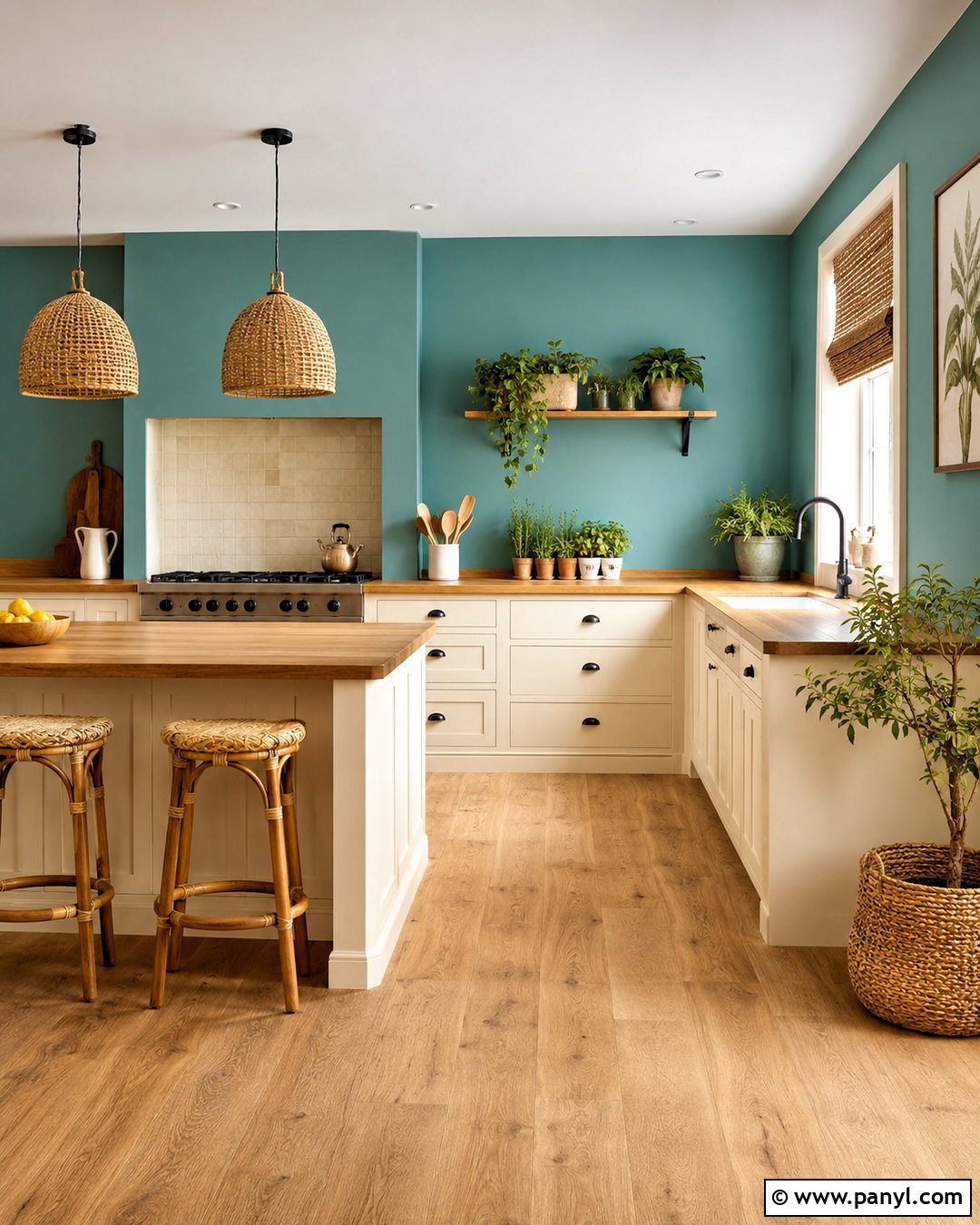
Bring out the natural green undertones of teal kitchen walls with carefully chosen botanical decor. Start with warm white cabinetry, oak countertops, and a cream tile backsplash. Use plants in practical locations, such as herbs near a bright window, a trailing plant on an open shelf, and one larger floor plant beside a breakfast bench. Avoid covering every counter with pots. Natural wood flooring, woven shades, and rattan pendants strengthen the fresh, organic mood. Black hardware provides a clean outline against the lighter cabinetry. Botanical artwork can repeat the wall color without becoming overly themed. The finished kitchen should feel open and functional, with plants supporting rather than dominating the design. This balanced approach works especially well in sunny kitchens with generous windows and simple cabinetry.
24. Teal Kitchen Walls With Coastal Decor
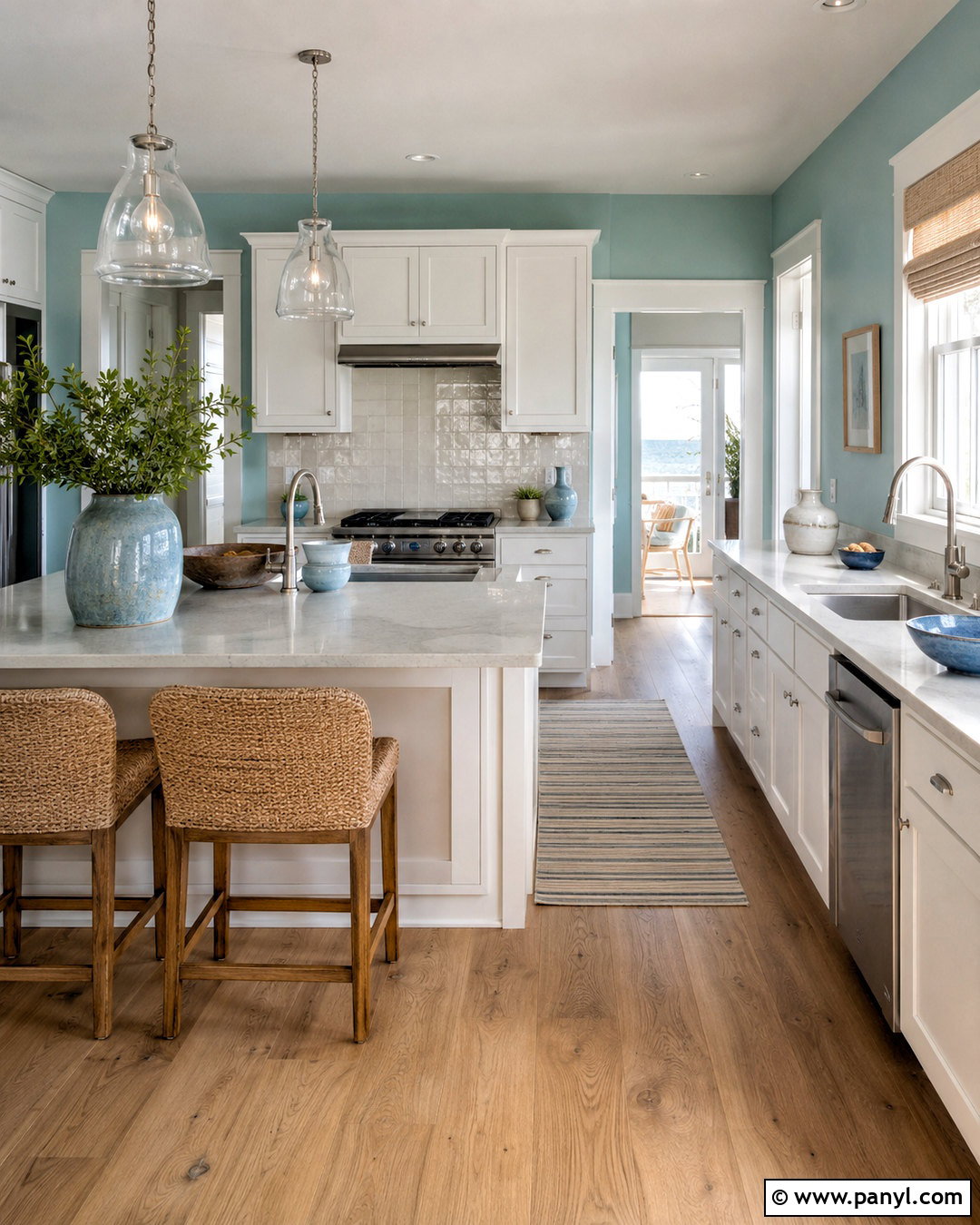
Teal kitchen walls can support a coastal look without relying on obvious nautical decorations. Choose a softened ocean-inspired teal and combine it with warm white cabinets, pale quartz counters, and lightly textured ivory tile. White oak flooring and woven counter stools create a sun-washed foundation. Use brushed nickel hardware, clear glass pendants, and relaxed linen Roman shades for an airy finish. A few blue-gray ceramics and a striped runner can repeat the coastal palette, but skip anchors, signs, and novelty accessories. Open shelving with white dishes keeps the room practical and uncluttered. The complete kitchen feels fresh and casual rather than themed. This design is suitable for both waterfront homes and inland spaces where light colors, natural textures, and easygoing finishes are the real priorities.
25. Teal Kitchen Walls With Farmhouse Cabinets
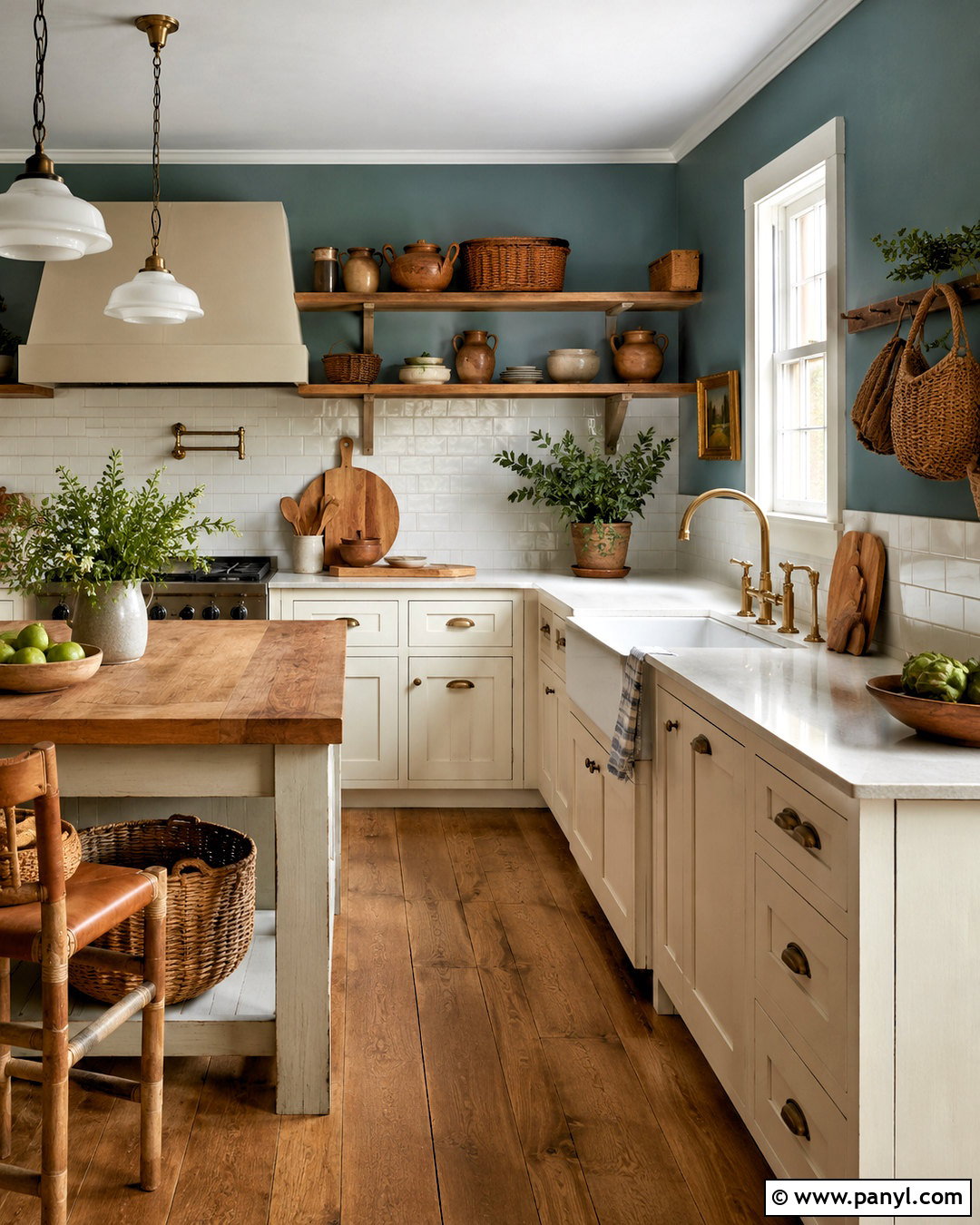
Traditional farmhouse cabinets become more distinctive when framed by muted teal kitchen walls. Select warm white shaker doors, a deep apron-front sink, and simple black or aged brass hardware. Butcher block on the island can add warmth, while durable cream quartz works well around the sink and range. Use an off-white subway backsplash, medium oak flooring, and schoolhouse pendant lights to complete the practical foundation. A wooden table or compact work island gives the room an unfitted, welcoming quality. Keep accessories functional, such as ceramic crocks, wooden boards, and woven baskets. Avoid overly distressed finishes and decorative signs. The teal walls already supply character, allowing the remaining farmhouse elements to stay simple, useful, and appropriate for a contemporary family kitchen.
26. Teal Kitchen Walls With Modern Cabinets
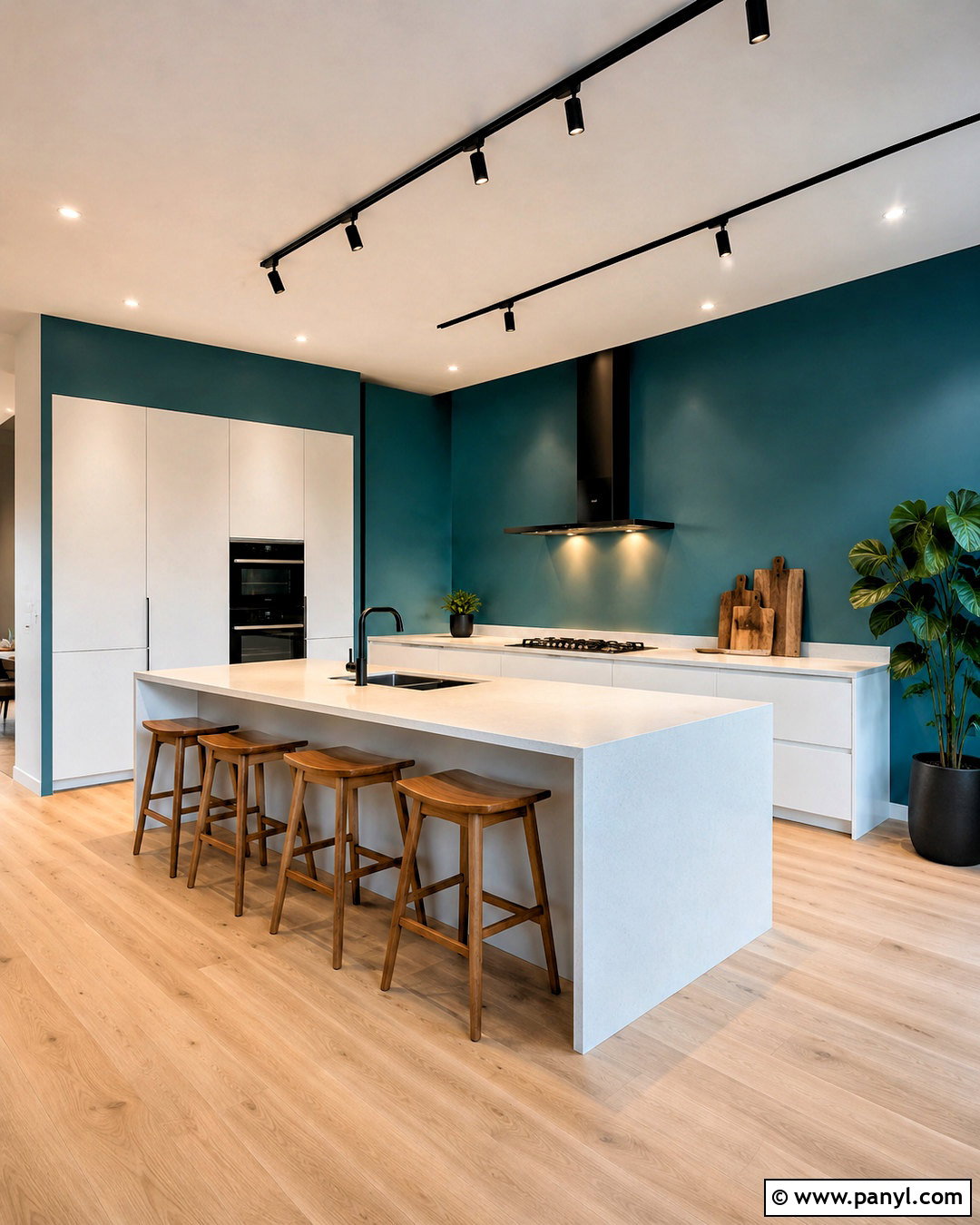
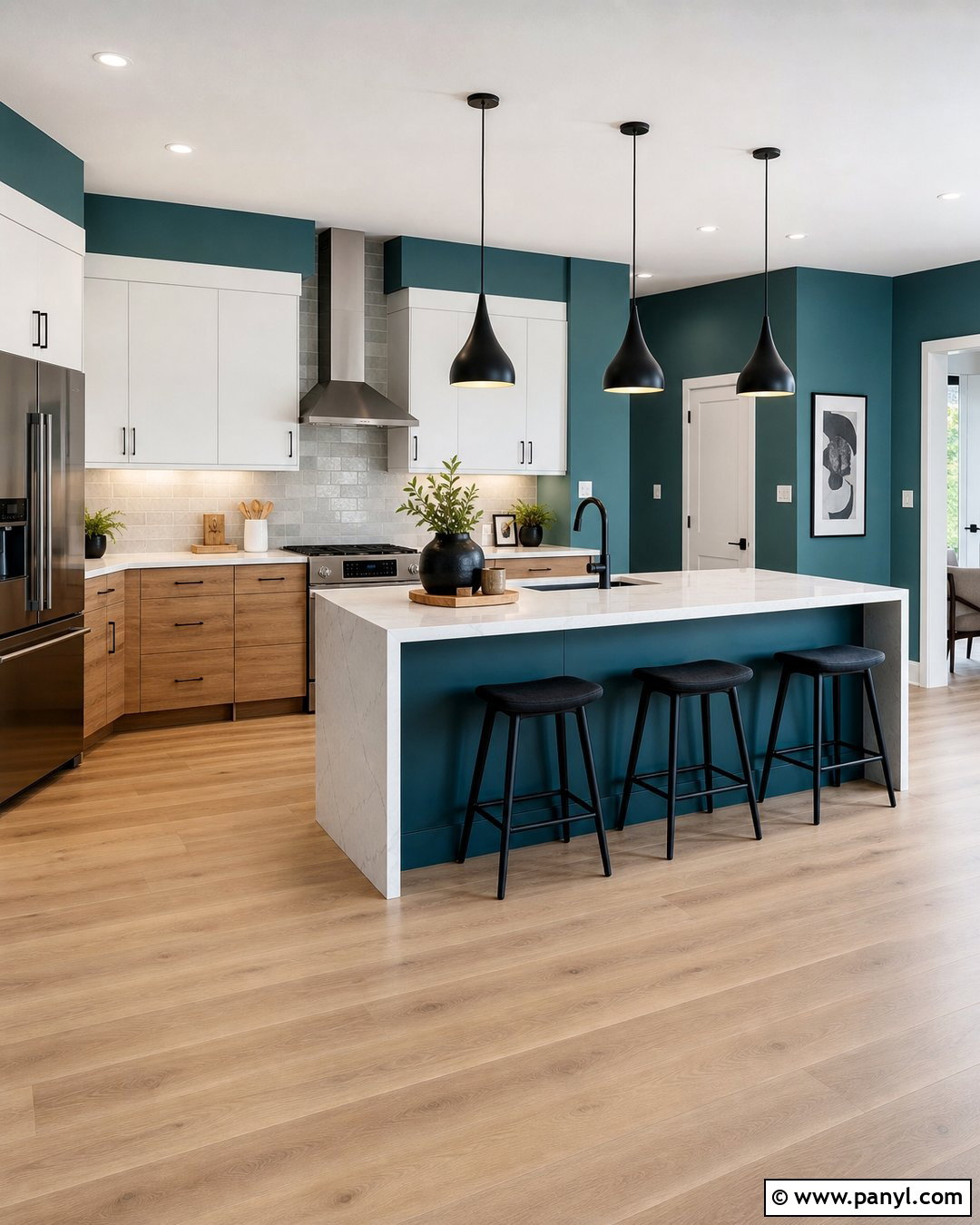
Flat-panel cabinets create a streamlined contrast with expressive teal kitchen walls. Choose matte white or pale greige cabinetry with concealed pulls, then add thin white quartz countertops and a matching low-profile backsplash. Use medium teal paint on every open wall for a continuous, confident background. Light oak flooring keeps the kitchen warm, while black track lighting and a minimalist faucet sharpen the clean lines. An island with waterfall sides can provide a polished focal point without introducing another color. Select backless wood stools and limit countertop items to a coffee maker, tray, and one sculptural bowl. The completed design feels modern but not clinical. Teal adds depth and personality, while the restrained cabinetry, integrated appliances, and uncluttered surfaces maintain a highly functional appearance.
27. Teal Kitchen Walls With Midcentury Cabinets
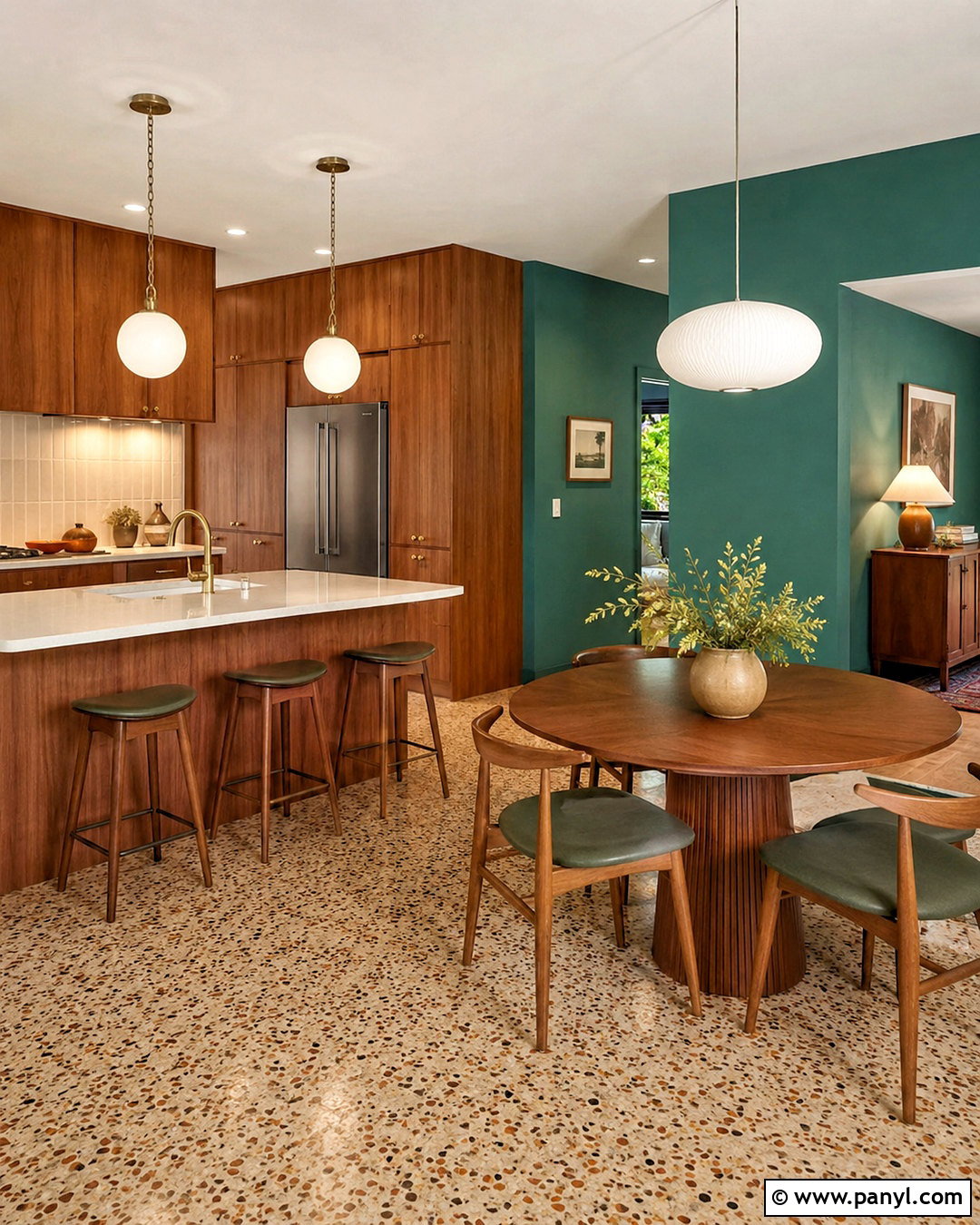
Walnut cabinets and teal kitchen walls form a natural midcentury-inspired combination. Use flat-front cabinetry with visible wood grain, simple round brass knobs, and pale cream quartz countertops. A vertical off-white tile backsplash adds subtle rhythm without competing with the walls. Continue the period influence through globe pendants, tapered counter stools, and warm terrazzo or cork flooring. Keep the teal slightly muted so it complements rather than overpowers the walnut. A compact dining nook can include a round wood table and curved upholstered chairs in cream or rust. Avoid filling the room with vintage reproductions; a few recognizable shapes are enough. The finished kitchen feels warm, graphic, and functional, blending classic midcentury materials with current storage, appliances, and durable work surfaces.
28. Teal Kitchen Walls With Industrial Finishes
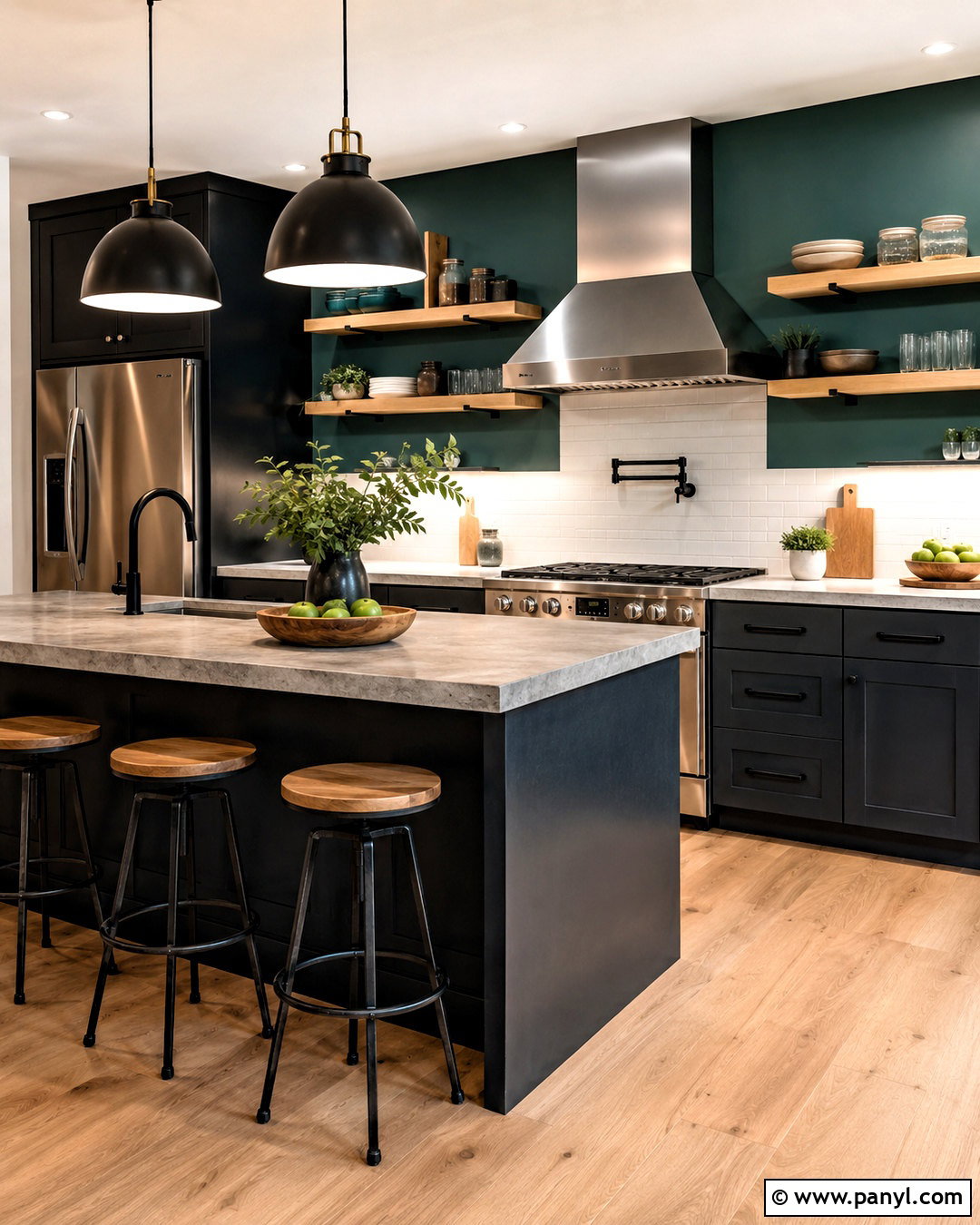
Teal walls can soften an industrial kitchen filled with concrete, steel, and black details. Choose a deep, slightly smoky teal and pair it with charcoal lower cabinets and light wood open shelves. Concrete-look quartz counters provide durability, while a white tile backsplash keeps the preparation zone bright. Add black-framed pendants, a stainless steel range, and dark metal stools with wooden seats. Pale oak flooring prevents the combination from becoming too heavy. Exposed shelving should remain organized with neutral dishes, glass jars, and practical cookware. Use bright overhead and under-shelf lighting to maintain visibility against the darker palette. The complete kitchen feels urban and sturdy, but the teal background gives it more color and comfort than a purely gray, black, and metal design.
29. Teal Kitchen Walls With Rustic Wood
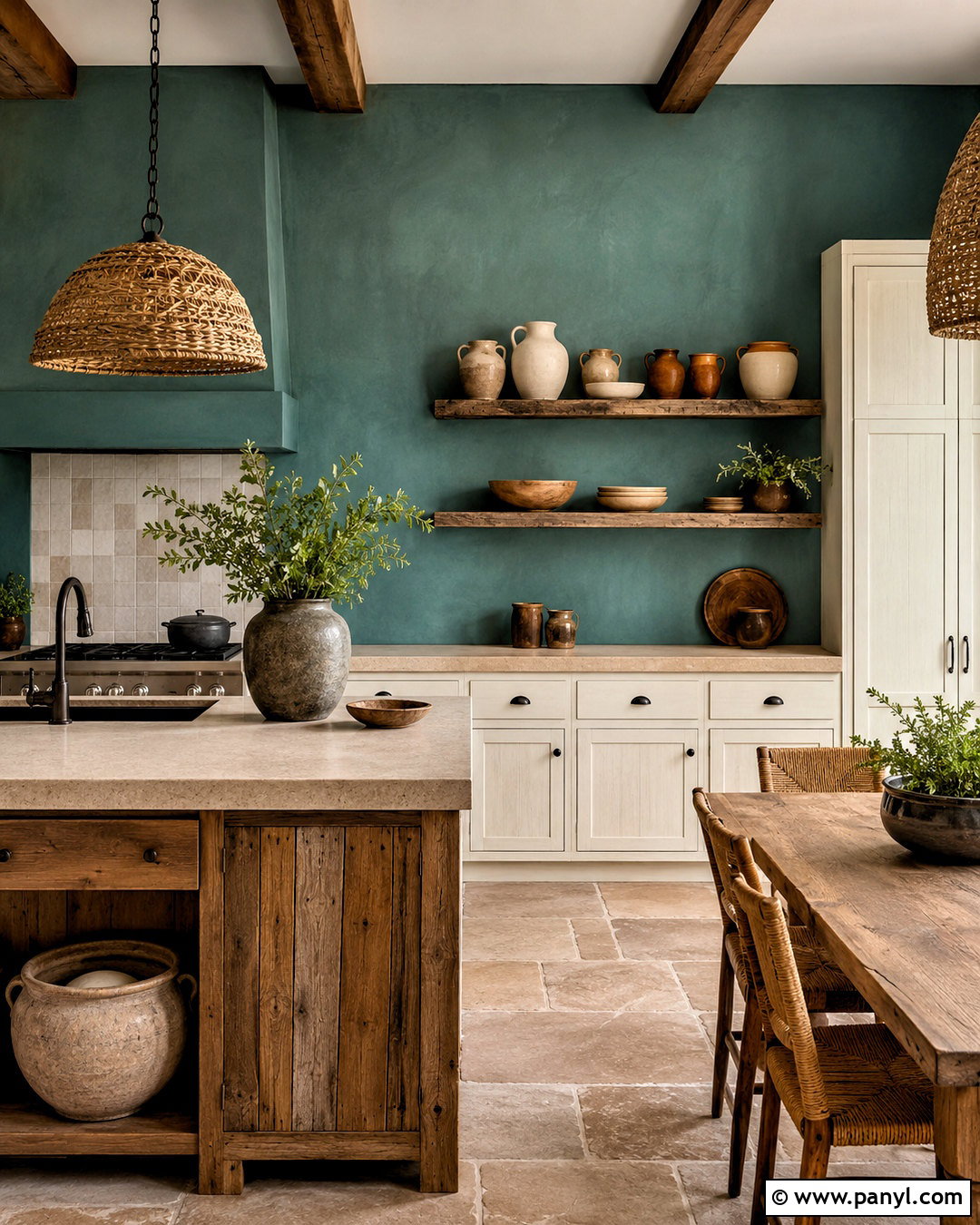
Rough-sawn wood brings warmth and texture to saturated teal kitchen walls. Use reclaimed timber selectively on a central island, range hood, or sturdy open shelves rather than covering every surface. Cream inset cabinets and honed beige countertops create a quiet foundation around those rustic features. Choose handmade ivory backsplash tile, aged bronze hardware, and warm stone-look flooring to reinforce the natural palette. A simple wood table and woven pendants can complete an adjoining eating area. Keep the teal softened and earthy so it blends with knots, grain, and uneven wood tones. Modern appliances and bright task lighting will prevent the space from feeling dated. The final kitchen balances rustic character with practical surfaces, clear work zones, and enough pale color to remain inviting.
30. Teal Kitchen Walls With Two-Tone Cabinets
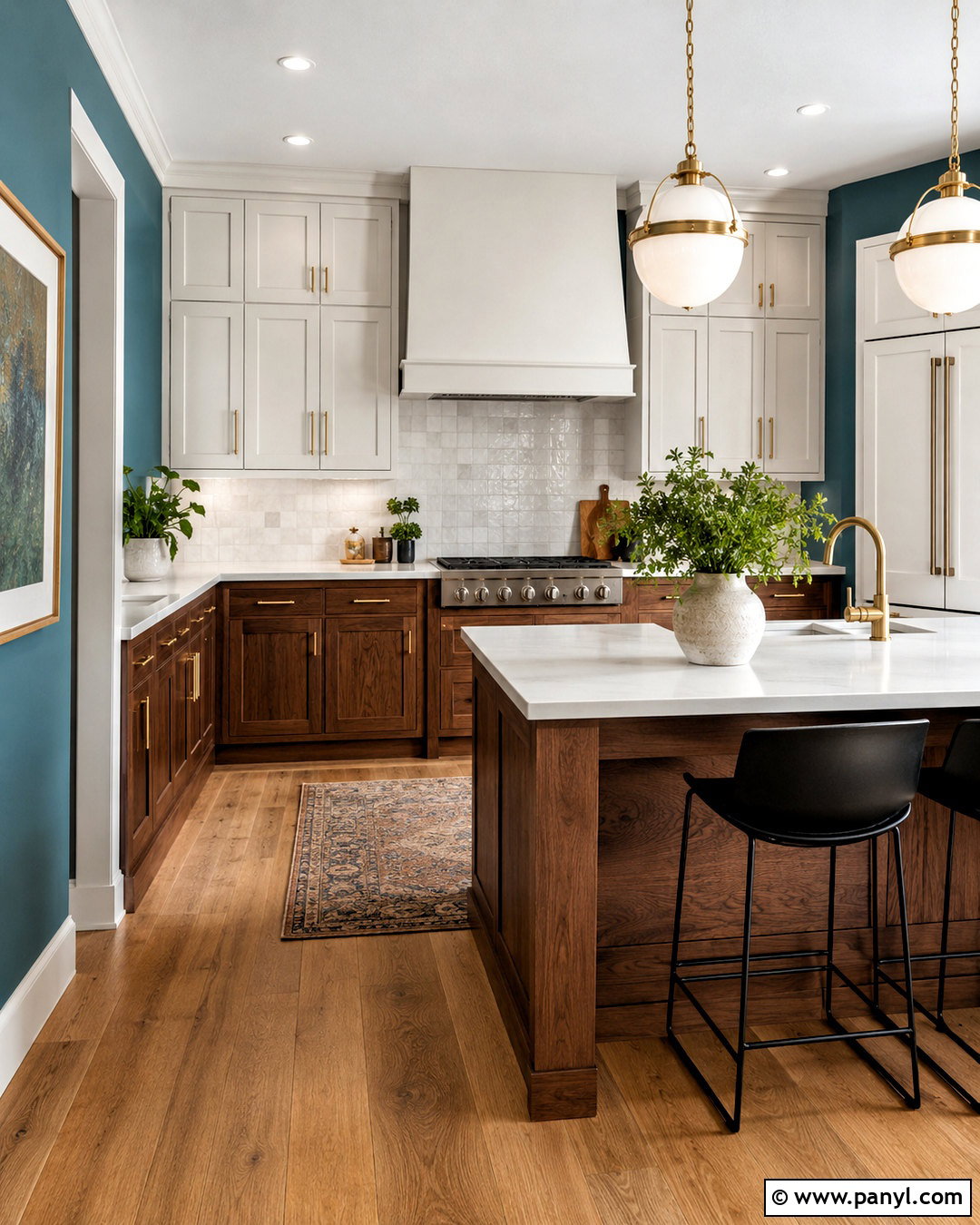
Two-tone cabinets allow teal kitchen walls to connect several colors in one balanced composition. Use warm white upper cabinets to preserve brightness and deep charcoal or natural walnut lower cabinets to ground the room. Select a medium teal wall color that is strong enough to define the open areas but softer than the lower cabinetry. White quartz countertops and an ivory backsplash create continuity between both cabinet tones. Add brass hardware, oak flooring, and simple globe pendants to warm the palette. Keep the island consistent with the lower cabinets rather than introducing a fourth major color. The completed kitchen feels layered without becoming busy. Repeating each finish at least twice helps the walls, cabinetry, metals, and wood read as one intentional design rather than unrelated selections.
31. Teal Kitchen Walls With A White Island
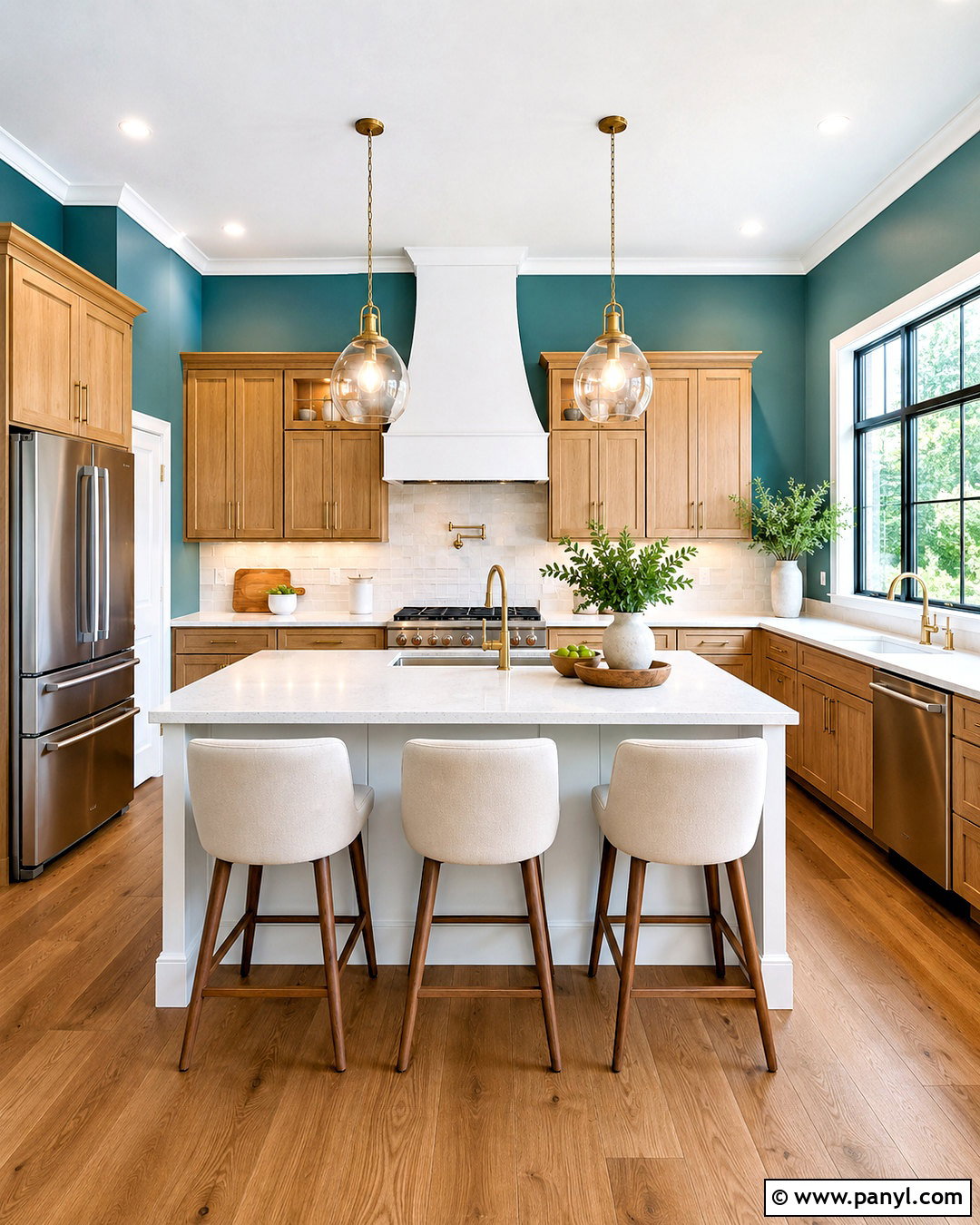
A white island can become a bright visual break in a kitchen surrounded by teal walls. Pair the island with natural wood perimeter cabinets or soft gray cabinetry for a balanced three-color palette. Use the same pale quartz countertop throughout the room to connect both cabinet finishes. An ivory backsplash, medium oak flooring, and brushed brass hardware add warmth and consistency. Over the island, install clear glass pendants that do not block the teal background. Upholstered stools in cream or tan will keep the seating area comfortable and light. Repeat white through the ceiling, trim, and window frames. The finished kitchen feels colorful but spacious because the central work surface reflects light and prevents the teal from visually closing in around the main gathering zone.
32. Teal Kitchen Walls With A Wood Island
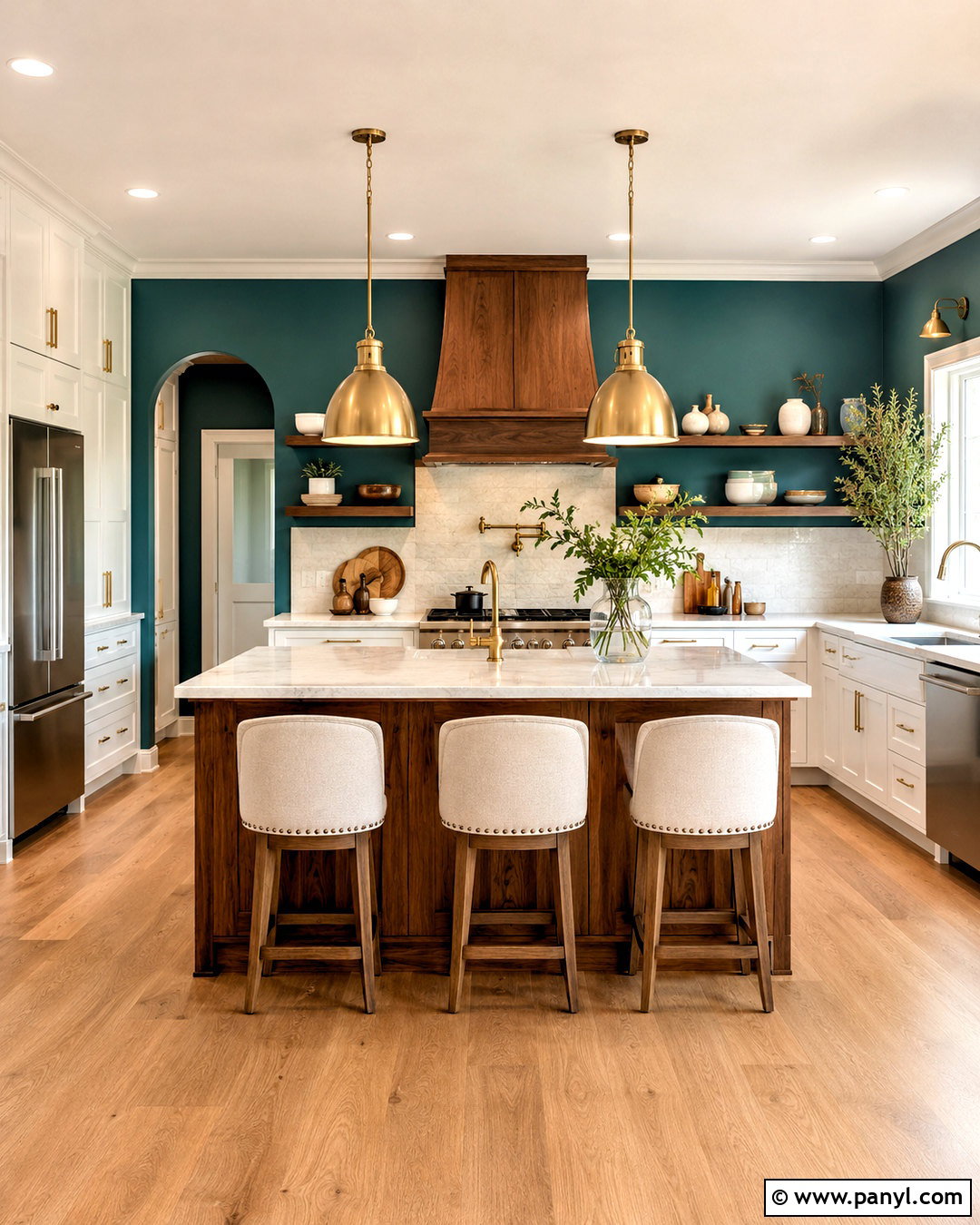
A substantial wood island makes teal kitchen walls feel warmer and more grounded. Choose white perimeter cabinets and pale quartz worktops, then introduce a medium oak or walnut island with a matching countertop or durable stone top. Continue the wood tone through flooring or open shelves, but vary it slightly to avoid an overly matched appearance. Brushed brass pendants and cabinet hardware provide a warm bridge between teal, white, and wood. Use a simple cream backsplash and neutral upholstered stools so the island remains the central feature. Leave comfortable walking space around every side and include drawers for frequently used tools. This complete design works well in larger kitchens where the colorful walls establish atmosphere while the island creates a practical, welcoming gathering place.
33. Teal Kitchen Walls In A Small Kitchen
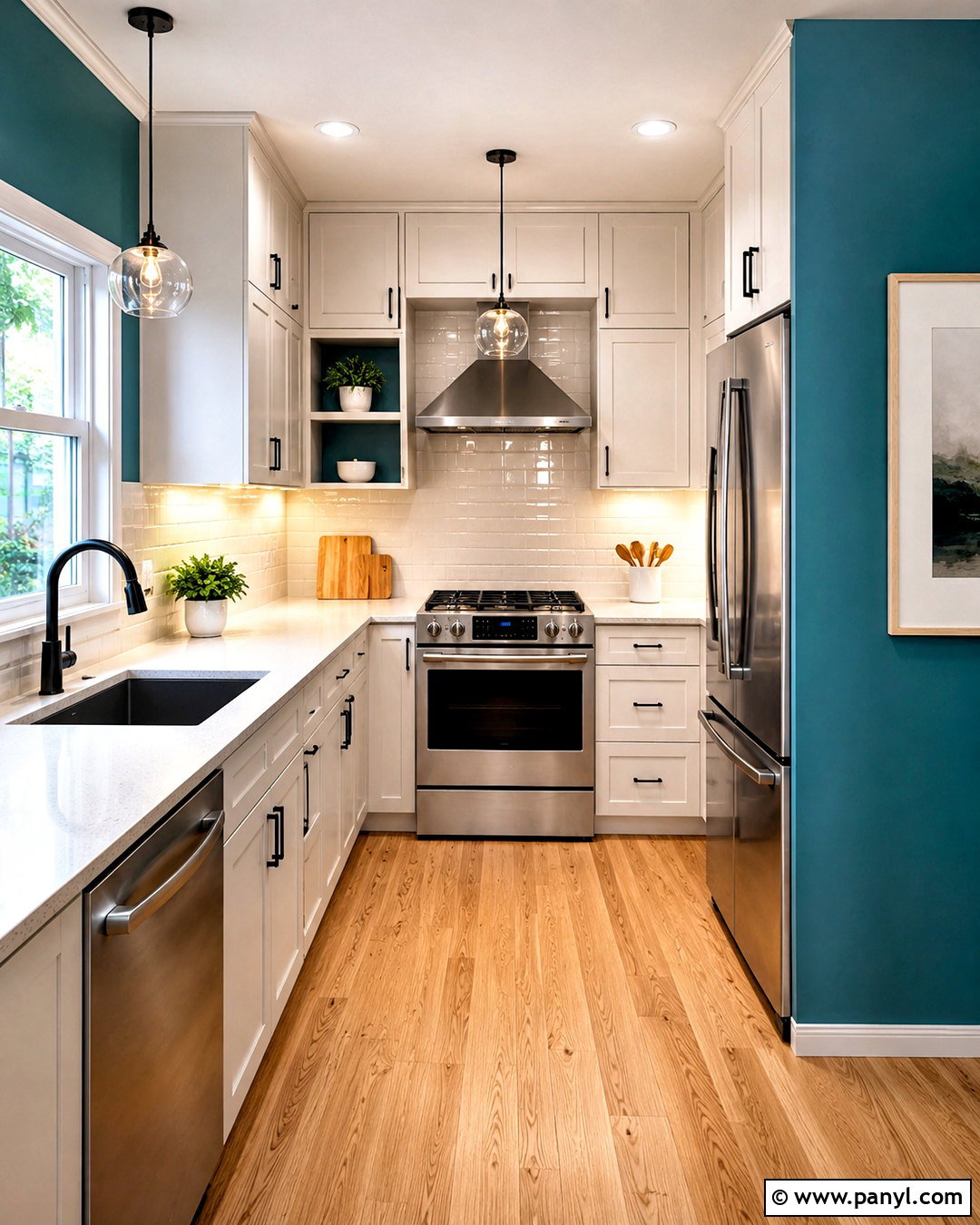
A small kitchen can handle teal walls when the remaining surfaces reflect plenty of light. Choose a clear midtone teal rather than an extremely dark shade, and pair it with warm white cabinets that extend to the ceiling. Pale quartz countertops and a glossy off-white backsplash will bounce light around the room. Use continuous light oak flooring to make the footprint feel less divided. Slim black hardware, compact glass pendants, and under-cabinet lighting maintain a crisp, functional appearance. Replace one bulky upper cabinet with a short open shelf if storage allows. Keep counters clear by using internal organizers and wall-mounted rails. The finished kitchen feels colorful and efficient, proving that a limited floor plan does not require an entirely neutral palette or timid design choices.
34. Teal Kitchen Walls In An Open Kitchen
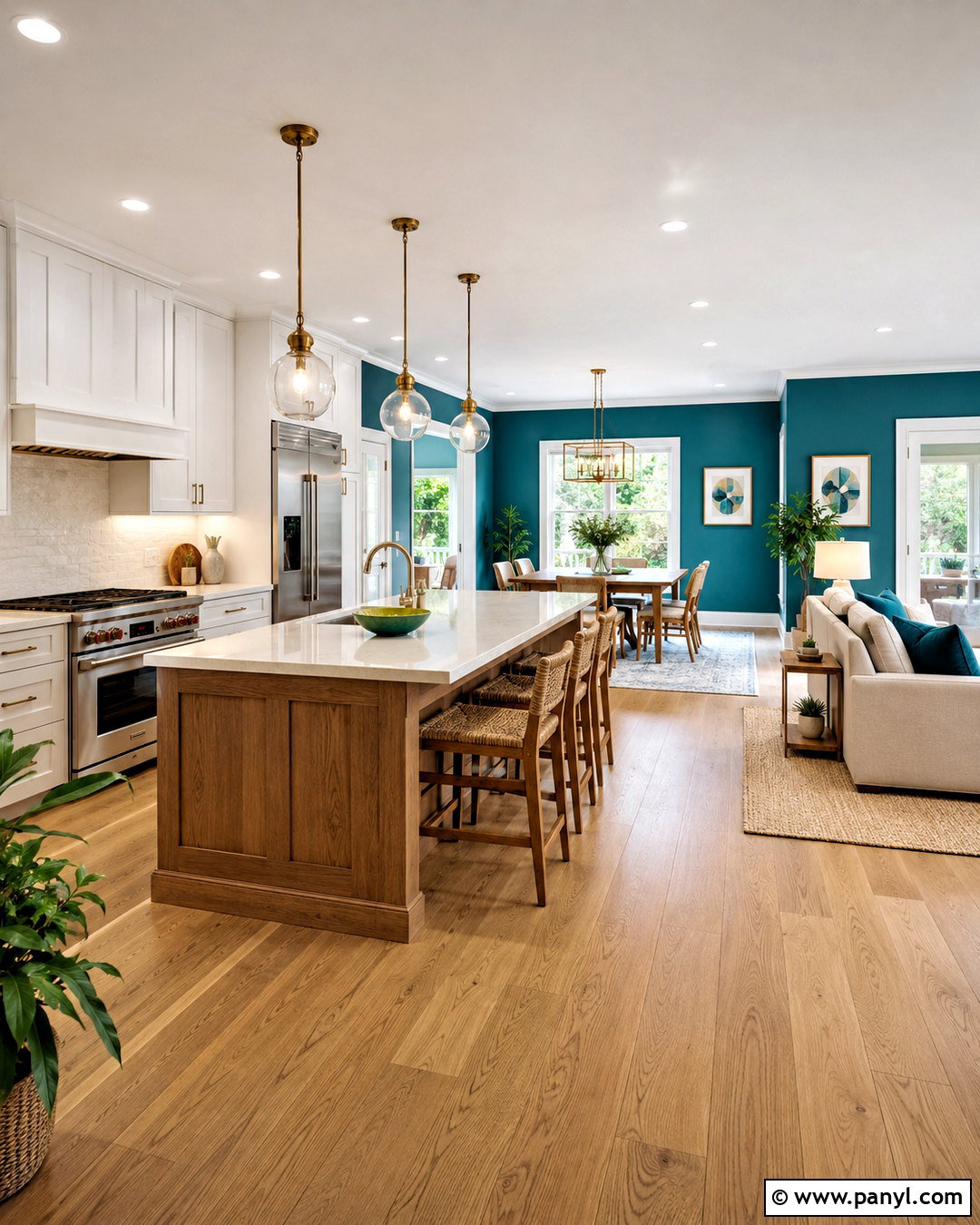
In an open kitchen, teal walls should connect smoothly with the neighboring living and dining spaces. Use the color on the main kitchen walls, then repeat it sparingly through cushions, artwork, or a rug in the adjoining room. Warm white cabinets, oak flooring, and cream quartz counters create neutral transitions across the shared layout. A wood island with woven stools can visually separate cooking and seating zones without building a wall. Choose coordinated brass or black lighting throughout the open area, while varying fixture shapes by function. Paint connecting trim and ceilings the same warm white. The finished space feels unified without becoming overly matched. Teal clearly identifies the kitchen while repeated materials and accents help the entire open floor plan read as one cohesive home.
35. Teal Kitchen Walls In A Rental Kitchen
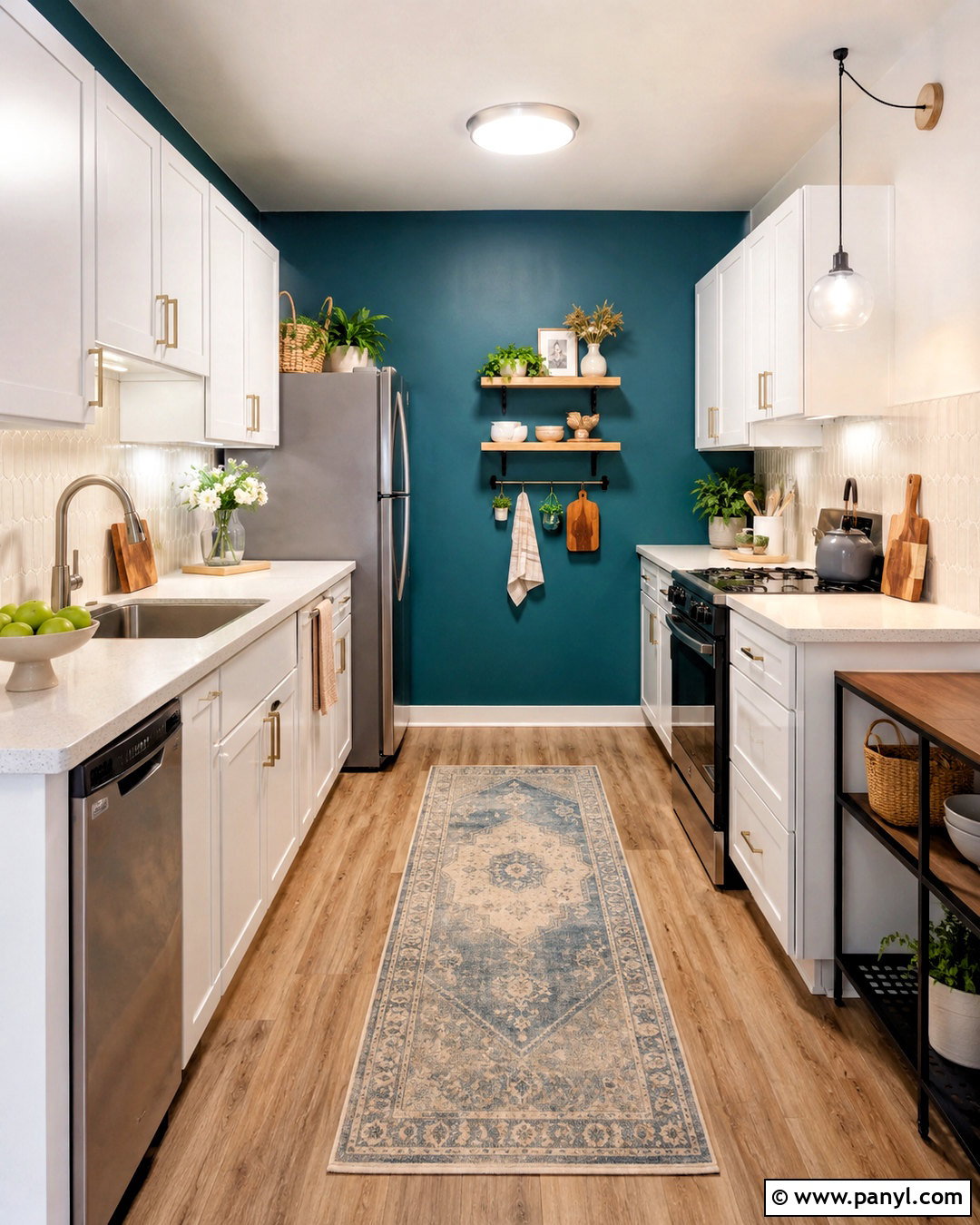
Rental-friendly teal kitchen walls can add personality without requiring permanent cabinet or tile changes. If painting is allowed, use teal on one easily repainted wall and keep the remaining surfaces light. Pair it with existing white or wood cabinets, then add removable cream backsplash panels if the original backsplash is visually busy. A washable runner, plug-in pendant, wood cutting boards, and renter-safe open shelving can build a coordinated look. Use brushed brass or black removable hardware only after storing the original knobs carefully. If painting is prohibited, apply removable teal wallpaper to a breakfast nook or clear wall away from heat and moisture. The completed kitchen feels intentional and colorful, yet each major update can be removed when it is time to move.
Conclusion:
Teal offers enough variety to work in bright coastal kitchens, cozy cottages, streamlined modern rooms, and character-rich traditional spaces. The most successful 35 teal kitchen walls balance blue-green color with lighter surfaces, natural wood, warm metals, and practical lighting. Before committing, compare large samples beside your cabinets, flooring, backsplash, and countertops at different times of day. Dark shades usually need more white or cream, while pale teal can support deeper cabinetry and stronger accents. You can paint every open wall, highlight one focal area, or use teal through paneling, wallpaper, and tile. Whichever approach you choose, treat the kitchen as a complete composition so every material, finish, and furnishing supports the same welcoming look.

Related Ideas and Inspiration:
Leave a Reply