
Burnt orange walls bring earthy warmth, depth, and personality into a home without feeling as bright as traditional orange. The color can lean toward rust, clay, copper, or cinnamon, so it works with many decorating directions. Pair it with cream and oak for a calm natural room, or introduce navy, teal, and black for stronger contrast. Lighting also matters. Sun-filled rooms can handle deeper orange paint, while smaller or darker spaces often benefit from one feature wall and lighter surrounding surfaces. Furniture, flooring, trim, textiles, and metals should work together to make the color feel intentional. The complete room looks below offer practical ways to decorate around burnt orange walls.

1. Burnt Orange Walls With Beige Furniture
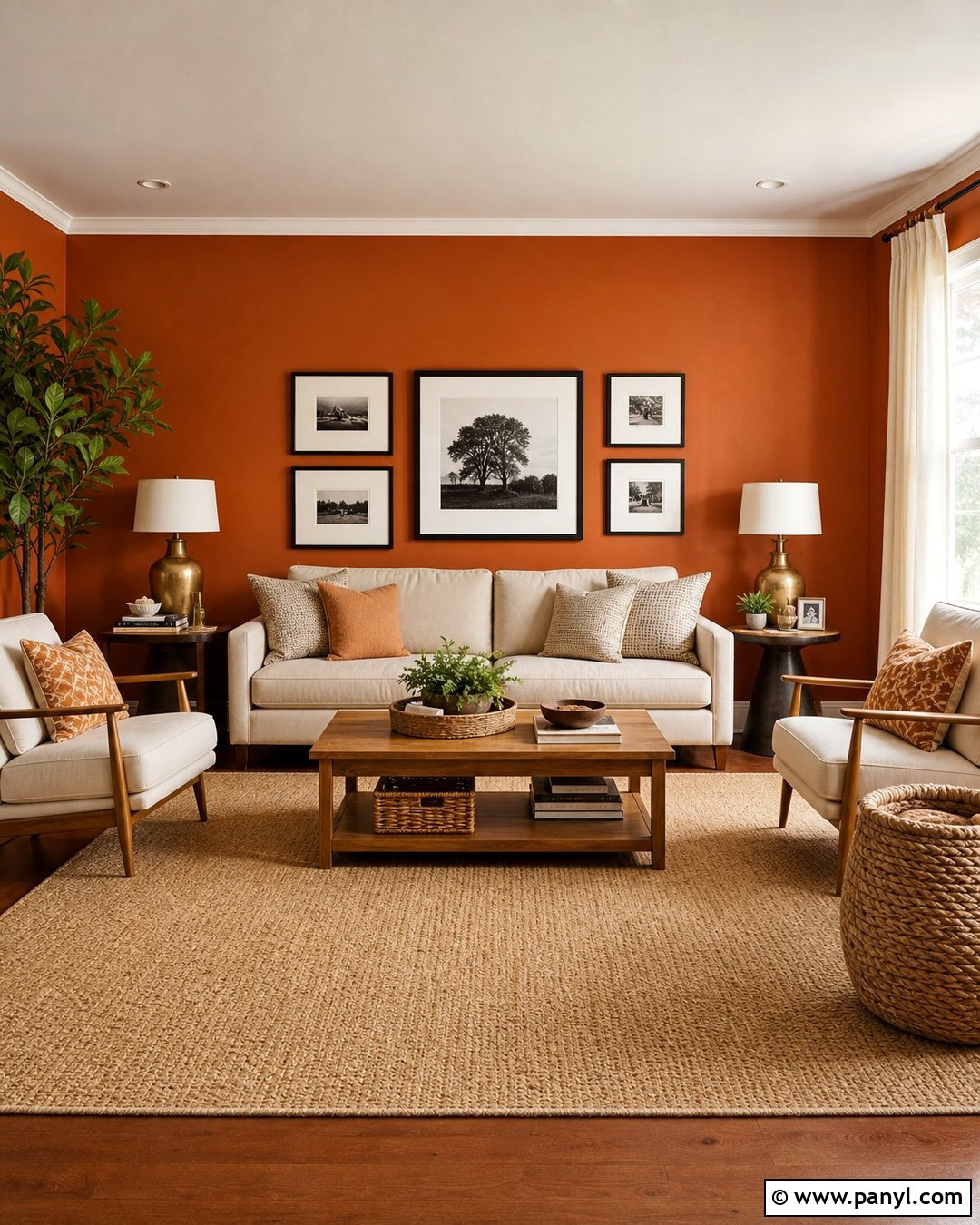
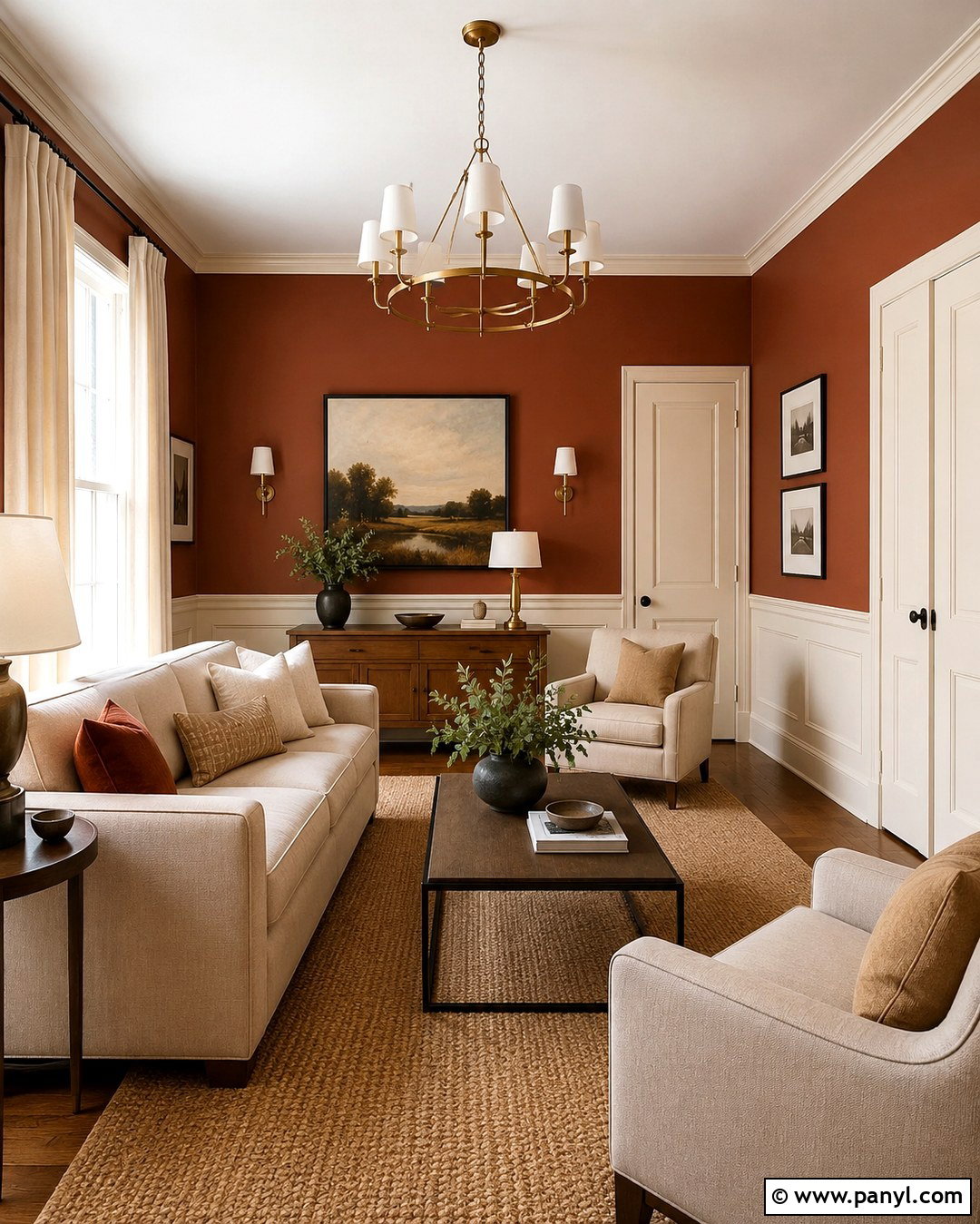
A warm beige sofa creates a calm foundation against burnt orange walls, allowing the paint to feel rich rather than overpowering. Choose a low-profile sofa with clean lines, then add two cream chairs to keep the seating area open and balanced. A natural jute rug, medium oak coffee table, and woven baskets reinforce the earthy palette. Use off-white curtains that reach the floor so the windows appear taller and brighter. Black-framed artwork can provide definition without introducing another dominant color. Finish the room with linen pillows in ivory, camel, and muted brown. Soft brass lighting brings subtle polish, while one large leafy plant adds freshness to this comfortable, approachable living room.
2. Burnt Orange Walls With Navy Furniture
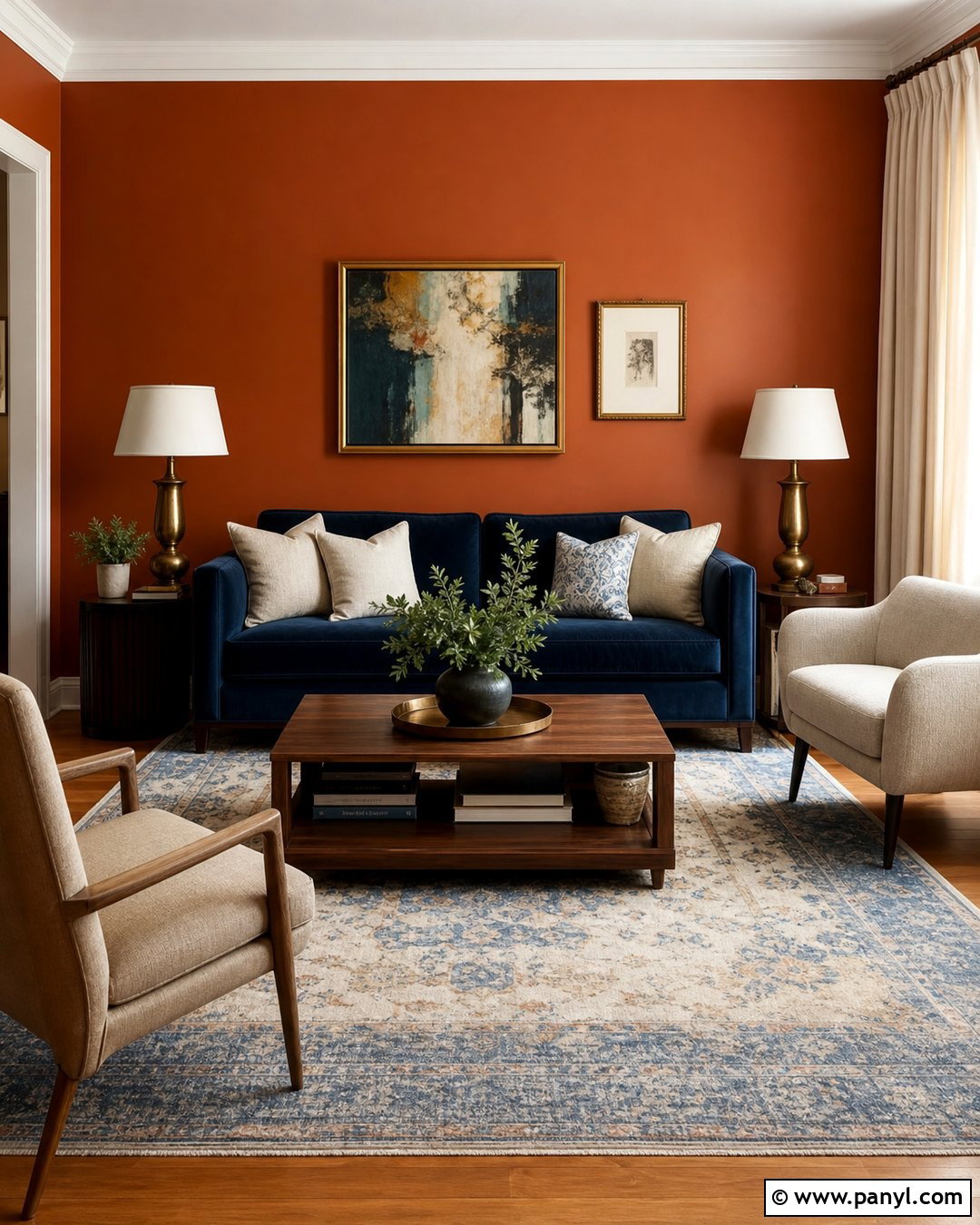
Deep navy furniture produces striking contrast against burnt orange walls while maintaining a sophisticated, grounded atmosphere. Center the room around a navy velvet sofa with a streamlined shape, then soften its strong color with ivory pillows and a light gray throw. A faded blue-and-cream rug connects the cool upholstery with the warmer wall paint. Choose a walnut coffee table and matching side tables to bridge both sides of the palette. Crisp white trim keeps the edges fresh, while aged brass lamps introduce gentle shine. Hang simple abstract artwork containing small touches of blue, rust, and cream. Keep additional accessories limited so the two main colors remain clear. The result feels dramatic, coordinated, and welcoming rather than overly themed.
3. Burnt Orange Walls With Olive Green Decor
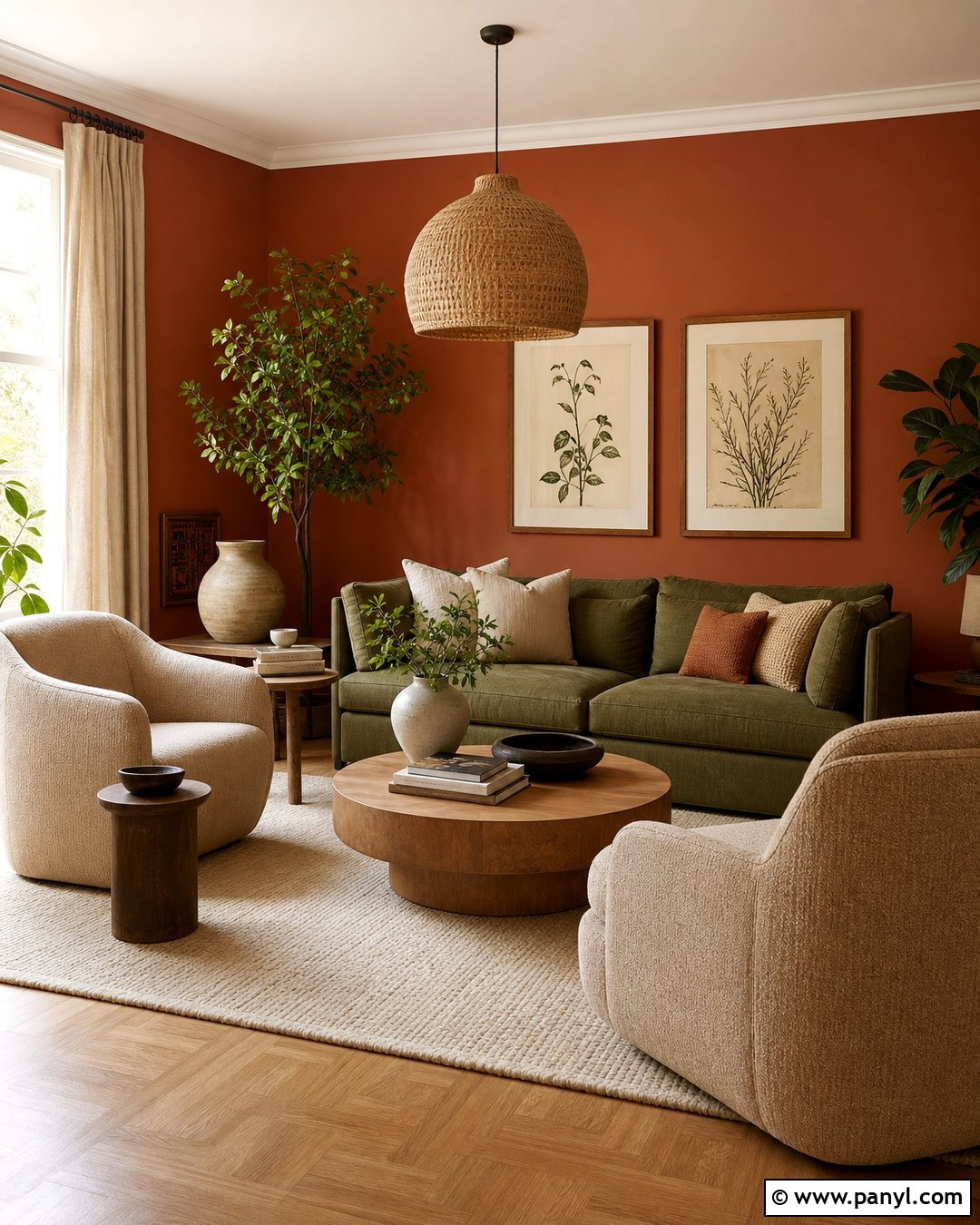
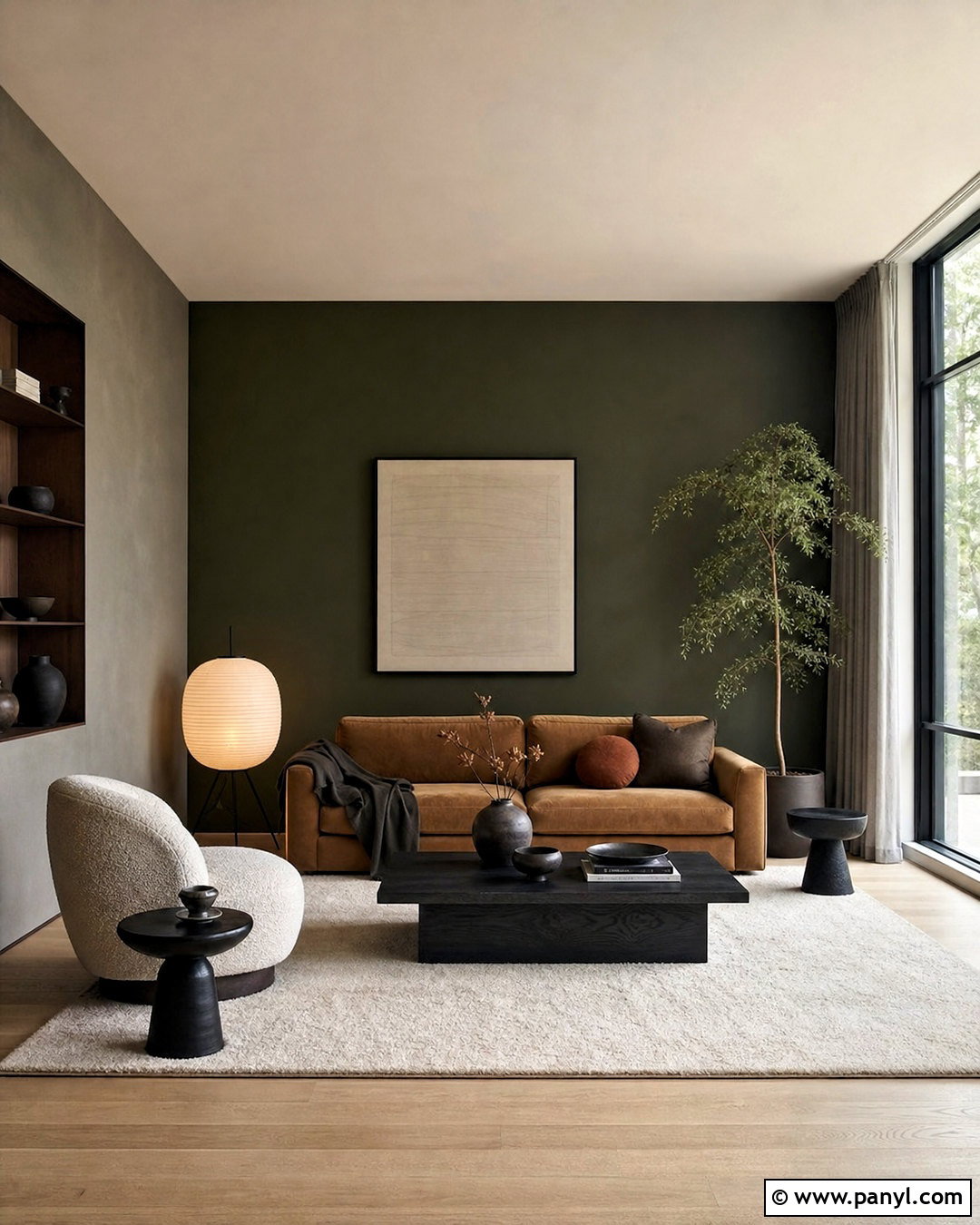
Burnt orange walls and olive green furnishings create an inviting nature-inspired room filled with warm, organic color. Place an olive linen sofa along the longest wall and balance it with a pair of light wood lounge chairs upholstered in oatmeal fabric. A large cream wool rug prevents the palette from becoming too dark. Add a round oak coffee table, woven pendant light, and simple pottery in tan and moss green. Natural linen curtains filter daylight without competing with the wall color. Botanical artwork and several healthy plants strengthen the garden connection, but keep their containers neutral. A few matte black accents, such as a floor lamp and picture frames, sharpen the arrangement and give this relaxed earthy space a finished appearance.
4. Small Living Room With Burnt Orange Walls
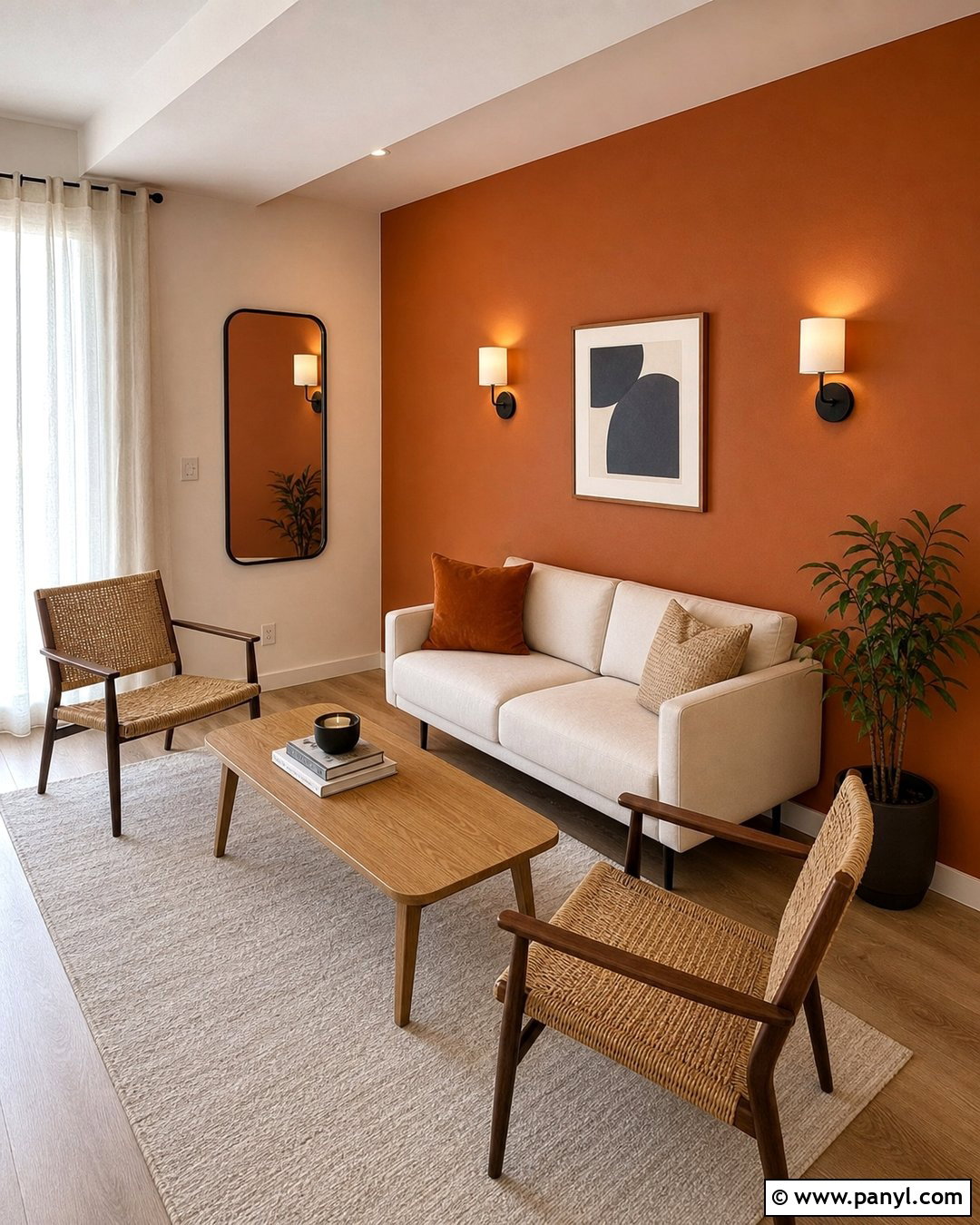
In a compact living room, one burnt orange wall can establish a strong focal point without visually closing in the entire space. Paint the wall behind a small cream sofa, leaving the remaining walls warm white. Select furniture with raised legs, including a narrow oak coffee table and two lightweight woven chairs, so more flooring remains visible. A pale textured rug brightens the center of the room and defines the seating area. Mount slim wall sconces instead of using bulky table lamps. Keep window coverings sheer, and place a tall mirror opposite the window to reflect daylight. Finish with compact artwork, one leafy plant, and a few rust-and-beige pillows. Every element feels purposeful while preserving an open, comfortable layout.
5. Boho Living Room With Burnt Orange Walls
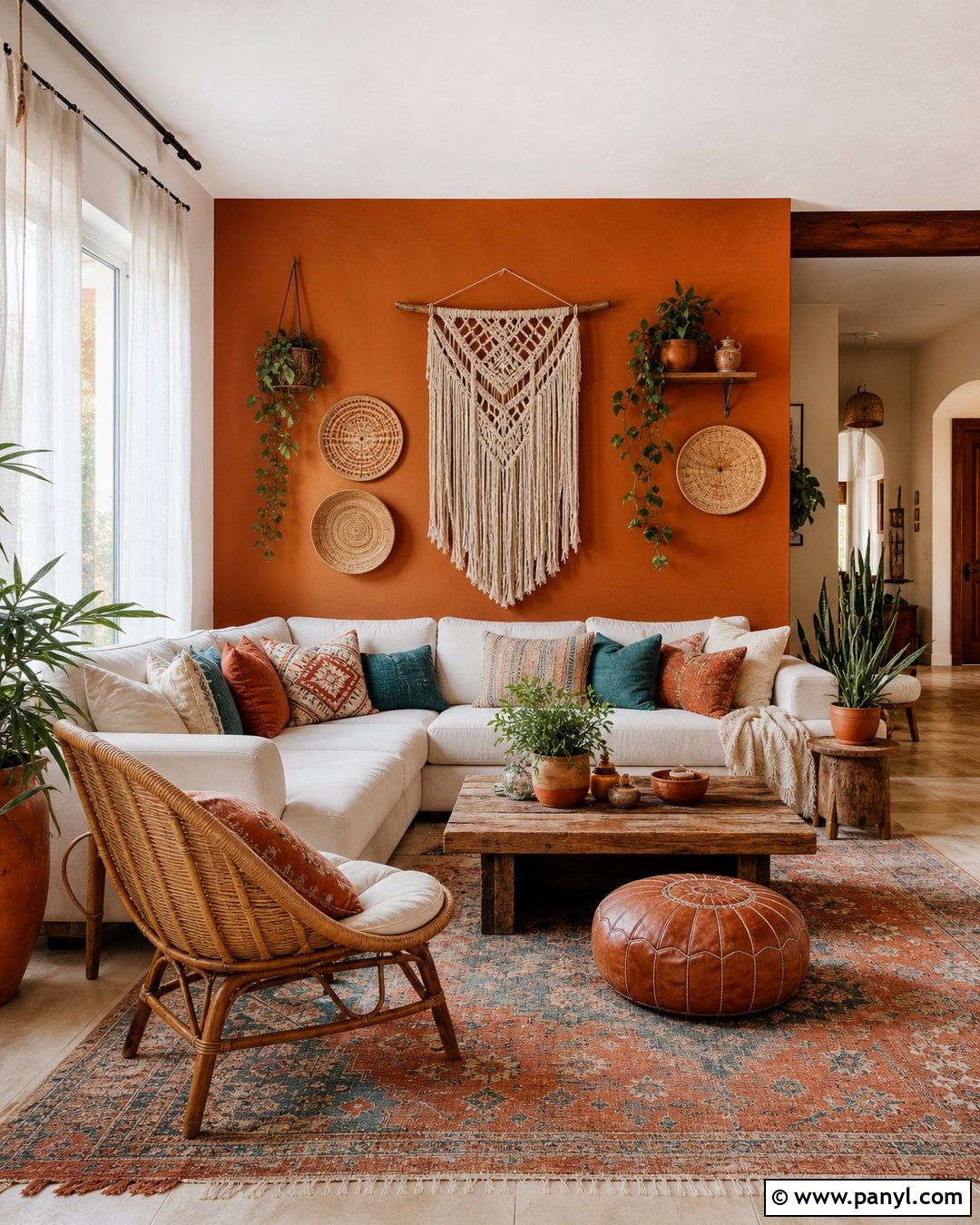
Layered texture makes burnt orange walls feel especially natural in a relaxed boho living room. Start with a soft ivory sectional positioned over a large patterned rug in faded rust, cream, and muted teal. Add a low reclaimed-wood coffee table, a leather pouf, and a curved rattan chair to create an informal conversation area. Cream macramé, framed textile art, and shallow woven baskets bring dimension to the walls without hiding the orange paint. Use gauzy white curtains to soften incoming light. Plants in terracotta pots can fill empty corners and repeat the room’s earthy tones. Complete the look with patterned pillows, a chunky knit throw, and a woven pendant, maintaining enough open space to prevent the many textures from appearing cluttered.
6. Midcentury Living Room With Burnt Orange Walls
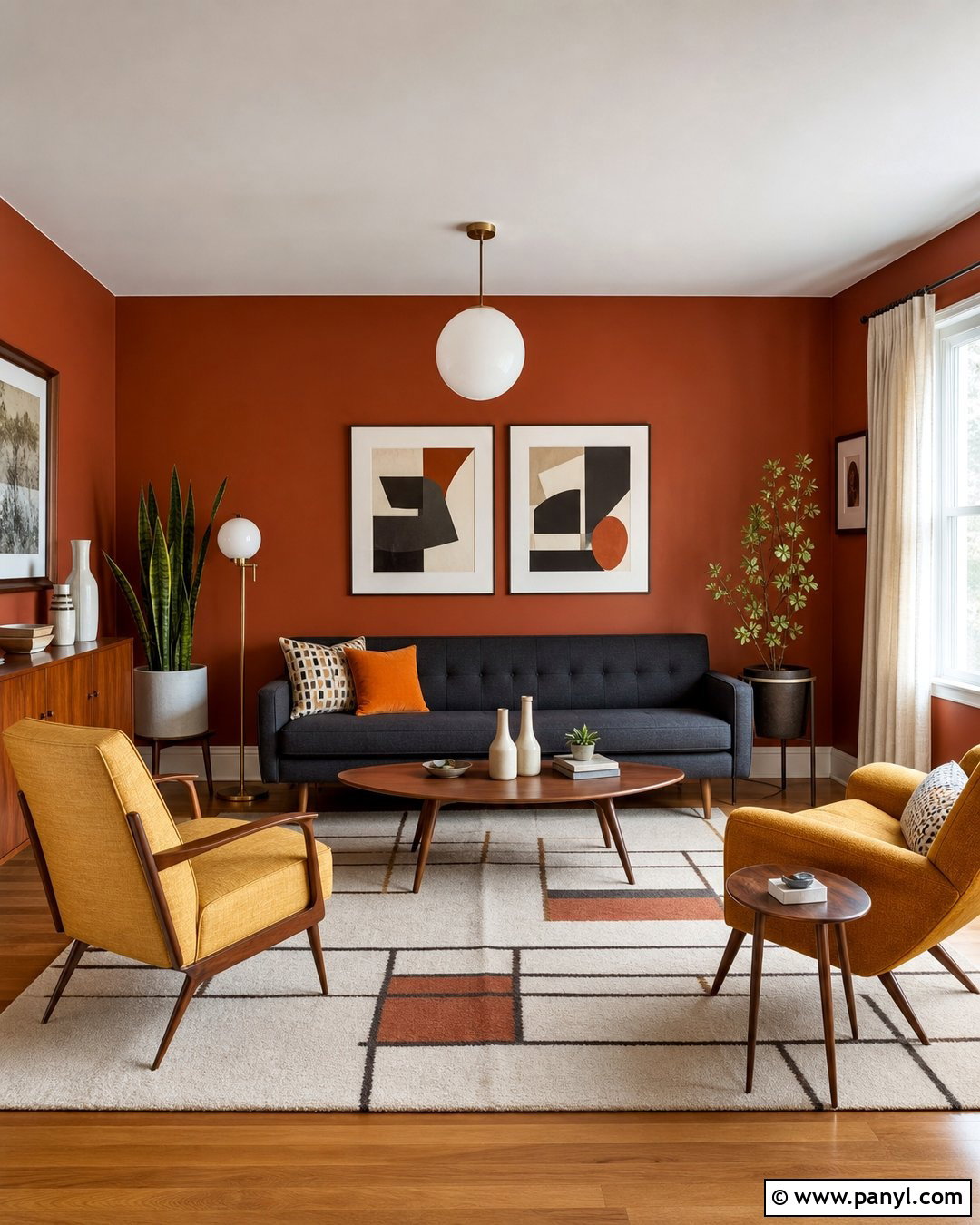
Clean shapes and warm wood finishes give burnt orange walls a convincing midcentury character. Choose a tailored charcoal sofa with tapered walnut legs, then place two low mustard lounge chairs across from it. A rectangular walnut coffee table should anchor the arrangement without blocking movement. Introduce a geometric rug containing cream, brown, and small black details to organize the color palette. Globe-shaped lighting, a slim arc floor lamp, and an angular wood console reinforce the period influence. Keep curtains neutral and uncomplicated so the room does not feel costume-like. Display a few ceramic vessels and bold abstract prints rather than numerous small accessories. The finished room feels nostalgic but functional, with modern comfort supporting its recognizable retro details.
7. Modern Rustic Living Room With Burnt Orange Walls
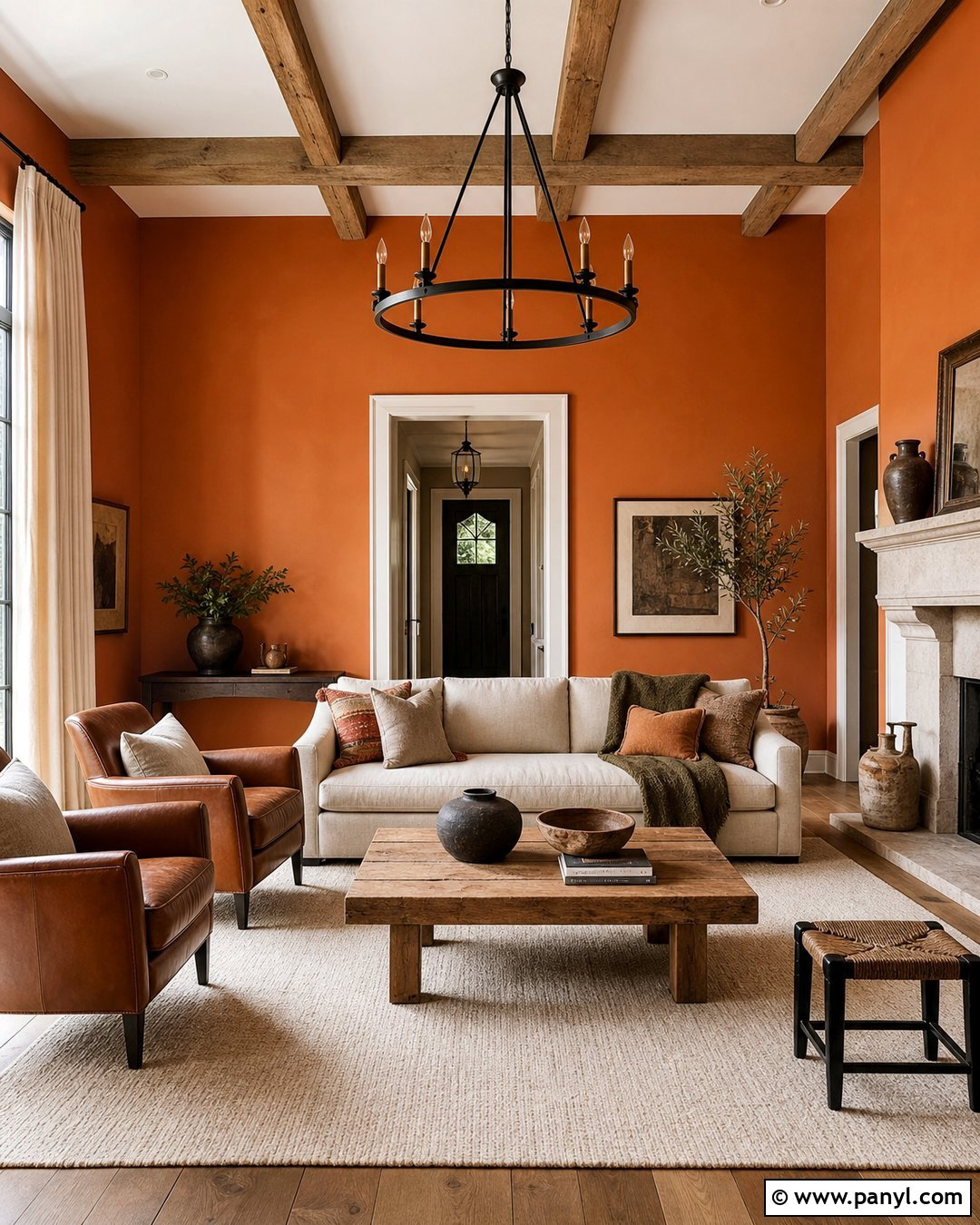
Imagine burnt orange walls beside substantial wood furniture, soft upholstery, and simple black metal accents. A large oatmeal sofa grounds this modern rustic living room, while two saddle-brown leather chairs introduce durable texture. Use a weathered oak coffee table with a clean rectangular profile rather than an overly distressed finish. A thick cream rug lightens the floor and makes the seating arrangement comfortable. Black iron curtain rods, a restrained chandelier, and minimal picture frames supply crisp contrast. Add linen curtains, stoneware pottery, and a wool throw in muted olive. If the room includes exposed beams, keep them in a medium natural stain. The combination feels warm and established while remaining uncluttered enough for an everyday family space.
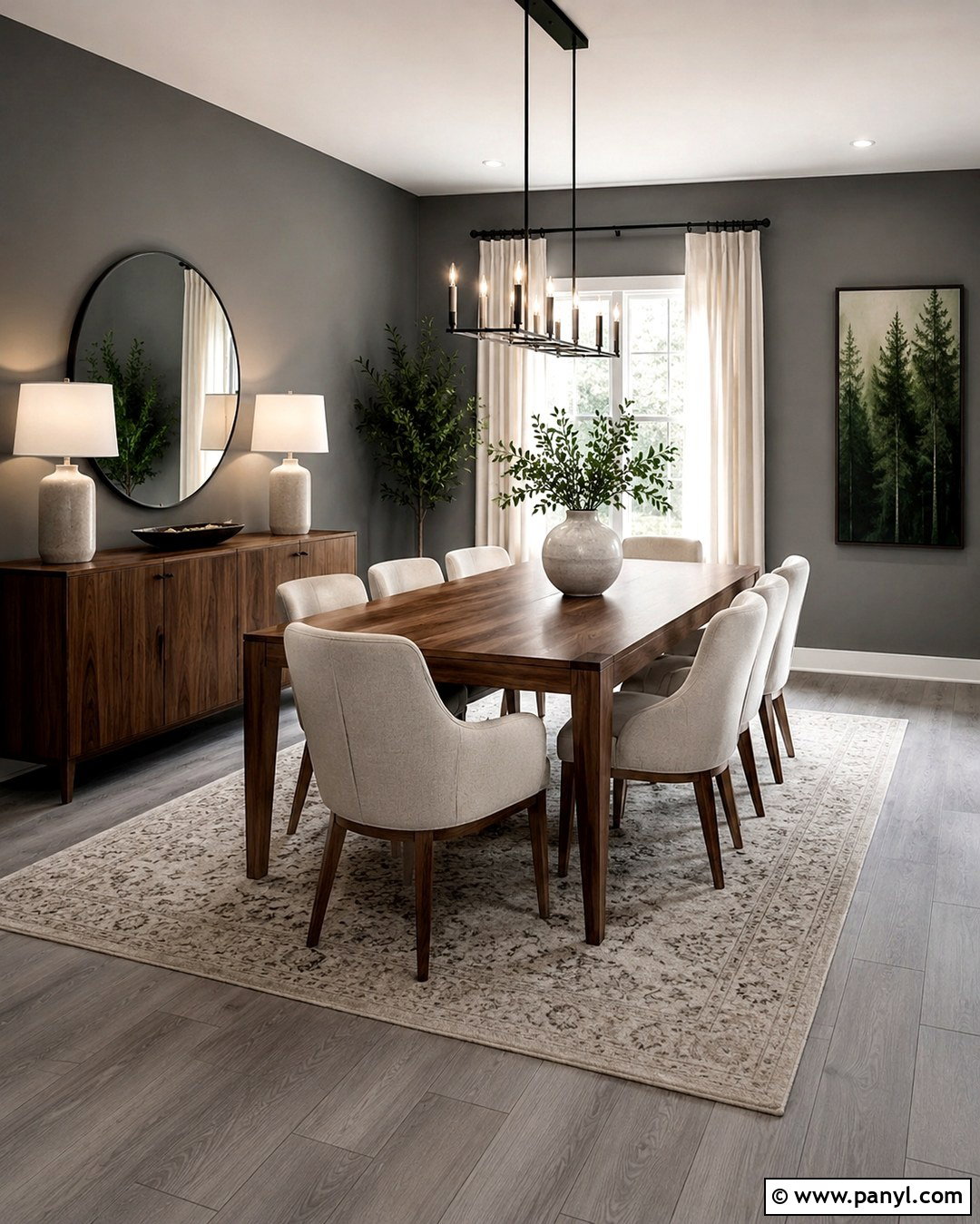
8. Burnt Orange Fireplace Wall
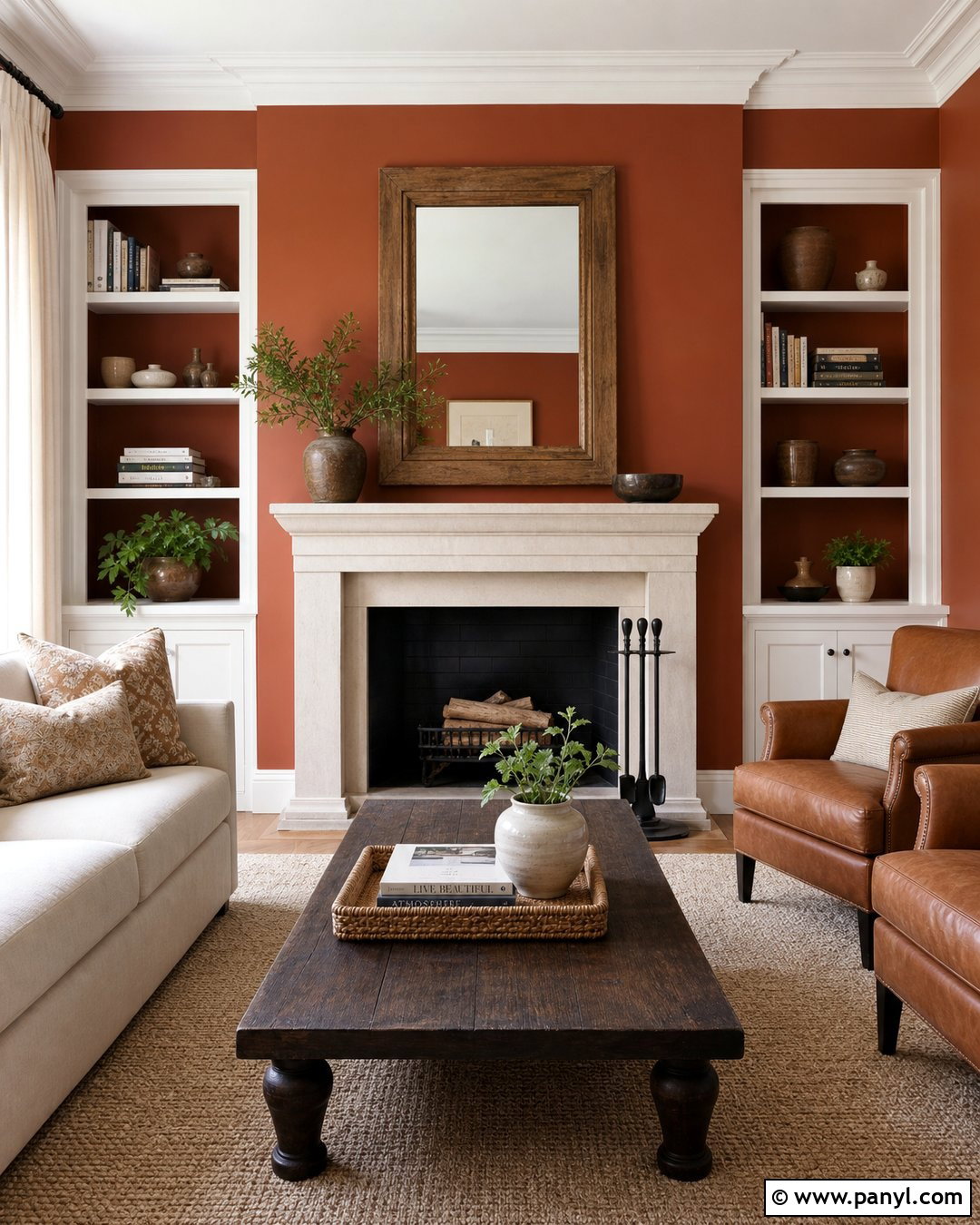
A fireplace becomes a commanding focal point when its full surrounding wall is painted burnt orange. Use a simple white or pale limestone mantel to create clean contrast, then place a substantial natural wood mirror above it. Arrange a cream sofa and two caramel leather chairs around a dark wood coffee table, keeping clear sightlines toward the hearth. A large neutral rug prevents the orange from dominating the seating area. Built-in shelves on either side can remain warm white, with restrained displays of books, pottery, and woven boxes. Choose black fireplace tools and a black metal light fixture for definition. Linen curtains and soft beige textiles complete the balanced room, making the fireplace wall feel integrated rather than added as an isolated burst of color.
9. Burnt Orange Bedroom With Ivory Bedding
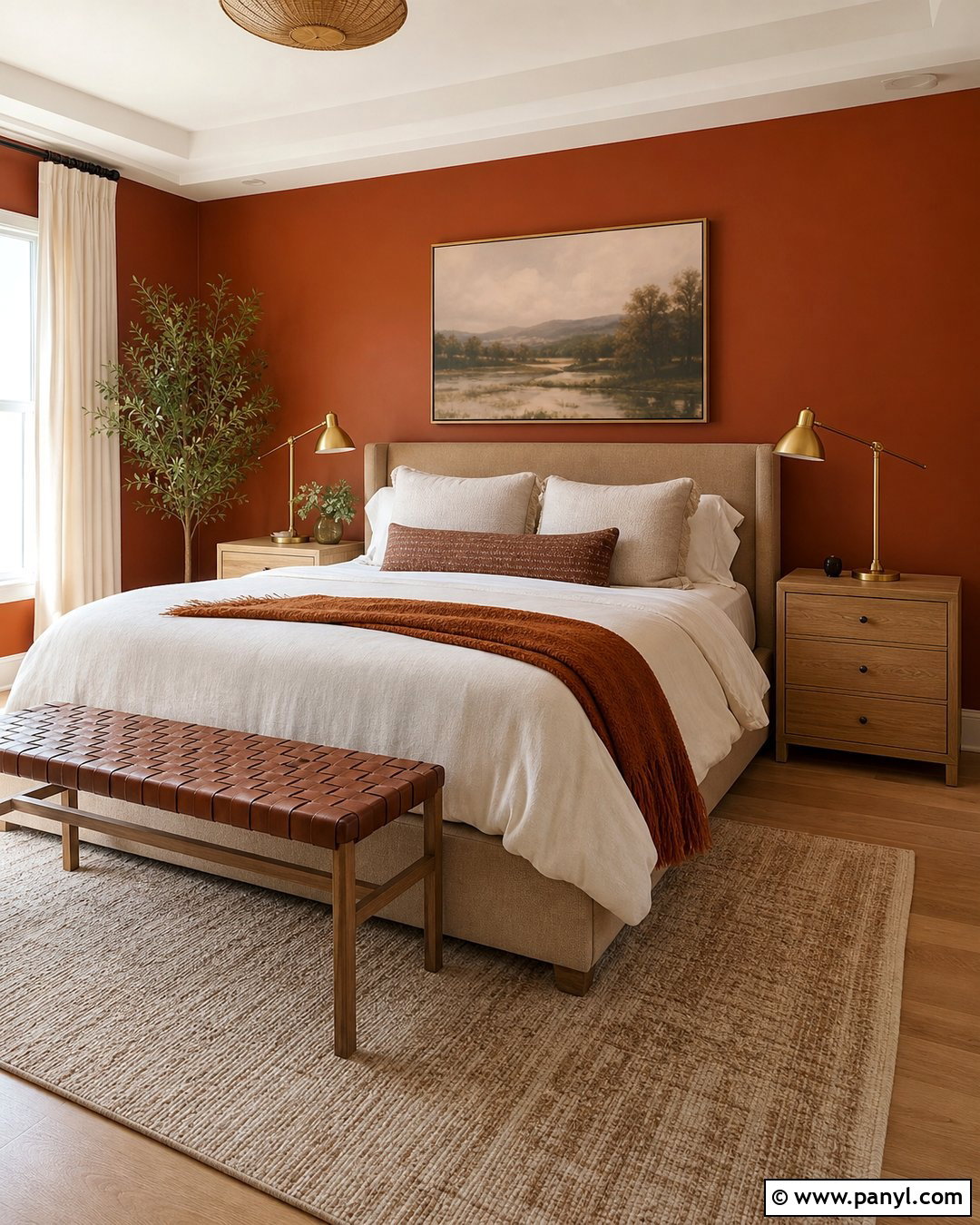
Soft ivory bedding brings a peaceful quality to a bedroom with burnt orange walls. Position a simple upholstered bed against the main painted wall, using a tall oatmeal headboard to break up the color. Layer crisp cream sheets, a quilted ivory coverlet, and a cinnamon throw for gentle tonal variation. Light oak nightstands and matching lamps create symmetry without adding visual weight. Select a large beige rug that extends beyond both sides of the bed. Sheer curtains can be paired with lined cream drapes for privacy and softness. Keep artwork minimal, perhaps one wide landscape print with muted green and brown tones. A woven bench, small plant, and warm brass hardware finish this calm bedroom while letting the wall color provide most of the personality.
10. Burnt Orange Bedroom With Sage Green
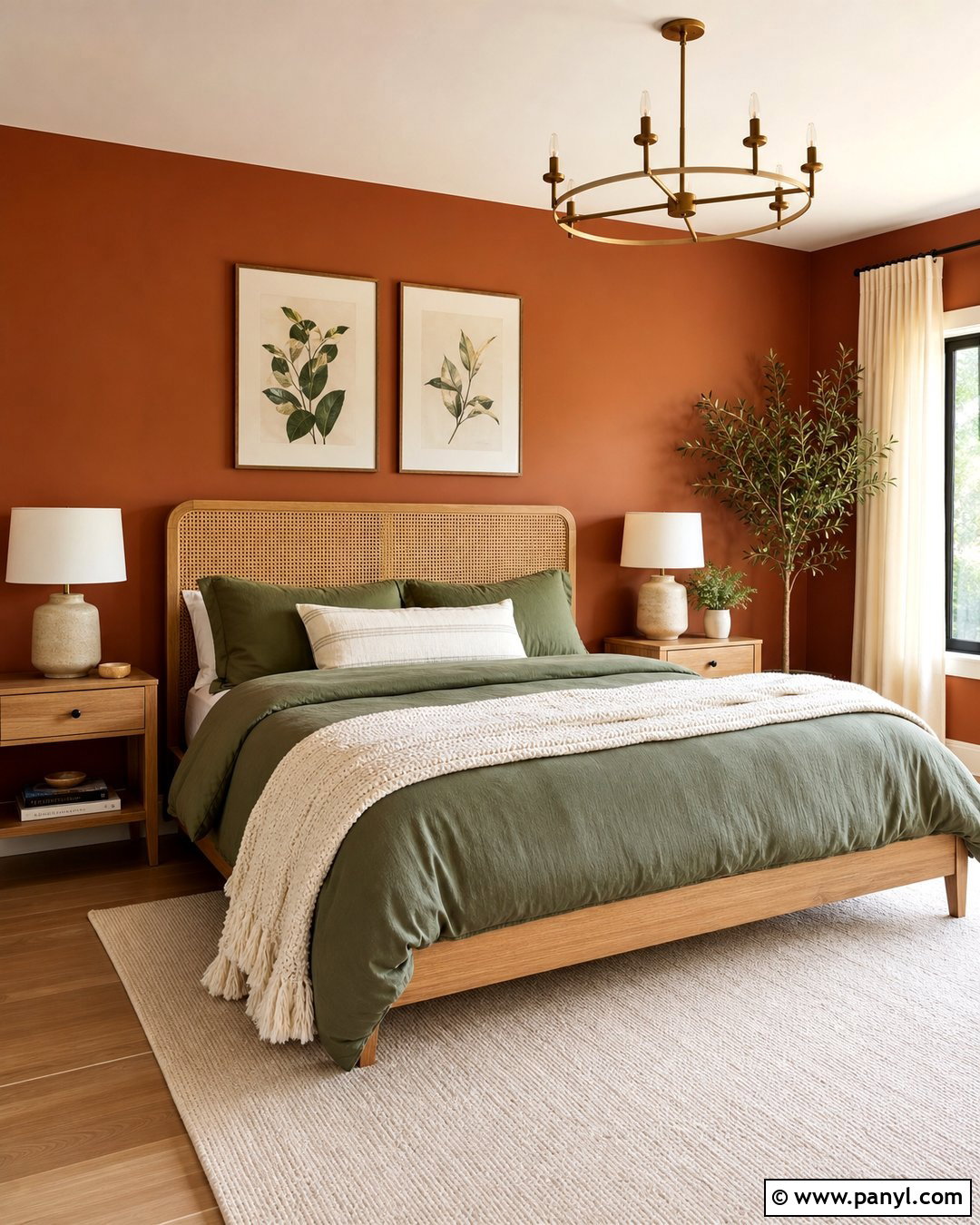
Sage green introduces a quiet botanical contrast that softens the energy of burnt orange walls. Build the bedroom around a natural oak bed with a woven cane headboard, then layer sage linen bedding over warm white sheets. Add an ivory blanket and one subtle rust lumbar pillow to connect the bed with the walls. Cream curtains, a pale wool rug, and light oak nightstands keep the arrangement airy. Use ceramic table lamps with off-white shades and aged brass details for understated warmth. Botanical prints should contain plenty of open background space so they do not appear busy. One tall plant near the window strengthens the organic theme. The completed bedroom feels restful and earthy, with balanced colors that remain distinctive without becoming loud.
11. Burnt Orange Bedroom With Navy Accents

For a richer bedroom palette, combine burnt orange walls with controlled navy details and generous areas of cream. Choose an ivory upholstered bed and dress it with white sheets, a navy quilt, and a narrow burnt orange throw. Walnut nightstands introduce another warm element, while brass sconces free the tabletops from clutter. Place a faded navy-and-beige rug beneath the bed to connect the darker accents across the room. Warm white curtains brighten the windows and keep the walls from feeling enclosed. Hang one large abstract piece containing navy, clay, and pale gray over the headboard. Finish with a walnut bench and two cream pillows. The strong complementary colors feel elegant because they are separated by soft, breathable neutral layers.
12. Small Bedroom With Burnt Orange Walls
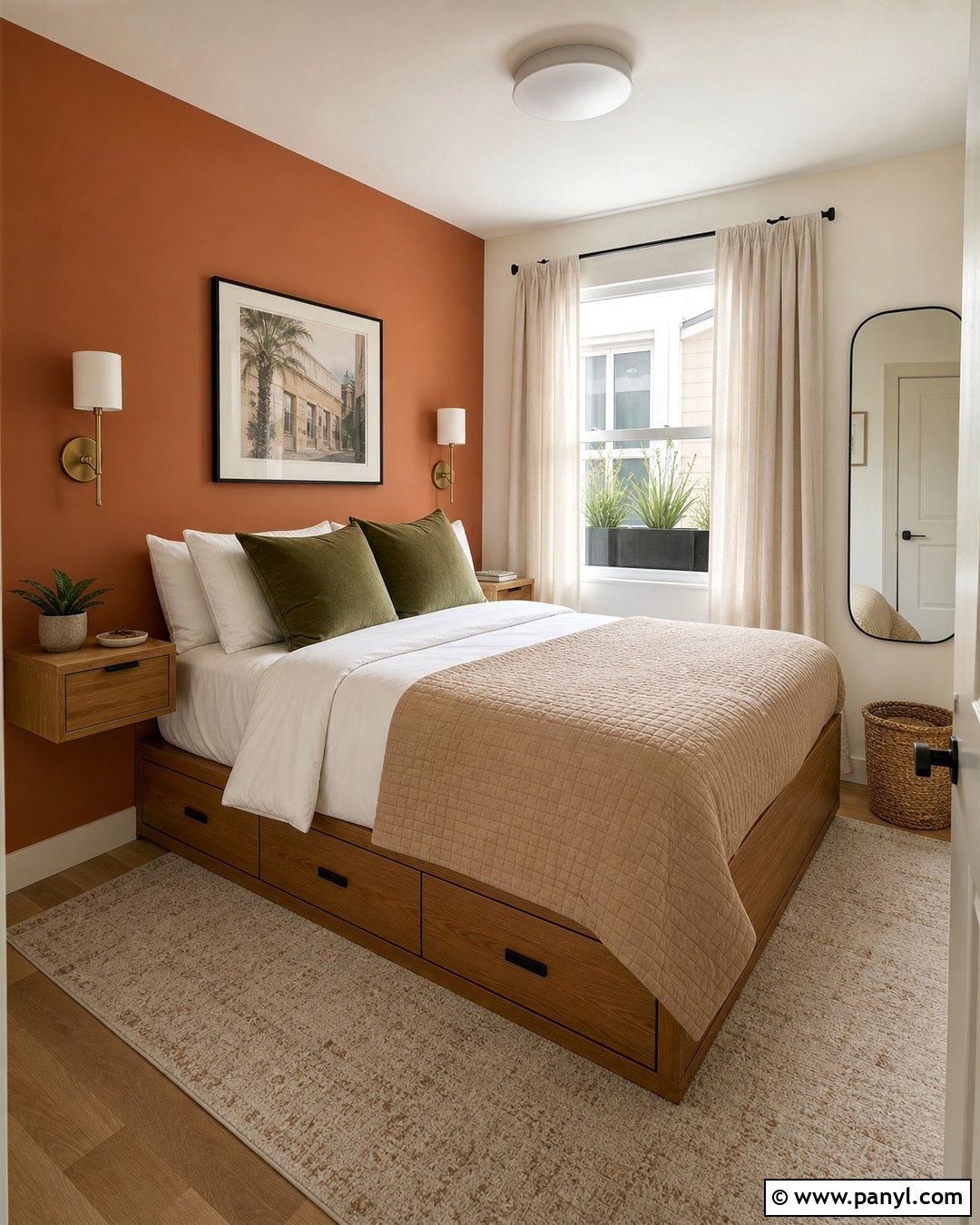
A small bedroom can handle burnt orange when the color is concentrated behind the bed and balanced with light finishes. Paint one feature wall in a muted clay-orange shade, keeping the other walls and ceiling warm white. Choose a compact platform bed with built-in drawers to reduce the need for extra storage furniture. White bedding, a sand-colored quilt, and two olive pillows create a simple layered palette. Install narrow floating oak shelves as nightstands and mount small sconces above them. A full-length mirror near the window reflects light and visually expands the room. Use one continuous cream curtain panel across the window wall for softness. A pale rug, minimal artwork, and a woven basket complete the functional design without overcrowding limited floor space.
13. Color-Drenched Burnt Orange Bedroom
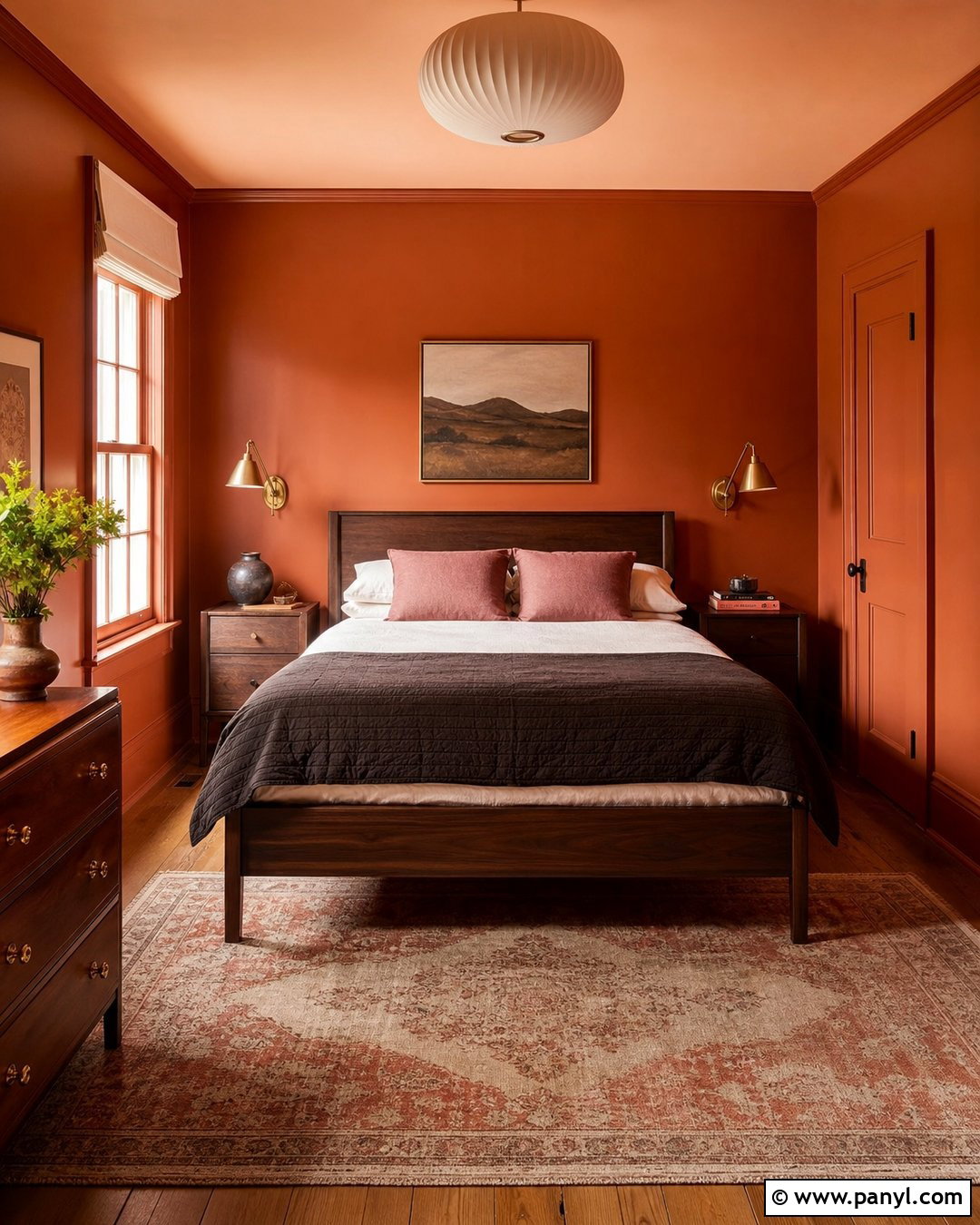
Painting the walls, trim, doors, and ceiling in related burnt orange tones creates an immersive bedroom with a cocooning effect. Use a slightly lighter shade overhead so the ceiling retains some visual lift. A dark walnut bed with a tall upholstered headboard provides structure against the surrounding color. Dress it in cream linen sheets, a chocolate brown coverlet, and muted rose pillows. Install shaded brass wall lights that distribute clear, comfortable illumination across the painted surfaces. A large vintage-inspired rug in beige and faded rust should soften the floor. Keep curtains close to the wall color for continuity, but choose a textured fabric to add depth. Restrained artwork and dark wood furniture make the monochromatic treatment feel deliberate, polished, and comfortably layered.
14. Burnt Orange Dining Room With Cream Chairs
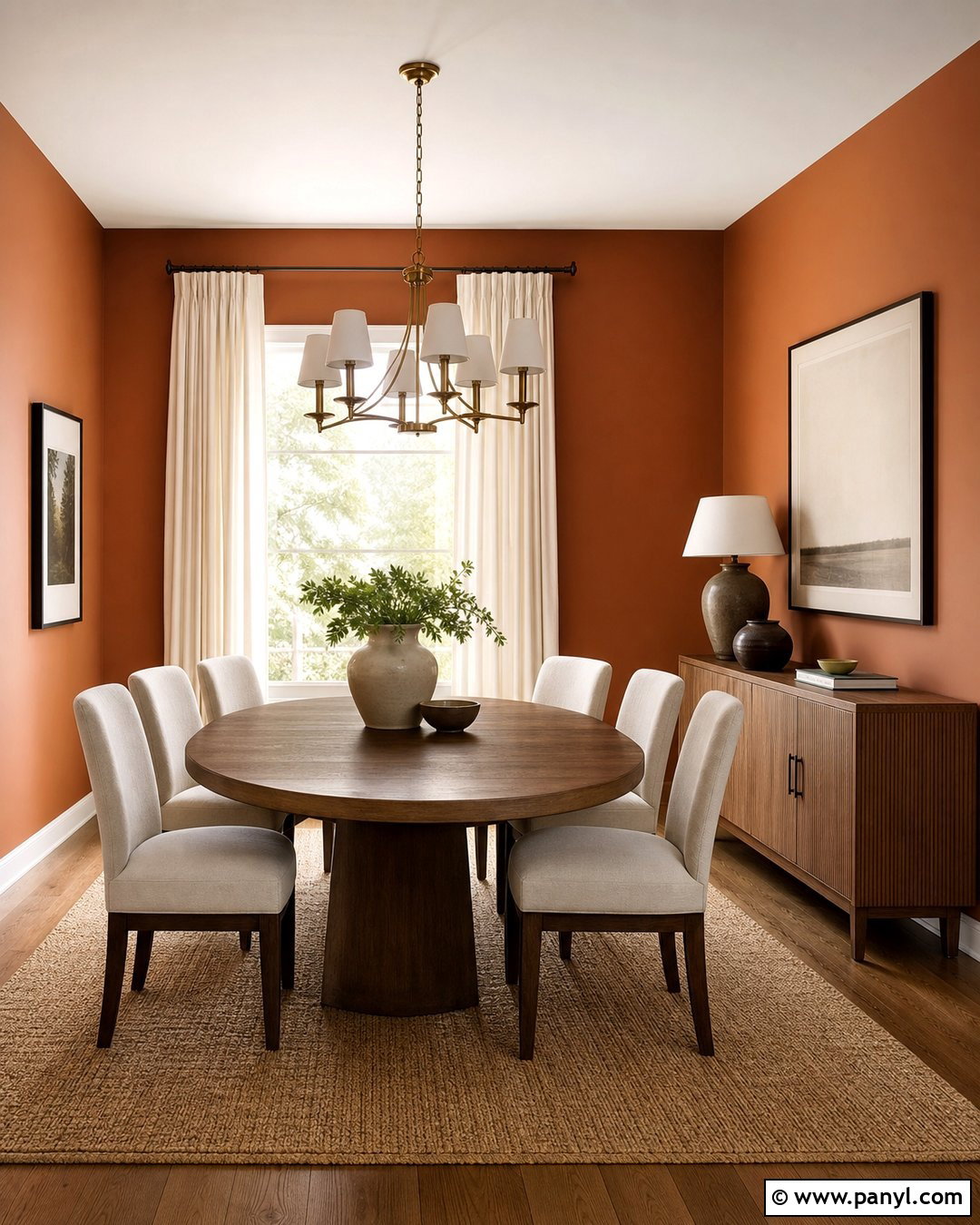
Burnt orange walls create a warm backdrop for long meals when paired with light upholstery and natural wood. Center the dining room around an oval oak table that encourages easy movement and conversation. Surround it with cream slipcovered chairs or upholstered seats with oak frames. A large woven rug can define the table while adding subtle texture underfoot. Hang a simple brass chandelier above the center, choosing frosted shades that distribute bright, even light. Warm white curtains and matching trim keep the saturated walls looking clean. Place a narrow wood sideboard along one wall and style it with ceramic vases, a table lamp, and one framed print. The finished dining room feels welcoming and substantial without relying on formal or fragile decorative details.
15. Burnt Orange Dining Room With Charcoal Furniture
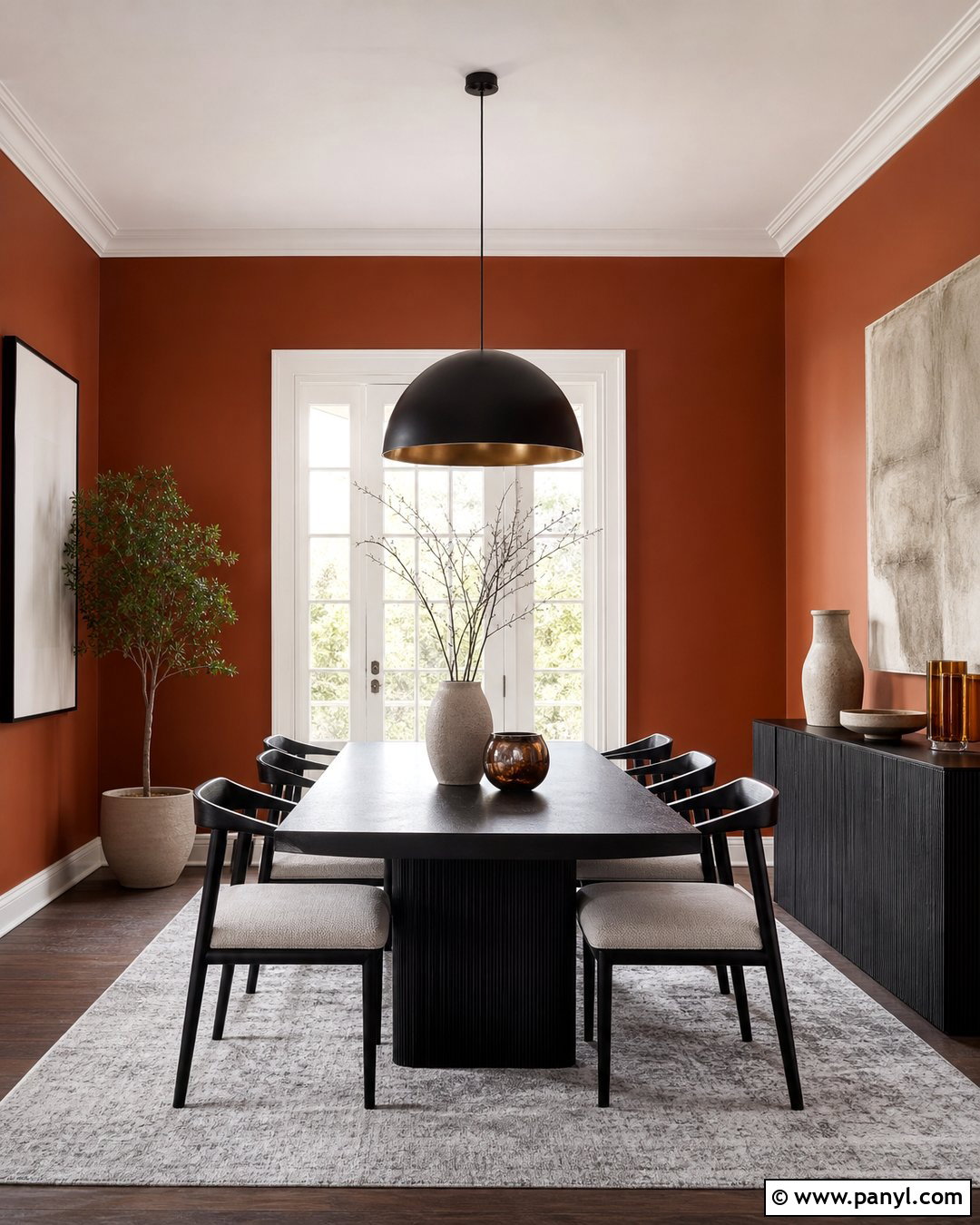
Charcoal dining furniture adds modern definition to burnt orange walls and keeps the warm color from feeling overly rustic. Select a clean-lined charcoal table with six matching chairs, then soften the arrangement with oatmeal seat cushions. A pale gray rug underneath provides contrast while catching small touches of black and rust in its pattern. Above the table, install a sculptural matte black pendant with warm white bulbs. Keep the ceiling, crown molding, and baseboards crisp white to frame the deeper wall color. A black sideboard can hold cream pottery, amber glass, and a simple leafy arrangement. Add one oversized neutral artwork rather than a crowded gallery. This complete dining space feels bold and contemporary, yet the soft textiles make it comfortable enough for everyday use.
16. Burnt Orange Kitchen With Oak Cabinets
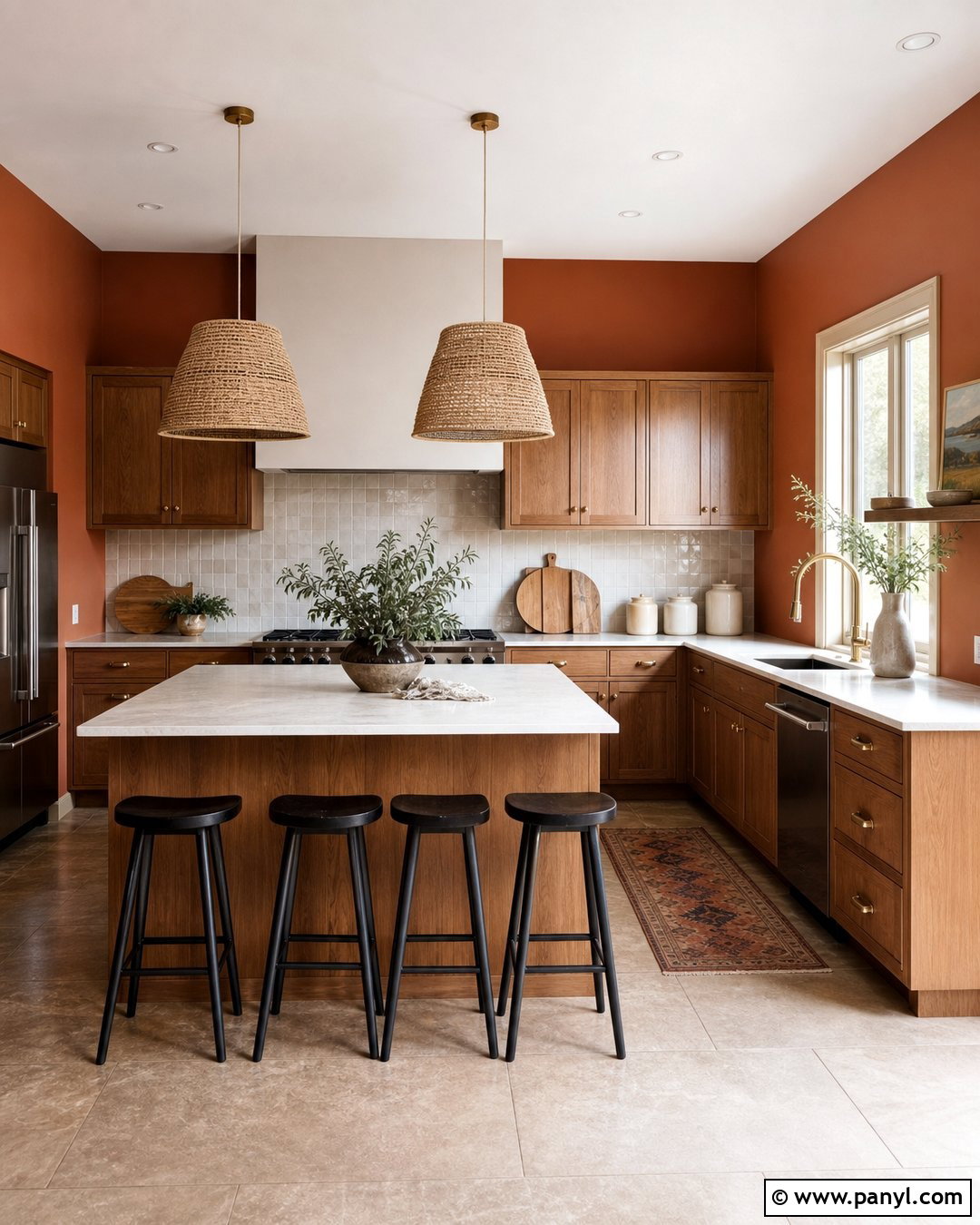
Burnt orange walls complement the natural grain of oak cabinets, creating a kitchen that feels warm and grounded. Use the color on open wall areas while keeping the ceiling and trim soft white. Choose medium oak cabinetry with simple flat-panel doors, brushed brass pulls, and pale quartz countertops. A cream zellige backsplash reflects light and introduces gentle surface variation. Matte black stools at the island add definition, while woven pendant lights contribute texture without overwhelming the palette. Continue light oak or neutral stone flooring through the room for visual consistency. Display only a few functional pieces, such as cream canisters and wood cutting boards. The finished kitchen has a cohesive earthy character, balanced by bright counters, uncluttered work surfaces, and generous task lighting.
17. Burnt Orange Kitchen With Cream Cabinets
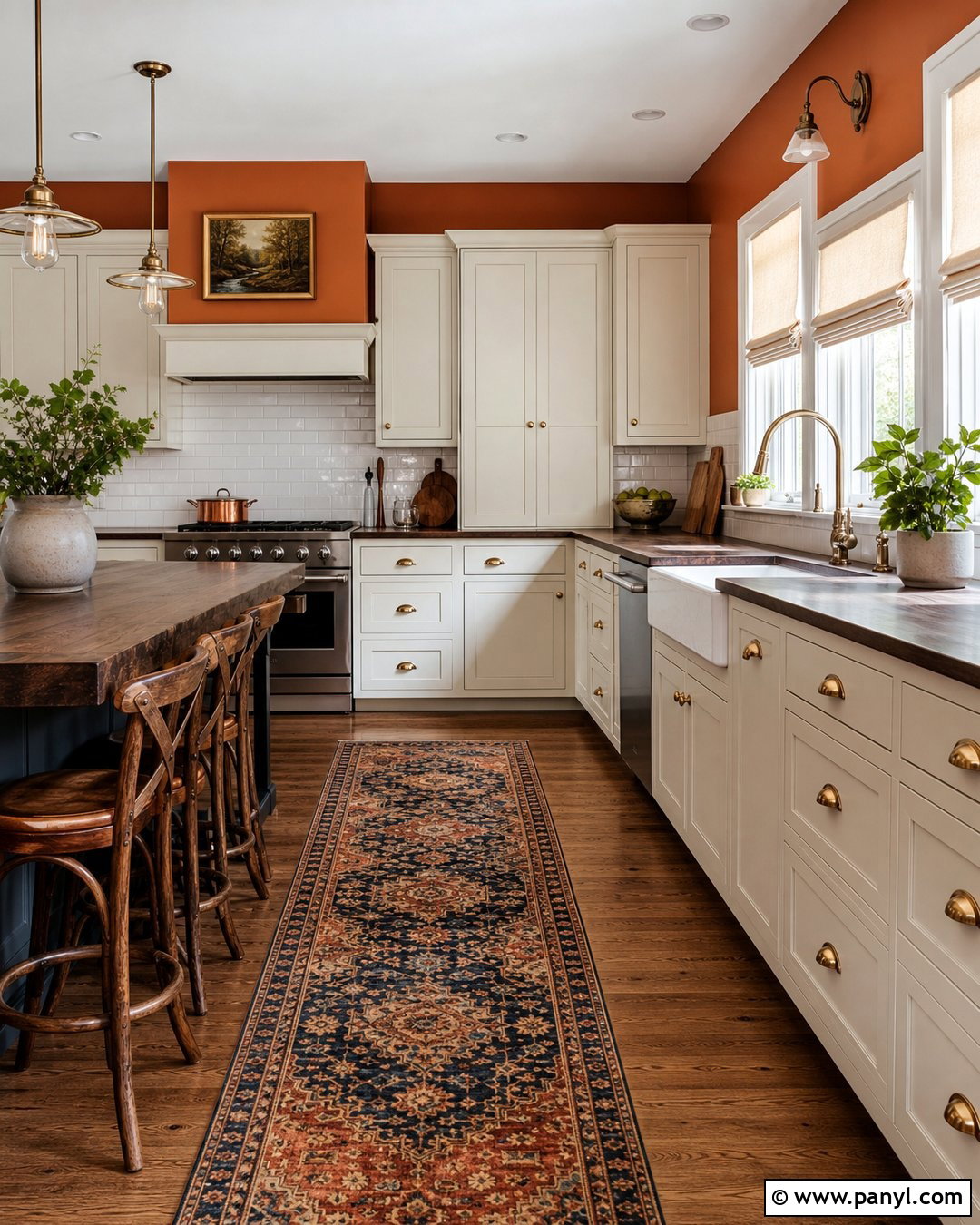
Cream cabinets provide a fresh counterpoint to burnt orange walls, especially in a traditional or transitional kitchen. Choose warm cream rather than stark white so the contrast remains comfortable. Pair the cabinetry with walnut countertops or a wood-topped island, aged brass hardware, and an off-white subway tile backsplash. Medium brown wood flooring grounds the lighter surfaces and echoes the orange paint’s earthy undertones. Add two simple pendant lights over the island and undercabinet lighting across the main preparation area. A patterned runner in rust, navy, and beige can introduce controlled detail. Keep countertop accessories practical and limited. Wooden stools, linen shades, and a few ceramic bowls complete this inviting kitchen, giving the bold wall color plenty of room to breathe.
18. Burnt Orange Breakfast Nook
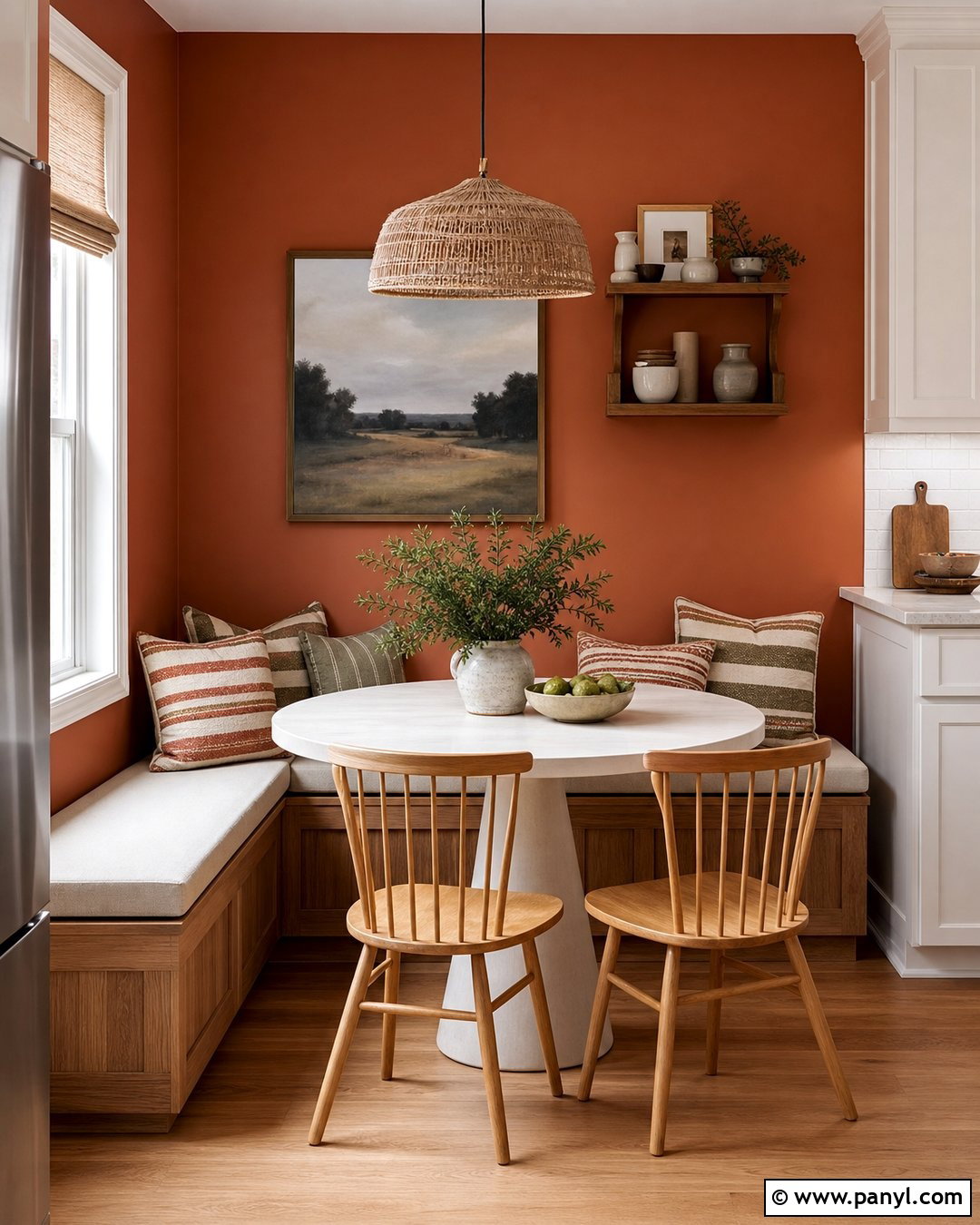
A burnt orange wall can turn an overlooked kitchen corner into a cozy, well-defined breakfast nook. Build an L-shaped oak bench along the painted wall and top it with comfortable oatmeal seat cushions. Add a round pedestal table in warm white, which provides contrast and allows easier movement in a compact area. Two small spindle-back chairs can handle extra seating without making the arrangement bulky. Use striped pillows in cream, olive, and rust to connect the palette. A woven pendant centered over the table gives the nook its own visual identity. Frame one simple landscape print above the bench and install a slim shelf for a few ceramic pieces. The complete setup feels intimate, practical, and clearly connected to the surrounding kitchen.
19. Burnt Orange Home Office Walls
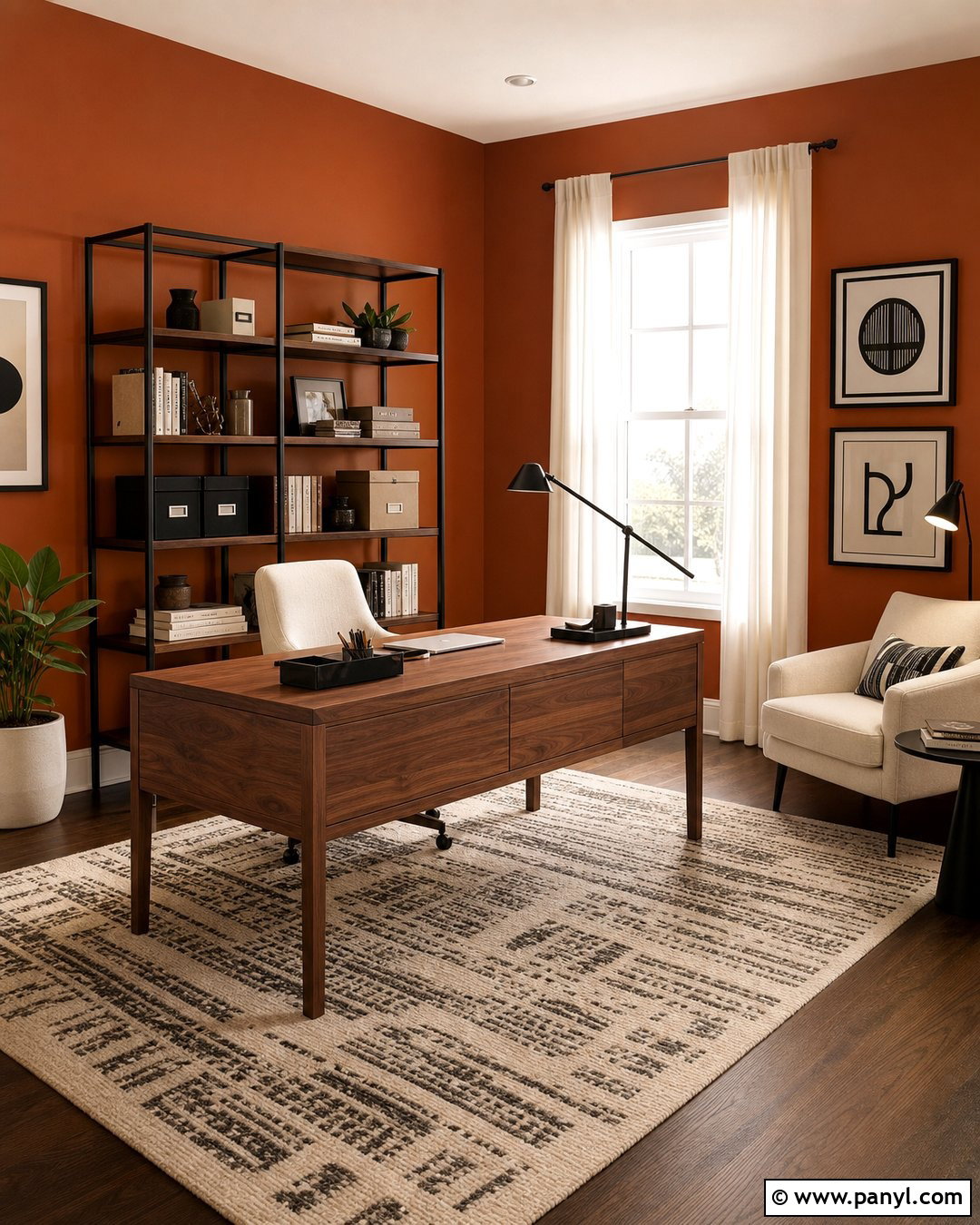
Burnt orange walls can make a home office feel focused, warm, and visually separate from the rest of the house. Position a streamlined walnut desk near the window, leaving enough wall space behind it for a functional storage system. Use a cream upholstered desk chair to lighten the palette and a flat-weave rug in beige and charcoal to define the work zone. Install black metal shelving with wood shelves for books, closed boxes, and a few decorative objects. A bright adjustable task lamp is essential for detailed work. Add warm white curtains that filter glare without darkening the room. Framed graphic prints, one plant, and a compact reading chair complete the office, creating a professional background that still feels comfortable and personal.
20. Burnt Orange Library Walls
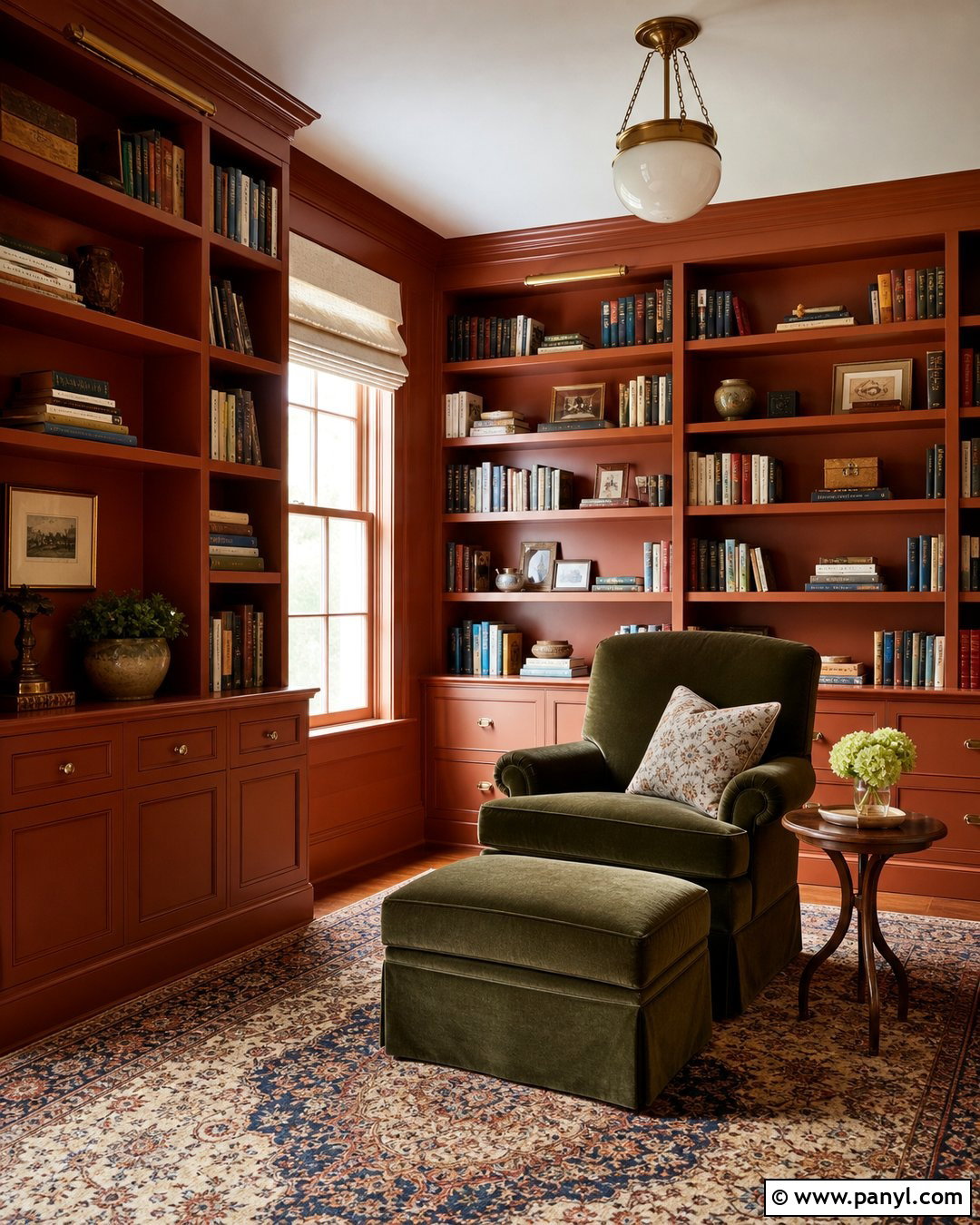
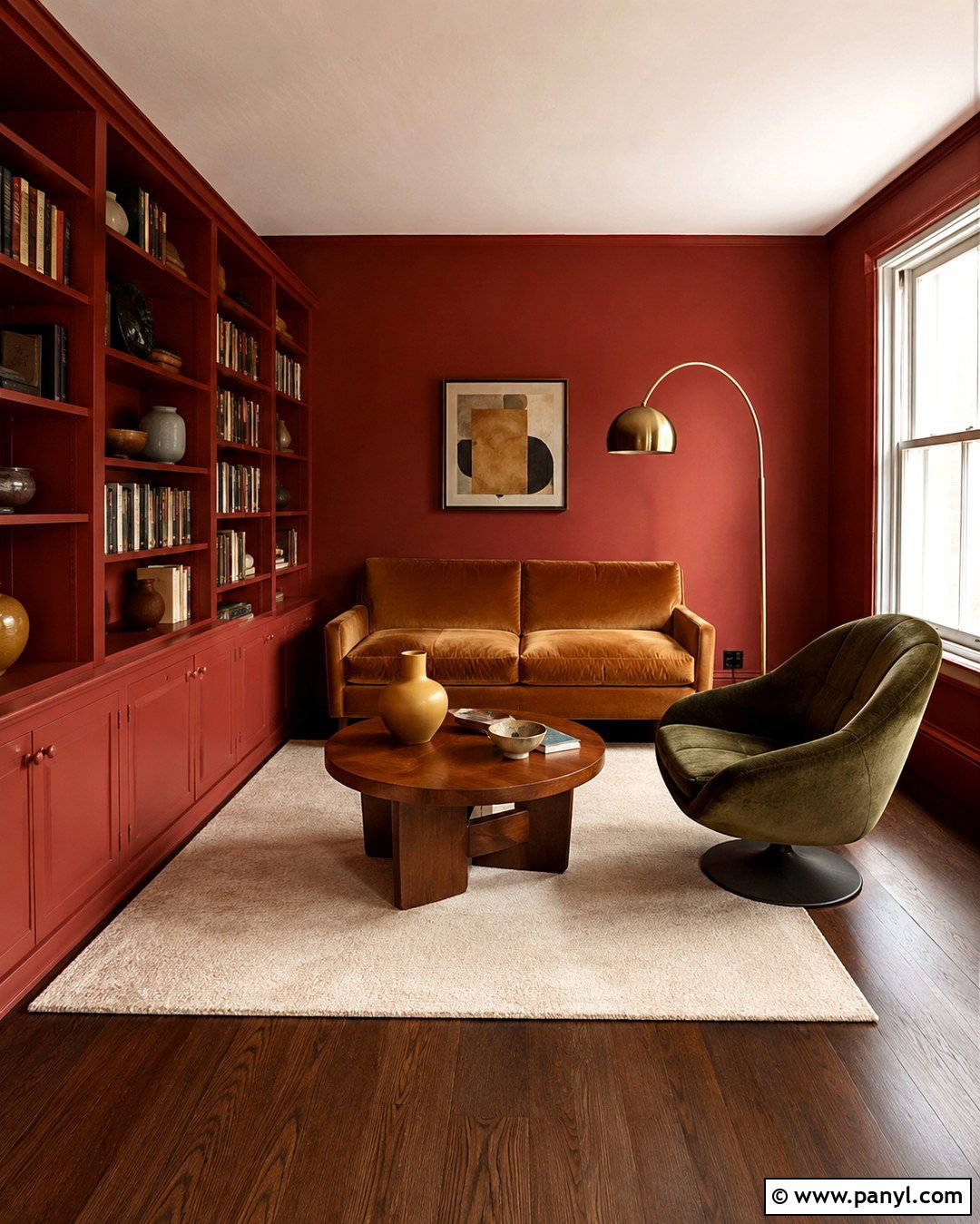
Floor-to-ceiling bookshelves painted the same burnt orange as the surrounding walls give a home library a rich, unified appearance. Fill the shelves loosely enough that sections of the painted backing remain visible. A deep olive reading chair and matching ottoman should sit near a bright floor lamp, creating a dedicated spot for reading. Add a small round walnut table for books and everyday essentials. A large patterned rug in cream, faded blue, and rust brings softness to the floor and prevents the room from feeling too dark. Use cream Roman shades and a warm white ceiling to preserve brightness. Brass picture lights above the shelving provide focused illumination. The finished library feels enveloping, orderly, and useful rather than overly formal or decorative.
21. Burnt Orange Entryway Walls
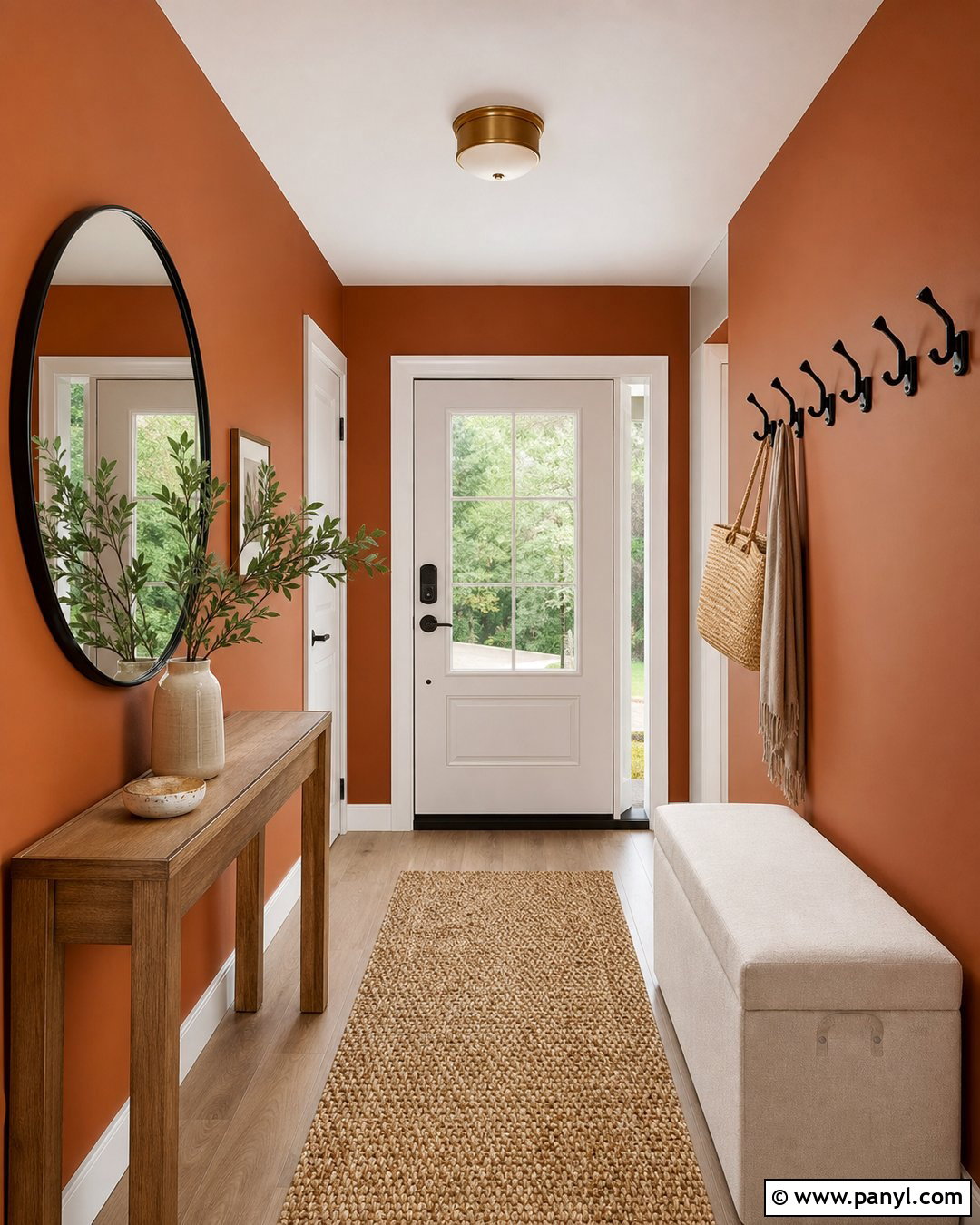
Give the entryway a clear identity by wrapping its main walls in burnt orange and balancing them with practical light-colored furnishings. Place a narrow oak console against one wall, leaving enough open space for comfortable movement through the door. A large round mirror above the console reflects daylight and breaks up the saturated paint. Add a cream upholstered bench with hidden shoe storage, a woven runner, and several black wall hooks. An off-white ceiling and trim keep the entrance looking crisp. Use a flush-mount brass light for bright overhead illumination. A ceramic bowl for keys, one framed print, and a leafy branch arrangement provide simple decoration. This complete entry offers warmth on arrival while keeping shoes, bags, coats, and everyday items neatly controlled.
22. Burnt Orange Hallway Walls
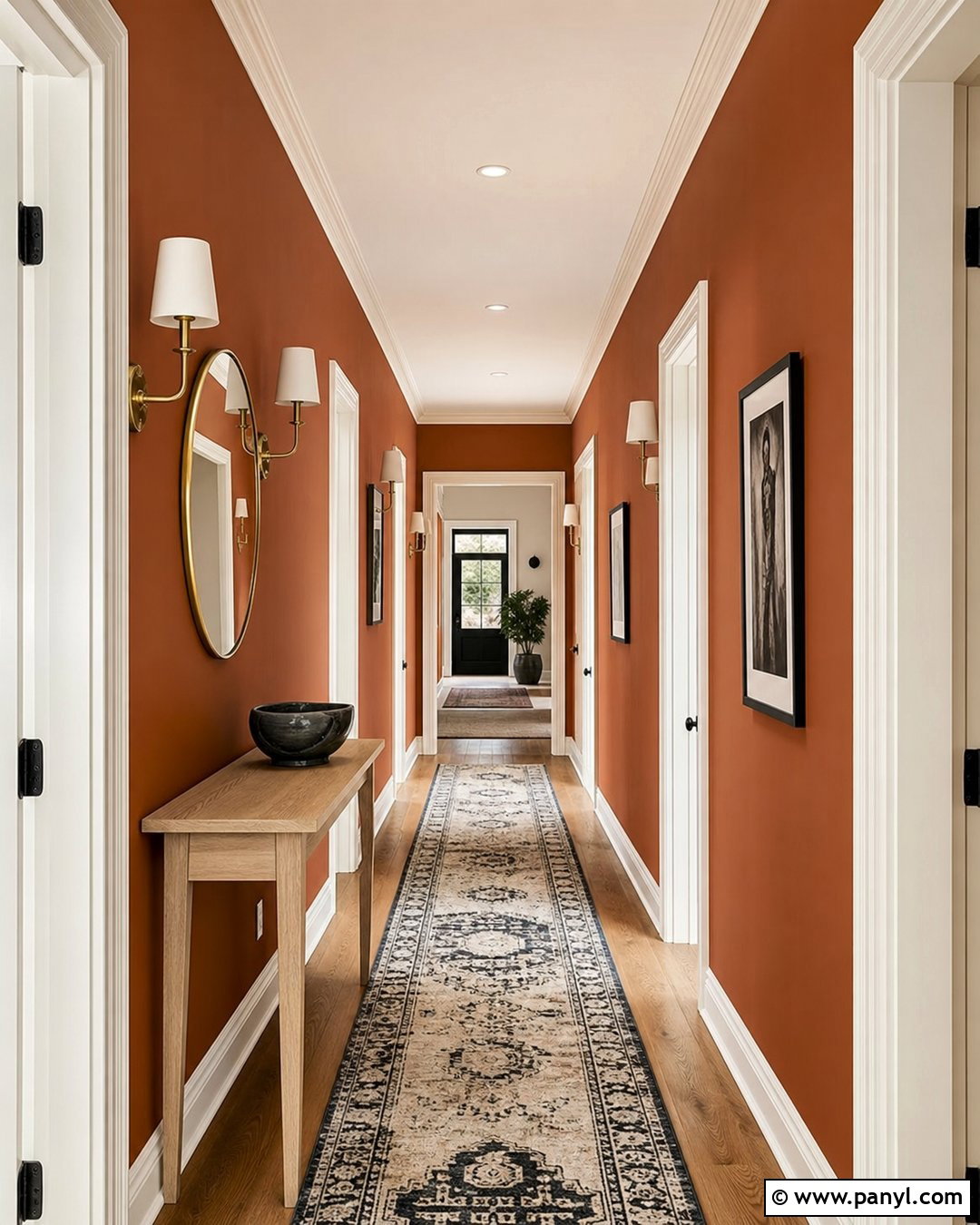
Long hallways become more intentional when burnt orange walls are paired with consistent lighting, pale trim, and restrained artwork. Paint the baseboards, door frames, and ceiling warm white to create a clean visual outline. Lay a cream-and-charcoal runner through the center, leaving a narrow section of wood flooring visible along each side. Hang a row of black-framed photographs or simple prints at the same height for an orderly gallery effect. Repeating brass sconces can brighten the passage and emphasize its length without using valuable floor space. If room permits, add a shallow oak console near the widest point. A small mirror and ceramic bowl provide function. The coordinated details make the hallway feel like a designed space instead of merely a route between rooms.
23. Burnt Orange Powder Room Walls
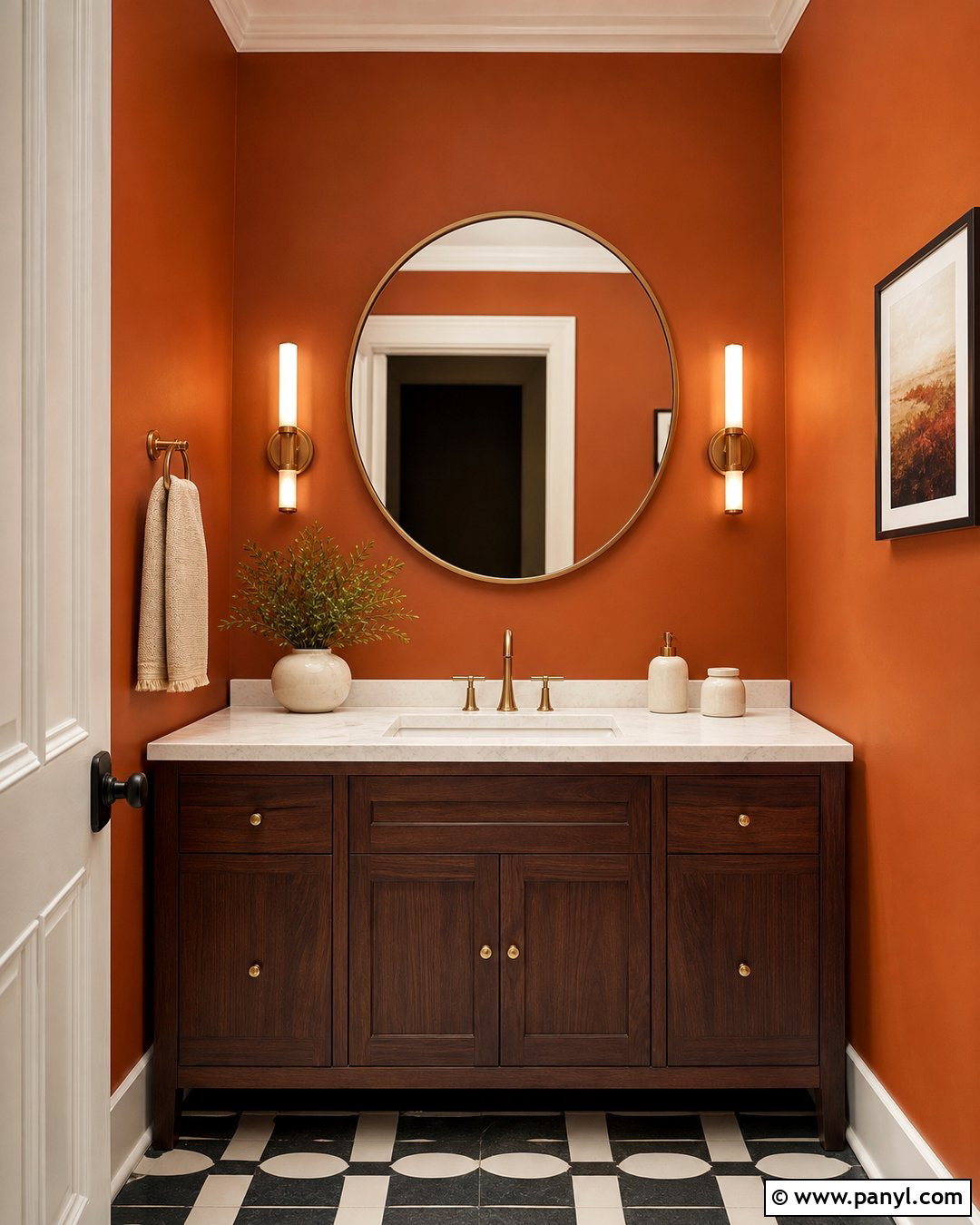
A powder room is an ideal place to use burnt orange walls across the entire space because its compact size can support a bold, memorable treatment. Install a dark walnut vanity with a white stone countertop and an undermount sink. A round brass mirror and two slim wall sconces add brightness and polished contrast. Keep the ceiling, door, and trim warm white to prevent the room from feeling enclosed. Use a small-scale black-and-cream tile on the floor for pattern and definition. A simple ivory hand towel, brass faucet, and cream ceramic accessories maintain visual order. Hang one small piece of artwork beside the mirror rather than filling every wall. The completed powder room feels dramatic, practical, and carefully finished from floor to ceiling.
24. Burnt Orange Bathroom Walls
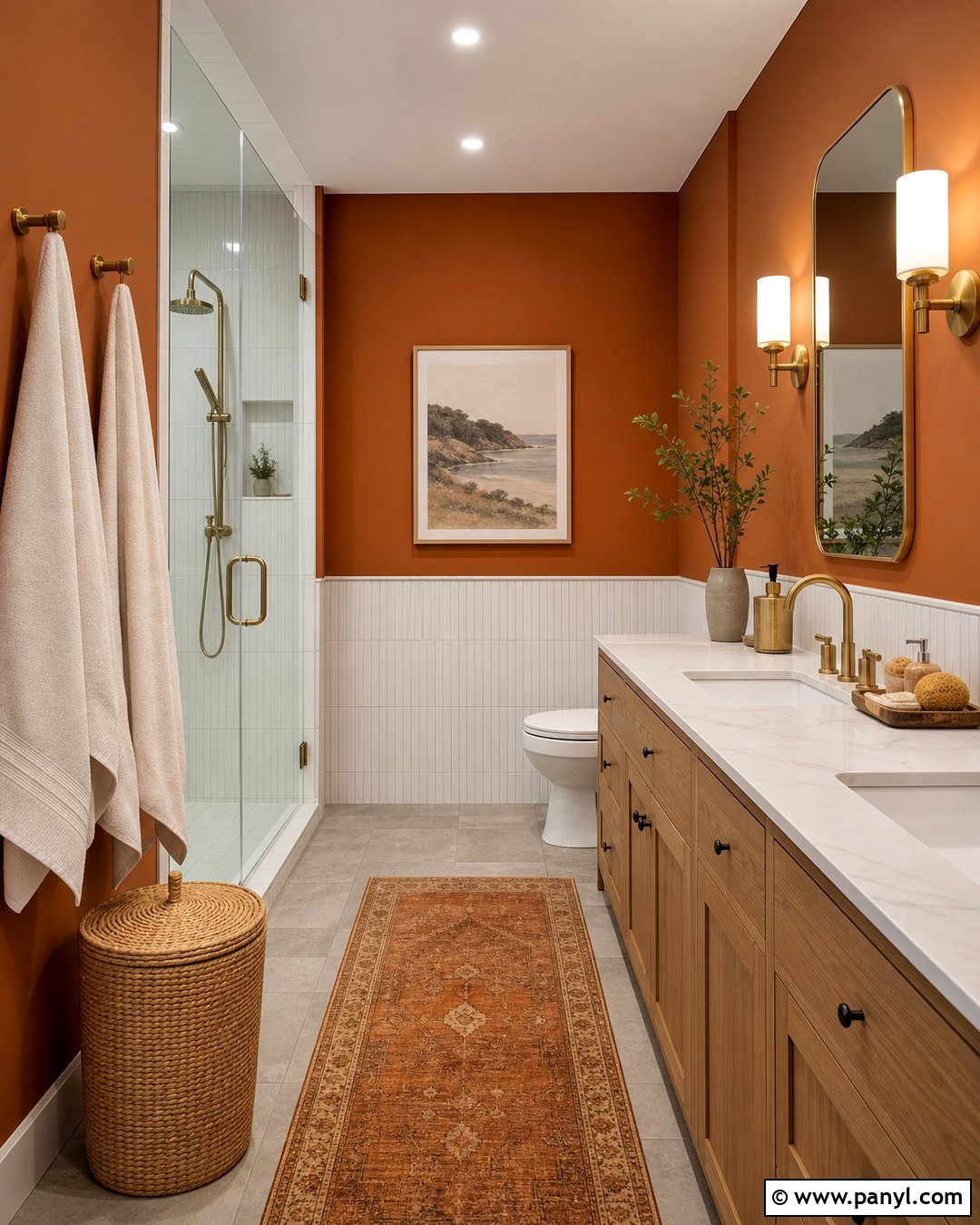
In a full bathroom, burnt orange walls work best with substantial areas of pale tile and bright reflective surfaces. Use the color above white vertical wall tile, creating a clear division that protects wet areas and lightens the room. Choose an oak vanity with a white quartz top, brushed brass fixtures, and a wide frameless mirror. A glass shower enclosure keeps sightlines open, while warm gray floor tile provides a durable neutral base. Add cream towels, a woven laundry basket, and one washable runner in muted rust and beige. Bright ceiling lights and mirror sconces ensure the wall color remains clear rather than shadowy. The full scheme feels warm and modern, with natural wood and clean tile preventing the orange from becoming visually heavy.
25. Burnt Orange Laundry Room Walls
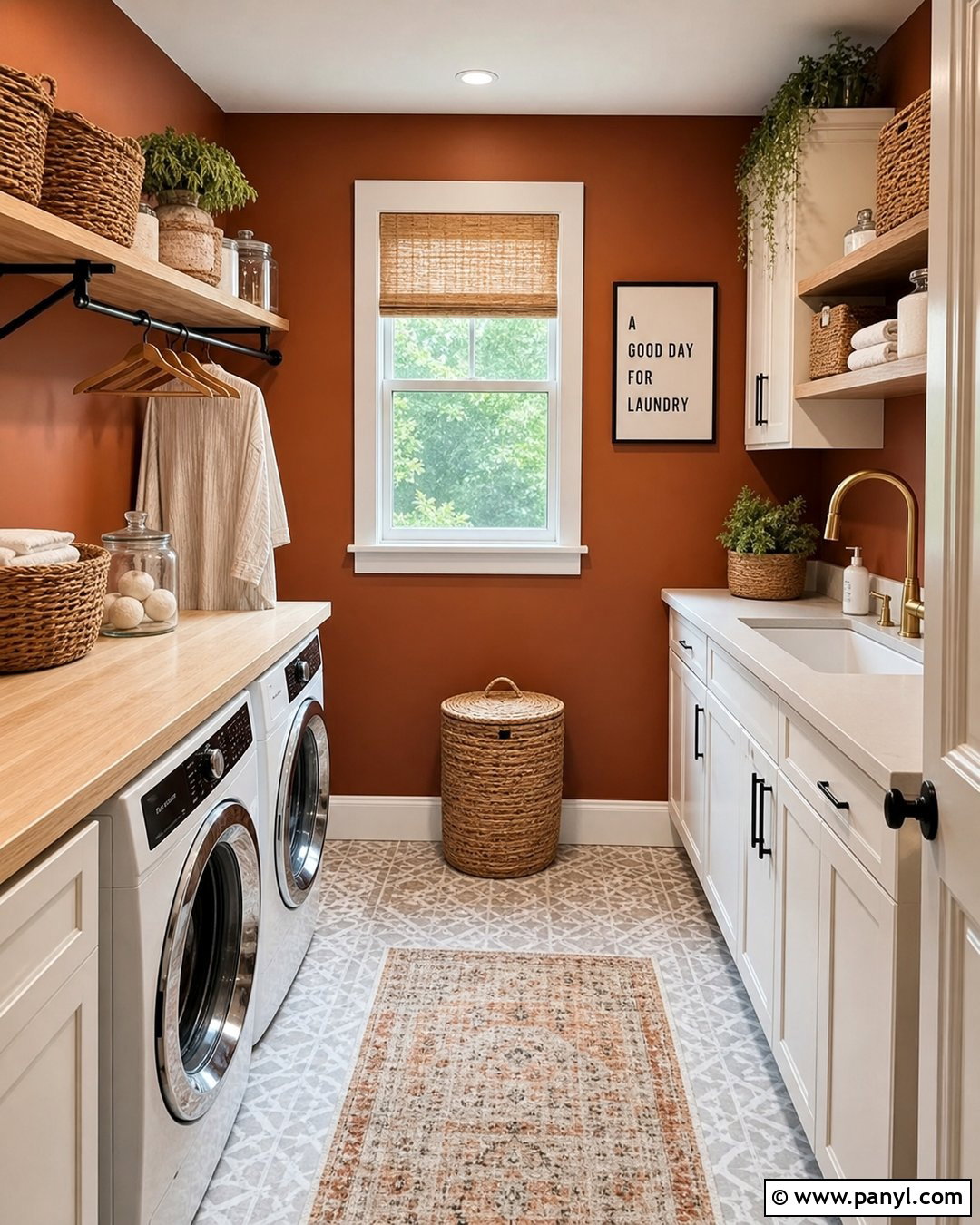
Burnt orange walls can give a hardworking laundry room personality while coordinating beautifully with simple storage and durable finishes. Place white front-loading machines beneath a pale wood folding counter, then install warm white cabinets above for concealed supplies. Open oak shelves can hold matching woven baskets, glass containers, and folded neutral towels. Use a gray-and-white patterned tile floor that disguises everyday dust while adding subtle movement. Matte black cabinet pulls and a black hanging rail bring structure to the light cabinetry. A deep utility sink with a brass faucet makes the room more functional. Finish with bright overhead lighting and one small framed print. The complete space feels cheerful and organized without sacrificing the clear surfaces needed for sorting and folding laundry.
26. Burnt Orange Nursery Walls
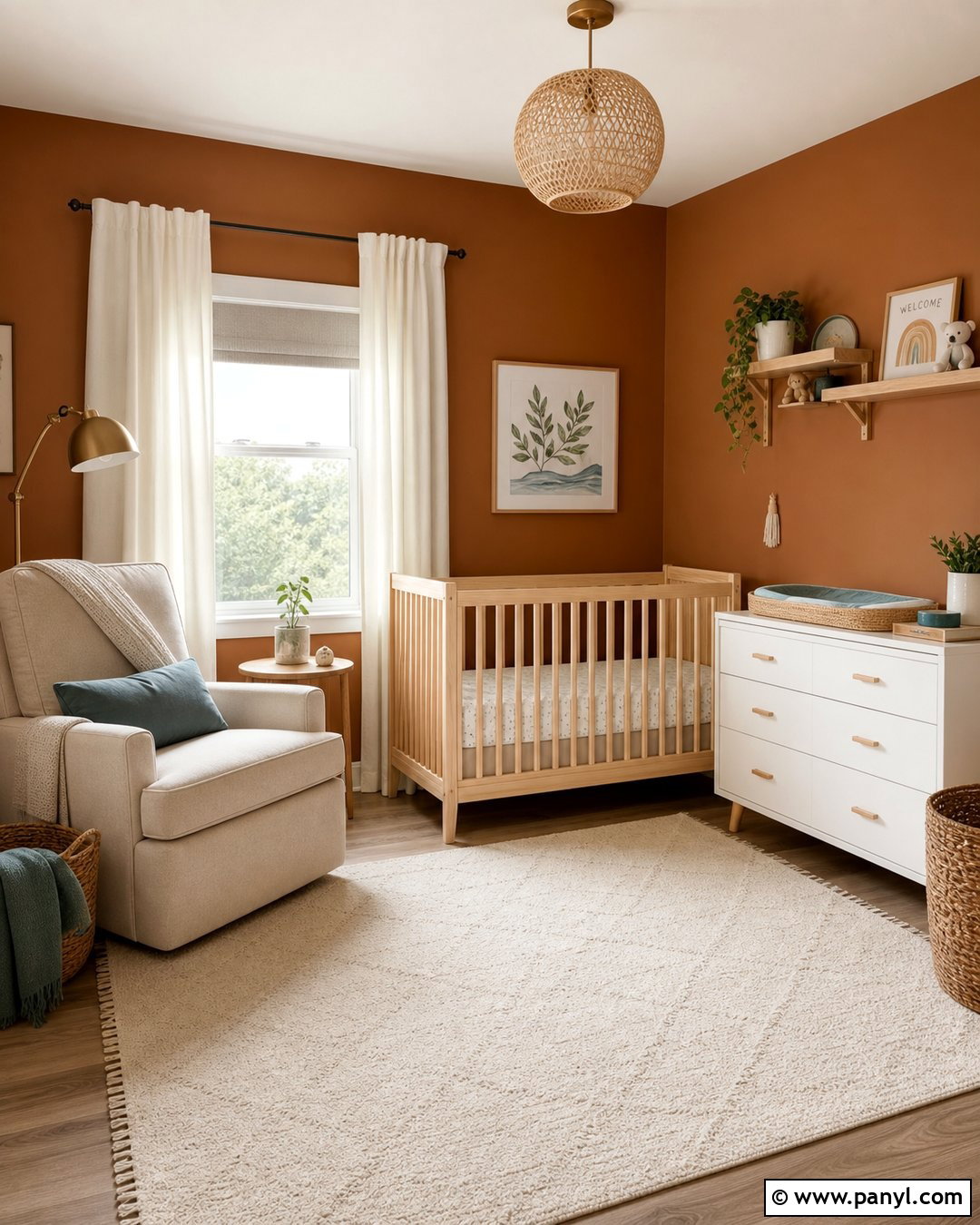
Muted burnt orange walls can create a warm nursery when paired with pale wood, gentle fabrics, and generous white accents. Position a natural maple crib against the main wall, away from windows and hanging decorations. Dress the space with a cream rug, ivory curtains, and fitted bedding in a simple neutral print. Add a comfortable oatmeal glider beside a light wood table and shaded floor lamp for a practical feeding area. A low white dresser can double as organized storage, while securely installed floating shelves hold a few lightweight decorations. Use woven baskets for toys and blankets. Soft sage and dusty blue details can cool the palette without making it busy. The finished nursery feels peaceful, functional, and flexible enough to grow with the child.
27. Burnt Orange Kids Room Walls
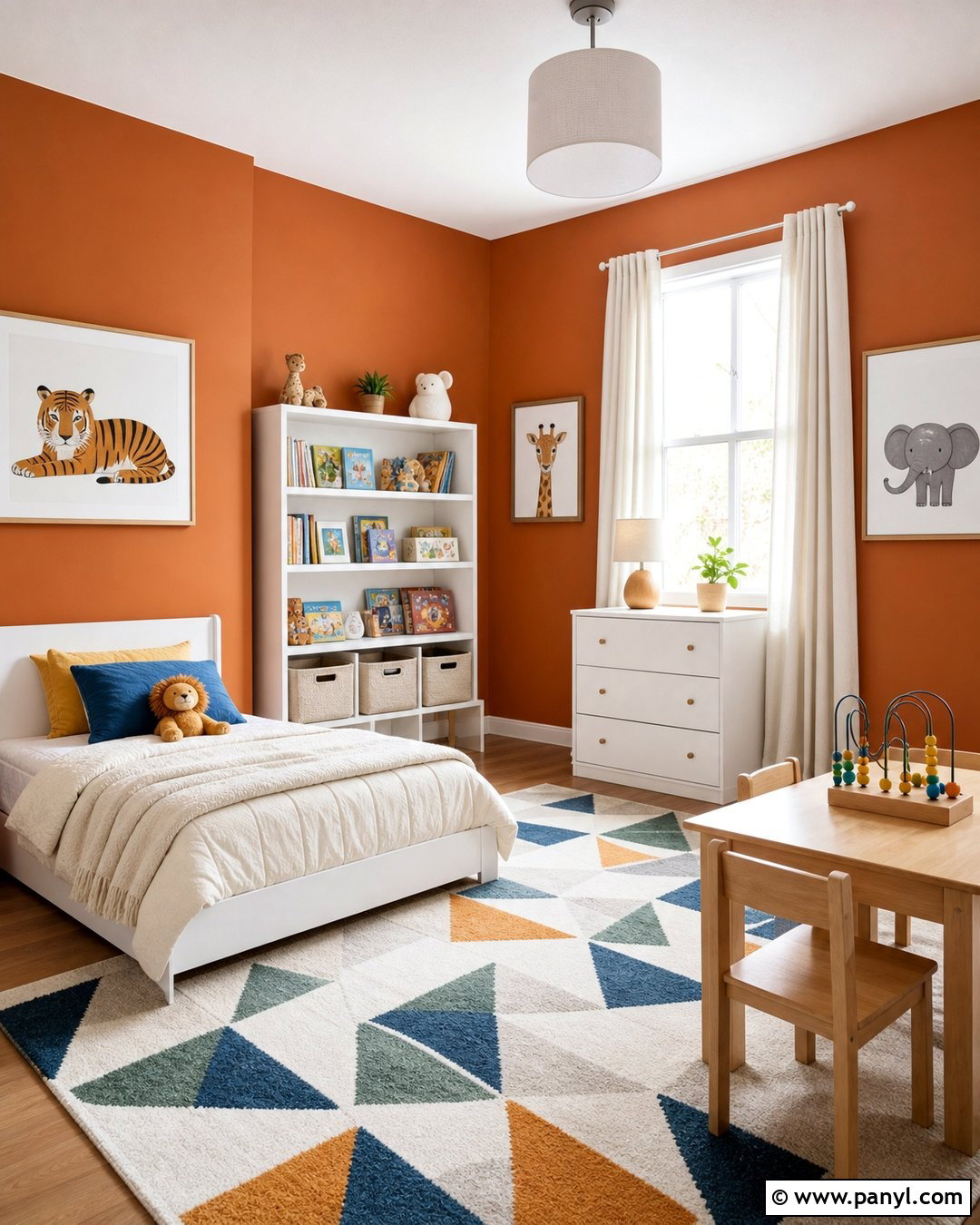
A children’s room with burnt orange walls can feel playful without depending on a temporary theme. Choose simple white furniture, including a low bed, bookcase, and dresser, to create bright contrast and long-term flexibility. Layer the bed with cream bedding and accents in denim blue, mustard, and muted green. A washable geometric rug should define the open play area while protecting the floor. Add a small light wood table with two chairs for drawing, puzzles, and crafts. Use closed bins on lower shelves so children can reach and return their belongings easily. Blackout curtains in warm ivory keep the windows calm. Framed animal prints, a wall-mounted reading light, and a few colorful books finish the room without covering the distinctive wall color.
28. Burnt Orange Teen Bedroom Walls
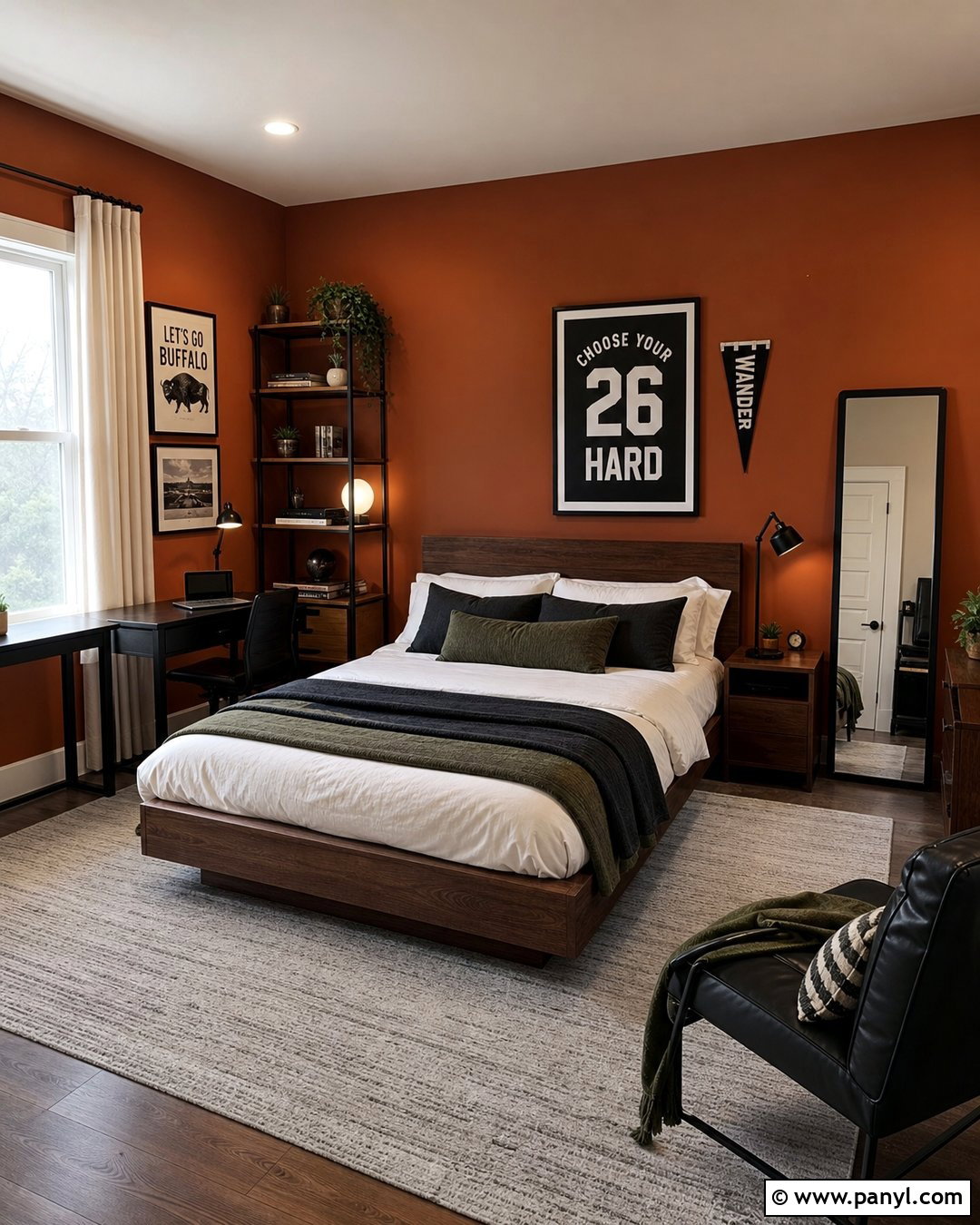
Burnt orange walls give a teen bedroom warmth and individuality while remaining versatile enough for changing tastes. Anchor the room with a walnut platform bed, crisp white sheets, and layered bedding in charcoal, cream, and olive. Position a compact black desk near the window with practical shelving above it for school materials and personal displays. A large neutral rug softens the floor and separates the sleeping area from the workspace. Use cream curtains and bright adjustable lighting to balance the deeper surfaces. Framed graphic artwork can introduce muted blue or green without creating a busy color scheme. Add a comfortable reading chair, closed storage baskets, and a full-length mirror. The room feels expressive, organized, and mature without resembling an adult formal bedroom.
29. Burnt Orange Guest Room Walls
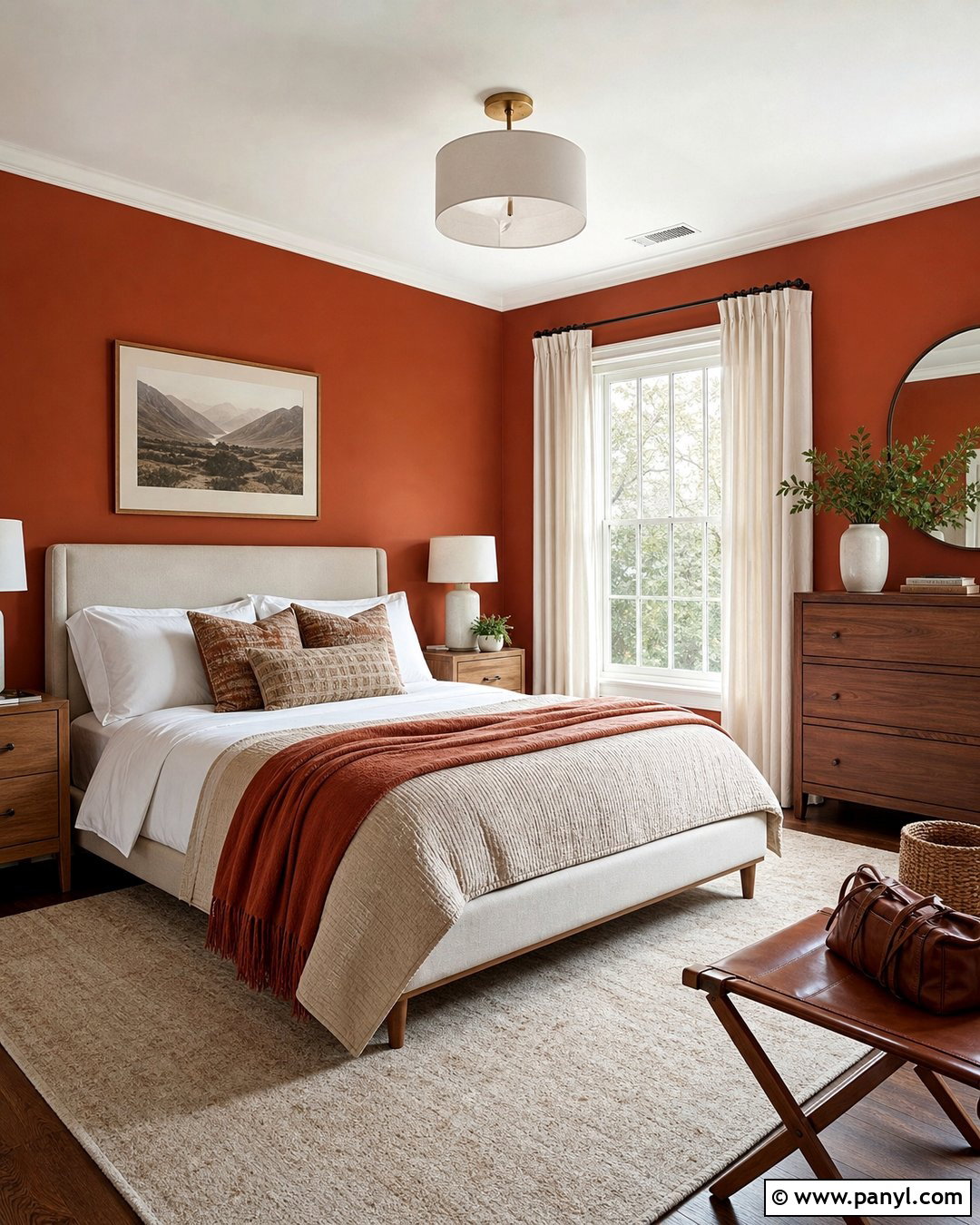
Guests will feel welcomed in a room where burnt orange walls are balanced by soft bedding and useful, uncluttered furniture. Center a cream upholstered bed on the main wall and layer it with white sheets, a beige quilt, and a rust-colored throw folded across the foot. Matching oak nightstands should provide lamps, open charging access, and enough empty surface for personal belongings. Add a light neutral rug and full-length ivory curtains to soften the room. A small walnut dresser, luggage bench, and wall mirror make short stays more convenient. Keep artwork simple, using one landscape print with green and earthy brown details. Fresh greenery and a woven basket complete the space, creating a thoughtful retreat that feels warm without being overly personalized.
30. Burnt Orange Sunroom Walls
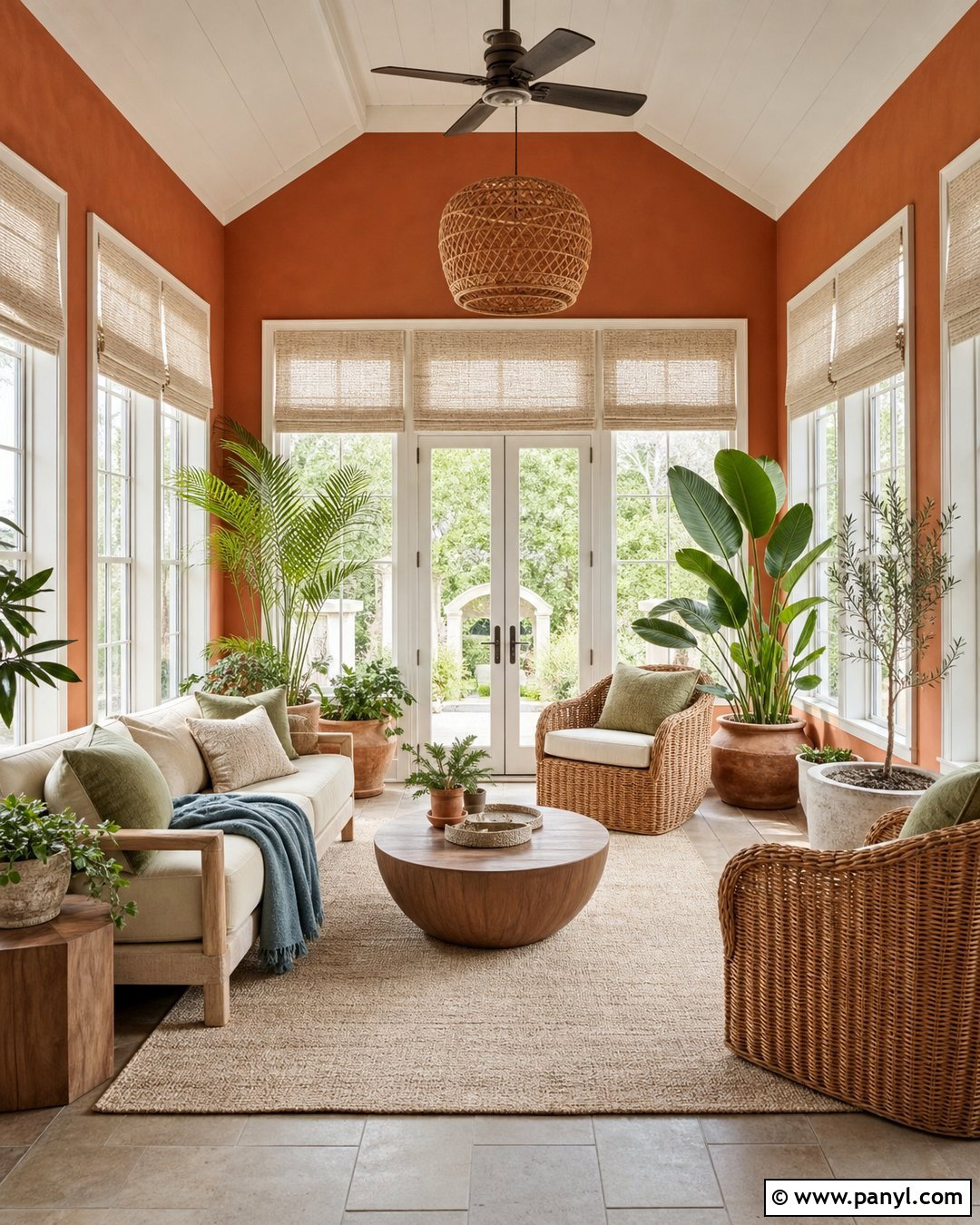
Sun-filled spaces prevent burnt orange walls from appearing heavy and highlight the paint’s warm clay undertones. Furnish the sunroom with a cream outdoor-grade sofa, two woven rattan chairs, and a round teak coffee table. Use a pale flat-weave rug to define the seating area while handling regular foot traffic. Linen Roman shades can control glare without covering the windows completely. Add several plants at different heights, using neutral terracotta, cream, and stone-colored containers. A simple ceiling fan and woven pendant keep the room comfortable and visually relaxed. Introduce olive pillows and a faded blue throw for gentle contrast. The complete sunroom feels connected to the outdoors, with durable materials and an easy arrangement suited to reading, conversation, and casual morning use.
31. Burnt Orange Basement Walls
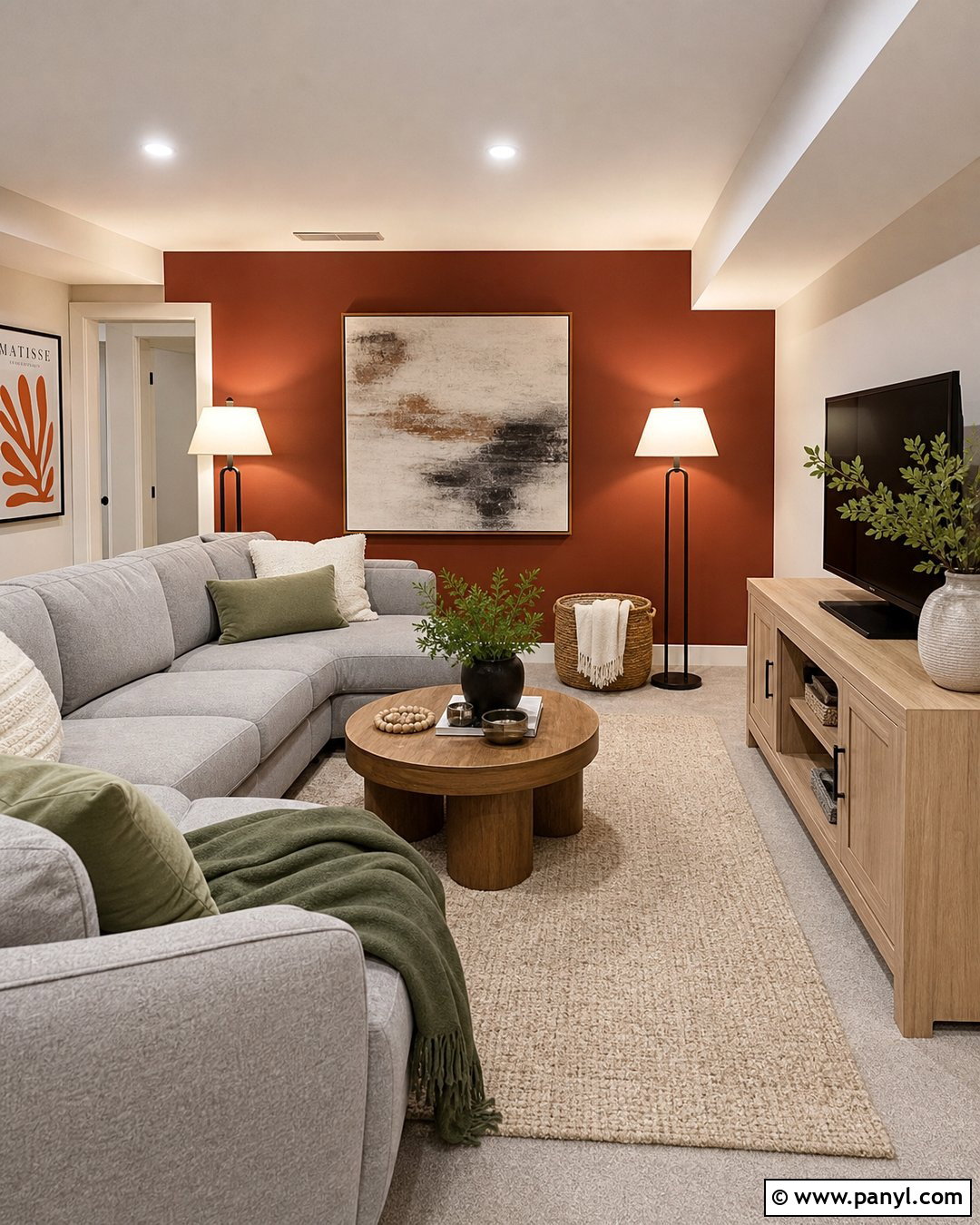
Burnt orange can warm a basement when it is limited to a feature wall and supported by bright artificial lighting. Paint the longest uninterrupted wall behind a light gray sectional, leaving the ceiling and remaining walls creamy white. Choose a large beige rug to soften the floor and define the main seating zone. Add a pale oak media console, round wood coffee table, and slim black floor lamps. Recessed ceiling lights should distribute clear illumination throughout the room, preventing shadowed corners. Use ivory pillows, an olive throw, and simple abstract artwork to connect the orange with softer tones. Closed storage cabinets and woven baskets control games and household items. The completed basement feels bright, comfortable, and purposeful rather than dark or unfinished.
32. Studio Apartment With Burnt Orange Walls
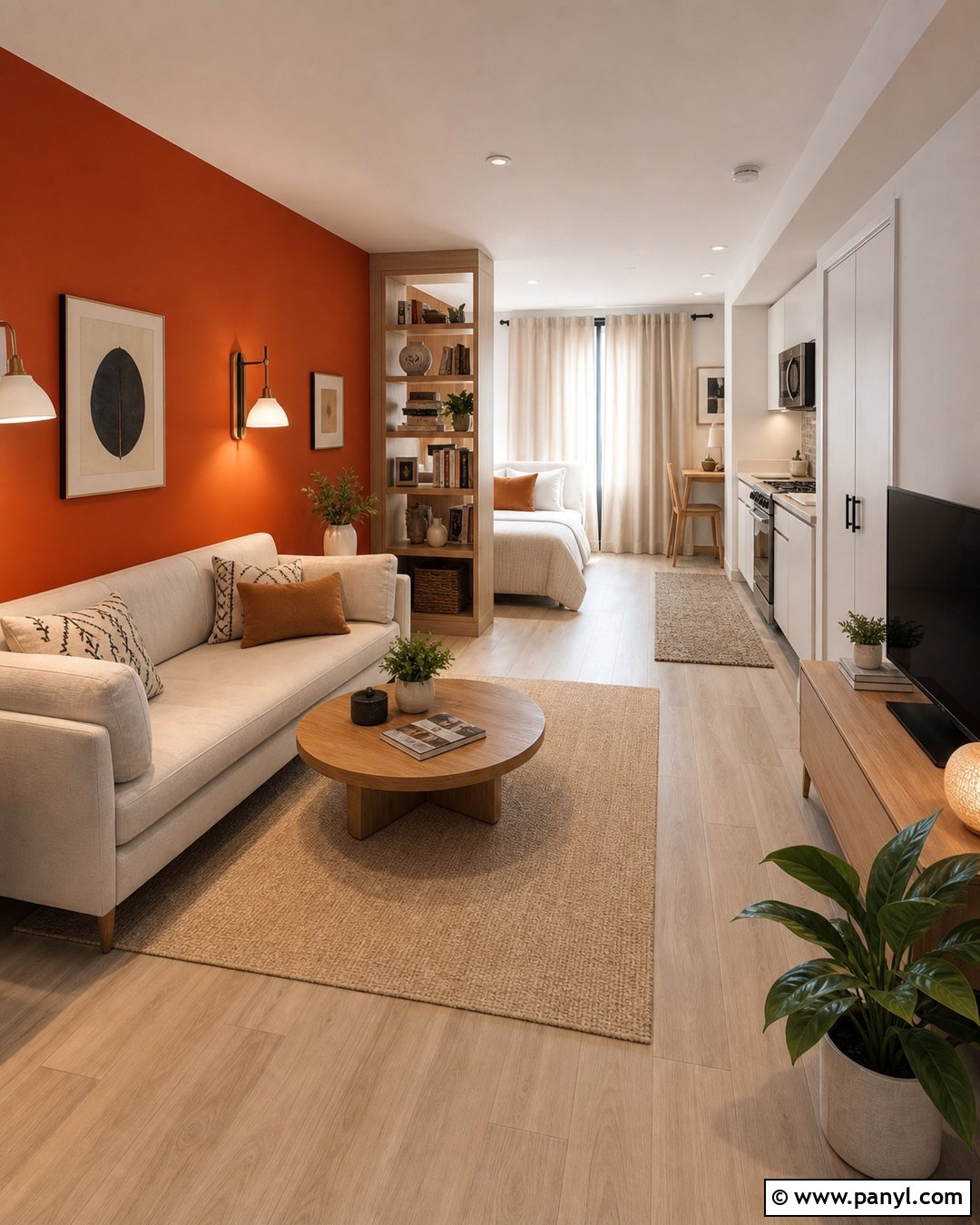
In a studio apartment, one burnt orange wall can visually anchor the living zone without requiring a physical divider. Position a compact cream sofa against it, facing a slim oak media console. Place a small round coffee table and washable neutral rug in front, keeping the main walkway unobstructed. The sleeping area can use white bedding and a narrow open bookcase as a light boundary. Repeat small touches of burnt orange in one pillow and a kitchen runner so the apartment feels connected. Choose pale wood furniture throughout to reduce visual clutter. Cream curtains, wall-mounted lighting, and closed storage maintain openness. The coordinated layout makes the compact home feel organized, while the orange wall supplies a clear focal point and memorable personality.
33. Open-Concept Space With Burnt Orange Walls
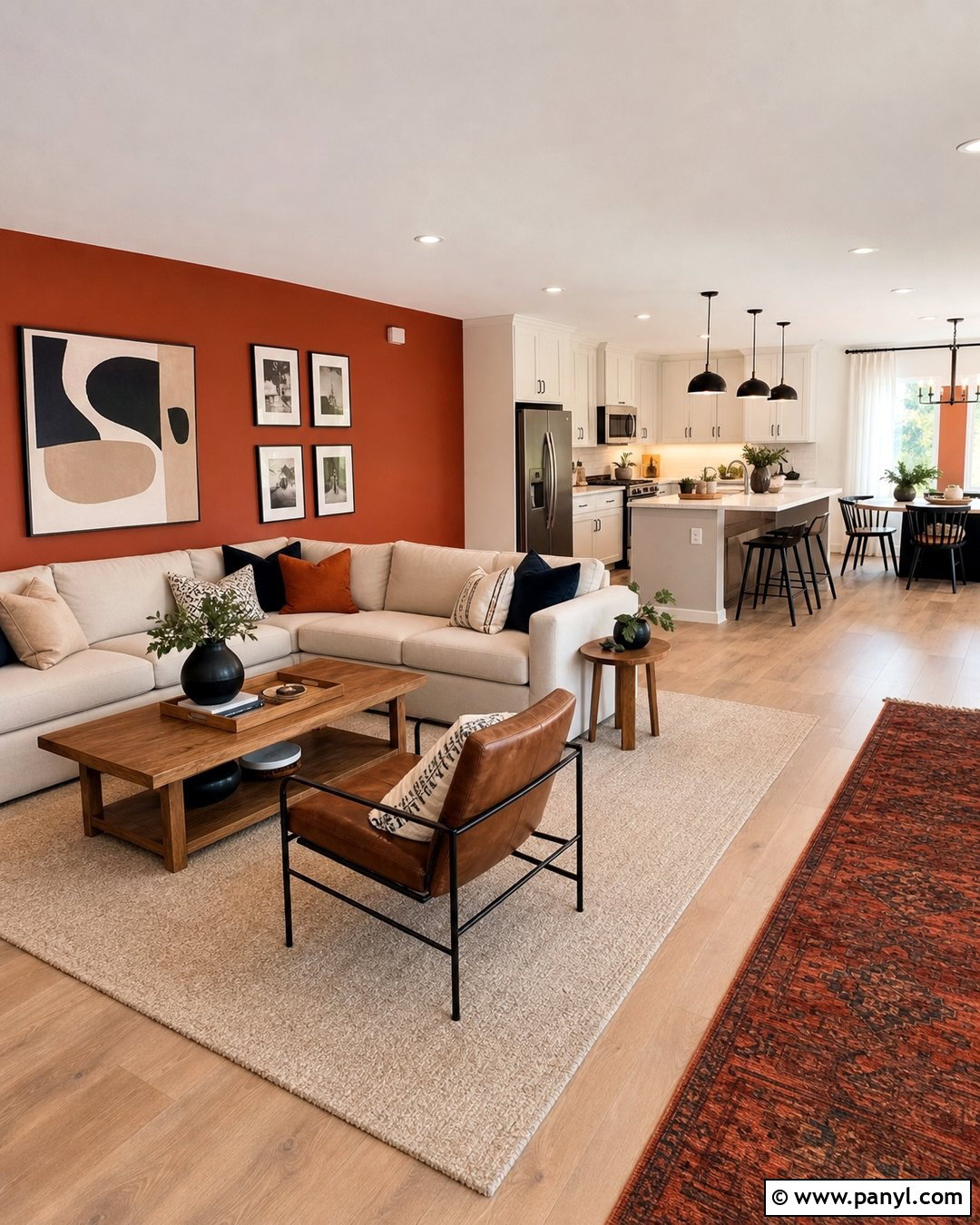
A burnt orange wall can define the living area within an open-concept home while the kitchen and dining spaces remain lighter. Apply the color to one complete architectural section rather than stopping it at an arbitrary point. Place a cream sectional in front of the painted wall and arrange it over a large beige rug. Use medium oak furniture throughout the living and dining zones to create continuity. Warm white kitchen cabinets, pale counters, and matching trim balance the saturated focal color. Repeat black accents through pendant lights, dining chairs, and picture frames. Small rust details in a runner or artwork can carry the palette across the room. The overall space feels connected, yet every functional zone remains easy to recognize and comfortably proportioned.
34. Textured Burnt Orange Walls
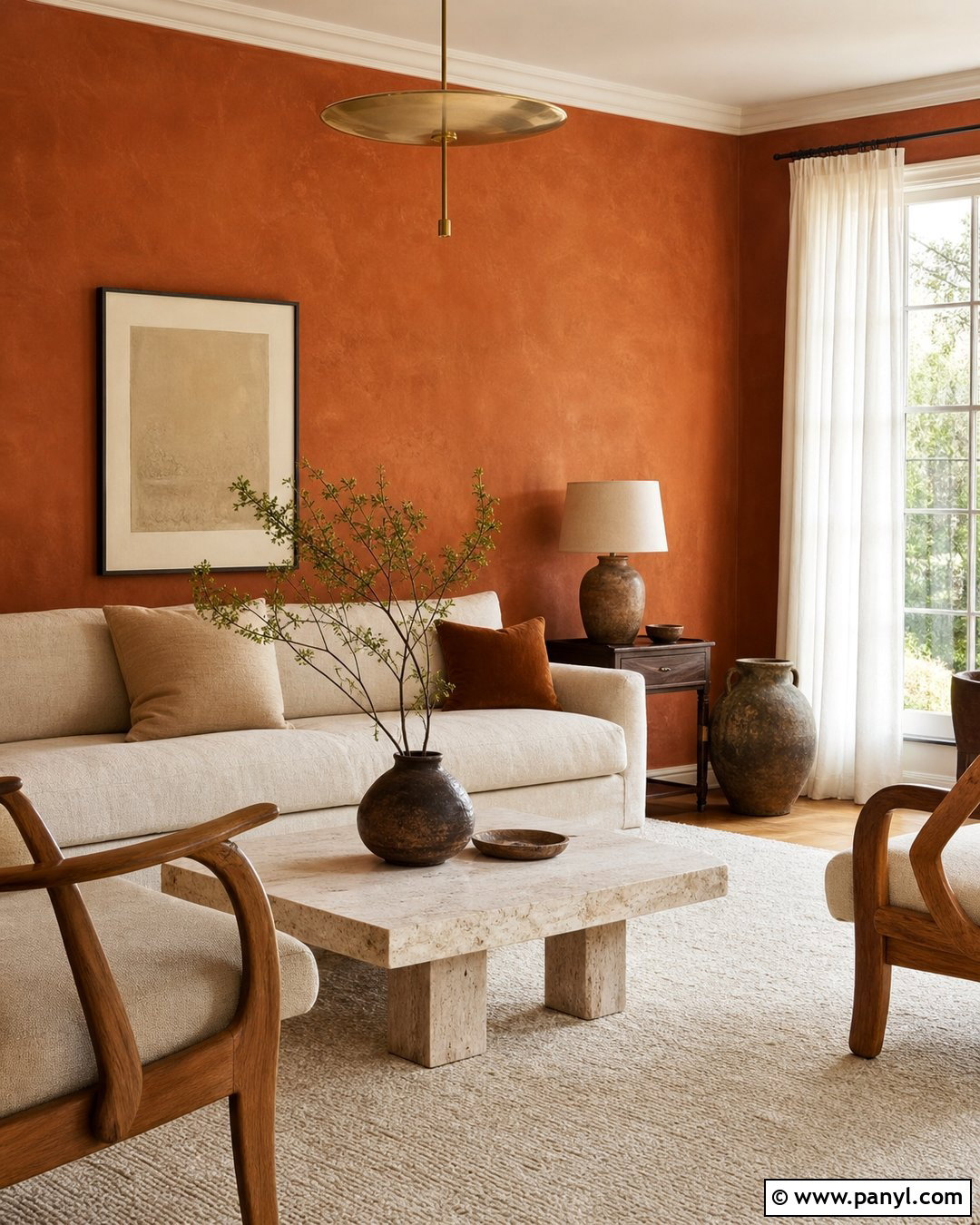
A limewash or softly mottled finish adds visible movement to burnt orange walls, giving a room an organic, handcrafted character. Use the texture on every wall in a bright living room, but keep the ceiling and trim creamy white. Choose a simple flax linen sofa, curved oak chairs, and a low travertine coffee table so the furniture does not compete with the wall finish. An ivory wool rug provides a quiet foundation, while aged brass lighting adds subtle warmth. Keep window treatments lightweight and nearly tone-on-tone with the trim. Large-scale abstract artwork may be unnecessary because the walls already offer variation. Instead, decorate with sculptural pottery, natural branches, and one dark wood side table. The result feels layered, tactile, and intentionally restrained.
35. Burnt Orange Paneled Walls
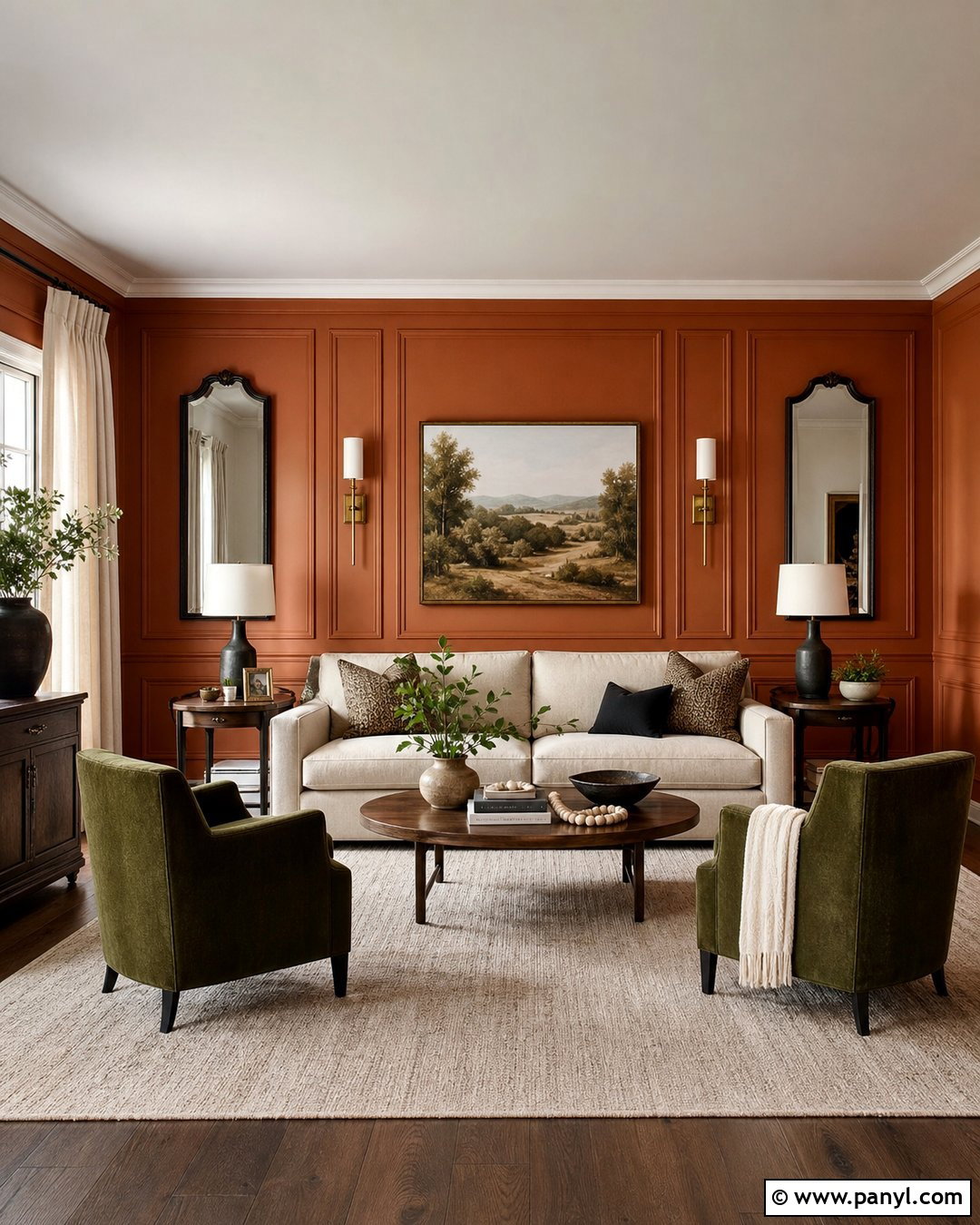
Burnt orange paint gives traditional wall paneling a fresh, substantial presence without losing its architectural detail. Install simple rectangular molding or vertical paneling across the room, then coat the walls, panels, and baseboards in the same satin burnt orange finish. Keep the ceiling soft white for contrast. A cream sofa, dark walnut console, and two olive armchairs create a balanced seating plan with both light and deep tones. Add a large beige rug and an oval wood coffee table to soften the panel geometry. Brass sconces placed within the molding provide symmetry and useful illumination. Finish with linen curtains, restrained landscape artwork, and dark framed mirrors. The complete design feels tailored and inviting, allowing the paneling and color to work as one unified feature.
Conclusion:
Burnt orange walls can make almost any room feel warmer, more distinctive, and thoughtfully designed. The key is to treat the paint as part of a complete palette rather than an isolated statement. Cream, beige, pale wood, and white can soften its strength, while navy, olive, charcoal, and black provide confident contrast. Consider the available daylight, room size, flooring, trim, furniture, and lighting before selecting your exact shade. Test the paint on several walls because orange undertones can shift throughout the day. Whether used on one focal wall, detailed paneling, or an entire color-drenched room, these burnt orange walls offer a practical starting point for creating a cohesive home.

Related Ideas and Inspiration:

Leave a Reply