
Red walls can make a room feel warm, dramatic, cheerful, or quietly sophisticated, depending on the shade and surrounding finishes. These 40 Red Walls explore complete spaces built around scarlet, burgundy, brick, coral, oxblood, terracotta-red, and other livable variations. Rich, earthy reds are especially relevant in current interiors, where designers are using the color to create grounded, enveloping rooms rather than harsh statement walls. () The key is balance. Warm woods soften deep red, creamy neutrals calm brighter shades, and contrasting blues or greens add definition. Lighting and paint finish also influence whether the result feels energetic or intimate. From living rooms and kitchens to bedrooms and hallways, the following complete looks offer practical inspiration for decorating with 40 Red Walls.

1. Brick Red Living Room Walls
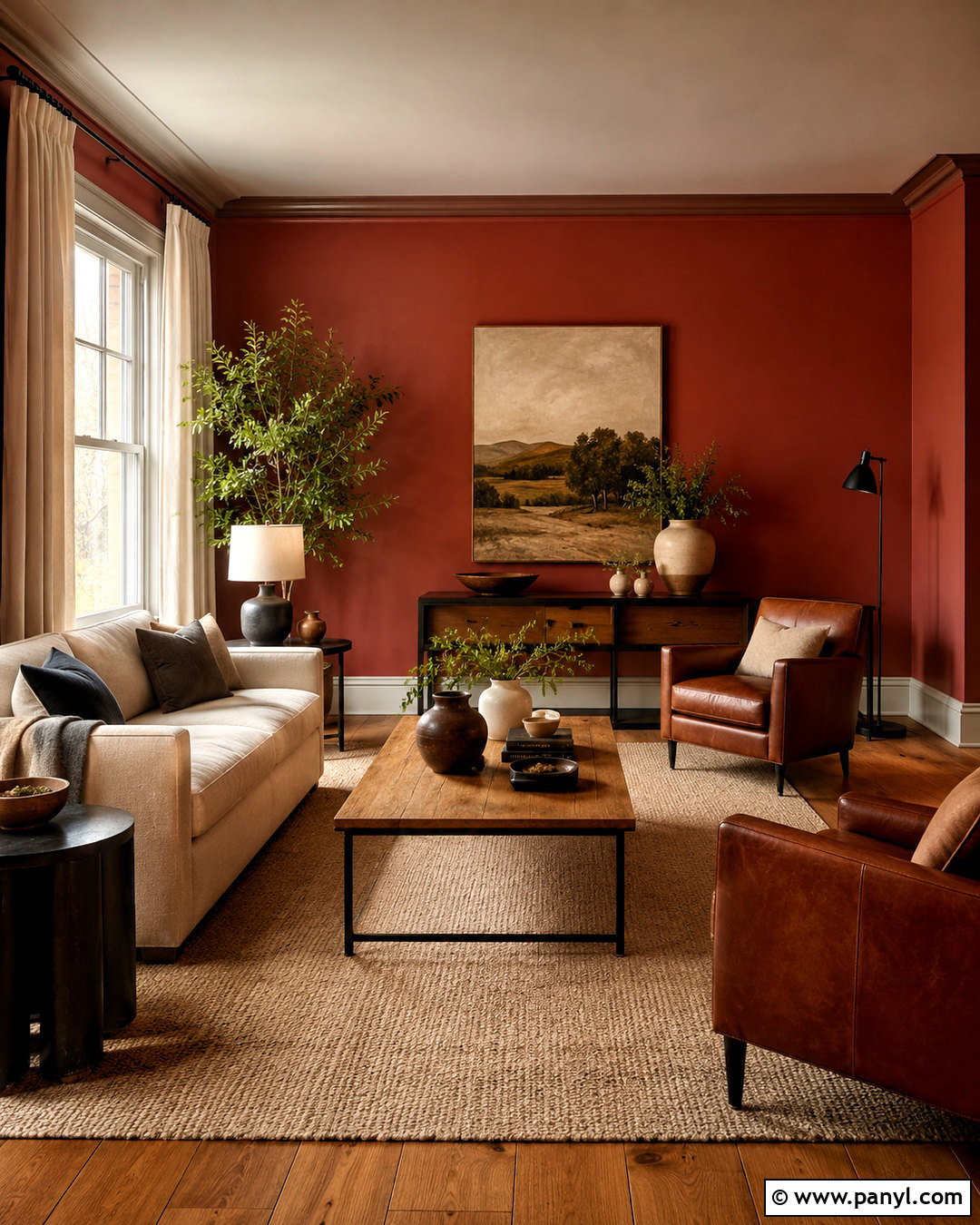
Brick red walls create a comfortable living room that feels colorful without becoming overly bright. Pair them with a warm beige sofa, two caramel leather chairs, and an oatmeal wool rug to establish a soft neutral foundation. Medium oak flooring and a matching coffee table reinforce the earthy character of the paint. Add linen curtains in warm white rather than crisp white, which can look too sharp beside muted red. Black metal lamps and thin black picture frames provide clean definition. Finish the room with cream pillows, rust-patterned textiles, pottery, and a few leafy plants. Keep the ceiling light and uncluttered so the room remains open. This complete palette suits traditional, modern rustic, and relaxed transitional homes.
2. Dark Red Dining Room Walls
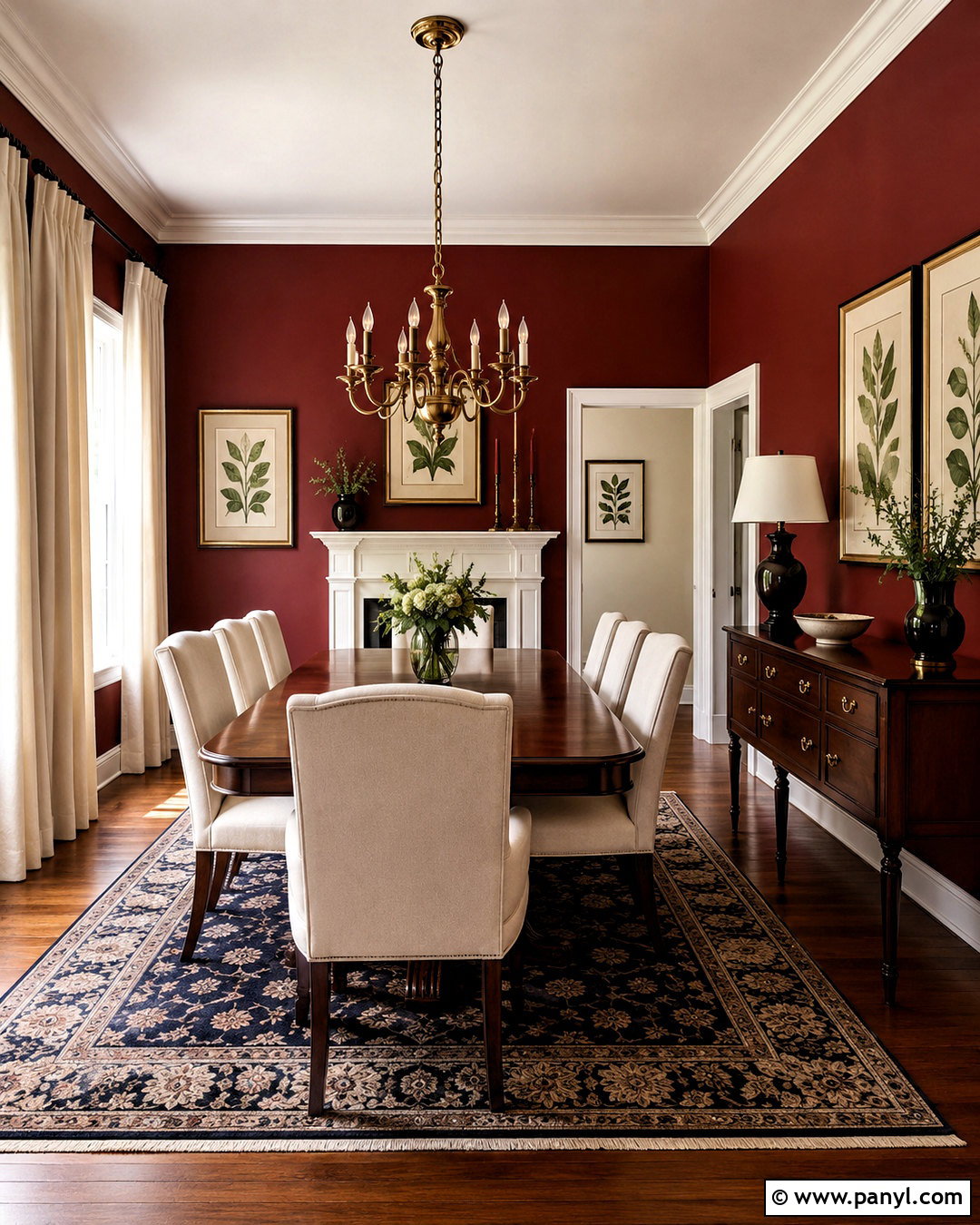
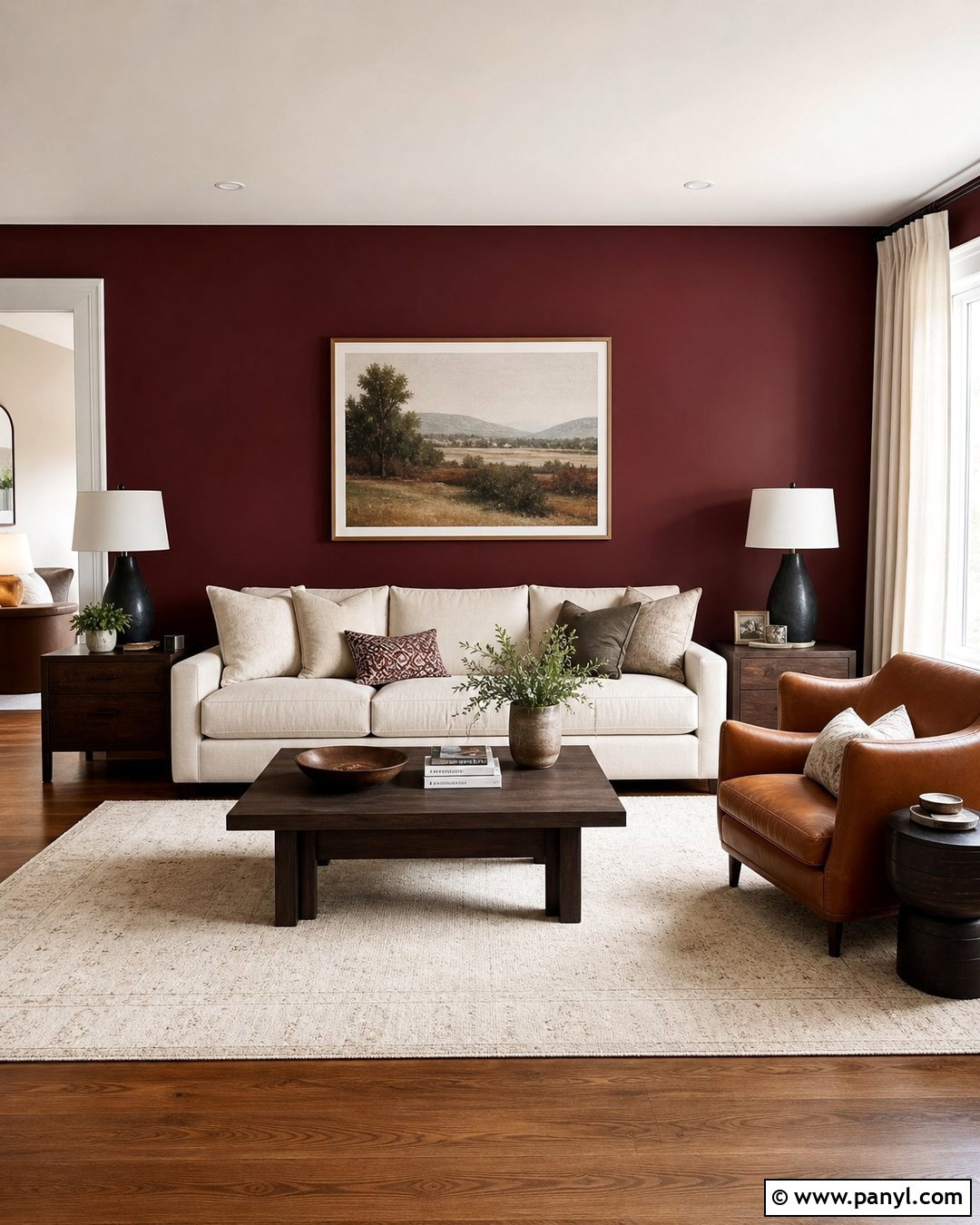
A formal dining room can handle dark red walls especially well because the saturated color makes the space feel intimate and distinct. Choose a deep red with brown undertones, then add a rectangular walnut table and upholstered dining chairs in warm ivory. A vintage-inspired rug combining faded navy, beige, and muted red will connect the furnishings without creating a matching effect. Use antique brass for the chandelier, curtain rod, and framed mirror because warm metal develops a natural glow against red. Cream curtains and a soft white ceiling prevent the upper half of the room from feeling heavy. Complete the arrangement with simple ceramics, botanical artwork, and a dark wood sideboard that provides practical storage without competing with the walls.
3. Burgundy Bedroom Walls
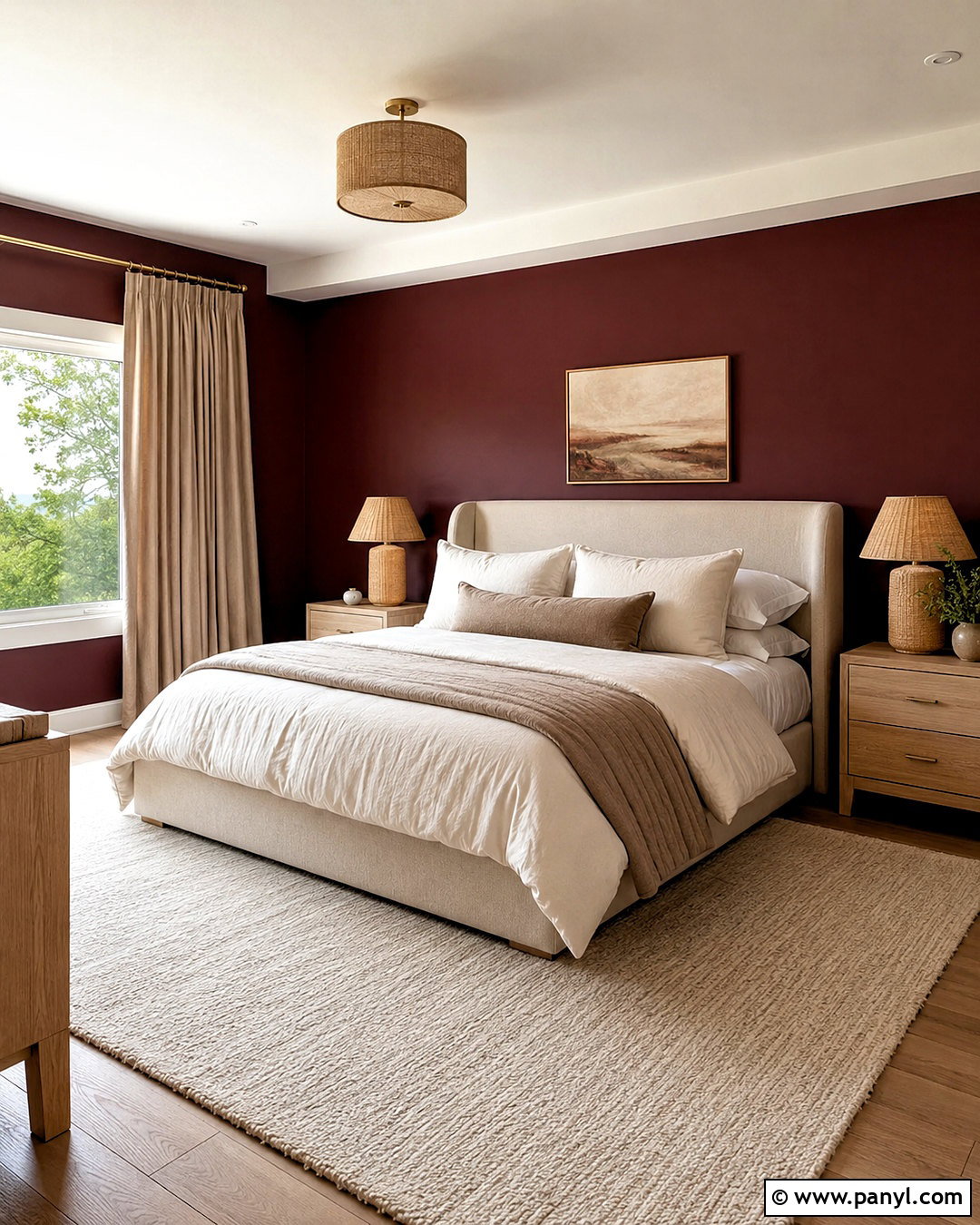
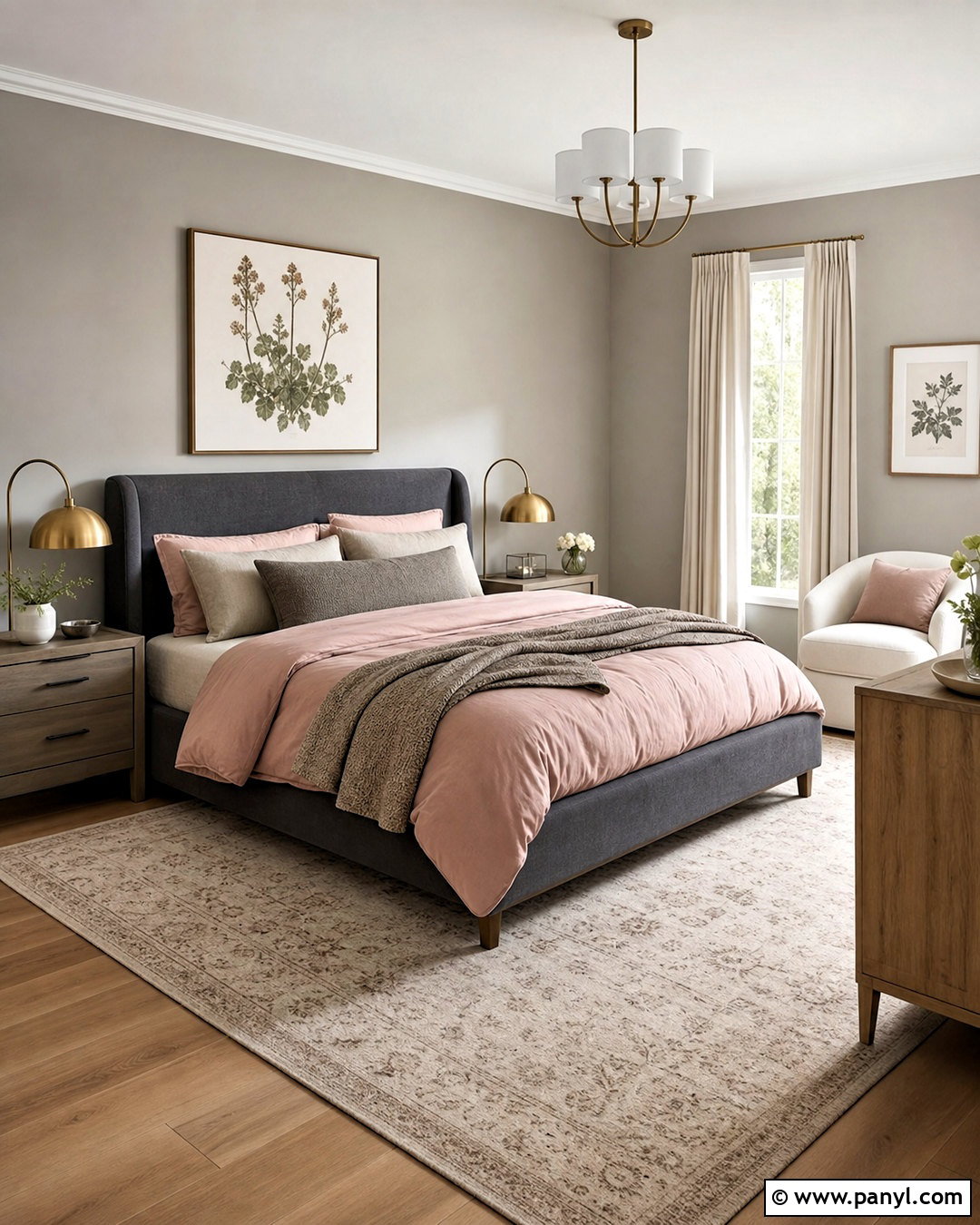
Burgundy walls can work beautifully in a bedroom when the remaining surfaces and textiles feel restful. Select a muted burgundy rather than a vivid primary red, and place an upholstered oatmeal bed against the longest uninterrupted wall. Layer the bedding with ivory sheets, a taupe quilt, and two burgundy accent pillows that repeat the wall color in a controlled way. Pale oak nightstands and woven lamps introduce lighter natural materials. Use full-length beige curtains to soften daylight and cover the floor with a large cream rug. Minimal artwork, brushed brass details, and warm white trim complete the room. This balanced combination delivers a cocooning atmosphere while maintaining enough contrast to keep the bedroom polished, calm, and visually spacious.
4. Red Accent Wall Living Room
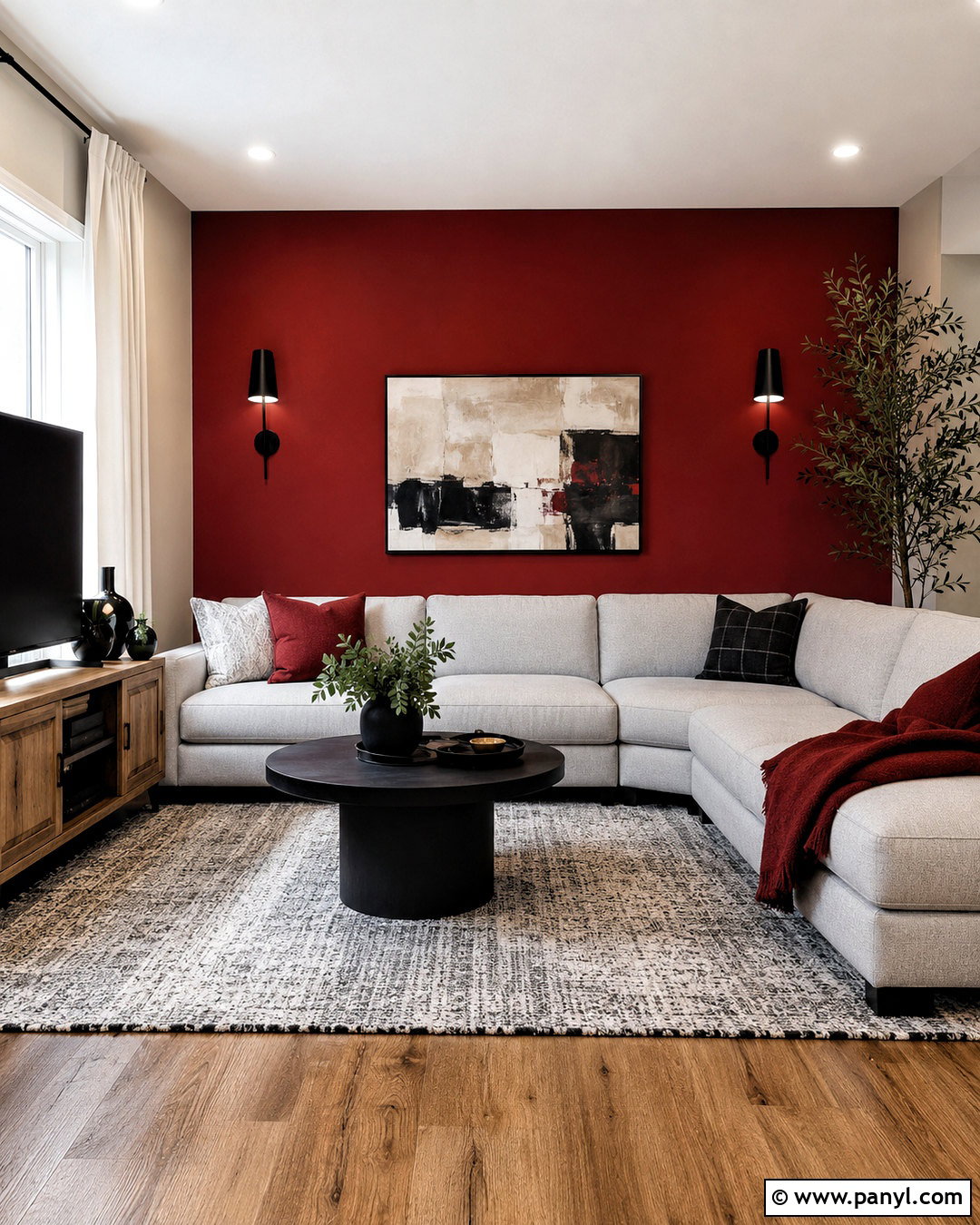
One red accent wall can anchor a living room without surrounding every surface in strong color. Paint the fireplace or sofa wall a warm crimson, while keeping adjacent walls a soft greige. Arrange a light gray sectional facing the focal wall, then introduce a natural oak media console or mantel to interrupt the red with visible wood grain. A cream-and-charcoal rug, black floor lamp, and simple linen curtains build a modern neutral framework. Repeat red only through two small pillows or a patterned throw. Large abstract artwork containing cream, charcoal, and muted blue prevents the accent wall from looking empty. The final space feels intentional because the wall, furniture placement, and supporting colors all lead attention toward one clear focal point.
5. Terracotta Red Kitchen Walls
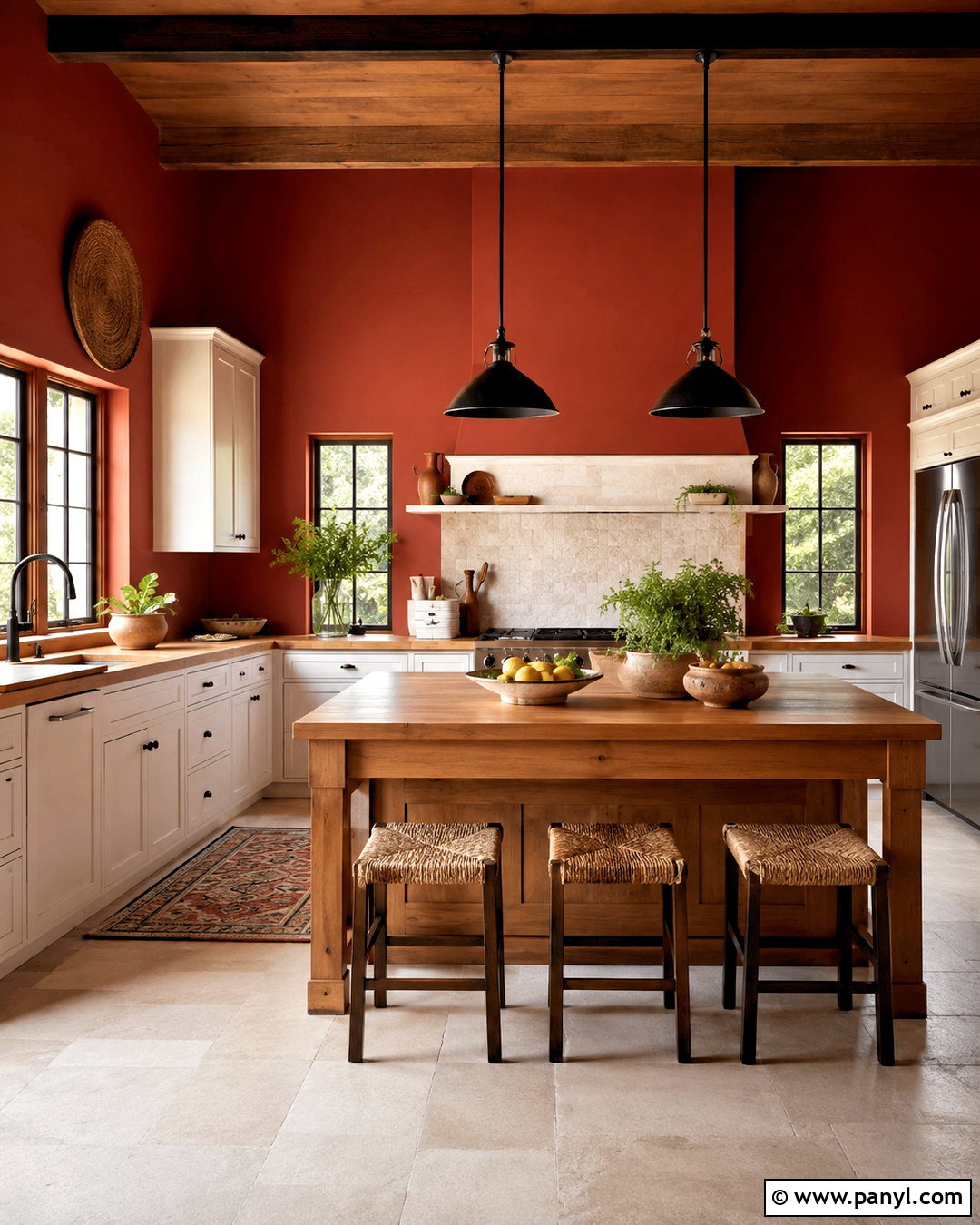
Terracotta-red walls bring sunbaked warmth to a kitchen while remaining softer than true scarlet. Combine the walls with warm white Shaker cabinets, butcher-block counters, and a simple cream backsplash. A medium oak island with black hardware adds useful workspace and reinforces the natural palette. Choose light stone-look flooring to reflect brightness and make everyday maintenance easier. Woven counter stools, ceramic bowls, and a small washable runner introduce texture without crowding the work surfaces. Keep upper cabinetry limited around windows so the red can appear as a broad, attractive background. Matte black pendants and faucets provide crisp contrast. This complete kitchen works particularly well in farmhouse, Mediterranean, and relaxed contemporary homes with abundant natural light.
6. Red Powder Room Walls
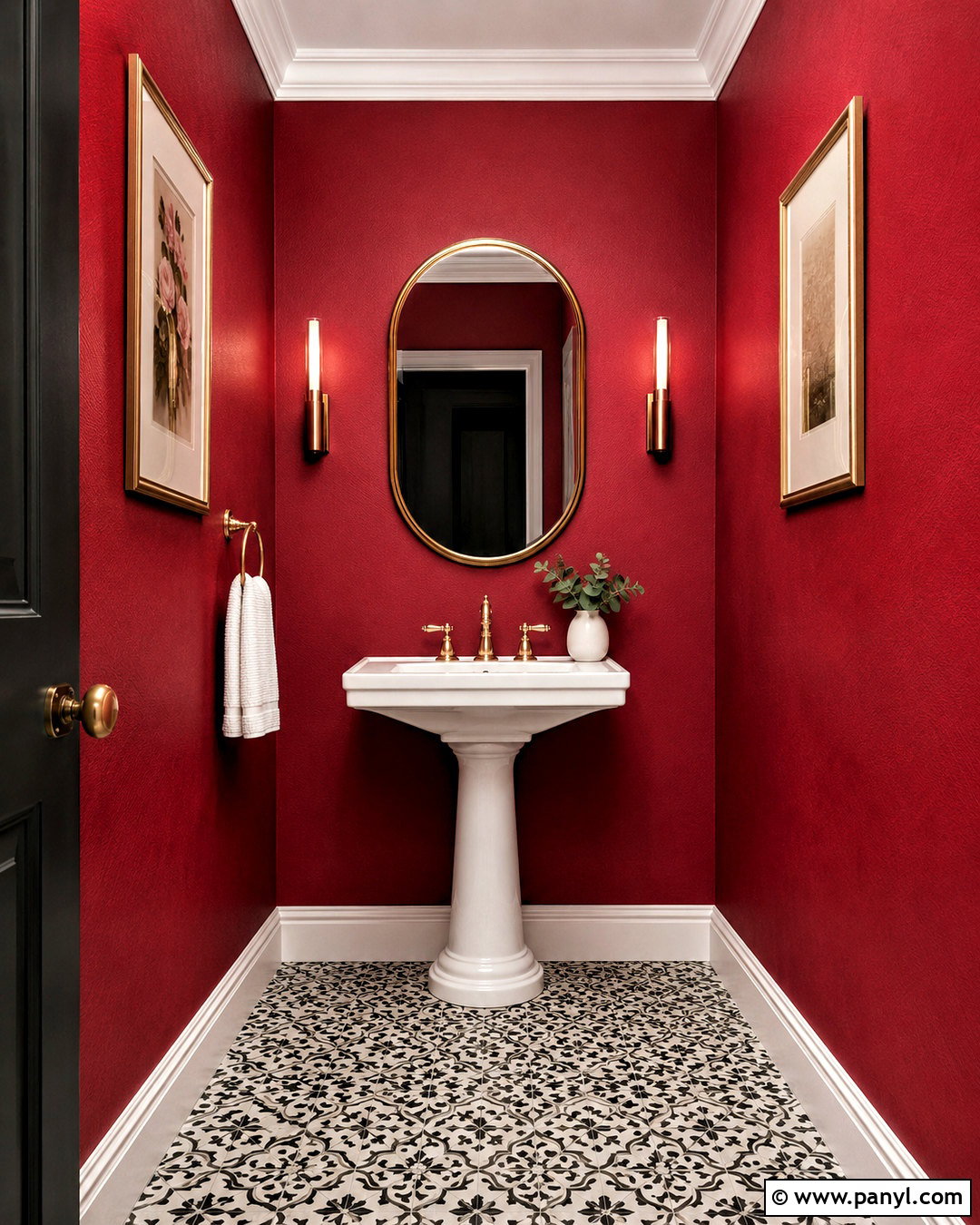
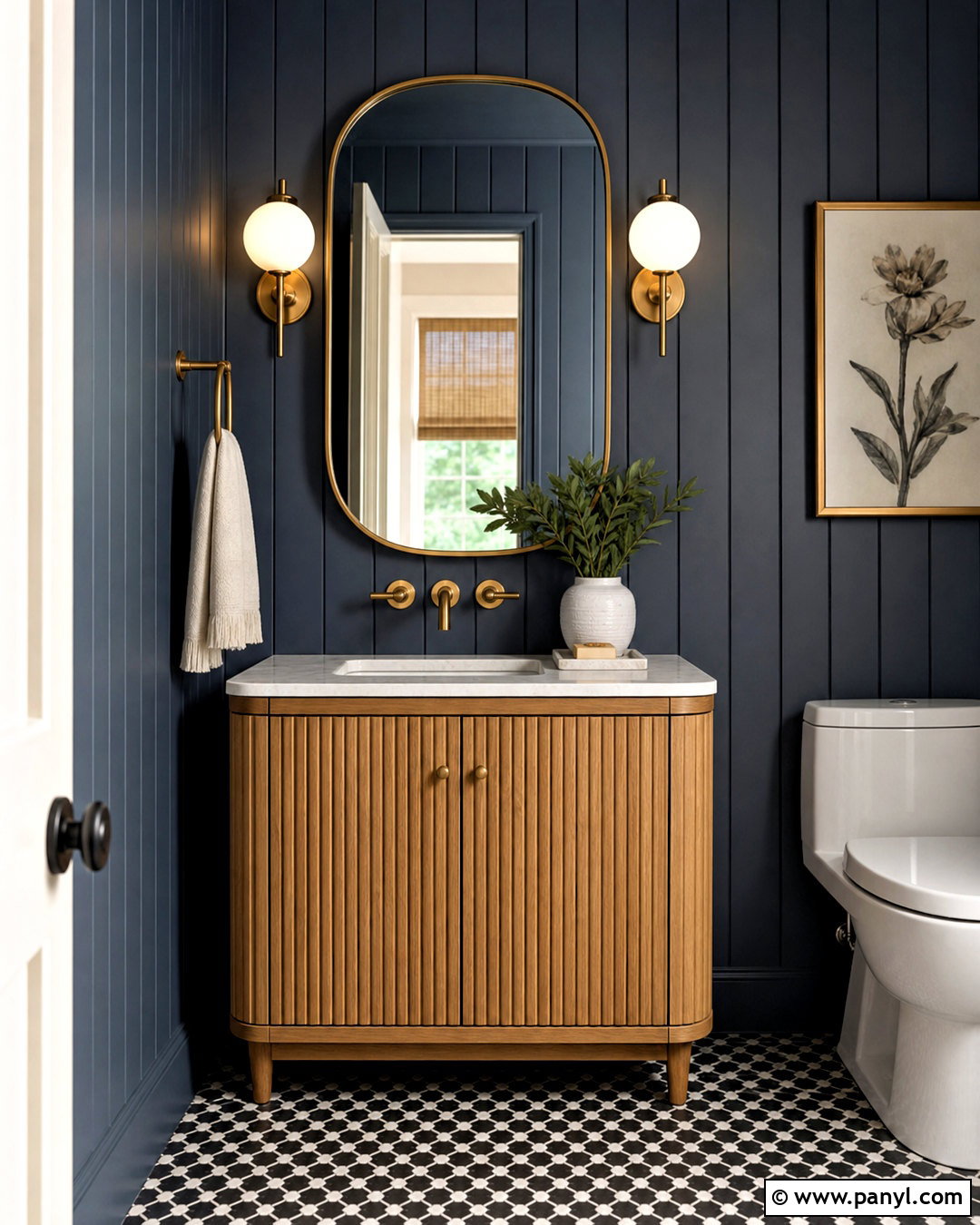
A powder room offers the perfect setting for saturated red walls because its small scale can turn bold color into a deliberate feature. Cover the walls in rich ruby-red paint, then balance them with a compact white pedestal sink and white ceiling. Add black-and-white patterned floor tile to create graphic structure beneath the strong wall color. A rounded brass mirror, matching faucet, and two slender sconces provide warmth and reflection. Keep countertop accessories minimal, using only a white soap dispenser and a small ceramic vase. One framed print can personalize the space without making it feel crowded. The result is a complete jewel-box room that looks confident and finished, even though the individual fixtures remain practical, familiar, and relatively affordable.
7. Rustic Red Living Room Walls
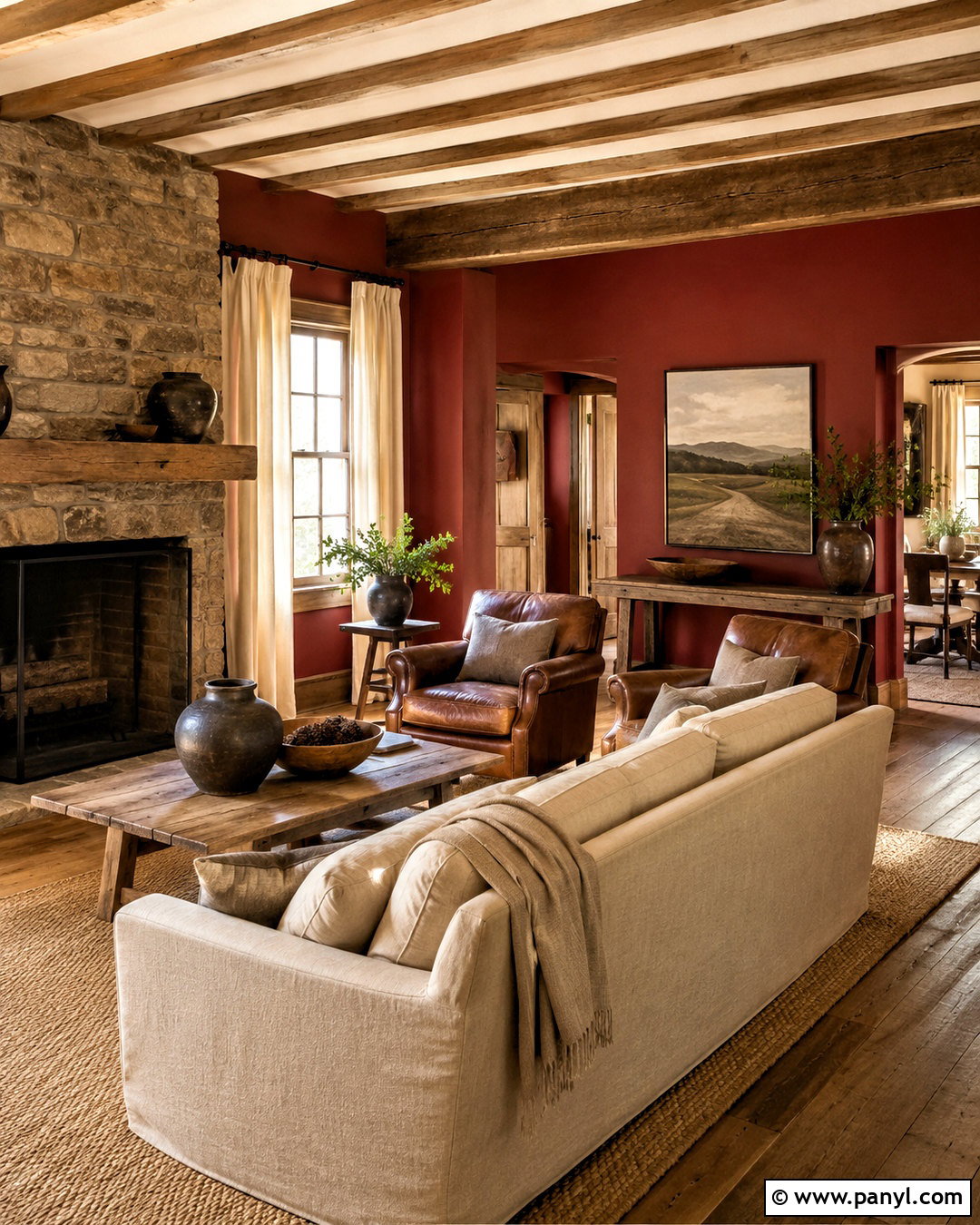
Muted red walls can give a rustic living room the warmth of an established country home. Use an earthy barn-red shade alongside exposed ceiling beams, wide-plank oak flooring, and a substantial stone fireplace. Position a flax-colored linen sofa opposite two brown leather armchairs to create a sociable conversation area. A reclaimed wood coffee table and handwoven beige rug add character without introducing excessive color. Select cream curtains, iron curtain rods, and aged brass lamps for a collected finish. Traditional landscape artwork and handmade pottery suit the setting better than glossy decorative pieces. Complete the room with charcoal, tan, and muted red textiles. Every component should feel durable and comfortable, allowing the red walls to enrich the architecture rather than dominate it.
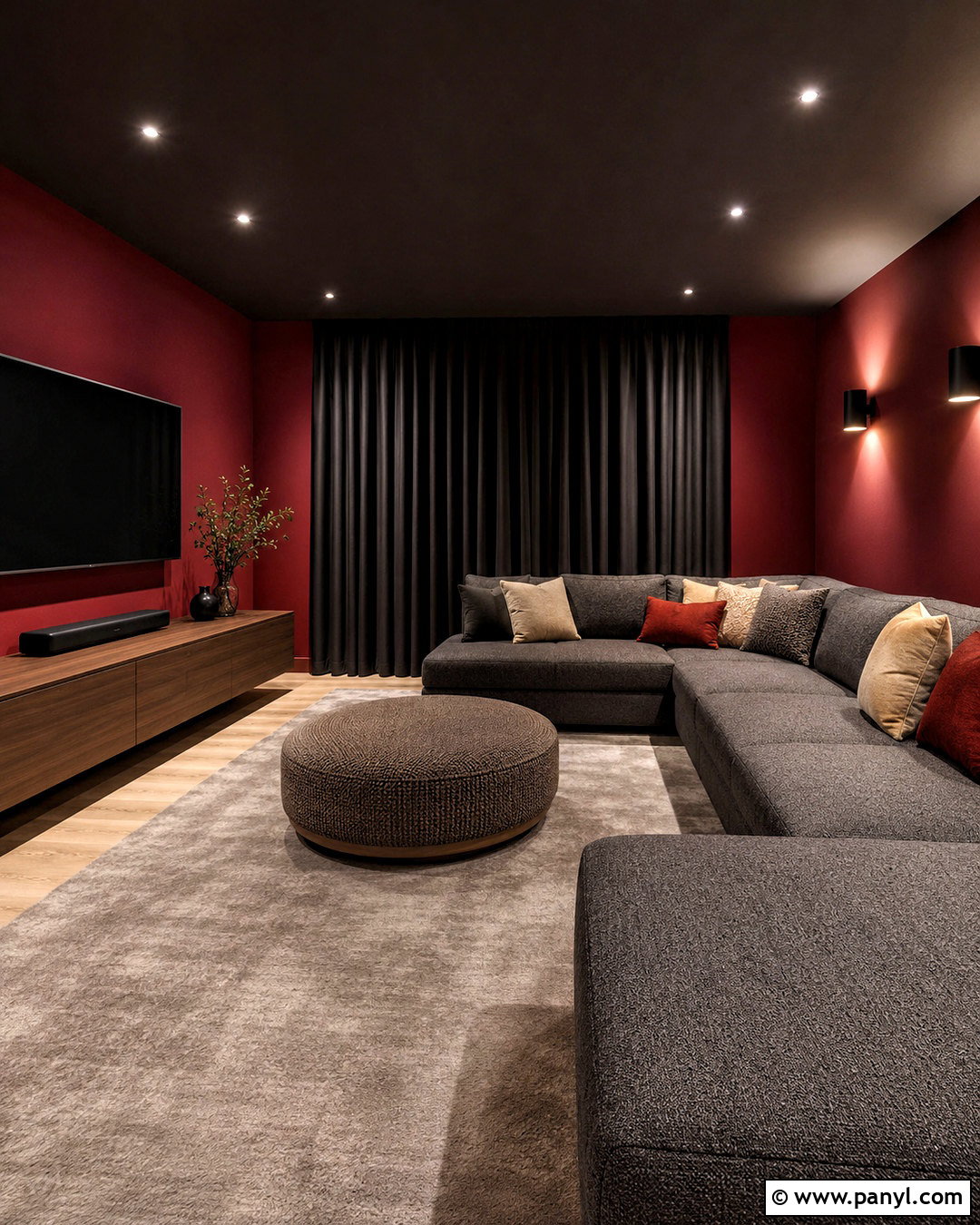
8. Modern Red Dining Room Walls
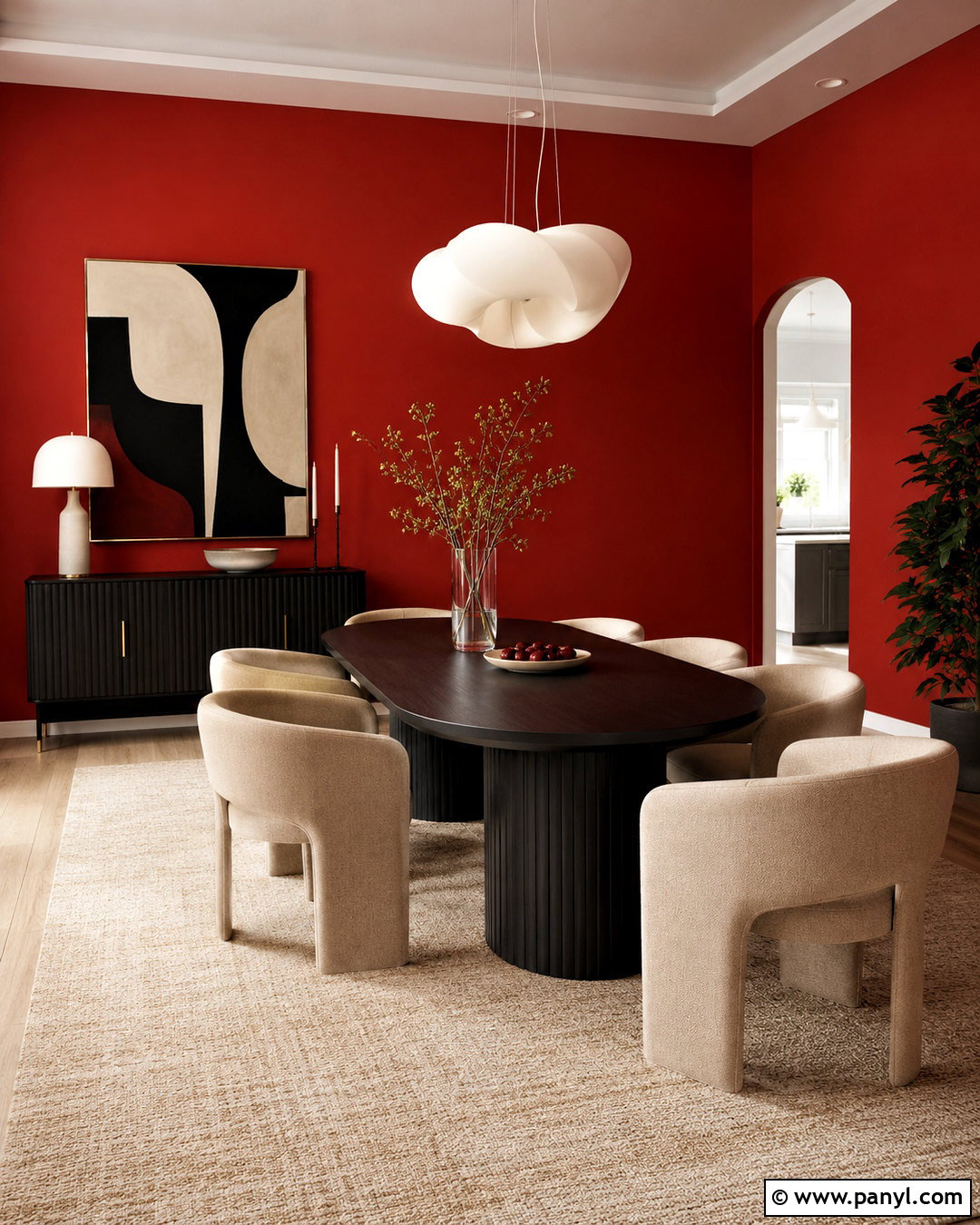
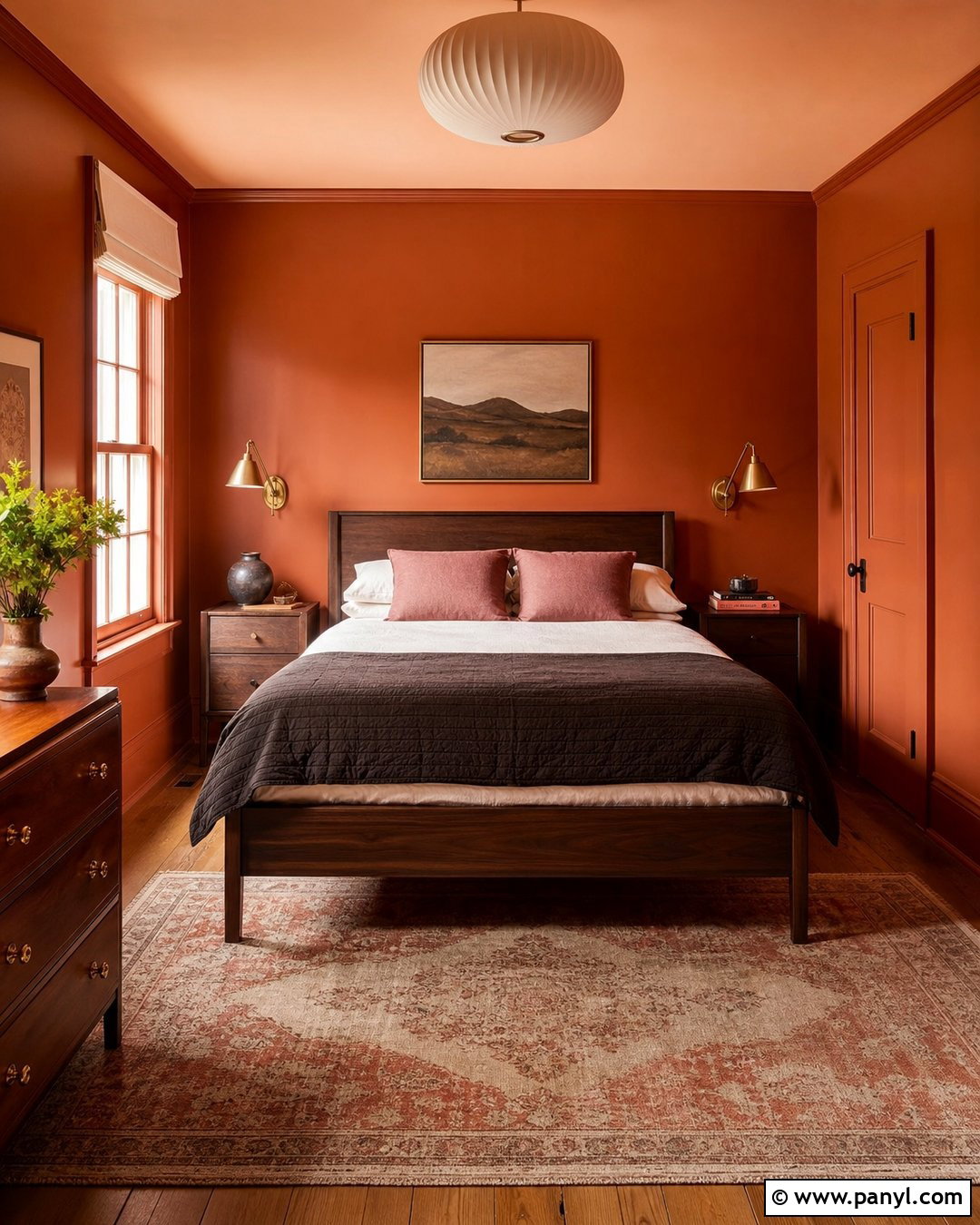
For a cleaner interpretation, build a modern dining room around smooth tomato-red walls and sharply defined furnishings. A black oval dining table creates contrast, while curved chairs upholstered in light beige soften its visual weight. Install one sculptural white pendant above the center of the table and keep the ceiling bright white. Pale oak flooring helps the room stay approachable and prevents the black furniture from feeling severe. Choose one oversized abstract artwork with red, cream, and cobalt details rather than several small frames. A low black sideboard provides concealed storage and repeats the table finish. Finish with a simple off-white rug and restrained ceramic decor. The resulting room feels bold and contemporary, but its uncluttered layout keeps the vivid paint controlled.
9. Red Home Office Walls
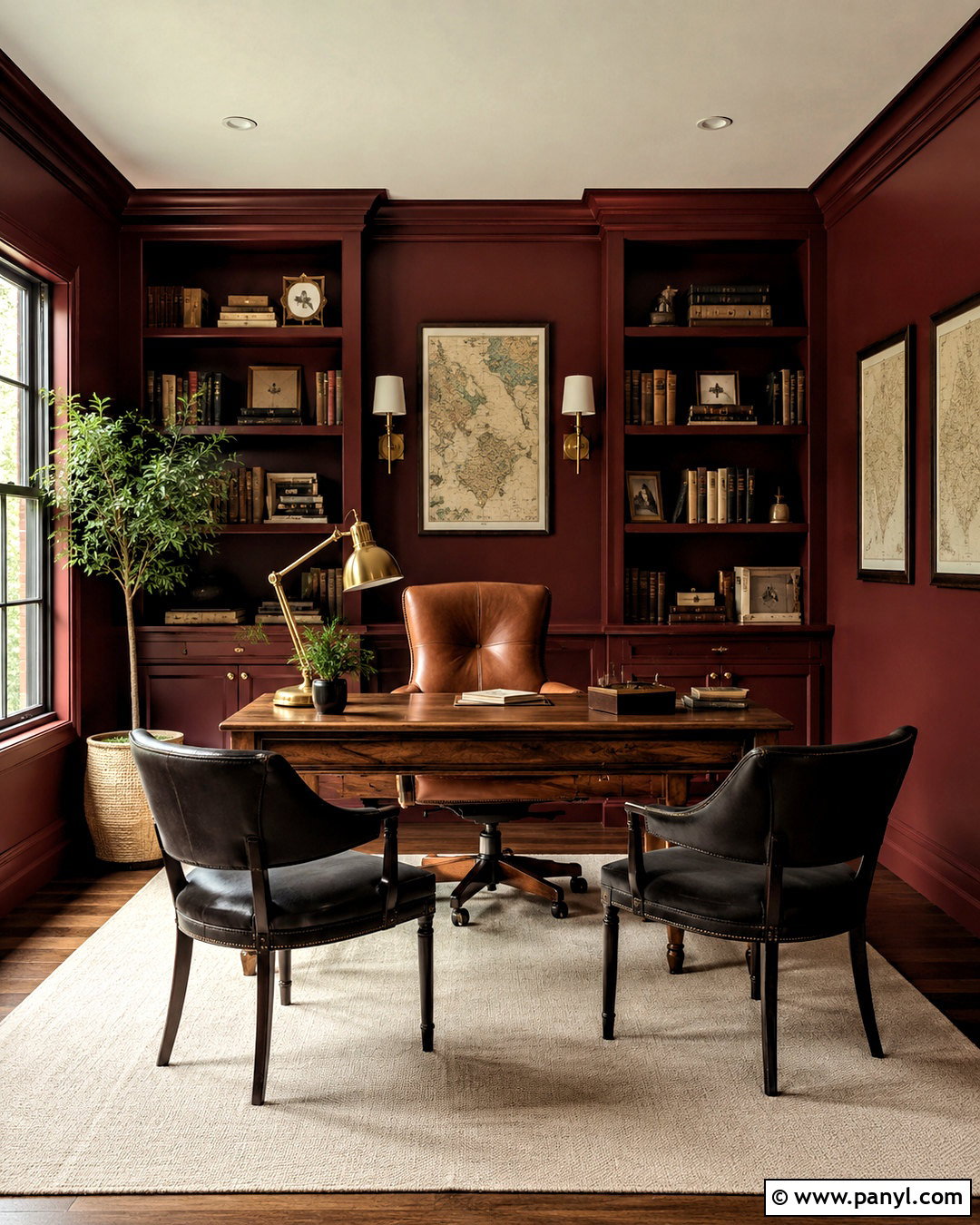
Deep red walls can make a home office feel focused, established, and separate from the rest of the house. Choose a subdued red-brown and place a streamlined walnut desk near the window to benefit from natural light. Add a supportive tan leather chair and floor-to-ceiling bookcases painted the same red for a cohesive, built-in appearance. A cream flat-weave rug and warm white ceiling keep the color-drenched walls from closing in. Use an adjustable brass desk lamp and picture lights to illuminate work areas clearly. Organize books with neutral storage boxes, leaving some open shelf space for visual breathing room. Framed maps or simple prints finish the look. The complete office combines concentration-friendly function with the inviting atmosphere of a private study.
10. Red Entryway Walls
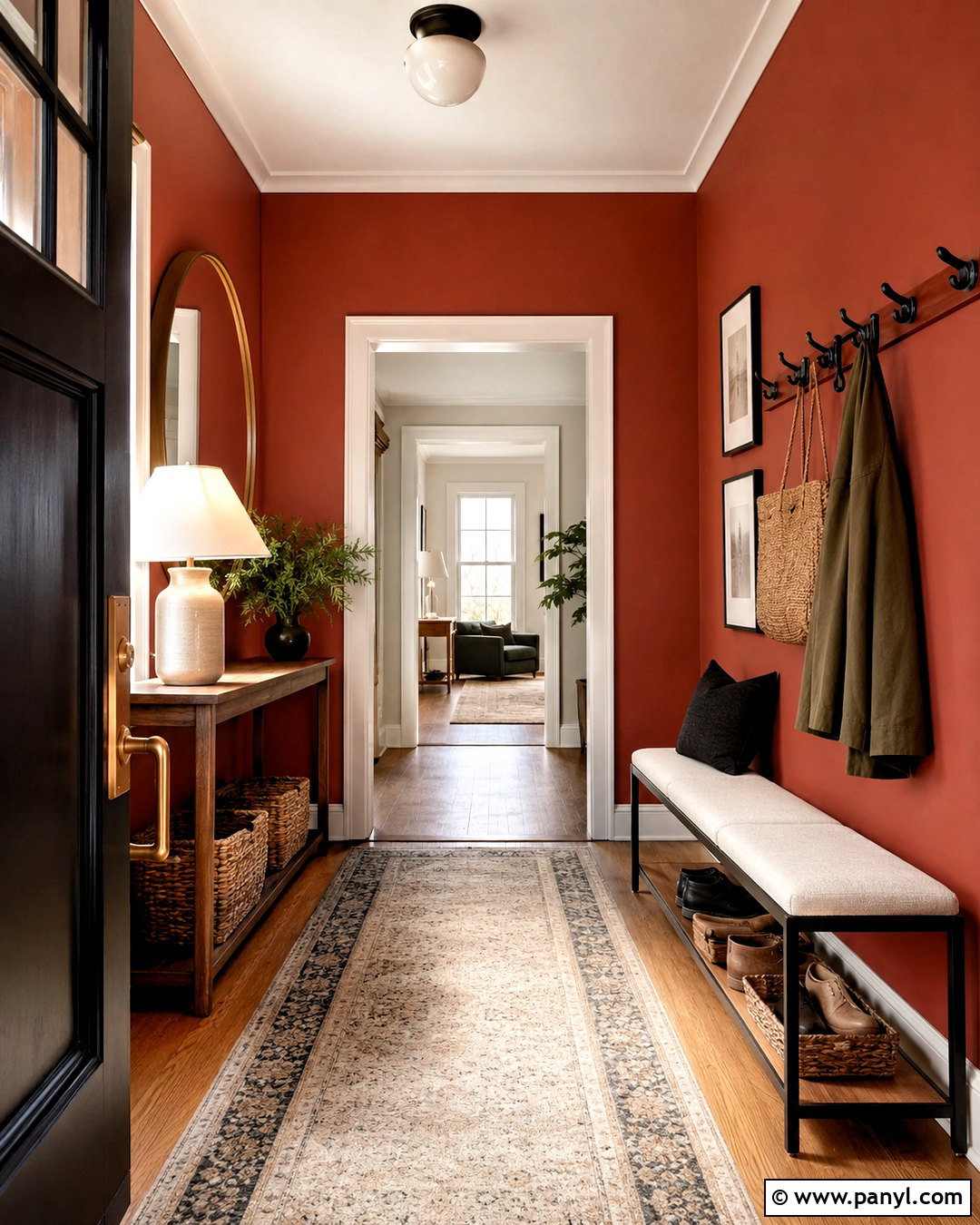
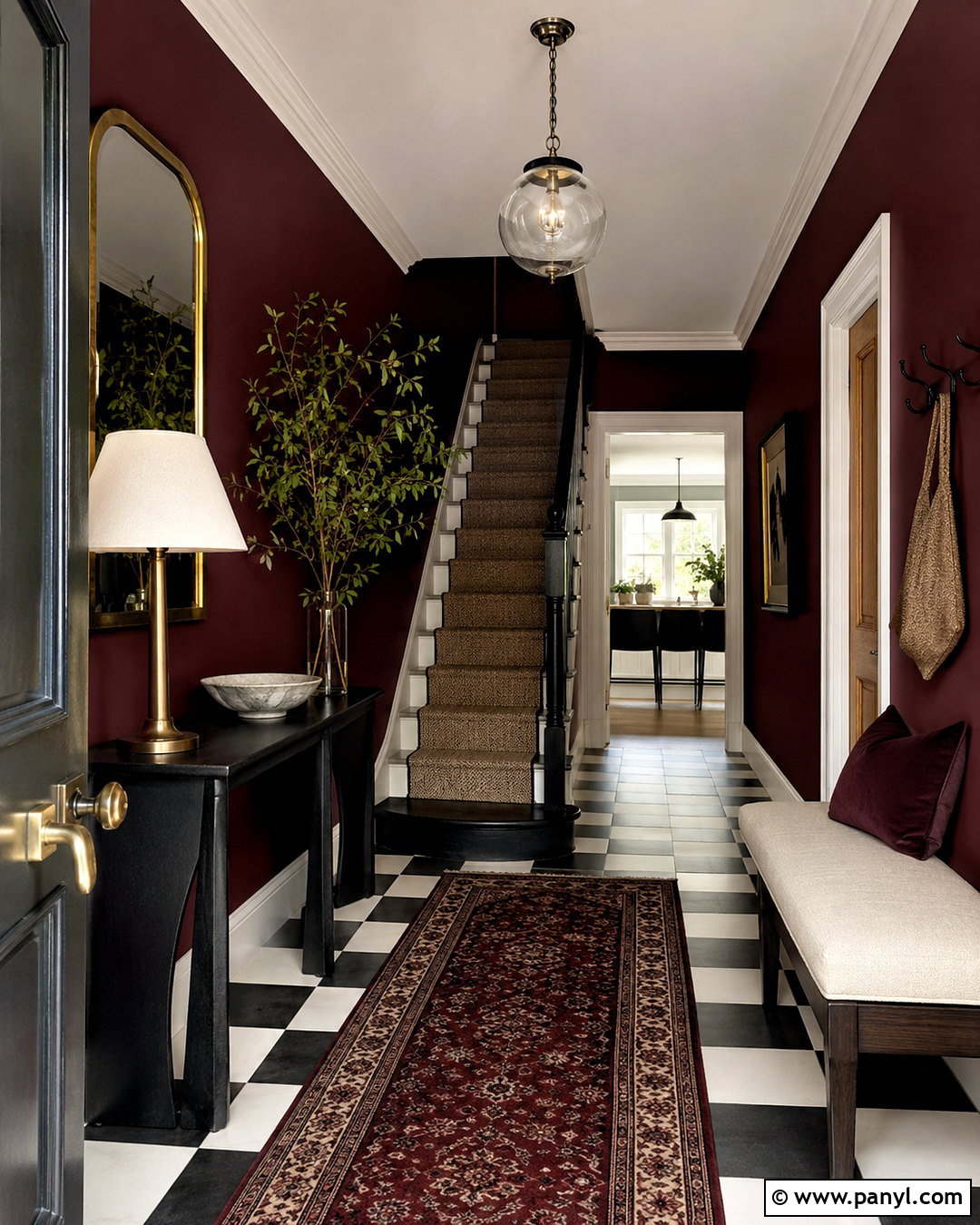
An entryway with red walls creates an immediate sense of personality while establishing a warm transition into adjoining rooms. Use muted paprika red, then place a narrow oak console against the main wall. A large round mirror will reflect daylight and visually widen the passage. Add a closed woven basket beneath the console for shoes, plus a small ceramic lamp for practical evening illumination. Black hooks, a slim bench, and a durable cream-and-charcoal runner make the space functional without adding bulky furniture. Paint the trim warm white to outline doors clearly. Keep decorative accents simple with one bowl, a leafy branch, and two framed prints. The finished entry feels welcoming, organized, and connected rather than merely acting as a brightly painted corridor.
11. Red Walls With Blue Sofa
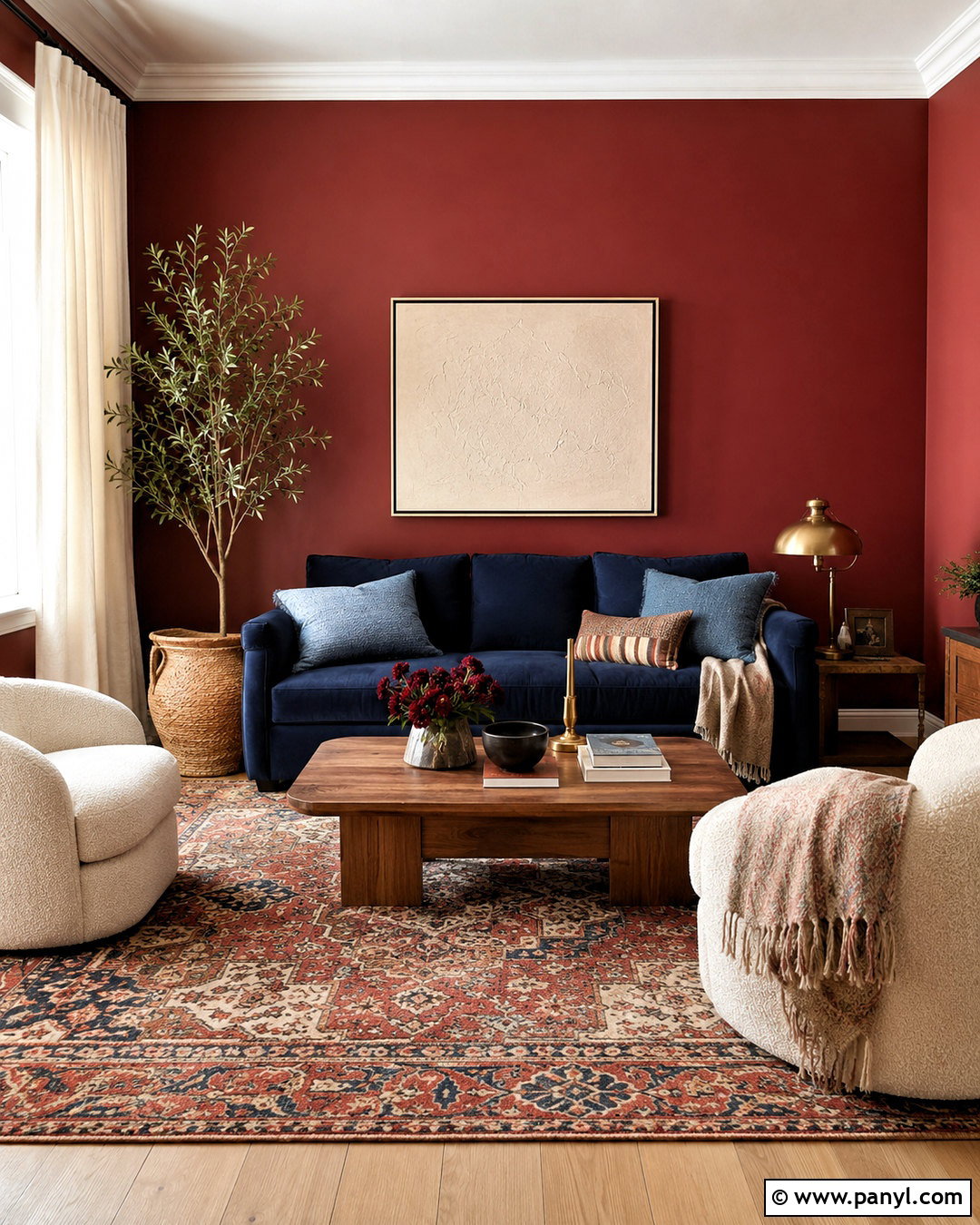
A blue sofa can provide refreshing contrast in a red-walled living room, especially when both colors have slightly muted undertones. Choose earthy crimson walls and a deep navy sofa with clean lines. Place two cream boucle chairs across from it to lighten the seating arrangement and form a balanced conversation zone. A patterned rug featuring faded red, blue, and beige will connect the main colors naturally. Add a walnut coffee table, aged brass lamps, and warm white curtains to soften the contrast. Artwork should contain generous neutral areas so the walls do not become visually crowded. Small rust and sky-blue pillows can repeat the palette. This complete scheme feels layered and confident while avoiding the harshness of bright primary red and blue.
12. Red Walls With Green Furniture
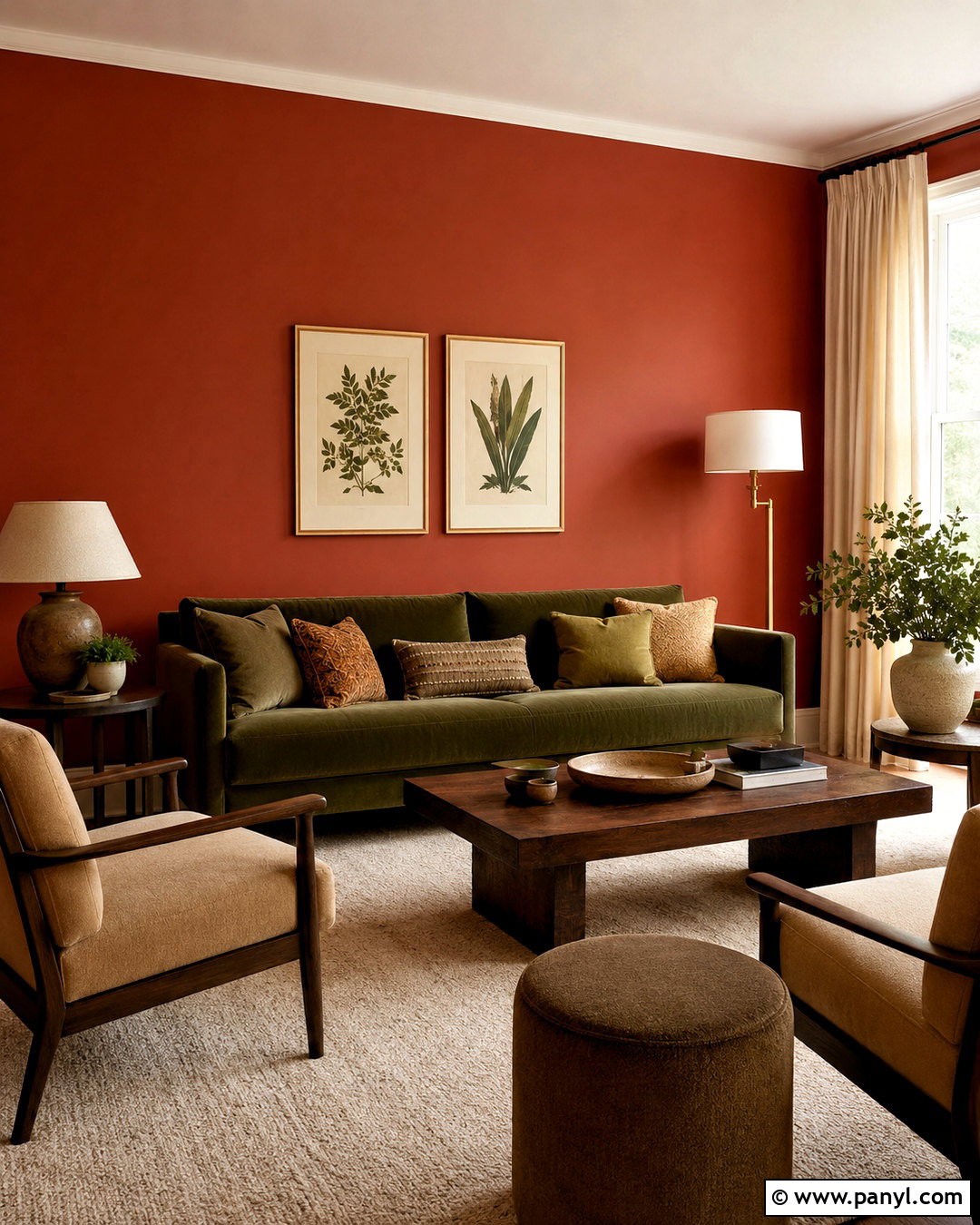
Red and green can look sophisticated when both shades are drawn from nature. Start with warm clay-red walls, then introduce a moss-green velvet sofa as the room’s central piece. Add two light tan chairs and a dark wood coffee table to keep the complementary colors from competing across every surface. An ivory rug with a subtle geometric border brightens the floor and gives the seating area clear boundaries. Use botanical prints, aged brass lighting, and cream linen curtains for a calm, organic finish. Black accents can appear sparingly through frames and a side table. Avoid highly saturated green accessories. Instead, use olive, sage, and brown details so the completed living room feels earthy, coordinated, and comfortable throughout the year.
13. Red Walls With Black Trim
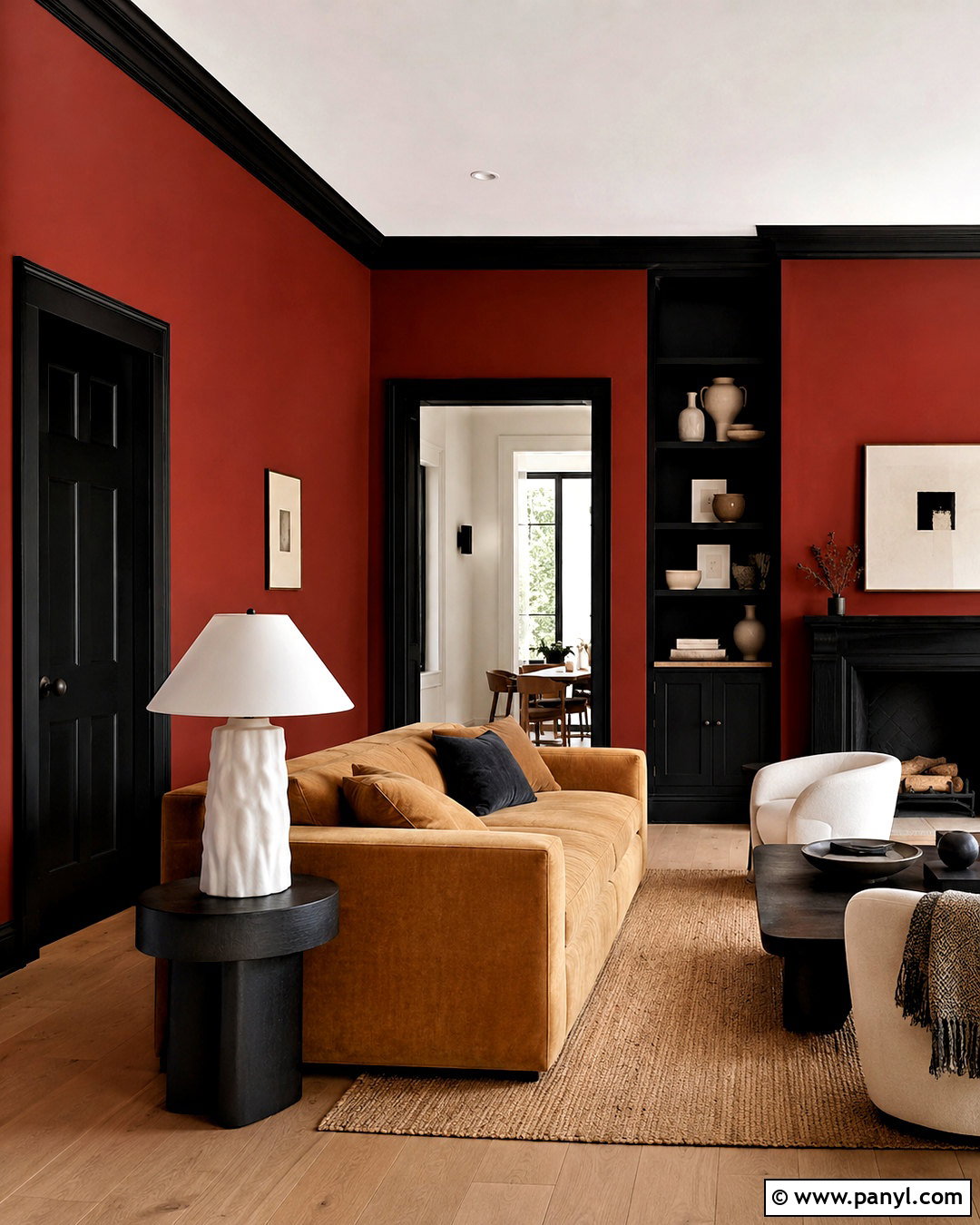
Black trim transforms red walls into a graphic architectural statement. Select a medium brick red for the walls and apply matte black paint to door casings, baseboards, window frames, and built-in shelving. In a living room, balance this strong envelope with a camel sofa, ivory lounge chairs, and a large natural fiber rug. Light oak flooring prevents the room from becoming too dark, while a black coffee table repeats the trim in the center of the arrangement. Choose cream curtains mounted beyond the window frames so they do not hide the contrasting details. Add oversized neutral artwork and sculptural white lamps. The completed design feels modern and structured because the black creates precise boundaries while the furniture introduces softness, warmth, and everyday comfort.
14. Red Walls With White Trim
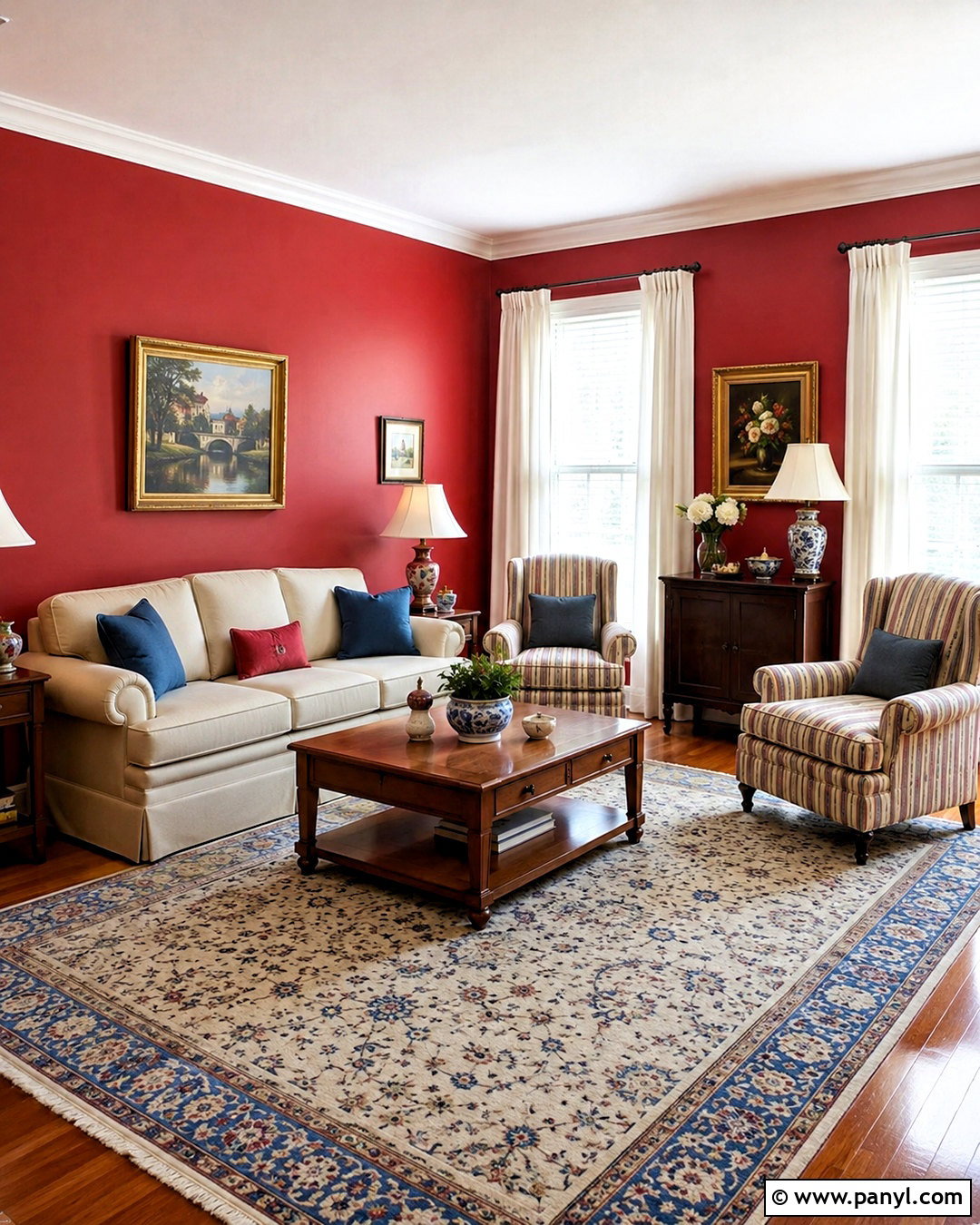
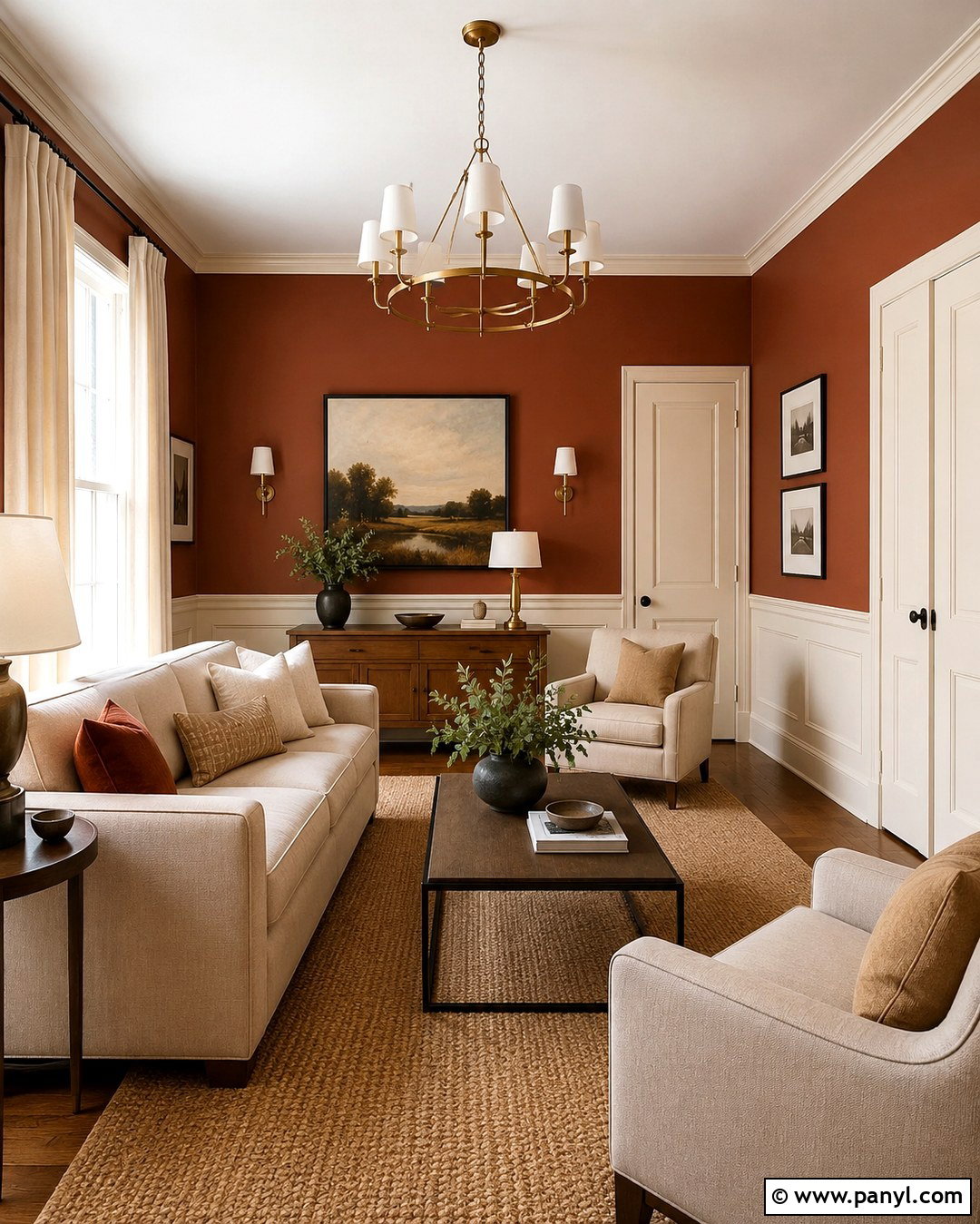
Crisp architectural contrast gives traditional red walls a fresh, familiar appearance. Paint the room a classic warm red and highlight crown molding, window casings, baseboards, and paneled doors with soft white. Furnish the living space with a light beige sofa, rolled-arm chairs in a subtle stripe, and a medium-tone wood coffee table. A blue-and-cream patterned rug introduces a cooler counterpoint while respecting the room’s traditional character. Hang symmetrical artwork in antique brass frames and place matching lamps on dark wood end tables. Full white curtains connect visually with the trim and brighten the windows. The final design feels orderly and welcoming, making it a practical option for colonial, craftsman, and other homes with noticeable architectural woodwork.
15. Red Walls With Wood Paneling
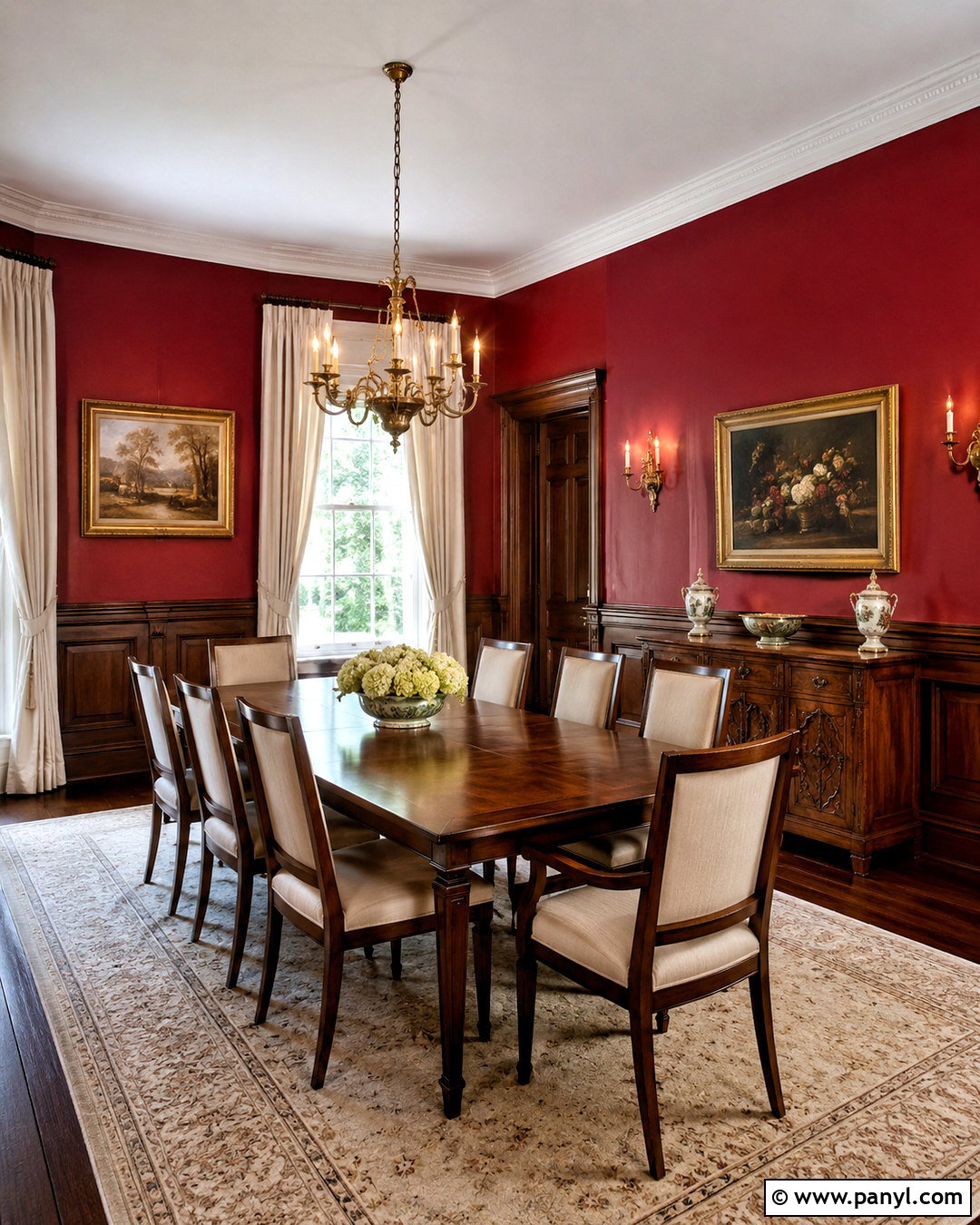
Half-height wood paneling offers an effective way to make red walls feel grounded and architecturally rich. Use dark walnut paneling below the chair rail and a muted garnet red above it. In a dining room, add a substantial rectangular table in a matching wood tone, then surround it with cream upholstered chairs to prevent an overly dark result. A pale patterned rug provides softness and separates the furniture from the paneling. Install a warm brass chandelier and simple wall sconces for layered illumination. Cream drapes and a warm white ceiling brighten the upper surfaces. Traditional artwork, a carved sideboard, and restrained ceramic decor complete the room. This look feels established and elegant without requiring ornate furniture or excessive decorative accessories.
16. Red Color-Drenched Living Room
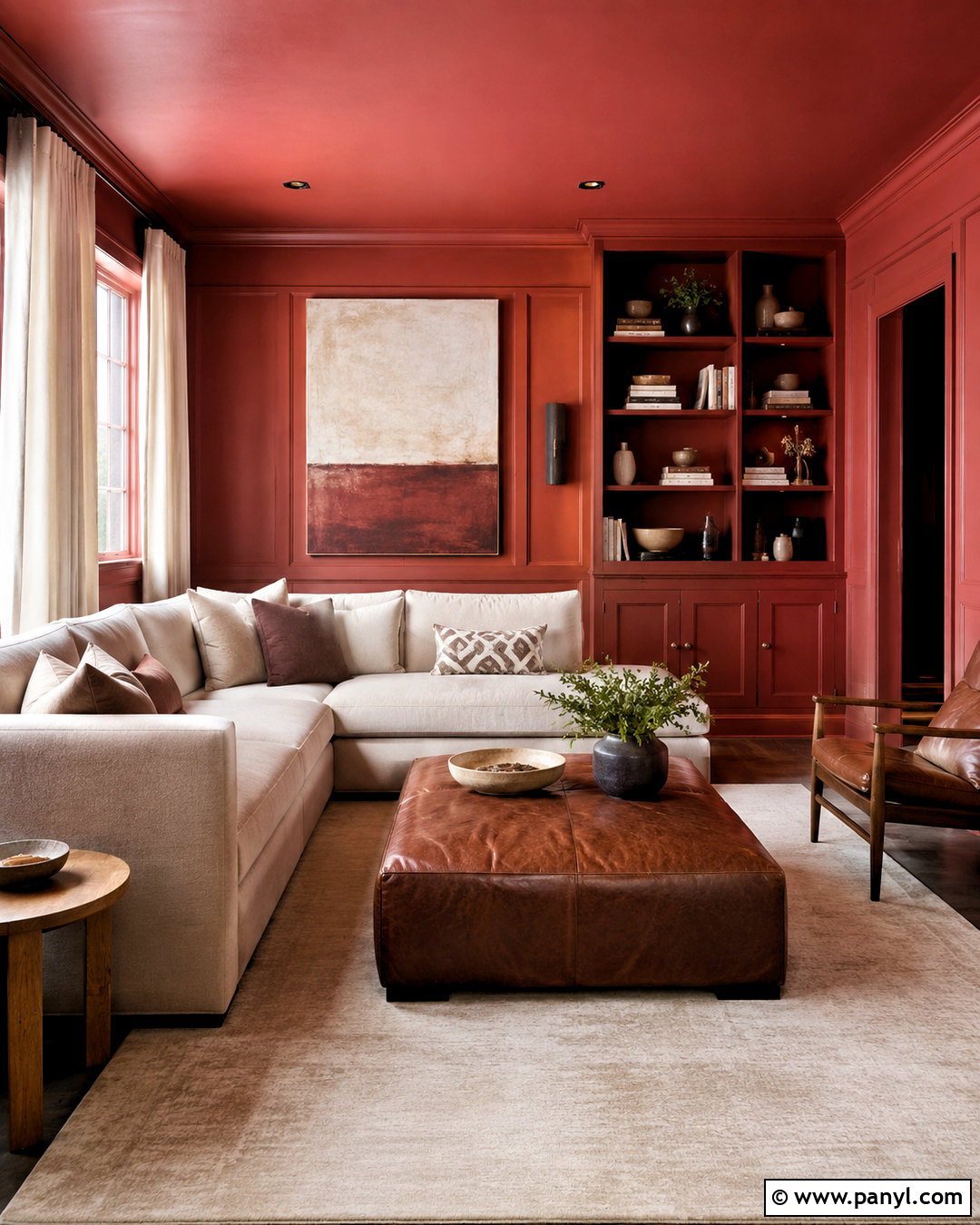
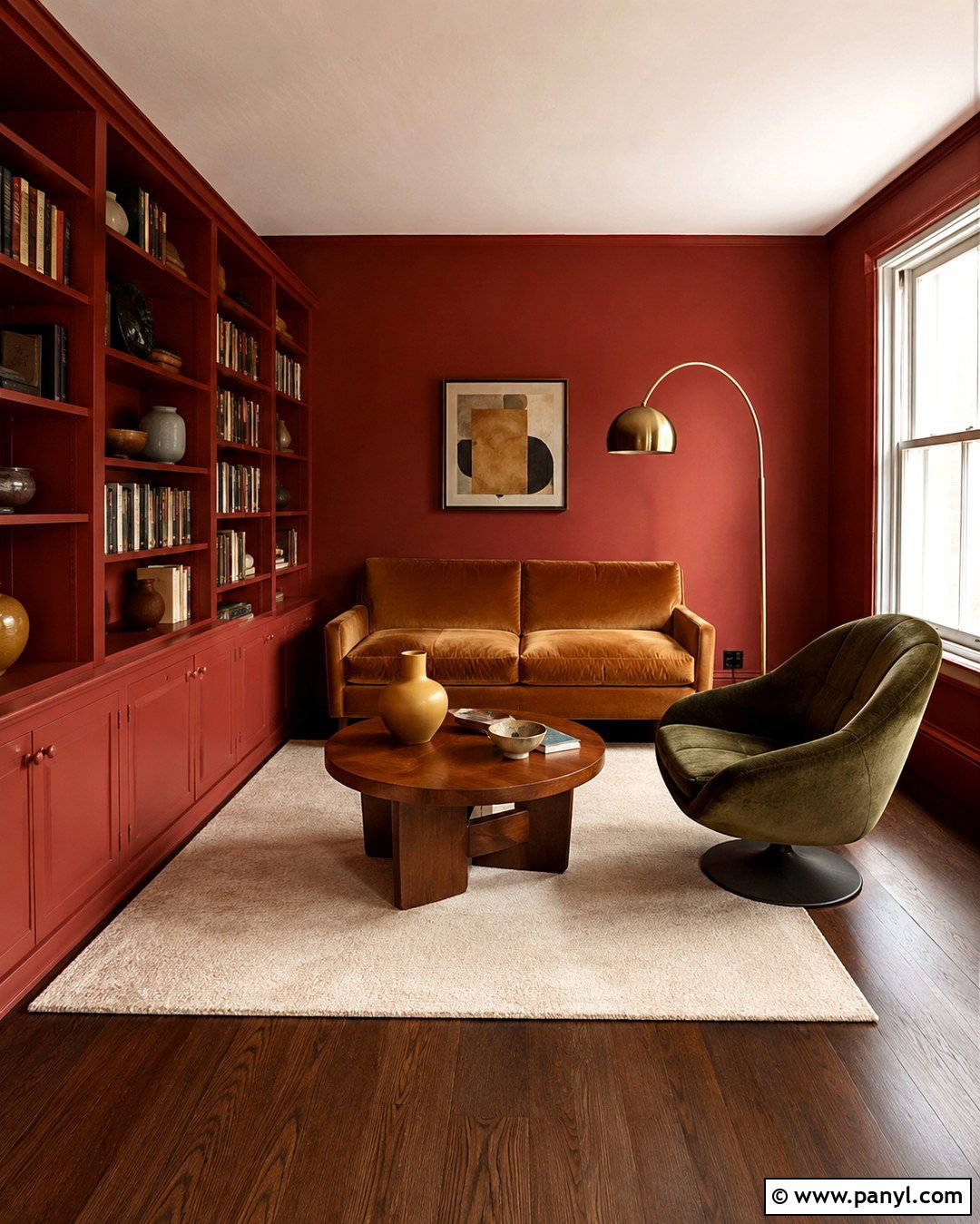
Color drenching creates an enveloping living room by carrying one muted red across walls, trim, doors, and built-in cabinetry. Choose an earthy red with brown or gray undertones so the large application remains comfortable. Keep the ceiling a slightly lighter tonal red to preserve continuity while reflecting more light. Furnish the room with an oatmeal sectional, dark brown leather ottoman, and pale wool rug. Natural oak tables and cream linen curtains provide necessary relief from the painted envelope. Use brass picture lights, softly colored artwork, and rust-patterned pillows to create subtle variation. Avoid filling every shelf. Carefully spaced books and pottery allow the painted joinery to remain visible. The complete room feels cocooning, cohesive, and more sophisticated than a conventional accent wall.
17. Red Midcentury Modern Walls
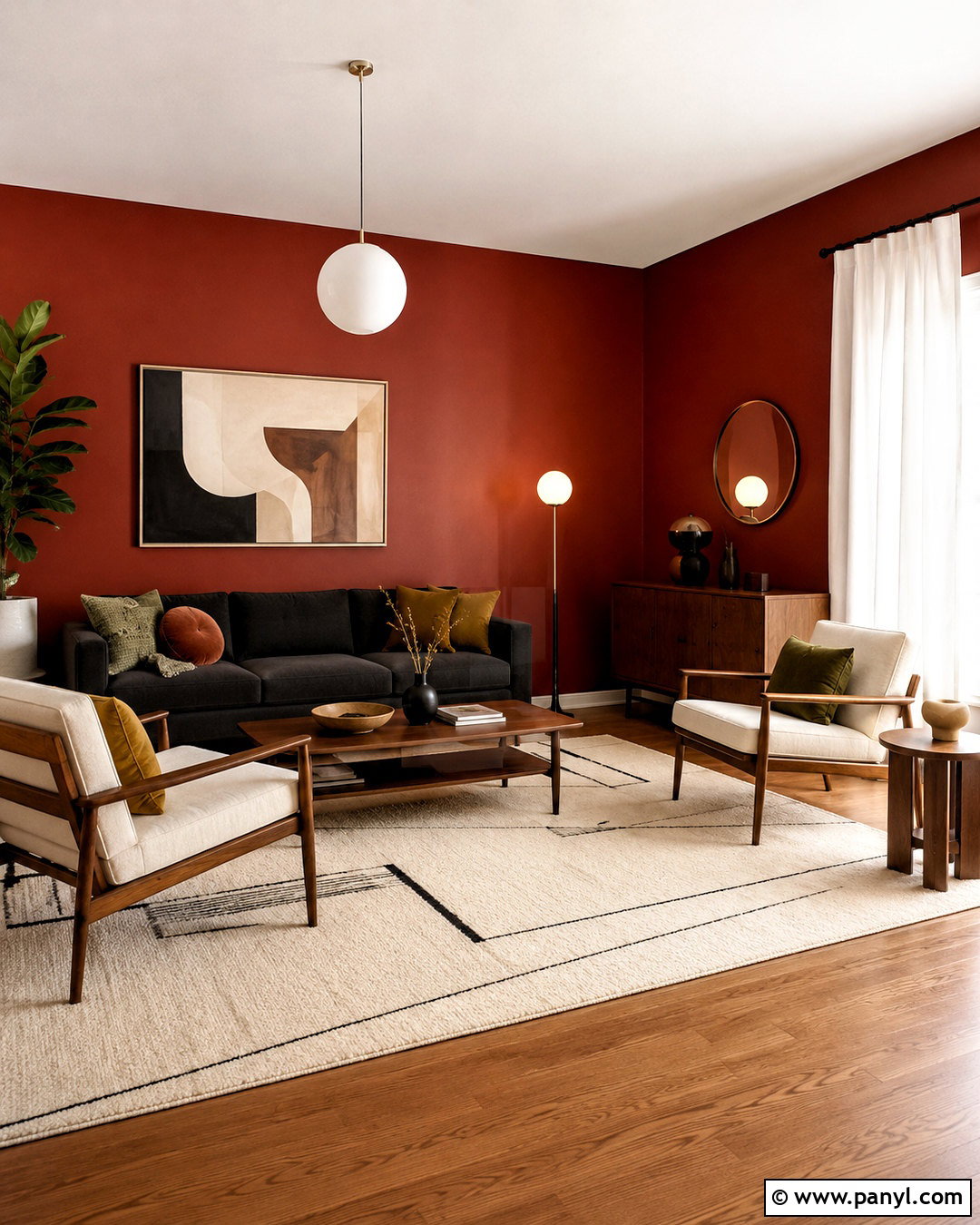
Warm red walls pair naturally with the walnut wood and streamlined shapes associated with midcentury modern interiors. Choose a burnt red with an orange-brown base, then add a low-profile charcoal sofa and two walnut-framed lounge chairs upholstered in cream. A rectangular wood coffee table, globe floor lamp, and graphic ivory rug reinforce the period influence without making the room look themed. Use mustard and olive accents sparingly through cushions and ceramics. Hang one large abstract print and leave generous open wall space around it. Light-filtering white curtains keep the room bright during the day. Complete the arrangement with a narrow credenza and a tall plant. The resulting living room feels warm, functional, and visually connected from wall color to furniture.
18. Red Boho Living Room Walls
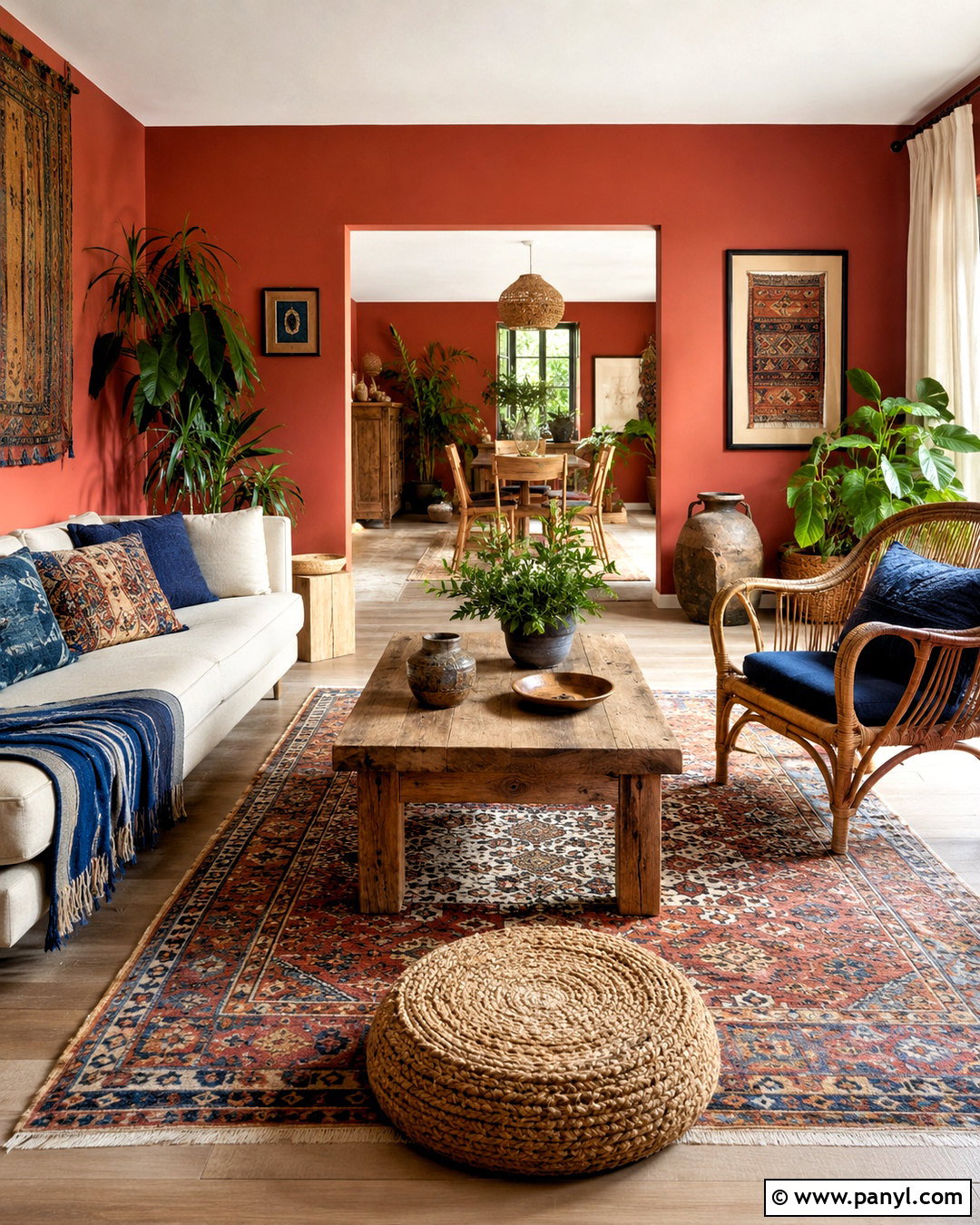
A boho living room becomes richer and more grounded when soft terracotta-red walls replace a plain neutral background. Center the room with a relaxed cream sofa layered with rust, indigo, and tan textiles. Add a rattan chair, low reclaimed wood coffee table, and a large faded kilim-style rug. Woven shades and off-white curtains filter the light while retaining a casual appearance. Use plants of different heights to introduce green, but group them thoughtfully so the room remains easy to maintain. Handmade pottery, framed textiles, and a few baskets bring character to the walls and shelving. Keep the largest furnishings pale. This allows the complete space to feel collected and colorful without letting the red paint or patterned accessories become overwhelming.
19. Red Farmhouse Dining Room Walls
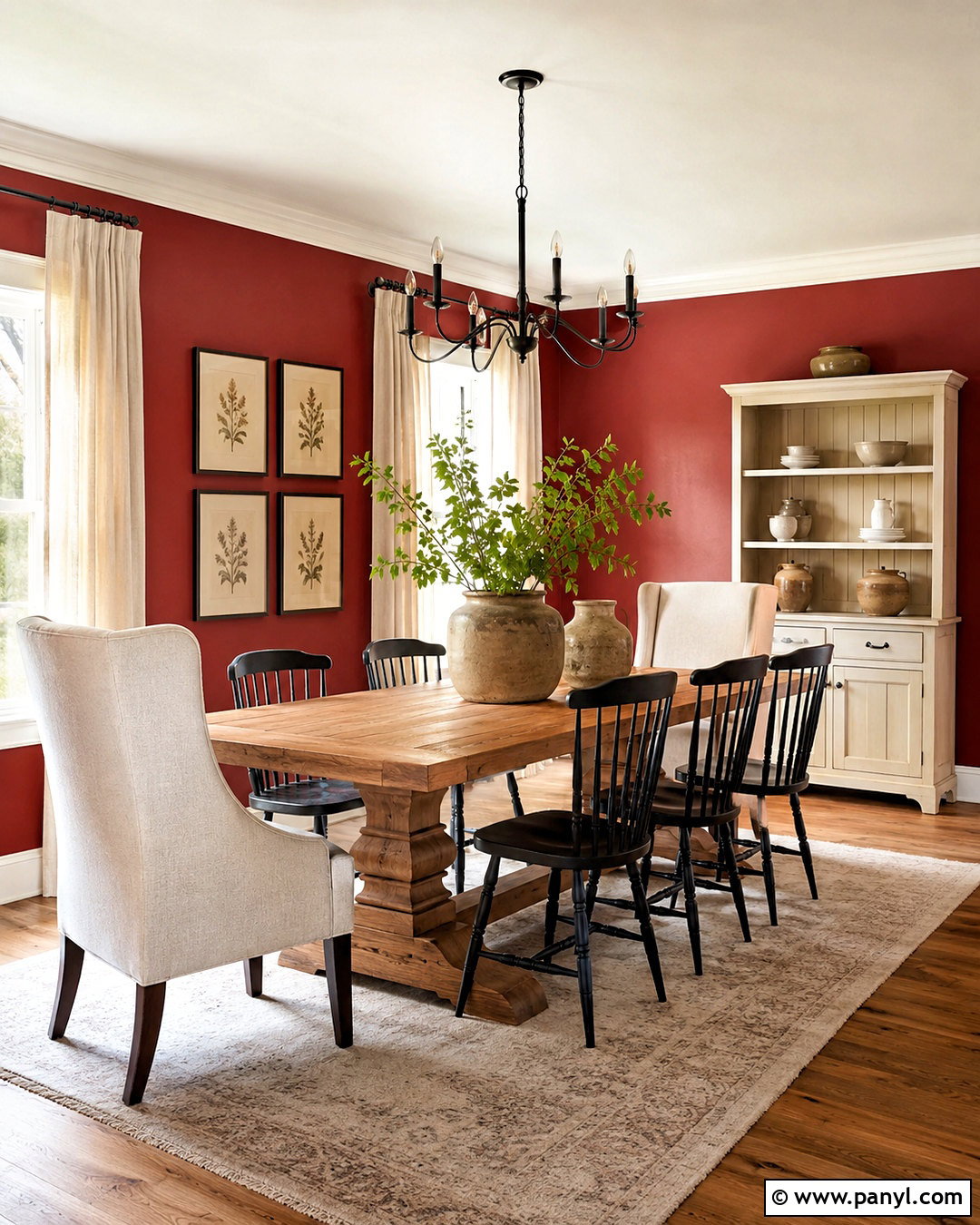
Muted country red gives a farmhouse dining room warmth while complementing simple wood furniture. Paint the walls a weathered red with brown undertones, then use a long oak trestle table as the central feature. Mix black spindle-back chairs with two cream upholstered end chairs for a relaxed, updated arrangement. A light neutral rug softens the floor, while warm white trim outlines windows and doors. Install a straightforward black metal chandelier rather than an ornate fixture. Add linen curtains, a painted cream hutch, and stoneware dishes displayed in small groups. Botanical prints or rural landscapes can decorate the walls without becoming overly thematic. The completed room looks comfortable and useful, combining familiar farmhouse materials with a strong but approachable wall color.
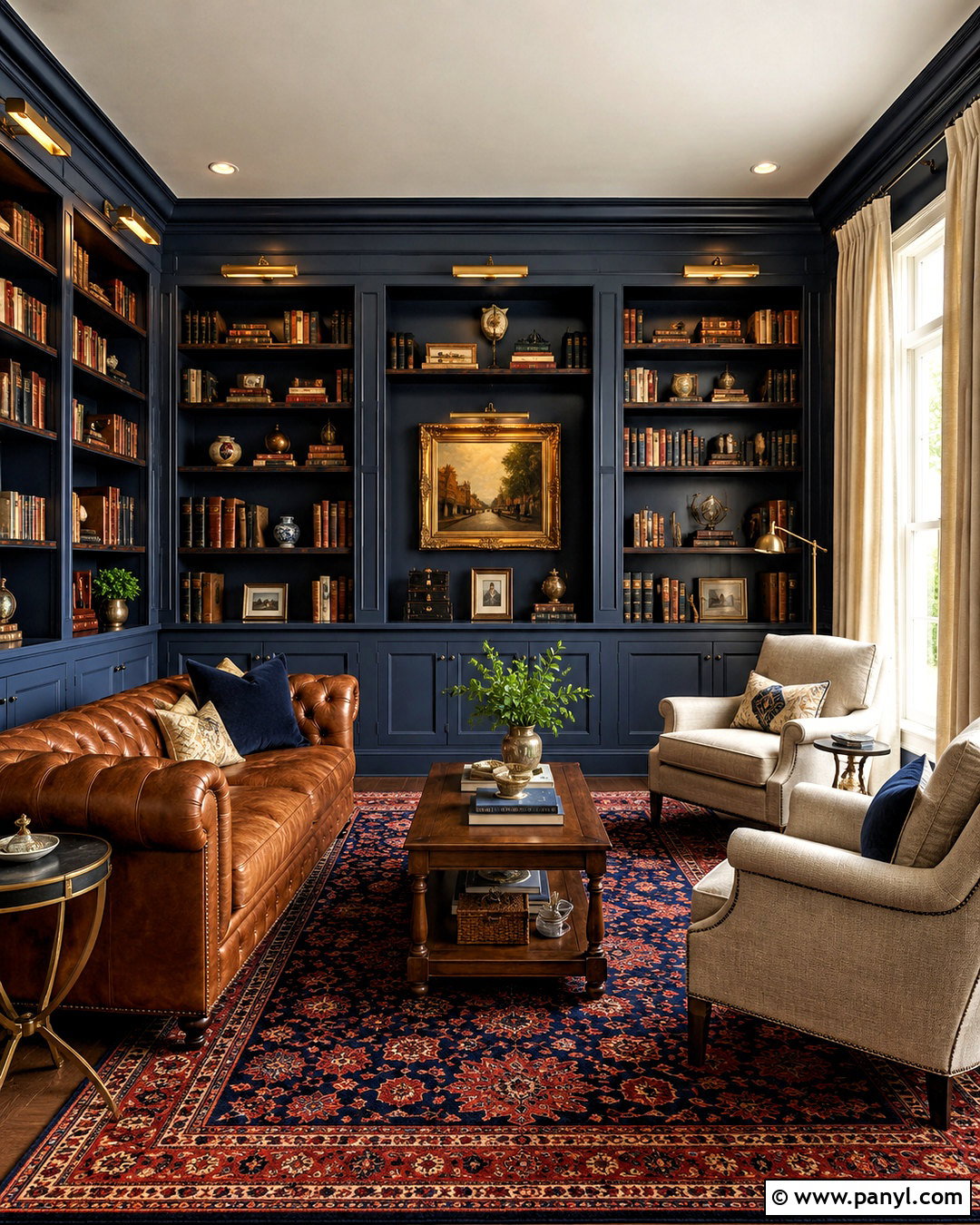
20. Red Traditional Library Walls
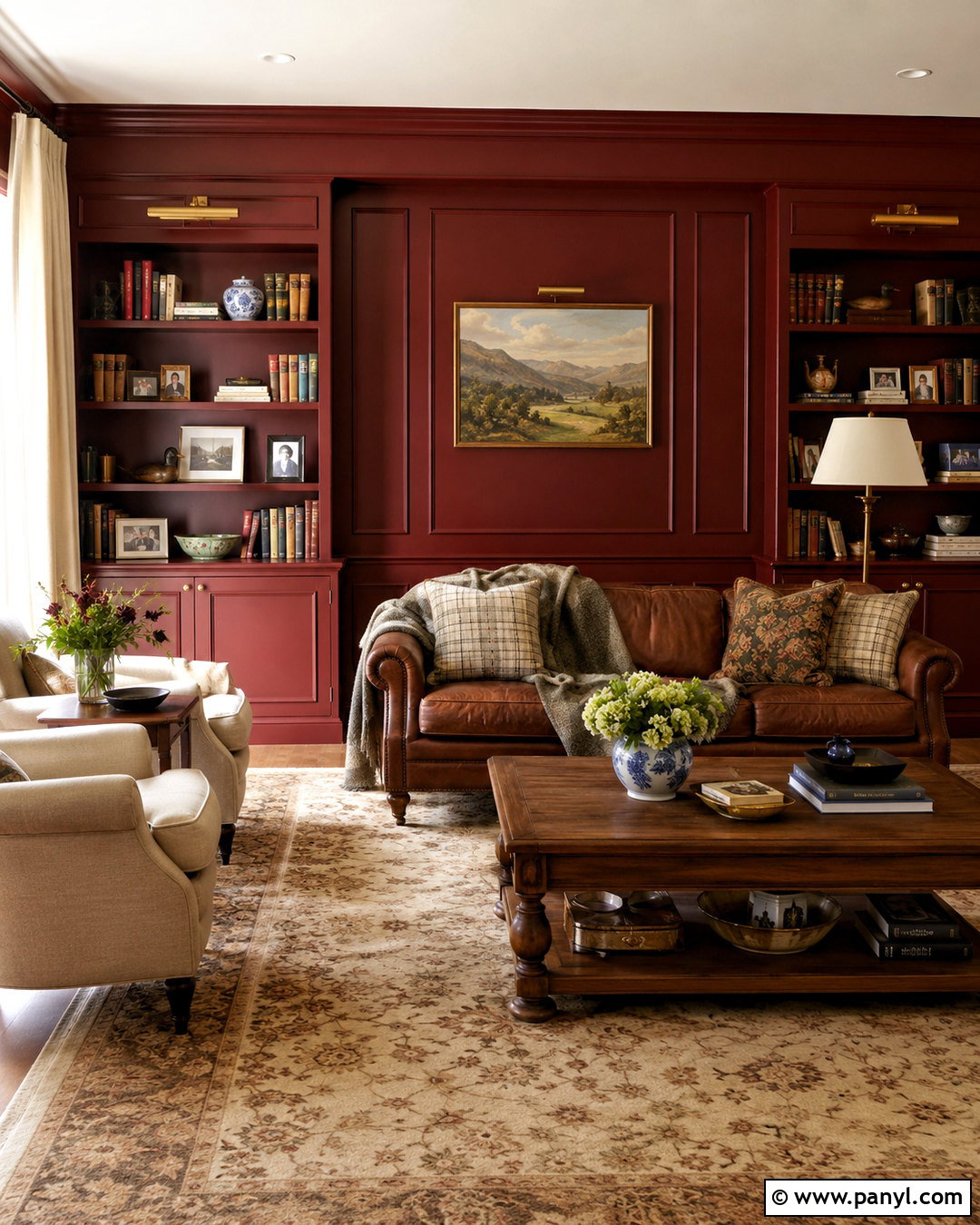
A home library can support dark red walls, layered furniture, and abundant books without feeling visually disorganized. Paint the walls and built-in shelves a deep oxblood red, using a satin finish on the woodwork for subtle contrast. Place a brown leather sofa opposite two plaid or oatmeal armchairs, arranging them around a large wool rug. A substantial wood coffee table provides room for reading materials. Brass library lights, shaded floor lamps, and a warm white ceiling ensure the space remains functional after sunset. Fill shelves unevenly, mixing books with framed photographs and ceramics while retaining some open areas. Heavy cream curtains soften windows. This complete library feels private and comfortable, with every material reinforcing the depth and established character of the red.
21. Red Contemporary Bedroom Walls
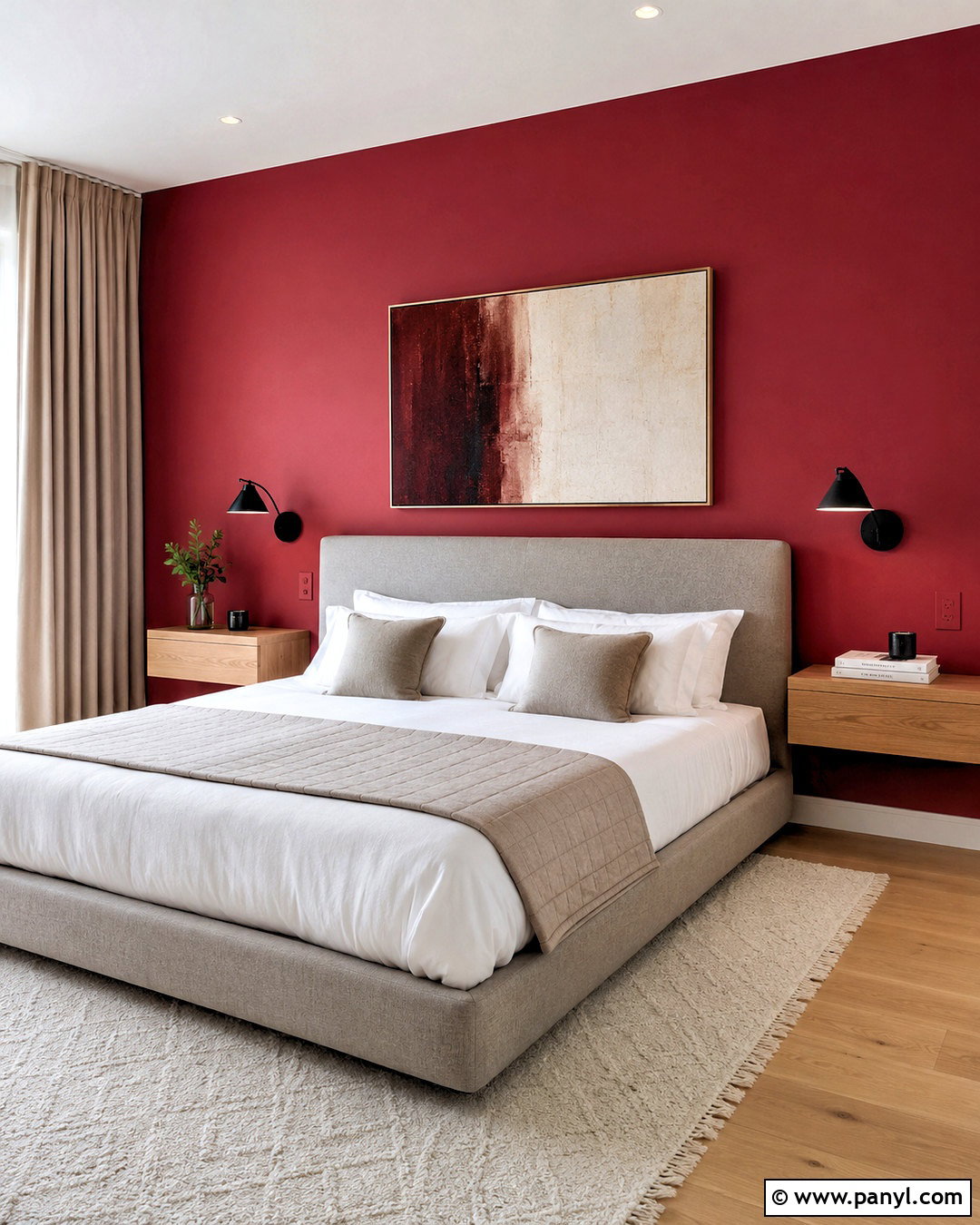
Contemporary red bedroom walls work best with simple furniture and plenty of visual quiet. Choose a subdued raspberry-red shade and use it on the wall behind the bed, extending it onto the short adjoining walls for a more immersive effect. Select a low upholstered bed in warm gray, then layer white bedding with a taupe coverlet and one muted red lumbar pillow. Floating oak nightstands preserve floor space and reinforce the clean layout. Add black reading sconces, an ivory rug, and full beige curtains. One wide abstract artwork can sit above the headboard, but avoid numerous small decorations. The final bedroom feels colorful yet restful because soft textiles, restrained styling, and uncluttered surfaces offset the energy of the red architectural backdrop.
22. Red Guest Bedroom Walls
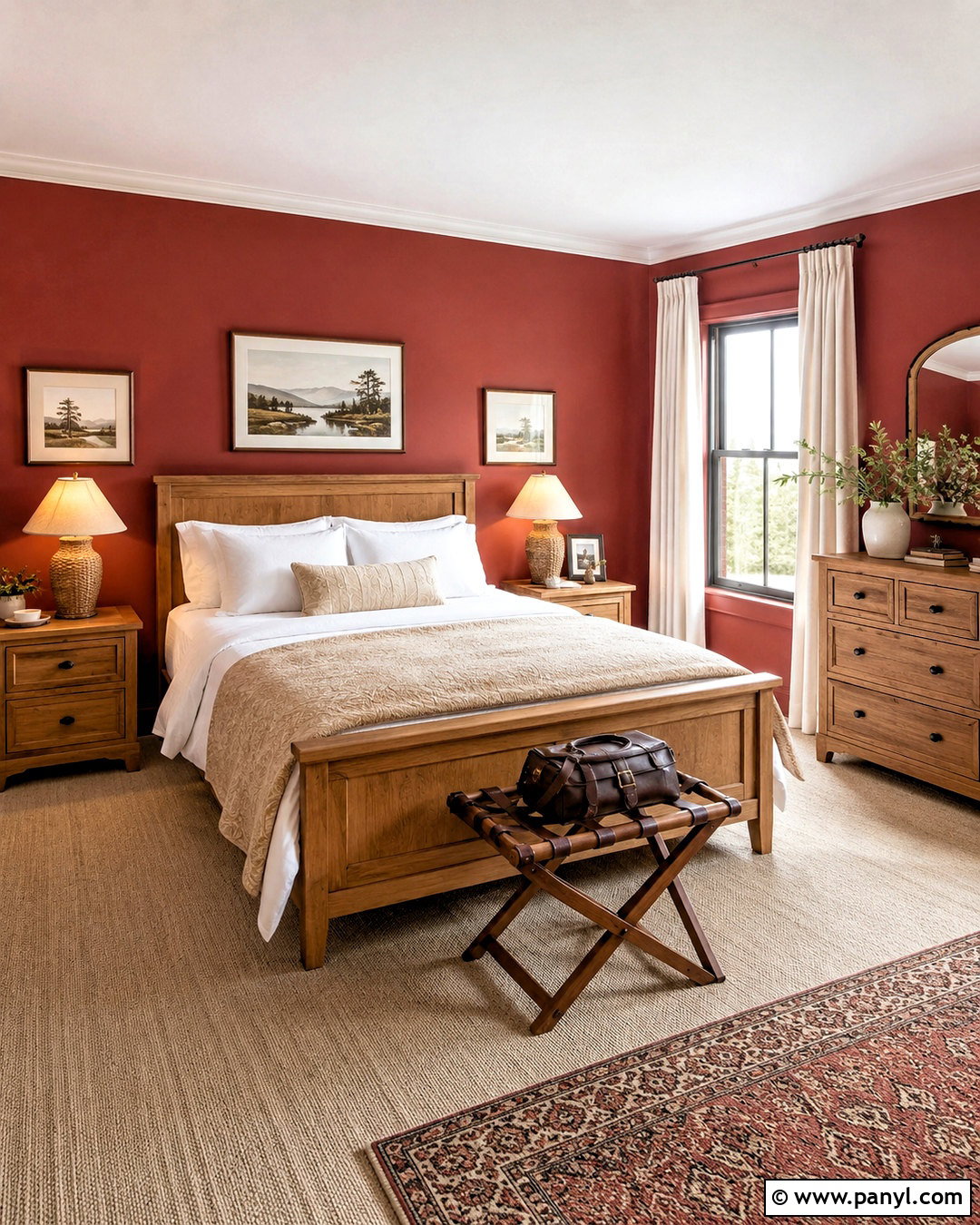
A guest bedroom with dusty red walls can feel welcoming and memorable without appearing too personal. Pair the muted paint with a simple natural oak bed, white sheets, and a quilt combining cream, tan, and small red details. Place matching oak nightstands on both sides so the room works comfortably for one or two visitors. Woven lamps and a light beige rug bring softness and familiar texture. Use warm white curtains that allow daylight to spread across the red walls. A luggage bench at the foot of the bed and a compact dresser make the space more practical. Finish with two calm landscape prints and a small mirror. The complete look is warm, balanced, and easy to maintain between visits.
23. Red Nursery Walls
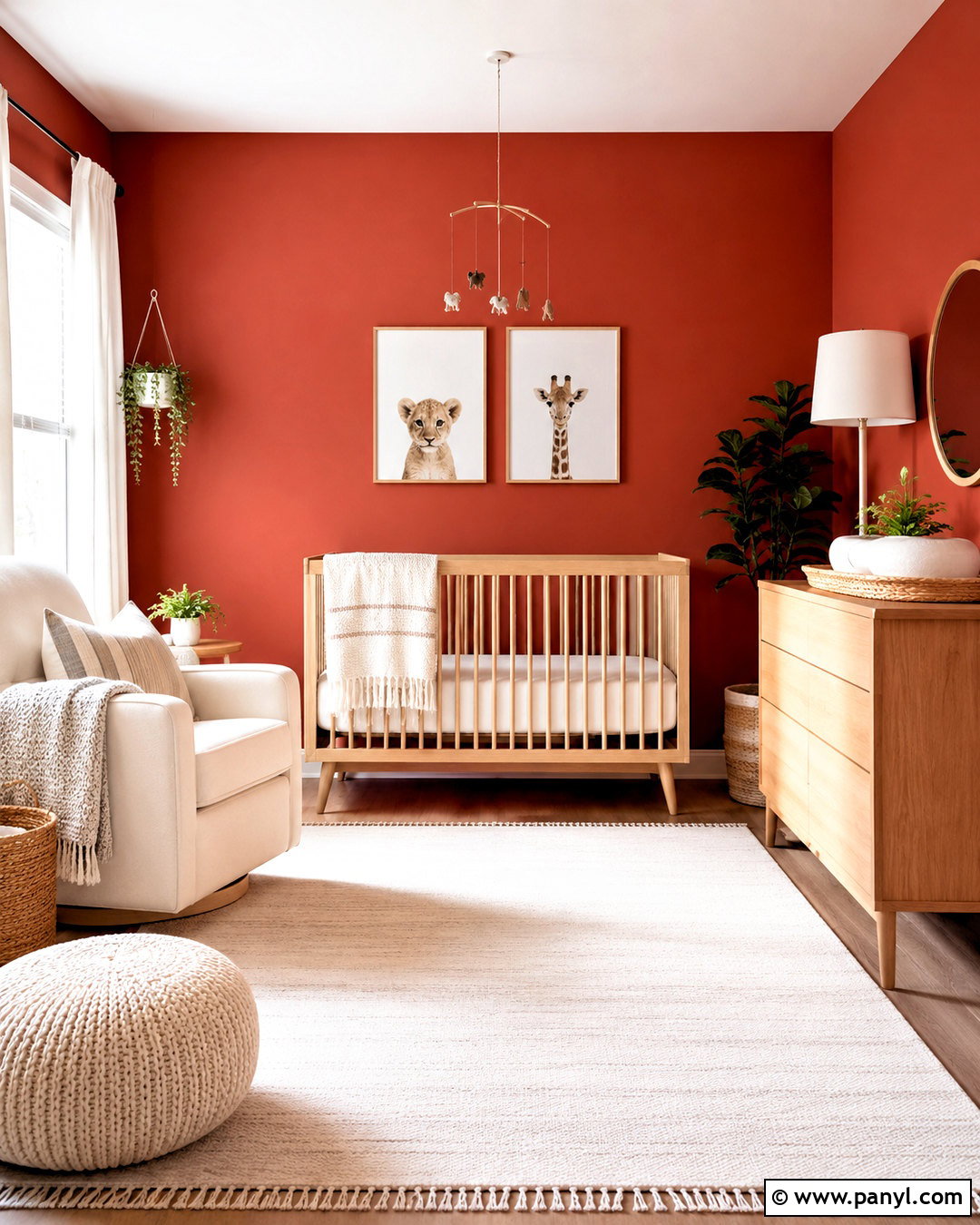
Soft clay-red walls can create a warm nursery when paired with light furniture and gentle, practical details. Select a muted red with pink-brown undertones rather than an intense scarlet. Position a natural wood crib away from windows and place a cream upholstered chair nearby for comfortable seating. A washable ivory rug, white curtains, and pale wood flooring lighten the room. Use a low, securely anchored dresser as a changing surface, with closed baskets for organized storage. Add simple animal artwork and one small mobile in neutral colors. A dimmable ceiling fixture and shaded floor lamp provide flexible illumination. The finished nursery feels cheerful but settled, with enough open floor area for movement and a coordinated palette that can adapt as the child grows.
24. Red Playroom Walls
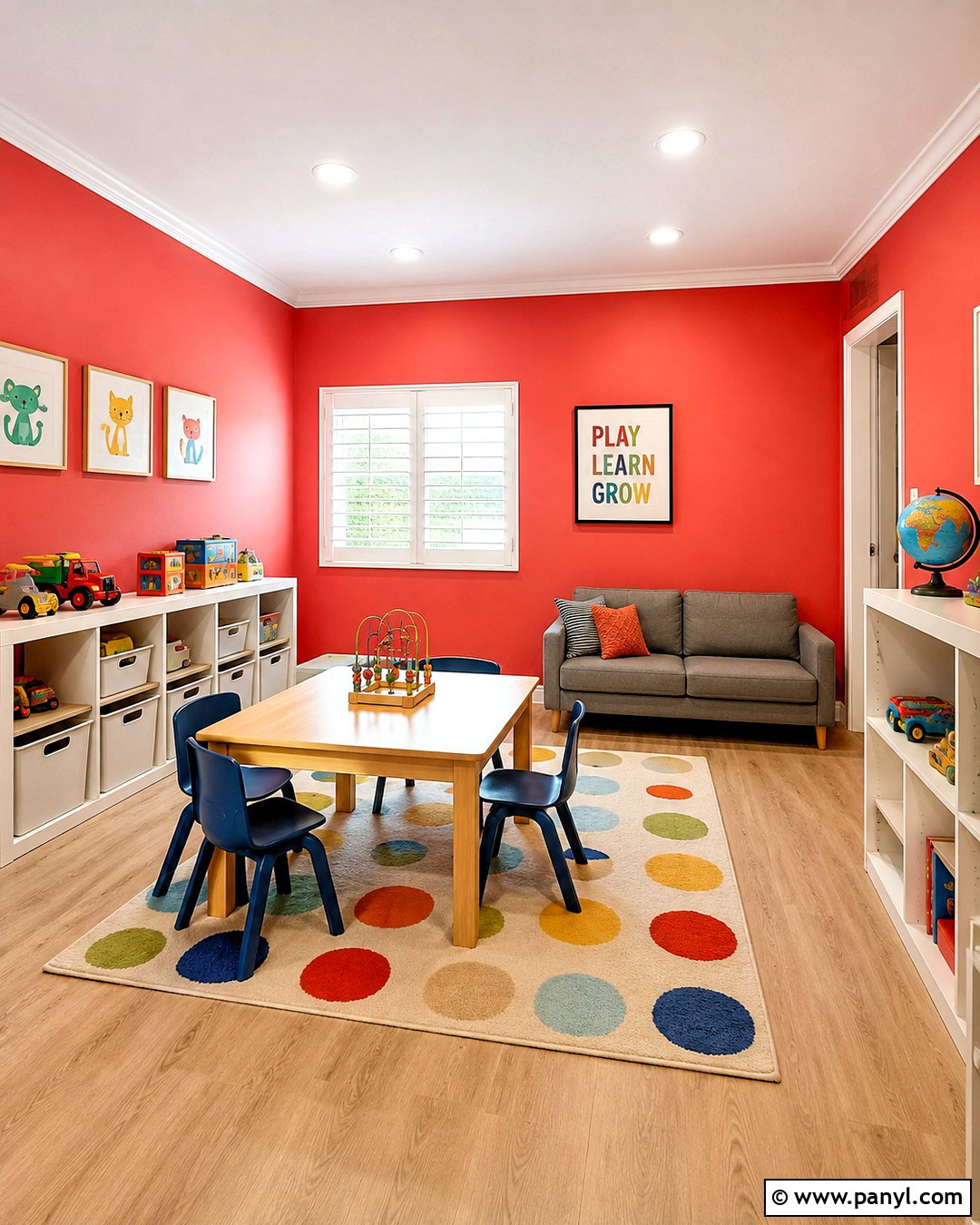
Cheerful coral-red walls can give a playroom energy while built-in storage keeps the bold room from looking chaotic. Use the color on all four walls, balanced by a bright white ceiling and pale wood floor. Install low white cabinets with rounded handles along one side, combining closed doors with a few open cubbies. Place a washable multicolor rug in the center and add a small natural wood activity table with sturdy chairs. A compact gray sofa creates a comfortable reading area without competing with the walls. Display artwork in matching white frames and organize toys by category in solid-colored bins. The complete space is colorful, practical, and easy to reset, allowing the red walls to provide excitement rather than relying on excessive decorative clutter.
25. Red Kitchen Breakfast Nook Walls
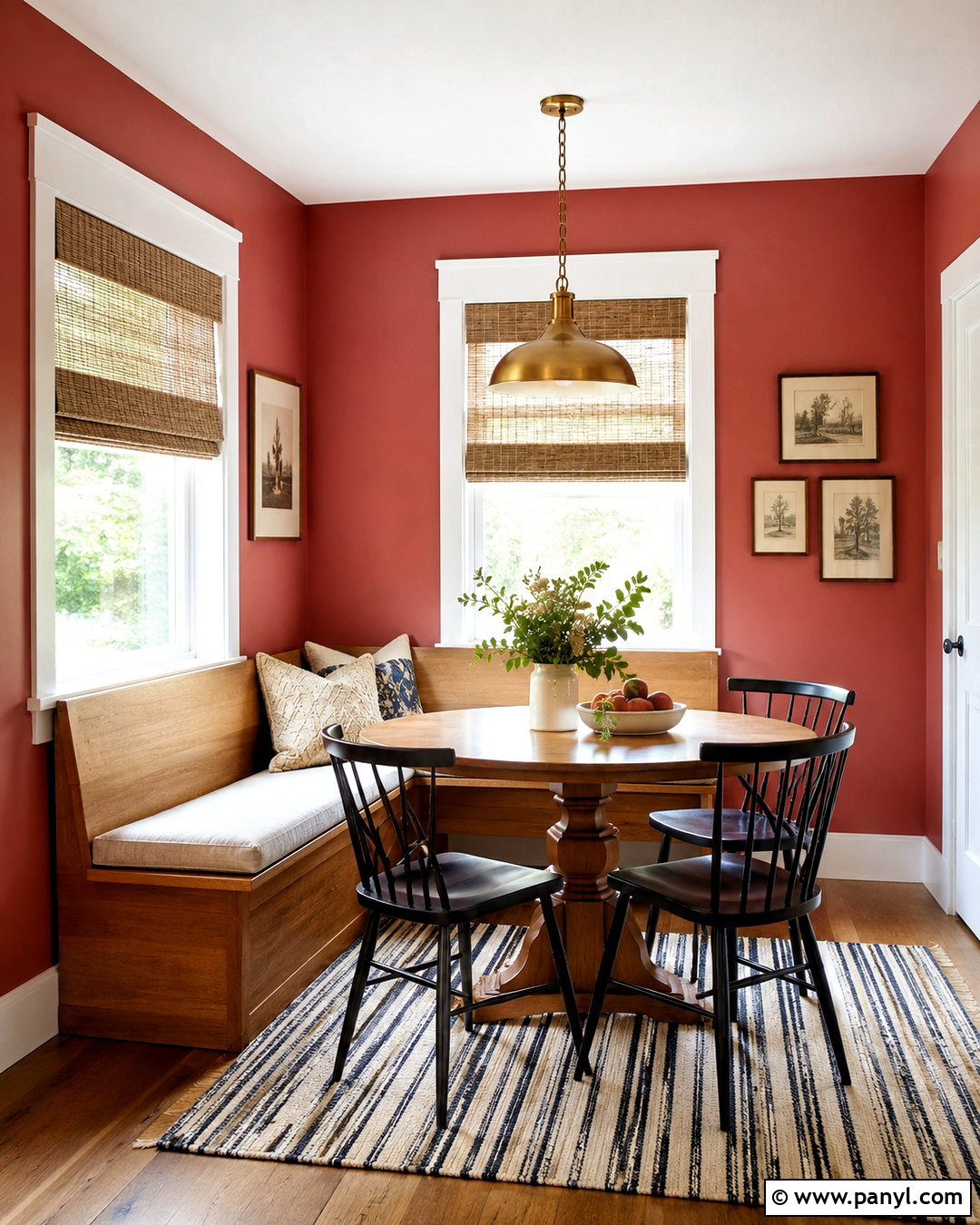
A breakfast nook becomes a defined destination when muted tomato-red walls distinguish it from a neutral kitchen. Build an L-shaped oak bench beneath the windows and add comfortable cream seat cushions. Pair it with a round pedestal table and two black spindle chairs so the layout can accommodate extra seating without feeling crowded. A compact brass pendant provides focused light over the table. Use woven shades, a washable striped rug, and framed food-inspired artwork in subdued colors. Repeat the red through only one or two small textiles. Warm white trim connects the nook to adjacent cabinetry, while the natural wood prevents the color from feeling too sharp. The finished corner looks cheerful, cohesive, and practical for daily meals or casual work.
26. Red Kitchen Walls With Green Cabinets
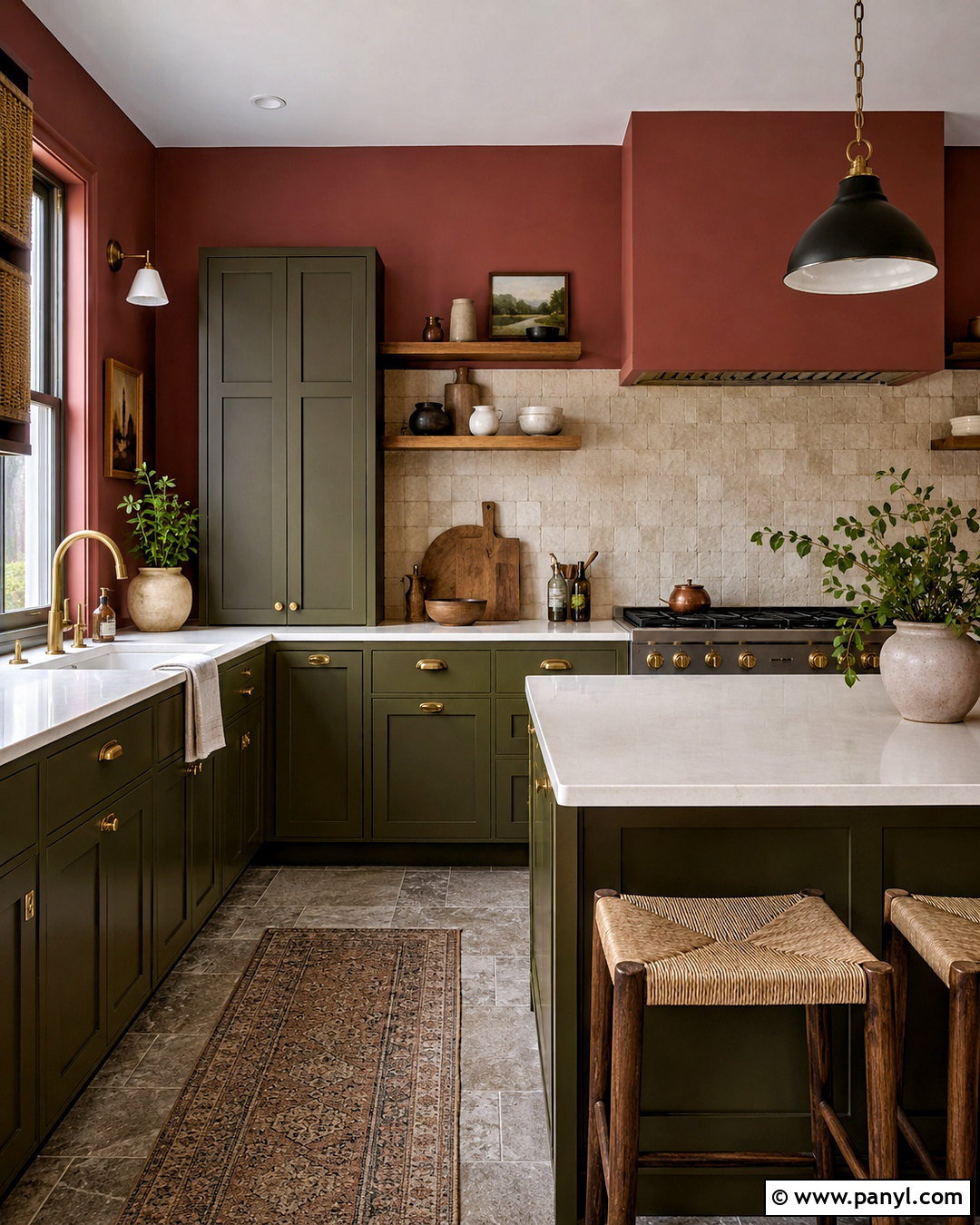
Muted red walls and olive-green cabinets form an earthy kitchen palette that feels expressive but grounded. Choose a dusty brick-red paint and use it above lower cabinets or across an open breakfast wall. Paint Shaker cabinetry deep olive, then add warm white quartz counters and a creamy handmade-look backsplash. Natural oak shelves and a matching island introduce a lighter material between the strong colors. Use aged brass hardware and matte black lighting for controlled contrast. Light stone flooring keeps the overall kitchen from becoming dark. Finish with woven stools, neutral ceramics, and a faded washable runner containing red and green details. The completed design works because every major color is softened, while pale surfaces maintain brightness around the cooking and preparation areas.
27. Red Bathroom Walls
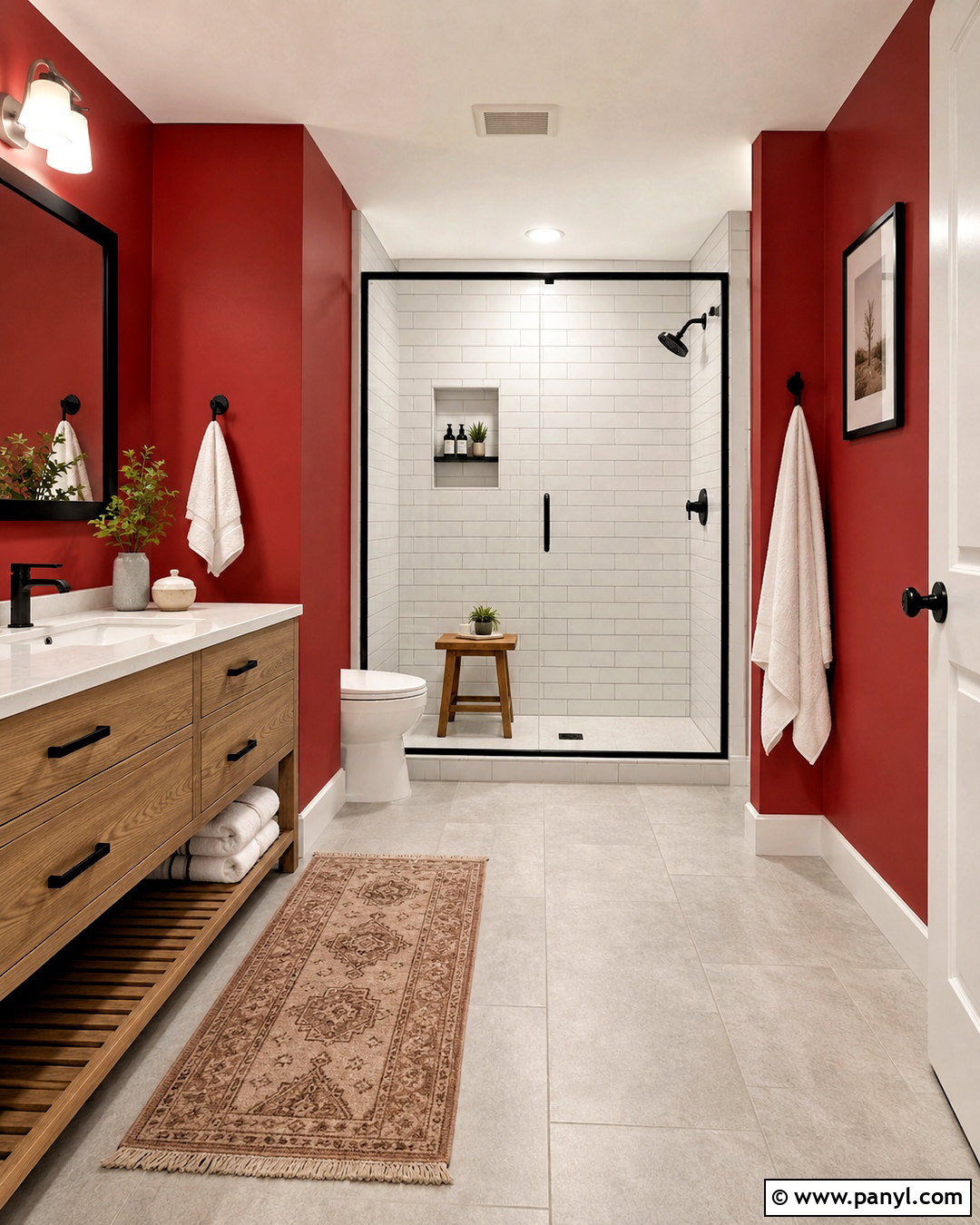
Red bathroom walls can look clean and contemporary when paired with simple white fixtures and restrained materials. Choose a warm vermilion red for the upper walls and install white rectangular tile across wet areas. A floating oak vanity adds natural warmth, while a white quartz counter connects it to the bathtub and sink. Use matte black hardware for the faucet, shower frame, mirror, and hooks to establish a consistent outline. Pale gray floor tile grounds the space without creating another strong color. Add bright sconces, white towels, and one small plant in a ceramic pot. Keep toiletries inside drawers or a mirrored cabinet. This complete bathroom feels bold but organized, with durable surfaces and strong visual contrast supporting everyday function.
28. Red Hallway Walls
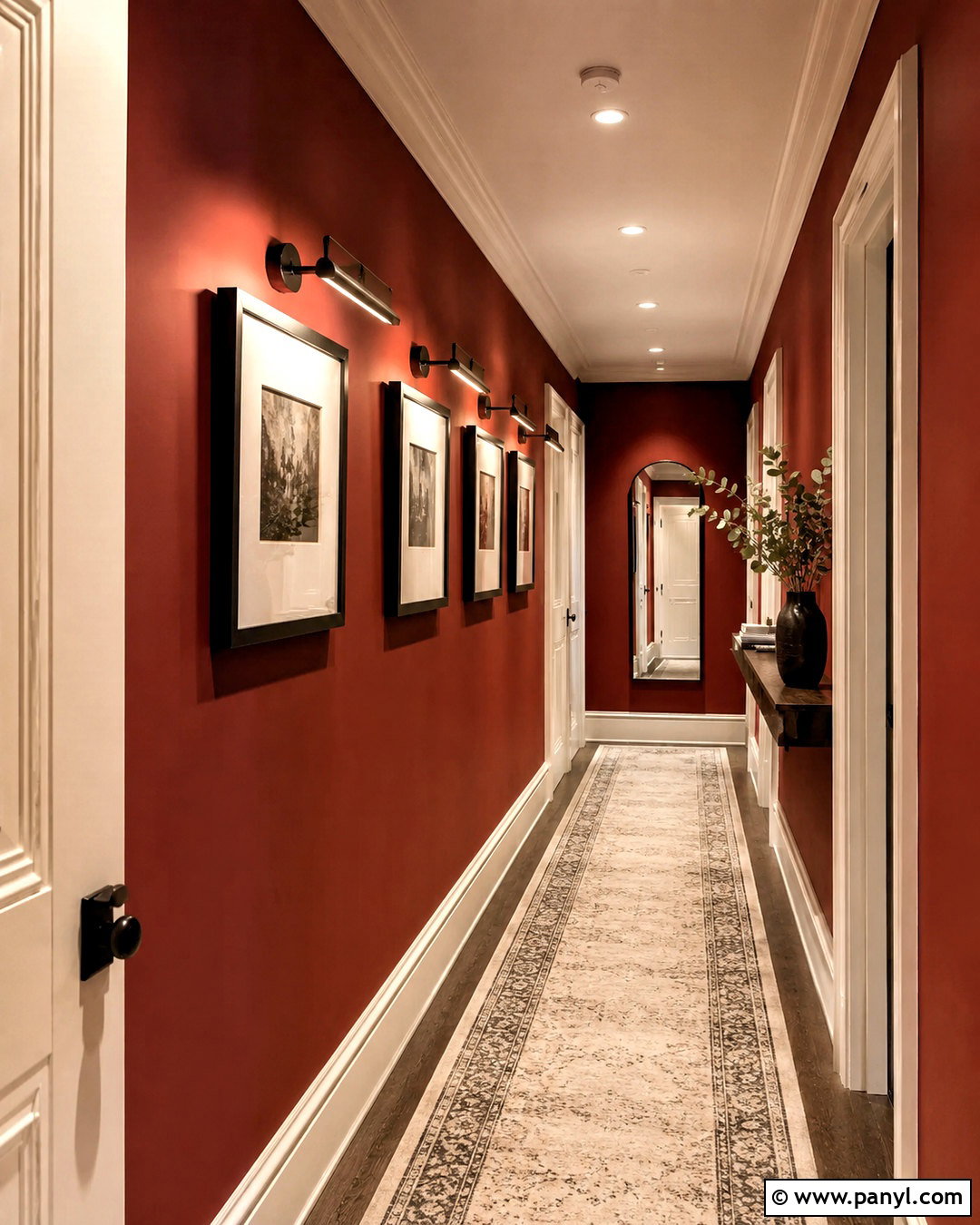
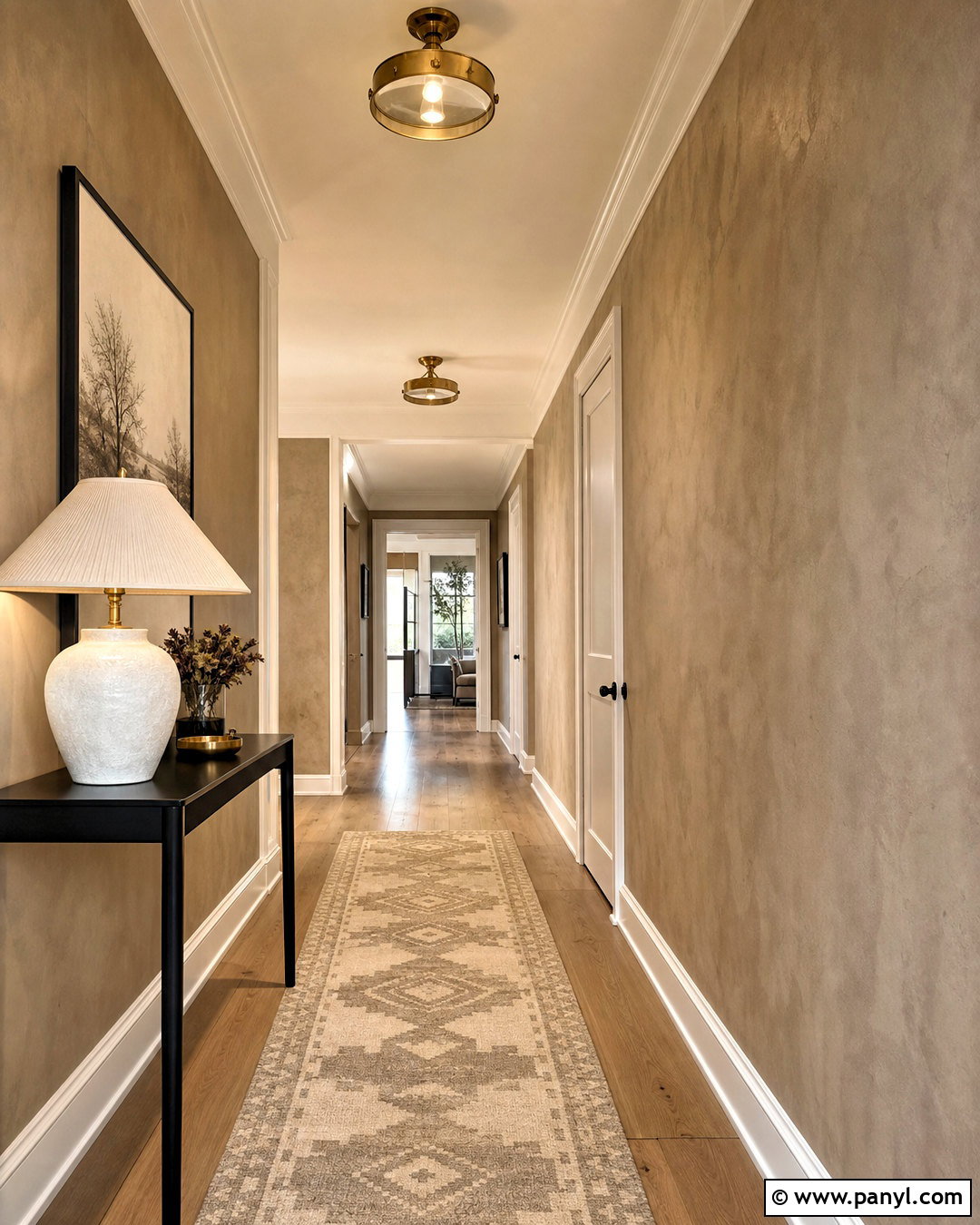
A narrow hallway can become an intentional connecting space through muted red walls, thoughtful lighting, and disciplined decoration. Use warm cinnamon-red paint with a washable finish, then keep the ceiling, trim, and doors soft white to preserve brightness. Run a long cream-and-charcoal runner through the center, leaving flooring visible at both sides. Install evenly spaced black picture lights above a coordinated series of framed photographs or prints. A shallow wall-mounted shelf near the entrance can hold keys without blocking circulation. Add a mirror at the end of the hall to reflect light and extend the sightline. The finished passage feels warm and architectural rather than forgotten. Its limited furnishings allow the red walls and repeating frames to create rhythm without reducing usable width.
29. Red Staircase Walls
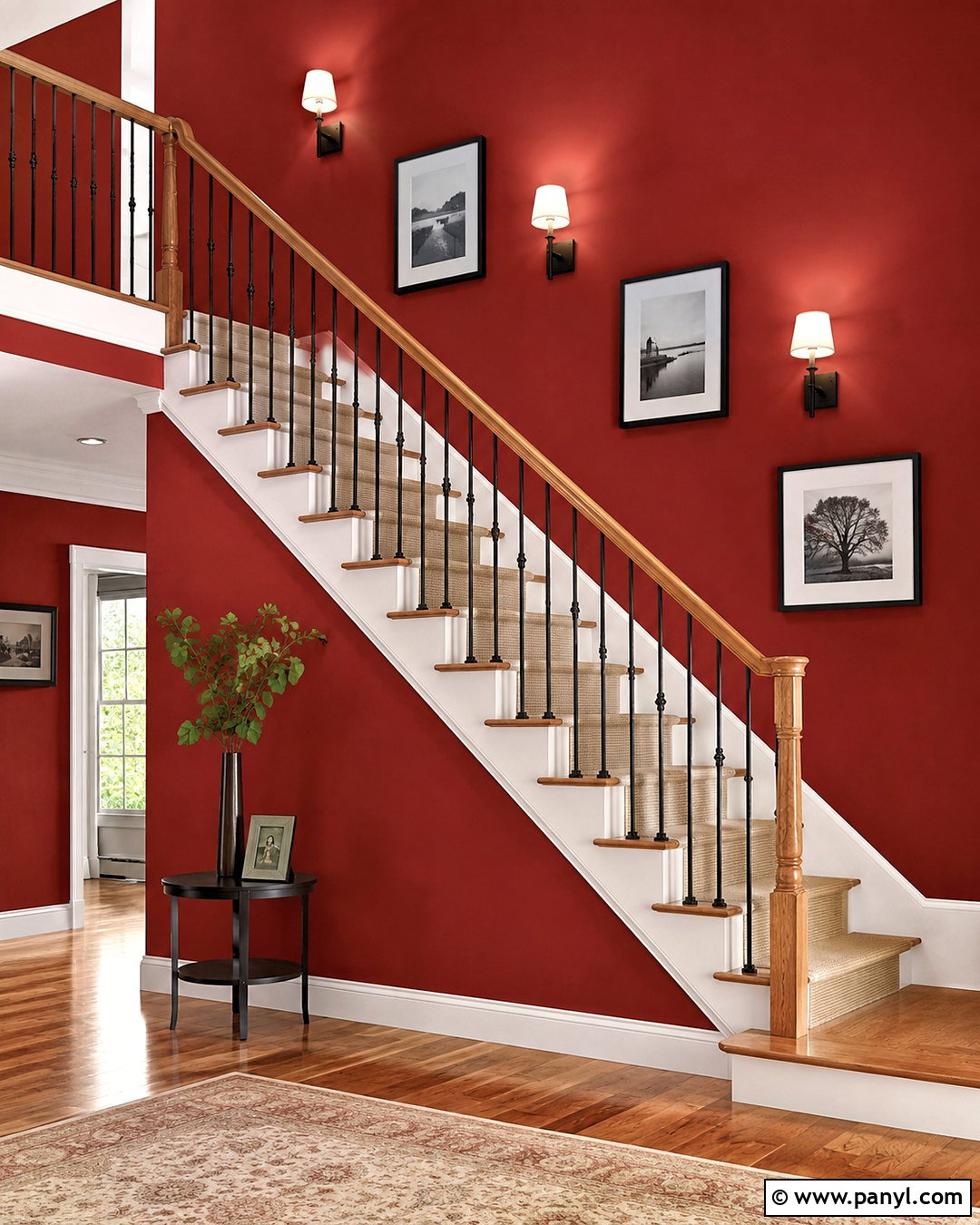
Red staircase walls highlight vertical architecture and turn an ordinary transition into a strong design feature. Choose deep brick red for the walls, then use warm white on stair risers, trim, and the ceiling. A natural oak handrail adds warmth, while black metal balusters create a crisp, modern outline. Install a gallery of medium-sized artwork that follows the upward angle of the stairs, using matching black frames and generous spacing. A durable beige runner softens footsteps and keeps the central area visually light. Add simple wall sconces at regular intervals for safe, even illumination. The completed staircase feels coordinated from top to bottom because the paint, railing, runner, lighting, and artwork all emphasize the same clean architectural movement.
30. Red Fireplace Wall
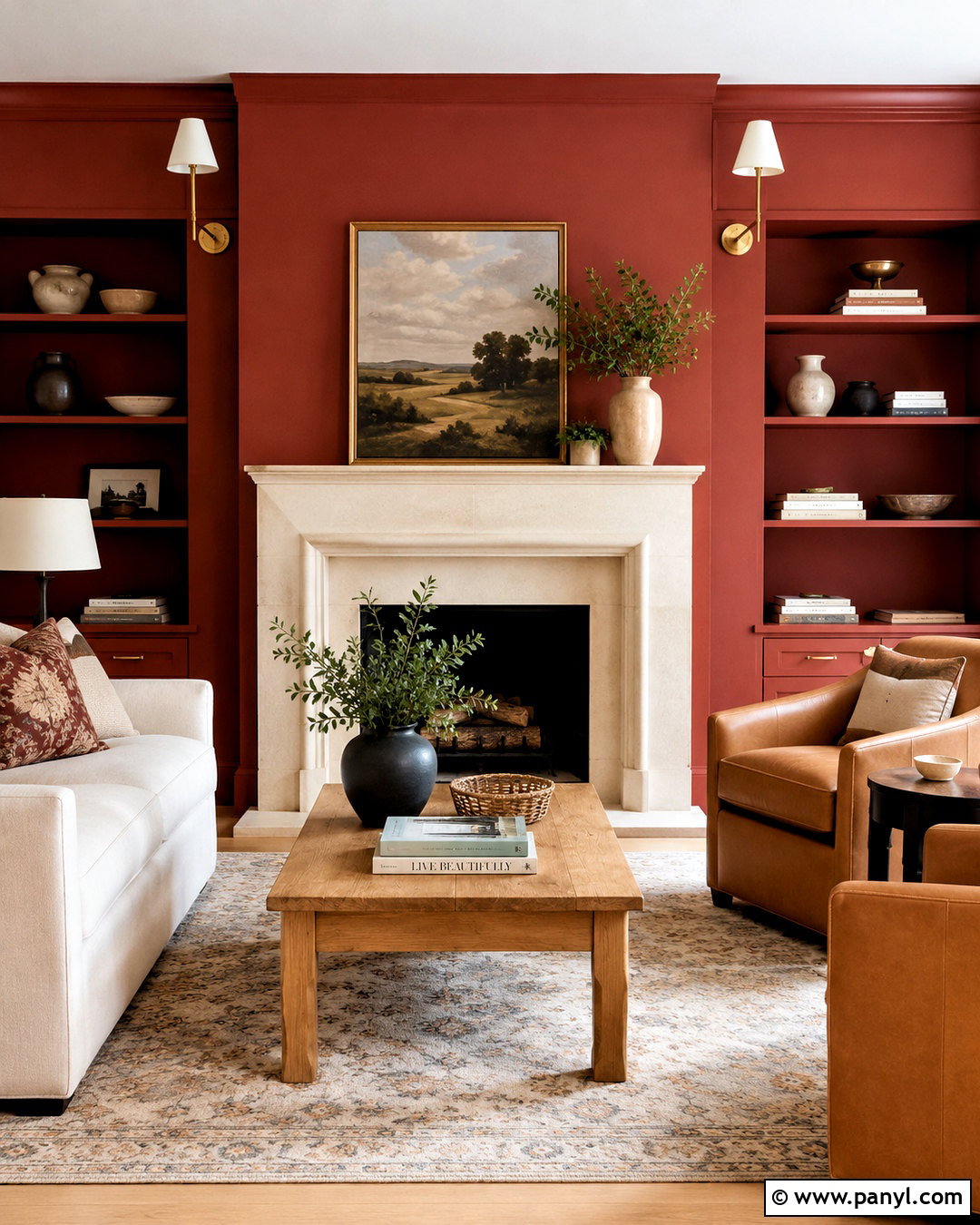
A deep red fireplace wall can become the clear center of a neutral living room. Paint the entire chimney breast and adjacent built-ins a muted garnet shade, allowing the color to frame a light limestone or plaster fireplace surround. Arrange a cream sofa and two tan leather chairs toward the hearth, using a pale patterned rug to unite the seating. Add an oak coffee table and small black side tables for a balanced mix of finishes. Keep the remaining walls warm white so the red feature retains its impact. Brass sconces and one large artwork above the mantel provide a finished focal point. Style shelves with books, pottery, and open space. The complete room directs attention naturally while remaining comfortable for everyday use.
31. Red Walls With Gallery Art
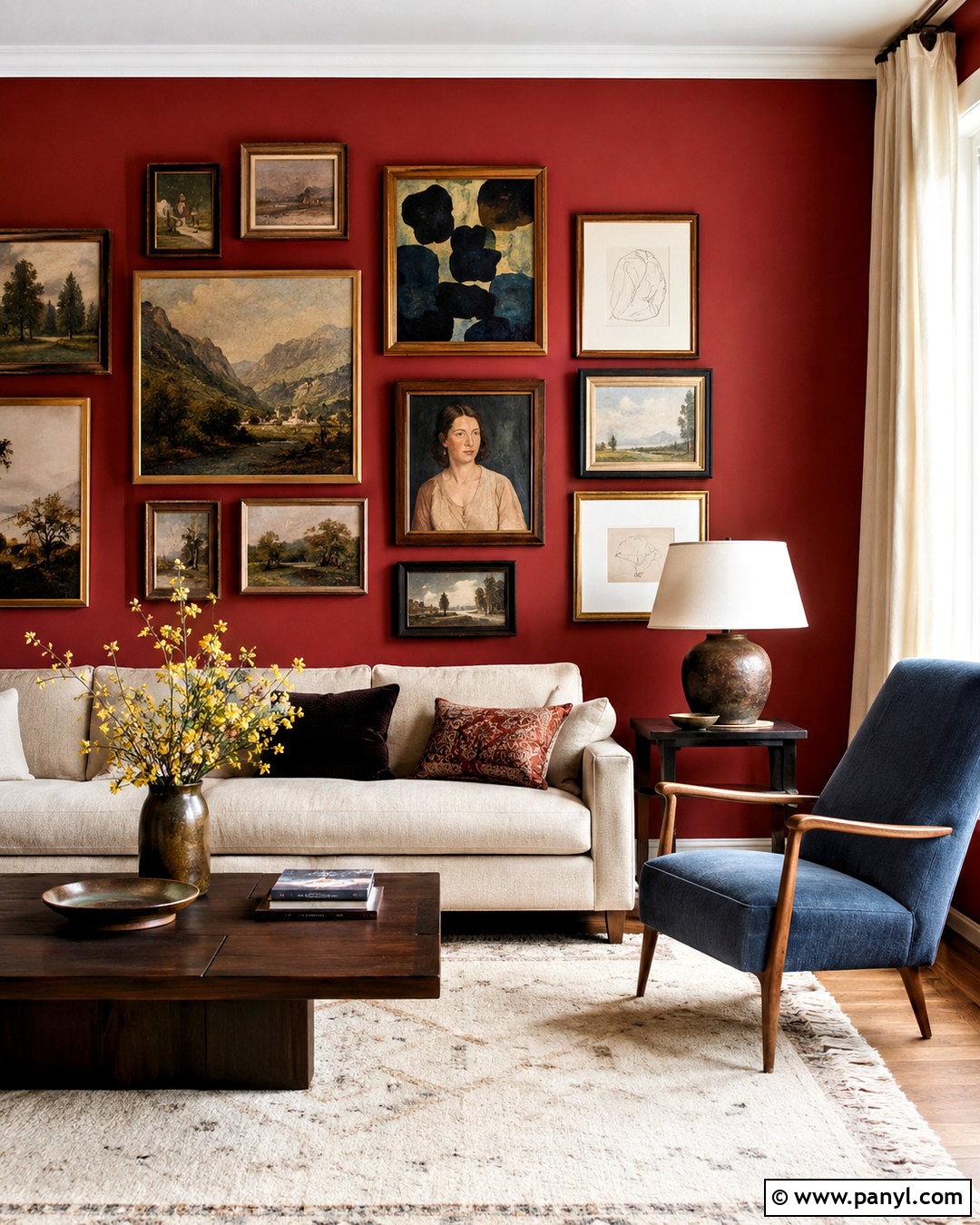
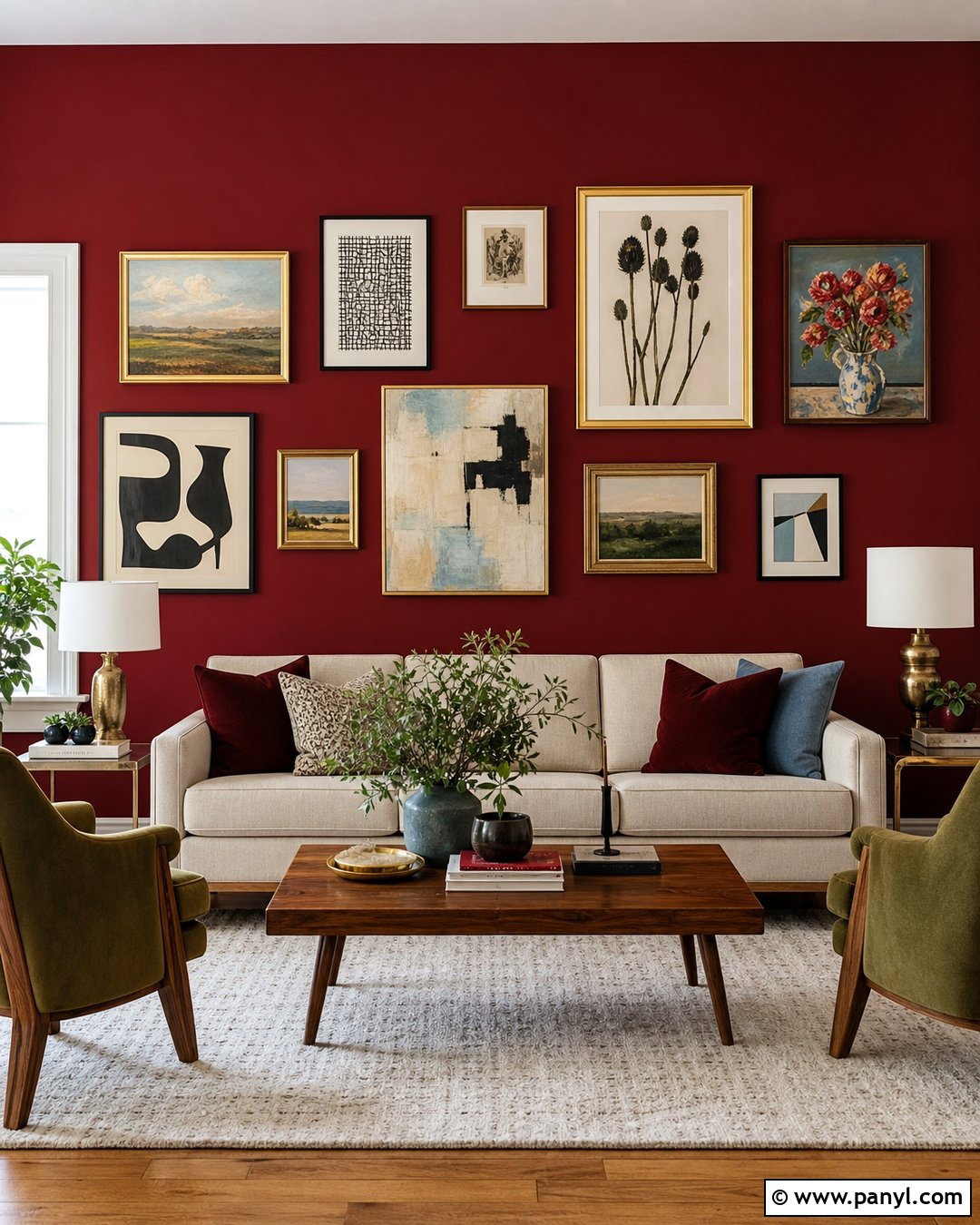
Red walls provide an energetic background for a gallery arrangement when the artwork and frames follow a consistent plan. Choose muted crimson walls and hang a collection containing landscapes, abstracts, and drawings in cream, blue, green, and black. Use mostly warm wood frames with a few thin brass frames for variation. In the living room, position a neutral linen sofa beneath the gallery and add a dark wood coffee table, cream rug, and blue accent chair. Leave visible red space between every piece so the arrangement remains readable. Warm white curtains and a pale ceiling balance the richly decorated wall. The completed design feels personal and layered, yet the coordinated frame materials and restrained furniture prevent the artwork from appearing scattered or overwhelming.
32. Red Walls With Cream Furniture
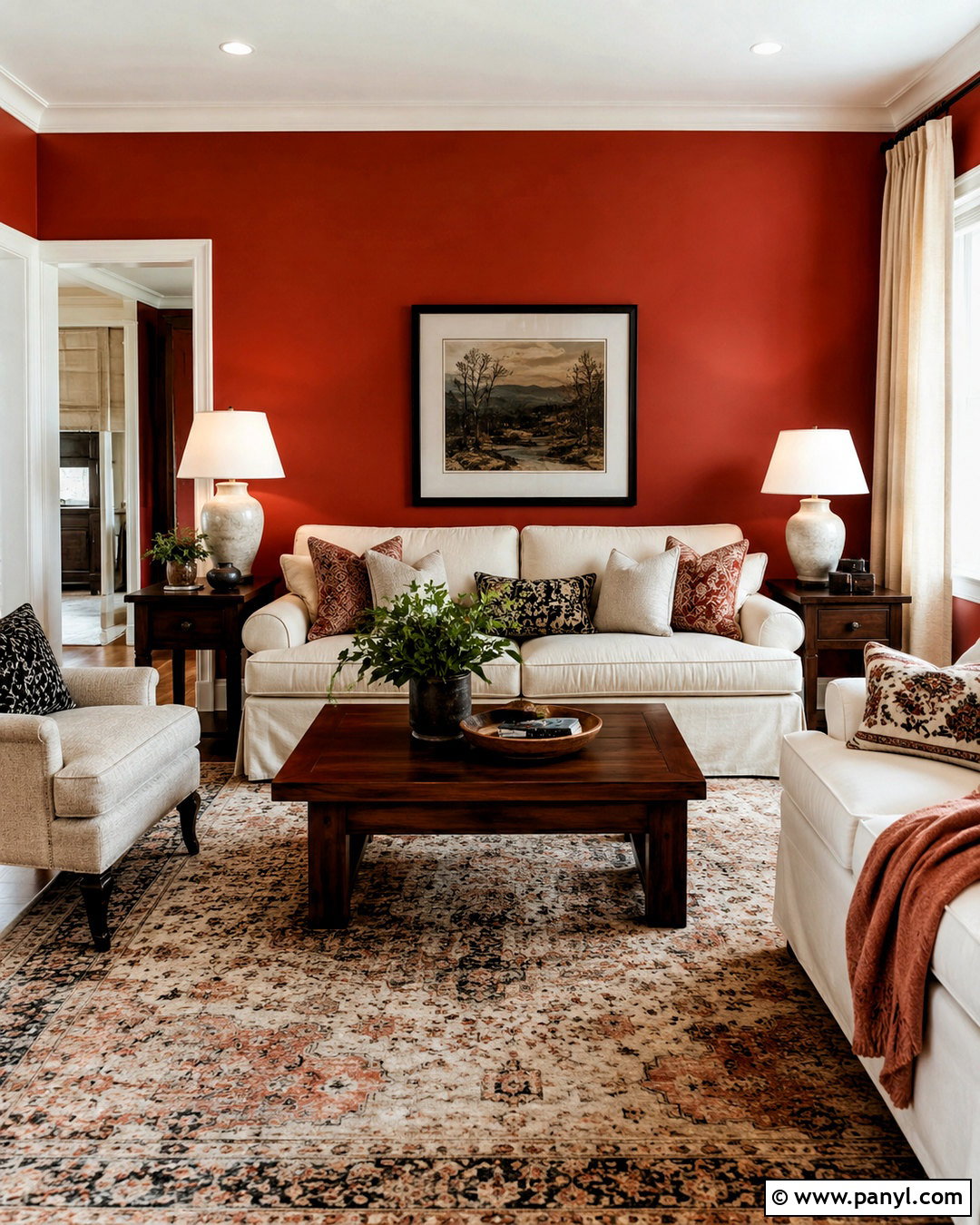
Cream furniture creates gentle contrast against red walls and makes saturated paint easier to use across a complete room. Select deep paprika-red walls, then center the living area around a cream slipcovered sofa and two ivory armchairs. Introduce walnut through the coffee table, side tables, and a narrow media console. A faded rug combining beige, rust, and charcoal prevents the seating from disappearing into the floor. Add linen curtains in warm white and lamps with off-white shades. Black frames and small metal accents give the pale furnishings clearer definition. Use patterned cushions sparingly because the wall color already supplies strong visual interest. The final room feels warm and substantial, while removable covers and durable textured fabrics make the light-colored seating more practical.
33. Red Walls With Gray Furniture
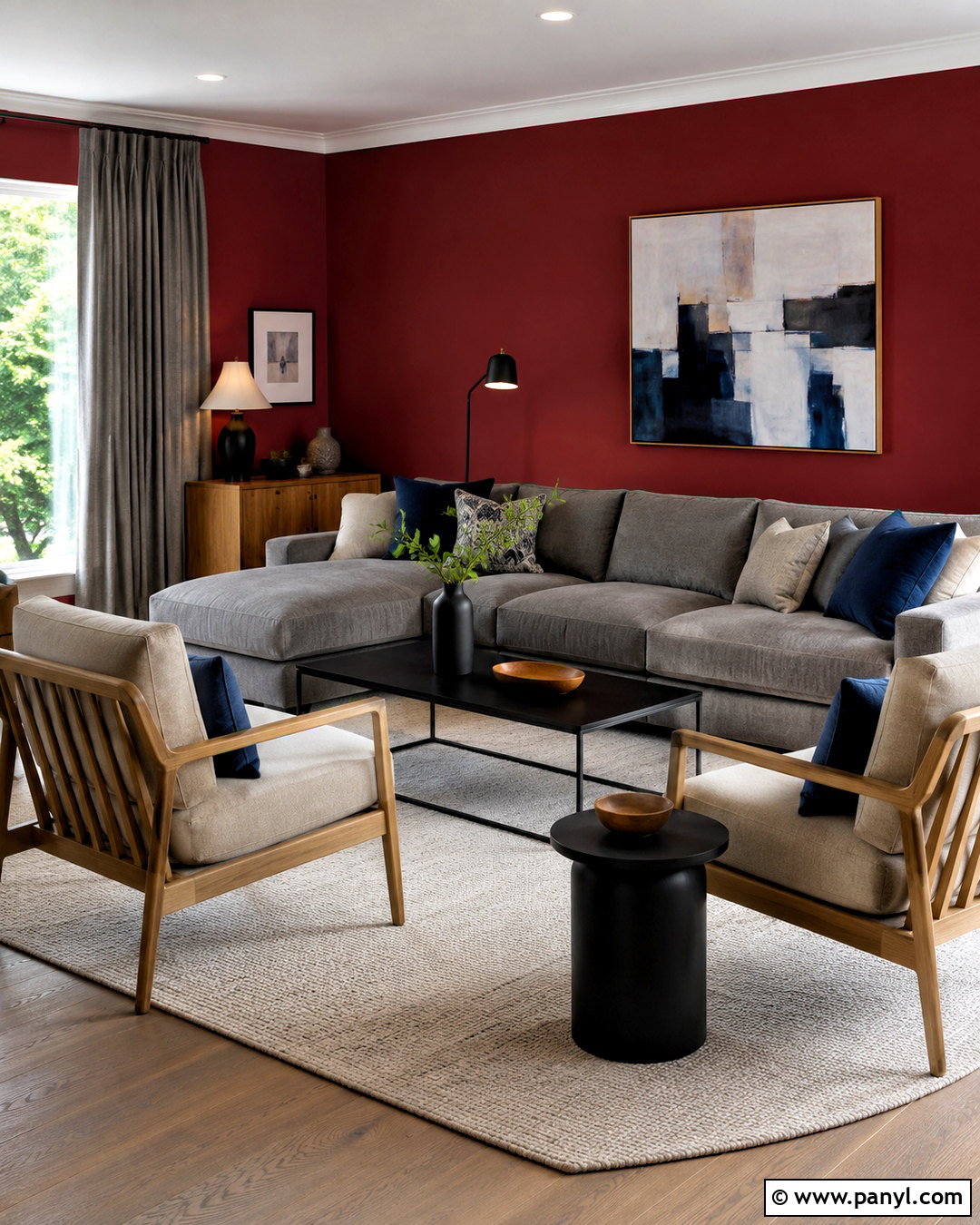
Gray furniture can cool the intensity of red walls, producing a balanced living room with a modern edge. Choose a red with blue or brown undertones rather than a bright orange-red. Place a medium-gray sectional against the longest wall and add two pale oak lounge chairs with cream cushions. A large ivory rug softens the contrast and defines the seating arrangement. Use black metal for floor lamps, frames, and a slim coffee table, but introduce wood through a media cabinet to avoid an industrial appearance. Charcoal curtains may feel too heavy, so select warm gray or off-white linen instead. Finish with abstract artwork and pillows in rust, cream, and muted blue. The completed space feels crisp, coordinated, and comfortable rather than severe.
34. Red Walls With Pink Decor
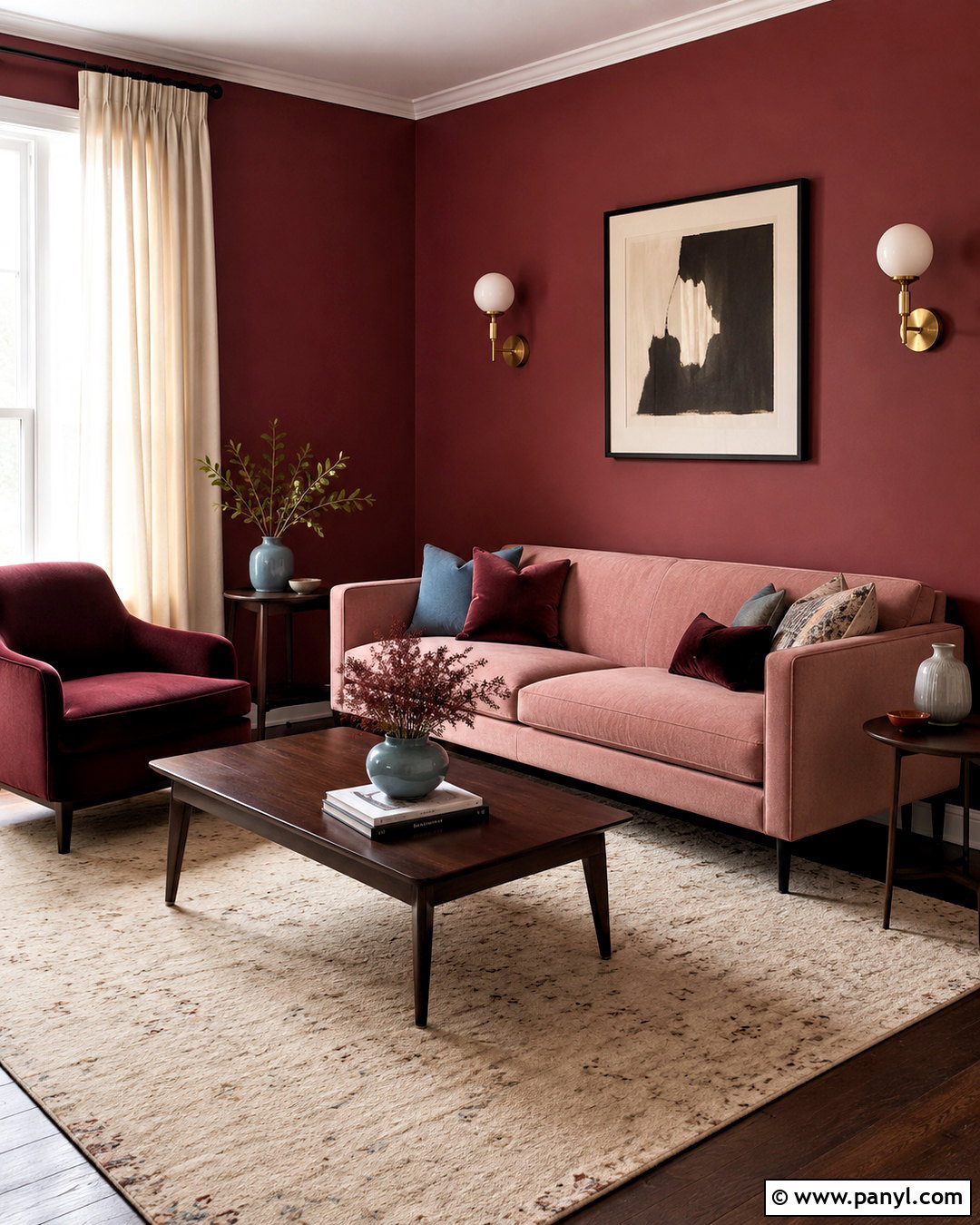
Red and pink can create a layered tonal room when their undertones feel related. Start with muted raspberry-red walls and add a dusty blush sofa rather than a sugary pastel version. Balance the warm palette with an ivory rug, dark walnut coffee table, and cream curtains. A burgundy lounge chair can deepen one corner, while black-framed artwork gives the softer colors essential structure. Use brushed brass lighting for warmth and pale blue accents through one pillow or ceramic piece to provide subtle relief. Avoid repeating pink across every accessory. Instead, allow natural wood, cream, and black to occupy much of the room. The complete living space feels expressive and contemporary, with controlled tonal variation preventing the closely related colors from blending together.
35. Red Walls With Mustard Accents
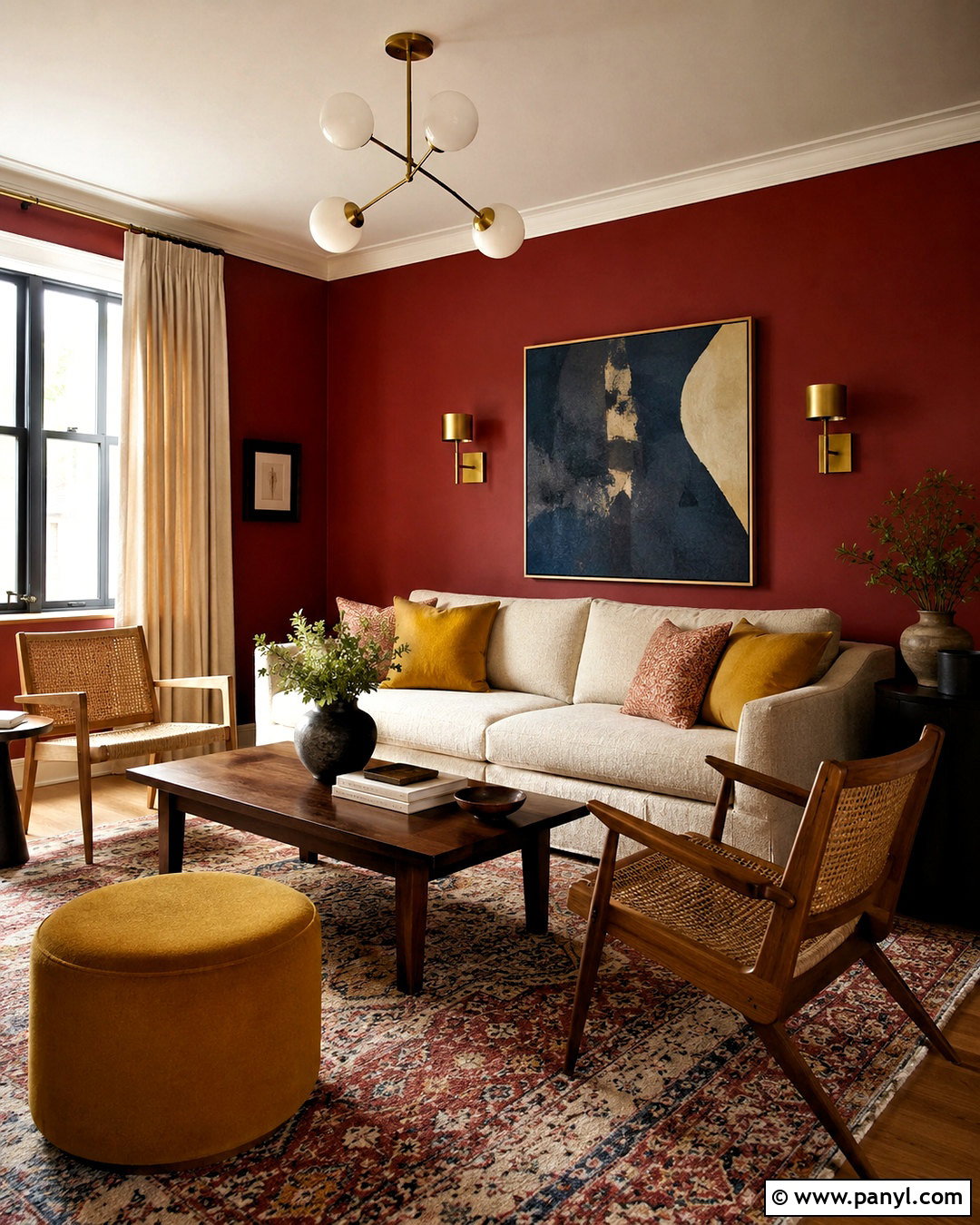
Mustard accents add warmth to red walls, but the room needs generous neutral areas to keep the combination comfortable. Use a dark brick-red wall color and furnish the living room with a beige sofa, walnut coffee table, and two light oak side chairs. Bring mustard into the space through a single upholstered ottoman, two pillows, and small details in a patterned rug. Cream curtains and a soft white ceiling reflect light around the deeper palette. Add dark blue artwork or ceramics to provide a cooler counterbalance. Brass lighting works well, although its finish should be understated rather than highly polished. The completed room feels warm and collected because mustard acts as a supporting note, while beige, cream, wood, and blue maintain visual balance.
36. Red Industrial Loft Walls
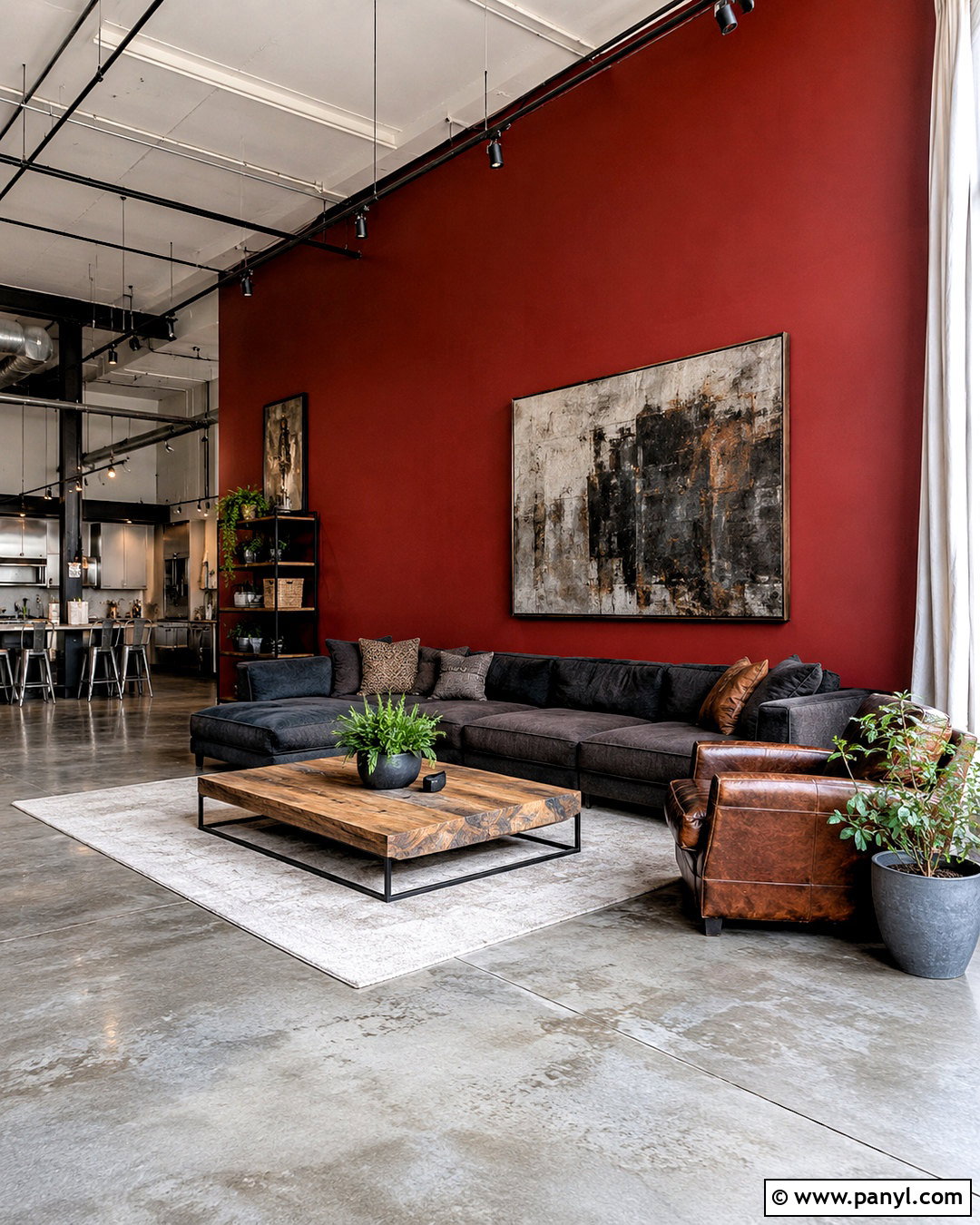
A brick-red painted wall can soften the hard finishes of an industrial loft while preserving its urban character. Apply the color to one broad wall and leave adjoining concrete, white plaster, or exposed brick surfaces visible. Position a charcoal modular sofa in front of the red wall, then add a distressed brown leather chair and reclaimed wood coffee table. A large cream rug introduces comfort over polished concrete flooring. Use matte black track lighting, steel shelving, and simple oversized artwork. Linen curtains can soften tall windows without hiding their structure. Finish with a few plants and textured neutral pillows. The complete loft feels warmer and more livable, while its open layout, exposed materials, and practical furniture continue to support a straightforward industrial appearance.
37. Red Art Deco Dining Room Walls
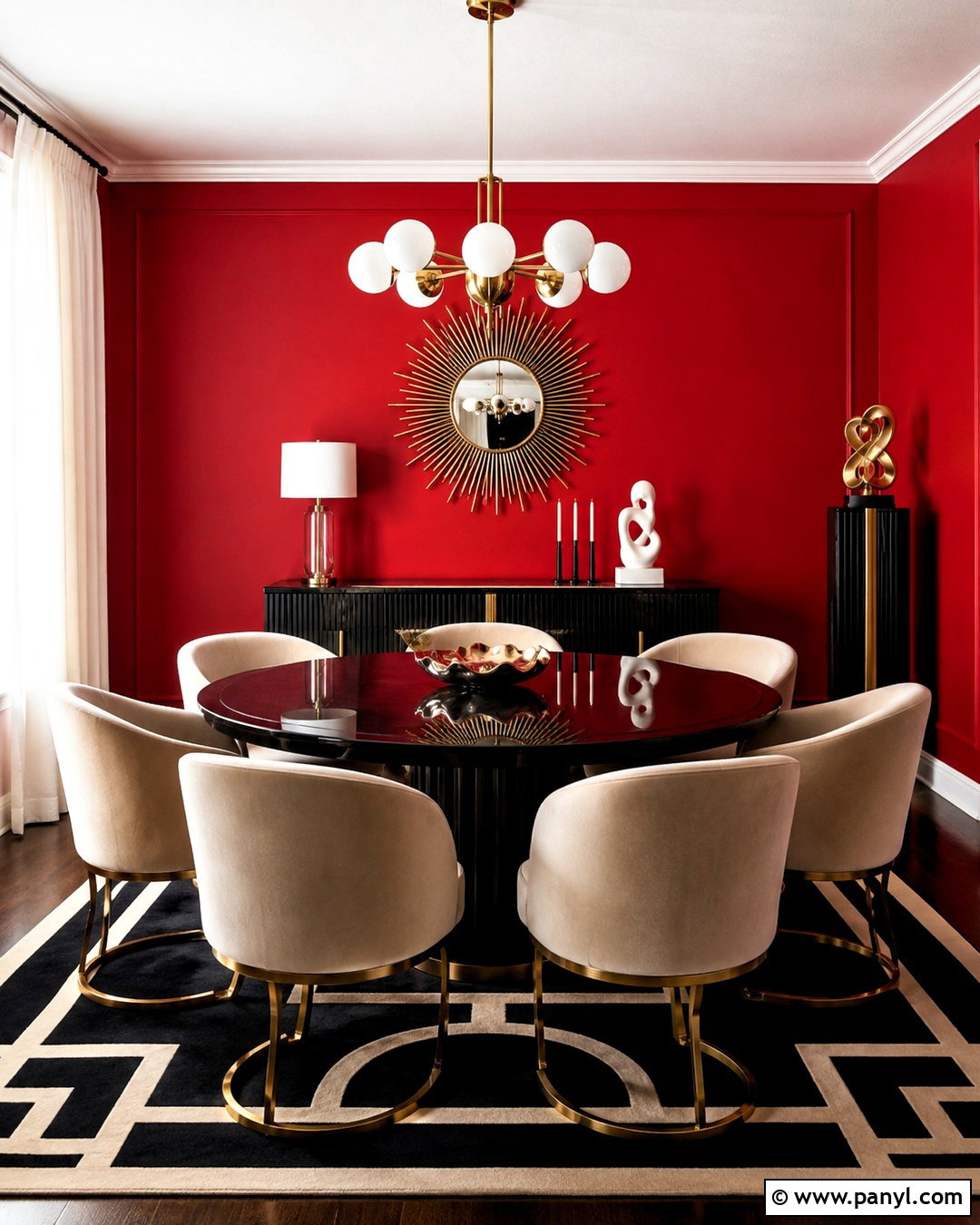
Deep red walls can support an Art Deco dining room when geometric forms and polished accents are used with restraint. Select a saturated ruby red, then add a round black dining table with a subtly glossy finish. Surround it with curved chairs upholstered in cream velvet. A brass globe chandelier, sunburst mirror, and narrow black sideboard introduce recognizable period geometry without turning the room into a theme. Use a black-and-ivory rug with a simple fan or stepped pattern. Warm white curtains and ceiling paint provide visual relief from the rich walls. Display only a few sculptural objects on the sideboard. The final space feels glamorous and complete, with symmetrical placement and repeated materials giving the bold red setting a polished sense of order.
38. Red Mediterranean Living Room Walls
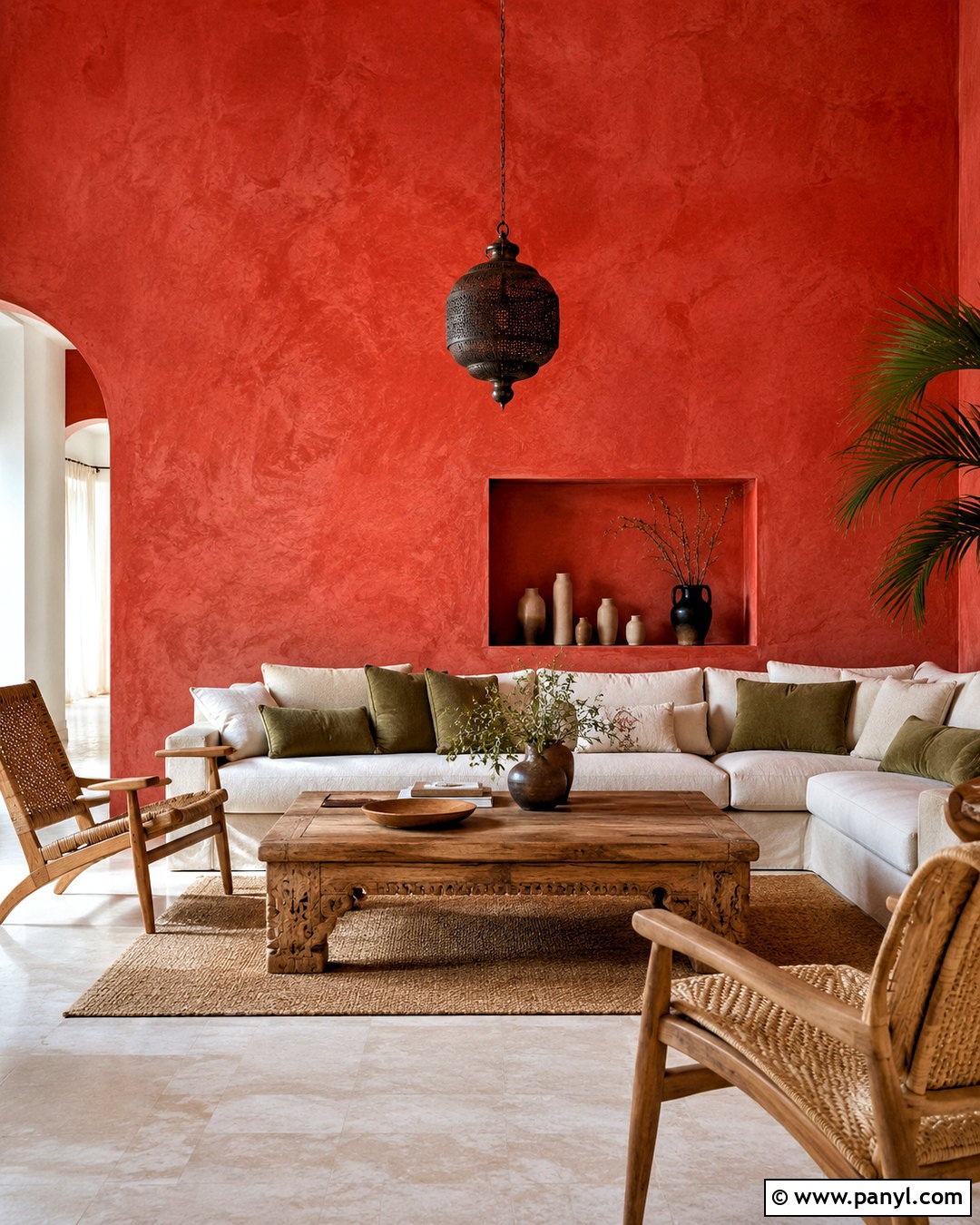
Sun-warmed red plaster walls create a natural foundation for a Mediterranean-inspired living room. Choose a chalky terracotta-red finish with subtle movement rather than a smooth, highly saturated paint. Pair it with a low cream linen sofa, carved oak coffee table, and two woven wood chairs. Pale limestone-look flooring and a large natural fiber rug keep the lower half of the room bright. Add arched niches or simple wood shelving filled with restrained ceramics. Off-white curtains, iron lighting, and olive-green cushions reinforce the earthy palette. Use plants sparingly and allow open wall areas to display the plaster texture. The completed room feels relaxed and connected to natural materials, with the red acting as warmth rather than a sharp decorative statement.
39. Red Maximalist Living Room Walls
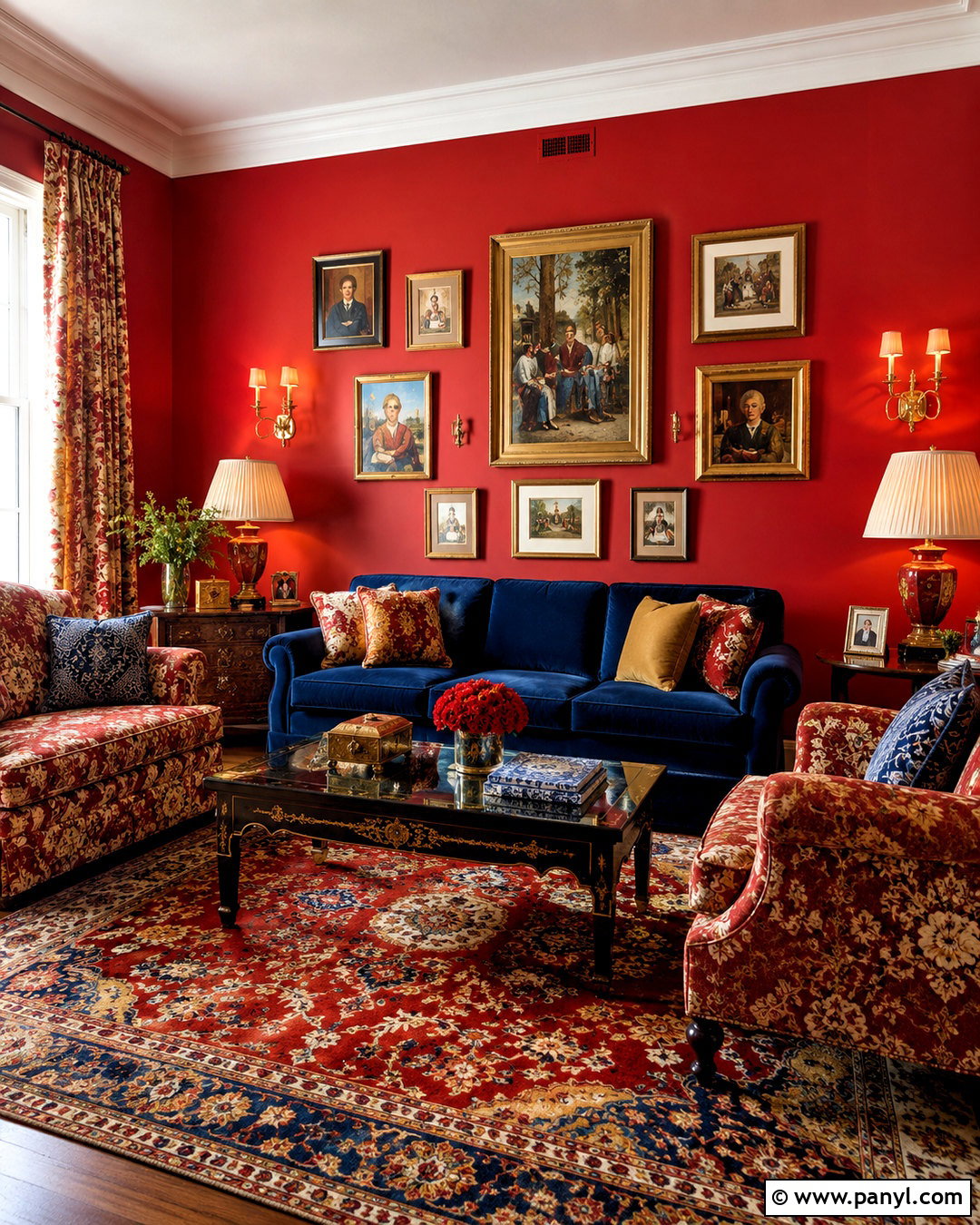
Maximalist red walls can feel deliberate rather than chaotic when the room repeats colors and maintains a clear furniture layout. Use rich scarlet walls, then position a deep blue velvet sofa and two patterned armchairs around a large central rug. Select a rug that contains red, blue, gold, and cream so the furnishings appear connected. Create one organized gallery wall with mixed artwork and coordinated dark frames. Add a lacquered black coffee table, brass lamps, patterned curtains, and several solid-color pillows. Keep walkways open and avoid placing small accessories on every surface. A few larger decorative pieces will read more clearly. The completed room delivers abundant color and personality while thoughtful repetition, scale, and spacing preserve visual order.
40. Minimalist Red Accent Walls
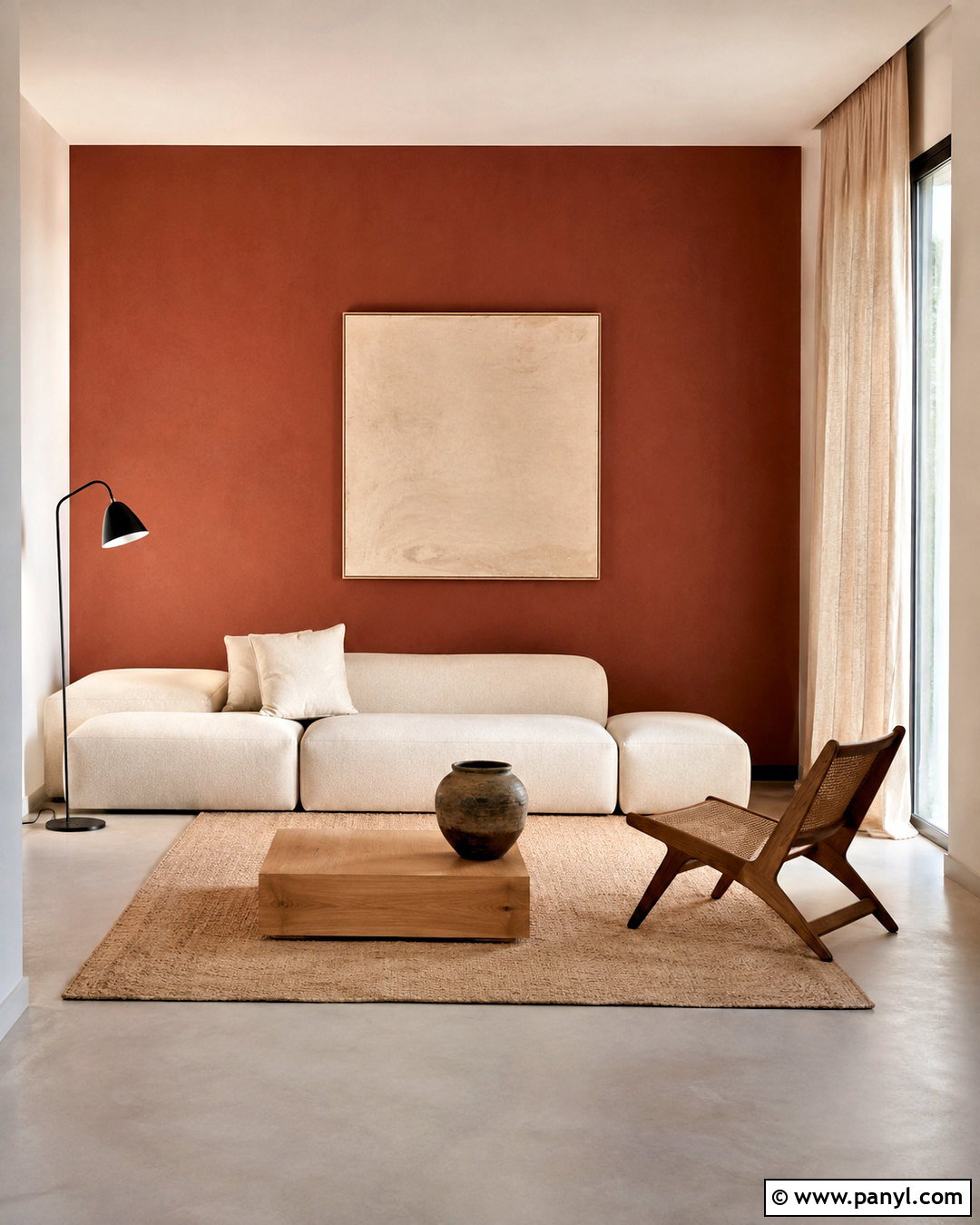
Minimalism does not require avoiding strong color. A single earthy red wall can give a spare living room warmth and identity without adding decorative clutter. Paint the wall behind a low cream sofa in muted red-brown, leaving the remaining walls and ceiling warm white. Choose a pale oak coffee table, one black floor lamp, and a large oatmeal rug with minimal pattern. Hang one oversized abstract artwork containing cream and charcoal, positioned precisely above the sofa. Full-length linen curtains soften the windows while matching the neutral seating. Add one sculptural chair and a single ceramic vessel instead of numerous accessories. The completed room remains calm and functional because every object has space, while the red wall supplies the depth that a restrained layout needs.
Conclusion:
Decorating with red becomes much easier when the entire space is planned as one connected composition. These 40 Red Walls demonstrate how furniture, flooring, lighting, trim, textiles, and artwork can either soften or strengthen the color. Earthy brick and clay reds suit relaxed rooms, while burgundy and oxblood create more intimate settings. Brighter red works best with clean lines, generous neutrals, and controlled repetition. Always test paint on several walls and observe it during morning, afternoon, and evening light before committing. Consider existing floors and large furniture first, since they are harder to change than accessories. With the right undertone and a balanced supporting palette, red walls can feel welcoming, livable, and surprisingly versatile.

Related Ideas and Inspiration:
Leave a Reply