
Red kitchen walls can make a cooking space feel warm, energetic, and full of personality. The secret is choosing the right red and balancing it with cabinets, counters, flooring, lighting, and decor that soften or sharpen the effect. Deep burgundy creates a sophisticated mood, while tomato red feels cheerful and retro. Muted brick and clay tones work especially well in rustic or traditional kitchens. Even a small accent wall can transform the room without overwhelming it. The complete looks below explore red paint, wallpaper, paneling, brick, and textured finishes across modern, farmhouse, vintage, industrial, and minimalist spaces. Use them to find practical color combinations and layouts that suit your home, lighting, and budget while exploring 35 distinctive red kitchen walls.
1. Red Kitchen Walls With White Cabinets
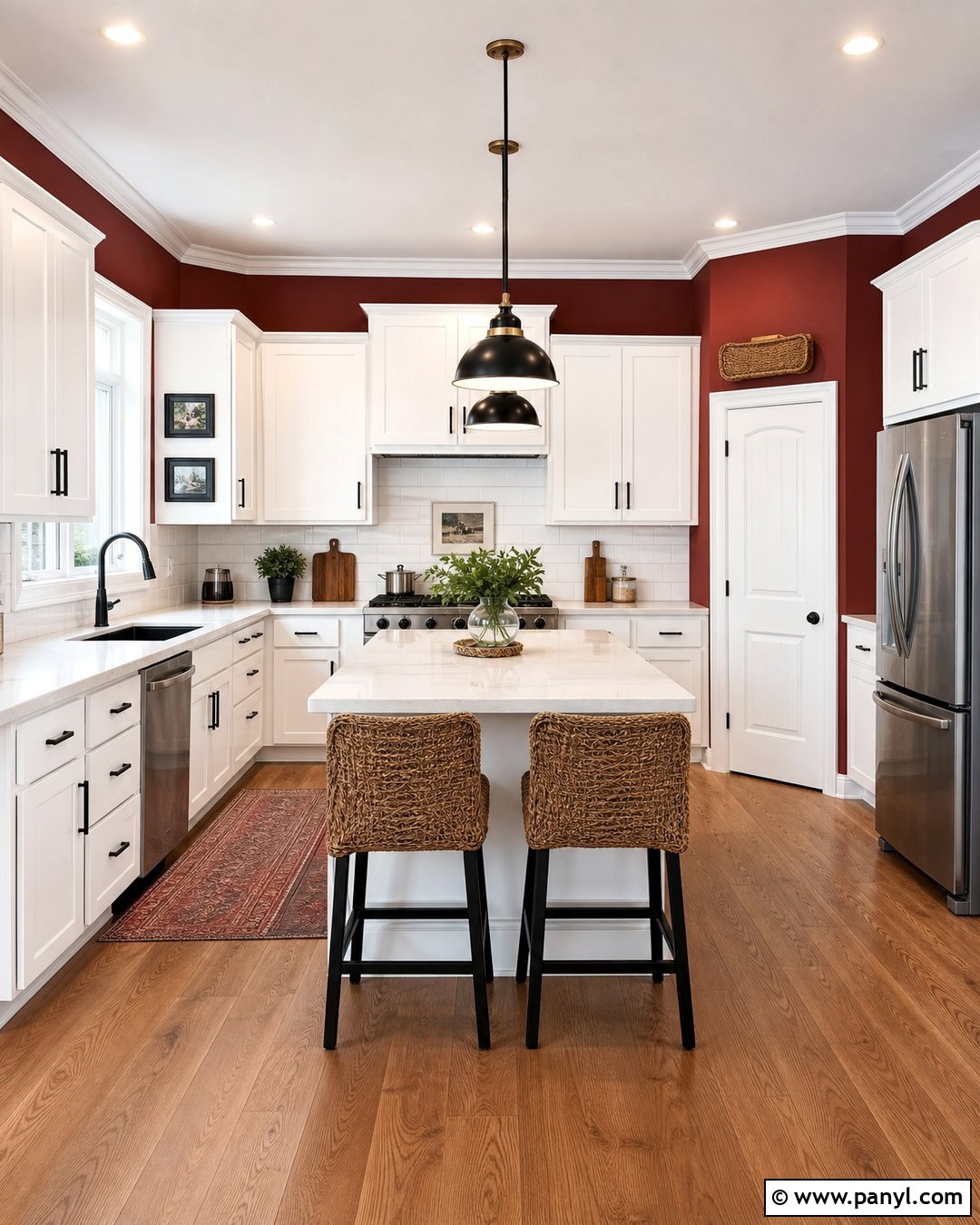
Crisp white cabinets give bright red kitchen walls room to stand out without making the space feel heavy. Choose a balanced crimson or warm true red, then repeat white across the ceiling, trim, and subway tile backsplash. White quartz counters keep the work surfaces clean and reflective. Ground the palette with medium oak flooring and a few matte black accents, such as cabinet pulls, pendant lights, and counter stools. Glass-front upper cabinets can break up a long run of solid doors and make the kitchen appear more open. Finish the room with simple ceramic dishes, a striped washable runner, and natural wood cutting boards. This complete combination feels fresh, cheerful, and suitable for both traditional and transitional homes.
2. Dark Red Kitchen Walls With Walnut Cabinets
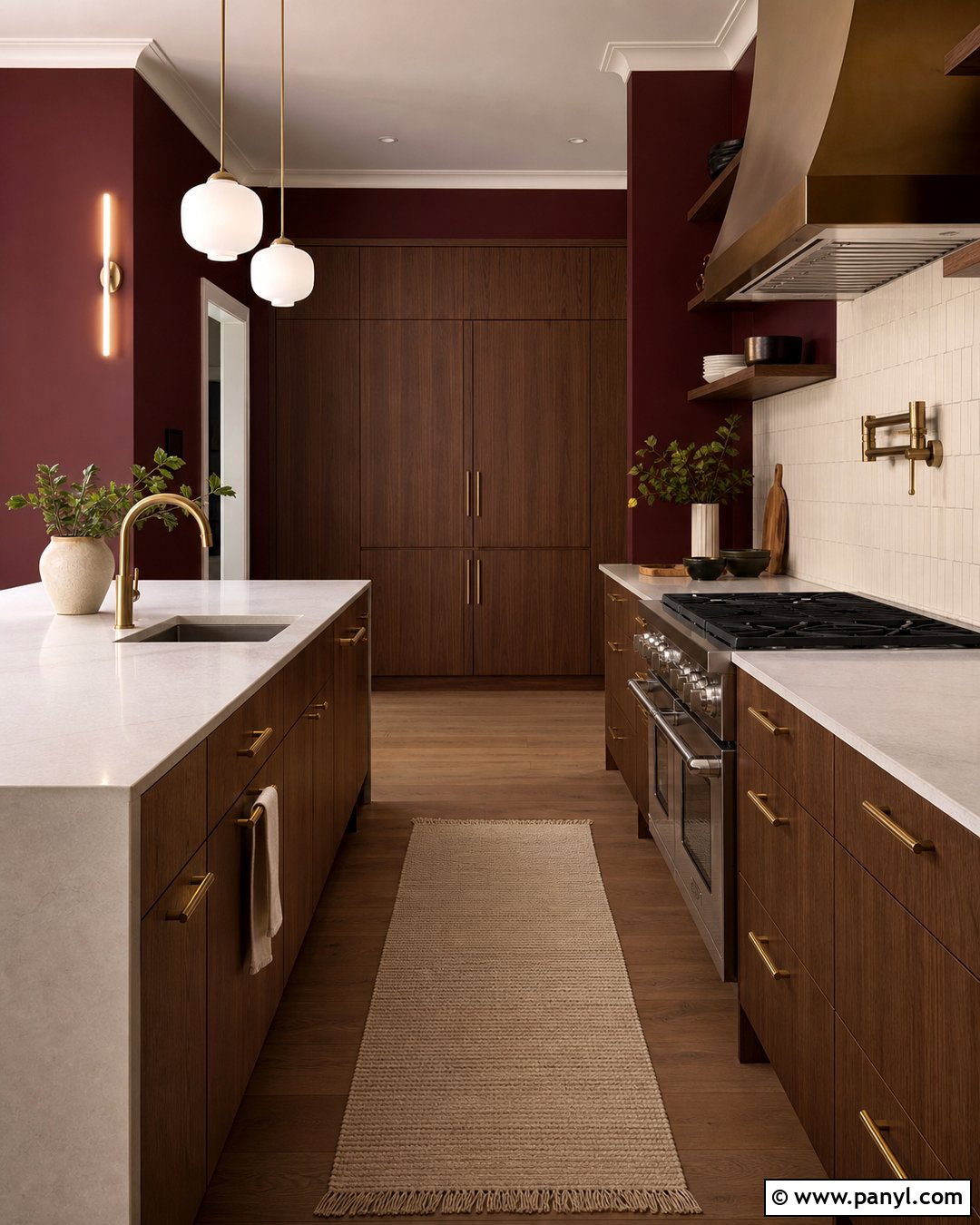
Dark red walls and walnut cabinets create a rich kitchen that feels warm rather than flashy. Select a deep oxblood or merlot red with brown undertones, especially when the room receives generous daylight. Flat-panel walnut cabinetry allows the grain to become part of the design, while pale cream quartz counters provide necessary contrast. Use a backsplash of lightly textured ivory tile to keep the cooking area practical and bright. Antique brass hardware and opal glass pendants enhance the warmth without adding another strong color. Wide-plank oak flooring, a cream runner, and simple stoneware complete the space. Keep countertop decor limited so the sophisticated wall and wood combination remains the clear focus of this inviting kitchen.
3. Burgundy Kitchen Walls With Cream Cabinets
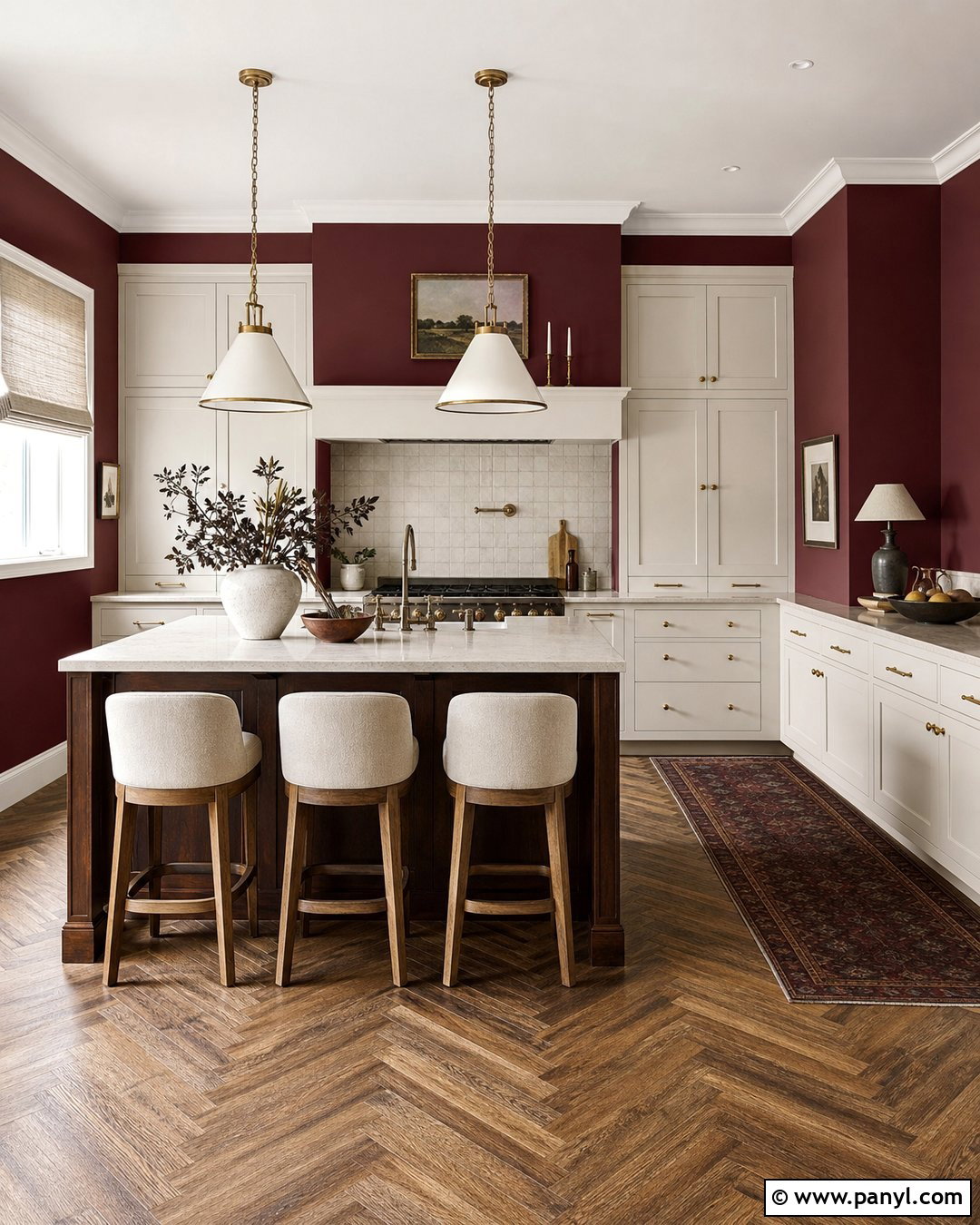
Imagine soft cream cabinetry surrounded by velvety burgundy walls and warm, gentle lighting. This combination suits a traditional kitchen because it feels refined without becoming too formal. Choose burgundy with muted plum undertones rather than a bright purple-red. Pair it with shaker cabinets, creamy quartz countertops, and an ivory zellige backsplash that reflects subtle variations of light. A dark-stained island can anchor the room and provide a practical gathering place with beige upholstered stools. Add aged brass hardware, linen window shades, and medium-tone herringbone flooring. Decorative pieces should remain understated, such as framed botanical art and white ceramic serving bowls. The finished kitchen feels layered, comfortable, and carefully coordinated from floor to ceiling.
4. Brick Red Kitchen Walls With Farmhouse Cabinets
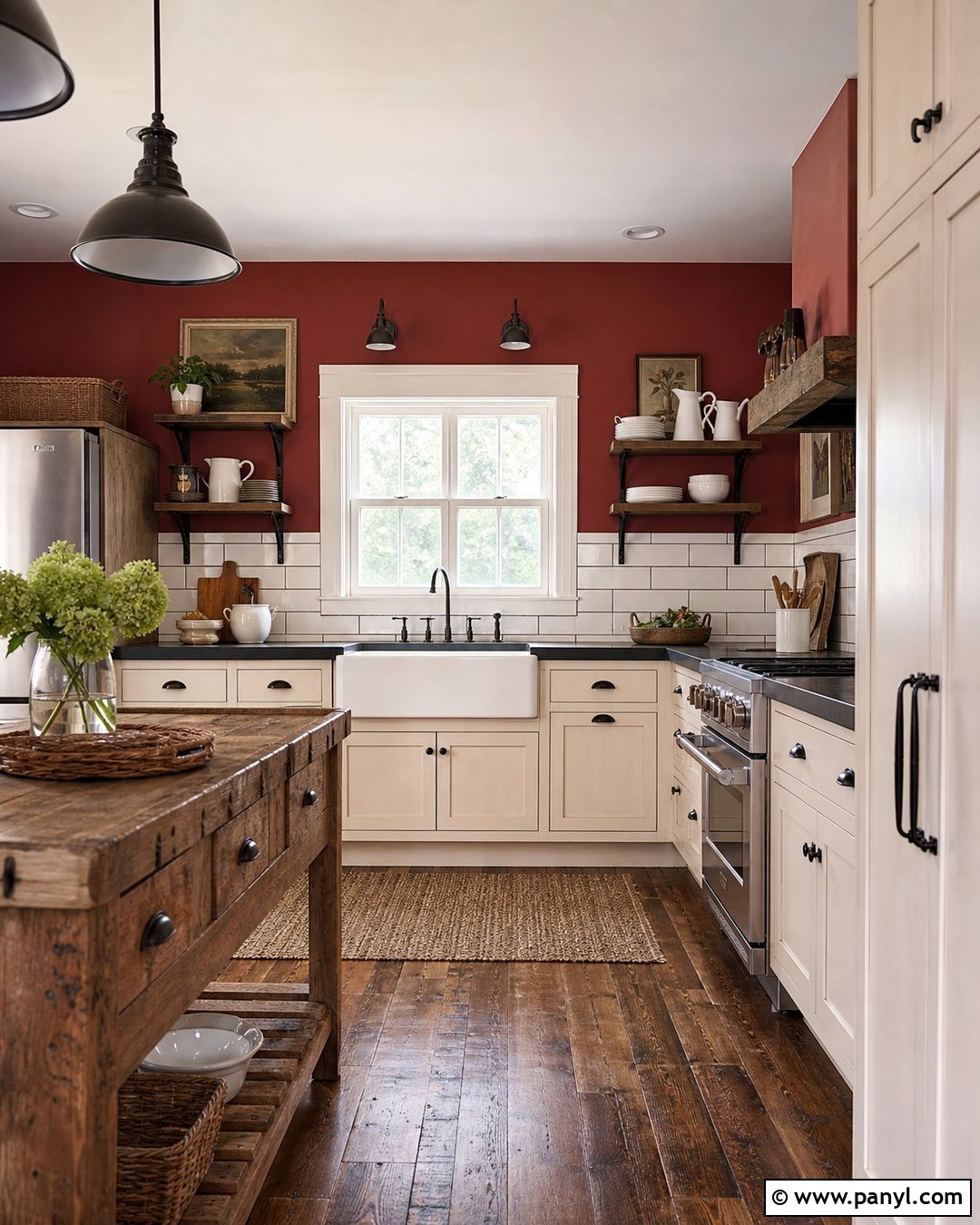
Brick red brings a grounded, historic quality to a farmhouse kitchen. Paint the walls in a dusty red with warm brown undertones, then introduce off-white shaker cabinets and a large apron-front sink. Honed soapstone countertops add dark contrast, while a cream subway tile backsplash keeps the work zone bright and easy to maintain. Use reclaimed oak shelves for everyday dishes and install simple black iron brackets that echo the cabinet hardware. A weathered wood island, woven counter stools, and wide-plank flooring create a relaxed central workspace. Finish with white enamel pendants, striped cotton textiles, and a few earthenware crocks. Every material should feel useful and timeworn, allowing the red walls to support the farmhouse character naturally.
5. Cherry Red Kitchen Walls With Glossy Cabinets
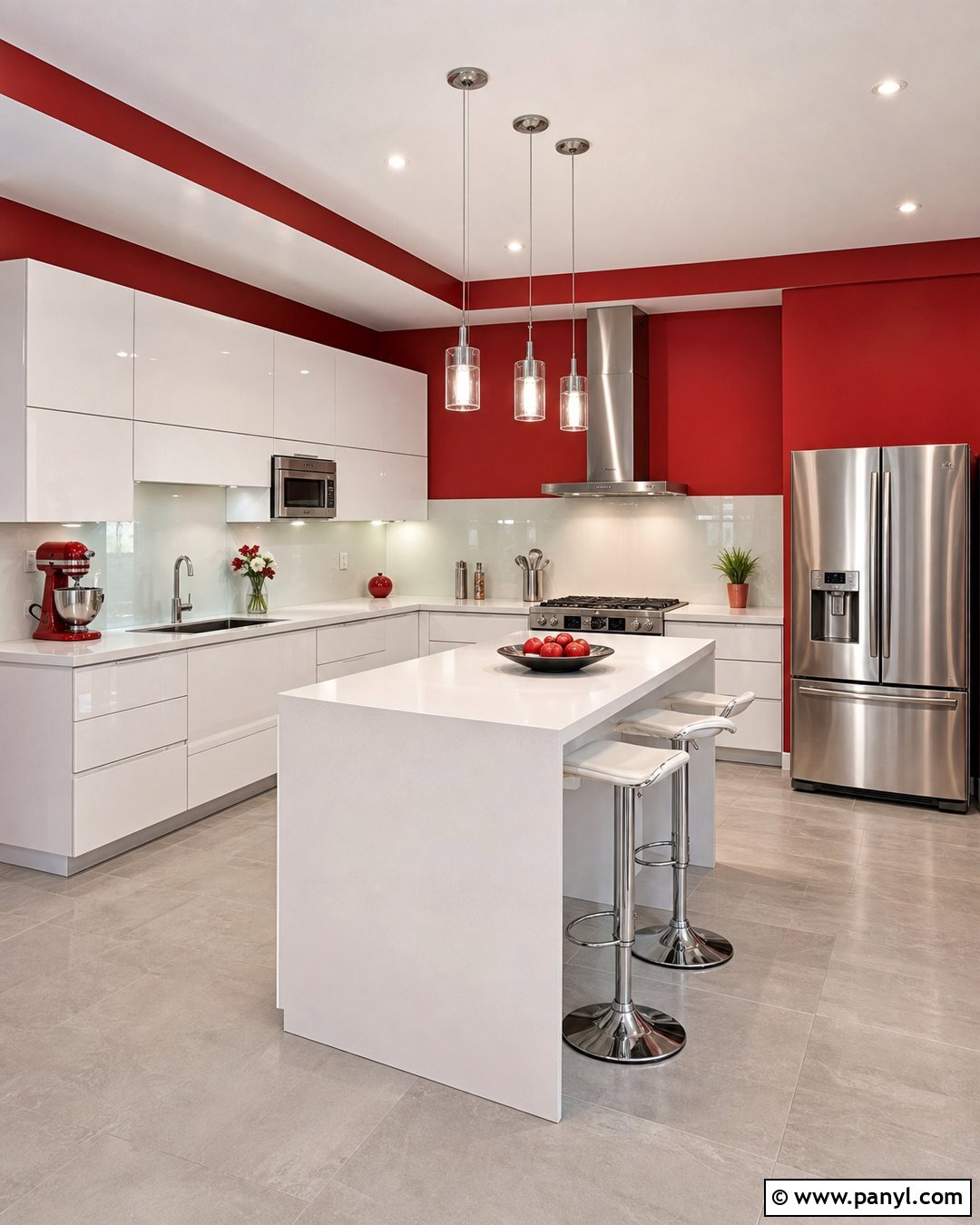
For a clean contemporary statement, surround glossy white cabinets with saturated cherry red kitchen walls. The smooth cabinetry reflects light, helping the bold color feel vibrant instead of enclosed. Select handleless doors, bright white quartz countertops, and a low-profile glass backsplash that protects the red behind the range. Stainless steel appliances add a cool metallic break between warm surfaces. Use pale gray porcelain flooring to give the room a crisp foundation, then add a slim white island with chrome-framed stools. Recessed ceiling lights and linear under-cabinet illumination maintain even brightness. Keep accessories geometric and limited to black, white, and clear glass. The result is an energetic modern kitchen with sharp lines and a controlled color palette.
6. Muted Red Kitchen Walls With Oak Cabinets
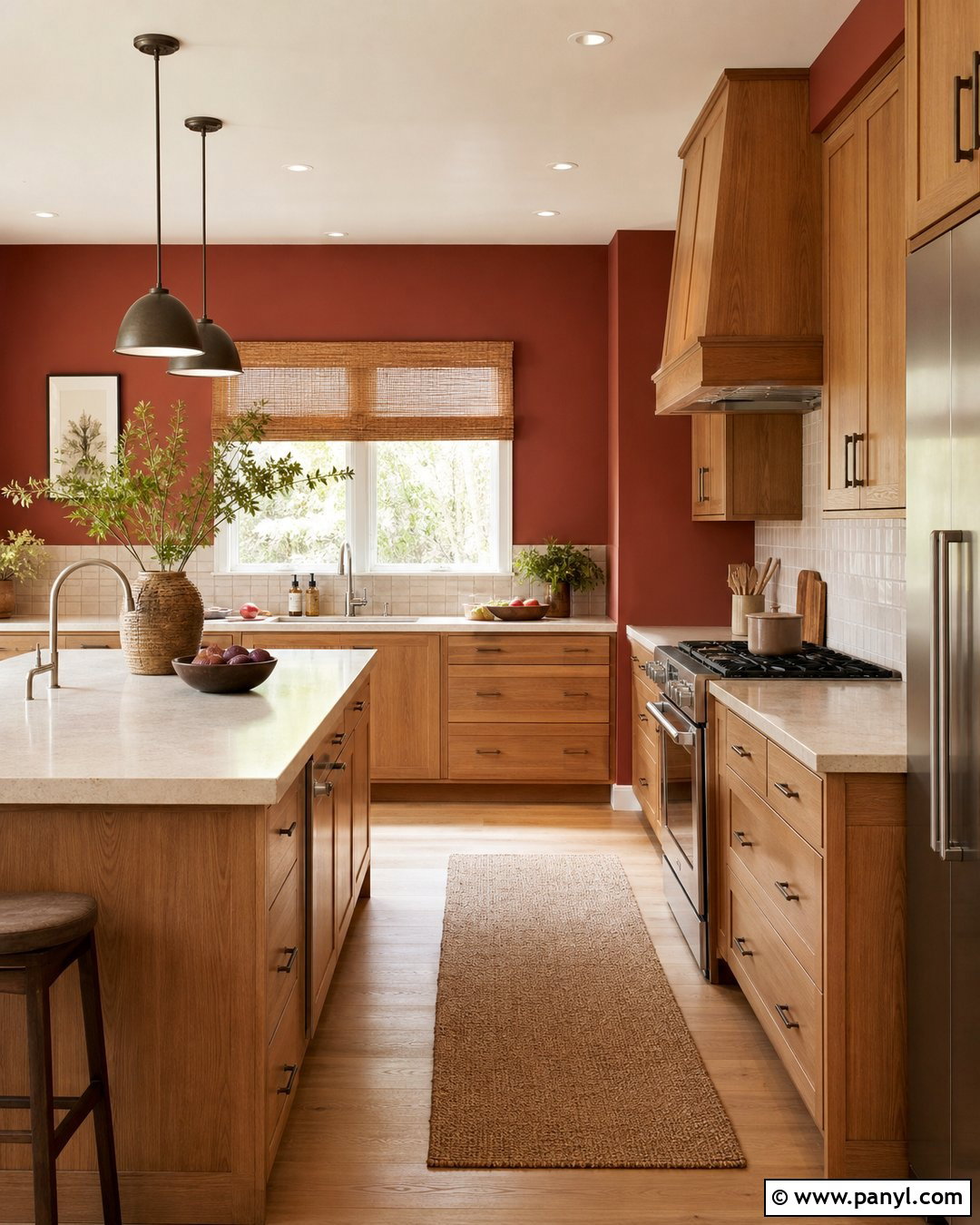
Muted red kitchen walls can feel surprisingly calm when paired with natural oak cabinetry. Look for a soft paprika or faded terracotta red that contains enough brown to complement the wood grain. Choose simple slab-front cabinets in a matte finish, creamy limestone-look counters, and handmade off-white backsplash tiles. A compact oak island can include open shelving for baskets and daily cookware. Add brushed nickel hardware for a quiet contrast that does not compete with the warm palette. Light oak flooring maintains an airy appearance, while woven shades and a beige runner introduce soft texture. A few black ceramic pieces provide definition. This balanced design works especially well in casual kitchens where warmth, durability, and natural materials matter most.
7. Red Kitchen Accent Wall With Neutral Cabinets
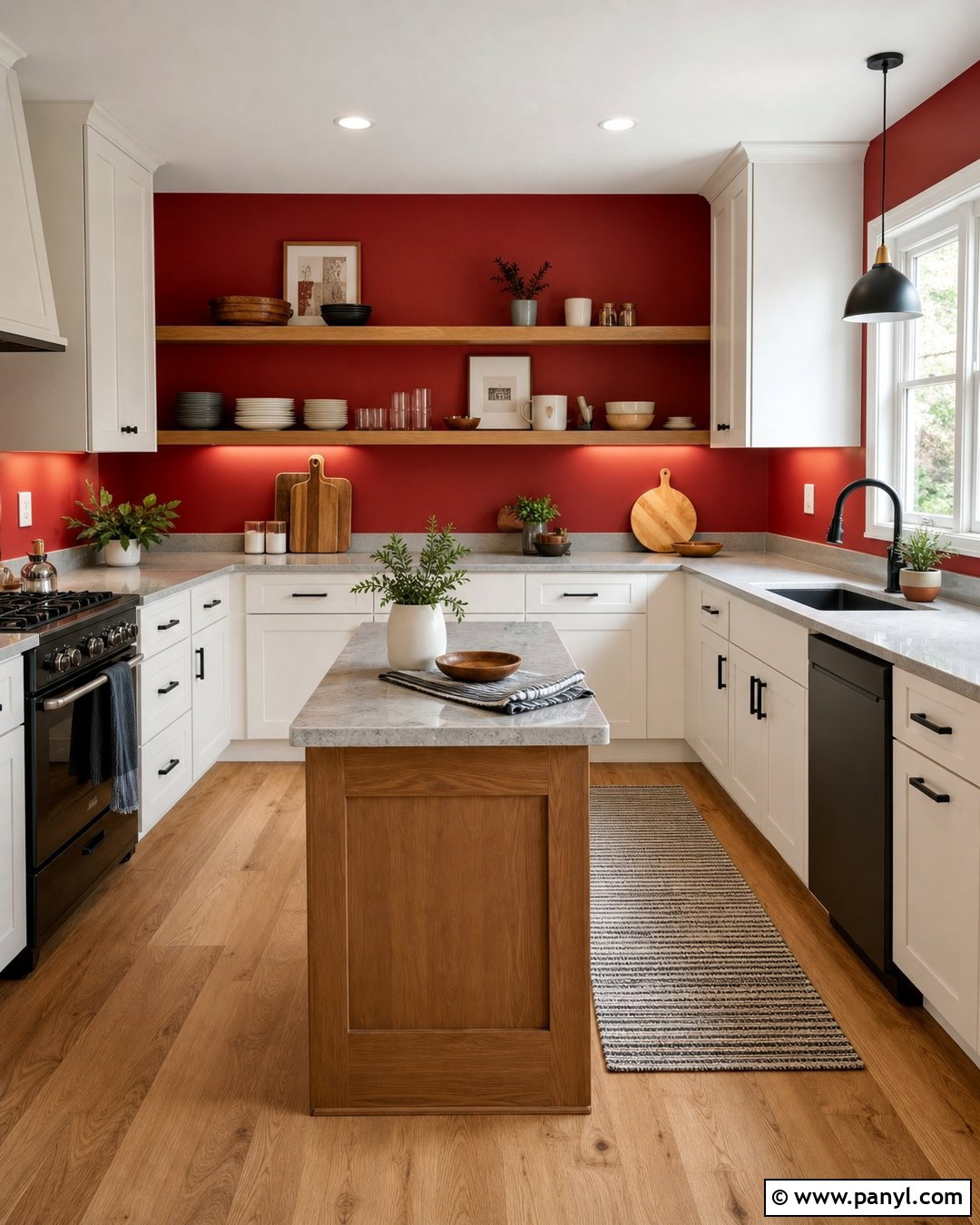
Not ready to paint every surface red? A single accent wall can establish a strong focal point while leaving the main work area calm and neutral. Place a deep tomato red behind the breakfast table, range, or open shelving where it can be appreciated without surrounding the entire room. Use warm white cabinets, pale gray quartz counters, and light oak flooring throughout the remaining kitchen. Repeat the red sparingly in a patterned runner or one piece of framed artwork. Matte black pendants and cabinet pulls provide a clean visual outline. If the accent wall sits near cooking surfaces, protect it with a clear glass panel. This complete layout offers bold color, practical maintenance, and an easy path for future repainting.
8. Red Kitchen Walls With Black Cabinets
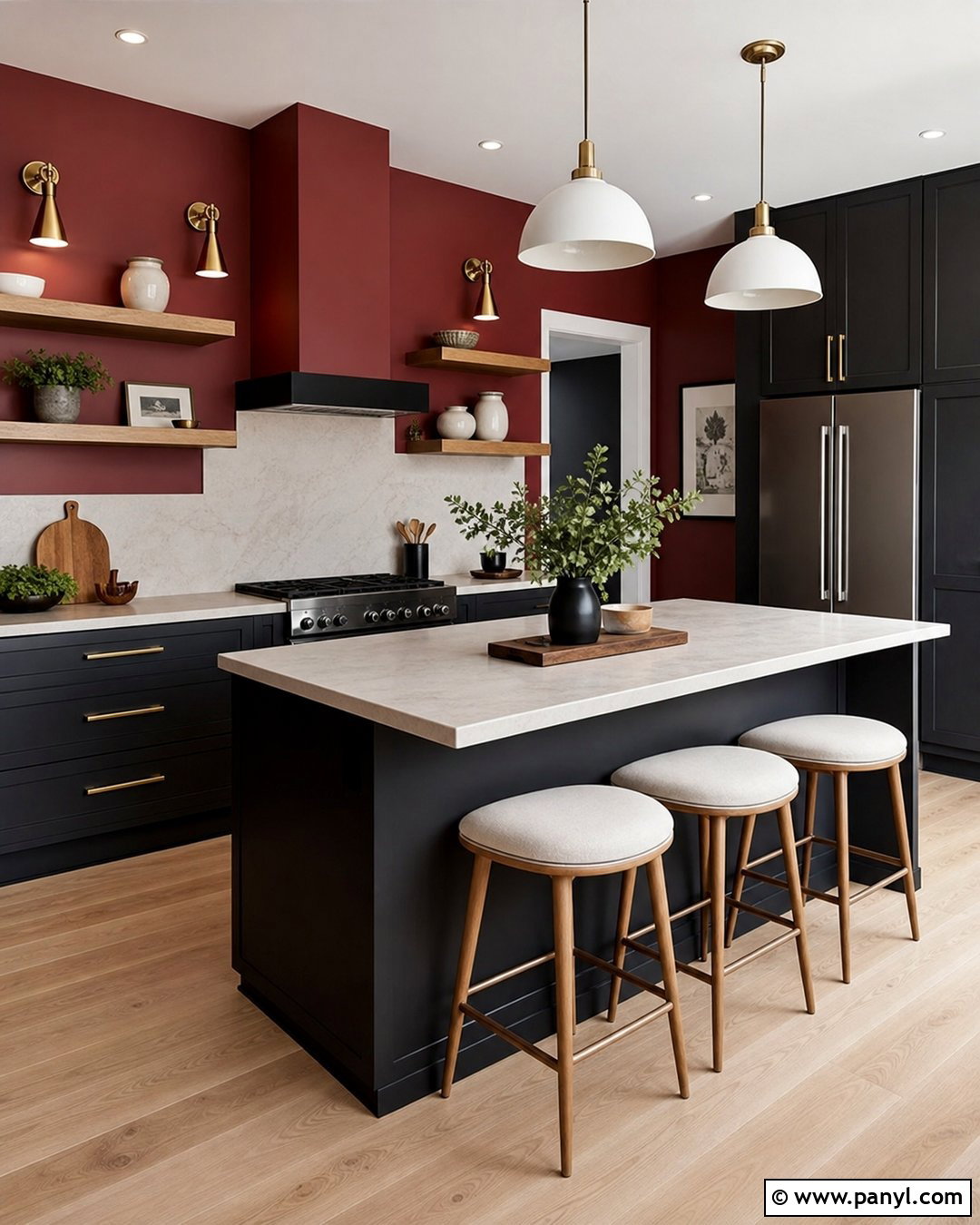
Red walls and black cabinets produce a dramatic kitchen, but generous light surfaces keep the combination livable. Choose a slightly muted scarlet rather than the darkest red, then use matte black lower cabinets with fewer black uppers. Cream quartz countertops and a matching backsplash create a broad, bright band through the room. Install open oak shelves above one counter to introduce warmth and prevent the walls from feeling crowded. Pale wood flooring, white ceilings, and large simple pendants further balance the darker elements. Use brushed brass hardware as a small warm detail that connects naturally with the red. The finished space feels bold and contemporary, with enough cream, wood, and open wall area to maintain visual breathing room.
9. Red Kitchen Walls With Gray Cabinets
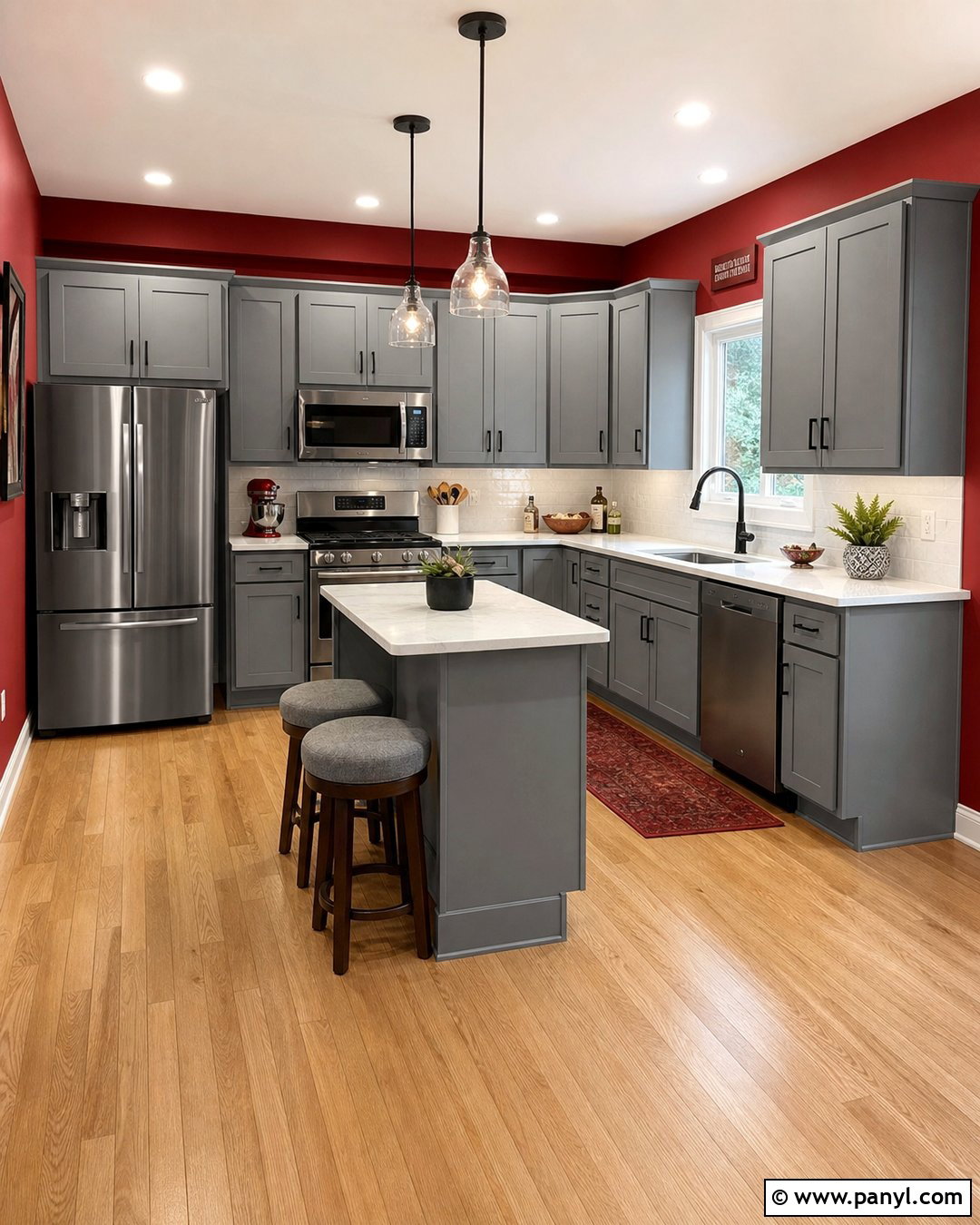
Cool gray cabinetry can make red kitchen walls appear cleaner and more architectural. Start with a warm ruby red, then select medium-gray shaker cabinets that have neutral rather than blue undertones. White quartz countertops and a pale marble-look backsplash separate the two strong colors and brighten the work zone. Use dark charcoal only for small details, including pendant shades, cabinet pulls, and window frames. A light oak floor prevents the gray from making the room feel cold. For seating, choose simple wood stools with gray cushions beside a compact island. Add white ceramics and stainless steel appliances to reinforce the balanced palette. This kitchen combines warmth and restraint, making it ideal for an updated transitional home.
10. Red Kitchen Walls With Navy Cabinets
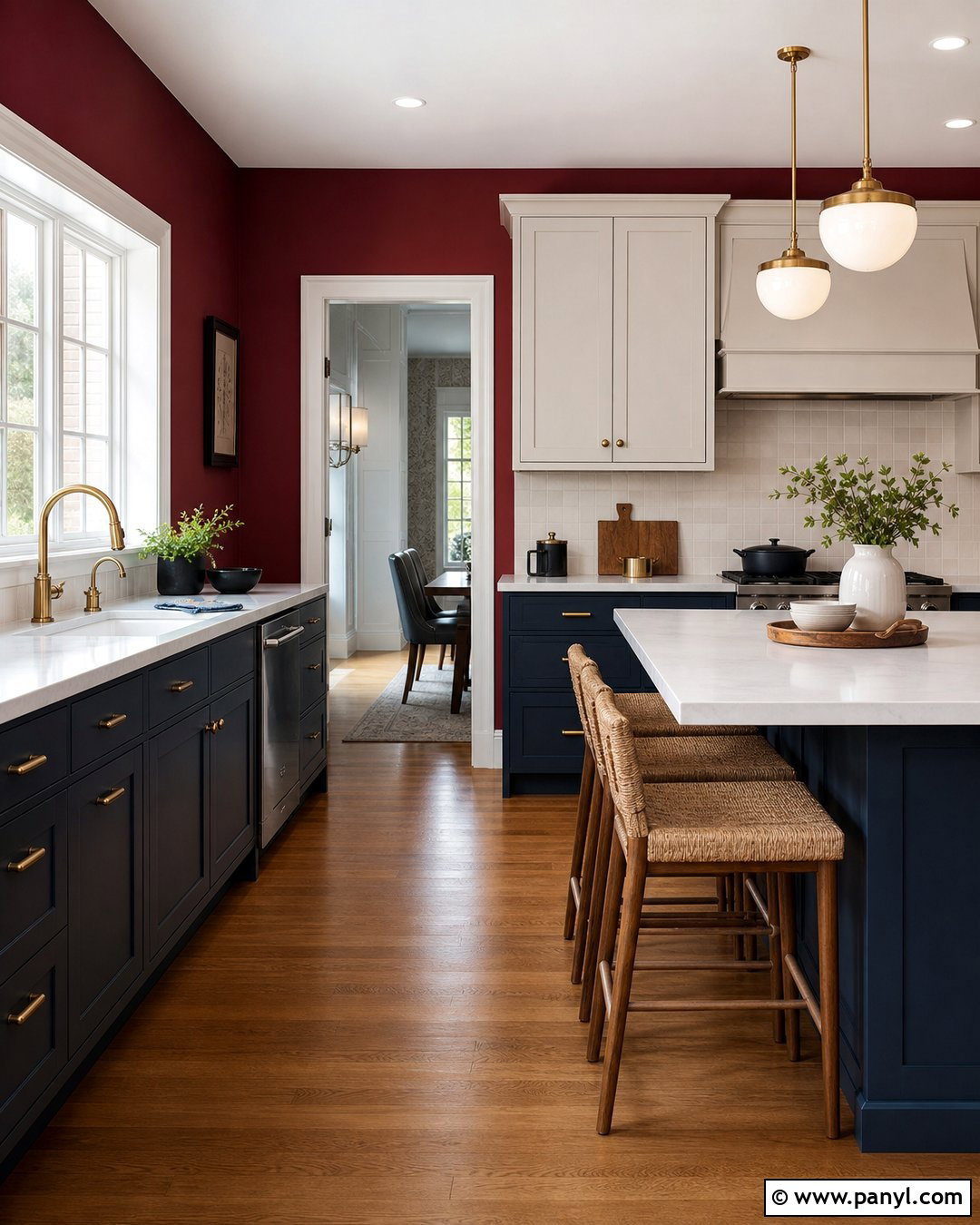
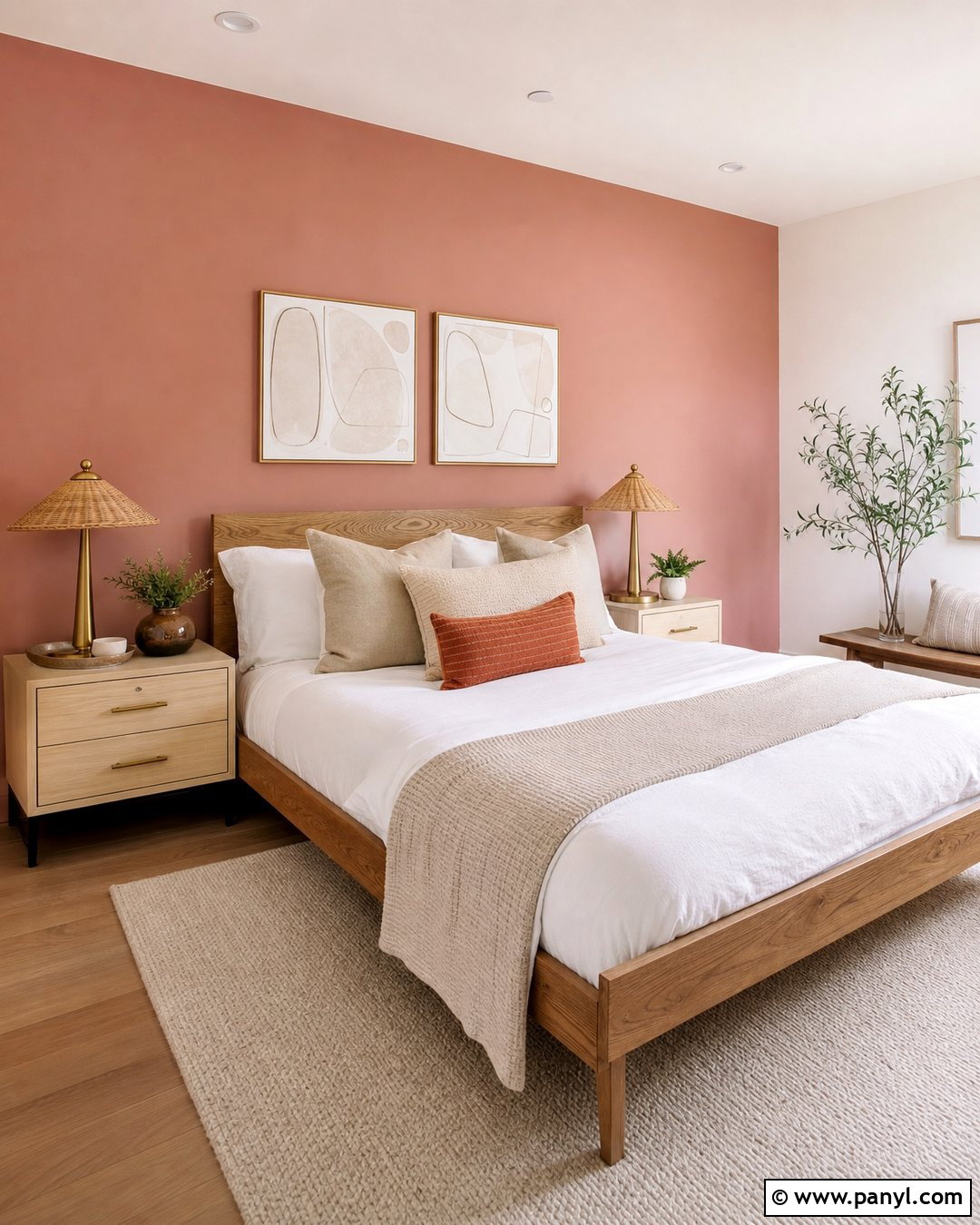
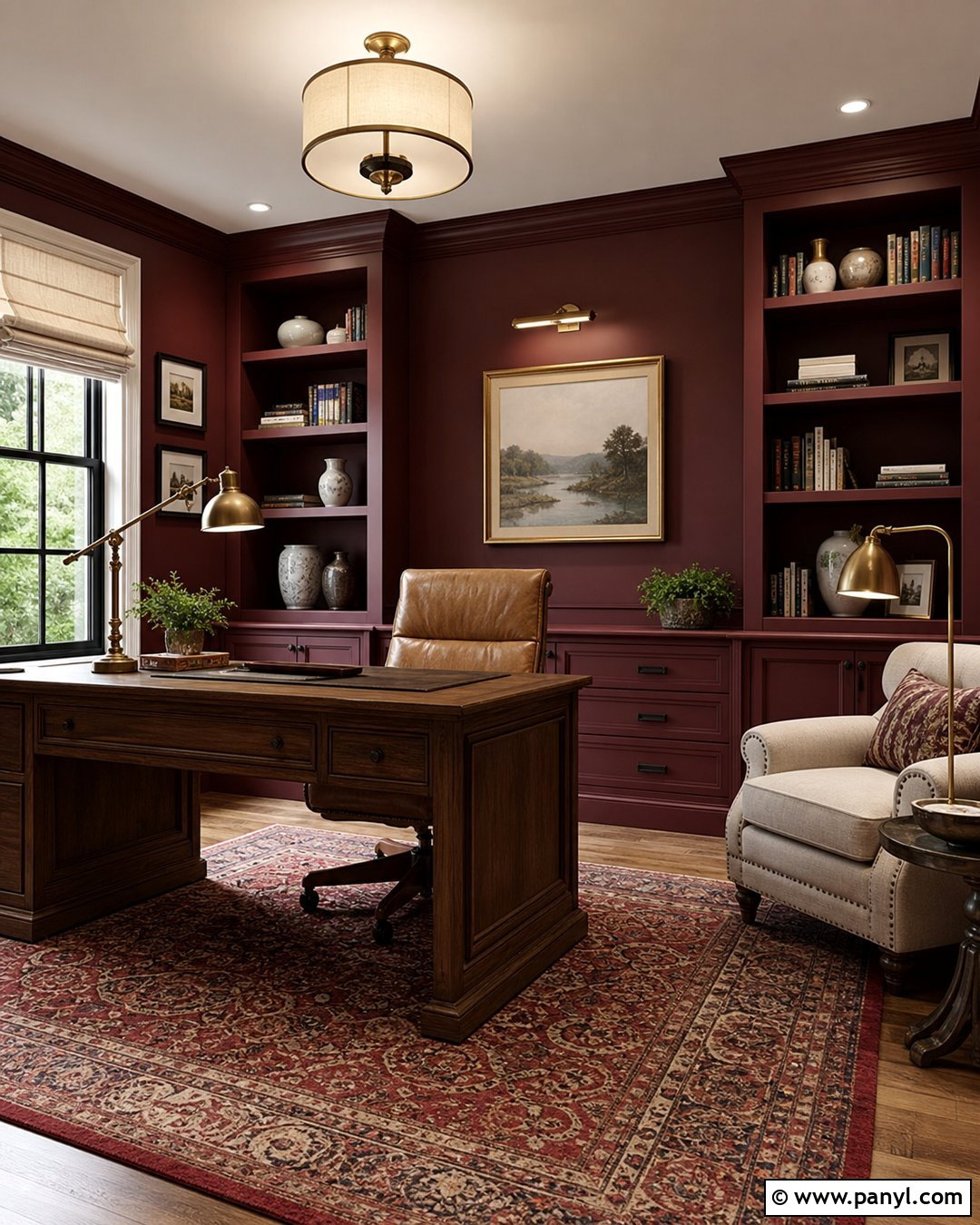
Deep navy cabinets can sit beautifully against muted red walls when both colors share a slightly softened finish. Select an earthy garnet red and use navy primarily on the island and lower cabinets. Warm white upper cabinets keep the room from becoming too dark. Continue that lighter tone across the quartz counters and simple square-tile backsplash. Aged brass pulls, bridge faucets, and pendant lights bring the contrasting colors together with a gentle glow. Medium oak flooring provides another warm neutral, while woven stools add casual texture. Avoid overly nautical accessories or bright primary shades. Instead, finish the kitchen with cream pottery, natural linen shades, and one vintage landscape print for a mature, layered interpretation of red and blue.
11. Red Kitchen Walls With Sage Green Cabinets
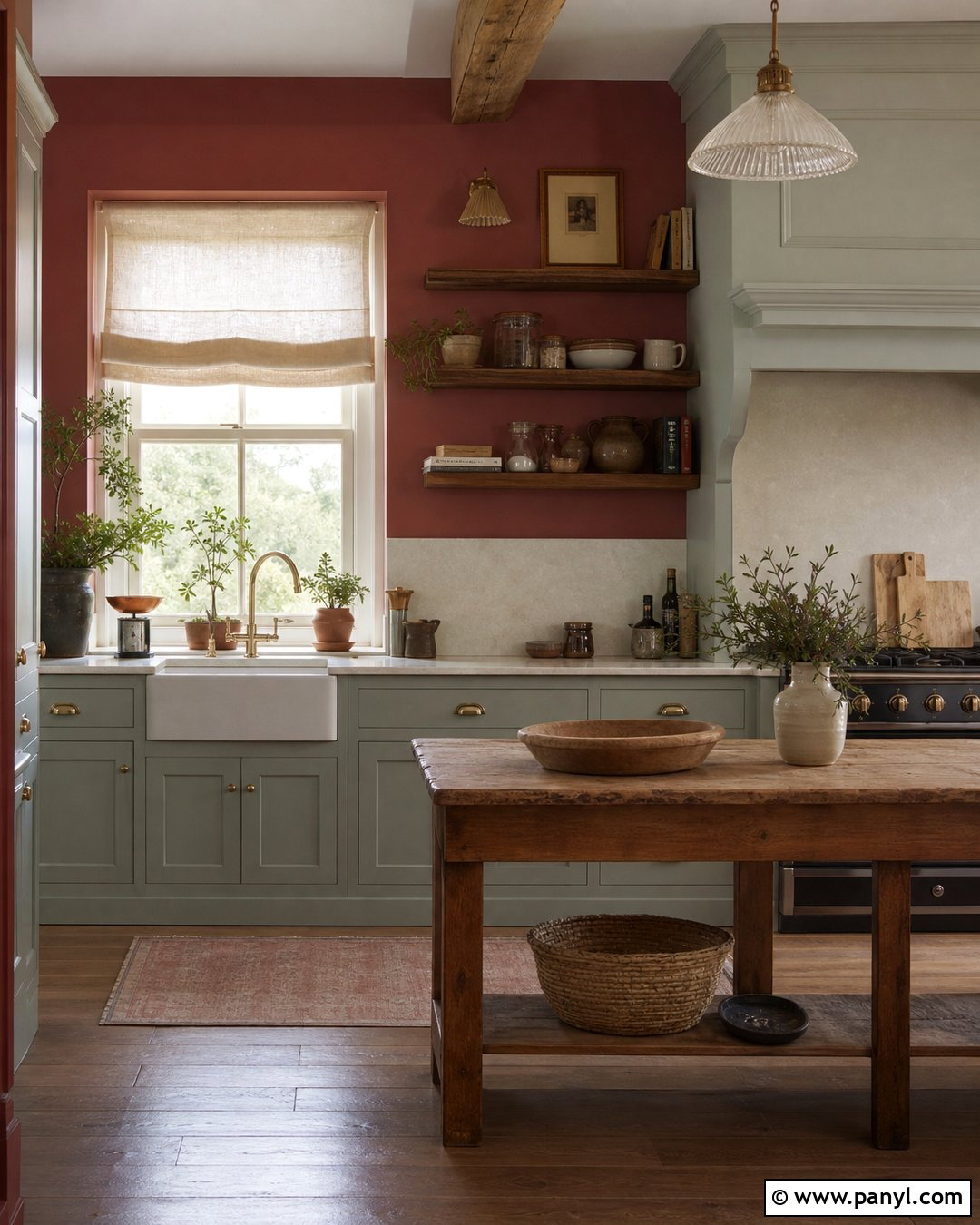
A muted pairing of red and green can feel earthy and sophisticated rather than seasonal. Use dusty clay-red walls with soft sage cabinets that contain plenty of gray. Cream limestone counters and an understated off-white backsplash create separation between the complementary colors. Limit red and green patterns, allowing the large surfaces to establish the palette. Natural oak shelves, unlacquered brass hardware, and beige linen shades add warmth without introducing visual clutter. Choose medium brown flooring and a simple cream runner to ground the kitchen. A central worktable with a wood top can replace a bulky island in a smaller room. The finished design feels collected and garden-inspired, with restrained shades that remain comfortable throughout the year.
12. Red Kitchen Walls With Natural Wood Cabinets
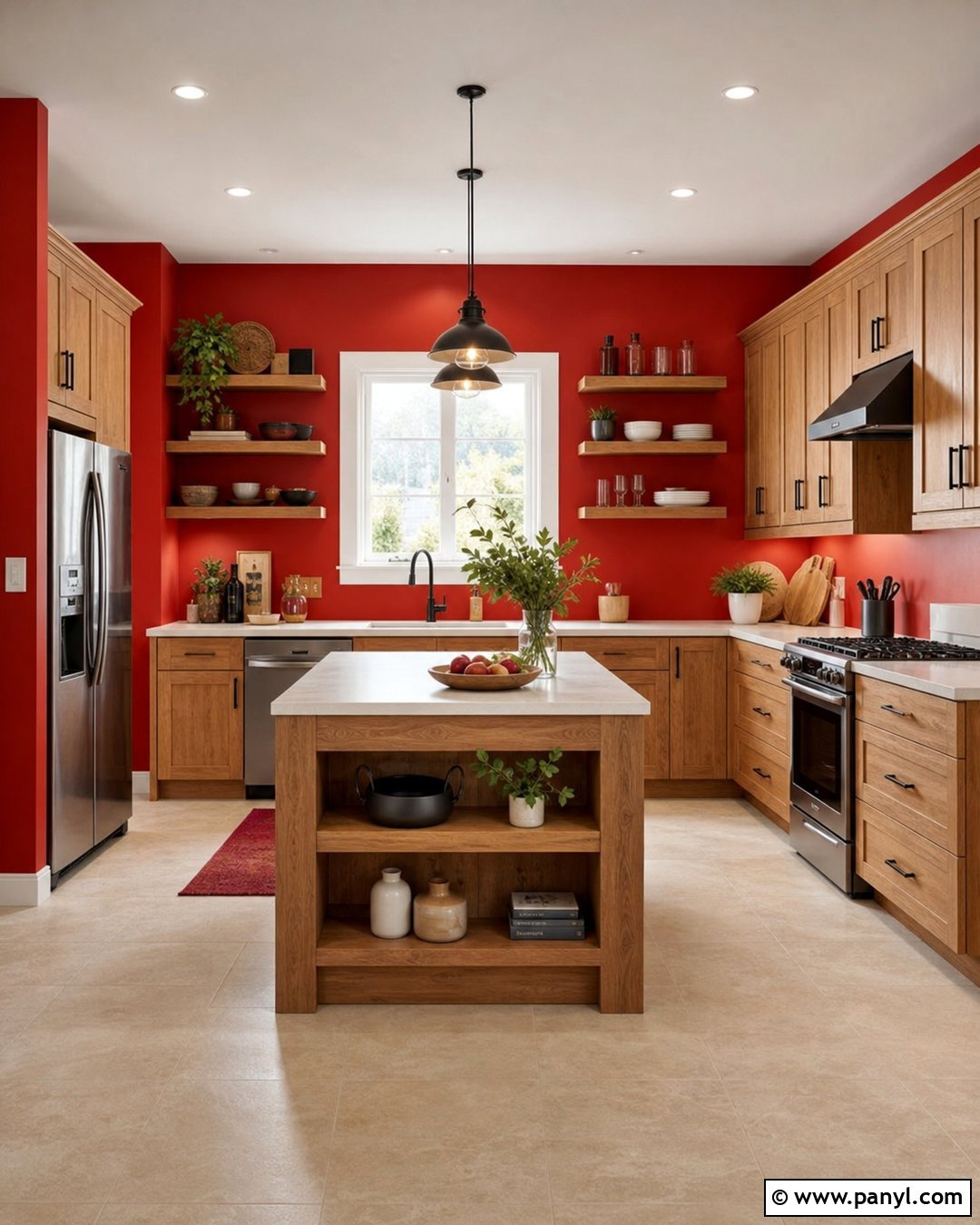
Natural wood cabinets soften the intensity of red walls while giving the room an inviting, handcrafted appearance. Choose medium cherry-red paint and cabinets made from light maple, ash, or white oak. A satin or matte finish preserves the wood grain and avoids excessive shine. Install warm white quartz countertops and small cream ceramic tiles to reflect light around the cooking zone. Black metal pulls, a simple black faucet, and understated pendant lights provide crisp definition. Use matching wood flooring only when the tones are clearly coordinated; otherwise, choose warm beige porcelain tile. Open shelving can display white dishes and clear glasses. The result is a practical, welcoming kitchen where the red provides energy and the wood supplies visual calm.
13. Red Kitchen Walls With White Subway Tile
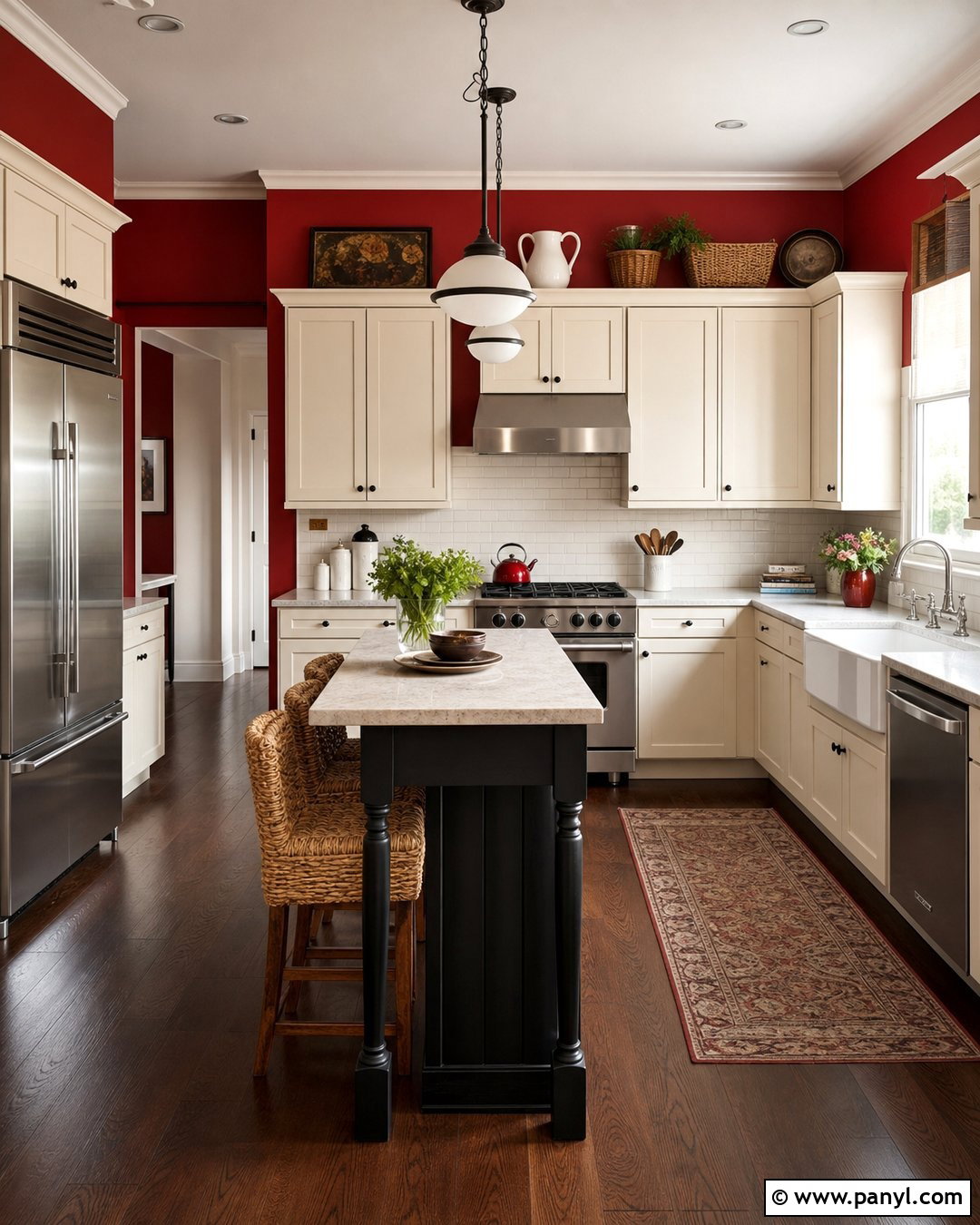
A white subway tile backsplash creates a useful pause within a kitchen surrounded by bold red walls. Run the tile from the countertop to the upper cabinets, using warm white grout to avoid harsh lines. Pair this classic backsplash with ivory shaker cabinets, pale quartz counters, and stainless steel appliances. The red can be a clear chili shade, but keep the ceiling and window trim bright white to maintain openness. Dark wood flooring adds depth and hides everyday wear, while black hardware gives the familiar materials a current finish. Complete the room with a narrow island, woven stools, and glass pendant lights. This design is easy to understand, adaptable, and especially effective in kitchens that combine older architecture with updated finishes.
14. Red Kitchen Walls With Marble Backsplash
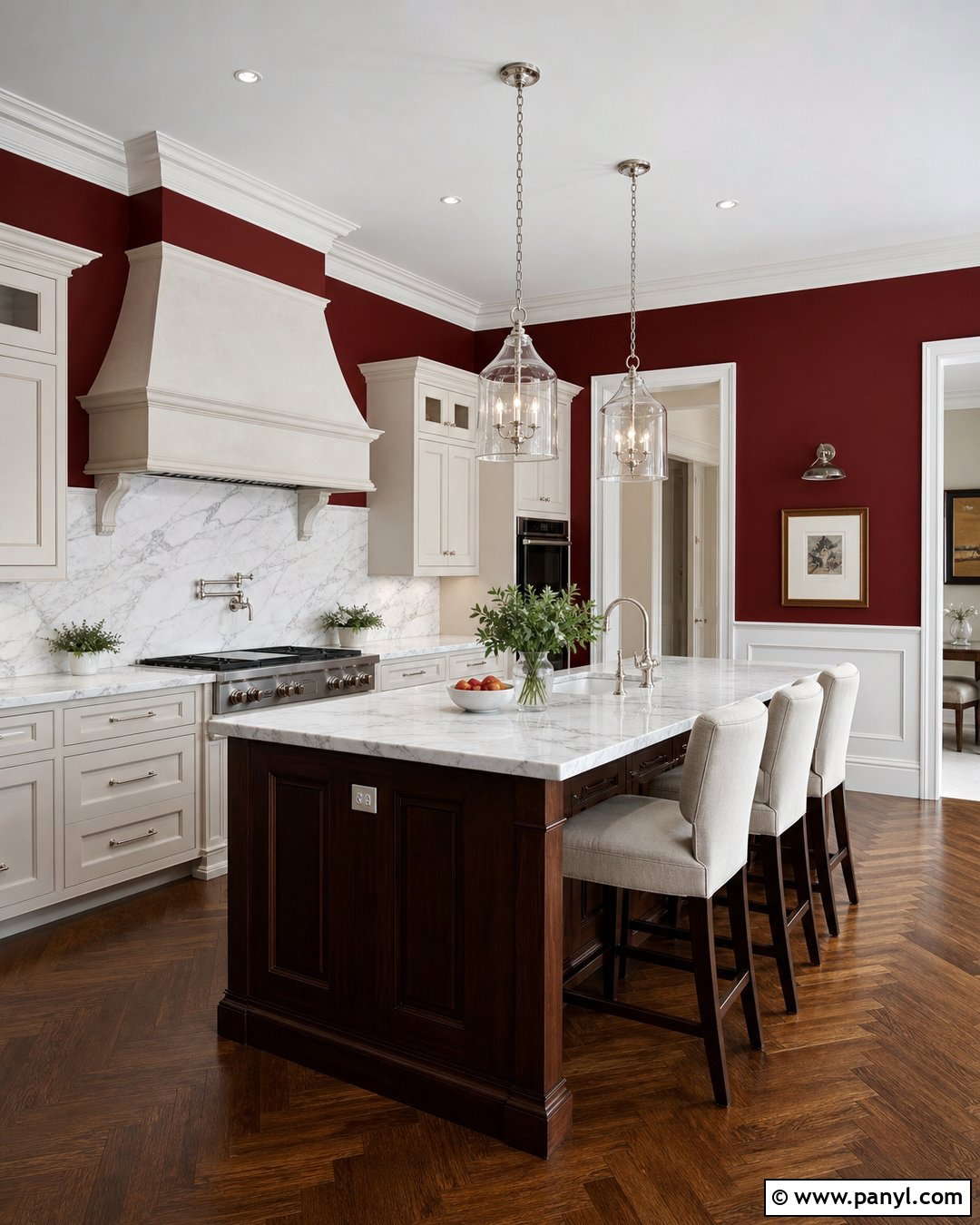
Could red walls work in an elegant kitchen? A full-height marble backsplash makes the color feel polished and intentional. Choose a deep cranberry red, then pair it with warm white cabinetry and marble featuring soft gray or burgundy veining. Continue the same stone across the countertops for a seamless cooking area. A dark walnut island adds weight at the center without competing with the walls. Use polished nickel hardware and clear glass pendants to bring in subtle brightness. Medium-tone herringbone flooring provides movement at a lower visual level. Keep window treatments and seating upholstery neutral. With carefully repeated warm and cool tones, this kitchen feels luxurious yet balanced, allowing the dramatic walls and natural stone to share attention.
15. Red Kitchen Walls With Black Countertops
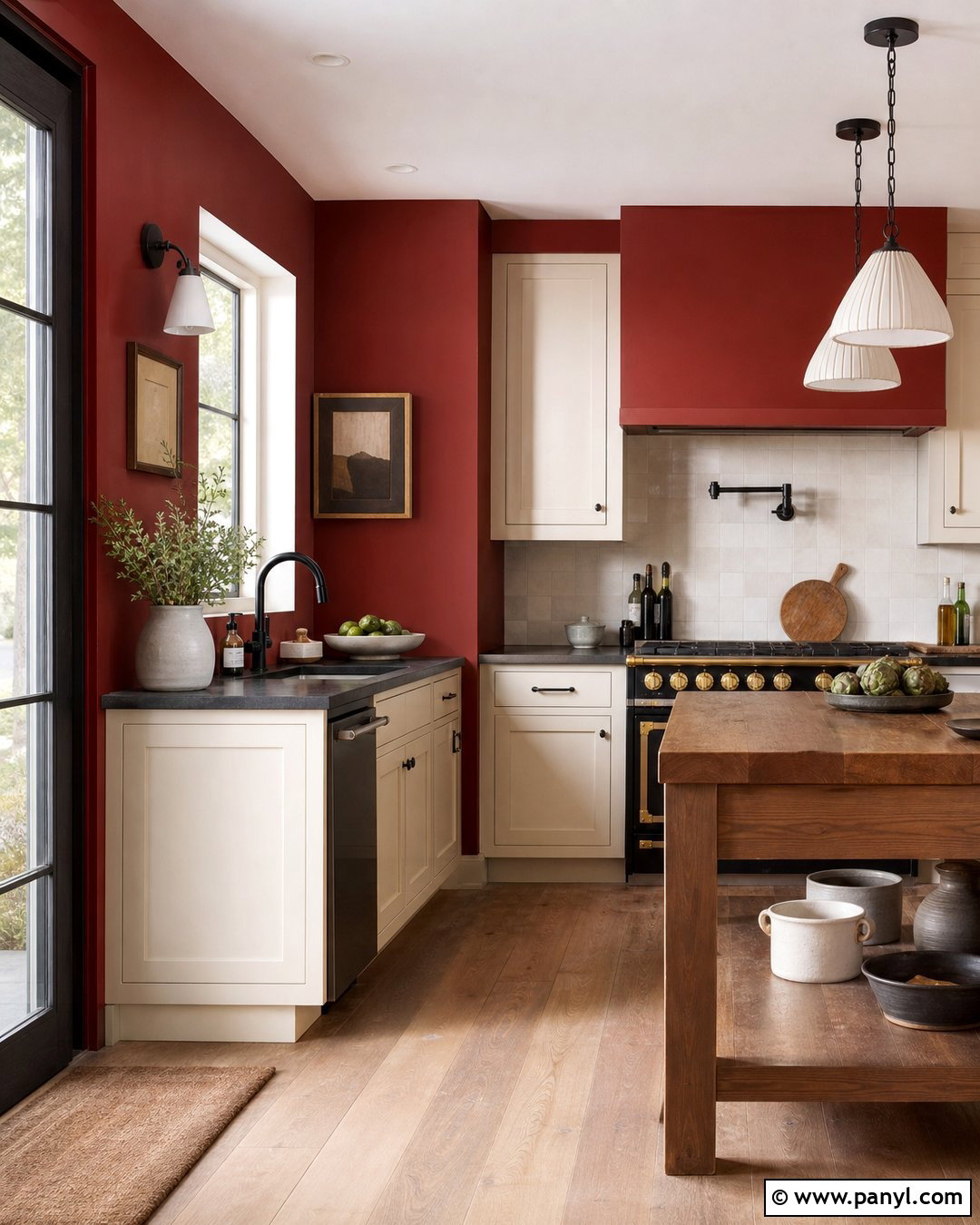
Black countertops give red kitchen walls a strong, structured foundation. Choose a warm barn red, then install off-white cabinets so the counters form a clear horizontal line rather than blending into a dark room. Honed black granite or soapstone offers a softer appearance than a highly reflective finish. Add a cream backsplash with minimal grout contrast, along with black cabinet pulls and a matching faucet. Medium oak flooring and a butcher-block island top introduce enough natural warmth to connect the red and black. White pendant lights can brighten the center of the room. Finish with practical wooden utensils, cream stoneware, and one washable patterned runner. The completed palette feels grounded, durable, and suitable for a busy family kitchen.
16. Red Kitchen Walls With Butcher Block Counters
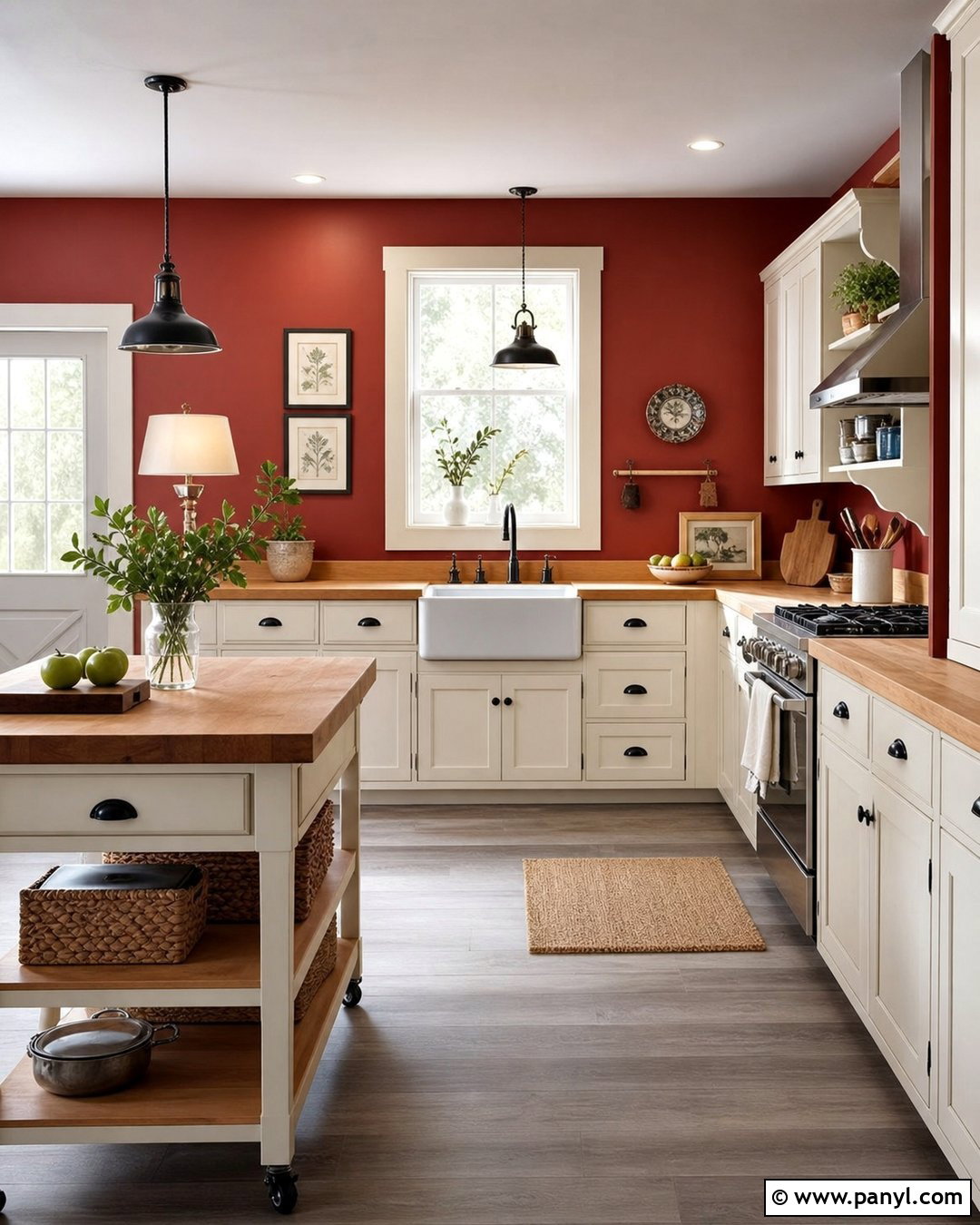
Butcher block counters bring warmth and approachability to strong red kitchen walls. Use a muted tomato or paprika shade alongside creamy white cabinets and thick oak or maple worktops. Protect the area behind the sink and range with simple off-white tile, while leaving enough painted wall visible to carry the color around the room. Black cup pulls and iron pendant lights add farmhouse definition without making the design overly rustic. Choose warm gray floor tile for durability and contrast with the wood. A freestanding preparation table can provide extra workspace and repeat the butcher block finish. Add woven baskets, plain white dishes, and cotton café curtains. The room feels cheerful, practical, and easy to personalize over time.
17. Red Kitchen Walls With Stainless Steel Appliances
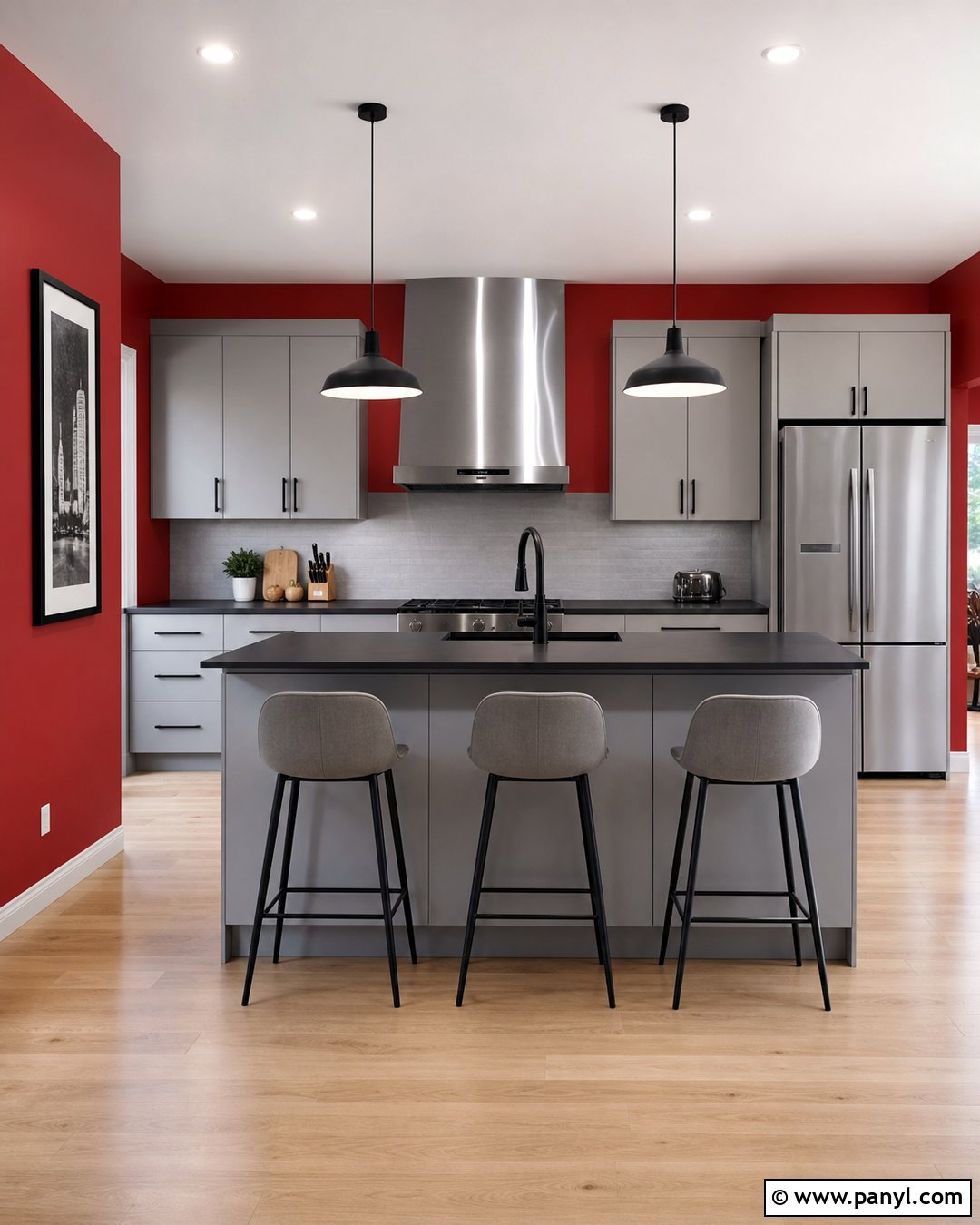
Stainless steel appliances introduce a cool, reflective contrast that keeps red walls from feeling overly warm. Select a medium crimson and pair it with flat-panel white or pale gray cabinets. Use charcoal quartz countertops and a light gray backsplash to connect the steel with the surrounding surfaces. Position the refrigerator, range, and hood so their metallic finishes are distributed evenly rather than concentrated in one corner. Black hardware and slim black pendants sharpen the contemporary layout. Pale oak flooring prevents the design from becoming too industrial. Complete the kitchen with a streamlined island, gray counter stools, and limited countertop accessories. The balanced combination looks polished and functional, especially in an open kitchen with abundant daylight and clean architectural lines.
18. Small Kitchen With Red Walls
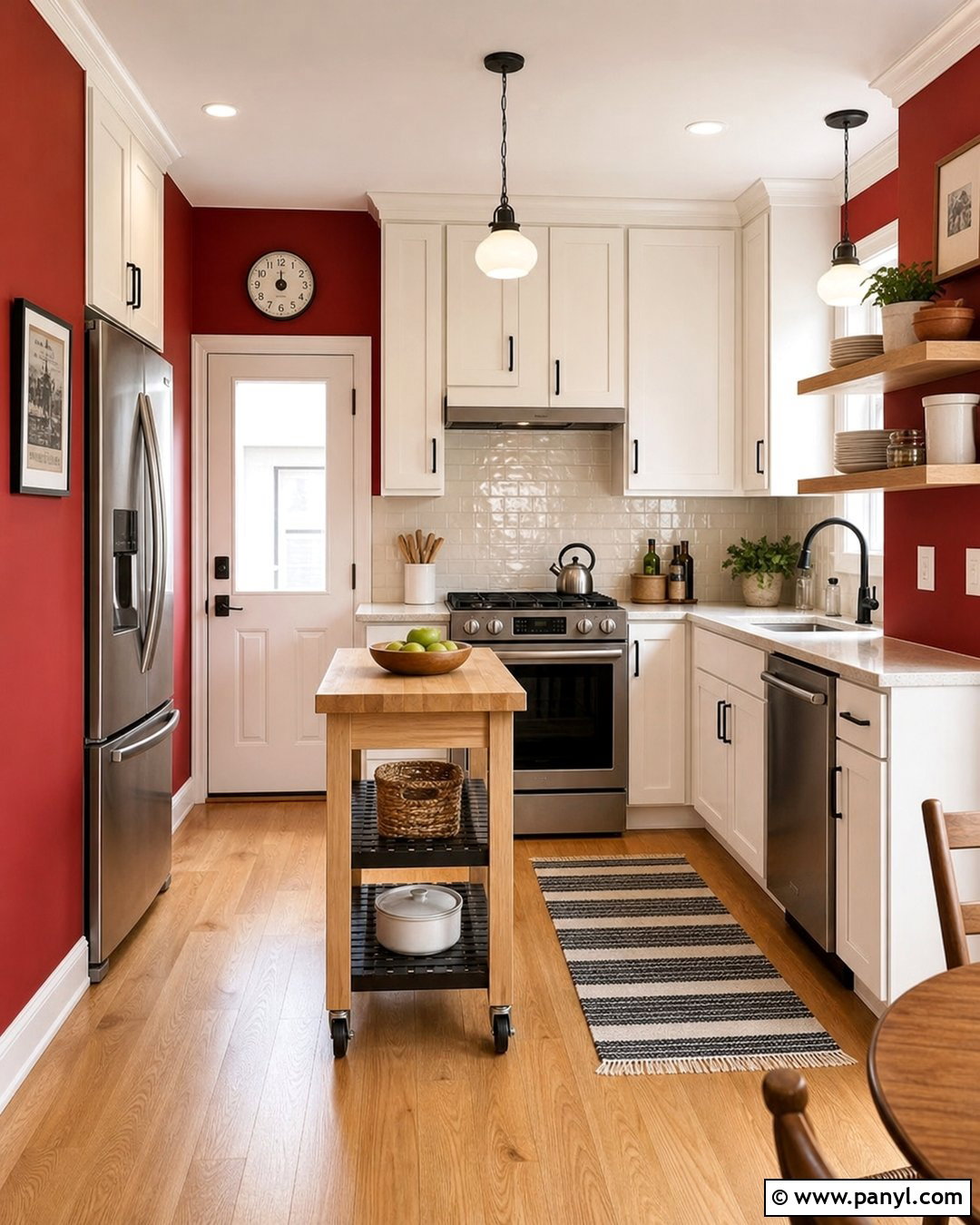
In a small kitchen, red works best when paired with reflective surfaces and carefully planned storage. Choose a warm, medium red for one or two uninterrupted walls, then use tall white cabinets to maximize vertical space. Glossy cream backsplash tile and pale quartz counters bounce light across the room. Keep upper cabinets shallow where possible, and replace one section with open oak shelves to reduce visual weight. A compact rolling island can provide preparation space without blocking circulation. Continue light wood or beige flooring into adjoining areas to make the footprint feel larger. Finish with under-cabinet lighting, simple black hardware, and a narrow striped runner. This complete design feels colorful and efficient rather than cramped or visually overloaded.
19. Galley Kitchen With Red Walls
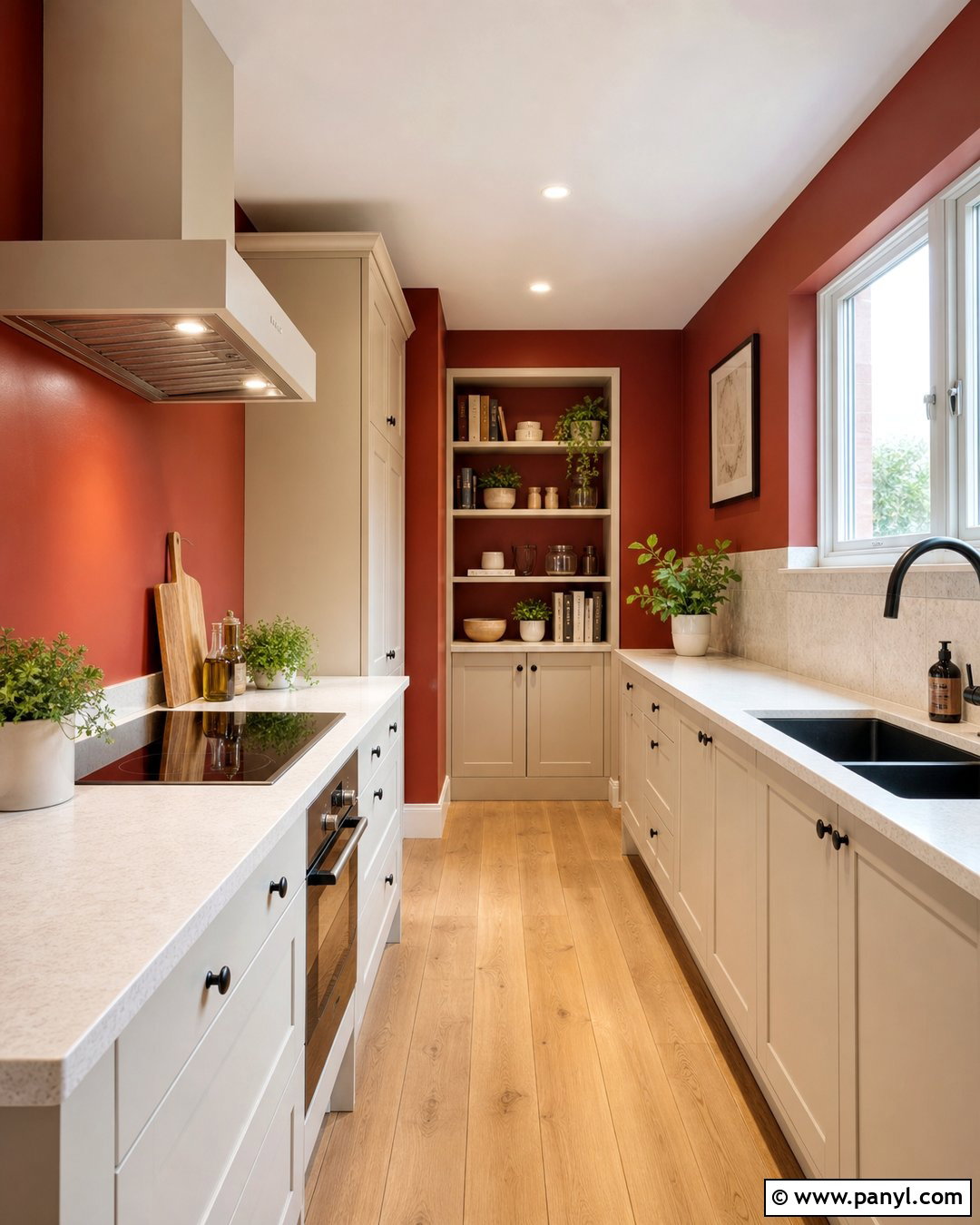
A galley kitchen can handle red walls when the color is balanced along its long, narrow layout. Paint the end wall and exposed upper sections in a warm brick red, creating a destination rather than emphasizing the corridor. Install cream cabinets on both sides with pale quartz counters and a matching backsplash. Keep hardware small and streamlined so drawers and doors remain easy to use. Light oak flooring laid across the width can make the room appear broader. Add bright under-cabinet lighting and a simple flush-mount ceiling fixture to remove shadowy corners. At the far end, use one framed print or a small open shelf. The final kitchen feels orderly, warm, and visually wider, with red used in deliberate proportions.
20. Eat-In Kitchen With Red Walls
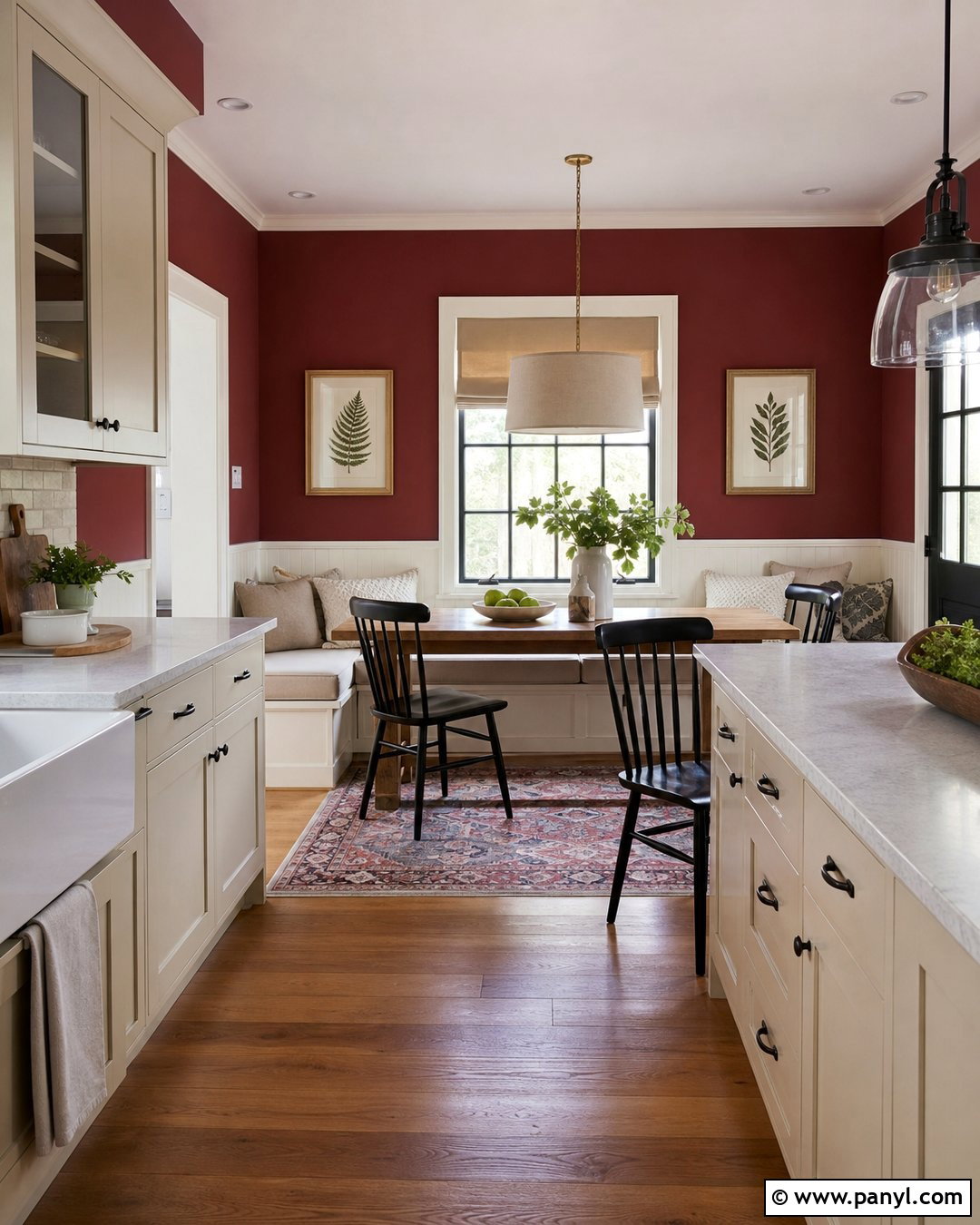
Red is naturally welcoming in an eat-in kitchen because it can visually define the dining zone. Choose a muted raspberry or warm crimson for the walls, then add cream shaker cabinets, light stone counters, and an oak dining table. A built-in bench upholstered in beige performance fabric makes efficient use of a corner and balances the strong color. Use black spindle chairs, a linen pendant, and a washable patterned rug to give the eating area its own identity. Keep the backsplash simple with glossy off-white tile. Natural wood flooring should continue beneath both cooking and dining spaces for unity. Finish with framed food illustrations and a ceramic centerpiece, creating a comfortable room for meals, homework, and everyday conversation.
21. Open-Concept Kitchen With Red Walls
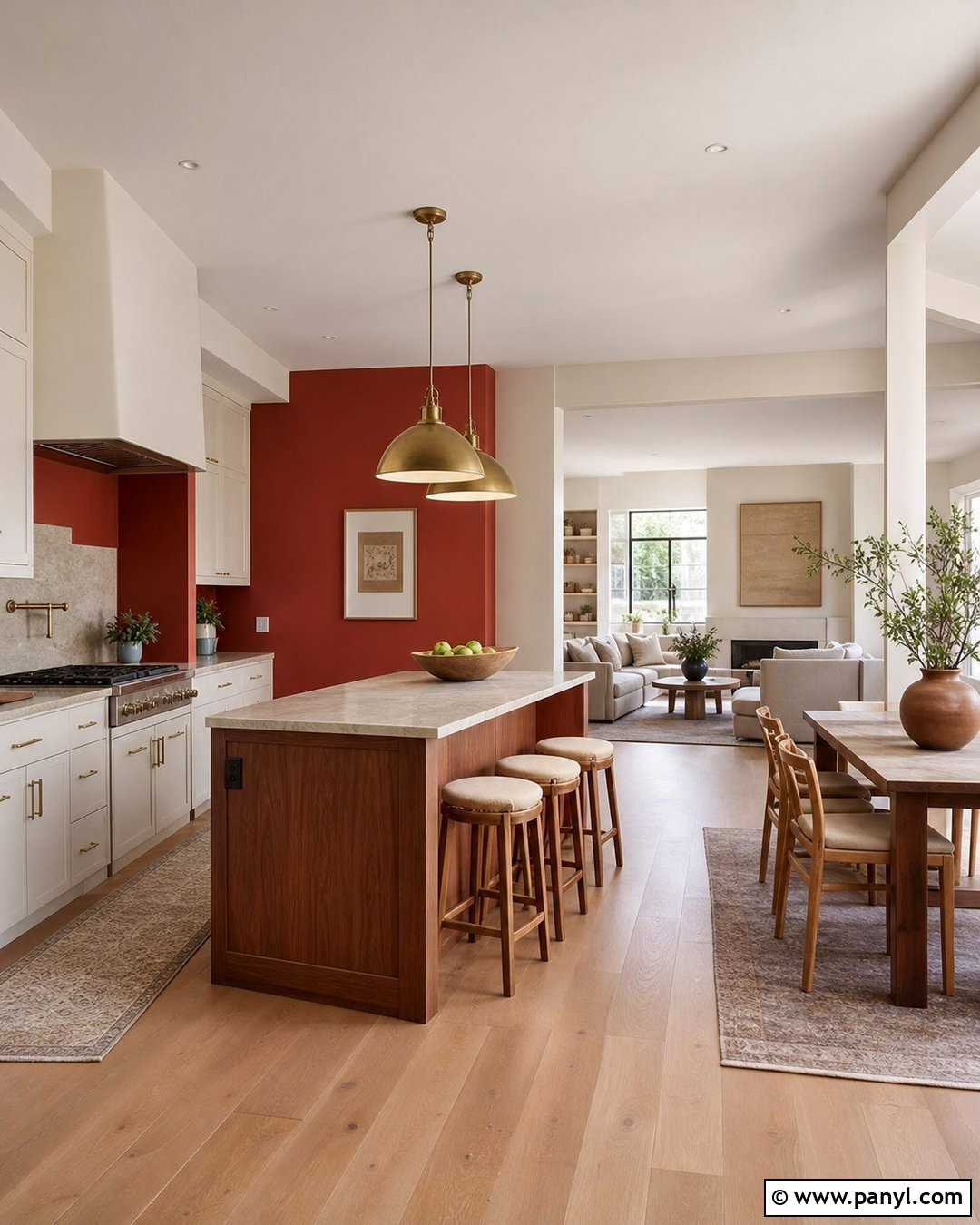
In an open-concept plan, red kitchen walls should connect with adjoining spaces rather than stop abruptly. Use a subdued rust-red on the main kitchen wall and repeat it through small textiles or artwork in the nearby dining and living areas. Choose warm white cabinets, pale stone counters, and a walnut island that creates a natural transition between zones. Wide-plank oak flooring should run continuously across the full space. Install simple brass pendants above the island and use matching metal accents elsewhere for consistency. Keep surrounding walls a soft cream so the red remains the focal point. A neutral sofa, wood dining table, and restrained decor allow the kitchen to stand out while the overall interior still feels coordinated and comfortably connected.
22. Vintage Kitchen With Red Walls
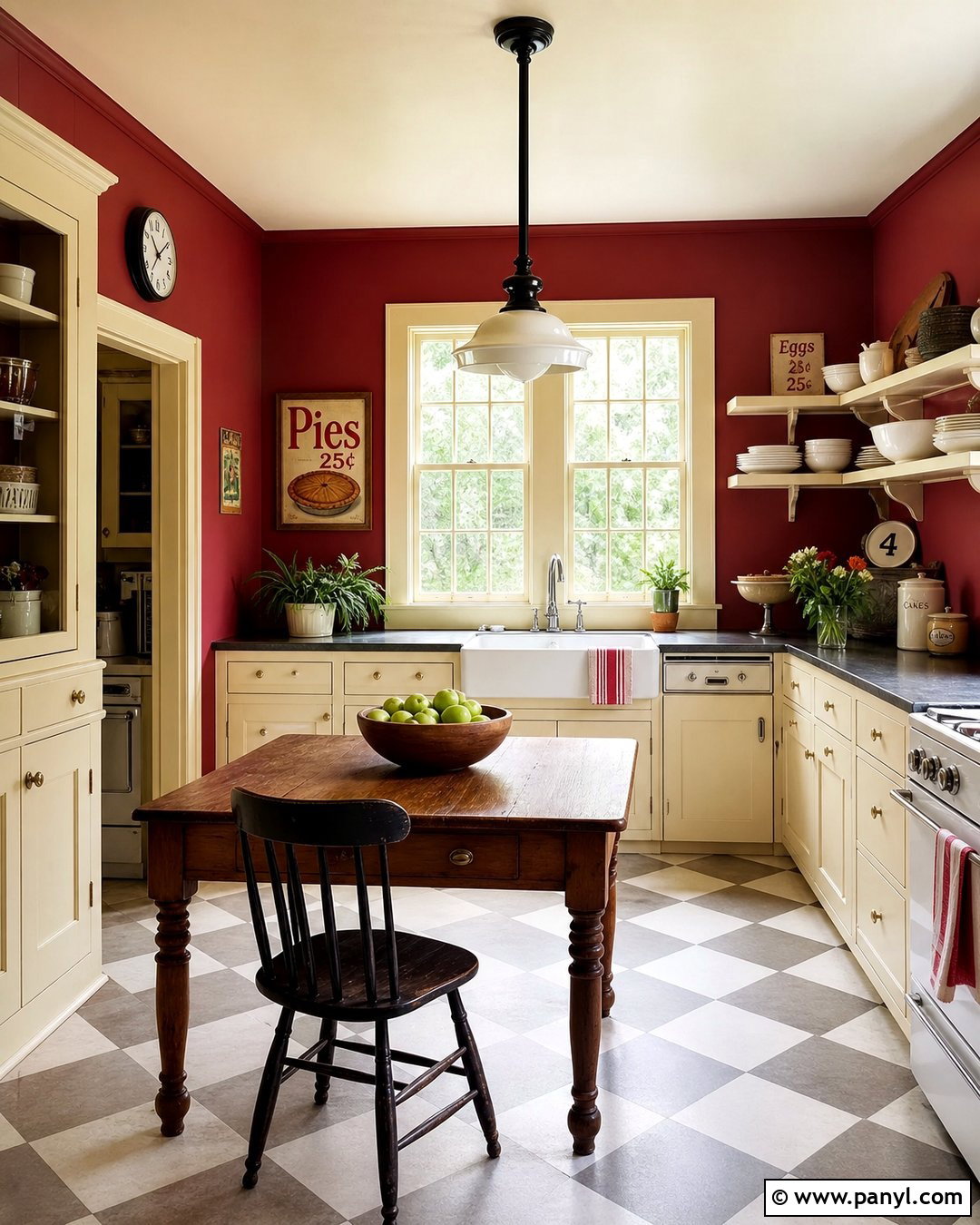
A vintage kitchen becomes more expressive with faded red walls, painted cabinetry, and carefully chosen period details. Select a soft currant red that looks gently aged rather than freshly saturated. Pair it with pale buttercream cabinets, inset doors, and simple porcelain knobs. A checkerboard floor in warm white and muted gray provides character without competing with the walls. Use cream subway tile, a farmhouse sink, and a freestanding range with classic proportions. Open shelves can display everyday pottery, mixing bowls, and glass storage jars. Add a small wood table, spindle-back chairs, and a schoolhouse pendant for a practical eating corner. The finished space feels nostalgic and functional, avoiding unnecessary clutter while preserving the warmth of an older home.
23. Retro Kitchen With Red Walls
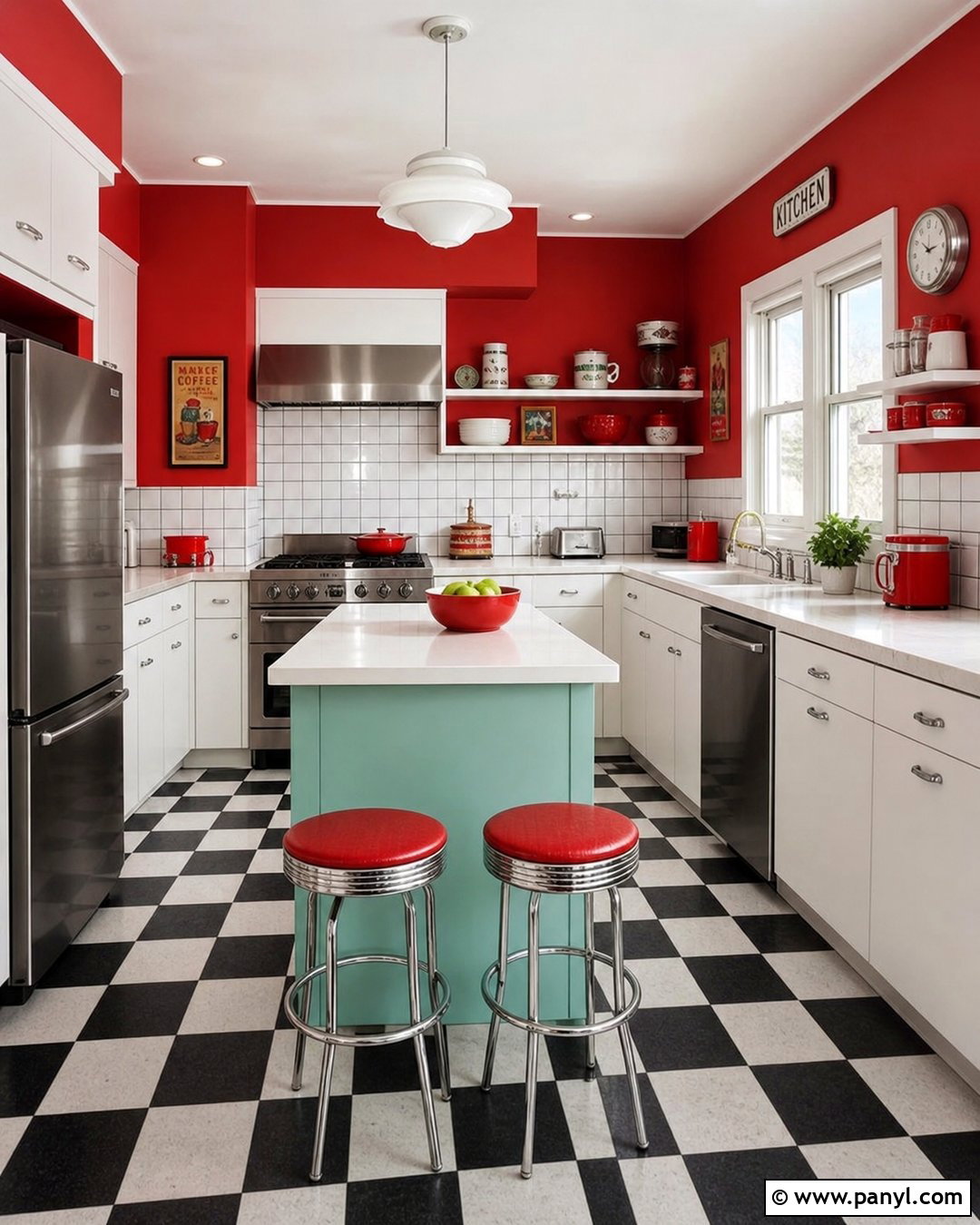
Bright red walls can anchor a playful retro kitchen without turning every surface into a theme. Combine tomato-red paint with white flat-front cabinets, chrome hardware, and a pale aqua island. Use white laminate or quartz counters with rounded edges, plus a simple grid-tile backsplash. Black-and-white checkerboard flooring creates a recognizable foundation, while red vinyl stools repeat the wall color near the island. Choose one retro-inspired pendant and streamlined stainless appliances rather than filling the room with novelty pieces. White window blinds and open shelving keep the brighter colors balanced. This complete look is energetic and practical, with enough modern storage and durable materials to function well while still capturing the optimistic character of midcentury kitchens.
24. Industrial Kitchen With Red Walls
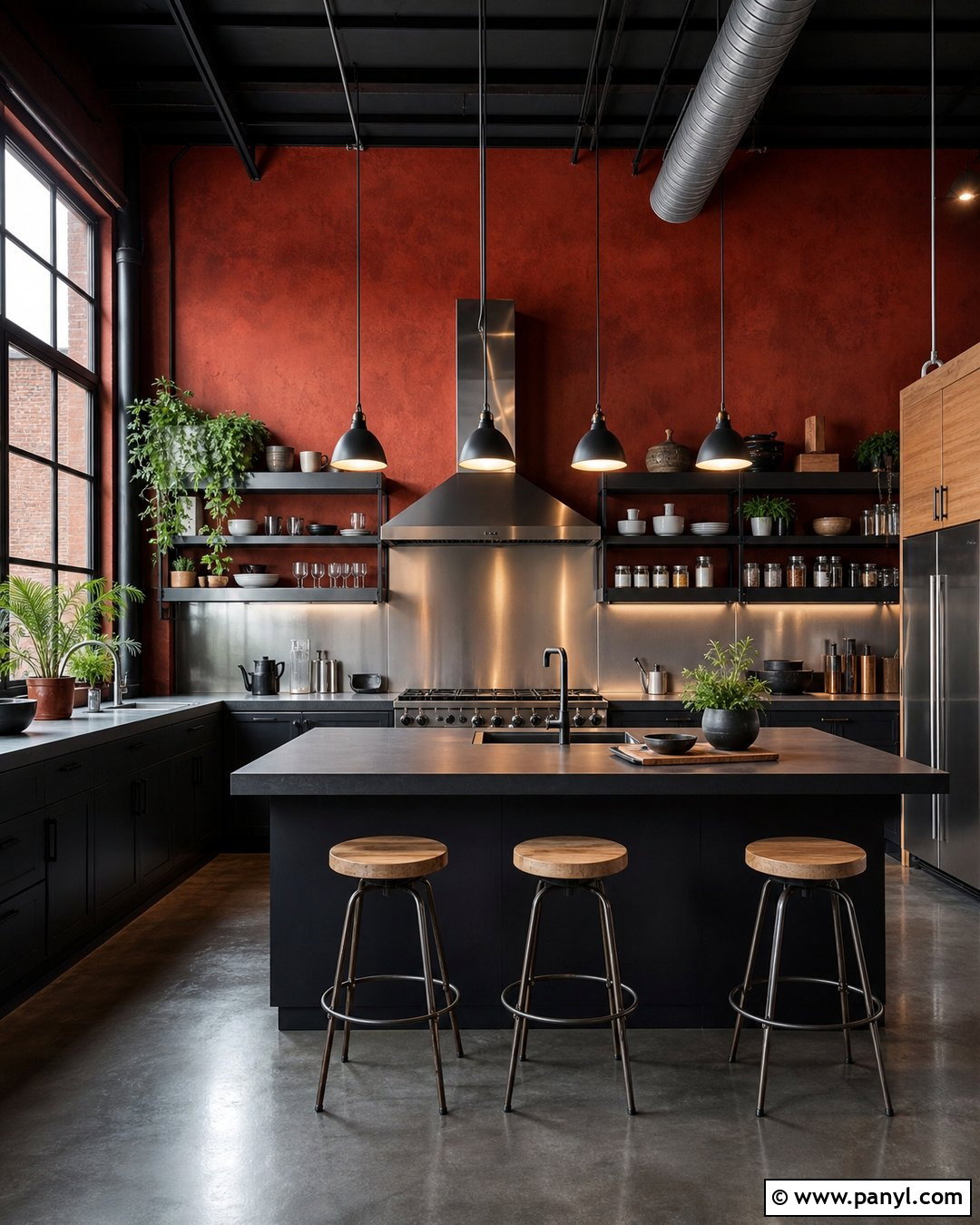
Exposed materials give dark red kitchen walls an industrial edge. Paint one broad wall in an earthy rust red and leave an adjoining section of brick or concrete visible. Use matte black base cabinets, open steel shelving, and warm wood upper storage to balance hard and soft textures. Charcoal quartz counters and a stainless steel backsplash create a durable work area behind the range. Select large factory-style pendants with bright white bulbs, avoiding overly dim lighting. Polished concrete flooring can be softened with a narrow neutral runner and wood counter stools. Keep appliances streamlined and decor functional, such as neatly arranged cutting boards and ceramic canisters. The completed kitchen feels urban and hardworking without becoming cold or unfinished.
25. Mediterranean Kitchen With Red Walls
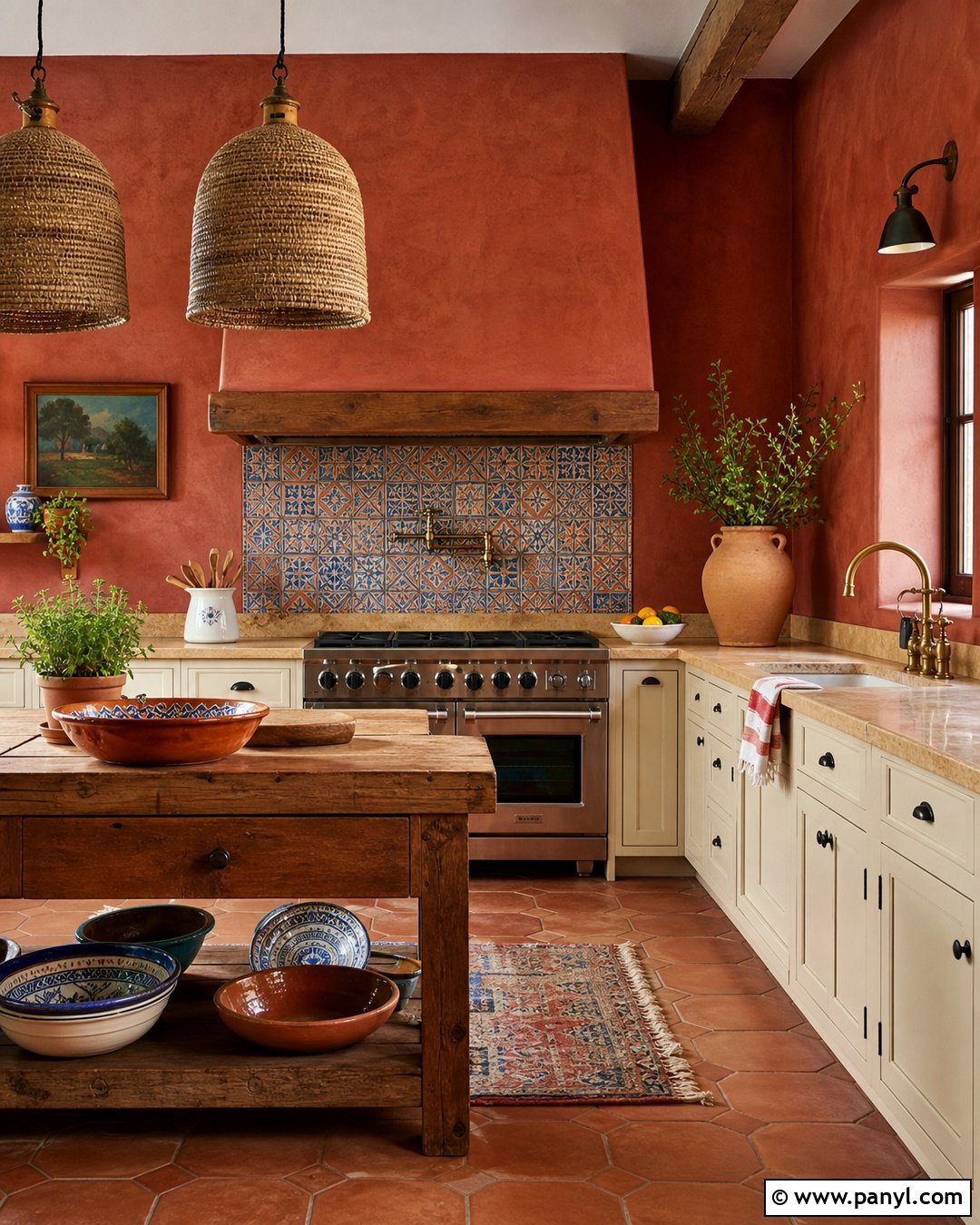
Sun-warmed red walls can create a relaxed Mediterranean kitchen when paired with natural plaster, wood, and softly patterned tile. Choose a clay-red finish with visible tonal variation rather than a flat, glossy color. Cream cabinets with simple recessed doors keep the room bright. Use warm limestone counters and a blue, cream, and terracotta backsplash in a restrained geometric pattern. A substantial wood table can function as both preparation space and casual dining. Add aged brass hardware, woven pendant lights, and terracotta floor tile for a layered regional character. Keep accessories useful and earthy, including ceramic bowls, linen towels, and wood utensils. The entire kitchen should feel collected over time, sunny, tactile, and comfortably informal.
26. Rustic Kitchen With Red Walls
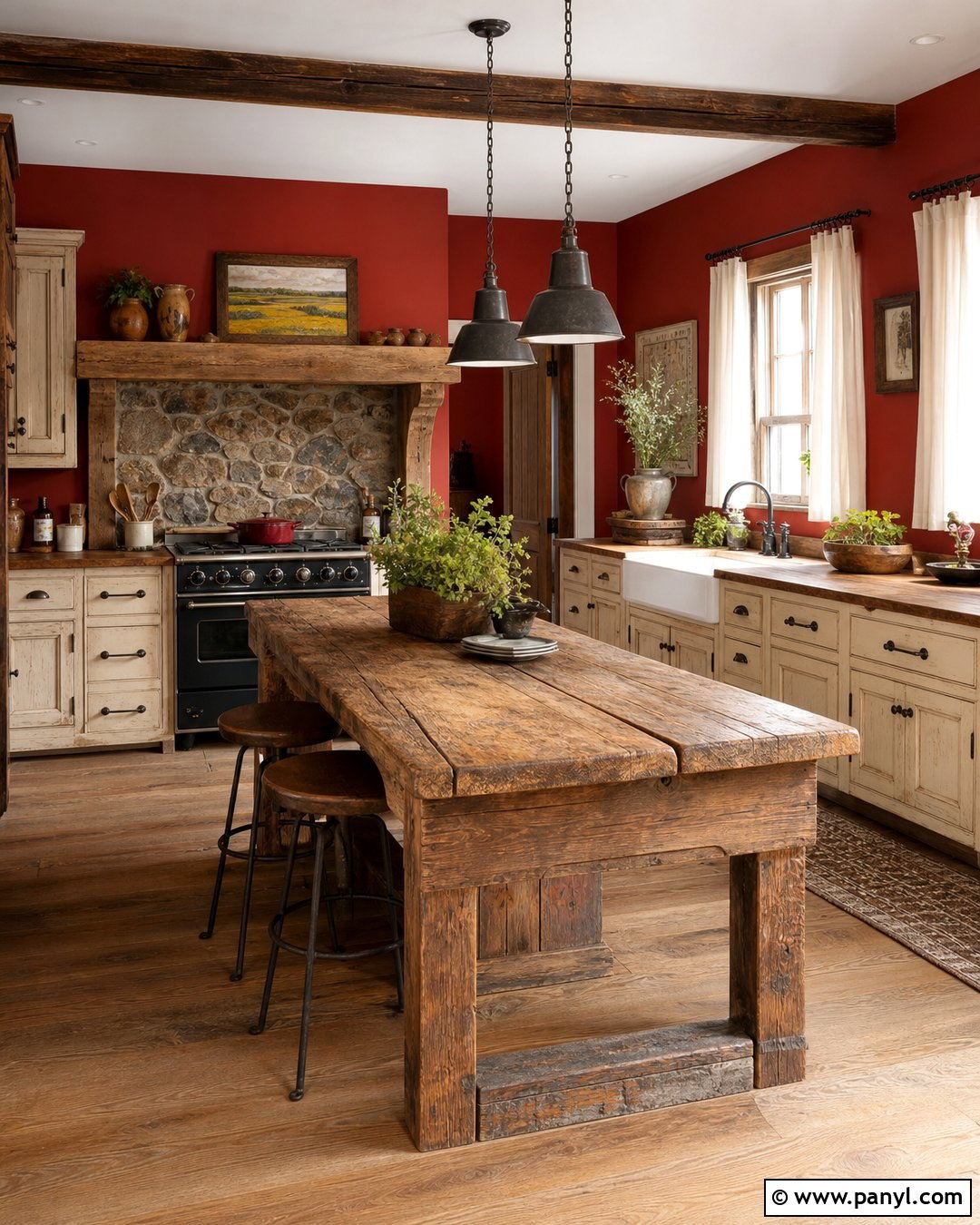
Rustic red kitchen walls look most convincing when surrounded by sturdy materials and simple furniture. Select a deep barn red with brown undertones, then introduce distressed cream cabinets and thick wood counters. A stone backsplash behind the range provides a practical focal point and adds natural texture. Use a reclaimed timber island with open storage for baskets, cookware, and serving pieces. Wide oak floorboards, black iron pulls, and simple metal pendants reinforce the hardworking character. Keep the ceiling white if the room is compact, or add limited wood beams in a larger space. Finish with plain linen curtains, stoneware, and a neutral braided runner. The overall kitchen feels warm and substantial without relying on decorative rustic clichés.
27. Contemporary Kitchen With Red Walls
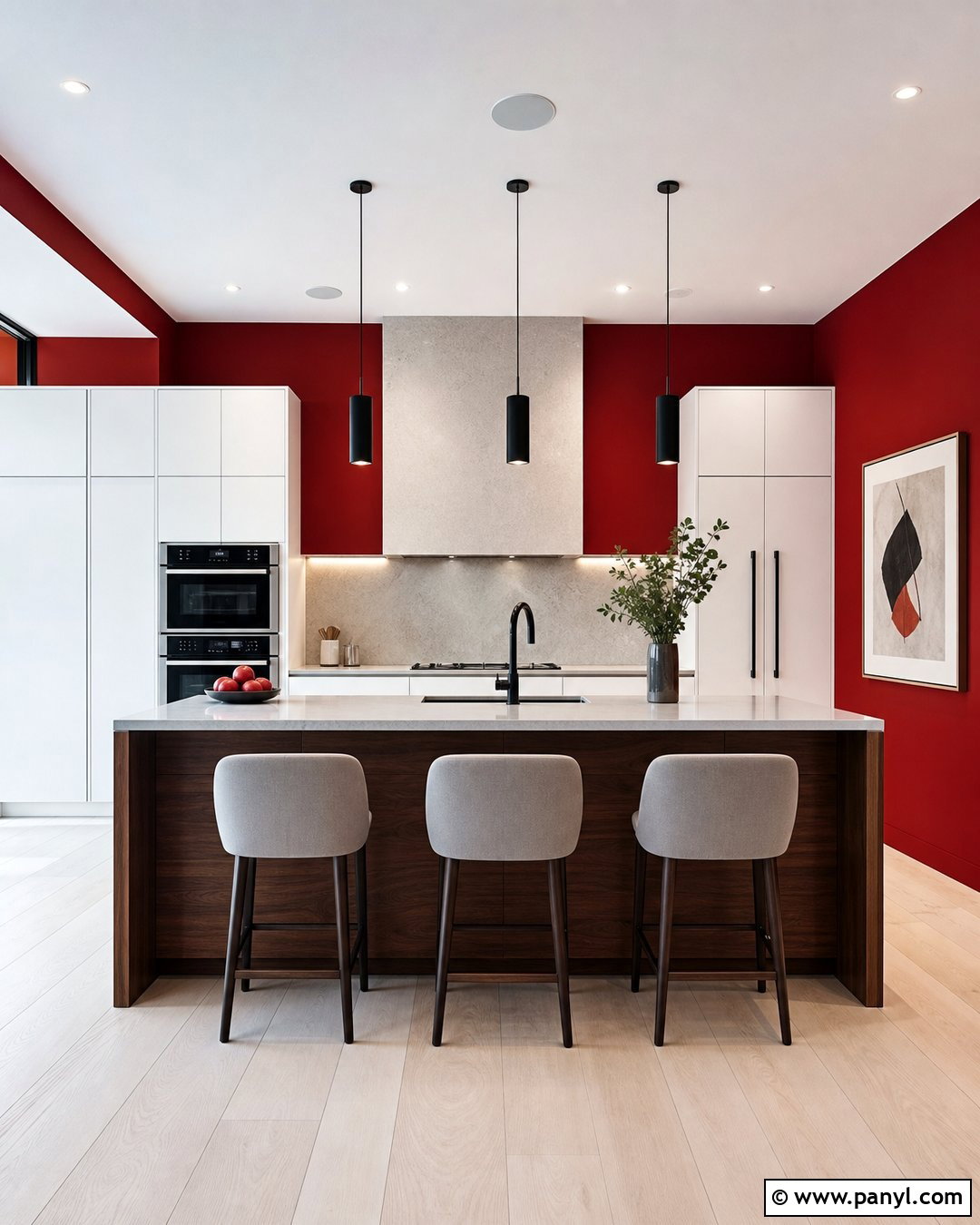
A contemporary kitchen benefits from a carefully edited red, white, and wood palette. Paint one full wall in a confident ruby red and continue the color around a nearby dining niche. Choose handleless matte white cabinetry, pale gray quartz counters, and a full-height backsplash made from the same counter material. A streamlined walnut island introduces warmth and conceals practical storage. Add slender black pendants, integrated appliances, and pale wide-plank flooring for a clean architectural framework. One large abstract artwork can personalize the dining wall without adding small-scale clutter. Keep stools and window treatments neutral. This finished room feels bold but controlled, combining strong color with clear sightlines, simple surfaces, and practical features suited to everyday modern living.
28. Minimalist Kitchen With Red Walls
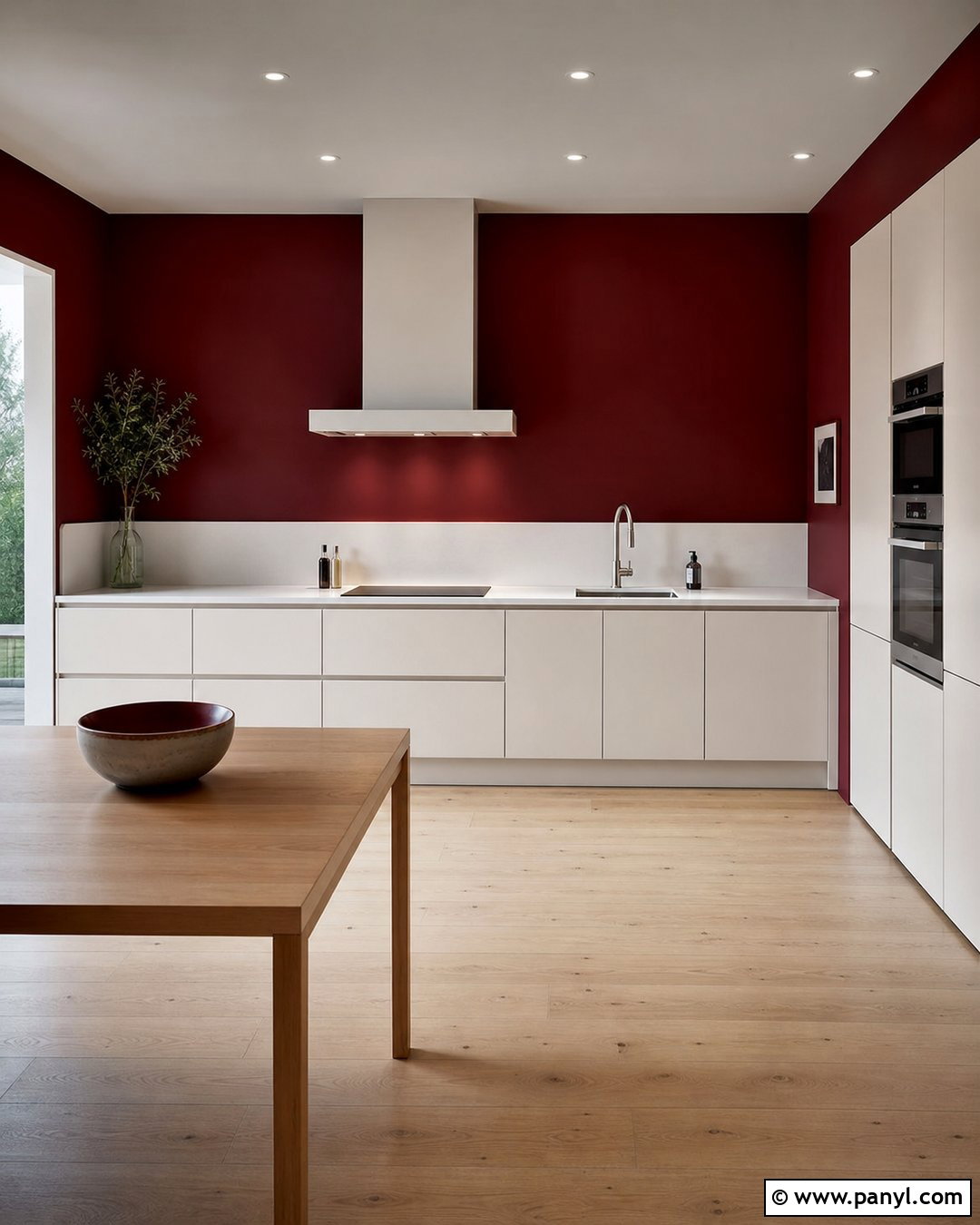
Minimalism does not require an all-neutral palette. A single plane of deep red can give a simple kitchen warmth and definition. Use matte garnet paint on the uninterrupted wall behind a dining table or open preparation area. Install flat-front off-white cabinetry with concealed pulls, thin white quartz counters, and a seamless backsplash. Choose integrated appliances so large metal surfaces do not interrupt the quiet composition. Pale oak flooring and a matching rectangular table add natural texture. Lighting should be simple and bright, with recessed fixtures and one understated pendant. Limit visible items to a ceramic bowl, a cutting board, and a small plant. The completed kitchen remains calm because every element has a clear purpose and an uncluttered position.
29. Maximalist Kitchen With Red Walls
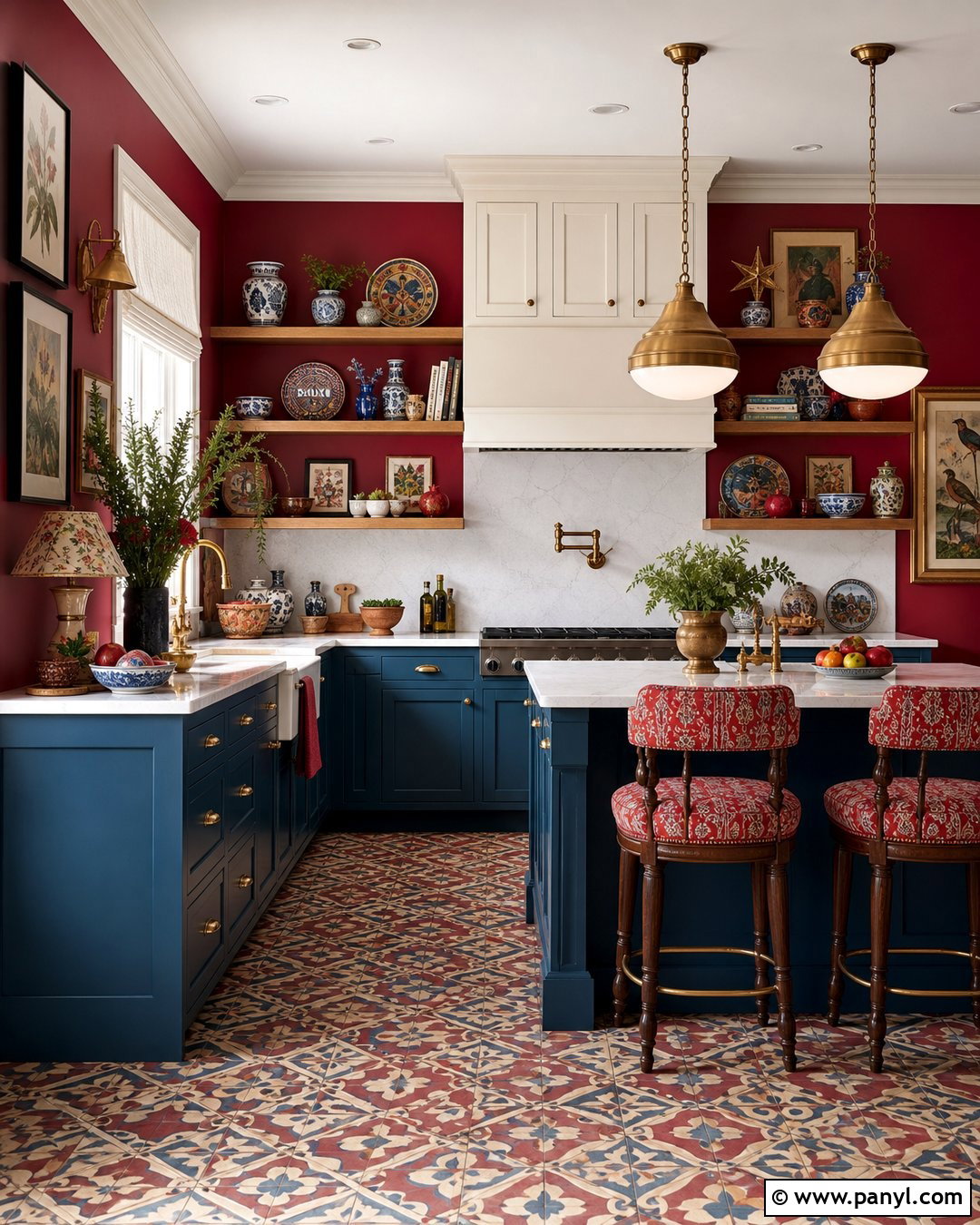
For color lovers, red walls can become the foundation of a layered maximalist kitchen. Start with rich pomegranate paint, then add deep teal lower cabinets and warm cream uppers. Use patterned floor tile that combines red, blue, and beige in manageable proportions. A white marble-look backsplash prevents patterns from covering every surface. Display colorful ceramics on oak shelves, but organize pieces by shape or tone so the room still feels intentional. Brass hardware, pleated pendant shades, and upholstered counter stools add further detail. Choose one large botanical print instead of many tiny frames near the cooking area. The result is expressive and personal, yet the repeated colors and clearly defined storage keep the complete kitchen functional rather than chaotic.
30. Red Kitchen Wallpaper With White Cabinets
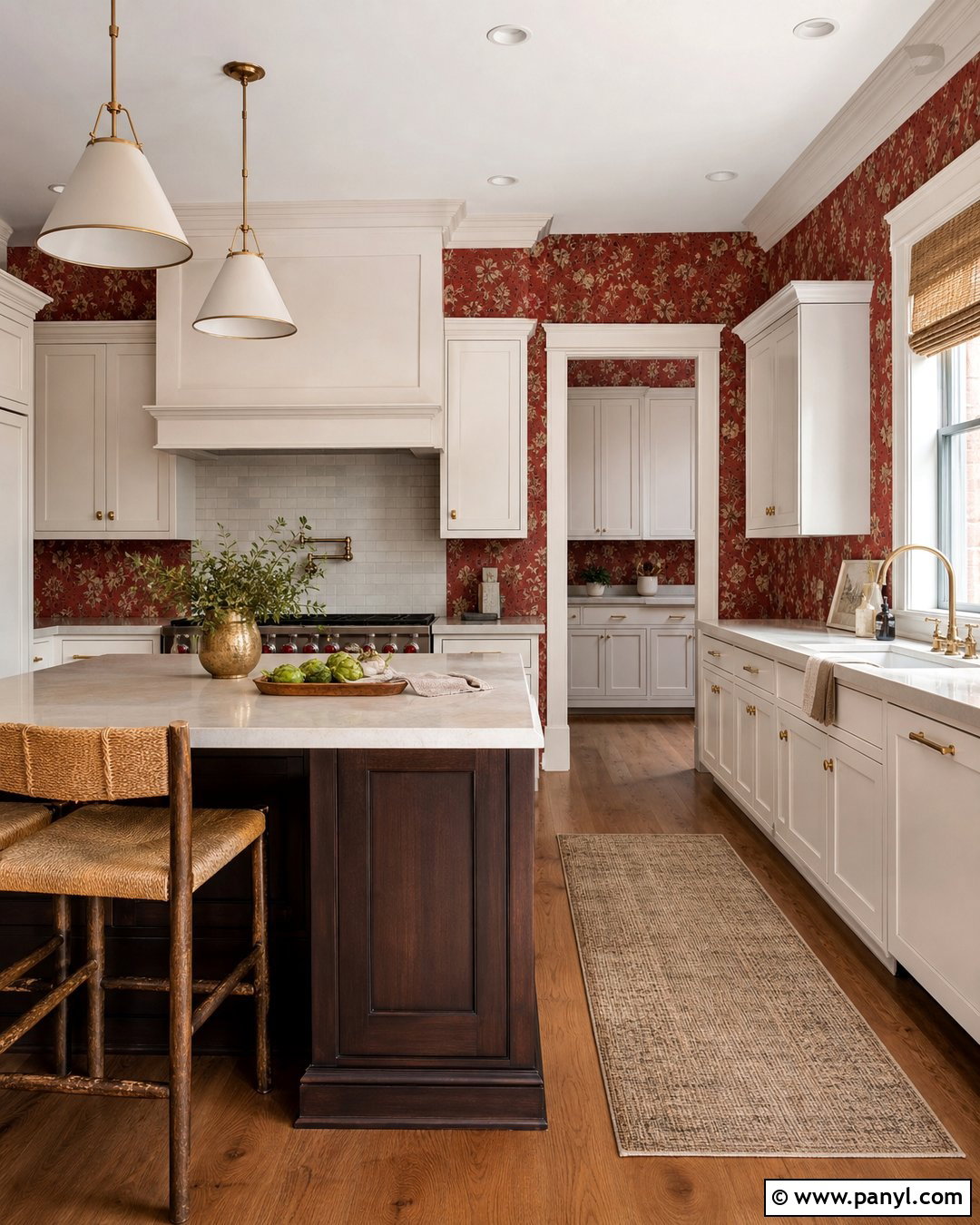
Red wallpaper offers pattern and depth that solid paint cannot provide. Choose a washable design with a small cream botanical, geometric, or block-print motif on a muted red background. Install it above a durable backsplash and away from areas exposed to heavy splashes. White shaker cabinets and pale quartz countertops allow the pattern to remain the primary feature. Use a dark wood island, antique brass hardware, and warm oak flooring to create a traditional but updated room. A clear protective panel can preserve wallpaper behind a breakfast counter or open shelf. Keep curtains and upholstery plain so they do not compete. This full design delivers visual interest while maintaining the bright, practical surfaces needed in a hardworking kitchen.
31. Red Limewash Kitchen Walls
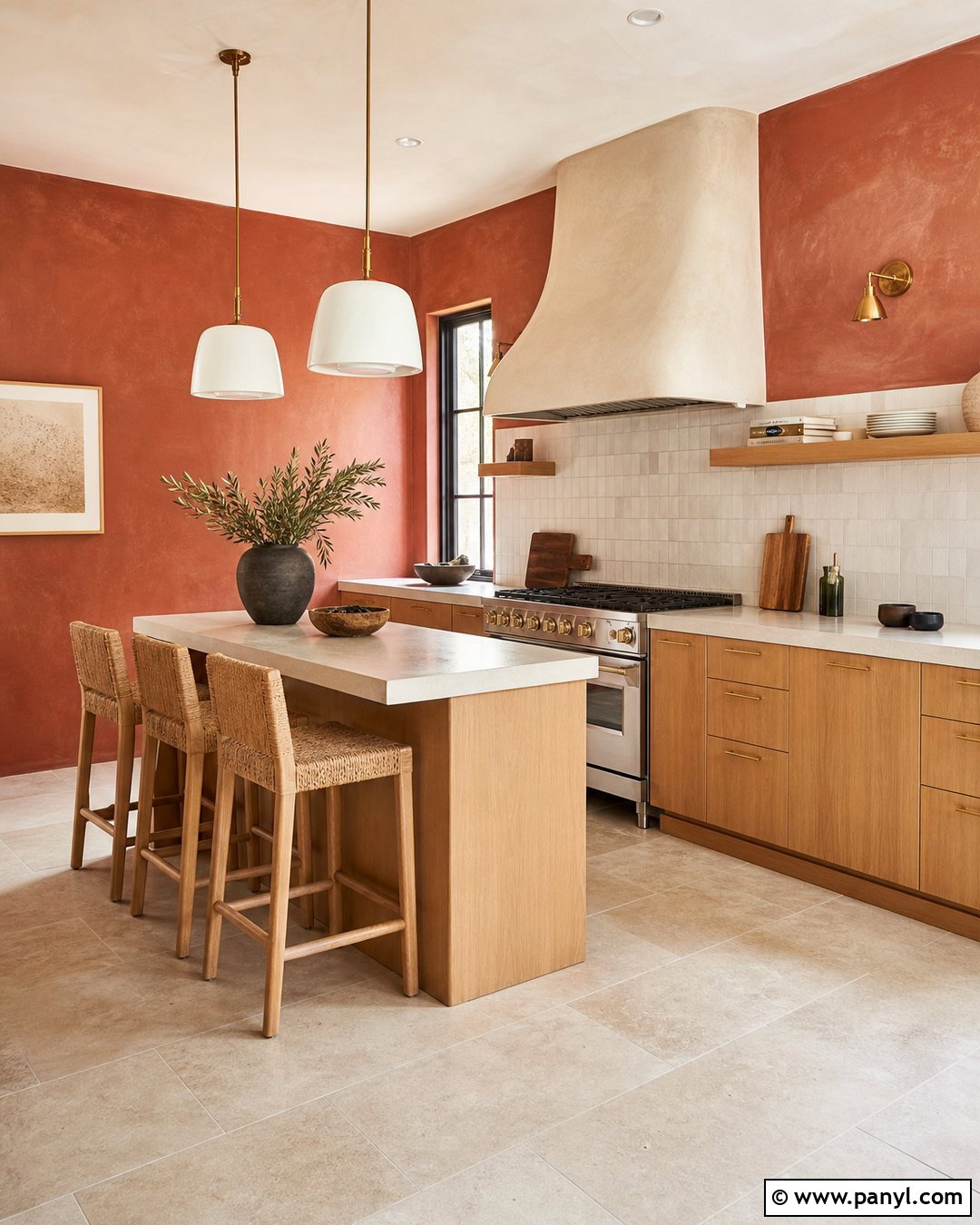
Limewash gives red kitchen walls cloudy movement and a softer, mineral appearance. Choose a dusty terracotta-red finish that shifts from pale clay to deeper rust across the surface. Pair it with natural oak cabinets, cream stone counters, and an understated backsplash of handmade ivory tile. Keep wall-mounted storage limited so the textured finish remains visible. A plaster range hood can create a sculptural focal point without introducing another color. Add brushed brass hardware, woven counter stools, and warm beige floor tile. Bright ceiling and under-cabinet lighting will reveal the wall variation without making the room feel dim. The finished kitchen has depth and character, yet its simple materials and restrained palette maintain a calm, modern atmosphere.
32. Red Beadboard Kitchen Walls
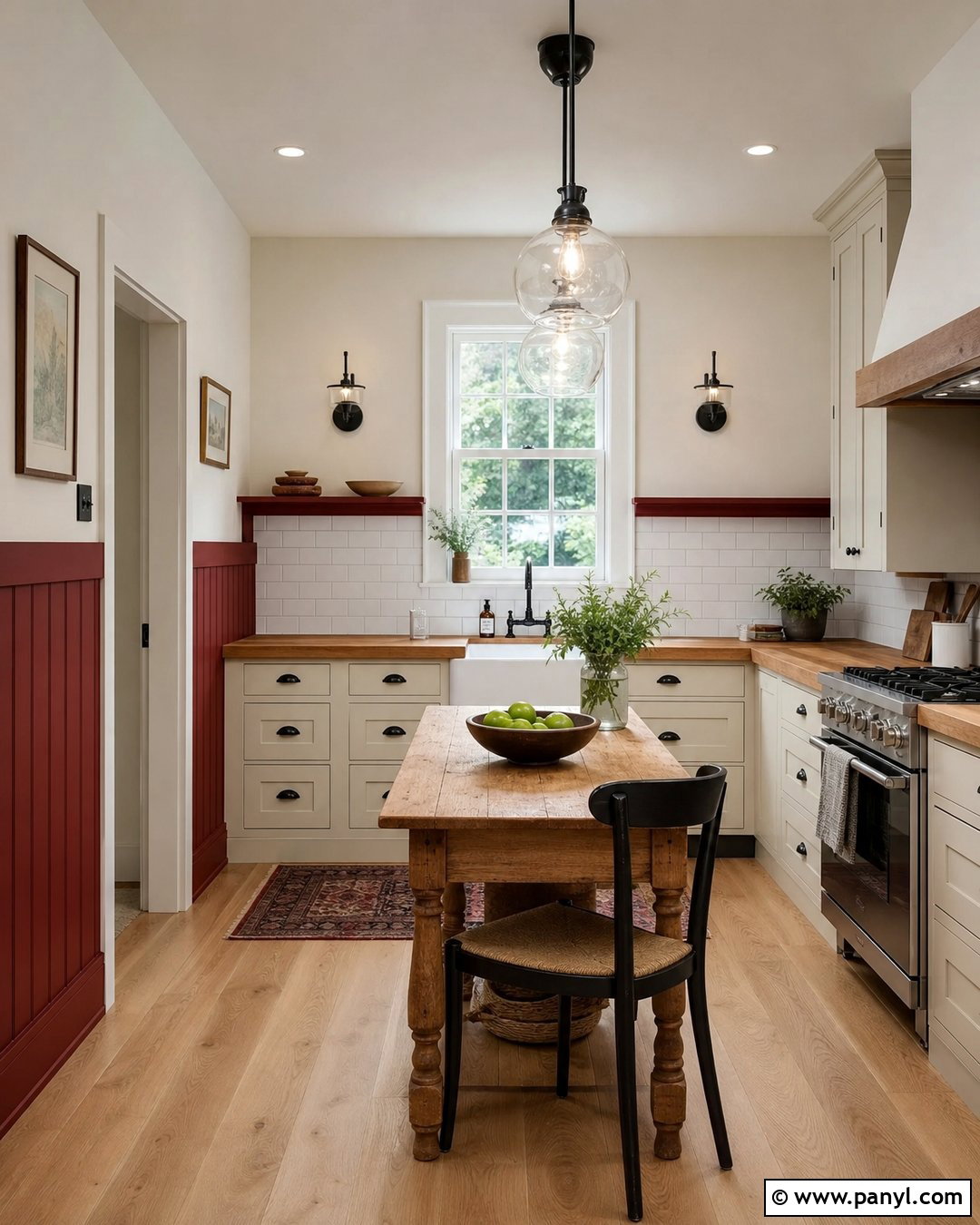
Red beadboard brings architectural texture to a kitchen while protecting busy wall areas from everyday wear. Install vertical paneling at half height and paint it in a muted cranberry red. Use warm white paint above it to preserve brightness, especially in a compact room. Pair the walls with cream shaker cabinetry, butcher block counters, and a small white subway tile backsplash behind the sink and range. Black cup pulls and simple glass pendants add traditional definition. Continue light oak flooring through the room and place a narrow farmhouse table near the paneled wall. Finish with plain linen shades and neutral seat cushions. This complete treatment feels charming and structured, with the red distributed at a comfortable visual level.
33. Exposed Red Brick Kitchen Wall
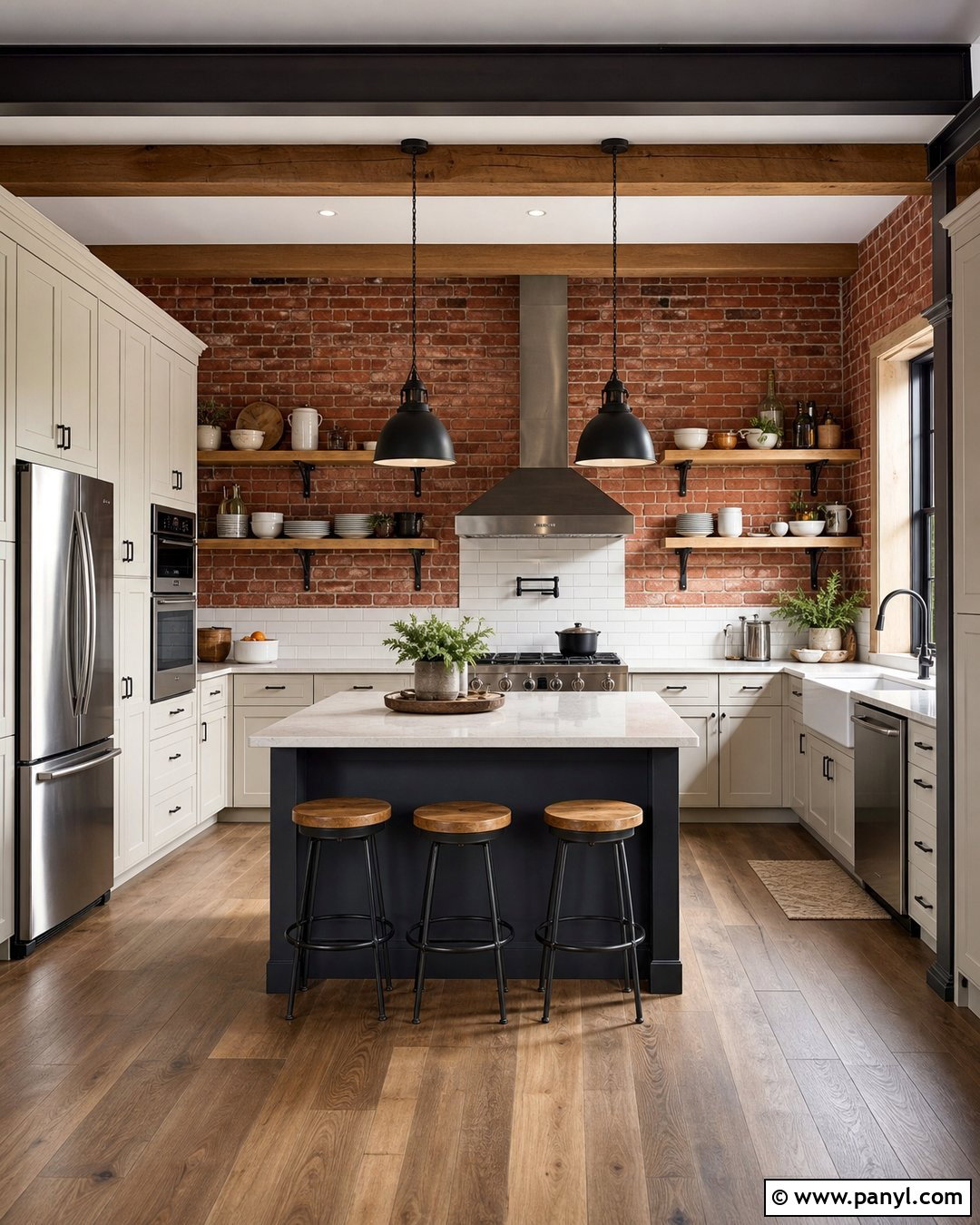
An exposed red brick wall gives a kitchen instant texture, warmth, and architectural character. Make it the main backdrop behind open shelving or a freestanding dining table rather than covering every surface with brick. Pair it with matte cream cabinets, pale quartz counters, and a charcoal island. Oak shelves with black brackets echo both the brick’s warmth and the darker accents. Use stainless appliances and a simple white backsplash in the busiest cooking zones for easier cleaning. Wide-plank wood flooring and black metal pendants complete the balanced industrial look. Keep accessories neutral and practical. If the original brick is dusty or porous, apply an appropriate clear masonry sealer while preserving its varied, natural appearance.
34. Two-Tone Red Kitchen Walls
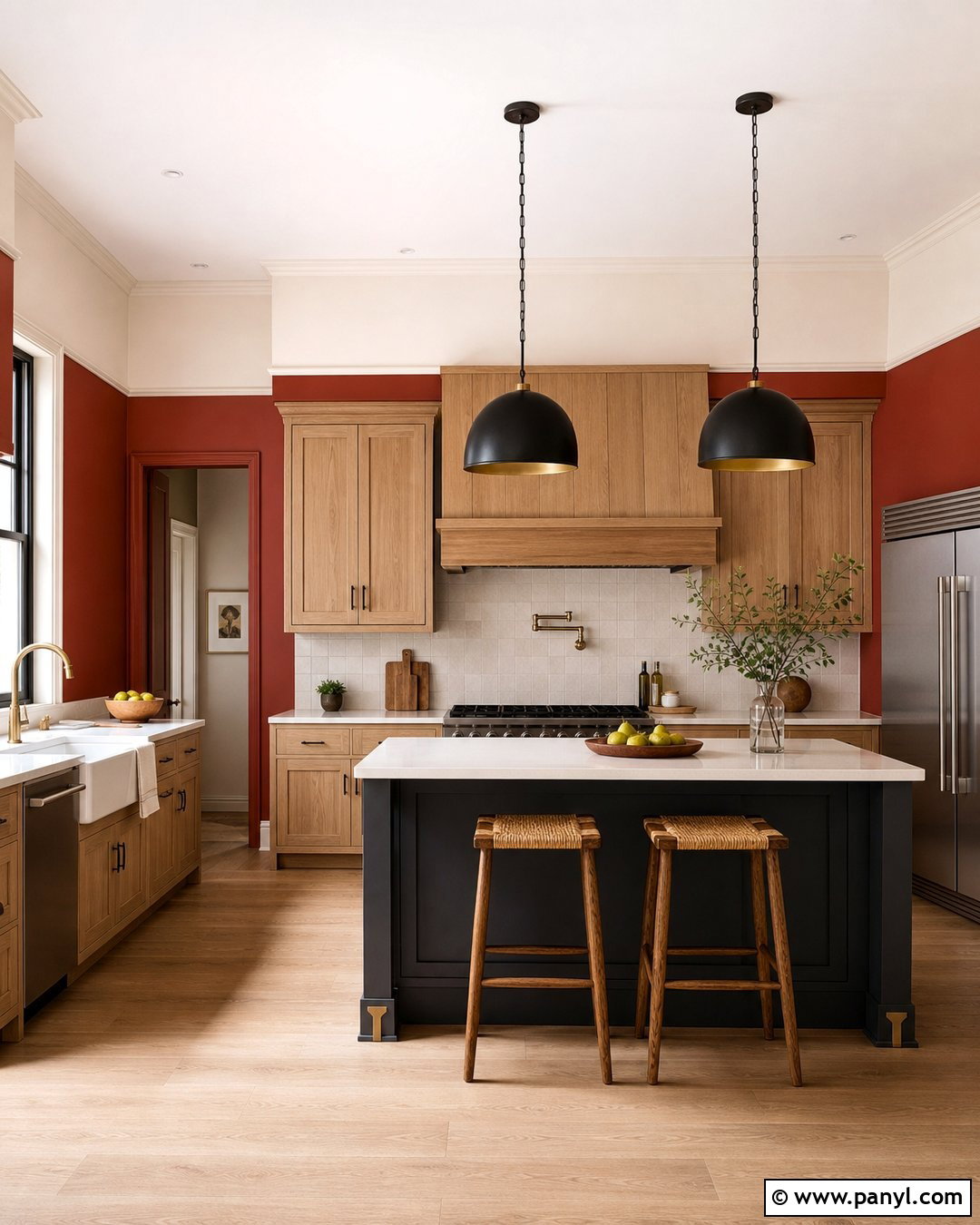
Two-tone walls make red easier to introduce across a full kitchen. Paint the lower portion in warm brick red and the upper portion in soft cream, dividing the colors with slim painted molding. Cream upper walls visually lift the ceiling, while red below adds warmth near dining furniture and open areas. Choose light oak cabinets, white quartz counters, and a simple ivory backsplash. A charcoal island creates contrast at the center, supported by wood stools and black pendant lights. Continue the red around the eating nook for a connected look. Pale flooring and white trim maintain brightness. This complete approach is practical for active homes because the deeper lower color disguises minor marks while the lighter upper area preserves openness.
35. Color-Drenched Red Kitchen Walls
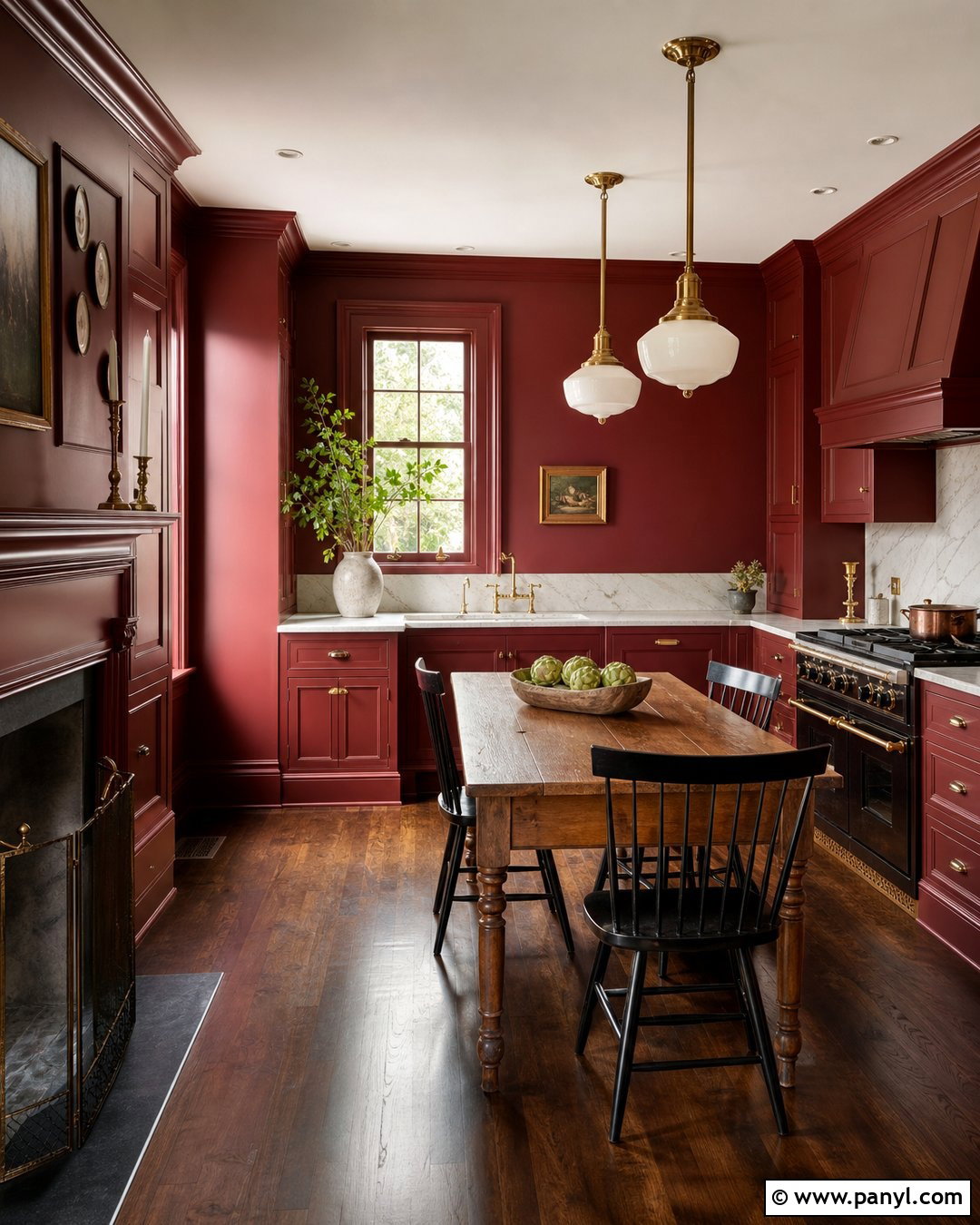
Color drenching creates the most immersive version of red kitchen walls. Cover the walls, trim, and selected cabinetry in one sophisticated oxblood or muted berry tone, changing only the paint sheen for subtle definition. Keep the ceiling warm white unless the room is large and filled with daylight. Introduce a cream marble backsplash and matching counters to form a bright visual break. Dark walnut flooring and a central wood table add richness, while aged brass hardware and opal glass pendants provide gentle highlights. Integrated appliances help maintain the continuous color effect. Limit decorative objects to pale ceramics and clear glass. The completed kitchen feels cocooning and dramatic, yet carefully chosen stone, lighting, and wood keep it balanced.
Conclusion:
Red kitchen walls can support far more than one bold decorating approach. Crisp red and white combinations feel cheerful, while burgundy, oxblood, and brick shades create deeper, more traditional rooms. Wood cabinets soften red naturally, and cream counters, reflective tile, or marble can keep the kitchen bright. Before painting, test large samples beside the cabinets, flooring, backsplash, and countertops at several times of day. Also consider using red on one wall, below molding, or within a dining nook if full coverage feels too intense. Whether your home is modern, rustic, vintage, or highly colorful, the best red kitchen walls connect every surface, finish, furnishing, and practical feature into one balanced design.

Related Ideas and Inspiration:
Leave a Reply