
Wall accent paint ideas can do far more than place a random bold color on one wall. The strongest designs connect the painted surface to the room’s layout, furniture, lighting, and architectural features. Today’s most polished treatments include earthy colors, intentional color blocking, painted arches, stripes, and accent shades that continue across trim or ceilings. () Before choosing paint, identify the room’s natural focal point and repeat the accent color through rugs, artwork, pillows, or smaller decor. Test large samples during daylight and after sunset because surrounding finishes can change how a color appears. Whether you prefer quiet neutrals or dramatic contrast, the complete room concepts below offer practical inspiration through these 25 Wall Accent Paint Ideas.

1. Terracotta Living Room Accent Wall
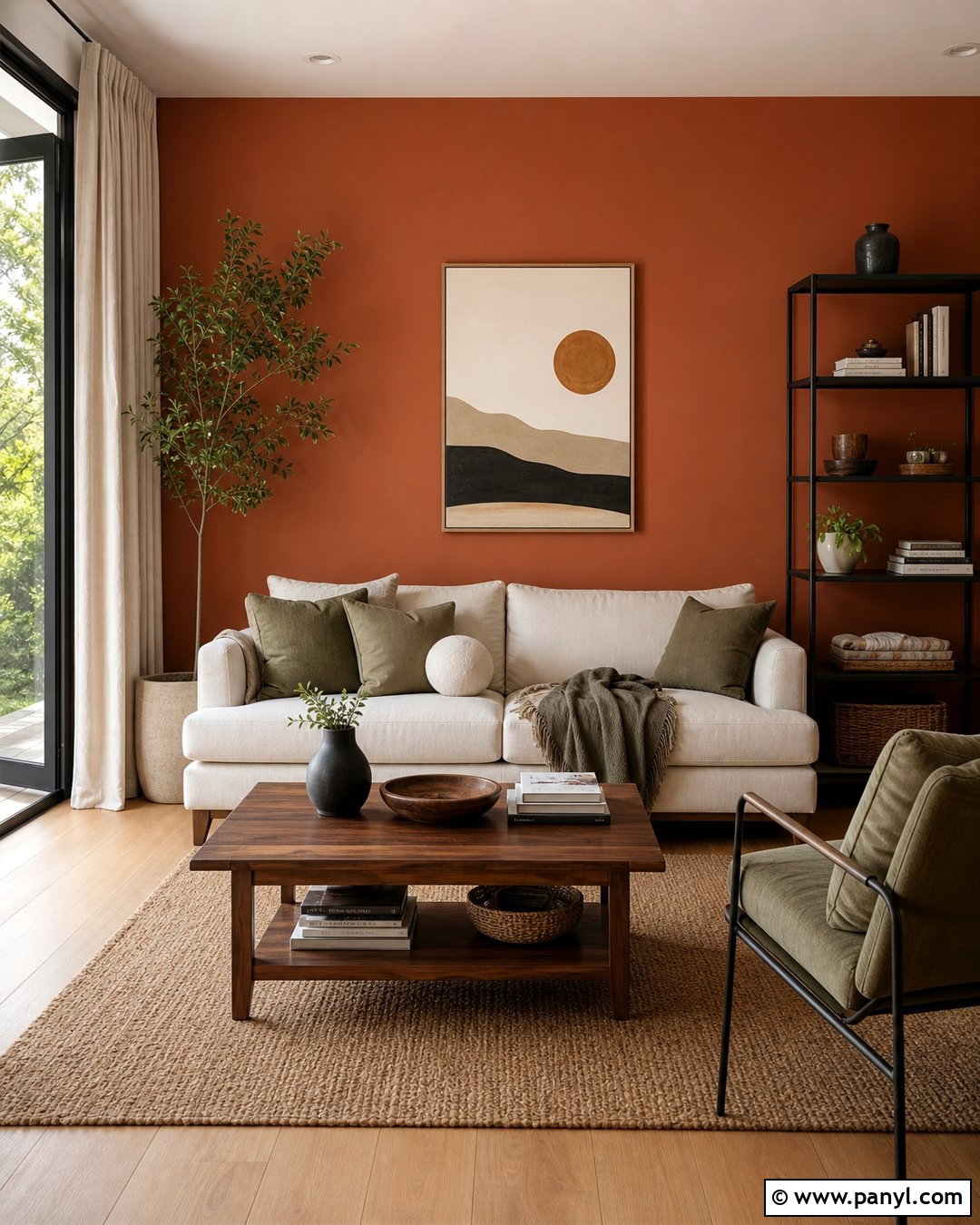
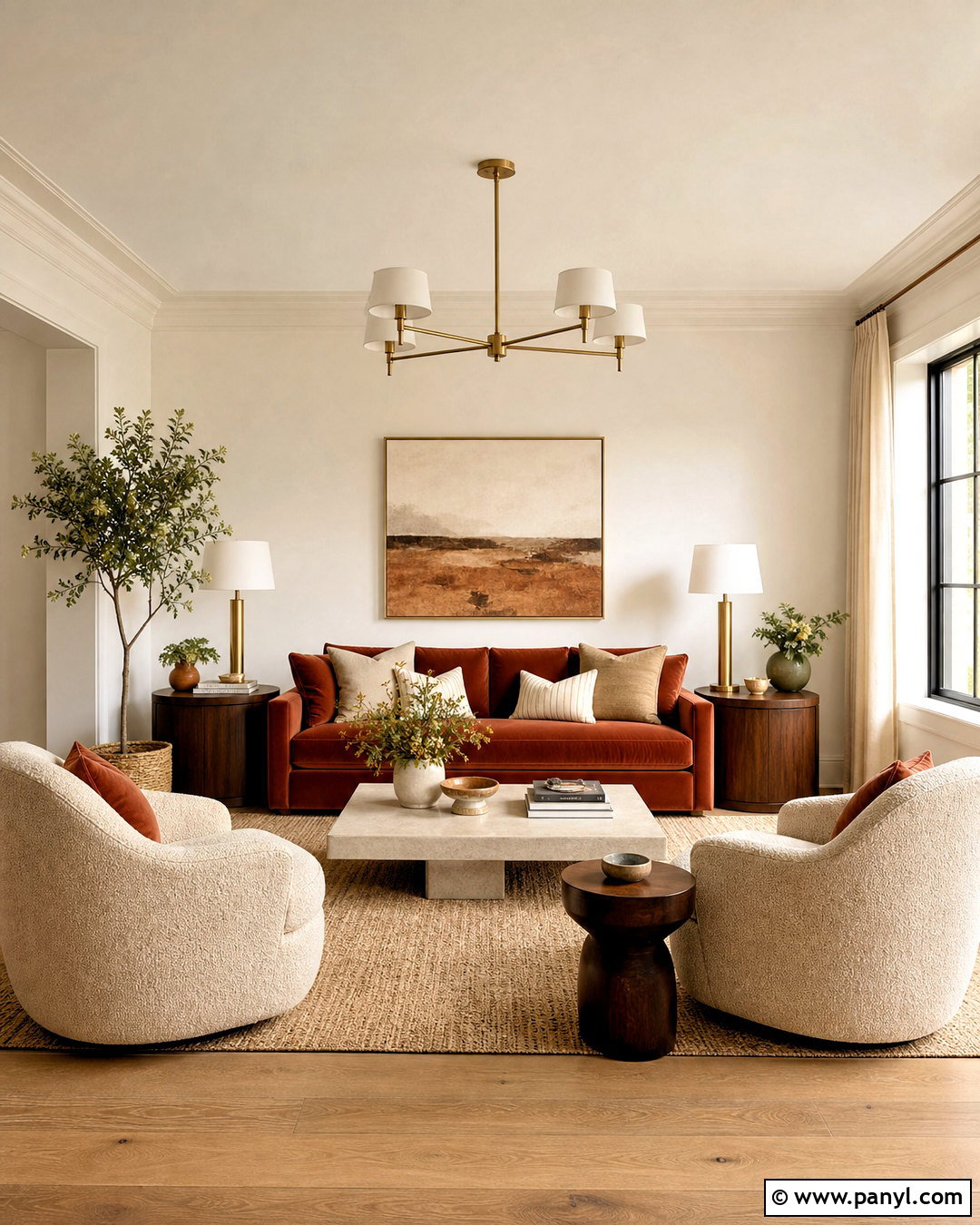
A warm terracotta accent wall gives a living room an earthy focal point without making it feel overly dark. Use the color behind a cream or oatmeal sofa, then balance it with warm white walls and light oak flooring. A natural jute rug, walnut coffee table, and linen curtains continue the relaxed palette. Add muted olive pillows and a few black metal accents for contrast. Terracotta works especially well when the room receives generous natural light, but choose a softer clay tone for a smaller space. Paint the baseboard and any picture molding on the feature wall in the same terracotta color. This creates a finished appearance rather than making the wall look disconnected from the rest of the room.
2. Navy Blue Bedroom Accent Wall
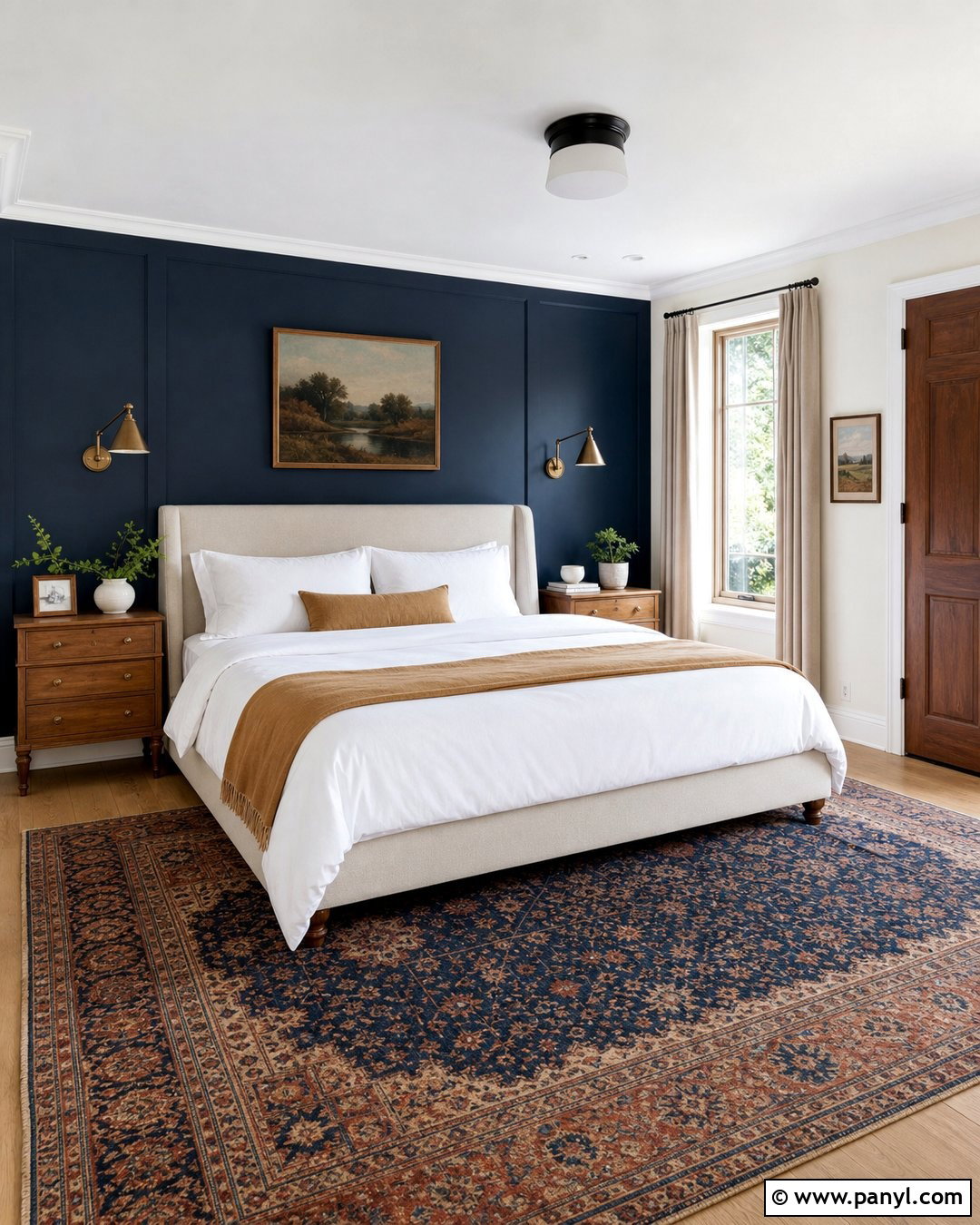
Deep navy paint creates a restful bedroom backdrop when it is paired with light, warm materials. Place the accent wall behind the bed so it naturally frames the main furniture piece. Choose an upholstered oatmeal headboard, crisp white bedding, and a camel-colored throw to keep the room inviting. Medium oak nightstands and brushed brass sconces add warmth against the cool blue. Continue the navy paint across the baseboard for a more intentional finish. The remaining walls can be soft ivory rather than bright white, which may produce harsh contrast. A vintage-inspired rug containing navy, beige, and muted rust ties everything together. Keep wall decor simple with one wide landscape print or a balanced pair of framed pieces above the headboard.
3. Olive Green Dining Room Accent Wall
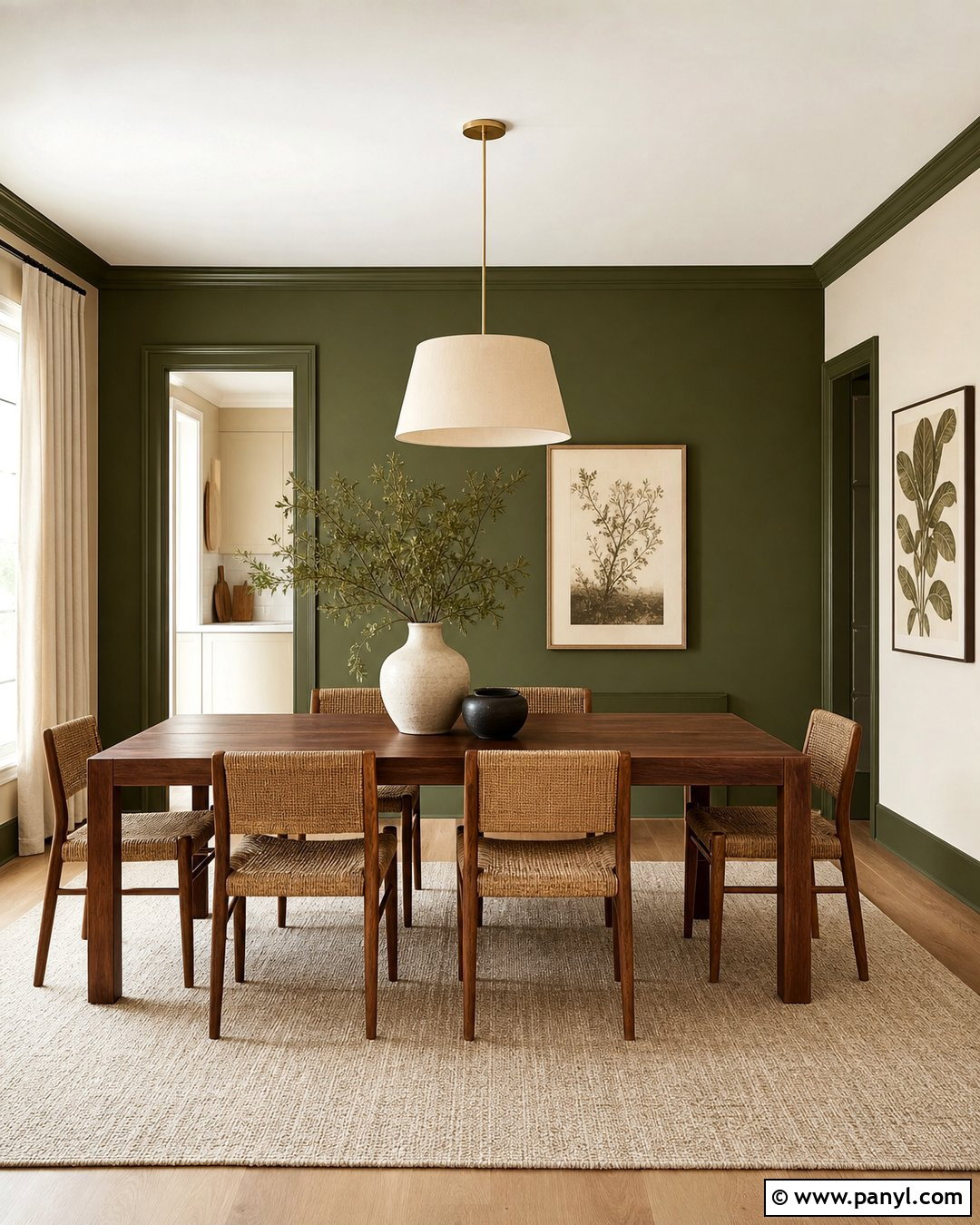
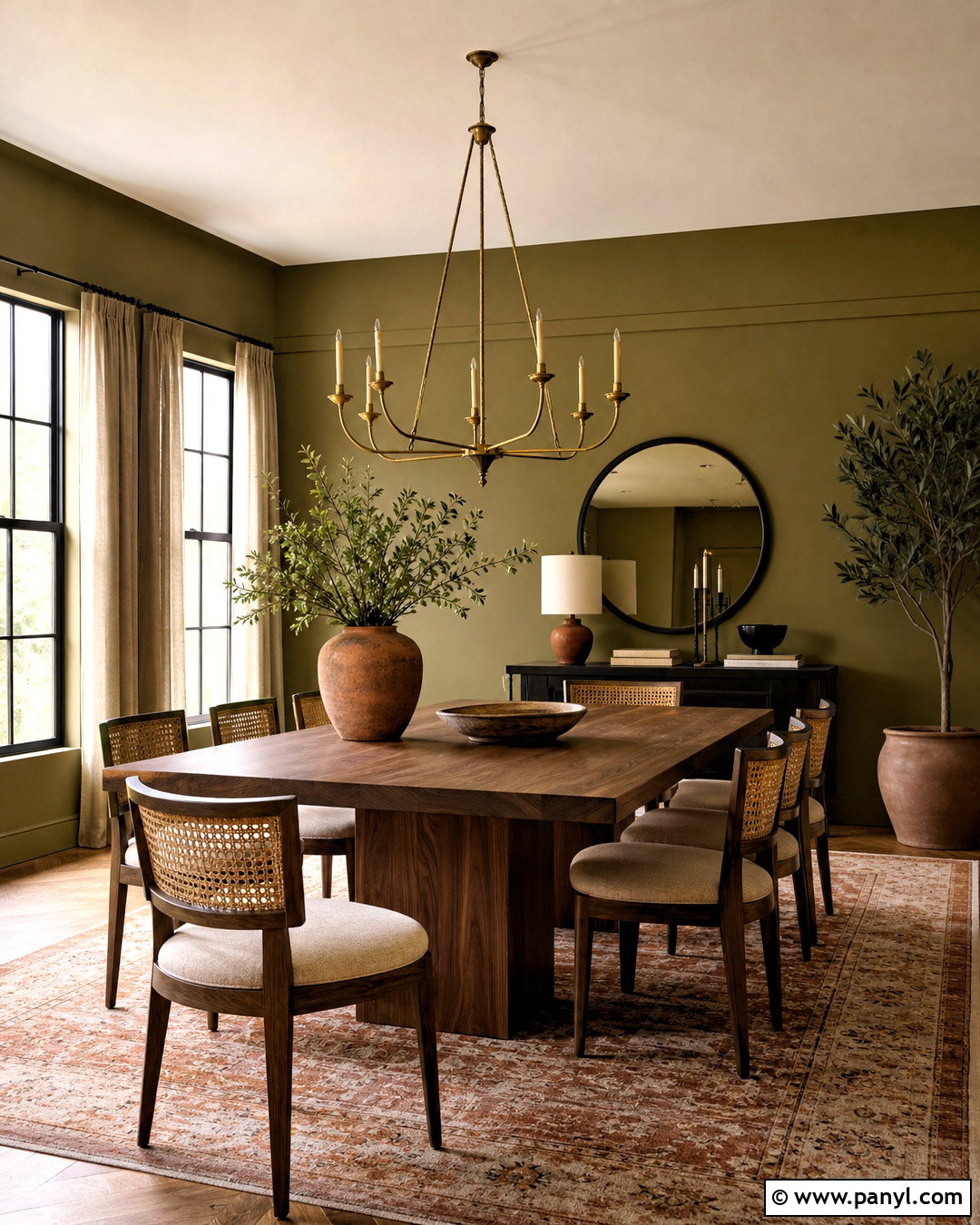
Olive green brings depth to a dining room while maintaining a grounded, natural atmosphere. Paint the wall behind a sideboard or dining table, including the trim and any decorative molding on that surface. Pair it with creamy surrounding walls, a medium walnut table, and woven dining chairs. A simple linen pendant light softens the darker paint and creates a comfortable center for the room. Display pottery, wood bowls, and botanical artwork rather than adding too many competing colors. A washable beige rug can define the dining area and brighten the floor. For a cohesive result, repeat olive through seat cushions or a table runner. This complete palette works with traditional, farmhouse, transitional, and organic modern interiors without depending on overly themed decorations.
4. Charcoal Fireplace Accent Wall
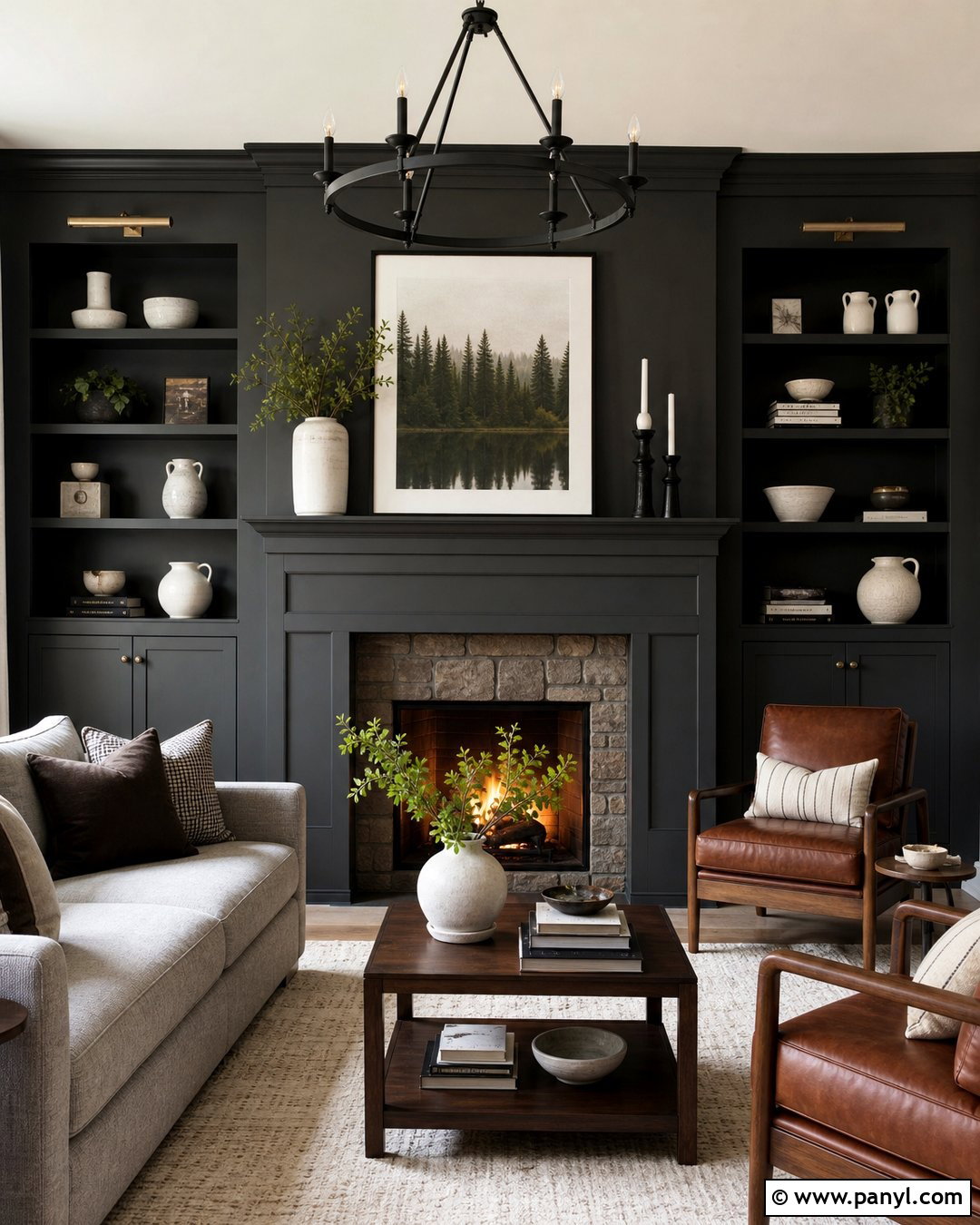
Does your fireplace disappear into a large neutral room? Charcoal paint can turn the entire fireplace wall into a strong architectural focal point. Paint the surrounding drywall, mantel, and built-in shelves in one consistent charcoal shade, while keeping the fireplace stone or tile visible. Furnish the room with a light gray sofa, cognac leather chairs, and a pale textured rug. Walnut tables and matte black lighting reinforce the deeper tones without making the space appear flat. Place warm white ceramics and a few natural wood objects on the shelves for controlled contrast. If the room receives limited daylight, choose a softer charcoal with warm undertones. Repeating the paint across connected features makes this accent wall feel built into the architecture instead of added afterward.
5. Sage Green Nursery Accent Wall
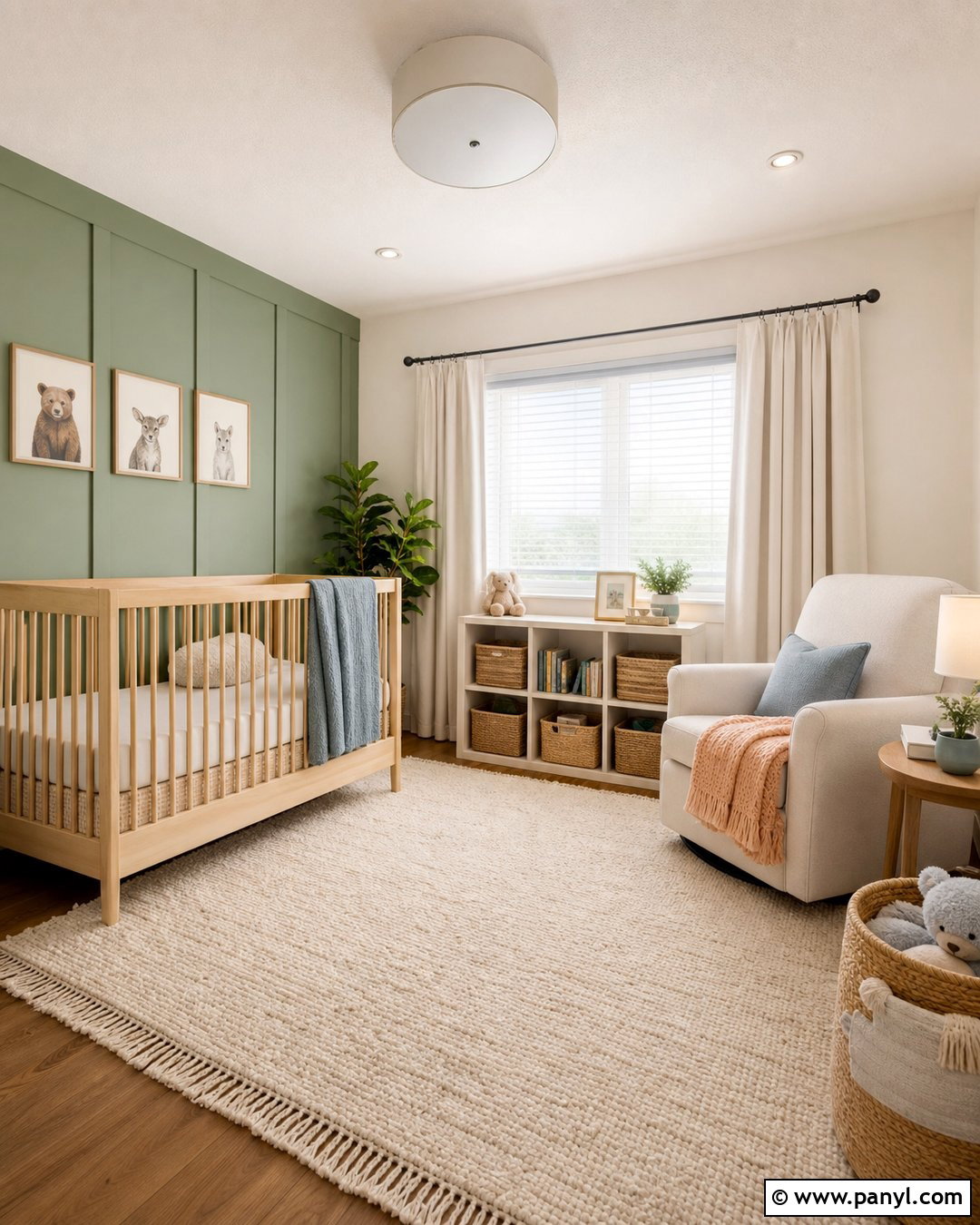
Soft sage green creates a gentle nursery that feels calm but not colorless. Use the accent paint on the crib wall, pairing it with warm white surrounding walls and natural maple furniture. An ivory wool rug, cream blackout curtains, and a comfortable oatmeal glider keep the room bright. Add small accents in dusty blue, pale peach, or muted mustard through storage baskets, crib sheets, and framed artwork. Instead of crowding the painted wall, hang two or three lightweight decorative pieces securely away from the crib. Choose washable eggshell paint to make routine cleaning easier. A woven ceiling light and simple wooden shelving complete the natural look. The finished room can easily transition into a toddler bedroom because the palette is not tied to a short-lived nursery theme.
6. Teal Home Office Accent Wall
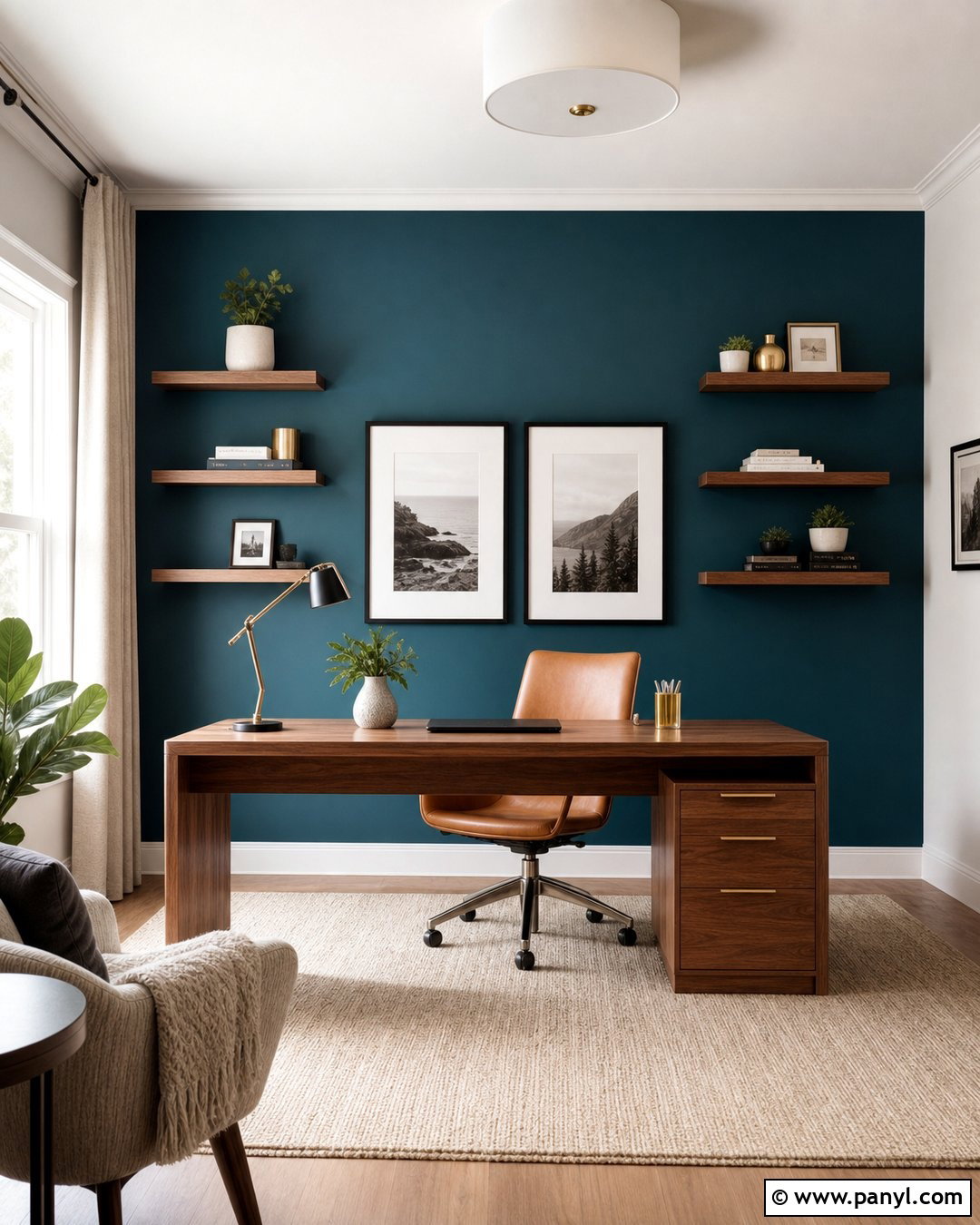
A rich teal accent wall can give a home office energy while clearly defining the workspace. Position a light oak or walnut desk against the painted wall and use warm white on the remaining surfaces. Floating wood shelves, closed file storage, and a comfortable tan desk chair create a useful setup without visual clutter. Add a cream flat-weave rug and full-length neutral curtains to balance the saturated color. Black frames, a focused desk lamp, and small brass details sharpen the overall design. Paint the baseboard teal so the wall reads as one complete feature. For open-plan rooms, the painted section can extend slightly beyond the desk and shelving, forming a clear visual zone. Repeat teal once in nearby artwork or upholstery to connect the office with the surrounding home.
7. Rust Orange Entryway Accent Wall
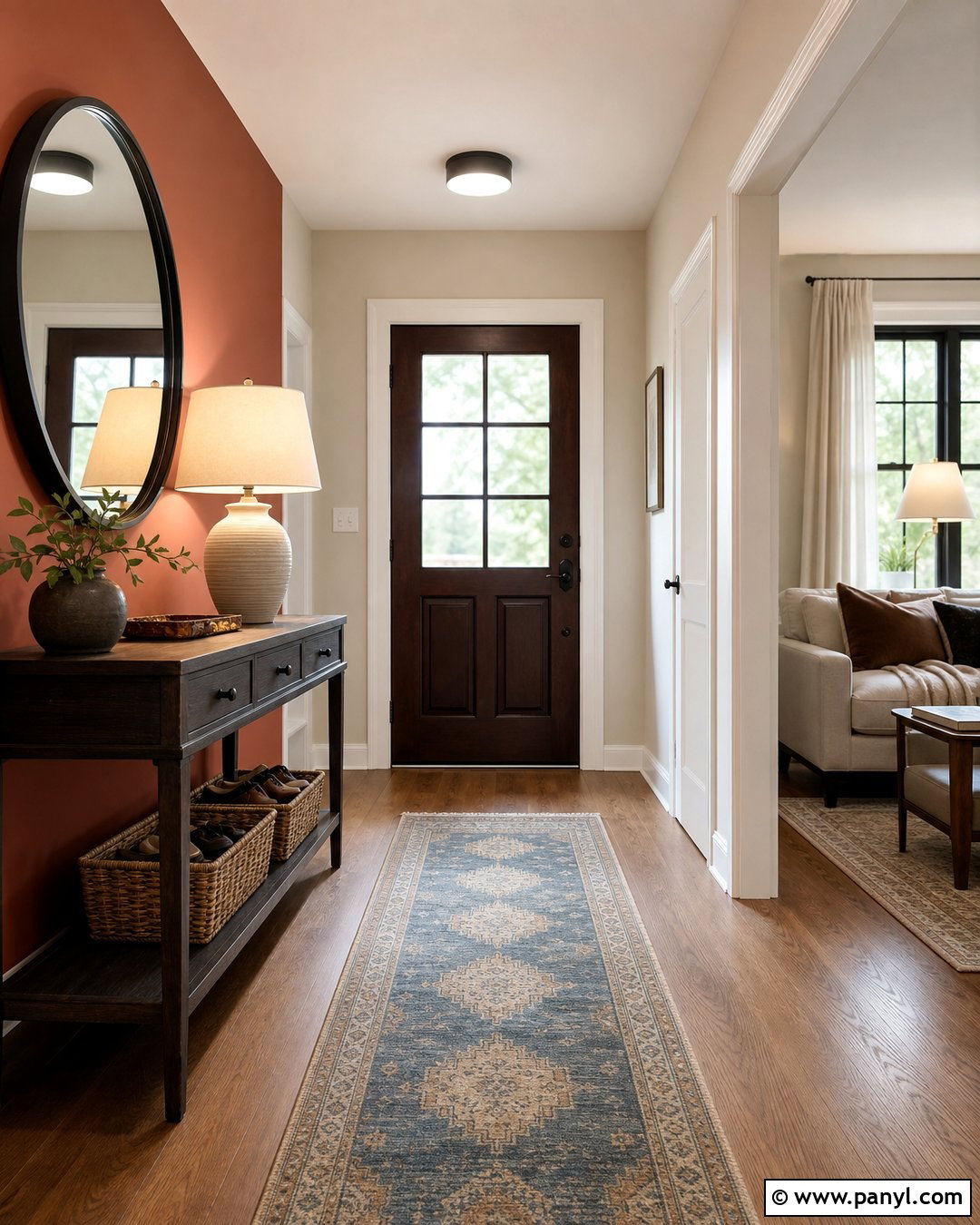
The entryway offers an ideal place to experiment with a warm rust orange accent wall. Paint the surface behind a narrow console, bench, or row of wall hooks to establish a welcoming arrival point. Pair the rich orange with creamy walls, medium oak flooring, and a vintage-style runner containing blue and beige. A dark wood console and round black-framed mirror provide structure, while woven baskets handle shoes and everyday accessories. Use simple ceramic lamps or a compact wall sconce for warm functional lighting. Repeat the rust color through one small pattern in the rug rather than filling the entry with matching decor. If the space is narrow, select a muted red-orange shade. It will provide character while remaining easier to coordinate with adjacent rooms.
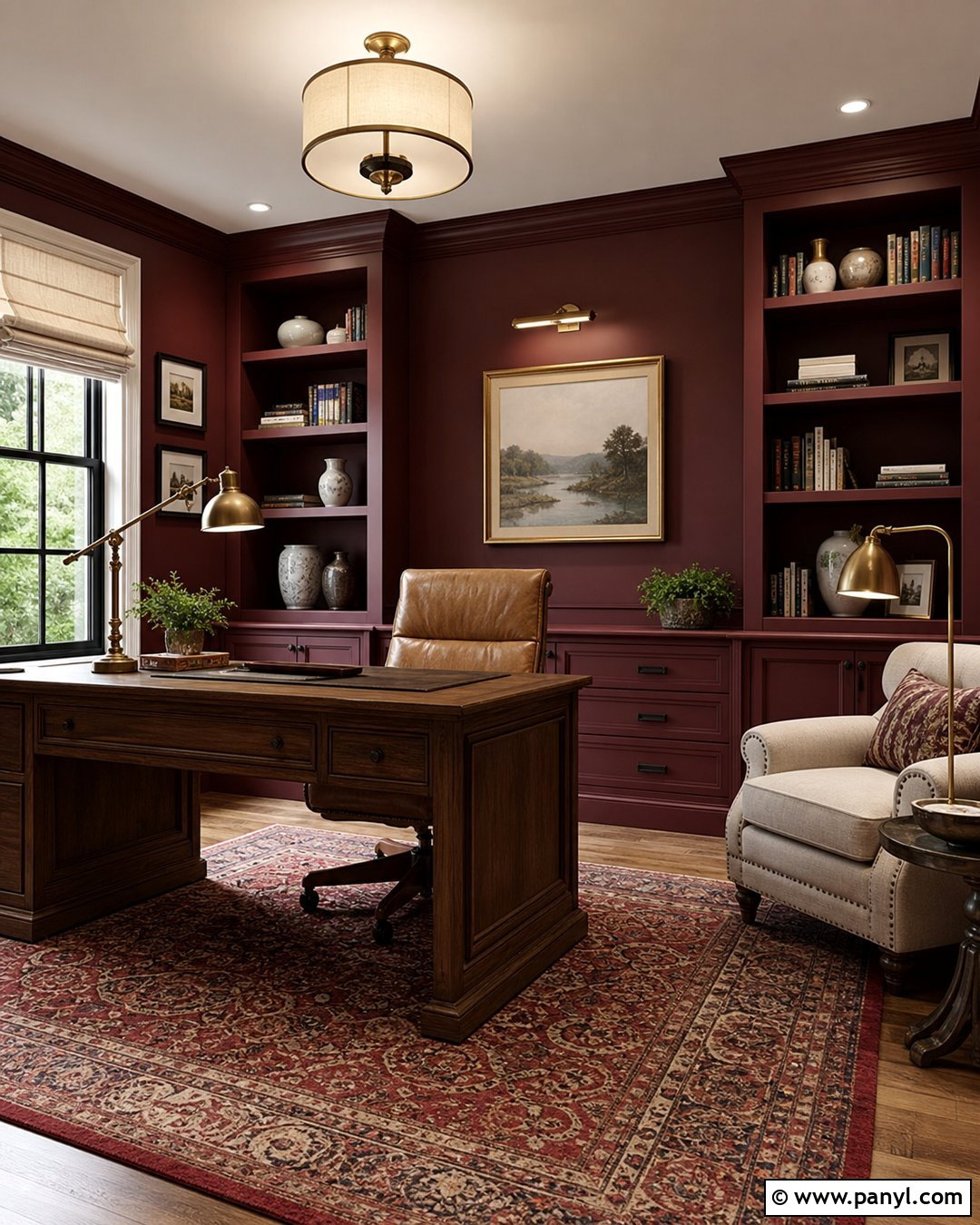
8. Burgundy Library Accent Wall
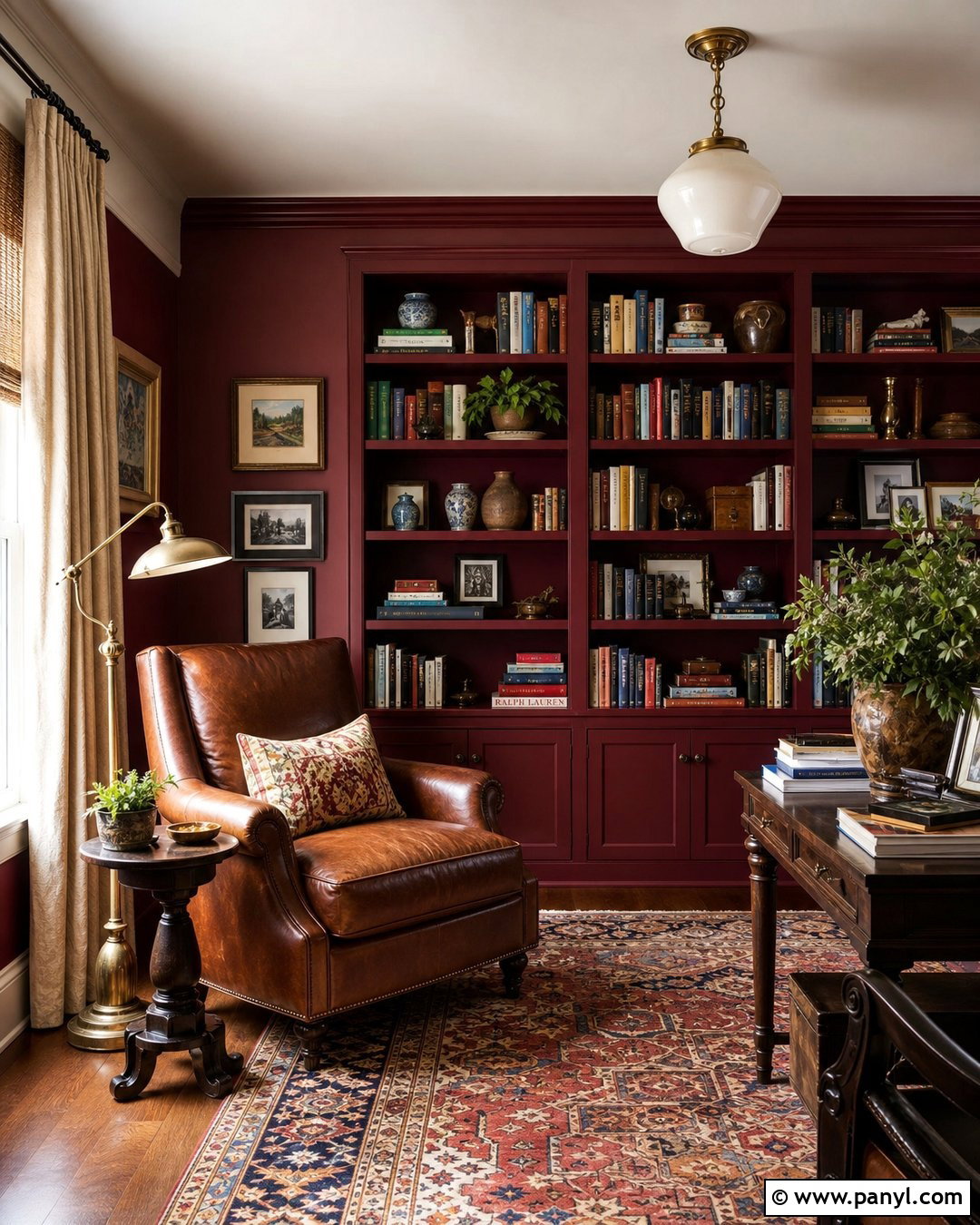
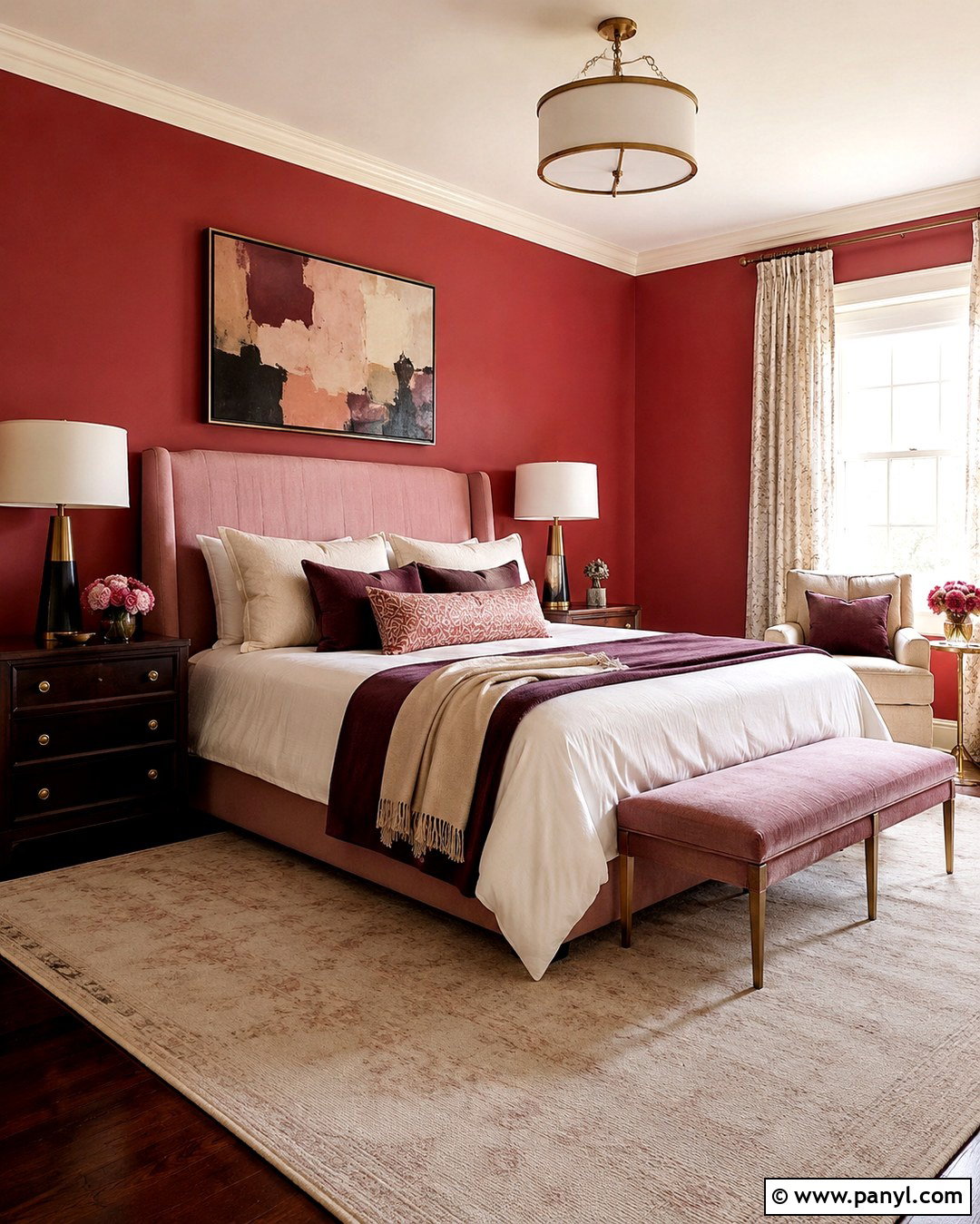
Burgundy paint can transform an ordinary reading area into a comfortable home library. Cover the wall behind the bookcases, then paint the shelving and trim in the same deep red for a seamless built-in effect. Furnish the space with a caramel leather chair, a small walnut side table, and a traditional patterned rug. Cream curtains and a warm white ceiling prevent the darker palette from becoming heavy. Arrange books with decorative boxes, framed photographs, and ceramic objects, leaving some open space on each shelf. An aged brass floor lamp supplies focused reading light and complements the red undertones. This design works best when burgundy appears in a contained architectural zone. Nearby walls should remain quieter so the library feature becomes the clear destination within the room.
9. Chocolate Brown Bedroom Accent Wall
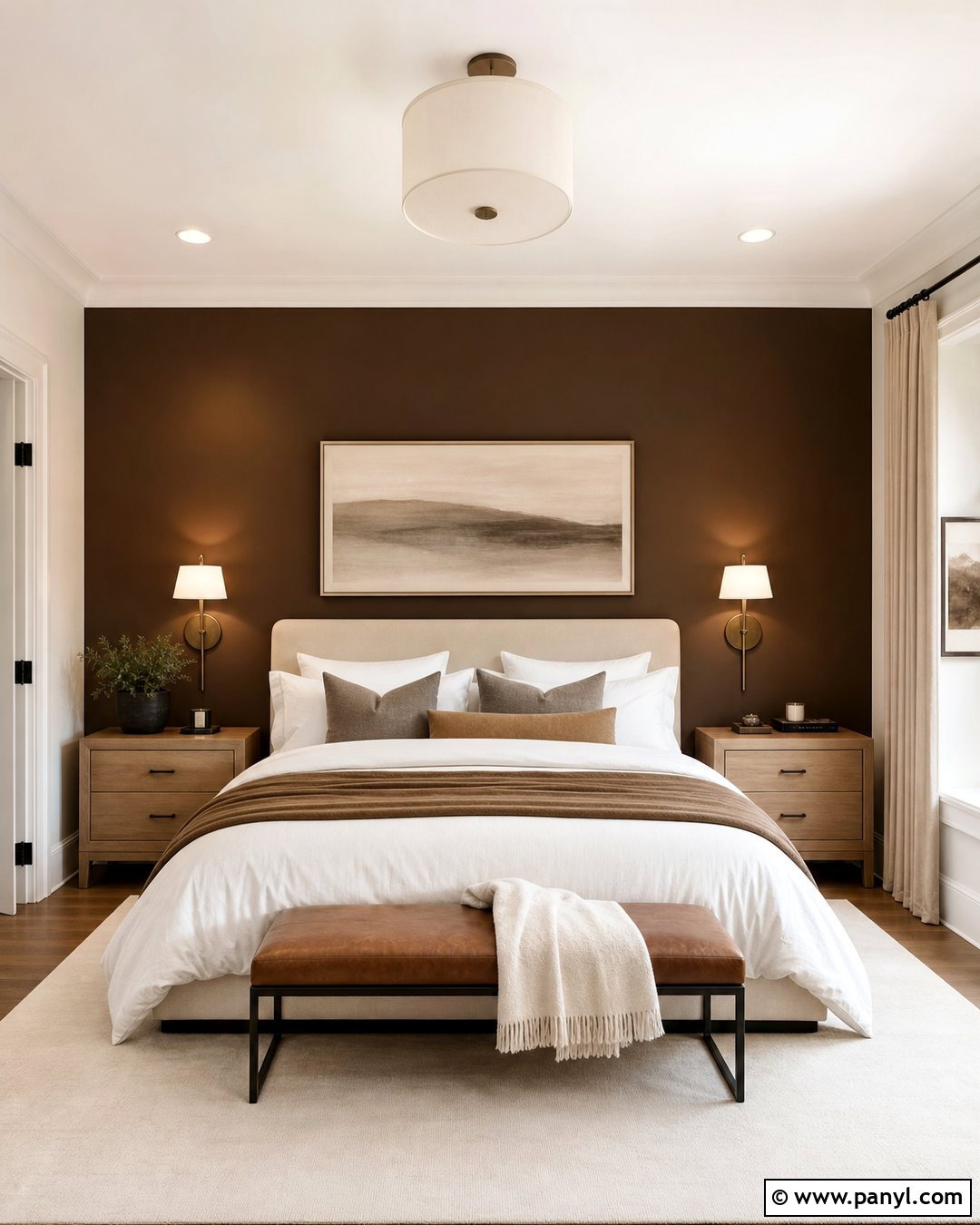
Chocolate brown paint can make a bedroom feel warm, tailored, and surprisingly modern. Apply it behind the bed and continue it onto the baseboard for a clean visual frame. Choose a low cream headboard, white cotton sheets, and layered bedding in camel, beige, and soft taupe. Light oak nightstands prevent the dark wall from dominating, while bronze sconces add subtle shine. Ground the arrangement with a large ivory rug that extends beyond both sides of the bed. Minimal abstract artwork in cream and brown can reinforce the palette without disappearing against the wall. Use warm white on the remaining walls and ceiling. In smaller bedrooms, select a milk-chocolate tone rather than an almost-black brown, preserving the cocooning effect while keeping the room open and comfortable.
10. Black Kitchen Accent Wall
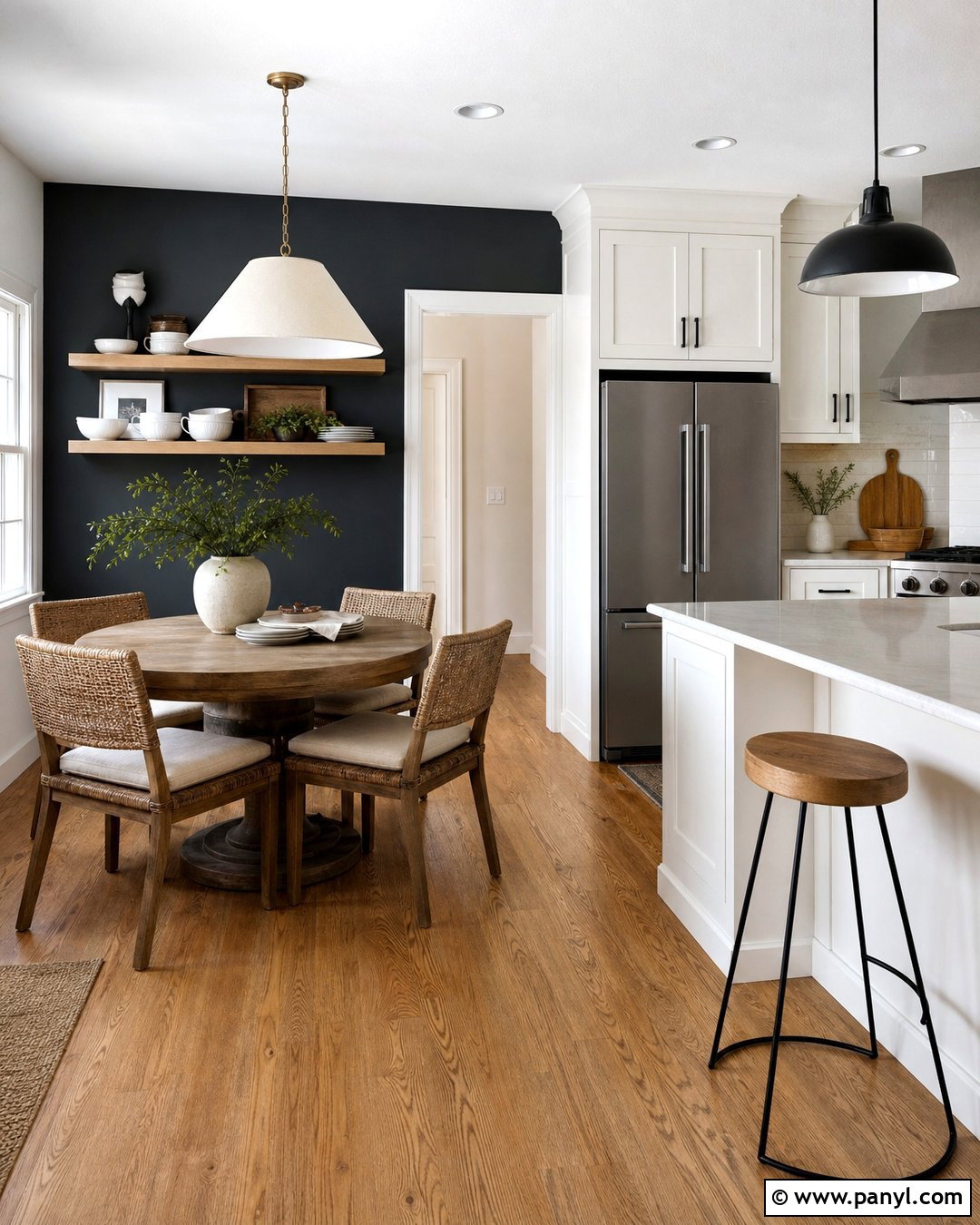
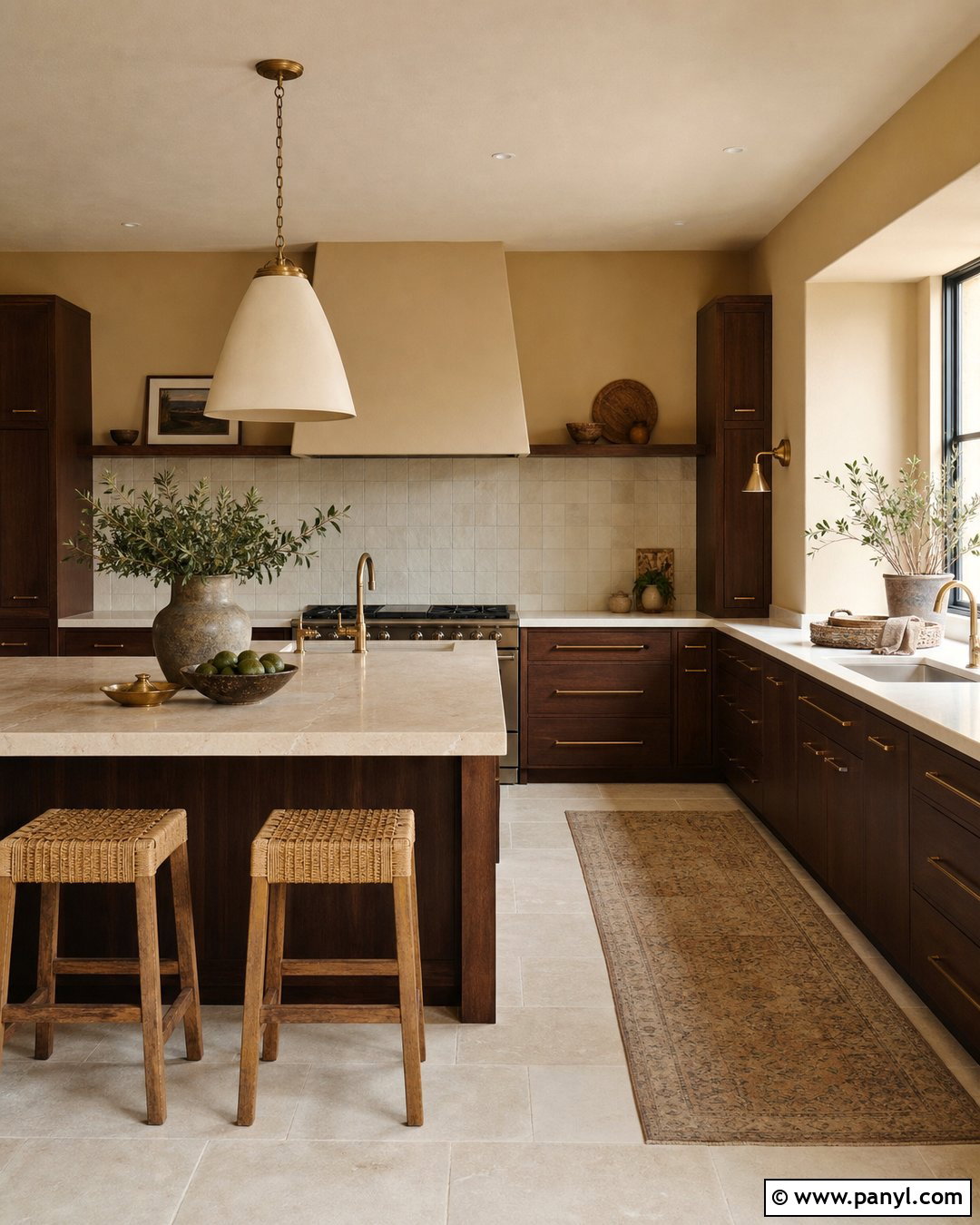
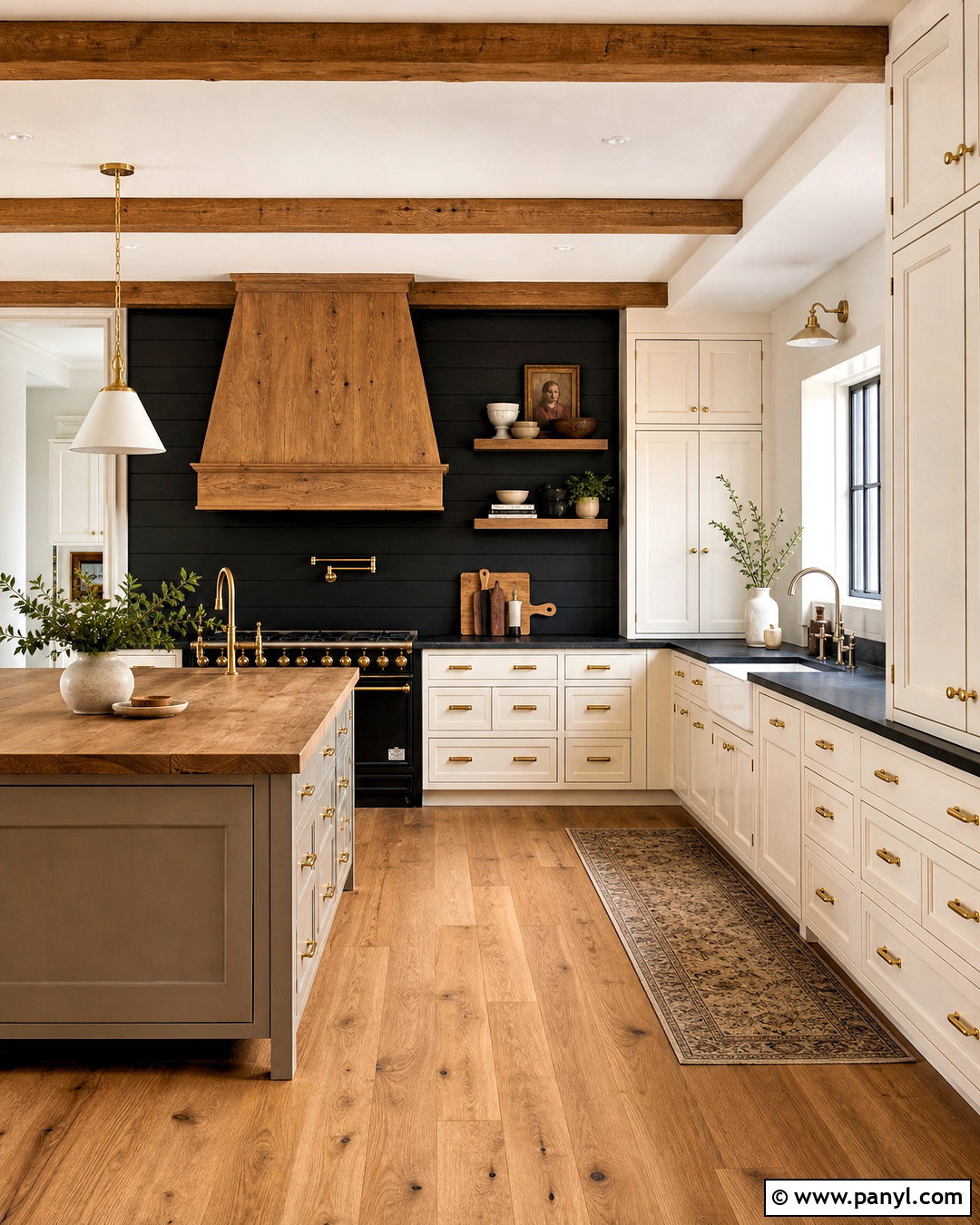
A matte black accent wall can give an eat-in kitchen a crisp focal point when lighter surfaces surround it. Use the paint behind a breakfast table, coffee station, or open shelving rather than covering a busy cooking wall. Pair it with warm white cabinets, pale quartz counters, natural oak flooring, and simple black hardware. A round wood table with woven chairs introduces softness, while a cream pendant keeps the eating area visually light. Install floating oak shelves on the black wall and display white dishes, glassware, and a few wooden serving pieces. Avoid filling every inch with accessories. The contrast works best when the arrangement remains edited. Repeat black through window frames, stools, or lighting so the painted feature connects naturally with the rest of the kitchen.
11. Dusty Blue Bathroom Accent Wall
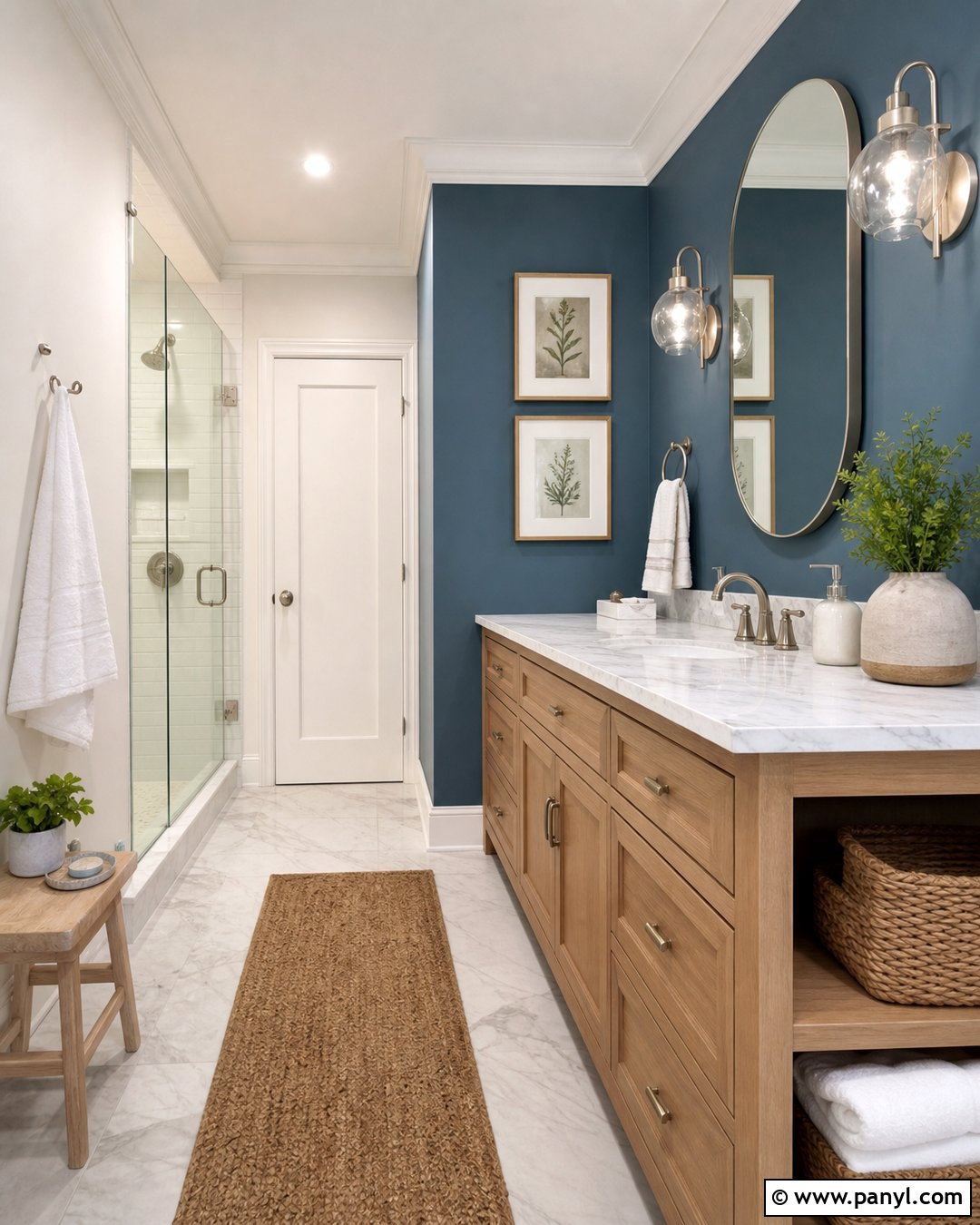
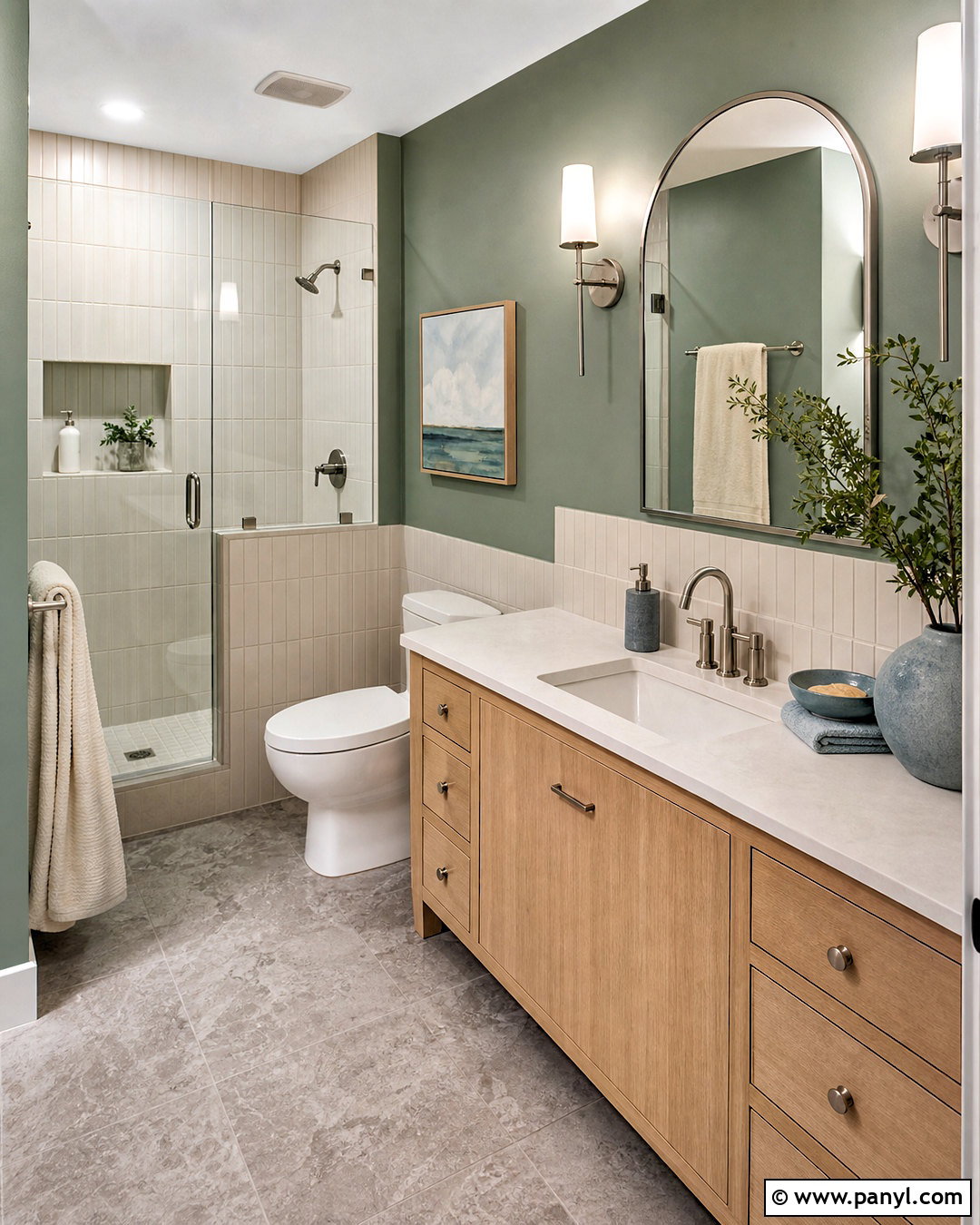
Dusty blue paint can soften a bathroom while providing more personality than an all-white scheme. Choose the vanity wall as the feature and paint it from baseboard to ceiling. A white oak vanity, pale marble-look counter, and brushed nickel fixtures create a fresh, balanced combination. Use creamy white tile in the shower and warm off-white paint on the remaining walls. A rounded mirror and two clear glass sconces keep the blue surface visible. Add a simple striped bath mat, white towels, and one or two natural baskets for texture. Select moisture-resistant bathroom paint in an eggshell or satin finish. For a more integrated look, paint the bathroom door or vanity-side trim in the same dusty blue, creating a thoughtful color connection without overwhelming the compact space.
12. Mustard Yellow Playroom Accent Wall
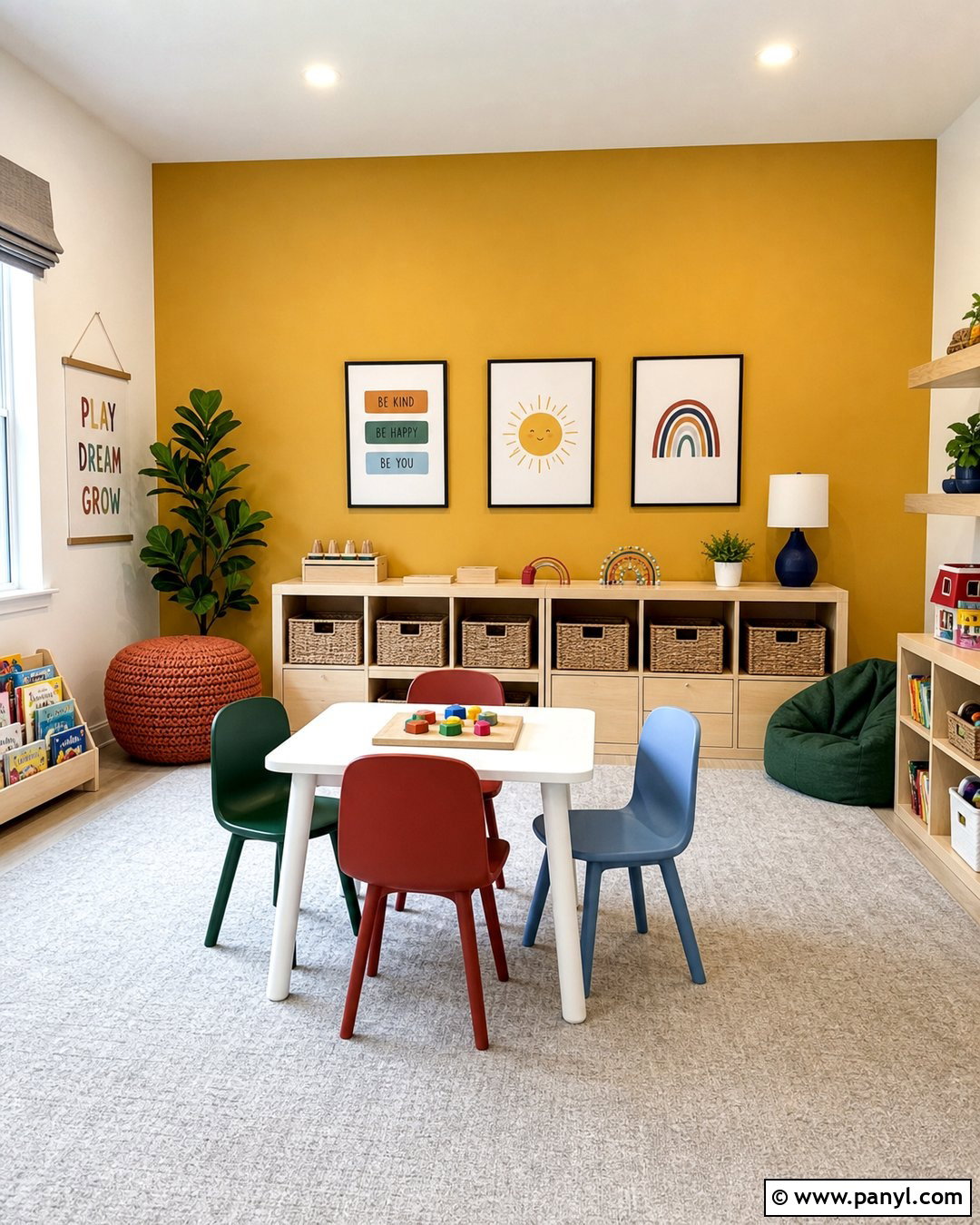
Mustard yellow gives a playroom cheerful color while feeling warmer and more sophisticated than a bright primary yellow. Use it on the wall behind low toy storage, then balance it with warm white walls and a washable light gray floor or rug. Choose natural birch cubbies, labeled woven baskets, and a small white activity table with colorful chairs. Add accents in muted blue, brick red, and forest green through cushions, books, and bins. Keep taller furniture securely anchored and leave the middle of the room open for play. A row of simple framed prints can decorate the yellow wall without making it chaotic. This coordinated palette remains lively enough for children while allowing the room to blend comfortably with the design of nearby family spaces.
13. Lavender Guest Bedroom Accent Wall
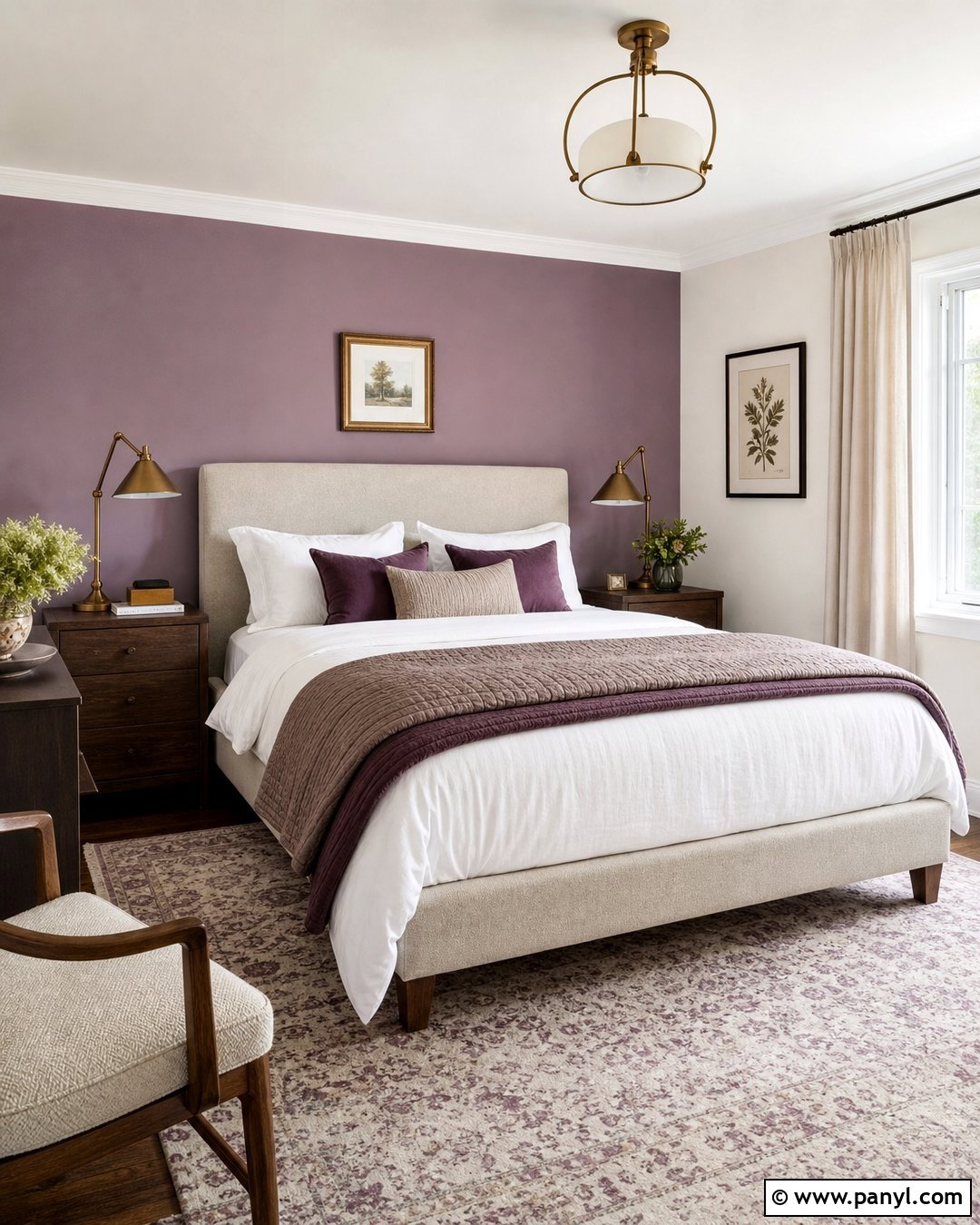
Muted lavender creates a guest bedroom that feels restful, light, and different from predictable gray or beige. Paint the headboard wall in a dusty lavender with warm undertones, then use soft ivory throughout the rest of the room. An oatmeal upholstered bed, white bedding, and a quilt containing taupe and plum establish a layered but uncomplicated palette. Add walnut nightstands and antique brass lamps to warm the cooler wall color. A pale patterned rug and natural linen curtains provide gentle texture. Keep artwork simple, choosing botanical or abstract pieces with small amounts of lavender. One plum-colored pillow is enough to reinforce the wall. The overall design should feel comfortable and adaptable, making the room suitable for different guests without appearing overly delicate or strongly themed.
14. Coral Guest Room Accent Wall
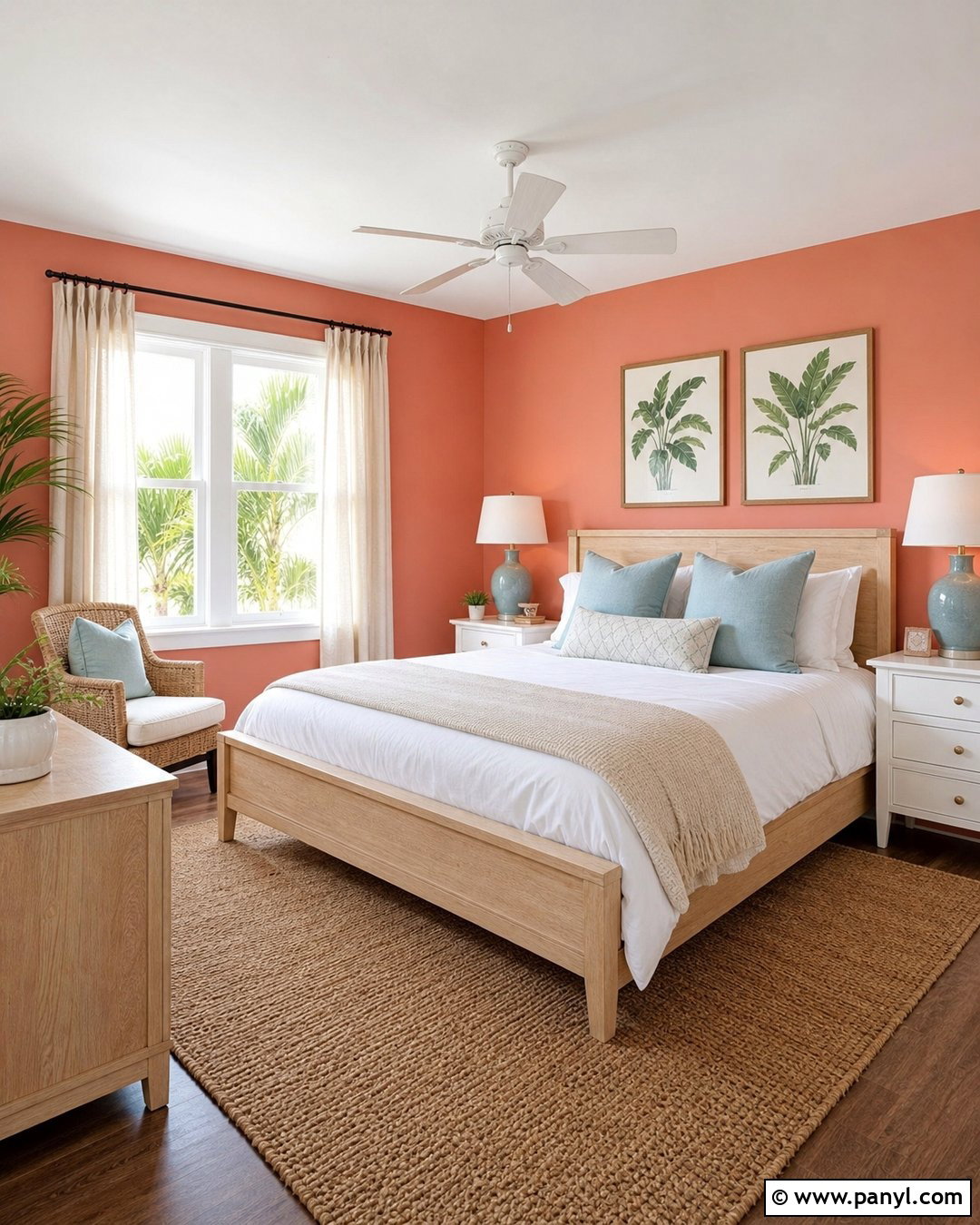
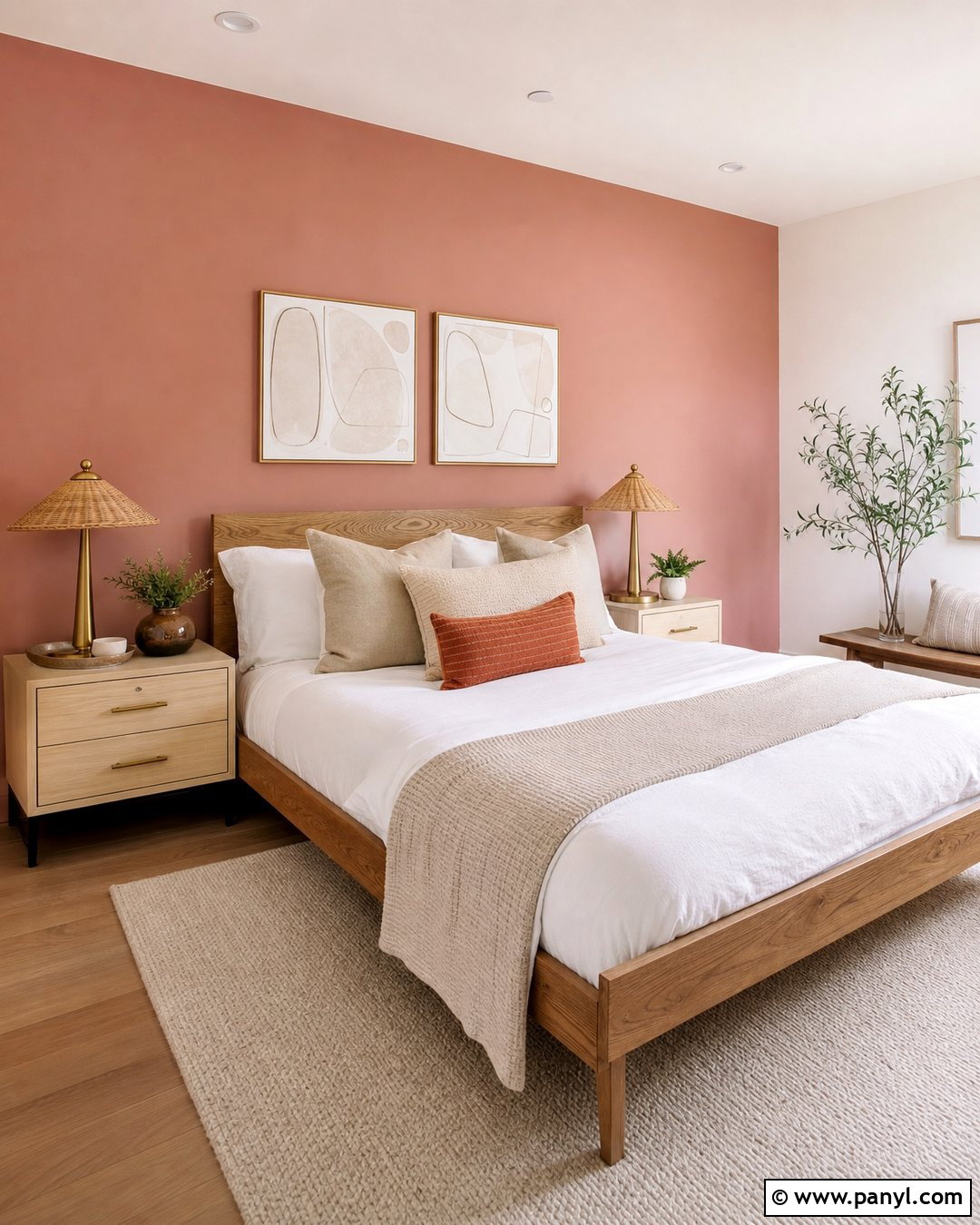
A softened coral accent wall can make a guest room feel bright, welcoming, and relaxed. Choose a clay-based coral rather than a vivid pink-orange, especially if the room receives strong sunlight. Place a simple rattan or light oak bed against the painted wall and layer it with white bedding, a sand-colored coverlet, and pale blue pillows. Natural linen curtains and a woven rug maintain an airy coastal influence without relying on themed accessories. Add white nightstands and ceramic lamps for visual balance. Small botanical prints in oak frames can decorate the coral wall while leaving breathing room around the headboard. Repeat the accent color in one patterned throw or decorative bowl. This keeps the palette connected without turning every object into an exact color match.
15. Forest Green TV Accent Wall
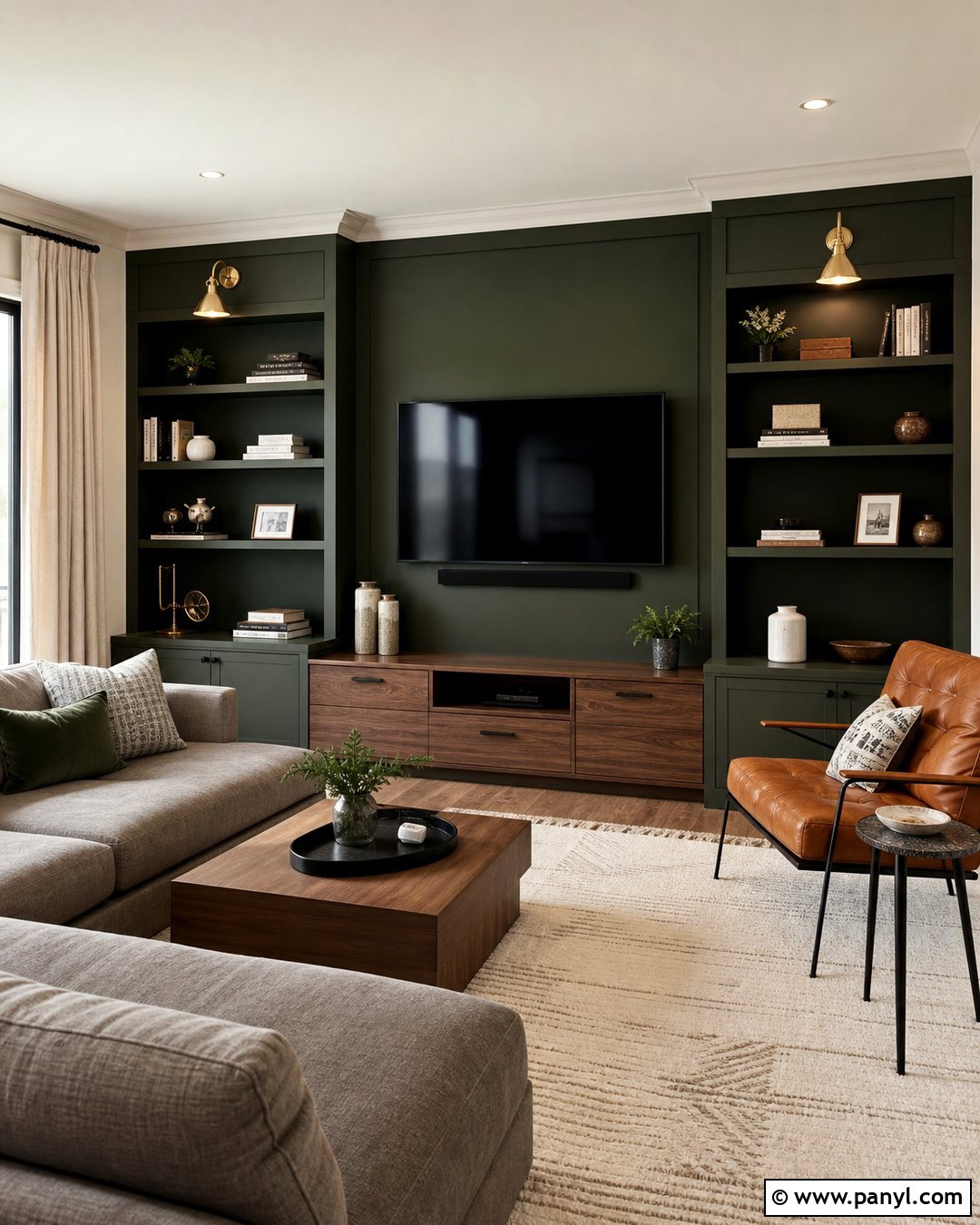
Forest green paint helps a television blend into a living room while giving the media wall greater depth. Paint the entire wall, including the baseboard and any built-in cabinets, in the same rich green. Position a low walnut console beneath the TV and keep visible equipment contained in closed storage. Furnish the room with a warm gray sectional, cognac leather chair, and cream textured rug. Brass picture lights or slim sconces can add warmth on either side of the screen. Use a few large decorative objects rather than many small accessories. The surrounding walls should be warm white or pale greige. Repeat forest green through one patterned pillow or a section of the rug, ensuring the media wall feels connected to the seating area rather than visually isolated.
16. Greige Tonal Accent Wall
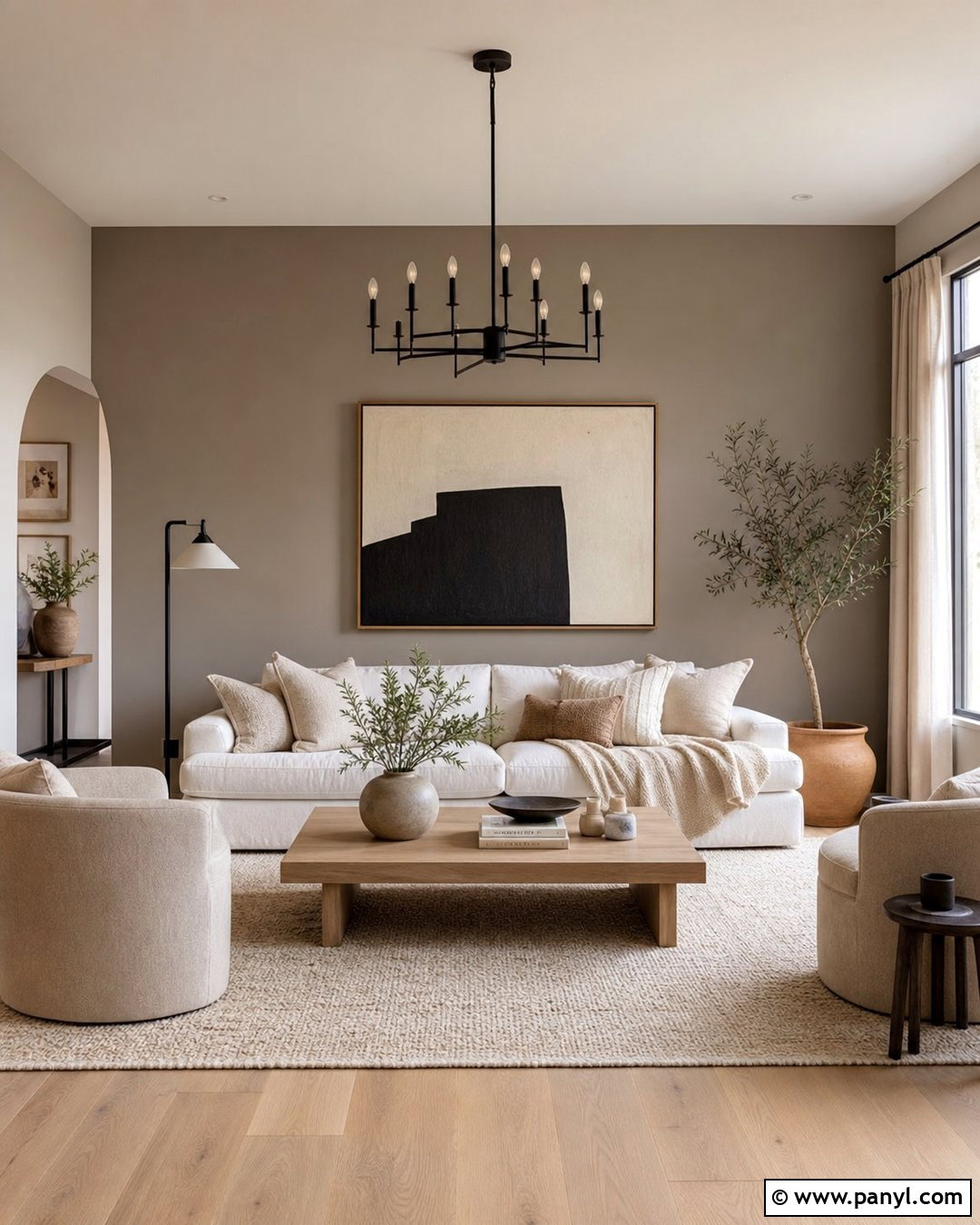
An accent wall does not have to be dramatically darker than the rest of the room. A tonal greige treatment creates quiet depth in a neutral living room while preserving a calm, spacious feeling. Paint the focal wall in a medium warm greige and use a lighter version of the same undertone on the other walls. Pair it with an ivory sofa, oatmeal chairs, a pale oak coffee table, and layered cream textiles. Black metal lighting provides necessary definition, while ceramic decor in beige and brown adds subtle variation. Choose oversized artwork with restrained earthy colors for the accent wall. This approach works especially well in open layouts where a bold color might interrupt visual flow. The difference between wall colors should remain noticeable but soft in changing light.
17. Two Tone Accent Wall
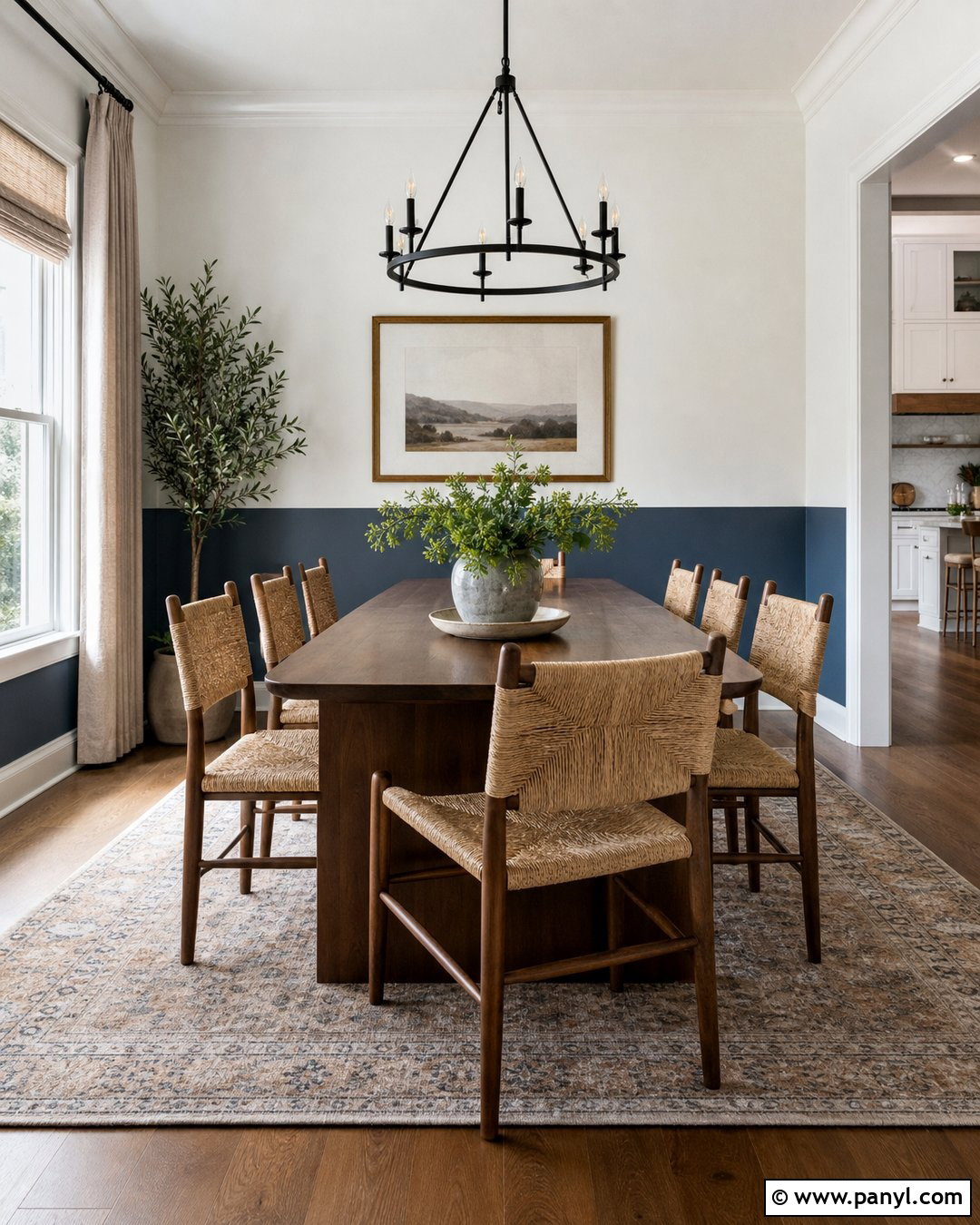
A two-tone accent wall can imitate the structure of paneling without requiring wood trim or carpentry. Paint the lower third in a deep blue-gray and the upper portion in warm white, creating a straight horizontal division around chair-rail height. Use this treatment behind a dining table or entryway bench where the lower color can visually anchor furniture. Pair it with walnut wood, woven seating, and a neutral patterned rug. Repeat blue-gray in a nearby lamp, vase, or artwork. Carefully measure the line from the floor and seal painter’s tape firmly before painting. For stronger architectural detail, paint the baseboard in the darker shade. The completed room should combine the divided wall with balanced furnishings, not leave the painted treatment standing alone without context.
18. Painted Arch Accent Wall
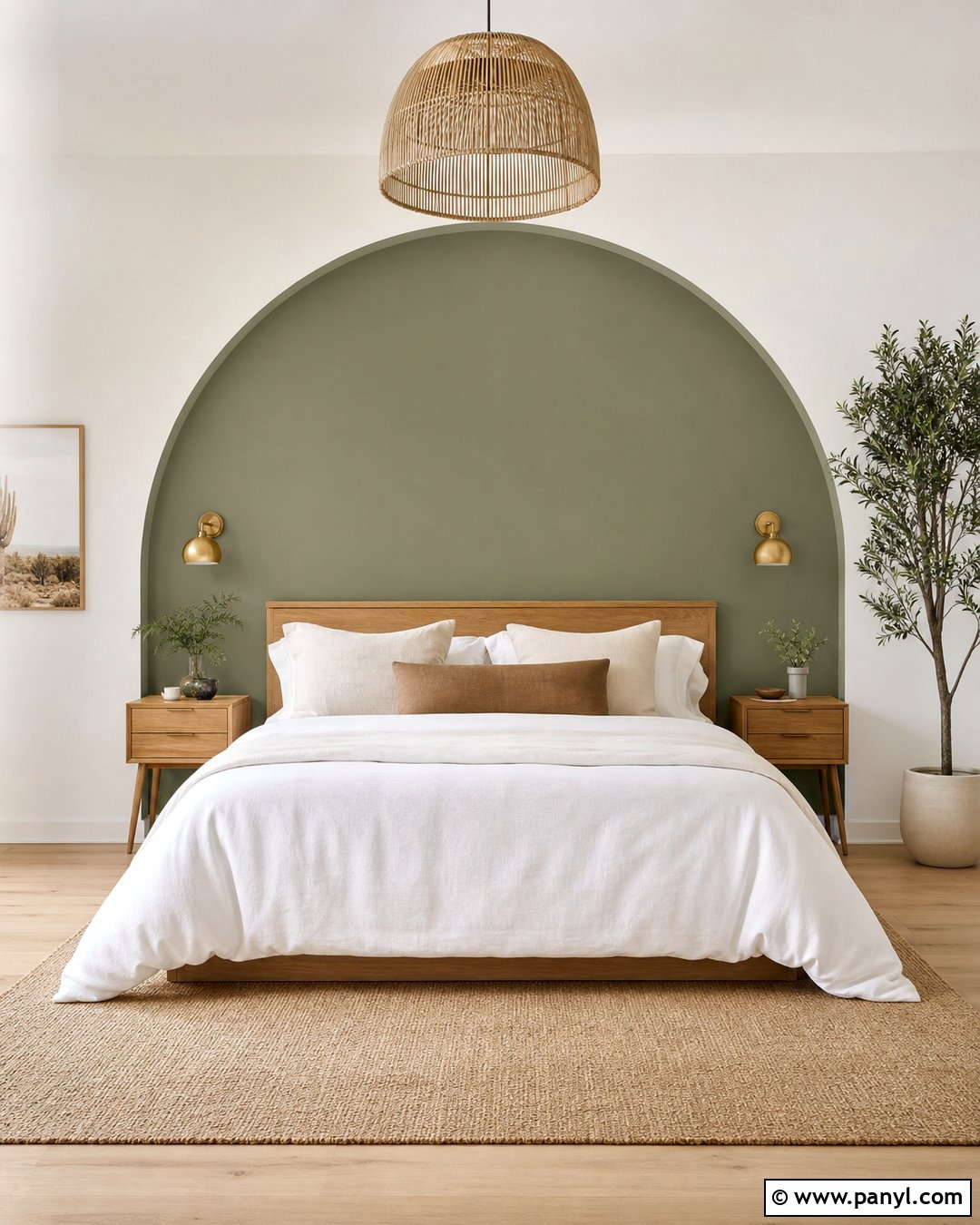
A painted arch can frame a bed, desk, reading chair, or console without covering an entire wall. For a bedroom, create a wide rounded arch in muted sage green behind a low oak headboard. Keep the surrounding wall warm white and make the arch slightly wider than the bed and nightstands. White bedding, tan linen pillows, and brass sconces complete the simple composition. The arch should begin at the baseboard and rise high enough to feel connected to the room’s proportions. Use a string-and-pencil method or a large template to mark an even curve before painting. Repeat sage in one throw or rug detail. By centering furniture within the painted shape, the arch becomes a purposeful architectural frame instead of an unrelated decorative patch.
19. Geometric Color Block Accent Wall
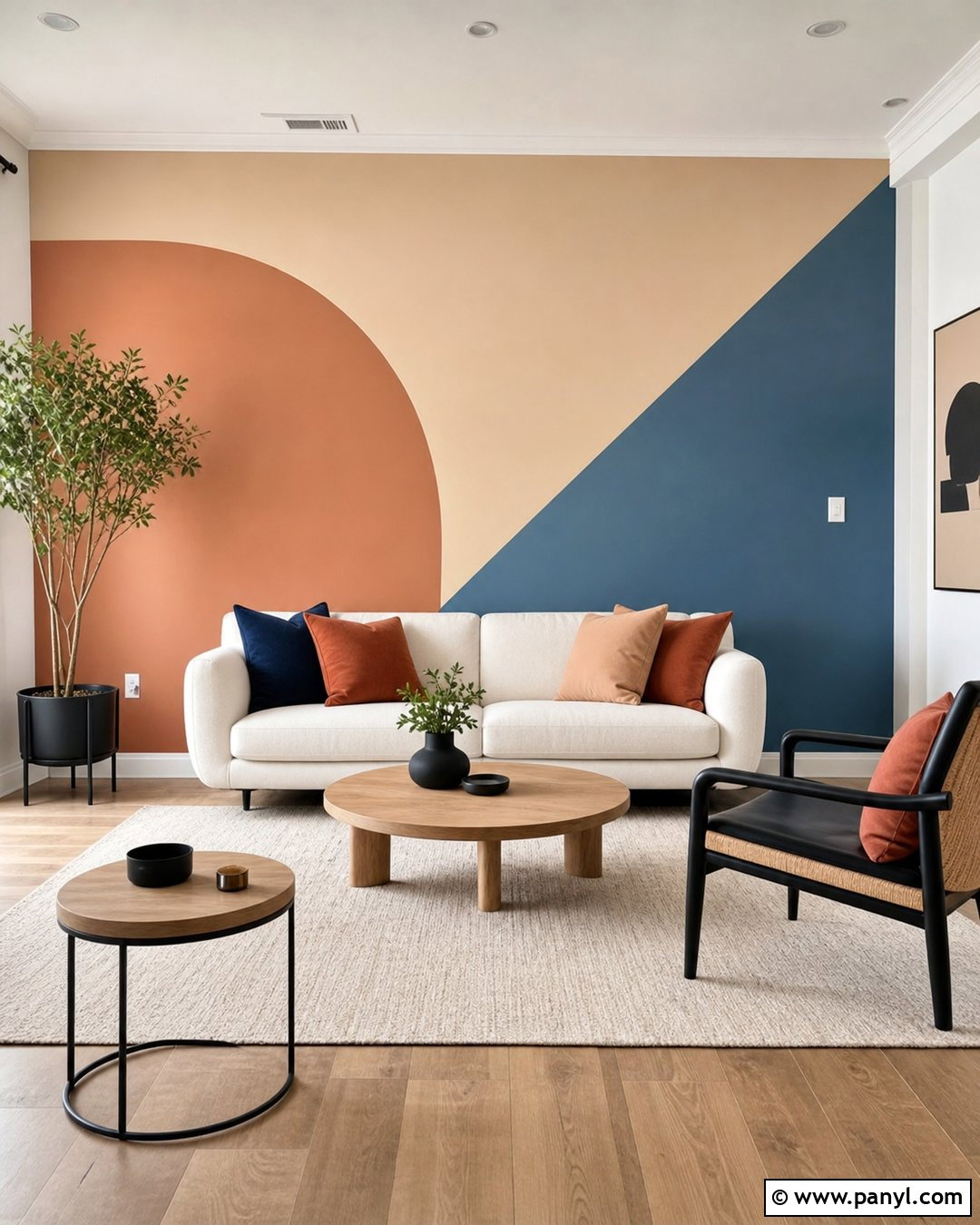
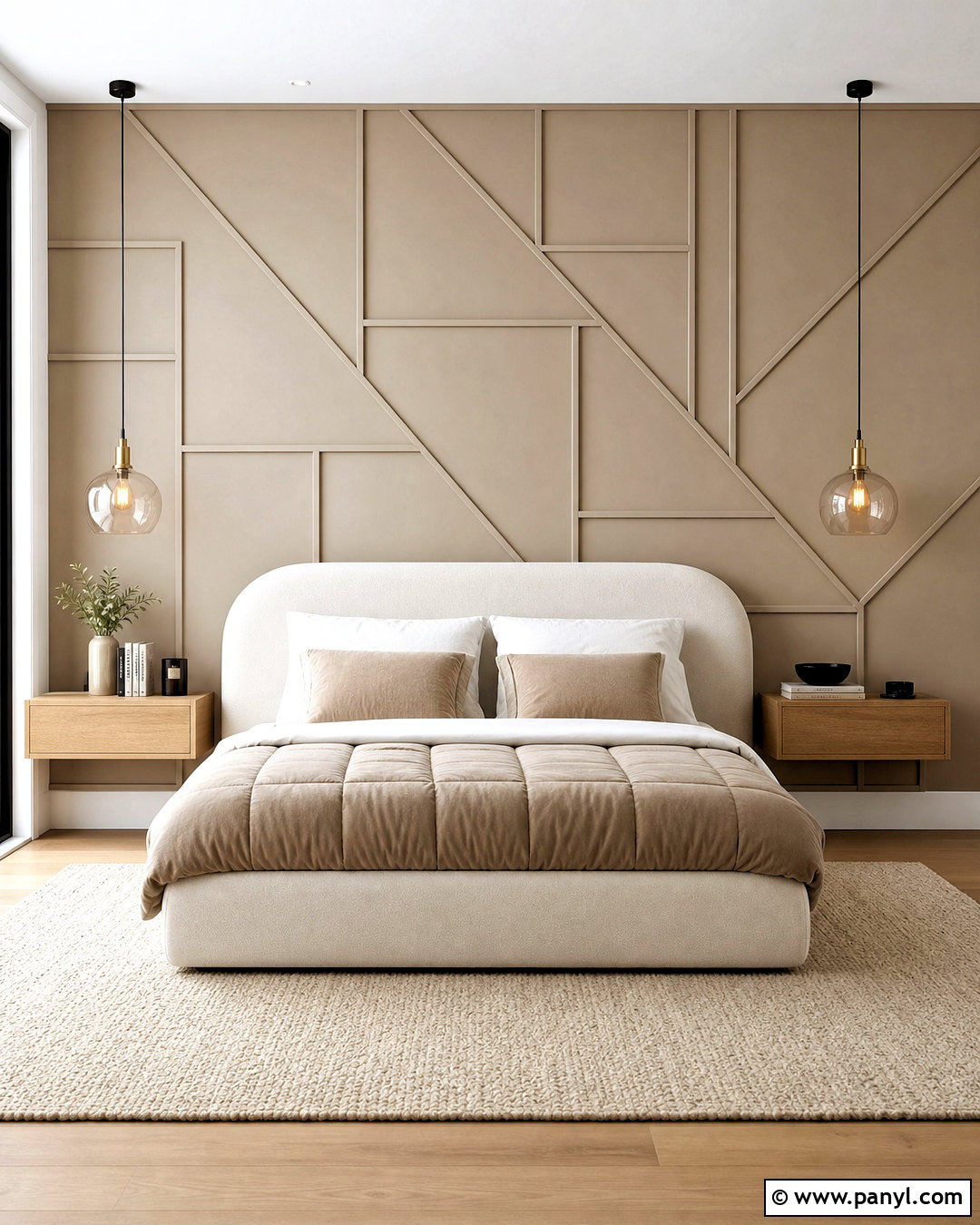
Geometric color blocking turns a blank wall into a modern painted feature while still supporting the entire room. Build the design around three coordinated shades, such as warm beige, muted terracotta, and dusty blue. Use large rectangles or angled sections rather than many small shapes, which can look visually busy. Place the treatment behind a streamlined sofa, console, or home office desk. Choose neutral furniture, light wood, and simple black accents so the wall remains the main pattern. Repeat each paint color through a limited number of pillows, books, or accessories. Sketch the arrangement first and use a level to position tape accurately. Keeping the shapes broad and the palette restrained creates a finished, livable room rather than a wall that resembles an unfinished art project.
20. Wide Stripe Accent Wall
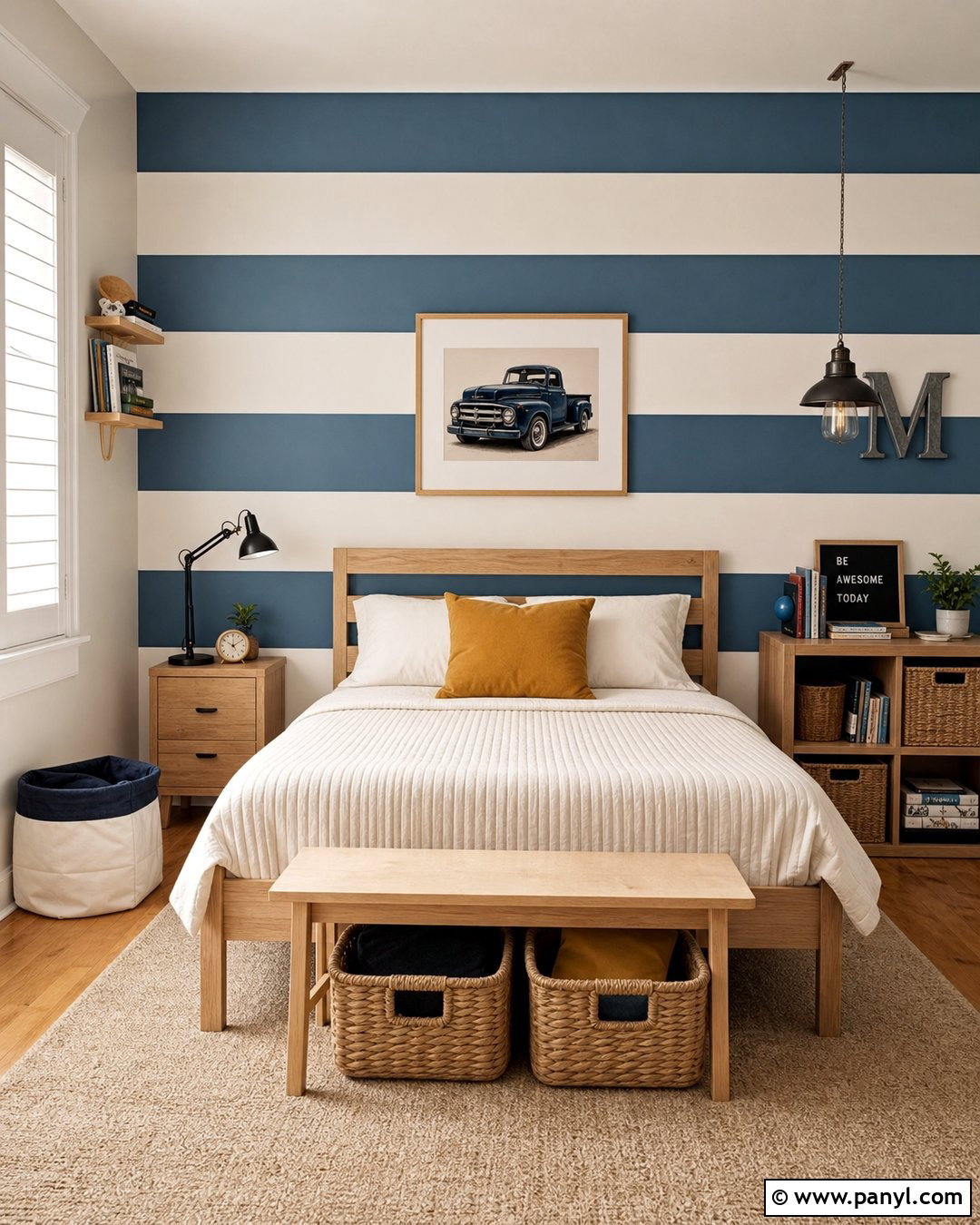
Wide painted stripes can visually expand a room and create an organized focal point. In a small bedroom or playroom, alternate warm white and muted blue horizontal bands across one complete wall. Make the stripes wide enough to feel architectural, ideally using four to six bands rather than numerous narrow lines. Place a simple white or natural wood bed against the wall and choose solid bedding to avoid competing patterns. Add a beige rug, woven storage, and one accent color such as ochre through pillows or lighting. Measure from the ceiling down so any partial stripe falls near the floor. Paint the base color first, allow it to dry, and carefully tape each band. The complete arrangement feels playful but remains controlled and easy to furnish.
21. Checkerboard Accent Wall
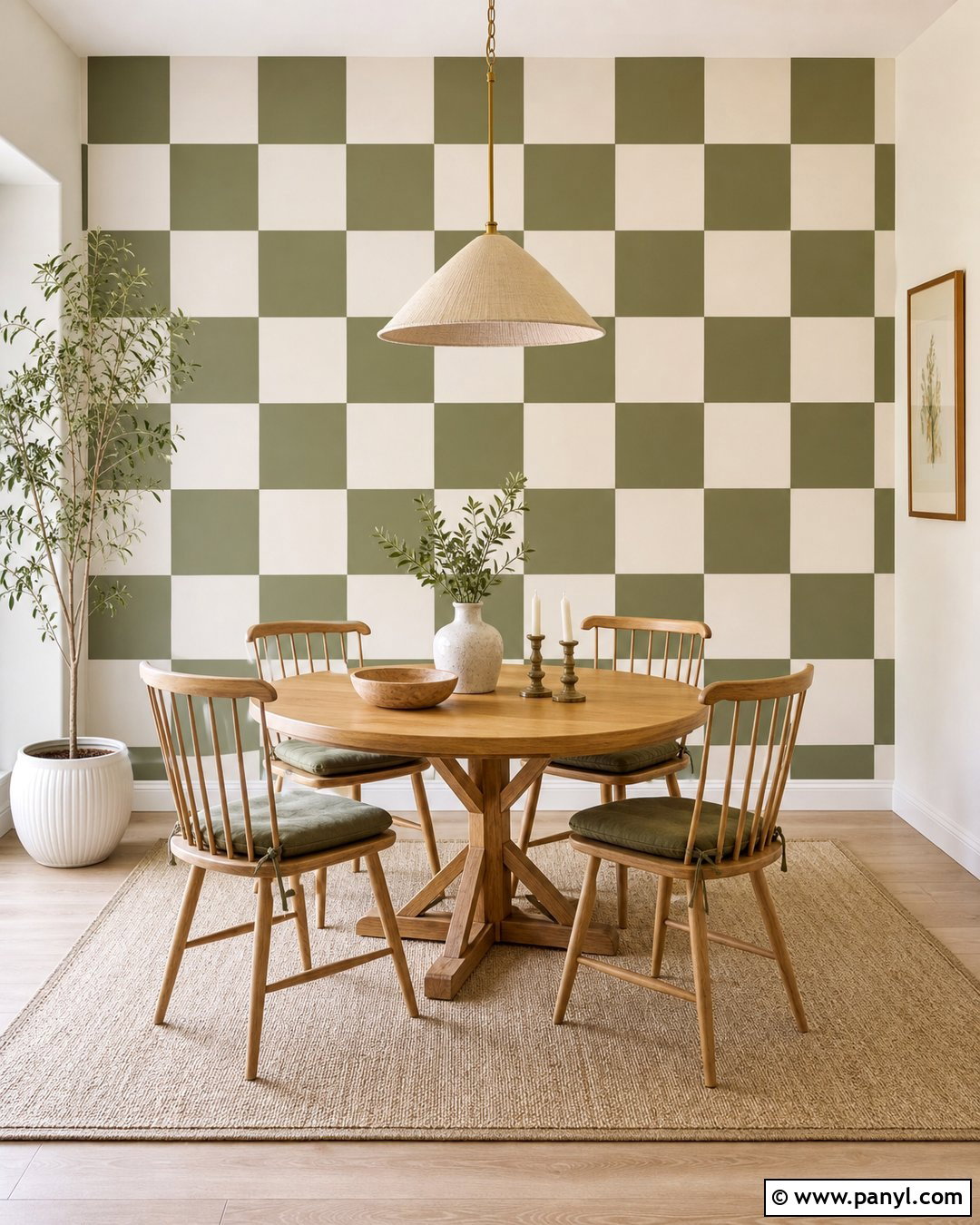
A painted checkerboard wall offers bold pattern without requiring wallpaper. Use oversized squares in cream and muted olive for a dining nook, craft room, or casual entry. Larger blocks look cleaner and are easier to coordinate than a tight, high-contrast pattern. Furnish the area with a round oak table, simple spindle chairs, and a warm neutral pendant. Keep textiles mostly solid, adding only a narrow stripe or small-scale print if needed. Paint the surrounding walls cream so one checkerboard color continues naturally through the room. Carefully calculate the grid before taping, beginning at the center to keep the edge squares balanced. Repeating olive through a seat cushion or ceramic vase helps integrate the feature. The result should feel graphic, practical, and deliberately connected to its furniture.
22. Ombre Accent Wall
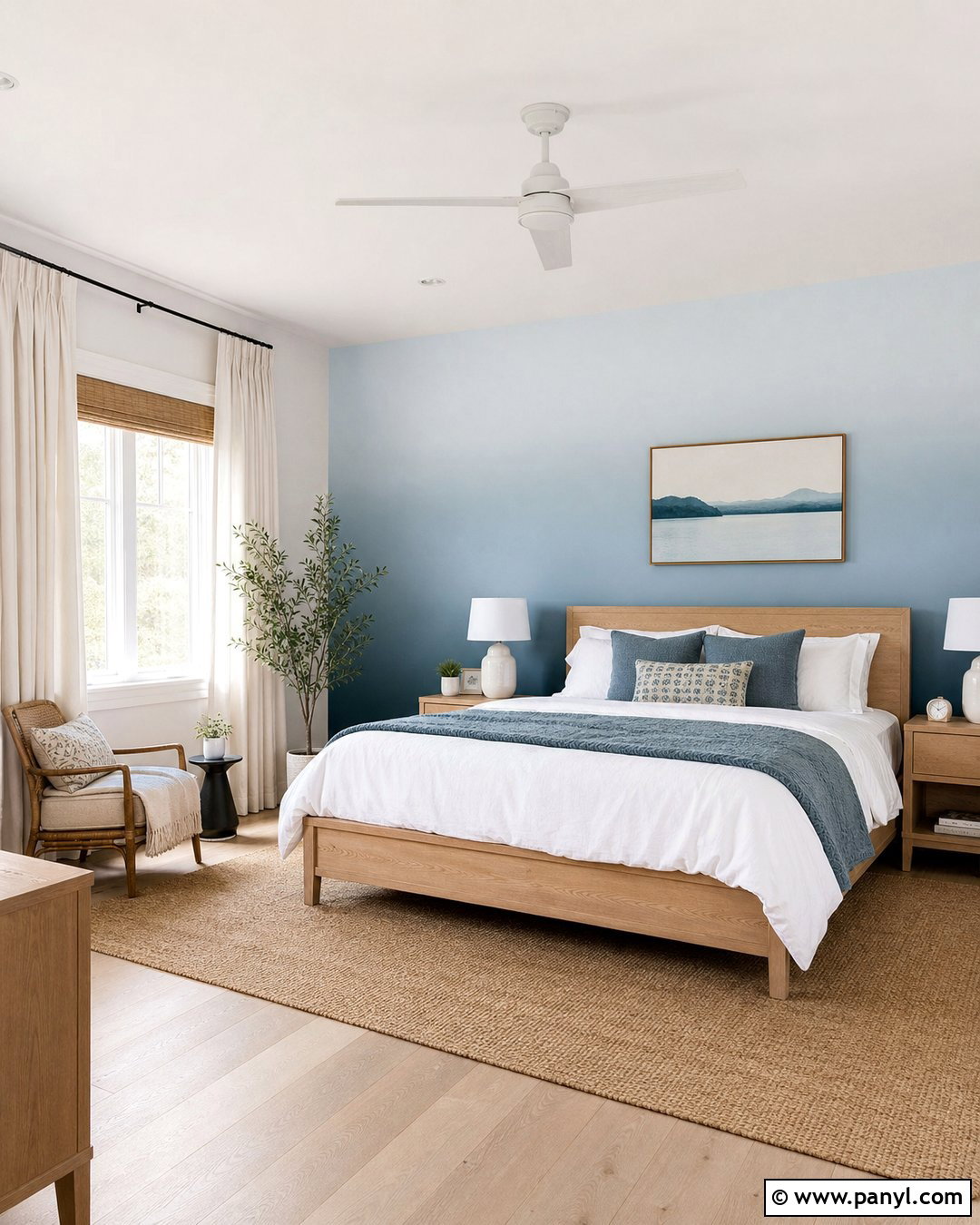
A soft ombre accent wall introduces movement and color without using hard geometric lines. In a bedroom, begin with deep dusty blue near the floor and gradually blend it into pale sky blue toward the ceiling. Pair the wall with a white oak bed, crisp white bedding, and a light gray-blue quilt. Cream curtains and a natural fiber rug keep the rest of the room understated. Use minimal artwork because the blended paint already provides visual interest. Work in manageable horizontal sections while the paint remains wet, using a large brush or roller to soften each transition. The darkest tone at the bottom grounds the furniture, while the lighter top keeps the room airy. Repeating blue through one pillow or lamp creates a complete, coordinated composition.
23. Scalloped Accent Wall
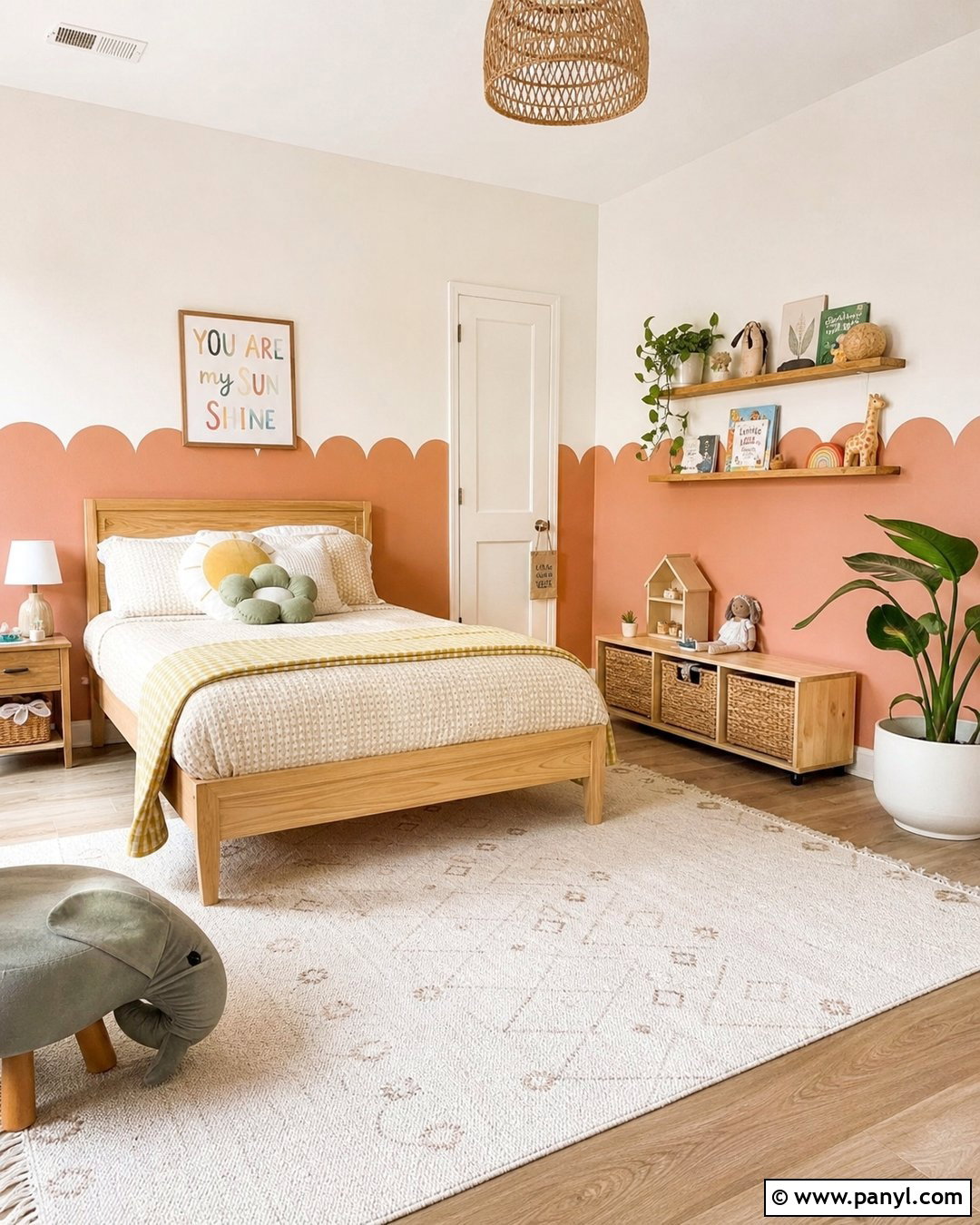
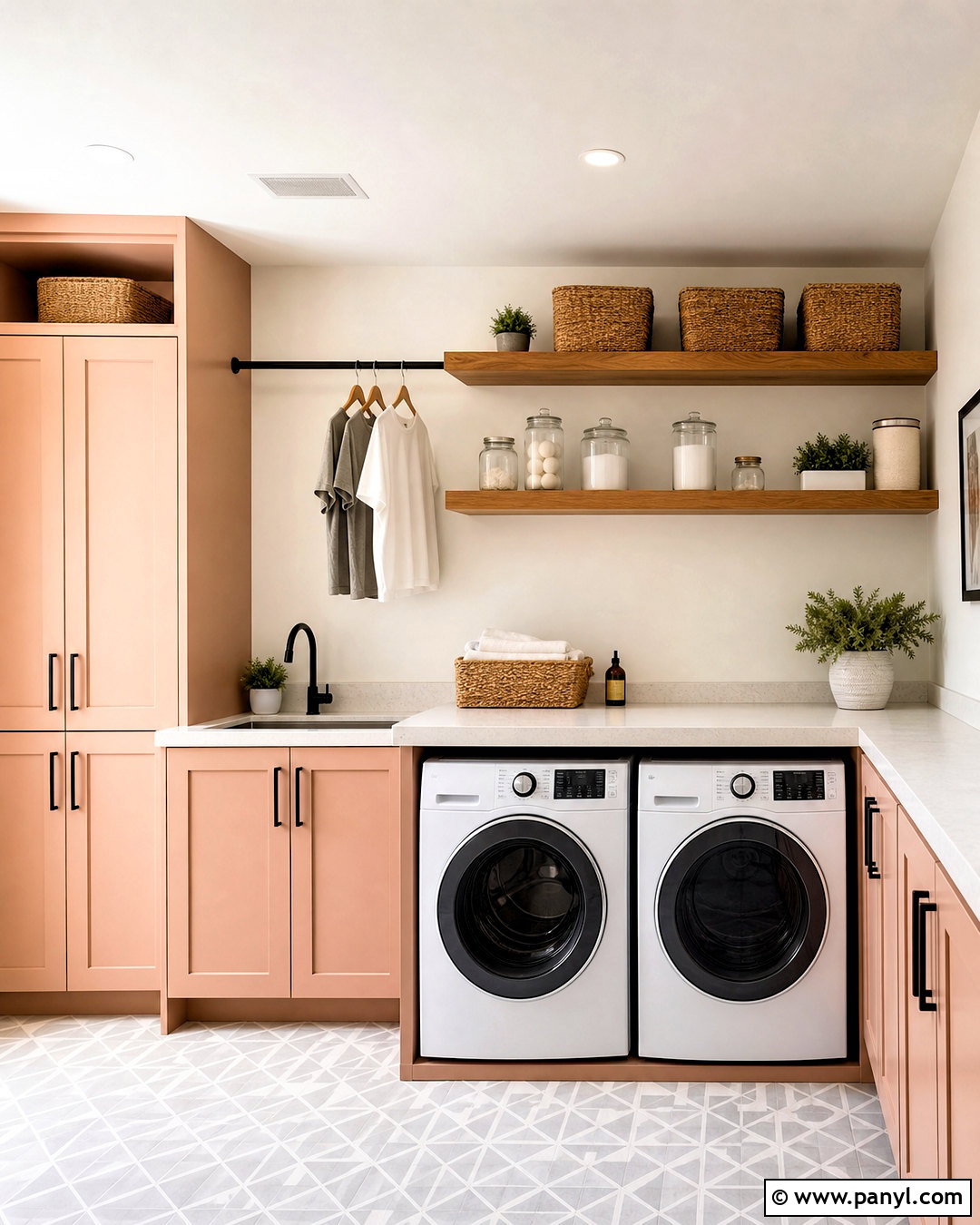
A scalloped paint border gives a child’s bedroom or creative room a playful focal point without filling the entire wall with strong color. Paint the lower half in muted peach and form even rounded scallops along the upper edge. Keep the wall above warm white and position a natural wood bed or storage unit against the painted section. Add bedding in cream, pale yellow, and soft green, plus a washable neutral rug. Use a circular template to keep each curve consistent and check the line with a level before painting. The baseboard should match the peach lower section for continuity. Simple wood shelves and woven baskets complete the room. This treatment feels decorative and cheerful, yet the restrained palette keeps it easy to update as preferences change.
24. Accent Wall And Ceiling Wrap
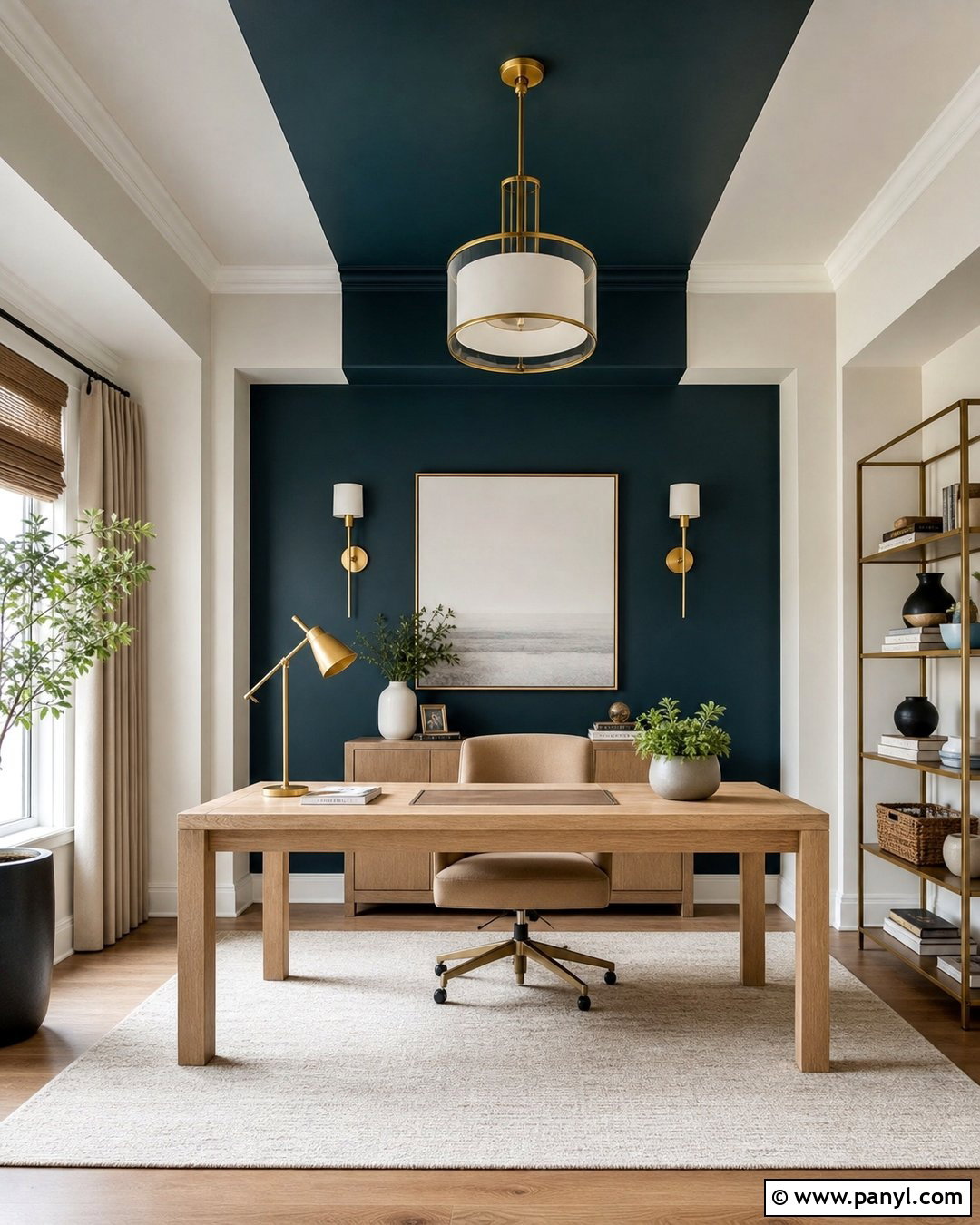
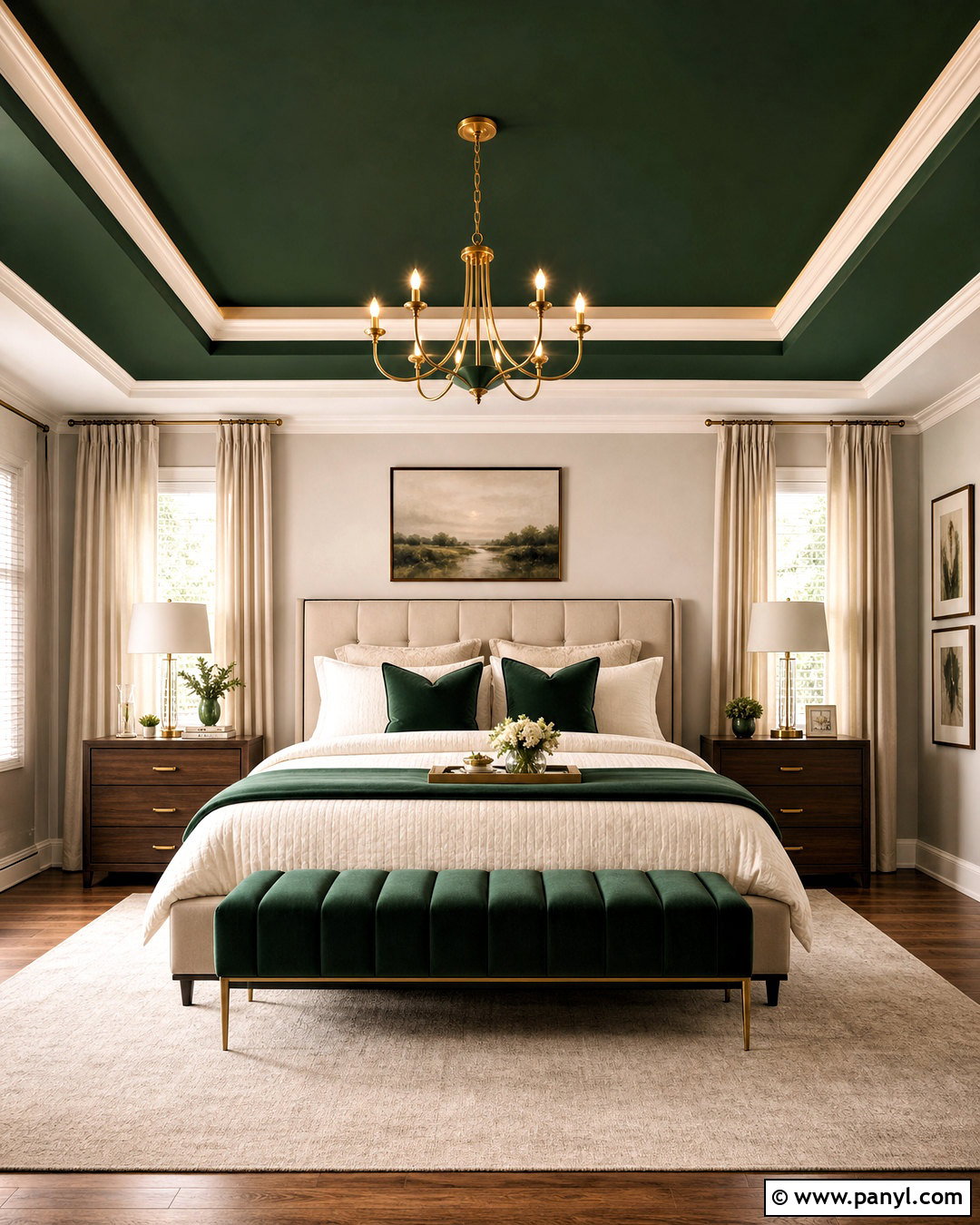
Extending accent paint onto part of the ceiling makes a small zone feel more intentional and immersive. In a home office or bedroom, paint the focal wall in deep teal and continue the color approximately three feet across the ceiling. Align the ceiling section with the width of a desk, bed, or built-in unit below. Keep the remaining walls warm white and use light oak furniture to balance the saturated color. A cream rug, tan upholstery, and brass lighting provide warmth. Crisp paint lines are essential, so measure carefully and use high-quality tape. The ceiling wrap should frame the activity area rather than divide the room randomly. Repeating teal in one textile or artwork detail ties the painted canopy effect into the complete interior scheme.
25. Abstract Mural Accent Wall
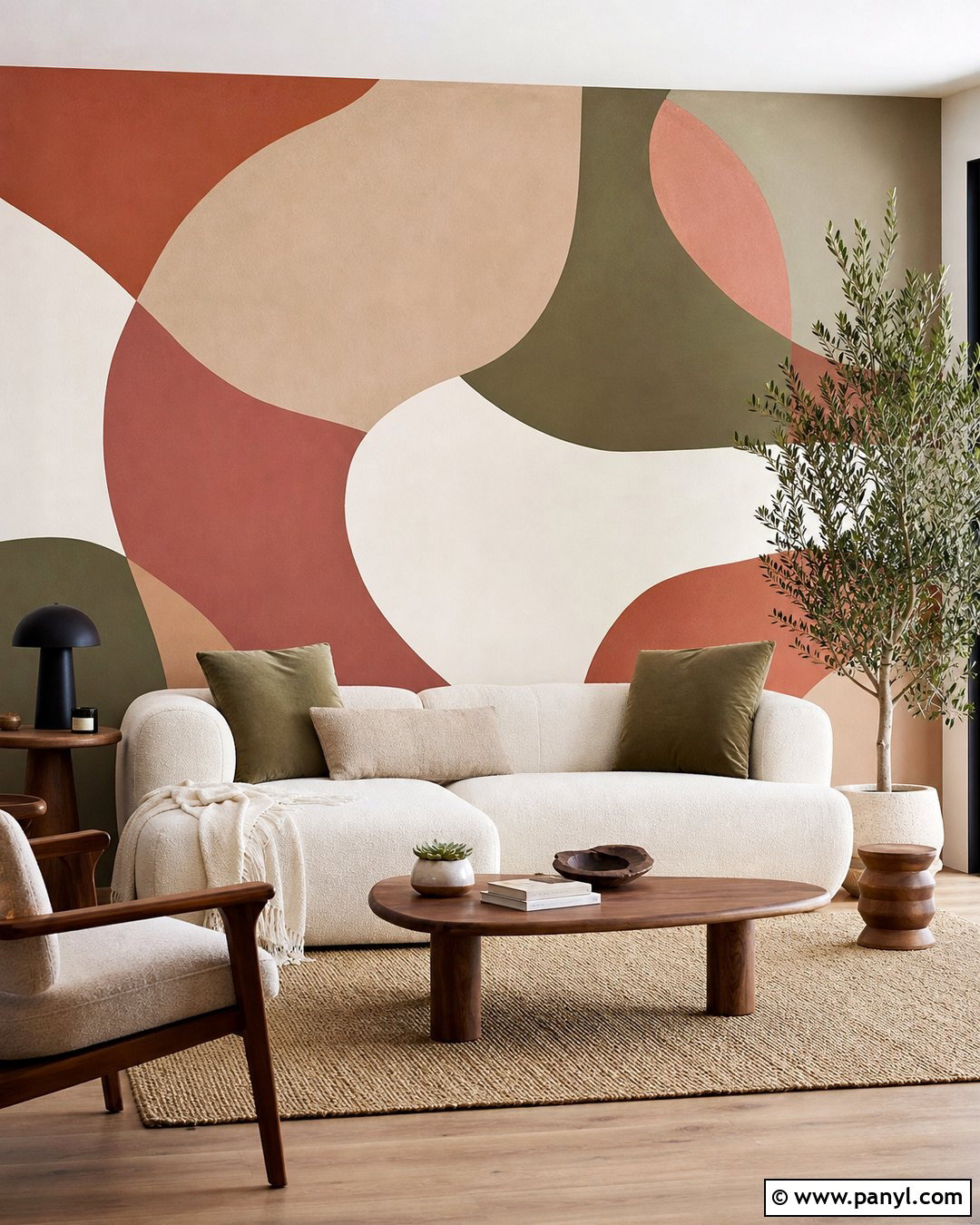
An abstract painted mural can create a one-of-a-kind accent wall using a controlled palette and simple shapes. Design the mural behind a living room sofa with overlapping curves and broad organic forms in terracotta, dusty rose, warm beige, and muted olive. Leave some of the warm white base color visible between sections to prevent the composition from feeling heavy. Pair it with a cream sofa, walnut tables, olive pillows, and a textured beige rug. Keep additional wall art off this surface because the mural already acts as the main artwork. Sketch the large shapes lightly in pencil and paint one color at a time. Connecting the mural colors to furniture and textiles produces a complete room that feels creative, balanced, and intentionally designed.
Conclusion:
The best wall accent paint ideas begin with the entire room rather than a single favorite color. Select a focal wall that already supports an important feature, then coordinate its paint with the furniture, flooring, textiles, trim, and lighting. Solid earthy shades create easy depth, while arches, stripes, checkerboards, murals, and ceiling wraps offer more decorative impact. Always test large paint samples and view them throughout the day before making a final choice. Careful measuring and clean edges will also make even an inexpensive project look polished. Most importantly, choose a treatment that fits your home and daily routine. Use these 25 Wall Accent Paint Ideas to create a cohesive space with color, purpose, and personality.

Related Ideas and Inspiration:
Leave a Reply