
Dark kitchen walls can make an ordinary cooking space feel richer, warmer, and more intentional. The key is balancing deep color with practical lighting, lighter surfaces, natural texture, and enough visual contrast. This guide to **20 dark kitchen walls** explores complete kitchen looks using black, charcoal, navy, forest green, burgundy, brown, textured plaster, tile, brick, and wood. Current kitchen design is moving beyond flat black toward nuanced colors, layered materials, warm metals, and character-rich finishes. () Each look below includes coordinated cabinetry, countertops, flooring, lighting, and decor, so you can recreate the entire room rather than choosing paint in isolation. Whether your kitchen is compact, traditional, modern, or rustic, you will find practical inspiration among these **20 dark kitchen walls**.
1. Matte Black Kitchen Walls
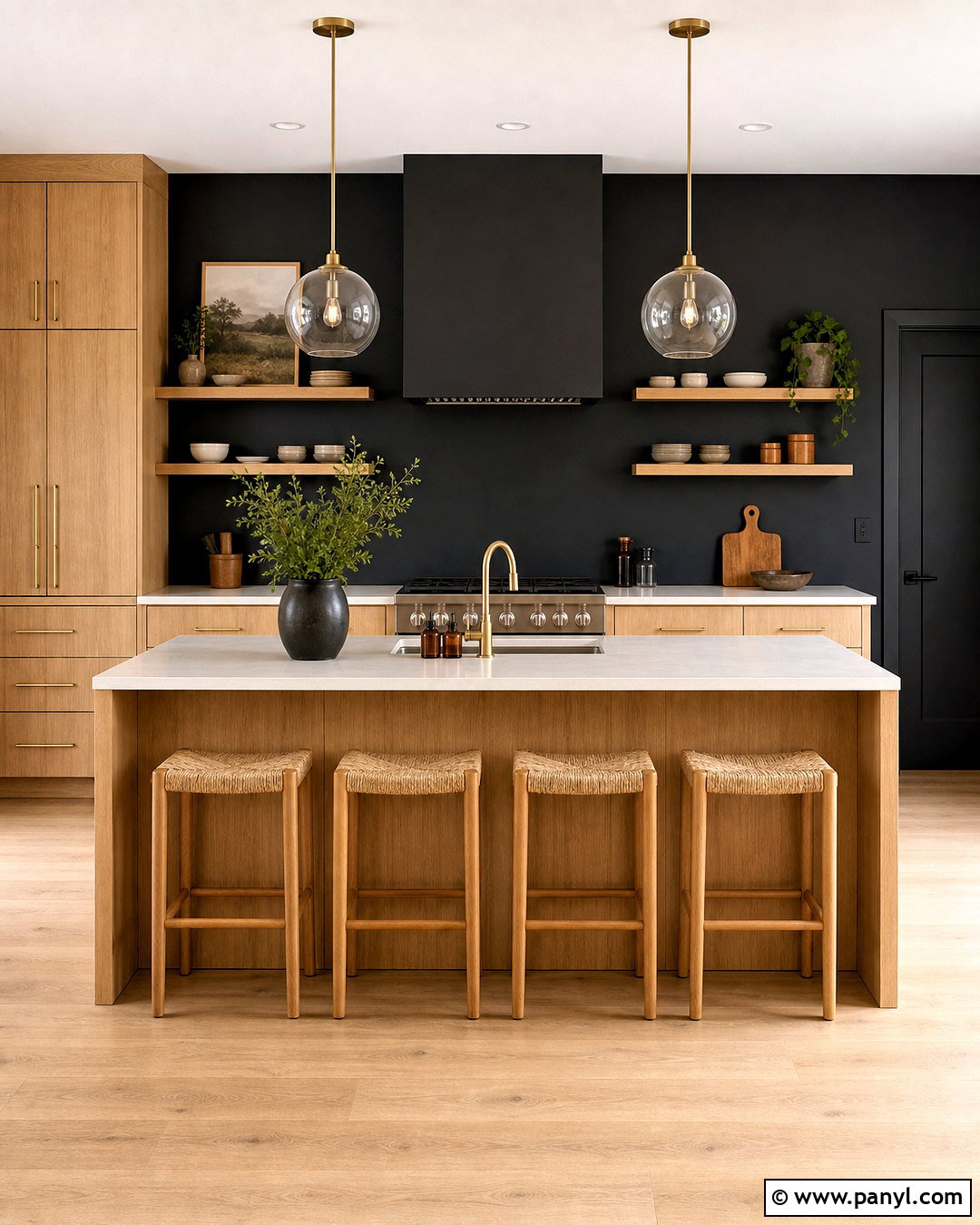
Matte black walls create a clean backdrop for a modern kitchen with strong contrast. Pair them with flat-panel white oak cabinets to keep the room from feeling cold or enclosed. Choose pale quartz countertops and carry the same material up the backsplash for a seamless, light-reflecting surface. A large oak island can provide extra warmth while defining the central workspace. Add slim black pendants, brushed brass cabinet pulls, and simple backless stools with woven seats. Wide-plank light oak flooring continues the natural balance. Keep upper cabinets limited, especially near windows, and use floating wood shelves instead. Under-cabinet lighting, recessed ceiling fixtures, and clear glass doors help every working area remain bright and functional.
2. Charcoal Kitchen Walls With White Cabinets
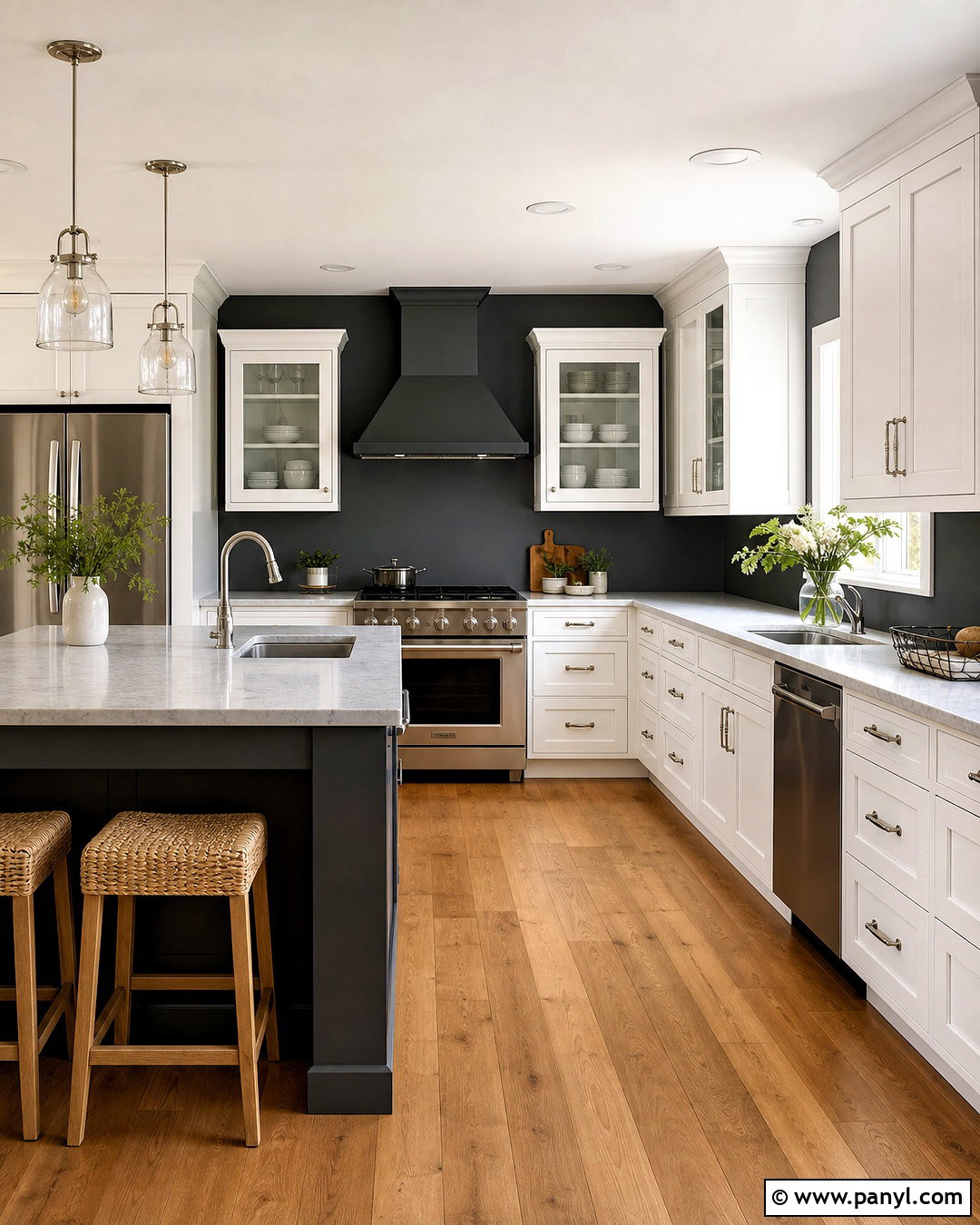
Soft charcoal walls offer depth without the sharp appearance of pure black. Build a balanced transitional kitchen around white Shaker cabinets, polished nickel hardware, and pale gray quartz countertops. A white subway tile backsplash can brighten the cooking zone, while medium-tone oak flooring adds warmth below. Paint the island charcoal to connect it visually with the walls, then top it with white stone for contrast. Glass-front upper cabinets prevent the darker background from looking heavy. Complete the room with clear glass pendants, a stainless steel range, and woven counter stools. A washable eggshell wall finish makes everyday cleaning easier. This scheme works especially well in kitchens that receive steady daylight but still need a cozy, grounded atmosphere.
3. Navy Blue Kitchen Walls With Oak Cabinets
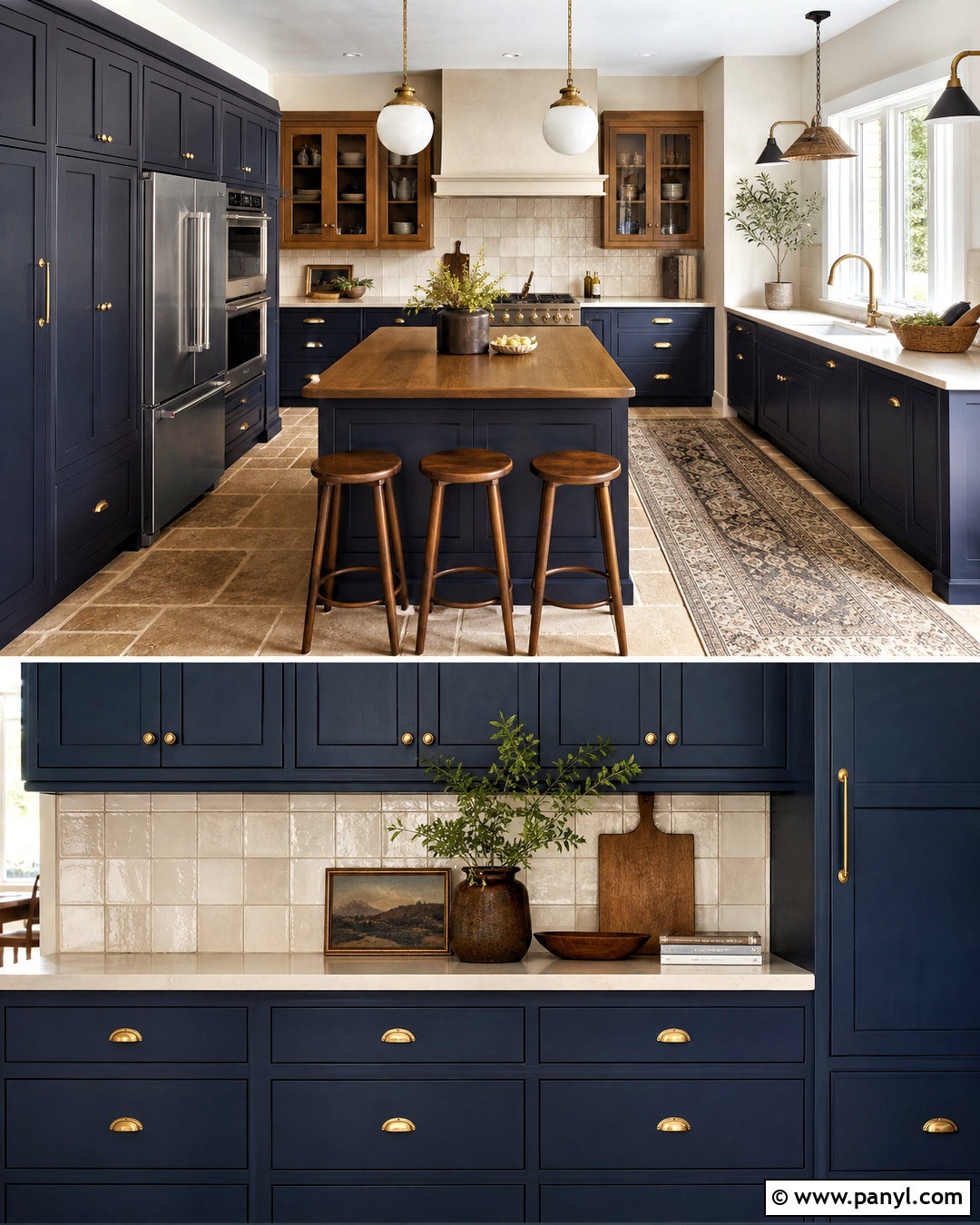
Deep navy walls look inviting when surrounded by warm oak rather than cool gray finishes. Use natural oak cabinets with simple slab doors, subtle grain, and aged brass pulls. Cream quartz countertops soften the contrast and provide a bright work surface. Behind the range, install handmade ivory tile with slightly uneven edges for texture. A navy island can blend into the walls while an oak countertop or butcher-block section introduces another natural layer. Choose warm white globe pendants and concealed under-cabinet lighting to prevent shadowy corners. Pale limestone-look flooring keeps the room visually open. Finish the design with linen Roman shades, stoneware accessories, and a small vintage runner containing muted blue, rust, and cream tones.
4. Forest Green Kitchen Walls With Brass
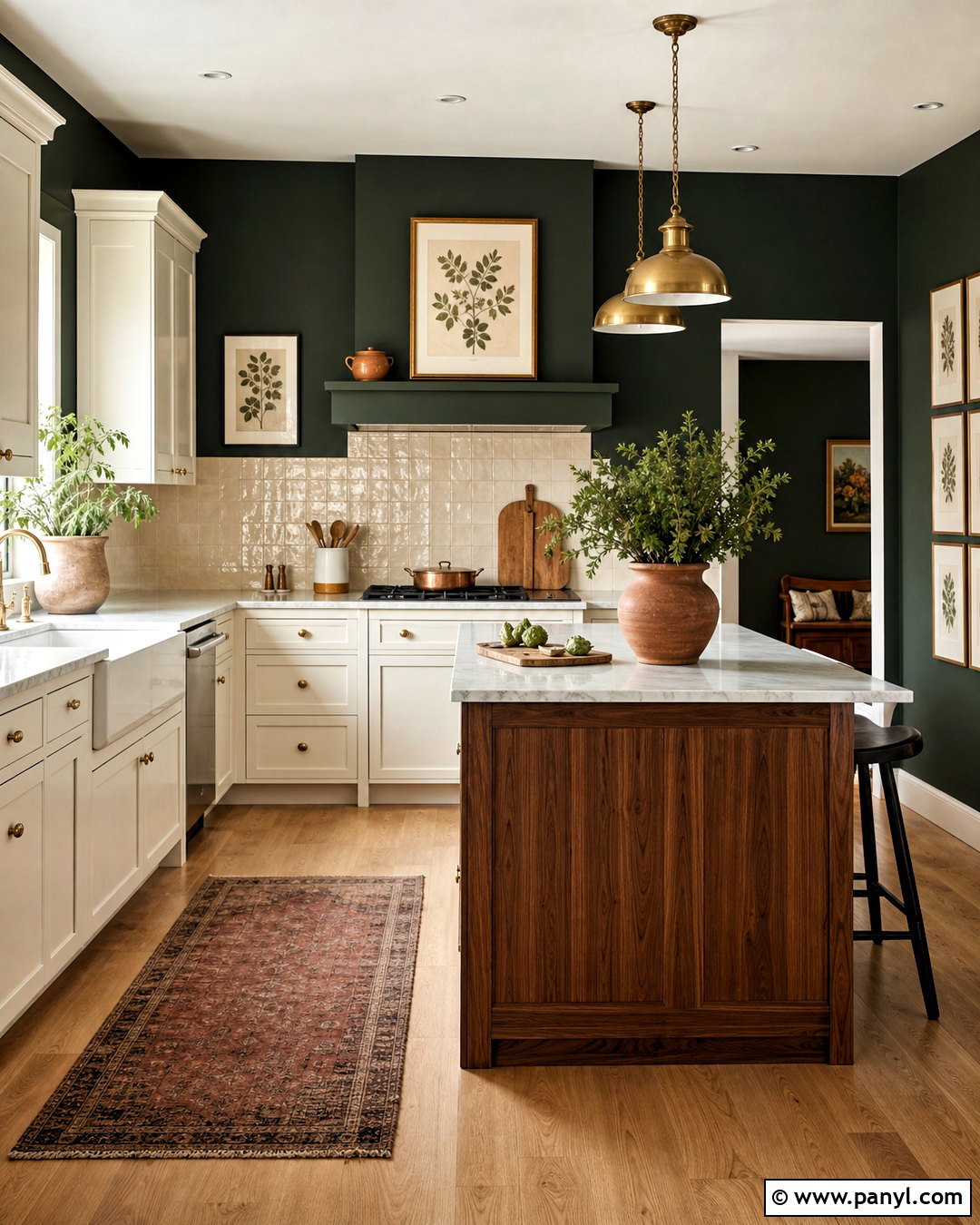
Forest green walls can turn a practical kitchen into a warm, nature-inspired gathering space. Pair the color with creamy off-white cabinets, brushed brass hardware, and lightly veined marble-look countertops. A walnut island adds depth without competing with the wall color. Install glazed cream tiles behind the counters so their reflective finish distributes light around the room. Brass pendants above the island create a polished focal point, while warm white recessed lighting supports everyday cooking. Use medium oak flooring and a washable neutral runner to soften the space. A few terracotta pots, framed botanical prints, and wooden serving boards reinforce the earthy palette. Keep decorative accents restrained so the green walls remain the strongest feature.
5. Dark Olive Kitchen Walls
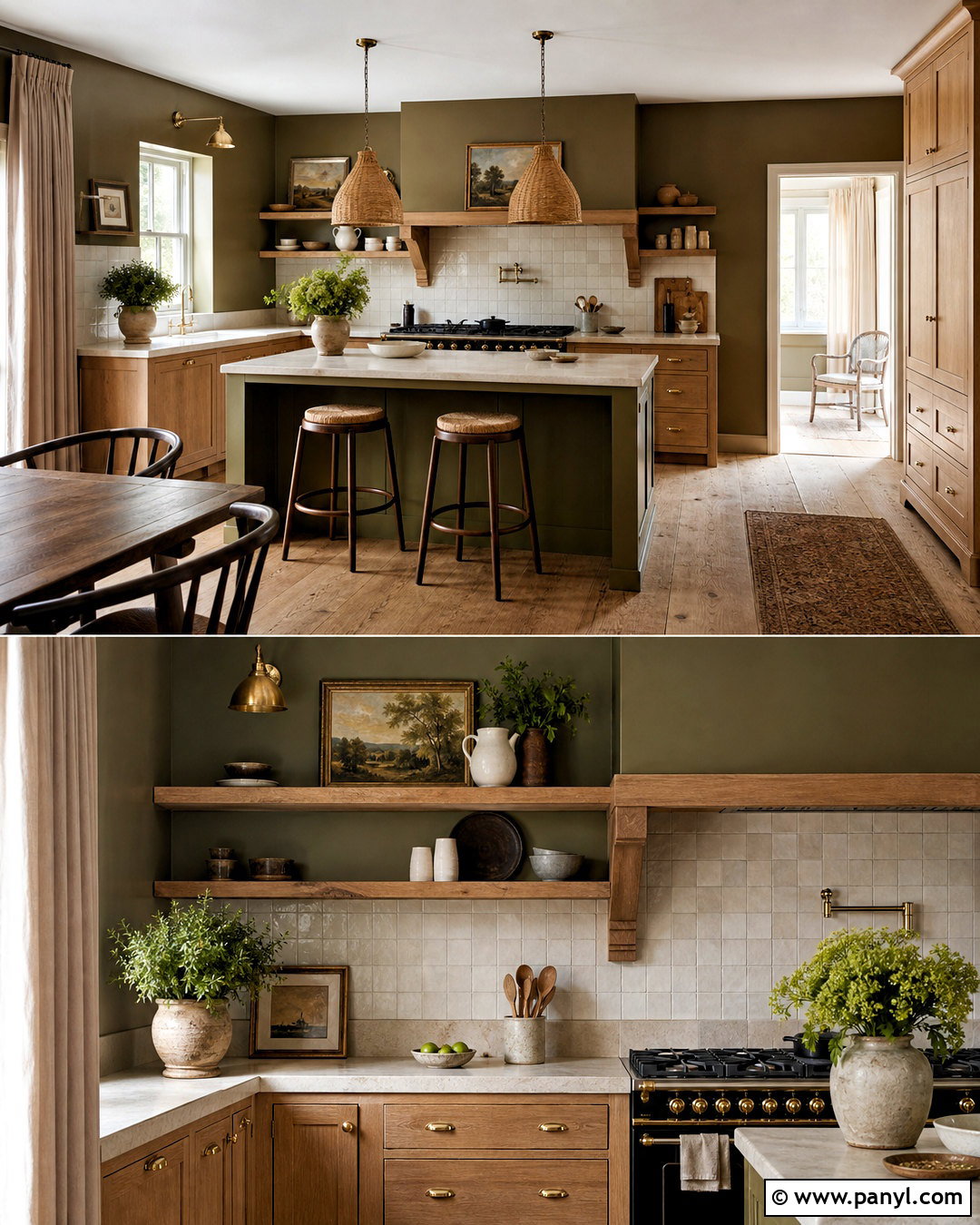
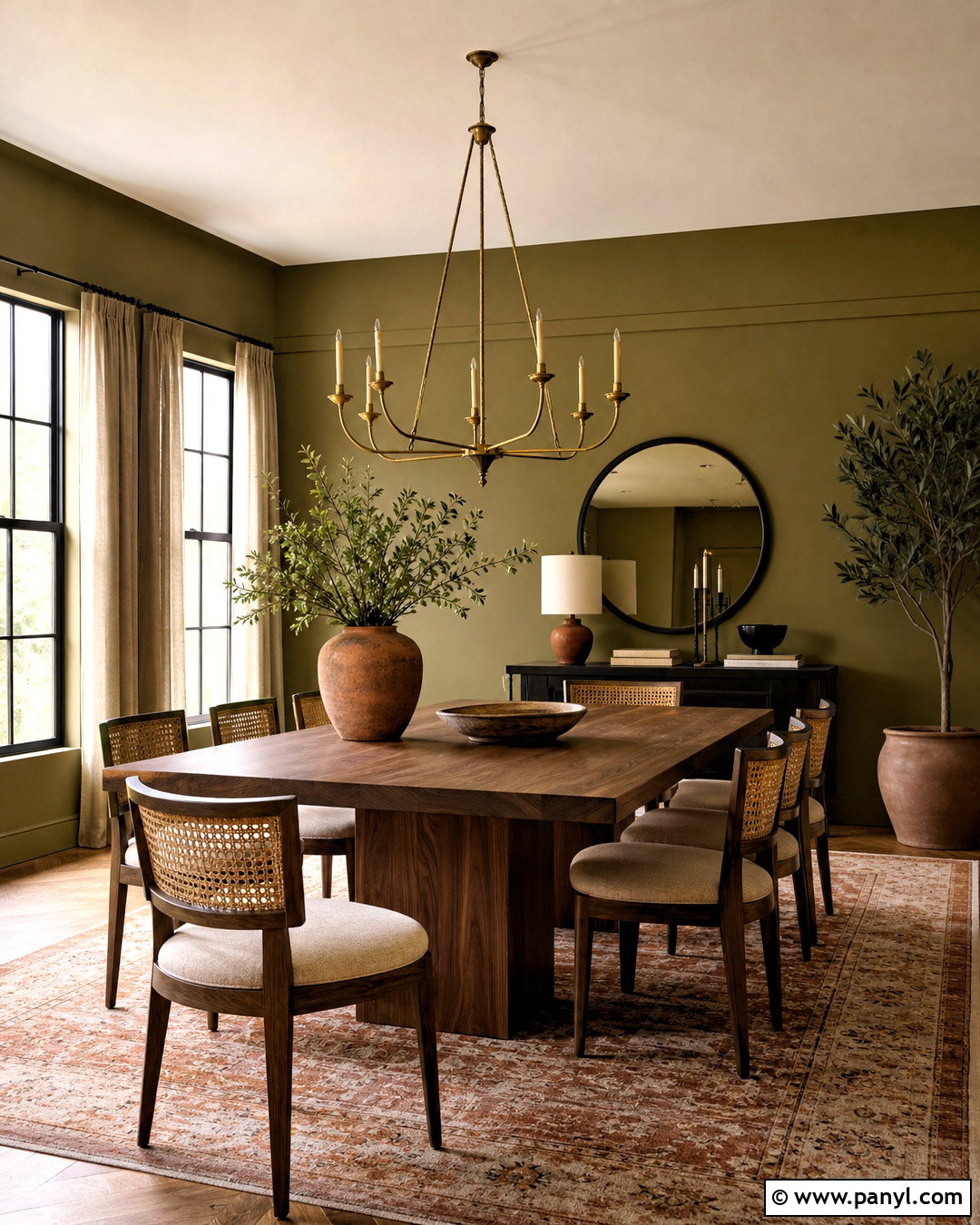
Dark olive walls provide the richness of a deep color while feeling softer and more organic than black. Combine them with warm mushroom cabinets and antique brass knobs for a comfortable, collected kitchen. Honed cream stone countertops will lighten the work zones without creating harsh contrast. Use olive paint above a backsplash of square ivory tiles, then repeat the wall color on a freestanding pantry or small island. Rustic oak floors, linen café curtains, and woven pendant lights add relaxed texture. Open oak shelving can hold cream dishes and practical glass containers. Finish with a farmhouse sink and an unlacquered brass faucet. The result feels timeless and lived-in, yet the coordinated surfaces keep the room polished rather than overly rustic.
6. Deep Teal Kitchen Walls
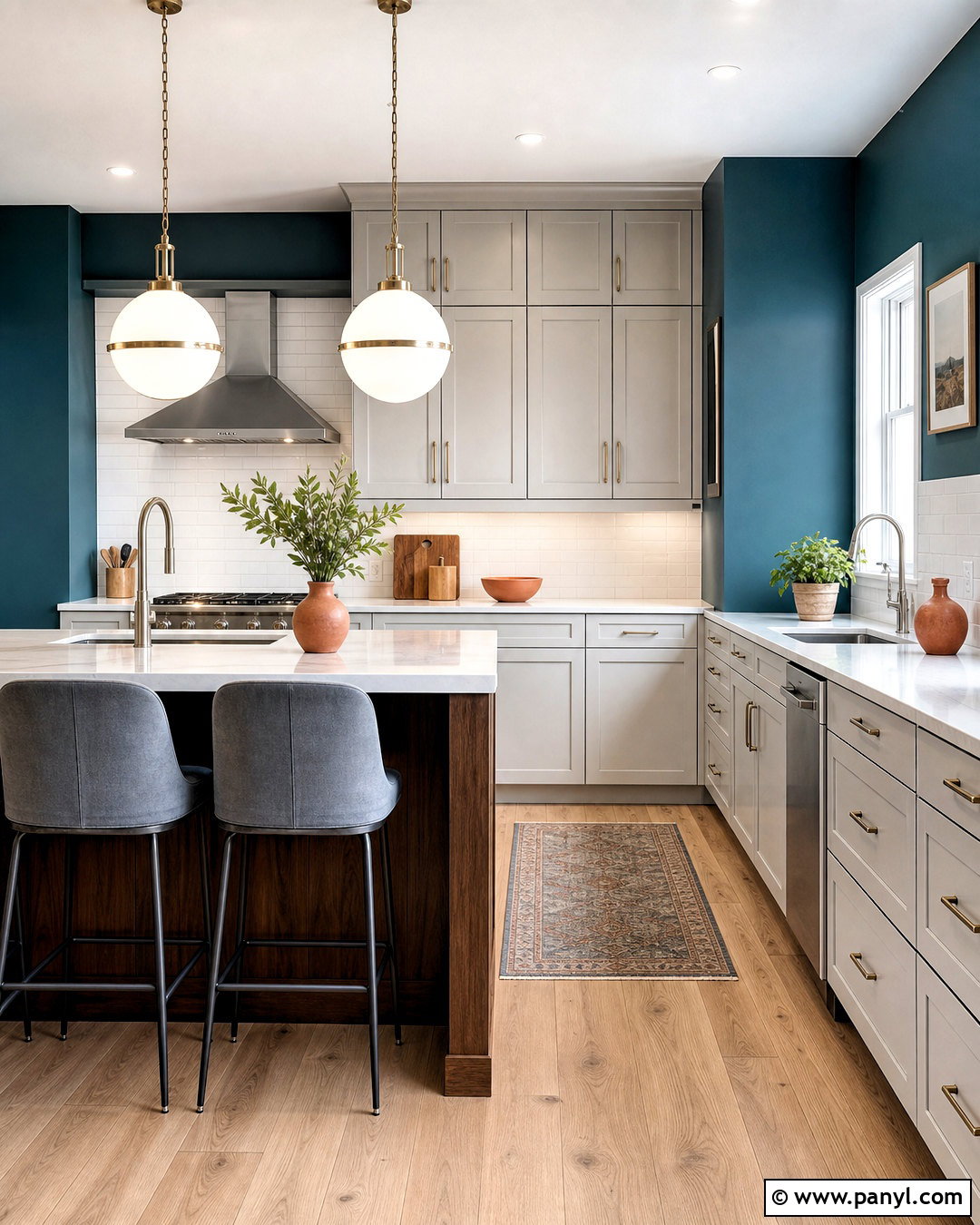
Deep teal walls bring color and drama to a kitchen while maintaining a calm, balanced character. Pair them with pale gray cabinets, white quartz counters, and brushed nickel hardware for a fresh transitional look. A backsplash of glossy white rectangular tile reflects light and separates the cabinets from the saturated walls. Use a walnut island to introduce warmth, topped with pale stone and surrounded by simple gray upholstered stools. Light oak flooring prevents the lower half of the room from becoming too dark. Add oversized opal glass pendants and bright under-cabinet lighting. Small accents in muted coral, warm brass, or terracotta can enliven the palette. Keep window treatments light and minimal so natural light reaches the teal surfaces.
7. Chocolate Brown Kitchen Walls
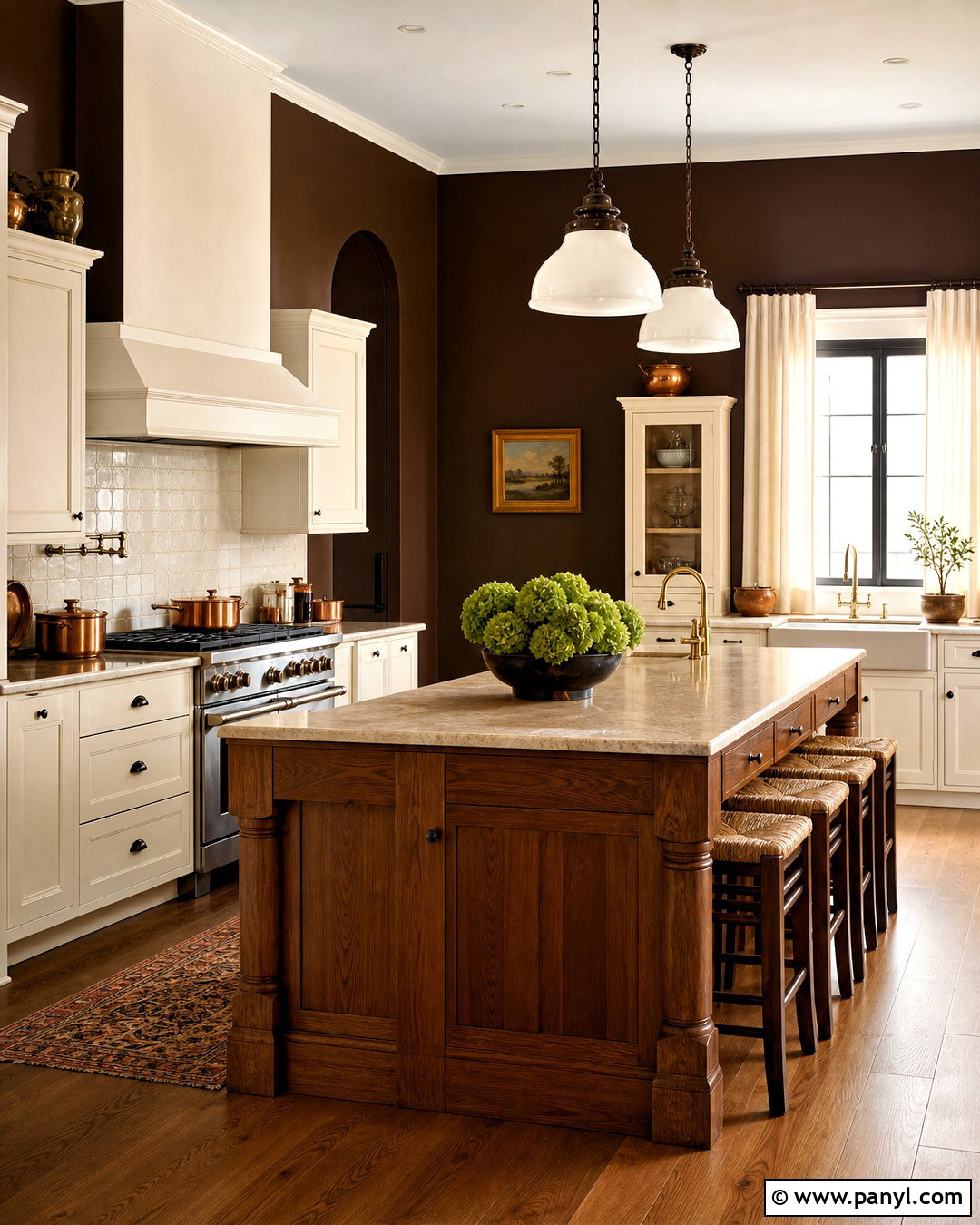
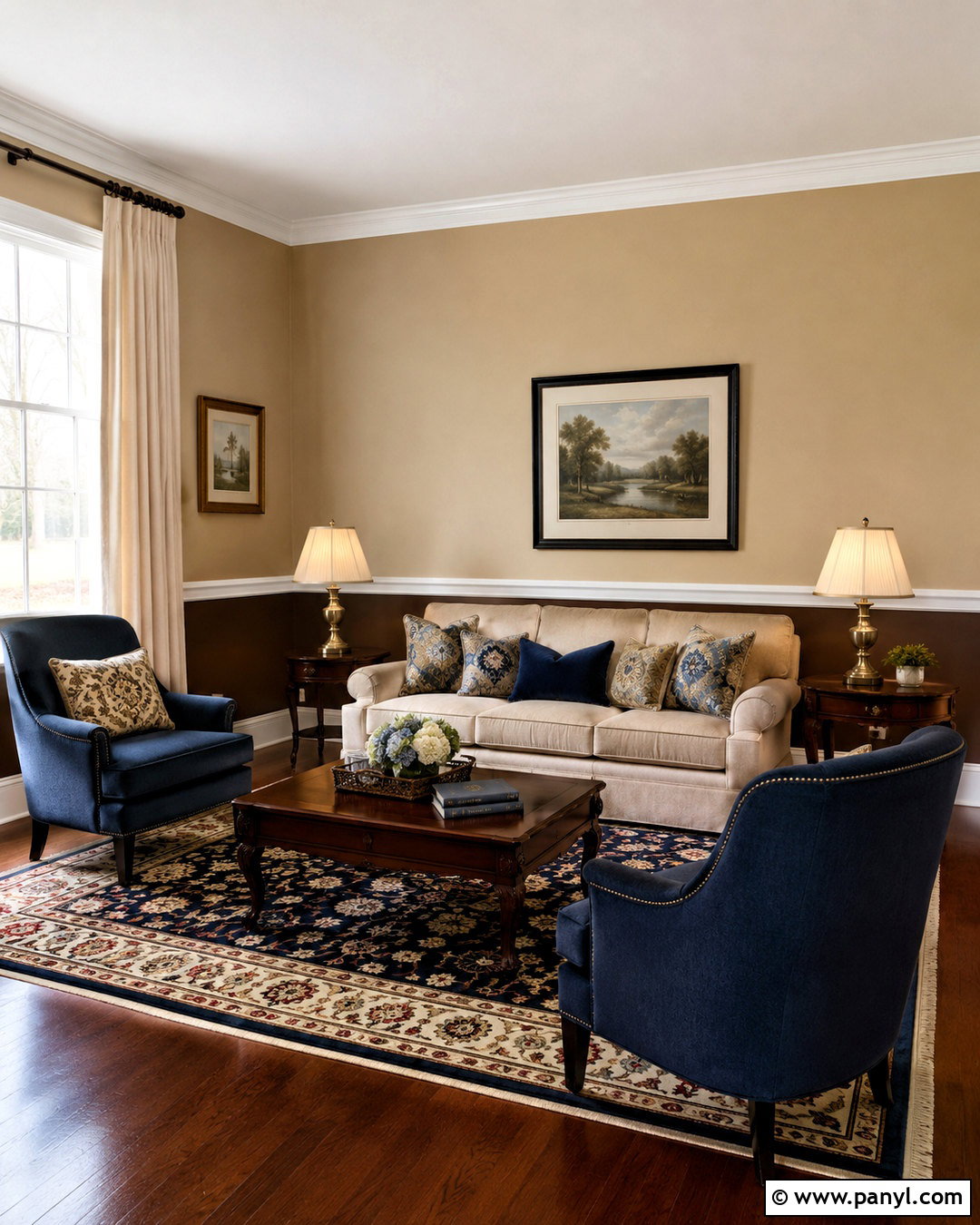
Chocolate brown walls can make a kitchen feel warm and grounded when combined with creamy cabinetry and layered natural materials. Choose warm ivory cabinets with traditional inset doors, aged bronze hardware, and beige quartzite-look countertops. Continue the brown color across the walls surrounding a breakfast nook for a cozy, connected layout. A medium oak island with woven stools adds another tonal layer without disappearing into the background. Use cream ceramic backsplash tiles, warm oak flooring, and linen curtains to maintain brightness. Milk glass pendants provide clear task lighting above the island. Finish with stoneware bowls, copper cookware, and a patterned runner containing tan, rust, and brown. The overall room should feel welcoming, practical, and gently traditional.
8. Burgundy Kitchen Walls
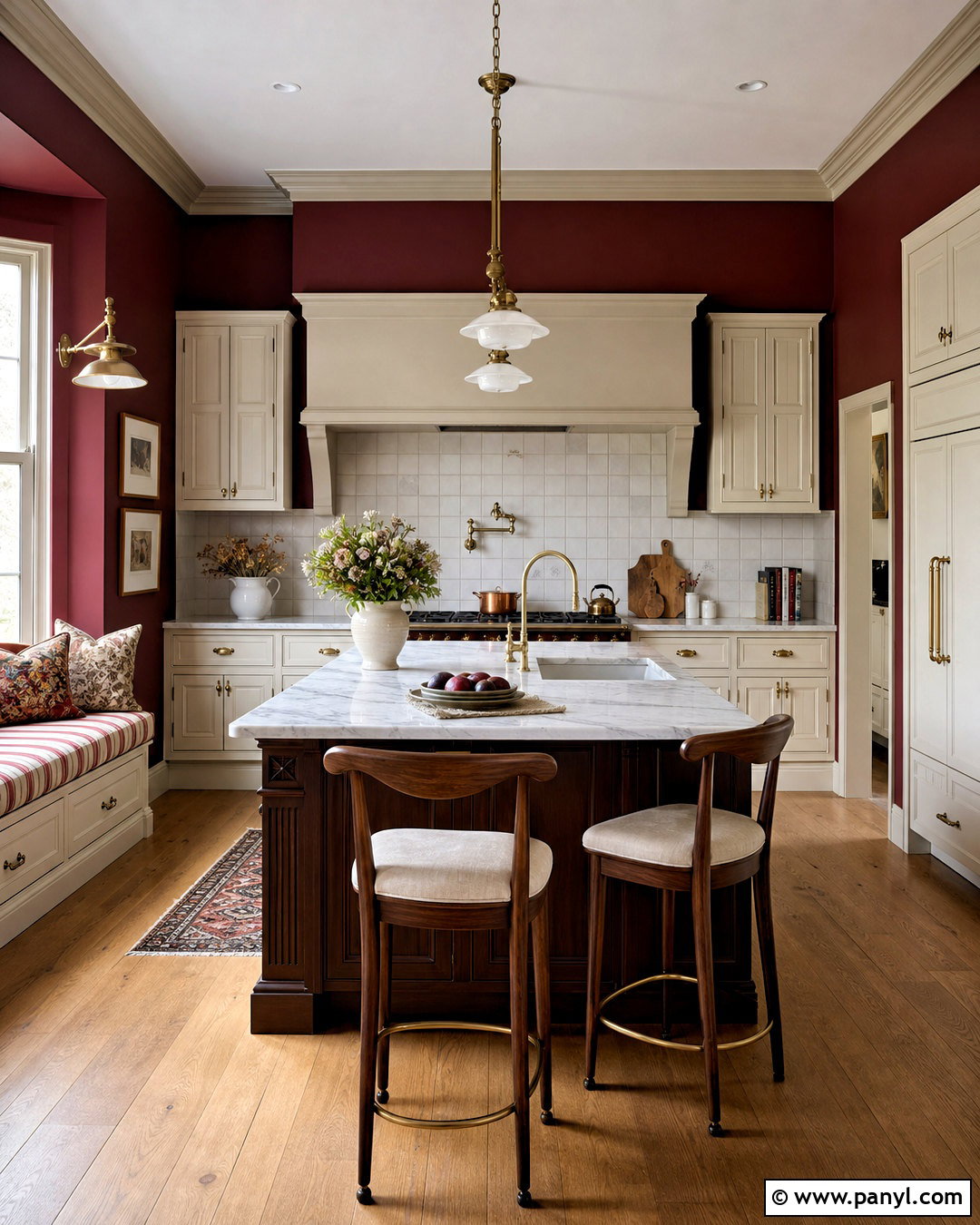
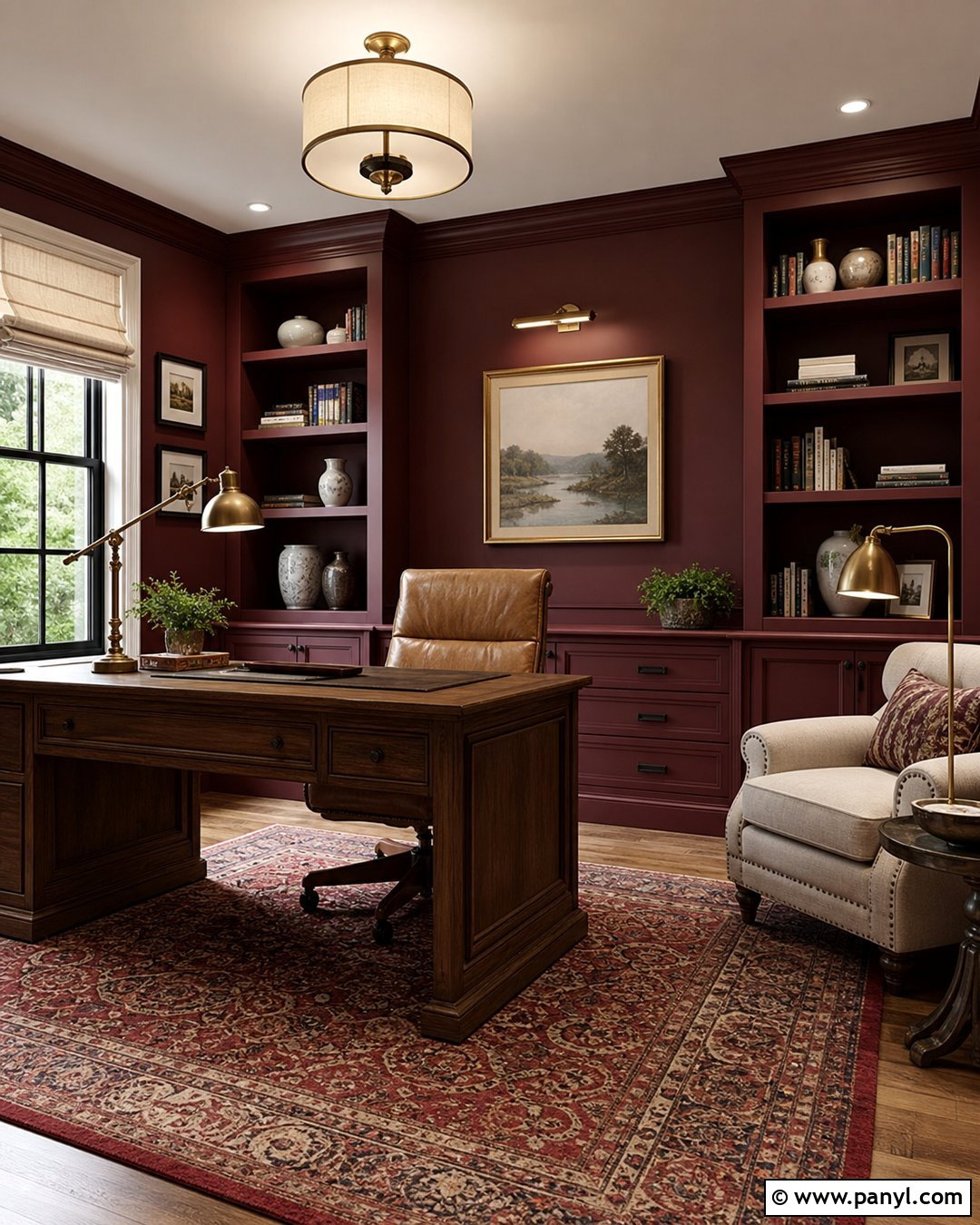
Burgundy walls give a kitchen an expressive heritage look that works beautifully with wood, stone, and warm metal. Pair the walls with soft cream cabinets and a dark walnut island featuring classic panel detailing. Choose pale marble-look countertops with subtle burgundy or brown veining. Antique brass hardware, bridge faucets, and library-style wall lights complement the deep red color. Use off-white handmade tile behind the range and medium oak flooring throughout the room. A built-in breakfast bench upholstered in neutral striped fabric can create a comfortable dining area without adding another dominant color. Display a limited collection of cream ceramics and wooden boards. Bright ceiling lighting and under-cabinet strips are essential for preserving a clear, functional workspace.
9. Black Limewash Kitchen Walls
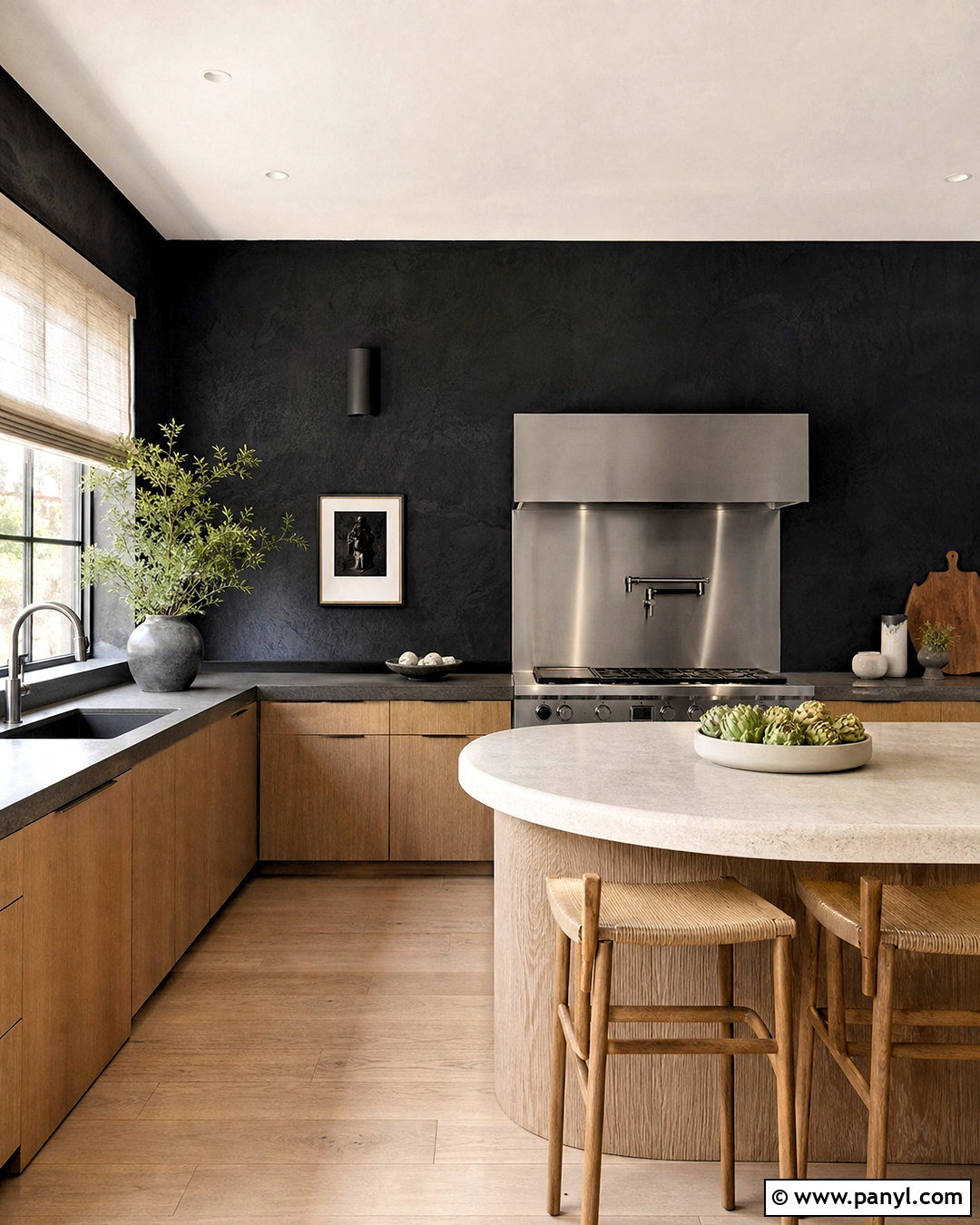
Black limewash walls create movement and texture through soft variations of charcoal, gray, and black. Balance this handcrafted surface with smooth white oak cabinetry and simple honed concrete countertops. Keep cabinet doors flat and hardware minimal so the walls remain the main visual feature. A pale stone island with rounded corners can brighten the center of the room while adding a softer shape. Install a stainless steel backsplash behind the range for easy maintenance and gentle reflection. Light oak flooring, woven stools, and off-white linen shades bring warmth. Use black track lighting for general illumination, then add concealed LED strips below shelves and cabinets. Sparse ceramic decor will support the relaxed, modern look without hiding the limewash texture.
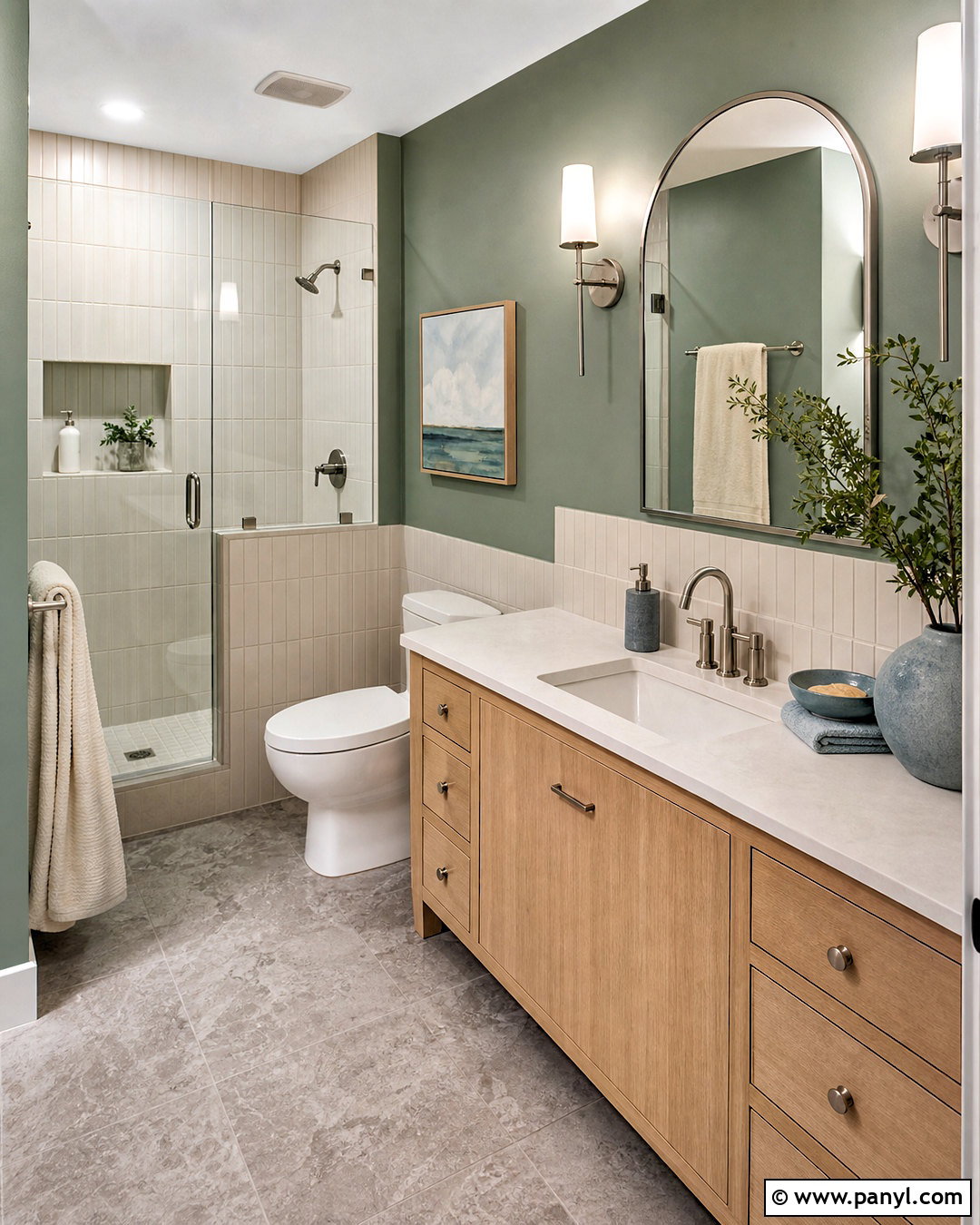
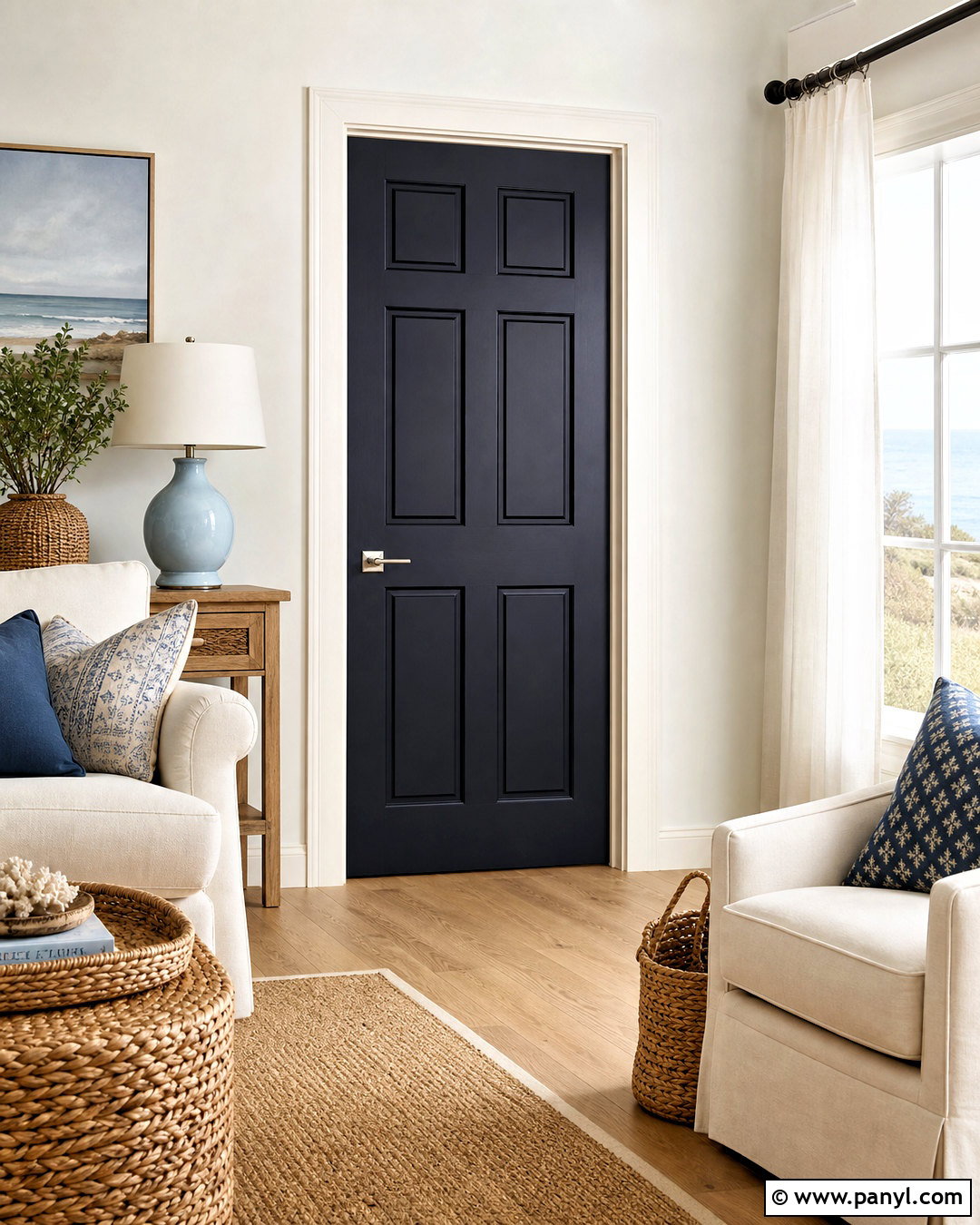
10. Dark Gray Plaster Kitchen Walls
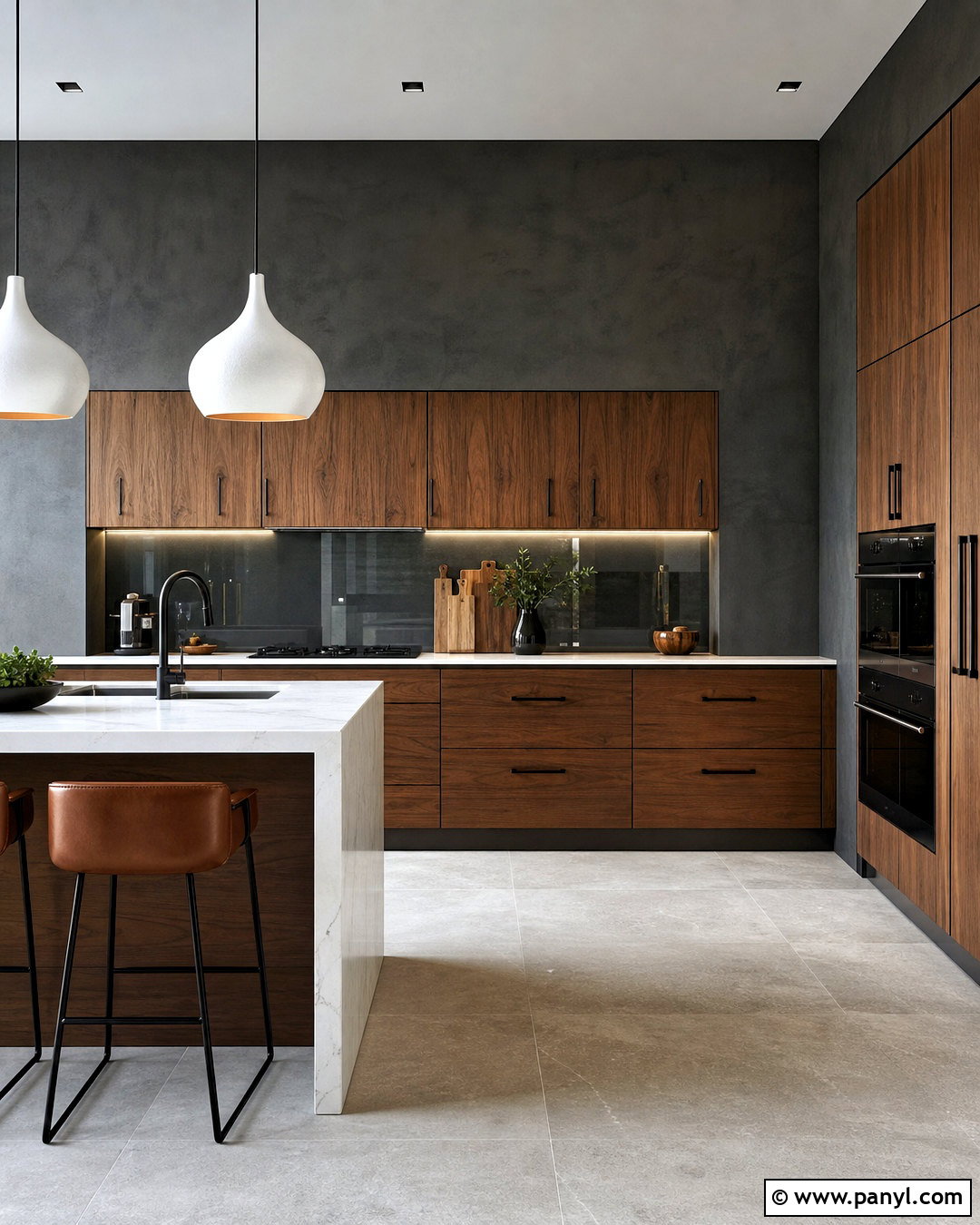
Dark gray plaster walls suit a minimalist kitchen that relies on texture rather than decorative clutter. Combine the walls with walnut slab cabinets, blackened steel pulls, and a thick white quartz island. Use the same plaster finish above the counters, but protect busy areas with a clear glass or pale stone backsplash. Large-format light gray floor tiles create continuity while keeping the overall palette from becoming too warm. Add sculptural white pendants over the island and strong recessed lighting around the perimeter. A pair of leather counter stools introduces a practical, comfortable accent. Keep appliances integrated where possible, and group small appliances inside an appliance garage. The finished kitchen feels streamlined, tactile, and sophisticated without appearing stark or unfinished.
11. Black Brick Kitchen Walls
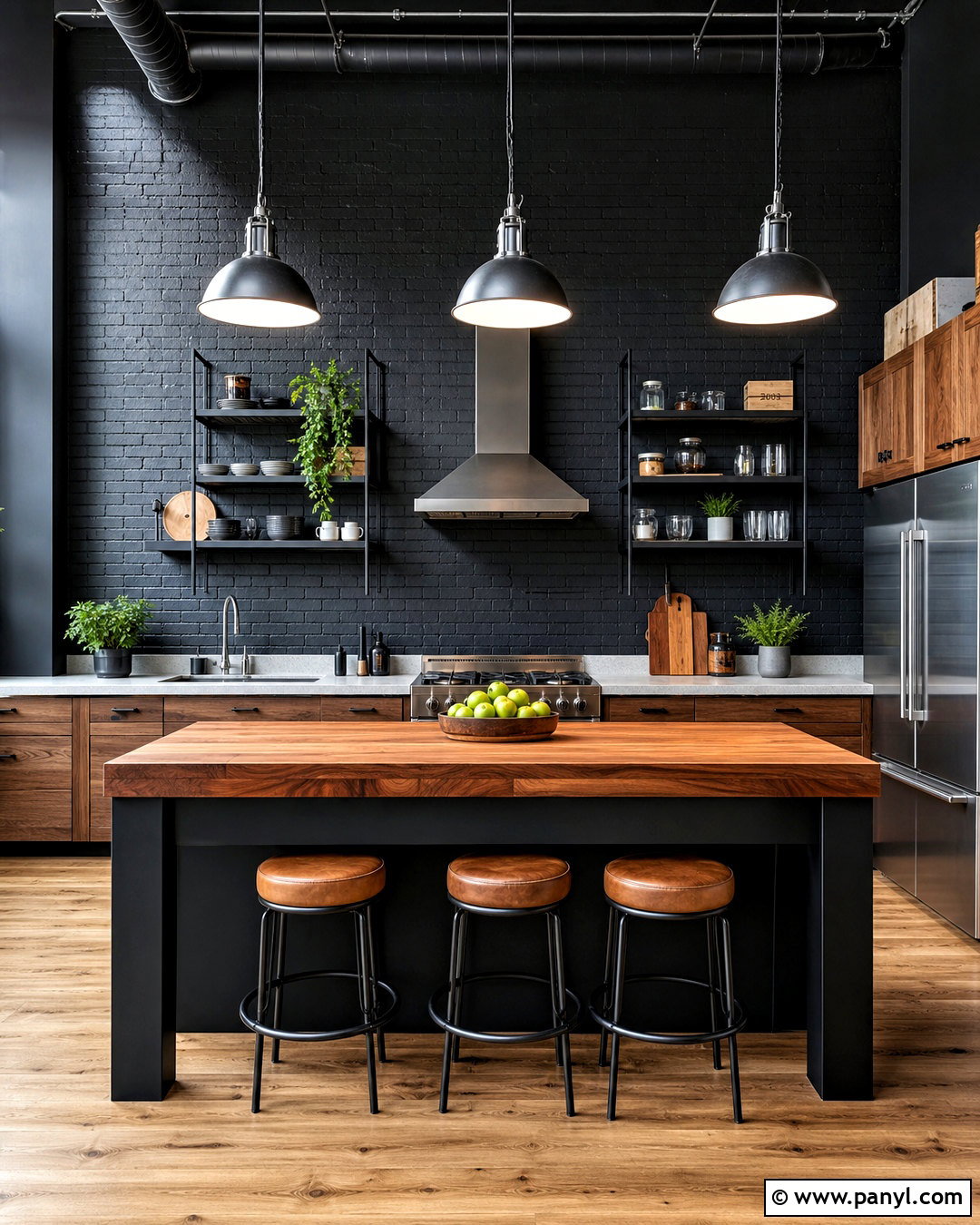
Painted black brick gives an industrial kitchen architectural character while hiding variations in older masonry. Use the brick on the main range wall, then surround it with warm walnut cabinets and stainless steel appliances. Choose durable pale concrete-look countertops to separate the dark wall from the wood cabinetry. A large black island with a butcher-block top can provide generous prep space and casual seating. Install wide-plank oak flooring to soften the industrial materials. Metal dome pendants, adjustable wall lights, and under-cabinet strips ensure the textured brick does not absorb too much light. Add leather stools, open steel shelving, and a few large ceramic containers. Keep the remaining walls warm white to give the dramatic brick feature enough breathing room.
12. Dark Wood Paneled Kitchen Walls
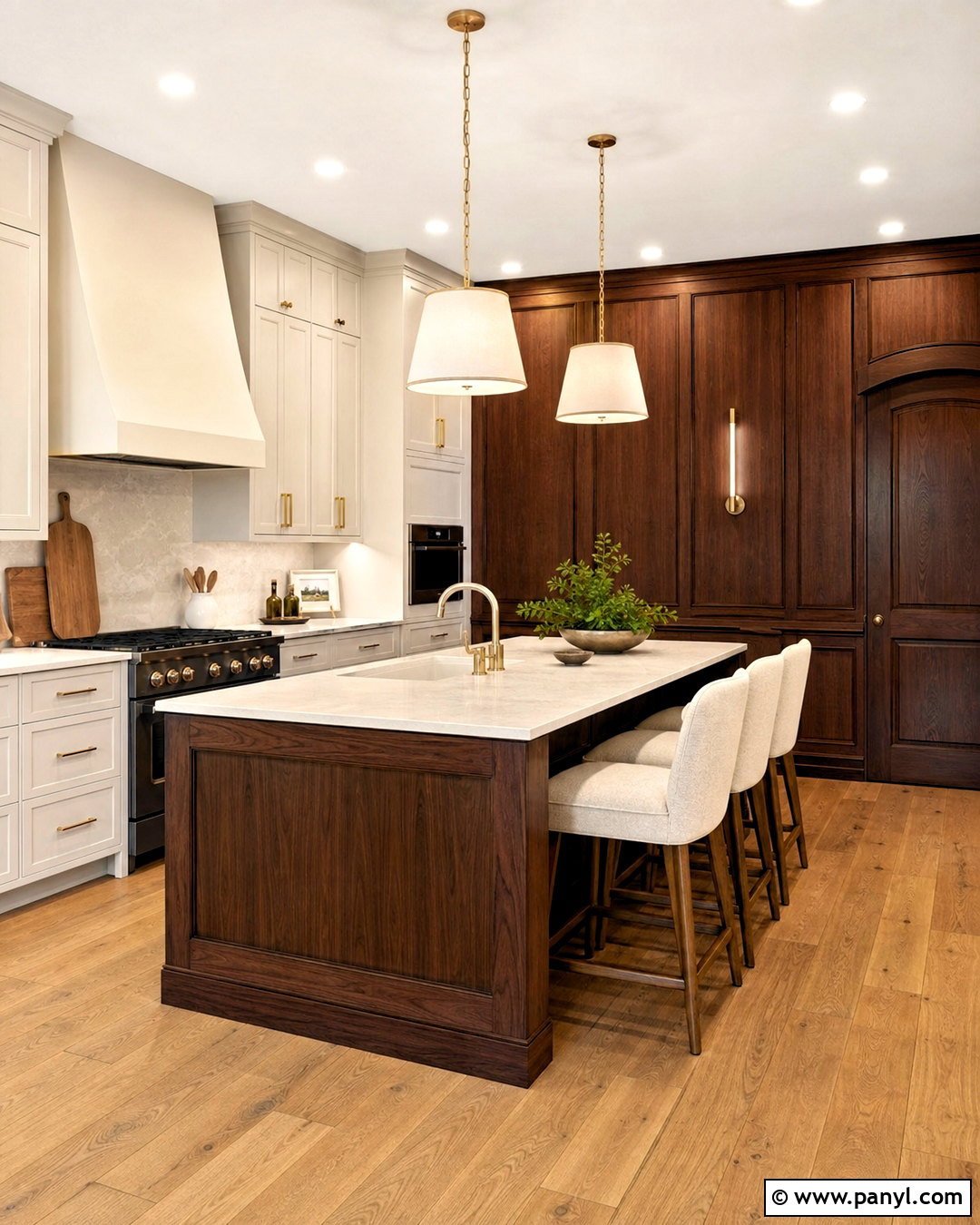
Dark wood paneling creates a warm kitchen envelope with more natural variation than painted walls. Use vertical walnut panels on one full wall and around a built-in breakfast nook. Balance them with warm white cabinets, creamy quartz countertops, and a pale stone backsplash. A matching walnut island connects the central workspace to the paneled wall without covering every surface in wood. Choose light oak flooring with a quieter grain to prevent visual competition. Add linen pendant shades, brushed brass hardware, and upholstered stools in oatmeal fabric. Integrated lighting inside open shelves can highlight ceramics and glassware. Keep the ceiling white and the window treatments simple. This allows the dark paneling to feel cozy and architectural rather than heavy or cabin-like.
13. Dark Slate Tile Kitchen Walls
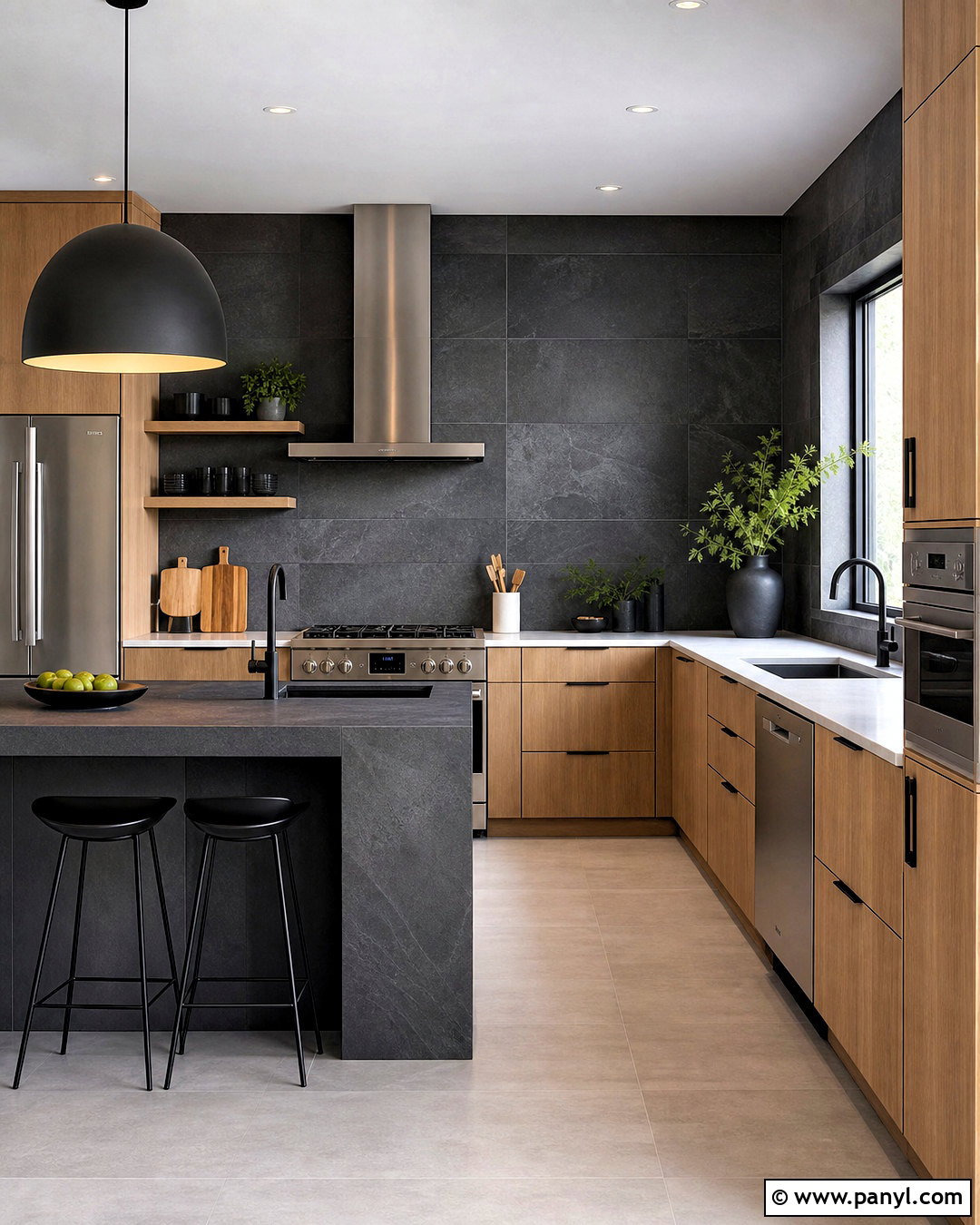
Dark slate wall tile creates a practical, textured surface for a hardworking kitchen. Cover the main cooking wall from countertop to ceiling with large charcoal slate tiles and narrow matching grout lines. Pair them with light oak cabinets and white quartz counters for crisp contrast. A charcoal island can repeat the wall color, while a waterfall countertop keeps the center feeling bright. Use pale porcelain floor tile to balance the darker vertical surface and simplify cleaning. Brushed stainless steel appliances and matte black fixtures suit the slate’s natural variation. Install warm white under-cabinet lights to reveal the stone texture. Minimal wooden accessories, neutral stools, and one large pendant above the island complete a modern kitchen that feels durable, orderly, and grounded.
14. Black Zellige Kitchen Walls
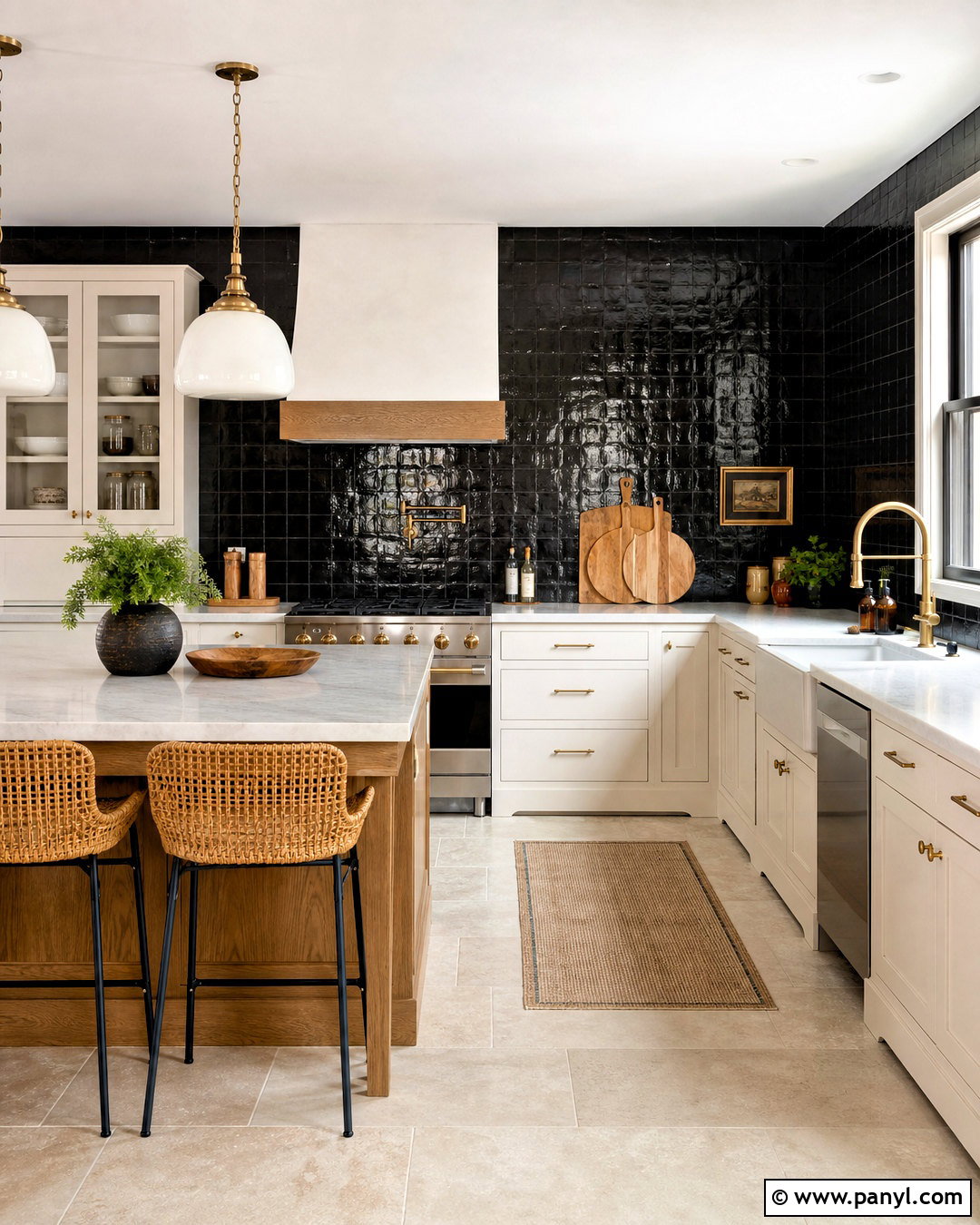
Glossy black zellige tile brings depth to kitchen walls through irregular surfaces and subtle reflections. Install it across the full backsplash and up to the ceiling behind open shelves or a statement range hood. Pair the tile with creamy white cabinets, unlacquered brass hardware, and pale marble-look counters. A natural oak island provides warmth and prevents the room from feeling too formal. Use warm limestone flooring and woven counter stools to introduce softer texture. Milk glass pendants and under-shelf lighting will catch the tile’s uneven glaze without producing harsh glare. Keep countertop decor simple, using wooden boards and off-white pottery. The complete look combines traditional craftsmanship with a fresh, practical layout suited to both compact and open kitchens.
15. Dark Floral Kitchen Wallpaper
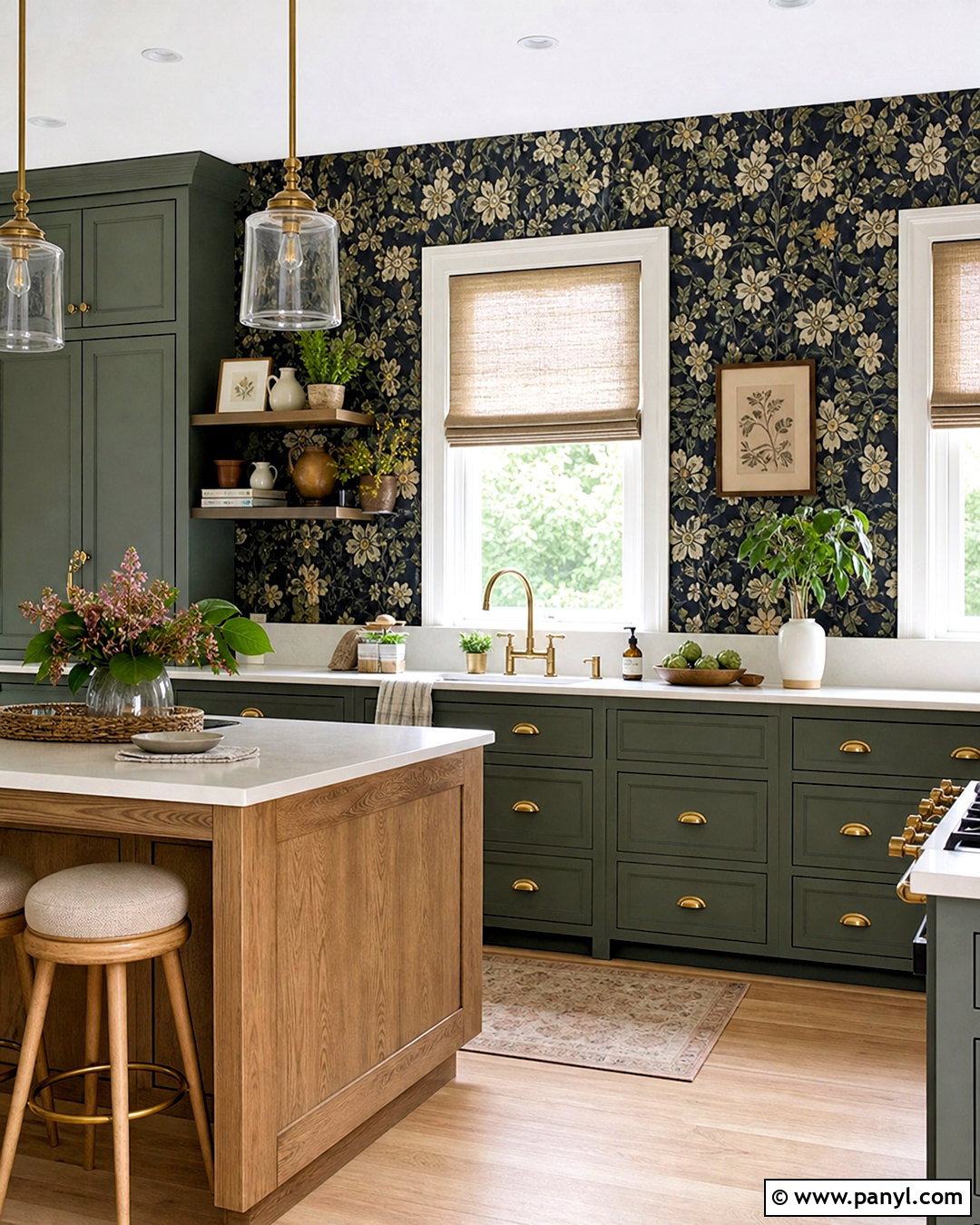
Dark floral wallpaper can create a character-rich kitchen when used with durable surfaces and restrained cabinetry. Choose a black or deep navy background covered with muted green leaves and cream flowers. Apply it to the dining wall or the section above a tall wipeable backsplash, keeping it away from direct splashes and steam. Pair the pattern with sage green cabinets, cream quartz countertops, and antique brass hardware. A small oak island or farmhouse table grounds the room with natural warmth. Use pale oak flooring and off-white Roman shades to prevent the pattern from overpowering the space. Clear glass pendants maintain open sightlines. Repeat only two wallpaper colors through dishes, textiles, and upholstery for a coordinated finish.
16. Two-Tone Dark Kitchen Walls
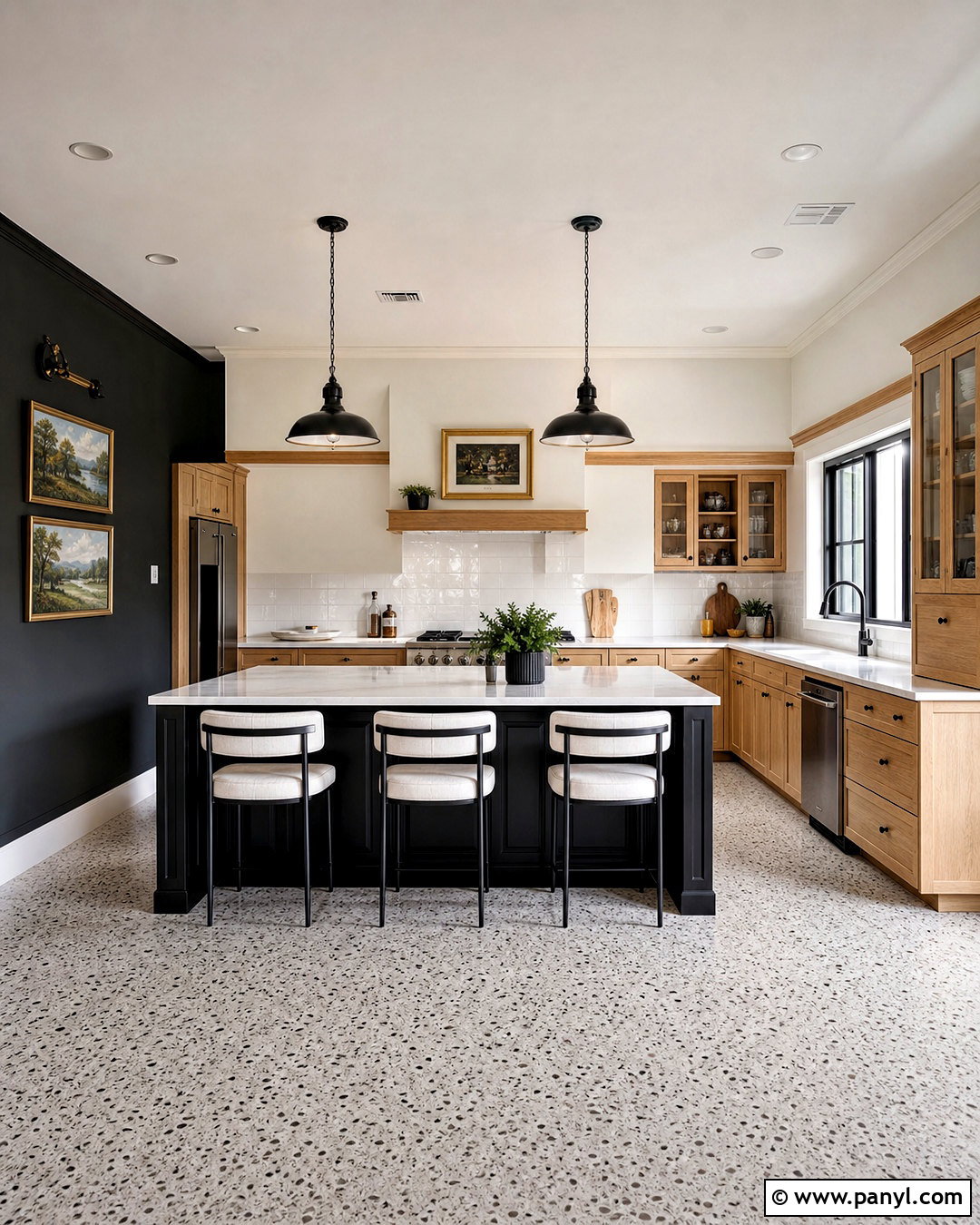
Two-tone walls offer a practical way to use deep color without surrounding the entire kitchen. Paint the lower portion charcoal and the upper portion warm white, dividing them with a simple oak picture rail. Pair this treatment with pale oak cabinets and white quartz countertops. A black island, black-framed windows, and slim metal pendants will connect with the charcoal section. Use glossy white tile behind the main work surface so splashes are easy to clean. Light terrazzo flooring introduces subtle pattern while reflecting brightness upward. Keep stools and window shades neutral, then add a few warm wood accessories. The horizontal color division creates structure and makes the design feel intentional, especially in kitchens with high ceilings or open dining areas.
17. Dark Kitchen Accent Wall
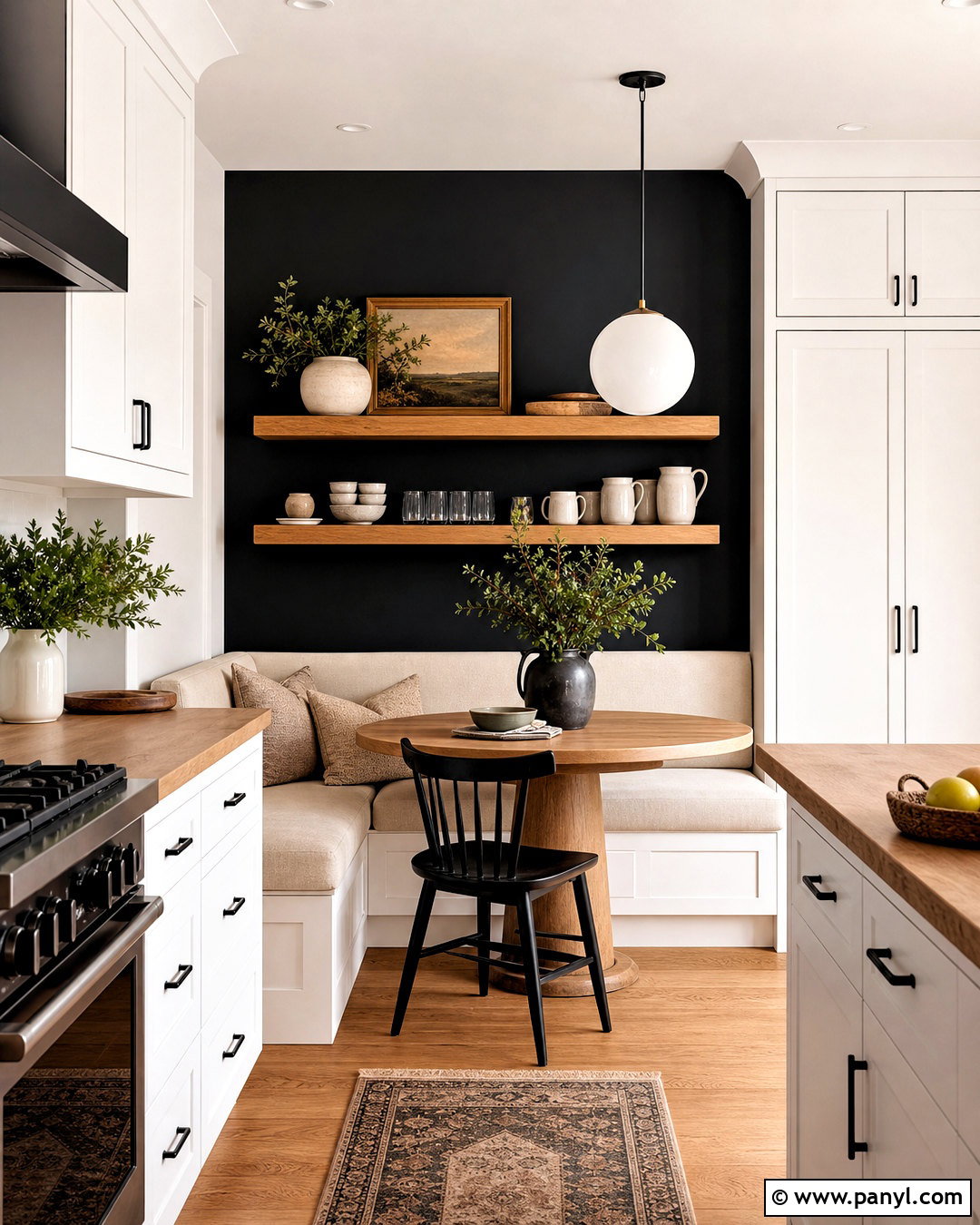
A single dark accent wall can define the kitchen without requiring every wall to carry a strong color. Paint the breakfast nook or open-shelf wall soft black, then keep the surrounding walls warm white. Use white Shaker cabinets, oak countertops, and natural wood flooring for a casual, approachable foundation. Install two thick oak shelves against the black wall and display useful cream dishes, glass containers, and a small collection of framed art. A built-in bench with oatmeal upholstery can turn the feature into a functional dining zone. Add a white globe pendant above a round oak table. Repeating black through cabinet pulls, window frames, and stools will make the accent wall feel connected to the entire kitchen.
18. Dark Galley Kitchen Walls
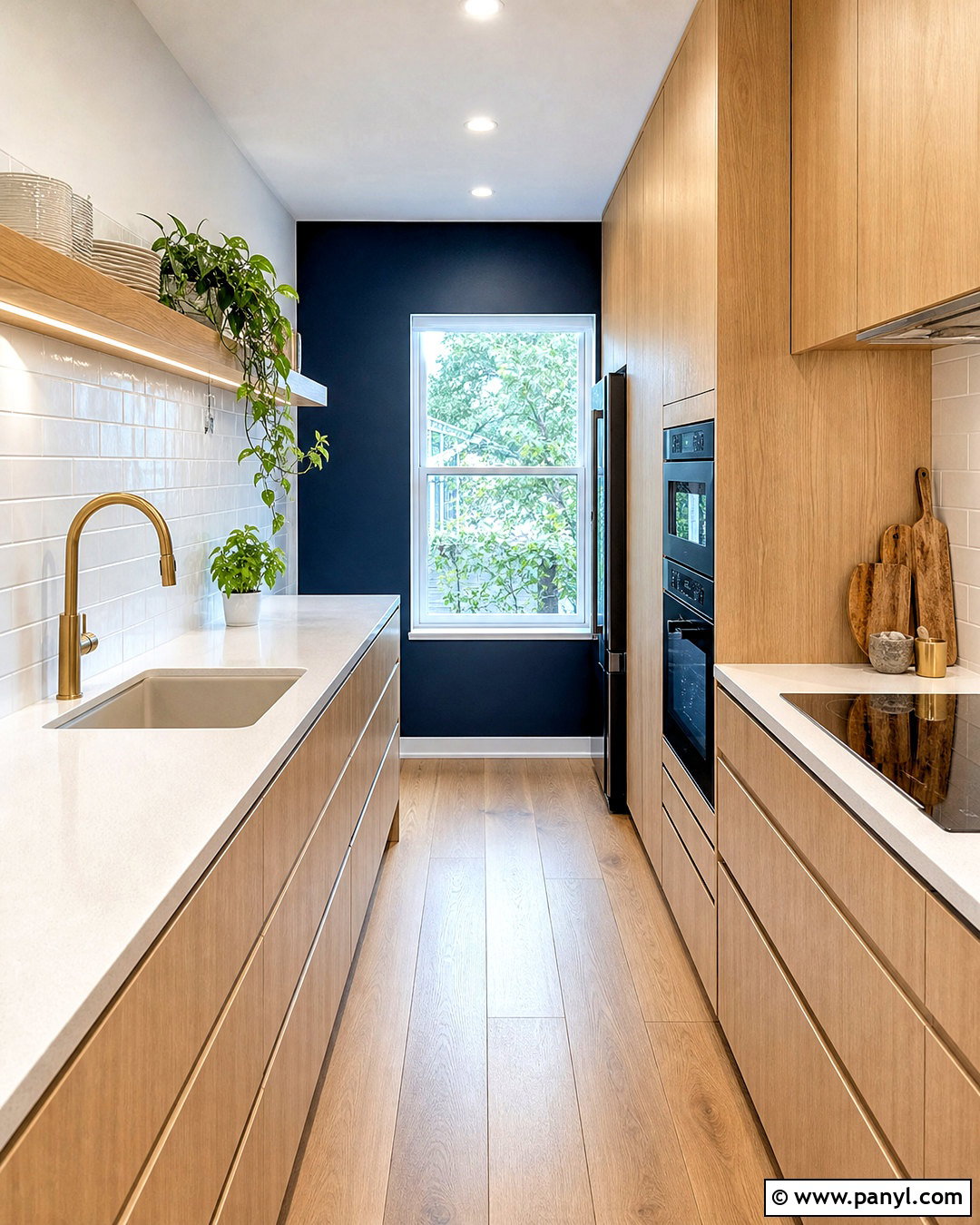
Dark walls can work in a galley kitchen when the cabinetry, floor, and lighting create a clear visual path. Paint the far wall deep navy to establish a focal point, then use warm white walls along the narrow sides. Choose handleless light oak cabinets, pale quartz counters, and a glossy white backsplash to maximize reflected light. Continue light oak flooring lengthwise to emphasize the room’s full depth. A glass door or uncovered window at the end will help the navy wall appear deliberate rather than shadowy. Use recessed ceiling lights in an even row and install continuous under-cabinet strips. Keep appliances integrated and counters uncluttered. One brass faucet and matching hardware can add warmth without narrowing the streamlined visual effect.
19. Dark Farmhouse Kitchen Walls
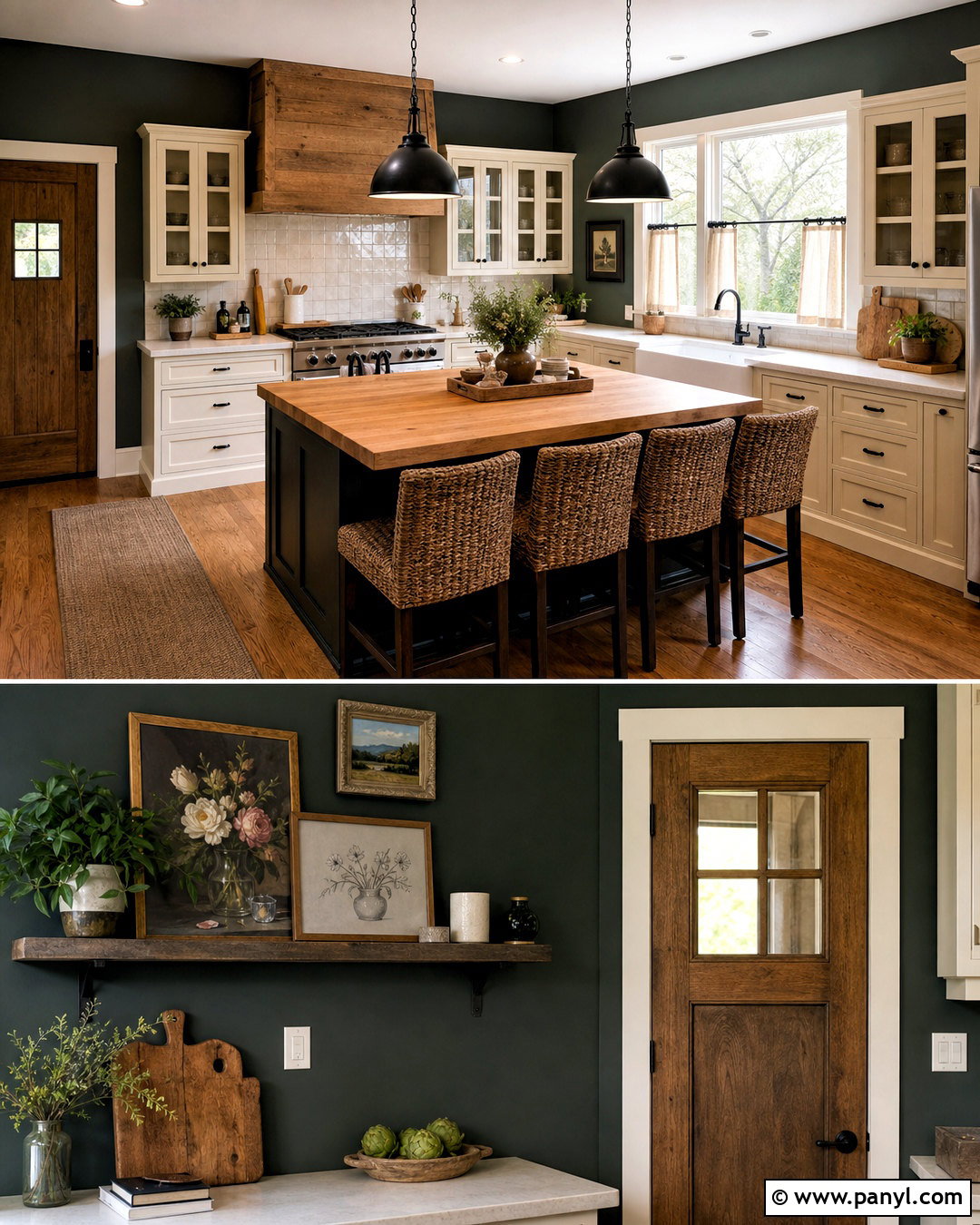
Charcoal green walls can update a farmhouse kitchen while preserving its relaxed, traditional character. Pair the color with warm cream cabinets, cup pulls, and a white apron-front sink. Choose butcher-block counters for the island and durable pale quartz around the sink and range. Use handmade ivory tiles for the backsplash, medium oak flooring, and a reclaimed wood range hood. Black iron pendants provide contrast, while bright bulbs and under-cabinet lighting maintain visibility. Add a freestanding pine hutch painted cream to increase storage without creating a wall of built-in cabinets. Linen café curtains, woven stools, and simple stoneware complete the room. The dark walls provide richness, but the lighter working surfaces keep the kitchen practical and welcoming.
20. Dark Small Kitchen Walls
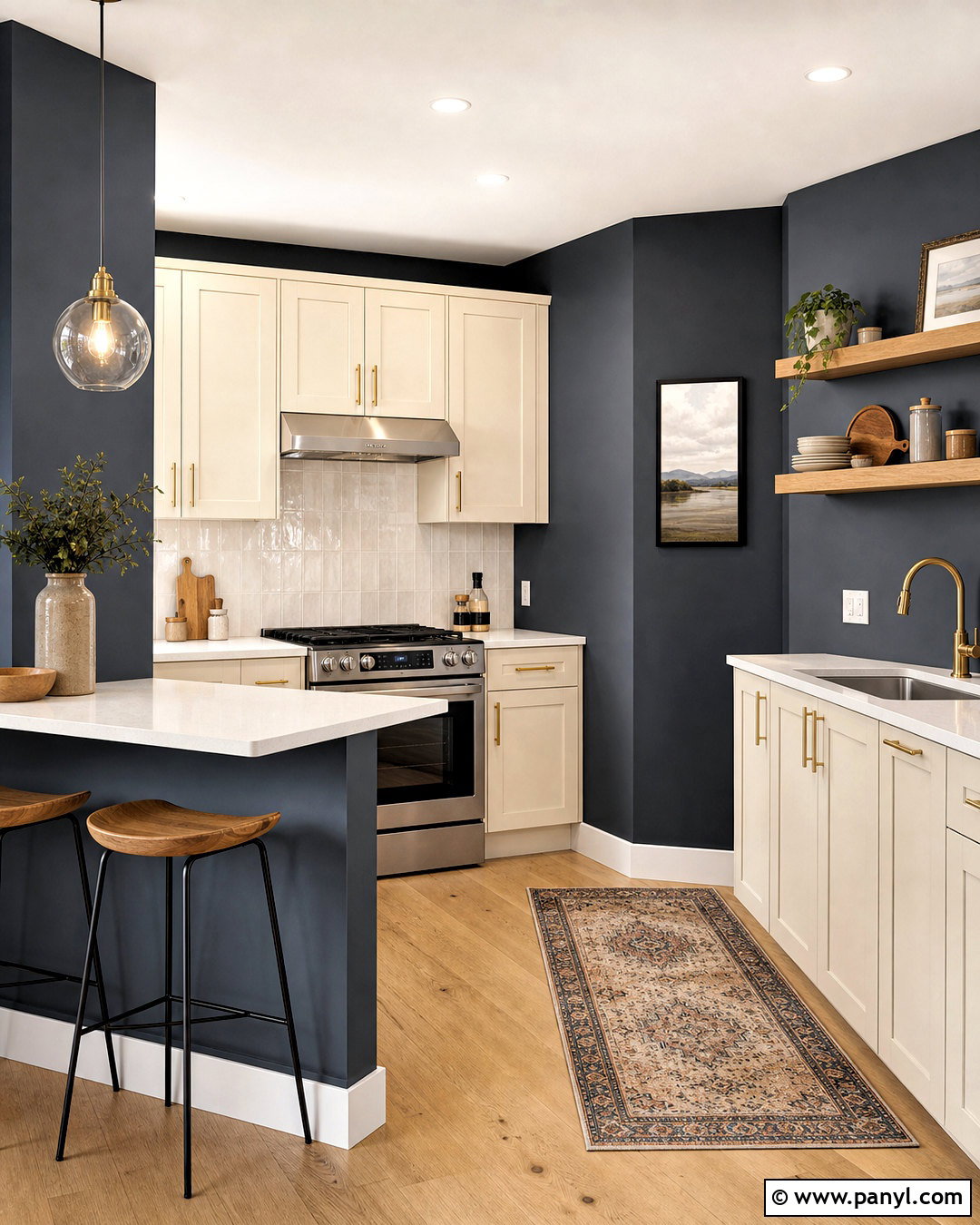
A small kitchen can handle dark walls when the color is paired with reflective materials and an efficient layout. Choose deep blue-gray walls with warm white flat-panel cabinets and slim brass hardware. Install pale quartz countertops and carry them upward as a short backsplash. A compact peninsula can provide prep space and seating without blocking movement. Use light oak flooring, a mirrored or glossy tile section behind the range, and open shelves near the window. Bright recessed lights should cover the main walkway, while under-cabinet strips illuminate every counter. Keep decorative pieces limited to a few useful ceramics and wood boards. This complete design feels intimate and polished, proving that a limited footprint does not require an entirely pale color palette.
Conclusion:
The most successful dark kitchen walls are supported by a complete design plan. Deep paint or textured material should connect naturally with the cabinetry, counters, flooring, lighting, and hardware. Use pale stone, warm wood, glossy tile, or reflective metal to keep practical areas visible. Multiple light sources are equally important, particularly in small kitchens and rooms with limited windows. You can surround the whole room with color, highlight one wall, or use dark tile and paneling as durable architectural finishes. These **20 dark kitchen walls** show that black, green, navy, burgundy, brown, and charcoal can feel cozy instead of gloomy when every surface contributes to a balanced, functional kitchen.

Related Ideas and Inspiration:
Leave a Reply