
Dark kitchens can feel dramatic, welcoming, and surprisingly practical when every finish works together. These 20 dark kitchen ideas explore complete looks built around black, charcoal, navy, forest green, espresso, and other saturated colors. Rather than relying on dark cabinets alone, each design balances cabinetry with countertops, flooring, lighting, hardware, and decorative details. Current kitchen inspiration continues to favor nature-inspired colors, matte finishes, warm woods, and thoughtfully layered two-tone combinations. () You will find options for small kitchens, open layouts, traditional homes, and streamlined modern spaces. Some feel bold and luxurious, while others are warm, rustic, or quietly understated. Use these complete, practical schemes to discover the right balance of depth, contrast, and personality among these 20 dark kitchen ideas.
1. Matte Black Kitchen With White Marble
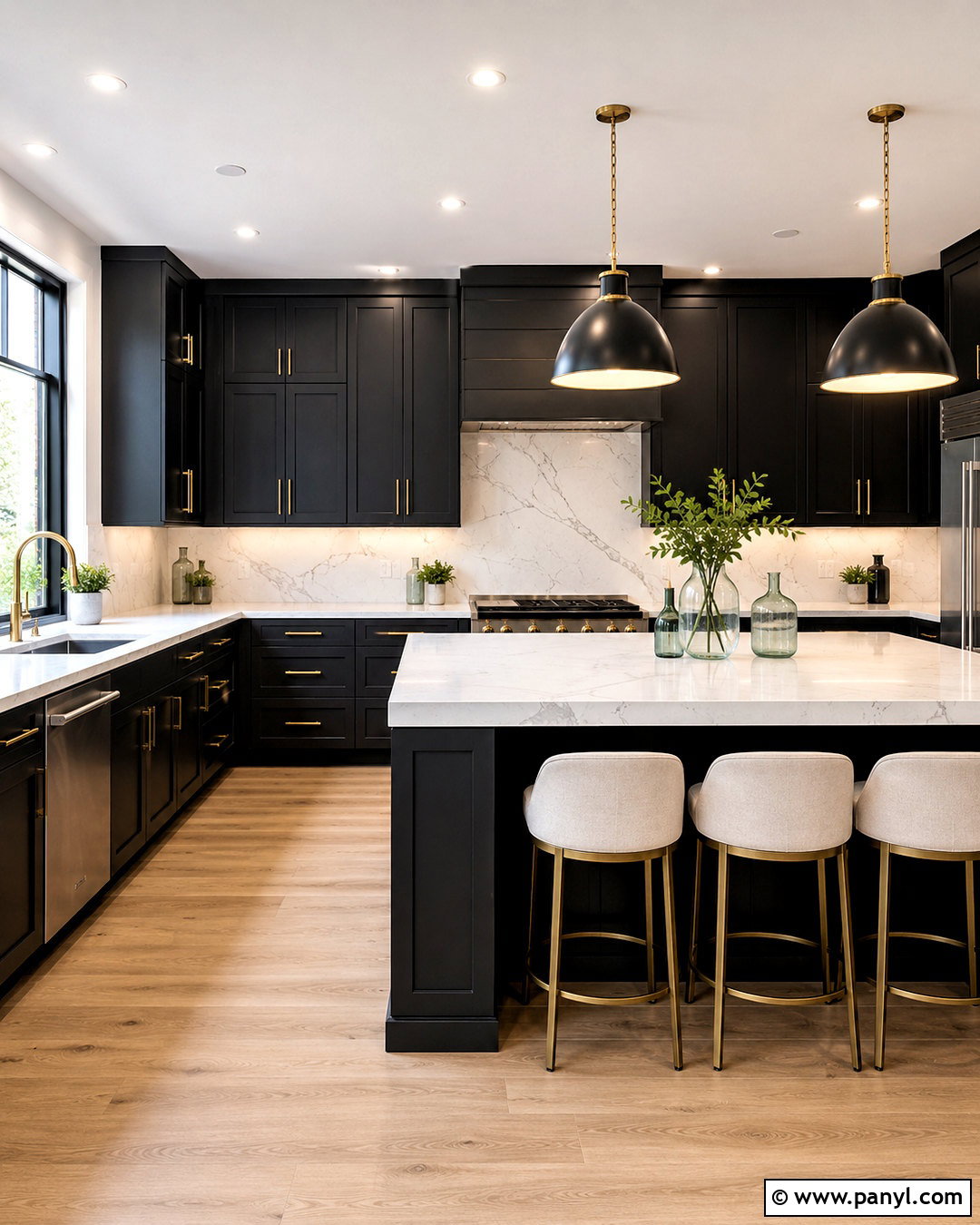
Matte black cabinetry creates a strong foundation without the glare of a high-gloss finish. Use simple flat-panel doors for a modern look, then add white marble or marble-look quartz countertops with soft gray veining. Continue the same material up the backsplash for a clean, uninterrupted surface. Brushed brass pulls, a matching faucet, and warm pendant lights prevent the black cabinets from feeling cold. Choose medium oak flooring to introduce natural color and visible grain. A large island can repeat the black cabinetry while providing seating with cream upholstered stools. Finish the room with white walls, clear glass accessories, and a few green plants. This balanced palette feels dramatic, polished, and comfortable enough for everyday family use.
2. Dark Green Kitchen With Warm Wood
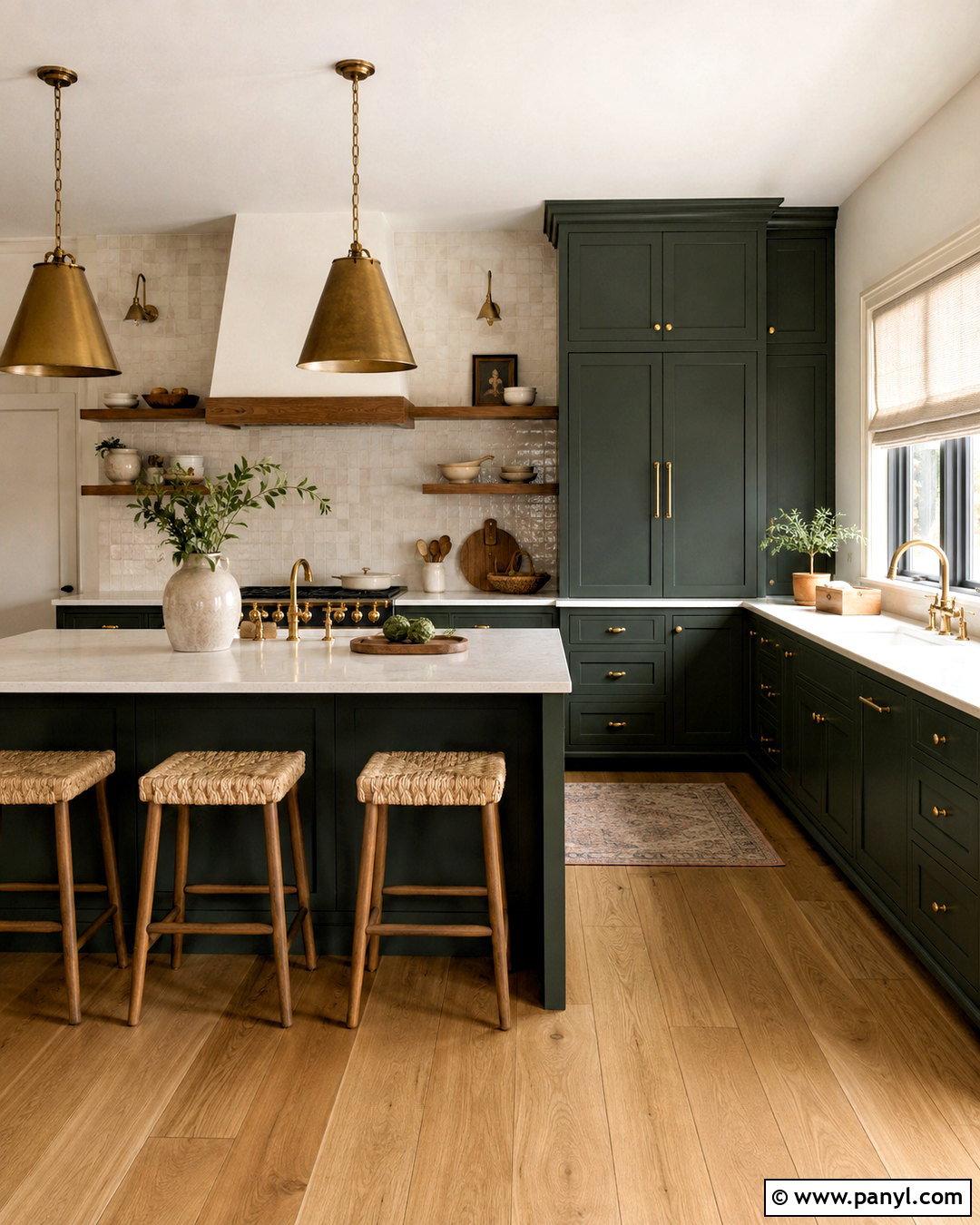
Deep forest green cabinets feel grounded and inviting when surrounded by warm natural materials. Choose Shaker doors with aged brass knobs, then pair them with butcher-block countertops or creamy quartz that contains subtle tan veining. A handmade off-white tile backsplash adds brightness while keeping the room relaxed. Install medium-tone oak flooring and repeat the wood on floating shelves or a paneled range hood. Linen Roman shades, woven counter stools, and ceramic accessories strengthen the organic character. For lighting, use antique brass pendants with white shades and under-cabinet strips that illuminate work areas. Paint the ceiling and remaining walls a soft warm white. The completed kitchen feels earthy and traditional, yet the streamlined hardware and uncluttered layout keep it fresh.
3. Navy Kitchen With Brass Hardware
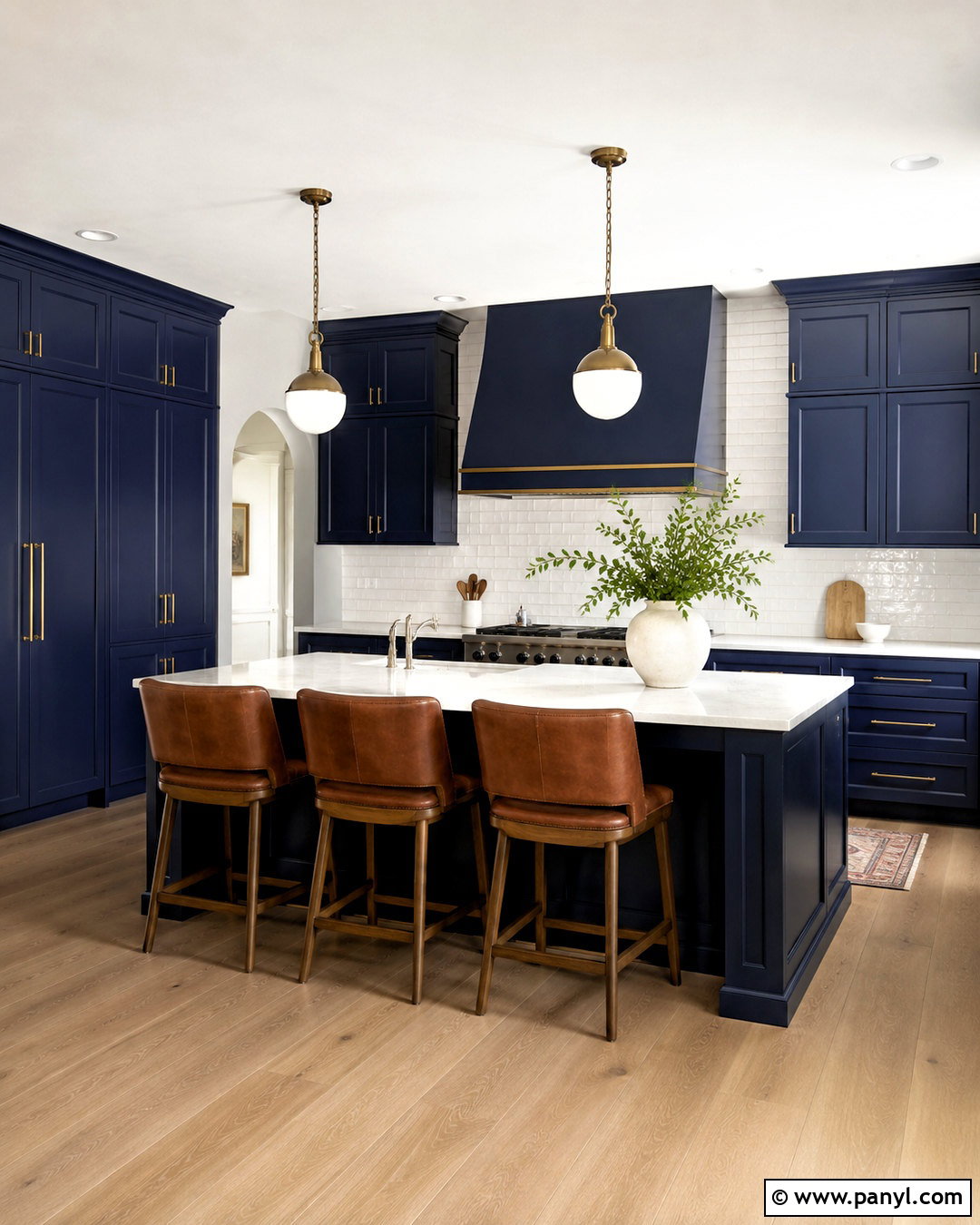
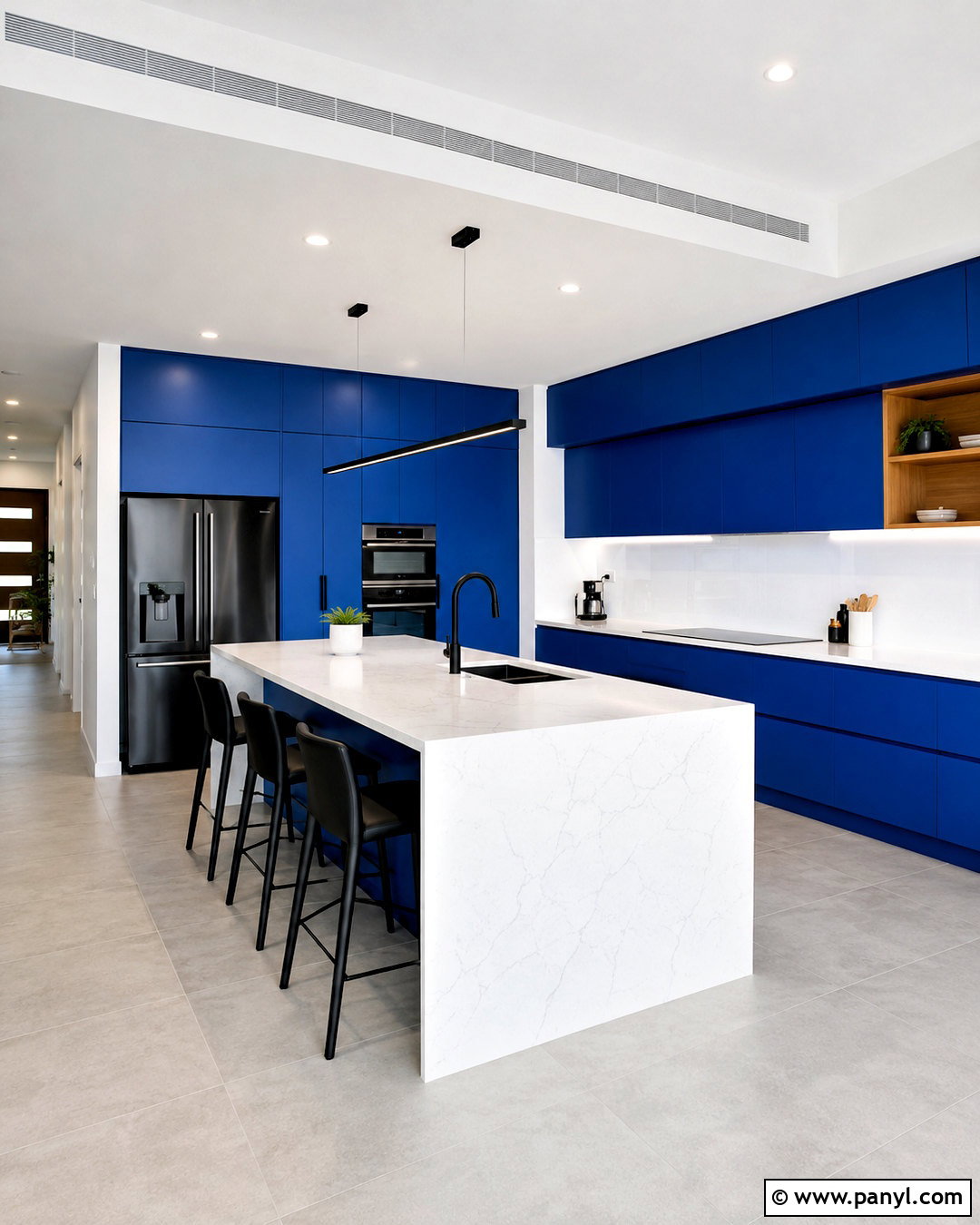
Rich navy cabinetry offers the depth of black with a softer, more colorful appearance. Cover the base and upper cabinets in the same dark blue for a cohesive look, using slim brass pulls to create a refined contrast. White quartz countertops and a glossy white subway tile backsplash reflect light throughout the room. A pale oak floor keeps the overall palette warm rather than nautical. Above the island, hang two oversized milk-glass pendants with brass fittings. Add saddle-brown leather stools and a natural woven runner for texture. If the kitchen has limited daylight, install warm-white under-cabinet lighting and recessed ceiling fixtures. The combination of navy, white, brass, leather, and oak produces a classic kitchen that feels tailored without becoming overly formal.
4. Charcoal Kitchen With Light Oak
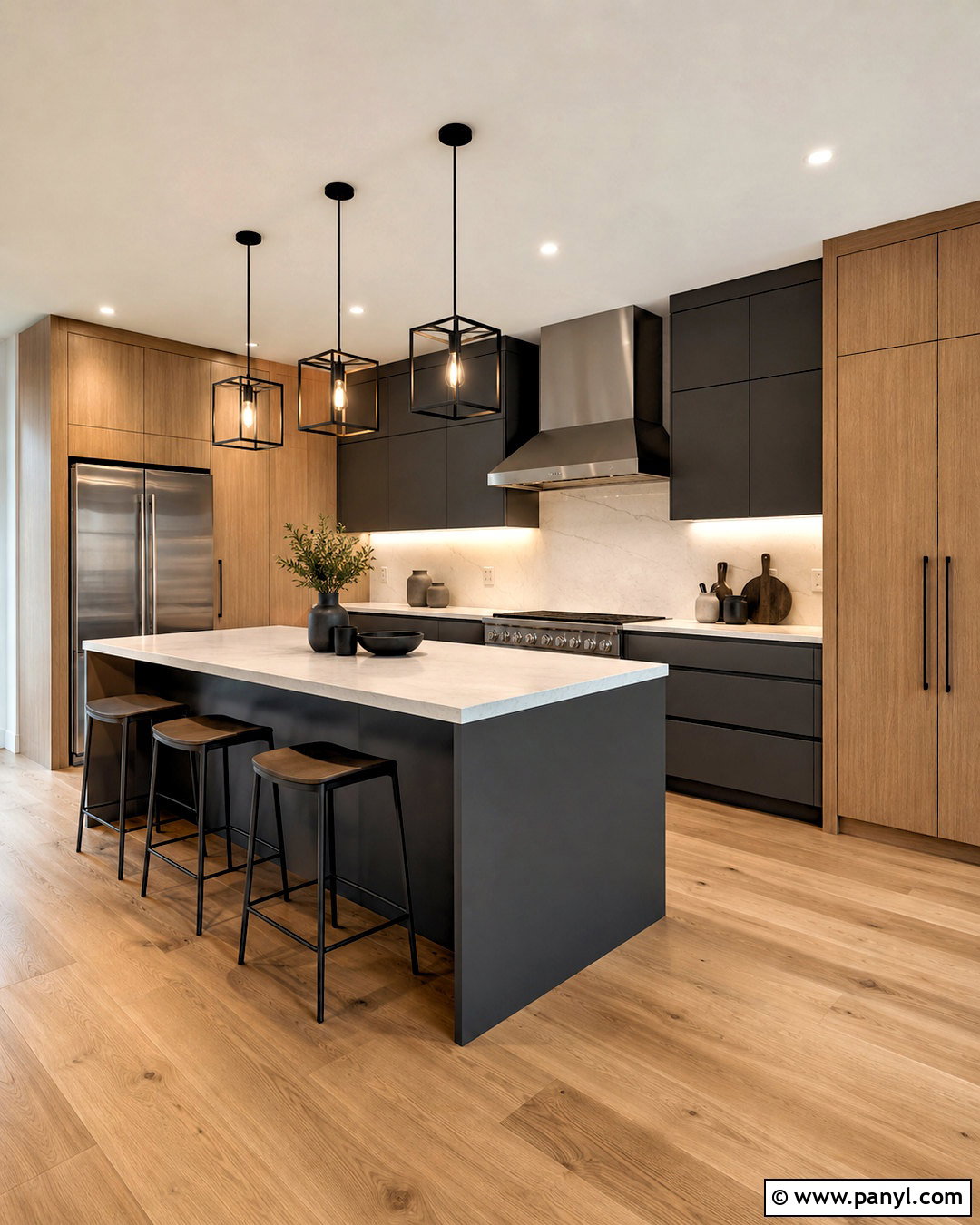
Charcoal gray cabinets create a softer alternative to solid black and work especially well with pale wood. Use handleless base cabinets in a matte graphite finish, then introduce light oak on the tall pantry units and island panels. Select creamy off-white quartz countertops instead of stark white to reduce harsh contrast. A full-height backsplash in the same quartz keeps the design streamlined. Wide-plank oak flooring connects the cabinetry accents to the rest of the room. Choose black-framed pendant lights, simple counter stools, and brushed stainless steel appliances. Keep accessories minimal, but add a stoneware bowl and a few wooden cutting boards for warmth. This complete scheme suits an open-plan home because its neutral colors transition easily into nearby dining and living spaces.
5. Black And Walnut Kitchen
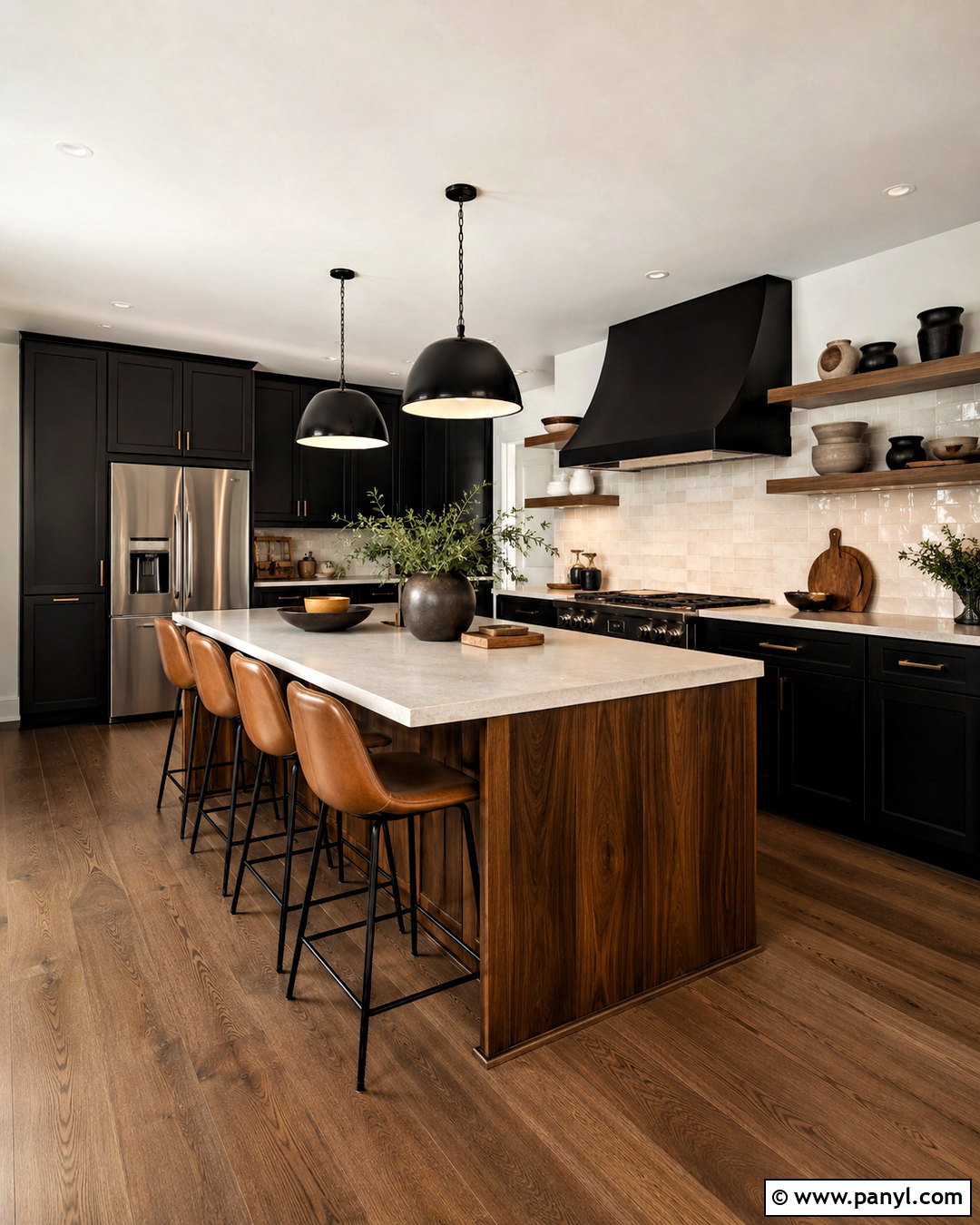
Can a nearly black kitchen still feel warm? Pairing black cabinetry with walnut provides an immediate sense of balance. Use matte black cabinets around the perimeter and reserve richly grained walnut for the island, pantry doors, and open display niches. Cream quartz countertops brighten the work surfaces without breaking the warm color story. Install a backsplash of slender ivory tiles with matching grout for quiet texture. Black metal pendant lights and dark appliances blend into the cabinetry, allowing the walnut to stand out. Choose medium oak or smoked oak flooring that complements, rather than matches, the wood accents. Add caramel leather stools and a few handmade ceramics. The result is a sophisticated modern kitchen with enough natural variation to feel welcoming and lived in.
6. Espresso Kitchen With Cream Countertops
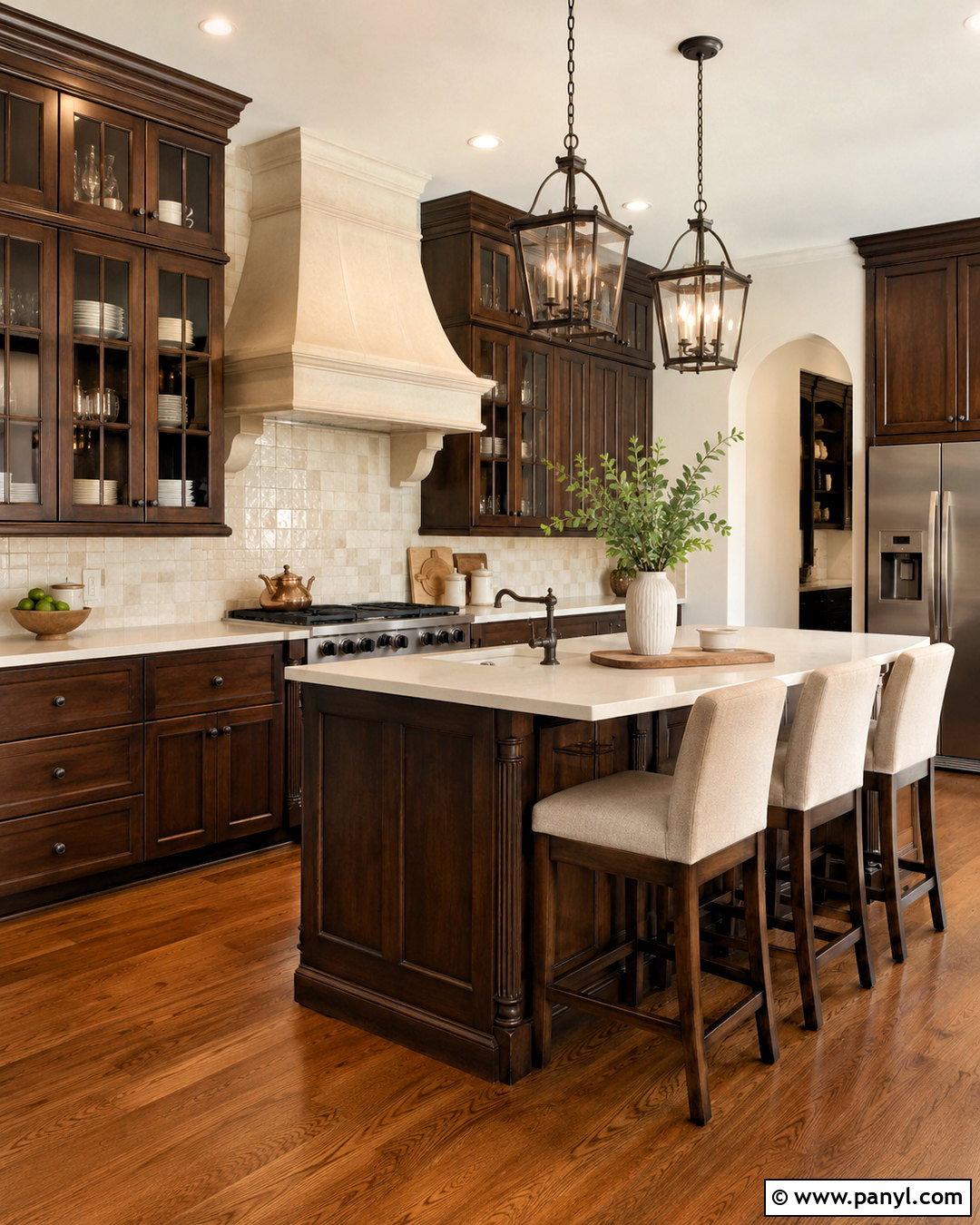
Dark espresso cabinets bring richness to a traditional kitchen, especially when their brown undertones remain visible. Choose recessed-panel doors with small antique bronze knobs and use cream quartz countertops with delicate brown veining. A warm ivory backsplash, such as handmade square tile, keeps the space bright without introducing a sharp black-and-white contrast. Extend one run of cabinets to the ceiling for storage, then use glass-front doors on a few upper sections to create visual relief. Medium-toned hardwood flooring supports the warm palette. Add bronze lantern pendants, beige upholstered stools, and a plaster range hood in soft cream. The finished room feels elegant but approachable. It is an excellent direction for updating brown cabinets without removing their comfortable, classic character.
7. Dark Teal Kitchen With Zellige Tile
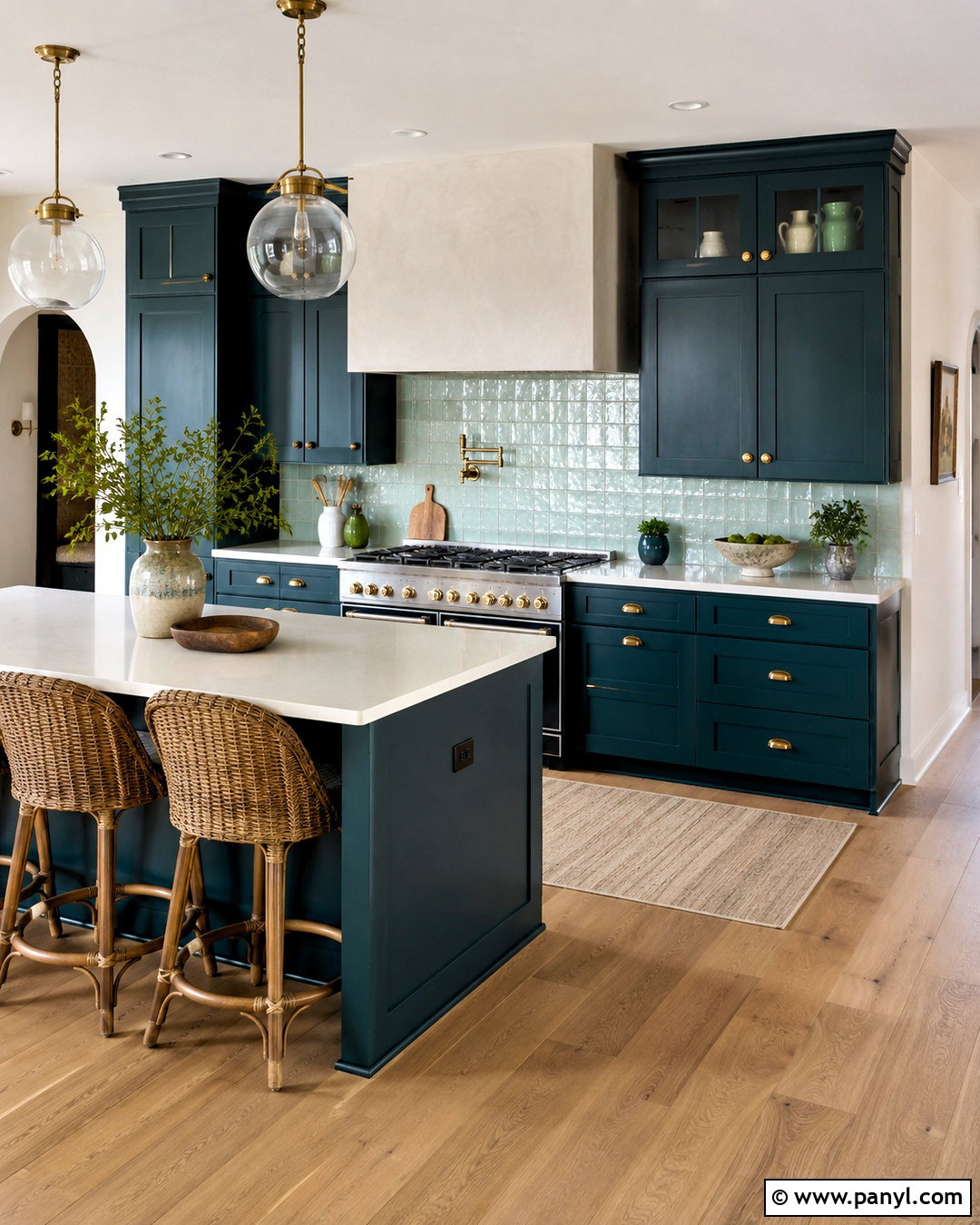
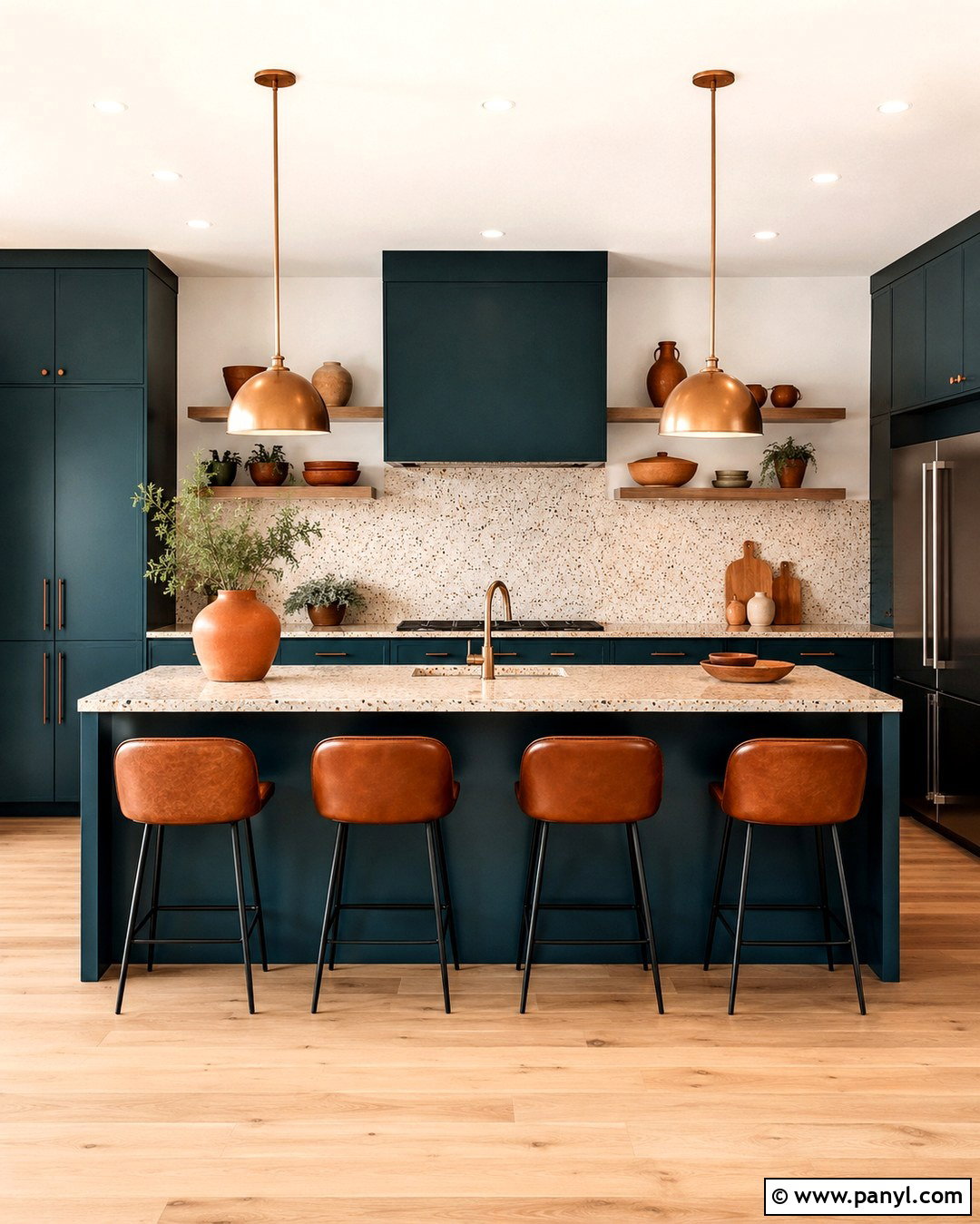
Dark teal cabinetry gives a kitchen dramatic color while maintaining an energetic, welcoming mood. Use the blue-green shade across Shaker cabinets and the island, then balance it with creamy white quartz counters. A glossy pale aqua or off-white zellige backsplash introduces handmade texture and reflects light from nearby windows. Select aged brass hardware and a bridge-style faucet to add warmth. Natural oak flooring and woven rattan stools prevent the saturated color from overwhelming the room. Keep the walls warm white, but repeat teal through a small runner or ceramic accessories. Clear glass pendants allow an uninterrupted view through the kitchen while adding functional illumination. This complete look feels distinctive and colorful without depending on trendy patterns or excessive decoration.
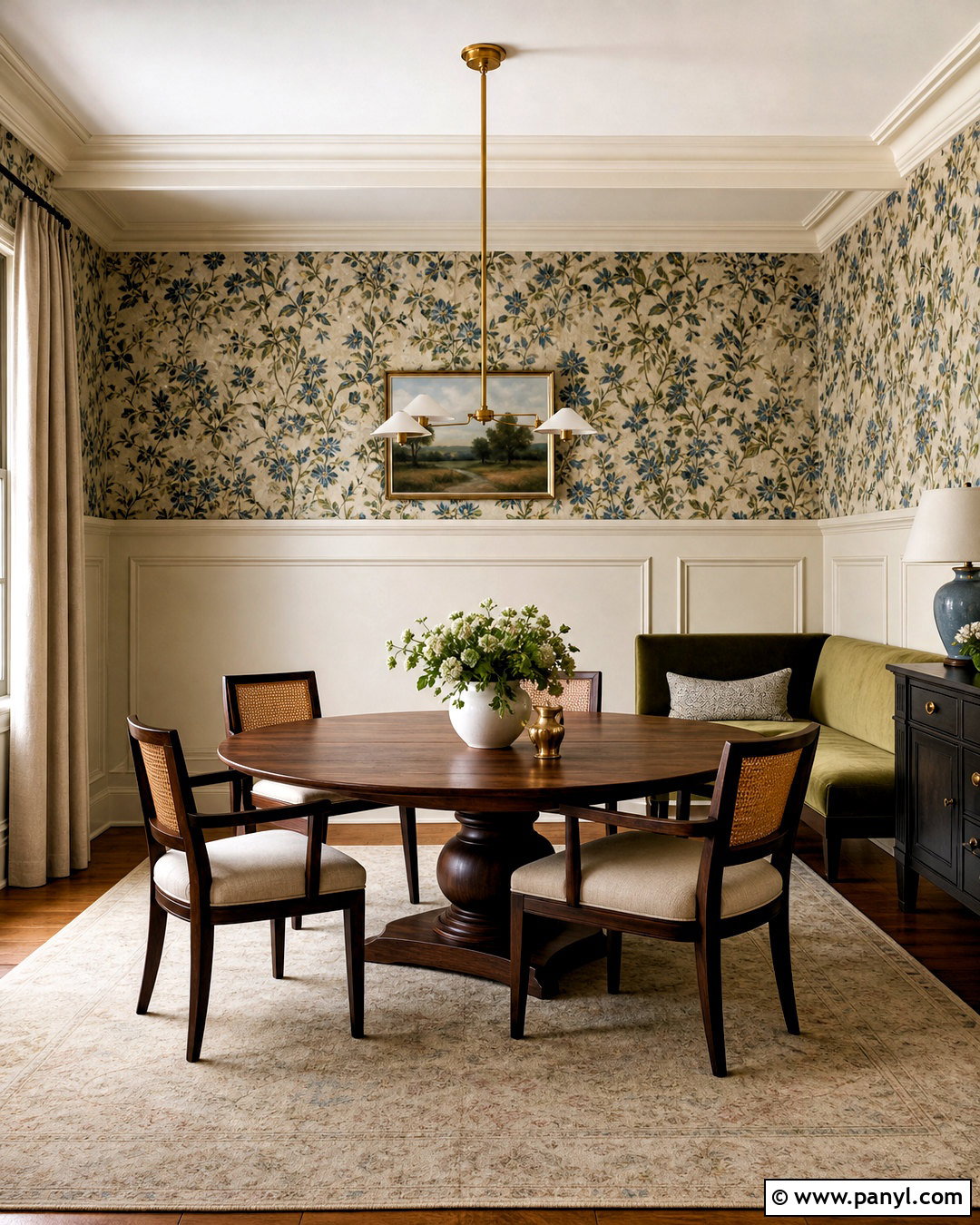
8. Burgundy Kitchen With Soft Pink Walls
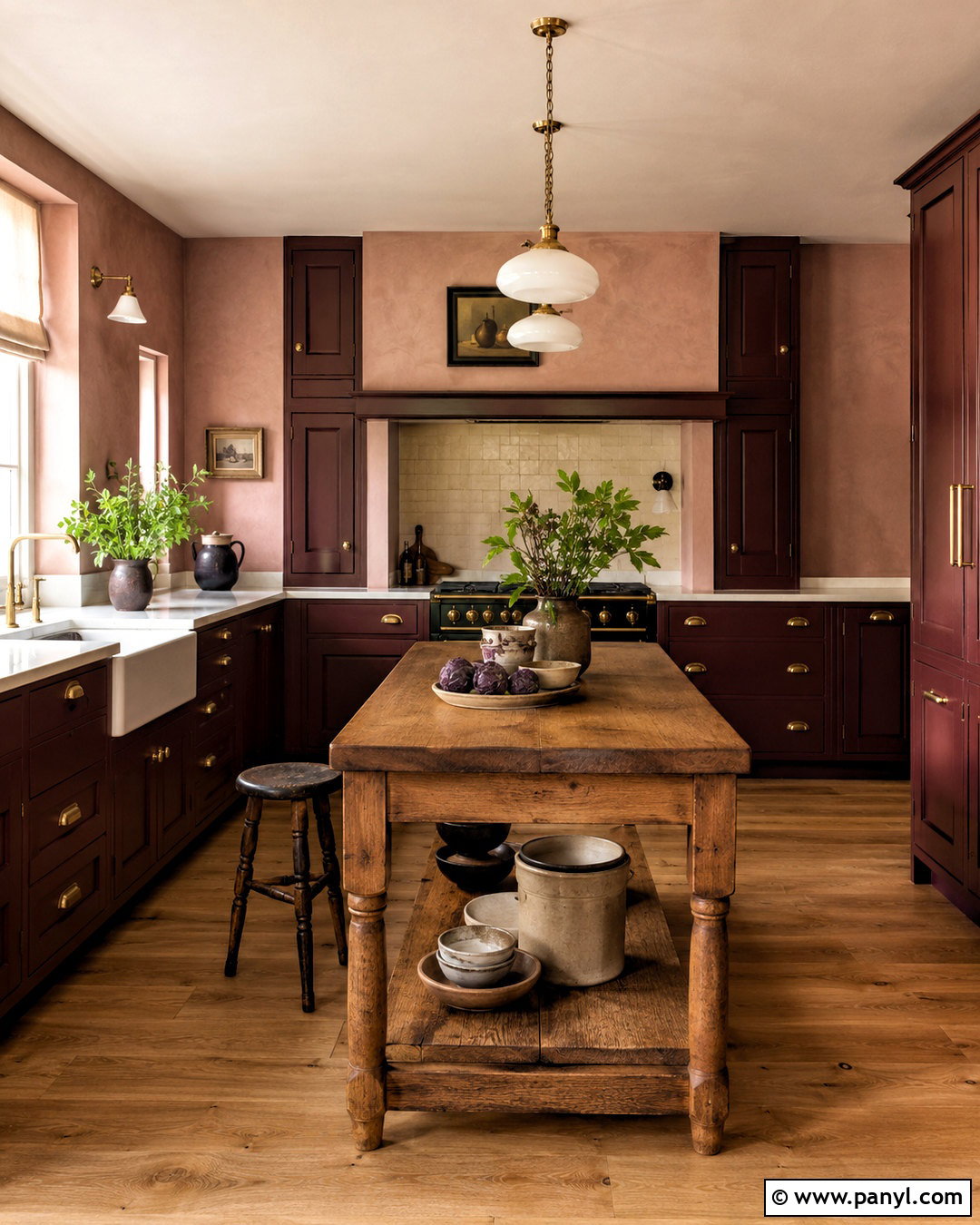
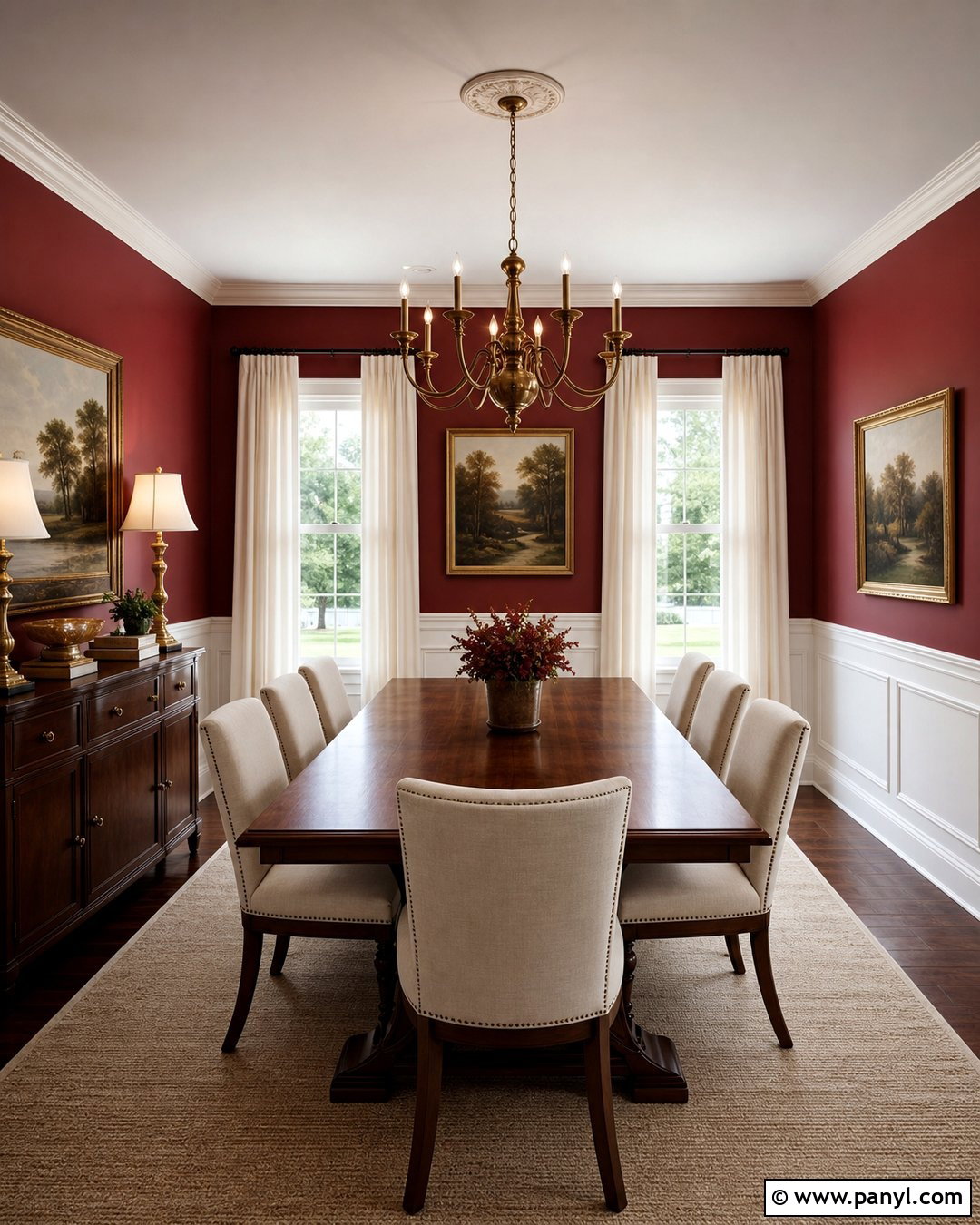
For a dark kitchen that moves beyond blue, green, and black, consider deep burgundy cabinetry. Its red-brown undertones pair beautifully with softly plastered blush or dusty pink walls. Choose cream limestone-look countertops and continue the material into a short backsplash with a narrow ledge. Antique brass knobs, a brass faucet, and opal glass lighting bring subtle shine. Ground the room with medium oak flooring and add a freestanding wood table or butcher-block island for contrast. Keep window treatments simple with natural linen shades. Instead of filling the room with red accessories, use neutral stoneware, clear glass, and one or two leafy plants. The finished kitchen feels warm, collected, and slightly unexpected while remaining practical for an everyday home.
9. Black Farmhouse Kitchen
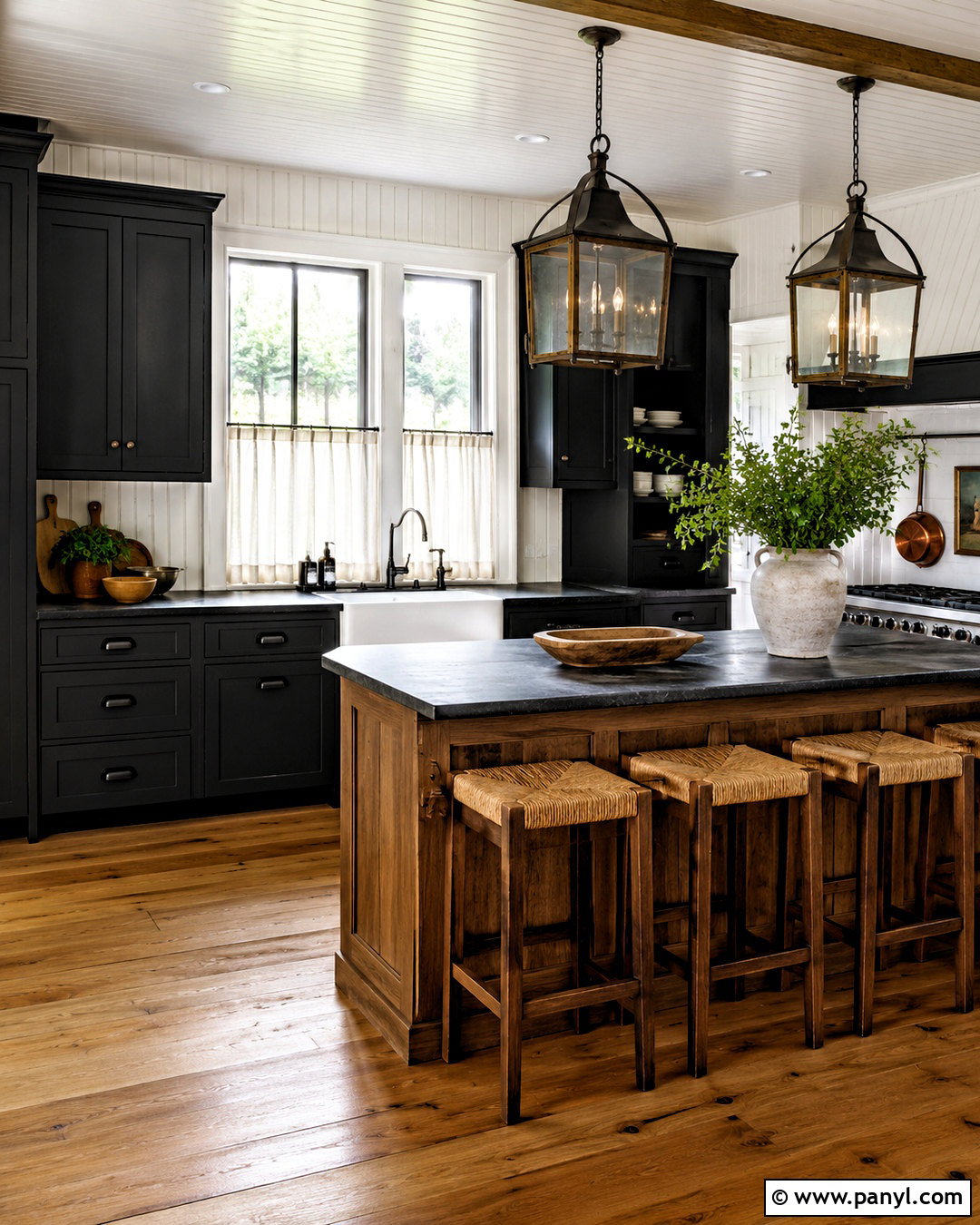
A black farmhouse kitchen should combine strong color with familiar, comfortable materials. Choose matte black Shaker cabinets, a white apron-front sink, and honed soapstone countertops with natural gray veining. Use warm white beadboard or handmade subway tile behind the work areas. A stained oak island with open shelving breaks up the dark perimeter and provides a casual gathering spot. Add black iron cup pulls, a bridge faucet, and simple lantern pendants. Wide-plank wood flooring contributes age and character, while woven stools and cotton café curtains soften the harder surfaces. Display only a few useful pieces, such as wooden boards, stoneware crocks, and enamel cookware. This creates a relaxed farmhouse room that feels updated rather than overly rustic or themed.
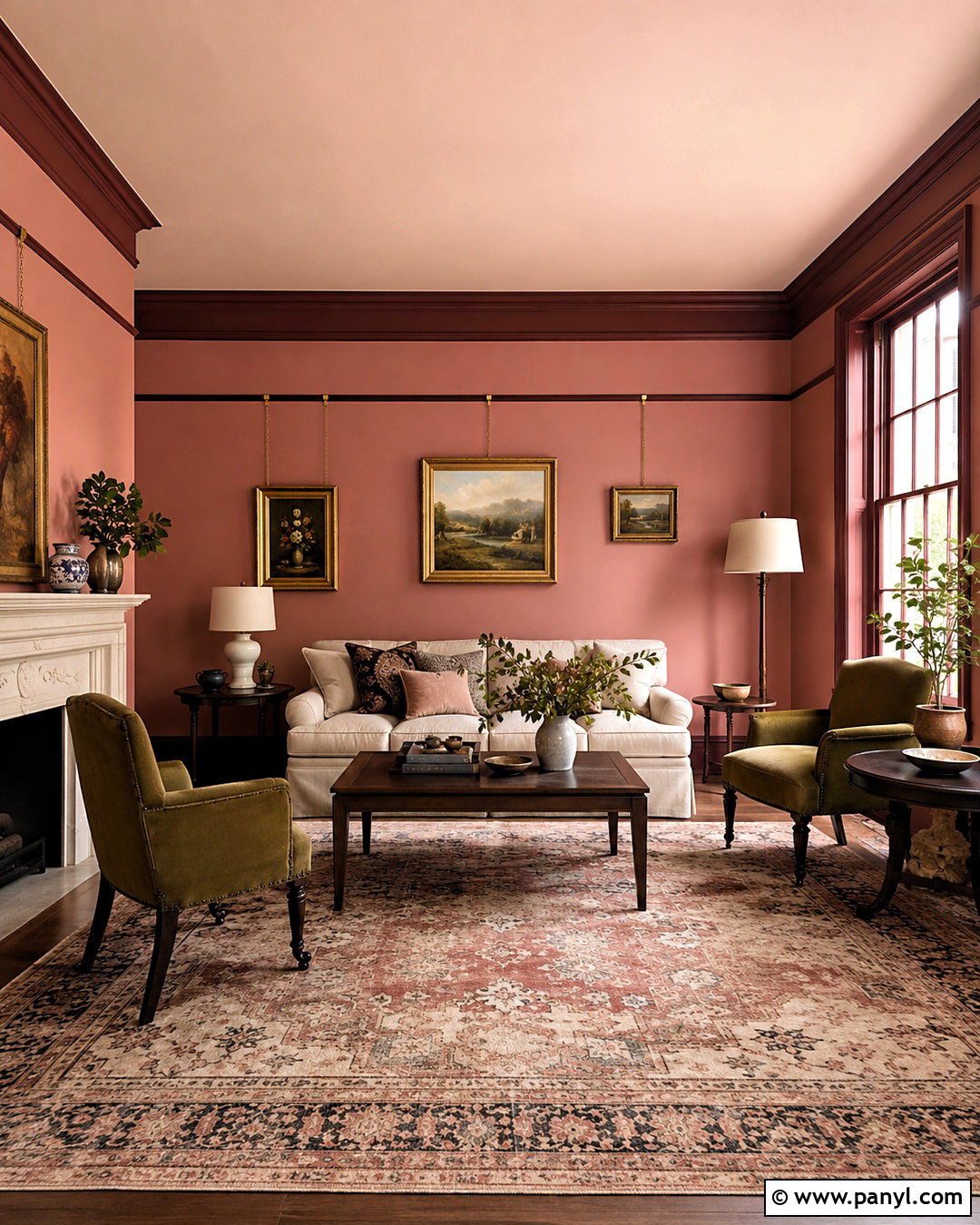
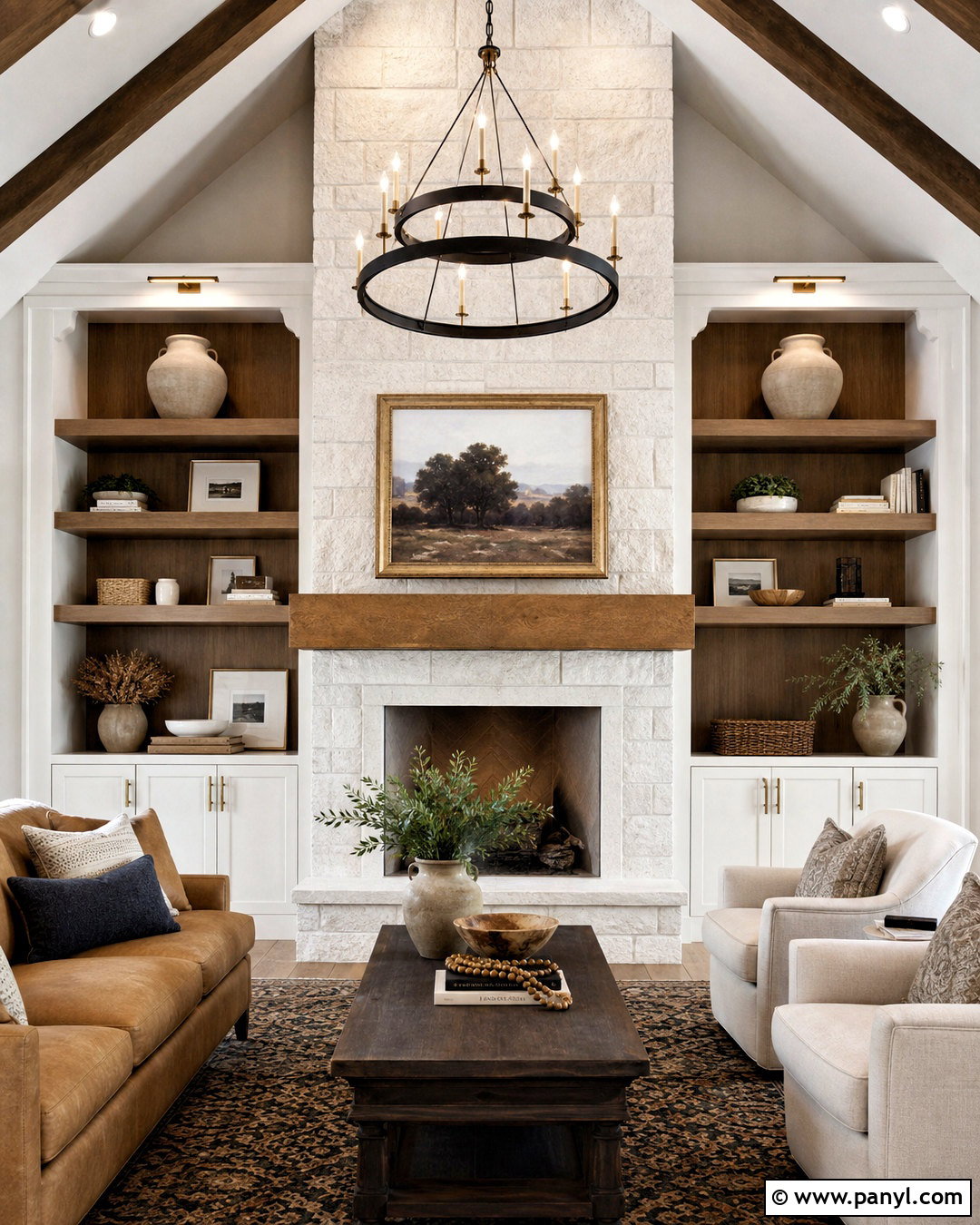
10. Dark Industrial Kitchen With Concrete
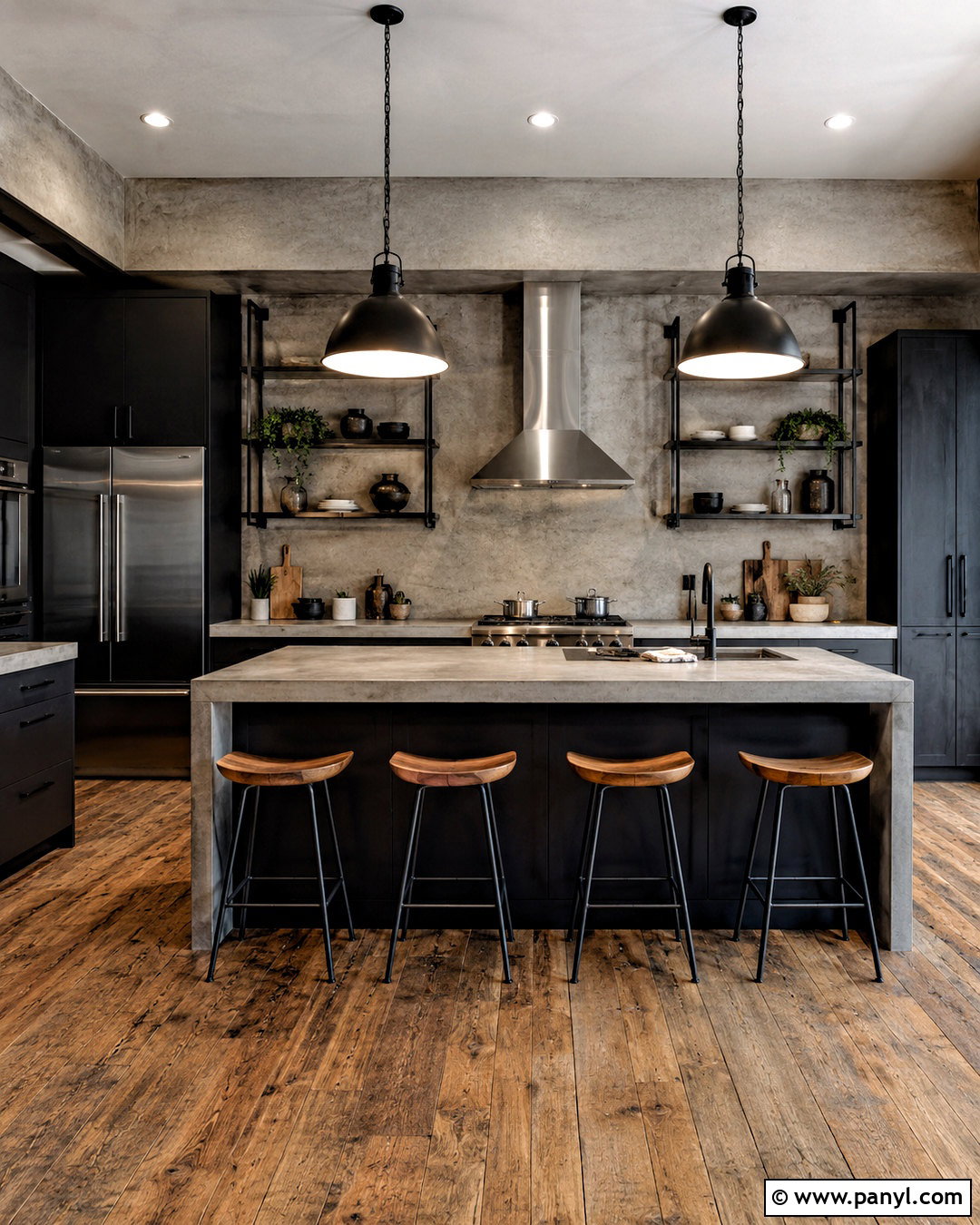
Concrete, black metal, and dark cabinetry create an industrial kitchen with a clean residential finish. Use charcoal flat-panel cabinets with integrated black pulls and lightly textured concrete countertops. A matching concrete backsplash can continue behind the range for a seamless appearance. Introduce black-framed windows, open steel shelving, and oversized factory-inspired pendants, but avoid filling every surface with metal. Warm the scheme with reclaimed oak flooring, walnut counter stools, and a wood dining table nearby. Stainless steel appliances fit naturally into the palette and provide a subtle reflective element. Add recessed lighting and under-shelf strips so the worktops remain bright. The final kitchen feels architectural and durable while the natural wood and carefully limited decor keep it from becoming cold or unfinished.
11. Small Dark Kitchen With White Uppers
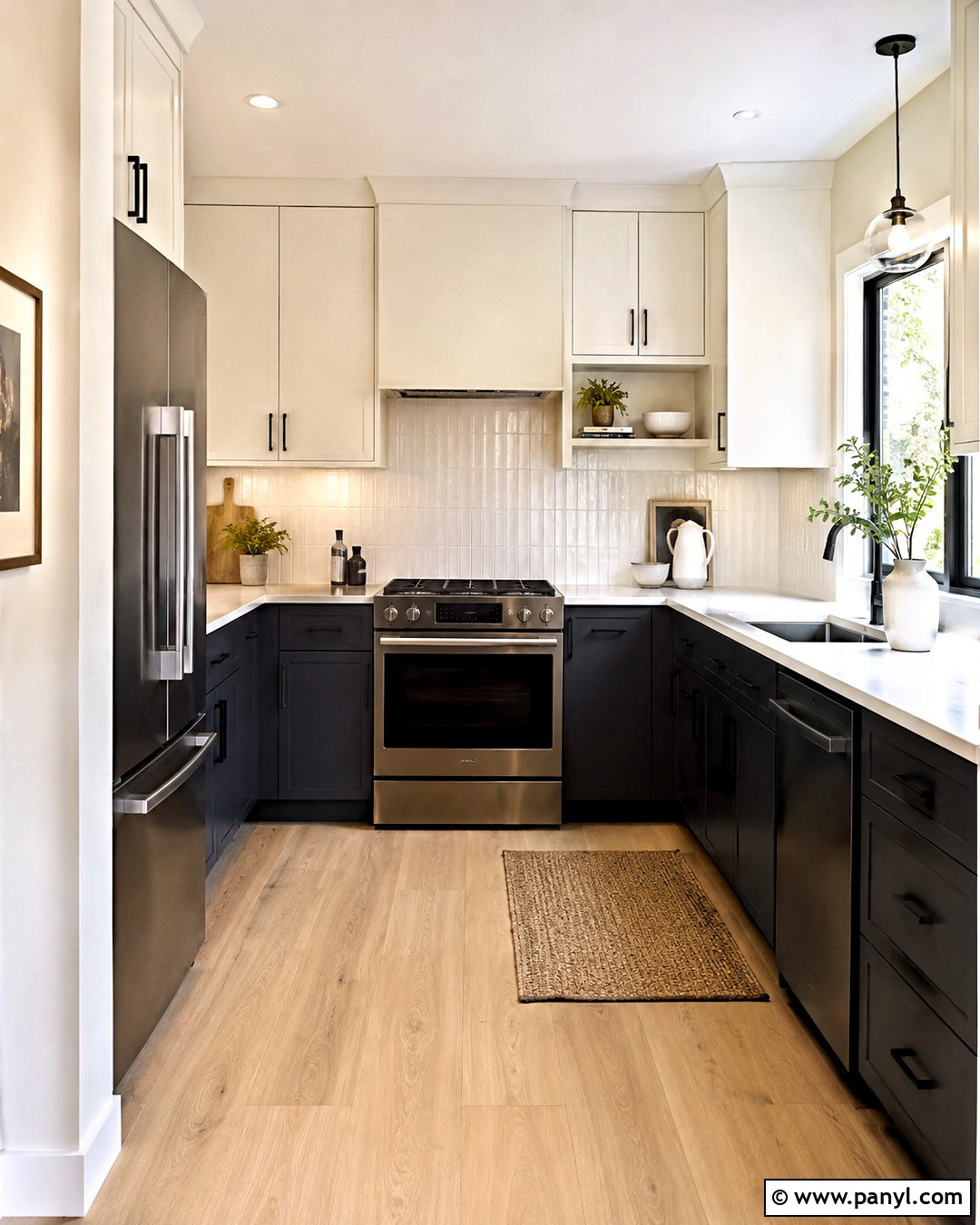
A compact kitchen can handle dark color when the visual weight remains near the floor. Paint the lower cabinets deep charcoal or black, then use warm white upper cabinets that blend into matching walls. Select pale quartz countertops and a glossy vertical tile backsplash to carry light around the room. Simple black pulls connect both cabinet colors, while light oak flooring adds warmth. Use a counter-depth refrigerator and streamlined appliances to preserve walking space. One or two open shelves can replace a bulky upper cabinet near the window. Install bright under-cabinet strips, compact ceiling lights, and a small glass pendant above the sink. This two-tone arrangement gives a small kitchen definition and personality without surrounding the entire room in a heavy, uninterrupted dark color.
12. Dark Galley Kitchen With Reflective Surfaces
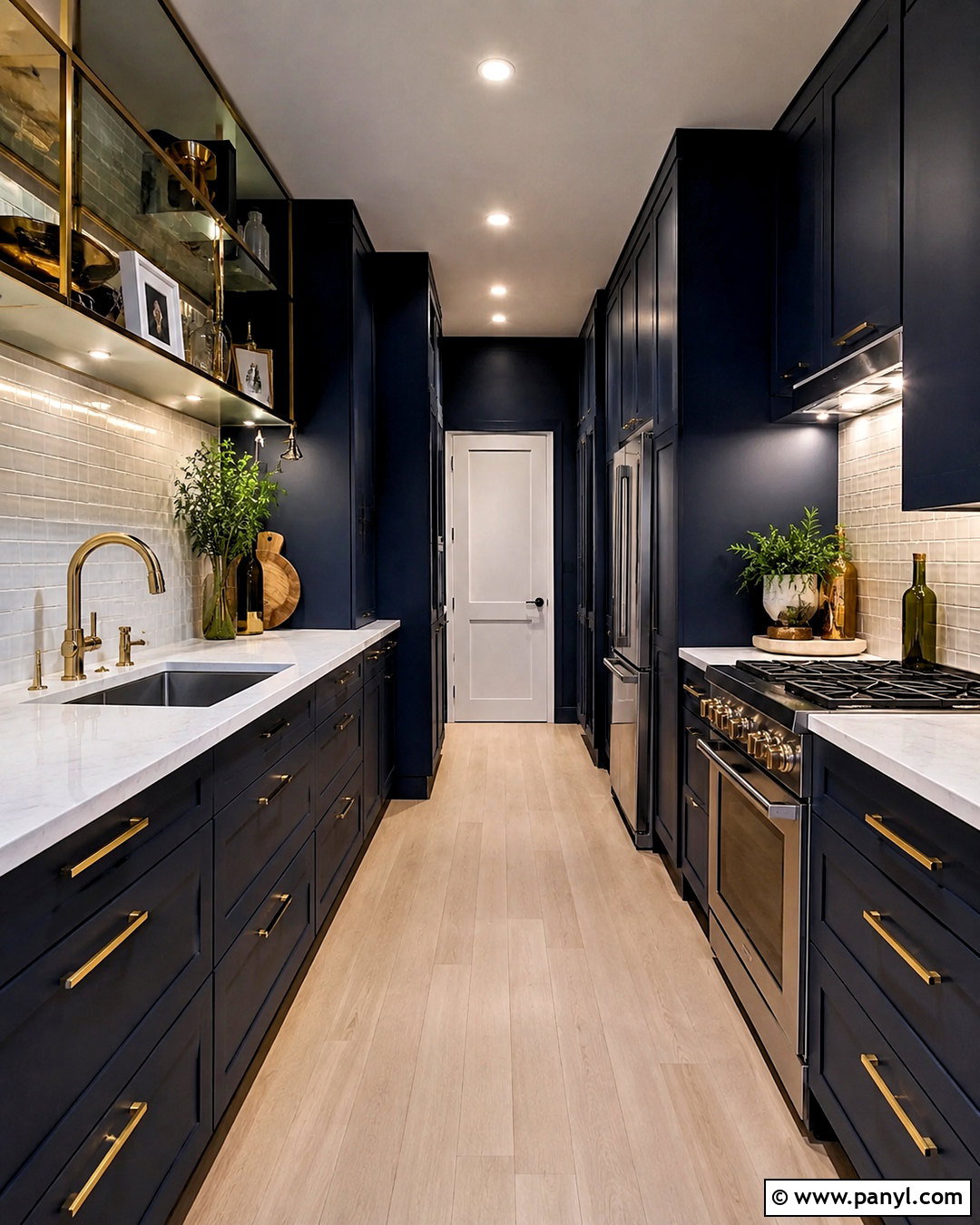
In a narrow galley kitchen, dark cabinets can look striking when reflective surfaces and clear sightlines are part of the plan. Use deep navy or graphite cabinets on both sides, but choose light quartz counters and a glossy off-white backsplash. Run the same pale flooring through the full length of the room to emphasize continuity. Keep cabinet fronts simple and use slim brass or stainless steel pulls. A mirrored section behind open shelving can gently bounce light without resembling a decorative wall mirror. Select counter-depth appliances so they align neatly with the cabinetry. Layer recessed ceiling lights with under-cabinet strips to remove shadowy work zones. Leaving the end wall light and minimally decorated visually opens the layout and gives the galley a purposeful, polished finish.
13. Dark Kitchen Island With White Cabinets
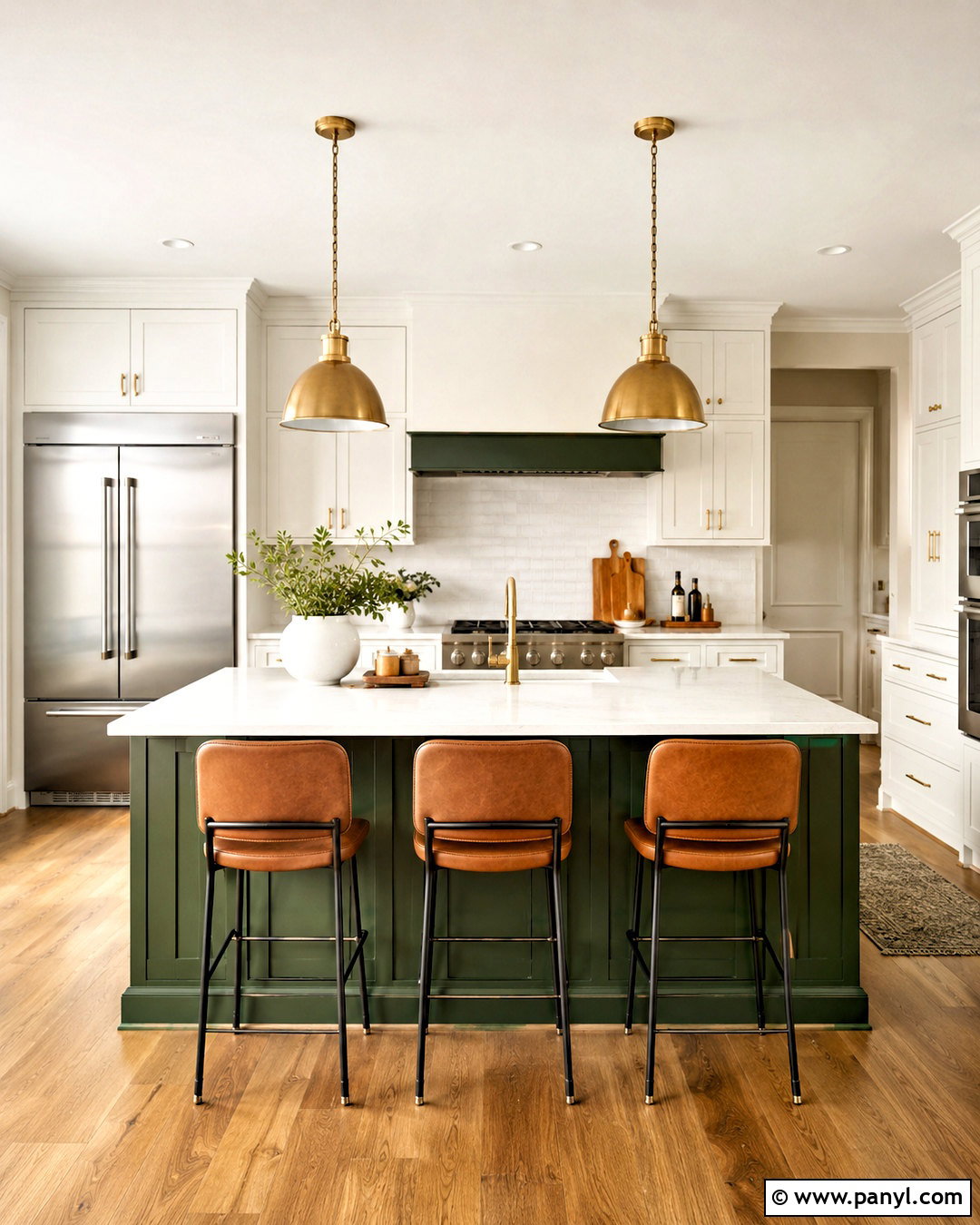
A dark island provides drama without requiring every cabinet to change color. Keep the perimeter cabinets warm white and paint the large center island black, deep navy, or forest green. Use pale quartz across the perimeter, then choose a lightly veined marble-look surface for the island to make it feel special. Repeat the island color on the range hood trim or a nearby built-in cabinet for visual connection. Medium oak flooring and tan leather stools warm the high-contrast palette. Install statement pendants with black or aged brass frames above the island. A simple white backsplash and discreet appliances allow the central feature to command attention. This complete design works particularly well in bright kitchens where the island naturally anchors an open layout.
14. Two-Tone Dark Kitchen Cabinets
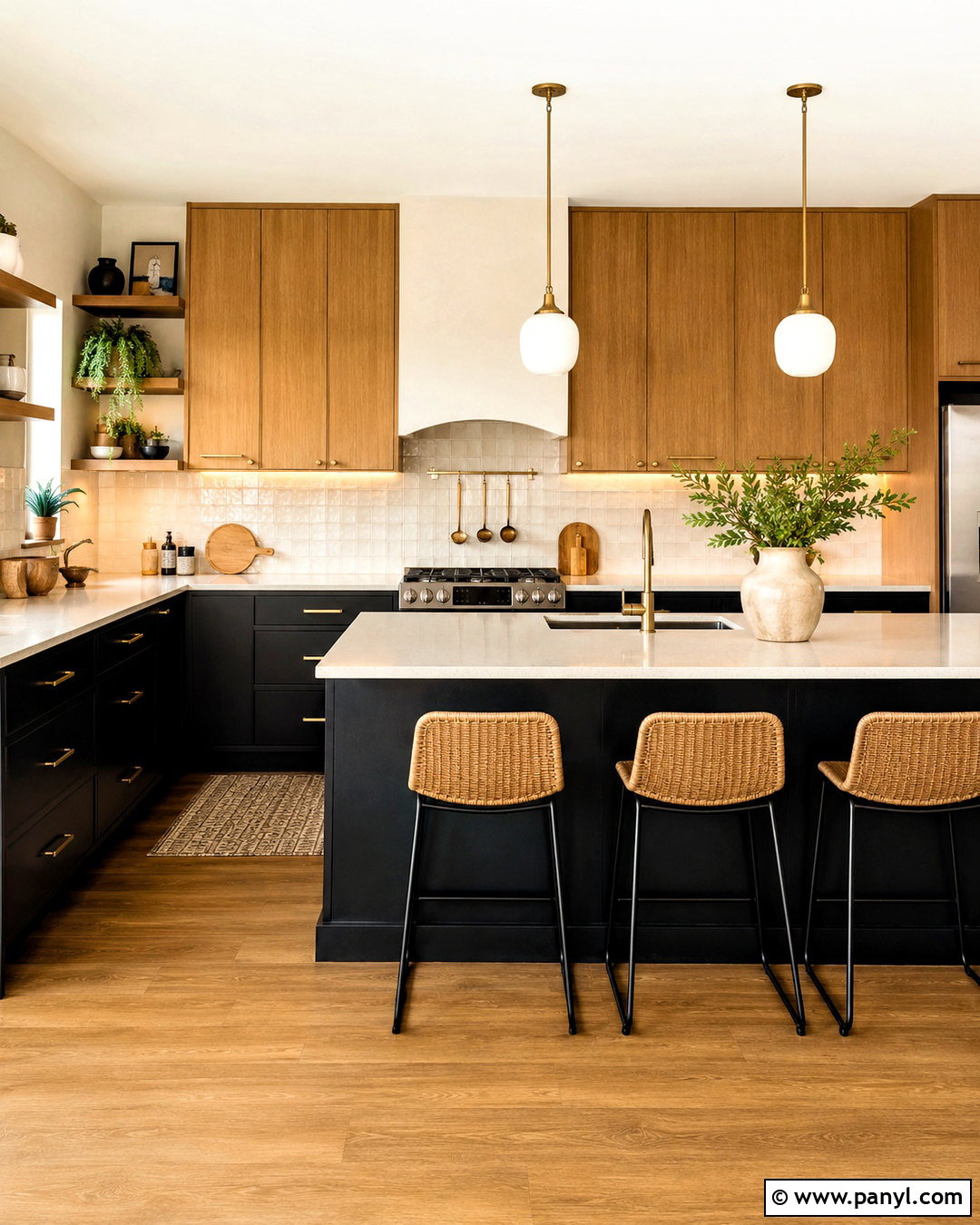
Two-tone cabinetry adds depth when the colors are distributed according to the room’s architecture. Combine near-black base cabinets with natural oak uppers, or use dark green perimeter units with a walnut island. Rather than splitting colors randomly, assign one finish to a complete cabinet wall or functional zone. Cream quartz countertops can unify both materials, while an ivory tile backsplash provides a quiet background. Match the hardware across all cabinetry using brushed brass or matte black. Continue the wood tone onto shelving, flooring, or counter stools so it feels intentional. Bright ceiling lights and under-cabinet illumination keep the darker areas functional. The finished kitchen looks layered and custom because each color has a clear role instead of appearing as an unrelated accent.
15. Color-Drenched Dark Green Kitchen
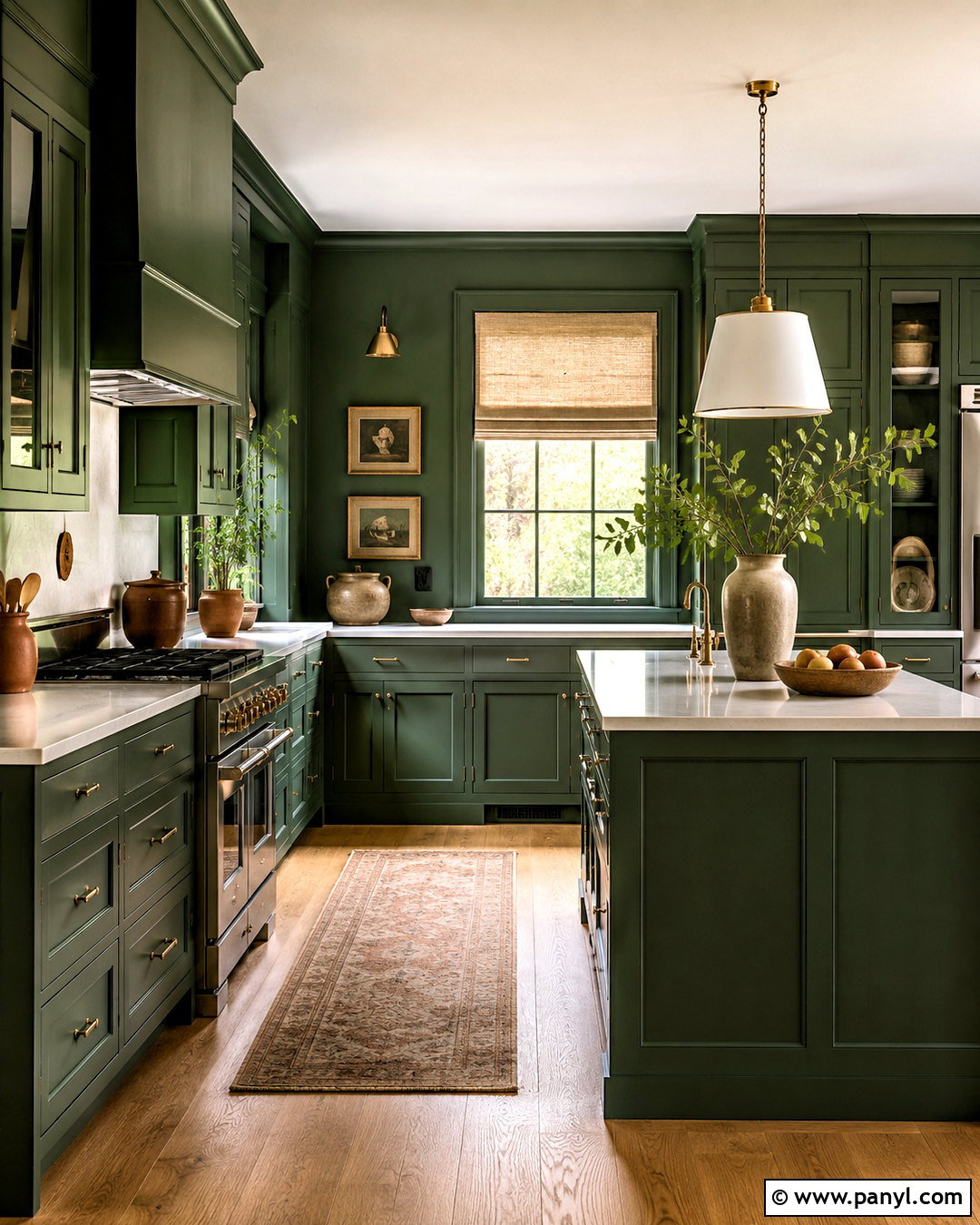
Color drenching creates an enveloping kitchen by carrying one deep shade across cabinets, walls, trim, and architectural details. Choose an olive-black or forest green with warm undertones, then use a washable matte wall finish and durable satin paint on cabinetry. Keep the ceiling soft cream if the room needs relief, or continue the green overhead in a large, naturally bright space. Soapstone or creamy quartz countertops provide a practical visual break. Add aged brass hardware, warm oak flooring, and linen window treatments to soften the saturated background. Under-cabinet lighting is essential for clear work surfaces. Limit decorative colors to cream, brown, and muted terracotta. The complete room feels cozy and immersive while its natural materials prevent the single-color scheme from appearing flat.
16. Dark Kitchen With Open Wood Shelves
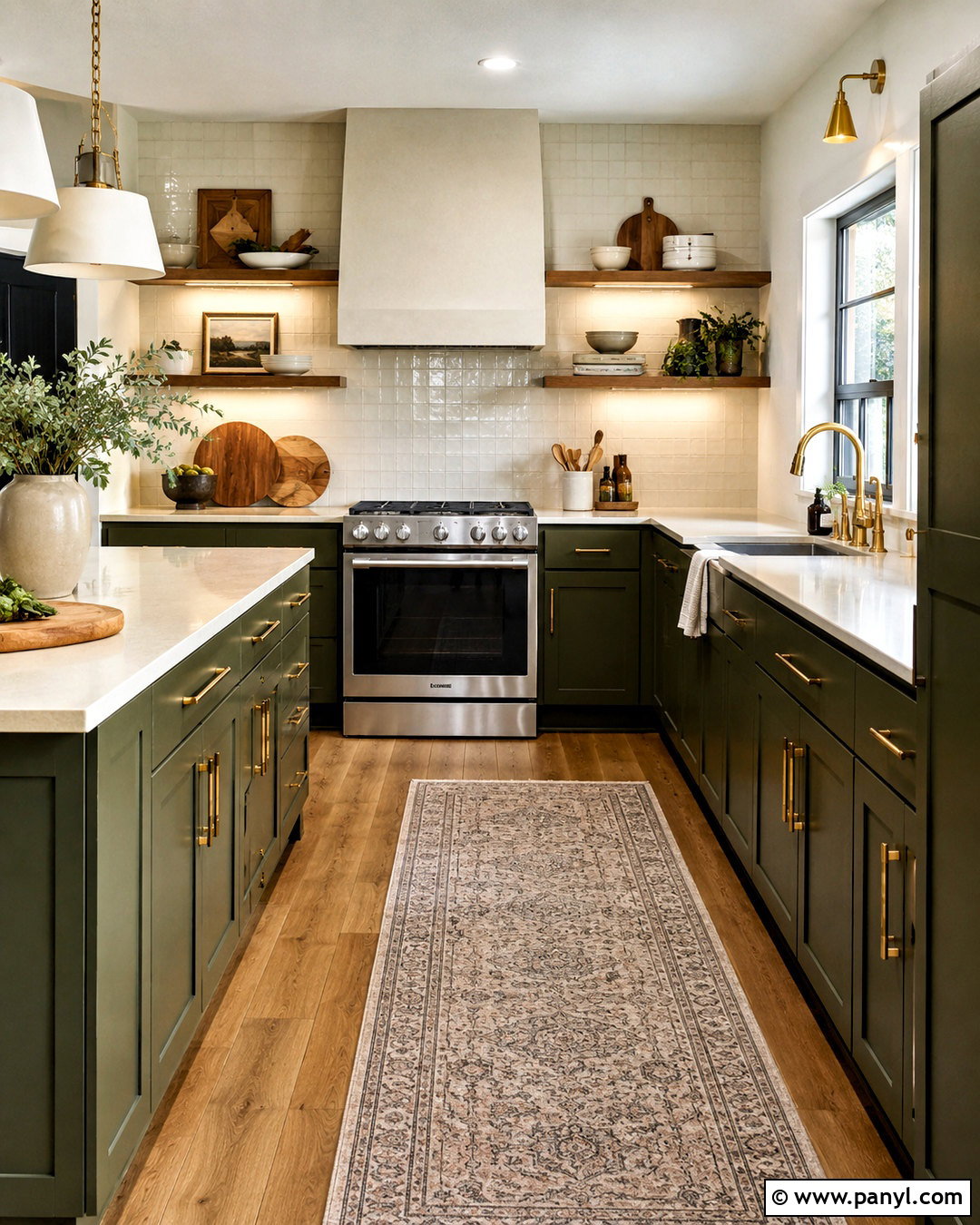
Open shelving can break up a wall of dark cabinetry and make everyday items easier to reach. Start with matte black or deep green base cabinets and use matching tall storage only where needed. Install thick oak shelves against a warm white tile backsplash instead of filling the entire wall with uppers. Choose cream quartz countertops, medium oak flooring, and brushed brass fixtures to support the warmer direction. Keep shelf displays functional and restrained with white dishes, clear glasses, wooden boards, and a few small bowls. A plaster range hood offers another light-colored surface between the dark cabinets. Add focused ceiling lights and concealed strips beneath each shelf. This balanced kitchen maintains useful storage while feeling more open, casual, and personalized.
17. Dark Kitchen With Skylights
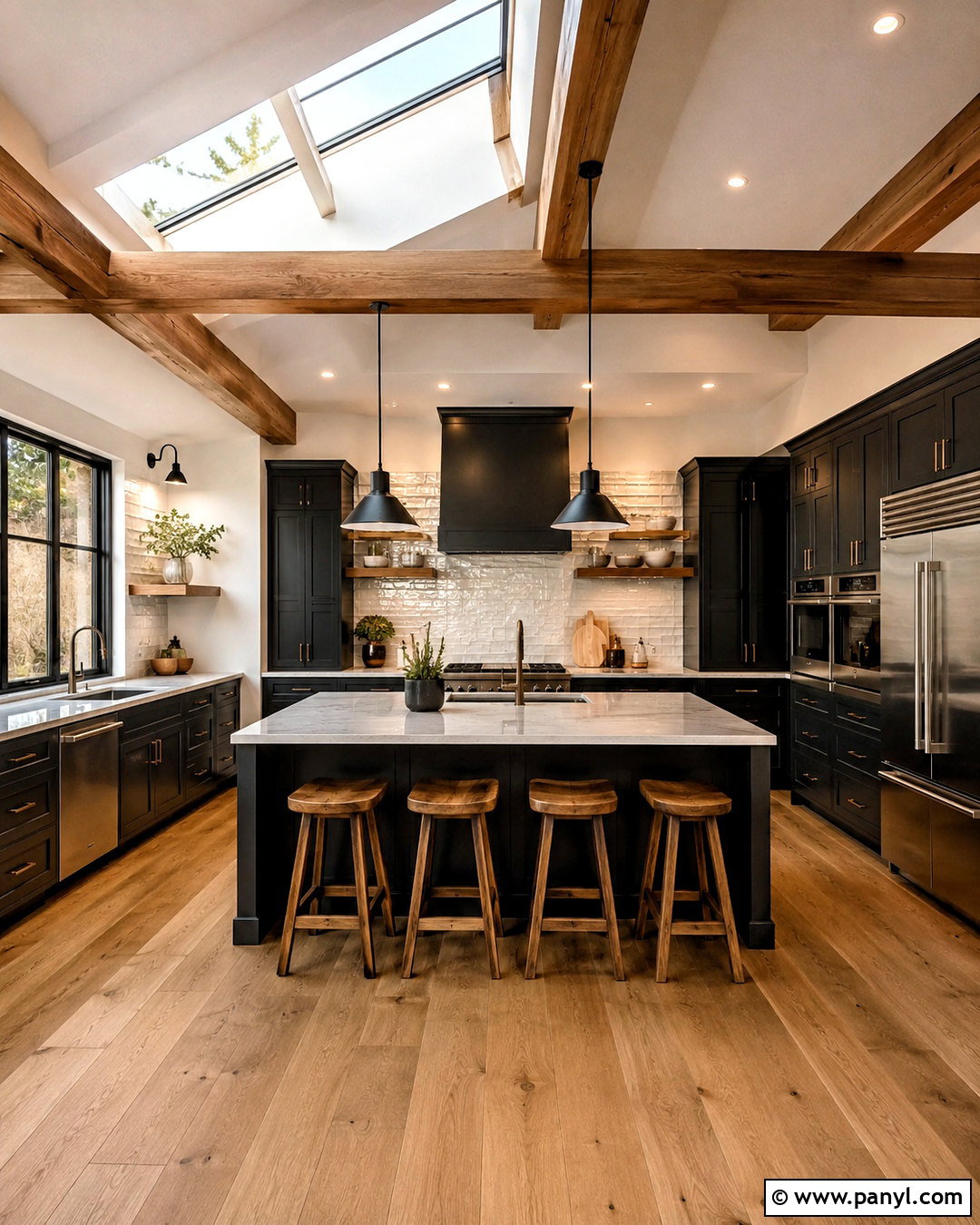
Natural overhead light allows dark finishes to appear rich rather than visually heavy. Use black or charcoal cabinetry throughout the kitchen and position the main island beneath one or more skylights. Pale stone countertops reflect the daylight, while a lightly textured white backsplash keeps the perimeter bright. Choose warm oak flooring and wood counter stools to soften the black surfaces. Minimal black pendants can hang between skylights without blocking the view upward. Add recessed fixtures and under-cabinet lighting for evening use. If the ceiling is vaulted, paint it warm white and use exposed natural wood beams for definition. The completed kitchen feels open and architectural, with sunlight highlighting cabinet details, stone veining, and natural materials from morning through late afternoon.
18. Dark Kitchen With Patterned Backsplash
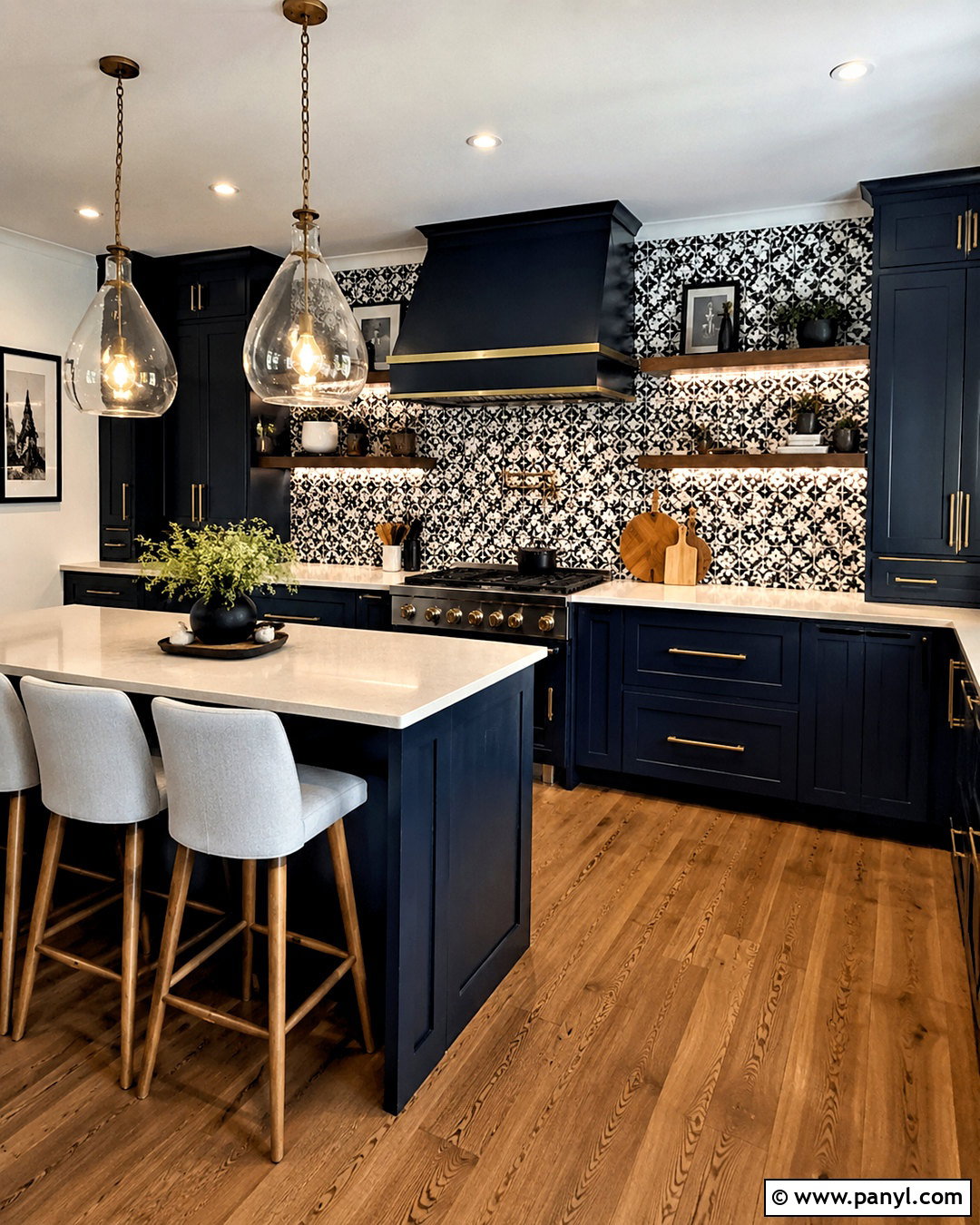
A patterned backsplash can become the focal point of a dark kitchen when the remaining finishes stay controlled. Use deep green, navy, or black cabinets with simple door fronts and understated brass hardware. Choose a black-and-white geometric tile, muted floral tile, or hand-painted cream and blue design for the backsplash. Install it behind the range or across one full wall rather than scattering small sections around the room. Solid cream quartz countertops give the pattern breathing space. Warm wood flooring and neutral counter stools keep the scheme grounded. Select simple glass pendants that do not compete with the tile. By repeating one backsplash color in a runner or small accessory, the complete room feels coordinated, lively, and intentional instead of visually busy.
19. Dark Rustic Modern Kitchen
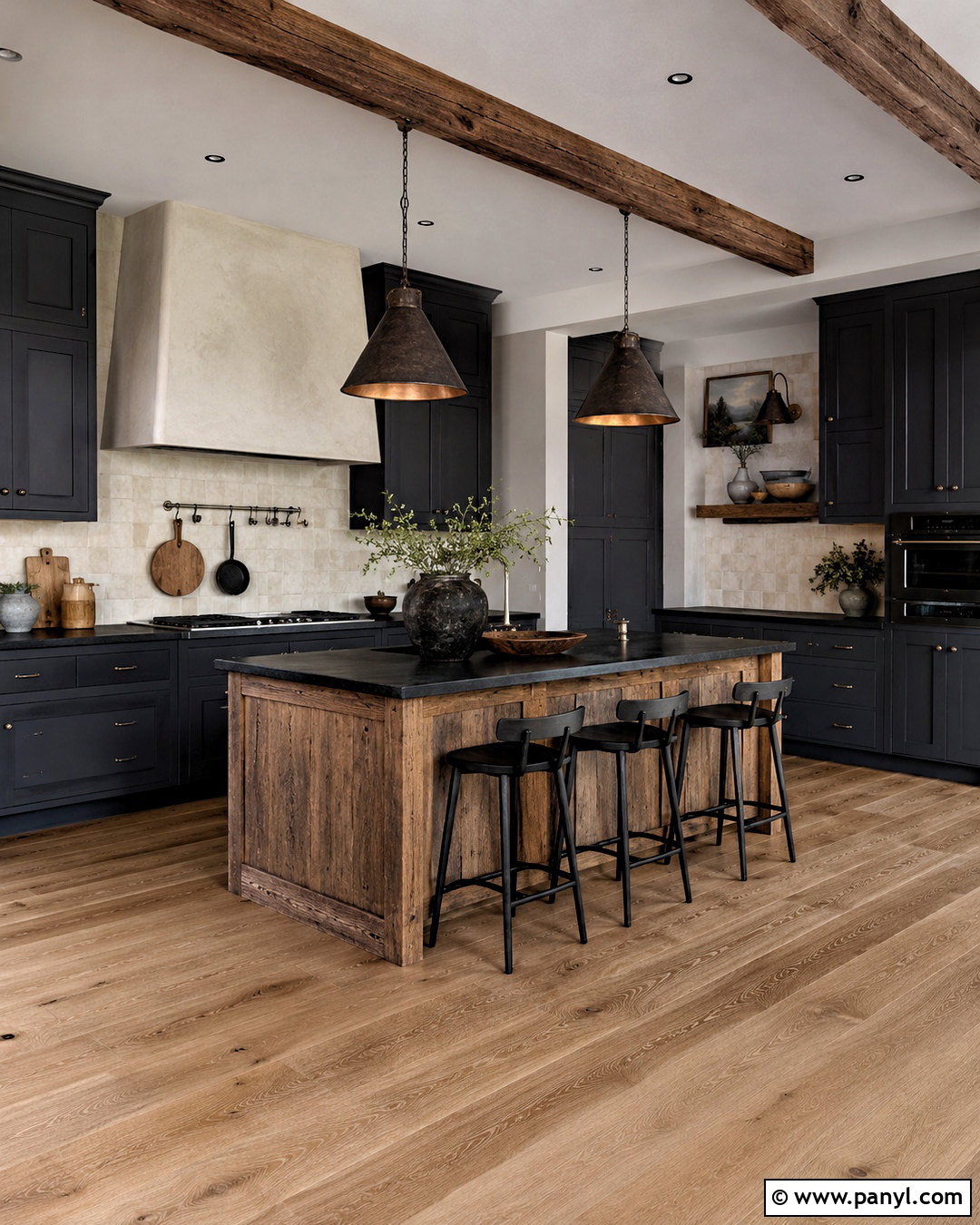
Dark rustic modern design mixes clean cabinetry with materials that show natural texture and age. Choose charcoal Shaker cabinets, honed black stone countertops, and a handmade cream tile backsplash. Add a substantial reclaimed wood island with open shelving and comfortable black counter stools. Wide oak flooring, exposed ceiling beams, and a plaster range hood establish warmth without turning the room into a themed cabin. Use aged iron hardware and simple bronze pendants for understated character. Keep appliances integrated or finished in matte black so they blend with the cabinetry. A few stoneware vessels, wooden boards, and linen towels provide practical decoration. The final kitchen feels sturdy and relaxed, with enough crisp detailing to suit a remodeled suburban or country home.
20. Dark Kitchen With Soapstone And Plaster
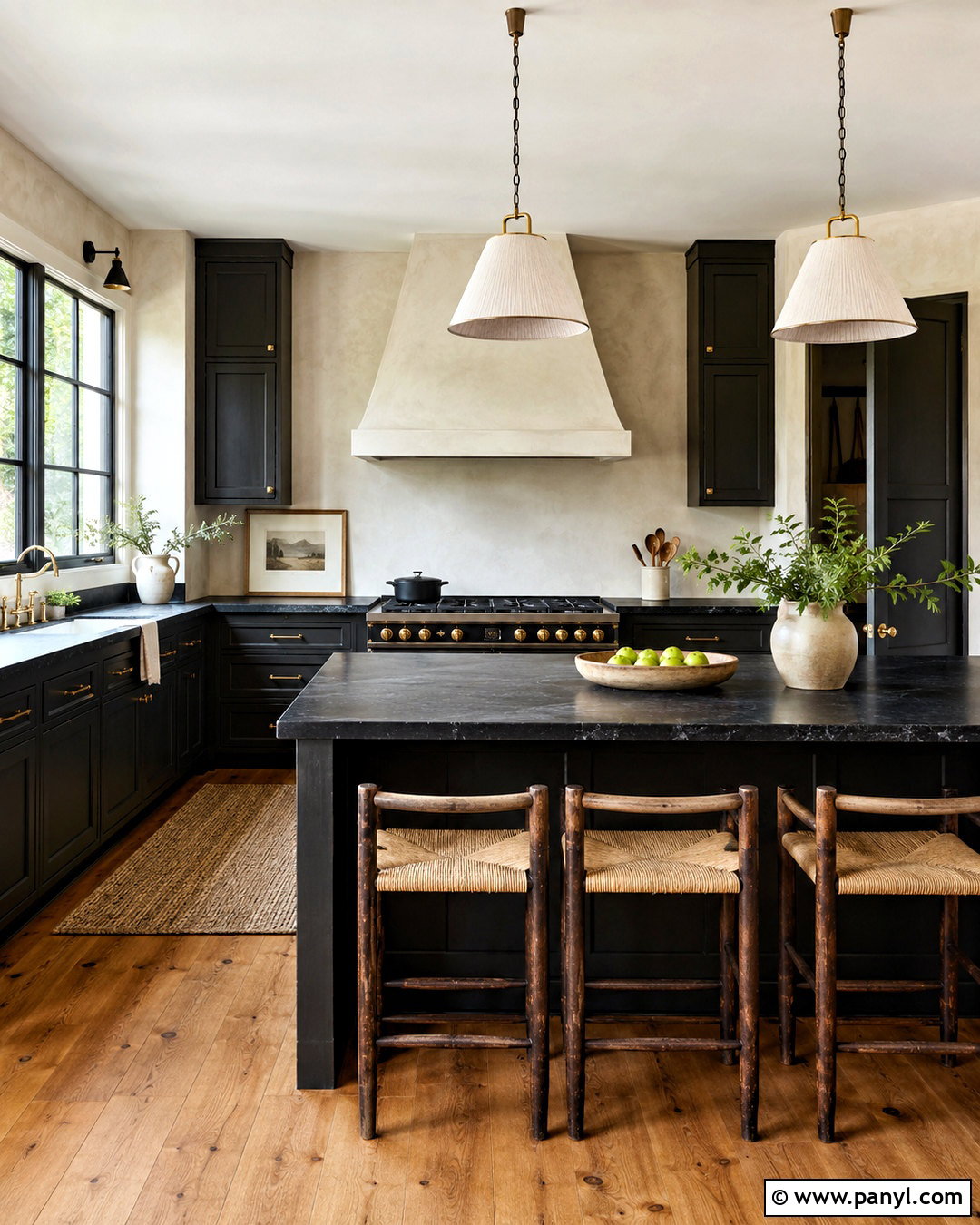
Soft plaster walls and natural soapstone create an understated dark kitchen with depth and texture. Use black-green or charcoal cabinetry with simple inset doors, then install honed soapstone countertops and a matching backsplash behind the range. The stone’s quiet veining adds movement without producing sharp contrast. Finish the walls and sculptural range hood in warm ivory plaster. Unlacquered brass hardware will introduce a gently aged quality, while medium oak flooring keeps the room comfortable. Select linen-shaded pendants and dark wood stools with woven seats. Keep upper cabinetry limited near windows so natural light reaches the work surfaces. This complete palette feels calm, handcrafted, and timeless because it relies on authentic materials rather than decorative clutter or short-lived accessories.
Conclusion:
The most successful 20 dark kitchen ideas balance rich color with thoughtful lighting, warm materials, and practical surfaces. Black, navy, charcoal, green, burgundy, and espresso can each shape a completely different atmosphere. The key is deciding where the darkest finish belongs and supporting it with lighter stone, natural wood, reflective tile, or soft plaster. Consider the room’s size, daylight, layout, and connection to adjoining spaces before committing to a full color-drenched design. In smaller kitchens, dark lower cabinets or a dramatic island may provide enough contrast. Larger rooms can comfortably support dark cabinetry throughout. Whichever look you choose, repeat finishes intentionally and layer several light sources to create a kitchen that feels cohesive, functional, and inviting.

Related Ideas and Inspiration:
Leave a Reply