
These 20 sage green and wood kitchen ideas show how to combine soft, earthy color with the natural warmth of timber. The pairing works especially well because sage can act like a neutral, while visible wood grain adds texture and character. Current kitchen inspiration favors thoughtful material combinations, including natural oak, walnut, warm stone, aged metals, and layered green tones rather than flat, overly coordinated finishes. () You can adapt this palette to modern, farmhouse, Scandinavian, traditional, or compact kitchens without losing its relaxed appeal. The key is choosing a consistent undertone and balancing painted surfaces with enough lightness. From two-tone cabinets to wood islands and budget-friendly updates, explore these 20 sage green and wood kitchen ideas.
1. Sage Green Lower Cabinets With Oak Uppers
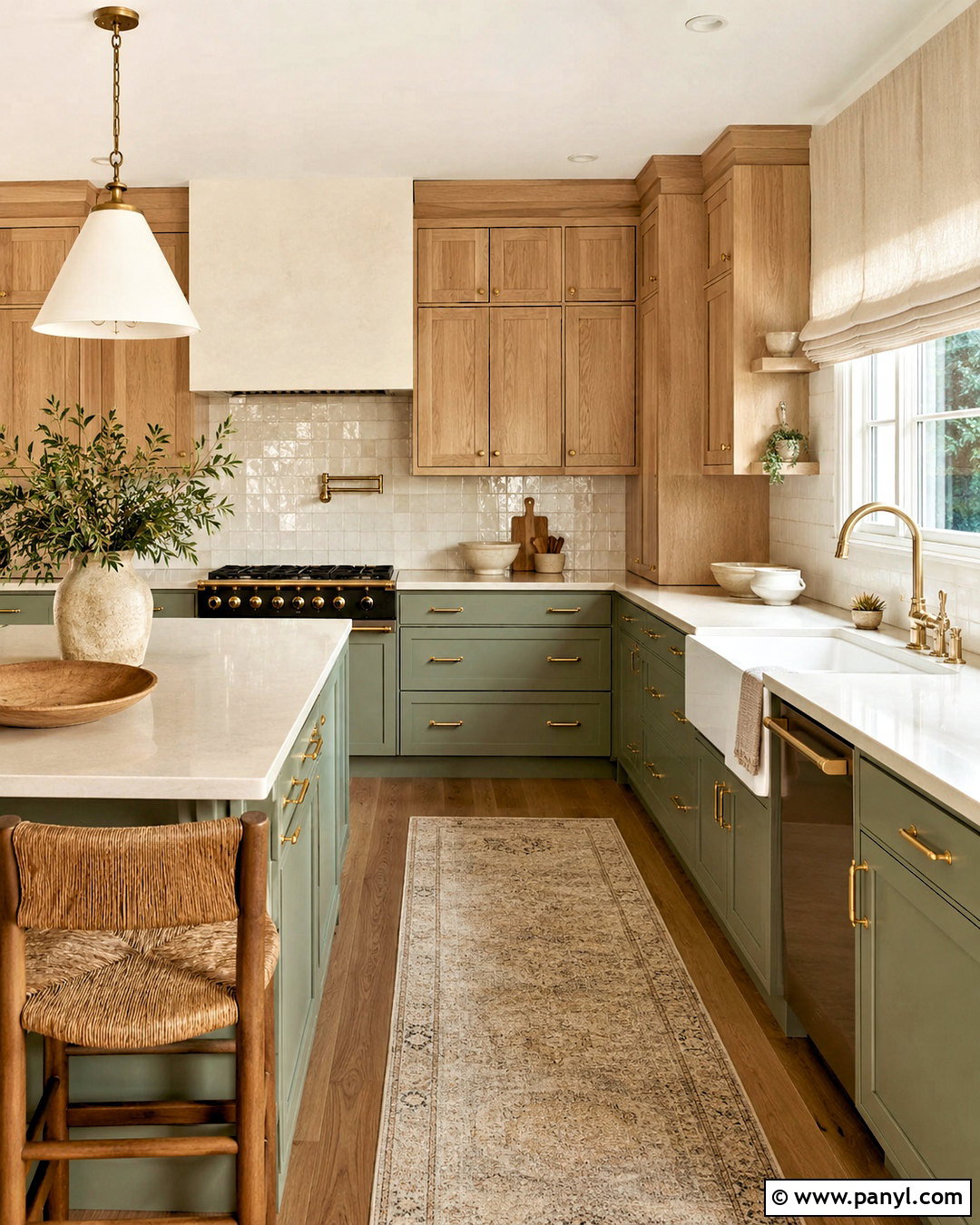
Create a balanced two-tone kitchen by placing sage green cabinets below the counter and natural white oak cabinets above it. The deeper color visually grounds the room, while pale wood keeps the upper half bright and open. Choose simple Shaker doors for a transitional look that suits many homes. Add creamy quartz countertops and a glossy off-white backsplash to reflect light between the cabinets. Brushed brass knobs provide subtle warmth without competing with the oak grain. Continue the natural palette with medium oak flooring, woven counter stools, and linen window shades. A white farmhouse sink and a streamlined brass faucet complete this practical kitchen. Keep decorative objects minimal so the cabinet combination remains the main feature.
2. Sage Green Cabinets With Wood Island
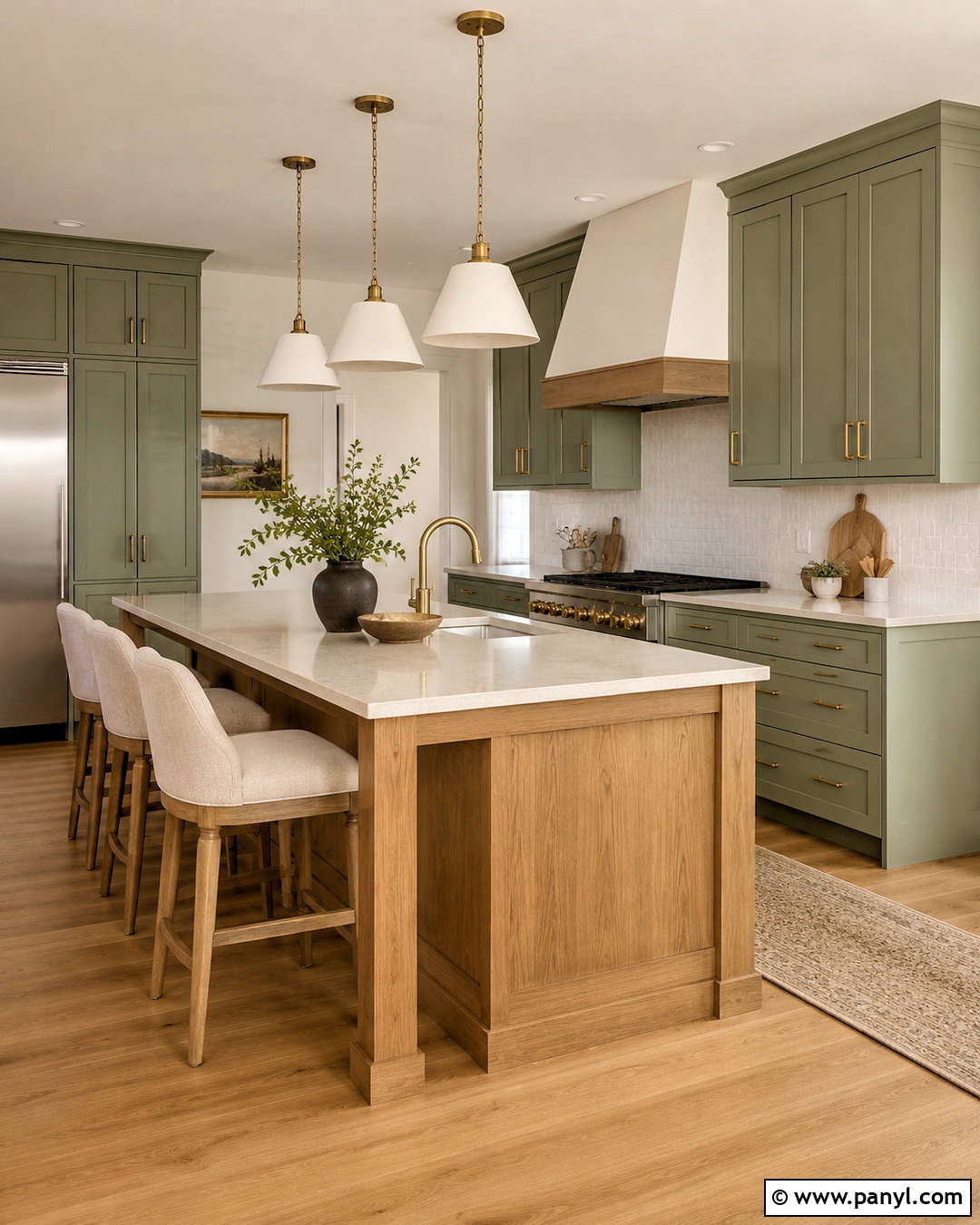
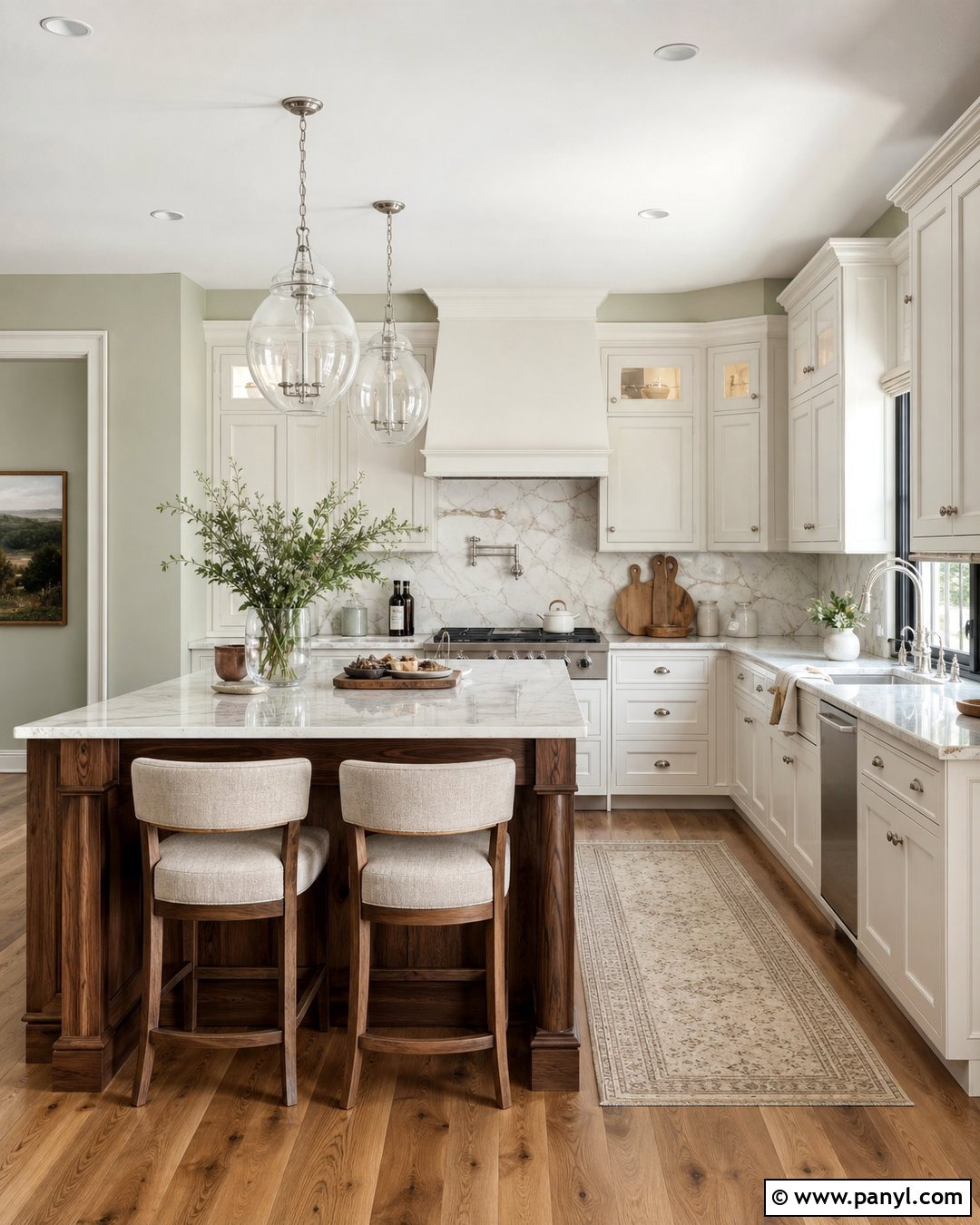
A wood island can become the warm centerpiece of an otherwise sage green kitchen. Paint the perimeter cabinetry a muted, medium sage, then select a substantial island finished in natural oak or lightly stained walnut. Use the same pale quartz countertop across both areas to connect the different cabinet finishes. Three simple pendant lights will define the island without making the kitchen feel crowded. Choose aged brass hardware, warm white walls, and light wood flooring for a cohesive background. Upholstered counter stools in oatmeal fabric soften the harder surfaces and make the island comfortable for everyday meals. Finish the room with one wooden range hood detail or a pair of open shelves, repeating the island material without overwhelming the green cabinetry.
3. Sage Green Shaker Kitchen With Butcher Block Counters
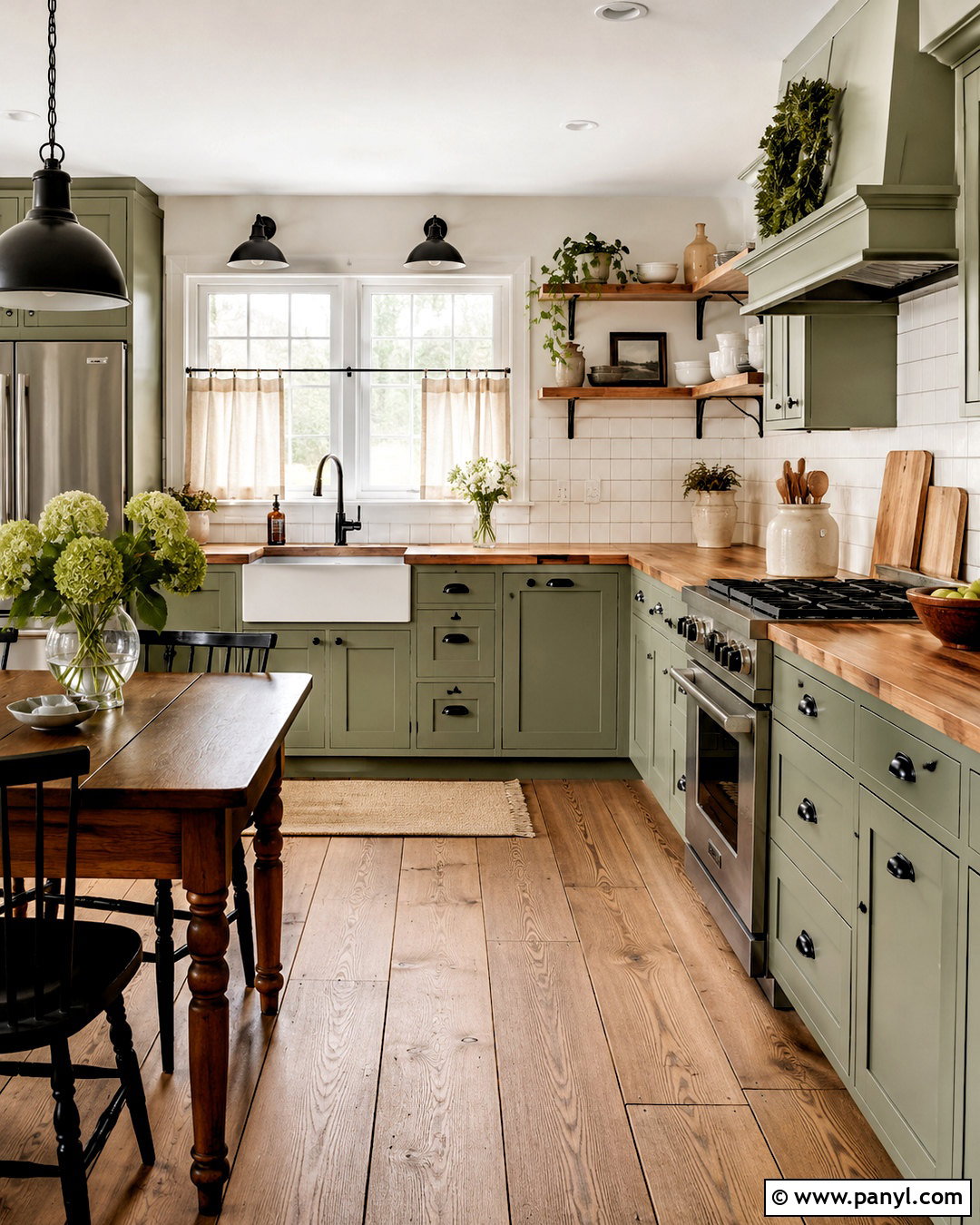
Butcher block countertops make sage green Shaker cabinets feel relaxed, practical, and welcoming. Choose sealed maple or white oak for a light finish that prevents the room from looking too rustic. Carry the wood across the main work surfaces, then use a durable pale stone slab around the sink if extra water resistance is important. Warm white walls and a simple square tile backsplash keep the palette fresh. Black cup pulls, a black bridge faucet, and matching pendant lights add clear definition. Wide-plank oak flooring can introduce another wood tone, but keep its stain close to the counters. Complete the kitchen with a freestanding wooden table, woven chairs, cotton café curtains, and a few useful ceramic pieces displayed on open shelving.
4. Modern Sage Green Kitchen With Walnut Cabinets
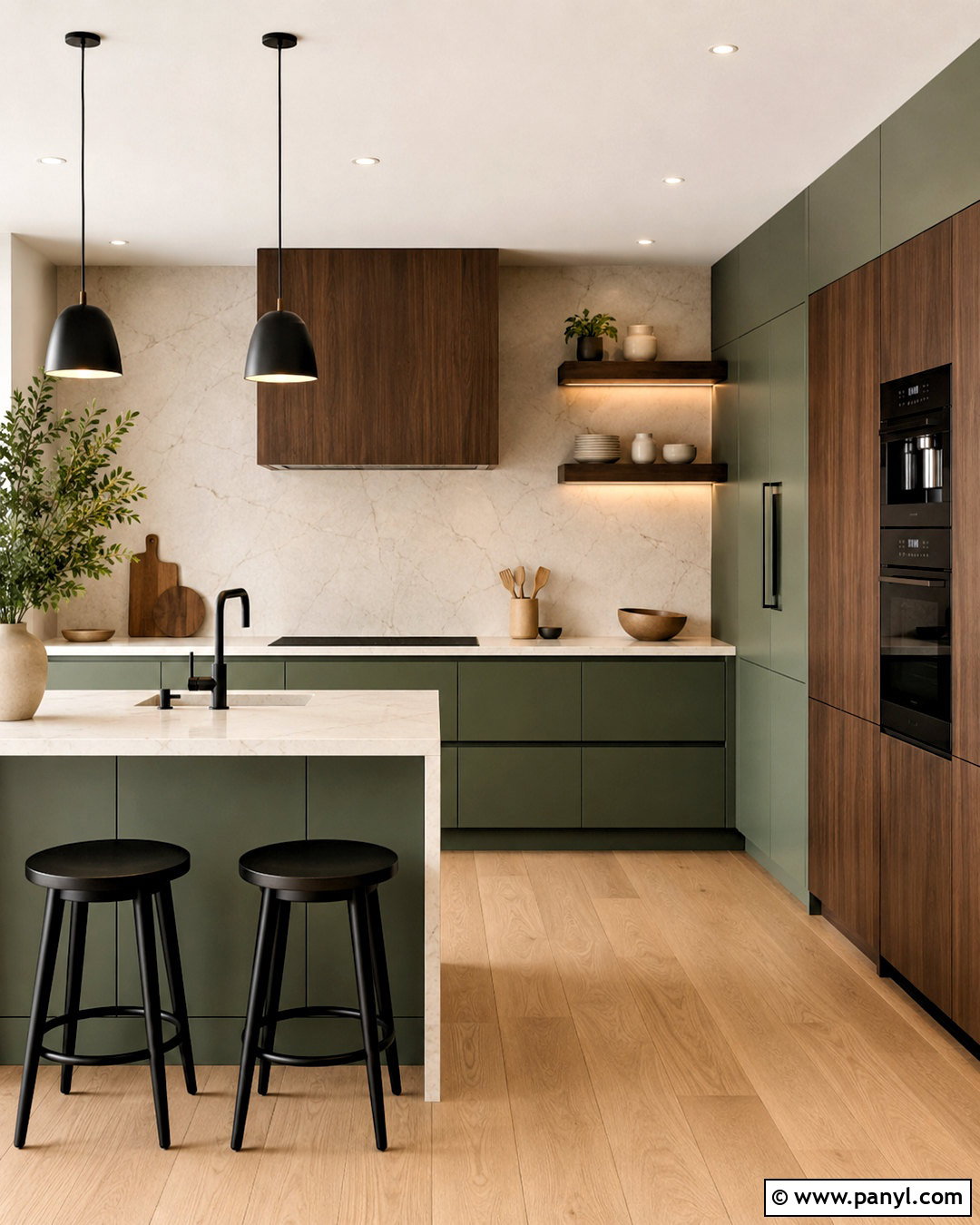
For a richer modern scheme, pair dusty sage green cabinetry with dark walnut doors and drawer fronts. Use sage on the tall storage wall and walnut on the island or lower cabinets, creating clear blocks of color rather than a scattered pattern. Flat-panel doors and minimal hardware allow both finishes to look streamlined. A warm white quartz countertop with gentle veining lightens the darker wood. Add a full-height stone backsplash behind the cooktop for a clean focal point. Slim black pendants, a matte black faucet, and dark-framed windows provide structure. Pale oak flooring prevents the room from becoming heavy. Keep accessories simple, using cream ceramics, clear glass, and one leafy plant to complement the natural colors without creating clutter.
5. Small Sage Green And Wood Kitchen
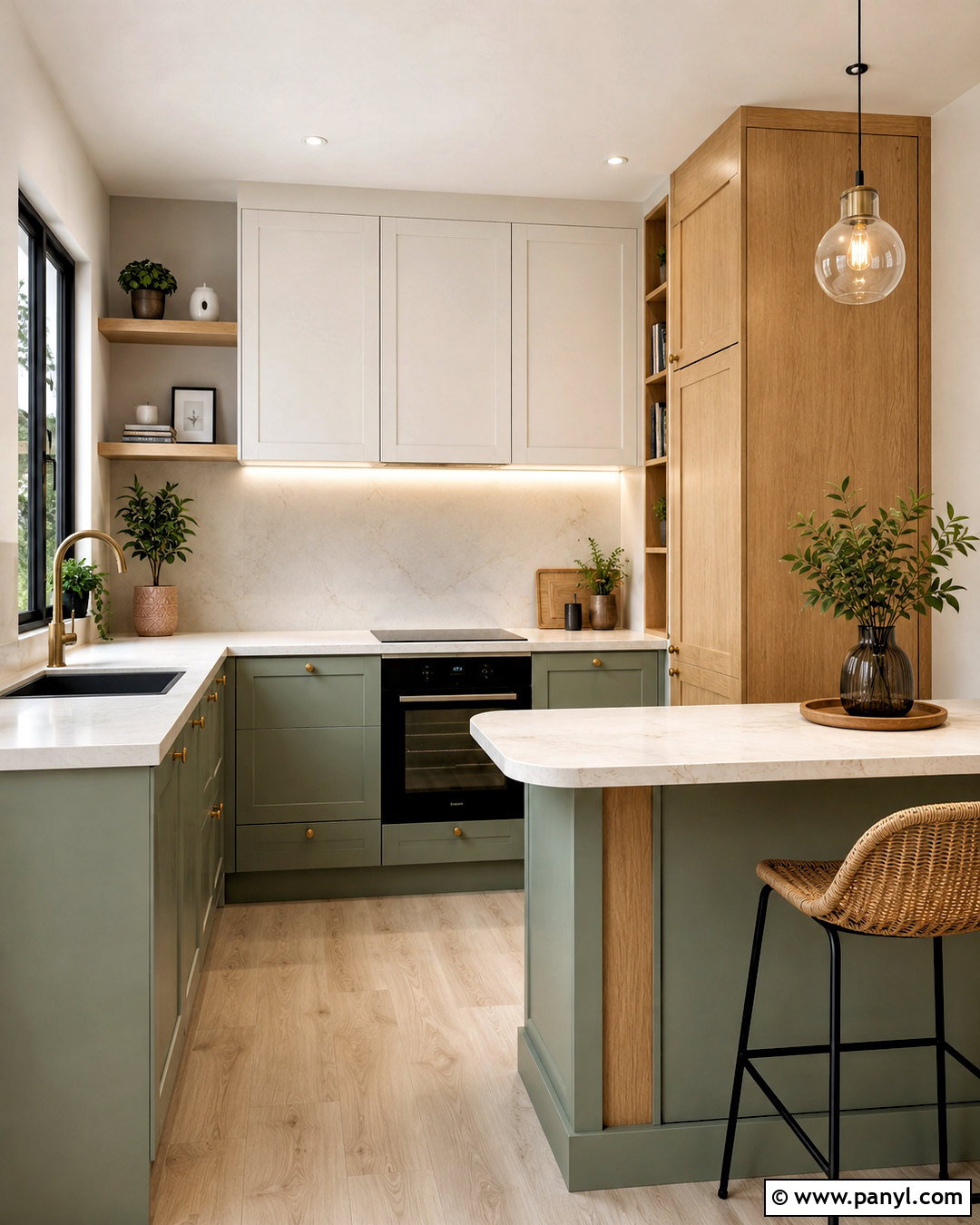
Could a small kitchen handle both color and wood? Yes, when the finishes are distributed carefully. Use pale sage green on the lower cabinets and choose natural oak for one tall pantry, a compact breakfast ledge, and two floating shelves. Warm white upper cabinets can blend into the walls, making the room feel wider. Select a lightly patterned quartz countertop and continue it a few inches up the wall for a clean, low-maintenance backsplash. Small brass knobs create polish without adding visual weight. Install under-cabinet lighting to brighten the preparation area and highlight the wood grain. Light flooring, a single glass pendant, and neatly concealed appliances complete a space-saving layout that feels layered, functional, and open rather than crowded.
6. Farmhouse Sage Green And Wood Kitchen
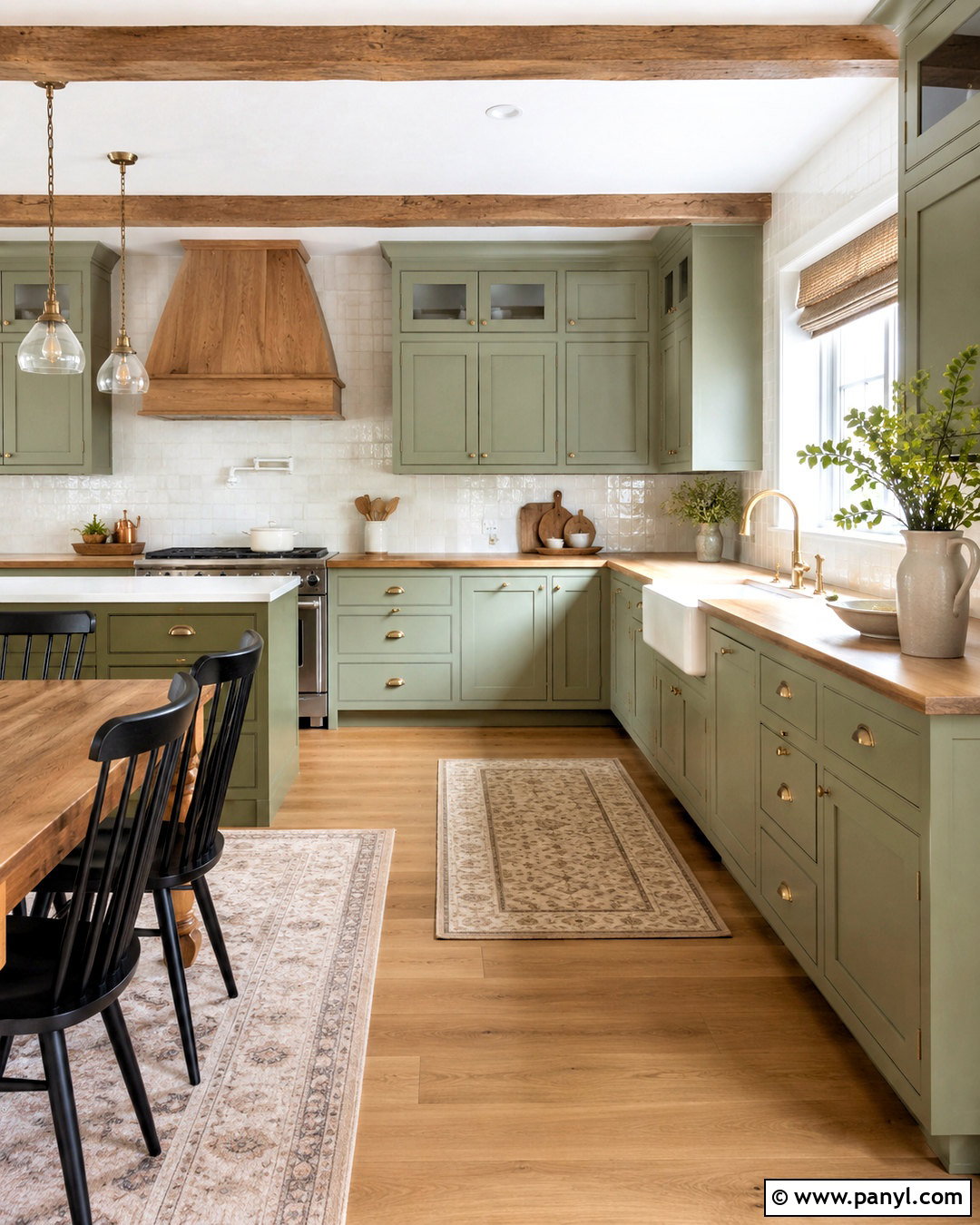
A farmhouse kitchen feels updated when sage green cabinetry is combined with clean-lined wood features instead of heavily distressed finishes. Start with soft sage Shaker cabinets, a white apron-front sink, and warm oak countertops. Build a natural wood range hood that matches the ceiling beams or island base. An ivory handmade-look tile backsplash adds texture while maintaining a light background. Choose aged brass cup pulls and a traditional bridge faucet for understated character. Oak flooring, a sturdy wooden table, and simple spindle-back chairs create an inviting dining area within the room. Finish the windows with neutral linen shades and display practical stoneware on one open shelf. The result feels comfortable and established without becoming overly themed or old-fashioned.
7. Scandinavian Sage Green And Oak Kitchen
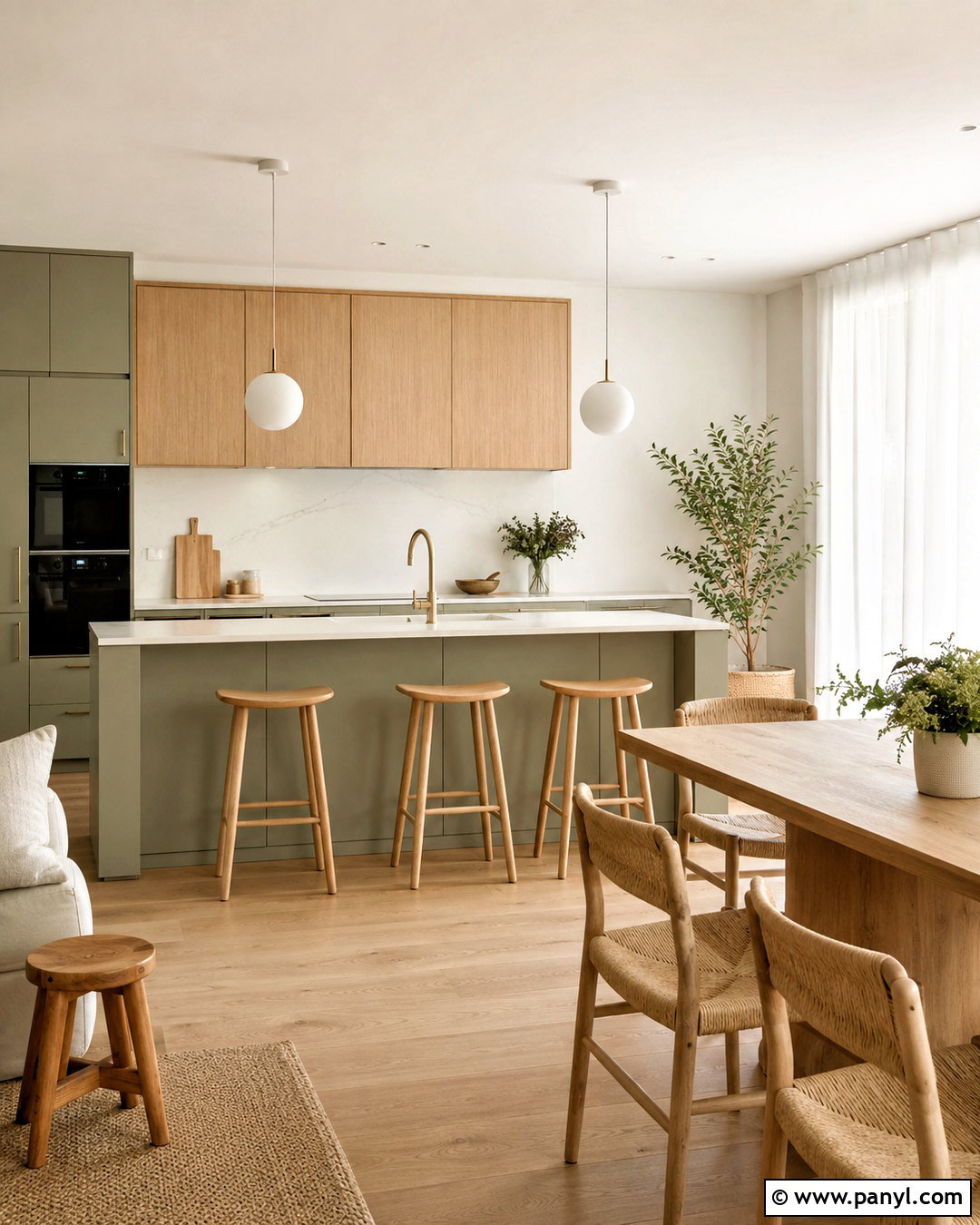
Soft color and pale timber give a Scandinavian kitchen its calm, uncluttered appearance. Select light sage green flat-panel base cabinets and natural white oak upper cabinets with simple integrated pulls. Use a thin white quartz countertop and a matching slab backsplash to keep the work area visually quiet. Pale oak flooring should closely coordinate with the cabinetry, creating a continuous natural foundation. Add round wooden counter stools, white globe pendants, and a compact oak dining table with woven-seat chairs. Warm white walls and sheer curtains maximize daylight. Limit decorative pieces to a ceramic fruit bowl, a wooden cutting board, and several small herbs. This complete look feels modern and practical, yet the muted sage prevents the streamlined room from appearing cold or impersonal.
8. Rustic Sage Green Kitchen With Reclaimed Wood
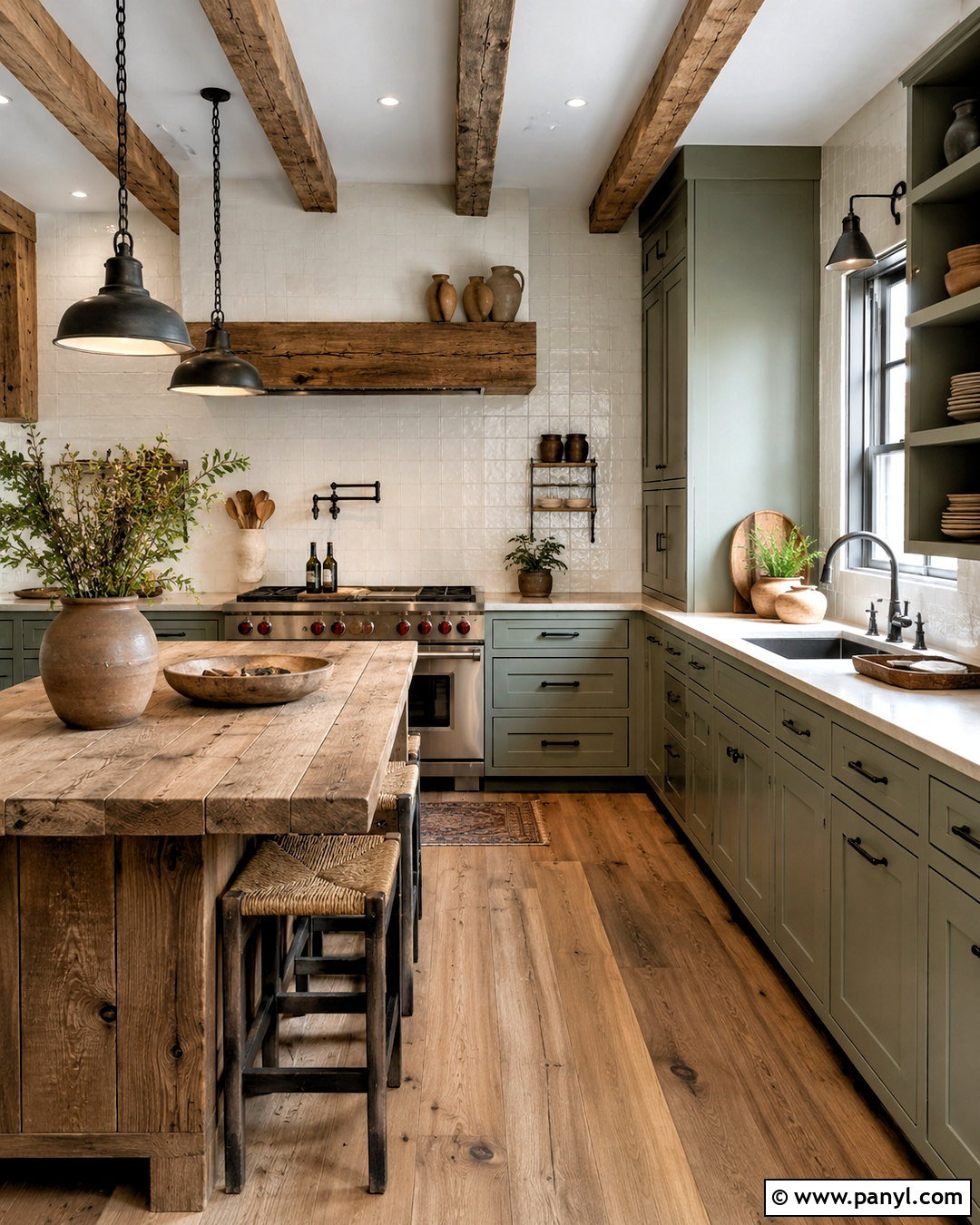
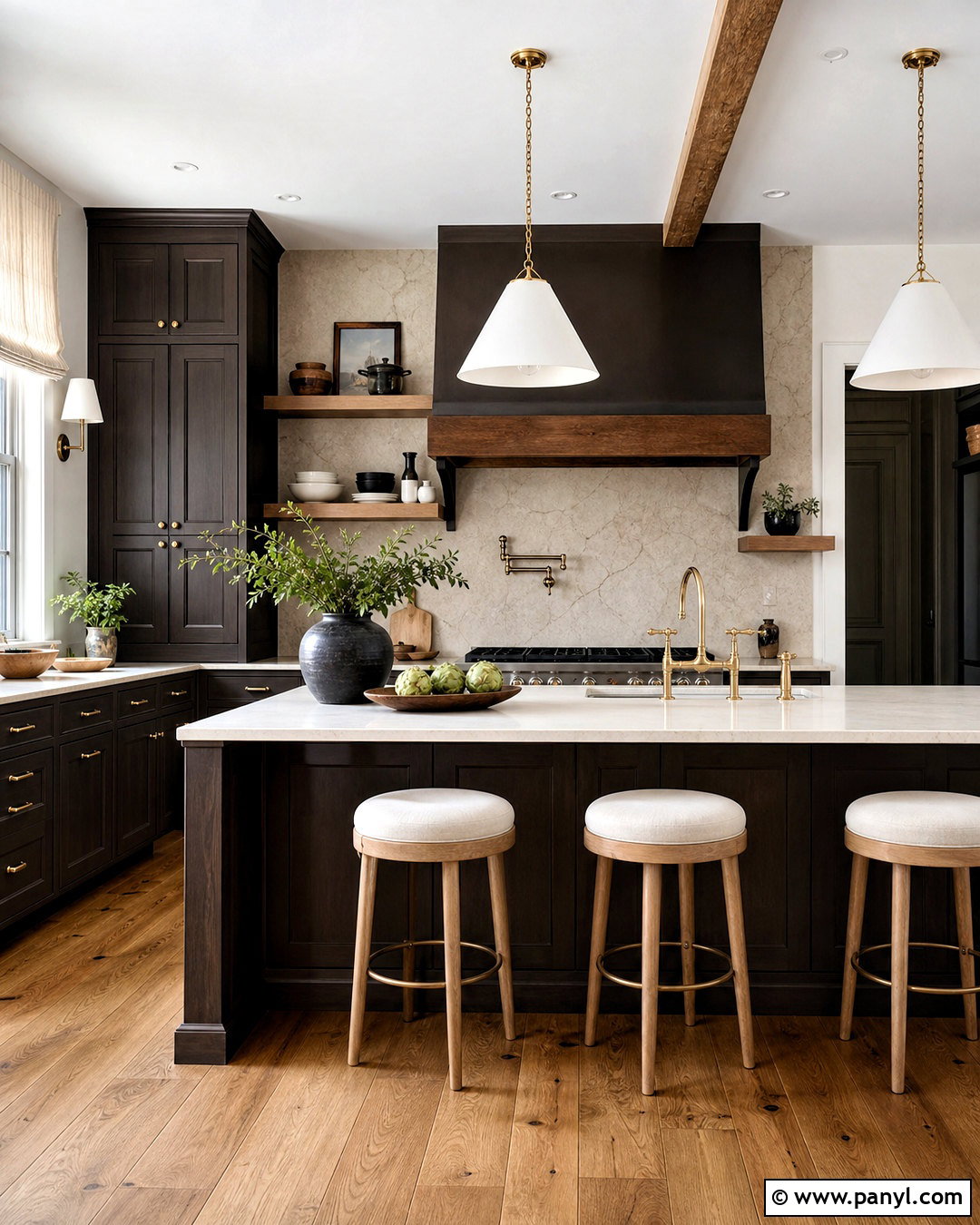
Reclaimed wood introduces texture and age to a sage green kitchen, but it works best as a controlled accent. Paint the cabinets a slightly deeper, gray-toned sage and use salvaged oak for the island base, ceiling beams, and one substantial shelf. Choose honed cream stone countertops to soften the rough timber surfaces. A backsplash of warm white zellige-style tile will reflect light and provide subtle variation. Dark bronze hardware and iron pendant lights strengthen the rustic character without making the room feel dark. Balance everything with simple wood flooring and warm off-white walls. Add woven counter stools, neutral linen textiles, and practical pottery. Avoid distressed accessories throughout the entire room, allowing the authentic reclaimed grain to provide enough weathered detail.
9. Sage Green Kitchen With Wood Open Shelves
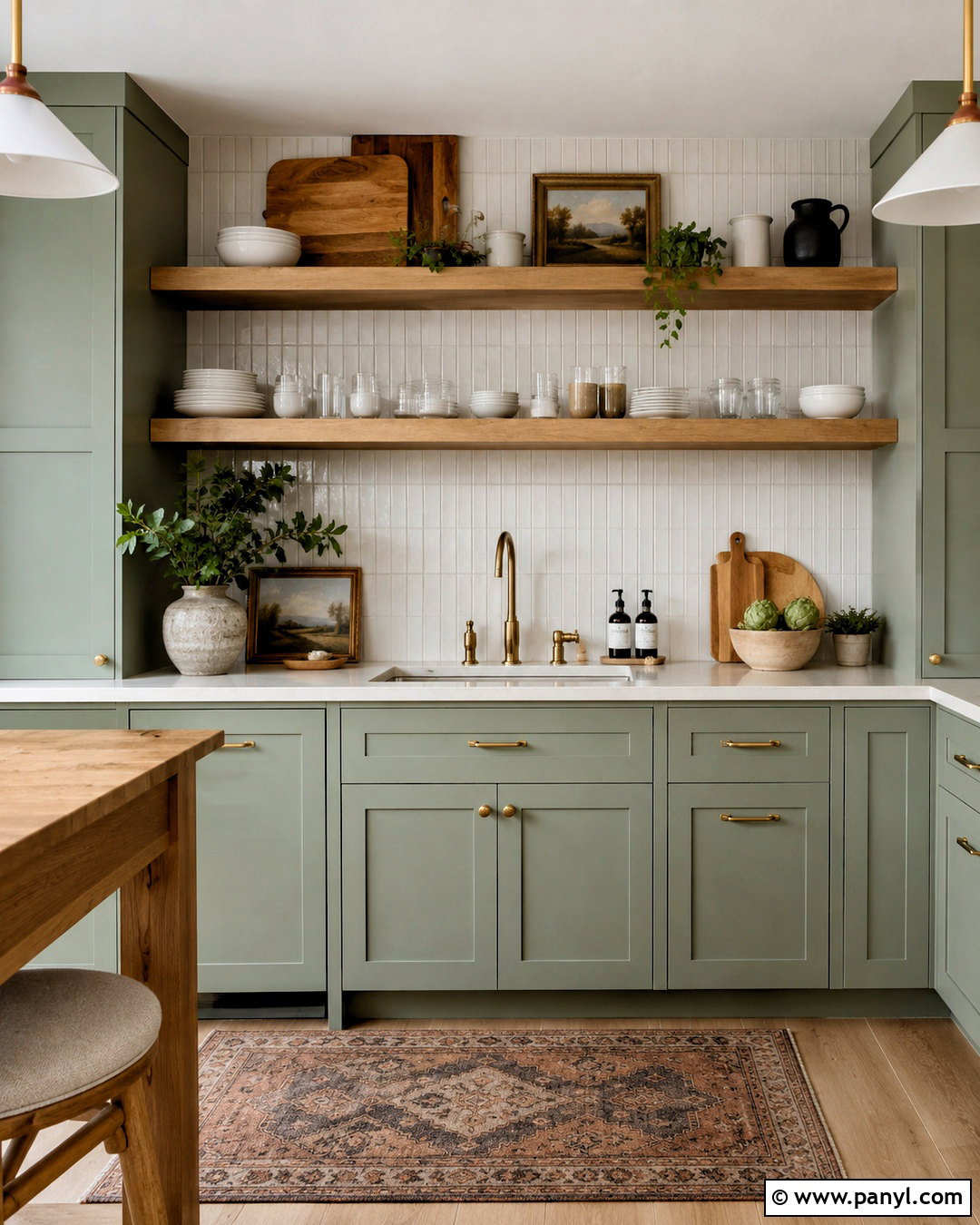
Open wood shelves can make a sage green kitchen feel lighter while providing accessible storage. Use sage Shaker cabinetry on the lower half of the room, then install two thick oak shelves on a warm white tile backsplash. Position them around the sink or on one side of the range rather than replacing every upper cabinet. Store everyday white dishes, clear glasses, and a few wooden boards there for an orderly display. Complete the cabinetry with brass pulls and creamy quartz countertops. An oak dining table or matching breakfast ledge repeats the shelf material across the room. Choose simple cone pendants and warm white walls. Closed pantry cabinets should handle less attractive supplies, keeping the visible shelves practical, balanced, and easy to maintain.
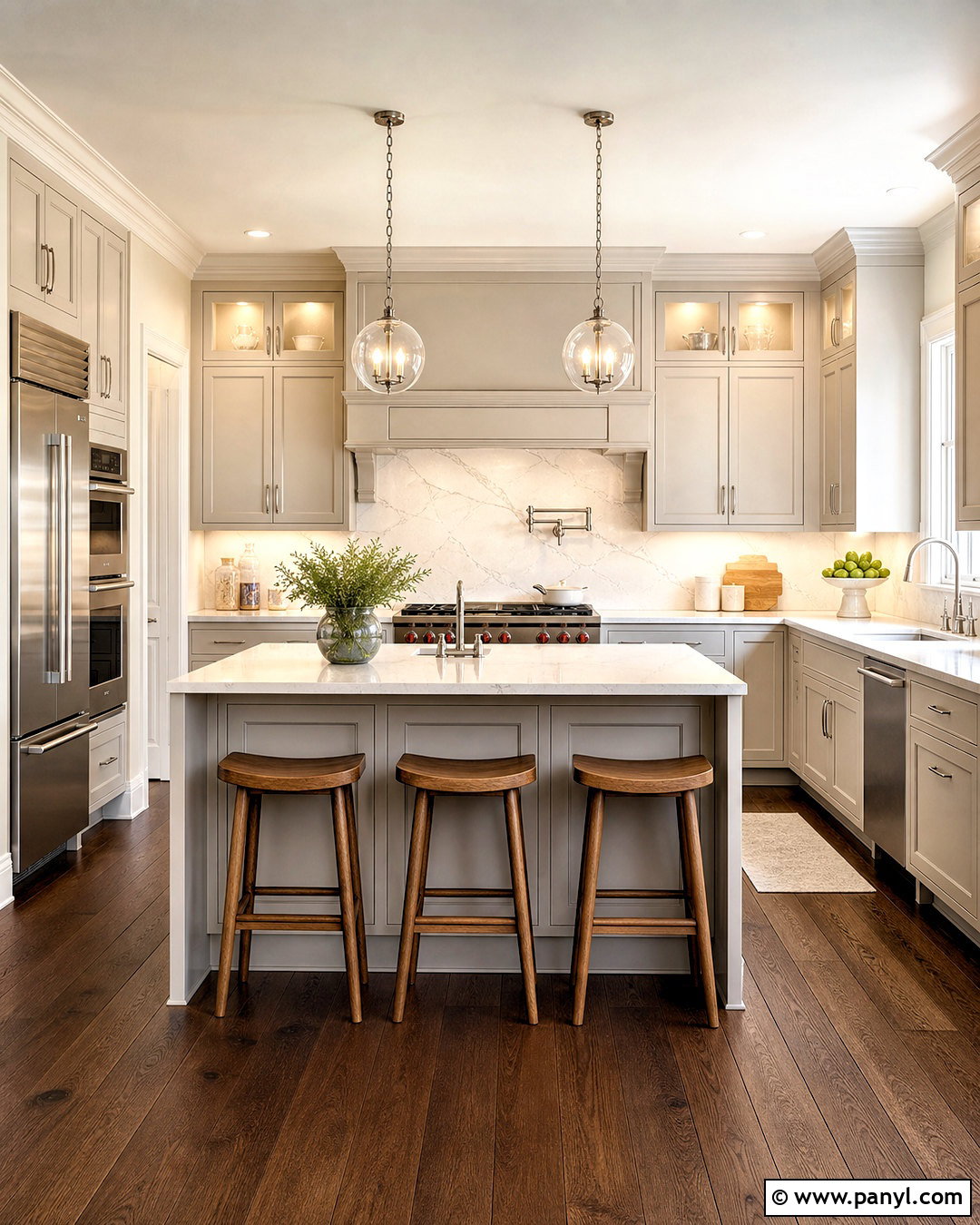
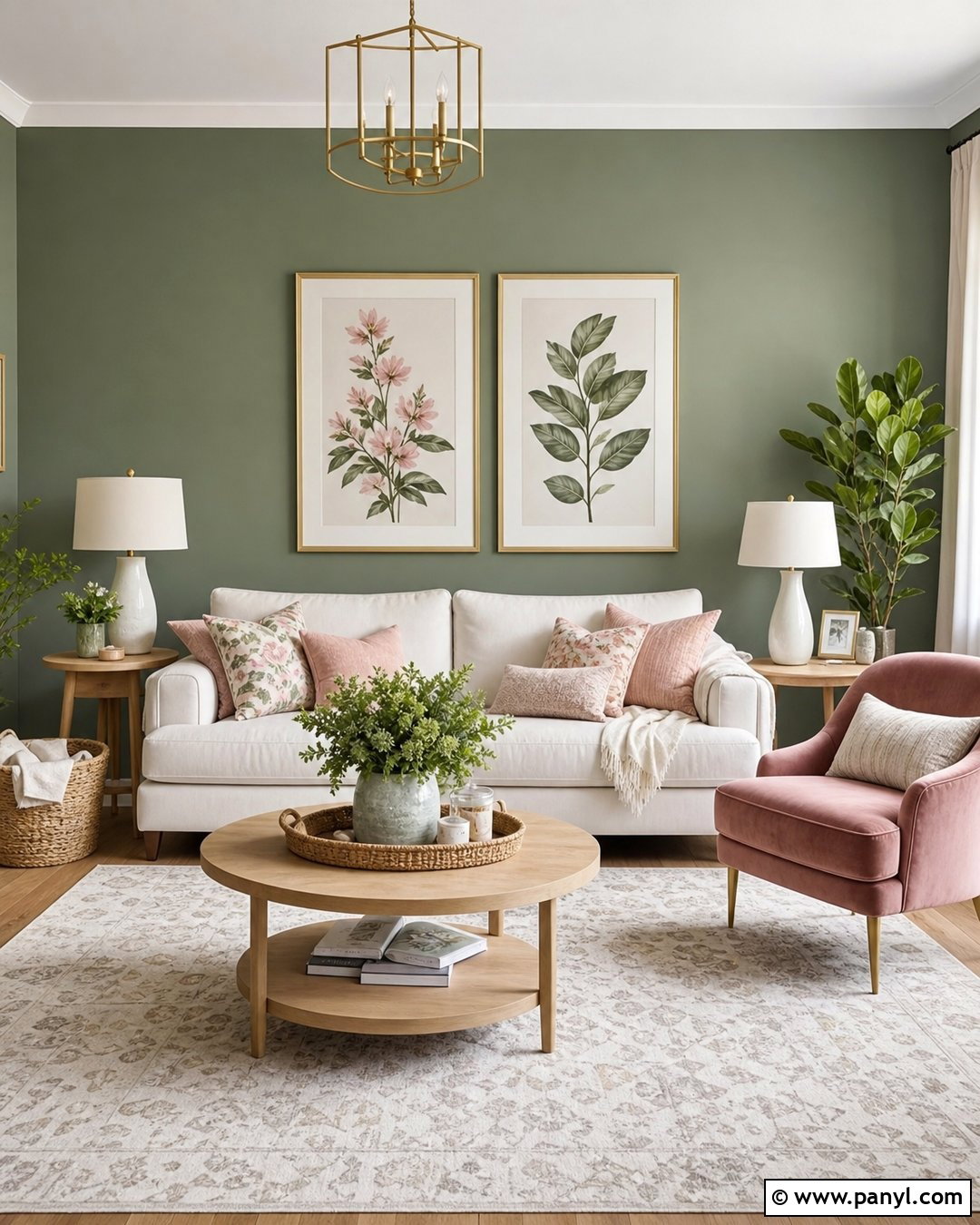
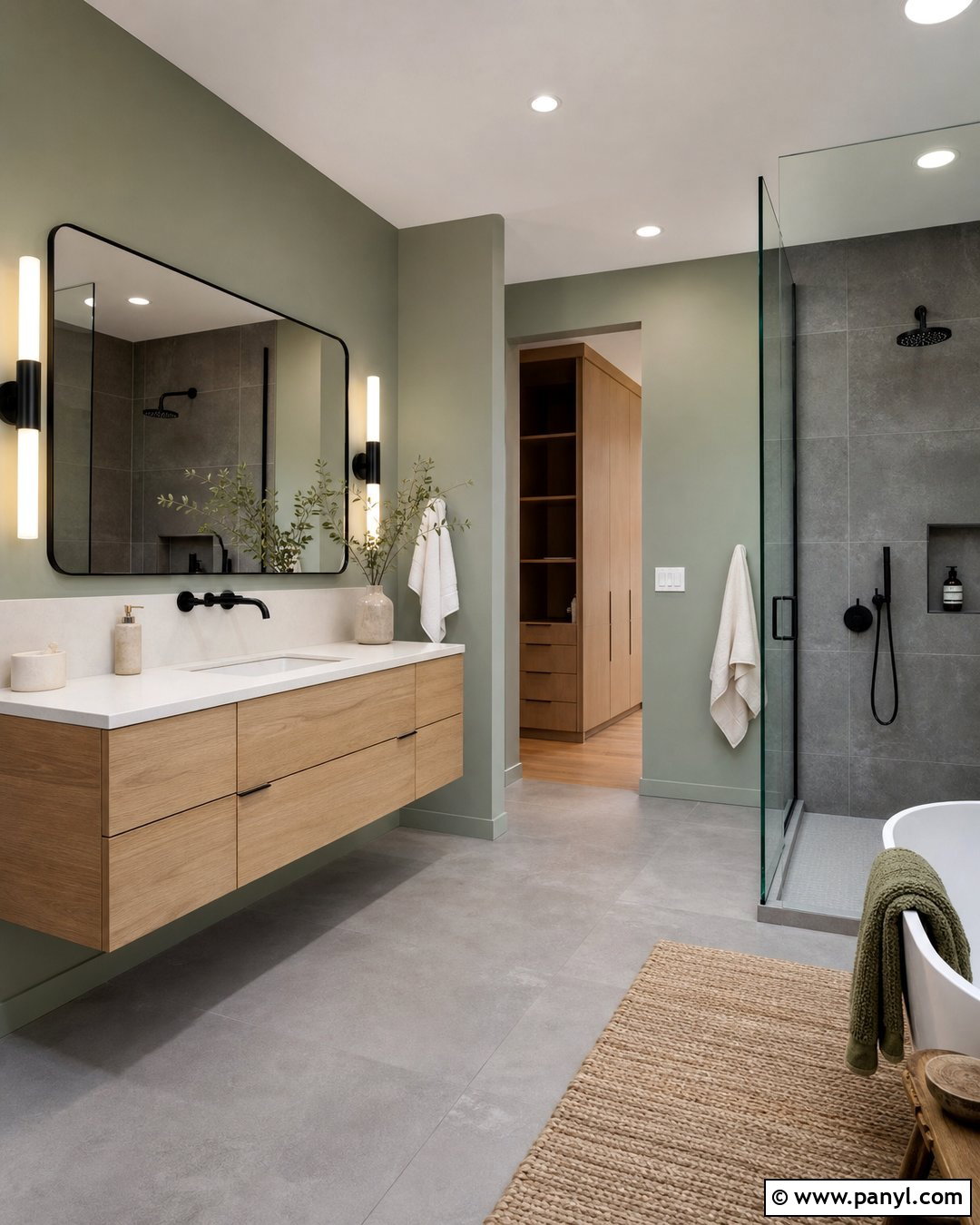
10. Sage Green Kitchen With Wood Range Hood
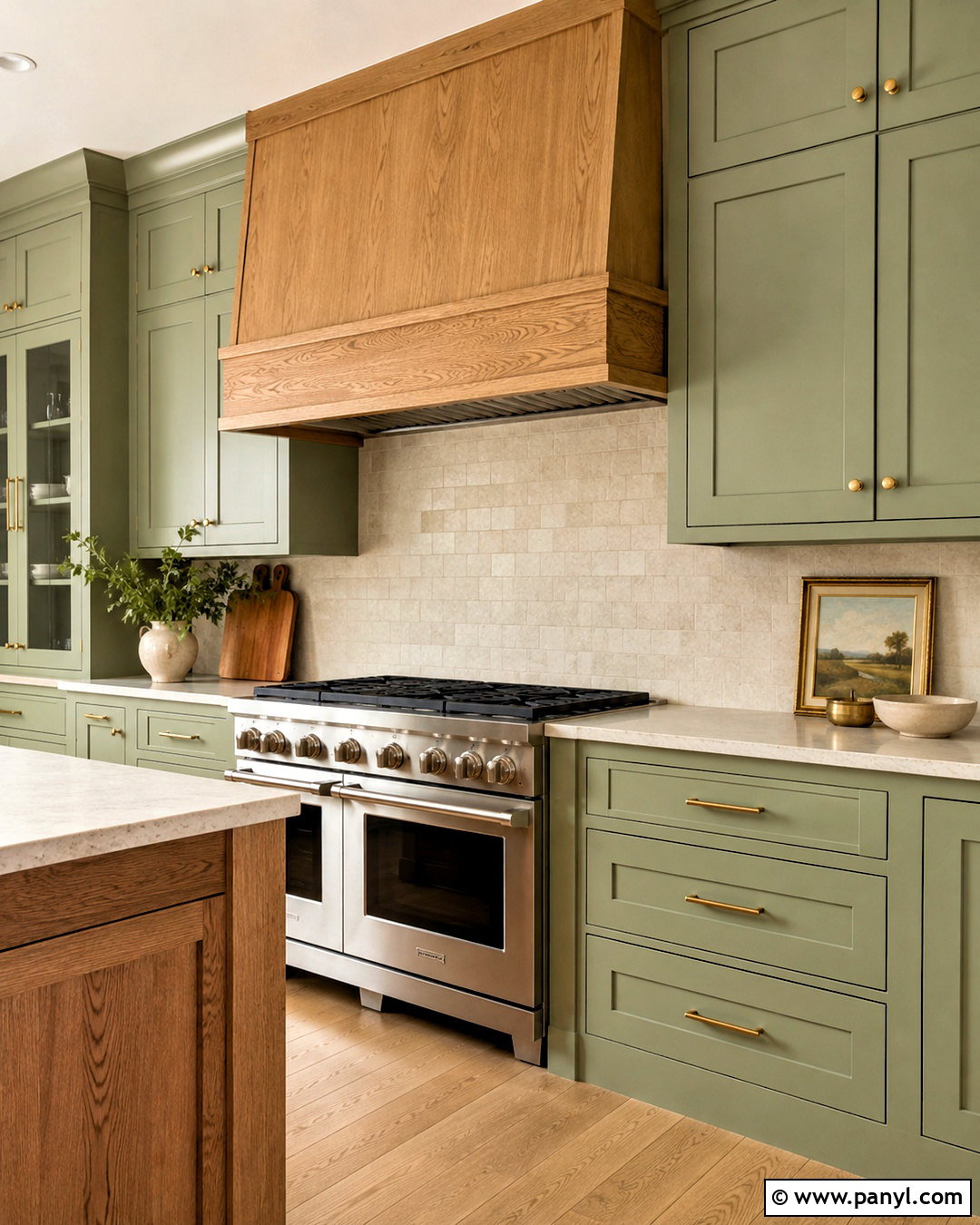
A wood range hood creates a strong focal point against sage green cabinets. Choose a clean rectangular hood wrapped in natural oak, with minimal trim so the grain remains visible. Frame it with matching sage Shaker cabinets and continue a creamy stone or handmade white tile backsplash behind the cooktop. Pale quartz counters keep the work surfaces bright, while aged brass handles connect the warm wood and green paint. Repeat the oak on the island base or a narrow set of floating shelves for balance. Wide-plank flooring in a slightly darker stain adds gentle contrast. Install simple brass pendants above the island and use warm white paint on surrounding walls. The finished room feels coordinated because the wood features are repeated, not randomly distributed.
11. Light Sage Green Kitchen With Honey Oak
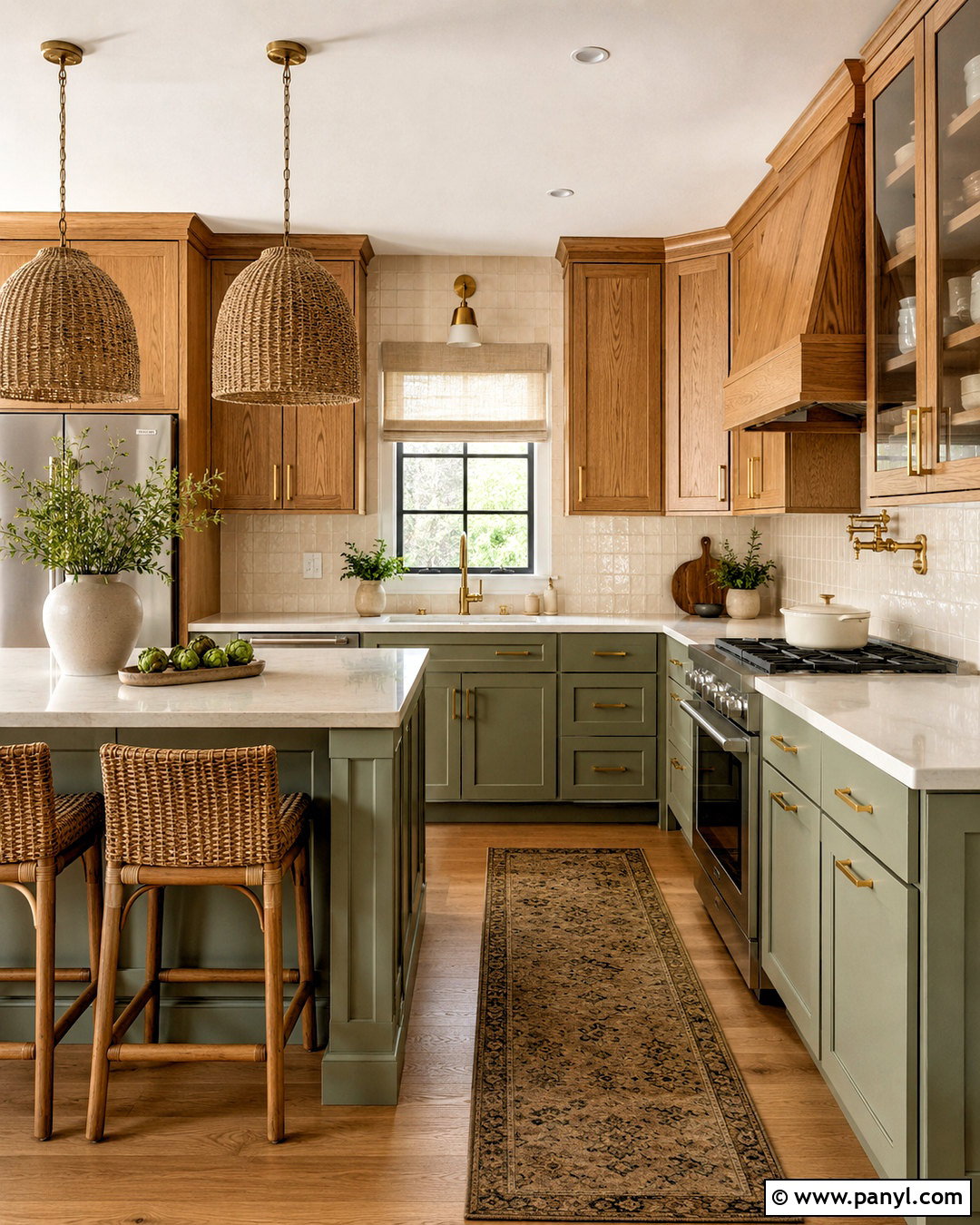
Existing honey oak can look intentional when paired with a sage that has warm yellow undertones. Keep sound oak upper cabinets or wood flooring, then paint the lower cabinets a light, earthy sage. Replace ornate hardware with simple antique brass pulls to give the room a cleaner appearance. A creamy white quartz counter and warm ivory backsplash will bridge the green paint and golden wood more successfully than cool gray materials. If the oak feels dominant, add a sage island and use warm white on the walls to provide breathing room. Choose woven pendants, natural linen shades, and understated counter stools. This coordinated update preserves the wood’s character while giving the entire kitchen a fresher, softer, and more deliberate color story.
12. Dark Sage Green Kitchen With White Oak
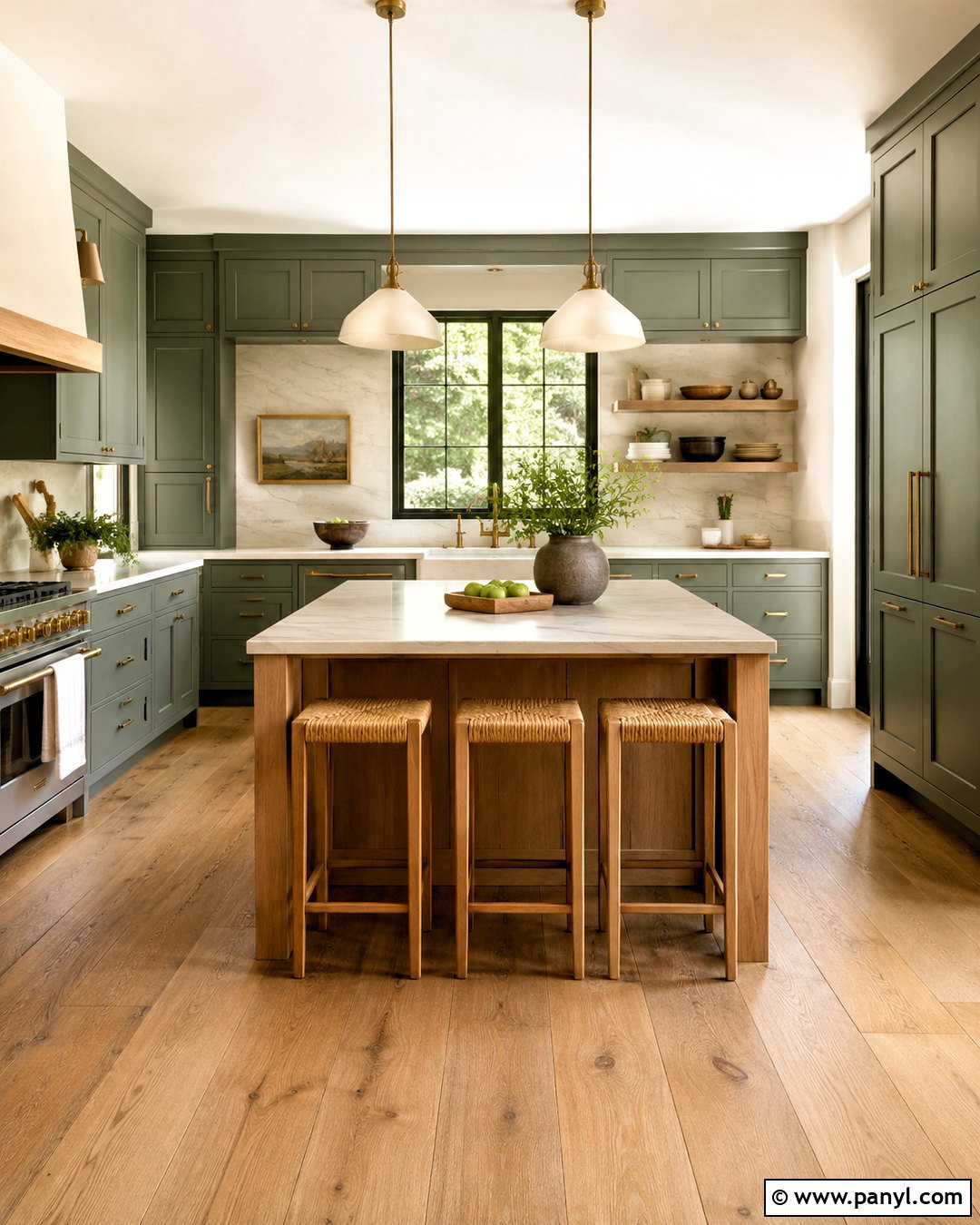
Deep sage cabinetry creates drama without losing the organic character of a green and wood palette. Use dark sage on the perimeter cabinets and introduce white oak on the island, pantry doors, or open shelving. The pale timber provides necessary contrast and prevents the room from feeling enclosed. Select off-white stone countertops with warm veining instead of stark white surfaces. A matching slab backsplash behind the range will keep the stronger cabinet color looking polished. Add brushed brass hardware and large cream pendant lights for brightness. Natural oak flooring can connect the lighter wood elements across the space. Finish with warm white walls, woven stools, and simple neutral dishes. Generous daylight and layered task lighting are especially important with this deeper cabinet shade.
13. Sage Green And Wood Galley Kitchen
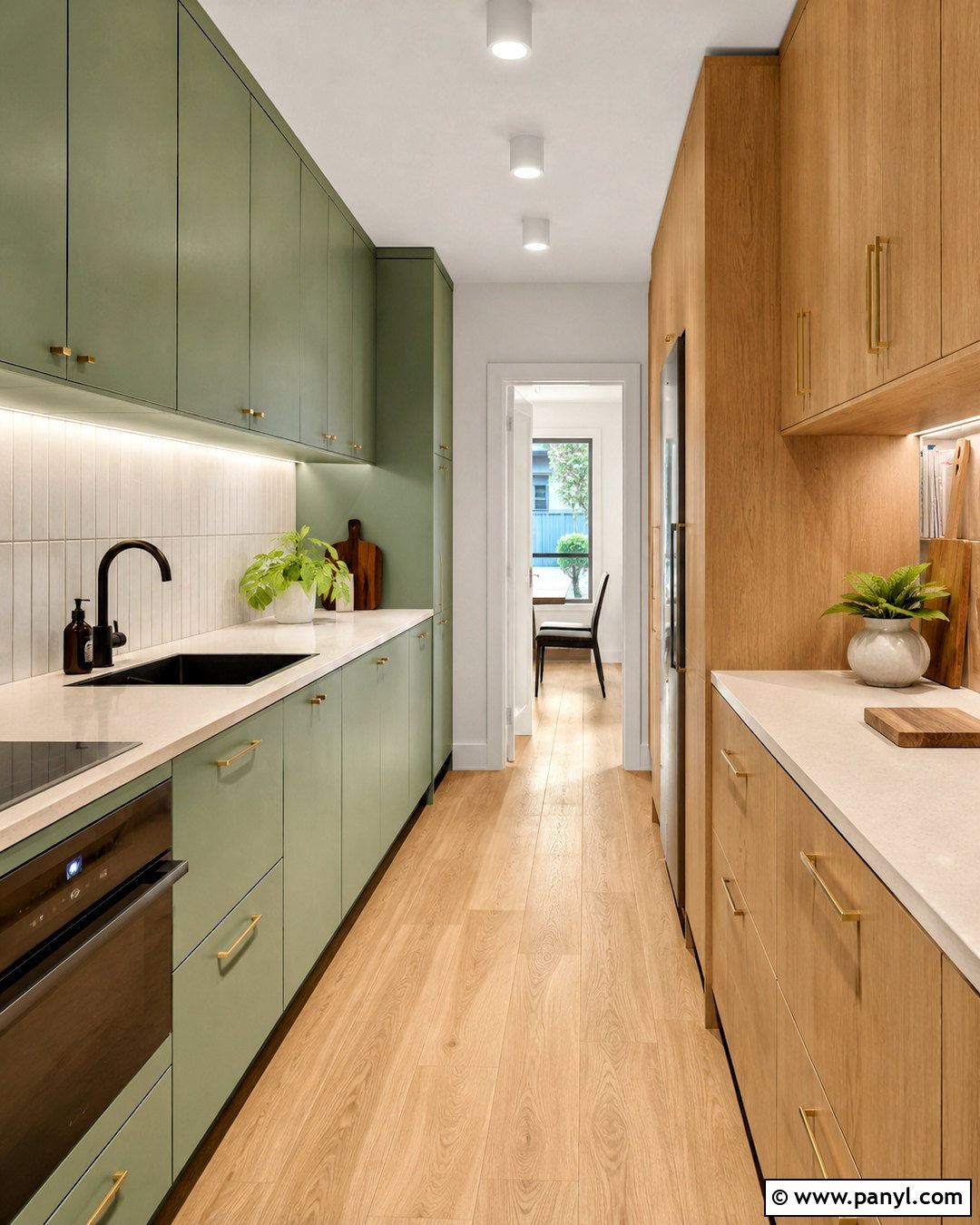
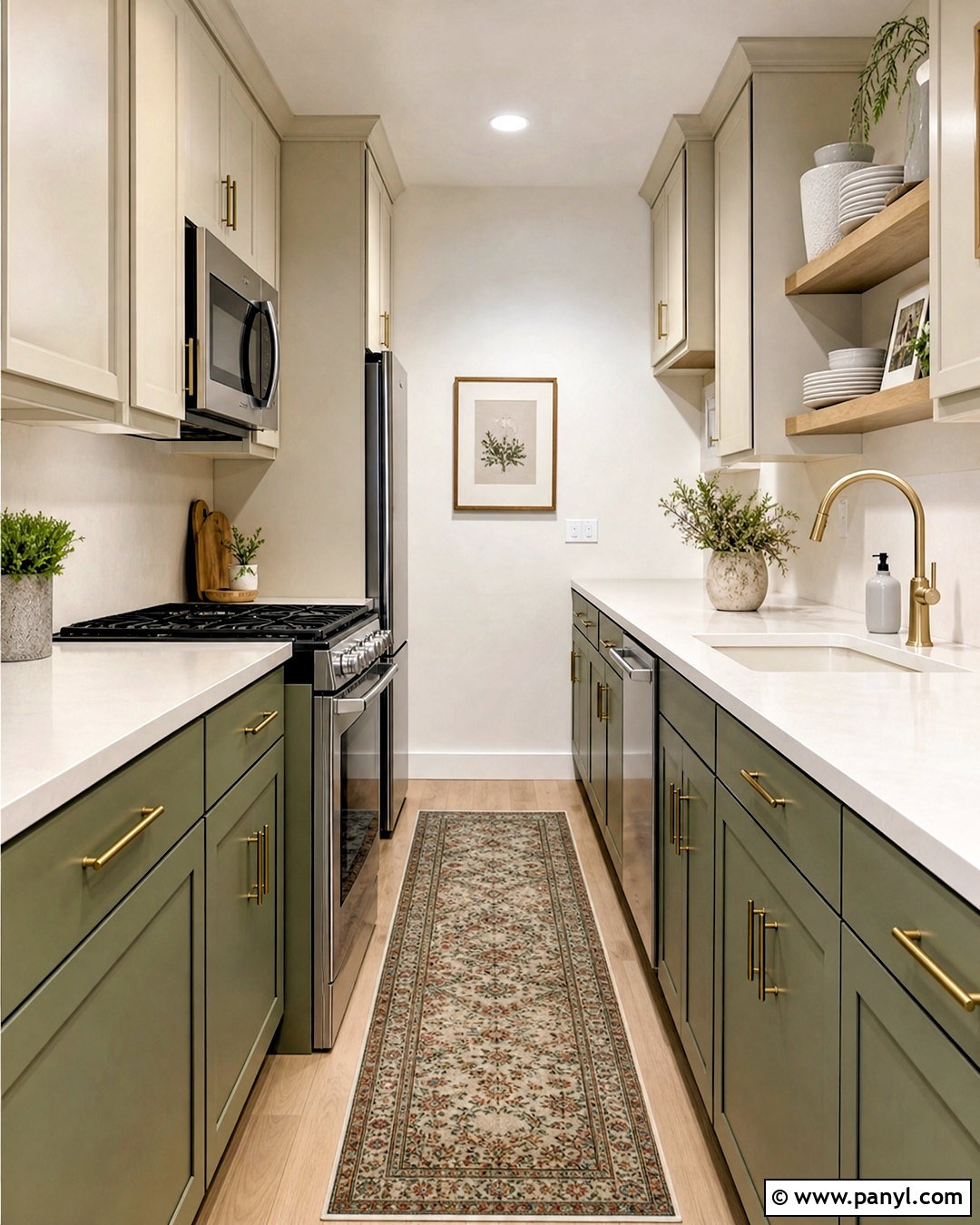
A galley layout benefits from a simple finish plan that guides the eye through the narrow space. Place sage green cabinets along one wall and natural oak cabinets along the opposite side, rather than alternating every door. Use identical cream quartz countertops on both runs to create continuity. A pale vertical tile backsplash can make the walls appear taller, while light oak flooring laid lengthwise visually extends the room. Select streamlined brass pulls and compact flush-mount ceiling lights to reduce clutter. At the far end, add a small window, wooden bench, or sage pantry cabinet as a destination point. Keep countertop appliances inside an appliance garage. This organized two-tone arrangement brings warmth and personality to the galley without making the walkway feel busy.
14. Sage Green Kitchen With Wood Ceiling Beams
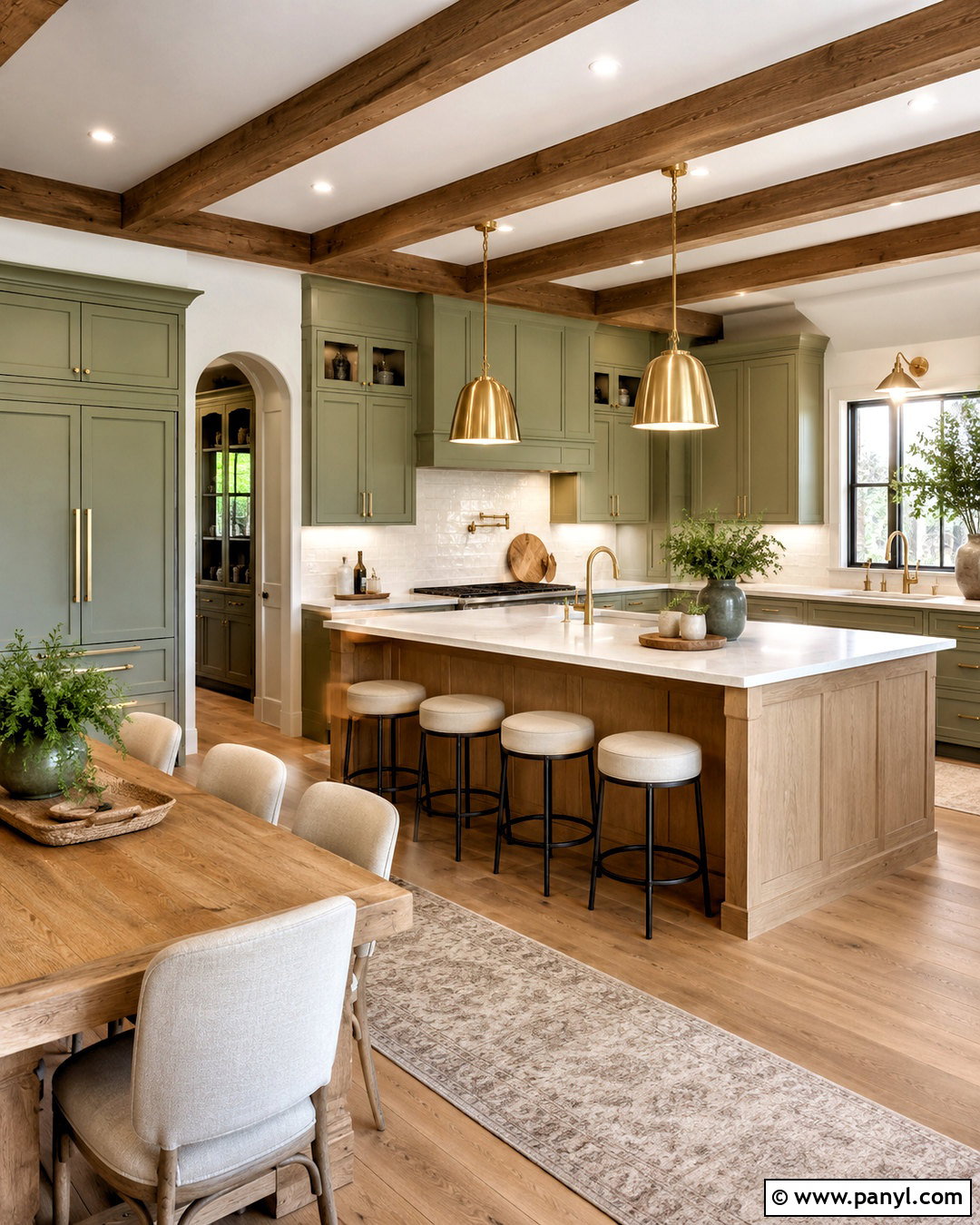
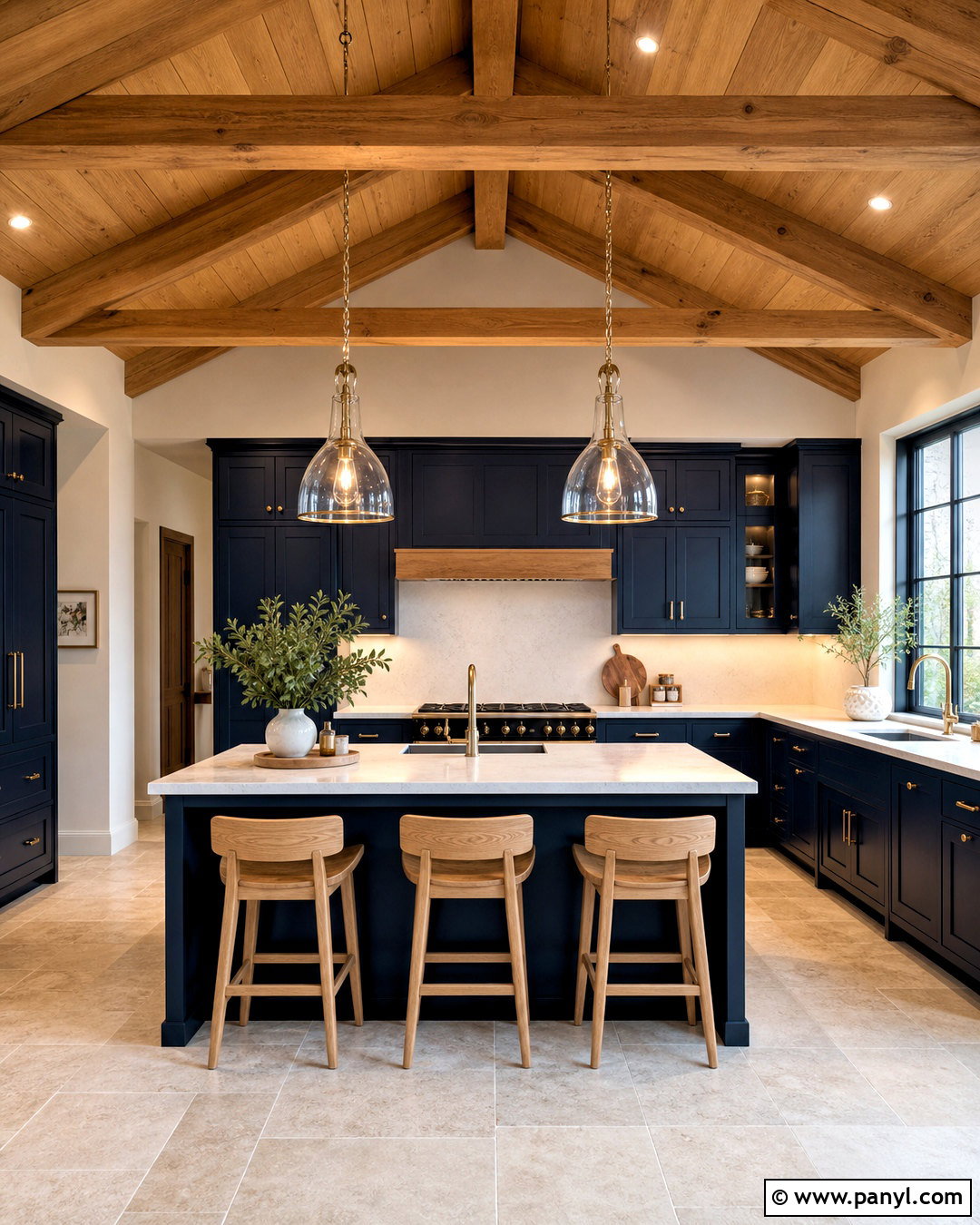
Wood ceiling beams can anchor a spacious sage green kitchen and make high ceilings feel more connected to the room. Paint the cabinetry a muted sage and repeat the beam material on a large oak island, range hood, or dining table. Keep countertops pale, using warm white quartz or lightly veined stone to balance the stronger overhead detail. Cream walls and a soft white backsplash maintain an airy backdrop. Choose substantial brass or black pendants that visually fill the space between the island and beams. Medium oak flooring should complement the ceiling without matching it perfectly. Add upholstered stools and a neutral runner for softness. The completed design feels architectural and welcoming because the wood appears at several levels throughout the kitchen.
15. Sage Green Kitchen With Wood Slat Island
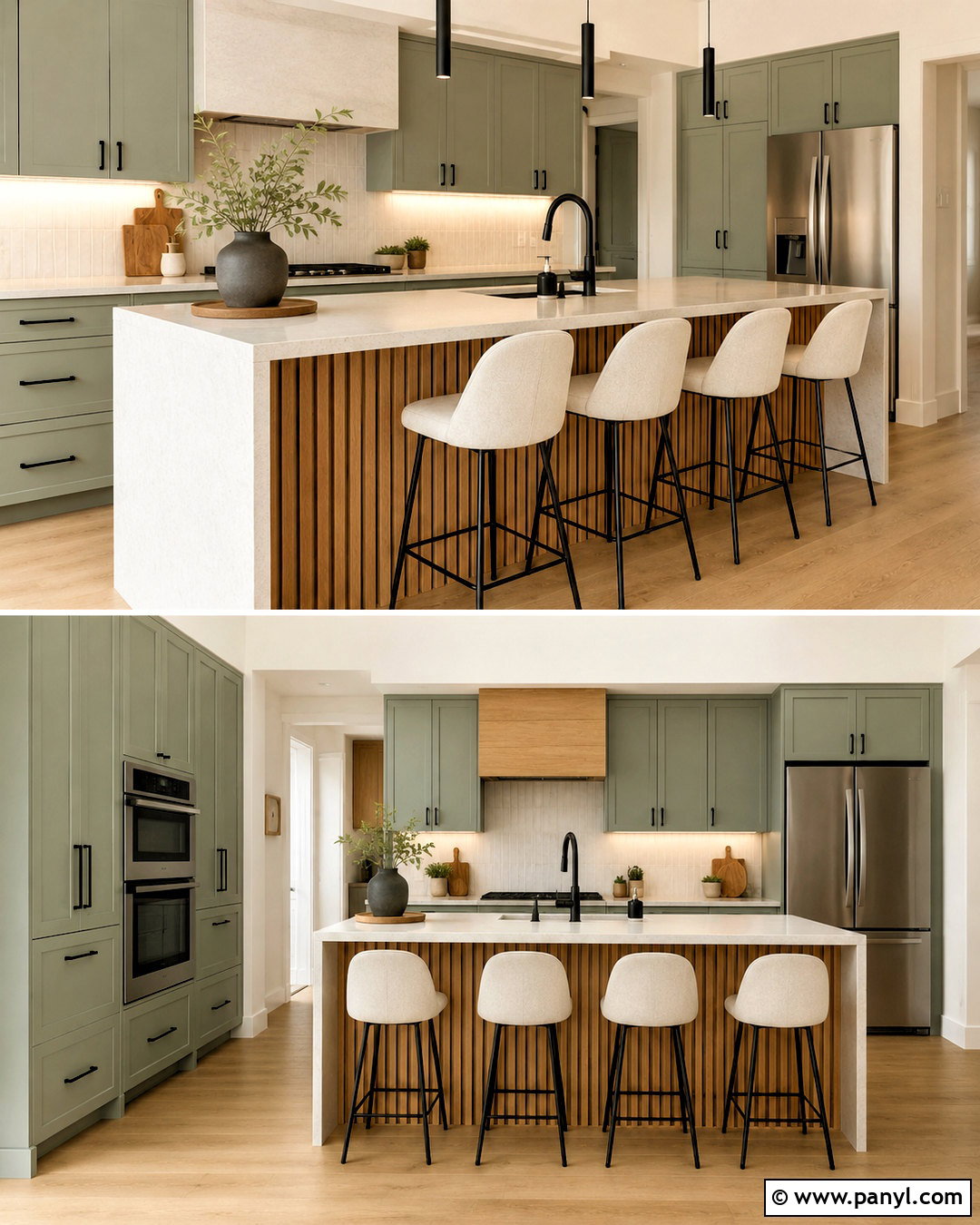
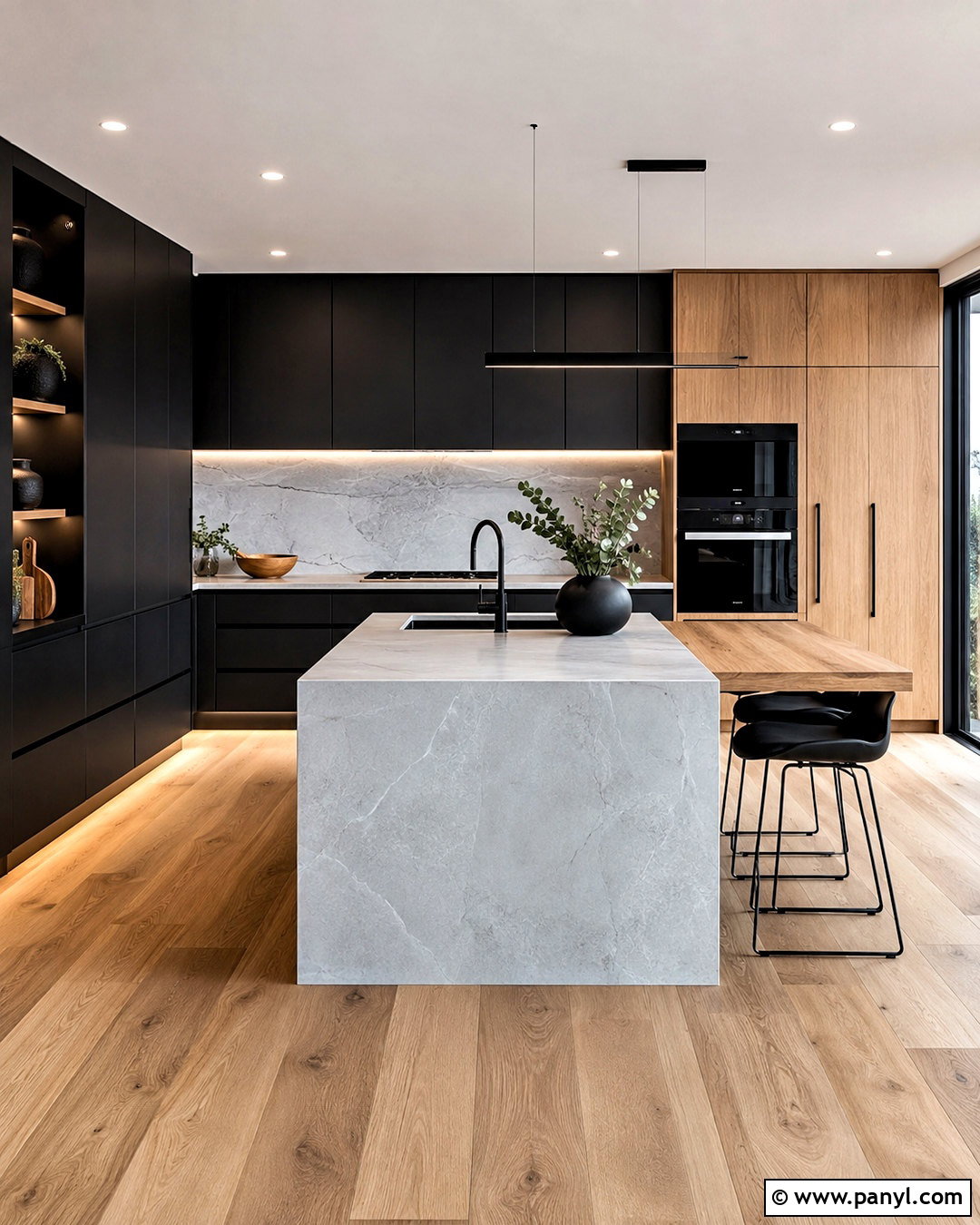
Vertical wood slats can transform a simple island into a textured centerpiece. Paint the surrounding flat-panel cabinetry a soft sage green, then wrap the seating side of the island in narrow, evenly spaced oak slats. Keep the remaining island panels sage for a balanced two-material design. A pale waterfall countertop gives the textured base a clean border and provides a durable dining surface. Choose backless stools with cream upholstery so the slatted detail remains visible. Add slim black pendant lights, matching cabinet pulls, and a black faucet for contemporary contrast. Light oak flooring and warm white walls prevent the dark accents from overpowering the room. Use minimal countertop decor, allowing the island’s craftsmanship and repeating wood grain to define the complete kitchen.
16. Traditional Sage Green And Cherry Wood Kitchen
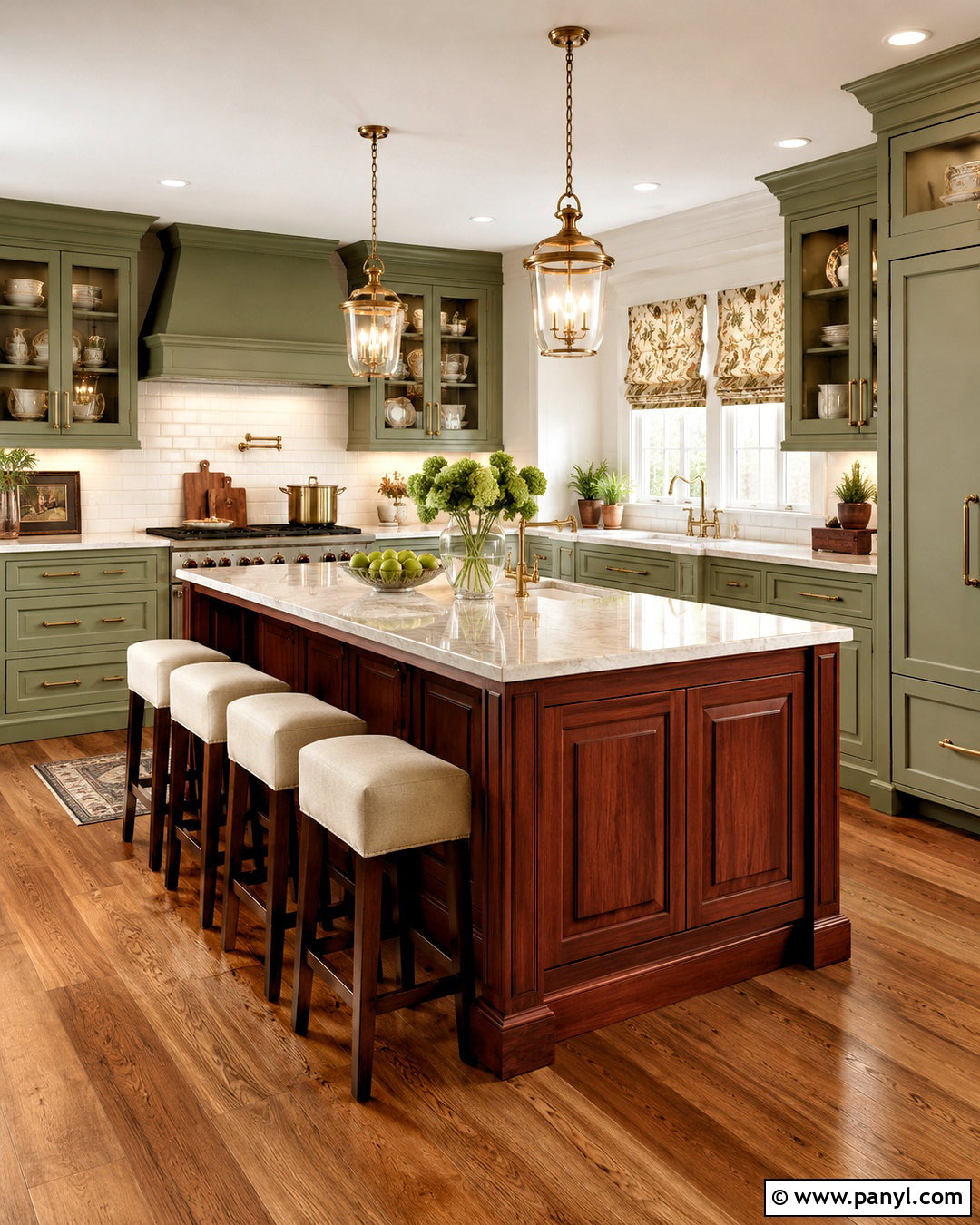
Cherry wood gives sage green cabinetry a formal, warm appearance that suits traditional homes. Use medium sage on inset perimeter cabinets and reserve cherry for the island, glass-front display cabinet, or furniture-style pantry. Select cream stone countertops with subtle brown veining to connect the red undertones of the wood with the muted green. An ivory subway tile backsplash and warm beige walls will soften the contrast. Choose antique brass latches, cup pulls, and lantern pendants for a consistent finish. Medium-toned wood flooring, upholstered counter stools, and simple patterned Roman shades complete the classic setting. Keep decorative molding restrained and avoid mixing several ornate door profiles. A consistent cabinet style allows the color and cherry grain to provide the kitchen’s visual richness.
17. Minimalist Sage Green And Wood Kitchen
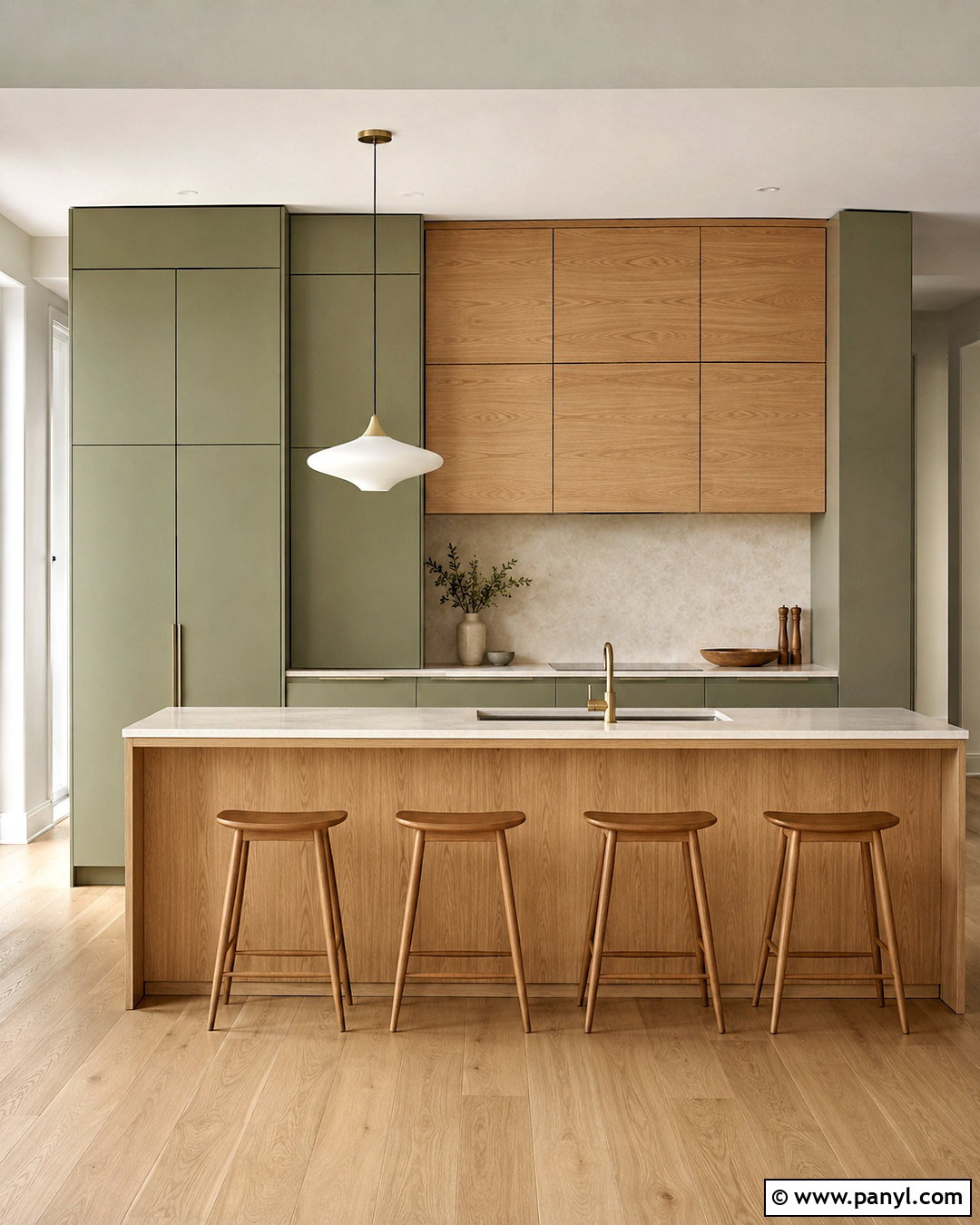
A minimalist kitchen can still feel warm when sage and wood are used in broad, uninterrupted surfaces. Choose handleless sage green cabinets for the main wall and natural oak veneer for a tall pantry bank and island. Conceal the refrigerator and small appliances behind matching panels to maintain clean lines. Use a thin off-white countertop with an integrated backsplash and undermount sink. One sculptural white pendant above the island provides light without competing with the cabinetry. Pale wood flooring, warm white walls, and simple oak stools reinforce the restrained palette. Include practical storage inside deep drawers so counters remain clear. A single ceramic bowl or leafy branch is enough decoration. The finished kitchen feels peaceful and precise rather than bare or unfinished.
18. Cottage Sage Green And Wood Kitchen
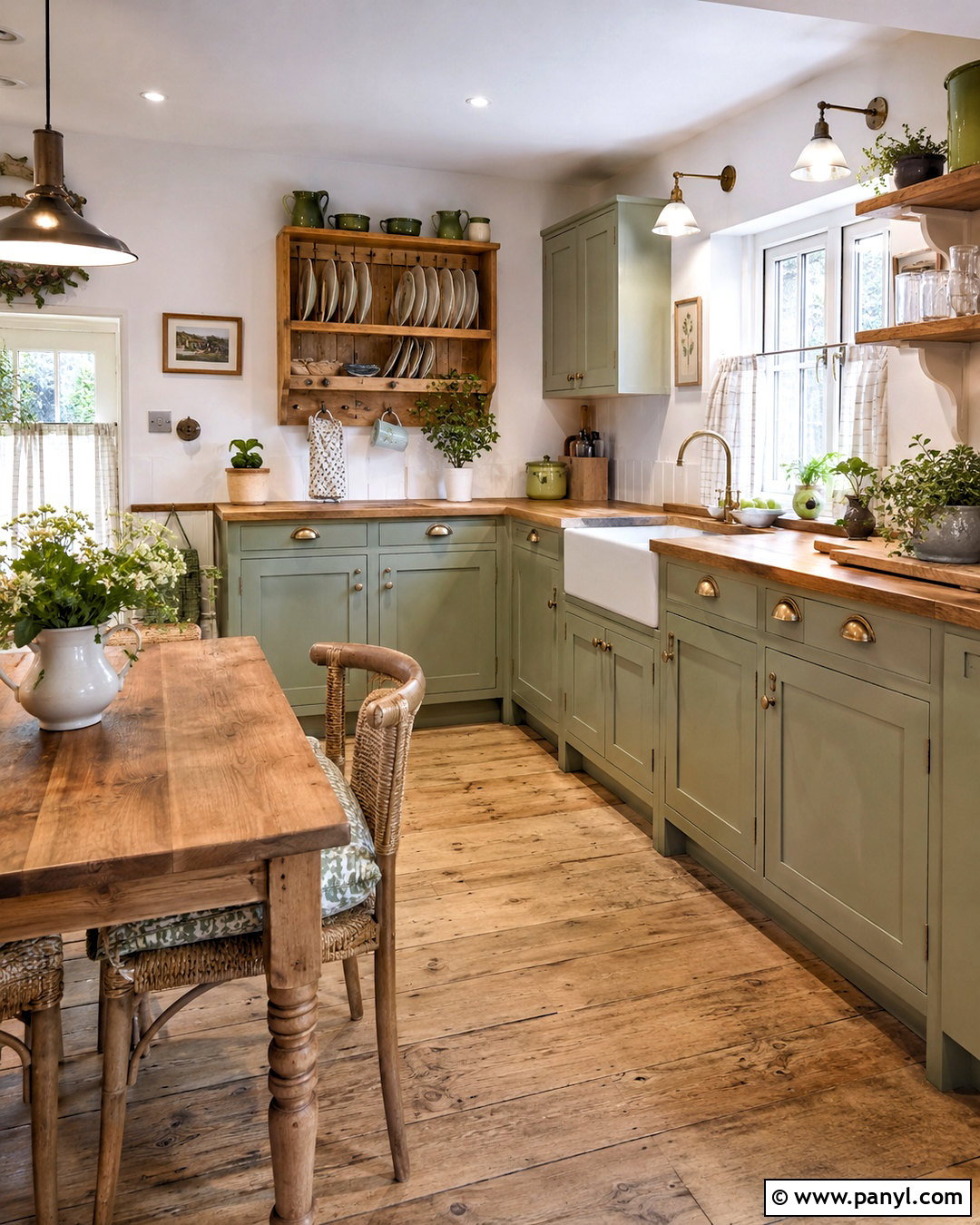
A cottage kitchen should feel collected, useful, and bright. Begin with softly painted sage green cabinets featuring simple framed doors and small brass knobs. Add oak countertops, a freestanding wooden plate rack, and a compact pine table to build natural warmth. Cream beadboard or handmade square tile creates a charming backsplash without introducing a busy pattern. A white farmhouse sink, traditional faucet, and small wall lights support the cozy character. Use warm-toned brick or aged oak flooring for a durable foundation. Café curtains, woven chair seats, and open shelves filled with everyday dishes complete the room. Keep the layout practical with closed base storage and a tall pantry. The overall look has personality, yet every decorative feature serves a clear household purpose.
19. Sage Green Kitchen With Wood Breakfast Nook
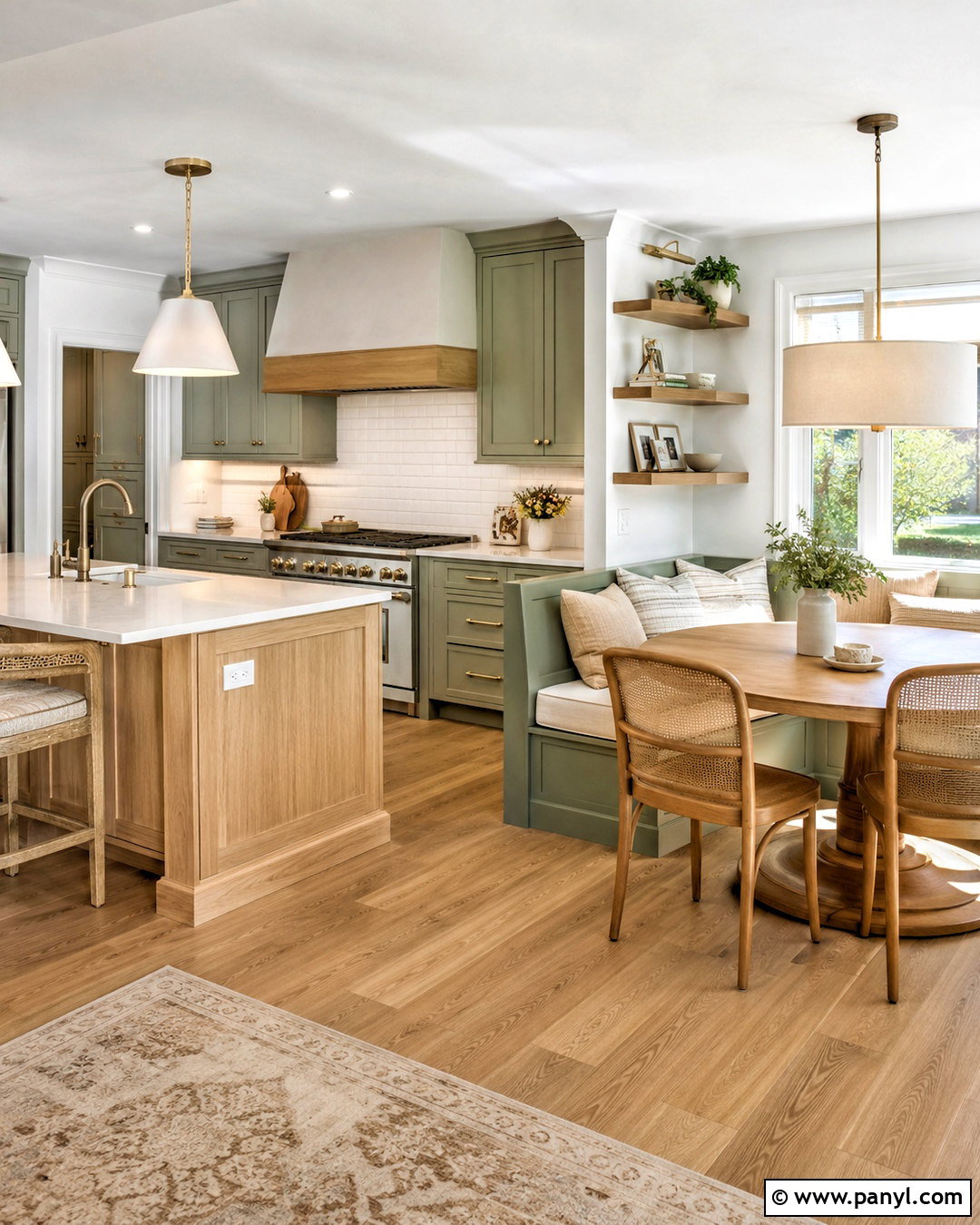
Extend the green and wood palette beyond the cabinets by building a connected breakfast nook. Use sage green cabinetry around the cooking area and repeat the same paint on a built-in banquette base. Add an oak table, wood wall paneling, or floating shelves to link the nook with a natural oak kitchen island. Cream cushions and washable striped pillows make the seating inviting without introducing unrelated colors. Choose pale quartz counters, a warm white backsplash, and brushed brass hardware throughout the kitchen. A simple pendant centered over the table distinguishes the dining zone. Light oak flooring can flow continuously through both spaces. The result is a cohesive family kitchen where cooking, casual dining, homework, and conversation all have comfortable, well-defined places.
20. Budget Sage Green And Wood Kitchen Makeover
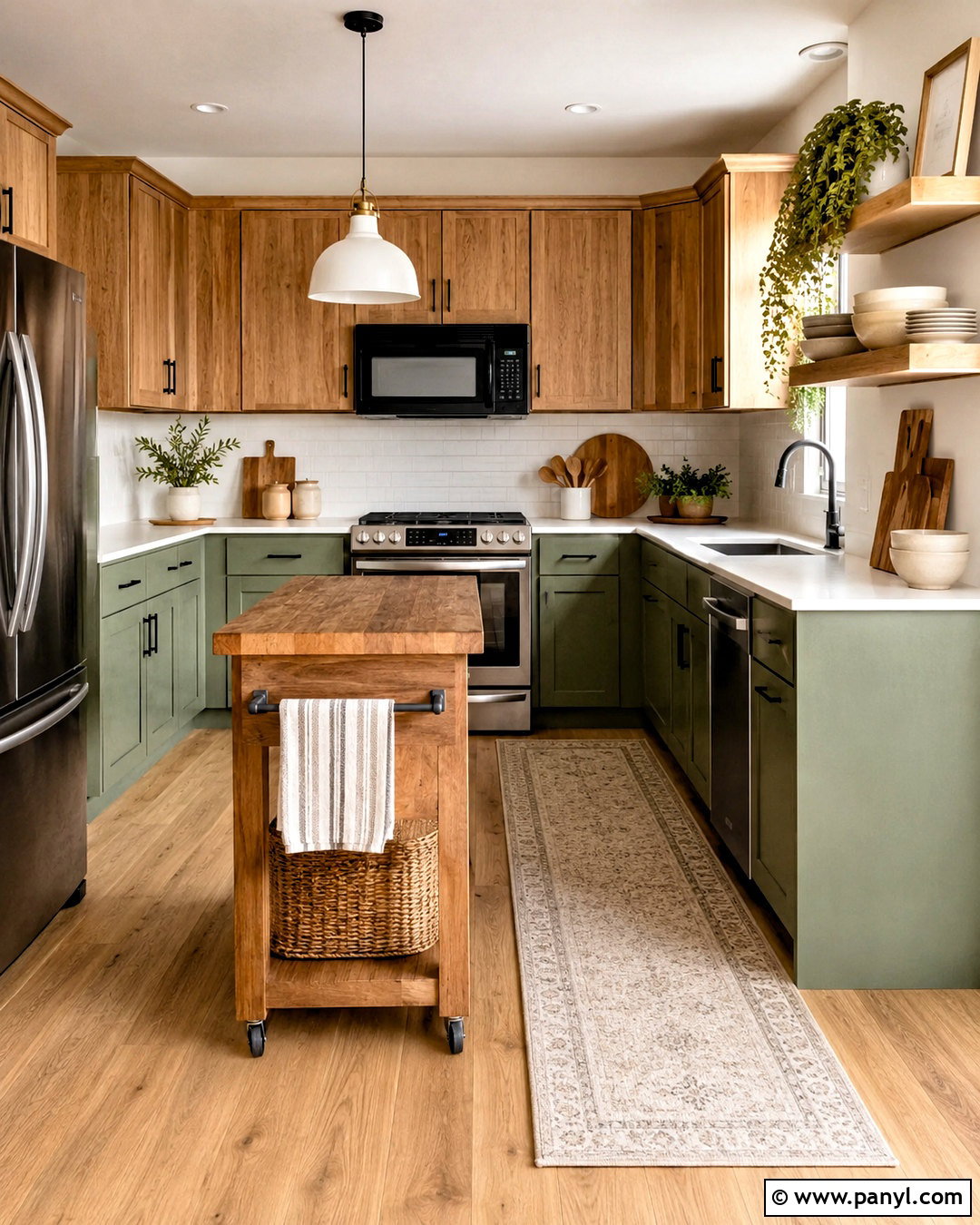
A full renovation is not required to create a convincing sage green and wood kitchen. Paint structurally sound lower cabinets sage, then keep existing wood uppers or refresh them with a light, natural stain. Replace outdated hardware with consistent brass or matte black pulls. Install affordable butcher block on a small island, rolling cart, or breakfast counter instead of changing every countertop. A warm white peel-and-stick backsplash can brighten the work zone, while wood floating shelves provide useful display space. Update the lighting with one simple pendant and add a washable neutral runner. Finish with wooden cutting boards, cream ceramics, and linen towels. By repeating each material several times, the makeover feels coordinated rather than like a collection of unrelated weekend projects.
Conclusion:
The best sage and wood kitchens feel balanced, functional, and connected to the home around them. Start by deciding whether green or natural timber will be the dominant finish. Then repeat the secondary material in two or three purposeful places, such as the island, range hood, shelving, or dining area. Warm white stone, simple hardware, and good lighting can unite the palette without distracting from it. Always test sage paint beside the actual wood, flooring, countertops, and backsplash because surrounding finishes can change how the color appears. Whether you prefer modern walnut, pale Scandinavian oak, or rustic reclaimed timber, these 20 sage green and wood kitchen ideas offer complete looks that can be adapted to your layout and budget.

Related Ideas and Inspiration:
Leave a Reply