
Rustic textured walls bring warmth, depth, and a sense of history to rooms that might otherwise feel plain. Today’s most appealing versions go beyond predictable farmhouse paneling. Limewash, hand-troweled plaster, reclaimed timber, exposed brick, natural stone, clay, cork, and woven fibers can all create a relaxed rustic atmosphere. These finishes are especially effective when paired with simple furniture, earthy colors, natural textiles, and lighting that highlights their uneven surfaces. Textured walls are also experiencing renewed interest as homeowners move away from perfectly smooth, uniform interiors toward finishes with visible craftsmanship and material character. () Whether you prefer an old-world room or a cleaner modern-rustic space, the following complete looks offer practical inspiration for **20 rustic textured walls**.

1. Rustic Limewash Living Room Wall
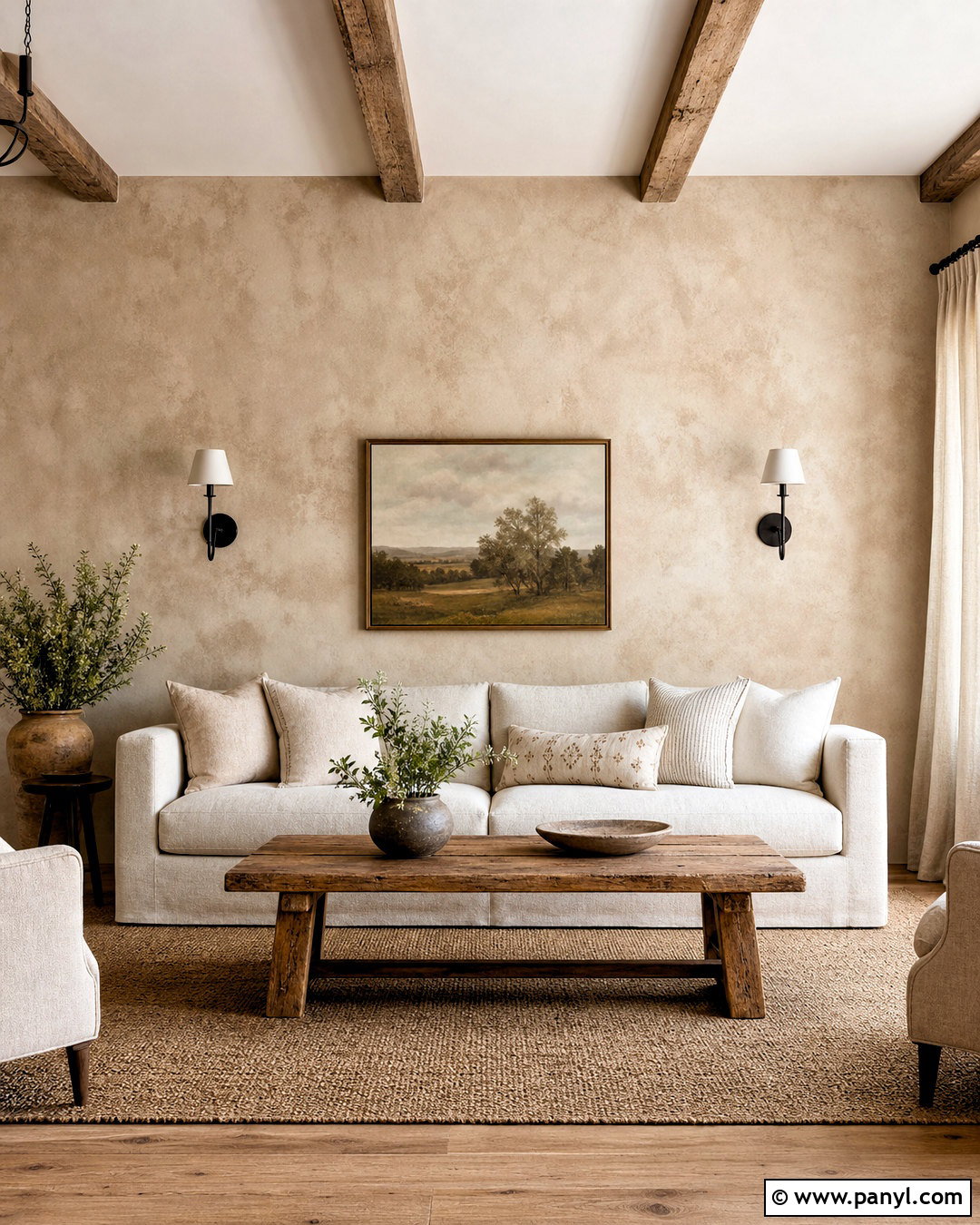
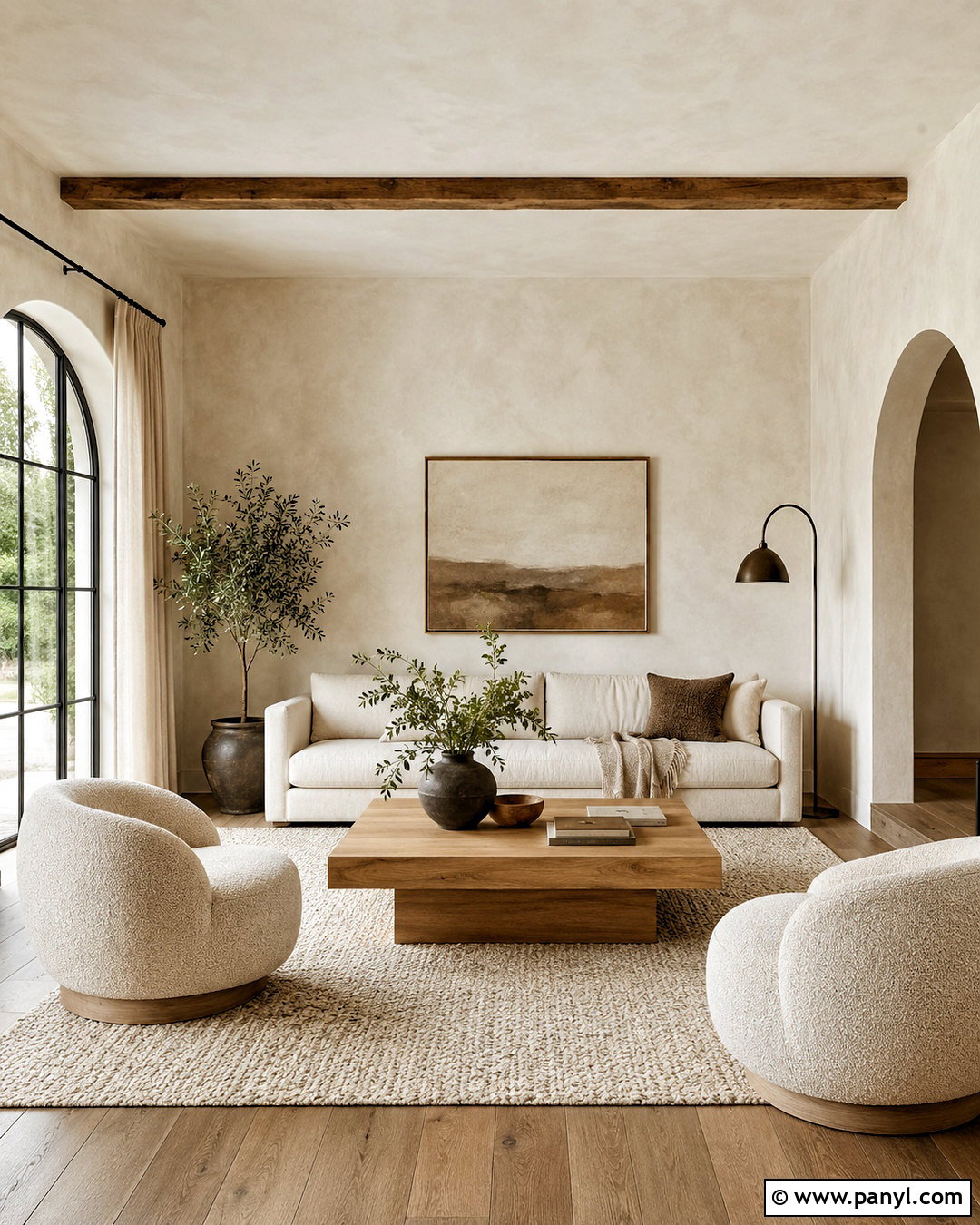
A warm beige limewash wall can make an ordinary living room feel softer and more established. Apply the finish across the main seating wall rather than limiting it to a narrow accent area. Its cloudy tonal movement works beautifully with a low oatmeal sofa, an aged oak coffee table, and a woven jute rug. Add one substantial landscape painting in a simple wood frame instead of filling the wall with small decorations. Linen curtains, cream cushions, and a ceramic table lamp reinforce the natural palette. Black iron lighting introduces definition without making the room feel industrial. Limewash performs best when the wall surface and primer are compatible with the chosen product, so test a sample area before completing the room. ()
2. Rustic Rough Plaster Bedroom Wall
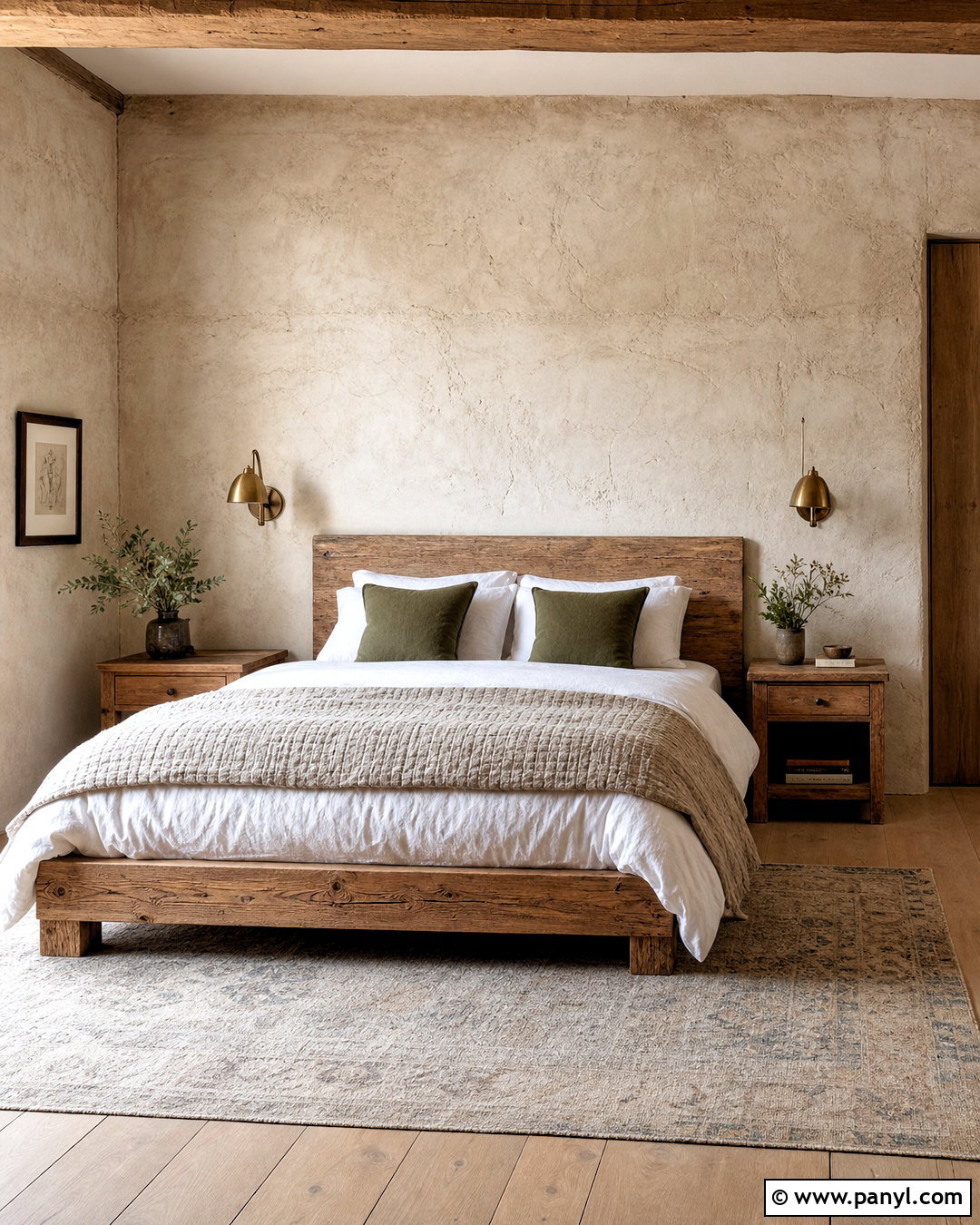
Imagine waking beside a chalky plaster wall with gentle ridges, trowel marks, and subtle variations in warm ivory. This finish creates a calm bedroom backdrop without relying on busy artwork or patterned wallpaper. Position a simple oak bed against the textured wall and dress it with white linen, a mushroom-colored quilt, and muted olive pillows. Narrow wood nightstands keep the arrangement balanced, while aged brass sconces cast light across the uneven surface. Continue the warm neutral color onto the remaining walls in a smoother finish so the bedroom feels cohesive. Pale oak flooring and a faded vintage-style rug complete the rustic foundation. Keep accessories restrained because the handmade plaster surface should remain the main visual feature.
3. Rustic Exposed Brick Dining Room Wall
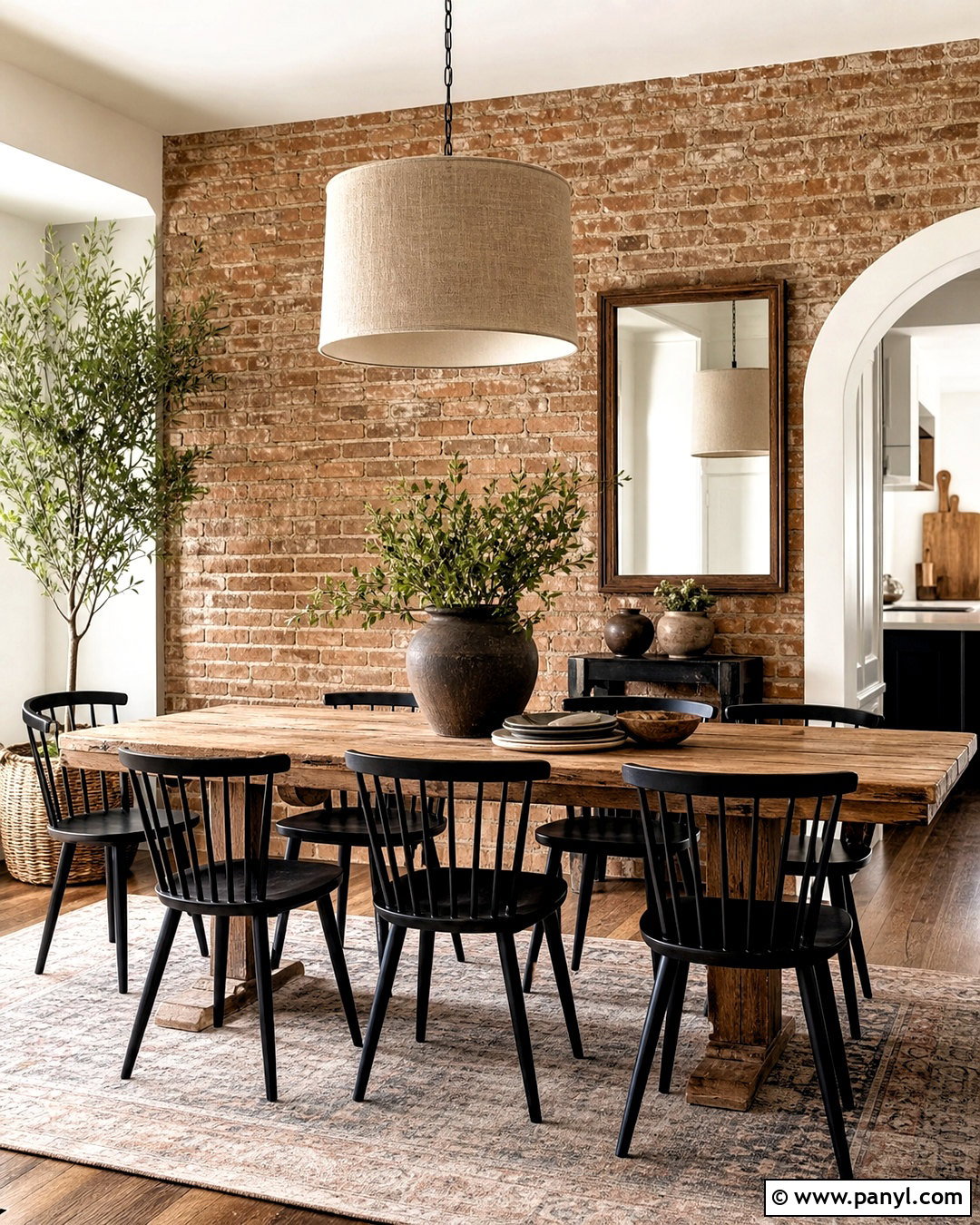
An exposed red brick wall gives a dining room immediate character, but the surrounding design determines whether it feels welcoming or overly industrial. Choose a substantial farmhouse table in medium-toned reclaimed oak and pair it with simple black spindle chairs. A large linen pendant can soften the brick while spreading light evenly over the table. Use creamy white paint on the other walls to balance the deep red and brown tones. A faded neutral rug helps define the dining area without competing with the masonry. Hang one vintage mirror or oversized still-life print on the brick using appropriate masonry hardware. Finish the room with handmade pottery and a low wooden bowl, leaving enough open space for the irregular brickwork to remain visible.
4. Rustic Reclaimed Wood Bedroom Wall
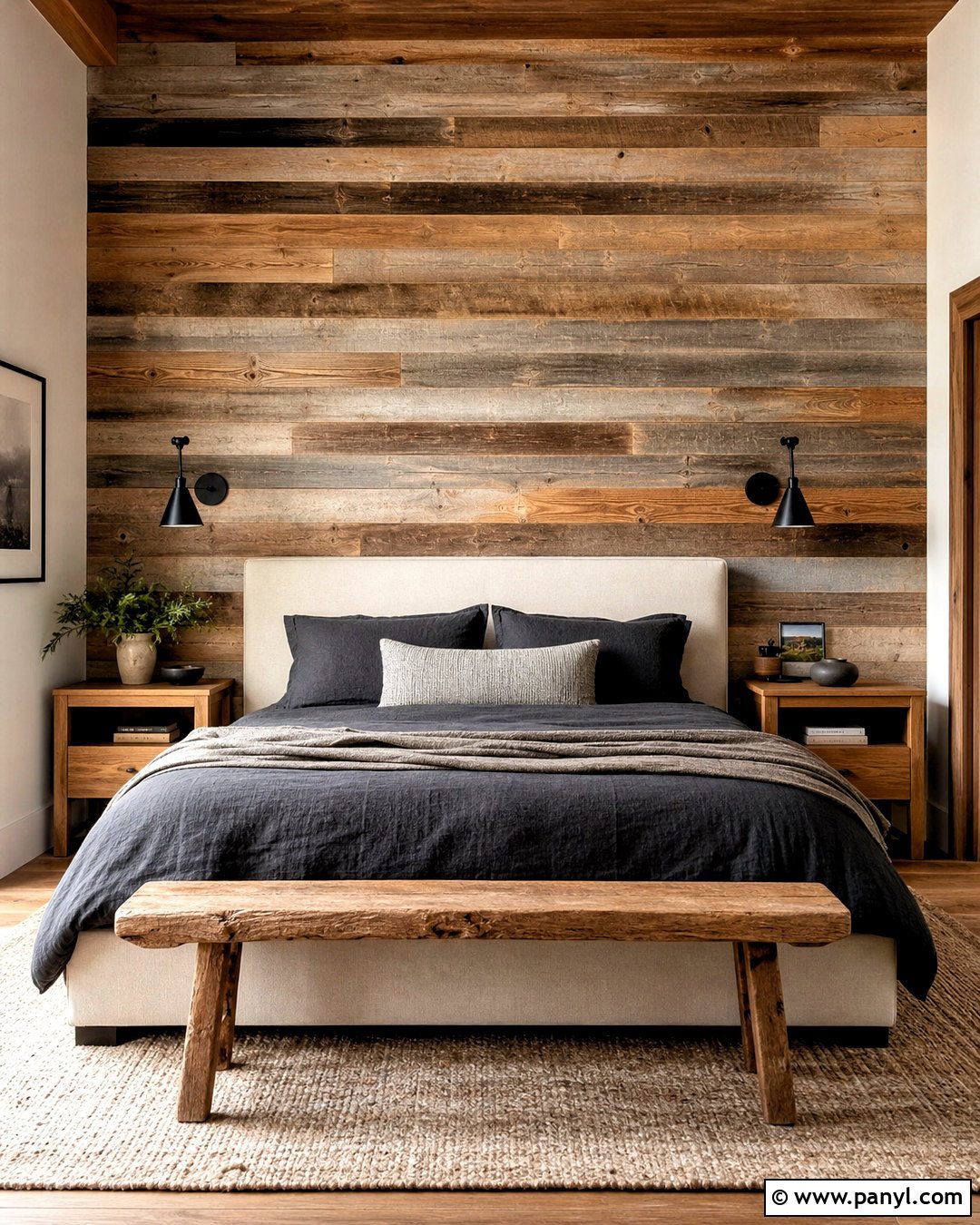
Weathered wood creates a restful bedroom when its colors are controlled and its placement feels intentional. Cover the wall behind the bed with horizontal reclaimed boards in faded brown, gray, and honey tones. Arrange the planks in a balanced mix rather than grouping every dark board in one area. A cream upholstered bed softens the rough lumber, while charcoal linen bedding adds contrast. Select understated oak nightstands and matte black reading sconces to keep the layout practical. Warm white paint on the other walls prevents the room from becoming too dark. A natural wool rug and simple bench at the foot of the bed complete the design. Make sure reclaimed boards are dry, clean, securely mounted, and suitable for interior use before installation.
5. Rustic Stone Fireplace Wall
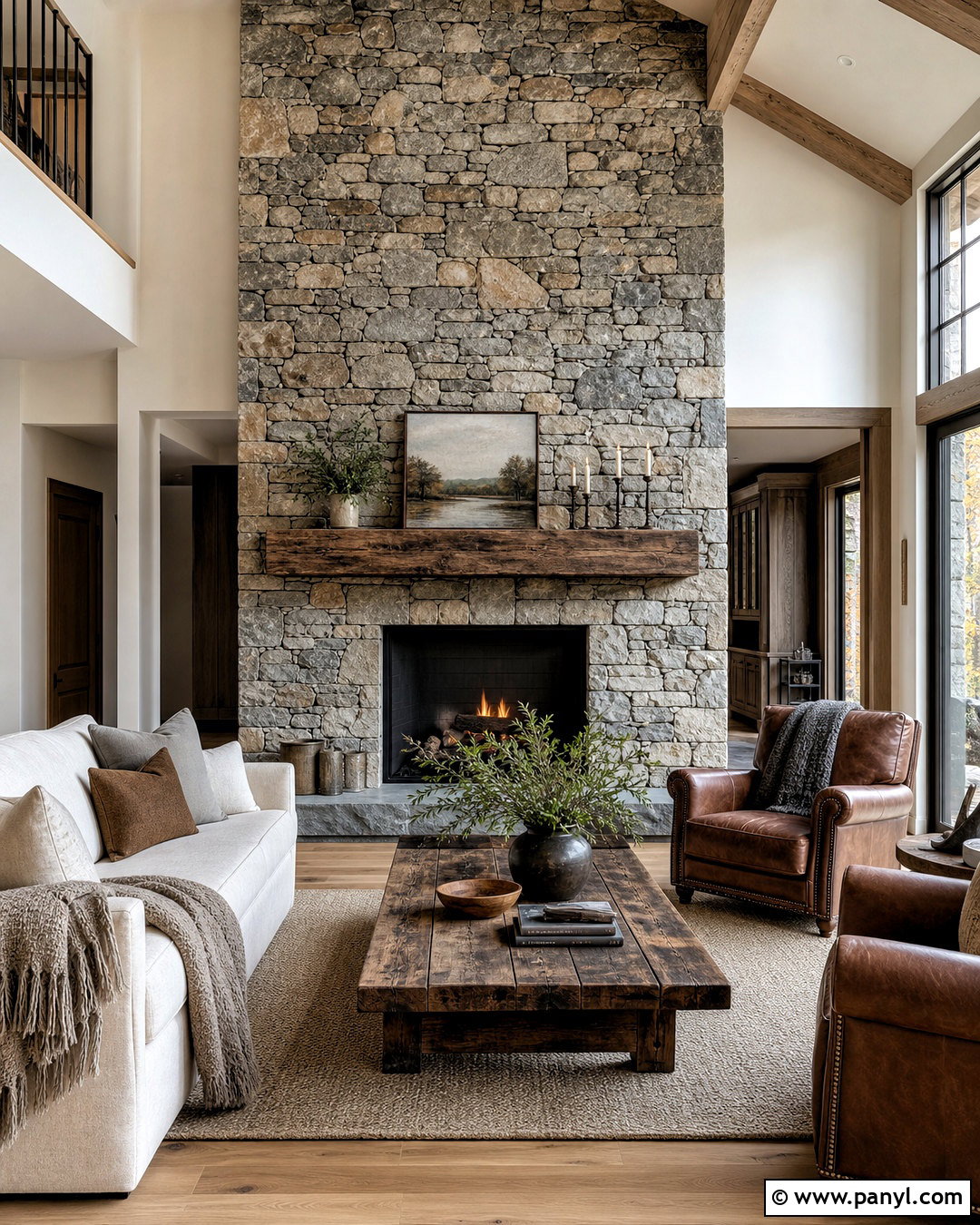
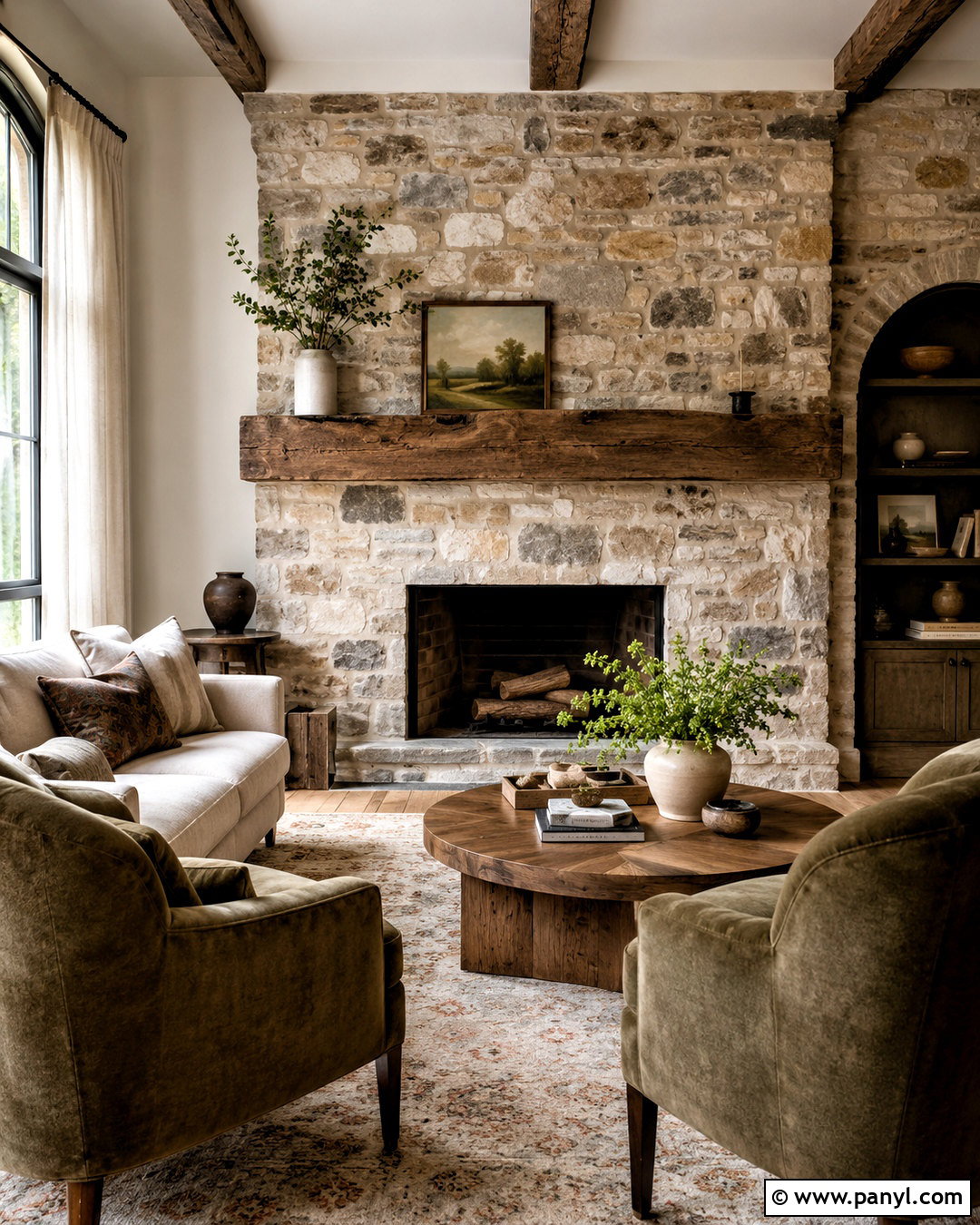
A floor-to-ceiling fieldstone fireplace can anchor an entire living room while adding rugged texture and natural color. Choose irregular stones in soft gray, sandy beige, and muted brown, using a medium mortar joint that complements their weathered appearance. A thick reclaimed oak mantel gives the stonework a clear horizontal break. Arrange a relaxed linen sofa and two leather armchairs around a substantial wood coffee table, keeping the fireplace as the focal point. Warm white walls and light oak flooring help balance the visual weight of the stone. Use minimal mantel decor, such as one framed landscape and a pair of simple ceramic vessels. Soft wool throws and an understated rug make the full room feel comfortable rather than formal or lodge themed.
6. Rustic German Schmear Kitchen Wall
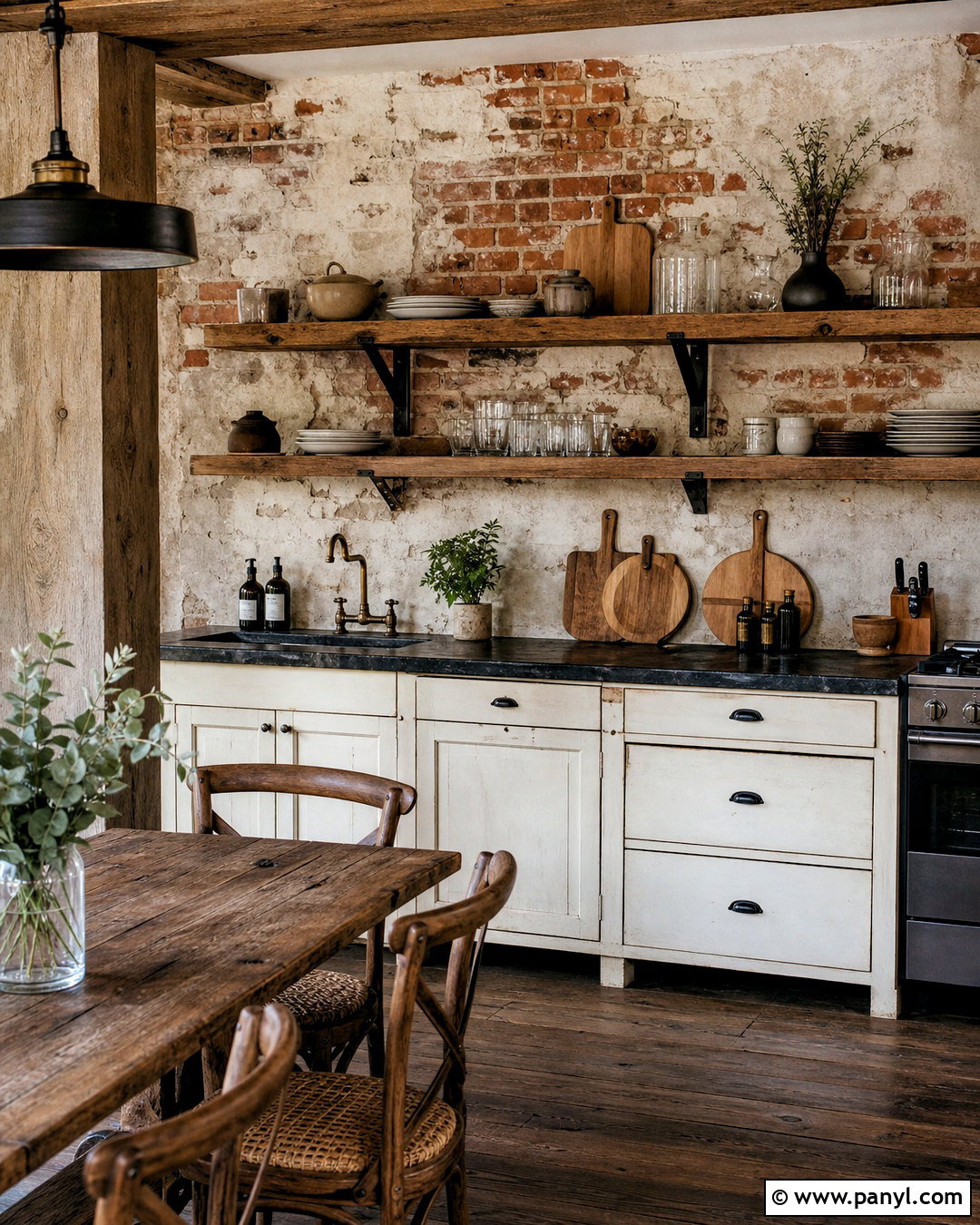
Do you love brick texture but want something softer than a solid red wall? A German schmear treatment partially covers brick with light mortar, leaving irregular portions of the original color visible. Use it behind an informal kitchen dining area or along a wall with open shelving. Cream cabinets, soapstone-look counters, and medium oak flooring support its old-world character. Install chunky reclaimed wood shelves with dark metal brackets, then arrange everyday pottery, cutting boards, and clear glassware in practical groups. A small round oak table and woven-seat chairs can turn the wall into a cozy breakfast corner. Keep the mortar application varied but balanced. Too much coverage can hide the brick, while too little may make the finished wall look unfinished rather than intentionally aged.
7. Rustic Clay Plaster Entryway Wall
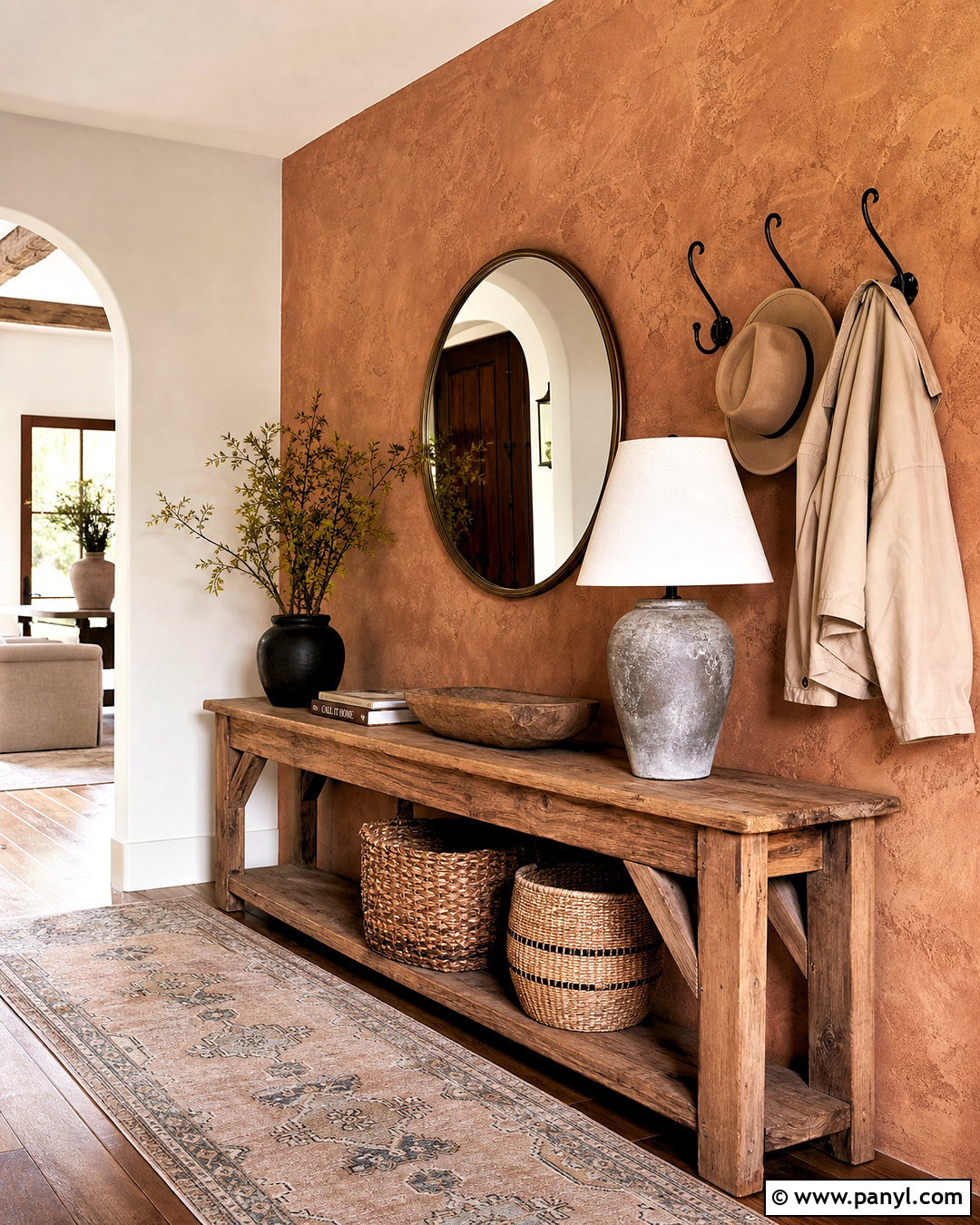
Earthy clay plaster can turn a narrow entryway into a warm transition between outdoors and home. Select a muted terracotta or dusty sand finish with visible hand-troweled movement. Pair the wall with a slim reclaimed wood console, a rounded bronze-framed mirror, and a woven basket for shoes or outdoor accessories. A vintage-style runner introduces quiet pattern while protecting wood or stone flooring. Add a small ceramic lamp that casts light sideways across the plaster, making its subtle texture easier to see. Paint connecting walls in warm off-white to prevent the compact space from feeling enclosed. Black iron hooks provide convenient storage and crisp contrast. Keep the console lightly decorated so bags, keys, and daily necessities still have a practical landing place.
8. Rustic Board And Batten Plaster Wall
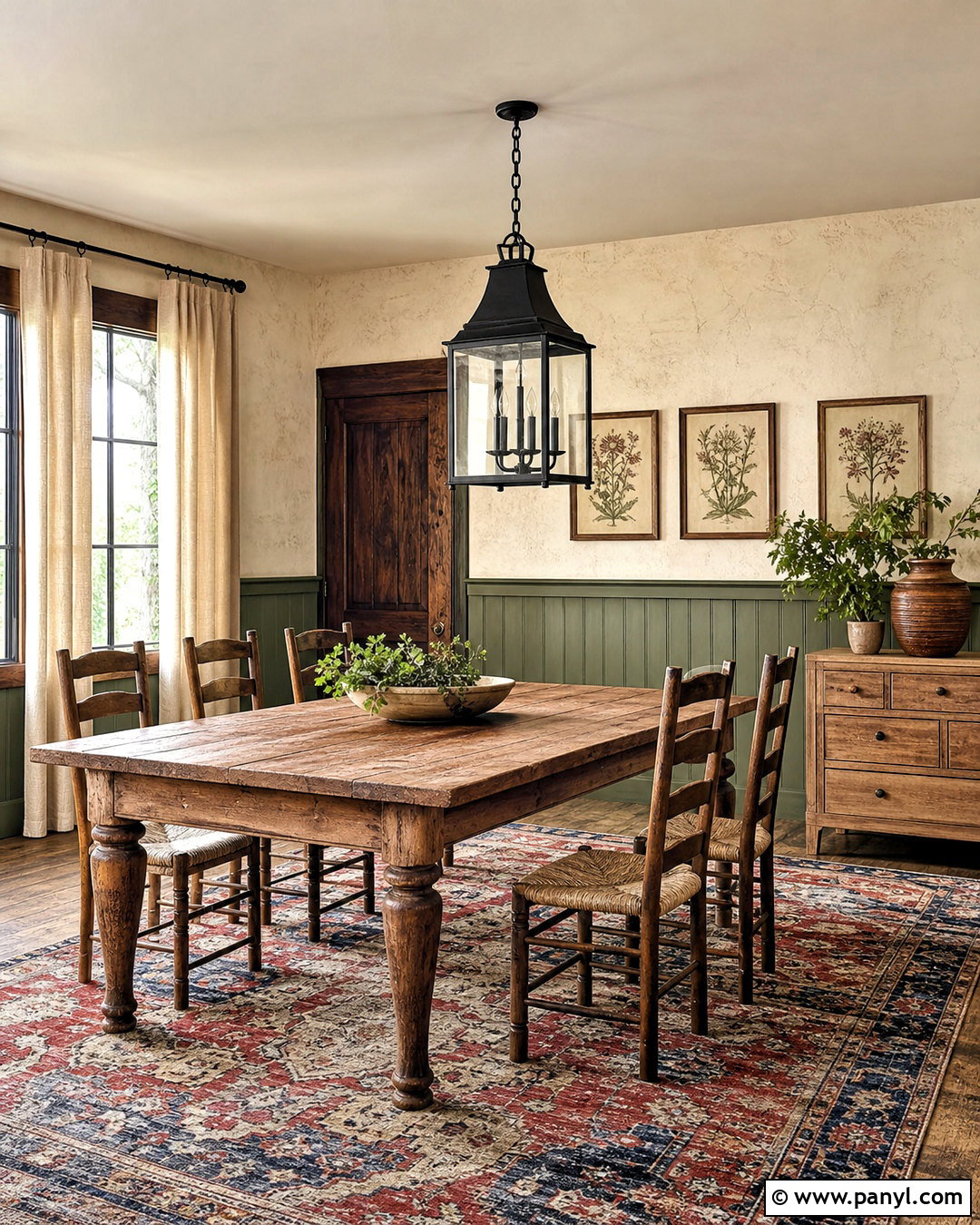
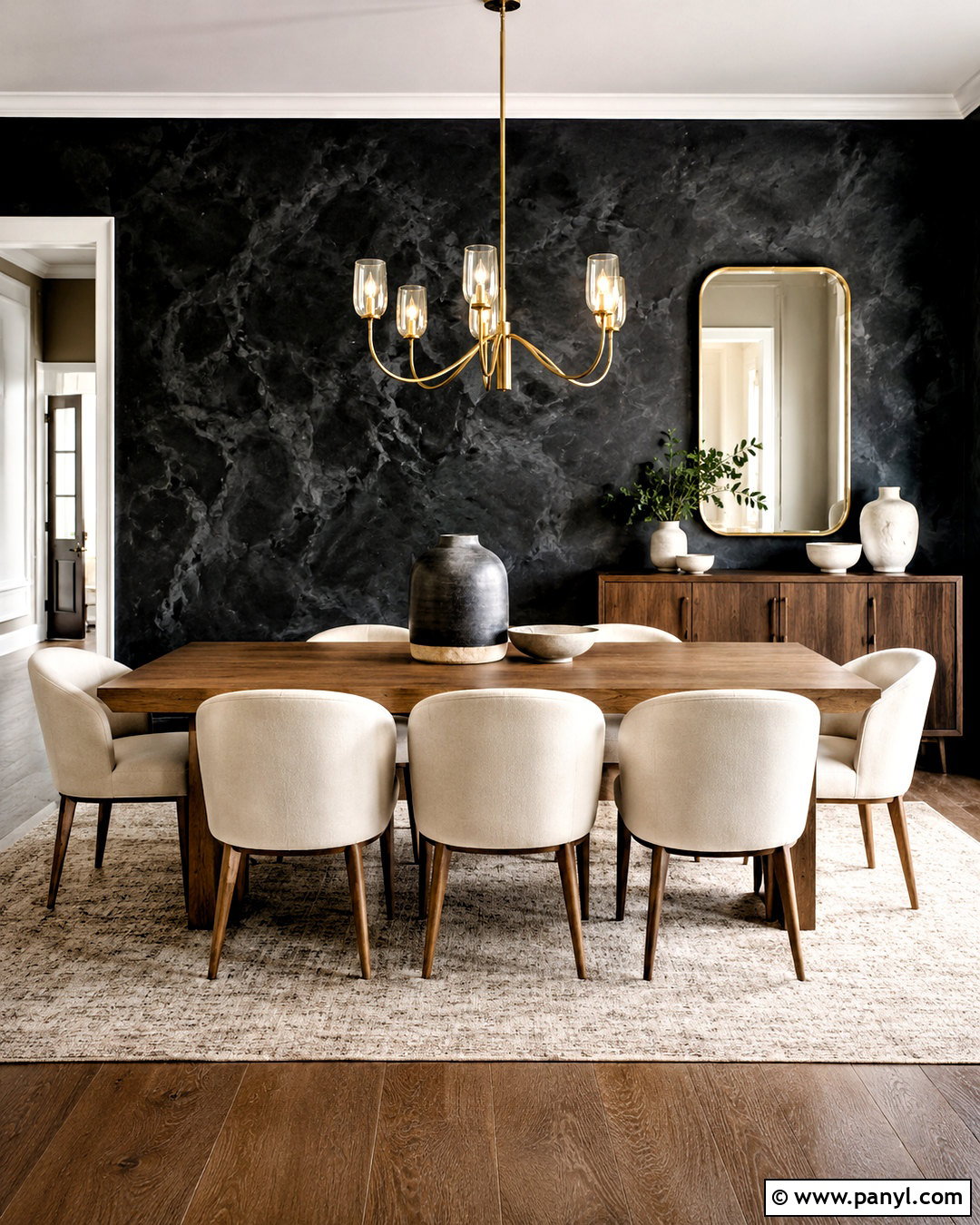
Board and batten becomes more distinctive when paired with textured plaster instead of ordinary flat paint. Install medium-height vertical battens along the lower portion of a dining room wall and finish them in muted olive green. Above the paneling, use warm cream plaster with soft, irregular trowel marks. This combination adds architectural structure while preserving an informal handmade feeling. Center a weathered oak dining table in the room and surround it with rush-seat chairs. A black iron lantern pendant connects with simple black curtain rods and cabinet hardware. Use undyed linen curtains and a faded patterned rug to soften the straight lines of the paneling. Display a few botanical prints in aged wood frames, leaving generous open areas where the plaster texture can catch natural light.
9. Rustic Whitewashed Brick Kitchen Wall
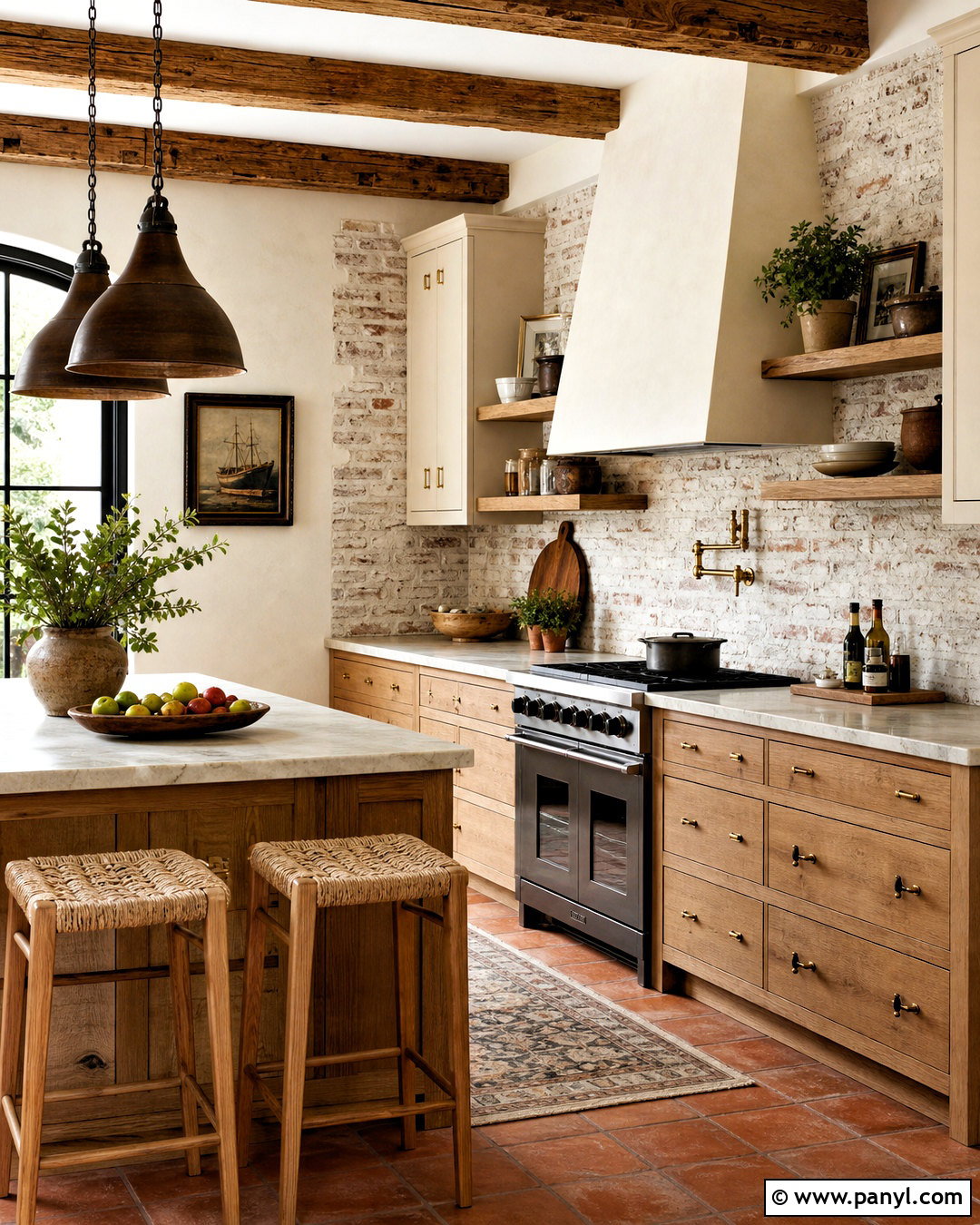
A whitewashed brick wall offers rustic texture without making a kitchen feel heavy. Let muted red, tan, and gray brick tones show through an uneven warm white coating. Pair the wall with natural oak lower cabinets and simple ivory upper cabinets, or leave part of the brick open for floating shelves. Honed light stone counters and aged brass hardware create a comfortable, collected appearance. Add cone-shaped metal pendants over a central island and use counter stools with woven seats. Terracotta floor tile reinforces the earthy palette, while cream runners soften the work areas. Keep backsplash transitions simple so the brick remains the main material. Before using exposed or treated brick near cooking and washing zones, choose a finish and maintenance plan suited to grease, splashes, and regular cleaning.
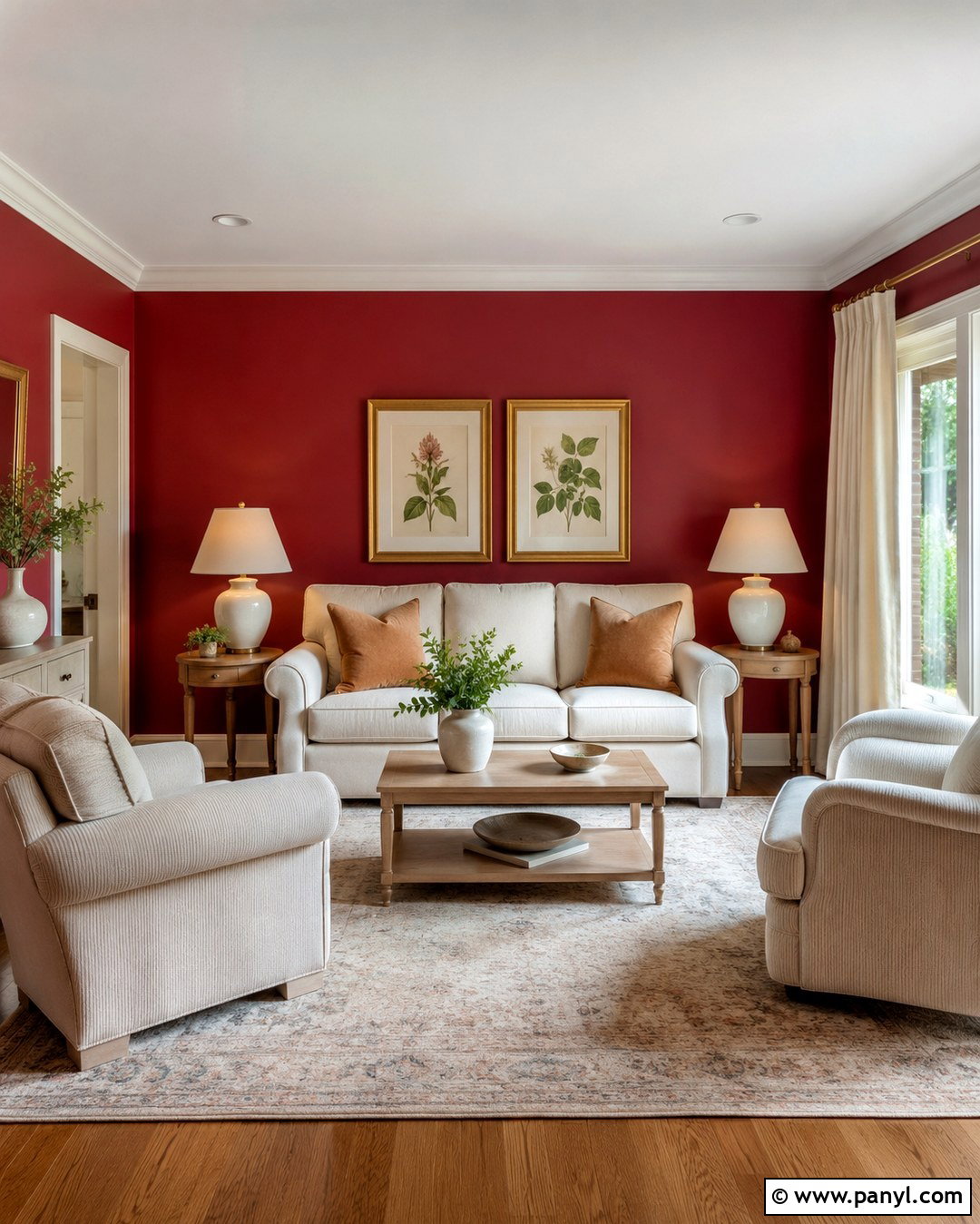
10. Rustic Tadelakt Bathroom Wall
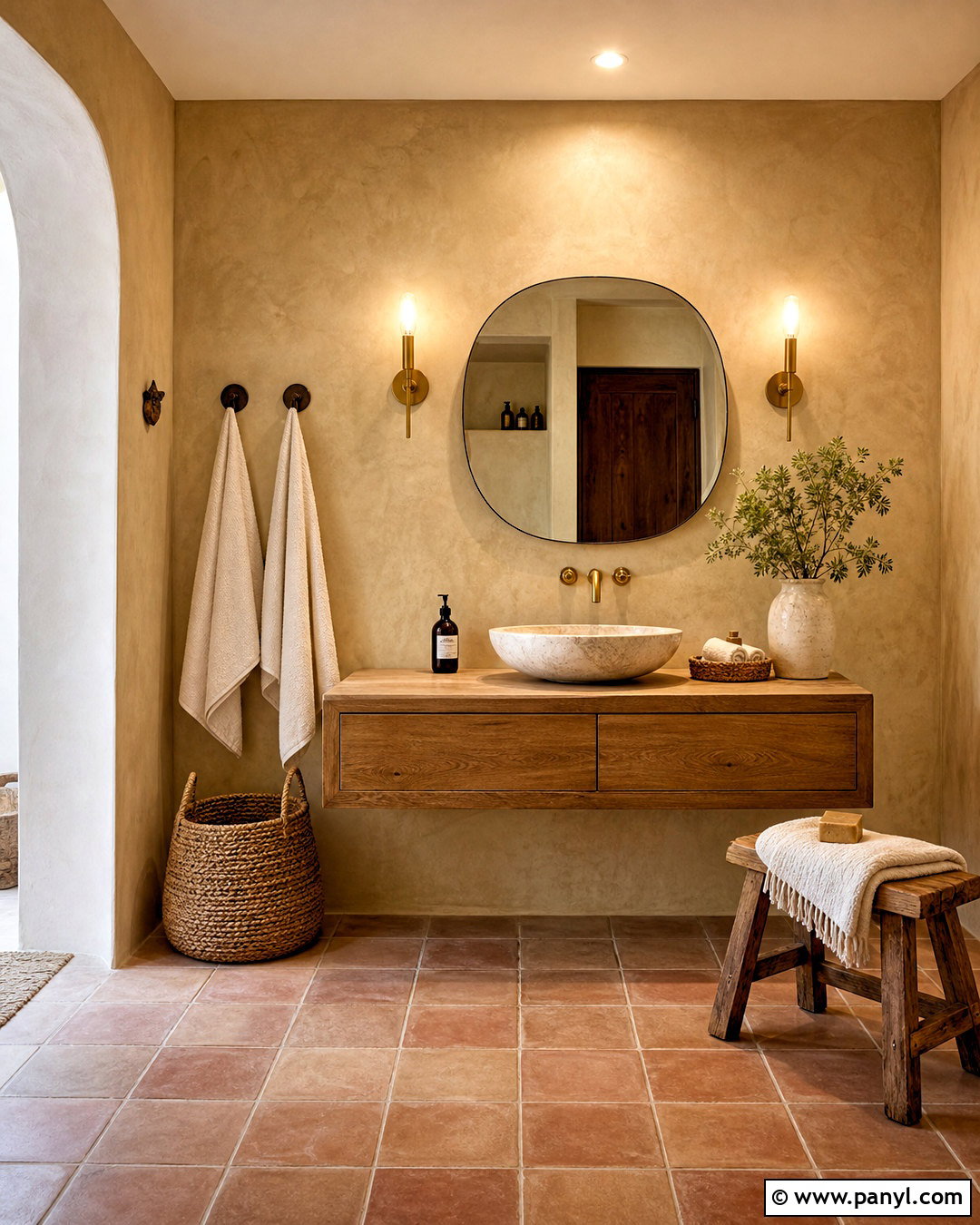
A softly polished tadelakt-style finish can create a rustic bathroom that feels peaceful rather than rough. Cover the vanity wall and surrounding dry areas in warm sand-colored plaster with gentle tonal variation. Pair it with a floating oak vanity, a cream stone vessel sink, and an aged brass wall-mounted faucet. Use handcrafted terracotta floor tile to introduce deeper color and natural irregularity. A frameless rounded mirror keeps the arrangement light, while woven baskets provide storage for towels and toiletries. Add simple ivory towels and one small wooden stool instead of excessive decorative objects. Wet-area plaster systems require proper preparation, product selection, application, and sealing. When planning a shower or tub surround, follow the manufacturer’s complete waterproofing instructions rather than treating the decorative finish as the only moisture barrier.
11. Rustic Stucco Kitchen Wall
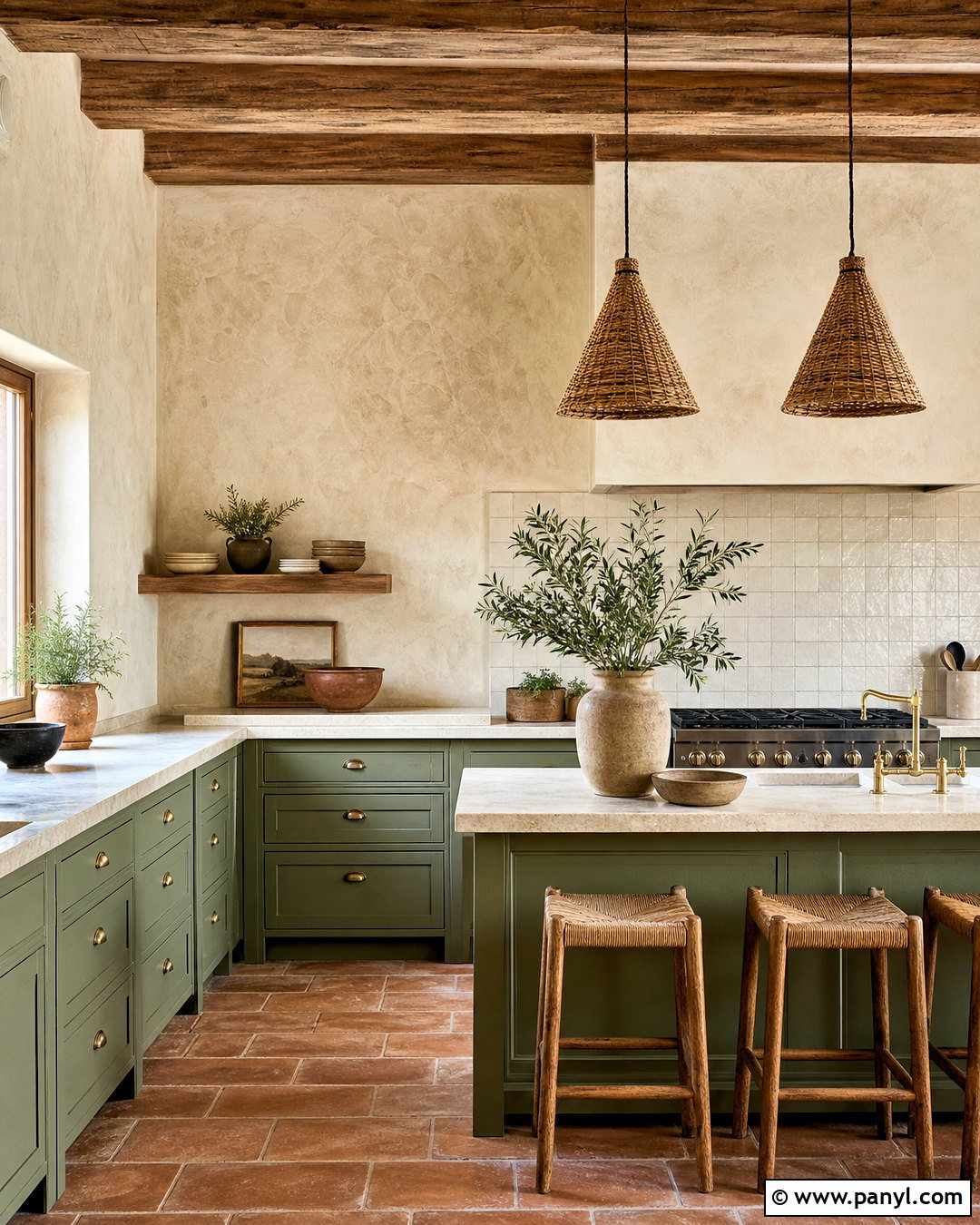
A rough stucco wall brings Mediterranean warmth to a kitchen when balanced with cleaner cabinetry and practical surfaces. Choose a pale sandy finish with broad, softened trowel marks rather than sharp peaks that collect dust. Combine it with muted sage cabinets, creamy quartz or stone counters, and a backsplash of handmade ivory tile. Medium oak ceiling beams can strengthen the rustic architecture without overwhelming the room. Use simple brass knobs, woven pendant lights, and backless wood stools around the island. Terracotta flooring adds warmth underfoot and works naturally with the sandy wall color. Keep appliances visually quiet with panel-ready fronts or neutral finishes. Open shelves should hold useful cookware and pottery in a restrained palette, allowing the textured stucco to remain visible around each carefully spaced item.
12. Rustic Whitewashed Stone Bedroom Wall
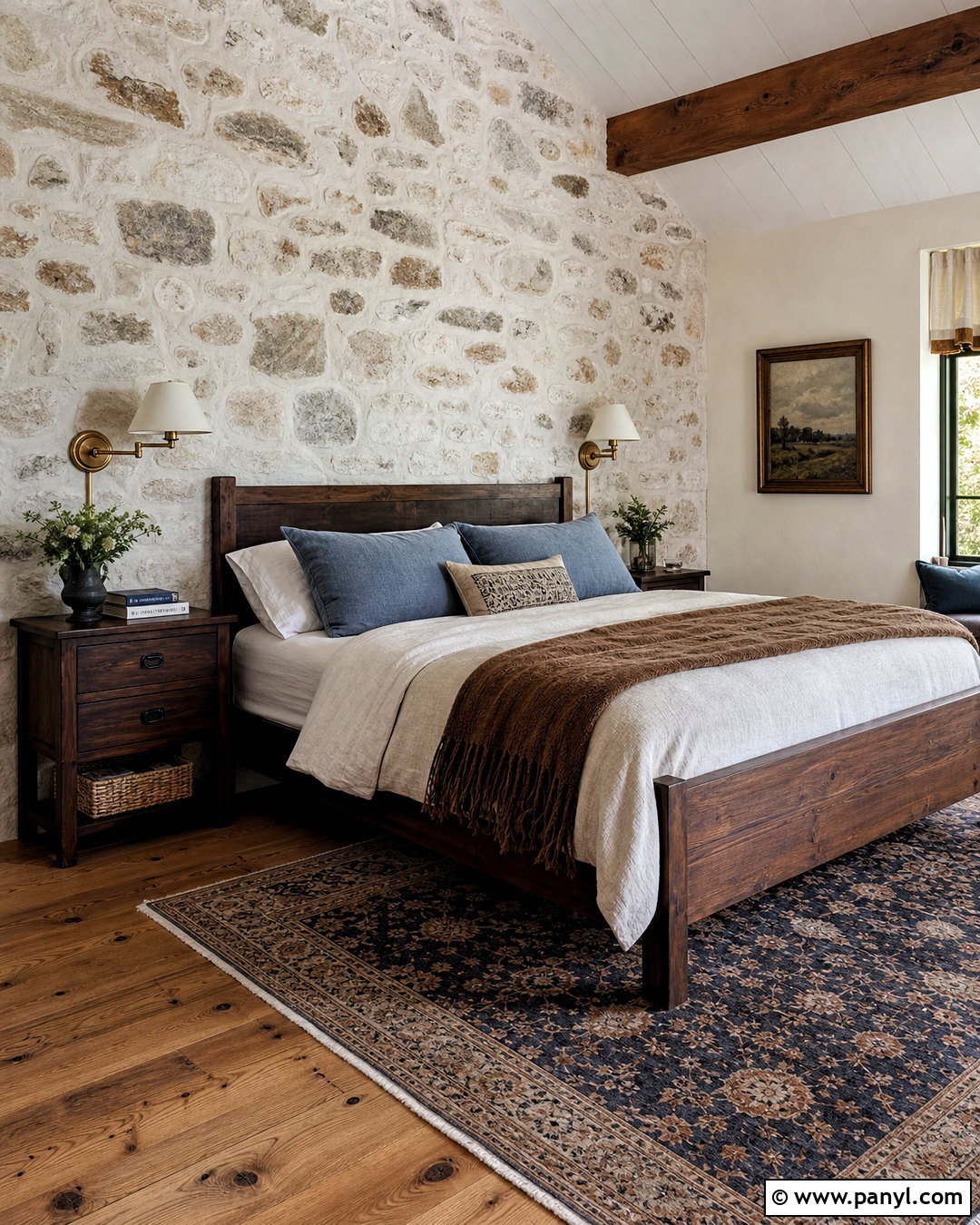
A whitewashed stone wall can give a bedroom the charm of an old cottage while maintaining a light, restful palette. Use irregular stone in cream, pale gray, and soft taupe, then apply a translucent warm white wash that preserves the joints and natural shapes. Place a simple dark oak bed against the wall for contrast. Layer it with ivory linen sheets, a camel wool blanket, and small muted blue pillows. Install compact brass sconces directly beside the bed so their light grazes the stone surface. The remaining walls can be painted soft cream, while wide-plank oak floors bring continuity to the rustic materials. A small vintage rug, wood bench, and one earthenware vessel complete the room without covering too much of the textured masonry.
13. Rustic Wood Slat Office Wall
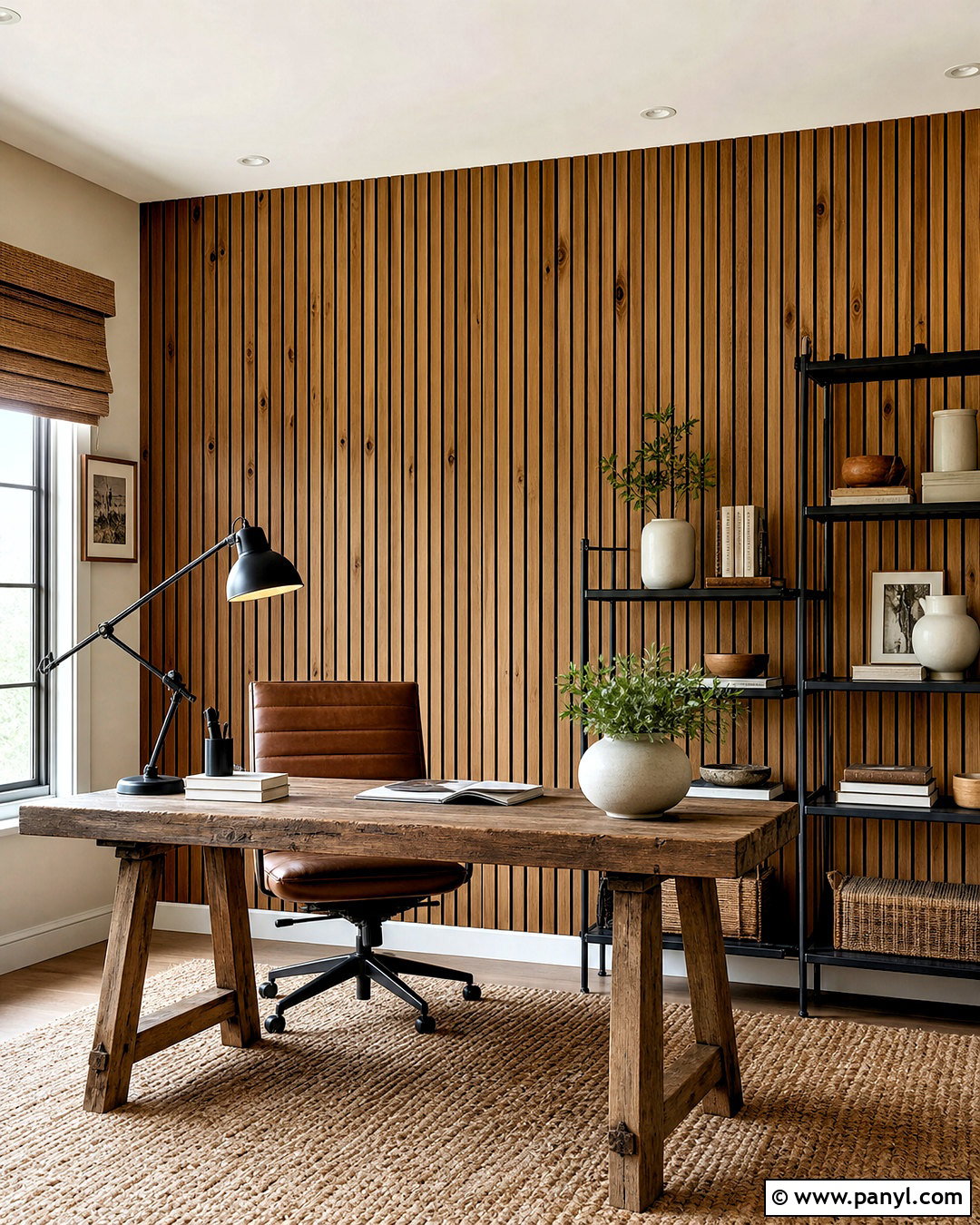
Vertical wood slats can feel rustic when they feature visible knots, varied grain, and a warm natural finish. Cover the wall behind a home office desk with narrow oak or pine slats, leaving slim dark gaps that emphasize their rhythm. Position a sturdy trestle desk in weathered wood against the wall and add a supportive chair upholstered in brown leather or textured tan fabric. Matte black shelving provides room for books, boxes, and ceramics without hiding the slatted surface. Use a woven wool rug to soften the floor and reduce the room’s visual sharpness. A black metal desk lamp and linen Roman shade complete the practical workspace. Keep cables organized beneath the desktop so the full design feels calm, useful, and intentionally crafted.
14. Rustic Grasscloth Dining Room Wall
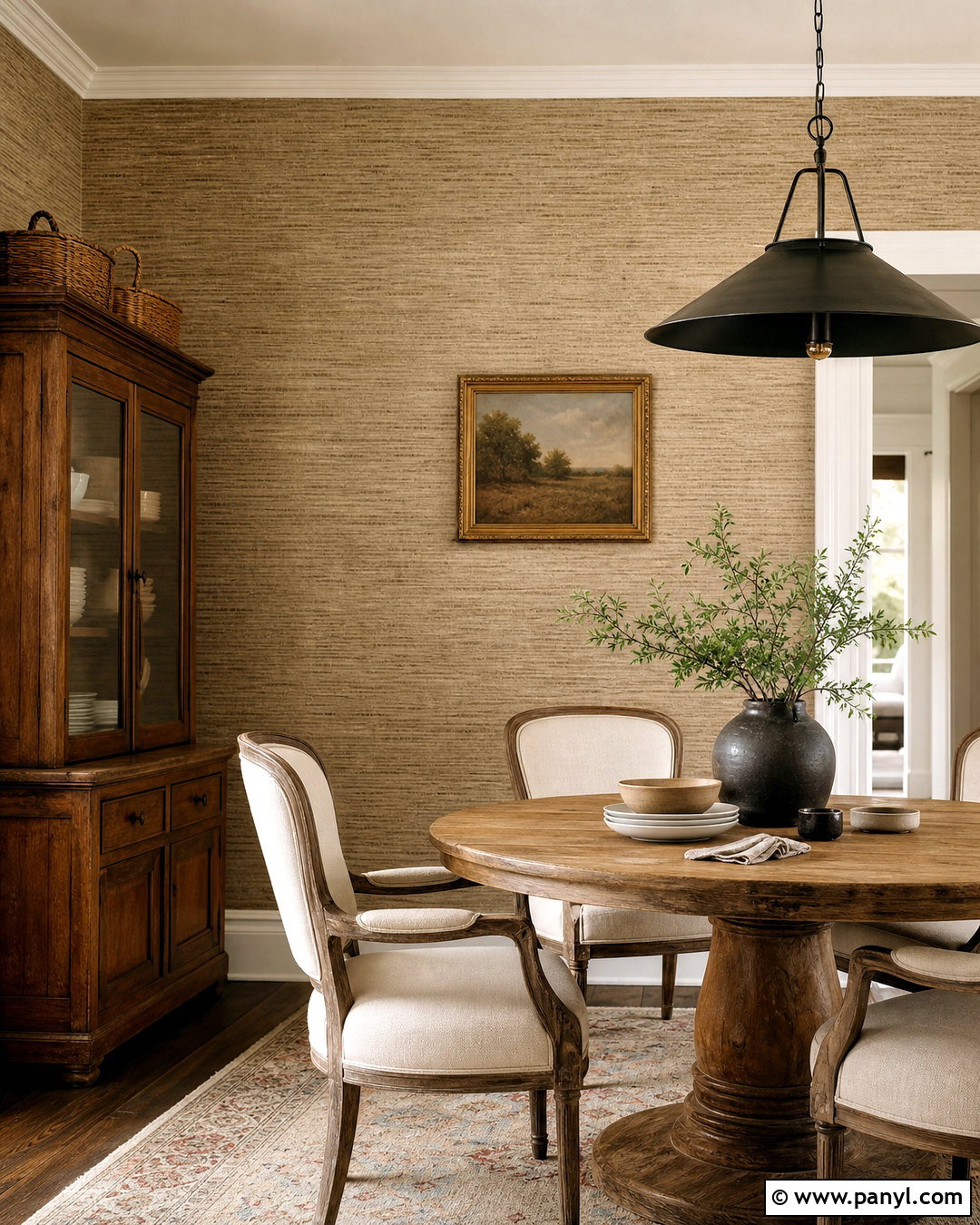
Grasscloth introduces woven texture that feels warmer and more natural than smooth wallpaper. Choose a medium oatmeal wallcovering with visible horizontal fibers and slight tonal variation. Use it throughout a small dining room for an enveloping effect, then balance it with warm white trim and a simple oak floor. A round pedestal table makes movement easier and pairs well with curved wood chairs upholstered in cream linen. Hang a wide black metal pendant above the table to give the pale room a strong focal point. Add an antique-style cabinet for dishes and table linens, leaving the upper wall mostly open. Because natural grasscloth can show seams and react differently to moisture, place it in a dry room and accept its material variation as part of the rustic look.
15. Rustic Adobe Sunroom Wall
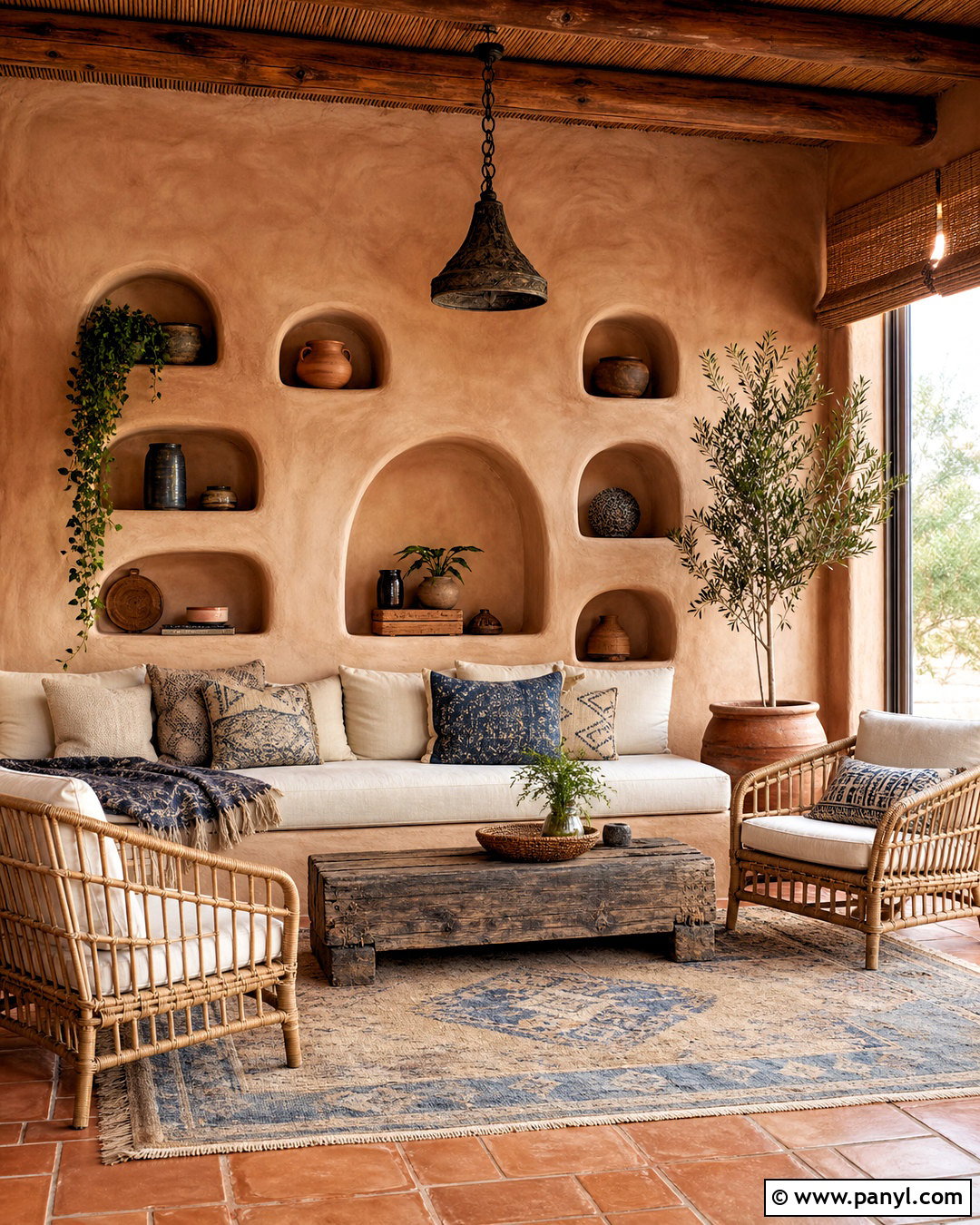
Sunlight brings out the depth of an adobe-inspired wall, making a sunroom an ideal place for this earthy finish. Use warm clay plaster in a soft peachy brown, continuing it across multiple walls for a grounded, enveloping effect. Furnish the space with a low cream sofa, rattan lounge chairs, and a thick reclaimed wood coffee table. Terracotta floor tiles connect naturally with the wall color while adding their own handmade variation. Balance the warm palette with ivory cushions, faded indigo textiles, and leafy plants in simple clay pots. Use woven shades to filter harsh afternoon sun without darkening the room. Rounded wall niches can hold a few ceramic vessels or books, creating useful architectural detail that feels integrated rather than added as surface decoration.
16. Rustic Concrete Basement Wall
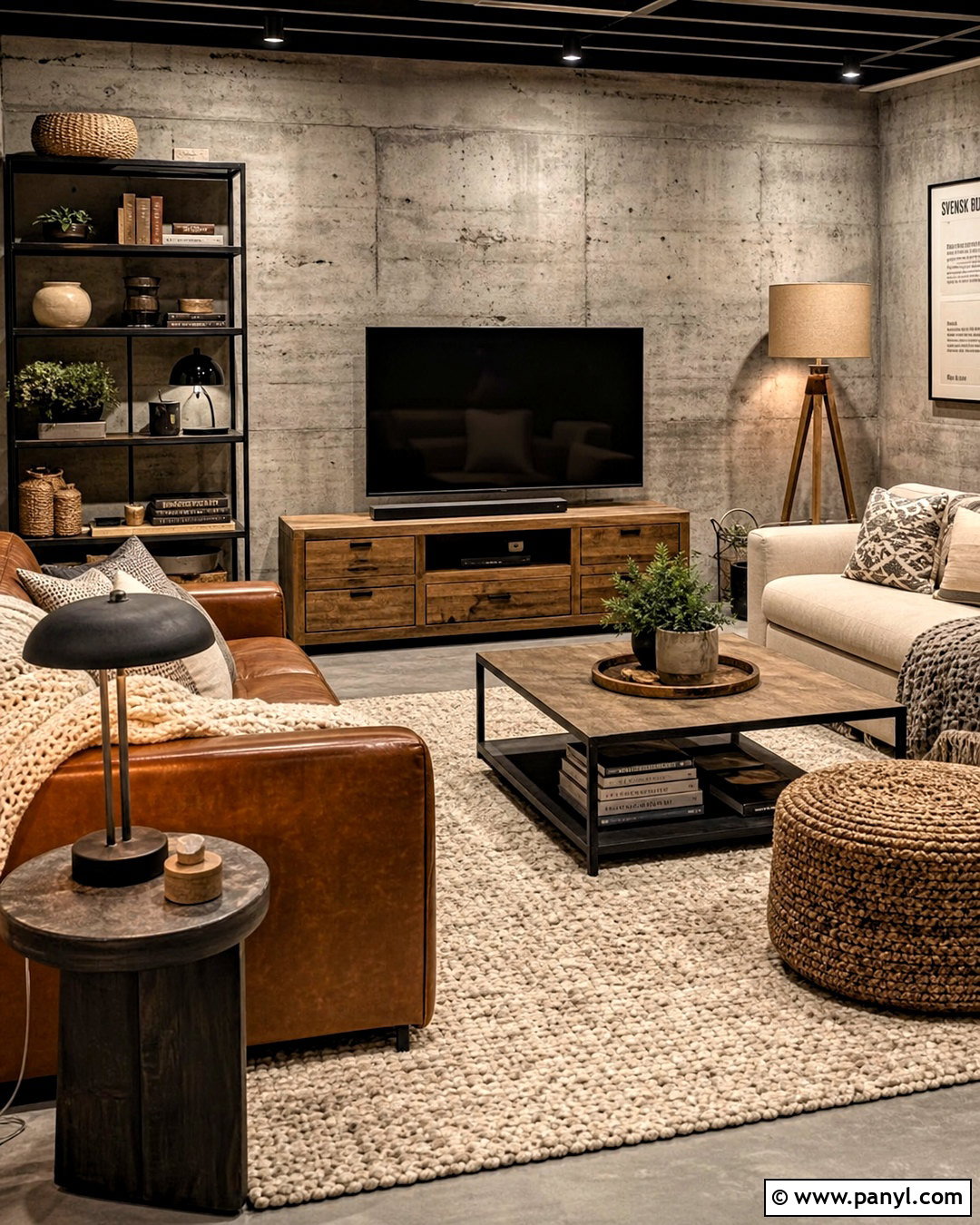
Raw concrete can belong in a rustic interior when it is warmed with wood, leather, and tactile fabrics. Keep one basement living room wall in a softly mottled gray concrete finish, avoiding an overly polished or glossy surface. Build a low reclaimed oak media cabinet along the base and arrange a camel leather sofa opposite it. A thick cream rug, wool cushions, and an oversized knit throw help counter the wall’s cool appearance. Add black metal shelving with firewood, books, and neutral pottery for practical storage. Warm white ceiling paint and layered lamps prevent the basement from feeling dim. If the existing wall has moisture issues, address the source before applying decorative coatings or installing furniture. The finished room should feel relaxed and substantial, not stark or unfinished.
17. Rustic Cork Home Office Wall
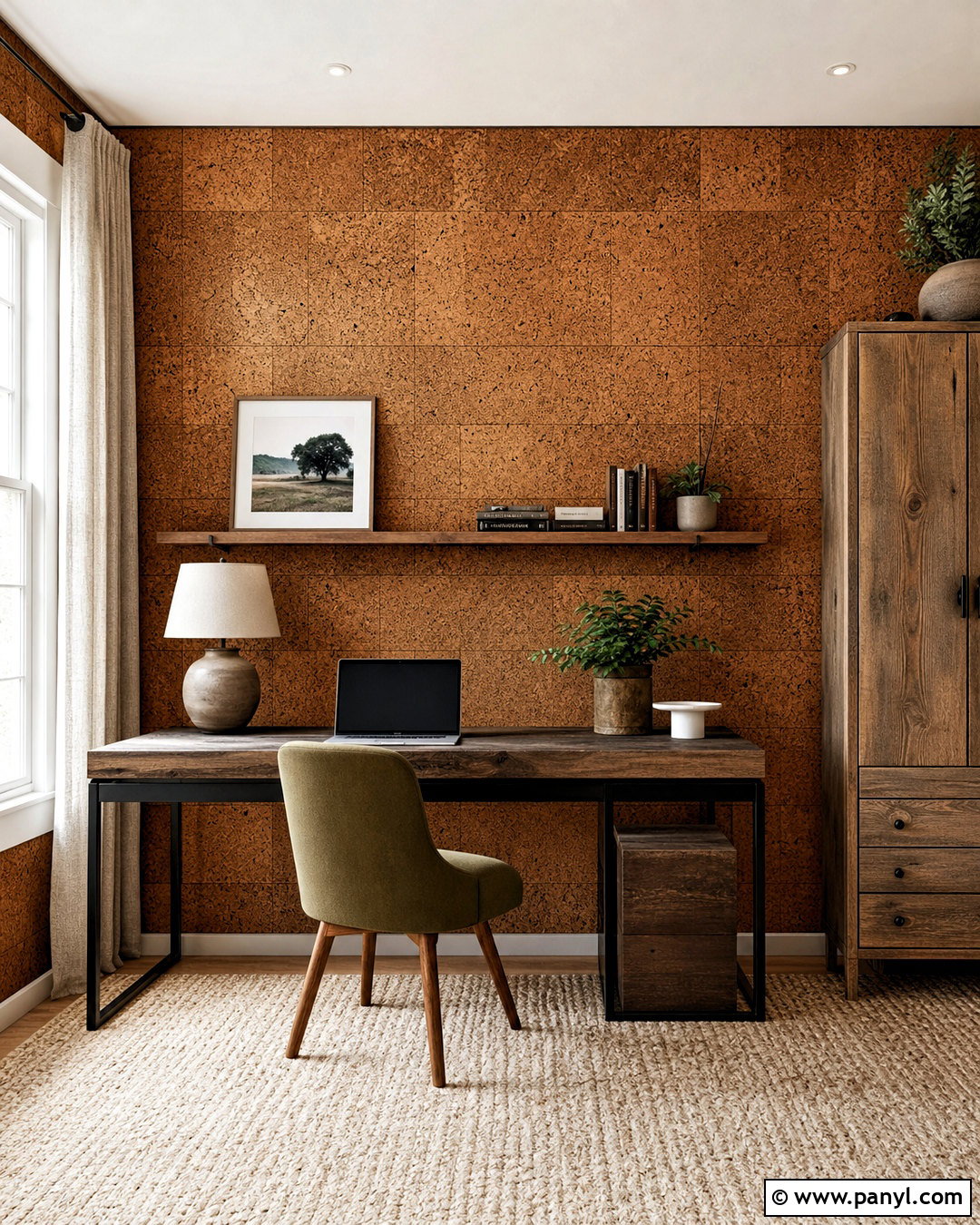
Cork offers a tactile, earthy wall surface and creates a useful backdrop for a casual home office. Select large cork tiles in warm caramel and medium brown, arranging them with clean seams across the desk wall. A black metal and reclaimed wood desk gives the soft material sharper definition. Add a comfortable olive upholstered chair, a cream wool rug, and linen curtains to build a balanced natural palette. Use small pins sparingly for calendars, sketches, and notes, leaving most of the cork visible rather than turning it into a crowded notice board. A long picture ledge can hold framed art and lightweight objects without excessive wall attachments. Complete the workspace with a simple ceramic lamp, closed wood storage, and a few plants in matte stoneware pots.
18. Rustic Distressed Shiplap Bathroom Wall
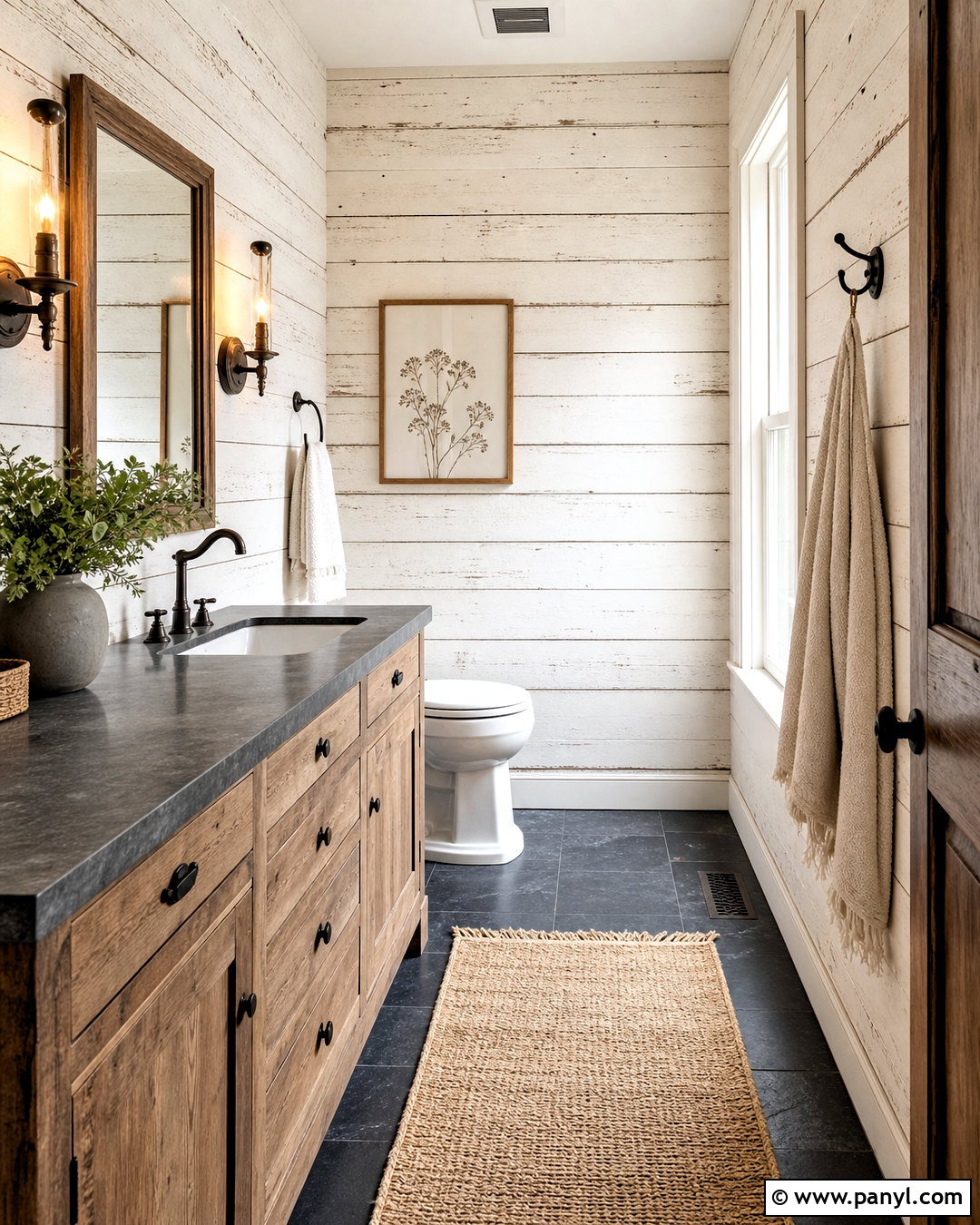
Distressed shiplap can bring gentle farmhouse character to a powder room without filling the space with themed decorations. Install horizontal wood boards on the vanity wall and finish them in chalky warm white, allowing subtle grain and worn edges to remain visible. Pair the wall with a compact oak vanity, a honed gray stone counter, and an undermount white sink. A dark bronze faucet and matching sconces provide contrast. Use small slate floor tiles for durability and deeper color, then soften the room with a neutral woven runner and natural hand towels. Keep the remaining walls smooth and painted light greige. In damp rooms, use properly prepared materials and provide good ventilation. The finished space should appear weathered and relaxed while remaining clean, functional, and easy to maintain.
19. Rustic Layered Plaster Hallway Wall
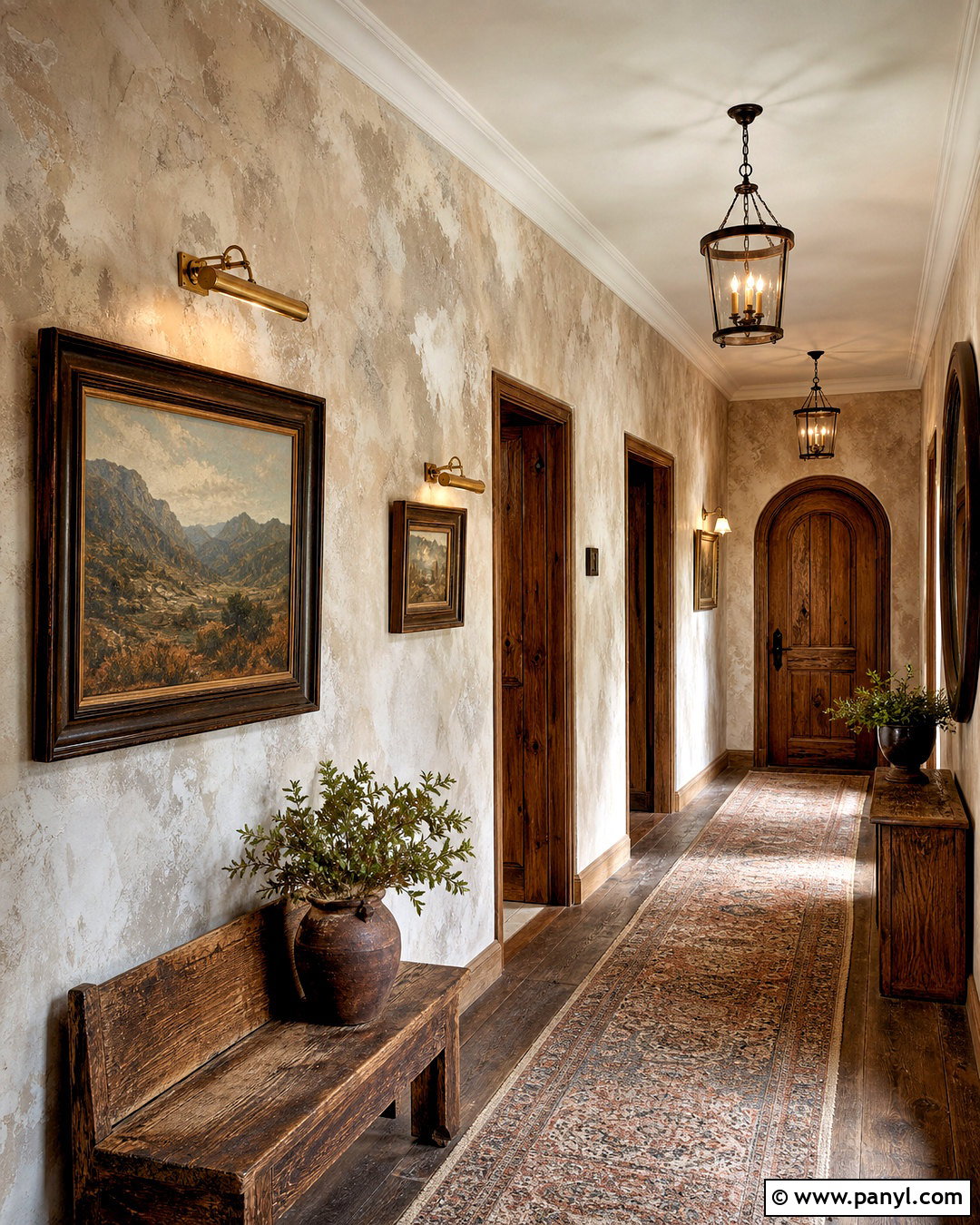
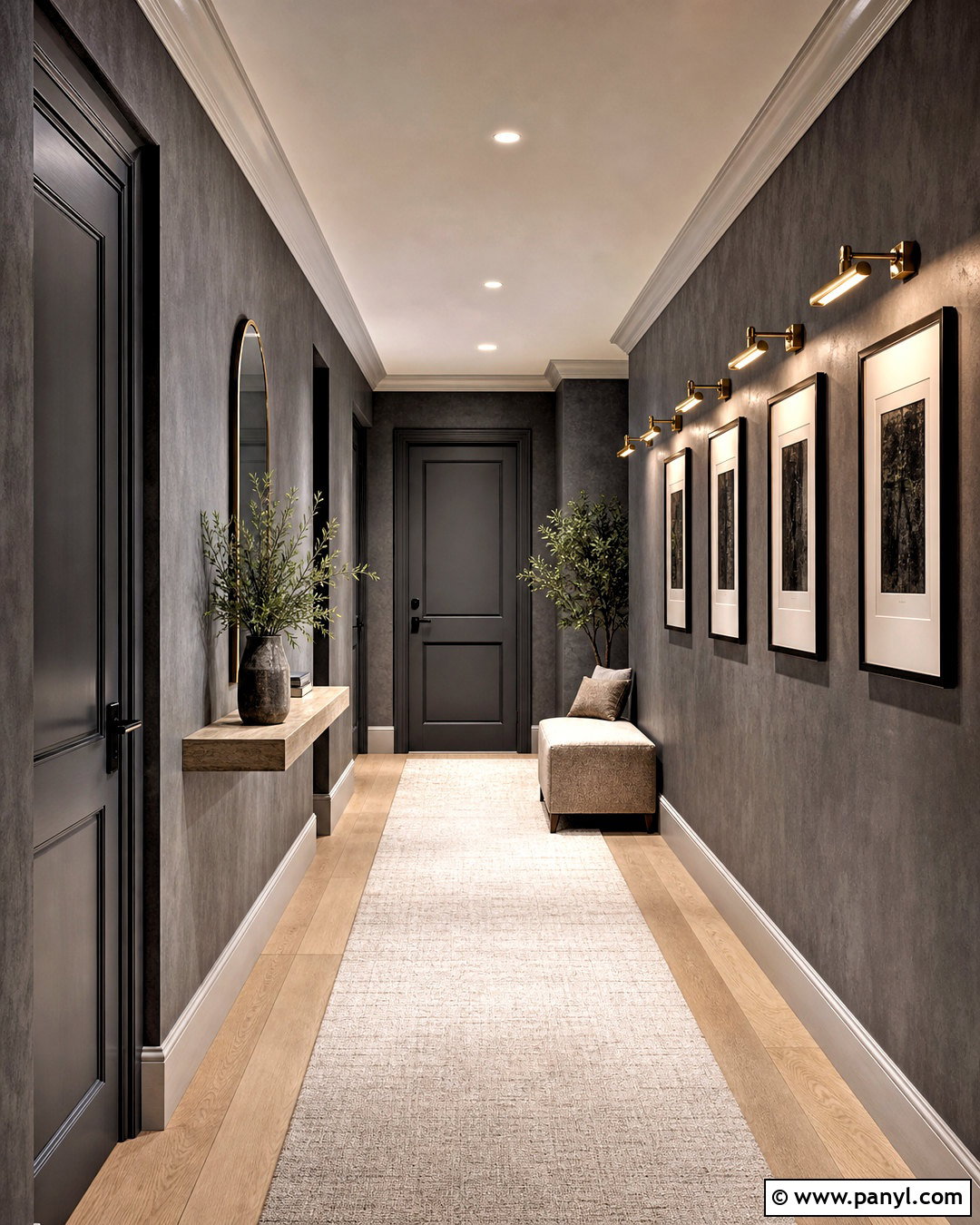
A long hallway becomes more inviting when layered plaster creates gentle movement across its walls. Choose a warm mushroom finish with overlapping marks in cream, taupe, and light brown. Continue it along both sides rather than creating a single disconnected accent wall. A narrow vintage-style runner draws the eye through the space, while aged brass picture lights add warm highlights to the plaster. Hang a restrained series of landscape prints in dark wood frames, keeping their spacing consistent. At the end of the hallway, place a simple oak bench or console beneath a round mirror to form a clear destination. Natural wood doors and warm white trim keep the palette cohesive. Avoid bulky furniture so the walkway remains comfortable and the wall texture can be appreciated from several angles.
20. Rustic Stone And Plaster Living Room Wall
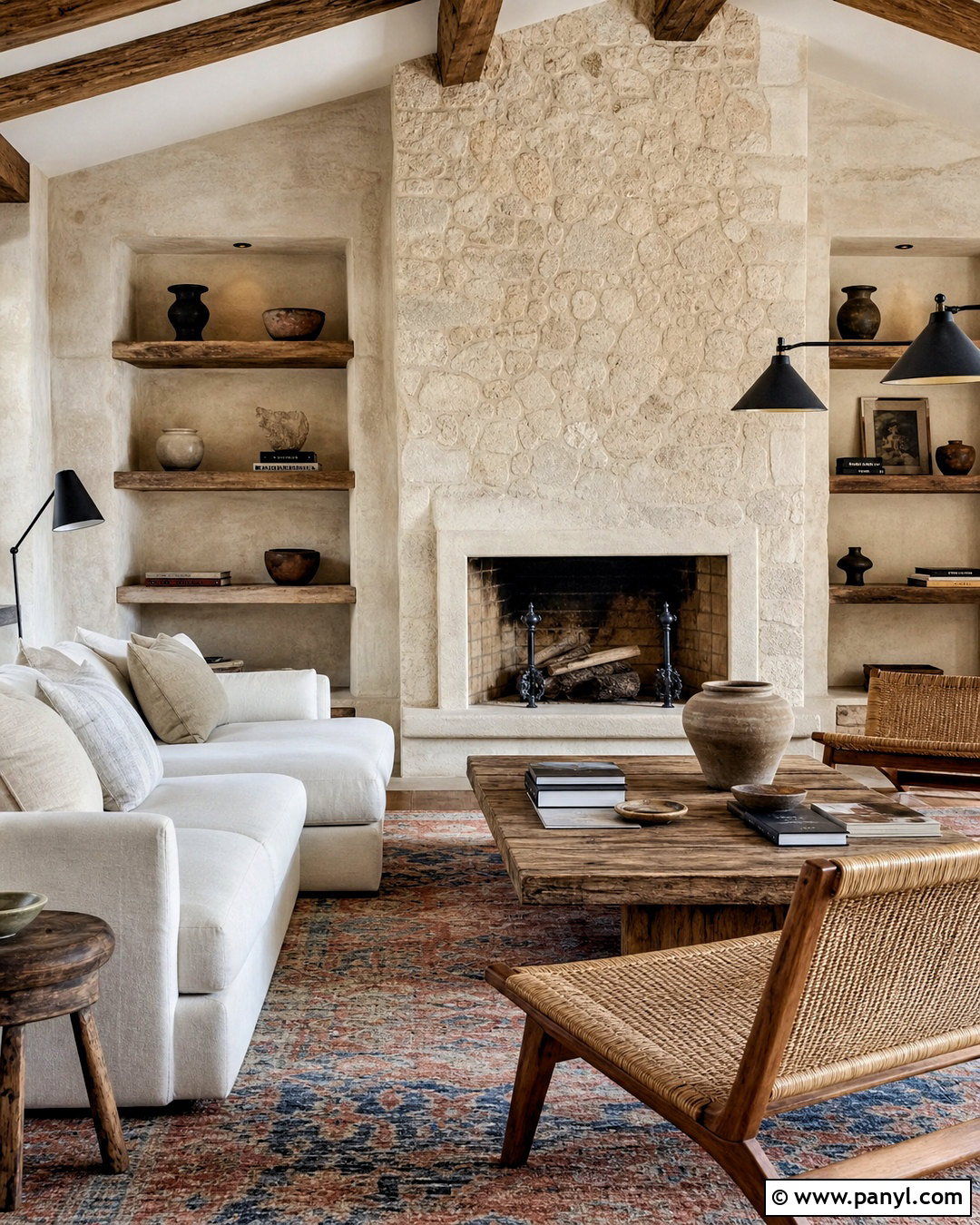
Combining stone and plaster creates a layered rustic wall that feels architectural rather than decorative. Build a wide fireplace surround from irregular limestone in pale beige and soft gray. Continue hand-troweled cream plaster across the upper wall and into shallow built-in niches on each side. Install thick oak shelves inside the niches for books, pottery, and small framed pieces. A relaxed cream sectional, two woven lounge chairs, and a low reclaimed wood table create a practical conversation area. Use a faded rust-and-blue rug to introduce quiet color, then repeat black through the fireplace screen and floor lamps. Keep window treatments light and simple. The similar stone and plaster tones allow both textures to work together without dividing the room into competing sections.
Conclusion:
The best rustic interiors feel warm, useful, and naturally collected rather than overly themed. Begin by choosing a wall finish that suits the room’s size, lighting, moisture level, and everyday demands. Then build a complete palette around it using wood, stone, linen, wool, metal, and understated colors. Rough surfaces usually need fewer decorations, so allow generous open areas where daylight or lamplight can reveal their character. Always test paint, plaster, mortar, or wallcovering in the actual room before committing to a large installation. Whether you favor brick, limewash, reclaimed boards, or handmade plaster, these **20 rustic textured walls** demonstrate how one well-planned surface can shape an entire room.

Related Ideas and Inspiration:
Leave a Reply