
Limewash brings soft movement, mineral depth, and an appealing handcrafted character to ordinary walls. Unlike a perfectly uniform paint finish, its translucent layers reveal gentle tonal shifts and visible brushwork. That variation can resemble aged plaster, weathered stone, soft suede, or lightly mottled concrete, depending on the color and application. It works beautifully with modern, rustic, Mediterranean, organic, and traditional interiors. Current applications also extend beyond pale neutrals into saturated greens, earthy reds, and smoky charcoal tones. () The key is designing the entire room around the finish so the texture feels intentional. The following 20 limewash texture ideas include coordinated colors, furniture, lighting, materials, and styling details for creating a complete look.

1. Warm White Limewash Texture Living Room
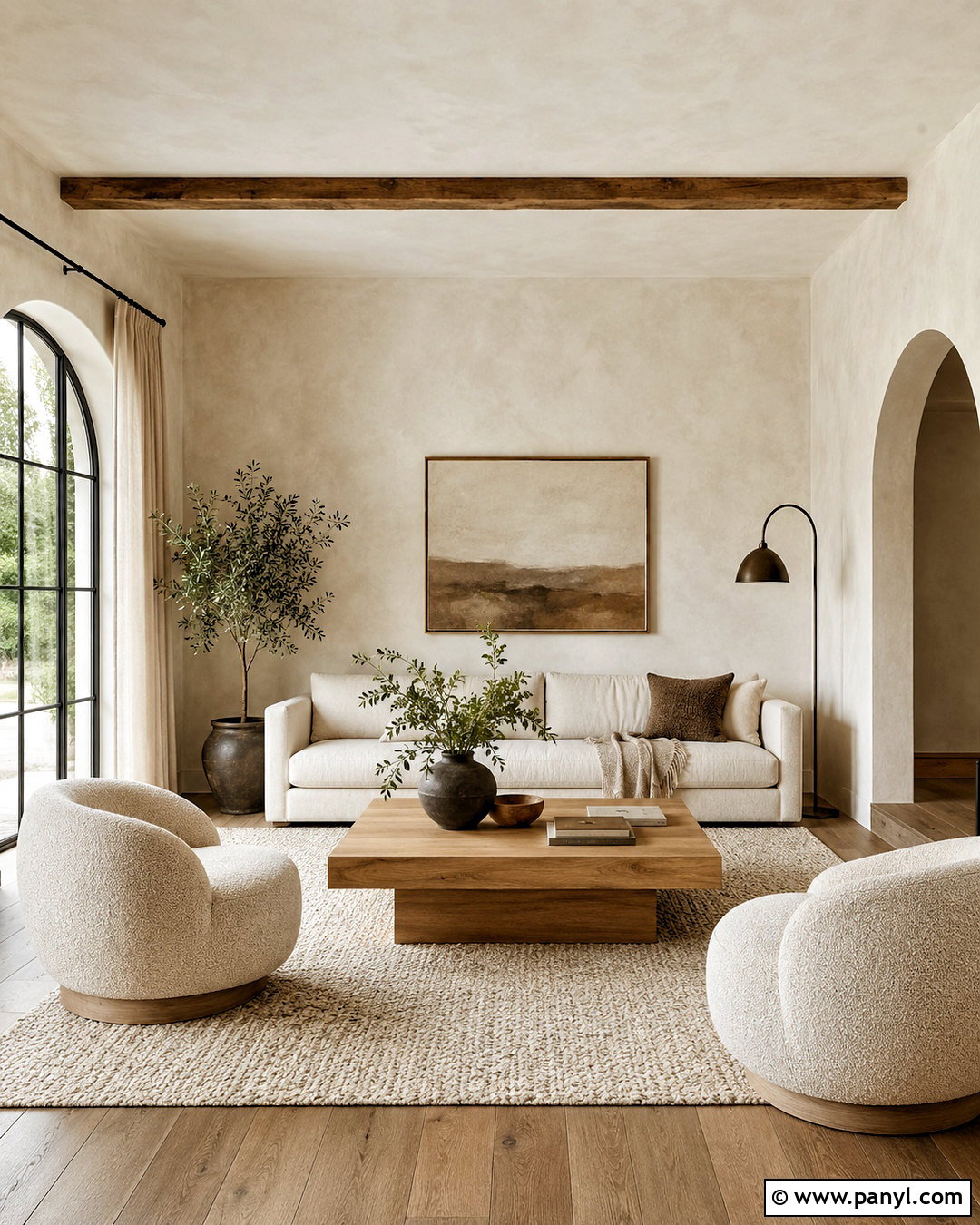
Warm white limewash gives a living room more depth than standard white paint without making the space feel busy. Cover every wall in a creamy off-white finish, then repeat the tone on the ceiling for a seamless, softly enveloping effect. Choose a low-profile oatmeal sofa, two rounded bouclé chairs, and a pale oak coffee table with visible grain. Natural linen curtains should hang from ceiling height to emphasize the room’s airy proportions. Add a large woven rug, sculptural ceramic lamps, and a few dark bronze accents for contrast. Keep artwork minimal so the irregular brush movement remains visible. Medium-tone oak flooring grounds the pale scheme, while leafy branches and handmade pottery reinforce its relaxed, organic character.
2. Beige Limewash Texture Bedroom
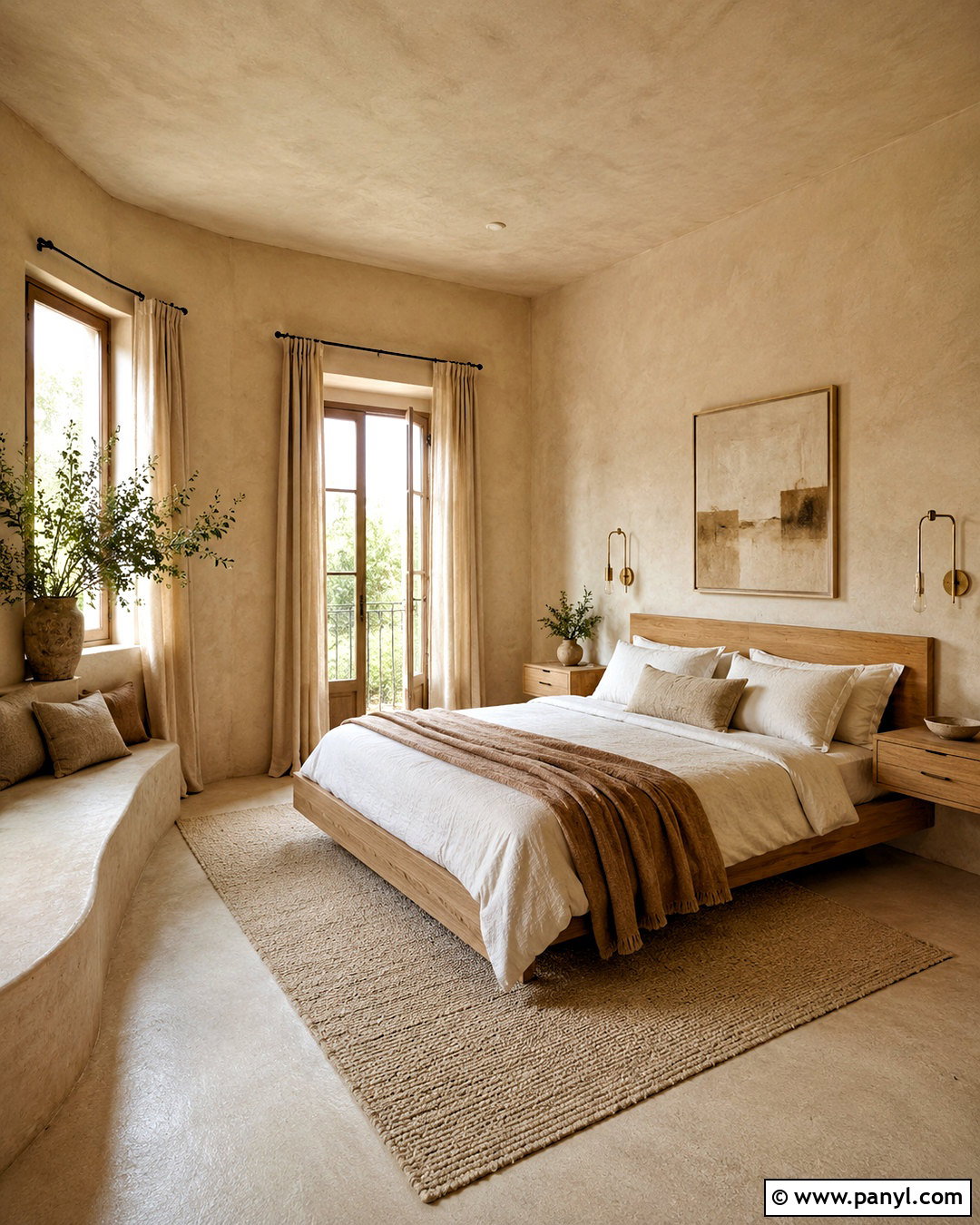
Imagine waking up surrounded by sandy beige walls that appear warmer as morning light enters the room. Use a softly mottled beige limewash across the walls and ceiling to create a restful, cocooning bedroom. Center a low oak bed against the main wall and layer it with ivory linen bedding, a camel-colored blanket, and textured neutral pillows. Floating wood nightstands keep the arrangement simple, while aged brass sconces introduce a subtle glow and traditional detail. Place a flat-weave wool rug beneath the bed and add full-length flax curtains at the windows. A curved plaster bench and one large abstract artwork complete the design without overcrowding it. The resulting room feels earthy, comfortable, and thoughtfully coordinated.
3. Gray Limewash Texture Dining Room
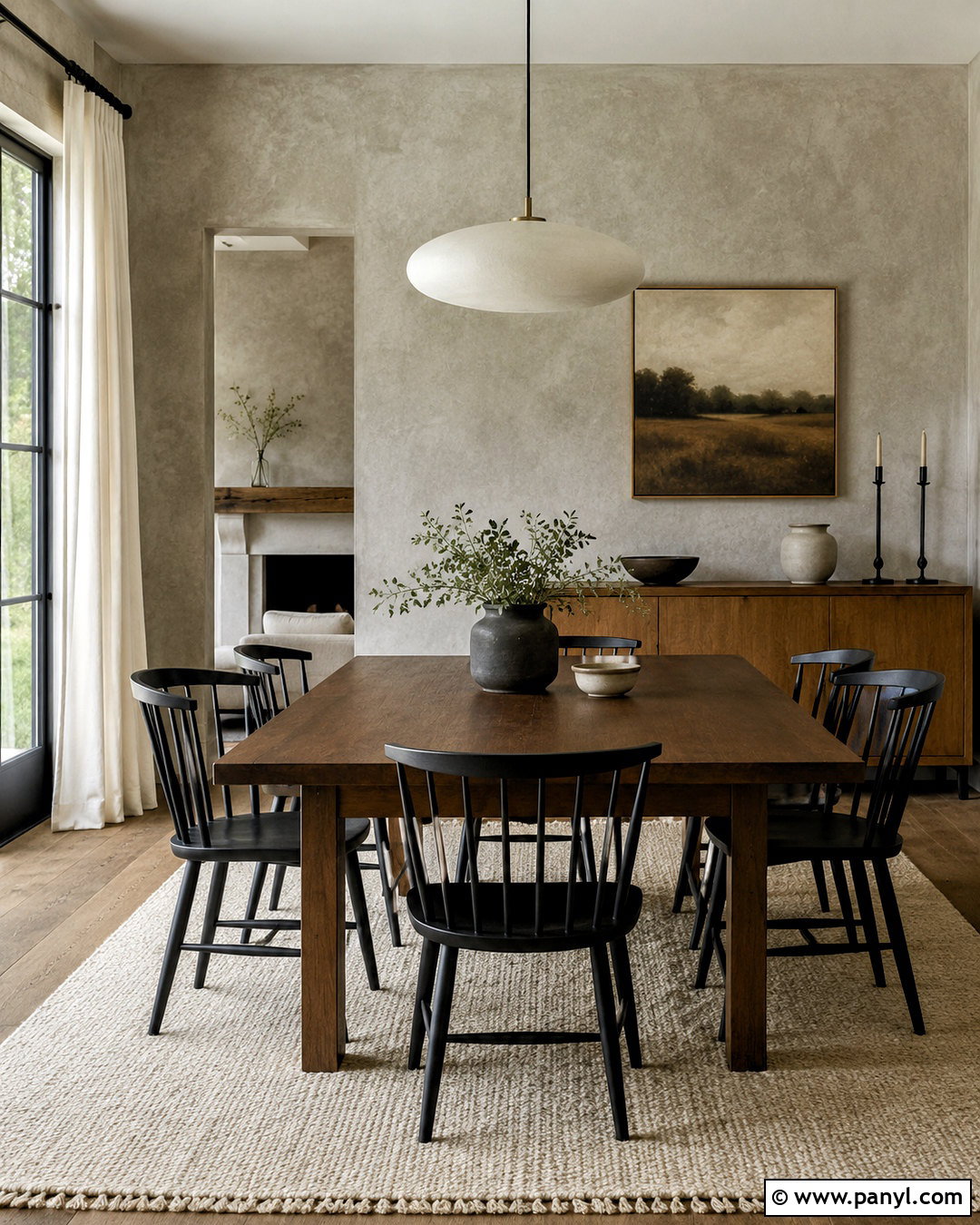
A soft gray limewash can give a dining room the appearance of weathered plaster while remaining clean and contemporary. Select a warm gray with brown undertones rather than a cold blue-gray. Apply it across the walls with broad, overlapping strokes, allowing lighter and darker patches to frame the dining area. Pair the finish with a solid walnut table and black spindle-back chairs for crisp definition. Above the table, install a wide paper lantern or milky glass pendant that spreads light evenly across the textured surface. Add an ivory wool rug, simple linen curtains, and a low oak sideboard. Matte black candlesticks and stoneware serving pieces provide restrained accents. The complete scheme feels architectural, calm, and suitable for everyday meals or entertaining.
4. Sage Green Limewash Texture Bedroom
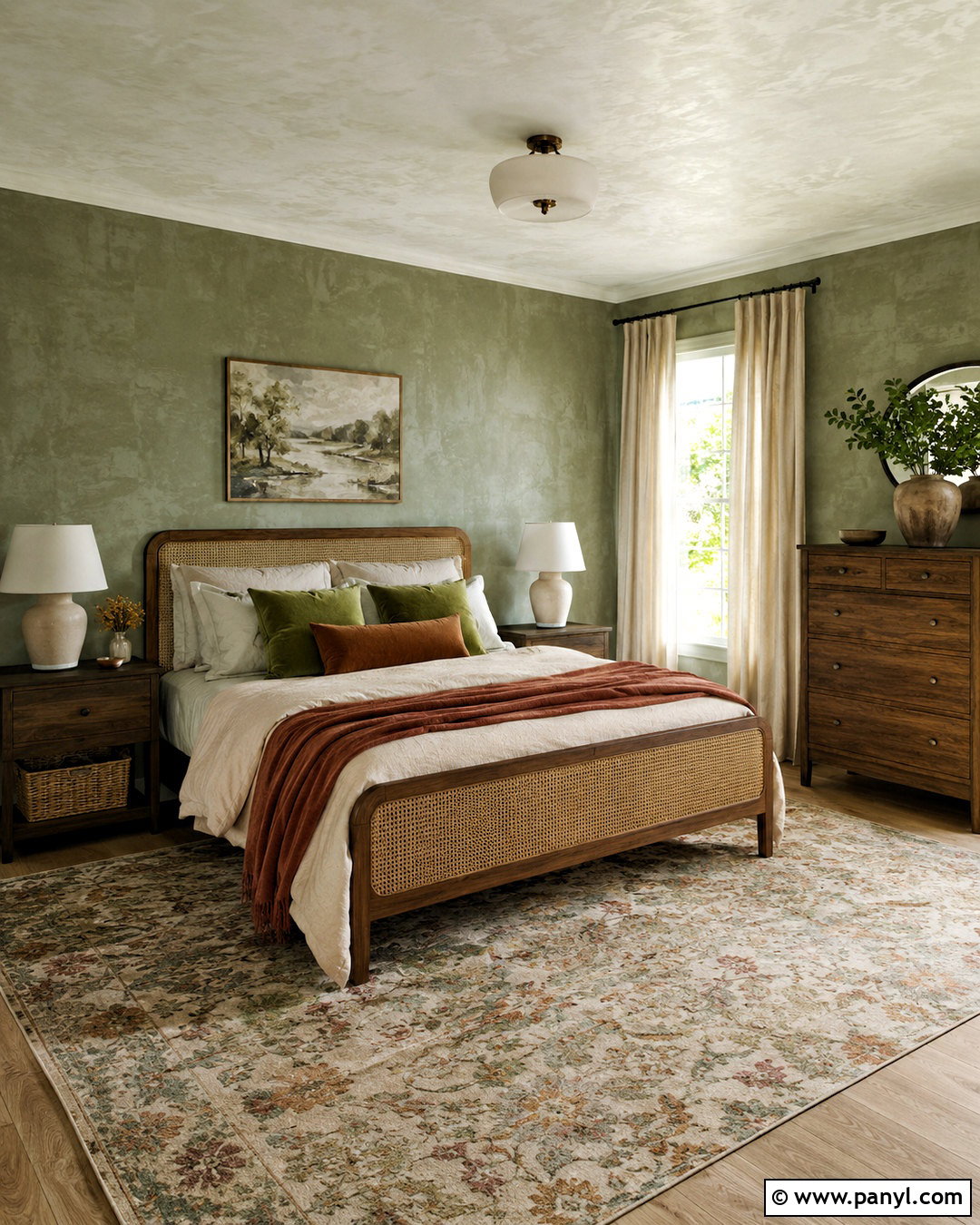
Soft sage limewash creates a nature-inspired bedroom that feels colorful without becoming overstimulating. Wrap the walls in a muted green finish with cloudy tonal movement, but leave the ceiling warm white to keep the room visually open. Choose a walnut bed with a woven cane headboard and dress it in cream linen, moss green pillows, and a rust-colored lumbar cushion. Add matching walnut nightstands and simple ceramic lamps with linen shades. A faded botanical rug can introduce muted blue, brown, and olive accents underfoot. Finish the windows with natural flax curtains and place a vintage wood dresser opposite the bed. The balanced mix of green walls, dark wood, woven fibers, and aged metal gives the room an inviting organic-modern appearance.
5. Terracotta Limewash Texture Dining Room
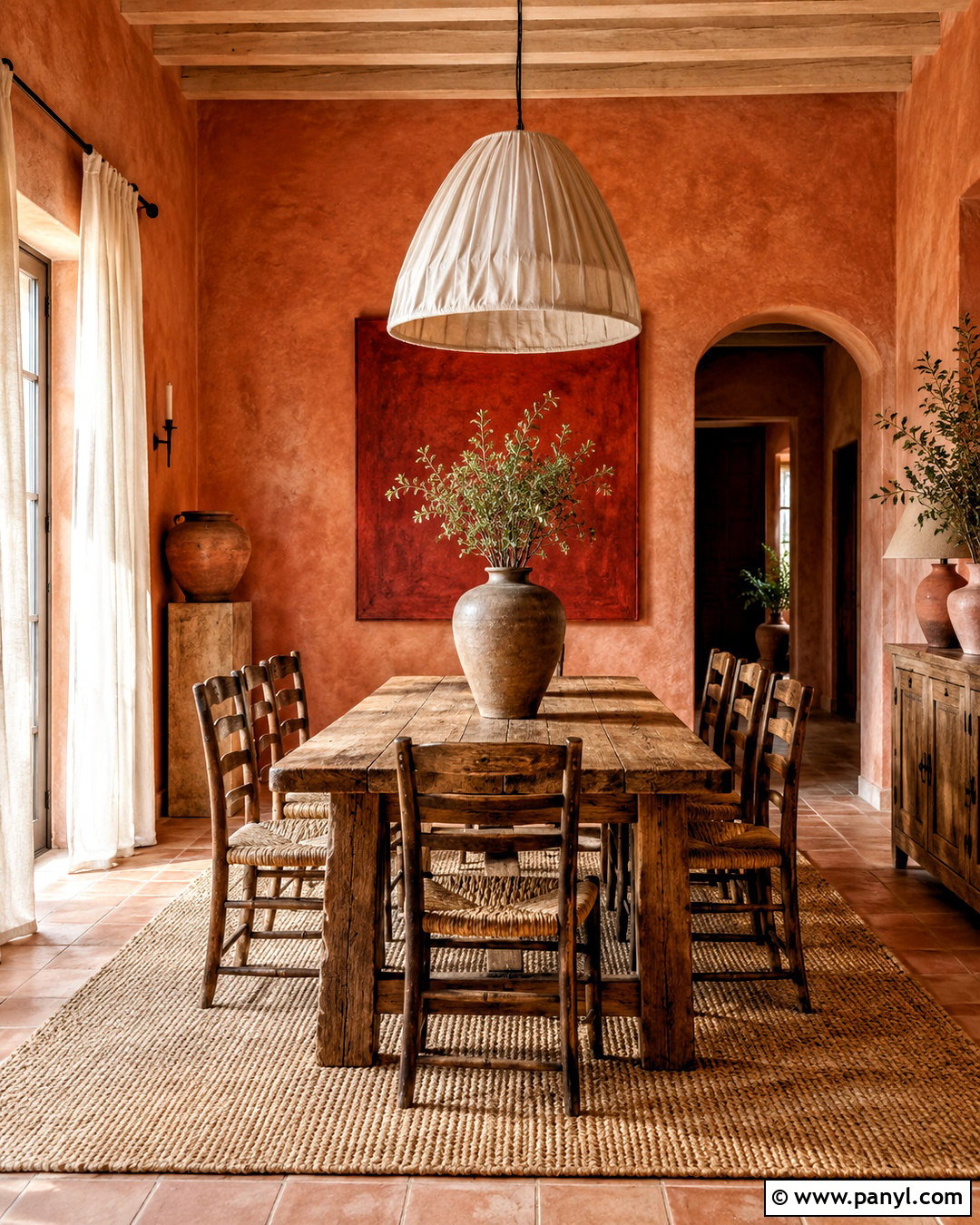
Rich terracotta limewash turns a dining room into a warm gathering space inspired by sunbaked clay and Mediterranean interiors. Apply the finish to every wall, using loose crosshatched strokes that create visible areas of burnt orange, dusty red, and softer peach. Balance the saturated background with a substantial reclaimed oak dining table and woven rush chairs. An oversized linen pendant keeps the center of the room bright without competing with the walls. Use cream curtains, a natural jute rug, and pale ceramic tableware to lighten the palette. A rustic sideboard can display earthenware vessels, branches, and serving pieces. Add small black iron accents through curtain rods and candleholders. Together, these features create a layered, welcoming room with convincing old-world character.
6. Blue Limewash Texture Bathroom
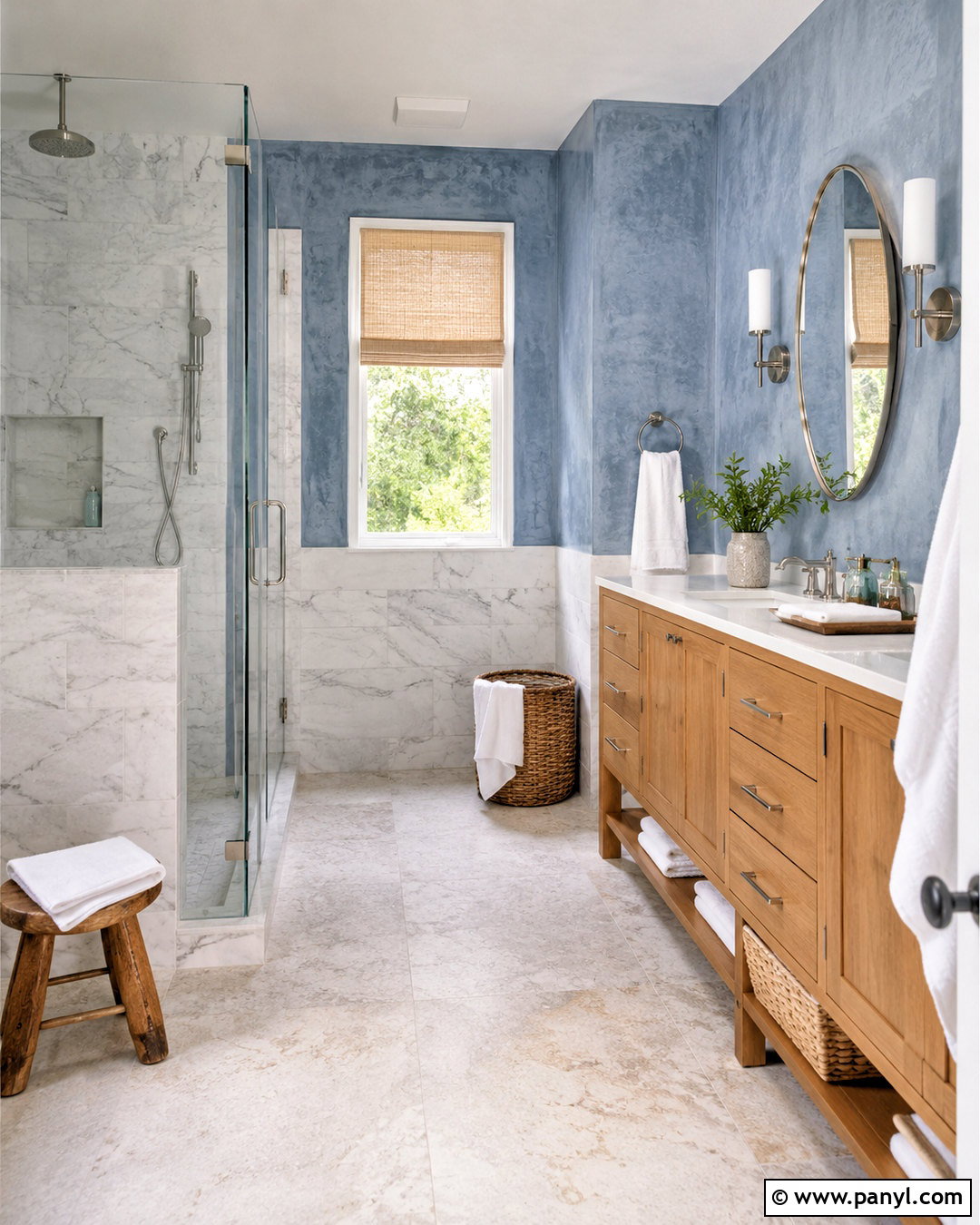
Could a blue bathroom feel both refreshing and warm? Dusty blue limewash makes that possible when it is paired with natural wood and softly veined stone. Use the finish above a waist-high marble or ceramic tile surround, protecting areas exposed to regular splashing with an appropriate bathroom-rated system. Install a medium oak vanity with a white stone counter, an oval mirror, and brushed nickel fixtures. A frameless glass shower prevents the compact room from feeling divided. Choose pale limestone-look floor tiles and add white towels, a woven hamper, and one small wood stool. The blue variation should remain subtle rather than striped. Because limewash products and substrates differ, follow the manufacturer’s preparation and sealing instructions for moisture-prone areas. ()
7. Charcoal Limewash Texture Powder Room
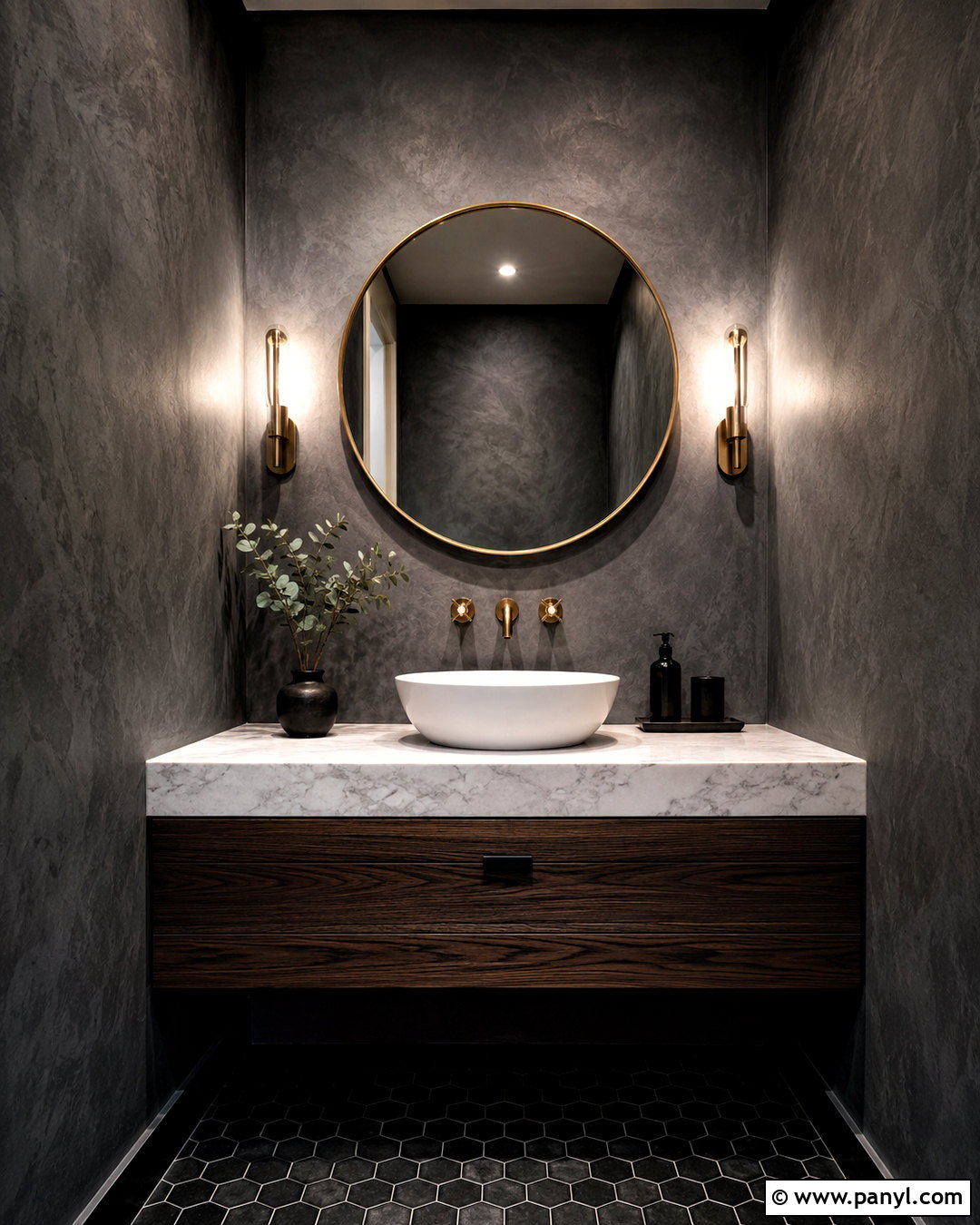
For a small room with dramatic impact, cover the walls and ceiling in deep charcoal limewash. The layered black-gray finish will develop smoky variations that make the compact space feel atmospheric rather than flat. Install a floating dark oak vanity with a thick white marble top to introduce strong contrast. A round antiqued brass mirror and matching wall sconces add warmth against the cool mineral background. Use honed black hexagonal floor tile, a simple white vessel sink, and a wall-mounted brass faucet. Keep accessories limited to a folded hand towel, a ceramic soap dispenser, and one small branch arrangement. Painting the door and trim in a coordinating matte charcoal creates an uninterrupted envelope, allowing the marble, metal, and natural wood to become the room’s main focal points.
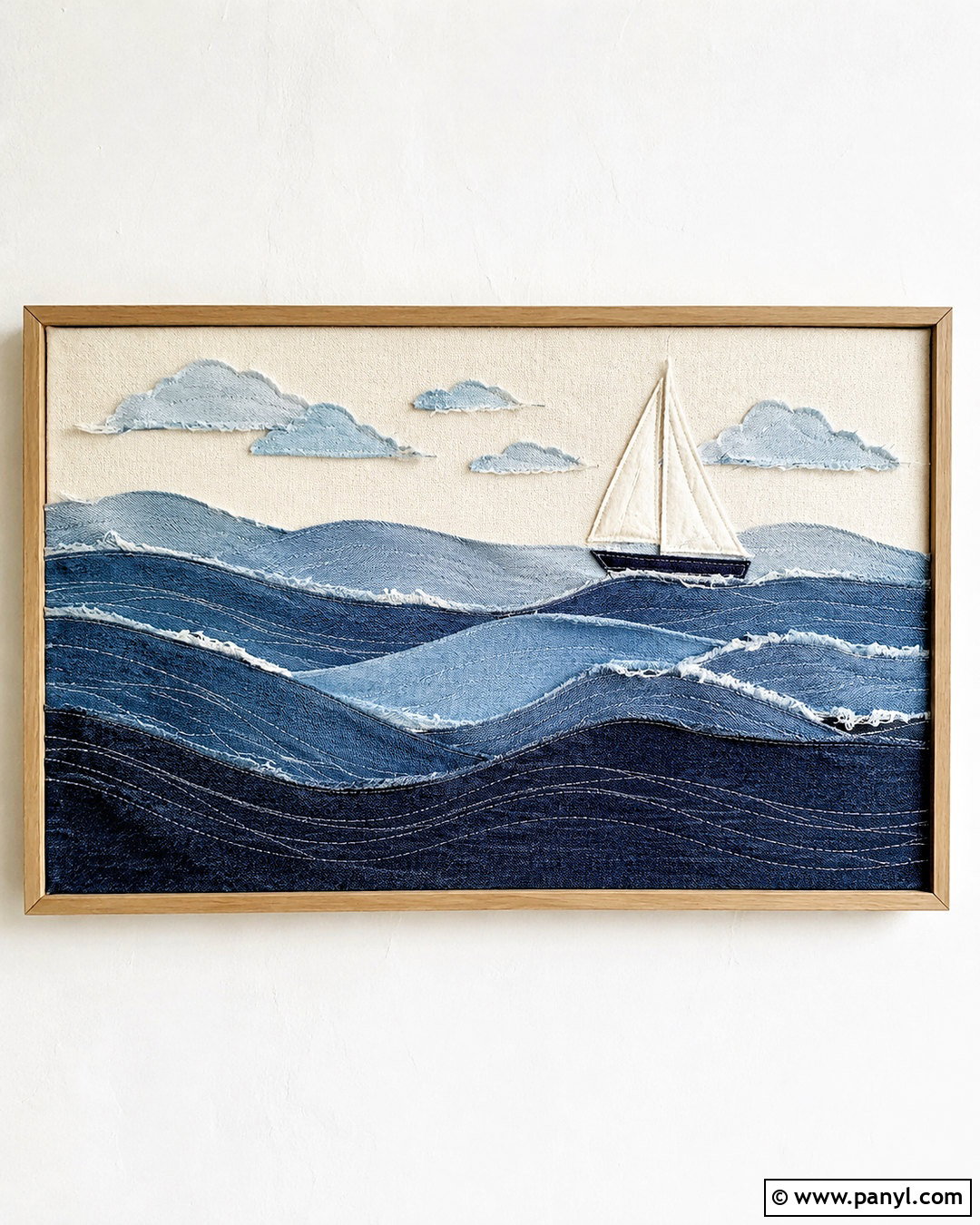
8. Blush Limewash Texture Guest Bedroom
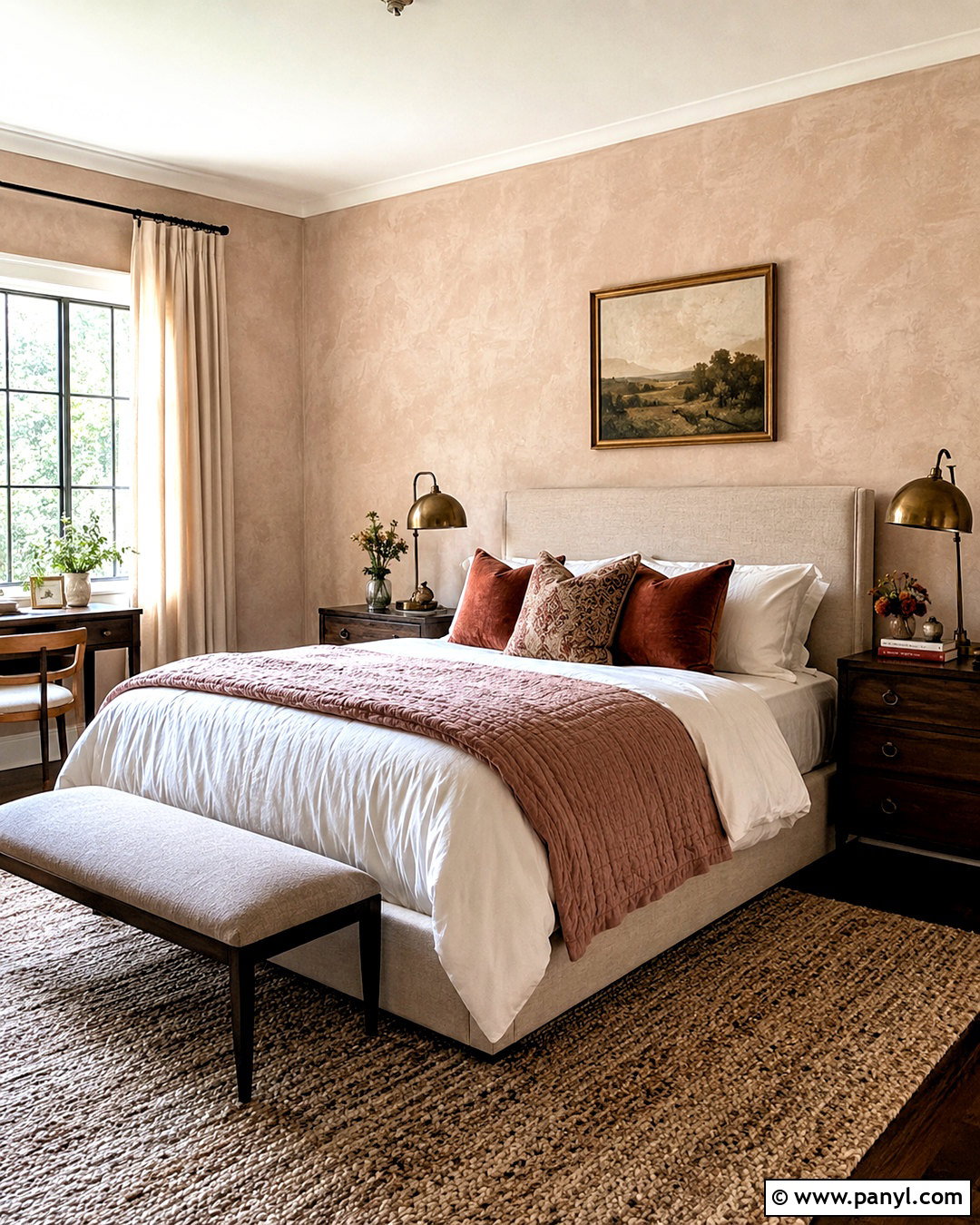
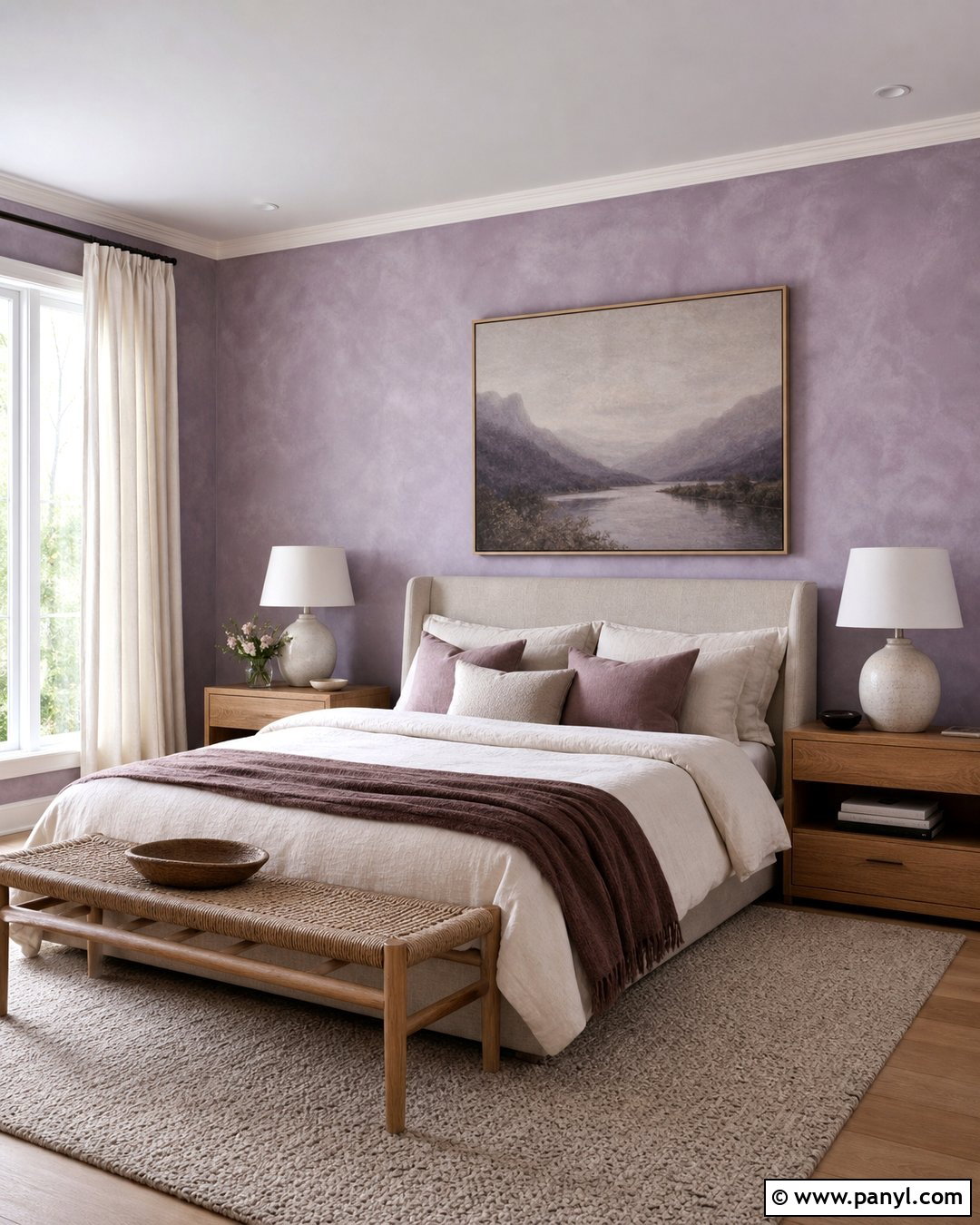
Muted blush limewash can make a guest bedroom feel warm and welcoming without looking overly sweet. Choose a dusty pink with beige or clay undertones, then apply it to all four walls while keeping the ceiling soft ivory. Build the room around an upholstered oatmeal bed with gently curved corners. Layer white sheets with a rose-beige quilt, rust accent pillows, and a lightweight cream throw. Dark wood nightstands prevent the pale palette from feeling washed out, while aged brass lamps add a subtle vintage note. Include a small writing desk, a woven wool rug, and natural linen curtains. One framed landscape or abstract textile above the bed is enough decoration. The finished room feels collected, comfortable, and suitable for guests of different ages.
9. Olive Limewash Texture Home Office
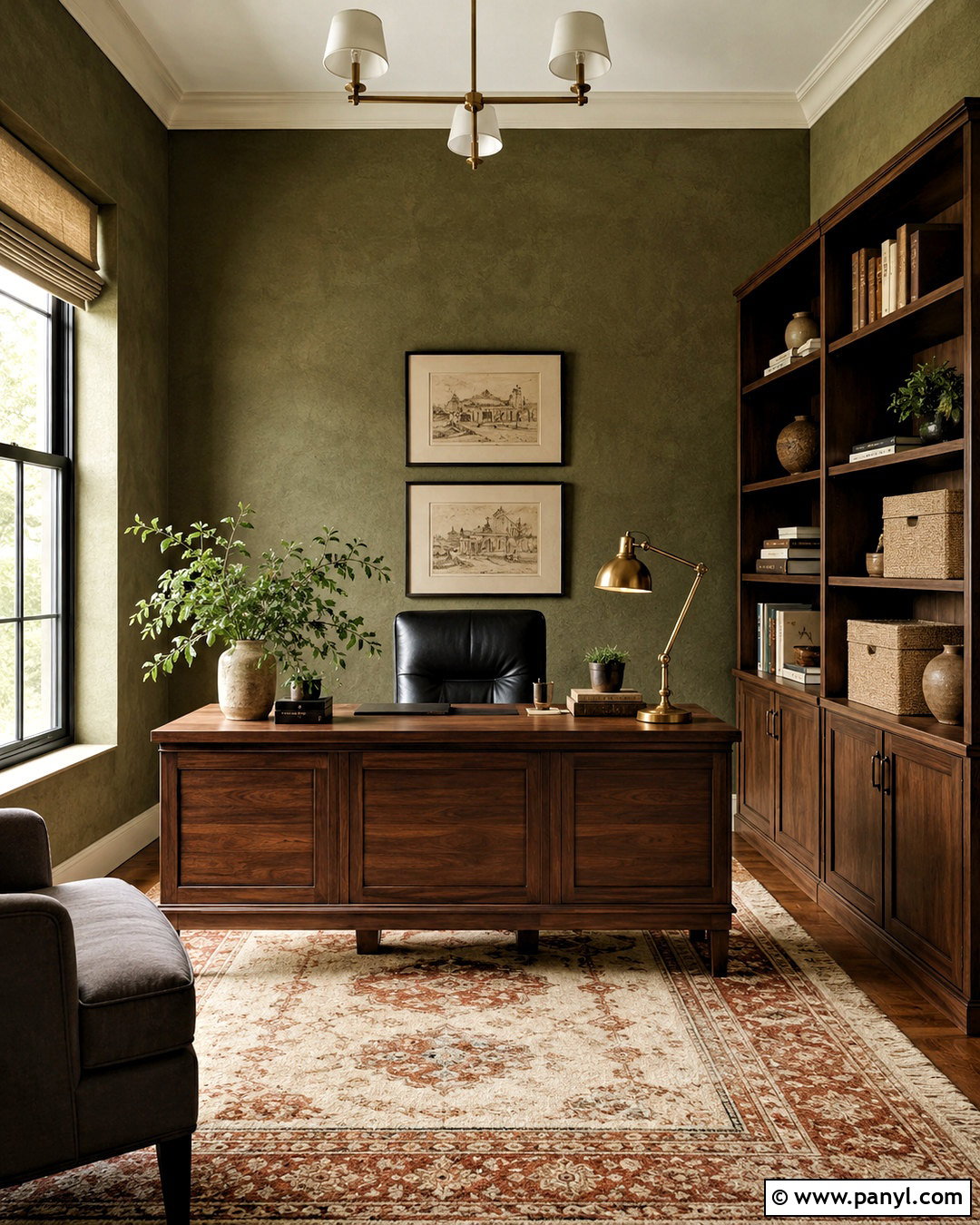
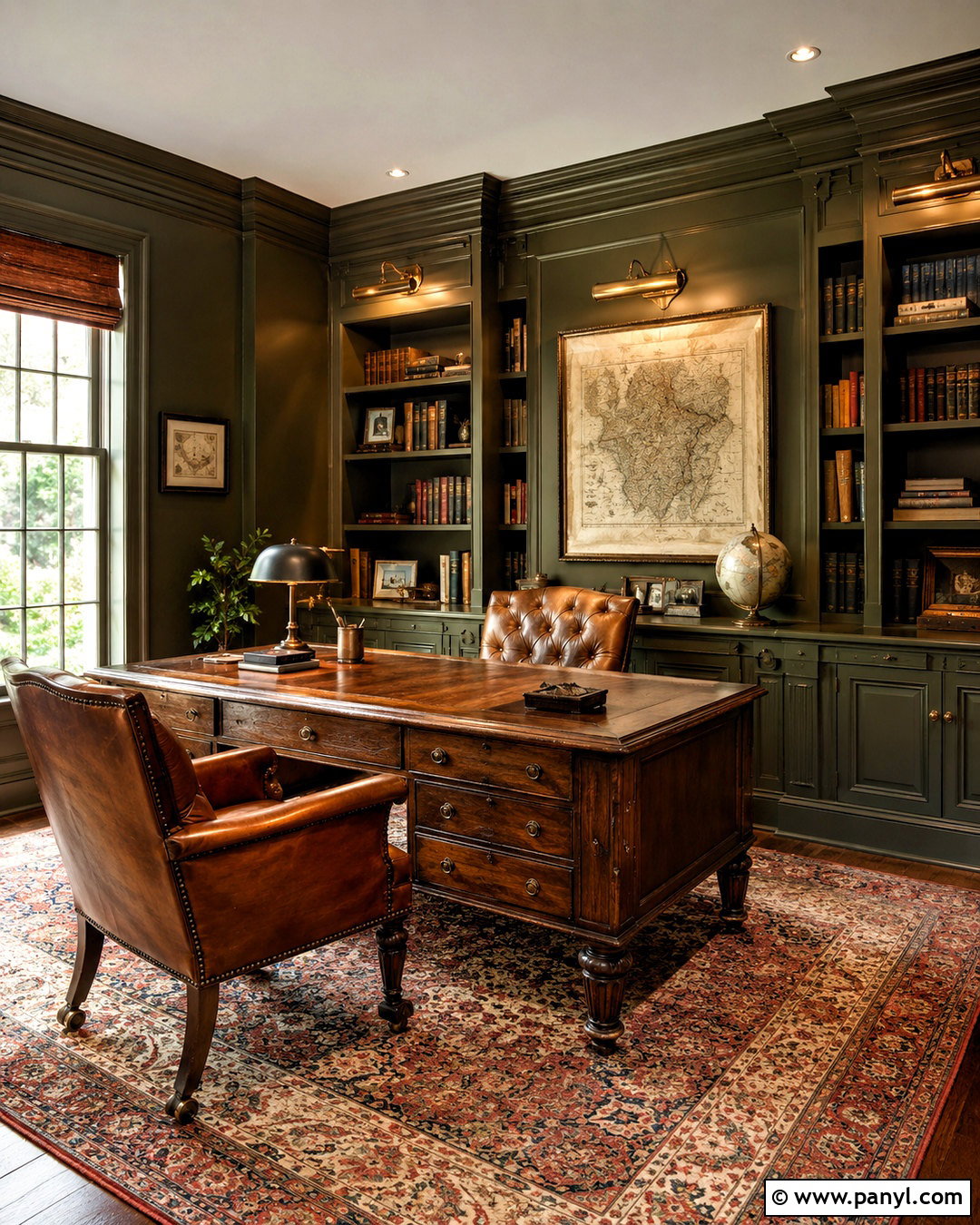
Deep olive limewash creates a grounded home office that supports concentration while providing plenty of visual character. Paint the main walls in an earthy olive green with uneven mineral movement, then use warm white on the ceiling and trim. Position a substantial walnut desk near the window so natural light travels across the textured surface. Add a black leather task chair, an adjustable brass desk lamp, and a tall bookcase stained to match the desk. A vintage-style rug in cream, rust, and faded green softens the floor. Keep storage practical with woven boxes, closed cabinets, and a small filing unit. Framed sketches and a few ceramic objects personalize the room without creating clutter. The dark green, walnut, brass, and leather combination feels professional yet comfortably residential.
10. Greige Limewash Texture Entryway
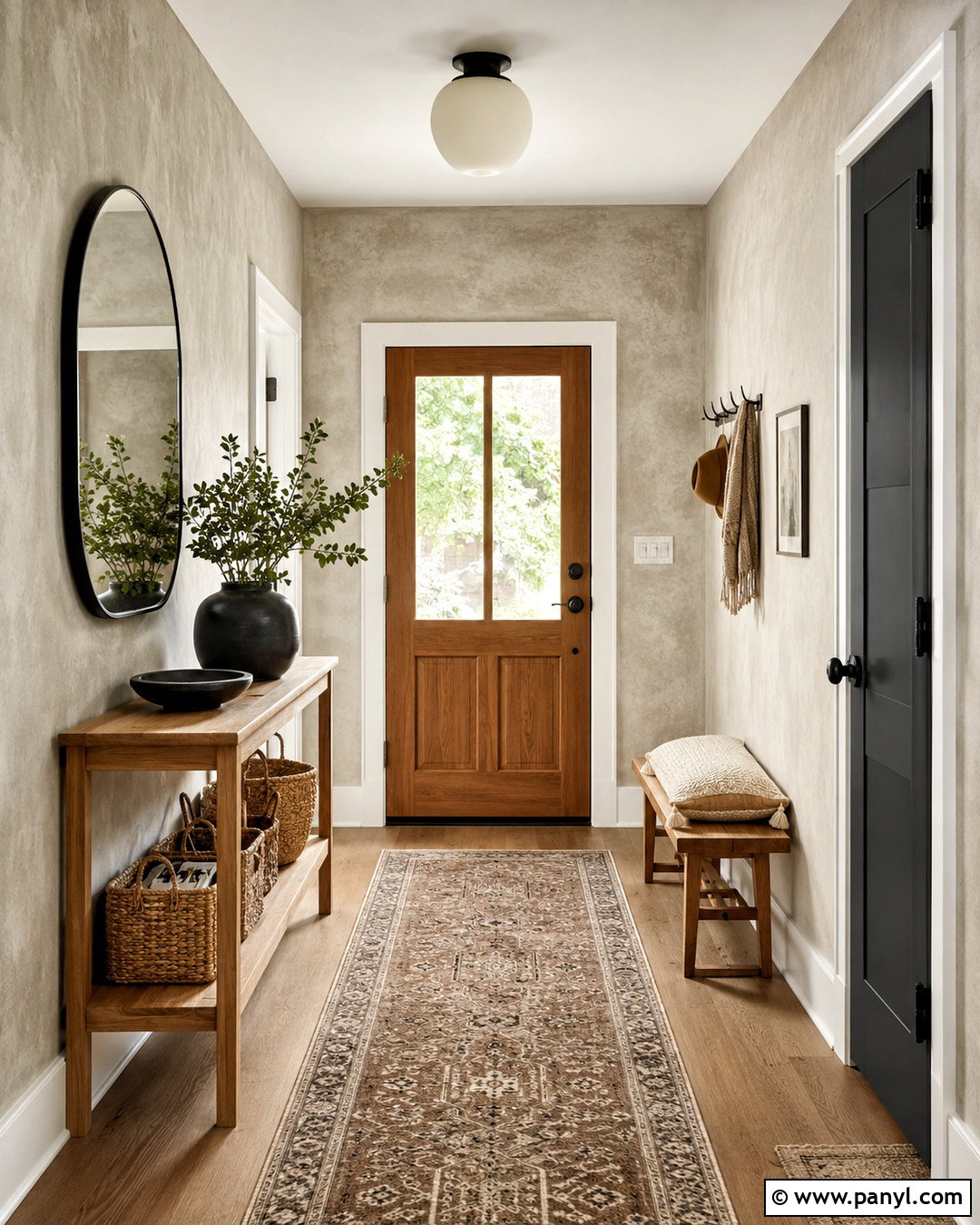
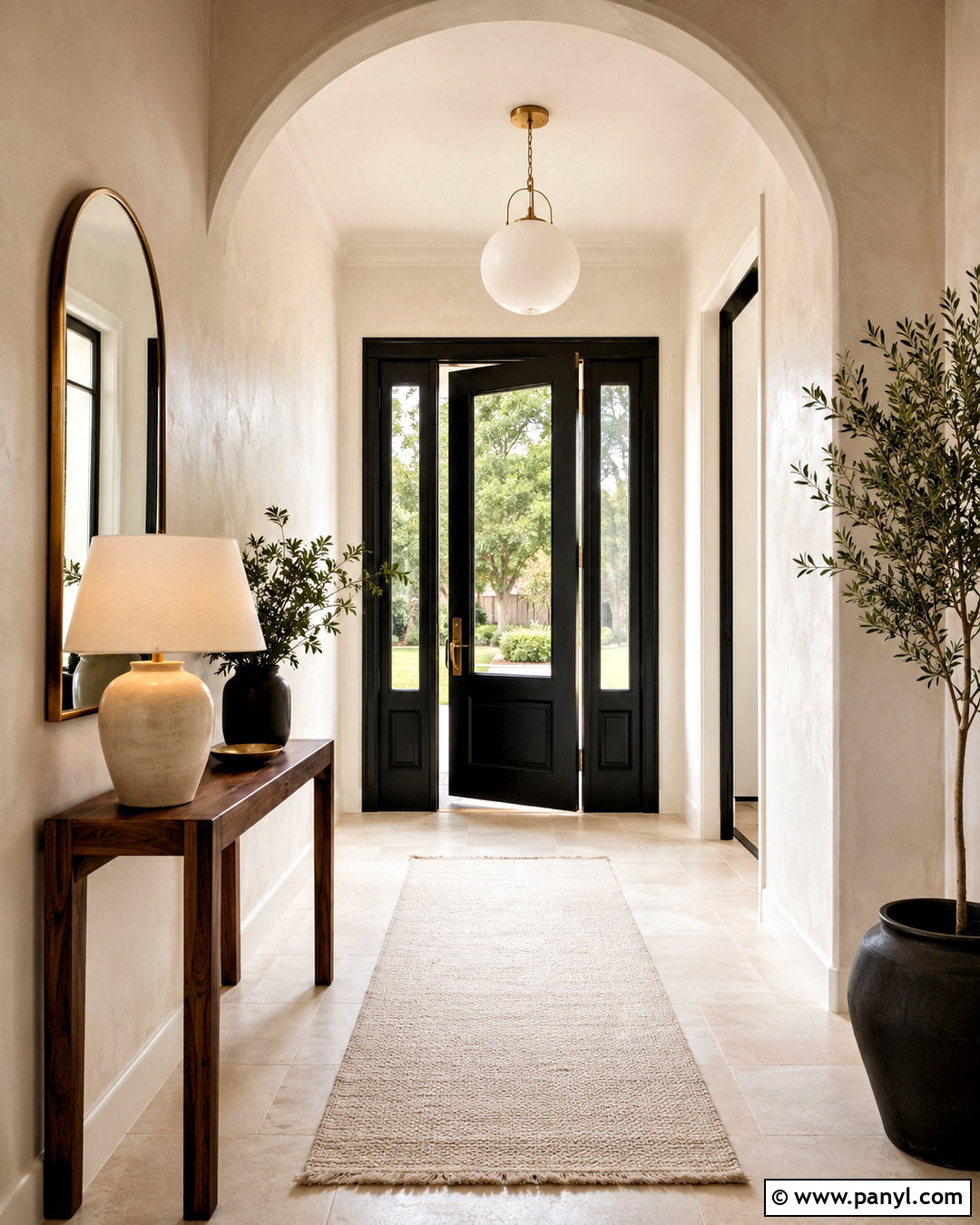
A greige limewash entryway offers a forgiving, sophisticated backdrop for an area that must handle daily activity. Choose a balanced gray-beige shade and cover the walls from the baseboards to the ceiling, allowing the broad brush marks to soften narrow corners. Place a slim oak console along one wall with a rounded black-framed mirror above it. A simple wood bench, woven storage baskets, and sturdy wall hooks provide practical organization. Use a washable runner with faded brown and ivory patterning to disguise tracked-in dirt. A ceiling-mounted opal glass light keeps the hallway bright, while a small table lamp makes the entrance feel welcoming in the evening. Black door hardware and a leafy arrangement add contrast. The complete design combines attractive texture with realistic storage and circulation.
11. Clay Limewash Texture Kitchen
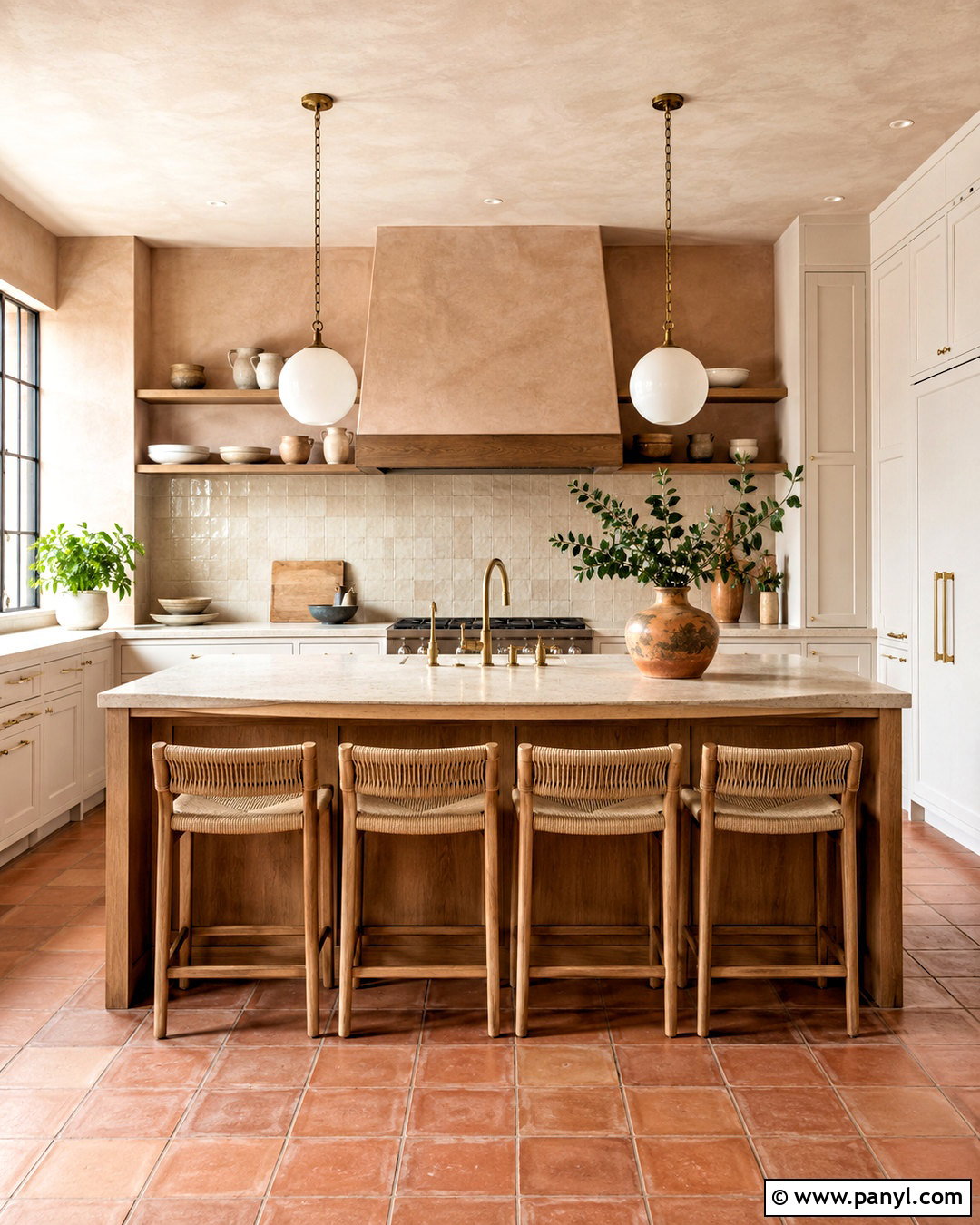
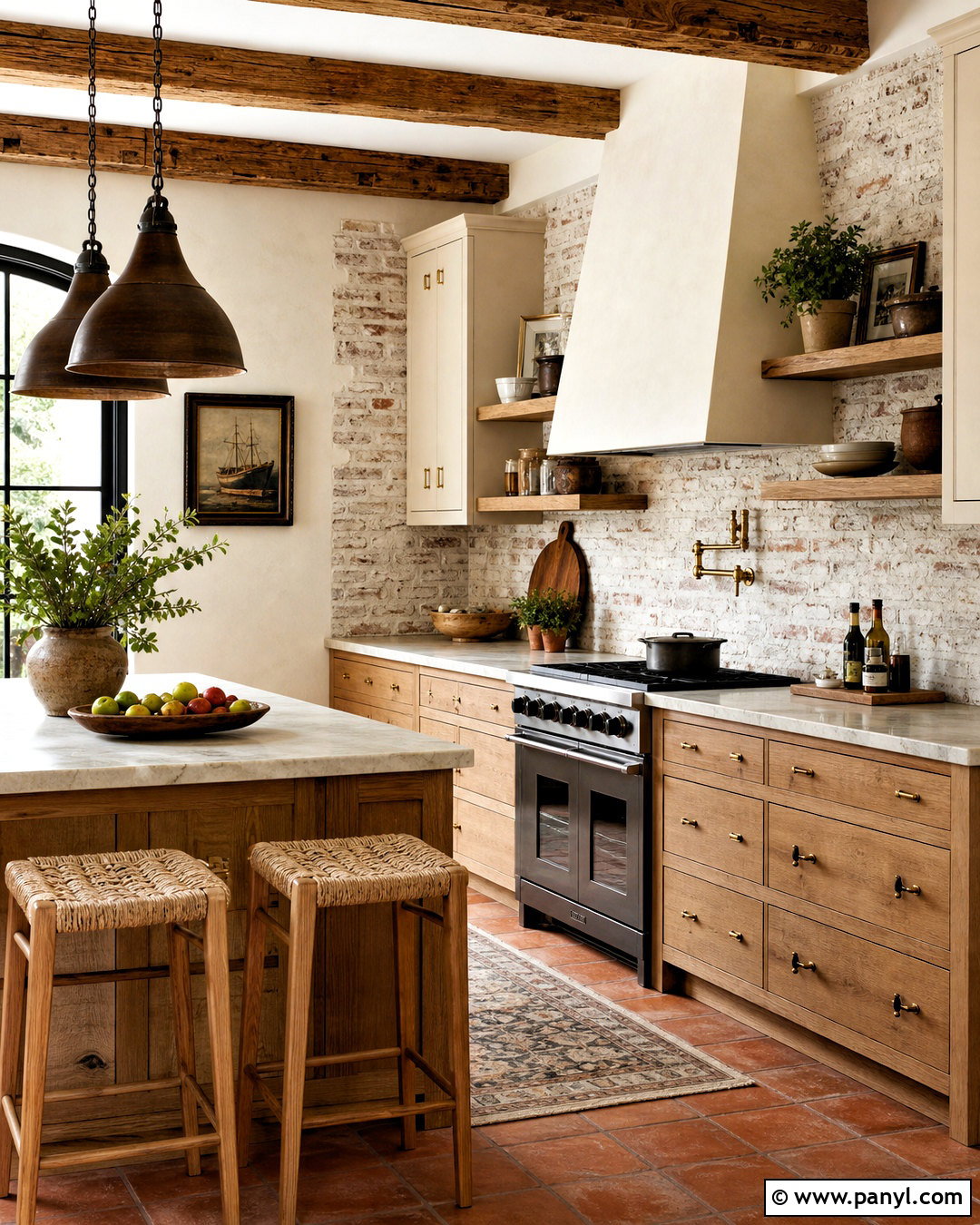
Clay-colored limewash can warm a kitchen filled with pale cabinetry and hard surfaces. Apply a muted peach-brown finish to the upper walls and any open dining area, then protect the working backsplash with cream zellige tile. Choose warm white shaker cabinets, unlacquered brass hardware, and light quartz or limestone counters. A medium oak island adds natural contrast and offers a comfortable place for woven counter stools. Use simple globe pendants, white oak shelves, and handmade ceramic dishes to reinforce the organic palette. Terracotta floor tile or warm wood flooring supports the earthy walls without matching them too closely. Keep window treatments light and minimal. The resulting kitchen feels bright and approachable, with enough handmade texture to soften the straight lines of the cabinetry and appliances.
12. Stone Limewash Texture Fireplace Wall
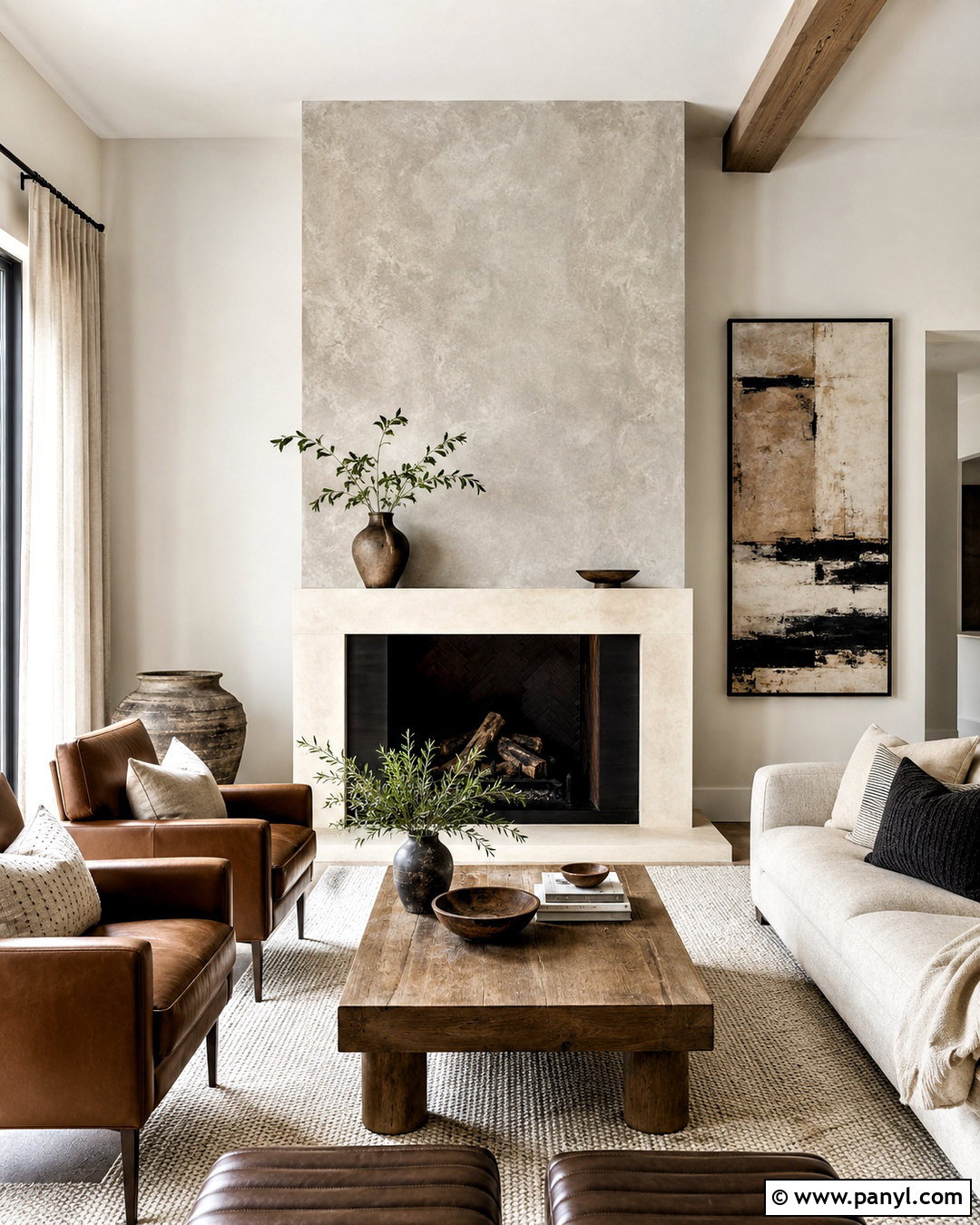
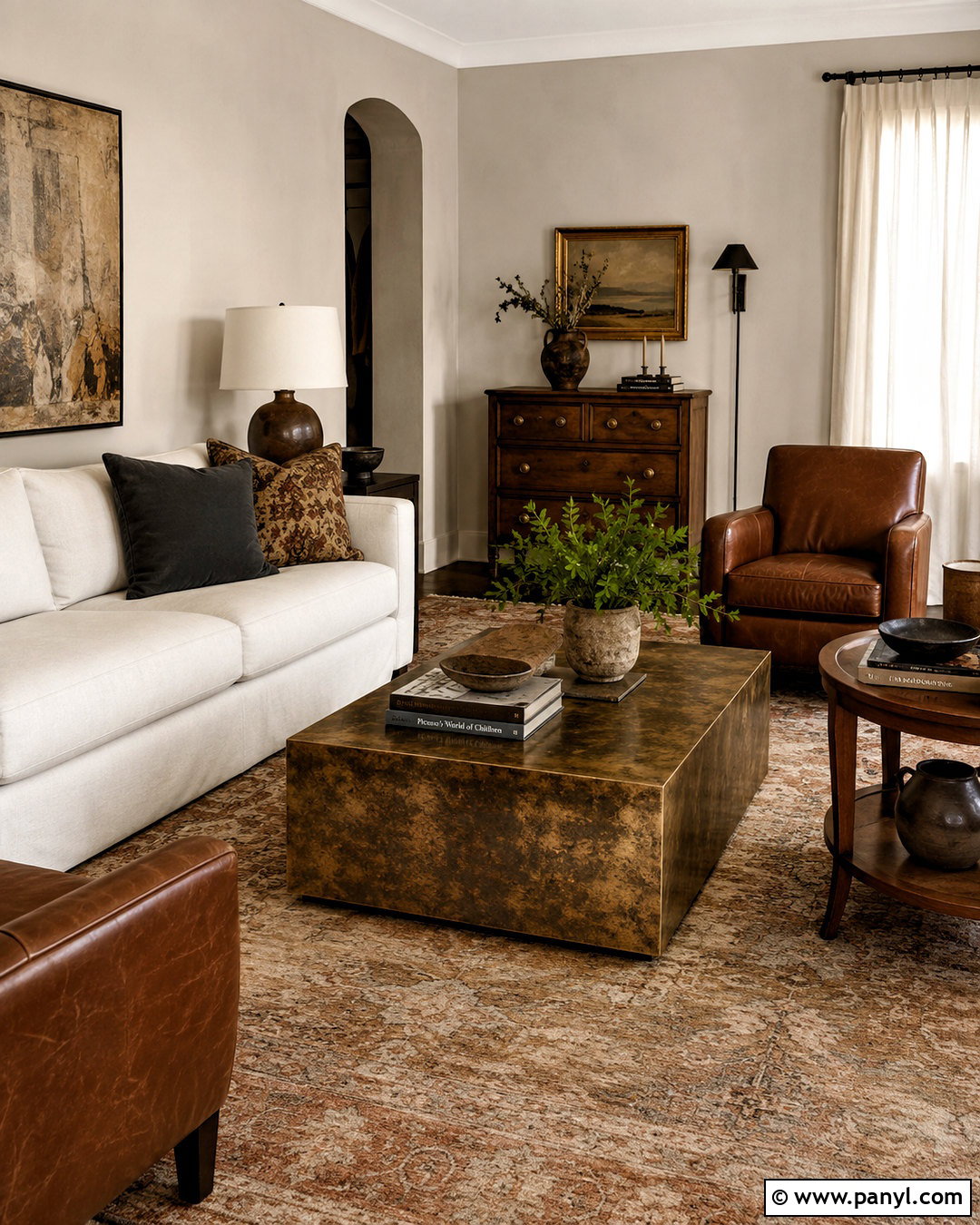
A stone-colored limewash fireplace wall can become a strong focal point without relying on bold color. Apply a medium taupe-gray finish across the entire chimney breast, including shallow niches or surrounding built-ins if available. Use several thin layers so the wall develops subtle limestone-like variation rather than heavy patchiness. Center a simple rectangular firebox within a thick limestone or cast-stone surround. Arrange a cream sofa, two caramel leather chairs, and a chunky oak coffee table around the fireplace to form a comfortable conversation area. A neutral wool rug and linen curtains soften the room. Keep the mantel nearly bare with one large artwork and a pair of ceramic vessels. This restrained composition allows the mineral surface, architectural fireplace, and natural furnishings to work as one complete design.
13. Taupe Limewash Texture Hallway
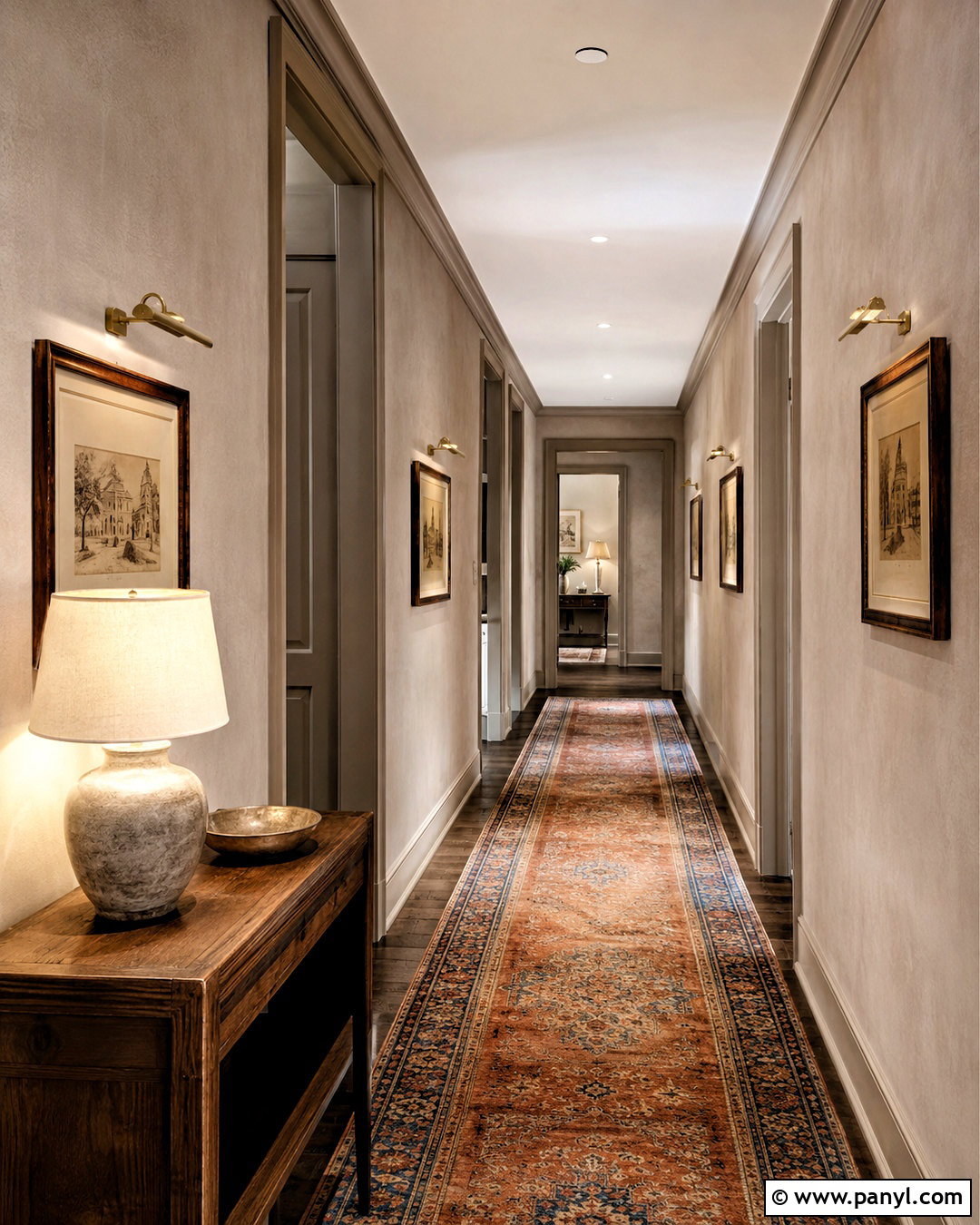
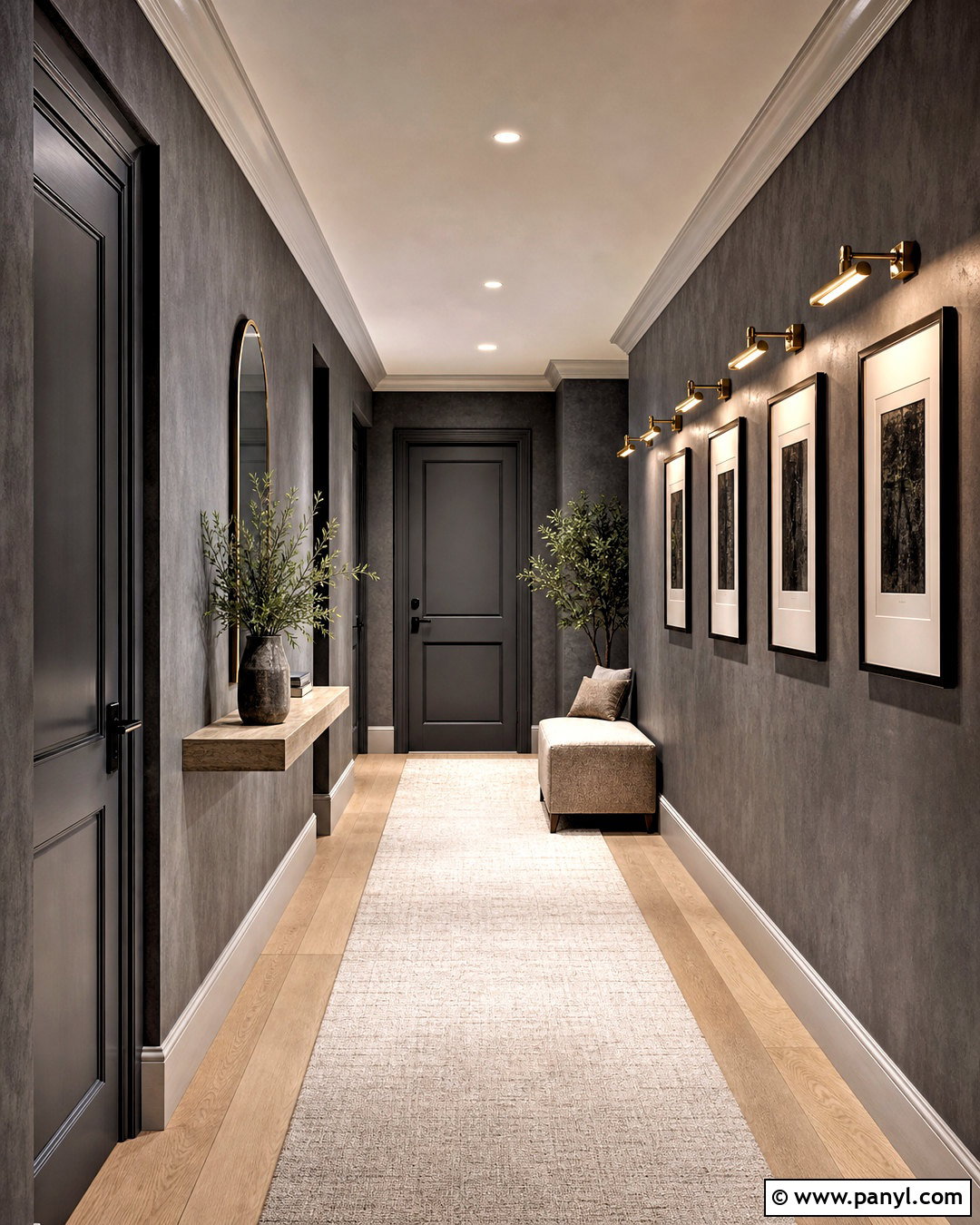
Long hallways often feel plain because there is little room for furniture, but taupe limewash can provide interest without reducing usable space. Coat the walls in a warm mushroom-taupe finish with soft vertical and diagonal movement. Paint the trim a slightly deeper taupe for quiet definition, while leaving the ceiling creamy white. Install evenly spaced brass picture lights above a small collection of framed drawings or family photographs. A narrow vintage runner introduces muted rust, blue, and ivory underfoot. Add one compact console at the widest point, topped with a shallow bowl and a ceramic lamp. Repeating dark wood frames and antique brass hardware creates consistency along the corridor. The final hallway feels intentional, gently layered, and connected to the rooms opening from it.
14. Rust Limewash Texture Reading Nook
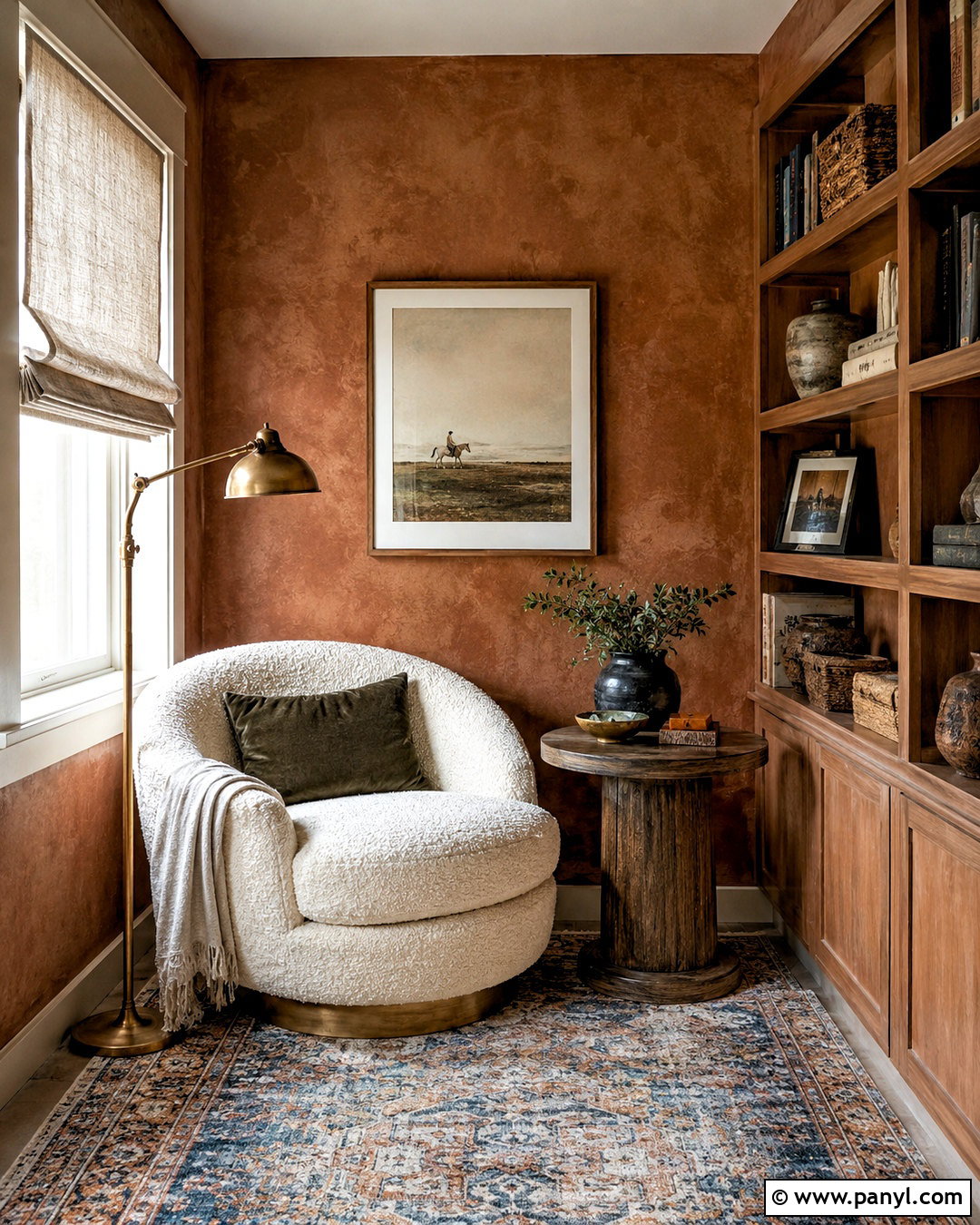
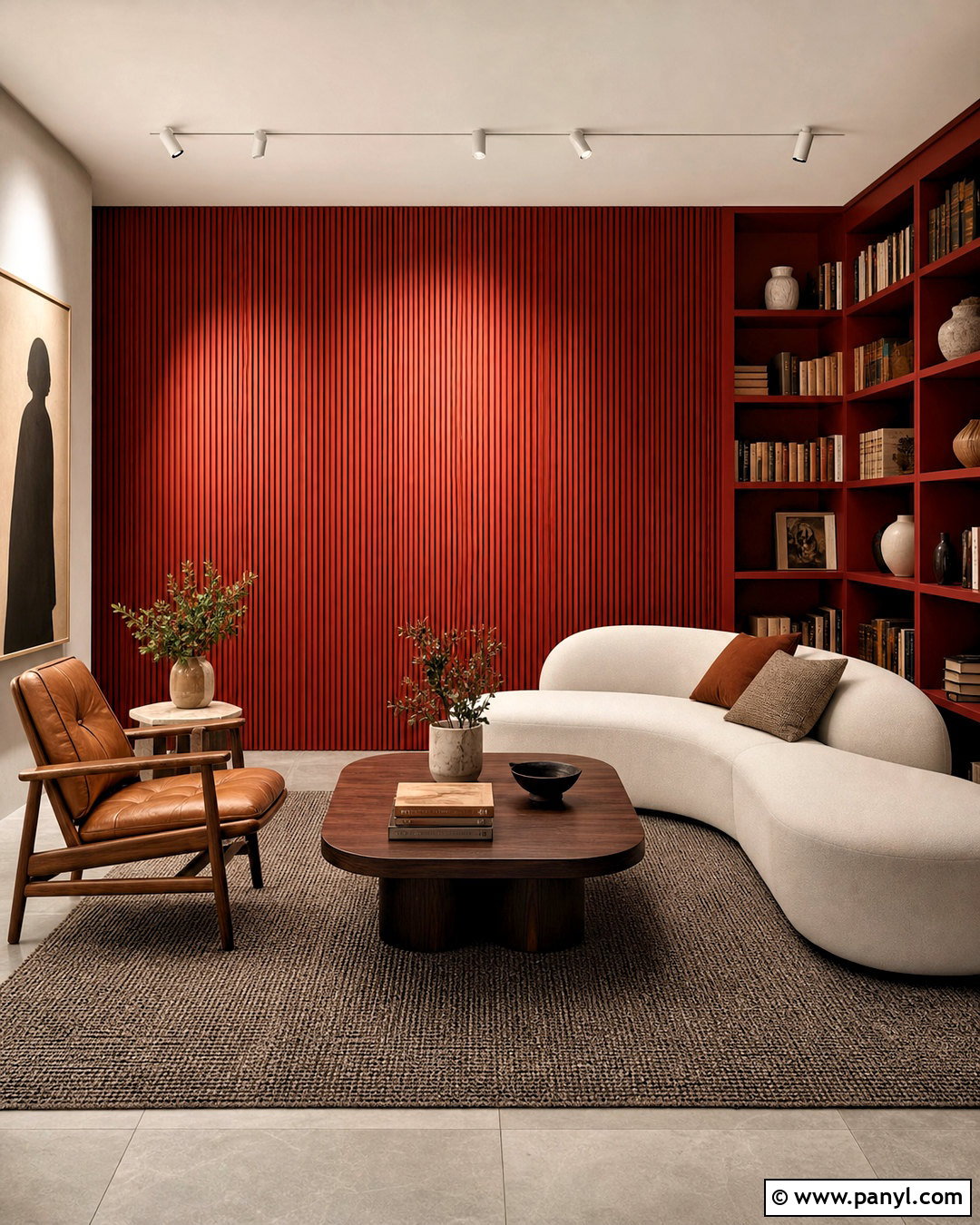
Rust limewash can transform an unused corner into a warm, enclosed reading nook. Cover the surrounding walls in a burnt orange-brown finish, extending the color onto built-in shelving for a cohesive appearance. Position a generously sized cream boucle chair in the corner with a round walnut side table and an aged brass floor lamp. A small patterned rug in faded blue, tan, and rust defines the nook without overwhelming it. Fill the shelves loosely with books, pottery, baskets, and framed art, leaving some open space so the arrangement can breathe. Add a linen Roman shade if the corner includes a window. The pale upholstery creates contrast against the darker walls, while the wood and metal details reinforce the earthy palette and make the space feel established rather than newly decorated.
15. Soft Black Limewash Texture Bedroom
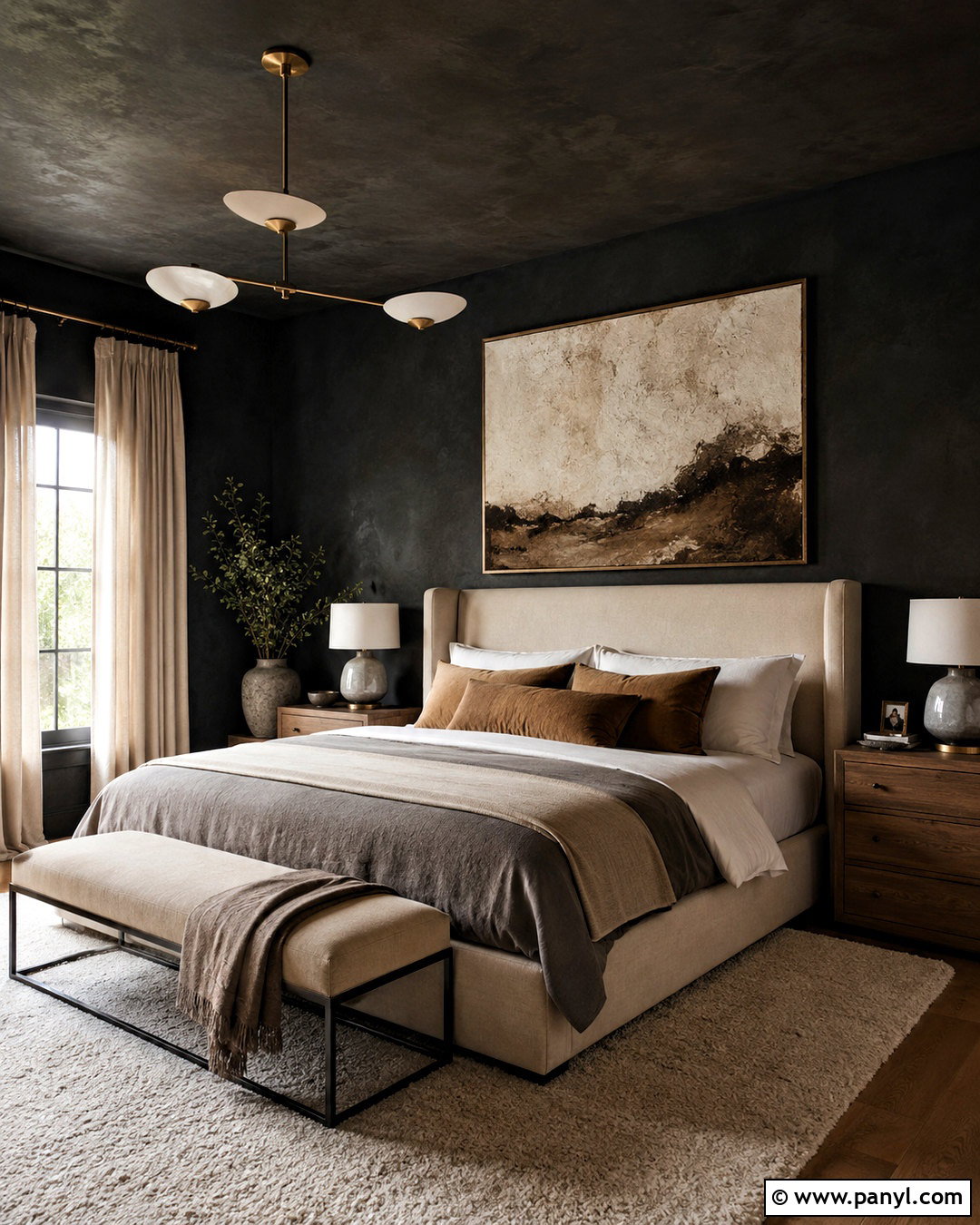
Soft black limewash produces an intimate bedroom with more movement and softness than solid black paint. Choose a charcoal-black shade that reveals smoke-gray undertones in natural light. Apply it to the walls and ceiling for a fully wrapped effect, then introduce a tall oatmeal upholstered bed as the visual anchor. Use crisp white sheets, a warm gray duvet, and tobacco-colored pillows to create layered contrast. Medium oak nightstands and sculptural plaster lamps prevent the room from feeling cold. Add full-length beige curtains, a large ivory rug, and one oversized abstract painting in cream and brown. Keep hardware and curtain rods matte black so they recede into the background. The finished room feels dramatic and restful while remaining balanced by pale textiles and warm natural wood.
16. Butter Yellow Limewash Texture Breakfast Nook
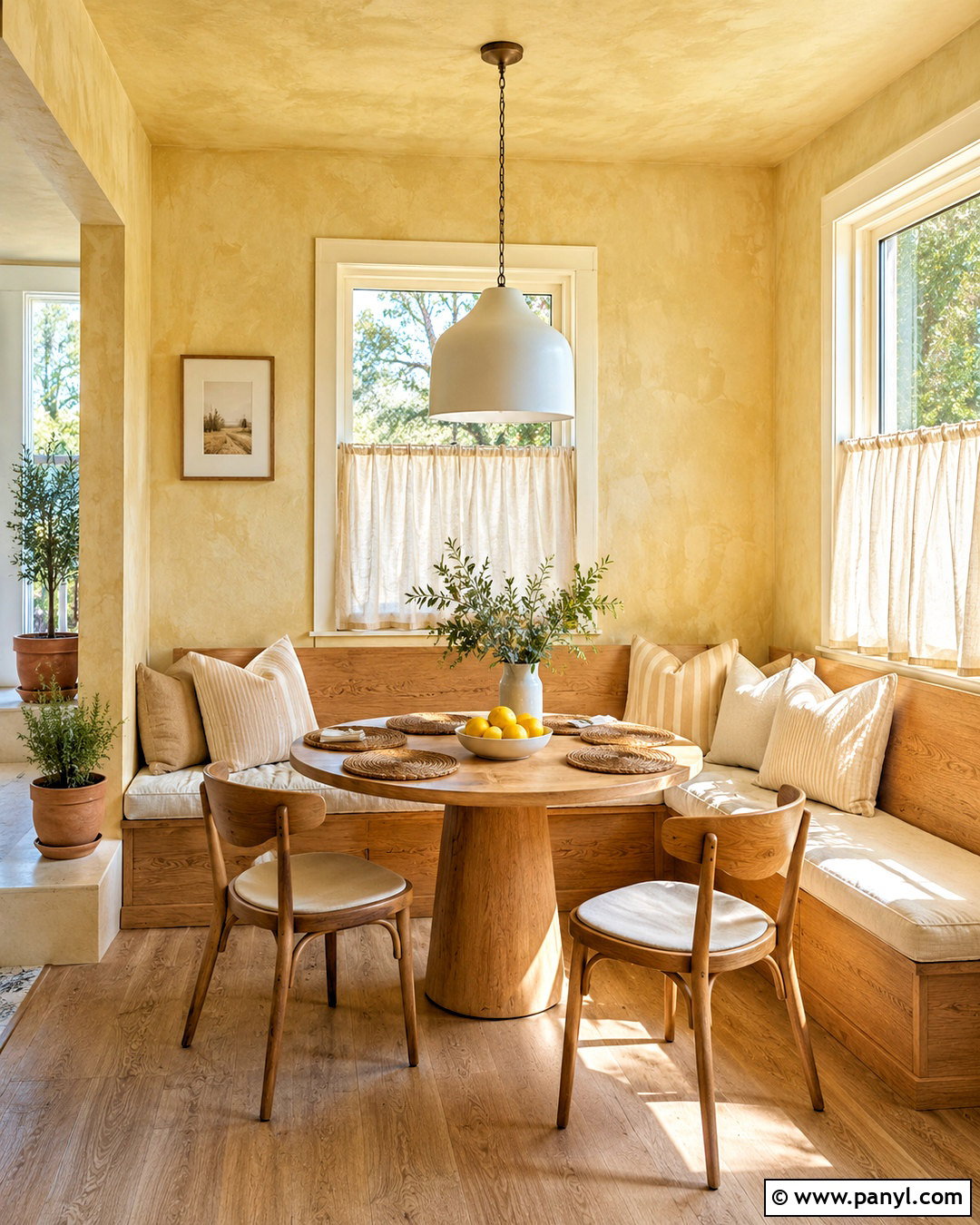
Gentle butter yellow limewash gives a breakfast nook a sunny quality even on overcast mornings. Select a muted cream-yellow rather than a bright lemon tone, and use it on the walls surrounding the dining area. Build an L-shaped oak banquette with ivory seat cushions and striped beige pillows. Pair it with a round pedestal table and two curved wood chairs so the nook remains easy to enter. A white ceramic pendant provides simple overhead lighting, while cafe curtains filter daylight without covering the entire window. Introduce terracotta pots, green herbs, and a small framed still life for natural color. Pale oak flooring and woven placemats complete the look. The limewash movement keeps the cheerful palette nuanced, making the nook feel warm, casual, and comfortable throughout the year.
17. Dusty Blue Limewash Texture Nursery
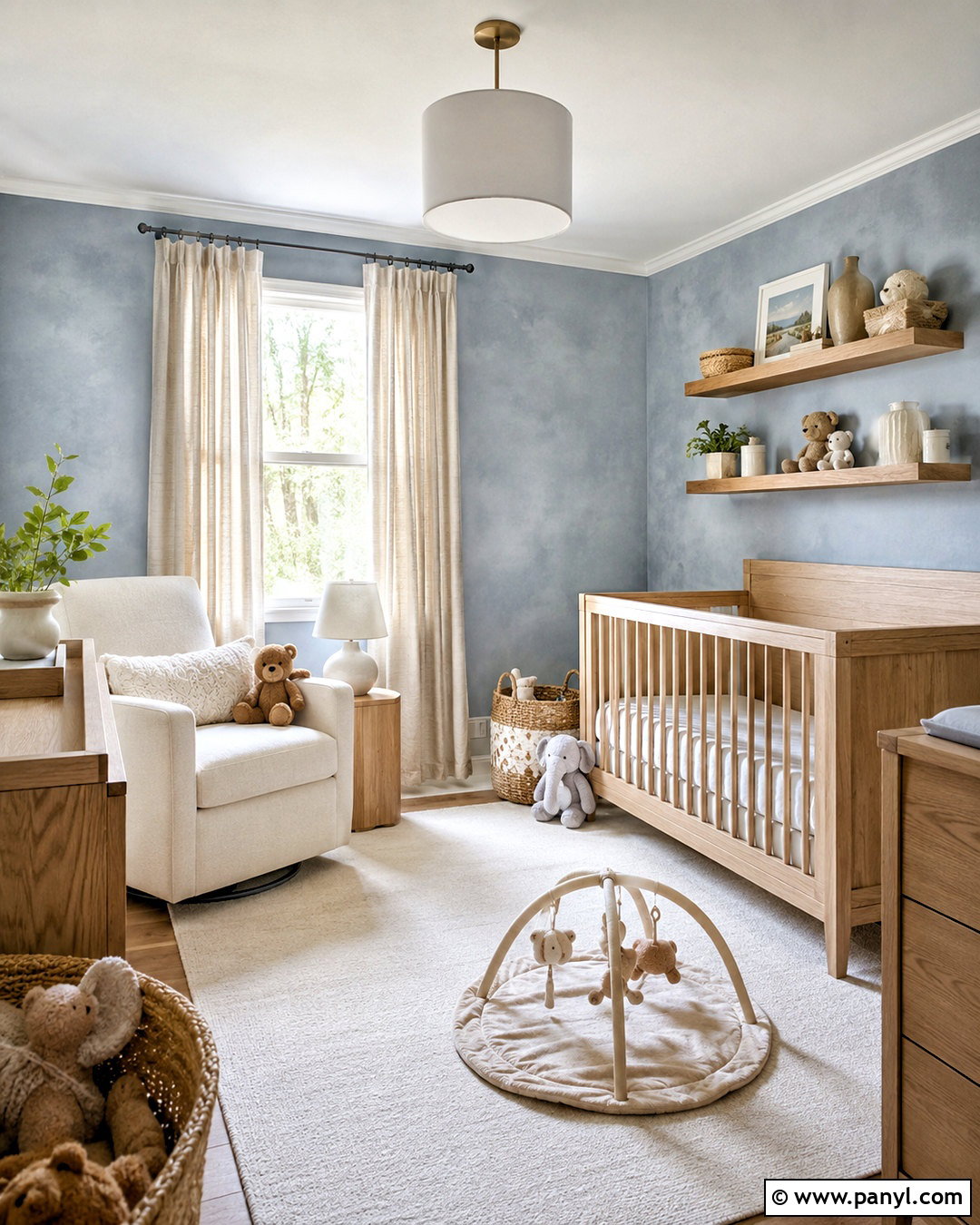
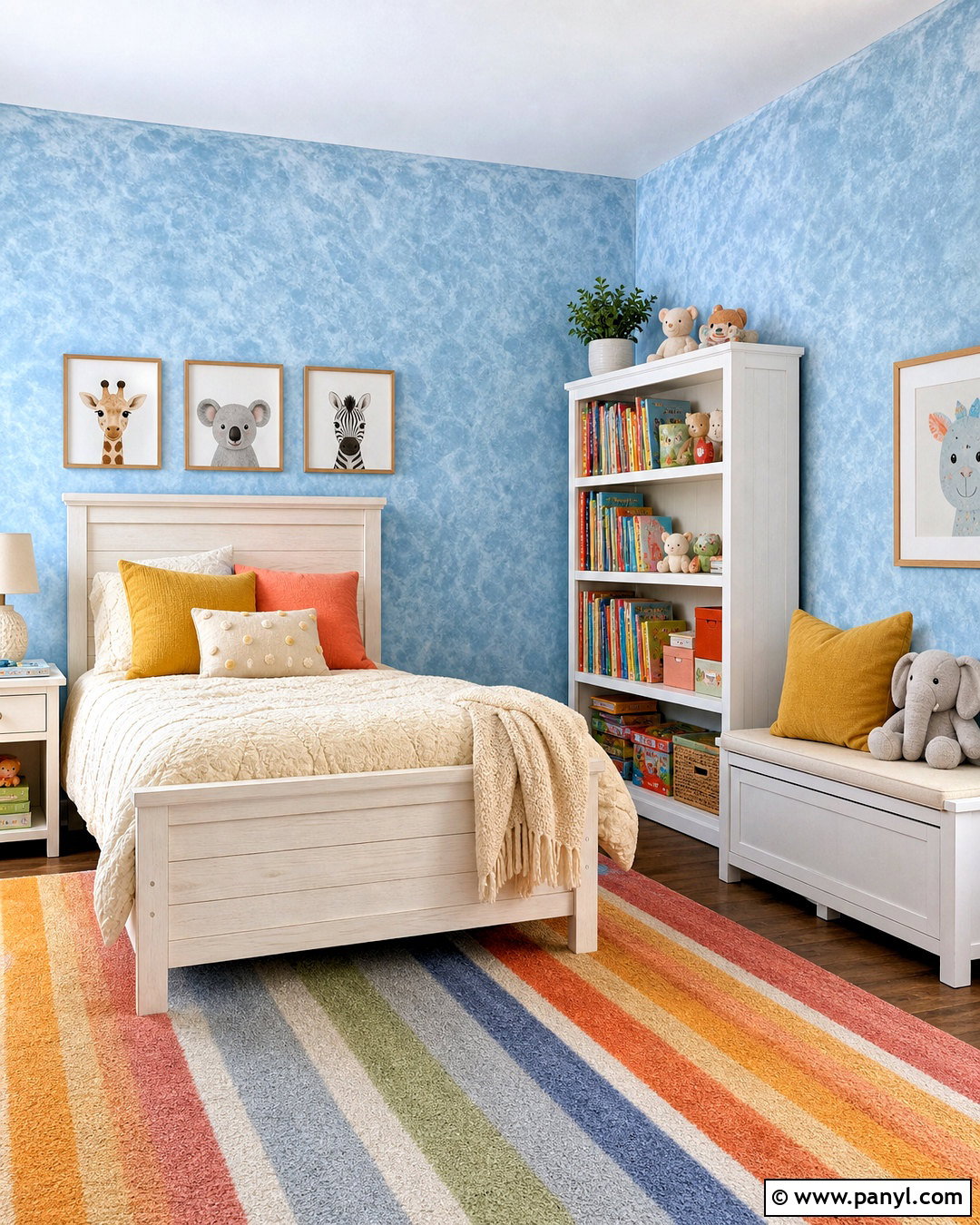
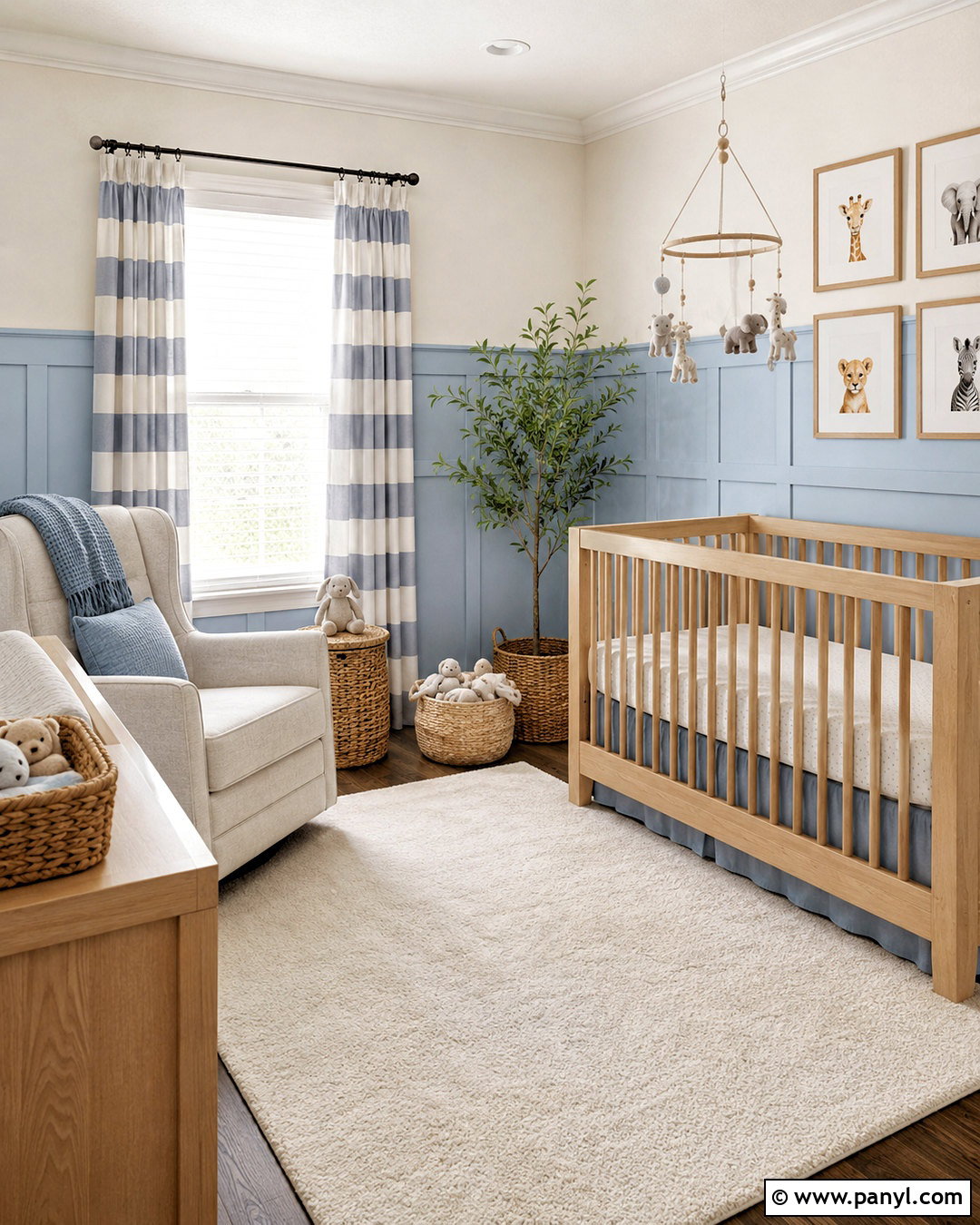
Dusty blue limewash creates a peaceful nursery backdrop that can adapt as the child grows. Apply a muted blue-gray shade to all four walls, using blended strokes for cloudlike movement. Keep the ceiling, doors, and trim warm white so the room remains light. Choose a natural oak crib, a cream upholstered glider, and a low wood dresser that can also serve as a changing station. Layer a soft ivory rug over the floor and use linen curtains in pale oatmeal. Simple wood shelves can display books, woven toys, and a few ceramic decorations. Add a dimmable ceiling fixture and a shaded floor lamp for flexible lighting. The combination of mineral blue, natural wood, and warm neutral textiles creates a calm, complete room without depending on short-lived themed decorations.
18. Plum Limewash Texture Sitting Room
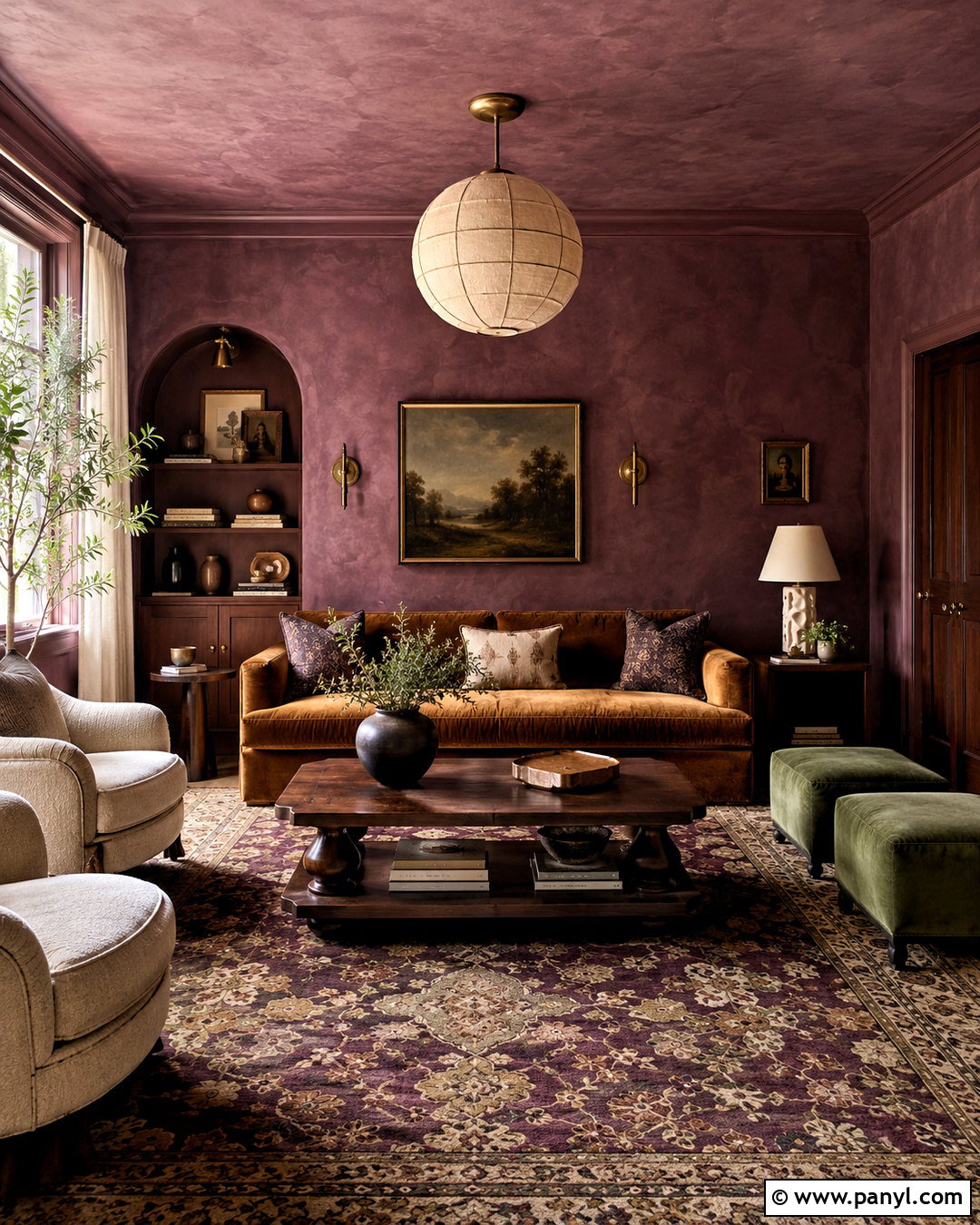
A muted plum limewash sitting room offers a sophisticated alternative to predictable neutral walls. Select an earthy purple with brown and burgundy undertones, then extend it across the walls and ceiling for an immersive finish. Place a camel velvet sofa against the longest wall and add two compact cream armchairs angled toward a dark wood coffee table. A patterned rug containing plum, tan, muted green, and ivory connects the furniture to the background. Use aged brass sconces and a sculptural floor lamp to create layered illumination. Walnut shelving, linen curtains, and a few antique-inspired artworks provide a collected appearance. Avoid excessive decorative objects because the saturated walls already contribute plenty of interest. The complete room feels intimate, expressive, and especially suited to conversation or quiet reading.
19. White Limewash Texture Minimalist Kitchen
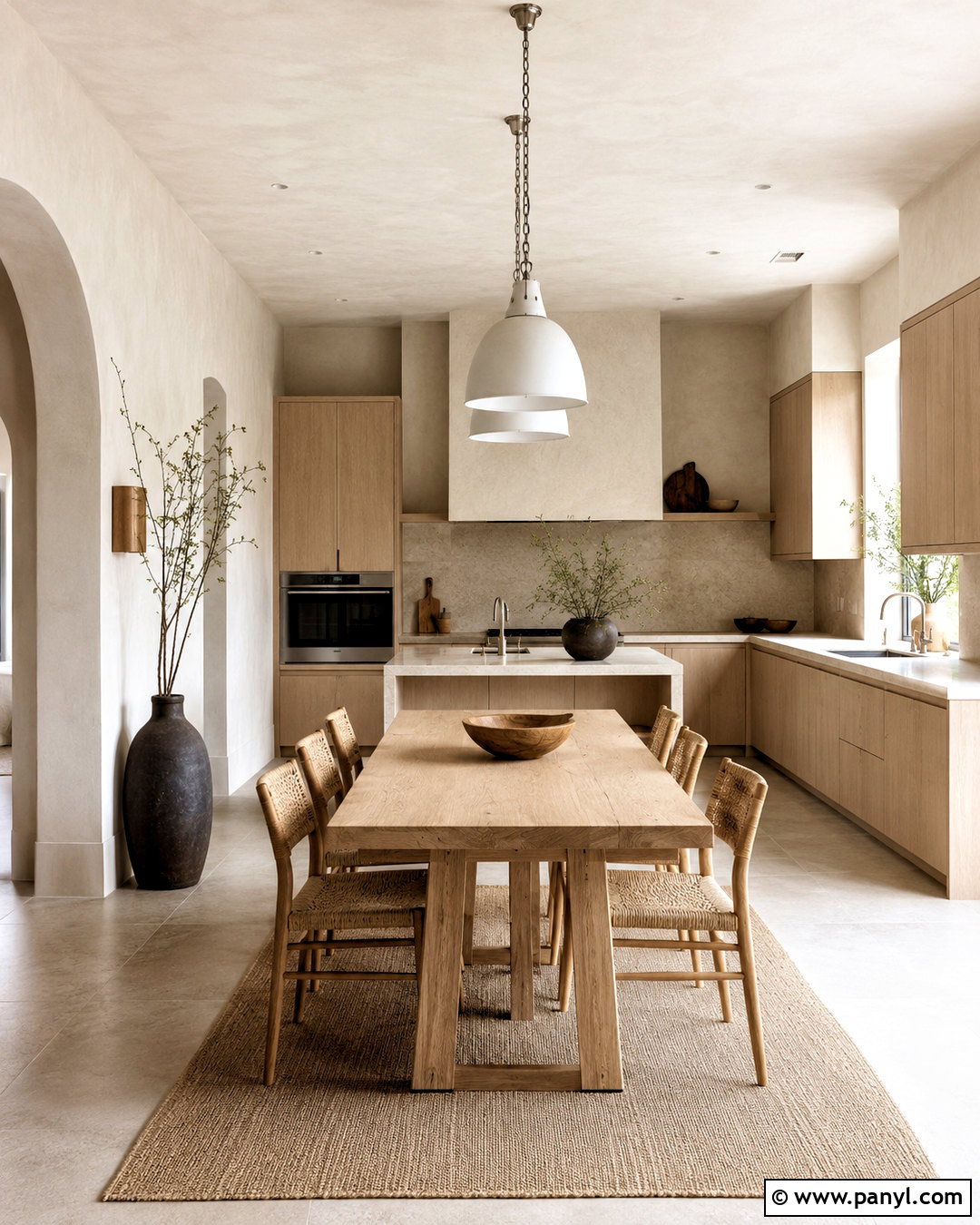
In a minimalist kitchen, chalky white limewash adds enough movement to prevent an all-white palette from feeling sterile. Cover the walls and ceiling with a warm mineral white, allowing broad, subtle brush marks to remain visible. Pair the finish with flat-panel white oak cabinetry, integrated appliances, and pale limestone countertops. Use a matching stone backsplash behind the cooktop for durability and visual continuity. A rectangular oak dining table with woven chairs can occupy the adjacent eating area. Choose brushed nickel fixtures and simple white pendants instead of high-contrast black accents. A light beige runner, ceramic bowls, and one large branch arrangement provide understated decoration. Texture rather than color becomes the focus, creating a kitchen that feels spacious, quiet, and carefully considered instead of empty.
20. Two Tone Limewash Texture Living Room
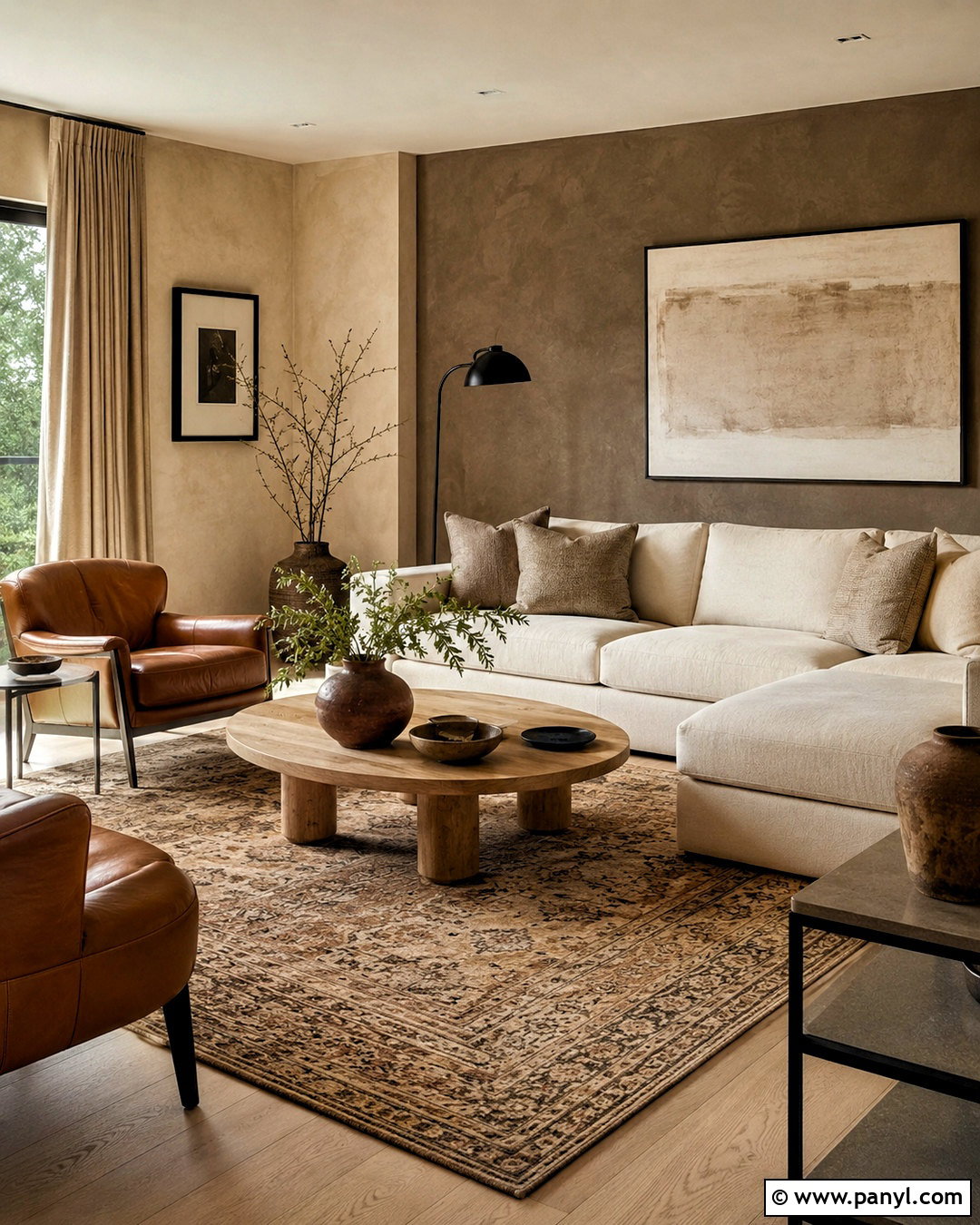
Two coordinated limewash colors can create subtle architectural definition in an open living room. Use warm sand limewash on three walls and a deeper mushroom-brown finish on the main seating wall. The colors should share similar undertones so the transition looks deliberate rather than abrupt. Position a cream sectional against the darker surface, then add cognac leather chairs, an oval oak coffee table, and a large patterned wool rug. Repeat both wall colors through beige curtains, taupe pillows, and brown ceramic accessories. A black metal floor lamp and dark picture frames introduce clear lines. Keep the ceiling soft white to maintain brightness. This complete palette delivers greater depth than a standard accent wall while preserving the natural tonal variation that makes limewash distinctive.
Conclusion:
The best limewash texture ideas treat the wall finish as part of a complete room rather than a decorative afterthought. Pale white, beige, and greige applications support airy interiors, while olive, plum, charcoal, and terracotta create richer surroundings. Natural wood, stone, linen, wool, aged metal, and handmade ceramics complement the finish because they share its organic character. Before beginning, test the color and technique on a generous sample area because limewash often changes noticeably as it dries. Apply the product in thin layers, maintain a wet edge, and follow its surface preparation instructions for reliable adhesion and tonal movement. () With thoughtful planning, these 20 limewash texture ideas can give an ordinary space lasting depth, warmth, and personality.

Related Ideas and Inspiration:
Leave a Reply