
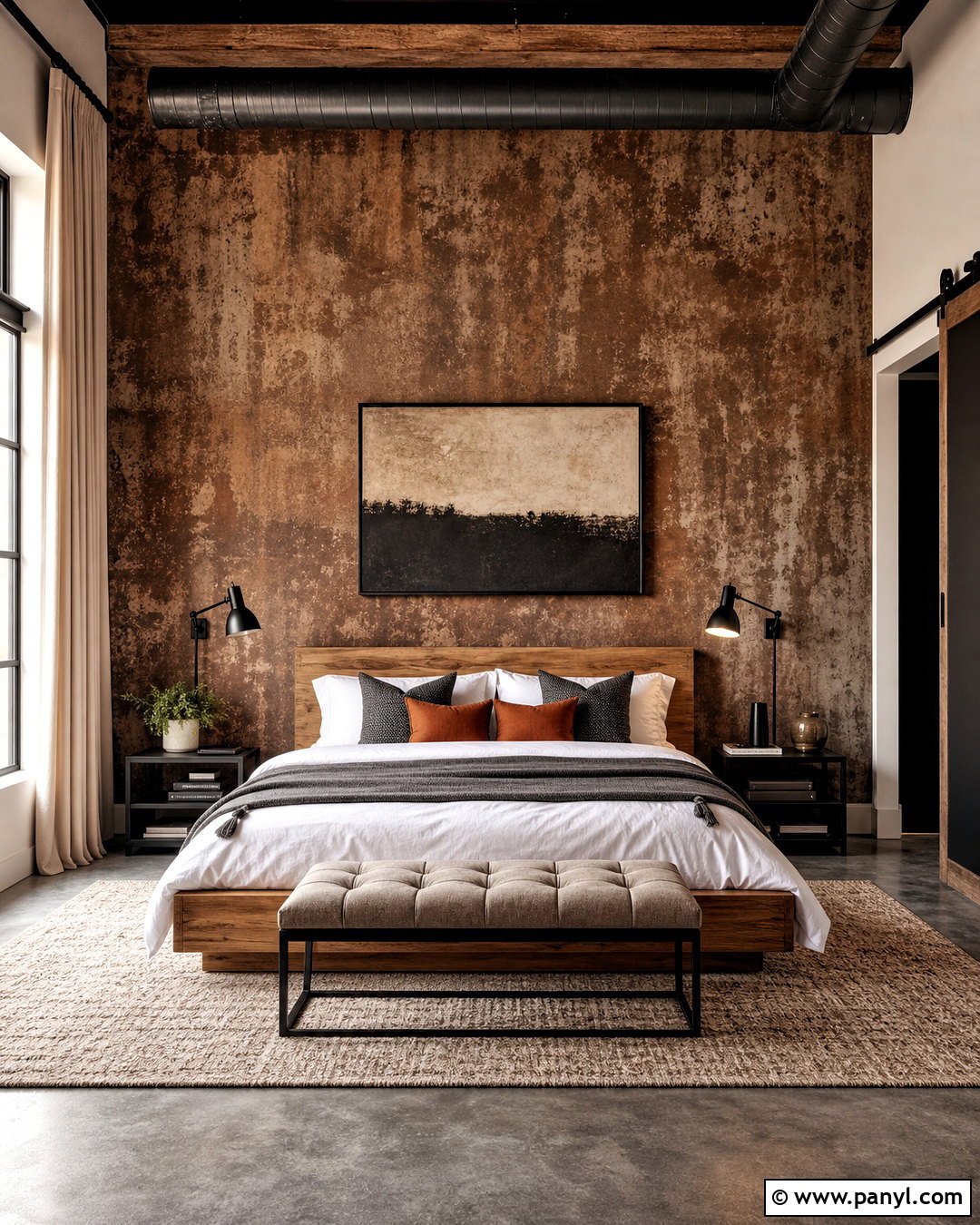
Flat painted surfaces can feel unfinished when the rest of a room is layered with beautiful furniture, textiles, and lighting. Adding texture to walls creates depth, controls visual focus, and gives an ordinary space a more thoughtful character. Current wall treatments range from soft limewash and polished plaster to dimensional wood panels, grasscloth, stone, and tactile tile. Many of these finishes also respond beautifully to natural and artificial light, producing subtle highlights and shadows throughout the day. () The key is choosing a treatment that fits the room’s size, purpose, and existing materials instead of applying texture without a plan. The following complete room looks provide practical inspiration for adding texture to walls.

1. Limewash Living Room Wall
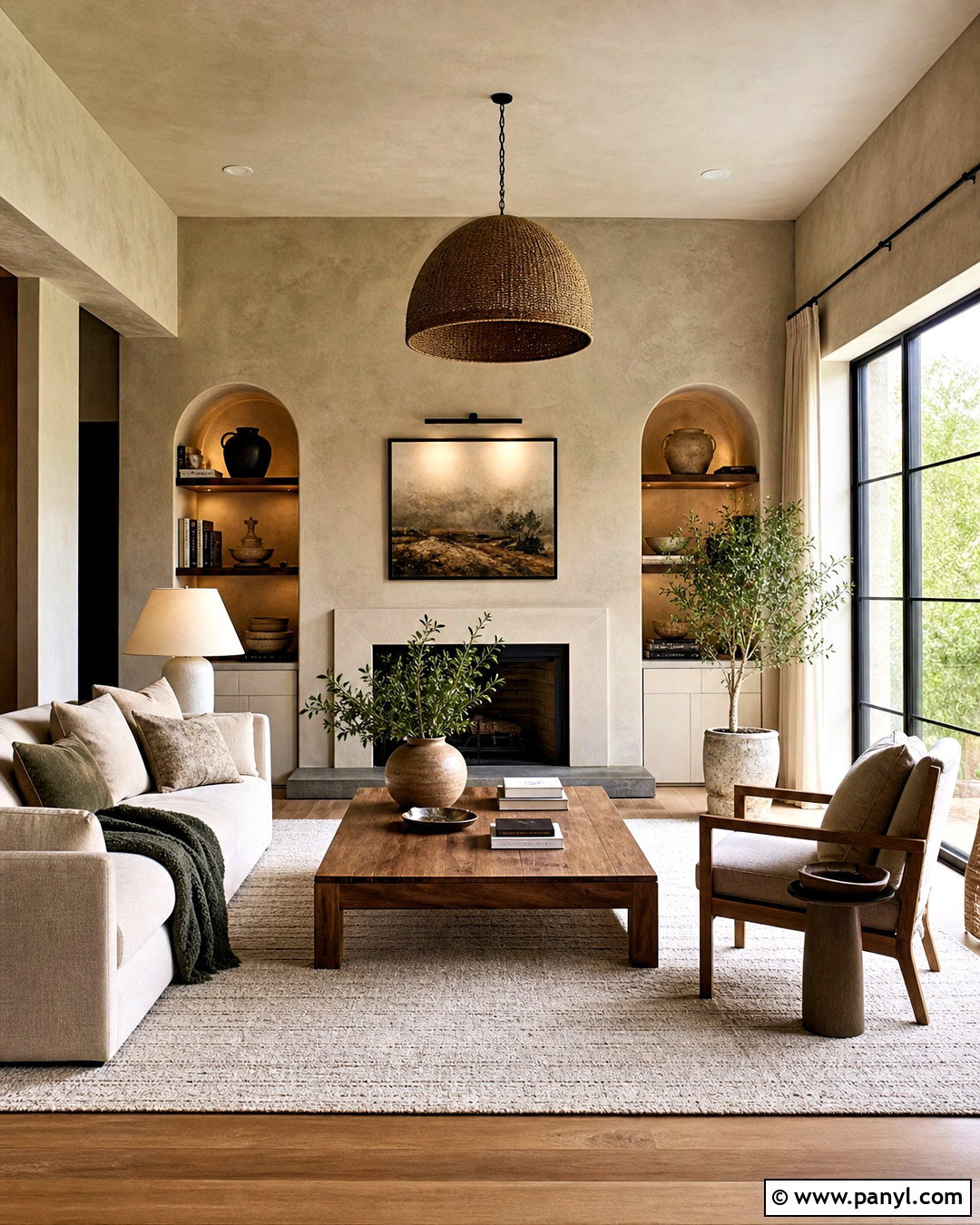
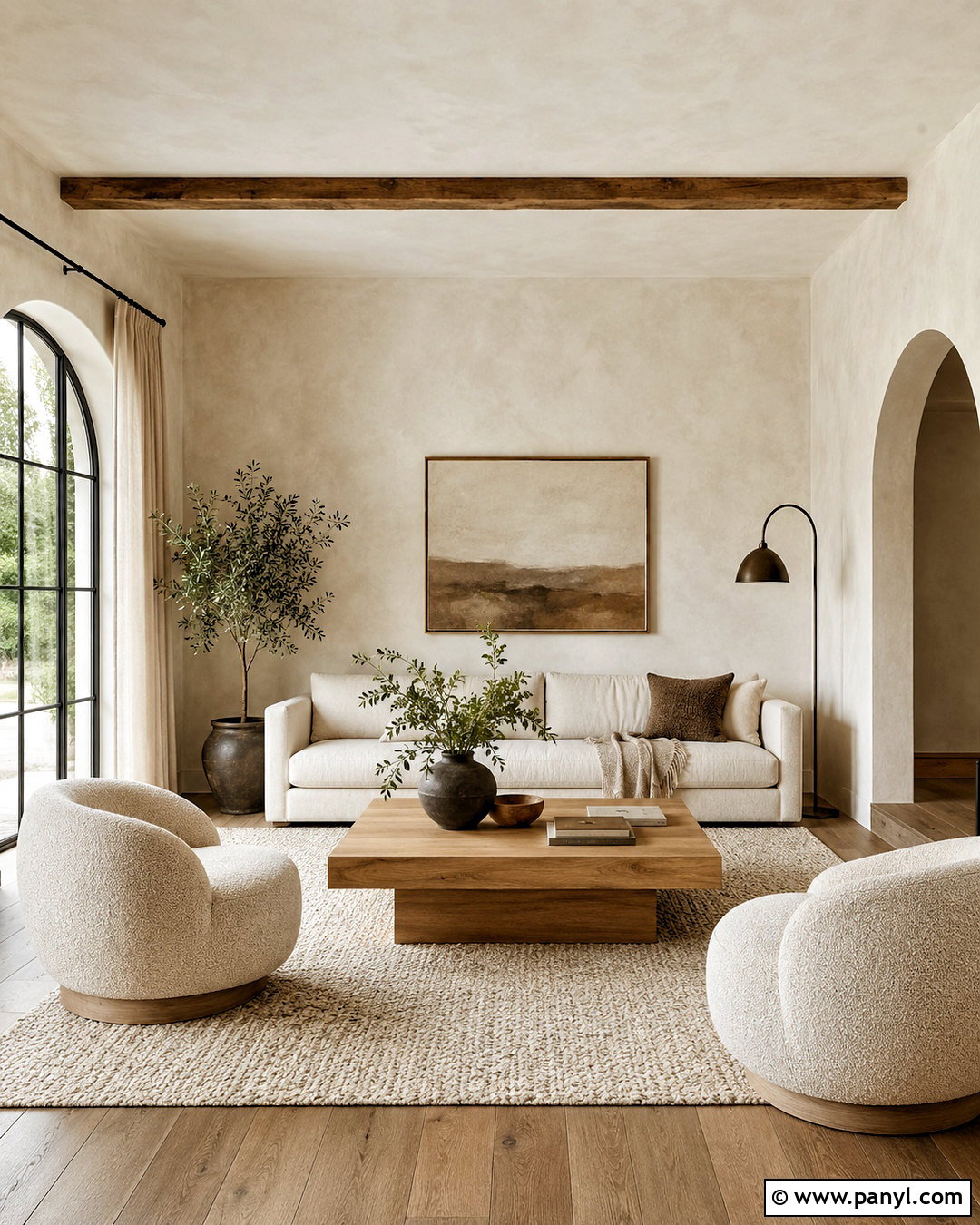
A warm limewash finish can make a living room feel relaxed, layered, and naturally welcoming. Cover every wall in a soft mushroom beige rather than limiting the finish to one accent surface. Pair it with a low oatmeal-colored sofa, walnut coffee table, and cream wool rug for a balanced neutral foundation. Linen curtains and handmade ceramic lamps reinforce the matte, organic character of the walls. Choose black metal picture lights and a few large framed prints to provide crisp contrast. Since limewash already creates visible movement, keep decorative accessories simple and generously spaced. Soft white ceilings and medium oak flooring prevent the room from looking too beige. This complete scheme works especially well in sunny living rooms where changing daylight can reveal the finish’s subtle variation.
2. Venetian Plaster Bedroom Wall
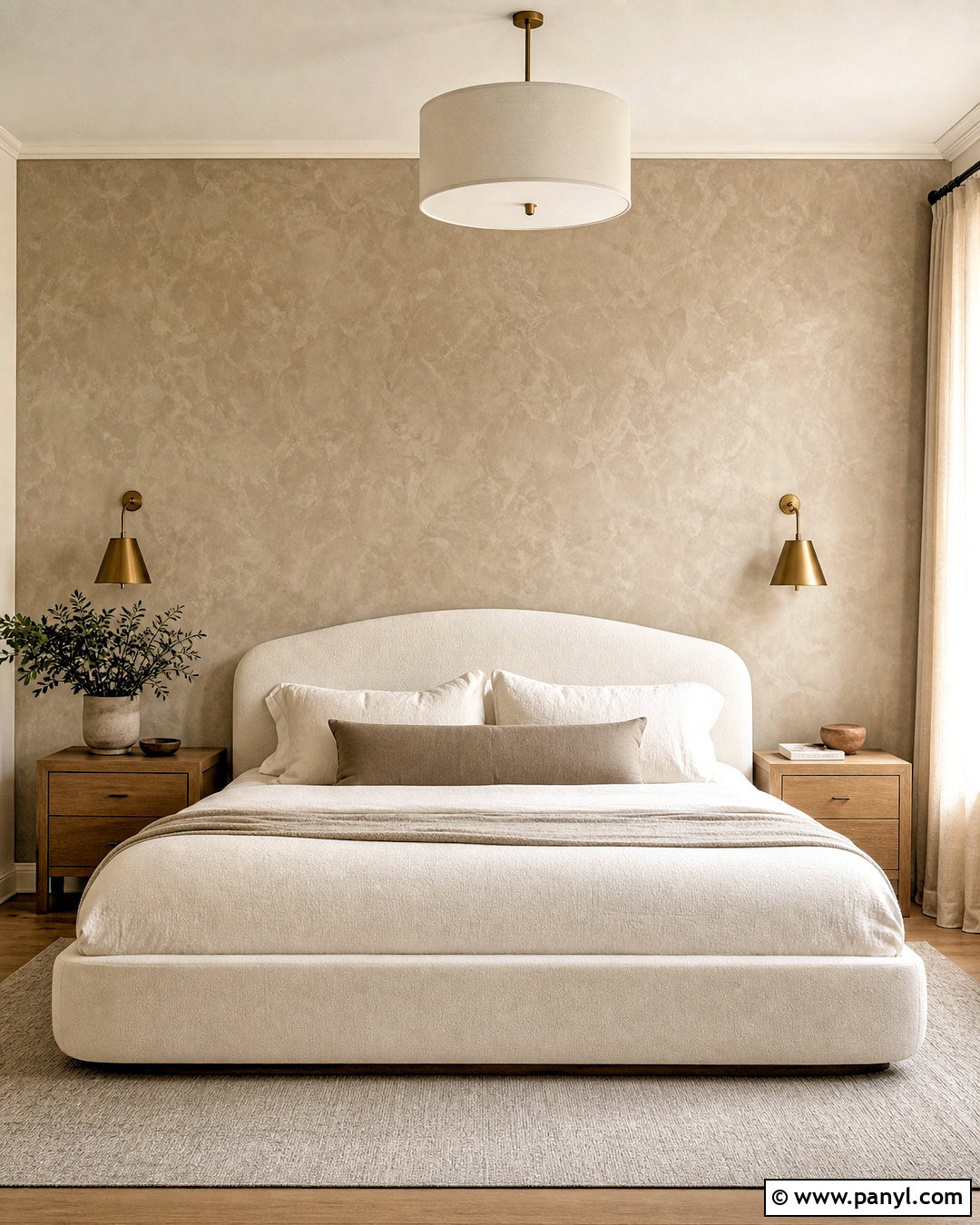
Smooth Venetian plaster brings gentle movement and a polished appearance to a restful bedroom. Use a warm greige plaster across the wall behind the bed, then paint the remaining walls in a closely matched matte color. A curved cream upholstered bed softens the reflective finish, while medium-tone oak nightstands add natural warmth. Install small aged-brass sconces on both sides to highlight the plaster without creating harsh glare. Finish the room with ivory bedding, a faded taupe rug, and floor-length linen curtains. One large abstract artwork is enough because the wall already carries visual interest. This design looks refined but still comfortable. Keeping the ceiling, trim, and doors a warm white ensures the plaster remains the focal point without making the bedroom feel dark or overly formal.
3. Board And Batten Dining Room Wall
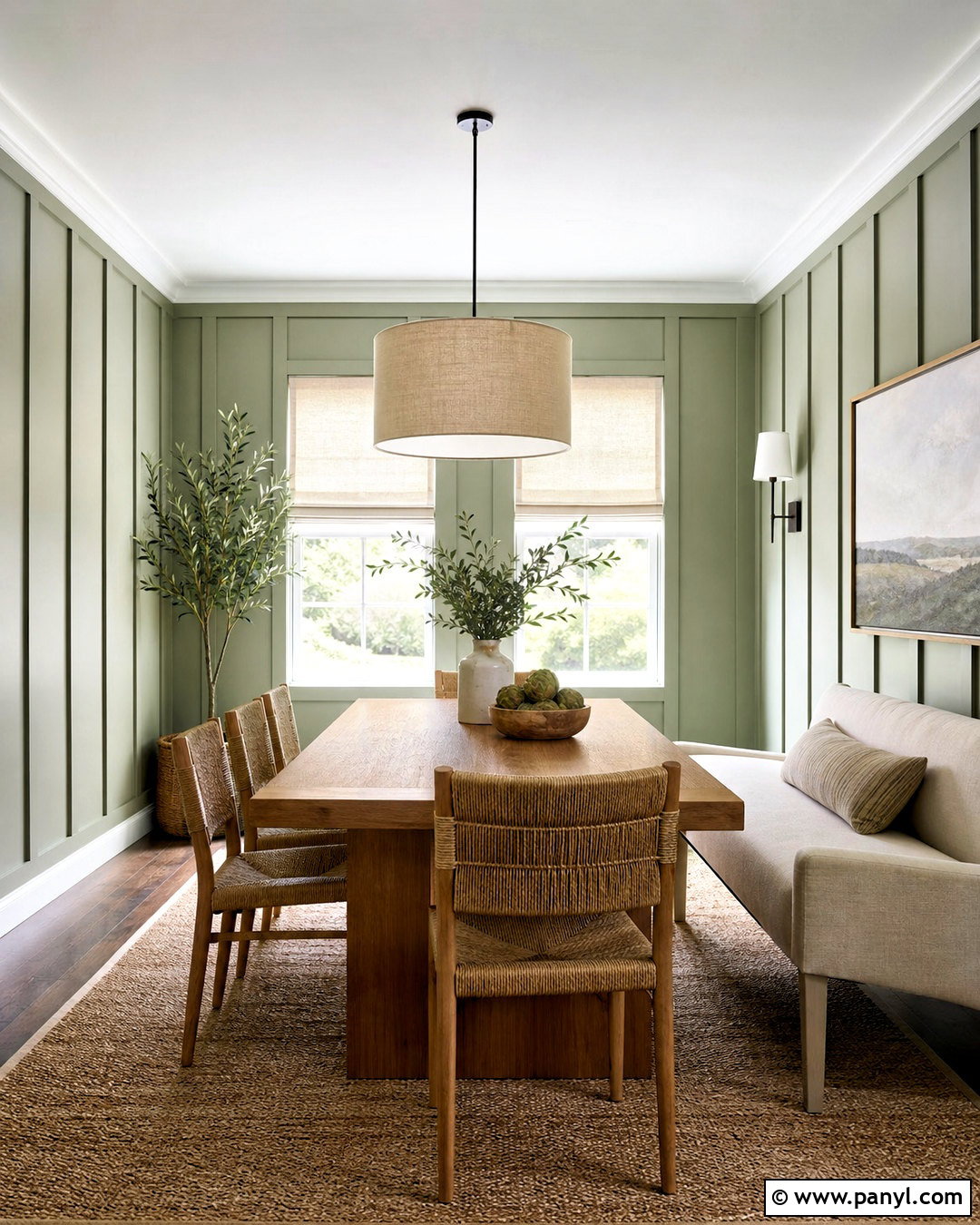
Board and batten gives a dining room architectural detail without requiring elaborate decoration. Install full-height vertical battens across all four walls, spacing them evenly around windows and doorways. Paint the complete treatment a muted sage green in an eggshell finish. Place a rectangular oak dining table in the center with woven-seat chairs and a simple cream bench. A large linen drum pendant introduces softness above the table, while natural Roman shades continue the relaxed look. Use a light jute rug to define the dining area and warm white tableware for contrast. Keep artwork minimal and position it carefully within the wider wall sections. The consistent paneling makes the room feel finished from every angle, while the natural materials prevent the geometric wall pattern from appearing rigid or overly decorative.
4. Fluted Wood TV Wall
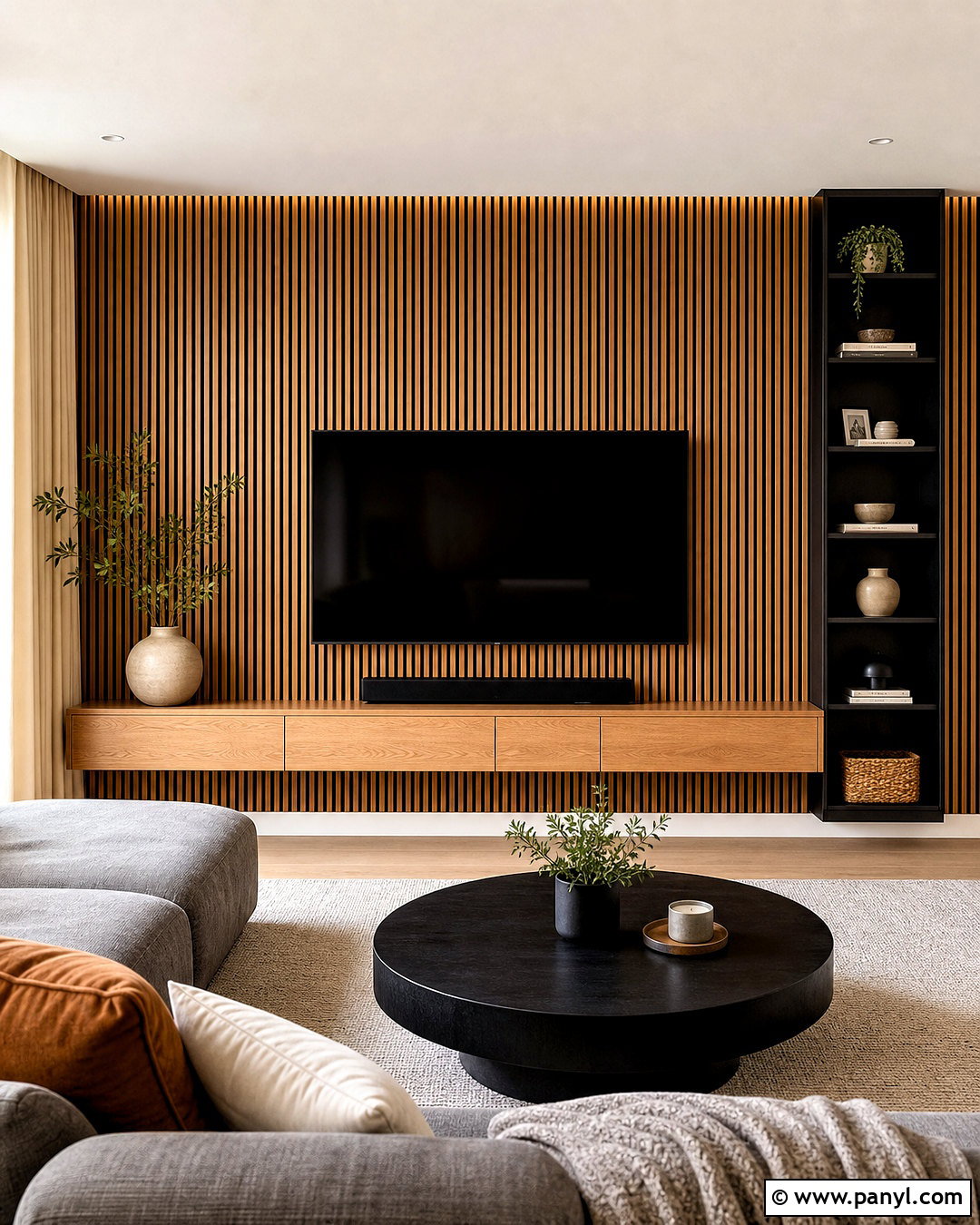
A fluted wood TV wall can turn practical electronics into part of a polished living room design. Cover the entire media wall with narrow vertical oak battens over a dark acoustic backing. Center the television above a long floating oak console, leaving open space around the screen so the wall does not feel crowded. Furnish the room with a light gray sectional, rounded black coffee table, and textured ivory rug. Add soft linen curtains and one tall indoor tree to balance the strong vertical lines. Recessed ceiling lights should wash gently across the battens and reveal their depth. Hide cables inside the wall and store devices behind ventilated console doors. Repeating the same oak in a side table or shelving unit makes the textured feature feel connected to the whole room.
5. Grasscloth Home Office Wall
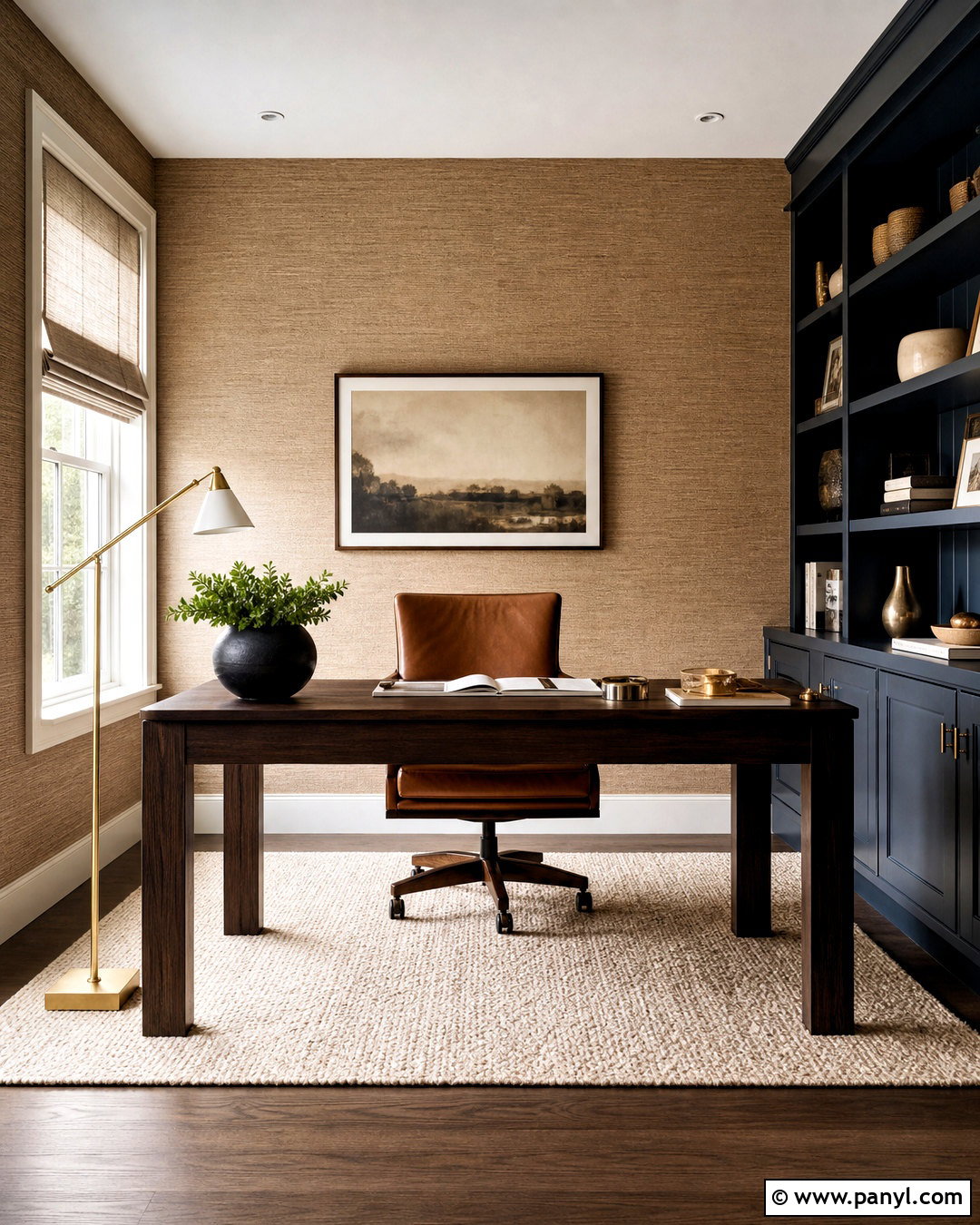
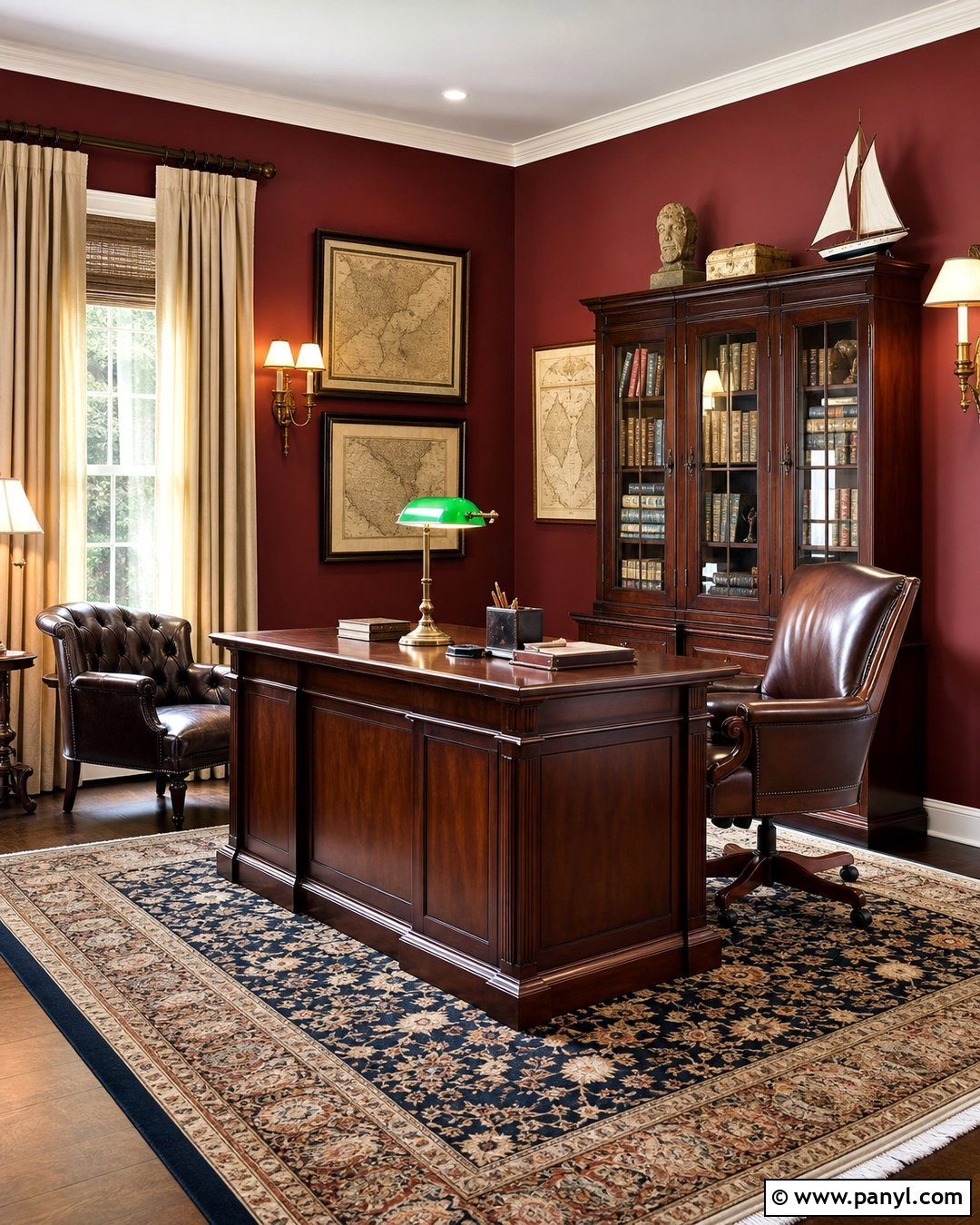
Natural grasscloth can make a home office feel warm, quiet, and more established. Apply a finely woven tan grasscloth to every wall for an enveloping effect, using professional installation to keep the seams orderly. Position a dark walnut desk near the center of the room rather than pressing it against the wall. Add a cognac leather chair, slim brass floor lamp, and low wool rug in muted blue and beige. Built-in shelves painted deep navy create useful contrast and give books, baskets, and pottery a structured background. Choose simple linen window shades that complement the natural fibers without competing with them. Because grasscloth has visible color and weave variations, avoid excessive wall art. One framed landscape and a round brass clock provide enough decoration for this complete, productive workspace.
6. Exposed Brick Kitchen Wall
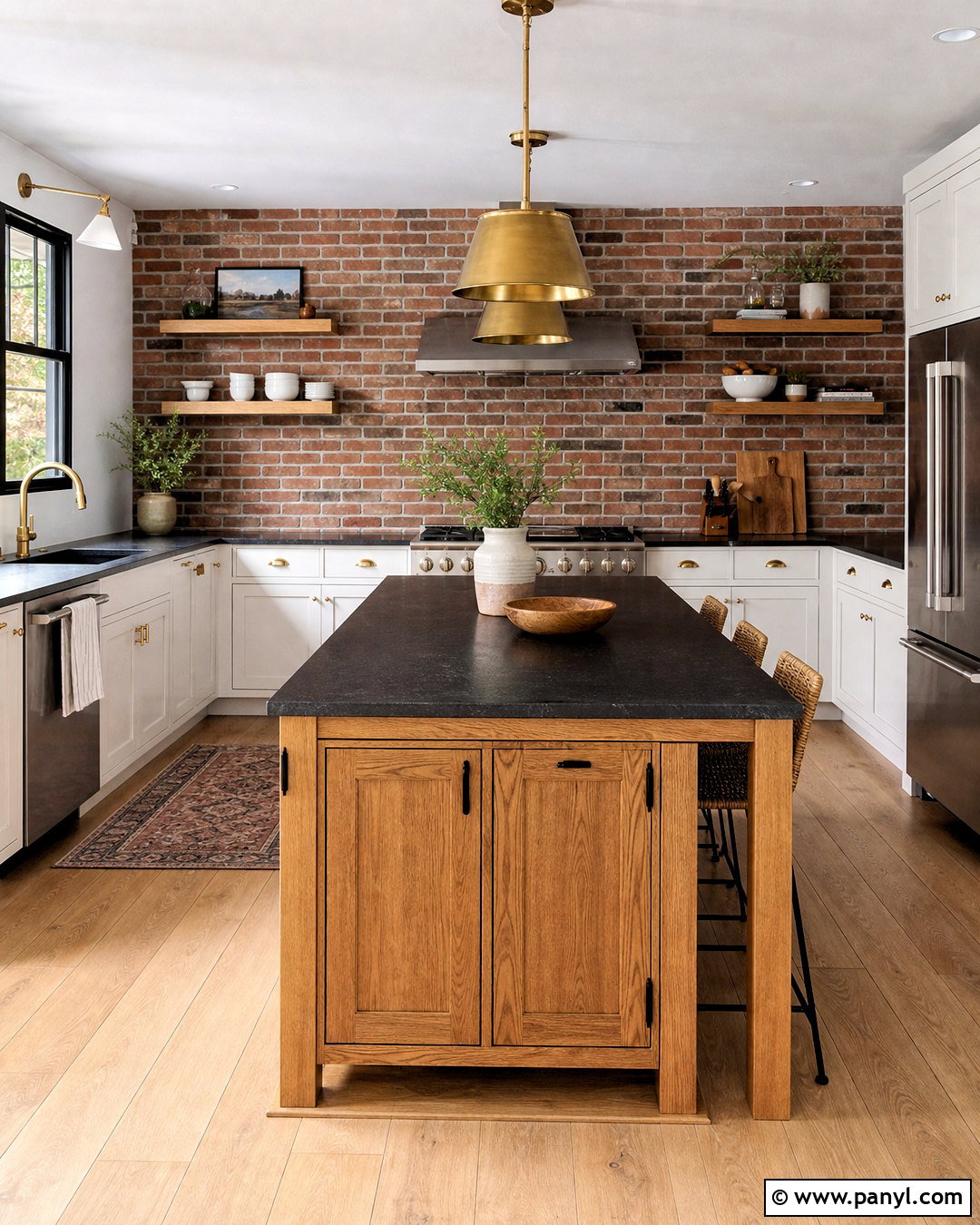
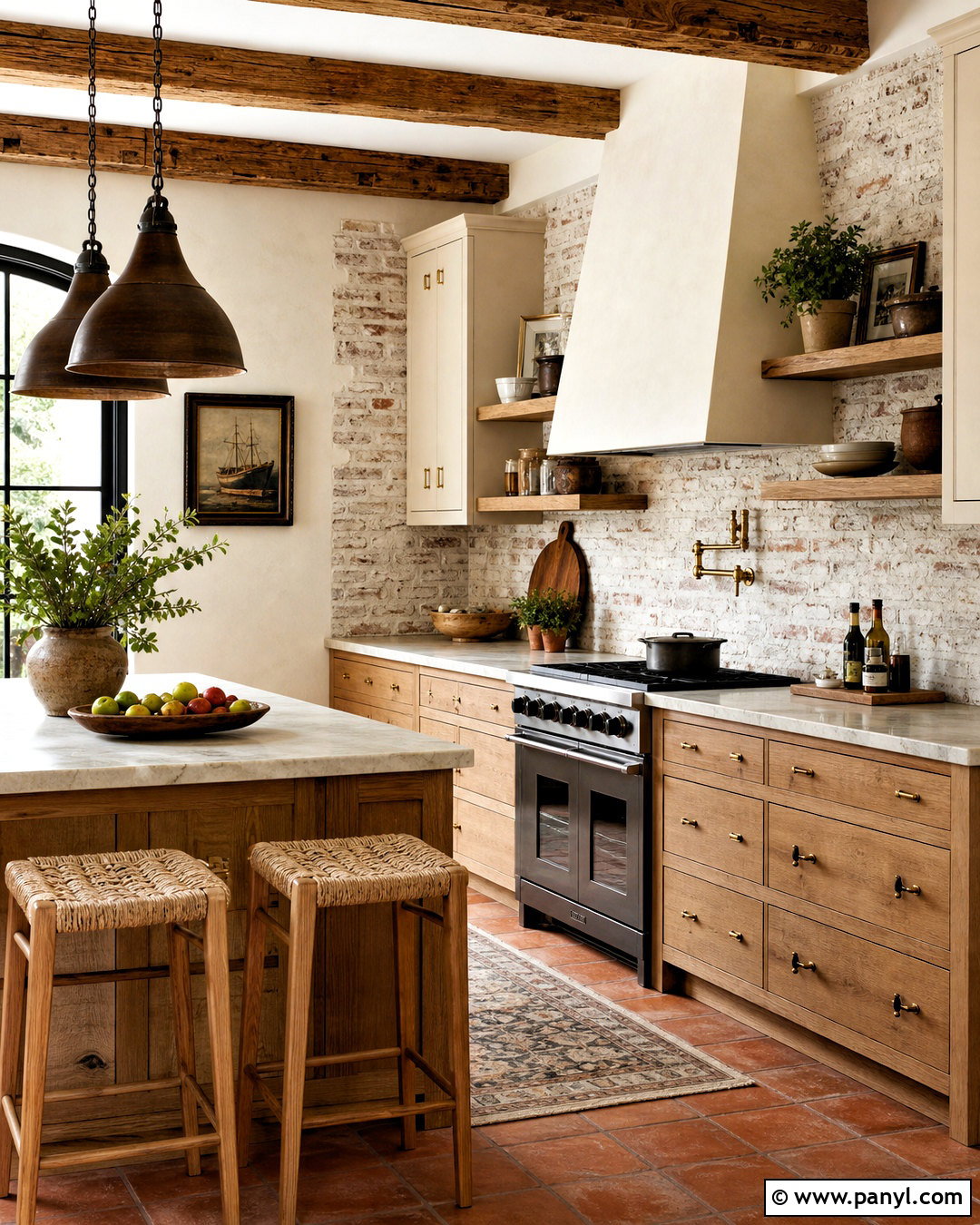
An exposed brick wall brings warmth and history to a kitchen when it is balanced with clean, practical finishes. Use the brick along the main cooking wall and seal it with a breathable matte product for easier maintenance. Install warm white shaker cabinets, honed black countertops, and a simple stainless steel range in front of the textured surface. A medium oak island with woven stools repeats the brick’s natural warmth without making the room feel rustic. Choose aged-brass pendants and dark bronze cabinet pulls for understated contrast. Pale oak flooring and a soft white ceiling keep the kitchen bright. Open shelves should be used sparingly so the brick remains visible. Display neutral dishes, wooden cutting boards, and a few green herbs to create a complete room that feels collected but not cluttered.
7. Stone Fireplace Wall
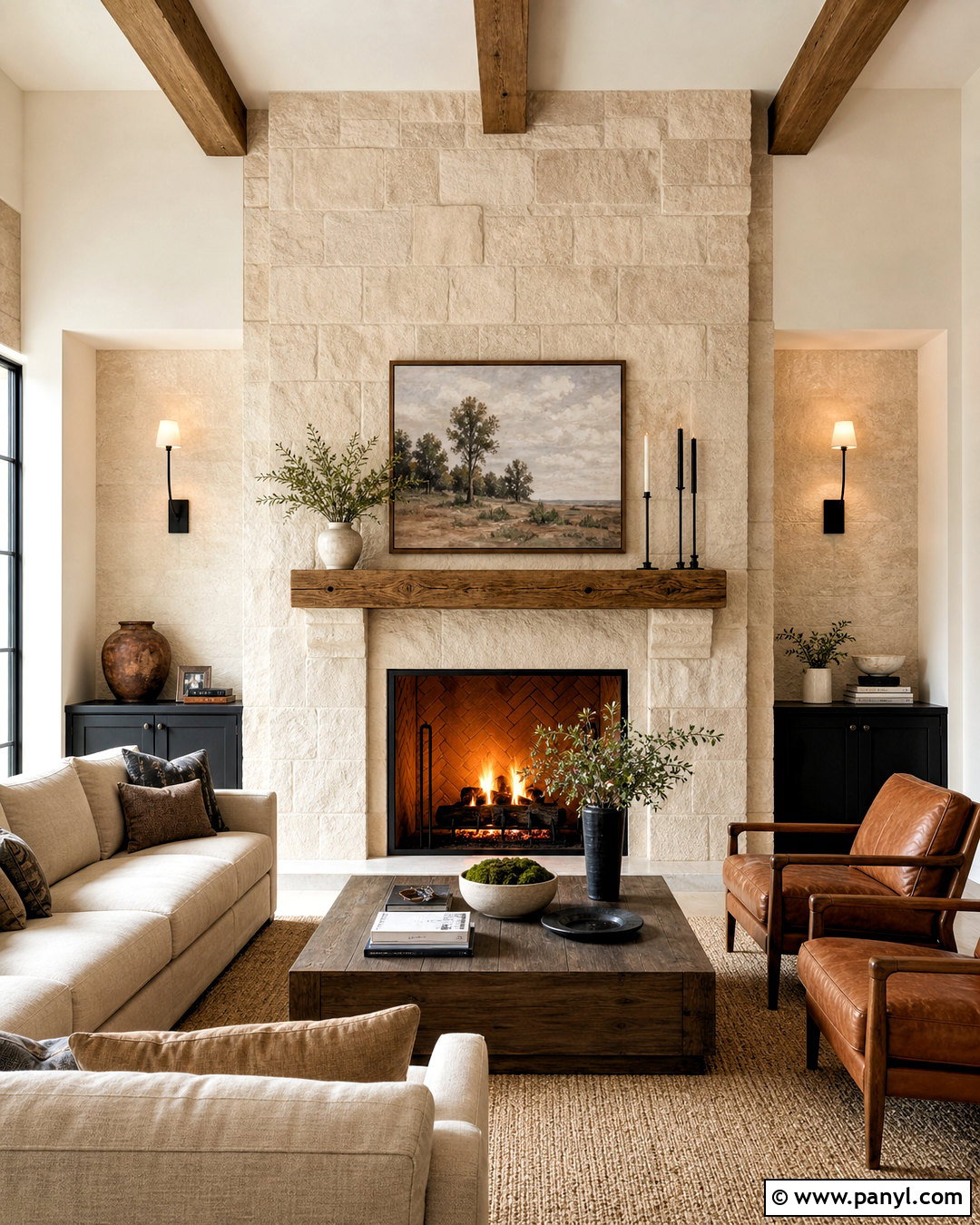
A floor-to-ceiling stone fireplace wall can establish a strong natural centerpiece in a family room. Choose irregular limestone in soft cream, sand, and pale gray tones rather than dark stacked stone. Build a wide firebox into the center and add a thick reclaimed oak mantel for warmth. Arrange a deep beige sectional and two camel leather chairs around a large square coffee table, creating a comfortable conversation area. A woven wool rug echoes the stone’s varied coloring. Install simple black sconces on the surrounding walls and avoid mounting a television over the mantel if another location is available. Full-height cream curtains and pale wood flooring keep the space light. Limit mantel decor to one framed artwork, a ceramic vessel, and a trailing plant so the stone texture remains visually dominant.
8. Microcement Bathroom Wall
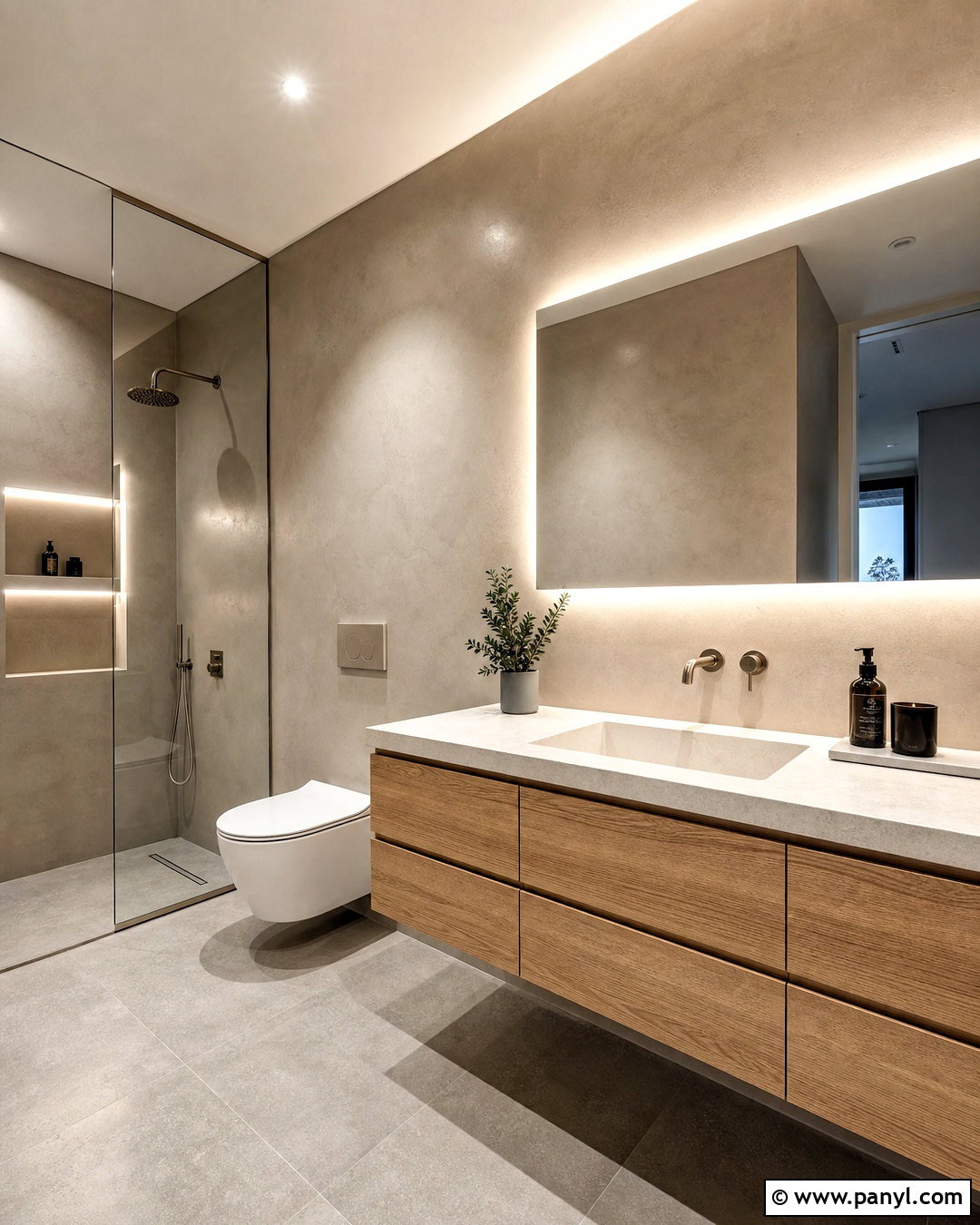
Microcement creates a continuous, streamlined bathroom surface while still providing subtle handcrafted texture. Apply warm gray microcement to the walls inside and outside a walk-in shower, then pair it with large-format porcelain flooring in a slightly deeper gray. A floating white oak vanity introduces warmth and offers closed storage beneath a pale quartz countertop. Use brushed nickel faucets, a frameless glass shower panel, and a wide backlit mirror for a clean modern finish. White towels and a small teak stool soften the mineral palette. Add one recessed shower niche rather than multiple shelves that interrupt the walls. Good ventilation and a properly specified waterproof system are essential in wet areas. The finished bathroom should feel calm and cohesive, with carefully chosen materials rather than unnecessary accessories supplying the visual interest.
9. Textured Tile Shower Wall
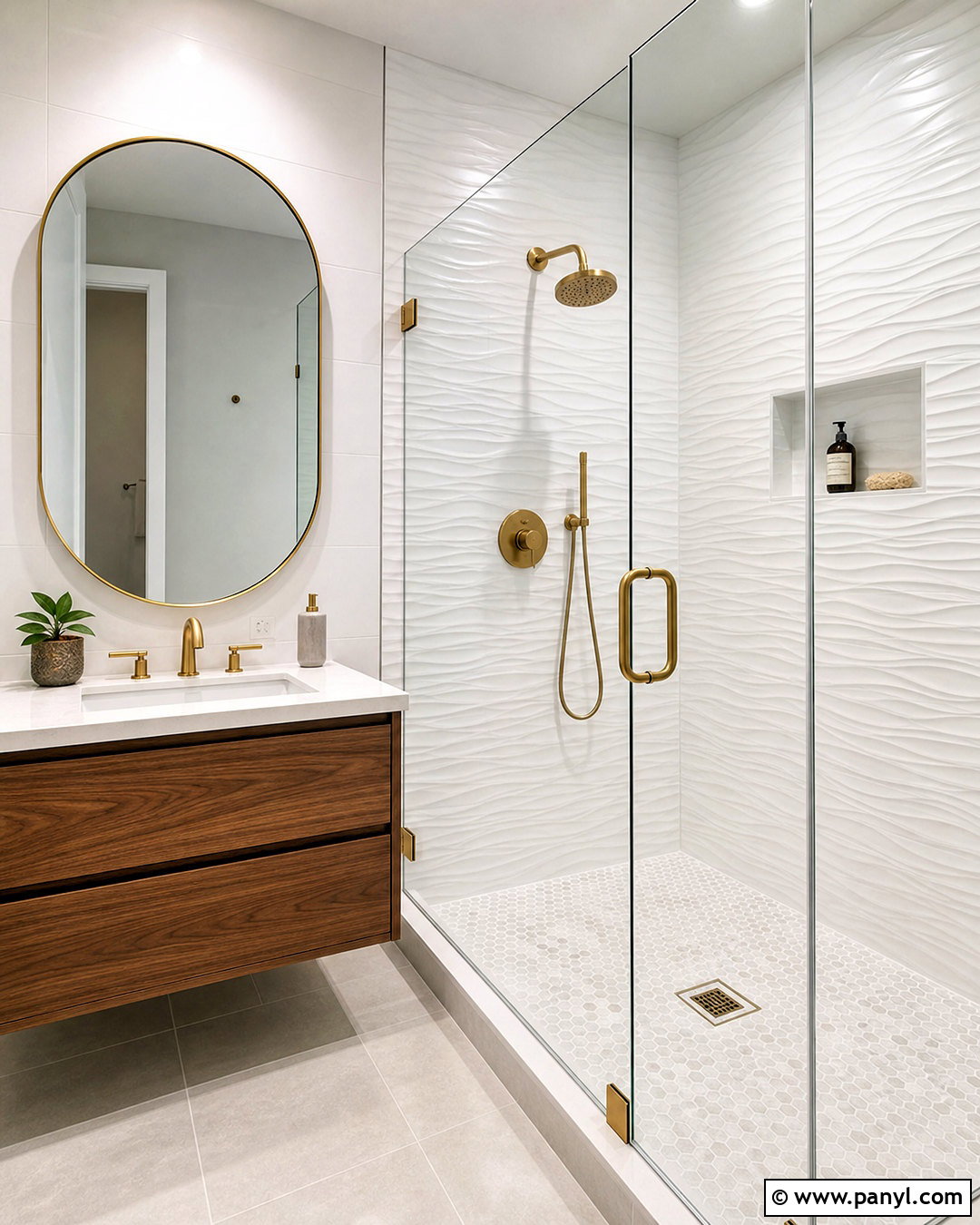
A dimensional tile wall gives a shower depth while maintaining the durability expected in a hardworking bathroom. Cover the main shower wall with glossy white ceramic tiles featuring a subtle raised wave pattern. Use plain white tiles on the side walls so the design remains balanced and easier to clean. Continue pale gray porcelain tile across the bathroom floor and install a floating walnut vanity opposite the shower. Brushed brass fixtures add warmth, while a clear glass enclosure keeps the textured surface visible. Choose a frameless oval mirror, simple globe sconces, and neatly folded white towels. Grout should closely match the tiles to emphasize their shape rather than creating a busy grid. Bright, even lighting allows the relief pattern to cast soft shadows without making the compact room feel visually crowded.
10. Beadboard Entryway Wall
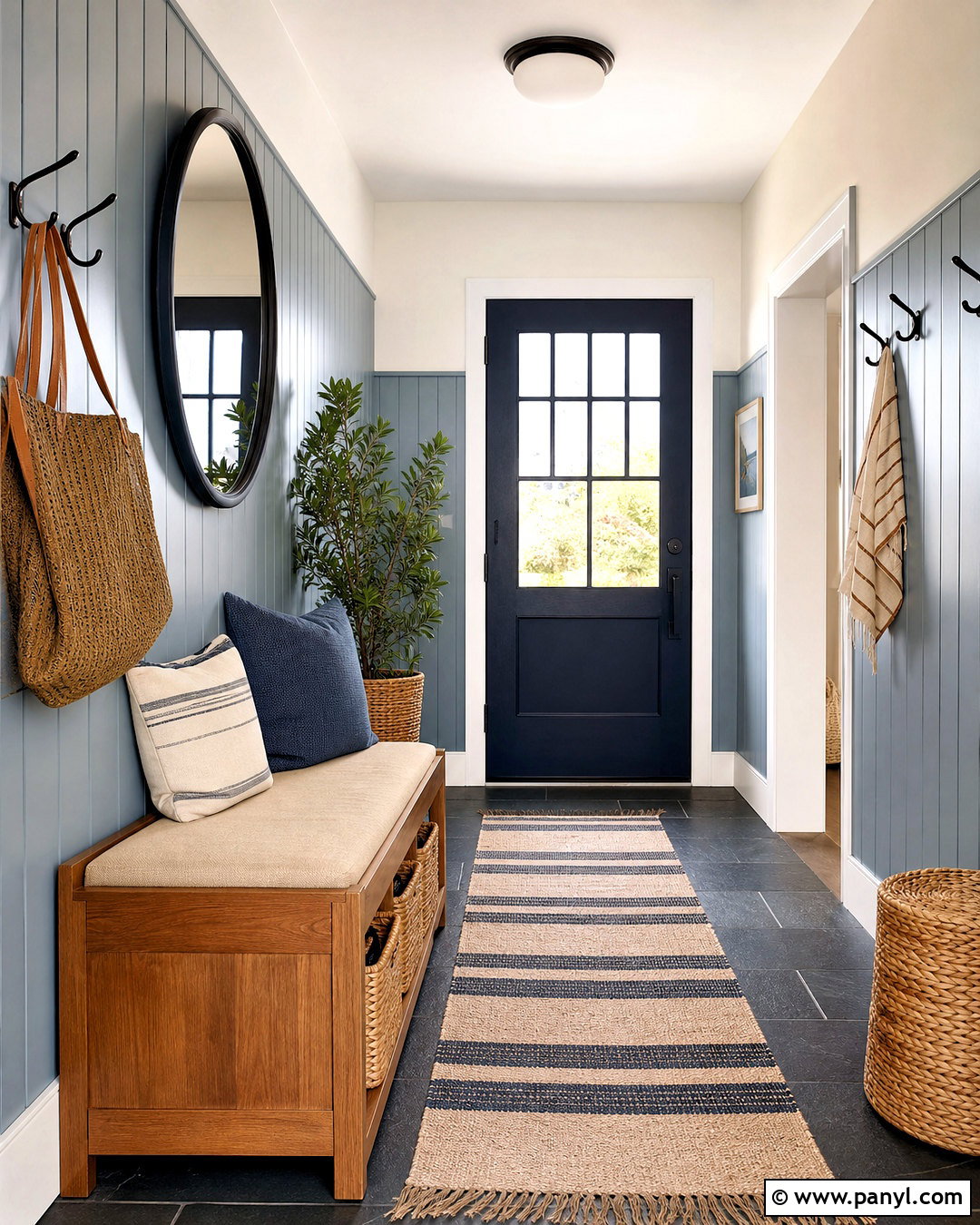
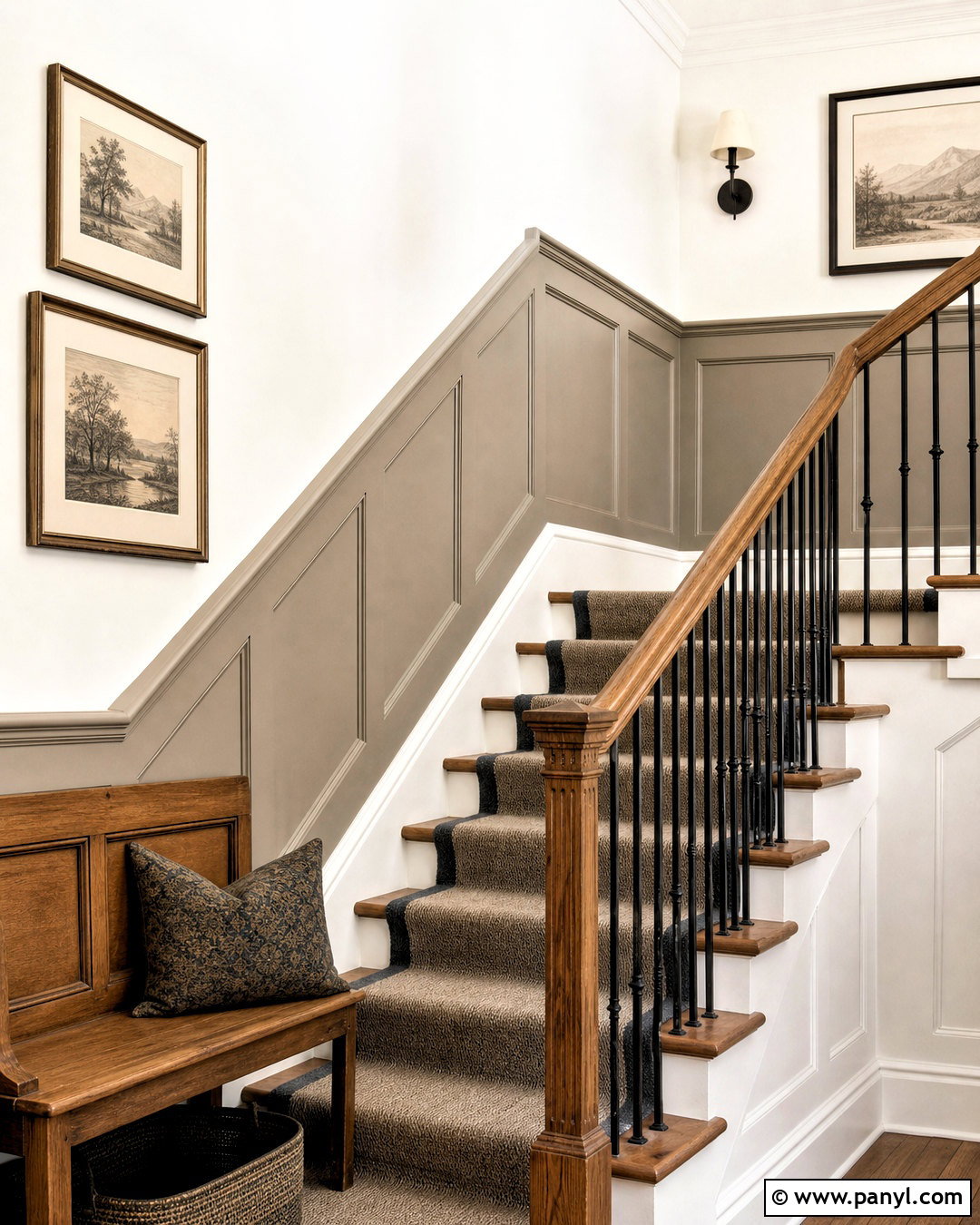
Beadboard can give a busy entryway texture, durability, and a clear sense of organization. Install it two-thirds of the way up the walls and cap it with a narrow picture ledge. Paint the paneling a dusty blue-gray and use warm white paint above it. A slim oak bench with woven baskets underneath provides seating and concealed storage. Add black metal hooks for coats, a small wall mirror, and a striped washable runner that combines blue, cream, and tan. A simple flush-mount ceiling light keeps the narrow space bright. Place one framed print and a ceramic bowl on the ledge instead of filling it with small objects. The vertical grooves make the ceiling appear taller, while the coordinated storage and limited palette turn the entrance into a useful, complete transition area.
11. Picture Frame Molding Hallway Wall
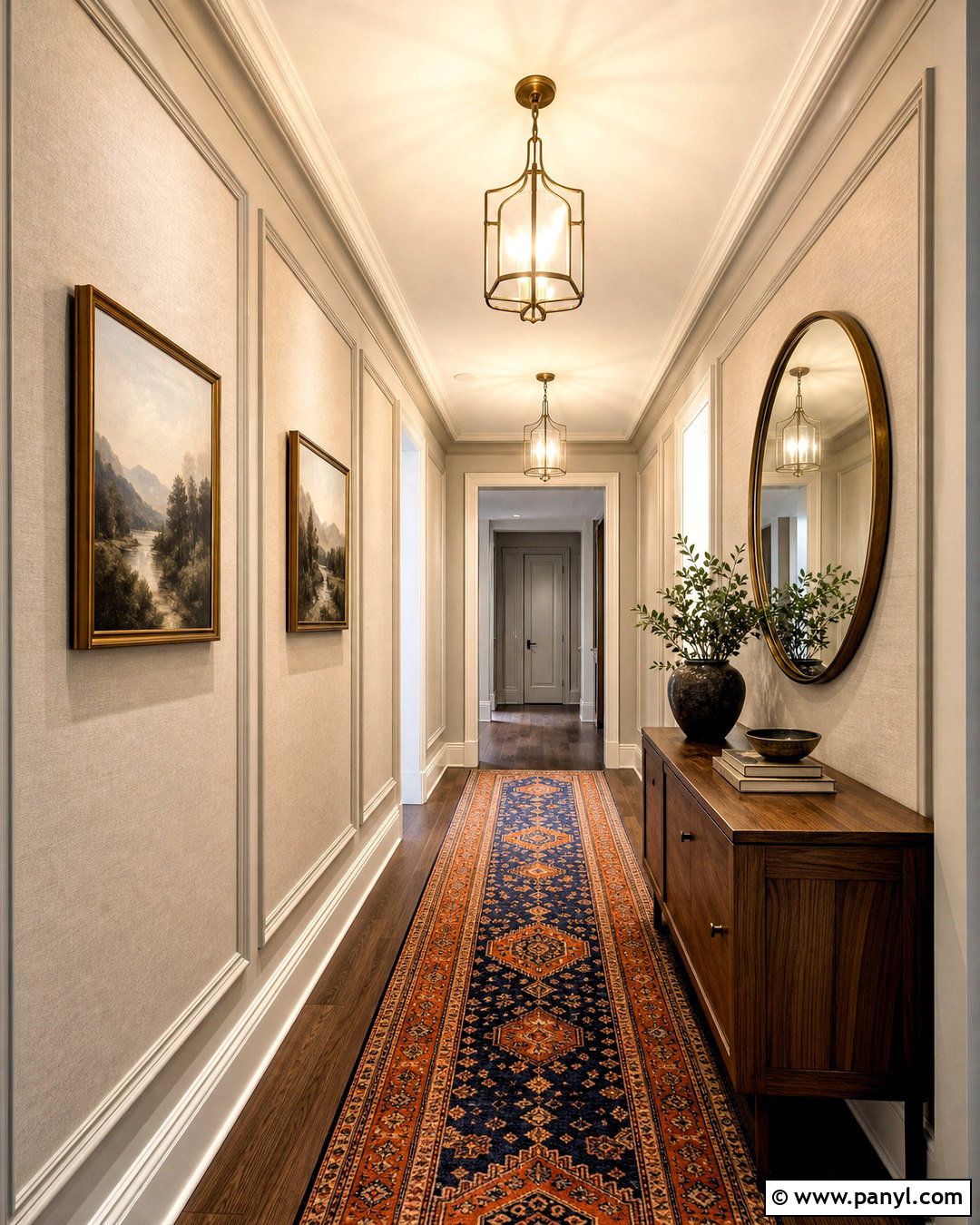
Long hallways benefit from wall texture that adds rhythm without reducing walking space. Install evenly sized picture frame molding from baseboard to ceiling on both sides of the hallway. Paint the walls, molding, doors, and trim the same soft greige for a seamless, modern effect. Use a warm white ceiling to preserve brightness. A narrow vintage-style runner in rust, navy, and cream directs the eye through the space, while aged-brass ceiling lights create repeated points of interest. Hang small landscape prints inside selected frames, leaving several panels empty to avoid visual overload. At the end of the hall, place a slim walnut console beneath a round mirror. This full design treats the hallway like a purposeful room and uses architectural relief, balanced color, art, and lighting to make it feel wider and more finished.
12. Reclaimed Wood Bedroom Wall
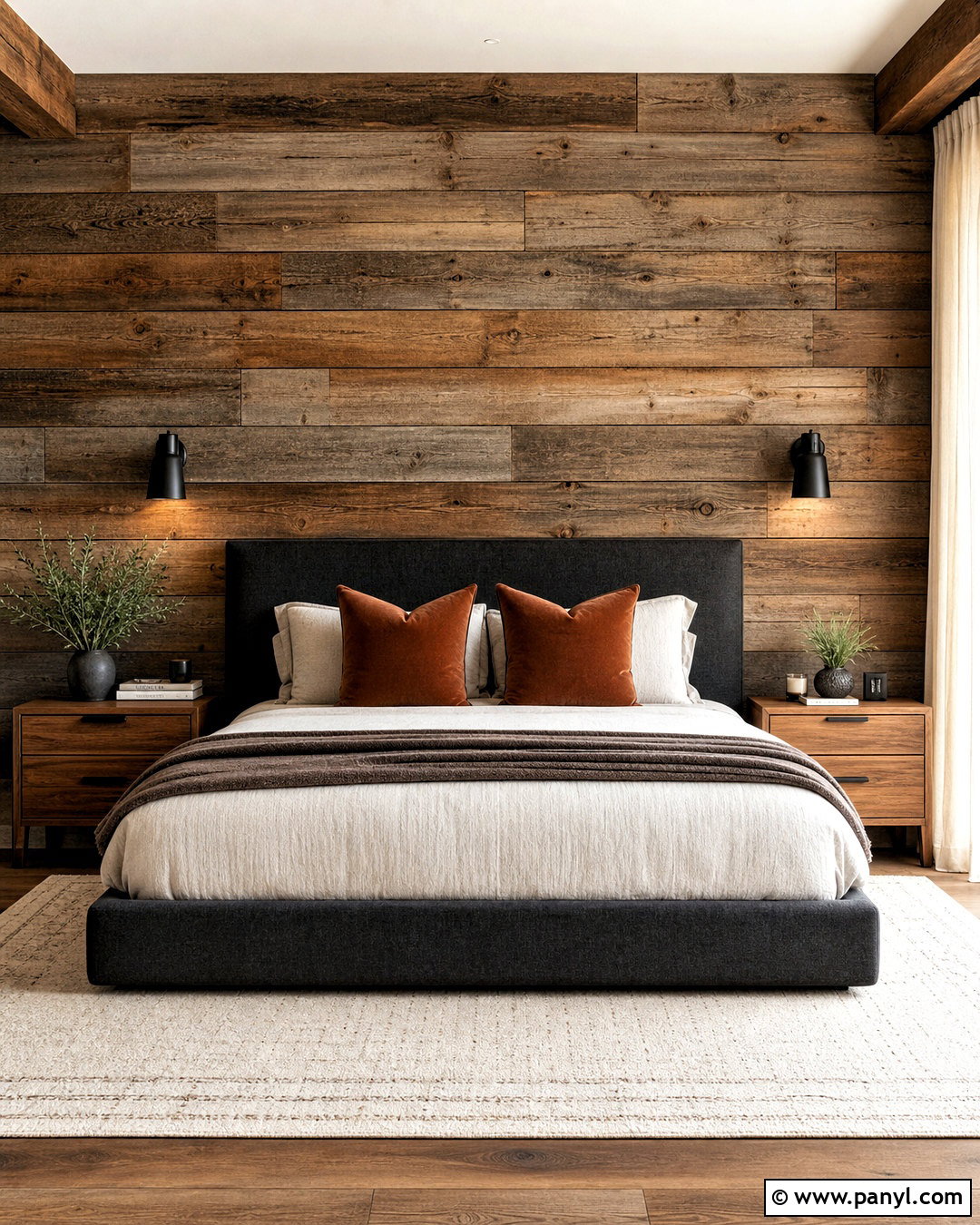
A reclaimed wood wall can make a bedroom feel cozy without turning it into a themed rustic space. Install weathered boards horizontally behind the bed, selecting pieces in medium brown, gray, and faded honey tones. Keep the remaining walls a soft warm white and use simple white oak flooring to balance the irregular wood. Choose a streamlined charcoal upholstered bed with crisp cream bedding and rust-colored lumbar pillows. Matte black swing-arm sconces provide functional reading light without taking up space on the walnut nightstands. Ground the room with a large ivory wool rug and hang plain linen curtains at the windows. Avoid adding artwork to the wood wall because its varied grain already provides detail. A black bench and one leafy plant complete a bedroom that feels contemporary, warm, and intentionally layered.
13. Cork Home Office Wall
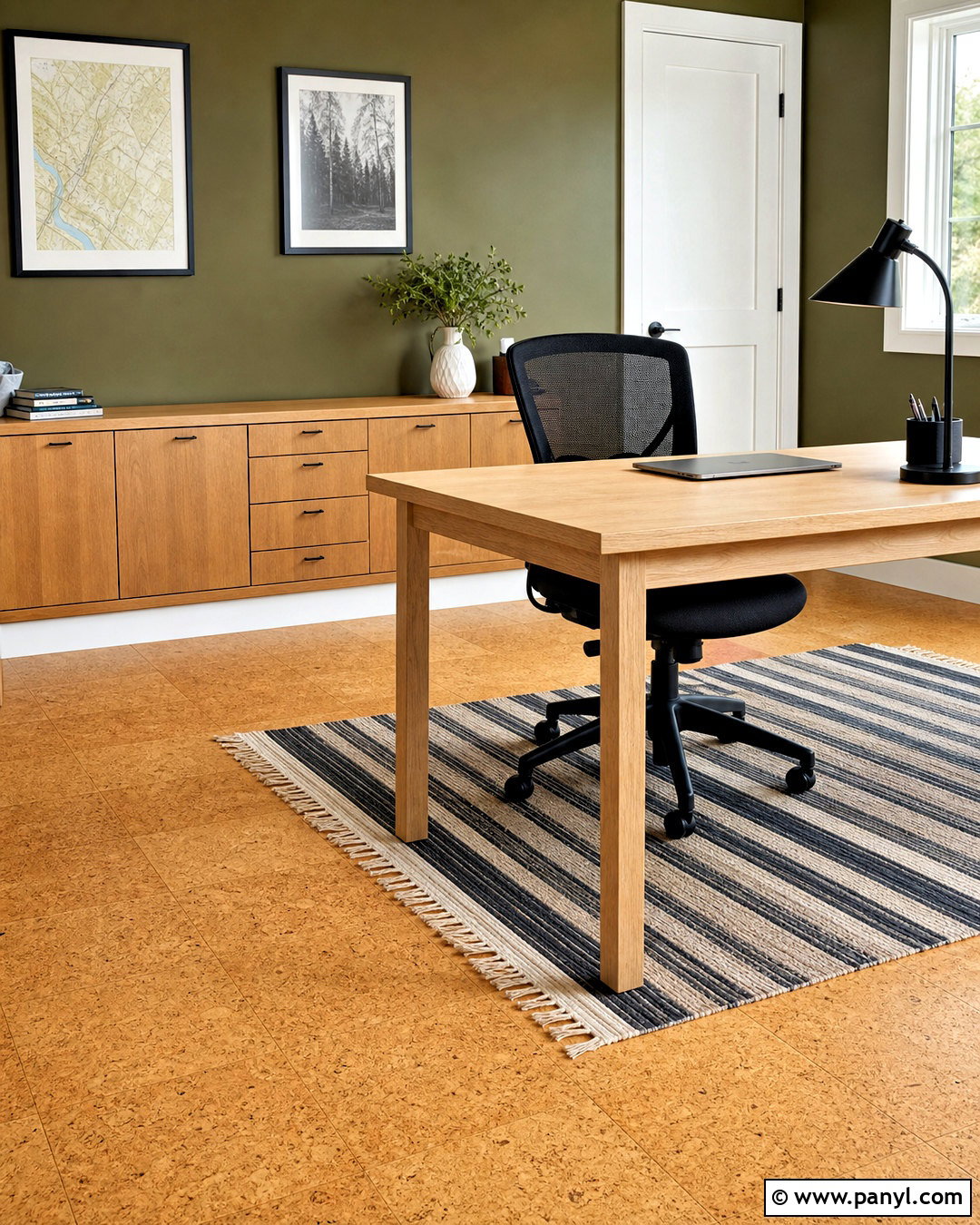
Cork offers an approachable way to add warmth and useful texture to a compact home office. Cover the wall behind the desk with large square cork tiles in a natural honey-brown finish, carefully aligning the edges for a clean grid. Paint the other walls muted olive green and position a simple white oak desk against the cork surface. A black ergonomic chair, linen pinboard accessories, and matte black task lamp keep the workspace practical. Add low closed cabinets along one side for files and supplies, leaving the desktop clear. A striped flat-weave rug introduces cream, tan, and olive underfoot. Pin only a small, organized collection of calendars, notes, and artwork to the cork. This combination turns functional material into part of a cohesive office rather than creating a wall that resembles a crowded bulletin board.
14. Upholstered Bedroom Wall
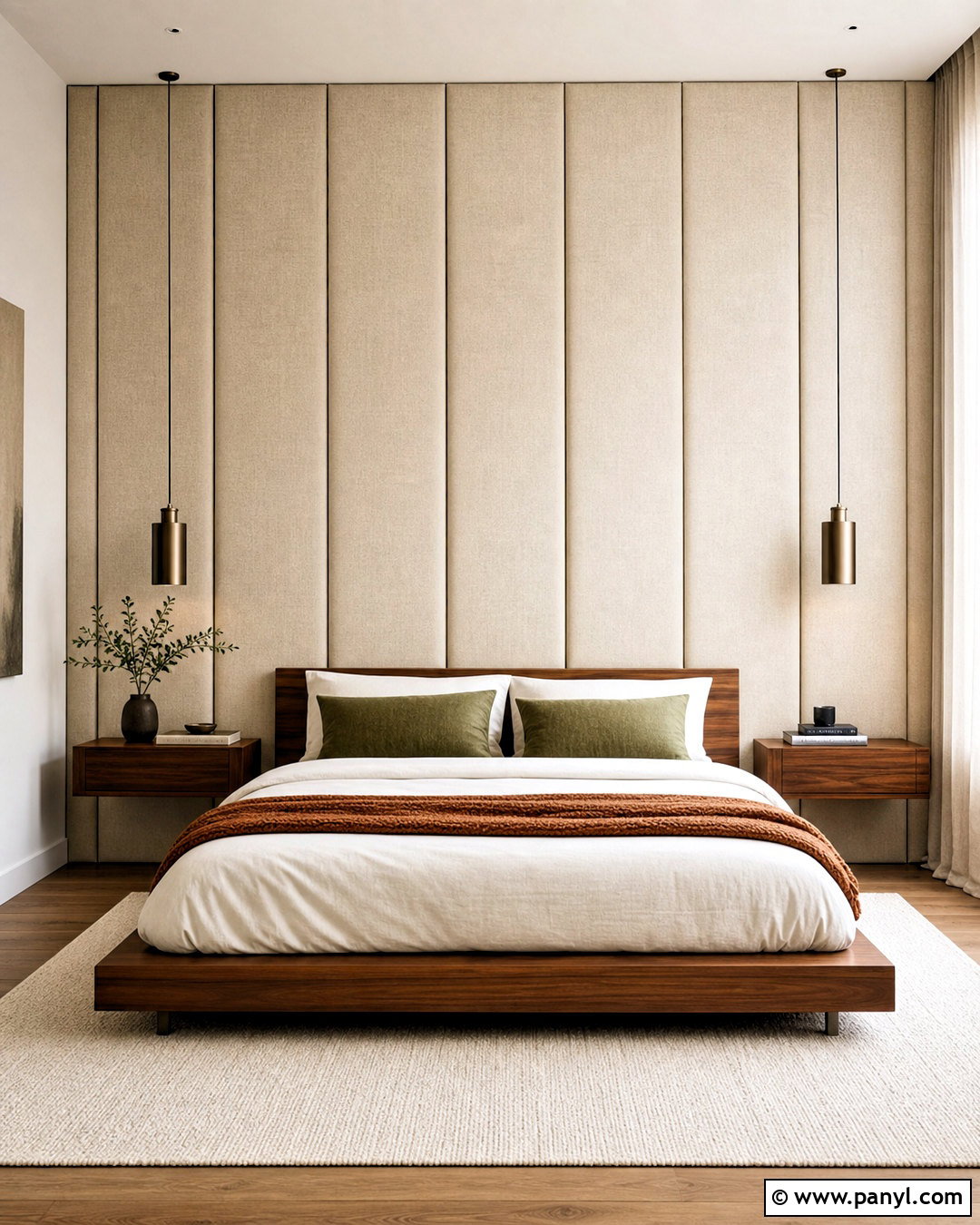
A full upholstered wall can give a bedroom softness, dimension, and a quieter visual atmosphere. Install wide vertical panels covered in oatmeal-colored performance linen across the entire wall behind the bed. Place a low walnut platform bed in front, allowing the upholstery to act as an extended headboard. Layer white cotton bedding with a muted terracotta throw and two olive accent pillows. Floating walnut nightstands keep the floor open, while small bronze pendants provide focused bedside light. Use warm white paint on the remaining walls and medium oak flooring beneath a thick cream rug. Avoid hanging artwork on the fabric panels, since seams and shadows already create a balanced pattern. Simple linen curtains and a curved bench at the foot of the bed complete the soft, tailored design without making it feel overly luxurious.
15. Concrete Basement Wall
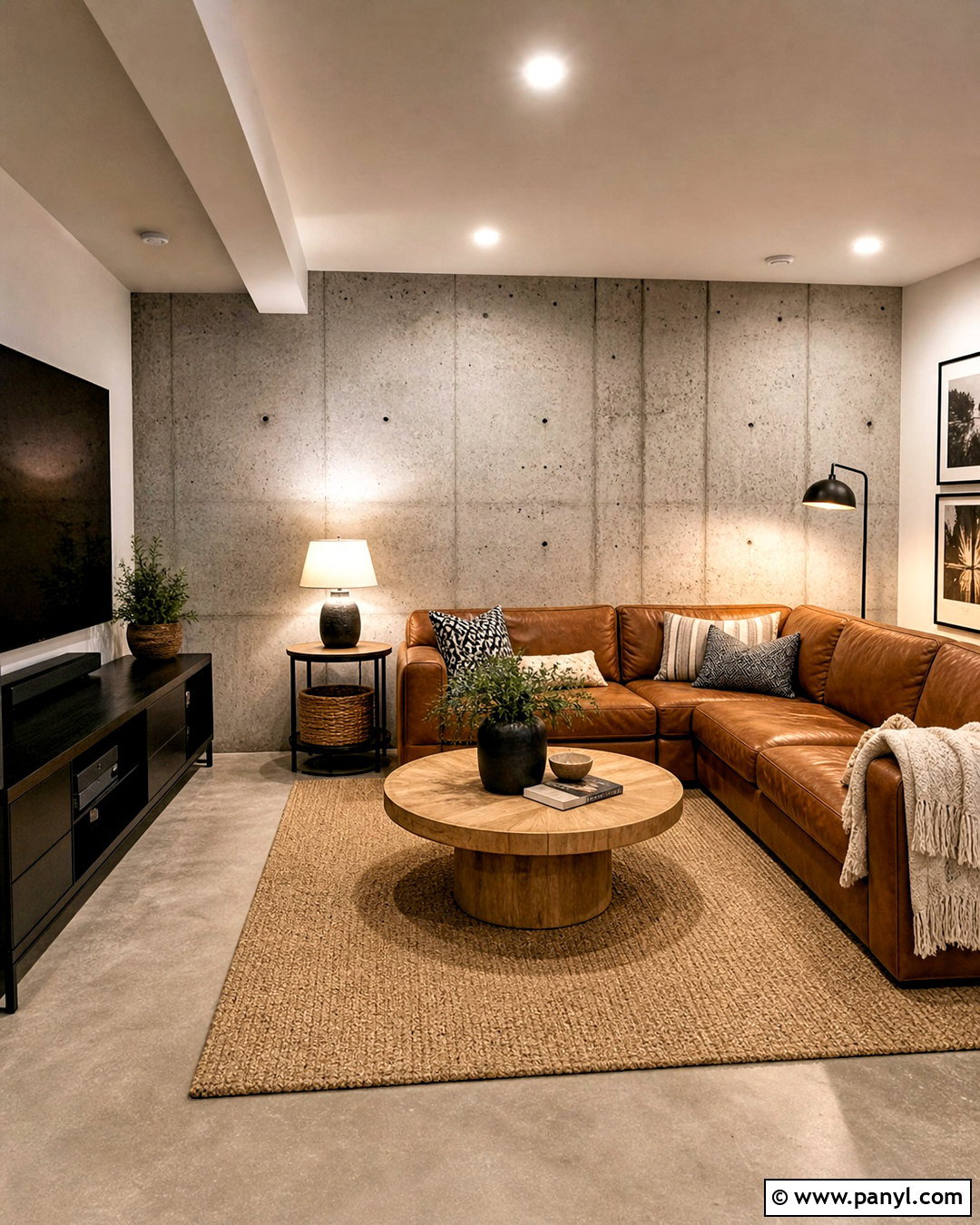
A concrete wall can feel intentional in a finished basement when paired with warm materials and comfortable furniture. Preserve one clean poured-concrete wall as the focal surface and paint the other walls creamy white. Arrange a caramel leather sectional against the concrete, then add a large oatmeal rug, round oak coffee table, and low black media console. Use layered lighting because basement rooms often receive limited daylight. Combine recessed ceiling fixtures with a tall paper floor lamp and small table lamps. Rust, navy, and cream cushions prevent the gray wall from dominating the palette. Black-framed artwork can lean casually on the console rather than being scattered across the concrete. Add light oak storage cabinets and several leafy plants to soften the harder finishes, creating a complete lower-level lounge that feels comfortable instead of unfinished.
16. Plaster Arch Niche Wall
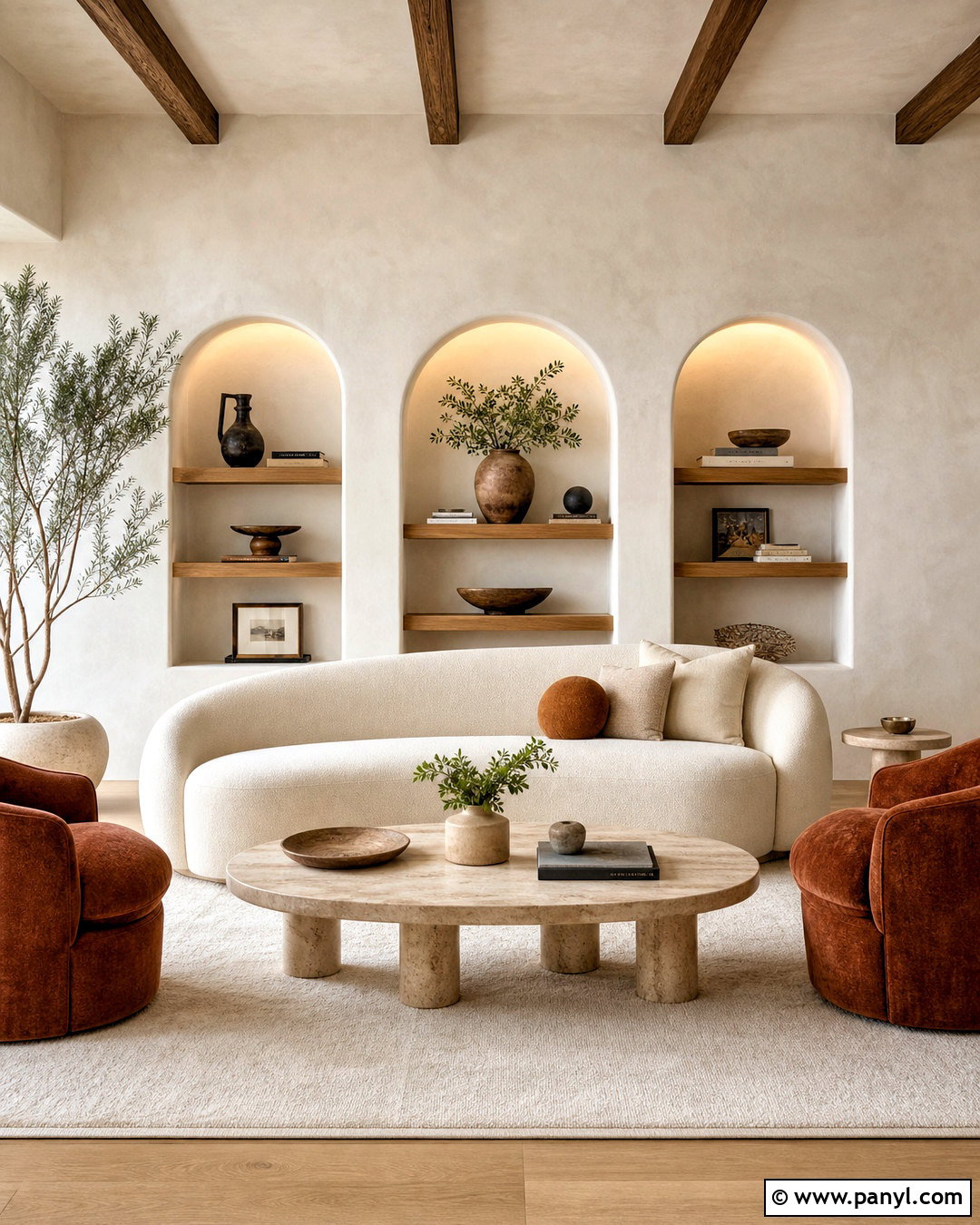
Built-in plaster niches can create sculptural texture while adding useful display space to a living room. Construct three softly arched niches across one wall and finish the entire surface in warm ivory plaster. Include oak shelves in the lower portion of each niche and concealed lighting along the upper curves. Furnish the room with a curved beige sofa, two rust-colored lounge chairs, and a round travertine coffee table. Pale oak flooring and a woven cream rug continue the gentle, organic palette. Style the niches with a restrained mix of ceramic vessels, books, baskets, and trailing greenery. Leave open space around every object so the architecture stays visible. Painting adjacent walls in a matching warm white allows the niches to provide depth without breaking the calm flow of the room.
17. Wallpaper And Paneling Wall
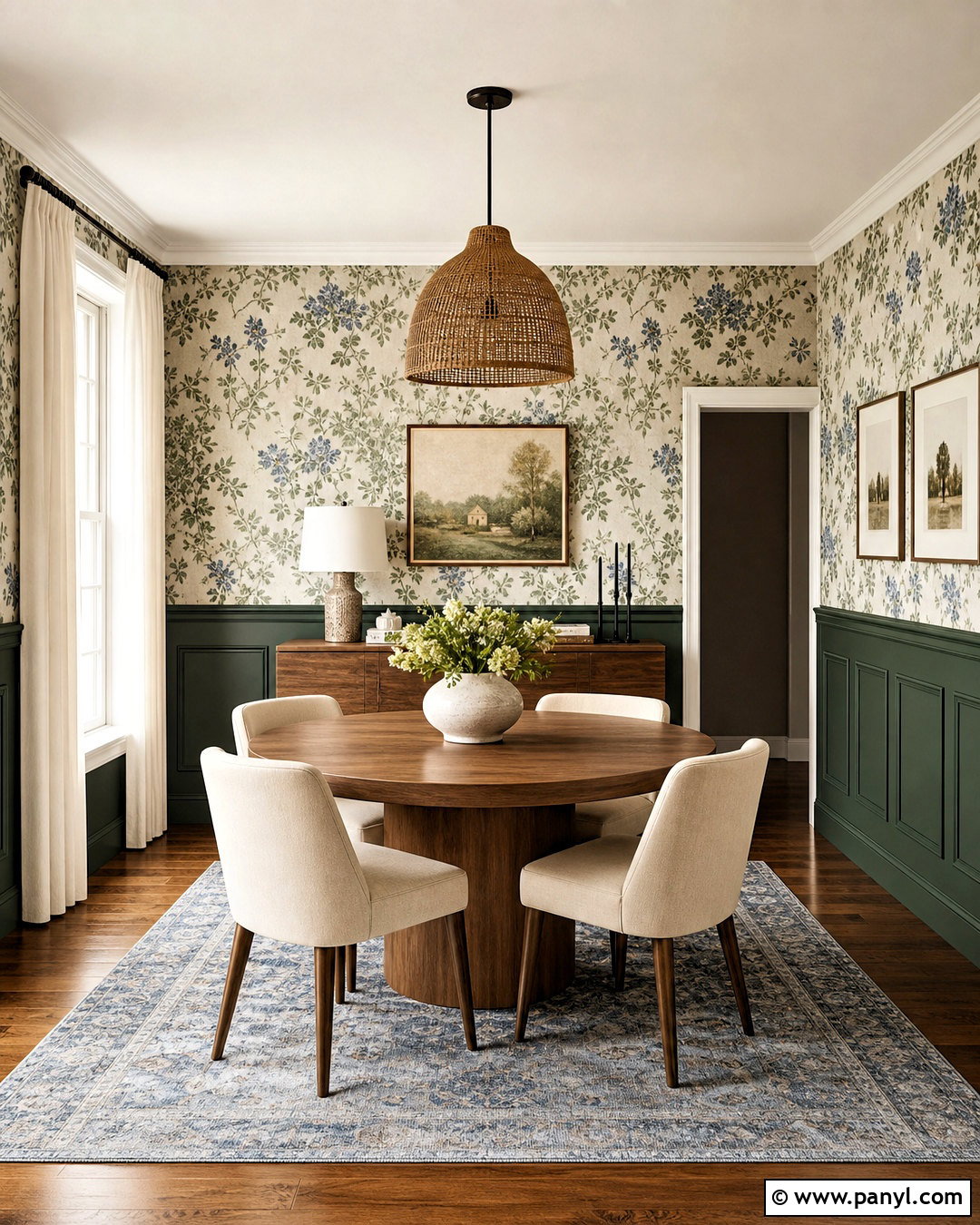
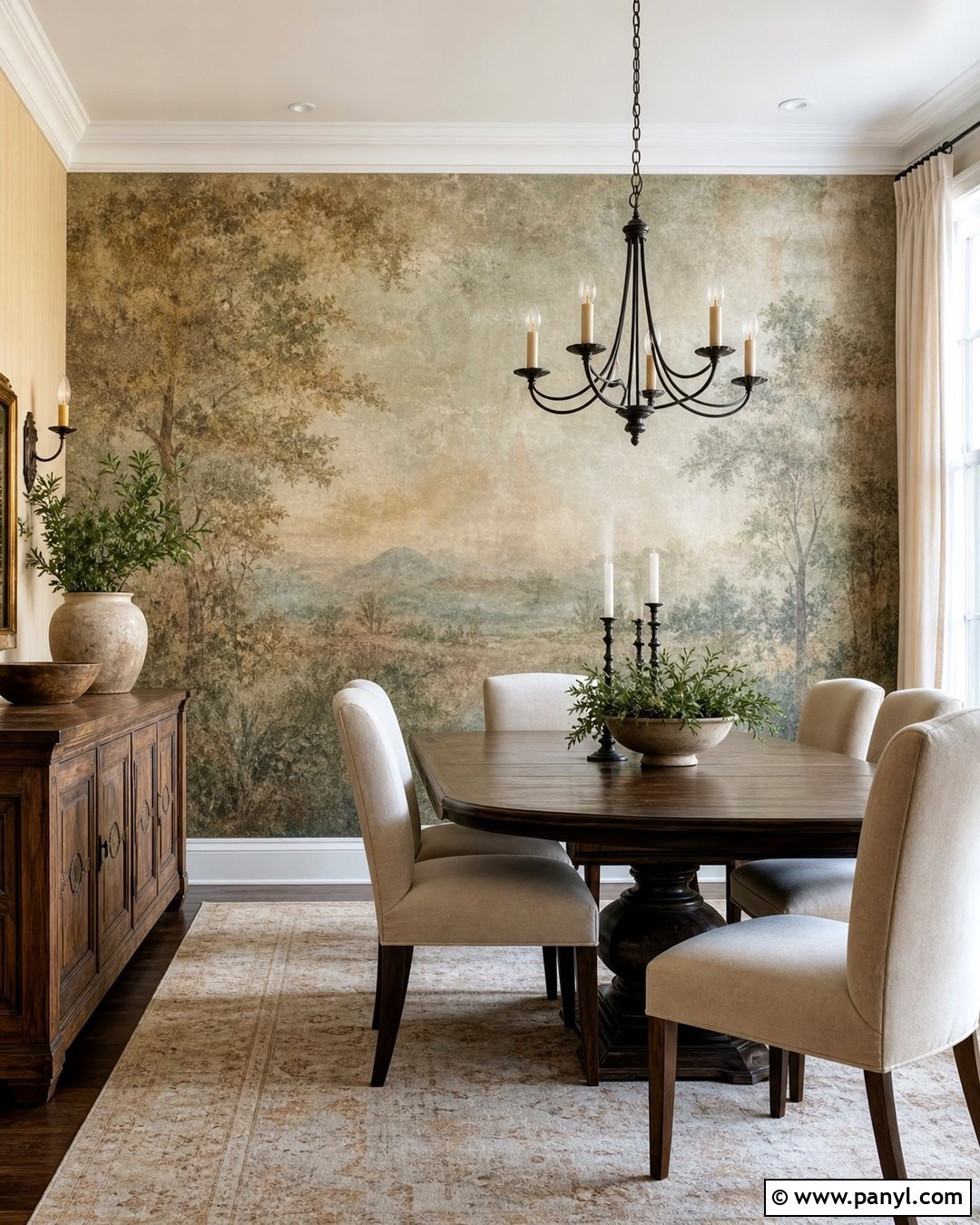
Combining wallpaper with paneling gives a dining room pattern, structure, and a more complete architectural finish. Install simple square panel molding across the lower half of every wall and paint it deep forest green. Above the chair rail, hang botanical wallpaper with cream, sage, muted blue, and brown details. Center a round walnut table beneath a wide woven pendant and surround it with cream upholstered chairs. A faded blue rug adds softness while connecting to the wallpaper. Use warm white curtains and aged-brass curtain rods to brighten the darker paneling. Keep table decor low and simple, such as a ceramic bowl filled with leafy branches. The repeated treatment around the whole room feels more established than a single accent wall and creates an immersive look without relying on excessive furniture or decorative objects.
18. Slatted Acoustic Media Wall
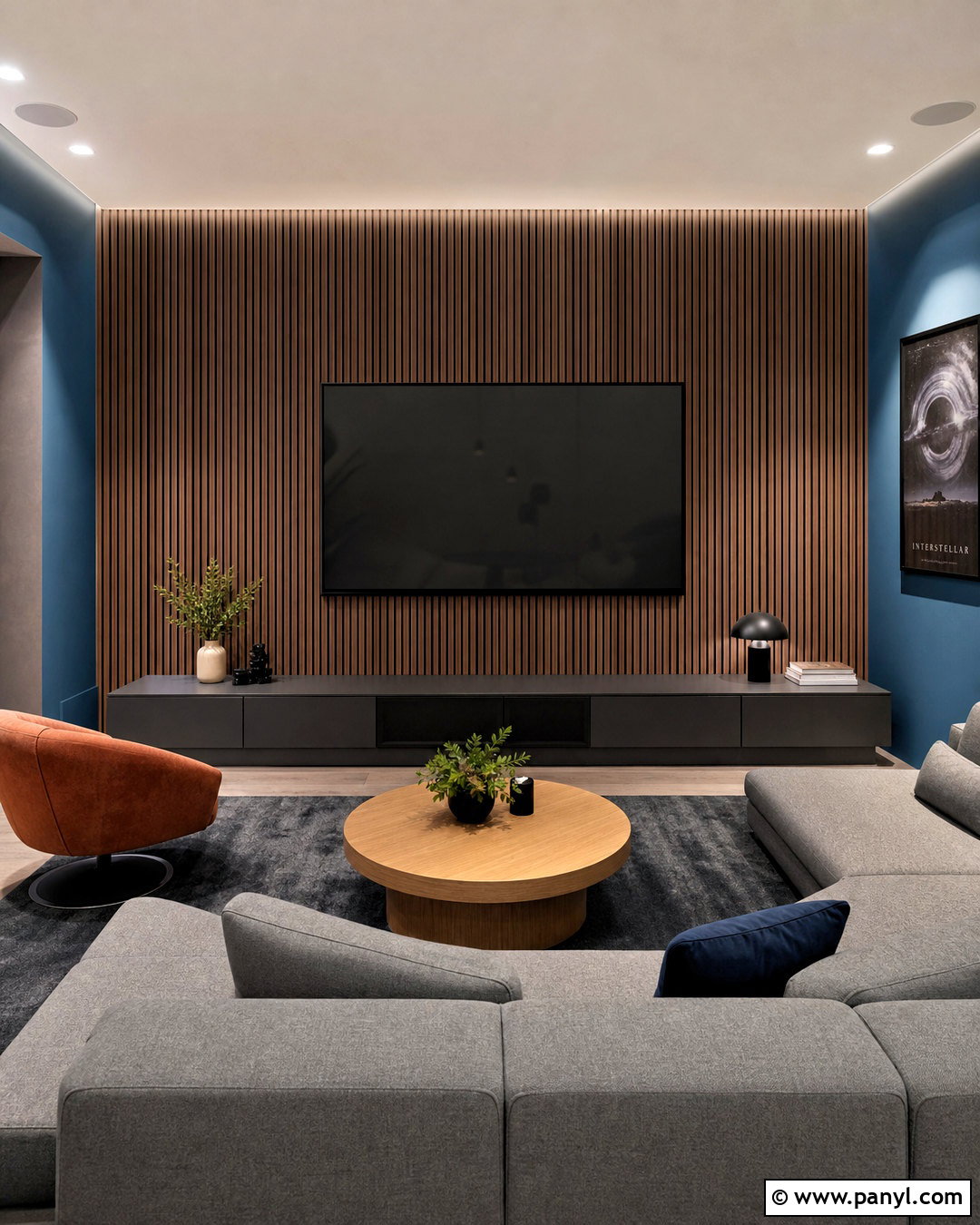
An acoustic slat wall can improve the visual order of a media room while contributing rich architectural texture. Cover the main television wall with walnut slats mounted over charcoal felt, extending the treatment from floor to ceiling. Add a low matte black console and center the screen within the paneling. Paint the remaining walls deep muted blue to reduce visual contrast around the television. A large modular gray sofa, thick charcoal rug, and rust-colored swivel chair make the room comfortable for everyday use. Install dimmable recessed lights plus soft wall washers that reveal the slat pattern. Closed storage keeps games, controls, and cables hidden. Minimal framed prints on the side walls and a round oak coffee table complete the room without competing with the structured, practical feature wall.
19. Sponge Painted Kids Room Wall
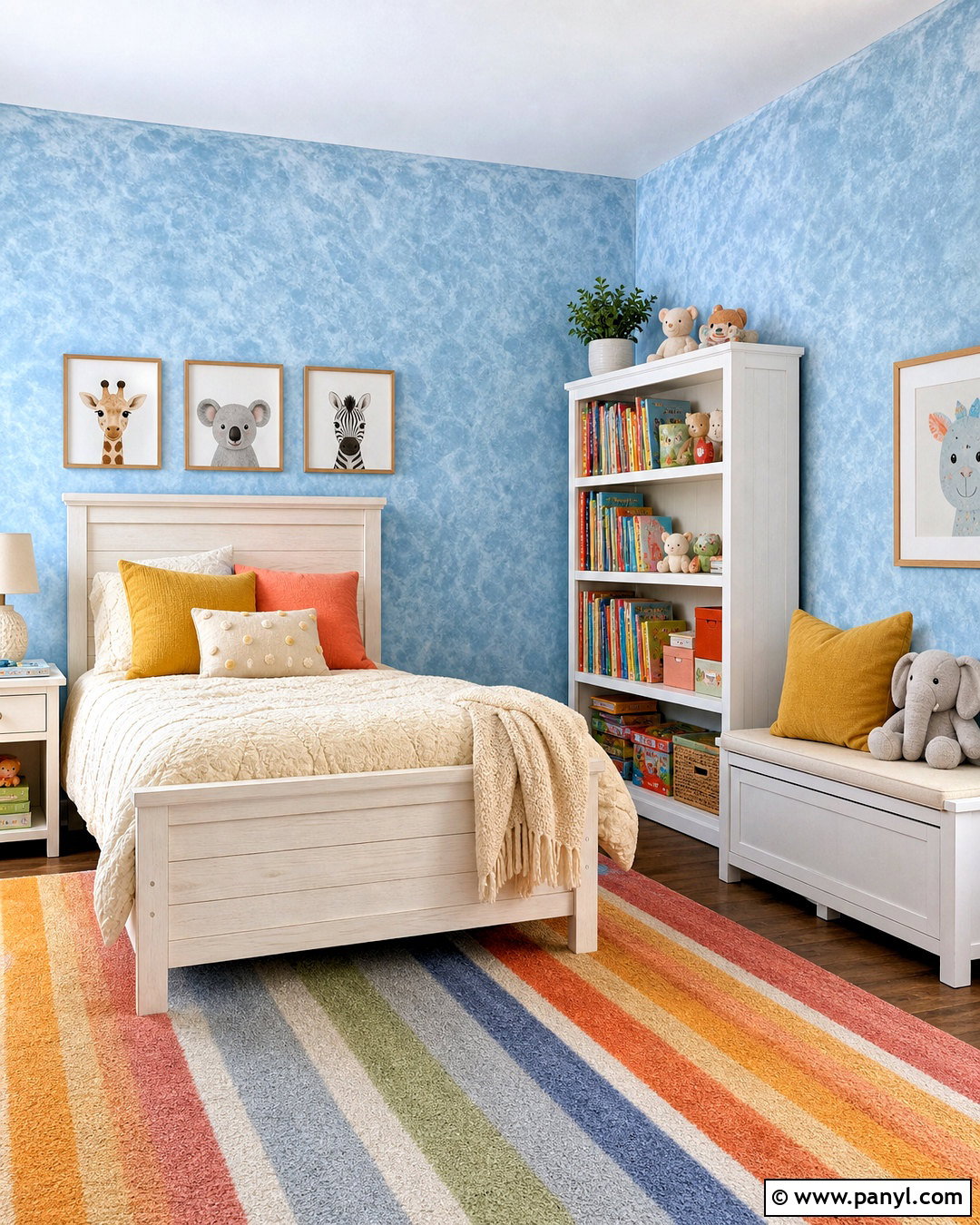
A sponge-painted finish can add playful texture to a child’s room while remaining soft enough to grow with changing decor. Apply a pale sky-blue base coat to all walls, then layer a slightly lighter blue using a natural sea sponge. Keep the pattern subtle and evenly distributed rather than creating dramatic contrast. Furnish the room with a simple white oak bed, white bookcase, and low storage bench with labeled fabric baskets. Use cream bedding with cheerful mustard, green, and coral accents. A washable rainbow-striped rug introduces color across the floor, while white curtains maintain brightness. Hang a small collection of framed animal prints in natural wood frames. The finished room feels imaginative and lively, yet the coordinated furniture, organized storage, and gentle wall treatment prevent it from becoming visually chaotic.
20. Relief Tile Powder Room Wall
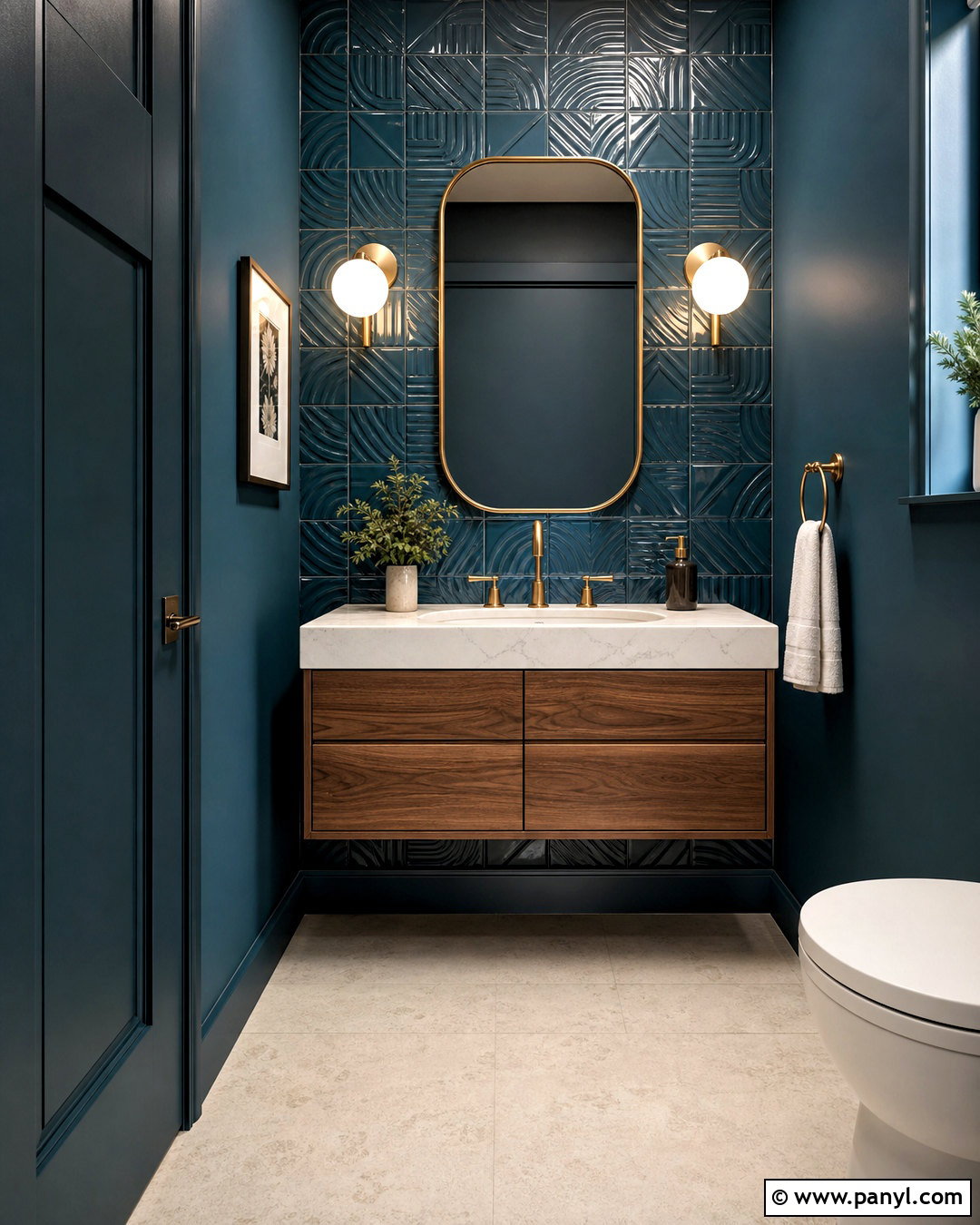
A powder room is an ideal place for a bold relief tile treatment because the smaller space can support concentrated detail. Cover the vanity wall with deep teal ceramic tiles featuring a raised geometric pattern. Paint the remaining walls a matching matte teal for a wrapped, cohesive effect. Install a compact floating walnut vanity with a white stone sink and brushed brass faucet. A rounded brass-framed mirror and two small opal globe sconces add warm highlights against the dark color. Use pale limestone flooring to keep the room from feeling enclosed. One cream hand towel, a small ceramic soap dispenser, and a leafy branch provide sufficient decoration. The strong tile texture, rich color, natural wood, and bright metal create a complete powder room that feels memorable without requiring complicated styling.
Conclusion:
The most successful textured walls feel connected to the entire room rather than applied as an afterthought. Start by considering the space’s lighting, dimensions, furniture, and daily use. Soft finishes such as limewash, grasscloth, and plaster create gentle movement, while wood, stone, molding, and relief tile provide stronger architectural depth. Balance heavily textured surfaces with quieter flooring, simple textiles, and restrained accessories. You can also test removable wallpaper, cork, or painted molding before investing in permanent masonry or custom paneling. Whether you prefer subtle character or a dramatic focal point, adding texture to walls can make an ordinary home feel warmer, more personal, and thoughtfully finished.

Related Ideas and Inspiration:
Leave a Reply