
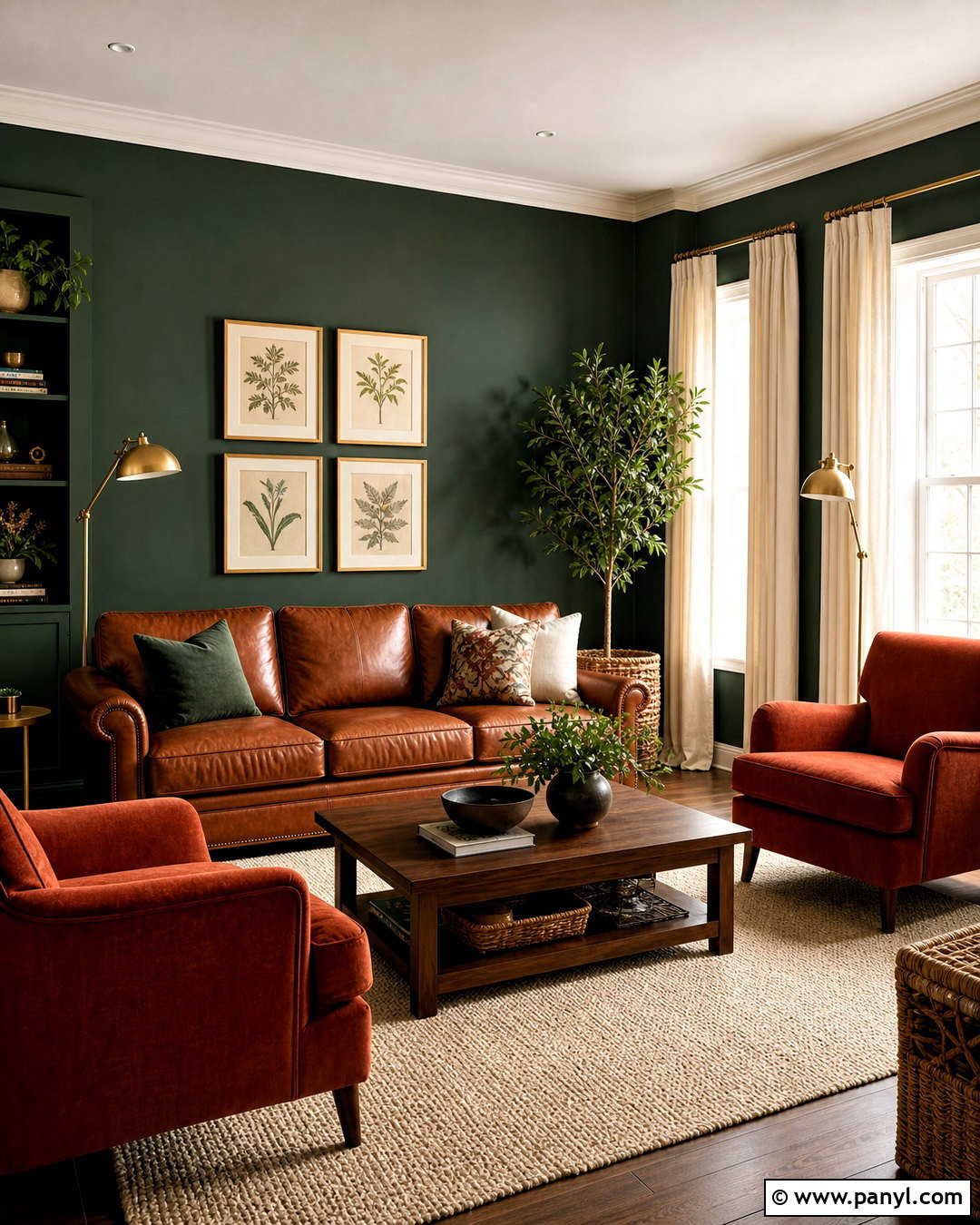
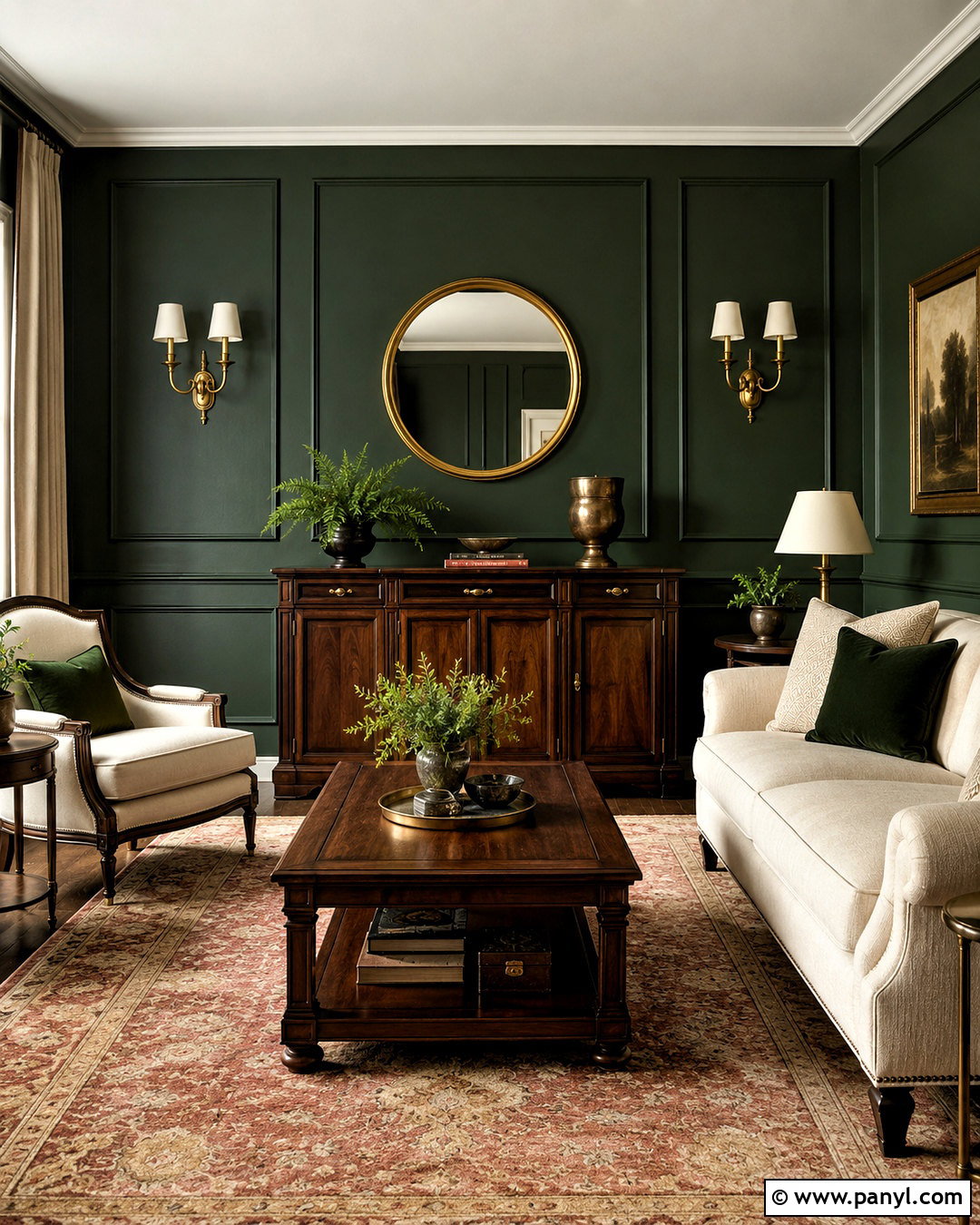
Victorian Green Walls bring depth, character, and a strong sense of history to rooms that might otherwise feel plain. Deep forest, moss, sage, and emerald tones work especially well with decorative molding, carved wood, patterned textiles, and aged metal finishes. Victorian interiors traditionally embraced ornament, dark woods, layered fabrics, and rich jewel colors, making green a natural fit for this expressive decorating approach. () The key is creating balance. Warm lighting, thoughtful contrast, and practical furniture keep the space comfortable rather than overly formal. Whether you are updating a period home or adding historic charm to a newer property, the following complete room schemes offer distinctive and achievable ways to decorate with Victorian Green Walls.
1. Dark Green Victorian Living Room
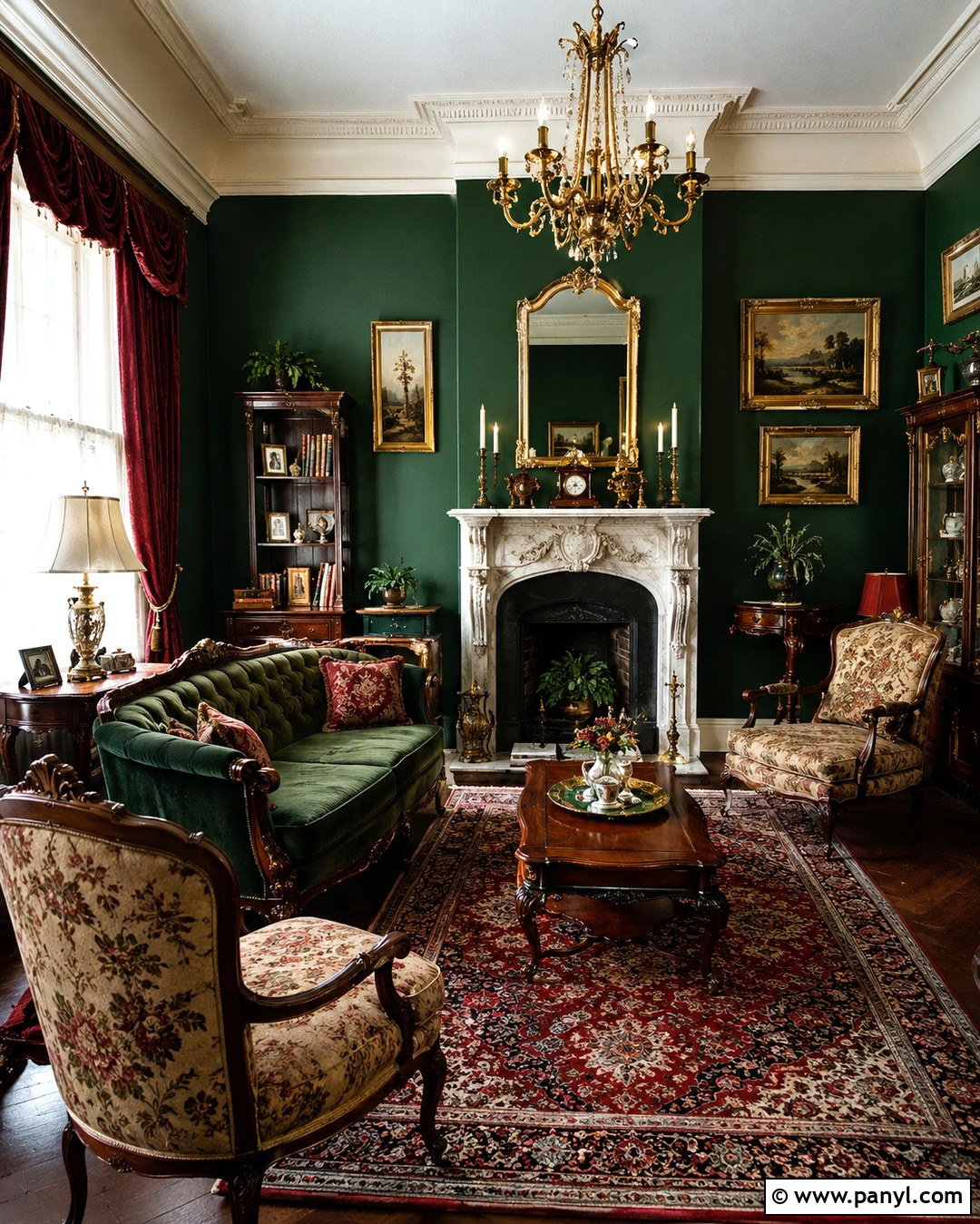
Deep forest green walls create a cocooning foundation for a traditional Victorian living room. Center the layout around a carved marble or dark wood fireplace, then position a button-tufted sofa and two patterned armchairs for easy conversation. Walnut side tables, a brass chandelier, and an antique-style mirror introduce warm reflective details. Keep the ceiling soft ivory so the room feels tall and the ornate cornice remains visible. Burgundy, faded gold, and muted rose textiles add richness without competing with the green. Finish the floor with dark oak boards and a large Persian-inspired rug. Framed landscapes, pleated lampshades, and full-length velvet curtains make the room feel collected, comfortable, and complete rather than staged.
2. Sage Green Victorian Parlor
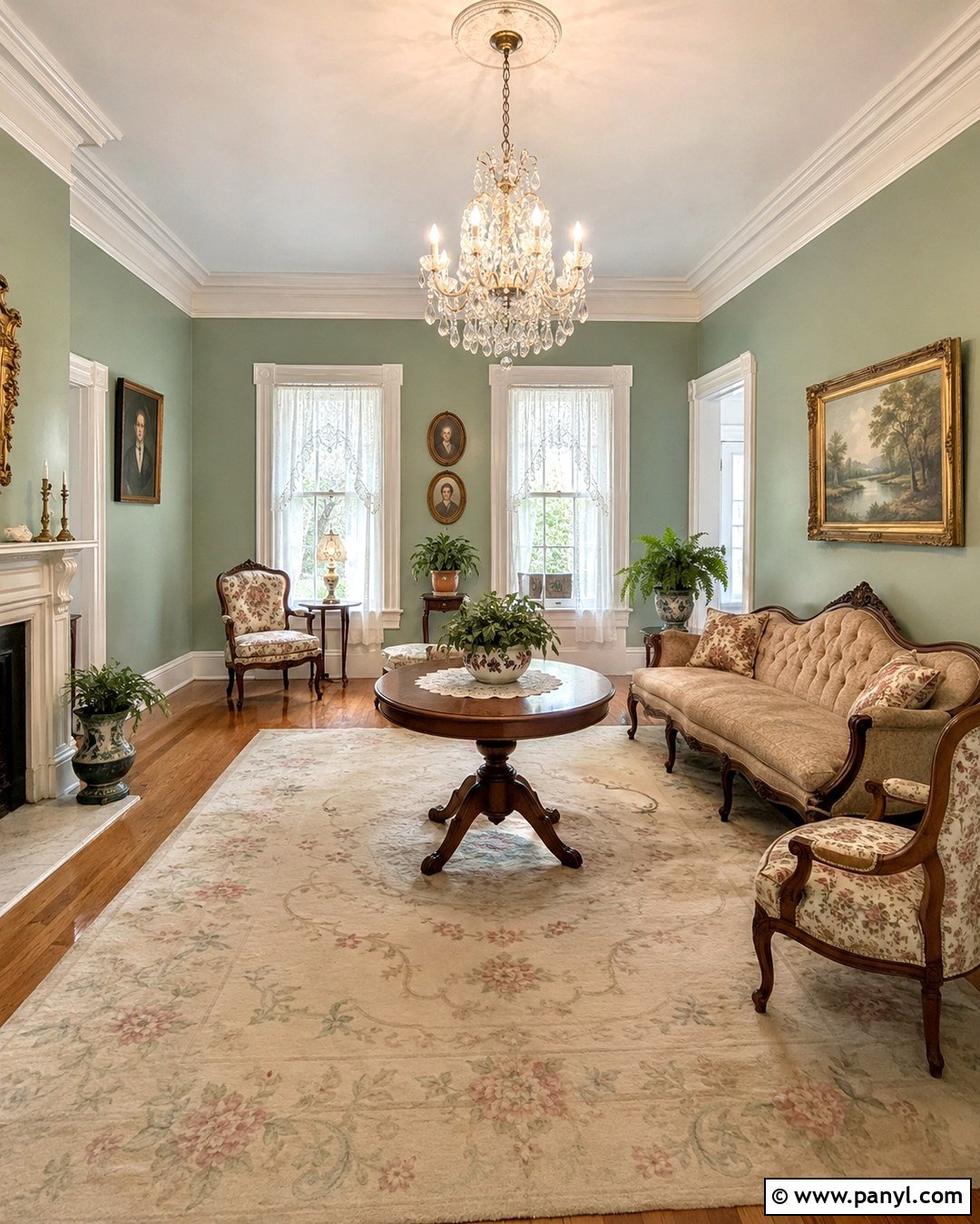
Soft sage walls give a Victorian parlor an airy character while preserving its traditional elegance. Use warm white across the ceiling, cornice, window frames, and fireplace surround to sharpen the architectural details. Arrange a camel-back sofa opposite two delicate wood-framed chairs, leaving a round pedestal table between them. Floral upholstery in dusty pink, cream, and muted green keeps the palette gentle. Choose medium oak flooring and a faded botanical rug for warmth underfoot. A crystal chandelier can provide the formal focal point, while small brass picture lights illuminate a symmetrical arrangement of vintage artwork. Complete the room with lace-trimmed linen curtains, porcelain accessories, and one leafy indoor plant in a decorative ceramic planter.
3. Emerald Green Victorian Dining Room
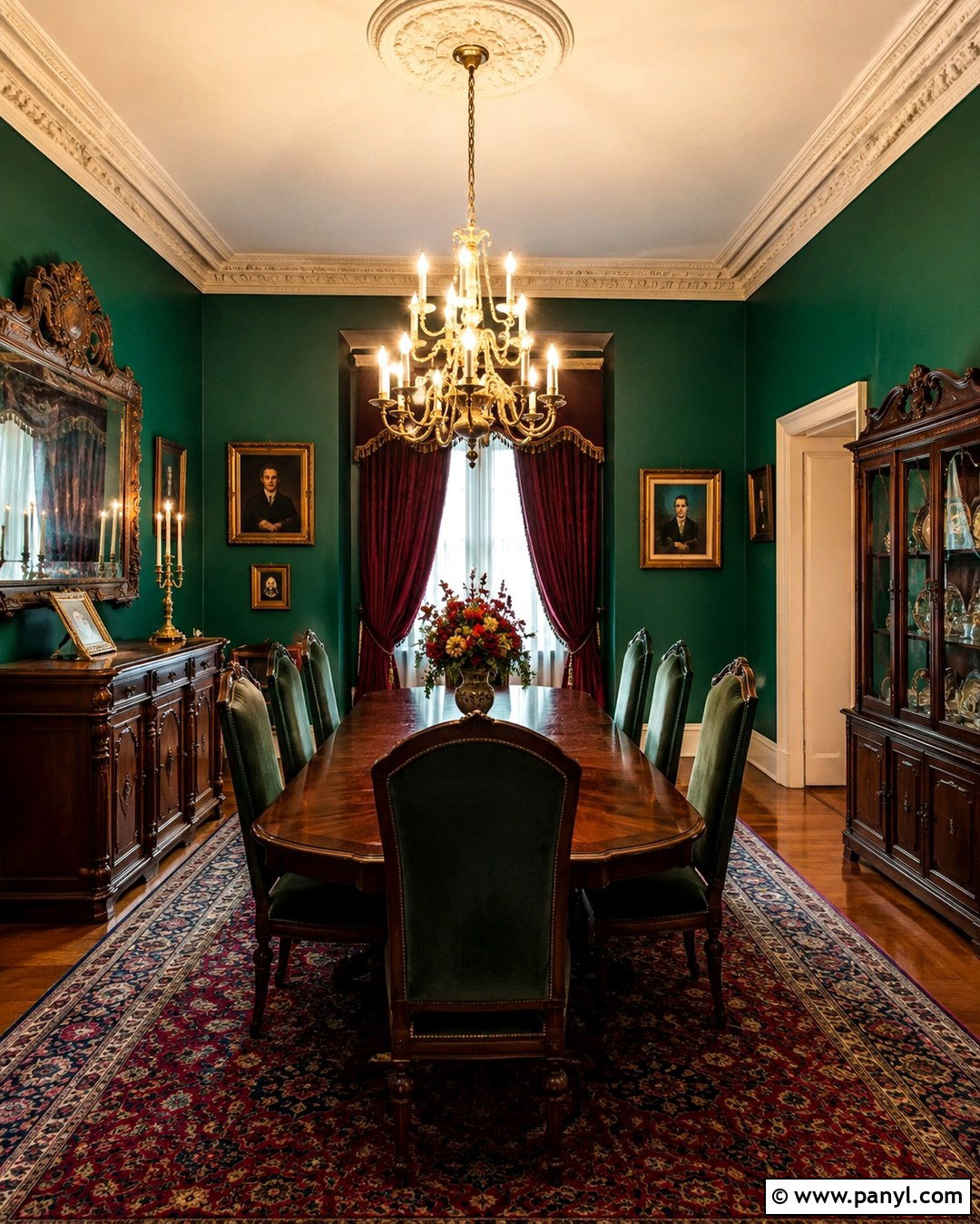
Jewel-toned emerald walls turn a formal dining room into a dramatic space for everyday meals and special gatherings. Place a long mahogany table beneath a tiered brass chandelier, allowing enough room for high-backed upholstered chairs on every side. Cream-painted crown molding and a white ceiling prevent the deep wall color from overwhelming the room. Add a carved buffet with an aged mirror above it to reflect light and visually widen the space. Burgundy drapes, patterned green-and-red curtains, or a traditional rug can introduce controlled contrast. Display serving pieces inside a glass-front cabinet rather than crowding every surface. Polished wood, linen napkins, shaded wall sconces, and a simple floral centerpiece create a balanced Victorian dining room that remains practical.
4. Forest Green Victorian Bedroom
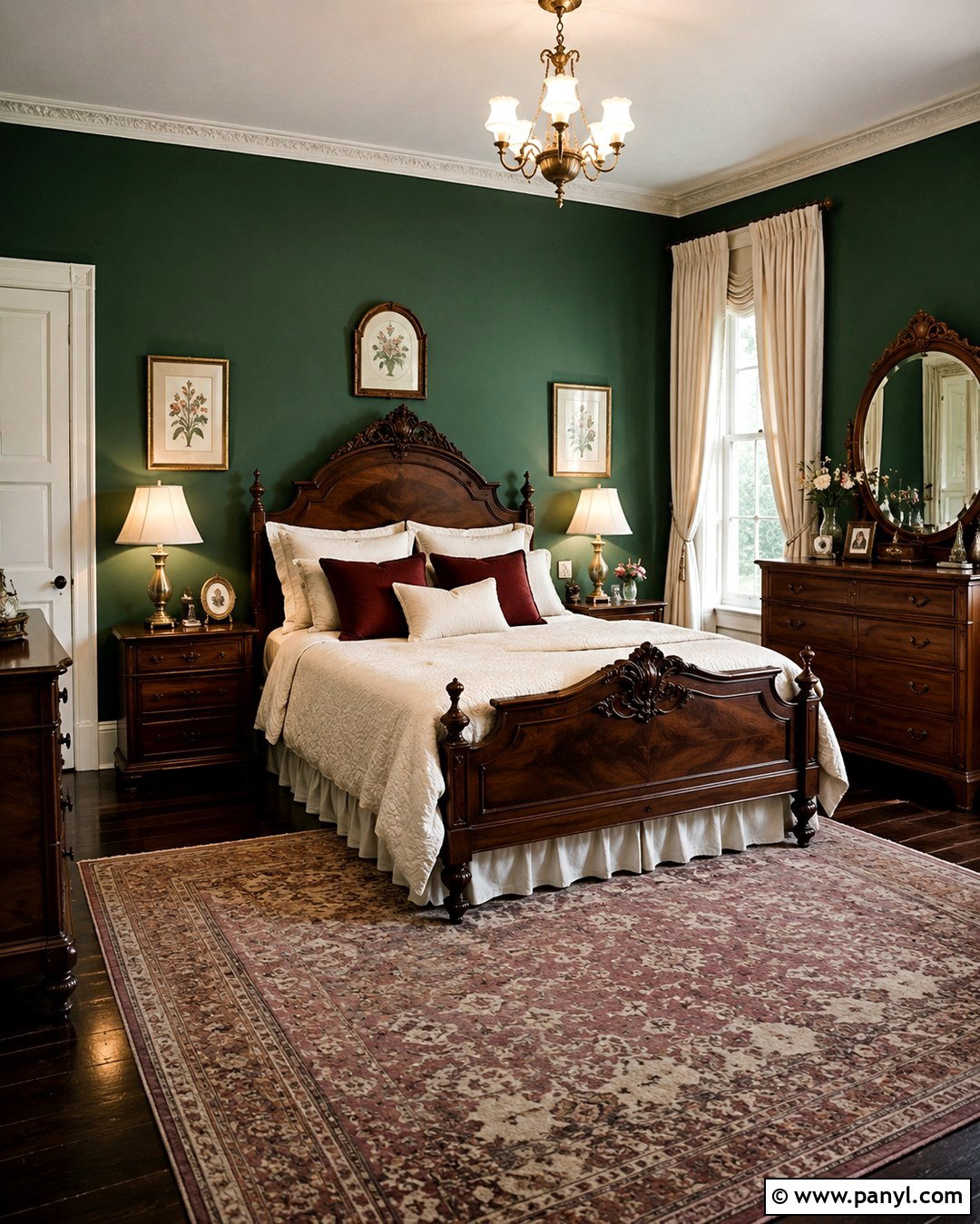
Forest green walls can make a Victorian bedroom feel restful, enclosed, and quietly luxurious. Build the design around a carved walnut bed with a tall upholstered headboard or decorative footboard. Dress it in ivory cotton bedding, a quilted coverlet, and burgundy or antique-gold accent pillows. Place matching wood nightstands on either side, topped with small brass lamps and pleated fabric shades. A faded oriental rug softens dark floorboards, while full-length cream curtains lighten the windows. Keep the ceiling pale and highlight any ceiling rose with a modest chandelier. An antique dresser, an oval mirror, and framed botanical prints provide historic detail. Avoid filling every wall; a few substantial pieces will let the green color and furniture craftsmanship stand out.
5. Olive Green Victorian Study
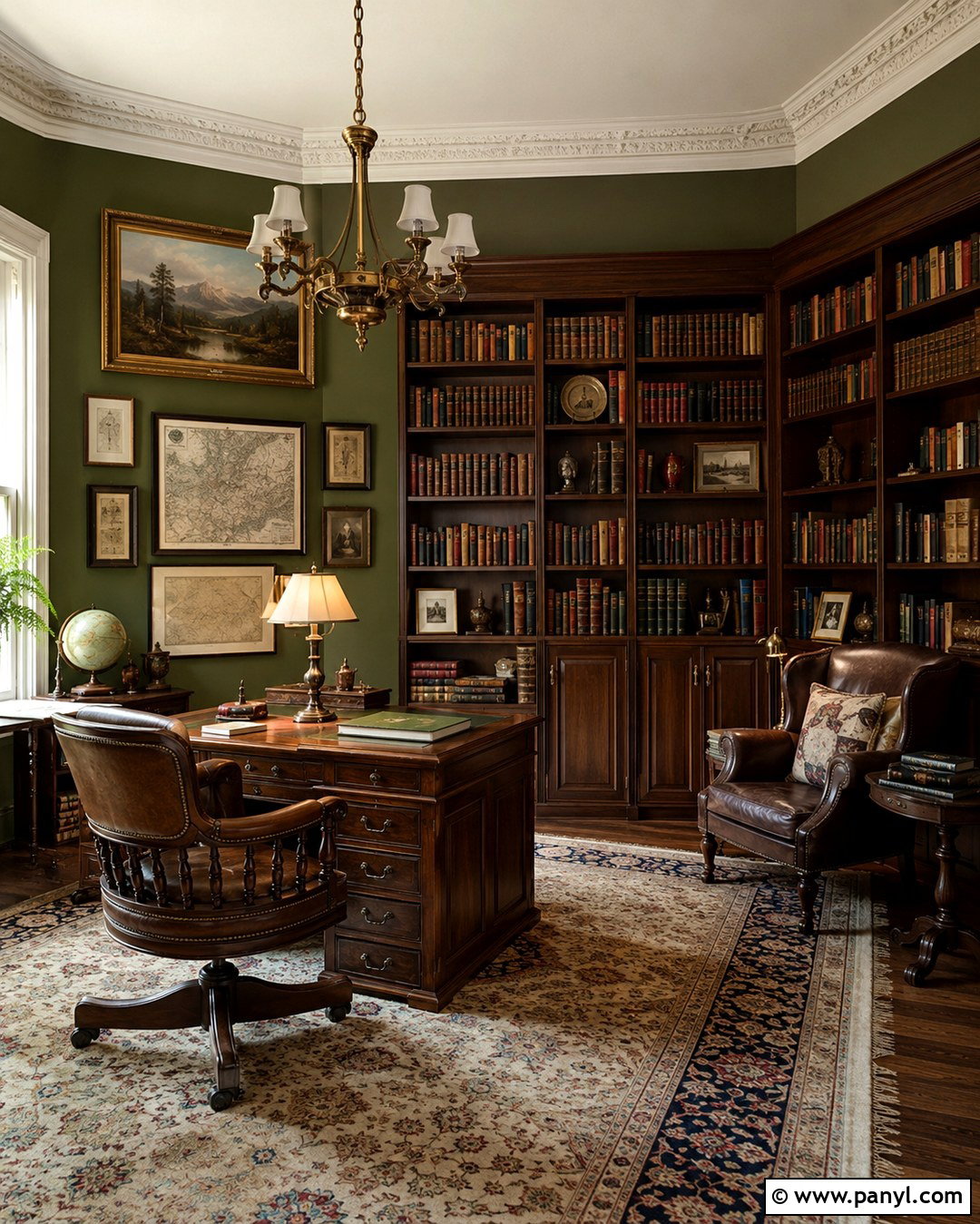
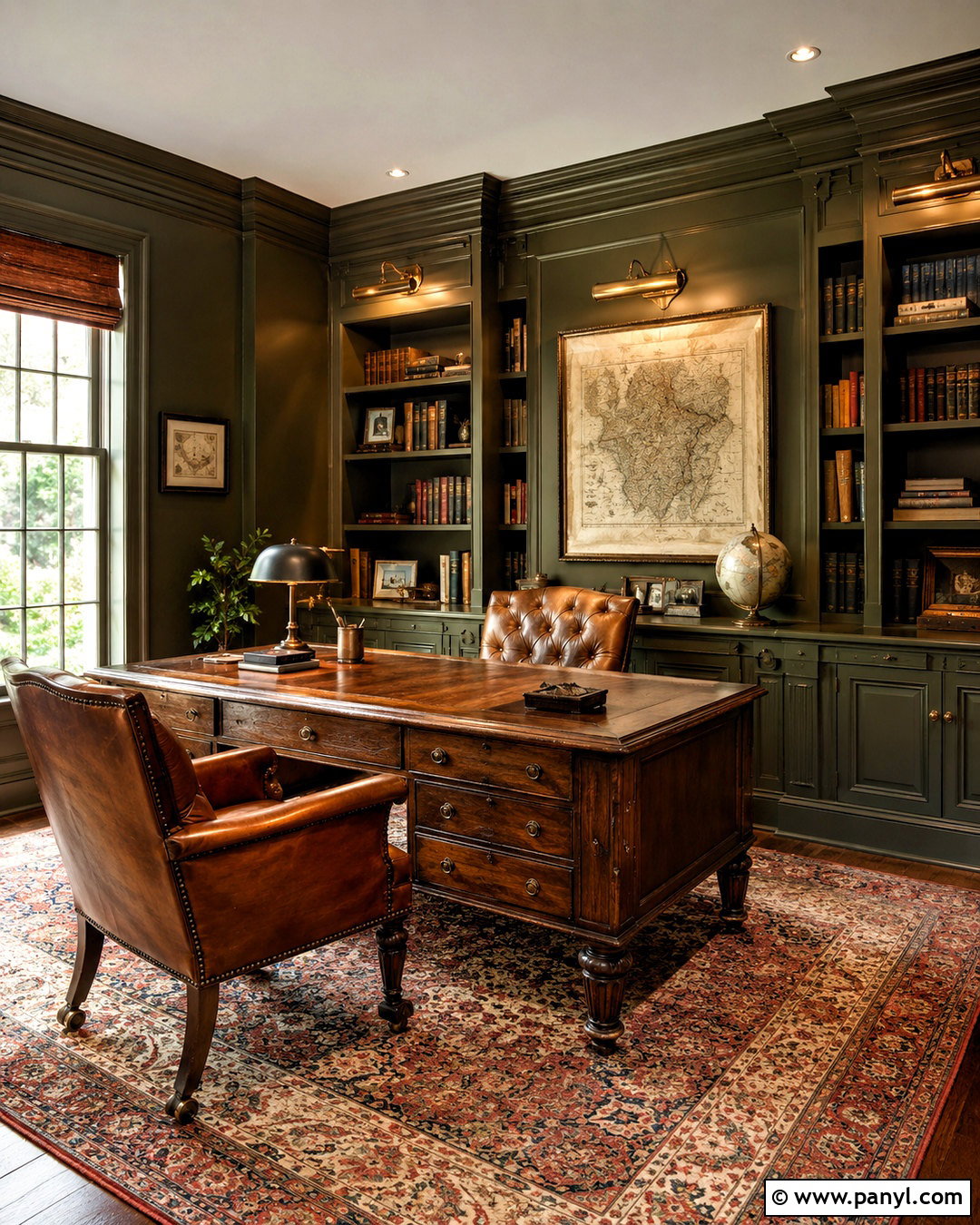
Muted olive walls provide a grounded backdrop for a Victorian study filled with books, wood, and useful storage. Install floor-to-ceiling walnut bookcases along one wall and place a substantial writing desk near the window for natural light. A brown leather desk chair, shaded brass lamp, and patterned wool rug reinforce the traditional character. Use cream on the ceiling and trim to define doorways and decorative molding. Across from the desk, create a reading corner with a tufted leather chair, small round table, and adjustable floor lamp. Framed maps and landscape paintings suit the scholarly atmosphere without making the walls feel crowded. Conceal printers and office supplies inside lower cabinets so the finished room remains organized, functional, and convincingly Victorian.
6. Moss Green Victorian Hallway
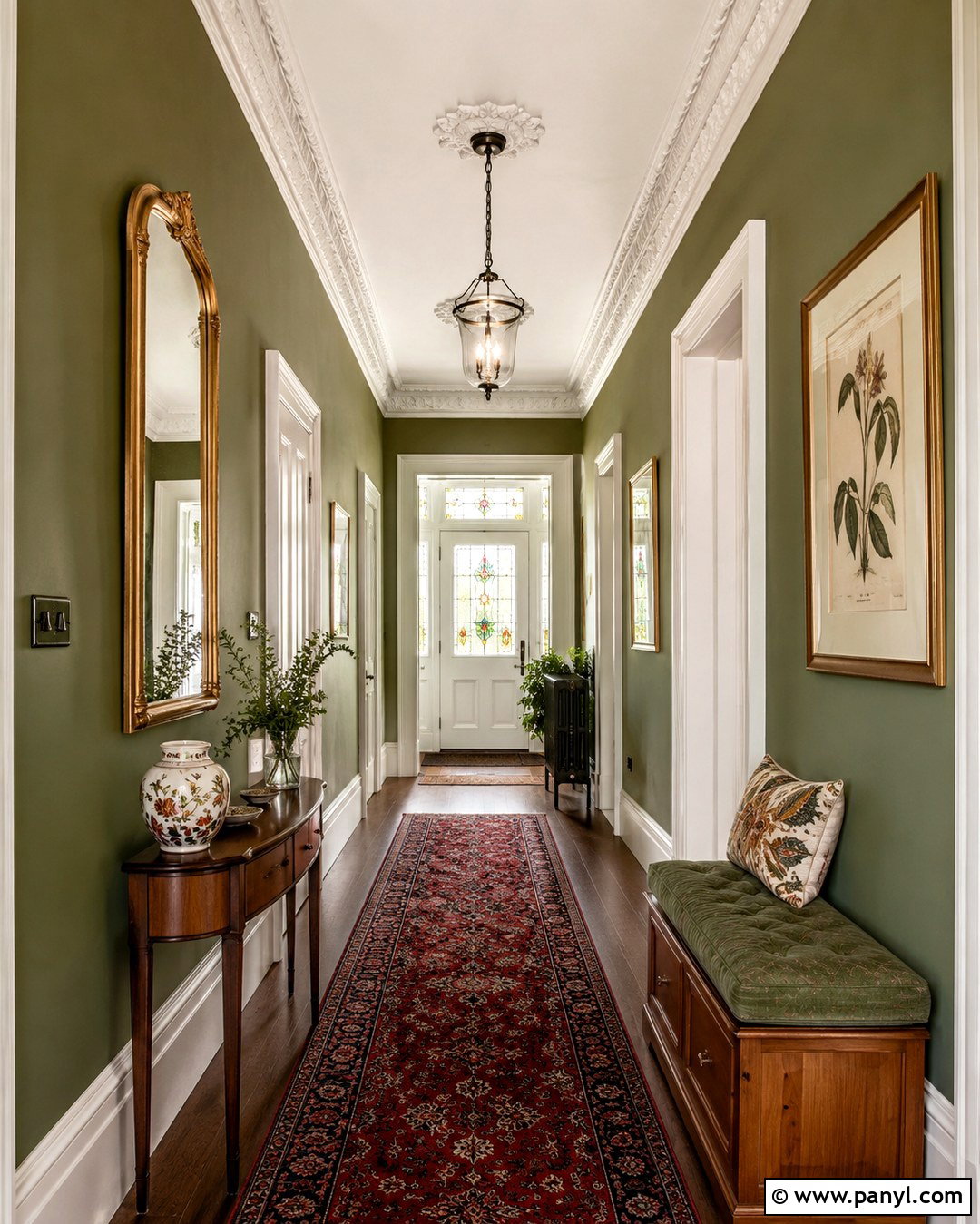
A narrow hallway gains warmth and personality from moss green walls paired with crisp architectural details. Paint the skirting boards, door casings, and decorative cornice warm white to maintain a bright visual framework. A slim walnut console provides a practical landing place without obstructing the walkway. Hang an ornate gilt mirror above it to reflect light from a glass pendant or small chandelier. Use a patterned runner with burgundy, tan, and green accents to connect the long floor visually. A few evenly spaced botanical prints create rhythm between doorways. If storage is needed, add a compact antique-style bench with a concealed compartment near the entrance. The completed hallway should feel layered and welcoming while leaving a clear, comfortable path through the home.
7. Bottle Green Victorian Bathroom
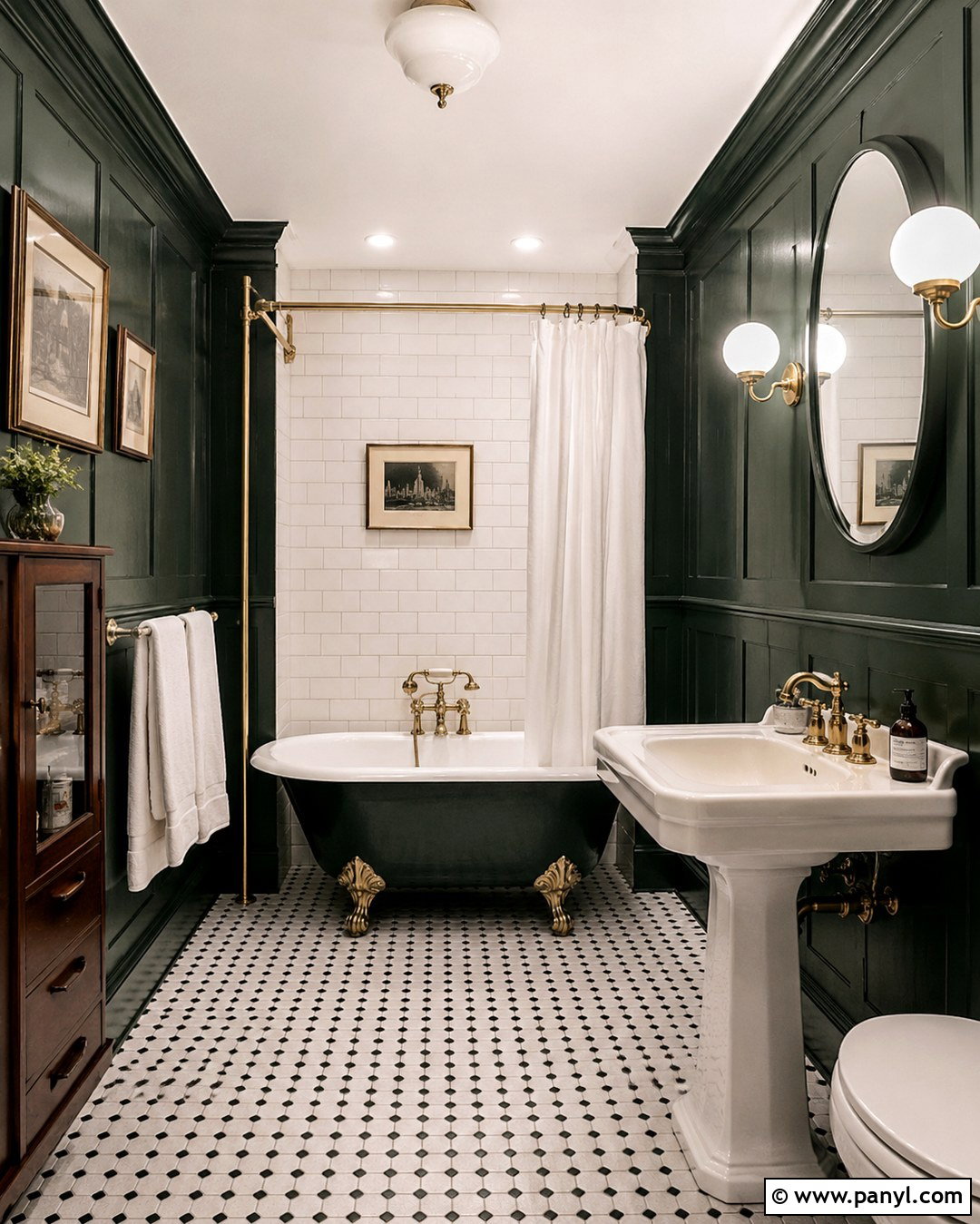
Glossy bottle green walls or painted paneling bring period drama to a Victorian bathroom while responding well to moisture and frequent cleaning. Use white subway tile around a clawfoot tub and shower area, then continue the dark green above it. A black-and-white mosaic floor provides crisp contrast and a historically inspired pattern. Choose a pedestal sink, polished brass faucets, and a traditional framed medicine cabinet to complete the practical layout. White towels and a simple linen shower curtain keep the room fresh. Add a small wall sconce on each side of the mirror for even lighting. A narrow wood cabinet can store toiletries, while one framed botanical print and a ceramic planter introduce decoration without cluttering this hardworking, compact space.
8. Fern Green Victorian Kitchen
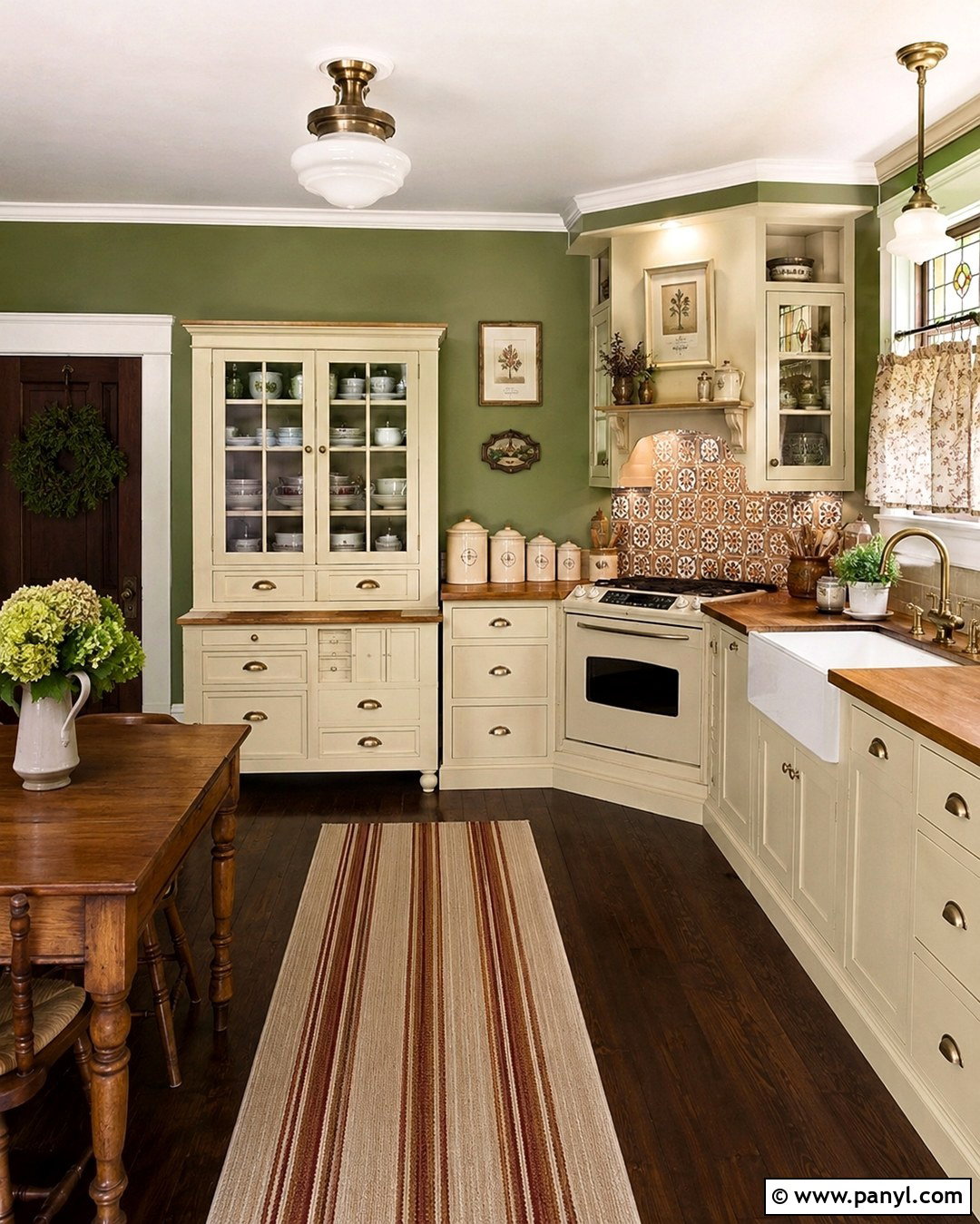
Fern green walls can soften a traditional kitchen filled with painted cabinetry and natural wood. Pair them with warm cream cabinets, oak countertops, and a white apron-front sink for a bright, welcoming scheme. A patterned tile backsplash in cream, green, and muted terracotta introduces decorative detail without covering every surface. Choose aged brass cabinet hardware and pendant lights to warm the cooler wall color. Dark wood flooring anchors the kitchen, while a washable striped runner protects the busiest walkway. Include a freestanding hutch or glass-front cabinet for dishes and serving pieces. Keep appliances integrated or visually quiet when possible. Linen café curtains, ceramic canisters, and a small wood table create a complete Victorian-inspired kitchen that supports modern cooking and casual dining.
9. Hunter Green Victorian Entryway
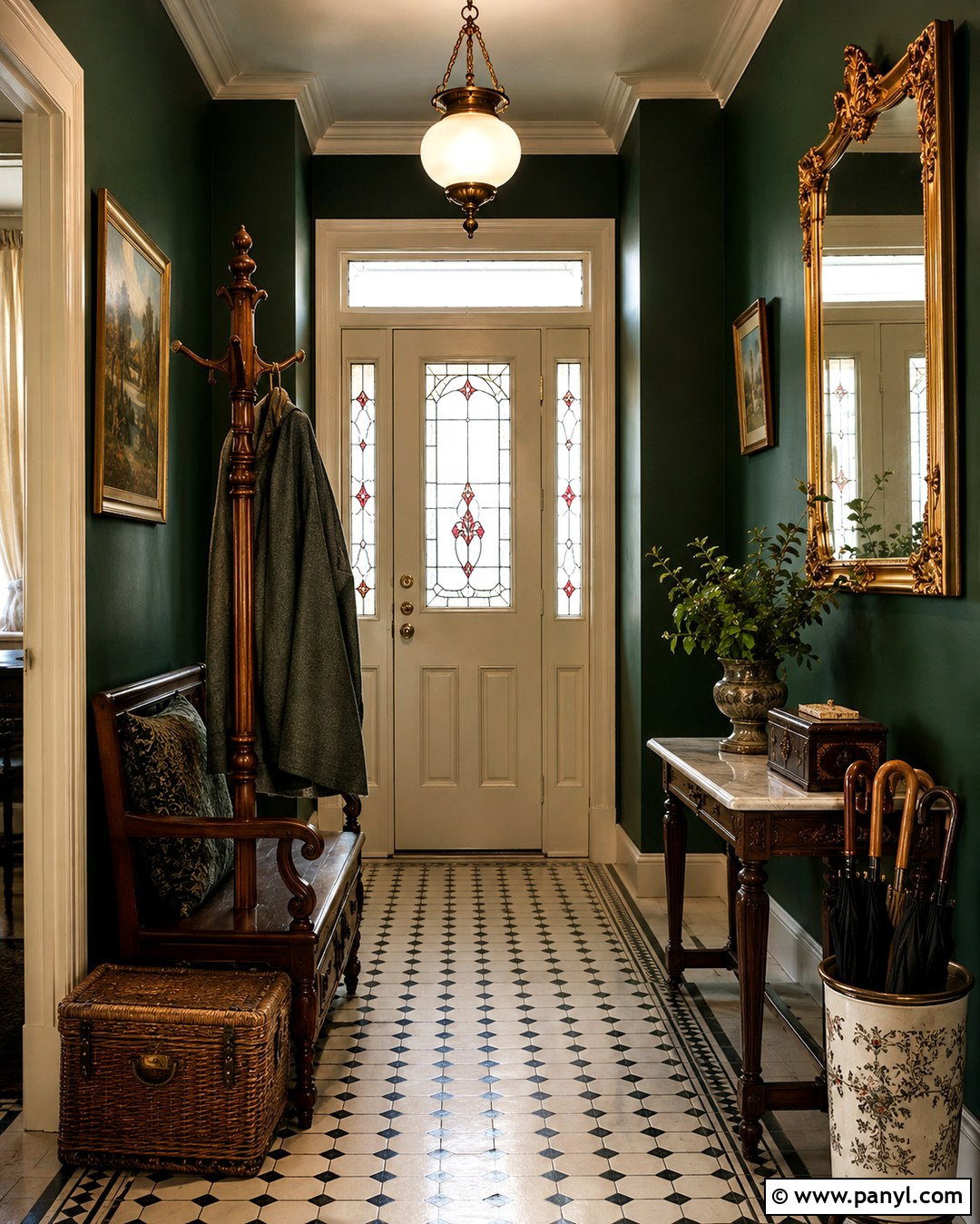
Hunter green walls give an entryway an immediate sense of importance, even when the available space is modest. Ground the design with patterned encaustic-style floor tile in black, cream, and muted green. Add a narrow carved bench for removing shoes and a tall walnut coat stand for daily outerwear. A gilded mirror above a marble-topped console brings light toward the center of the room. Paint interior doors and detailed trim warm ivory to create definition against the dark green. A small opal-glass pendant provides clear overhead illumination without overwhelming the ceiling. Finish the arrangement with an umbrella stand, lidded basket for accessories, and one framed landscape. Every element should offer beauty or function, keeping the entrance impressive but orderly.
10. Sea Green Victorian Sunroom
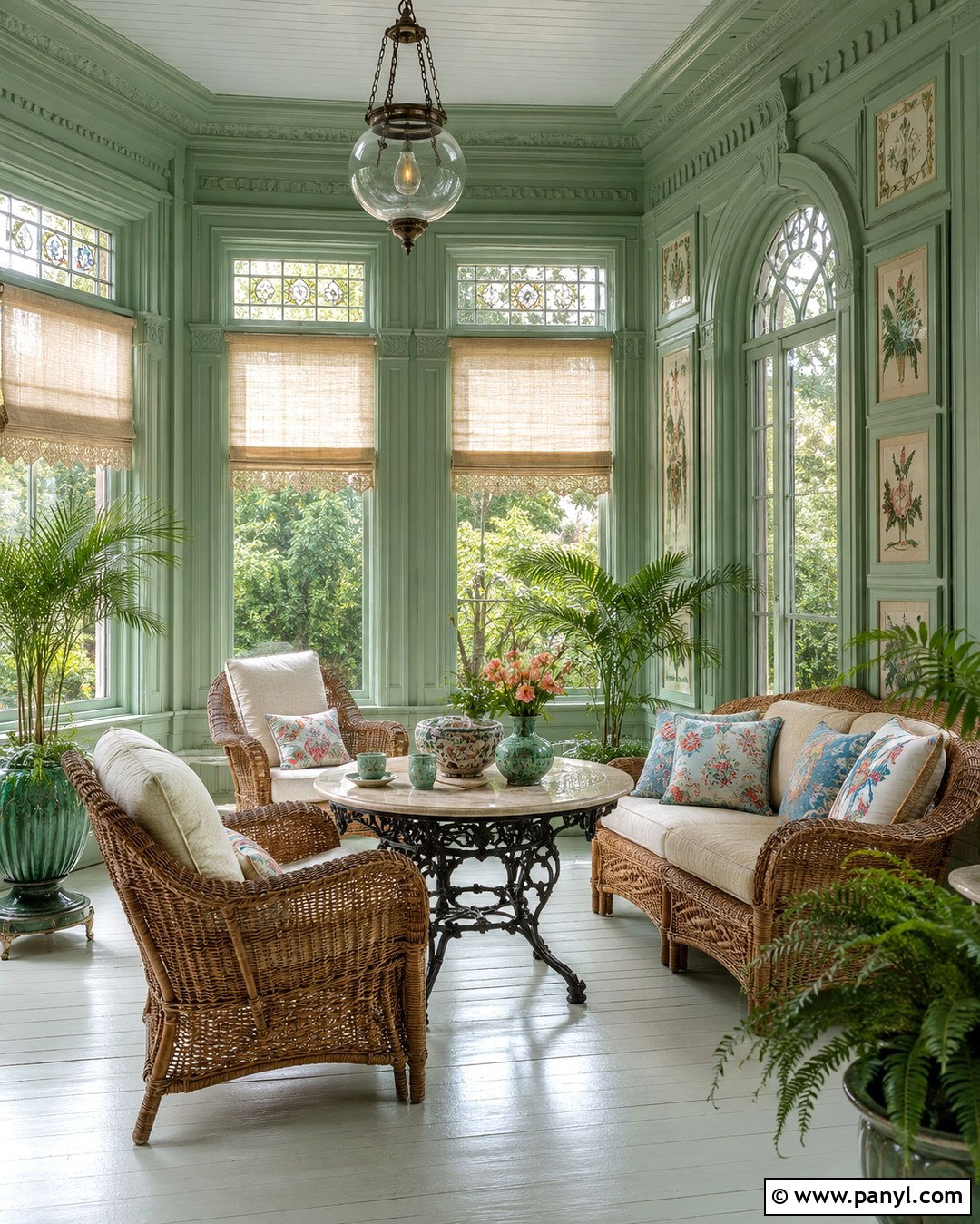
Muted sea green walls create a fresh Victorian sunroom that feels connected to the garden beyond its windows. Choose a wicker settee and coordinating chairs with cream cushions, then add floral pillows in coral, green, and dusty blue. Pale painted floorboards or light limestone tile help sunlight move through the room. Use relaxed linen shades instead of heavy curtains, preserving views while controlling glare. A round iron table provides a practical place for breakfast, plants, or reading materials. Group ferns, palms, and flowering houseplants in glazed ceramic pots at different heights. Decorative wall molding, a glass pendant, and a small vintage cabinet add period character. The finished room should feel bright, comfortable, and usable throughout the day.
11. Green Victorian Library
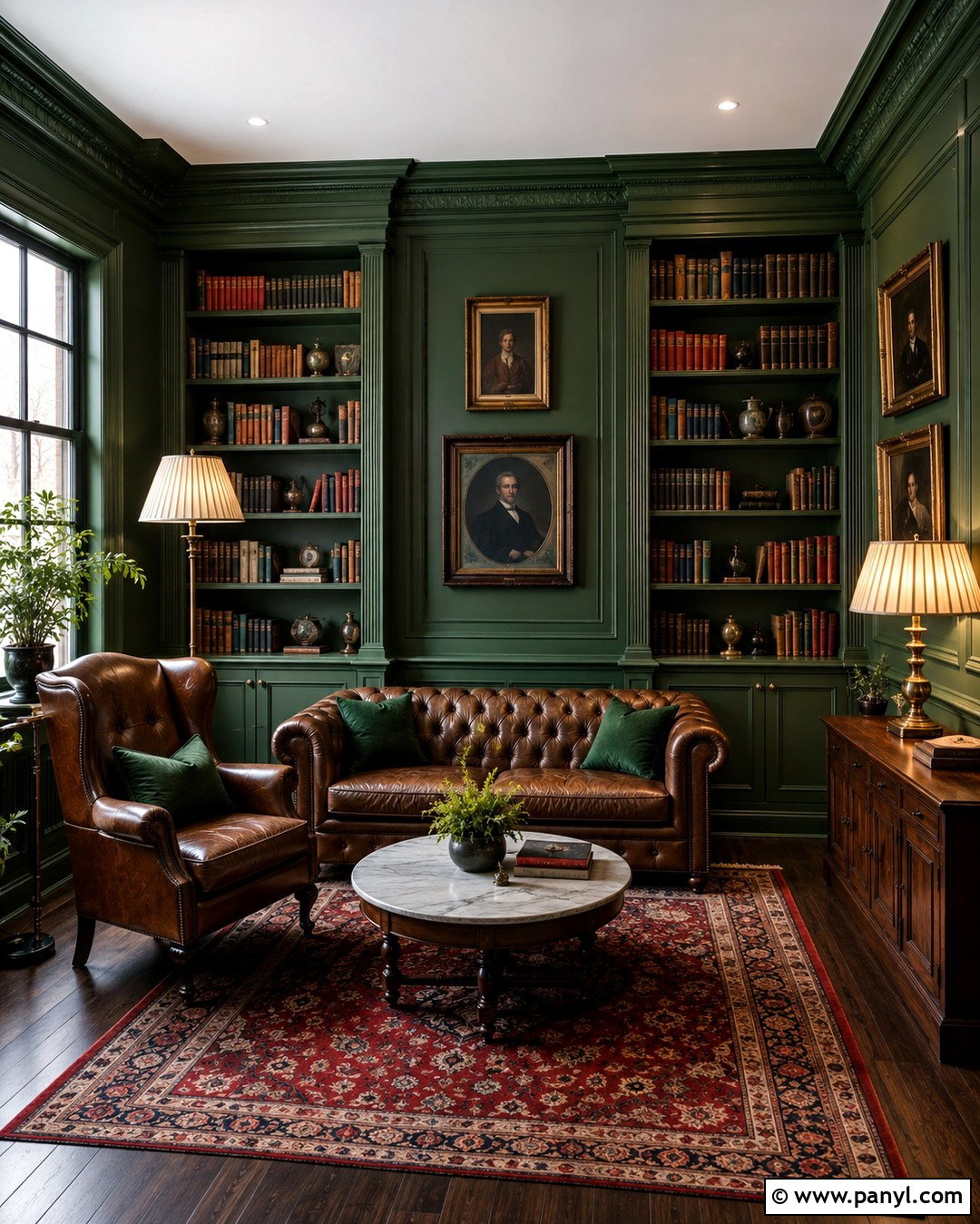
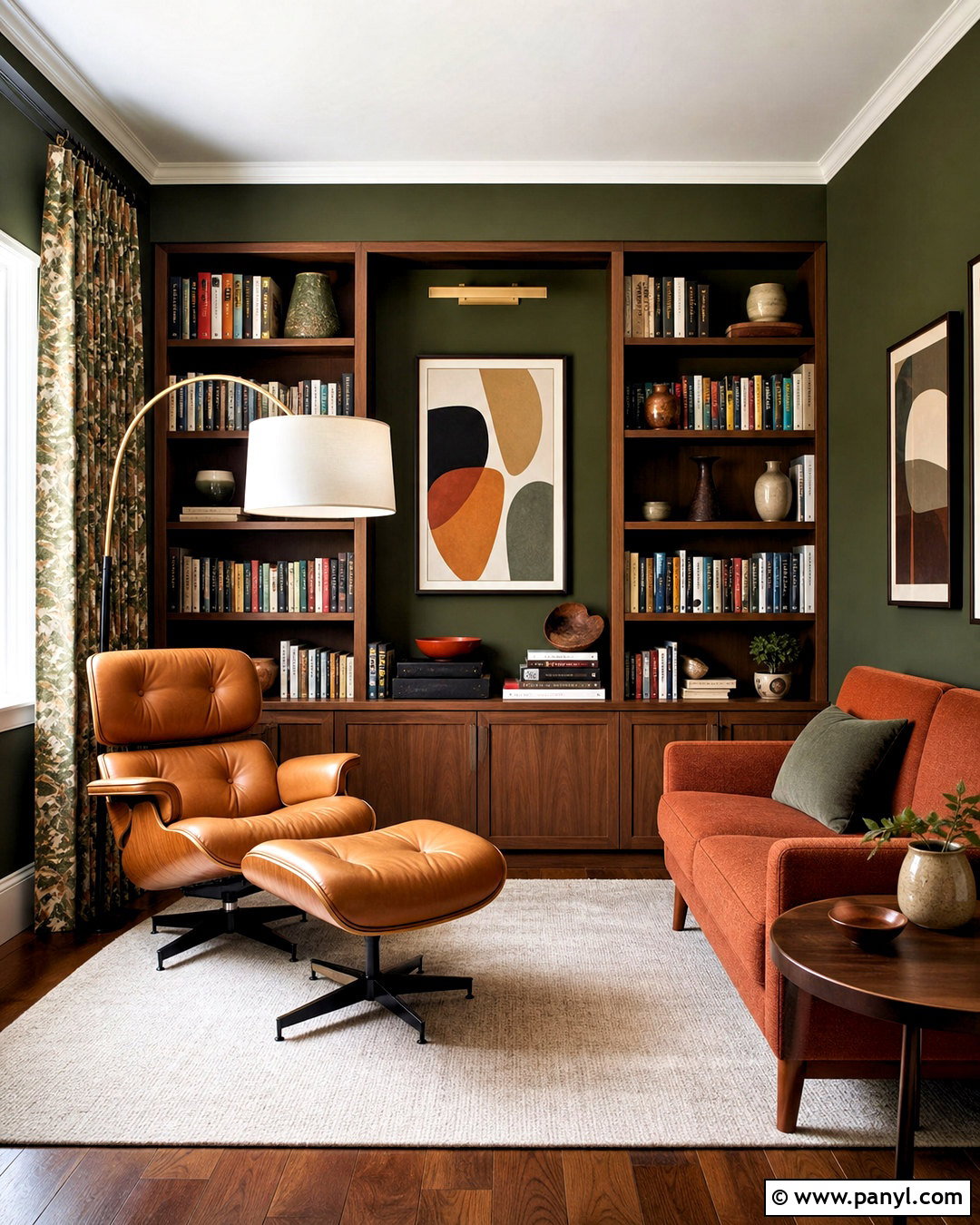
Rich green walls and built-in bookcases can transform an ordinary room into an intimate Victorian library. Paint the walls and shelving the same deep moss shade for a unified, enveloping effect, then preserve contrast with a warm white ceiling. Arrange books across upper shelves and use closed lower cabinets to hide electronics and household supplies. Place a tufted brown leather sofa opposite the shelves, accompanied by a wingback reading chair and brass floor lamp. Dark oak flooring and a red Persian-inspired rug introduce warmth. A marble-topped side table provides a convenient surface without adding visual weight. Finish the room with framed portraits, a small mantel clock, and pleated lampshades. Balanced lighting keeps this darker scheme welcoming during both daytime and evening use.
12. Green Victorian Guest Bedroom
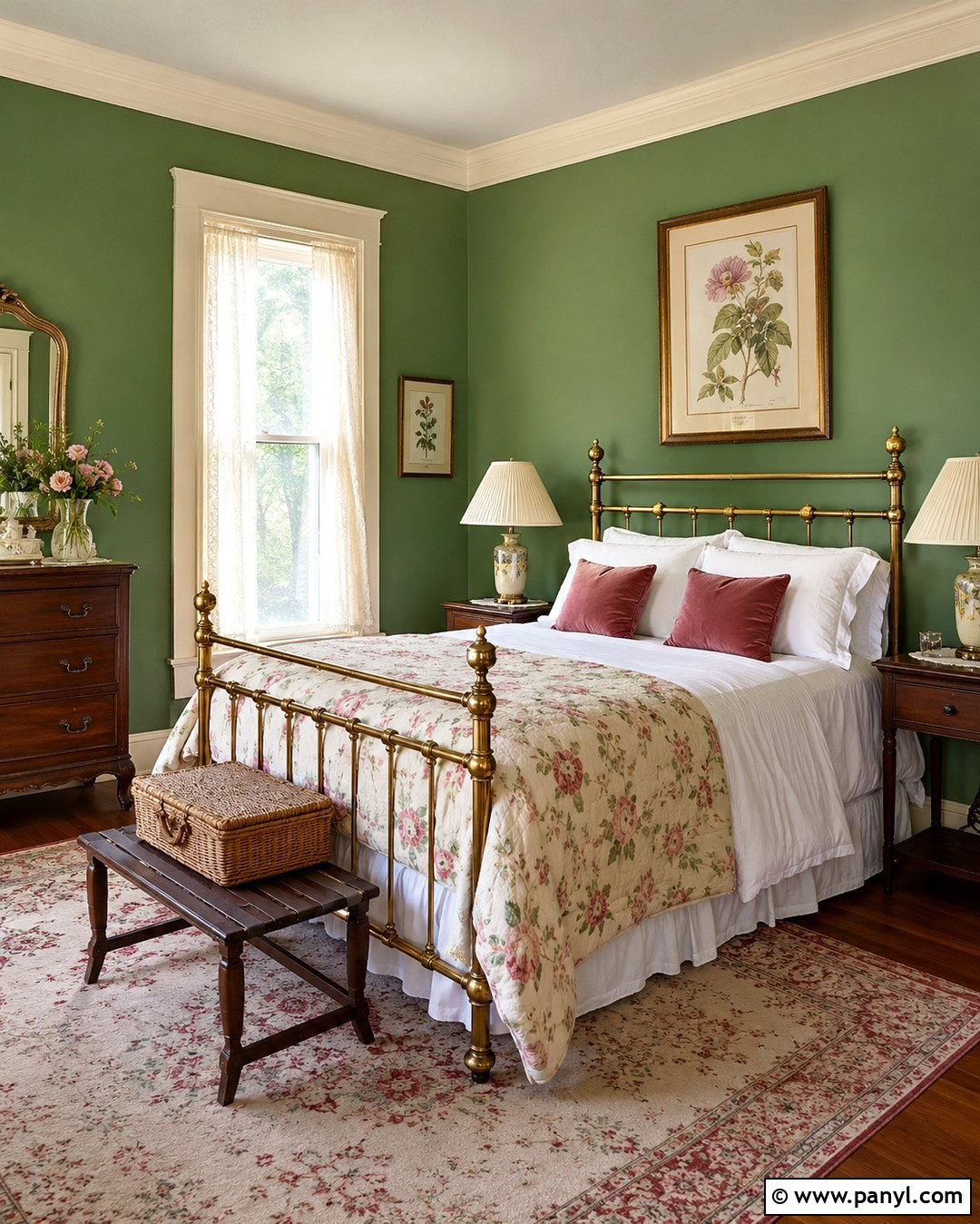
A medium leaf green creates a cheerful Victorian guest bedroom that feels decorative without becoming too dark. Start with an antique brass bed dressed in white linens, a floral quilt, and two dusty rose pillows. Position a compact walnut nightstand on each side, using matching shaded lamps for symmetry and comfort. Warm ivory trim will frame the windows and emphasize decorative molding. Choose a small chest of drawers instead of oversized storage, leaving clear pathways around the bed. A faded cream-and-red rug adds pattern over wood flooring. Hang one botanical print grouping above the dresser and place a simple mirror nearby. Lightweight curtains, a luggage bench, and a woven basket provide useful finishing touches that help visitors settle in easily.
13. Green Victorian Powder Room
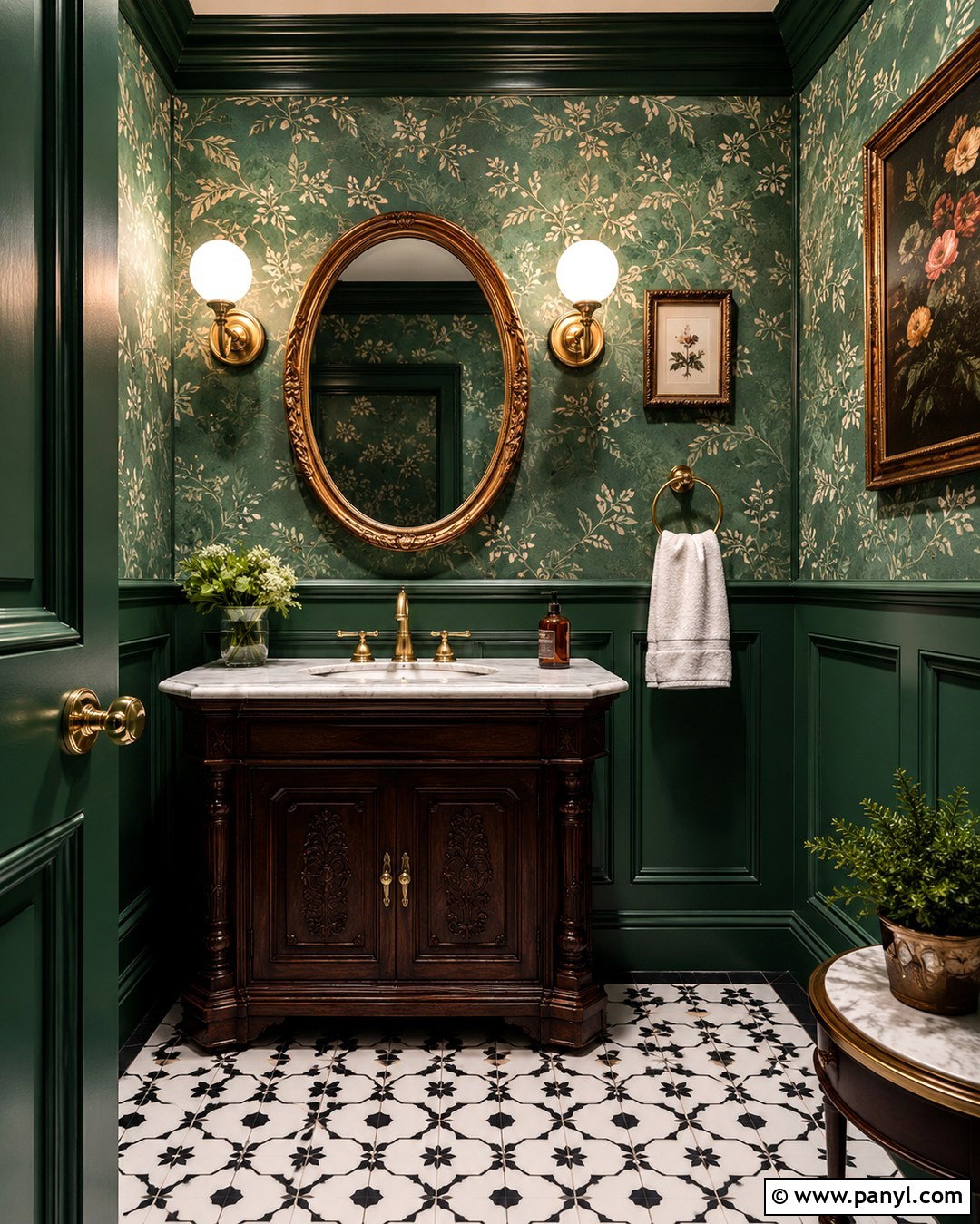
A powder room is an ideal place to use saturated malachite green walls with confident Victorian decoration. Install painted beadboard or paneled wainscoting below the chair rail, then use botanical wallpaper or rich green paint above it. A compact marble-topped vanity with dark wood cabinetry provides storage while supporting the traditional palette. Choose polished brass faucets, a framed oval mirror, and two small opal-glass sconces for flattering light. Patterned black-and-white tile can make the floor feel detailed without introducing another strong color. Add a white hand towel, ceramic soap dish, and one petite framed artwork. Because the room is small, keep the counter nearly clear. The finished design will feel memorable, polished, and practical rather than visually crowded.
14. Green Victorian Music Room
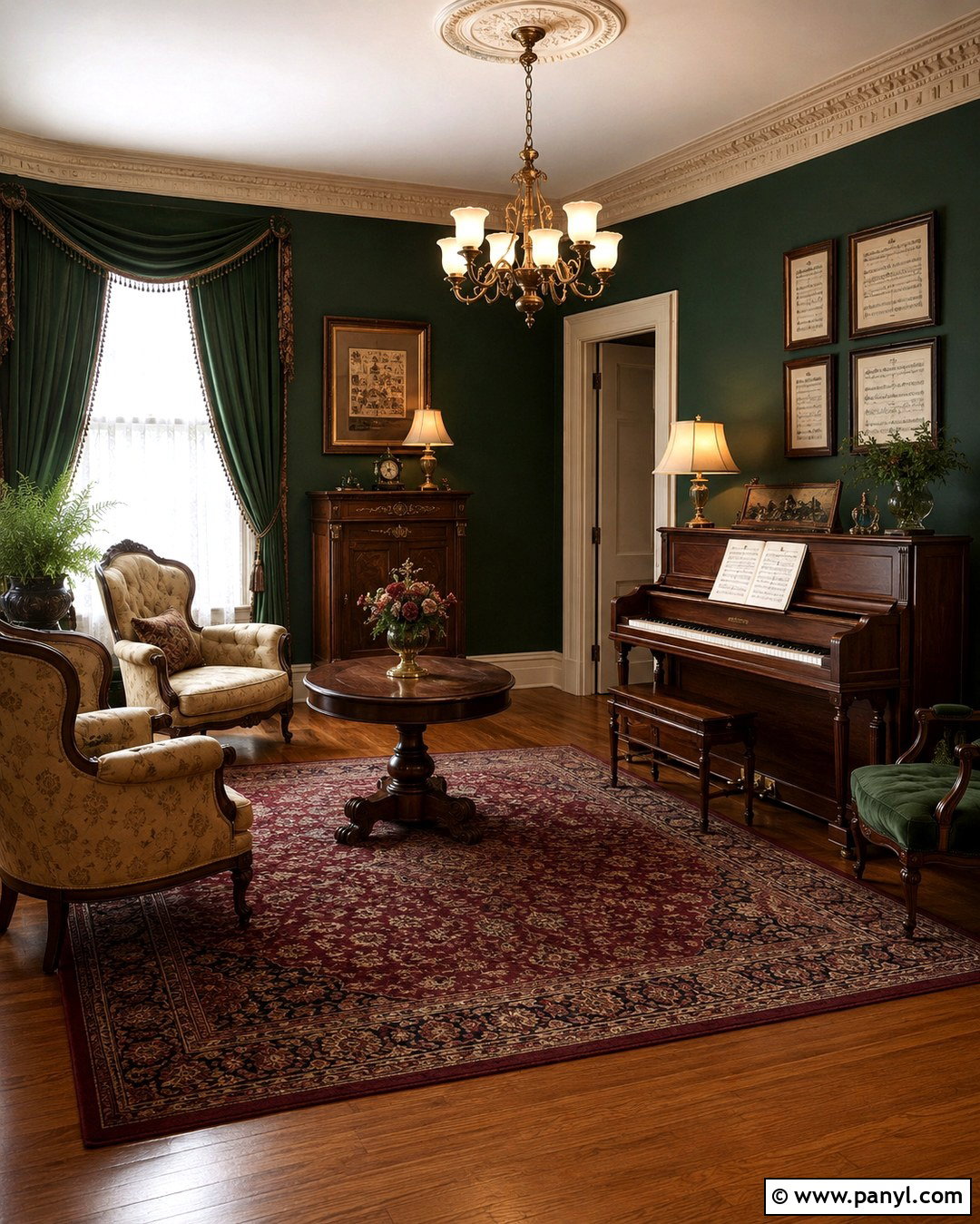
Deep pine green walls create a composed background for a Victorian music room centered around a piano. Position an upright or baby grand piano along the longest uninterrupted wall, leaving comfortable space for the bench and movement. Add two upholstered chairs and a small round table nearby so family or guests can listen. Warm oak floors and an ornate burgundy rug improve the room’s visual warmth. Use cream-painted trim and a decorative ceiling medallion to balance the dark walls. A brass chandelier, shaded piano lamp, and wall sconces provide layered illumination. Frame vintage sheet music or restrained landscape artwork in dark wood frames. Heavy curtains can soften the windows, while a closed cabinet keeps music books and accessories neatly organized.
15. Green Victorian Reading Nook
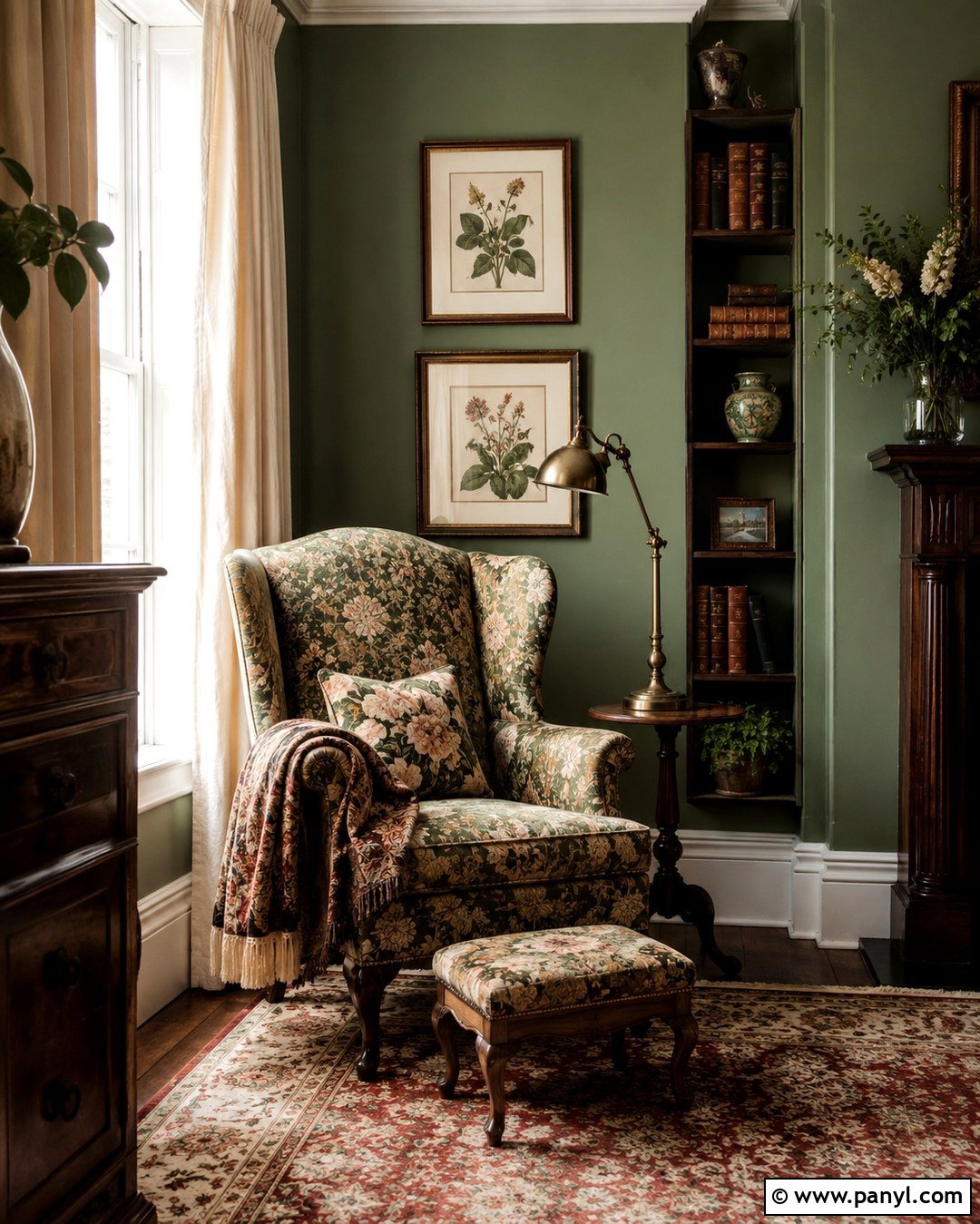
An unused corner can become a complete Victorian reading nook when green walls, comfortable furniture, and focused lighting work together. Use a muted ivy green to define the area, then place a high-backed floral armchair at a slight angle beside a tall window. Add a compact walnut table, brass reading lamp, and upholstered footstool for comfort. A narrow bookcase should sit close enough for easy access without blocking natural light. Layer the floor with a small patterned rug in rust, cream, and green. Full-length linen curtains soften the window while keeping the corner brighter than velvet would. Complete the setting with two framed botanical prints and a tasseled throw. The result feels intentional, useful, and connected to the surrounding room.
16. Green Victorian Breakfast Room
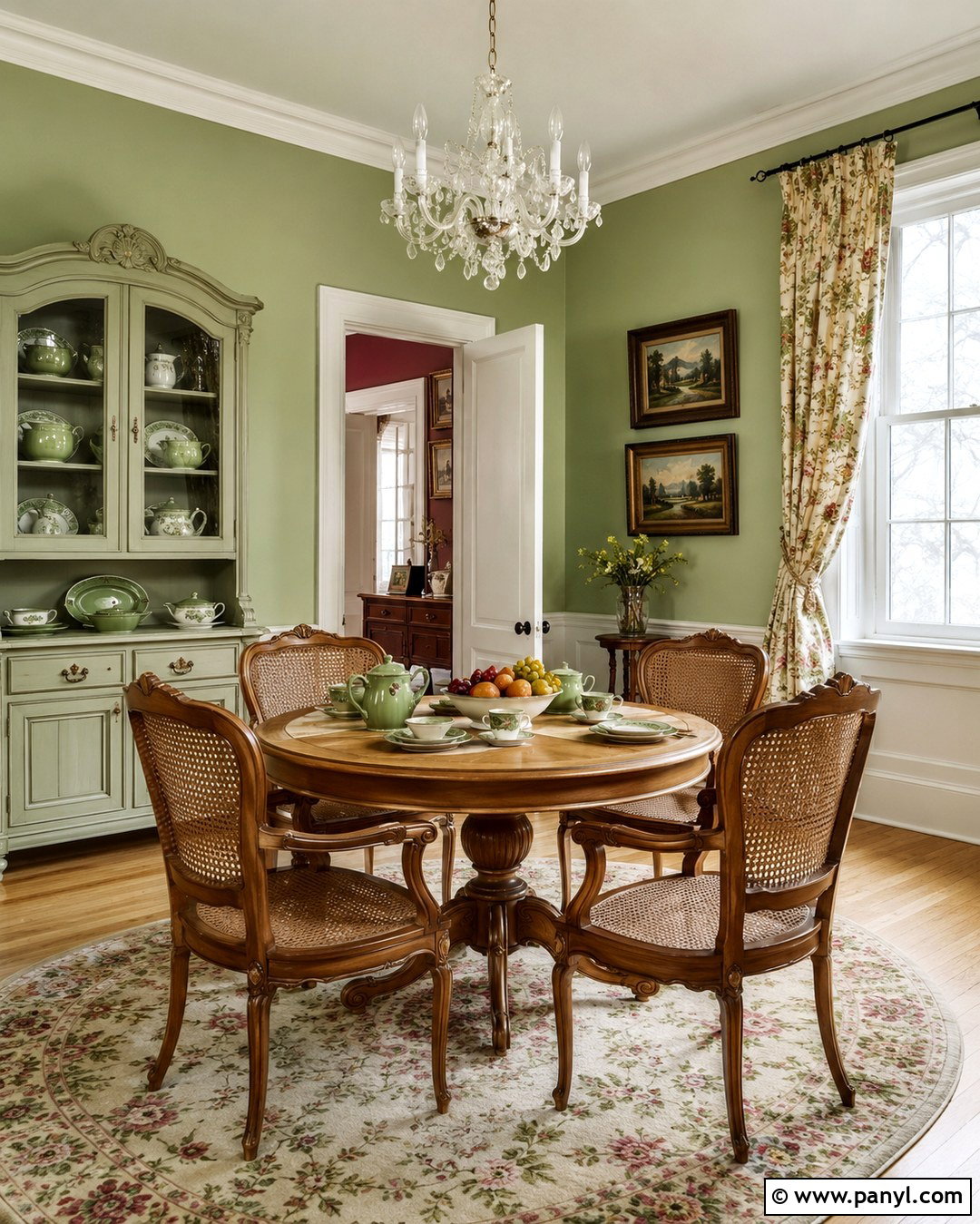
Warm celery green walls make a Victorian breakfast room feel sunny, relaxed, and suitable for daily use. Center a round oak pedestal table in the space and surround it with four cane-back or upholstered chairs. Hang a modest glass chandelier above the table to establish a clear focal point. Cream trim, light wood flooring, and softly patterned curtains prevent the room from feeling formal or heavy. A narrow painted hutch can store dishes, linens, and breakfast essentials behind closed lower doors. Introduce richer color through a floral rug containing rust, faded blue, and deeper green. Framed garden prints, simple ceramic tableware, and a bowl of fresh fruit complete the look. Keep the arrangement open so chairs remain easy to move.
17. Green Victorian Staircase
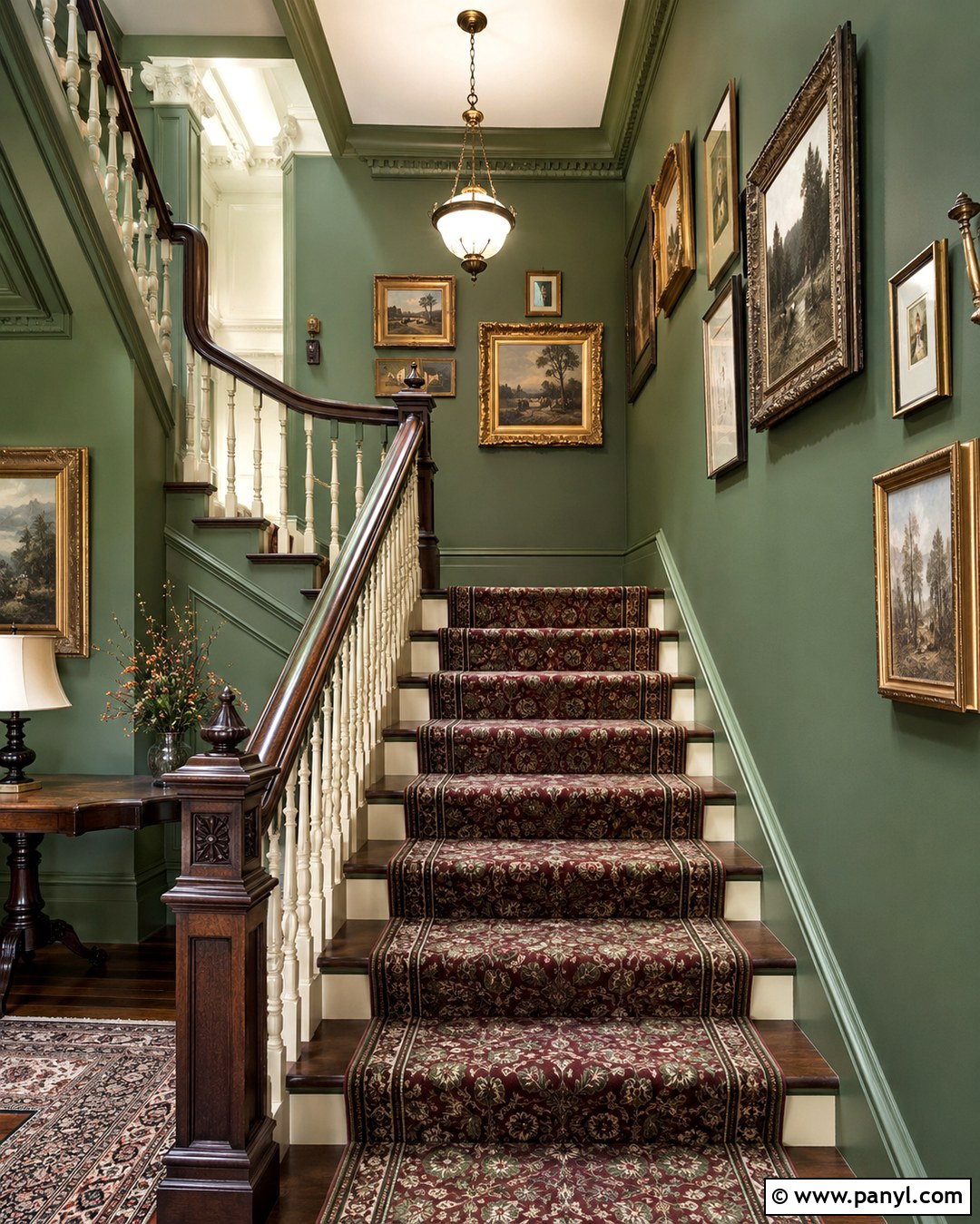
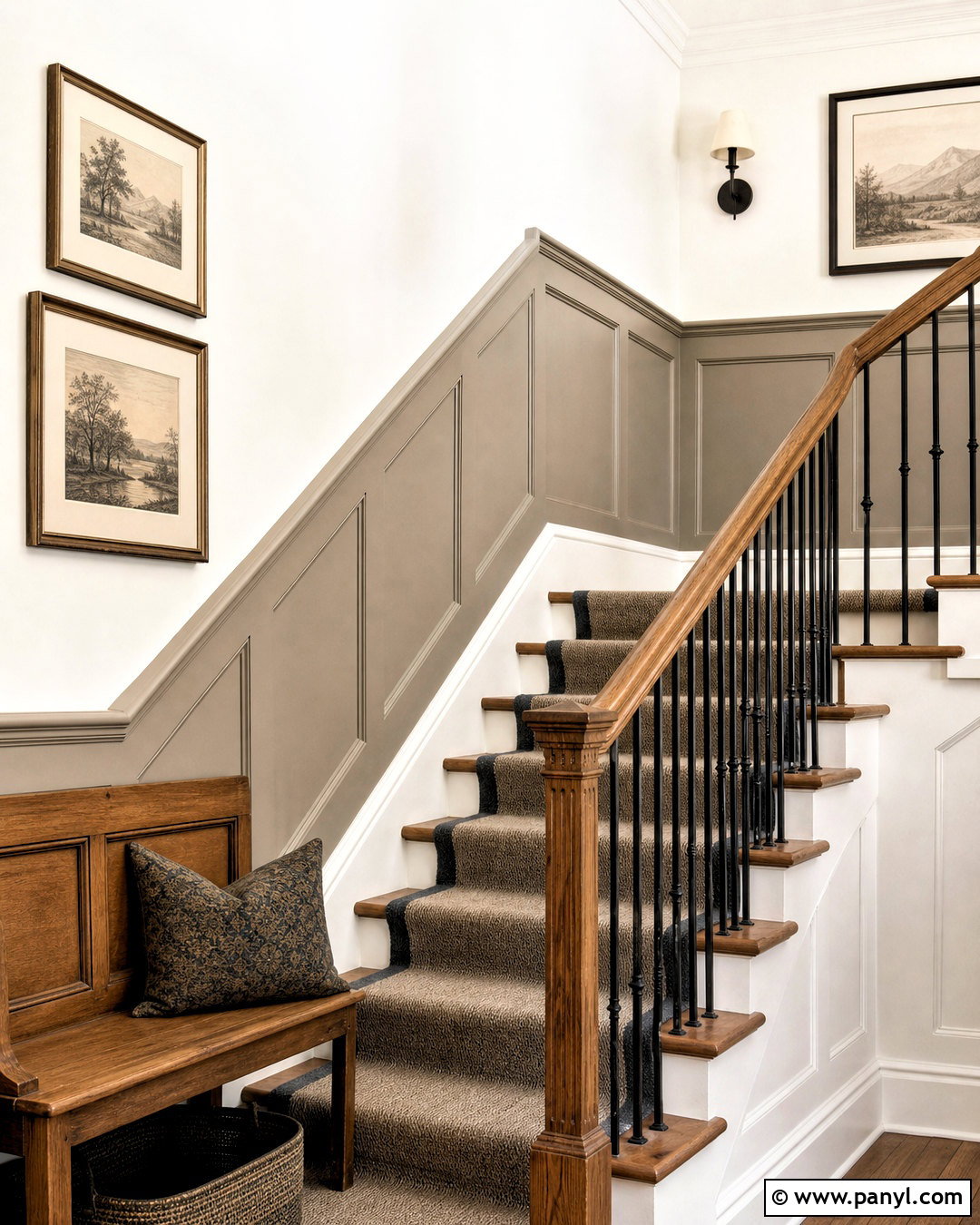
Deep sage green walls can turn a staircase into a strong architectural feature instead of a forgotten passage. Keep the banister and handrail in polished dark wood, while painting the spindles and stair trim warm ivory. A patterned runner in burgundy, olive, and cream adds softness, traction, and visual movement from one floor to the next. Arrange a measured gallery of vintage landscapes or family photographs along the rising wall, using coordinated dark wood and gilt frames. A decorative pendant should hang above the landing where it can illuminate both levels. Place a narrow table or small chair only if the landing allows clear circulation. The finished staircase should emphasize height, craftsmanship, and continuity without sacrificing everyday safety or function.
18. Green Victorian Conservatory
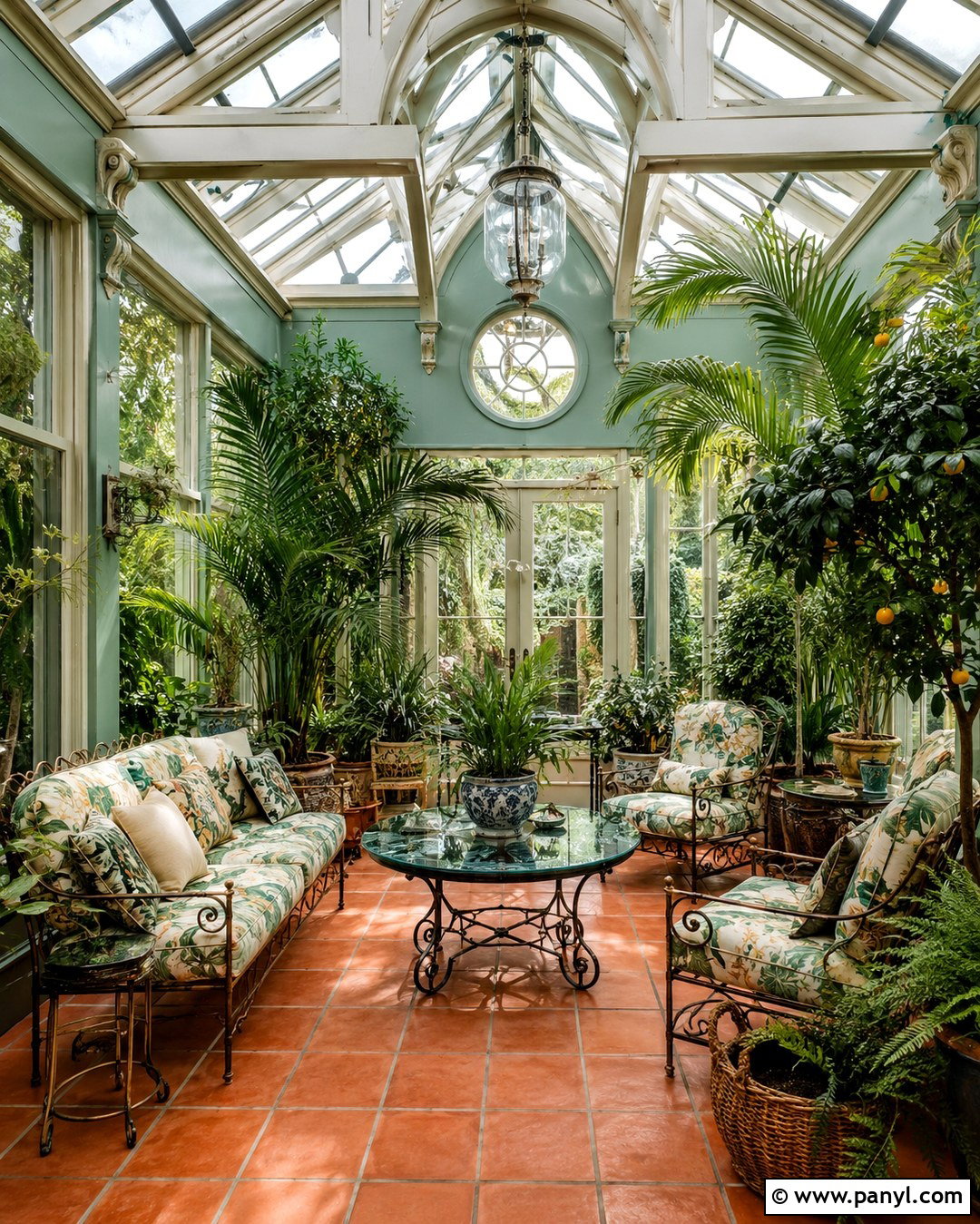
Soft eucalyptus green walls complement the glass, greenery, and decorative framework of a Victorian-inspired conservatory. Arrange a painted iron loveseat and two matching chairs around a round glass-topped table, creating a comfortable central seating group. Use cream cushions with small botanical patterns for softness and continuity. Terracotta floor tile introduces warmth and withstands soil, water, and frequent foot traffic. Place palms, ferns, citrus trees, and trailing plants around the edges while keeping windows and walkways open. White-painted trim and rafters help reflect daylight through the space. A hanging glass lantern, woven baskets, and weathered ceramic planters complete the relaxed period character. The conservatory should feel lush and layered, yet organized enough for dining, reading, or quiet conversation.
19. Green Victorian Home Office
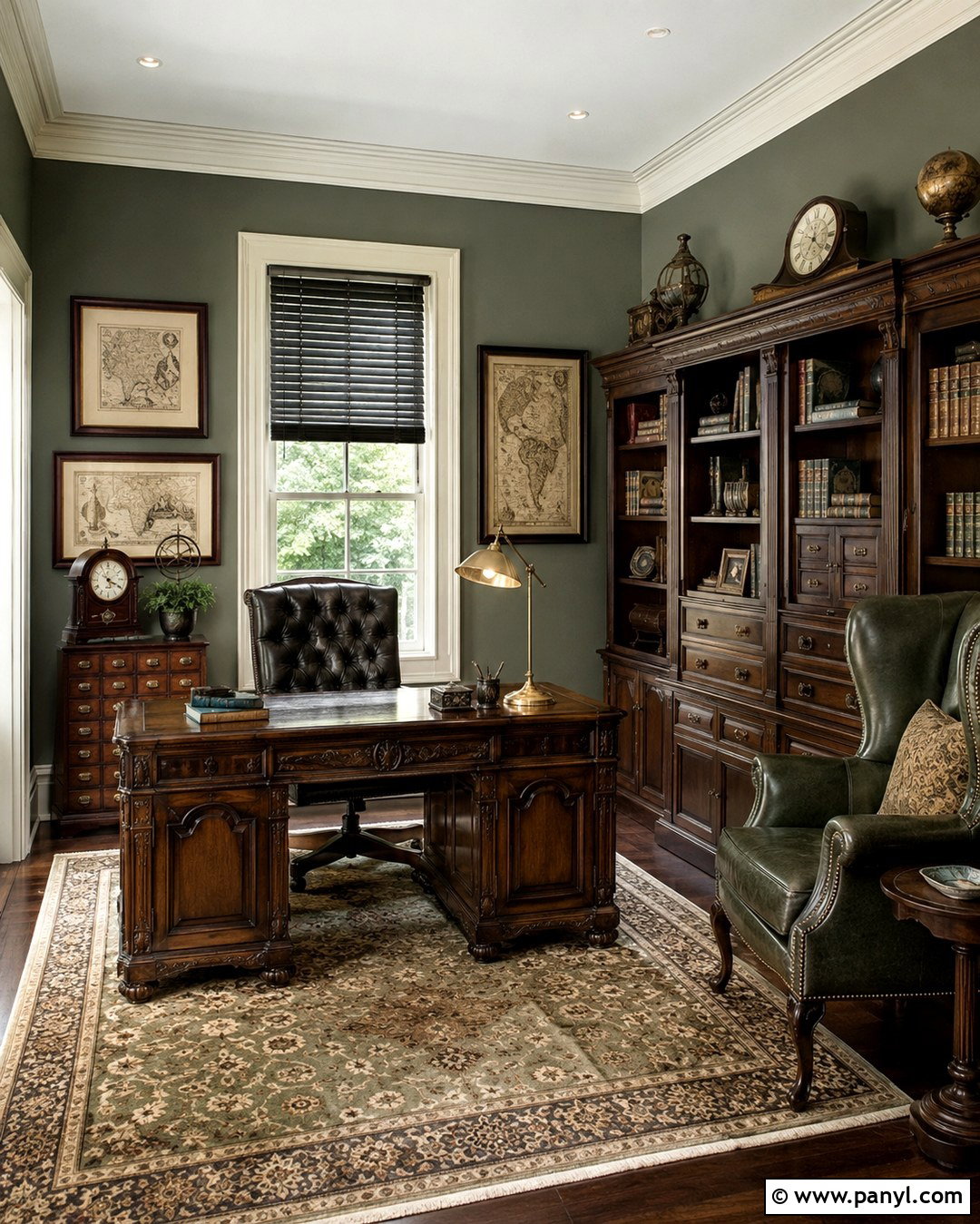
A gray-green wall color creates a professional Victorian home office that feels calm during long working hours. Position a carved wood desk toward the center of the room rather than pushing it against a wall. Behind it, use matching bookcases or cabinets to establish a balanced background and provide practical storage. A dark leather chair, brass desk lamp, and wool rug add warmth and texture. Paint the ceiling and ornate trim creamy white to preserve brightness. Near the window, include a small upholstered chair for reading or video calls away from the desk. Framed maps, restrained artwork, and a vintage-style clock provide decoration. Concealed cords, closed filing drawers, and adjustable task lighting ensure the room supports modern work without losing its traditional character.
20. Green Victorian Nursery
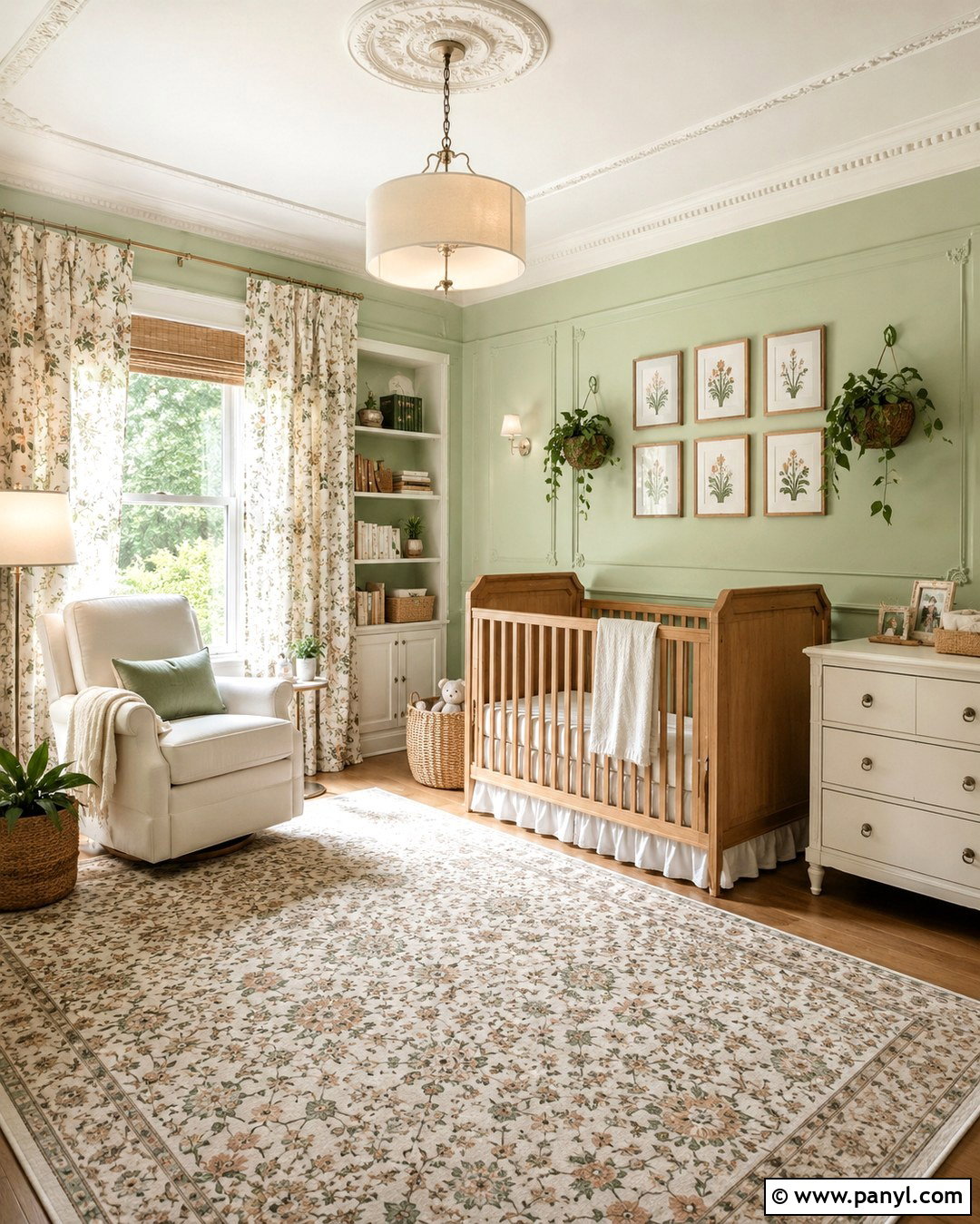
Gentle mint green walls offer a lighter interpretation of Victorian decorating for a peaceful, functional nursery. Choose a white or natural oak crib with simple carved details, positioned away from windows and hanging cords. Add a comfortable upholstered rocking chair, small side table, and shaded floor lamp for feeding and reading. A cream dresser can serve as closed storage and a changing surface, helping the room stay uncluttered. Use washable floral curtains, a soft wool-look rug, and ivory bedding to create warmth without excessive pattern. Botanical illustrations or small woodland artwork fit neatly above the dresser. Finish with woven baskets, a traditional ceiling pendant, and one compact bookcase. The overall room should feel gentle, practical, and historically inspired rather than overly formal.
Conclusion:
Decorating with Victorian Green Walls is most successful when the wall color supports a complete, balanced room rather than becoming the only dramatic feature. Dark green works beautifully with walnut, mahogany, brass, velvet, patterned rugs, and warm ivory trim. Lighter sage, fern, and mint shades provide a fresher option for bedrooms, kitchens, nurseries, and sunlit spaces. Before painting, test the color on more than one wall and observe it in changing light. Then build the room in layers, beginning with the furniture layout and practical storage. Add lighting, textiles, artwork, and decorative details last. This thoughtful approach creates a home that feels expressive, comfortable, and genuinely connected to Victorian design.

Related Ideas and Inspiration:

Leave a Reply