
Beige walls can feel warm, refined, and highly dimensional when the surface has more character than ordinary flat paint. These 45 Beige Wall Texture Ideas explore complete room looks built around plaster, limewash, wallpaper, wood, stone, fabric, and decorative molding. You will find subtle finishes for calm bedrooms, durable treatments for busy entryways, and dramatic feature walls for modern living spaces. Each design also considers lighting, flooring, furniture, and accent colors, helping you create a balanced interior rather than an isolated textured surface. Whether your taste leans organic modern, coastal, rustic, minimalist, or traditional, beige provides a flexible foundation. Use the following 45 Beige Wall Texture Ideas to find a complete look that suits your home, budget, and decorating style.

1. Beige Limewash Wall Texture
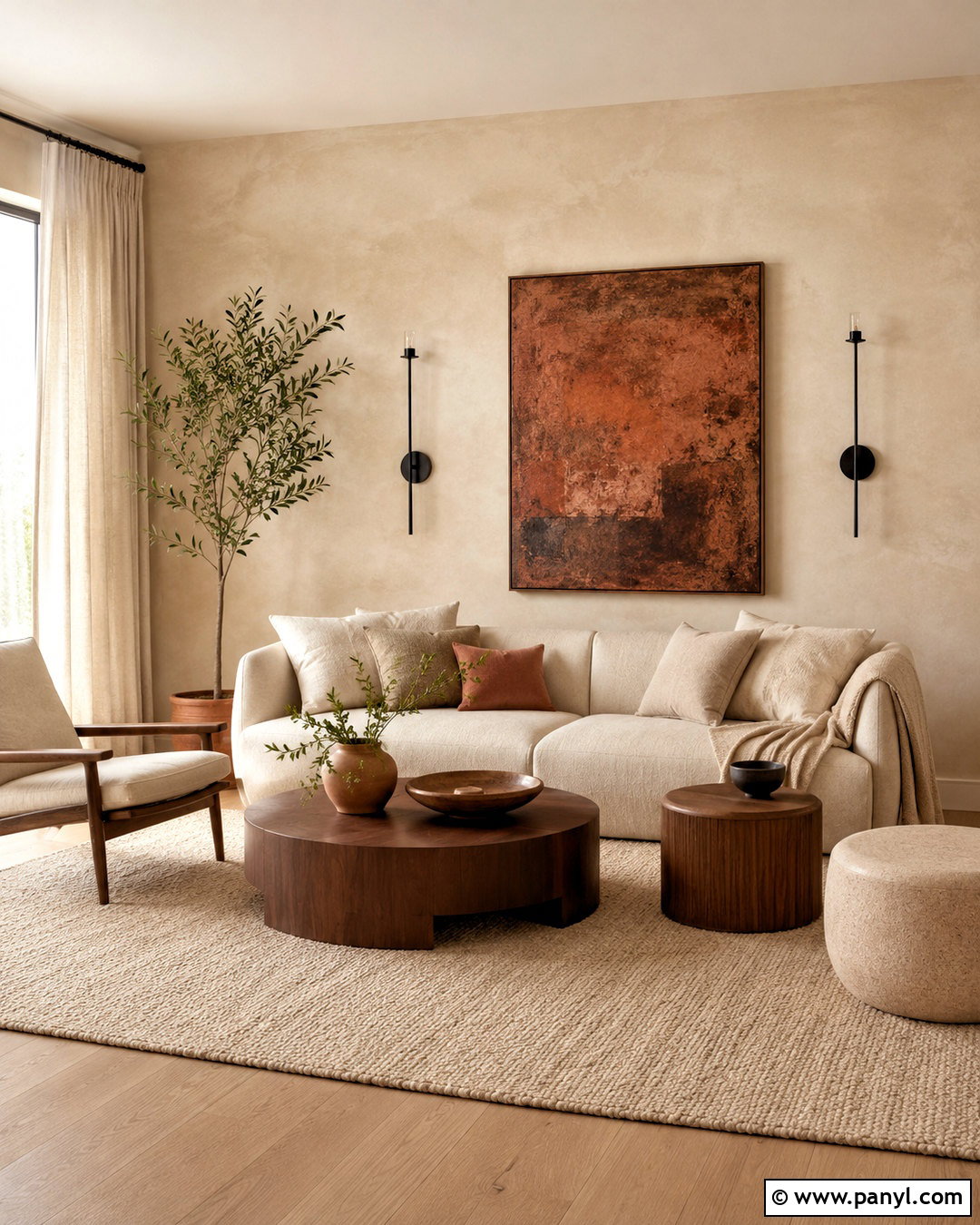
Soft movement makes beige limewash an inviting choice for an organic modern living room. Cover every wall in a warm sandy beige limewash, allowing visible brush marks and tonal variation to create quiet depth. Pair the finish with light oak flooring, a cream linen sofa, and rounded walnut tables. A handwoven wool rug and clay pottery strengthen the natural character without making the palette feel overly rustic. Keep window treatments simple with floor-length oatmeal curtains. Black metal sconces provide definition and cast light across the uneven surface at night. Finish the room with one large abstract canvas containing muted rust and charcoal accents. The restrained colors let the limewash remain noticeable while the layered furniture makes the entire room comfortable and complete.
2. Beige Venetian Plaster Wall Texture
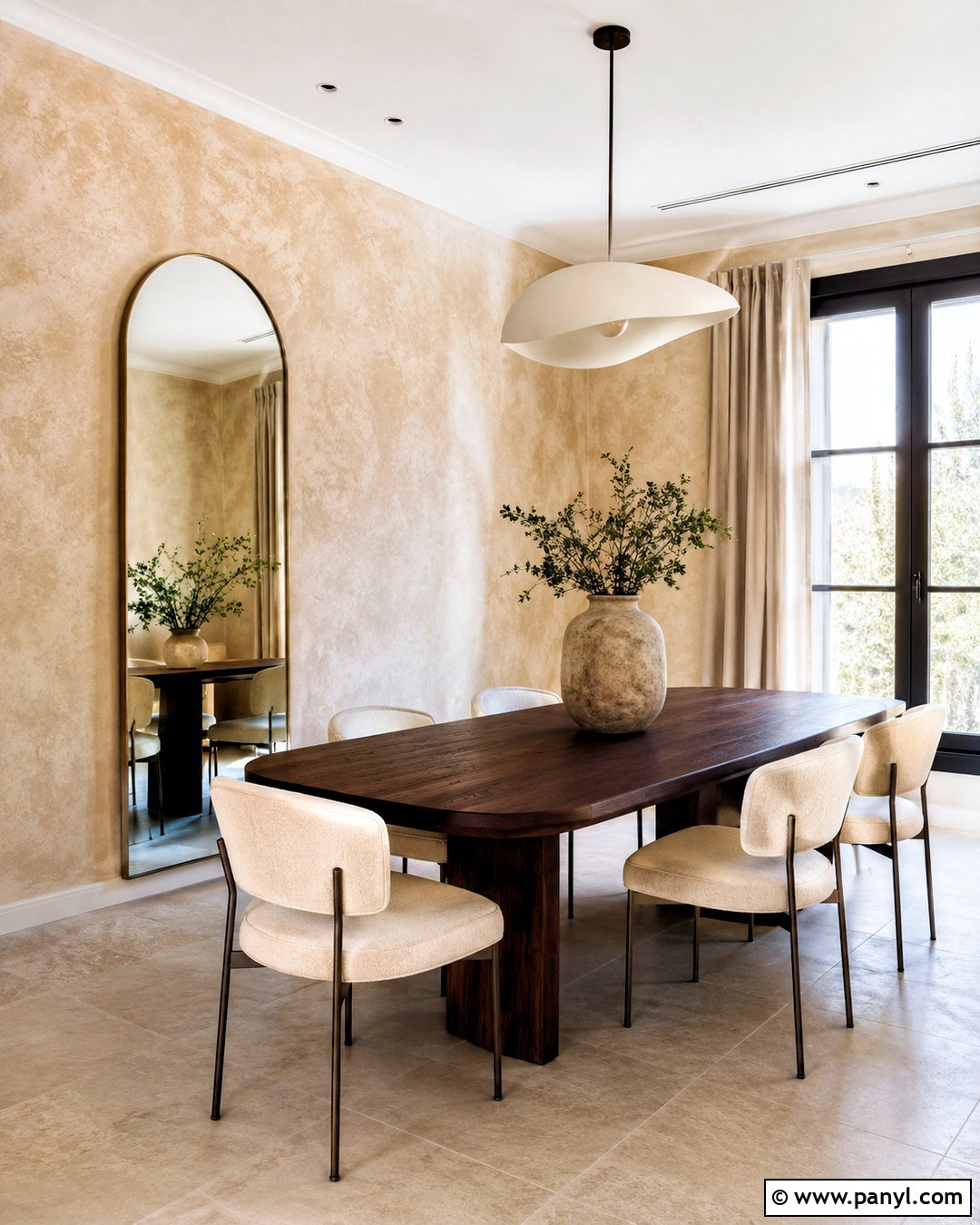
Beige Venetian plaster brings polished depth to a sophisticated dining room without relying on a busy pattern. Choose a medium beige plaster with subtle golden undertones and a softly burnished surface. Use it on all four walls so reflected light creates gentle shifts throughout the day. Center a dark walnut dining table beneath a sculptural white pendant, then add cream upholstered chairs with slim bronze legs. Limestone flooring or a low-pile neutral rug keeps the foundation understated. A large arched mirror can amplify the plaster’s movement while making the room feel more open. Complete the setting with a streamlined sideboard, matte ceramic vessels, and linen curtains. The combination feels formal enough for entertaining but still relaxed, tactile, and comfortable for everyday meals.
3. Beige Roman Clay Wall Texture
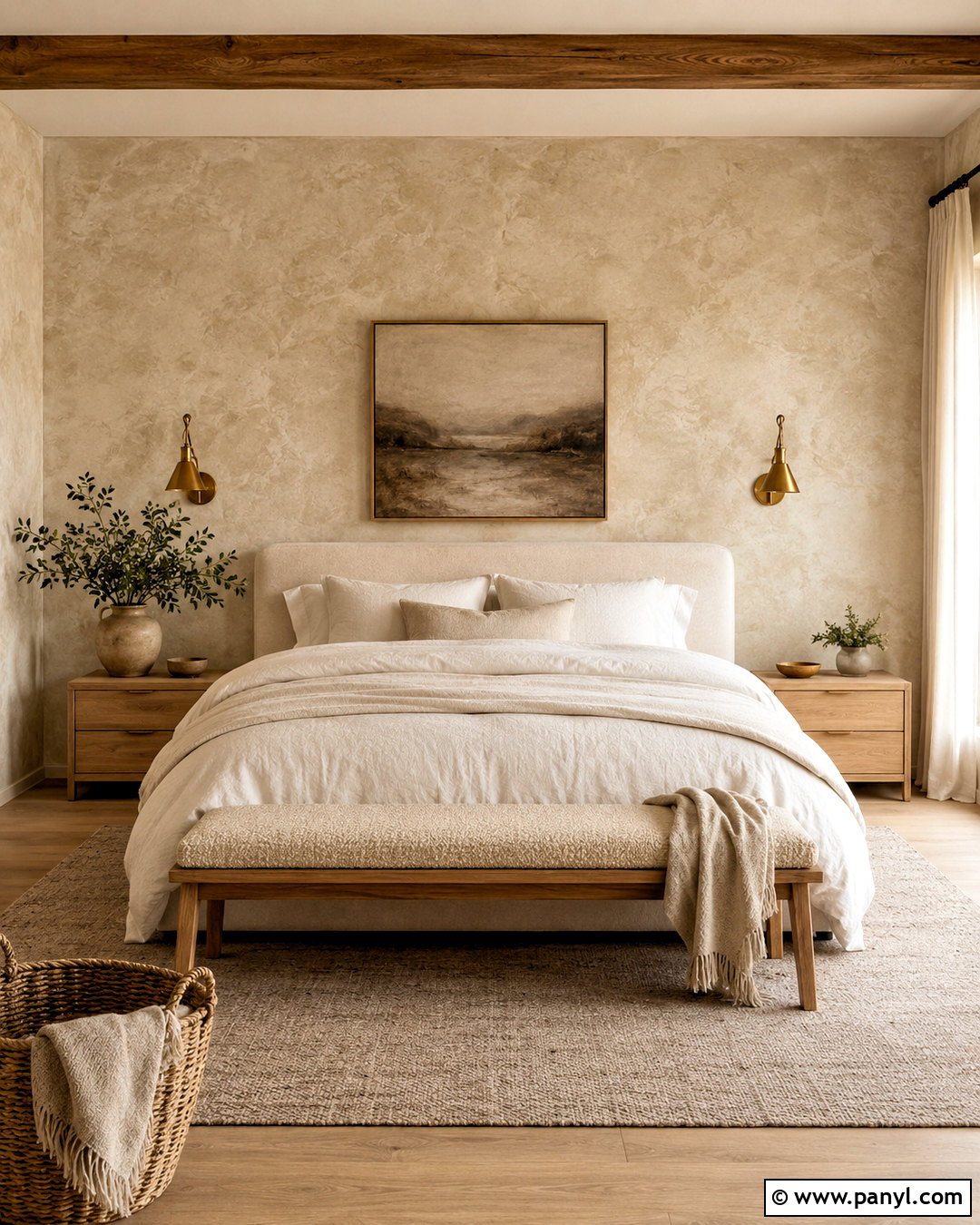
For a calm bedroom with handcrafted character, use beige Roman clay as the room’s main wall treatment. A light mushroom-beige finish with cloudy tonal changes works especially well behind an upholstered oatmeal bed. Continue it around the room to create an enveloping effect rather than a disconnected accent wall. Add pale oak nightstands, simple linen bedding, and a textured wool bench at the foot of the bed. A flat-weave taupe rug grounds the arrangement while aged brass sconces introduce a controlled touch of warmth. Keep artwork minimal because the walls already provide movement. One oversized landscape in muted earth tones is enough. Soft cotton curtains, woven storage baskets, and a small olive tree complete a restful bedroom where the wall texture feels subtle, natural, and intentionally layered.
4. Beige Microcement Wall Texture
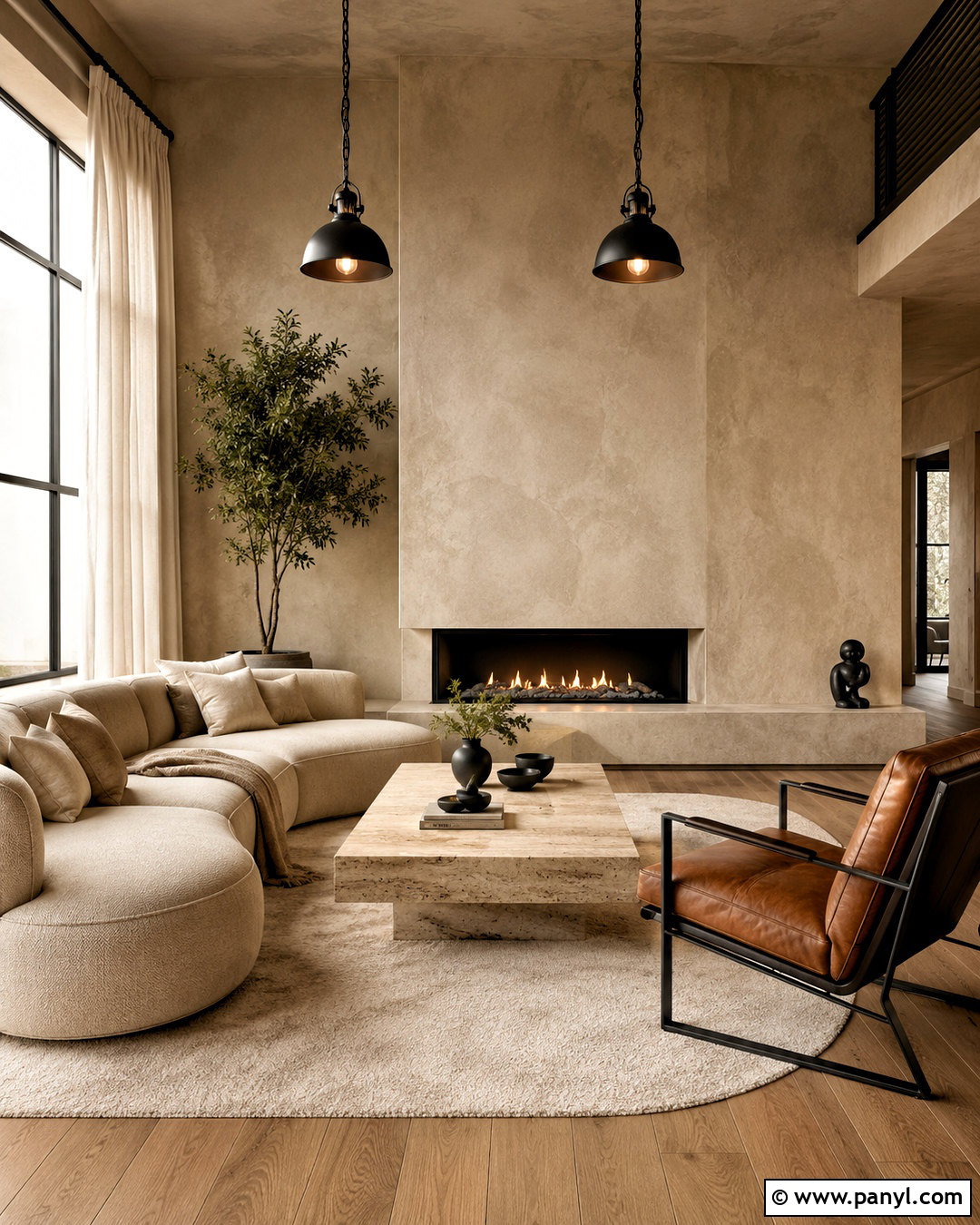
A beige microcement finish gives a modern living room a seamless, architectural backdrop. Select a warm greige-beige tone and apply it across the walls and fireplace surround for a continuous appearance. Balance the slightly industrial surface with a deep cream sectional, a caramel leather lounge chair, and a thick ivory wool rug. A low travertine coffee table reinforces the mineral palette without matching the wall too closely. Use medium-tone oak flooring to prevent the room from becoming cold or stark. Matte black window frames and slim black lighting add crisp structure. Bring in softness with linen curtains, boucle cushions, and a few leafy plants. This complete scheme works best with open spacing and restrained decor, allowing the mottled microcement texture to become the room’s quiet focal point.
5. Beige Stucco Wall Texture
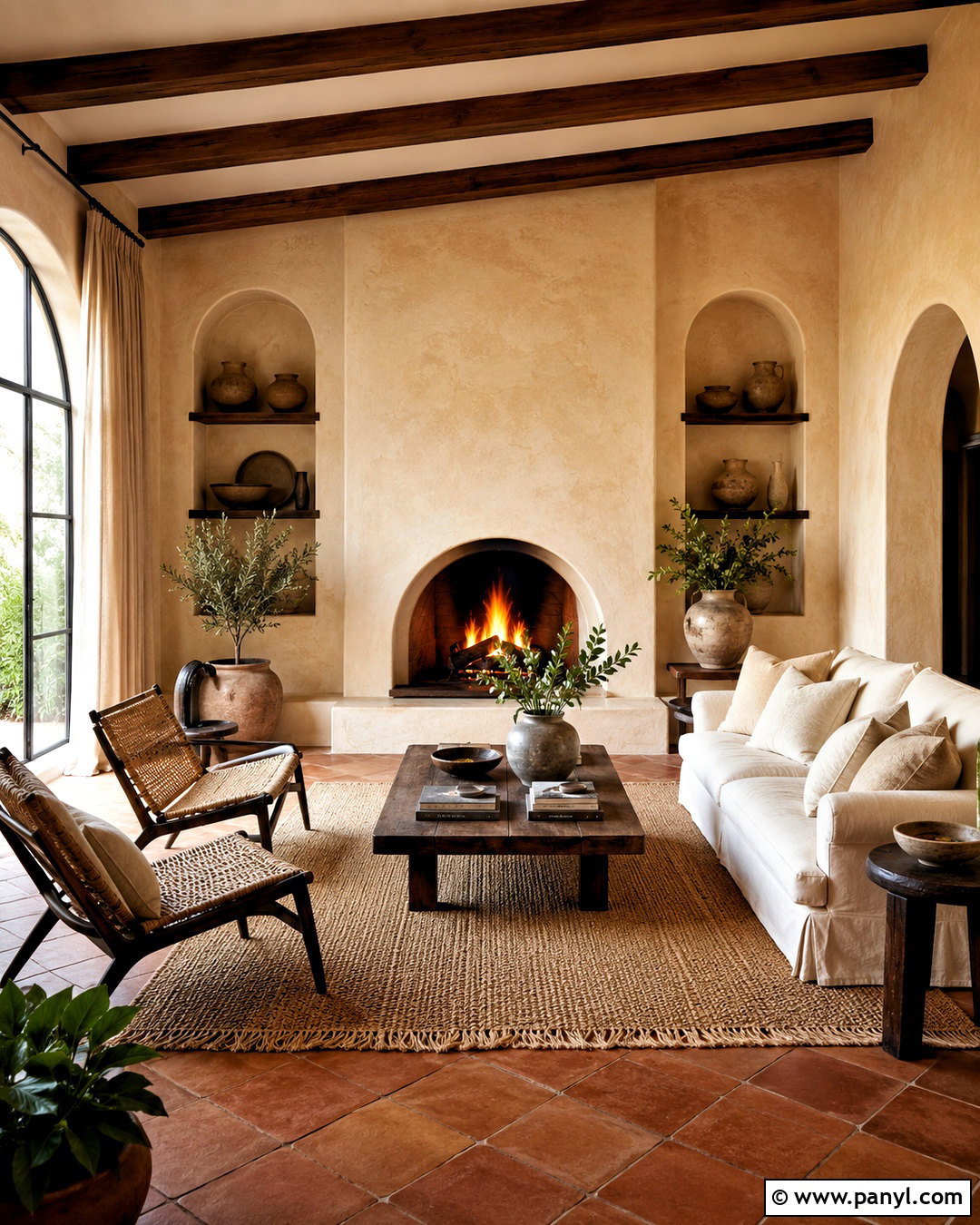
Beige stucco can create a relaxed Mediterranean living room when paired with warm natural materials. Choose a creamy sand-colored stucco with broad, irregular trowel marks and use it on the walls, niches, and rounded fireplace. Terracotta tile flooring gives the room earthy contrast, while an ivory slipcovered sofa keeps the seating light. Add dark wood side tables, woven lounge chairs, and a large jute rug to build an easygoing layered look. Display ceramic vessels and stacked books inside softly arched wall niches. Linen curtains in natural flax filter bright daylight without hiding the walls. Antique brass lamps provide gentle evening illumination. The finished room should feel sun-washed and welcoming, with enough rustic variation to look handcrafted but enough clean-lined furniture to remain fresh and current.
6. Beige Sand Finish Wall Texture
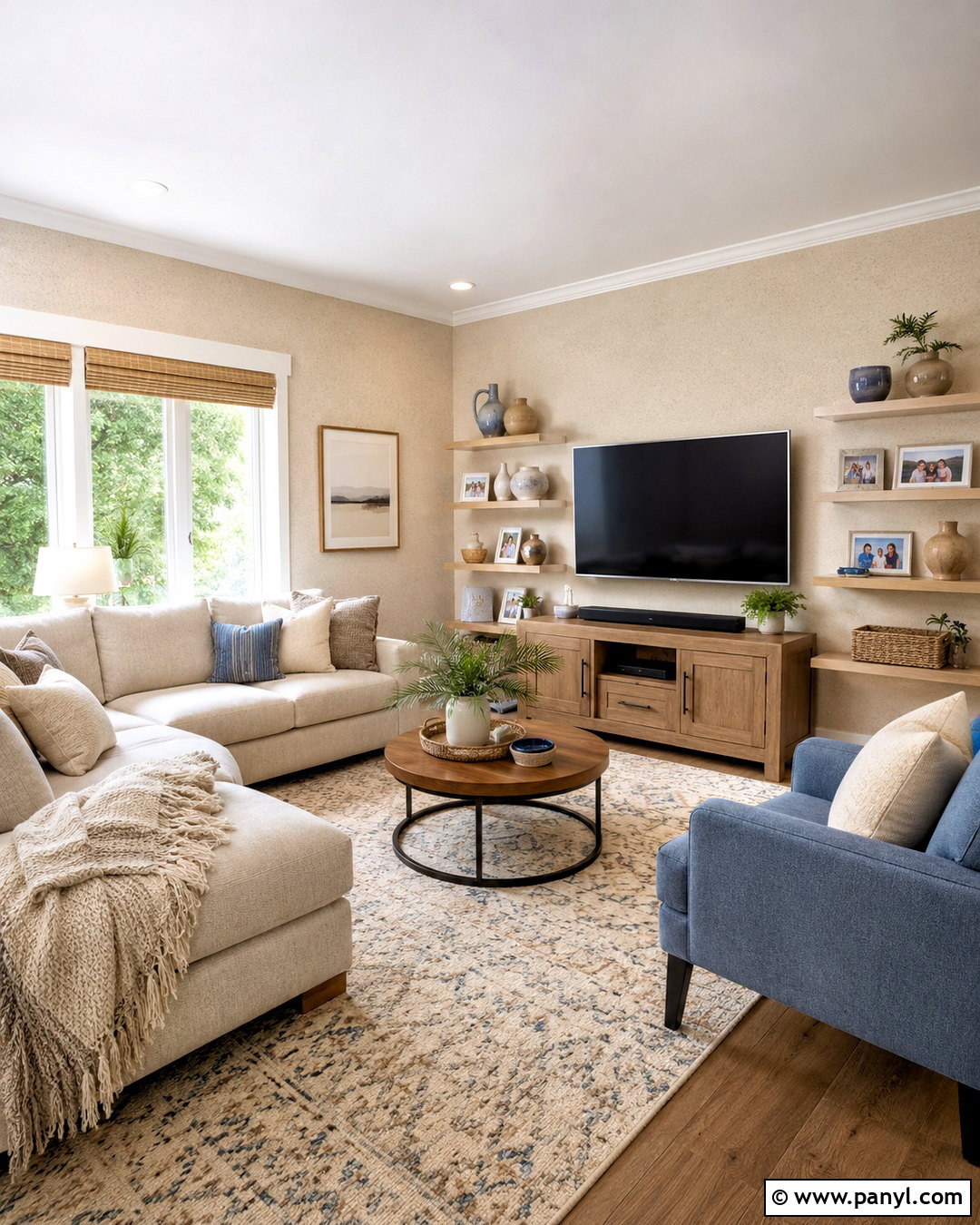
A fine sand finish gives beige walls a soft grain that works beautifully in a casual family room. Choose a light biscuit-beige paint containing a delicate mineral texture rather than a heavy abrasive surface. Pair it with a comfortable oatmeal sectional, medium oak media cabinet, and washable cream-and-tan rug. Introduce muted blue through pillows and one upholstered chair to keep the neutral room lively. Simple white oak shelves can hold books, pottery, and framed family photographs without overwhelming the textured background. Use warm white trim for gentle contrast around windows and doors. Layer table lamps with ceiling lighting so shadows reveal the sandy surface after dark. Durable woven fabrics, rounded furniture, and closed storage complete a practical room that feels polished while remaining suitable for everyday use.
7. Beige Concrete Wall Texture
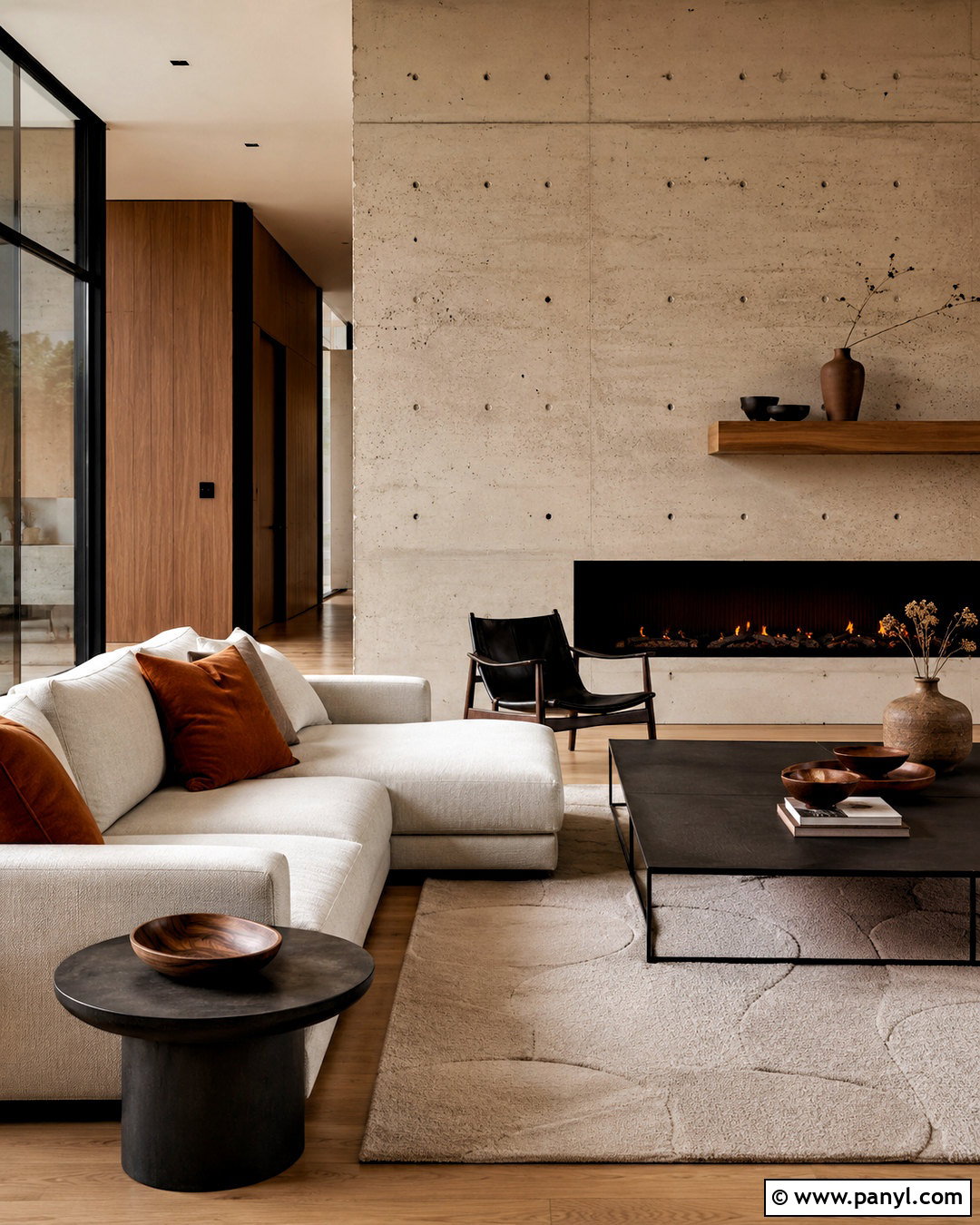
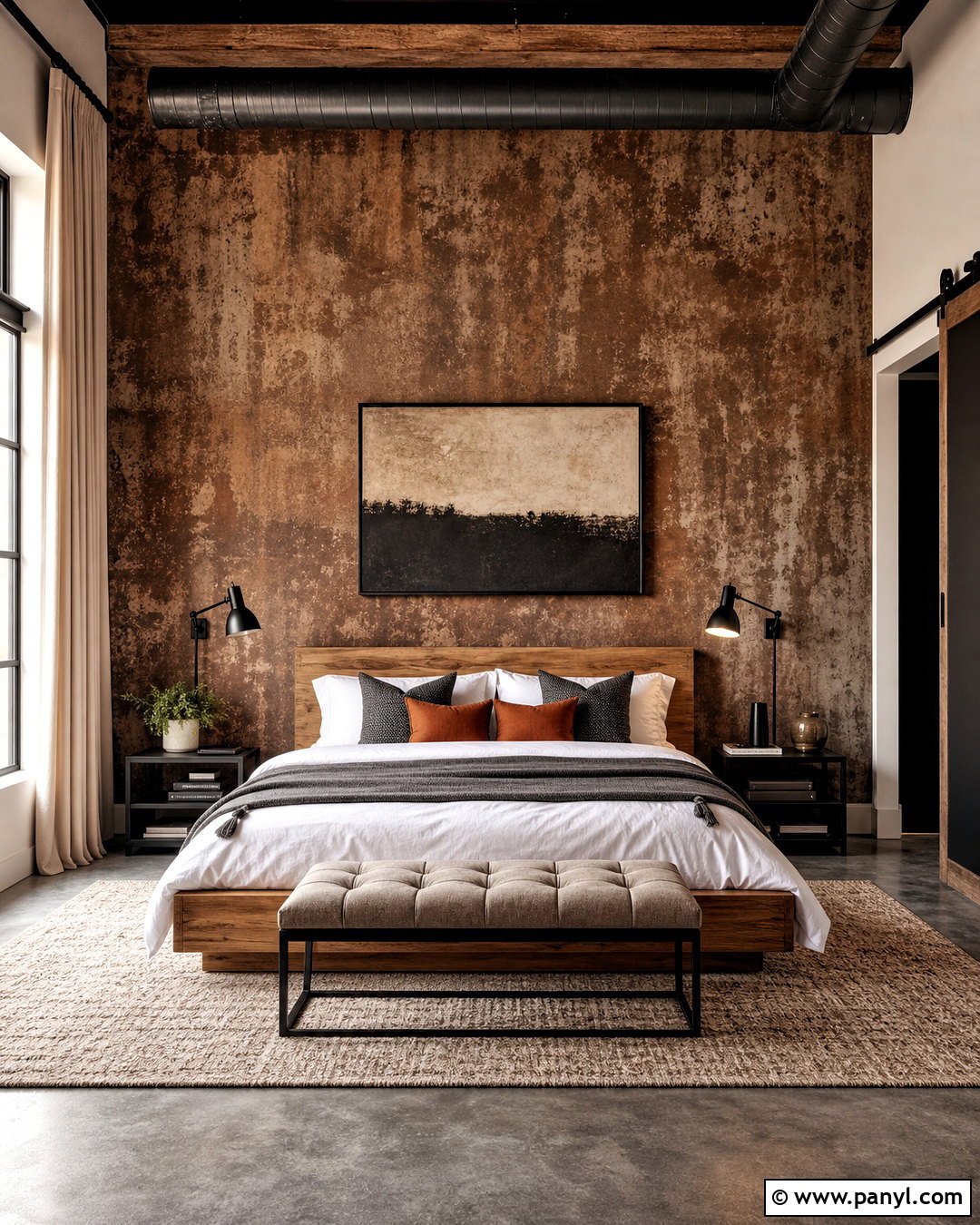
Warm beige concrete creates an urban interior that feels softer than conventional cool gray cement. Make one full living room wall the main feature, including a long linear fireplace and floating oak media shelf. Paint the remaining walls a coordinating creamy beige so the transition looks intentional. Furnish the room with a low ivory modular sofa, black leather accent chair, and sculptural beige rug. A dark metal coffee table and charcoal floor lamp establish contrast against the pale surfaces. Add warmth through walnut accessories, rust-colored cushions, and amber-toned glass decor. Track lighting or directional ceiling fixtures should wash the concrete wall evenly, revealing its pores and tonal changes. This balanced scheme combines industrial texture with comfortable upholstery, warm wood, and approachable residential proportions.
8. Beige Tadelakt Wall Texture
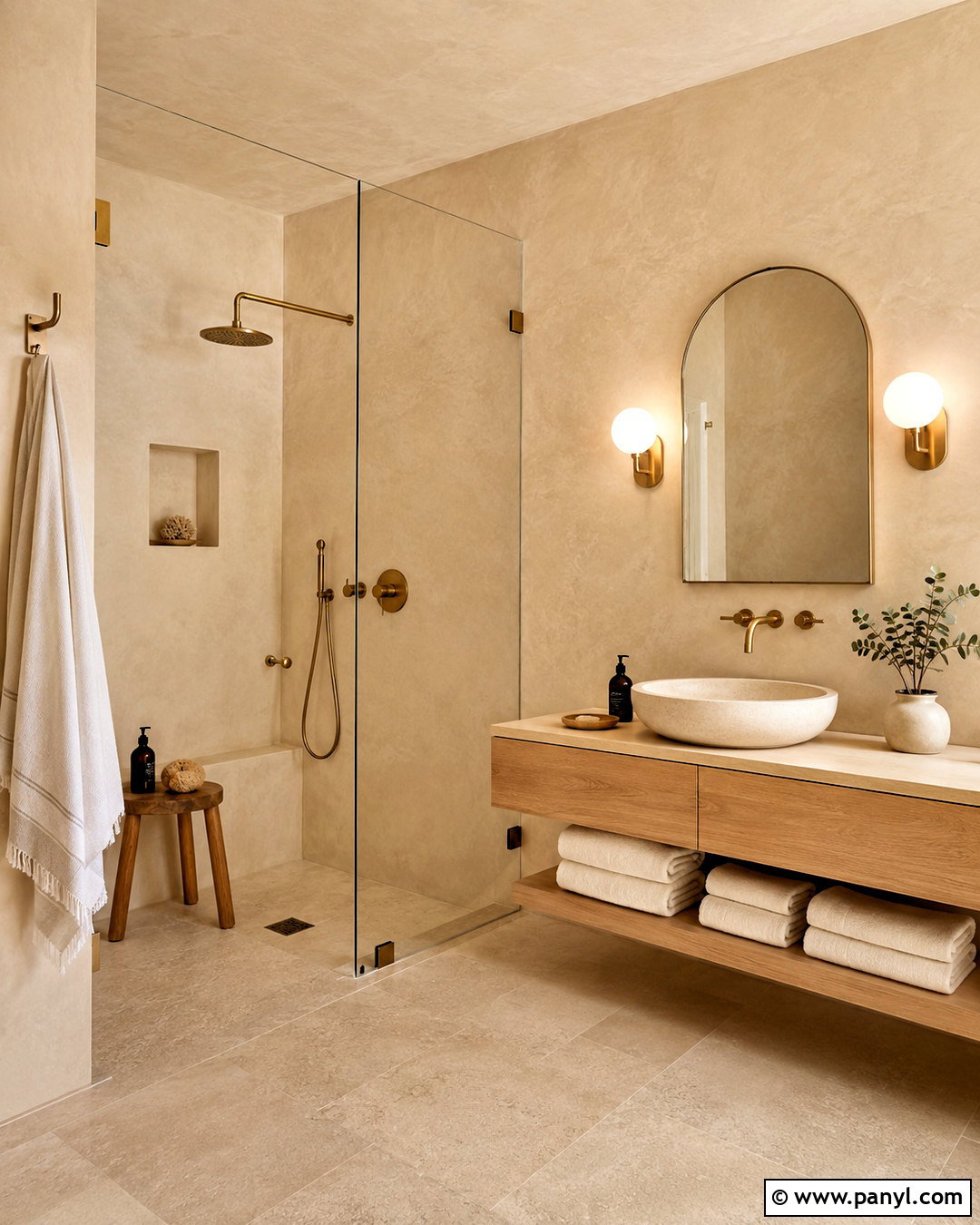
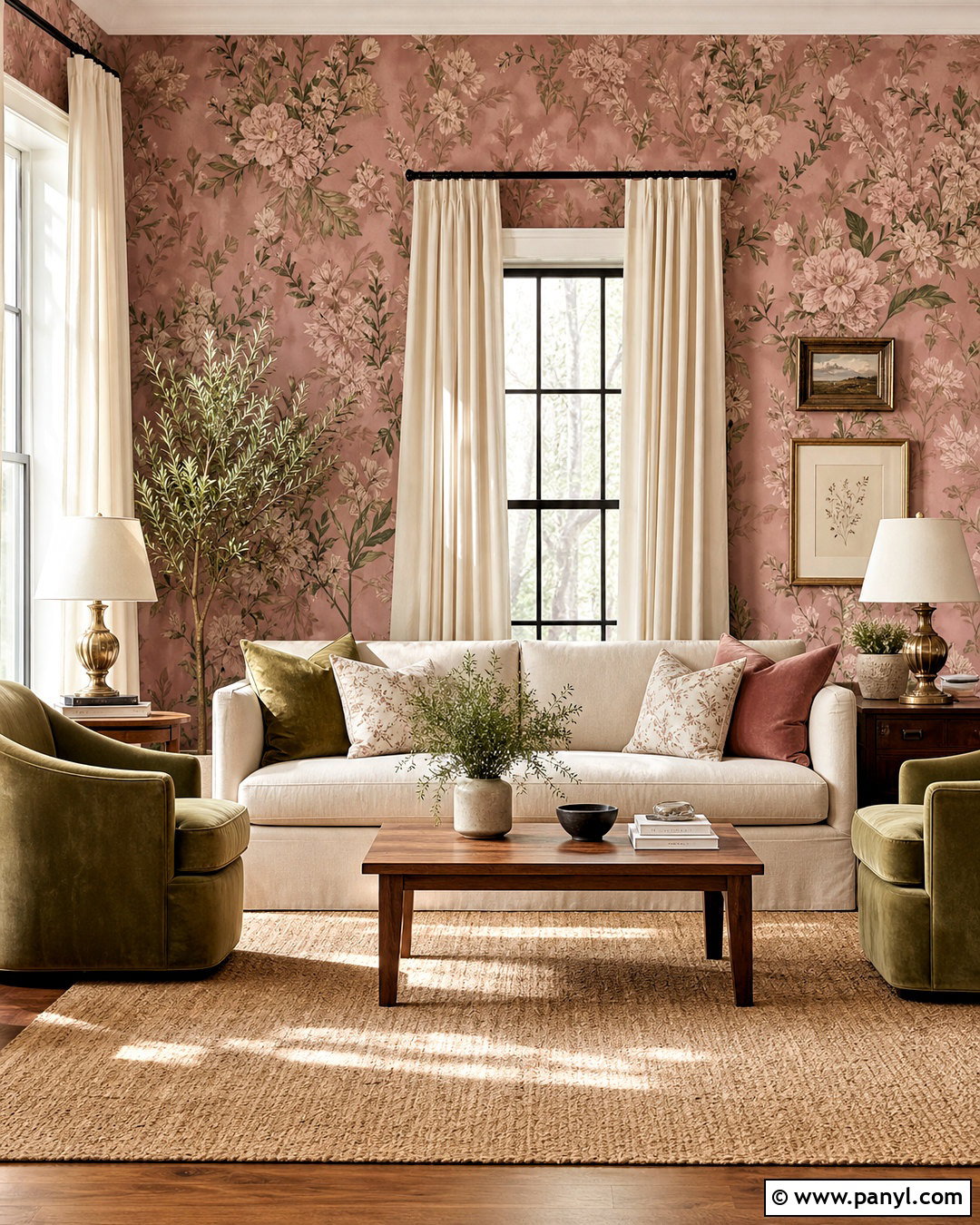
Beige tadelakt transforms a bathroom into a smooth, spa-like retreat with subtle handcrafted variation. Apply a pale honey-beige finish across the shower walls, vanity backsplash, and surrounding surfaces for a visually continuous envelope. Pair it with a floating white oak vanity, rounded vessel sink, and brushed brass fixtures. Large limestone floor tiles should remain close in color but slightly lighter than the walls. Install a frameless glass shower enclosure so the waterproof-looking texture remains fully visible. A softly arched mirror and simple globe sconces introduce curves that complement the hand-polished surface. Finish with ivory towels, a teak stool, and minimal ceramic accessories. The room feels warm and clean because every element supports the quiet wall finish instead of competing with it.
9. Beige Clay Plaster Wall Texture
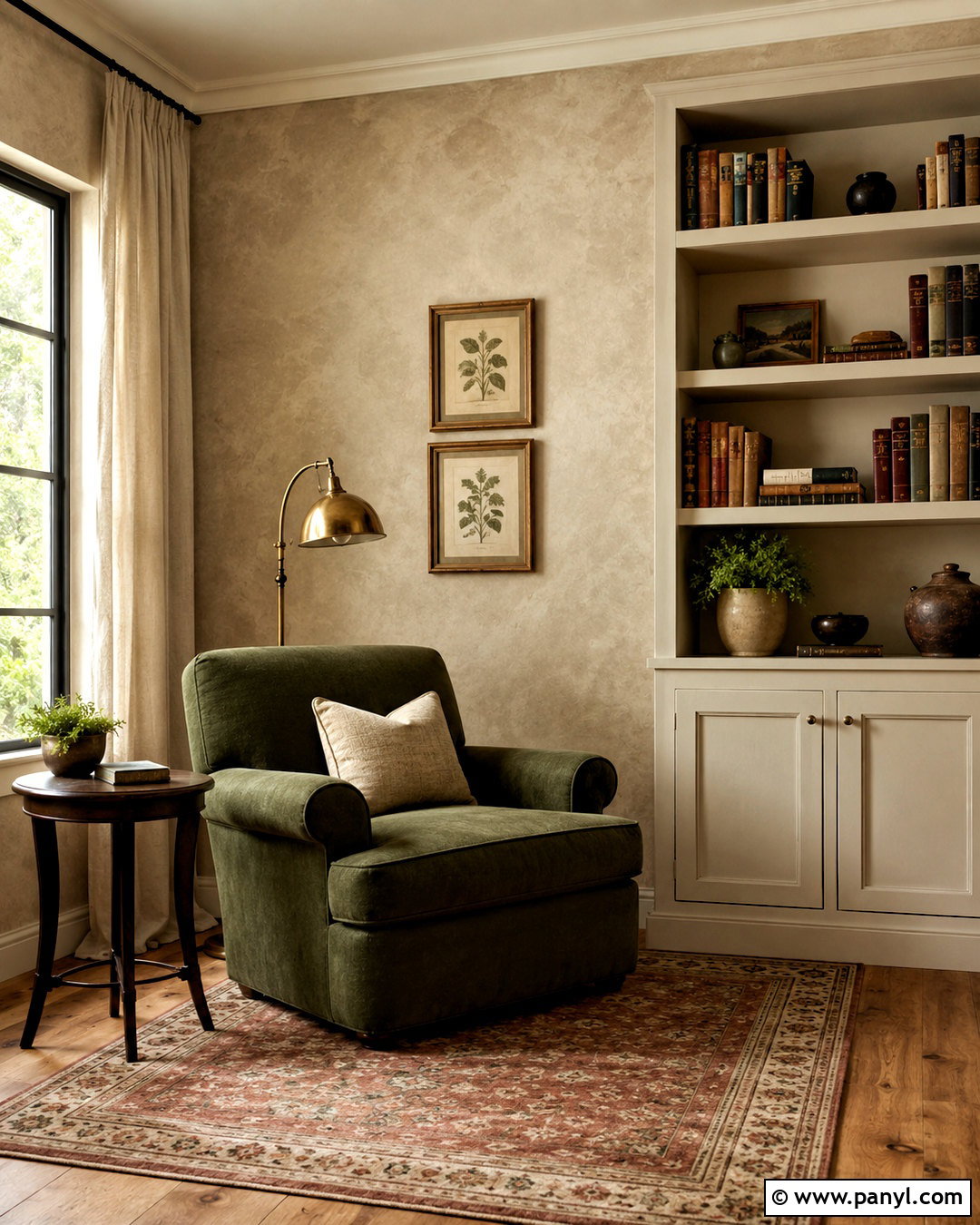
Natural clay plaster suits a cozy reading room filled with earthy colors and tactile materials. Cover the walls in a matte beige clay finish with gentle variations ranging from oat to pale taupe. Place a deep olive reading chair near the window, accompanied by a walnut side table and antique brass floor lamp. Built-in shelves painted soft cream can hold books, baskets, and small ceramics. A muted rust-and-beige rug introduces pattern without overpowering the walls. Hang simple linen curtains and choose warm oak flooring to reinforce the organic palette. The clay texture looks especially appealing under indirect light, so include a shaded table lamp in addition to overhead lighting. A wool throw and a few framed botanical prints complete an intimate, grounded space made for quiet afternoons.
10. Beige Mineral Wash Wall Texture
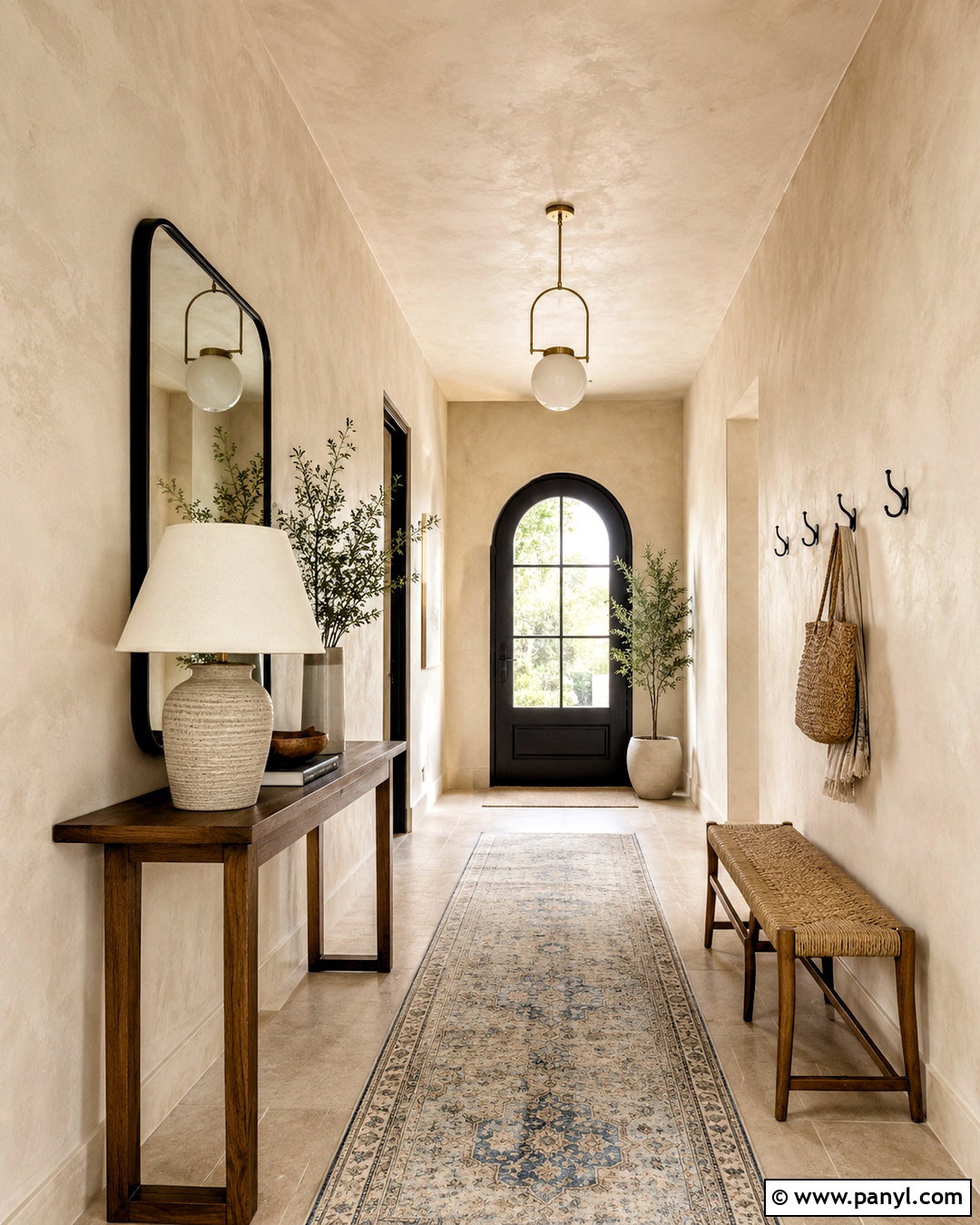
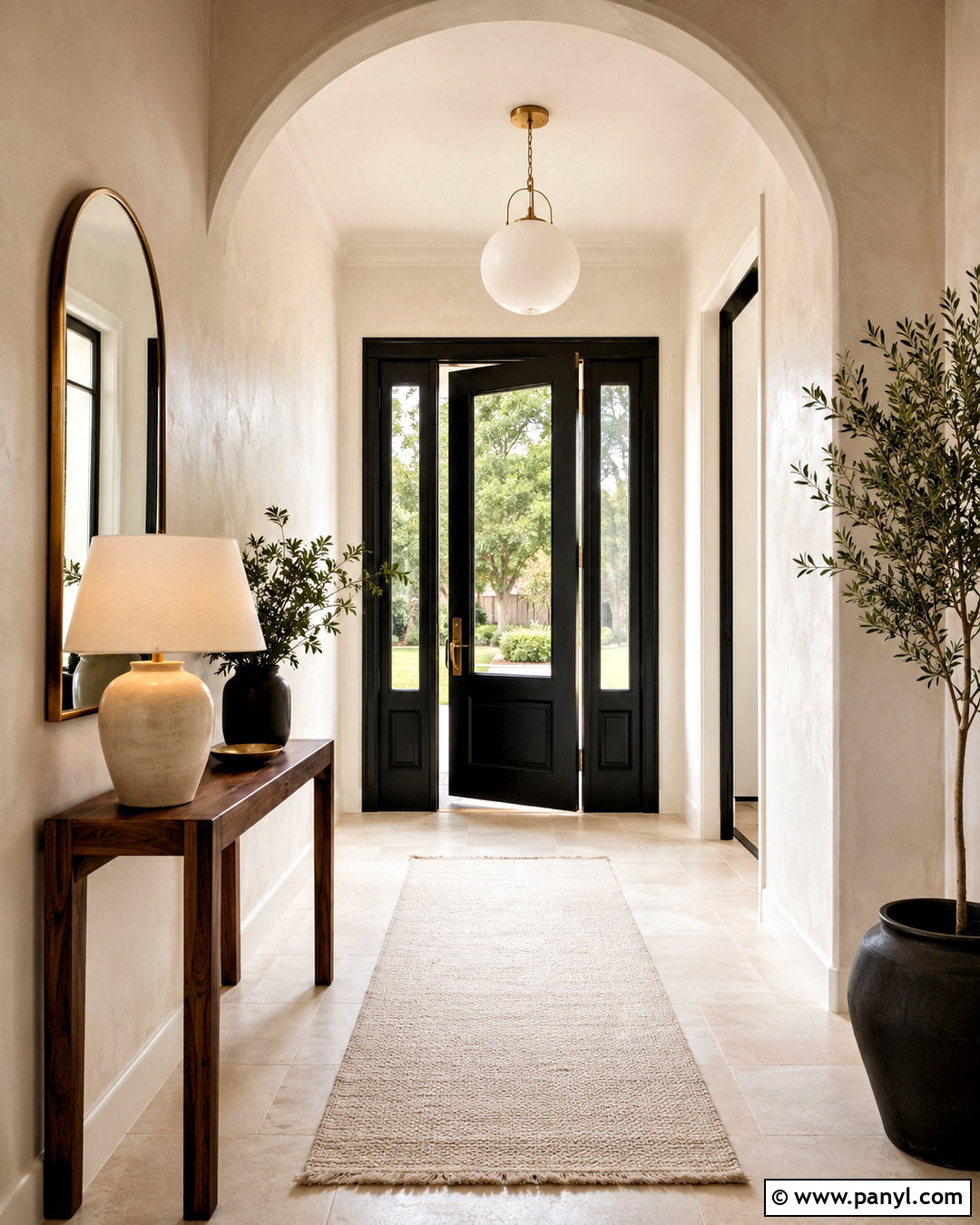
A beige mineral wash gives an entryway gentle cloud-like movement while maintaining a clean, welcoming appearance. Use a warm putty-beige shade on the walls and ceiling to make a narrow hall feel cohesive. Place a slim walnut console against the longest wall and hang an oversized round black-framed mirror above it. A woven bench near the door offers practical seating without taking up much space. Choose pale limestone or light oak flooring and add a durable patterned runner in cream, brown, and faded blue. Black hooks and an aged brass ceiling fixture provide small moments of contrast. Keep accessories limited to a ceramic lamp, shallow tray, and one leafy branch. The finished entry feels organized and dimensional, with the mineral finish adding interest where elaborate decor would create clutter.
11. Beige Mottled Wall Texture
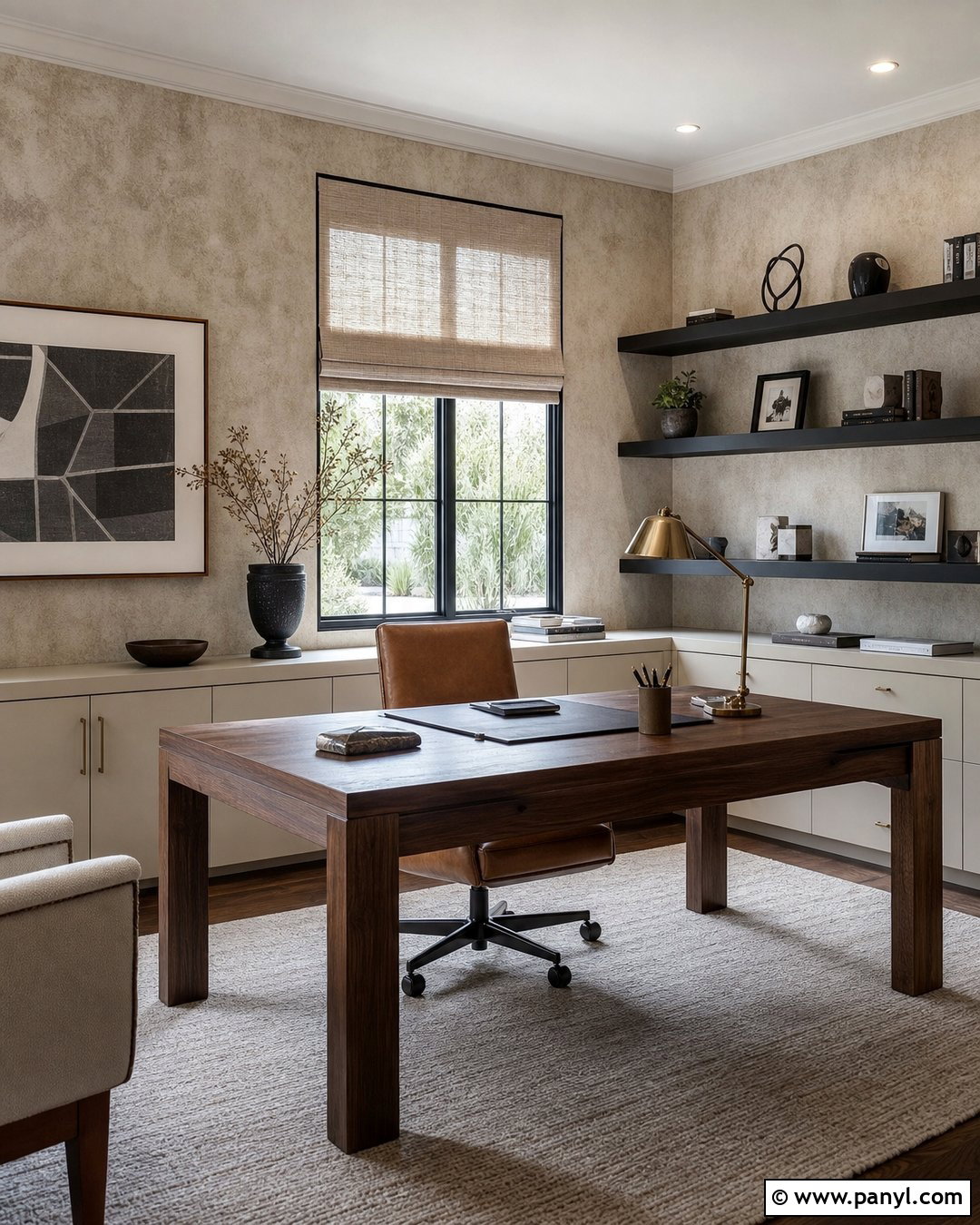
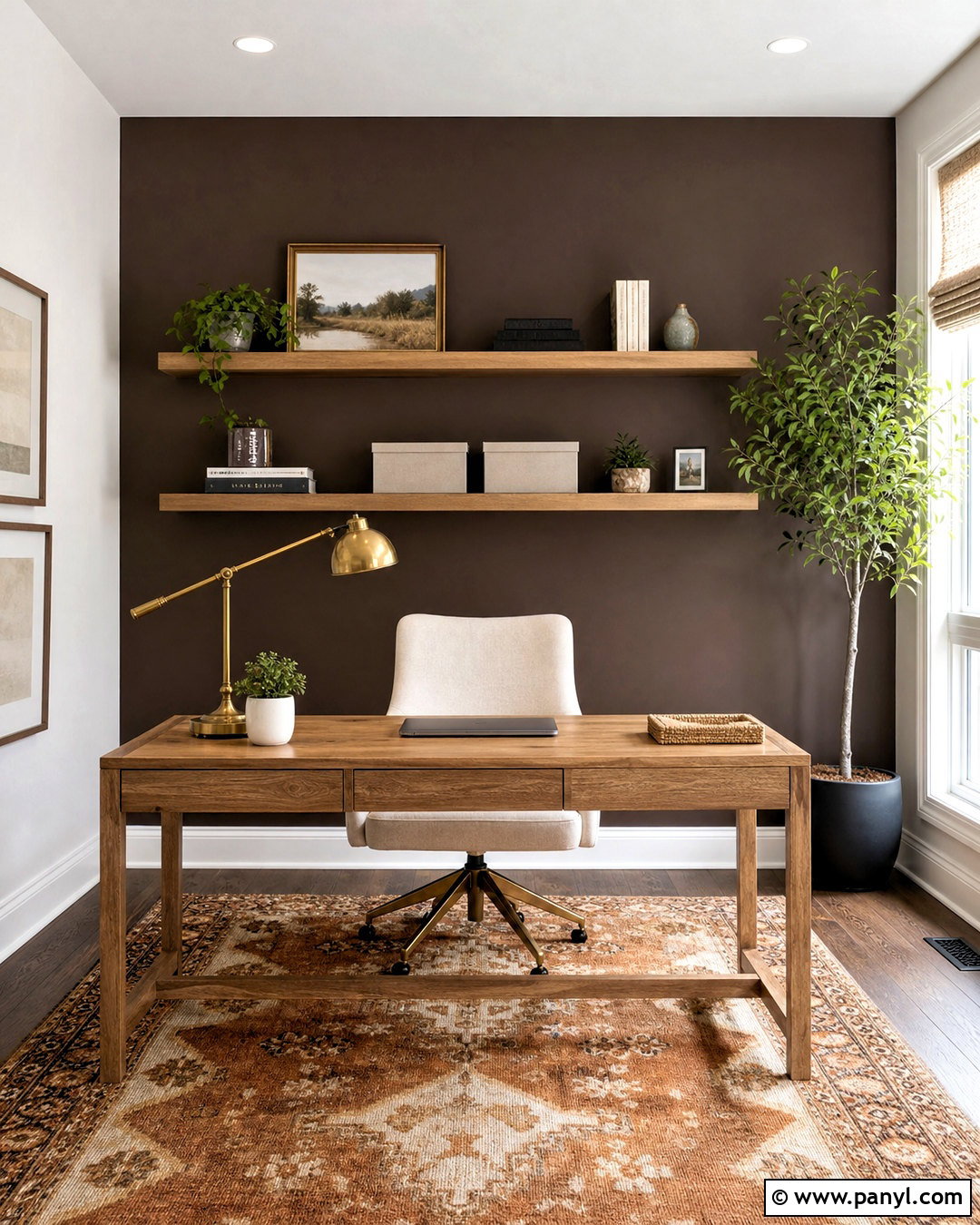
A mottled beige wall treatment can make a home office feel polished without becoming distracting. Select a soft stone-beige finish with blended patches of cream and taupe. Use it throughout the room, then position a streamlined walnut desk where natural light falls across the textured background. Add a camel leather chair, low cream storage cabinets, and a flat-weave wool rug. Matte black shelves offer functional contrast while displaying only a few books, boxes, and sculptural objects. Hang one large graphic artwork with muted charcoal lines above the cabinets. A linen Roman shade keeps the window area neat, and an adjustable brass desk lamp supplies focused light. The complete space feels professional, warm, and visually interesting while maintaining the calm atmosphere needed for concentration.
12. Beige Color Wash Wall Texture
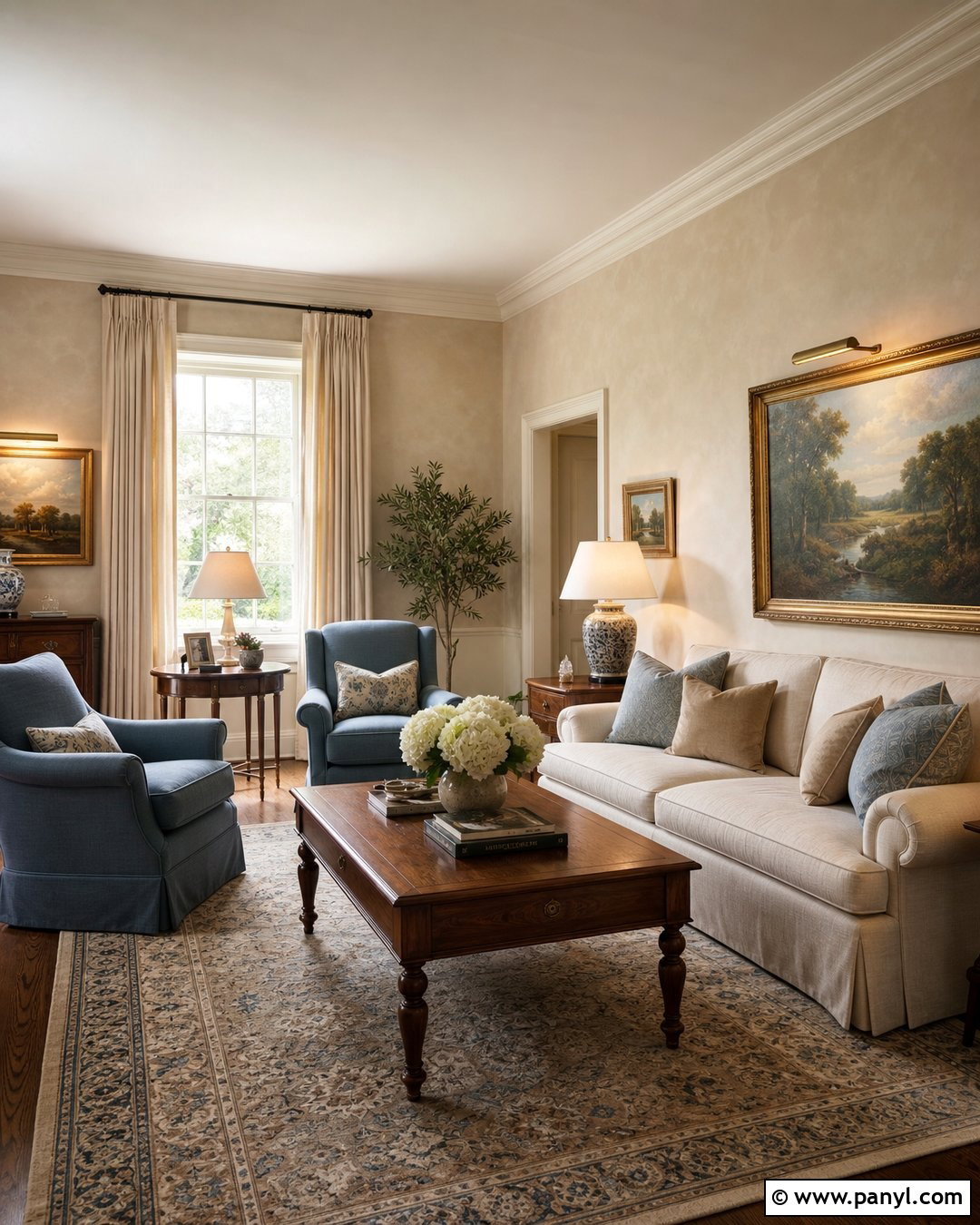
Color washing creates a softly aged beige surface that fits comfortably in a classic sitting room. Start with a pale cream base and layer translucent warm beige over it using broad, irregular strokes. Pair the finished walls with a tailored ivory sofa, two muted blue armchairs, and a traditional walnut coffee table. A faded Persian-style rug can combine beige, dusty red, and denim blue for gentle pattern. Use warm white trim and crown molding to frame the decorative finish cleanly. Brass picture lights and pleated table lamps add traditional character while emphasizing the wall’s subtle movement. Hang landscapes in simple antique gold frames rather than creating a crowded gallery. Linen drapes, embroidered cushions, and a few polished wood pieces complete a room that feels collected, comfortable, and timeless.
13. Beige Ombre Wall Texture
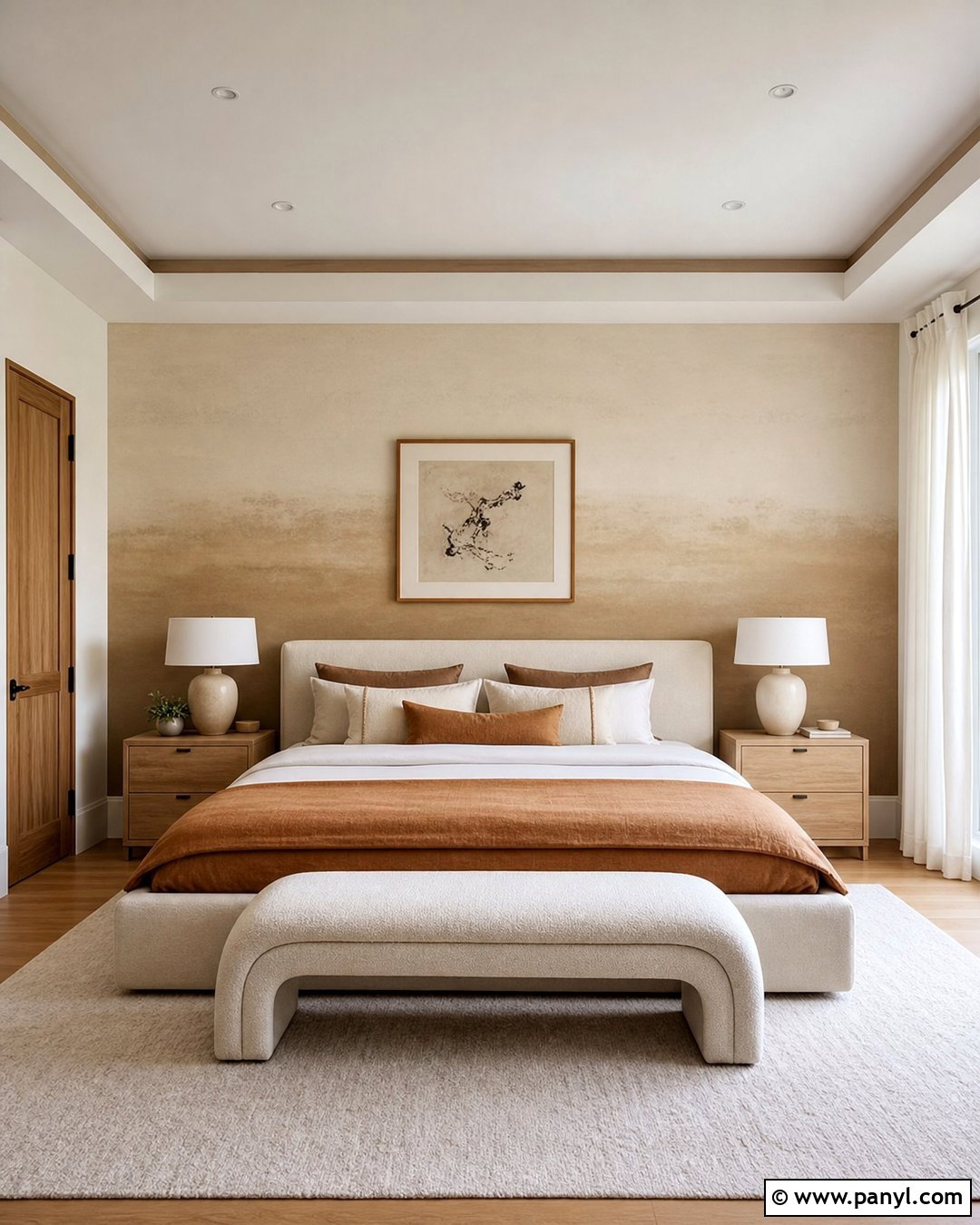
A beige ombre wall creates a soothing focal point in a contemporary bedroom. Begin with deeper taupe-beige near the floor and gradually fade into warm cream toward the ceiling. Keep the transition soft and slightly cloudy so it resembles natural light rather than sharp color blocking. Place a low upholstered bed against the feature wall and choose ivory linen bedding with caramel and cocoa accents. Pale oak nightstands, rounded ceramic lamps, and a light wool rug maintain the airy appearance. Paint the remaining walls the lightest cream tone from the gradient. Simple sheer curtains allow daylight to reinforce the upward fade. Finish with one sculptural bench and minimal artwork. The resulting bedroom feels taller, quieter, and more dimensional without needing elaborate architectural details or strong colors.
14. Beige Suede Effect Wall Texture
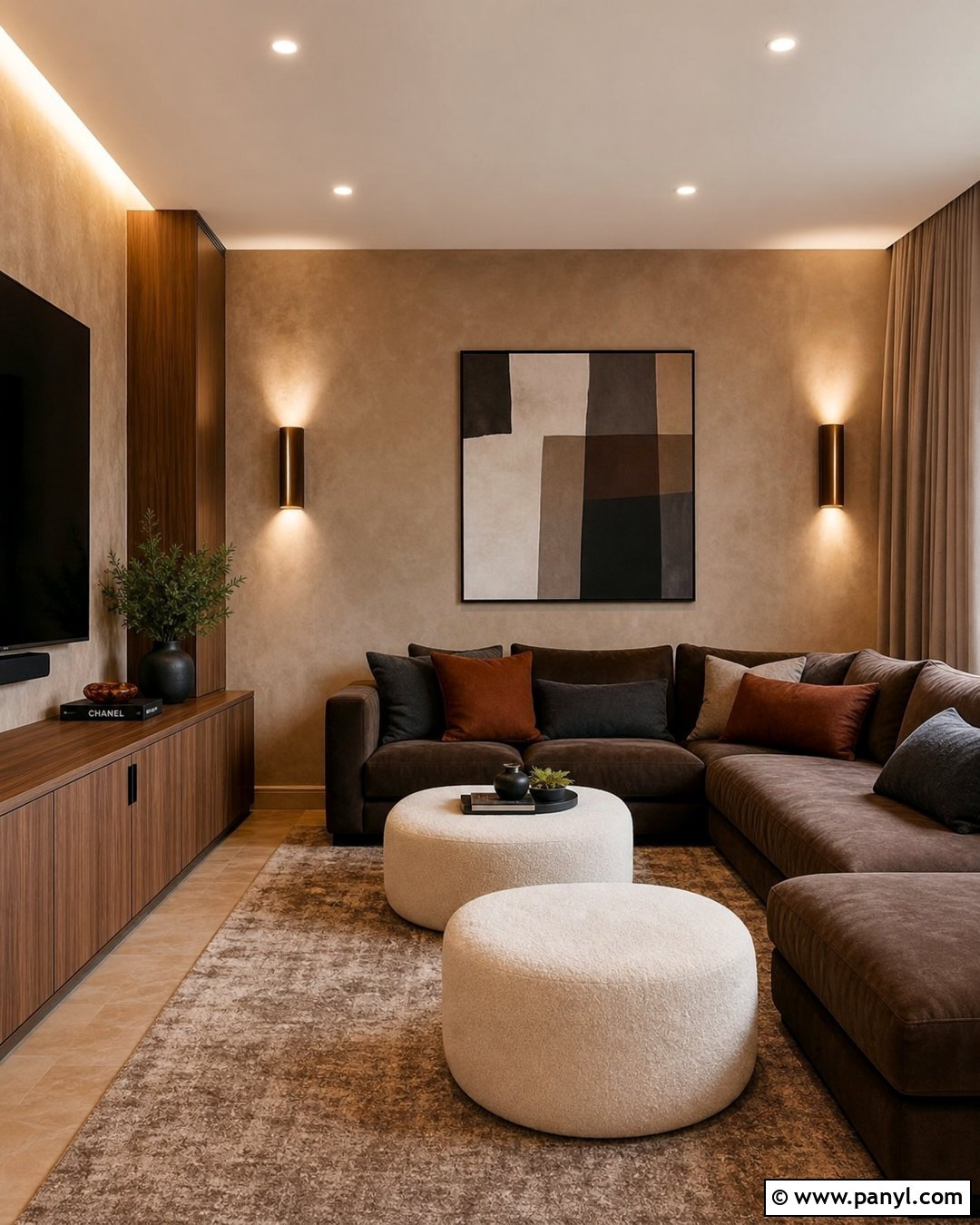
A suede-effect beige wall finish brings cozy refinement to a media room or den. Choose a medium camel-beige coating with a soft directional sheen that changes slightly under layered lighting. Use it on all walls to create an intimate atmosphere, then add a deep brown sectional and two cream boucle ottomans. Walnut cabinetry can conceal electronics and provide a warm connection between the walls and darker furniture. Lay a thick taupe rug over oak flooring for better comfort and sound control. Bronze sconces should direct light upward and downward, making the brushed texture more visible. Add rust, charcoal, and ivory pillows for tonal contrast. Heavy linen curtains, framed abstract art, and a compact black coffee table complete a comfortable room that feels cocooning without becoming dark or overly formal.
15. Beige Metallic Plaster Wall Texture
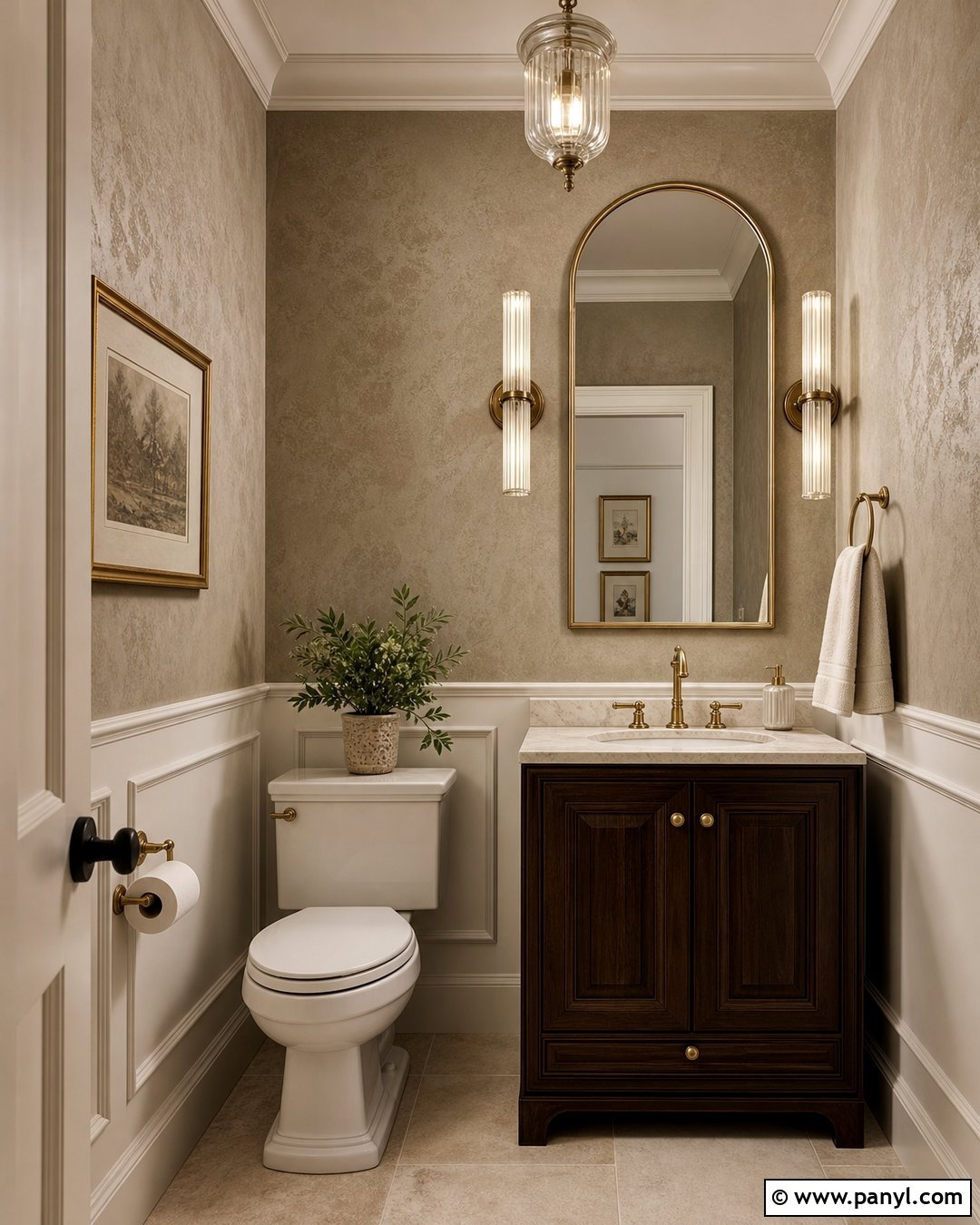
Metallic beige plaster can add a controlled glow to a formal powder room. Choose a champagne-beige finish with a low-luster sheen rather than a highly reflective surface. Apply it above warm white wainscoting to balance glamour with classic structure. A dark walnut vanity, creamy marble countertop, and aged brass faucet establish a rich but approachable palette. Use small limestone floor tiles and an arched brass mirror to repeat the warm metallic details. Fluted glass sconces should cast light across the plaster, revealing subtle variations without producing harsh glare. Keep accessories minimal with ivory hand towels, a stone soap dispenser, and one small arrangement of greenery. The complete room feels elegant and layered, while the restrained beige color prevents the metallic finish from looking flashy or overpowering.
16. Beige Grasscloth Wall Texture
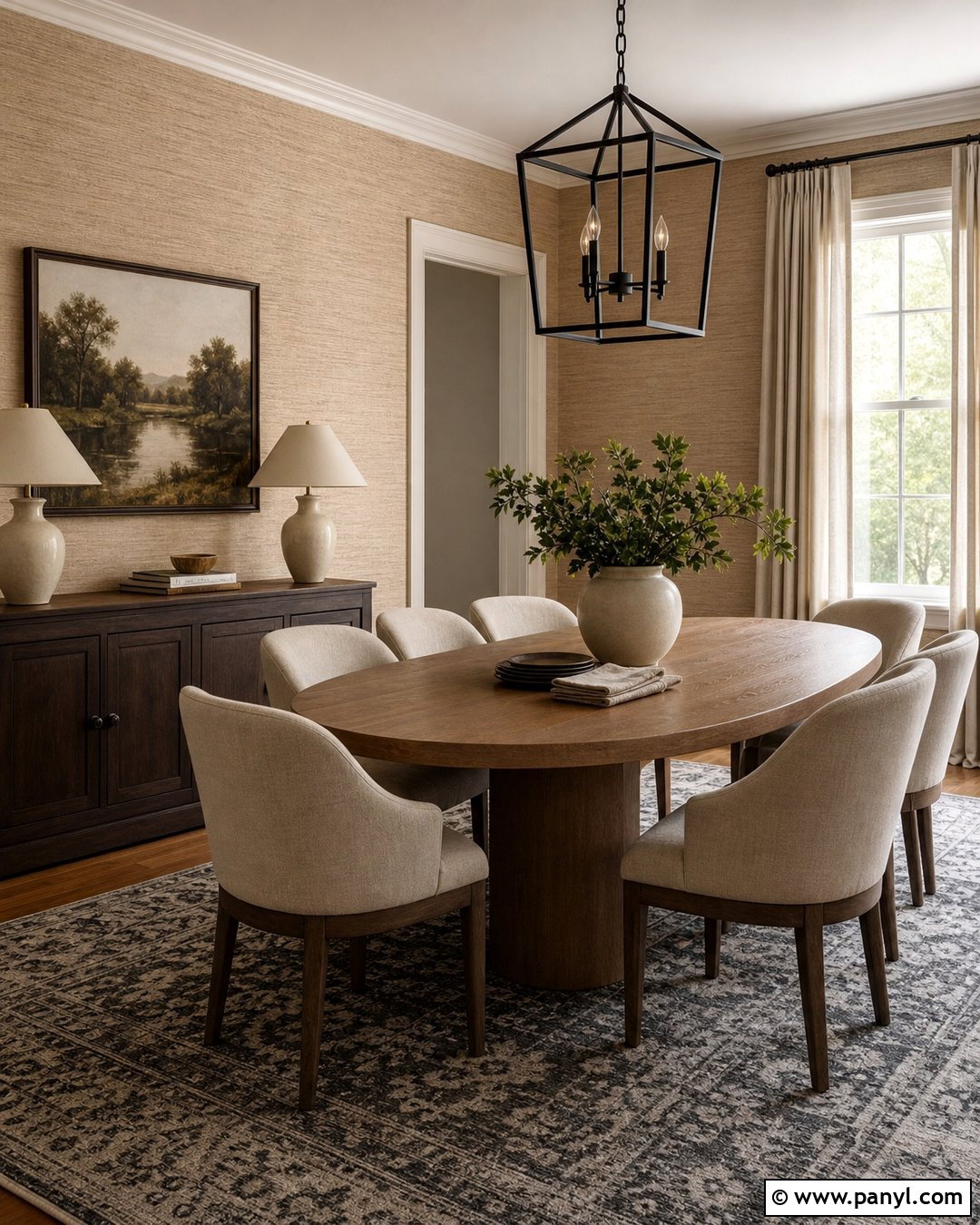
Beige grasscloth wallpaper gives a dining room visible woven texture and relaxed formality. Cover every wall in natural flax-beige grasscloth, accepting the subtle panel seams as part of its handcrafted character. Center an oval oak dining table in the room and surround it with cream linen chairs. A large black lantern pendant creates a strong silhouette against the pale walls. Use a simple wool rug in beige and charcoal to anchor the arrangement. A dark wood sideboard provides storage and supports ceramic lamps with warm white shades. Hang one oversized landscape rather than several small artworks, allowing the woven wall surface to remain prominent. Full-length oatmeal curtains, aged brass hardware, and leafy branches complete a dining room that feels natural, structured, and ready for everyday gatherings.
17. Beige Linen Wallpaper Texture
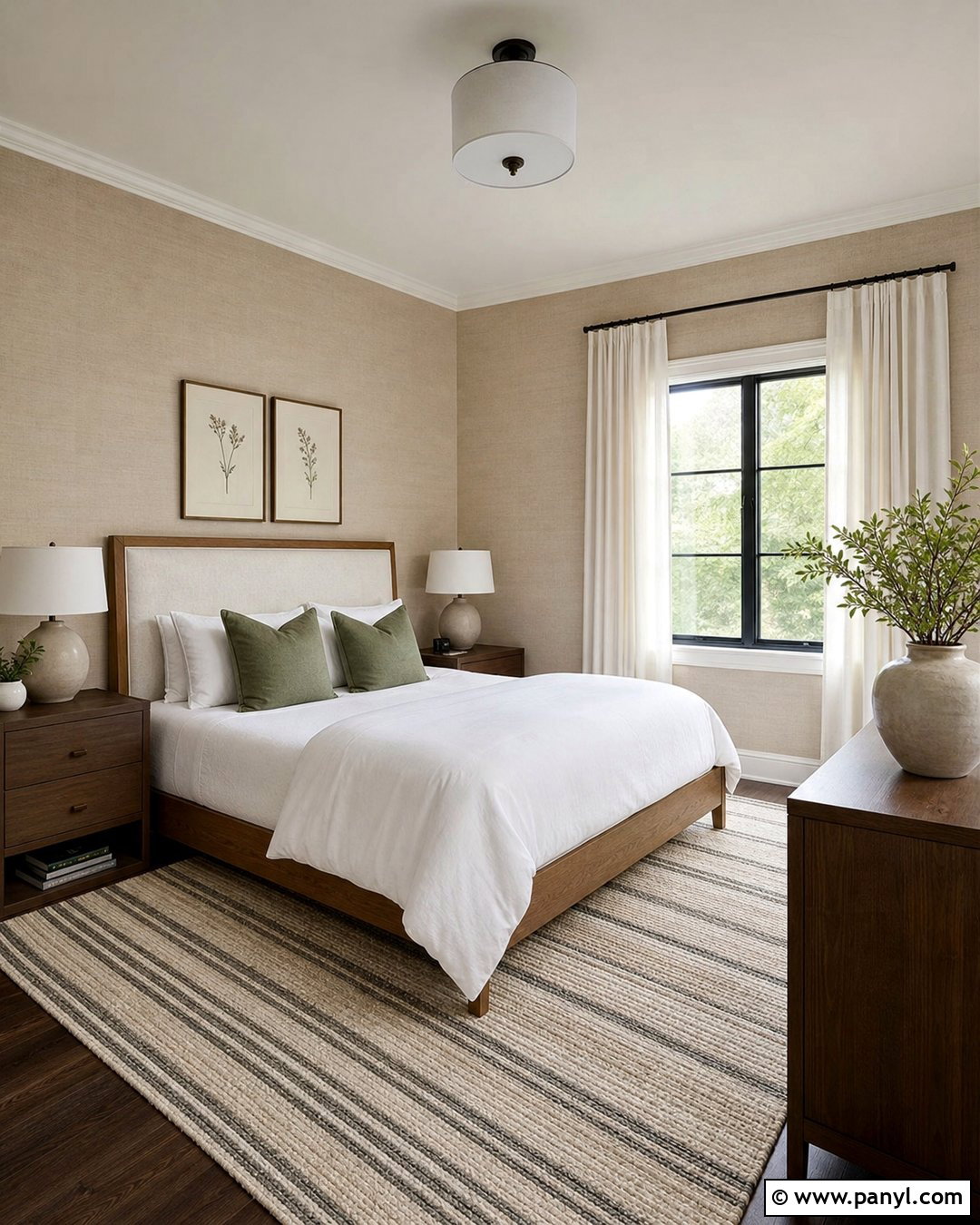
Linen-textured beige wallpaper provides a tailored background for a serene guest bedroom. Select a light oatmeal covering with a visible horizontal and vertical weave. Apply it to every wall for consistency, then add warm white trim and a simple painted ceiling. A medium oak bed with an upholstered cream headboard gives the room gentle contrast. Layer white sheets, a beige quilt, and muted sage pillows for freshness. Small walnut nightstands and ceramic table lamps keep the setup balanced on both sides. Choose a flat-weave rug with subtle stripes, plus natural linen curtains that echo the wallpaper. Framed botanical sketches and a woven bench add character without introducing visual noise. The finished bedroom looks considered and welcoming, while the fabric-like wall texture makes the neutral palette feel comfortable rather than plain.
18. Beige Plaster Wallpaper Texture
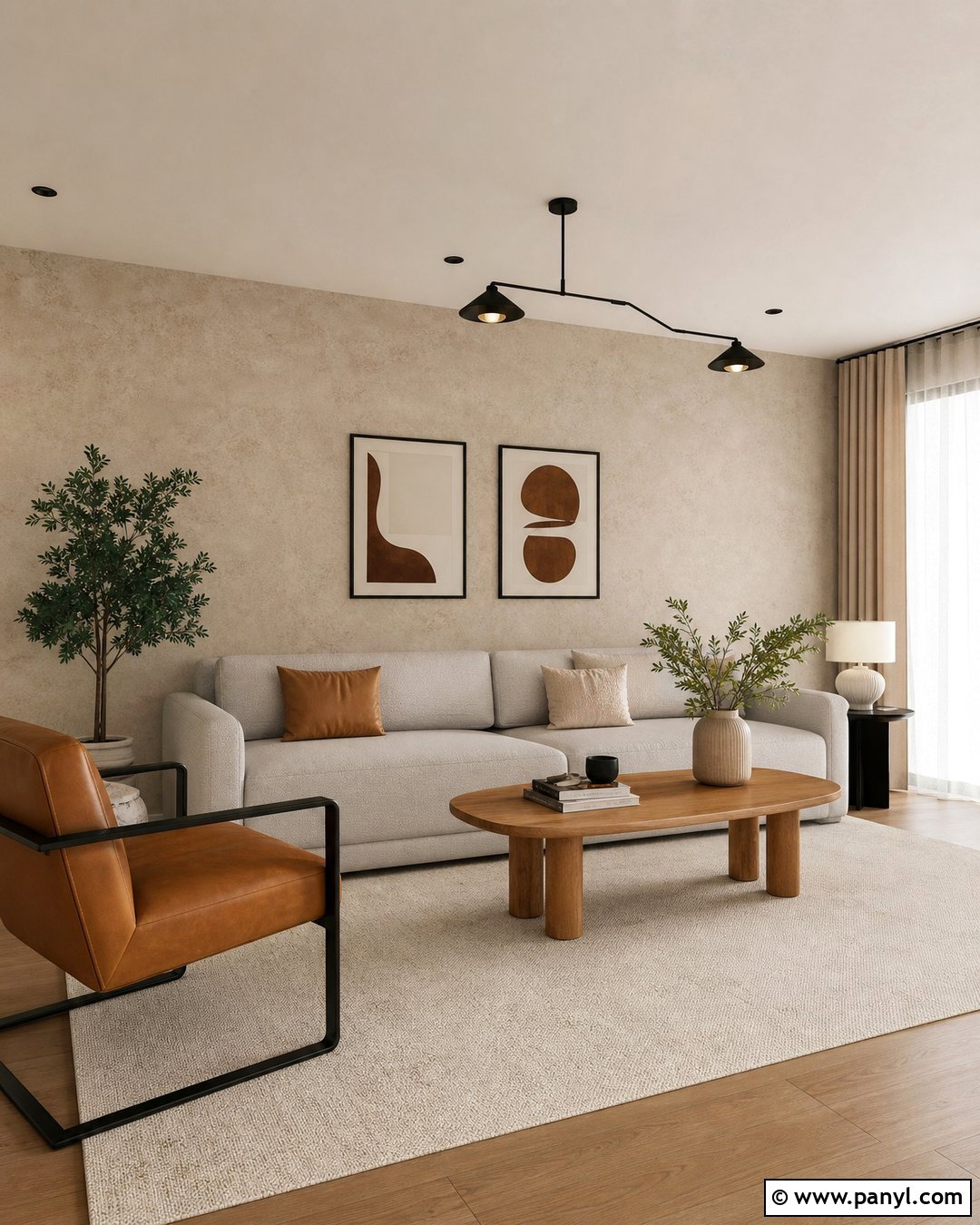
Plaster-effect beige wallpaper offers the look of hand-applied walls with a simpler installation process. Use a realistic warm stone pattern behind the sofa in a modern apartment living room. Paint the adjacent walls creamy off-white to prevent the compact space from feeling enclosed. Choose a pale gray-beige sofa, caramel leather chair, and slim oak coffee table. A textured ivory rug softens the floor, while black metal lighting and window frames provide necessary definition. Add two large abstract prints containing clay, brown, and muted blue. Keep the media unit low and visually light so the wallpaper remains the dominant feature. Linen curtains, small ceramic objects, and one tall plant complete an accessible design that creates depth without requiring major construction or a heavily layered decorative scheme.
19. Beige Embossed Wallpaper Texture
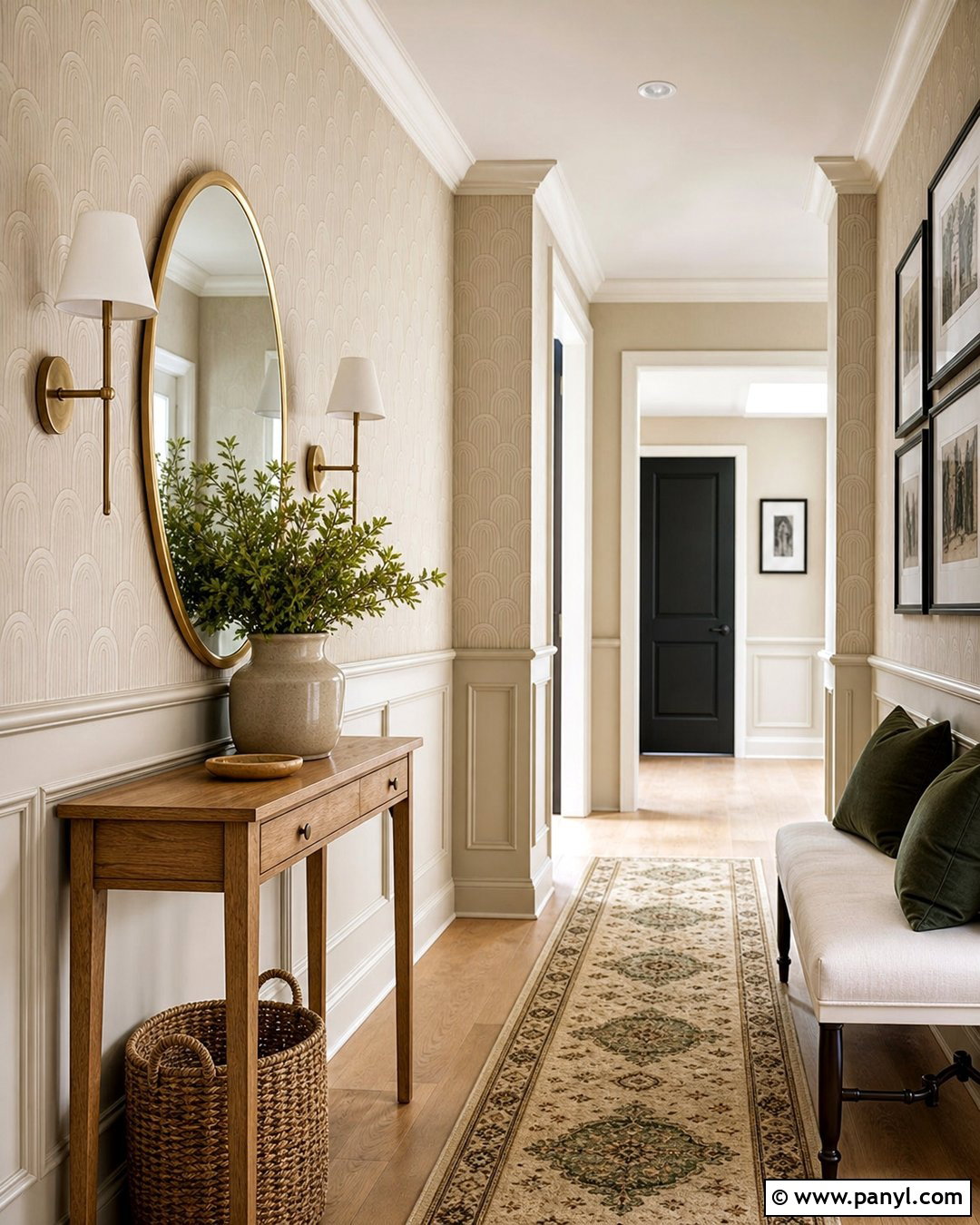
Embossed beige wallpaper can give a hallway understated pattern and a more finished appearance. Choose a small-scale geometric design in warm ivory-beige, such as interlocking arches or shallow diamonds. Cover the upper walls and pair it with creamy beige paneling below for durability. Install a narrow oak console, an oval brass mirror, and a softly shaded table lamp along one side. A striped runner in brown, cream, and faded green adds movement underfoot. Keep door trim warm white so the architecture reads clearly without strong contrast. A simple flush-mount ceiling light should illuminate the raised pattern from several angles. Finish with framed line drawings and a lidded woven basket. The complete hallway feels brighter, practical, and detailed while remaining calm enough to connect several rooms.
20. Beige Textured Stripe Wall
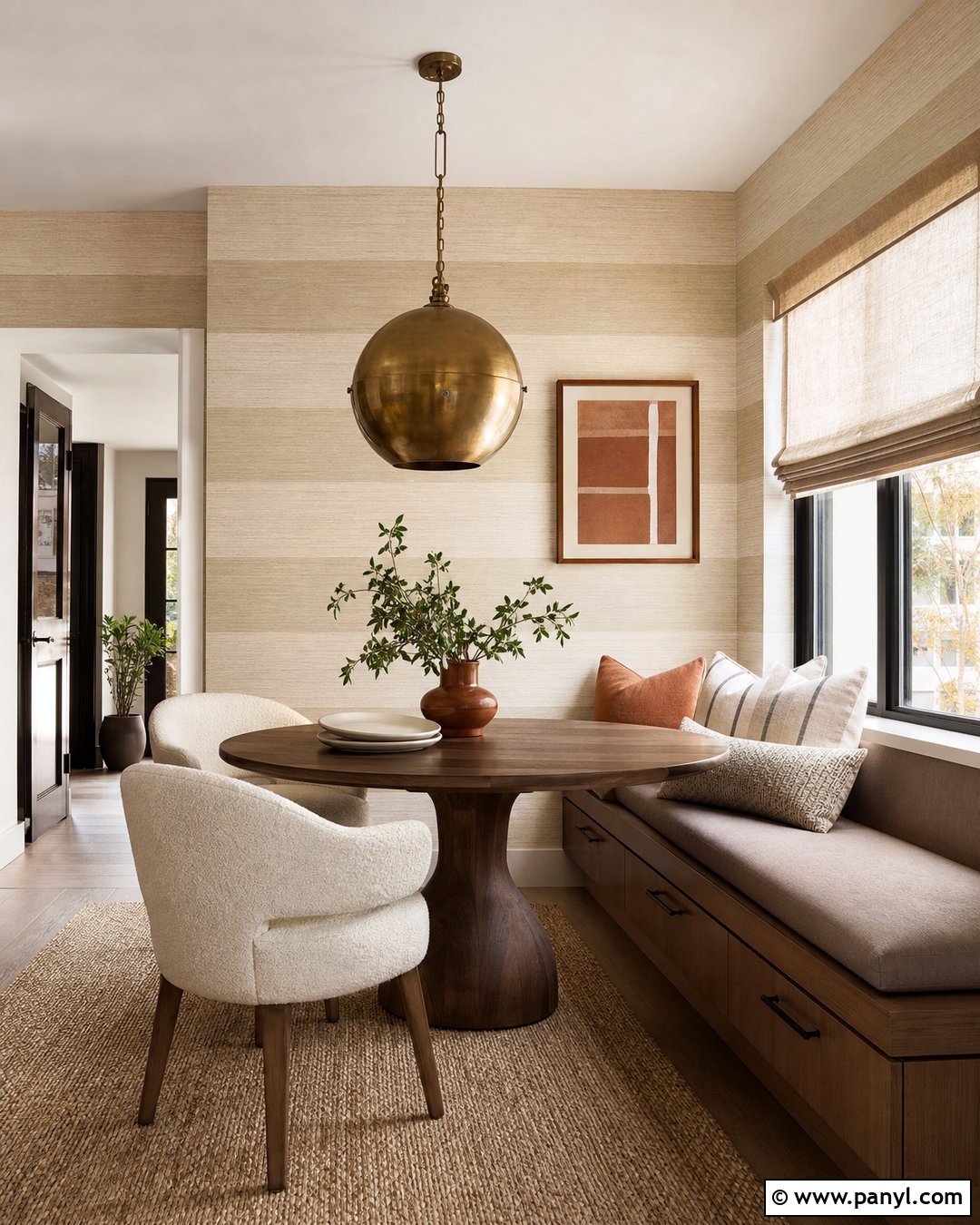
Subtle beige stripes can bring height and rhythm to a small dining nook. Choose textured wallpaper with alternating bands of oatmeal and light sand, keeping the contrast low and the lines narrow. Install it on all walls to avoid making the nook appear fragmented. A round walnut pedestal table saves space, while curved cream chairs soften the vertical pattern. Add a compact globe pendant in aged brass and a washable natural fiber rug beneath the table. A built-in bench with taupe upholstery can provide extra seating and hidden storage. Keep artwork simple with one square abstract print in muted terracotta and brown. Roman shades in natural linen and a small ceramic vase complete a useful dining area where the textured stripes feel architectural, balanced, and visually lengthening.
21. Beige Fluted Plaster Wall Texture
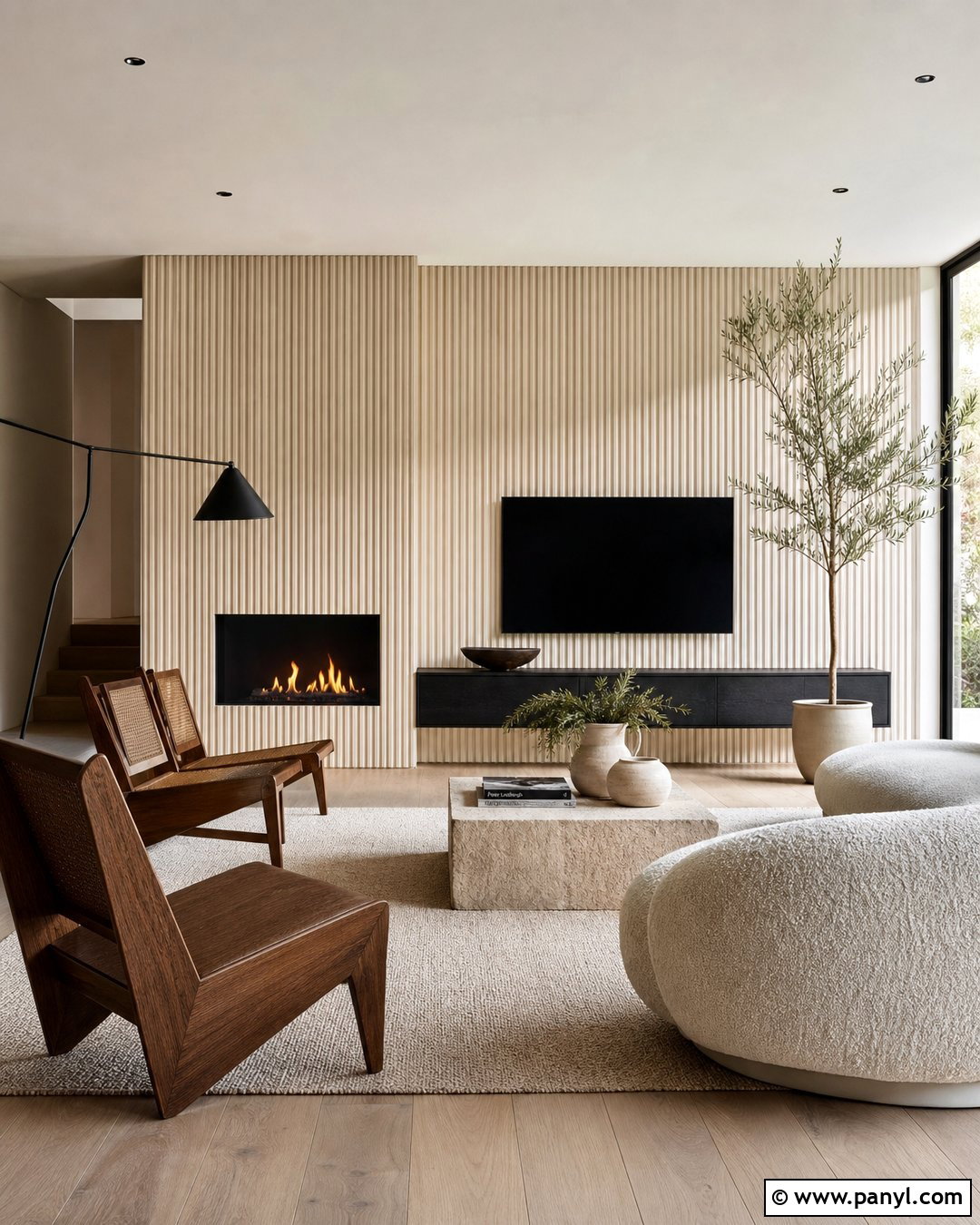
A fluted beige plaster wall gives a modern living room strong architectural detail without using bold color. Build evenly spaced vertical channels across the main wall and finish them in warm almond beige. Integrate a slim fireplace or floating media console so the surface remains clean and continuous. Pair it with a curved ivory sofa, two walnut lounge chairs, and a low travertine table. Pale oak flooring and a large cream rug maintain the light foundation. Use ceiling spotlights to graze the grooves and form crisp but gentle shadows. Black metal accents can appear through a floor lamp and small side table. Finish with boucle cushions, ceramic vessels, and one leafy plant. The complete design feels sculptural, spacious, and carefully coordinated from every viewing angle.
22. Beige Wave Wall Texture
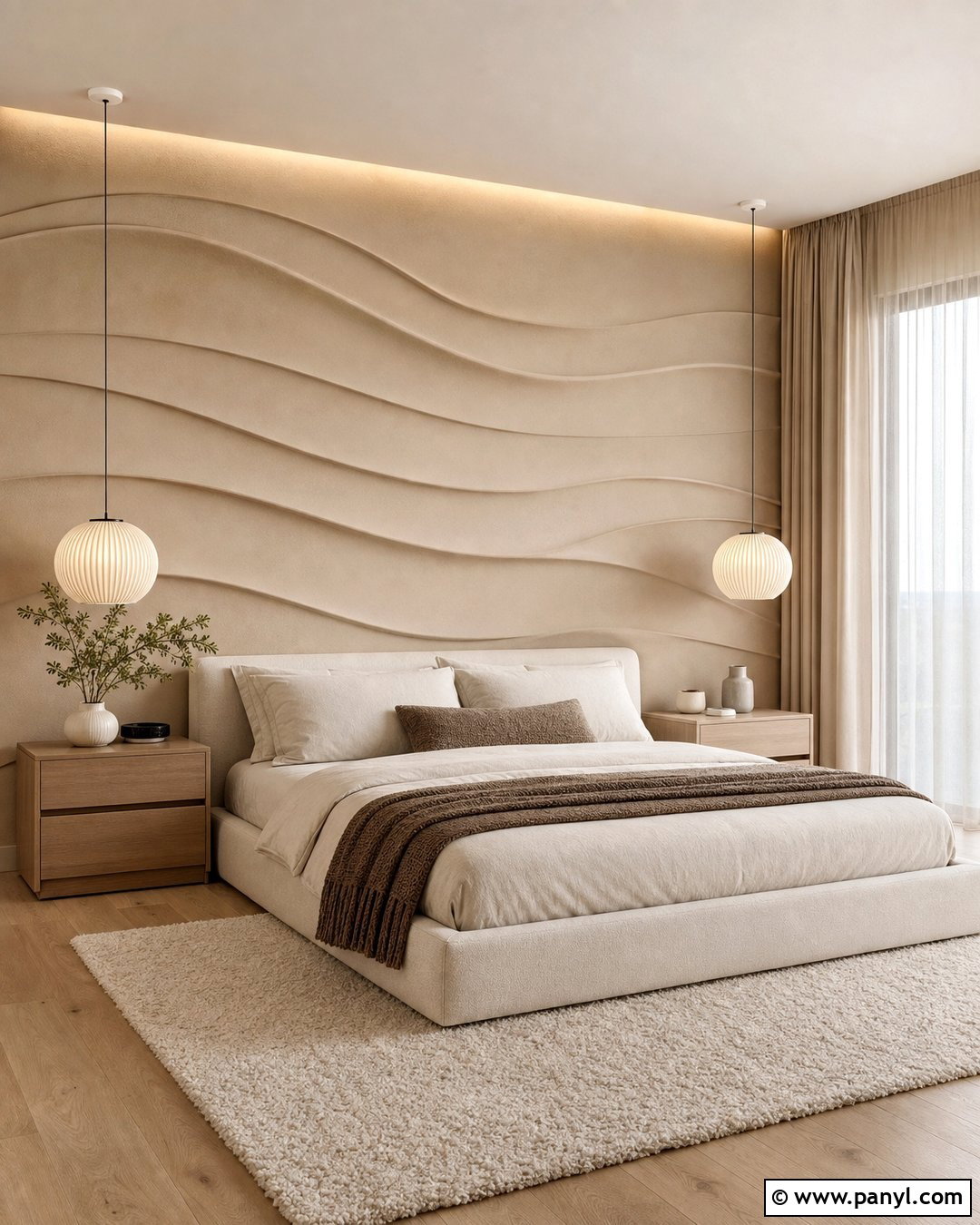
A sculpted wave texture creates a flowing feature behind the bed in a contemporary bedroom. Use broad horizontal curves finished in soft dune beige, extending from wall to wall rather than stopping around the headboard. Choose a low platform bed upholstered in ivory fabric so its simple shape does not compete with the relief. Add light oak nightstands, rounded pendant lights, and layered cream bedding with muted brown accents. A thick wool rug softens the floor and repeats the wall’s gentle movement. Keep the remaining walls smooth and painted pale beige. Indirect LED lighting above the feature can highlight the curves without producing dramatic shadows. Minimal ceramic decor and sheer curtains complete a quiet bedroom where the wall becomes functional artwork and the entire palette remains restful.
23. Beige Geometric Wall Texture
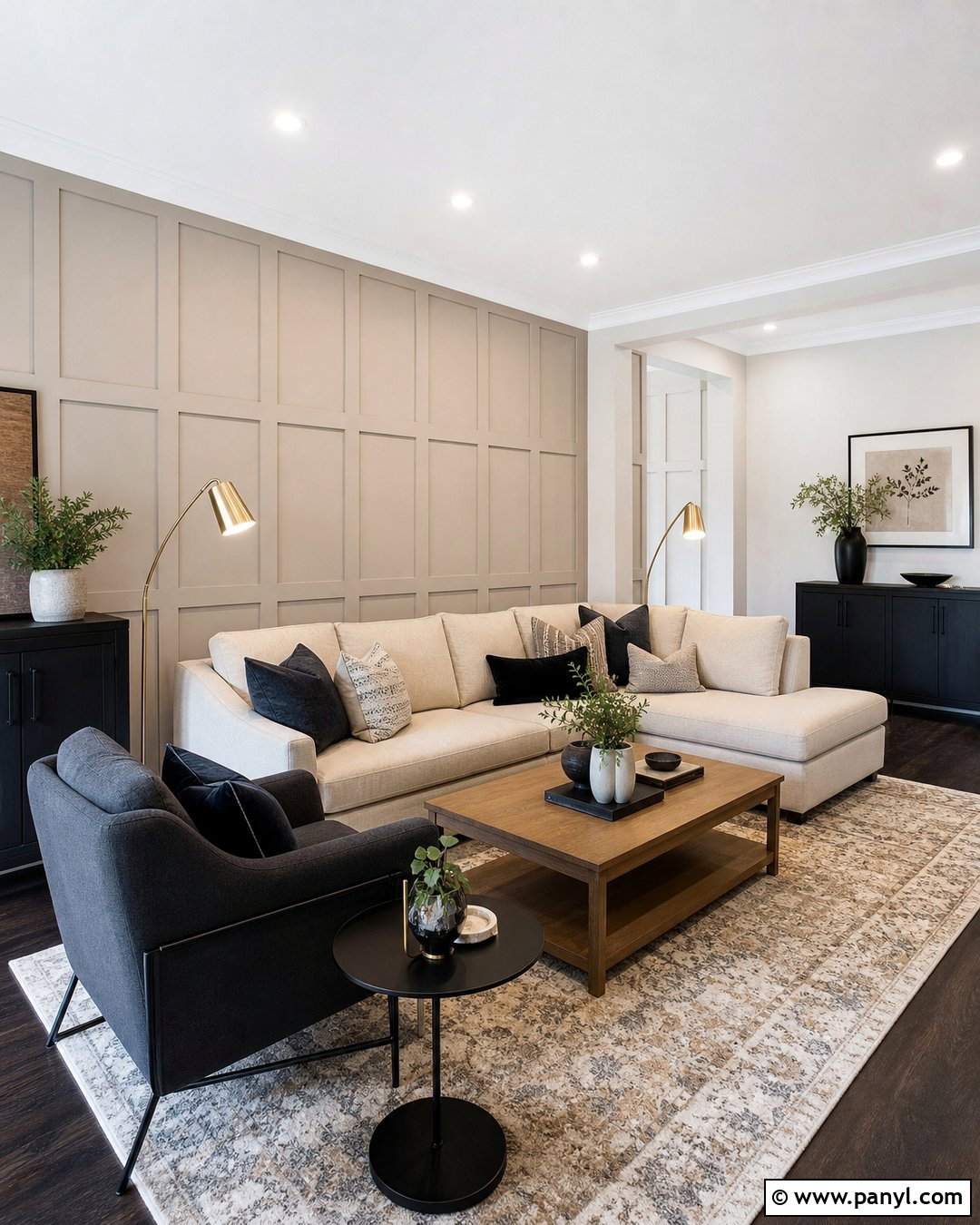
Raised geometric panels can turn a beige family room wall into a structured focal point. Select a large repeating pattern of shallow rectangles or offset squares and paint the entire installation warm greige-beige. Place it behind a long cream sectional, leaving enough open wall area for the relief to remain readable. Add an oak coffee table, charcoal accent chair, and durable patterned rug in tan and ivory. Brass floor lamps and black metal side tables balance warm and cool details. Keep artwork off the textured wall; instead, decorate adjacent smooth walls with a few simple prints. Storage cabinets in matching beige create a seamless foundation for everyday items. The completed room feels modern and practical, with enough texture, contrast, and comfortable seating for regular family use.
24. Beige Arched Wall Texture
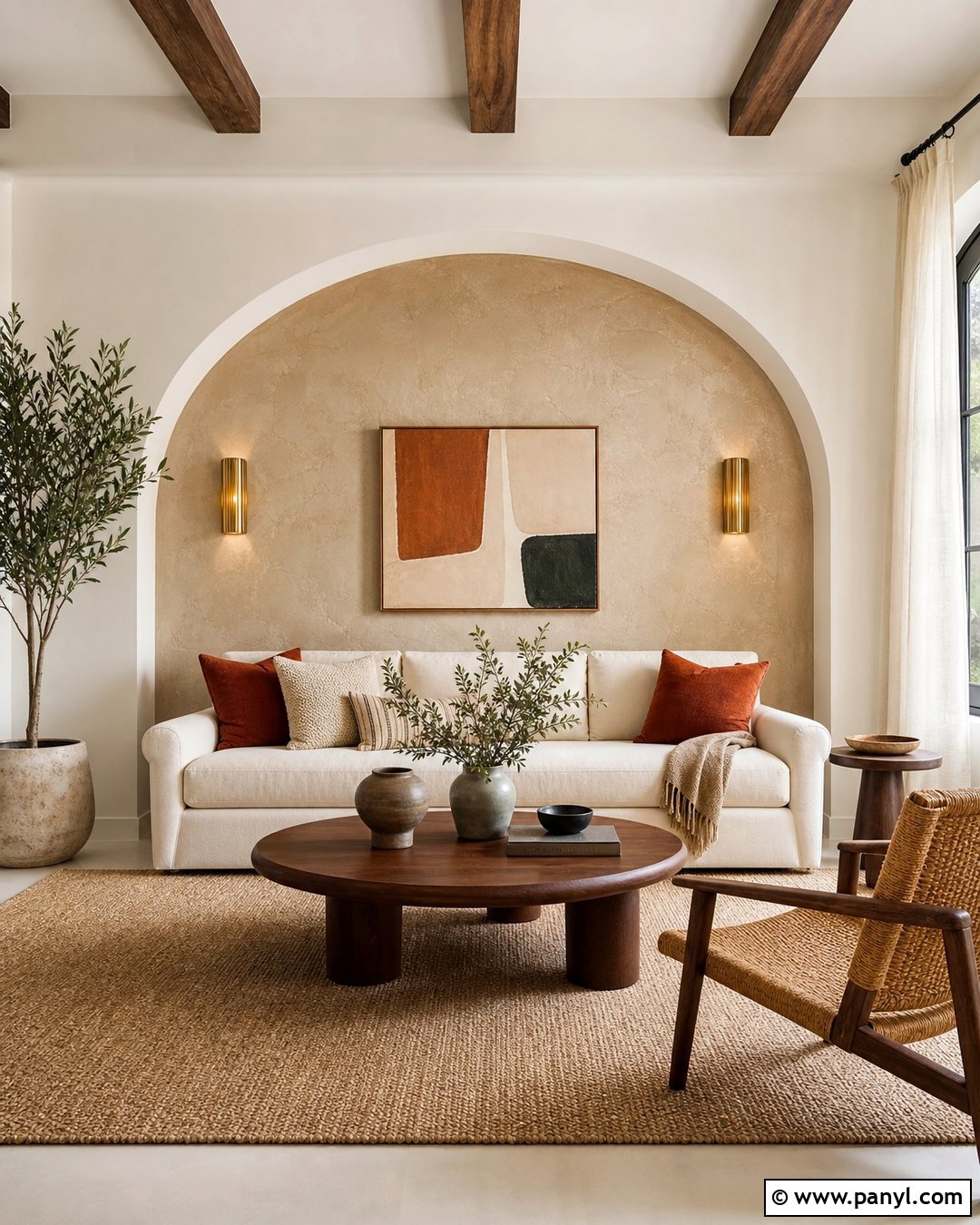
A textured beige arch can define a living room seating zone without requiring a full renovation. Create a wide painted arch behind the sofa using sandy beige plaster, then keep the surrounding wall smooth and warm white. Place a streamlined cream sofa inside the visual frame and add rust-colored pillows for contrast. A round walnut coffee table and woven lounge chair reinforce the arch’s soft shape. Use a jute-and-wool rug to connect the furniture group. Two brass sconces mounted within the arch provide symmetry and emphasize the uneven plaster finish. Add one large framed abstract artwork at the center rather than several small pieces. Linen curtains and pale oak flooring complete a bright, approachable room where the architectural paint treatment clearly organizes the layout and provides handcrafted depth.
25. Beige Textured Wall Niches
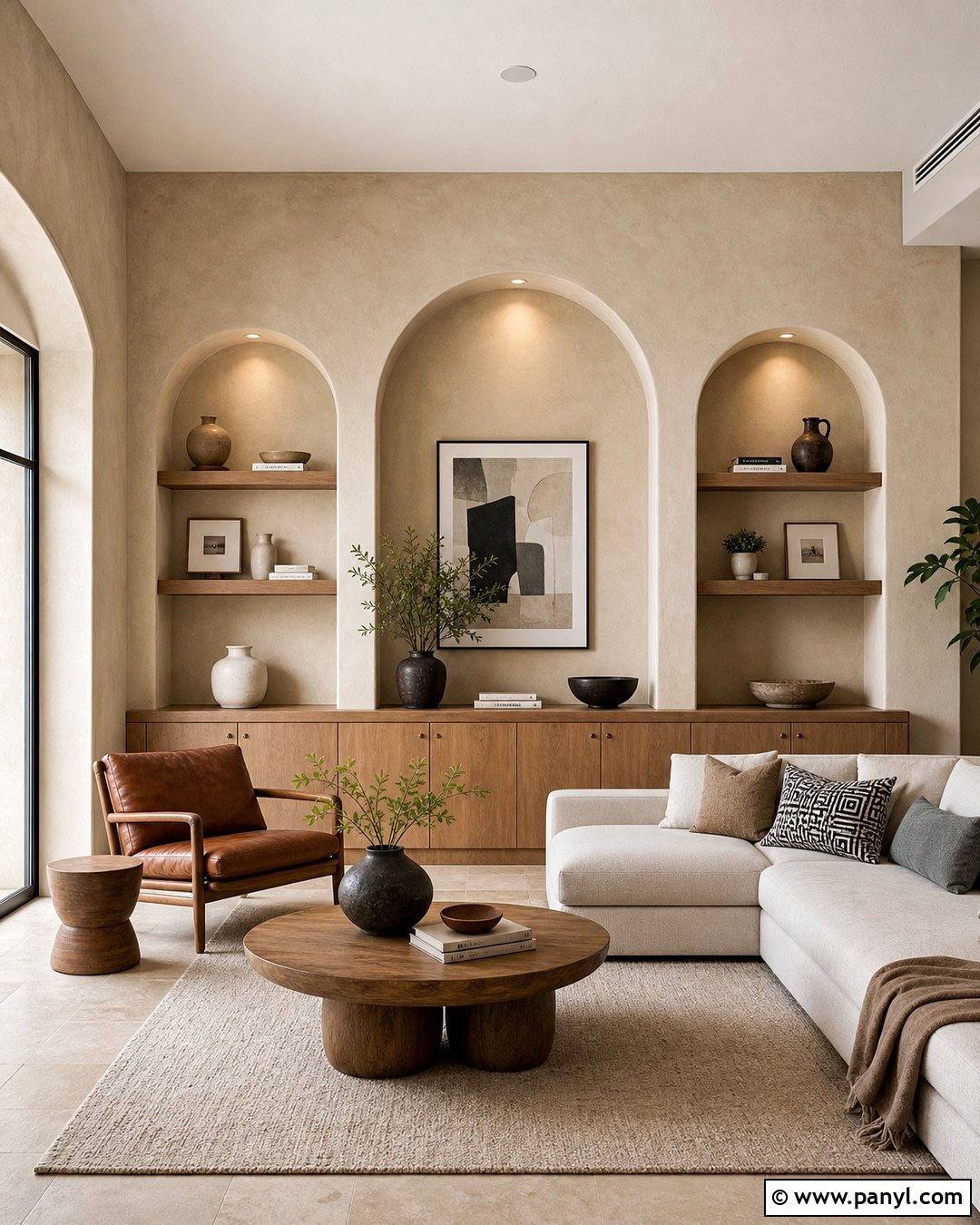
Recessed niches finished in beige plaster can provide both storage and architectural character. Design a living room wall with three softly arched openings in warm putty beige, including low closed cabinets beneath them. Paint the surrounding walls a lighter cream so the built-in feature gains gentle contrast. Style the niches with books, handmade ceramics, framed art, and small plants, leaving plenty of open space. Place an oatmeal sofa opposite the wall, accompanied by a leather chair and rounded oak table. Limestone-look flooring and a textured wool rug reinforce the mineral palette. Install concealed lighting at the top of each recess to reveal the plaster texture. The complete arrangement feels custom and practical, providing display space while establishing a calm focal point that does not depend on bright color.
26. Beige Board And Batten Wall Texture
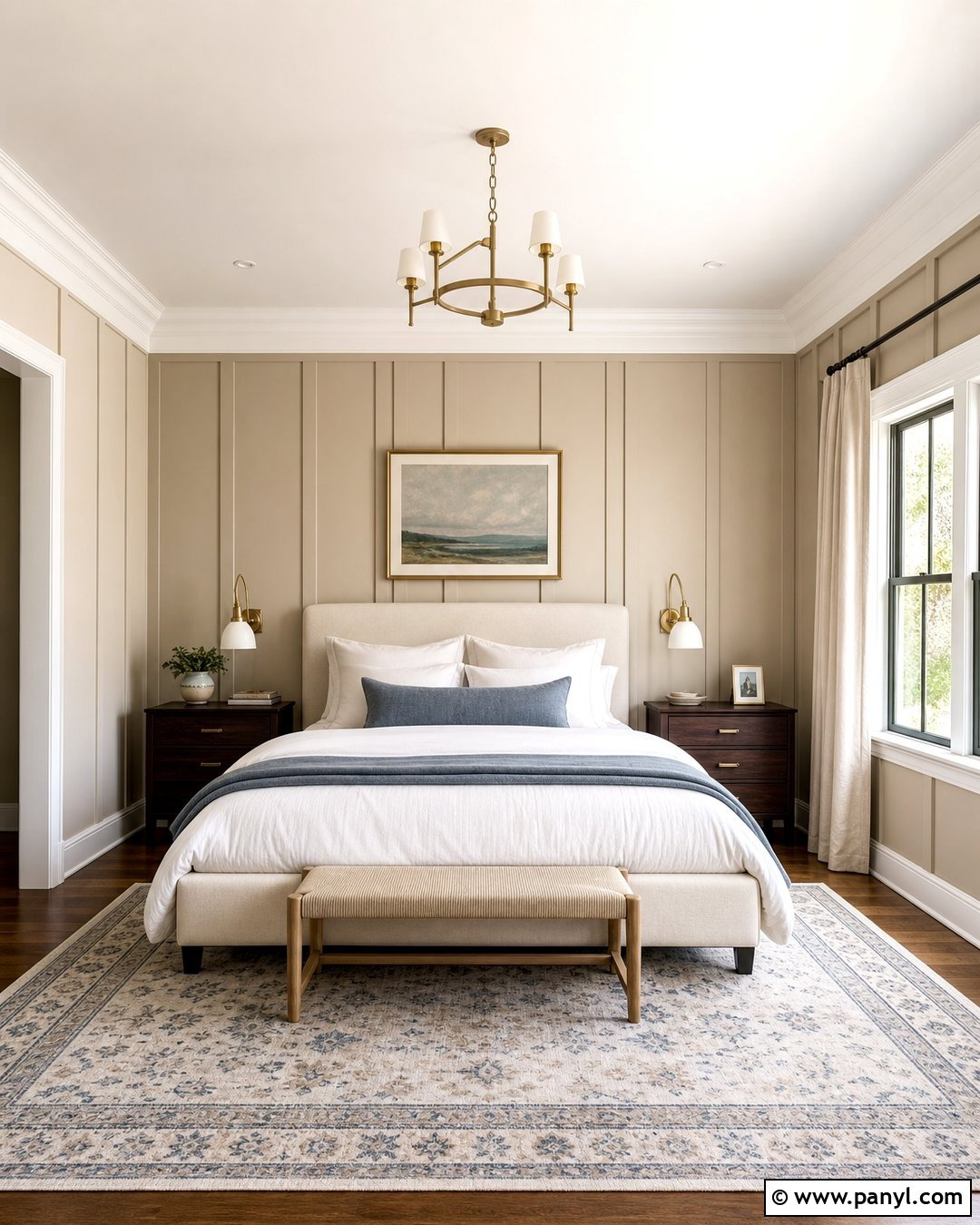
Beige board and batten creates a comfortable foundation for a transitional bedroom. Install full-height vertical battens behind the bed and paint them a warm taupe-beige in a durable matte finish. Continue the same color on the remaining smooth walls for a unified envelope. Choose an upholstered cream bed, dark walnut nightstands, and simple brass reading sconces. White bedding can be layered with a quilted beige coverlet and muted blue pillows. A patterned rug in ivory, tan, and slate blue provides enough contrast to ground the furniture. Hang artwork only on the smooth side walls so the battens stay visually clean. Linen drapes, a small wood bench, and black curtain rods complete a balanced room that combines traditional paneling with relaxed modern furniture and practical everyday materials.
27. Beige Panel Molding Wall Texture
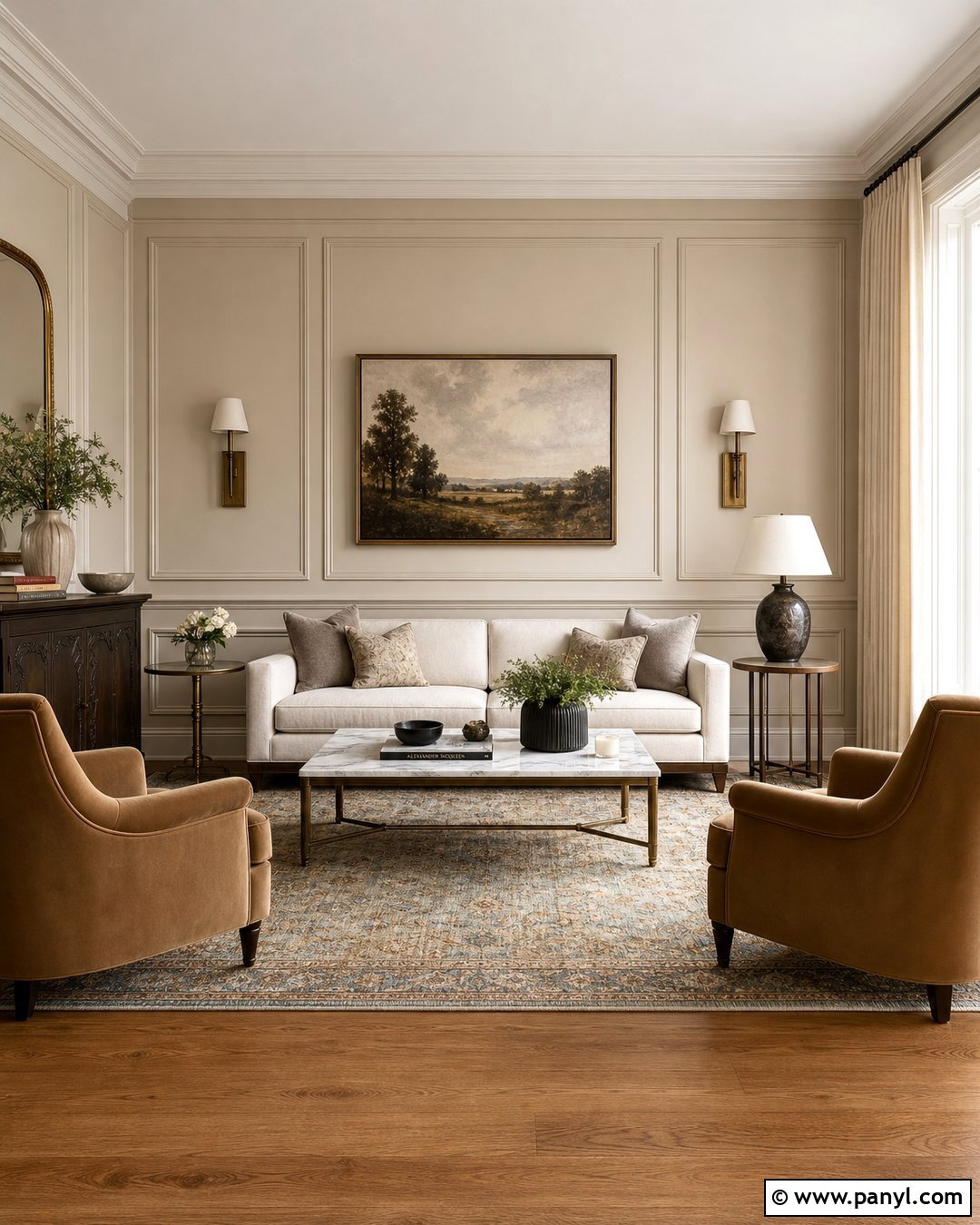
Beige panel molding gives a living room classic architecture while keeping the overall look light and updated. Paint the walls and applied molding in one soft mushroom-beige color to emphasize shadow rather than contrast. Arrange the molding in large symmetrical rectangles that relate to the sofa, console, and artwork positions. Use a tailored ivory sofa, curved camel chairs, and a marble-topped coffee table. A faded traditional rug adds muted blue and brown without disturbing the neutral foundation. Install aged brass sconces inside two of the wall panels and center a large landscape in the middle. Warm oak flooring and full linen curtains prevent the room from feeling overly formal. The finished design feels polished and carefully proportioned, yet comfortable enough for relaxed conversation and regular family living.
28. Beige Wainscoting Wall Texture
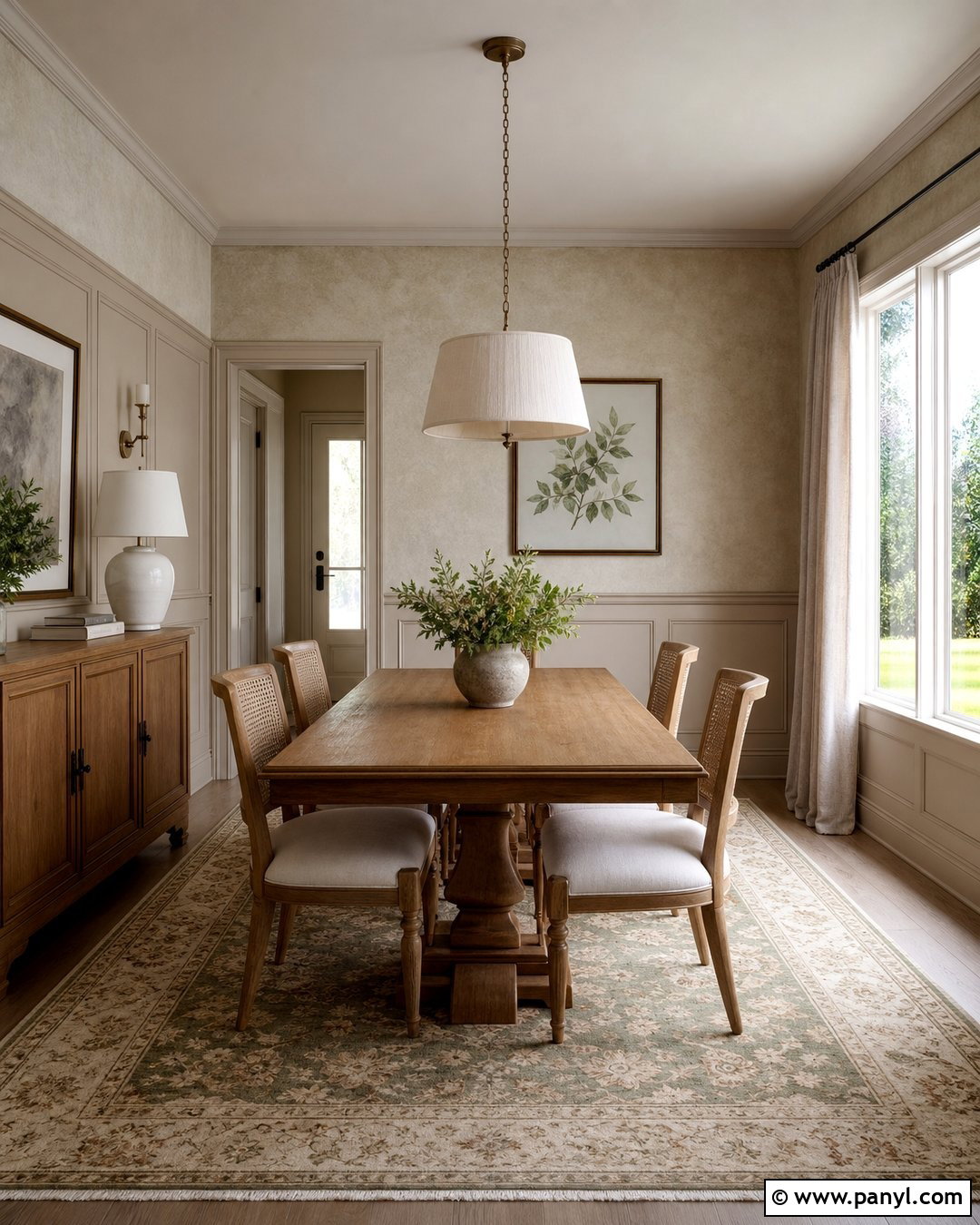
Textured beige wainscoting can make a dining room feel finished while protecting the lower walls. Use raised panels painted medium biscuit beige below chair-rail height, then apply a lighter mineral wash above. A rectangular oak table and woven-back dining chairs create an easy balance between traditional architecture and casual furniture. Choose a cream linen pendant with a broad shade to illuminate the full table. A patterned wool rug in sand, sage, and brown adds softness beneath the seating. Display one oversized botanical print on the upper wall and place a simple sideboard nearby. Warm white trim defines doorways without looking stark. Linen curtains, ceramic serving pieces, and aged brass hardware complete a layered dining space where both sections of the wall contribute useful texture and visual depth.
29. Beige Shiplap Wall Texture
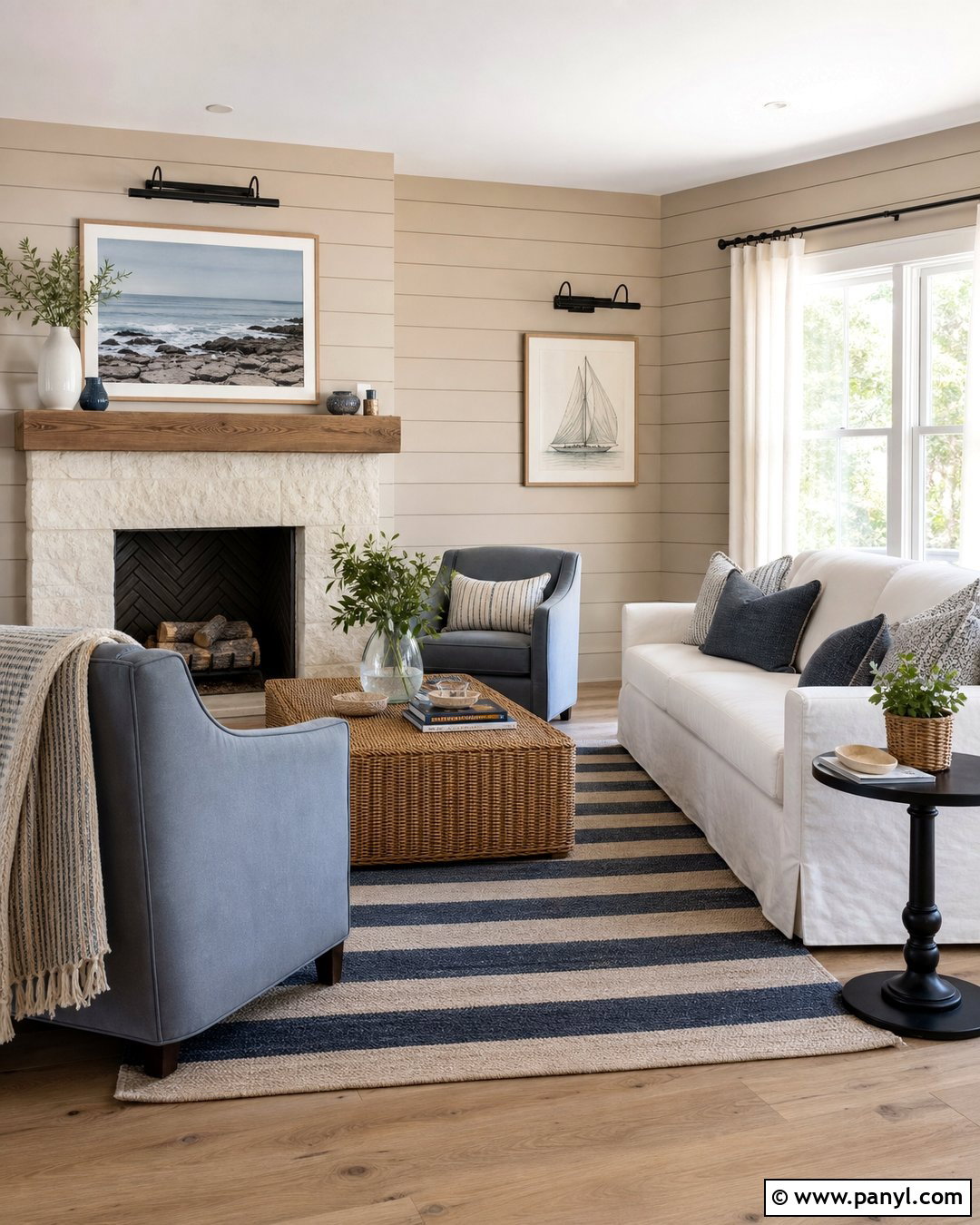
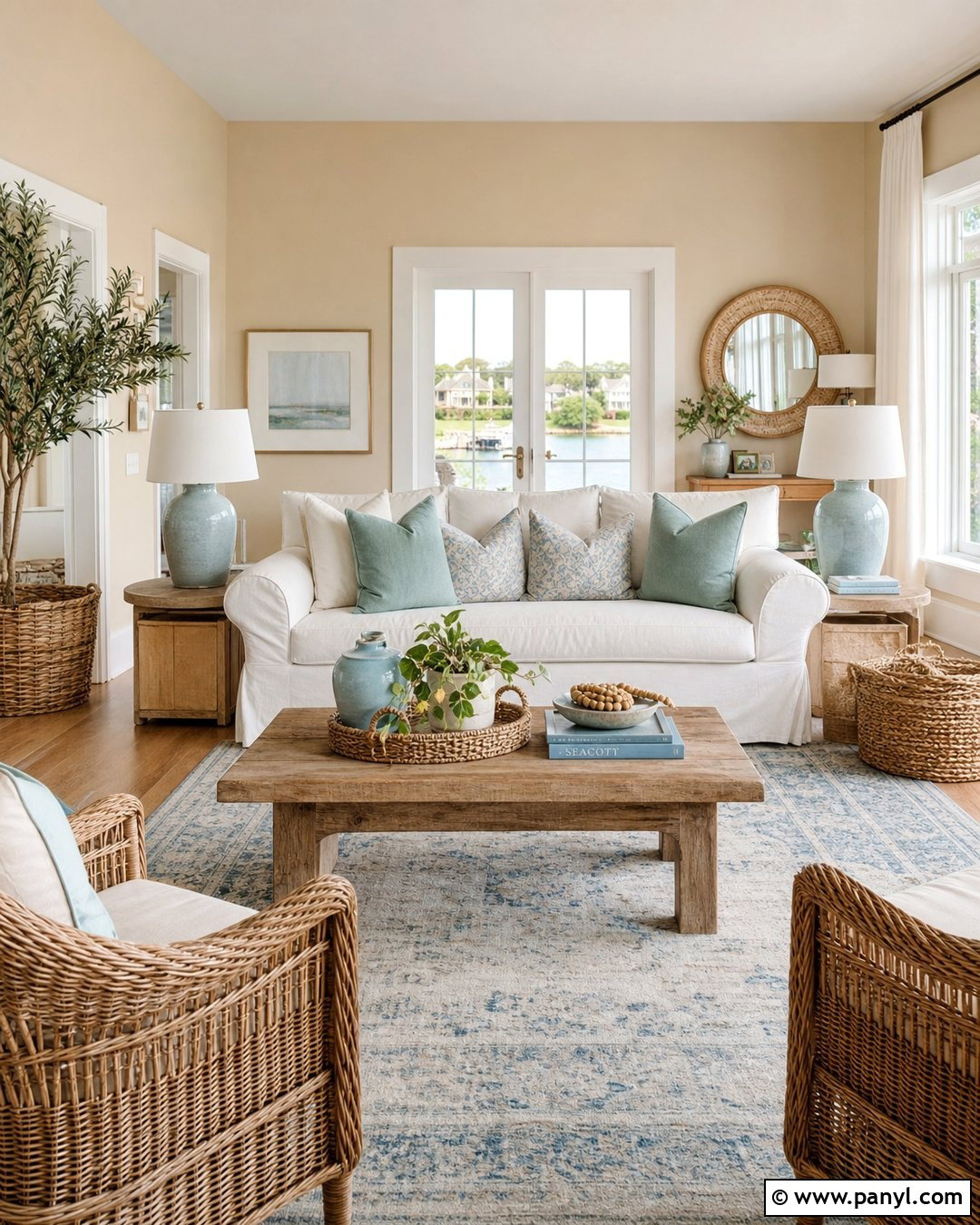
Beige shiplap gives a coastal living room warmth without defaulting to bright white walls. Install wide horizontal boards across the fireplace and main seating wall, then paint them a pale sand beige. Keep the remaining walls creamy white and use light oak flooring to create an airy base. Furnish the room with a slipcovered ivory sofa, blue-gray armchairs, and a woven coffee table. A striped rug in beige and faded navy introduces subtle coastal pattern. Add a simple limestone fireplace surround and an oak mantel with minimal ceramic decor. Woven shades and sheer linen curtains soften the windows. Black picture lights provide a clean modern detail above framed seascape artwork. The room feels breezy and relaxed, while the beige boards supply more dimension and warmth than conventional white paneling.
30. Beige Beadboard Wall Texture
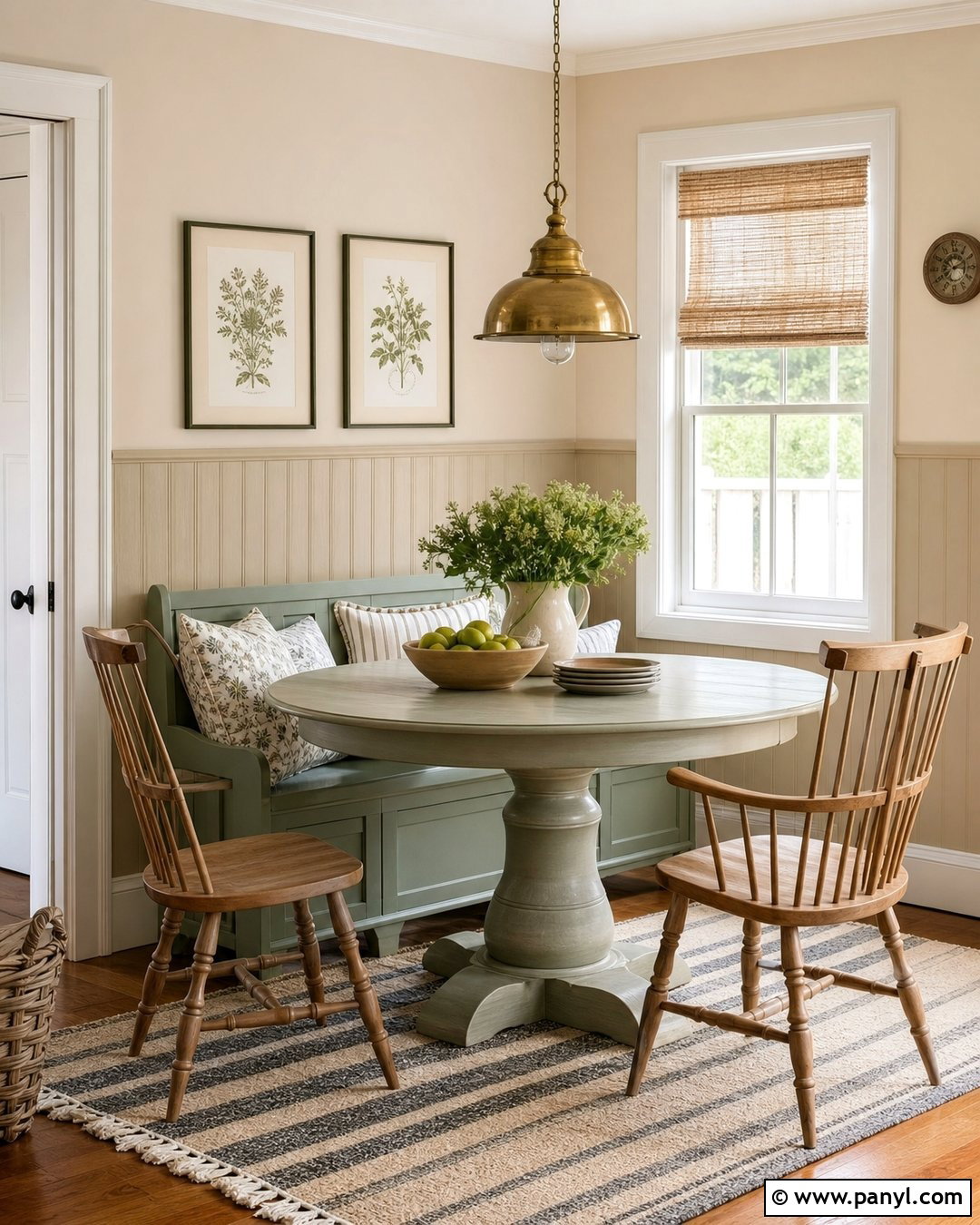
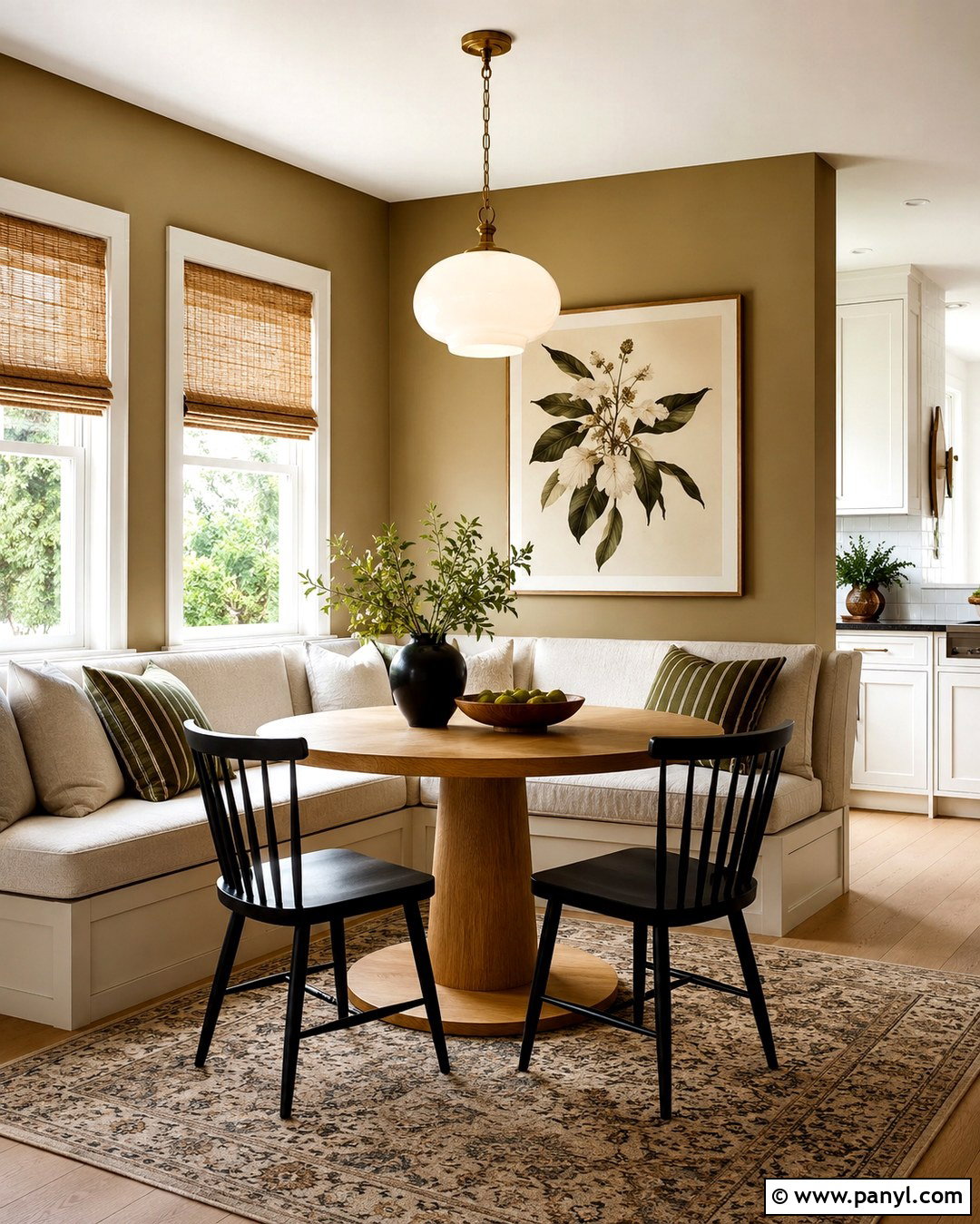
Beige beadboard creates a charming, durable wall treatment for a breakfast room. Run narrow vertical paneling to two-thirds wall height and paint it warm oatmeal beige. Finish the upper walls with soft cream paint for a bright, balanced contrast. Place a round painted wood table near the window and surround it with natural oak spindle chairs. A built-in bench covered in muted green fabric can add seating and hidden storage. Use a small vintage-inspired brass pendant above the table and a washable striped rug below it. Frame simple botanical prints on the upper wall, keeping their arrangement neat and compact. Woven Roman shades, ceramic dishes, and a bowl of fresh greenery complete a practical cottage-inspired space that feels welcoming without becoming overly themed or cluttered.
31. Beige Wood Slat Wall Texture
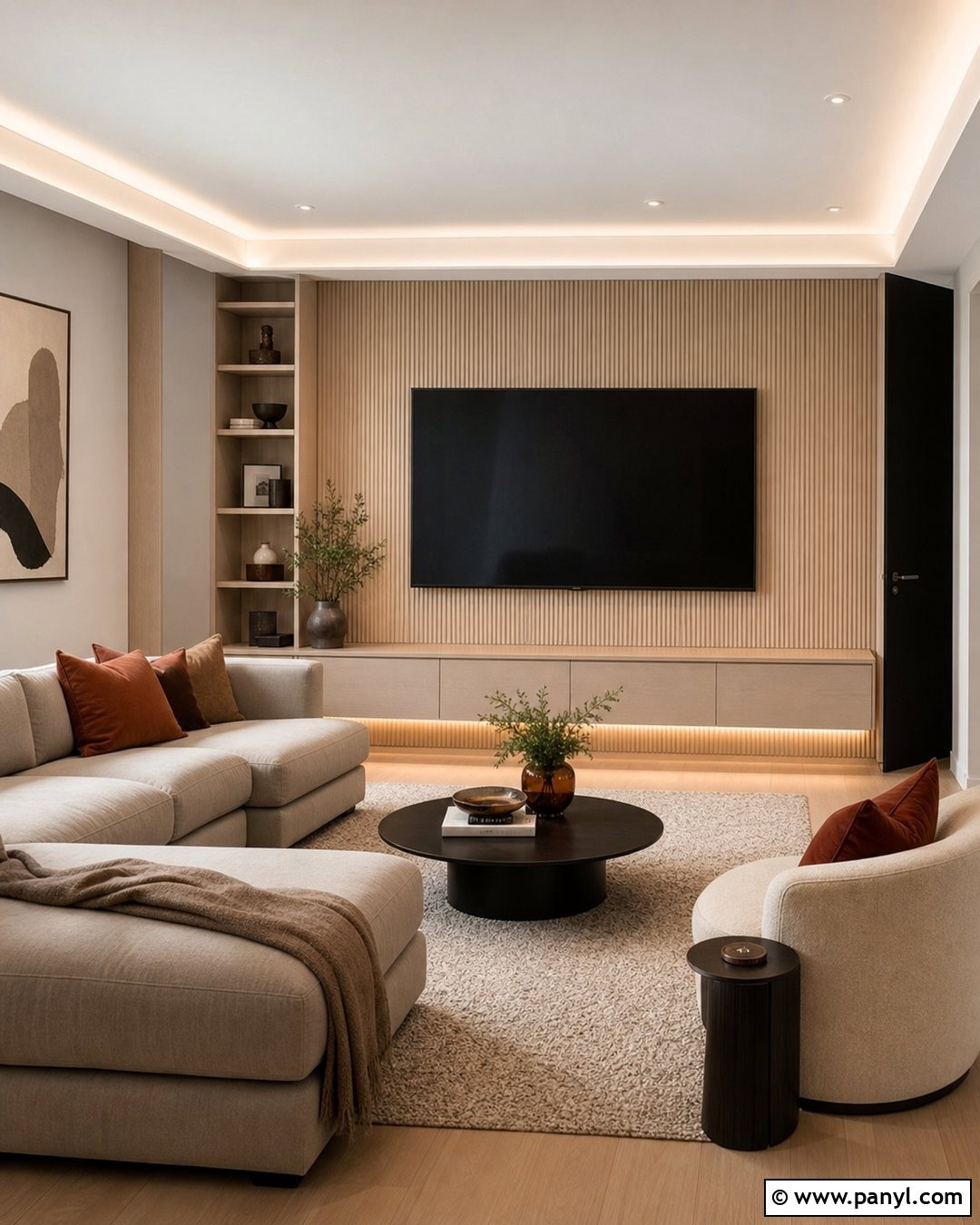
Light beige wood slats create warmth and rhythm in a minimalist media room. Use pale white oak slats over a matching beige acoustic backing, covering the full wall behind the television and floating cabinet. Keep surrounding walls smooth in a creamy off-white shade. Add a low taupe sectional, rounded ivory lounge chair, and simple black coffee table. A thick beige rug softens the streamlined layout and improves comfort. Integrated lighting beneath the cabinet highlights the vertical grain without producing distracting glare on the screen. Include a few rust-colored cushions and walnut accessories to deepen the neutral palette. Concealed storage keeps electronics and everyday items out of sight. The complete room feels calm, organized, and contemporary, with natural wood texture preventing the minimalist design from appearing cold.
32. Beige Cork Wall Texture
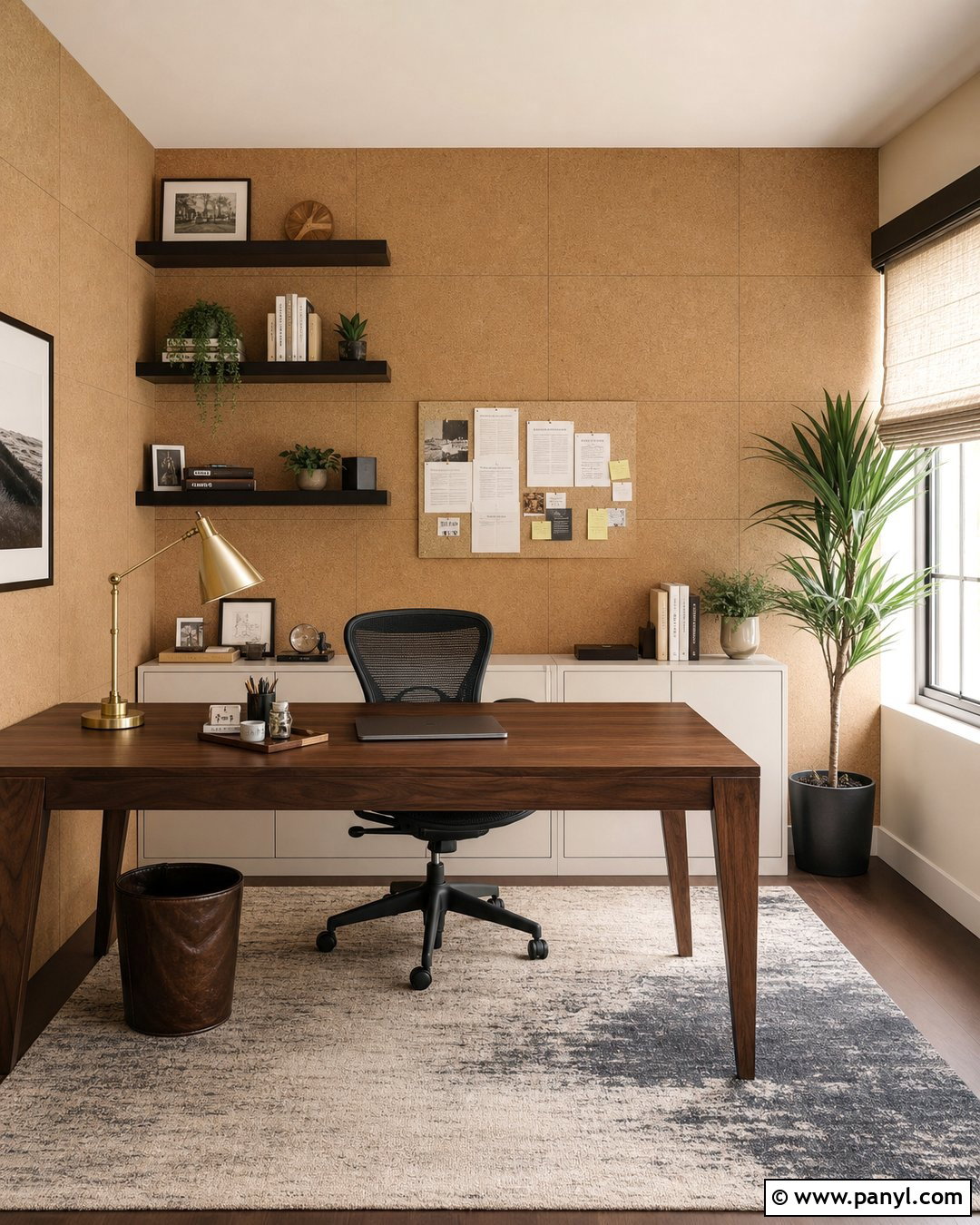
Beige cork panels can turn a home office into a warmer and more acoustically comfortable workspace. Cover the wall behind the desk with large natural cork tiles in pale tan-beige, arranging them in a clean grid. Paint the other walls warm white and use medium oak flooring for continuity. Choose a walnut desk, black ergonomic chair, and low cream storage cabinets. Floating black shelves can hold reference books and a few simple objects. Add a flat-weave rug with beige and charcoal stripes, plus linen blinds that control glare. Pin notes only within one organized section of the cork wall so it remains attractive rather than chaotic. A brass desk lamp and tall leafy plant complete a practical office where wall texture supports concentration, organization, and a relaxed residential atmosphere.
33. Beige Acoustic Felt Wall Texture
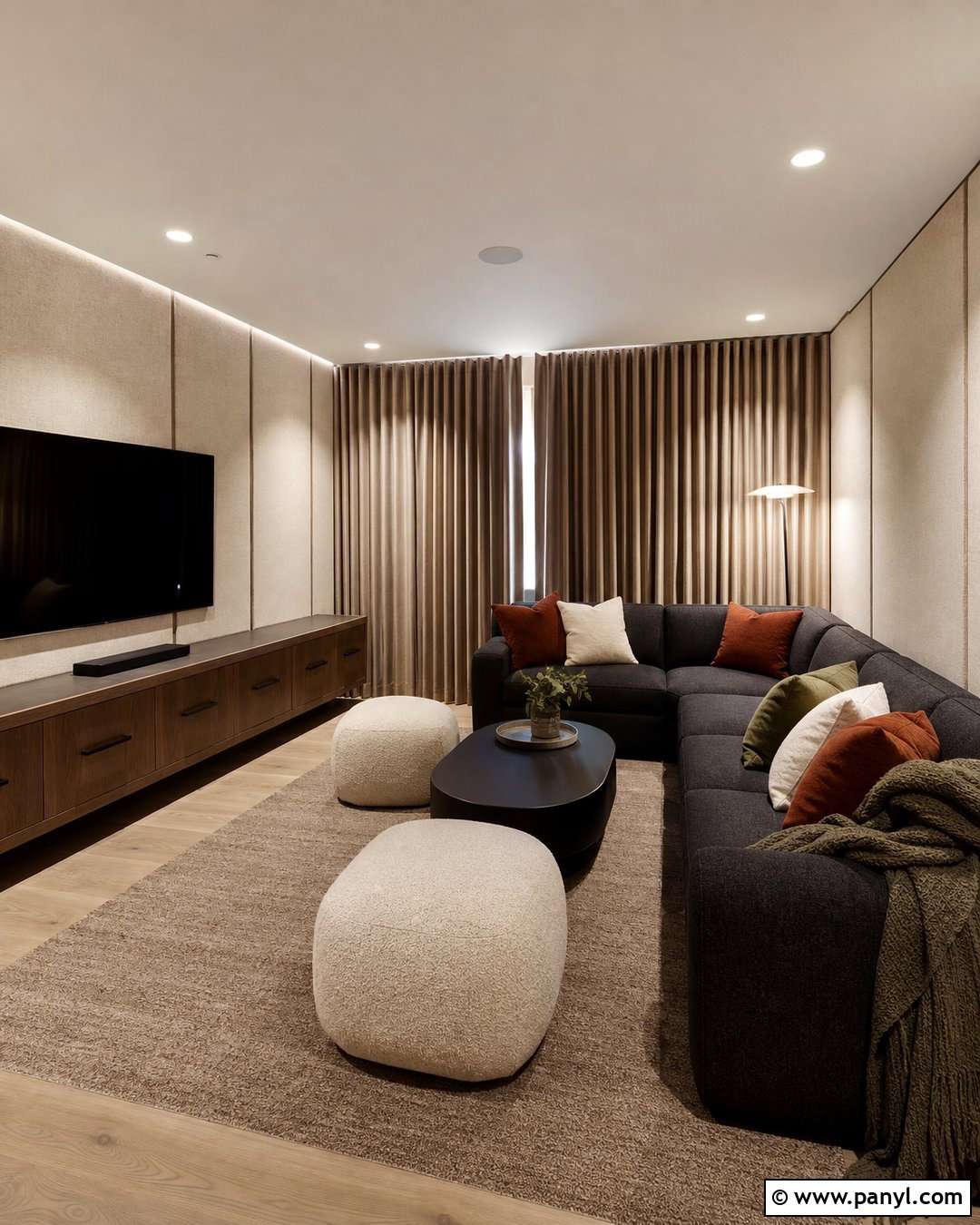
Beige acoustic felt panels offer a soft, streamlined solution for a multifunctional media room. Install broad vertical panels in warm oatmeal beige across the television wall, spacing them evenly for a tailored appearance. Pair the treatment with low walnut cabinetry and matte black hardware. A comfortable charcoal sectional introduces contrast, while cream boucle ottomans and a large taupe rug soften the arrangement. Use blackout curtains in a slightly darker beige to control daylight during viewing. Recessed ceiling lights and a slim floor lamp provide flexible illumination without cluttering the walls. Add rust and olive cushions to keep the palette from feeling overly monochromatic. The complete room looks modern and inviting while the upholstered wall surface visually reduces hard edges and supports the room’s entertainment-focused purpose.
34. Beige Upholstered Wall Panels
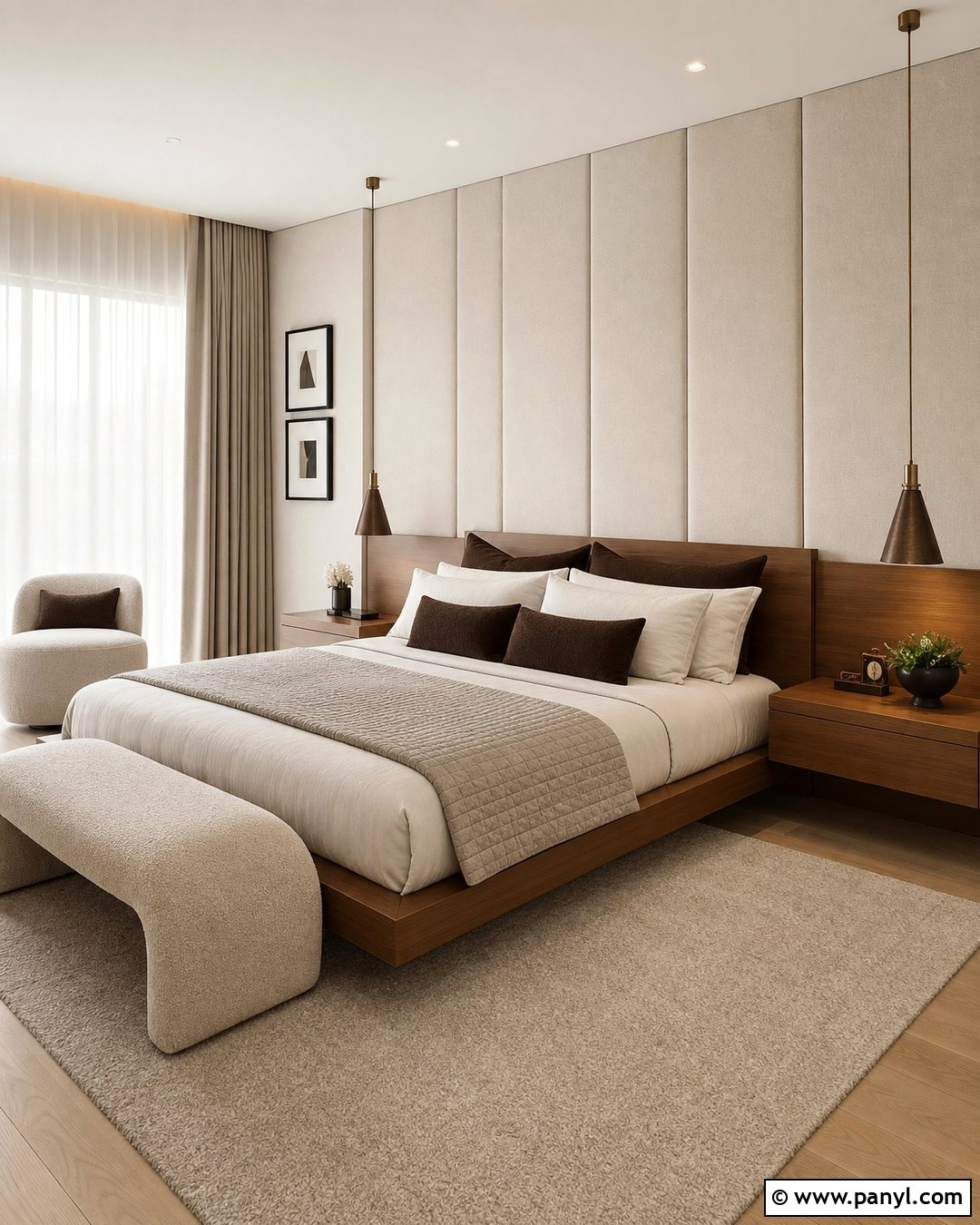
Upholstered beige panels can make a primary bedroom feel especially comfortable and finished. Cover the entire wall behind the bed with wide, lightly padded panels in textured oatmeal fabric. Extend them from floor to ceiling to create a strong architectural feature and integrated headboard. Use a low walnut bed frame with ivory bedding, a quilted taupe coverlet, and chocolate brown accent pillows. Floating oak nightstands keep the installation visible, while bronze pendant lights free up surface space. A soft wool rug and floor-length linen curtains continue the tactile theme. Keep the other walls smooth and pale cream. Add a curved bench and minimal black-framed artwork. The completed bedroom feels quiet, luxurious, and cohesive without depending on shiny materials, ornate decoration, or an oversized room.
35. Beige Boucle Wall Texture
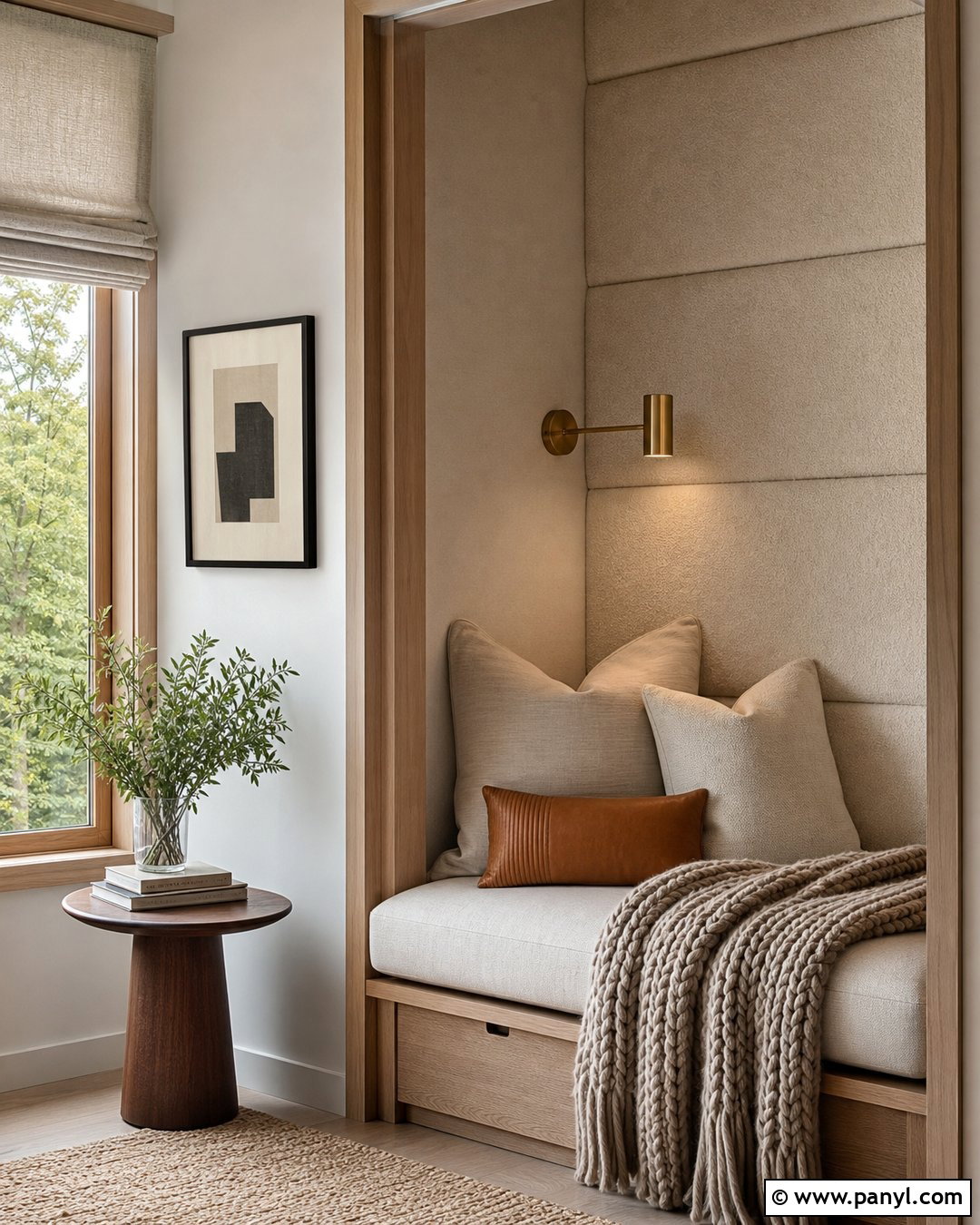
Boucle-covered wall panels create an especially soft focal point in a compact reading nook or bedroom corner. Choose tightly woven beige boucle with visible loops and apply it to three large padded panels behind a built-in daybed. Paint adjacent walls light almond and use pale oak trim around the installation. Dress the daybed with cream linen cushions, a caramel lumbar pillow, and a chunky taupe throw. Add a small walnut side table and an adjustable brass sconce for reading. A woven rug and linen Roman shade keep the surrounding materials natural and understated. Avoid placing artwork directly on the boucle so its texture remains clear. The finished nook feels cozy and purposeful, turning an unused corner into a complete retreat with seating, lighting, storage, and tactile wall interest.
36. Beige Rattan Wall Texture
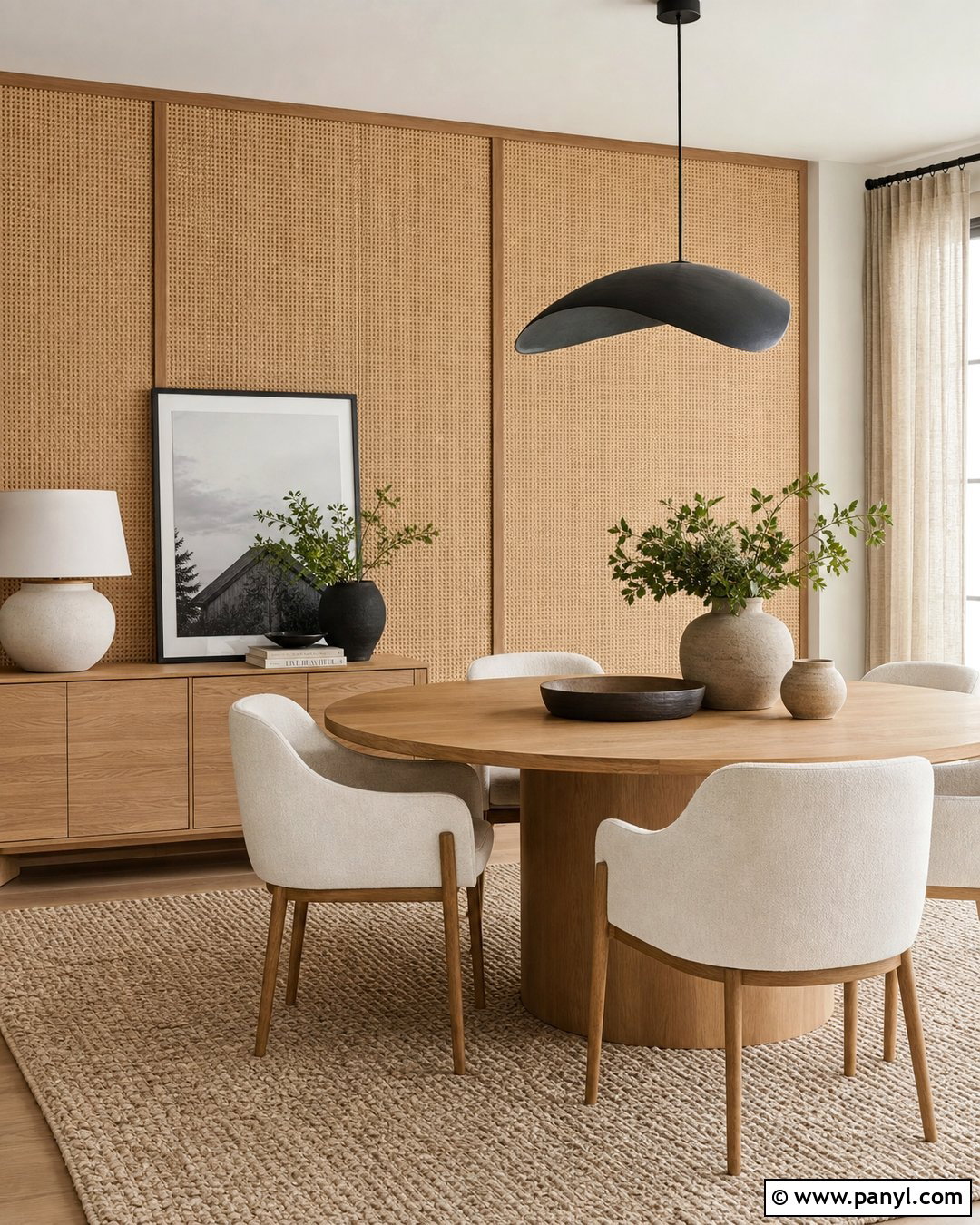
Woven rattan panels can introduce warm beige texture to a relaxed dining area. Install natural cane webbing within slim oak frames across the wall behind a sideboard. Paint the remaining surfaces creamy beige so the woven feature blends smoothly into the room. Center a round oak dining table beneath a black sculptural pendant and add upholstered chairs in ivory performance fabric. A flat-weave rug with a subtle brown border grounds the arrangement. Style the sideboard with a ceramic lamp, stacked books, and one tall branch arrangement. Black hardware and picture frames add crisp contrast without diminishing the natural materials. Finish with linen curtains and a few muted green accents. The complete dining space feels light, handcrafted, and modern rather than tropical or heavily themed.
37. Beige Stone Wall Texture
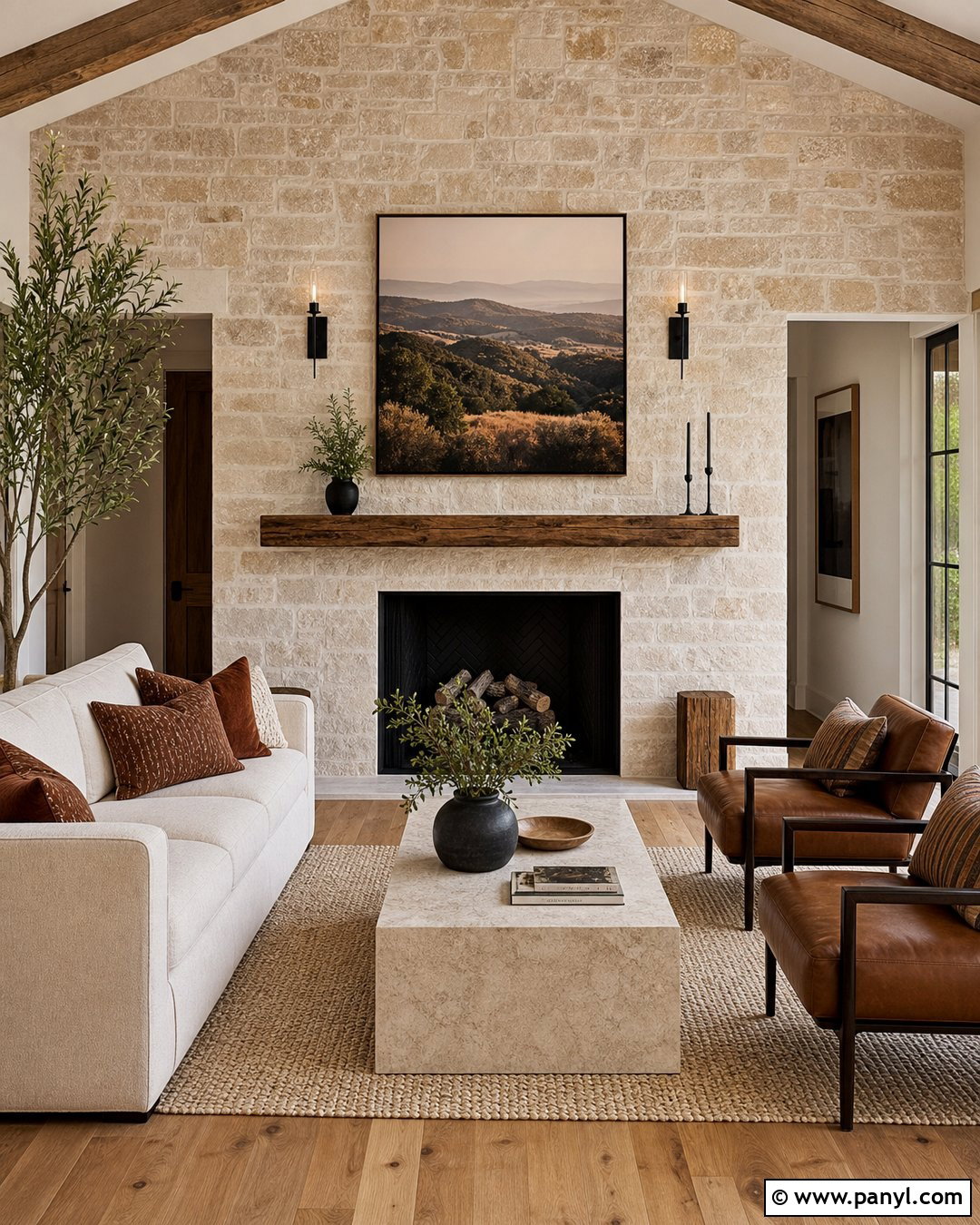
A beige stone feature wall gives a living room substantial texture and lasting visual weight. Choose thin-cut limestone in warm cream, sand, and pale taupe tones, using tight joints for a refined appearance. Cover the full fireplace wall from floor to ceiling and add a simple reclaimed oak mantel. Paint the remaining walls warm white and install medium-tone wood flooring. An ivory sofa, cognac leather chairs, and a large wool rug create a comfortable seating group. Use a travertine coffee table to repeat the mineral character in a smoother form. Black metal sconces and fireplace tools provide clean contrast. Linen curtains, muted rust pillows, and understated landscape art complete a welcoming room where rough stone, soft textiles, and warm wood feel carefully balanced.
38. Beige Travertine Wall Texture
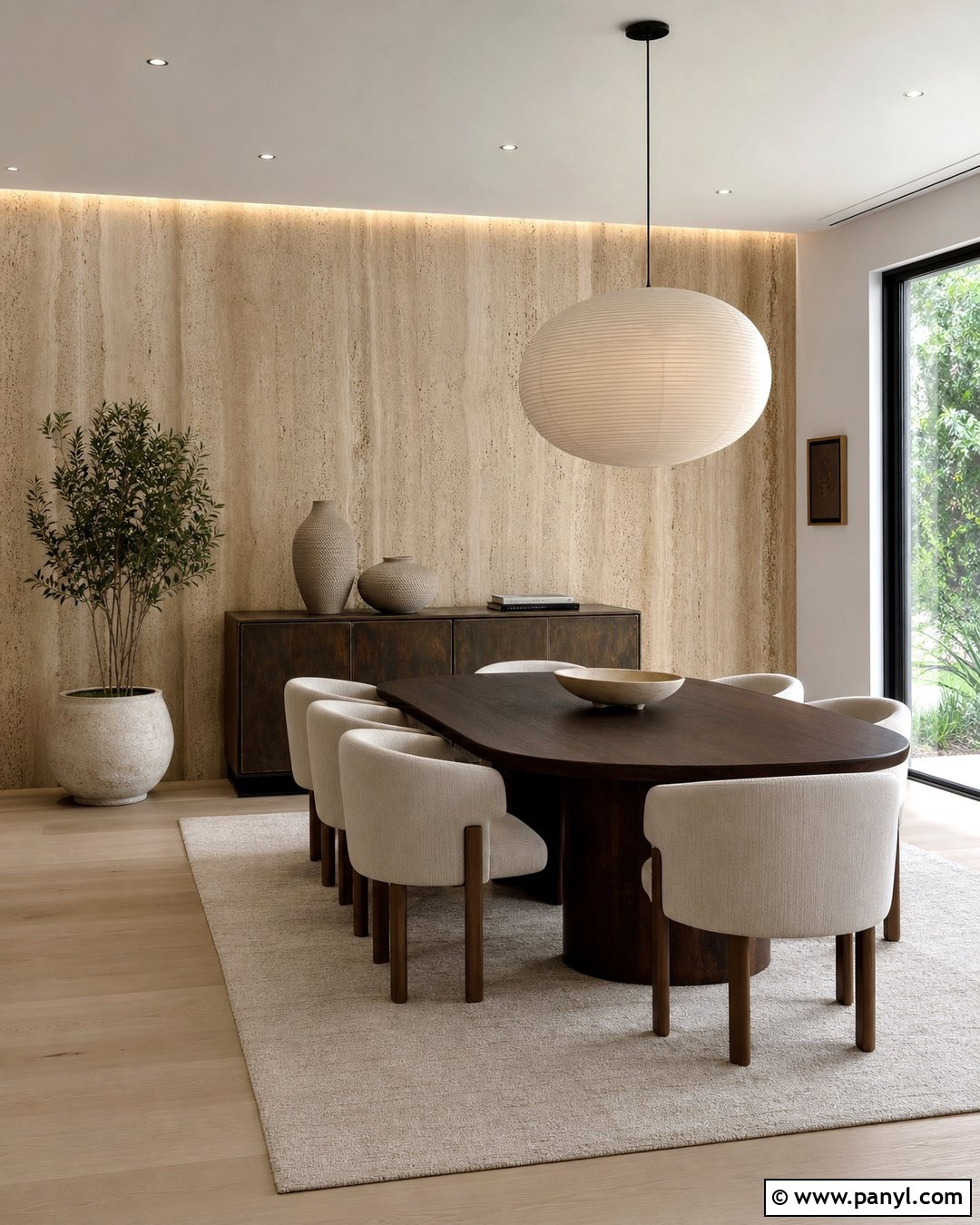
Travertine slabs create an elegant beige backdrop in a contemporary dining room. Use vein-cut stone across one full wall so the linear beige and cream markings run vertically and add height. Keep the remaining walls painted soft ivory. A dark walnut dining table provides strong contrast, while curved cream chairs maintain a comfortable, neutral look. Hang a wide paper lantern pendant above the table to soften the stone’s formal character. Pale oak flooring and a low-pile beige rug keep the room warm underfoot. A narrow bronze console can display only a few sculptural ceramic pieces. Install directional ceiling lights to reveal the natural stone variation. The finished space feels refined but not showy, with simple furniture and restrained decor allowing the travertine to remain the central architectural feature.
39. Beige Brick Wall Texture
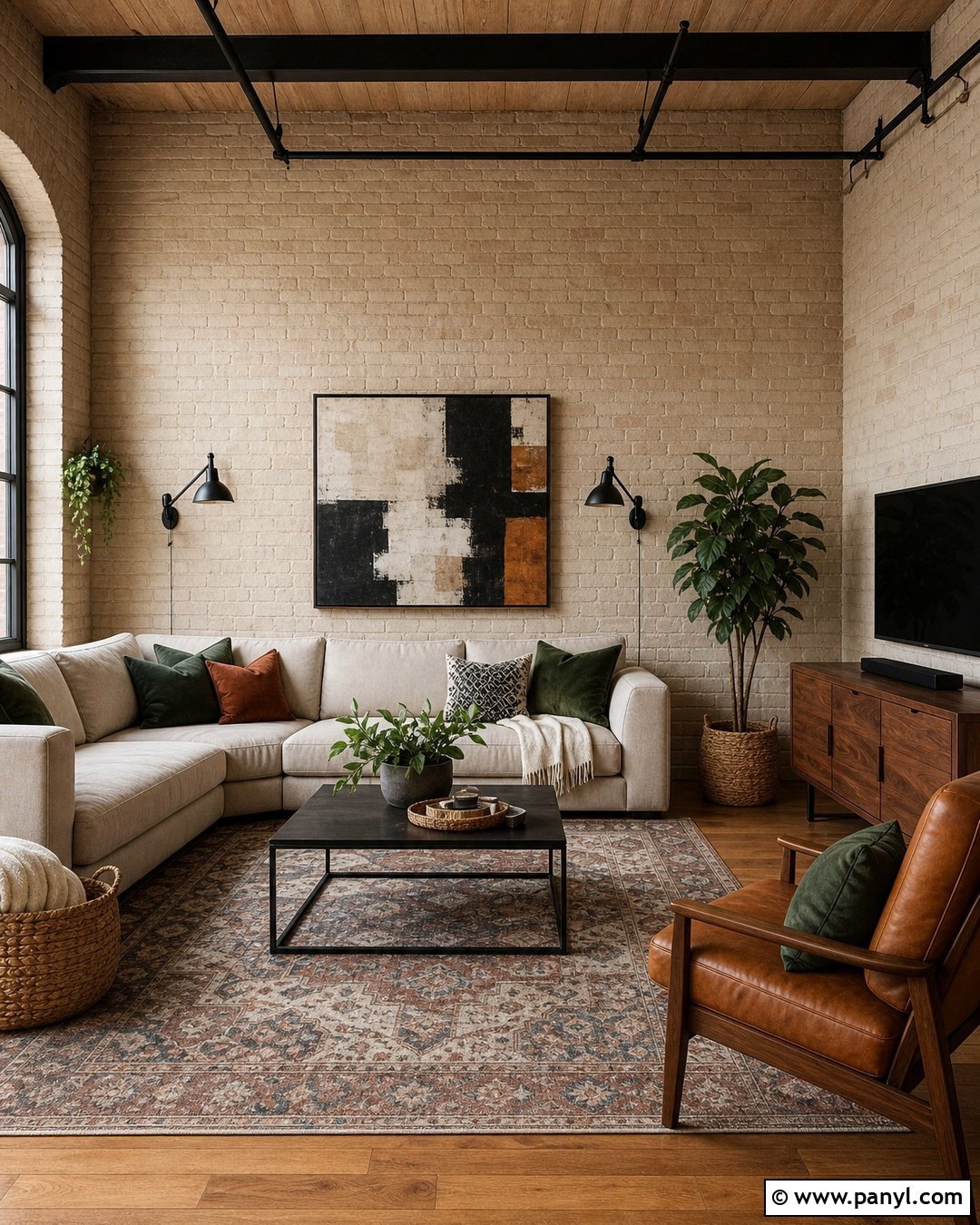
Painted beige brick can bring relaxed loft character to a family room without the severity of exposed red masonry. Coat an existing brick wall in warm putty beige, allowing the mortar lines and irregular edges to remain visible. Add a large cream sectional, black metal coffee table, and cognac leather chair for contrast. Medium oak flooring and a patterned wool rug soften the room’s industrial foundation. Install a long walnut media console against the brick and use simple black sconces to cast light across its texture. Add muted green and rust cushions for earthy color. Keep the other walls smooth and pale cream so the brick feature does not overwhelm the space. Linen curtains, baskets, and large abstract artwork complete a casual, durable room suited to everyday family life.
40. Beige Terrazzo Wall Texture
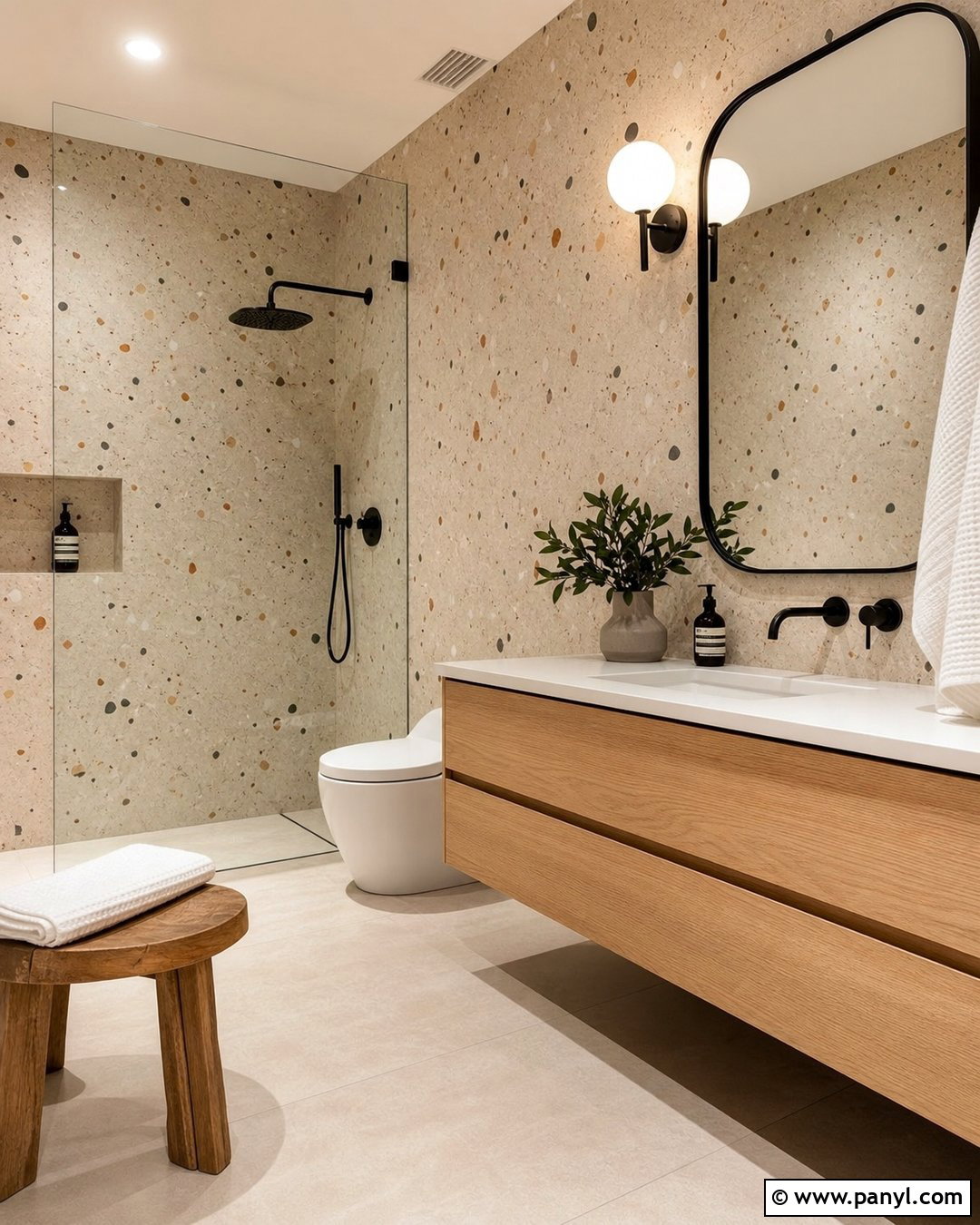
Beige terrazzo creates a playful but polished wall surface for a modern bathroom. Use large-format panels with a warm cream base and small chips in tan, white, rust, and muted charcoal. Continue the material from the vanity backsplash into the walk-in shower for a connected design. Pair it with a floating white oak vanity, matte black fixtures, and a rounded black-framed mirror. Choose plain beige floor tiles so they do not compete with the speckled walls. Clear glass keeps the shower open and allows the pattern to remain visible. Add soft white towels, a teak stool, and minimal ceramic containers. Bright globe sconces provide even illumination. The completed bathroom feels fresh and energetic while maintaining a natural, neutral palette suitable for long-term use.
41. Beige Shell Aggregate Wall Texture
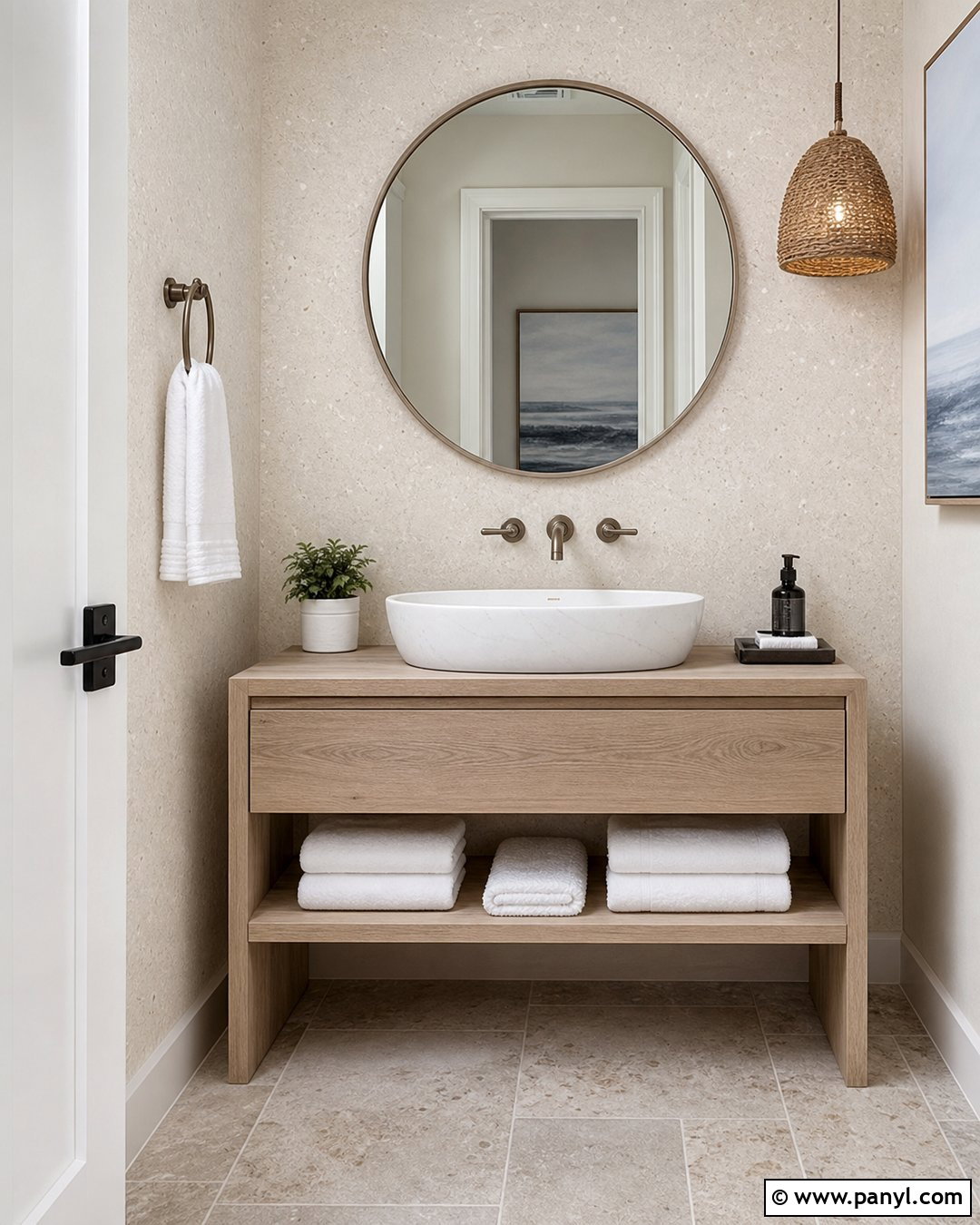
A beige shell aggregate finish brings subtle coastal texture to a powder room or compact bathroom. Select a creamy plaster containing tiny pale shell fragments that create irregular movement and a gentle natural shimmer. Apply it behind the vanity and continue it around the mirror for a unified feature. Use a light oak vanity, white stone sink, and brushed nickel faucet to keep the room fresh. Pale limestone flooring provides a quiet foundation, while a woven pendant introduces another organic surface. Paint the side walls soft ivory so the shell finish stays distinctive. Add a round mirror, white towels, and one small piece of blue-gray artwork. The complete room feels bright and beach-inspired without relying on obvious nautical motifs, themed accessories, or strong ocean colors.
42. Beige Combed Wall Texture
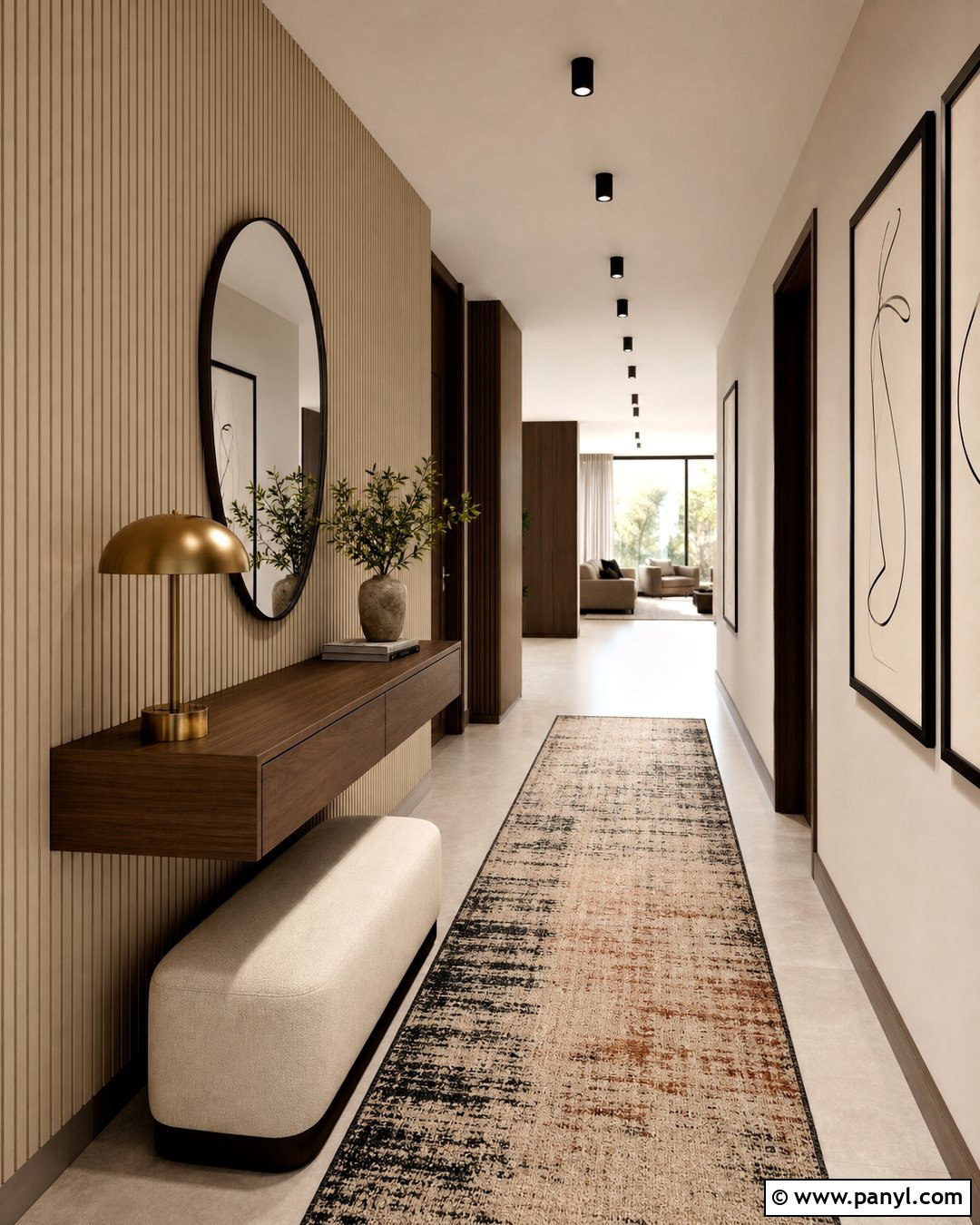
A combed beige plaster finish creates orderly movement in a narrow entry or hallway. Use fine vertical lines in warm almond beige to make the walls appear taller. Apply the treatment to one continuous side wall, then paint the opposite wall creamy white for visual breathing room. Place a slim floating walnut console beneath a rounded mirror and add a small upholstered bench near the door. A durable runner in beige, black, and faded rust guides movement through the space. Install simple black ceiling lights and one brass table lamp to reveal the fine grooves. Keep accessories limited to a tray, ceramic vessel, and framed line drawing. The completed entry feels structured, practical, and welcoming, with vertical texture providing architectural interest without reducing the available floor space.
43. Beige Stippled Wall Texture
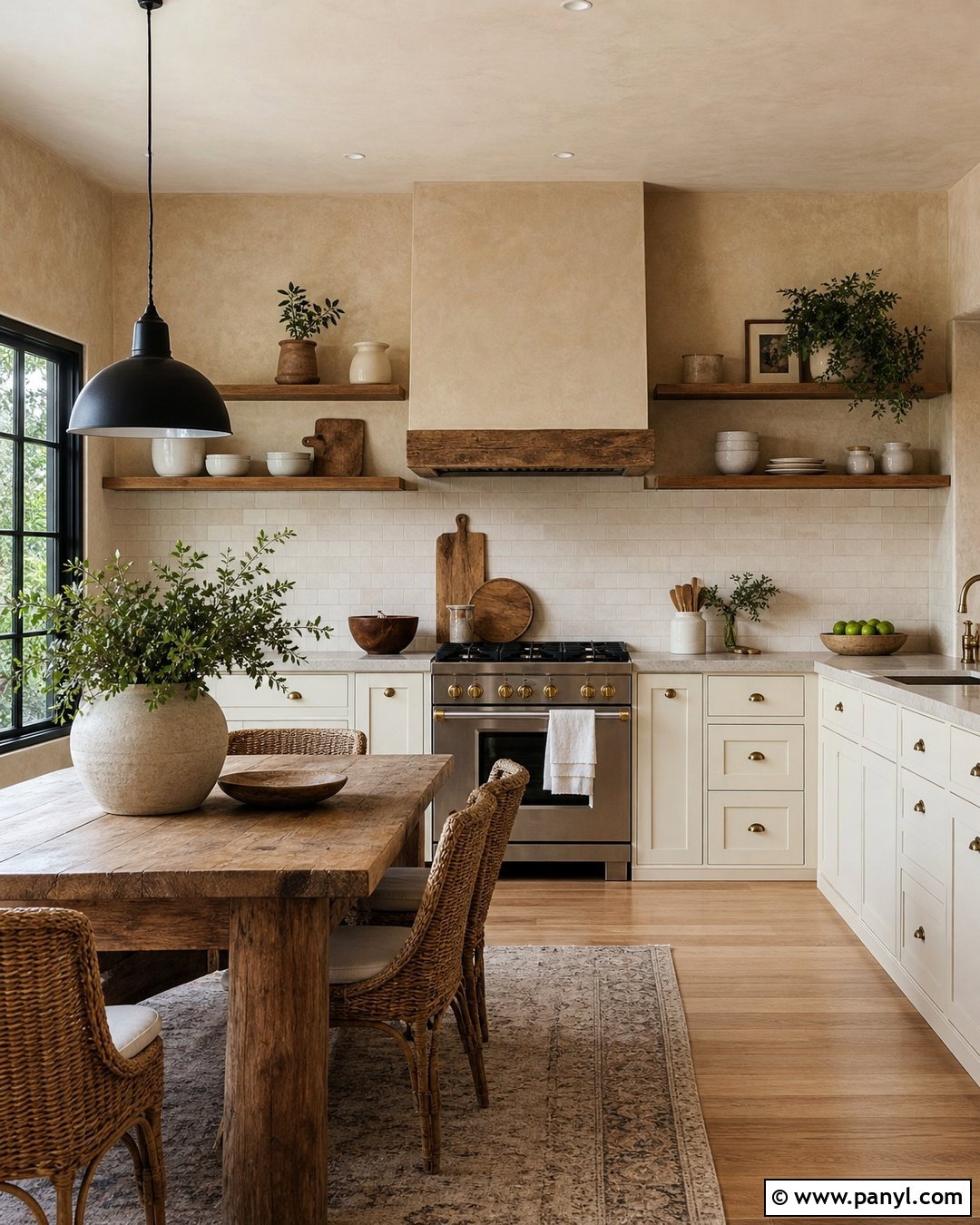
A lightly stippled beige finish can give a rustic kitchen subtle depth while remaining easier to coordinate than heavily patterned walls. Choose warm wheat beige with a fine, consistent texture and use it above creamy cabinets and around open oak shelving. Pair the walls with honed limestone countertops, an off-white tile backsplash, and aged brass hardware. Medium oak flooring strengthens the warm palette. Add a simple farmhouse table with woven chairs if space allows, then hang a black metal pendant above it. Display white ceramics, wood cutting boards, and a few green plants on the shelves. Keep decorative items practical and restrained. The complete kitchen feels comfortable and lived-in, with the textured walls supporting natural stone, wood, and painted cabinetry rather than dominating the room.
44. Beige Stenciled Plaster Wall Texture
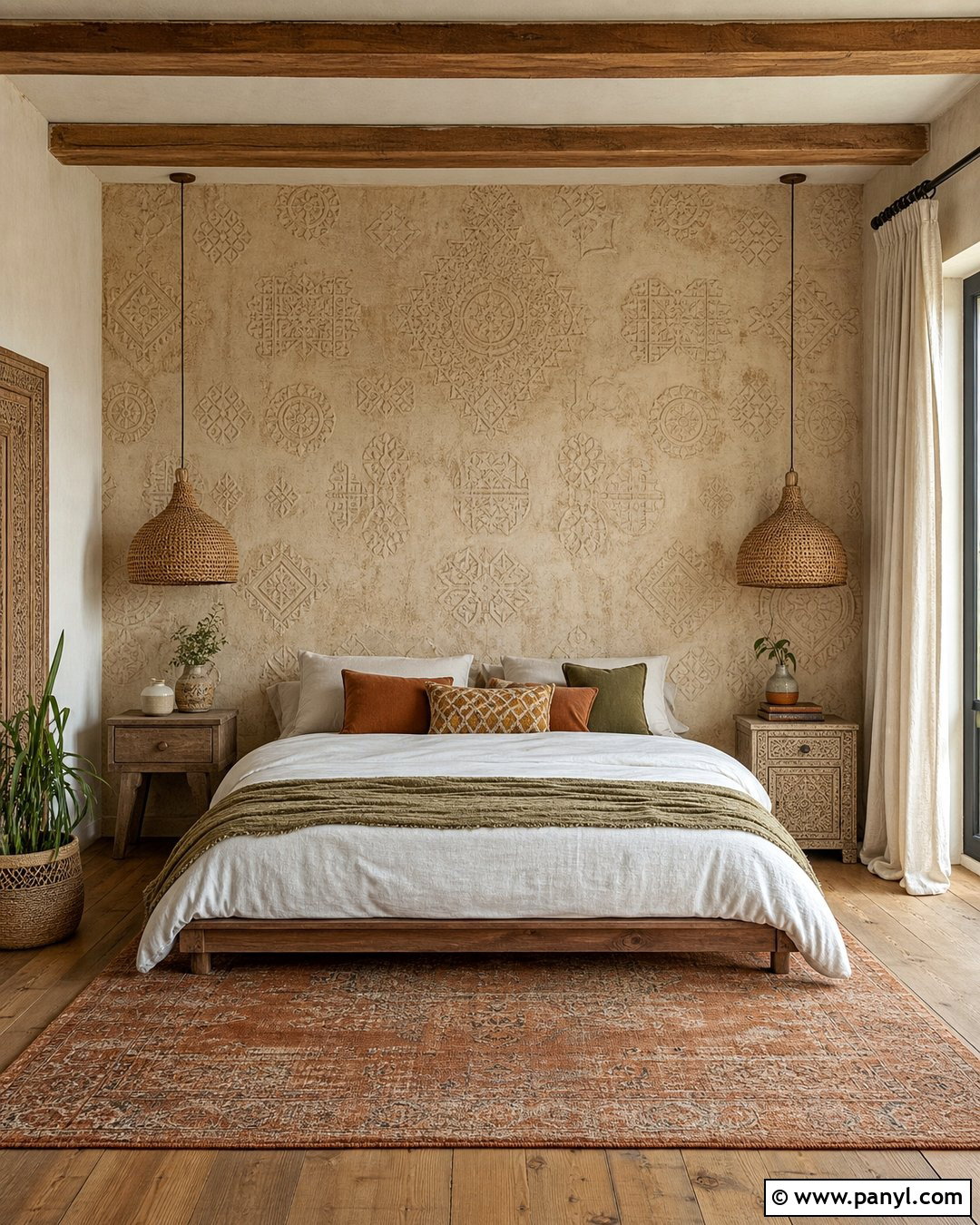
A stenciled beige plaster pattern can provide handcrafted detail in a bohemian-inspired bedroom. Choose a large-scale geometric motif with shallow raised lines, finished in one warm sand-beige color. Use it only behind the bed and paint the other walls soft cream. Select a low natural wood bed, white linen bedding, and pillows in clay, olive, and muted gold. Add mismatched wood nightstands and woven pendant lights for relaxed symmetry. A vintage-style rug should combine faded beige, rust, and brown beneath the furniture. Keep artwork minimal because the wall pattern already serves as decoration. Linen curtains, carved wood accessories, and a few ceramic pieces complete the room. The final look feels collected and expressive while maintaining enough open space and tonal control to remain restful.
45. Beige Layered Wall Texture
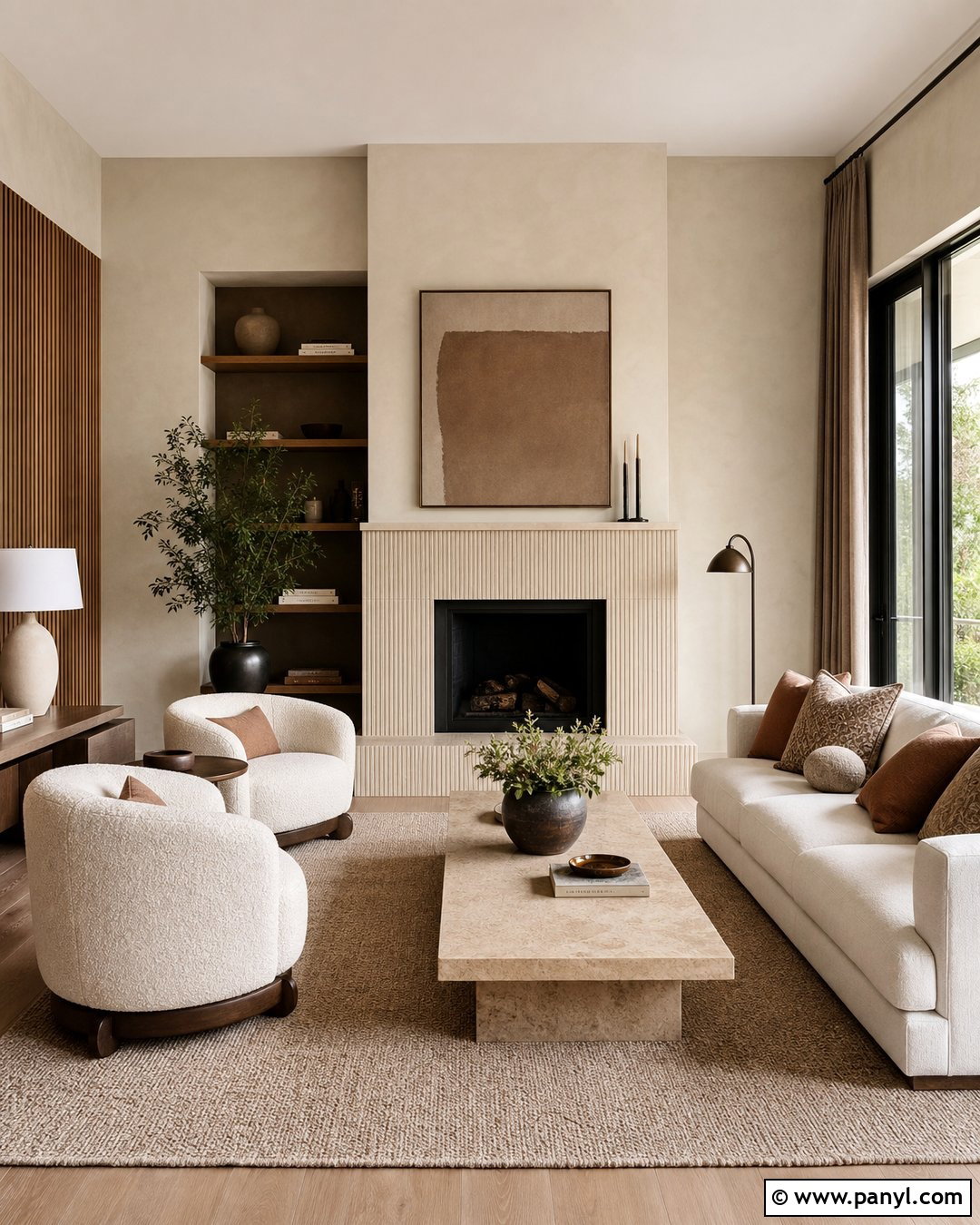
Layering several beige textures creates a rich neutral living room without making the space feel visually crowded. Begin with a pale limewash on the main walls, then add a fluted plaster fireplace in deeper mushroom beige. Include one section of natural oak slats beside the media cabinet to introduce warmth and vertical rhythm. Furnish the room with an ivory linen sofa, boucle chairs, a travertine coffee table, and a thick wool rug. Use dark bronze lighting and walnut side tables for contrast. Curtains should be slightly darker than the walls, while cushions can combine sand, cocoa, and muted terracotta. Keep accessories sculptural and limited. The finished room demonstrates how multiple beige surfaces can work together when their undertones, scale, and placement are carefully coordinated.
Conclusion:
The most successful 45 Beige Wall Texture Ideas prove that a neutral wall never needs to look flat or unfinished. Limewash, plaster, wallpaper, wood, stone, fabric, and architectural paneling each create a different mood while maintaining beige’s calm versatility. Before choosing a treatment, consider the room’s natural light, traffic level, furniture, and existing flooring. Small samples are especially helpful because beige undertones and textured finishes can change throughout the day. For a cohesive result, repeat one or two wall colors in the rug, upholstery, or wood finishes. Then add measured contrast through black, bronze, green, rust, or blue. With balanced materials and thoughtful lighting, textured beige walls can feel warm, dimensional, and personal.

Related Ideas and Inspiration:
Leave a Reply