
Alabaster Sherwin Williams walls offer a soft, warm-white backdrop that feels brighter than beige but gentler than a crisp gallery white. Officially known as Alabaster SW 7008, the color is described by Sherwin-Williams as a balanced white that adds brightness without losing warmth. () It can support modern, traditional, farmhouse, coastal, and organic interiors, depending on the finishes placed around it. Natural wood emphasizes its comfortable warmth, while black metal, cool stone, and tailored furniture create sharper contrast. Lighting can change its appearance, so test a physical sample on several walls before committing. From inviting living rooms to hardworking hallways, these complete room looks show how to decorate with 45 Alabaster Sherwin Williams Walls.

1. Alabaster Walls With Natural Oak Furniture
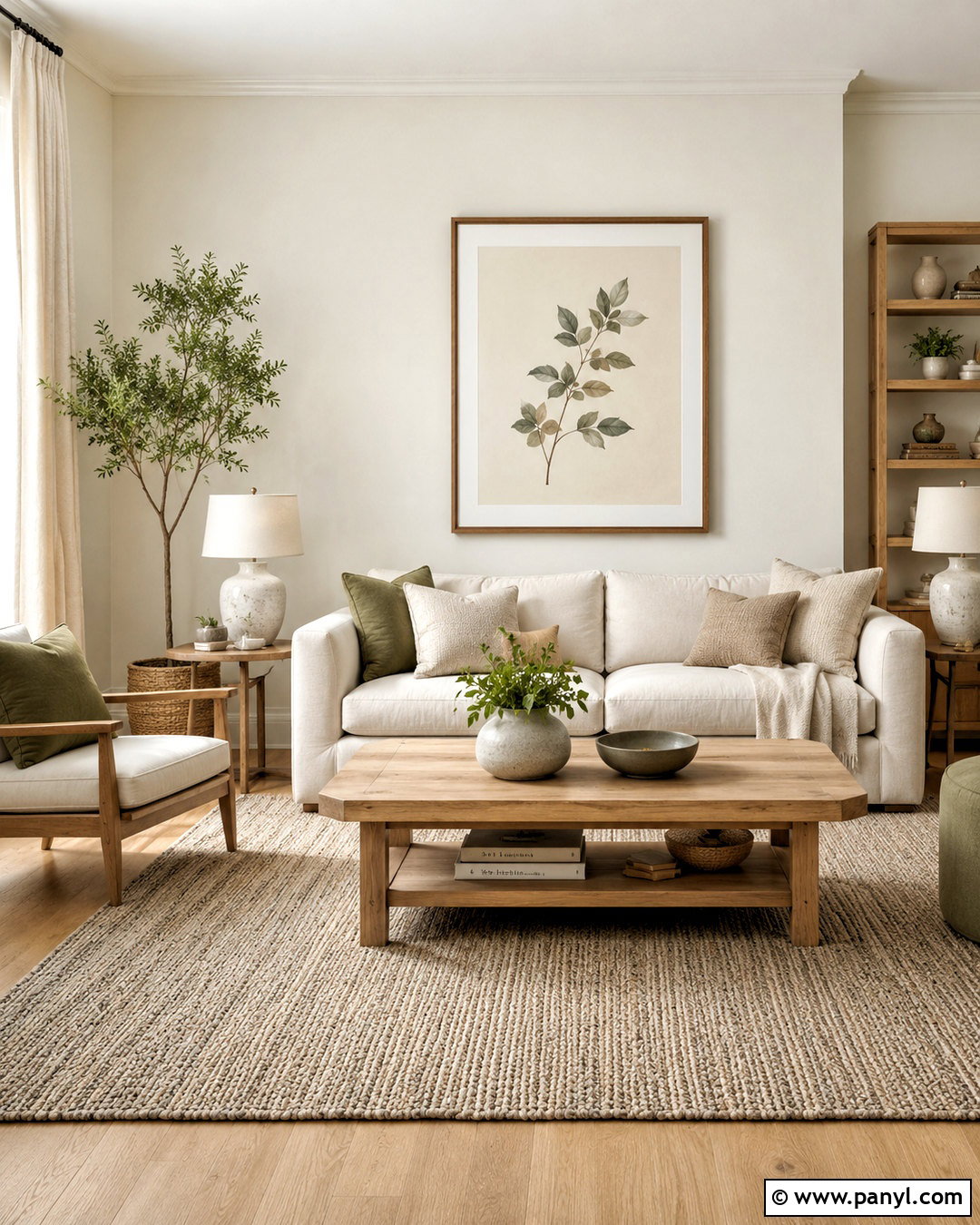
Create a relaxed living room by pairing Alabaster walls with natural white oak furniture and warm woven textures. Choose a low-profile oatmeal sofa, two oak-framed lounge chairs, and a simple rectangular coffee table with visible grain. A cream-and-taupe wool rug should anchor the seating arrangement without disappearing into the walls. Add linen curtains, ceramic table lamps, and a few muted olive or clay accents for depth. Keep the ceiling and trim in Alabaster with a different sheen for a seamless, airy finish. Medium-toned oak flooring prevents the room from looking washed out. Finish the design with oversized botanical artwork, a leafy indoor tree, and restrained decor that allows the warm wall color and natural materials to remain the focus.
2. Alabaster Walls With Black Accents
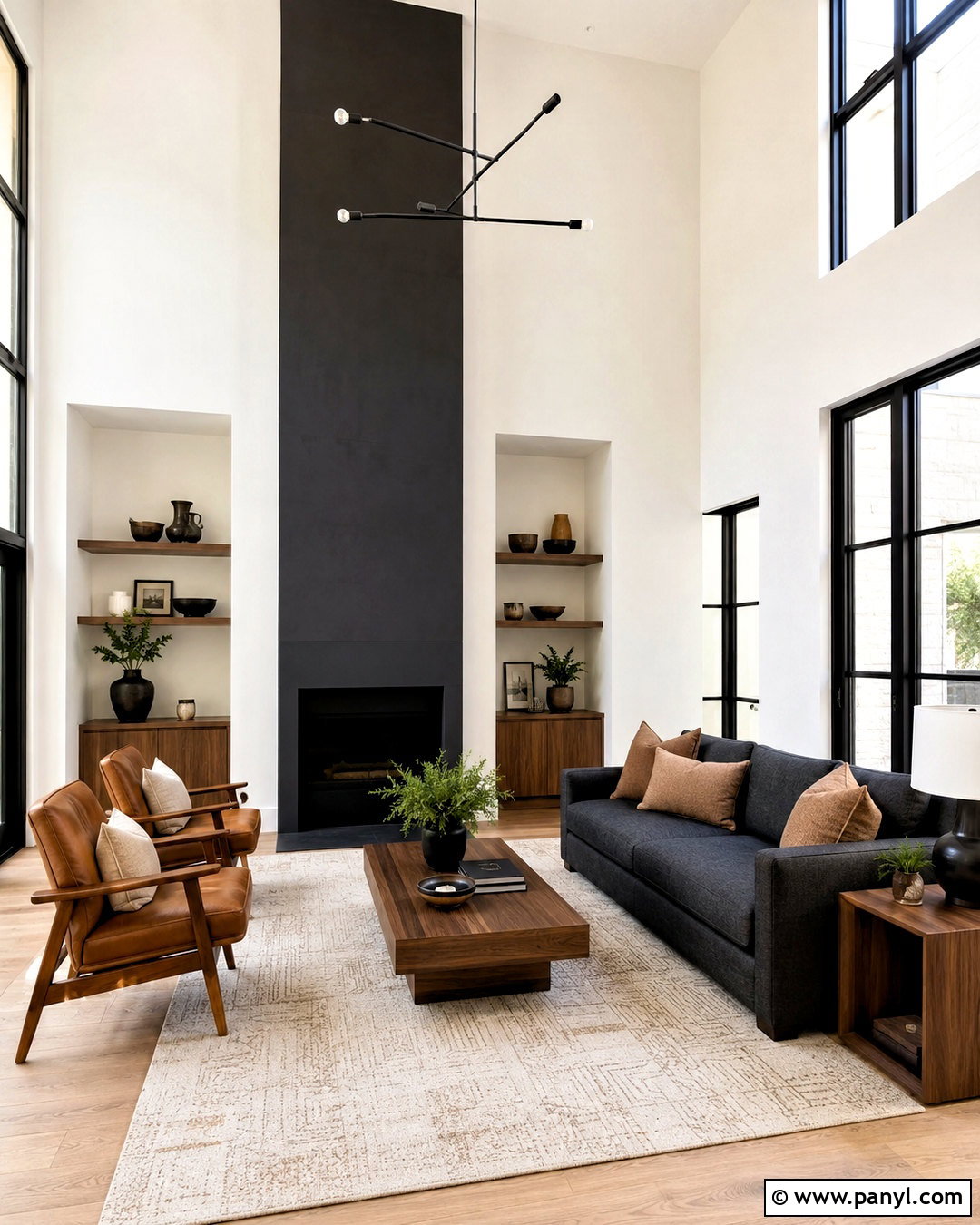
If you want a clean room with stronger definition, combine Alabaster walls with carefully repeated matte black accents. Start with a charcoal sofa or warm-gray sectional positioned across from a slim black fireplace surround. Add black window frames, a linear chandelier, and metal side tables to distribute the dark color evenly. Walnut furniture and cognac leather chairs will soften the contrast and keep the room from feeling overly graphic. Choose an ivory rug with a subtle black pattern, then add camel, cream, and rust pillows. Alabaster provides a comfortable transition between the bold details and warmer furnishings. Leave some open wall space rather than filling every surface. This balanced layout feels modern and polished while remaining welcoming enough for an everyday family living room.
3. Alabaster Walls In A Small Living Room
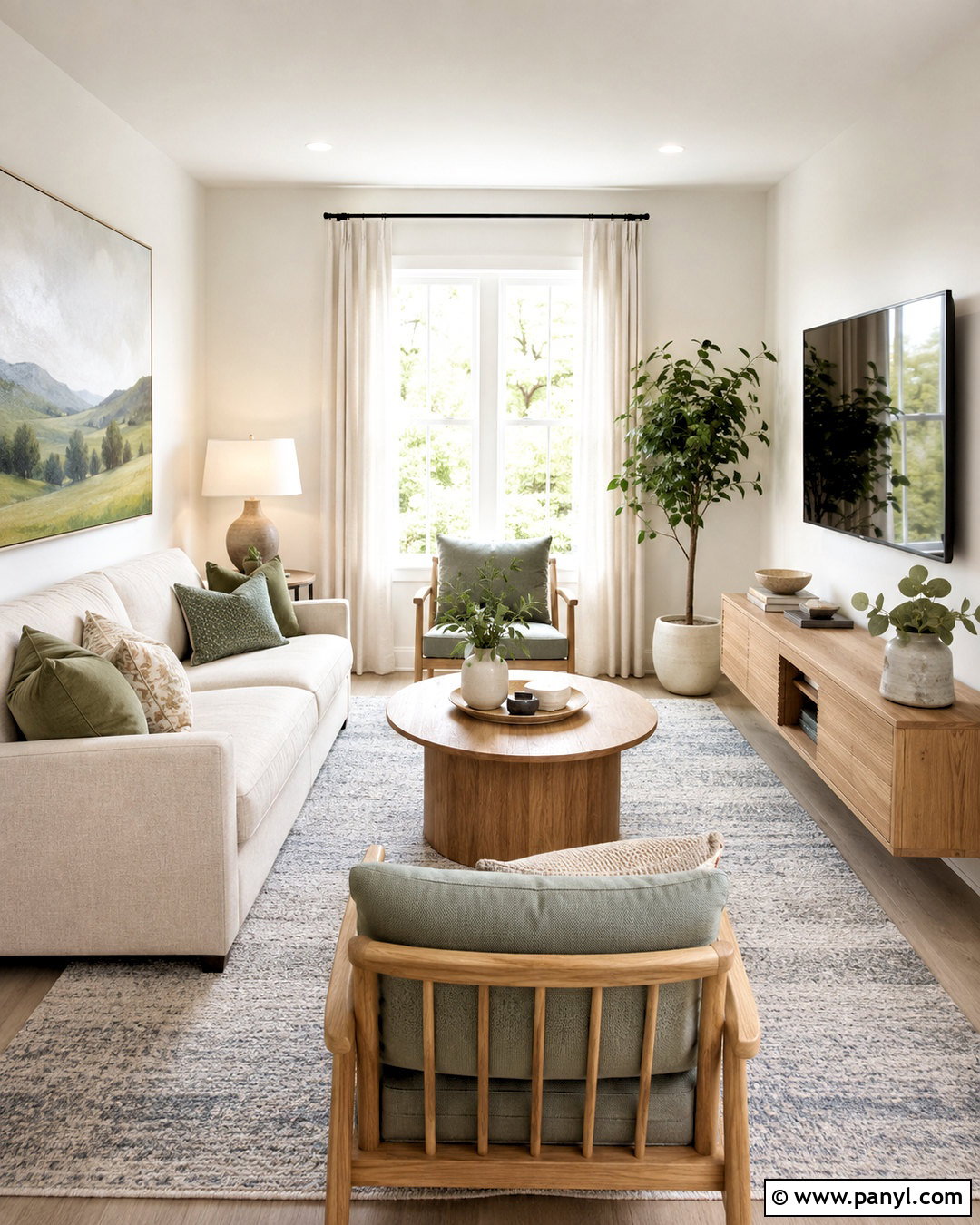
A compact living room can feel more open when Alabaster walls are paired with appropriately scaled furniture and simple window treatments. Use a slim beige loveseat instead of a bulky sectional, then place two light oak armchairs opposite it to maintain clear walking paths. A round coffee table reduces hard corners and makes circulation easier. Hang curtains close to the ceiling in a light linen fabric that nearly matches the walls. Choose one large landscape print rather than several small frames, which can make the room look busy. Add a narrow floor lamp, nesting side tables, and a wall-mounted media console for practical storage. A soft blue-gray rug and a few muted green accessories introduce color while preserving the bright, uncluttered character of the space.
4. Alabaster Walls In A Modern Farmhouse Living Room
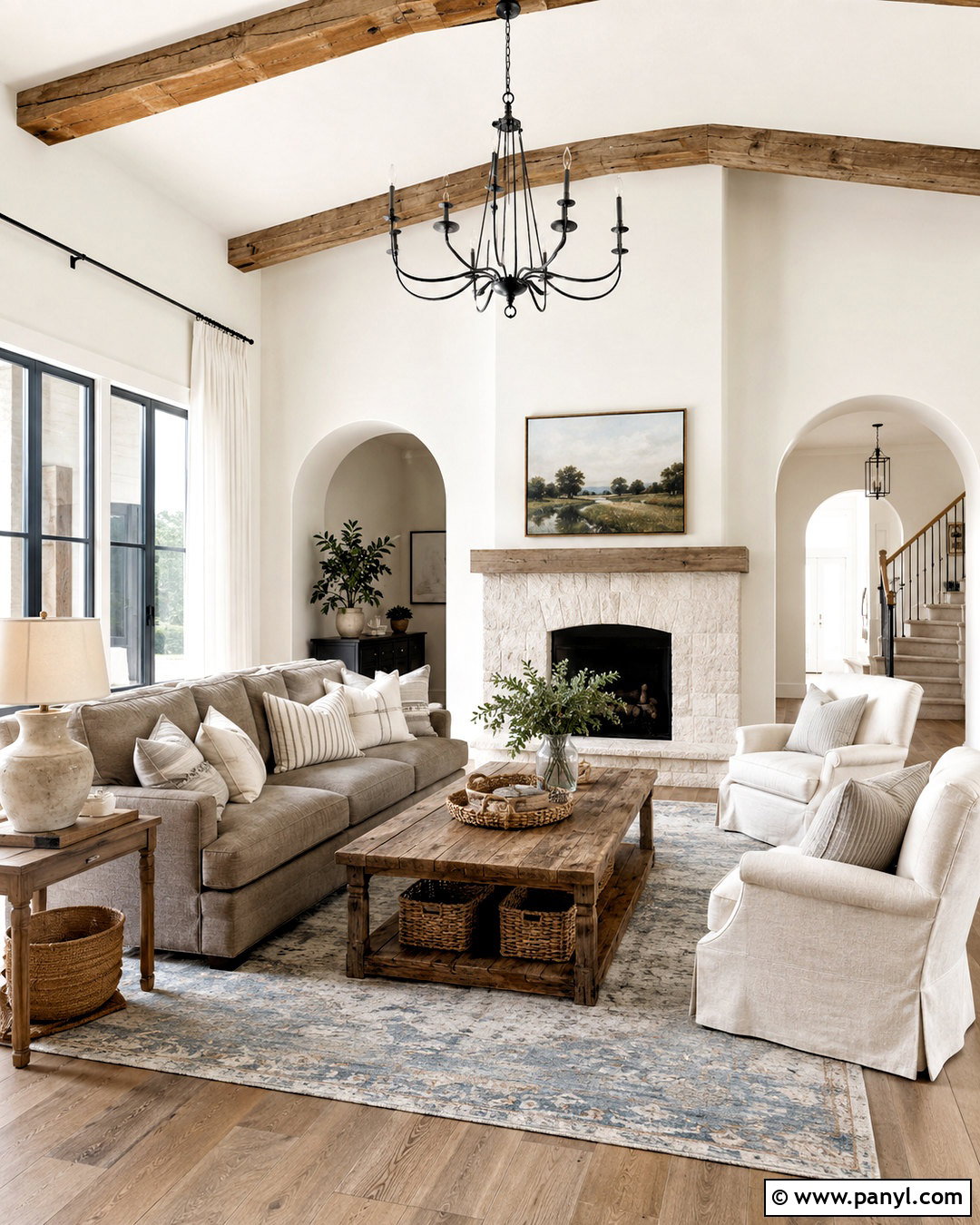
Give Alabaster walls a modern farmhouse direction with warm woods, tailored upholstery, and a few understated rustic details. Center the room around a comfortable greige sofa and two slipcovered cream chairs. A reclaimed oak coffee table can add character without making the space feel themed. Frame the windows with natural linen curtains, then use black iron curtain rods and a simple wagon-wheel chandelier for contrast. Add a fireplace with an Alabaster-painted mantel, pale stone surround, and oak beam above it. A faded vintage-style rug in taupe and soft blue keeps the palette layered. Complete the look with woven baskets, striped pillows, ceramic vessels, and one large pastoral print. Avoid excessive signs or distressed decorations so the complete room remains fresh and believable.
5. Alabaster Walls In A Traditional Living Room
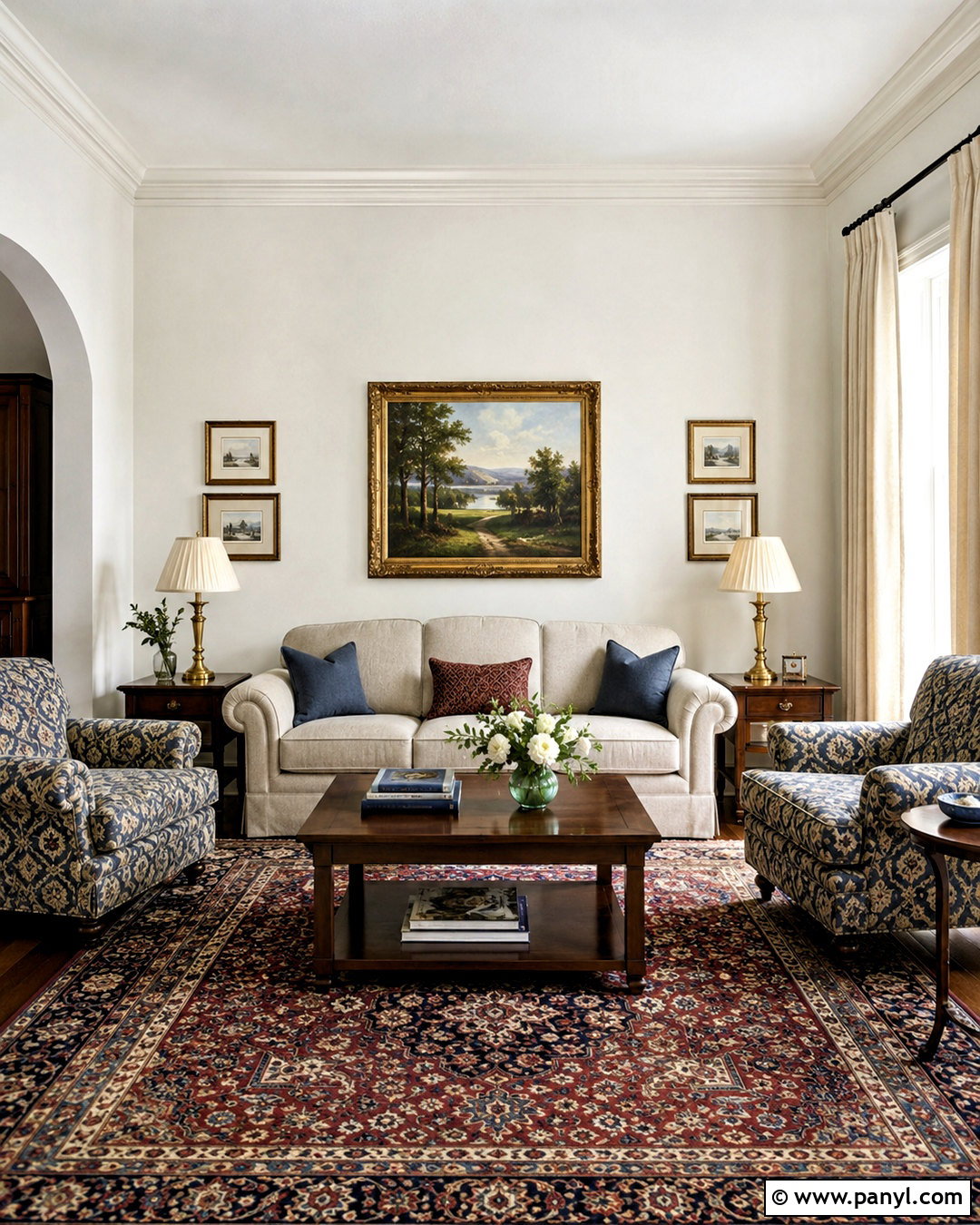
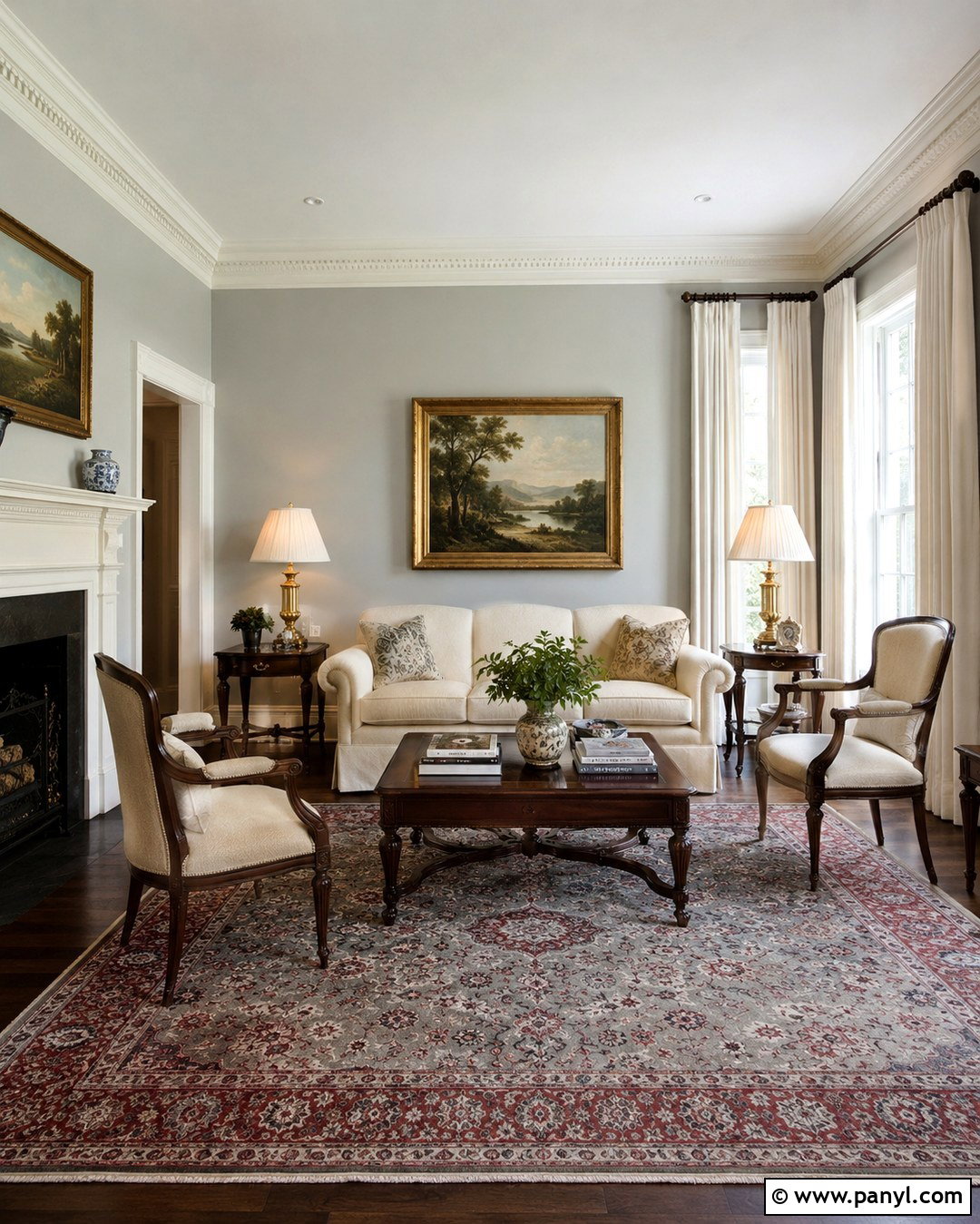
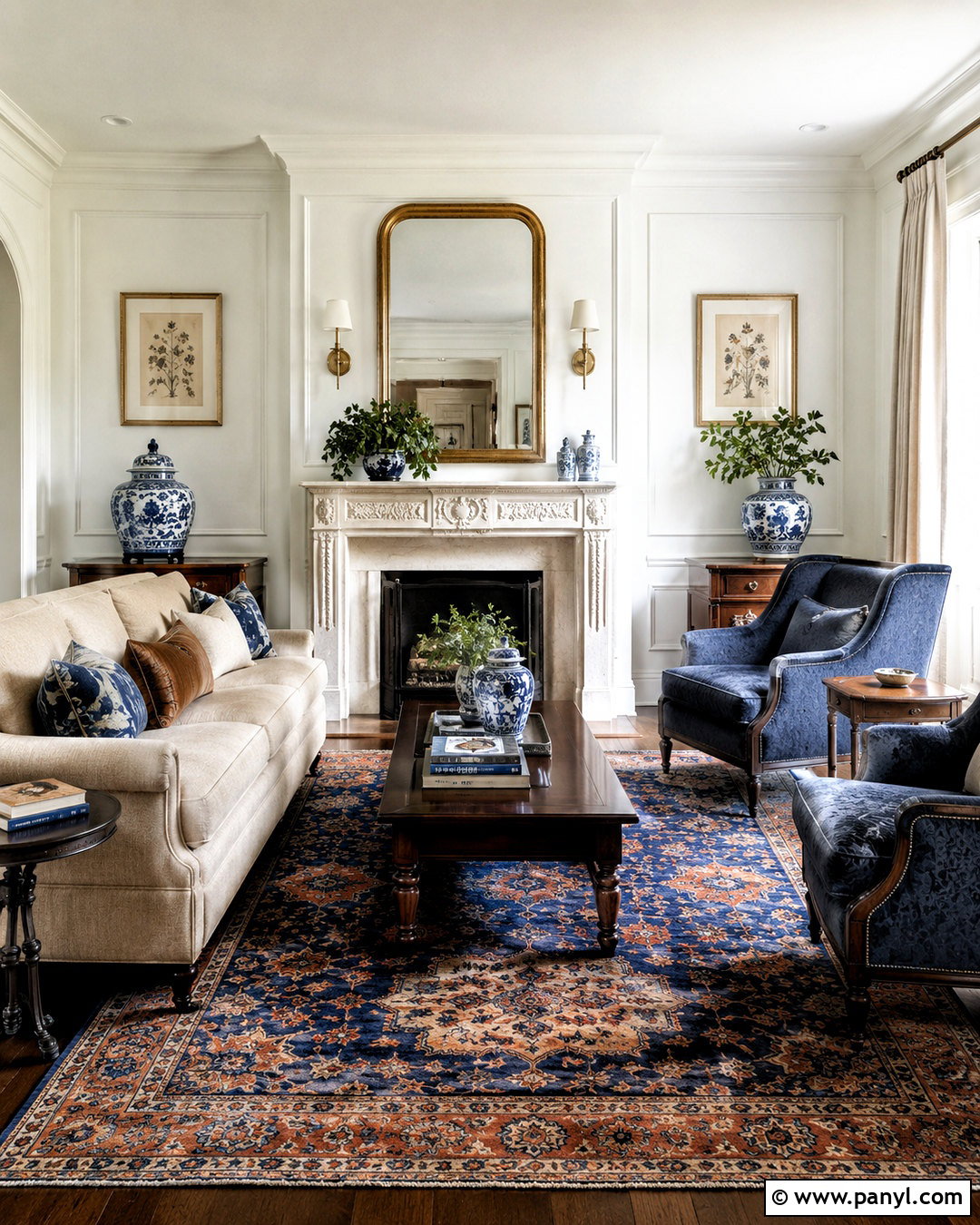
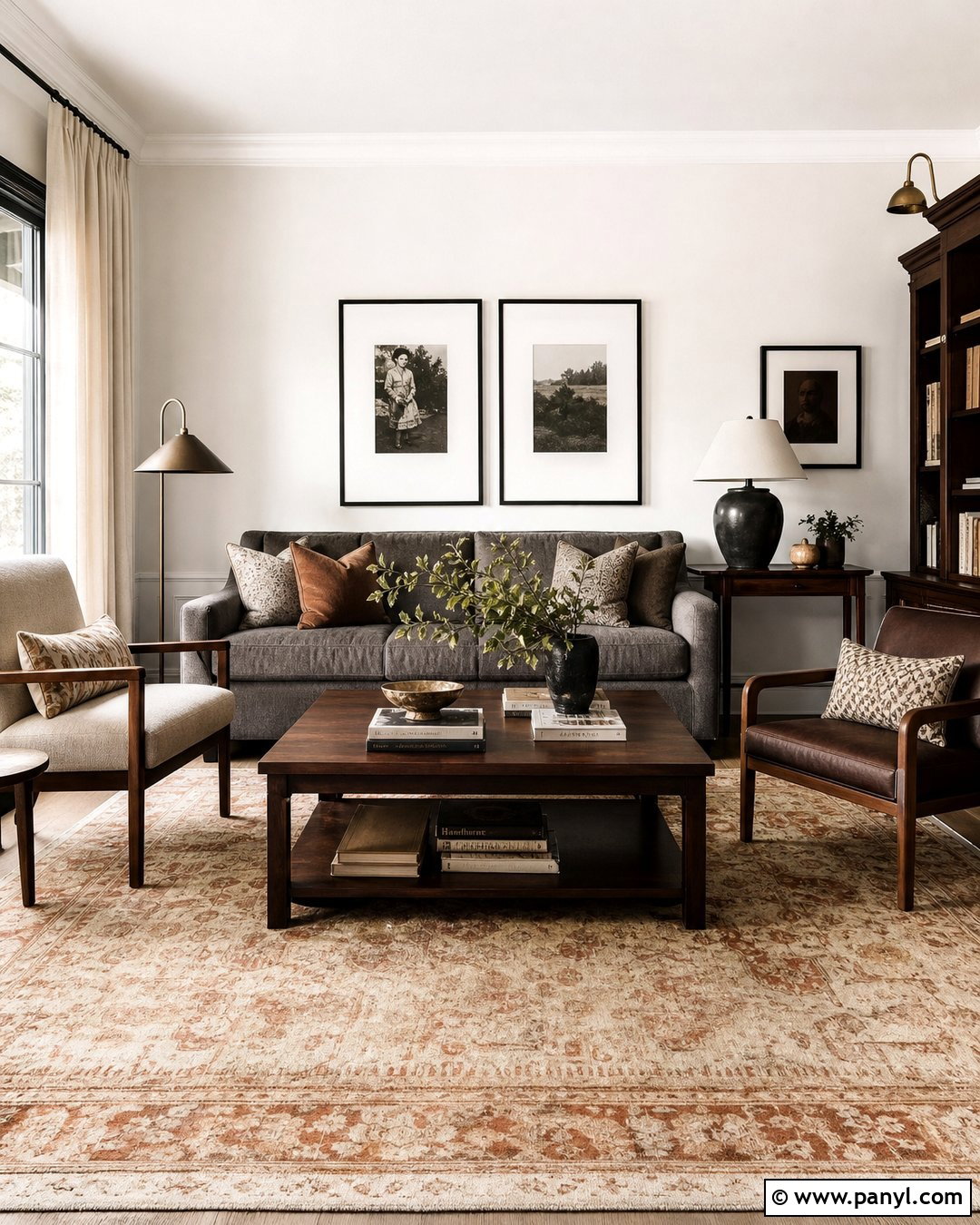
Alabaster walls make an elegant background for a traditional living room filled with graceful shapes and collected furnishings. Arrange a rolled-arm linen sofa across from two patterned club chairs, with a polished walnut coffee table between them. Use a Persian-style rug containing muted burgundy, navy, cream, and olive to establish a richer palette. Detailed crown molding and substantial baseboards can also be painted Alabaster in satin, allowing the architectural features to stand out through sheen rather than color. Add brass picture lights, pleated lampshades, and framed landscapes in antique gold frames. Full-length ivory drapes will soften the windows. A dark wood console, stacked books, fresh greenery, and balanced table lamps complete a room that feels established and sophisticated rather than overly formal or dated.
6. Alabaster Walls In A Coastal Living Room
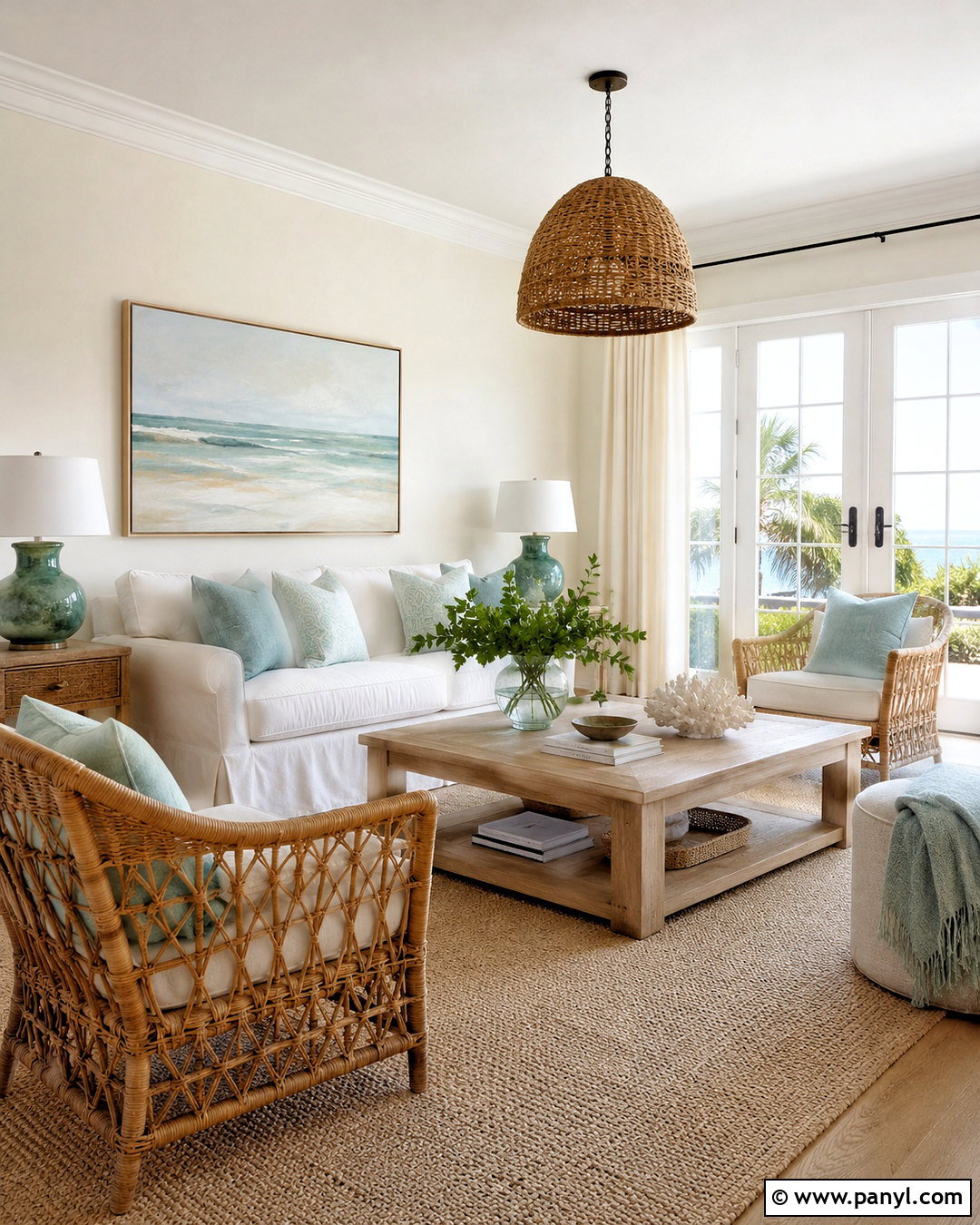
For a coastal room that avoids obvious nautical themes, surround Alabaster walls with weathered wood, pale blue textiles, and relaxed natural fibers. Choose a deep white slipcovered sofa with a pair of woven rattan chairs angled toward it. Ground the arrangement with a sand-colored jute-and-wool rug and a washed oak coffee table. Soft blue linen pillows, a faded striped throw, and ceramic lamps in sea-glass green add quiet color. Keep the windows open and bright with unlined ivory curtains. A large abstract seascape or coastal landscape can serve as the main artwork without relying on anchors or shells. Finish with a woven pendant, bleached wood accessories, and fresh branches. The result feels breezy and comfortable while Alabaster keeps the overall palette warm and livable.
7. Alabaster Walls In An Organic Modern Living Room
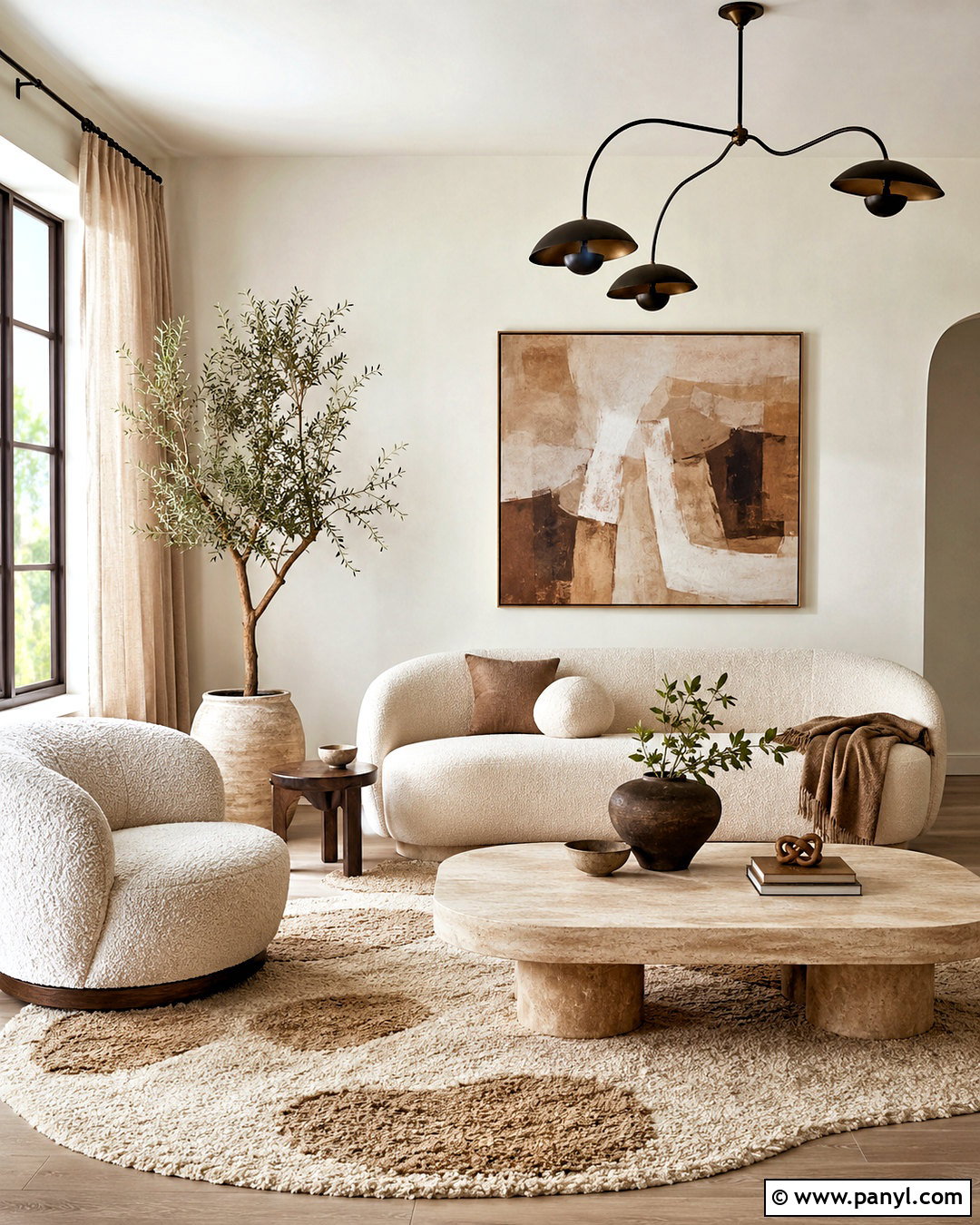
Layer Alabaster walls with sculptural furniture and earthy materials for a calm organic modern living room. Begin with a curved cream sofa, a rounded bouclé chair, and a substantial coffee table made from travertine or lightly finished oak. Use a textured wool rug in mushroom and ivory to define the conversation area. Dark bronze lighting introduces necessary contrast without looking as severe as solid black. Add an olive tree, hand-thrown pottery, and one oversized abstract canvas featuring beige, charcoal, and warm brown. Keep shelving sparse and intentional, mixing books with stone and wood objects. Soft linen curtains should hang from ceiling height and lightly brush the floor. These rounded forms and tactile finishes prevent the light neutral walls from feeling plain, producing a restful yet visually layered room.
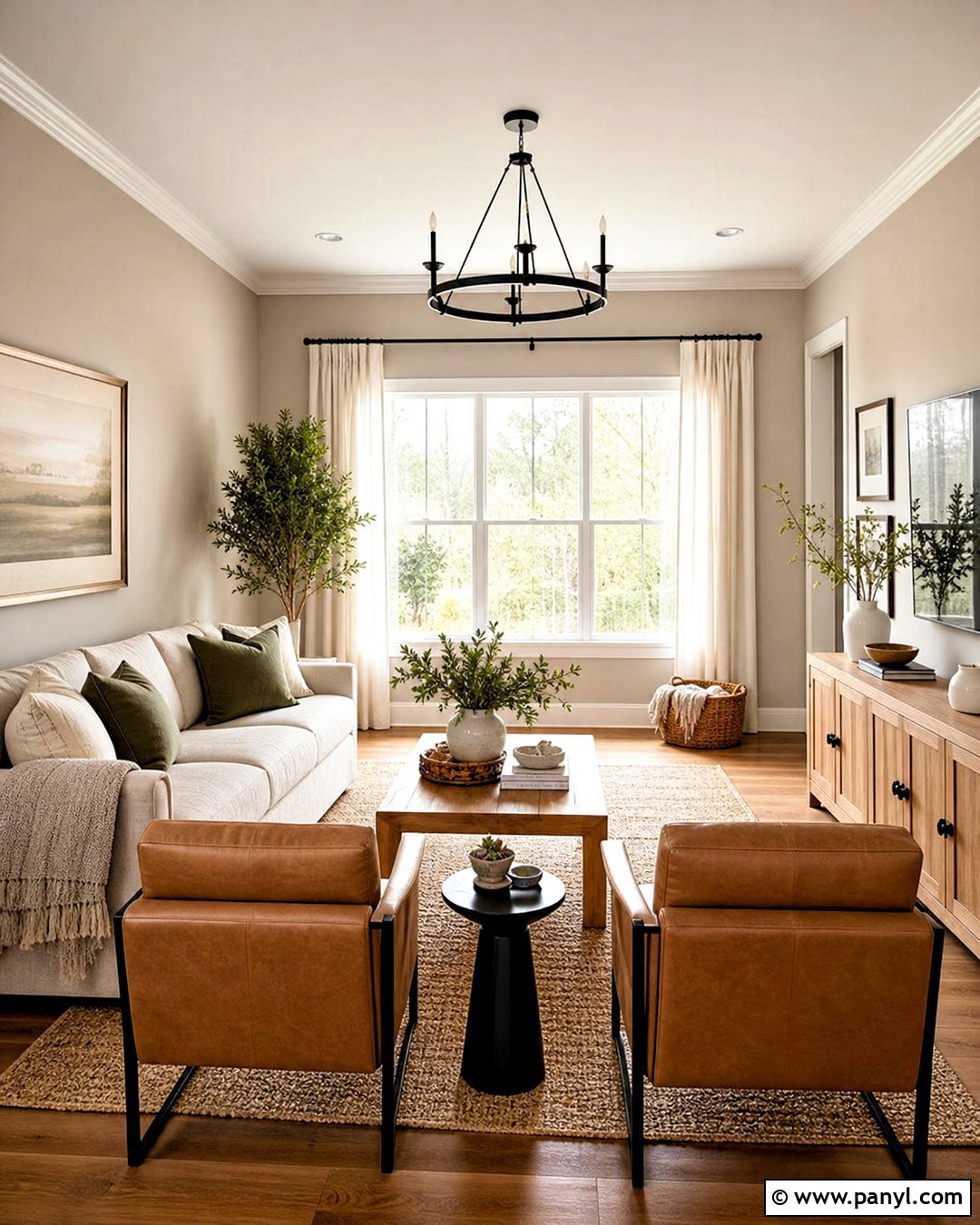
8. Alabaster Walls With A Walnut Dining Table
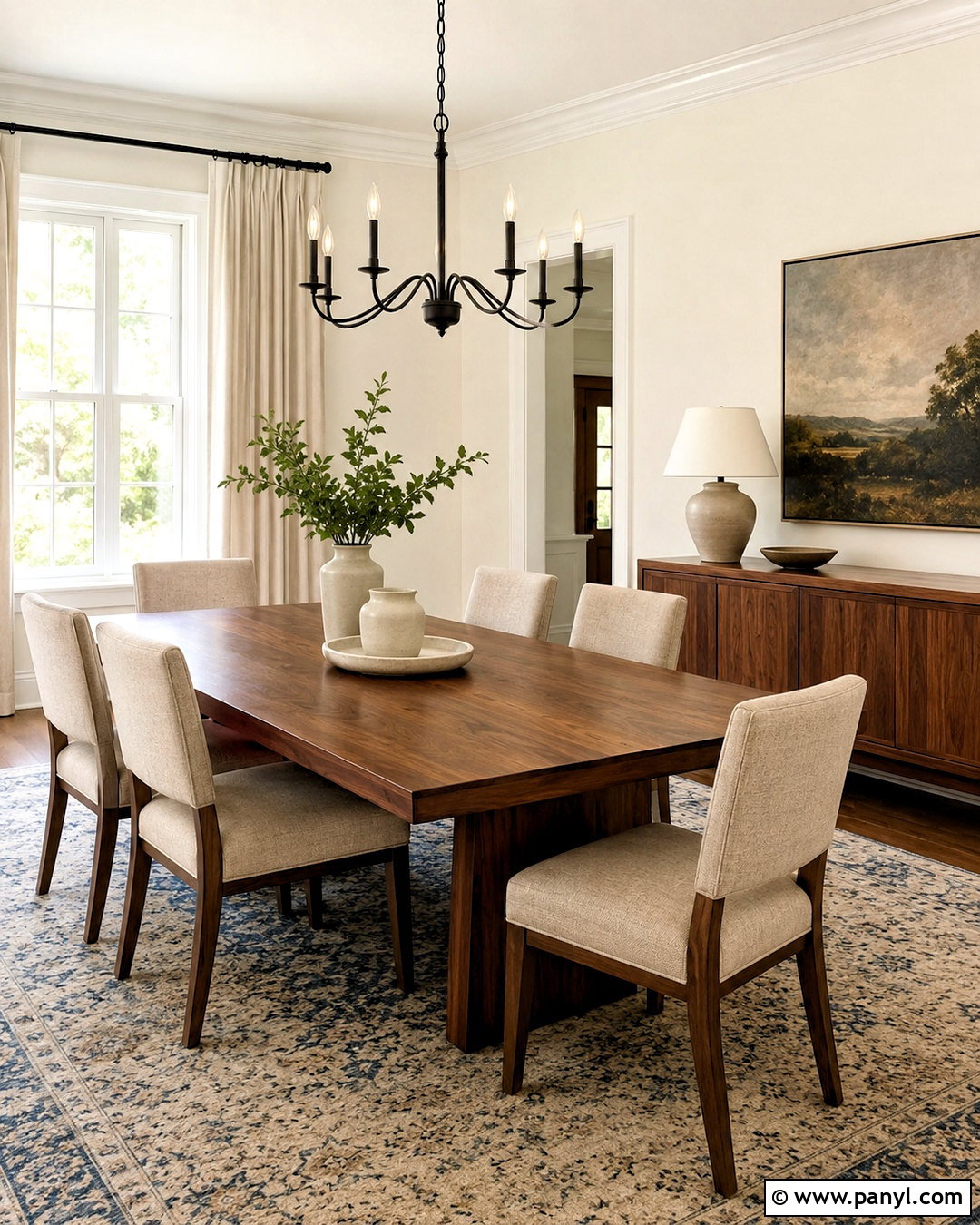
Rich walnut brings out the inviting side of Alabaster walls and creates a dining room that feels warm throughout the year. Place a long walnut table at the center, surrounded by upholstered chairs in oatmeal or soft camel fabric. Above it, install a dark bronze chandelier with a wide horizontal shape that suits the table’s proportions. Use a low-pile rug featuring cream, brown, and muted blue to soften the floor and define the dining zone. A walnut sideboard can provide storage while reinforcing the main wood tone. Hang one large landscape or a pair of simple abstract prints above it. Add ivory curtains, ceramic serving pieces, and greenery in a dark vessel. The finished room feels refined, comfortable, and coordinated without relying on an all-neutral collection of pale furnishings.
9. Alabaster Walls In A Formal Dining Room
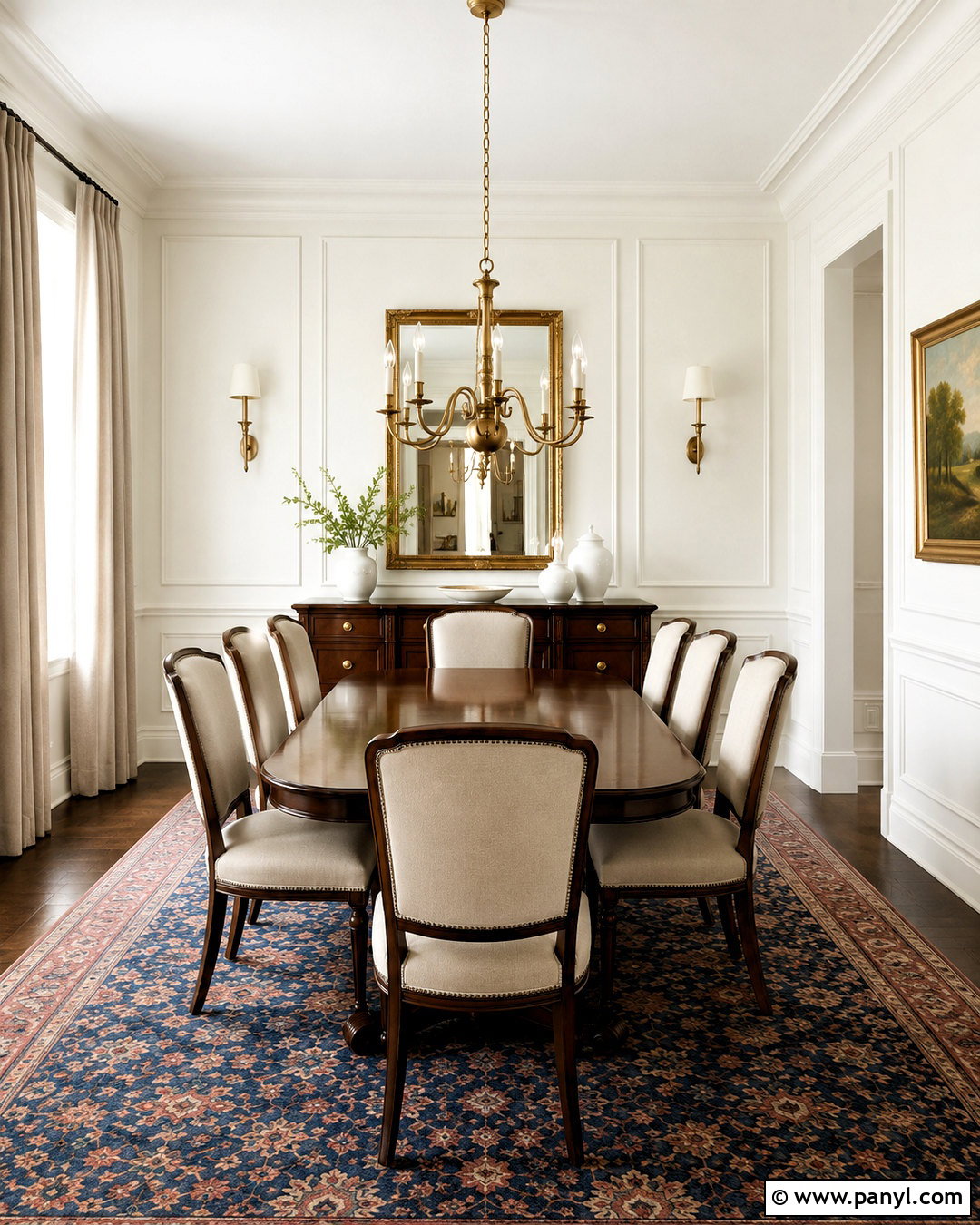
Turn Alabaster walls into a polished formal dining room by adding classic millwork, symmetrical furnishings, and controlled color. Apply picture-frame molding to the walls and paint everything Alabaster in a washable eggshell or satin finish. A mahogany pedestal table and upholstered dining chairs will create a strong central anchor. Choose a traditional rug in faded navy, rust, and cream, then echo those colors through velvet seat fabric and artwork. A tiered aged-brass chandelier adds warmth above the table, while matching wall sconces bring dimension to the molding. Frame the windows with full, tailored drapes in a soft taupe fabric. Complete the arrangement with a dark sideboard, a large gilt mirror, and simple white ceramics. The neutral walls keep these formal details bright and current.
10. Alabaster Walls In A Breakfast Nook
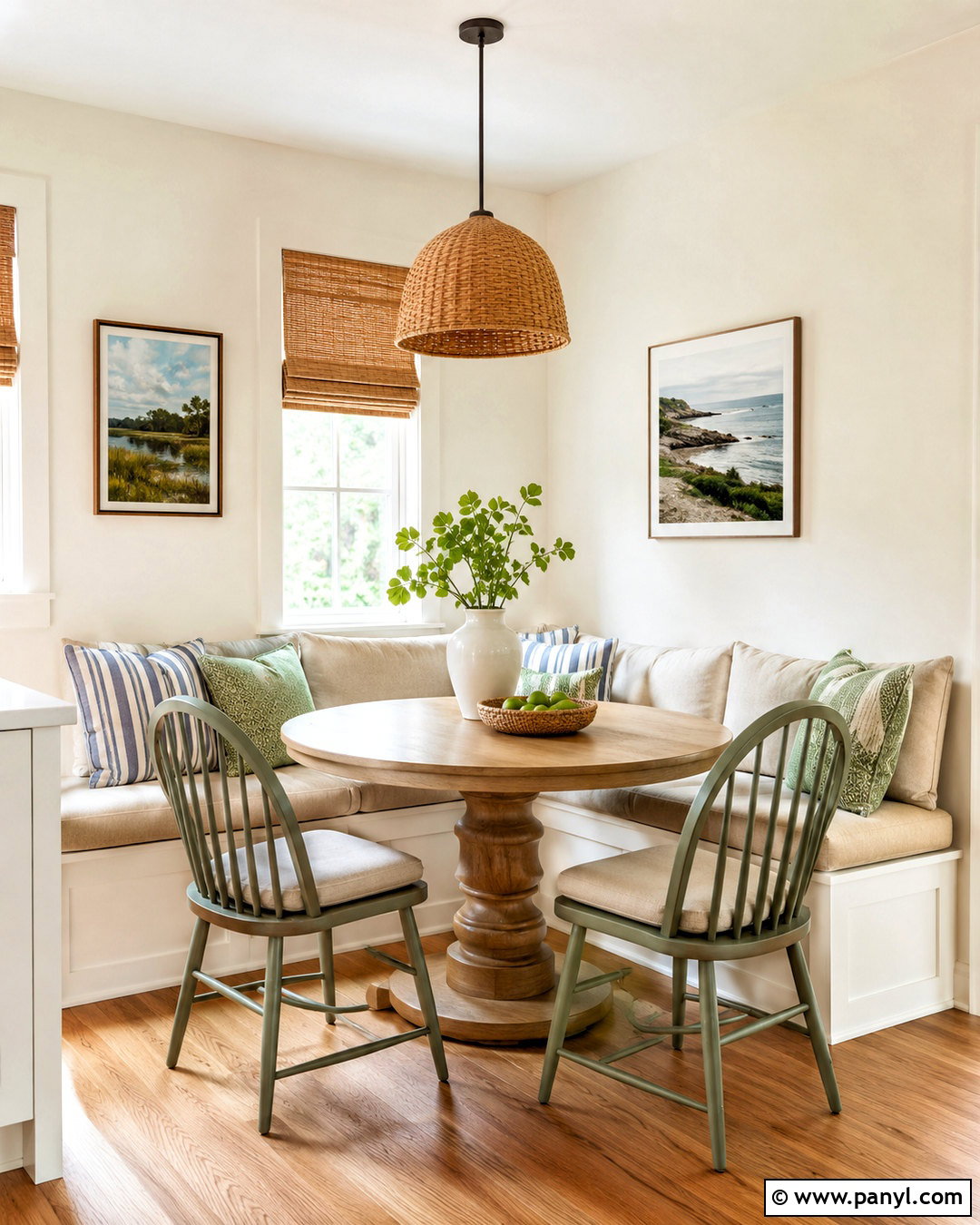
Morning light feels especially comfortable in a breakfast nook surrounded by Alabaster walls and casual, durable materials. Build an L-shaped bench beneath the windows and cover the seat in a warm beige performance fabric. Pair it with a round oak pedestal table and two spindle-back chairs painted muted sage green. Add striped cushions in cream, olive, and dusty blue for approachable color. A woven pendant should hang above the table, while simple Roman shades control glare without adding visual weight. Use washable tile or medium oak flooring to support daily family use. One small framed print and a ceramic vase are enough decoration for this compact space. The combination creates a cheerful nook for meals, homework, or coffee without making the area feel crowded or overly decorated.
11. Alabaster Walls With White Oak Kitchen Cabinets
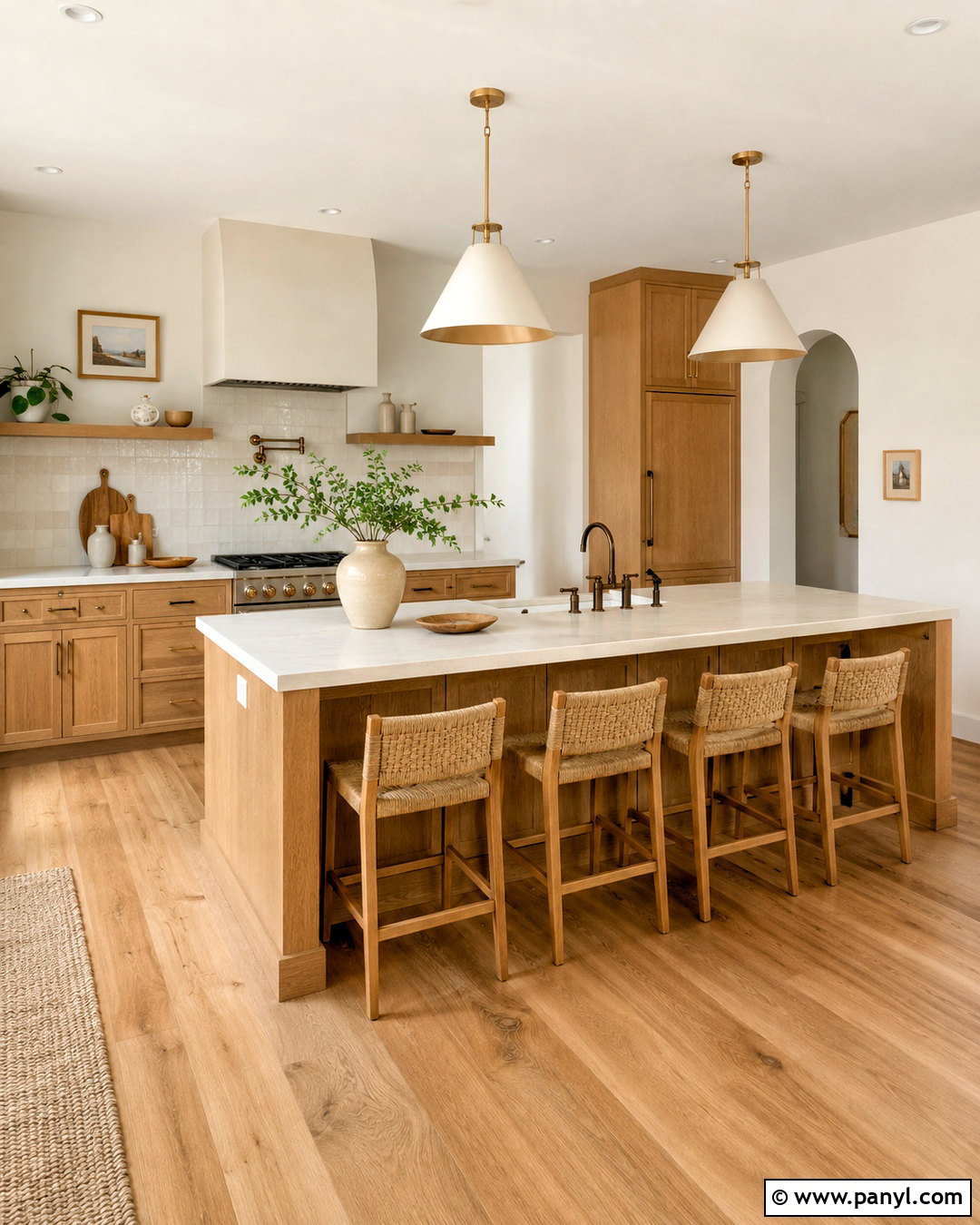
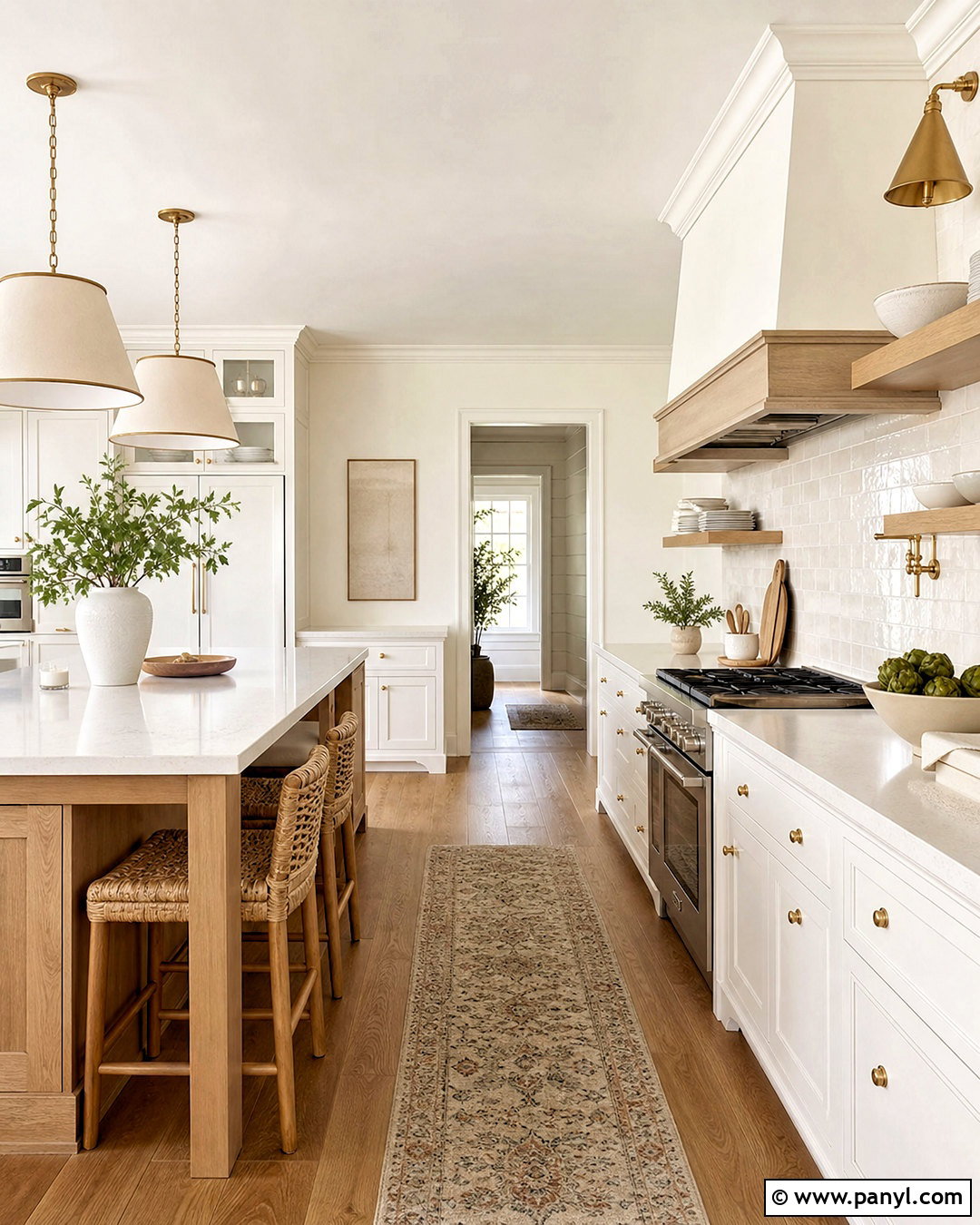
Combine Alabaster walls with white oak cabinets for a kitchen that feels bright, natural, and quietly modern. Select flat-panel or slim Shaker doors in a clear matte finish so the wood grain remains visible. Use warm white quartz countertops and a backsplash of handmade ivory tile to connect the cabinetry with the walls. Brushed brass hardware and pendant lights introduce warmth, while a dark bronze faucet adds definition near the sink. Choose medium oak flooring that is slightly deeper than the cabinets to avoid a perfectly matched look. A large island with comfortable woven stools can serve as the center of the room. Finish with cream ceramics, wood cutting boards, and small touches of muted green. The layered neutral materials keep the Alabaster walls from appearing flat.
12. Alabaster Walls With Navy Kitchen Cabinets
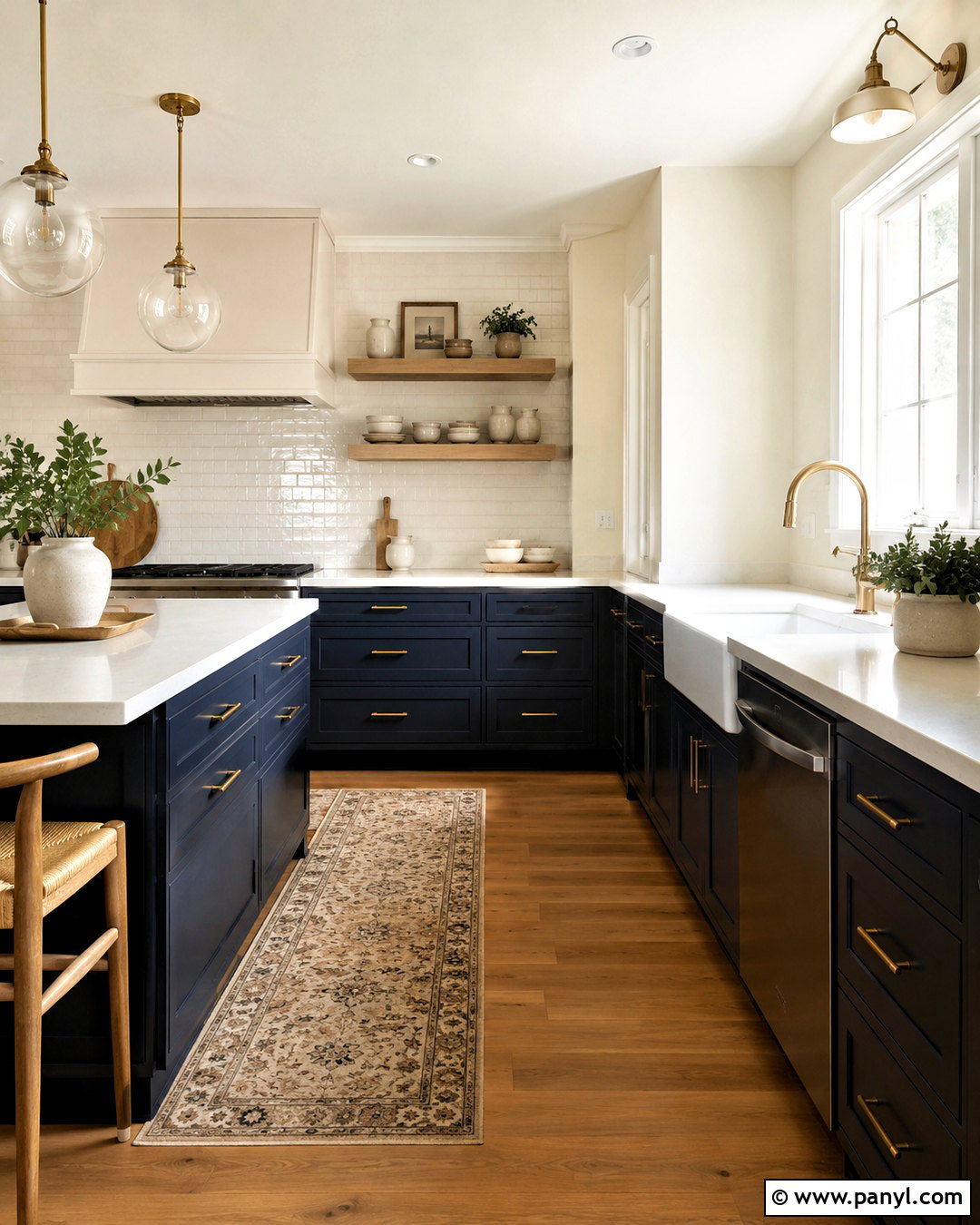
Deep navy cabinets create a confident contrast against Alabaster walls without making a kitchen feel harsh. Use navy on the lower cabinets and island, then keep upper cabinetry limited or finished in warm white to preserve openness. White quartz countertops with subtle gray veining provide a practical bridge between the dark cabinetry and light walls. Add a glossy ivory subway tile backsplash, brushed brass pulls, and clear glass pendants for a classic combination. Natural oak stools and flooring prevent the blue-and-white palette from becoming too cool. Display only a few useful items, such as wood boards and cream stoneware. A runner with faded red, blue, and beige can bring softness to the work aisle. This complete palette works particularly well in kitchens receiving generous natural light.
13. Alabaster Walls With Sage Green Kitchen Cabinets
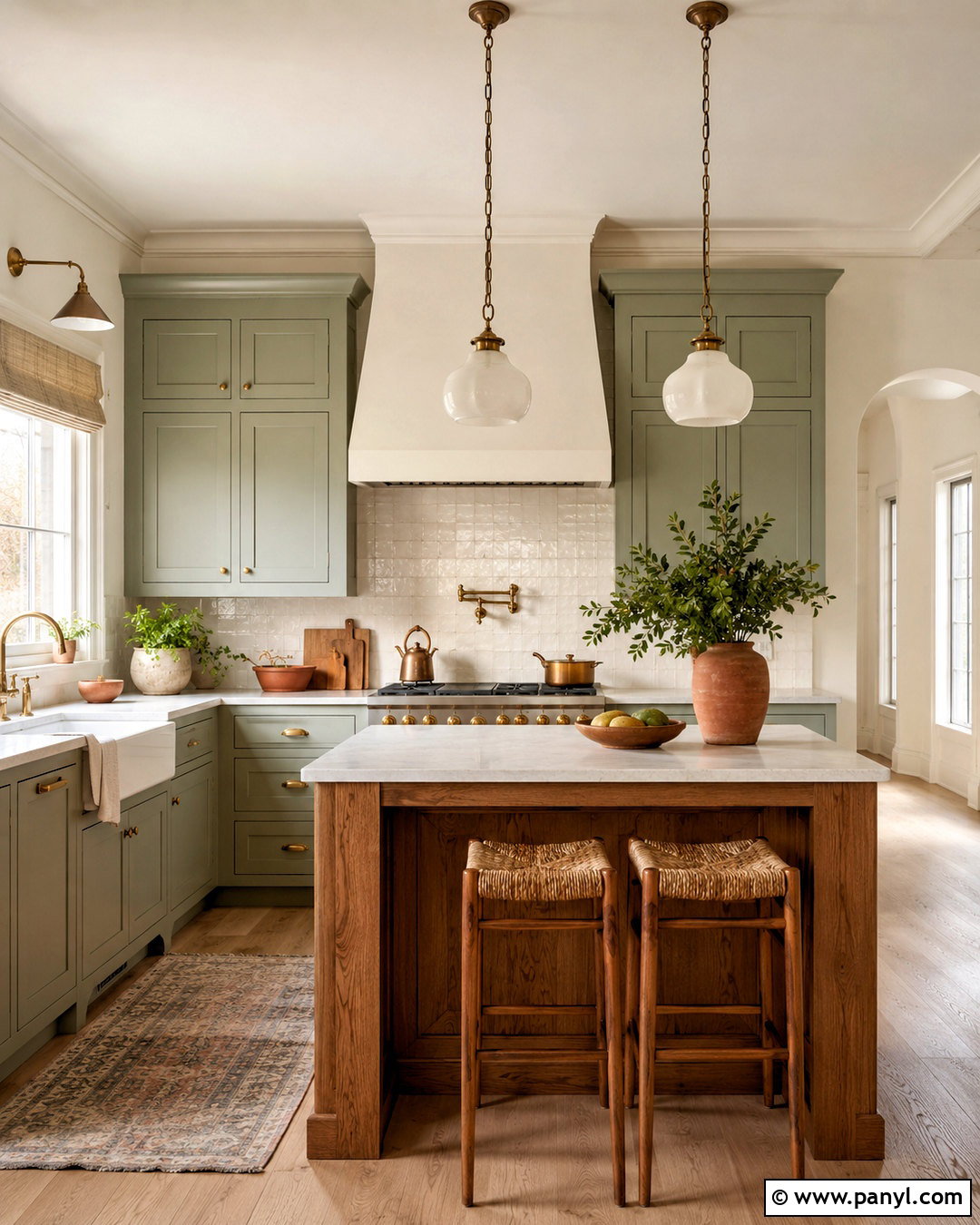
Soft sage cabinetry beside Alabaster walls produces a welcoming kitchen inspired by garden colors and natural materials. Choose Shaker cabinets in a muted gray-green rather than a highly saturated shade. Pair them with creamy quartz counters and lightly textured zellige backsplash tile. Warm brass knobs, an aged-brass bridge faucet, and milk-glass pendants reinforce the traditional character. Introduce a medium oak island or dining table to keep the palette grounded. Woven counter stools, natural linen shades, and terra-cotta accessories add organic texture without overwhelming the green. Keep the ceiling and trim Alabaster for continuity, especially in an open layout. The finished kitchen feels colorful but still calm, with every surface supporting the warm-white walls rather than competing with them for attention.
14. Alabaster Walls With Black Kitchen Countertops
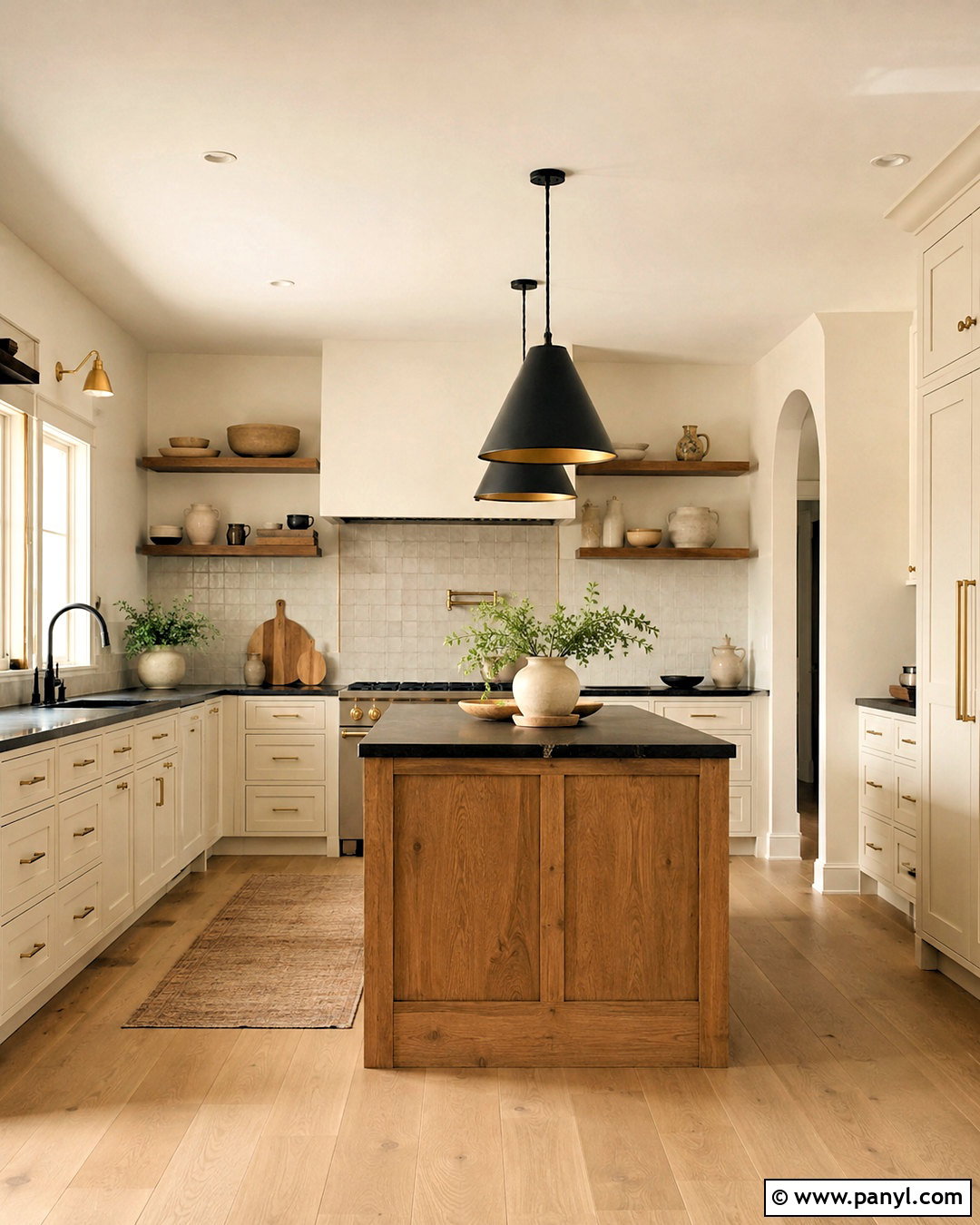
Black countertops give Alabaster walls a crisp architectural edge, especially when the rest of the kitchen includes warm materials. Choose honed black granite or soapstone for a softer, low-sheen appearance. Pair it with Alabaster-painted Shaker cabinets so the walls and cabinetry read as one connected envelope. A medium oak island and matching open shelves should break up the black-and-white contrast. Use an ivory tile backsplash with slightly irregular edges, plus aged-brass hardware and simple black pendants. Wide-plank oak flooring adds another warm layer underfoot. Keep countertop accessories minimal, focusing on wood utensils, cream pottery, and one leafy plant. This scheme feels more approachable than a stark monochrome kitchen because the wall color, wood grain, and handmade surfaces introduce softness and subtle variation.
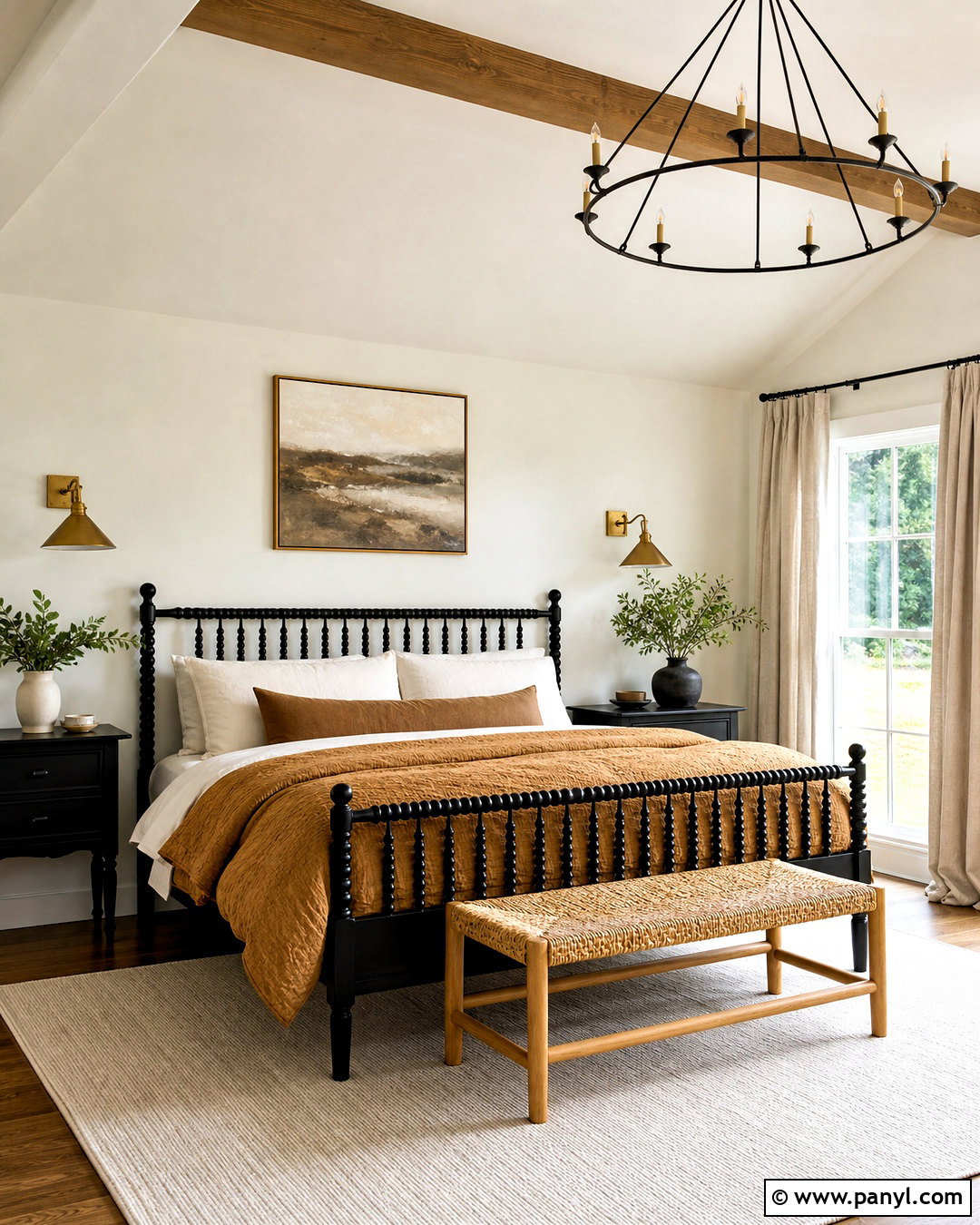
15. Alabaster Walls With Linen Bedroom Decor
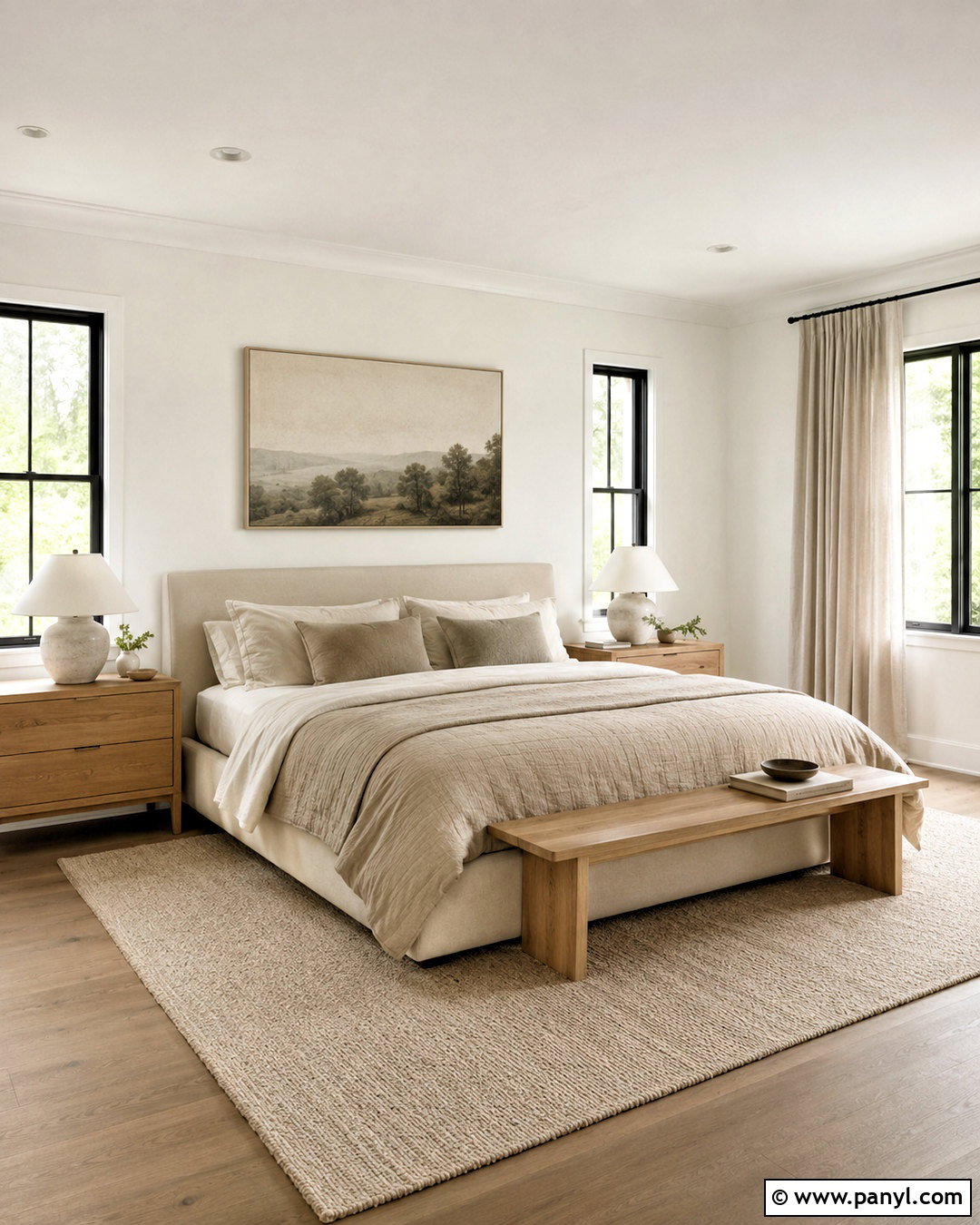
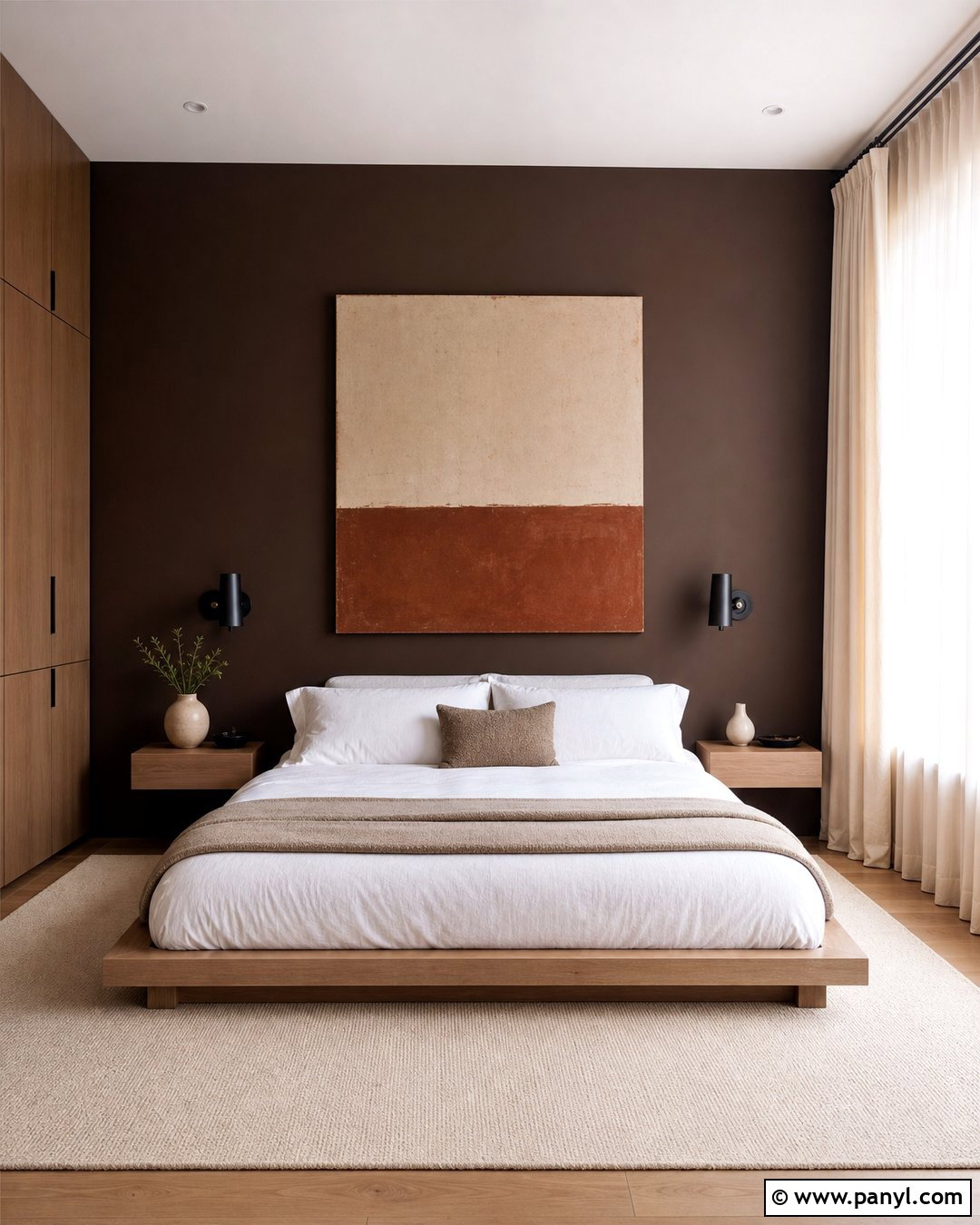
Imagine waking up in a room where Alabaster walls, linen bedding, and pale wood create a soft, restful setting. Center an upholstered bed in oatmeal fabric against the main wall, then dress it with ivory sheets, a flax duvet, and a muted taupe coverlet. Light oak nightstands and ceramic lamps should flank the bed for balanced function. Lay a textured wool rug beneath the lower two-thirds of the bed to warm the flooring. Add full-length natural linen curtains and a simple bench at the foot. One oversized landscape in dusty green and brown provides enough color. Keep smaller accessories restrained and practical. The room will feel layered rather than colorless because the linen, wool, oak, ceramic, and painted surfaces reflect light in different ways.
16. Alabaster Walls With Dark Wood Bedroom Furniture
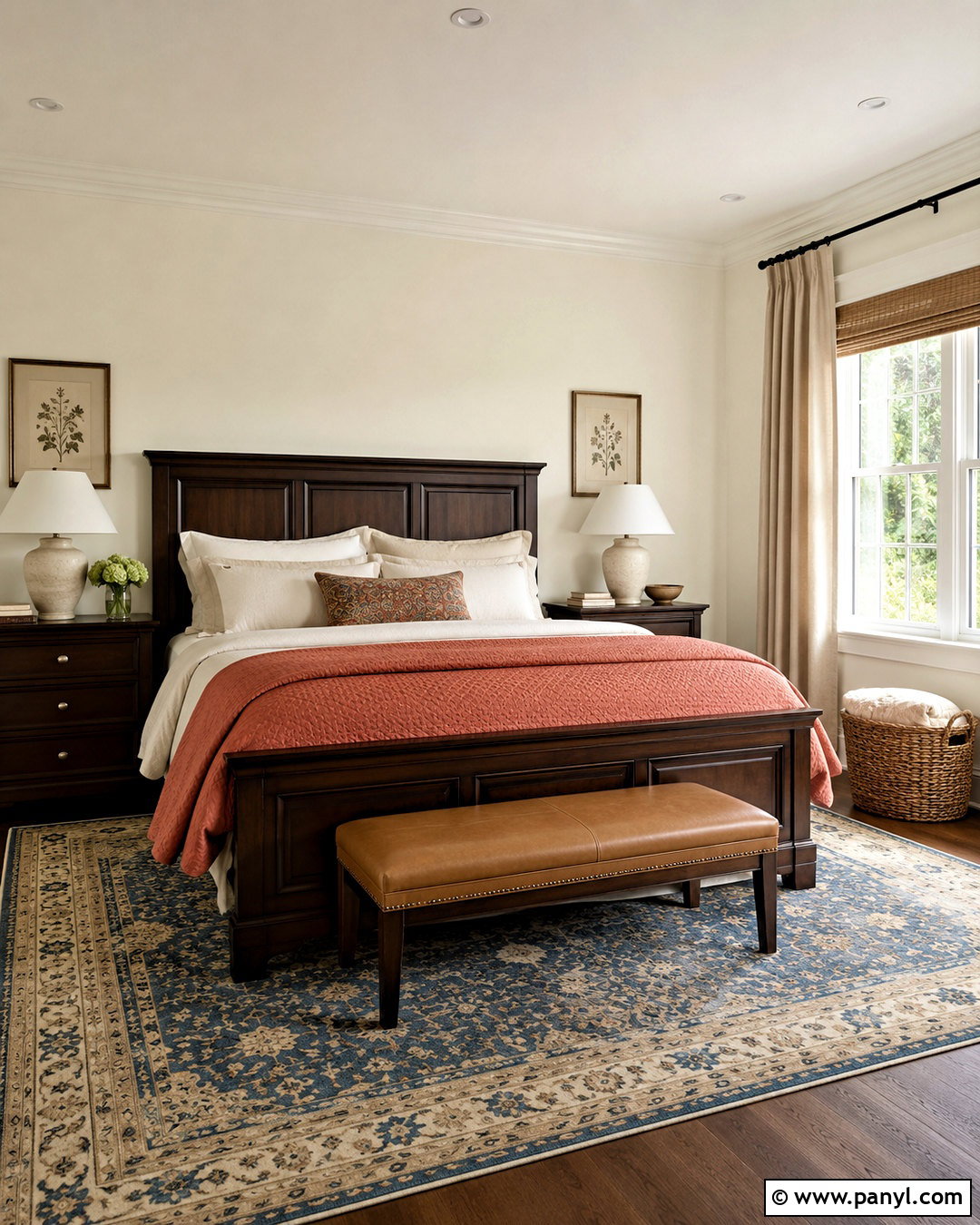
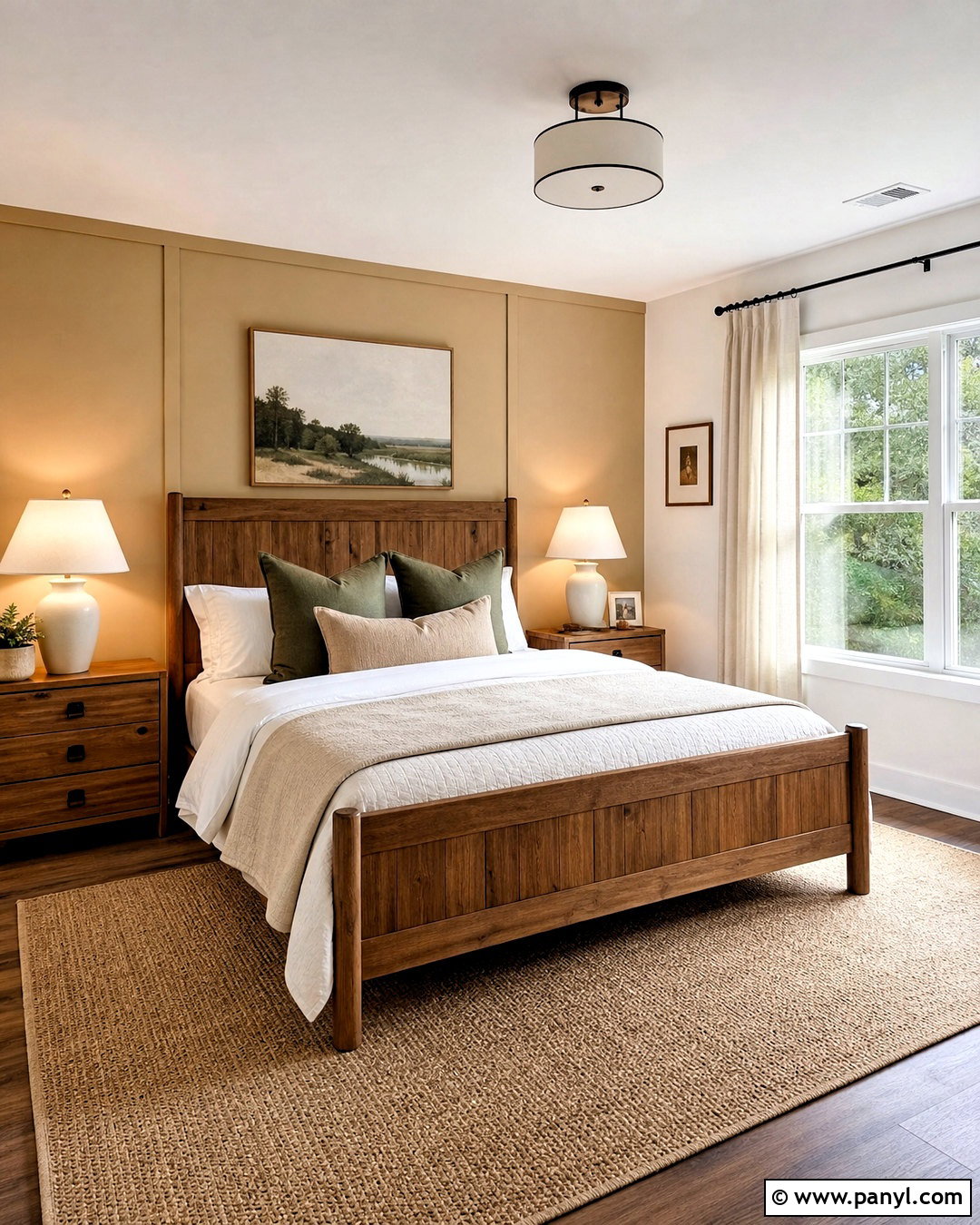
Dark wood furniture gives Alabaster walls greater depth and can make a bedroom feel grounded without becoming gloomy. Choose a walnut or espresso-stained bed with a simple paneled headboard, then balance it with cream bedding and a quilt in muted rust or olive. Matching nightstands create symmetry, but use light ceramic lamps to prevent the bedside area from looking heavy. A vintage-inspired rug containing beige, brown, and faded blue will connect the dark furniture to the warm walls. Hang flax-colored curtains from black or bronze rods. Add a leather bench, woven basket, and framed botanical prints for texture. Keep the ceiling light and uncluttered. The resulting design combines traditional warmth with a cleaner, updated palette suitable for both primary and guest bedrooms.
17. Alabaster Walls With Blue Bedroom Accents
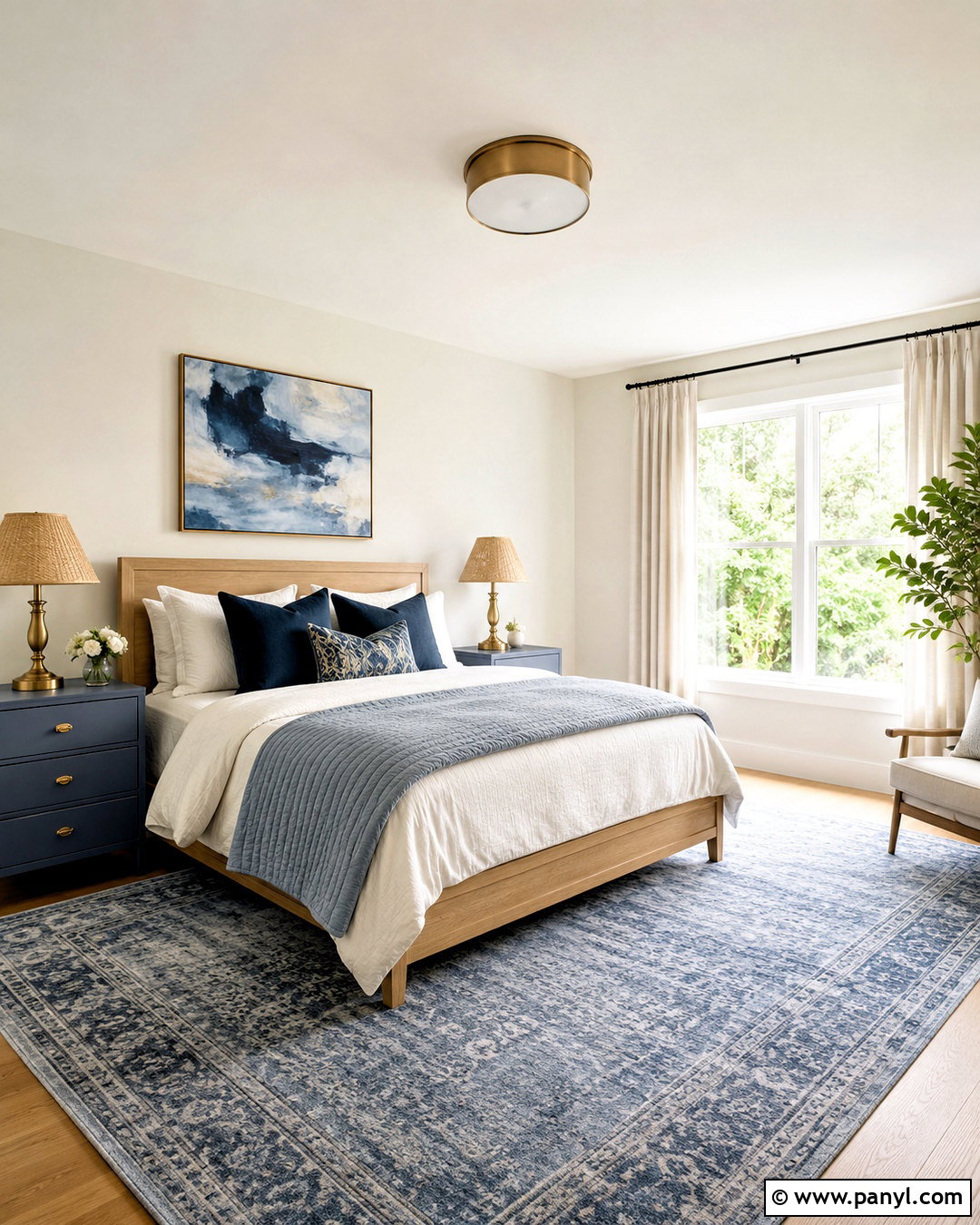
Blue accents bring a calm, cool note to Alabaster walls while the warm white keeps the bedroom from feeling icy. Start with a light oak bed and dress it in crisp ivory bedding, a dusty blue quilt, and layered navy-and-cream pillows. Place medium blue nightstands on each side for a controlled dose of color. A faded blue patterned rug can extend beyond the bed and establish a comfortable foundation. Use simple brass lamps and natural woven shades to bring warmth back into the scheme. Hang one large abstract artwork containing blue, taupe, and off-white above the headboard. Linen curtains in a creamy neutral should frame the windows. This balanced bedroom feels peaceful and tailored, with enough contrast to show the wall color clearly throughout the day.
18. Alabaster Walls In A Small Bedroom
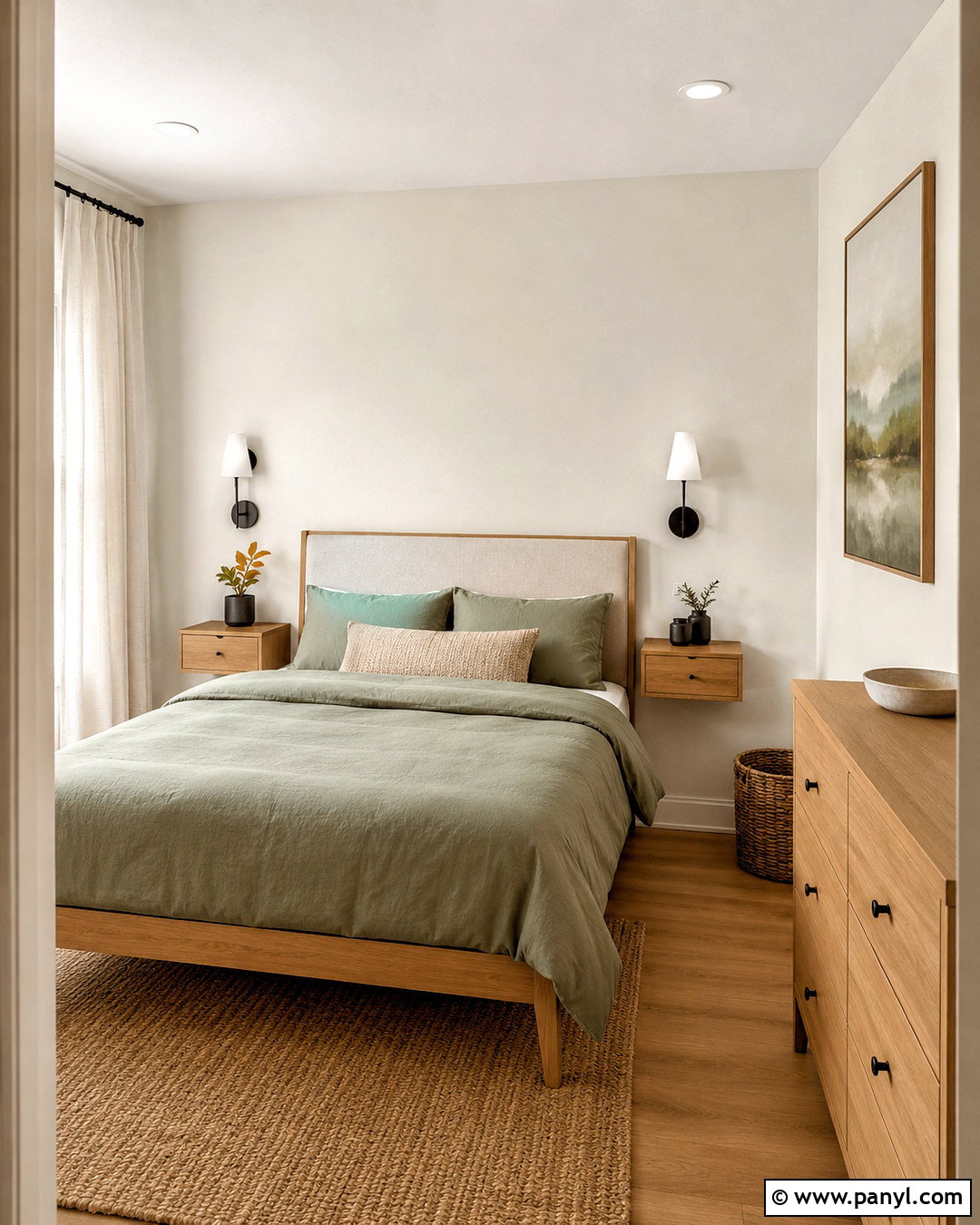
Make a small bedroom feel purposeful by pairing Alabaster walls with compact furniture, vertical storage, and a restrained palette. Position a simple wood bed against the longest uninterrupted wall, leaving clear paths on both sides whenever possible. Use narrow floating nightstands and wall-mounted sconces to free the floor from bulky furniture. An ivory upholstered headboard blends gently with the walls, while sage green bedding and a patterned lumbar pillow add definition. Install full-height curtains in a color close to Alabaster to visually stretch the windows. A light oak dresser can double as a bedside surface if space is tight. Finish with one vertical print, a small rug, and a lidded storage basket. The complete room remains comfortable and functional without feeling crowded by unnecessary decorative pieces.
19. Alabaster Walls In A Neutral Nursery
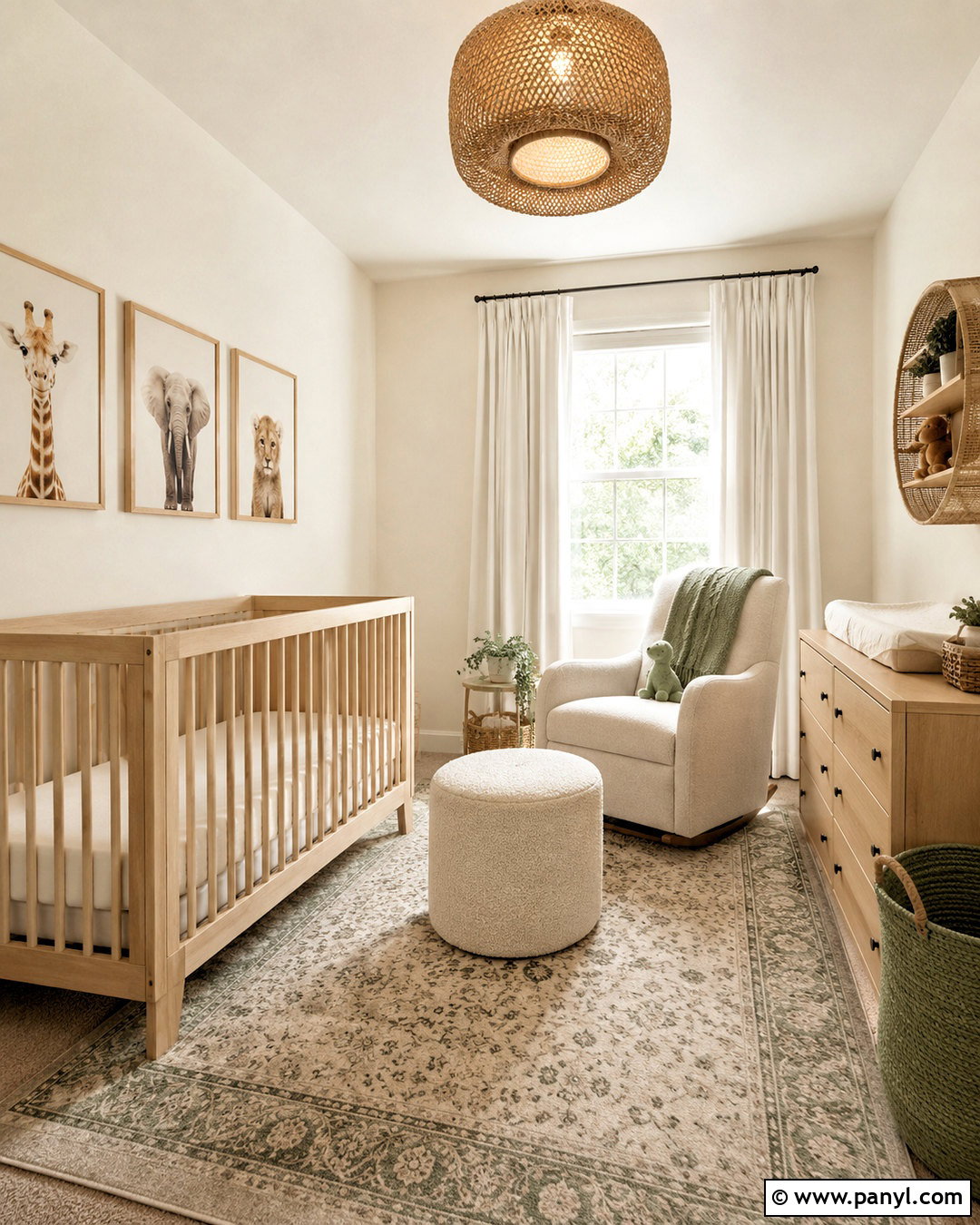
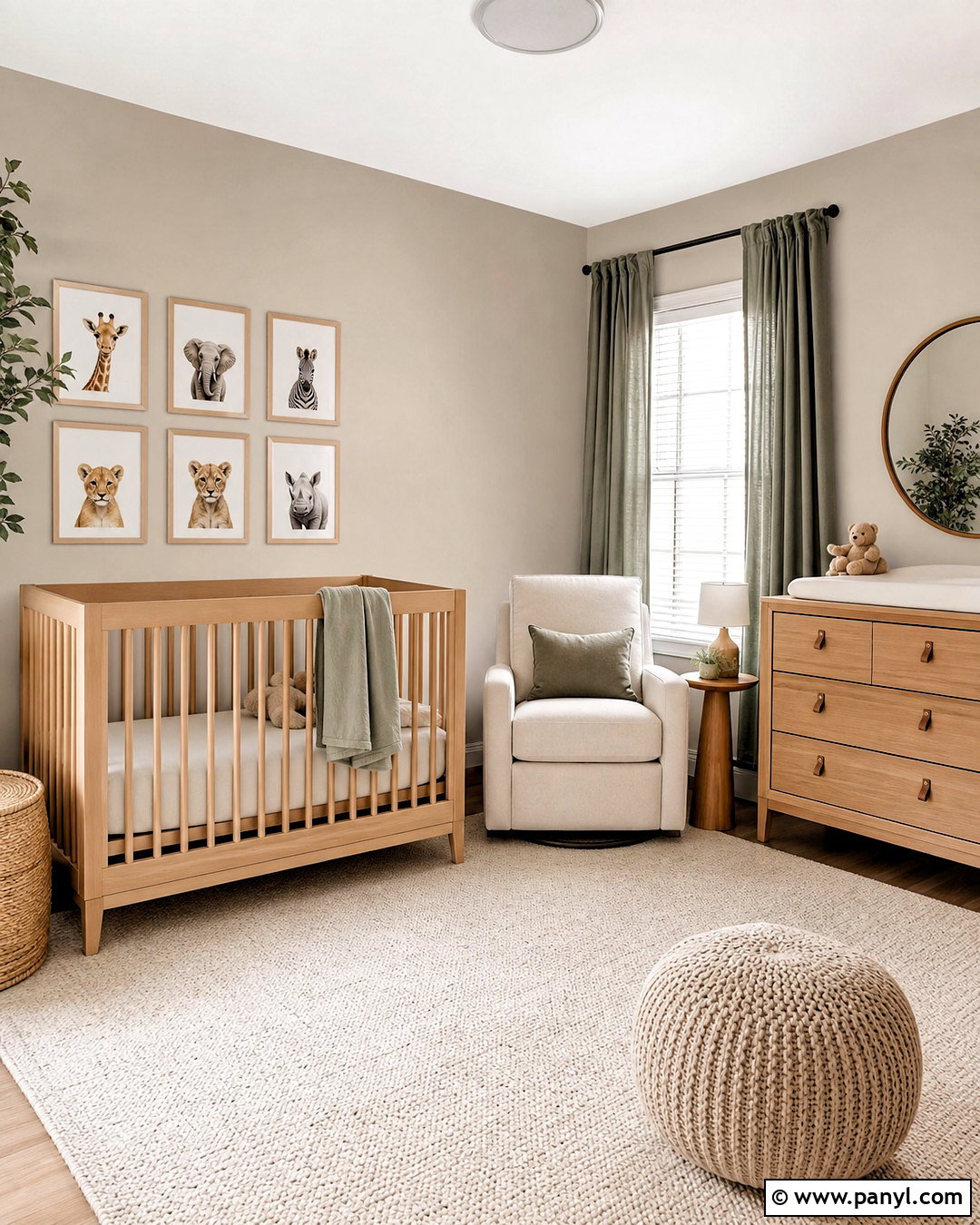
Alabaster walls create a flexible nursery backdrop that can adapt as a child grows. Anchor the room with a natural maple crib and a comfortable oatmeal glider positioned near the window. Choose a washable rug with a subtle pattern in beige, muted green, and soft blue. A light wood dresser can serve as a changing table, reducing the need for extra furniture. Add blackout-lined linen curtains in warm ivory, plus a woven ceiling fixture that casts even light. Display simple animal or landscape prints in matching oak frames above a low book ledge. Soft green storage baskets and a small boucle ottoman add useful color and texture. Keep cords concealed and wall decor securely mounted. The overall design feels calm, practical, and inviting rather than overly themed.
20. Alabaster Walls In A Guest Bedroom
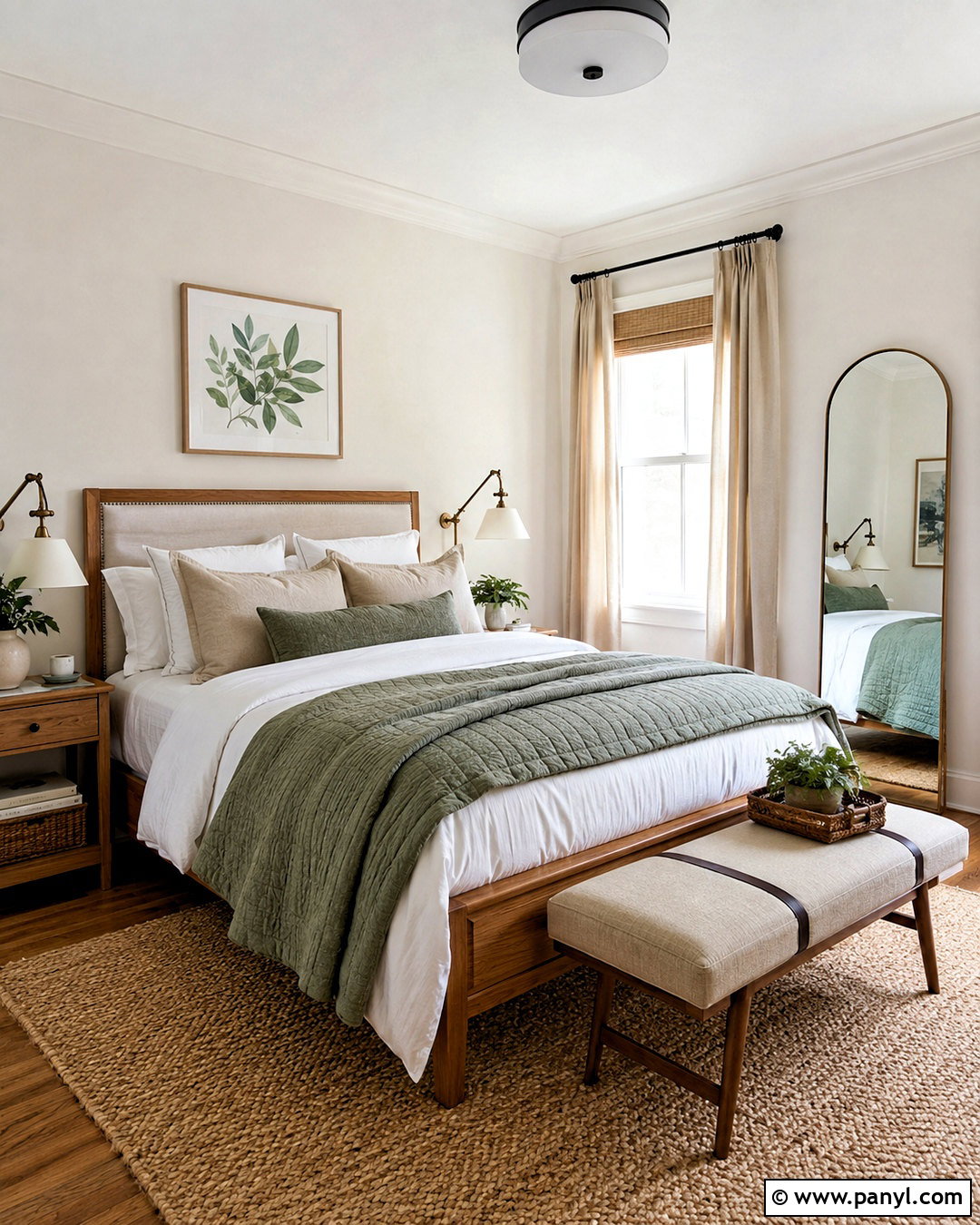
A welcoming guest room needs comfort, convenient storage, and a palette that appeals to many tastes. Pair Alabaster walls with a medium oak bed, upholstered headboard, and layered white-and-taupe bedding. Add two compact nightstands, each with a reading lamp and an open surface for personal belongings. A soft green quilt folded at the foot of the bed introduces quiet color. Place a luggage rack or upholstered bench nearby and leave part of the dresser empty for visitors. Natural linen curtains, a woven rug, and understated botanical artwork complete the room without adding clutter. Include a mirror and accessible charging points where possible. This thoughtful arrangement turns the warm-white walls into a calm background while making the bedroom feel intentionally prepared rather than temporarily cleared for company.
21. Alabaster Walls With A Wood Bathroom Vanity
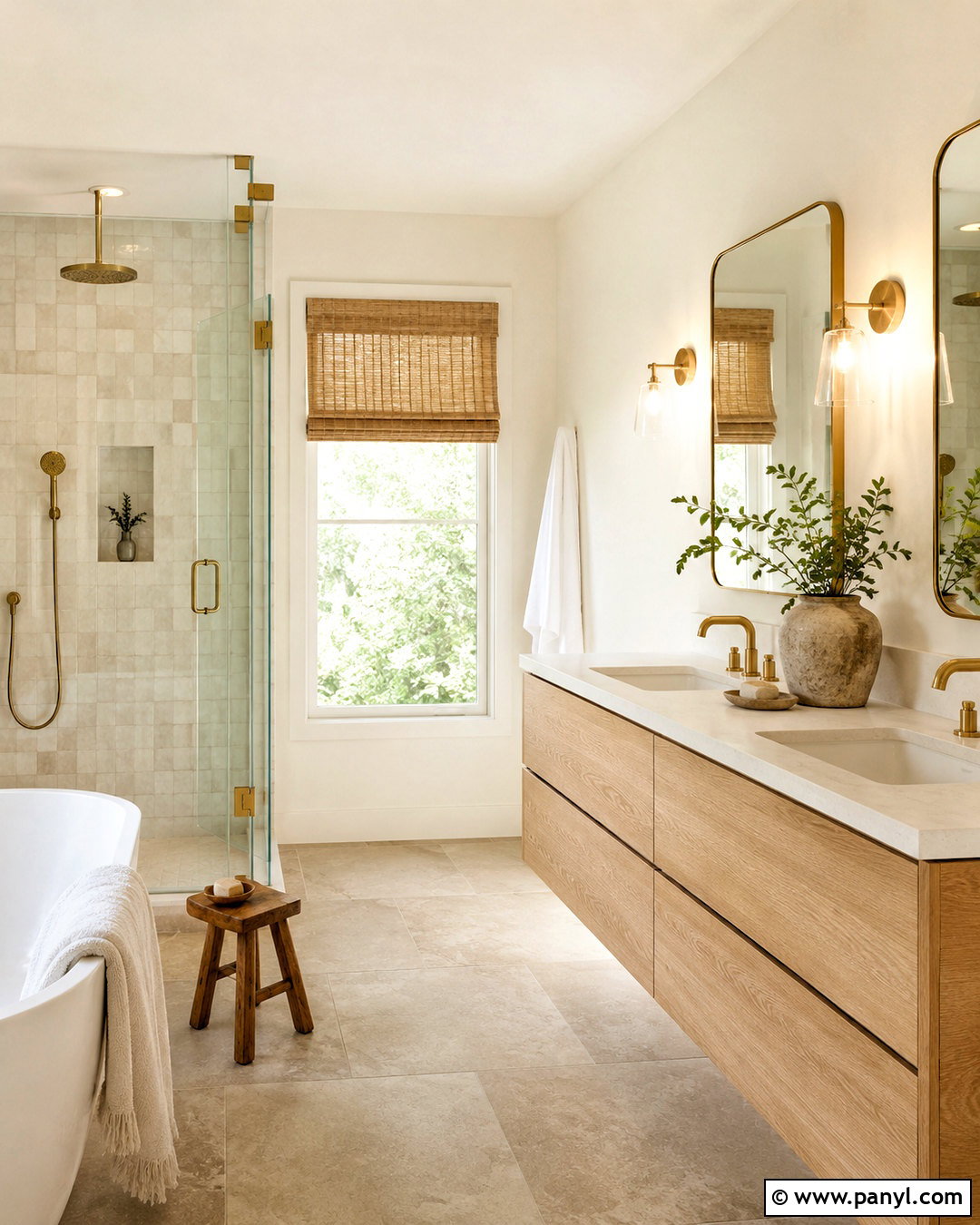
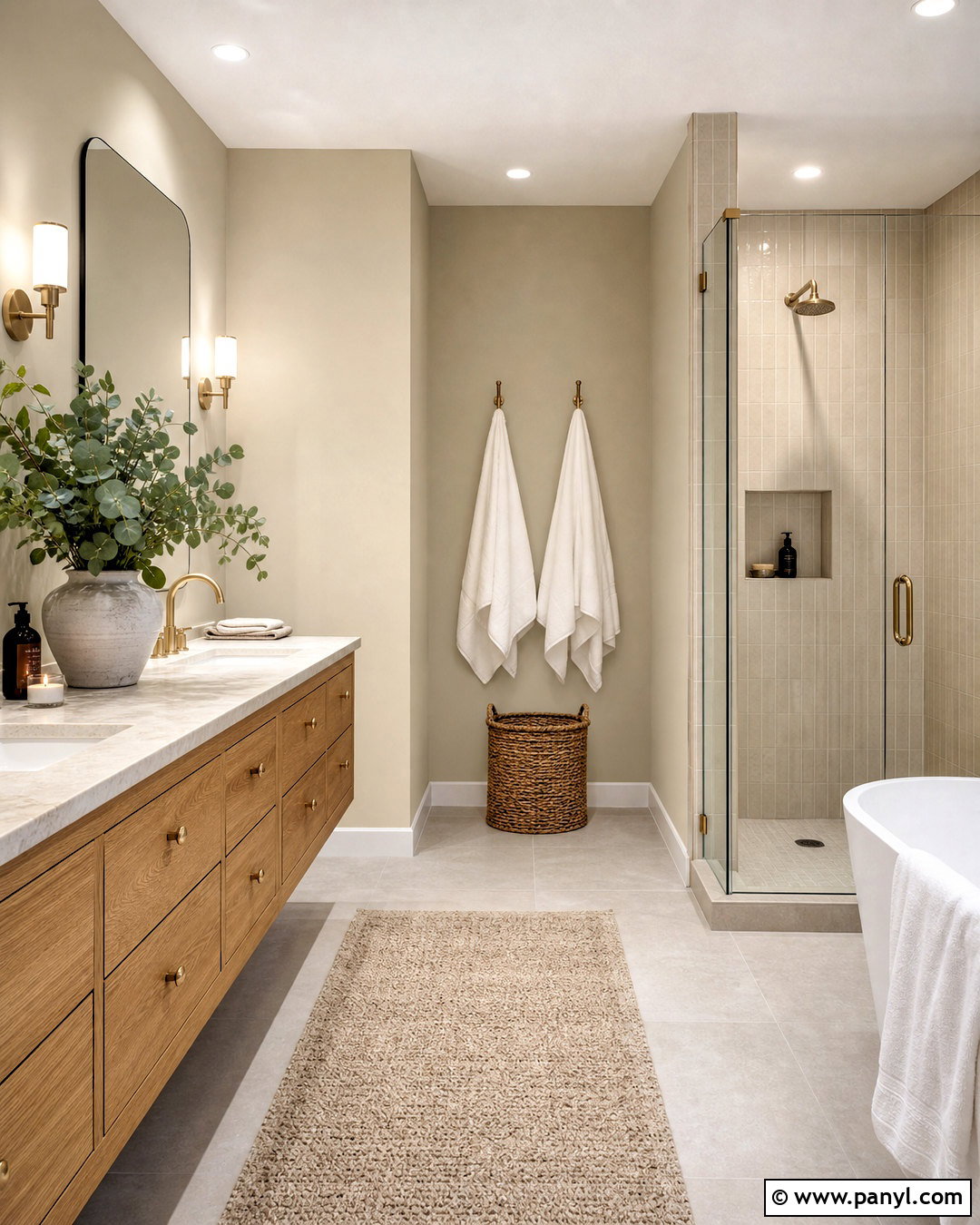
Warm wood and Alabaster walls create a bathroom that feels bright without becoming clinical. Choose a floating white oak vanity with flat-front drawers and a creamy quartz countertop. Above it, hang a large rounded mirror framed in aged brass and install simple globe sconces at eye level. Use beige limestone-look floor tile and handmade ivory shower tile to layer similar warm tones. A brushed-brass faucet, hooks, and cabinet pulls provide a polished finish. Keep towels white or light taupe, then add a small wood stool and one piece of framed botanical art. If privacy is needed, use a woven Roman shade rather than heavy curtains. The completed room feels spa-like and practical, with natural grain and tactile stone giving the light walls enough visual substance.
22. Alabaster Walls With A Black Bathroom Vanity
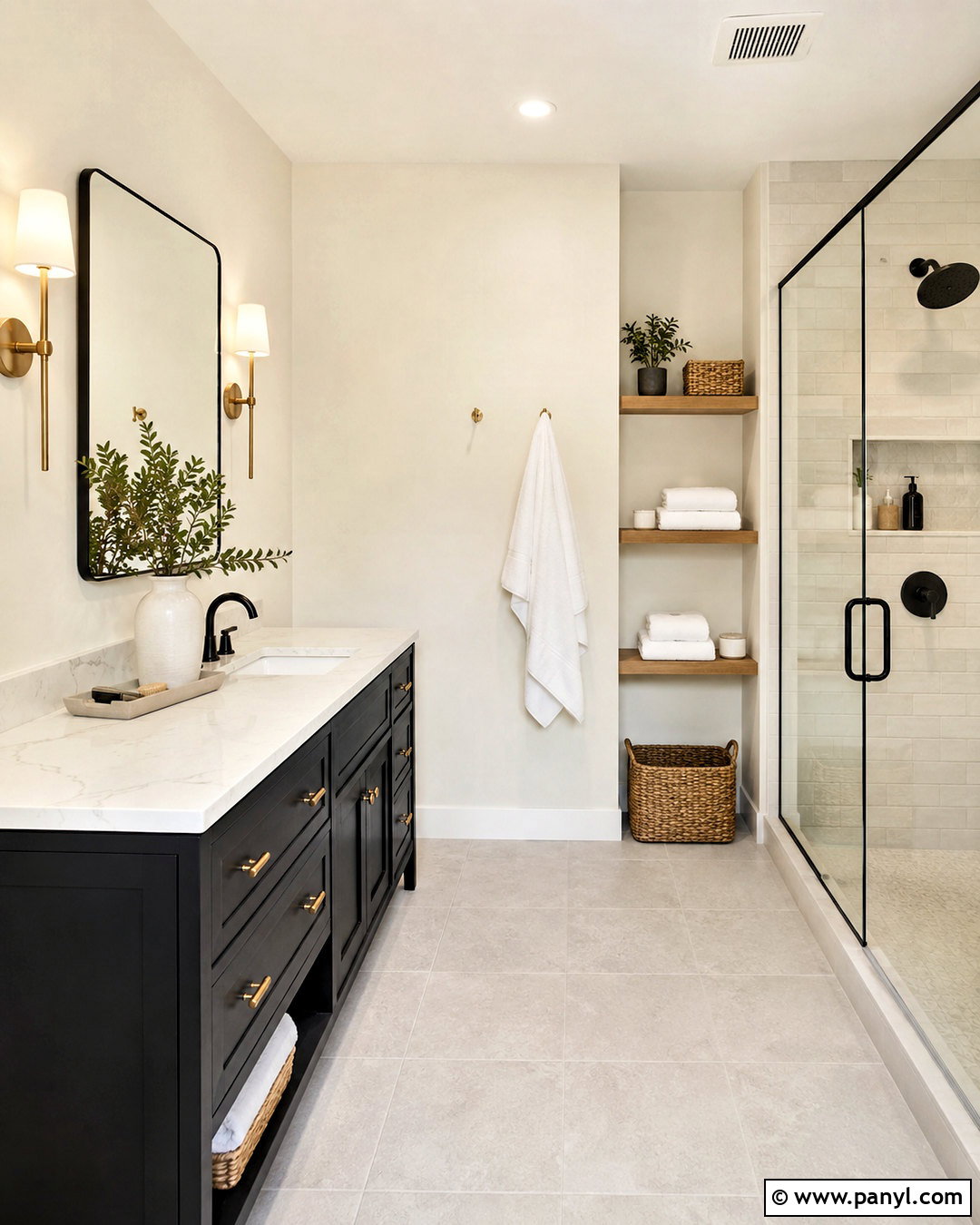
A matte black vanity can become a strong focal point against Alabaster walls, especially in a compact bathroom. Select a simple Shaker or flat-panel cabinet with a white quartz top and an undermount sink. Use a black-framed mirror and matching faucet, but introduce aged brass through the sconces or cabinet pulls to soften the scheme. Pale gray porcelain floor tile gives the room definition without competing with the vanity. Inside the shower, use warm white rectangular tile and dark grout only if you want a more graphic appearance. Add a natural wood shelf, white towels, and one small plant to keep the room approachable. Clear glass shower panels will preserve sightlines. The result feels contemporary, balanced, and brighter than an all-black-and-white bathroom painted in a colder white.
23. Alabaster Walls With Blue Bathroom Tile
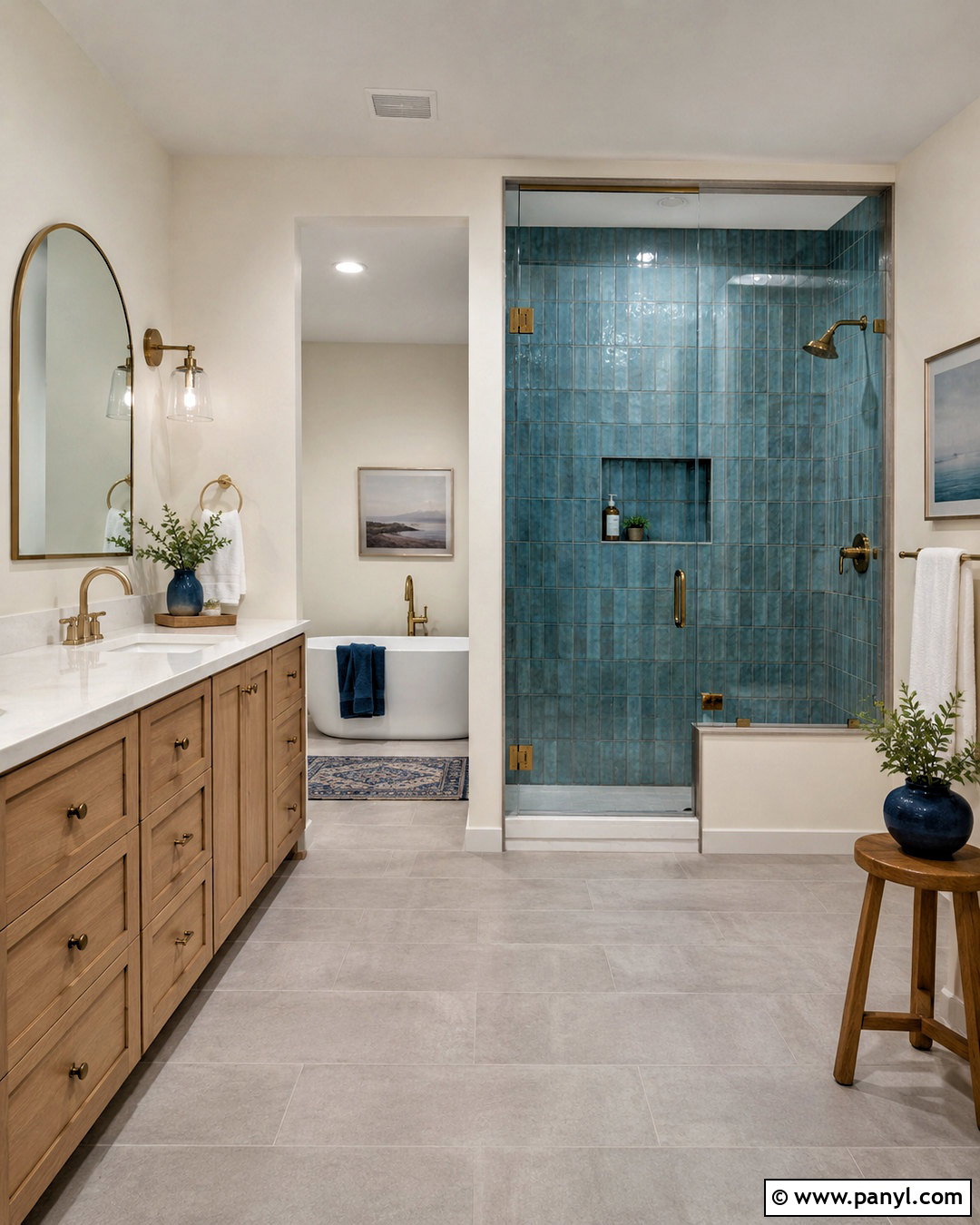
Pair Alabaster walls with blue tile to create a fresh bathroom that still feels warm and comfortable. Use dusty blue handmade tile inside the shower or as a vanity backsplash, allowing its subtle color variation to become the main feature. Choose a white oak vanity, creamy quartz countertop, and brushed-nickel or aged-brass fixtures. Large warm-gray floor tiles should provide a quiet foundation and practical durability. Hang an arched mirror above the vanity and place simple glass sconces on either side. Towels in ivory and muted navy can repeat the palette without adding clutter. Keep shower accessories concealed in a niche. The Alabaster upper walls balance the stronger tile color, producing a complete design that feels lively enough for everyday use but still relaxed and timeless.
24. Alabaster Walls In A Powder Room
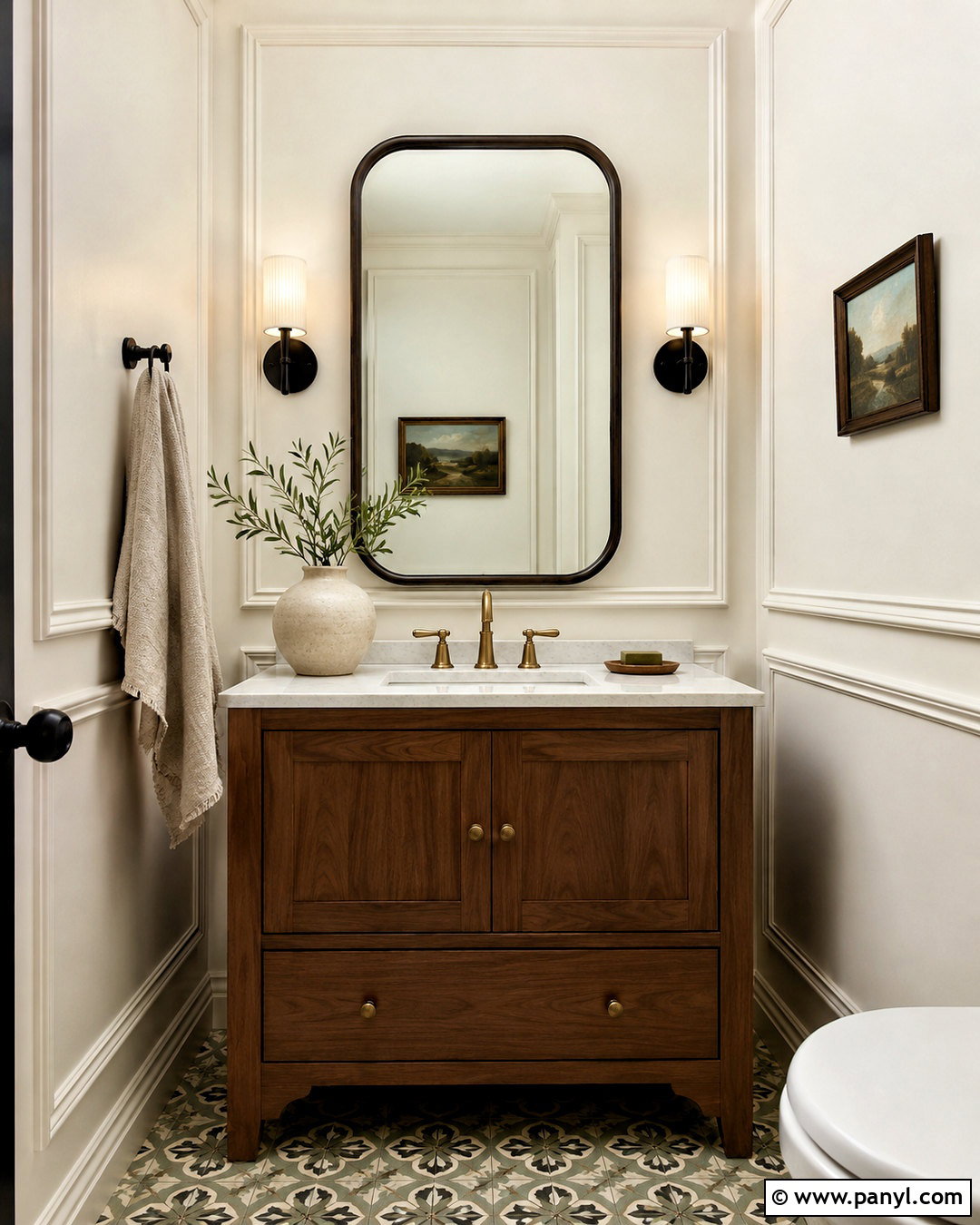
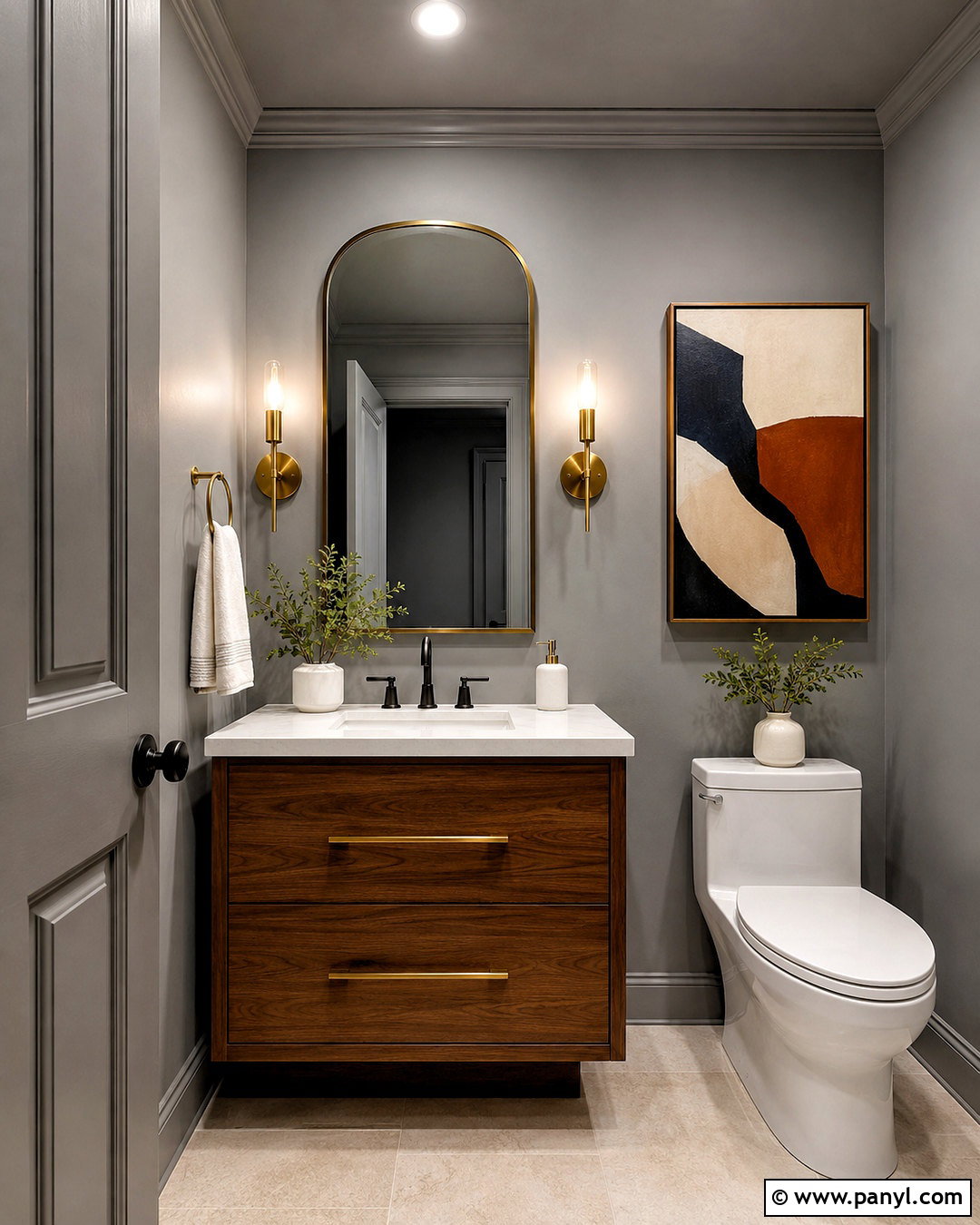
A powder room offers the chance to make Alabaster walls feel more detailed through millwork and distinctive fixtures. Install vertical paneling or picture-frame molding across the walls, then paint it all Alabaster for subtle shadow and texture. Choose a walnut vanity with a stone top and pair it with an aged-brass faucet. A rounded mirror in a dark bronze frame adds contrast above the sink. Consider patterned floor tile in cream, charcoal, and muted green to give the small room personality. Two compact wall sconces should provide flattering, balanced light. Finish with a linen hand towel, framed miniature artwork, and one ceramic vessel. Because the palette remains controlled, the architectural detail and flooring can stand out without making the limited space look crowded or visually confusing.
25. Alabaster Walls In An Entryway
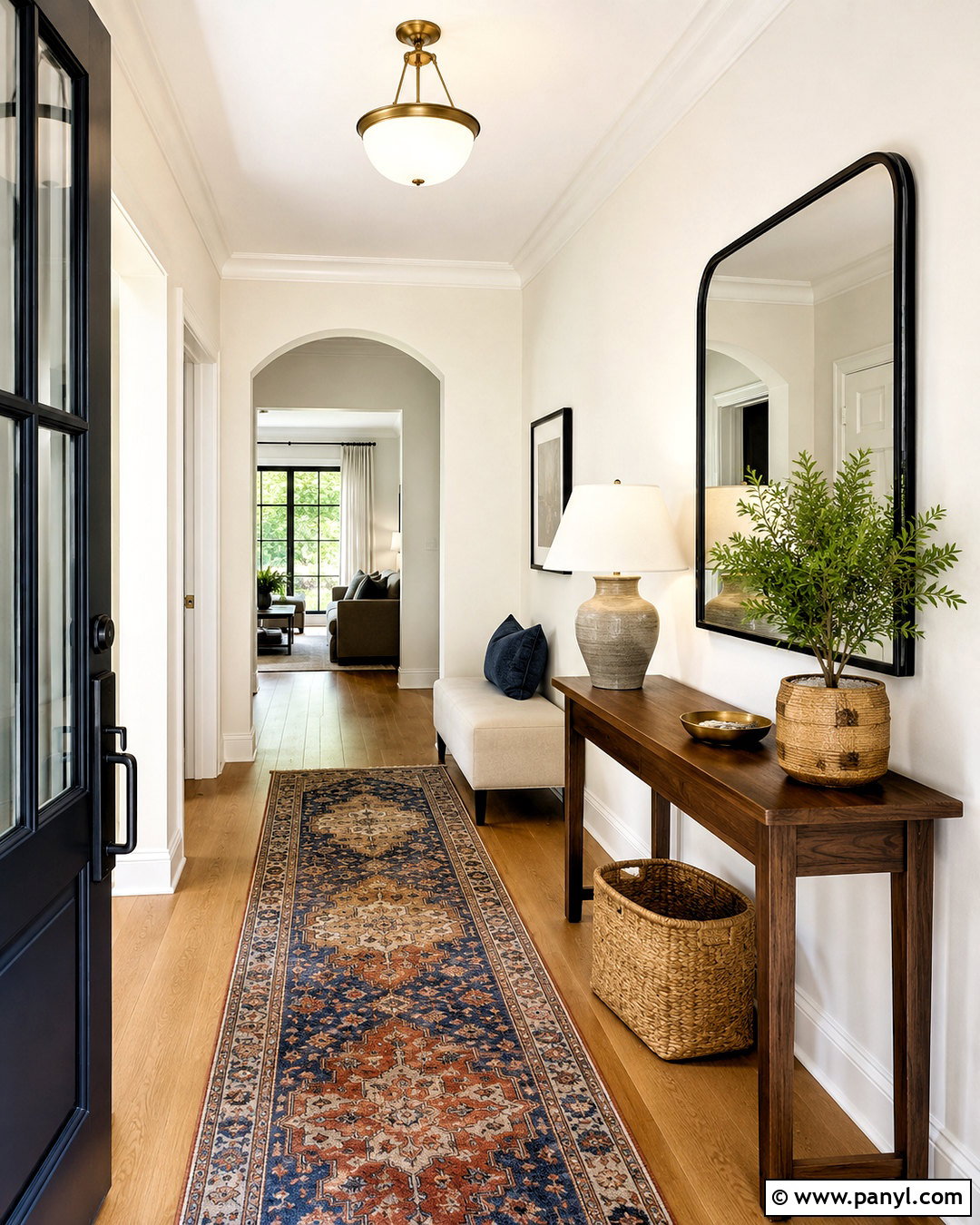
Set a welcoming tone by using Alabaster walls with durable furniture and a few clearly defined accents in the entryway. Place a narrow walnut console against the main wall and hang a large black-framed mirror above it. A washable vintage-style runner in rust, blue, and beige should lead the eye into the home. Add a ceramic table lamp, a shallow tray for keys, and a sturdy woven basket beneath the console. If space permits, include a small upholstered bench beside the door. Use an aged-brass ceiling light and matching hooks for consistency. Medium oak flooring or warm stone tile will support the wall color beautifully. This complete setup offers function, storage, and visual warmth while keeping the path through the entrance open and easy to navigate.
26. Alabaster Walls In A Narrow Hallway
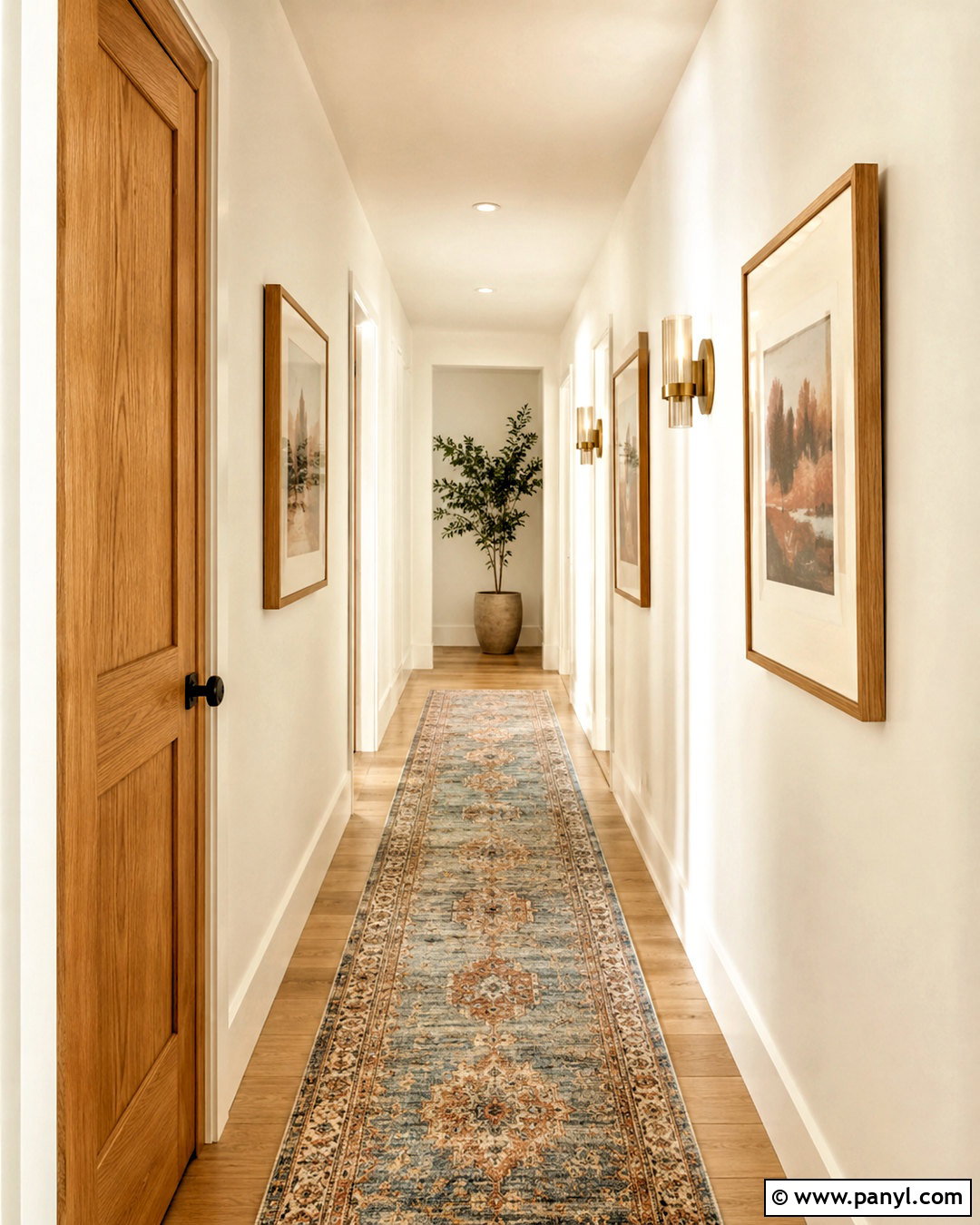
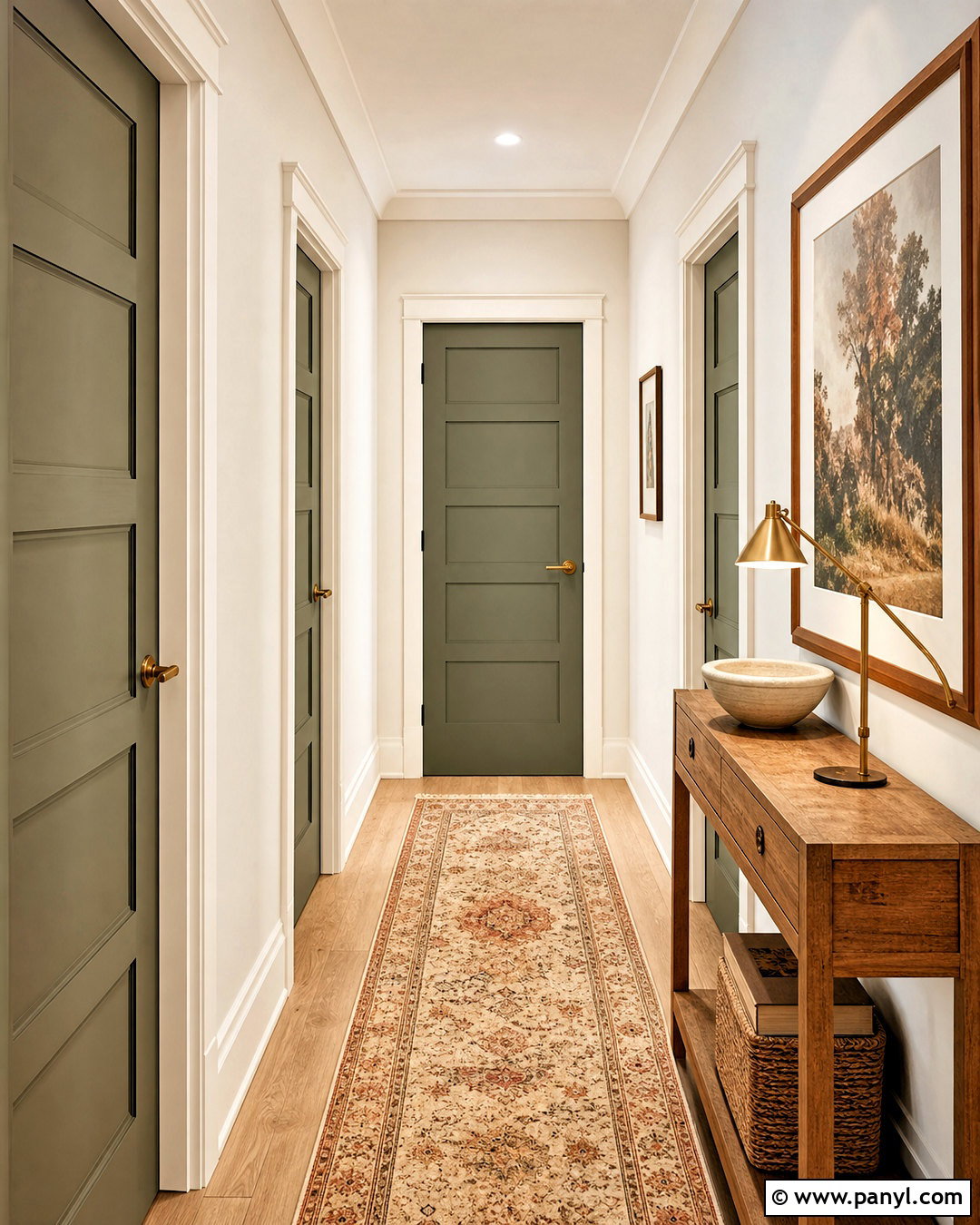
A narrow hallway can look brighter and more intentional when Alabaster walls are combined with strong perspective and shallow decor. Run a patterned runner down the center, choosing muted blue, tan, and rust to add color without darkening the passage. Hang a consistent row of medium-sized artwork in slim oak or black frames along one wall. On the opposite side, use low-profile sconces that project minimal distance into the walkway. Paint the trim and doors Alabaster in satin for continuity, or stain one door medium oak to create a natural focal point. Keep furniture out unless the hall can accommodate a very narrow console. A warm brass ceiling fixture and clean sightline toward a plant, window, or artwork at the end will make the corridor feel finished.
27. Alabaster Walls On A Staircase
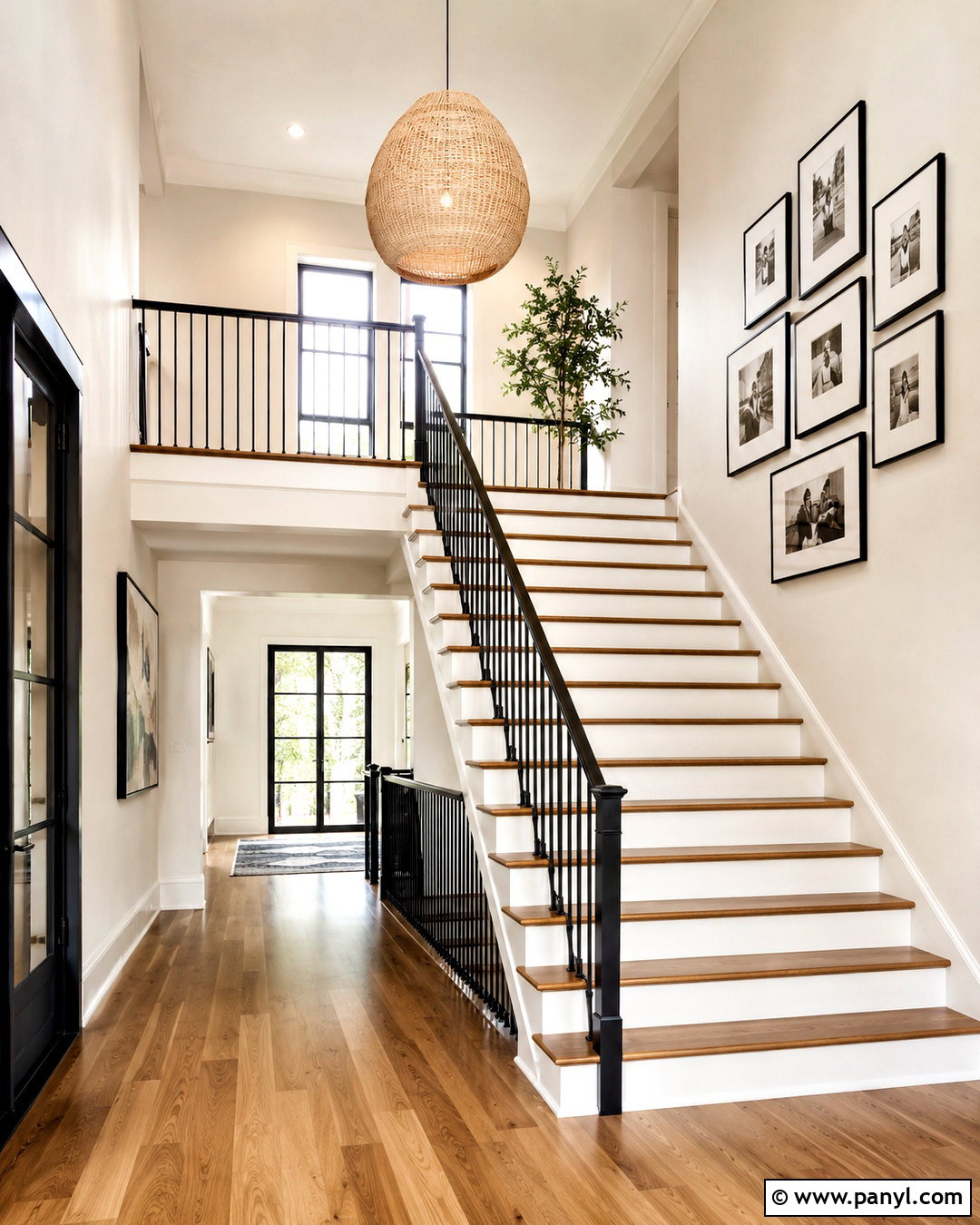
Alabaster walls help a staircase feel open while allowing railings, treads, and artwork to provide definition. Combine the walls with medium oak stair treads, white risers, and a simple black metal or dark wood handrail. Arrange framed family photography or neutral landscape prints in a measured gallery that follows the angle of the stairs. Use matching frames and generous spacing so the display looks organized. An oversized woven or linen pendant can fill a tall stairwell without adding visual heaviness. If there is a landing, place a narrow bench or a large potted tree there. Paint baseboards and molding Alabaster in a more durable finish. The complete design turns a transitional area into an attractive architectural feature while preserving a bright path between floors.
28. Alabaster Walls In A Home Office
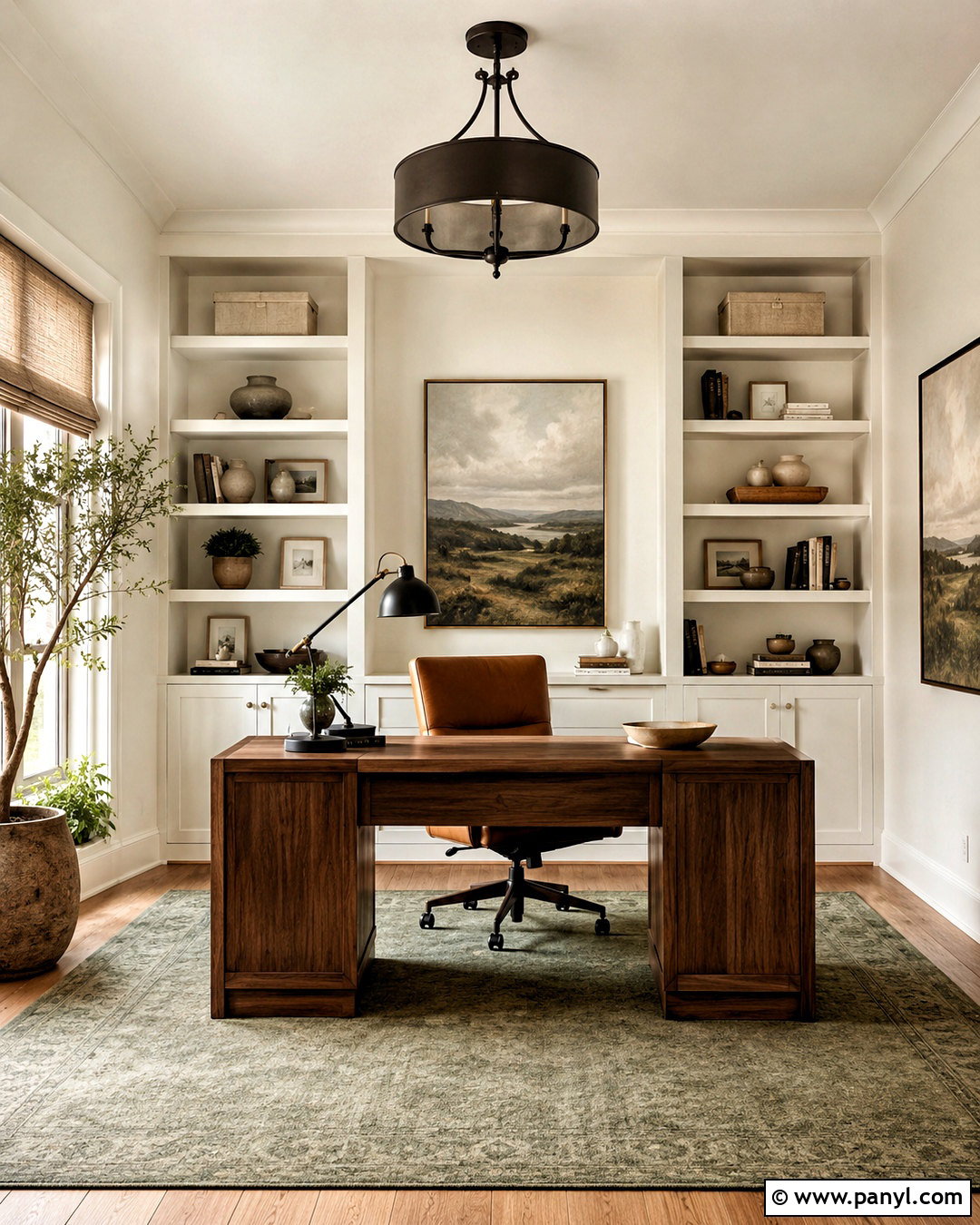
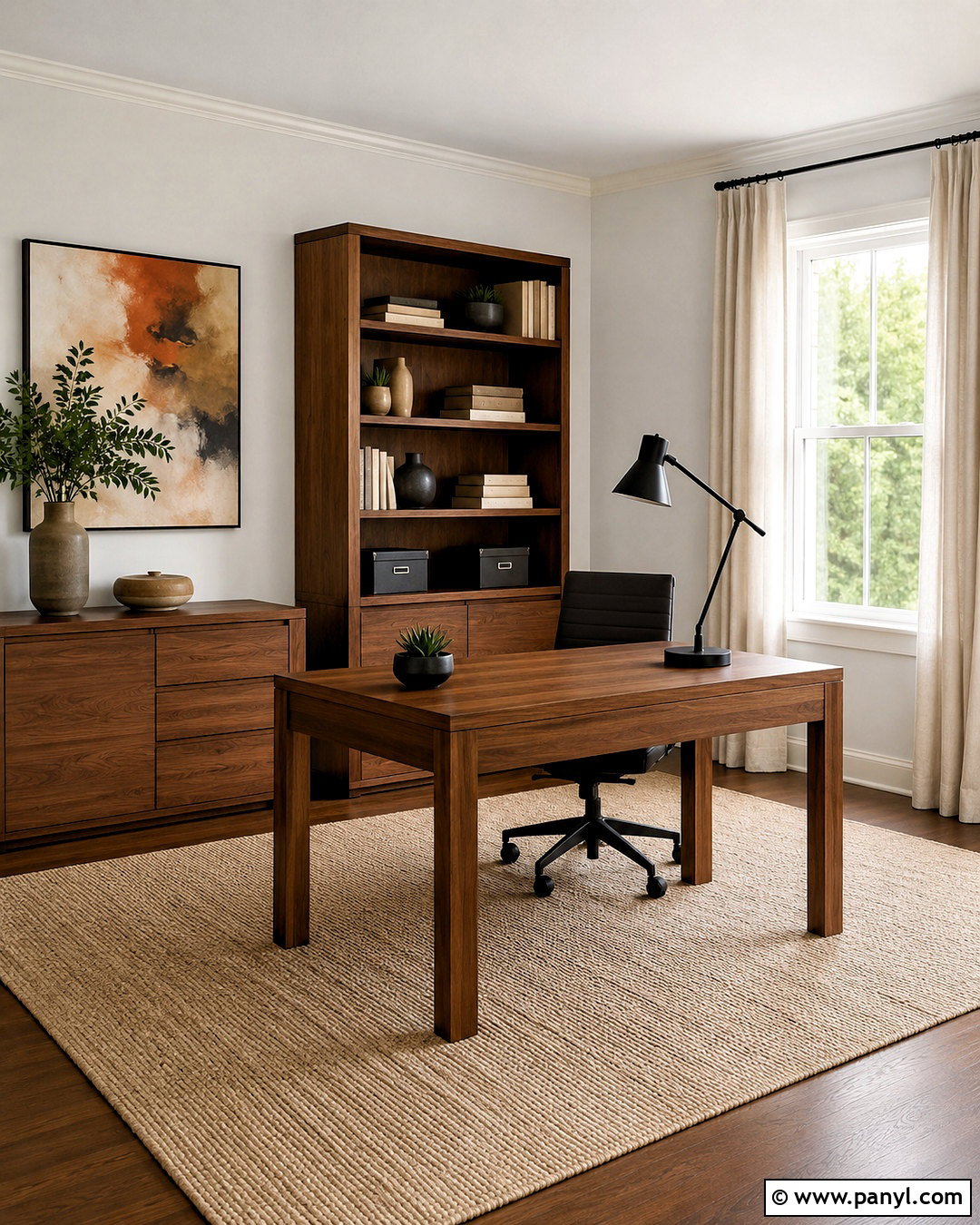
Build a focused home office around Alabaster walls, a substantial wood desk, and storage that keeps work materials organized. Position a walnut or oak desk where natural light reaches it from the side rather than directly behind the monitor. Add a comfortable upholstered chair in tan leather or textured beige fabric. Paint built-in shelving Alabaster for a seamless background, then arrange books, boxes, and ceramics with plenty of breathing room. Use a muted green rug to define the workspace and soften sound. A black task lamp and dark bronze ceiling fixture provide crisp contrast. Frame one large landscape print where it can be enjoyed without causing distraction. Linen shades or curtains should control glare. The finished room feels professional, warm, and suitable for daily use.
29. Alabaster Walls In A Home Library
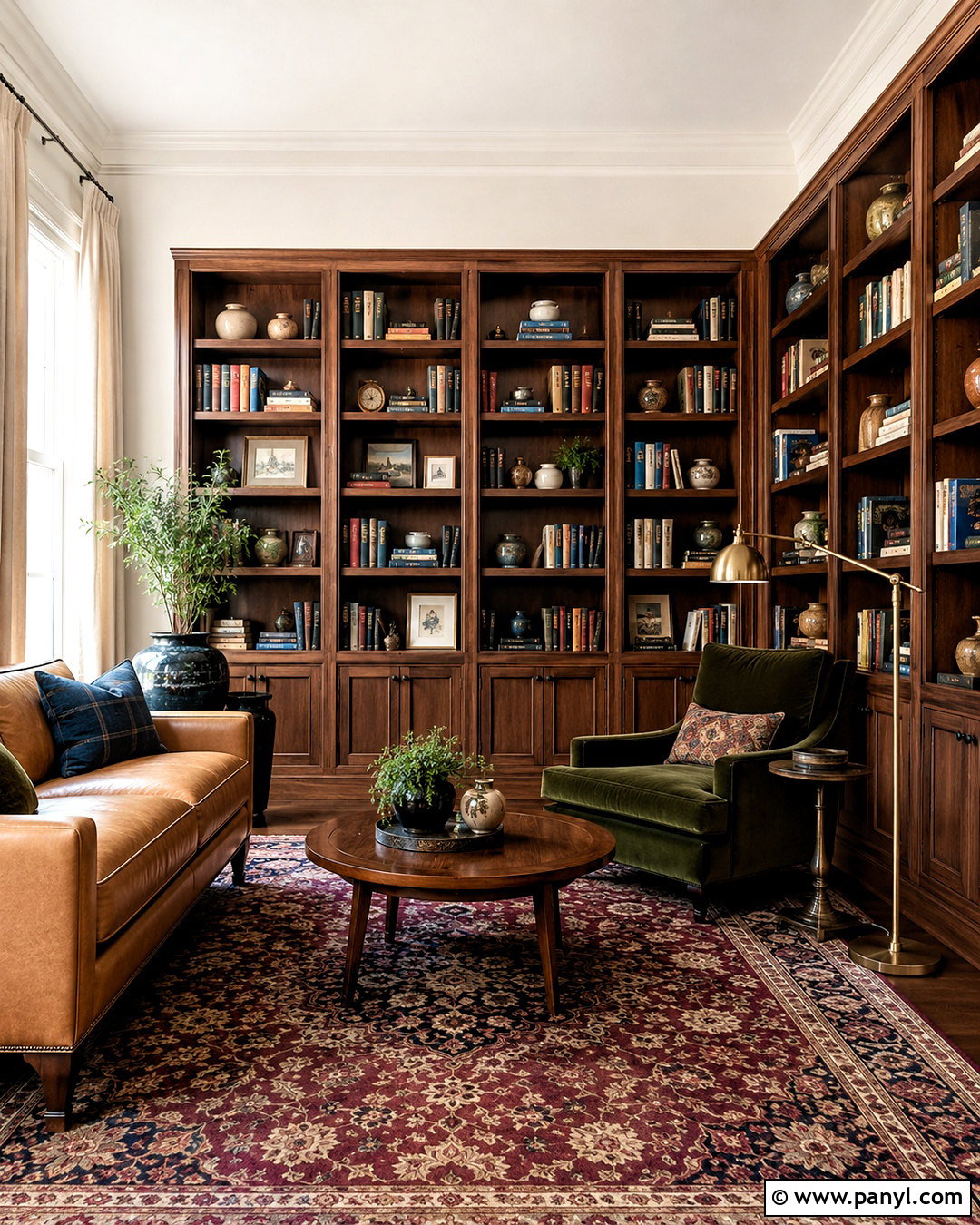
Books add instant richness to Alabaster walls, especially when displayed in warm wood shelving. Install floor-to-ceiling walnut or medium oak bookcases along one wall and leave the remaining walls light to balance their visual weight. Place a deep olive or camel leather chair near the shelves with a small brass reading lamp and round side table. A patterned wool rug in burgundy, navy, and cream can establish a classic foundation. Add a low sofa if space permits, ensuring the seating faces inward for conversation. Use linen drapes and an aged-brass ceiling light to reinforce the warm palette. Fill the shelving thoughtfully with books, framed objects, and pottery rather than tightly packing every opening. The room will feel collected, comfortable, and genuinely useful for reading.
30. Alabaster Walls In A Laundry Room
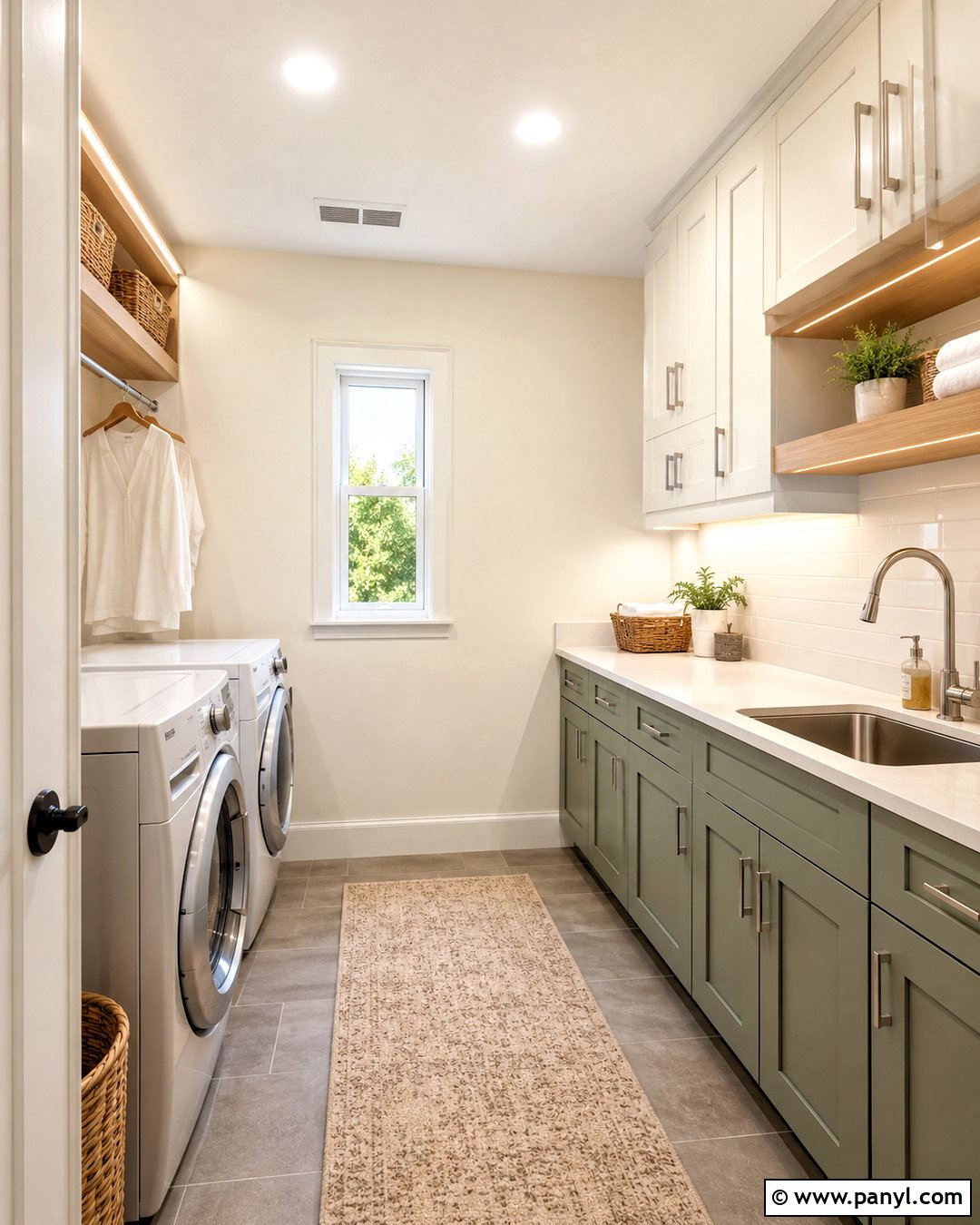
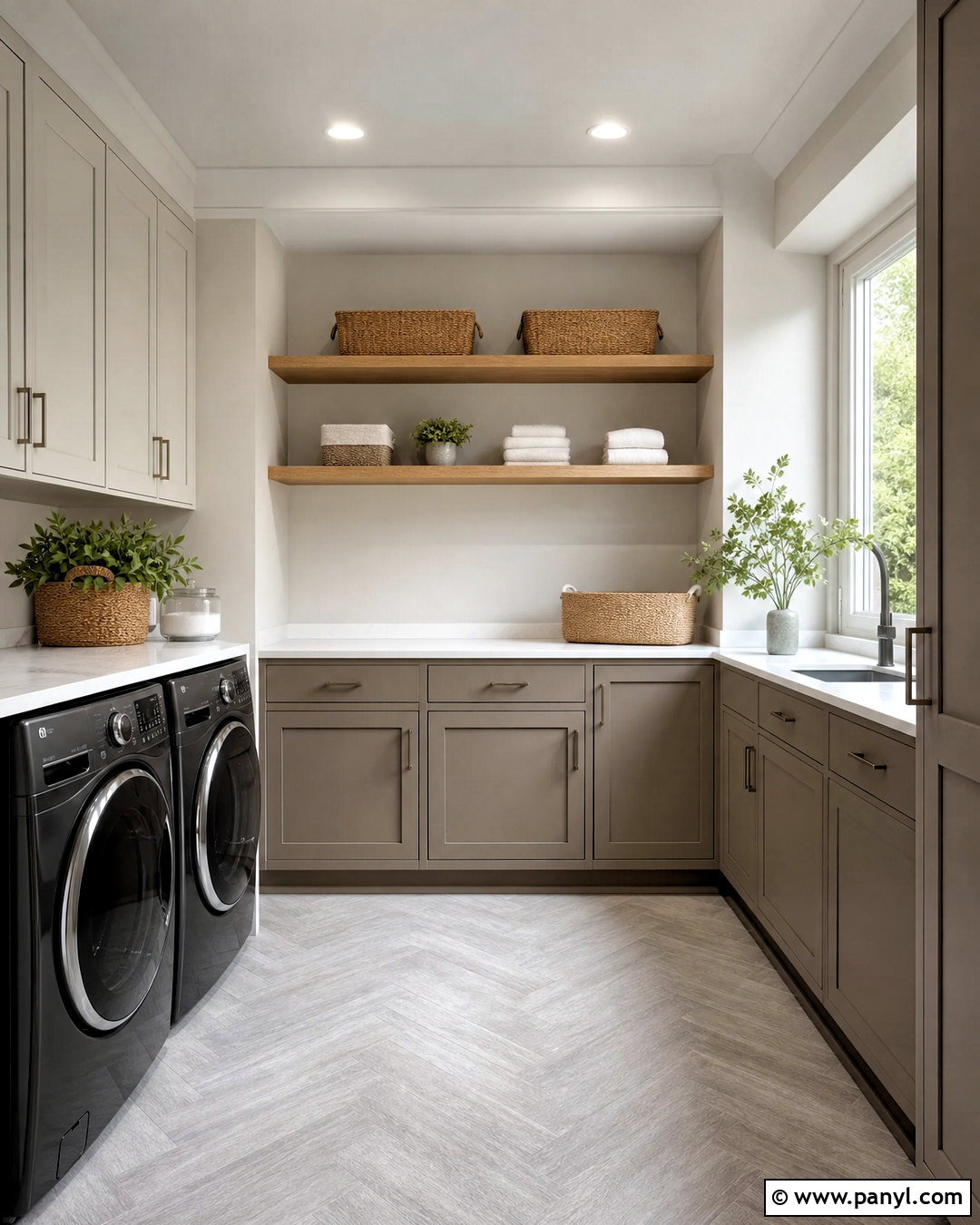
Turn a hardworking laundry room into a cohesive space with Alabaster walls, efficient storage, and durable finishes. Install muted sage or medium blue lower cabinets beneath a pale quartz folding counter. Use Alabaster upper cabinets if you want the storage to blend into the walls and make the room feel less crowded. A warm gray porcelain tile floor can handle moisture while connecting the wall and cabinet colors. Add a stainless utility sink, brushed-nickel hardware, and undercabinet lighting for practical tasks. Open oak shelves are useful for baskets and labeled containers, but avoid overfilling them. Include a hanging rail for air-drying clothes and a narrow runner for comfort. The completed design makes cleaning supplies easy to reach while keeping visual clutter controlled behind closed cabinetry.
31. Alabaster Walls In A Mudroom
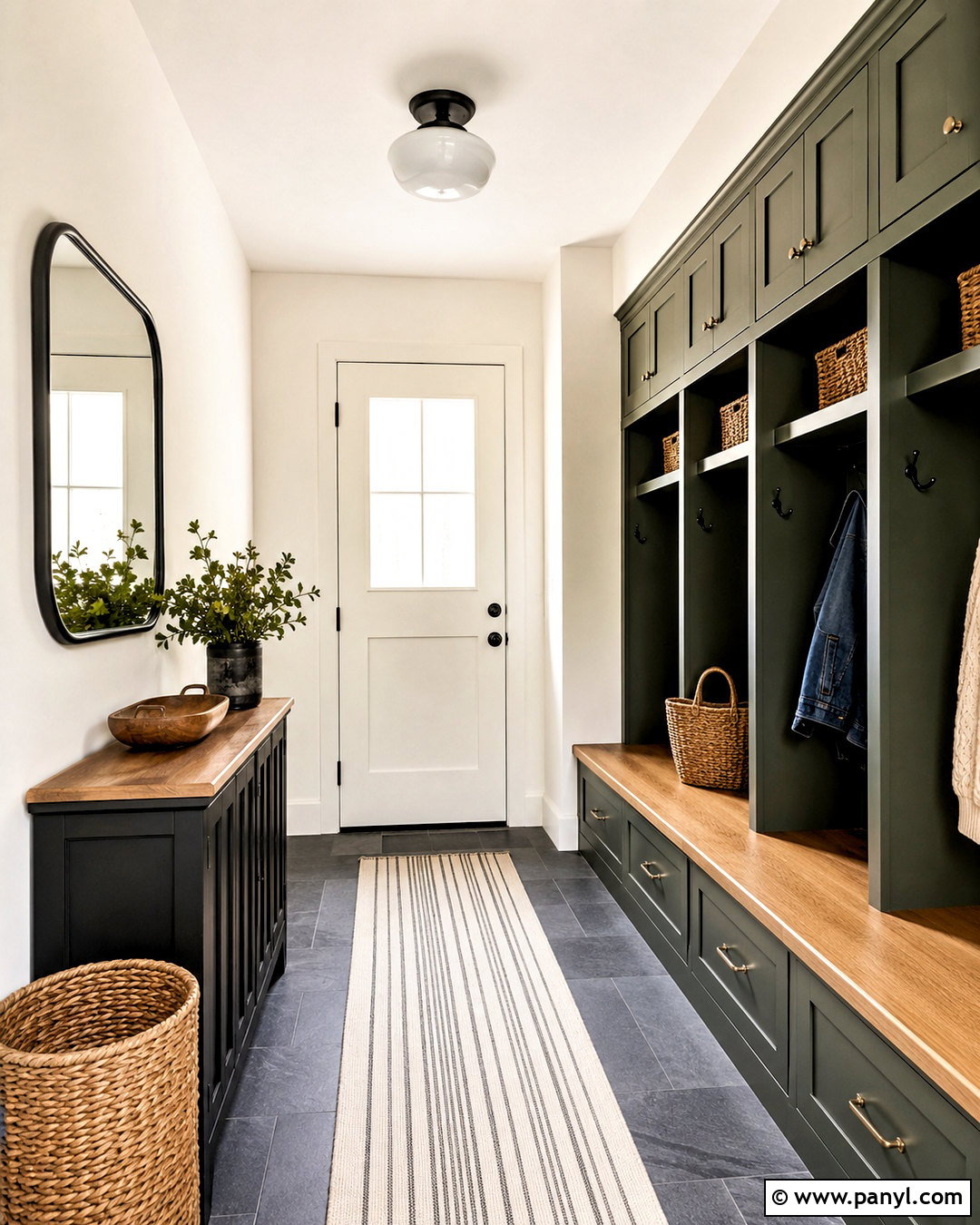
Alabaster walls can brighten a mudroom when paired with sturdy storage and materials that tolerate everyday wear. Build a row of deep green or charcoal lockers with hooks, upper cabinets, and individual shoe drawers. Add a white oak bench seat to warm the darker cabinetry and provide a comfortable place to remove shoes. Use slate-look porcelain tile on the floor and place a washable striped runner through the center. Woven baskets above the lockers should contain seasonal accessories without looking messy. Install a large black-framed mirror near the exit and a simple semi-flush ceiling light overhead. Keep the baseboards Alabaster but choose a durable, easy-clean finish. This complete arrangement gives bags, coats, footwear, and outdoor gear dedicated storage while maintaining a fresh and welcoming entrance.
32. Alabaster Walls In A Sunroom
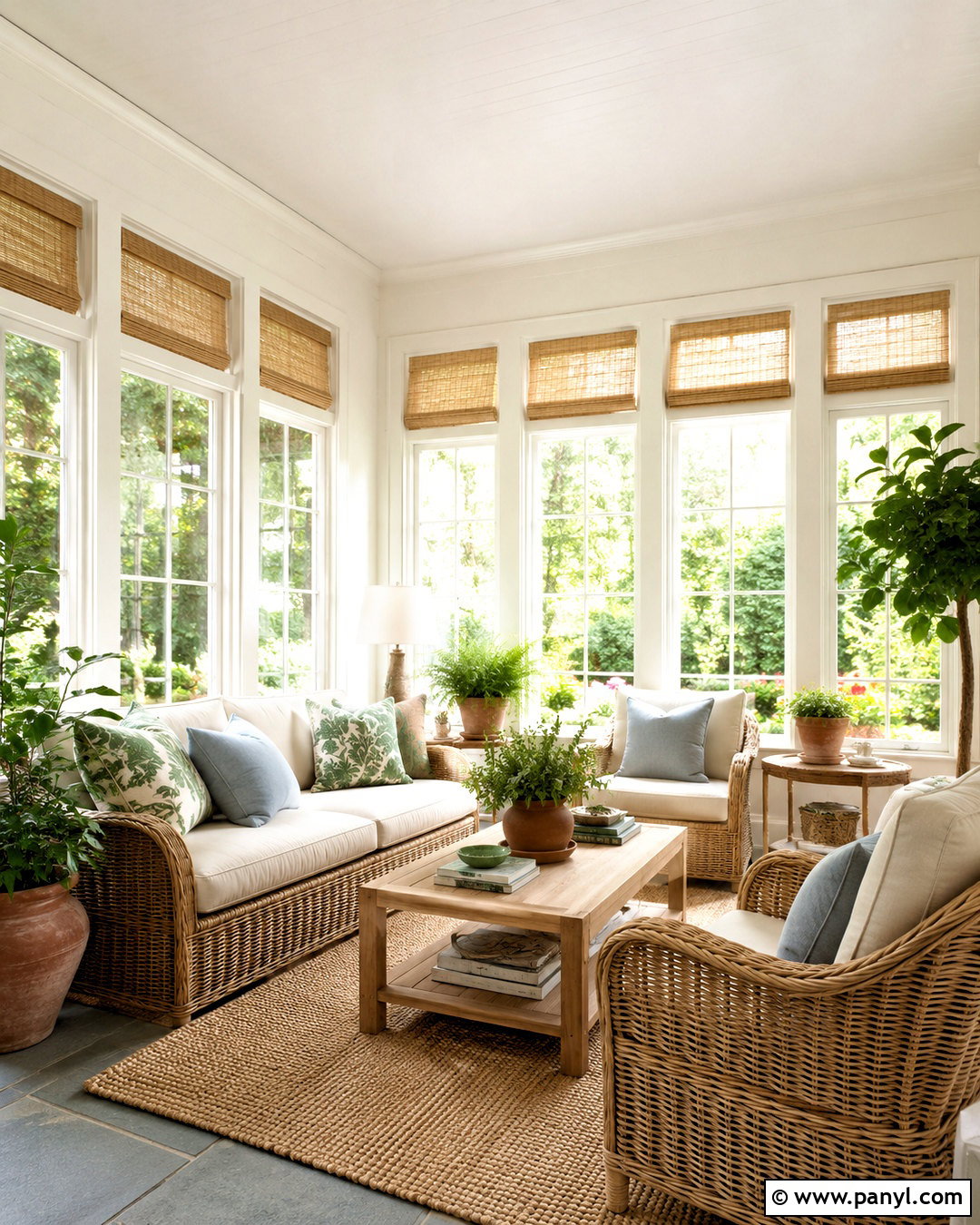
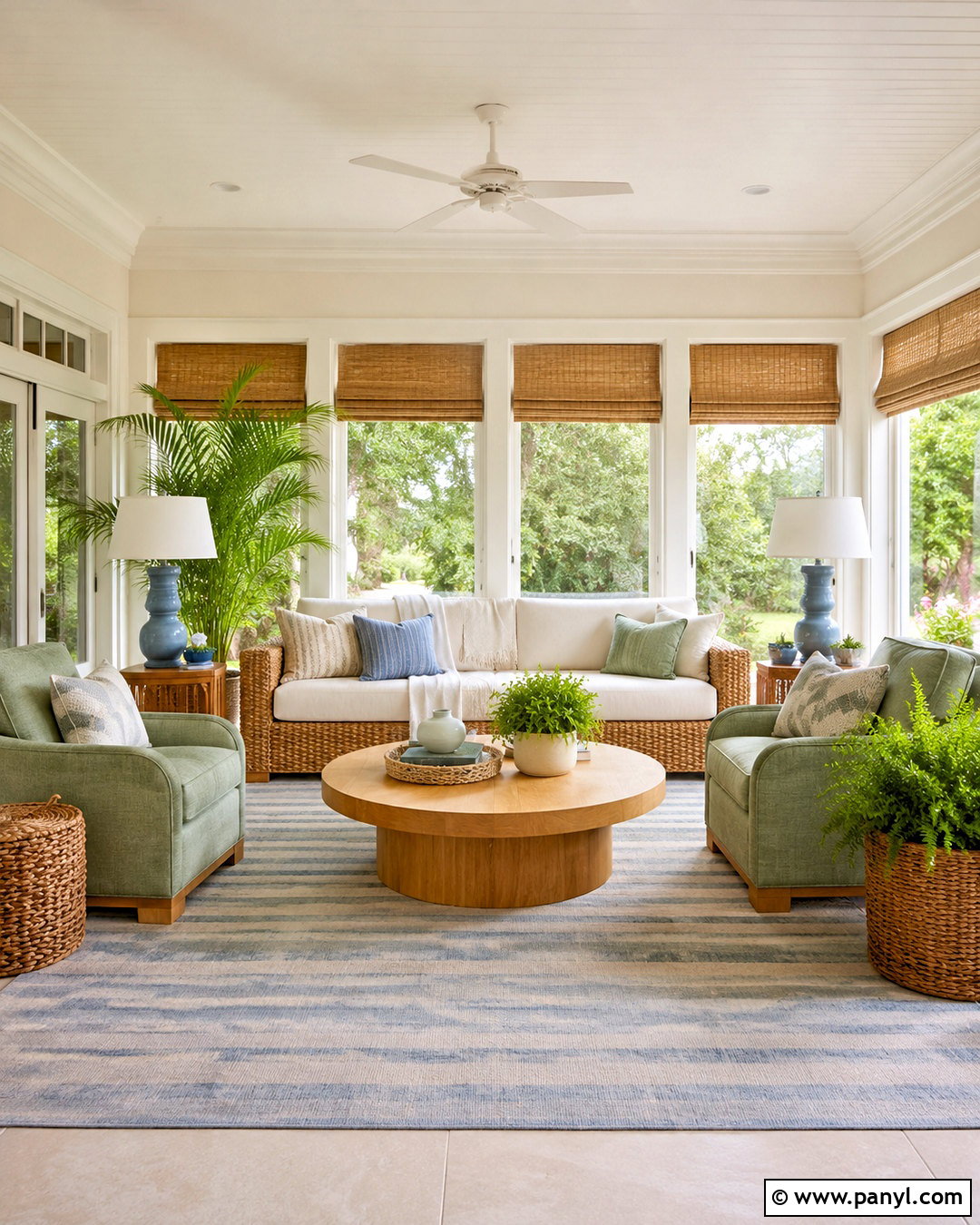
Sunlight brings out the soft brightness of Alabaster walls, making the color an easy foundation for a comfortable sunroom. Arrange a woven rattan sofa and two matching lounge chairs around a light oak coffee table. Use thick cream cushions made from performance fabric, then add pillows in botanical green, faded blue, and warm yellow. A natural fiber rug will define the seating zone without hiding durable stone or wood flooring. Hang simple woven shades that can filter strong afternoon light. Large leafy plants, terra-cotta pots, and a few ceramic planters connect the room to the surrounding garden. Keep window trim Alabaster for a continuous, airy frame. This relaxed setup creates a practical place for reading and conversation while allowing outdoor views to remain the main attraction.
33. Alabaster Walls In A Finished Basement
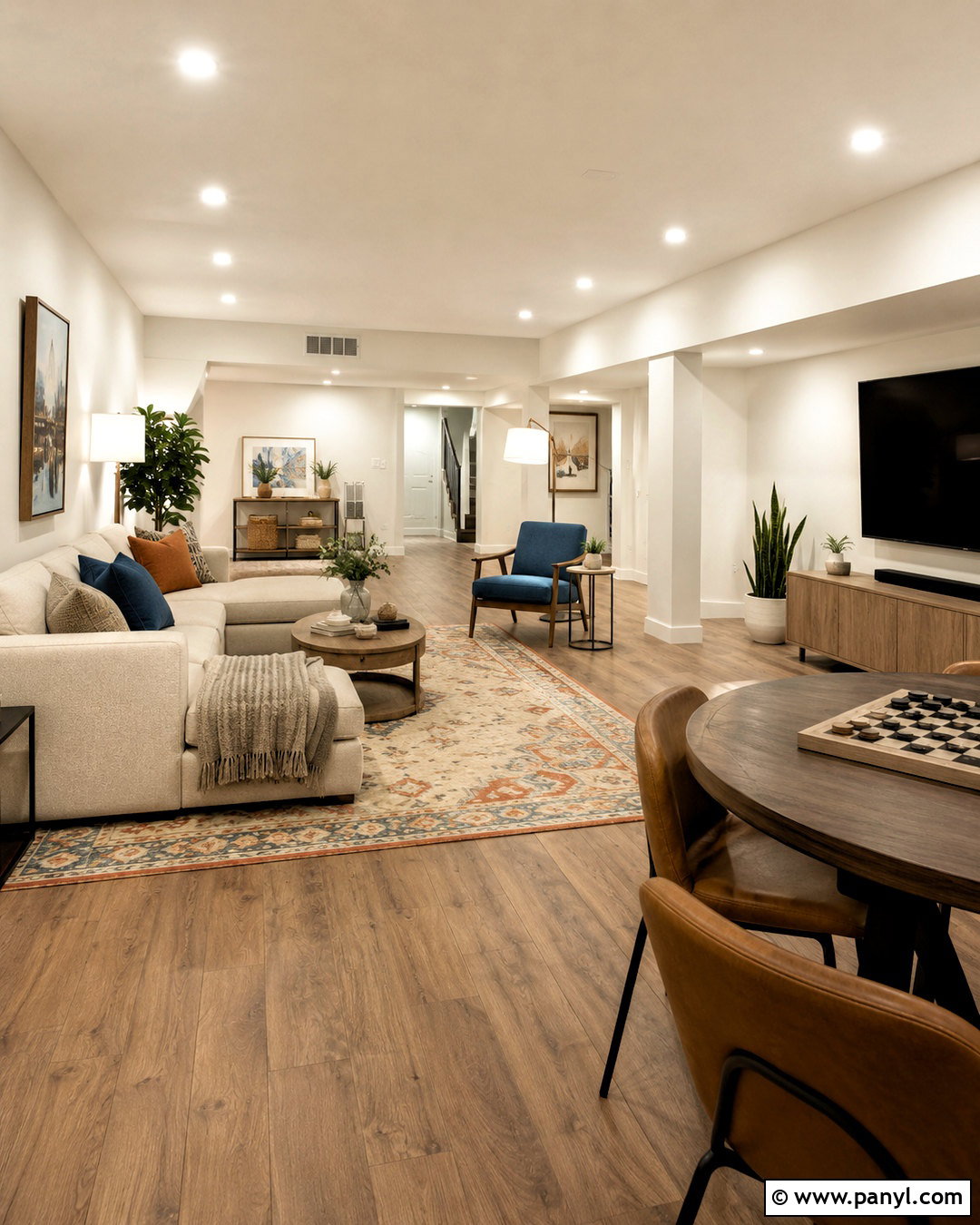
A finished basement can feel less enclosed when Alabaster walls are supported by layered lighting and warm finishes. Choose a comfortable oatmeal sectional and position it around a low oak media console rather than dark, oversized cabinetry. Add a large patterned rug in beige, rust, and blue to create a defined family zone. Recessed ceiling lights should provide even illumination, while table and floor lamps reduce the flat appearance common in lower-level rooms. Use medium-tone luxury vinyl plank flooring for warmth and durability. A small game table or reading corner can occupy the opposite side without blocking circulation. Add framed artwork with generous white space and a few hardy plants. The balanced layout makes the basement feel like an intentional extension of the home rather than an afterthought.
34. Alabaster Walls In A Family Room
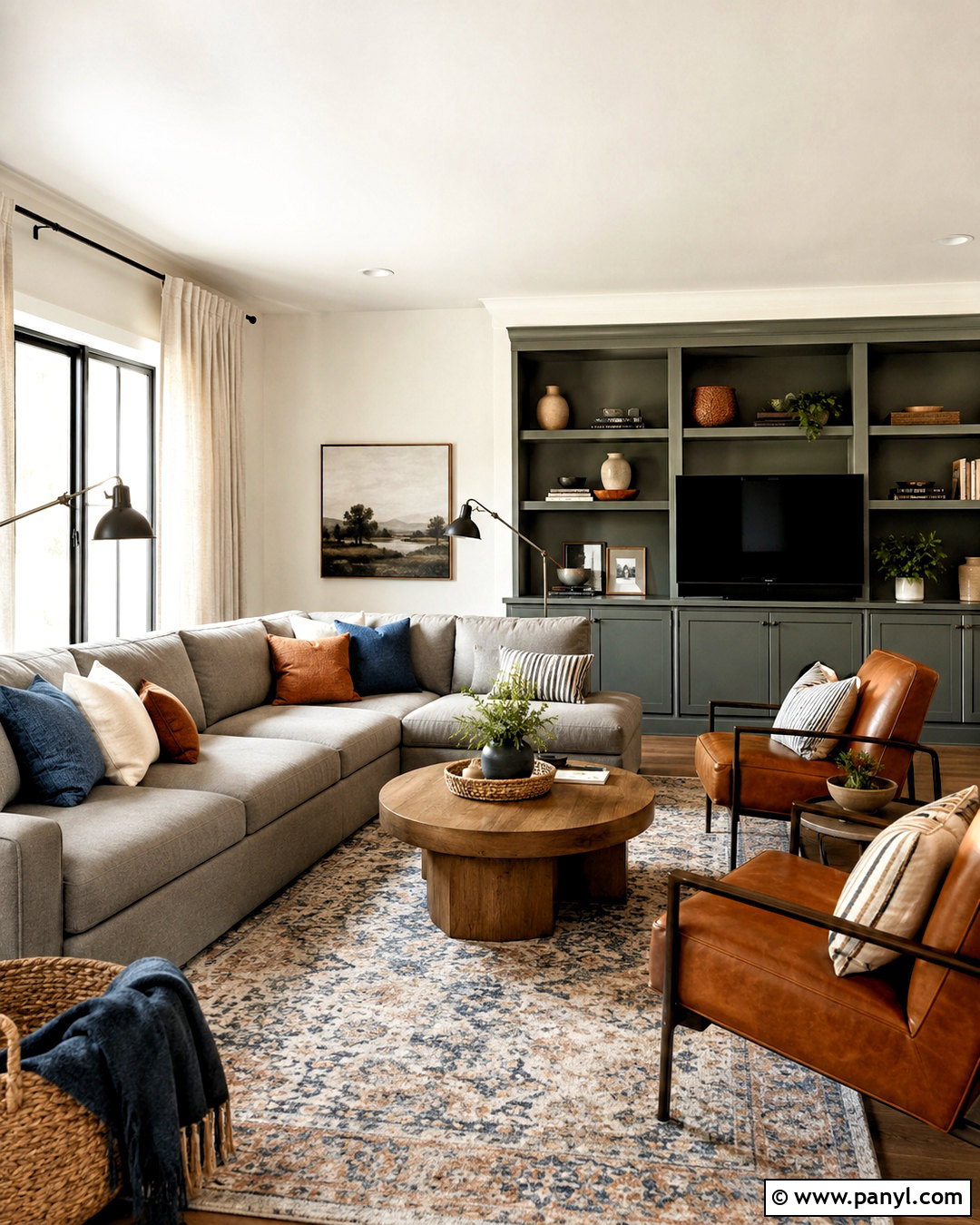
A busy family room needs comfortable seating, hidden storage, and finishes that look attractive without feeling precious. Pair Alabaster walls with a large warm-gray sectional, two cognac leather chairs, and a sturdy oak coffee table with rounded corners. Place washable slipcovers or performance fabrics where spills are likely. Built-in cabinets painted muted green can conceal toys and electronics while open upper shelves display only selected books and objects. A patterned rug containing cream, blue, and brown will disguise everyday wear. Add linen curtains, woven baskets, and adjustable floor lamps for flexible use. Keep the arrangement open around doorways and main traffic paths. This practical design supports movies, games, reading, and conversation while the warm walls maintain a bright, connected backdrop for the varied materials.
35. Alabaster Walls With A Stone Fireplace
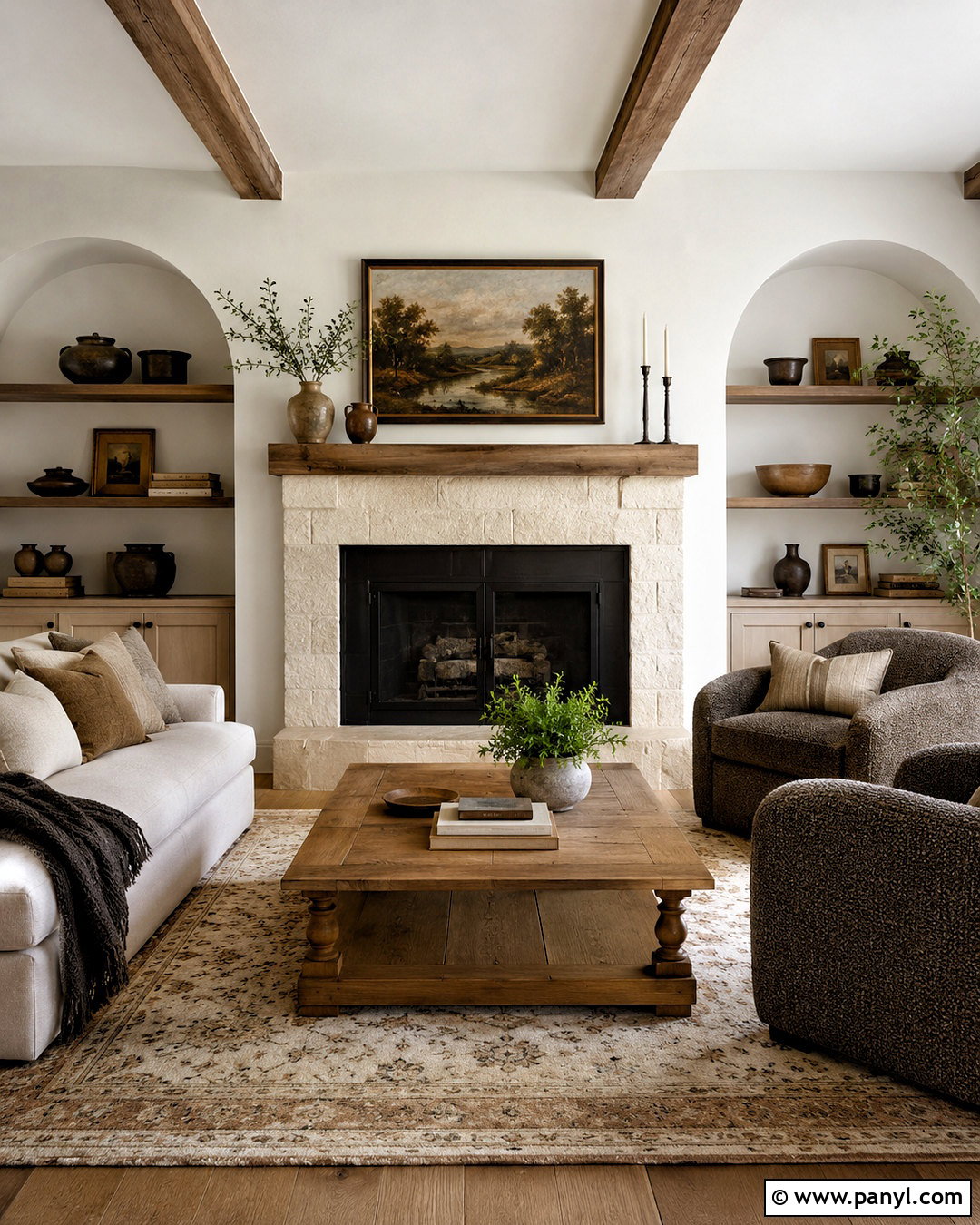
A stone fireplace becomes a natural centerpiece when surrounded by Alabaster walls and a balanced furniture arrangement. Choose warm limestone, fieldstone, or light gray stacked stone with subtle beige variation. Add a thick reclaimed oak mantel to connect the fireplace with wood flooring and nearby furniture. Position a neutral sofa directly opposite, with two textured armchairs angled toward the hearth. A wool rug in cream and muted brown should define the conversation area. Use black fireplace doors and dark bronze lighting for crisp definition. Keep mantel decor low and simple, such as one framed landscape, a ceramic vessel, and greenery. Alabaster prevents the stone from making the room feel heavy, while the fireplace texture gives the warm-white walls a stronger architectural purpose.
36. Alabaster Walls With Painted Built-Ins
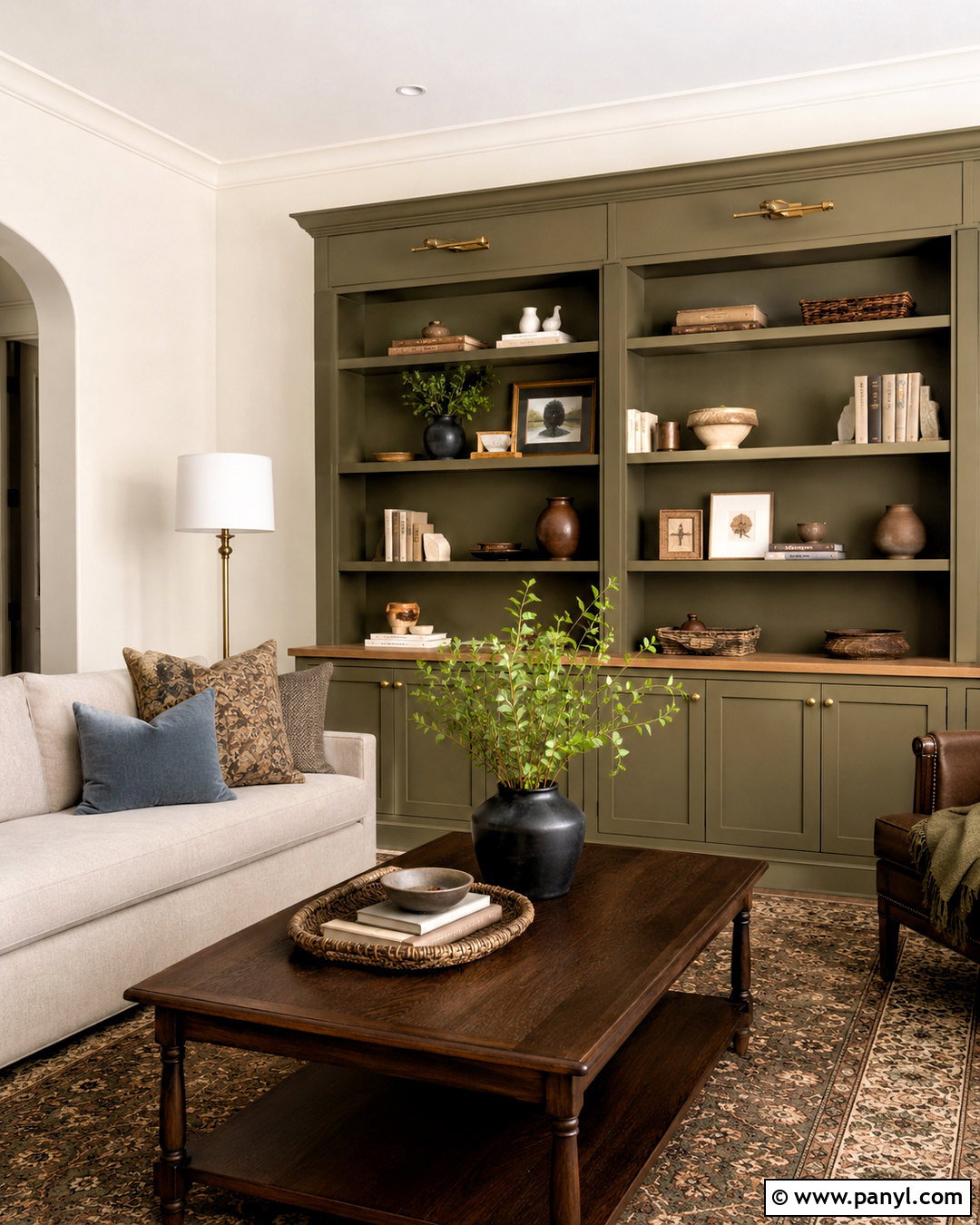
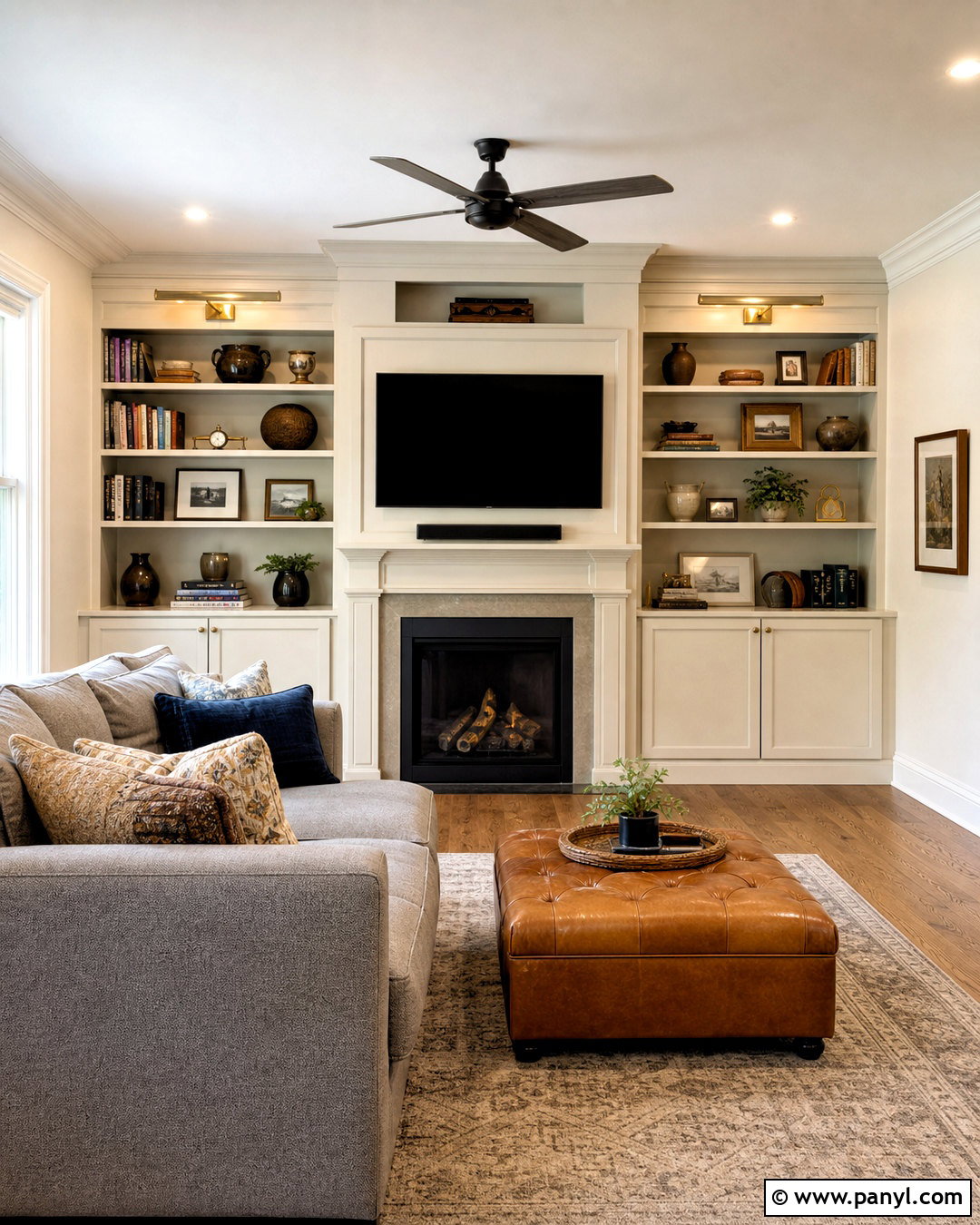
Built-ins painted a contrasting color can give Alabaster walls more structure and turn storage into a major design feature. Choose muted olive, deep blue-gray, or charcoal for floor-to-ceiling cabinetry surrounding a window or media area. Include closed lower cabinets for practical storage and open shelves above for books and decorative objects. Add a white oak countertop or bench seat to soften the painted finish. A neutral sofa, patterned rug, and brass picture lights should coordinate with the cabinetry without competing with it. Repeat the built-in color through a few pillows or artwork details elsewhere in the room. Leave some shelves partially empty. The complete composition feels intentional because the darker unit provides a focal point while the light walls preserve openness around it.
37. Alabaster Walls With Board And Batten
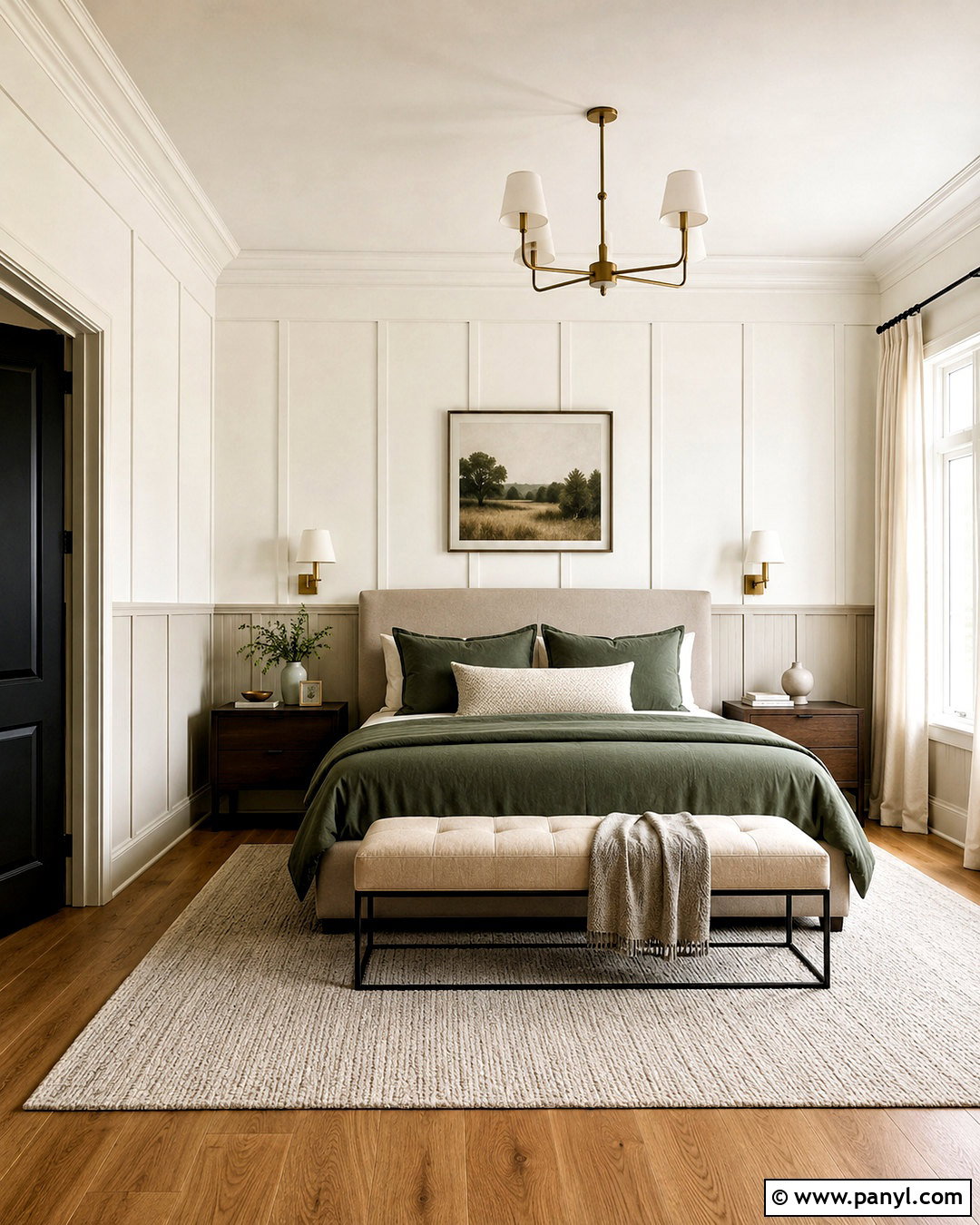
Board and batten adds character to Alabaster walls through shadow, proportion, and architectural rhythm rather than a second paint color. Install the treatment across the lower two-thirds of a dining room, bedroom, or hallway, then paint the boards and upper wall Alabaster in different sheens. Pair the feature with medium oak flooring, a dark wood console, and aged-brass lighting. In a bedroom, use an upholstered taupe bed and muted green textiles. In a dining space, choose a walnut table and woven chairs. Keep artwork simple so it sits comfortably within the panel layout. Carefully spaced vertical boards will make the room feel tailored instead of rustic. This tonal treatment is especially useful when you want wall interest while maintaining a light, continuous whole-home palette.
38. Alabaster Walls With White Shiplap
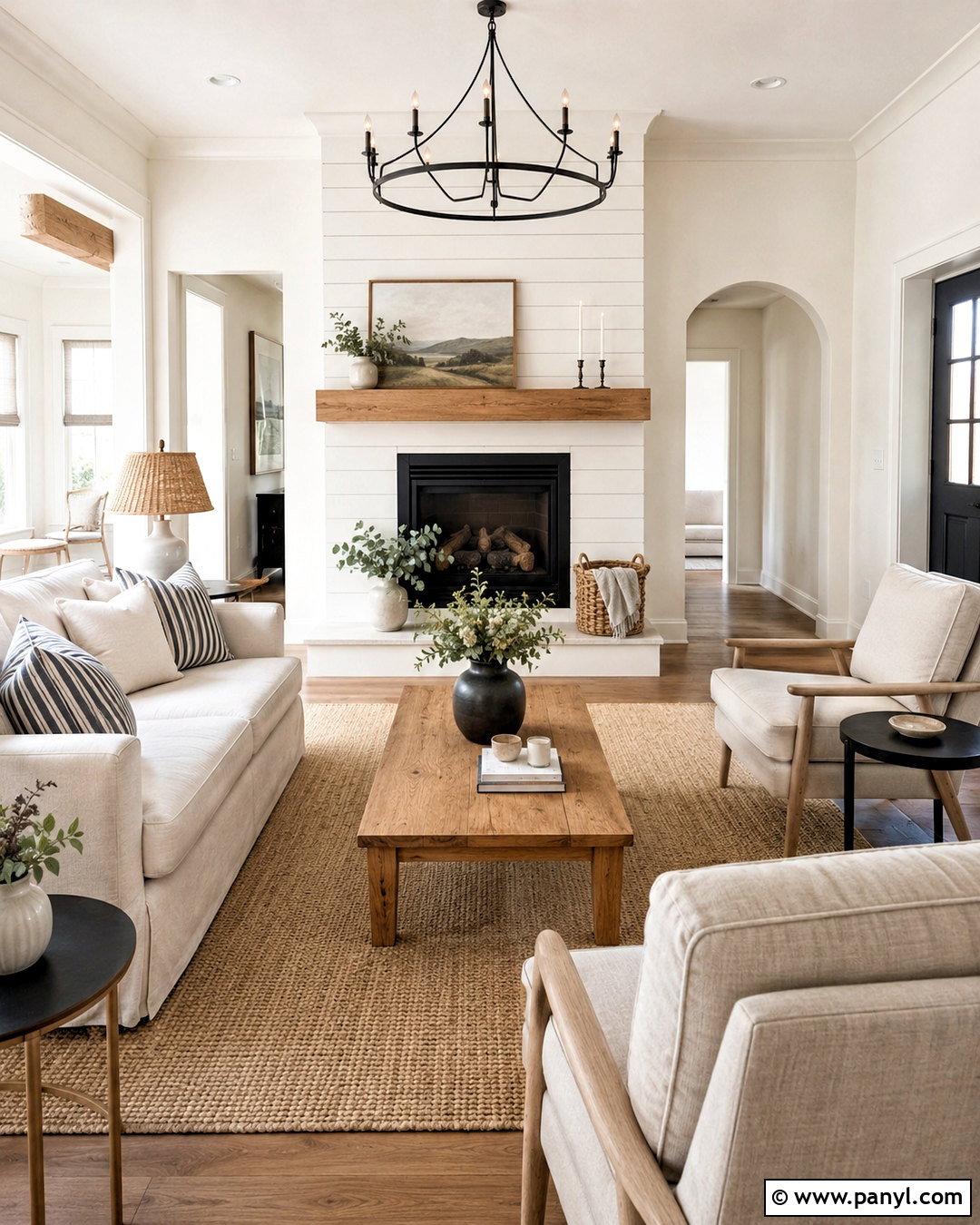
Use Alabaster-painted shiplap as one part of a complete room rather than covering every available surface. Apply horizontal boards to the fireplace wall or behind a bed, while keeping the remaining drywall the same Alabaster color for subtle continuity. Pair the texture with a medium oak mantel, black fireplace insert, and comfortable linen seating in a living room. For a bedroom, combine it with a natural wood bed, striped bedding, and woven lamps. Avoid heavily distressed furniture, which can make the treatment feel dated. Instead, choose clean silhouettes, warm metals, and a restrained neutral palette. The narrow shadow lines introduce dimension while the matching paint color keeps the room visually calm. Natural textiles and genuine wood grain make the finished design feel relaxed and current.
39. Alabaster Walls With Matching Trim
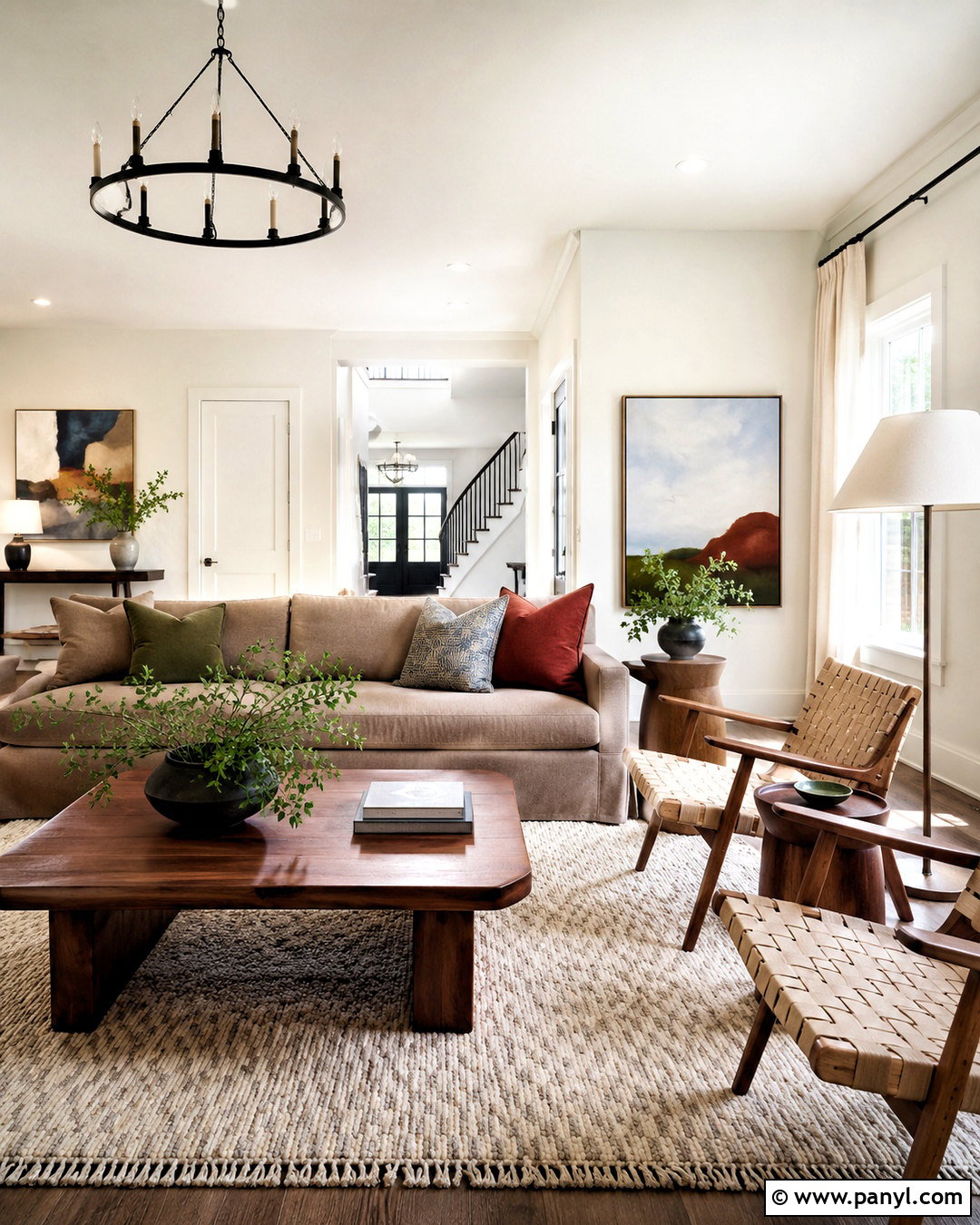
Painting walls, trim, and doors Alabaster creates a smooth, enveloping background that makes architectural transitions feel less busy. Use eggshell on the walls and satin or semi-gloss on baseboards, casings, and doors so the details remain visible through light reflection. This approach works well in an open living area with many windows or doorways. Furnish the space with a warm taupe sofa, walnut tables, woven chairs, and a textured cream rug. Add black or bronze lighting to create clear punctuation within the pale envelope. Linen curtains can closely match the paint, making windows appear taller and less interrupted. Introduce color through olive, rust, and muted blue accessories. The tonal finish feels intentional and sophisticated while allowing furniture, artwork, and natural materials to command attention.
40. Alabaster Walls With Crisp White Trim
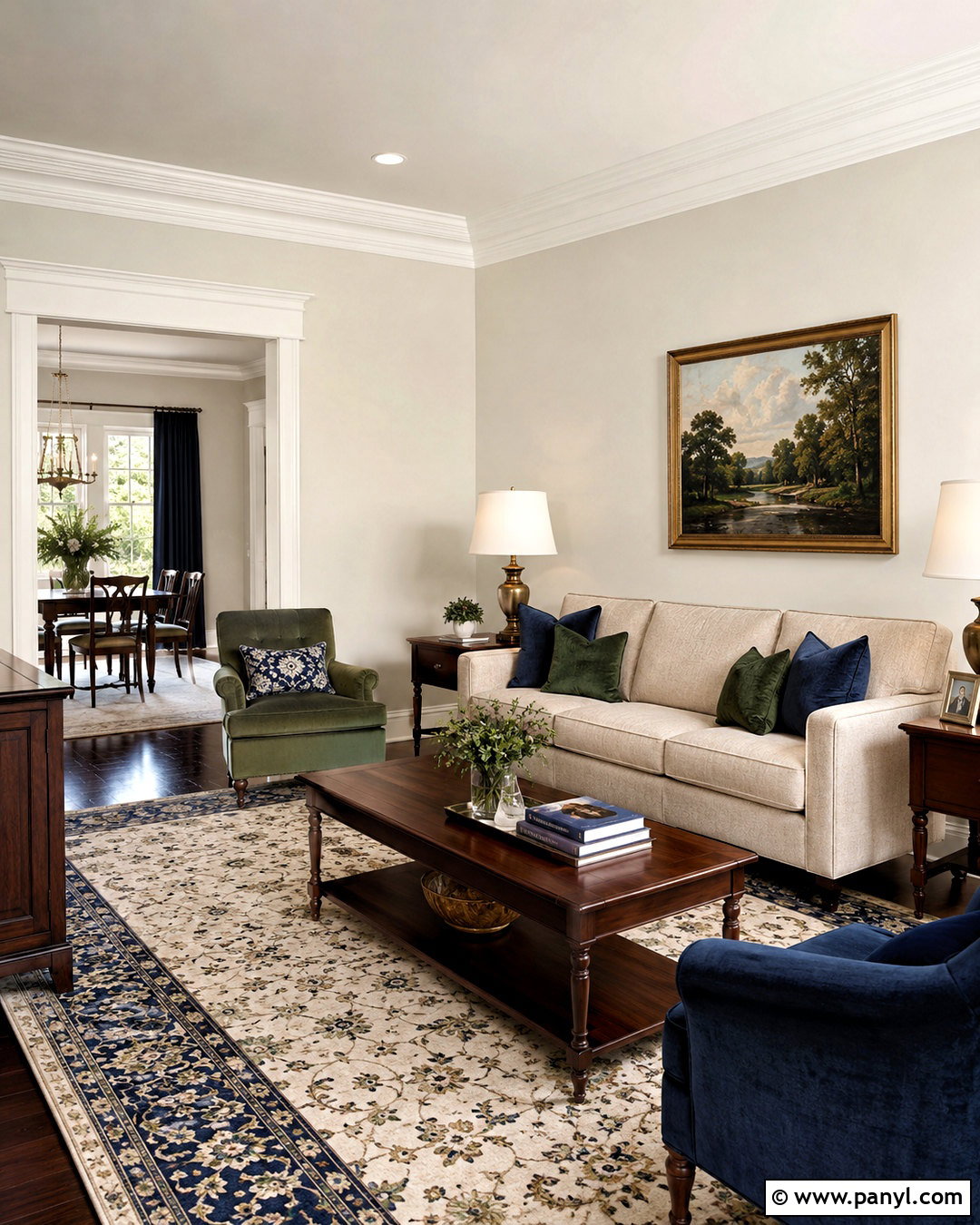
For greater architectural contrast, pair Alabaster walls with trim painted a cleaner, brighter white. This combination clearly outlines windows, doors, crown molding, and baseboards, making it useful in traditional rooms with substantial millwork. Support the contrast with a tailored beige sofa, dark wood furniture, and navy or forest green textiles. Use polished nickel or aged-brass lighting depending on whether you want a cooler or warmer result. A patterned rug should include both creamy and brighter white notes so the two paint colors feel deliberate. Keep the ceiling aligned with the trim color for a consistent frame. Because adjacent whites can shift under changing light, sample them together before painting. The completed room should read as layered and defined rather than accidentally mismatched.
41. Alabaster Walls In A North-Facing Room
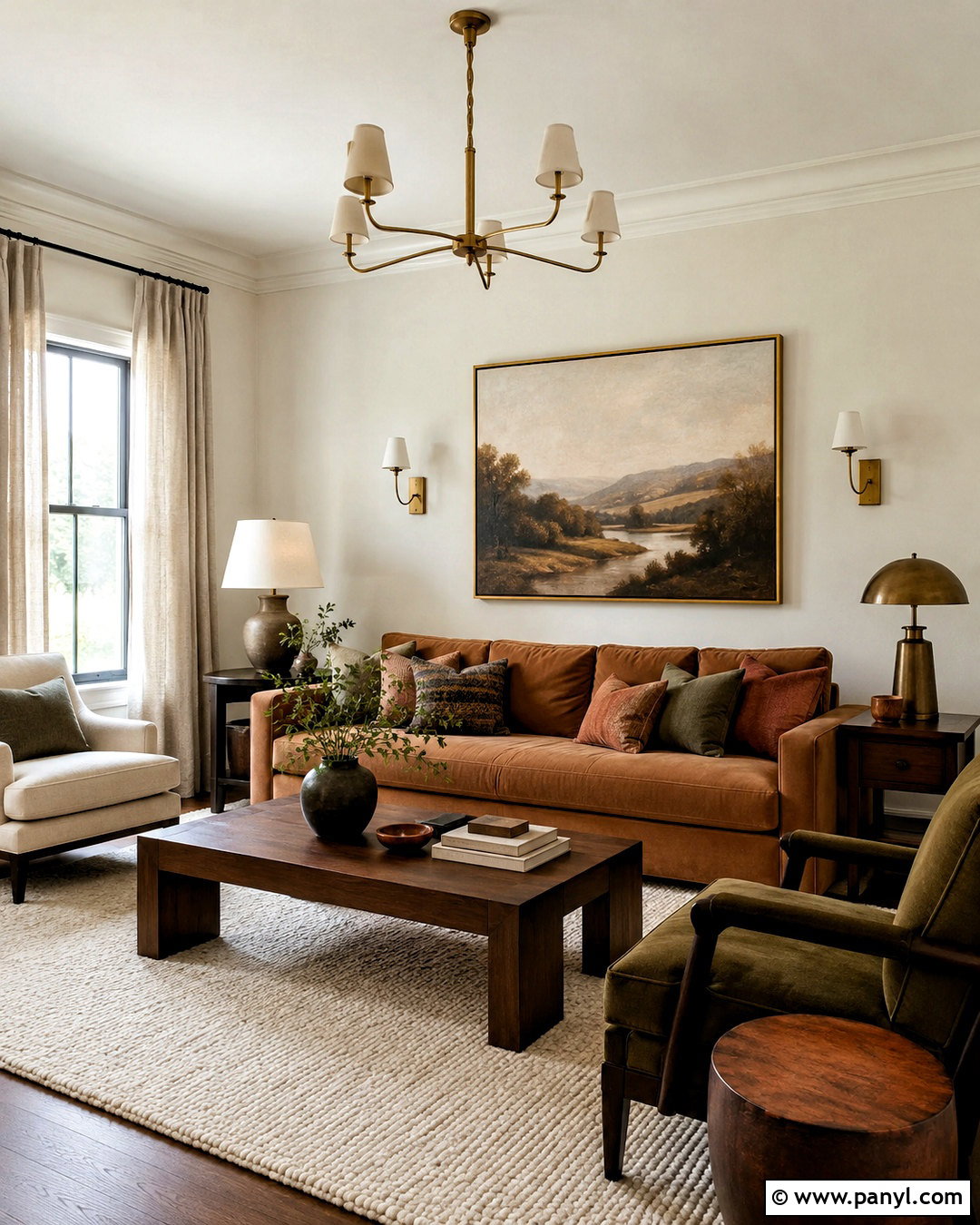
North-facing light can make a room feel cooler, so furnish Alabaster walls with warm materials that maintain an inviting atmosphere. Choose a camel sofa, walnut coffee table, and cream wool rug instead of blue-gray upholstery or icy stone. Add curtains in natural flax and lamps with warm white bulbs to support the daylight during cloudy hours. Muted rust, olive, and ochre pillows can enrich the palette without overpowering the room. Use aged brass, bronze, or dark wood for small accents. A large landscape featuring warm earth tones will help visually anchor the main wall. Avoid surrounding the paint with extremely bright whites, which may exaggerate its creaminess. The finished room feels balanced because its furniture, lighting, and textiles work with the softer conditions rather than fighting them.
42. Alabaster Walls In A South-Facing Room
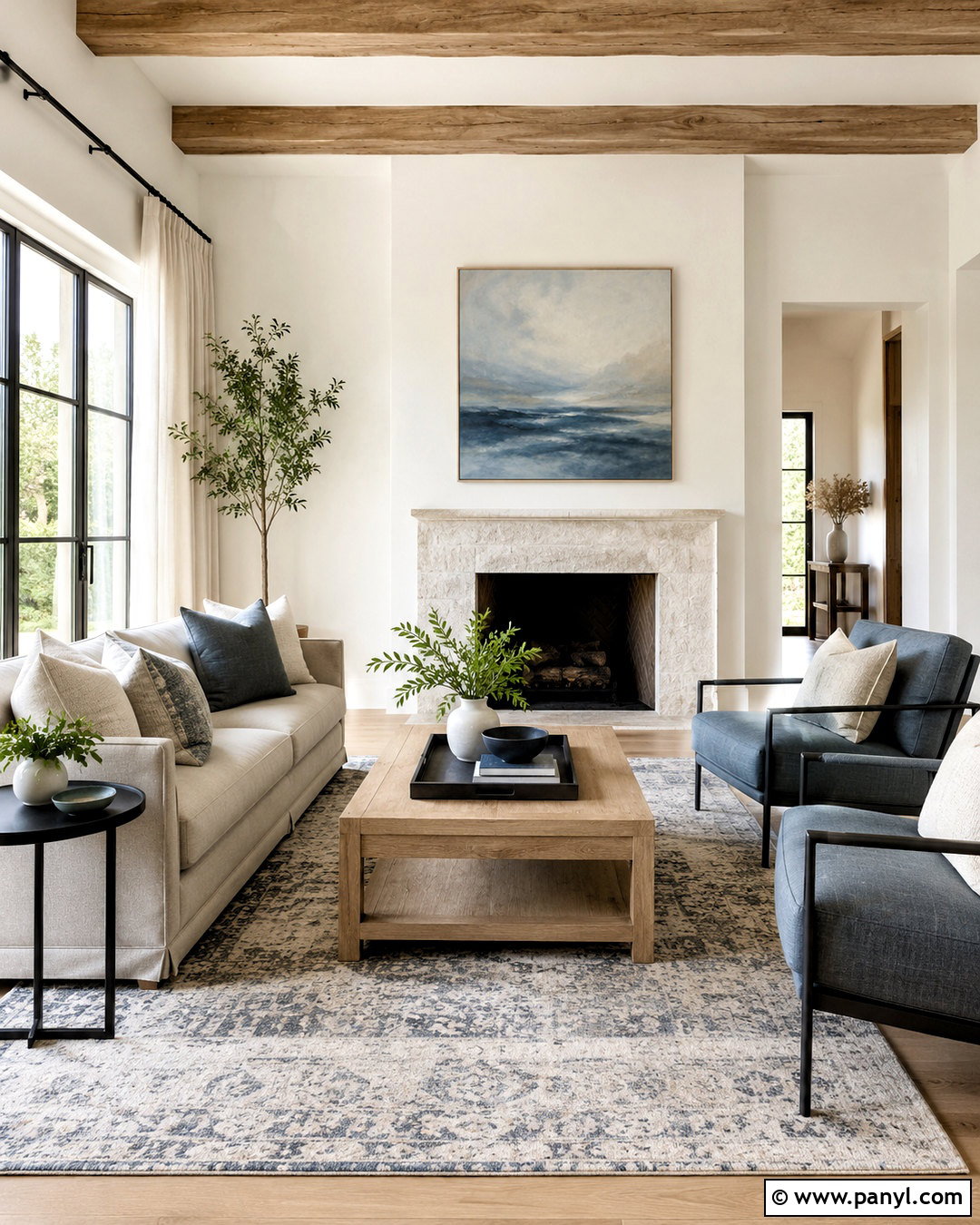
Strong southern light can make Alabaster walls appear warmer, so balance them with cooler natural colors and clean-lined furnishings. Select a light greige sofa, blue-gray lounge chairs, and a pale oak coffee table. Use a rug containing ivory, slate blue, and subtle charcoal to ground the seating area. Brushed nickel, black metal, and cool white stone can provide contrast, while small wood details prevent the design from feeling sterile. Hang light-filtering linen curtains to soften intense midday brightness. Artwork in dusty blue, green, and taupe will complement the walls without introducing additional yellow tones. Keep lampshades neutral and avoid filling the room with cream upholstery. This measured palette lets the sunlight create warmth while the decor maintains a calm, balanced, and contemporary appearance.
43. Alabaster Walls In An Open-Concept Home
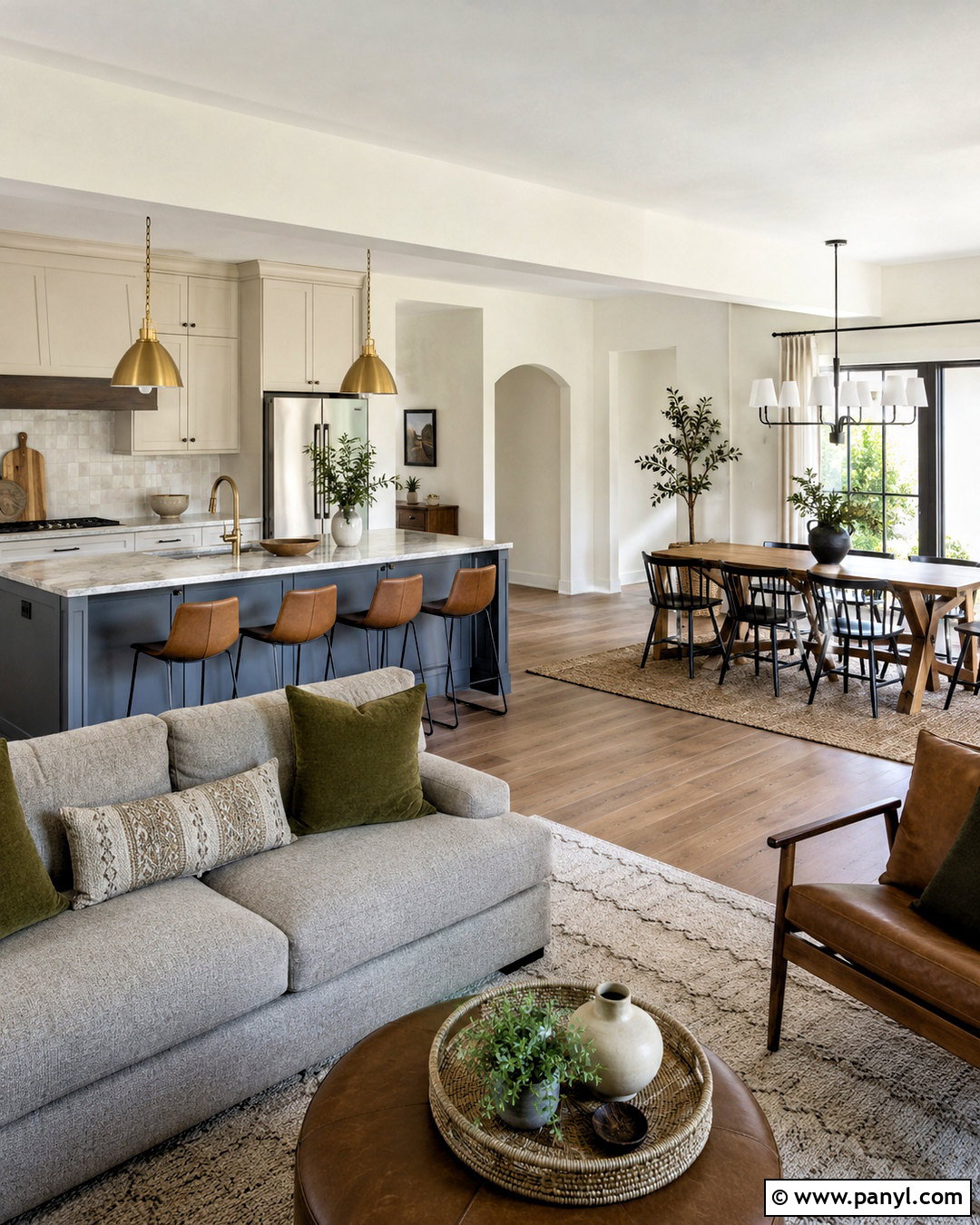
Alabaster walls can unify an open-concept kitchen, dining room, and living area while each zone develops its own visual identity. Repeat medium oak across the flooring, dining table, and selected kitchen details. Use navy or muted green cabinets at the island, then echo that color through living room pillows and dining artwork. A warm-gray sectional can define the lounge, while a large rug establishes its boundaries without physical walls. Hang coordinated but not identical brass fixtures over the island and dining table. Keep trim, doors, and connecting hallways Alabaster for consistent flow. Vary textures through linen, leather, stone, and woven fibers. This approach prevents the large area from looking monotonous while ensuring every furniture grouping feels related to the same warm-white architectural background.
44. Alabaster Walls In A Small Apartment
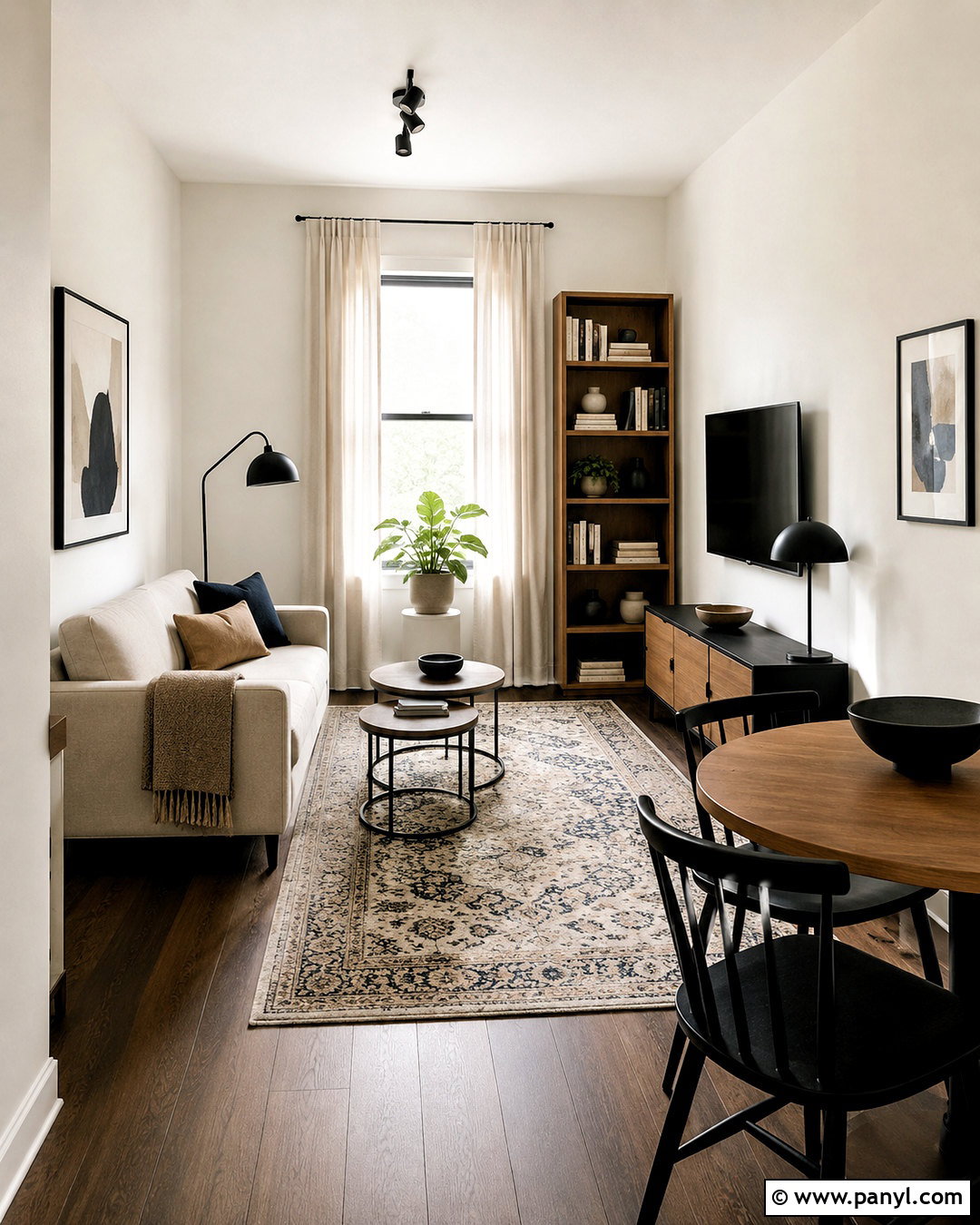
In a small apartment, Alabaster walls can connect multiple functions while portable furniture provides flexibility. Use a compact oatmeal sofa, a round oak dining table, and a slim media console with closed storage. Define the living zone with a cream-and-blue rug, then position the dining table near the kitchen or window. Choose nesting tables and lightweight dining chairs that can move when guests arrive. Hang curtains high and wide to maximize the apparent size of the windows. A tall bookcase in warm wood uses vertical space without requiring built-ins. Repeat black accents through lamps, frames, and chair legs for consistency. Keep decorative objects limited but meaningful. The complete apartment feels brighter and more organized because each piece has a clear function and coordinated finish.
45. Alabaster Walls Throughout The Whole House
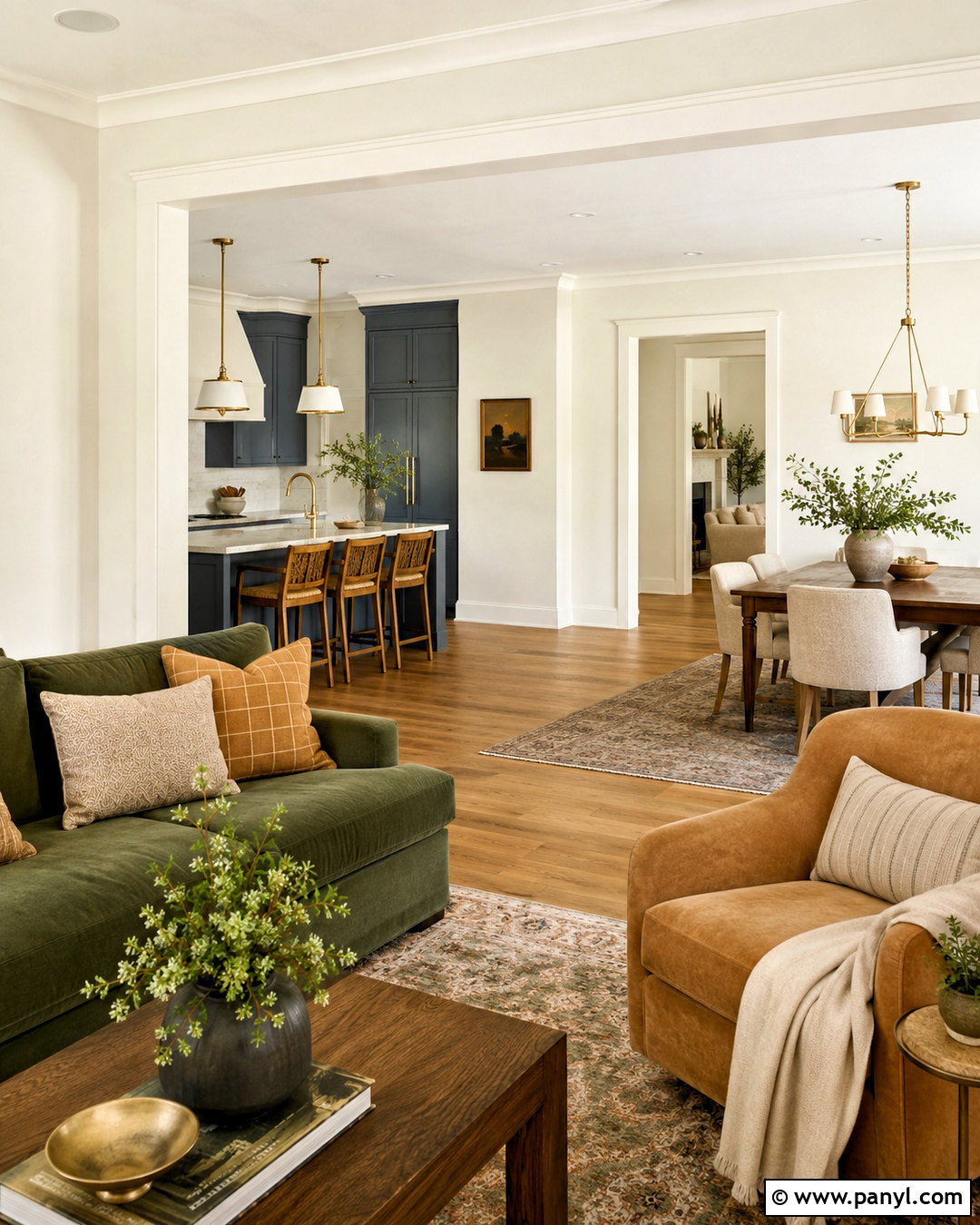
Using Alabaster walls throughout the house creates continuity, but each room should still have its own palette and purpose. Repeat a few foundational finishes, such as medium oak floors, Alabaster trim, aged-brass hardware, and warm white ceilings. Give the living room olive and camel accents, the kitchen blue-gray cabinetry, and bedrooms softer combinations of taupe, blue, or muted green. Use rugs, artwork, and textiles to distinguish spaces without changing the main wall color. In bathrooms and laundry areas, choose washable paint finishes suited to moisture and regular cleaning. Test samples in bright, shaded, and artificial light before completing the entire project, since paint can shift between exposures. A consistent material plan will make the finished home feel connected rather than repetitive.
Conclusion:
The most successful 45 Alabaster Sherwin Williams Walls combine a consistent warm-white background with varied furniture, materials, lighting, and accent colors. Natural oak, walnut, linen, stone, woven fibers, and aged metals bring out the color’s comfortable character. Navy, sage, charcoal, blue-gray, and black can add definition where a room needs stronger contrast. Matching trim creates a seamless envelope, while brighter trim emphasizes architectural detail. Most importantly, treat every room as a complete composition rather than choosing wall paint in isolation. Sample Alabaster SW 7008 beside flooring, countertops, cabinetry, and fabrics at different times of day. Sherwin-Williams also recommends checking a physical sample because screens may not represent the actual color accurately. ()

Related Ideas and Inspiration:
Leave a Reply