
Alabaster White Kitchen Walls create a soft, inviting backdrop that feels brighter than beige yet warmer than a stark white. Sherwin-Williams describes Alabaster SW 7008 as a bright, creamy white, making it especially useful for kitchens where natural wood, stone, tile, and painted cabinetry need to feel connected. () Its subtle warmth can soften strong contrasts, support earthy finishes, and help small rooms appear more open. The key is building a complete palette around the wall color rather than selecting each finish separately. Cabinet undertones, countertop veining, flooring, lighting, and hardware should all work together. From modern black cabinetry to relaxed farmhouse wood tones, the following complete looks show how to decorate with Alabaster White Kitchen Walls.

1. Alabaster Kitchen Walls With White Oak Cabinets
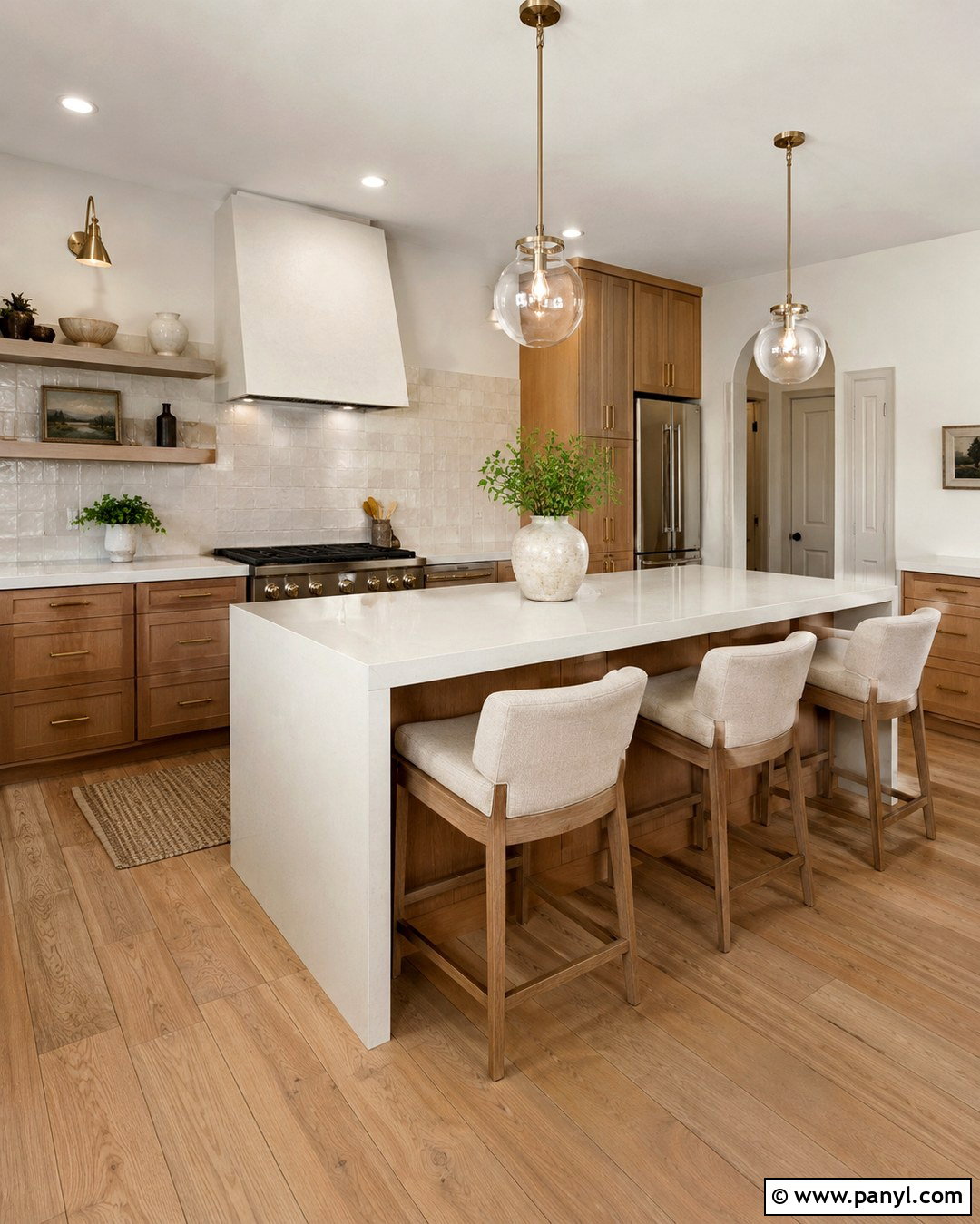
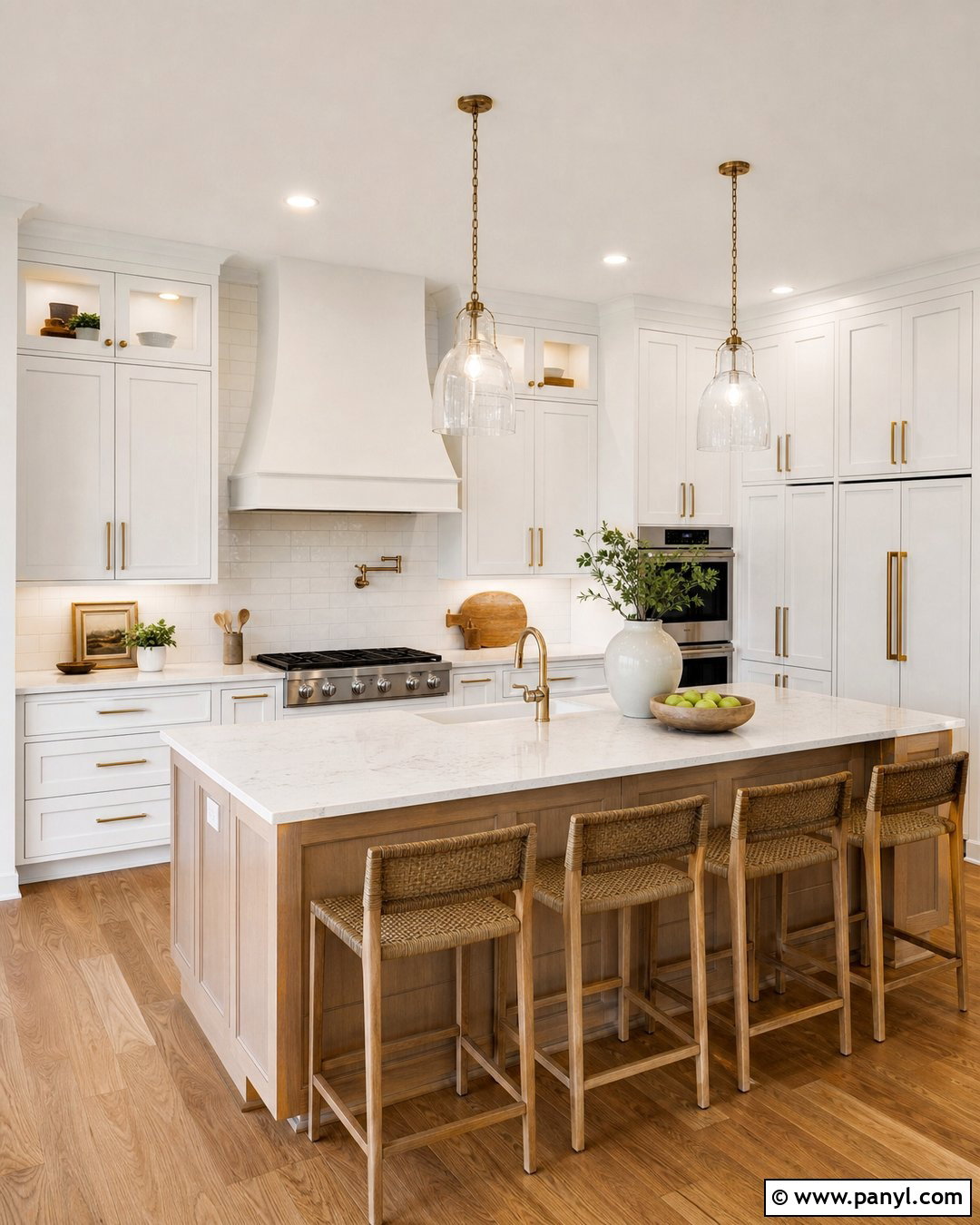
White oak cabinets bring out the gentle warmth in Alabaster without making the kitchen look yellow or overly creamy. Choose simple slab doors or slim Shaker fronts in a clear matte finish so the natural grain remains visible. Add warm white quartz countertops with faint beige veining and a handmade ivory backsplash for subtle texture. Light oak flooring can continue the tonal effect, while brushed brass hardware adds a polished detail. Anchor the room with a compact island in matching oak and comfortable counter stools covered in oatmeal fabric. Cream linen shades and simple glass pendants keep the light soft. This complete combination feels natural, calm, and current while allowing the Alabaster walls to quietly unify every finish.
2. Alabaster Kitchen Walls With Cream Cabinets
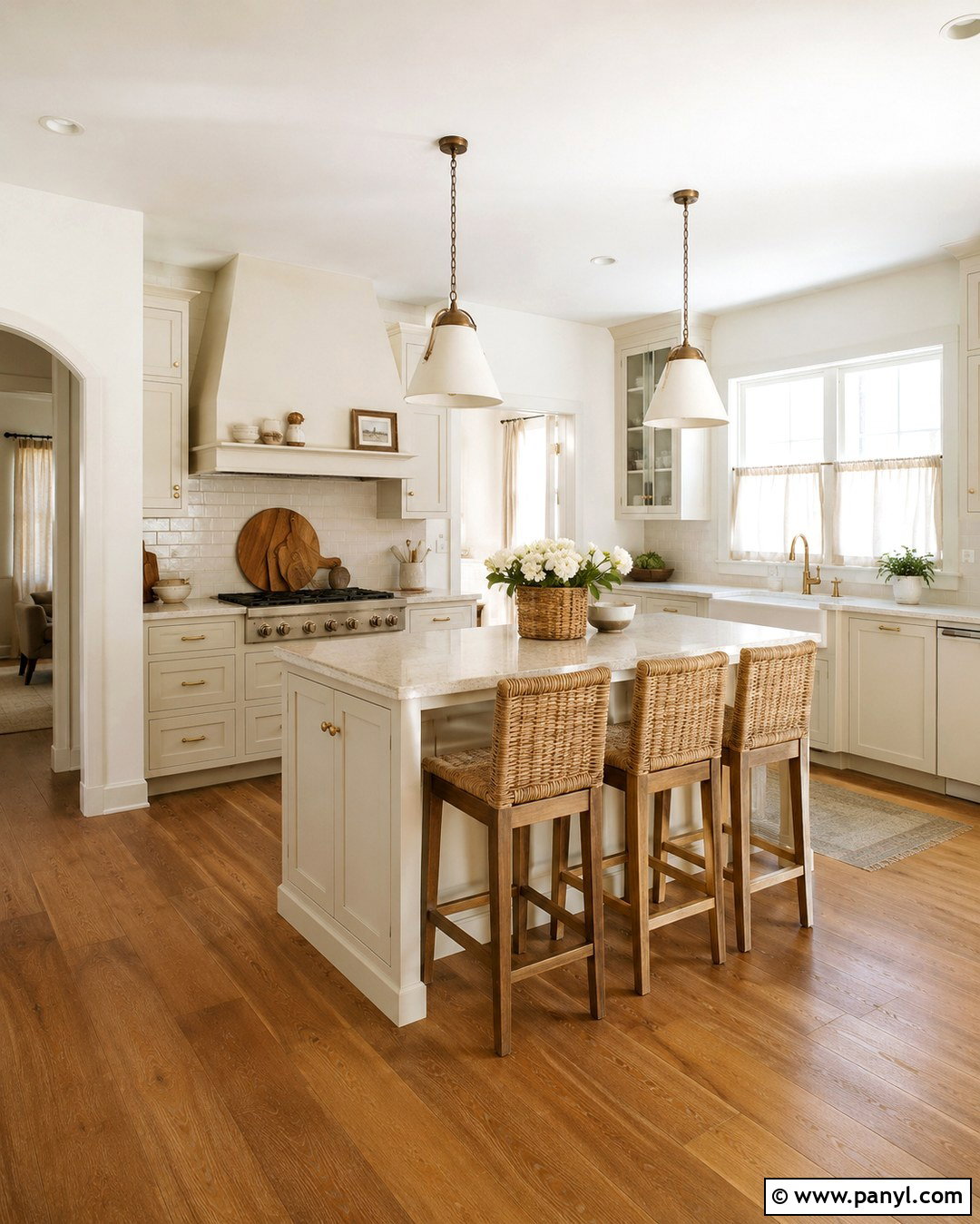
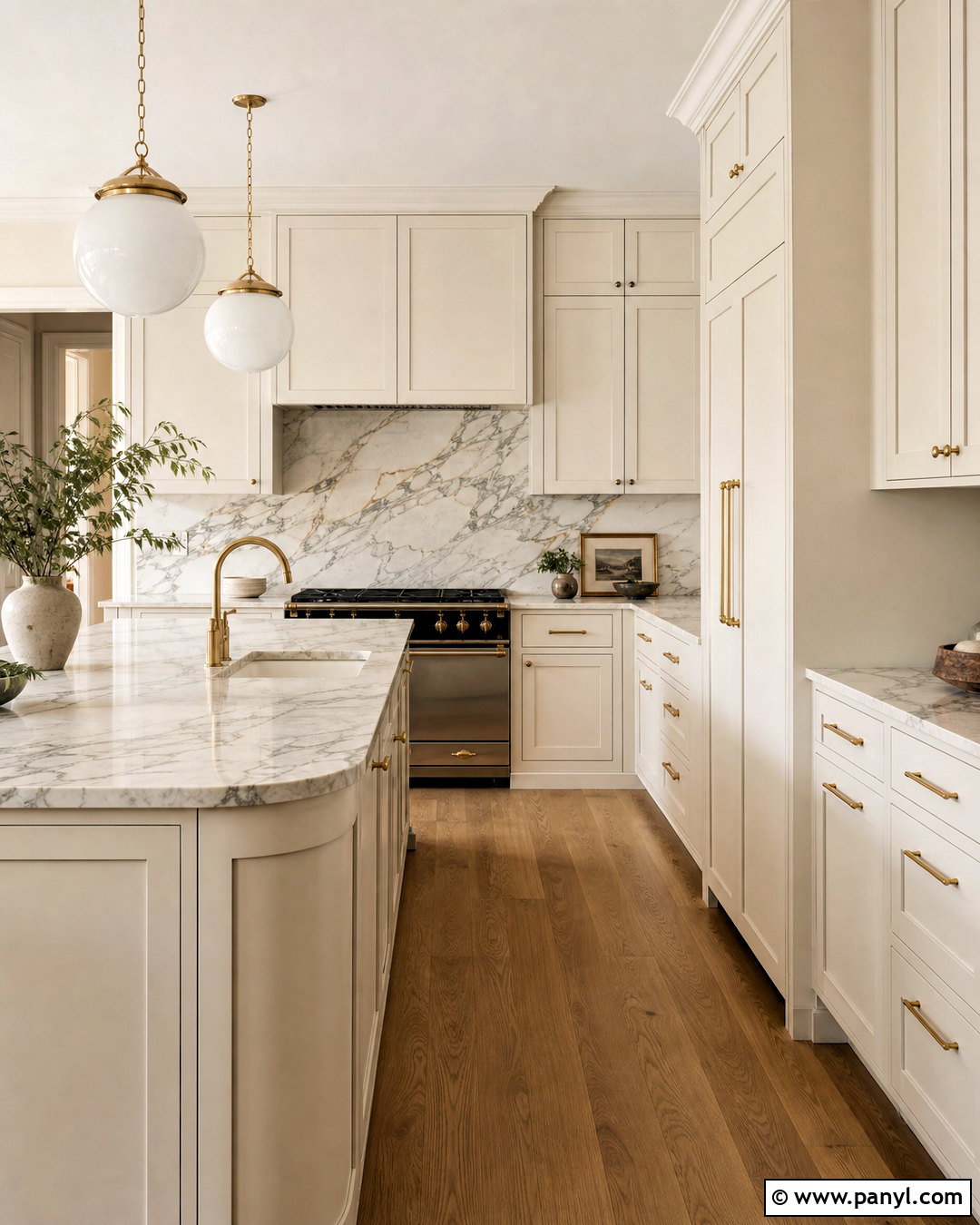
For a warm tone-on-tone kitchen, pair Alabaster walls with cabinets in a slightly deeper cream. The small color difference creates dimension without breaking the quiet, light appearance. Traditional Shaker doors work well, especially when combined with antique brass knobs and cup pulls. Select honed marble-look quartz with warm gray veining, then install an ivory subway tile backsplash using matching grout. Medium-tone oak flooring provides enough contrast to prevent the room from feeling washed out. A cream island topped with the same countertop keeps the arrangement cohesive. Add woven counter stools, ceramic serving pieces, and linen café curtains for texture. This layered neutral palette is especially effective in kitchens that receive soft northern light or have limited windows.
3. Alabaster Kitchen Walls With Sage Green Cabinets
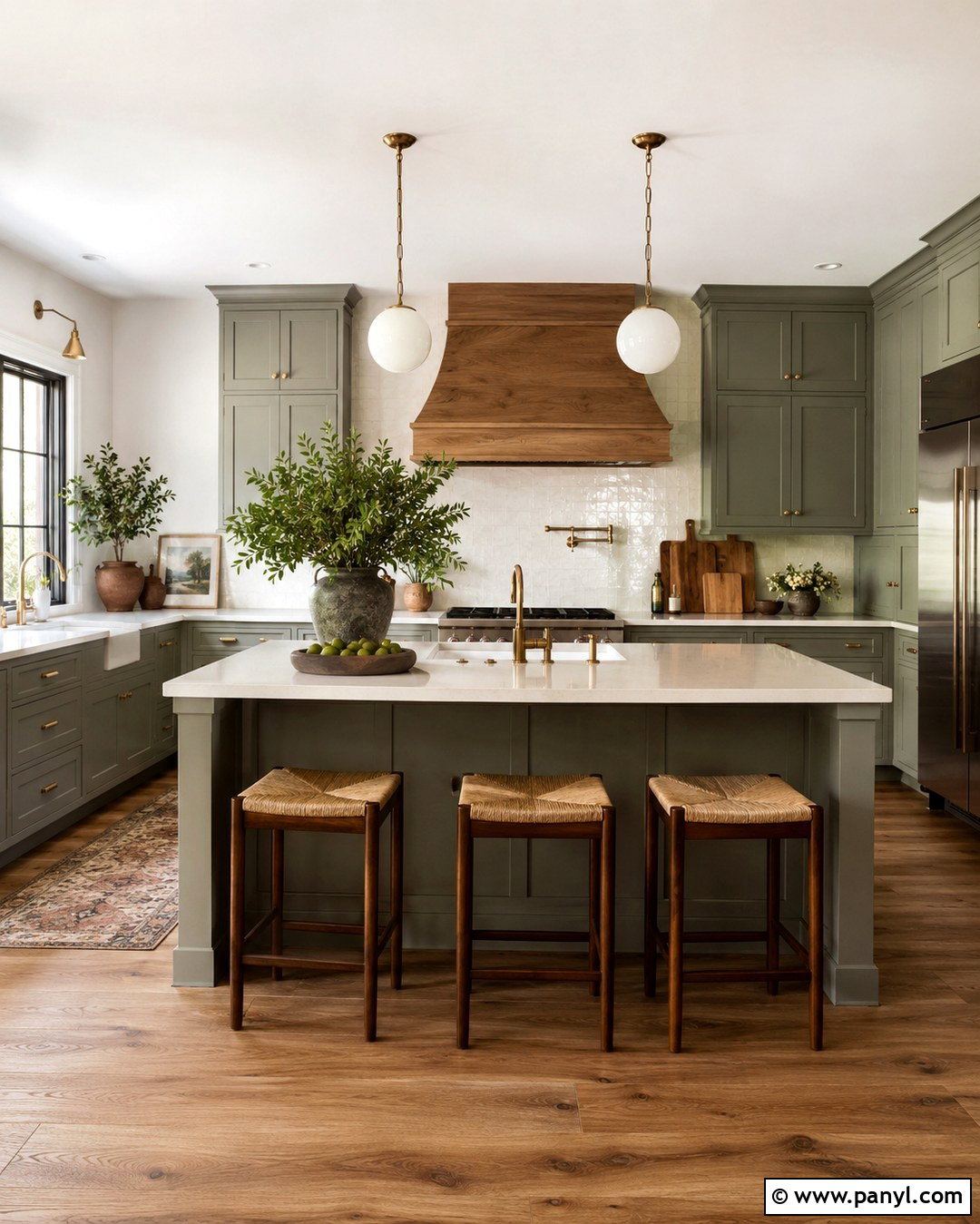
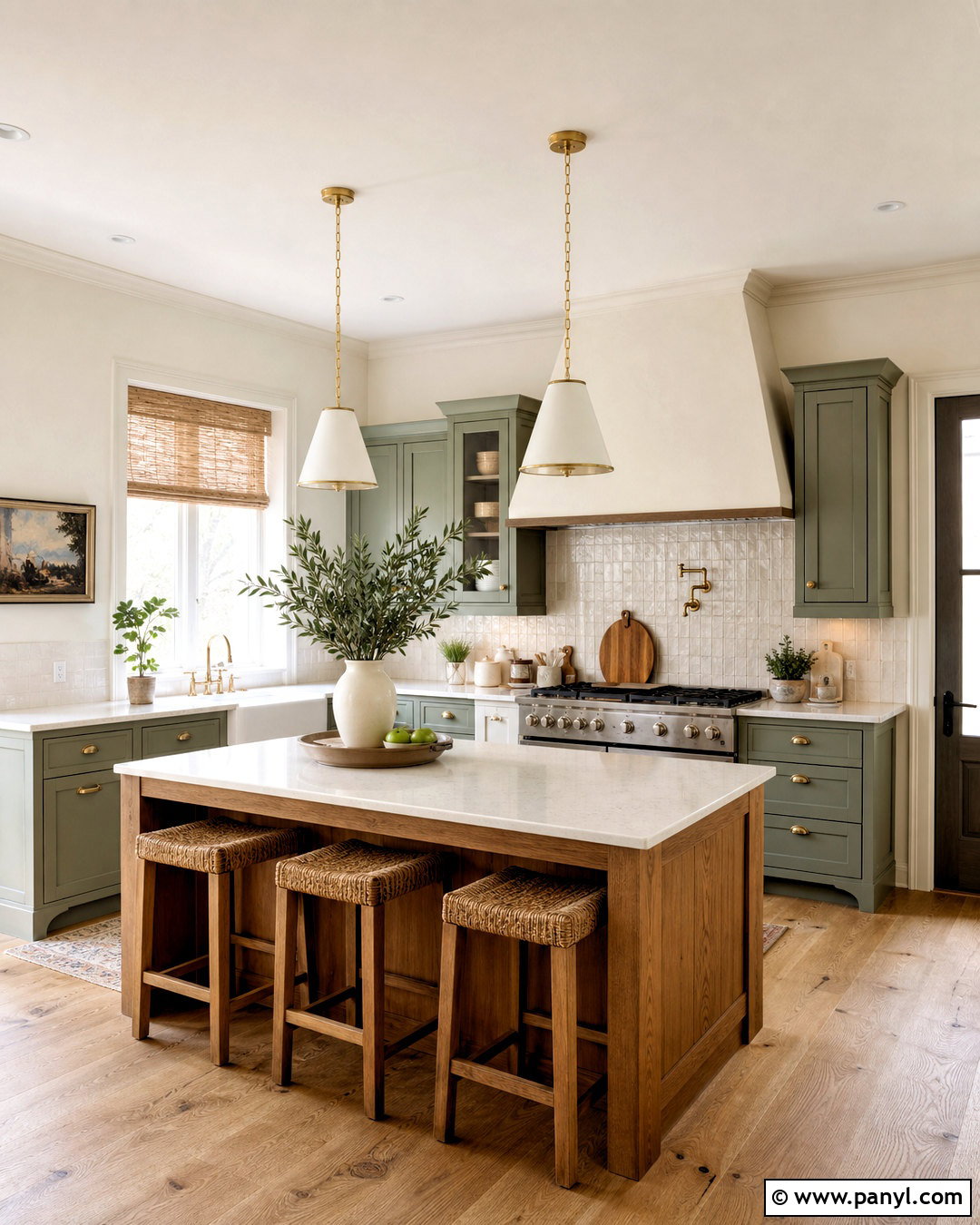
Soft sage green cabinetry gives Alabaster walls an earthy, welcoming character. Choose a muted green with gray undertones rather than a bright botanical shade. It will feel calmer beside the warm white background. Use Shaker-style cabinets, aged brass hardware, and creamy quartz countertops to create a balanced transitional look. A glazed off-white backsplash adds gentle reflection without appearing too glossy. Ground the palette with medium oak flooring and a matching wood range hood or open shelves. The island can repeat the sage cabinetry and include rush-seat stools for natural texture. Finish the room with simple white pendants, herb pots, and restrained ceramic decor. Every element works together to create a comfortable kitchen inspired by gardens and natural materials.
4. Alabaster Kitchen Walls With A Navy Island
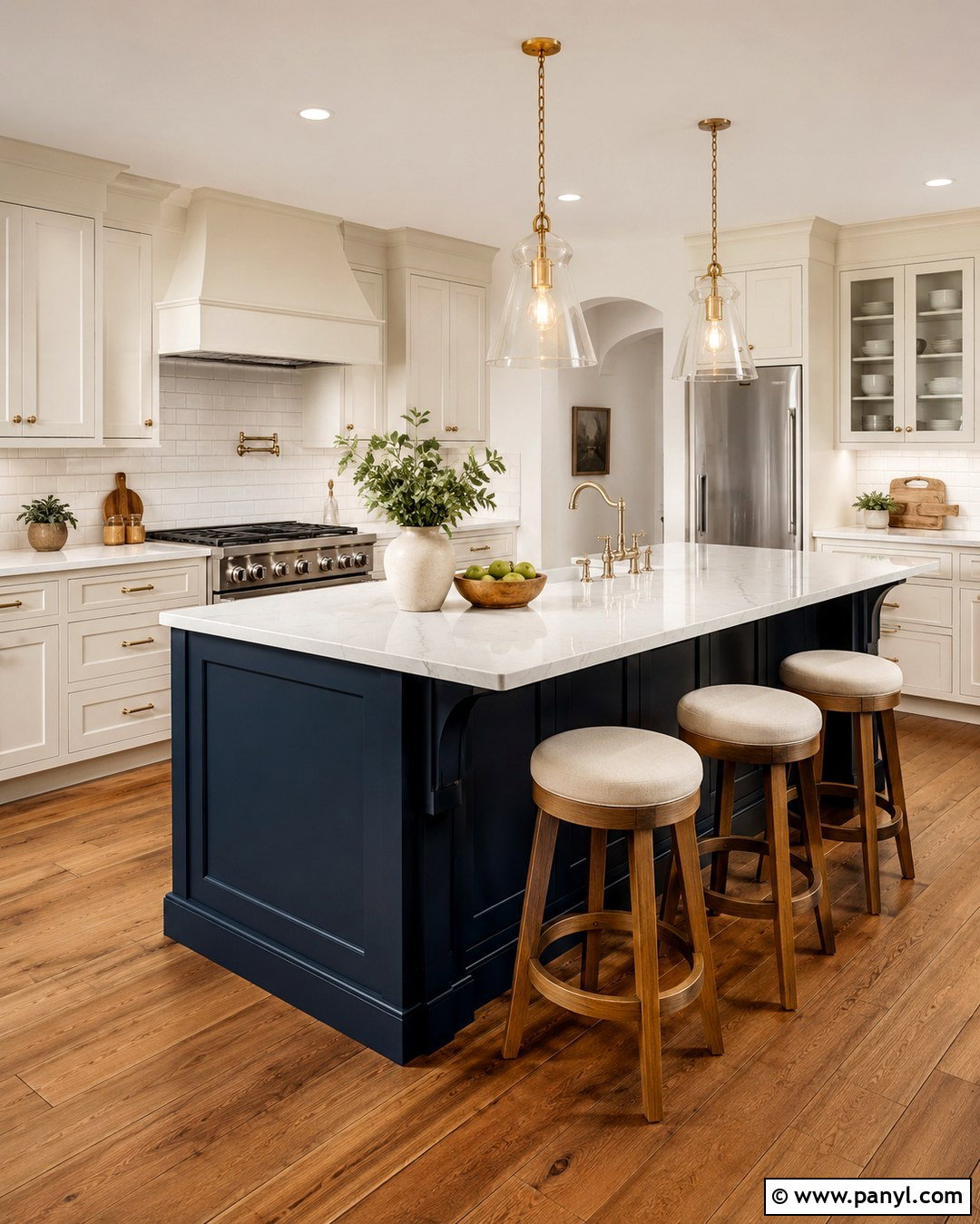
A deep navy island creates a strong focal point while Alabaster walls keep the surrounding kitchen bright. Use warm white perimeter cabinets that closely match the walls, allowing the island to carry most of the color. Top every cabinet with white quartz featuring soft charcoal veining. Polished nickel or brushed brass hardware can sharpen the contrast without making the room feel formal. Medium brown hardwood floors introduce warmth beneath the cool navy finish. Choose backless wood stools or upholstered seats in a durable flax-colored fabric. Clear glass pendants preserve open sightlines across the room. A white ceramic backsplash and a few blue accessories repeat the island color subtly, resulting in a classic kitchen that feels balanced rather than overly themed.
5. Alabaster Kitchen Walls With Black Cabinets
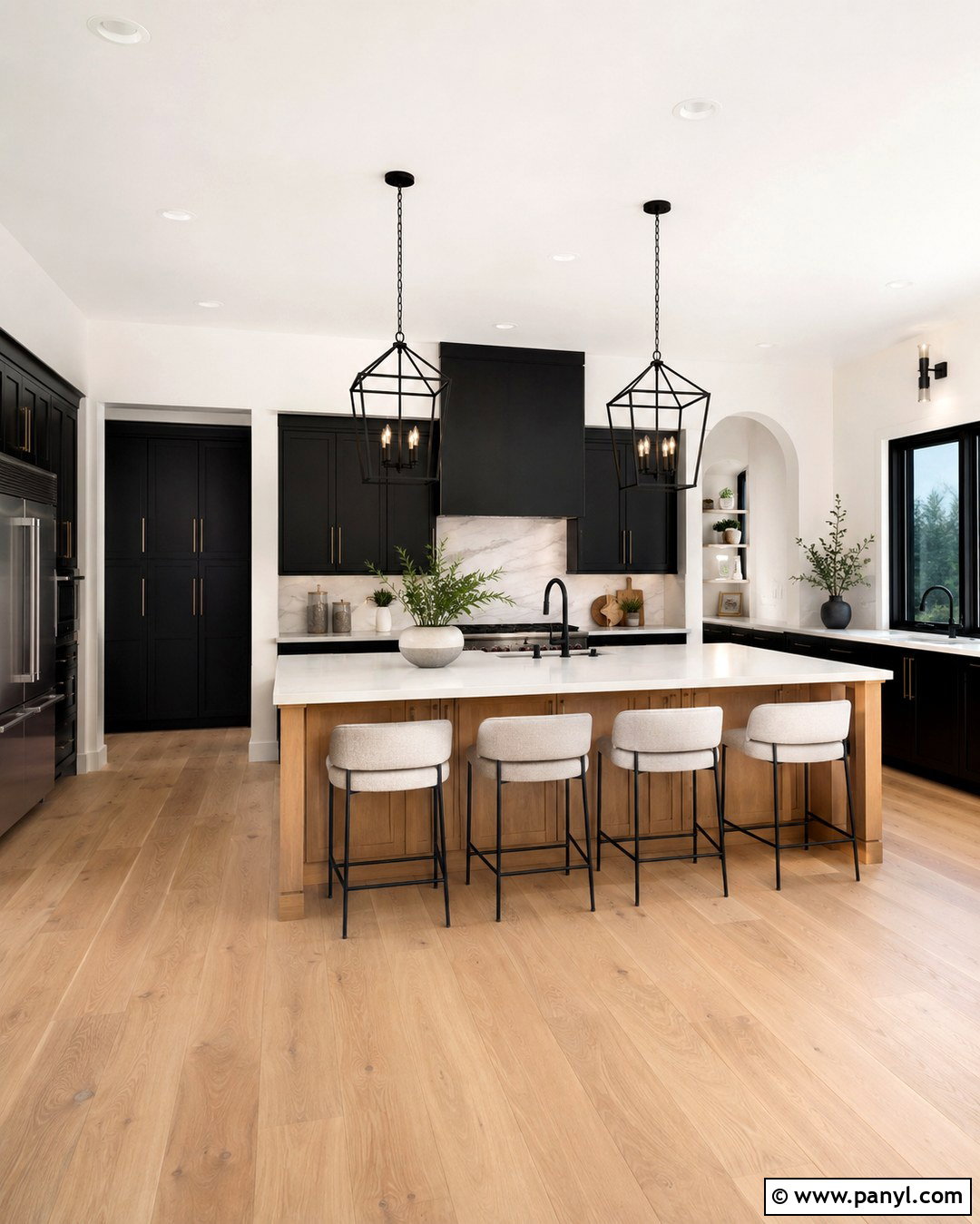
Black cabinetry looks less severe when surrounded by warm Alabaster walls. Select matte black slab cabinets for a modern design or narrow Shaker doors for a more transitional finish. White quartz countertops brighten the work surfaces, while a softly veined marble backsplash connects the dark cabinets to the pale walls. Use natural white oak flooring to warm the lower half of the room. A large oak island can break up the black cabinetry and provide a practical gathering area. Add black-framed pendants, simple metal hardware, and oatmeal-colored counter stools. Keep decorative objects light and minimal so the cabinetry remains the main statement. The finished kitchen feels graphic and sophisticated, but the creamy wall color prevents the black-and-white contrast from appearing cold.
6. Alabaster Kitchen Walls With Walnut Cabinets
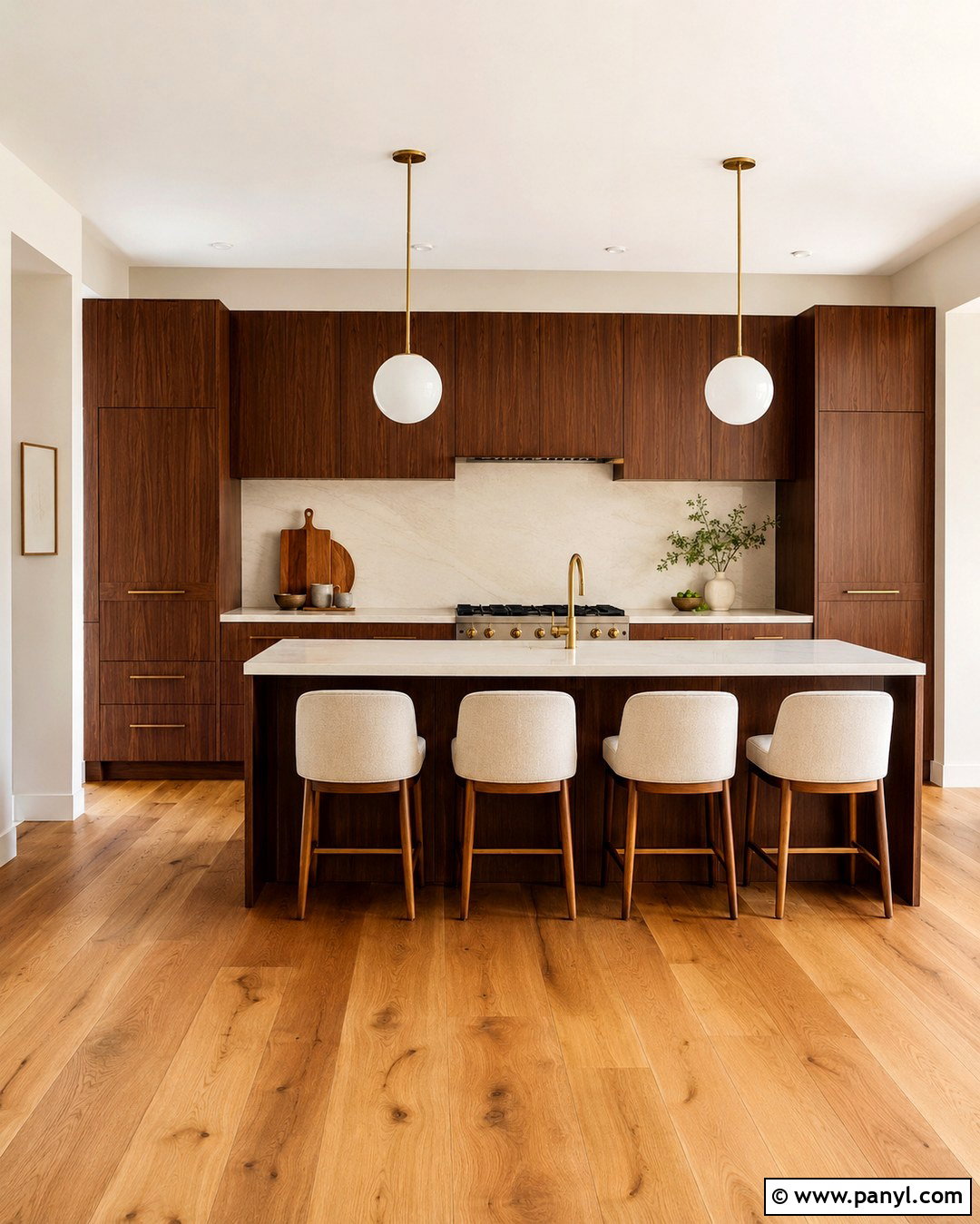
Rich walnut cabinetry gives Alabaster walls depth and a refined midcentury influence. Choose flat-panel cabinet doors with continuous grain for a clean, furniture-like appearance. Pale quartz countertops and a full-height warm white backsplash will reflect light and balance the darker wood. Introduce a narrow island with walnut panels, rounded corners, and simple cream stools. Brushed brass pulls complement the brown grain, although discreet finger pulls can create an even cleaner profile. Wide-plank oak floors should be slightly lighter than the cabinets to avoid a heavy effect. Complete the design with globe pendants, a sculptural wood bowl, and a small woven runner. This full palette feels warm and polished while highlighting the natural variation found in walnut.
7. Alabaster Kitchen Walls With Natural Maple Cabinets
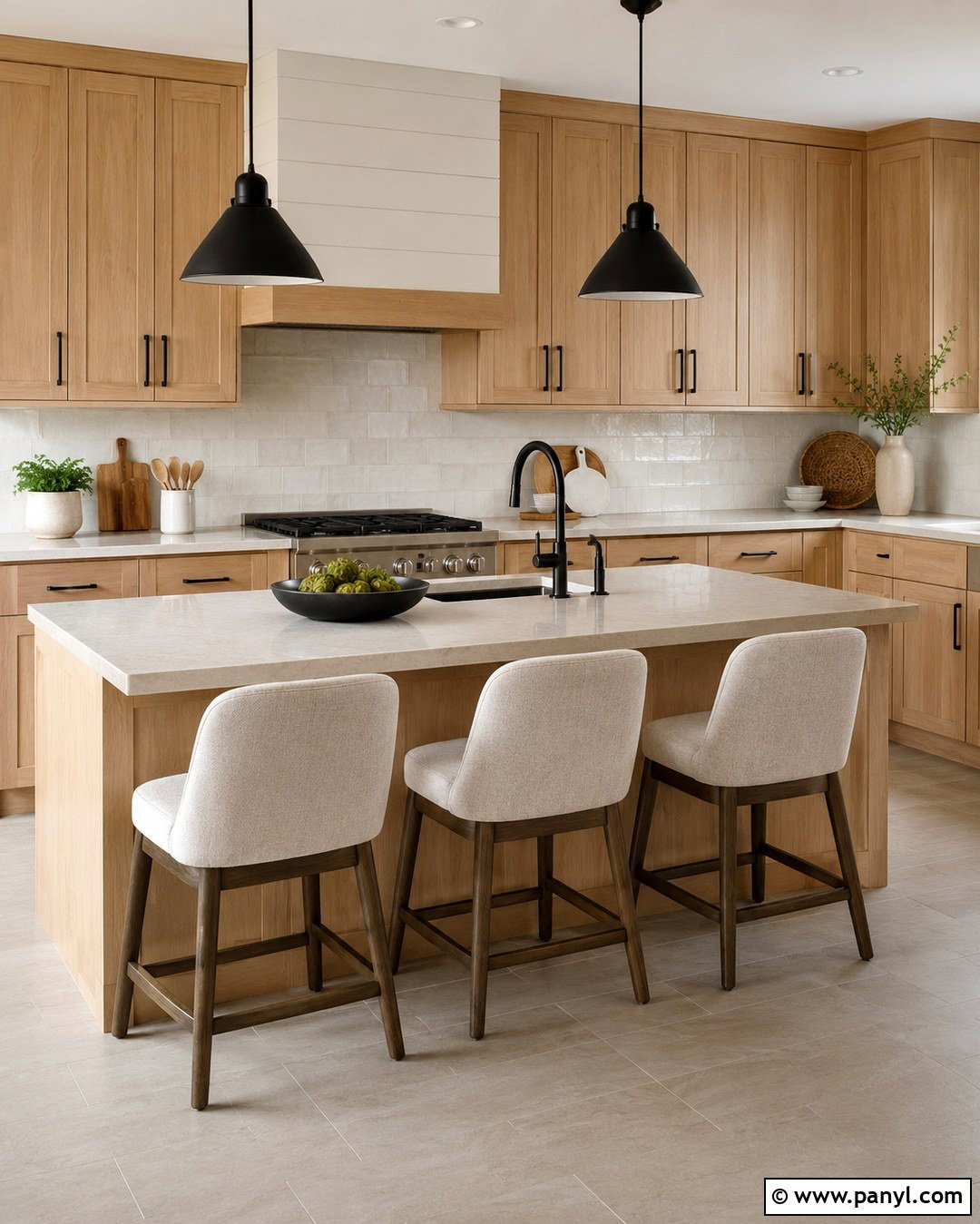
Natural maple is an approachable partner for Alabaster because both finishes have a light, warm appearance. Choose maple cabinets with a clear finish and uncomplicated Shaker fronts to create an airy family kitchen. Add pale greige quartz countertops and a satin-finished ceramic backsplash in soft ivory. Light taupe porcelain flooring offers durability while gently separating the cabinets from the walls. Use a practical maple island with deep drawers, open cookbook storage, and comfortable oatmeal-colored stools. Matte black hardware introduces definition without overwhelming the pale palette. Simple black pendants can repeat that contrast overhead. Finish with woven baskets, white stoneware, and one or two green plants. The completed room feels cheerful, functional, and relaxed rather than overly decorated.
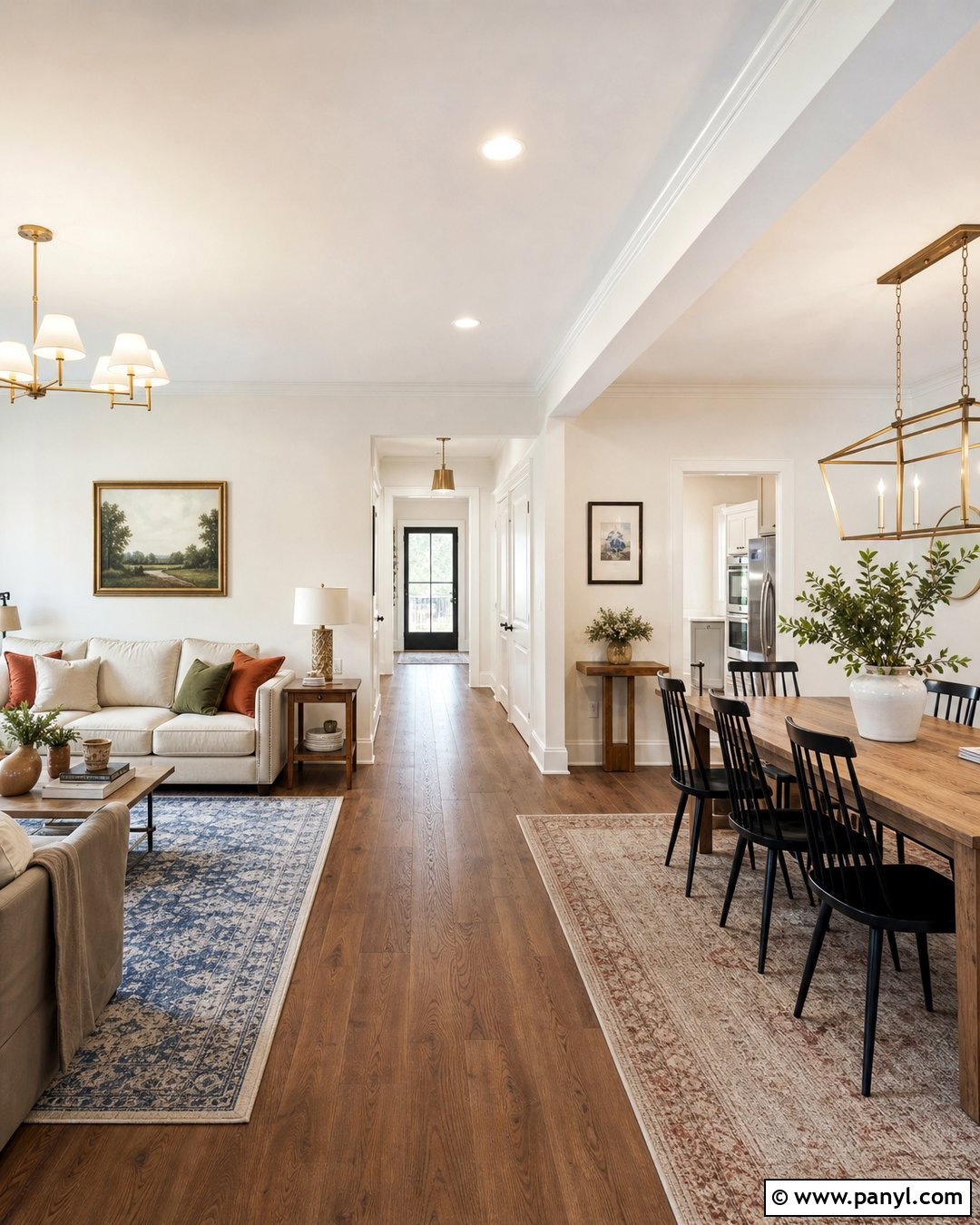
8. Alabaster Kitchen Walls With Taupe Cabinets
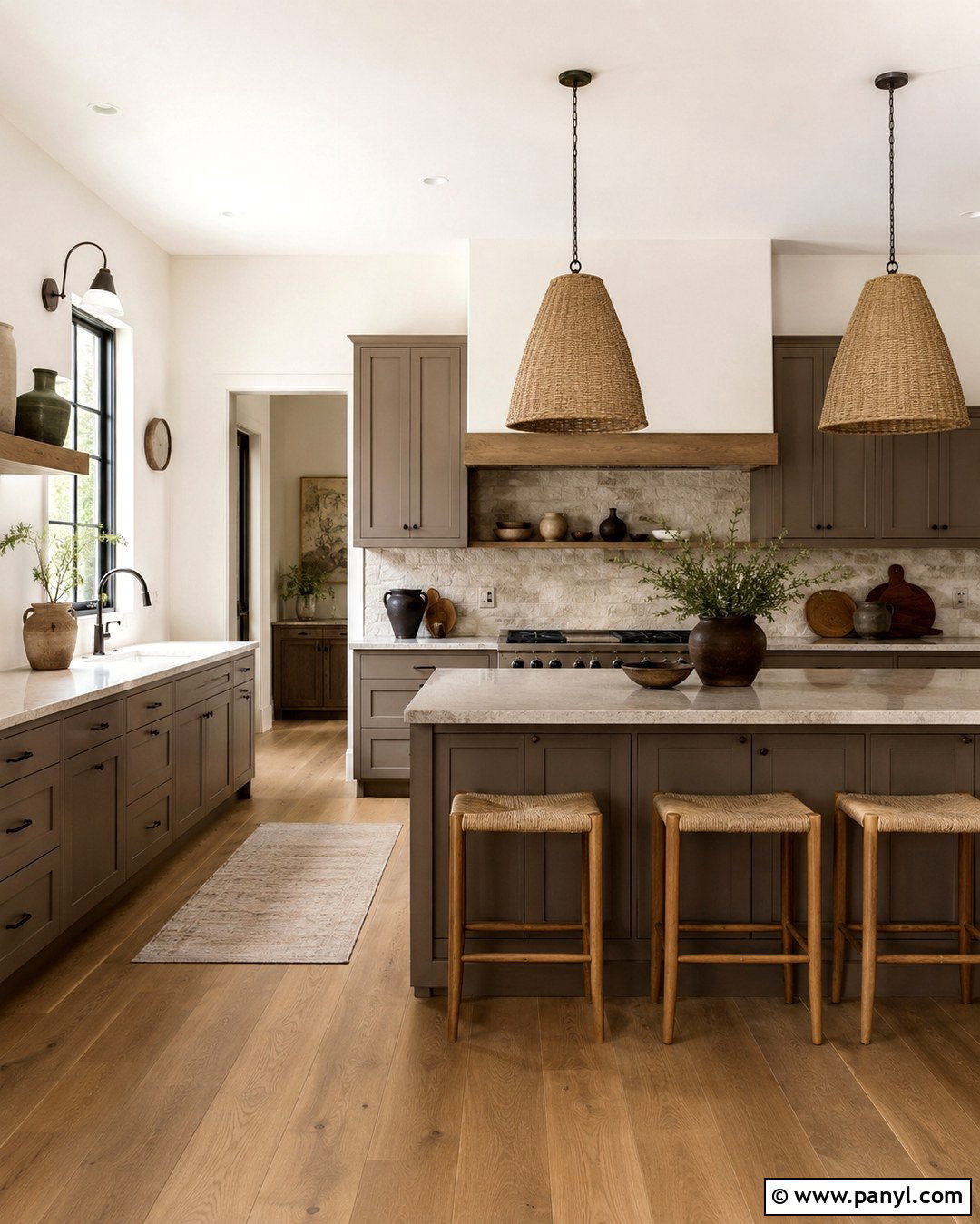
Warm taupe cabinets create a sophisticated neutral kitchen while allowing Alabaster walls to provide gentle contrast. Look for a mushroom or putty shade that contains both beige and gray, avoiding anything strongly pink or purple. Pair the cabinetry with creamy stone countertops and a textured limestone-look backsplash. A medium oak floor strengthens the earthy palette, while dark bronze hardware adds quiet definition. Continue the taupe finish across the island, then use light wood stools to keep the center of the room visually open. Oversized linen pendants can soften harder surfaces and make the kitchen feel comfortable. Complete the look with handmade pottery, neutral runners, and simple wood cutting boards. The result is layered and timeless without relying on bright accent colors.
9. Alabaster Kitchen Walls With Blue Gray Cabinets
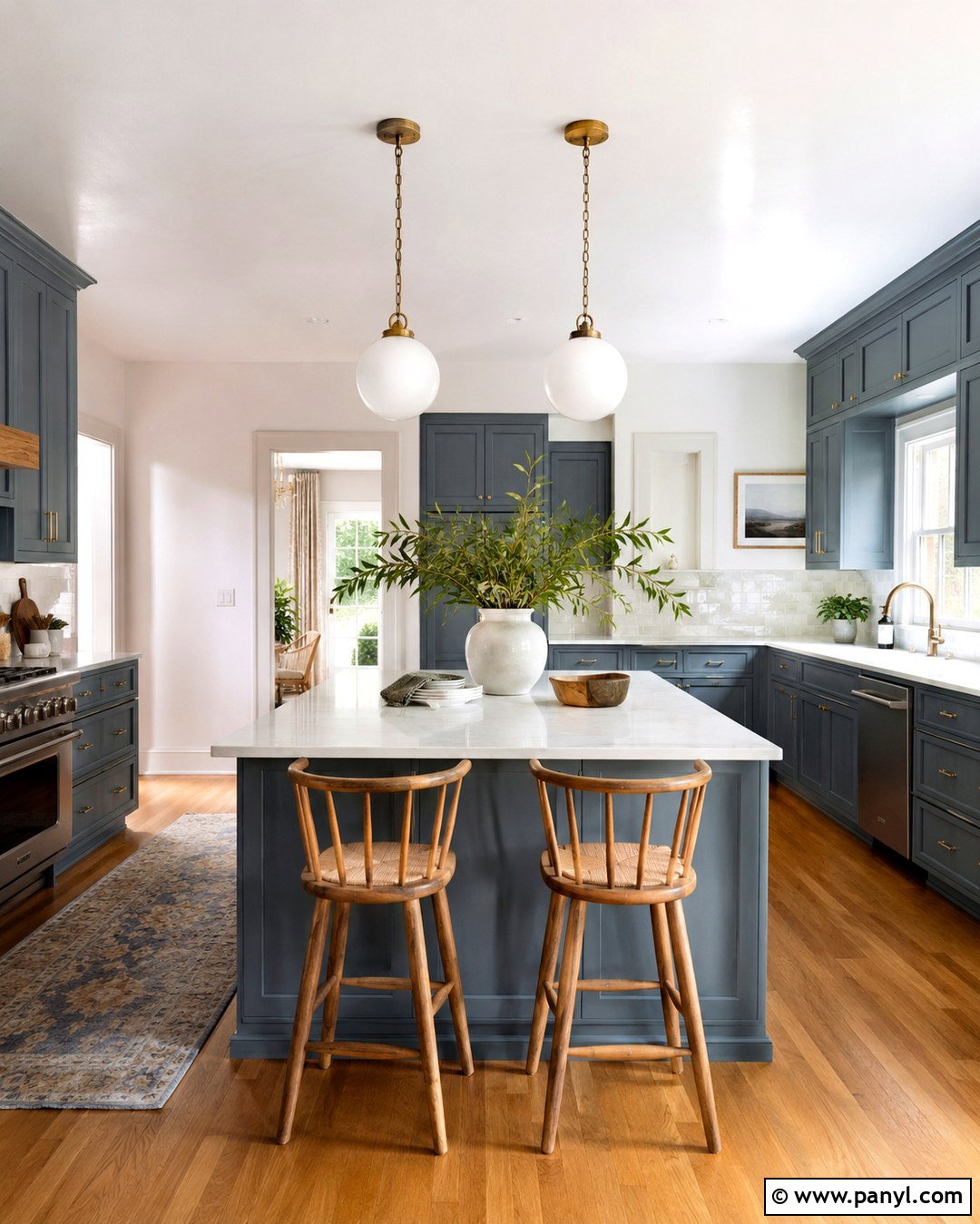
Dusty blue-gray cabinets introduce color while maintaining the calm effect of Alabaster walls. Choose a softened slate blue rather than a highly saturated shade so the cabinetry feels established and versatile. White quartz countertops with subtle gray veining connect the two colors, while glossy ivory tile adds light behind the counters. Warm oak flooring is important because it balances the cooler cabinet color. Use polished nickel hardware for a crisp finish or aged brass for greater warmth. A matching blue-gray island creates consistency, especially when paired with natural wood stools. Complete the room with white globe pendants, pale linen window treatments, and a faded blue runner. The full design feels fresh and collected, making it suitable for both traditional and updated homes.
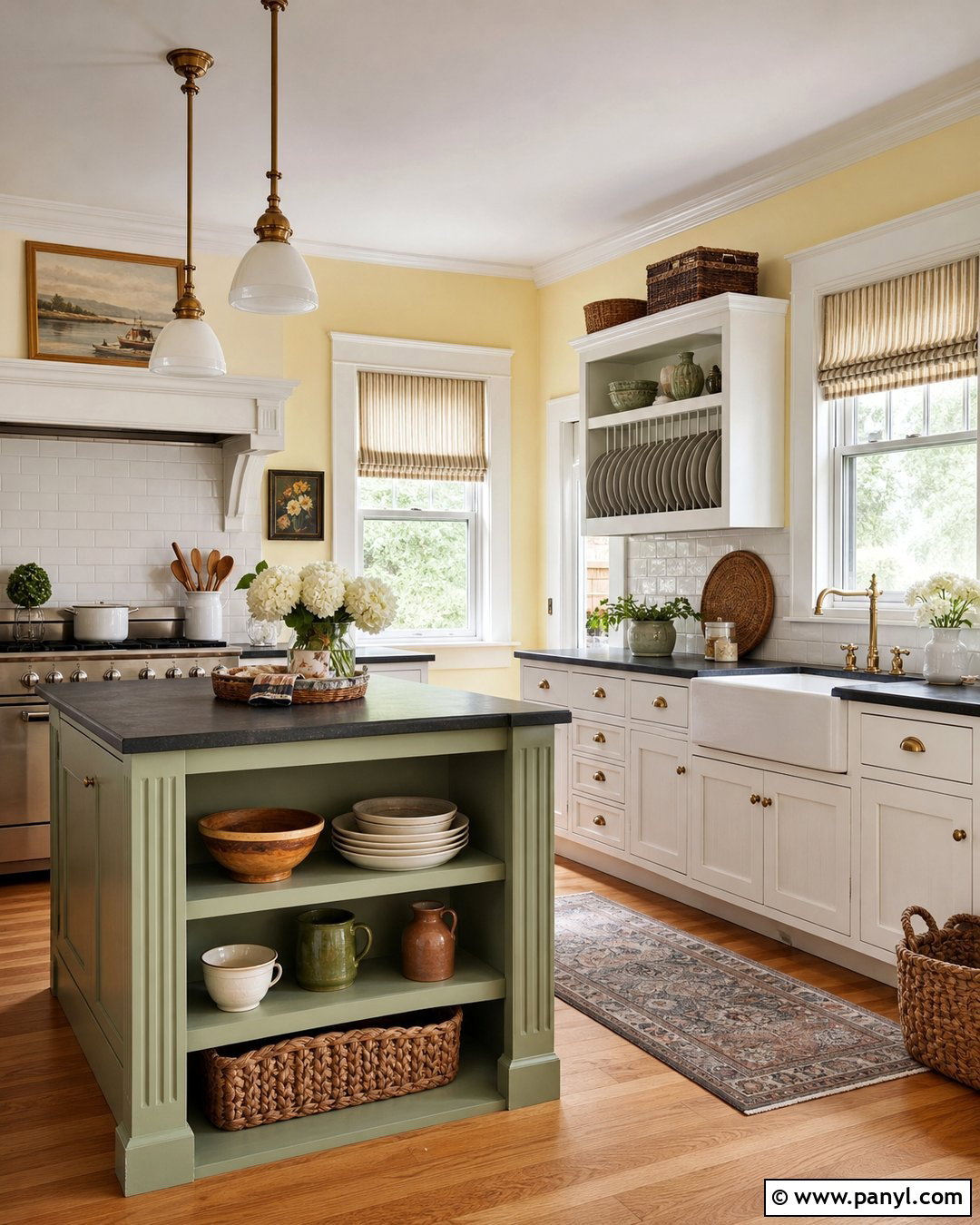
10. Alabaster Kitchen Walls With Terracotta Accents
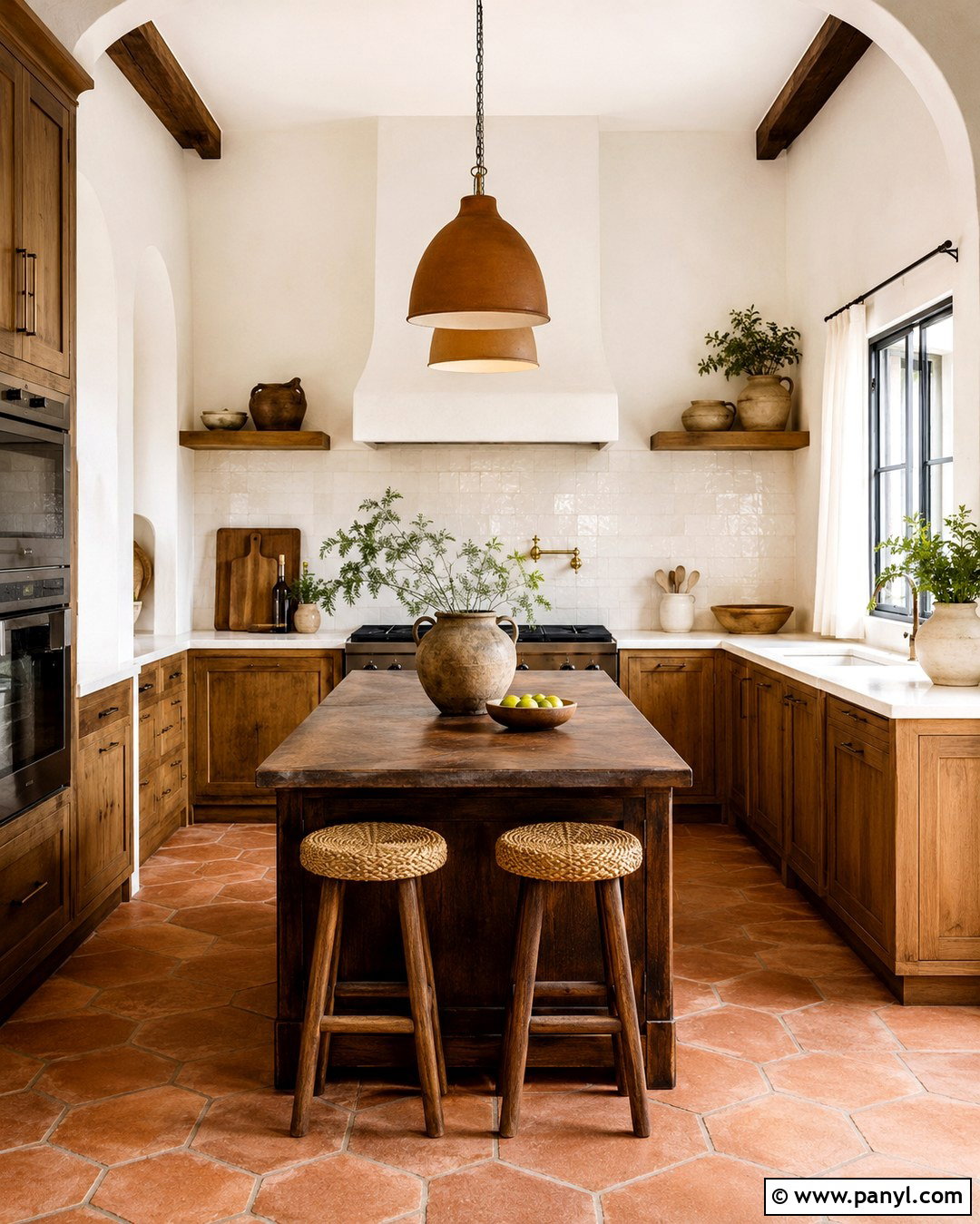
Terracotta can turn Alabaster walls into the foundation of a warm Mediterranean-inspired kitchen. Begin with natural wood cabinetry in a honey oak or medium walnut finish. Use creamy limestone-look countertops and a handmade white backsplash with uneven edges. Introduce terracotta through clay floor tiles, pendant shades, plant pots, and a patterned runner rather than painting every surface orange. An island in stained wood can include woven stools and open shelving for pottery. Choose aged brass or dark bronze hardware to support the earthy palette. Keep window treatments simple with off-white linen panels that allow plenty of daylight inside. The completed kitchen feels sun-washed and welcoming, with Alabaster providing a quiet backdrop for the richer clay, wood, and metal tones.
11. Alabaster Kitchen Walls With Marble Countertops
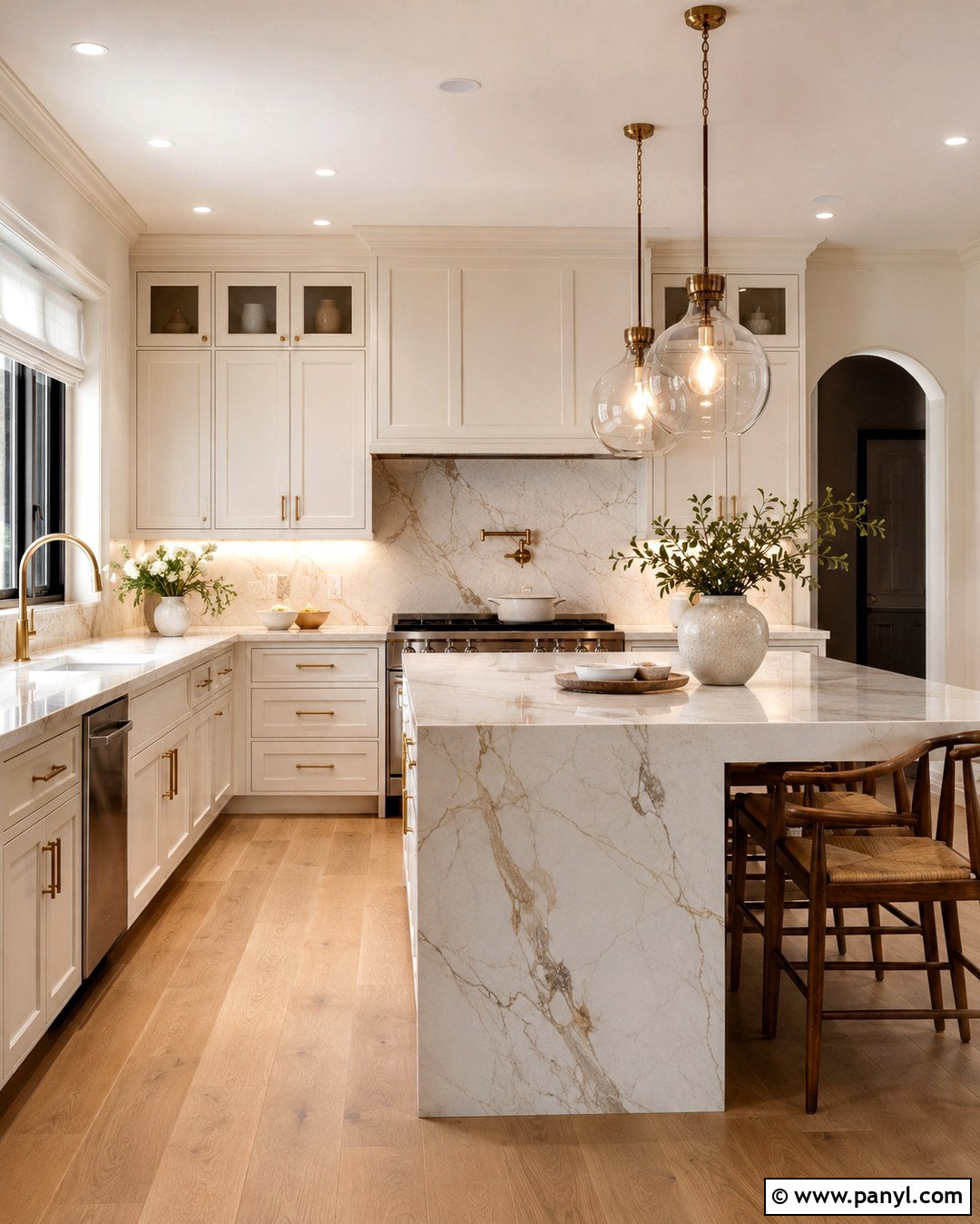
Marble countertops can make an Alabaster kitchen feel graceful without requiring ornate cabinetry. Select warm white Shaker cabinets that visually blend with the walls, then use marble with soft gray, beige, or gold veining. Continue the stone several inches up the wall or install it as a full-height backsplash behind the range. Light oak floors prevent the room from becoming too formal. A matching island with a waterfall edge creates a polished centerpiece, while wood-framed stools keep it approachable. Choose unlacquered brass hardware and simple glass pendants for understated warmth. Limit accessories to pale ceramics, wood boards, and fresh greenery. This complete scheme allows the natural movement of the marble to become the primary pattern in an otherwise quiet room.
12. Alabaster Kitchen Walls With Soapstone Counters
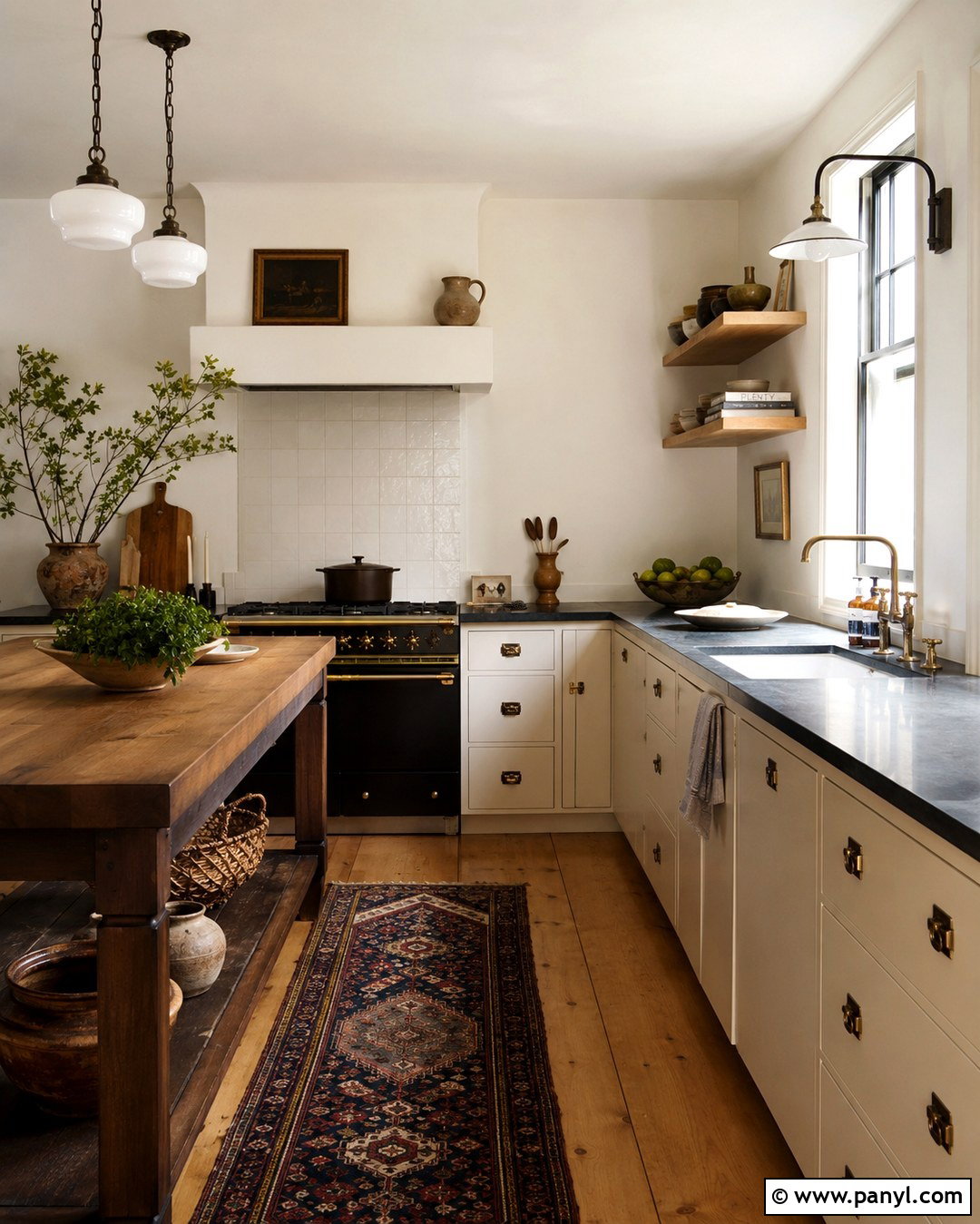
Dark soapstone counters add historic character and practical-looking contrast to Alabaster walls. Pair them with creamy white inset cabinets for a traditional kitchen, or use natural oak cabinets for a more relaxed interpretation. Continue the soapstone behind the range as a short backsplash, then use warm white square tile across the remaining walls. Wide-plank wood flooring supports the aged, established feeling. A freestanding worktable-style island can feature a thick wood top, open lower shelf, and simple spindle legs. Select aged brass faucets, dark bronze cabinet latches, and milk-glass pendants. Add a striped cotton runner and useful pottery displayed on open shelves. The resulting room feels authentic and lived-in, while the pale walls keep the darker counters from dominating the space.
13. Alabaster Kitchen Walls With Butcher Block Counters
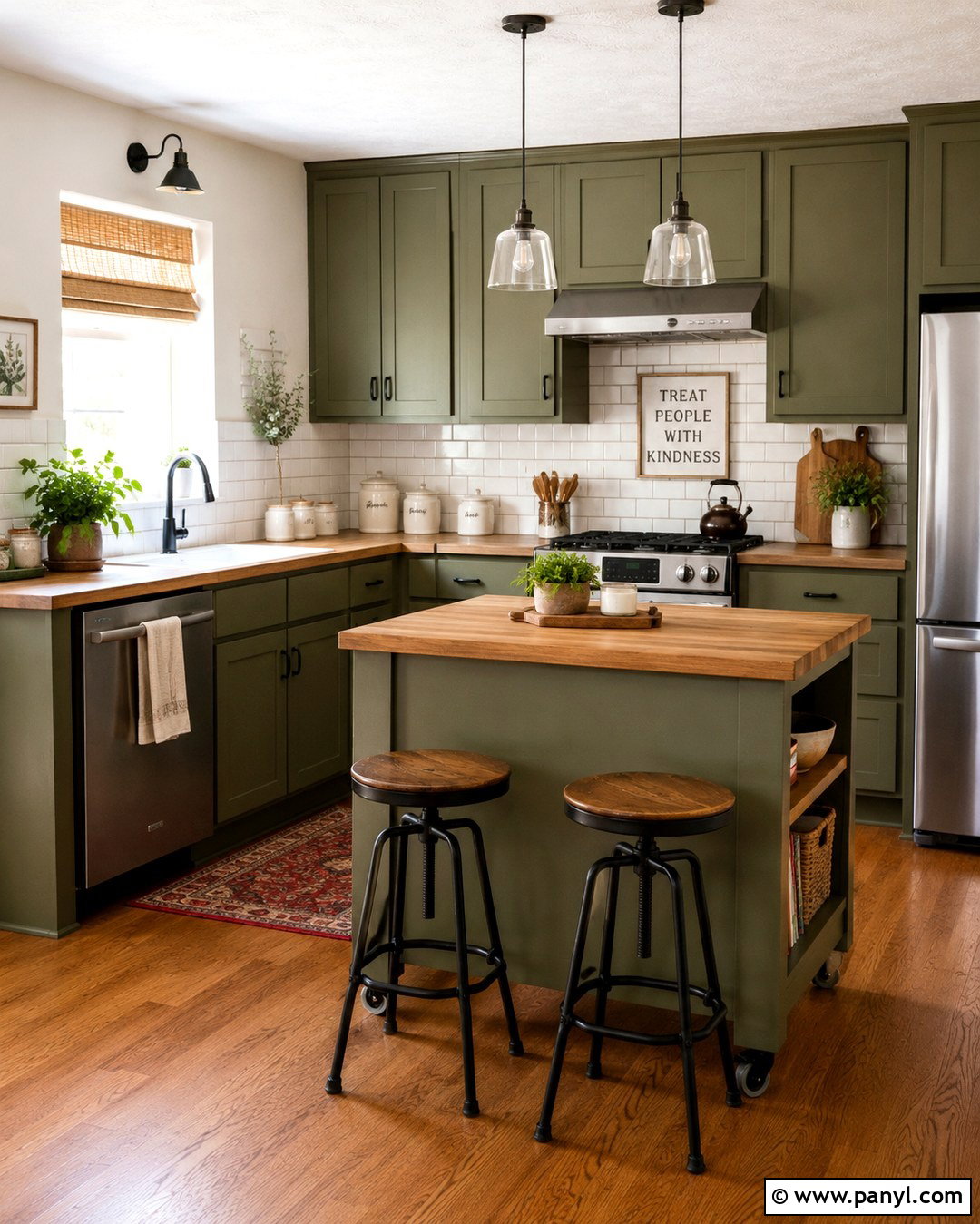
Butcher block countertops strengthen the cozy warmth of Alabaster kitchen walls and offer an affordable way to update basic cabinetry. Use soft greige or muted olive Shaker cabinets to separate the wood counters from the creamy background. Install a warm white subway backsplash with light beige grout for easy visual continuity. Medium oak or durable wood-look flooring completes the natural palette. A compact island can repeat the butcher block surface and include black metal stools with wood seats. Choose matte black cabinet pulls, a simple bridge faucet, and clear glass pendants. Display only useful items, such as ceramic canisters, wood boards, and a small herb planter. This complete kitchen looks casual and practical, making it well suited to an active household or modest renovation budget.
14. Alabaster Kitchen Walls With Zellige Tile
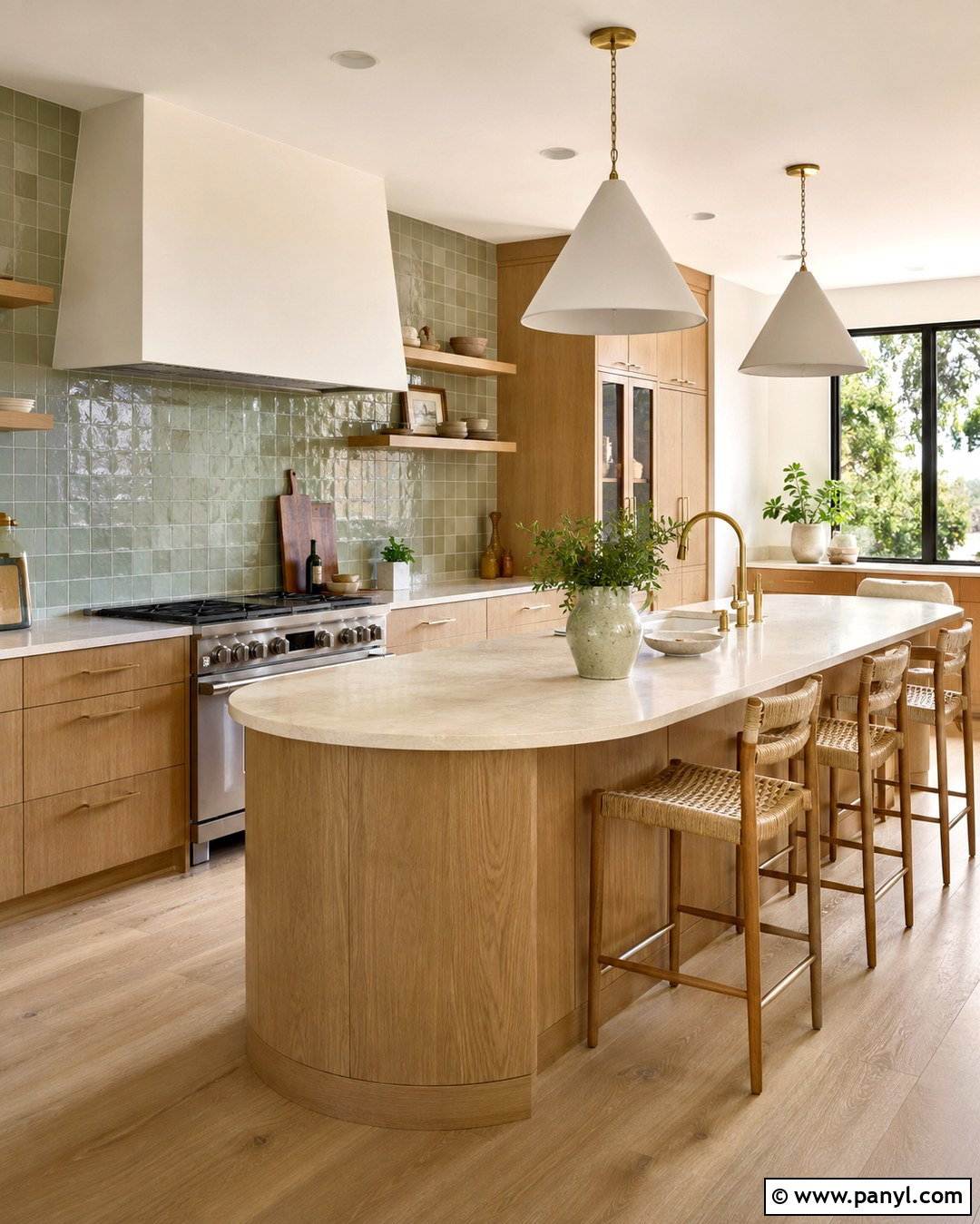
A glossy zellige backsplash adds movement and reflection without competing with Alabaster walls. Choose handmade-look tiles in warm white, pale sage, or muted sand, then carry them from the countertop to the upper cabinets. Natural white oak cabinetry keeps the overall design grounded and organic. Use creamy quartz counters with minimal veining so the irregular tile remains noticeable. An oak island with rounded corners and woven counter stools creates a softer central feature. Brushed brass fixtures complement the tile’s warmth, while simple cone pendants provide a tailored shape overhead. Pale oak flooring can continue through the kitchen for visual flow. The finished space feels layered and artisanal, yet the limited palette prevents the textured surfaces from making the room appear busy.
15. Alabaster Kitchen Walls With Brick Backsplash
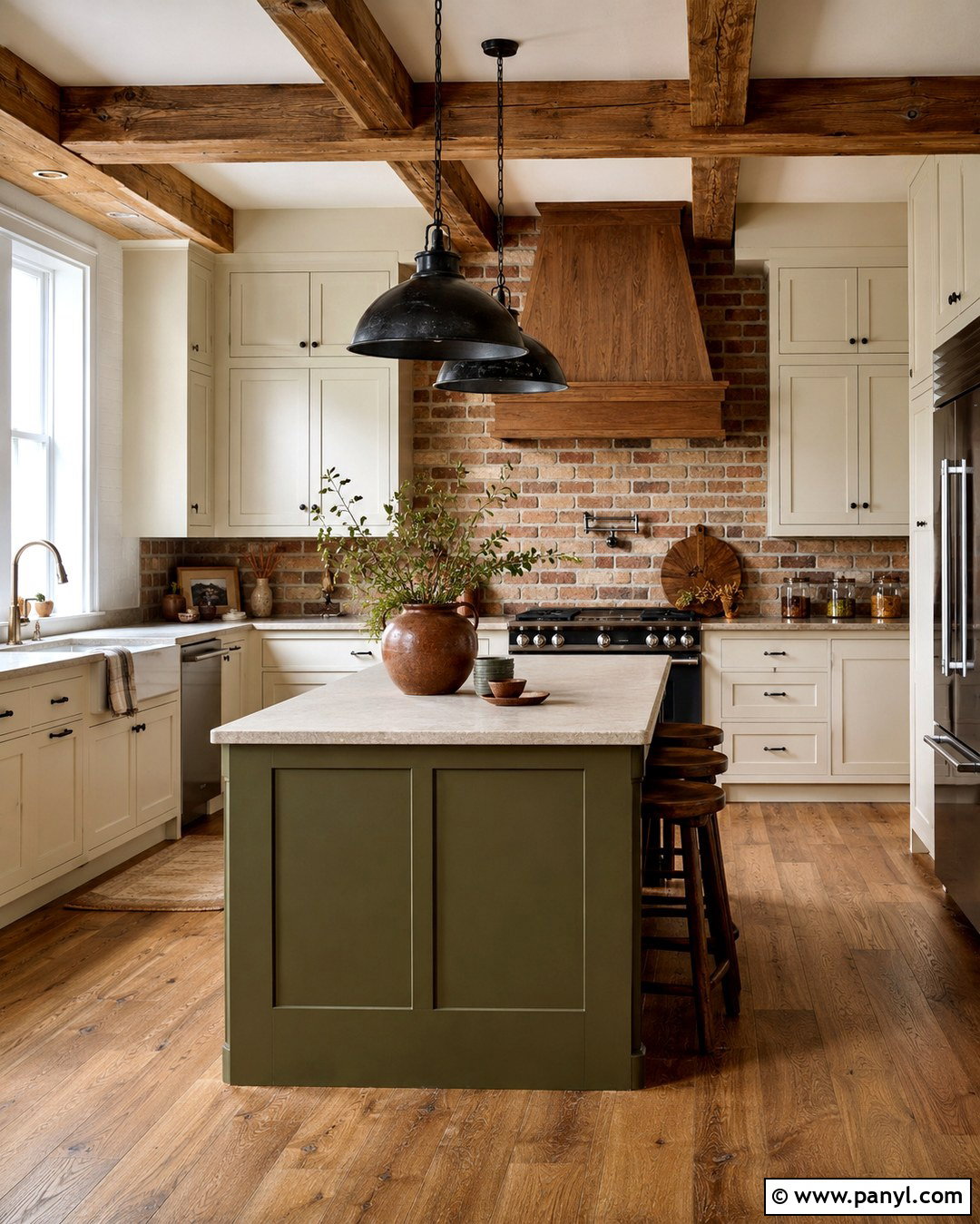
Exposed brick or thin brick veneer creates a rustic focal point against smooth Alabaster walls. Select brick in faded red, soft brown, and chalky beige tones instead of a uniformly dark finish. Pair it with creamy Shaker cabinets and honed quartz countertops that resemble pale limestone. A stained oak range hood can connect the brick to warm wood flooring below. Use a substantial island in muted charcoal or earthy olive, topped with the same light counter material. Aged iron pendants, dark bronze hardware, and simple wood stools reinforce the rustic character. Keep accessories restrained with stoneware crocks, linen towels, and wood serving boards. This complete design feels warm and established, while the light walls and counters prevent the brick from visually closing in the room.
16. Alabaster Farmhouse Kitchen Walls
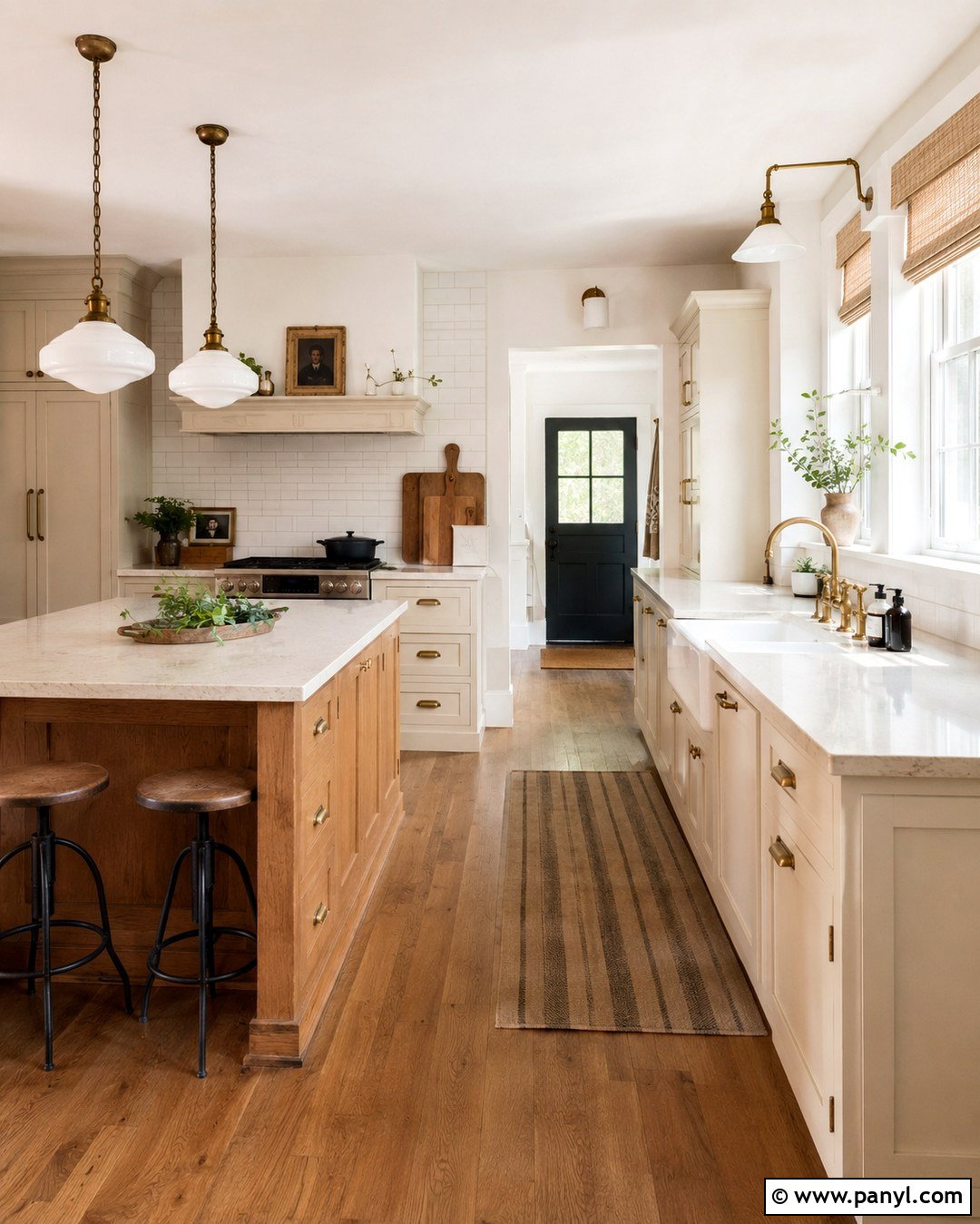
For a comfortable farmhouse kitchen, use Alabaster walls with creamy inset cabinets, a white apron-front sink, and medium oak flooring. Add honed quartz countertops with gentle beige veining and a handmade subway backsplash in warm white. A large stained oak island should provide drawers, seating, and an open shelf for useful baskets. Choose traditional bridge faucets, aged brass latches, and simple schoolhouse pendants instead of overly decorative fixtures. A wood range hood can become the room’s focal point without feeling too heavy. Finish the windows with natural woven shades and place a muted striped runner beside the sink. The overall look feels familiar and functional, combining farmhouse details with a cleaner palette that avoids excessive signs, distressed finishes, or unnecessary ornament.
17. Alabaster Modern Kitchen Walls
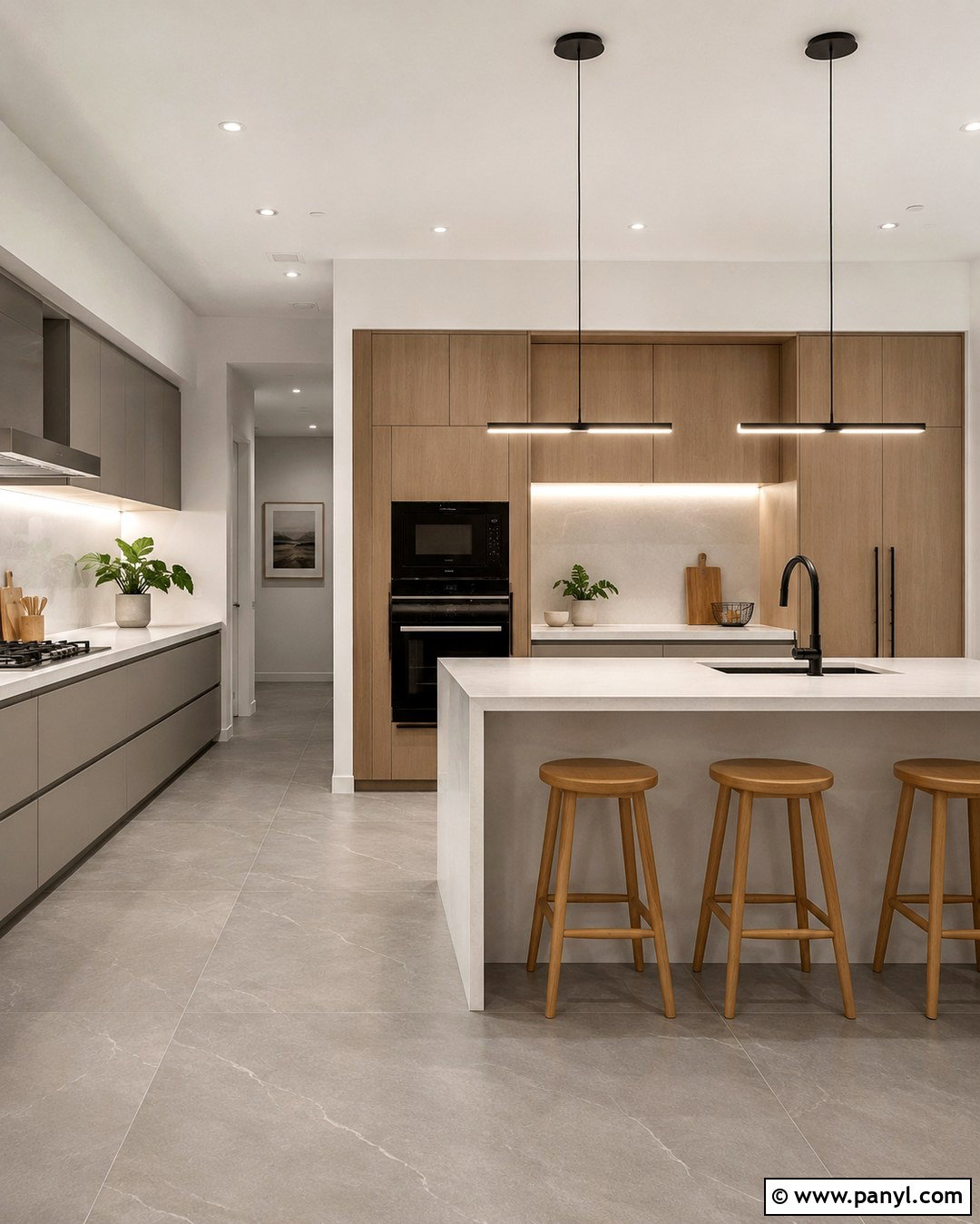
Clean lines give Alabaster walls a modern direction without making the kitchen feel sterile. Use handleless cabinets in matte warm gray, paired with a tall bank of white oak storage for natural contrast. Select thin white quartz countertops and continue the same material up the backsplash for a seamless appearance. Large-format warm gray floor tile provides a simple, durable base. Create a streamlined island with waterfall sides, integrated storage, and low-profile oak stools. Black linear pendants and a matching faucet add precise definition. Keep appliances integrated where possible and restrict countertop decor to one wood bowl and a small ceramic planter. The completed design feels uncluttered and architectural, while the warm wall color softens the sharper edges and smooth contemporary surfaces.
18. Alabaster Small Galley Kitchen Walls
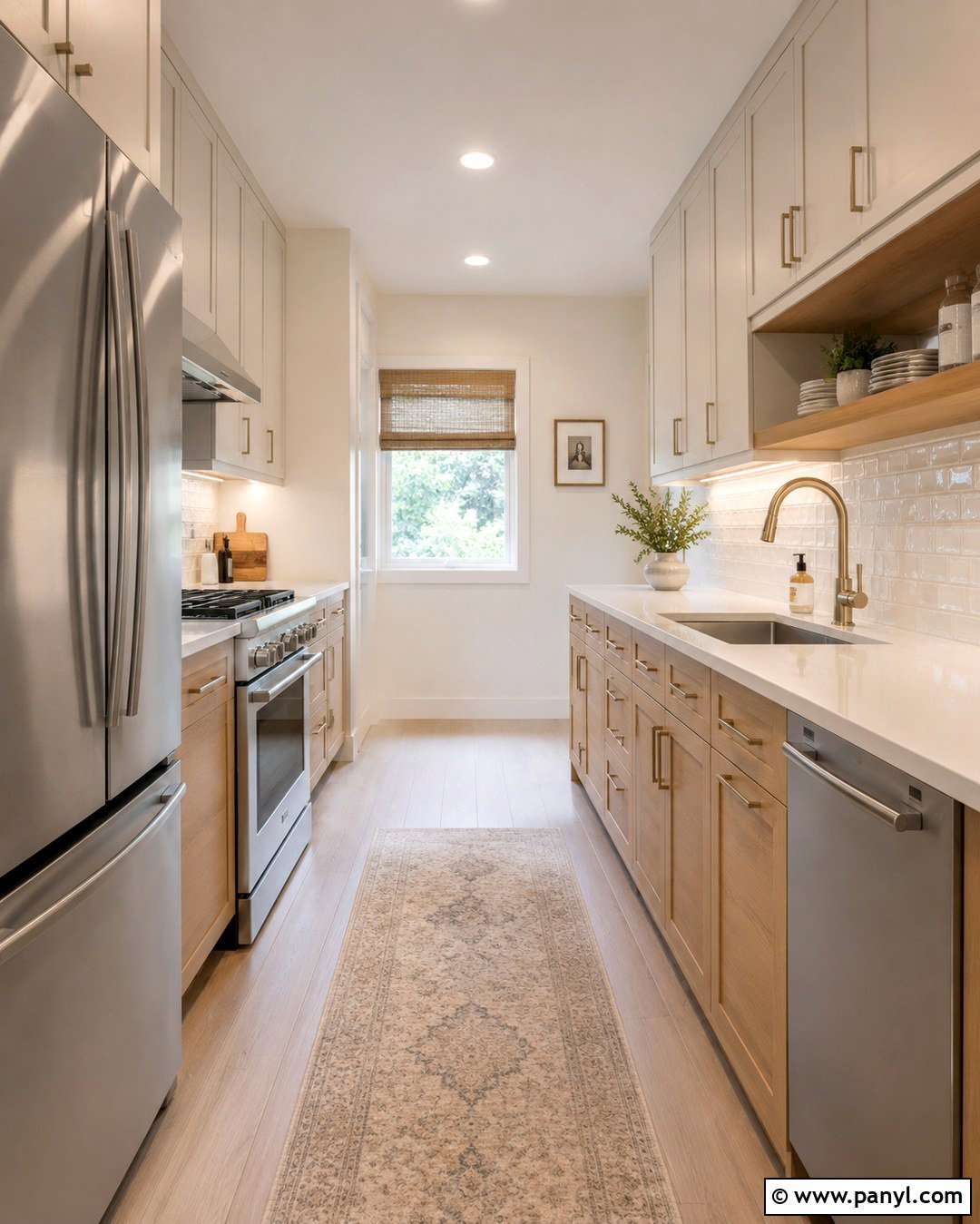
Alabaster walls can help a narrow galley kitchen feel connected and visually calm. Use light oak lower cabinets to add warmth, then choose upper cabinets in a similar creamy white so they blend into the walls. Pale quartz countertops and a glossy ivory backsplash will maintain a light, continuous surface along both sides. Select light-toned flooring installed lengthwise to emphasize the room’s full run. Keep hardware small and simple in brushed brass or satin nickel. A single ceiling fixture, undercabinet lighting, and an unobstructed window prevent unnecessary visual clutter. Add a slim washable runner and one open shelf for everyday dishes. This complete arrangement maximizes storage while preserving breathing room, making the kitchen feel practical, bright, and thoughtfully organized.
19. Alabaster Coastal Kitchen Walls
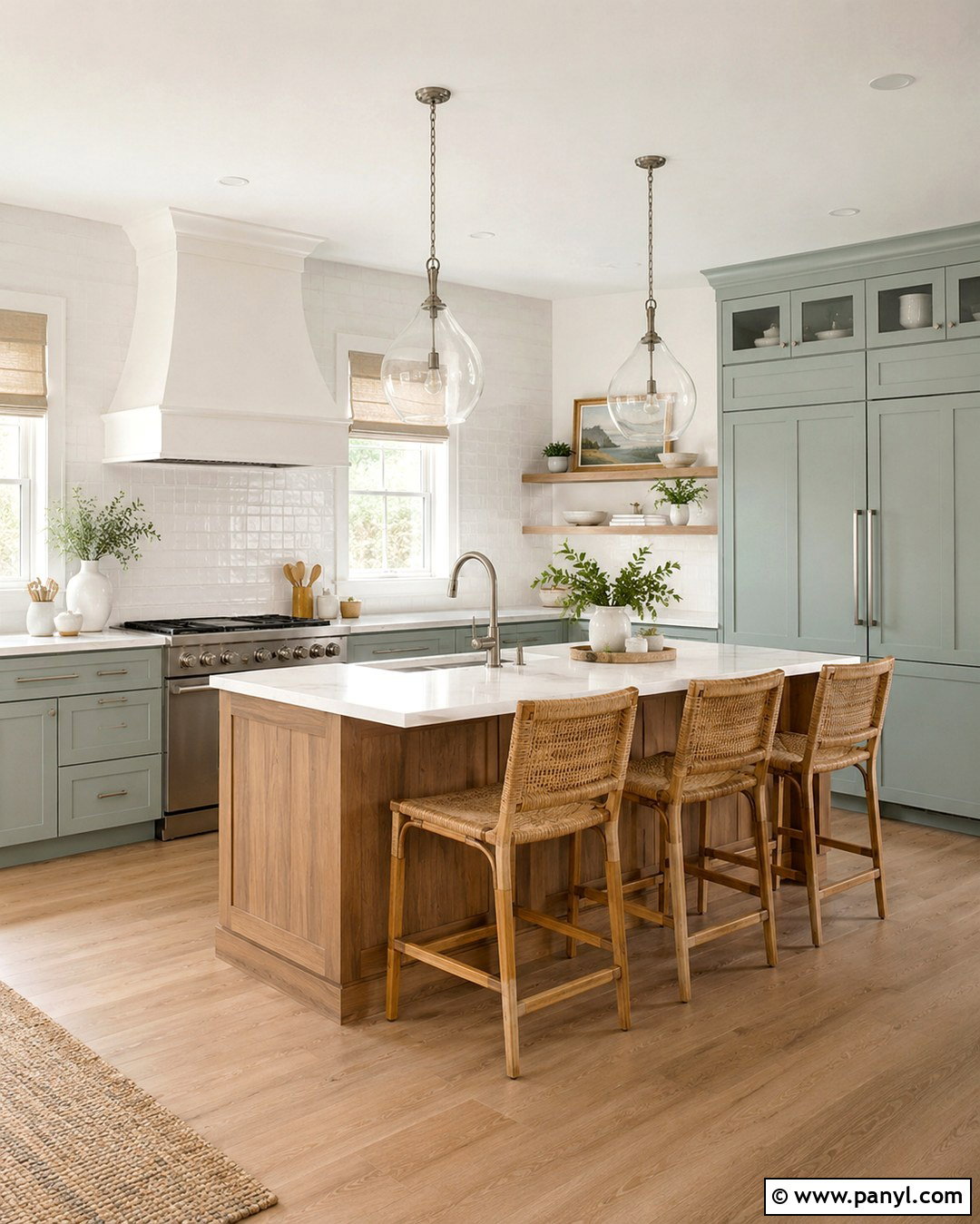
A coastal kitchen with Alabaster walls should feel breezy and natural rather than heavily themed. Pair the walls with pale blue-green Shaker cabinets and white quartz countertops containing soft sandy veining. Use pearly white tile on the backsplash to introduce gentle reflection. Light oak or washed wood flooring supports the relaxed palette without appearing weathered. A natural oak island can include woven rattan stools and simple storage drawers. Choose brushed nickel fixtures, clear glass pendants, and off-white linen Roman shades. Add restrained accents through pale blue ceramics, woven trays, and one striped runner. Avoid obvious nautical decorations. The complete space will suggest the coast through color, texture, and daylight while remaining polished enough for an everyday family home.
20. Alabaster Organic Modern Kitchen Walls
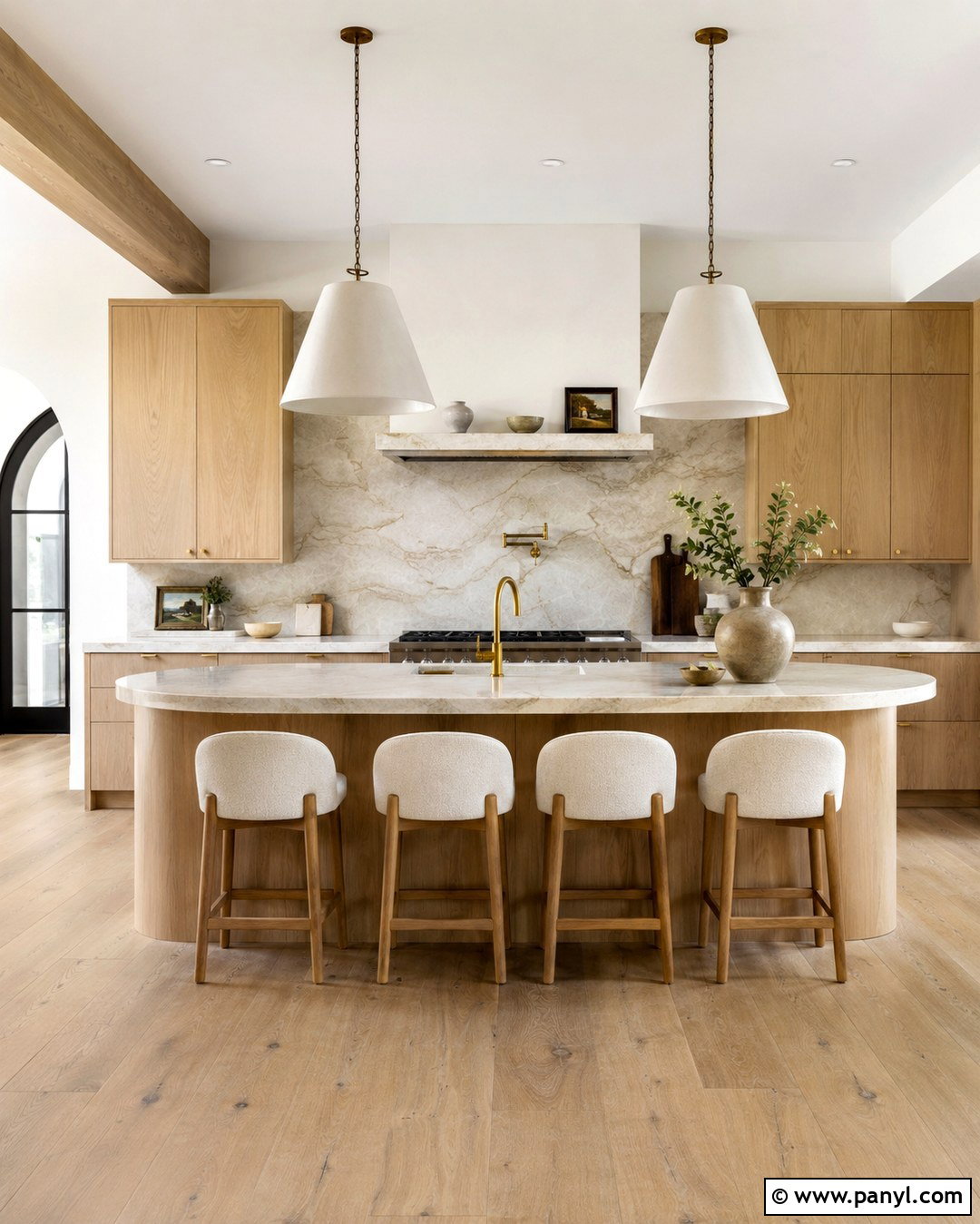
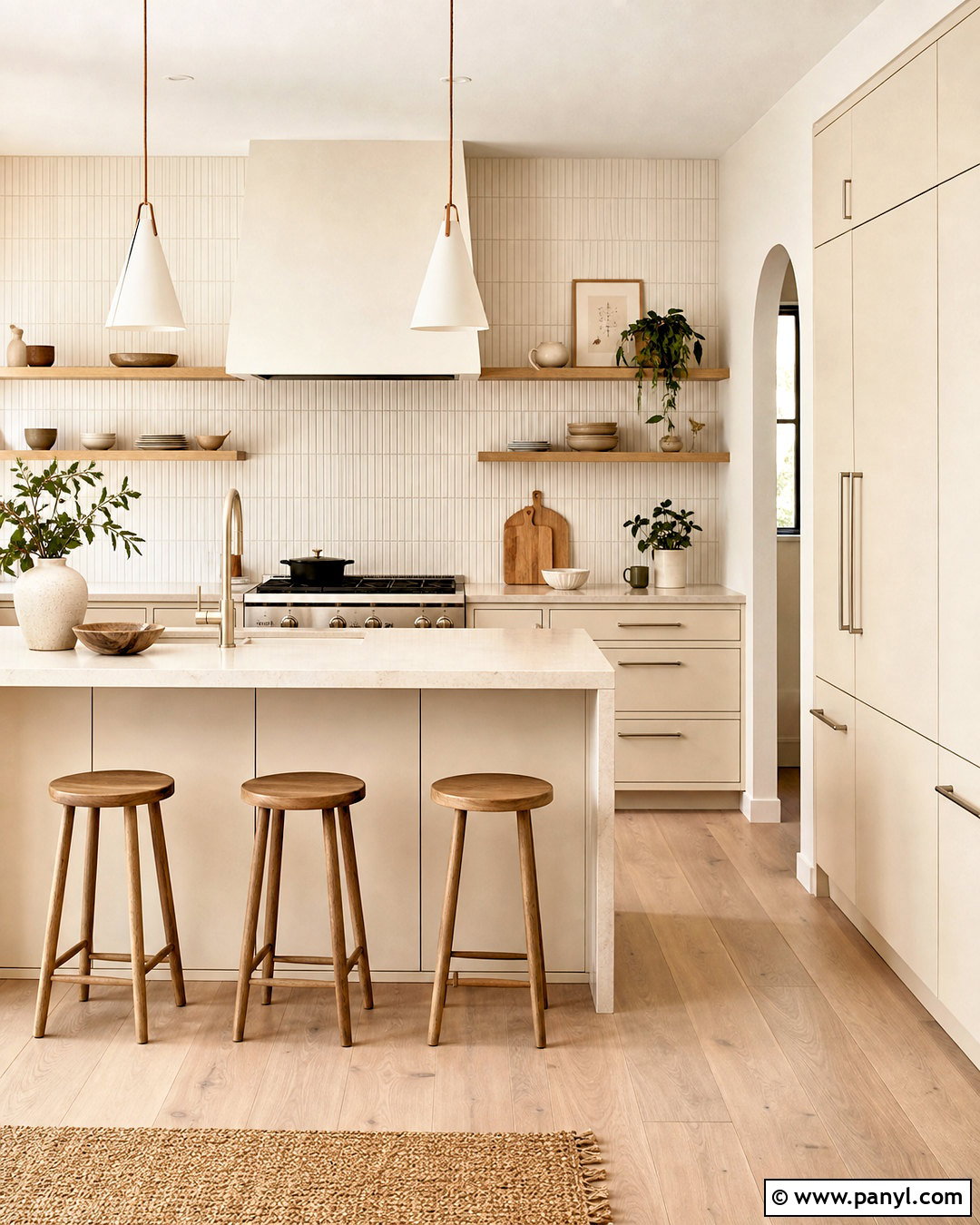
Organic modern design brings together Alabaster walls, tactile stone, curved shapes, and warm wood. Begin with flat-panel white oak cabinets and creamy quartzite-look countertops featuring soft taupe movement. Use the same counter material as a full-height backsplash for a clean but natural focal point. A rounded oak island can soften the room’s straight lines and provide seating with upholstered oatmeal stools. Choose sculptural plaster pendants, brushed brass hardware, and wide-plank light oak flooring. Keep decor minimal but textured, using a stone bowl, linen towels, and a handmade ceramic vase. A tall pantry wall can match the Alabaster paint to reduce visual bulk. The finished kitchen feels calm, contemporary, and grounded, with every material contributing warmth instead of unnecessary color.
Conclusion:
Alabaster White Kitchen Walls offer a flexible starting point for kitchens that need warmth, brightness, and a softer alternative to crisp white. They can support creamy cabinets, rich walnut, pale oak, sage green, navy, black, or muted blue-gray. The strongest results come from coordinating every major finish, including countertops, backsplashes, floors, hardware, lighting, and textiles. Compare samples beside the actual cabinet, tile, and stone selections during daytime and evening conditions before committing. Pay special attention to nearby whites, since noticeably cooler finishes may make Alabaster appear warmer. Whether the final room is farmhouse, coastal, modern, traditional, or organic, Alabaster White Kitchen Walls can create a calm and cohesive foundation that remains easy to personalize.

Related Ideas and Inspiration:
Leave a Reply