
Sherwin-Williams Alabaster SW 7008 offers the warmth of a soft off-white without making a room feel heavy or overly creamy. With a light reflectance value near 82, it creates a bright backdrop while retaining enough depth to stand apart from cleaner white molding. () The right trim, furnishings, flooring, lighting, and accent colors can make this combination feel modern, coastal, traditional, or comfortably rustic. Before painting, test large samples beside your flooring and fixed finishes throughout the day. Natural and artificial light can noticeably influence the final result. The complete room looks below demonstrate practical, stylish ways to decorate with **Alabaster Walls With White Trim Ideas**.

1. Alabaster Walls With Pure White Trim Living Room
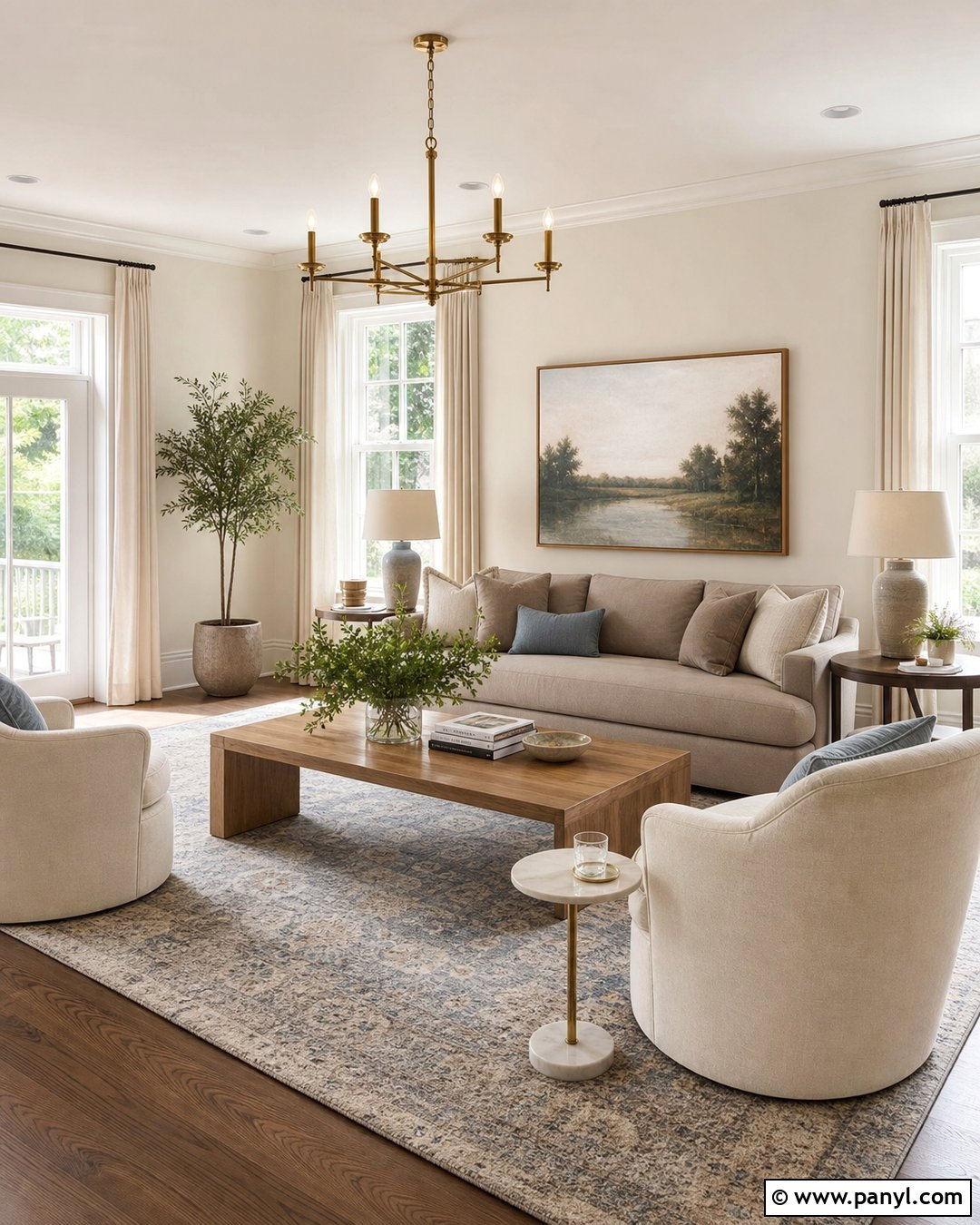
Pure White trim creates a gentle outline around Alabaster walls without producing an overly sharp contrast. Build a relaxed transitional living room with a warm greige sofa, two ivory swivel chairs, and a medium-toned oak coffee table. Use the brighter white on baseboards, window casings, crown molding, and interior doors so the architecture reads clearly. A faded blue and beige rug introduces quiet color while connecting the warm and cool elements. Add linen curtains, ceramic table lamps, and framed landscape artwork with muted green tones. Brushed brass lighting gives the room a polished finish. Keep upholstery simple and generously scaled, allowing the soft wall-and-trim combination to remain the calm foundation of the complete space.
2. Alabaster Walls With Extra White Trim Living Room
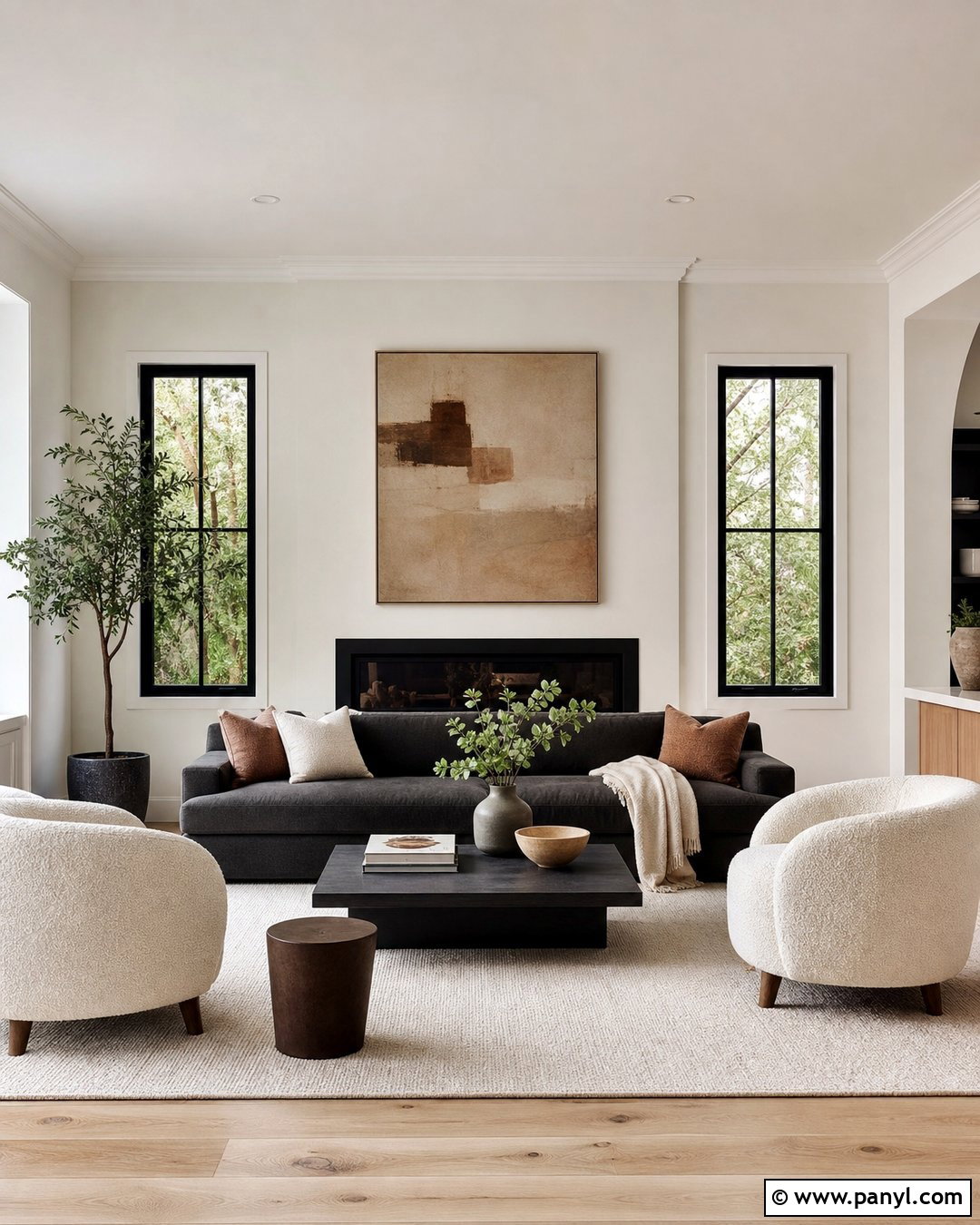
For homeowners who prefer clearer definition, Extra White trim can give Alabaster walls a fresh, tailored edge. Use this pairing in a contemporary living room with a streamlined charcoal sofa, pale oak flooring, and matte black window hardware. Repeat Extra White across the ceiling, baseboards, doors, and built-in shelving for continuity. A black-framed fireplace creates a strong focal point, while a cream textured rug softens the graphic contrast. Choose furniture with clean profiles, but include boucle chairs and woven pillows to prevent the room from feeling cold. Large abstract artwork in clay, black, and beige can connect the finishes. The final room feels bright and modern, with enough warmth from Alabaster to remain comfortable and welcoming.
3. Modern Farmhouse Alabaster Walls With White Trim
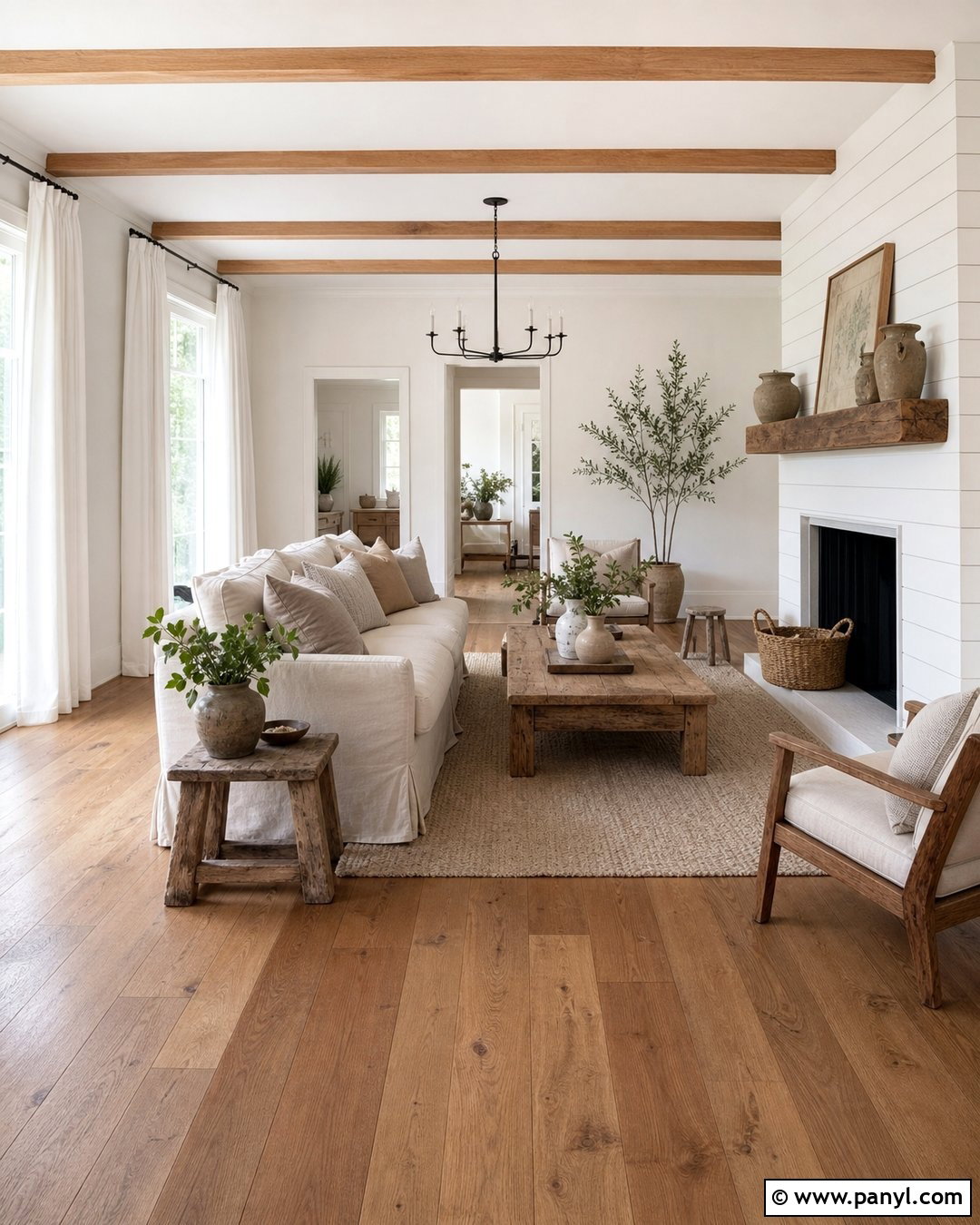
A modern farmhouse room feels most convincing when clean painted surfaces are balanced by authentic natural textures. Pair Alabaster walls and crisp white trim with wide-plank medium oak flooring, a slipcovered oatmeal sofa, and substantial wood furniture. Frame the windows with simple white linen curtains rather than busy patterns. A black iron chandelier, dark curtain rods, and a slim black fireplace screen add definition throughout the pale room. Introduce vintage character through a weathered console, stoneware pottery, and understated botanical prints. Keep shiplap limited to the fireplace or one architectural feature so the room does not become visually repetitive. The finished look should feel open and practical, blending farmhouse comfort with uncluttered lines and carefully controlled rustic details.
4. Coastal Alabaster Walls With White Trim
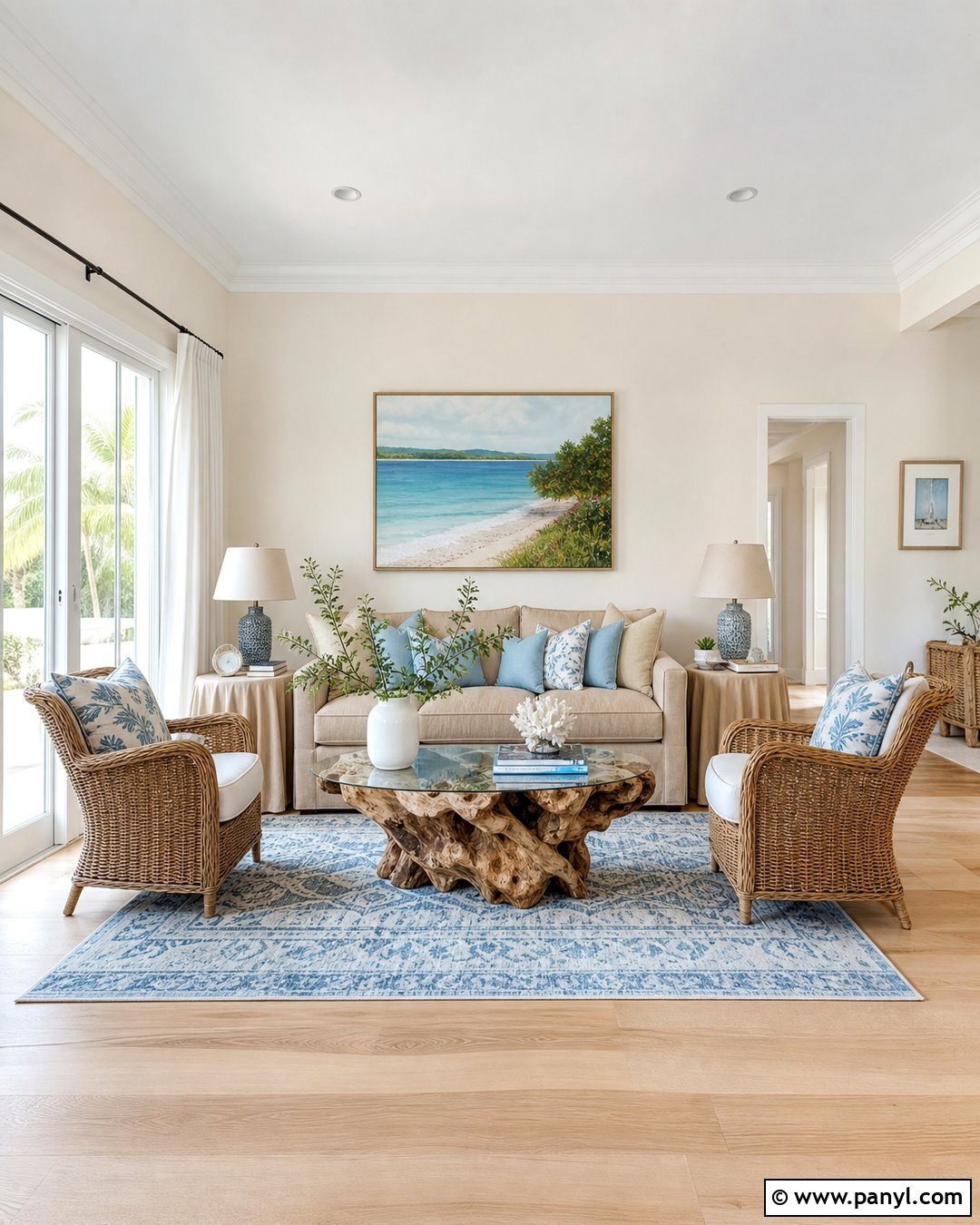
Sunlight, pale natural materials, and watery blue accents bring out the airy side of Alabaster walls. Create a coastal living room with white trim, light oak or whitewashed flooring, and a deep sofa covered in sand-colored performance fabric. Add woven rattan chairs, a pale blue patterned rug, and breezy white curtain panels mounted above the windows. A driftwood-toned coffee table introduces weathered texture without making the room feel themed. Decorate with sea-glass blue pillows, ceramic lamps, and a few large botanical branches. Avoid obvious nautical signs and excessive seashell accessories. Instead, let color and material establish the coastal atmosphere. The complete room should feel relaxed, bright, and naturally layered rather than decorative or overly beach-inspired.
5. Scandinavian Alabaster Walls With White Trim
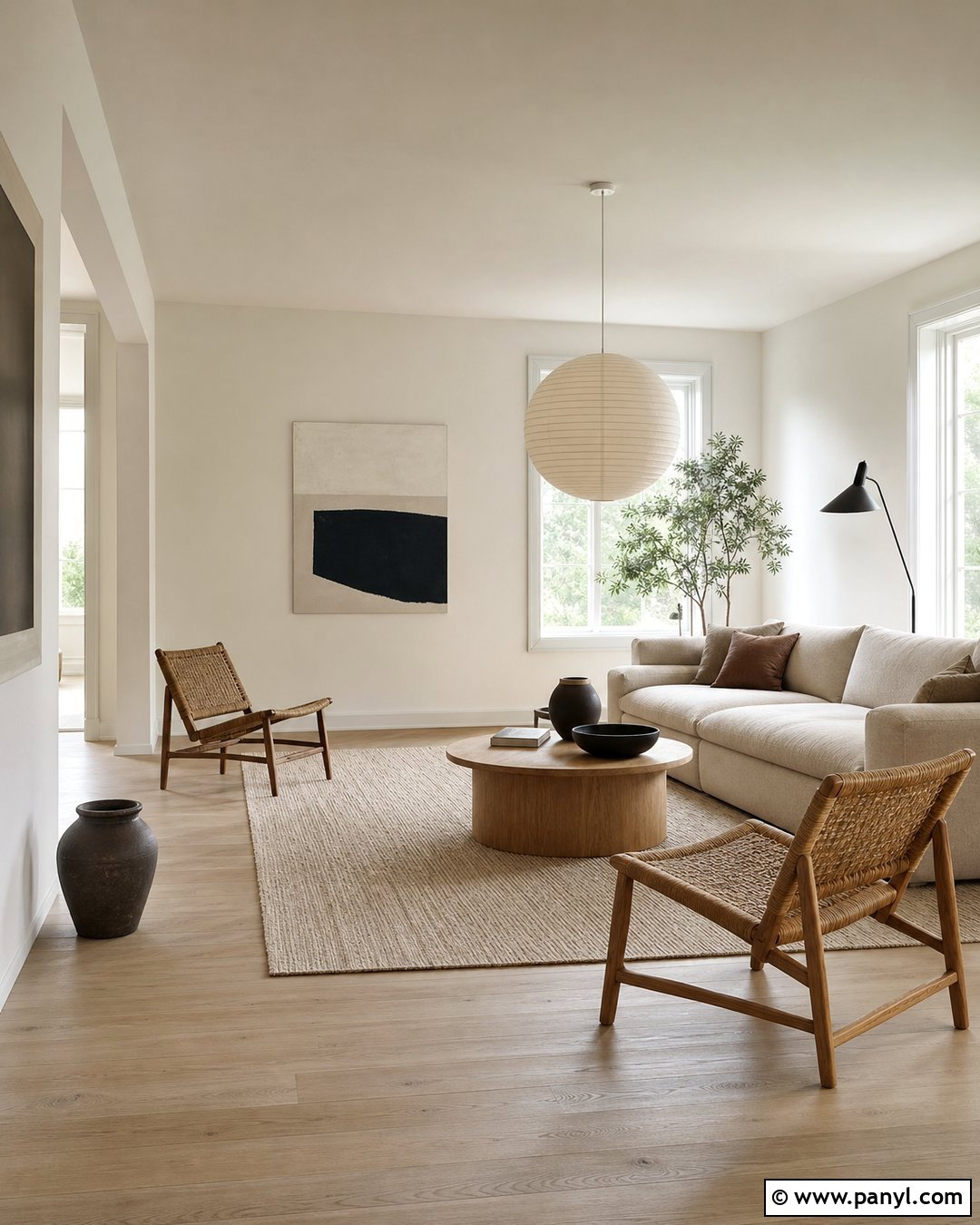
Alabaster walls add softness to a Scandinavian room that might otherwise feel stark. Select simple Pure White trim, pale white oak flooring, and low-profile furniture in cream, light gray, and muted beige. A compact oatmeal sofa can face two curved wood chairs around a round oak coffee table. Use a wool rug with a subtle linear pattern to define the seating area. Black accents should remain minimal, appearing through one floor lamp, narrow picture frames, and small cabinet pulls. Add warmth with a boucle throw, linen cushions, and handcrafted ceramic vessels. Keep window treatments sheer and uncomplicated to maximize daylight. Every object should have breathing room, resulting in an organized, functional space that still feels warm and personal.
6. Traditional Alabaster Walls With White Trim
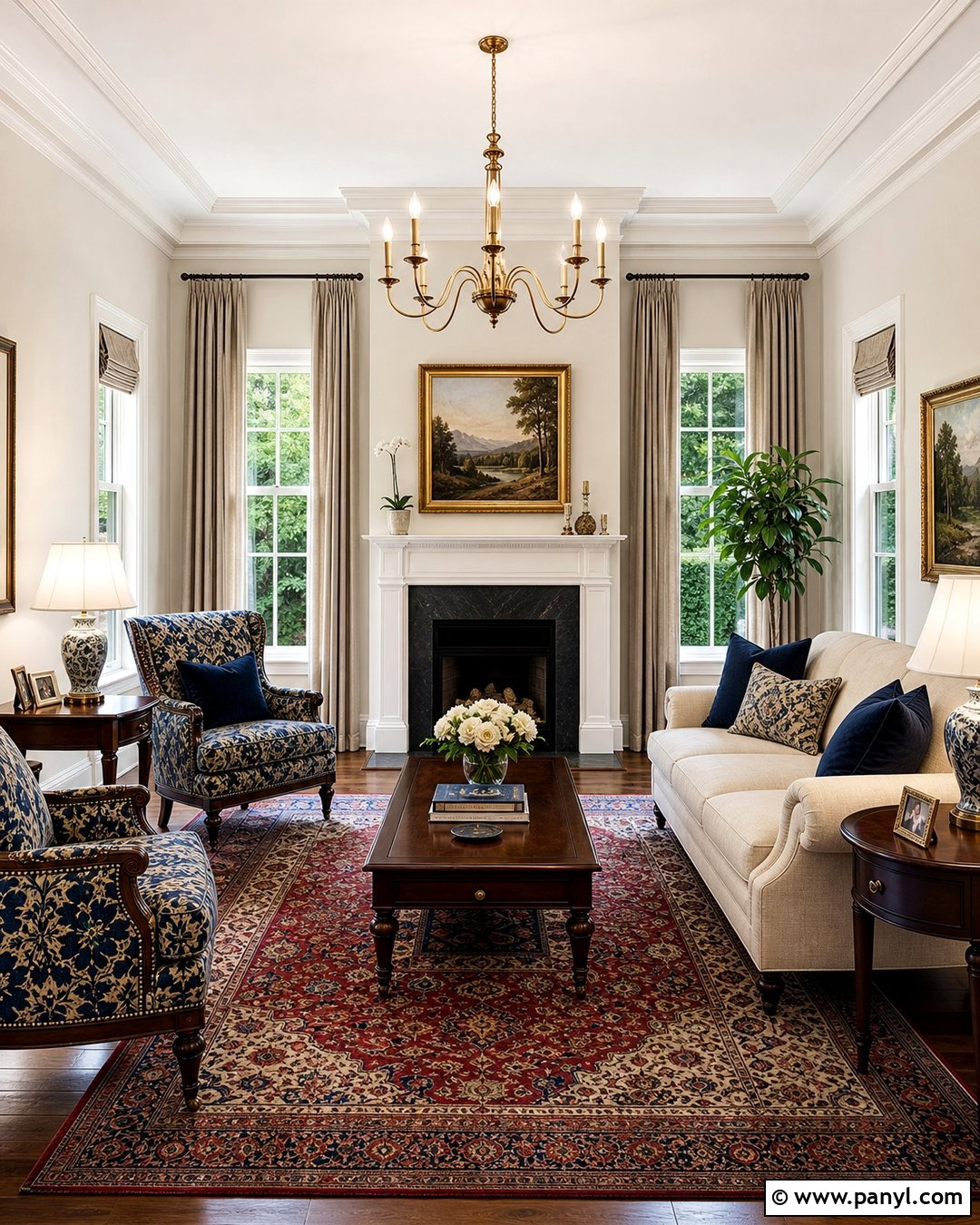
Detailed millwork looks elegant against Alabaster walls when the contrast remains refined rather than severe. Paint crown molding, substantial baseboards, paneled doors, and window casings in a clean white satin finish. Furnish the room with a rolled-arm beige sofa, walnut side tables, and two patterned blue-and-cream chairs. A Persian-inspired rug can introduce burgundy, navy, and faded gold in controlled amounts. Hang full-length linen drapes from brass rods and place a classic shaded chandelier overhead. Symmetrical table lamps and framed landscapes reinforce the orderly layout. Dark wood gives the pale walls visual weight, while white trim highlights the room’s proportions. The result feels established and graceful without relying on overly formal or outdated furniture arrangements.
7. Minimalist Alabaster Walls With White Trim
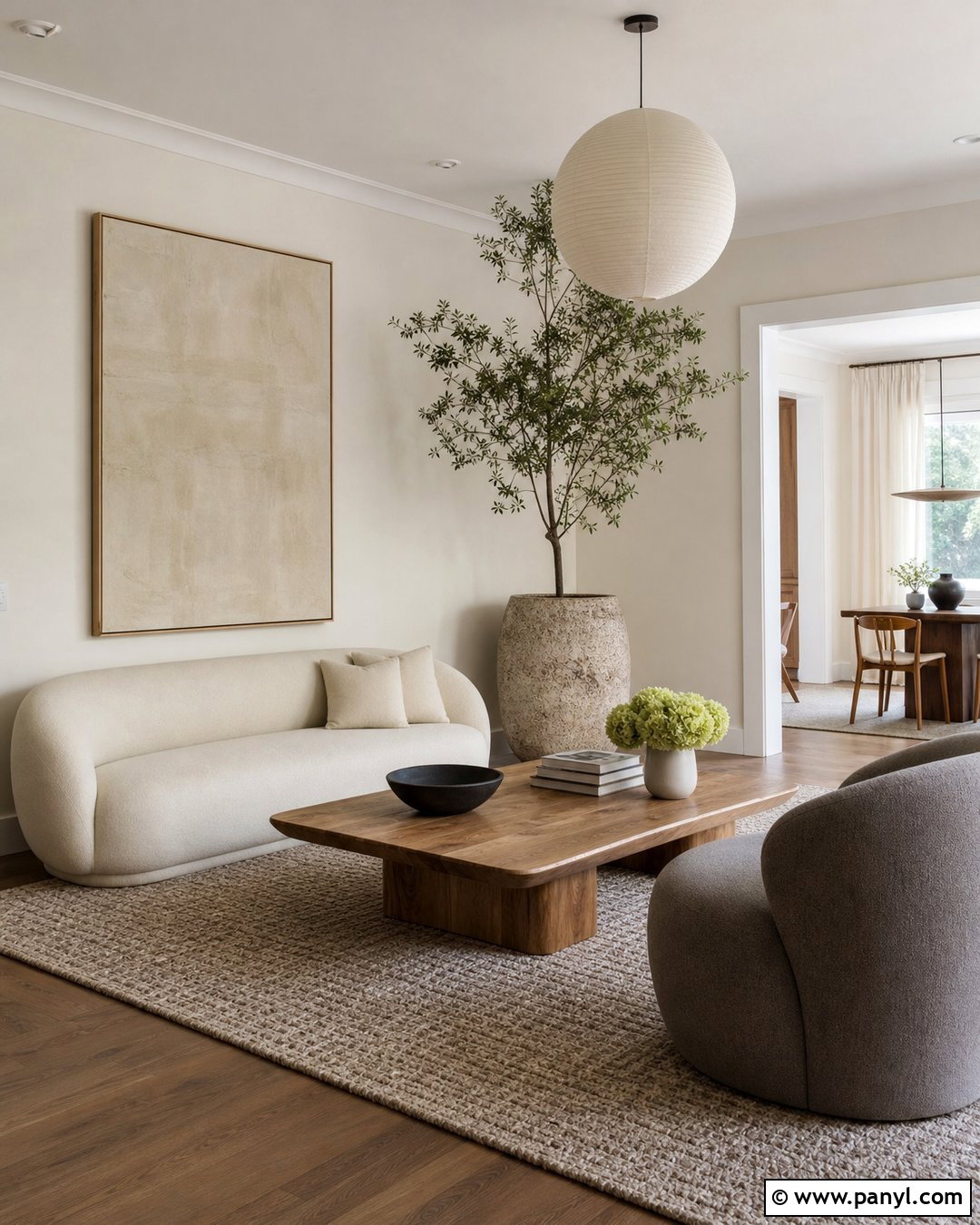
Can a nearly white room feel interesting without abundant decoration? It can when shape, proportion, and texture do the work. Use Alabaster walls with slim white baseboards, flush white doors, and a matching ceiling. Choose one sculptural cream sofa, a broad oak coffee table, and a single curved lounge chair in warm gray. Ground the arrangement with a large handwoven wool rug. Concealed storage keeps everyday clutter out of view, while one oversized neutral canvas creates a deliberate focal point. Add a paper lantern pendant and a tall indoor tree in a matte stone planter. Limit smaller accessories to a few tactile ceramics. This restrained plan produces a peaceful minimalist room that feels warm, finished, and livable instead of empty.
8. Boho Alabaster Walls With White Trim
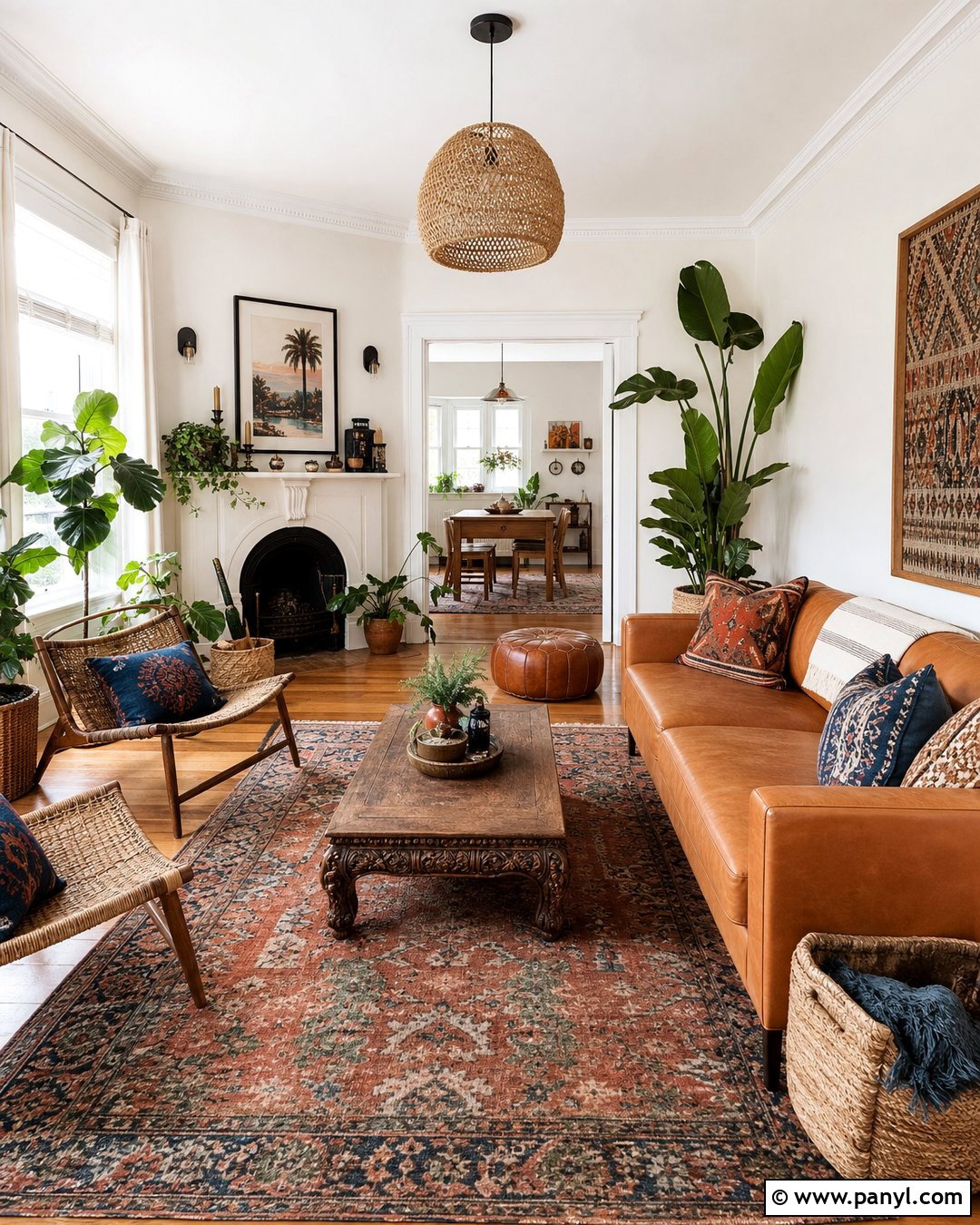
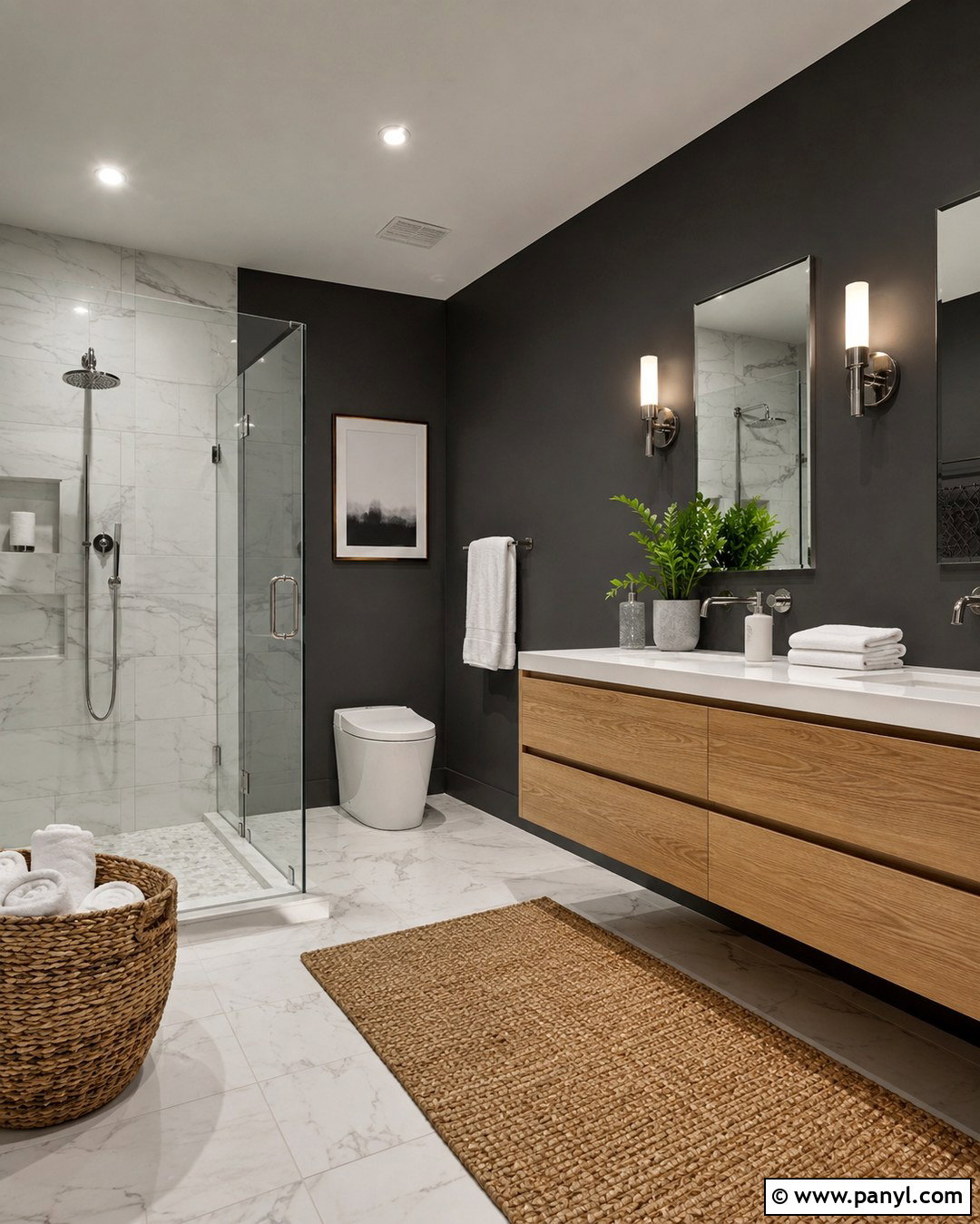
Warm white walls make an ideal backdrop for an expressive boho room because they prevent layered colors and textures from becoming overwhelming. Start with Alabaster walls, clean white trim, and honey-toned wood flooring. Arrange a camel leather sofa with two low rattan chairs and a carved wood coffee table. Use a large vintage-inspired rug featuring rust, sage, indigo, and cream. Add linen curtains, embroidered pillows, woven baskets, and handmade pottery in earthy shades. Plants can fill a bright corner, but vary their heights and leaf shapes for a composed display. Keep wall decor intentional with one textile hanging and several coordinated framed prints. The finished room feels collected and creative while maintaining a comfortable, organized layout.
9. Midcentury Alabaster Walls With White Trim
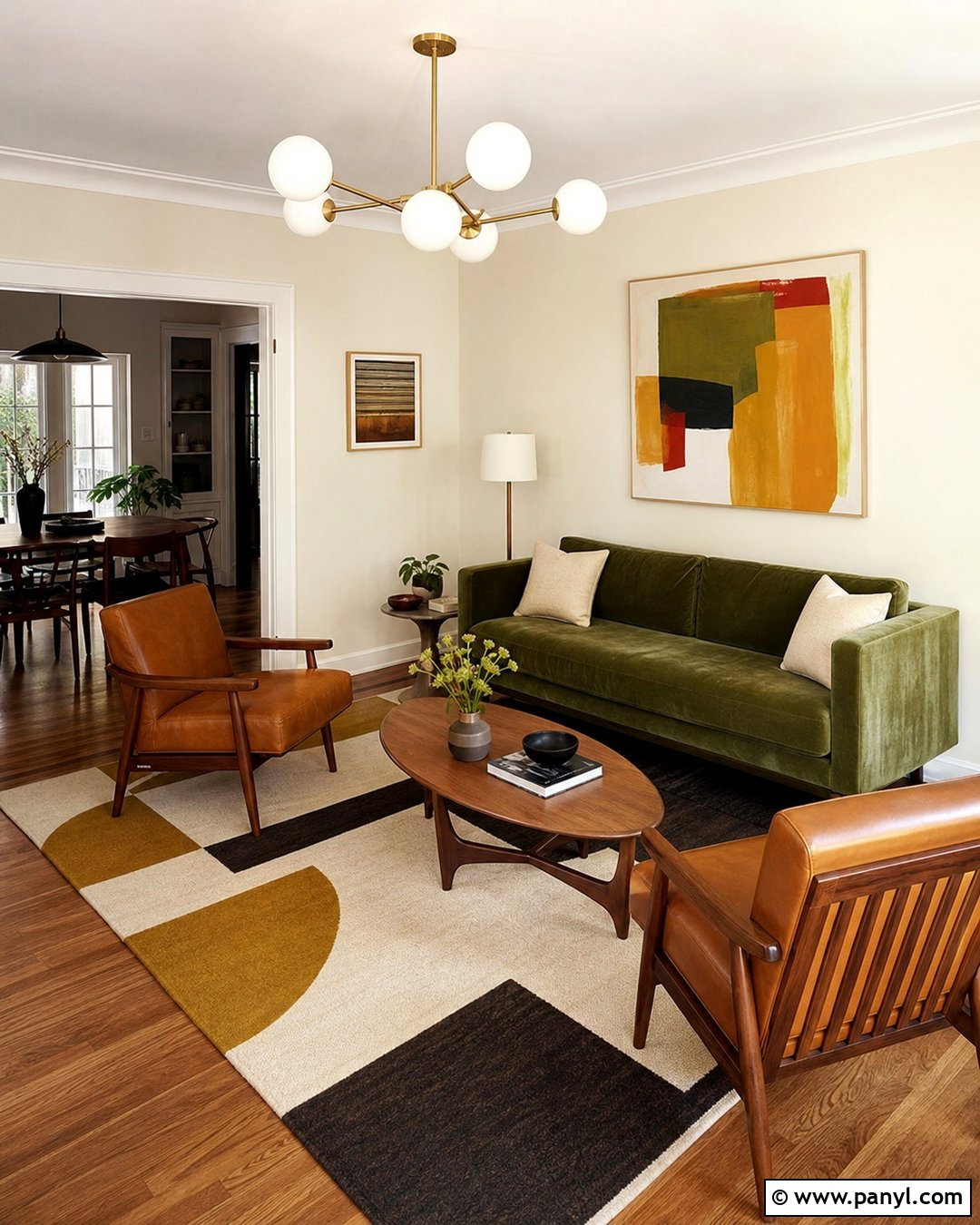
Alabaster walls can soften the bold shapes and darker woods associated with midcentury design. Pair them with simple white trim, walnut flooring, and a streamlined olive green sofa on tapered legs. Place two cognac leather lounge chairs opposite the sofa and center the arrangement around an oval walnut coffee table. A geometric rug in cream, mustard, and charcoal adds period-inspired color without dominating the room. Use a brass globe chandelier, arc floor lamp, and low walnut media console to reinforce the horizontal lines. Large abstract artwork provides a focal point above the sofa. Finish with one sculptural planter and restrained accessories. The result feels authentically retro yet bright enough for a comfortable present-day home.

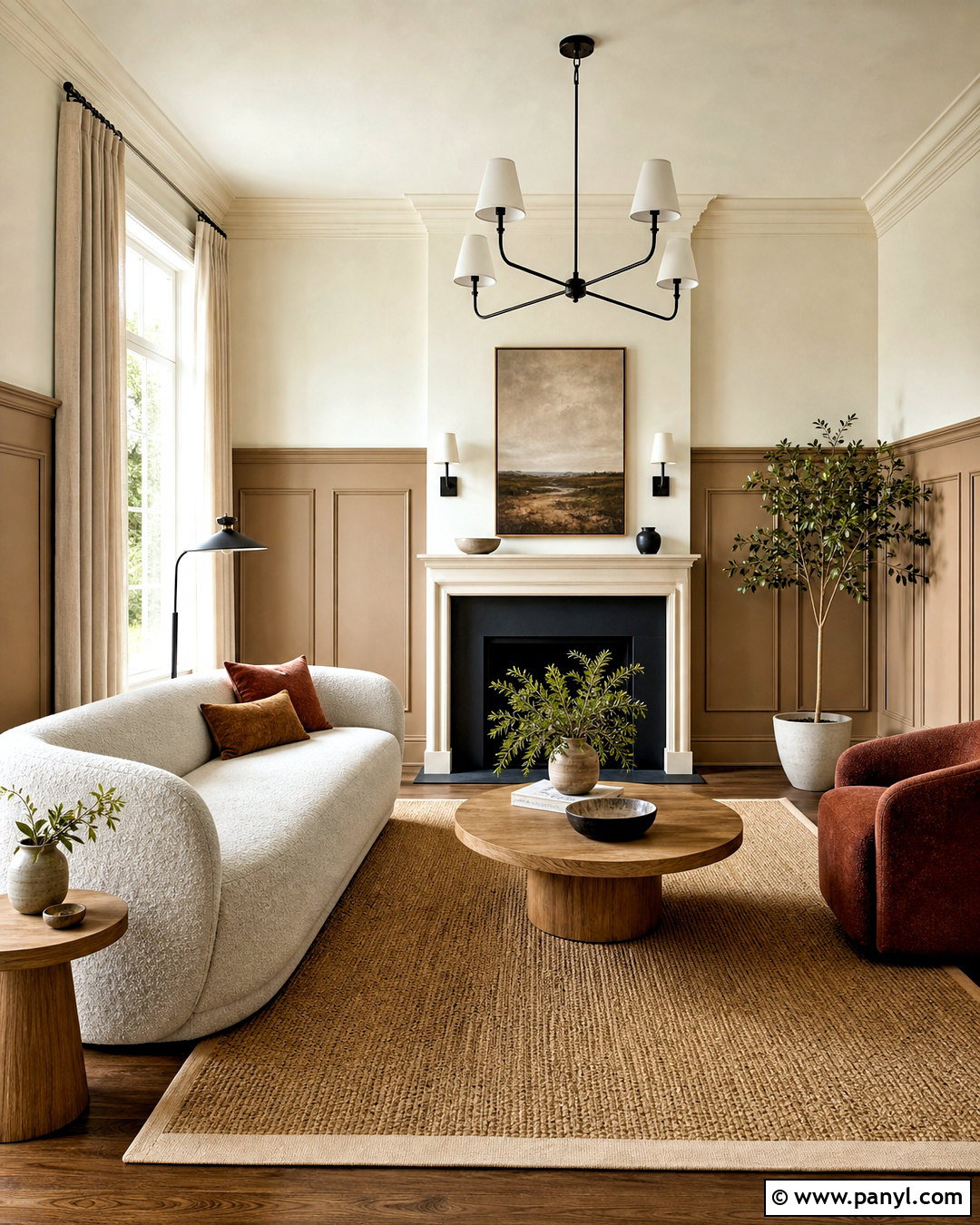
10. Small Living Room With Alabaster Walls And White Trim
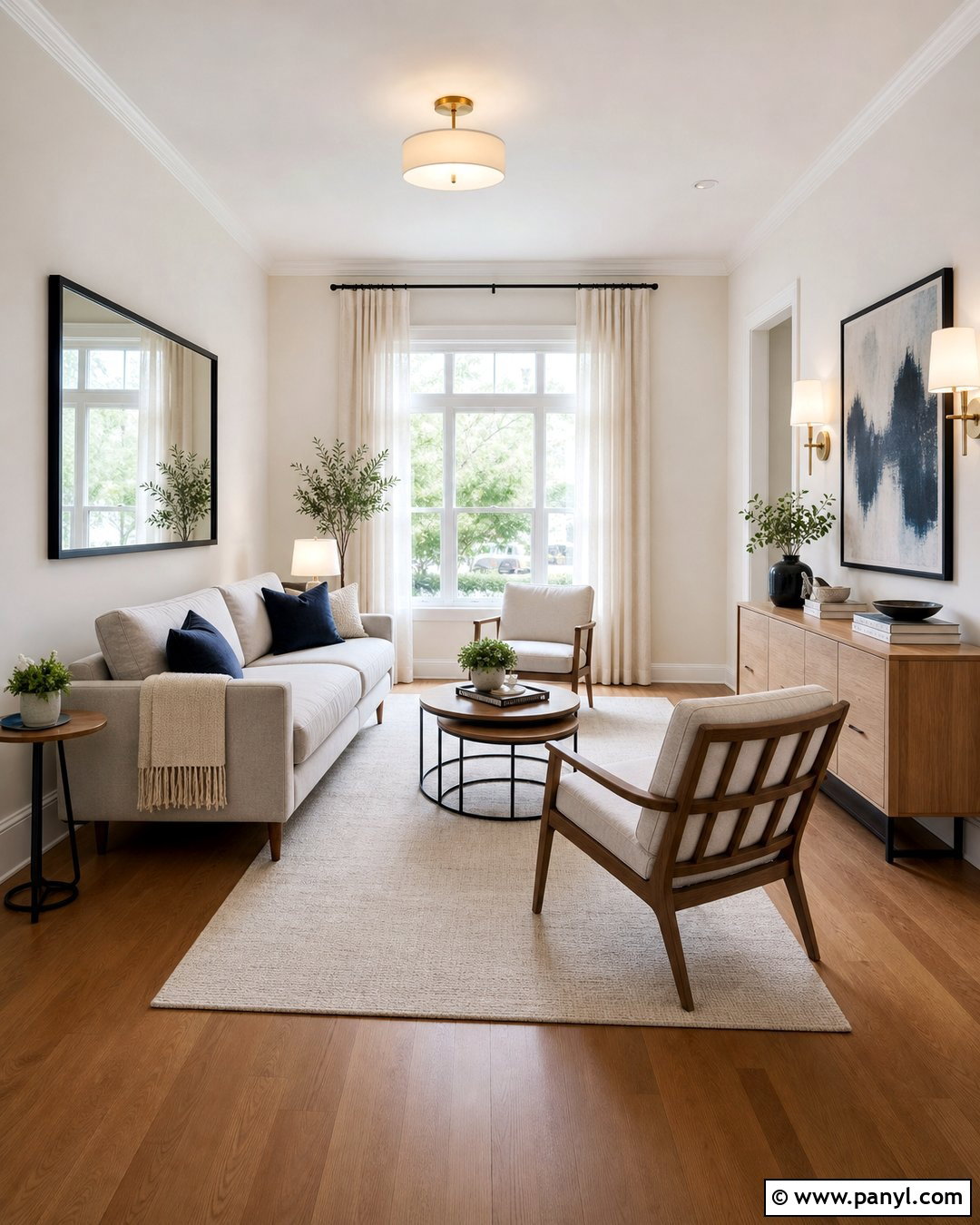
A small living room benefits from the subtle separation between warm Alabaster walls and cleaner white trim. Keep the floor visible by choosing a compact sofa with raised legs, one open-frame accent chair, and nesting coffee tables. Paint doors, baseboards, and window trim white to create a neat perimeter around the space. Light oak furniture and a cream rug maintain visual continuity, while muted blue pillows add controlled contrast. Hang curtains close to the ceiling and extend the rod beyond the window to make the opening appear broader. Wall-mounted sconces can replace bulky table lamps. Finish with one large mirror and a narrow console. This thoughtful arrangement delivers comfort and storage without crowding the limited floor area.
11. Open Concept Alabaster Walls With White Trim
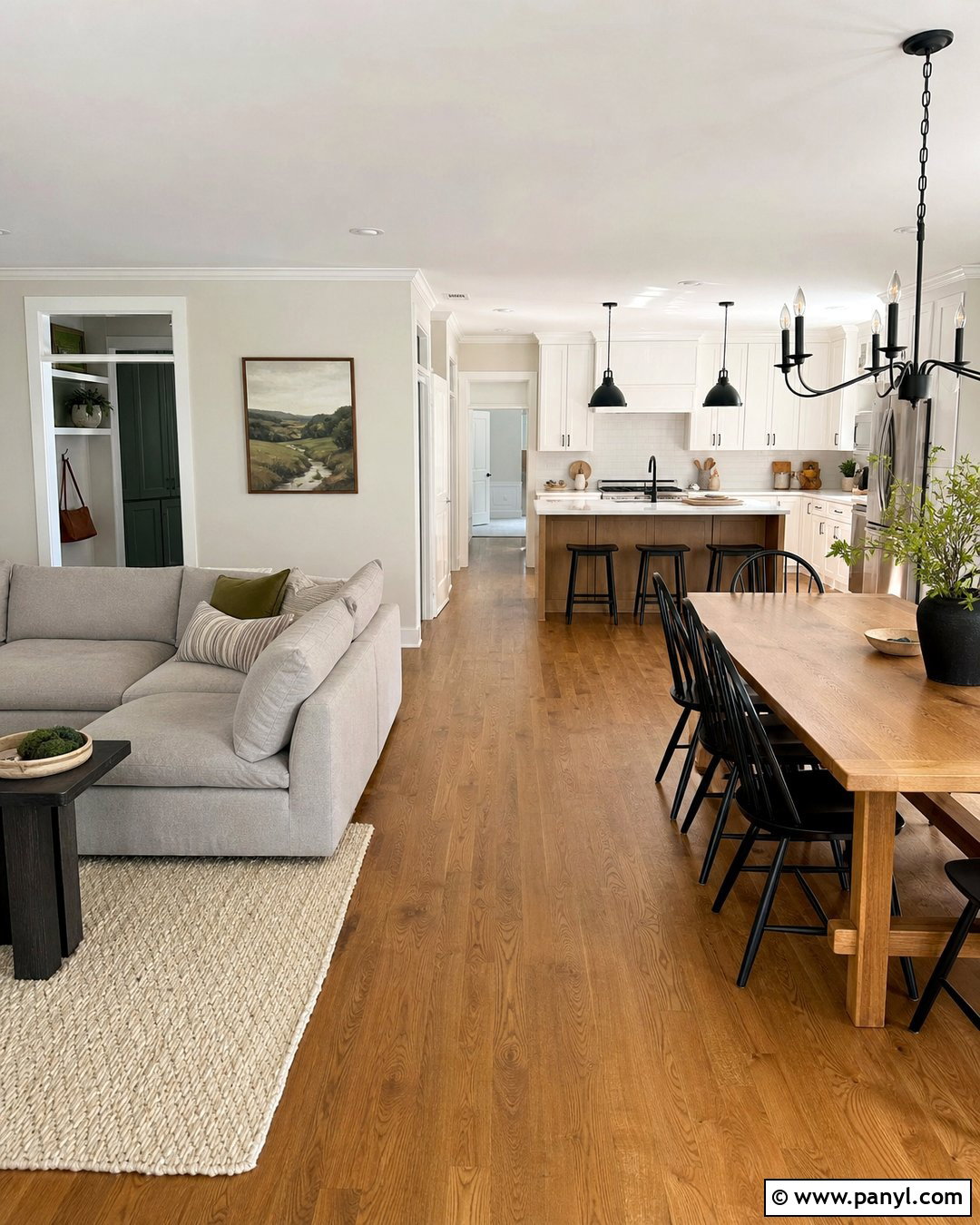
An open floor plan needs repeated finishes to make several functional areas feel connected. Carry Alabaster walls and white trim through the living room, dining area, kitchen, and connecting hallway. Use medium oak flooring throughout to create one uninterrupted foundation. In the living zone, select a taupe sectional and textured ivory rug. Place a rectangular oak table with black chairs in the dining area, then repeat black through kitchen pendants and cabinet hardware. White kitchen cabinets can blend with the trim, while a warm wood island connects to the flooring and furniture. Use muted green accents across all three zones. Repeating a limited palette creates cohesion while distinct rugs and lighting fixtures give each area its own purpose.
12. Alabaster Kitchen Walls With White Cabinets
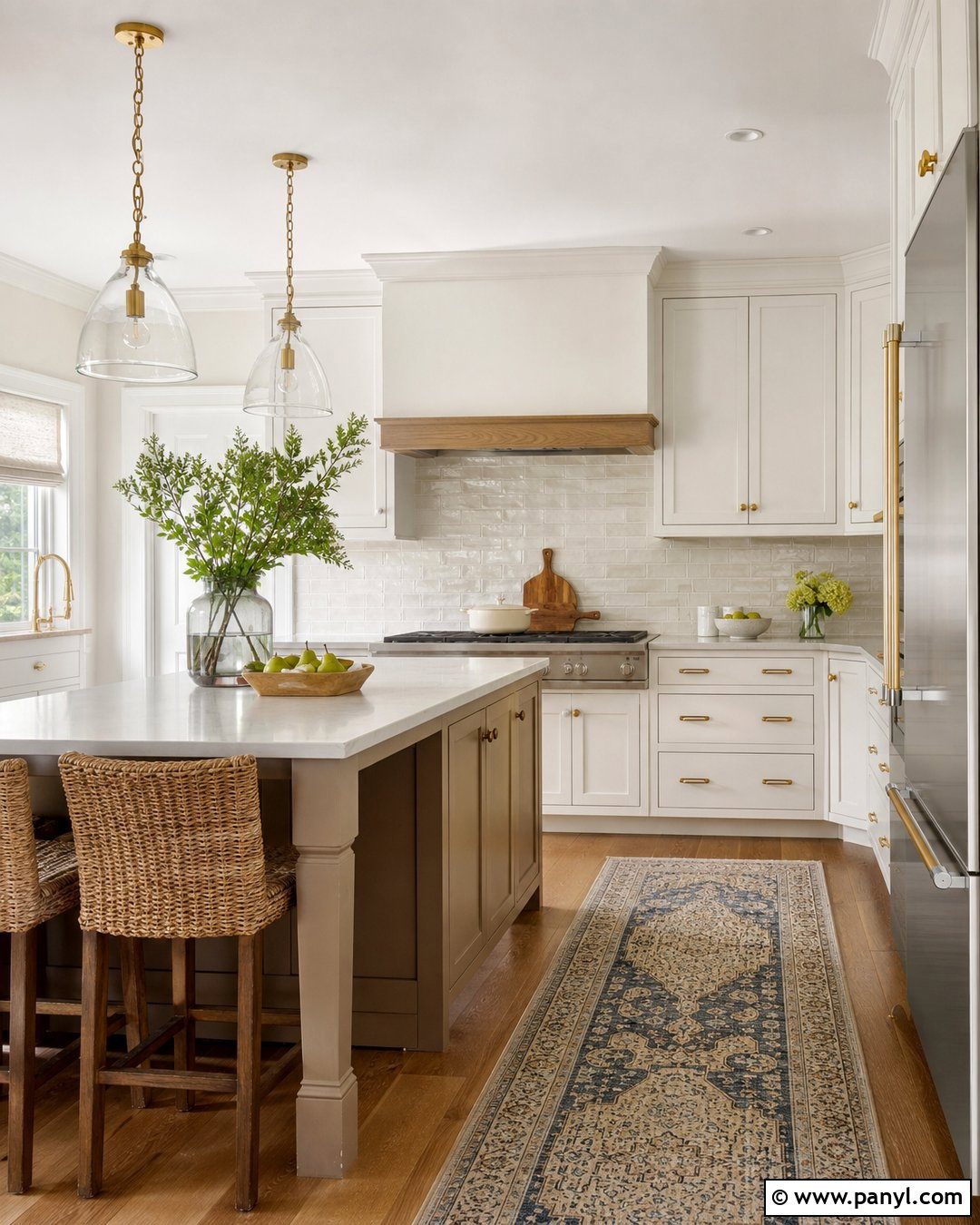
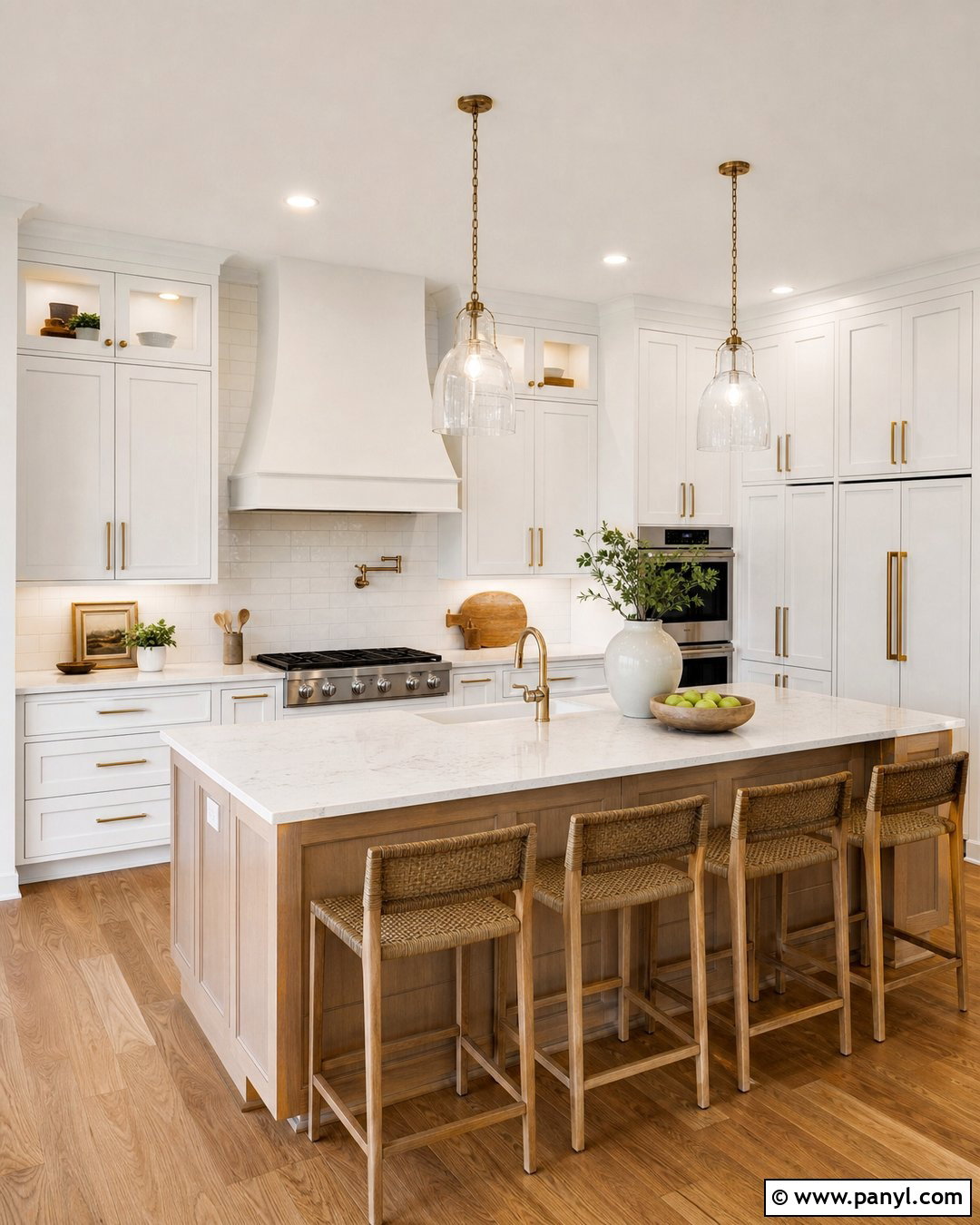
Alabaster walls can warm up a white kitchen while allowing the cabinetry to look clean and defined. Choose soft white shaker cabinets that coordinate with the trim, then add lightly veined quartz counters and a handmade beige subway tile backsplash. Medium oak flooring prevents the room from becoming too pale. A central island painted muted taupe adds gentle contrast and provides space for woven counter stools. Use brushed brass cabinet pulls and simple glass pendants for a subtle glow. Keep appliances stainless steel or panel-ready for a streamlined appearance. A washable runner in blue and cream introduces pattern along the main walkway. The completed kitchen feels bright, layered, and practical, with each white finish serving a clear visual purpose.
13. Alabaster Kitchen Walls With Natural Oak Cabinets
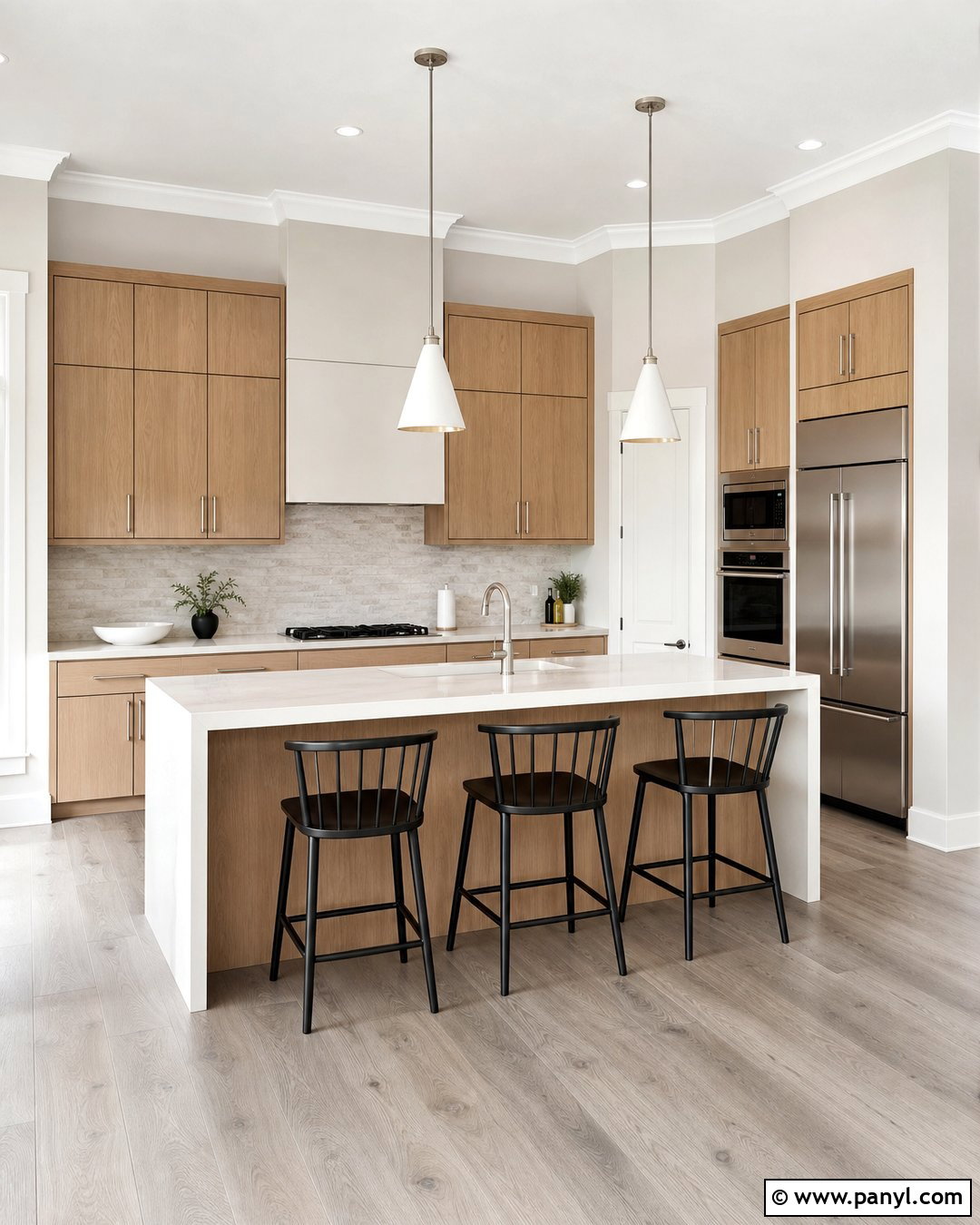
The creamy warmth of Alabaster walls pairs naturally with light oak cabinetry. Choose flat-panel or narrow shaker cabinets in a clear matte finish, allowing the wood grain to become the kitchen’s main texture. Use Pure White on window trim, doors, and baseboards to frame the warmer surfaces. Add white quartz counters, a softly mottled cream backsplash, and brushed nickel hardware for a balanced mix. Pale oak flooring can work if it differs slightly from the cabinetry, while warm gray tile offers greater contrast. Install simple white pendants above the island and place black stools below for definition. Minimal open shelving, ceramic cookware, and a few green branches complete a kitchen that feels organic, modern, and inviting.
14. Alabaster Kitchen Walls With Black Island
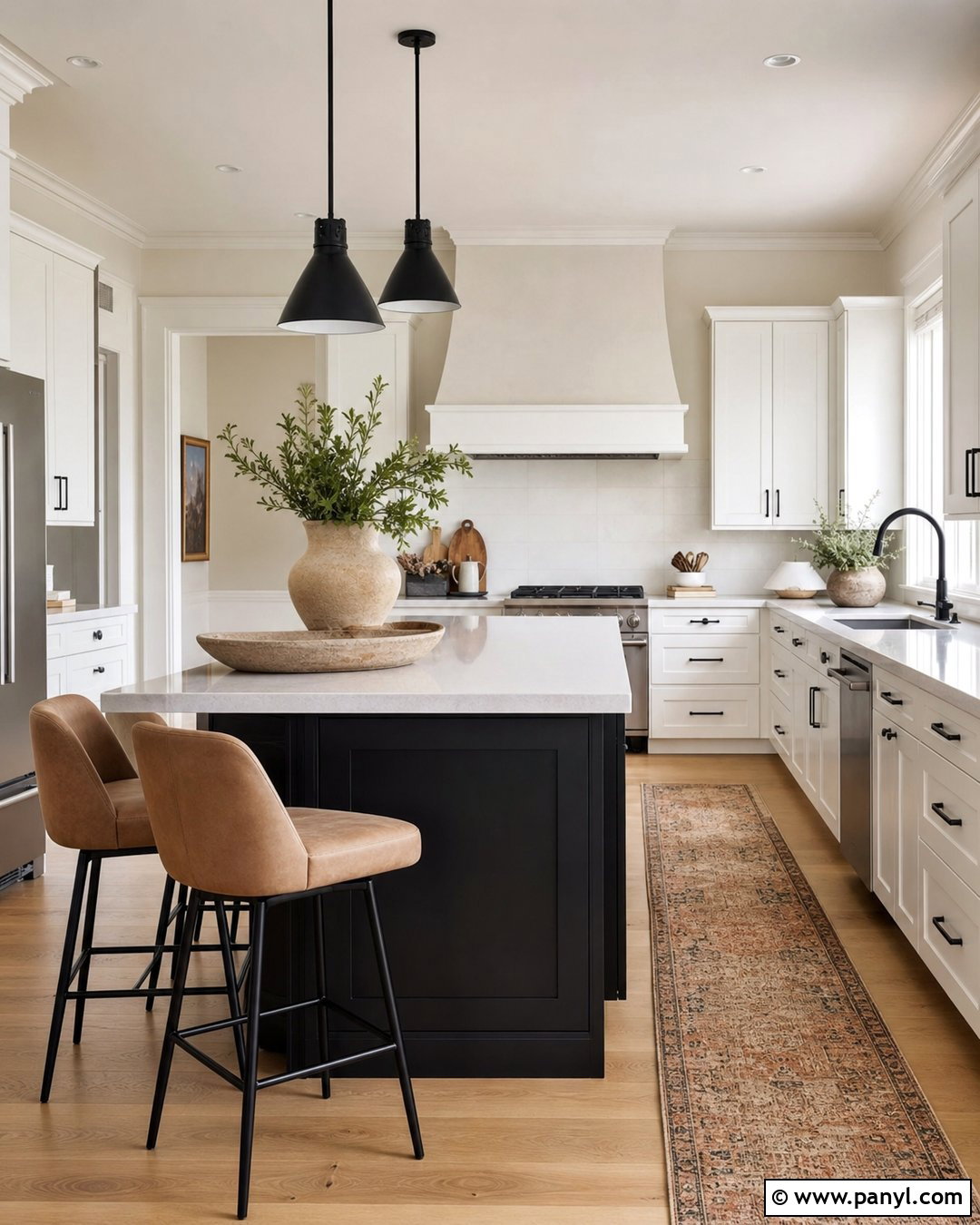
A black island adds structure to a light kitchen without requiring dark walls or extensive black cabinetry. Surround it with Alabaster walls, bright white perimeter cabinets, and coordinating white trim. Select a softened black or charcoal finish for the island so it feels substantial rather than harsh. White quartz counters keep the work surfaces consistent, while pale oak flooring introduces warmth beneath the high-contrast palette. Repeat black through pendant lights, slim cabinet pulls, and window frames in small doses. Upholstered counter stools in camel or woven tan can bridge the black island and warm walls. Finish with beige stoneware and a vintage-style runner. This complete scheme feels polished, balanced, and suitable for both traditional and contemporary kitchens.
15. Dining Room With Alabaster Walls And White Trim
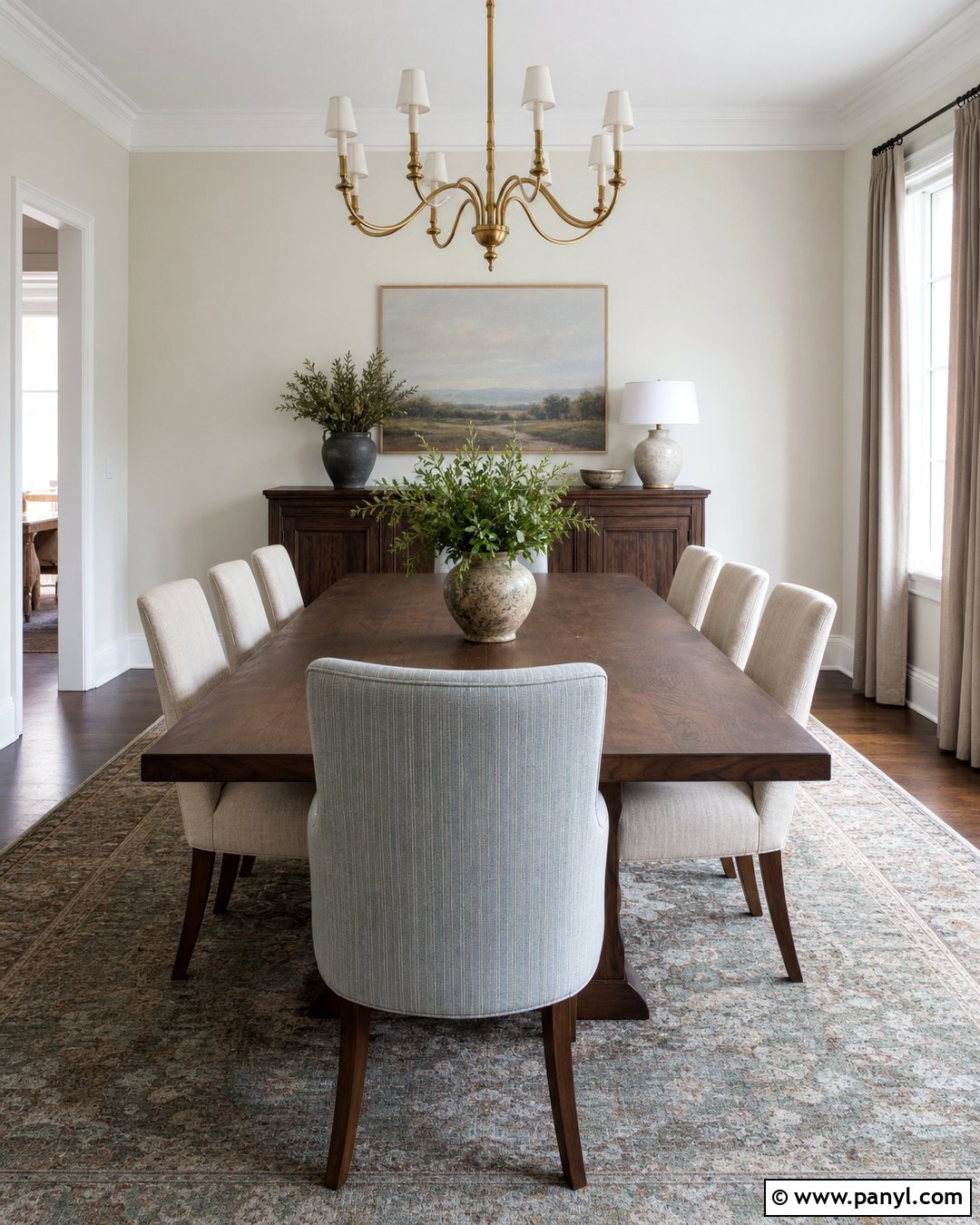
A dining room with Alabaster walls can feel intimate even though the color is light. Define the architecture with white crown molding, baseboards, and window trim, then anchor the room with a solid walnut dining table. Upholstered chairs in oatmeal fabric provide softness, while two host chairs in muted blue add gentle color. Center a large aged-brass chandelier over the table and ground the arrangement with a faded patterned rug. Full-length taupe linen curtains help the windows look taller. On one wall, place a dark wood sideboard beneath a wide landscape painting. Simple ceramic vessels and leafy branches create an unfussy centerpiece. Together, these elements produce a warm, gracious room suited to everyday meals and special gatherings.
16. Primary Bedroom With Alabaster Walls And White Trim
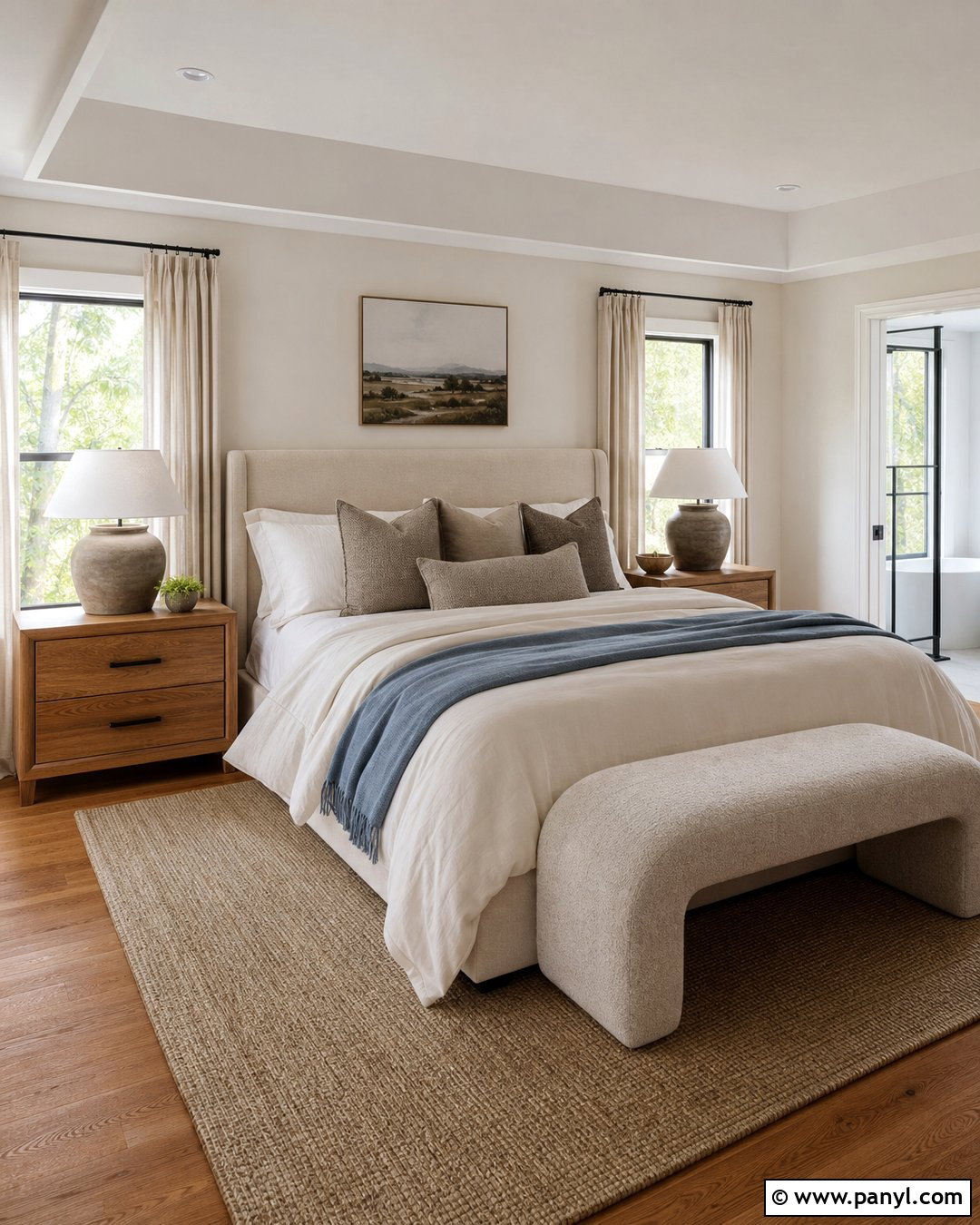
Soft finishes allow Alabaster walls to create a restful primary bedroom rather than a plain white box. Choose white trim, warm oak flooring, and a tall upholstered bed in oatmeal linen. Layer the bed with ivory bedding, taupe pillows, and a muted blue throw for subtle depth. Matching oak nightstands and ceramic lamps create balance on both sides. Hang floor-length natural linen curtains to soften the windows while preserving the bright palette. A large wool rug should extend beyond the bed and give bare feet a comfortable landing. Add a curved bench, minimal landscape artwork, and one substantial plant. The final bedroom feels quiet and sophisticated, with enough texture and tonal variation to remain visually interesting.
17. Navy Bedroom With Alabaster Walls And White Trim
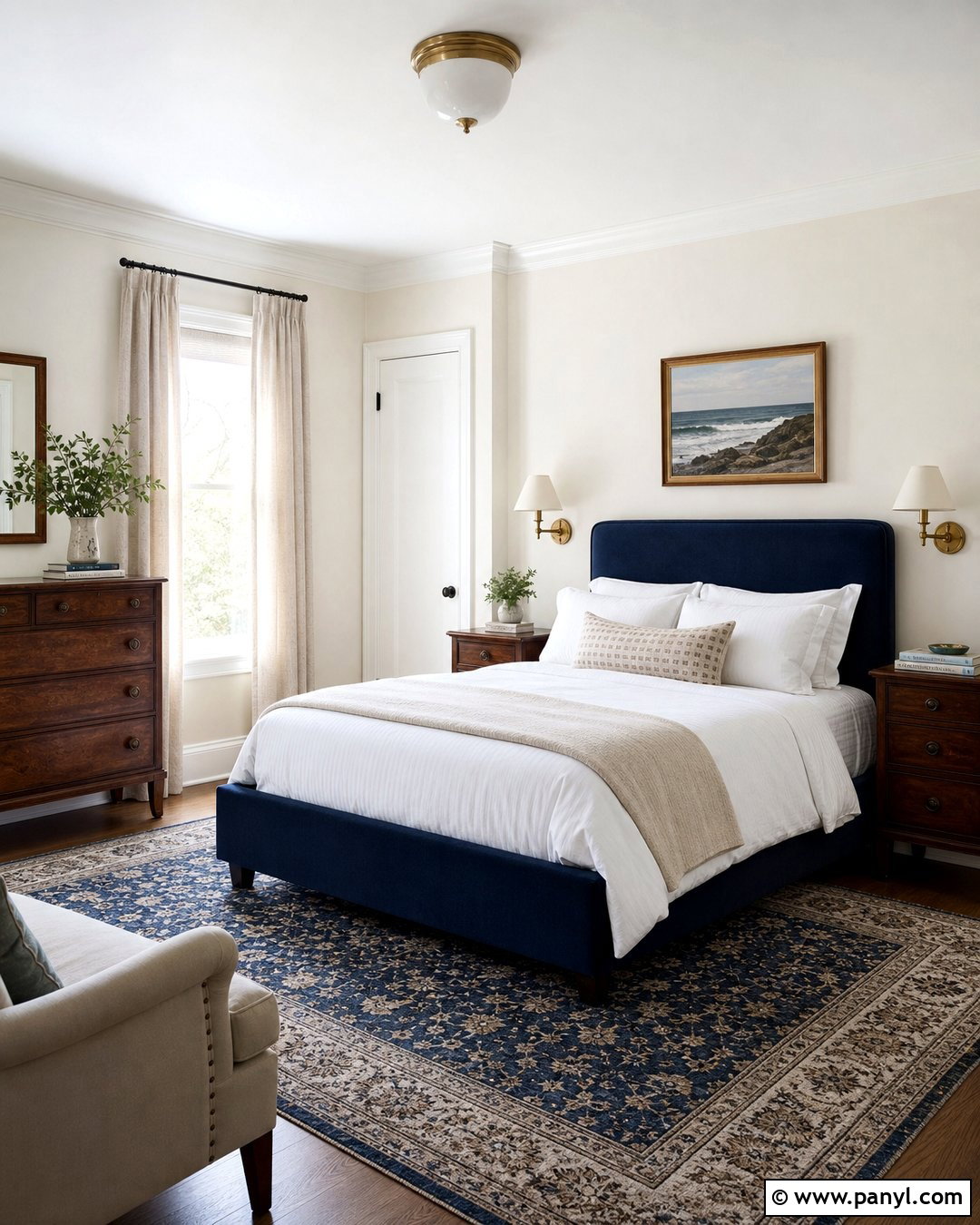
Deep navy gives Alabaster walls a classic, grounded character. Keep the walls warm white and apply a crisp white finish to baseboards, doors, window casings, and crown molding. Use a navy upholstered bed as the primary focal point, then repeat the color in patterned pillows and a border on the area rug. White bedding keeps the composition fresh, while walnut nightstands provide warmth. Add aged-brass sconces and curtain rods for a polished metallic accent. Natural linen drapes can soften the contrast between navy and white. A vintage wood dresser and understated coastal artwork complete the room. The overall look is tailored and restful, offering noticeable color without sacrificing the brightness of the Alabaster backdrop.
18. Sage Green Bedroom With Alabaster Walls
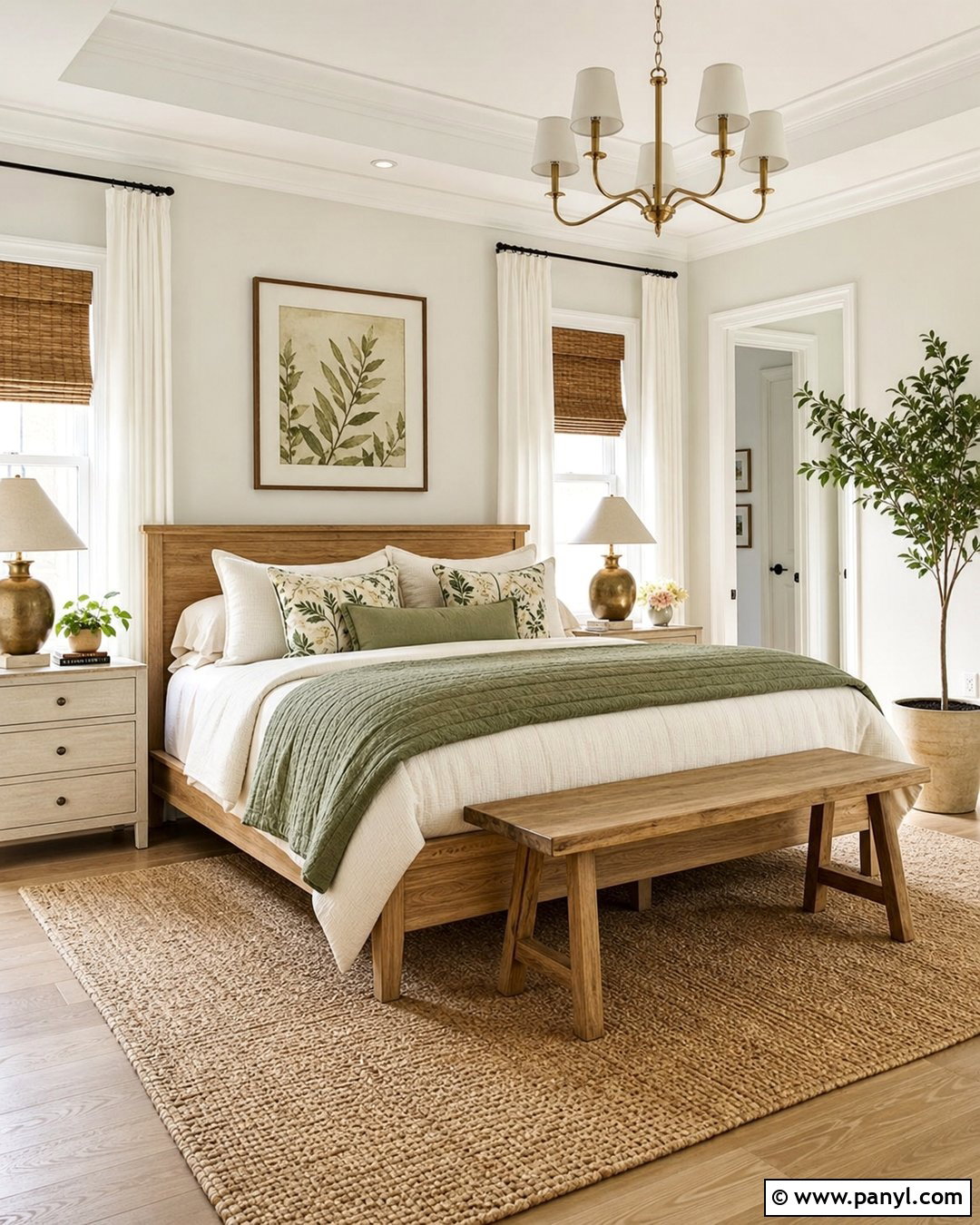
Sage green accents bring a natural calmness to Alabaster walls and clean white trim. Begin with a light oak bed and matching nightstands, then layer the bedding with cream sheets, a sage quilt, and botanical-patterned pillows. A warm beige rug grounds the furniture without interrupting the gentle palette. Use woven shades beneath white linen curtains for privacy and added texture. Brushed brass lamps contribute a soft glow, while black picture frames introduce a small amount of definition. Keep the artwork simple, focusing on landscapes or pressed botanical forms. A wood bench and leafy floor plant complete the organic theme. This bedroom feels fresh and restful because every color relates to nature while the warm white walls maintain openness.
19. Small Bedroom With Alabaster Walls And White Trim
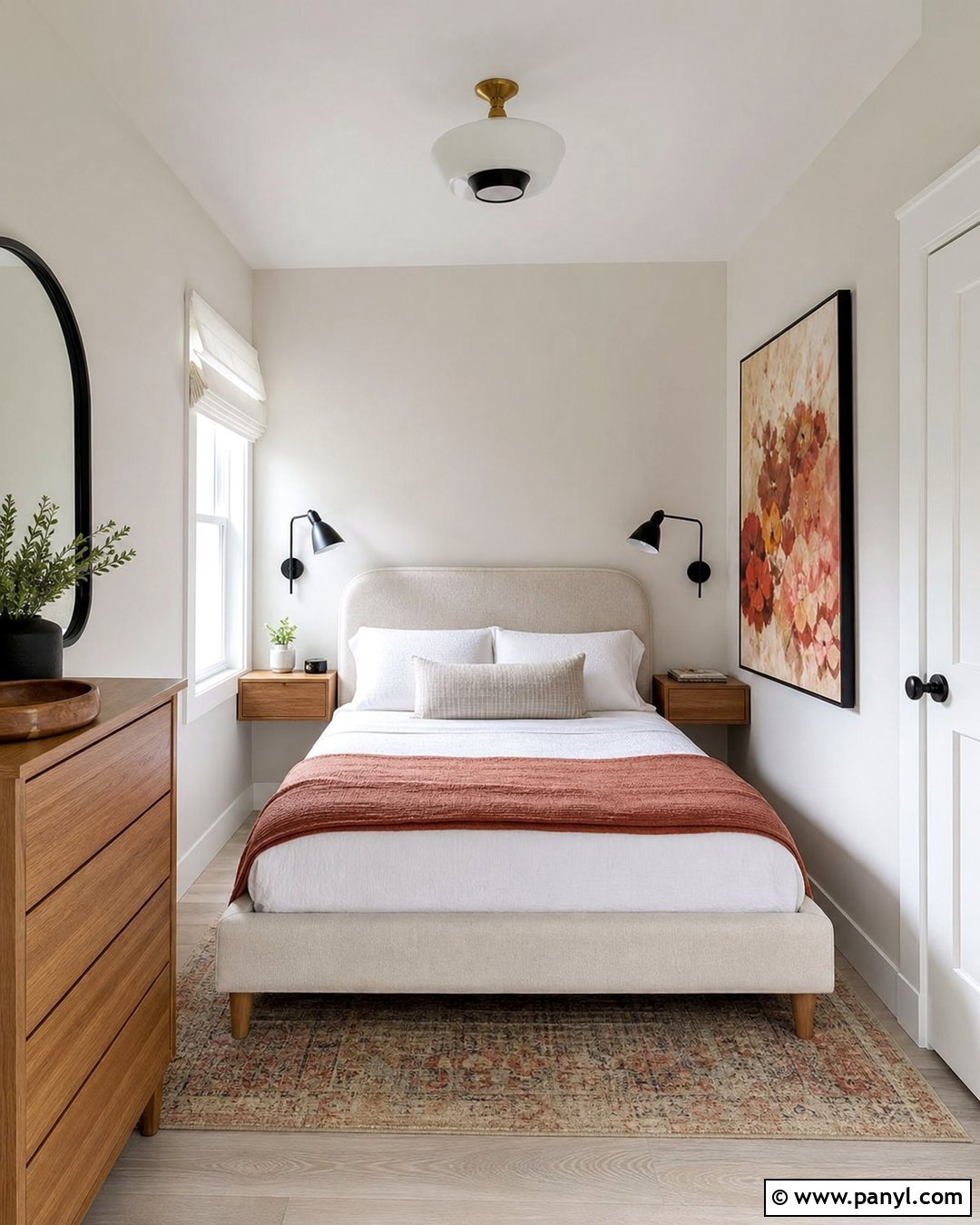
In a compact bedroom, a restrained palette can make furniture feel less intrusive. Use Alabaster walls, bright white trim, and pale oak or light neutral carpet as the foundation. Position a simple upholstered bed against the longest uninterrupted wall and choose floating nightstands to save floor space. Wall-mounted reading lights provide function without occupying tabletop room. White bedding with a muted clay throw adds warmth, while one striped lumbar pillow supplies pattern. Hang a wide mirror opposite the window to distribute light around the room. A narrow dresser and one large artwork piece are more effective than several small furnishings. The completed space feels comfortable and organized, with clear walking paths and no unnecessary visual clutter.
20. Marble Bathroom With Alabaster Walls And White Trim
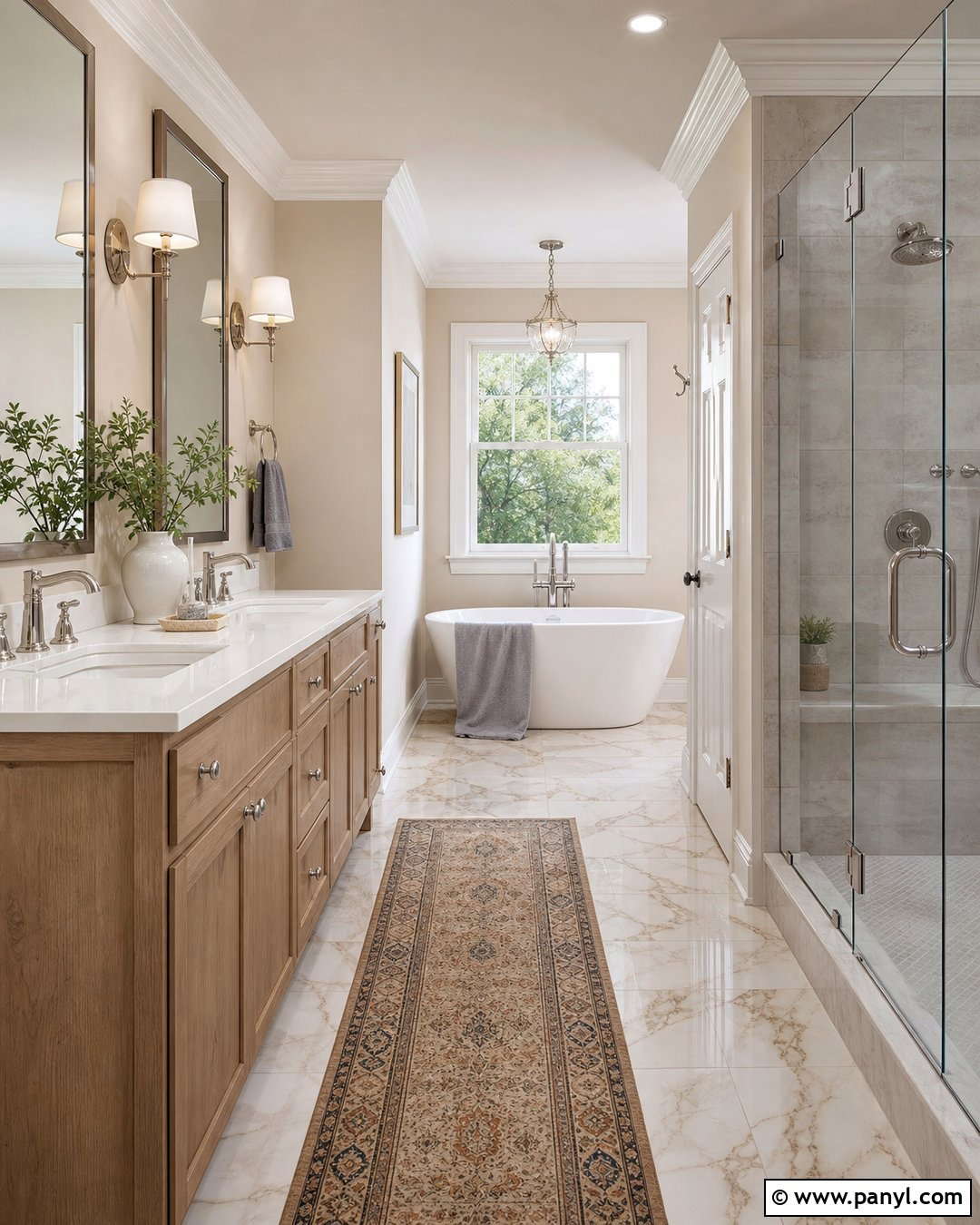
Marble introduces elegant movement to a bathroom with Alabaster walls and white trim. Use large white marble-look porcelain tile around the shower and on the floor, choosing subtle warm gray veining that relates to the paint. A white oak vanity prevents the room from feeling overly formal, while a white quartz top keeps maintenance simple. Paint the door, window casing, and baseboards in a moisture-resistant white finish. Add polished nickel faucets, framed mirrors, and clear glass shower panels for a bright, classic appearance. Soft gray towels and a small vintage-inspired runner provide quiet contrast. The completed bathroom feels refined but approachable, with the warm walls balancing the cooler stone and metal surfaces throughout the room.
21. Black And White Bathroom With Alabaster Walls
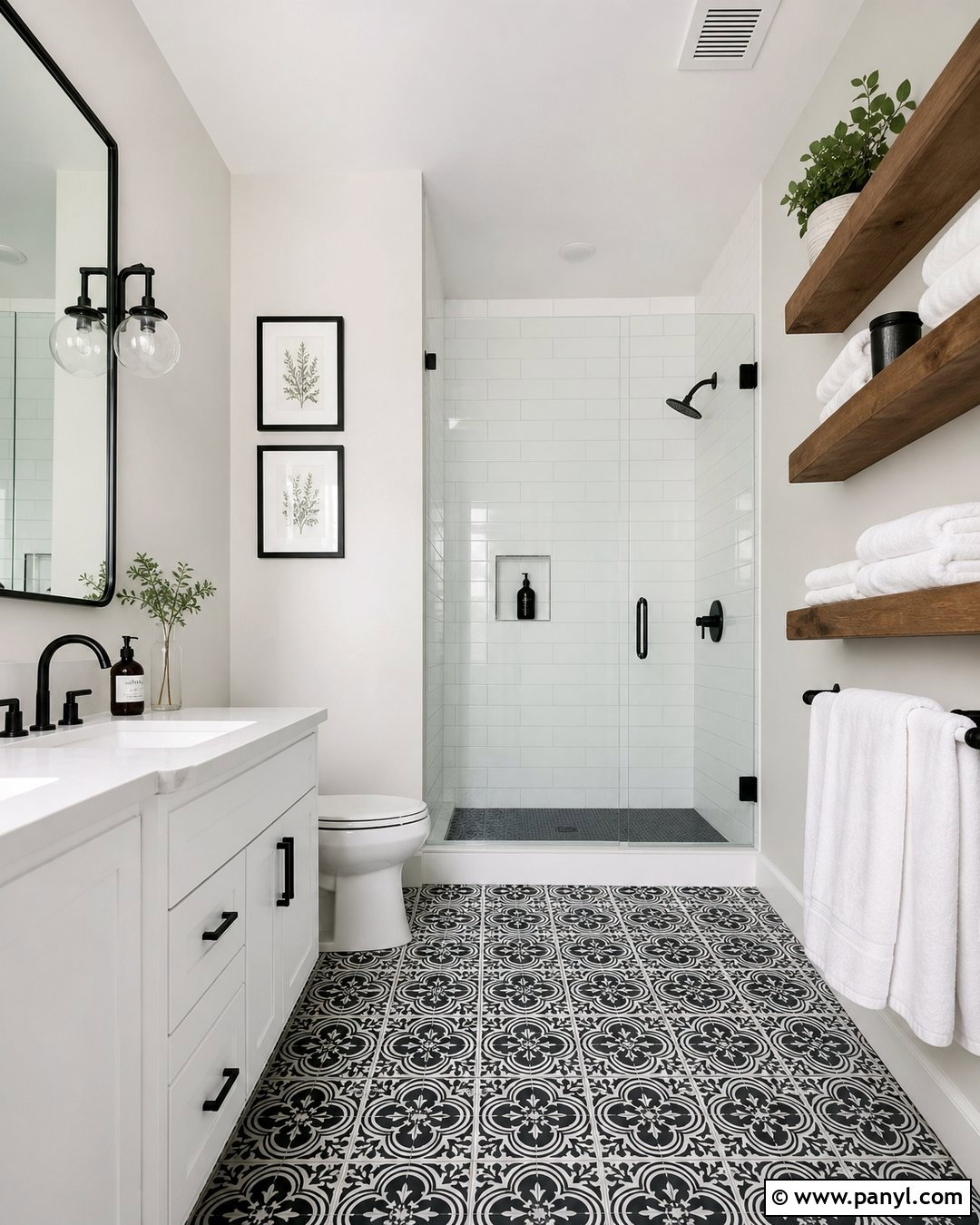
Black details create a graphic bathroom while Alabaster walls prevent the scheme from feeling severe. Use white trim and a white vanity, then install matte black faucets, cabinet pulls, mirror frames, and shower hardware. A black-and-white patterned floor gives the compact room personality, while glossy white shower tile reflects light. Choose a frameless glass enclosure so the tile remains visible and the room feels open. Natural wood shelves or a small oak stool add essential warmth. Keep towels solid white and use one muted green plant as a soft accent. Balanced repetition is important: distribute black fixtures around the room instead of concentrating them in one area. The finished bathroom feels crisp, coordinated, and comfortably modern.
22. Powder Room With Alabaster Walls And White Trim
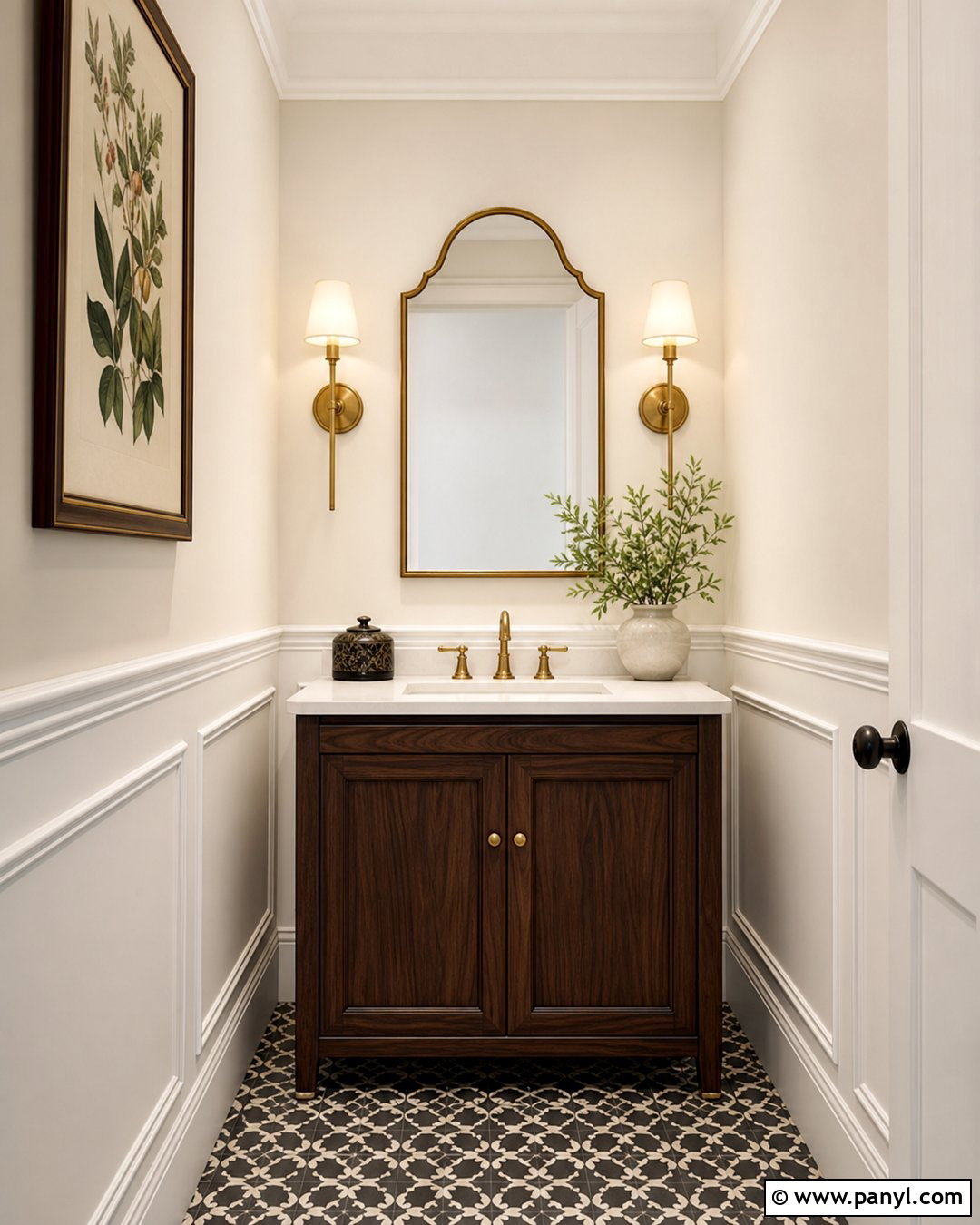
A powder room offers space for a more decorative interpretation of Alabaster walls. Install white picture-frame molding on the lower half of the walls and use Alabaster above it to create understated tonal contrast. Select a compact walnut vanity with a white stone top and an aged-brass faucet. A shaped brass mirror and two small sconces add character without crowding the wall. Cover the floor with charcoal and cream patterned tile to ground the pale surfaces. A framed botanical print, folded hand towel, and ceramic soap dispenser complete the room. Keep the palette controlled so the architectural molding remains noticeable. This arrangement transforms a small utility space into a polished room that feels considered from floor to ceiling.
23. Entryway With Alabaster Walls And White Trim
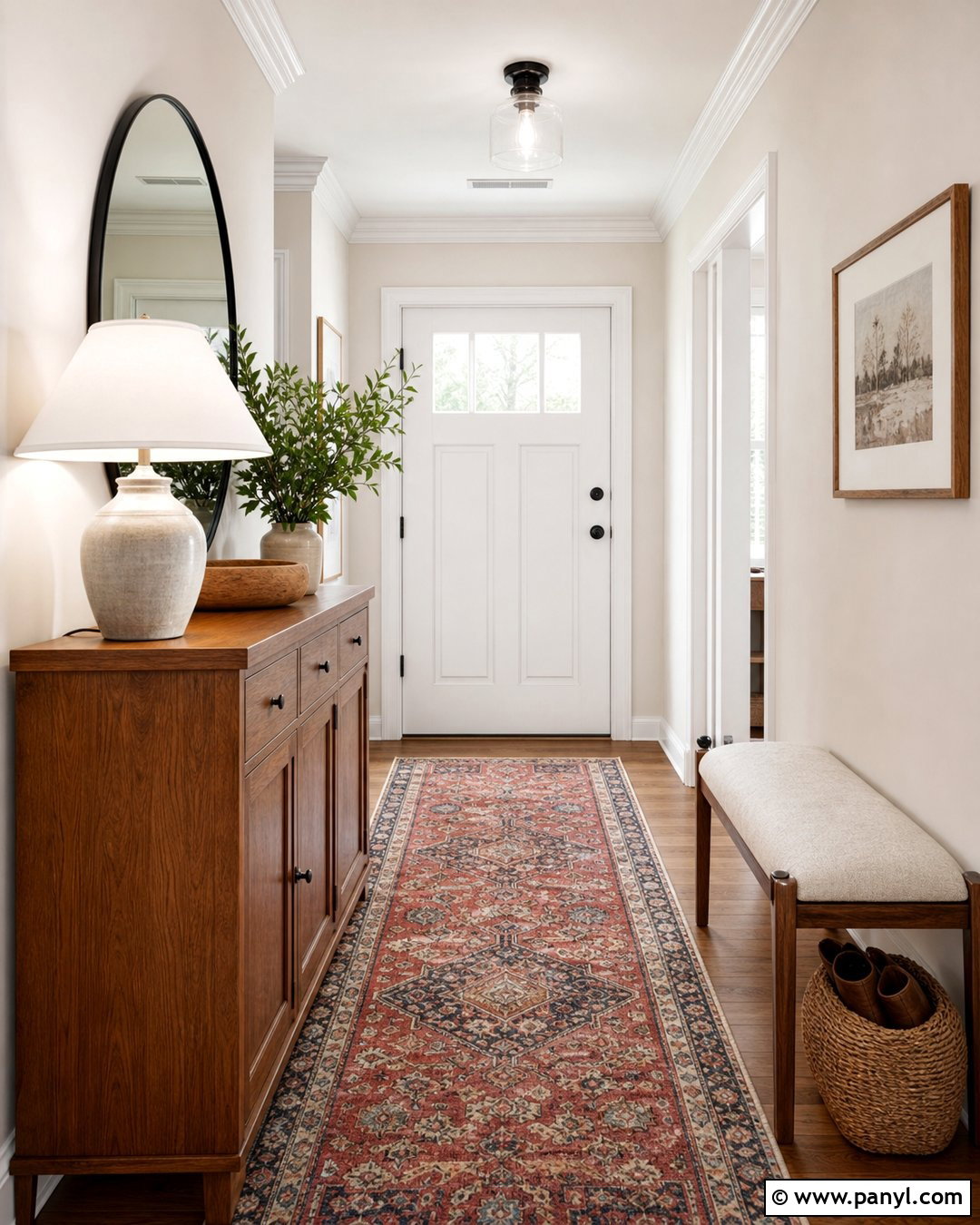
First impressions improve when an entryway feels bright, functional, and connected to the rest of the home. Use Alabaster walls with white baseboards, door casings, and crown molding. A medium oak console adds warmth, while a round black-framed mirror provides contrast and reflects incoming light. Place a washable vintage-style runner along the main path and add a narrow upholstered bench if space allows. A white or natural oak front door can maintain the soft palette, though matte black hardware will give it definition. Use a woven basket for shoes and a ceramic lamp for welcoming light. Keep tabletop decor minimal. The finished entry looks organized and attractive while supporting the daily routines of a busy household.
24. Hallway With Alabaster Walls And White Trim
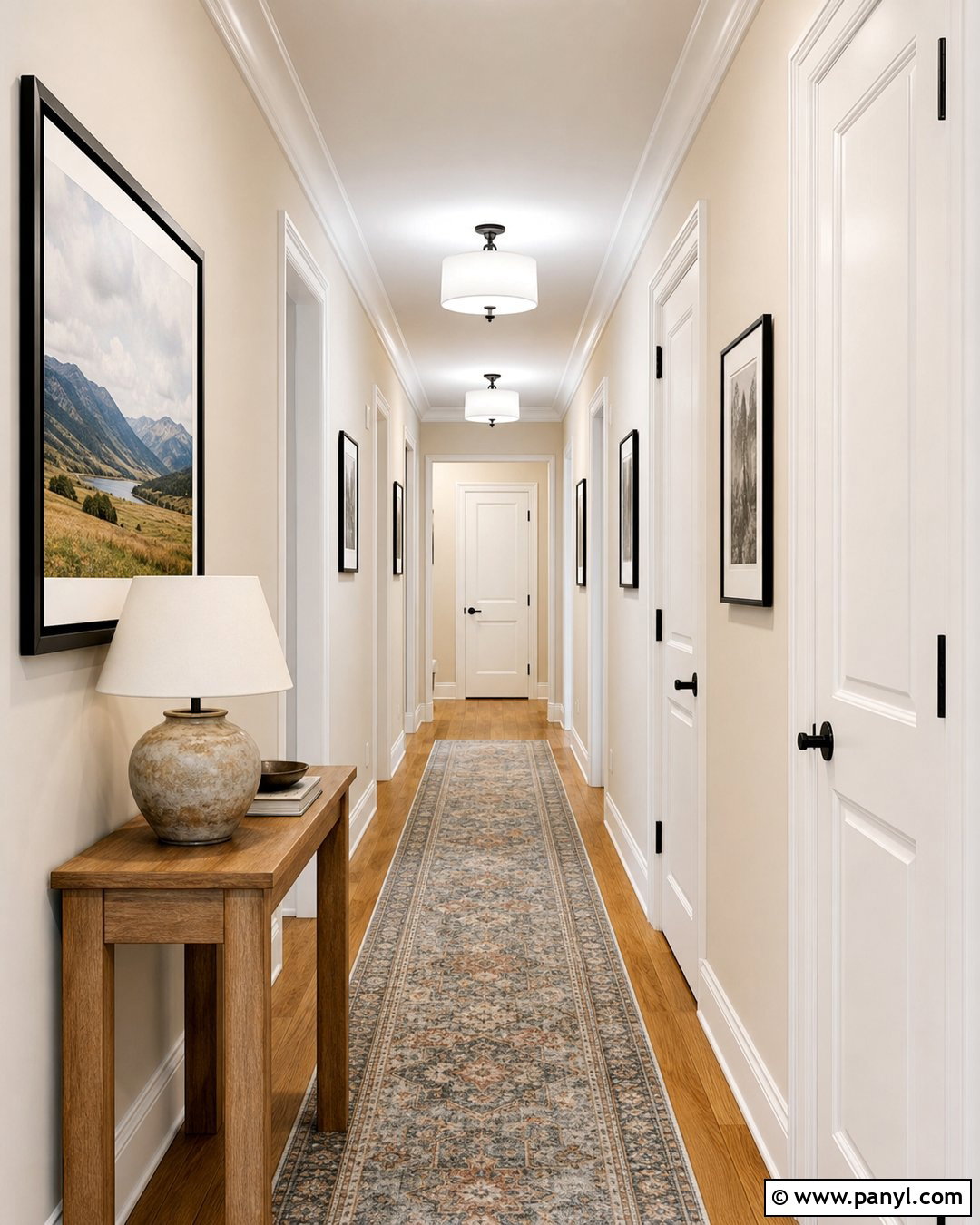
Long hallways need rhythm and scale more than abundant decoration. Paint the walls Alabaster and use brighter white on the baseboards, doors, and frames to create clean visual breaks. Medium wood flooring can lead the eye through the space, while a narrow washable runner introduces muted color and pattern. Arrange a consistent row of black or natural wood frames at eye level rather than scattering small artwork. If the hall is wide enough, add a shallow console with a lamp at the far end. Recessed lights or simple ceiling fixtures should illuminate the full path evenly. The final hallway feels purposeful and connected, turning a pass-through area into a calm extension of the surrounding rooms without reducing valuable circulation space.
25. Home Office With Alabaster Walls And White Trim
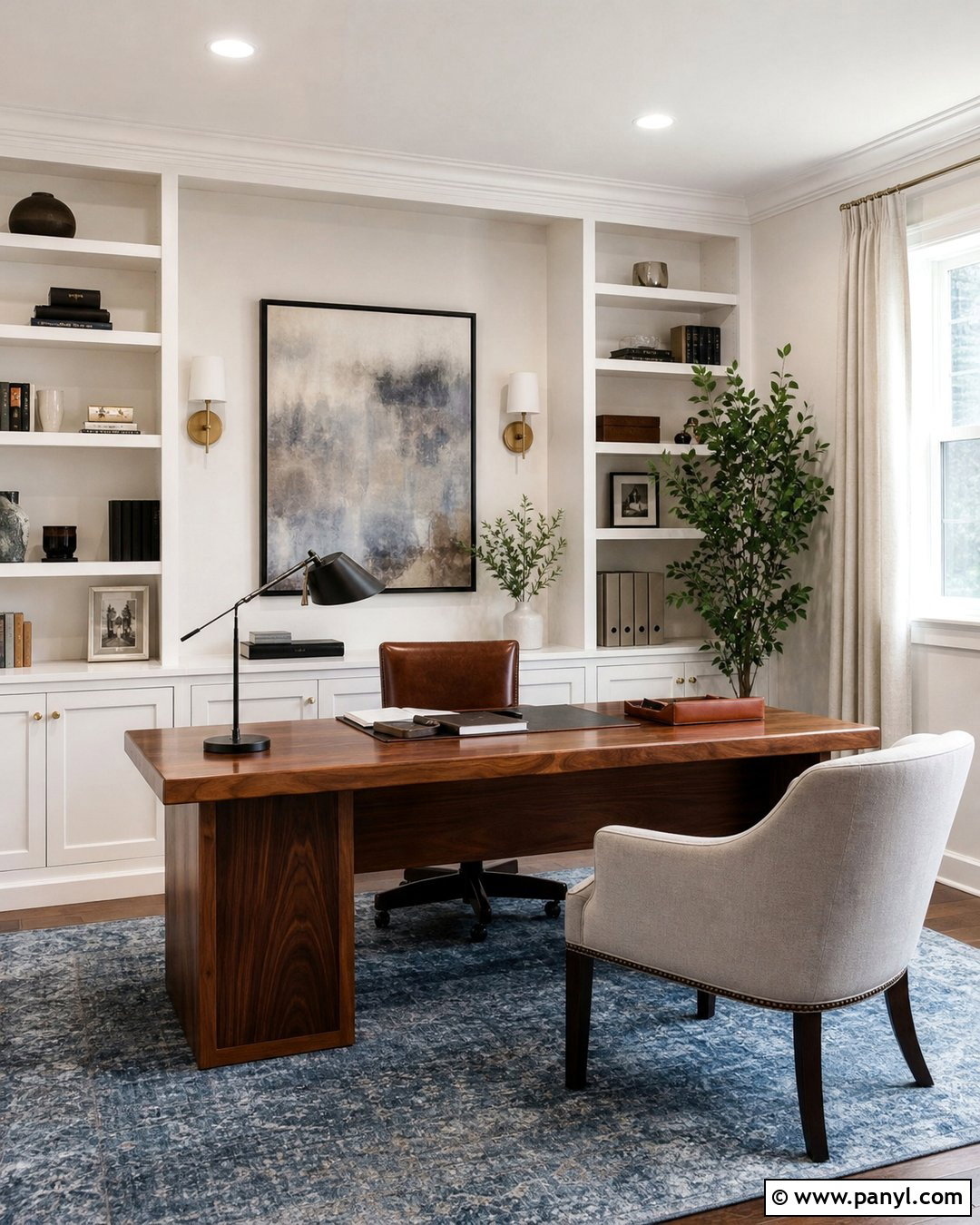
A productive office should feel bright without appearing unfinished or clinical. Pair Alabaster walls and white trim with a substantial walnut desk positioned near the window. Place a comfortable upholstered chair opposite the desk for reading or conversation. Built-in white shelves can blend with the trim, while closed lower cabinets conceal supplies and equipment. A muted blue rug defines the work zone and softens sound. Add a black metal task lamp, leather desk accessories, and framed abstract prints for controlled contrast. Linen curtains reduce glare without blocking daylight. A tall plant and one ceramic vessel provide natural texture. This complete office supports focused work while maintaining a warm, organized appearance that fits comfortably within the home.
26. Nursery With Alabaster Walls And White Trim
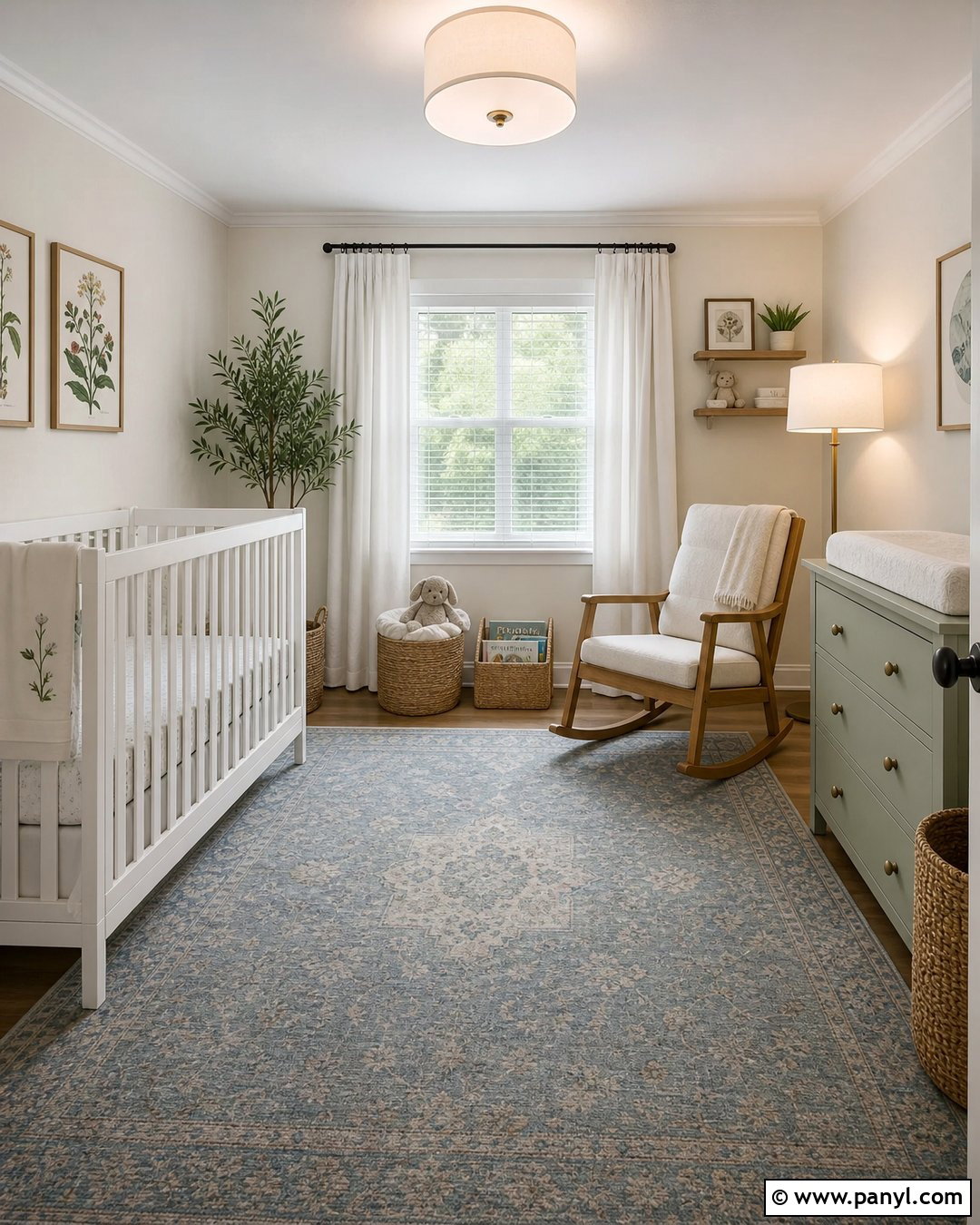
Alabaster walls create a flexible nursery backdrop that can adapt as a child grows. Use clean white trim and a white crib, then introduce color through a muted sage dresser, dusty blue rug, and soft botanical artwork. A natural wood rocking chair or glider base adds warmth and coordinates with woven storage baskets. Hang lined white curtains for a neat daytime look and effective light control when closed. Choose a washable cream rug with a small-scale pattern to soften the floor. A dimmable ceiling fixture and shaded floor lamp provide layered illumination. Keep furniture securely arranged with generous walking space around the crib. The finished nursery feels peaceful, practical, and cheerful without relying on an overly specific theme.
27. Laundry Room With Alabaster Walls And White Trim
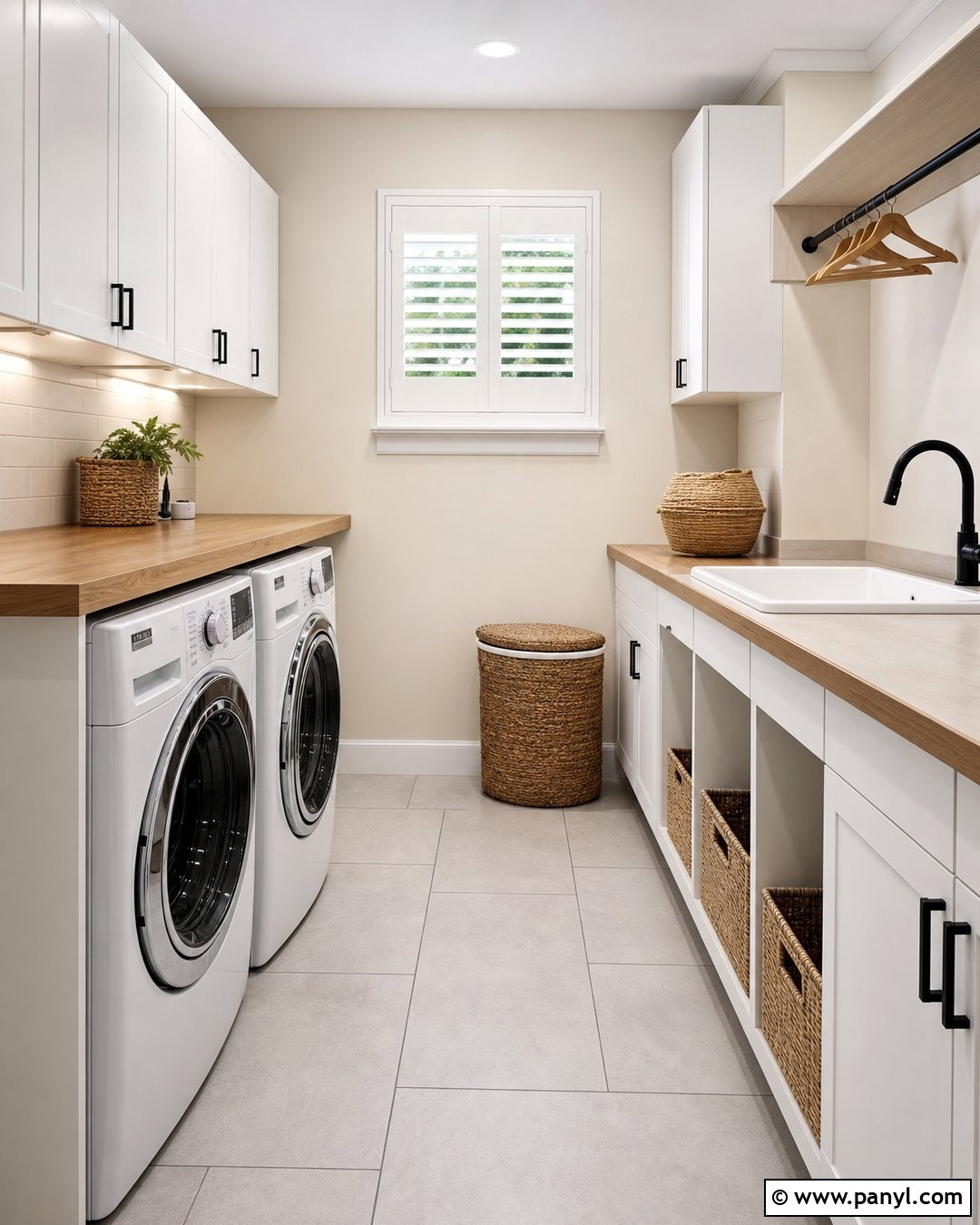
A functional laundry room can still feel thoughtfully designed. Surround Alabaster walls with white trim, white shaker cabinets, and a durable light gray tile floor. Install a butcher-block counter above front-loading machines to provide warmth and a generous folding surface. A simple cream subway tile backsplash protects the wall while maintaining the light palette. Use matte black cabinet pulls, a black drying rod, and labeled woven baskets for strong visual organization. If room permits, add a small utility sink with a white cabinet base. Bright ceiling lighting and an under-cabinet strip improve visibility. The complete space feels fresh and efficient, with every storage feature contributing to an orderly design rather than creating additional visual clutter.
28. Mudroom With Alabaster Walls And White Trim
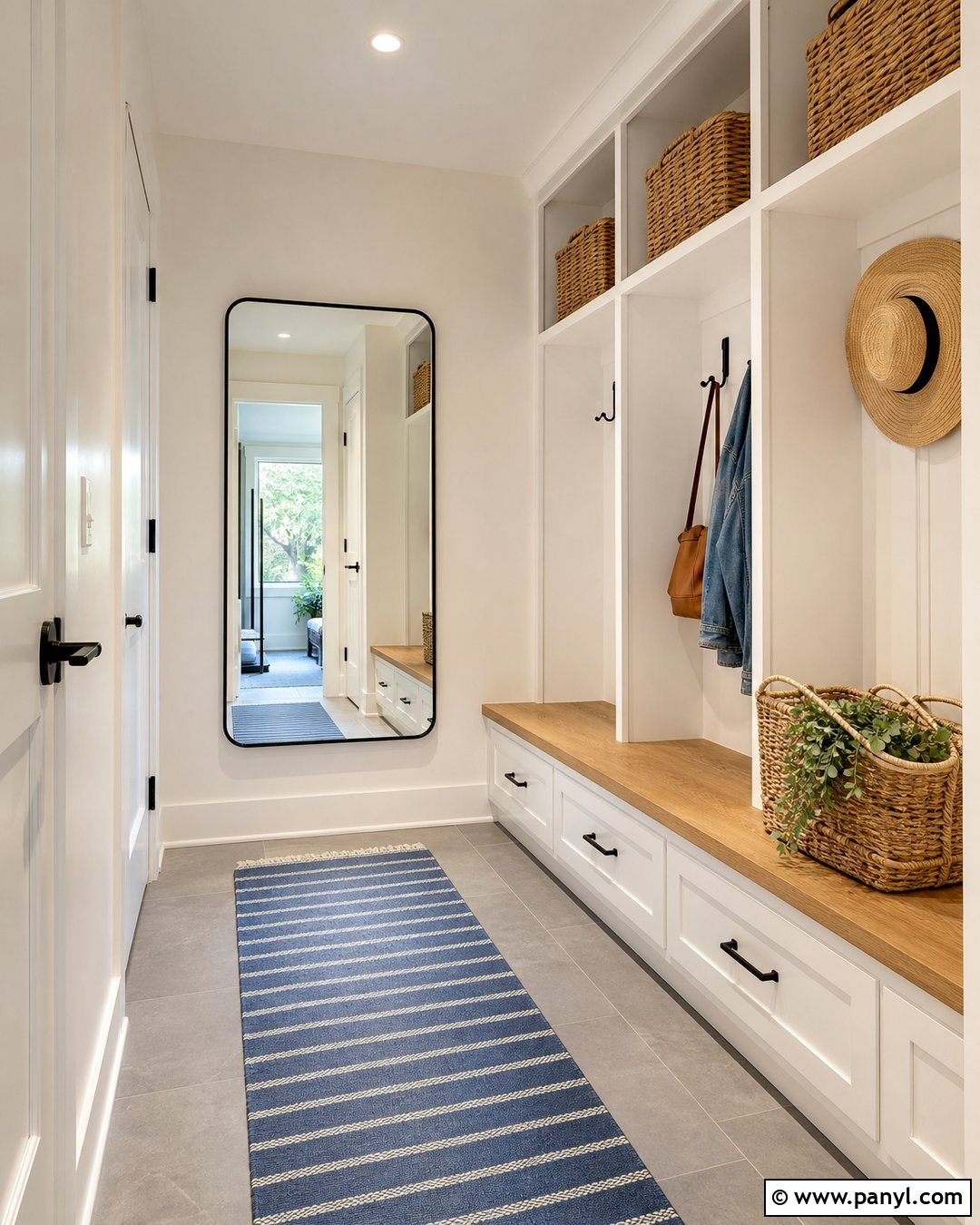
Durable materials make Alabaster walls practical in a hardworking mudroom. Use washable wall paint and bright white semi-gloss on trim, doors, and built-in cubbies. A medium gray porcelain tile floor conceals everyday dirt while providing a sturdy foundation. Include a long oak bench, individual hooks, upper shelves, and closed drawers for shoes and small accessories. Black hardware adds definition against the white cabinetry. Woven baskets bring warmth and keep loose belongings contained. A striped indoor-outdoor runner can soften the floor and introduce muted blue or green. Finish with a large wall mirror and strong overhead lighting. This complete setup keeps the entrance organized while maintaining the bright, welcoming character established by the warm neutral walls.
29. Basement With Alabaster Walls And White Trim
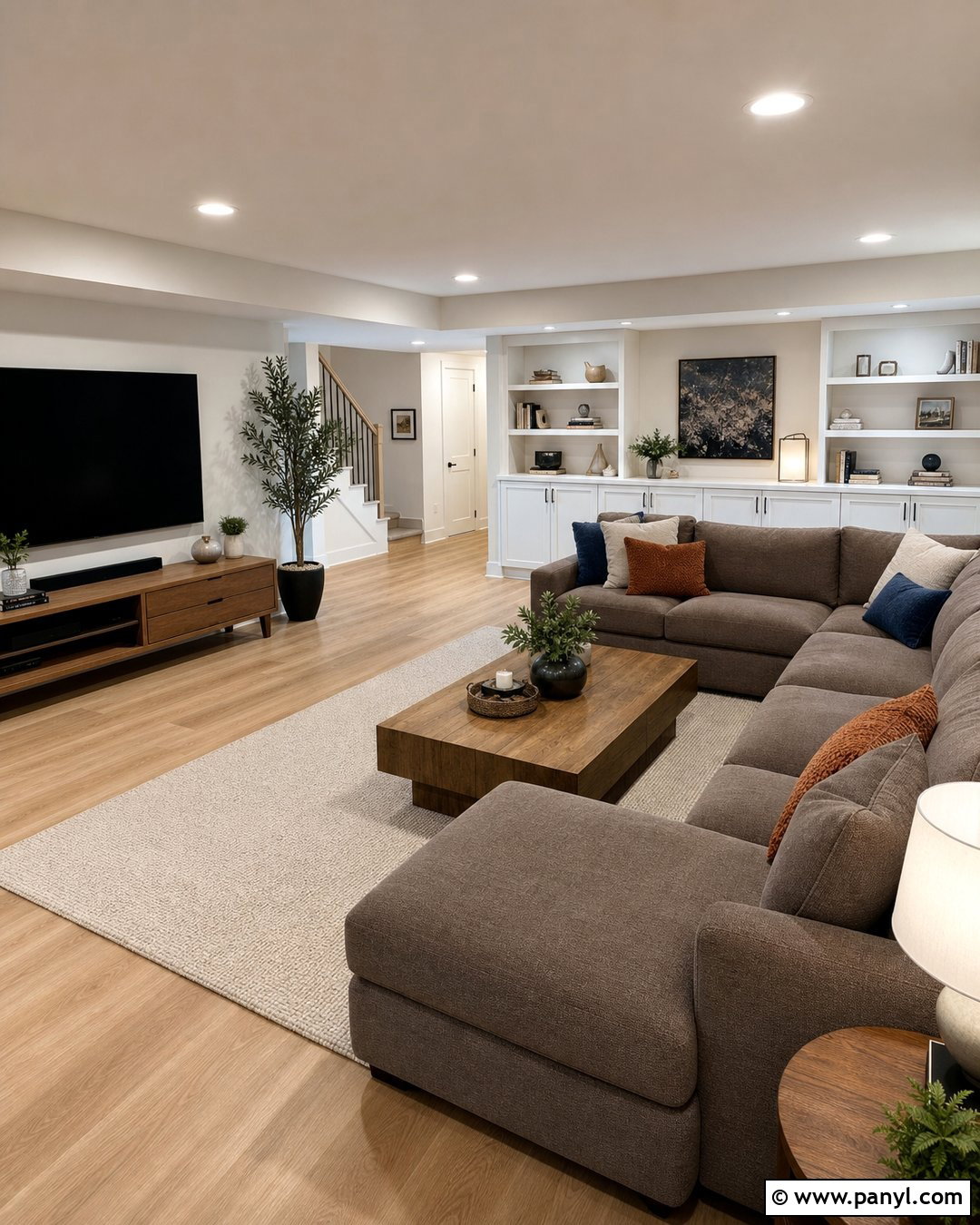
Basements often need extra warmth because natural light is limited. Alabaster walls provide a softer alternative to stark white, while clean white trim keeps doors and architectural edges visible. Use light oak luxury vinyl plank flooring and a large cream rug to brighten the foundation. Arrange a deep taupe sectional around a low wood coffee table and a simple media console. Add several sources of neutral white light, including recessed fixtures, table lamps, and a floor lamp near the seating area. Muted rust and blue pillows introduce color without darkening the room. Closed white cabinets offer storage along one wall. The finished basement feels like a comfortable living space rather than a secondary or overlooked level.
30. Sunroom With Alabaster Walls And White Trim
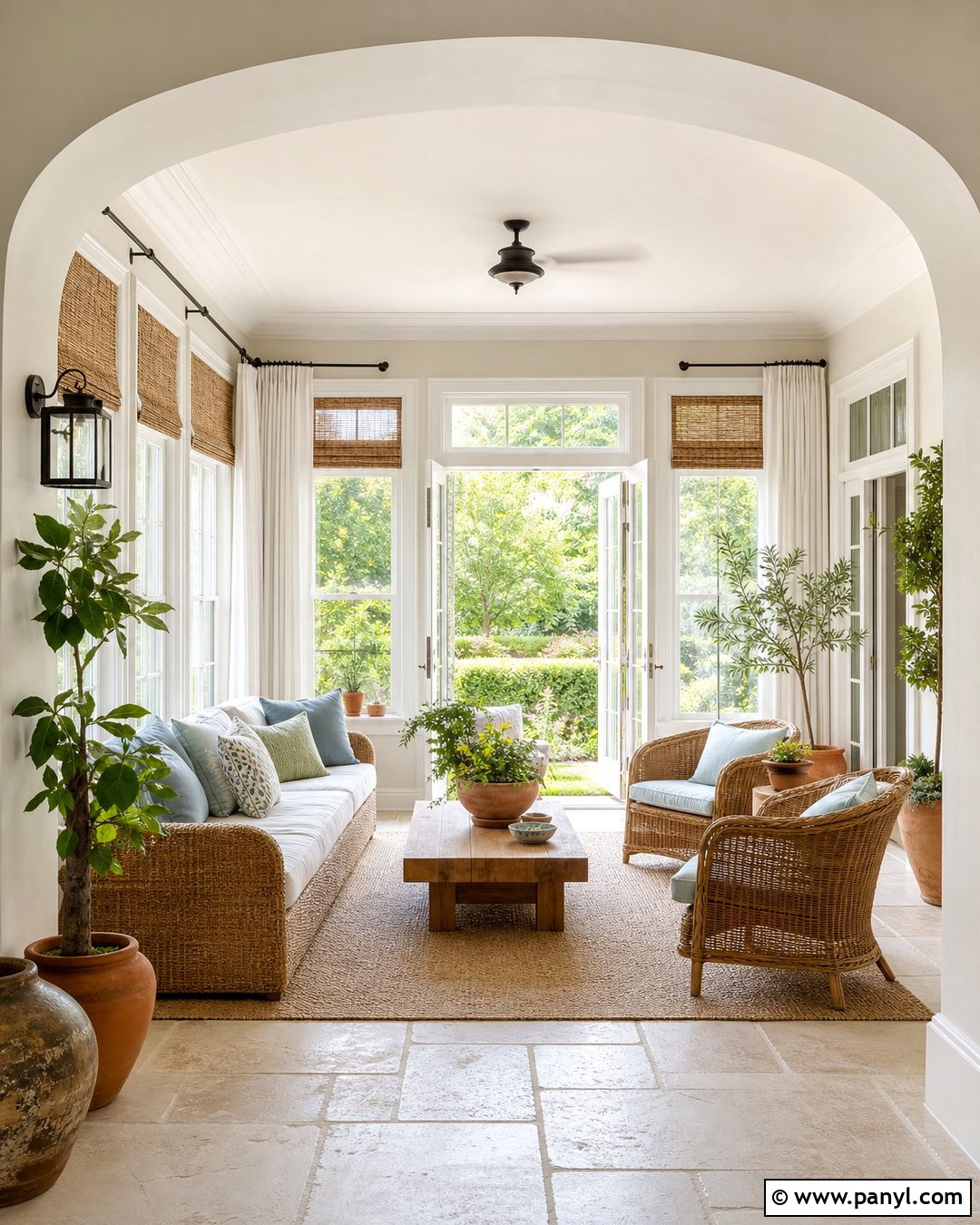
A sunroom surrounded by windows can handle a warm white backdrop without losing its naturally bright character. Paint the walls Alabaster and highlight window grids, doors, and baseboards with clean white trim. Use pale stone tile or light oak flooring to complement the abundant daylight. Arrange a woven sofa and rattan lounge chairs around a low teak table. Cushions in soft blue, sage, and cream reference the garden view without competing with it. Natural woven shades provide flexible glare control, while white curtain panels soften the architecture. Add terracotta planters, leafy greenery, and a textured indoor-outdoor rug. The completed room feels connected to nature and remains comfortable during every season.
31. Fireplace Room With Alabaster Walls And White Trim
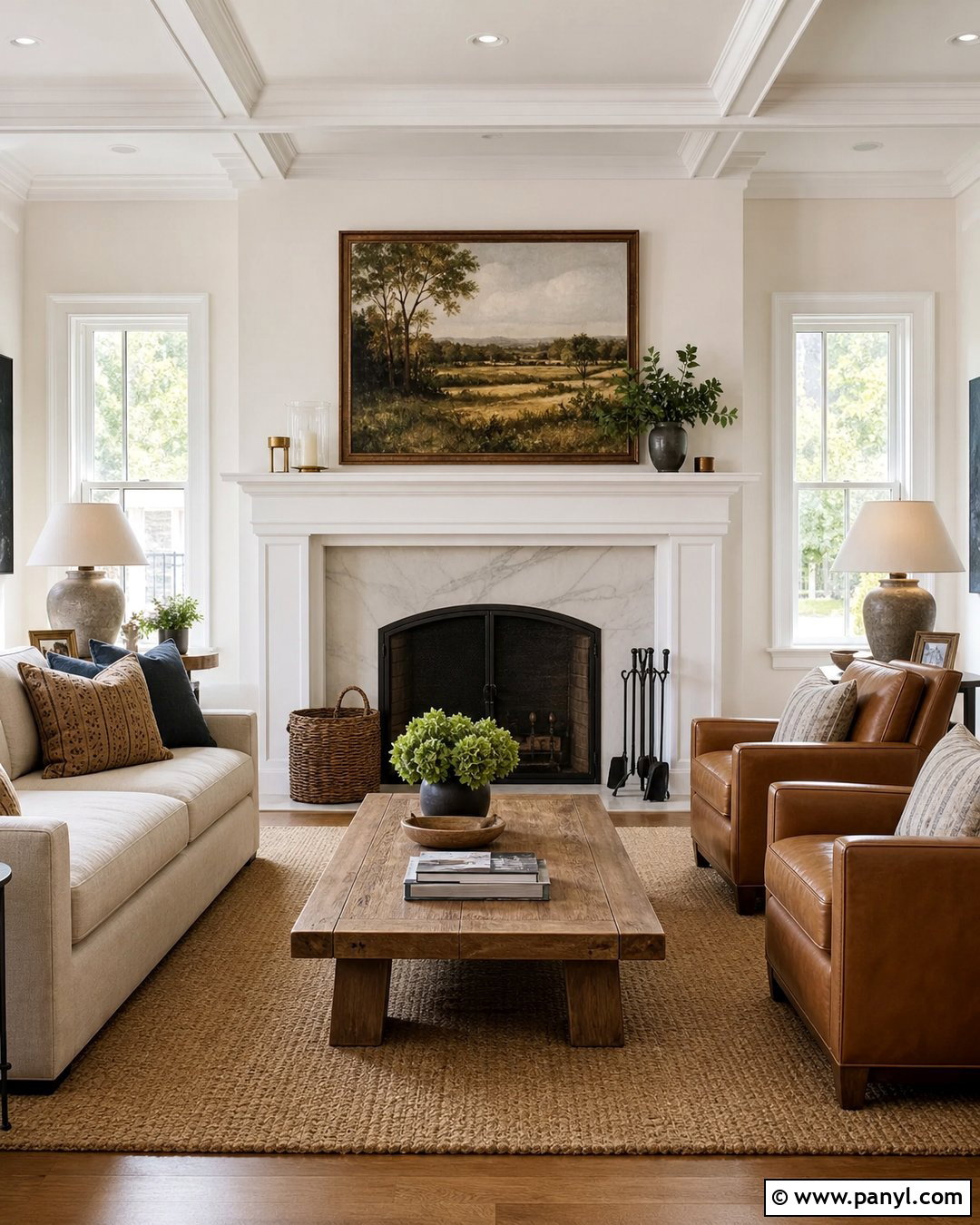
A fireplace can become the focus of an Alabaster room through proportion and material rather than dramatic color. Surround the firebox with warm white marble or softly veined quartz and build a substantial mantel painted in the same clean white as the trim. Keep the surrounding walls Alabaster so the millwork stands out gently. Arrange a neutral sofa and two camel leather chairs around a medium oak coffee table. A beige wool rug unifies the seating group. Add black fireplace tools and a slim black screen for necessary contrast. Mount one large landscape painting above the mantel instead of several small objects. Balanced lamps and simple ceramic accessories complete a welcoming, symmetrical gathering space.
32. Alabaster Walls With Blue Accent Wall
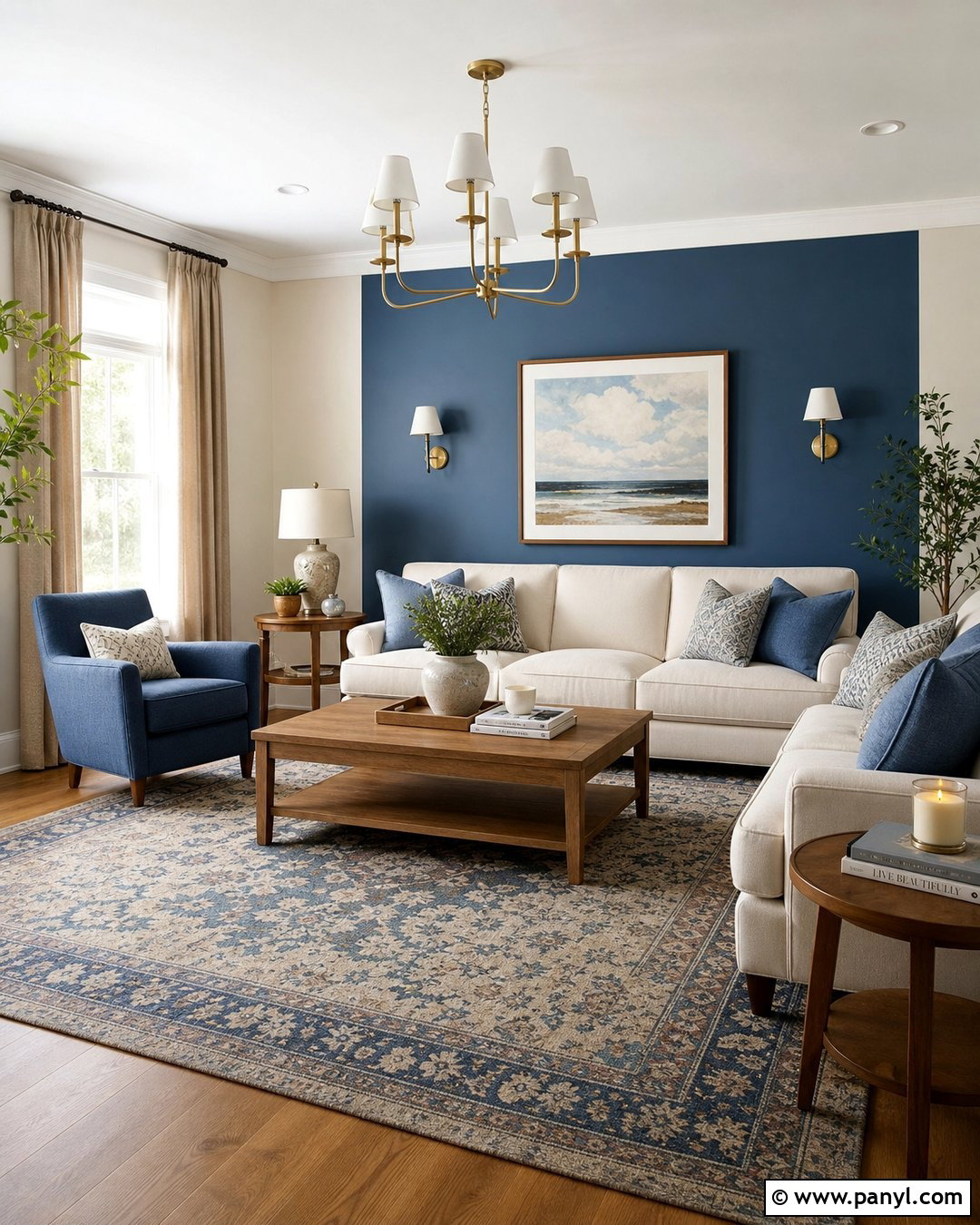
A dusty blue accent wall can give an Alabaster room a focal point while preserving its relaxed atmosphere. Use the blue behind the sofa or bed, then keep adjacent walls Alabaster and all trim clean white. Choose a softened medium blue rather than a highly saturated shade. Repeat it through a rug pattern, one upholstered chair, and small textile accents. Warm oak furniture and brushed brass lighting balance the cooler color. Cream upholstery and natural linen curtains maintain brightness throughout the rest of the room. Artwork should combine blue, tan, and white so the palette feels intentional. The completed design offers noticeable contrast, but the repeated warm materials keep the blue feature integrated rather than visually isolated.
33. Alabaster Walls With Dark Wood Floors
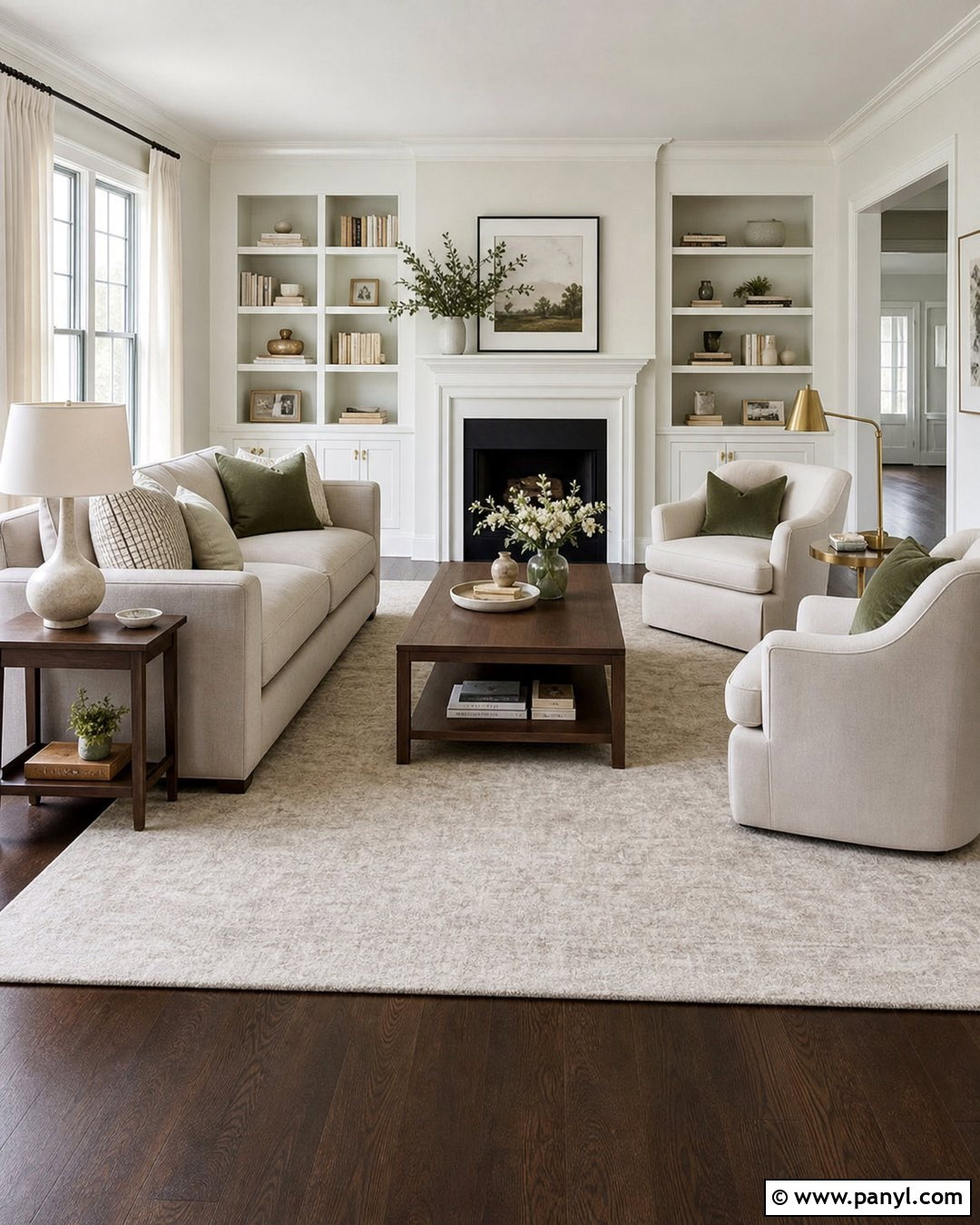
Dark wood flooring gives Alabaster walls a rich, traditional foundation. Use clean white trim to create a clear transition between the warm walls and espresso or dark walnut boards. Furnish the room with a light beige sofa, cream chairs, and a medium walnut coffee table so the furniture does not disappear into the floor. A generously sized ivory rug brightens the central seating area and reduces the amount of exposed dark surface. Add muted green pillows, brass lamps, and linen curtains for soft color and texture. White built-ins can connect visually to the trim. The completed room feels grounded and elegant, while the pale upper surfaces prevent the dark flooring from making the space feel closed in.
34. Alabaster Walls With Light Oak Floors
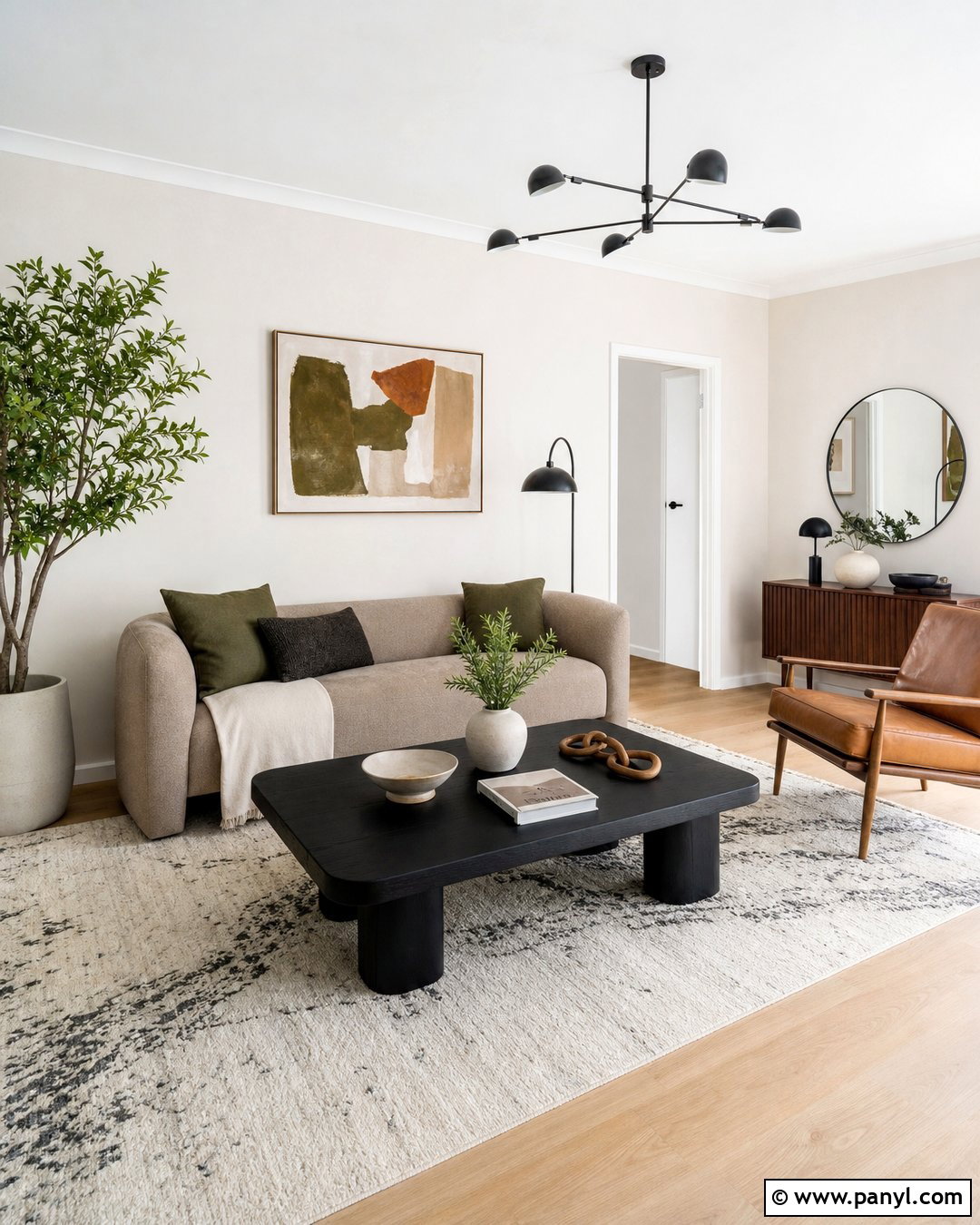
Light oak flooring creates a low-contrast, organic setting for Alabaster walls and white trim. Prevent the room from looking washed out by adding furniture in several medium tones. A taupe sofa, caramel leather chair, and black-stained coffee table provide definition while maintaining warmth. Ground the arrangement with a cream and charcoal patterned rug. Use simple white curtains, matte black lighting, and framed artwork containing earthy brown, clay, and olive shades. A walnut media console can add another wood tone, provided its shape remains clean and uncomplicated. Plants contribute fresh green color around the room. The finished look feels airy and current, with carefully distributed darker accents giving the pale walls and flooring necessary structure.
35. Whole House Alabaster Walls With White Trim
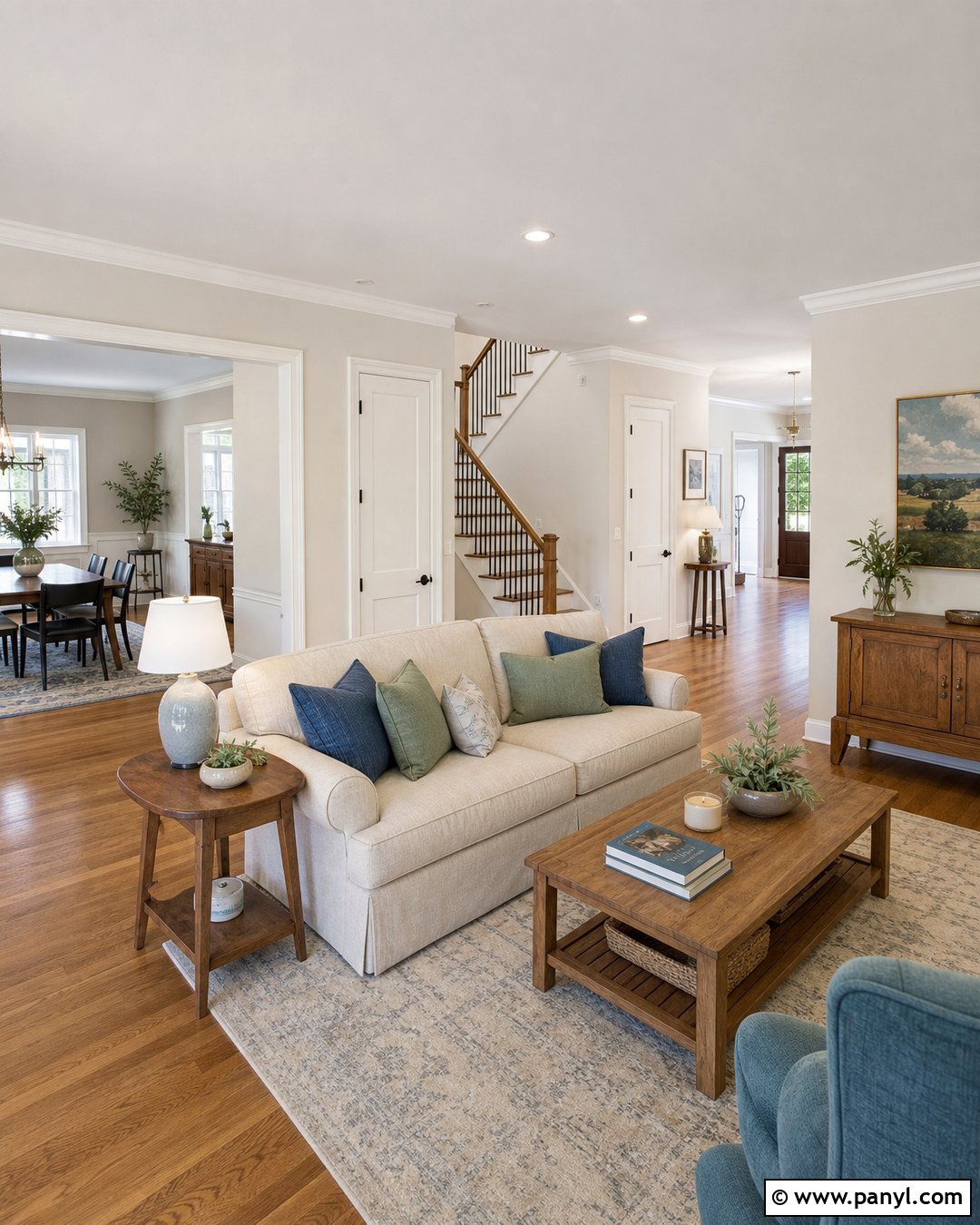
Using Alabaster walls throughout a home creates continuity, especially when one white trim color appears on every door, baseboard, window casing, and ceiling detail. Choose consistent flooring for connected spaces, such as medium oak through the living areas and warm neutral tile in utility rooms. Repeat a limited palette of taupe, muted blue, sage, black, and natural wood from room to room. Furniture does not need to match, but similar finishes will make transitions feel intentional. Use eggshell or matte paint on walls and a more durable satin or semi-gloss finish on trim. Always test the combination in different exposures before committing. This whole-house plan provides a flexible foundation while allowing each room to develop its own character.
Conclusion:
Alabaster is versatile because it offers more warmth than a stark white while remaining light enough to support many decorating directions. The best rooms combine it with deliberate trim, flooring, furniture, lighting, and accent colors rather than treating paint as an isolated choice. Pure White creates gentle definition, while brighter whites can produce a sharper, more modern outline. Natural woods, soft textiles, black details, blue, sage, and warm metals all help complete the palette. Most importantly, test the wall and trim colors together beside existing finishes before painting. These **35 Alabaster Walls With White Trim Ideas** provide complete, practical starting points for creating a bright home that still feels comfortable, layered, and personal.

Related Ideas and Inspiration:
Leave a Reply