
Accessible Beige walls with Alabaster trim create a warm, balanced foundation that feels softer than gray yet fresher than traditional tan. Sherwin-Williams describes Accessible Beige SW 7036 as a neutral with gray undertones, while Alabaster SW 7008 is a soft, warm white that provides brightness without looking stark. () Together, they suit modern, traditional, farmhouse, organic, and transitional homes. The key is building enough contrast through flooring, furniture, textiles, and accent colors. Because natural and artificial light affect paint appearance, test large samples beside your permanent finishes before committing. () The following complete room schemes show how to decorate, furnish, and personalize 25 Accessible Beige Walls Alabaster Trim Ideas.

1. Accessible Beige Living Room With Alabaster Trim
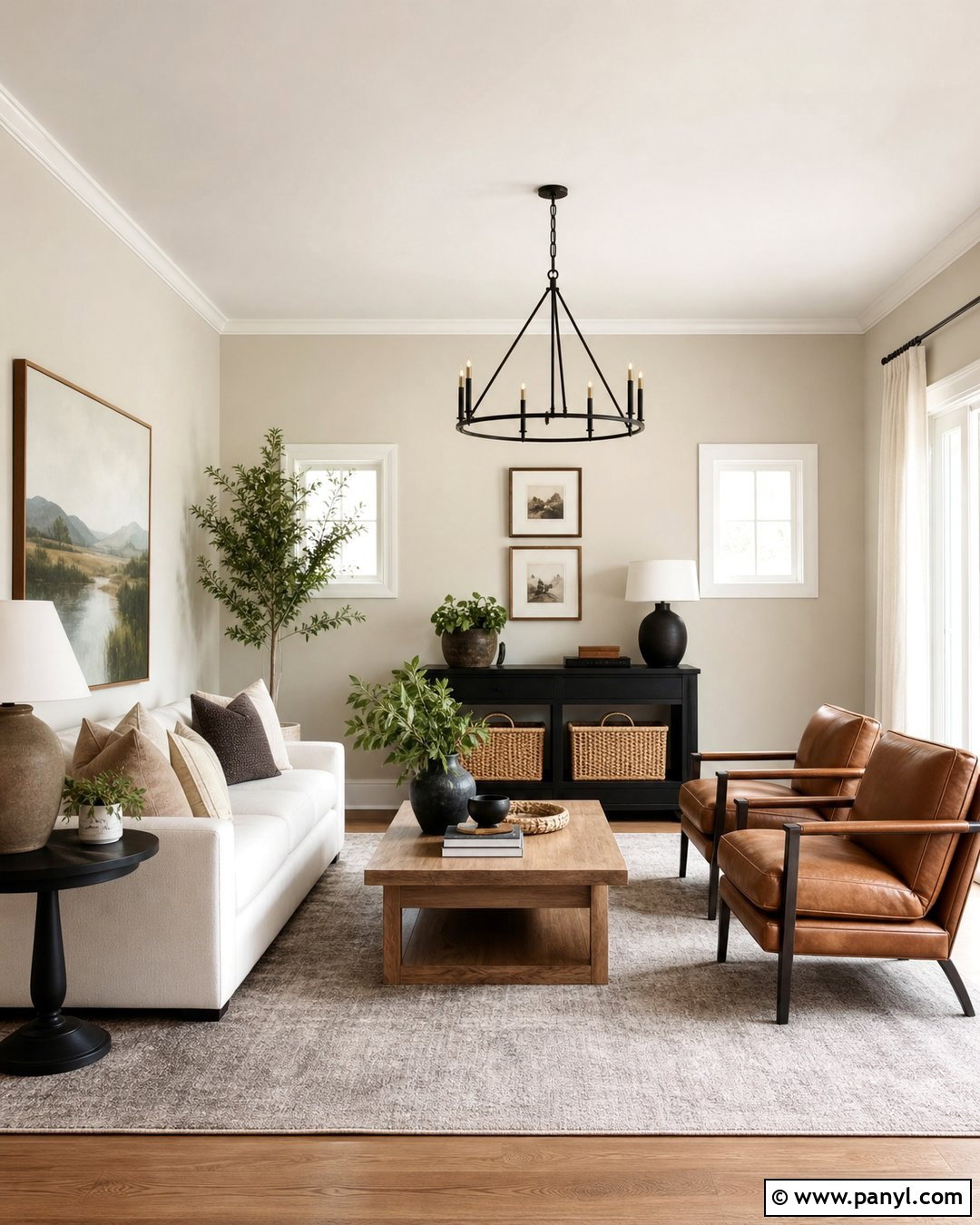
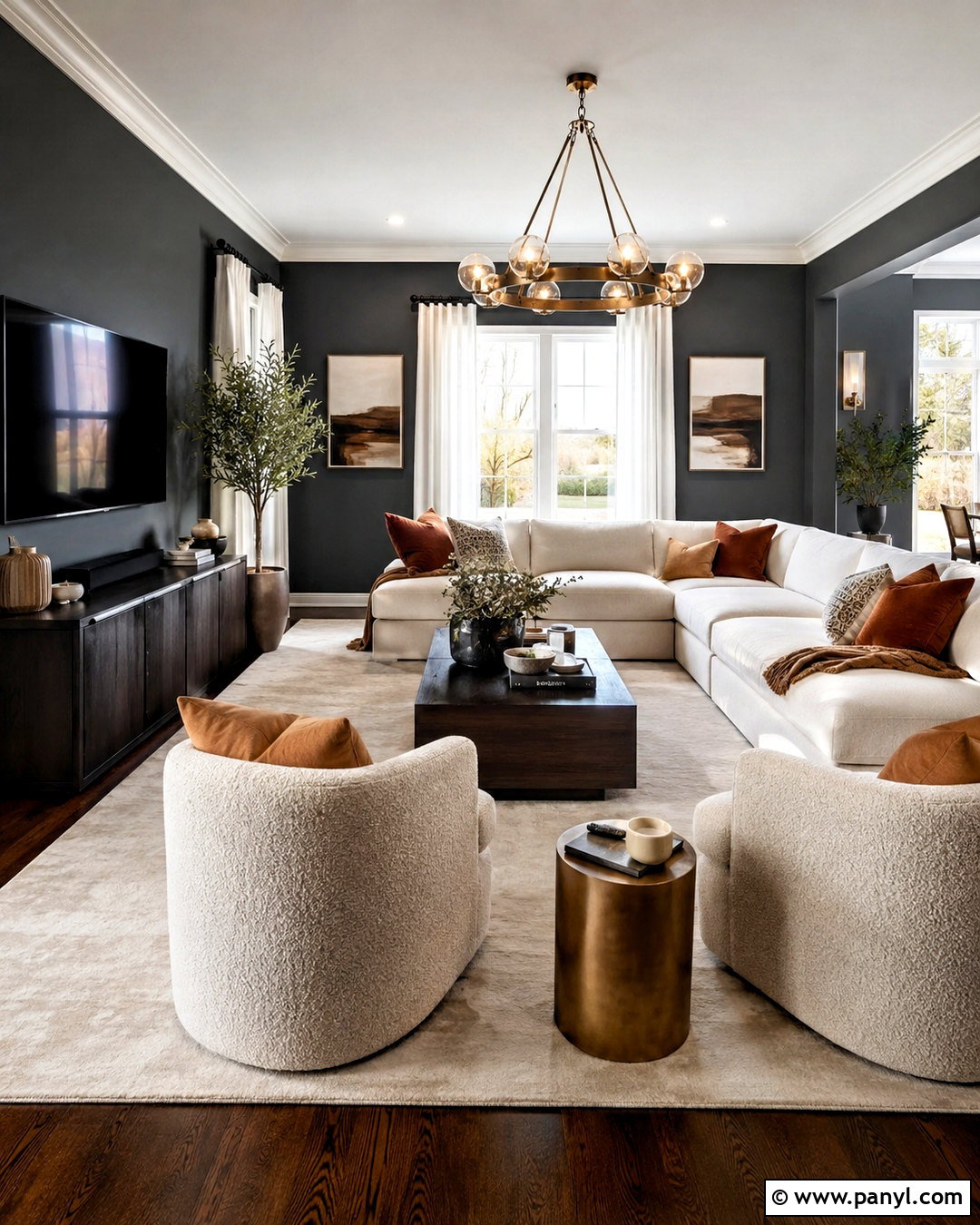
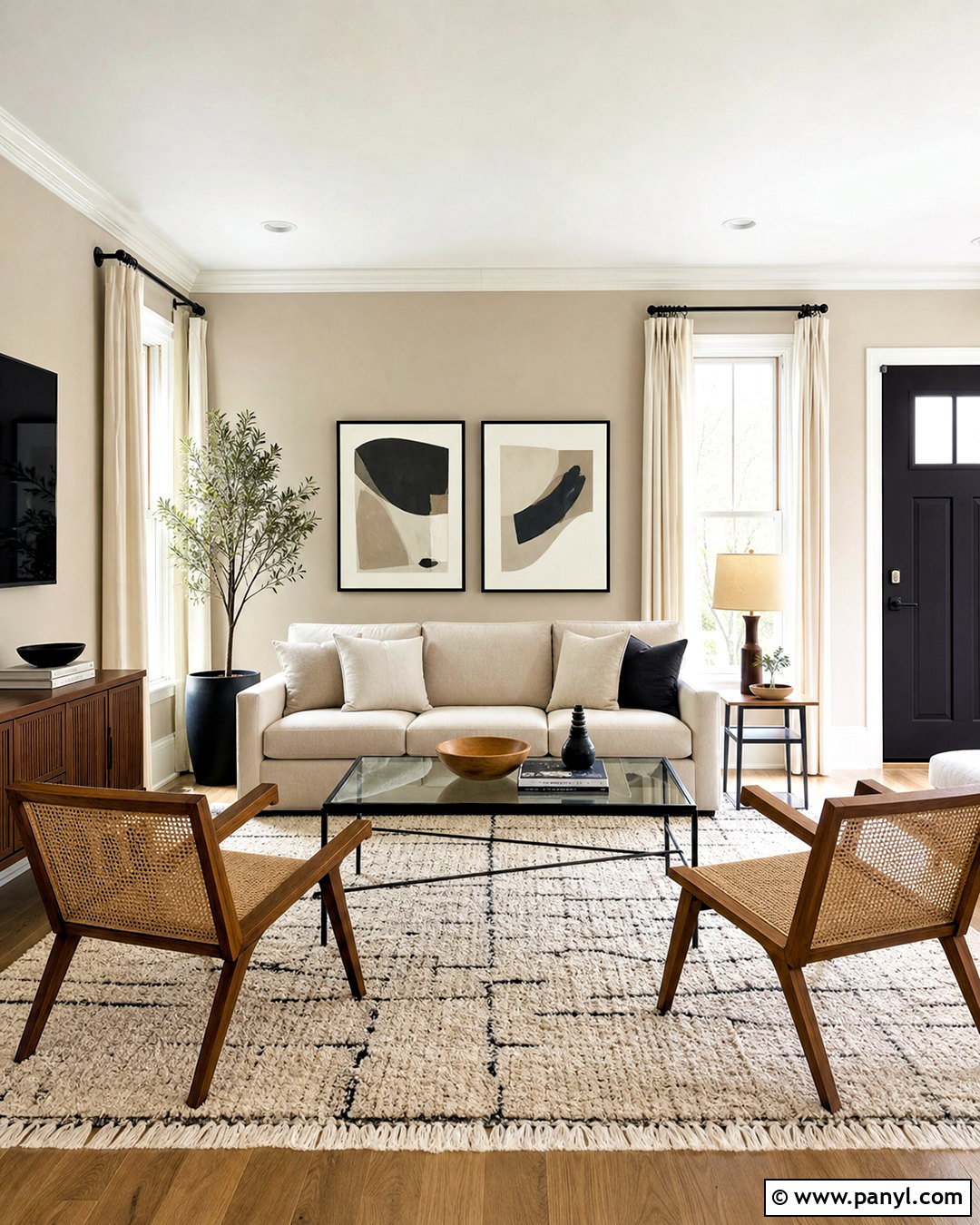
Create an inviting living room by surrounding Accessible Beige walls and Alabaster trim with cream upholstery, medium oak, and soft black accents. Center a comfortable ivory sofa on a textured taupe rug, then add two camel leather chairs for warmth and practical seating. An oak coffee table connects the beige walls to the natural materials without making the room overly brown. Use Alabaster on the crown molding, baseboards, window casings, and ceiling for a smooth, consistent frame. Black curtain rods, a slim floor lamp, and charcoal patterned pillows provide definition. Finish the room with oatmeal linen curtains, large landscape art, woven baskets, and a few leafy plants. This balanced arrangement feels relaxed, polished, and easy to update seasonally.
2. Accessible Beige Kitchen With Alabaster Trim
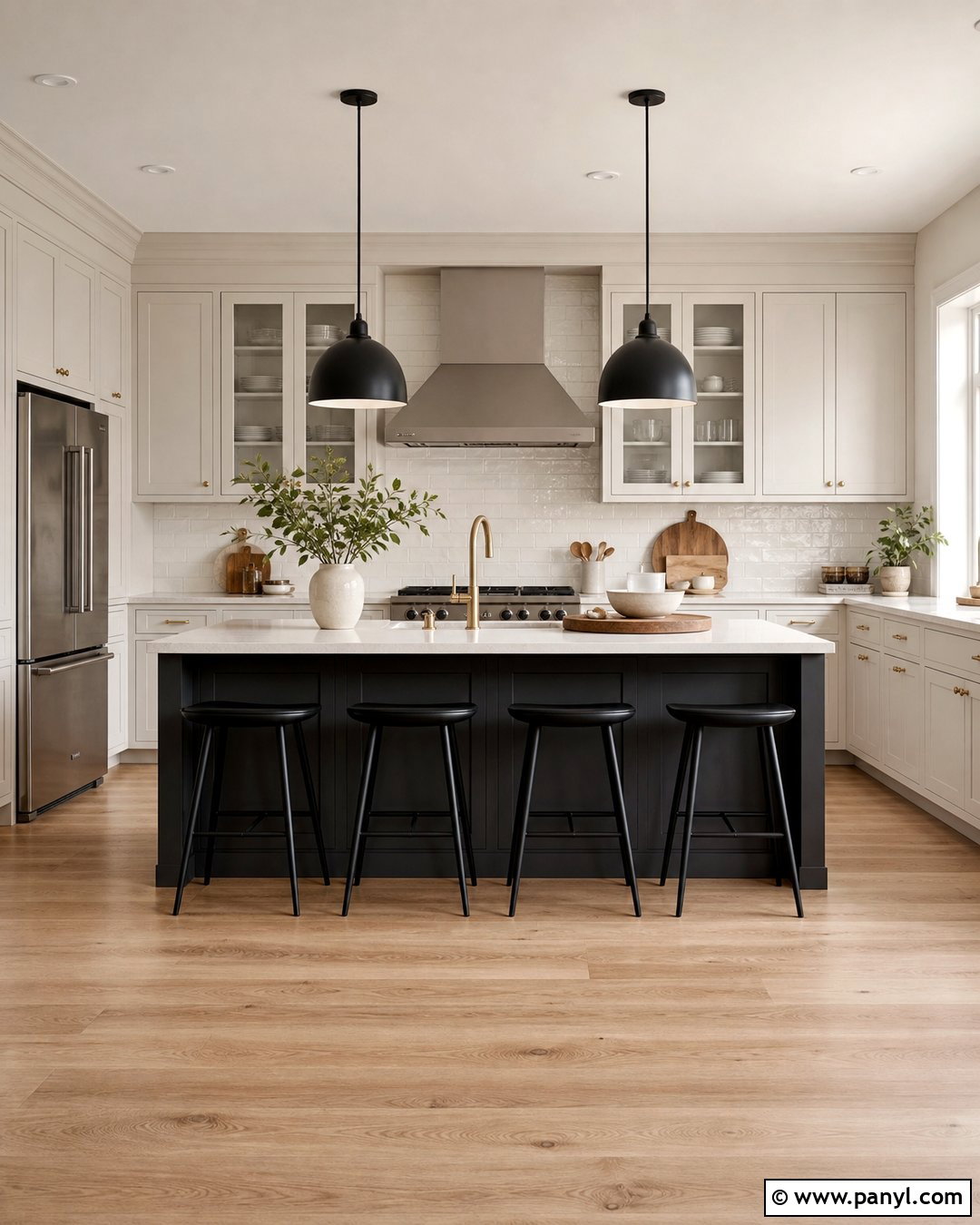
In a kitchen, this color combination looks especially cohesive with Alabaster cabinets and Accessible Beige walls. Continue Alabaster across the window trim, door casings, crown molding, and ceiling so the cabinetry feels connected to the architecture. Choose warm white quartz counters with subtle beige veining and a handmade cream subway tile backsplash. Light oak flooring or medium-toned wood adds natural warmth beneath the pale finishes. For contrast, use an earthy charcoal island, matte black stools, and simple black pendant lights. Brushed brass cabinet hardware can soften the darker elements and introduce a gentle glow. Keep accessories practical and restrained, such as wood cutting boards, ceramic canisters, and one small plant. The finished kitchen feels bright without becoming cold or overly white.
3. Accessible Beige Bedroom With Alabaster Trim
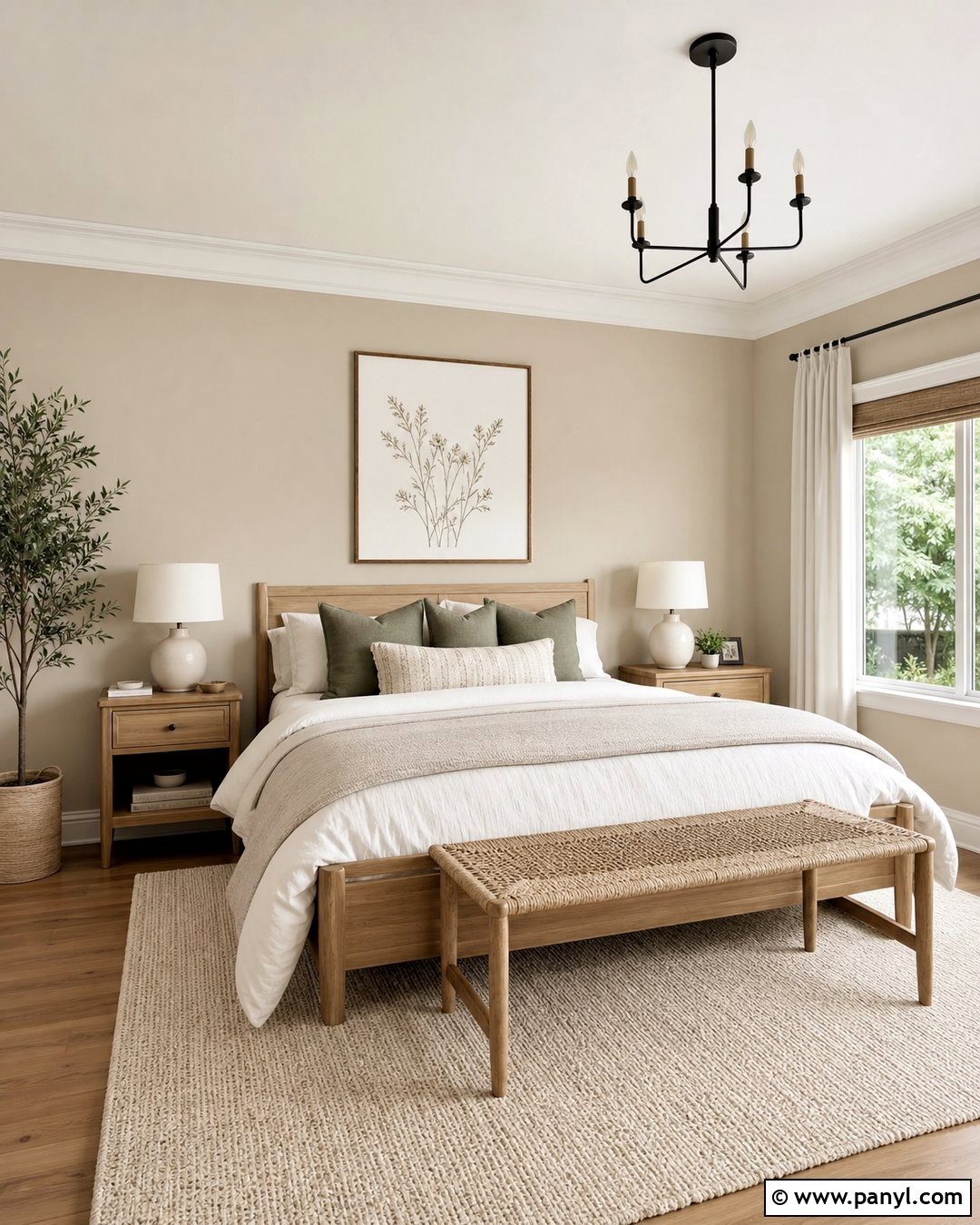
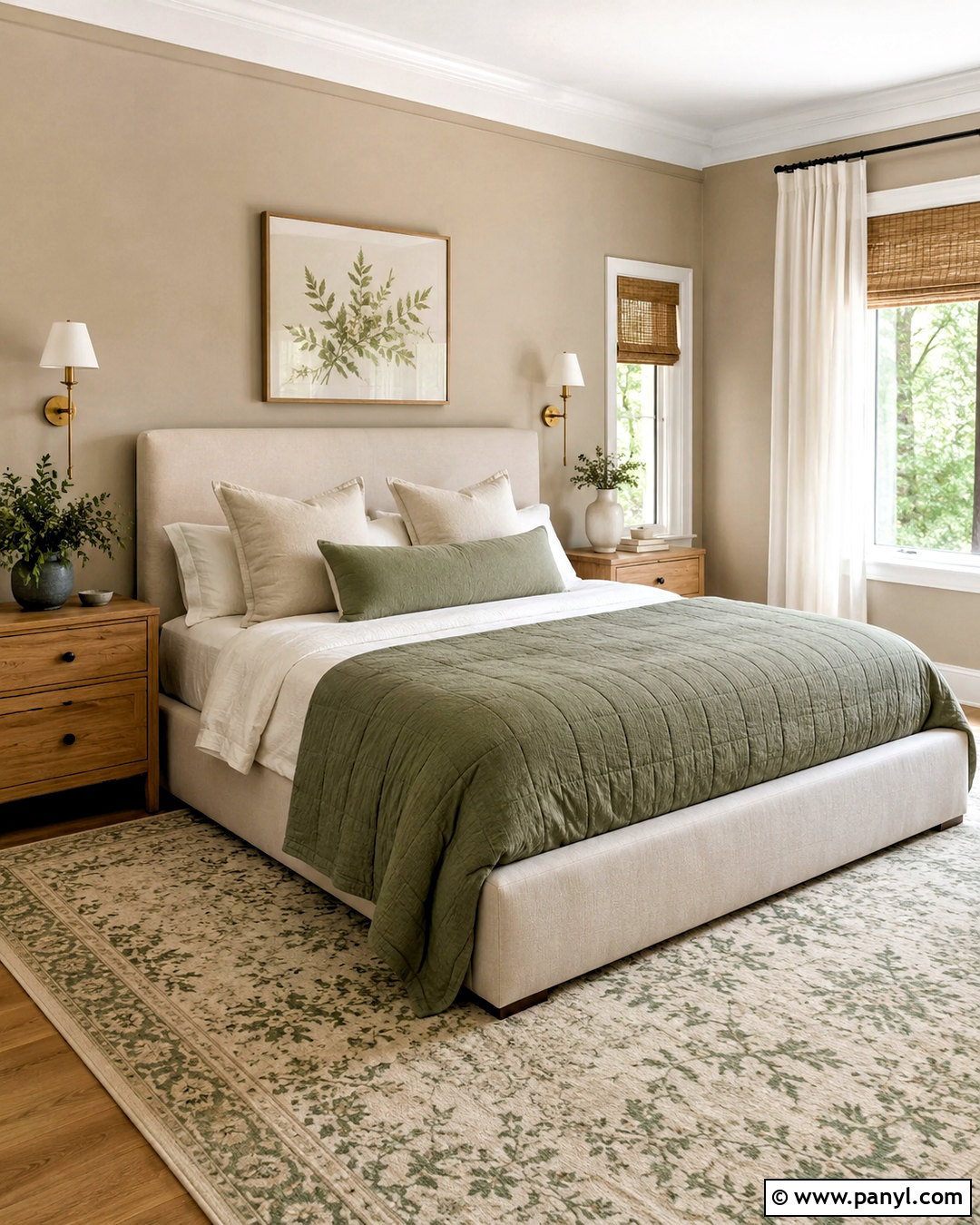
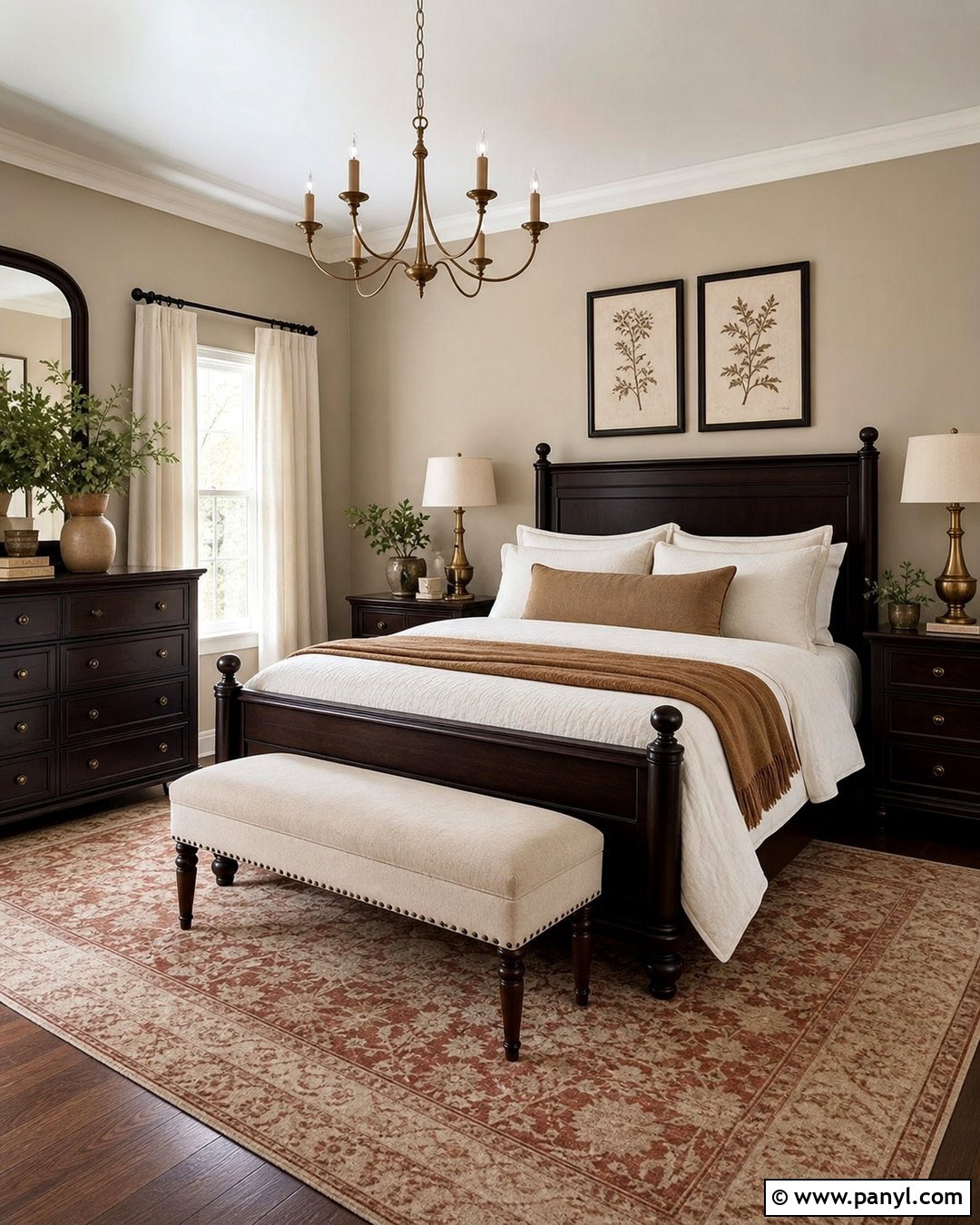
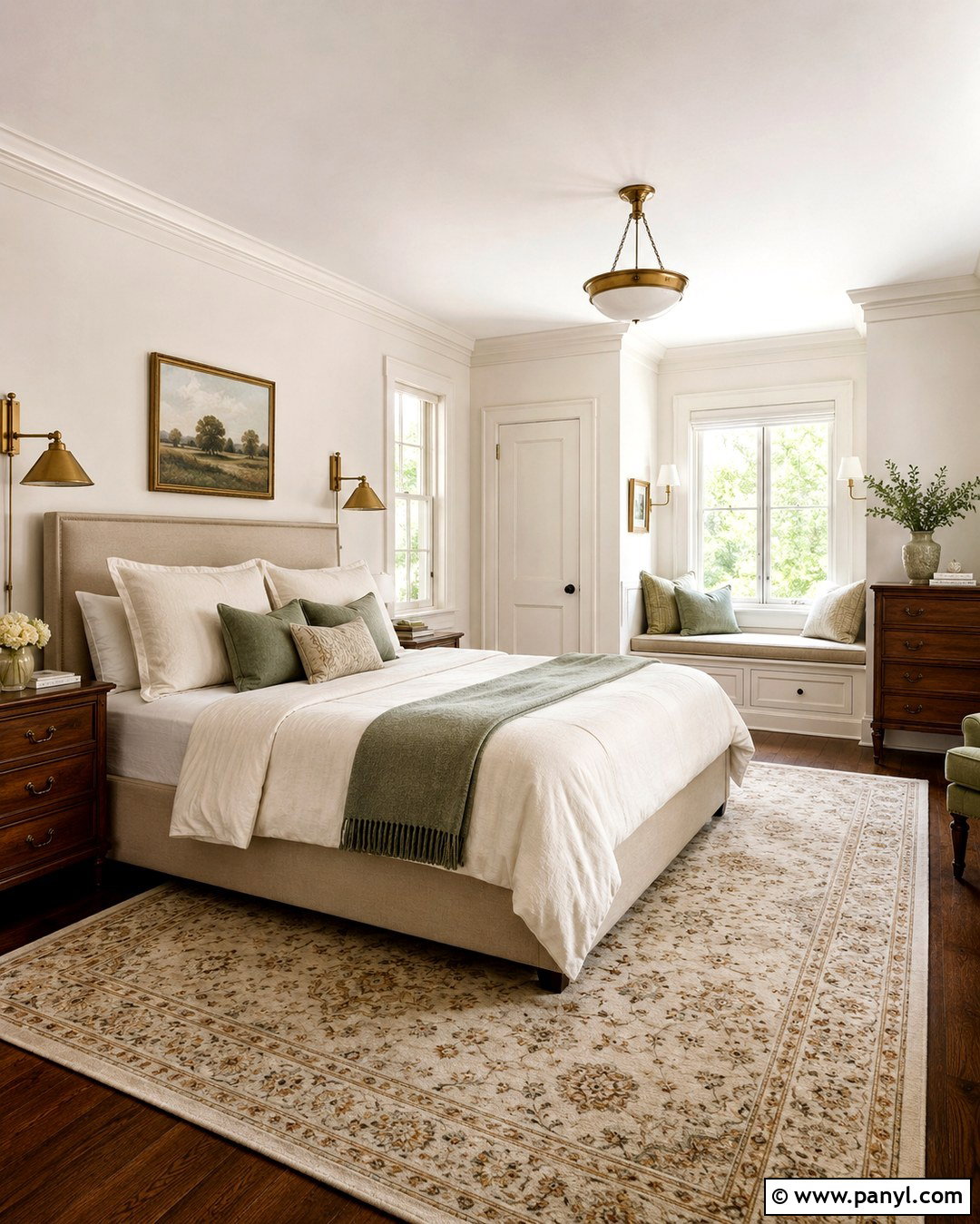
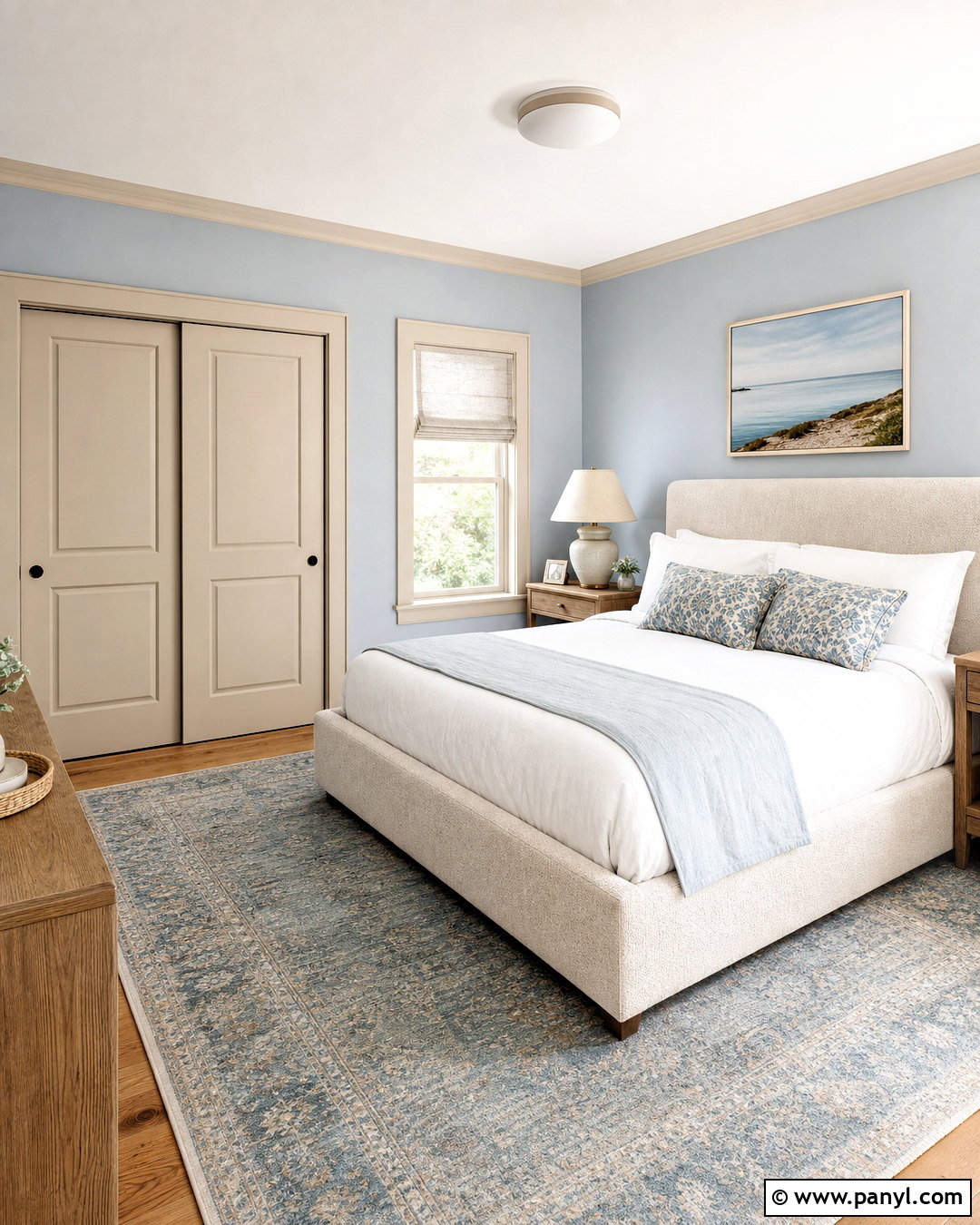
Imagine waking up in a calm bedroom where warm neutrals and natural textures soften every surface. Paint the walls Accessible Beige and use Alabaster on the trim, paneled doors, crown molding, and ceiling. Position a light oak bed against the main wall and dress it with ivory bedding, a flax linen coverlet, and muted olive pillows. Matching oak nightstands keep the arrangement symmetrical, while ceramic lamps add a handcrafted detail. Hang full-length cream curtains slightly above the window trim to make the room appear taller. A large wool rug in beige and faded gray anchors the furniture. Complete the design with botanical prints, a woven bench, and minimal decor. Avoid too many yellow-beige fabrics, which can reduce the quiet contrast between the walls and trim.
4. Accessible Beige Dining Room With Alabaster Trim
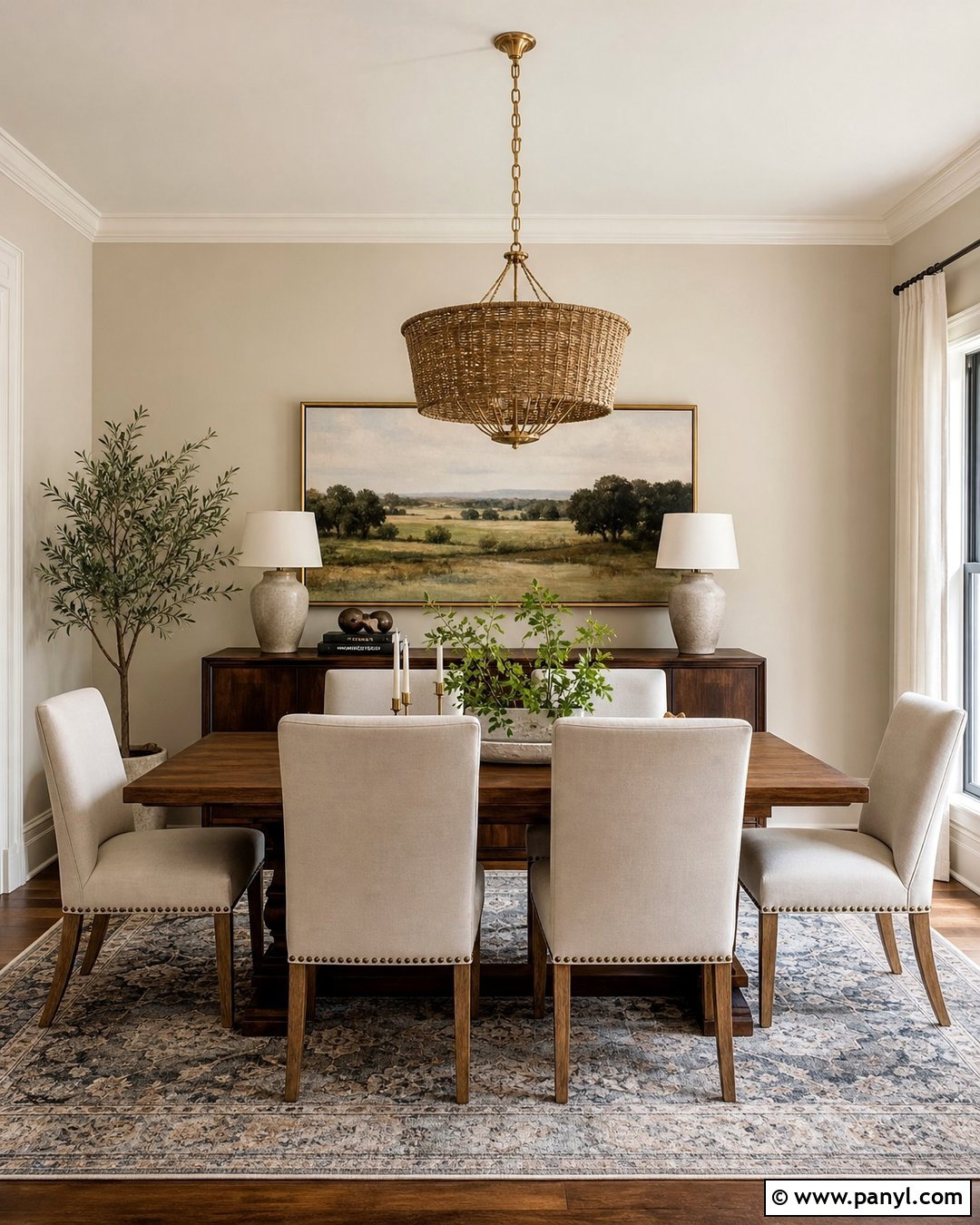
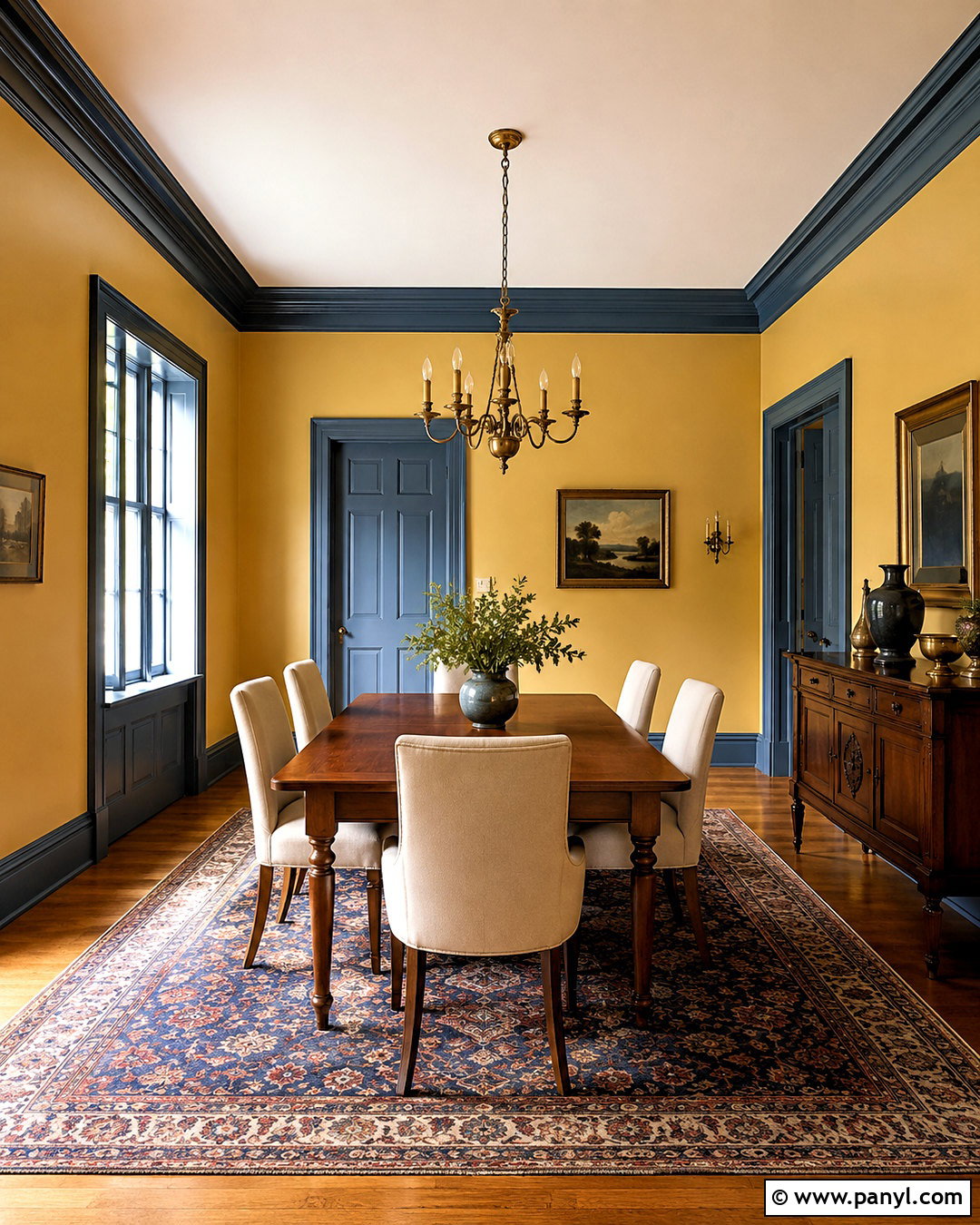
A dining room can handle stronger contrast while still preserving the warmth of Accessible Beige and Alabaster. Start with Accessible Beige walls framed by Alabaster crown molding, baseboards, windows, and doorways. Place a substantial walnut dining table in the center and surround it with upholstered cream chairs or black spindle-back chairs. A woven or aged brass chandelier provides a natural focal point above the table. Ground the arrangement with a low-pile rug featuring taupe, charcoal, and muted blue. Hang one oversized landscape painting rather than several small pieces, allowing the room to feel clean and intentional. Alabaster curtains can blend gently with the trim. Add a dark wood sideboard, ceramic lamps, and simple greenery to complete this comfortable modern traditional dining space.
5. Accessible Beige Bathroom With Alabaster Trim
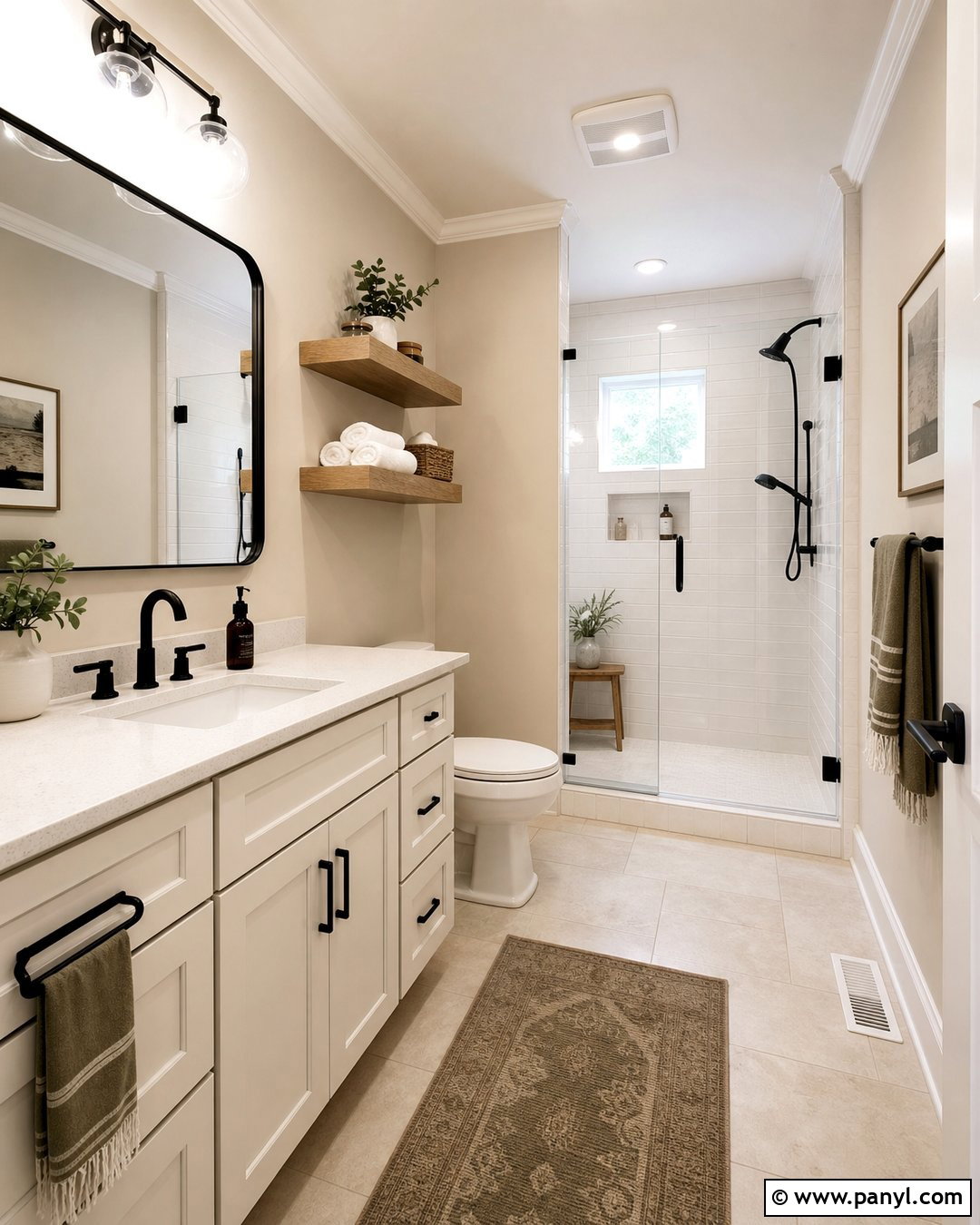
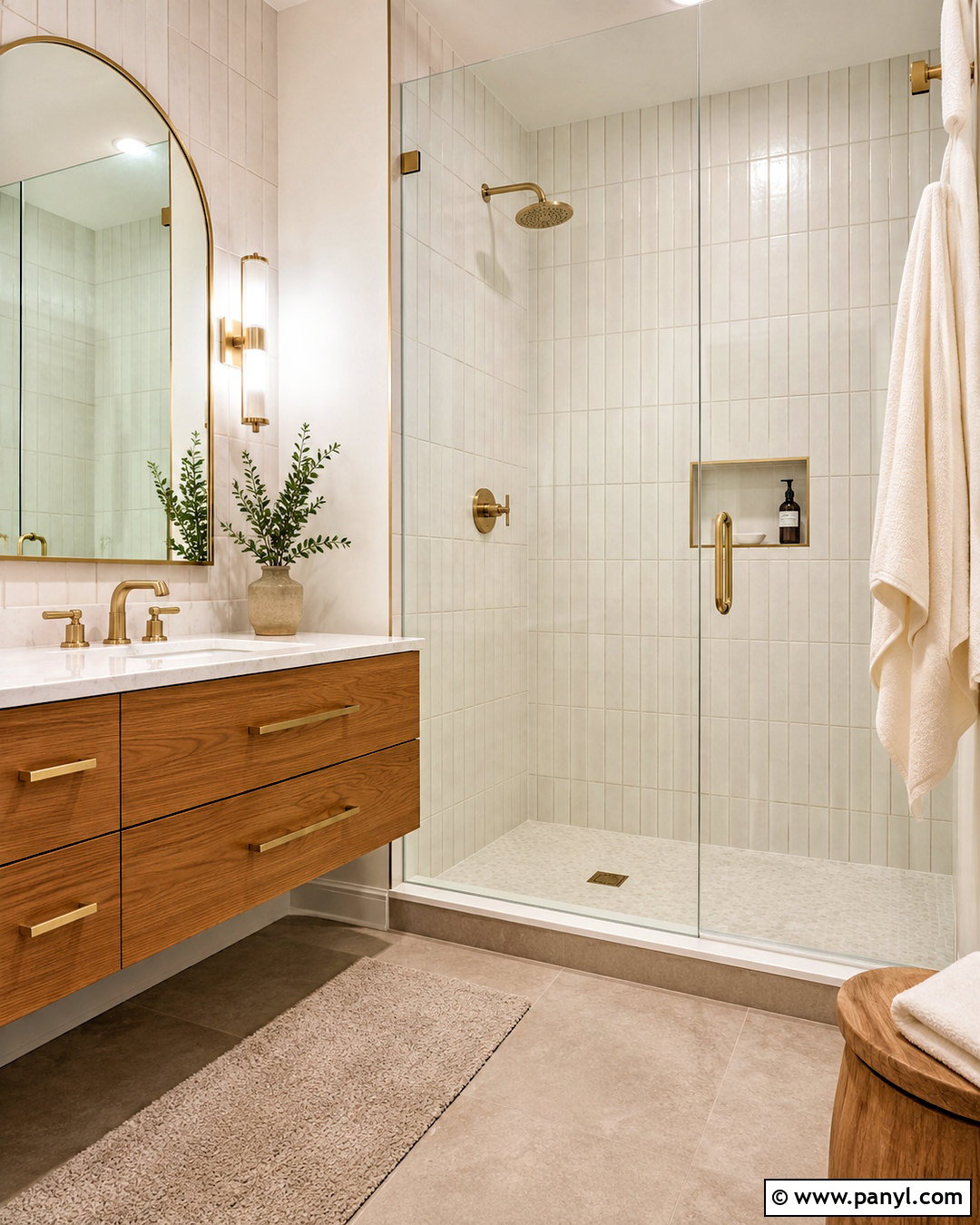
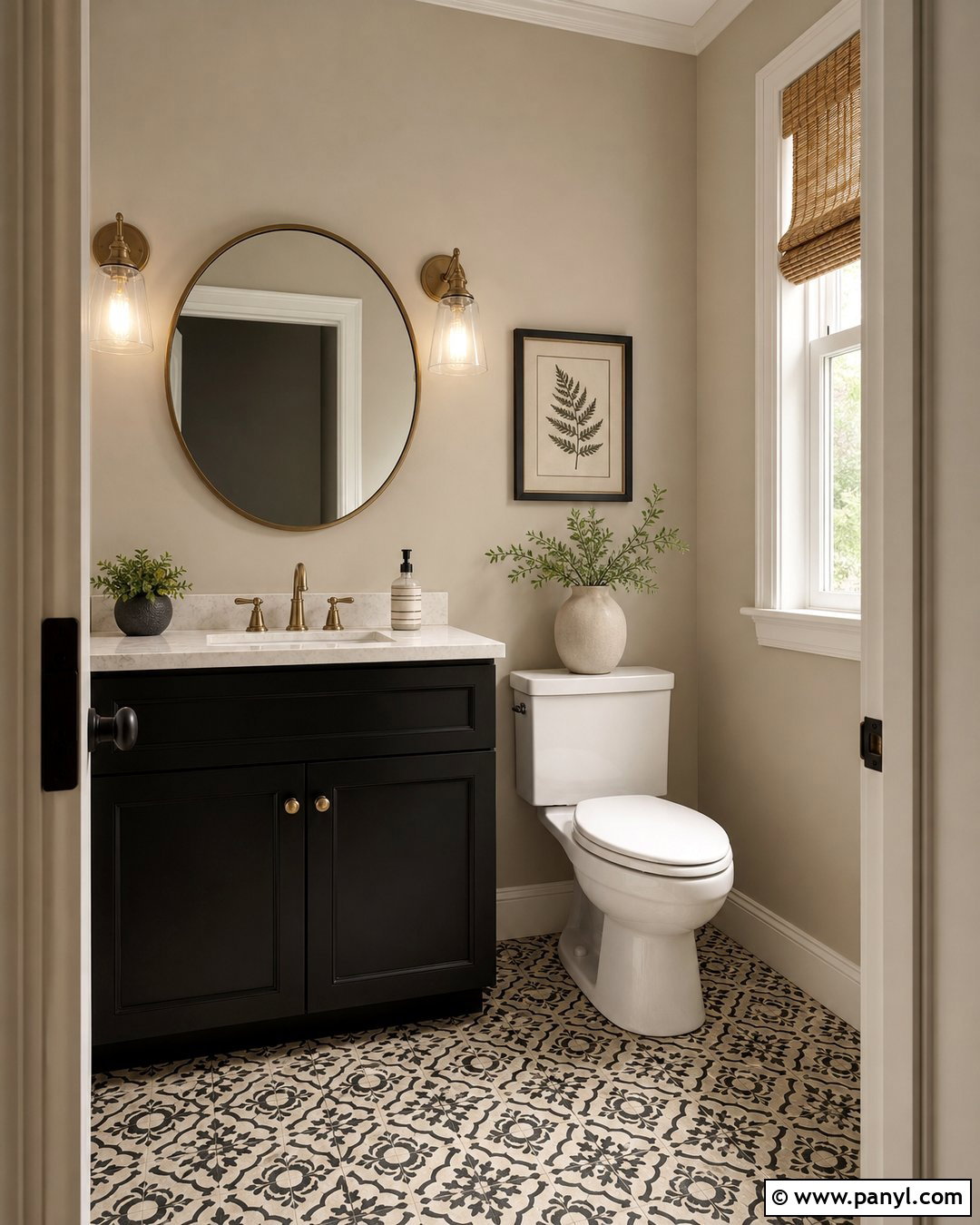
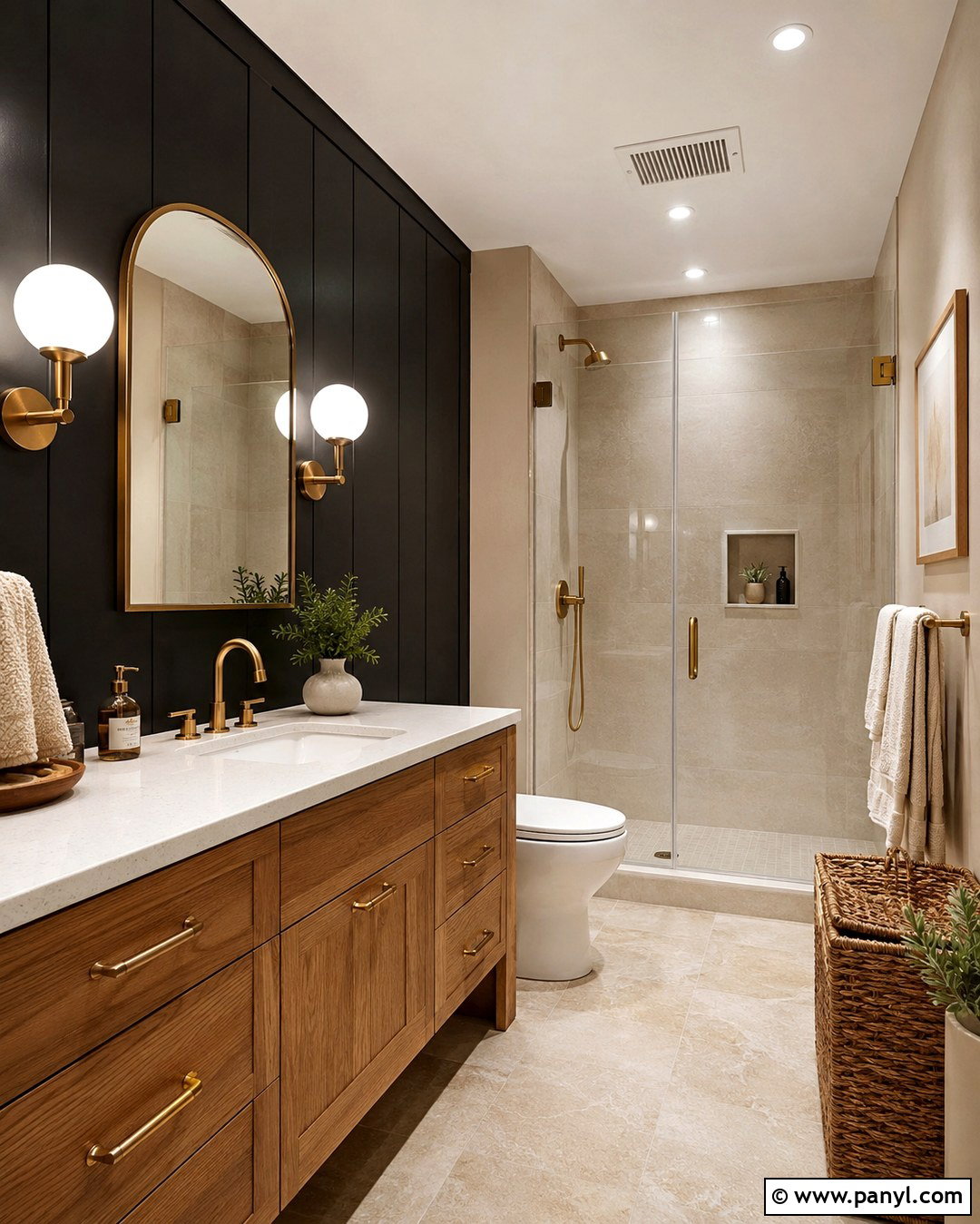
Accessible Beige walls can make a bathroom feel warm and restful when paired with clean Alabaster millwork. Use Alabaster on the vanity, baseboards, door, window casing, and ceiling to create continuity in a compact space. Select pale limestone-look floor tile and a white quartz vanity top with minimal veining. A frameless glass shower keeps the room visually open, while warm white shower tile supports the creamy trim. Bring in contrast through matte black faucets, a black-framed mirror, and simple black sconces. Natural oak shelves and woven storage baskets prevent the scheme from feeling too polished. Choose white towels with narrow taupe borders and a muted olive bath mat. The completed bathroom feels brighter, larger, and more comfortable without relying on sharp, clinical white finishes.
6. Accessible Beige Entryway With Alabaster Trim
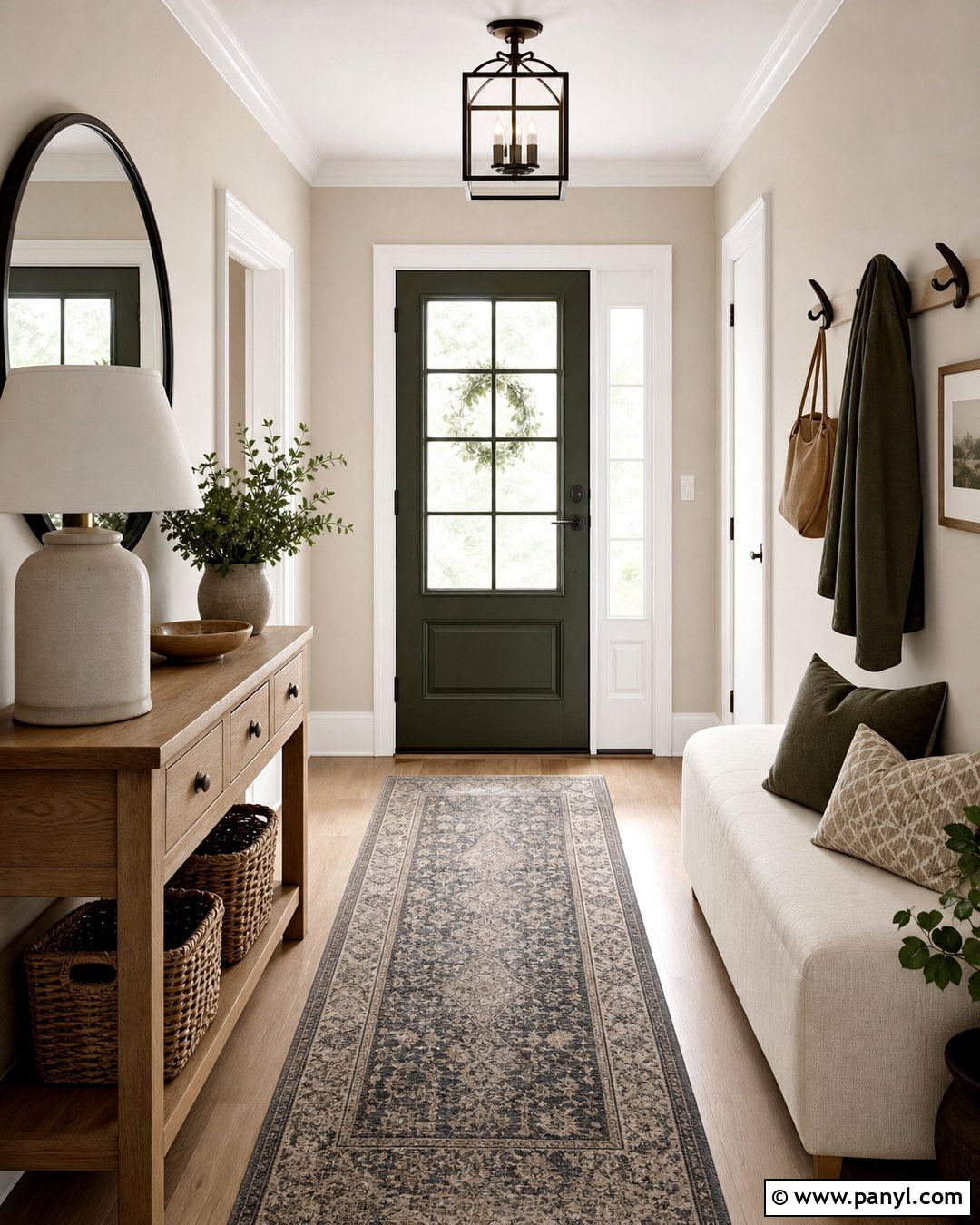
The entryway sets the color direction for the rest of the house, so keep its materials welcoming and practical. Accessible Beige walls provide a forgiving backdrop, while Alabaster trim highlights the front door, baseboards, and nearby openings. Choose a medium oak console with drawers for keys and everyday necessities. Above it, hang a large round black mirror that reflects light and adds shape. A narrow vintage-inspired runner in taupe, navy, and cream handles foot traffic while bringing color into the neutral scheme. Use a black or deep olive front door for a grounded focal point. Add an Alabaster-painted bench, woven shoe baskets, and a ceramic table lamp. This complete setup creates storage, visual contrast, and an organized transition into adjoining rooms.
7. Accessible Beige Hallway With Alabaster Trim
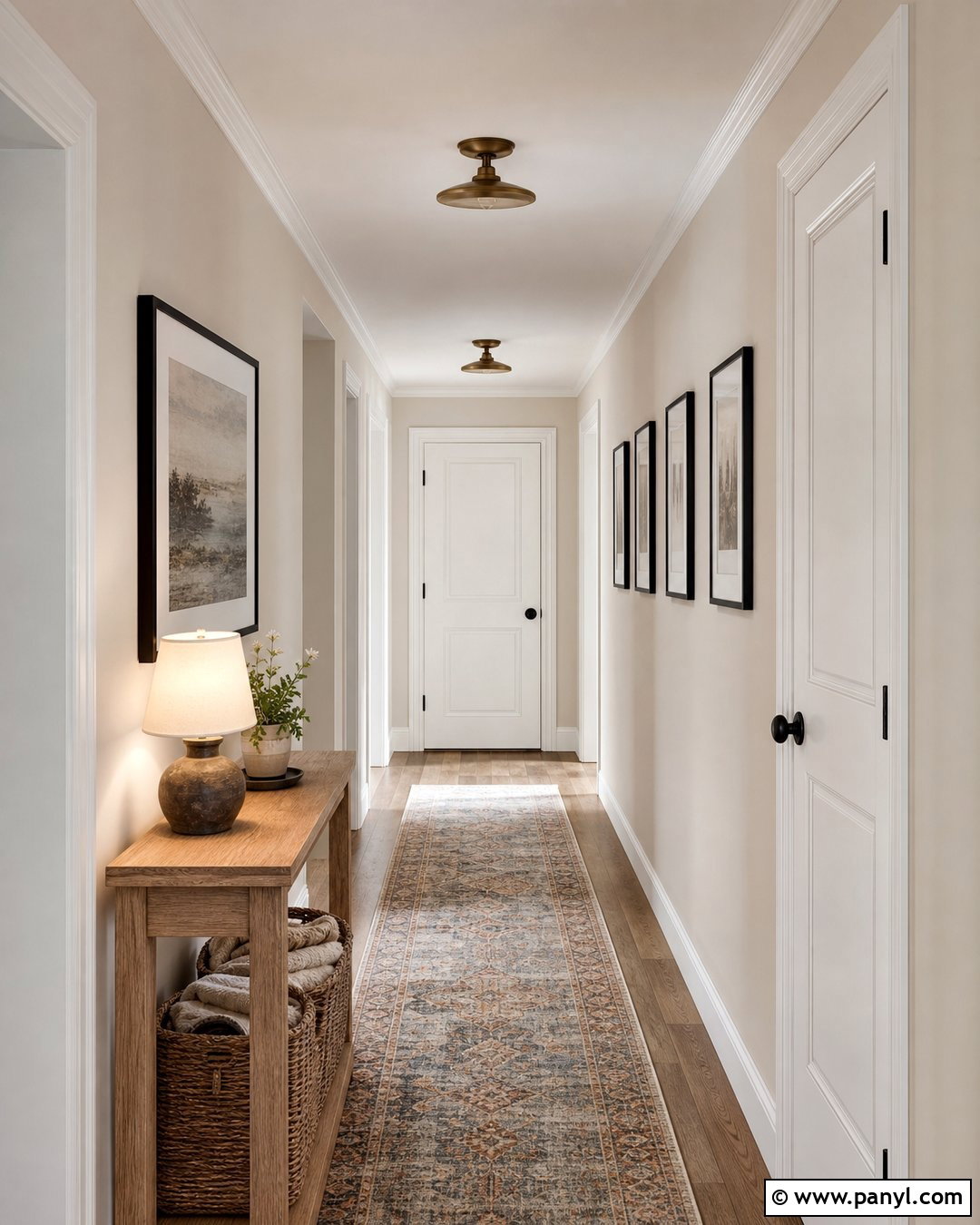
A long hallway needs rhythm and contrast to keep it from looking plain. Paint the walls Accessible Beige, then emphasize the architecture with Alabaster baseboards, door casings, paneled doors, and crown molding. Repeat black-framed artwork at even intervals to guide the eye through the space. A washable runner with cream, faded blue, and soft brown adds movement without competing with the paint. If the hallway is wide enough, place a slim oak console at one end with a small lamp and covered storage baskets below. Use flush-mount lighting in aged brass or matte black for a more finished appearance. Keep all doors Alabaster for consistency. The warm wall color, lighter trim, organized artwork, and practical floor covering turn a pass-through area into a polished part of the home.
8. Accessible Beige Home Office With Alabaster Trim
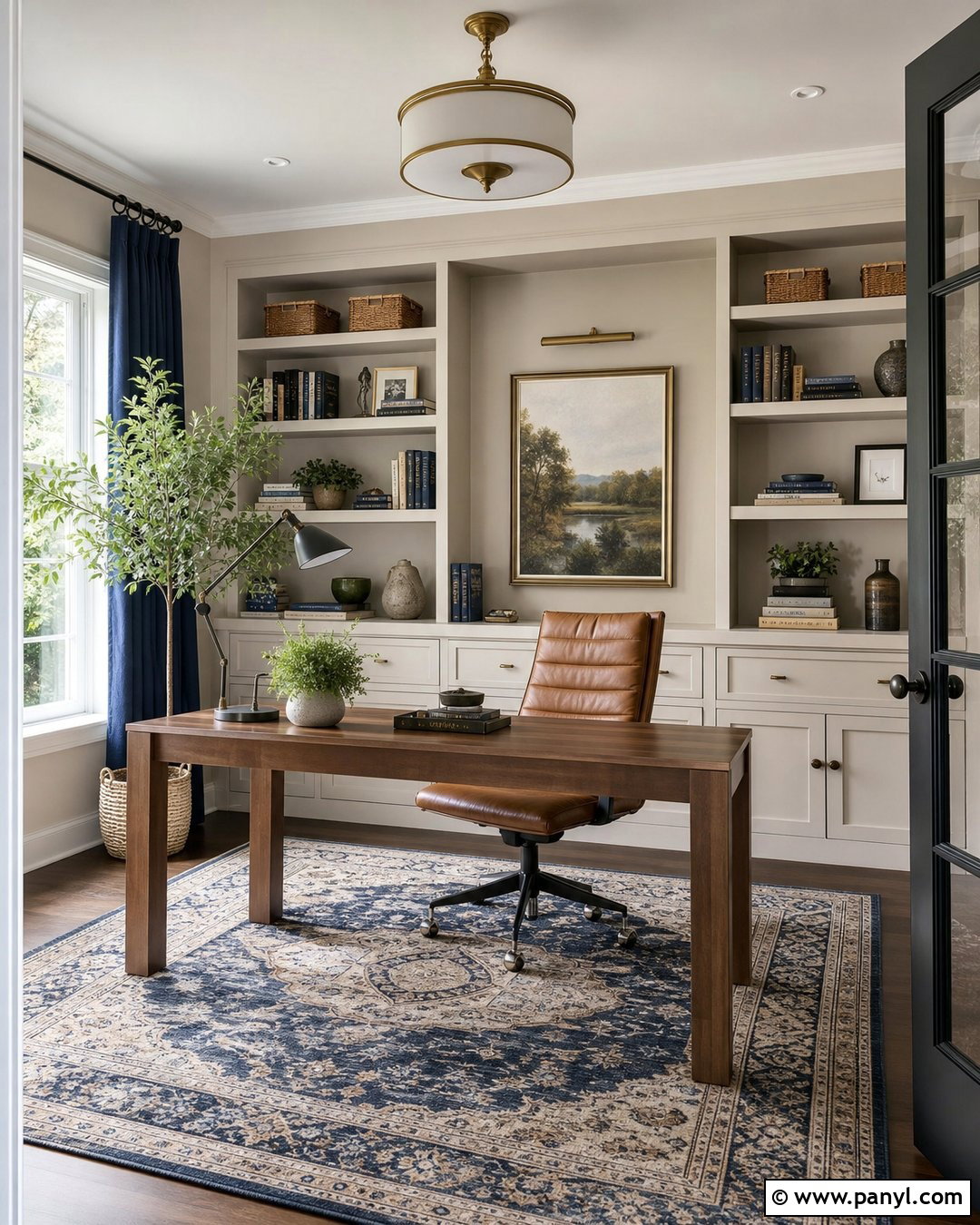
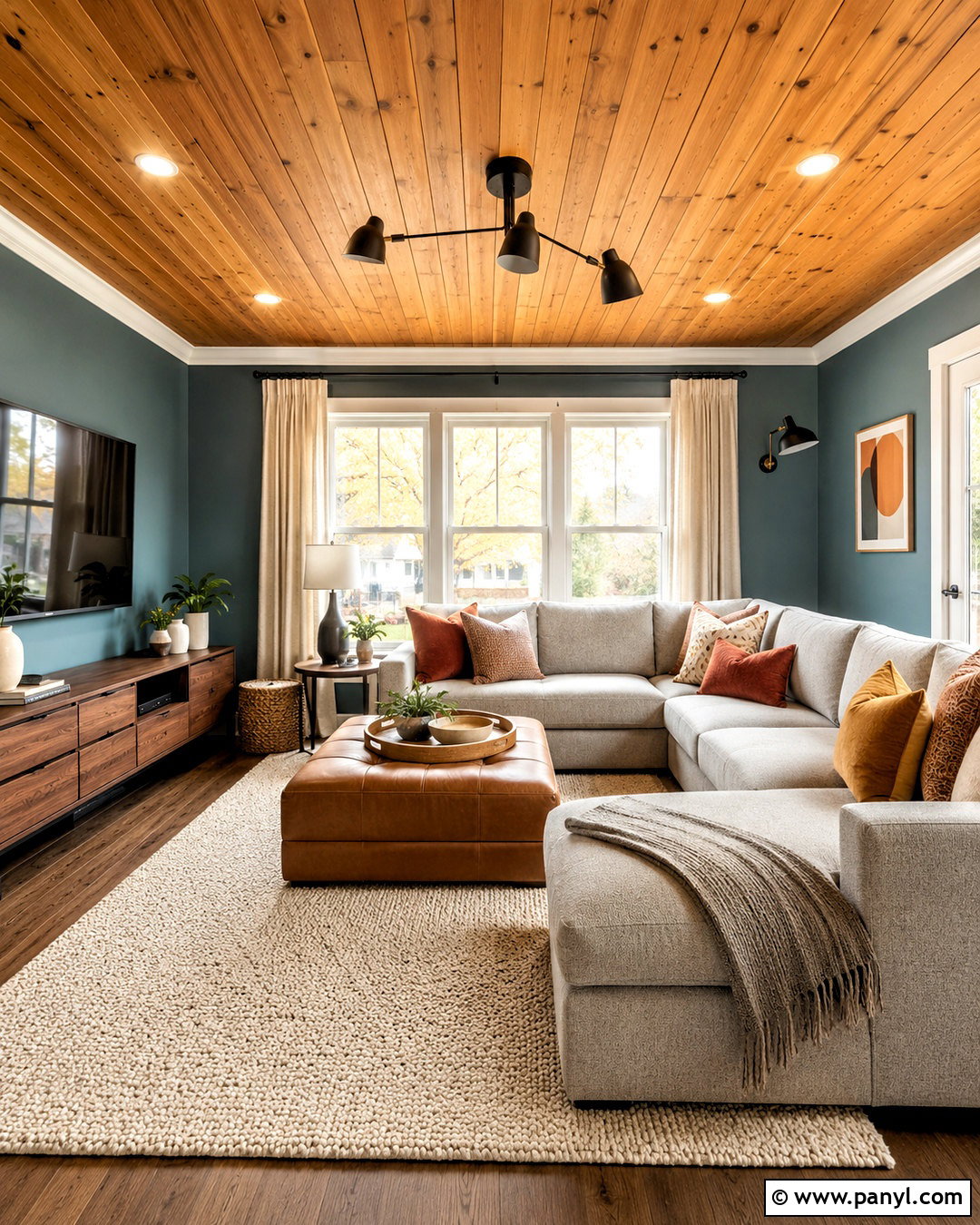
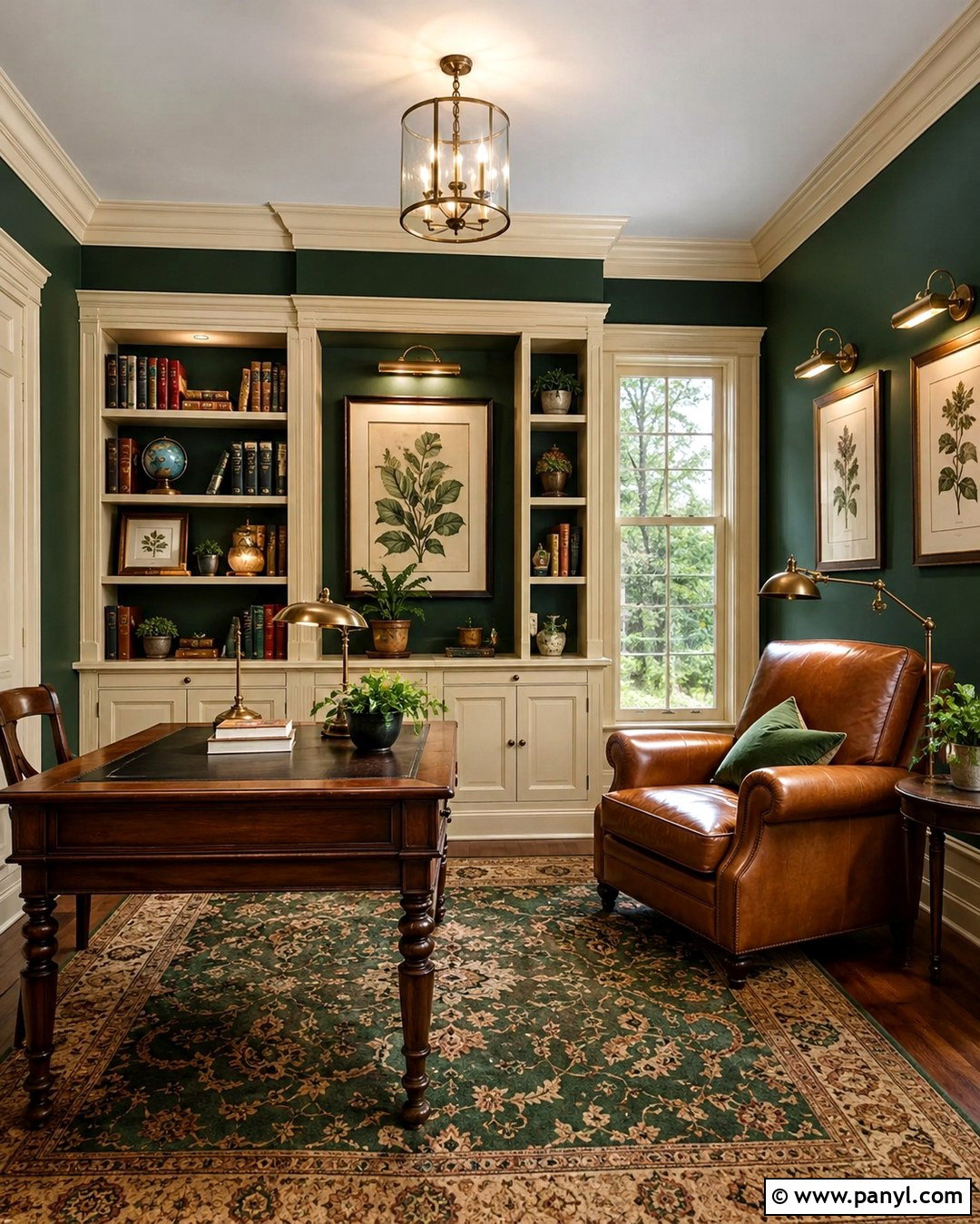
For a productive home office, combine the calm paint pairing with furnishings that provide stronger visual structure. Accessible Beige walls create a comfortable background for video calls, while Alabaster trim and doors keep the room looking crisp. Place a medium walnut desk facing the doorway or centered near a window. Add an ergonomic chair upholstered in camel leather or warm gray fabric. Alabaster built-in bookcases can provide storage while blending with the room’s architectural details. Style them with books, baskets, ceramics, and a limited number of framed objects. Use deep navy curtains and a patterned rug containing blue, beige, and ivory for controlled color. A black task lamp, aged brass ceiling fixture, and leafy floor plant complete a professional office that still feels connected to the home.
9. Accessible Beige Nursery With Alabaster Trim
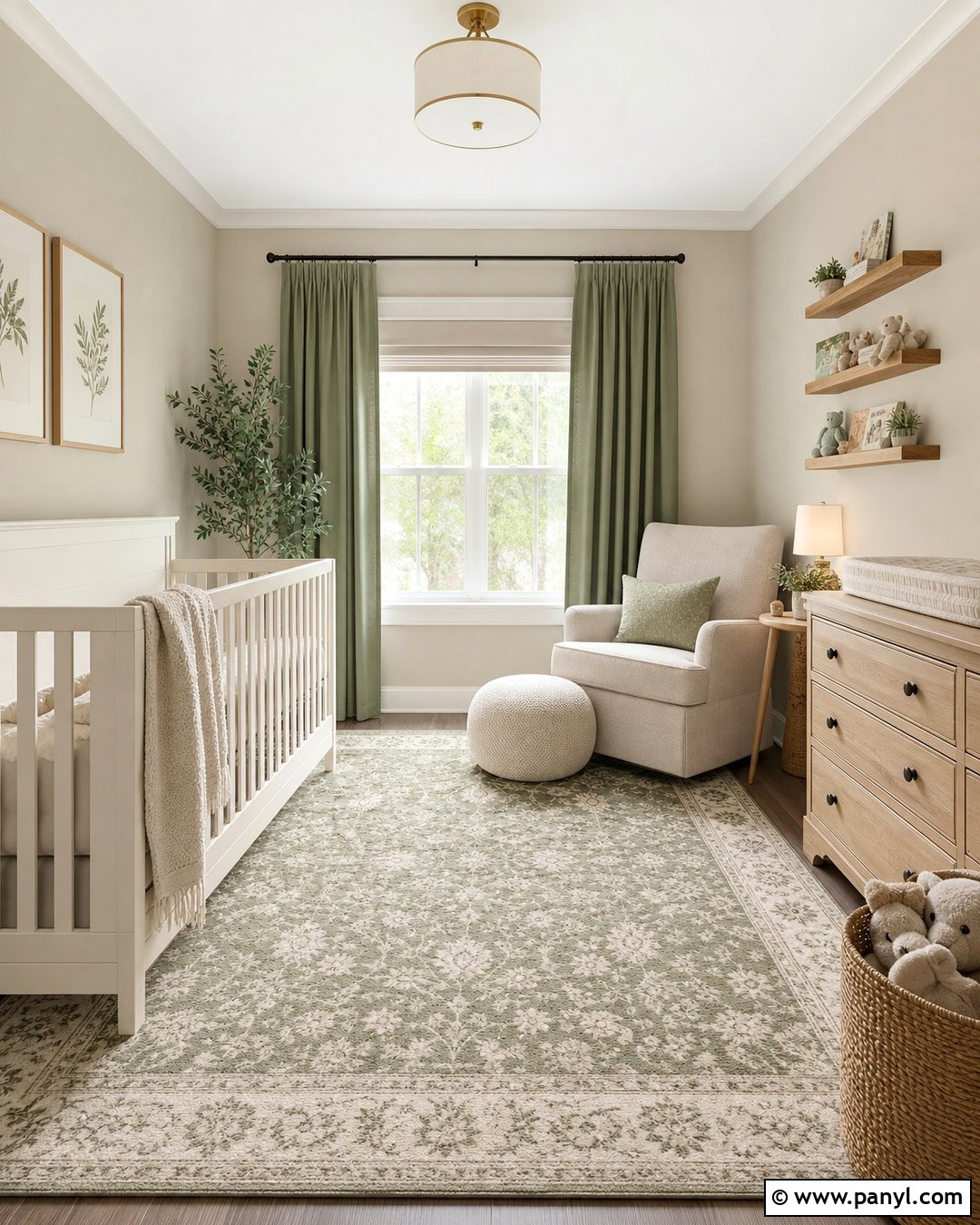
A nursery decorated around Accessible Beige and Alabaster can transition easily as a child grows. Keep the walls warm and simple, then use Alabaster for the crib, window trim, closet doors, baseboards, and ceiling. Add muted sage green through blackout curtains, a washable rug, and a comfortable upholstered glider. A natural wood dresser brings warmth and doubles as a changing station when topped with a secure pad. Choose woven baskets for toys, books, and blankets so everyday storage remains within reach. Above the crib, display lightweight botanical artwork or simple animal illustrations in pale wood frames. A soft ceiling light and shaded floor lamp provide layered illumination. The finished nursery feels peaceful and practical, with enough neutral space to accommodate changing accessories, bedding, and age-appropriate decor.
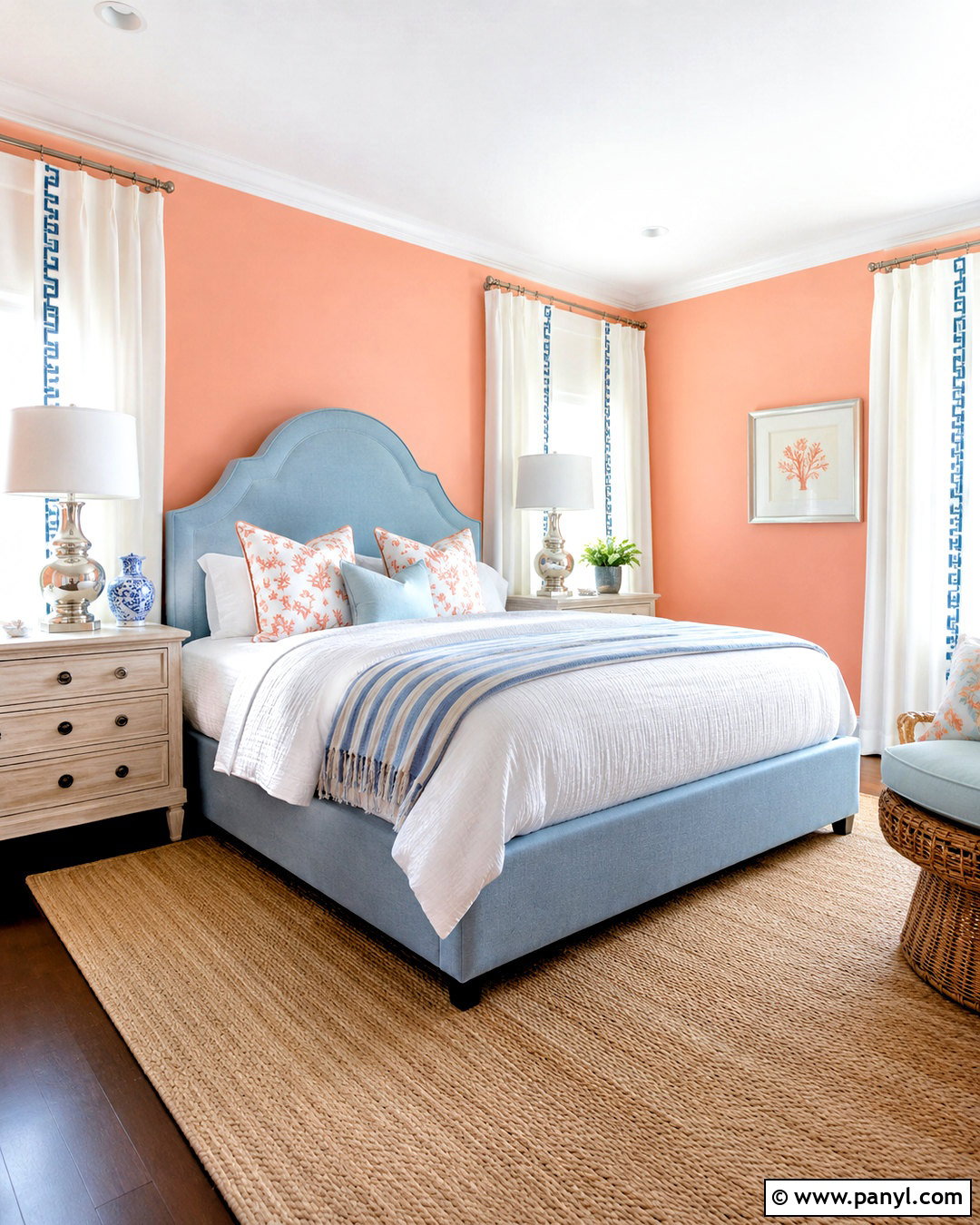
10. Accessible Beige Laundry Room With Alabaster Trim
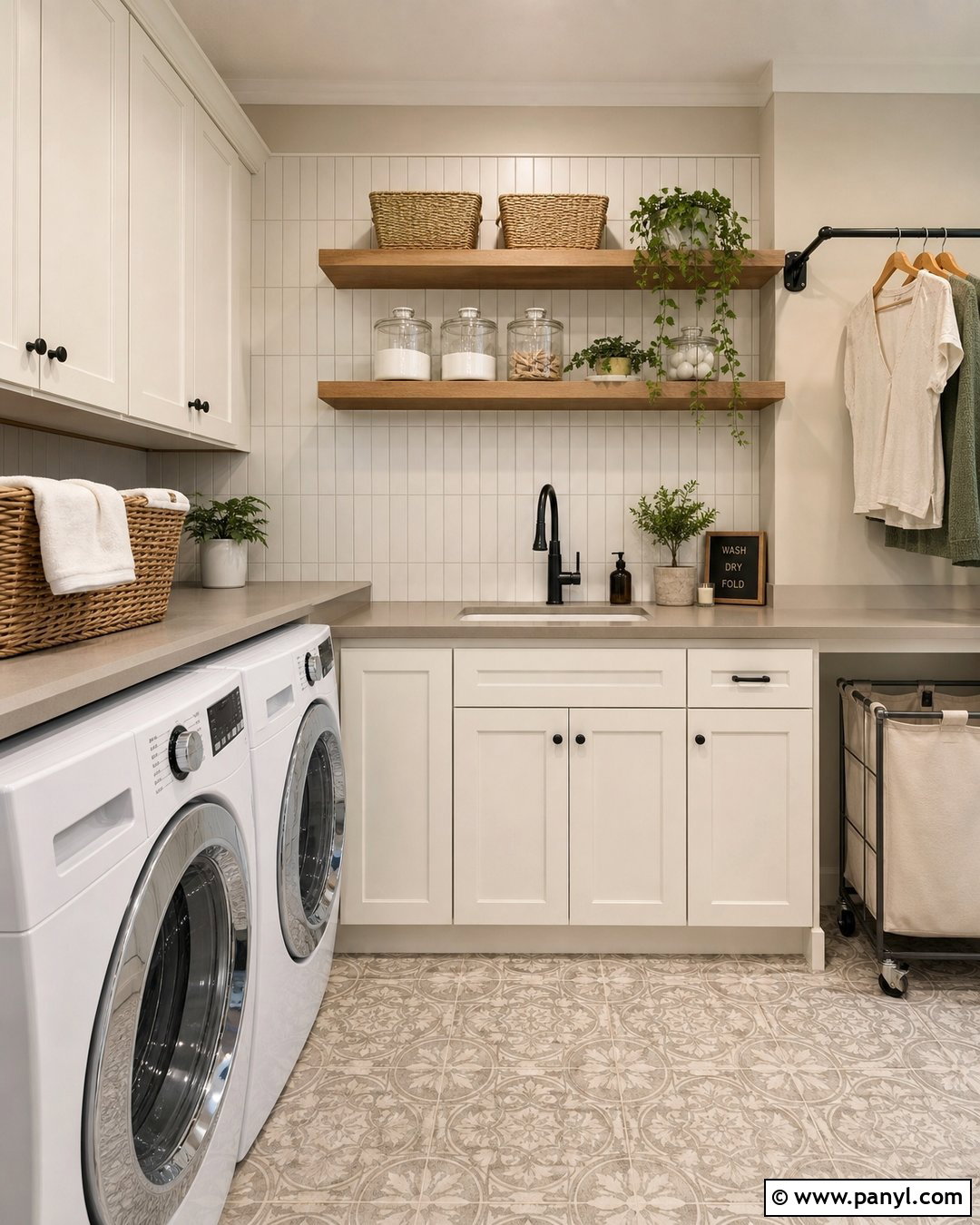
Even a hardworking laundry room can feel thoughtfully designed with this neutral combination. Paint the walls Accessible Beige and carry Alabaster across the cabinets, trim, door, and ceiling. Install a durable countertop above front-loading machines to create a folding surface. A warm white vertical tile backsplash adds texture while remaining easy to clean. Use black cabinet pulls, a black utility faucet, and a simple black hanging rod to define the pale finishes. Natural wood floating shelves can hold glass containers, baskets, and folded towels. Choose a patterned vinyl or porcelain floor in cream, taupe, and charcoal for practical visual interest. Include a slim rolling hamper and wall hooks for additional organization. This complete layout turns basic chores into a more efficient experience while maintaining a bright, cohesive appearance.
11. Accessible Beige Basement With Alabaster Trim
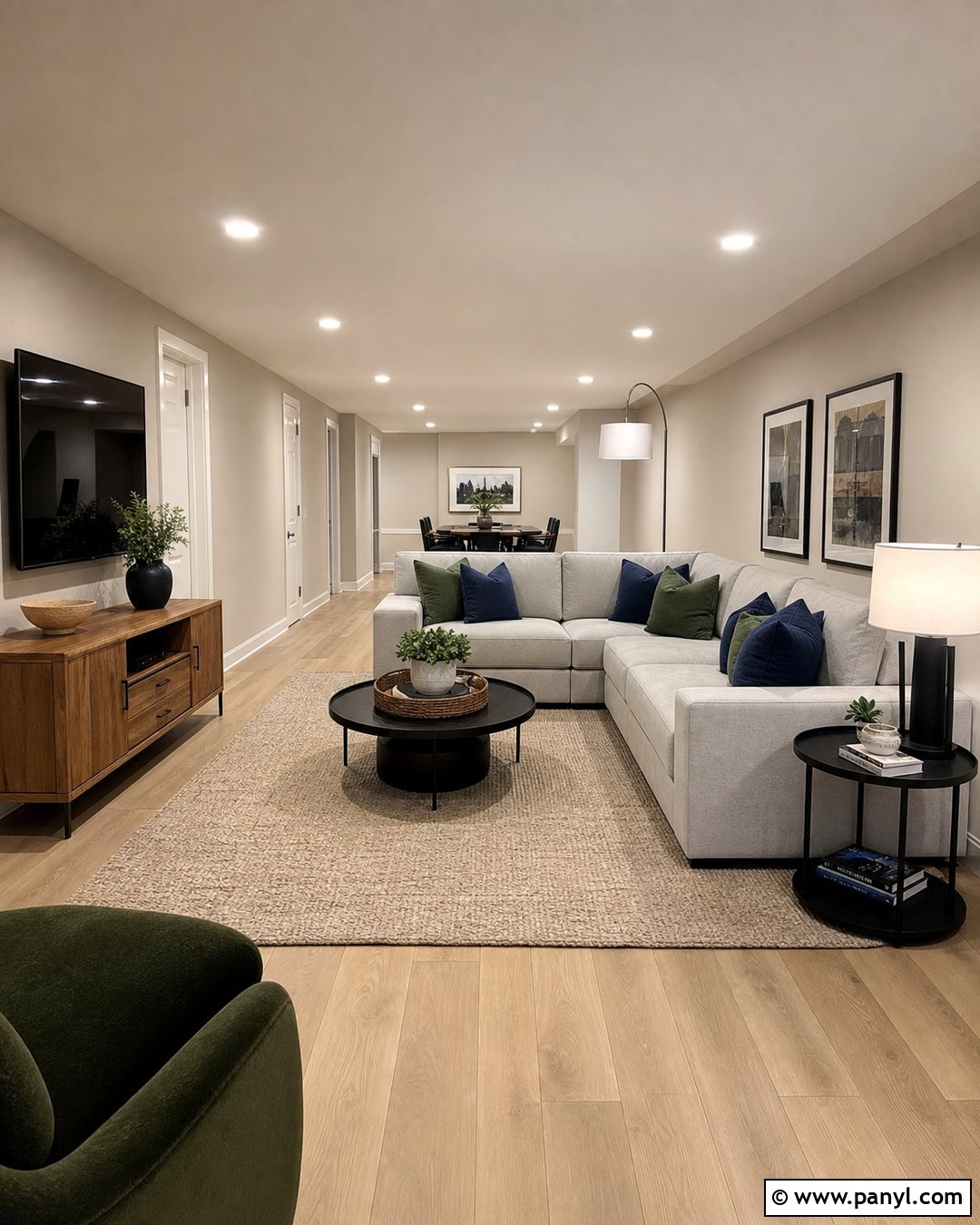
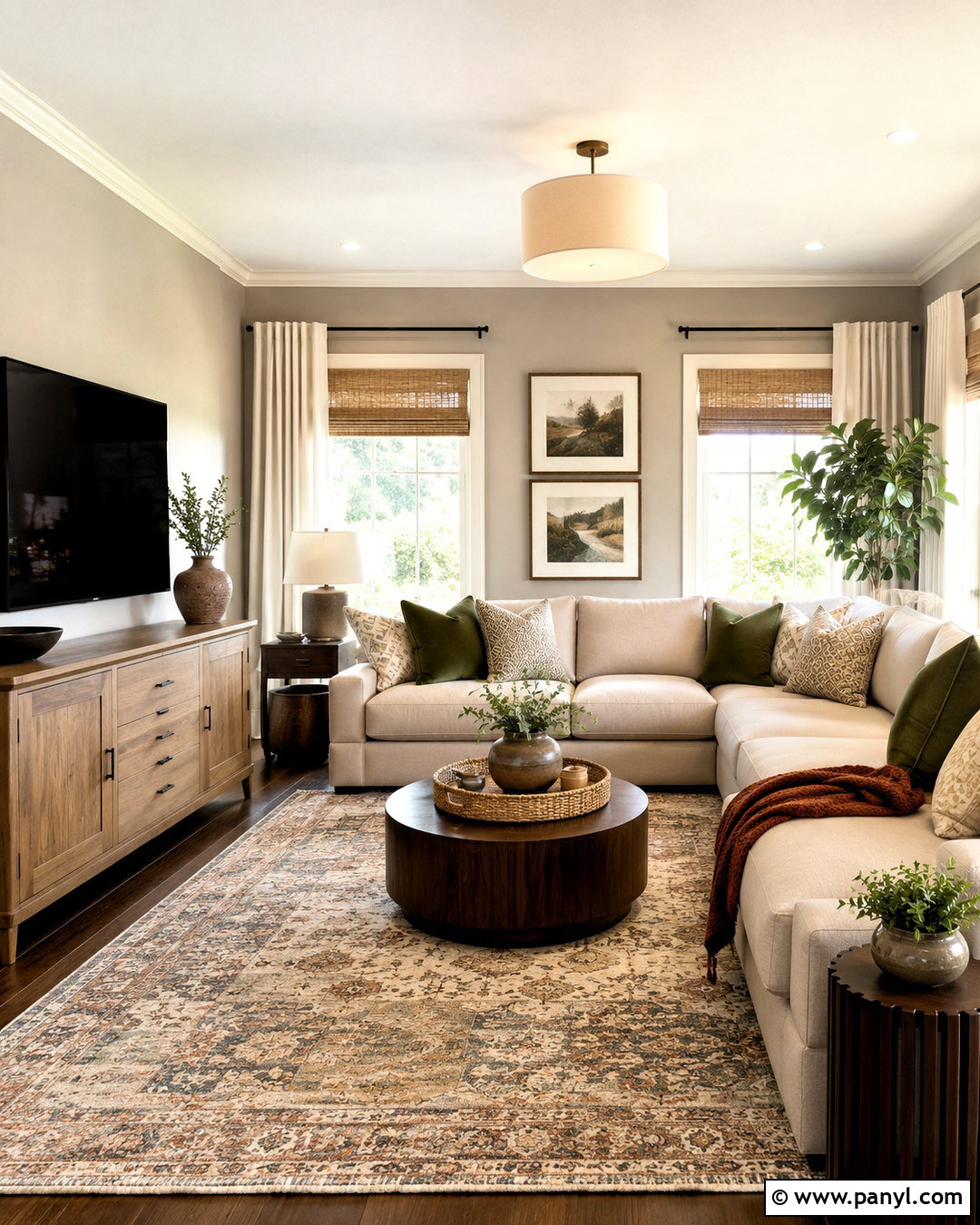
Basements often receive limited daylight, making layered lighting and material contrast especially important. Accessible Beige walls can add welcome warmth, while Alabaster trim, doors, and ceilings help reflect available light around the room. Create a comfortable seating zone with a light gray sectional, warm oak media console, and large textured rug. Use several lighting sources rather than relying on one overhead fixture. Recessed lights, shaded table lamps, and a floor lamp will make the neutral colors feel more balanced. Add deep navy or forest green pillows to prevent the room from looking washed out. Black metal side tables and framed art bring definition. If flooring is being replaced, choose light oak luxury vinyl plank. The result is a functional basement lounge that feels connected to the upstairs rooms.
12. Accessible Beige Open Concept Room With Alabaster Trim
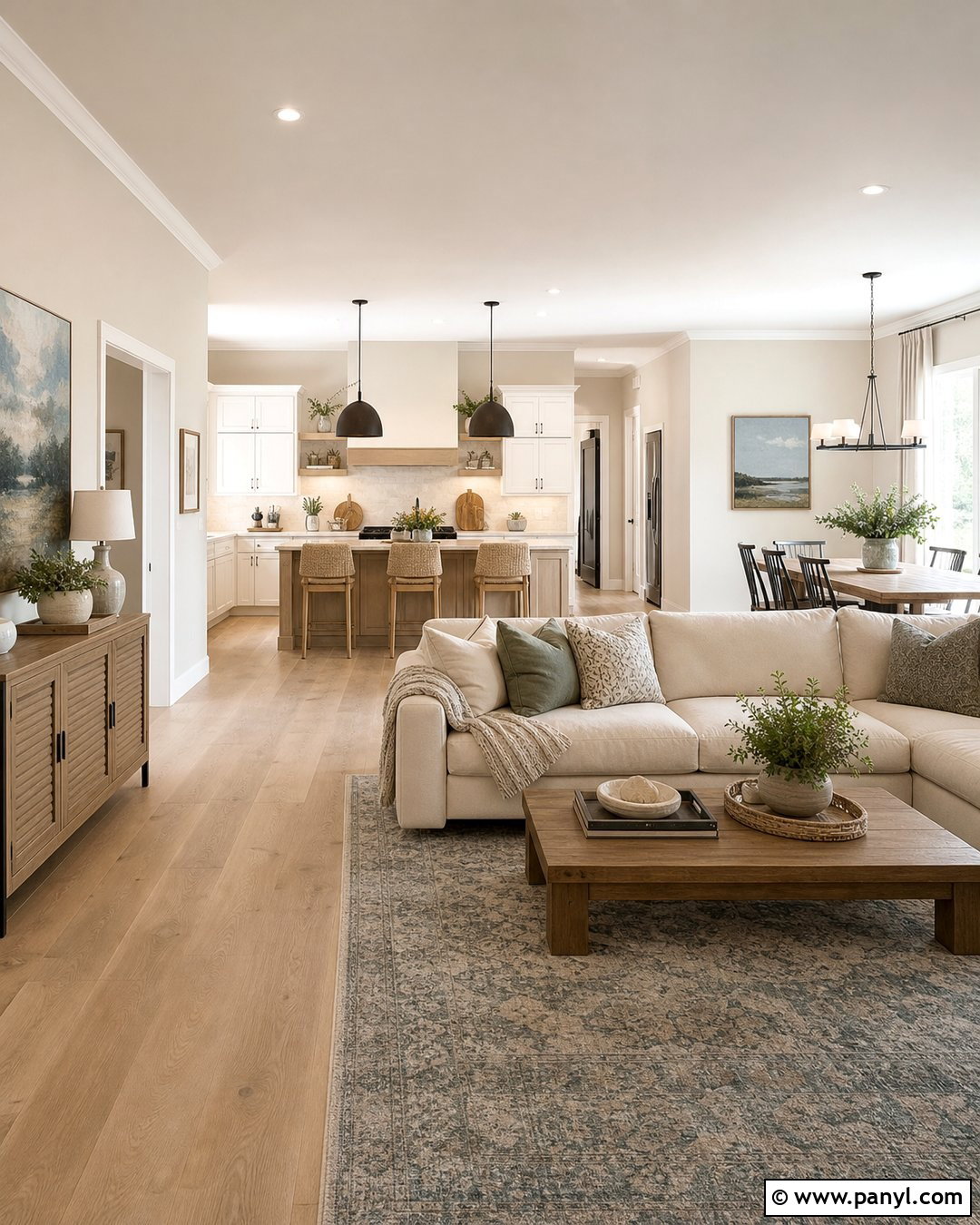
An open floor plan benefits from a consistent background that visually connects the kitchen, dining area, and living room. Use Accessible Beige on the main walls and Alabaster on every baseboard, casing, door, cabinet, and ceiling. Repeat a limited range of materials throughout the space, including light oak, warm white stone, black metal, and woven natural fibers. Define the living zone with a large rug and cream sectional. Use an oak table and black dining chairs nearby, then repeat black through the kitchen pendants and cabinet hardware. Keep window treatments consistent with long ivory linen panels. Accent pillows, pottery, and artwork can introduce muted sage and dusty blue. This repetition allows each zone to feel distinct while maintaining one calm, connected design across the entire open area.
13. Accessible Beige Fireplace With Alabaster Trim
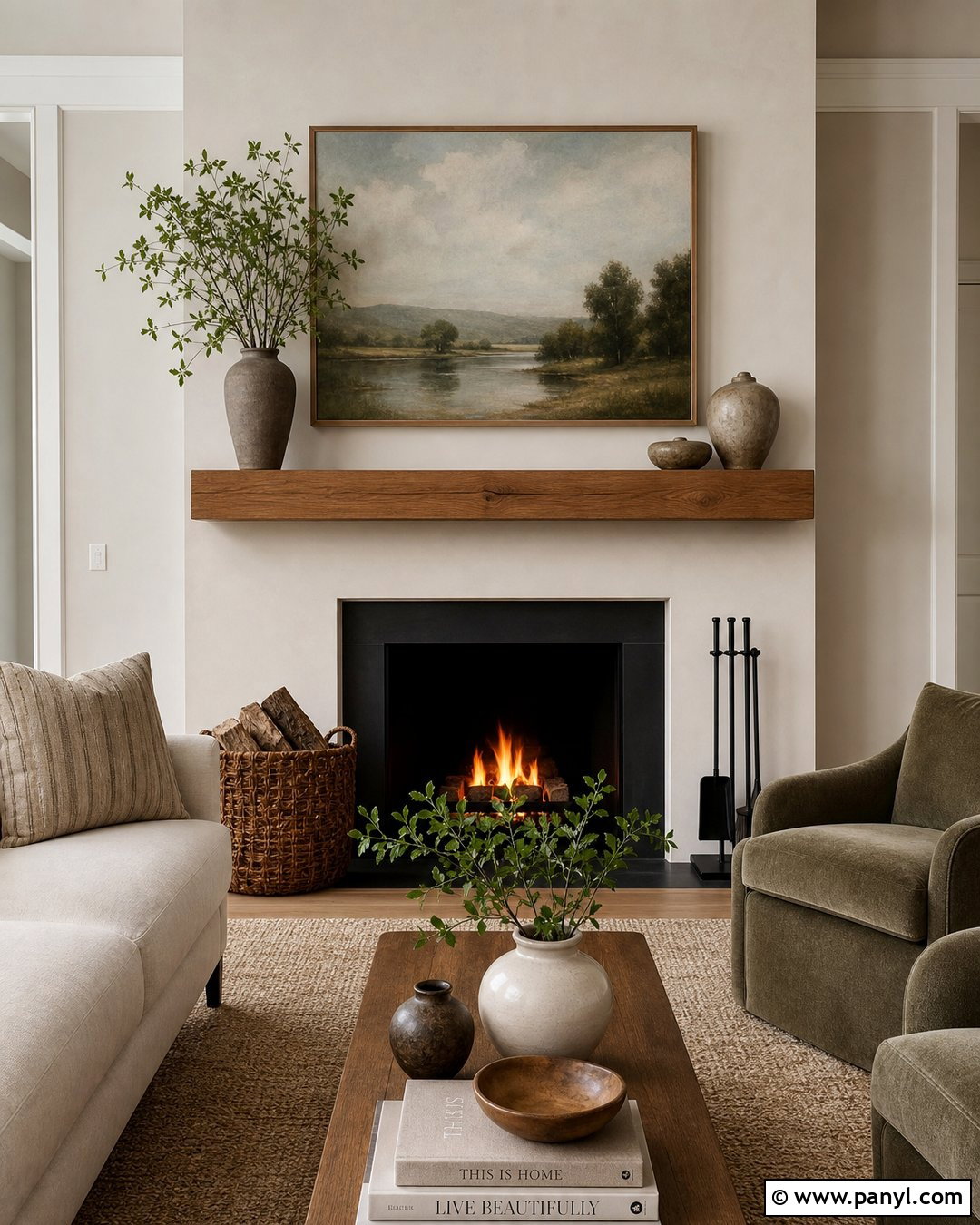
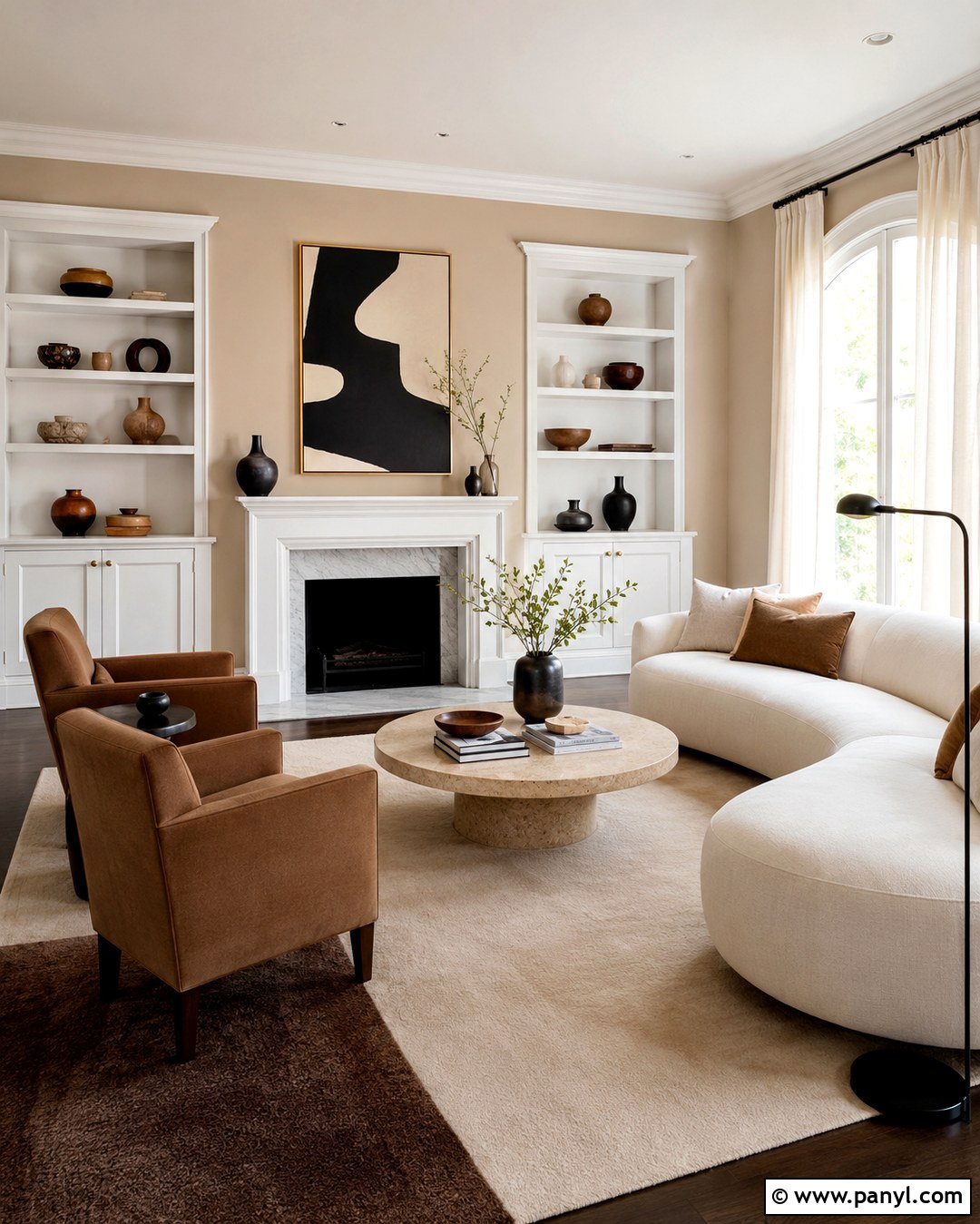
Make the fireplace a natural focal point by balancing warm paint, pale millwork, and darker decorative accents. Surround the room with Accessible Beige walls, then paint the fireplace mantel, crown molding, and baseboards Alabaster. Use warm white brick or lightly textured plaster on the fireplace face so it relates to the trim without disappearing completely. A medium oak mantel shelf adds warmth and gives the feature a clear horizontal line. Mount a large landscape artwork or round black mirror above it rather than overcrowding the surface. Arrange a cream sofa and two olive chairs around a textured beige rug. Add black fireplace tools, a woven wood basket, and simple ceramic vessels. The completed room feels centered and substantial, but the fireplace remains approachable rather than formal.
14. Accessible Beige Board And Batten With Alabaster Trim
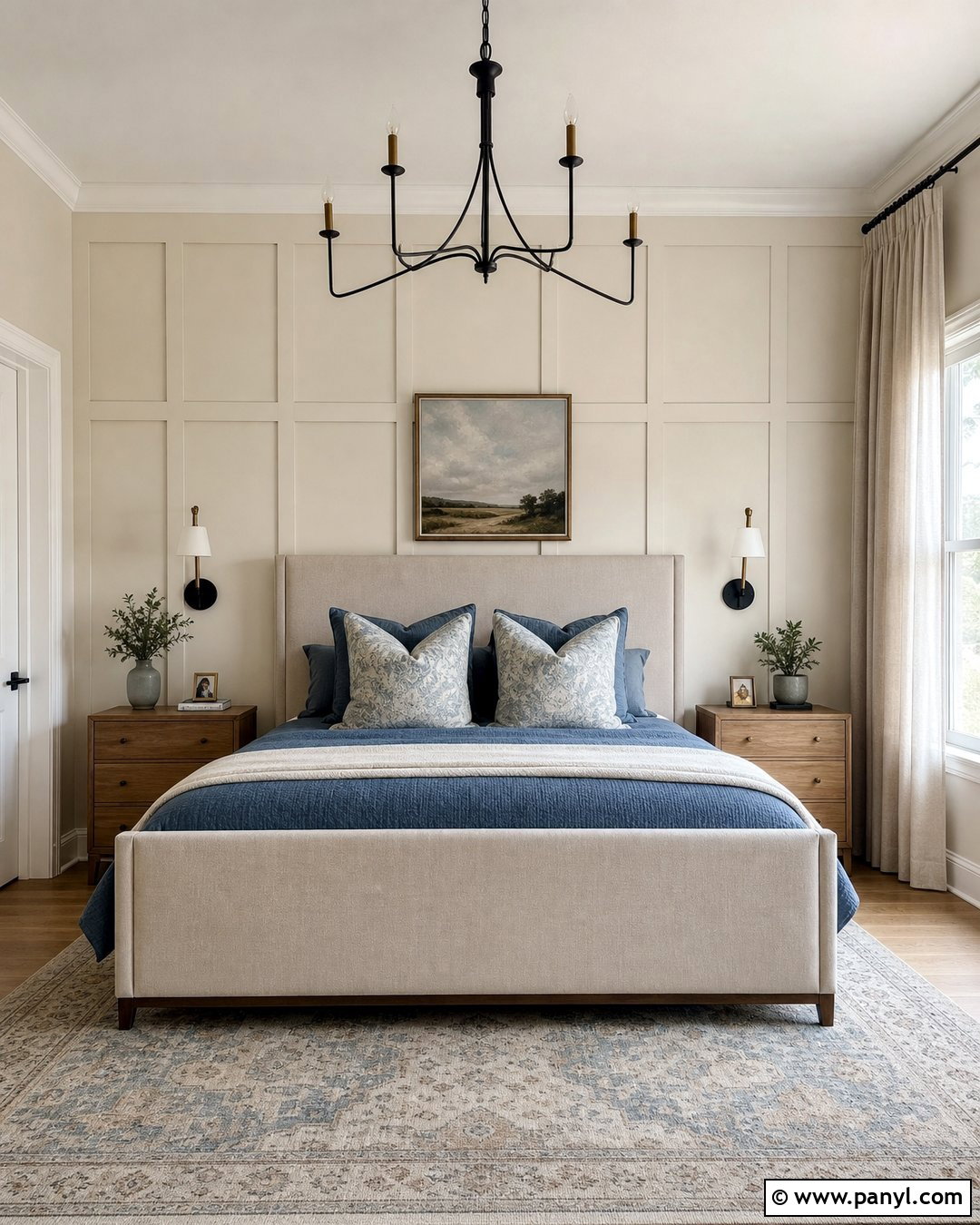
Board and batten introduces architectural character without requiring a dramatic color change. Paint the upper walls Accessible Beige and cover the lower third or half with Alabaster board and batten. Continue Alabaster on the baseboards, window casings, doors, and crown molding for a unified finish. This treatment works especially well in an entry, dining room, or bedroom where added structure is welcome. Pair it with medium oak furniture, a faded patterned rug, and black or aged brass lighting. Keep wall decor simple so the paneling remains visible. In a bedroom, use a flax upholstered bed and muted blue bedding. In a dining area, choose a walnut table and woven chairs. The two-tone treatment gives the neutral palette greater dimension while staying warm, subtle, and easy to decorate.
15. Accessible Beige Wainscoting With Alabaster Trim
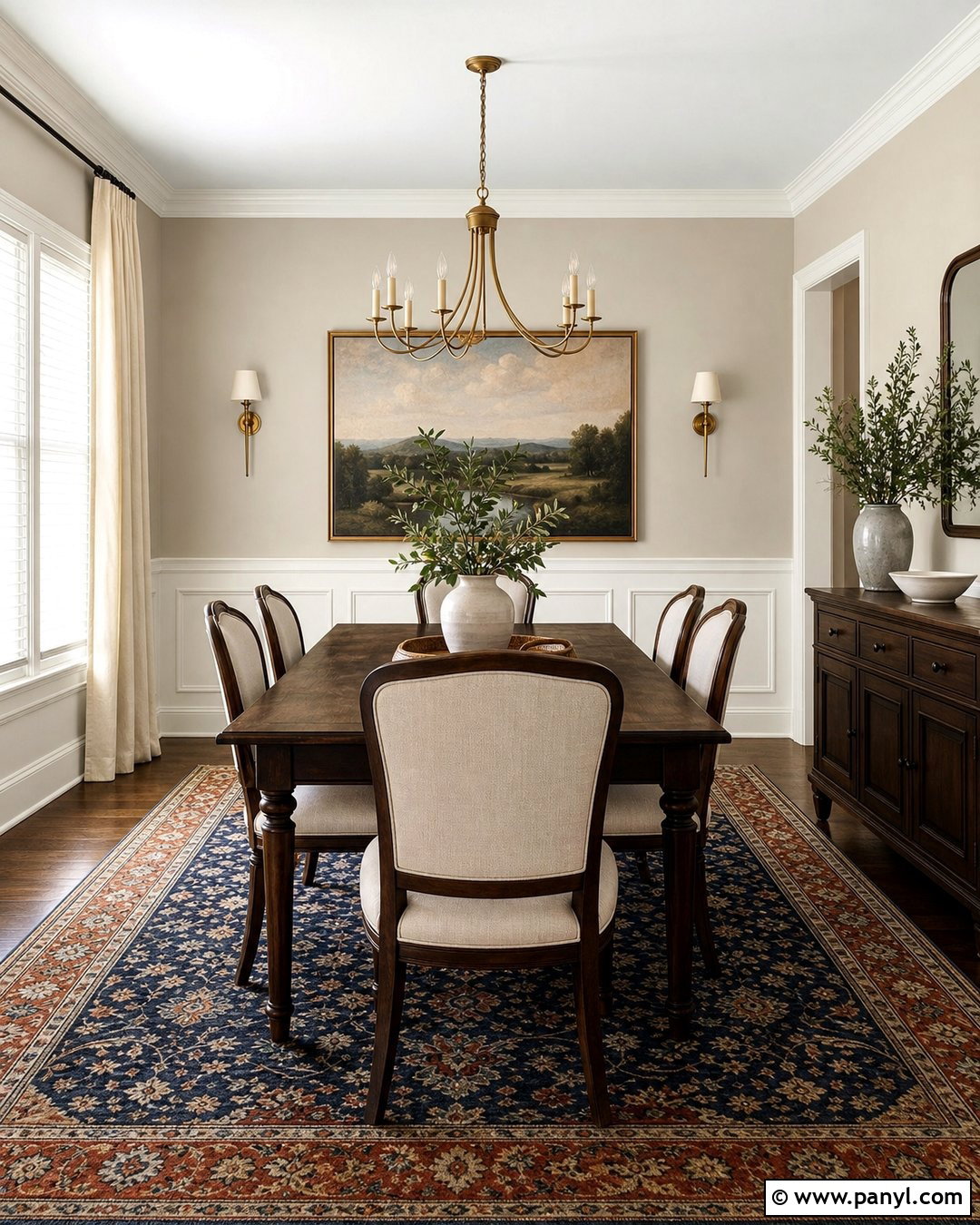
For a more traditional look, use raised-panel or picture-frame wainscoting painted Alabaster beneath Accessible Beige walls. The lighter lower section highlights molding details and makes the room appear carefully finished. Continue Alabaster across the chair rail, baseboards, doors, window trim, and ceiling. A dark walnut dining table or console will provide enough contrast against the pale architectural features. Choose a classic rug with softened navy, beige, and rust tones to connect traditional details with a comfortable color palette. Add linen curtains, aged brass sconces, and one large framed landscape. Avoid filling every wall panel with art; open areas allow the millwork to create its own rhythm. This complete design works well in dining rooms, entries, and formal living spaces that need character without heavy or ornate decoration.
16. Accessible Beige With Black Accents And Alabaster Trim
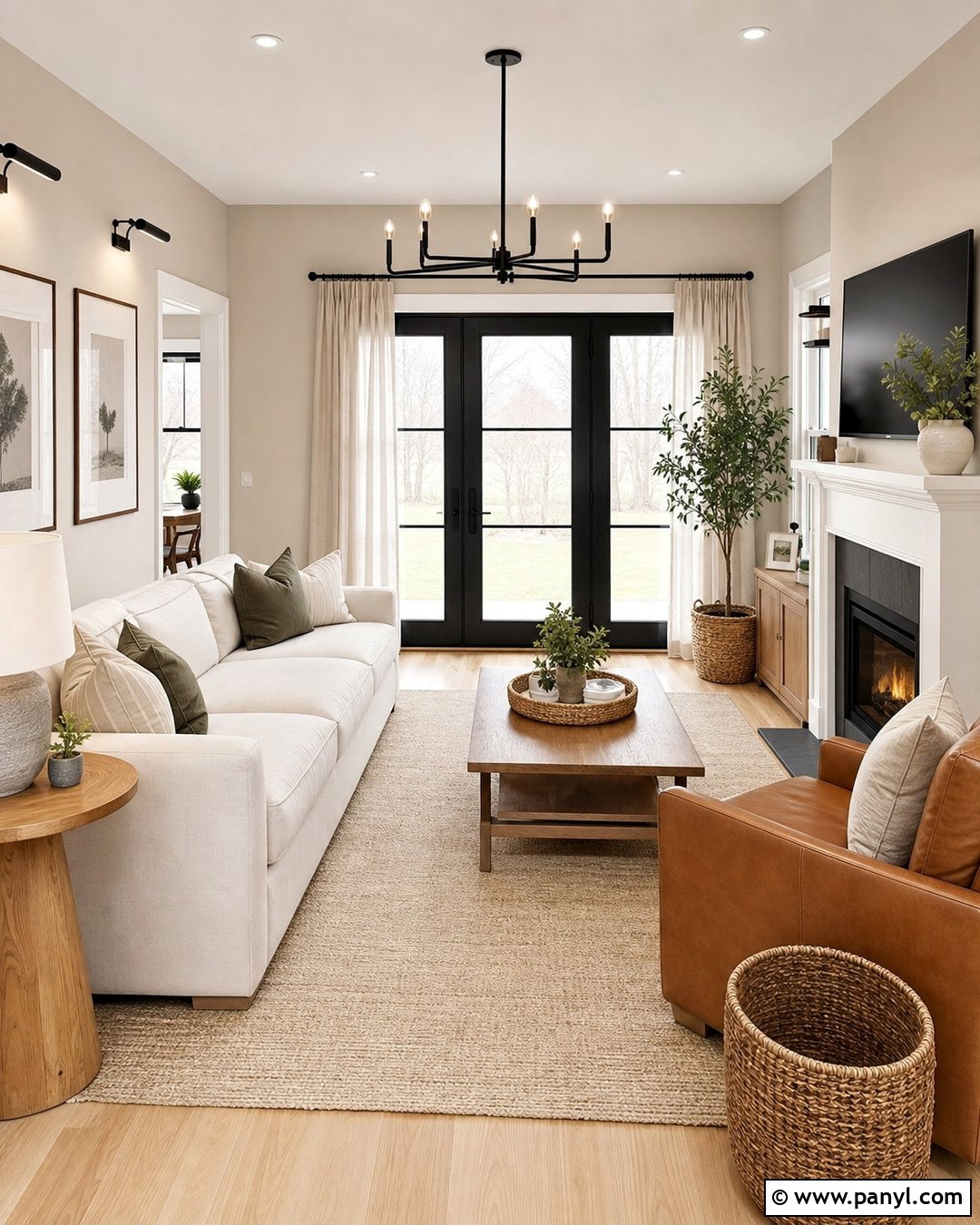
Black accents bring clarity to Accessible Beige walls and prevent the warm neutral scheme from becoming visually flat. Keep Alabaster on the trim, doors, ceiling, and built-in cabinetry, then introduce black in controlled locations. A black-framed glass door, slim curtain rods, picture frames, and one substantial light fixture can distribute the color throughout the room. Balance these darker details with a cream sofa, natural oak tables, and a beige textured rug. Add camel leather through a chair or ottoman for extra warmth. Black should outline and anchor the room rather than dominate it, so avoid using it on every accessory. Soft olive pillows, woven baskets, and linen curtains complete the palette. The finished space feels modern and defined while preserving the inviting character of the beige walls.
17. Accessible Beige With Sage Green And Alabaster Trim
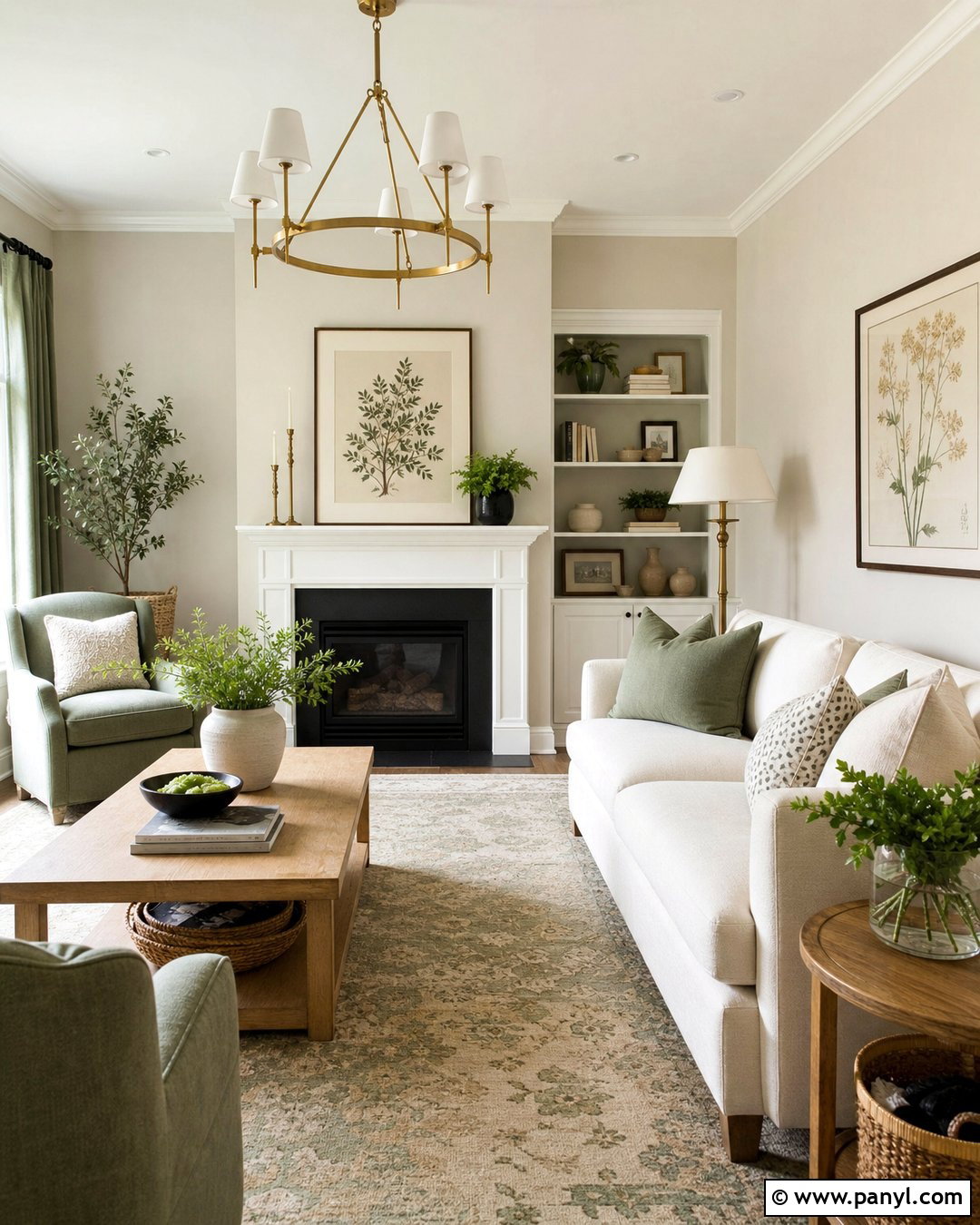
Sage green works naturally with this warm neutral foundation because it introduces color without overwhelming the room. Use Accessible Beige on the walls and Alabaster on the trim, doors, fireplace, and ceiling. Bring sage into the design through upholstered chairs, curtain panels, pillows, and botanical artwork. Keep the largest furniture piece cream or oatmeal so the green remains balanced. Light to medium oak tables support the earthy palette, while brushed brass lighting adds gentle warmth. A rug containing beige, ivory, faded green, and charcoal can pull every element together. Include real or realistic greenery, but vary leaf shape and height to avoid repetition. Small black details provide definition. This complete living room or bedroom scheme feels organic, comfortable, and colorful while remaining easy to coordinate with natural materials.
18. Accessible Beige With Navy Blue And Alabaster Trim
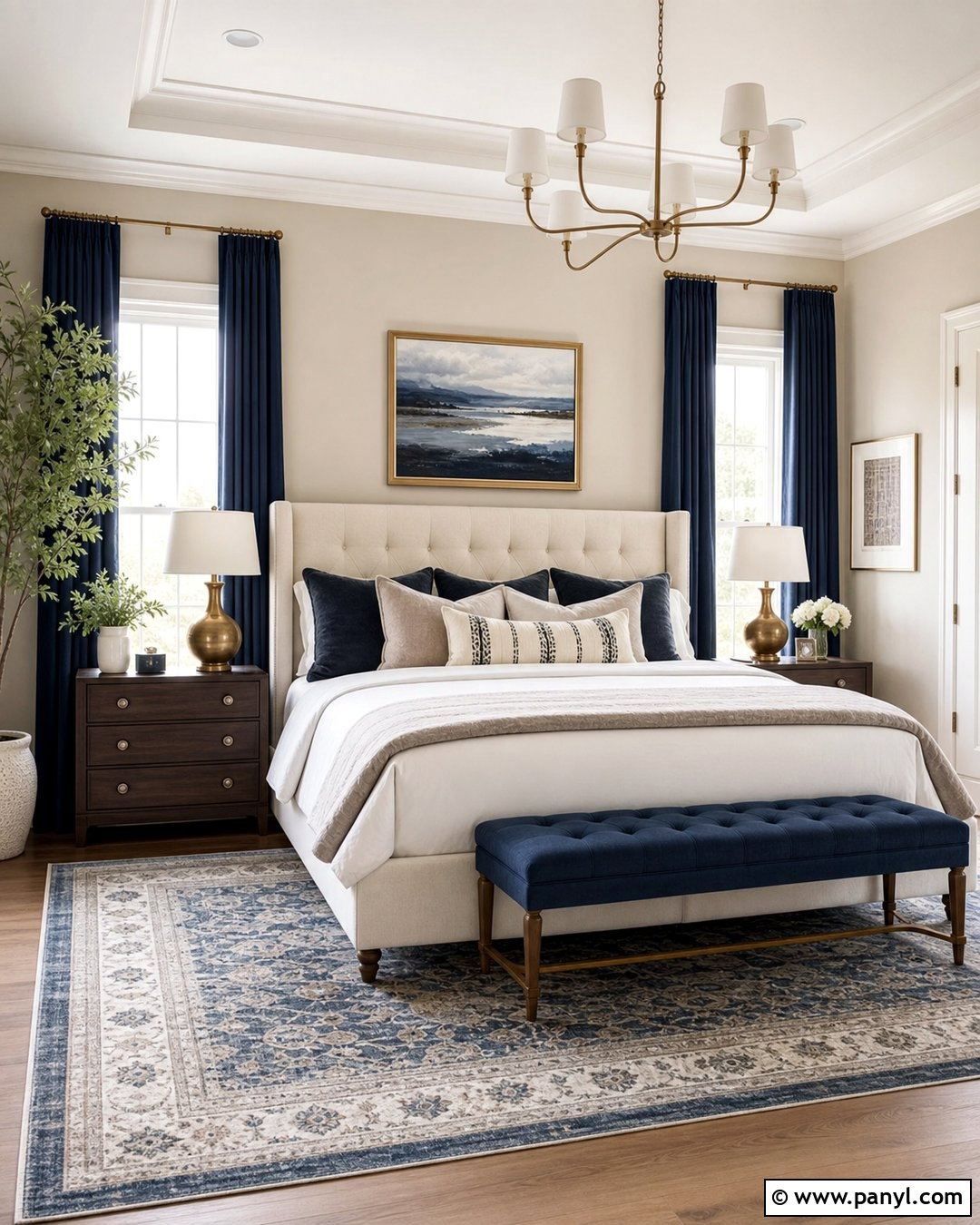
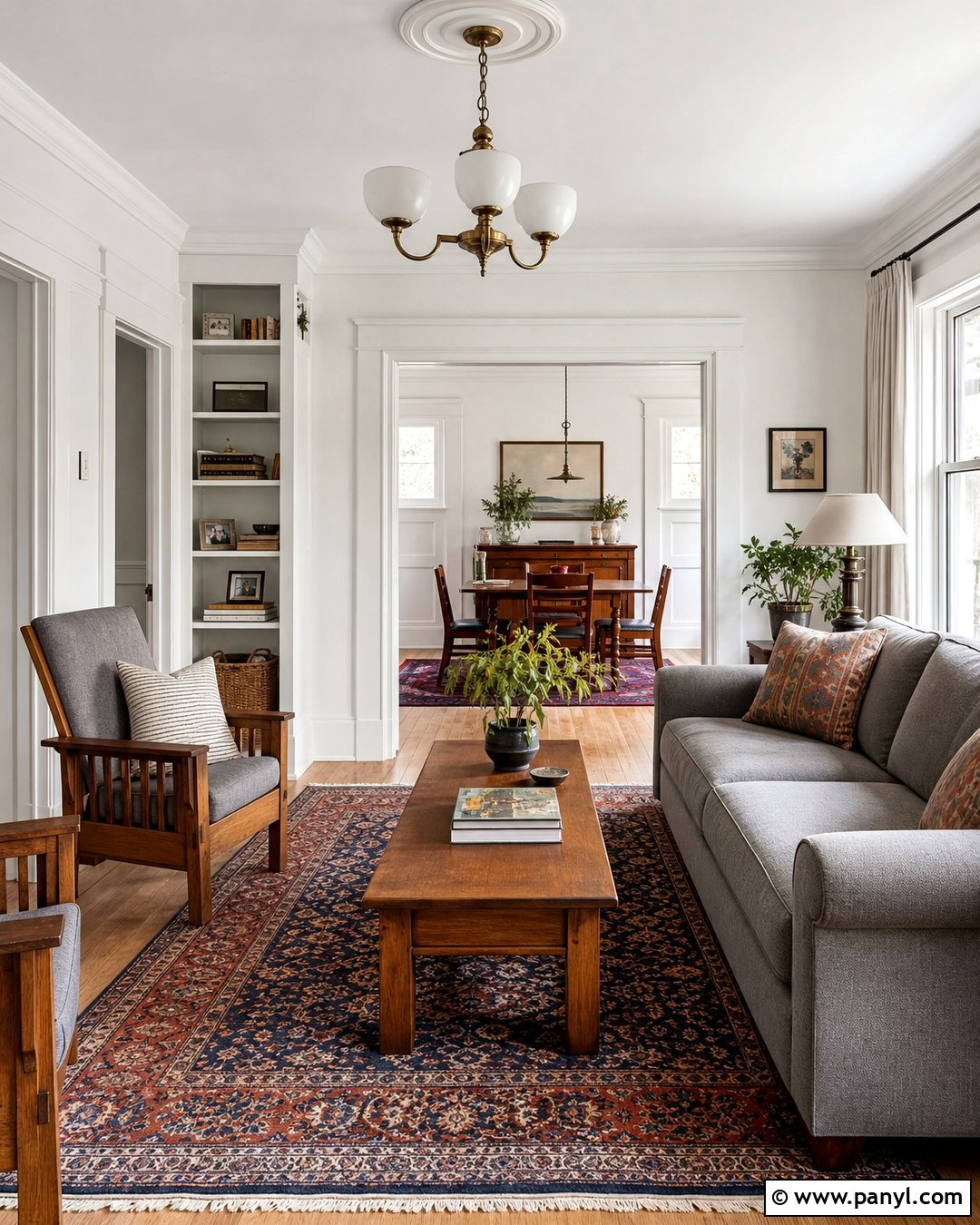
Navy blue creates a classic, substantial contrast against Accessible Beige walls and warm Alabaster trim. Begin with a cream sofa or upholstered bed, then add navy through curtains, pillows, a bench, or an accent chair. Select a patterned rug that combines navy, taupe, ivory, and a small amount of faded rust. Medium walnut furniture gives the palette richness and keeps the room from appearing too coastal. Use Alabaster consistently on baseboards, window casings, doors, and crown molding. Aged brass lamps and hardware complement the warmth of both paint colors. Add simple white ceramics and framed artwork with blue details, but leave enough open wall area for Accessible Beige to remain visible. The completed scheme feels timeless and versatile, working equally well in bedrooms, dining rooms, and living spaces.
19. Accessible Beige With Terracotta And Alabaster Trim
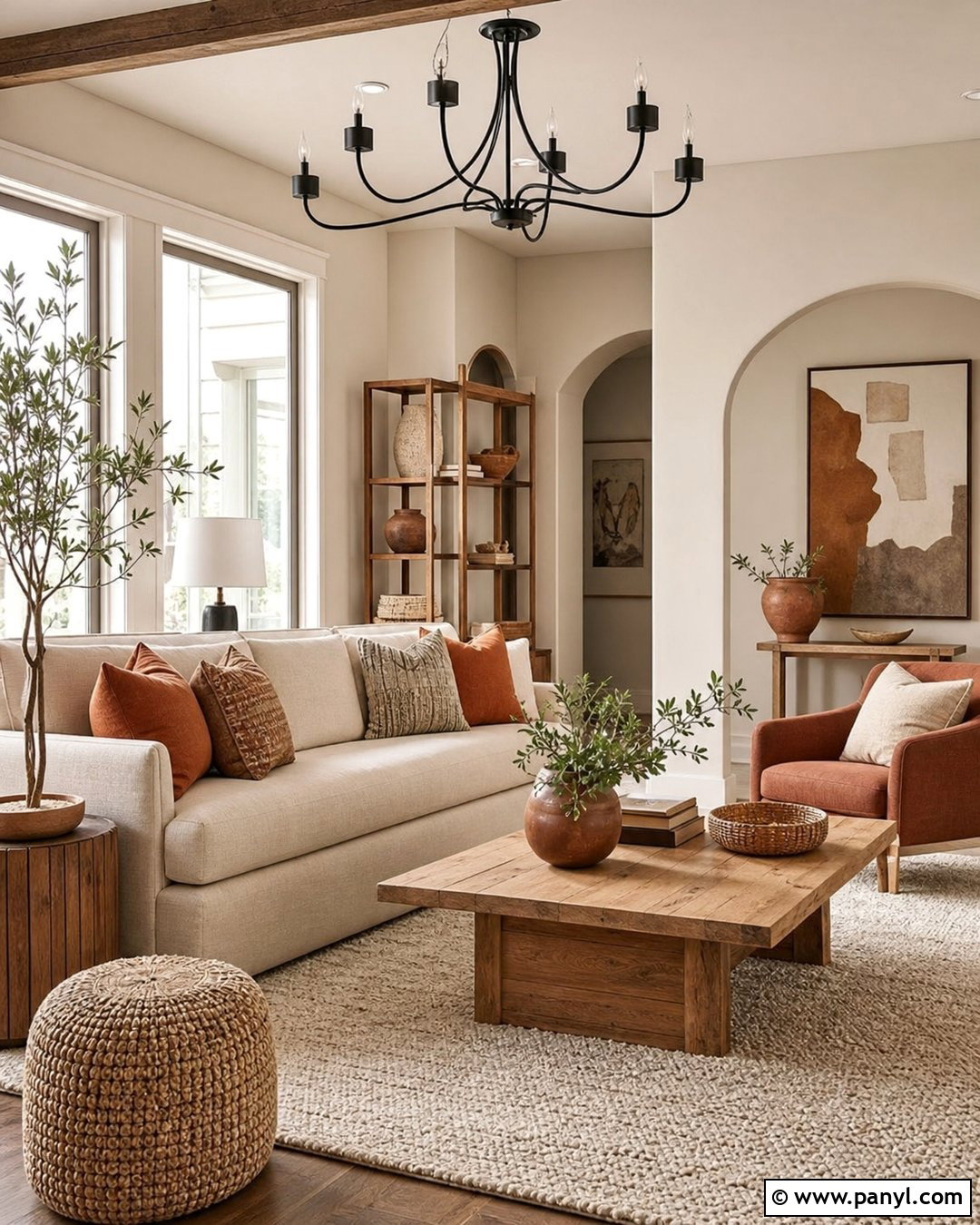
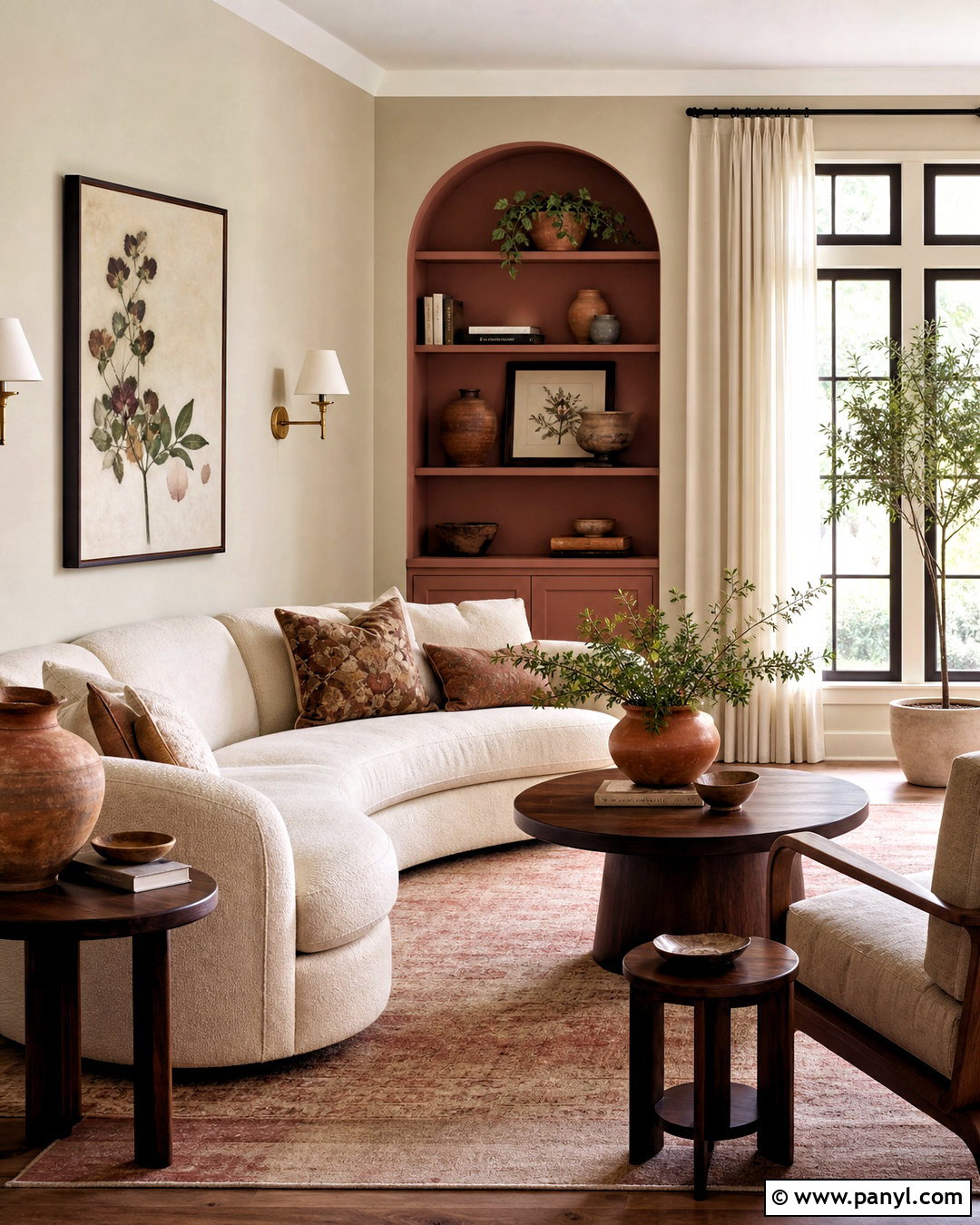
Terracotta accents amplify the earthy side of Accessible Beige and create a warm, relaxed interior. Keep the walls Accessible Beige and use Alabaster across the trim, ceiling, interior doors, and fireplace. Choose an oatmeal sofa or bed as the main upholstered piece, then layer terracotta through linen pillows, a throw, pottery, and artwork. A muted rust-colored chair can become the room’s focal point without overpowering the neutral background. Use light oak or weathered wood furniture and a cream wool rug for balance. Add olive green in small amounts through plants or one patterned textile. Matte black lighting provides a clean modern edge. This complete palette suits organic modern, Southwestern, and relaxed transitional rooms, offering color and personality while keeping the overall look calm and livable.
20. Accessible Beige With Natural Wood And Alabaster Trim
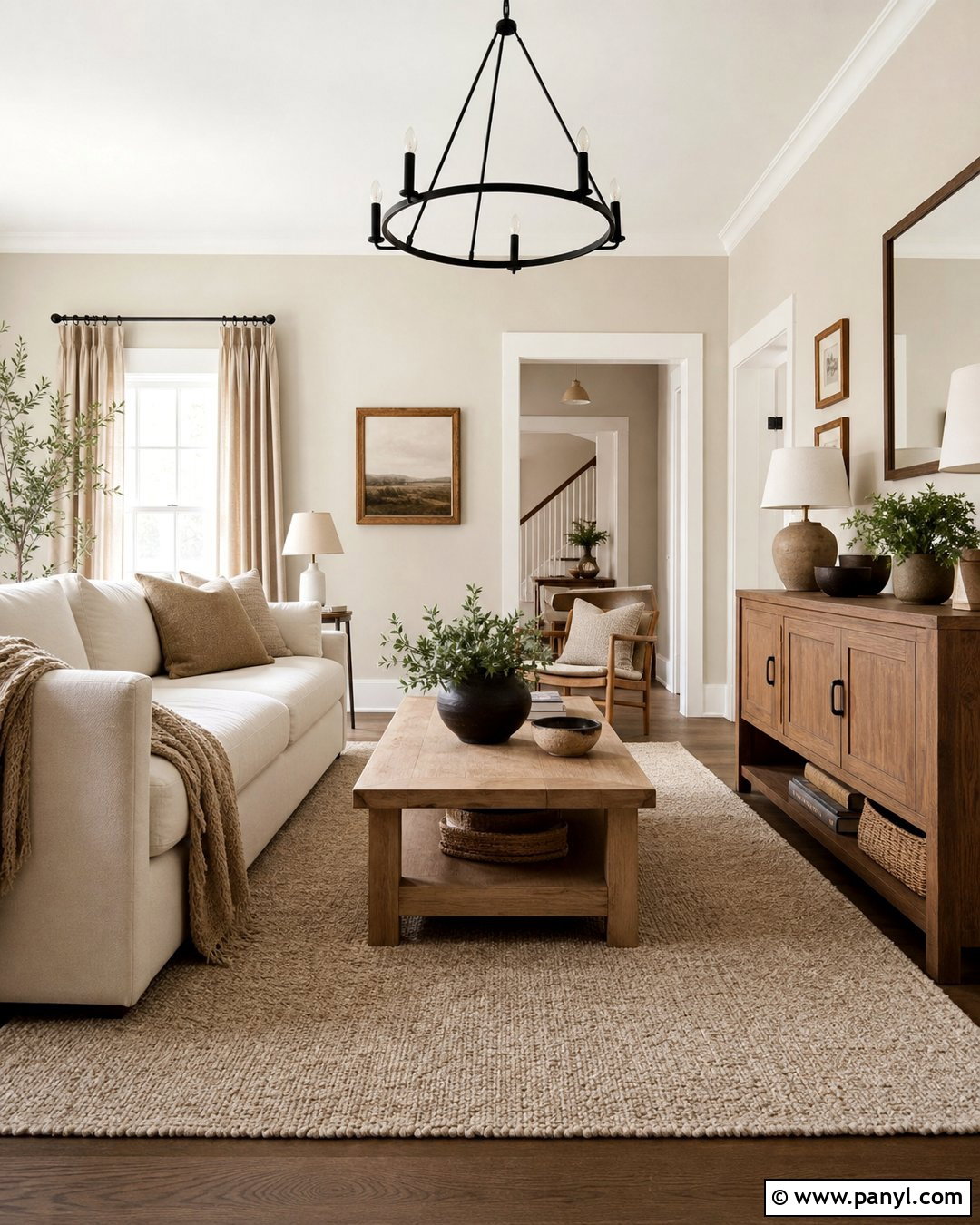
Natural wood makes Accessible Beige walls feel richer while Alabaster trim keeps the overall palette light. Mix two related wood tones rather than filling the room with a matching furniture set. For example, combine a light oak coffee table and console with medium oak picture frames or dining chairs. Choose cream upholstery, flax linen curtains, and a textured wool rug to create soft layers around the wood. Use Alabaster on doors, baseboards, window casings, built-ins, and the ceiling. Black metal lighting and hardware can introduce necessary contrast. Add handmade ceramics, woven baskets, and simple greenery for an organic finish. Keep strong orange and red wood stains limited, since they can make the walls appear more yellow. The resulting room feels warm, natural, and intentionally collected.
21. Accessible Beige With Dark Wood Floors And Alabaster Trim
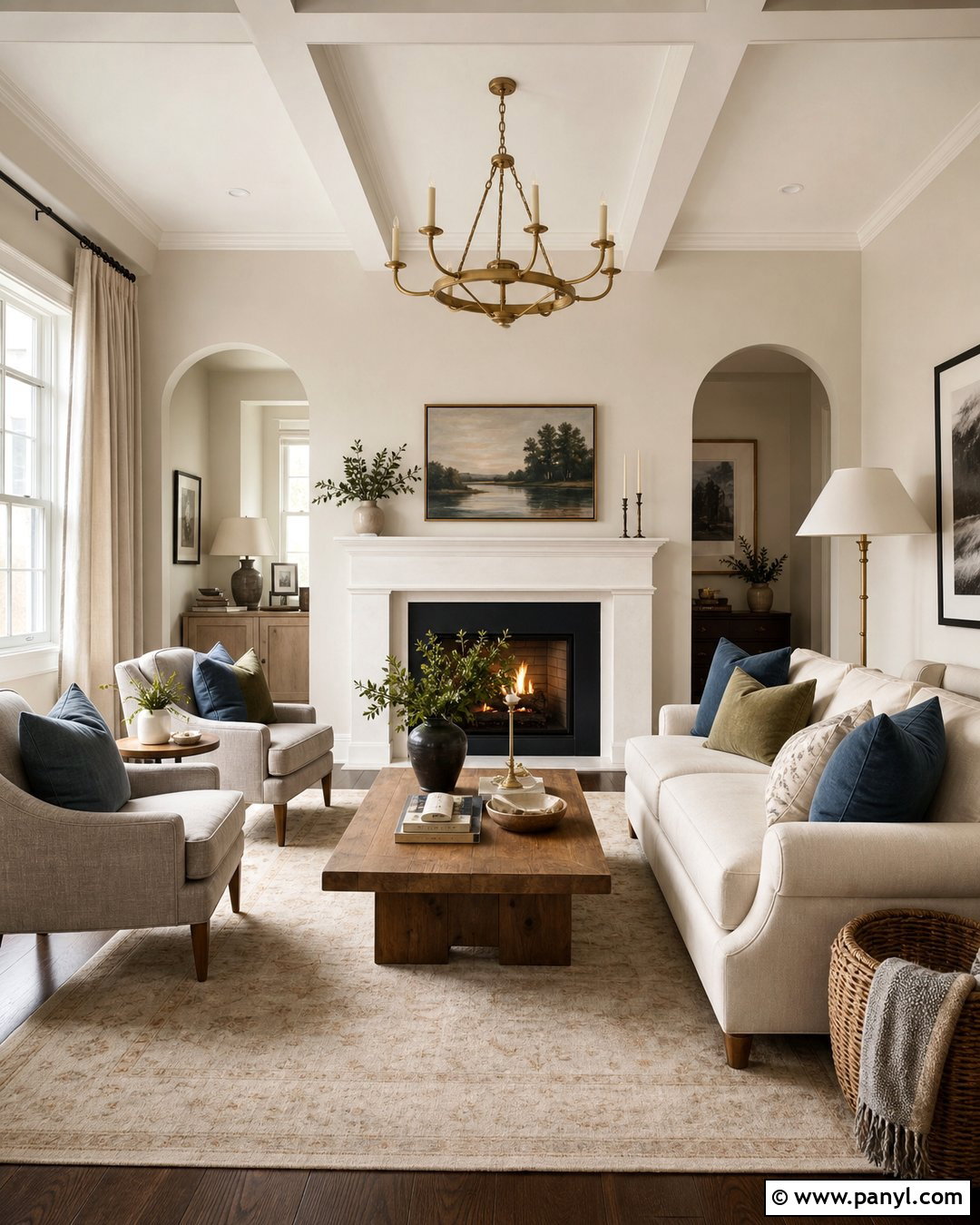
Dark wood flooring gives this paint combination a strong foundation, but the remaining furnishings should feel lighter. Place a large ivory or pale taupe rug over the floor to break up the dark surface and define the seating area. Accessible Beige walls will bridge the contrast between the flooring and Alabaster baseboards, doors, windows, and ceiling. Choose a cream sofa, oatmeal chairs, and a medium oak coffee table rather than adding more espresso-colored furniture. Full-length linen curtains can soften the room and increase its vertical appearance. Use aged brass lights and black picture frames for carefully distributed contrast. Muted blue or olive textiles add controlled color. This arrangement celebrates the dark flooring while preventing the completed room from feeling heavy, dated, or crowded with deep brown finishes.
22. Accessible Beige With Light Oak Floors And Alabaster Trim
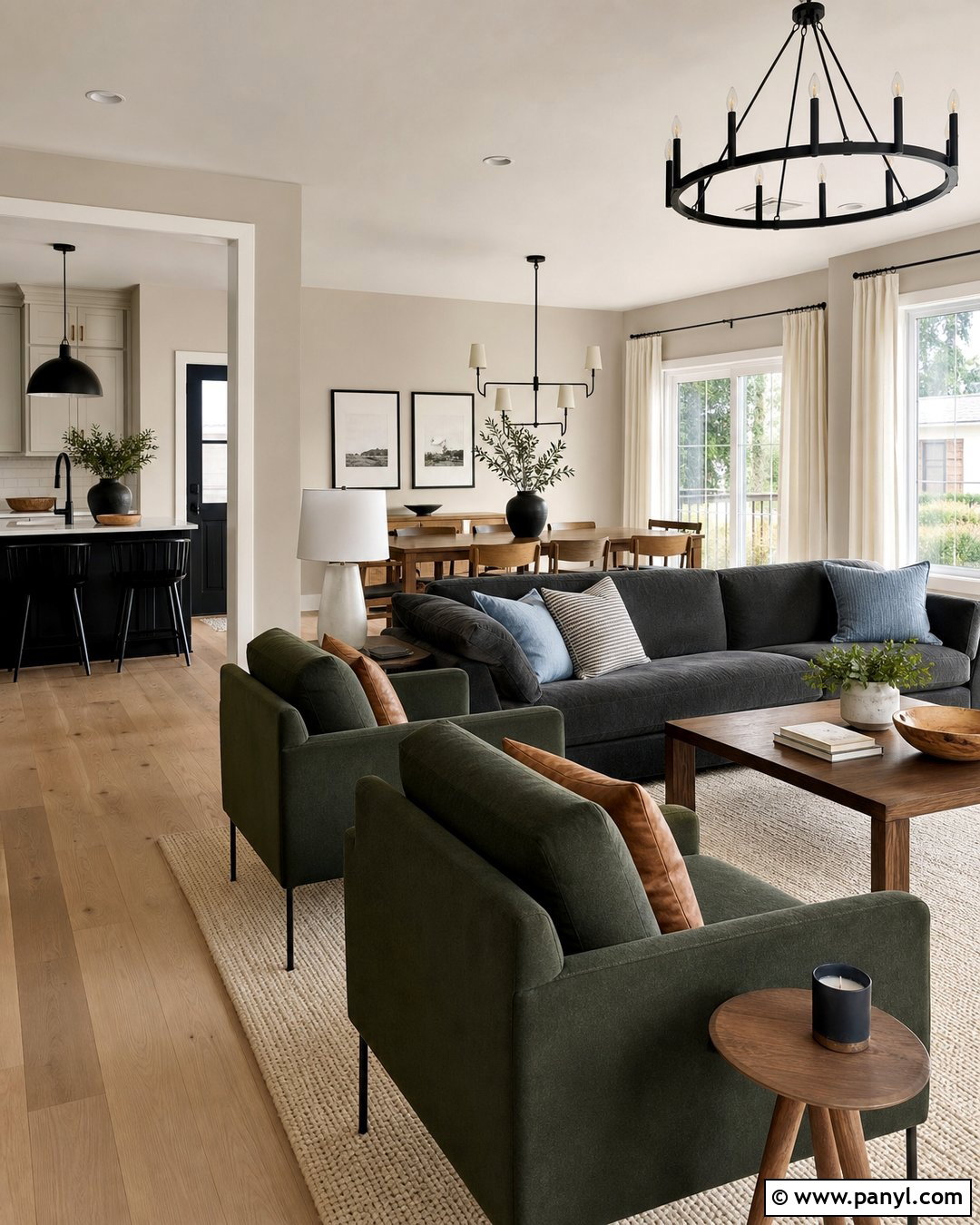
Light oak flooring creates an airy, low-contrast foundation for Accessible Beige walls and Alabaster trim. To keep the space from becoming too pale, introduce depth through a charcoal sofa, dark olive chairs, or a medium walnut dining table. Select one main dark element rather than several competing pieces. A textured cream rug should differ slightly from the flooring so each surface remains visible. Continue Alabaster across the doors, baseboards, windows, built-ins, and ceiling. Use black lighting, cabinet hardware, and curtain rods as thin outlines throughout the room. Soft blue, camel, and muted green accessories add color without interrupting the natural palette. The finished interior feels open and contemporary, with enough contrast to define the architecture, furniture arrangement, and warm beige wall color.
23. Accessible Beige Farmhouse Room With Alabaster Trim
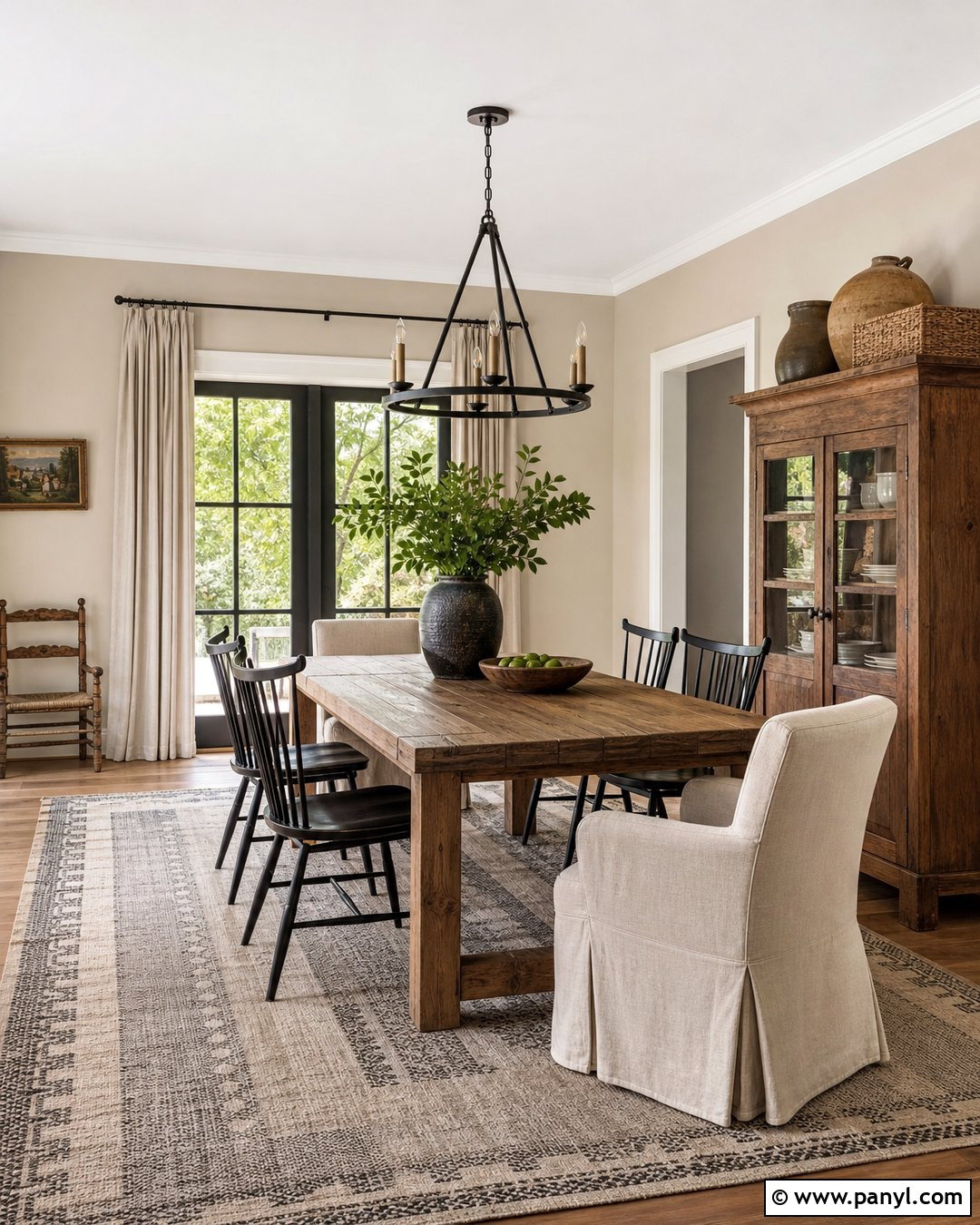
For an updated farmhouse room, focus on useful furniture, simple forms, and authentic-looking natural materials. Paint the walls Accessible Beige and apply Alabaster to the trim, paneled doors, ceiling, and restrained wall molding. Choose a solid oak dining table or coffee table with a straightforward shape rather than an aggressively distressed finish. Add cream slipcovered seating, black spindle chairs, and a flat-weave rug in beige and charcoal. A black metal chandelier provides contrast while keeping the room visually open. Use linen curtains, woven baskets, stoneware, and one vintage wood cabinet for character. Avoid crowded signs and themed accessories. The completed design preserves farmhouse warmth but feels cleaner and more current, allowing the paint pairing, practical layout, and natural textures to carry the overall look.
24. Accessible Beige Modern Traditional Room With Alabaster Trim
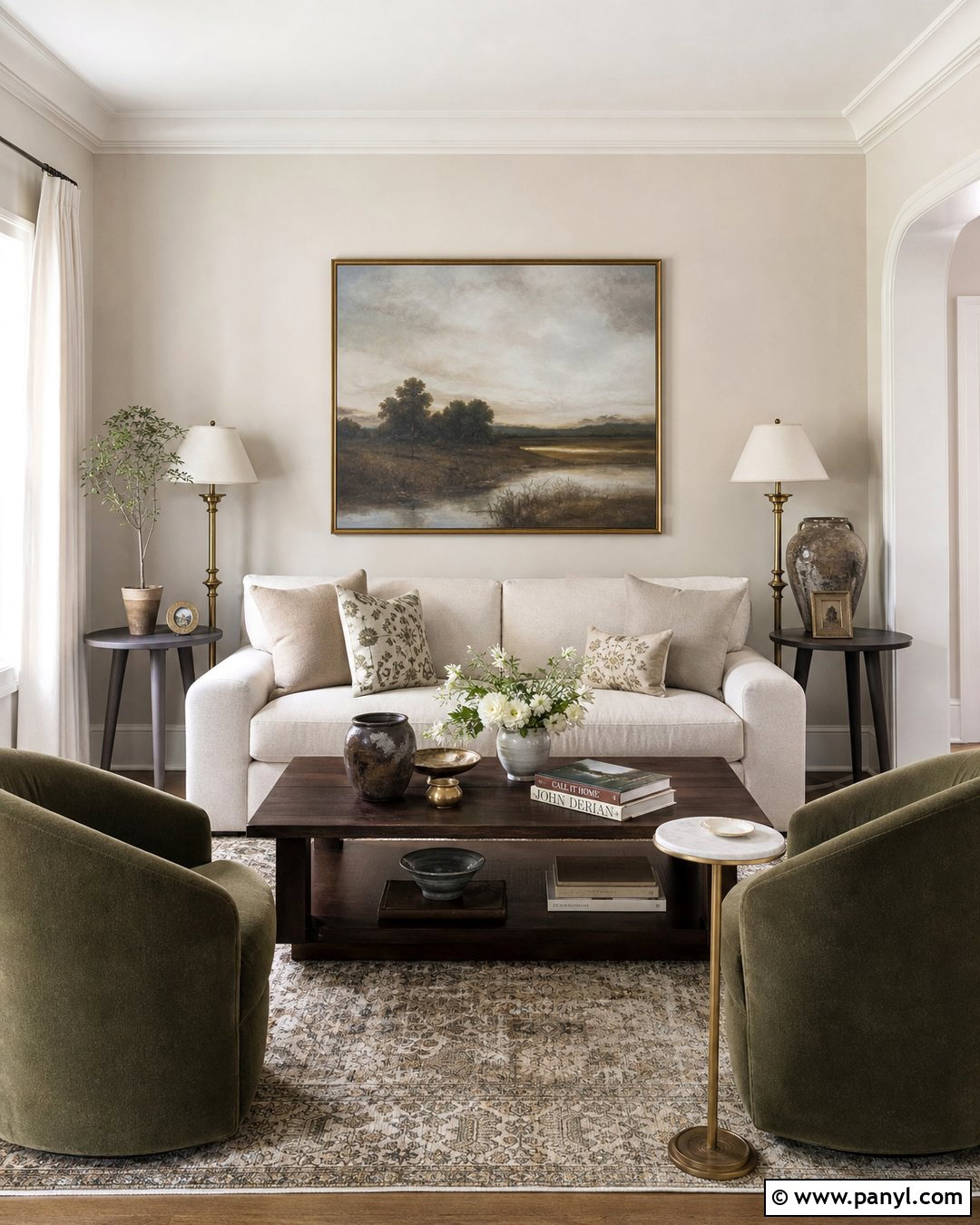
Modern traditional design gives this neutral paint pairing a polished but comfortable direction. Use Accessible Beige walls with substantial Alabaster crown molding, baseboards, window casings, and paneled doors. Arrange a tailored cream sofa opposite two curved olive or dusty blue chairs. Choose a dark wood coffee table with a simple silhouette and place everything on a faded Persian-style rug. Hang one large landscape painting in a slim aged brass frame, then add matching brass lamps on dark wood side tables. Long ivory curtains should lightly frame the windows without covering the Alabaster trim. Mix classic shapes with restrained accessories, including books, ceramics, and a small floral arrangement. The completed room feels established and graceful, yet the clean arrangement prevents it from appearing overly formal or dated.
25. Accessible Beige Small Room With Alabaster Trim
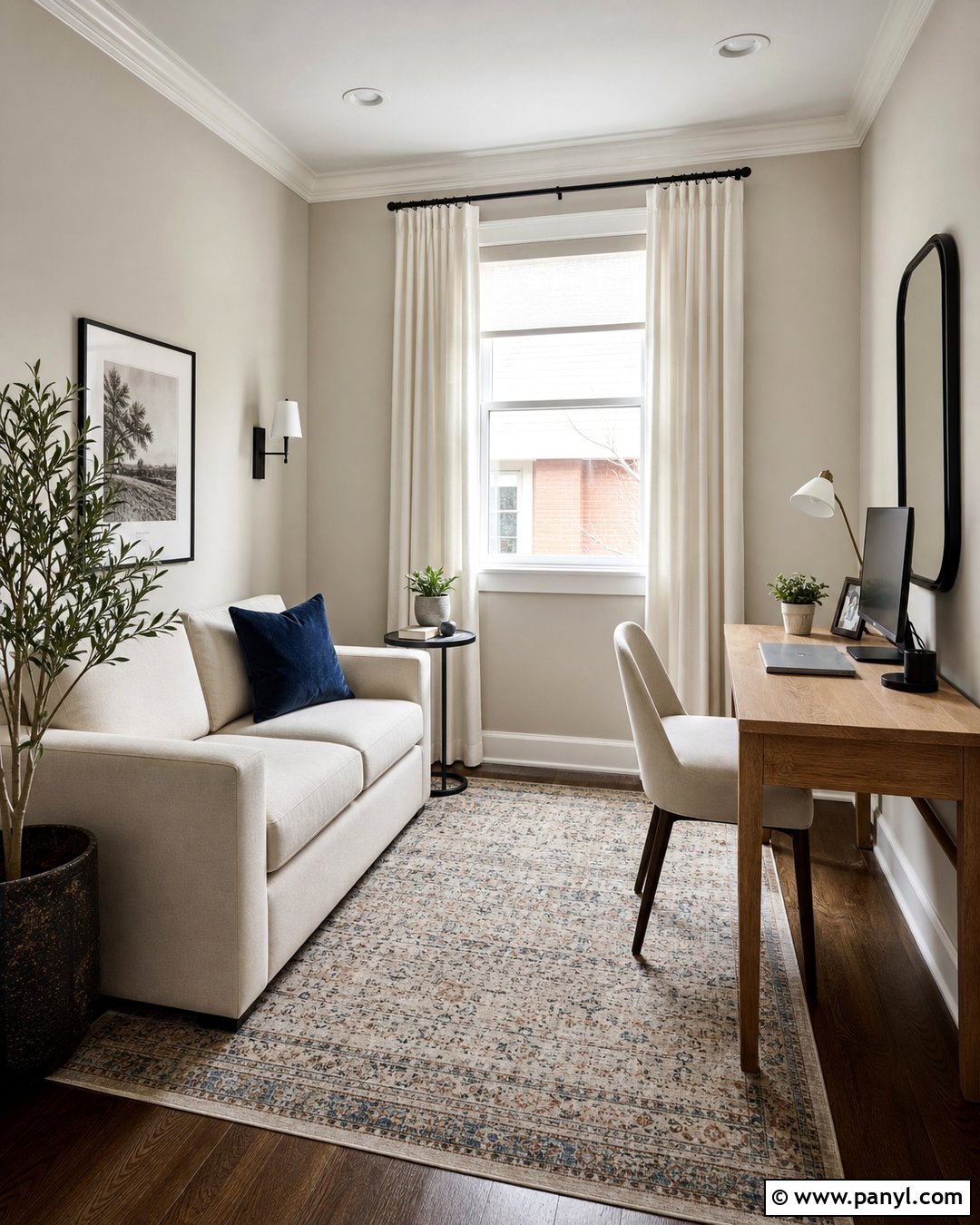
A small room can look comfortable and spacious when every finish supports the same warm palette. Paint all walls Accessible Beige and use Alabaster on the baseboards, window casing, door, crown molding, and ceiling. Select furniture with visible legs to maintain open sightlines, such as a compact cream loveseat, slim oak desk, or raised nightstand. Hang curtains near the ceiling and extend the rod beyond the window to expose more glass. Use one appropriately sized rug instead of several small mats. A wall-mounted sconce or pendant saves valuable surface space. Add contrast through a black-framed mirror, muted navy pillow, and small olive plant. Limit accessories to useful or meaningful pieces. This thoughtful layout makes the paint combination feel intentional while keeping the compact room bright, organized, and visually calm.
Conclusion:
Accessible Beige walls and Alabaster trim offer a flexible starting point for rooms that need warmth, brightness, and gentle architectural contrast. The combination works best when flooring, furniture, textiles, and fixtures build a complete palette around it. Natural oak creates an organic feeling, while walnut, navy, charcoal, or black can add stronger definition. Sage and terracotta provide softer earthy color. Use Alabaster consistently across related trim surfaces and test both paints beside flooring and fixed finishes under changing light. Whether you are updating one bedroom or connecting an open floor plan, these 25 Accessible Beige Walls Alabaster Trim Ideas provide practical ways to create a comfortable, coordinated home that still feels personal.

Related Ideas and Inspiration:
Leave a Reply