
Sage green brings a calm, natural character to interiors, while wood trim adds warmth, craftsmanship, and architectural definition. Together, these finishes can make an older home feel intentional or give a newer room more personality. The key is selecting a sage tone that complements the wood’s undertone. Warm, muted greens flatter honey oak and cherry, while cooler gray-green shades balance walnut and dark-stained millwork. Furniture, flooring, lighting, and textiles should also connect the two finishes rather than compete with them. From relaxed living rooms to practical kitchens and cozy bedrooms, the following complete room designs show how to coordinate color, materials, and decor. Explore these 20 Sage Green Walls With Wood Trim Ideas to create a balanced look that feels inviting and easy to personalize.

1. Sage Green Living Room With Oak Trim
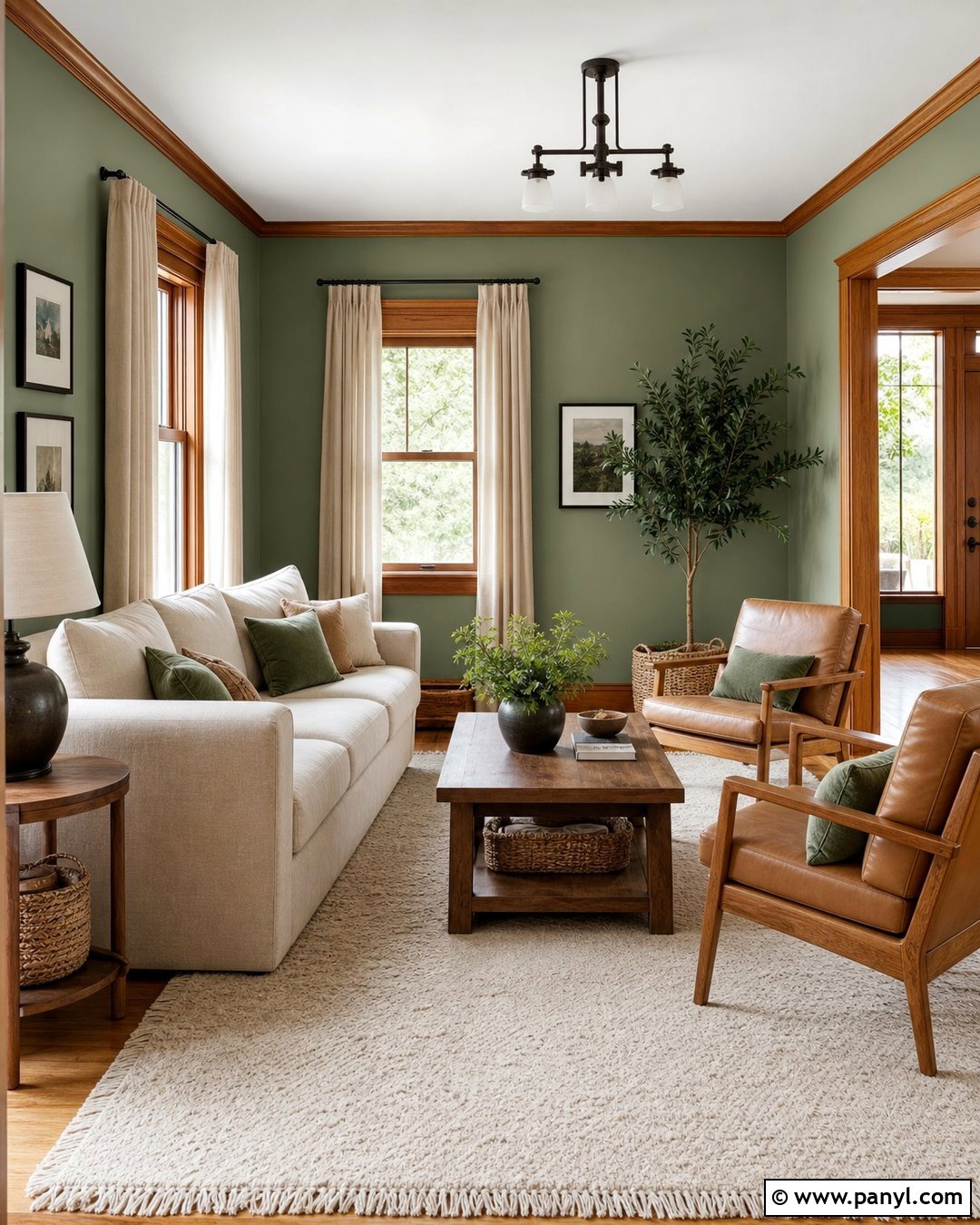
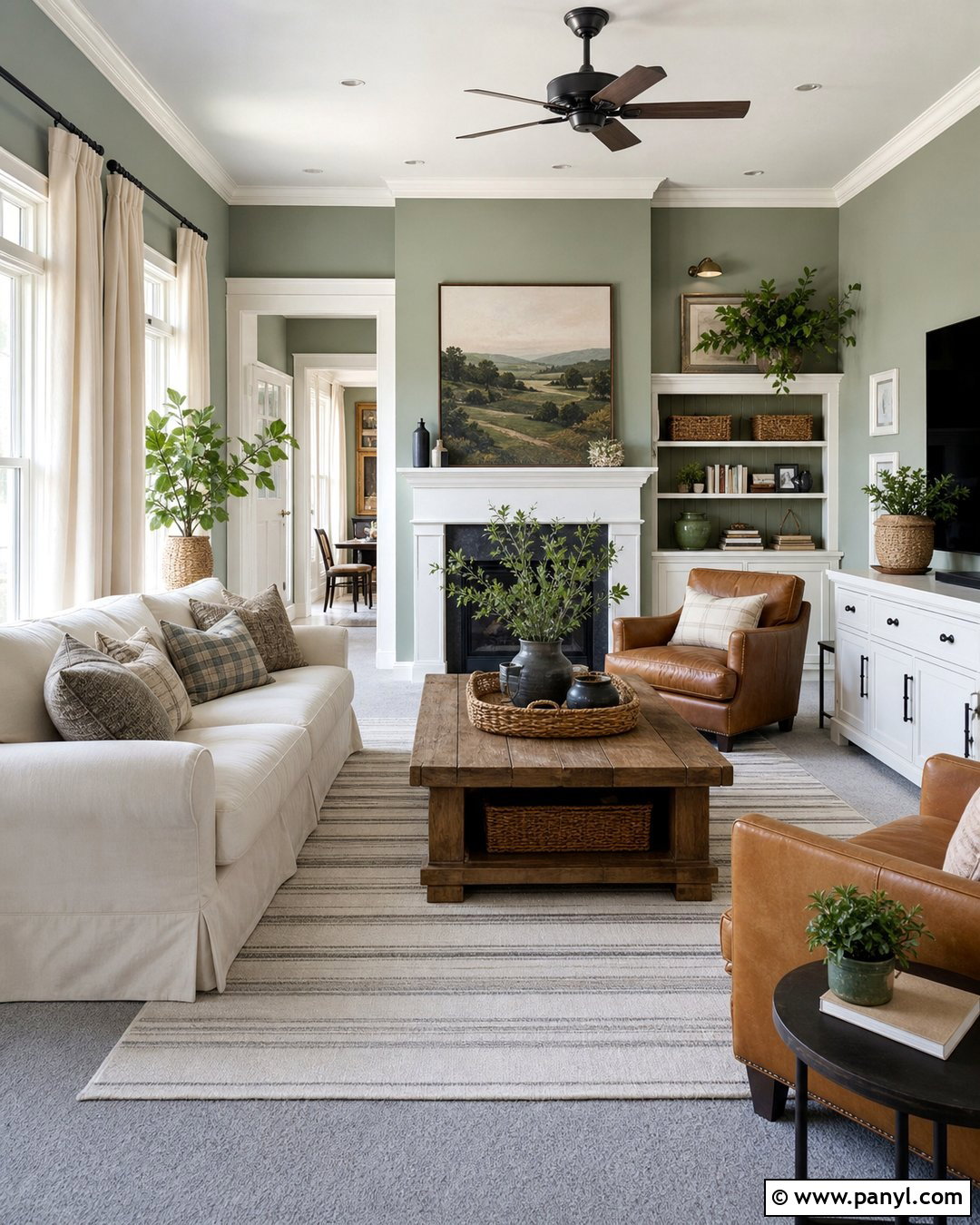
A warm sage green living room can make traditional honey oak trim feel fresh rather than outdated. Choose a muted green with subtle yellow undertones so it relates naturally to the golden color of the wood. Arrange a cream linen sofa and two camel leather chairs around a simple oak coffee table. A large ivory wool rug keeps the wood floor from making the space feel overly brown. Add oatmeal curtains, woven baskets, and ceramic table lamps for soft texture. Black picture frames provide a small amount of modern contrast without overpowering the trim. Finish the room with leafy plants and neutral pillows. This complete palette feels casual, welcoming, and especially suitable for Craftsman homes or comfortable family living spaces.
2. Light Sage Green Bedroom With Pine Trim
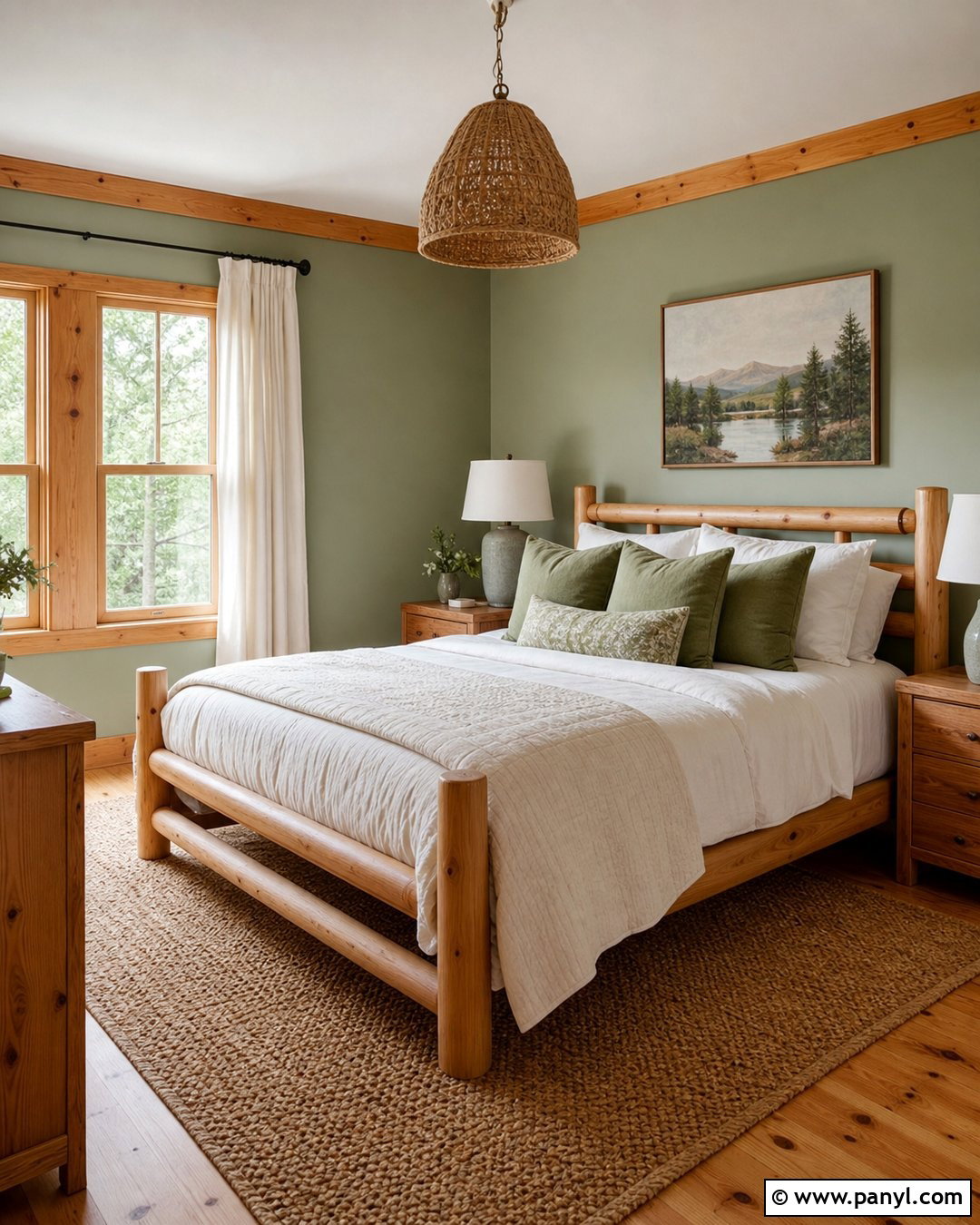
Soft sage walls and knotty pine trim create a peaceful bedroom that feels connected to nature. Select a light green with warm gray undertones to calm the visual movement of the pine grain. Center a simple pine bed against the main wall, then dress it with white linen sheets, a cream quilt, and muted green pillows. Matching wood nightstands help the existing trim look purposeful. Ground the room with a natural jute rug and add ivory curtains that allow plenty of daylight inside. A woven pendant light, ceramic lamps, and one understated landscape print complete the design. Keep extra furniture minimal so the woodwork remains visible. The result is an airy, comfortable retreat with rustic warmth but none of the heaviness of a traditional cabin.
3. Dark Sage Green Dining Room With Walnut Trim
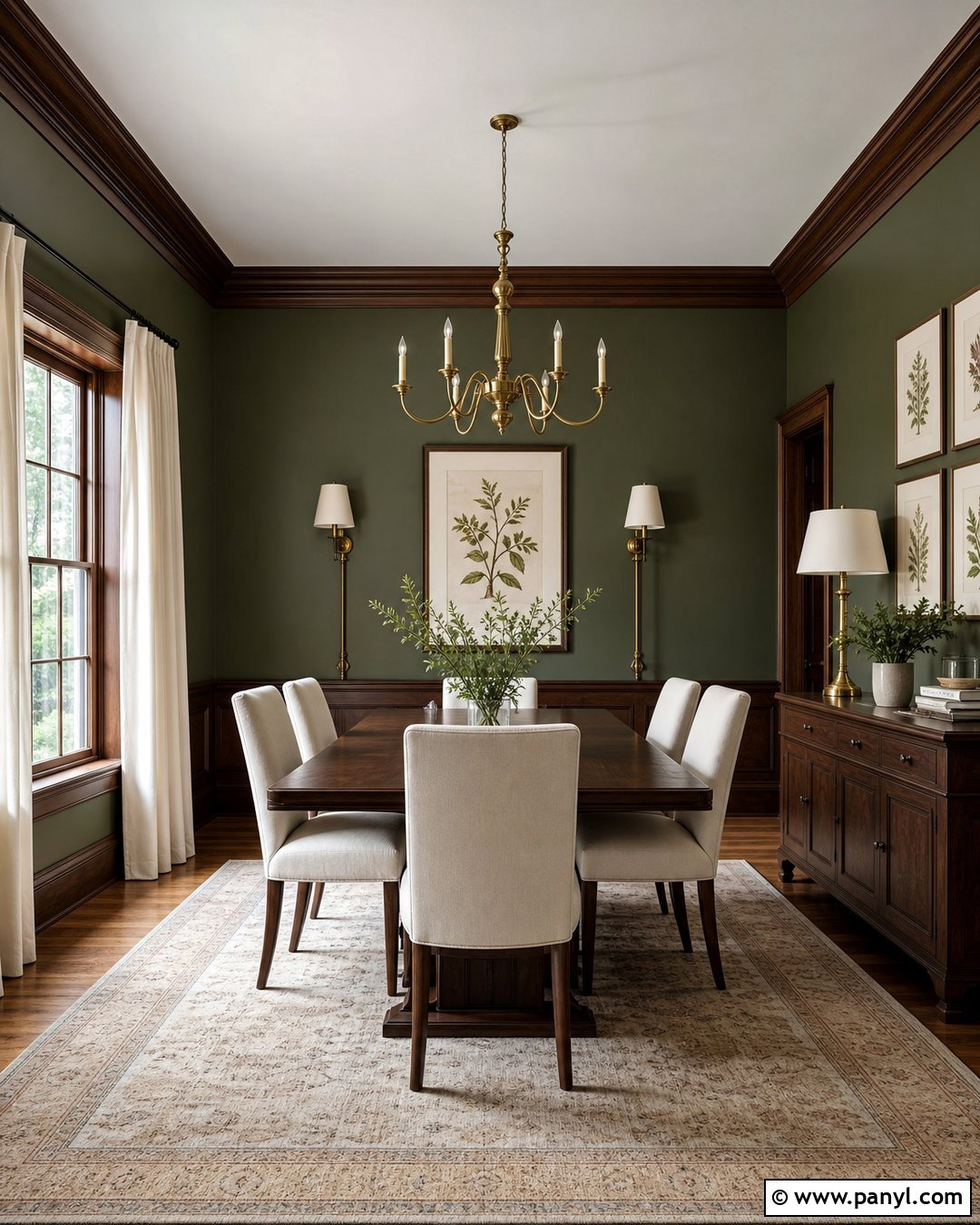
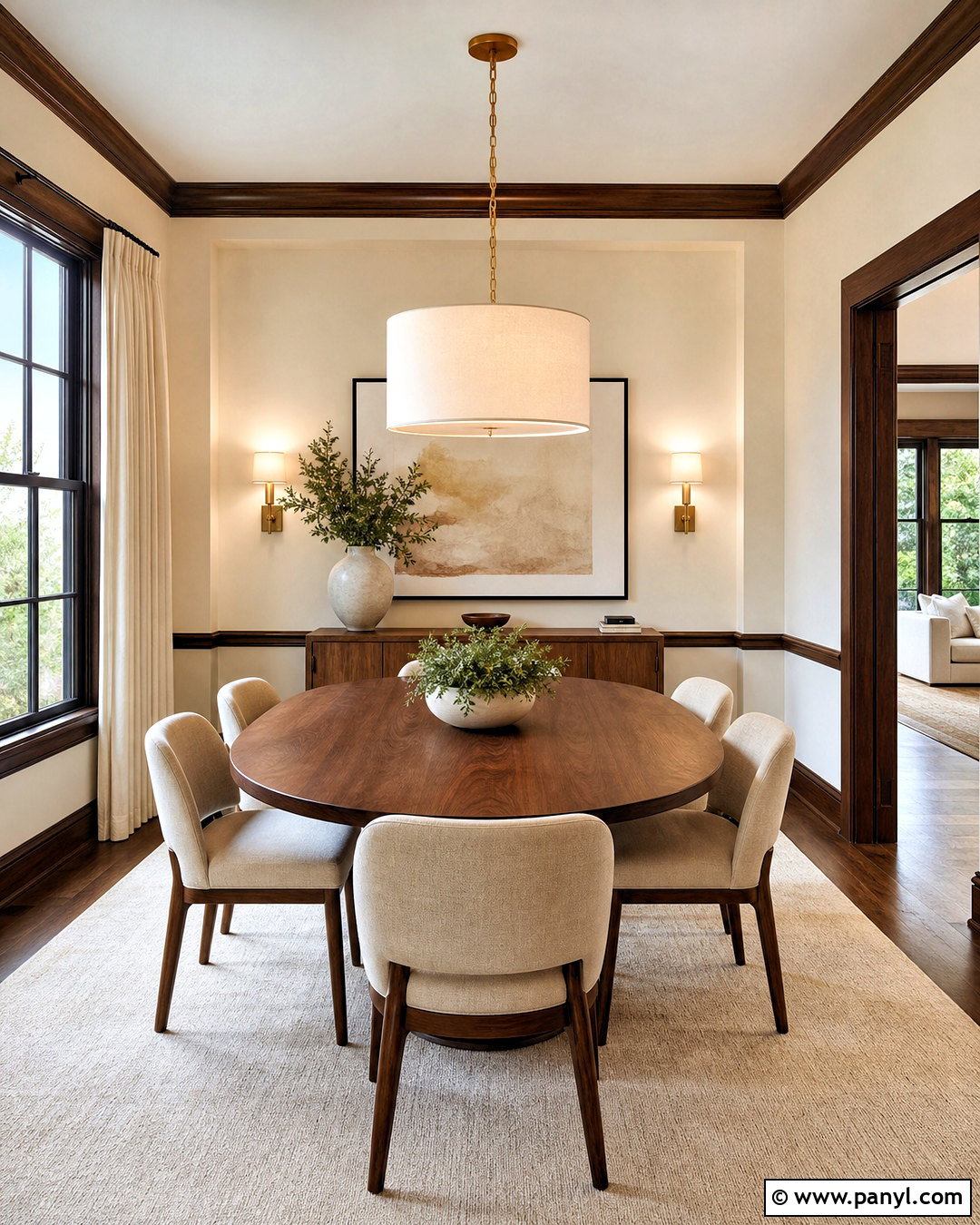
Deep sage green gives a formal dining room a rich backdrop, especially when paired with dark walnut trim. This combination works best in a room with generous windows or layered lighting. Place a walnut dining table at the center and surround it with upholstered chairs in warm ivory or oatmeal. A pale vintage-style rug will define the dining area and prevent the darker finishes from feeling too heavy. Choose an aged brass chandelier to introduce warmth and a gentle reflective surface. Cream drapery, simple botanical artwork, and a walnut sideboard complete the room without creating clutter. For evening use, add two brass wall sconces or shaded buffet lamps. The finished scheme feels intimate and sophisticated while remaining relaxed enough for everyday family meals.
4. Sage Green Kitchen With Natural Wood Trim
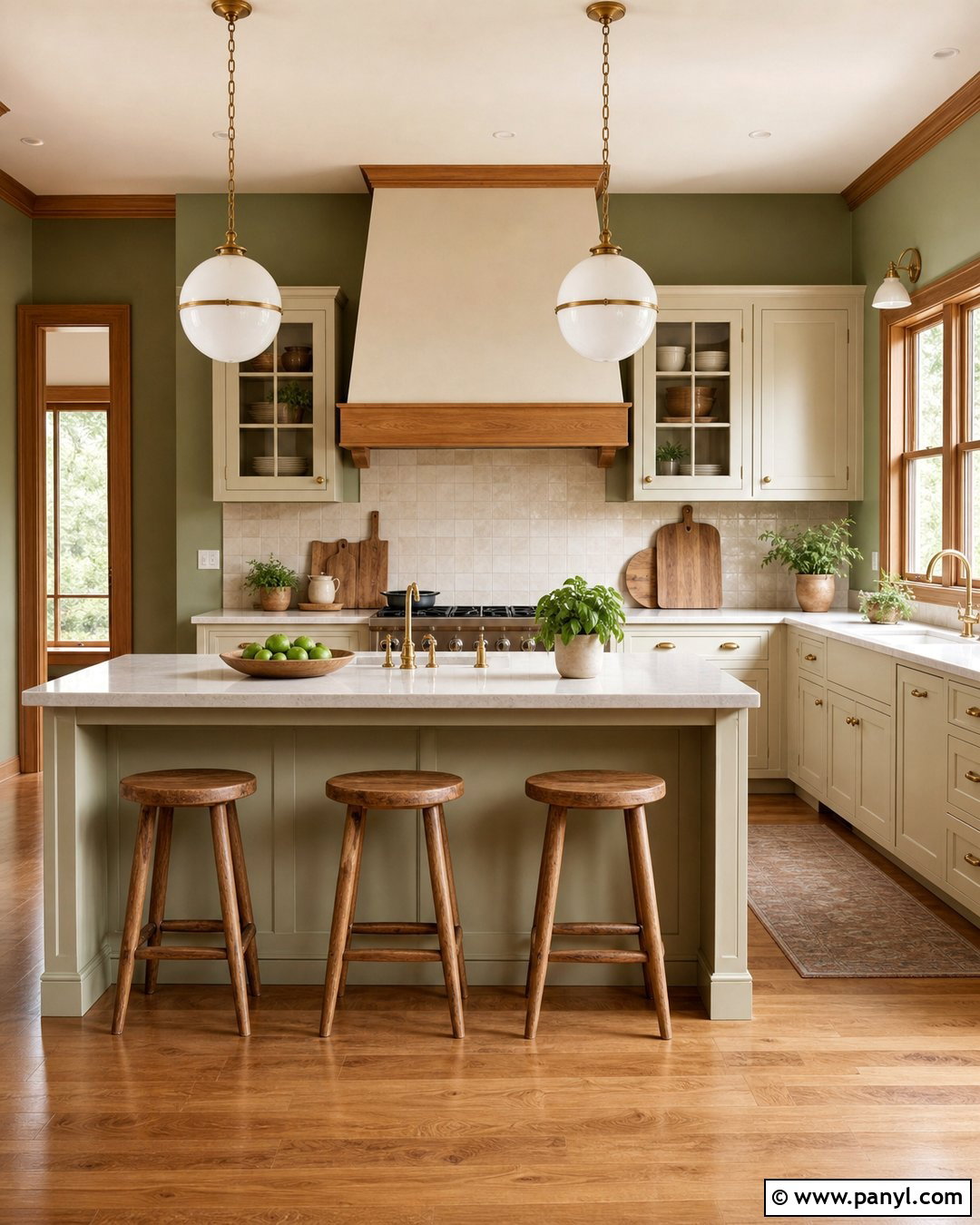
Sage green walls can soften a hardworking kitchen filled with natural wood casing, baseboards, and cabinetry. Use a balanced midtone sage that does not lean too blue beside warm timber. Cream shaker cabinets or painted lower cupboards keep the wood trim visible without covering the room in one finish. Add pale quartz counters, an ivory backsplash, and brushed brass hardware for a bright transition between green walls and wood details. Oak stools and a small washable runner bring warmth into the center of the kitchen. Choose simple globe pendants with milk-glass shades for clear task lighting. A few white ceramics, wooden cutting boards, and potted herbs finish the space. This practical design feels collected, clean, and suitable for both traditional and updated homes.
5. Sage Green Bathroom With Cedar Trim
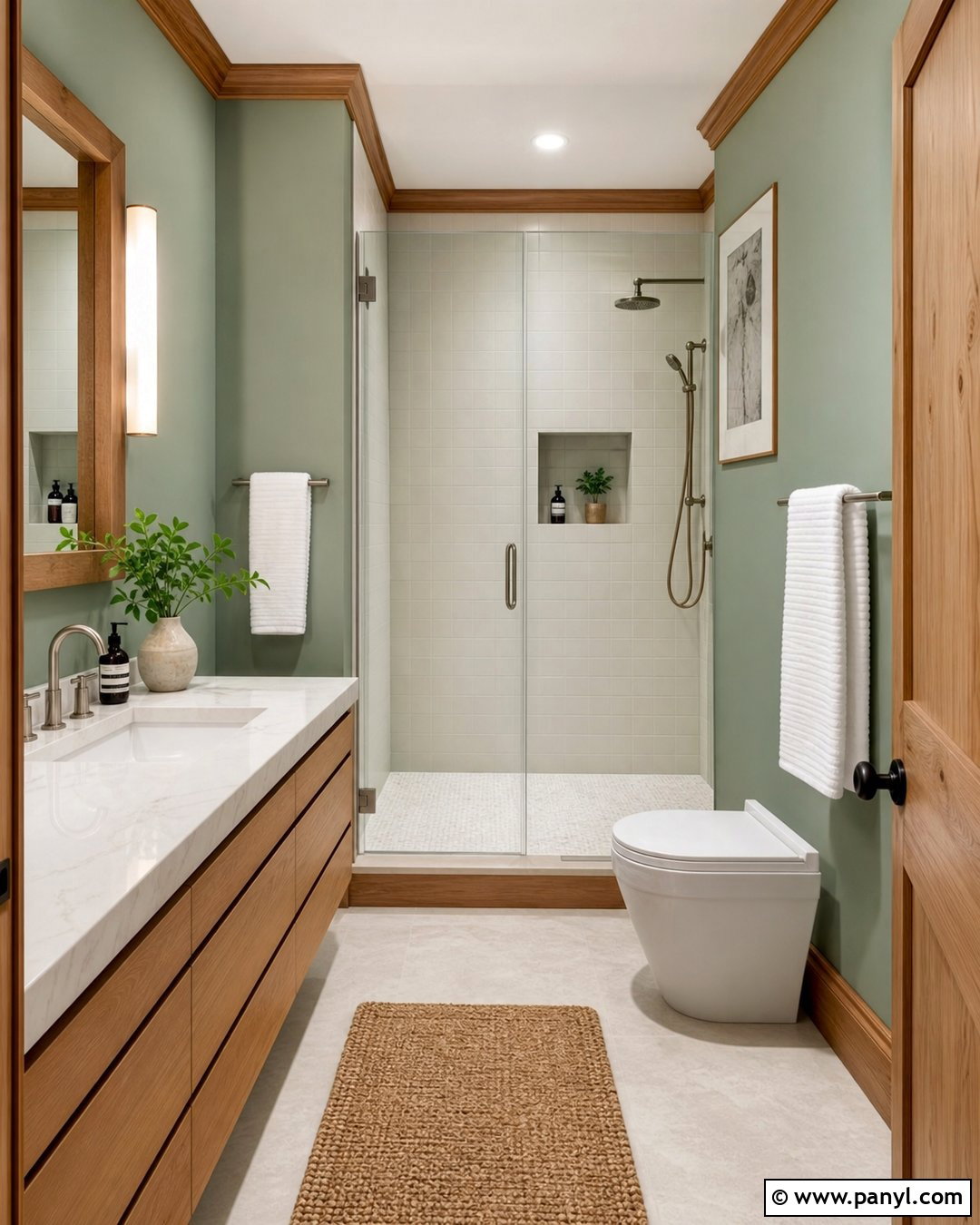
Imagine a compact bathroom where earthy color and moisture-friendly materials create a spa-like atmosphere. Paint the upper walls a soft mineral sage, then use ivory tile around the tub or shower to keep the room bright. Sealed cedar trim around the window, door, and mirror introduces warm texture while standing up visually against the cool tile. Choose a floating oak vanity with a white quartz top and brushed nickel fixtures. A frameless glass shower panel will maintain an open view across the space. Add ribbed white towels, a woven bath mat, and one humidity-loving plant. Good ventilation and properly sealed wood are essential in this setting. The complete bathroom feels natural and restorative without relying on dark colors or overly rustic accessories.
6. Sage Green Home Office With Cherry Wood Trim
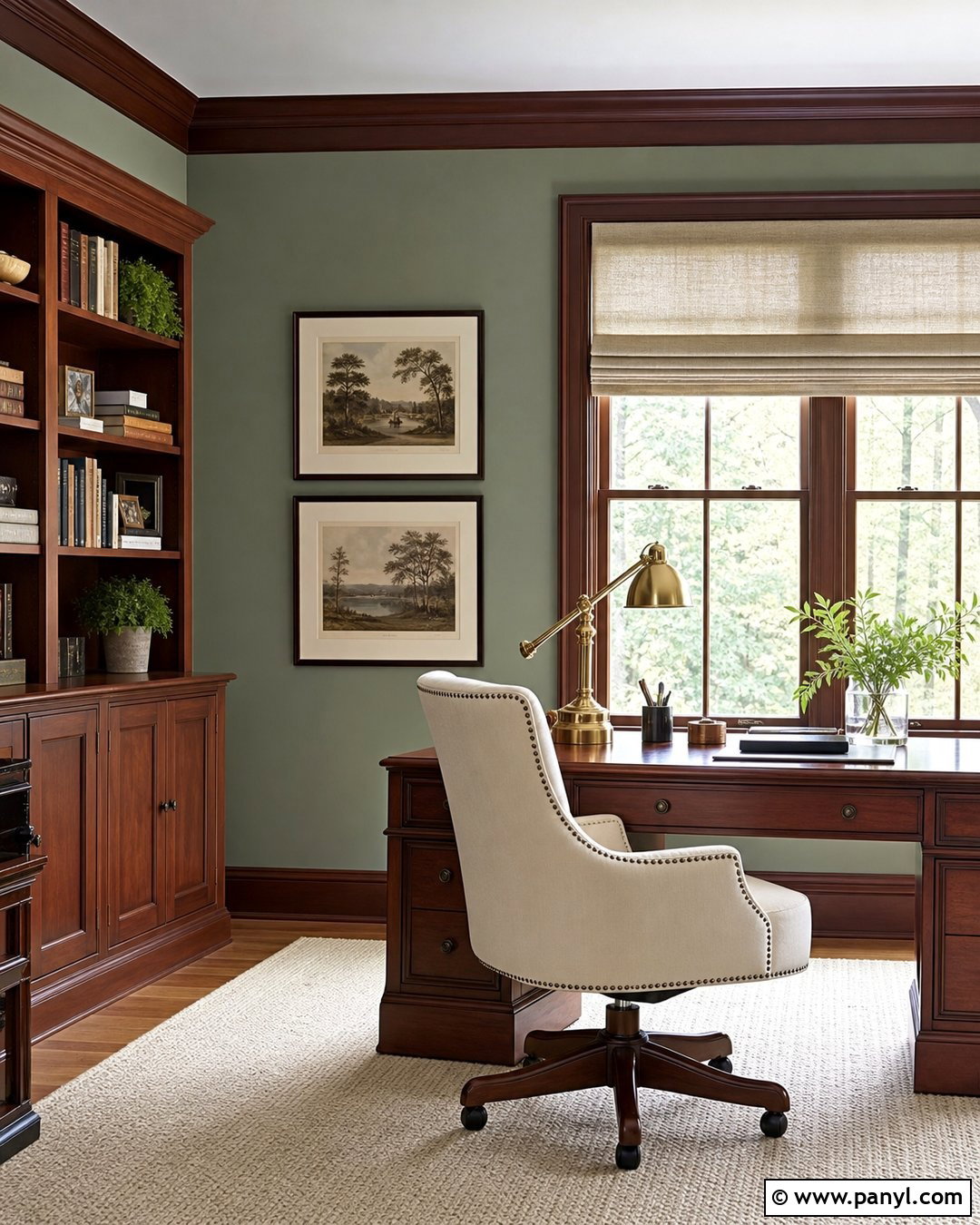
Cherry trim has noticeable red undertones, making muted sage green an effective visual counterbalance. Build the office around this natural contrast by painting every wall a soft, dusty sage. Position a cherry wood desk near the window and add a cream upholstered task chair for comfort. A low cherry bookcase can repeat the trim while providing practical storage. Use an ivory flat-weave rug to lighten the floor and reduce visual noise. A brass desk lamp and warm white ceiling fixture will make the green feel cozy instead of gray. Complete the room with linen Roman shades, framed nature prints, and a few black accessories. This polished workspace respects traditional millwork while creating a focused, current environment for remote work, studying, or household planning.
7. Sage Green Entryway With Craftsman Wood Trim
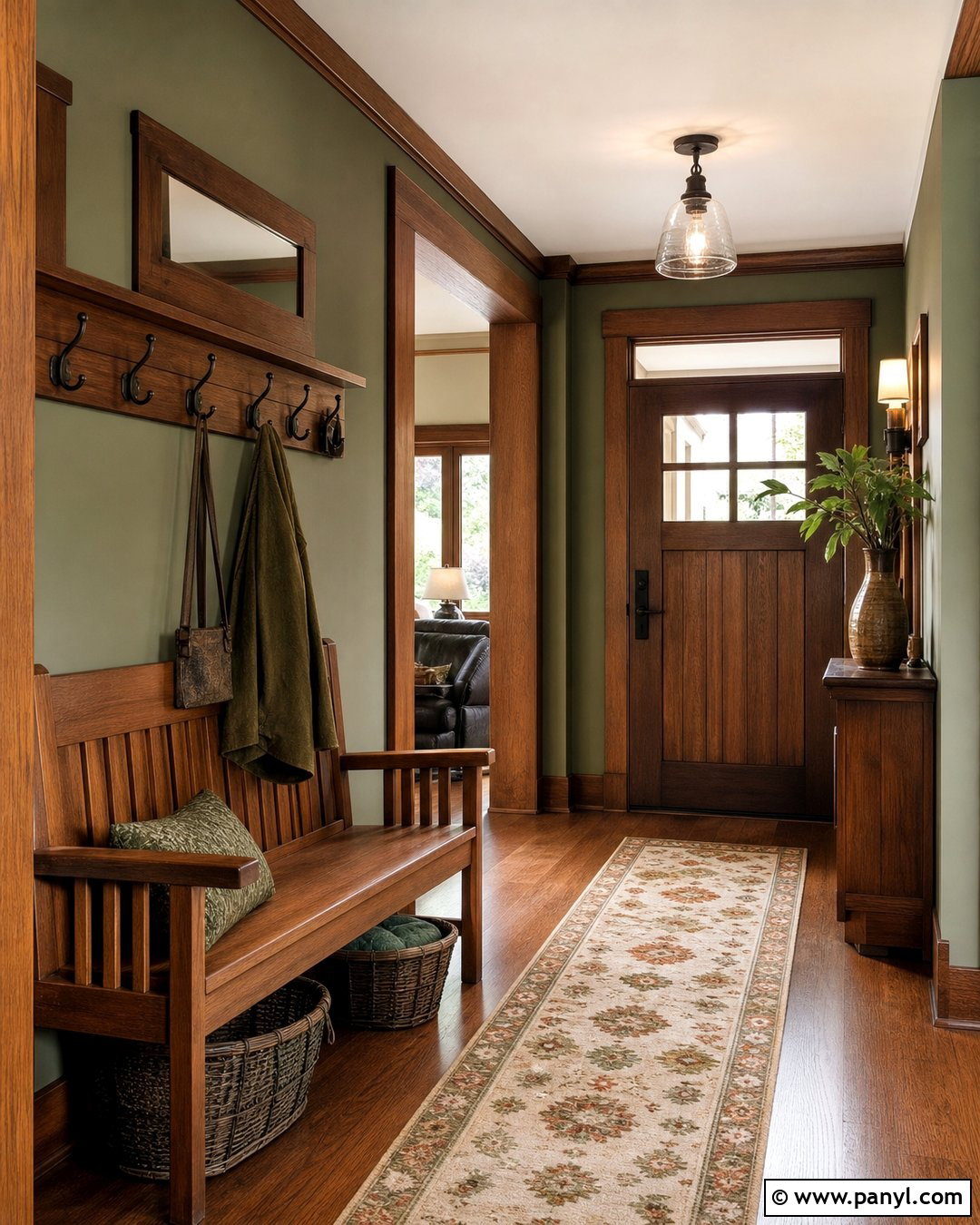
A Craftsman entryway already has strong architectural character, so the wall color should support its trim rather than dominate it. Choose an earthy sage green with warm undertones for the walls above substantial oak baseboards and door casings. Place a narrow mission-style wood bench along one side, leaving a clear walkway to adjoining rooms. A durable patterned runner in cream, olive, and rust will connect the wall color to the wood. Add black iron hooks, a simple wood-framed mirror, and a flush-mount ceiling light with clear glass. A lidded basket under the bench can hold shoes or seasonal accessories. The completed entrance feels practical and historically appropriate while still looking uncluttered, welcoming, and relevant to a modern household.
8. Sage Green Hallway With Dark Wood Trim
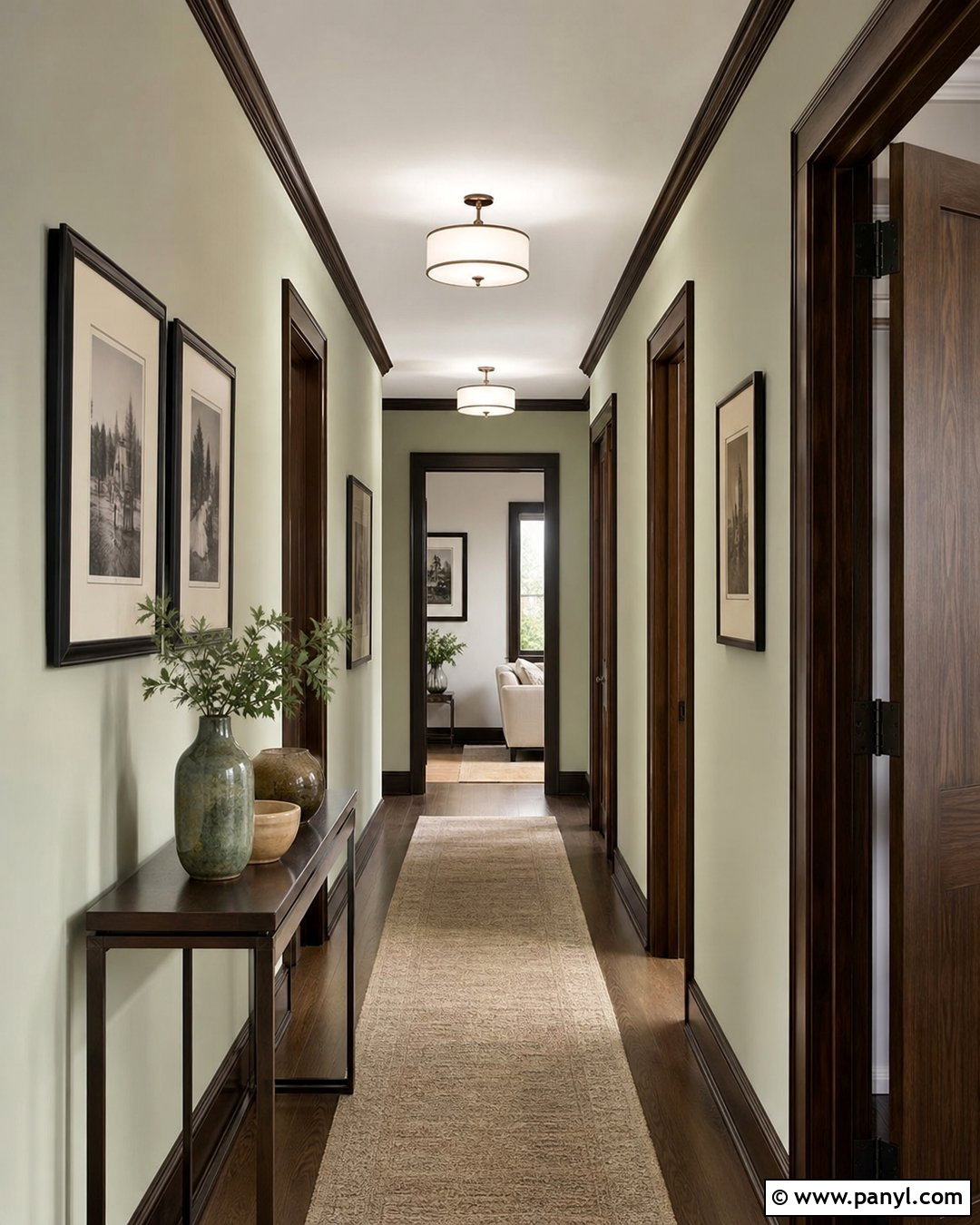
Long hallways can feel narrow, but pale sage green gives the walls gentle depth without closing in the passage. Keep dark-stained door frames, baseboards, and window trim as clear architectural outlines. Use a lighter sage with enough gray to balance the richness of espresso or mahogany wood. A slim neutral runner will soften the floor and guide the eye through the hallway. Hang a consistent row of cream-matted artwork in dark wood frames for an organized display. Choose a bright semi-flush ceiling fixture rather than several small decorative pieces that may create clutter. If space permits, place a narrow console at the hallway’s widest point. The combination produces a polished transition zone that connects traditional woodwork with lighter, quieter contemporary decorating.
9. Sage Green Nursery With Maple Trim
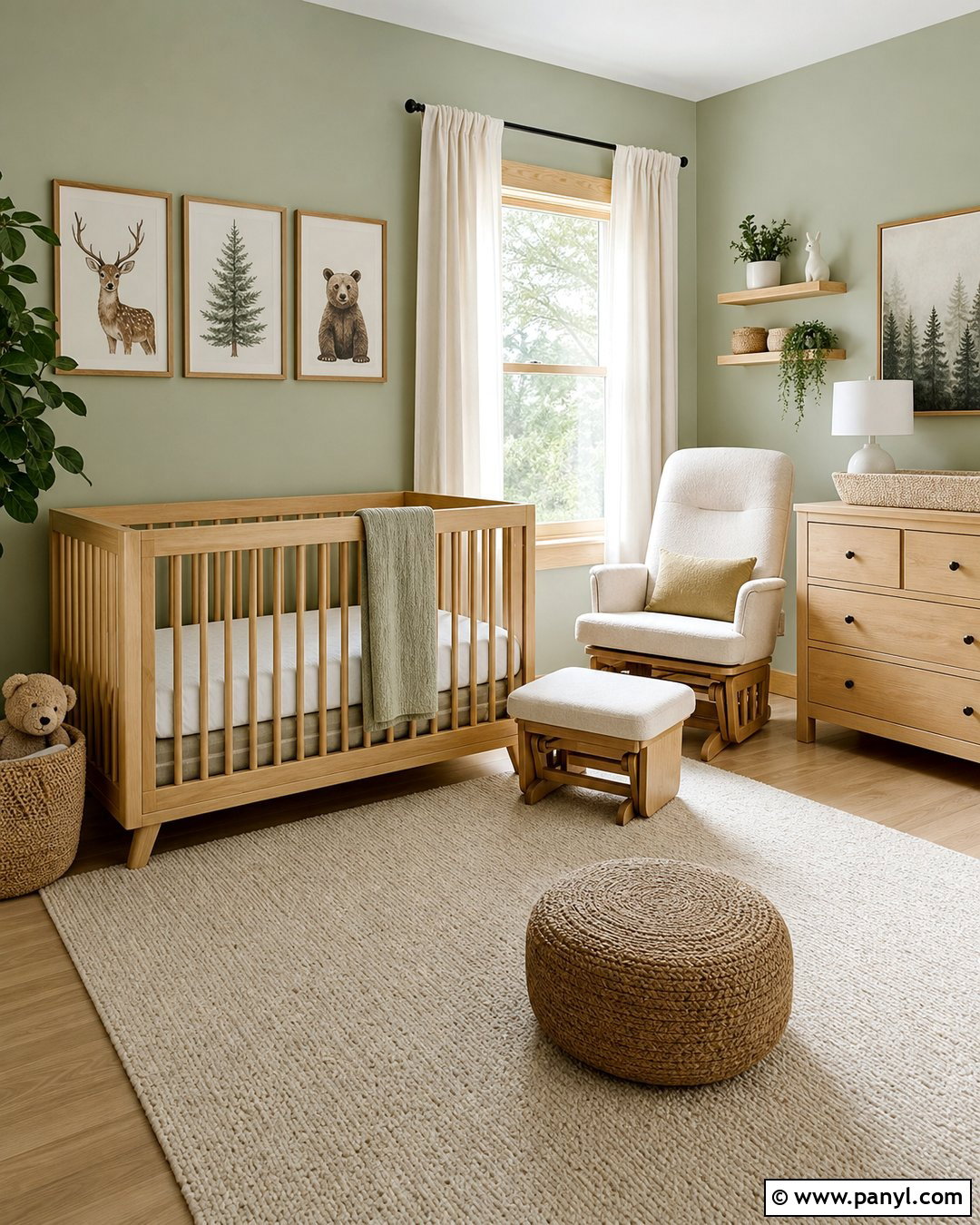
A light sage nursery feels soothing without depending on predictable pastel themes. Pair the walls with natural maple trim, which has a clean, lightly golden appearance. Place a simple maple crib against a solid wall away from windows, cords, and heating vents. Add a comfortable cream glider, a washable ivory rug, and a low maple dresser that can function as supervised changing storage. Blackout curtains in warm white will soften daylight while maintaining the calm palette. Decorate with removable woodland art, woven baskets, and small touches of muted tan or dusty blue. Keep shelves and heavy decor securely anchored and away from the crib. This complete nursery feels bright and welcoming, and its understated colors can transition easily as the child grows.
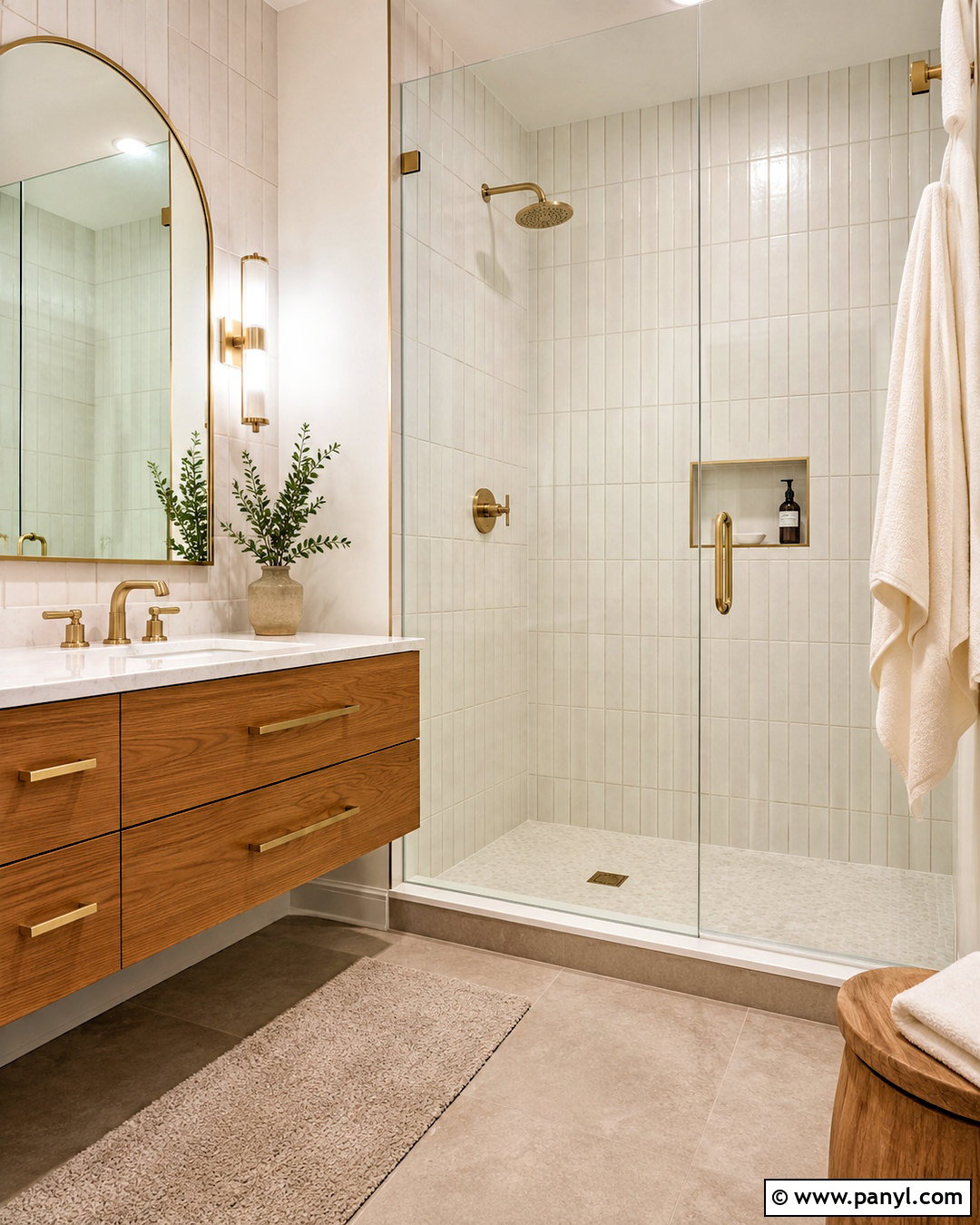
10. Sage Green Mudroom With Reclaimed Wood Trim
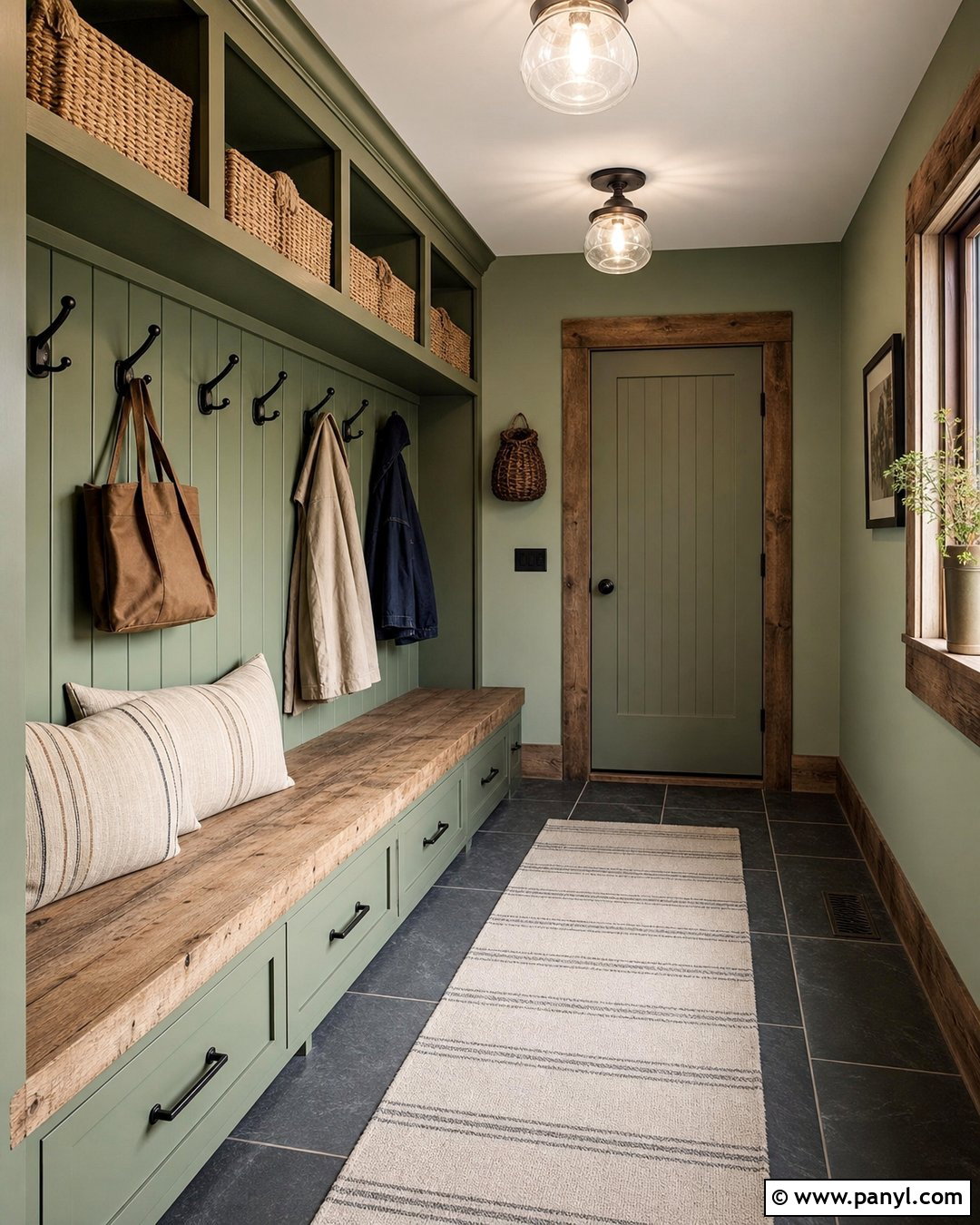
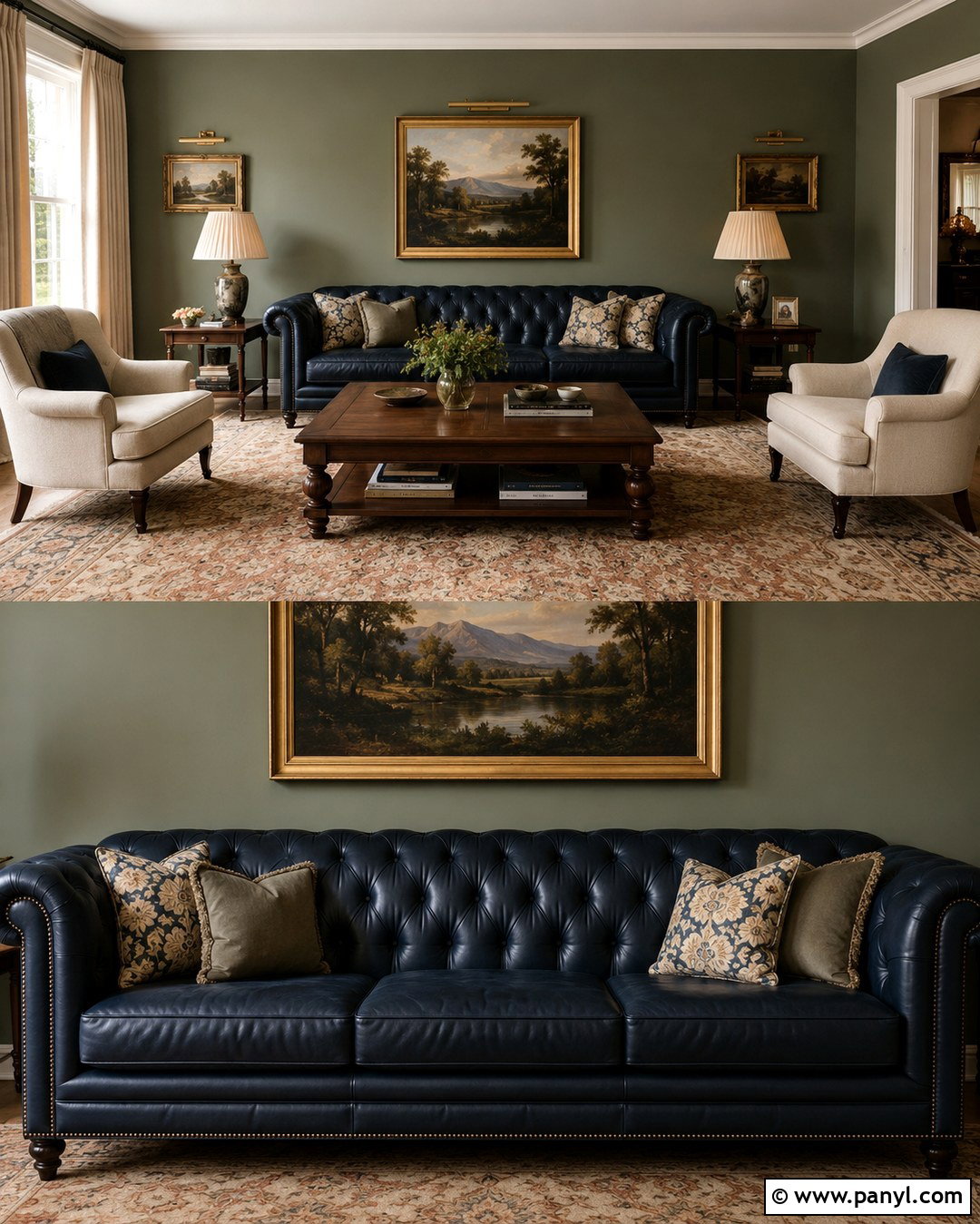
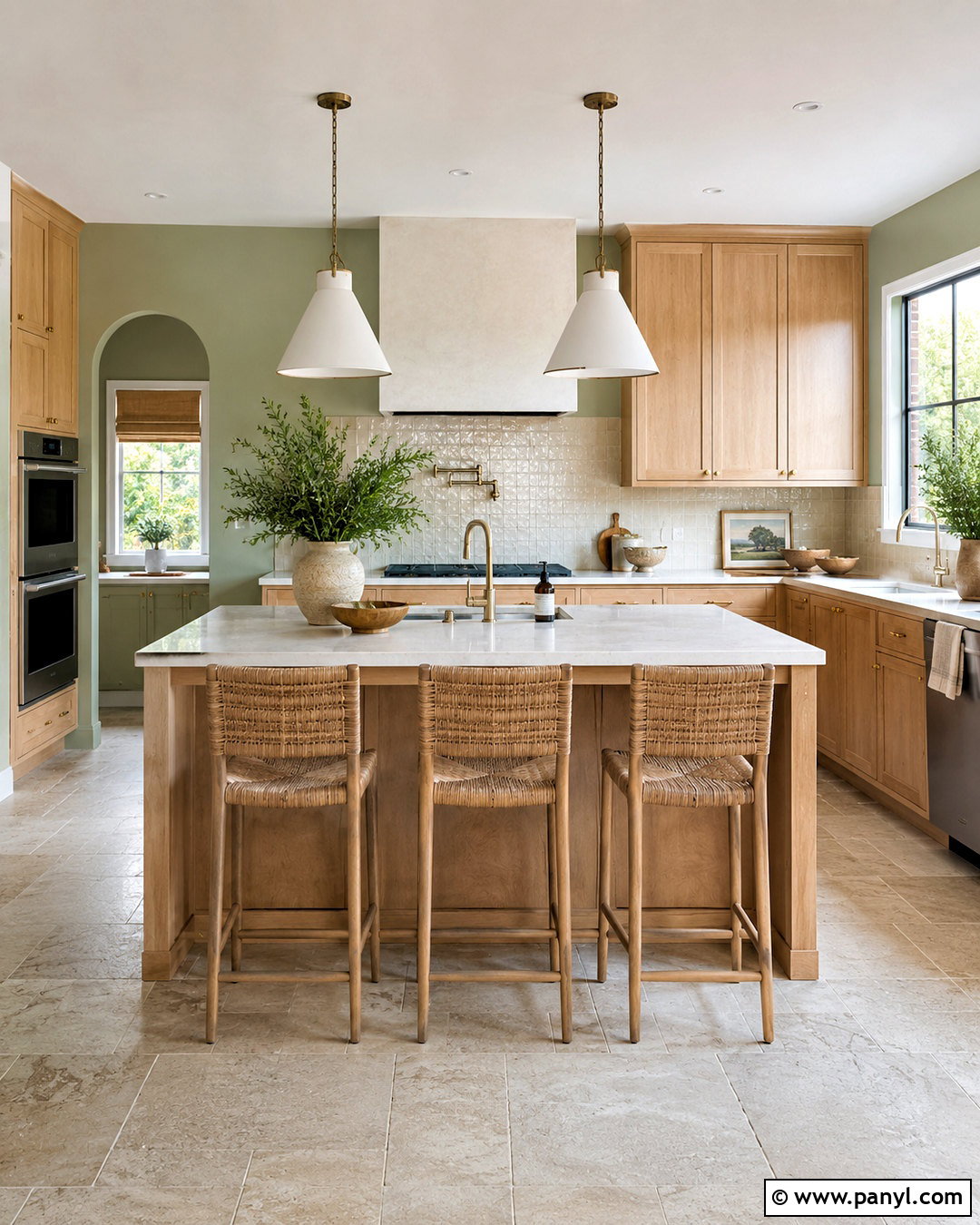
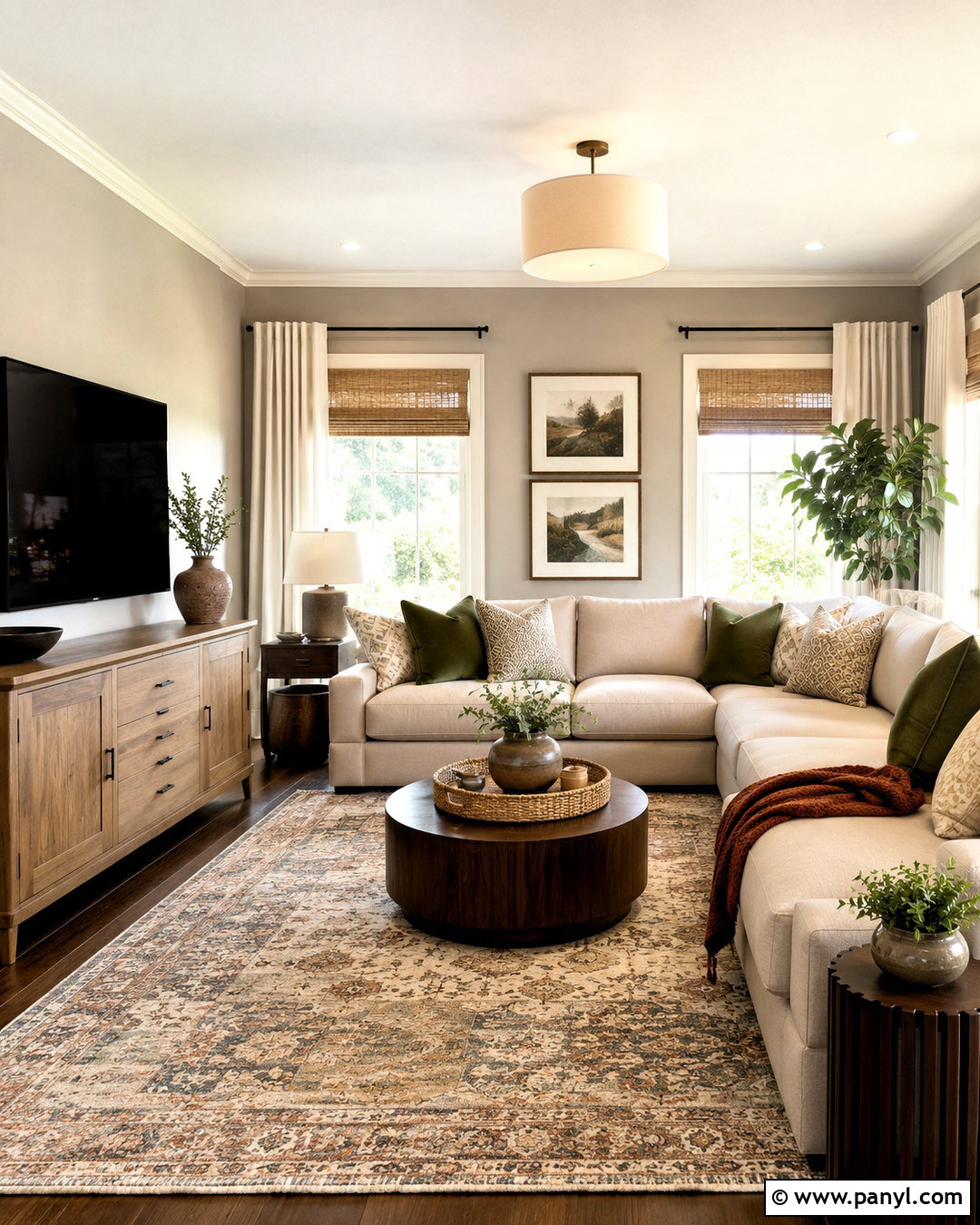
A mudroom should feel organized, durable, and connected to the rest of the home. Medium sage green walls provide a forgiving backdrop for reclaimed wood trim with varied knots and tones. Install a long wood bench beneath sturdy storage cubbies, then add black hooks for coats and bags. Closed lower drawers can hide shoes, sports gear, and pet supplies. Use charcoal slate-look tile or another easy-care floor that grounds the green and wood palette. A striped washable runner introduces cream and tan without becoming too precious. Bright ceiling lights and a window with a simple woven shade keep the hardworking space from feeling dim. The finished mudroom combines farmhouse character with practical storage, clear walking paths, and surfaces that can handle daily family traffic.
11. Sage Green Breakfast Nook With Wood Window Trim
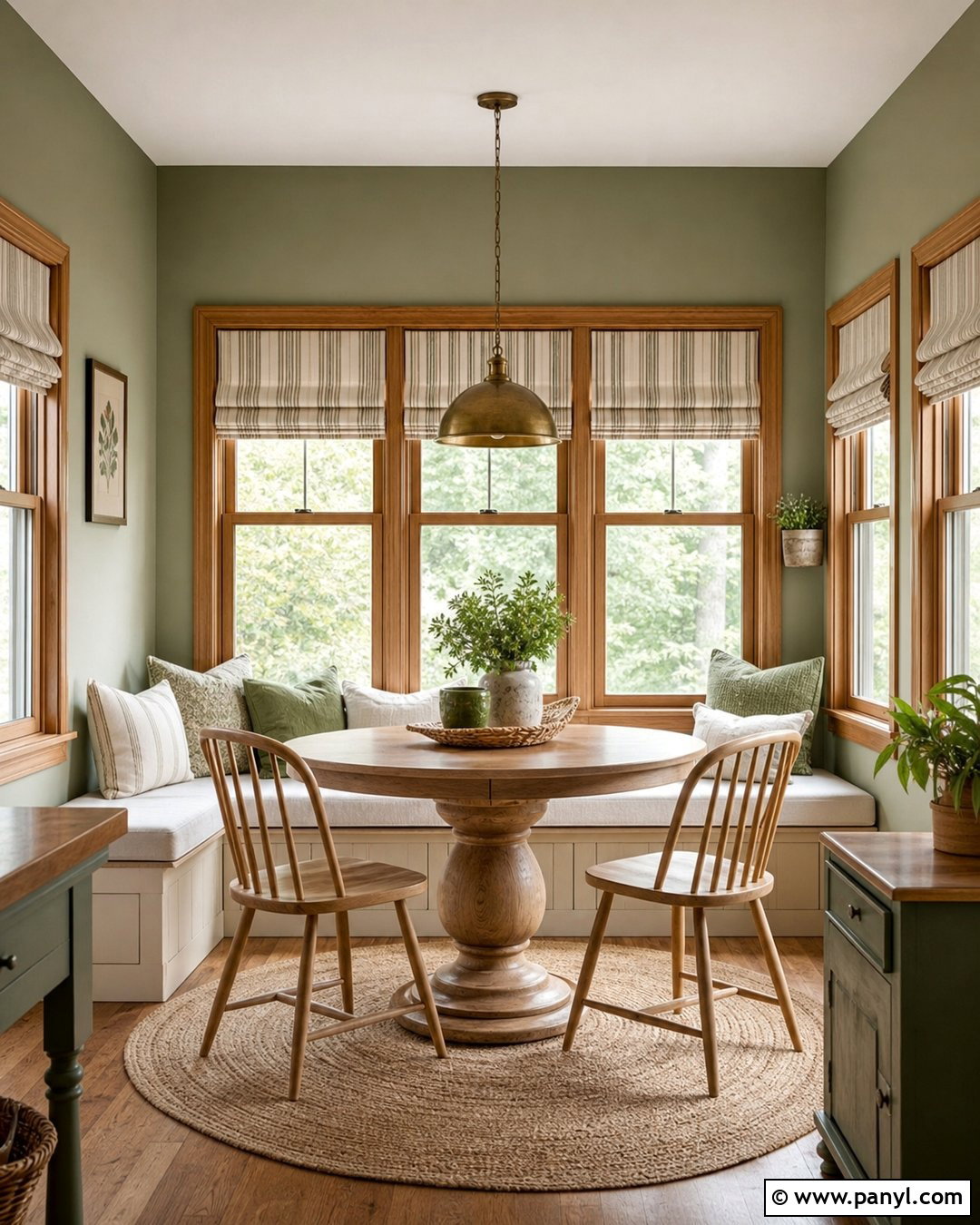
Morning light makes sage green especially appealing in a breakfast nook surrounded by natural wood window trim. Select a soft, warm sage that changes gently as sunlight moves across the room. Build the layout around a compact oak pedestal table and a fitted bench upholstered in durable cream fabric. Add two spindle-back chairs in matching wood to keep the nook cohesive. A small pendant with an aged brass finish can define the eating area without blocking the windows. Use a striped Roman shade, washable seat cushions, and a rounded jute rug for casual texture. Keep the windowsills mostly clear except for a few potted herbs. This cheerful nook feels comfortable for breakfast, homework, or coffee while allowing the woodwork and outdoor view to remain prominent.
12. Sage Green Reading Room With Mahogany Trim
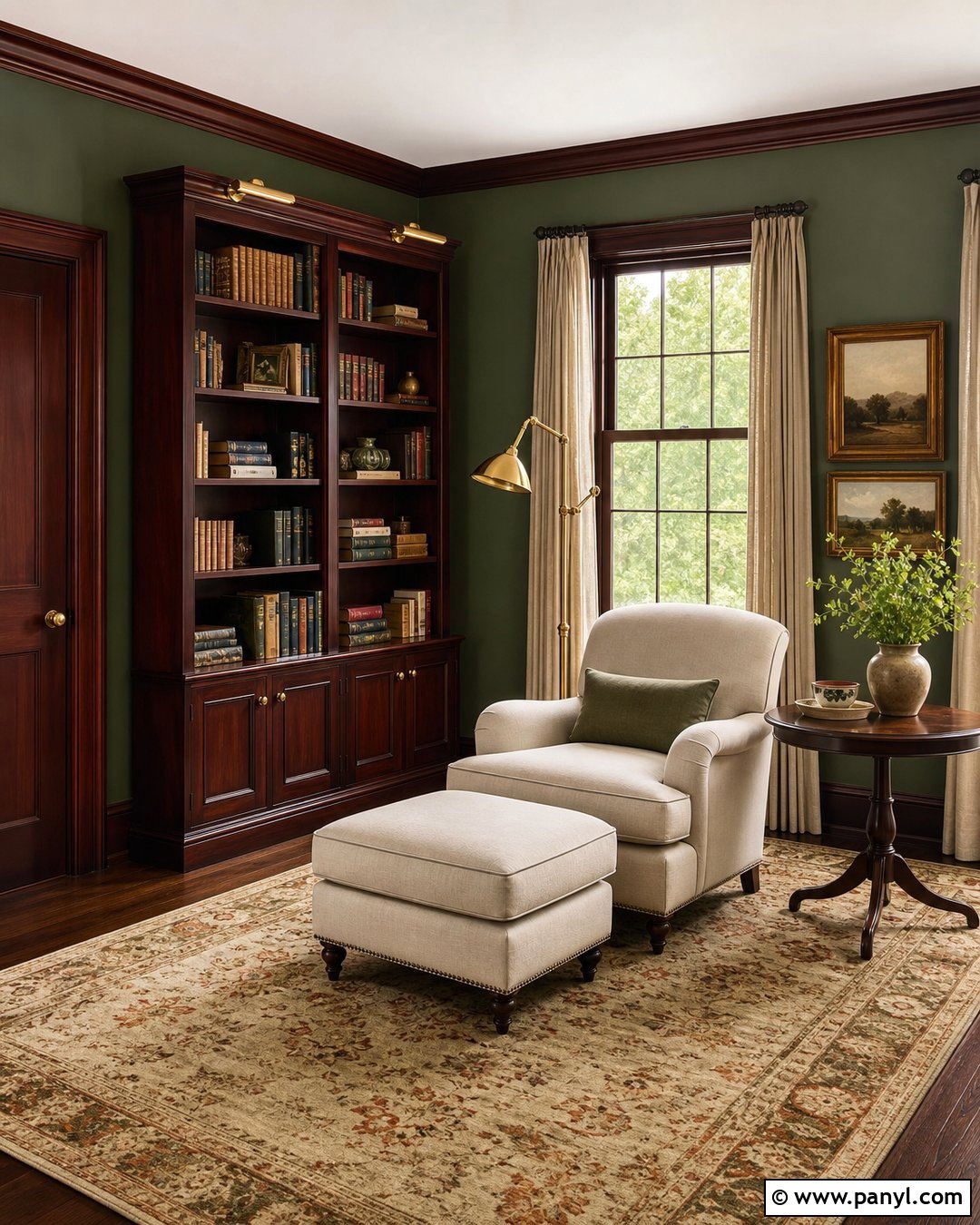
For a room designed around books and quiet evenings, combine deep sage green walls with polished mahogany trim. The green should be rich but slightly muted so it complements the wood’s red-brown color. Place a comfortable oatmeal armchair near a window with a matching ottoman and an antique brass floor lamp. Line one wall with mahogany bookcases or low cabinets that visually connect to the original millwork. A faded Persian-style rug in cream, rust, and olive will add pattern without distracting from the books. Hang linen curtains near the ceiling to give the room height. Finish with a small round table, framed artwork, and soft neutral cushions. The completed reading room feels warm, enveloping, and carefully layered rather than dark or overly formal.
13. Sage Green Guest Room With White Oak Trim
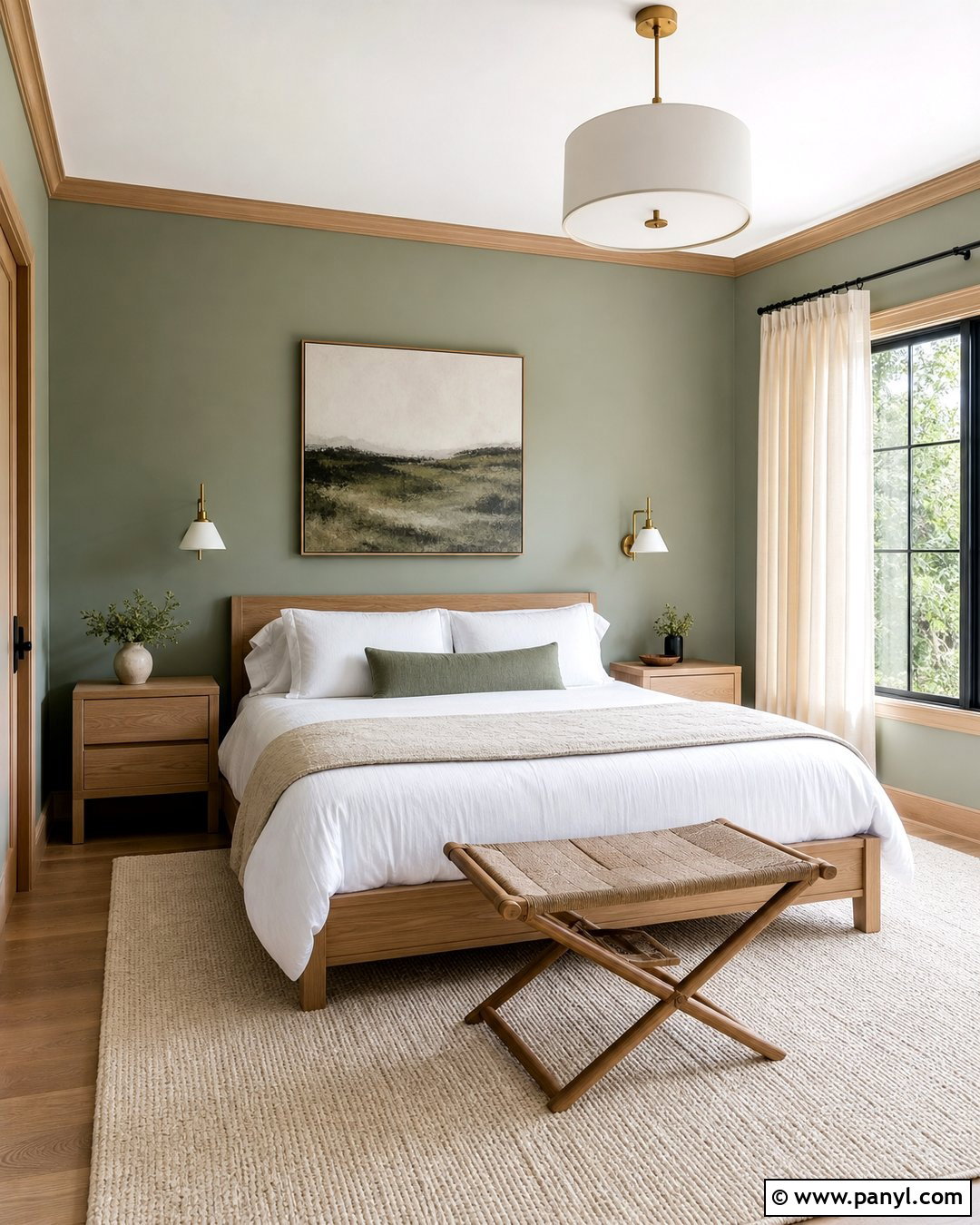
White oak trim has a pale, understated grain that pairs naturally with cool, gray-based sage green. Use this combination to create a guest room that feels fresh, calm, and easy for different visitors to enjoy. Center a white oak bed on the longest uninterrupted wall and add crisp white bedding with a textured beige coverlet. Matching nightstands and plug-in brass sconces provide useful symmetry. A large cream rug softens the floor, while light-filtering flax curtains add warmth without darkening the room. Include a small oak luggage bench, a clear bedside surface, and an open section of closet storage. Restrained artwork in green, tan, and charcoal completes the palette. The room feels thoughtfully prepared, comfortable, and uncluttered rather than overly themed.
14. Sage Green Laundry Room With Rustic Wood Trim
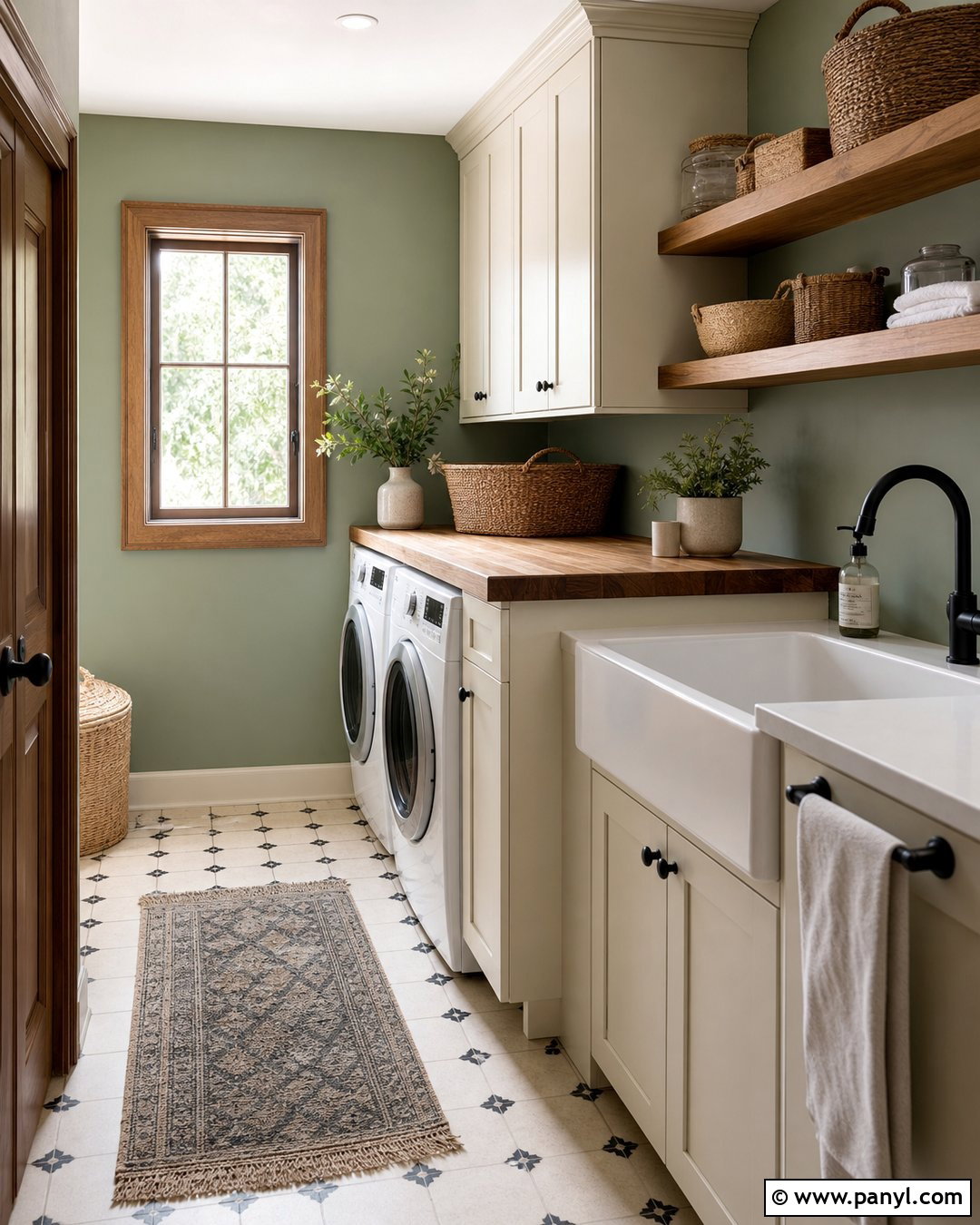
Laundry rooms benefit from colors and materials that make routine tasks feel less clinical. Paint the walls a cheerful, medium-light sage and preserve rustic wood trim around the door, window, and baseboards. Install warm white cabinets above the machines to increase storage while keeping the room visually light. A butcher-block counter over front-loading appliances provides space for folding and repeats the trim’s natural warmth. Choose matte black cabinet pulls, a white utility sink, and patterned porcelain flooring in cream and charcoal. Open wood shelves can hold labeled baskets, jars, and a few everyday supplies. Finish with a washable runner and bright task lighting. This complete setup balances decorative character with practical surfaces, organized storage, and a layout designed for efficient household use.
15. Sage Green Sunroom With Honey Wood Trim
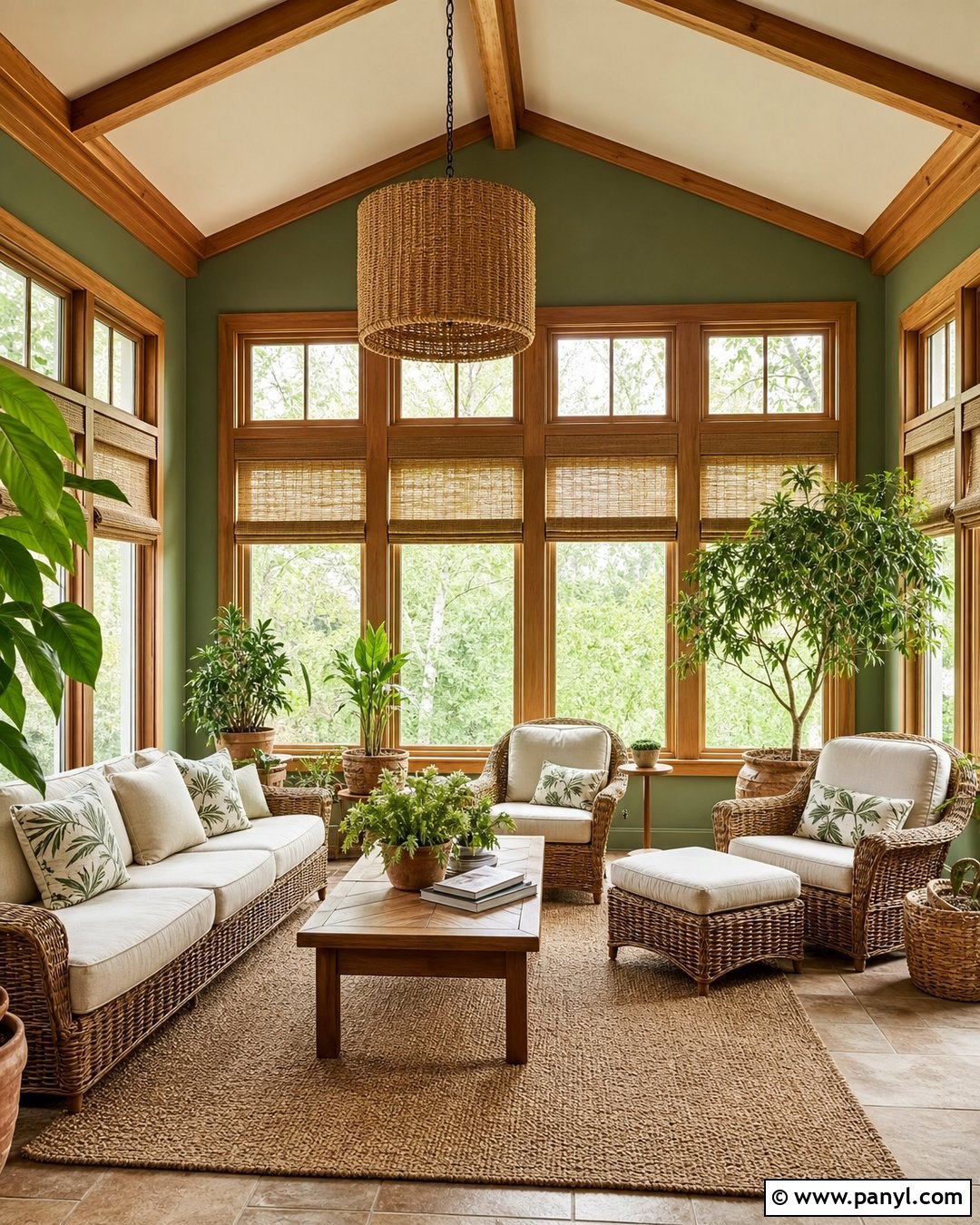
A sunroom can handle a slightly stronger sage because abundant daylight keeps the color lively. Pair warm sage green walls with honey-toned window trim and exposed wood framing for a seamless indoor-outdoor connection. Arrange a light wicker sofa and two matching lounge chairs around a low oak table. Use cream cushions with washable botanical-patterned pillows for comfortable, low-maintenance seating. A large natural-fiber rug will define the arrangement while allowing wood or tile flooring to remain visible. Add woven shades for glare control and a white ceiling fan for air circulation. Terracotta planters, leafy houseplants, and a few blue-green ceramic accents complete the design. The finished sunroom feels bright, casual, and suitable for reading, conversation, or enjoying views of the yard.
16. Sage Green Staircase With Wood Trim
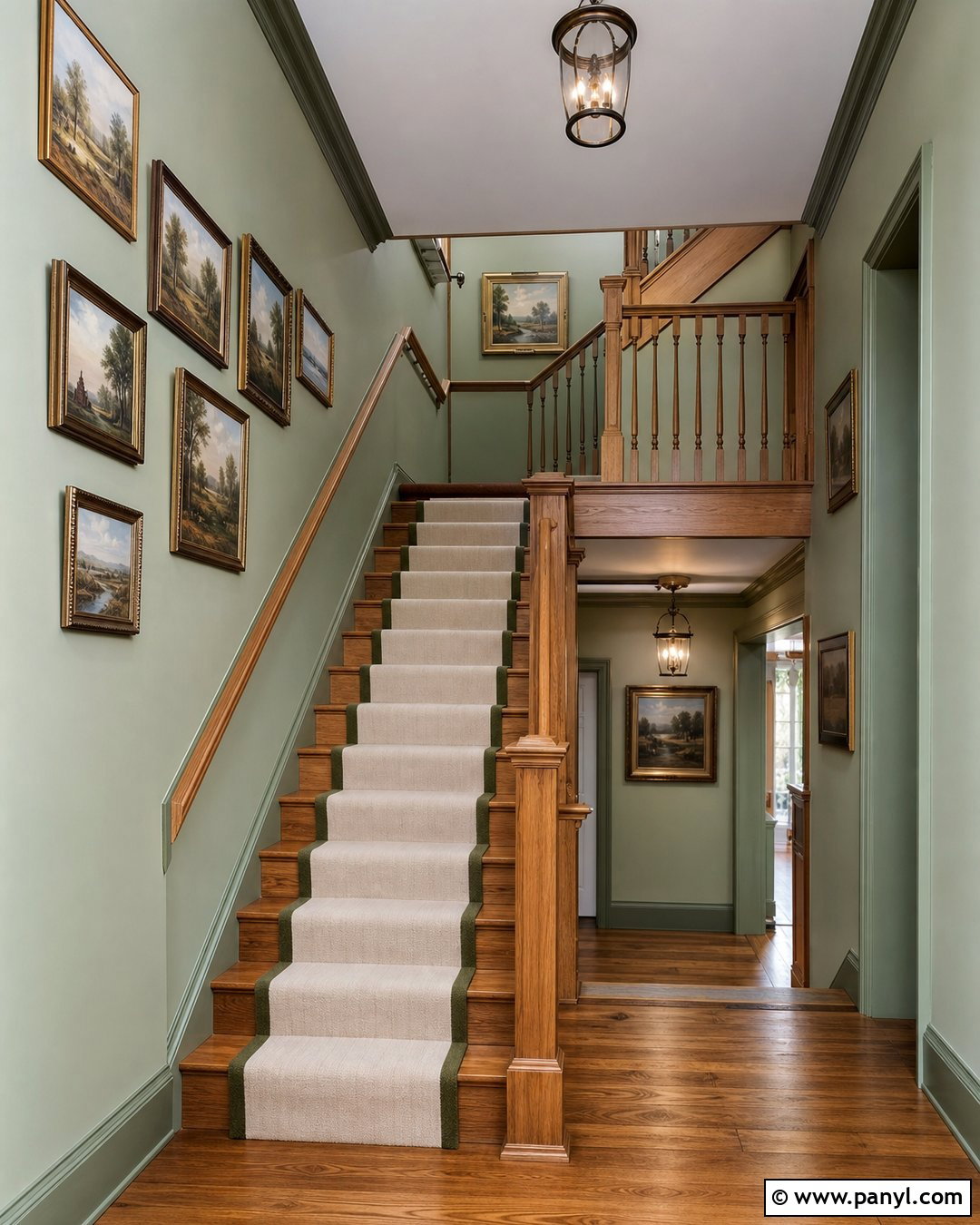
Sage green can turn a staircase into a cohesive architectural feature rather than a forgotten pass-through. Paint the stairwell walls a medium-light sage and retain natural wood baseboards, handrails, newel posts, and door casings. If the steps are wood, add a narrow cream runner with a subtle olive border for comfort and visual continuity. Hang a measured gallery of landscape prints that follows the slope of the stairs without crowding the walls. Use dark bronze frames to connect with simple metal lighting. A bright pendant at the landing and a flush fixture below will eliminate shadowy corners. Keep the lower landing free of bulky furniture. This coordinated approach highlights the craftsmanship of the woodwork while making the staircase feel brighter, safer, and connected to nearby rooms.
17. Sage Green Family Room With Douglas Fir Trim
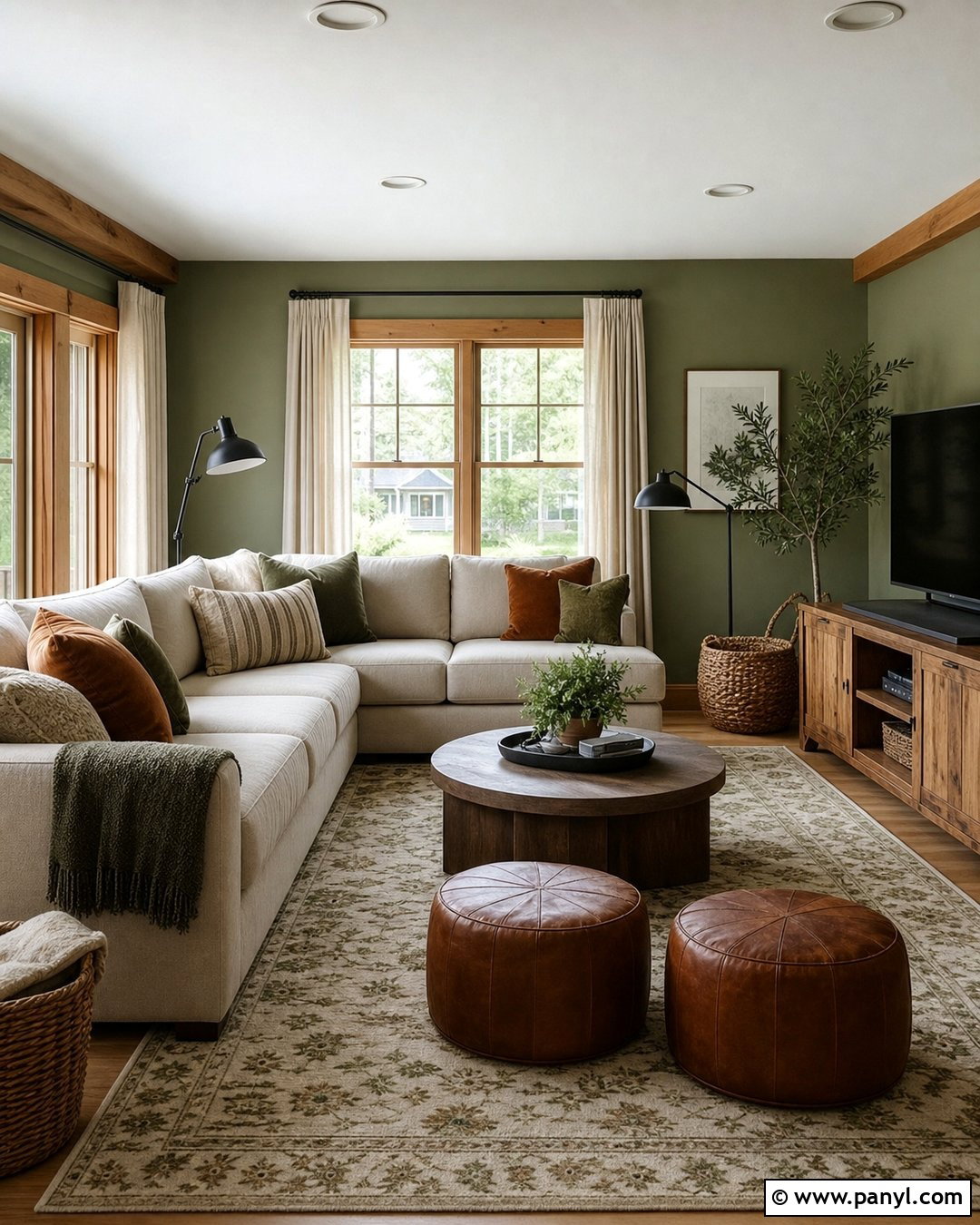
Douglas fir trim has a warm orange cast that looks especially balanced beside earthy, yellow-based sage green. Create a relaxed family room with a large oatmeal sectional positioned to face a simple media cabinet in medium-tone wood. Place two leather poufs or compact lounge chairs opposite the sofa to complete the conversation area. A cream and olive patterned rug will protect the floor and unite the colors. Choose linen curtains, black metal floor lamps, and durable pillows in rust, tan, and forest green. Closed cabinets and woven baskets can conceal electronics, games, and children’s items. Keep wall decor broad and simple so it does not compete with the pronounced wood grain. The complete space feels durable, grounded, and comfortable for everyday gatherings.
18. Sage Green Dining Nook With Vertical Wood Trim
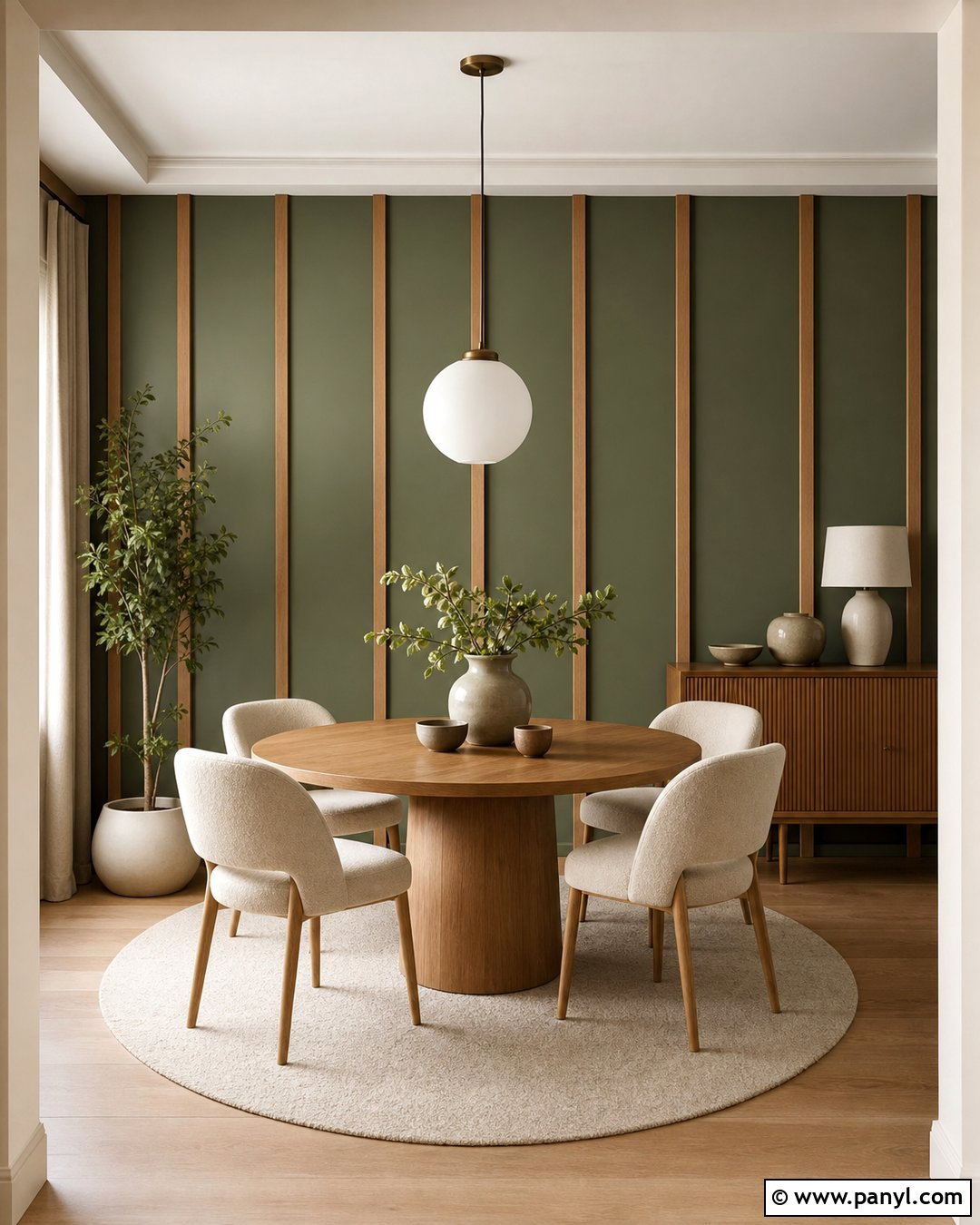
Vertical wood battens can give sage green walls structure while making a small dining nook appear taller. Paint the full wall a muted sage, then install evenly spaced white oak battens from the baseboard to the ceiling. Keep the treatment limited to the main dining wall so the room remains balanced. Place a round oak table in front of it with four cream upholstered chairs that fit neatly underneath. A compact globe pendant and an ivory rug will define the nook without adding visual weight. Choose a low sideboard for concealed storage and display only a few ceramics or branches. This finished layout blends modern lines with natural warmth. It works particularly well in open-plan homes where the eating area needs a clear identity.
19. Sage Green Cottage Bedroom With Chestnut Trim
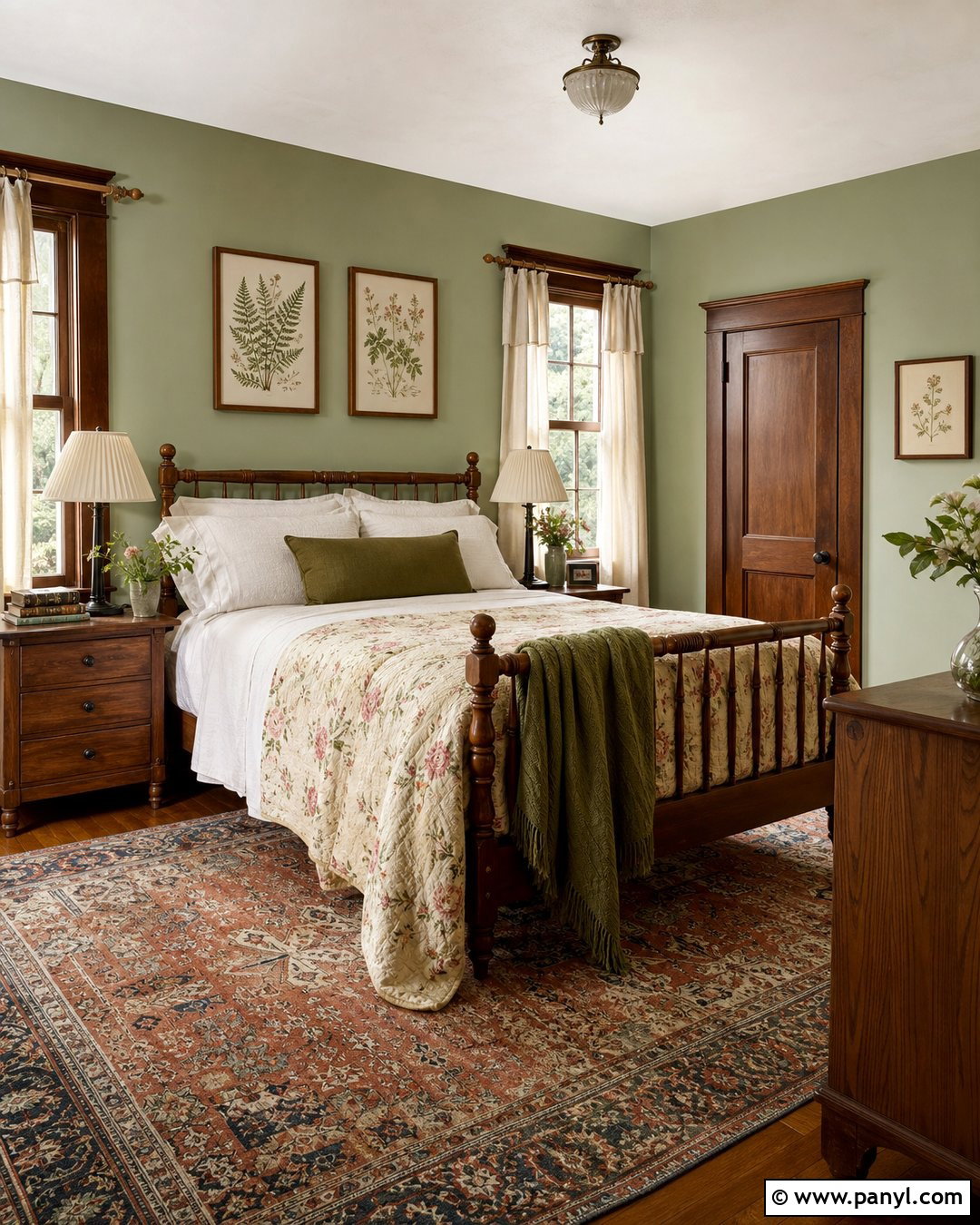
A cottage bedroom feels warmer and more settled when sage green walls meet timeworn chestnut trim. Choose a softly faded green rather than a crisp modern shade. Place an iron or spindle wood bed against the main wall and layer it with white sheets, a floral quilt, and a moss-colored throw. Small chestnut nightstands will echo the doors and window frames without requiring a perfectly matched furniture set. Add pleated cream lampshades, gathered linen curtains, and a vintage-style wool rug in rust and muted blue. Botanical prints in simple wood frames complete the relaxed arrangement. Avoid filling every surface with accessories. The resulting bedroom has nostalgic charm, but its controlled palette and practical furniture placement keep it comfortable, clean, and suitable for daily life.
20. Sage Green Open-Plan Room With Mixed Wood Trim
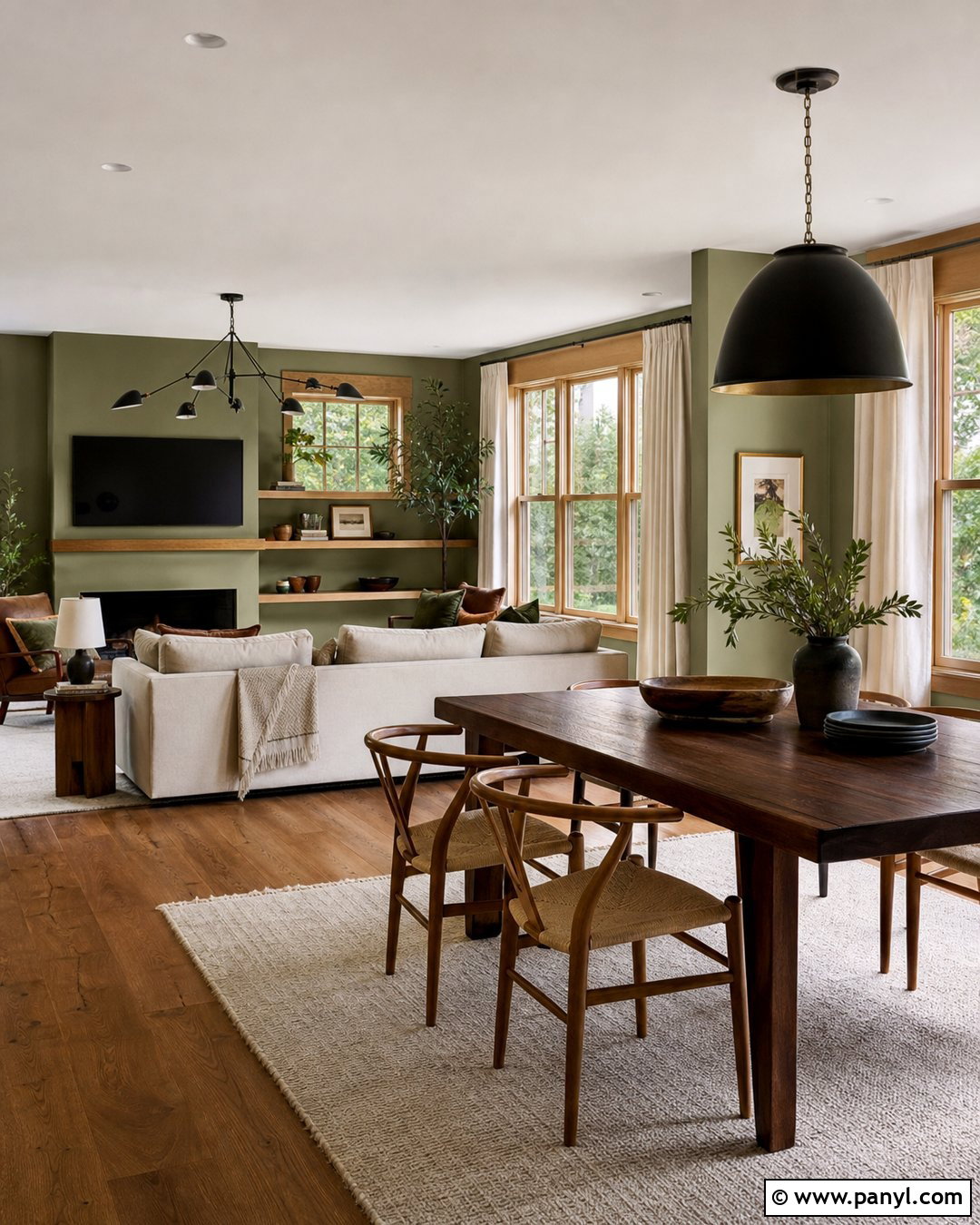
Mixed wood tones are common in open-plan homes, and sage green can act as the unifying backdrop. Select a midtone green that sits between warm and cool rather than matching only one wood species. Keep existing oak window trim, walnut furniture, and medium wood flooring, but repeat each tone at least twice across the room. Arrange a cream sofa to define the living zone, then use a walnut dining table and oak chairs in the adjacent eating space. Coordinating ivory rugs will separate the functions while maintaining visual flow. Add black lighting, neutral curtains, and cushions in olive, rust, and tan. Limiting the palette prevents the woods from appearing accidental. The completed open space feels connected, layered, and naturally collected over time.
Conclusion:
Decorating with sage green walls and wood trim is mainly about balancing undertones, contrast, and natural texture. Warm sage shades usually complement oak, pine, cherry, and fir, while cooler gray-green tones can soften walnut, mahogany, and dark-stained woodwork. Use cream upholstery, neutral rugs, simple lighting, and repeated wood finishes to connect the entire room. Always test paint samples beside the trim at different times of day before committing to a color. Thoughtful furniture placement and controlled accessories will also help the original millwork remain part of the design. These 20 Sage Green Walls With Wood Trim Ideas offer adaptable starting points for creating rooms that feel calm, cohesive, welcoming, and comfortably updated.

Related Ideas and Inspiration:
Leave a Reply