
These 20 pale yellow kitchen walls show how a soft, sunny paint color can warm the busiest room in the home without making it feel overly bright. Pale yellow works almost like a warm neutral, especially when paired with balanced cabinet colors, simple backsplashes, and natural materials. It can brighten kitchens with limited daylight while giving sunny rooms a gentle, welcoming glow. Current kitchen inspiration pairs buttery yellow with white cabinetry, warm woods, quiet greens, deep blues, marble, and handmade tile. () The key is creating a complete palette rather than choosing the wall color alone. From cottage kitchens to streamlined modern spaces, the following designs offer practical ways to recreate 20 pale yellow kitchen walls.
1. Pale Yellow Kitchen Walls With White Cabinets
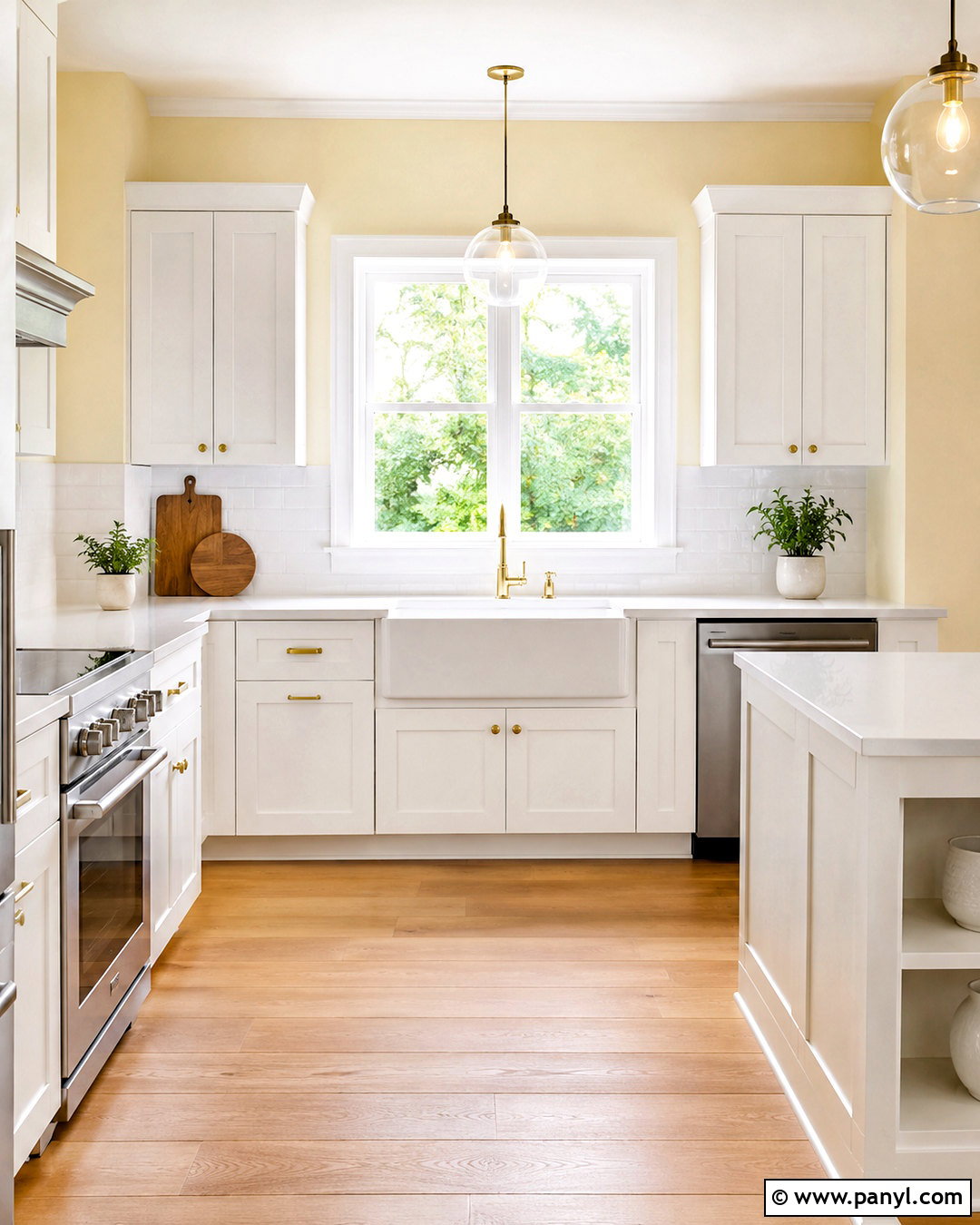
White Shaker cabinets give pale yellow kitchen walls a clean, timeless foundation. Choose a creamy white rather than a sharp blue-white so the cabinetry and walls share similar warm undertones. Add white quartz countertops and a glossy subway tile backsplash to reflect light around the room. Medium oak flooring prevents the palette from appearing washed out, while brushed brass knobs bring subtle warmth. A farmhouse sink and simple globe pendants complete the approachable look. Keep countertop decor limited to wood cutting boards, white canisters, and one leafy plant. This balanced design works especially well in family kitchens because the yellow supplies personality while the white cabinetry keeps the larger surfaces bright, flexible, and visually organized.
2. Pale Yellow Kitchen Walls With Oak Cabinets
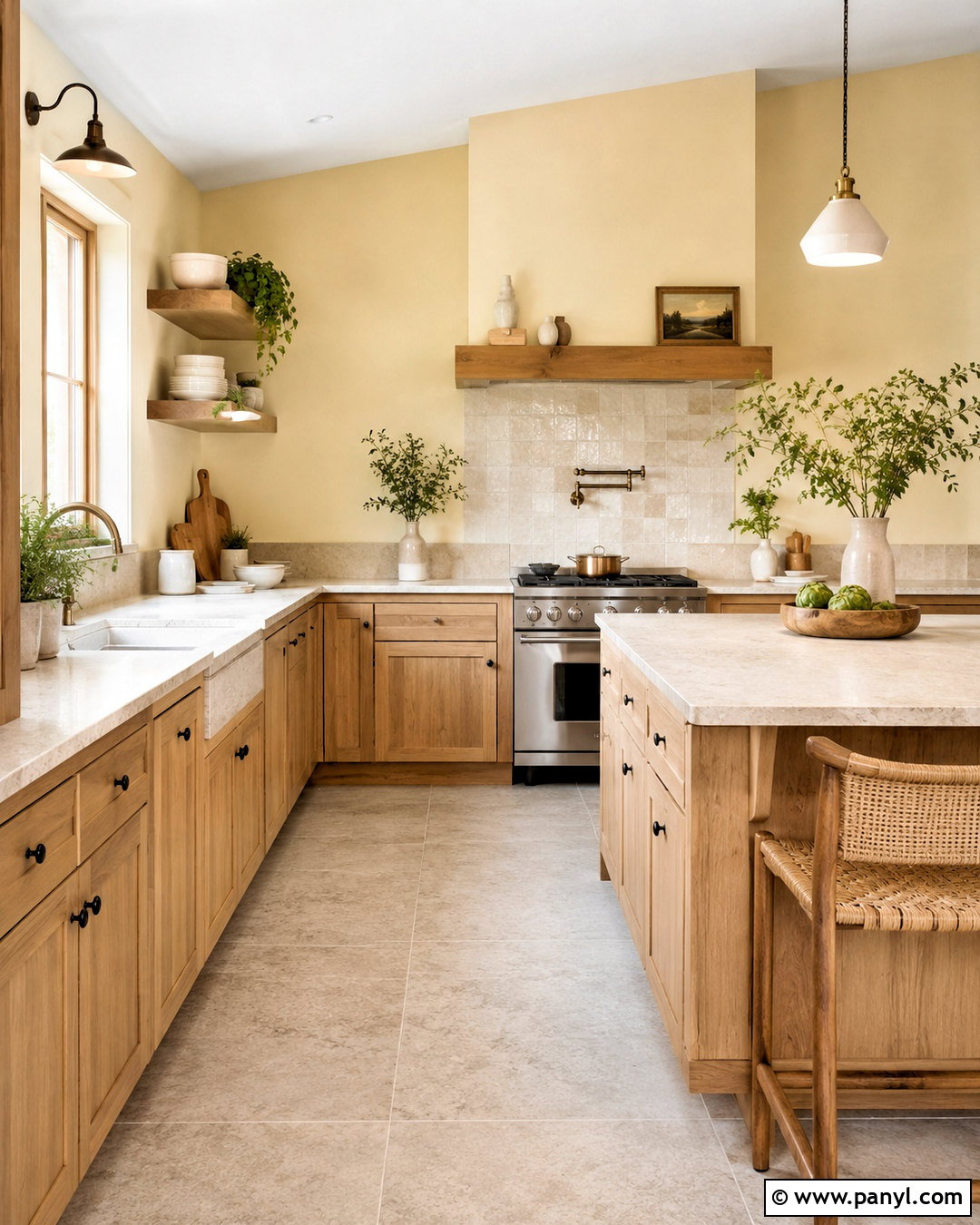
Natural oak cabinets make pale yellow kitchen walls feel earthy rather than overly sweet. Select cabinetry with a clear matte finish and simple flat-panel or slim Shaker doors. The visible grain provides movement, so keep the backsplash quiet with warm white handmade tile. Cream quartz countertops bridge the oak and yellow without adding a competing pattern. Use aged bronze hardware, woven counter stools, and a beige runner for additional texture. Light limestone-look flooring can prevent a room filled with wood from becoming too heavy. Finish the design with open oak shelving, neutral stoneware, and a few green herbs. The resulting kitchen feels relaxed, warm, and connected to nature while still looking fresh enough for a modern home.
3. Pale Yellow Kitchen Walls With Sage Green Cabinets
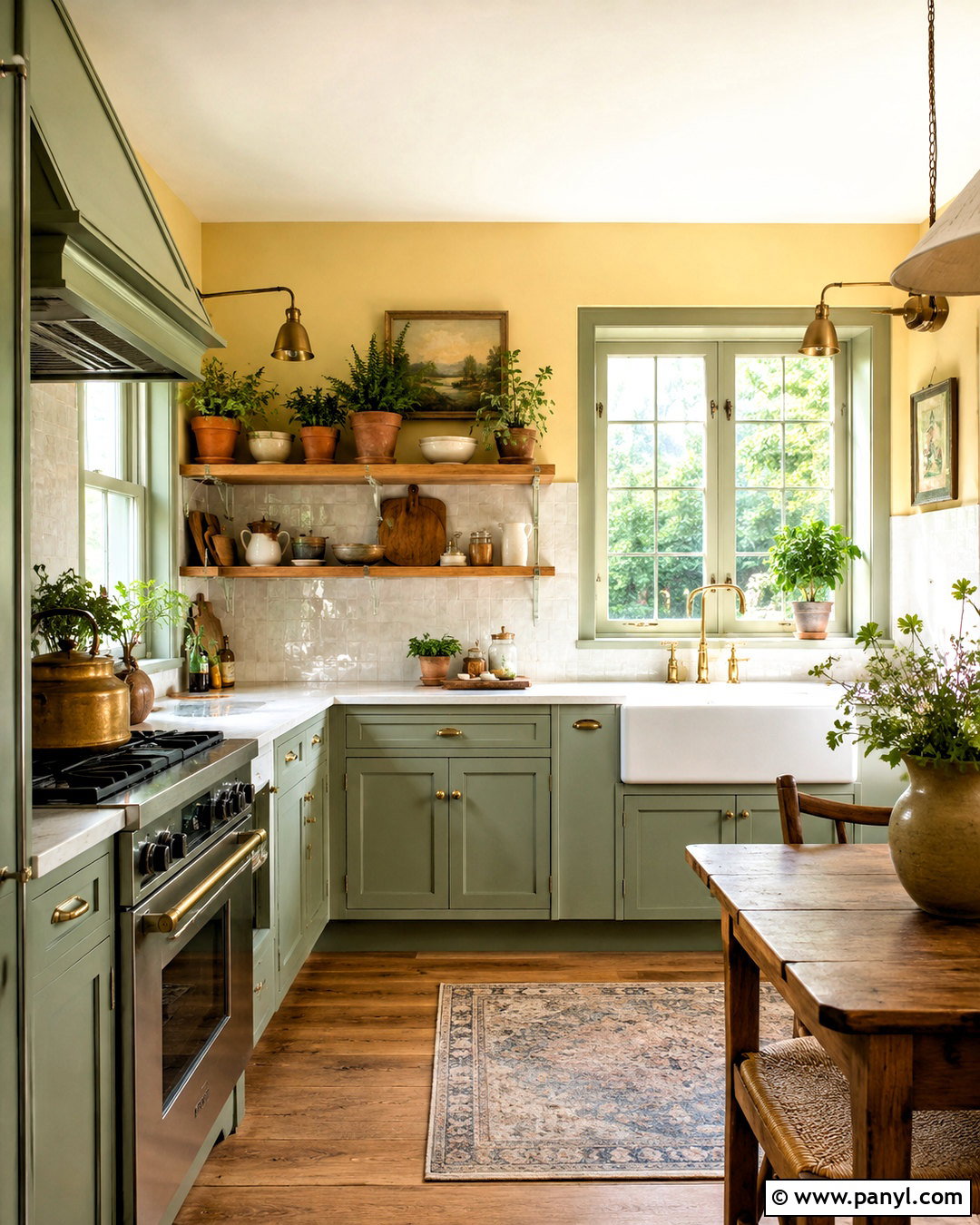
Soft sage cabinetry creates a garden-inspired partner for pale yellow kitchen walls. Use muted green with gray undertones so the cabinets feel calm beside the sunny wall color. Warm white quartz counters and an off-white zellige backsplash will keep the two colors from competing. Bring in natural oak through flooring, shelves, or counter stools to connect the palette. Antique brass pulls and a bridge faucet add a traditional note without making the room feel formal. Near a window, display simple terracotta herb pots and cream ceramic pieces. This complete scheme works particularly well in kitchens overlooking a yard or patio because the green cabinetry continues the outdoor colors inside. Butter yellow and gentle green are also frequently paired for an organic, cottage-influenced effect. ()
4. Pale Yellow Kitchen Walls With Navy Cabinets
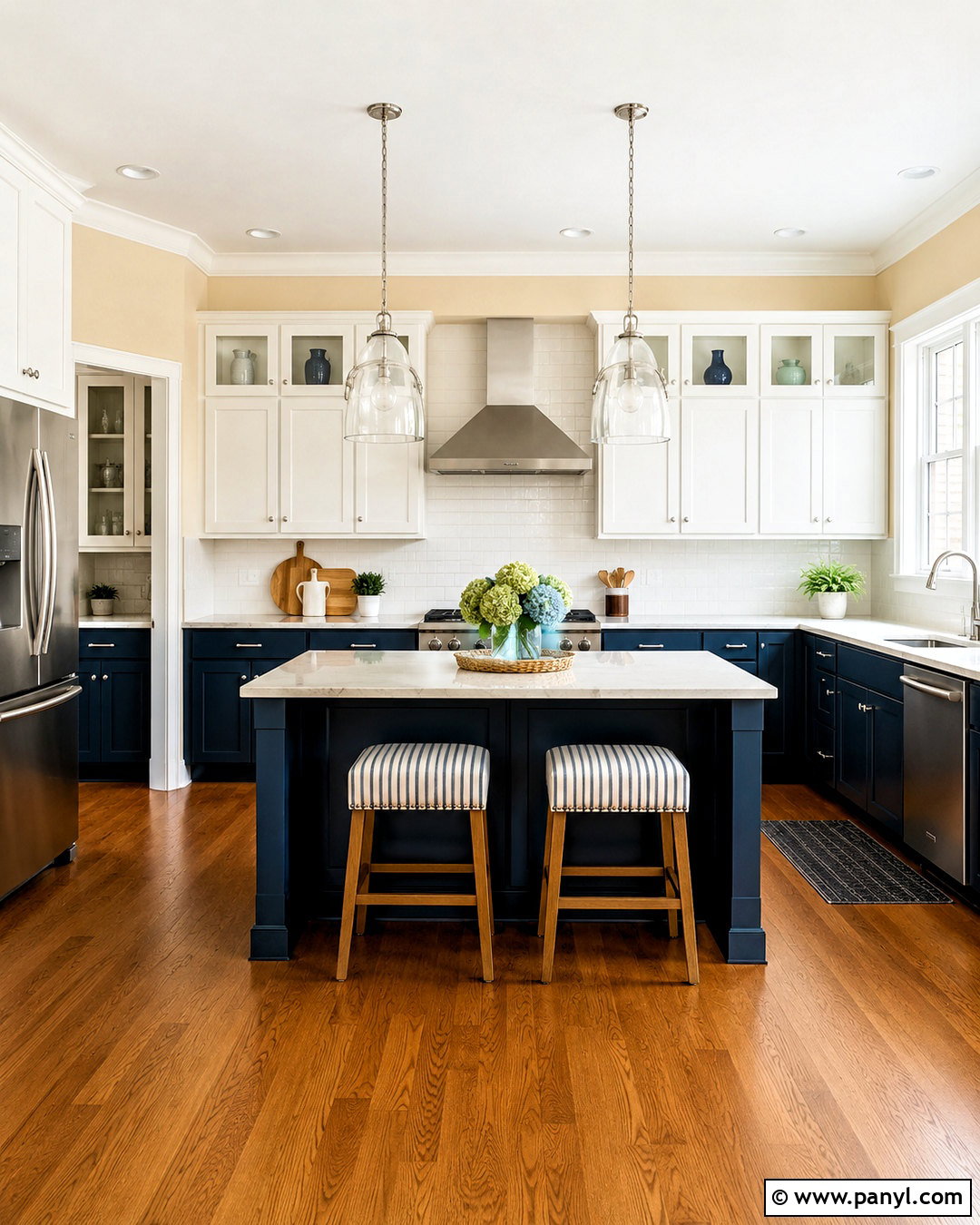
Deep navy cabinets provide crisp definition against pale yellow kitchen walls. Use navy primarily on lower cabinets and a central island, then choose warm white upper cabinets to keep the room open. White marble-look quartz with light gray veining adds a refined surface without introducing another strong color. Continue the bright effect with a white subway backsplash and warm white ceiling. Polished nickel hardware gives the navy a tailored finish, while oak flooring softens the contrast. Blue-and-cream striped counter stools can repeat the cabinet color in a subtle way. This palette suits transitional kitchens where classic details meet a cleaner layout. The dark base anchors the room, and the pale yellow walls prevent the navy cabinetry from making the kitchen feel cold or enclosed.
5. Pale Yellow Kitchen Walls With Charcoal Cabinets
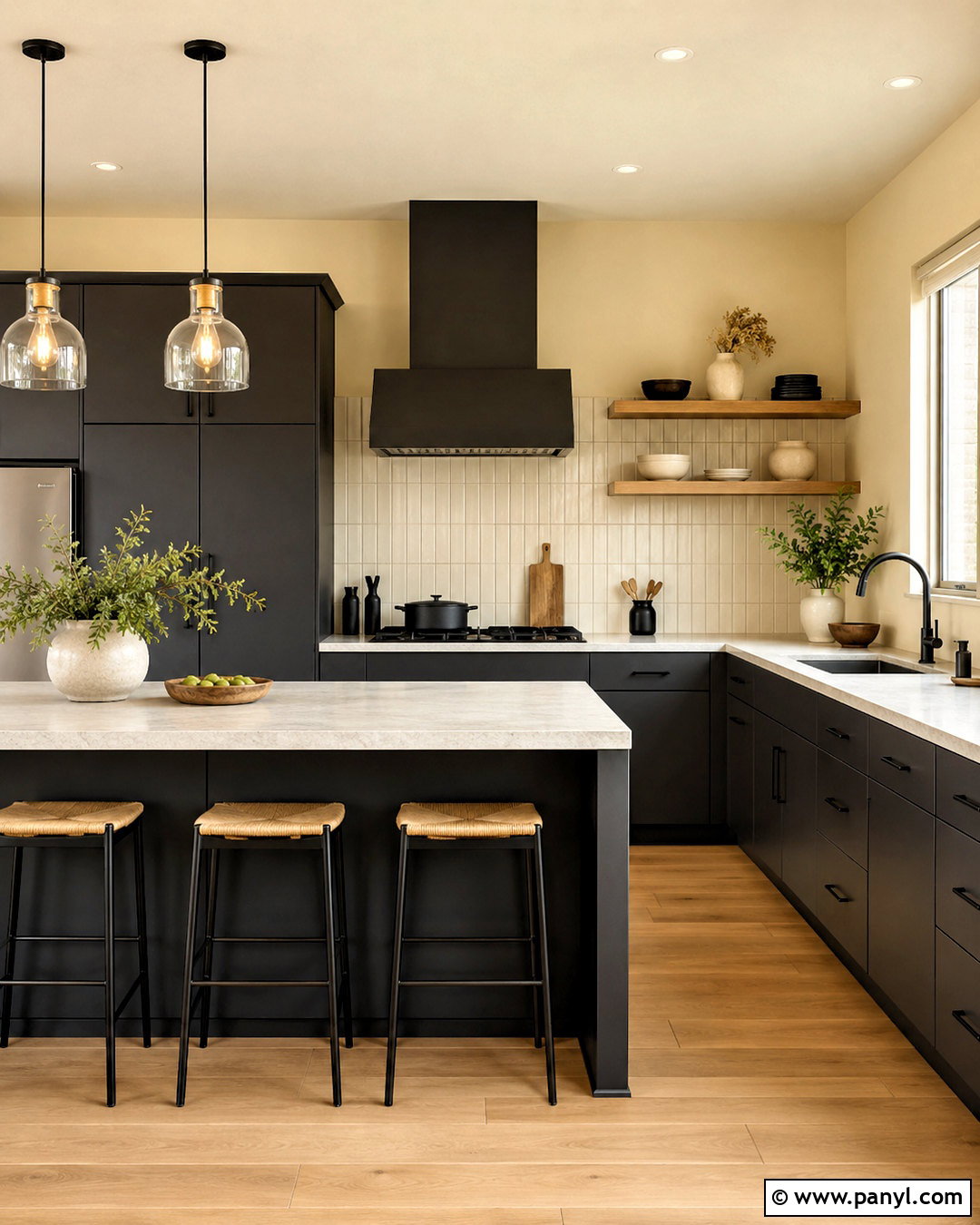
For a dramatic kitchen that still feels welcoming, combine pale yellow kitchen walls with matte charcoal cabinetry. The dark cabinets create a strong visual base, allowing the yellow to look especially luminous above the counters. Select flat-panel doors, slim black pulls, and pale concrete-look quartz for a streamlined appearance. A warm white vertical tile backsplash introduces texture while keeping the work zone bright. Use light oak flooring and matching floating shelves to relieve the darker cabinetry. Clear glass pendants can illuminate an island without adding visual weight. Keep accessories simple with black cookware, cream pottery, and small wooden boards. This look works best when the room has balanced lighting, including under-cabinet strips that reveal the warmth of the yellow after natural daylight fades.
6. Pale Yellow Kitchen Walls With Cream Cabinets
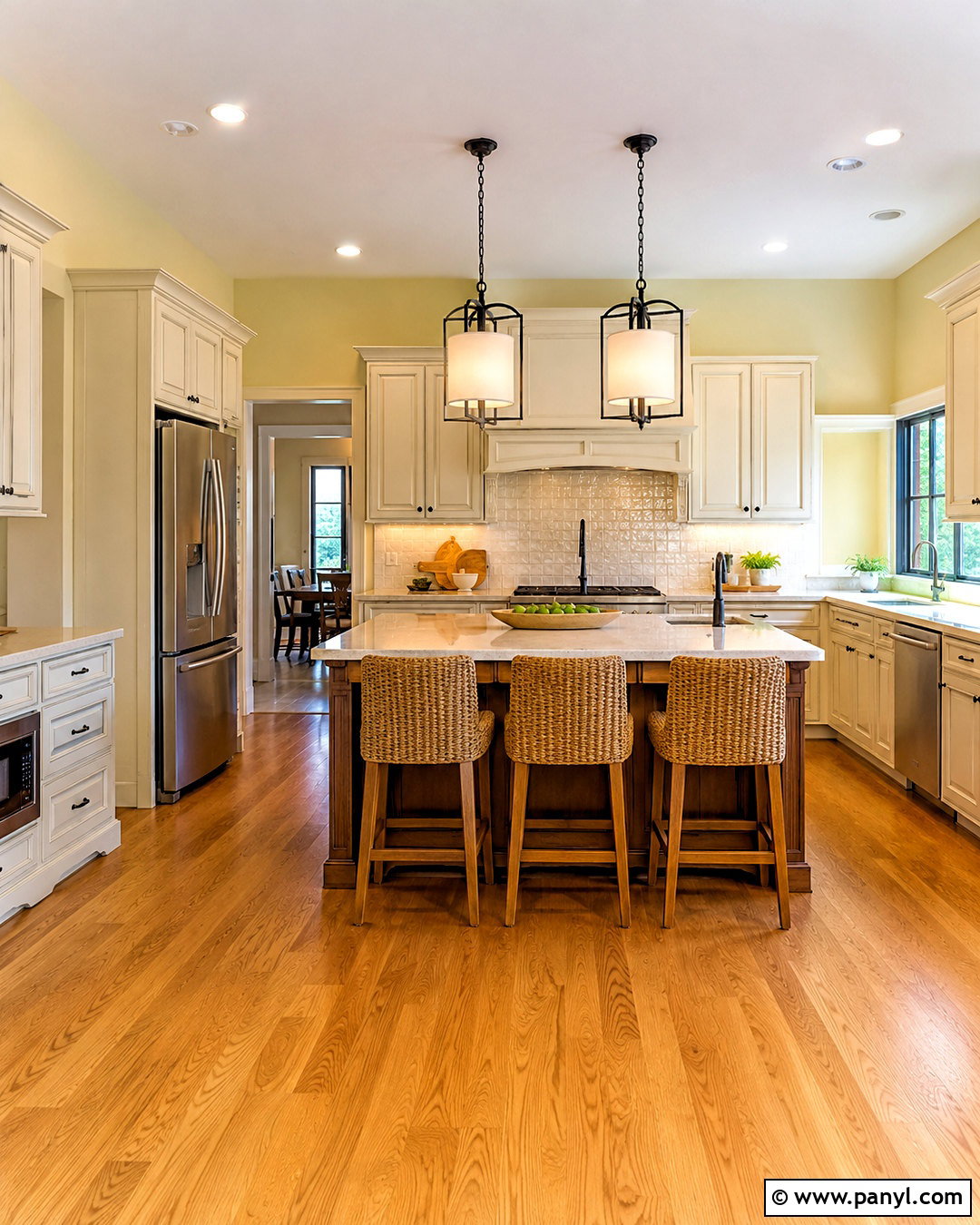
Cream cabinets produce a soft, layered kitchen where pale yellow walls blend gently instead of creating strong contrast. Avoid matching the two colors exactly. Choose cabinetry that is slightly lighter and more neutral than the walls so every surface remains distinct. Warm beige quartz countertops, ivory backsplash tile, and honey-toned oak floors continue the tonal palette. Add definition through oil-rubbed bronze hardware, a dark bronze faucet, and black-framed pendant lights. Linen Roman shades and woven counter stools introduce texture without disrupting the quiet colors. This combination is particularly effective in a traditional kitchen with raised-panel cabinets, crown molding, and a furniture-style island. The completed room feels warm and settled, while the darker metal accents prevent the cream and yellow layers from becoming visually flat.
7. Pale Yellow Kitchen Walls With Two Tone Cabinets
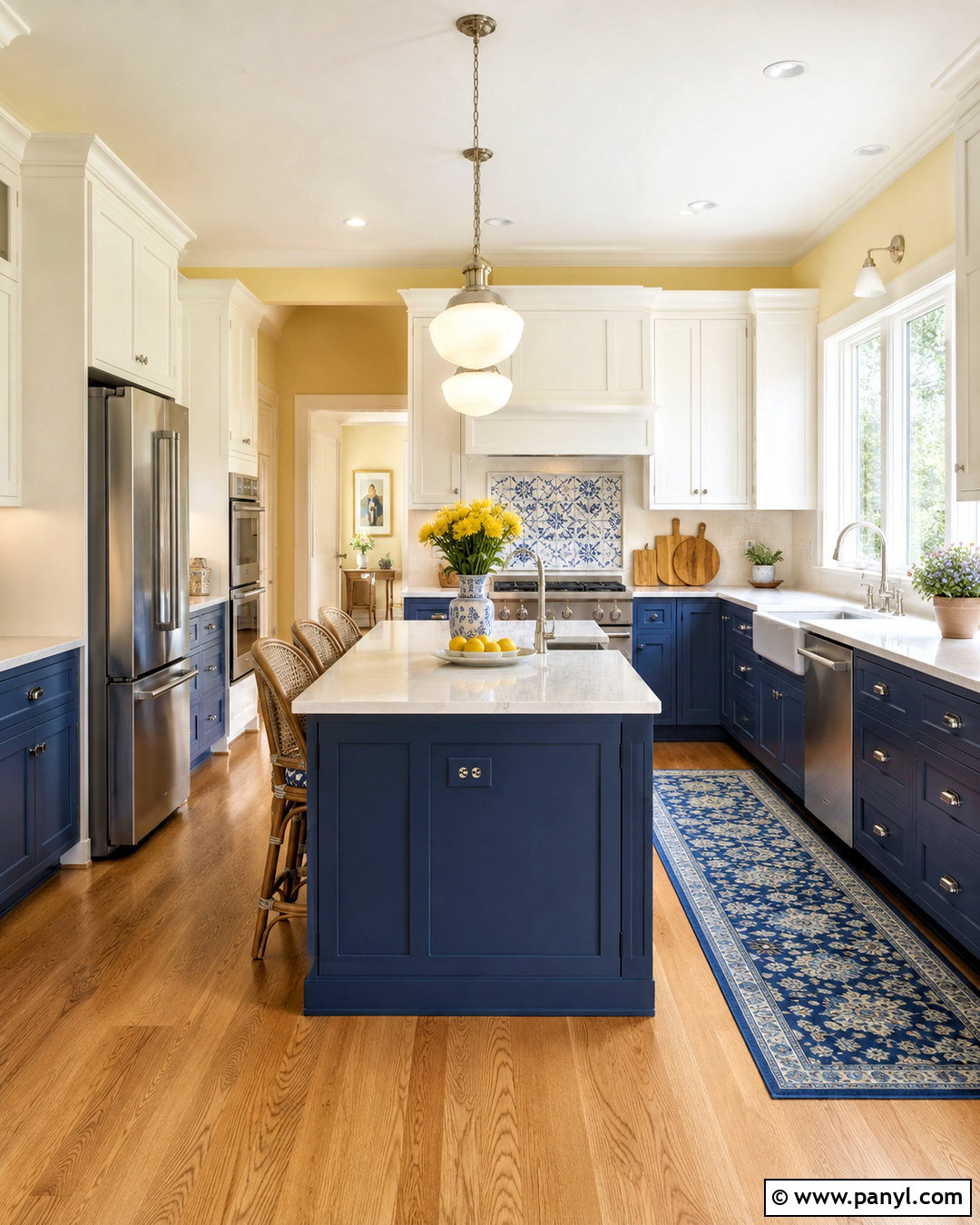
Two-tone cabinetry can make pale yellow kitchen walls feel more dimensional and thoughtfully coordinated. Paint the upper cabinets warm white to preserve an airy sightline, then use dusty blue on the lower cabinets and island. Connect both colors with white quartz counters and a backsplash featuring small cream and blue ceramic tiles. Pale oak flooring gives the room another warm surface that supports the yellow. Choose brushed nickel hardware for a clean transition between the white and blue sections. Over the island, install simple milk-glass pendants with nickel fittings. A blue runner and a few yellow ceramic pieces can repeat the main palette without looking overly matched. The result feels colorful and cheerful, yet every finish has a clear role in the complete kitchen design.
8. Pale Yellow Kitchen Walls With Black Accents
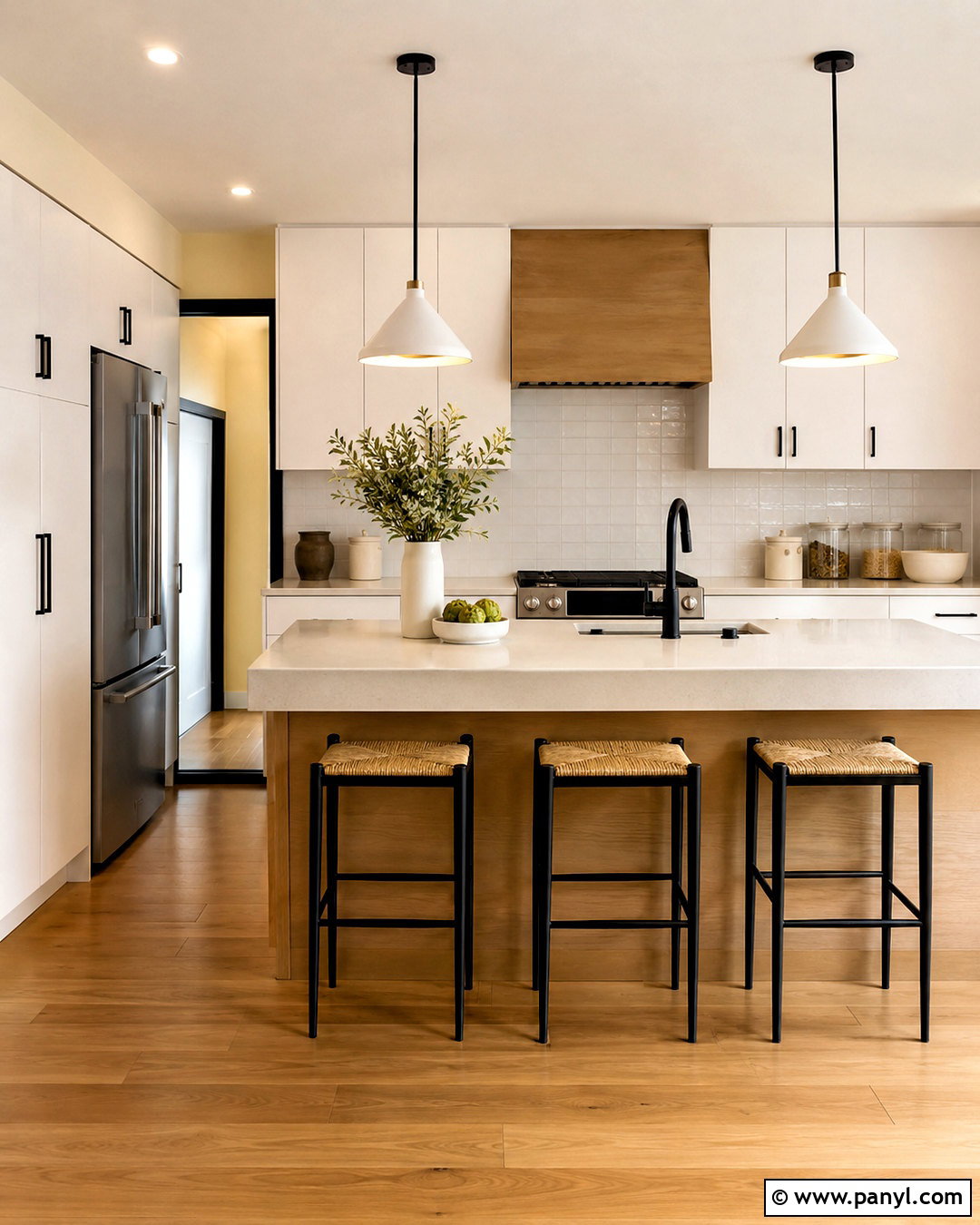
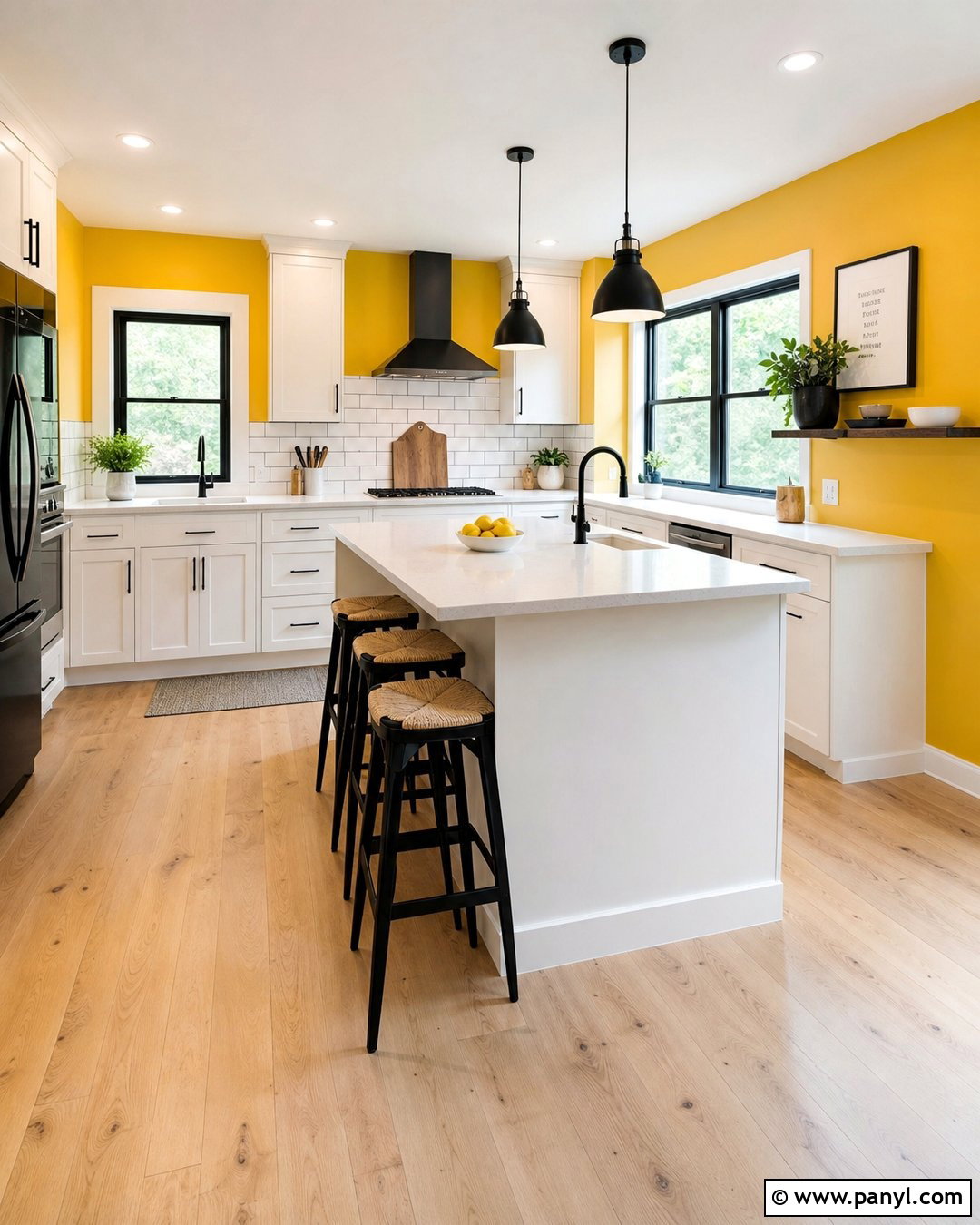
Small black details can sharpen pale yellow kitchen walls without overpowering their gentle warmth. Begin with white slab-front cabinets and pale quartz countertops for a simple background. Introduce matte black through cabinet handles, a high-arc faucet, window frames, and streamlined pendant lights. A white backsplash with dark grout can reinforce the graphic contrast, although medium-gray grout is easier to maintain visually. Ground the room with natural oak flooring and a matching island base. Use black-framed stools with woven seats to connect the dark metal accents to the warmer materials. Keep decorative items understated, such as white stoneware, clear storage jars, and one black tray. This complete design offers a practical way to modernize an existing white kitchen using paint, hardware, lighting, and a few coordinated accessories.
9. Pale Yellow Kitchen Walls With Brass Hardware
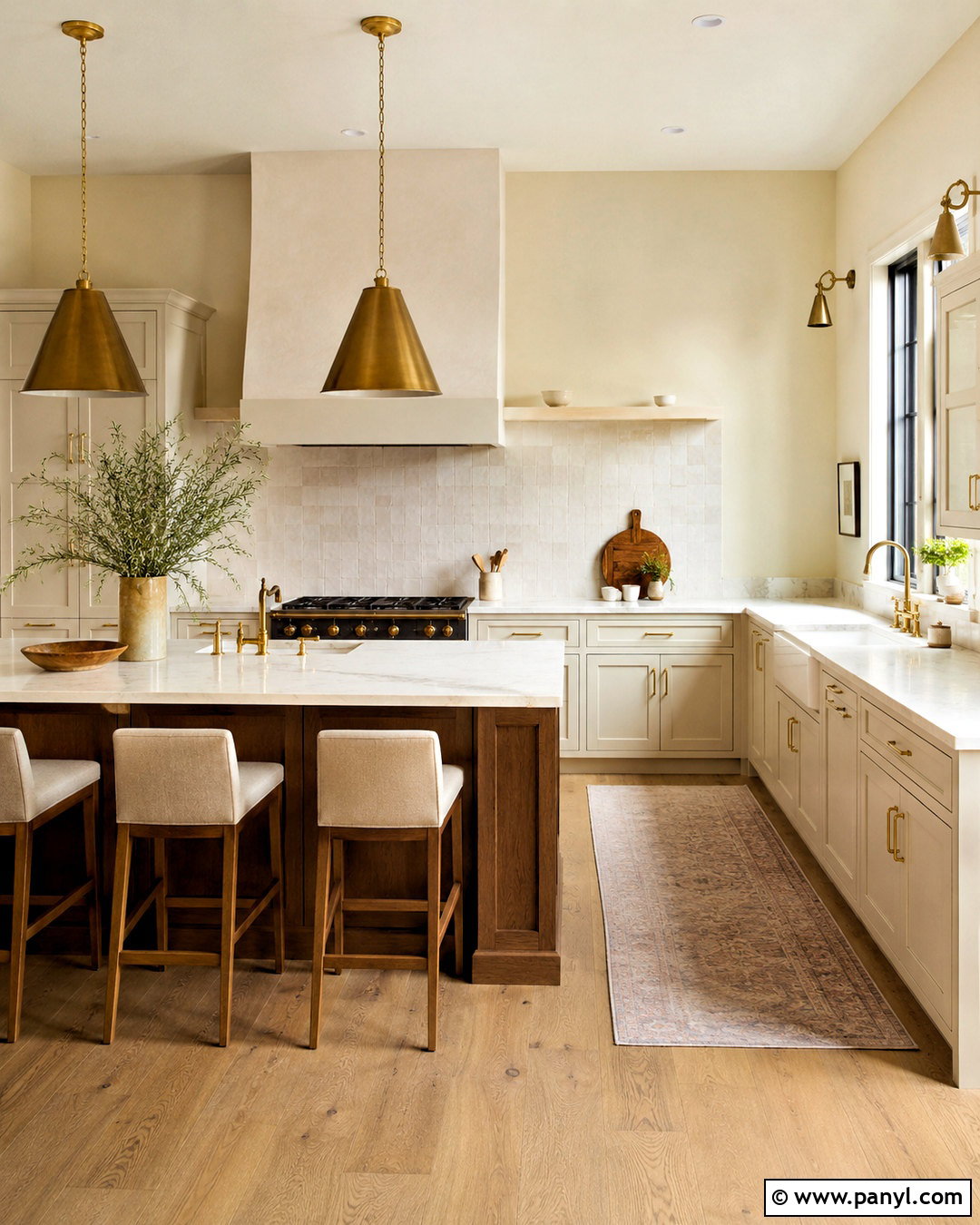
Brushed brass brings out the warm undertones in pale yellow kitchen walls and gives the room a polished glow. Pair the walls with warm white inset cabinets, marble-look quartz, and a softly textured cream tile backsplash. Use brass consistently on cabinet knobs, the faucet, pendant fittings, and open-shelf brackets, but avoid making every object metallic. Medium walnut flooring or a walnut island adds darker contrast and keeps the yellow-and-brass combination grounded. Upholster counter stools in natural linen for softness. A plaster-style range hood can become a quiet focal point without introducing another strong finish. Choose low-sheen metal instead of highly polished gold for a more relaxed result. The finished kitchen feels elegant and welcoming, with enough neutral material to keep the warm palette balanced.
10. Pale Yellow Kitchen Walls With Terracotta Floors
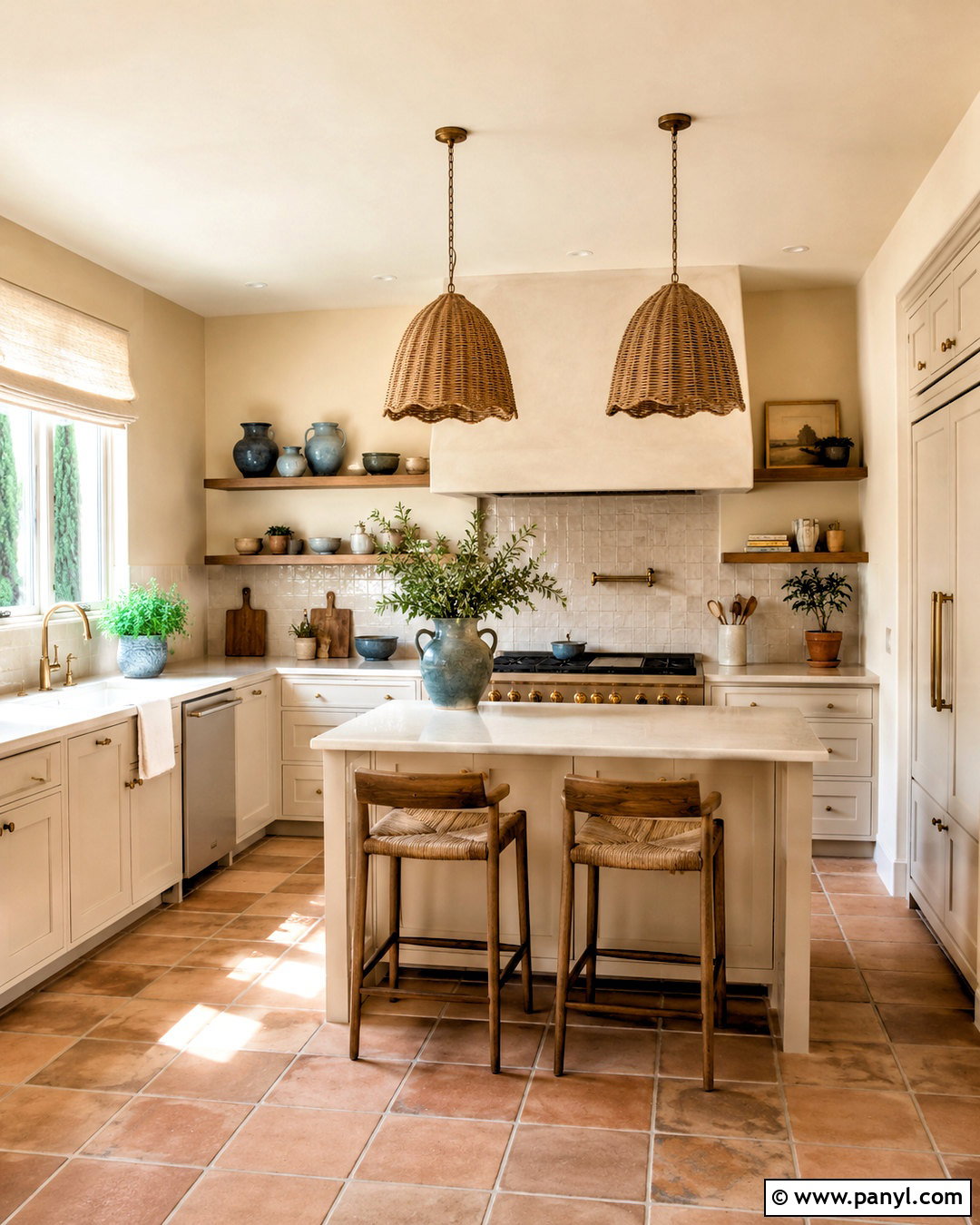
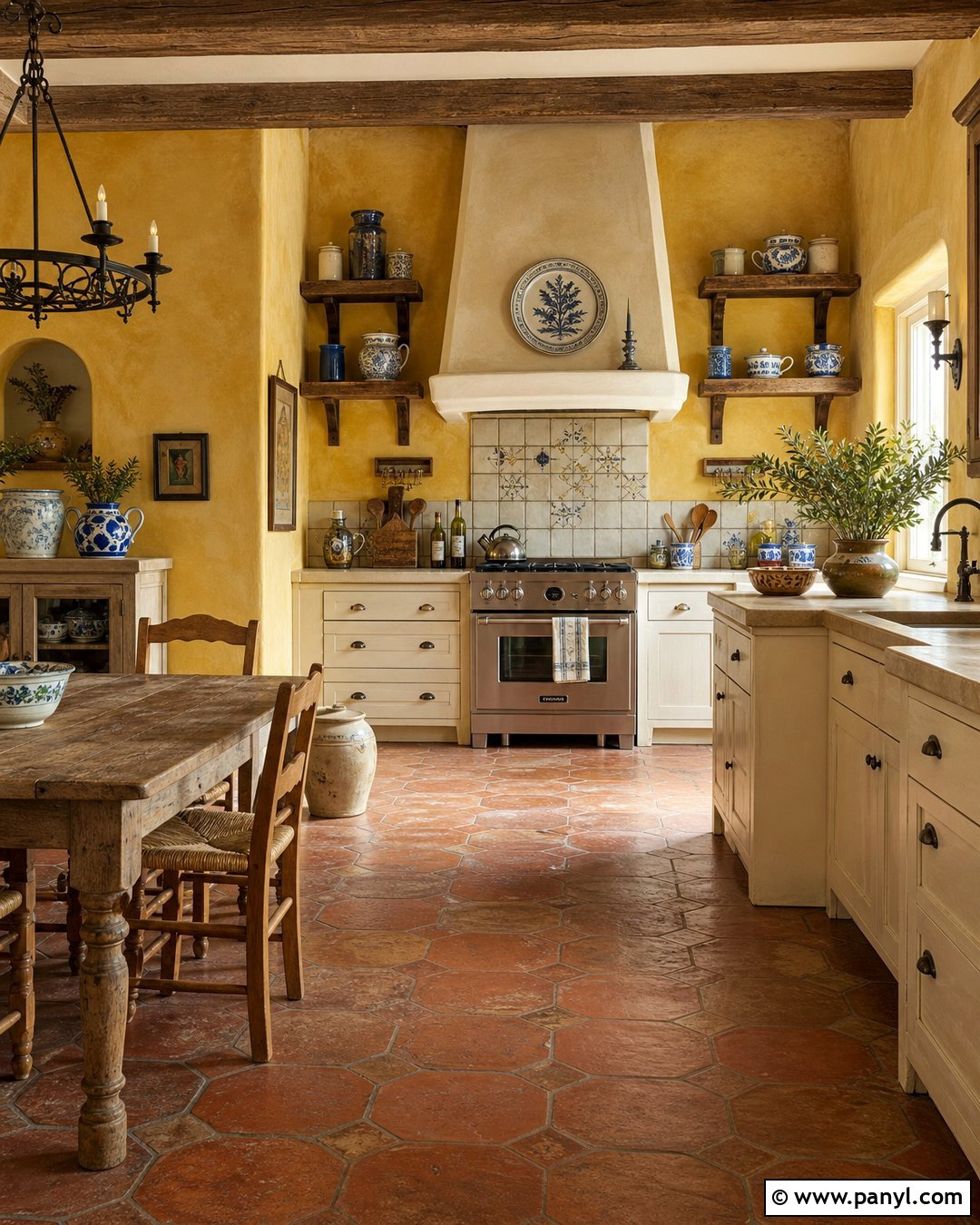
Terracotta flooring transforms pale yellow kitchen walls into a warm Mediterranean-inspired backdrop. Choose handmade or terracotta-look tiles in muted clay, rust, and peach tones rather than intense orange. Cream Shaker cabinets and lightly veined quartz counters will brighten the room above the richly colored floor. Continue the natural character with an ivory zellige backsplash, aged brass hardware, and oak open shelving. A plaster range hood adds an architectural focal point, while woven pendant lights reinforce the organic texture. Keep fabrics simple with cream linen shades and a faded blue runner. Because terracotta and yellow are both warm, include a few cooling accents through blue-gray pottery or soft green herbs. The complete room feels sunny, casual, and full of material character without requiring elaborate decoration.
11. Pale Yellow Kitchen Walls With Checkerboard Floors
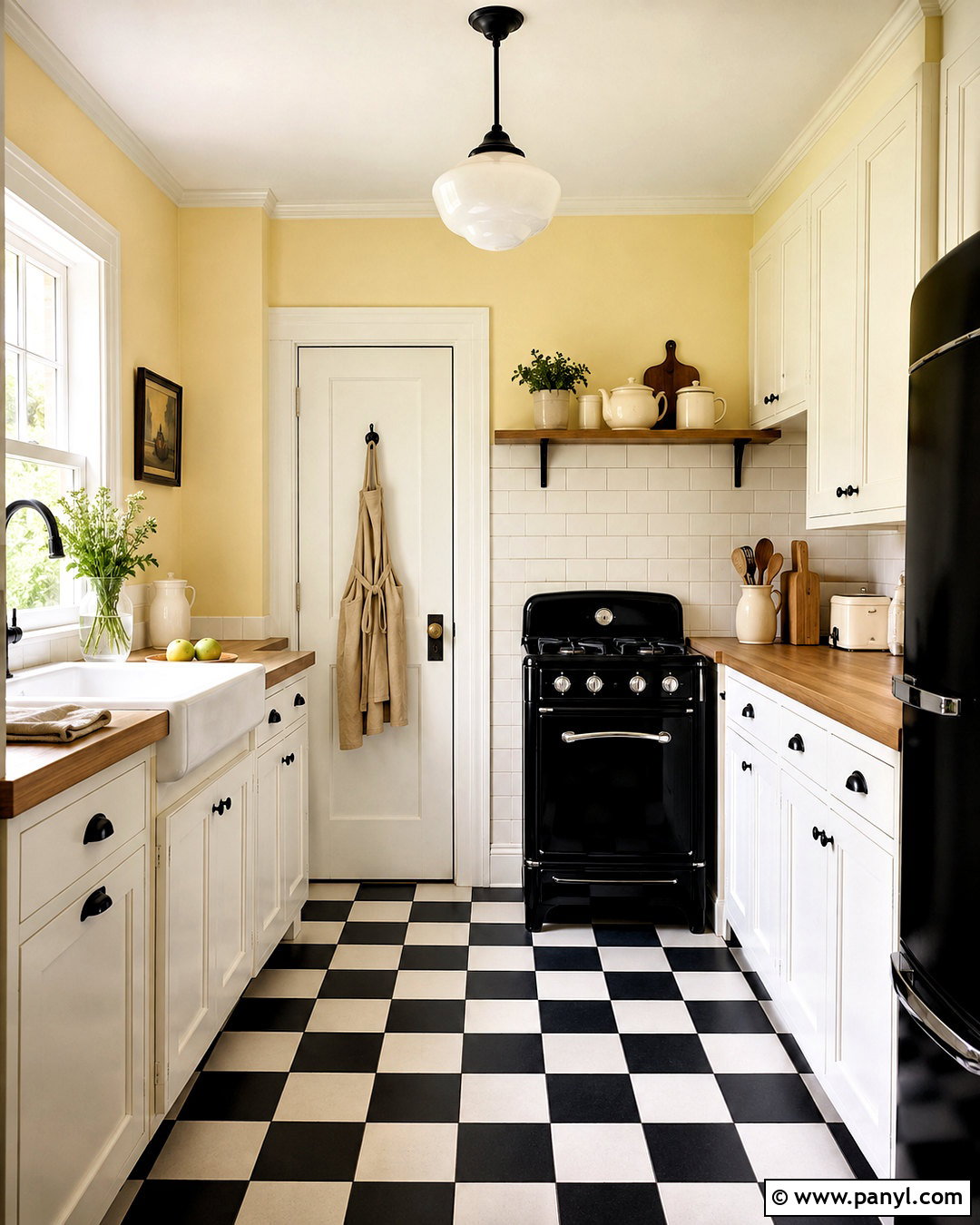
A black-and-white checkerboard floor gives pale yellow kitchen walls a playful vintage character. Keep the wall color light and buttery so it softens the strong floor pattern rather than competing with it. White Shaker cabinetry, black cup pulls, and butcher-block counters create an affordable, coordinated foundation. Use plain white subway tile on the backsplash and warm white paint on the ceiling. A compact black range and a schoolhouse pendant can continue the retro influence without making the kitchen resemble a themed set. Add red only sparingly, perhaps through a small utensil crock, and favor natural wood and cream accessories elsewhere. The resulting kitchen feels cheerful, familiar, and energetic. Checkerboard flooring also provides enough visual weight to keep the pale yellow walls from appearing too delicate.
12. Pale Yellow Kitchen Walls With Marble Countertops
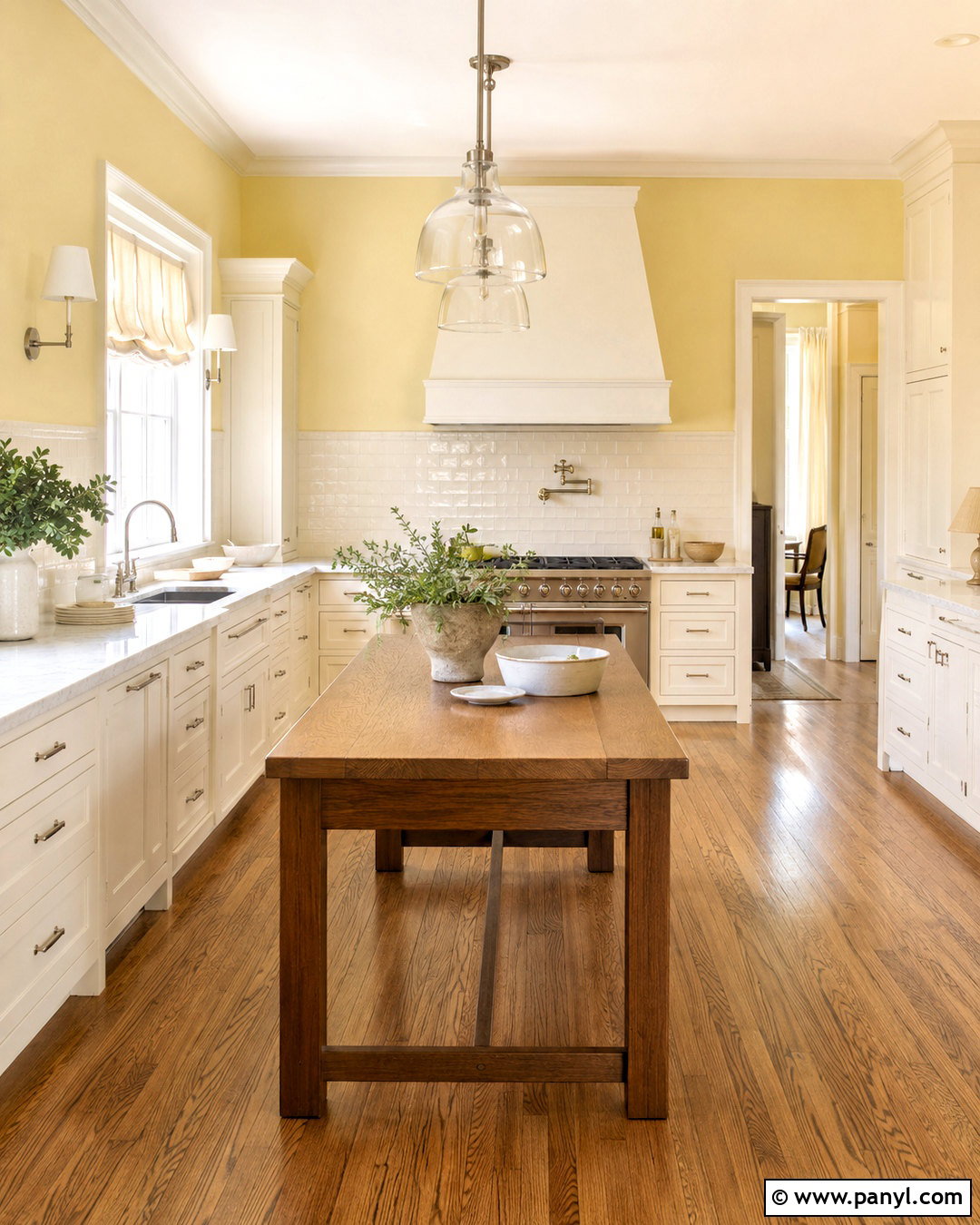
Marble countertops can give pale yellow kitchen walls a more refined and airy appearance. Select white marble or durable marble-look quartz with soft gray or warm beige veining. Pair it with simple white cabinets so the wall color and stone remain the main features. For the backsplash, continue the countertop material behind the range or install glossy ivory tile with subtle variation. Polished nickel hardware adds brightness, while oak flooring keeps the kitchen from feeling formal or cold. A walnut butcher-block table can introduce a practical work surface and deeper contrast. Finish the room with clear glass pendants, white linen shades, and minimal ceramics. The yellow warms the stone visually, while the restrained material palette allows natural veining and architectural details to stand out.
13. Pale Yellow Kitchen Walls With Butcher Block Counters
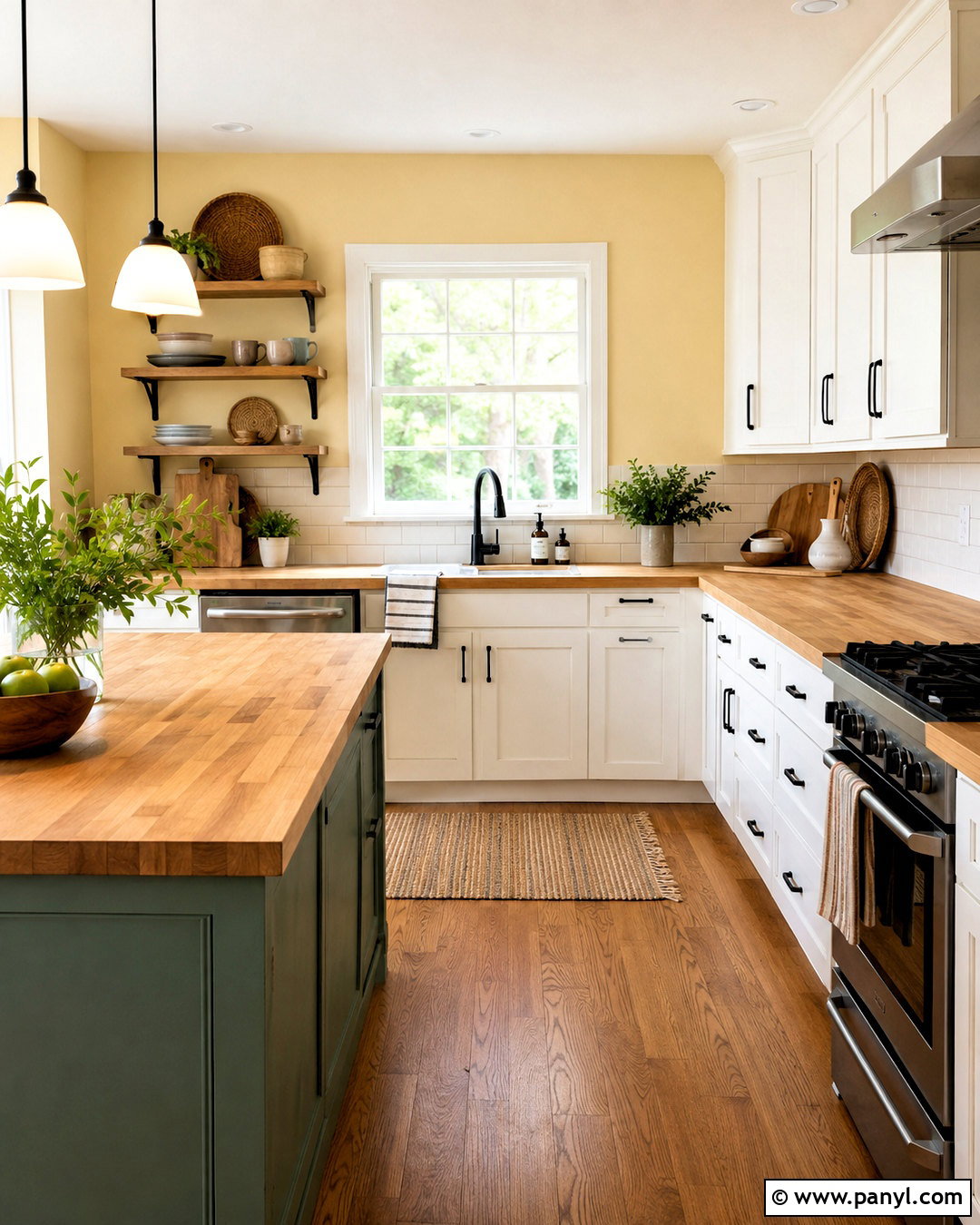
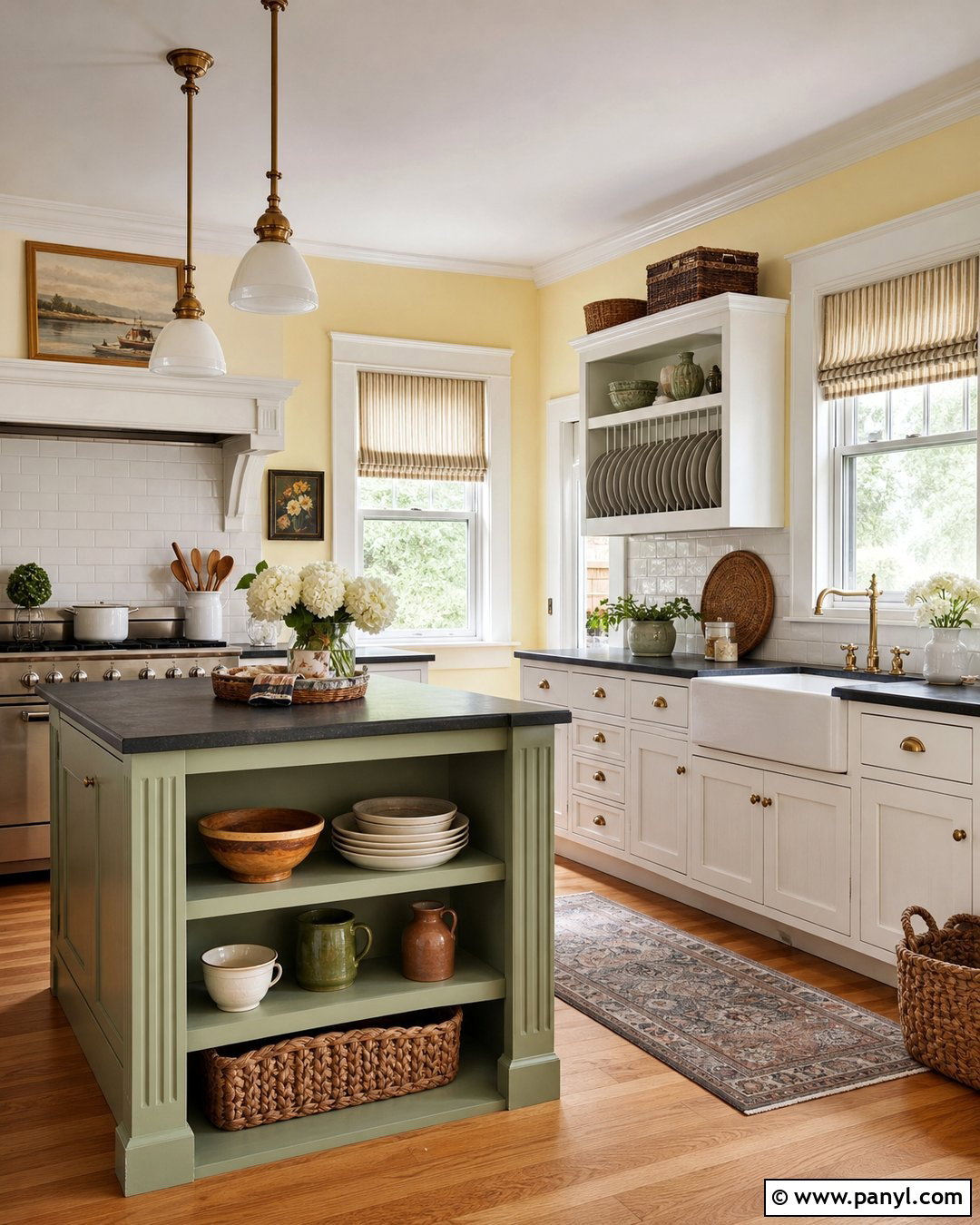
Butcher-block counters emphasize the cozy quality of pale yellow kitchen walls. Choose maple or white oak counters with a food-safe matte finish and pair them with warm white cabinets. A cream subway backsplash will protect the cooking area while maintaining the kitchen’s gentle color flow. Use matte black handles and a black faucet to define the lighter surfaces. Medium oak flooring can work when its tone differs slightly from the counters, preventing the wood elements from blending together. Add a freestanding island painted muted green for storage and another layer of color. Woven baskets, striped cotton towels, and simple stoneware complete the casual look. This design is especially useful for updating a modest kitchen because paint, hardware, wood counters, and accessories can create a coordinated transformation without changing the entire layout.
14. Pale Yellow Kitchen Walls With Blue Backsplash
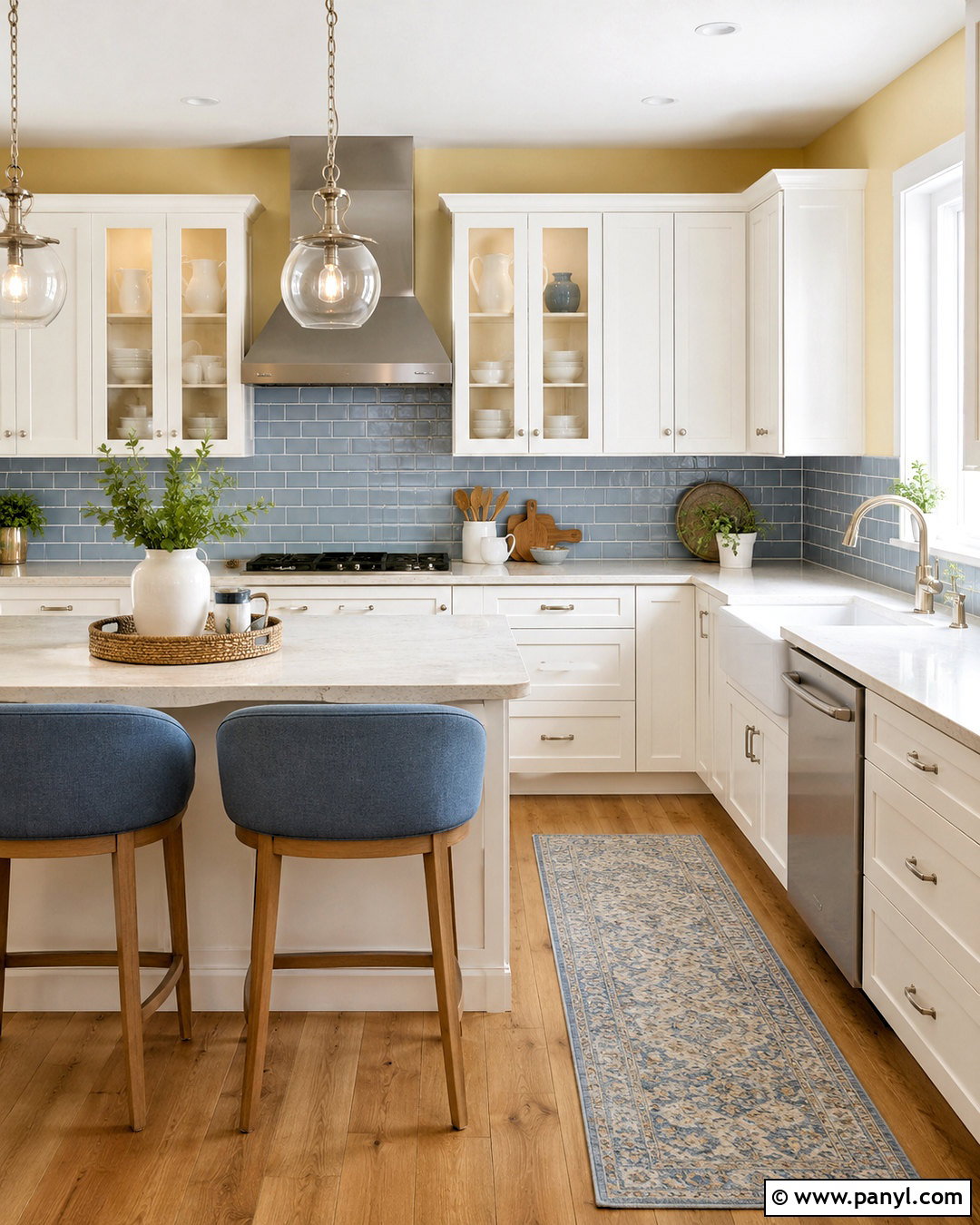
A dusty blue backsplash introduces cool contrast while preserving the sunny effect of pale yellow kitchen walls. Choose handmade ceramic tile in soft denim, powder blue, or muted sky blue. White flat-panel cabinets and pale quartz countertops will frame the tile without making the palette busy. Natural oak flooring adds warmth below, while polished nickel hardware connects easily with the blue. Repeat the backsplash color on upholstered counter stools or a narrow washable runner, but keep other decor neutral. Glass-front upper cabinets can display white dishes and prevent a smaller kitchen from feeling crowded. Use the blue primarily across the main cooking wall so it becomes a clear focal point. The finished space feels fresh and balanced because the cool backsplash tempers the warmth of the yellow and wood.
15. Pale Yellow Kitchen Walls With White Subway Tile
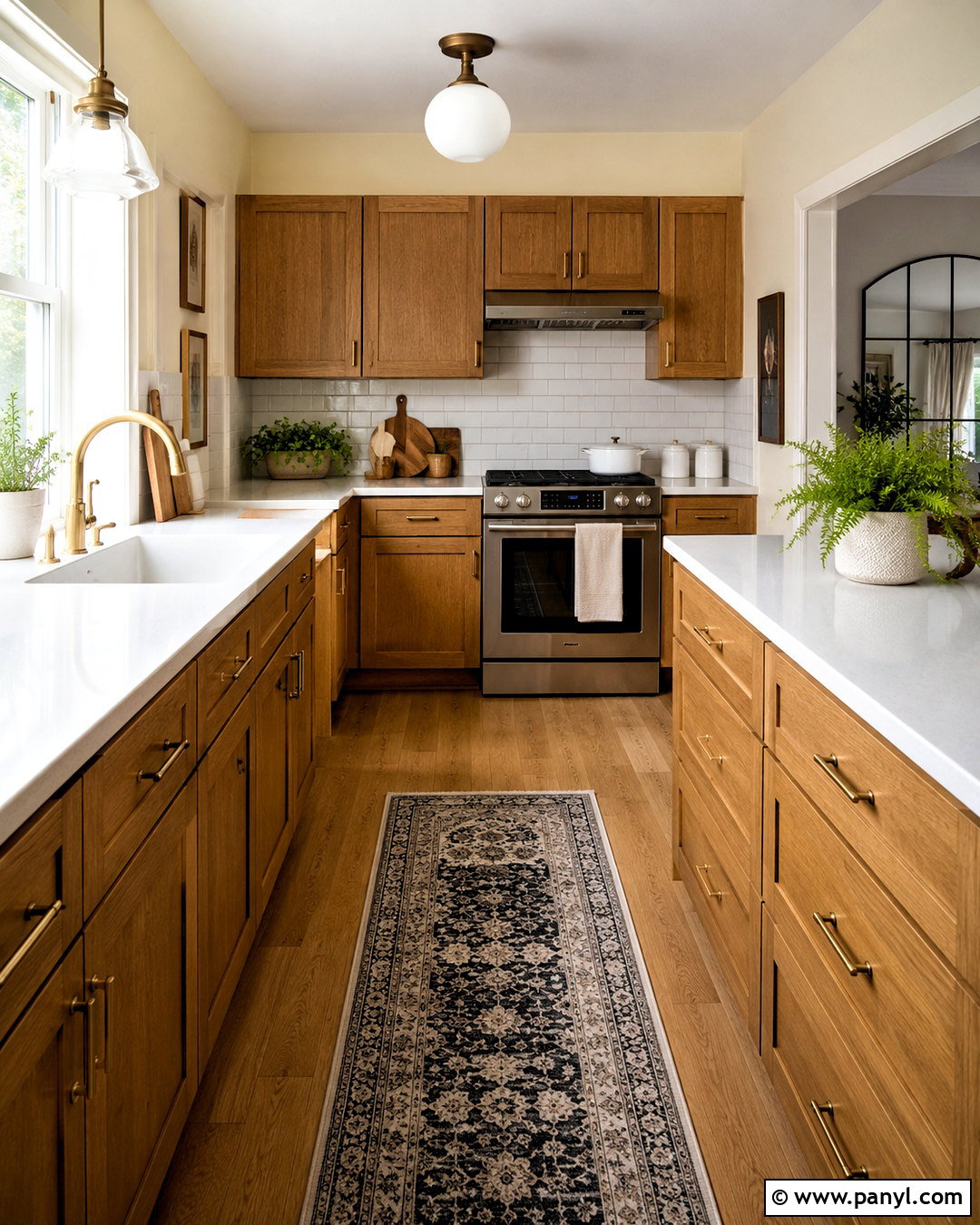
White subway tile creates a dependable transition between pale yellow kitchen walls and almost any cabinet finish. For a classic look, combine the walls with medium oak cabinets, white quartz countertops, and a running-bond backsplash with warm gray grout. Use brushed brass hardware to complement the oak and yellow, then add a simple white pendant above the sink. If the kitchen has limited space, continue the tile to the underside of the upper cabinets to create one bright, uninterrupted work zone. A cream and charcoal runner can add pattern without another permanent color. Keep counters organized with wood boards, white canisters, and a small herb pot. White subway tile is frequently recommended because its quiet surface lets yellow walls remain noticeable without producing excessive color or pattern. ()
16. Pale Yellow Kitchen Walls In A Cottage Kitchen
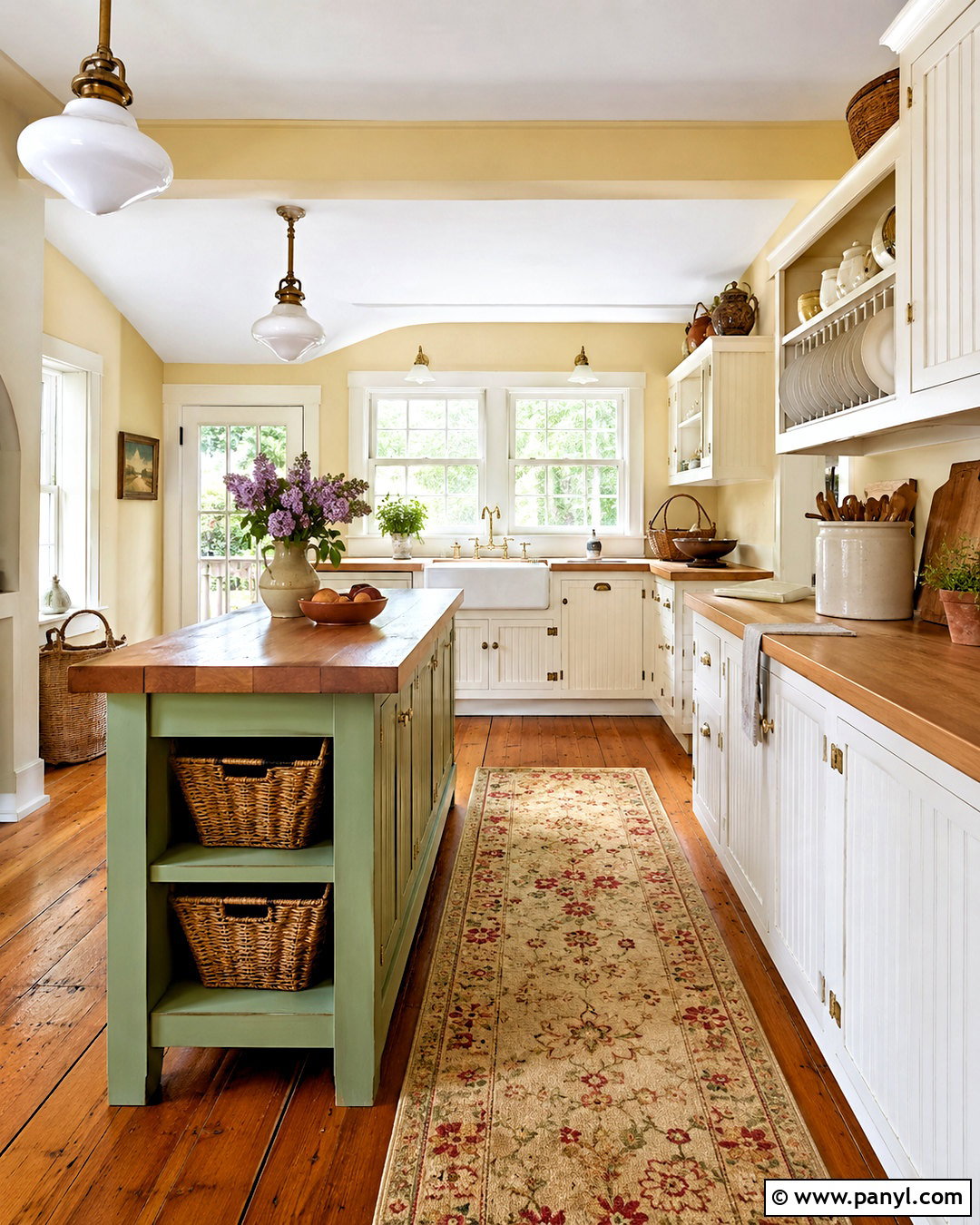
Pale yellow kitchen walls naturally support a cottage setting filled with painted wood and collected texture. Use warm white beadboard cabinets, open plate shelves, and a deep apron-front sink. Butcher-block counters and an ivory square-tile backsplash keep the materials approachable. Paint a freestanding island faded sage green and top it with oak for gentle contrast. Add unlacquered brass latches, a bridge faucet, and simple milk-glass ceiling lights. Wide-plank wood floors and a washable floral runner make the space feel established rather than newly decorated. Display everyday dishes, copper-free neutral cookware, and a few woven baskets, but leave enough open space to avoid clutter. The complete kitchen should feel practical and comfortable, with the pale yellow acting as a soft background that connects the white, green, and natural wood surfaces.
17. Pale Yellow Kitchen Walls In A Modern Kitchen
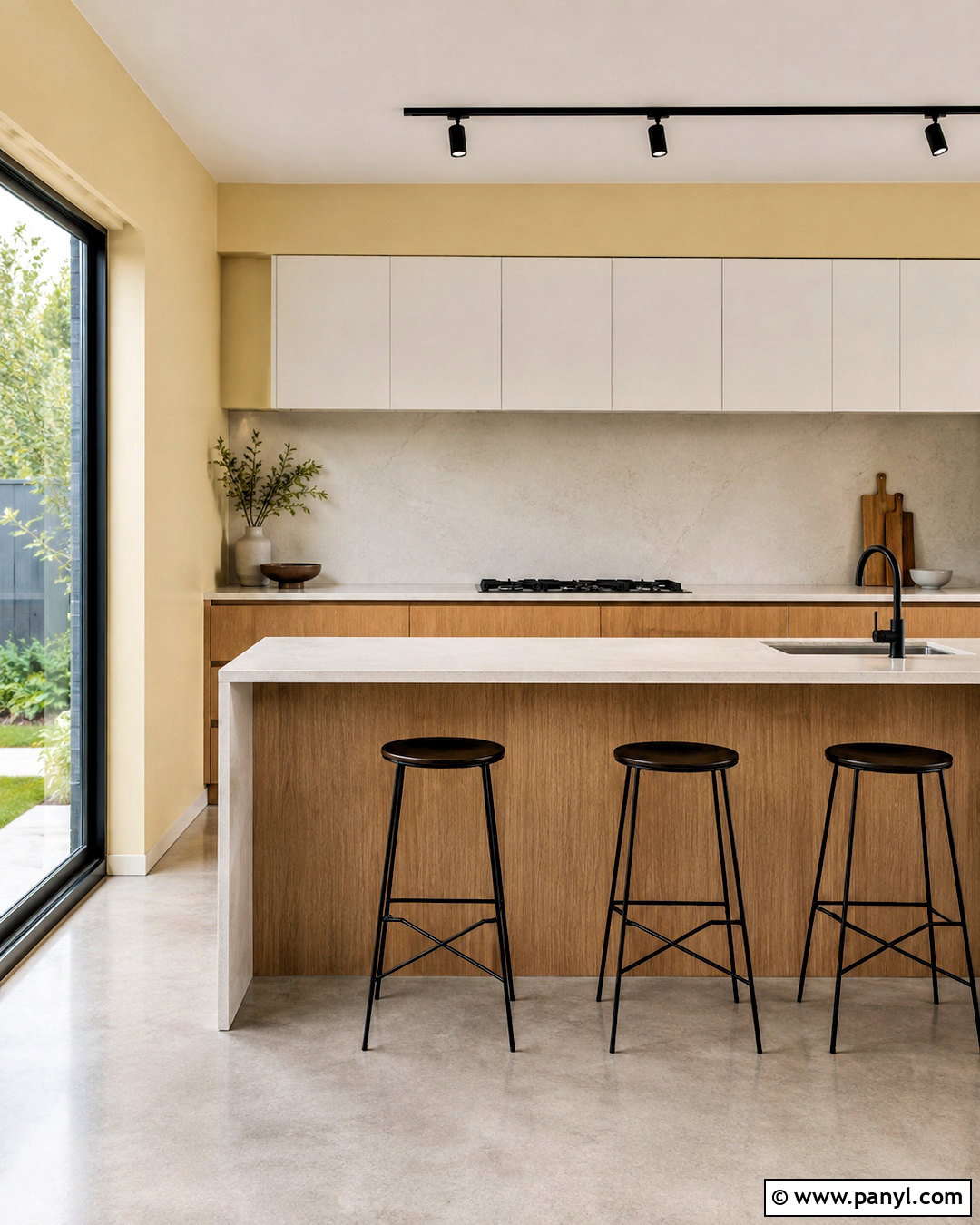
Modern pale yellow kitchen walls look best when surrounded by clean shapes and a limited material palette. Choose a muted yellow that reads almost cream, then pair it with handleless white upper cabinets and light oak lower cabinets. Use a thin-profile white quartz countertop and a matching full-height backsplash for an uninterrupted work surface. Matte black track lighting, a black faucet, and slim black counter stools provide clear contrast. Pale concrete-look flooring can keep the room visually calm while distinguishing it from the oak cabinetry. Limit open storage to one floating shelf displaying a few sculptural white objects. The wall color introduces warmth without weakening the streamlined design. This approach is especially effective in open-plan homes where yellow can define the kitchen while still coordinating with neutral living and dining areas.
18. Pale Yellow Kitchen Walls In A Farmhouse Kitchen
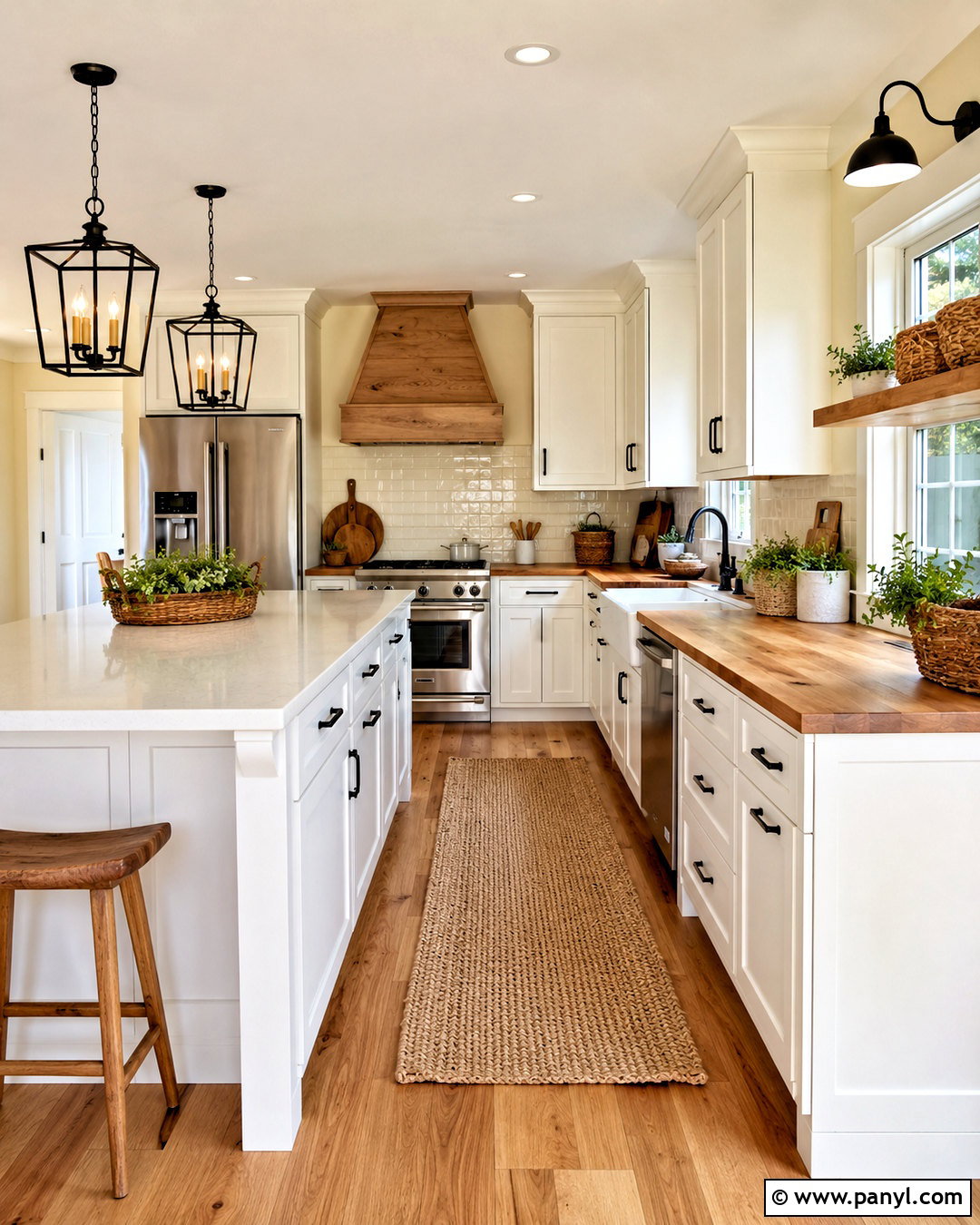
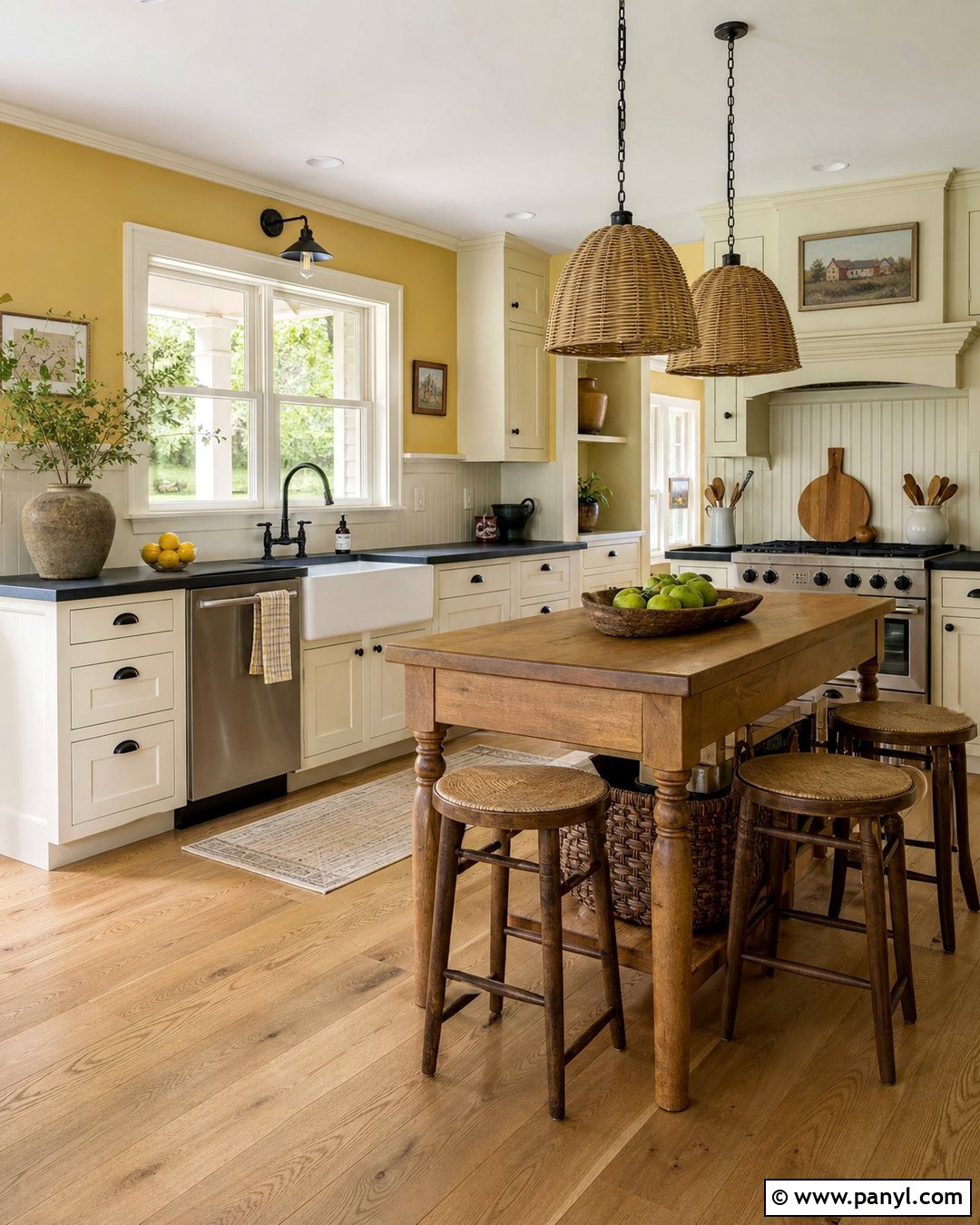
A farmhouse kitchen becomes brighter and more relaxed with pale yellow walls, white Shaker cabinetry, and honest natural materials. Start with a large apron-front sink, butcher-block perimeter counters, and a white quartz-topped island for durability. Install a simple cream subway backsplash and a wood range hood that matches the medium oak flooring. Black iron cabinet pulls, lantern pendants, and counter stools create contrast throughout the room. Use a long neutral runner to soften the floor, then add practical decor such as wood cutting boards, cream crocks, and woven baskets. Skip excessive signs and decorative wording so the kitchen feels current rather than themed. The pale yellow walls provide the friendly farmhouse warmth, while the white, wood, and black finishes organize the room into a cohesive and highly usable family space.
19. Pale Yellow Kitchen Walls In A Small Galley Kitchen
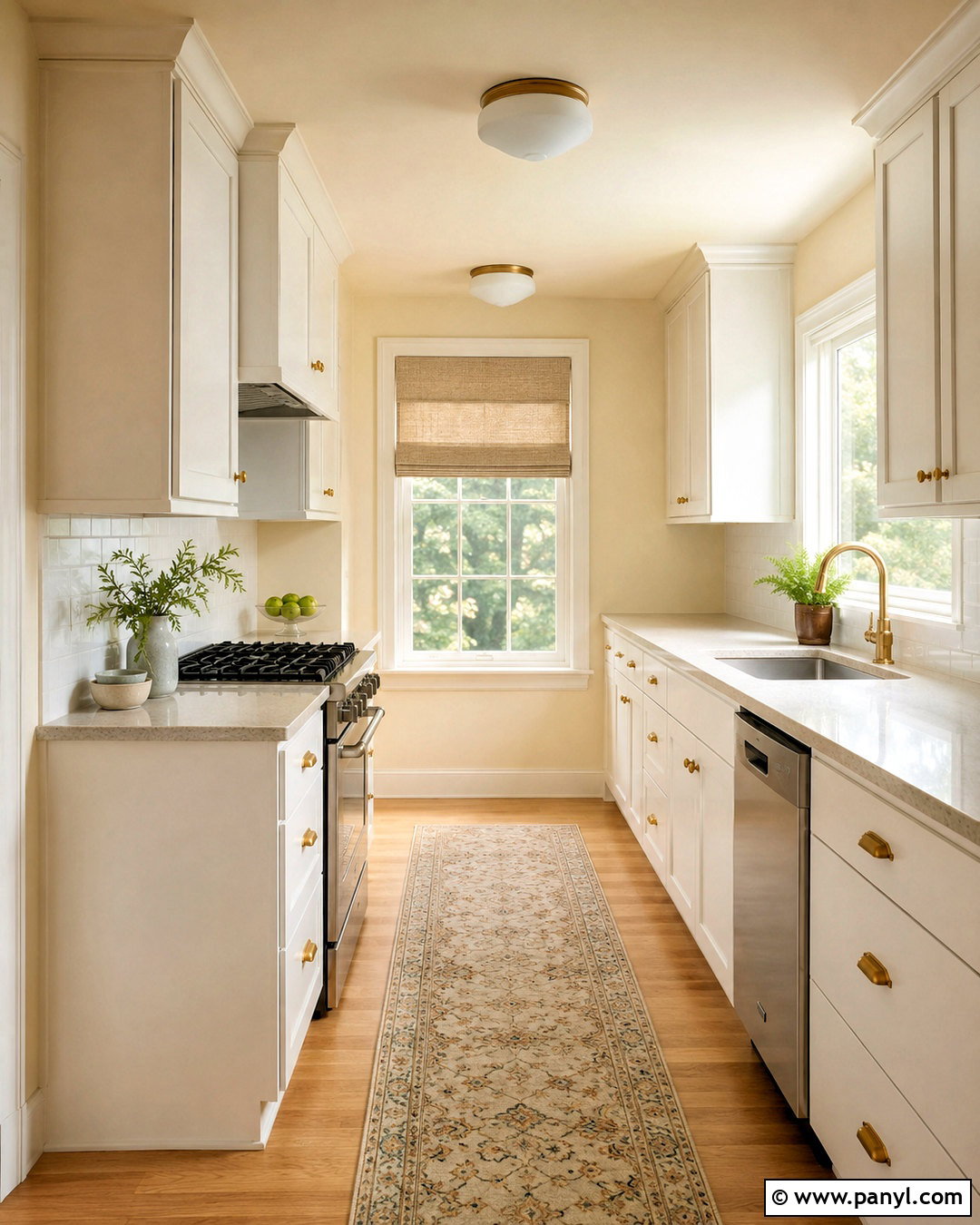
In a small galley kitchen, pale yellow walls can add warmth without visually narrowing the walkway. Use the yellow on the exposed upper walls, then choose warm white cabinets on both sides for consistency. Flat-panel doors and small brass knobs reduce visual clutter. Select pale quartz counters and a glossy white backsplash that reflects light across the narrow space. Light oak or warm beige flooring laid lengthwise can emphasize the kitchen’s longest dimension. Replace heavy window treatments with a simple linen Roman shade, and use bright flush-mount ceiling lights instead of large pendants. Keep only the most frequently used items on the counters. A slim patterned runner can draw the eye forward. The coordinated light palette makes the compact kitchen feel cheerful, practical, and intentionally designed rather than crowded.
20. Pale Yellow Kitchen Walls With A Breakfast Nook
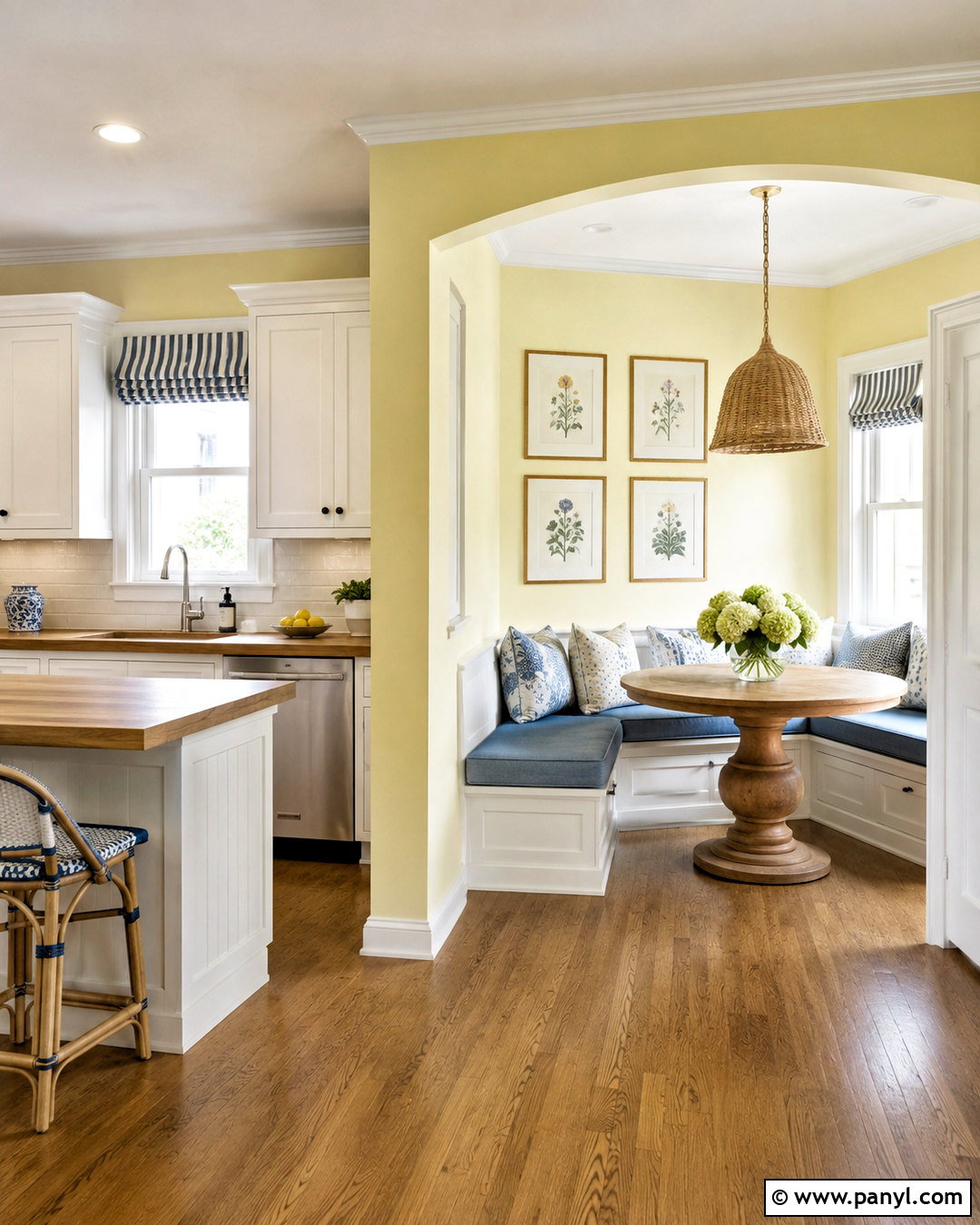
Extend pale yellow kitchen walls into a breakfast nook to create one connected cooking and dining area. Pair the walls with warm white cabinets, oak counters, and an ivory tile backsplash in the kitchen. In the nook, add an L-shaped built-in bench painted white and upholstered with washable blue-gray cushions. Place a round oak pedestal table at the center so movement around the seating remains easy. A woven pendant can define the dining zone, while framed botanical prints introduce quiet color above the bench. Continue the same oak flooring through both spaces for visual continuity. Use a narrow striped Roman shade and one small vase of greenery for a finished touch. This complete arrangement makes the pale yellow feel purposeful because it visually links food preparation, casual meals, and everyday family activity.
Conclusion:
These 20 pale yellow kitchen walls demonstrate how versatile a soft yellow backdrop can be when every surface is considered together. White and cream cabinetry produce a light, classic room, while navy, charcoal, sage, and dusty blue create stronger contrast. Natural oak, butcher block, terracotta, marble, and brass can further shape the mood without hiding the wall color. Before painting, test large samples beside the cabinets, counters, flooring, and backsplash during different times of day. Select a warm, quiet yellow rather than an intense citrus shade for easier coordination. With thoughtful materials, balanced lighting, and restrained decor, pale yellow walls can make a kitchen feel sunny, comfortable, and personal without appearing dated or overly colorful.

Related Ideas and Inspiration:
Leave a Reply