
Gray walls can make a kitchen feel calm, polished, and surprisingly warm when the rest of the palette is planned carefully. The key is choosing a gray with undertones that complement the cabinets, countertops, flooring, and natural light. Cool gray works beautifully with crisp white, navy, and black, while warm gray feels at home beside oak, cream, terracotta, and brass. Texture matters too. Wood grain, handmade tile, woven seating, and soft window treatments prevent gray walls from making the room appear flat or overly cold. Whether you prefer farmhouse comfort, clean modern lines, or colorful cabinetry, these complete designs offer practical combinations you can recreate. Explore each coordinated look in this guide to **25 Kitchen With Gray Walls**.

1. Gray Kitchen Walls With White Cabinets
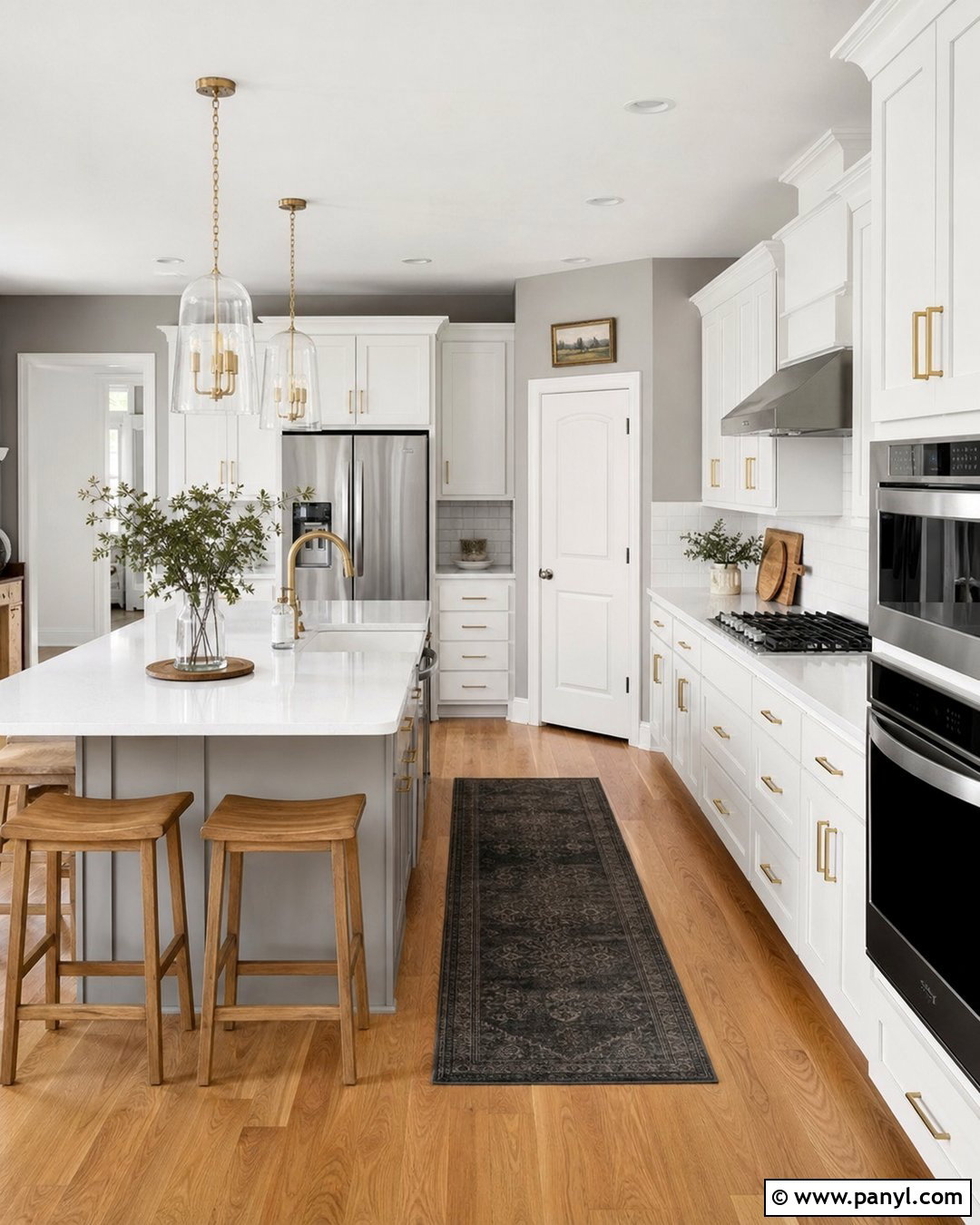
Crisp white cabinets create a bright, balanced contrast against soft gray kitchen walls. Choose a pale gray with a slightly warm undertone so the room feels inviting rather than icy. Simple Shaker cabinets, white quartz countertops, and a glossy white subway tile backsplash keep the foundation timeless. Add medium-tone oak flooring to introduce natural warmth underfoot. Brushed brass cabinet pulls, a matching faucet, and clear glass pendants bring a subtle polished finish. A charcoal runner can connect the wall color to the floor without adding more hard gray surfaces. Finish the room with wooden counter stools, a few ceramic canisters, and fresh greenery. This combination works especially well in kitchens that need to look lighter, cleaner, and more spacious.
2. Gray Kitchen Walls With Oak Cabinets
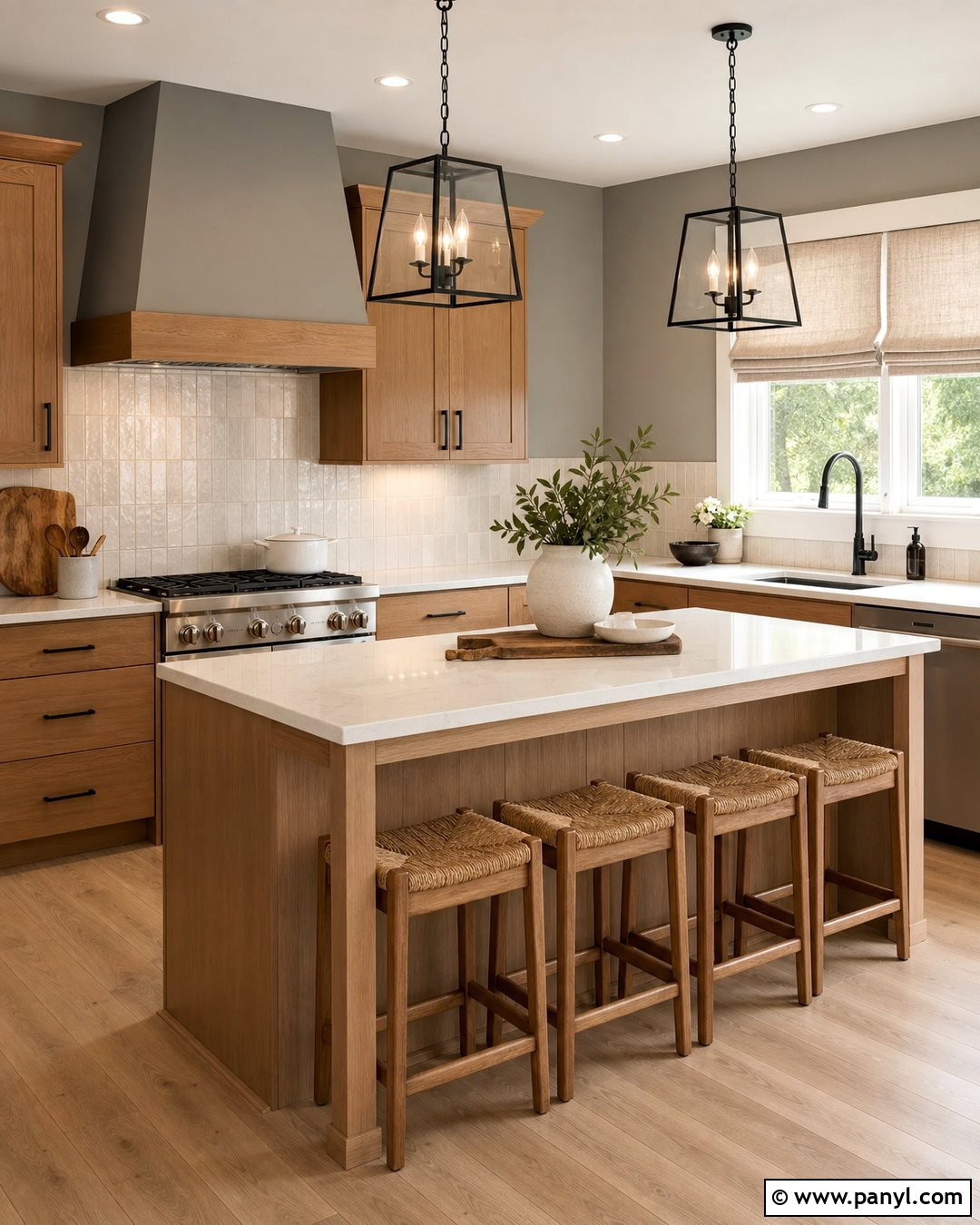
Honey oak and soft gray create a welcoming kitchen when their undertones are coordinated. Select a warm gray wall color that contains a touch of beige rather than blue. The muted background will modernize the oak without hiding its distinctive grain. Use creamy quartz counters and an ivory zellige tile backsplash to soften the contrast. Matte black hardware gives the cabinets a sharper outline, while black-framed pendant lights repeat that detail above the island. Wide-plank oak flooring can work if it is slightly lighter or darker than the cabinetry. Avoid matching every wood surface exactly. Complete the look with woven stools, white stoneware, and simple linen shades. The result feels updated, natural, and comfortable without requiring perfectly good wood cabinets to be painted.
3. Gray Kitchen Walls With Black Cabinets
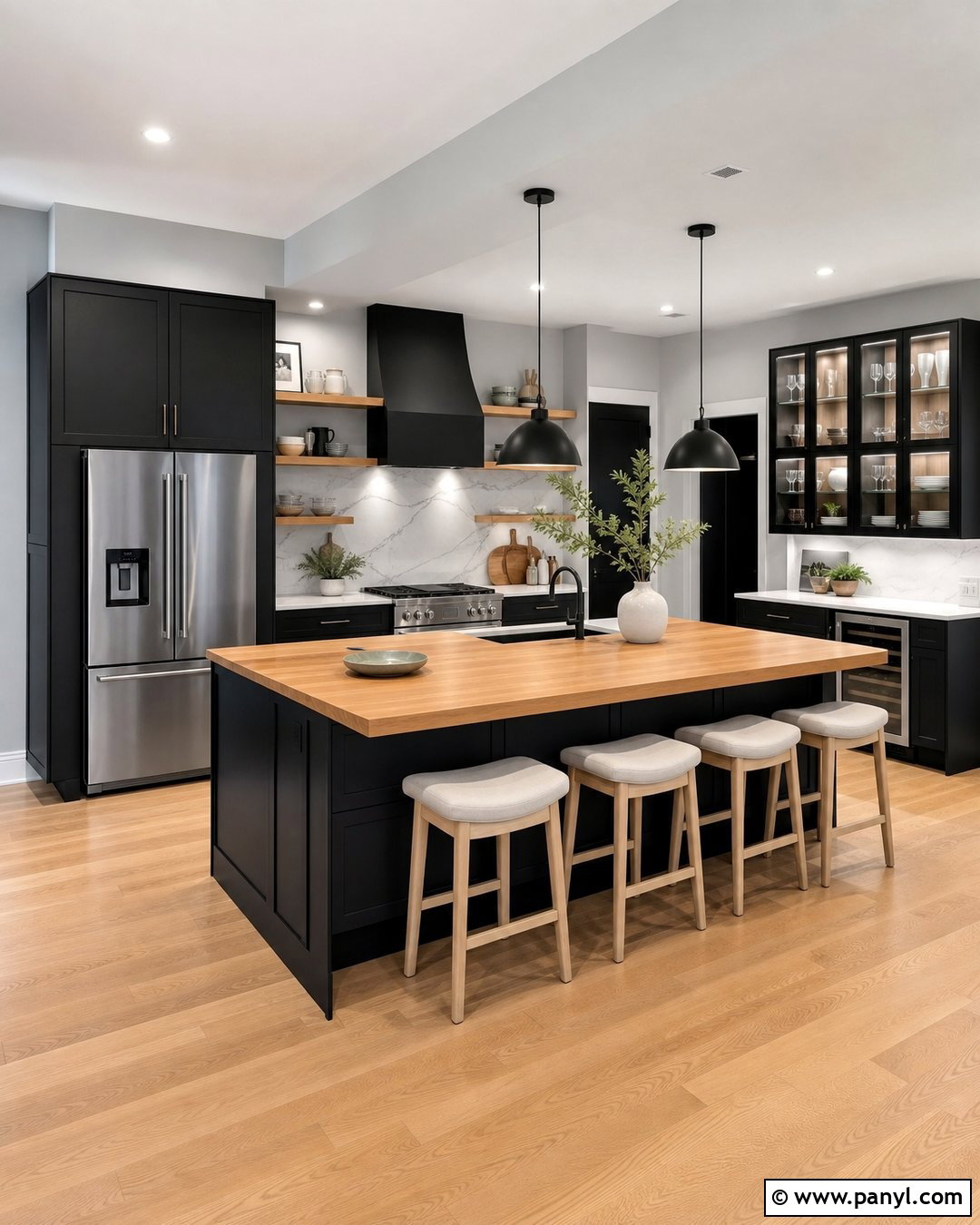
Can a kitchen with black cabinets still feel open and approachable? It can when medium-light gray walls and reflective surfaces balance the darker cabinetry. Use matte black lower cabinets and tall storage units, then limit upper cabinetry to one wall. White quartz countertops and a full-height marble-look backsplash will bounce light around the room. Warm oak flooring and a matching wood island top prevent the black-and-gray palette from becoming severe. Choose brushed nickel fixtures for a clean connection to stainless steel appliances. Glass-front cabinets or open oak shelves provide visual breathing room. Finish with pale upholstered counter stools, minimal pottery, and one large plant. This dramatic kitchen works best with generous windows, strong overhead lighting, and bright under-cabinet illumination.
4. Gray Kitchen Walls With Navy Cabinets
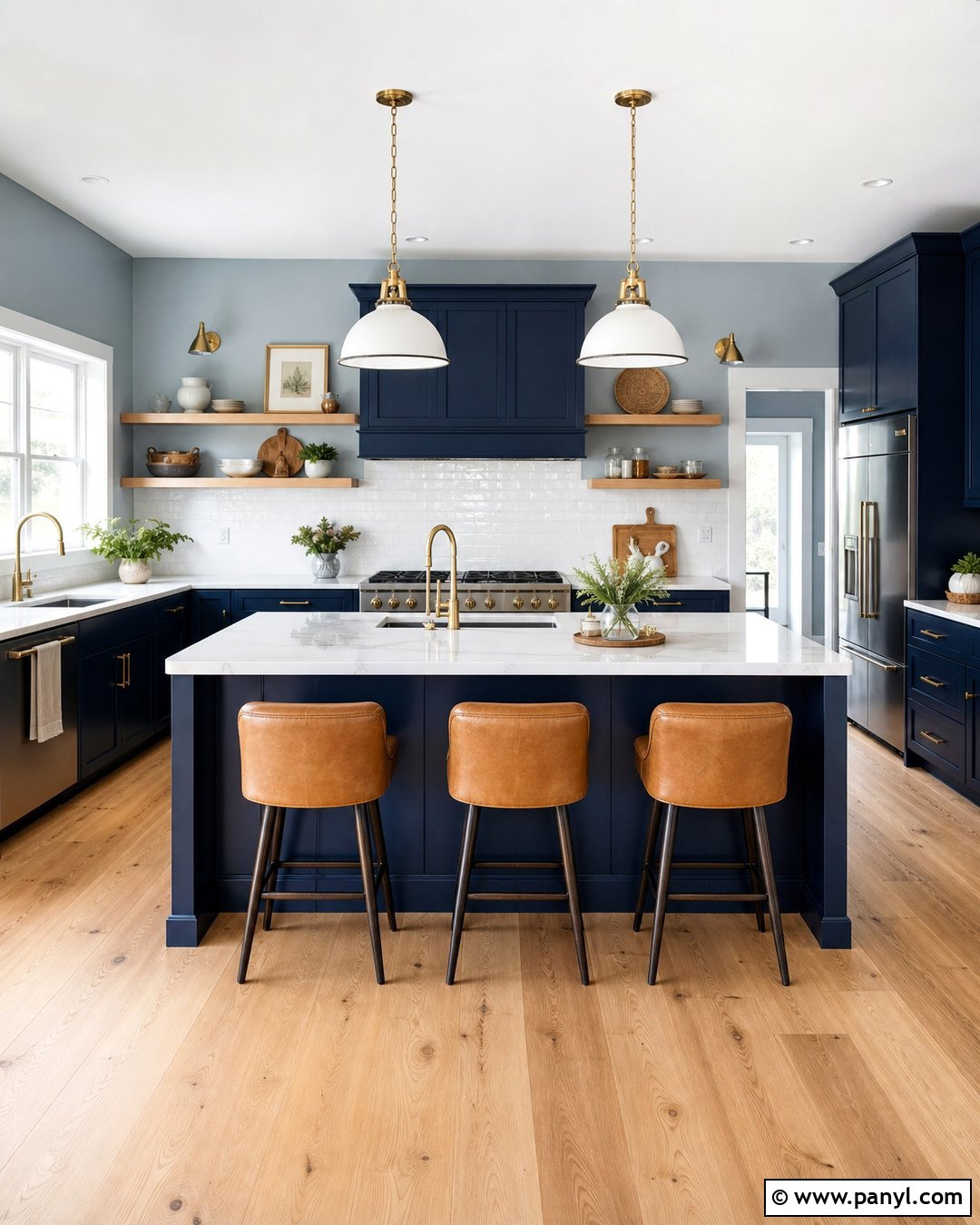
Deep navy cabinetry adds rich color while keeping gray kitchen walls sophisticated and easy to coordinate. A light blue-gray wall shade creates a gentle transition instead of a harsh contrast. Pair the cabinets with white quartz countertops featuring delicate gray veining and a simple white backsplash. Warm brass hardware and pendant lights make the navy appear more vibrant while adding warmth to the cooler palette. Natural white oak flooring keeps the kitchen casual and bright. On a large island, consider navy cabinetry with a thick pale countertop and camel-colored leather stools. White oak floating shelves can replace a few upper cabinets to break up the darker color. Complete the space with striped textiles, clear glass accessories, and restrained coastal details rather than obvious themed decorations.
5. Gray Kitchen Walls With Sage Green Cabinets
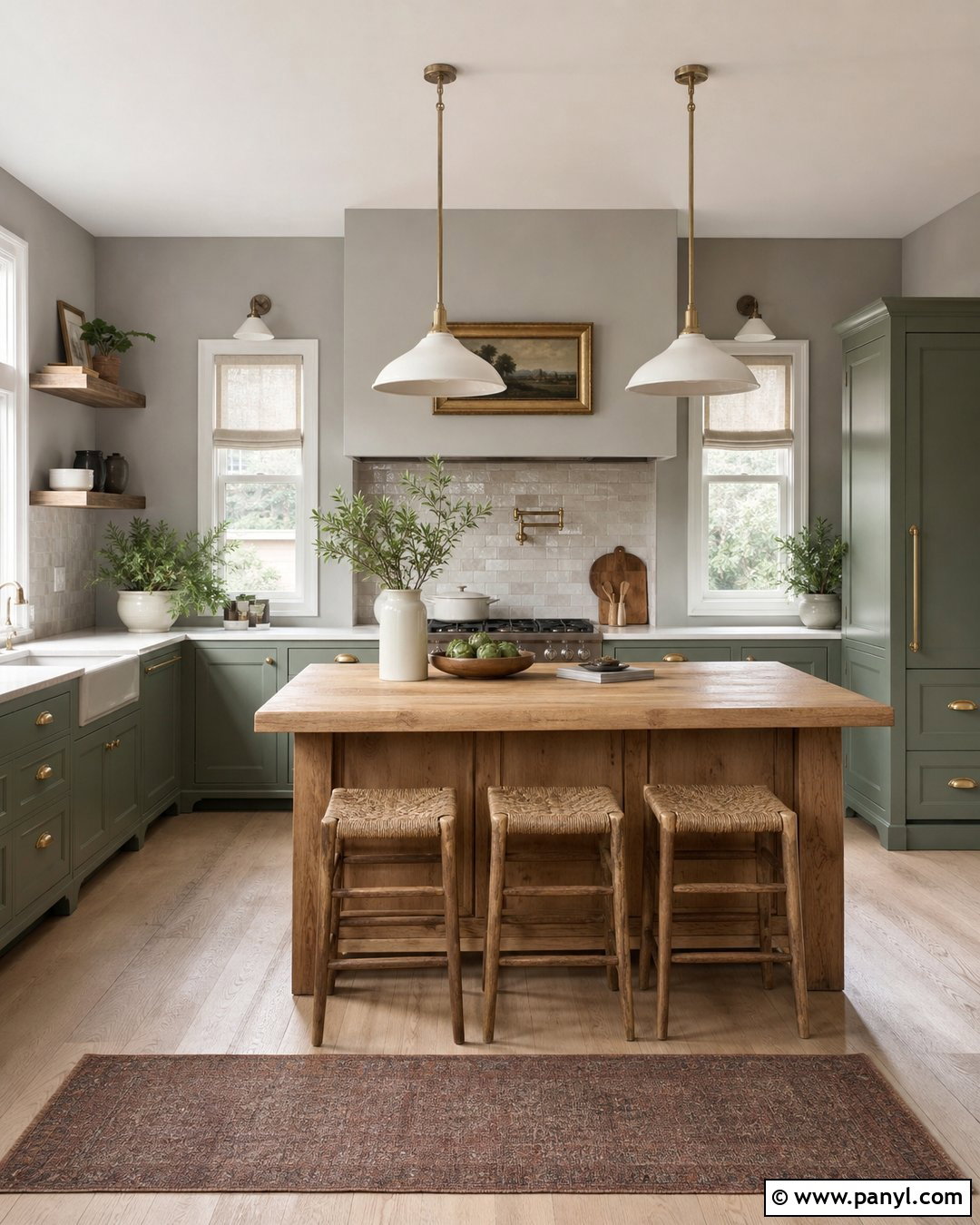
Earthy sage cabinets bring softness and personality to warm gray kitchen walls. Look for a muted green with gray undertones so the two colors flow together naturally. Creamy white countertops, handmade ivory backsplash tiles, and aged brass hardware support the relaxed organic palette. Choose light oak flooring or warm limestone-look porcelain tile to keep the room grounded. A wood island can add another layer of natural texture, especially when paired with woven rush-seat stools. Keep window coverings simple with off-white linen Roman shades. Black accents should be used sparingly, perhaps on the range or narrow window frames. Potted herbs, wooden cutting boards, and handcrafted ceramics complete this practical kitchen, creating a fresh look that feels colorful without becoming loud or overly trendy.
6. Gray Kitchen Walls With Cream Cabinets
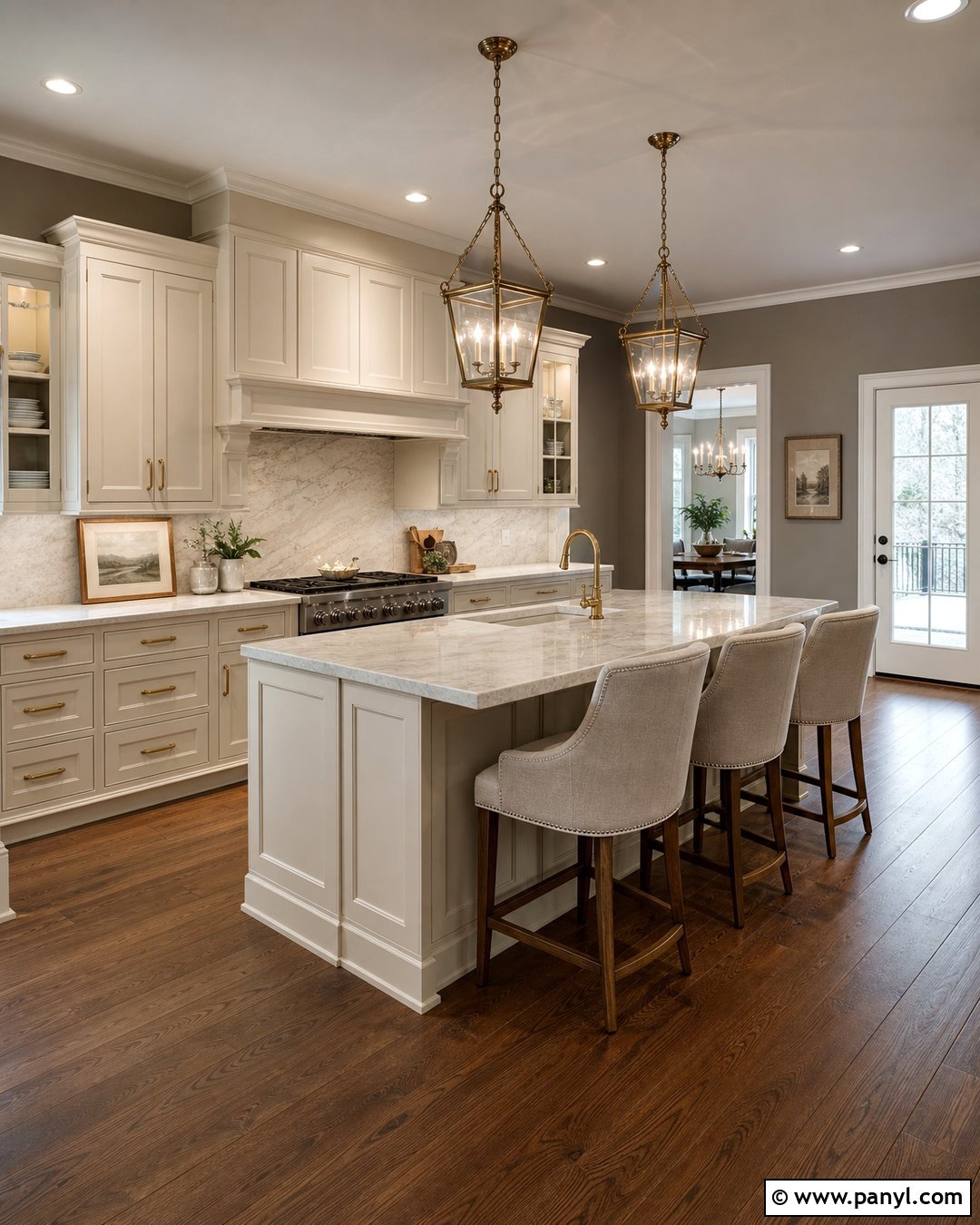
Cream cabinets soften gray walls and create a warm transitional kitchen that feels more relaxed than a strict white-and-gray scheme. Use a medium greige wall color with brown undertones to support the cabinetry. Choose quartz or quartzite countertops that mix cream, taupe, and faint gray veining. A simple stone backsplash can continue from the counters for a seamless, refined appearance. Antique brass pulls, traditional bridge faucets, and lantern-style pendants add character without making the space feel formal. Medium walnut flooring provides depth, while a painted cream island keeps the layout light. Upholstered counter stools in oatmeal fabric introduce softness. Display only a few useful pieces, such as wood boards and neutral pottery, so the coordinated finishes remain the focus of this comfortable, timeless kitchen.
7. Gray Kitchen Walls With Charcoal Cabinets
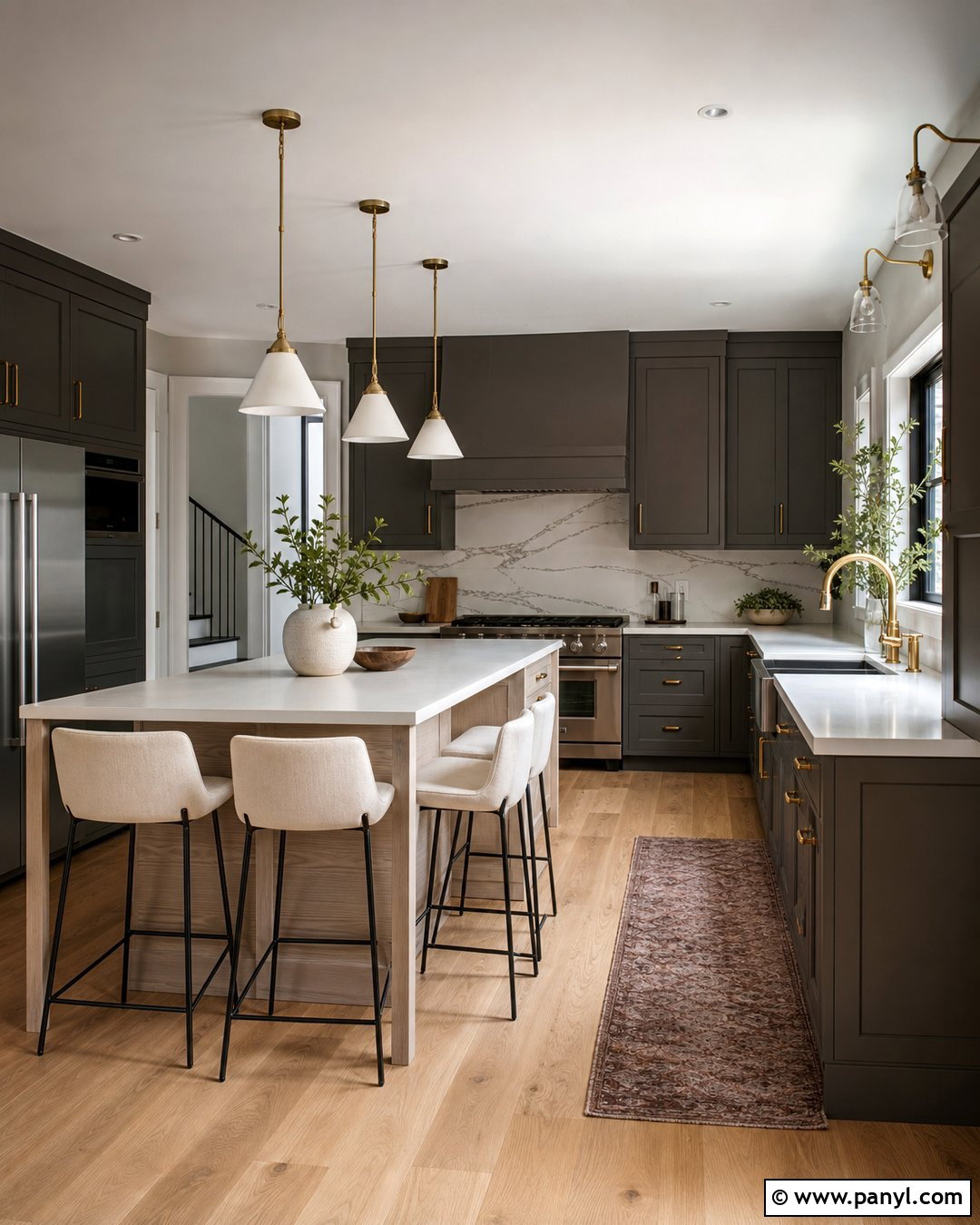
A tonal gray kitchen can feel layered instead of monotonous when each surface has a different depth and texture. Pair charcoal cabinets with light warm-gray walls, pale countertops, and natural wood flooring. The difference between the wall and cabinet colors should be clear enough to define the cabinetry. Select a backsplash with subtle movement, such as off-white stone with fine charcoal veining. Brushed brass handles and a warm metal faucet brighten the deep cabinet finish. Use white oak on the island base or open shelving to break up the gray surfaces. Soft globe pendants offer a lighter shape above the work area. Add cream stools and a washable patterned runner containing gray, tan, and rust. These warm details keep the finished kitchen dimensional, practical, and welcoming.
8. Gray Kitchen Walls With Two Tone Cabinets
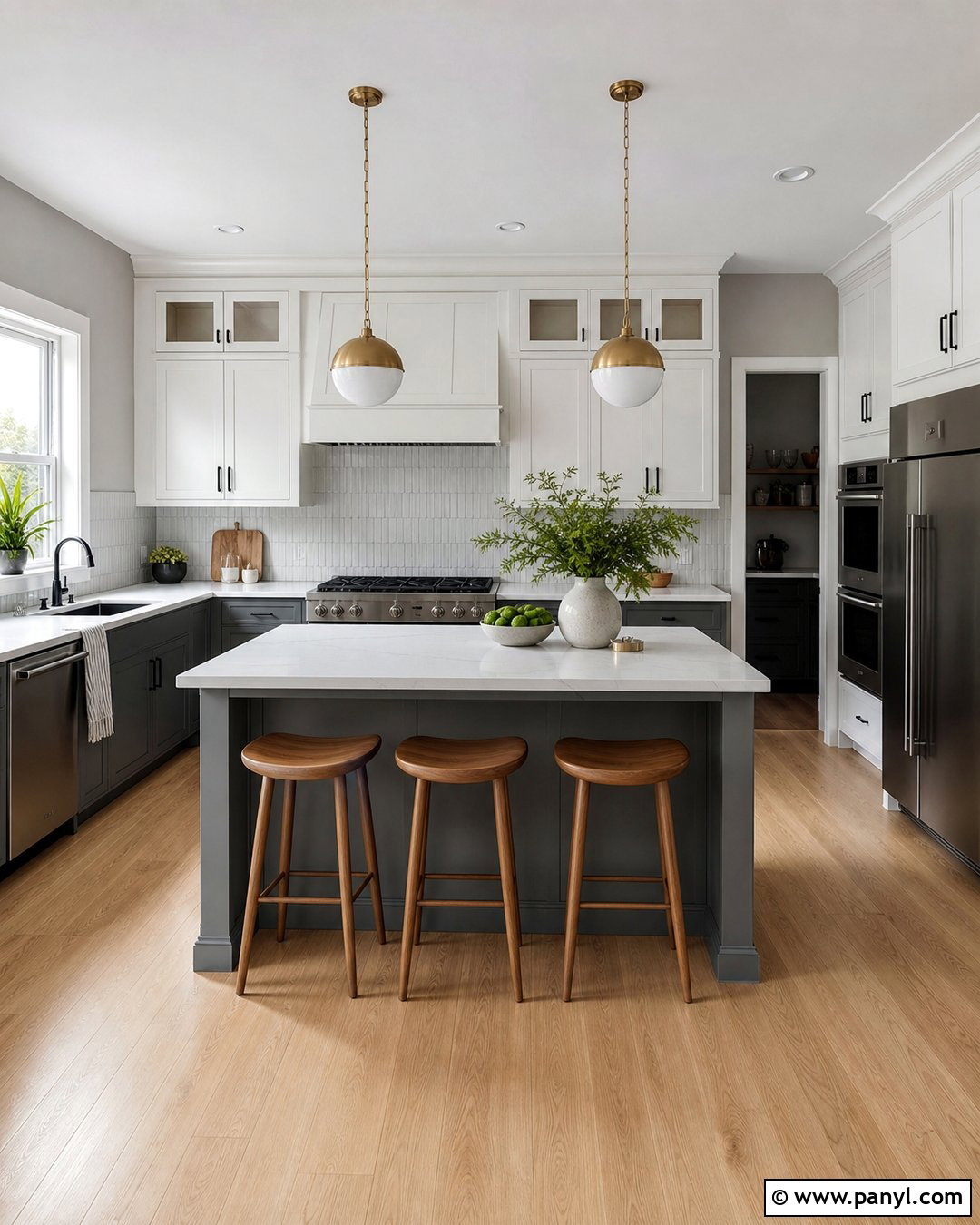
Two-tone cabinets allow gray walls to connect several colors within one complete kitchen. Use white upper cabinets to keep the room airy and deep gray lower cabinets to anchor the layout. Paint the walls a softer gray that sits between the two cabinet shades. White quartz countertops and a lightly textured backsplash maintain a clean transition across the work zone. Bring in natural oak through the floor, shelves, and counter stools for essential warmth. Black cabinet pulls can add definition, while brushed brass pendants introduce a more decorative accent. Keep the island gray if you want a strong focal point, or choose white for a lighter result. A few green plants and warm neutral textiles make this flexible combination feel comfortable rather than overly coordinated.
9. Gray Kitchen Walls With Walnut Cabinets
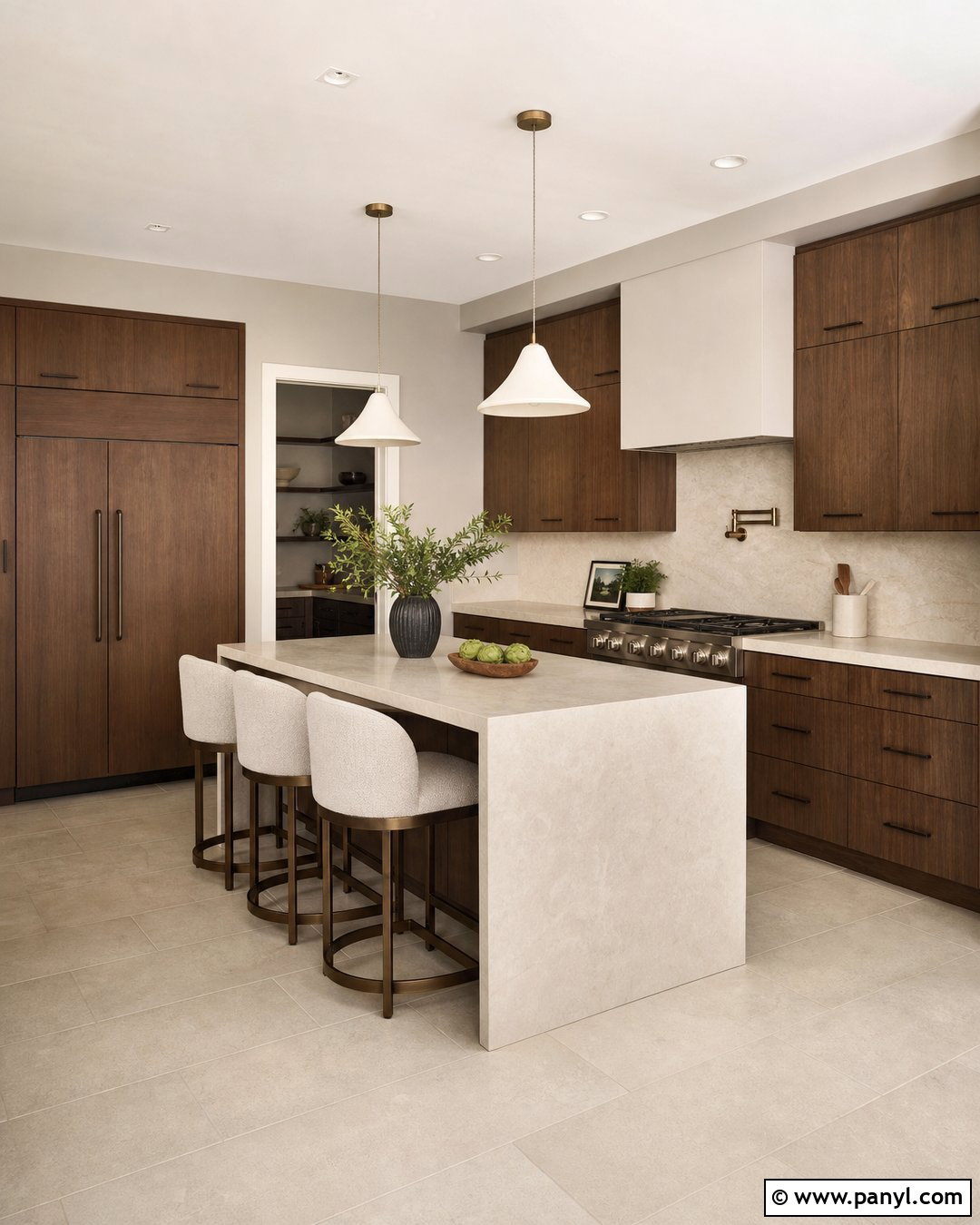
Rich walnut cabinetry looks especially striking beside quiet gray kitchen walls. Choose a pale greige that highlights the wood’s brown tones without competing with its grain. Flat-panel walnut cabinets create a clean modern base, while creamy stone countertops keep the room from feeling too dark. Continue the countertop material onto the backsplash for an uninterrupted surface with minimal grout lines. Use aged bronze or matte black pulls, depending on whether you want a softer or sharper finish. Large-format warm beige floor tile provides subtle contrast to the cabinetry. Above the island, sculptural white pendants add a lighter visual layer. Finish with oatmeal-colored stools, a simple wood bowl, and restrained greenery. The complete palette feels warm, streamlined, and naturally sophisticated.
10. Gray Kitchen Walls With Blue Gray Cabinets
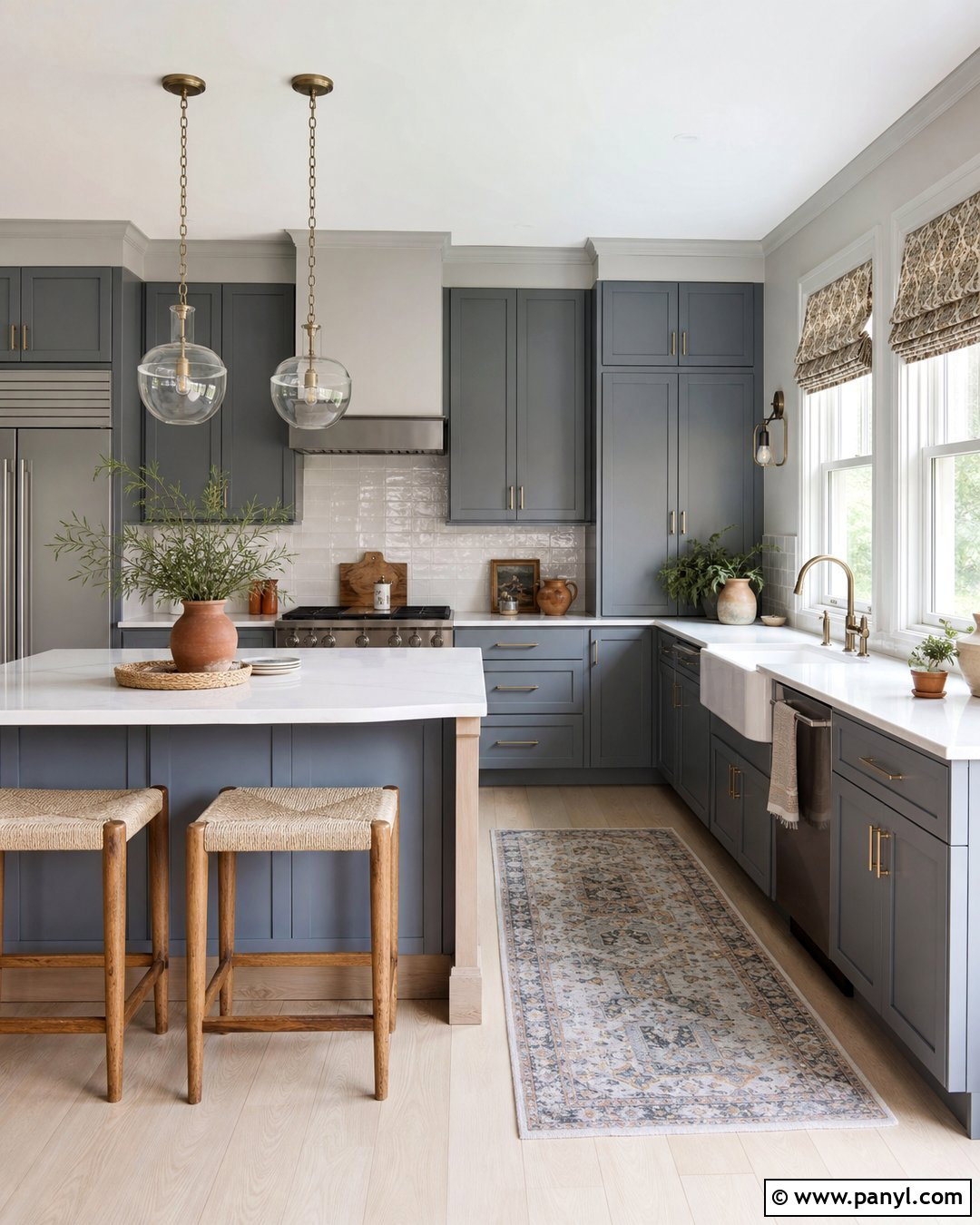
Blue-gray cabinets create a calm, gently colorful kitchen that pairs naturally with light gray walls. Make sure the walls are noticeably lighter than the cabinetry so the room maintains definition. White countertops and pearly backsplash tiles reflect light while enhancing the subtle blue undertone. Satin nickel hardware offers a quiet finish that coordinates with stainless steel appliances. For warmth, install pale oak flooring and use matching wood stools at the island. A white farmhouse sink can soften the tailored cabinetry, while simple shaded pendants keep the design comfortable. Add patterned Roman shades containing muted blue, cream, and gray to connect the palette. Small touches of terracotta or warm brown provide contrast, preventing the finished room from appearing too cool or washed out.
11. Gray Kitchen Walls With Natural Wood Island
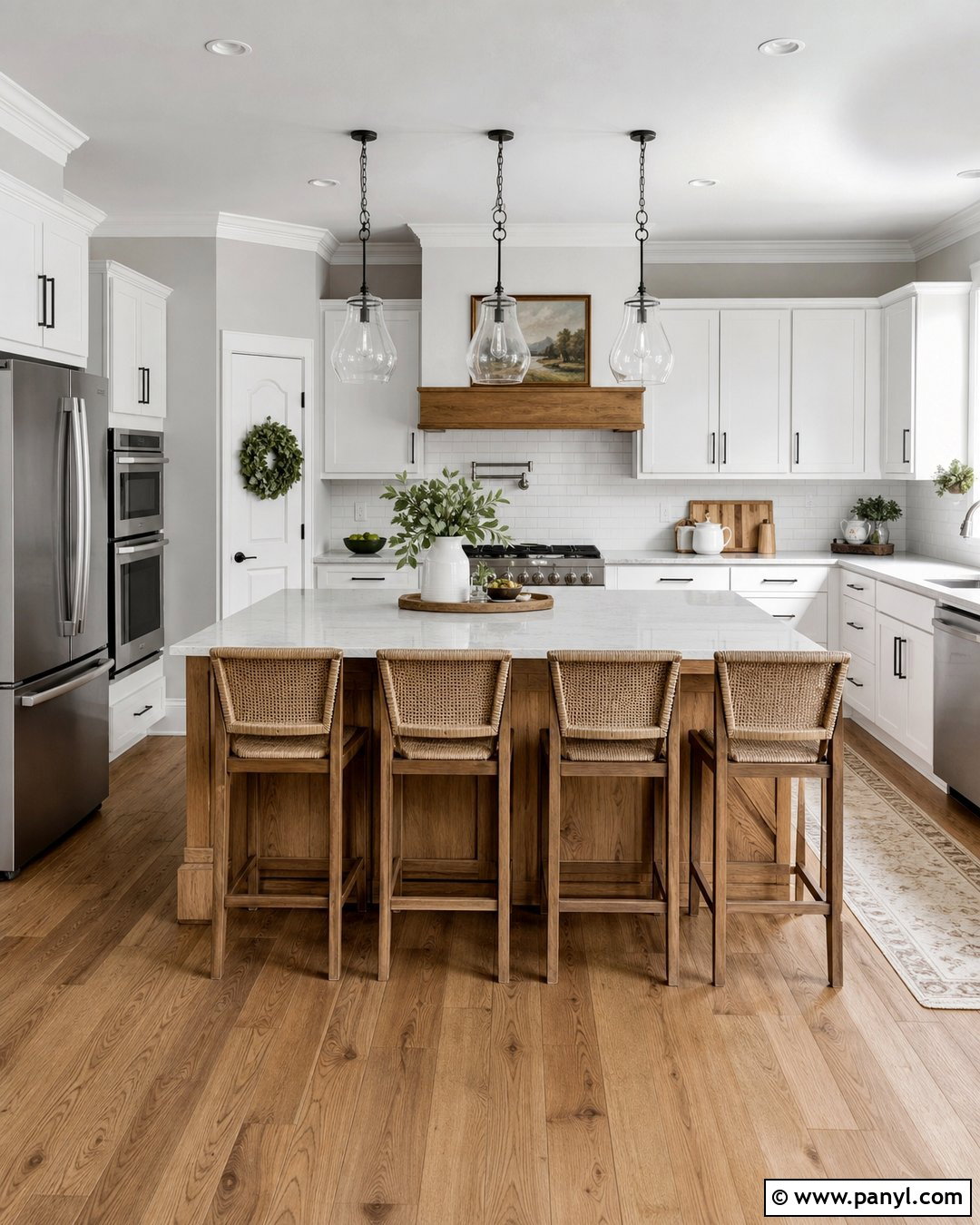
A natural wood island can become the warming centerpiece of a kitchen built around gray walls. Start with light gray paint and simple white perimeter cabinets to create an airy background. Choose a substantial oak island with visible grain, deep drawers, and a pale quartz worktop. Repeat the oak on open shelving or inside glass-front cabinets so the island does not look disconnected. White tile, stainless steel appliances, and polished nickel fixtures maintain a fresh appearance. Medium-tone wood flooring should complement the island without matching it exactly. Comfortable counter stools with woven backs add another natural texture. Finish the space with clear pendants, neutral dishware, and one understated vintage runner. Every element supports a bright, functional kitchen with warmth at its center.
12. Gray Kitchen Walls With Marble Backsplash
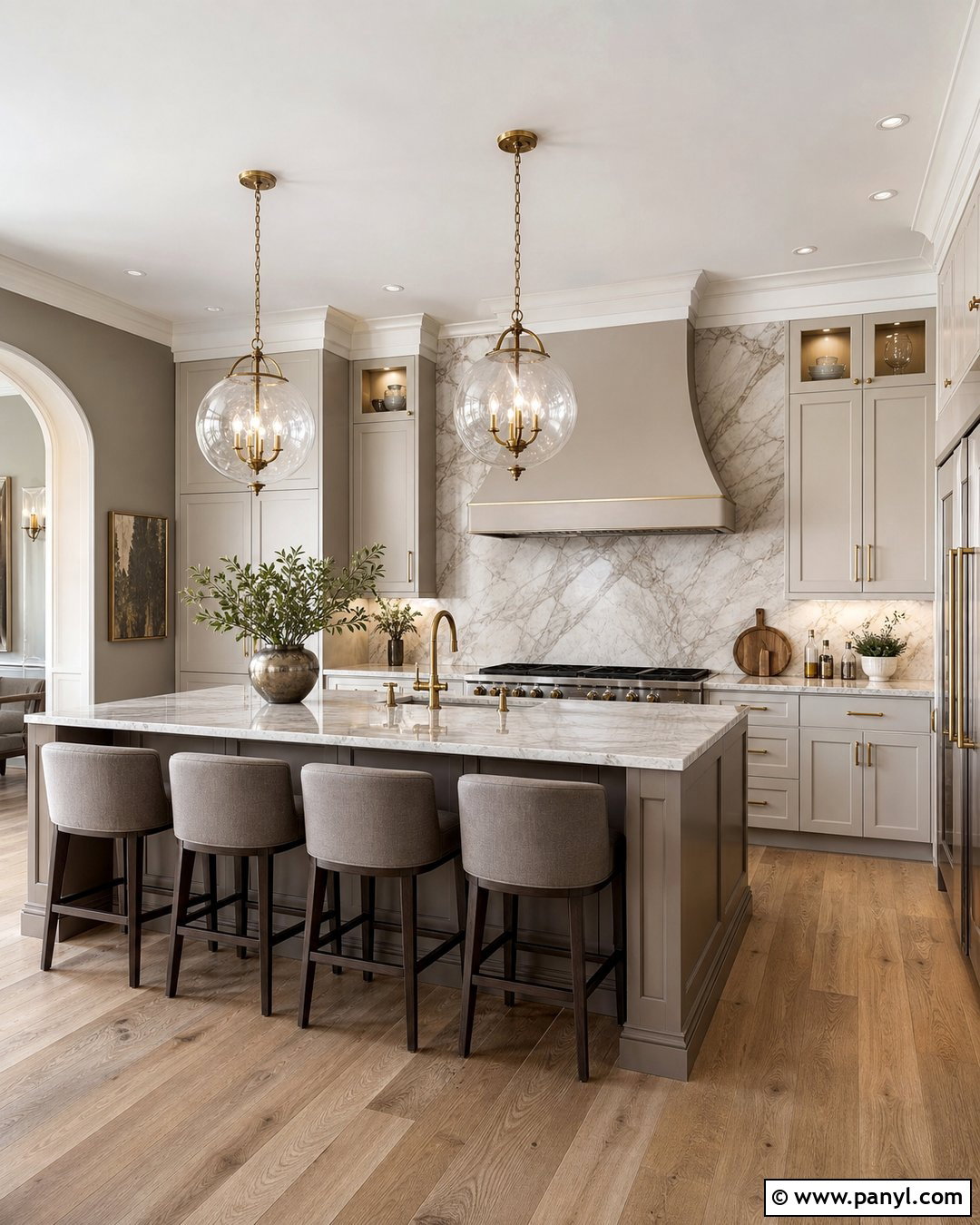
A marble backsplash brings movement and elegance to a kitchen with gray walls. Select a slab or large-format tile containing both gray veining and warm cream areas. Those variations will connect the wall color to off-white cabinets, brass hardware, and natural wood flooring. Extend the marble from the countertop to the underside of the upper cabinets for a clean, continuous focal point. Keep cabinet doors simple so the stone remains visually prominent. A soft warm-gray wall paint works better than a steely shade beside creamy marble. Add a painted taupe island with upholstered stools for subtle contrast. Glass globe pendants, a brass faucet, and discreet under-cabinet lighting highlight the material without overwhelming it. Minimal countertop decor keeps the polished, complete kitchen feeling calm.
13. Gray Kitchen Walls With Subway Tile
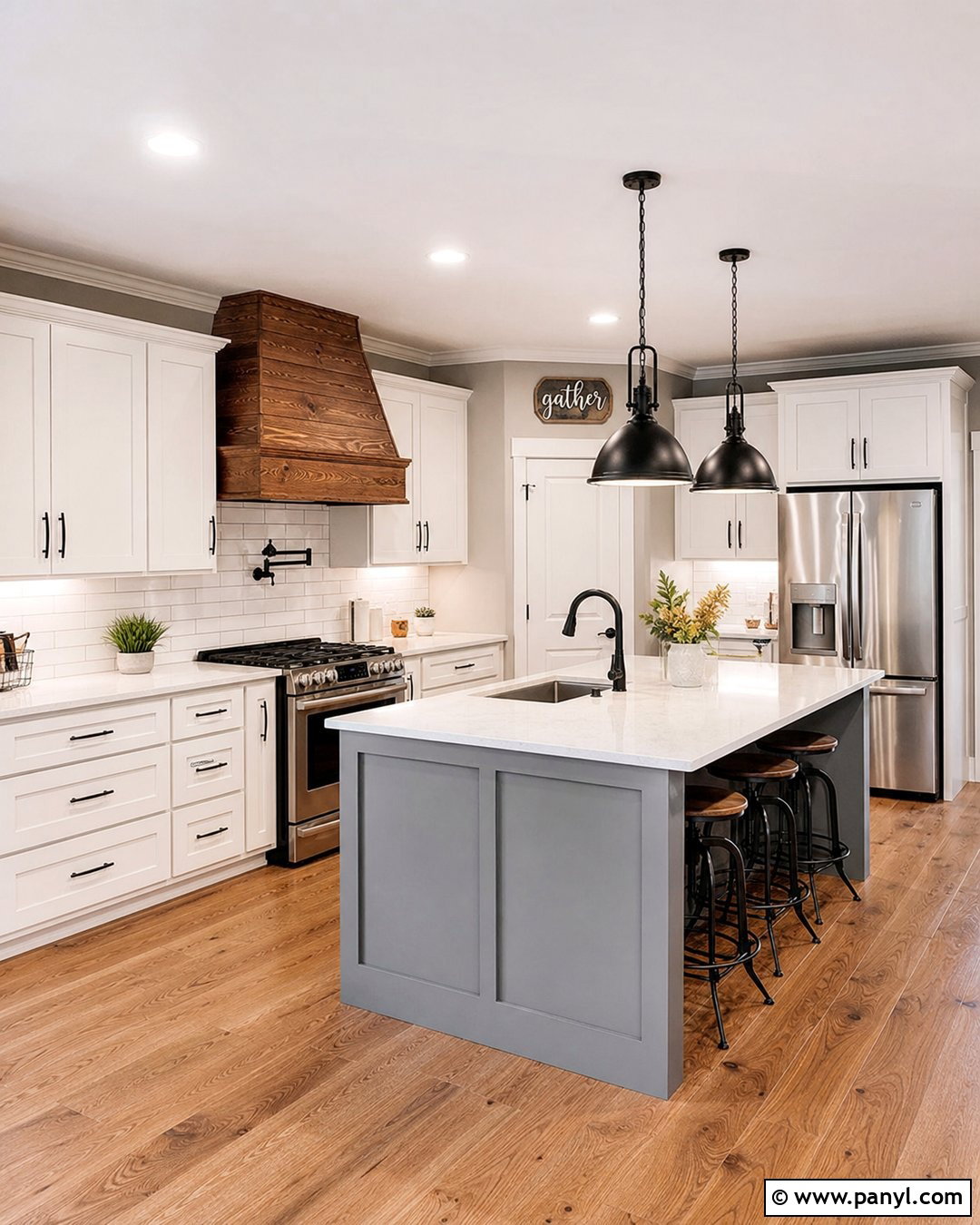
White subway tile offers an affordable, familiar backdrop that keeps gray kitchen walls looking fresh. Choose warm light-gray paint, white Shaker cabinets, and medium oak flooring for a balanced foundation. Install the backsplash in a traditional horizontal layout with soft gray grout to define the shape without creating heavy lines. Black hardware and industrial-style pendants can add crisp contrast, while a wood range hood introduces warmth above the cooking area. Use durable white quartz counters with minimal pattern so the tile and cabinetry remain easy to coordinate. A compact island painted muted gray can provide storage and casual seating. Complete the look with striped kitchen towels, wood cutting boards, and a washable runner. The finished room feels classic, practical, and easy to update.
14. Gray Kitchen Walls With Patterned Tile
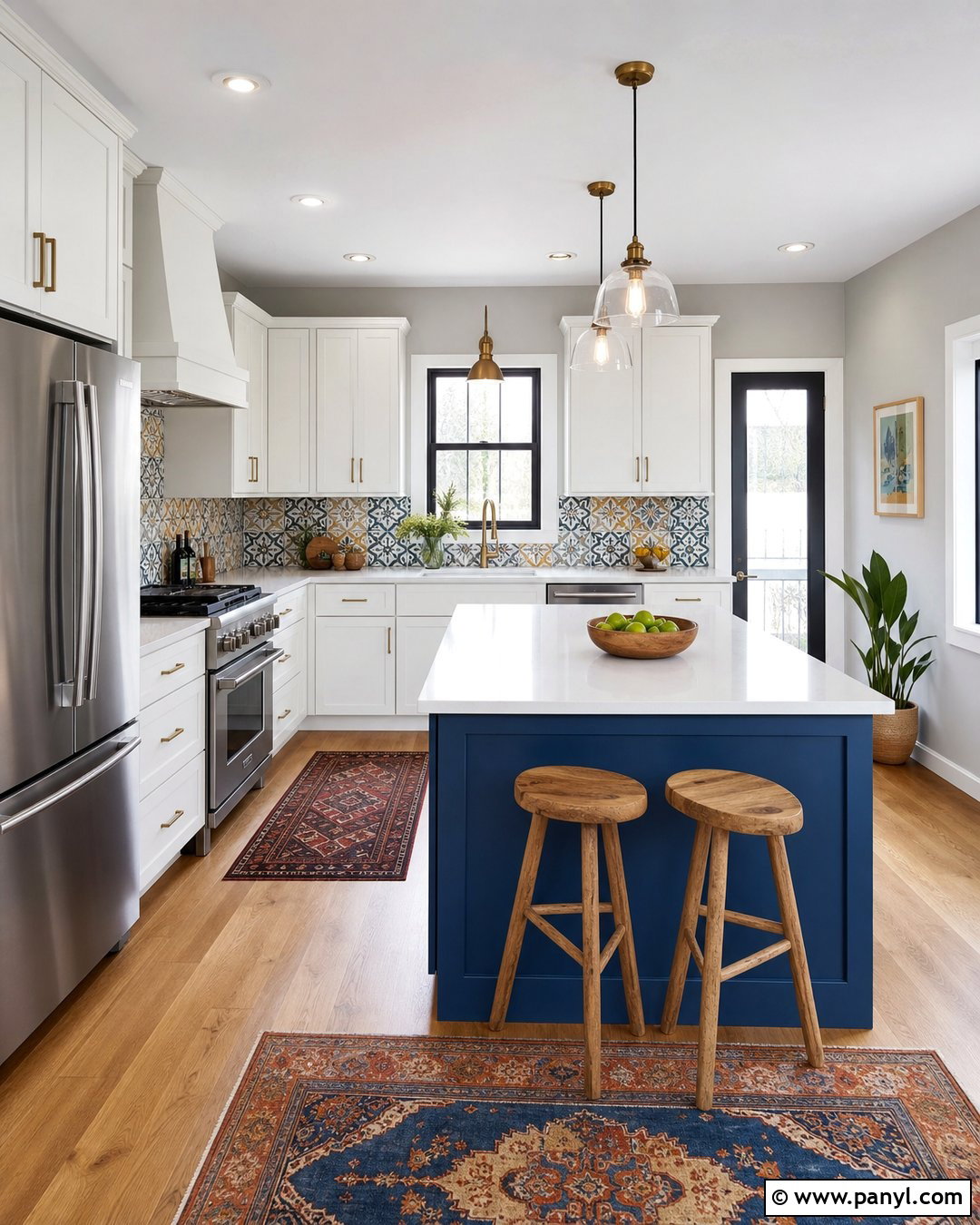
Patterned tile can energize gray kitchen walls while giving the room a clear focal point. Keep the wall paint soft and neutral, then choose backsplash tile featuring gray, cream, muted blue, and a small amount of warm tan. White cabinets prevent the pattern from making the kitchen feel crowded. Use quiet quartz countertops and medium wood flooring to balance the decorative backsplash. The island can repeat the tile’s blue or charcoal shade for a coordinated two-color arrangement. Select simple brass hardware and streamlined pendants rather than adding more intricate details. Open shelves should hold plain cream dishes and clear glassware. A solid-colored runner and natural wood stools finish the design. This approach works particularly well when homeowners want personality without covering every surface in bold color.
15. Gray Kitchen Walls With Wood Shelves
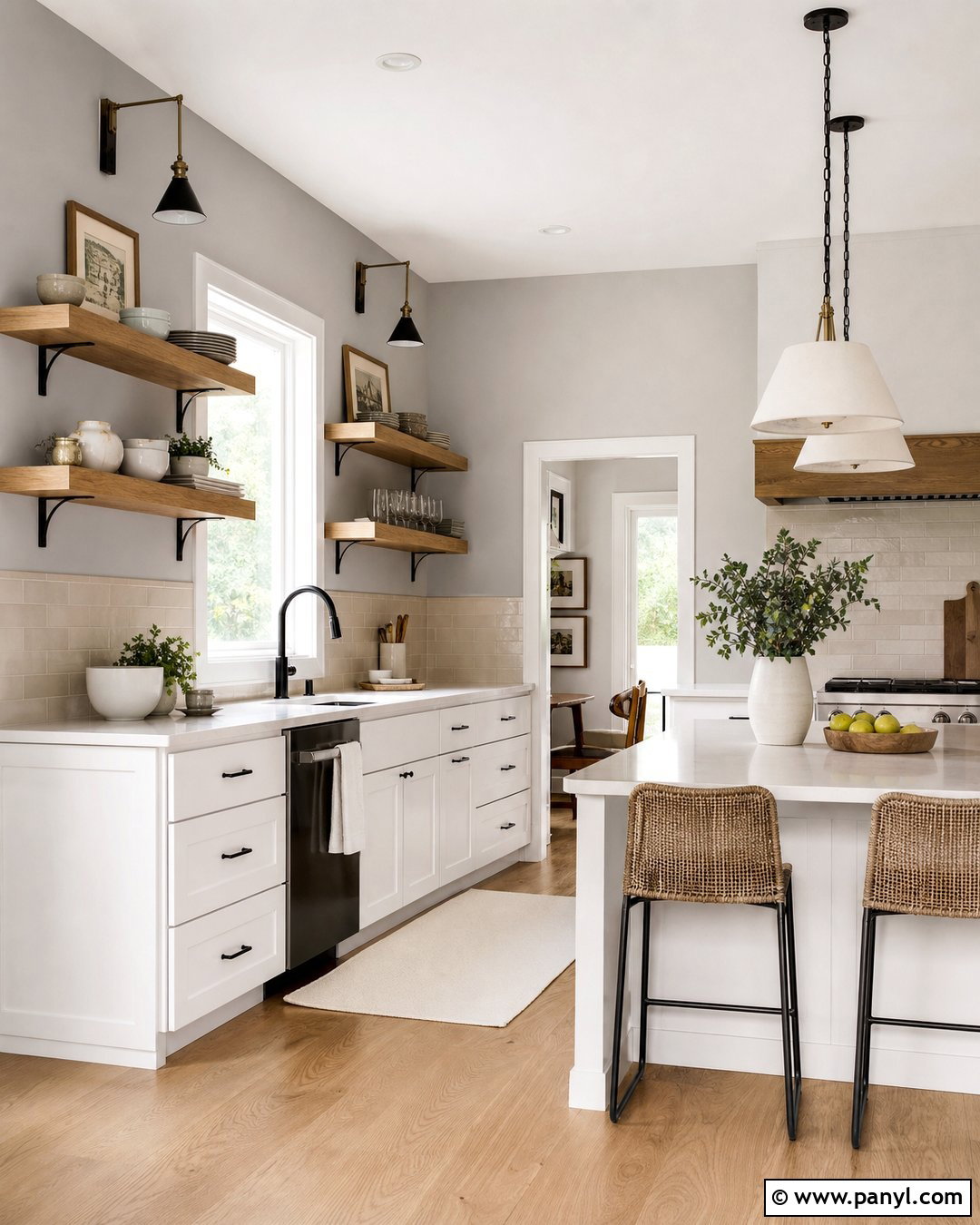
Open wood shelves introduce warmth, function, and an airy feeling to gray kitchen walls. Use two or three thick oak shelves above a long counter rather than replacing every upper cabinet. Soft gray walls provide contrast behind white dishes, glass jars, and natural wood accessories. Pair the shelving with white lower cabinets, creamy quartz counters, and an ivory tile backsplash limited to the cooking and sink zones. Light oak flooring connects visually with the shelves, while matte black brackets and cabinet pulls add structure. Install slim wall sconces above the shelving to illuminate the display and work surface. Keep frequently used pieces within easy reach and avoid overcrowding. A white island, woven stools, and linen window shades complete this practical kitchen with an informal, collected appearance.
16. Gray Kitchen Walls In A Farmhouse Kitchen
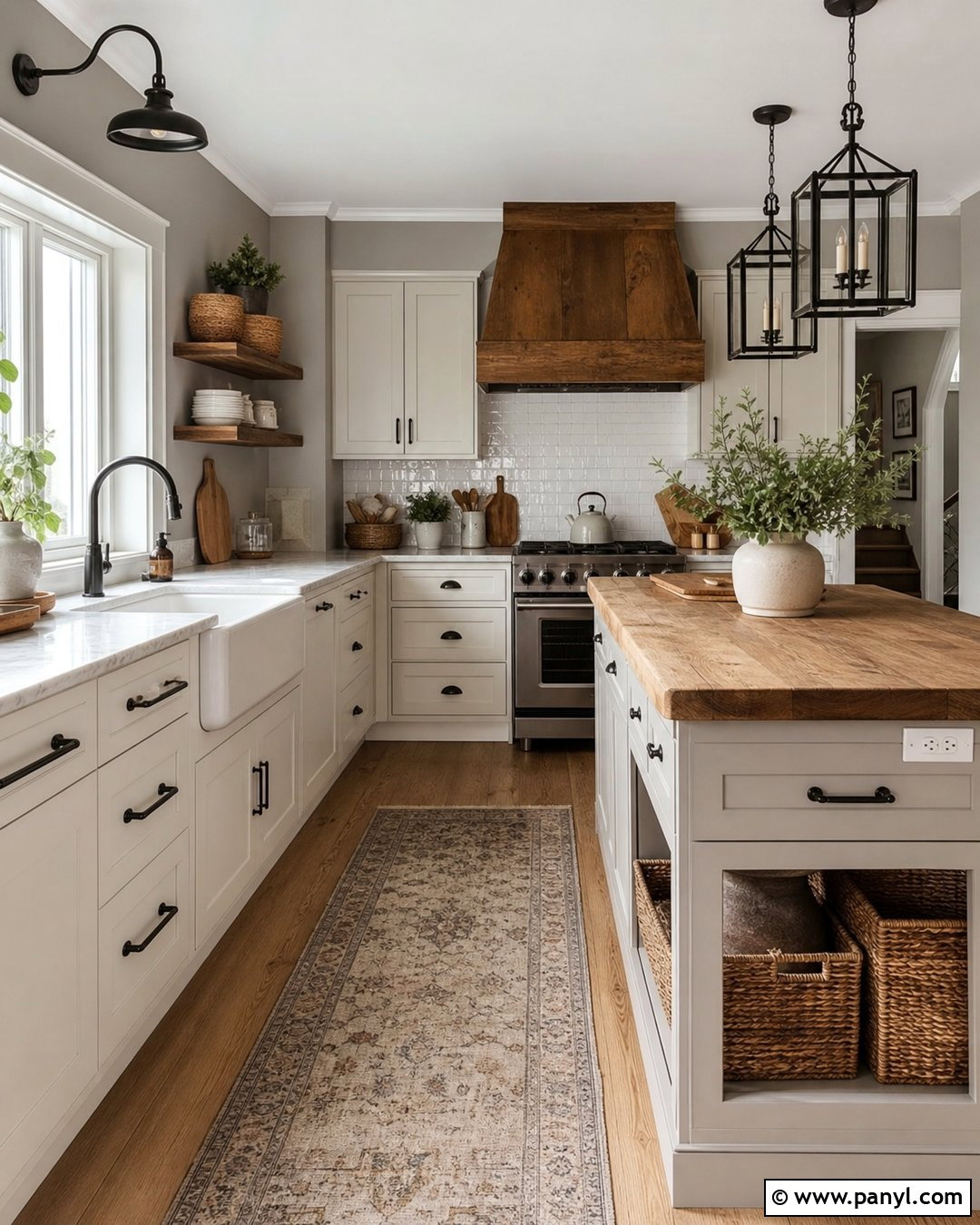
Gray walls give a farmhouse kitchen a cleaner, more current foundation without removing its welcoming character. Choose a warm dove-gray paint and pair it with creamy white Shaker cabinets. A large apron-front sink, butcher-block island, and wide-plank oak flooring provide the familiar farmhouse materials. Use handmade white tile behind the range and install a simple stained wood hood as a strong focal point. Black iron cabinet pulls, bridge faucets, and lantern pendants add definition throughout the room. Rather than filling every wall with rustic signs, decorate with useful objects such as crocks, baskets, and wood boards. A vintage-style runner can bring muted red or blue into the neutral palette. The complete room feels relaxed and authentic while remaining bright, organized, and functional.
17. Gray Kitchen Walls In A Modern Kitchen
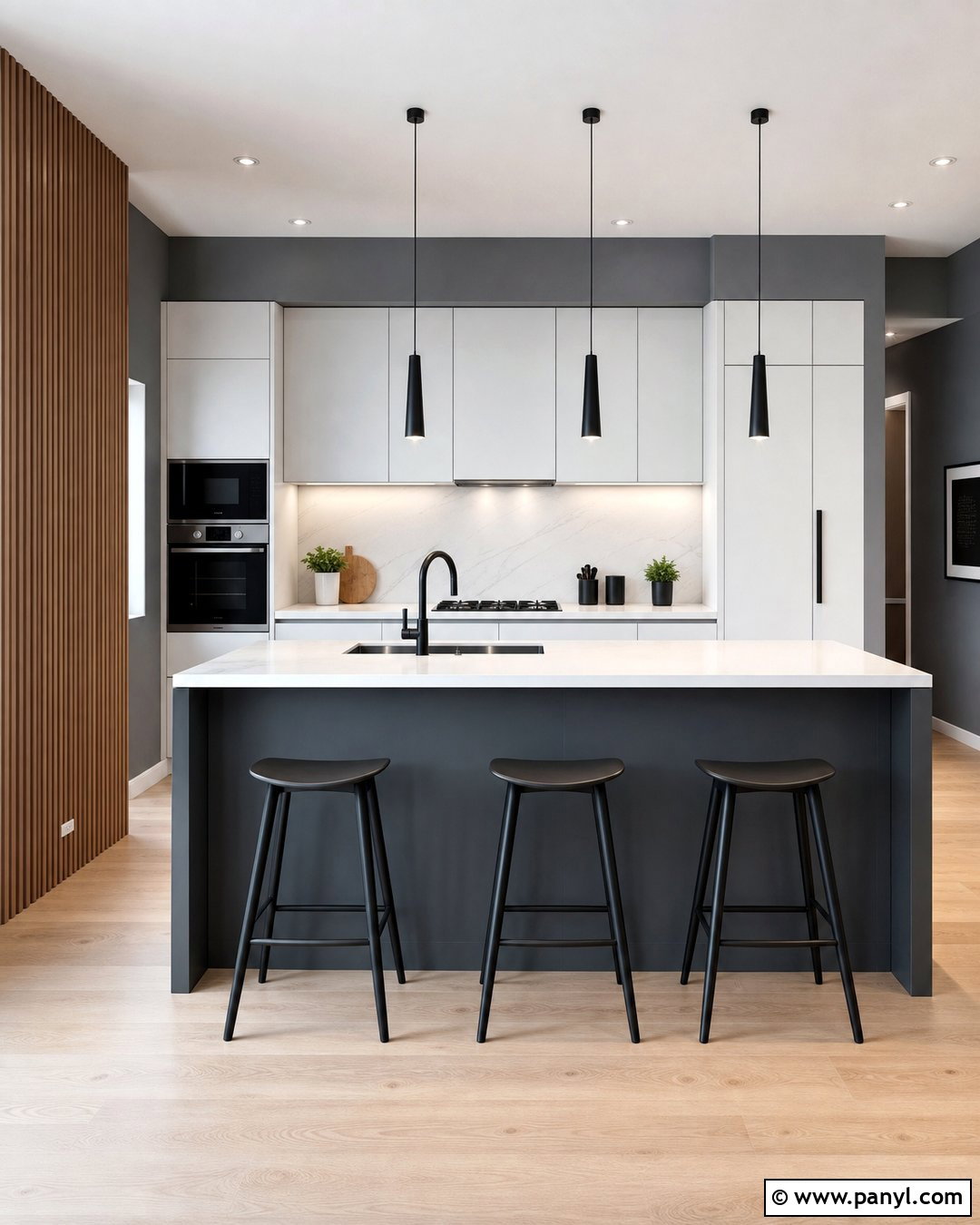
Clean geometry helps gray kitchen walls look intentional in a modern kitchen. Select a smooth mid-gray paint and combine it with handle-free white cabinets and a charcoal island. Thin white quartz countertops preserve the streamlined appearance, while a full-height backsplash in the same material reduces visual breaks. Add warmth with pale oak flooring and vertical wood panels on one side of the island. Matte black faucets, narrow pendants, and dark window frames provide precise graphic accents. Concealed appliances and full-height pantry cabinets keep clutter out of view. Choose backless counter stools that tuck beneath the island and maintain open walkways. A single ceramic bowl or leafy plant is enough decoration. This restrained mix of gray, white, charcoal, and wood creates a functional kitchen without feeling sterile.
18. Gray Kitchen Walls In A Small Kitchen
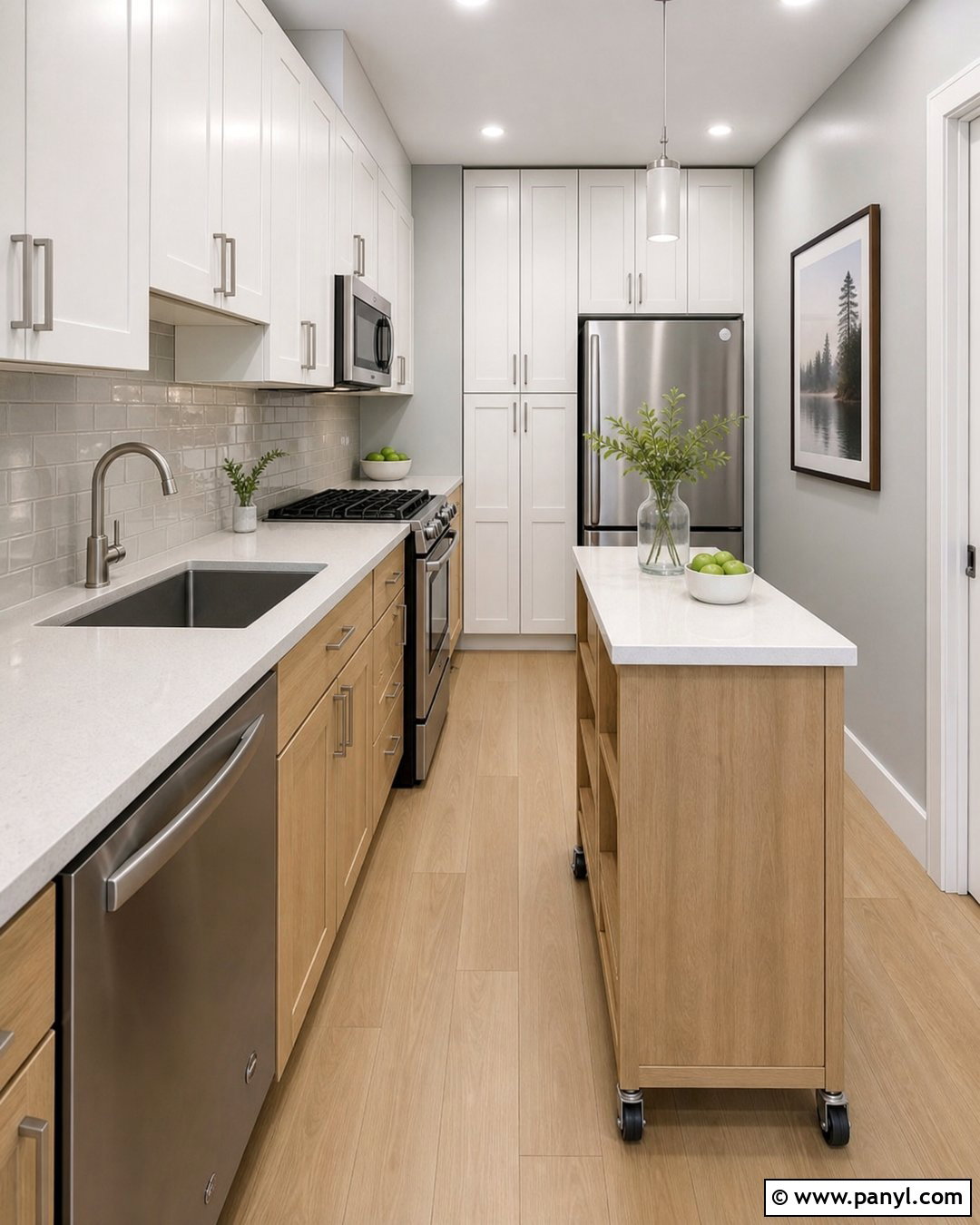
In a small kitchen, pale gray walls can add gentle depth without visually shrinking the space. Pair them with white upper cabinets and light oak lower cabinets to keep the layout open while adding warmth. Use reflective off-white backsplash tile, slim quartz counters, and under-cabinet lighting to brighten the work surfaces. Cabinets that extend to the ceiling maximize storage and reduce dusty gaps. Choose small-scale hardware in brushed nickel so doors look clean rather than busy. A narrow rolling island or wall-mounted breakfast ledge can provide extra workspace without blocking circulation. Continue light wood flooring into nearby rooms to make the kitchen feel connected and larger. Finish with one washable runner, a compact pendant, and minimal countertop accessories for an organized, comfortable result.
19. Gray Kitchen Walls In A Galley Kitchen
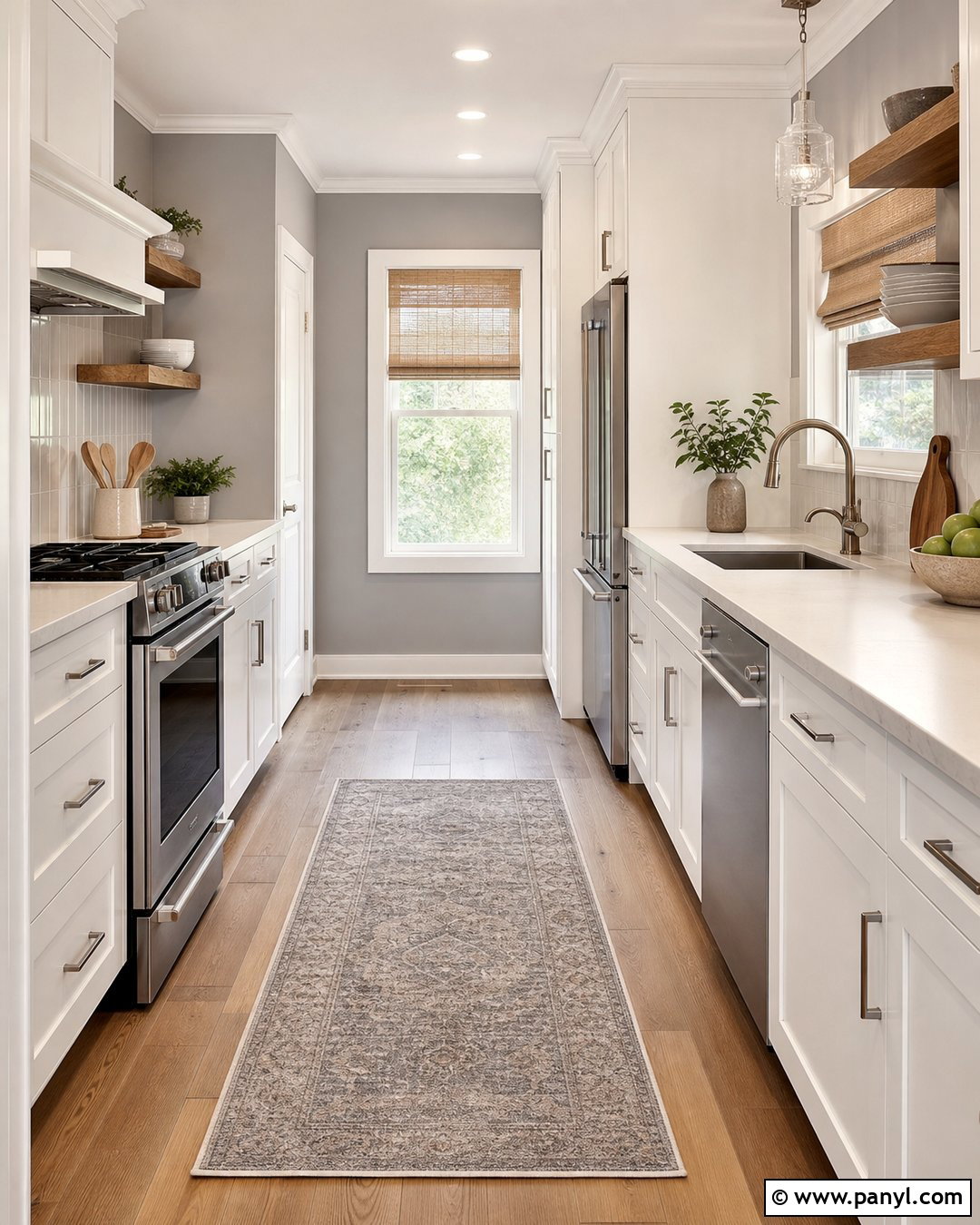
A galley layout benefits from gray walls when lighter materials guide the eye through the narrow space. Use soft warm gray on both end walls and white cabinets along the parallel counters. Pale quartz surfaces and glossy vertical tile will reflect light, while recessed ceiling fixtures prevent bulky pendants from interrupting the walkway. Introduce wood through the flooring and a few shallow open shelves near the entrance. Brass or polished nickel hardware adds a subtle highlight without creating excessive contrast. If the galley ends at a window, leave that area visually open and use a simple linen shade. Keep appliances integrated where possible and organize small tools inside drawers. The finished design feels efficient and bright, with clear counters and an uninterrupted path through the kitchen.
20. Gray Kitchen Walls In An Open Concept Kitchen
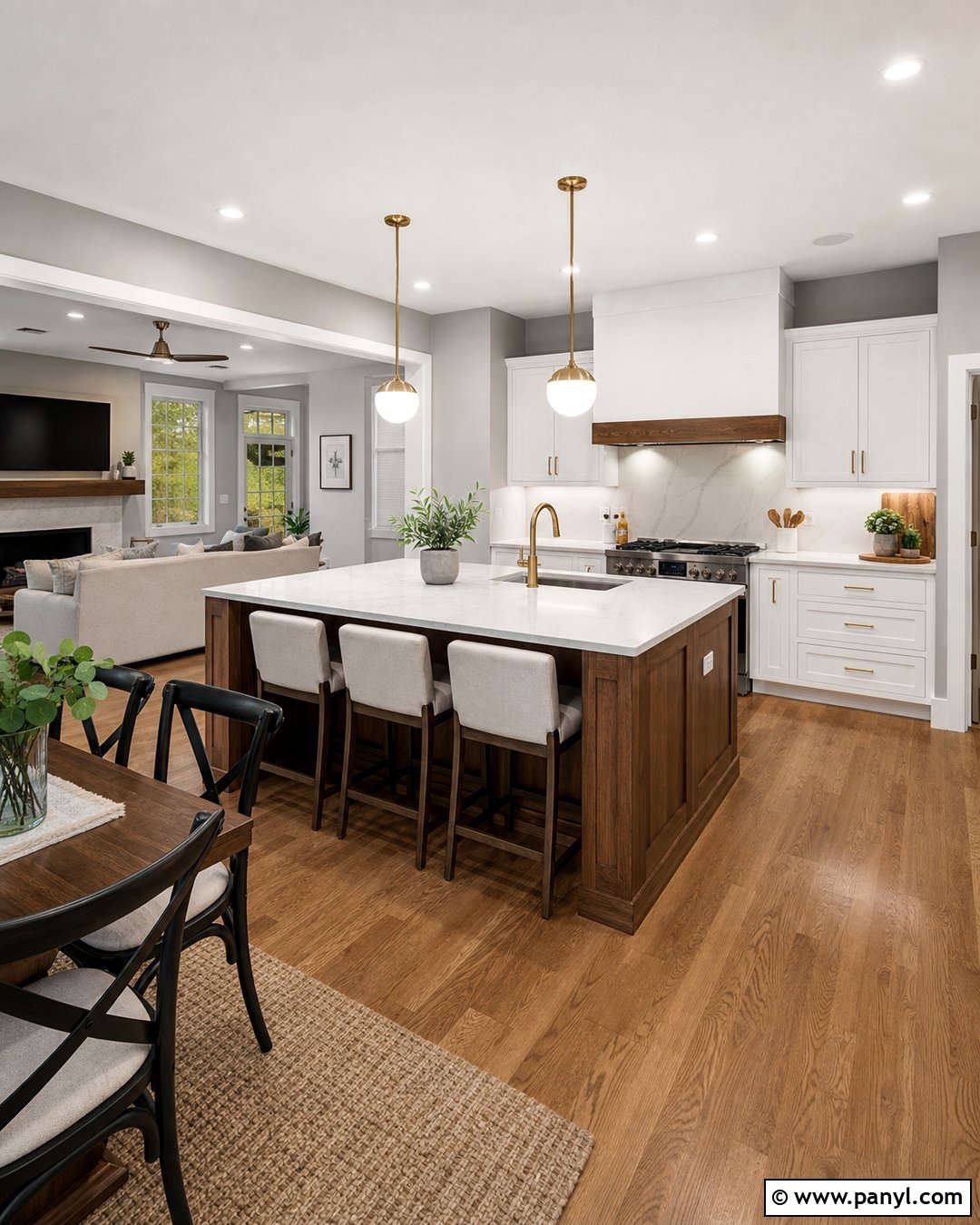
Gray kitchen walls can help define an open cooking area while maintaining a smooth connection to the living and dining spaces. Choose a warm light-gray paint that can continue across all three zones. Use white perimeter cabinets, a walnut island, and medium oak flooring for a cohesive but layered palette. A quartz backsplash and matching countertops keep the kitchen visually quiet from across the room. Repeat walnut in the dining table and select living room textiles containing soft gray, cream, and muted green. Pendant lights above the island should complement, rather than exactly match, the dining fixture. Use consistent brass or black accents throughout the shared space. This coordinated approach creates a distinct kitchen work zone while preserving the open layout’s comfortable, unified appearance.
21. Gray Kitchen Walls In An Industrial Kitchen
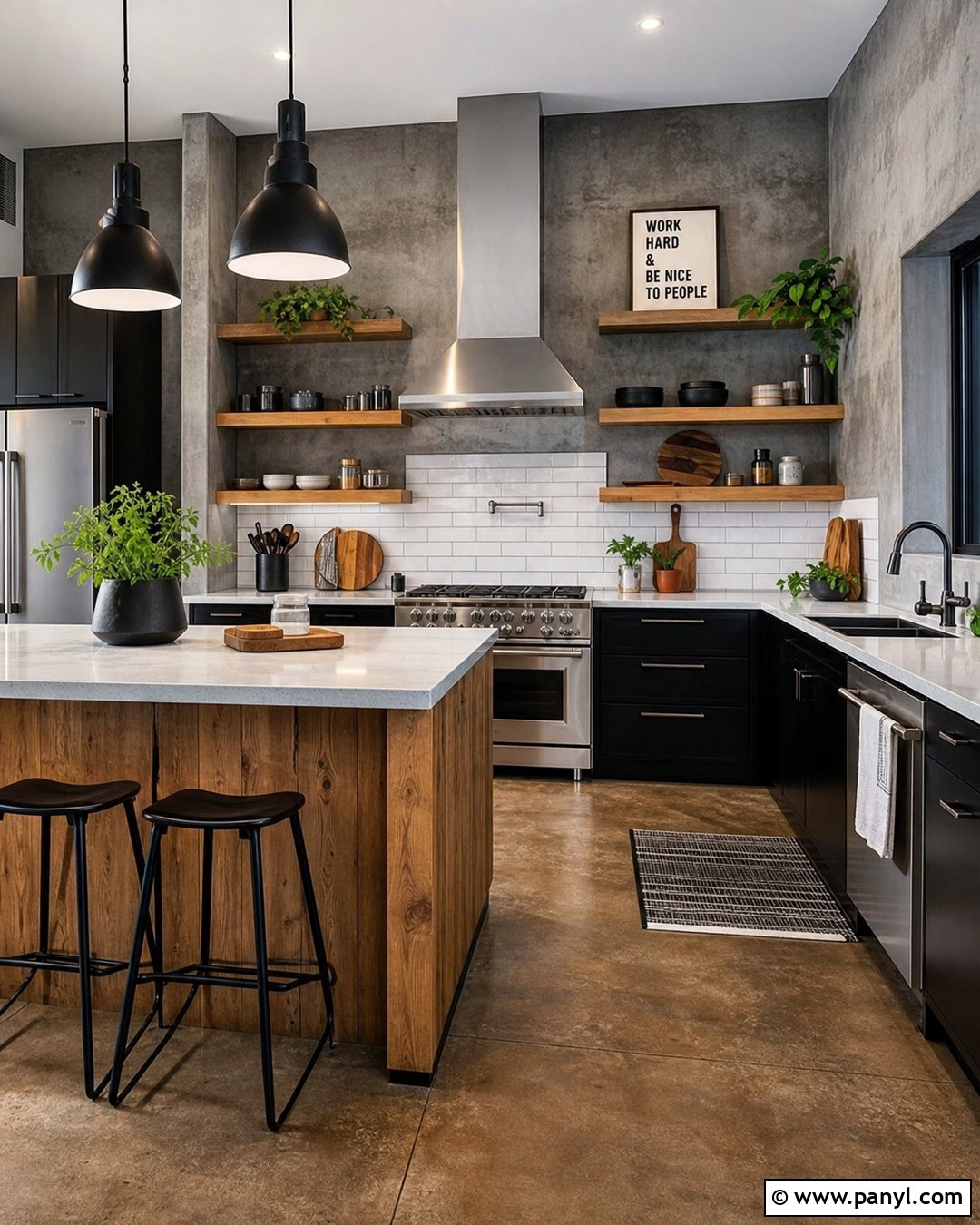
Concrete-gray walls form a strong base for an industrial kitchen, but wood and warm metal keep the design livable. Use a textured gray finish or matte paint with black flat-panel cabinets and stainless steel appliances. Add thick oak shelves and a butcher-block section beside the main quartz worktop. A backsplash of white rectangular tile brightens the cooking zone and balances the dark cabinetry. Black metal pendants, exposed brackets, and simple bar stools reinforce the industrial character. Choose warm-toned concrete-look porcelain flooring rather than cool gray flooring that could flatten the palette. Large windows or bright layered lighting are important in this darker arrangement. Complete the room with practical glass jars, wood boards, and a few green plants instead of decorative clutter.
22. Gray Kitchen Walls In A Scandinavian Kitchen
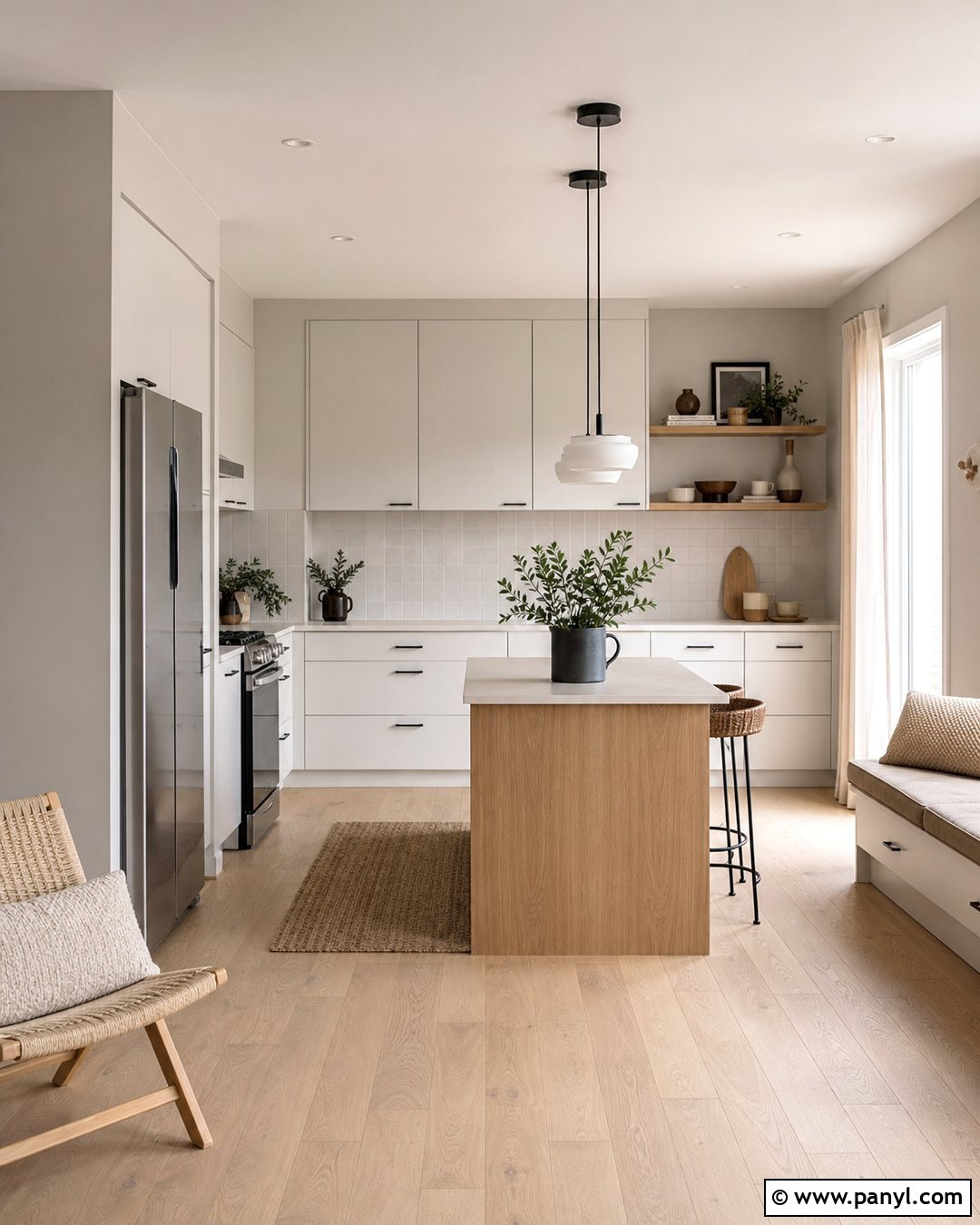
Soft gray walls complement the light woods, simple shapes, and functional character of a Scandinavian kitchen. Choose a very pale gray with warm undertones, then install flat-panel white cabinets and blond oak flooring. A compact oak island or dining table adds a natural focal point without making the space feel heavy. Keep countertops white and use small matte tiles in an off-white shade for gentle texture. Minimal black pulls and one black pendant provide enough contrast to define the lighter finishes. Add open shelving for neatly arranged white ceramics, but retain plenty of closed storage for everyday clutter. Linen café curtains, woven seat cushions, and a small washable rug make the room feel comfortable. The finished kitchen is bright and pared back, yet never cold or unfinished.
23. Gray Kitchen Walls In A Coastal Kitchen
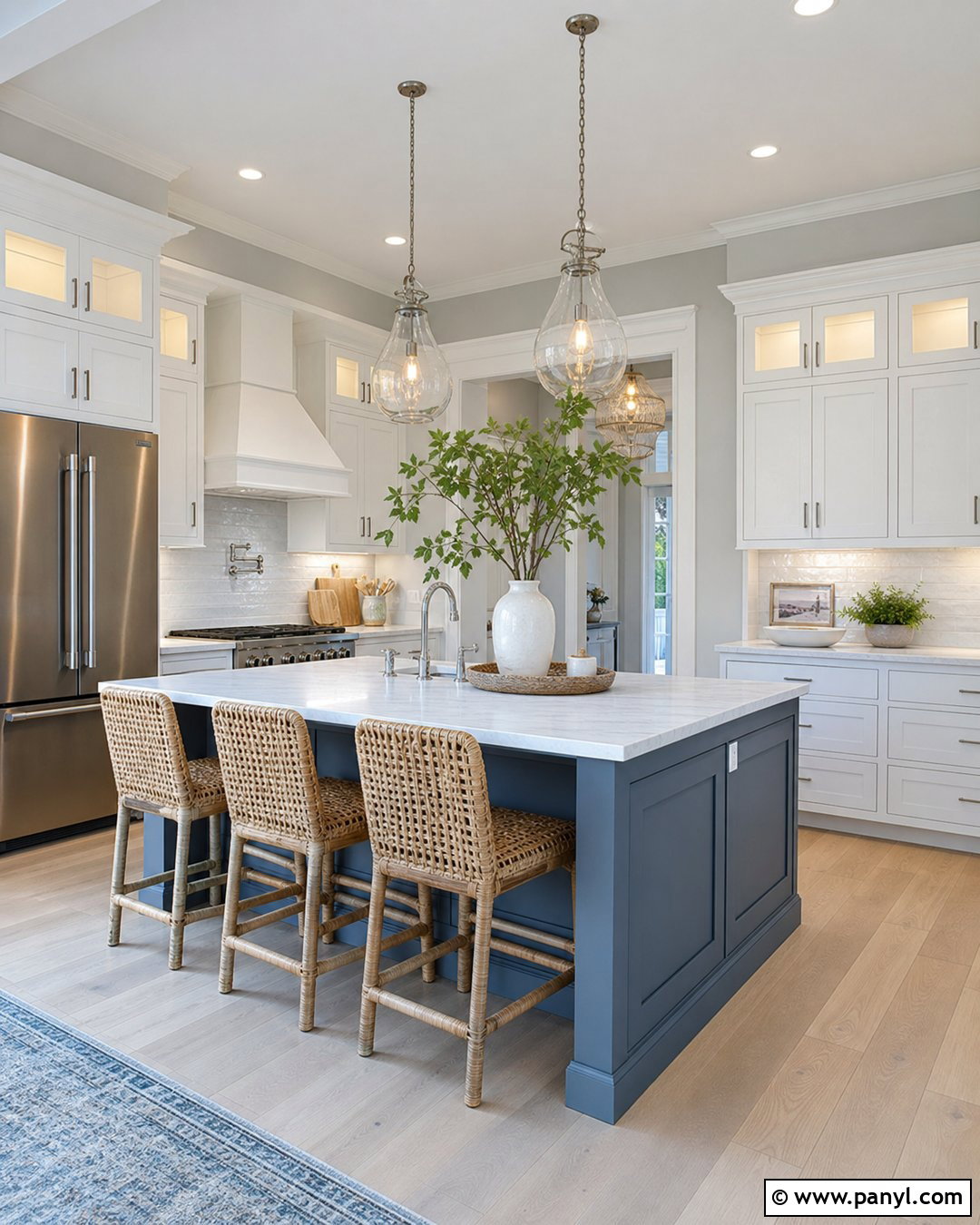
A coastal kitchen with gray walls should feel breezy and relaxed rather than heavily themed. Start with a light misty gray and combine it with white Shaker cabinetry, pale oak flooring, and a blue-gray island. Choose white quartz countertops and glossy pearl-colored tile to reflect natural light. Polished nickel hardware and clear glass pendants contribute a fresh, understated shine. Woven counter stools bring in texture, while simple linen shades soften the windows. Use muted blue only in a few places, such as the island, runner, and casual dishware. Avoid obvious nautical signs or excessive shell decorations. Instead, display natural wood boards, white ceramics, and leafy greenery. This full palette creates an easy coastal feeling that remains sophisticated enough for an everyday family home.
24. Gray Kitchen Walls In A Traditional Kitchen
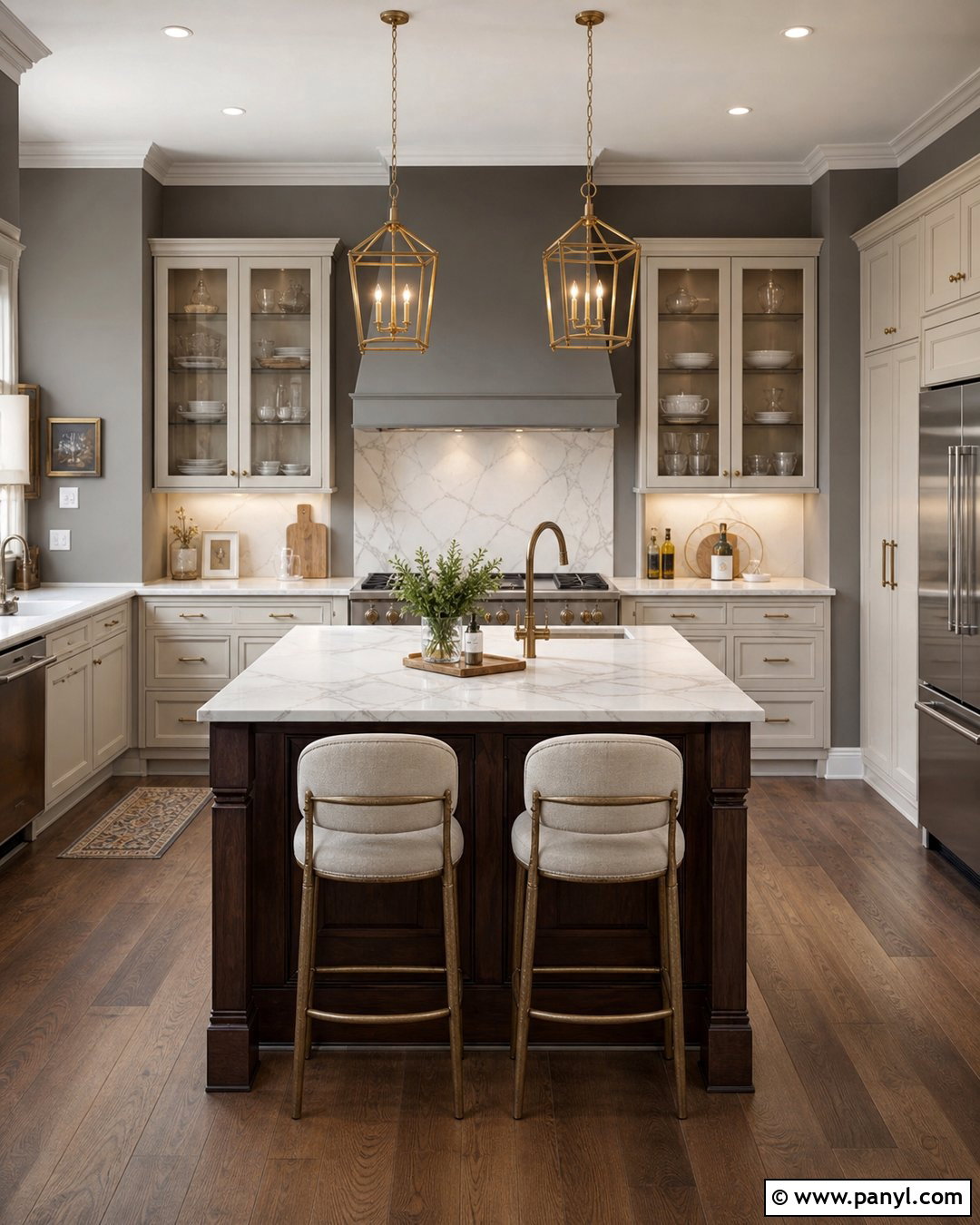
Traditional cabinetry gains a lighter, updated presence when paired with elegant gray walls. Use warm medium-gray paint beside inset cream cabinets with subtle molding. Select marble-look quartz countertops, a matching backsplash behind the range, and medium walnut flooring for depth. A dark wood island can anchor the room while providing generous drawers and upholstered seating. Choose aged brass knobs, a traditional bridge faucet, and lantern pendants to reinforce the classic character. Glass-front upper cabinets create display space for white dishes without overwhelming the design. Crown molding should match the cabinetry so the room has a finished architectural frame. Add a muted patterned runner and tailored Roman shade for softness. The completed kitchen feels established and refined, yet brighter and more approachable than a dark traditional interior.
25. Gray Kitchen Walls In A Rental Kitchen
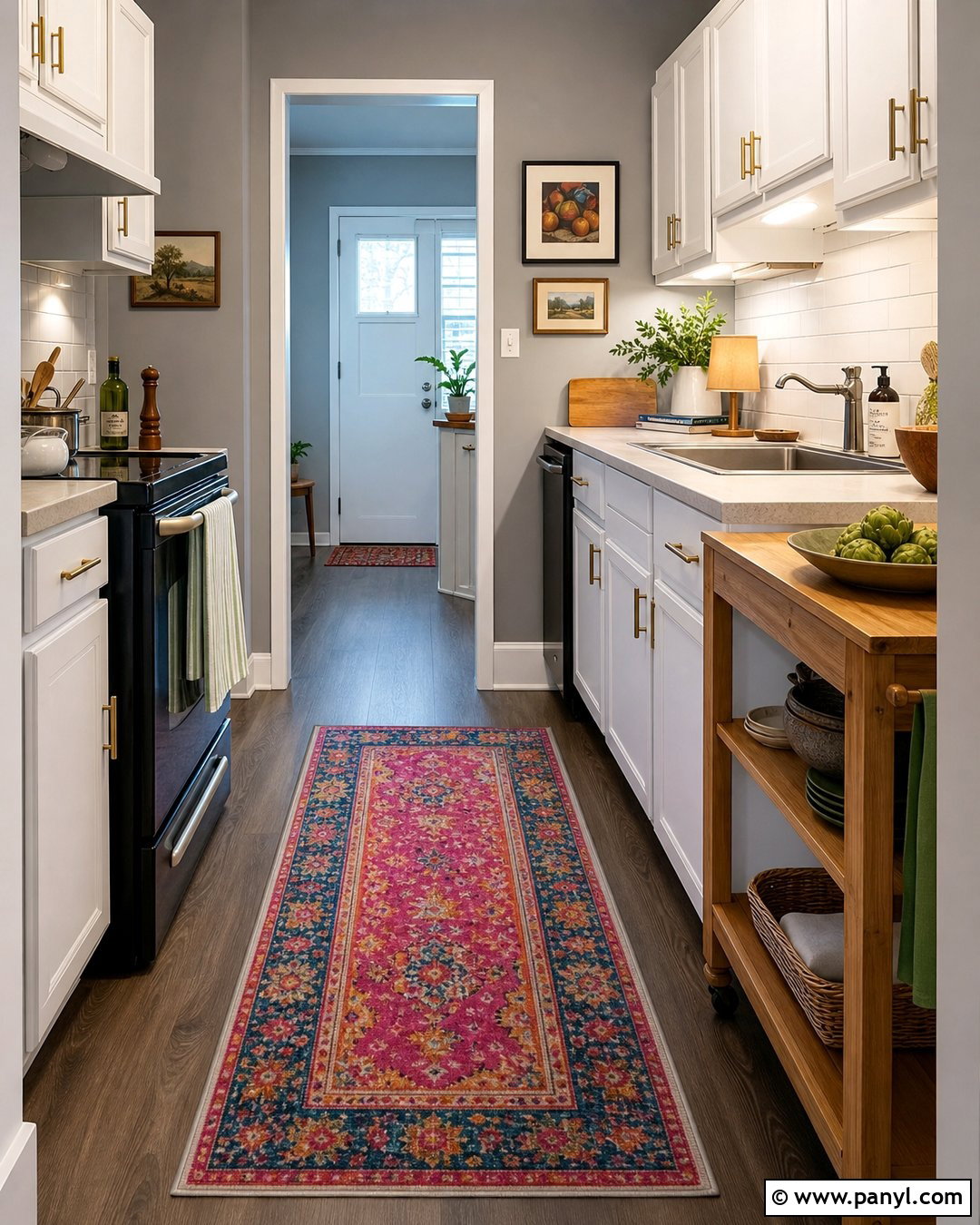
Gray walls can support an attractive rental kitchen without permanent or expensive changes. If painting is allowed, use a removable warm-gray paint treatment or choose the landlord’s approved shade. Work with existing white or wood cabinets by adding removable brass or matte black hardware, then store the original pieces safely. A washable runner introduces color and disguises dated flooring. Peel-and-stick backsplash panels in simple white tile can brighten the counter area when the lease permits them. Add plug-in under-cabinet lights to improve visibility without electrical work. A freestanding wood cart provides prep space and storage, while framed prints and a linen shade personalize bare walls. Coordinated cutting boards, ceramic containers, and greenery complete the room without crowding its limited surfaces.
Conclusion:
A successful kitchen with gray walls depends on balance rather than one perfect shade. Light cabinets create crisp contrast, while oak, walnut, sage, navy, and black bring warmth or personality. Countertops and backsplashes should connect the wall color to the cabinetry instead of adding unrelated undertones. Wood flooring, woven seating, brass fixtures, and soft textiles are especially useful for preventing gray from feeling cold. Before painting, test large samples beside every fixed finish during morning, afternoon, and evening light. Then build the room around one clear palette and repeat its main materials thoughtfully. With these coordinated approaches, **25 Kitchen With Gray Walls** offers a practical starting point for creating a comfortable, polished, and personal cooking space.

Related Ideas and Inspiration:
Leave a Reply