
Color can completely change how a home feels, yet repainting is not always practical. Renters may face restrictions, while homeowners may prefer flexible updates that are easier to refresh. If you searched for **20 Add Color Without Painting Walls**, the key is to treat furniture, textiles, artwork, lighting, and removable finishes as one coordinated palette. Start with one dominant color, repeat it in several places, and balance it with quieter neutrals. This creates a finished room rather than a collection of random bright objects. The approaches below cover living rooms, bedrooms, kitchens, dining spaces, and overlooked corners using renter-friendly and low-commitment updates. Use these complete room plans as your practical guide to **20 Add Color Without Painting Walls**.

1. Colorful Area Rug Living Room
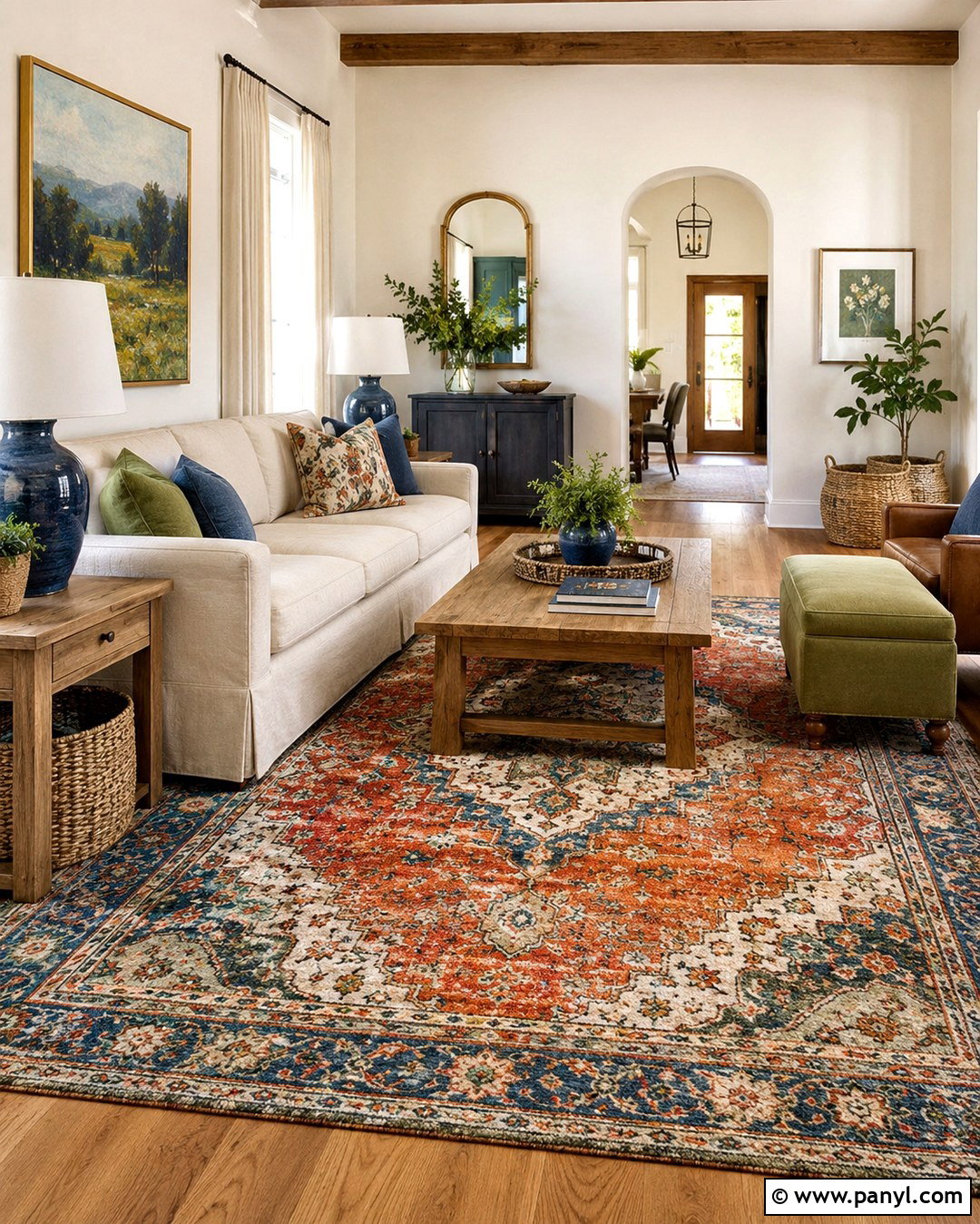
A large patterned rug can become the color foundation for an entire living room. Choose one with rust orange, deep blue, cream, and muted green rather than a design containing every color. Place it beneath the front legs of a neutral sofa and nearby chairs to visually connect the seating area. Pull rust into the throw pillows, repeat blue through ceramic lamps, and add green with plants or a small ottoman. Natural oak tables and woven baskets keep the brighter shades grounded. Select artwork containing at least two rug colors, but avoid matching every detail perfectly. This layered approach feels collected and comfortable while allowing plain white, beige, or gray walls to remain a calm backdrop.
2. Bold Curtain Living Room
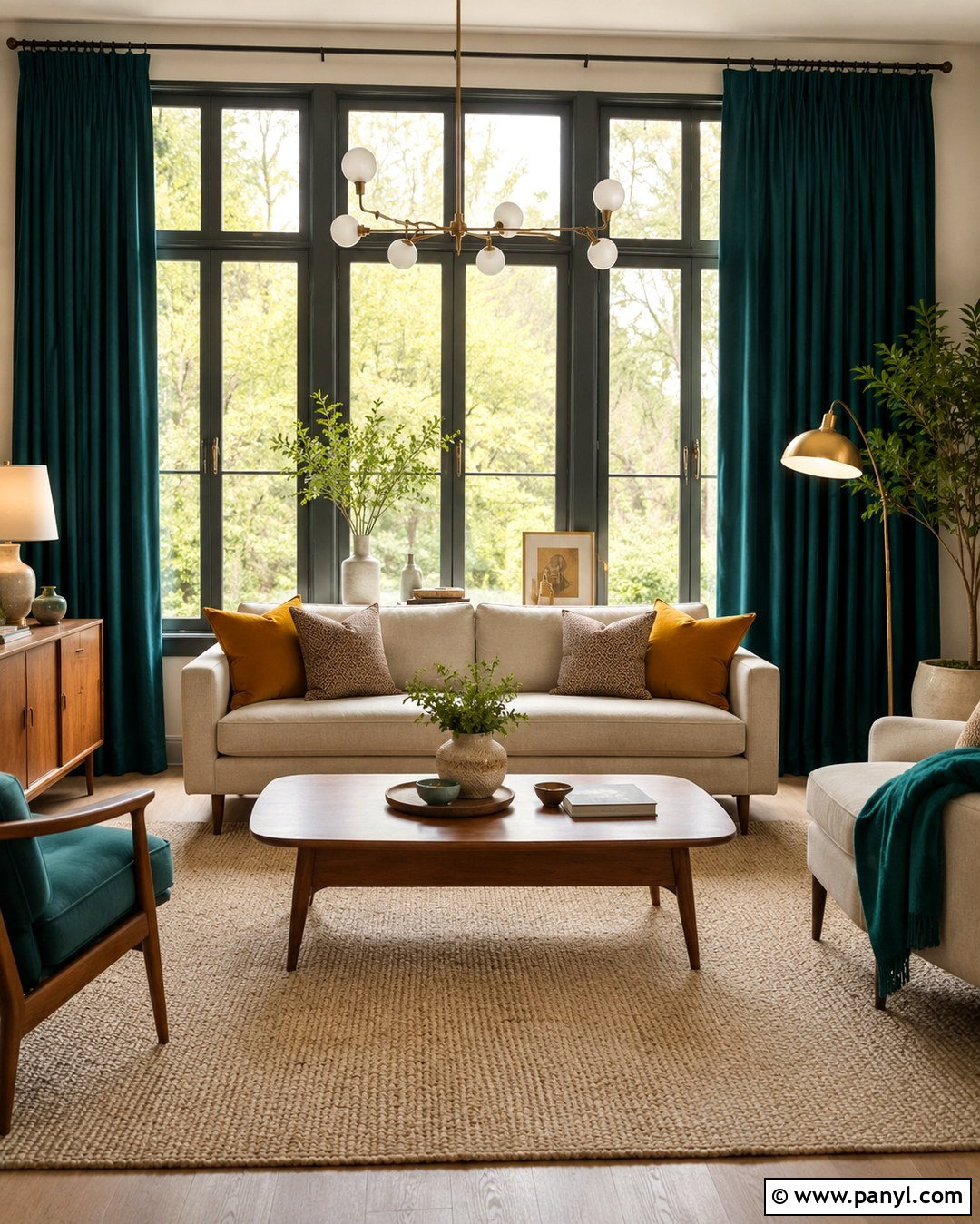
Floor-length curtains introduce a broad sweep of color without making a permanent change. For a cheerful but polished living room, frame the windows with rich teal curtains and pair them with an oatmeal sofa, walnut coffee table, and cream textured rug. Repeat teal through two patterned cushions and a decorative bowl, then introduce warm contrast with mustard yellow accents. Hang the curtain rod several inches above the window frame and extend it beyond the sides to make the opening feel larger. Choose substantial cotton, linen blend, or velvet fabric so the color looks intentional rather than flimsy. Simple brass lighting and warm wood finishes complete the palette, creating a balanced room in which the windows become the main colorful feature.
3. Colorful Gallery Wall
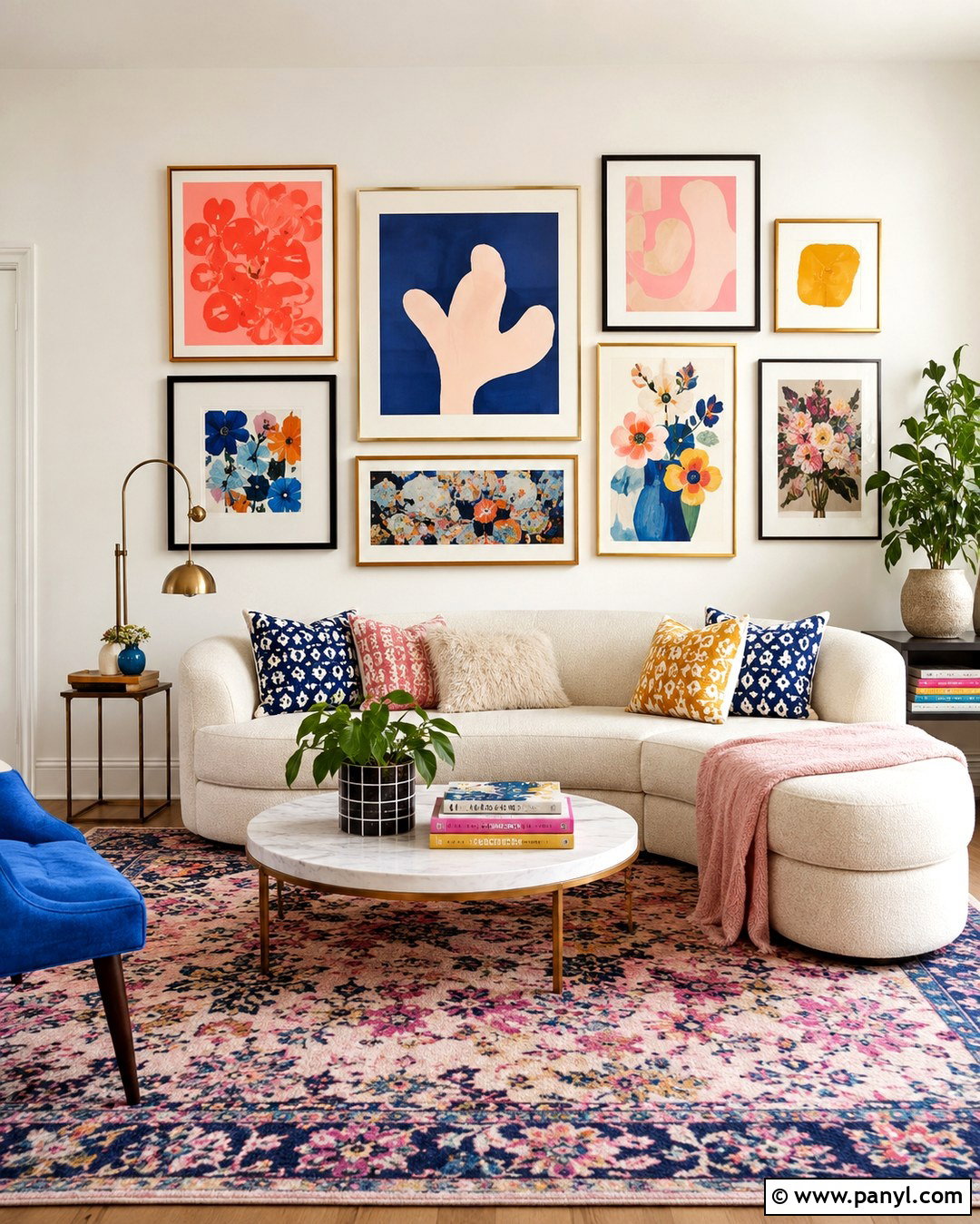
A gallery wall can turn a plain room into a personalized, colorful space while keeping the larger furnishings neutral. Build the arrangement around one prominent print featuring coral, cobalt blue, soft pink, and golden yellow. Add smaller botanical art, abstract shapes, photography, and a textile piece that repeat those colors in different amounts. Use matching light wood frames for a clean appearance, or combine black, brass, and oak frames for a collected look. Below the display, place a simple cream sofa or slim console with colorful books and pottery. Carry coral and blue onto pillows or a nearby chair. Leave consistent spacing between frames so the varied artwork feels connected instead of visually crowded.
4. Colorful Sofa Living Room
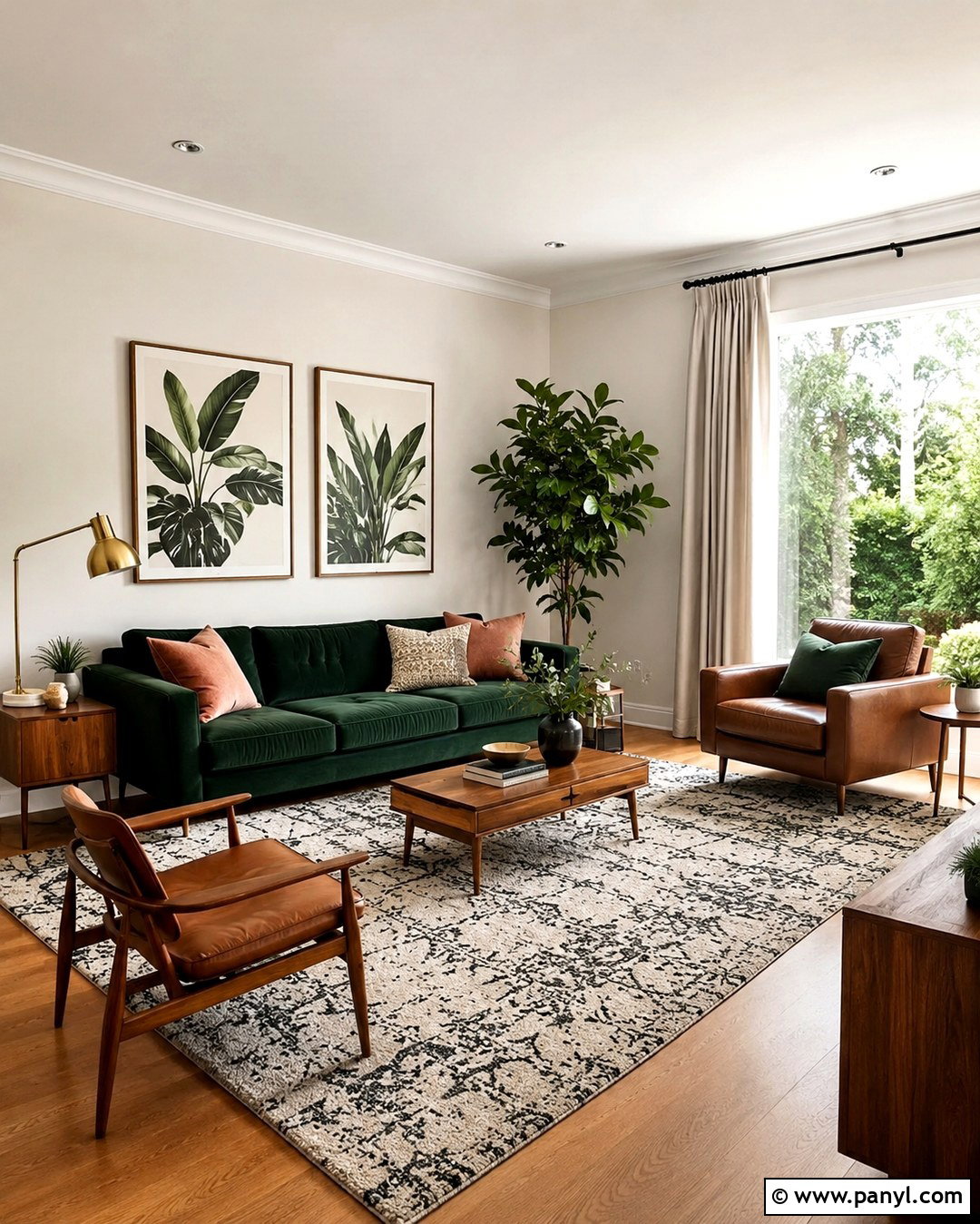
Imagine entering a neutral living room and immediately noticing a deep emerald green sofa. One colorful upholstered piece can anchor the whole design when the surrounding elements support it thoughtfully. Pair the sofa with warm white walls, a cream and charcoal rug, walnut side tables, and a soft cognac leather chair. Add patterned pillows containing green, dusty rose, and ivory to create gentle variation. A brass floor lamp brings warmth, while botanical artwork reinforces the green without making the room overly themed. Keep curtains and larger storage pieces neutral so the sofa remains the focal point. This arrangement works especially well in smaller rooms because one strong furniture color delivers impact without requiring numerous accessories or permanent changes.
5. Jewel Tone Accent Chairs
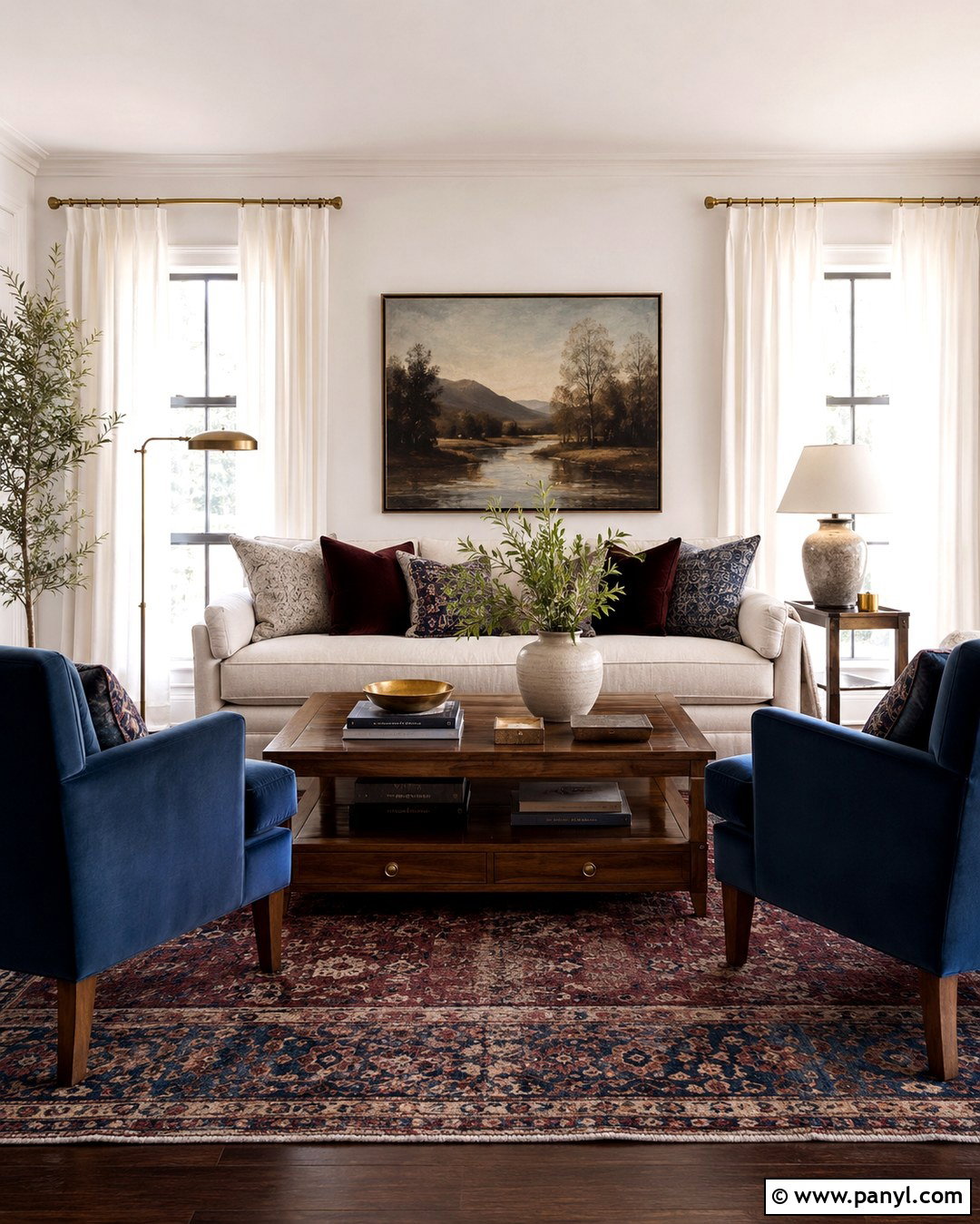
Two jewel tone chairs can add structure and rich color to an otherwise quiet seating area. Place sapphire blue armchairs opposite a light beige sofa, with a medium-size wood coffee table centered between them. Use a faded Persian-style rug containing blue, burgundy, and tan to link the furniture together. Burgundy pillows on the sofa and a blue ceramic lamp repeat the chairs’ color across the room. Keep window treatments soft white and choose simple black or aged brass accents for definition. The matching chairs make the palette look planned, while the patterned rug prevents the blue from appearing isolated. This complete layout creates an inviting conversation area and can be changed later by reupholstering or replacing only the chairs.
6. Bright Bedding Bedroom
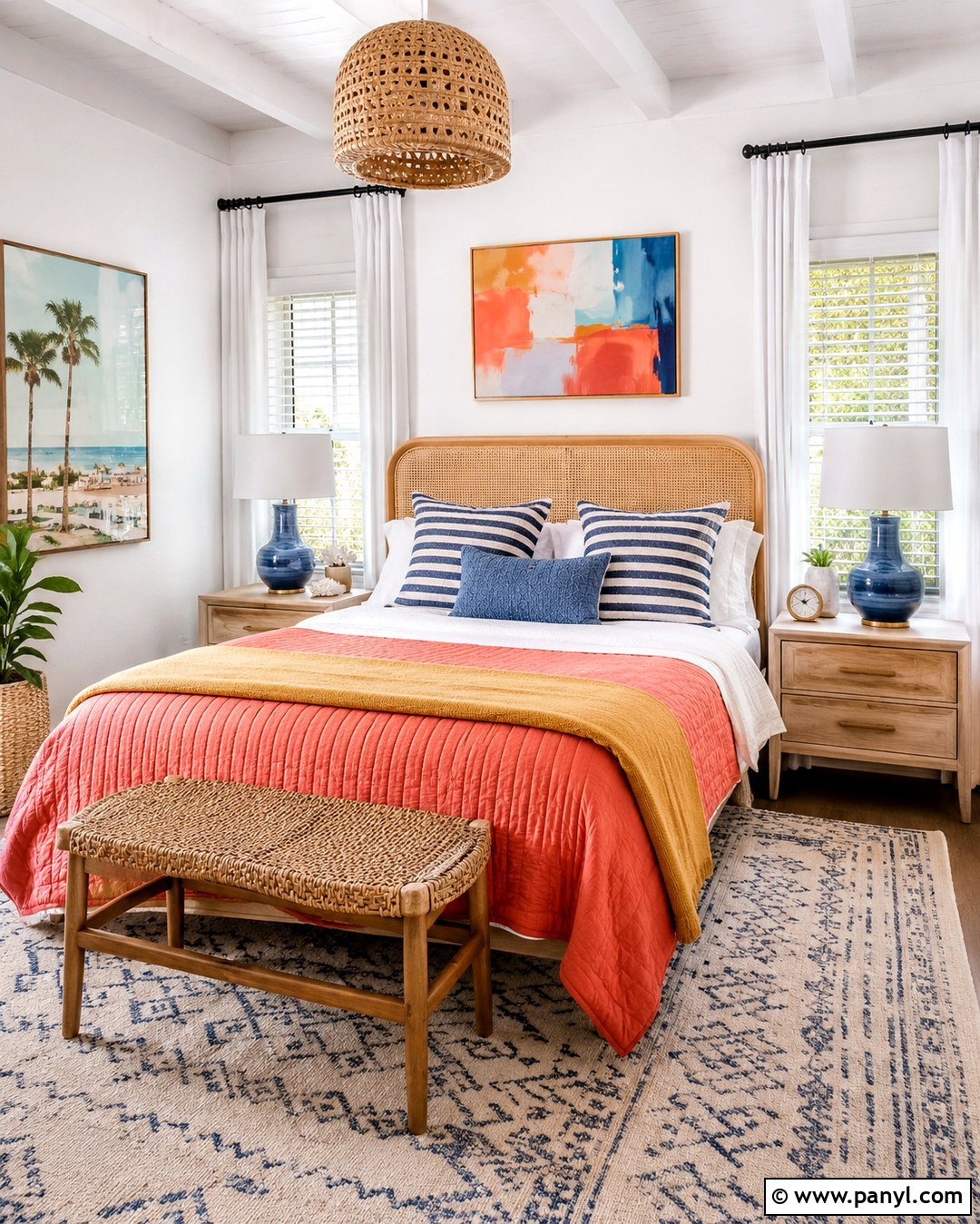
Bedding offers enough surface area to transform a bedroom without touching its walls. Begin with a coral quilt or duvet featuring subtle stitched texture, then layer it with white sheets, striped blue pillowcases, and a folded mustard throw. A natural cane headboard and pale oak nightstands soften the brighter colors. Add matching blue bedside lamps to create symmetry, and place a small patterned rug beside or beneath the bed. Window curtains can remain warm white, allowing natural light to keep the palette fresh. Finish with one large artwork that includes coral, blue, and yellow in softer tones. Repeating the same three colors at different scales makes the room feel cohesive, comfortable, and intentionally designed rather than excessively bright.
7. Removable Wallpaper Bedroom
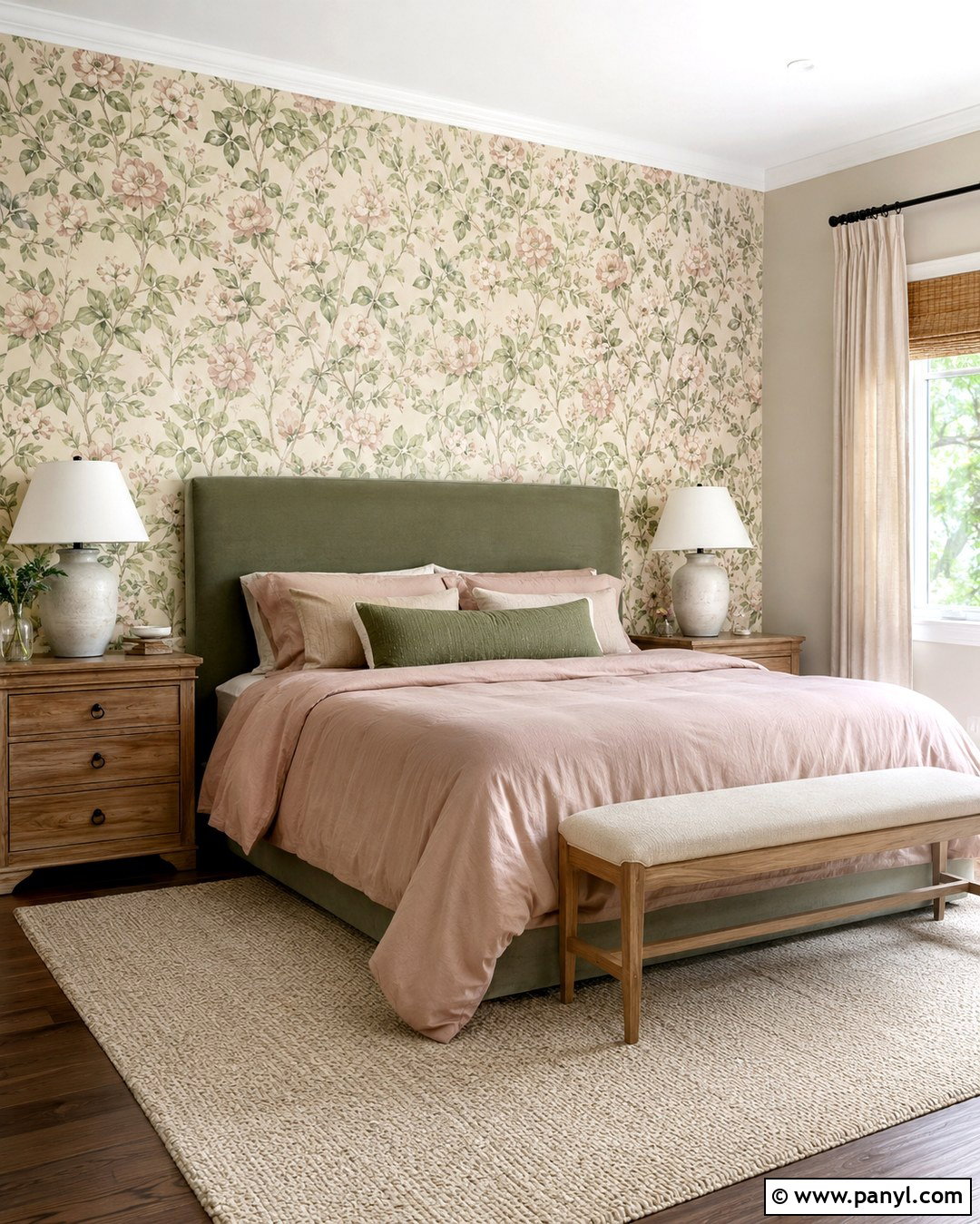
Peel-and-stick wallpaper can create a dramatic bedroom focal point while remaining less permanent than paint or traditional paper. Apply a botanical pattern with sage green leaves, dusty pink flowers, and a cream background behind the bed. Build the rest of the room around that palette using a muted green upholstered headboard, blush bedding, and light oak nightstands. Keep the other walls neutral so the pattern has room to stand out. Add linen curtains, ceramic lamps, and a simple cream rug to soften the finished design. Before installation, confirm that the product suits the existing wall finish and test a small hidden area. Careful measuring and pattern alignment will make the removable treatment appear polished and professionally installed.
8. Colorful Wall Tapestry Bedroom
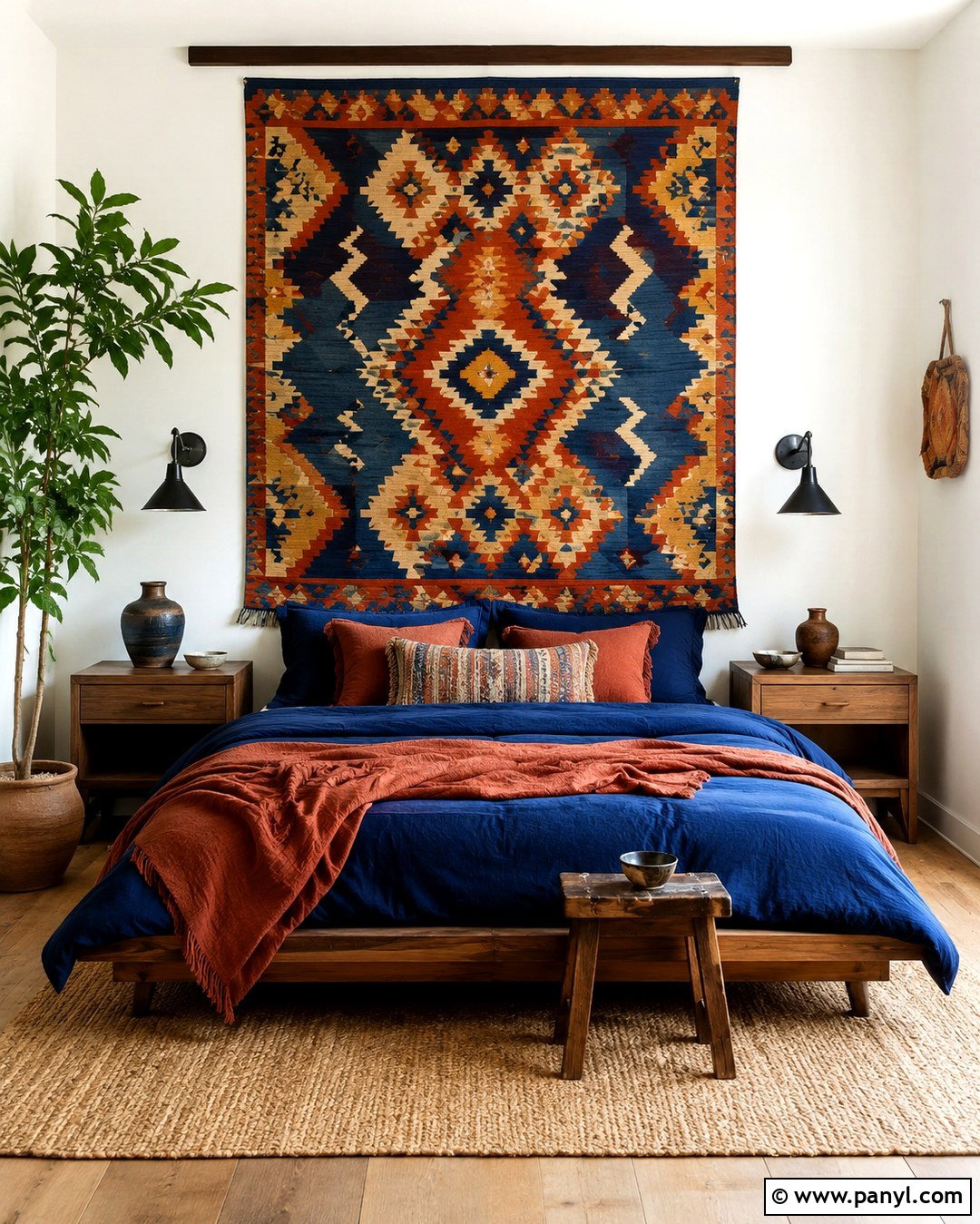
A large textile wall hanging creates warmth, pattern, and color while also making a bedroom feel softer. Hang a woven tapestry with terracotta, indigo, ochre, and cream behind a low wood bed. Choose plain indigo bedding, cream pillows, and a rust-colored throw so the tapestry remains the most detailed element. A jute rug and oak furniture add natural texture, while black bedside sconces give the earthy palette a sharper edge. Position the tapestry securely and keep its lower edge above the headboard rather than allowing fabric to gather behind the bed. Complete the room with handmade pottery and one leafy plant. The finished space feels relaxed, layered, and colorful without requiring wallpaper, paint, or a complicated gallery arrangement.
9. Painted Furniture Living Room
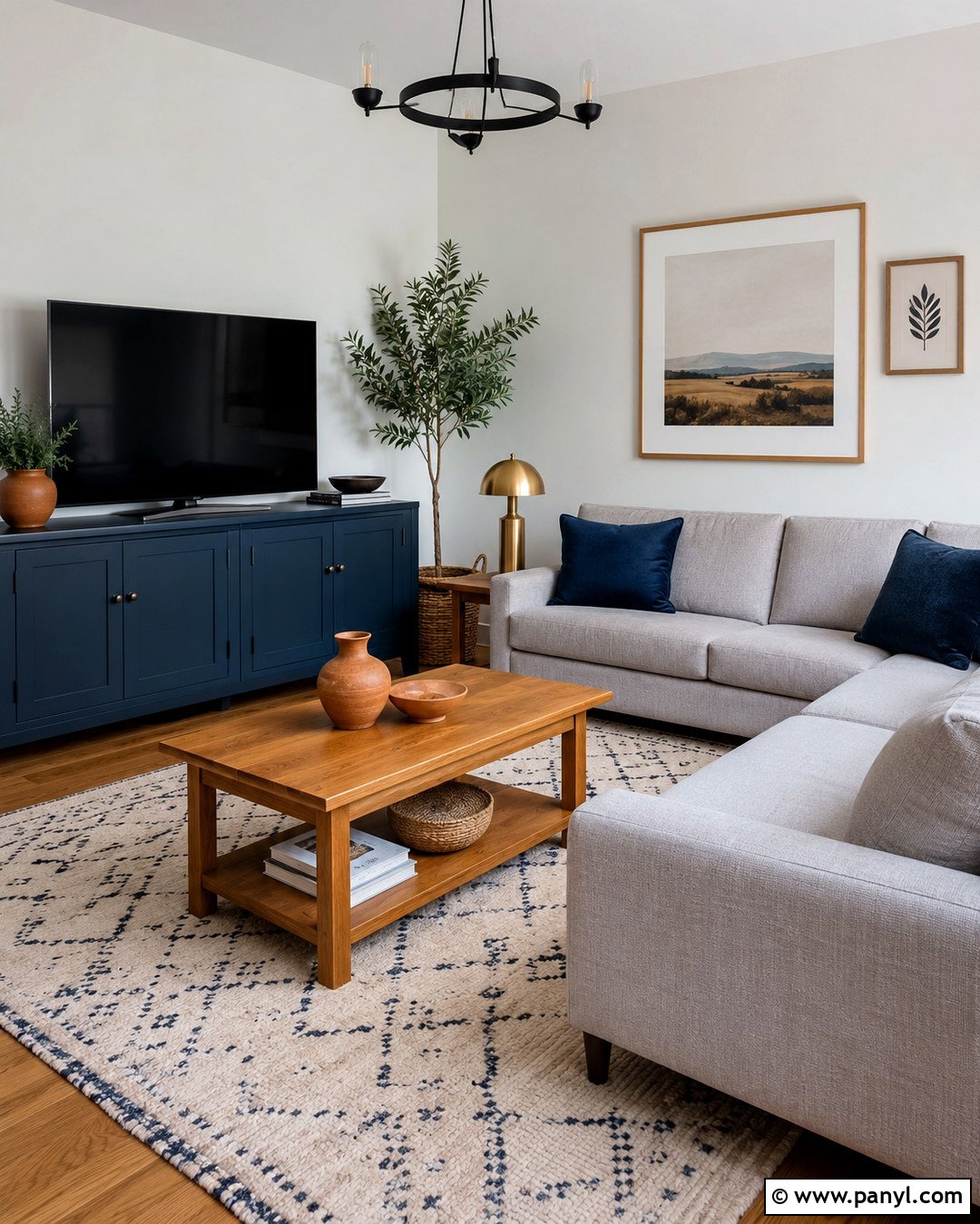
Painting furniture rather than walls can deliver strong color in a controlled and practical way. Place a matte navy blue media console against a white wall and coordinate it with a light gray sofa, warm oak coffee table, and cream patterned rug. Style the console with terracotta pottery, stacked books, and a brass lamp to introduce warm contrast. Repeat navy through one or two sofa pillows and a framed print, but avoid filling the entire room with the same shade. Properly clean, sand, prime, and finish the furniture according to its material for a durable result. The completed room gains a bold architectural-looking feature, yet the color remains attached to one movable piece that can travel to another room or be updated later.
10. Colorful Bookshelf Styling
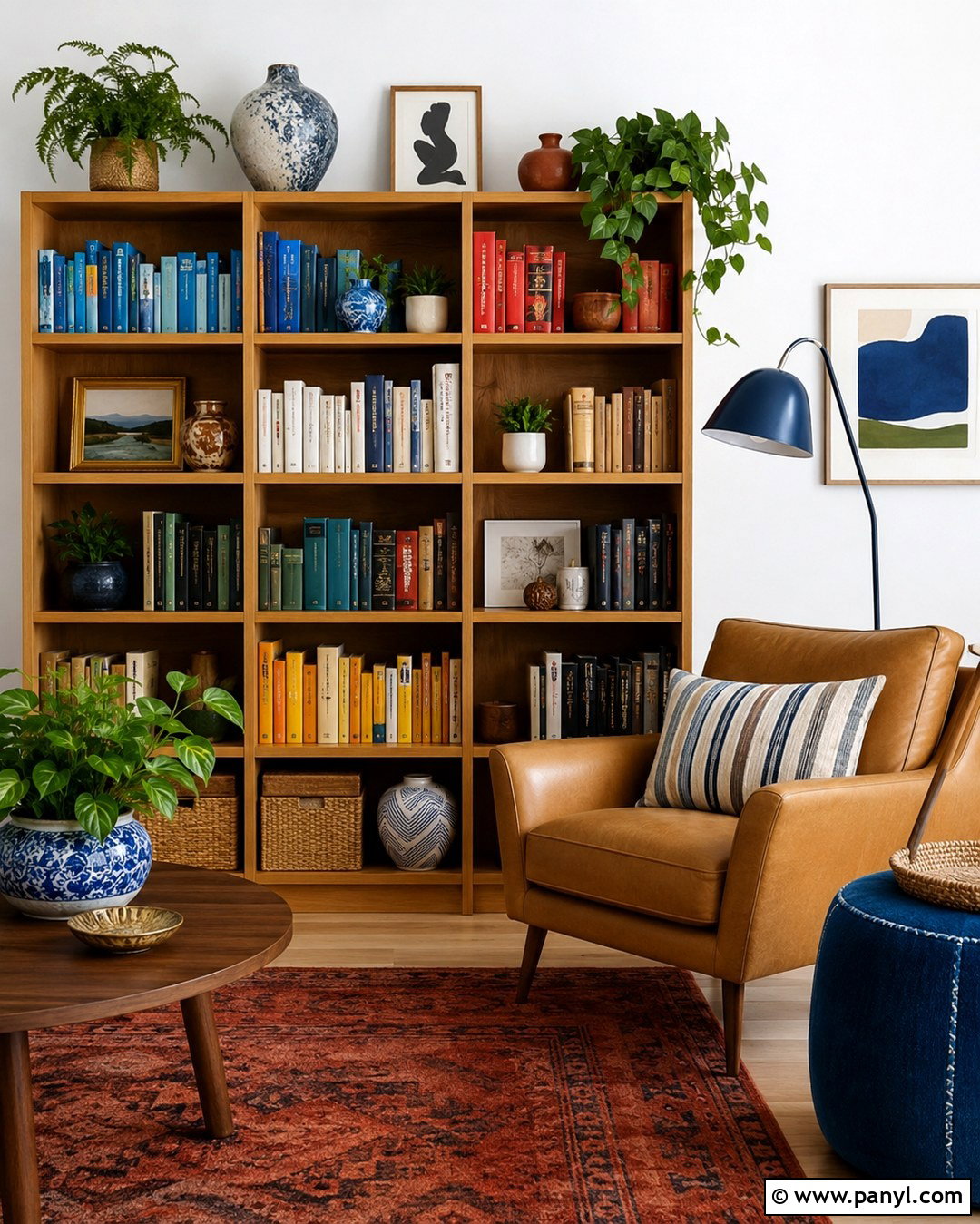
A bookshelf can function like a large colorful composition when books, storage, and decor are arranged with purpose. Start with a natural wood or white shelving unit and organize books in loose color families rather than a strict rainbow. Mix cobalt blue, red, mustard, and green spines with neutral books to prevent the arrangement from becoming too intense. Add ceramic vases, framed art, woven boxes, and small plants while leaving some shelves partly empty. In front of the unit, create a reading corner with a tan chair, colorful striped cushion, and blue floor lamp. A rust and cream rug helps connect the book colors to the furniture. The result feels useful, personal, and balanced instead of cluttered or overly coordinated.
11. Colorful Lampshade Living Room
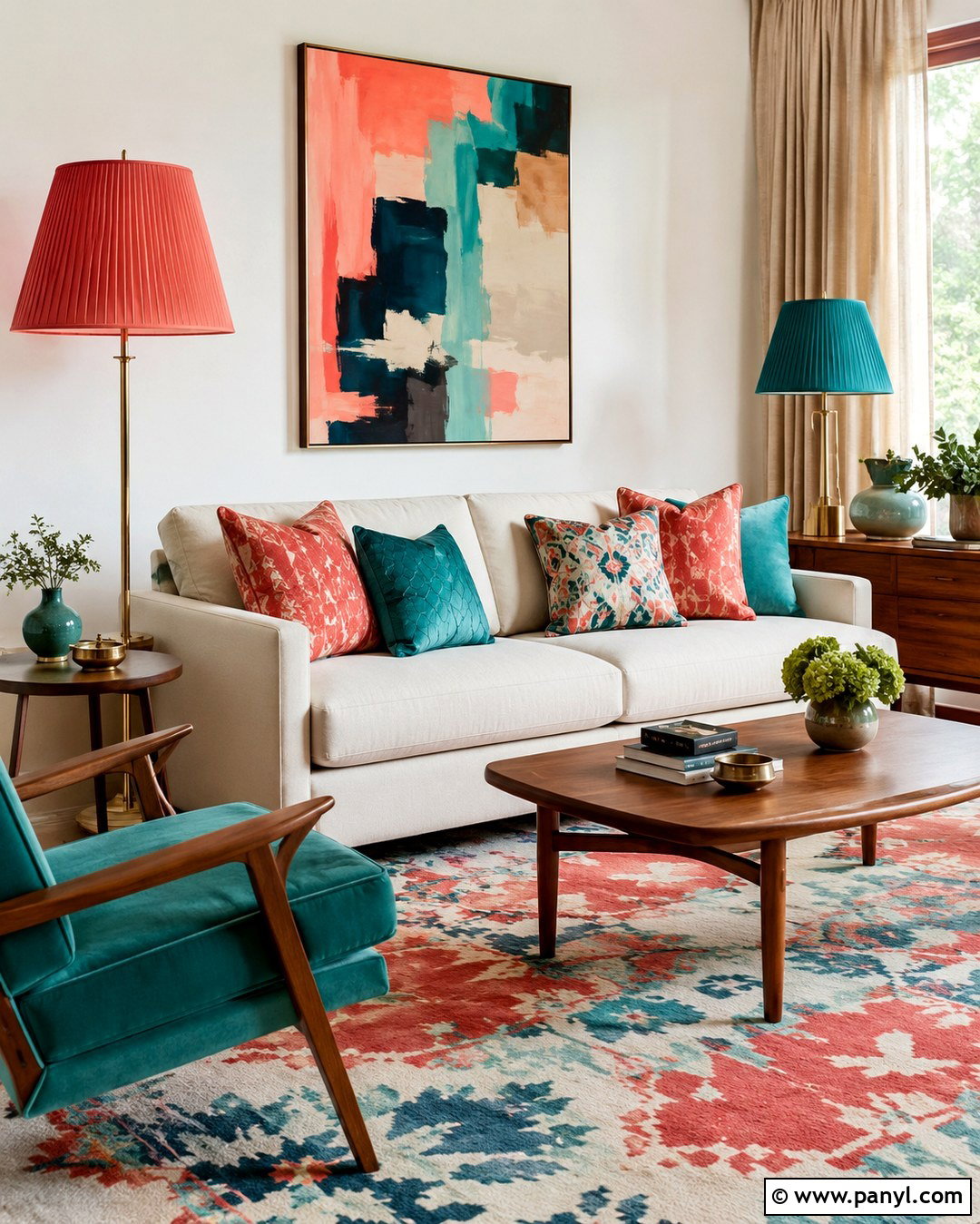
Lighting can distribute color around a room at eye level, especially when several shades share a coordinated palette. Use a coral pleated lampshade on a brass floor lamp beside a cream sofa, then place smaller teal shades on table lamps across the room. Connect these colors with a patterned rug containing coral, teal, beige, and muted gold. Walnut furniture and natural linen curtains provide a warm, neutral structure. Add one coral pillow, one teal pillow, and simple abstract artwork to repeat the lighting colors without making the scheme feel forced. When illuminated, fabric shades create an attractive glow and become sculptural decorative features. This complete setup works well in living rooms that feel flat even after furniture and basic accessories are already in place.
12. Colorful Tile Decal Kitchen
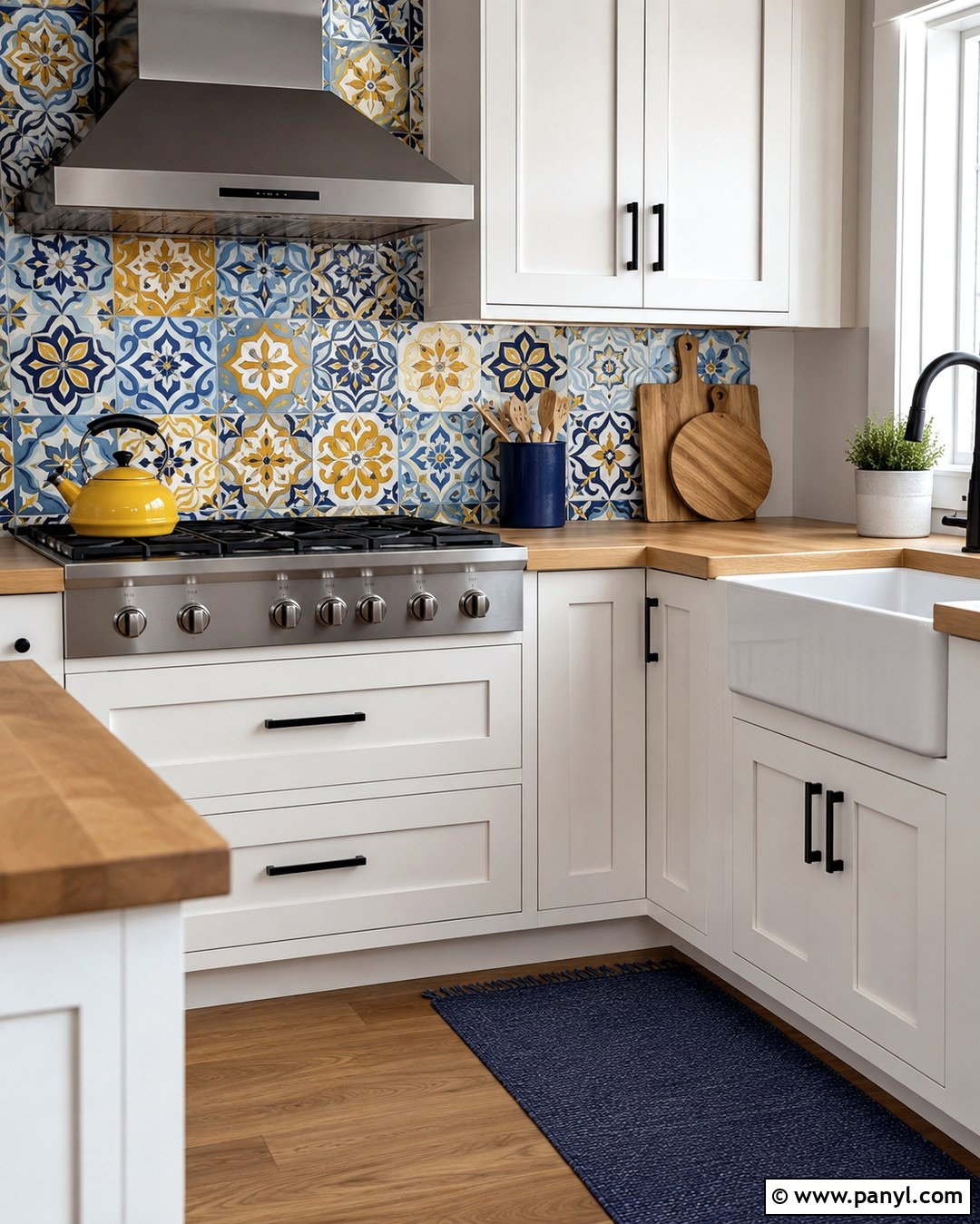
Removable tile decals can give a plain kitchen a brighter backsplash without major construction. Choose a repeating pattern in navy blue, sky blue, warm yellow, and white, then apply it across a clean, smooth backsplash area. Balance the pattern with white cabinets, light wood counters, and simple matte black hardware. Display a yellow kettle, blue utensil holder, and small wood cutting boards to carry the palette onto the counters. Keep countertop accessories limited so the backsplash remains clearly visible. A washable navy runner placed along the cabinet line grounds the design and protects the floor. Check the decal manufacturer’s guidance regarding heat, moisture, surfaces, and removal before installation, particularly near sinks, ranges, and textured tile.
13. Peel And Stick Kitchen Backsplash
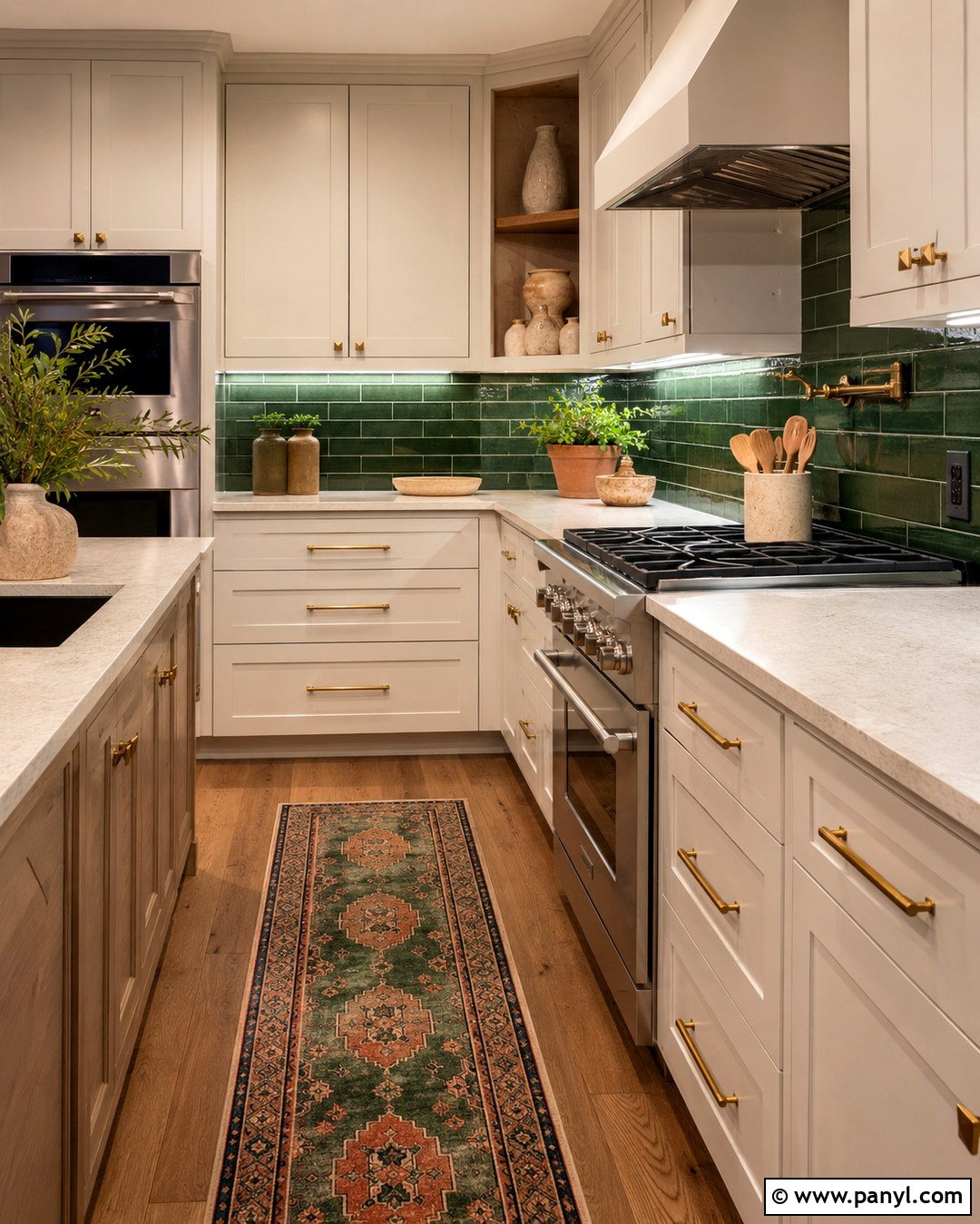
For a more streamlined look, use peel-and-stick backsplash panels in glossy emerald green subway tile. Pair the green surface with warm white cabinets, brushed brass pulls, pale quartz counters, and medium-tone wood flooring. Place cream stoneware, a wood knife block, and a few terracotta planters along the counter to soften the glossy finish. A narrow vintage-style runner containing green and rust can connect the backsplash with the floor. Under-cabinet lighting will help the color remain vivid and make food preparation areas more functional. Measure around outlets carefully and use matching edge pieces where available. With a simple palette and realistic tile proportions, the finished kitchen can look intentional rather than like a temporary decorative shortcut.
14. Colorful Dining Chairs
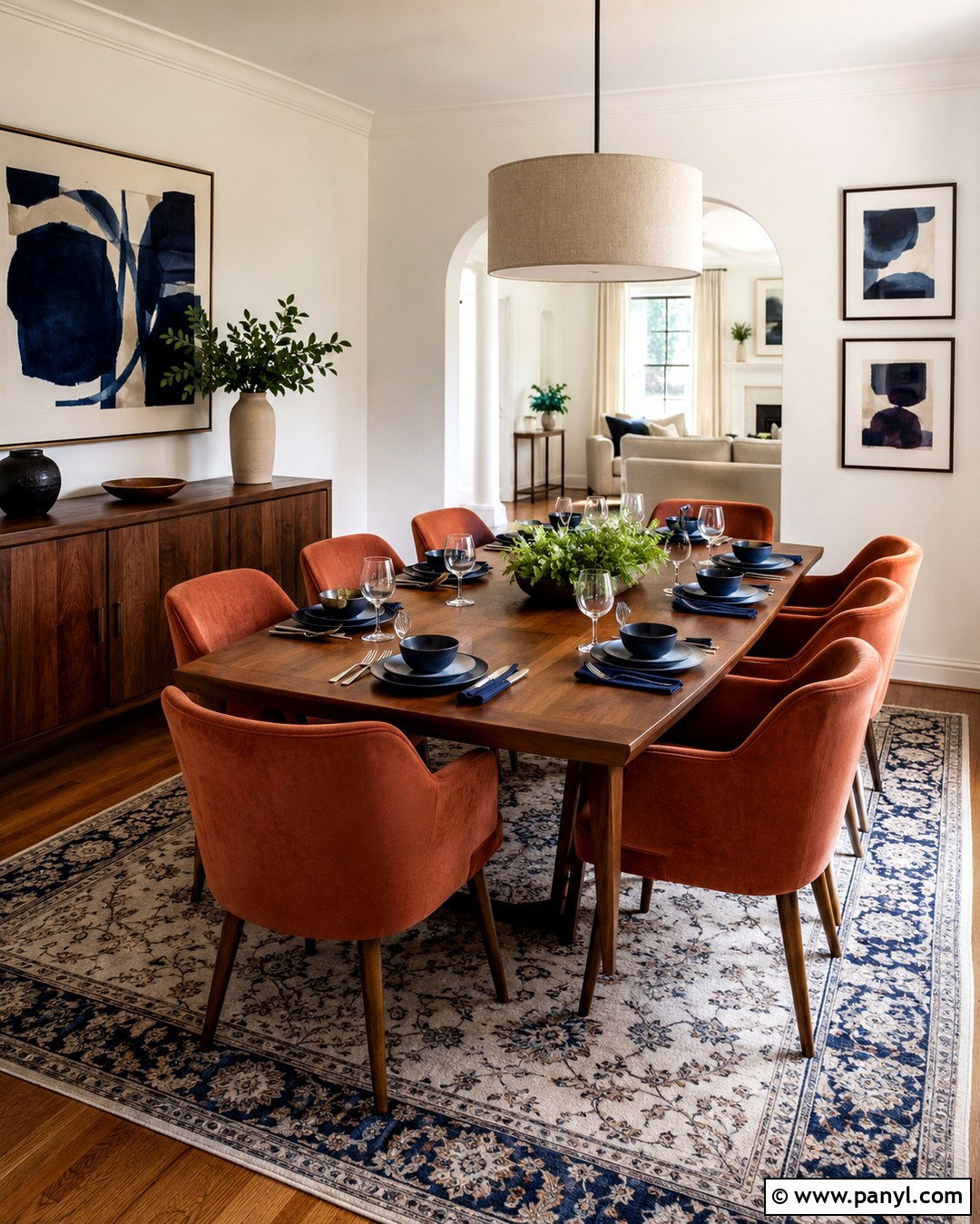
Colorful dining chairs can define the entire dining zone, particularly in an open-plan home with neutral walls. Surround a medium oak table with six chairs upholstered in burnt orange fabric or finished in a durable orange material. Place a cream and navy patterned rug beneath the set, ensuring it is large enough for chairs to remain on the rug when pulled out. Hang a wide linen pendant above the table and add navy napkins, blue ceramic dishes, and a simple greenery arrangement. A walnut sideboard can hold additional serving pieces without competing with the chairs. Repeating orange and navy in small amounts gives the space rhythm. The full arrangement feels energetic, welcoming, and clearly separated from nearby neutral living areas.
15. Colorful Dining Table Linens
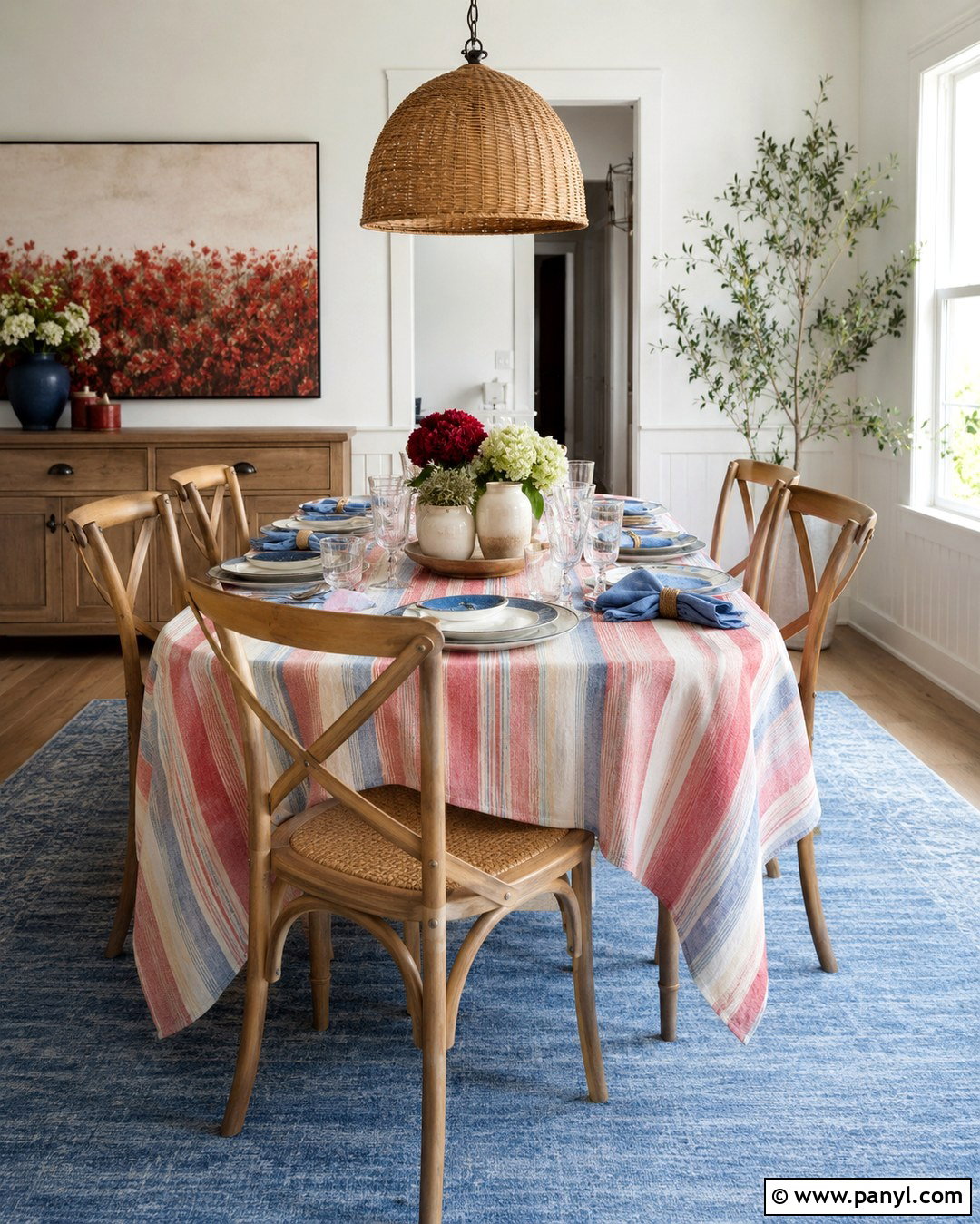
Table linens provide a flexible way to refresh a dining room for everyday meals rather than only special occasions. Begin with a striped tablecloth in tomato red, blush pink, cream, and soft blue. Pair it with solid blue napkins, white stoneware, clear glassware, and a low centerpiece of greenery in colorful ceramic vessels. Natural wood chairs and a simple woven pendant keep the dining space relaxed. Add a faded blue rug beneath the table and display one large red-and-pink print on a nearby wall. The artwork and rug allow the table palette to feel connected to the complete room. When a quieter look is preferred, the cloth and napkins can be stored without requiring furniture replacement or any permanent surface changes.
16. Colorful Planters And Indoor Plants
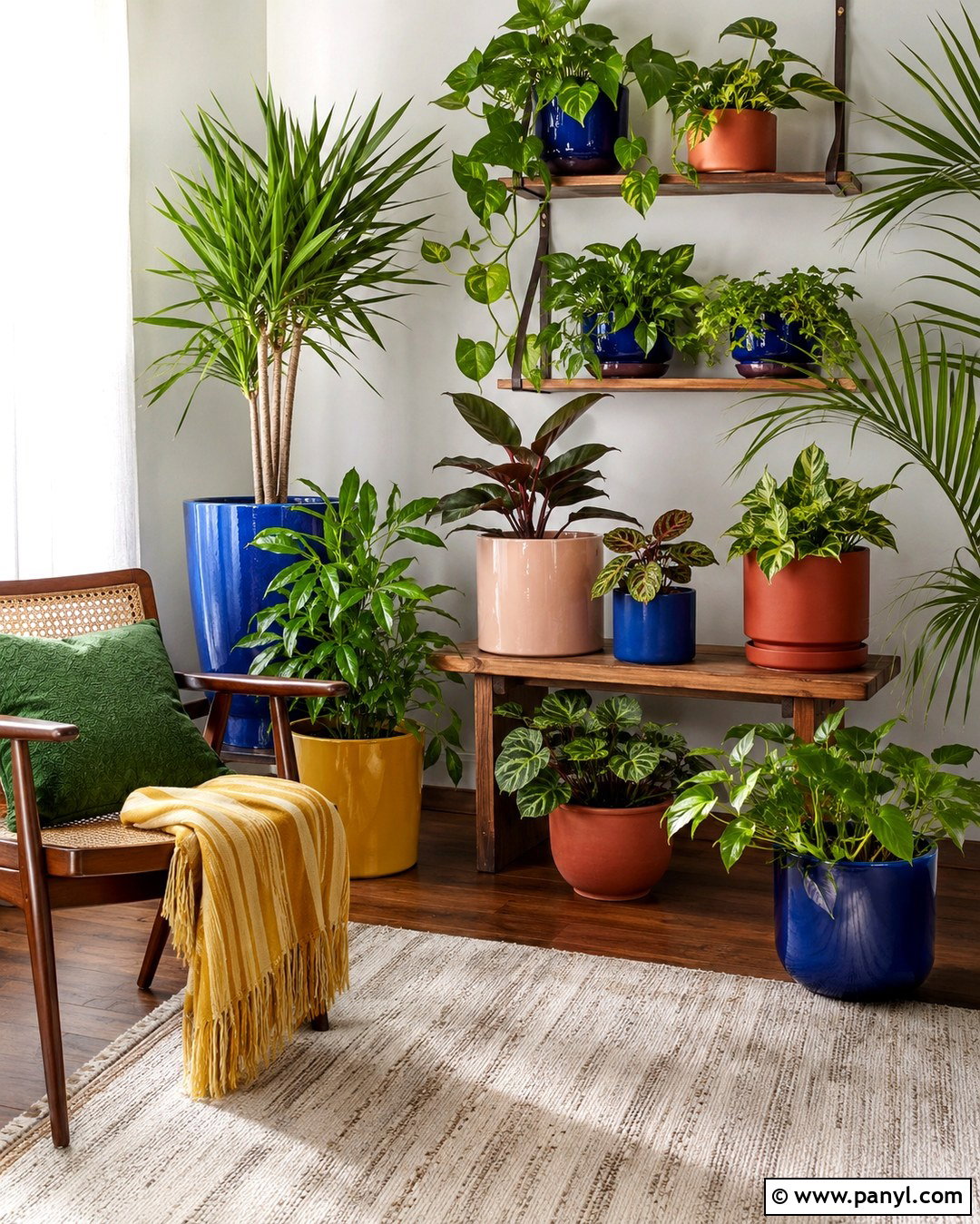
Plants naturally introduce green, but colorful planters can turn them into a stronger decorative feature. Create a bright sunroom or living room corner using terracotta, cobalt blue, mustard yellow, and blush ceramic pots in several sizes. Group taller plants on the floor, medium plants on a wood bench, and smaller varieties on a slim shelf to create varied height. Add a cane chair with a green cushion, a striped yellow throw, and a washable cream rug. Keep the nearby curtains light and airy so the leaves receive appropriate natural brightness. Select plants according to the room’s actual light and care conditions. Repeating planter colors through textiles and small accessories helps the corner feel like a complete, integrated part of the room.
17. Colorful Pillows And Throws
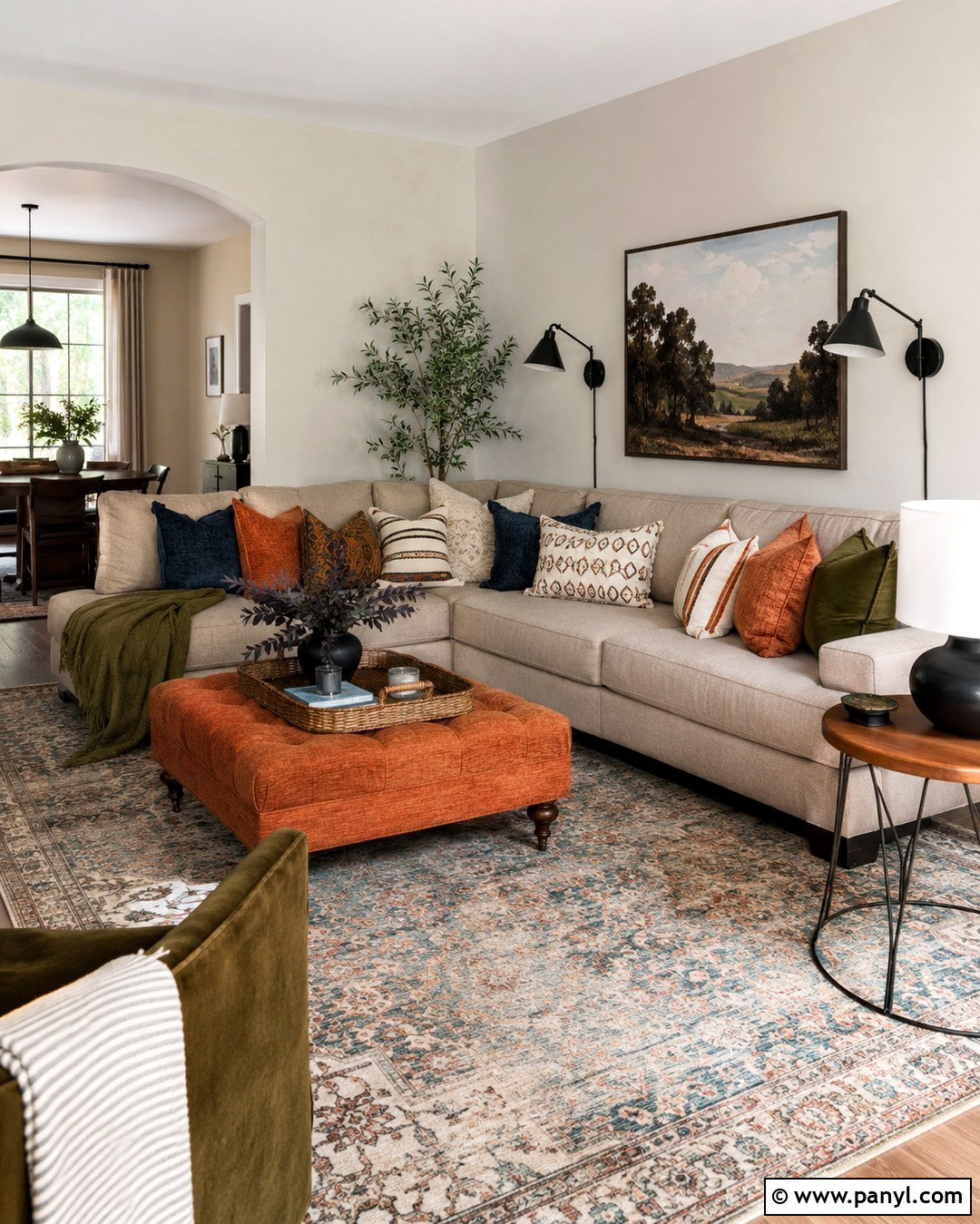
Pillows and blankets work best when they build a deliberate palette across the entire seating arrangement. Start with a beige sectional and layer pillows in rust orange, olive green, navy blue, and cream. Combine solid velvet, narrow stripes, and simple geometric patterns, keeping one color visible in several pieces. Drape an olive throw over one end of the sofa and place a rust-colored ottoman nearby. A vintage-inspired rug containing the same shades will ground the arrangement, while walnut tables and black lighting add structure. Limit the palette to three main colors plus neutrals so the room remains calm. This complete design can shift seasonally by changing only a few textile covers, making it affordable, washable, and easy to store.
18. Colorful Window Film Bathroom
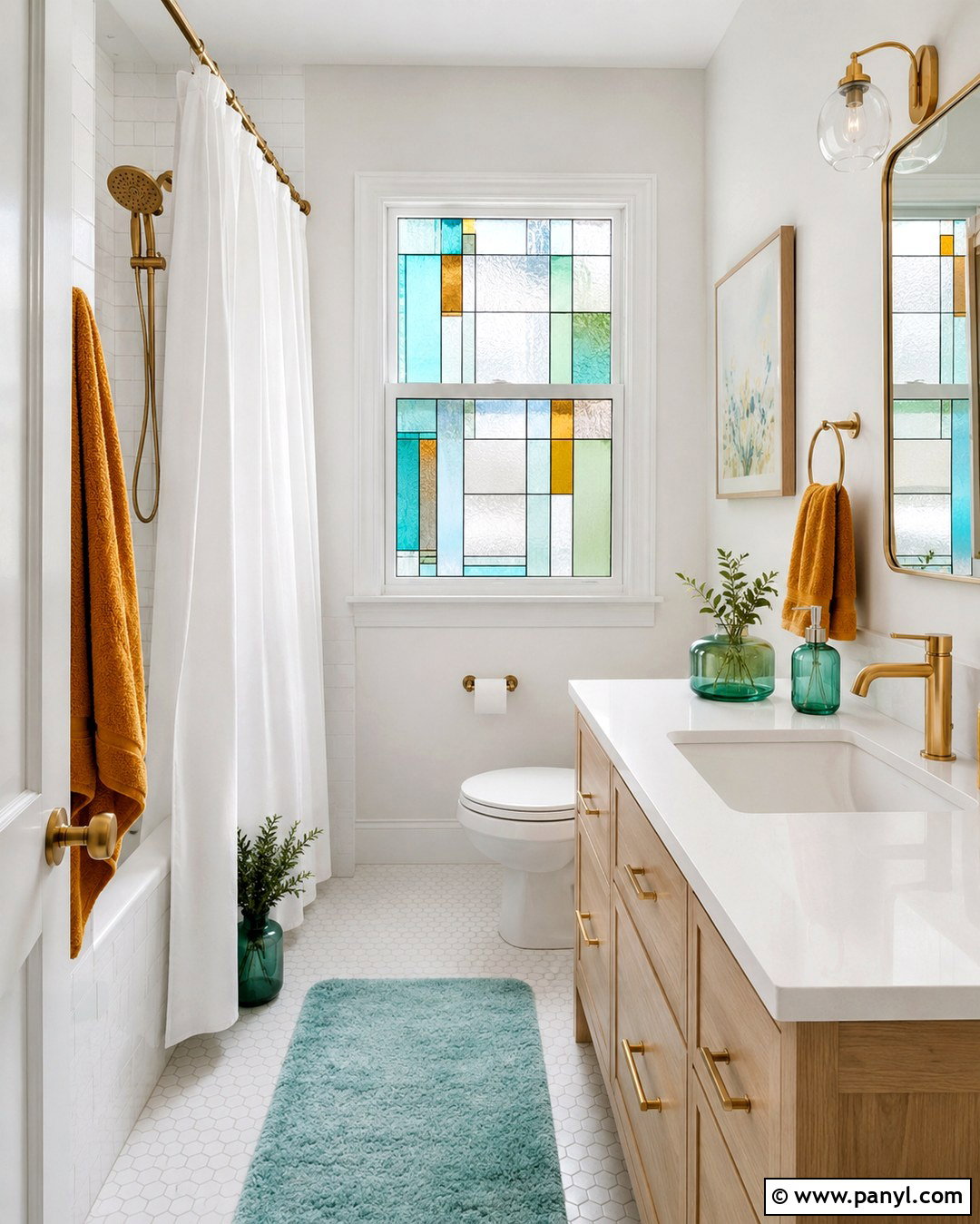
Decorative window film can bring color and privacy to a bathroom while allowing natural light to pass through. Choose a stained-glass-inspired pattern in aqua blue, amber, soft green, and translucent white for the main window. Pair it with a pale wood vanity, white tile, brushed brass fixtures, and an aqua bath mat. Amber towels and green glass containers can repeat the film colors across the room. Keep the shower curtain solid white or lightly textured so it does not compete with the window pattern. Use moisture-resistant accessories and follow the film instructions for glass preparation and application. The finished bathroom feels brighter and more distinctive, while the colorful feature remains removable and does not cover the walls.
19. Colorful Room Divider
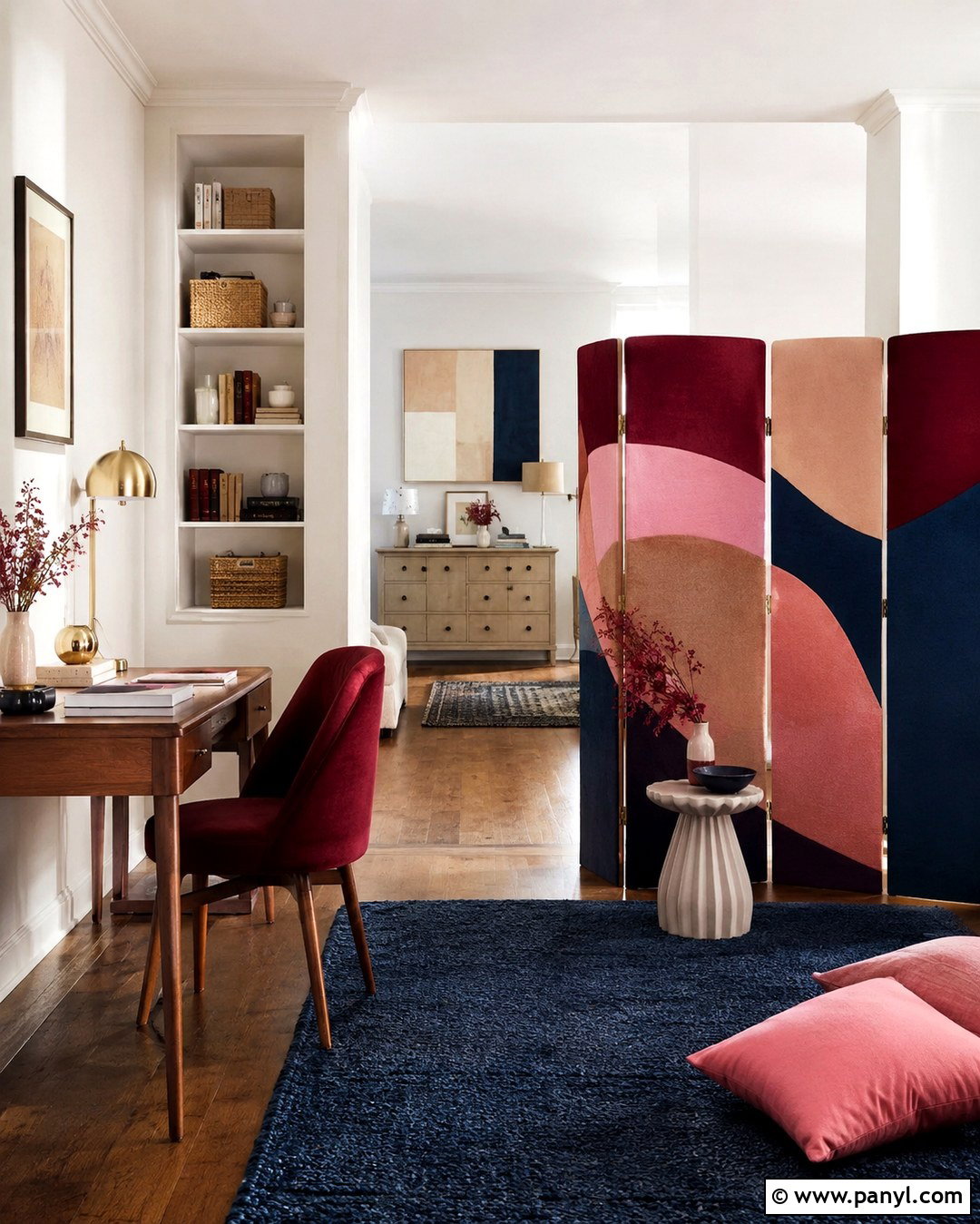
A folding screen can add a large area of color while improving the layout of a studio apartment, bedroom, or multipurpose living room. Choose a fabric-covered divider with an abstract pattern in burgundy, dusty pink, navy, and tan. Position it behind a compact desk or beside the bed to visually separate that zone from the rest of the room. Repeat burgundy with a desk chair, navy with a rug, and pink through one or two cushions. Keep the largest furniture pieces cream, beige, or wood toned to balance the screen. A brass task lamp and warm wood storage complete the look. Because the divider is freestanding, it can be repositioned whenever the room’s layout or purpose changes.
20. Colorful Floor Seating
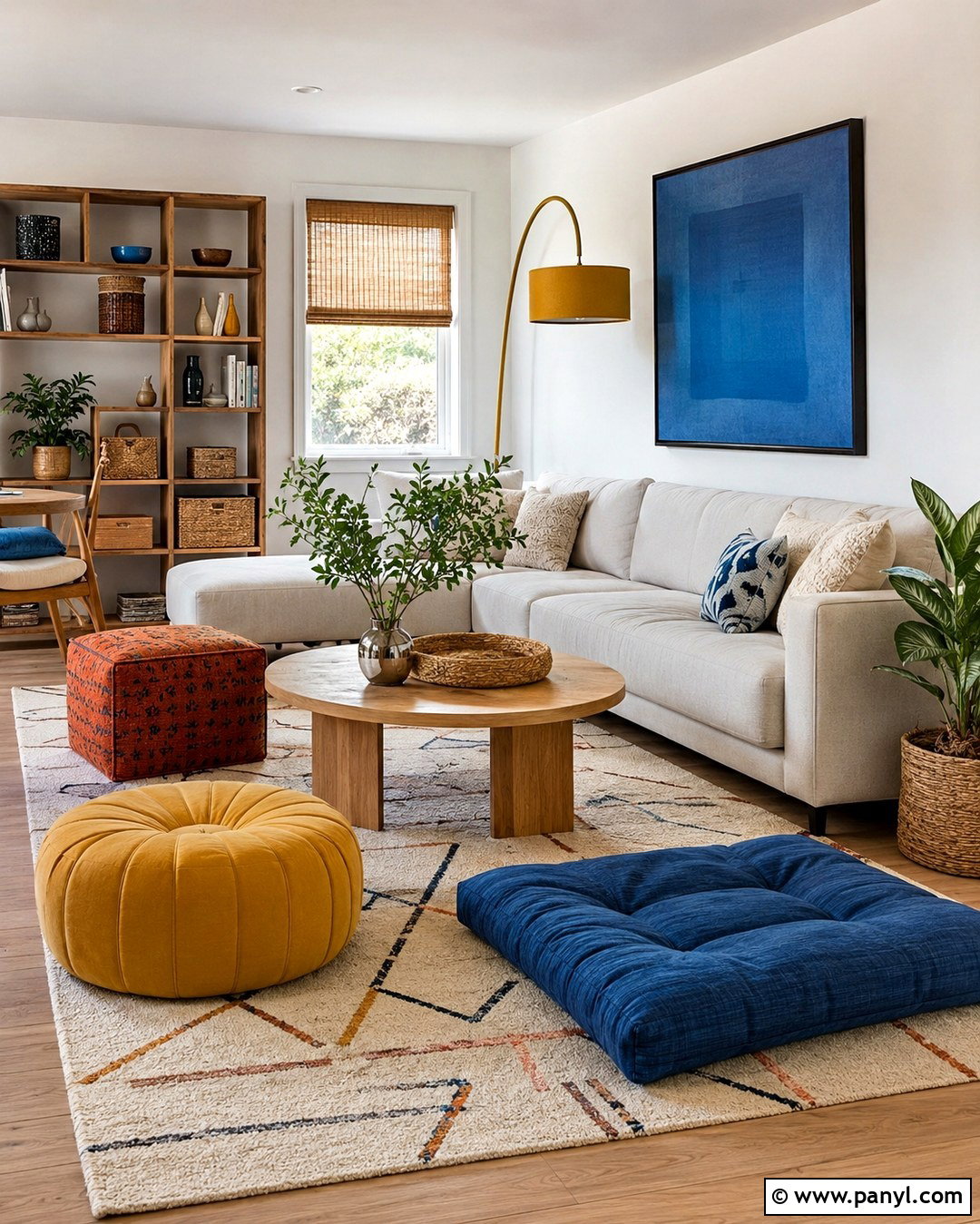
Low seating can introduce color and flexibility to a family room, reading space, or casual apartment living area. Arrange a mustard yellow pouf, deep blue floor cushion, and rust-colored upholstered ottoman around a low oak coffee table. Anchor the grouping with a cream geometric rug that includes small touches of all three colors. Add a neutral sofa, woven baskets, and a slim bookcase to keep the room practical. Repeat mustard through a lamp, blue through artwork, and rust through a folded blanket. Choose durable, washable fabrics if the seating will receive frequent use. The varied shapes create a relaxed layout for reading, games, or conversation, while the repeated palette makes the room feel coordinated rather than randomly furnished.
Conclusion:
Learning how to add color without changing wall paint gives you greater decorating freedom and makes future updates easier. Rugs, curtains, furniture, bedding, artwork, removable finishes, and lighting can each provide enough visual impact to shape an entire room. The strongest spaces begin with a limited palette and repeat those shades through several practical elements. Neutral walls then become an advantage because they give colorful pieces room to stand out. Start with one feature you genuinely enjoy, such as a rug or sofa, and build outward using coordinated textures and accents. Whether you rent or simply prefer flexible decorating, **20 Add Color Without Painting Walls** offers approachable ways to create a brighter, more personal home.

Related Ideas and Inspiration:
Leave a Reply