
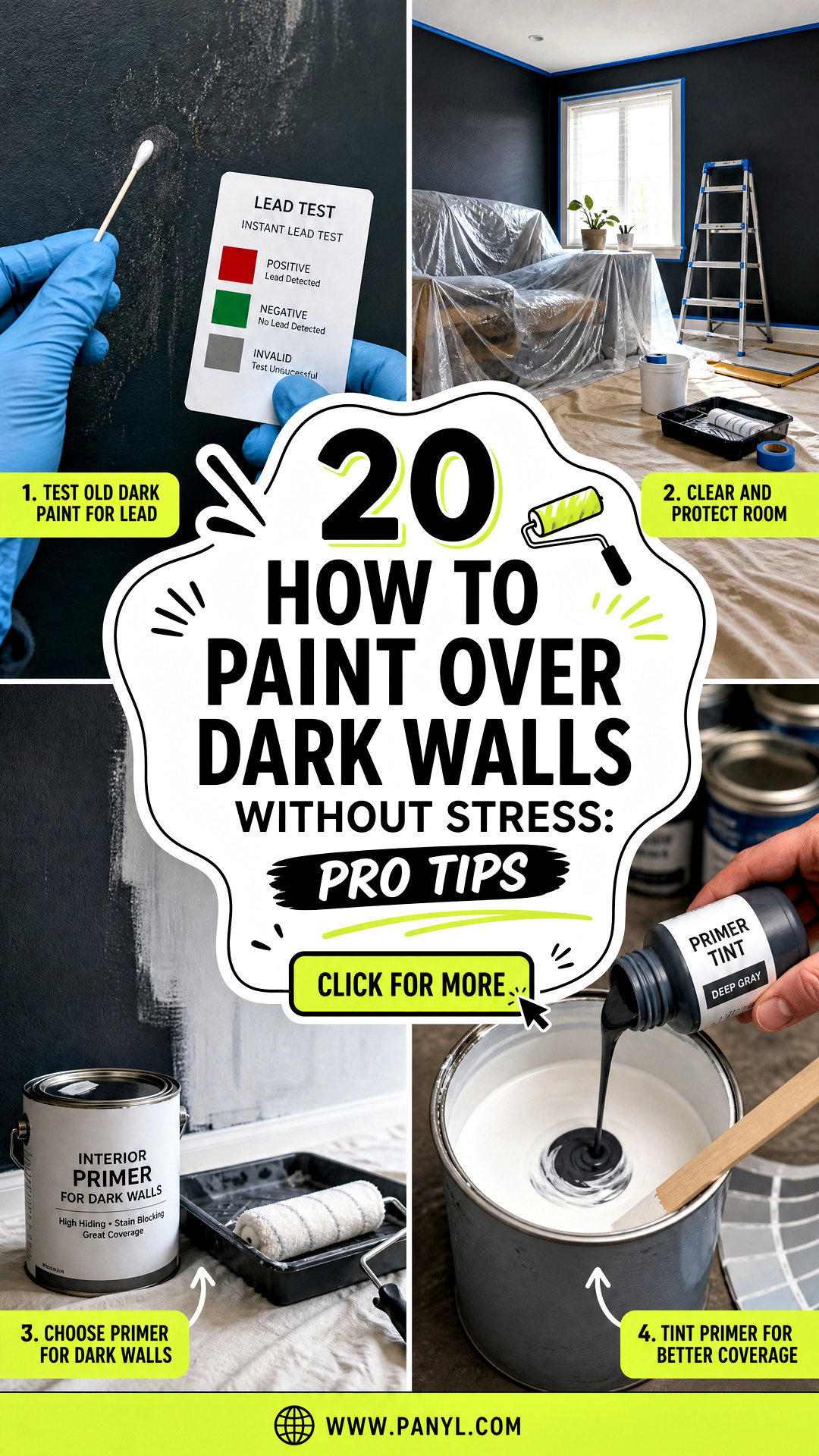
Painting a pale color over charcoal, navy, burgundy, or deep green can feel intimidating, but the right process prevents shadowy patches and endless recoating. This guide to **20 How To Paint Over Dark Walls** breaks the project into practical steps, from checking the existing finish to applying smooth final touch-ups. You will learn when to clean, repair, sand, prime, and use a high-hiding topcoat. Careful preparation matters more than rushing into color, especially when the new shade is white, cream, greige, or a soft pastel. With reliable tools, patient drying times, and consistent roller technique, even a dramatic dark room can become bright and balanced. Follow these professional steps in **20 How To Paint Over Dark Walls**.
1. Check Dark Wall Condition
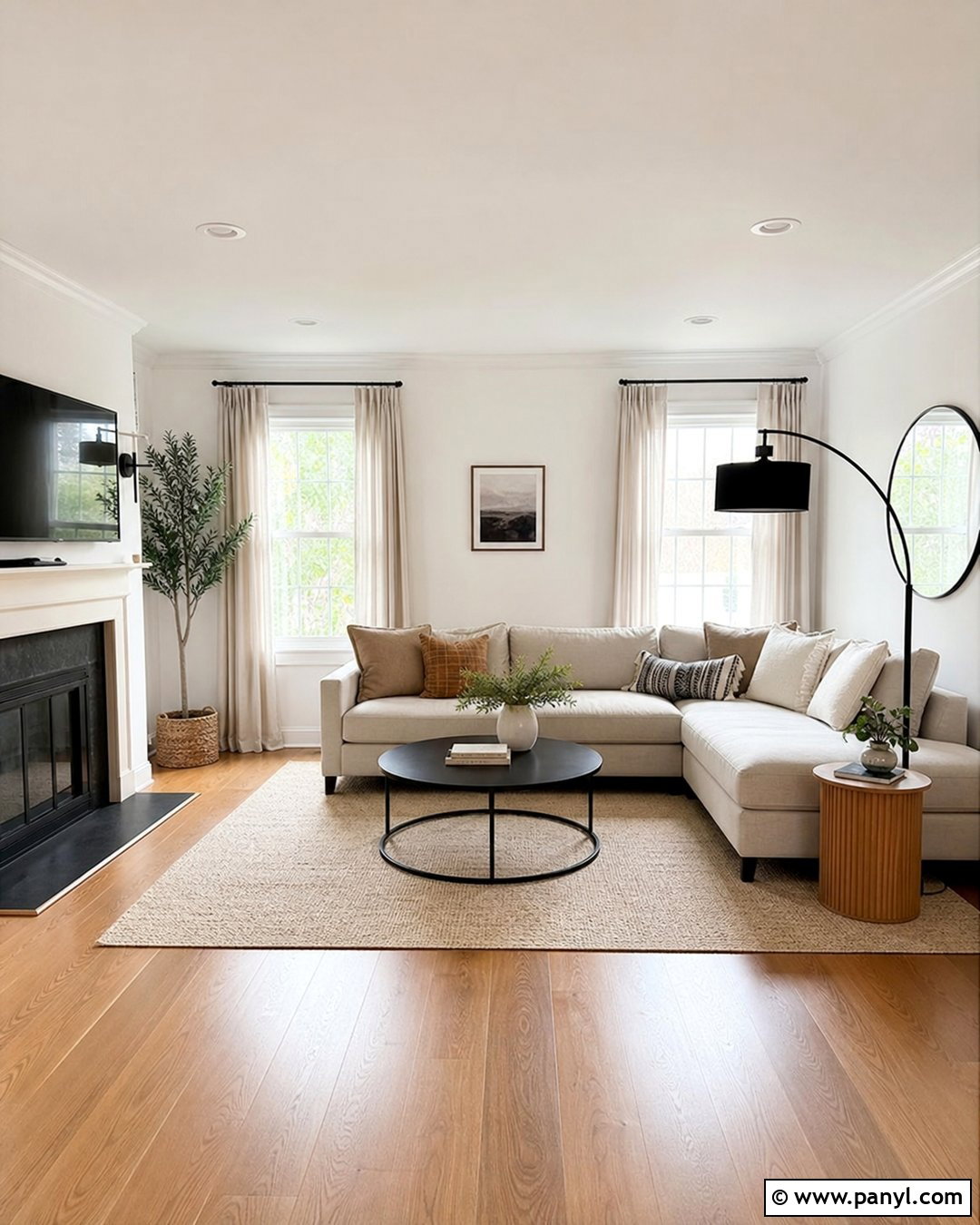
Begin by viewing every dark wall in strong natural and overhead light. Look for peeling paint, shiny patches, water marks, dents, hairline cracks, and greasy areas around switches. Run your hand lightly across the surface to find rough repairs or dried drips that may show beneath the new color. Determine whether the existing finish is flat, eggshell, satin, or glossy because shinier coatings usually require more surface preparation. Mark damaged spots with small pieces of painter’s tape so they remain easy to locate. Address any active leak or moisture problem before opening the primer. A carefully inspected room gives you a clear repair plan and reduces the risk of discovering visible flaws after the light paint has dried. ()
2. Test Old Dark Paint for Lead
Safety comes first when the dark walls are inside a home built before 1978. Older layers may contain lead even when newer paint covers them, and sanding or scraping can release harmful dust. Before disturbing questionable coatings, learn the home’s age and arrange appropriate lead testing or contact an EPA Lead-Safe Certified professional. Keep children and pets away from the work area until you know how the surface should be handled. Do not aggressively dry-sand peeling historical paint based only on appearance. If lead is present, follow current lead-safe renovation practices for containment, cleanup, and disposal. Once the surface is confirmed safe or professionally managed, you can prepare the room without spreading potentially hazardous particles through floors, vents, or neighboring spaces. ()
3. Choose Light Paint Color
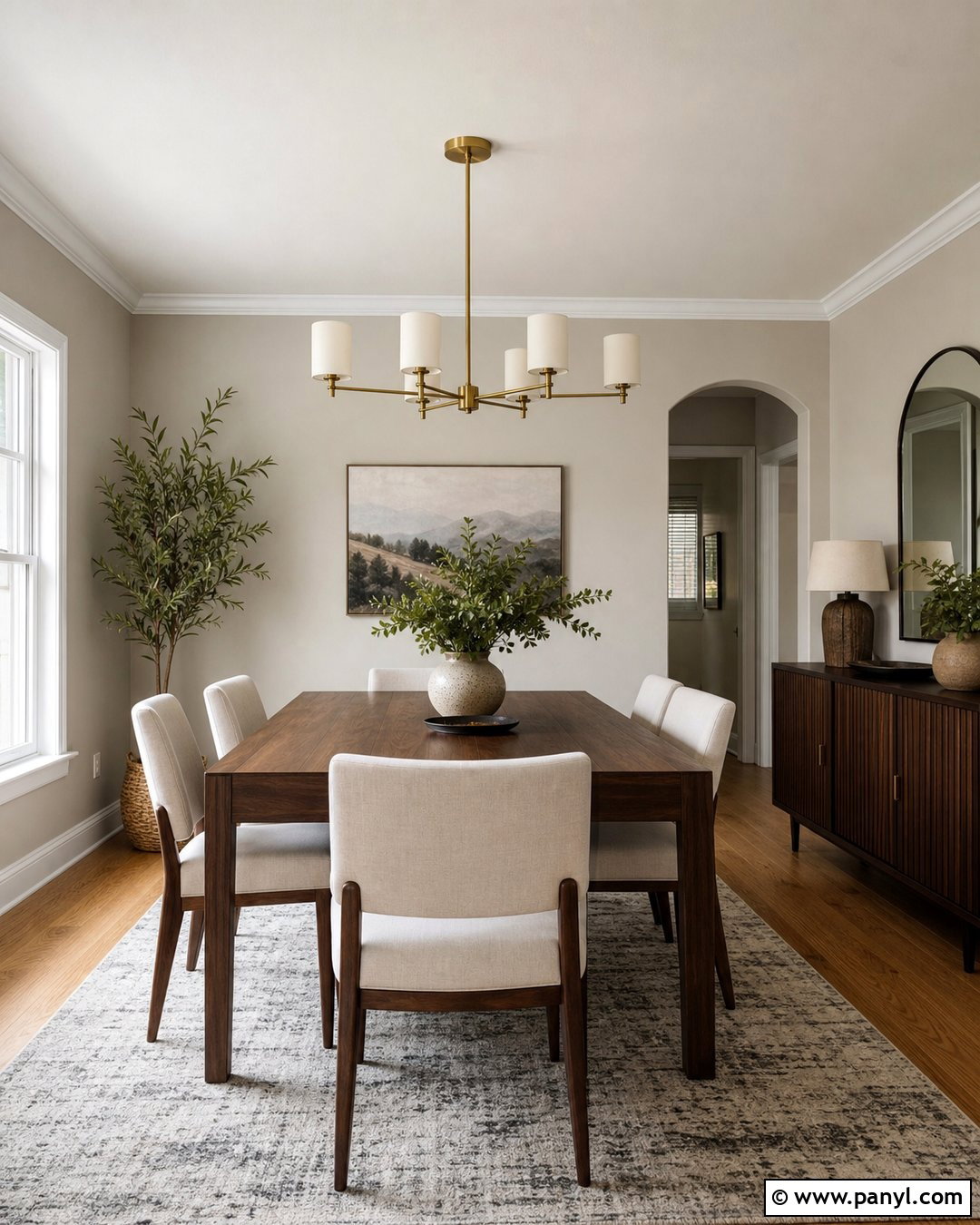
The new wall color affects how demanding the coverage process will be. Bright white creates the strongest contrast over black, burgundy, forest green, or navy, while warm greige and medium beige may hide the old shade more easily. Test several colors on primed sample boards rather than painting directly over the dark wall. Move the boards around the room and check them during morning, afternoon, and evening light. Pay attention to undertones because dark paint can visually influence an uncovered sample. Select the final color before tinting primer or estimating topcoat quantities. For a cohesive finished room, compare the wall color with flooring, trim, upholstery, and fixed finishes. This prevents completing a technically successful paint job only to discover that the new color clashes with the room.
4. Calculate Paint and Primer
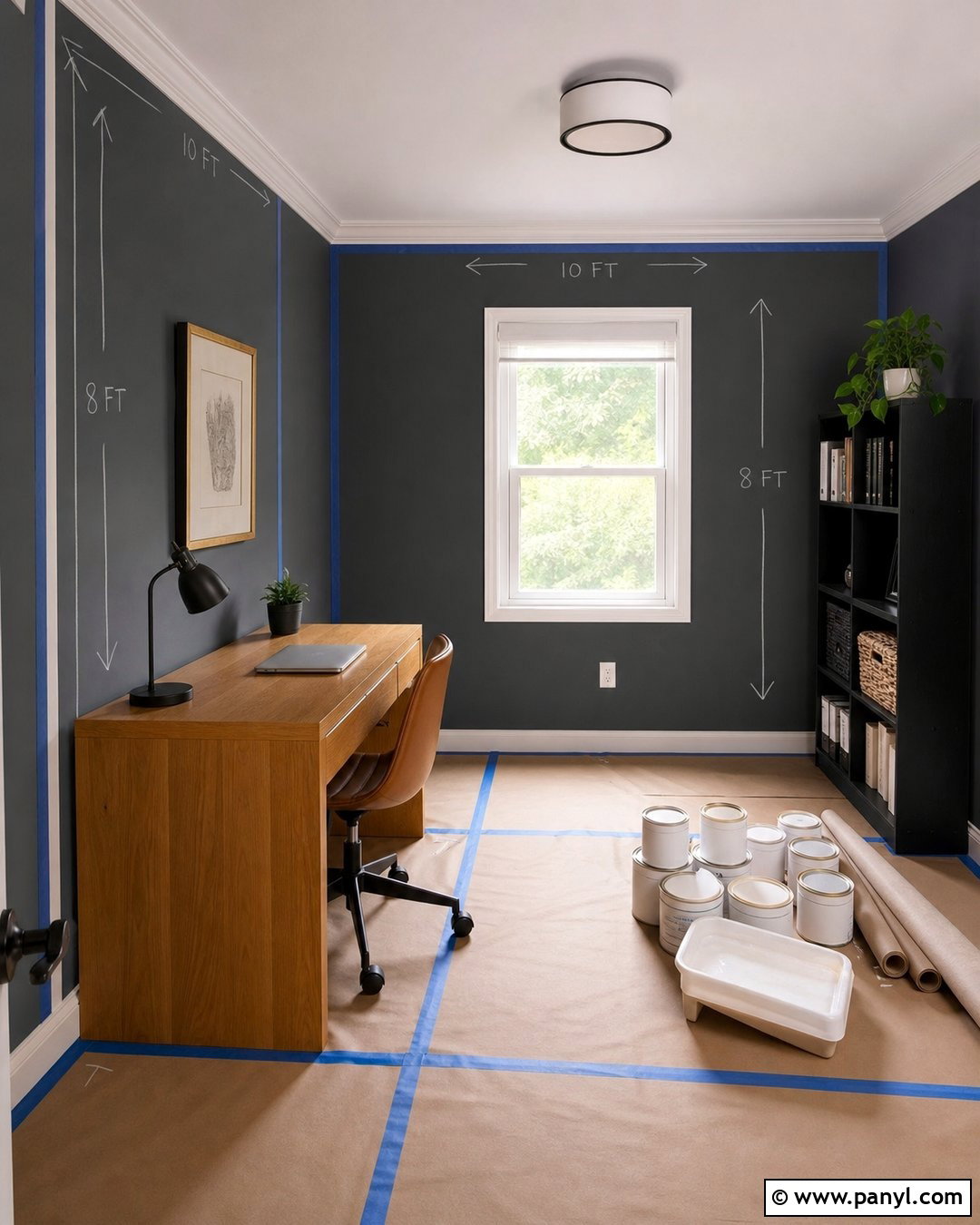
Measure each wall’s width and height, then calculate the approximate surface area before shopping. Subtracting doors and large windows can refine the estimate, although purchasing a little extra paint is helpful for touch-ups. Plan for a dedicated primer coat and generally two finish coats when making a major dark-to-light transition. Textured, porous, damaged, or exceptionally dark walls may require additional material. Check the coverage information and application instructions for the exact products you choose because formulas vary. Buy enough paint from the same purchase batch when possible, or combine multiple cans in one larger container to keep the color consistent. Accurate planning prevents mid-wall interruptions, mismatched batches, and thin applications caused by trying to stretch too little primer or paint across the room. ()
5. Clear and Protect Room
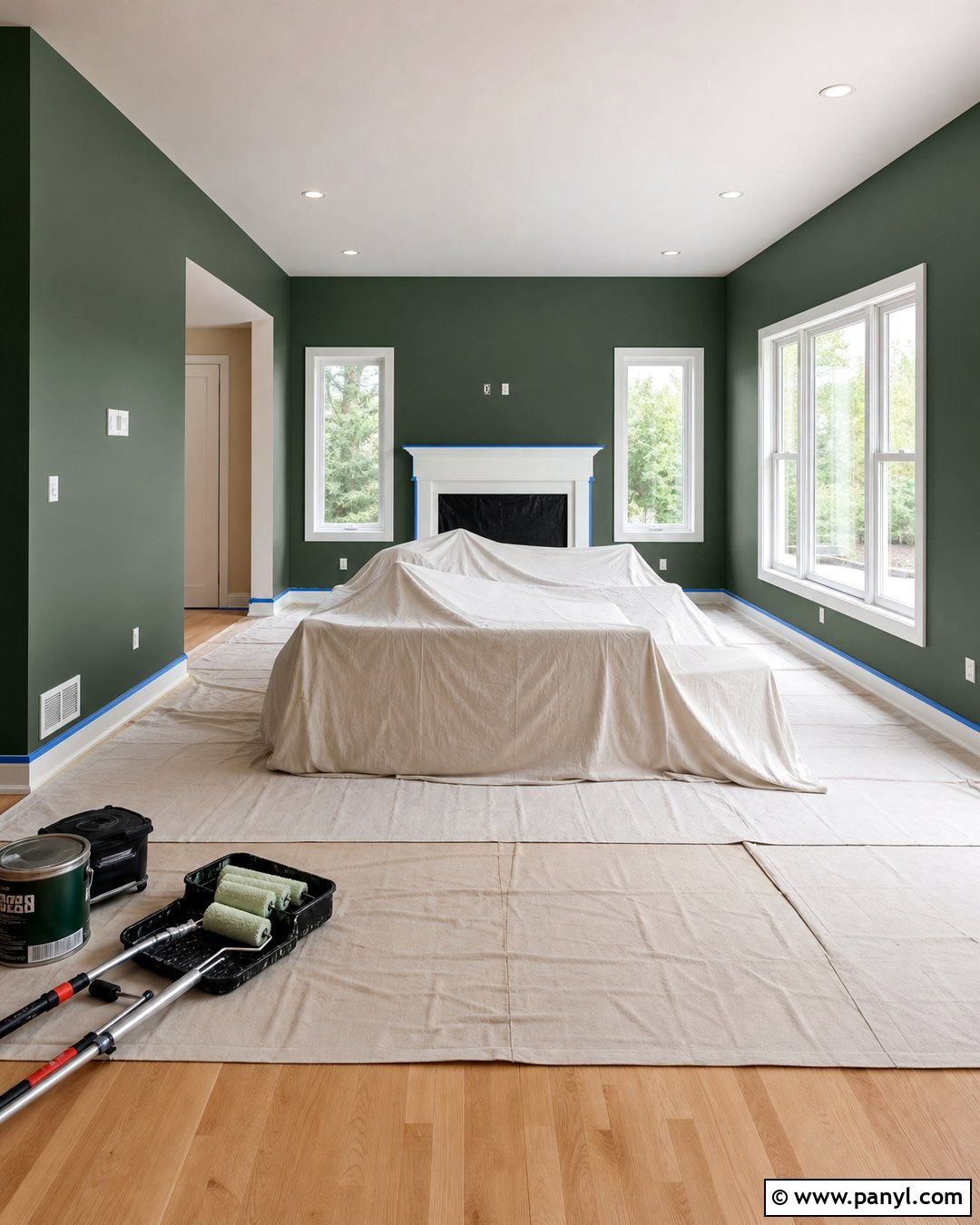
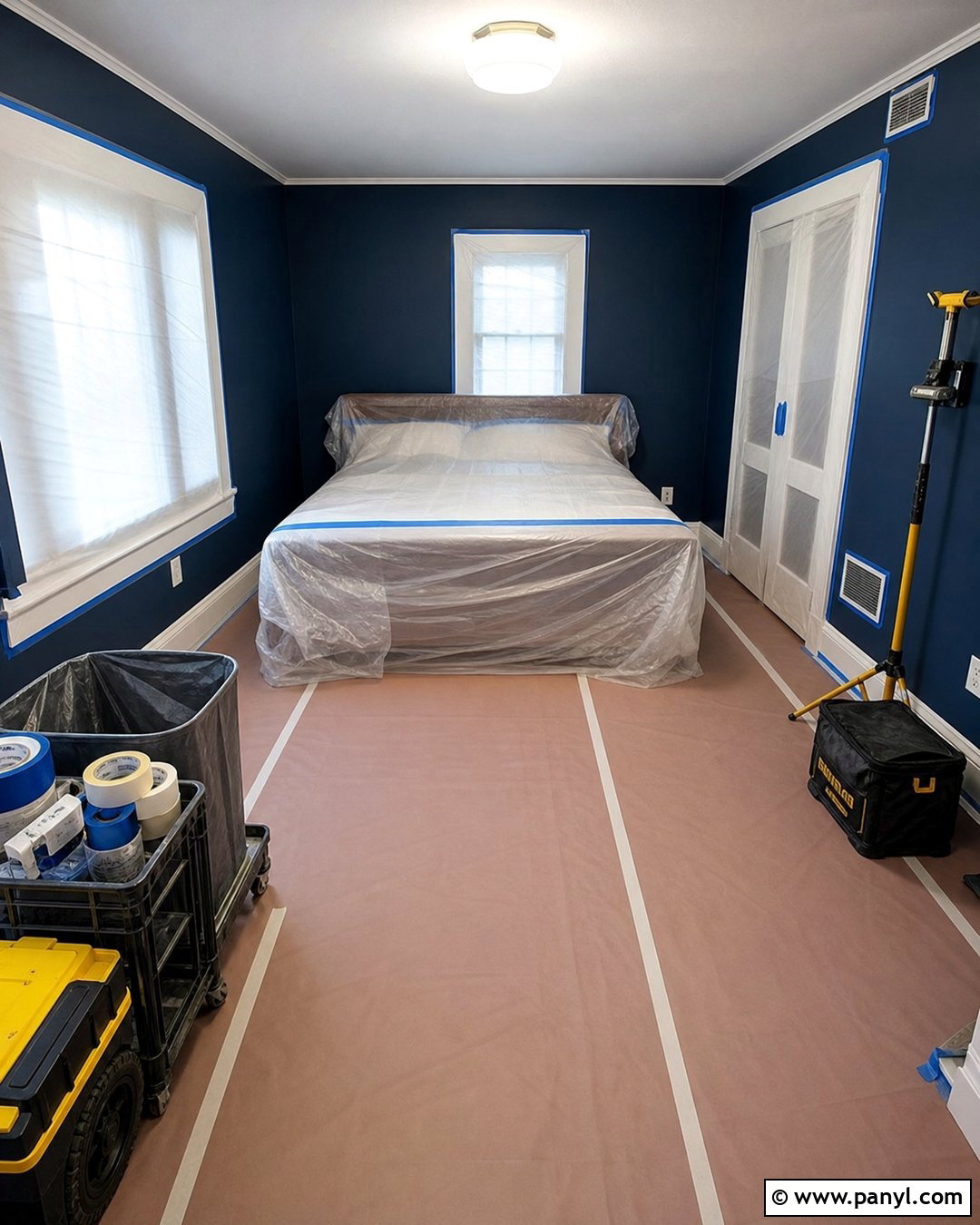
Give yourself enough space to work efficiently around the room. Remove small furniture, artwork, curtains, outlet covers, switch plates, and lightweight shelving. Move larger pieces toward the center and cover them completely. Protect hard flooring or carpet with secured canvas drop cloths, placing additional covering beneath paint trays and buckets. Mask air returns if dusty preparation is planned, but restore ventilation appropriately afterward. Keep tools together in one organized station so open containers do not travel across the room. Use a sturdy step ladder instead of balancing on chairs. Good preparation protects the complete space, including baseboards, windows, doors, lighting, and furnishings. It also allows you to maintain a wet edge because you will not need to stop repeatedly to move obstacles while applying primer or paint.
6. Clean Dark Walls Thoroughly
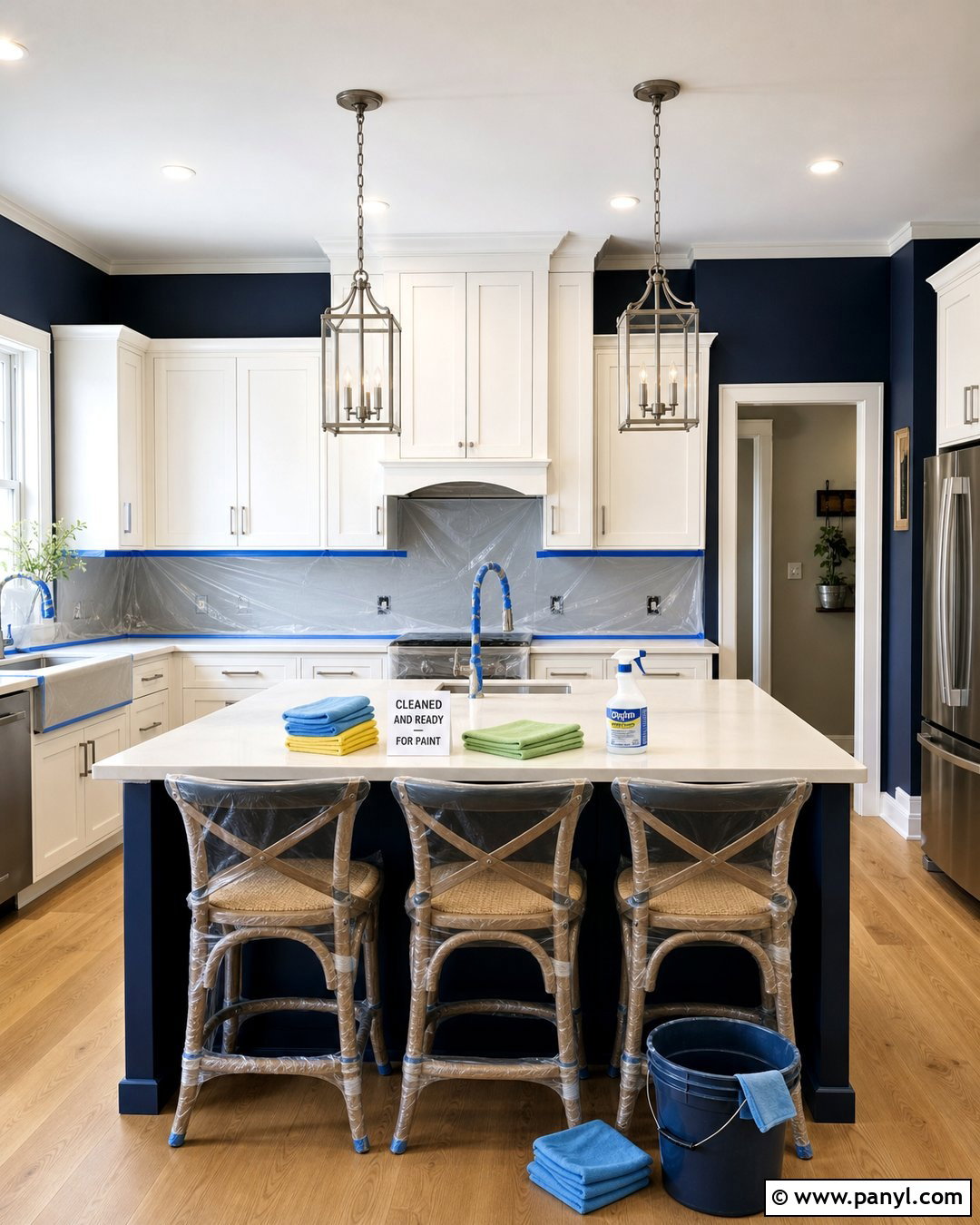
Dark walls can conceal dust, fingerprints, cooking residue, and oily marks that interfere with adhesion. Vacuum corners, baseboard edges, and cobwebs first. Then wipe the walls with a clean sponge or microfiber cloth and a suitable mild cleaning solution. Give extra attention to kitchens, bathrooms, children’s rooms, and the areas surrounding switches and doorways. Avoid soaking drywall or leaving cleaner residue behind. Rinse when the product instructions require it, and allow the surface to dry completely before patching or priming. Never coat over active mildew; identify and correct the moisture source, then treat the affected area properly. A clean, dry surface helps primer form a consistent layer instead of separating, blistering, or developing rough spots over hidden grime. ()
7. Repair Dark Wall Damage
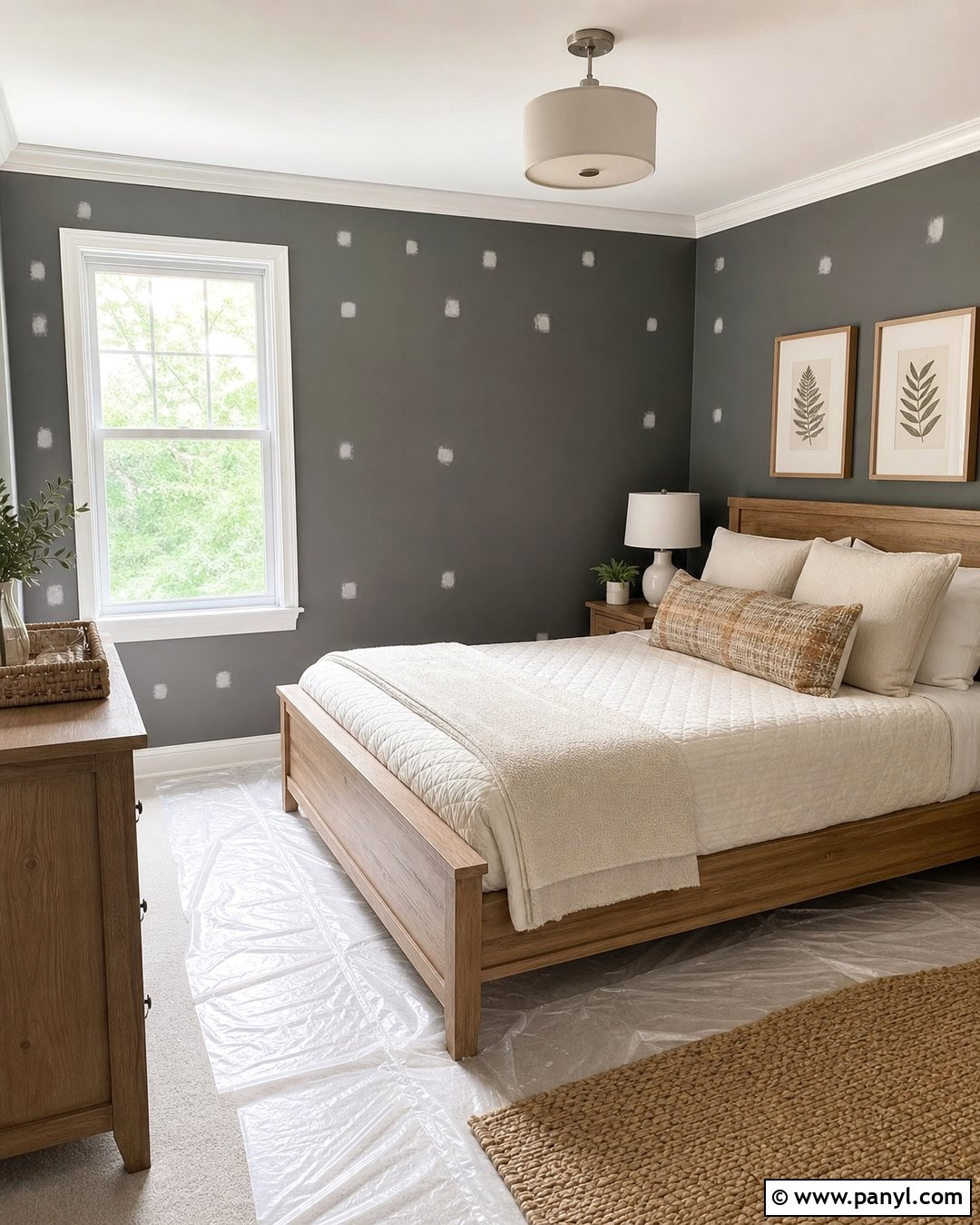
Light paint reflects more illumination and can make dents, cracks, and uneven patches easier to notice. Scrape away loose paint only after confirming the surface can be disturbed safely. Fill nail holes and shallow dents with an appropriate patching compound, using thin applications rather than one heavy mound. Larger damage may require mesh tape or a drywall repair patch. Let each repair dry fully, then sand it level with the surrounding wall. Shine a portable work light across the surface to reveal raised edges and low spots. Spot-prime porous repairs so they do not absorb the finish differently and create dull marks. Completing these repairs before the main primer coat produces a smoother room and prevents dark outlines from remaining around old holes, cracks, and damaged areas. ()
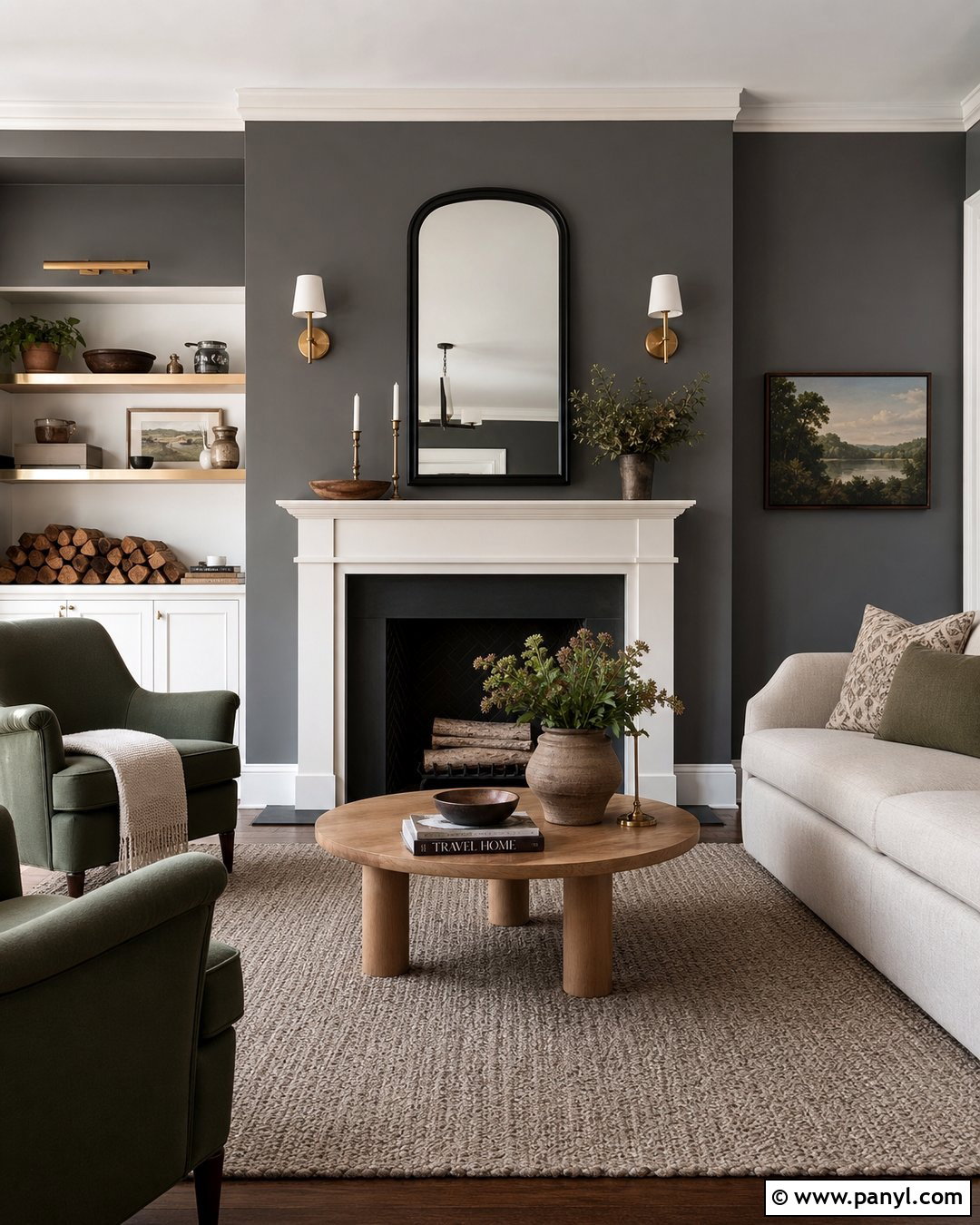


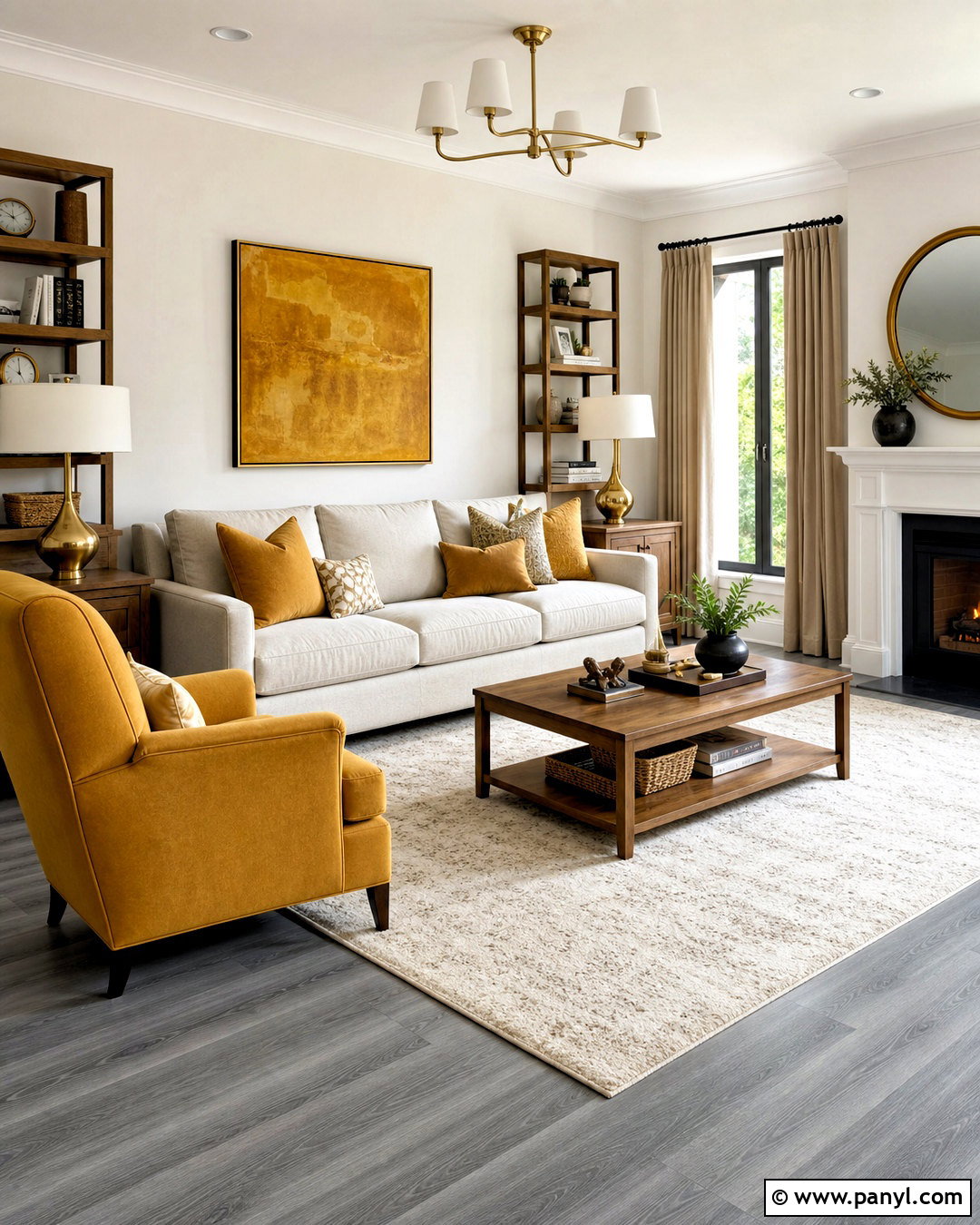
8. Sand Glossy Dark Walls
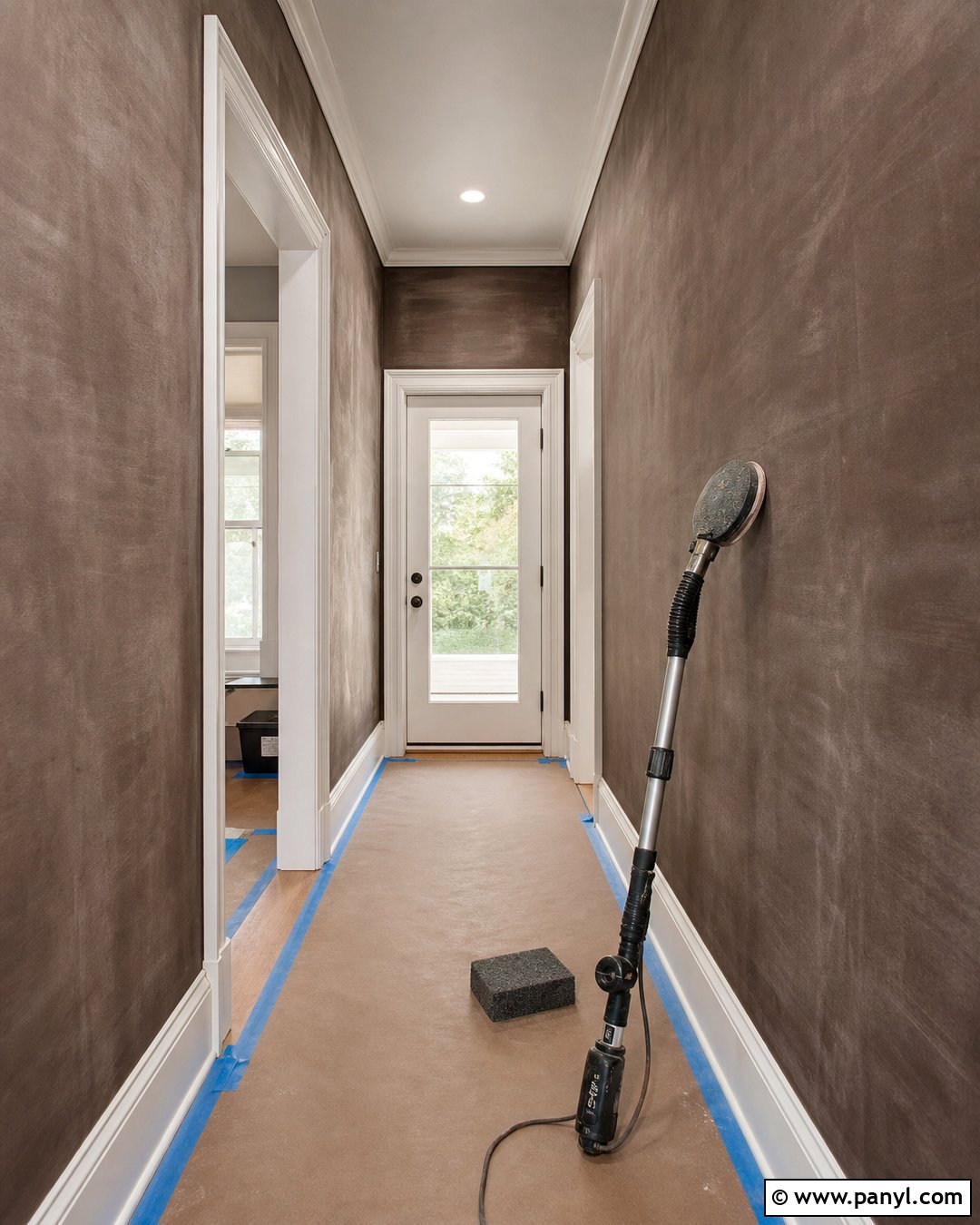
A shiny dark finish needs enough texture for the new coating to bond reliably. Use fine-grit sandpaper or a sanding sponge to lightly scuff satin, semi-gloss, and gloss walls without grinding through every paint layer. Concentrate on slick areas, old drips, patch edges, and imperfections that would remain visible beneath a pale finish. A pole sander can make broad walls easier to address evenly. Avoid leaving deep scratches, since white and light-colored paint may emphasize them. Wear appropriate protection and control dust throughout the room. If you cannot safely sand the surface, choose a compatible bonding primer and follow its label. The goal is a clean, dull, smooth wall that accepts primer consistently, not a completely stripped surface. ()
9. Remove Dust and Dry Walls
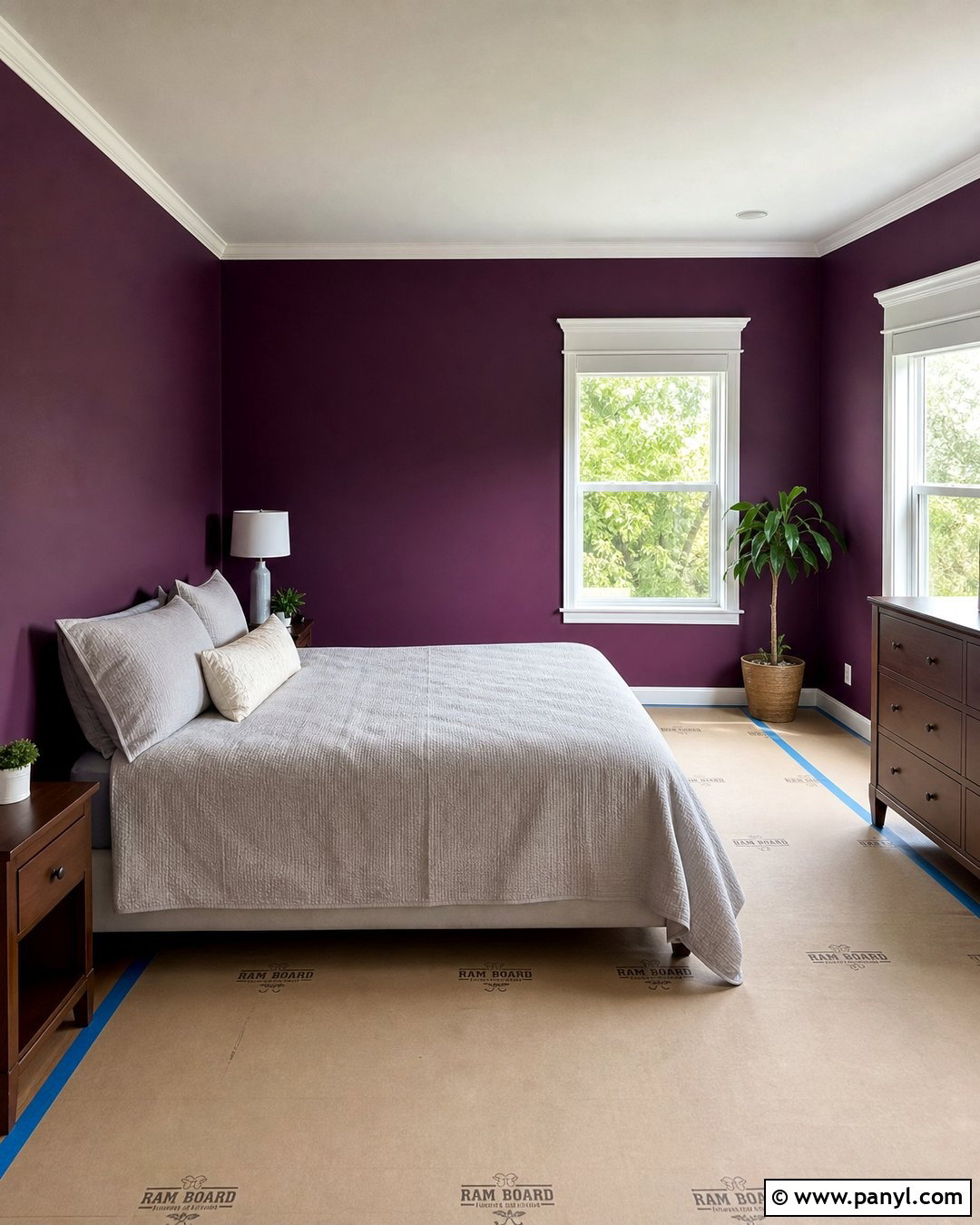
Sanding dust can create gritty primer, weak adhesion, and visible roller debris, so remove it carefully before coating. Vacuum the walls and floor with a suitable attachment, working from the ceiling line downward. Wipe the surface with a clean microfiber cloth or another method recommended for your wall and primer products. Clean the tops of baseboards, window trim, and door casings because loose dust can be picked up by a wet roller. Let every washed or damp-wiped area dry fully. Use bright side lighting to confirm that no chalky film remains on the dark paint. Once clean, avoid touching the walls with bare or dirty hands. This final preparation step creates a stable surface where primer can spread smoothly and develop consistent hiding power. ()
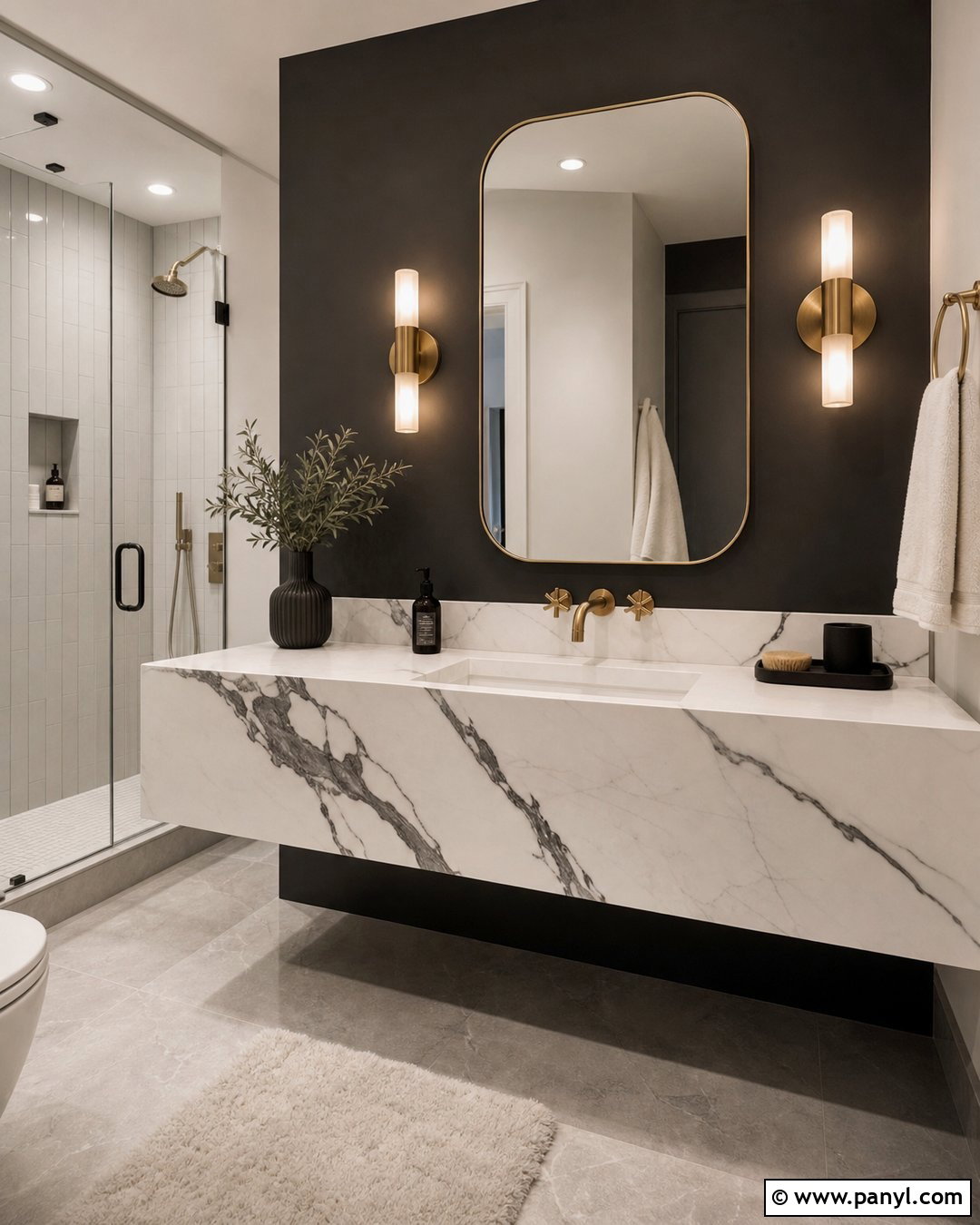
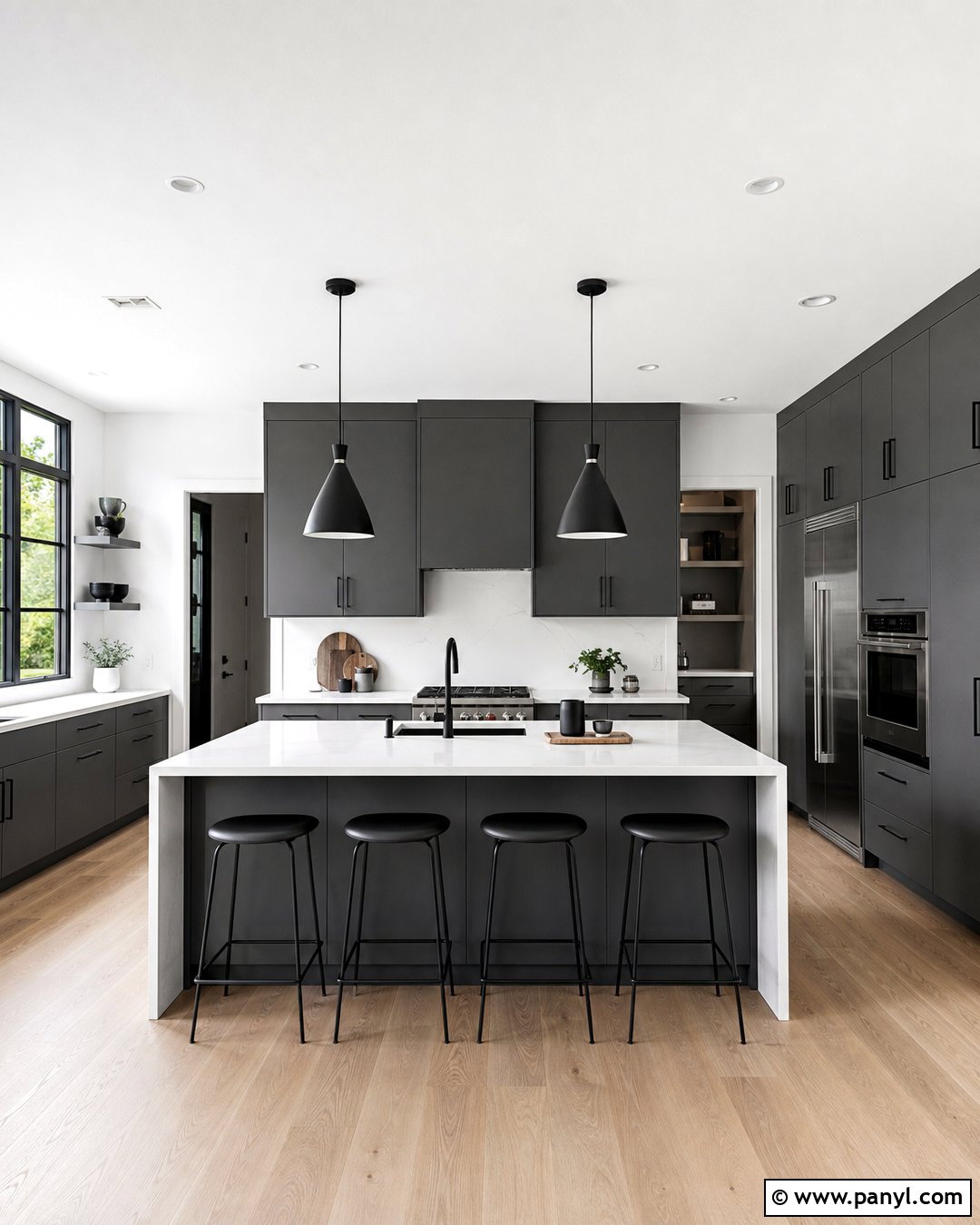
10. Tape Dark Wall Edges
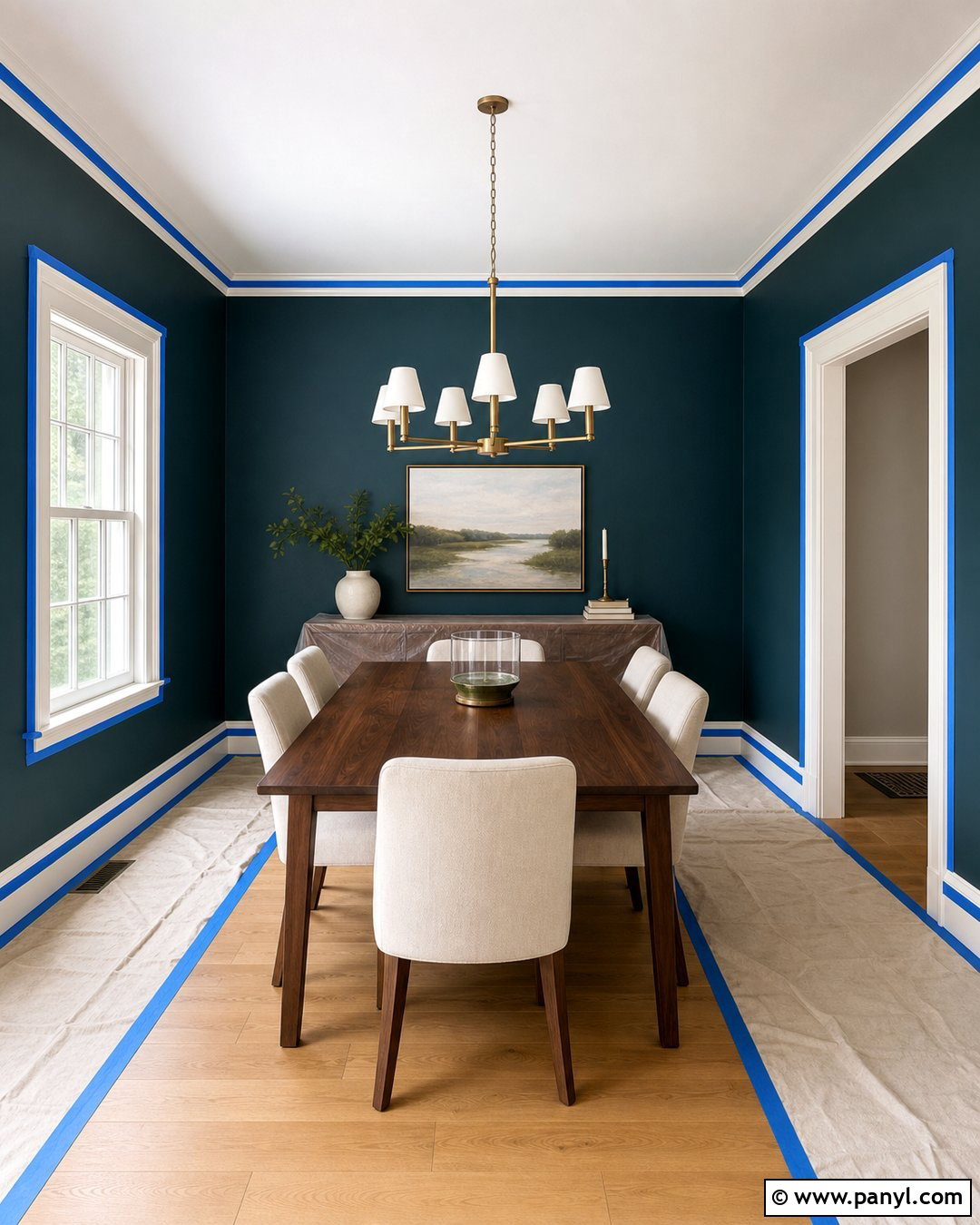
Careful masking helps the newly lightened room look crisp rather than hurried. Apply quality painter’s tape along baseboards, window frames, door casings, and other surfaces that will not receive wall paint. Press the tape firmly at the edge with a clean putty knife or flexible card, but avoid damaging delicate finishes. Tape alone cannot replace controlled brushing, so plan to cut in neatly. Cover outlets after removing their plates, and keep paint away from electrical components. Protect built-in cabinets, fixed countertops, and flooring with properly secured coverings. If the ceiling will remain unchanged, create a clean boundary at the ceiling line. Organized masking lets the lighter wall color meet the room’s trim, flooring, and architectural details with sharp, professional-looking transitions.
11. Choose Primer for Dark Walls
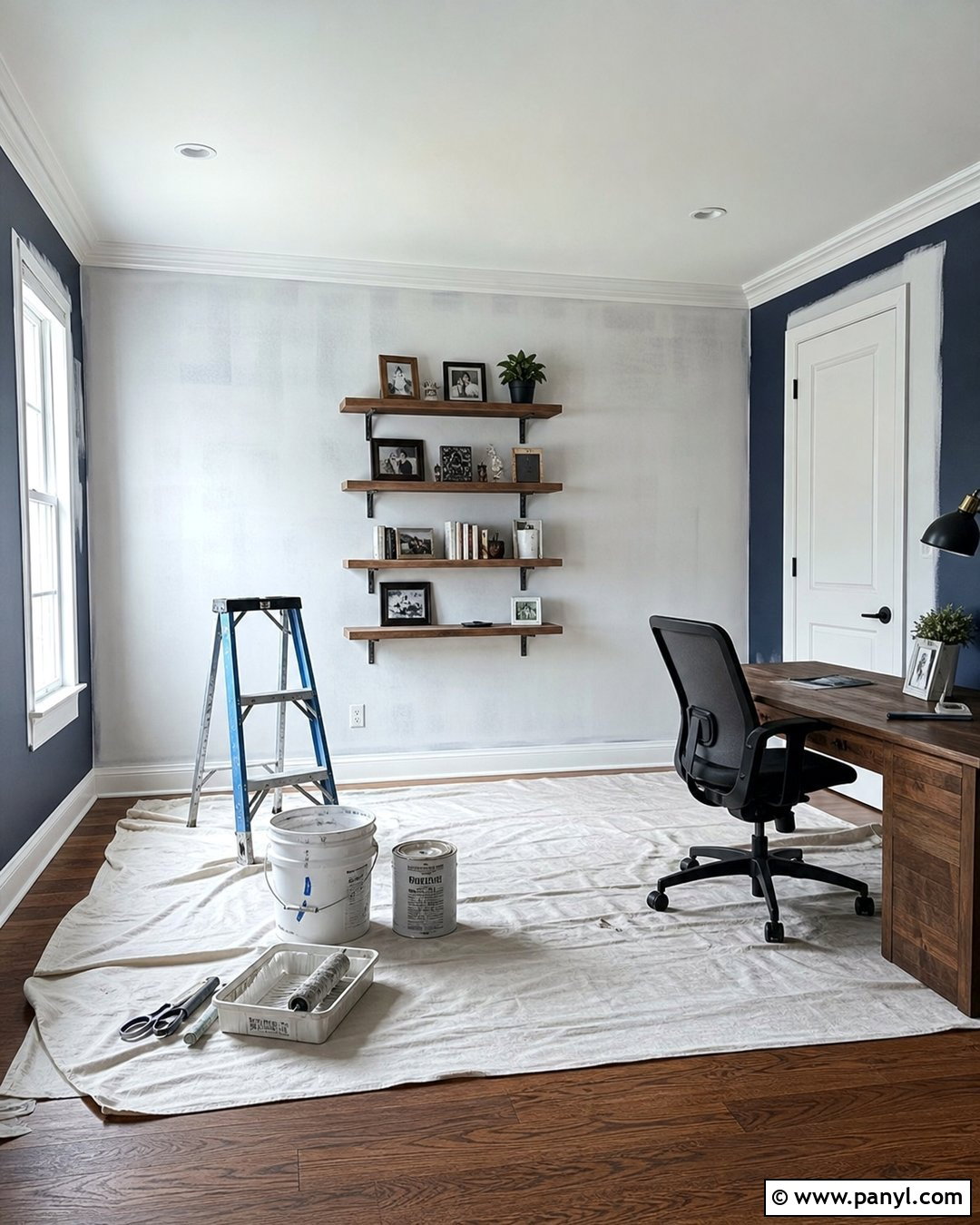
A dedicated high-hiding primer creates a more uniform base between the old dark color and the new light finish. Choose a product made for previously painted interior walls and compatible with both the existing coating and your planned topcoat. Standard water-based primer may suit clean, sound drywall, while glossy surfaces may call for a bonding formula. Water, smoke, marker, grease, or tannin stains can require a stain-blocking primer rather than an ordinary color-covering product. Ask the paint retailer for product-specific guidance when the old coating is unknown. Do not assume every paint-and-primer topcoat will replace separate primer during an extreme color change. The correct primer improves adhesion, controls uneven absorption, and reduces the distracting influence of the original dark wall. ()
12. Tint Primer for Better Coverage
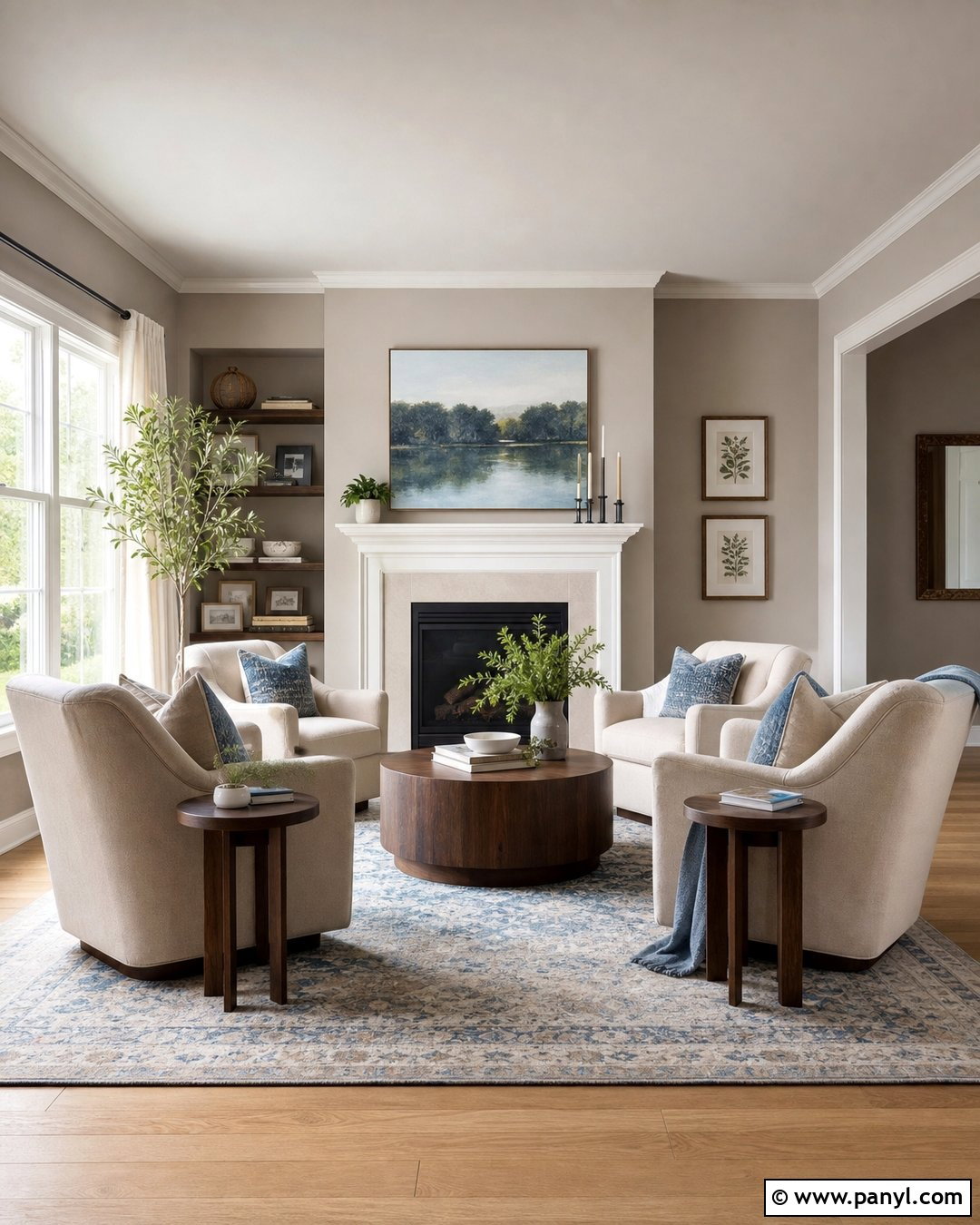
Primer does not always need to be brilliant white. Ask the paint counter whether the selected primer should be tinted toward the new wall color. A pale gray or coordinated tint can create a balanced transition and make skipped areas easier to spot. The best tint depends on the topcoat, the old wall color, and the primer manufacturer’s recommendations. Avoid improvising by mixing finish paint into primer unless the label specifically permits it. Record the tint formula in case more material is needed. Stir the primer thoroughly before and during application so its pigments remain evenly distributed. Used correctly, tinted primer can support more consistent color development, especially when covering highly saturated dark walls with a subtle neutral or another shade that needs an even foundation. ()
13. Cut In Primer at Edges
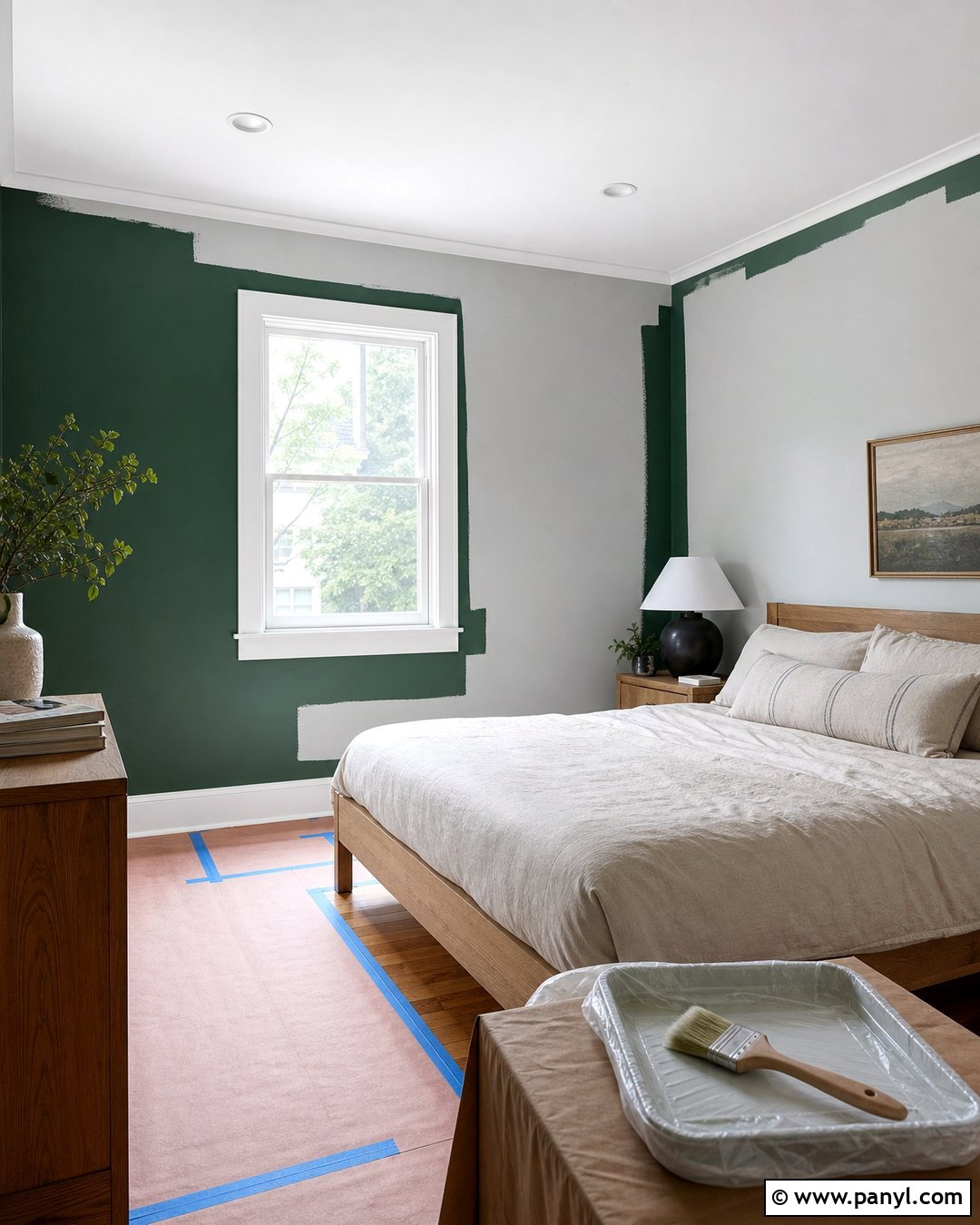
Start the primer application with controlled brushwork around the room’s boundaries. Use a quality angled brush to coat the ceiling line, inside corners, baseboards, windows, doors, and areas around electrical boxes. Apply enough primer to hide the dark surface without leaving thick ridges, runs, or puddles. Feather the brushed edge several inches onto the open wall so the roller can blend into it. Work in manageable sections rather than cutting in the entire room too far ahead of rolling. Watch for dark pinholes along trim and in corners where a roller cannot reach. Smooth drips immediately while the primer remains wet. Accurate cutting creates continuous coverage across the complete wall and keeps dark outlines from framing an otherwise bright finished room.
14. Roll Primer Evenly
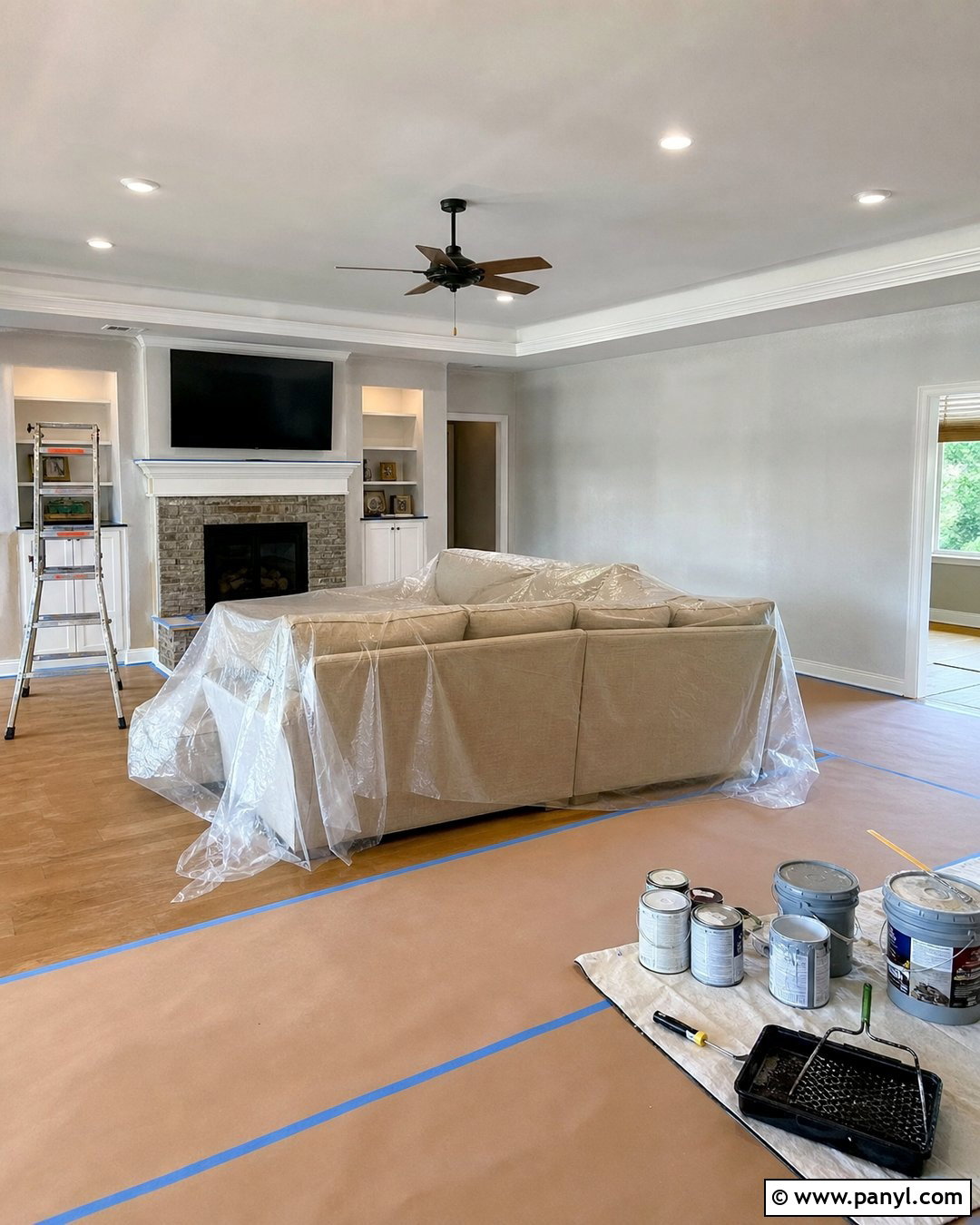
Load a quality roller cover evenly without submerging its handle or allowing primer to drip. Choose the nap according to the wall texture; smooth drywall generally needs a shorter nap than heavily textured surfaces. Work in sections, distributing primer with overlapping passes and maintaining a wet edge. Begin with a loose W-shaped pattern, then fill the area without pressing the roller dry. Finish each section with light strokes in a consistent direction. Check the wall from different angles to catch skips, heavy lines, and dark pinpoints. Keep the coat uniform instead of applying one overly thick layer. Smooth rolling gives the entire room an even foundation and helps the light topcoat dry with consistent color, sheen, and texture. ()
15. Check Primer Coverage
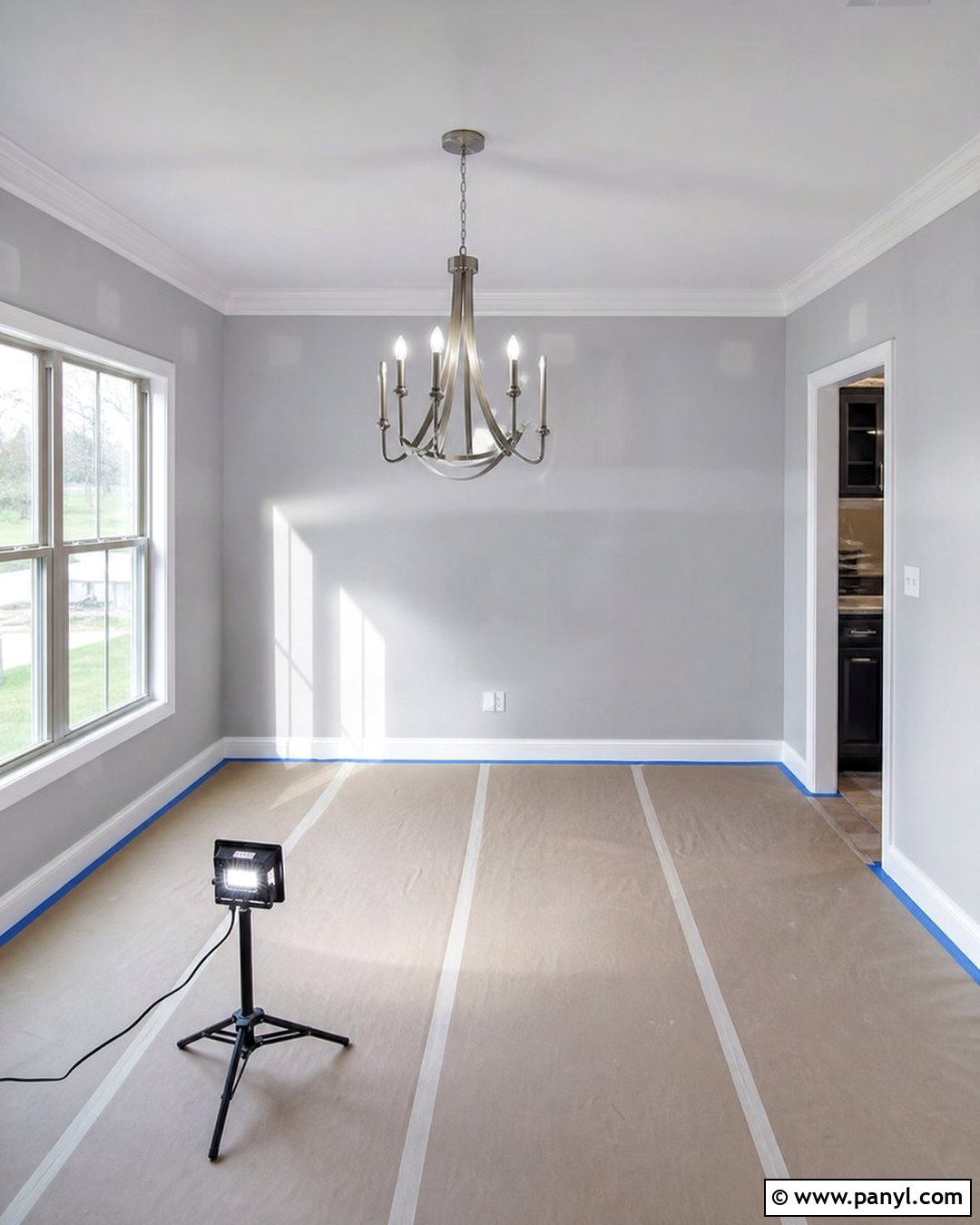
Let the primer dry for the full period listed on its label before deciding whether it has done enough. Wet primer can look uneven, so judging it too soon may lead to unnecessary recoating. Once dry, inspect the walls in daylight and with bright side lighting. The original color does not always need to disappear completely, but the surface should look sealed, stable, and reasonably uniform. Apply another primer coat when dark areas remain strongly visible, repairs flash through, stains return, or the product instructions recommend added coverage. Lightly smooth isolated rough spots if permitted, then remove all dust. A patient inspection at this stage is easier and less expensive than trying to correct dark shadows after the final paint has been applied. ()
16. Choose High-Hiding Wall Paint
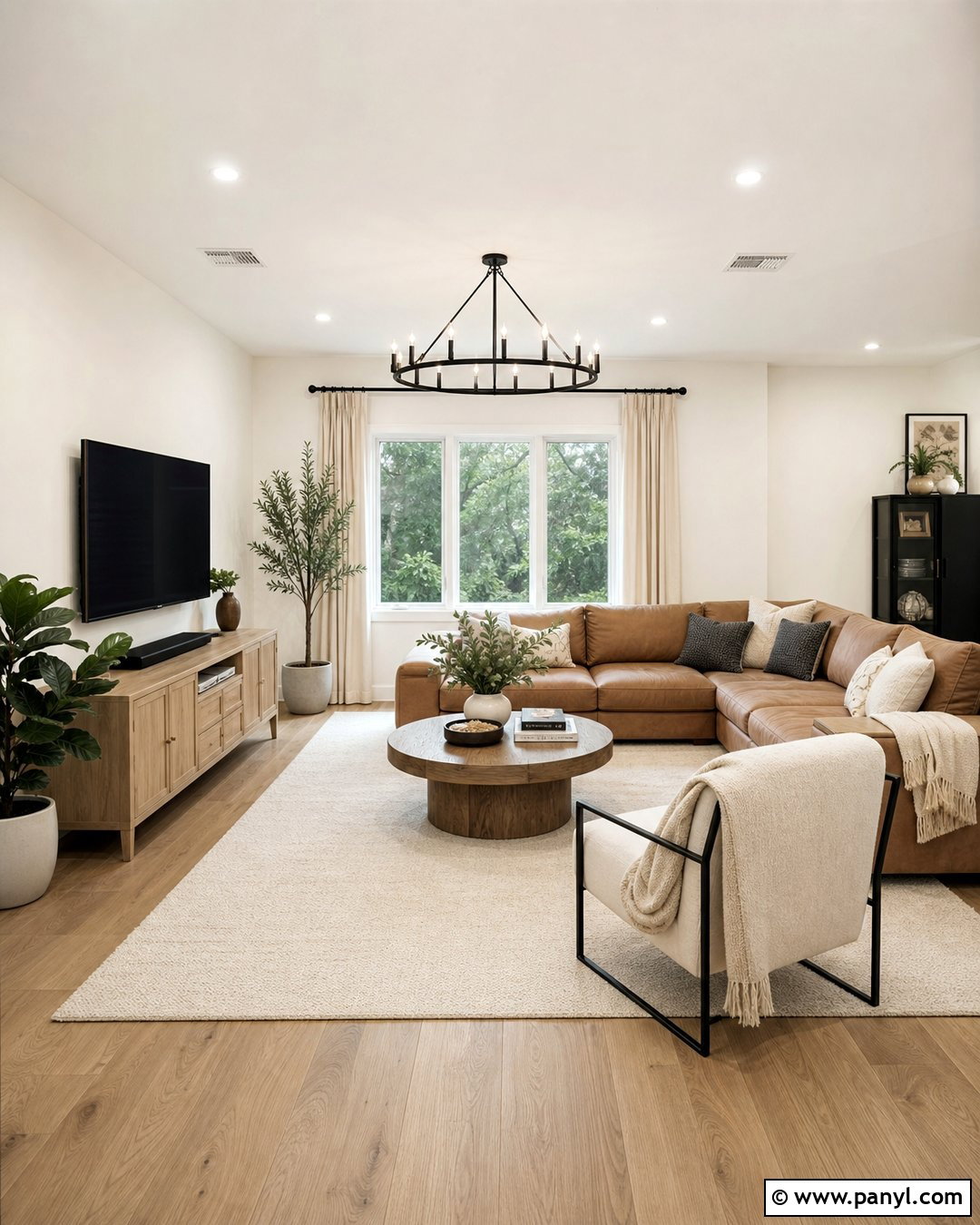
Primer creates the foundation, while the finish paint supplies the final color, sheen, and washable surface. Select a quality interior paint with strong hiding performance rather than relying on the cheapest formula for a difficult color change. Flat or matte paint can soften minor wall flaws, while eggshell provides a gentle sheen and practical cleanability in many living spaces. Satin may suit active rooms but can highlight imperfect drywall. Match the product to the room’s moisture, traffic, and cleaning needs. Stir paint thoroughly and confirm that every can carries the same color formula. If using multiple gallons, combine them in a larger bucket to reduce minor batch differences. The right topcoat completes the lighter design with rich, even color instead of a thin, patchy appearance.
17. Cut In Light Paint

After the primer is fully dry, cut in the finish color with a clean angled brush. Work around the ceiling, trim, windows, doors, outlets, and inside corners, using steady strokes and a moderate amount of paint. Avoid spreading the coating so thinly that gray primer or the former dark shade appears along the edges. At the same time, prevent heavy brush ridges that may dry differently from rolled areas. Feather each band into the open wall and roll nearby before it sets whenever possible. Keep the brush clean and remove dried particles from the ferrule area. This careful edge work ensures the complete room has the same light color density, including narrow spaces that are especially prone to revealing dark lines.
18. Roll First Finish Coat
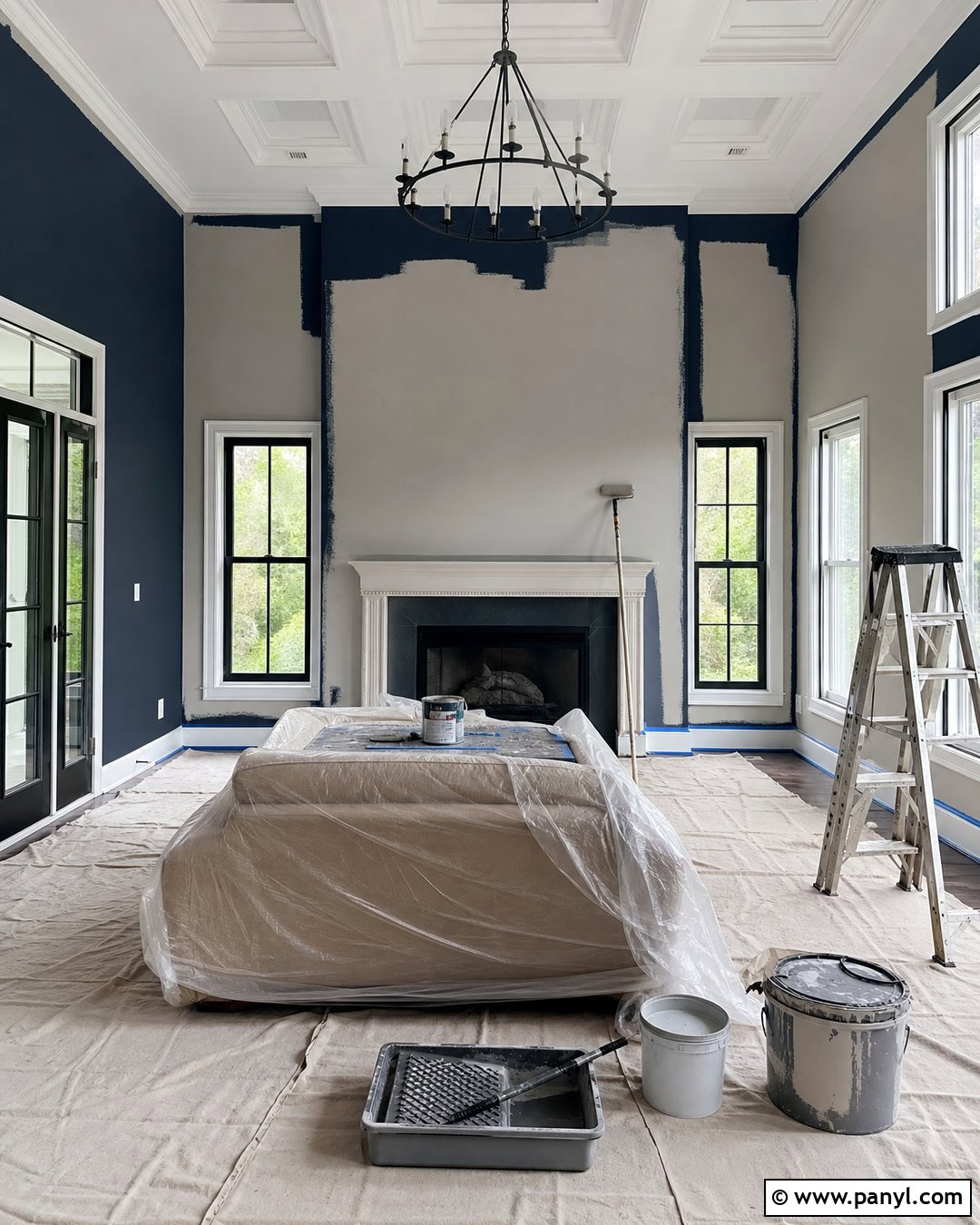
Apply the first finish coat in manageable wall sections, beginning near a corner and moving steadily across the room. Saturate the roller evenly, remove excess paint on the tray or screen, and use overlapping passes to distribute the coating. Maintain a wet edge so separate sections blend without lap marks. Do not press hard when the roller starts running dry; reload it instead. Finish with gentle strokes in one direction to keep the texture consistent. Stop at natural breaks such as corners rather than halfway across a wall. The first coat may still show slight variation over a dramatic dark-to-light change, which is normal. Focus on an even application rather than repeatedly rolling areas that have already started to dry. ()
19. Apply Second Finish Coat
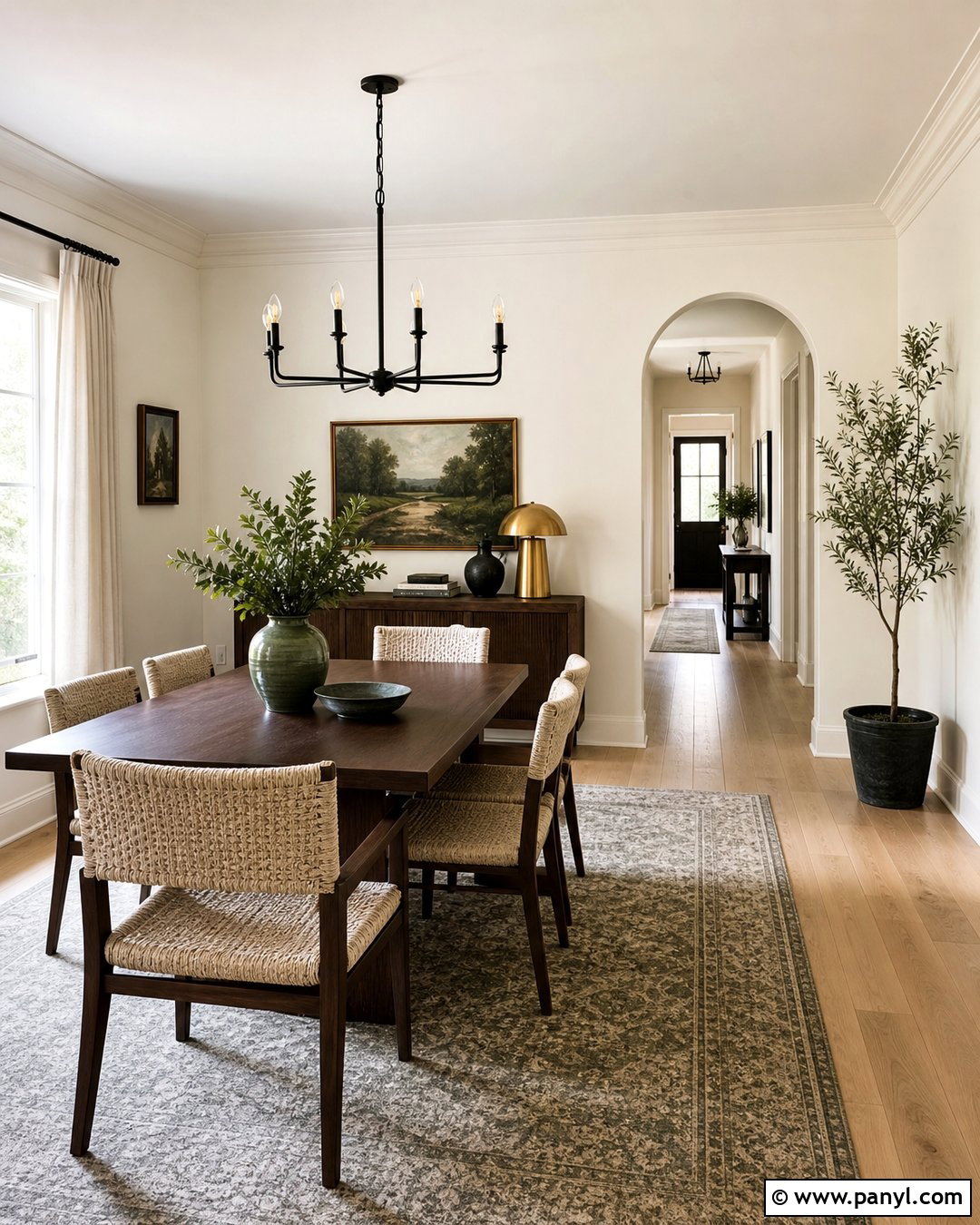
Wait for the manufacturer’s full recoat time before applying the second layer. Paint that feels dry on top may still be too soft underneath, and recoating early can cause dragging, uneven sheen, or lifted material. Inspect the first coat for lint, dried drips, and rough particles. Smooth small flaws carefully when the product permits, then remove the dust. Repeat the same cutting and rolling sequence, maintaining consistent pressure and coverage. The second coat develops the intended color depth and closes small variations left by the first application. Even if the wall appears acceptable after one coat, a complete second coat often produces a more durable and visually balanced room. Allow the surface to dry without furniture, curtains, or decorations rubbing against it.
20. Inspect and Touch Up Walls
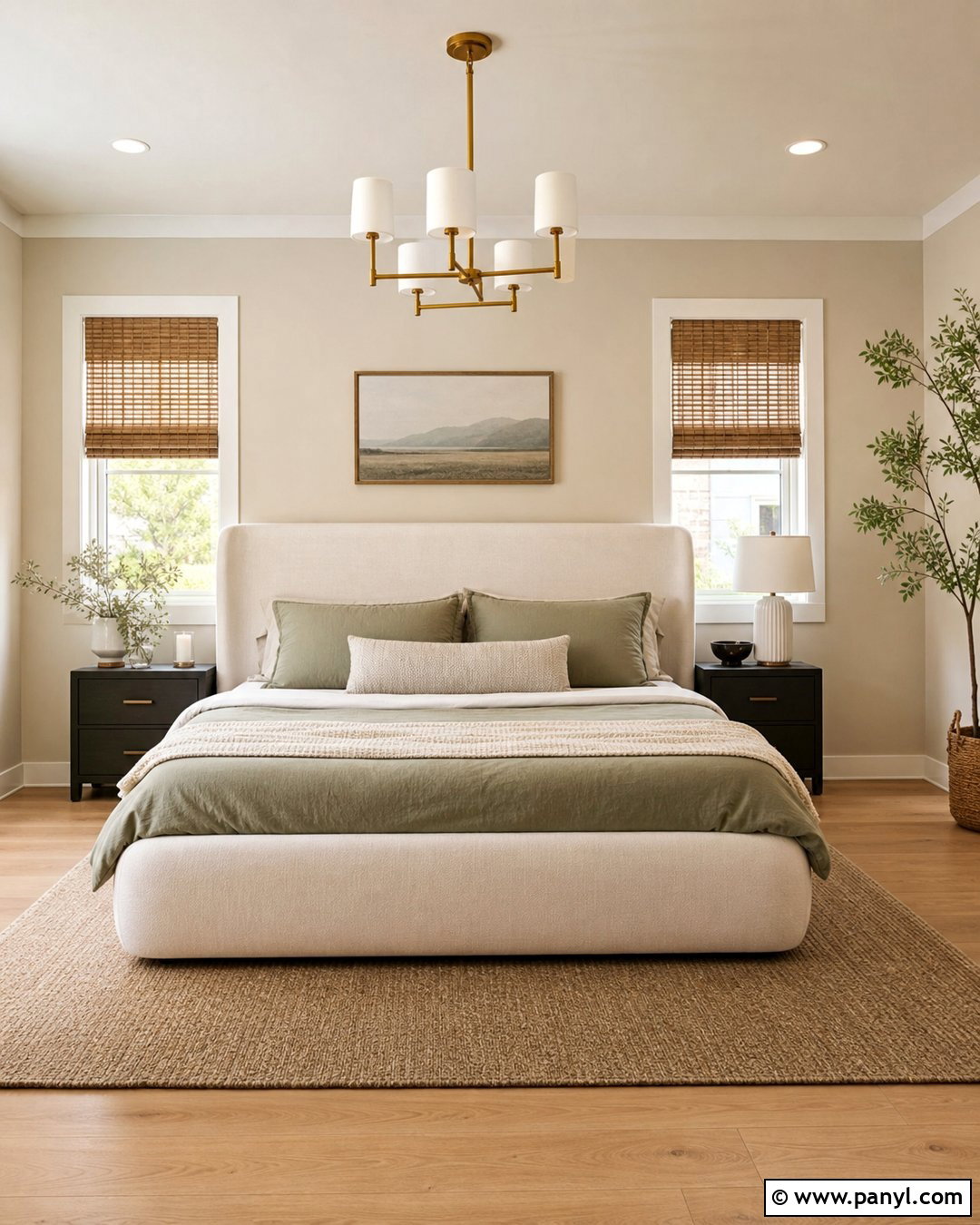
Once the final coat has dried, examine each wall from several positions and under different lighting. Look along the ceiling line, corners, trim, outlet areas, and repaired sections for pinholes, dark shadows, thin patches, or roller marks. Touch up small imperfections with the same applicator type used originally, since a brush can leave a different texture from a roller. Larger uneven areas may require rerolling from one natural break to another instead of spot painting. Remove painter’s tape carefully according to its instructions, using a sharp utility blade only when needed to prevent tearing. Reinstall clean switch plates and return furnishings after the coating has had suitable time to cure. The finished room should feel brighter, cohesive, and evenly colored from edge to edge.
Conclusion:
A successful dark-to-light paint transformation depends on preparation, compatible materials, and patient application. Clean the walls, repair visible damage, dull glossy areas safely, and select primer for the actual surface condition. A properly tinted or high-hiding primer can provide an even foundation, while two controlled finish coats create consistent color and sheen. Follow every product’s drying and recoating instructions rather than rushing the project. Inspect the room in several lighting conditions before replacing artwork and furniture. These steps may take longer than simply rolling paint over the existing color, but they produce a cleaner and more durable result. Use **20 How To Paint Over Dark Walls** as your complete plan for creating a fresh, bright room.

Related Ideas and Inspiration:






Leave a Reply