
Painting a gradient wall can turn an ordinary room into a layered, personalized space without requiring expensive materials or complicated construction. These 20 How To Paint An Ombre Wall Ideas cover calming tonal fades, bold color transitions, creative layouts, and complete room designs you can recreate. For the smoothest result, prepare the surface, apply the lightest shade as a base, and blend neighboring colors while both edges remain wet. Working in small sections gives you more control and helps prevent obvious bands. Mixed transition shades can also soften the change between colors. () From peaceful bedrooms to playful nurseries and polished living rooms, use these 20 How To Paint An Ombre Wall Ideas to find the right palette and technique for your space.

1. Blue Ombre Wall Bedroom
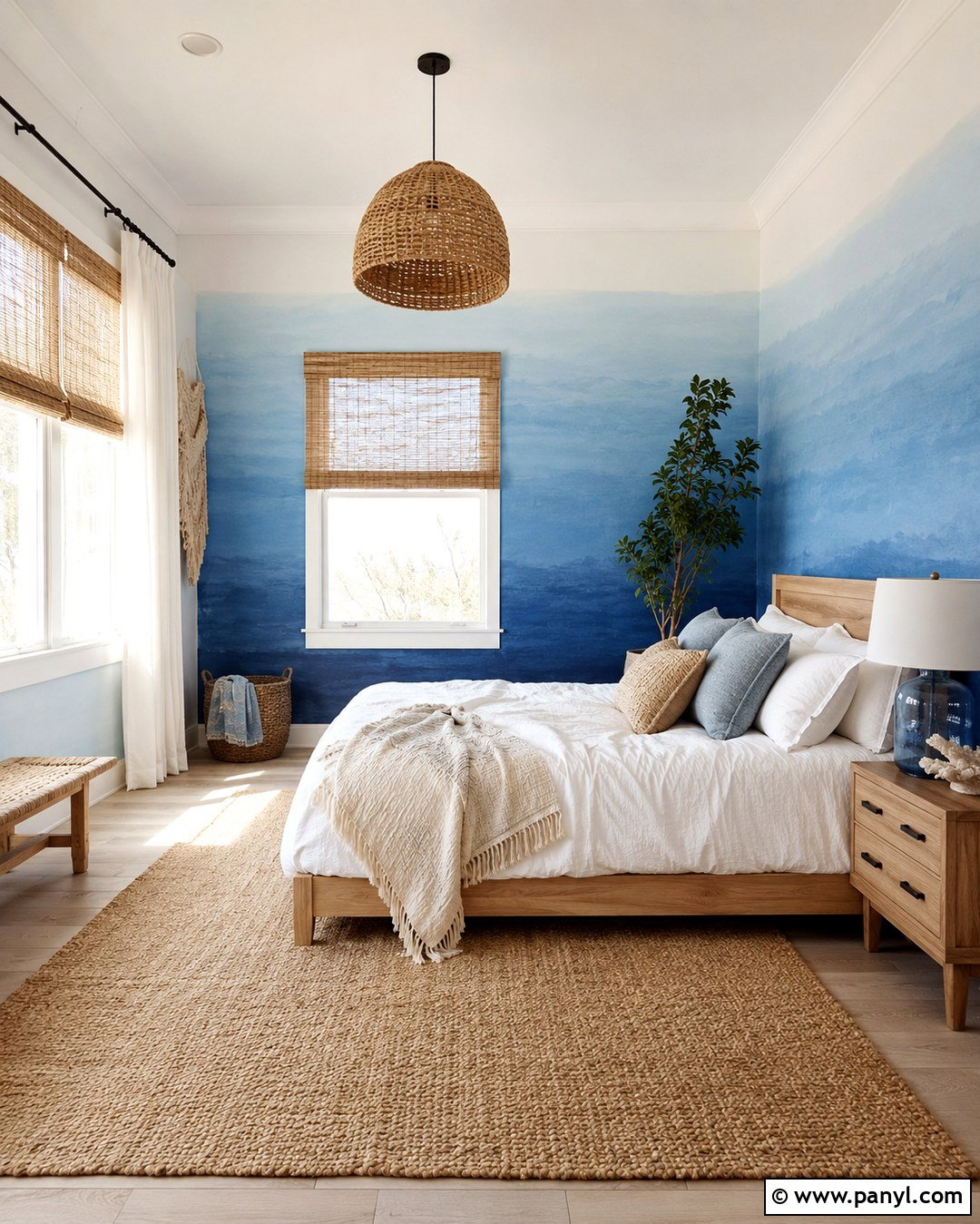
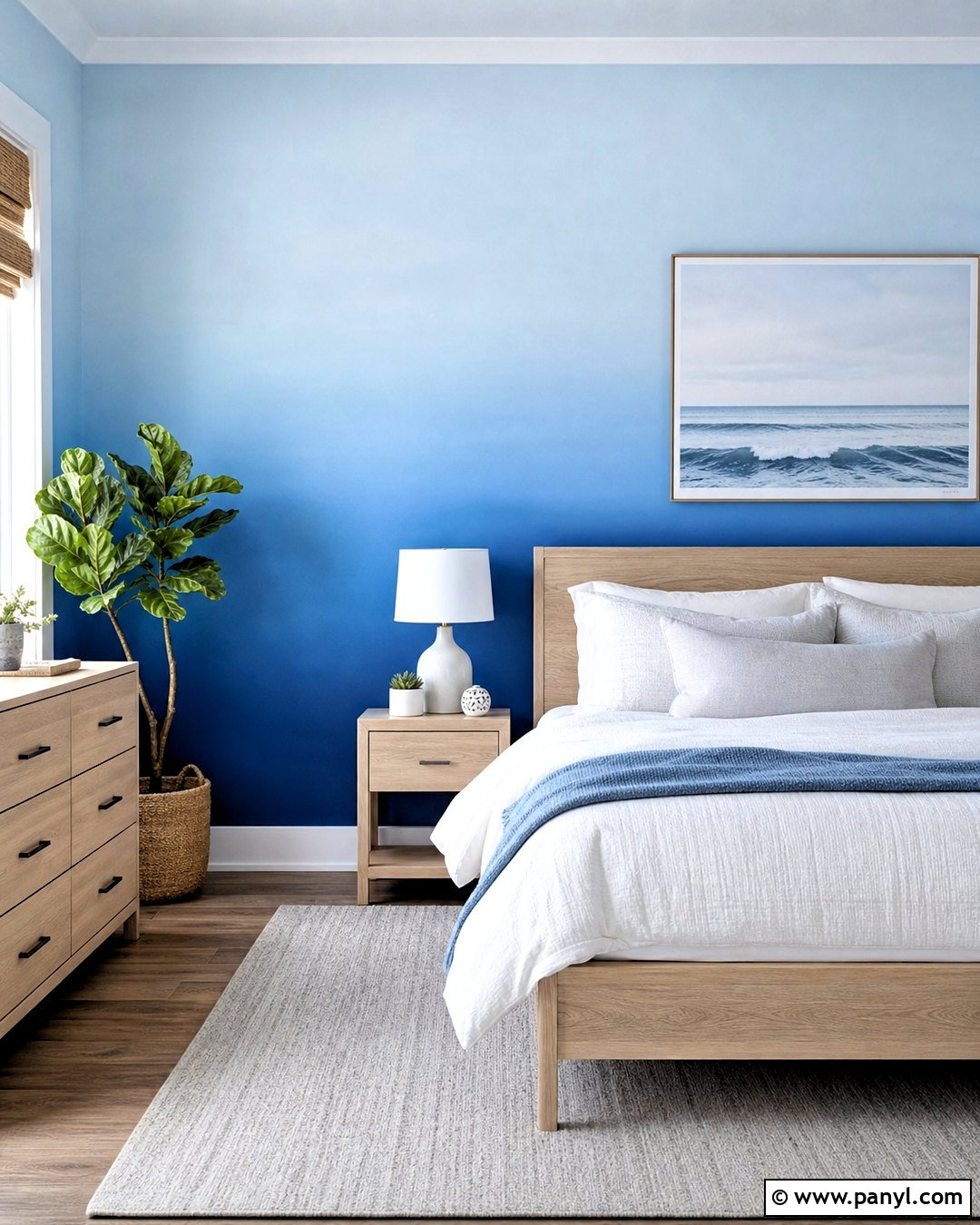
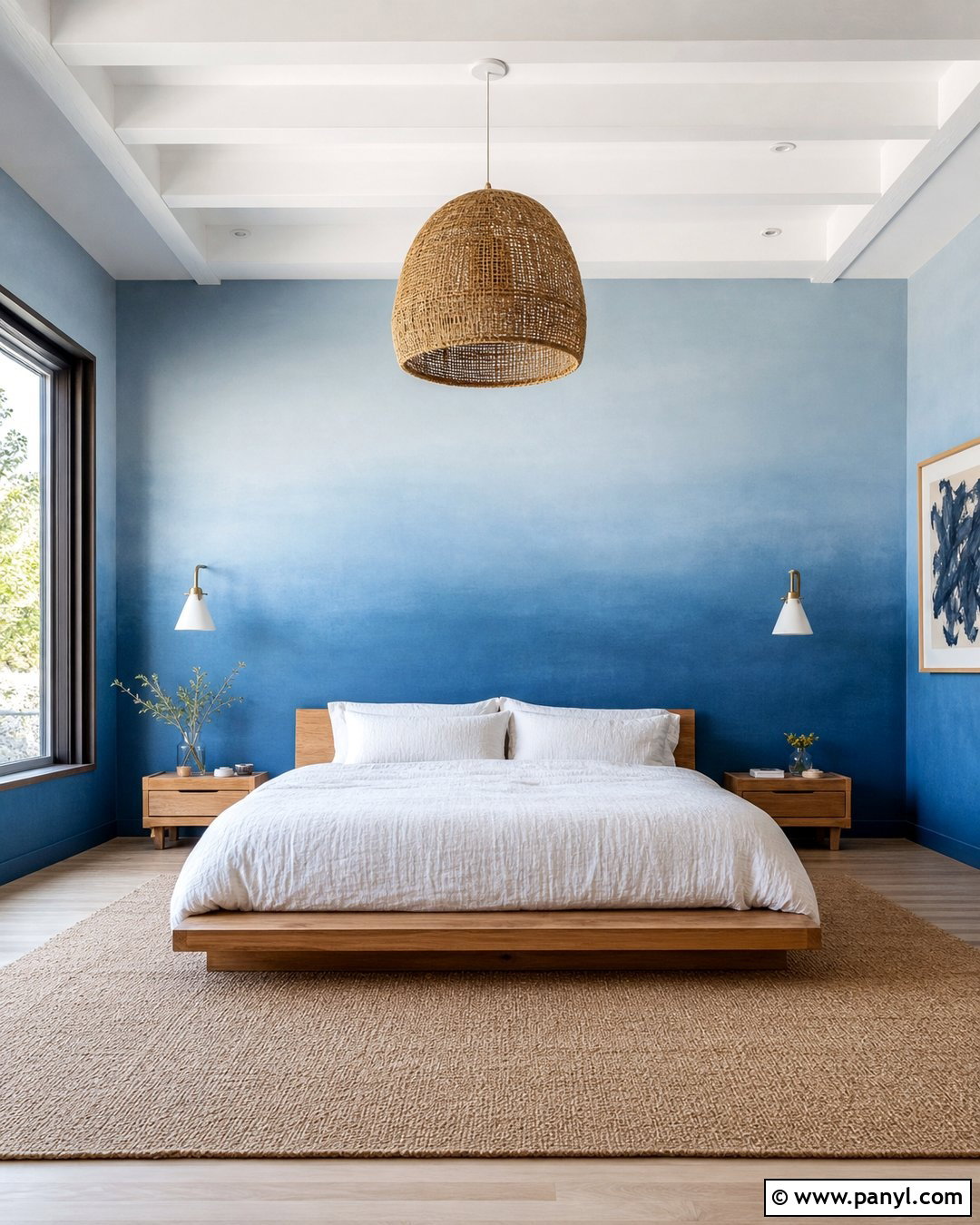
Create a restful bedroom by fading deep ocean blue near the floor into medium denim and pale sky blue at the ceiling. Begin with a dry, repaired wall and paint the entire surface in the palest shade. After it dries, divide the wall into three horizontal sections using light pencil marks. Roll the medium and dark colors into their areas, leaving narrow gaps between them. Repaint both sides of each transition so they are wet, then blend with a wide brush using loose X-shaped strokes. Working across the wall in manageable sections keeps the paint from drying too soon. () Complete the room with a light oak bed, white linen bedding, woven shades, and a natural jute rug.
2. Pink Ombre Wall Bedroom
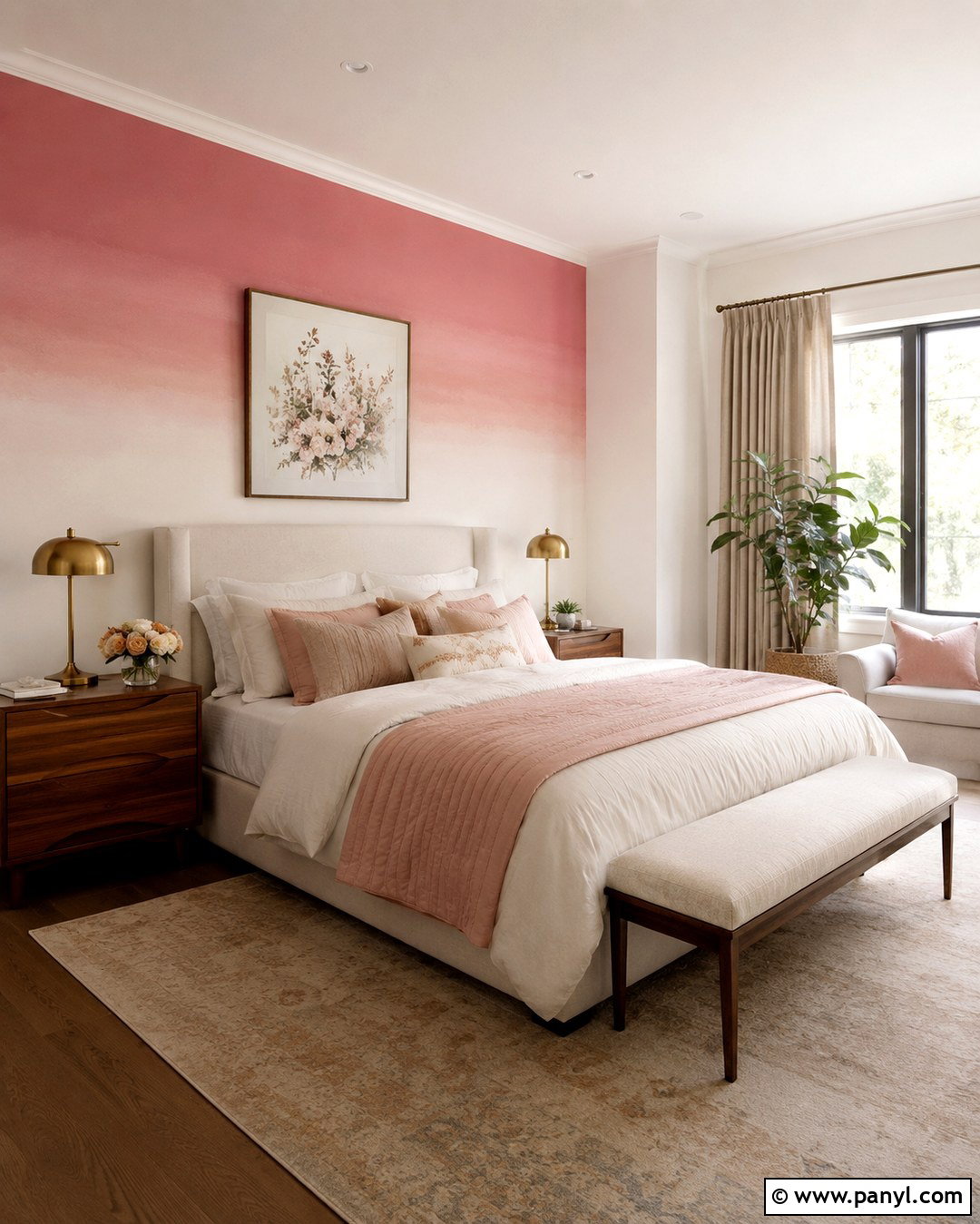
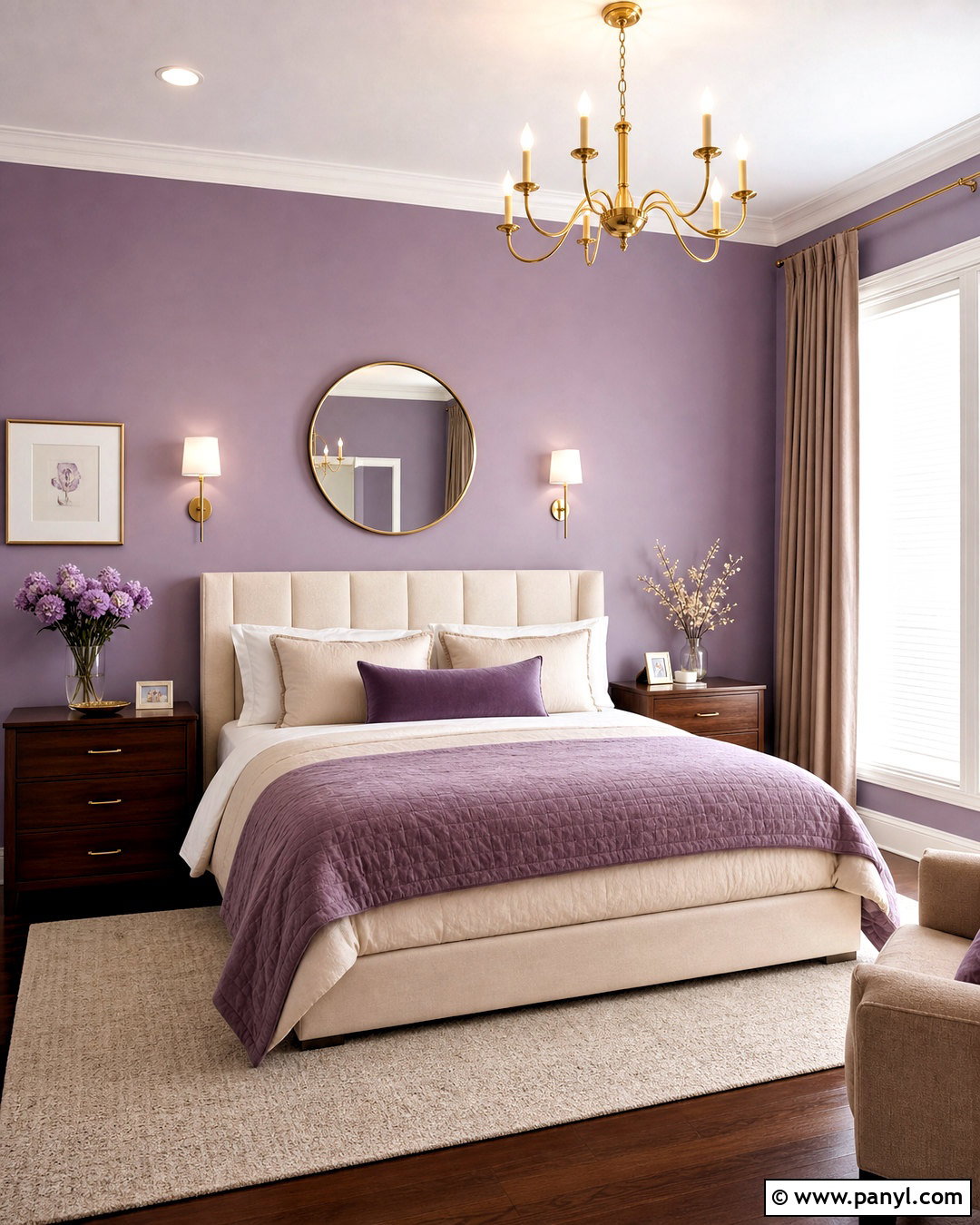
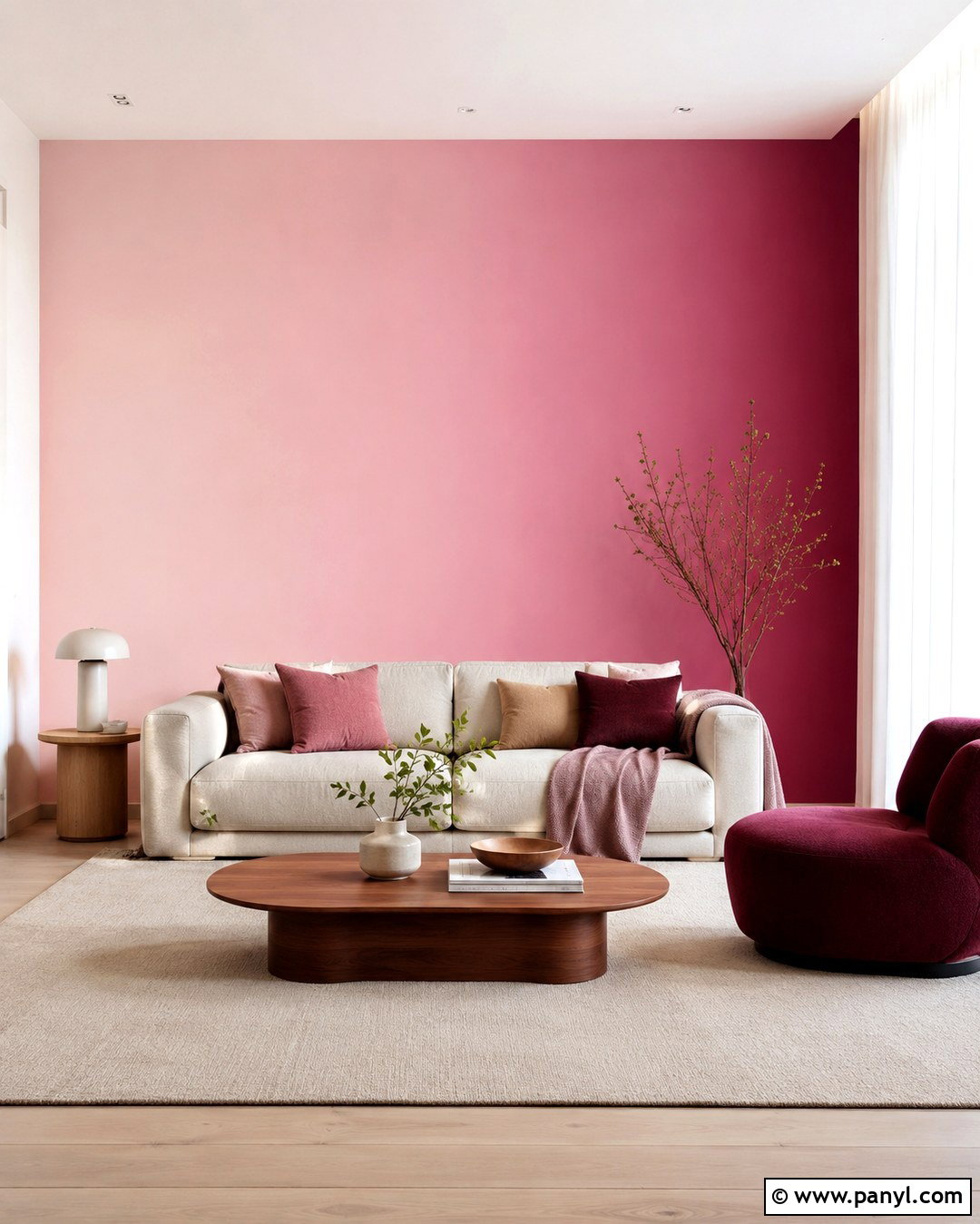
A blush ombre wall brings warmth to a bedroom without making the entire room feel overly sweet. Choose creamy white for the top, dusty blush for the center, and muted rose for the bottom. Keep the colors slightly grayed so the finished wall feels soft and sophisticated. Paint the light base first, then roll the pink bands while leaving room for the blended transitions. Mix equal portions of white and blush for one bridge color, followed by equal portions of blush and rose for the other. These intermediate mixtures help prevent sudden color changes. Pair the wall with an ivory upholstered bed, walnut nightstands, oatmeal curtains, brushed brass lamps, and simple botanical artwork. Keep the remaining walls warm white to balance the stronger focal wall.
3. Green Ombre Wall Living Room
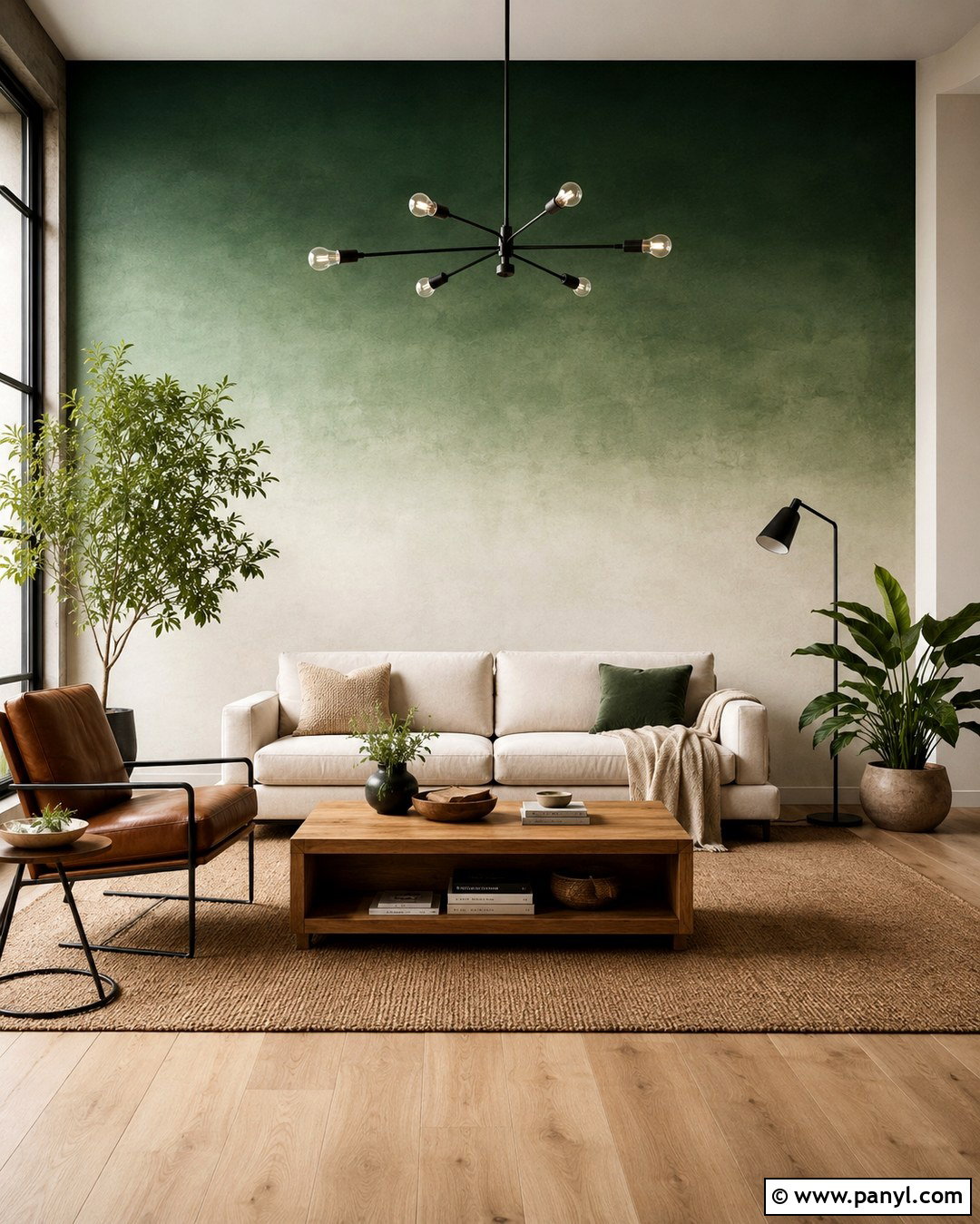
Imagine a living room that gradually moves from deep forest green at the base to calming sage and warm off-white above. This grounded palette works especially well with natural wood and creamy upholstery. Start by applying the off-white base across the entire wall. Add the sage through the middle and forest green across the lower third. Create separate transition mixtures instead of trying to drag the original shades too far into one another. Use a clean four-inch brush for each color and a third brush for blending. Smooth the boundaries with light diagonal strokes while the paint remains wet. Finish the room with a camel leather chair, linen sofa, oak coffee table, black metal lighting, and leafy houseplants that visually connect with the green gradient.
4. Gray Ombre Wall Home Office
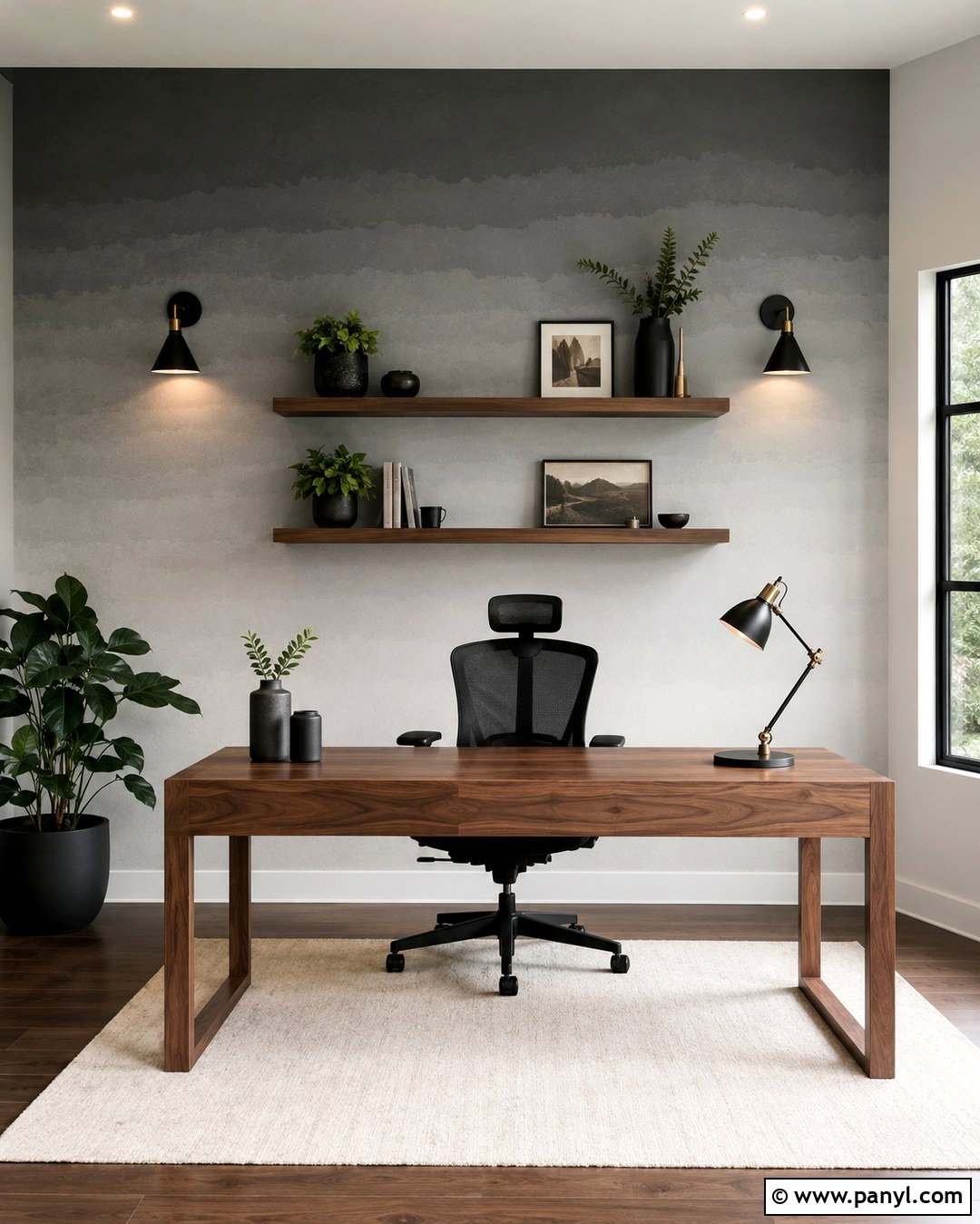
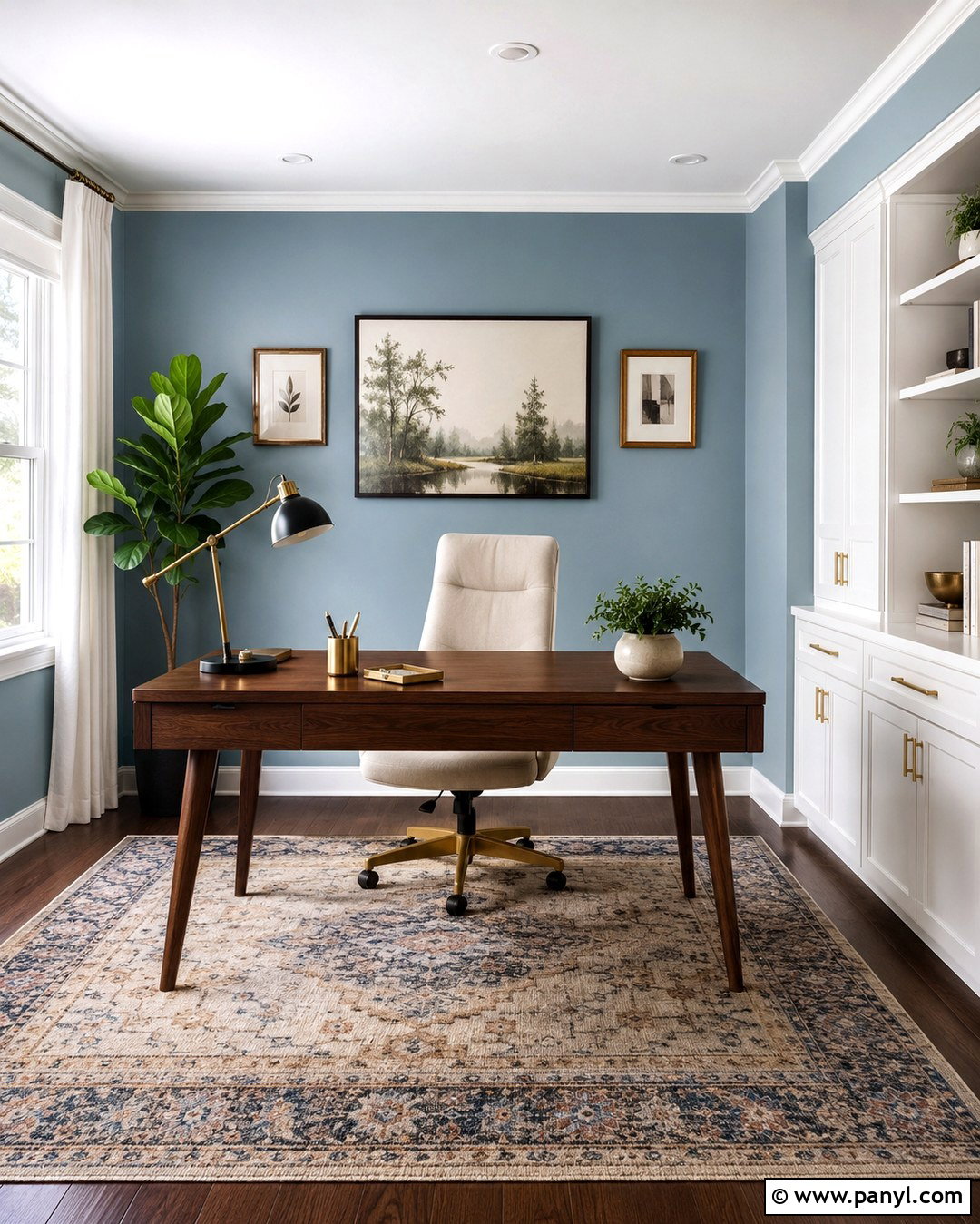
For a focused home office, fade charcoal gray at the floor into soft pewter and pale gray near the ceiling. The darker lower section creates visual weight behind a desk, while the lighter upper area keeps the room open. Select three grays with similar undertones so the gradient does not suddenly shift blue, purple, or brown. Paint a pale gray base and allow it to dry before adding the darker bands. Blend the colors across wide transition zones for a subtle effect rather than narrow, cloudy lines. Step back regularly because uneven patches are easier to notice from across the room. Complete the space with a walnut desk, black task chair, floating wood shelves, cream rug, and matte black sconces. Use restrained accessories so the wall remains the focal point.
5. Purple Ombre Wall Reading Room
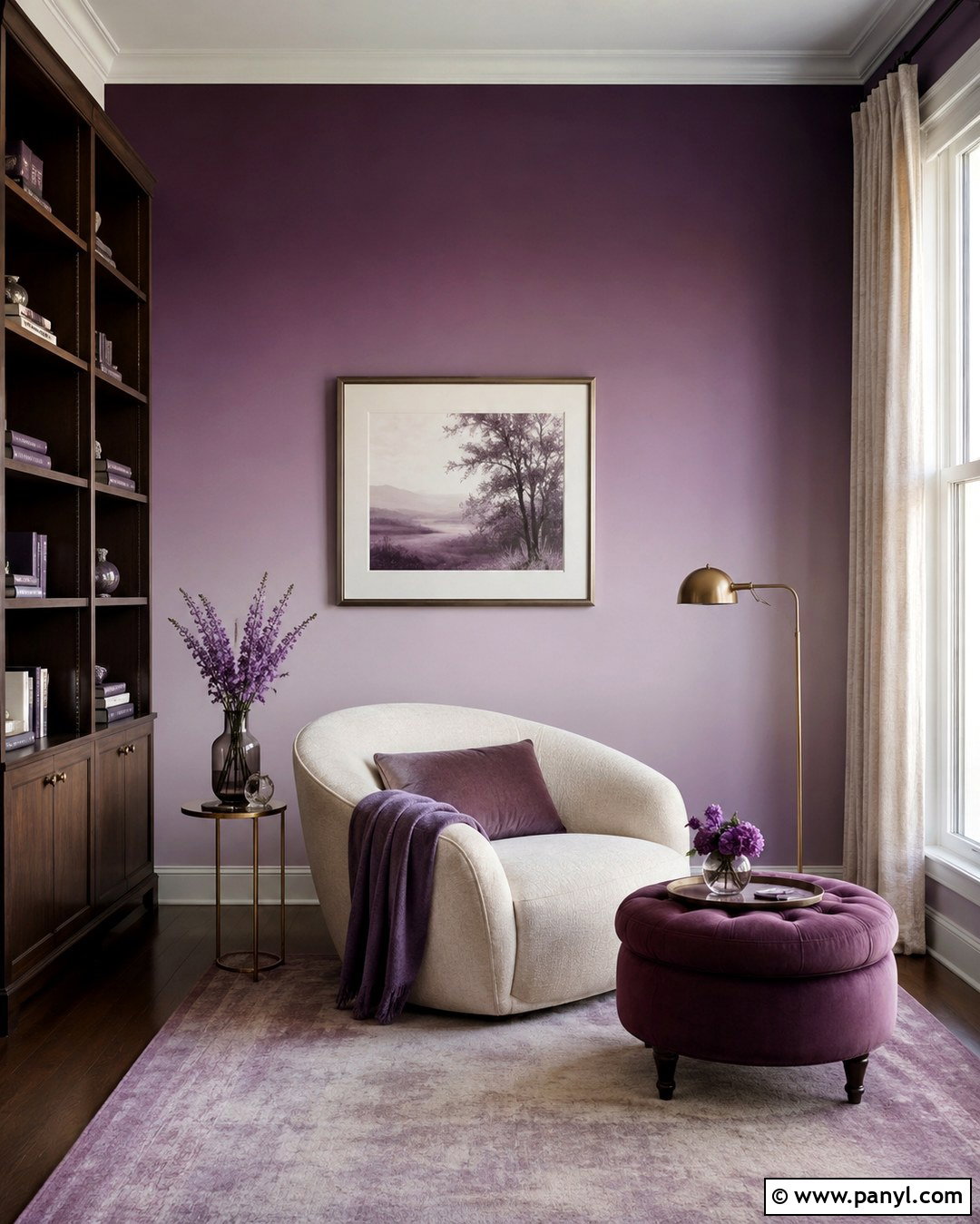
Deep plum fading into muted lavender can make a reading room feel cozy without becoming dark from top to bottom. Place the plum across the lowest quarter, dusty violet through the middle, and pale lilac near the ceiling. Prime any repaired or heavily patched areas before applying the light base coat. When you begin blending, work with a partner if possible. One person can keep the adjacent bands wet while the other softens the transition with a wide brush. Long, loose crosshatch strokes produce a more natural gradient than perfectly horizontal brushing. Furnish the room with a curved cream chair, dark wood bookcase, small brass floor lamp, plum ottoman, and a patterned rug containing lavender and beige. Warm white trim will keep the purple tones fresh and balanced.
6. Sunset Ombre Wall Dining Room
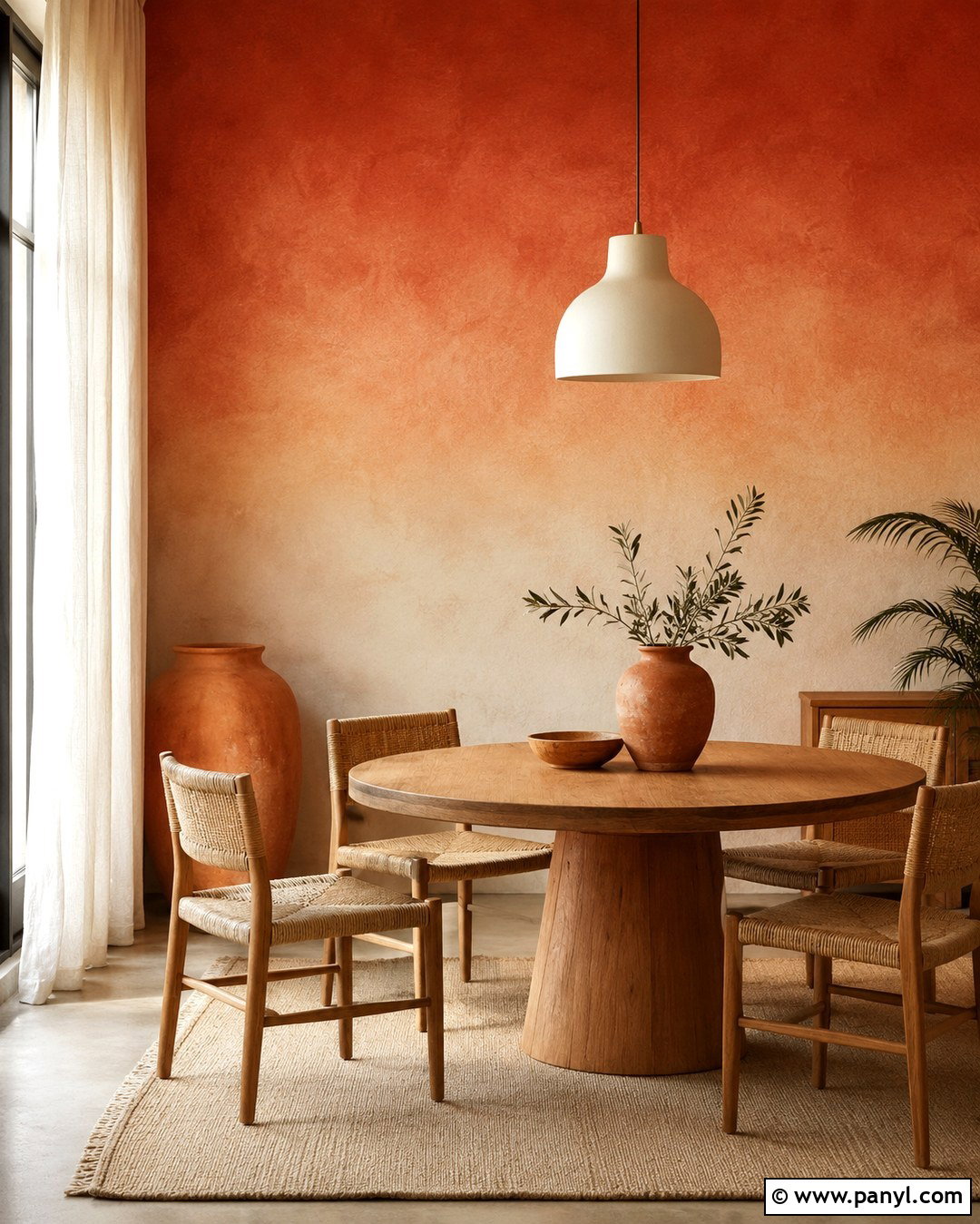
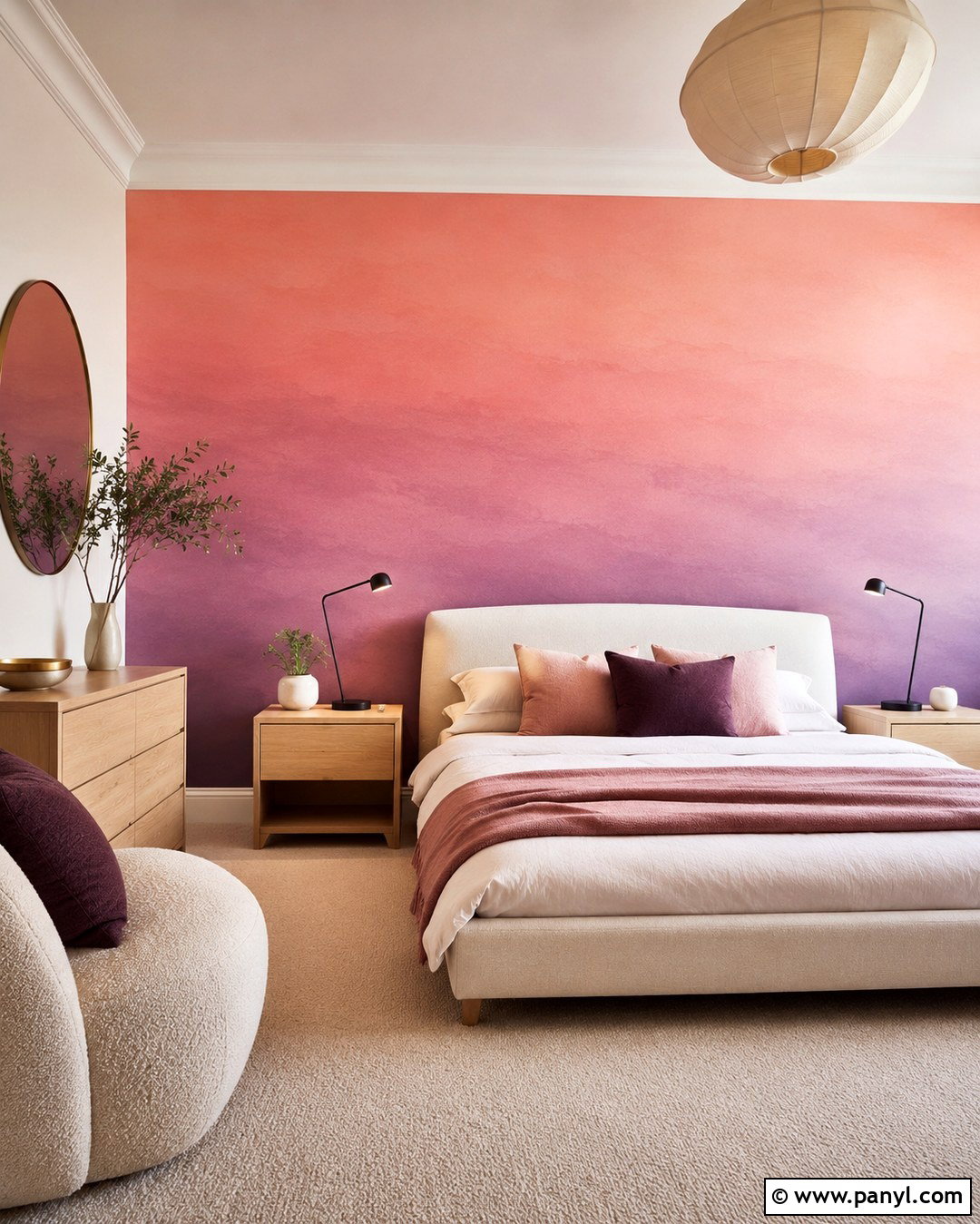
Bring sunset color into a dining room with burnt coral at the bottom, soft peach through the center, and warm cream at the top. Test the three shades together before painting because highly saturated orange can become overpowering across a large surface. Use a lighter, earthier coral for a more livable result. Apply warm cream over the entire wall, then build the peach and coral bands from the bottom upward. Mix small containers of peach-coral and cream-peach transition colors. Roll each section evenly and soften the damp edges with broad, irregular brushwork. Style the room with a round oak table, woven dining chairs, ivory curtains, terracotta pottery, and a simple cream pendant. Keep table decor minimal so the colorful wall gives the space its main visual energy.
7. Beige Ombre Wall Living Room
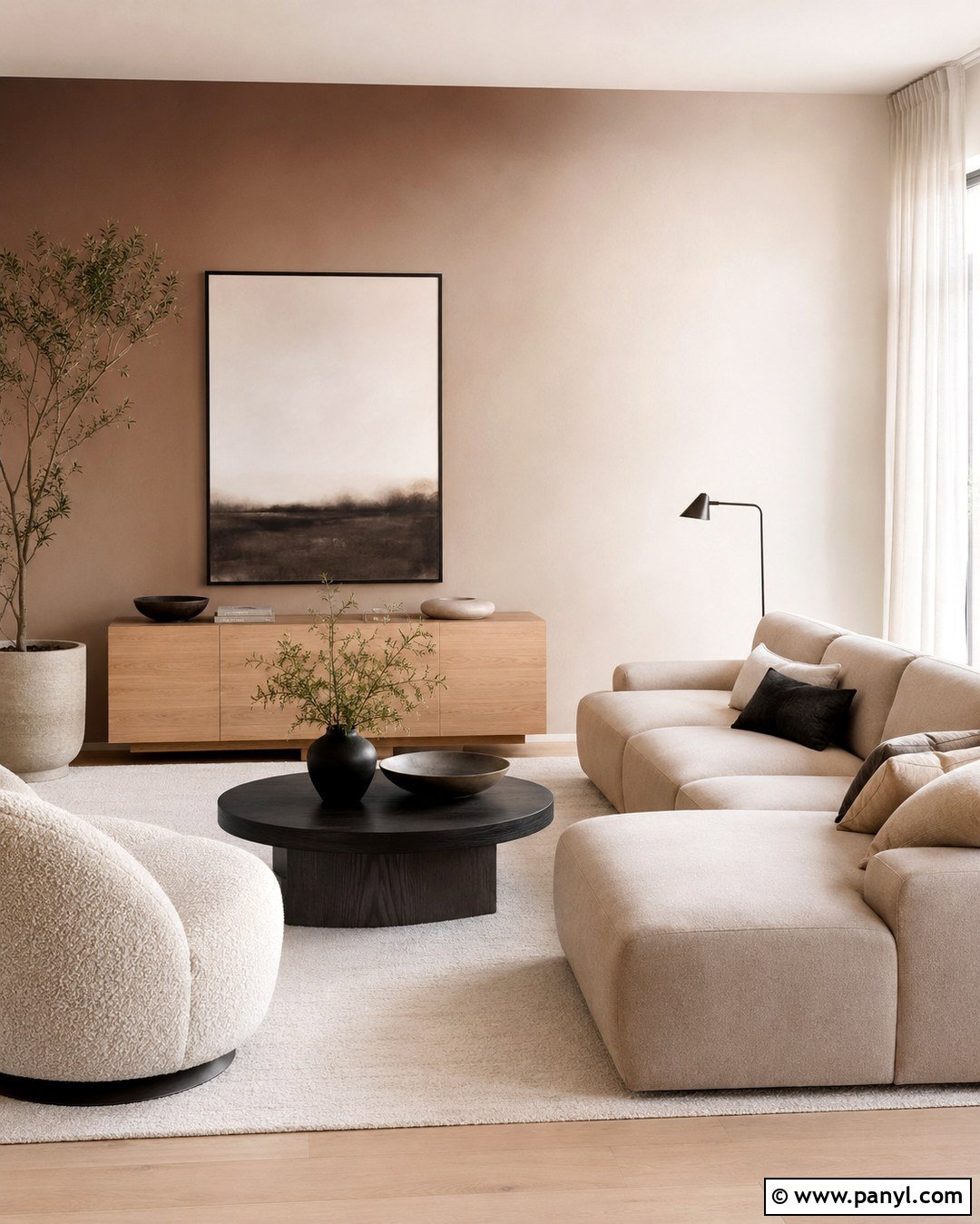
Can a neutral wall still make a strong design statement? A beige ombre treatment proves that it can. Fade medium mushroom brown near the floor into soft greige and creamy ivory above. The limited contrast creates depth while remaining flexible enough for changing furniture and seasonal decor. Choose paints that share warm undertones, and prepare generous quantities of your transition mixtures before starting. Matching a partially used custom mixture later can be difficult. Work across the wall in vertical sections about three feet wide, keeping every meeting edge wet as you proceed. Complete the living room with an oatmeal sectional, pale oak console, boucle accent chair, ivory rug, linen drapes, and black-framed artwork. Add a few dark accents to give the otherwise quiet palette definition and structure.
8. Teal Ombre Wall Bathroom
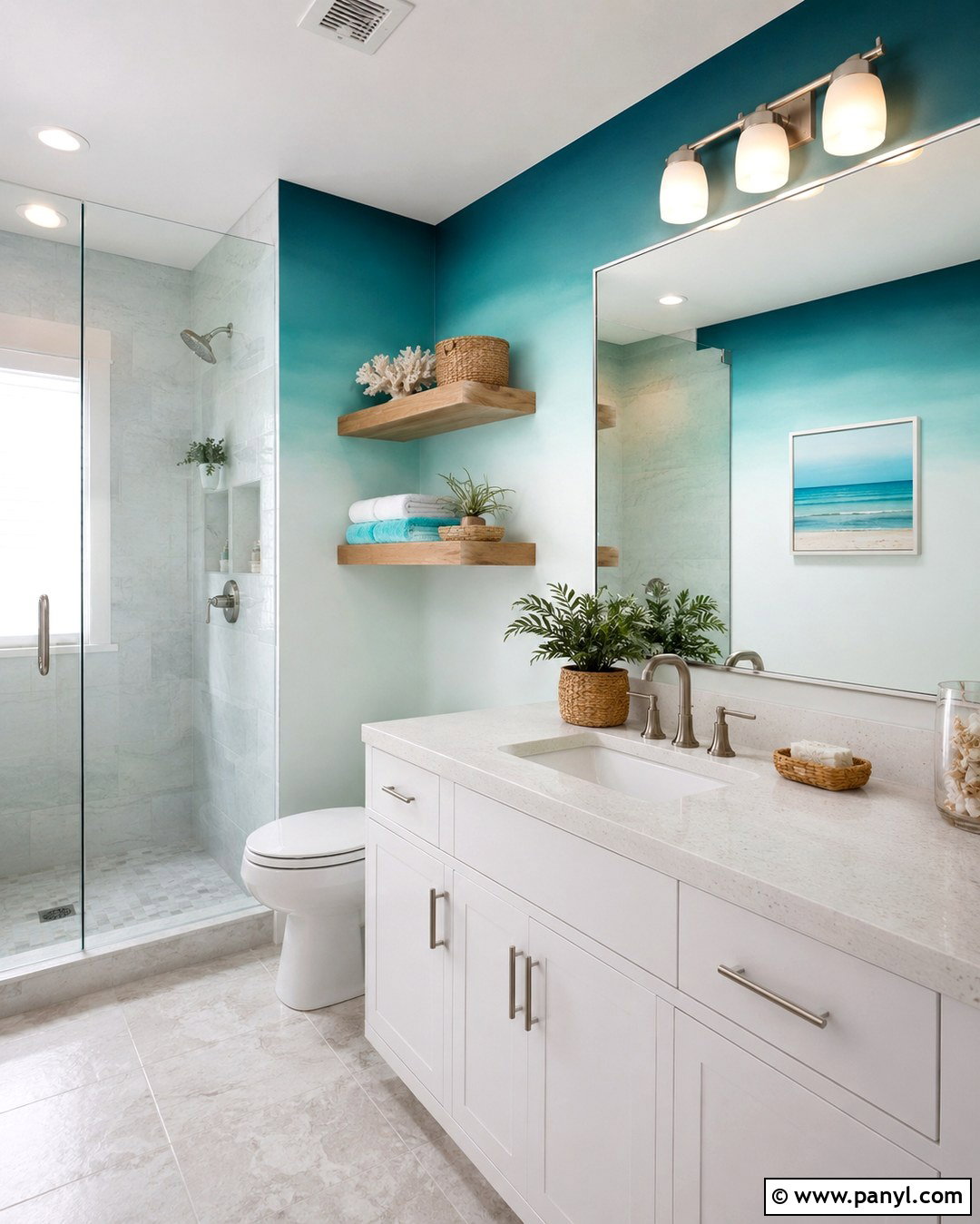
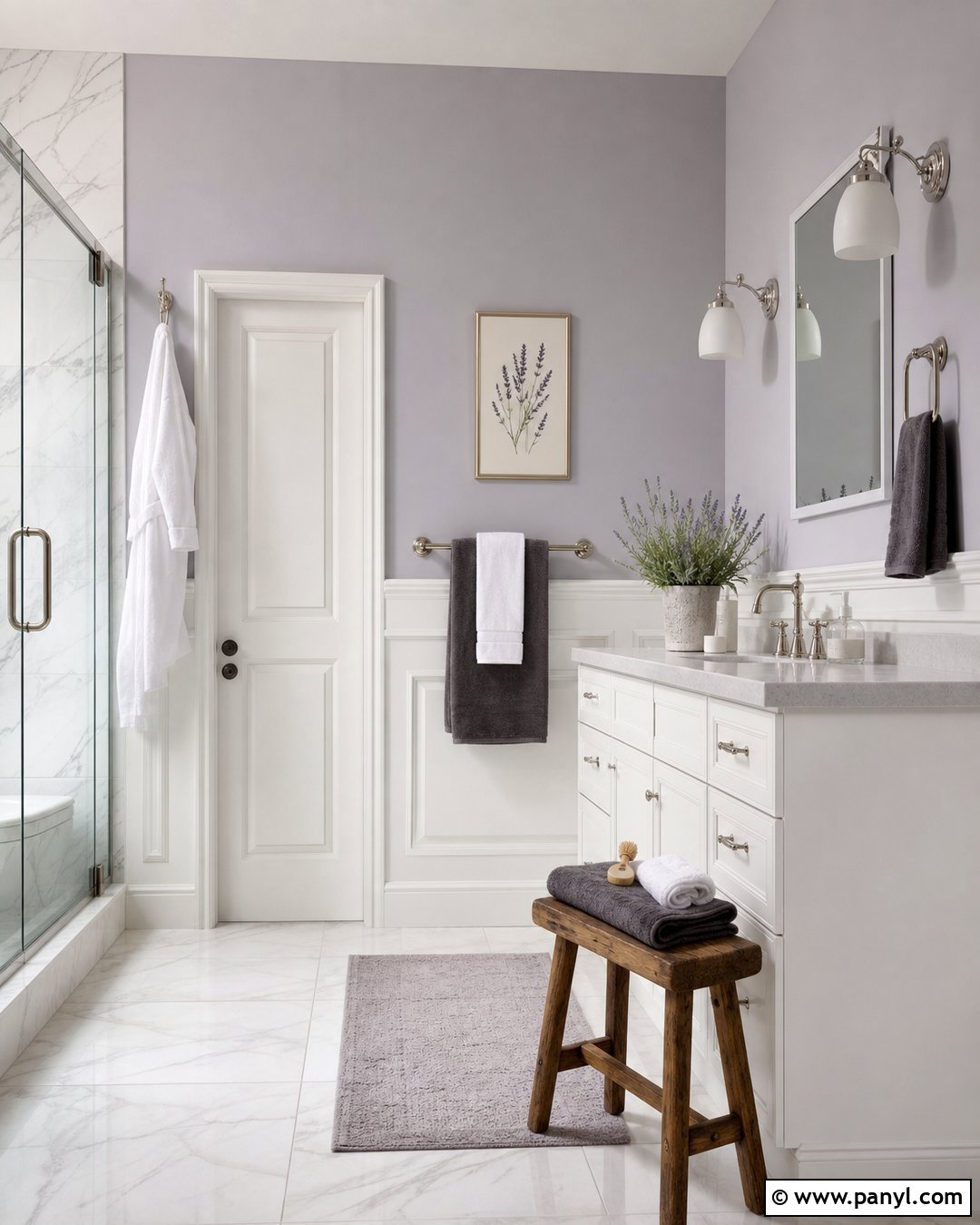
A teal gradient can give a bathroom a clean, watery character when it is balanced with simple finishes. Use deep blue-green along the lower wall, softened teal in the middle, and pale aqua near the ceiling. Select an interior paint sheen suitable for the bathroom’s moisture level, and confirm that the wall is clean and fully dry before beginning. Paint around fixtures carefully, or remove lightweight hardware for easier access. Blend the colors in smaller sections than you would in a bedroom because plumbing and corners can slow your progress. Pair the finished wall with a white vanity, light quartz countertop, brushed nickel faucet, frameless mirror, white towels, and pale stone flooring. Natural wood shelves and woven baskets will warm the cool palette without distracting from the gradient.
9. Terracotta Ombre Wall Entryway
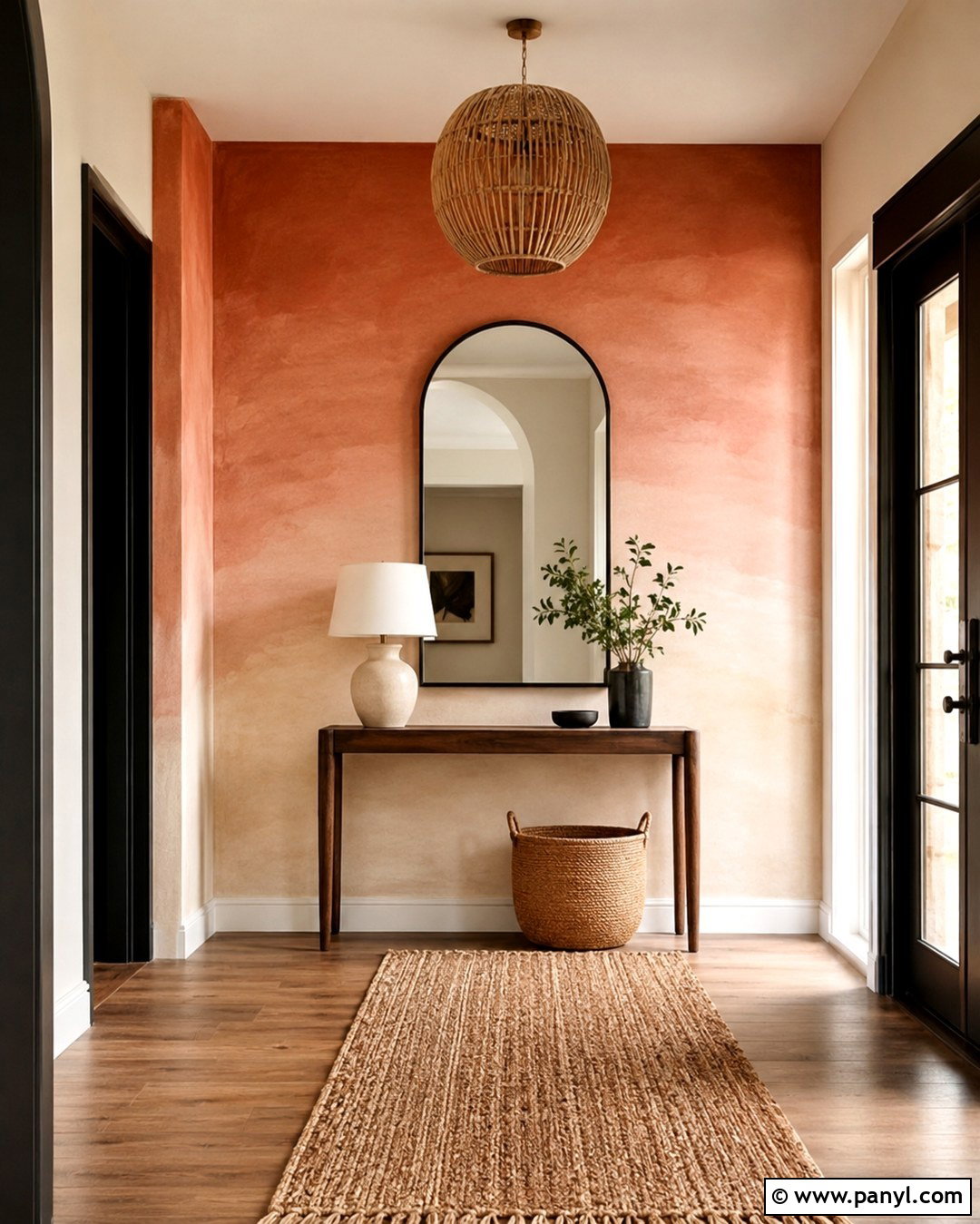
Welcome guests with an earthy gradient that moves from rich terracotta at the bottom to clay pink and sandy cream at the top. This scheme adds color while still coordinating easily with wood, black metal, and natural fibers. Because an entryway is viewed from several angles, extend each blended band evenly around visible corners or stop the treatment cleanly on one uninterrupted accent wall. Apply the cream base, mark your color zones, and keep the darker terracotta below eye level. Blend with quick, overlapping strokes rather than scrubbing one spot repeatedly. Finish the entry with a slim walnut console, arched black mirror, woven runner, ceramic lamp, and a lidded storage basket. Paint adjacent walls in the same sandy cream used at the top for a connected, intentional appearance.
10. Navy Ombre Wall Nursery
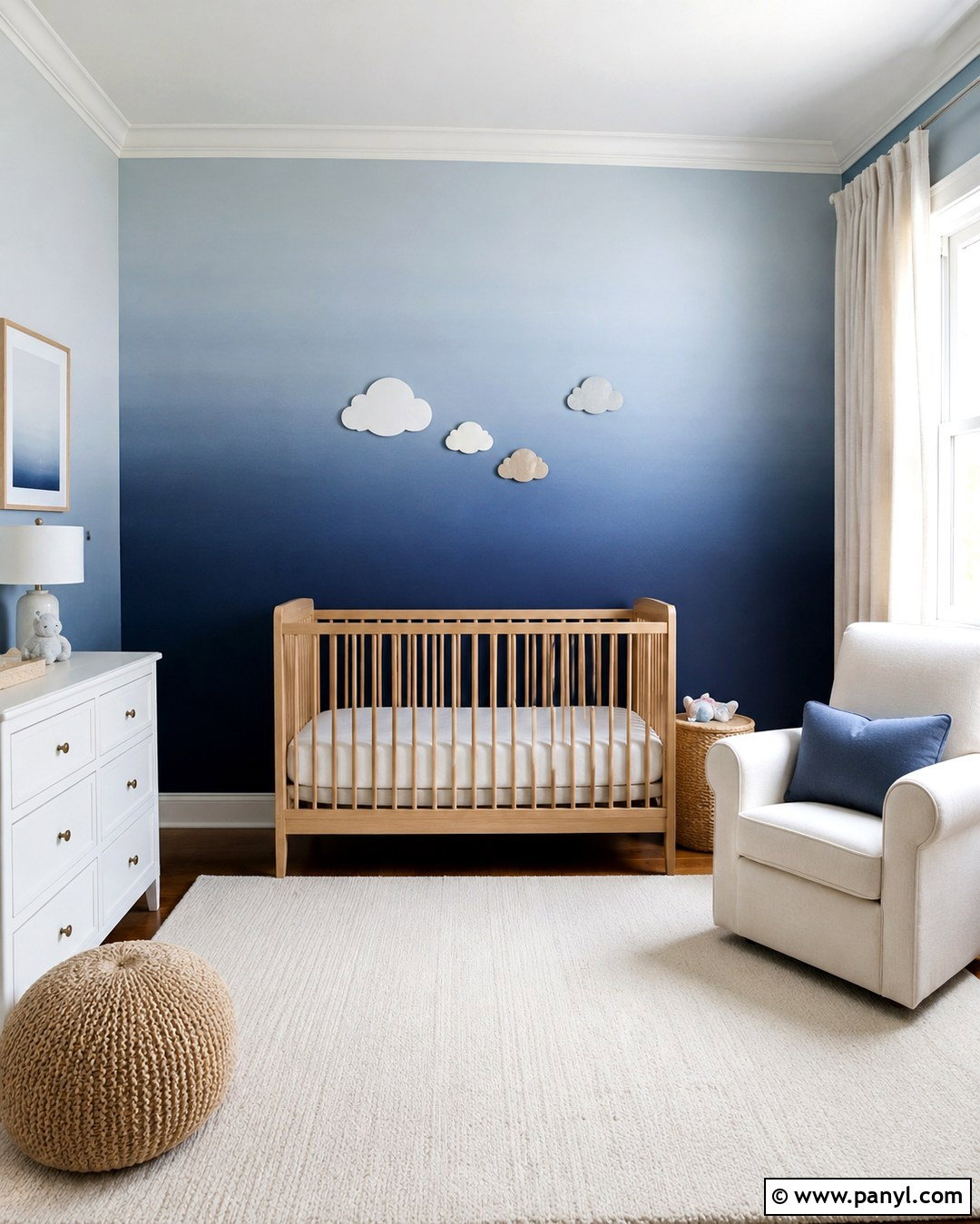
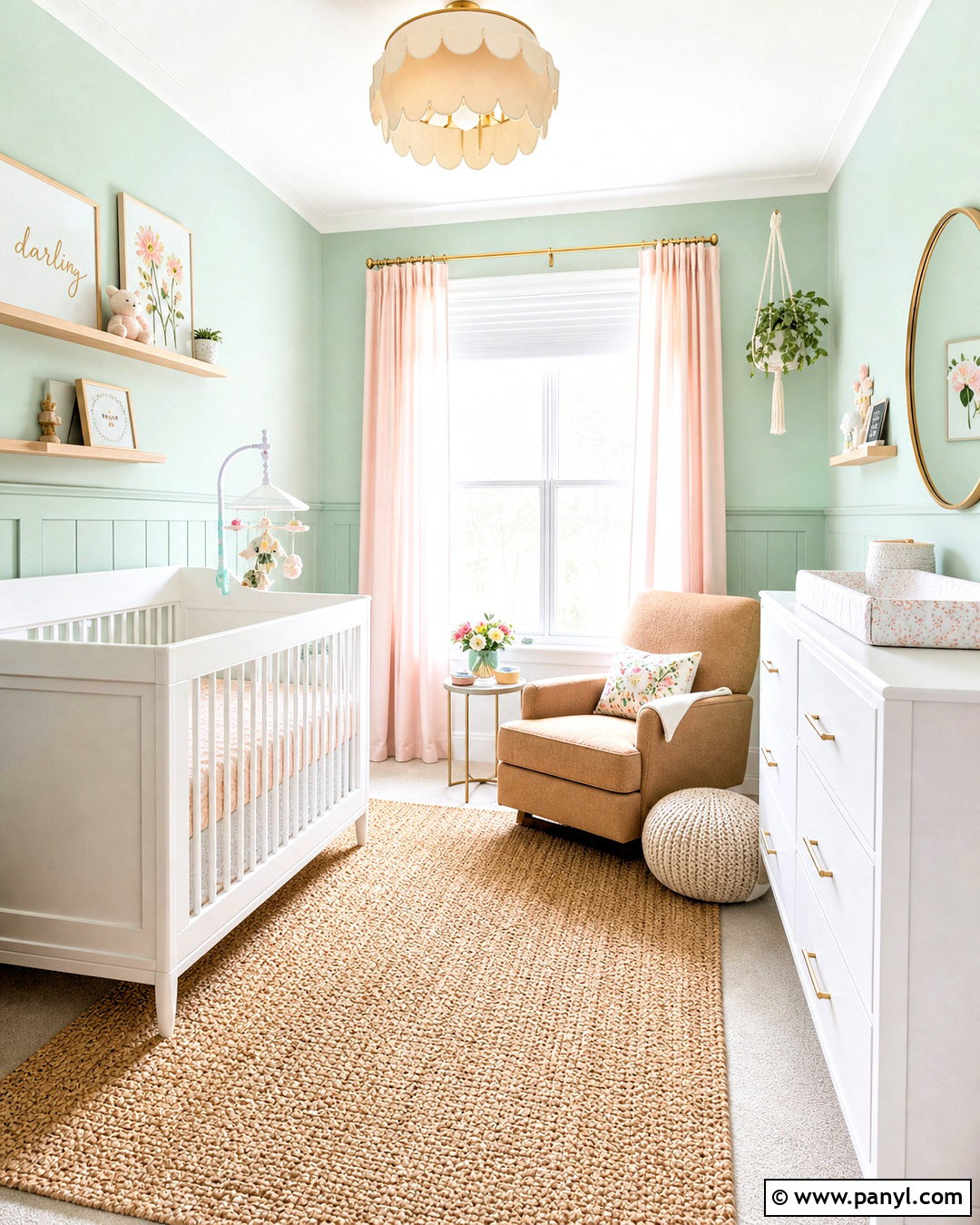
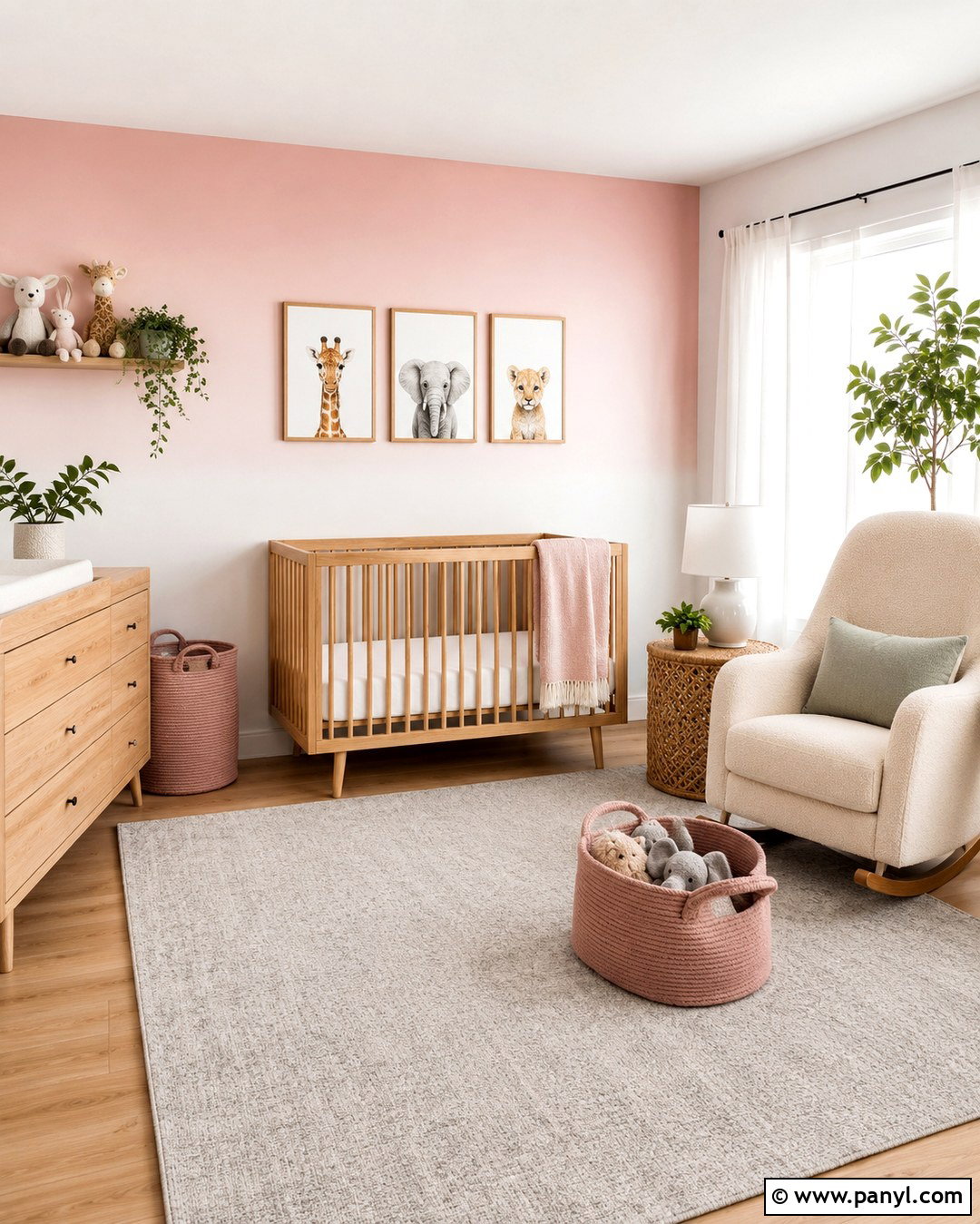
A navy-to-sky gradient creates a peaceful nursery backdrop that can grow with the child. Start with inky navy near the base, transition through muted medium blue, and finish with a very pale blue overhead. Avoid overly bright primary blues if you want a calm, adaptable room. Paint the lightest color first, then divide the wall into broad bands. Keep the navy section relatively short so the room does not feel visually heavy. Prepare the mixed transition shades in labeled containers before rolling the darker areas. Complete the nursery with a natural wood crib, white dresser, cream glider, washable ivory rug, linen curtains, and simple cloud-shaped decor. Secure furnishings safely and keep the crib area uncluttered. The final room should feel airy, organized, and restful rather than strongly themed.
11. Black And White Ombre Wall Bedroom
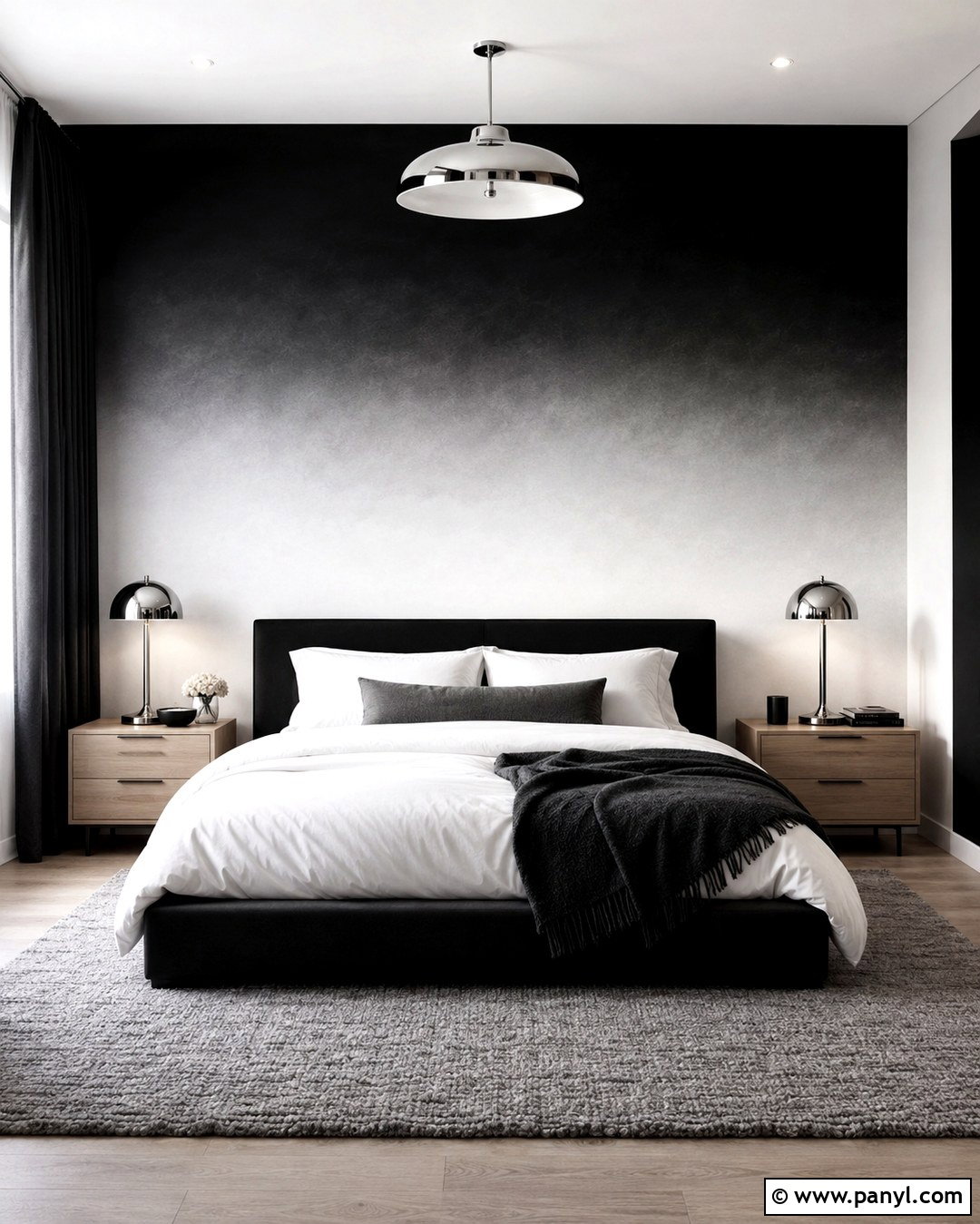
For a dramatic monochrome bedroom, blend soft black at the bottom into charcoal, medium gray, and crisp white near the ceiling. Using four values instead of jumping directly from black to white makes the transition easier to control. Choose a softened black rather than an intense jet black, which may reveal every uneven brush mark. Apply white as the base and let it dry completely. Add each darker band, then blend the boundaries while working from one side to the other. If the gradient becomes muddy, clean the brush and reintroduce the neighboring colors before blending again. Complete the room with a low black bed, white bedding, gray wool rug, pale wood nightstands, and chrome lighting. Limit additional patterns so the graded wall retains its bold architectural effect.
12. Pastel Rainbow Ombre Wall Playroom
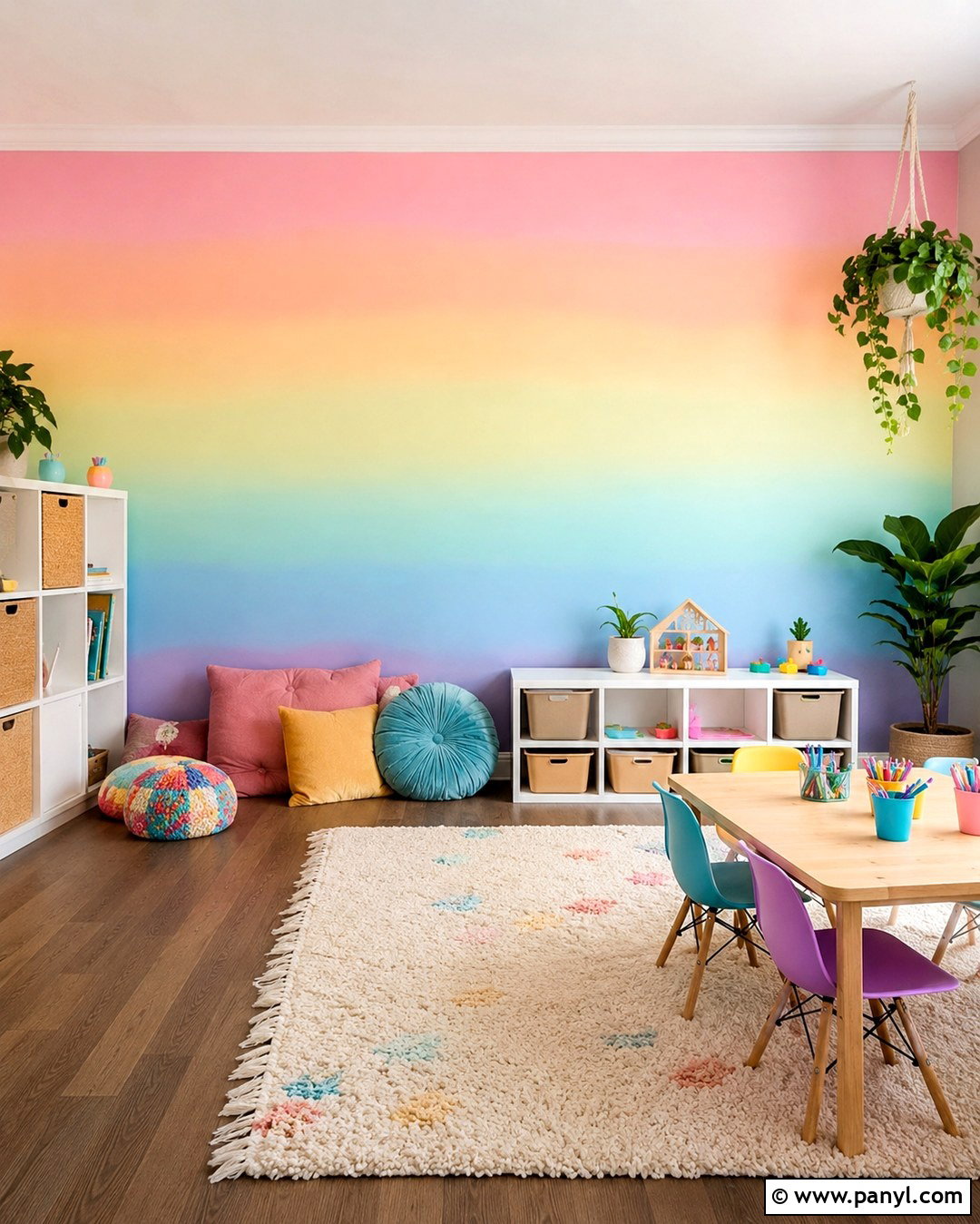
A pastel rainbow ombre wall can make a playroom cheerful without overwhelming the space. Arrange pale pink, peach, butter yellow, mint green, powder blue, and lavender in wide horizontal bands. Keep every color light and slightly muted so the transitions remain gentle. Because there are several shades, paint and blend only one neighboring pair at a time. Prepare small transition mixtures for difficult combinations, particularly yellow with green and blue with lavender. Use separate brushes or clean them thoroughly to prevent muddy colors. Complete the playroom with white storage cubes, natural wood bins, a washable cream rug, a small craft table, and cushions that repeat selected wall colors. Leave the other walls white and organize toys by category, allowing the finished rainbow wall to provide most of the decoration.
13. Vertical Ombre Wall Hallway
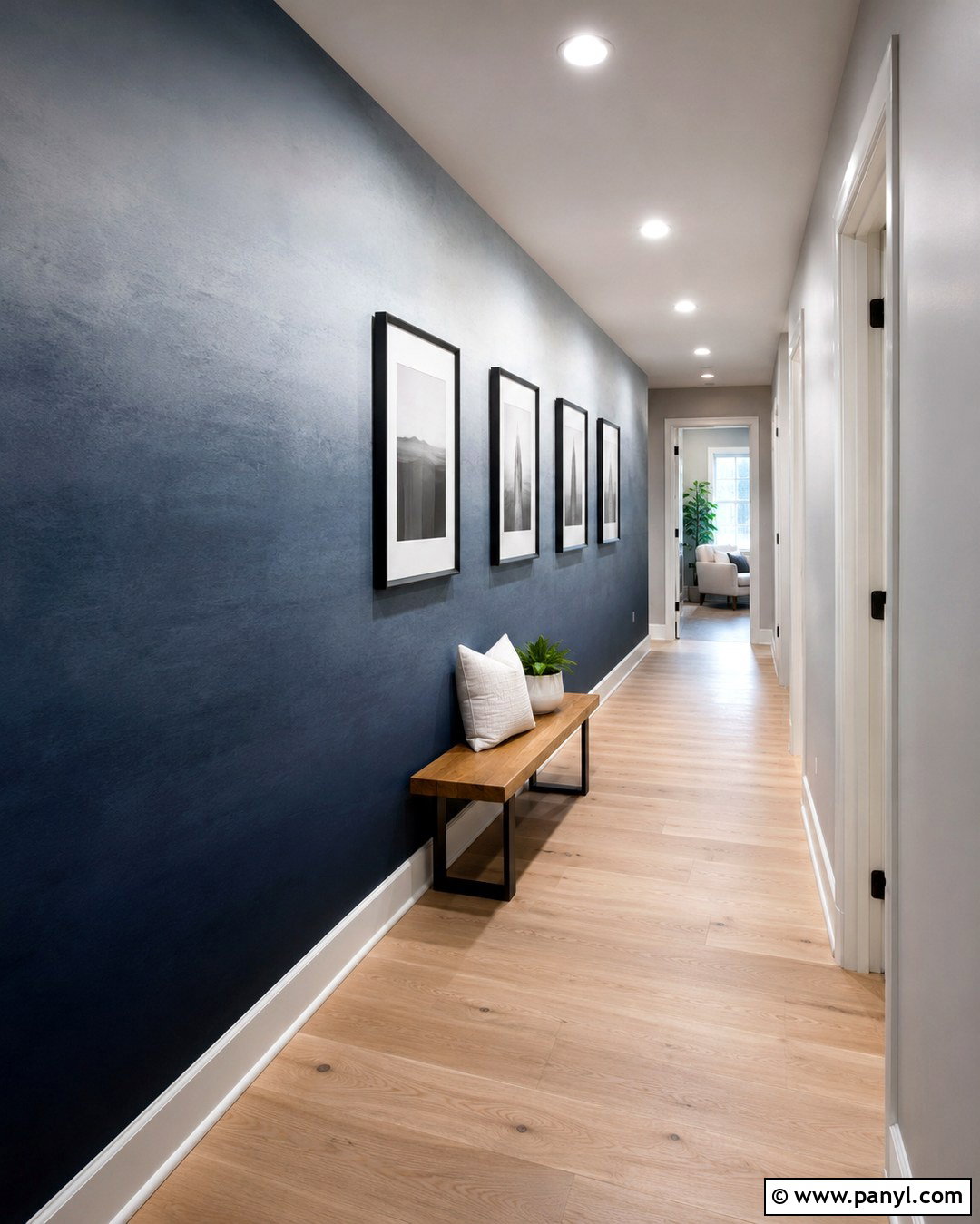
Instead of fading from floor to ceiling, move the gradient horizontally along a hallway wall. Begin with deep slate blue at one end, pass through smoky blue, and finish with pale blue-gray at the opposite end. A vertical ombre layout can visually lead the eye toward a doorway, window, or artwork. Apply the lightest base, then lightly mark several vertical zones. Work from the darkest side across the wall, blending narrow wet edges as you move. Use tall X-shaped strokes and feather the paint outward to avoid obvious vertical stripes. Complete the hallway with light oak flooring, simple white trim, slim black-framed artwork, and flush ceiling lights. Keep furniture minimal, perhaps adding one narrow bench near the pale end, so the direction and movement of the gradient remain easy to see.
14. Diagonal Ombre Wall Bedroom
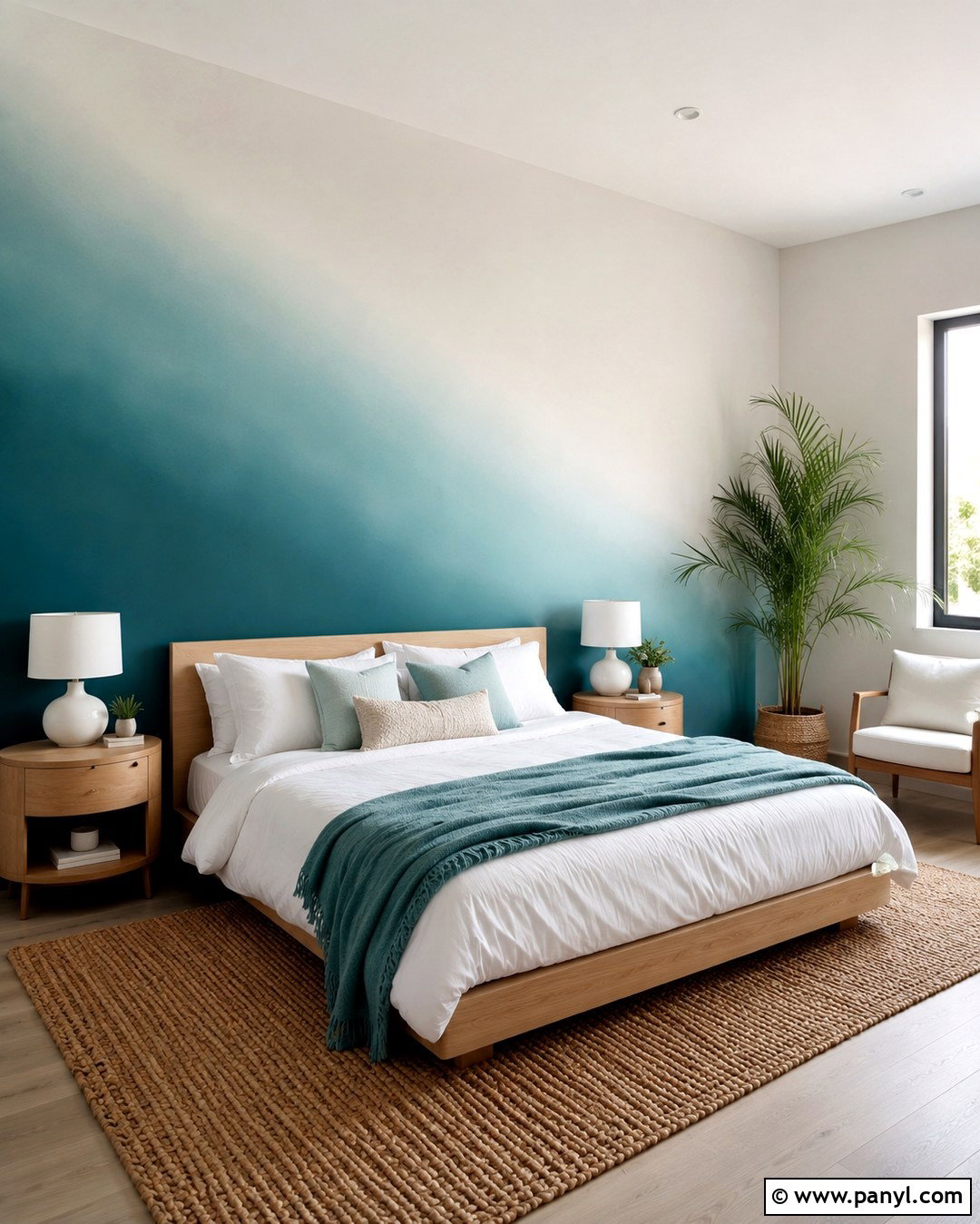
A diagonal gradient adds movement to a bedroom while maintaining the softness associated with ombre paint. Try muted teal in one lower corner, dusty aqua through the center, and warm white in the opposite upper corner. Sketch the diagonal transition areas lightly with chalk rather than creating hard taped lines. Roll the main color fields first and leave generous spaces where they meet. Blend along the diagonal using short crosshatch strokes, stepping back often to check the overall angle. The fade should appear broad and atmospheric rather than forming a sharp stripe. Style the room with a light wood platform bed, white bedding, teal throw, natural woven rug, and rounded bedside tables. Repeat only small amounts of teal elsewhere, allowing the angled wall to remain the room’s strongest design feature.
15. Radial Ombre Wall Living Room
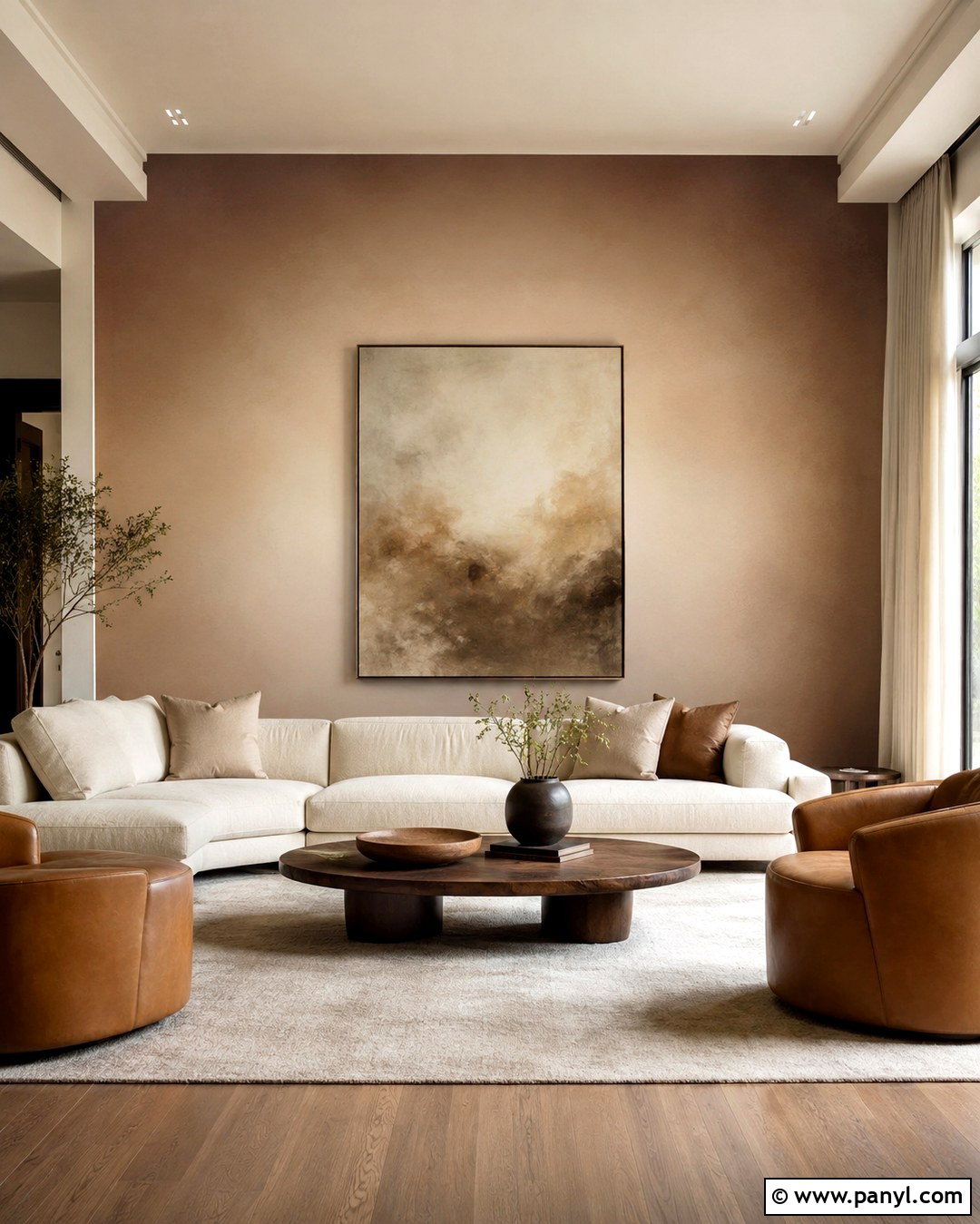
A radial ombre wall places the lightest color near the center and gradually darkens toward the outer edges. This technique creates a subtle glowing effect behind a sofa, console, or piece of artwork. Begin with warm ivory across the wall. Mark a large centered oval using very faint guidelines, then apply soft beige around it, followed by taupe and muted brown near the perimeter. Keep the borders irregular and blend them in curved sections while the adjacent colors are wet. A large soft brush works better than a narrow tool for this design. Complete the living room with an ivory sofa, dark walnut coffee table, caramel chairs, cream curtains, and one oversized abstract artwork. Keep the center of the wall visible so the luminous radial pattern is not completely hidden.
16. Two Color Ombre Wall Guest Room
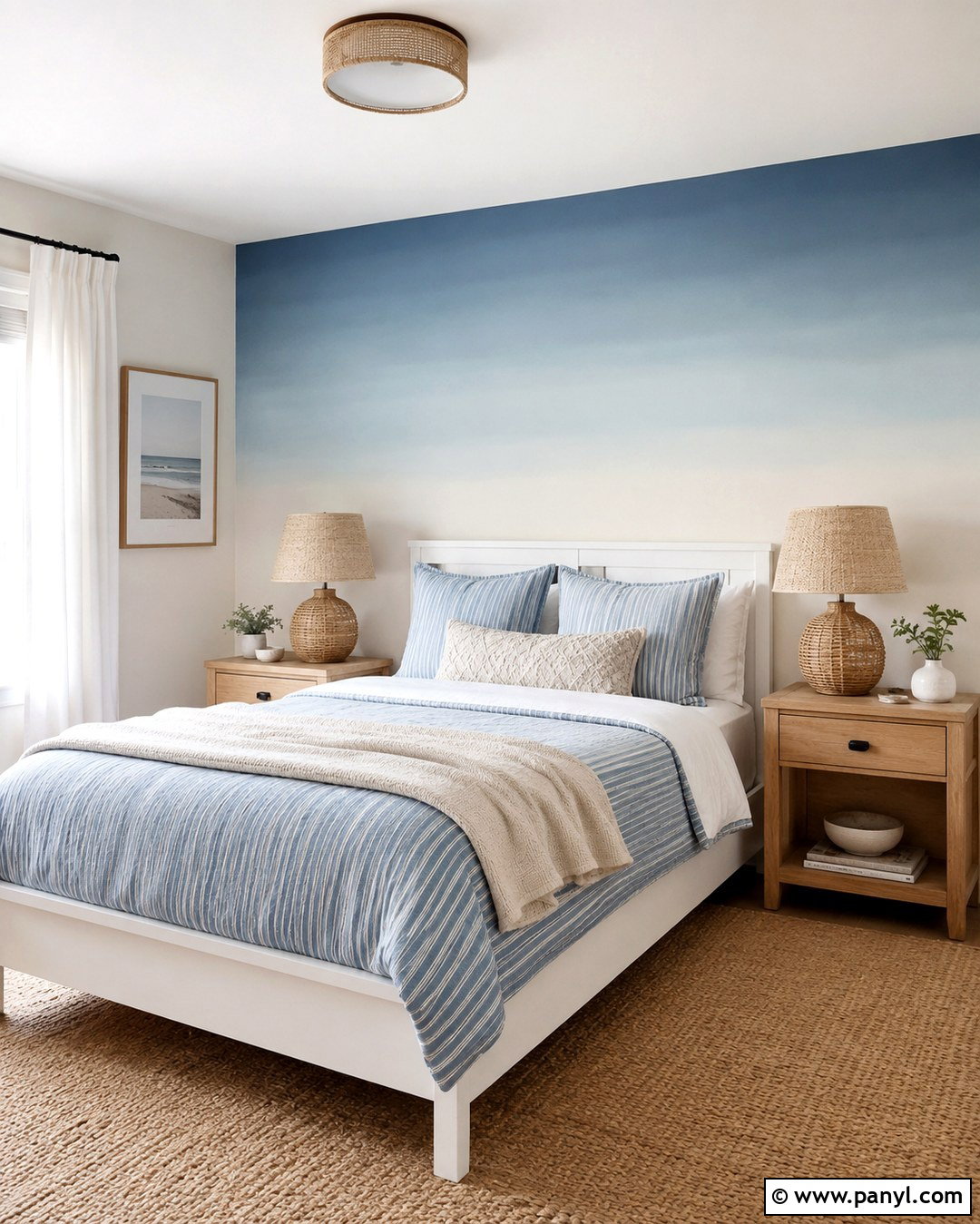
If this is your first gradient project, a two-color wall is an approachable place to start. Fade dusty blue at the bottom into warm white at the top, using a custom mixture of equal parts blue and white as the middle transition. Paint the entire wall white and let it dry. Roll blue across the lower section, the mixed shade above it, and fresh white along the upper transition edge. Blend the two boundaries while wet, using different brushes for the pure colors and a clean brush for softening. Paint manufacturers commonly recommend maintaining a wet edge and working in small sections for more consistent blending. () Finish the guest room with a white bed, striped blue bedding, oak nightstands, woven lamps, and a soft beige rug.
17. Ombre Wall And Ceiling
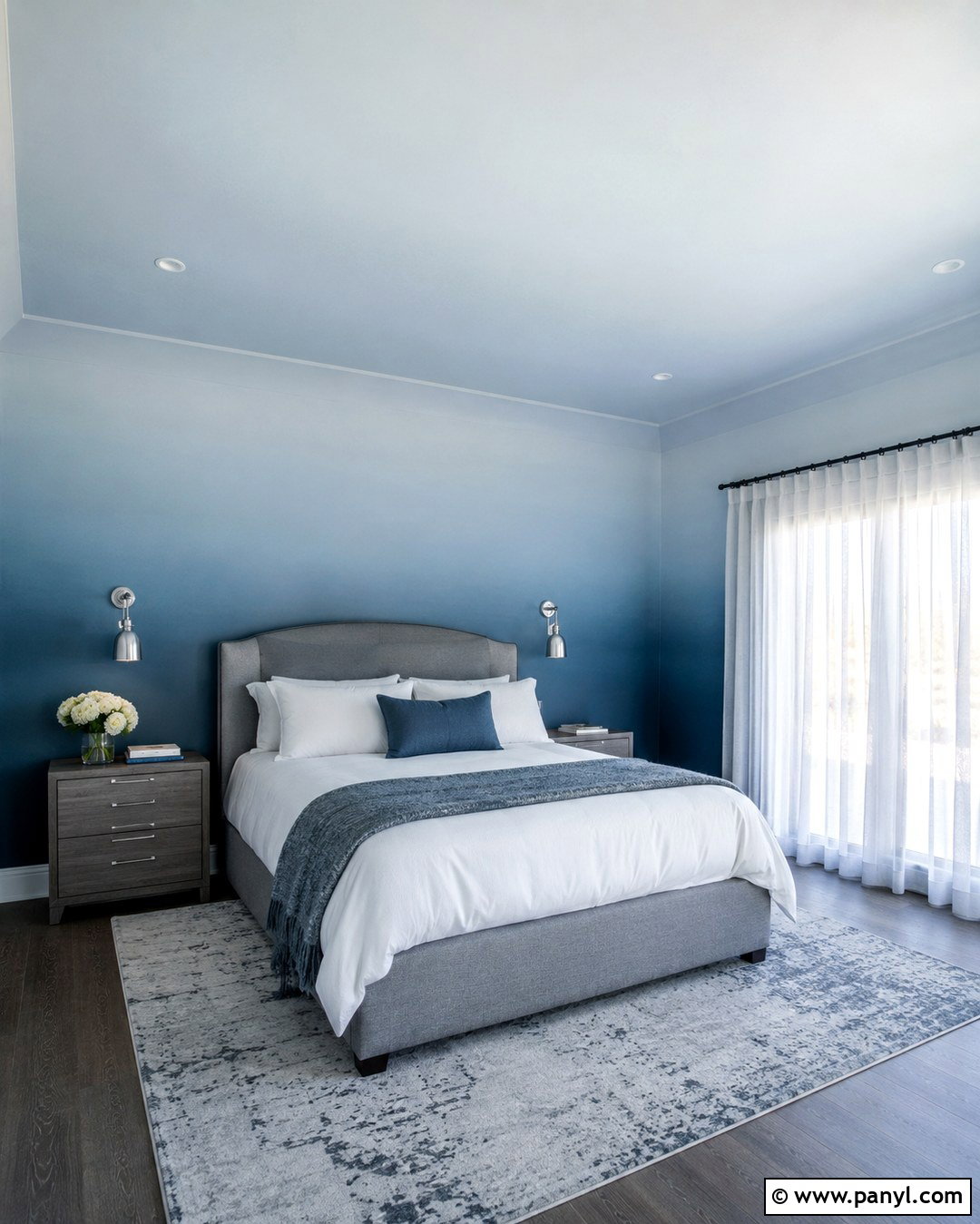
Extend a pale gradient onto the ceiling to create an immersive bedroom with fewer visible boundaries. Use medium blue-gray near the floor, misty blue through the upper wall, and nearly white blue across the ceiling. This arrangement is especially useful when you want the ceiling and wall to feel visually connected. Apply the ceiling color first and use it as the lightest base on the walls. Blend the upper wall into the ceiling shade, keeping the strongest color below the room’s midpoint. Use stable equipment and avoid overreaching while painting high areas. Complete the design with a soft gray upholstered bed, white bedding, light ash nightstands, silver sconces, and sheer white curtains. Choose simple furnishings because the continuous color treatment already gives the room a finished, enveloping appearance.
18. Textured Ombre Wall Dining Room
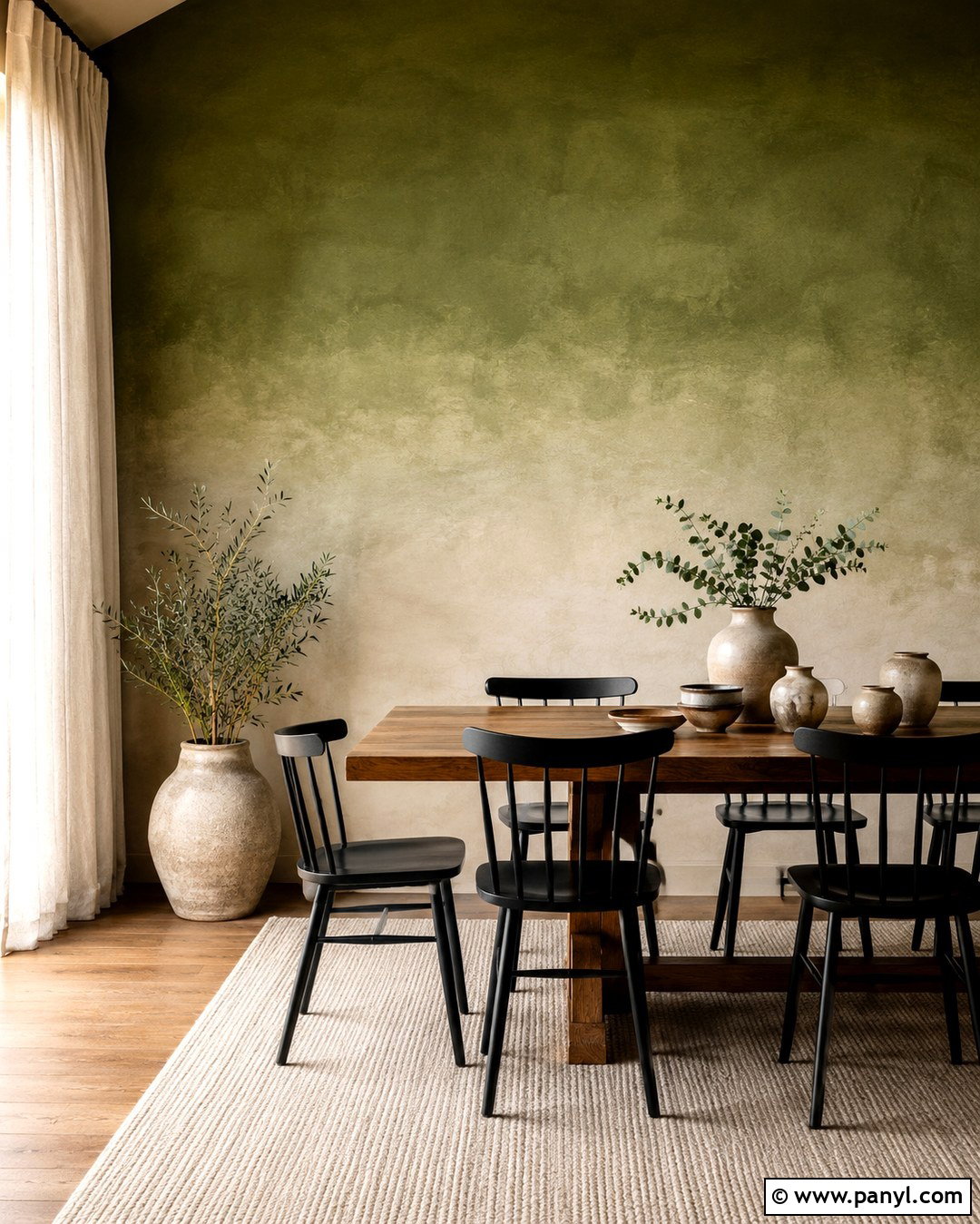
A lightly textured ombre finish has more movement than a perfectly smooth gradient. Create the look with deep olive at the bottom, moss green in the middle, and warm beige above. Apply the colors with a wide brush rather than relying only on rollers. Use loose crosshatch strokes so subtle brush variation remains visible across the dried surface. Blend the transition areas enough to prevent harsh bands, but do not erase every mark. Practice the motion on a large sample board first, especially if your wall already has noticeable texture. Finish the dining room with a rectangular oak table, black spindle chairs, a cream wool rug, linen curtains, and simple ceramic vessels. Matte or low-sheen paint will support the handcrafted appearance better than a highly reflective surface that emphasizes every ridge.
19. Ombre Stripe Wall Kids Room
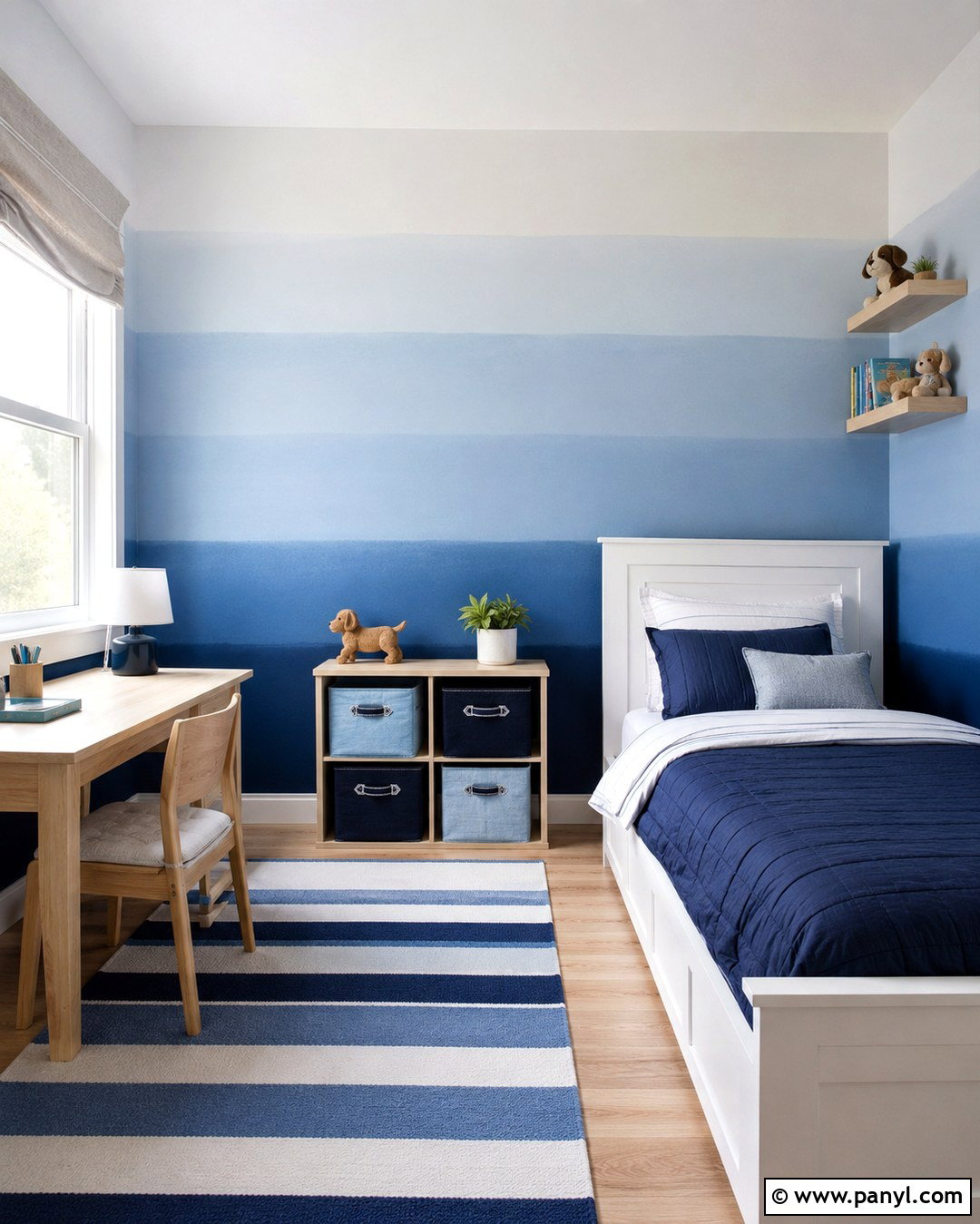
For a more controlled gradient, create wide horizontal stripes that progress from deep blue to medium blue, powder blue, and almost white. Rather than fully blending every boundary, soften each meeting point just enough to create a gradual stepped effect. Measure the bands carefully and mark them with light pencil lines. Paint the light base, then add the stripes from top to bottom. Keep the edges freehand for softness, or use painter’s tape if you prefer a crisp modern finish. Complete the kids room with a white bed, natural wood desk, blue storage baskets, a striped washable rug, and compact wall shelves. The repeated blue values create the feeling of ombre while being easier to touch up than one uninterrupted wet-blended gradient.
20. Ombre Wall Reading Nook
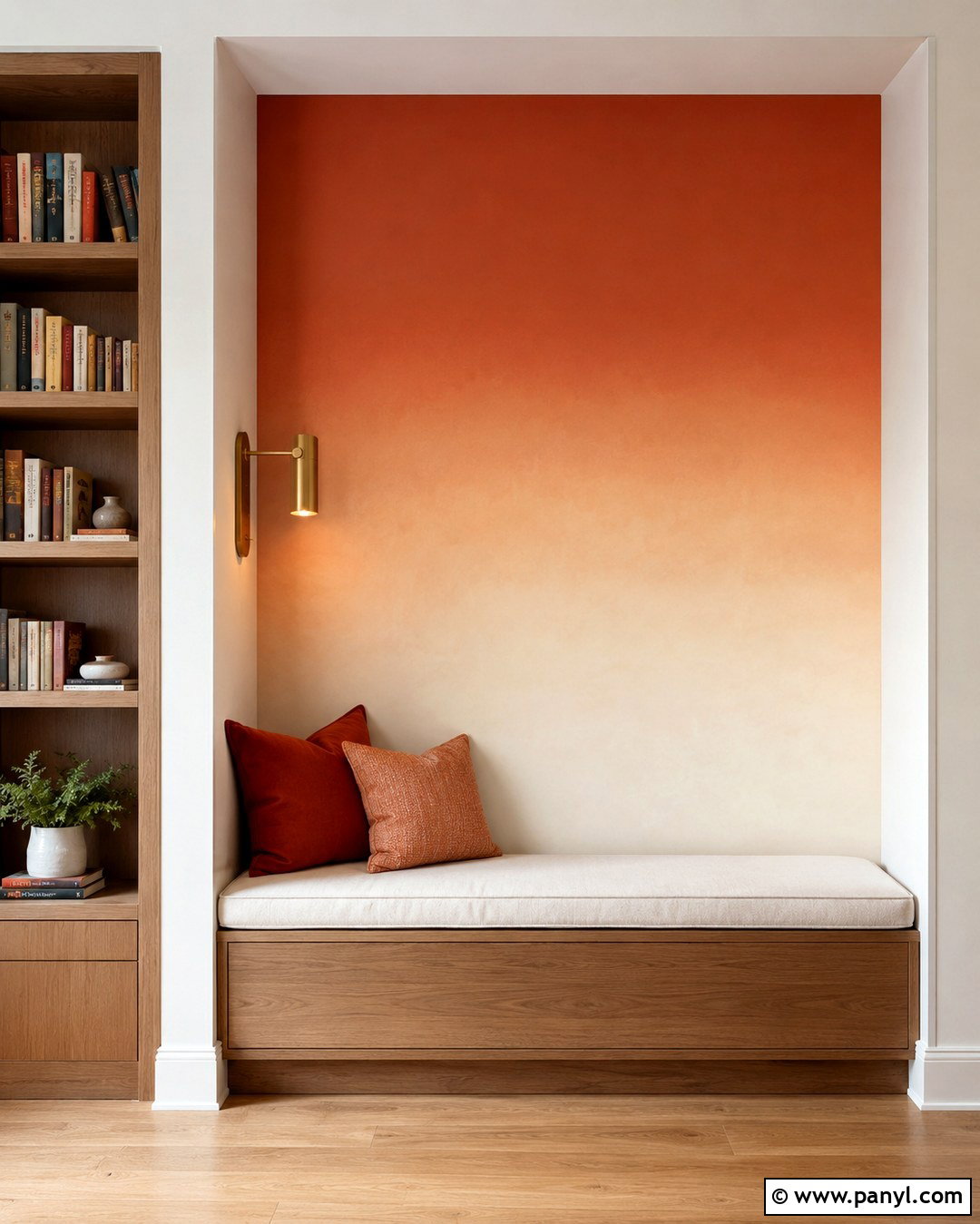
A small reading nook is an excellent place to test ombre paint before committing to a full room. Fade deep rust near the seat level into muted apricot and pale cream above. Paint the nook’s back wall only, allowing the surrounding cream walls to frame the effect. The compact surface gives you time to maintain wet transitions without needing a second painter. Use a small roller for the broad fields and a three- or four-inch brush for blending. Protect adjoining corners with painter’s tape and remove it before the final coat becomes fully hard. Complete the nook with a built-in oak bench, ivory cushion, rust-colored pillows, a slim brass sconce, and shelves for books. The finished space should feel warm, practical, and clearly separated from the larger room.
Conclusion:
Learning how to create a gradient finish opens up many ways to personalize a room with paint. The strongest results begin with good surface preparation, related colors, a fully dry light base, and transition shades mixed before painting starts. Keep neighboring edges wet, work across the wall in small sections, and use broad crosshatch strokes to soften visible boundaries. A practice board can help you understand how quickly your chosen paint dries and how the colors mix. Whether you prefer subtle beige, coastal blue, earthy green, or a playful rainbow, these 20 How To Paint An Ombre Wall Ideas offer complete looks that balance the painted feature with furniture, lighting, textiles, and practical room layouts.

Related Ideas and Inspiration:
Leave a Reply