
Hallways may be transitional spaces, but their colors shape how the entire home feels. The best **20 hallway colour schemes** balance personality with practicality, creating a welcoming entrance while connecting nearby rooms. Pale tones can help a narrow passage feel more open, while deep shades add character to spaces with limited natural light. Mirrors, durable paint, layered lighting, runners, and streamlined furniture complete the effect. Before choosing a palette, test samples beside the flooring, doors, and trim at different times of day. This helps reveal undertones that may not appear in the store. Whether your home is modern, traditional, coastal, or eclectic, the complete looks below offer practical inspiration through these **20 hallway colour schemes**. ()

1. Warm White Hallway
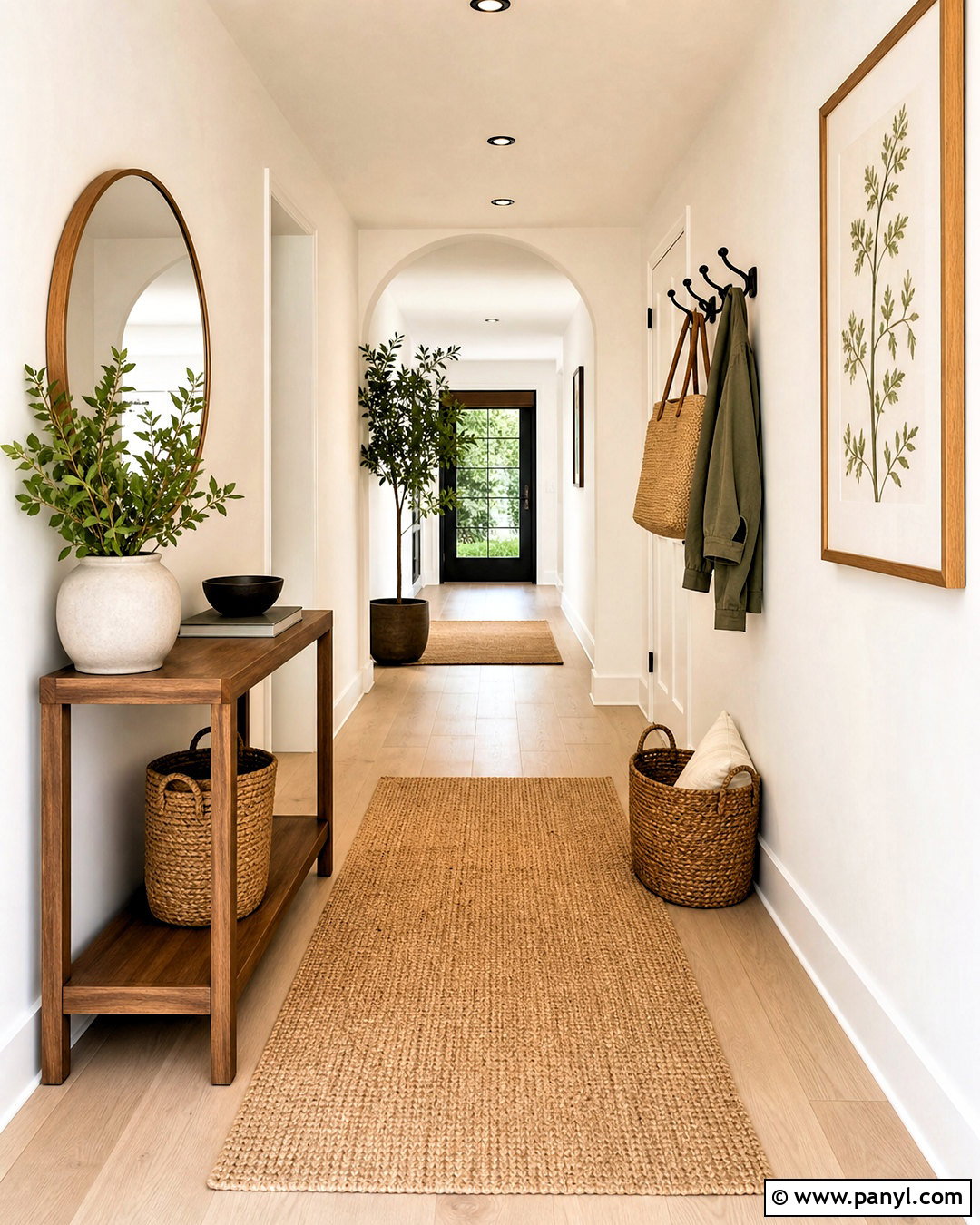
Warm white creates an airy hallway without the cold appearance of brilliant white. Choose a creamy wall color with subtle beige undertones, then repeat it on the ceiling for a seamless effect. Paint the trim and doors a cleaner white to create gentle definition. Light oak flooring or a natural jute runner adds warmth underfoot, while a slim walnut console provides useful storage. Hang a large round mirror above it to bounce light through the corridor. Matte black hooks and a simple black pendant prevent the palette from feeling overly soft. Finish with framed botanical prints and one leafy plant. This complete scheme works especially well in a small hallway where brightness, simplicity, and everyday function are equally important.
2. Soft Greige Hallway
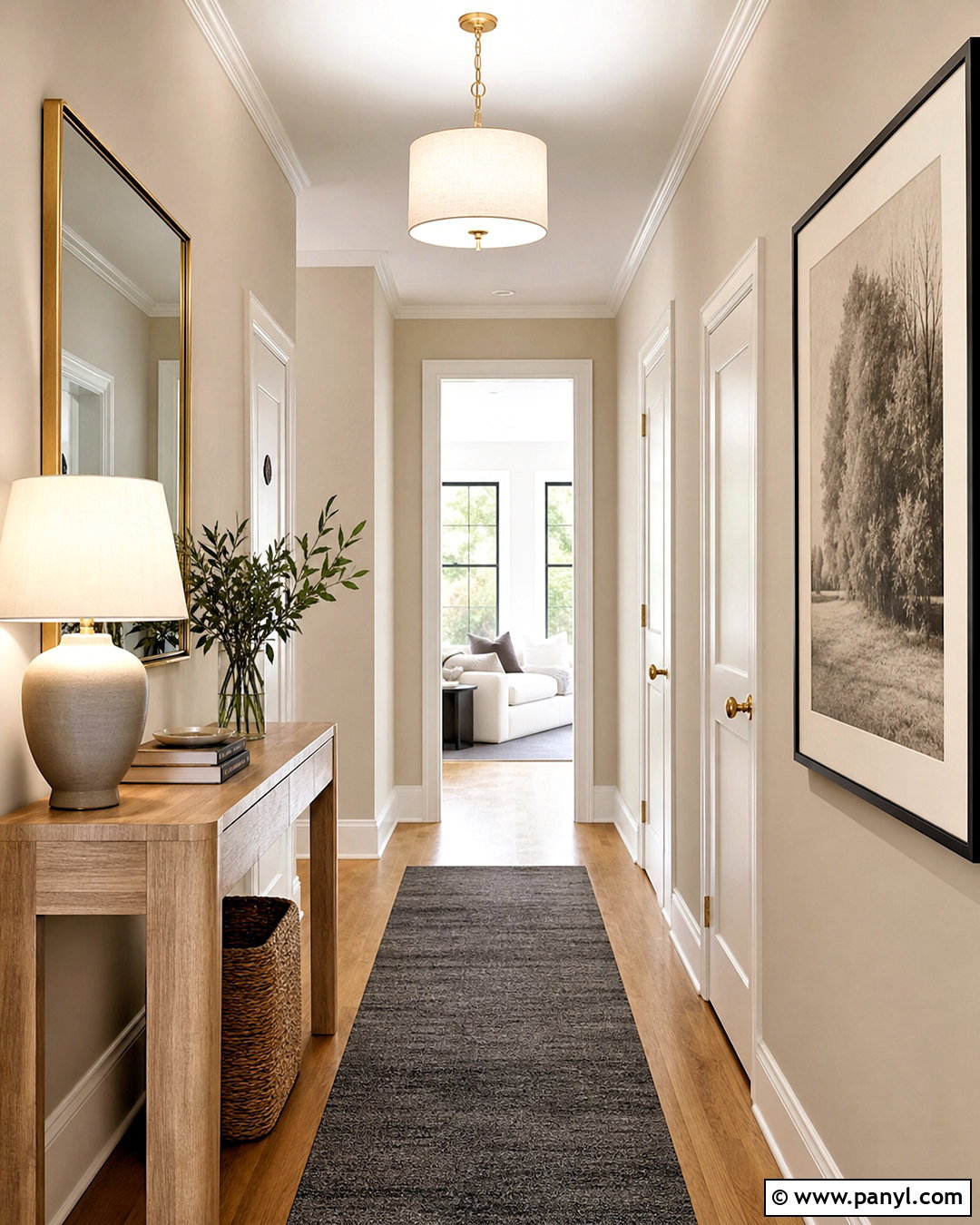
Soft greige provides more depth than white while remaining flexible enough to connect rooms with different color palettes. Cover the walls in a warm gray-beige shade and use ivory on the ceiling, baseboards, and door frames. Medium-toned oak flooring brings out the beige undertones, while a charcoal runner gives the long space a clear visual path. Add a narrow console in pale wood with brushed brass hardware, plus a rectangular mirror in a matching metal frame. Black-and-white artwork keeps the decor calm and coordinated. A linen pendant and a small ceramic lamp create layered lighting without introducing competing colors. The result is a polished, comfortable hallway that suits modern, transitional, and traditional interiors without looking flat or overly neutral.
3. Sage Green Hallway
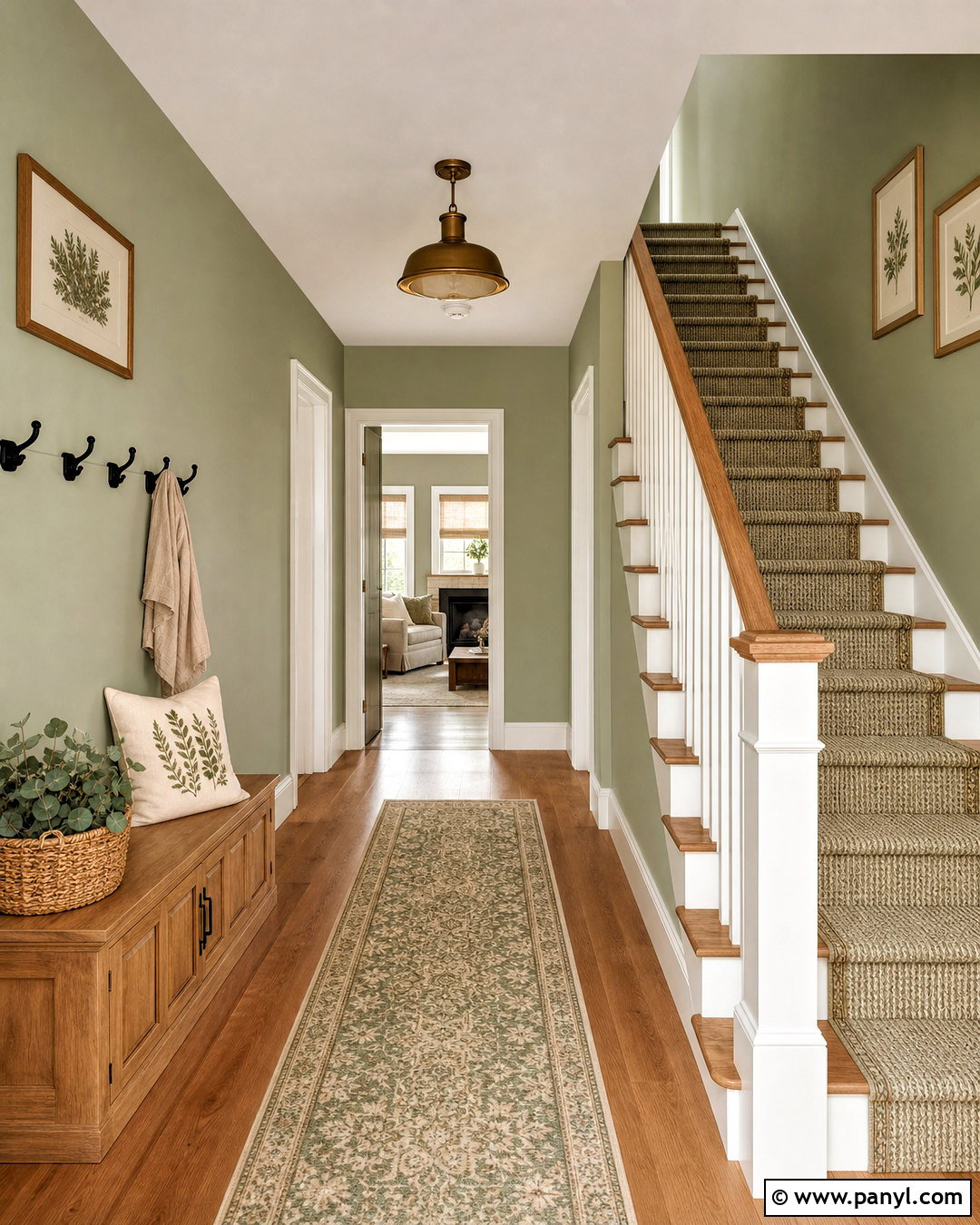
Imagine entering a hallway that feels calm, natural, and immediately connected to the outdoors. Soft sage green walls establish that mood while remaining light enough for a narrow space. Pair them with warm white trim, a white ceiling, and natural oak doors or flooring. A woven runner in cream and faded green reinforces the organic palette. Choose a slim oak bench with baskets underneath for shoes, then add black wall hooks and an aged brass ceiling light. Botanical artwork can introduce deeper forest tones without overwhelming the scheme. If the hallway includes stairs, paint the spindles warm white and retain a natural wood handrail. This balanced design combines gentle color, useful storage, and durable materials in one welcoming entrance.
4. Navy Blue Hallway
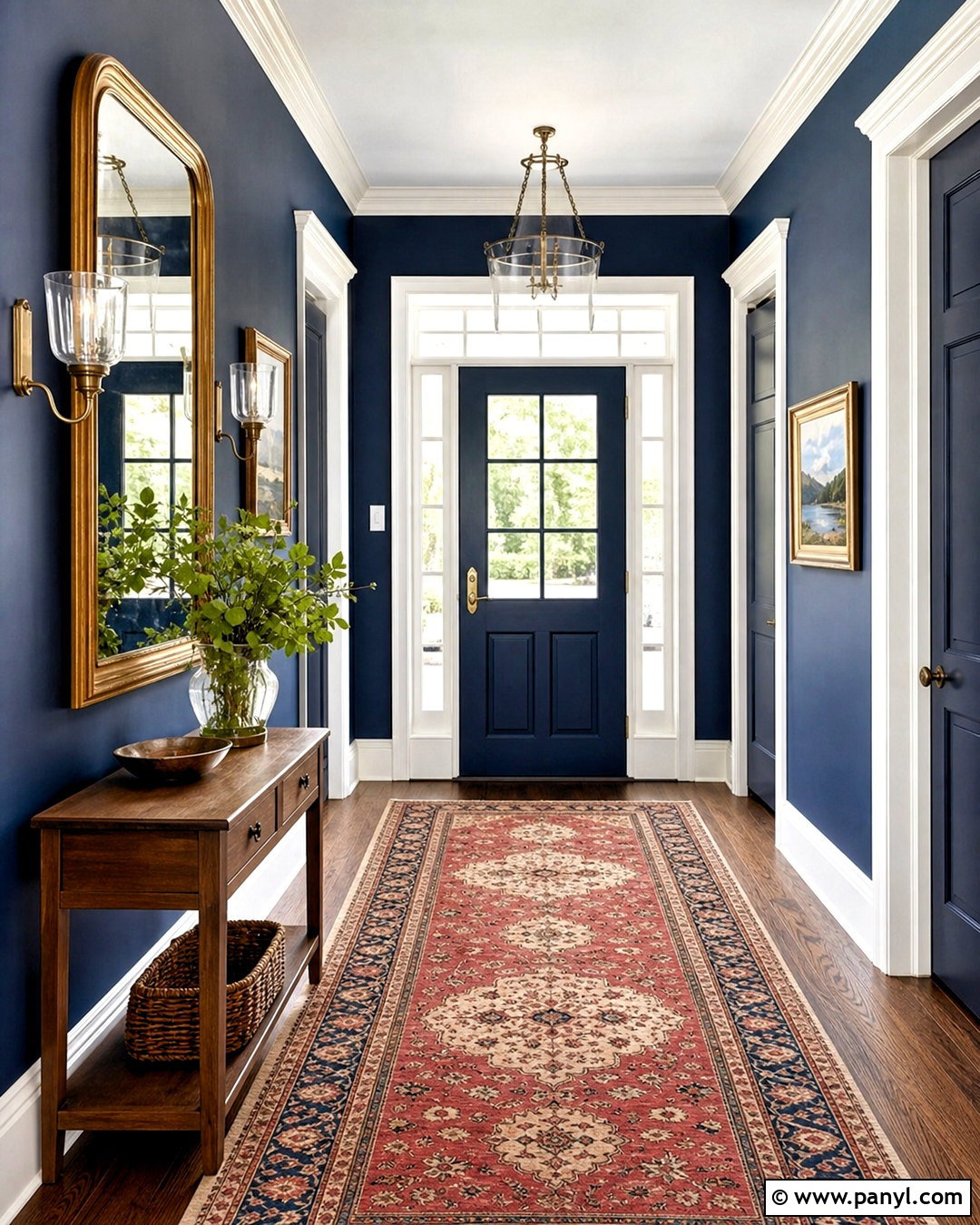
Deep navy blue turns a wide hallway or generous entrance into a confident, sophisticated space. Use navy on the walls, then keep the ceiling and detailed molding bright white for sharp contrast. Rich walnut flooring and a vintage-inspired runner in red, cream, and blue prevent the dark walls from feeling stark. Add a narrow walnut console, an oversized brass-framed mirror, and clear glass wall sconces to reflect light. Doors can remain white, or they can be painted navy for a more immersive finish. A few framed landscapes introduce lighter tones at eye level. Because deep colors can visually absorb uneven shadows, navy may also bring consistency to a hallway with limited daylight when supported by bright, well-positioned lighting. ()
5. Pale Blue Hallway
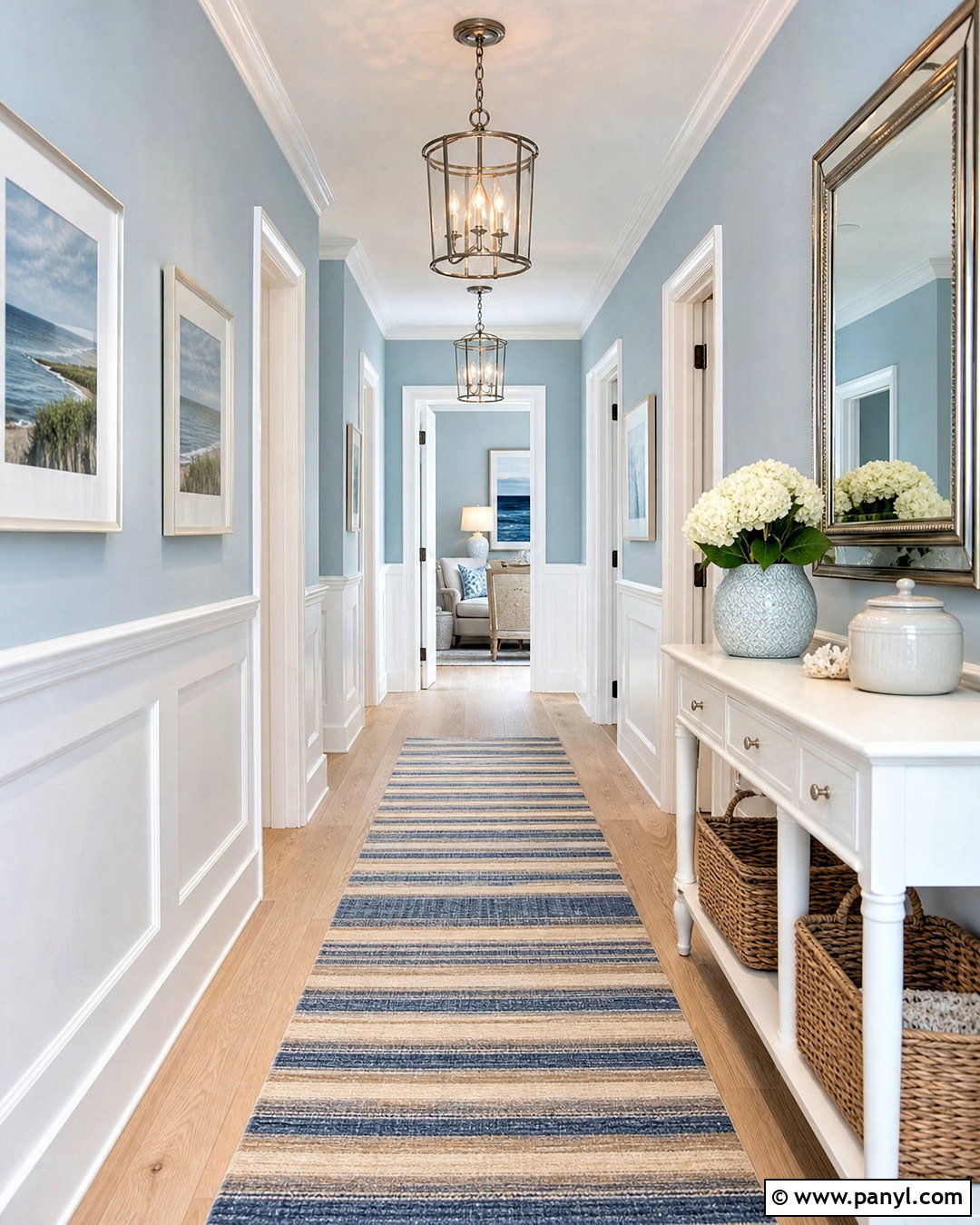
Pale blue gives a hallway a fresh, open quality that works particularly well in coastal, cottage, and traditional homes. Select a muted sky blue rather than a highly saturated pastel, then pair it with crisp white trim and ceiling paint. White oak flooring keeps the base warm, while a striped runner in blue, sand, and ivory creates gentle movement. Place a white console near the entrance with woven baskets underneath for everyday storage. Polished nickel lighting and a simple silver-framed mirror enhance the clean palette. Add framed seascapes or abstract prints with soft blue and beige accents. Natural textures, including linen, rattan, and light wood, keep the hallway relaxed rather than themed, producing a bright and easygoing transition between rooms.
6. Terracotta And Cream Hallway
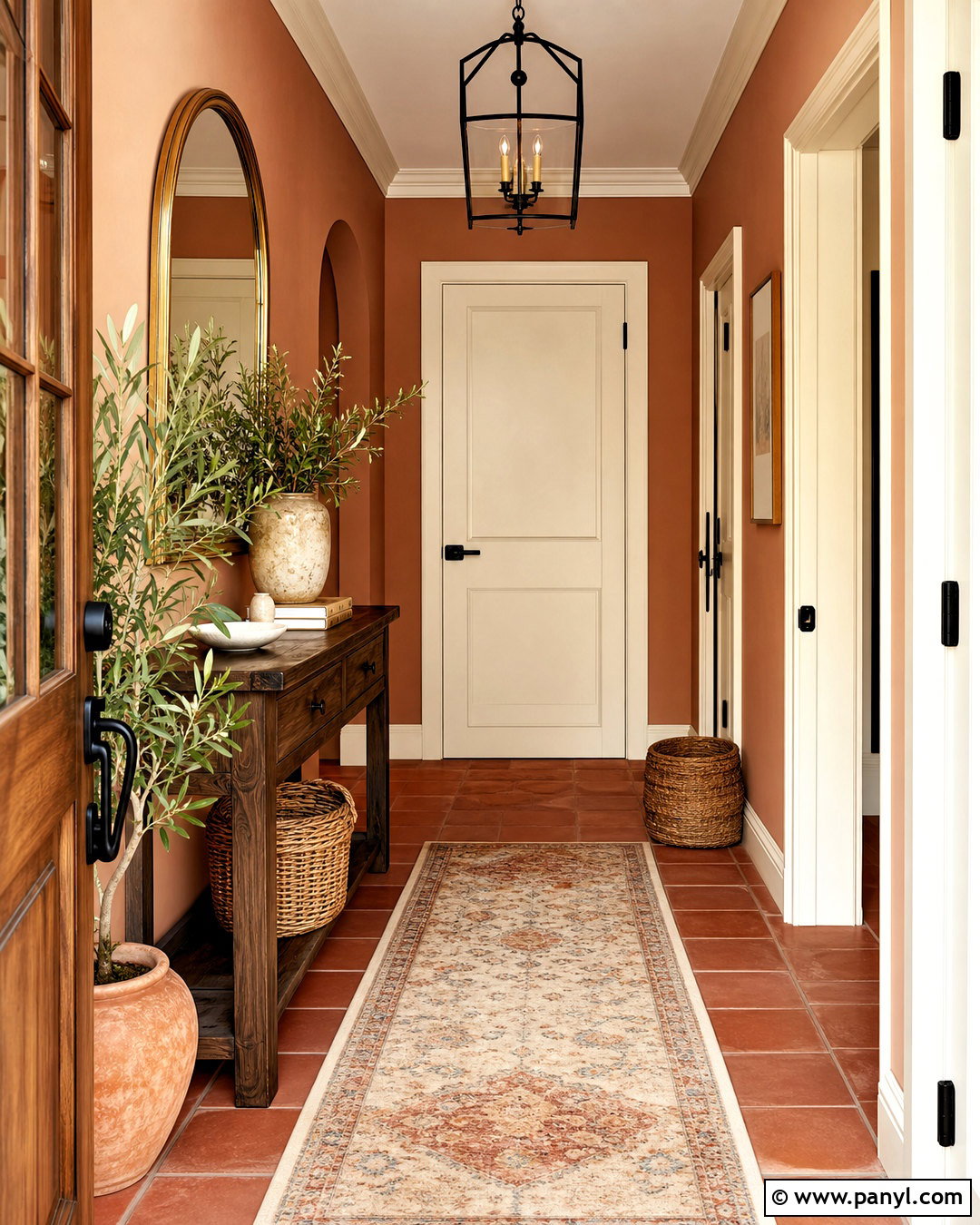
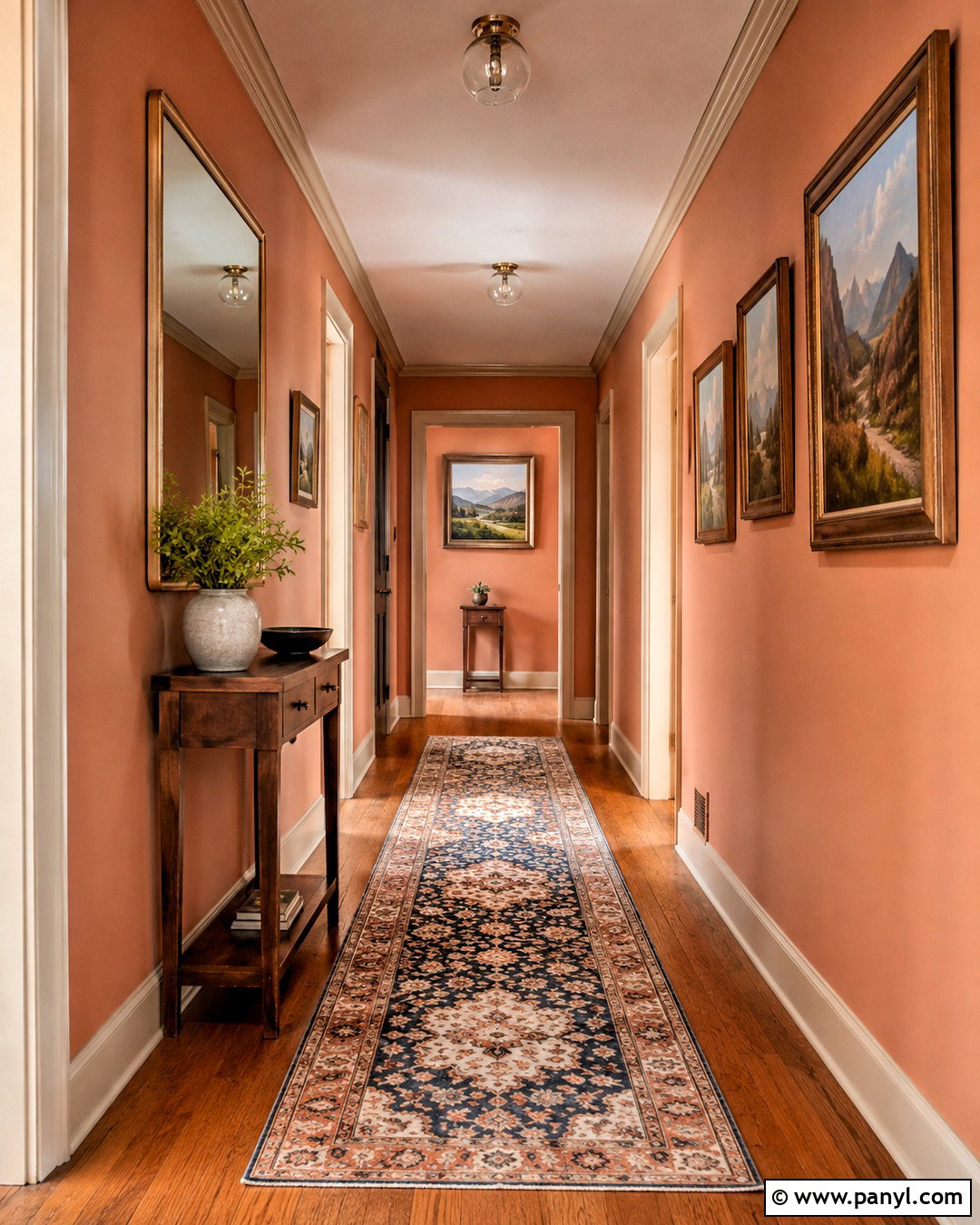
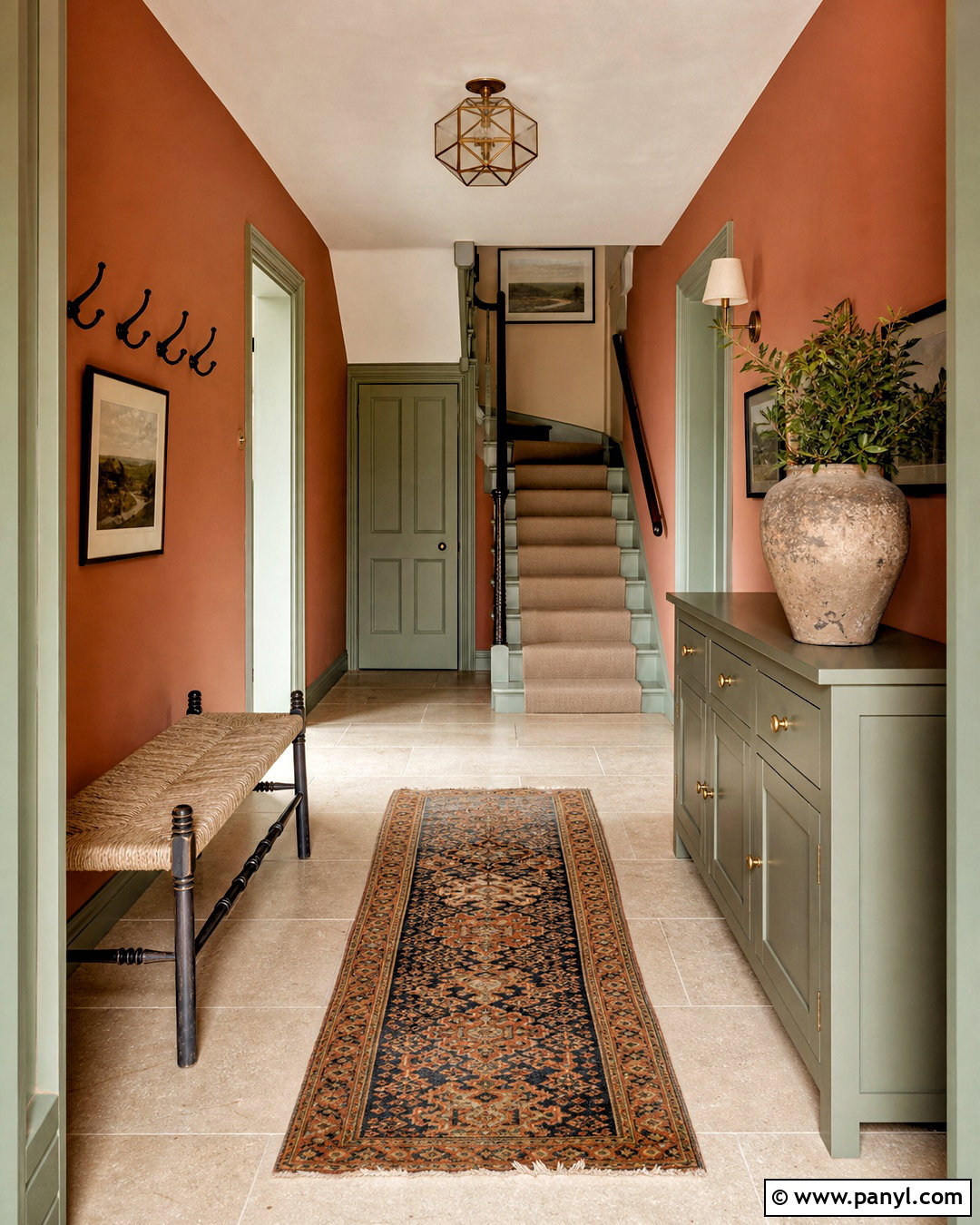
Warm terracotta walls can make an ordinary hallway feel grounded and inviting. Choose a muted clay shade with brown undertones instead of a bright orange, then balance it with creamy white trim, doors, and ceiling paint. Terracotta floor tiles create a rich tonal foundation, although medium oak flooring offers a softer alternative. Add a dark wood console with woven storage baskets and an arched mirror in aged brass. A washable runner in cream, rust, and faded blue breaks up the warmth while hiding everyday marks. Use simple ceramic lamps and black iron hardware for contrast. Greenery is especially effective here because olive and eucalyptus tones naturally complement clay. The complete palette feels warm, collected, and suitable for Mediterranean or modern rustic homes.
7. Charcoal Gray Hallway
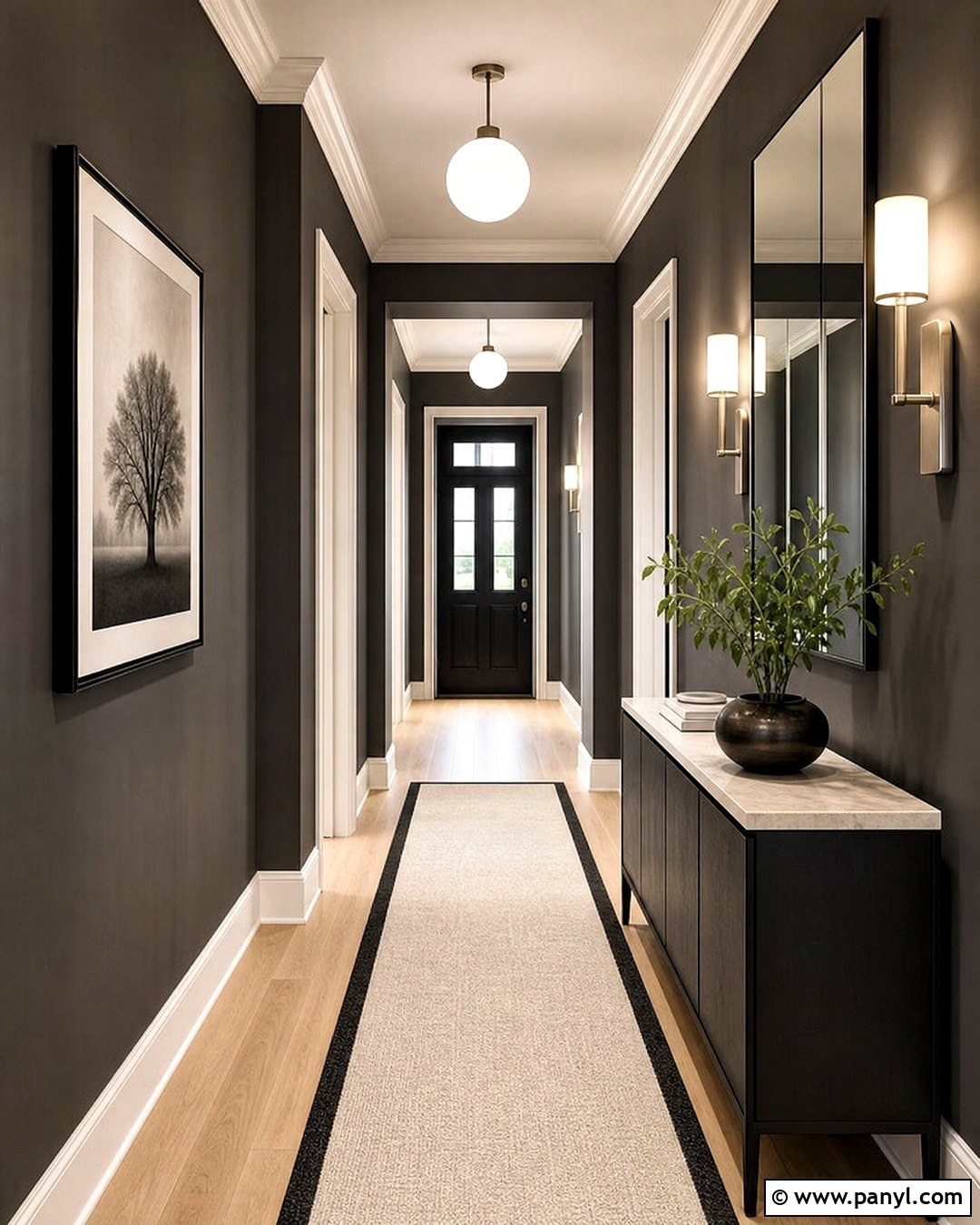
A charcoal gray hallway can feel tailored rather than gloomy when the finishes are carefully balanced. Paint the walls a deep charcoal with slightly warm undertones and use soft white across the ceiling, trim, and door frames. Pale oak flooring provides essential contrast, while a cream runner with a black geometric border visually lengthens the passage. Select a slim black console with a light stone top, then hang a large frameless mirror above it. Brushed nickel sconces and a white globe pendant distribute light across the dark surfaces. Keep decorative accessories limited to pale ceramics, monochrome artwork, and one sculptural branch arrangement. This scheme creates a modern architectural look, particularly in hallways with interesting moldings, multiple doorways, or a strong view into brighter adjoining rooms.
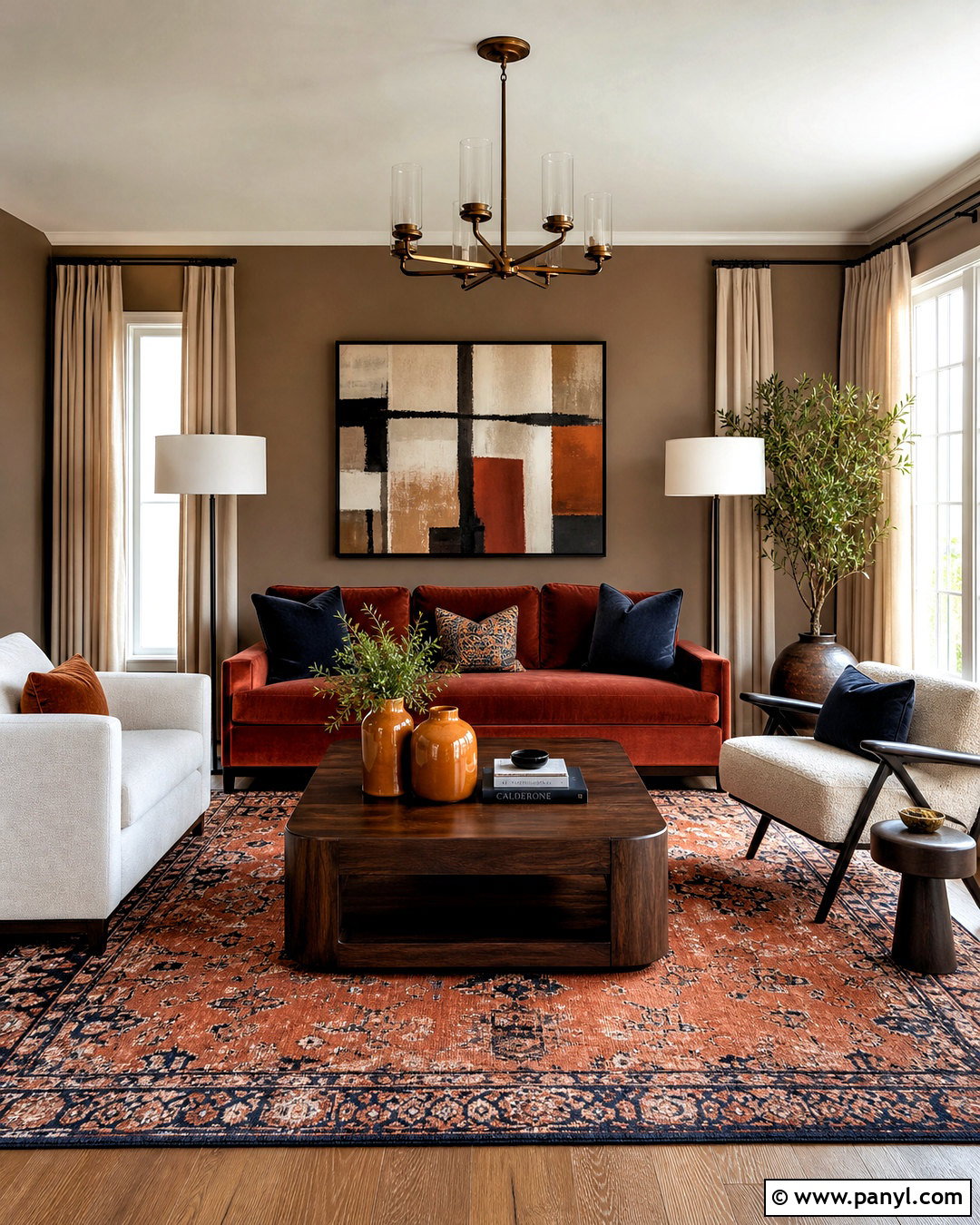
8. Blush Pink Hallway
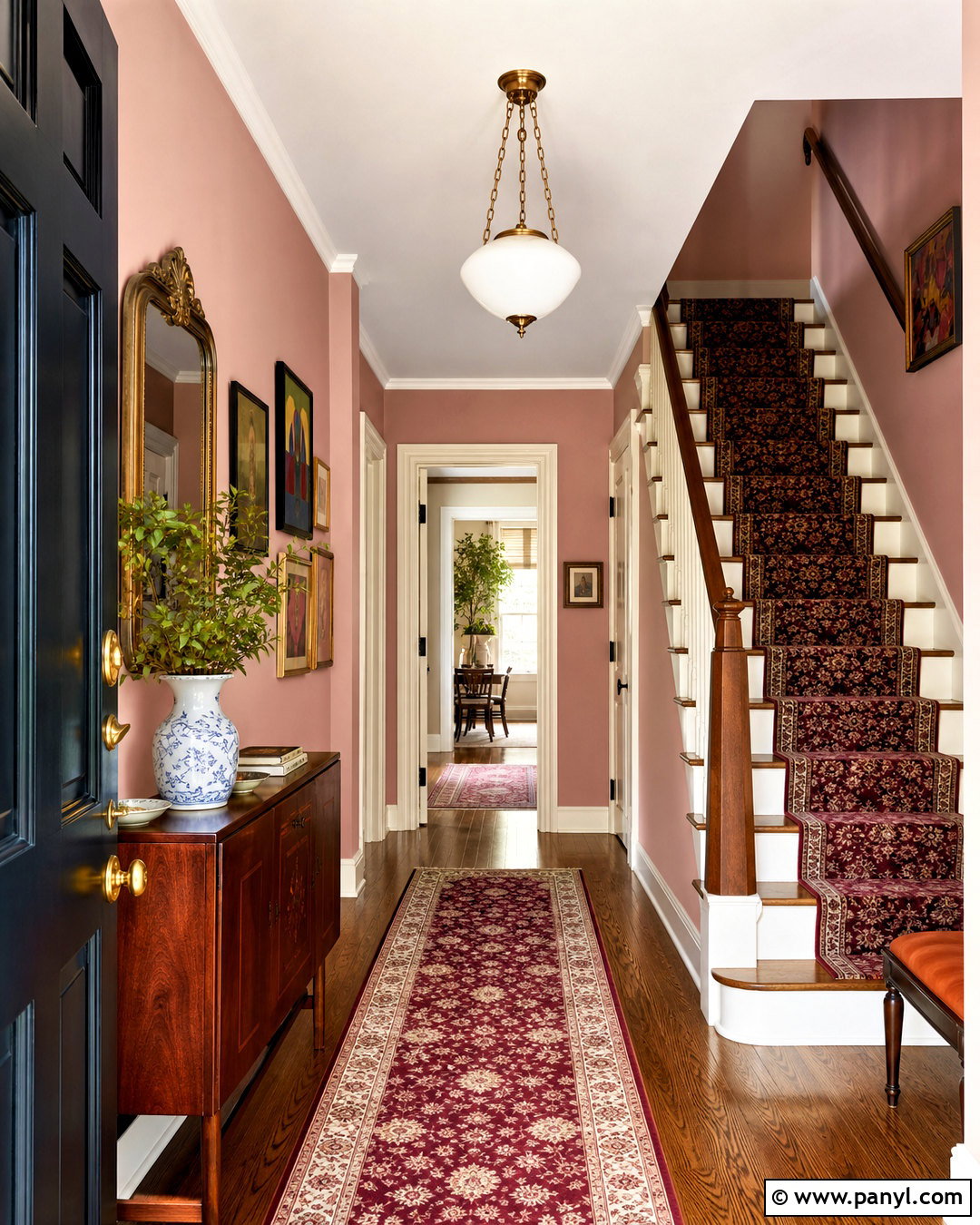
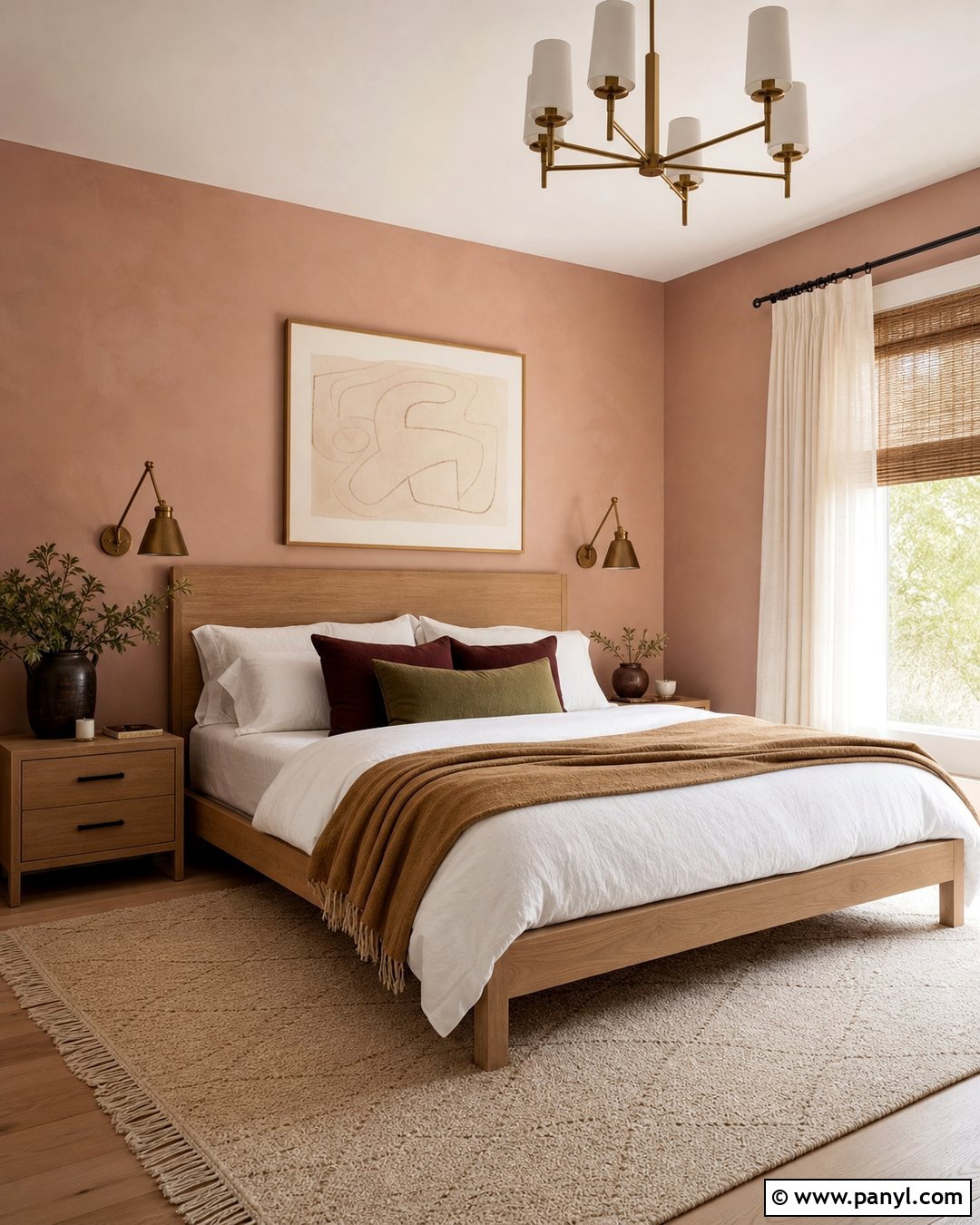
Blush pink offers a warm alternative to beige and can make an entrance feel softly welcoming. Look for a dusty, muted pink with gray or brown undertones rather than a sugary pastel. Pair it with ivory trim, a warm white ceiling, and medium oak flooring. A burgundy-and-cream patterned runner adds depth and protects the busiest walking area. Use a vintage wood console, an antique brass mirror, and milk-glass lighting to create a layered look. Dark bronze hooks and door hardware provide small moments of contrast. Artwork featuring muted greens, reds, and ochres keeps the palette sophisticated. For a staircase hallway, continue the blush onto the wall beside the stairs while using ivory spindles and a stained wood handrail for structure.
9. Olive Green Hallway
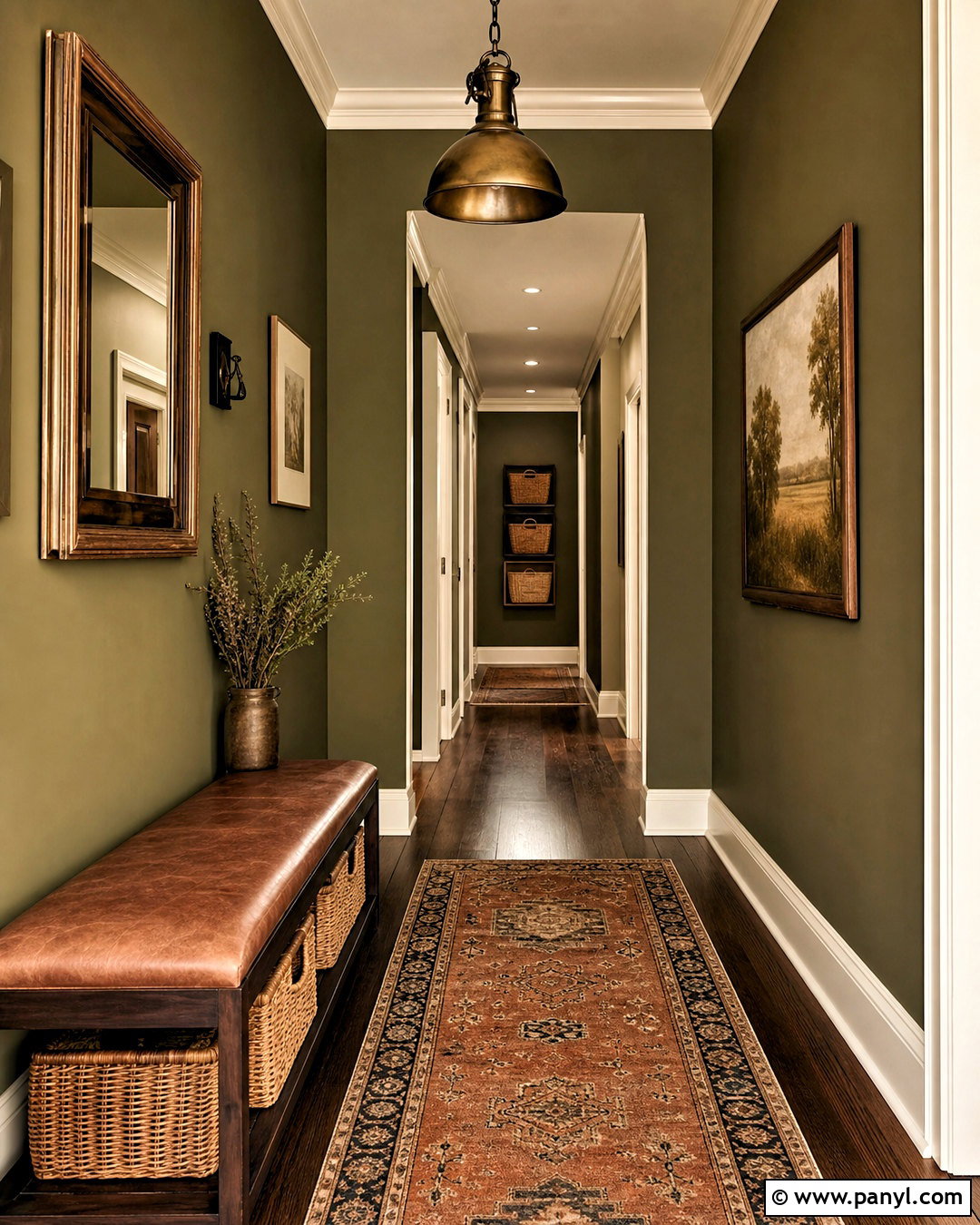
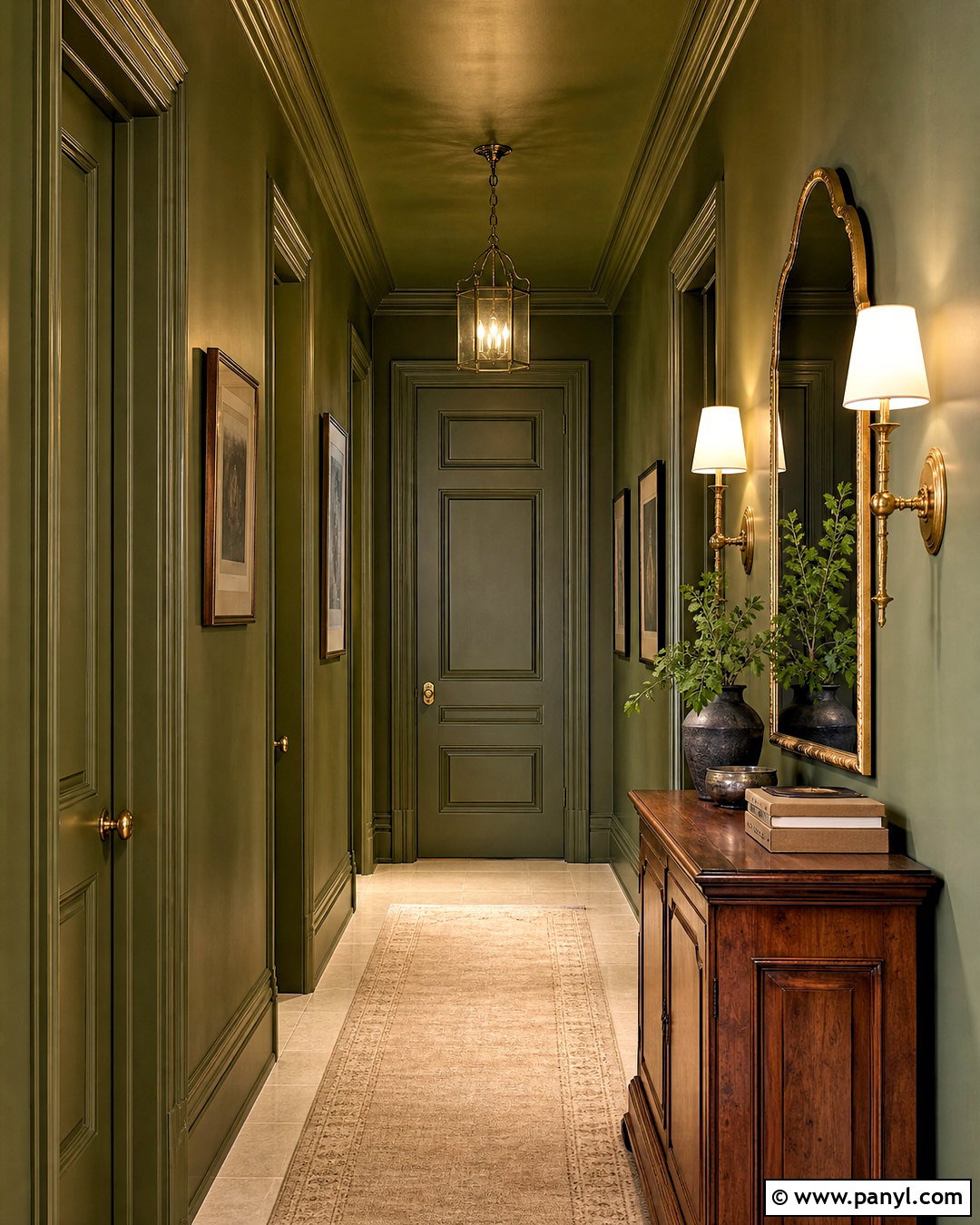
Earthy olive green brings richness to a hallway while coordinating naturally with wood, stone, leather, and woven textures. Apply a medium olive shade to the walls and choose warm cream for the ceiling and architectural trim. Dark oak flooring or reclaimed-look wood planks reinforce the grounded character. Add a flat-woven runner with rust, tan, and faded black details, then position a narrow leather-topped bench along one wall. An aged brass pendant, wood-framed mirror, and small landscape paintings complete the traditional yet relaxed arrangement. Paint interior doors cream if the hallway is narrow, or olive if the entrance receives plenty of daylight. This complete scheme works beautifully in craftsman, farmhouse, and updated traditional homes because every material supports the natural, understated palette.
10. Butter Yellow Hallway
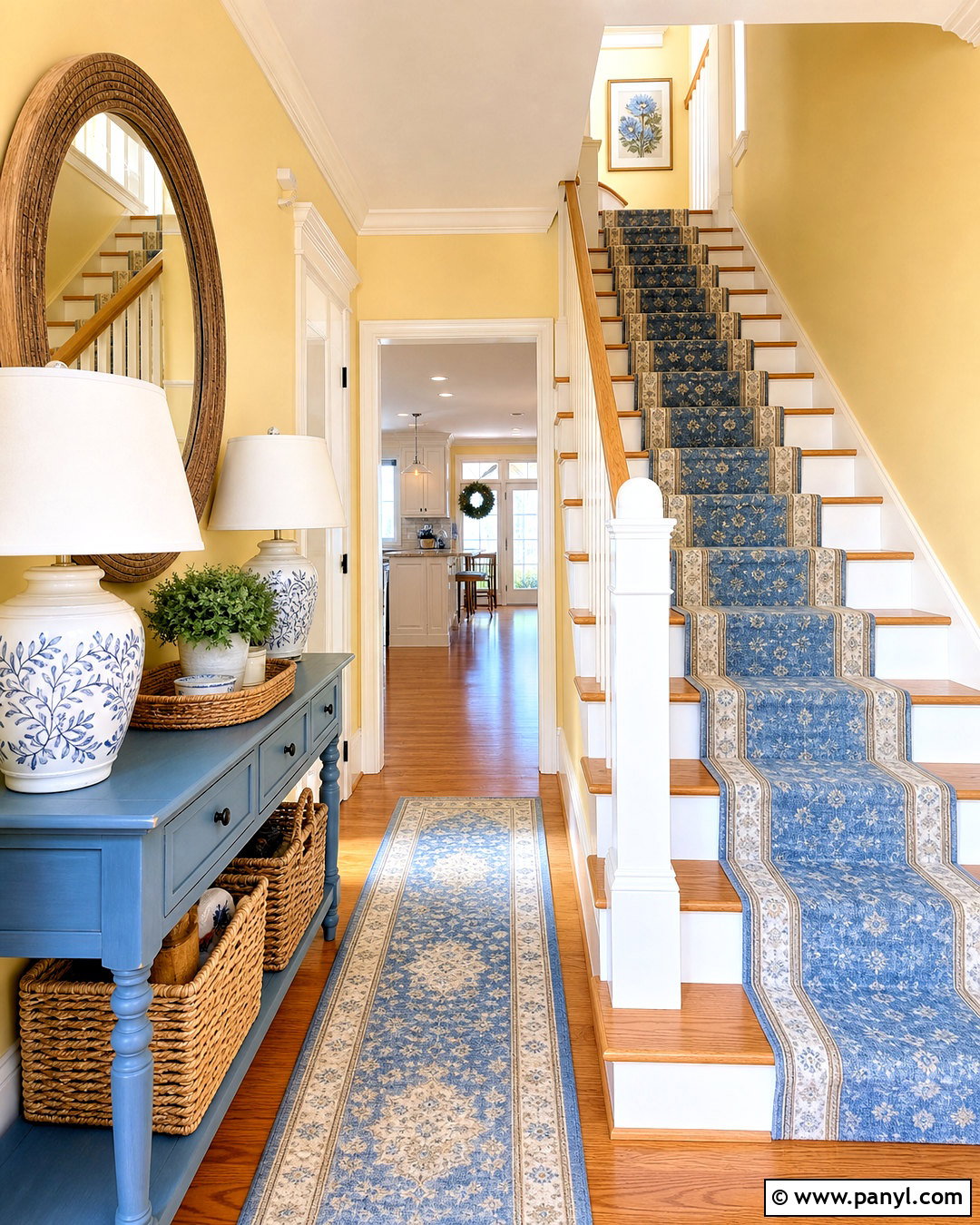
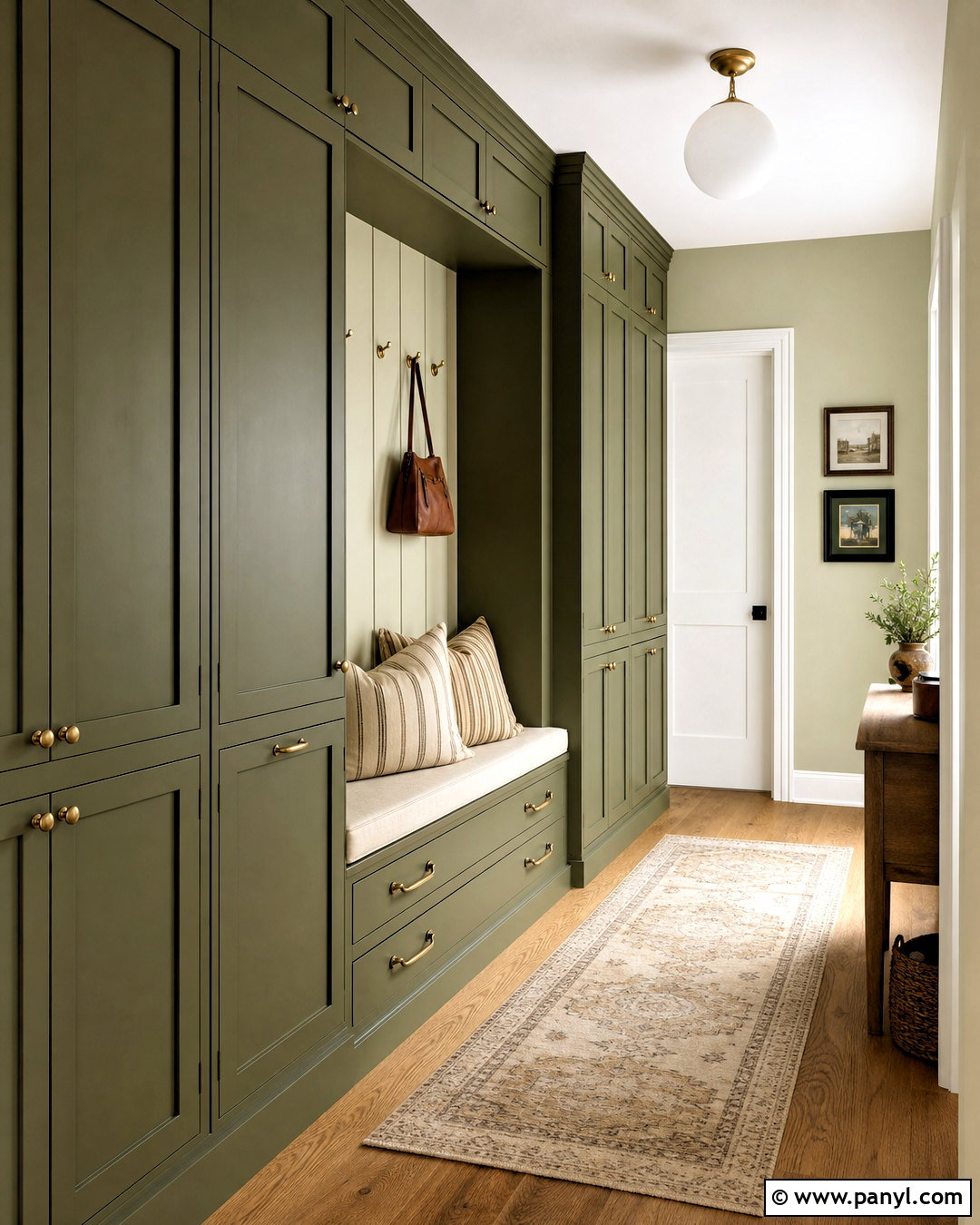
A muted butter yellow can brighten a hallway while feeling gentler than a vivid primary shade. Use it across the walls and balance it with warm white trim, ceiling paint, and interior doors. Honey-toned wood flooring supports the sunny palette, while a blue-and-cream runner adds cool contrast. Choose a narrow painted console in soft blue or weathered white, paired with a round oak mirror. Ceramic table lamps, woven baskets, and simple floral artwork create a comfortable cottage influence. If there is a staircase, keep the risers white and use natural wood on the treads and handrail. The yellow should appear creamy in daylight rather than neon. This produces a cheerful entrance that remains coordinated, practical, and easy to live with throughout the year.
11. Black And White Hallway
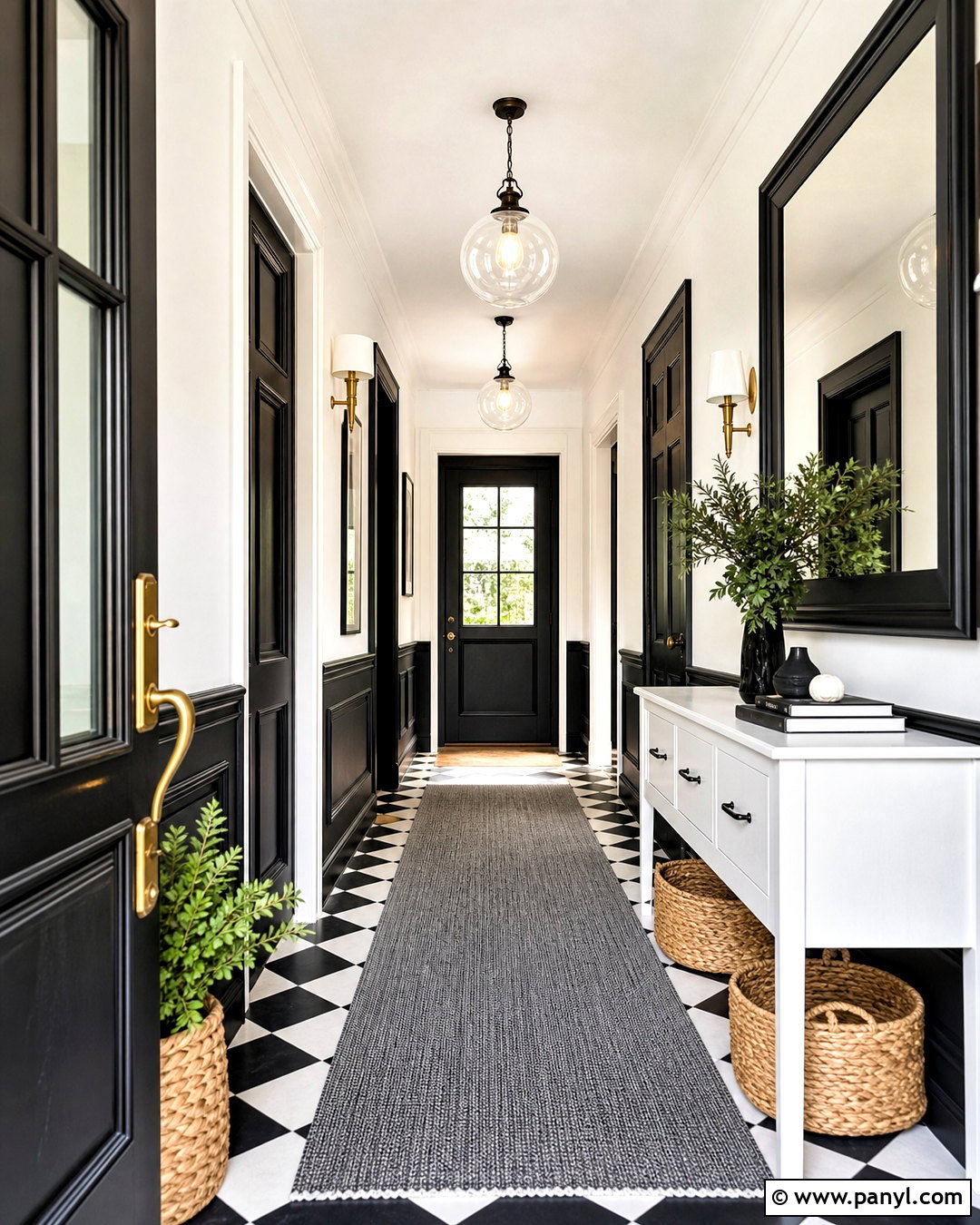
Black and white gives a hallway crisp structure and makes architectural details feel intentional. Paint the upper walls and ceiling a clean soft white, then introduce black through lower wall paneling, doors, or a durable painted bench. A black-and-white checkerboard floor creates a classic foundation, while a narrow gray runner can soften the pattern in a long corridor. Choose a white console with black hardware and an oversized black-framed mirror. Clear globe pendants and brushed brass sconces add warmth without weakening the contrast. Keep artwork graphic but simple, using black frames and generous white mats. Natural wood baskets and a small green plant prevent the space from feeling severe. The finished hallway suits traditional, modern, and urban interiors equally well.
12. Teal And Warm White Hallway
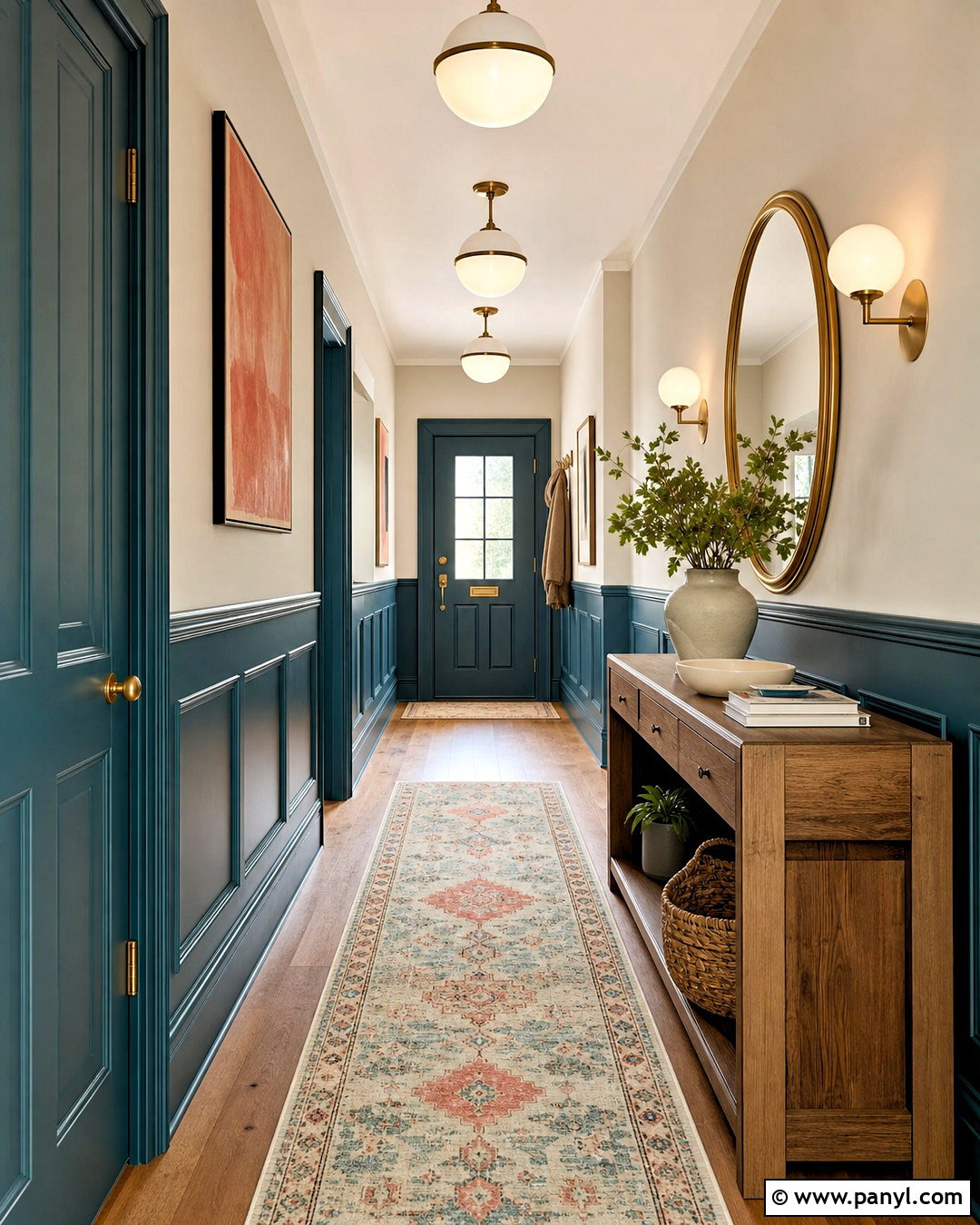
Rich teal introduces noticeable color while remaining calmer than bright turquoise. Use teal on the lower half of the walls, including paneling if available, and paint the upper walls warm white. This two-tone arrangement adds character while keeping the space visually open. Repeat the white on the ceiling and use teal on selected interior doors for continuity. Medium oak flooring and a patterned runner in cream, teal, and muted coral create a balanced base. Add a slim oak console, a brass-framed mirror, and opal glass lighting. Simple abstract artwork can echo the coral accent without making the hallway overly colorful. The darker lower section is also practical in a busy family entrance, especially when finished in washable, scuff-resistant paint designed for high-traffic areas.
13. Taupe And Dark Brown Hallway
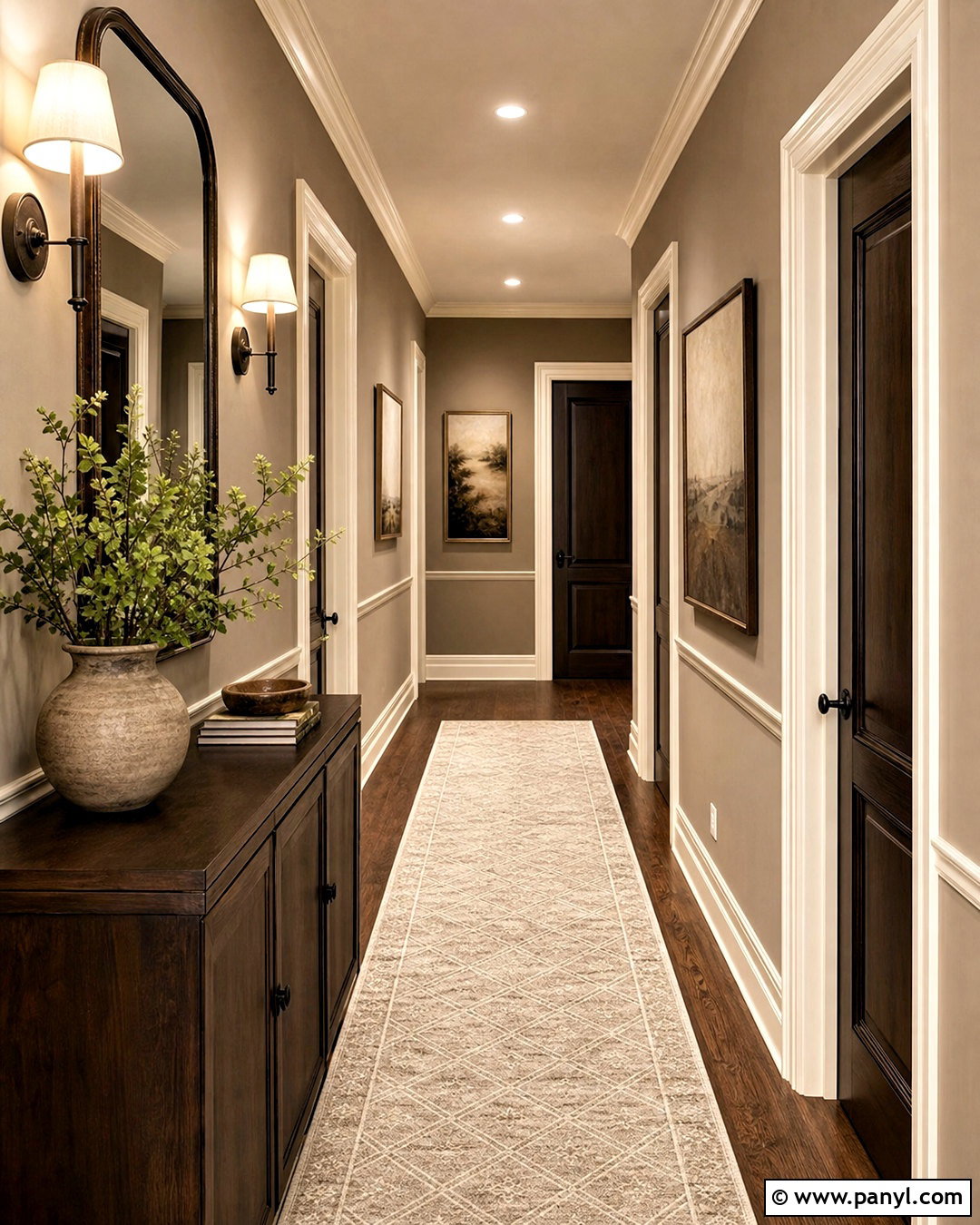
Taupe walls create a quietly elegant hallway that works particularly well with dark furniture and traditional details. Select a warm mushroom taupe, then paint the ceiling and decorative trim a soft cream. Dark brown doors establish contrast without the intensity of black. Continue the palette with walnut flooring or a medium brown runner featuring a subtle diamond pattern. A narrow dark wood console, bronze-framed mirror, and shaded wall sconces provide a refined arrangement. Add pottery in cream and brown, along with landscape artwork containing muted green and blue. If the space includes stairs, use taupe on the walls, cream on the spindles, and dark wood on the railing. The resulting hallway feels cohesive, comfortable, and connected to both warm and cool adjoining rooms.
14. Lavender Gray Hallway
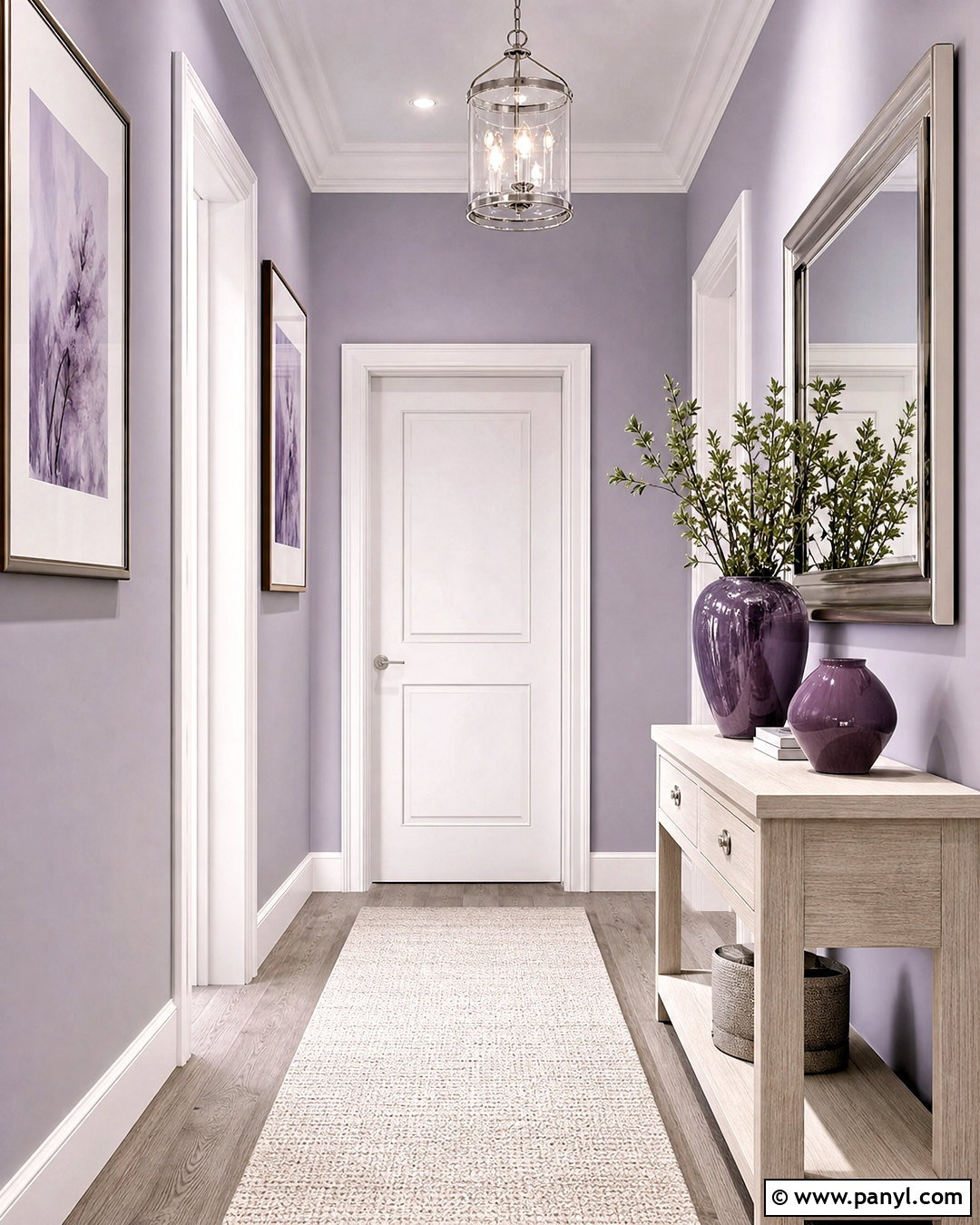
Lavender gray introduces subtle color without making the hallway feel overly feminine or decorative. Choose a pale, smoky purple with a noticeable gray base, then combine it with crisp white trim and a bright white ceiling. Light gray oak flooring supports the cooler palette, while a cream runner adds warmth and softness. Furnish the space with a slim white oak console and a polished nickel mirror. A modern glass pendant keeps sightlines open in a narrow passage. Bring in deeper plum through one ceramic vase or a few small framed prints rather than large accessories. Soft linen textures and pale wood keep the complete look relaxed. This scheme is especially effective in hallways adjoining gray, blue, blush, or neutral bedrooms.
15. Forest Green Hallway
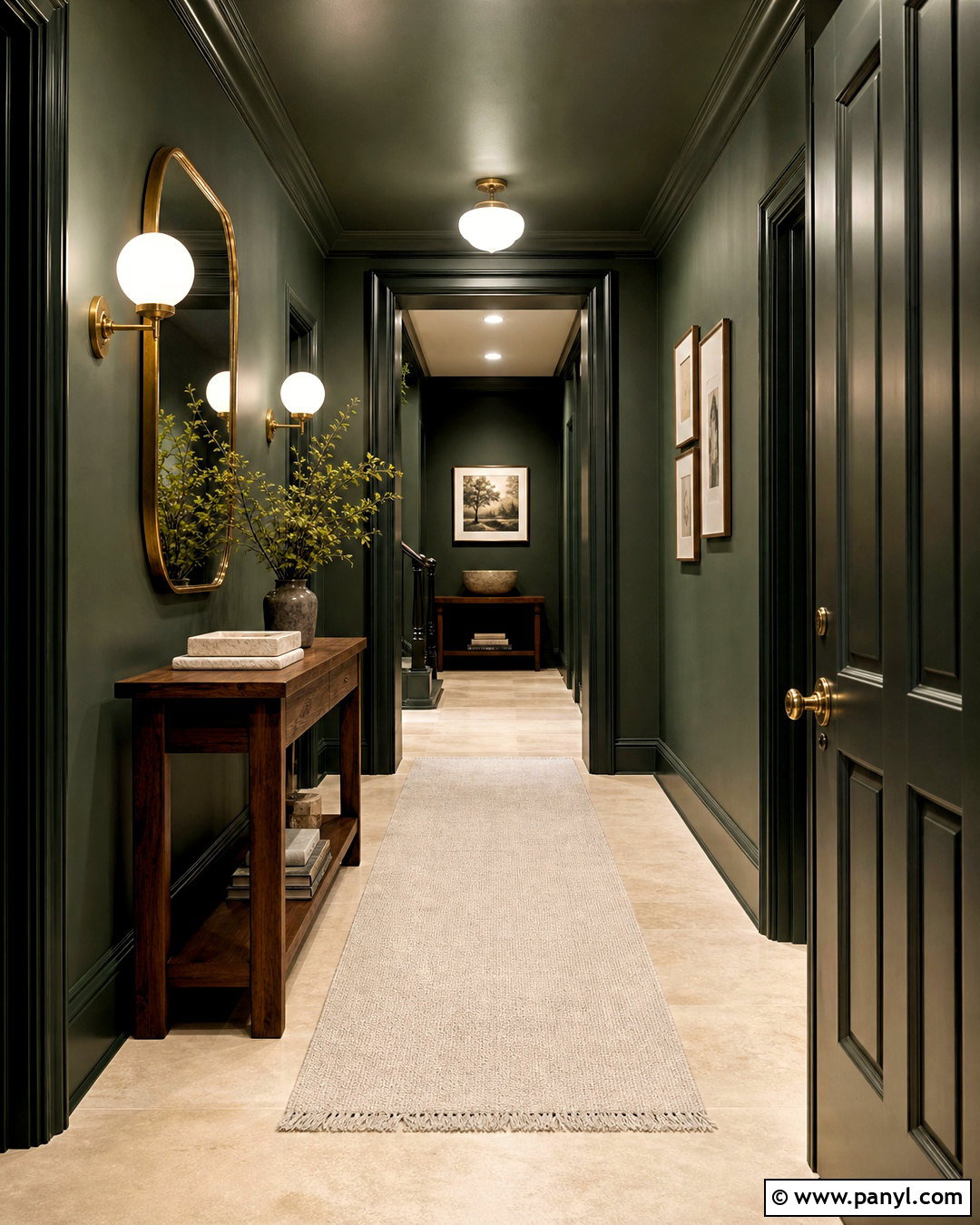
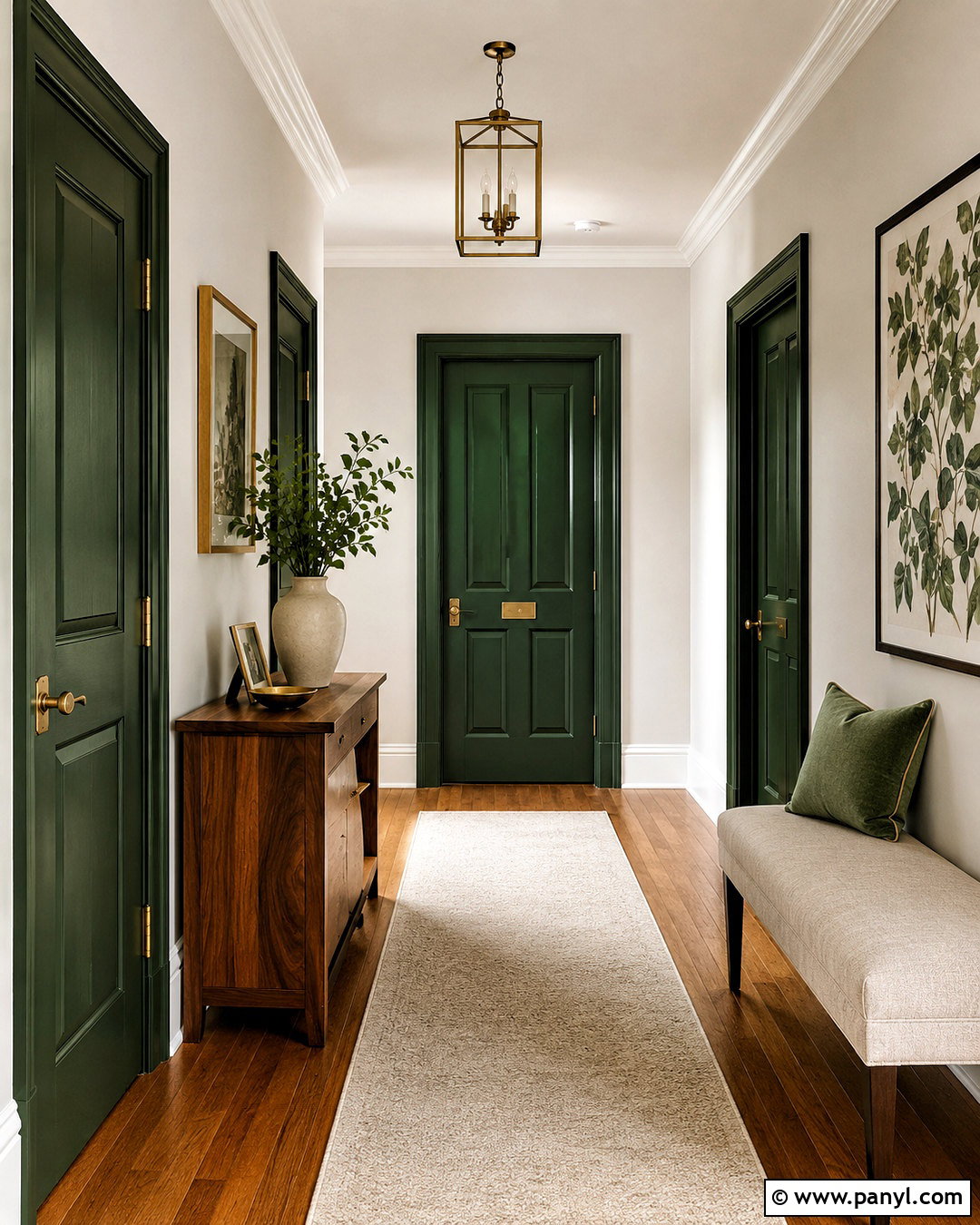
For a hallway with dramatic impact, cover the walls, doors, trim, and ceiling in a deep forest green. This color-drenched approach reduces visual interruptions and lets moldings blend into one continuous envelope. Balance the saturation with pale limestone flooring or light oak boards and a cream wool runner. Add a narrow console in warm walnut, an aged brass mirror, and several bright globe sconces to keep the space functional. Artwork with wide ivory mats creates breathing room against the dark background. Use only a few decorative objects, such as a stone bowl and a simple lamp, so the rich color remains the main feature. The finished look feels immersive and polished, making it ideal for a compact entrance that needs a memorable identity.
16. Cream And Tan Hallway
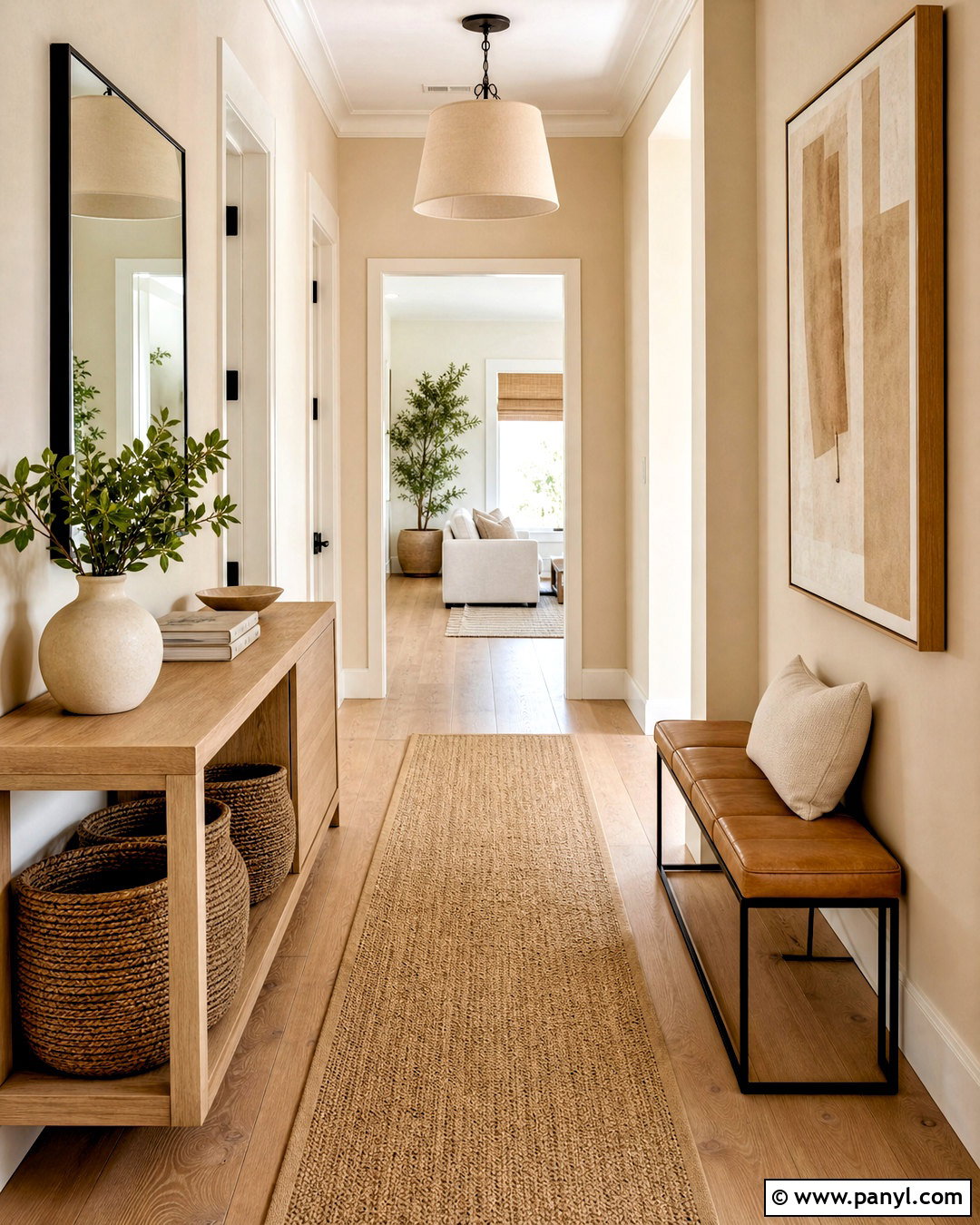
Cream and tan create a layered neutral hallway that feels warmer and more dimensional than an all-white design. Paint the walls a light creamy beige, then use soft white on the ceiling and trim. Introduce tan through a sisal runner, woven baskets, and a leather bench cushion. White oak flooring and a pale oak console keep the scheme light, while black hardware adds definition around doors and storage. Hang a large rectangular mirror to reflect the brightest part of the space. A linen pendant and ceramic table lamp provide soft layers of illumination. Keep artwork minimal, choosing abstract pieces in cream, camel, and charcoal. This practical palette is forgiving in a busy entrance and easily connects with modern organic, coastal, farmhouse, or transitional rooms.
17. Blue And White Hallway
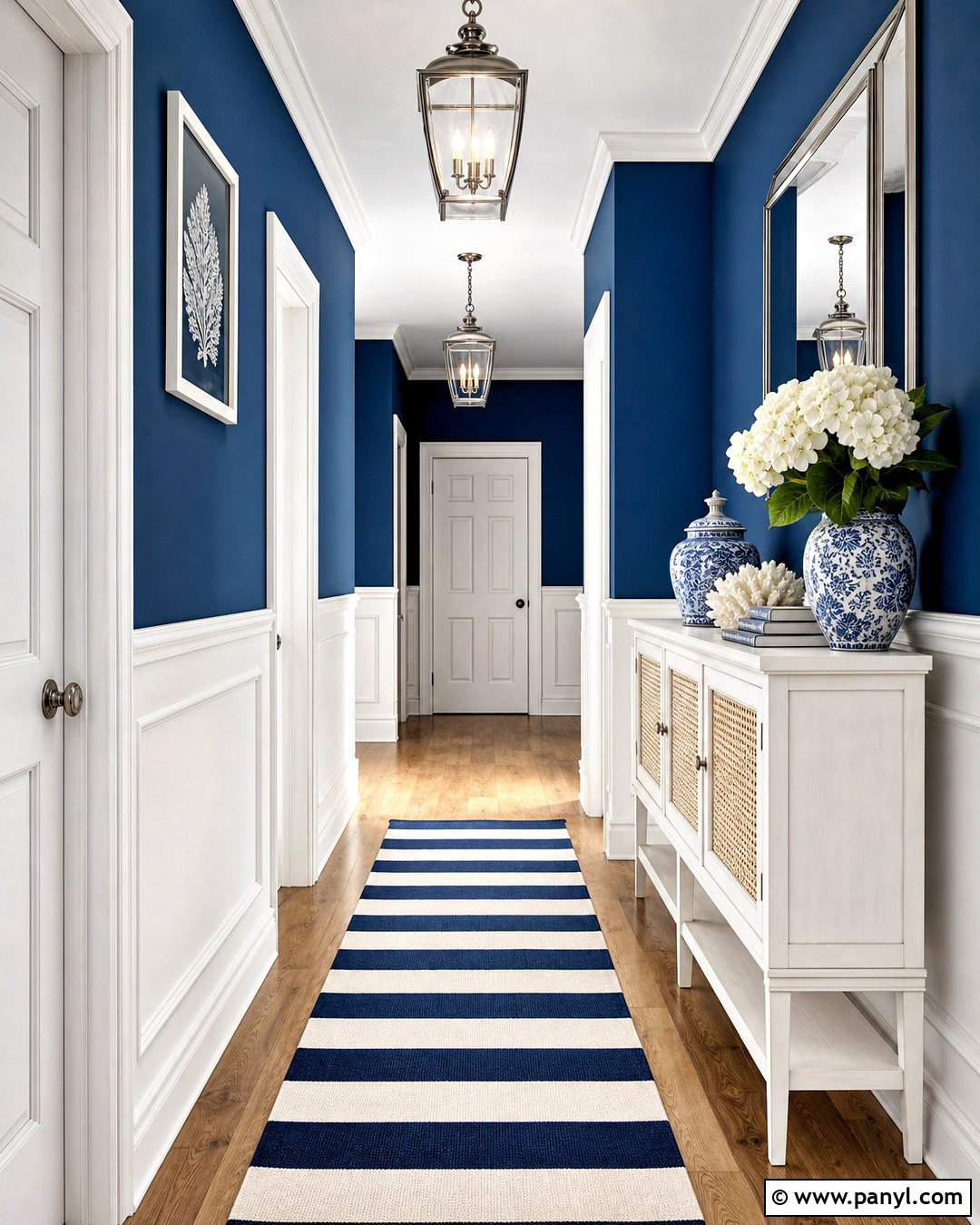
Blue and white can create a clean, classic hallway without relying on a nautical theme. Paint the walls a clear mid-tone blue, then use fresh white on the trim, doors, and ceiling. If the hallway includes paneling, apply blue above it and white below to keep the lower area bright. Warm oak flooring prevents the combination from feeling cold. Add a striped runner in navy, denim, and ivory, plus a white console with natural cane-front drawers. A polished nickel lantern and silver-framed mirror support the crisp finish. Decorate with blue-and-white ceramics and a few framed architectural prints. The complete scheme feels orderly and welcoming, providing a strong visual bridge between white kitchens, neutral living areas, and blue bedrooms.
18. Soft Peach Hallway
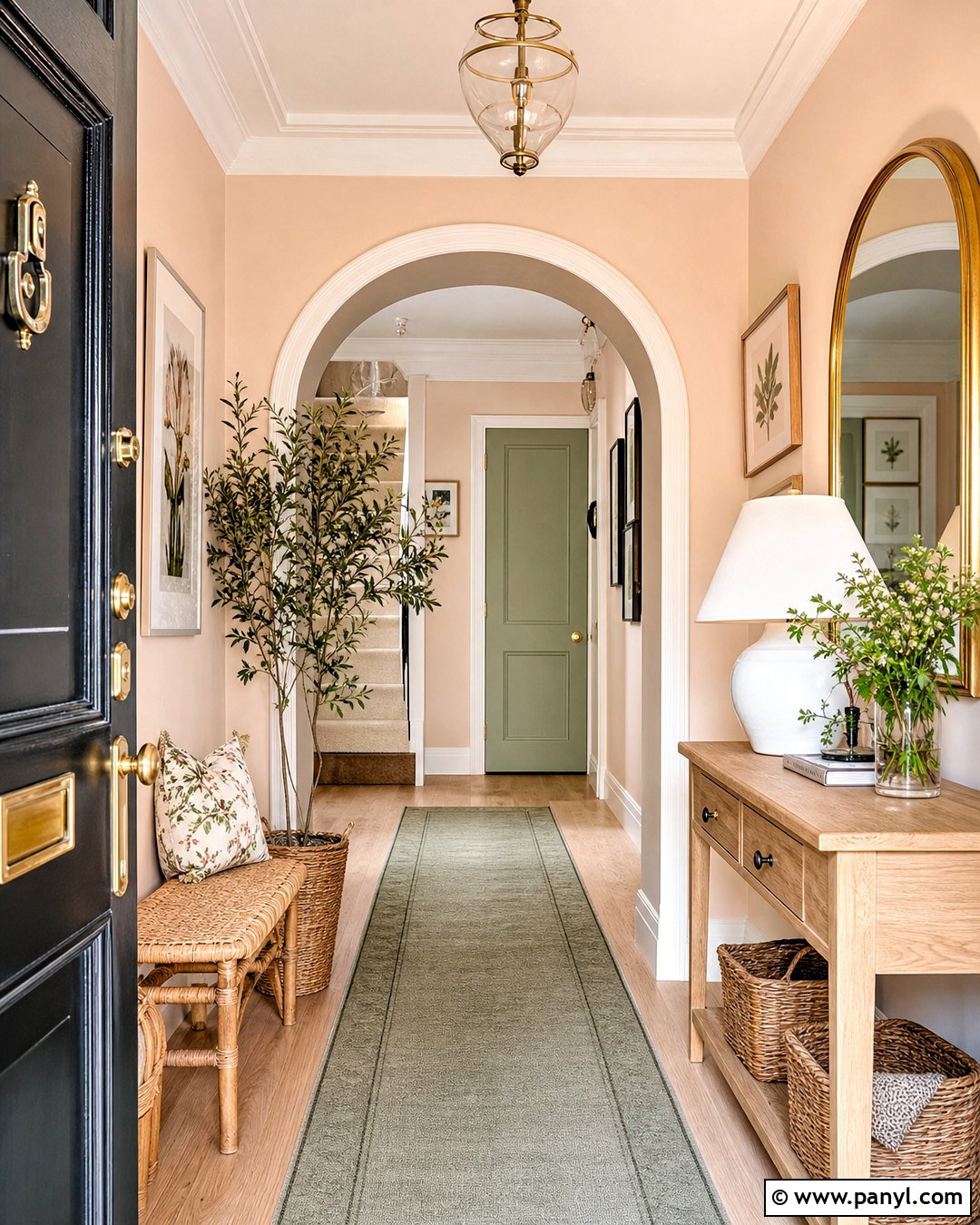
Soft peach brings warmth and energy to a hallway while remaining easier to decorate around than orange. Choose a pale peach with a muted beige undertone and pair it with creamy white trim and ceiling paint. Light oak flooring enhances the warmth, while a sage green runner introduces an earthy counterpoint. Place a slim natural wood console against one wall and hang an arched brass mirror above it. Add a white ceramic lamp, woven tray, and small botanical prints to complete the arrangement. Sage-painted interior doors can create a playful accent, although cream doors offer a quieter result. This palette is especially attractive in entrances with morning light, where peach walls can appear fresh and softly luminous rather than heavily saturated.
19. Burgundy And Pink Hallway
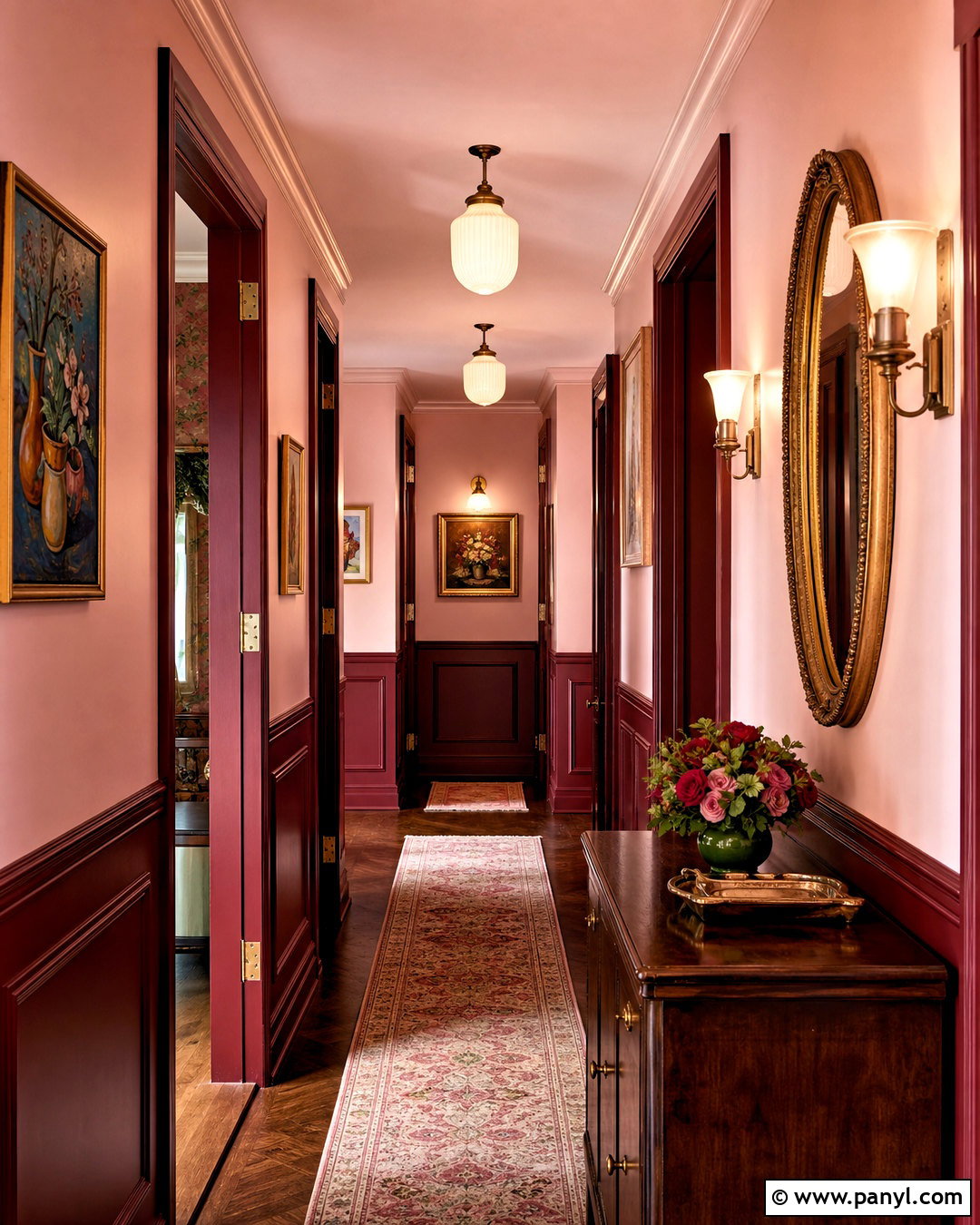
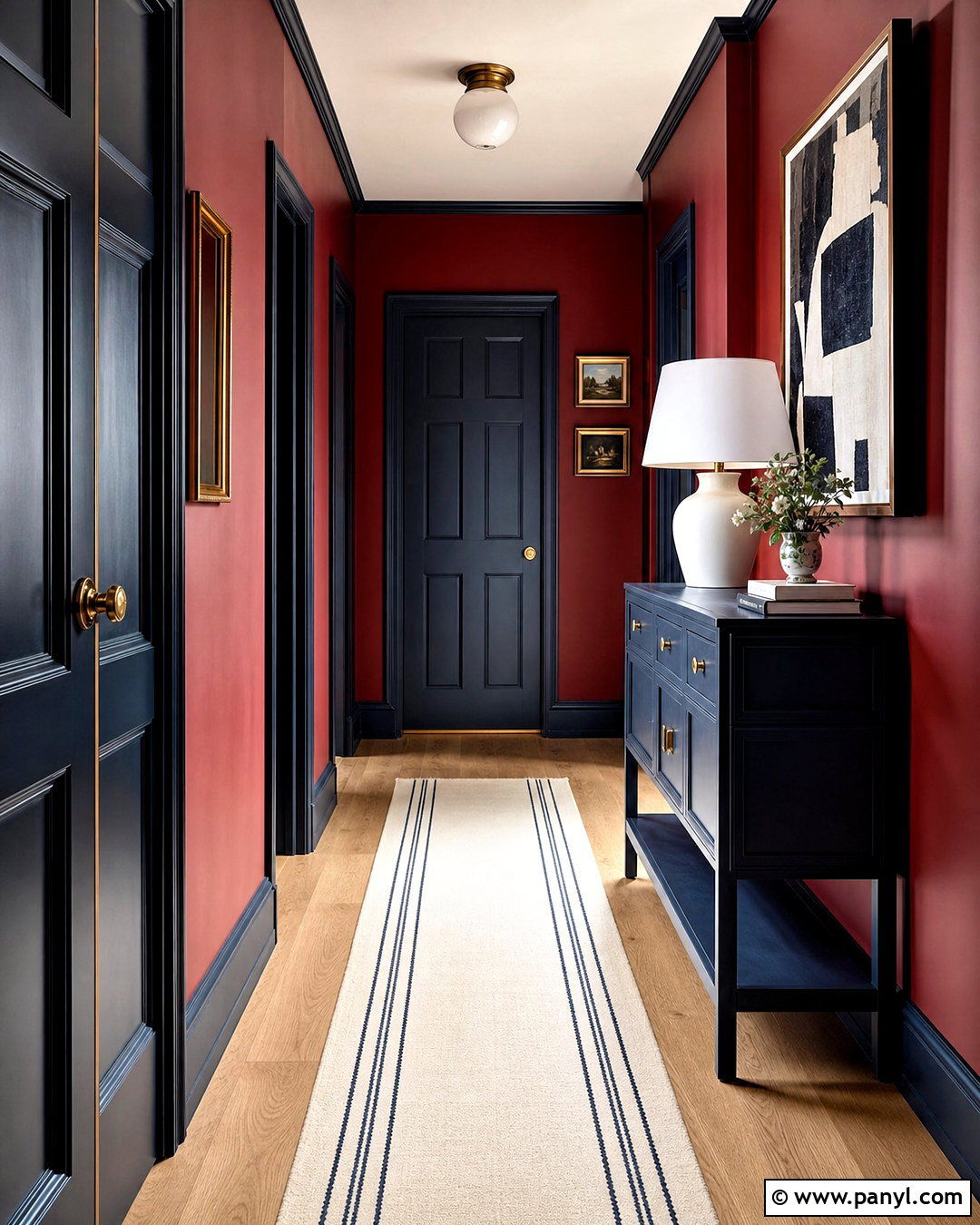
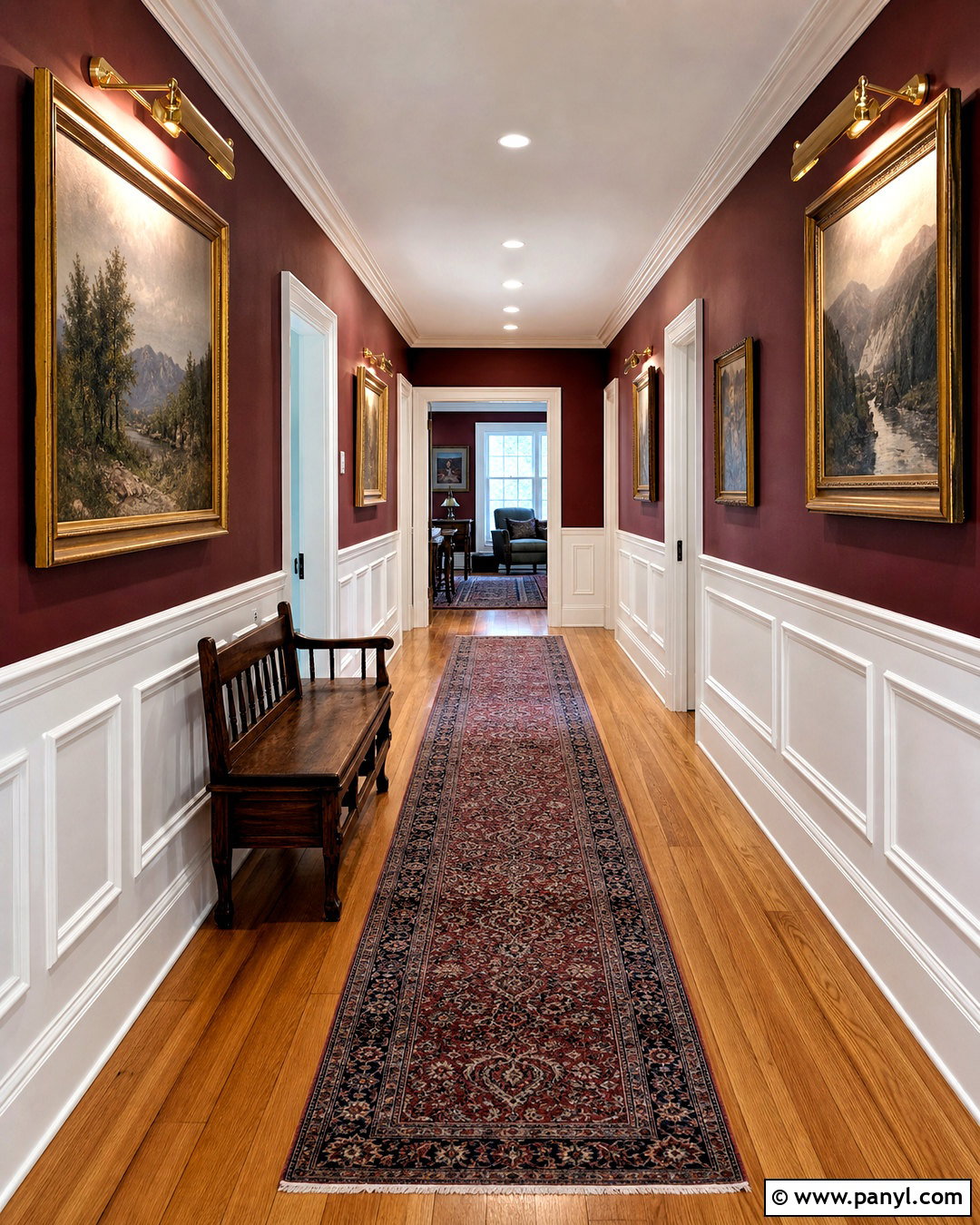
A burgundy and pink palette creates a bold hallway with depth, warmth, and a slightly vintage character. Paint the lower wall paneling a dark wine-red and use dusty pink above it. Keep the ceiling pale pink or warm white so the transition feels intentional. Dark-stained wood flooring and a muted floral runner reinforce the rich palette. Choose a narrow mahogany console, an antique brass mirror, and cream glass sconces. Artwork can introduce small touches of olive, blue, and ochre to loosen the two-color combination. Paint the doors burgundy for a dramatic finish, or use warm white when the corridor is especially narrow. The complete design feels expressive but balanced because the darker color remains grounded along the lower portion of the walls.
20. Gray Blue Color-Drenched Hallway
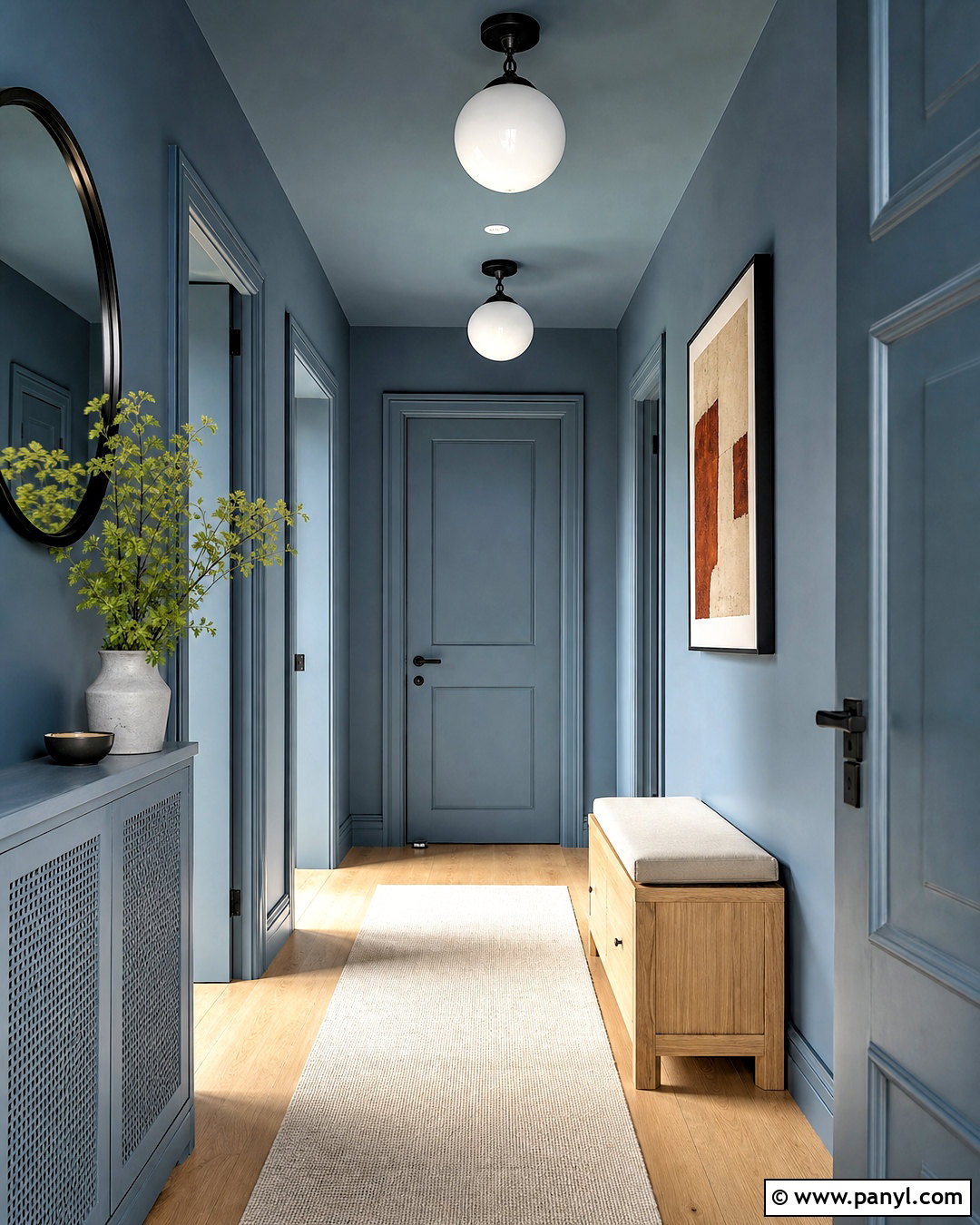
A gray-blue color-drenched hallway creates a seamless backdrop that feels both contemporary and restful. Choose a medium slate blue with softened gray undertones and apply it to the walls, ceiling, trim, doors, and radiator covers. Using one color across every surface reduces visual clutter and emphasizes the hallway’s shape. Bring in contrast through pale oak flooring, a cream runner, and a light wood bench with hidden shoe storage. Matte black handles and a black-framed mirror give the arrangement definition. Add opal globe ceiling lights to distribute clear, even illumination, then hang simple abstract artwork in ivory and rust. This complete scheme is particularly effective in a hallway with many doors because the matching paint makes them visually recede.
Conclusion:
The right hallway palette should work with the space’s light, proportions, flooring, and connection to adjoining rooms. These **20 hallway colour schemes** demonstrate that a practical passage can still have a strong design identity. Warm whites, greige, and cream maximize flexibility, while sage, pale blue, and peach provide gentle color. Navy, forest green, charcoal, and burgundy create greater drama. Complete the chosen palette with coordinated doors, trim, lighting, flooring, storage, and artwork rather than treating wall paint as an isolated decision. Always test large color samples in the actual hallway before painting. Most importantly, choose a scheme that supports daily routines while giving guests a welcoming first impression of your home.

Related Ideas and Inspiration:
Leave a Reply