
Olive green brings warmth, depth, and natural character to a hallway without feeling overly bright or trendy. Depending on the shade and surrounding finishes, it can support traditional, modern, rustic, farmhouse, or mid-century decor. The color works especially well with wood, stone, creamy white, black, and warm metal finishes. () Before painting, test several large samples because natural light, bulb temperature, and nearby flooring can change how olive appears. Then build a complete scheme with practical storage, layered lighting, durable flooring, and carefully scaled decor. Whether you want a dramatic entrance or a light, welcoming passage, the following 20 olive green hallway ideas offer complete looks you can adapt to your home.
1. Olive Green Hallway With White Trim
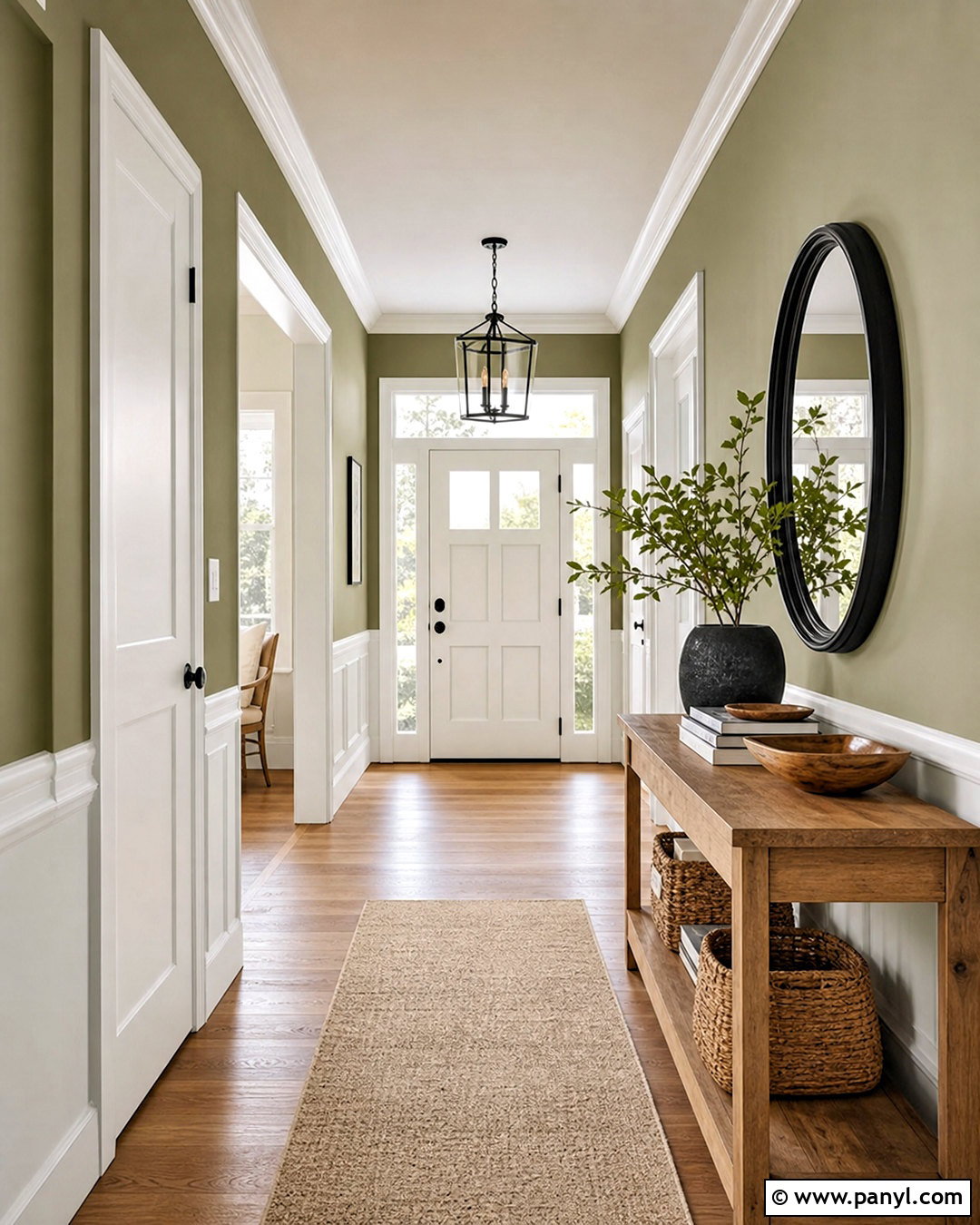
Create a fresh, balanced entrance by combining medium olive green walls with warm white trim. Use the white on baseboards, door casings, interior doors, and the ceiling to give the darker wall color a clean boundary. Light oak flooring or pale stone-look tile will keep the hallway open and welcoming. Add a slim natural wood console with rounded corners so traffic can move comfortably. Above it, hang a large black-framed mirror to reflect light along the passage. A cream runner with a subtle olive border will connect the palette without introducing too much pattern. Finish the look with a simple ceiling lantern, woven storage baskets, and one leafy plant in a matte white pot.
2. Dark Olive Green Hallway Color Drenching
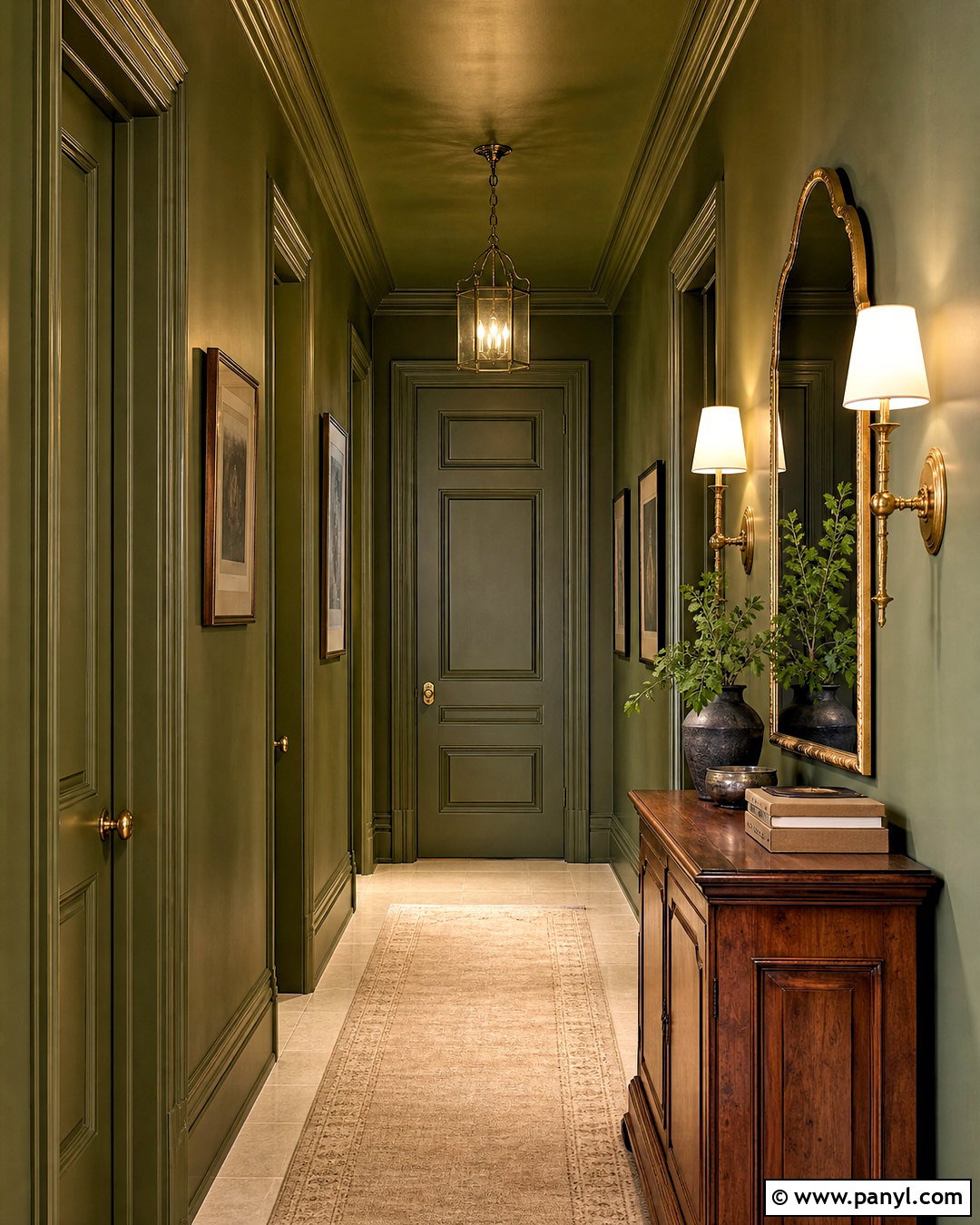
For a dramatic and enveloping look, apply deep olive green to the walls, doors, trim, and ceiling. Vary the paint sheen rather than the color. Choose washable matte paint for the walls and satin for doors and woodwork, giving the architectural details quiet definition. Balance the dark finish with pale limestone flooring and a narrow cream runner. A walnut console, aged brass wall sconces, and a large vintage-style mirror will introduce warmth and reflected light. Keep decorative objects limited to a stone bowl, a small lamp, and one framed print. This complete color-drenched hallway works especially well where the space connects several rooms, because the unified treatment reduces visual clutter and makes mismatched doors feel intentional.
3. Olive Green Hallway With Wood Paneling
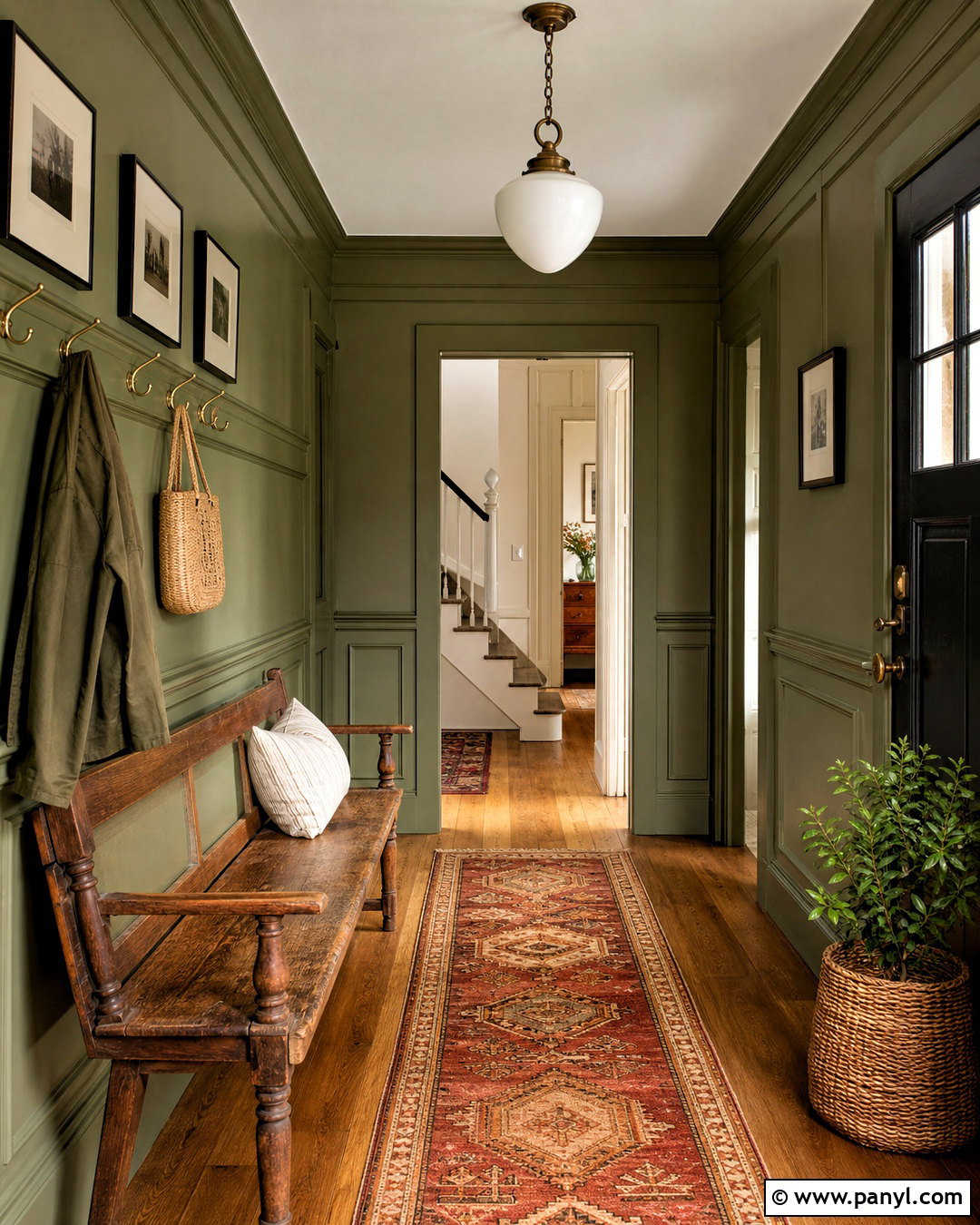
Wood paneling gives olive green a structured, traditional appearance while protecting busy hallway walls. Install simple rectangular molding from the baseboard to approximately two-thirds of the wall height, then paint the panels and upper wall in the same muted olive shade. Use warm white above only if you want a lighter ceiling transition. Medium oak flooring, an antique oak bench, and a vintage runner in rust, cream, and faded green will create a layered heritage palette. Add a row of brass hooks for coats and a narrow shelf for keys. Black-framed family photographs can follow the panel lines without looking crowded. Complete the space with an opal glass pendant and a small table lamp for softer evening lighting.
4. Olive Green Hallway With Botanical Wallpaper
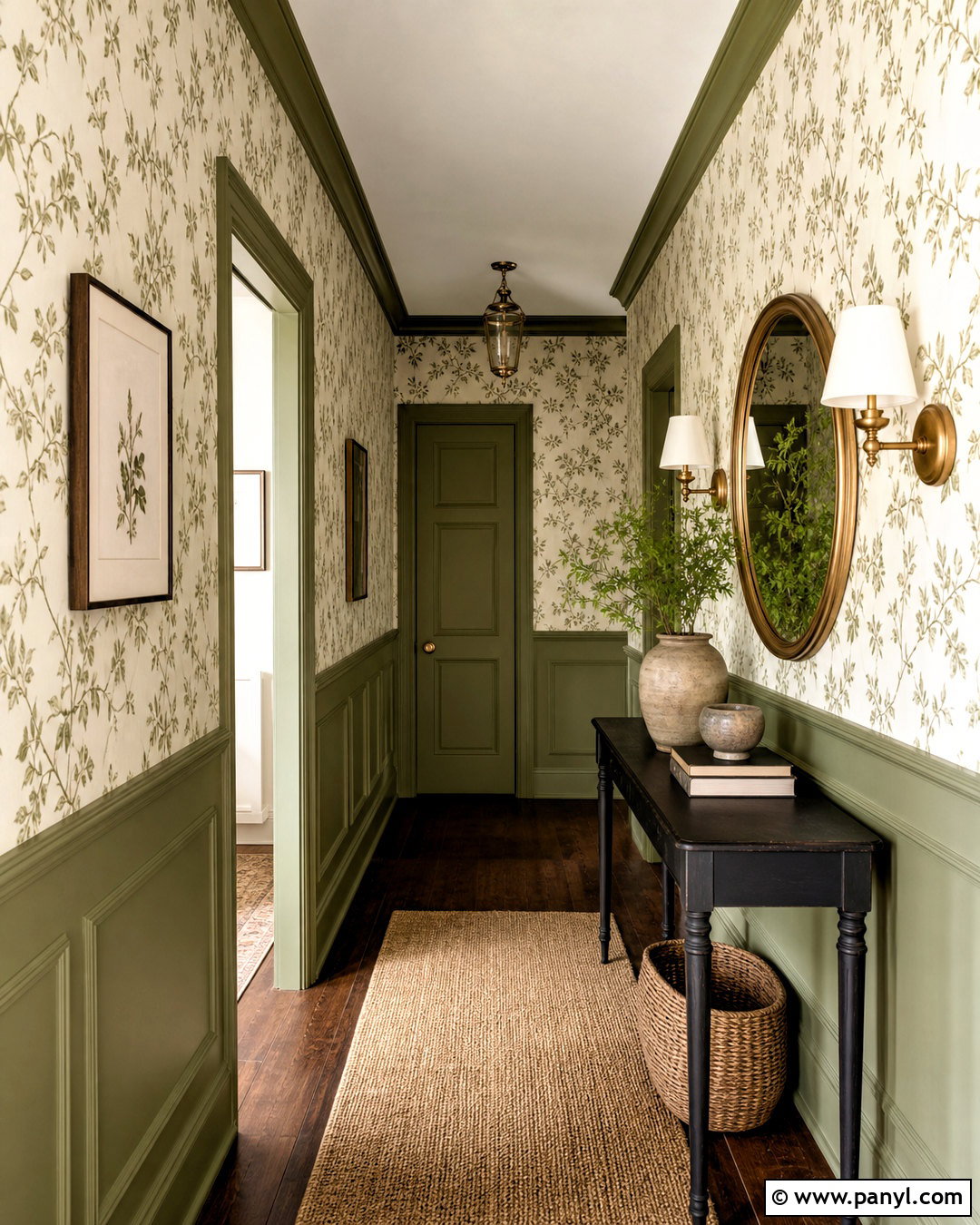
Bring pattern into the hallway with botanical wallpaper featuring olive leaves, muted cream flowers, and touches of soft brown. Place the wallpaper above painted olive green wainscoting so the pattern feels grounded rather than overwhelming. Botanical motifs can add noticeable color, texture, and character to a traditional passage. () Choose dark-stained wood flooring and a long natural jute runner for warmth and durability. A narrow black console will give the organic pattern a crisp modern edge, while an oval brass mirror will brighten the wall. Keep accessories simple with two cream ceramic vessels and a lidded basket underneath. Finish with aged brass sconces positioned between wallpaper panels, ensuring the pattern and painted details remain visible throughout the entire hallway.
5. Olive Green Hallway With Black Accents
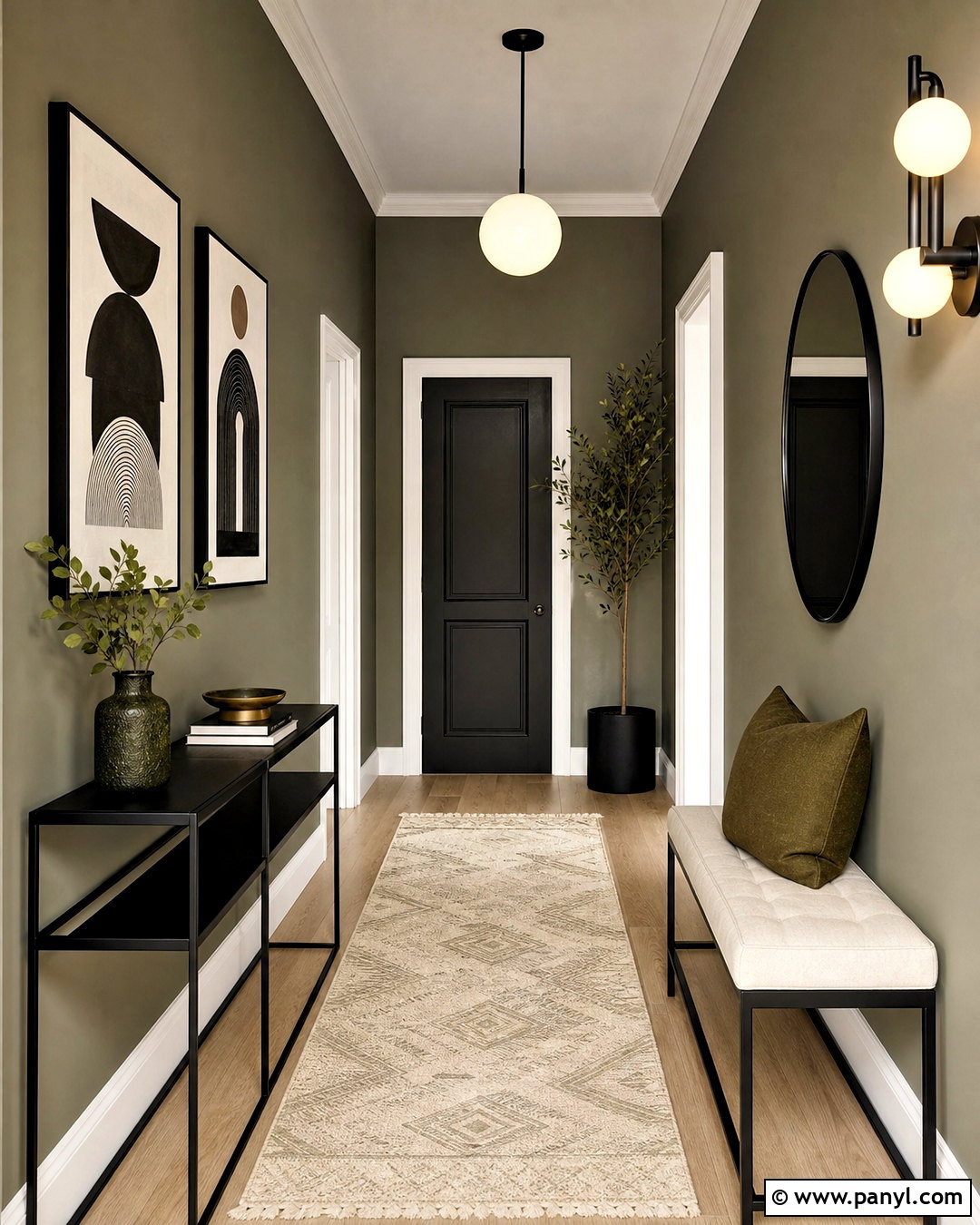
Black accents can make olive green feel sharper and more contemporary. Paint the hallway walls a medium, slightly gray olive, then introduce matte black through door hardware, picture frames, lighting, and a slim metal console. Keep the ceiling and baseboards soft white to prevent the contrast from becoming heavy. Pale oak flooring will add natural warmth, while a black-and-cream geometric runner creates a clear visual path. Arrange three large abstract prints in matching frames instead of using many small decorations. Under the artwork, place a narrow bench with an oatmeal-colored cushion and black legs. A modern globe pendant and one sculptural wall sconce will provide layered illumination. The finished hallway feels graphic and polished but still comfortable enough for an everyday home.
6. Olive Green Hallway With Brass Decor
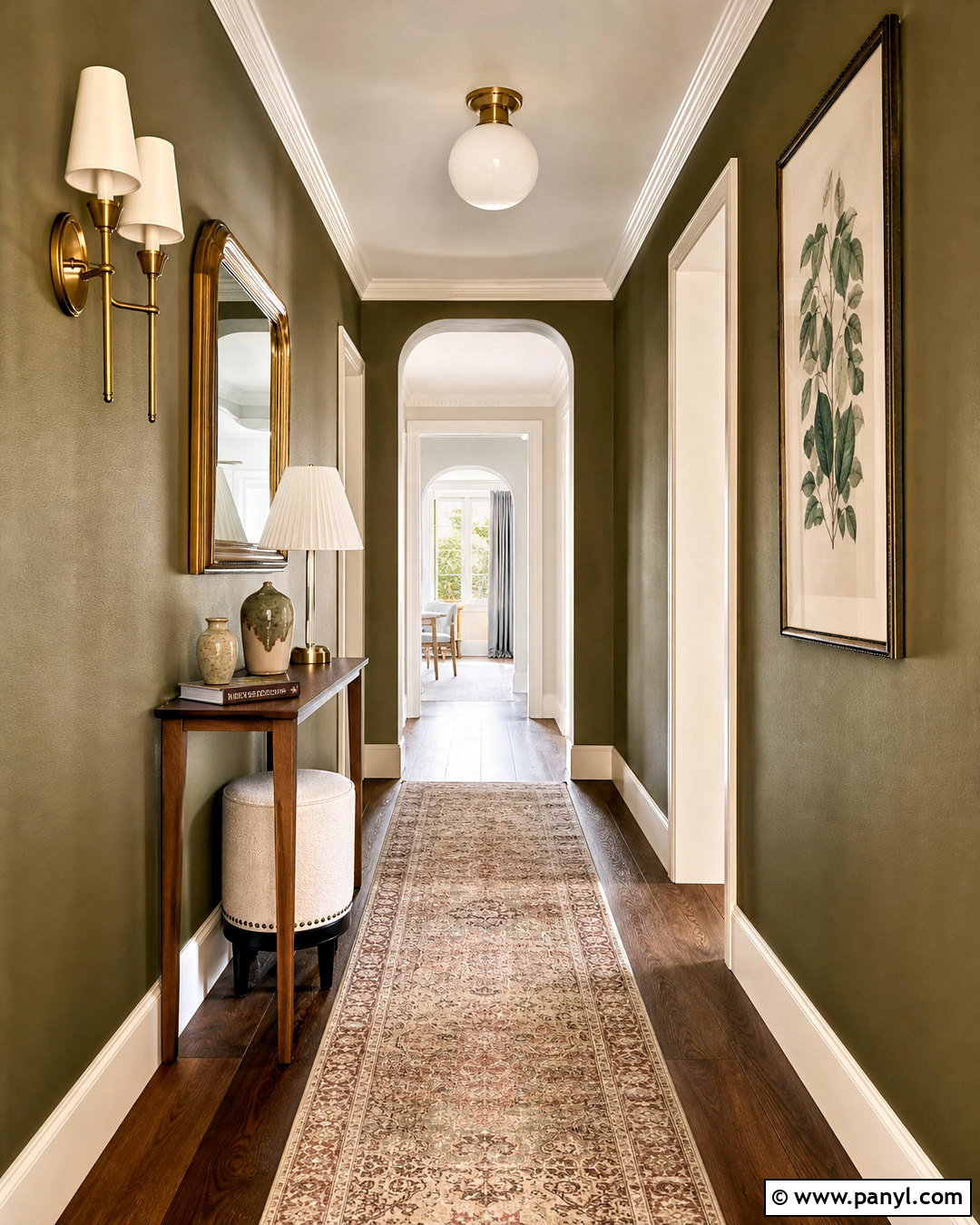
Warm brass brings out the golden undertones commonly found in olive green. Start with rich olive walls and creamy white ceilings, then repeat aged brass in a ceiling lantern, wall sconces, hooks, and mirror frame. Avoid mixing too many shiny finishes. A softly brushed or antique surface will feel more relaxed and timeless. Choose dark walnut flooring and a faded Persian-style runner containing olive, beige, and muted terracotta. Place a slender walnut console beneath the mirror, leaving enough open space for comfortable movement. Style it with a pleated cream lamp, a shallow wooden tray, and a small arrangement of greenery. An upholstered stool tucked underneath provides a practical place for removing shoes while preserving the elegant, uncluttered layout.
7. Olive Green Hallway With Natural Wood
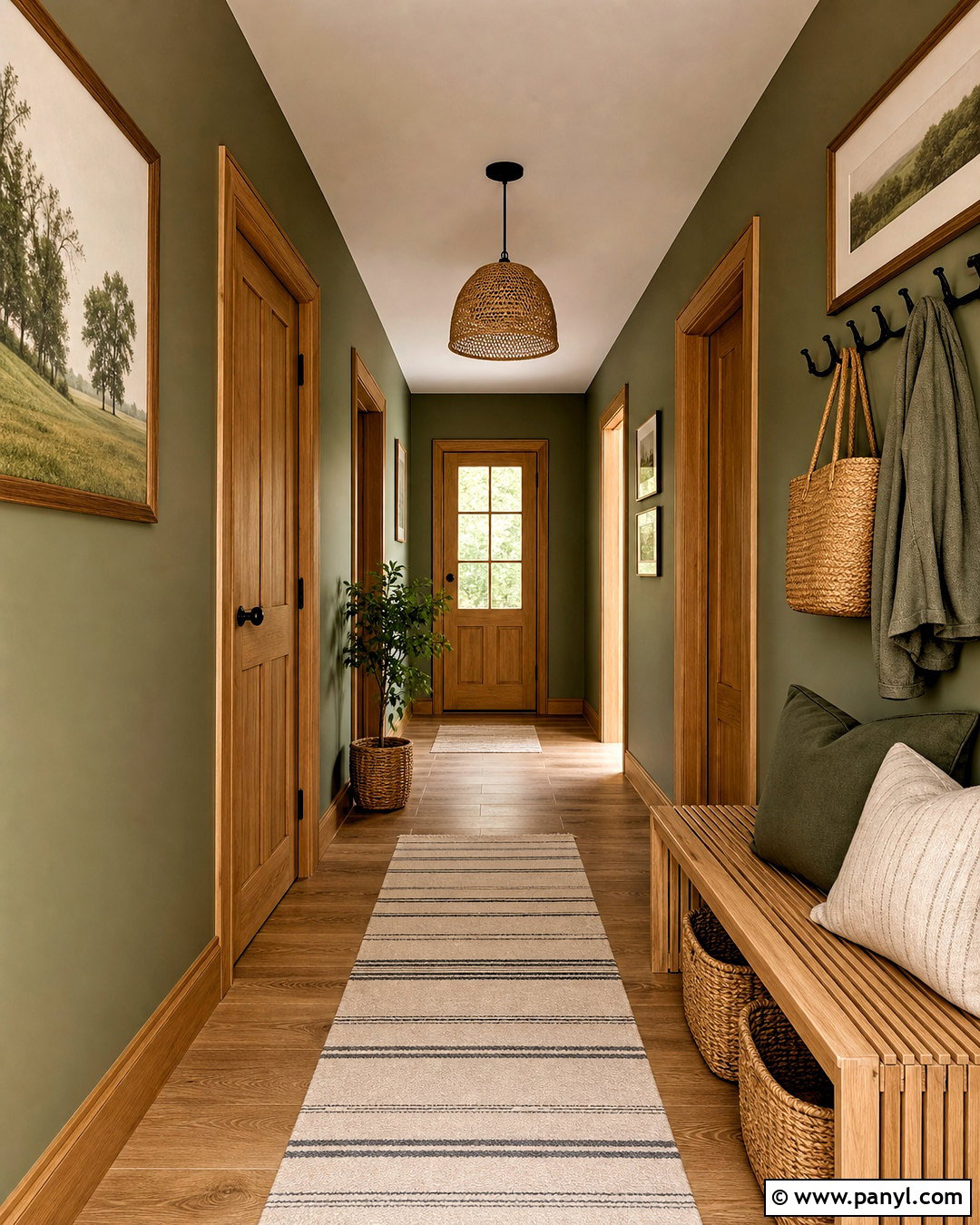
Imagine entering a hallway where earthy color and warm timber immediately make the home feel settled. Cover the walls in a soft olive green and retain natural oak on the doors, staircase, and flooring. The visible grain prevents the scheme from looking flat and provides a welcoming contrast to the painted surfaces. Choose a simple oak bench with a slatted shelf for shoes, then add woven baskets underneath for concealed storage. A cream wool runner with thin green stripes will soften footsteps without hiding the floor completely. Hang landscape artwork in oak frames and install a woven pendant overhead. Black hooks and a small black umbrella stand add just enough definition. Keep accessories useful, restrained, and connected to the natural material palette.
8. Olive Green Hallway With Checkerboard Flooring
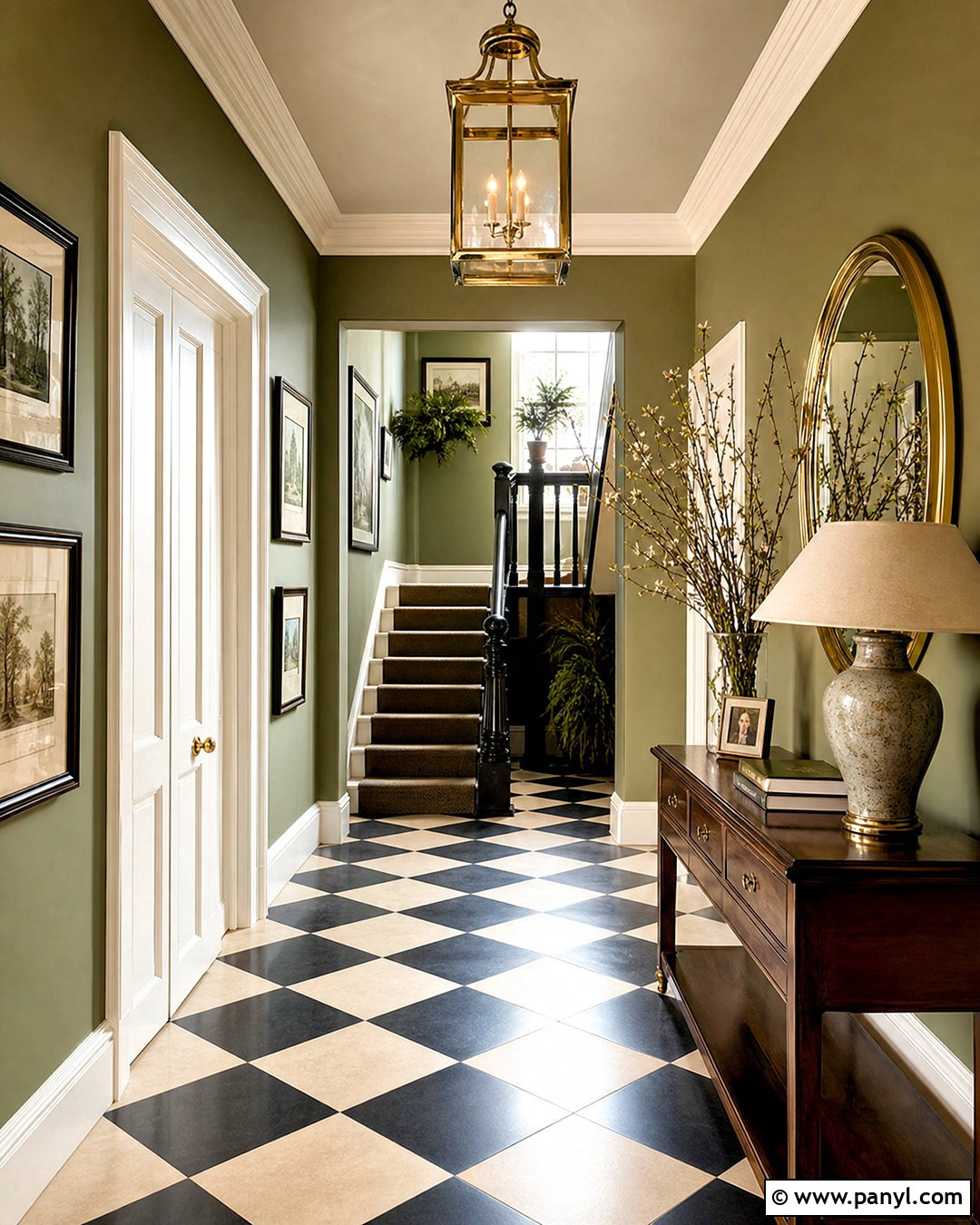
Give an olive green hallway a classic foundation with cream and charcoal checkerboard flooring. Choose slightly softened tones rather than stark black and white, especially if you want the entrance to feel warm. Paint the walls a medium olive and keep the ceiling, trim, and doors creamy white. A dark wood console will echo the charcoal floor squares, while a round brass mirror adds a softer shape. Install a traditional glass lantern centered over the walkway and a small picture light above framed artwork. Because the floor already supplies a strong pattern, skip the runner and limit decorative accessories. A ceramic lamp, a wooden bowl, and one tall branch arrangement are enough. This scheme feels formal, practical, and appropriate for both older and newer homes.
9. Olive Green Hallway With a Gallery Wall
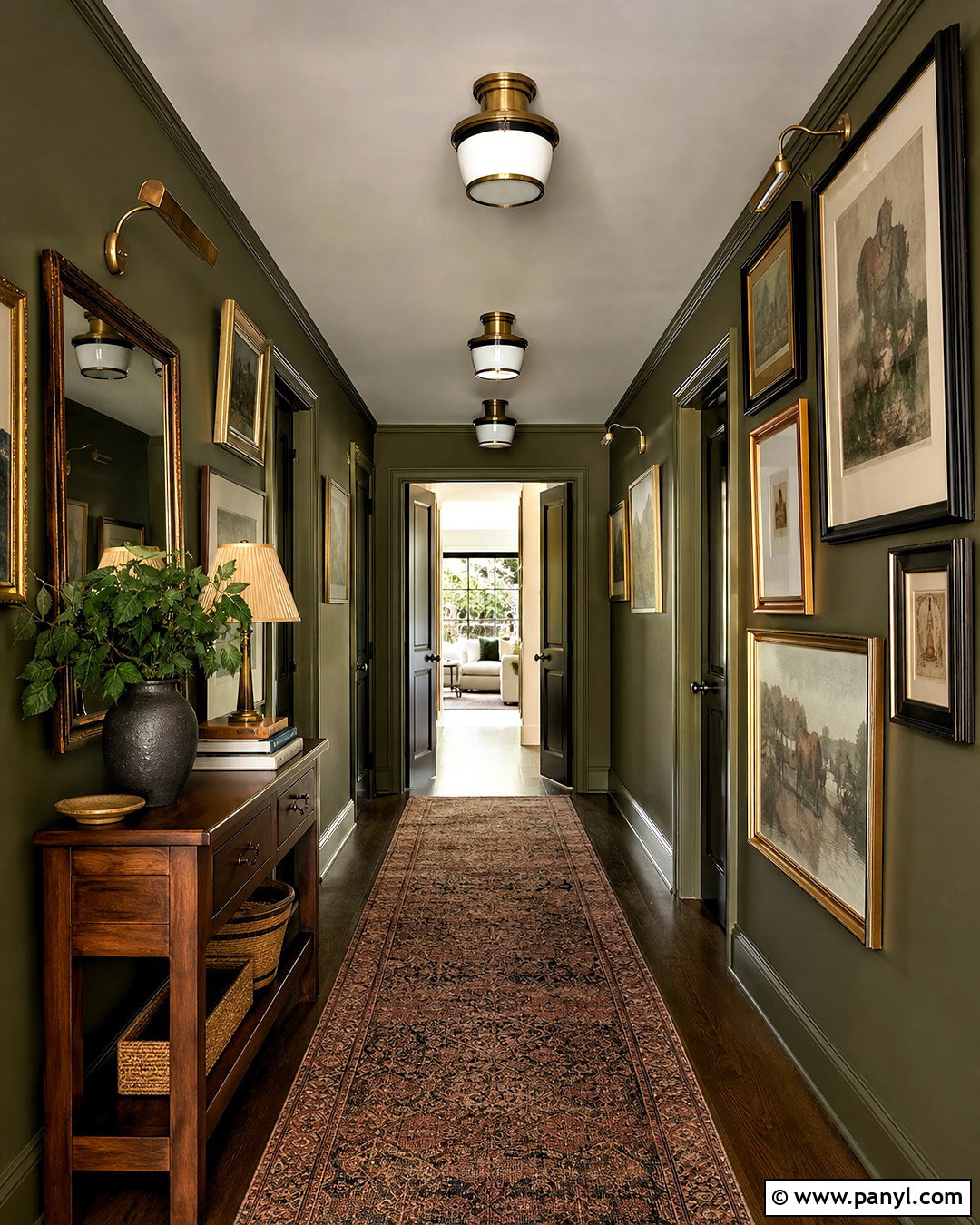
Turn a long hallway into a personal gallery by using olive green as a calm backdrop for collected artwork. Select a muted mid-tone shade that is dark enough to frame each piece but not so dark that details disappear. Create an organized arrangement with black, walnut, and antique brass frames, repeating each finish several times for cohesion. Use artwork with cream mats to provide breathing room against the green walls. A narrow vintage runner in rust, beige, and olive will lead the eye through the display. Keep furniture minimal with one shallow walnut console at the widest point. Add adjustable picture lights or evenly spaced ceiling spots so every frame remains visible. The final arrangement should feel collected, balanced, and easy to update.
10. Olive Green Hallway With a Staircase
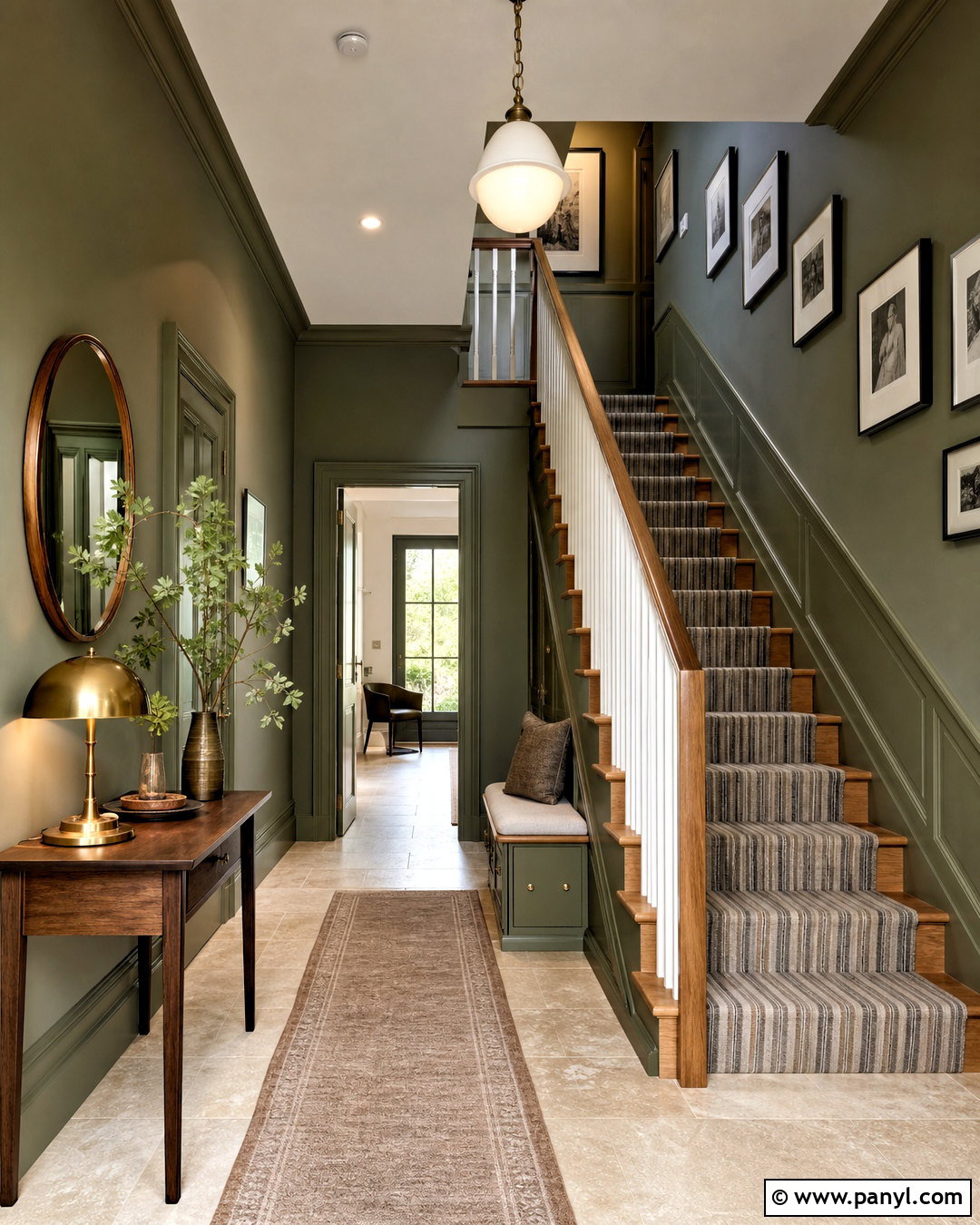
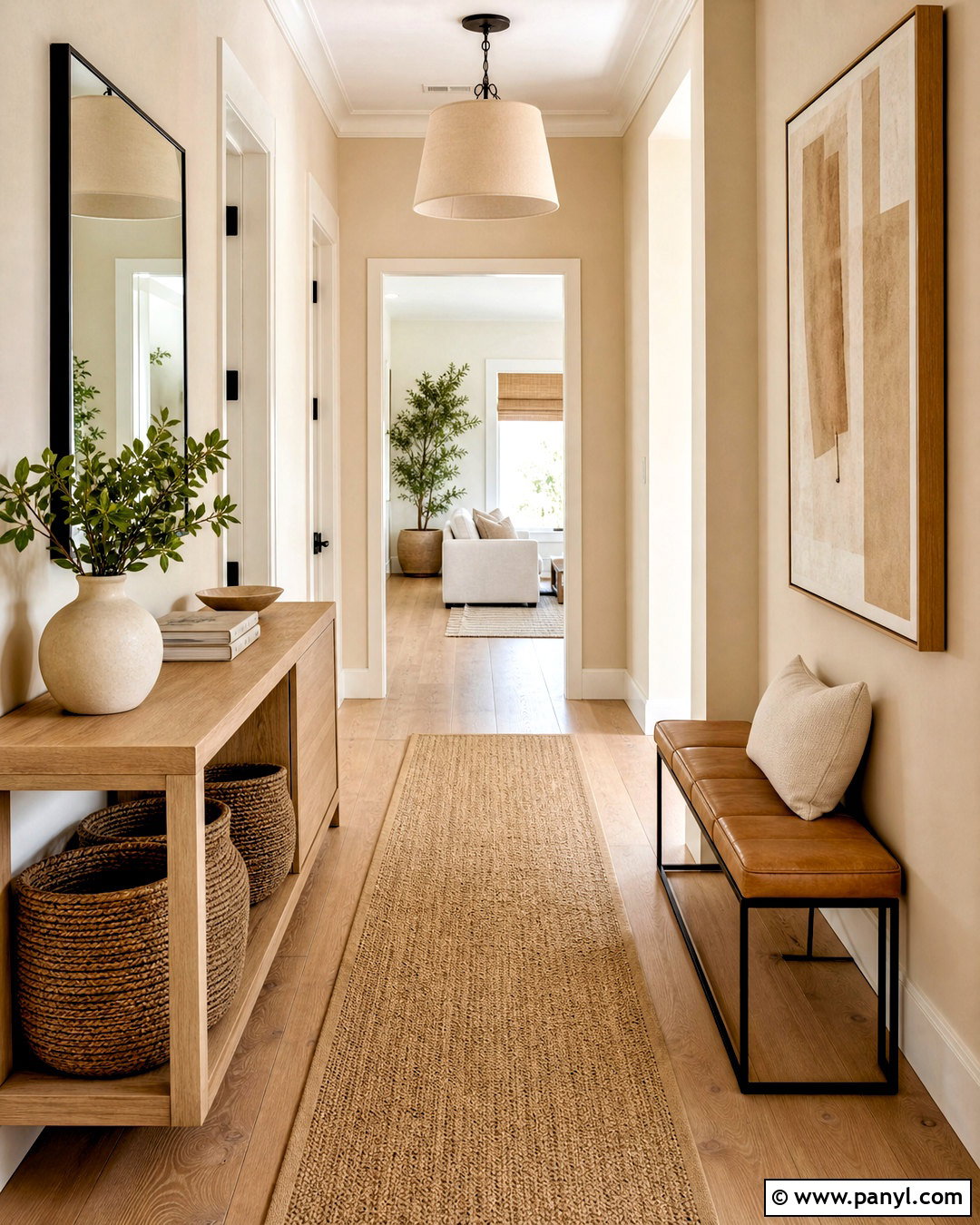
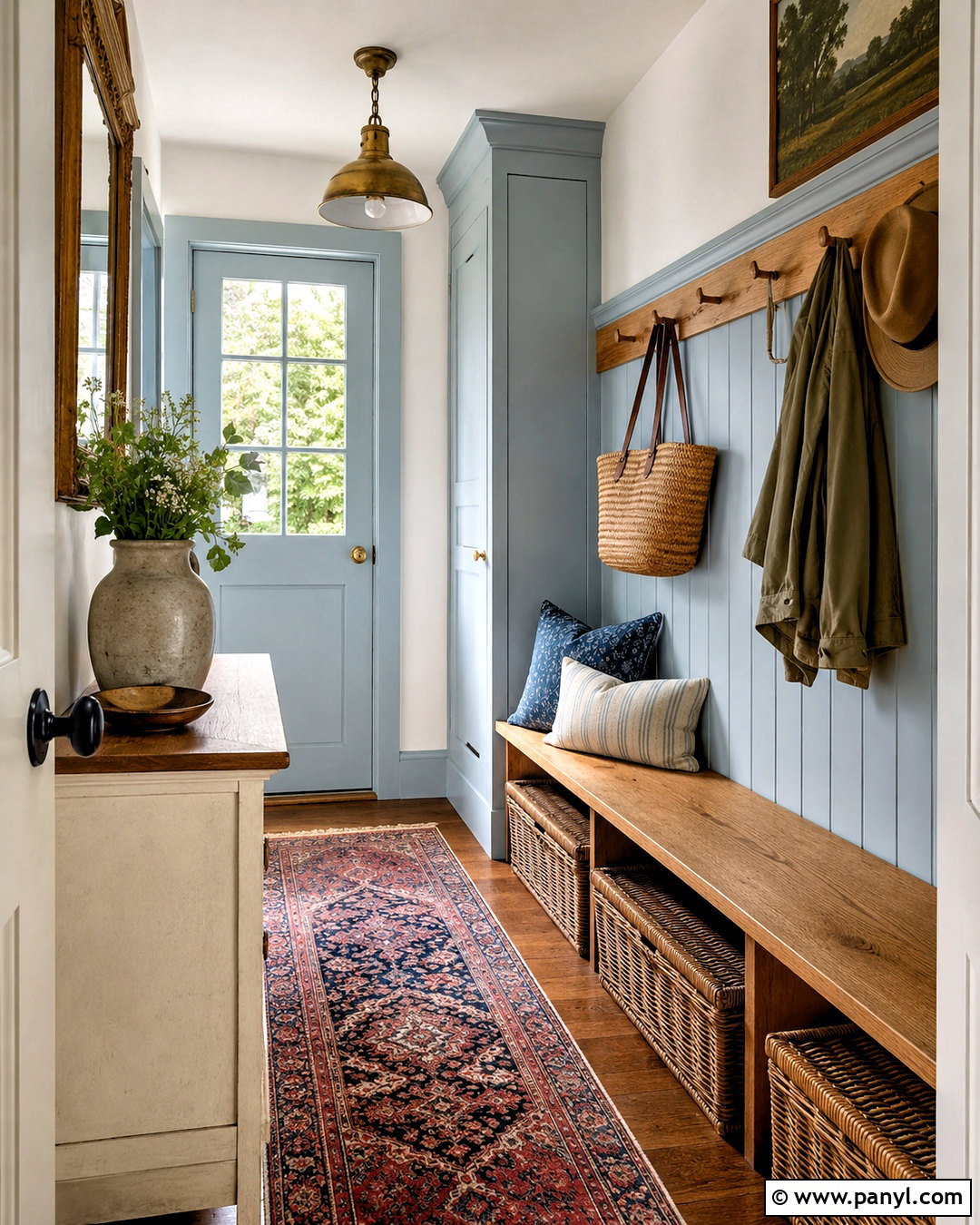
An olive green hallway can make a staircase feel like an intentional part of the entrance rather than a separate feature. Paint the walls and stair risers a muted olive, then use warm white on the spindles and ceiling. Refinish the handrail and stair treads in medium oak for natural contrast. A striped wool runner in oatmeal, black, and olive will add comfort while visually connecting both levels. Beneath the stairs, install a fitted oak bench with drawers for shoes, bags, and everyday accessories. Hang a graduated group of black-framed pictures along the stair angle. A tall opal pendant will illuminate the stairwell, while a small brass lamp on a nearby console provides a warmer secondary glow. Keep the landing simple and visually connected.
11. Olive Green Hallway With a Painted Ceiling
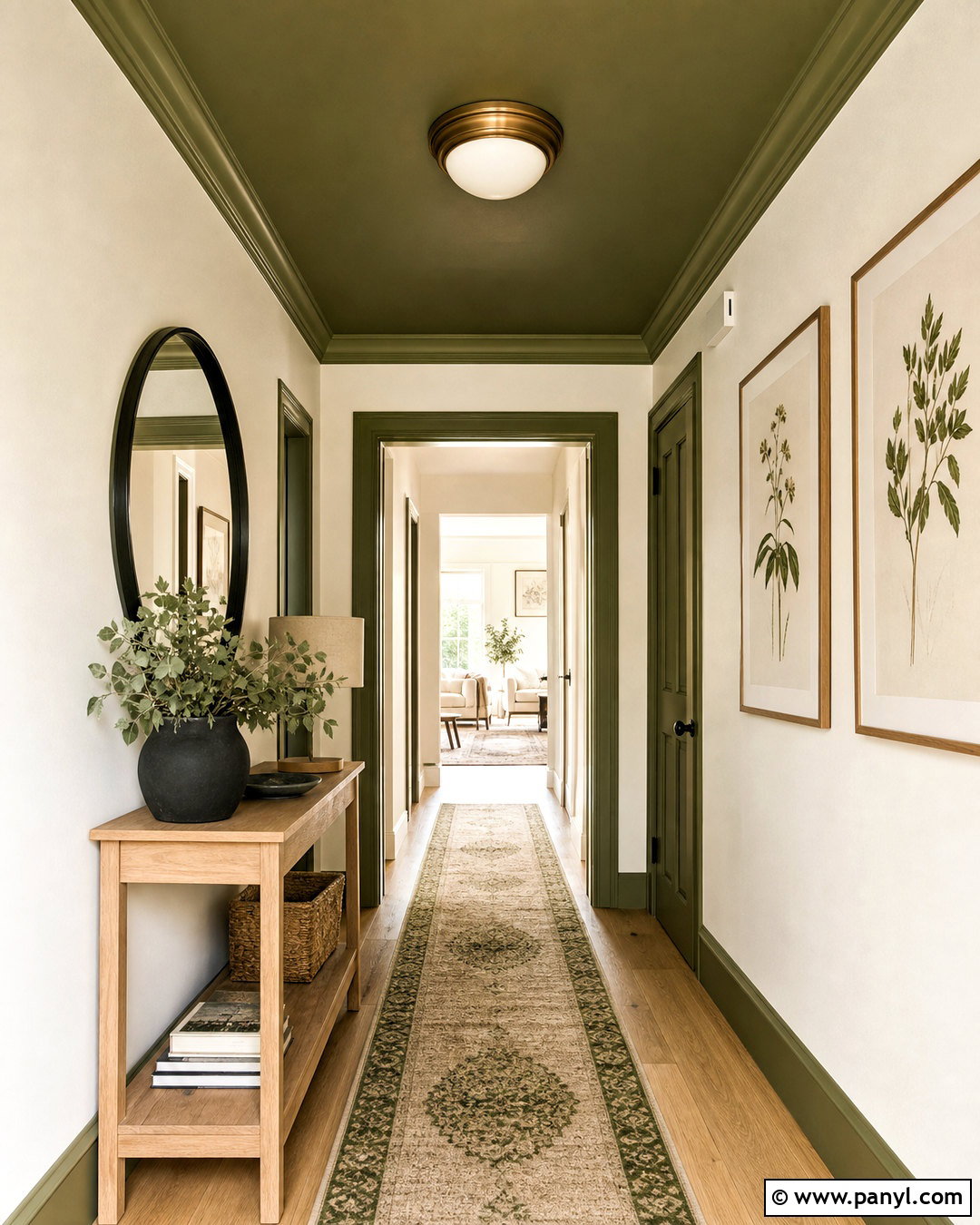
If full olive walls feel too heavy, move the color overhead. Paint the hallway ceiling a medium olive green and continue the shade a few inches down the walls to create a clean border. Use warm off-white on the main walls, doors, and trim so the ceiling becomes an architectural feature. Light oak flooring and a flat-woven runner in cream and moss will support the natural palette. Choose a simple flush-mount light in aged brass to avoid interrupting the colored surface. An oak console, round black mirror, and three small botanical prints will give the walls enough interest without competing with the ceiling. This complete treatment adds personality to a narrow passage while preserving a bright, open feeling at eye level.
12. Olive Green Hallway With Half-Painted Walls
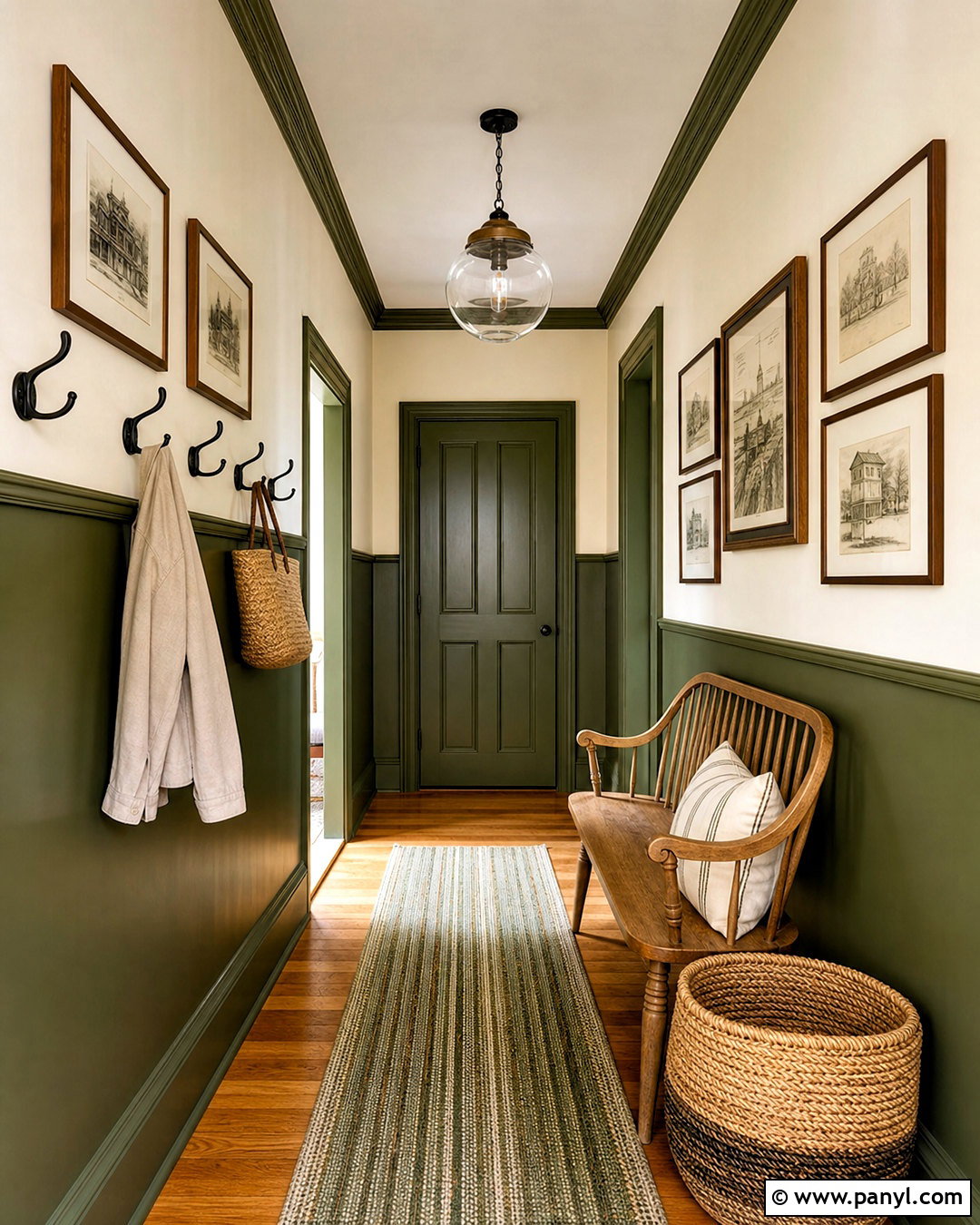
Half-painted walls offer an approachable way to introduce olive green without committing to an entirely dark hallway. Apply a durable satin olive paint below chair-rail height and use warm ivory above it. A slim painted molding between the colors will produce a finished transition. Repeat the ivory on doors and ceilings, then bring in honey-toned oak flooring for warmth. Choose a washable striped runner containing olive, tan, and cream to unite both halves of the wall. A spindle-back bench, shallow shelf, and row of black hooks will create a practical drop zone. Complete the space with simple framed sketches and a clear glass pendant. The darker lower section helps disguise everyday marks, making this attractive scheme particularly useful in active family entrances.
13. Olive Green Hallway With Terracotta Accents
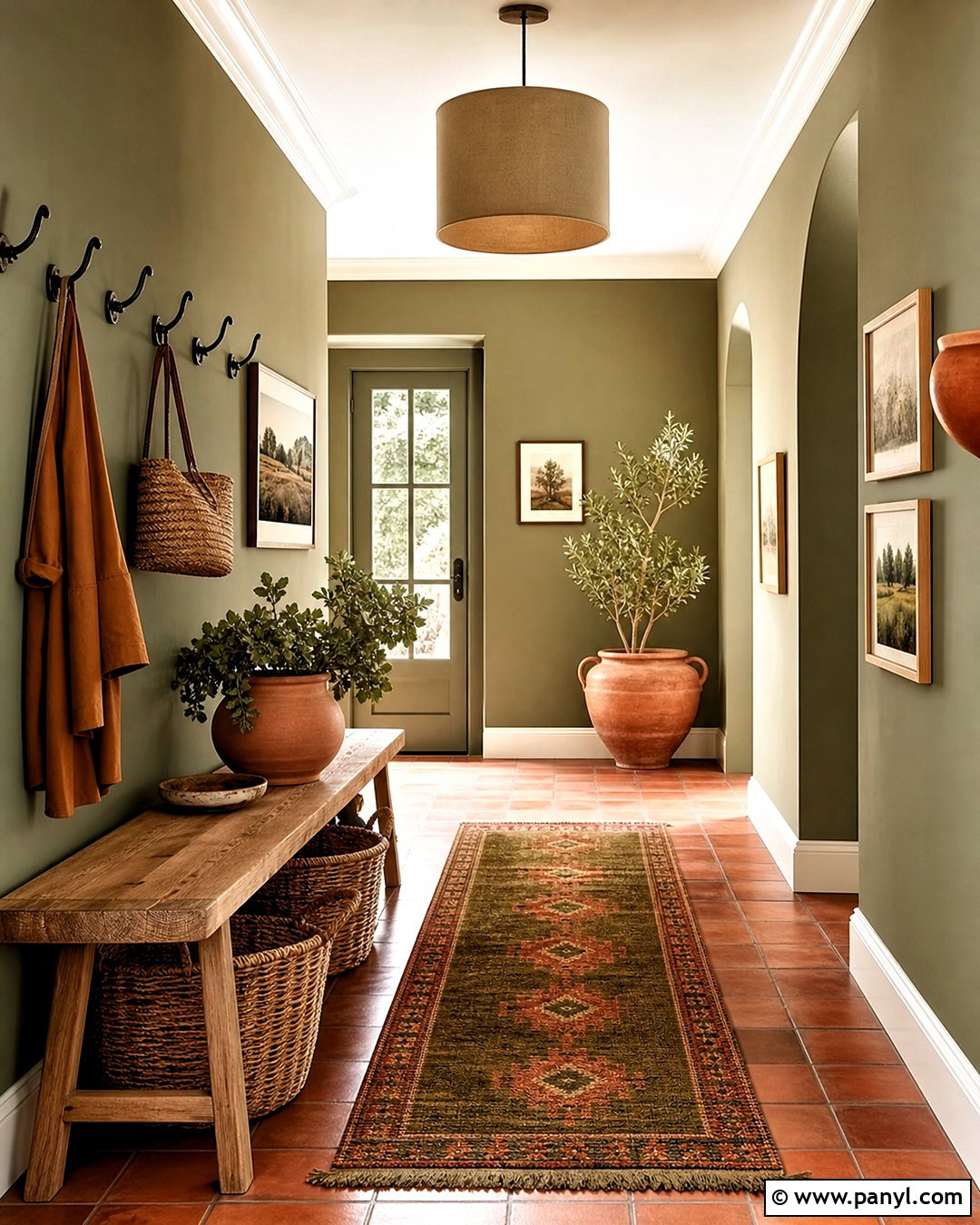
Olive green and terracotta form an earthy palette that feels warm throughout the year. Paint the walls a softened olive and choose clay-colored floor tiles with a matte, slightly varied surface. Use creamy white on the trim and ceiling to separate the two stronger colors. Add a natural oak bench with woven baskets and place a flat-weave runner in cream, olive, and burnt orange down the passage. Terracotta pottery can hold a leafy plant or simple branches, while framed landscape prints introduce additional muted earth tones. Choose aged bronze hooks and a linen-shaded pendant instead of bright metallic finishes. The finished hallway should have open floor space, practical storage, and enough pale fabric and trim to keep the rich natural colors from becoming visually heavy.
14. Olive Green Hallway With Pink Accents
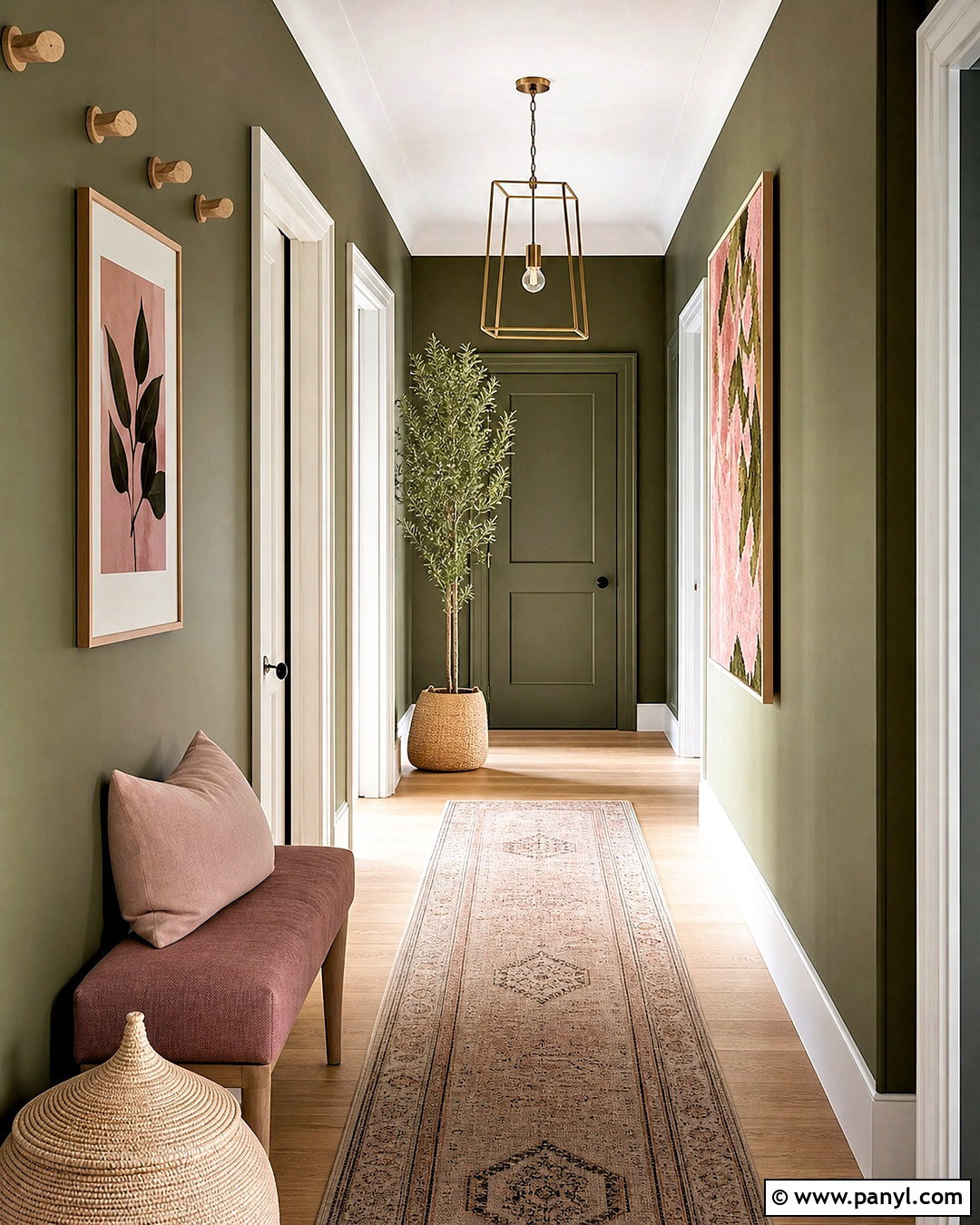
Would you like an olive hallway that feels softer and less rustic? Introduce dusty pink through carefully chosen textiles, artwork, and small upholstered pieces. Begin with muted olive walls, warm white trim, and light oak flooring. Add a narrow bench covered in dusty rose fabric, then place a cream runner with small olive and blush details along the floor. Hang modern artwork that repeats pink, green, beige, and burgundy in simple oak frames. A brushed brass pendant and matching mirror frame will complement both colors without dominating them. Keep storage discreet with pale wood wall pegs and a lidded basket under the bench. This balanced combination feels cheerful and sophisticated, making it suitable for a compact entry or an upstairs hallway outside bedrooms.
15. Olive Green Hallway With Vintage Decor
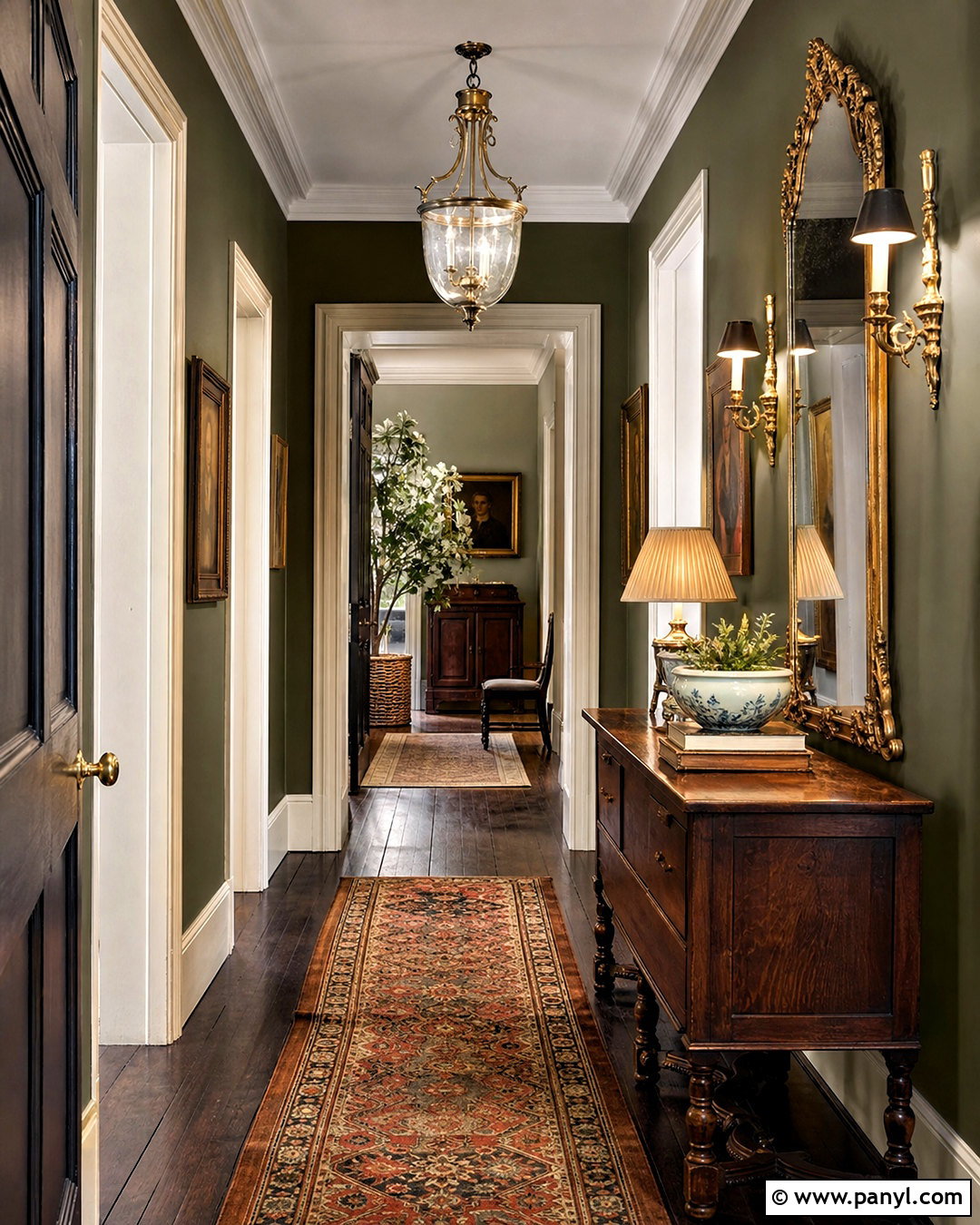
Build a collected vintage hallway around deep olive walls and furniture with genuine age or convincing patina. Start with dark-stained floorboards and a faded runner in muted red, navy, cream, and green. Add a narrow antique console with drawers for keys, gloves, and other small items. Above it, hang an ornate aged brass mirror, then place a pleated lamp and ceramic bowl on the surface. Use a mix of old landscape paintings and black-and-white photographs, but arrange them carefully to avoid visual clutter. Traditional brass wall sconces and a small glass lantern will reinforce the period feeling. Keep the ceiling and door trim warm cream rather than bright white. The result should feel thoughtfully collected, useful, and connected to the home’s architecture.
16. Olive Green Hallway With Farmhouse Decor
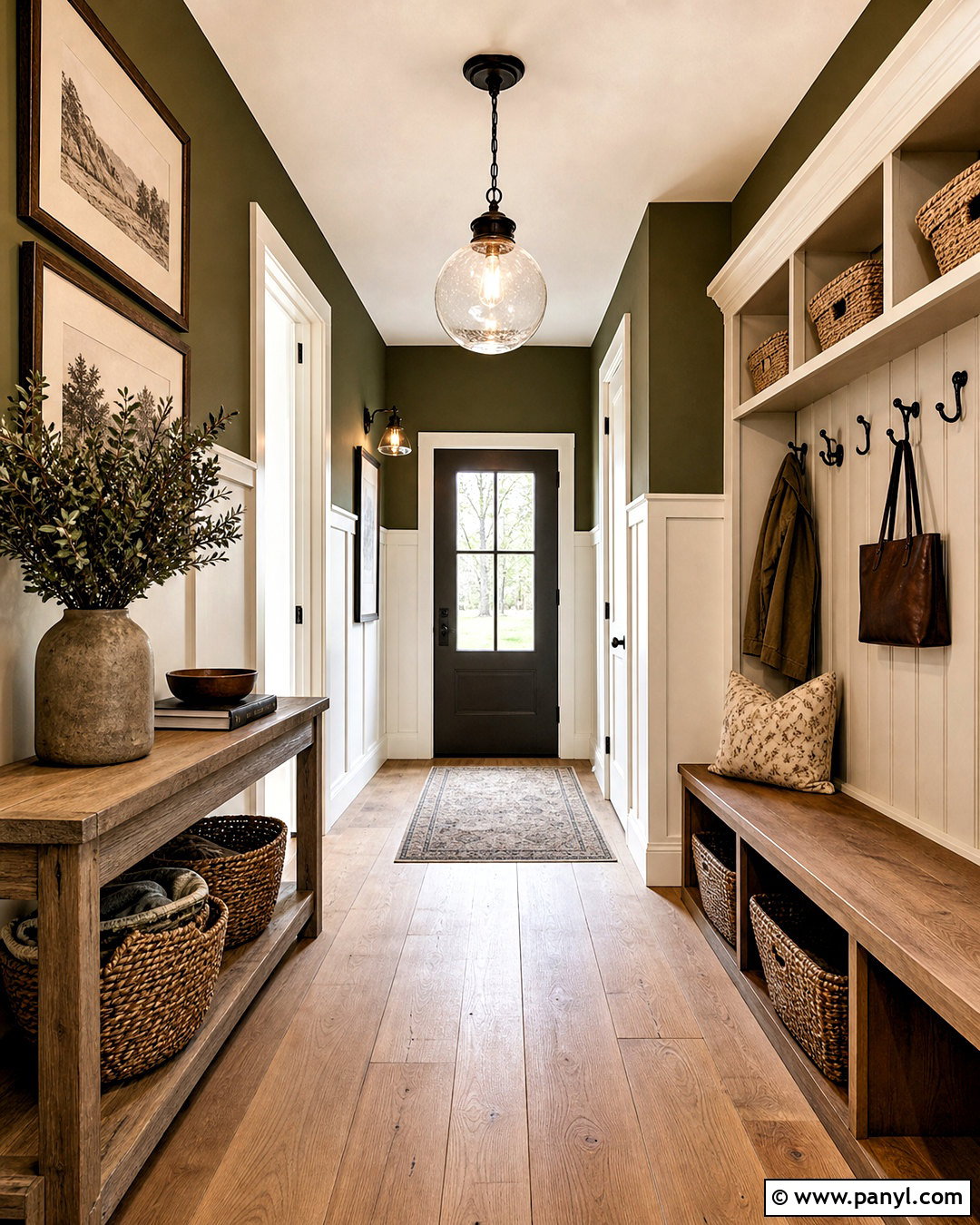
A farmhouse hallway looks most convincing when color, storage, and hard-wearing materials work together. Paint the walls a warm olive green and use creamy white on simple board-and-batten paneling below. Choose wide-plank oak flooring or realistic wood-look tile, then add a washable natural-fiber runner. A sturdy wooden bench with cubbies creates seating and organized shoe storage. Install black iron hooks above it for coats, baskets, and everyday bags. On the opposite wall, place a narrow reclaimed wood console beneath a simple black-framed mirror. Complete the look with a seeded glass pendant, an earthenware vase, and framed countryside sketches. Avoid excessive themed signs. Natural textures, practical furniture, and restrained rustic details will produce a more timeless and comfortable farmhouse entrance.
17. Olive Green Hallway With Mid-Century Decor
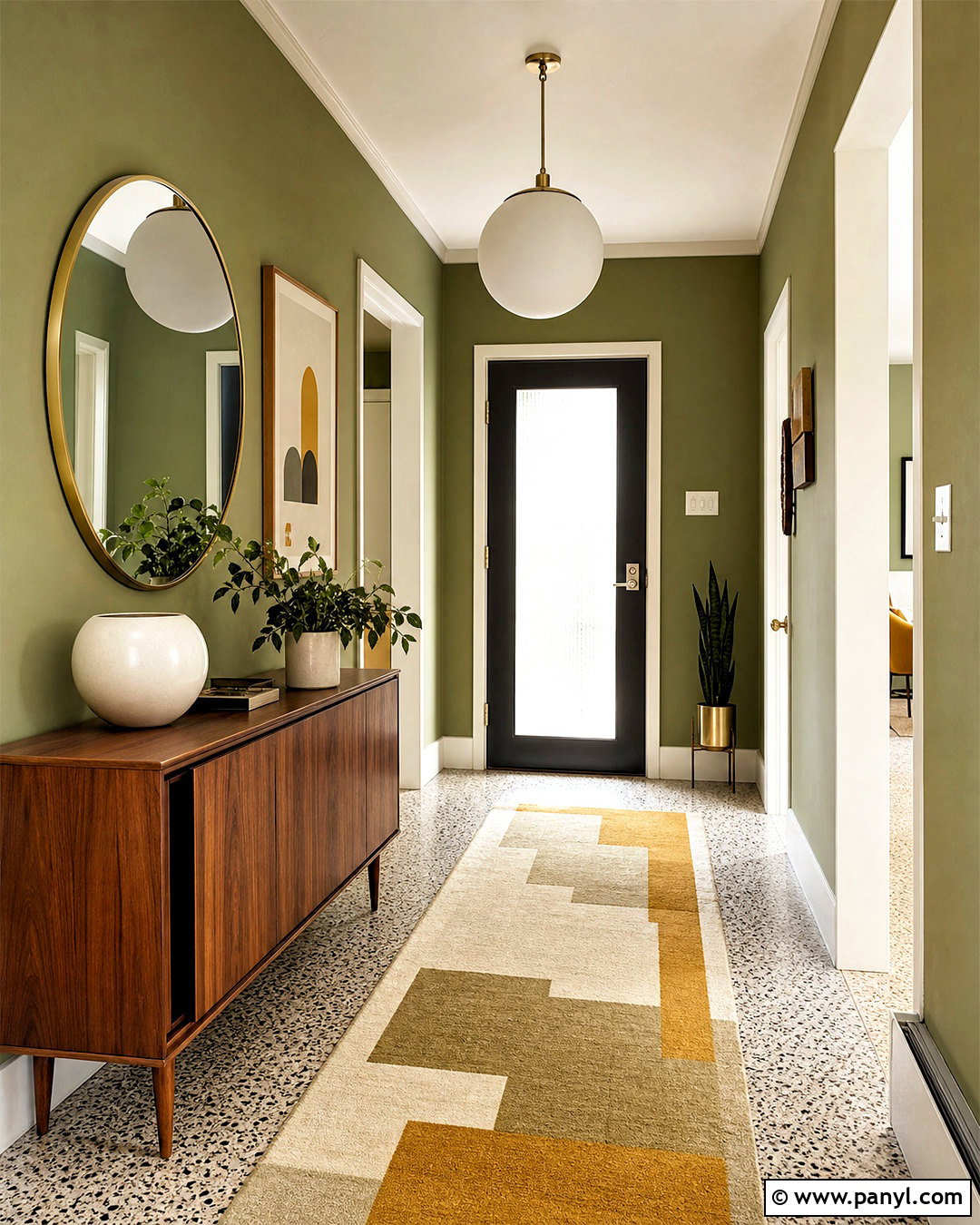
Give olive green a clean retro character by pairing it with walnut furniture and simple geometric forms. Paint the walls a medium olive with a slightly warm undertone, leaving the ceiling and narrow baseboards soft white. Choose honey oak or terrazzo-style flooring, then introduce a low-profile walnut console with sliding doors. Above it, hang a round mirror with a thin brass frame. A graphic runner in cream, mustard, rust, and olive will connect the hallway to the mid-century palette. Use a frosted globe pendant and one sculptural wall light for balanced illumination. Keep decor minimal with an abstract print, a ceramic vessel, and a small leafy plant. The finished space should feel functional and nostalgic without appearing like a themed period set.
18. Olive Green Hallway With Minimalist Decor
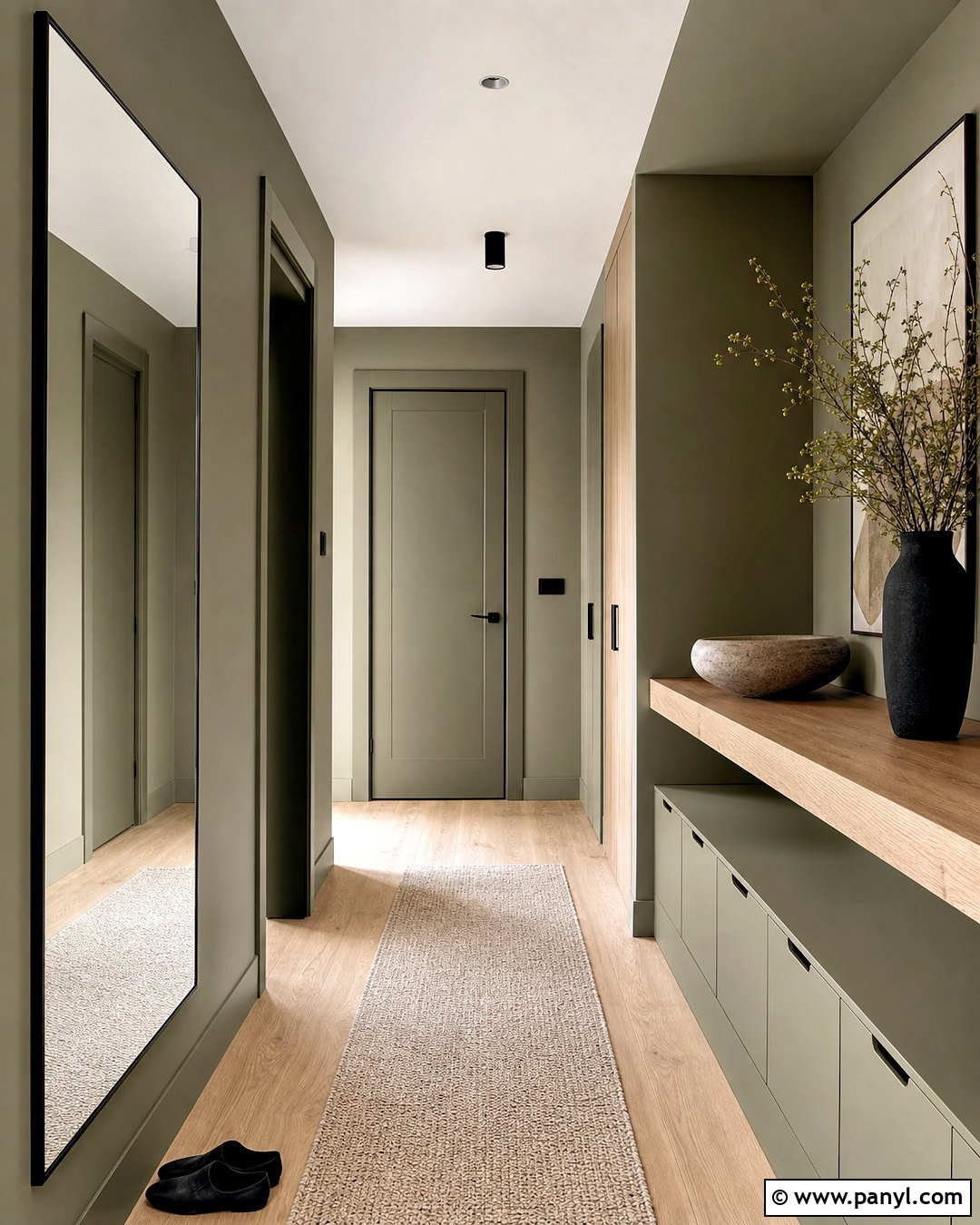
Olive green can provide enough visual interest for a hallway with very little decoration. Choose a calm gray-olive wall color and paint the doors the same shade for a continuous surface. Keep the ceiling warm white and select pale oak flooring with a narrow oatmeal runner. Install a floating oak shelf rather than a full console, leaving the floor clear and making the passage easier to clean. Above it, use one oversized frameless mirror to reflect the opposite wall and available daylight. Concealed shoe storage with flat fronts can sit near the entrance without disrupting the streamlined look. Add a single black ceiling fixture and discreet wall washers for even lighting. Finish with one stoneware bowl and a small branch arrangement, avoiding unnecessary decorative layers.
19. Olive Green Hallway With Rustic Stone Flooring
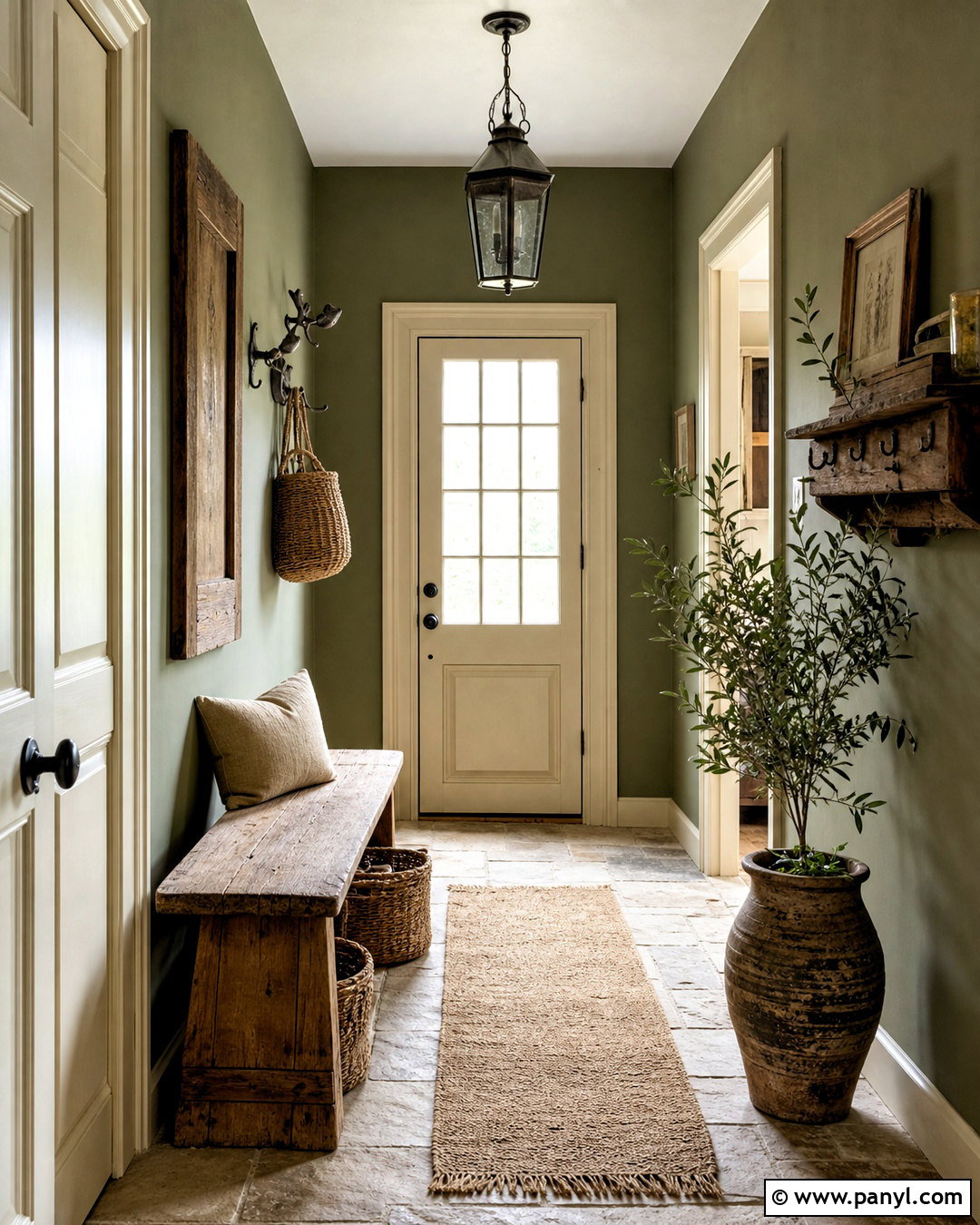
Stone flooring makes olive green feel grounded and naturally suited to an entrance. Choose tumbled limestone, slate, or realistic stone-look porcelain in warm beige and gray tones. Paint the walls a deep, earthy olive, then use soft cream on the ceiling and interior doors. Add a weathered oak bench with a thick oatmeal cushion and place woven baskets underneath for shoes. A narrow wool runner will introduce comfort while allowing the textured flooring to remain visible around the edges. Use dark bronze hooks, a wrought metal lantern, and landscape paintings in old wood frames to reinforce the rustic character. A tall plant in a clay pot can soften one empty corner. The complete design should feel durable, welcoming, and practical rather than overly polished or formal.
20. Olive Green Hallway With Modern Storage
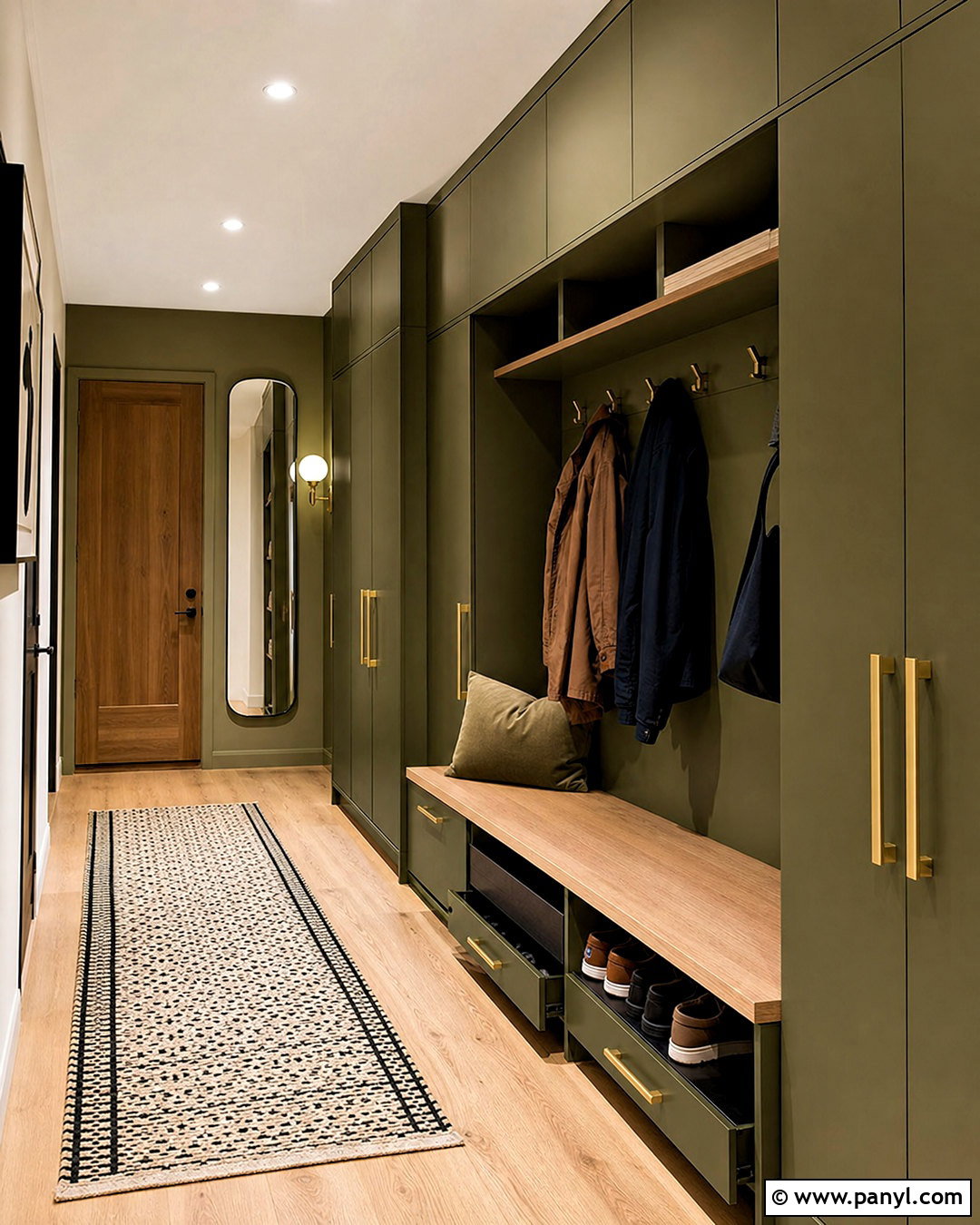
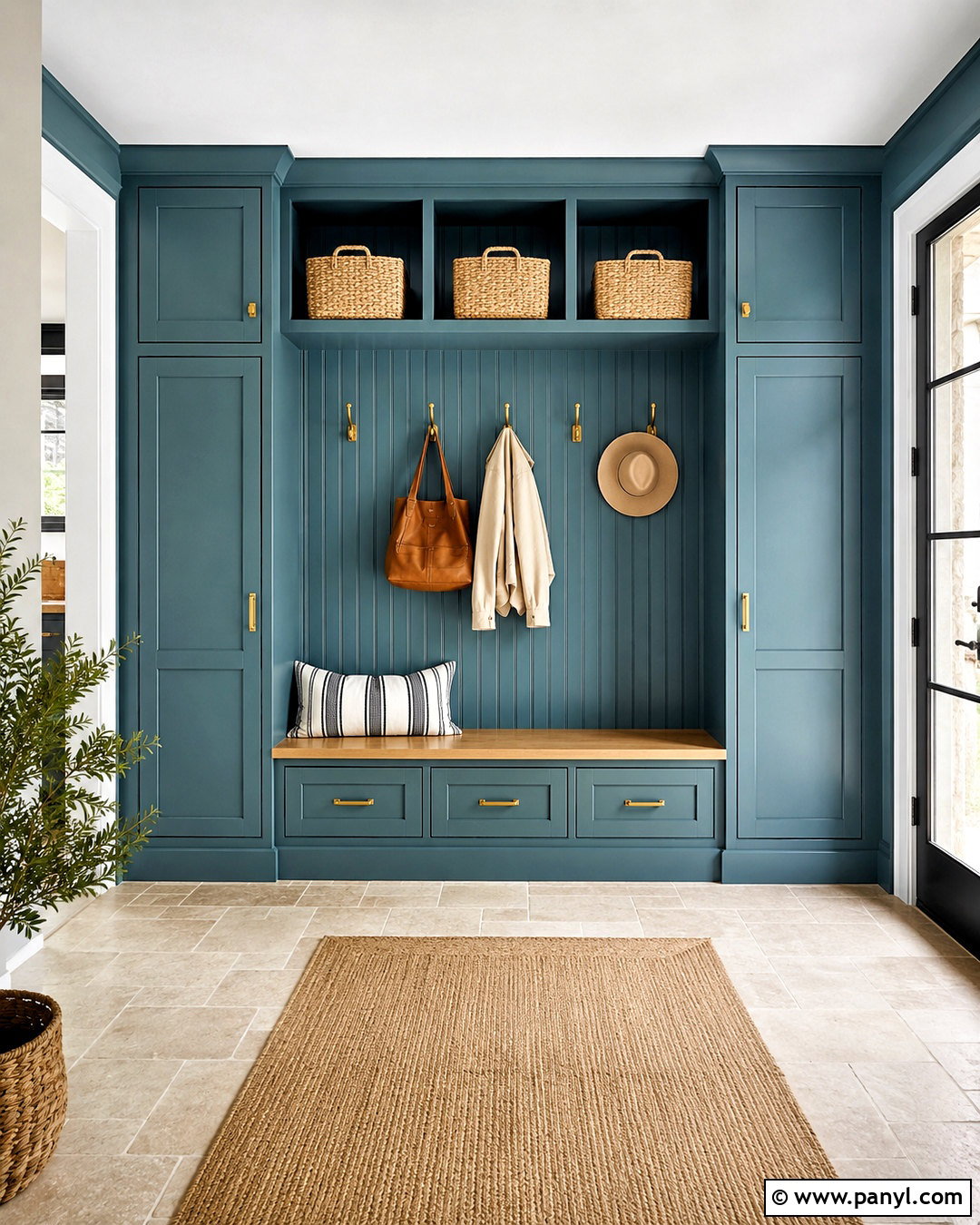
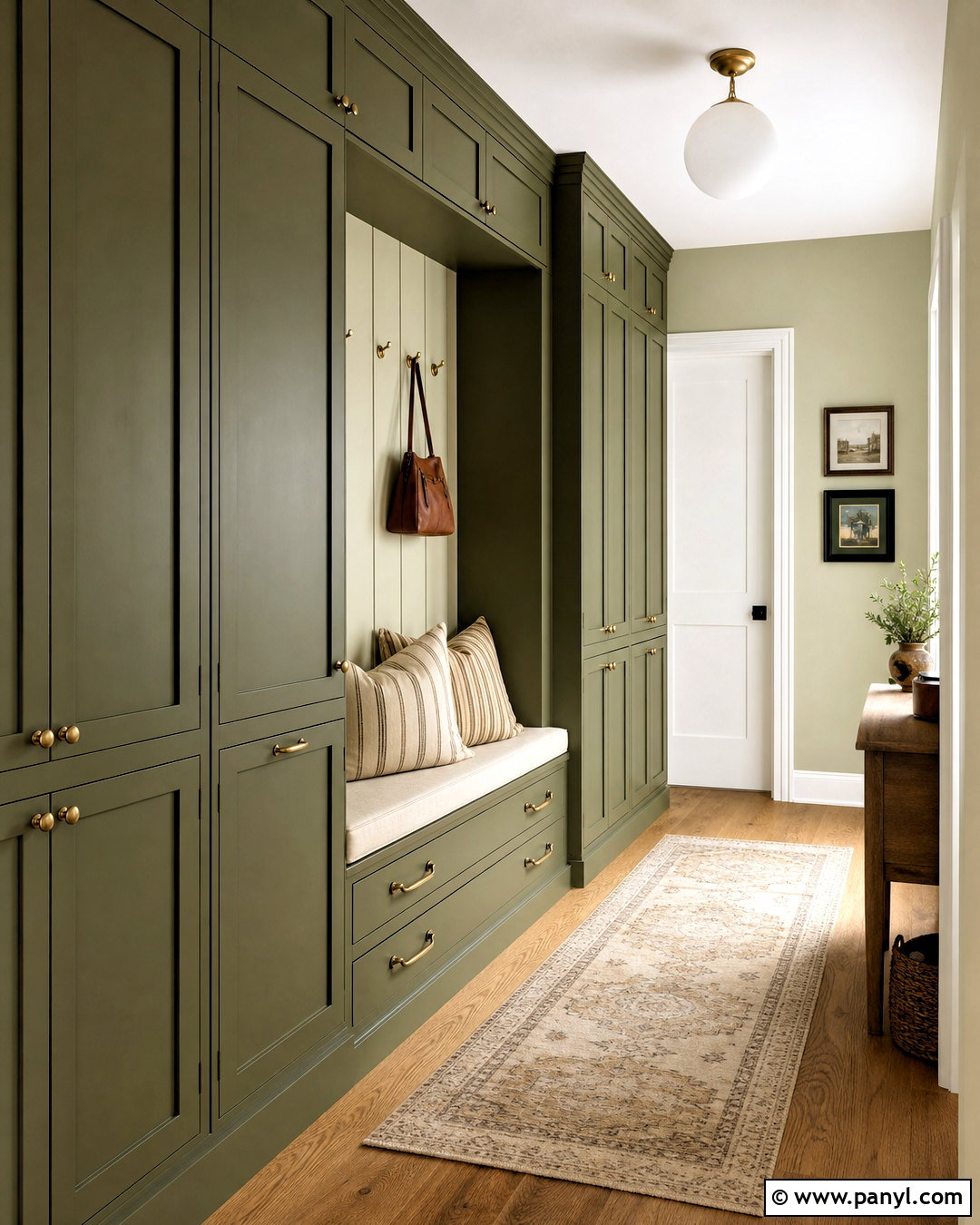
Make a hardworking hallway feel streamlined by integrating storage into the olive green color scheme. Install shallow floor-to-ceiling cabinets along one wall and paint them the same muted olive as the surrounding surfaces. Flat doors with small brushed brass pulls will keep the cabinetry quiet but functional. Include a recessed oak bench, shoe drawers, coat hooks, and an overhead shelf within the built-in unit. Use warm white on the ceiling and pale oak flooring to balance the large green area. A washable cream-and-black runner will define the walkway, while a wide frameless mirror increases the sense of openness. Finish with simple recessed lighting and one opal wall sconce. The result is an organized, contemporary hallway where every practical feature feels intentional.
Conclusion:
The best olive green hallway ideas combine color with a practical, complete plan for lighting, flooring, storage, furniture, and decoration. Start by considering how much natural light the passage receives and how the color connects with nearby rooms. Pale wood and white trim create a brighter result, while walnut, brass, stone, and color drenching produce greater depth. Patterned wallpaper, gallery walls, runners, or painted paneling can add character, but they should not restrict movement or overwhelm a narrow space. Test your chosen olive green in several areas before painting everything. With thoughtful finishes and a balanced layout, this adaptable color can turn an overlooked hallway into a welcoming and memorable part of your home.

Related Ideas and Inspiration:
Leave a Reply