
Hallway doors take up more visual space than most people realize, especially in narrow passages lined with bedrooms, closets, and bathrooms. The right paint color can make those doors blend quietly into the walls, highlight original paneling, or introduce personality without overwhelming the floor plan. Before choosing a shade, consider the hallway’s natural light, flooring, wall undertones, hardware, and the colors visible in adjoining rooms. Satin or semi-gloss paint is a practical choice because it handles fingerprints and routine cleaning better than flatter finishes. From gentle neutrals to confident dark shades, every option below creates a complete hallway look with coordinated walls, lighting, flooring, and decor. Use these 20 hallway door colors to find a polished combination for your home.

1. Warm White Hallway Doors
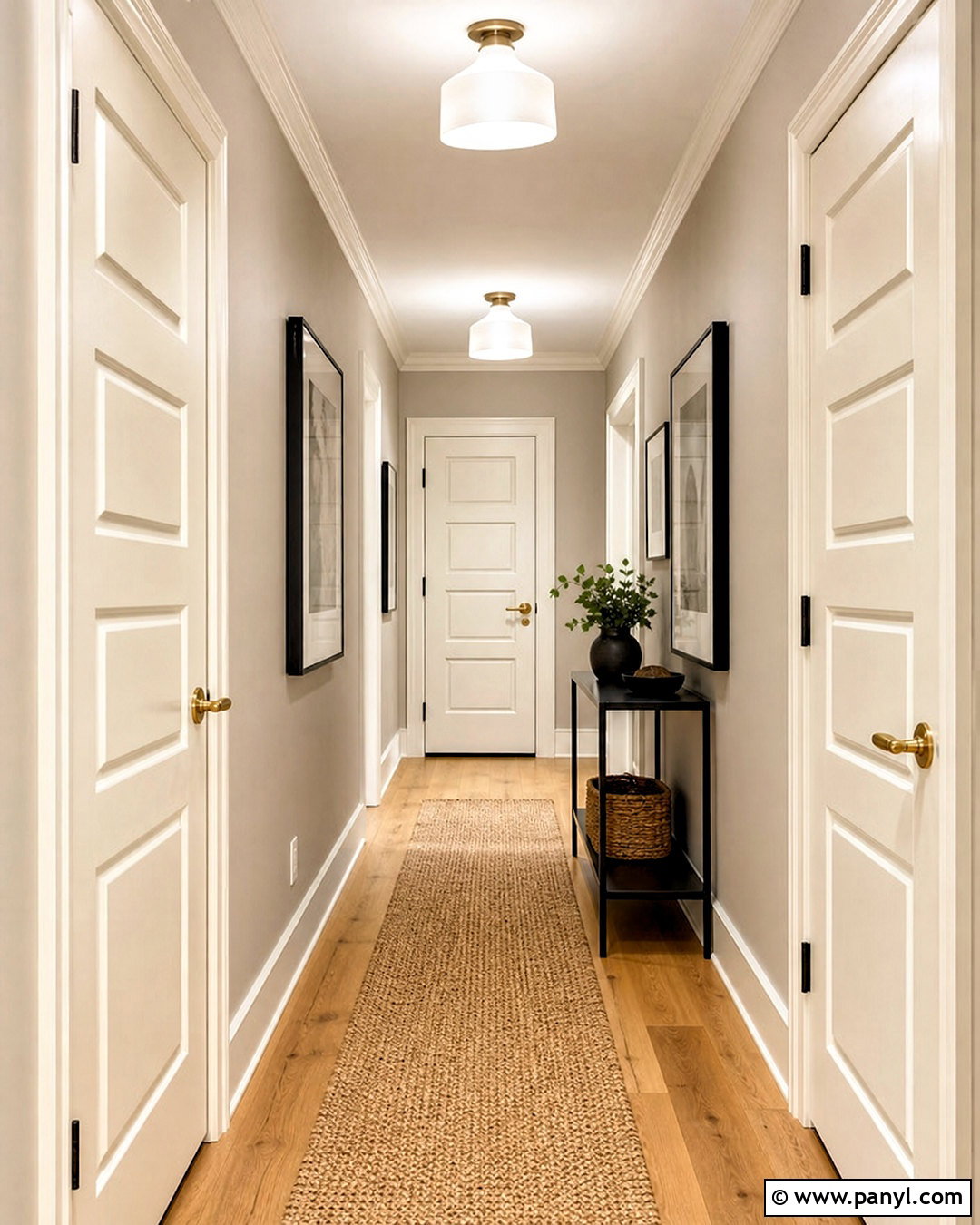
Warm white doors create a bright, welcoming hallway without the sharp appearance that a blue-based white can produce. Choose a creamy white with subtle beige or yellow undertones, then continue it across the door frames and baseboards for a smooth finish. Pair the doors with pale greige walls, light oak flooring, and woven natural-fiber runners. Brushed brass handles add warmth, while simple black-framed artwork provides just enough contrast. In a narrow or windowless passage, use flush-mount ceiling lights with clear or frosted glass shades to distribute light evenly. This complete palette suits traditional, transitional, farmhouse, and relaxed contemporary homes. Test the white beside existing trim because mismatched undertones can make one surface look dingy.
2. Soft Greige Hallway Doors
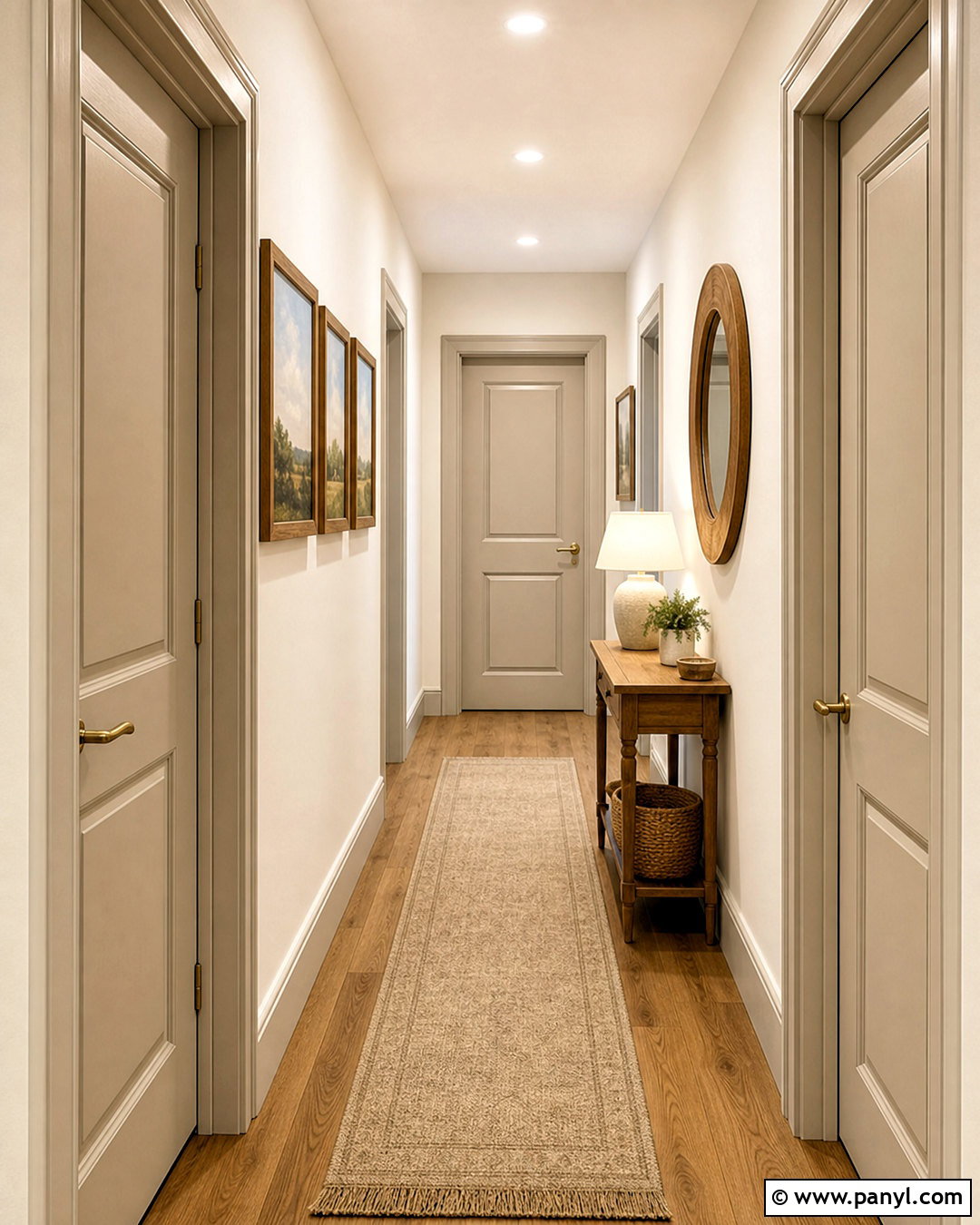
Soft greige hallway doors offer more definition than white while remaining easy to coordinate with nearby rooms. Select a balanced shade that combines warm gray with a small amount of beige. Use creamy off-white on the walls and paint the trim the same greige as the doors for a clean, framed effect. Medium oak flooring, a taupe runner, and antique brass handles reinforce the welcoming undertones. Add a round wood mirror and two or three simple landscape prints rather than filling every wall. This combination works especially well when the adjoining rooms include beige, ivory, brown, muted green, or dusty blue. Under artificial light, some greiges can turn purple, so sample the color on multiple doors before making the final decision.
3. Charcoal Gray Hallway Doors
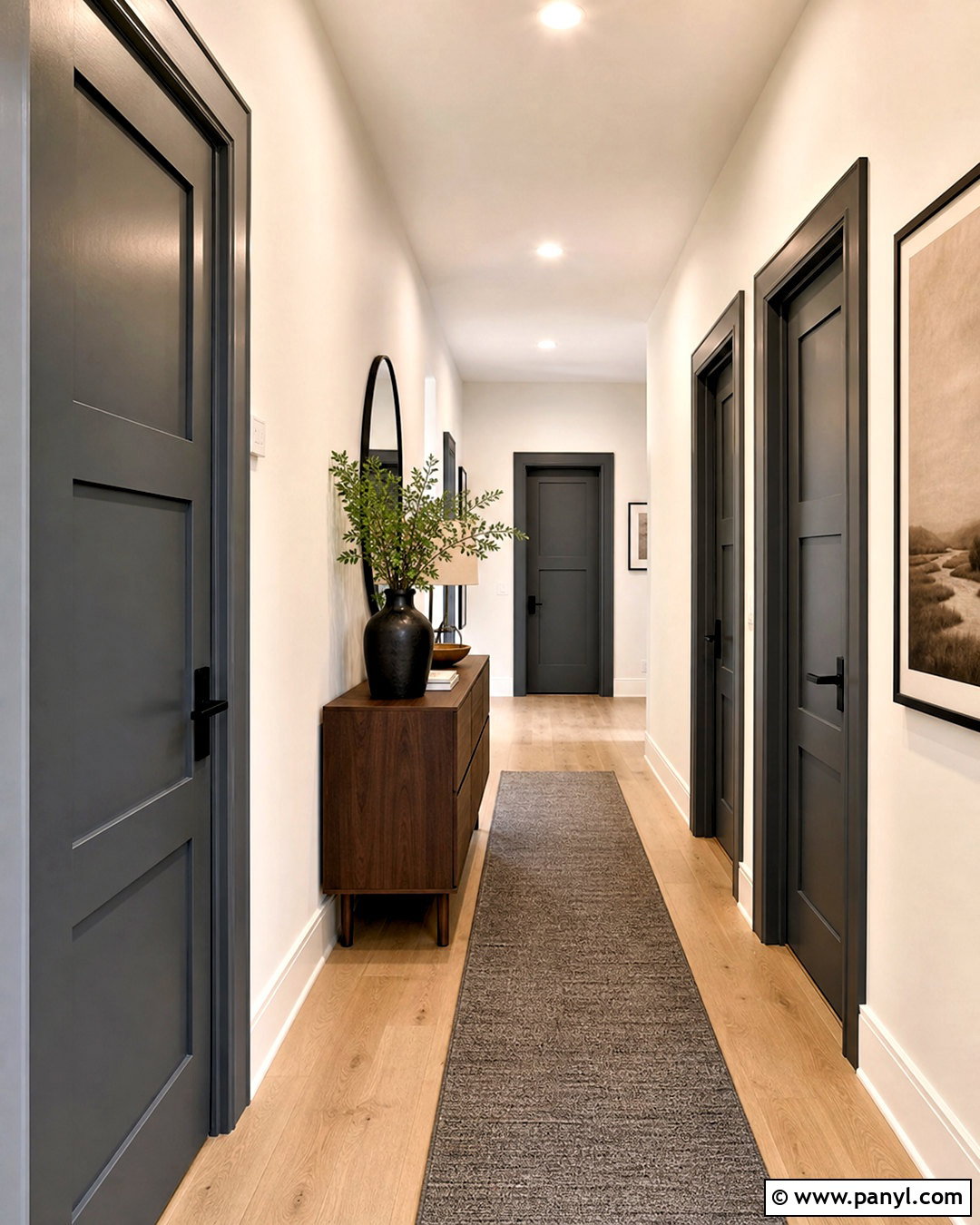
Charcoal gray doors bring structure and depth to a light hallway while feeling softer than solid black. Keep the walls warm white or pale stone gray so the dark doors become clear architectural features. Carry charcoal onto the frames for a substantial appearance, but leave the baseboards light to prevent the corridor from feeling too enclosed. Matte black levers, white oak flooring, and a low-pattern gray runner complete the modern palette. Introduce warmth through a slim walnut console, natural baskets, or sepia-toned artwork. Strong overhead lighting is essential if the hallway has several charcoal doors and limited daylight. A satin finish reflects a controlled amount of light and makes the darker painted surfaces easier to clean.
4. Matte Black Hallway Doors
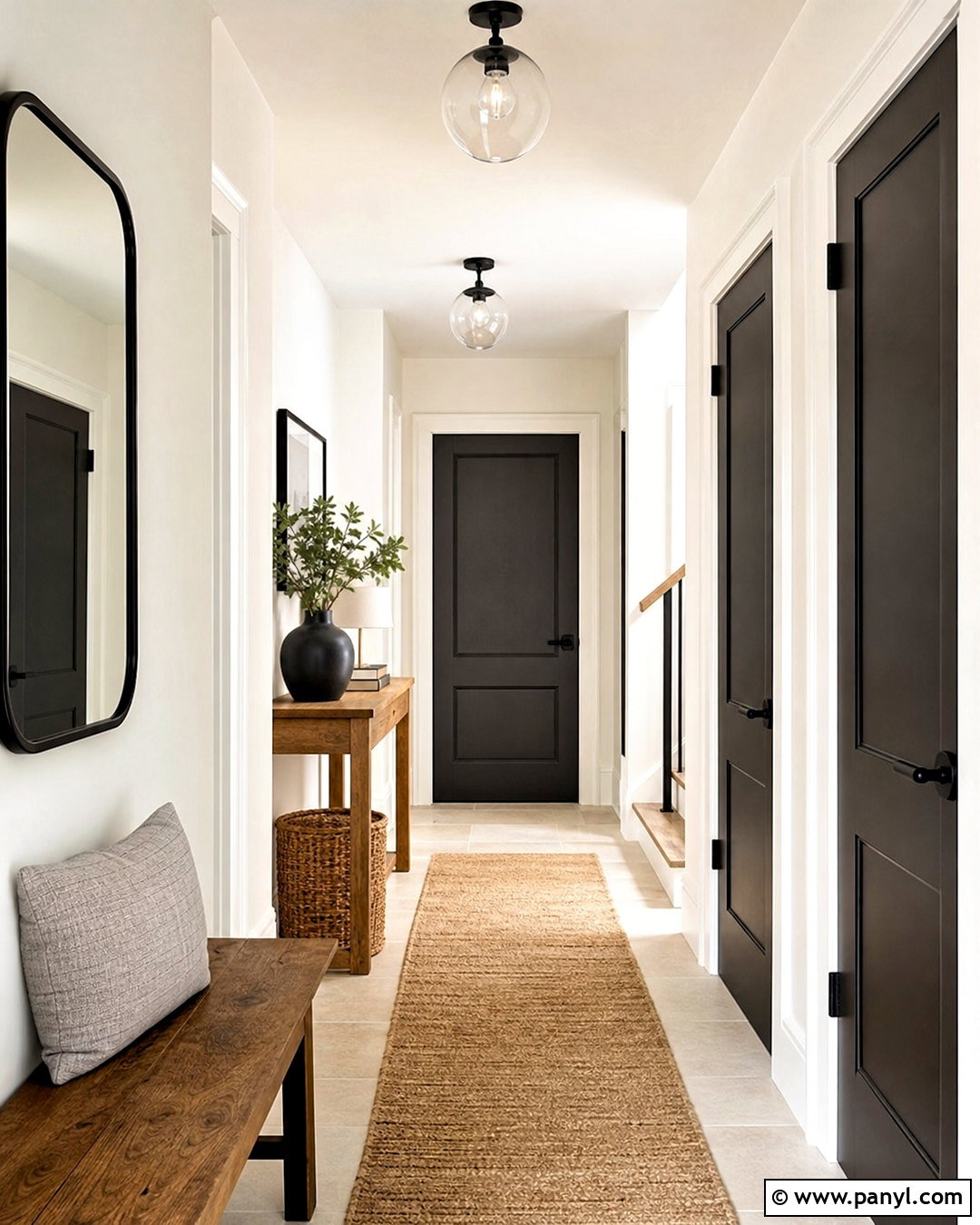
Matte black hallway doors create crisp contrast and can make basic builder-grade doors look far more intentional. Balance them with soft white walls, matching white trim, and light wood or limestone-look flooring. Black hinges and streamlined levers give the doors a unified finish, while a black-framed mirror repeats the color without cluttering the passage. Choose a washable satin paint rather than a truly flat coating, which can show fingerprints and scuffs. This scheme is most successful in a hallway with good lighting, so include a row of simple ceiling fixtures or a statement pendant where ceiling height allows. A tan runner and small touches of warm oak keep the final look comfortable instead of overly stark or industrial.
5. Deep Navy Hallway Doors
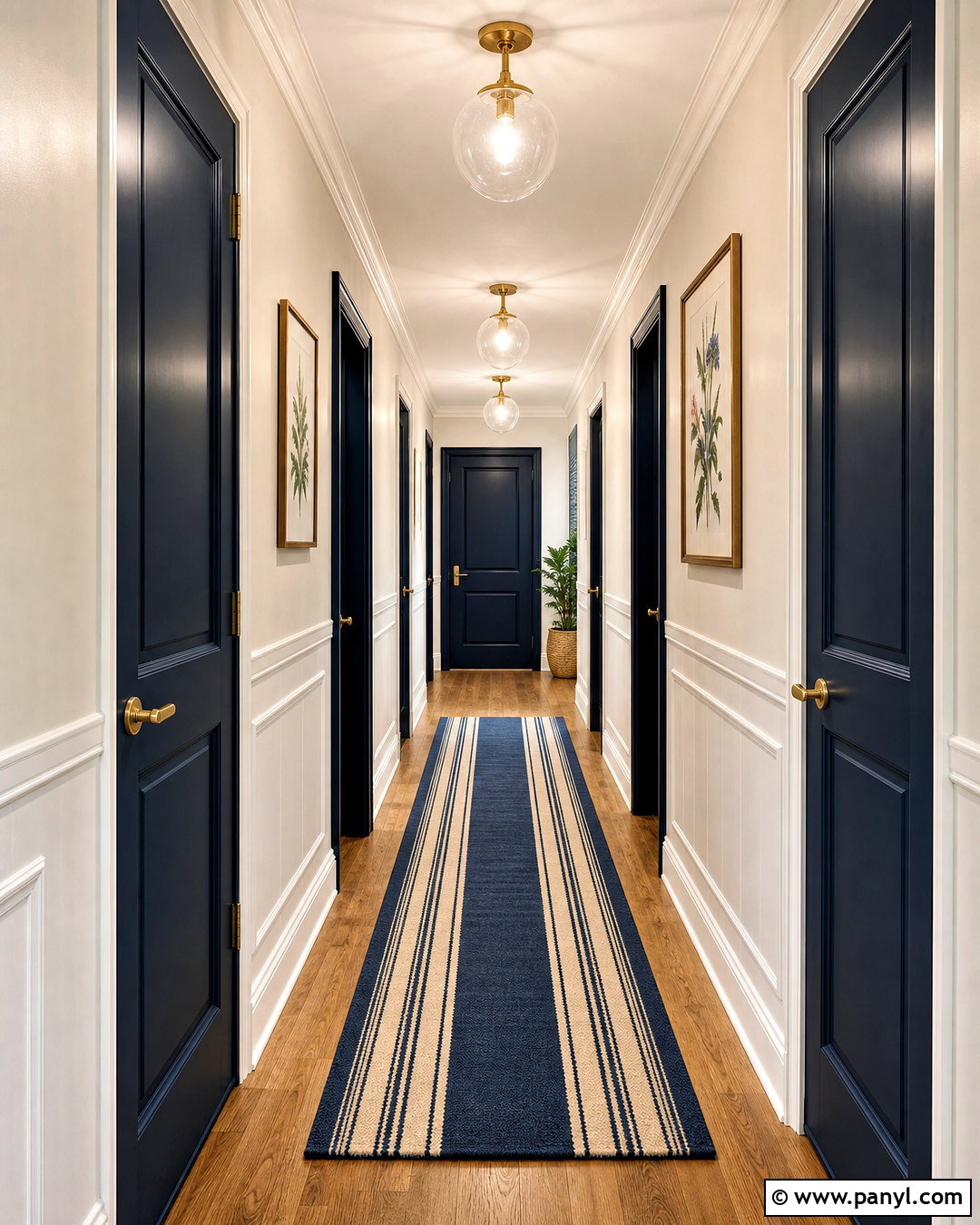
Deep navy doors offer the drama of a dark neutral with a richer and slightly more relaxed character. Surround them with warm white walls and trim so the blue appears clear rather than nearly black. Brushed brass knobs, hinges, or lever handles create a polished contrast, while medium-toned oak flooring keeps the hallway grounded. Add a striped runner containing navy, cream, and faded tan to connect the doors with the rest of the space. Coastal photography, simple botanical prints, or classic framed sketches work well as restrained wall decor. If the hallway is dim, select a navy with noticeable blue undertones and use bright overhead lighting. Painting every visible door the same shade will make the corridor feel orderly and thoughtfully designed.
6. Dusty Blue Hallway Doors
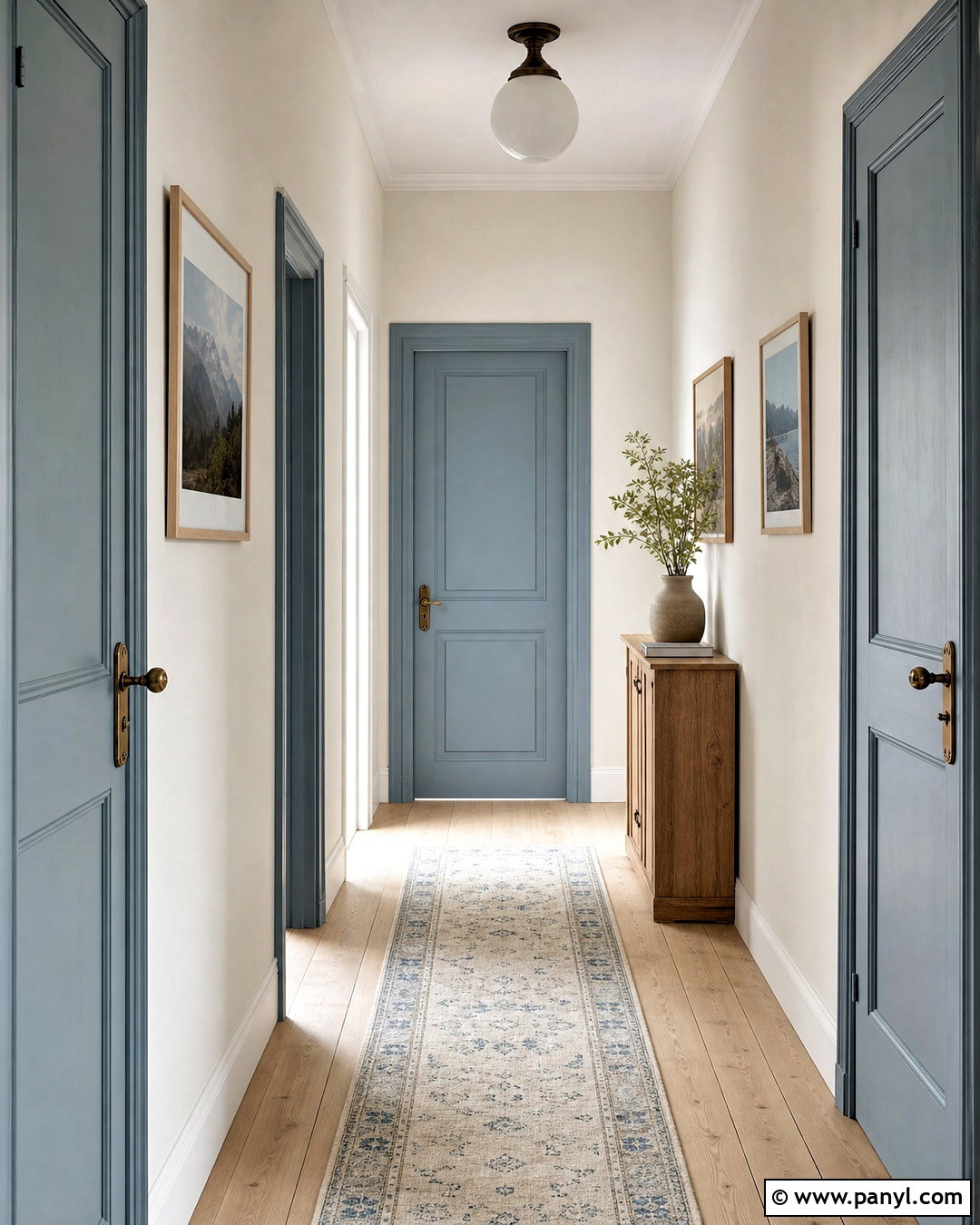
Dusty blue hallway doors create a calm transition between bedrooms, bathrooms, and shared living spaces. Look for a muted blue containing a touch of gray, which will feel more versatile than a bright pastel. Pair it with gentle off-white walls, matching off-white baseboards, and light oak or natural maple flooring. A cream runner with faded blue details helps repeat the door color without making the hallway overly themed. Choose aged brass or satin nickel hardware depending on the finishes used in nearby rooms. Finish the space with pale wood frames, soft landscape artwork, and a simple opal-glass ceiling light. This full combination feels particularly suitable for cottage, coastal, Scandinavian, and casual traditional interiors.
7. Slate Blue Hallway Doors
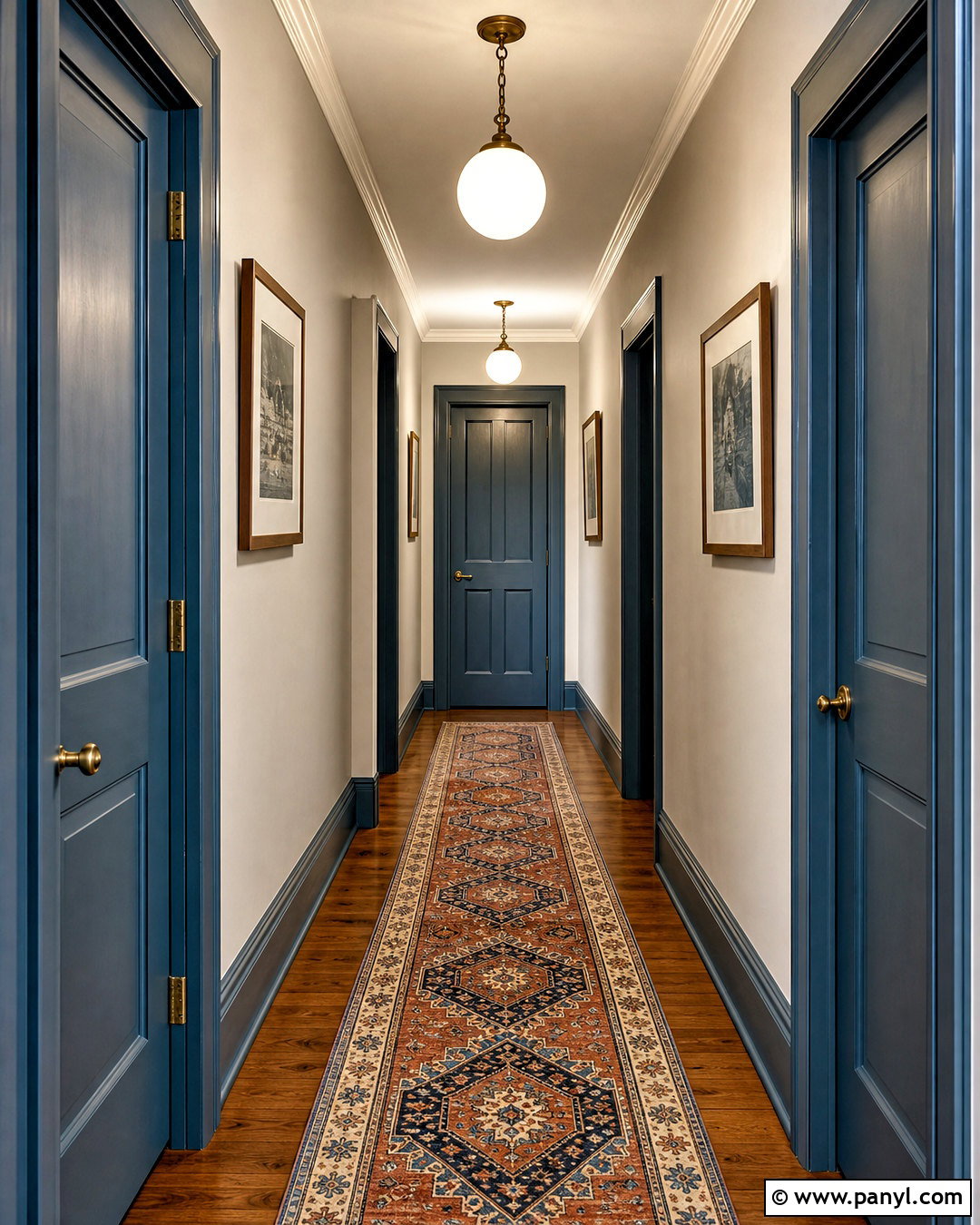
Slate blue doors provide stronger contrast than powdery blue while still feeling calm and livable. Use them in a hallway with warm gray walls, crisp ivory trim, and medium brown wood floors. Painting the frames slate blue creates bold architectural outlines and helps multiple doors read as one coordinated feature. Antique brass handles warm the cool color, while a vintage-style runner in rust, navy, and cream introduces a controlled pattern. Complete the hallway with walnut picture frames and a simple globe pendant or flush-mounted light. Slate blue can shift noticeably under different bulbs, so use consistent lighting throughout the corridor. The finished palette works beautifully in transitional homes where traditional details meet cleaner, more contemporary furnishings.
8. Sage Green Hallway Doors
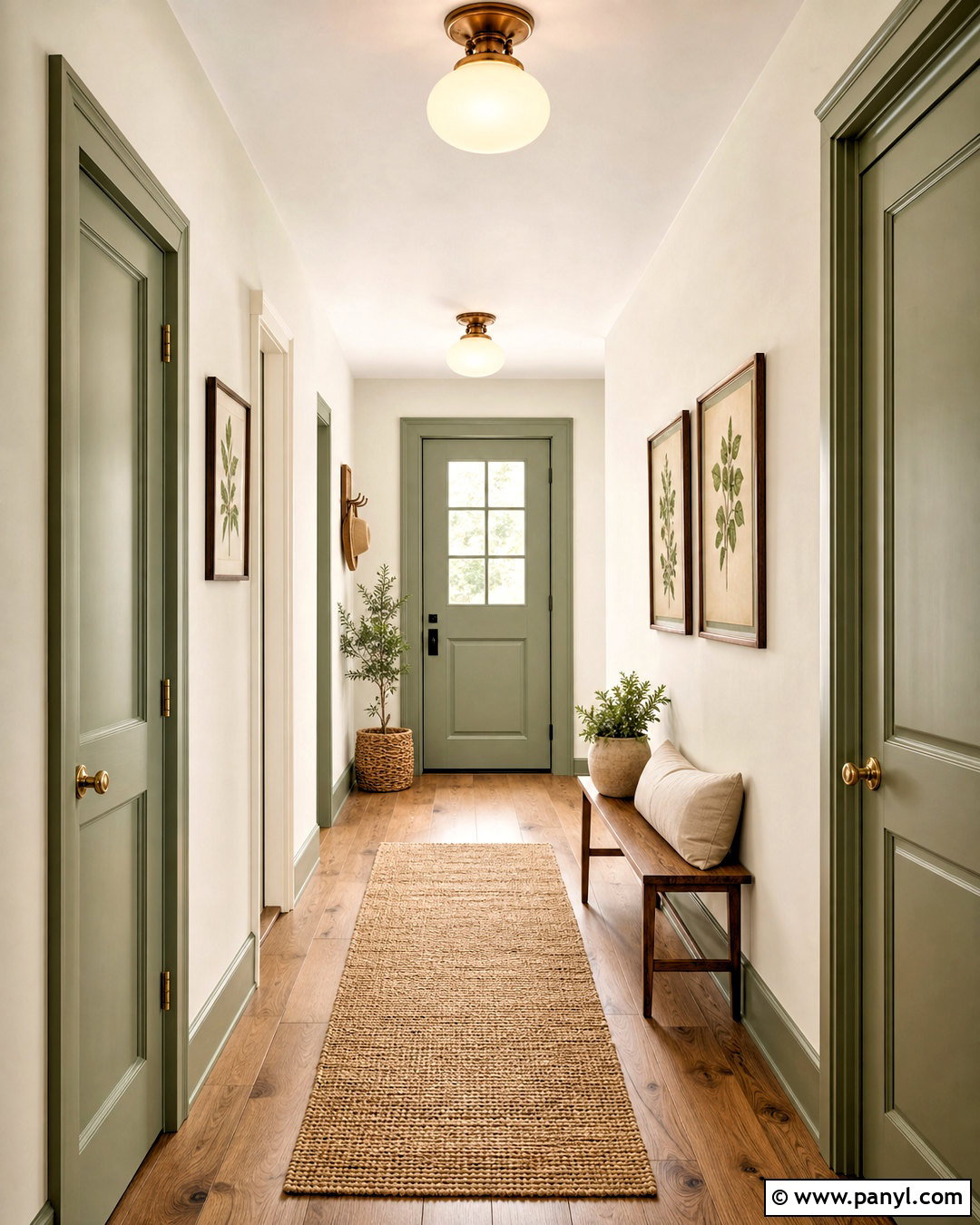
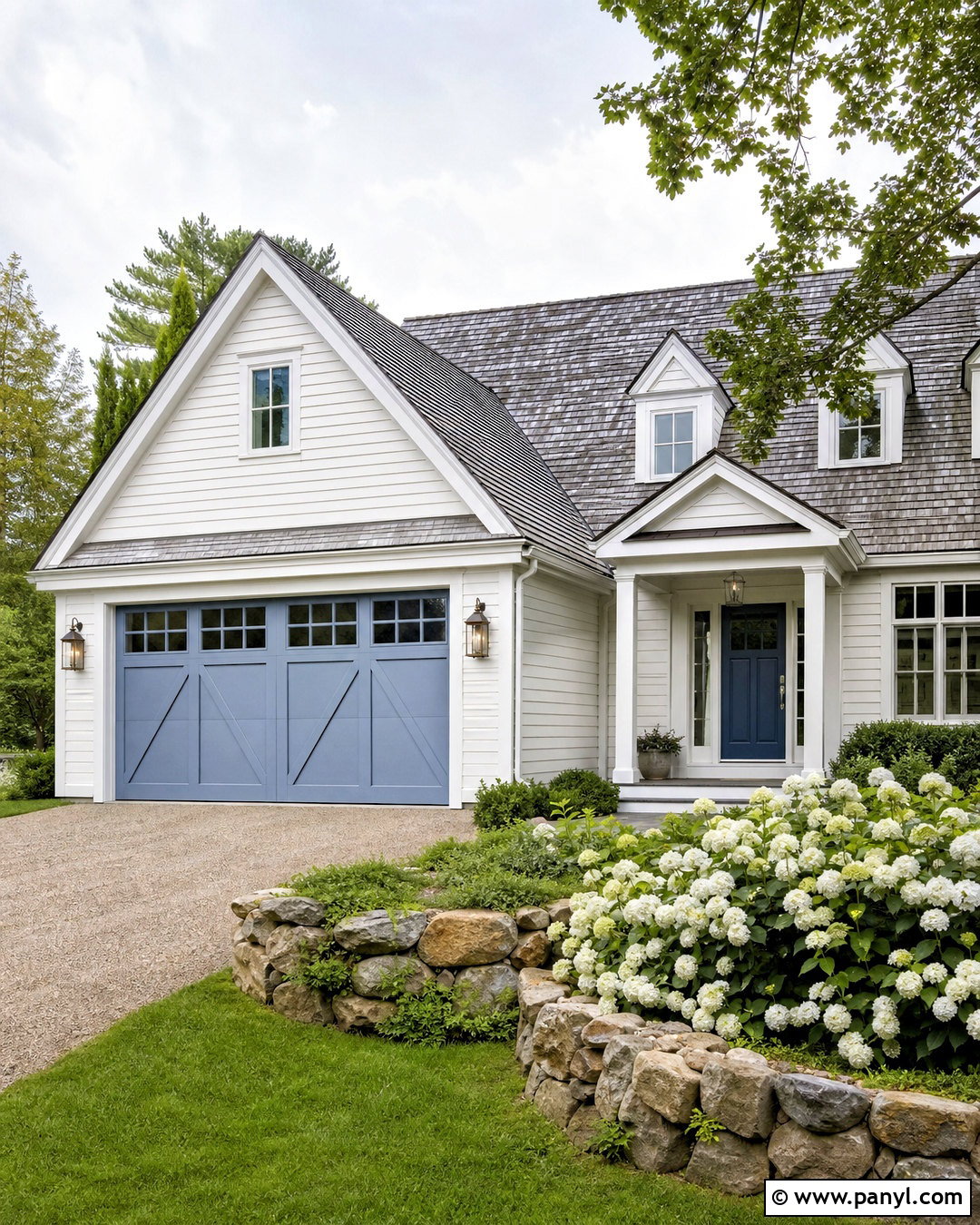
Sage green doors bring an organic quality to a hallway and coordinate naturally with wood, stone, and woven materials. Choose a soft, slightly gray sage rather than a bright herbal green. Warm ivory walls will keep the corridor light, while door frames painted in the same sage create a complete and purposeful installation. Pair the color with honey oak flooring, a jute runner, aged brass handles, and simple botanical artwork. A small wood bench or narrow console can be added at the widest point without blocking movement. Use cream ceramic lamps or frosted ceiling fixtures to maintain gentle brightness. This hallway scheme works across farmhouse, cottage, Craftsman, and relaxed contemporary homes without appearing heavily tied to one decorative theme.
9. Olive Green Hallway Doors
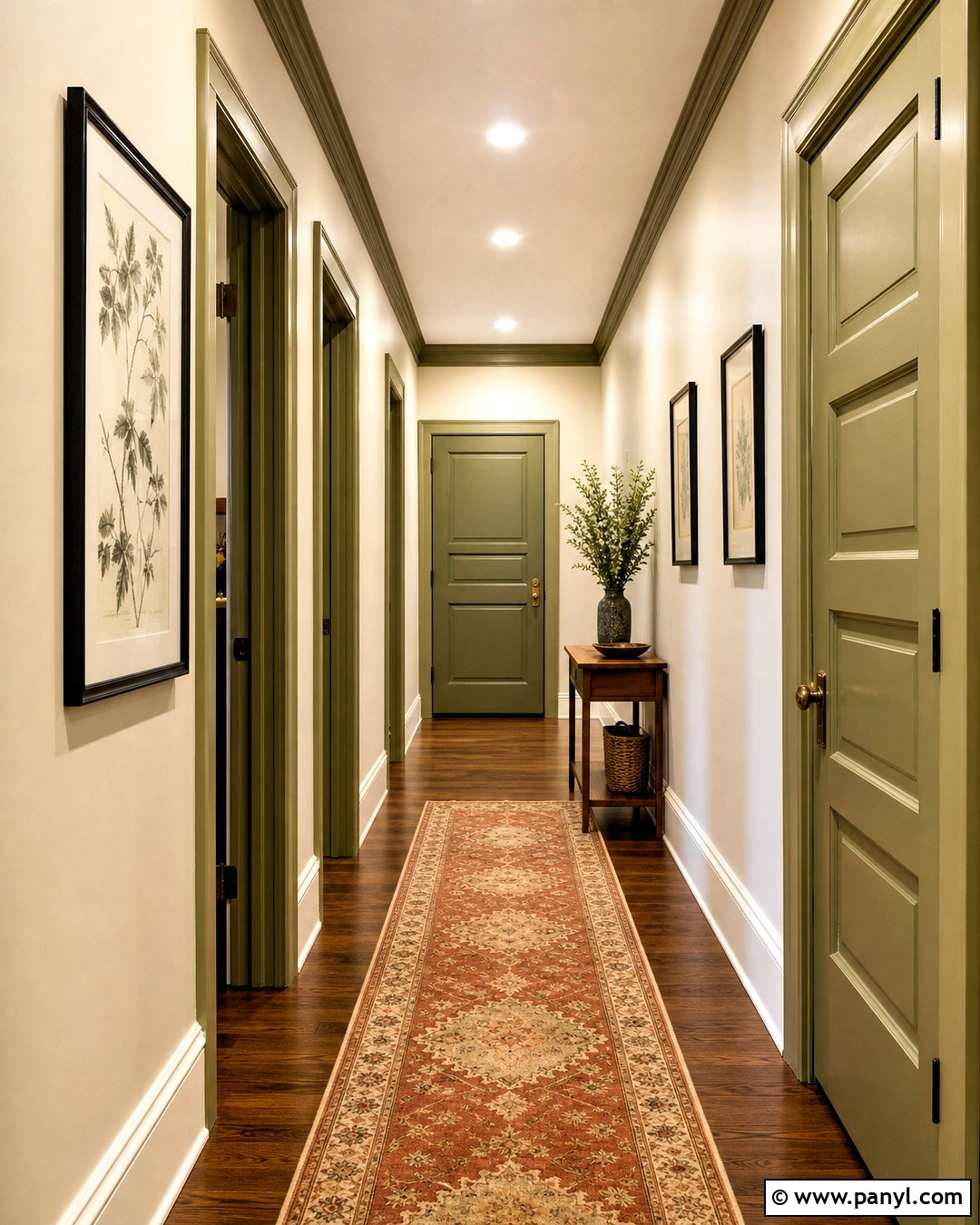
Olive green doors give a hallway a warm, grounded personality that works especially well with earthy interior palettes. Select a muted olive with brown or gray undertones and combine it with creamy beige walls. Paint the frames olive for continuity, then use off-white on the baseboards and ceiling to preserve openness. Walnut flooring, a faded rust-and-cream runner, and antique brass hardware enhance the color’s warmth. Add black-framed botanical drawings or vintage landscapes for subtle contrast. Because olive can look heavier in dark corners, install evenly spaced ceiling lights and keep surrounding surfaces relatively pale. The full look feels collected and substantial, making it a strong choice for traditional, Mediterranean, Craftsman, or nature-inspired homes.
10. Forest Green Hallway Doors
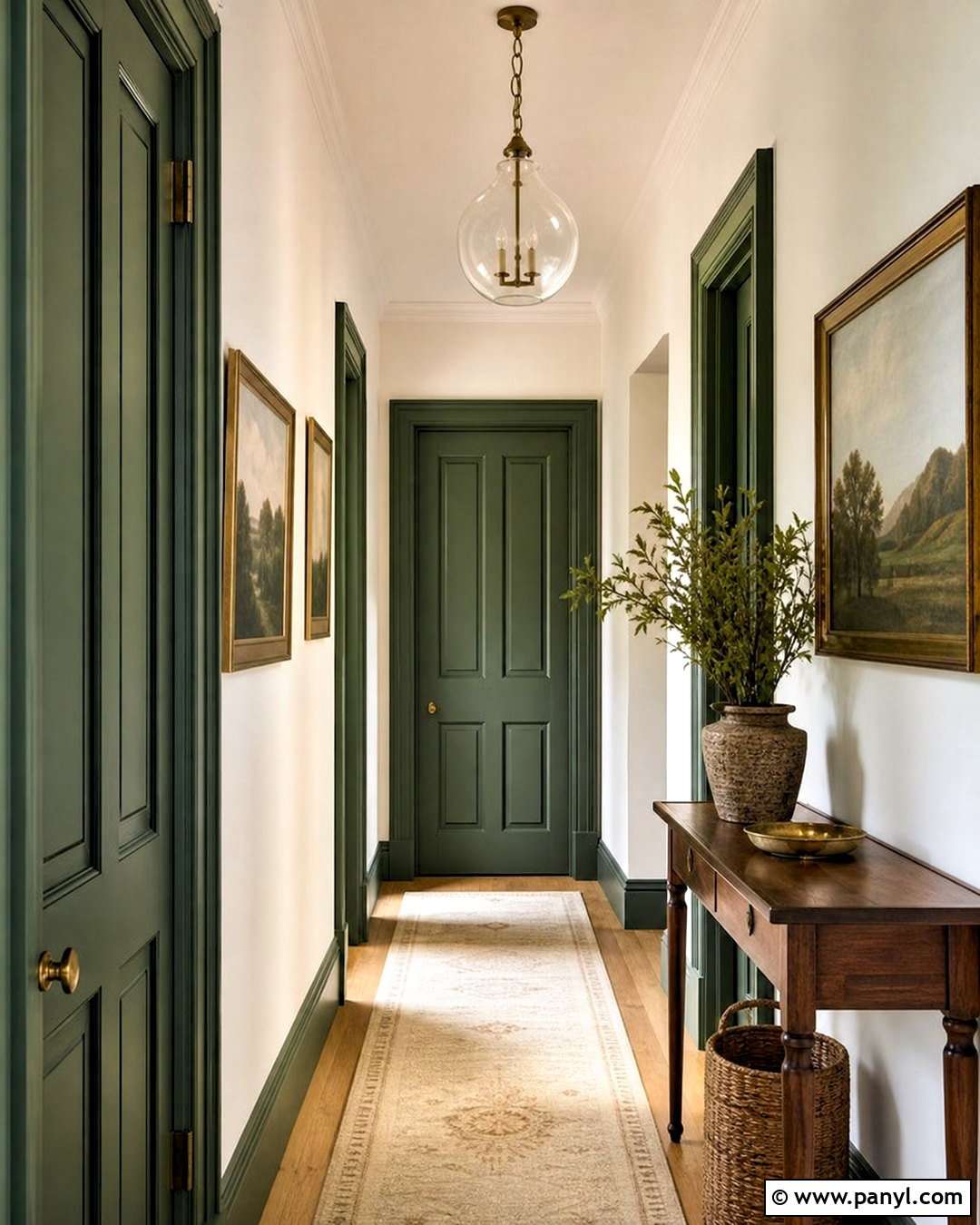
Forest green doors make a striking architectural statement when the rest of the hallway remains controlled and bright. Place the deep green against warm white walls, then repeat the color on the frames for a seamless built-in appearance. Light oak flooring and an ivory wool runner prevent the space from becoming visually heavy. Choose unlacquered brass or aged bronze handles to complement the green’s natural richness. A few framed landscapes, a narrow wooden console, and a clear-glass pendant complete the design without competing with the doors. In smaller hallways, use forest green on the doors only and keep the trim white. Strong lighting will reveal the green undertones and stop the paint from appearing flat or black.
11. Teal Hallway Doors
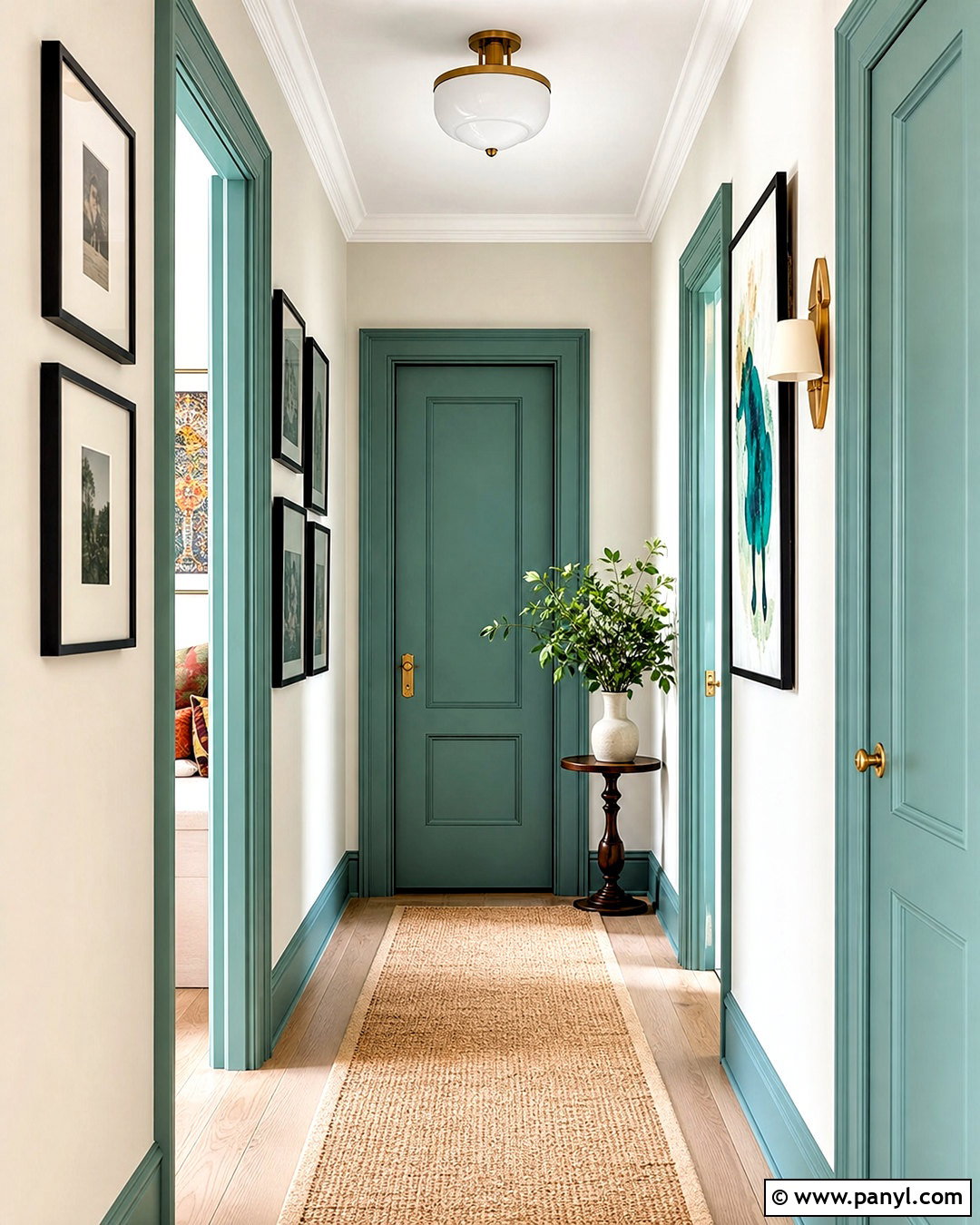
Teal hallway doors deliver noticeable color while maintaining enough depth to feel refined. A muted blue-green shade is generally easier to coordinate than a highly saturated turquoise. Pair teal doors and frames with soft cream walls, pale oak flooring, and a low-contrast natural runner. Warm brass hardware highlights the green undertones, while black accents add definition through picture frames or a compact wall sconce. Artwork containing small amounts of teal, clay, and ivory will connect the full palette. Keep the ceiling and baseboards light to balance the stronger door color. This design works best when teal appears elsewhere in the home through upholstery, tile, or accessories, allowing the hallway to provide a natural transition between connected rooms.
12. Pale Blush Hallway Doors
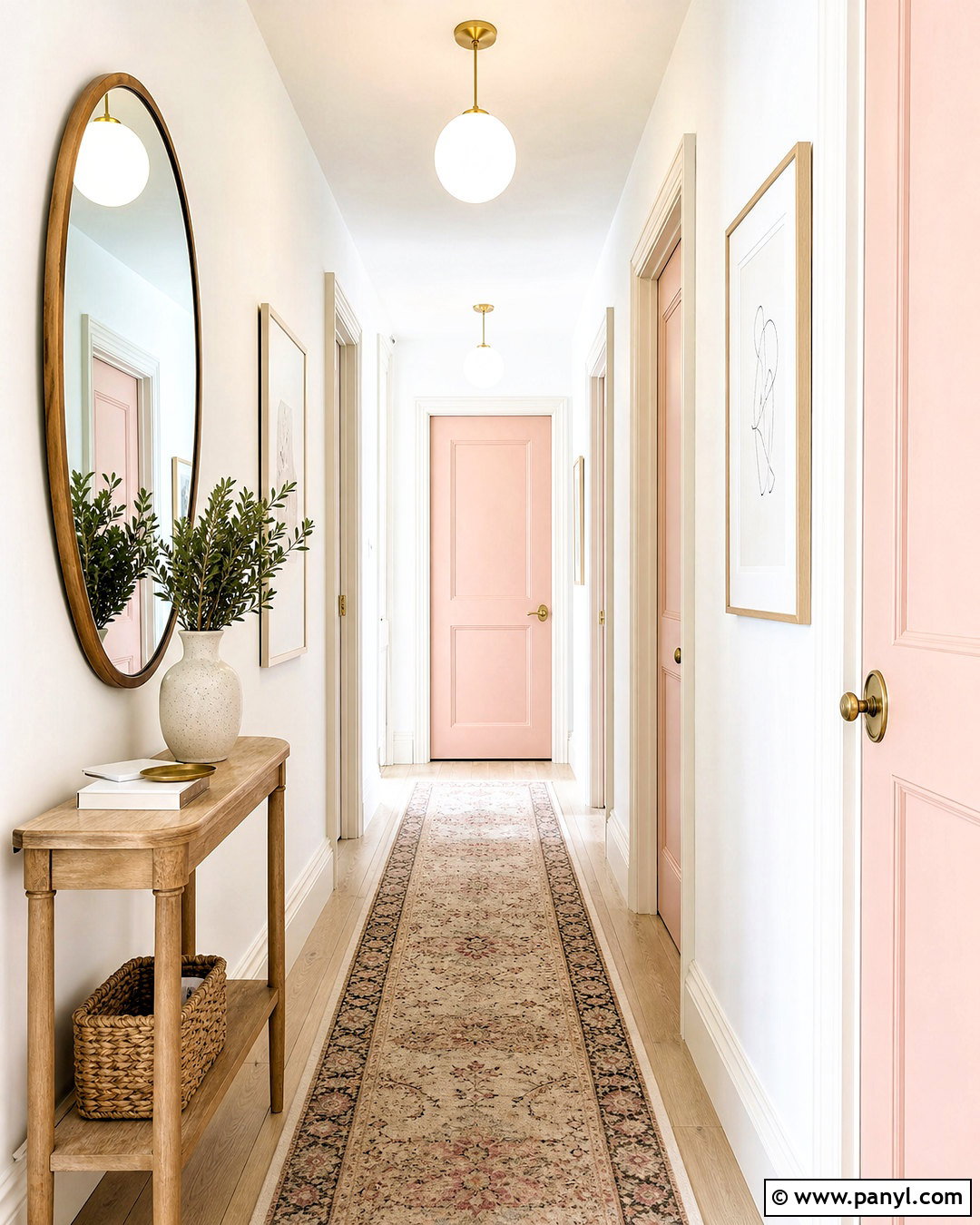
Pale blush doors can soften a plain hallway without making it look overly sweet or decorative. Choose a dusty pink with beige or gray undertones, then pair it with warm white walls and understated ivory trim. Light oak or whitewashed wood flooring supports the airy palette, while a runner in cream, taupe, and faded rose adds quiet continuity. Use aged brass handles and opal-glass ceiling lights for warmth. Minimal line drawings, abstract prints, or a rounded wood mirror keep the hallway modern. Blush changes considerably throughout the day, so test it beside both natural and artificial light. The finished design suits contemporary, vintage-inspired, cottage, and eclectic homes that favor gentle color over high contrast.
13. Terracotta Hallway Doors
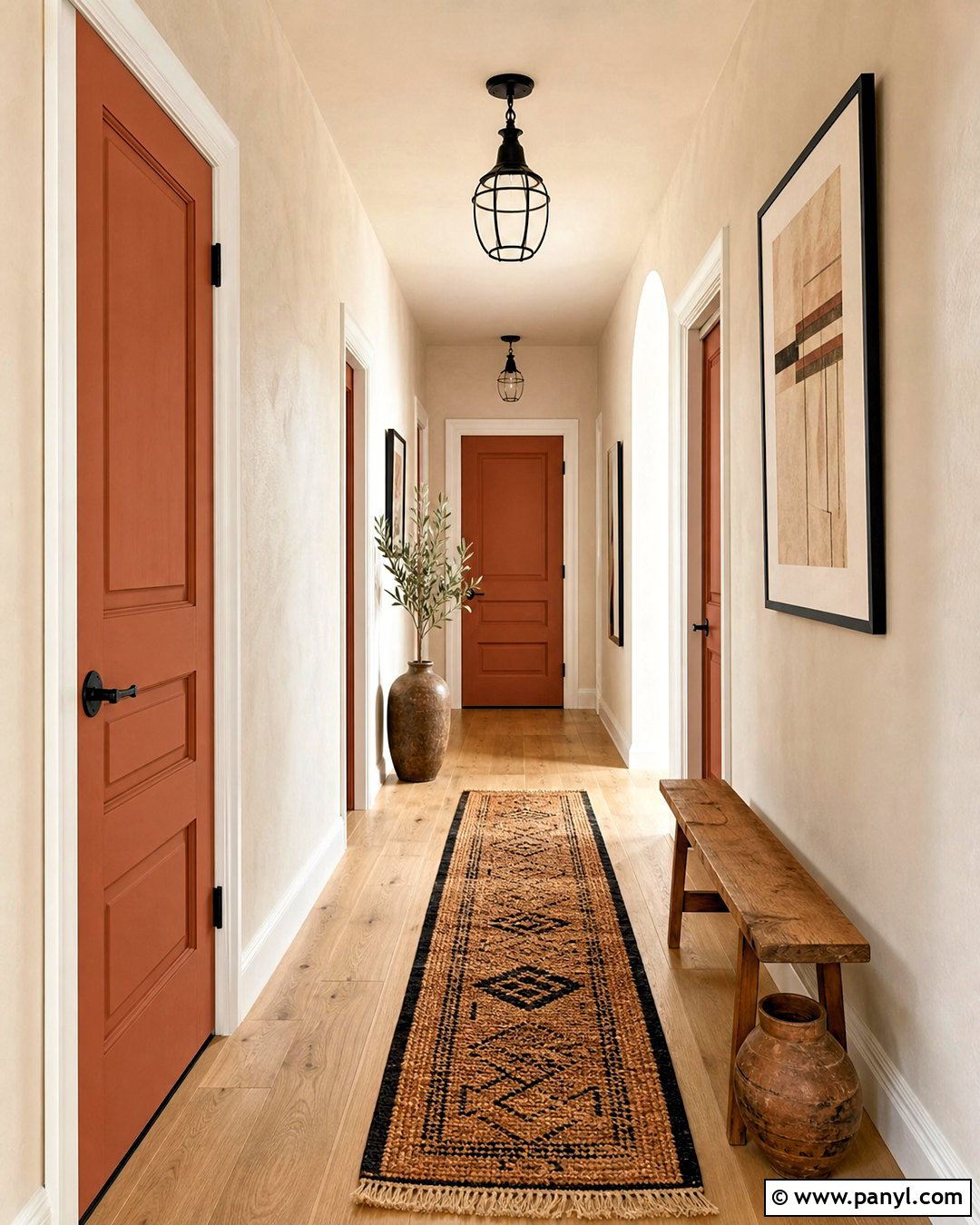
Terracotta hallway doors create a warm, sunbaked look that makes a transitional space feel inviting and memorable. Use a softened clay shade rather than a vivid orange, especially when several doors are visible at once. Pair it with creamy plaster-colored walls, warm white trim, and natural oak or limestone-look flooring. Dark bronze hardware gives the doors definition, while a woven runner containing sand, rust, and muted black ties the surfaces together. Add simple pottery, graphic artwork, or a narrow wood bench where space allows. Bright white lighting keeps the earthy palette fresh and accurate. This complete hallway works particularly well with Southwestern, Mediterranean, organic modern, and relaxed eclectic interiors.
14. Burgundy Hallway Doors
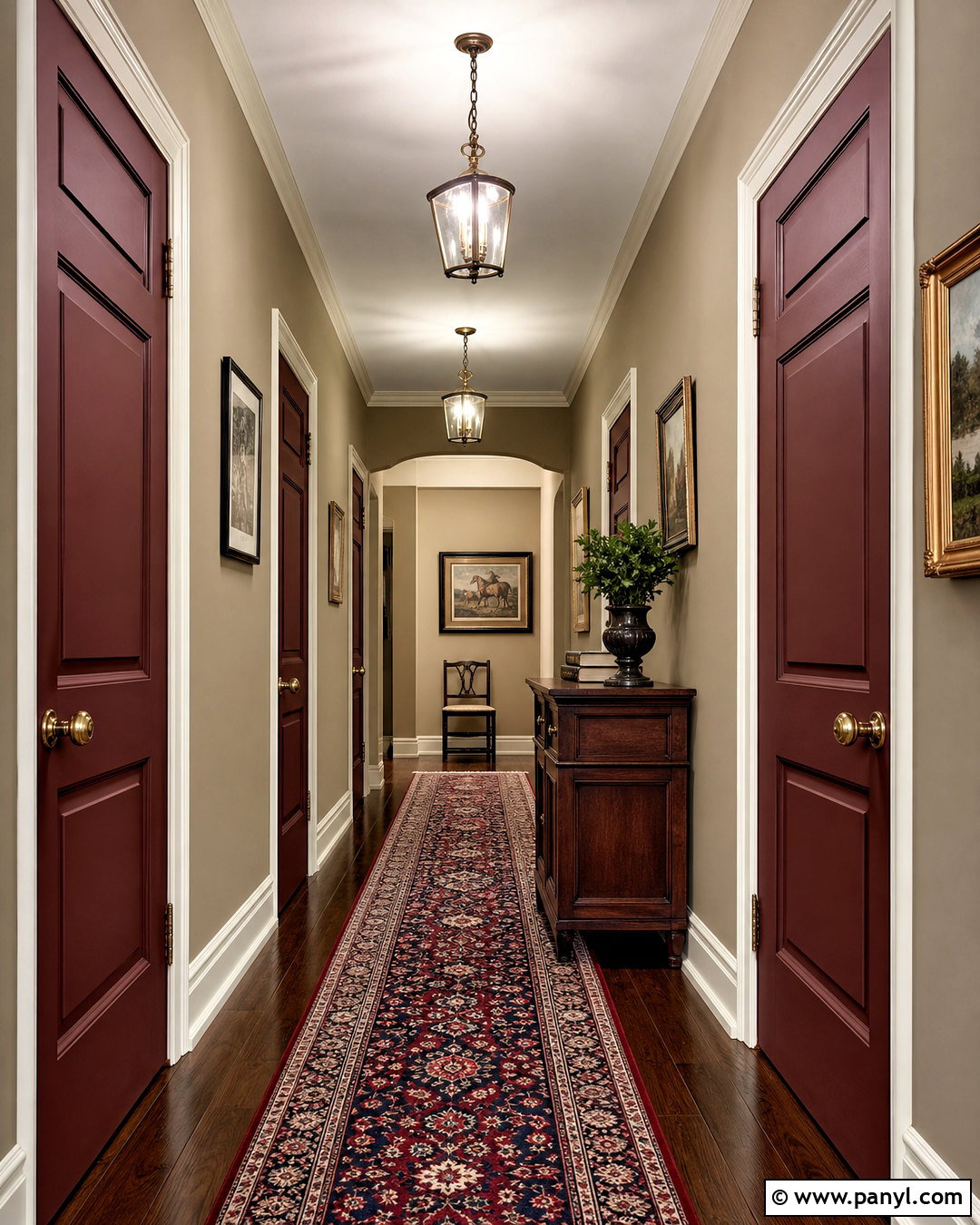
Burgundy doors introduce deep, sophisticated color that can highlight traditional paneling and handsome hardware. Choose a muted red with brown or plum undertones rather than a bright primary red. Warm taupe walls and creamy baseboards create a softer contrast, while dark walnut flooring supports the richness of the doors. Antique brass knobs, framed vintage prints, and a Persian-style runner in burgundy, navy, and beige complete the layered look. Keep the ceiling light and use several fixtures if the corridor is long. For a more modern treatment, reduce the pattern and add a simple black-framed mirror. Burgundy is bold, so repeating it on every hallway door creates greater visual order than using it on only one random surface.
15. Muted Mustard Hallway Doors
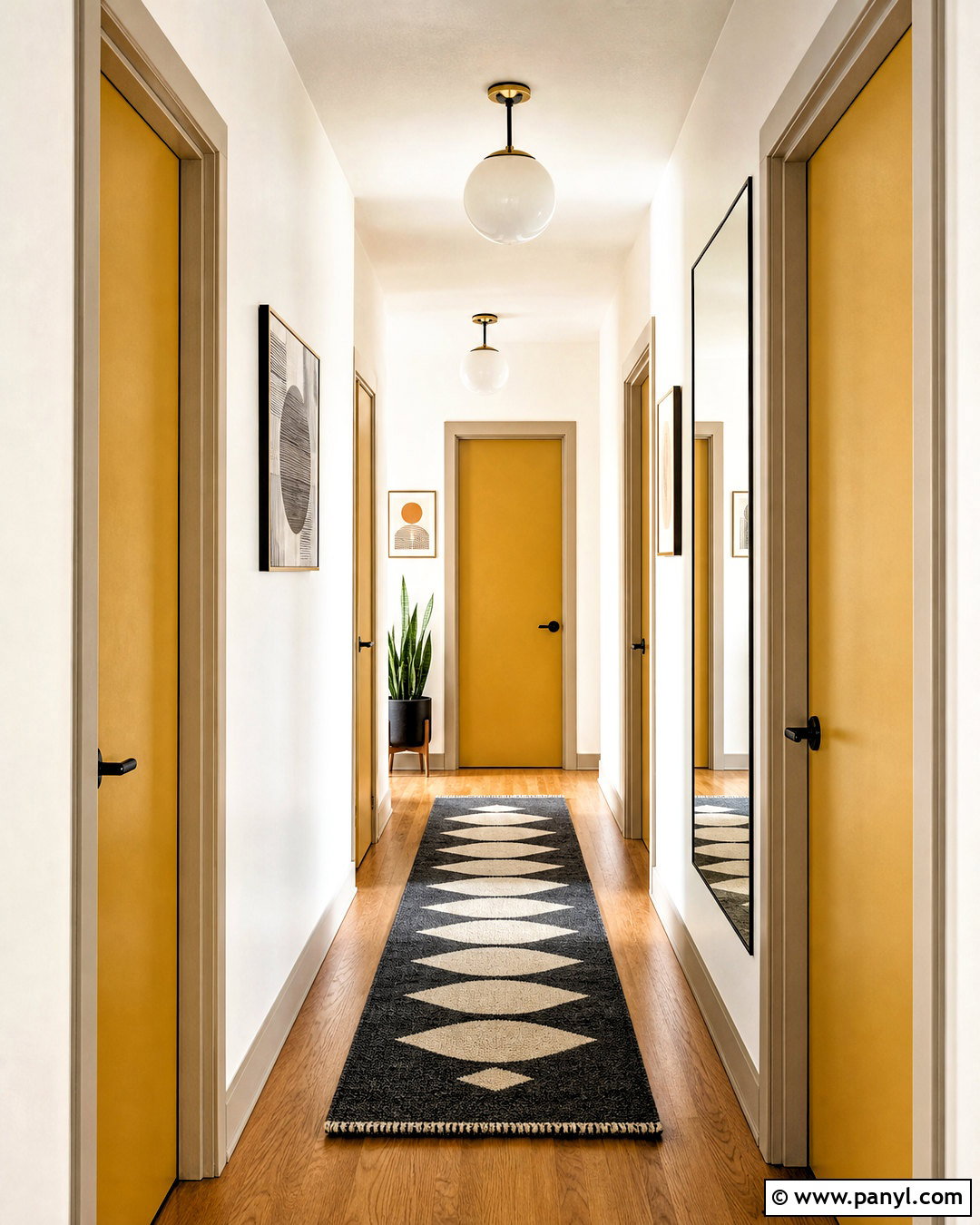
Muted mustard doors bring warmth and energy to a hallway without the intensity of clear yellow. Look for a shade containing ocher, brown, or olive undertones, then combine it with soft white walls and warm greige trim. Natural oak floors, a charcoal-and-cream runner, and matte black handles keep the yellow grounded. Repeat mustard sparingly through one framed print or a small ceramic accent rather than matching every accessory. Bright overhead lighting helps the color remain cheerful in a windowless passage. This coordinated palette is particularly effective in midcentury modern, eclectic, and contemporary homes. If several rooms open from the hallway, make sure the mustard complements the visible wall colors before painting all the doors.
16. Mushroom Brown Hallway Doors
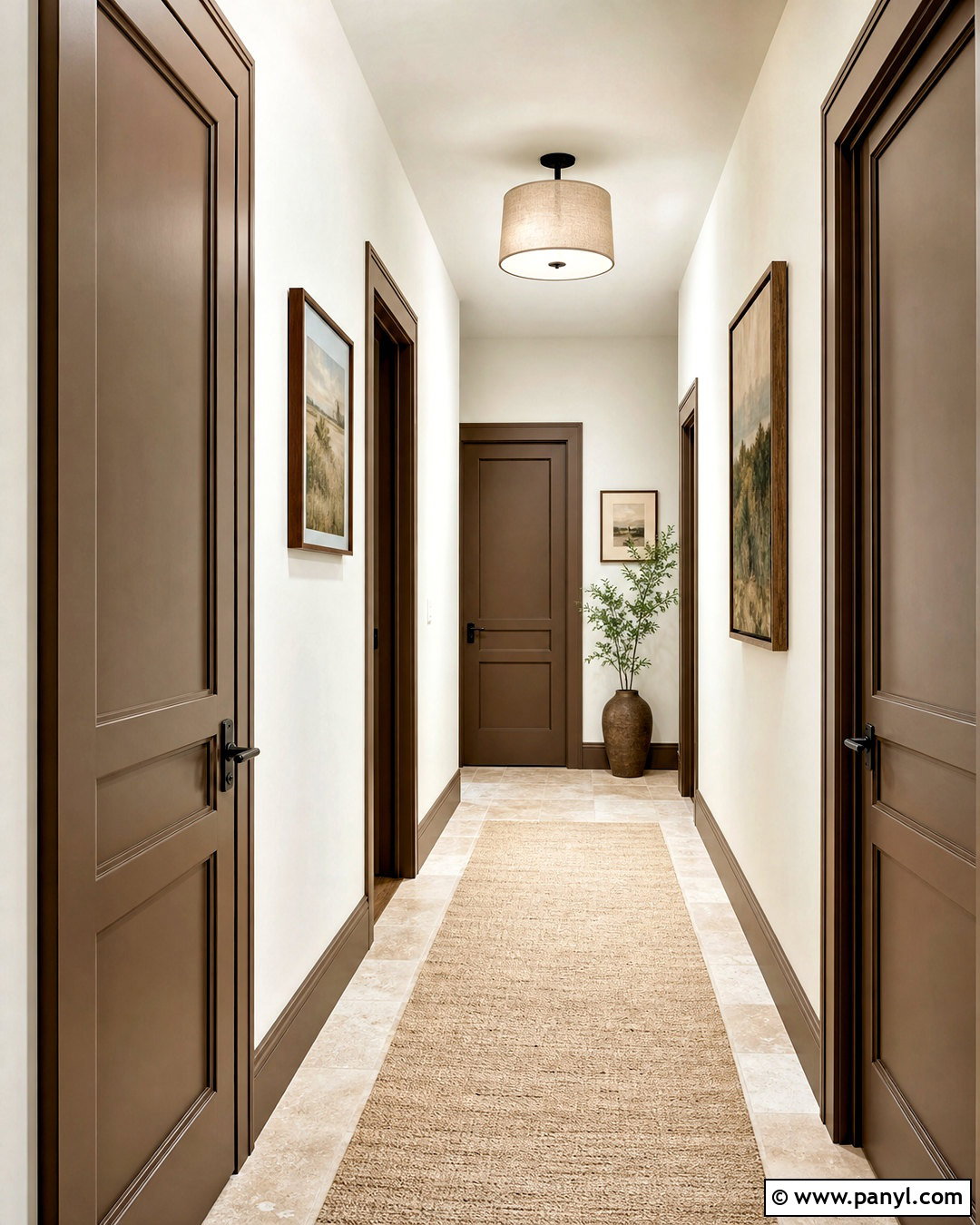
Mushroom brown doors create a quiet, tailored hallway that feels warmer than gray and lighter than chocolate brown. Select a medium taupe-brown with balanced undertones, especially when pairing it with beige stone or wood flooring. Use creamy white on the walls and ceiling, then continue mushroom across the frames for a clean, architectural effect. A textured ivory runner, bronze handles, and walnut picture frames deepen the natural palette. Add a simple linen-shaded ceiling fixture and understated landscape art to maintain the relaxed mood. Mushroom is an excellent bridge between warm and cool adjoining rooms because it contains elements of both gray and brown. The result works well in organic modern, traditional, and transitional homes.
17. Chocolate Brown Hallway Doors
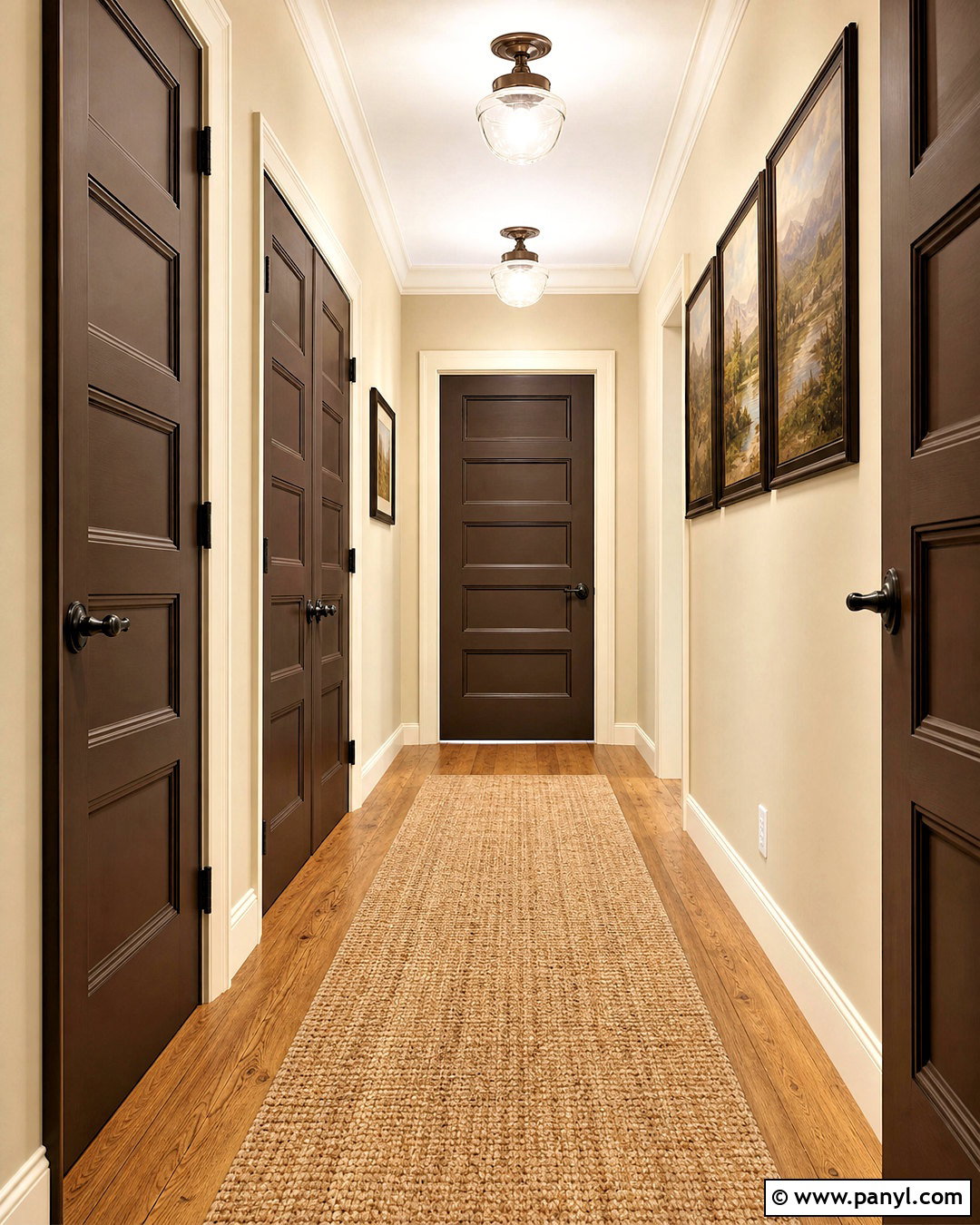
Chocolate brown doors offer the appearance of dark stained wood while providing the uniform coverage of paint. Choose a rich brown with warm, earthy undertones and apply it to paneled doors and frames. Pair the deep color with pale beige walls, creamy baseboards, and honey-toned oak flooring to keep the hallway welcoming. Antique bronze hardware, a woven tan runner, and traditional landscape artwork build a cohesive, layered design. Use bright ceiling fixtures to prevent the brown from absorbing too much light. This look works particularly well when nearby rooms contain leather, dark wood furniture, or natural stone. A satin finish gives the painted doors gentle depth and is easier to maintain than a completely matte surface.
18. Soft Lavender Hallway Doors
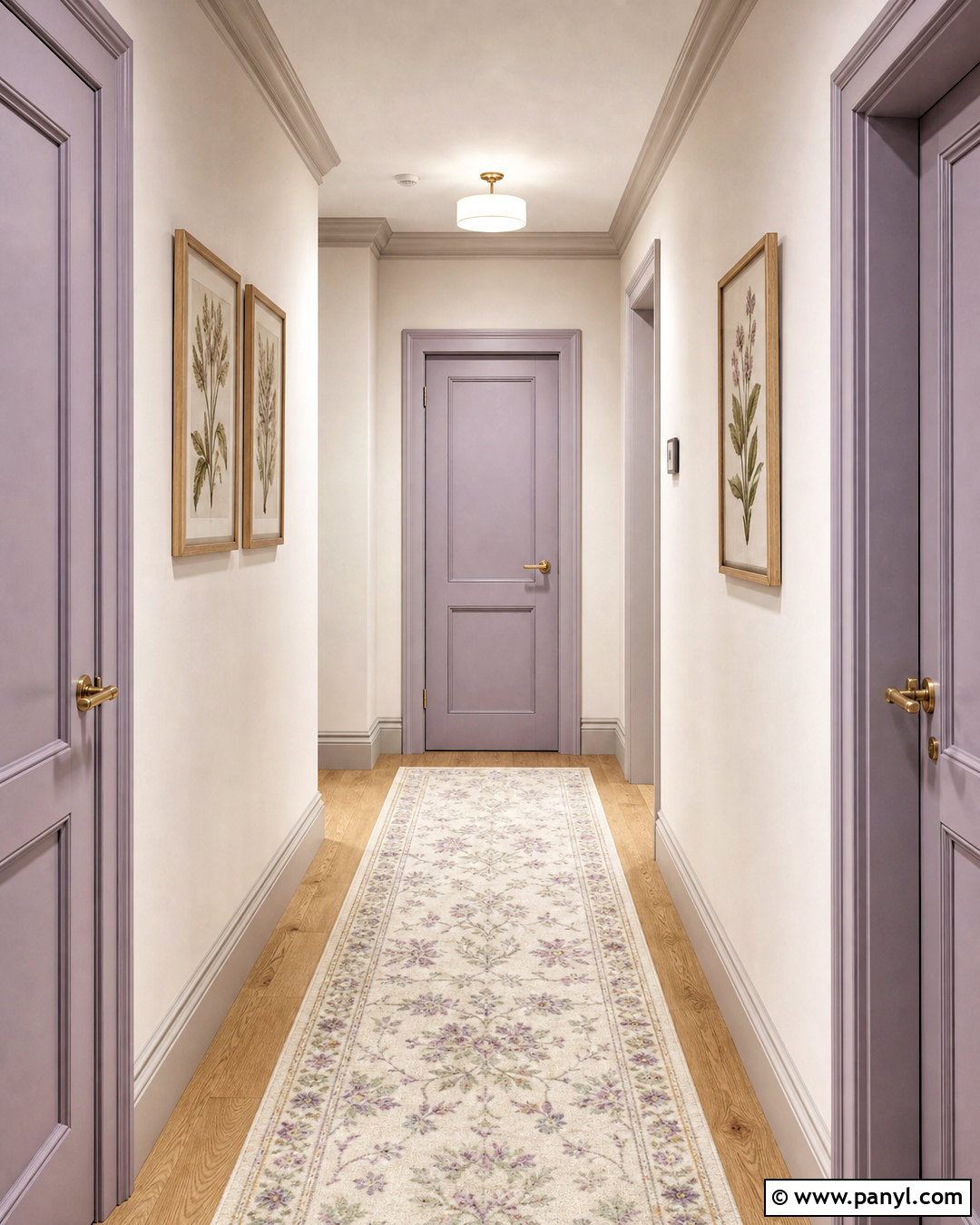
Soft lavender hallway doors add an unexpected hint of color while remaining calm enough for a shared corridor. Select a pale, gray-based lavender instead of a sugary purple. Pair it with warm ivory walls, light greige trim, and white oak flooring for an airy, balanced foundation. Satin nickel or brushed brass handles can both work, depending on the hallway’s lighting and adjoining finishes. Add a cream runner with subtle lavender and sage details, along with delicate botanical prints in pale wood frames. Keep furniture minimal so the door color remains clear. This complete scheme suits cottages, contemporary homes, and softly traditional interiors. Sampling is essential because lavender can appear blue, pink, or gray under different bulbs.
19. Soft Peach Hallway Doors
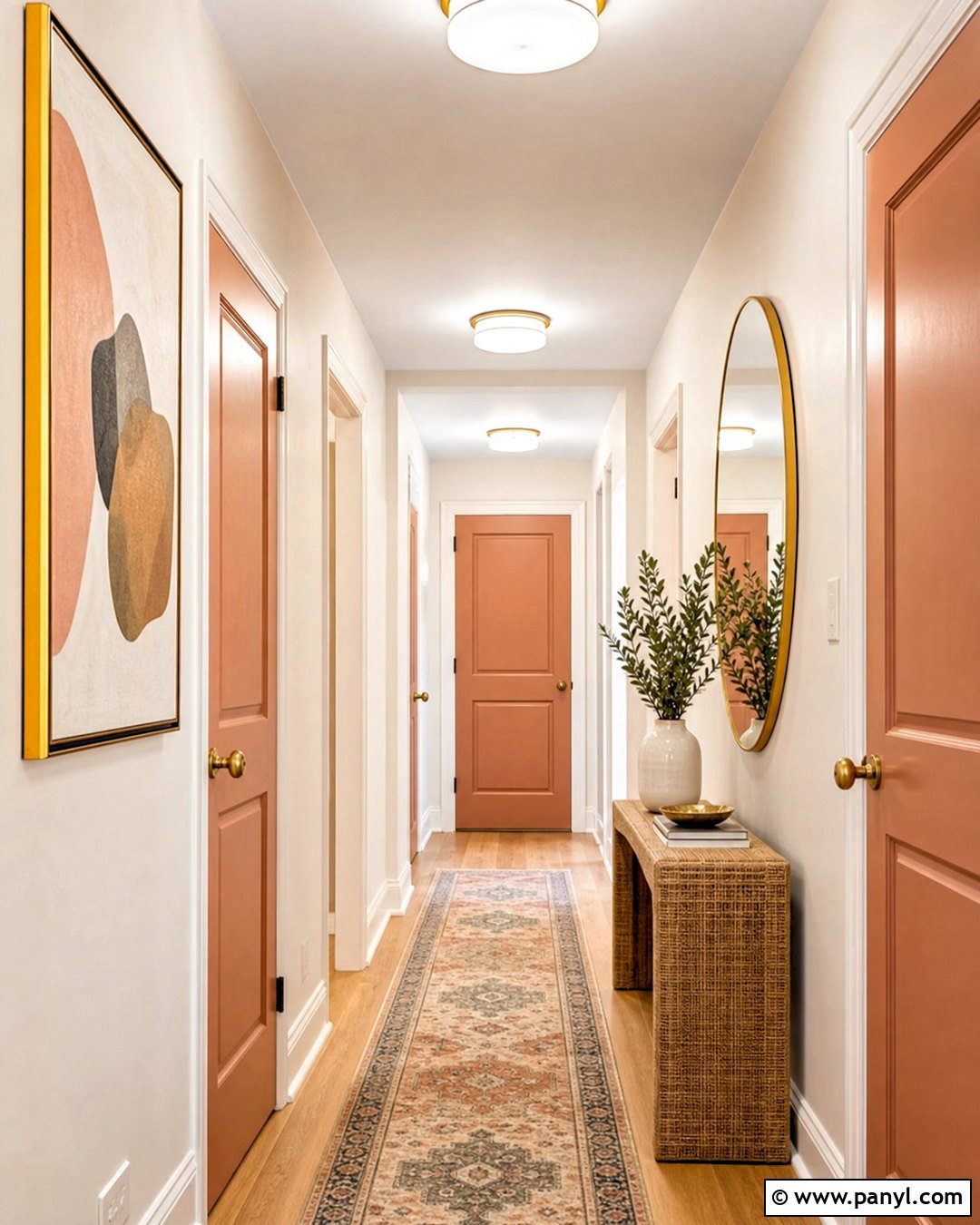
Soft peach doors can brighten a dark hallway and create a gentle glow around otherwise ordinary openings. Choose a muted peach with beige or clay undertones rather than a bright coral shade. Warm white walls, matching white baseboards, and pale oak floors provide a light background. Use aged brass handles and a cream runner with touches of terracotta, dusty blue, or tan to build a balanced palette. A rounded mirror and a few abstract prints complete the hallway without introducing excessive detail. Bright ceiling lights are important because weak yellow bulbs can make peach look orange. This welcoming combination works especially well in bungalow, cottage, eclectic, and warm contemporary homes with similar earthy colors in adjacent rooms.
20. Color-Matched Hallway Doors
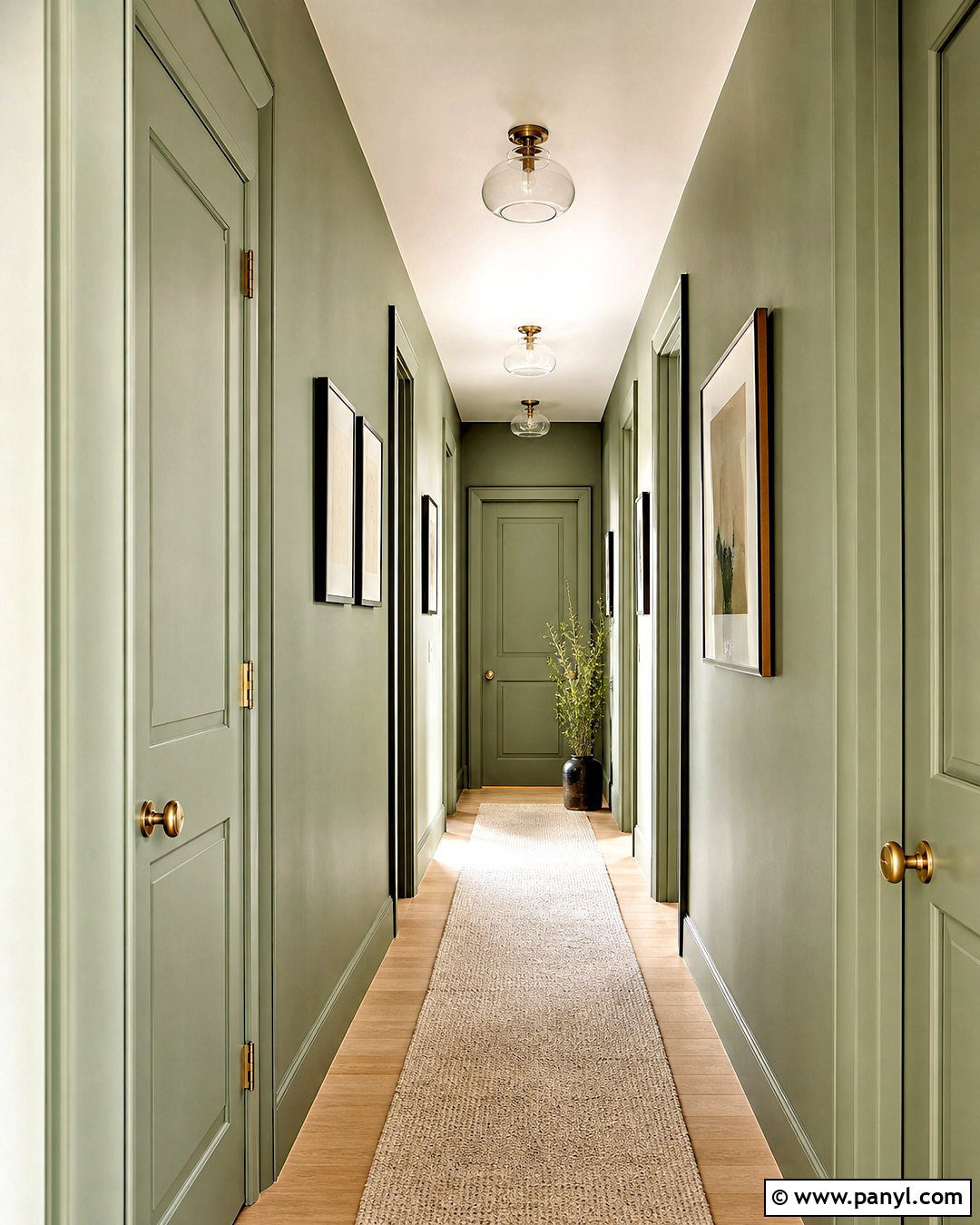
Painting hallway doors the same color as the walls creates a continuous, streamlined appearance that can visually calm a narrow corridor with many openings. Choose a versatile shade such as warm greige, dusty blue, soft sage, or muted taupe, then apply it to the walls, doors, and frames. Keep the ceiling slightly lighter and use simple hardware in brass, black, or bronze for controlled contrast. A narrow runner, evenly spaced artwork, and unobtrusive ceiling lights complete the coordinated design. This approach allows panel details to appear through light and shadow rather than contrasting paint. Use the same sheen on all doors, but select a more durable satin or semi-gloss formula so frequently touched surfaces remain washable and polished.
Conclusion:
Choosing between these 20 hallway door colors becomes easier when you consider the entire passage rather than viewing each door separately. Walls, frames, baseboards, flooring, hardware, lighting, and nearby rooms should all support the selected shade. Warm whites and greiges create gentle continuity, while navy, forest green, burgundy, and black provide stronger definition. Earthy shades such as sage, terracotta, mushroom, and olive add warmth without relying on traditional neutrals. Always test large paint samples directly on the doors and observe them during the day and evening. With a coordinated palette and durable finish, painted hallway doors can transform an overlooked connecting space into a polished and memorable part of your home.

Related Ideas and Inspiration:
Leave a Reply