
Cream kitchens feel warmer than bright white spaces while staying light, flexible, and timeless. The best cream kitchen colour schemes go beyond choosing cabinet paint. They coordinate wall color, countertops, backsplash, flooring, hardware, lighting, and natural materials into one balanced design. Because cream has yellow, beige, or subtle gray undertones, every supporting finish should relate to that warmth. Crisp contrast can make cream feel contemporary, while earthy hues create a softer, more relaxed room. You can also use wood, stone, metal, and patterned tile to prevent a neutral palette from appearing flat. Whether you prefer classic Shaker cabinetry, streamlined slab doors, or an inviting farmhouse layout, the complete looks below offer practical inspiration. Explore these 20 cream kitchen colour schemes to find a combination that suits your home.

1. Cream And Warm White Kitchen
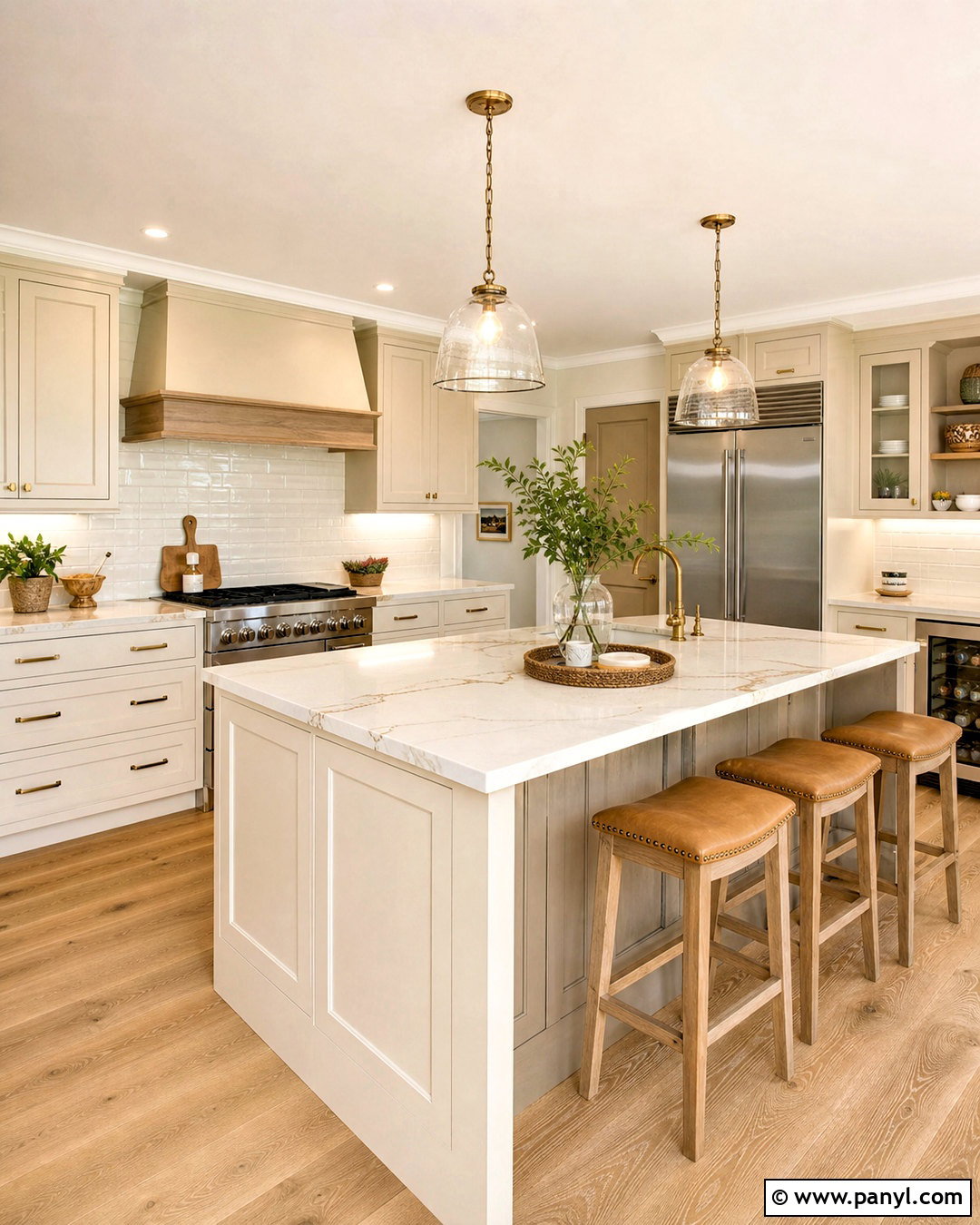
A cream and warm white palette creates a bright kitchen without the clinical feeling that sometimes comes with pure white. Use creamy Shaker cabinets around the room, then paint the walls a soft white with a faint beige undertone. White quartz countertops with delicate gold veining keep the workspace fresh and easy to coordinate. Continue the lighter color through a handmade subway tile backsplash, using warm white grout rather than cool gray. Natural oak flooring adds necessary depth beneath the pale surfaces. Choose brushed brass handles, a matching faucet, and simple glass pendants over the island. A few tan counter stools and woven accessories introduce texture. Keeping appliances integrated or stainless steel helps this calm, layered scheme remain clean and cohesive.
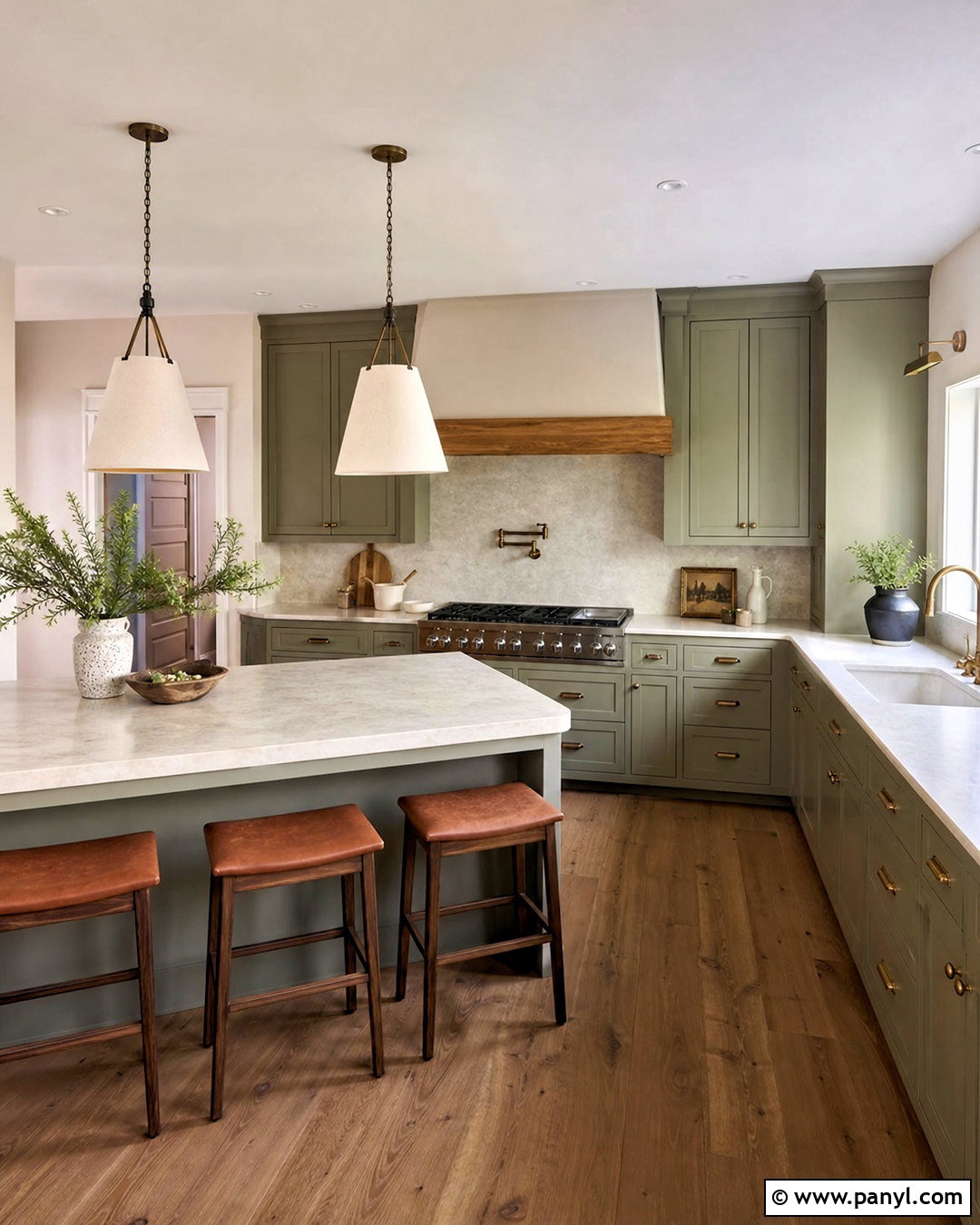
2. Cream And Sage Green Kitchen
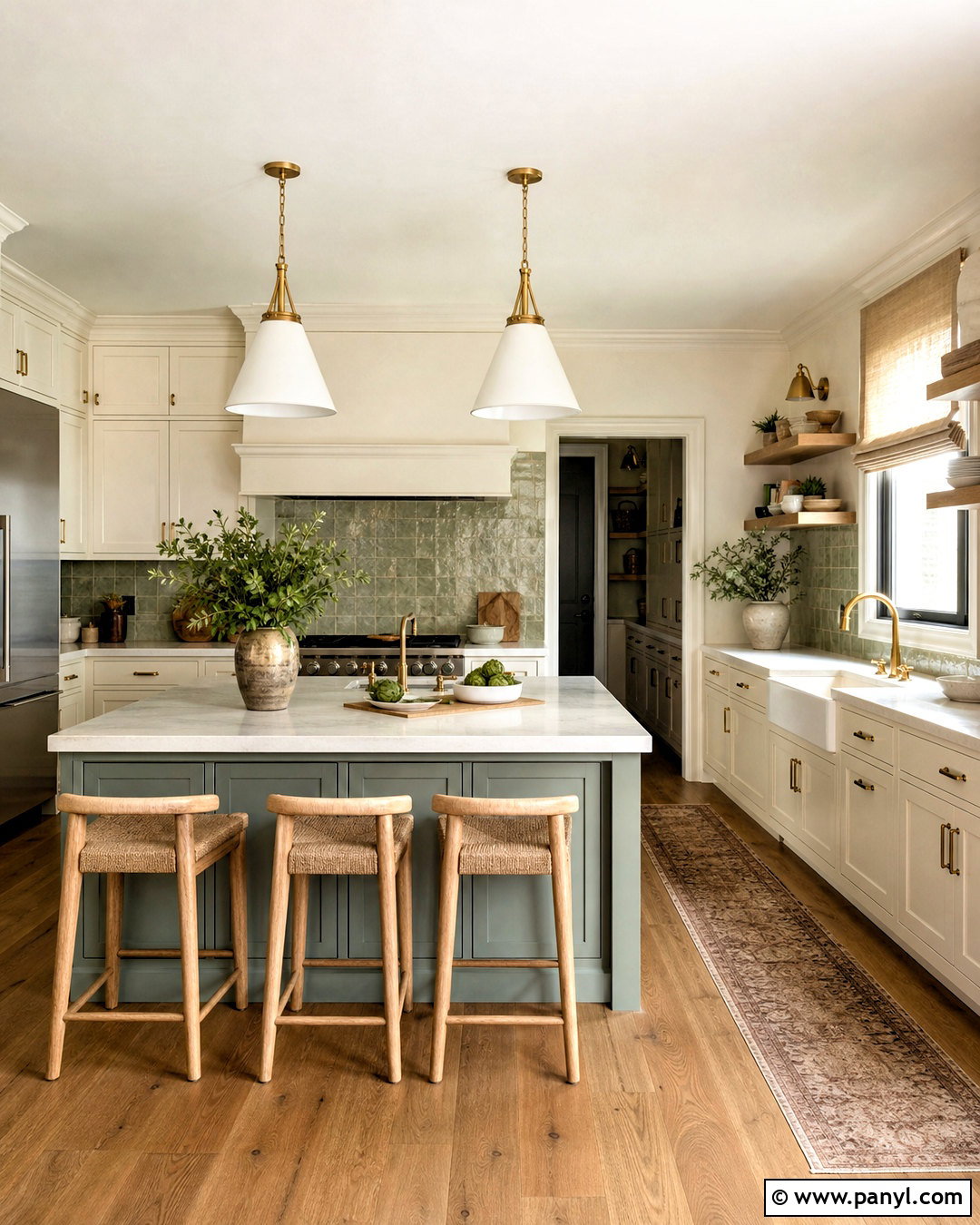
Imagine soft cream cabinets surrounded by the restful colors of a garden. Sage green works especially well on a central island, pantry wall, or lower cabinets because its muted warmth complements cream rather than overpowering it. Add ivory quartz countertops and a backsplash of irregular sage tiles to connect both cabinet colors. Medium oak flooring reinforces the natural character, while aged brass hardware provides a gentle glow. A freestanding wood table can replace a formal island in a smaller farmhouse kitchen. Paint remaining walls a light warm neutral so the green stays noticeable. Finish the room with linen blinds, ceramic planters, simple pendant lights, and open oak shelving. The completed kitchen feels organic, comfortable, and colorful without becoming overly rustic.
3. Cream And Navy Blue Kitchen
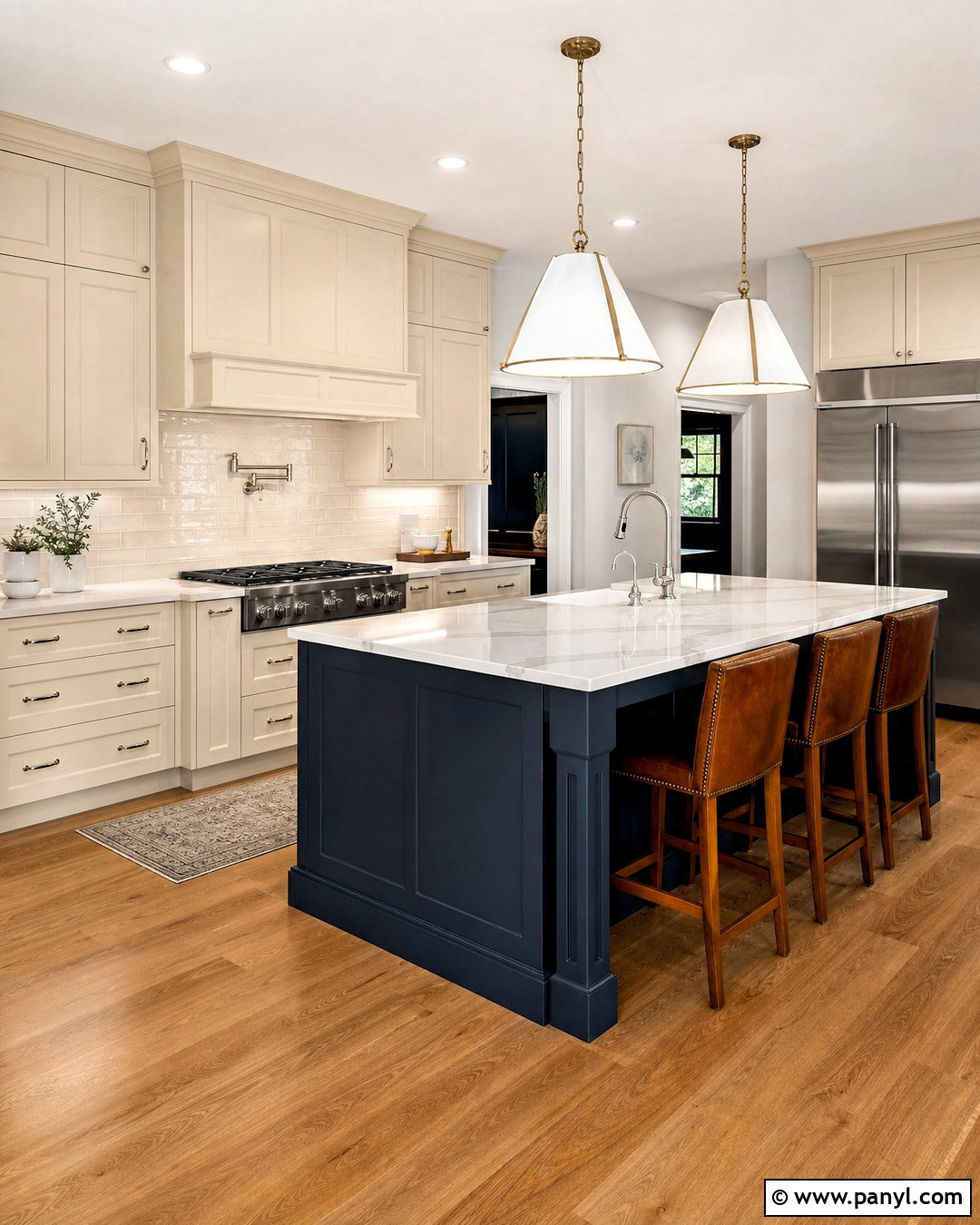
Would you like a cream kitchen with stronger definition? Deep navy blue delivers confident contrast while preserving a classic atmosphere. Keep the perimeter cabinets cream to brighten the edges of the room, then use navy on a substantial island with generous drawers and seating. White marble-look quartz counters can unite the two cabinet finishes, particularly when the veining includes warm beige or soft gray. Consider a glossy cream backsplash that reflects light toward the darker island. Warm oak floors and saddle-brown leather stools prevent the navy from feeling cold. Polished nickel hardware provides a tailored finish, although aged brass creates a warmer interpretation. Add two large white pendants above the island and keep wall colors understated, allowing the balanced cream-and-blue cabinetry to become the kitchen’s main feature.
4. Cream And Charcoal Gray Kitchen
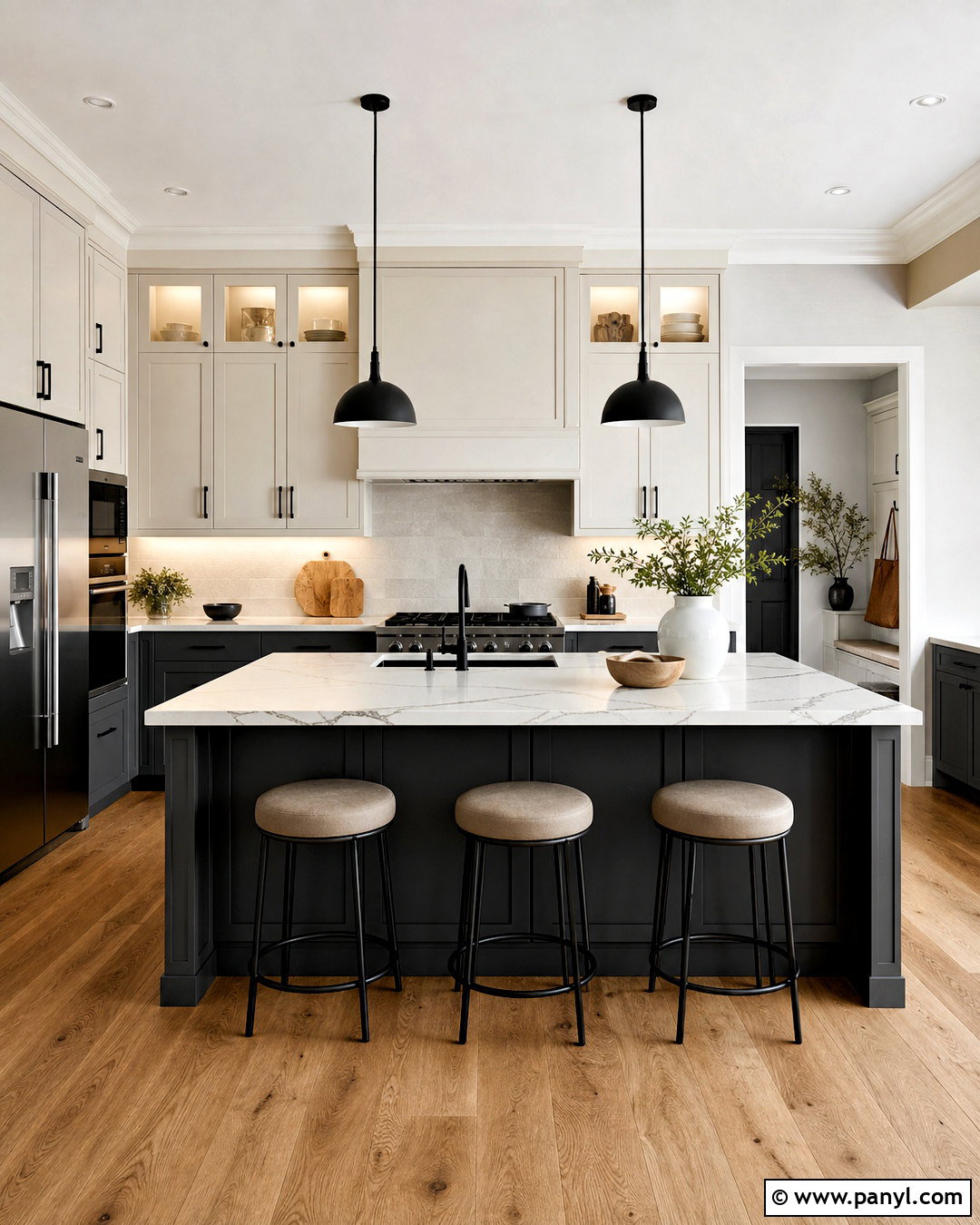
Charcoal gray can bring structure to cream cabinetry without creating the sharp contrast of solid black. Use cream cabinets along the upper walls and charcoal gray for the base units, range hood, or oversized island. Select pale quartz countertops with scattered charcoal veining to repeat both colors naturally. A warm gray limestone backsplash adds subtle movement without competing with the two-tone cabinetry. Wide-plank oak flooring softens the deeper lower half of the kitchen, while matte black handles create a simple transition between shades. Install warm white walls and streamlined black pendants to support the modern palette. This scheme works particularly well in open kitchens because the dark lower cabinets visually ground the workspace while the cream upper cabinets keep sightlines light, calm, and spacious.
5. Cream And Black Kitchen
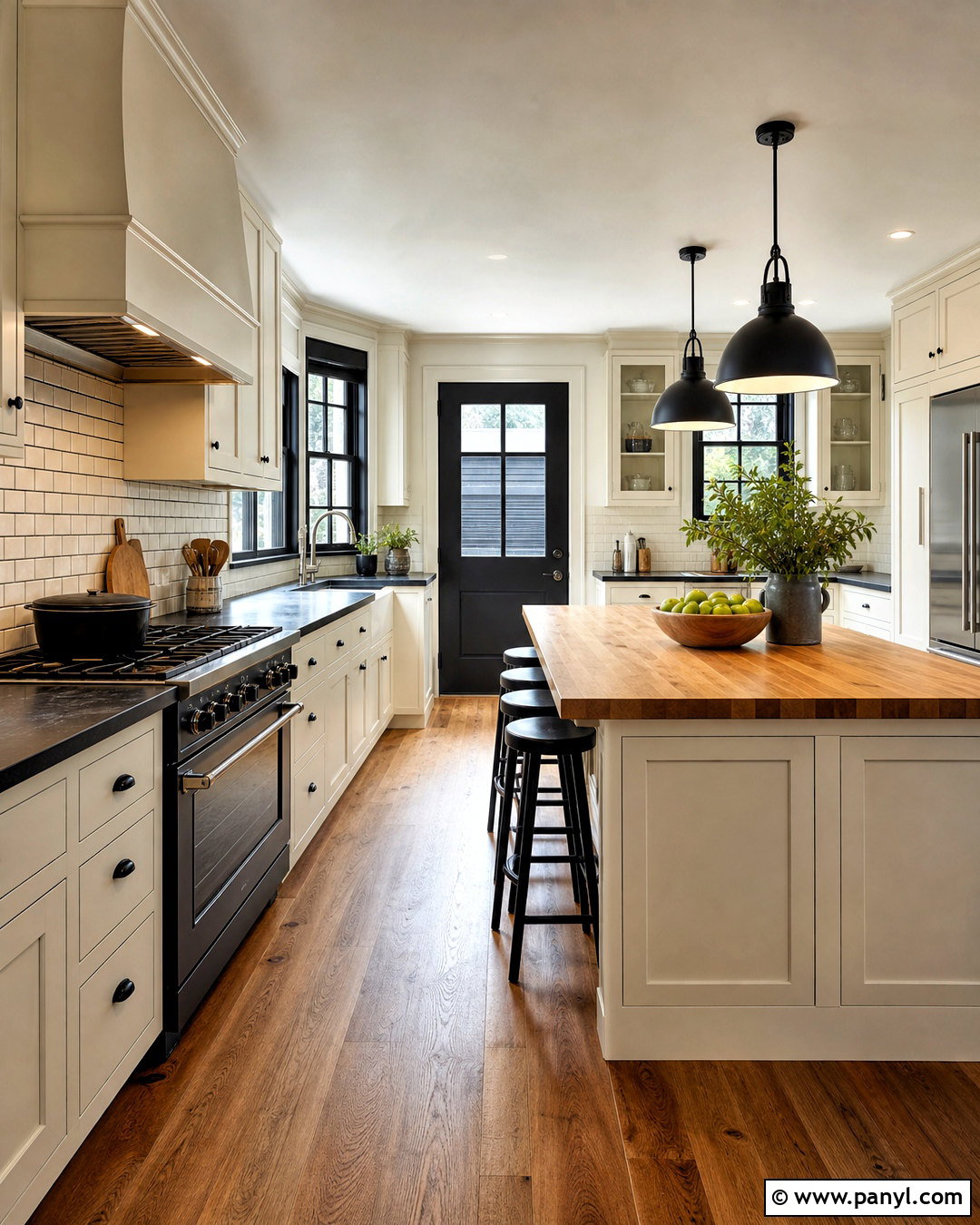
For a bold kitchen that still feels welcoming, combine soft cream cabinetry with carefully placed black finishes. Start with cream Shaker cabinets and introduce honed black granite or soapstone countertops around the perimeter. A black range, window frame, and metal pendant lights repeat the dramatic color in separate areas, making the design feel intentional. Use a warm white backsplash with dark grout for a graphic yet practical background. A cream island topped with butcher block can soften the stone surfaces and add casual seating. Medium-toned wood floors offer further warmth beneath the high-contrast palette. Keep the walls pale and the styling restrained. Wooden cutting boards, cream ceramics, and a small amount of greenery are enough to make the complete room feel balanced rather than stark.
6. Cream And Natural Oak Kitchen
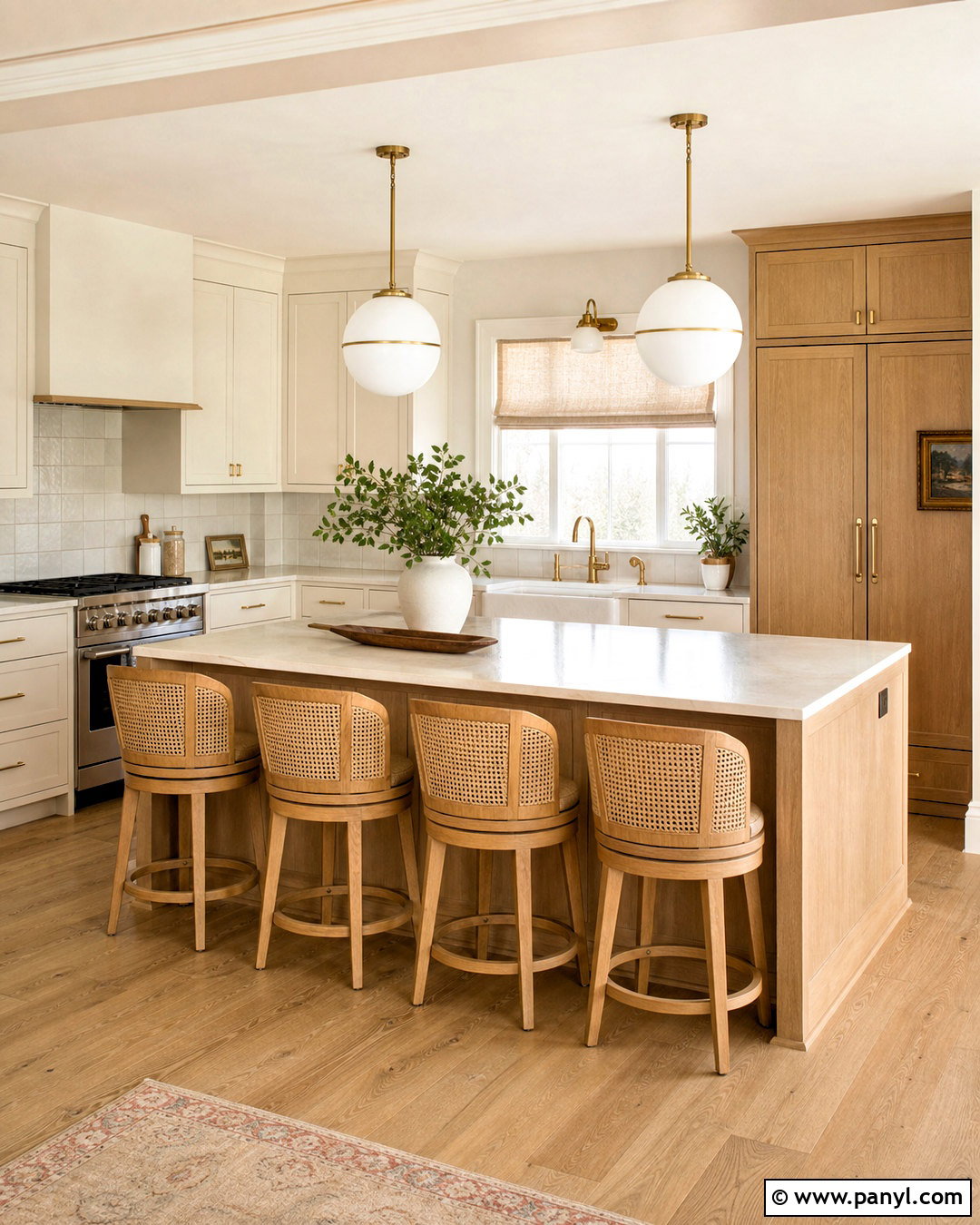
Cream cabinets and natural oak create an easy, inviting kitchen filled with warmth and visible texture. Use cream cabinetry for the main storage run, then feature rift-cut white oak on the island, tall pantry cabinets, and open shelves. Choose off-white quartz countertops with quiet beige veining so the wood grain remains the strongest pattern. A backsplash made from creamy square tiles adds handcrafted character without introducing another major color. Continue the oak tone through the flooring, but select a slightly deeper stain to distinguish it from the furniture. Brushed nickel or soft brass hardware both suit this relaxed palette. Add woven counter stools, white globe pendants, and linen window treatments. Clean cabinet lines will keep the wood-and-cream combination feeling current rather than traditionally country.
7. Cream And Walnut Kitchen
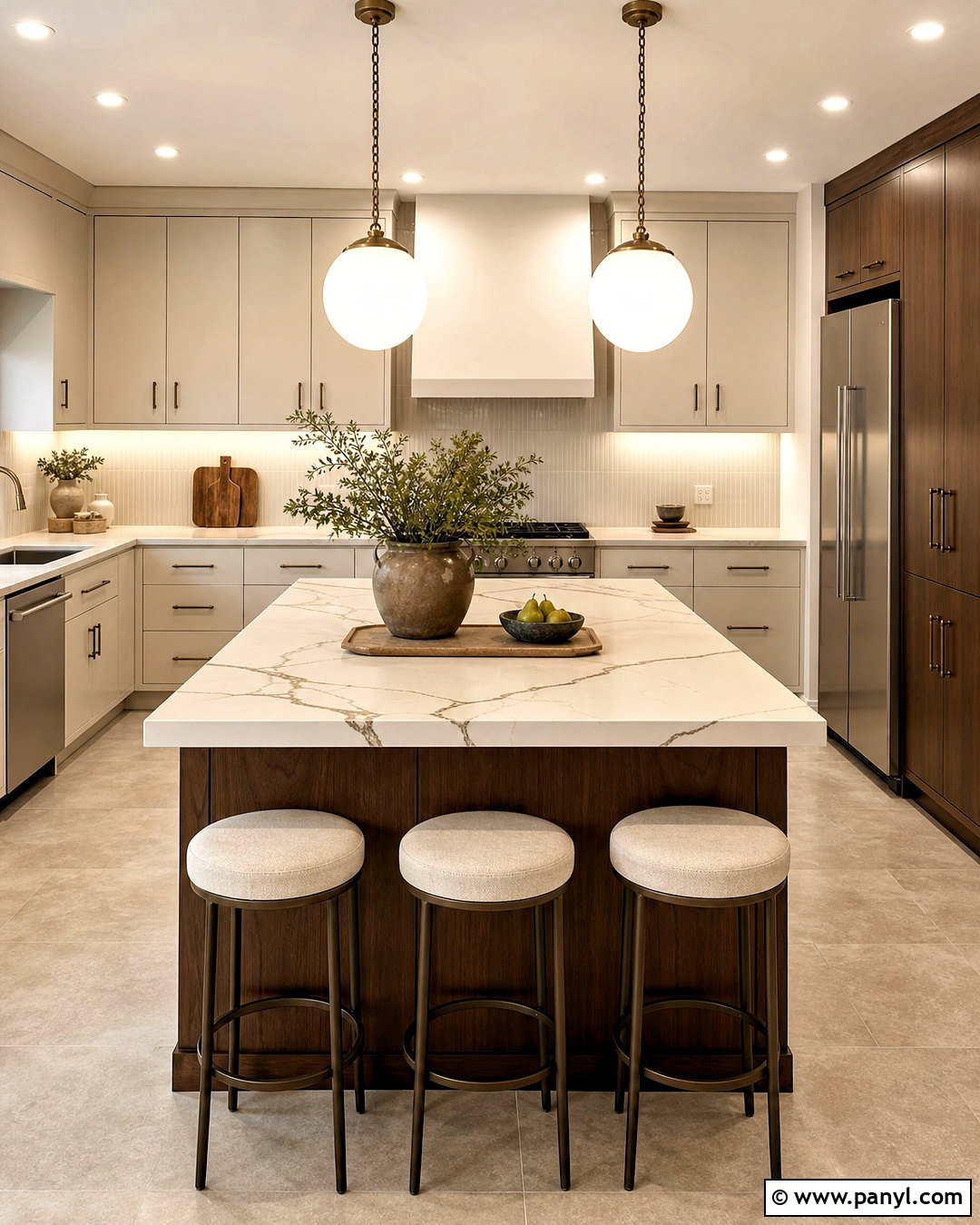
Rich walnut gives cream cabinetry a more sophisticated and dramatic personality. Place flat-front cream cabinets around the brighter perimeter and use walnut veneer for a waterfall island, refrigerator surround, or full-height pantry wall. Cream quartz counters with subtle brown veining will connect the light cabinetry and dark wood. For the backsplash, choose elongated ivory tiles in a vertical layout to make the walls appear taller. Medium beige porcelain flooring offers a quiet base and prevents excessive wood tones from competing. Bronze handles, a bronze faucet, and sculptural globe pendants enhance the warmth of the walnut. Keep decorative pieces minimal, using only textured ceramics and a wooden bowl. This complete palette feels refined and modern, yet the natural materials ensure the kitchen remains comfortable for everyday family life.
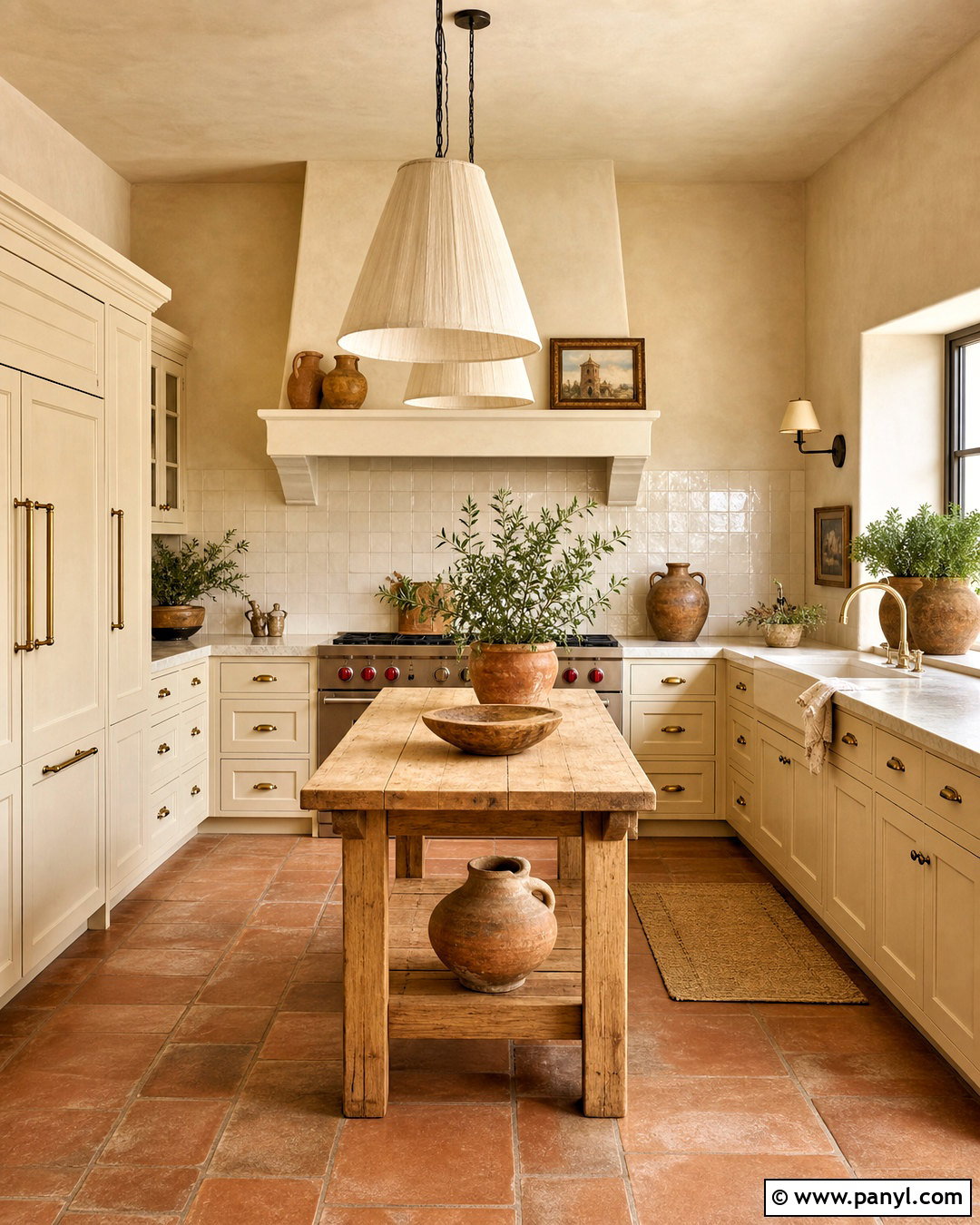
8. Cream And Terracotta Kitchen
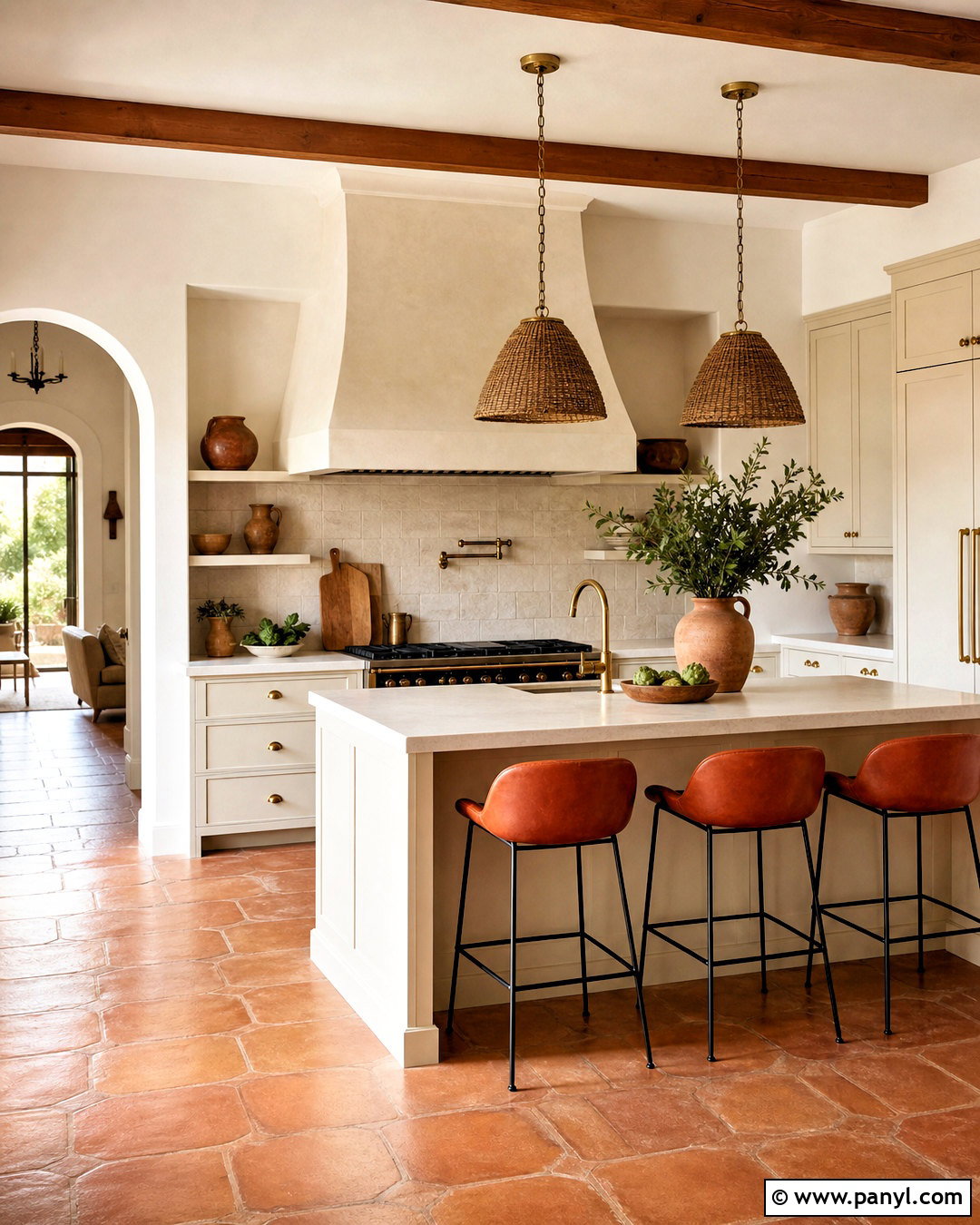
Sunbaked terracotta gives a cream kitchen earthy color and Mediterranean warmth. Begin with simple cream cabinets, then install handmade terracotta floor tiles in a square or herringbone pattern. Their natural variation becomes the room’s main decorative feature. Use warm white quartz countertops and a lightly textured cream backsplash to avoid adding too many competing patterns. A plaster-look range hood can create a soft architectural focal point above the cooking area. Bring in terracotta again through rust-colored counter stools, pottery, or a painted pantry door. Aged brass hardware and woven pendant lights reinforce the relaxed finish. Warm white walls will maintain brightness, especially in a smaller room. The finished kitchen should feel sunny and collected, with clean cabinetry balancing the character of the textured floor.
9. Cream And Dusty Blue Kitchen
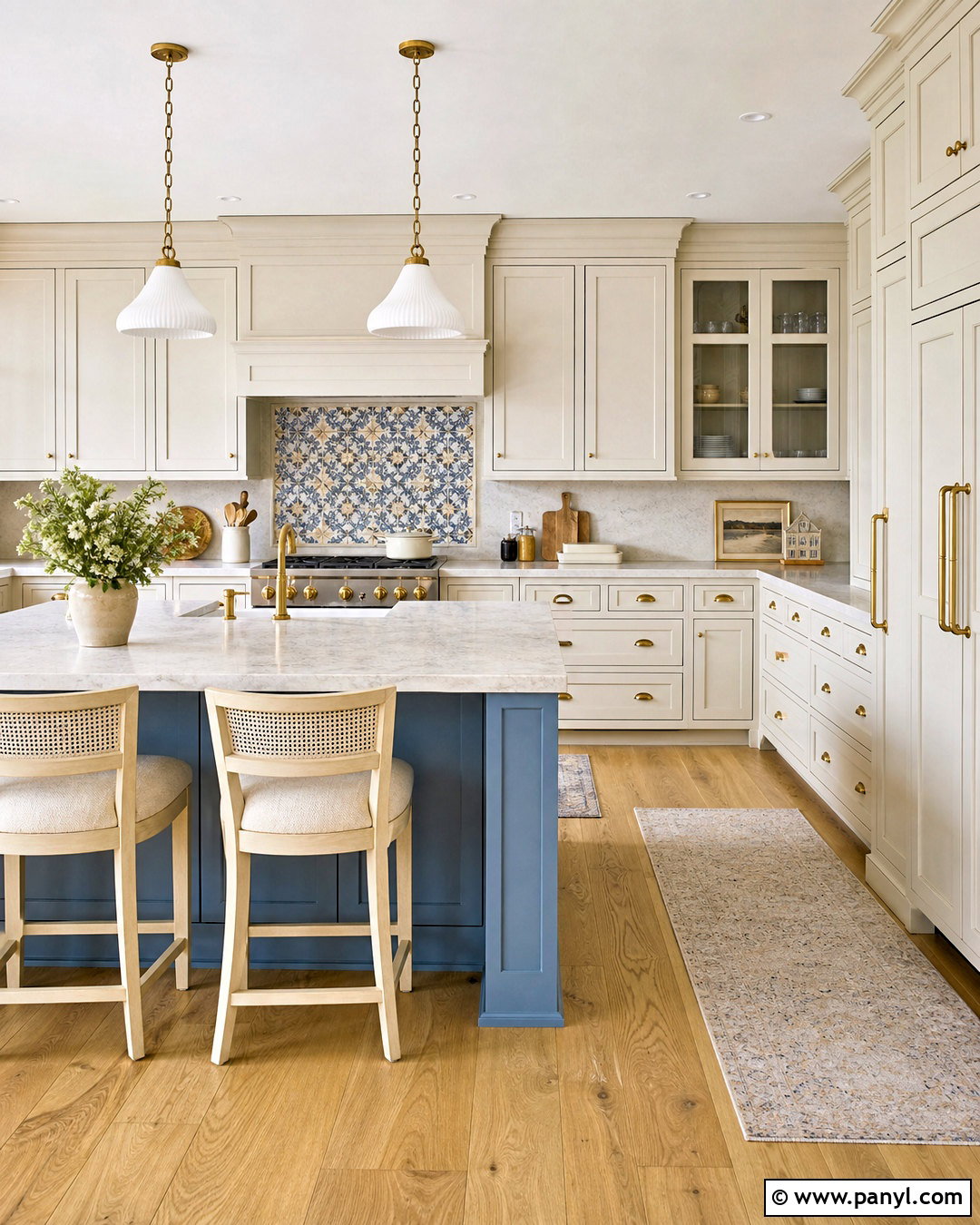
Dusty blue offers color with a soft, slightly faded appearance that suits both traditional and transitional kitchens. Use cream cabinets across the main walls and paint the island a muted blue with gentle gray undertones. Pale marble or quartz countertops can continue across both cabinet colors for consistency. Install a blue-and-cream patterned backsplash behind the range only, then use plain cream tile elsewhere to control visual movement. Light oak flooring keeps the palette airy, while antique brass cup pulls add a familiar, established quality. Complete the island with cream upholstered stools or pale wood seating. Warm white walls and simple milk-glass pendants will support the light atmosphere. The resulting room feels cheerful and individual but remains calm enough to coordinate with nearby neutral living areas.
10. Cream And Soft Gray Kitchen
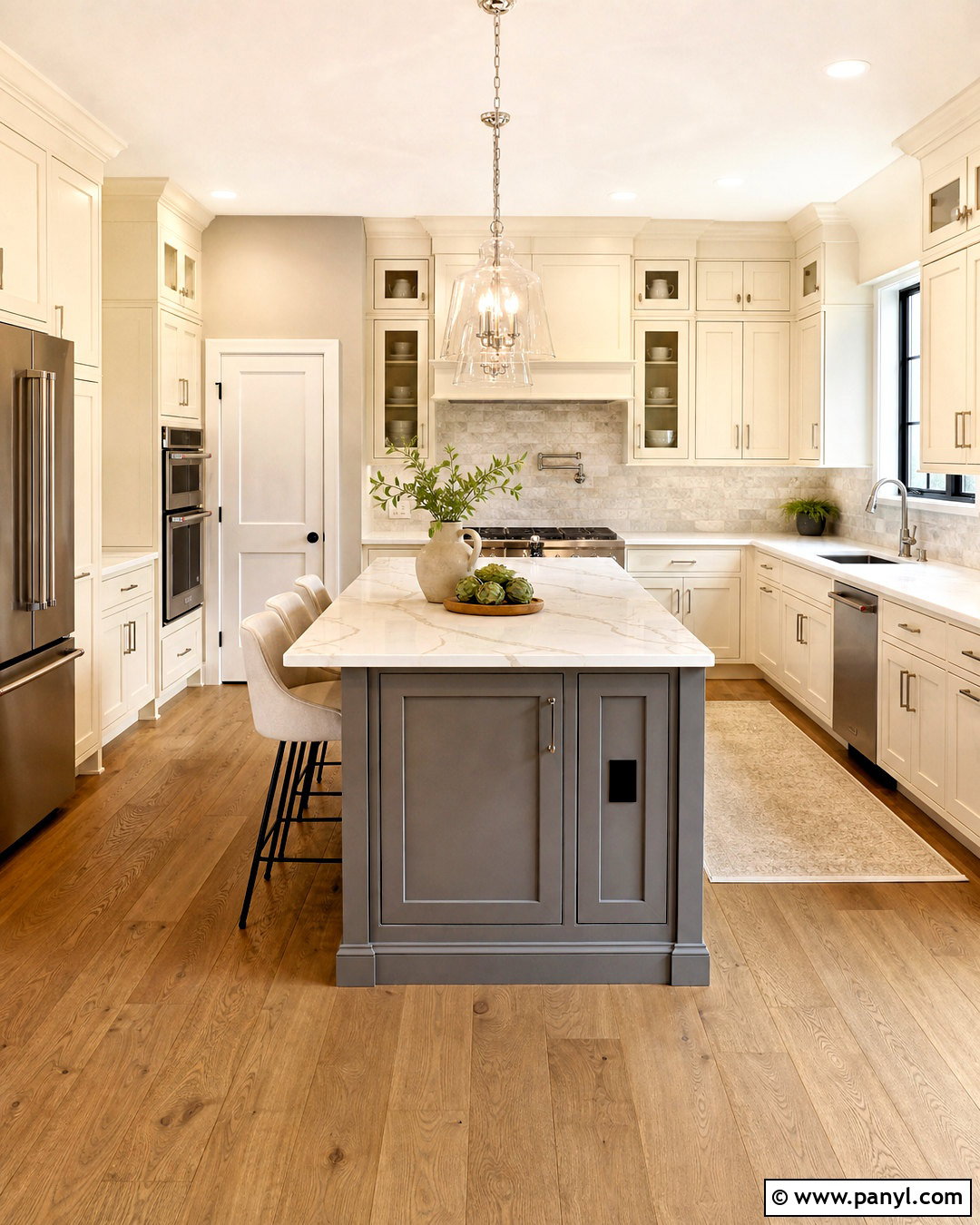
Soft gray introduces quiet contrast when you want a neutral kitchen with a cooler, more tailored edge. Choose cream cabinets with limited yellow undertones, then paint the walls a light warm gray instead of a blue-based version. A slightly deeper gray island can anchor the center of the room without becoming heavy. White quartz countertops featuring narrow gray and beige veins will bridge the different neutrals. Add a pale gray stone backsplash and medium oak flooring to keep the design from feeling flat. Polished nickel knobs, stainless steel appliances, and clear glass pendants provide a clean finish. Warm wood stools and a few cream textiles restore softness. Testing colors together in the actual kitchen is important because changing daylight can make some gray shades appear unexpectedly blue beside cream cabinetry.
11. Cream And Greige Kitchen
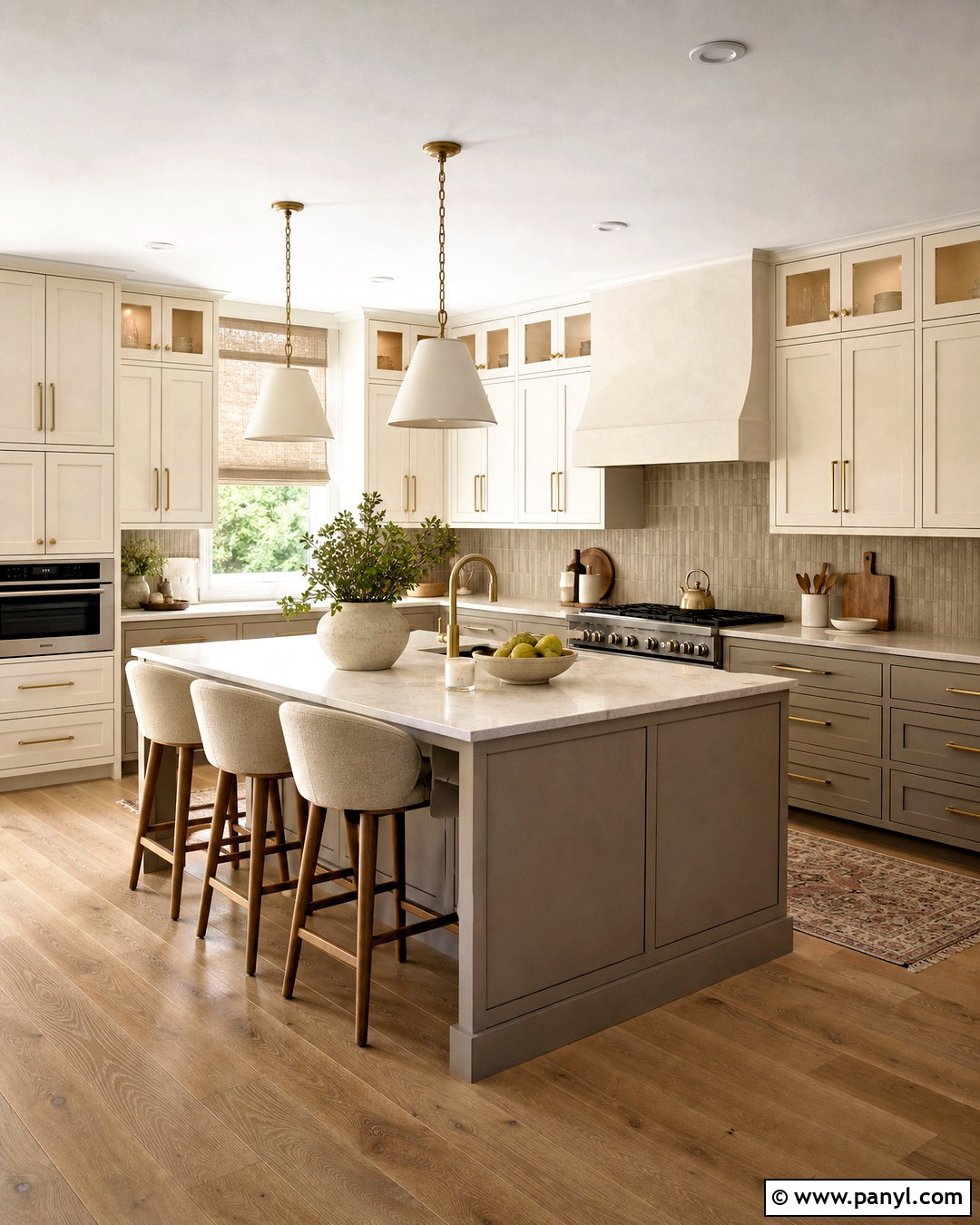
When beige feels too warm and gray seems too cool, greige creates a useful middle ground. Pair warm cream upper cabinets with medium greige lower cabinets and a matching island. This arrangement keeps the upper half airy while adding subtle depth below the countertops. Select creamy limestone-look quartz with understated taupe movement, then continue the tonal effect using narrow greige backsplash tiles. Pale oak floors, mushroom-colored stools, and linen shades provide additional layers without introducing unrelated hues. Choose aged brass hardware for a soft traditional finish or matte black pulls for a cleaner modern result. The walls should be a very light cream that is distinct from the cabinets but shares their undertone. This coordinated palette produces a polished, serene kitchen that still has enough contrast to show its architectural details.
12. Cream And Forest Green Kitchen
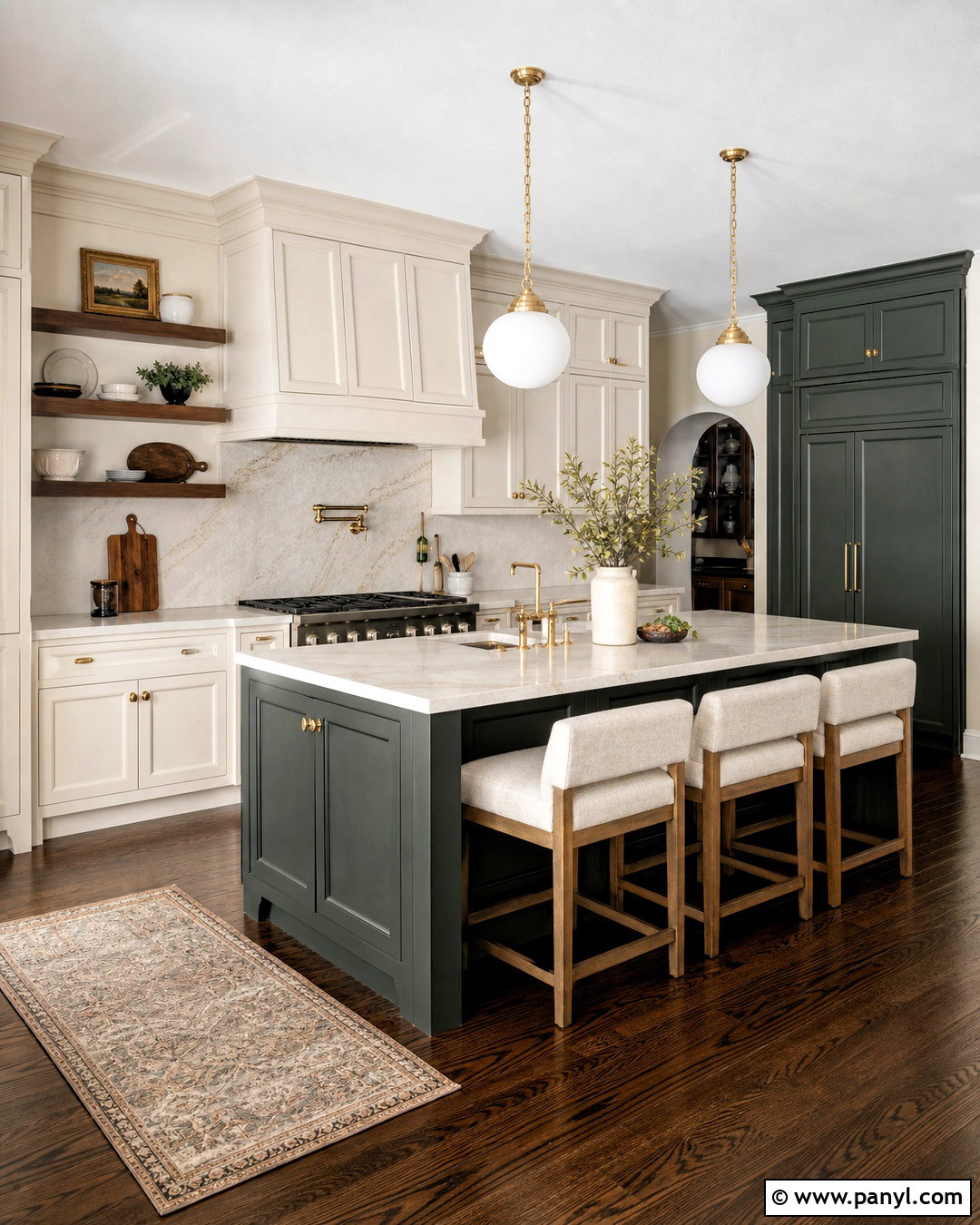
Deep forest green makes cream cabinets look especially luminous and can give a larger kitchen a strong, grounded center. Use green for the island and a tall pantry bank, keeping the remaining cabinets cream. A full-height backsplash of warm white stone with gentle green or gold veining creates a luxurious connection between both colors. Dark oak flooring supports the richness of the green, while unlacquered brass hardware adds warmth and develops character over time. Choose cream fabric stools and oversized white globe pendants to lighten the island area. If the kitchen has open shelving, use dark stained wood to repeat the floor. Limit additional colors to natural brown, ivory, and small touches of black. The result is dramatic but livable, with cream providing breathing room around every darker feature.
13. Cream And Blush Pink Kitchen
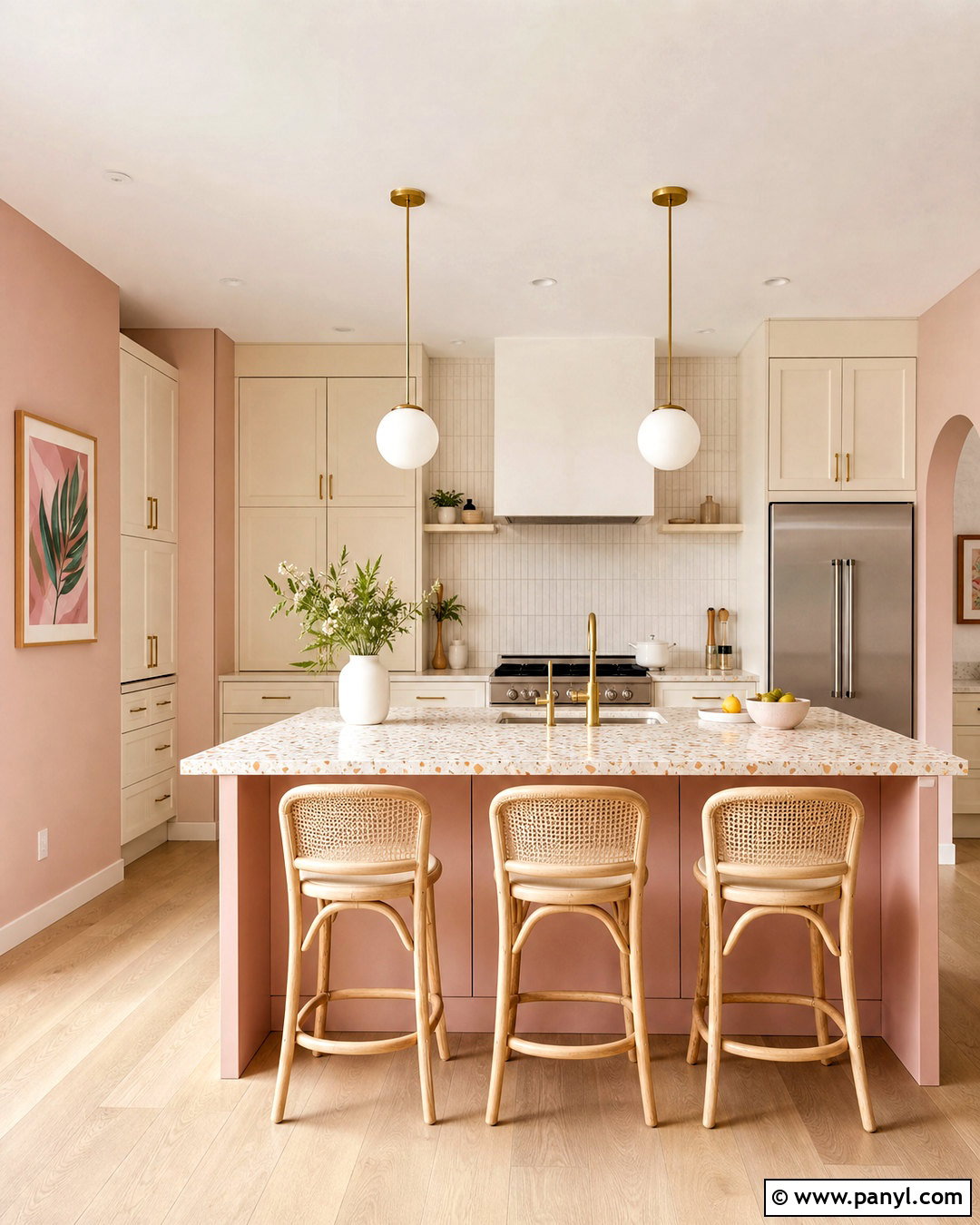
Blush pink can warm a cream kitchen subtly when used as an earthy neutral rather than a sugary pastel. Keep the cabinets a clean, buttery cream and apply muted plaster pink to the walls or island. Pair these shades with light terrazzo countertops containing beige, cream, and faint rust chips. A simple off-white tile backsplash prevents the counters from competing with another strong pattern. Pale oak floors and woven seating introduce natural texture, while brushed brass handles complement the pink undertone. Rounded pendant lights and softly curved counter stools can enhance the welcoming character of the palette. Use pink sparingly in accessories so the room does not become overly themed. With streamlined cabinetry and balanced neutral surfaces, the finished kitchen feels modern, sunny, and surprisingly versatile.
14. Cream And Brick Red Kitchen
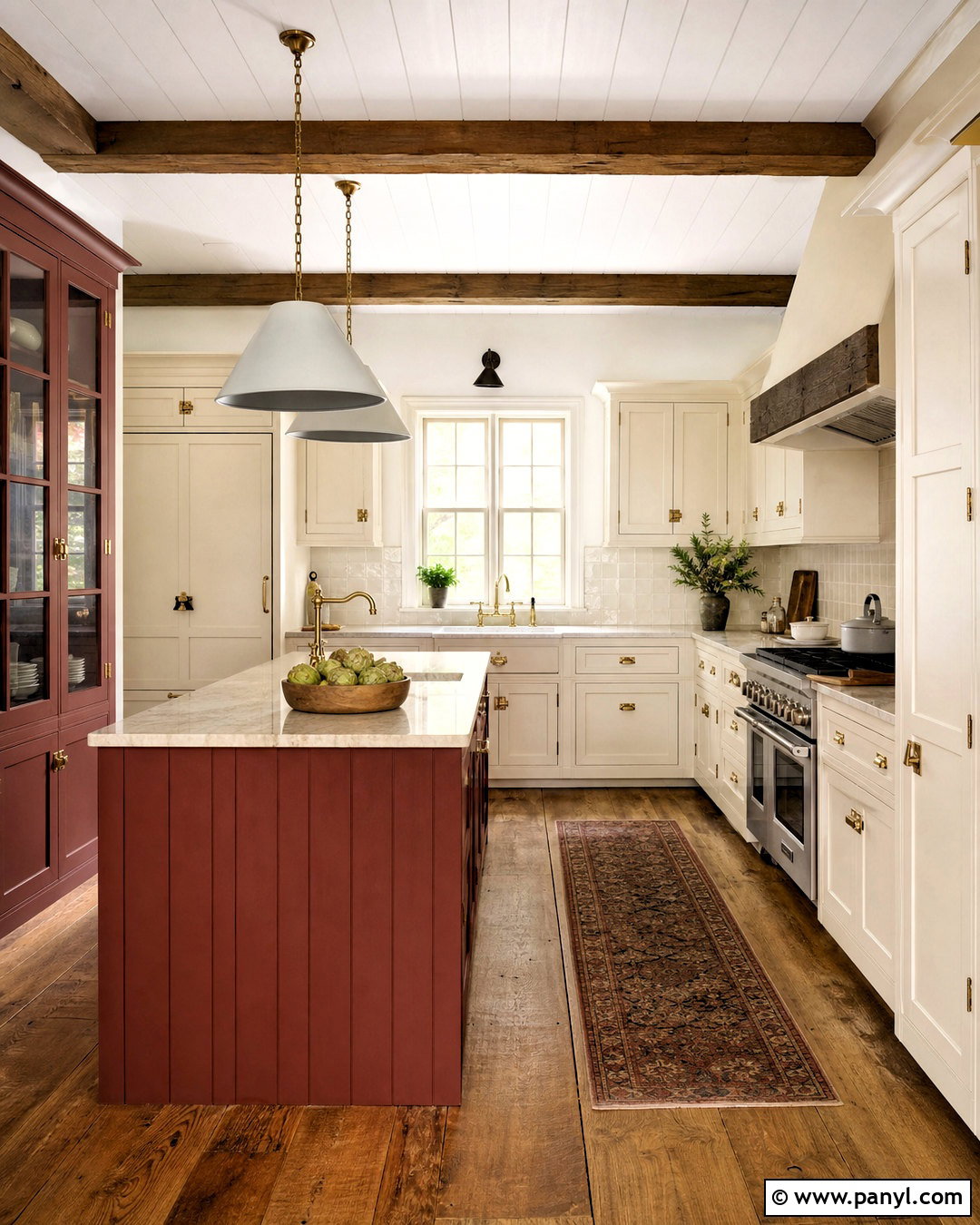
Brick red adds heritage character to cream cabinetry and works beautifully in kitchens with traditional architecture. Let cream Shaker cabinets form the main background, then introduce brick red on a freestanding island, range surround, or glazed pantry cabinet. Warm white stone countertops will brighten the stronger color, while a handmade cream tile backsplash keeps the cooking wall simple. Add reclaimed oak flooring or medium brown wood-look tile to reinforce the established feeling. Antique brass latches, bridge faucets, and shaded pendants suit the palette without making it look overly decorative. A small checked or striped textile can repeat the red in a controlled way. Finish with neutral walls and a few dark accents. The complete scheme feels cozy and substantial, yet cream prevents the deeper red from visually closing in the room.
15. Cream And Pale Yellow Kitchen
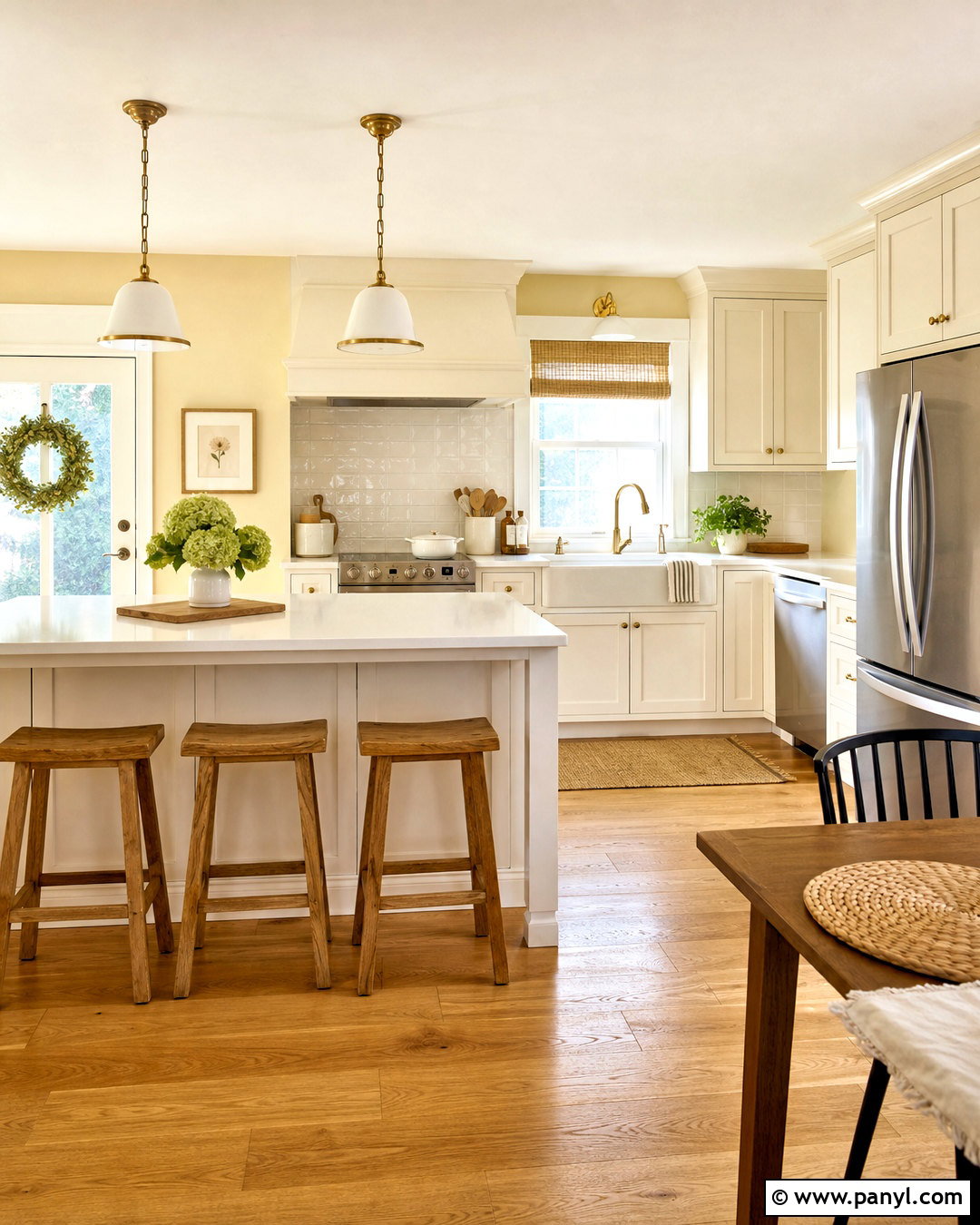
Cream and pale yellow create a cheerful kitchen that responds beautifully to natural daylight. Choose cream cabinetry as the stable foundation and paint the walls a light, muted yellow with a buttery rather than neon undertone. White quartz counters and glossy ivory backsplash tiles will reflect light, keeping the closely related shades clear and fresh. Introduce honey-toned oak through the flooring, stools, and one or two display shelves. Soft brass cabinet knobs enhance the sunny palette, while white enamel pendants provide a crisp finishing detail. A pale yellow island can work in a spacious room, but a cream island is calmer in a compact kitchen. Add natural linen shades and simple white ceramics. The finished design feels happy and relaxed without relying on bright or highly saturated color.
16. Cream And Teal Kitchen
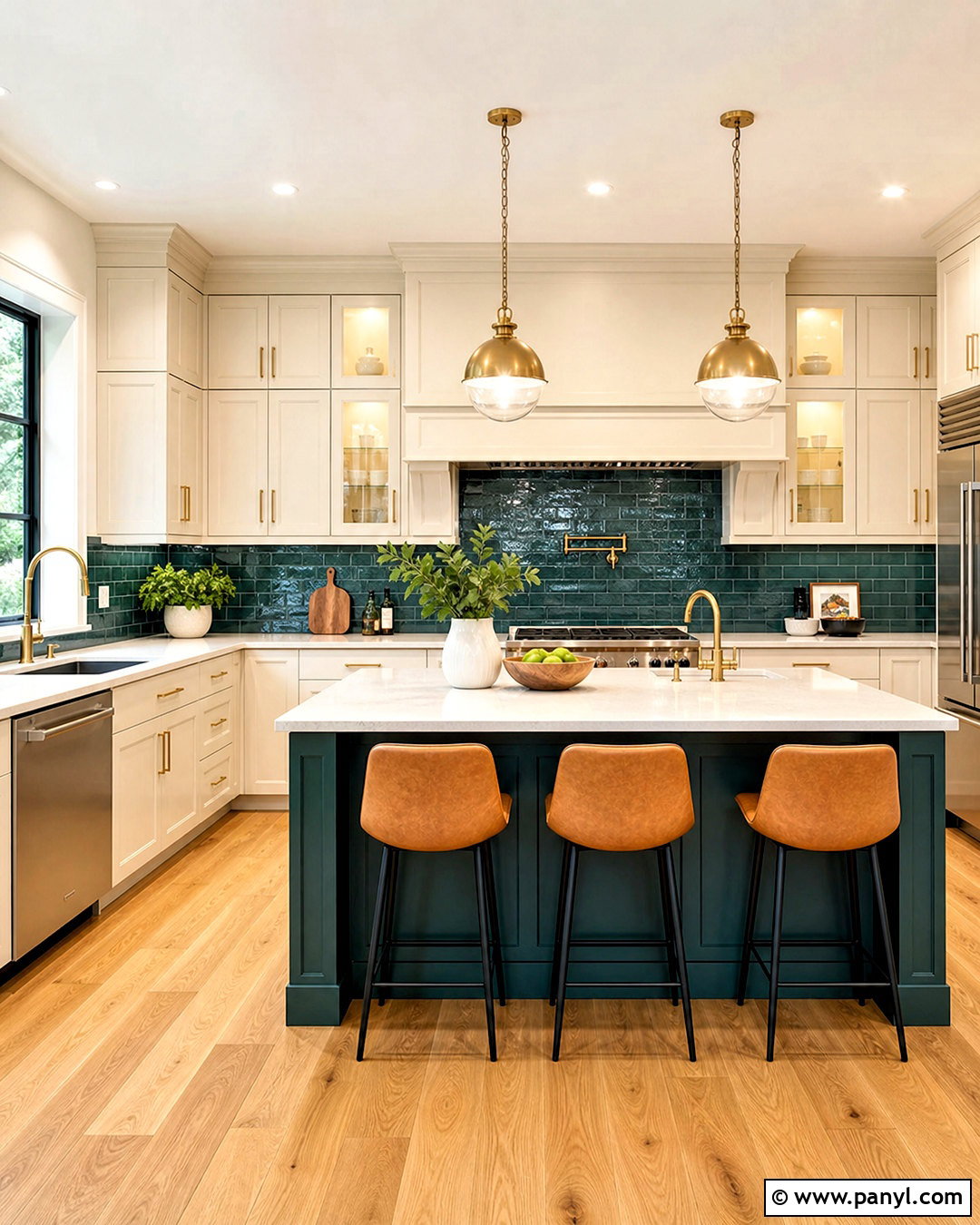
A deep, muted teal gives cream cabinetry a distinctive contrast that blends the calming qualities of blue and green. Use cream on the upper and perimeter cabinets, reserving teal for the island or lower cabinet run. Cream quartz counters with fine gray veining keep the palette bright, while a backsplash of glossy blue-green tiles adds depth behind the range. Natural oak flooring and tan leather stools supply warm balance, preventing the teal surfaces from appearing too cool. Choose brushed brass handles and pendants because their golden finish looks especially rich against both colors. Paint the surrounding walls warm white and keep countertop accessories neutral. This combination works best when teal appears in two or three deliberate locations, creating rhythm without turning every surface into a colorful focal point.
17. Cream And Chocolate Brown Kitchen
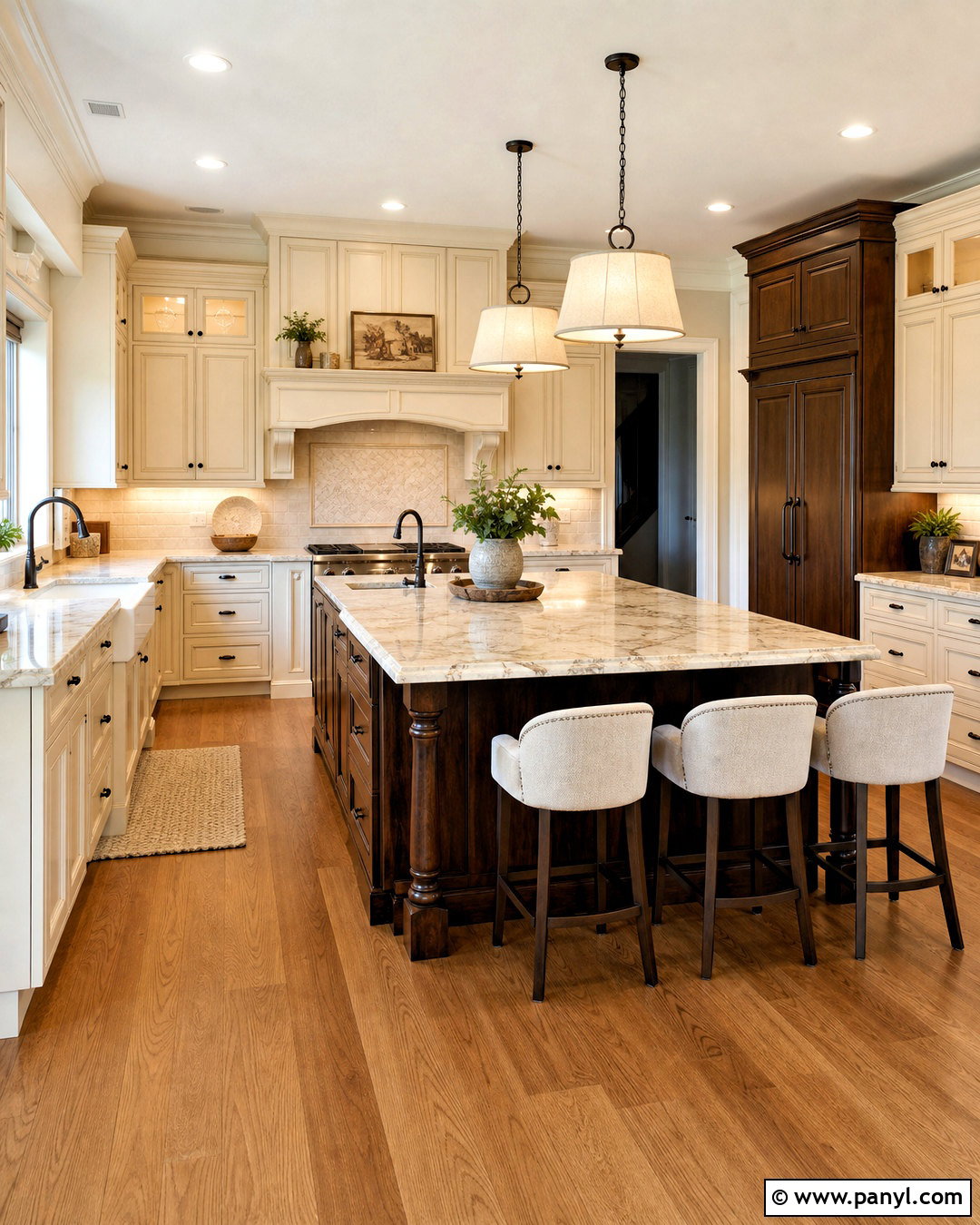
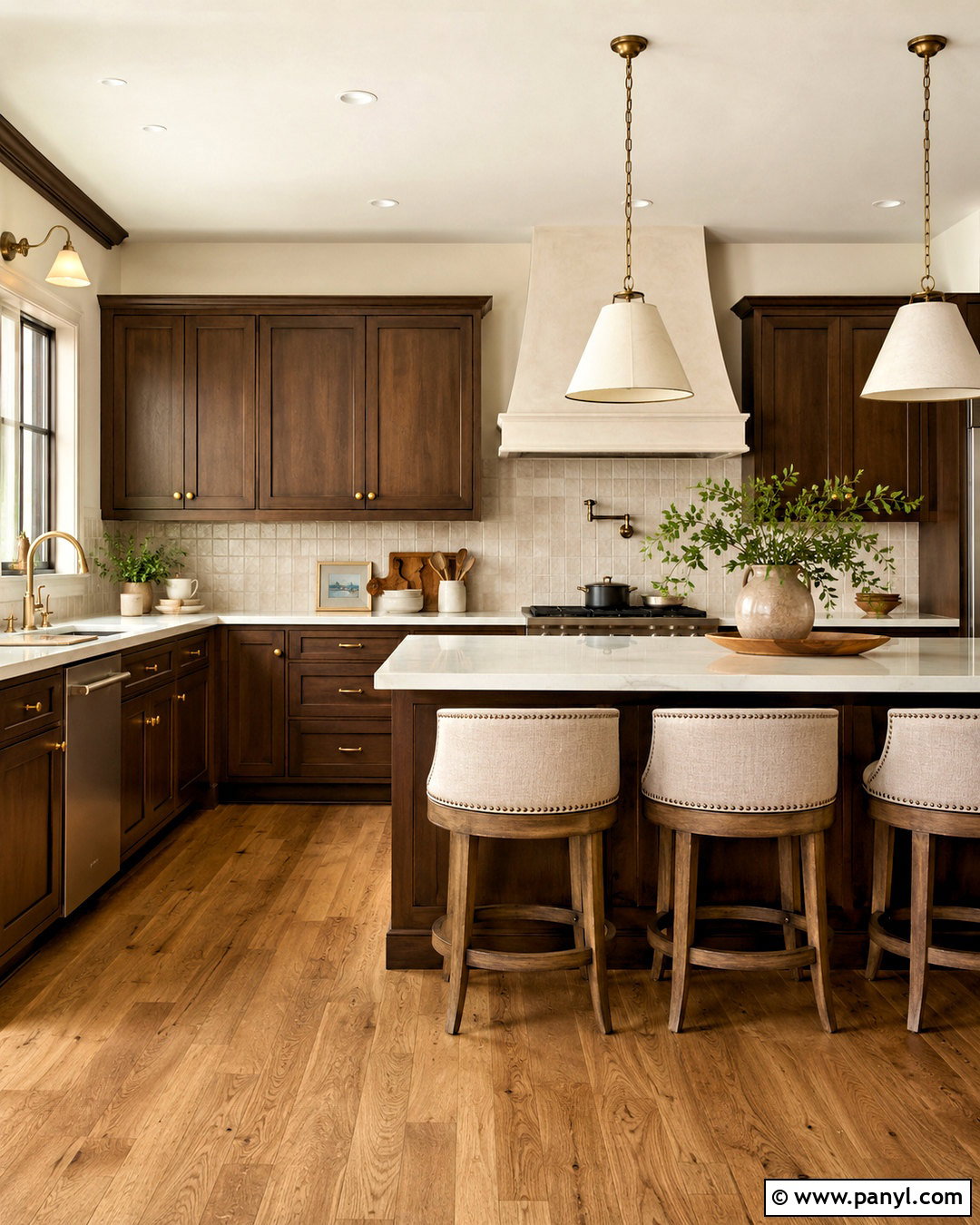
Chocolate brown can transform cream into a rich, grounded palette suited to both traditional and contemporary interiors. Cover the main cabinets in cream, then use dark brown stained wood for the island, pantry doors, or lower cabinetry. Choose a creamy stone countertop with noticeable brown and caramel veining to bring the two finishes together. A backsplash of matte ivory tiles offers texture without distracting from the wood grain. Medium oak flooring creates a gentle transition between the light and dark surfaces. Oil-rubbed bronze hardware, cream upholstered stools, and linen pendant shades continue the warm direction. Avoid cool white paint, which may make the cream look overly yellow. Instead, use a light beige wall color and restrained styling to create a comfortable, polished kitchen with strong visual depth.
18. Cream And Lavender Kitchen
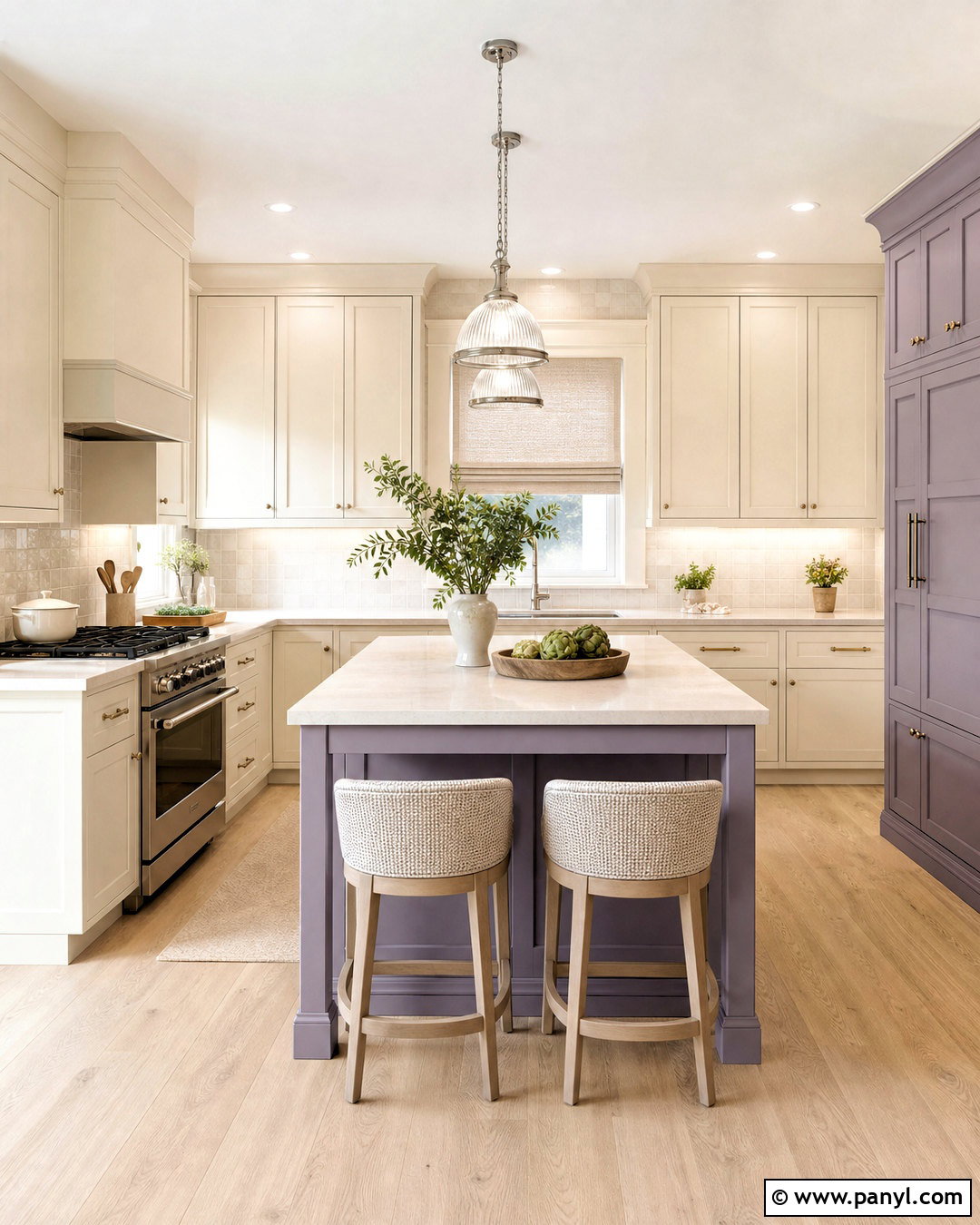
Soft lavender creates an unexpected but gentle partner for cream cabinetry. Select a dusty lavender with gray undertones and use it on the island, pantry, or one full wall rather than every cabinet. Cream Shaker units and warm white quartz countertops will keep the overall design familiar and approachable. For the backsplash, consider small ivory tiles with light gray grout, allowing the cabinet color to remain the main accent. Pale wood flooring, nickel hardware, and frosted glass pendants support the softness of the scheme. Add natural linen blinds and a few muted green plants for subtle balance. Avoid highly saturated purple accessories, which can change the calm character. The finished kitchen feels light, personal, and graceful while retaining the practical versatility of a mostly neutral room.
19. Cream And Burnt Orange Kitchen
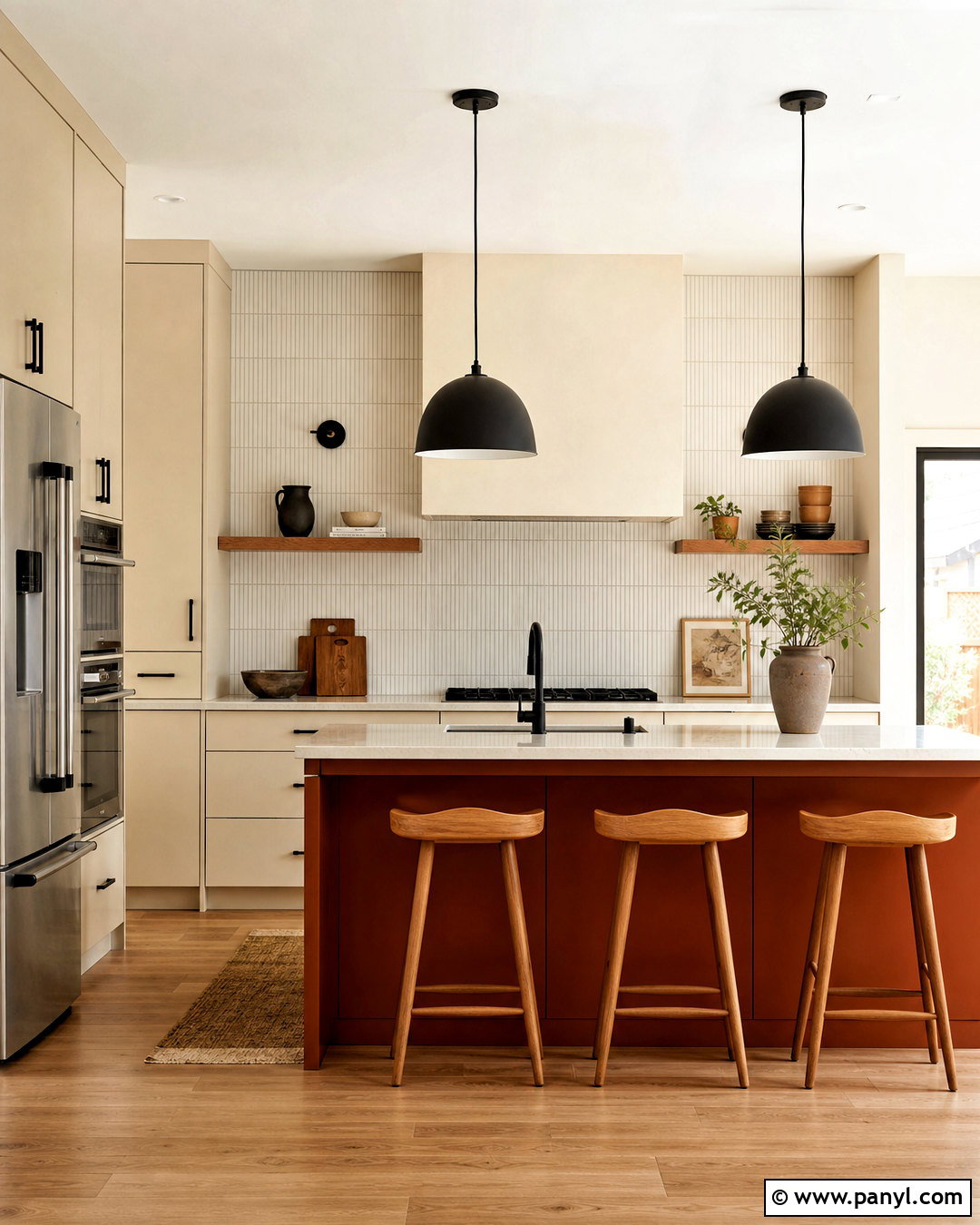
Burnt orange brings warmth and energy to cream without requiring brightly colored cabinets throughout the room. Start with flat-front cream units and introduce burnt orange on the island, banquette upholstery, or a section of full-height storage. Use pale cream quartz counters and a vertically stacked warm white backsplash for a streamlined background. Walnut shelving and medium oak floors strengthen the autumnal warmth, while matte black hardware adds a crisp contemporary outline. Install simple black pendants over the island and repeat the dark accent in window frames or counter stools. Keep the walls a quiet off-white so the orange remains controlled. This full scheme feels confident and modern, with enough wood and cream to soften the saturated accent and make it comfortable for daily use.
20. Tonal Cream And Beige Kitchen
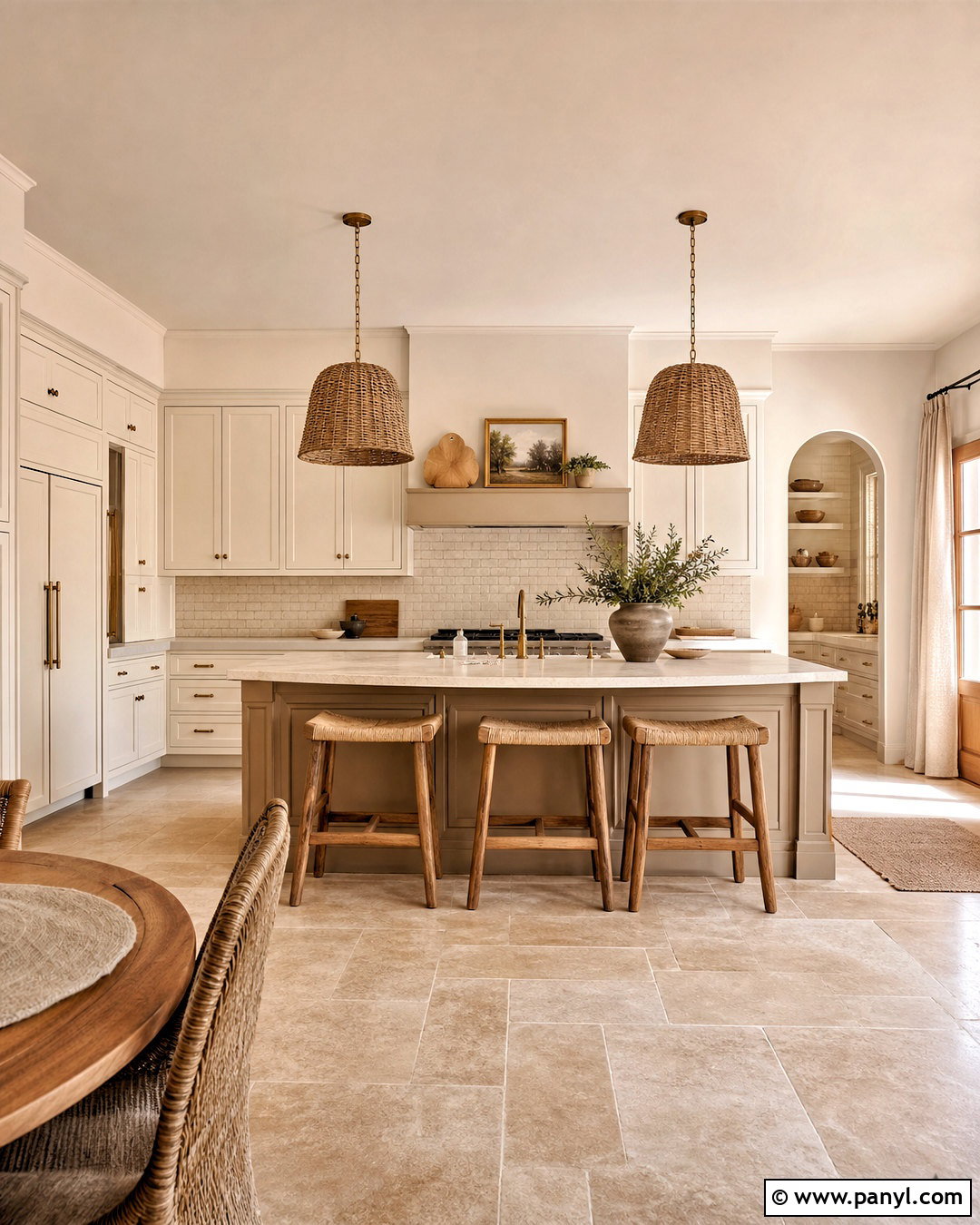
A tonal kitchen can feel deeply layered when each surface has a slightly different color or texture. Combine creamy cabinets, pale beige walls, ivory quartz counters, and handmade ecru backsplash tiles rather than matching everything exactly. Use a deeper oatmeal shade on the island to give the room a clear focal point. Travertine or light beige porcelain flooring reinforces the natural palette, while medium oak stools prevent the design from becoming washed out. Choose aged brass hardware and woven pendants for texture and warmth. Vary finishes as well as colors by mixing satin cabinetry, honed countertops, glazed tiles, and natural textiles. Small black accents can add definition if needed. The complete kitchen remains soft and neutral, but thoughtful contrast keeps every cabinet line and material clearly visible.
Conclusion:
Cream provides a flexible foundation for kitchens ranging from bright and minimal to rich and traditional. Successful cream kitchen colour schemes coordinate every major surface instead of treating cabinet paint as an isolated choice. Warm whites and beige create quiet continuity, while navy, forest green, teal, charcoal, and black add stronger definition. Wood, terracotta, patterned tile, and natural stone introduce texture that keeps cream from feeling plain. Before committing, compare cabinet, wall, counter, backsplash, and flooring samples together under daylight and artificial lighting. Pay close attention to undertones, especially when mixing cream with white or gray. With a balanced palette and repeated finishes, a cream kitchen can feel warm, polished, practical, and completely personal.

Related Ideas and Inspiration:
Leave a Reply