
Choosing the right sitting room palette can make the space feel brighter, warmer, larger, or more inviting. The best schemes go beyond wall paint. They connect upholstery, flooring, window treatments, lighting, artwork, and decorative accents into one complete look. Current living room color trends favor warm whites, pale blues, earthy greens, dusky pinks, and richer cocooning browns, but classic combinations remain equally useful. () Before decorating, consider the room’s natural light, existing flooring, and largest furniture pieces. Test paint samples on several walls because color can change throughout the day. Whether your taste is calm, colorful, traditional, or modern, these 20 sitting room colour ideas offer practical schemes you can recreate throughout the entire space.
1. Warm White Sitting Room
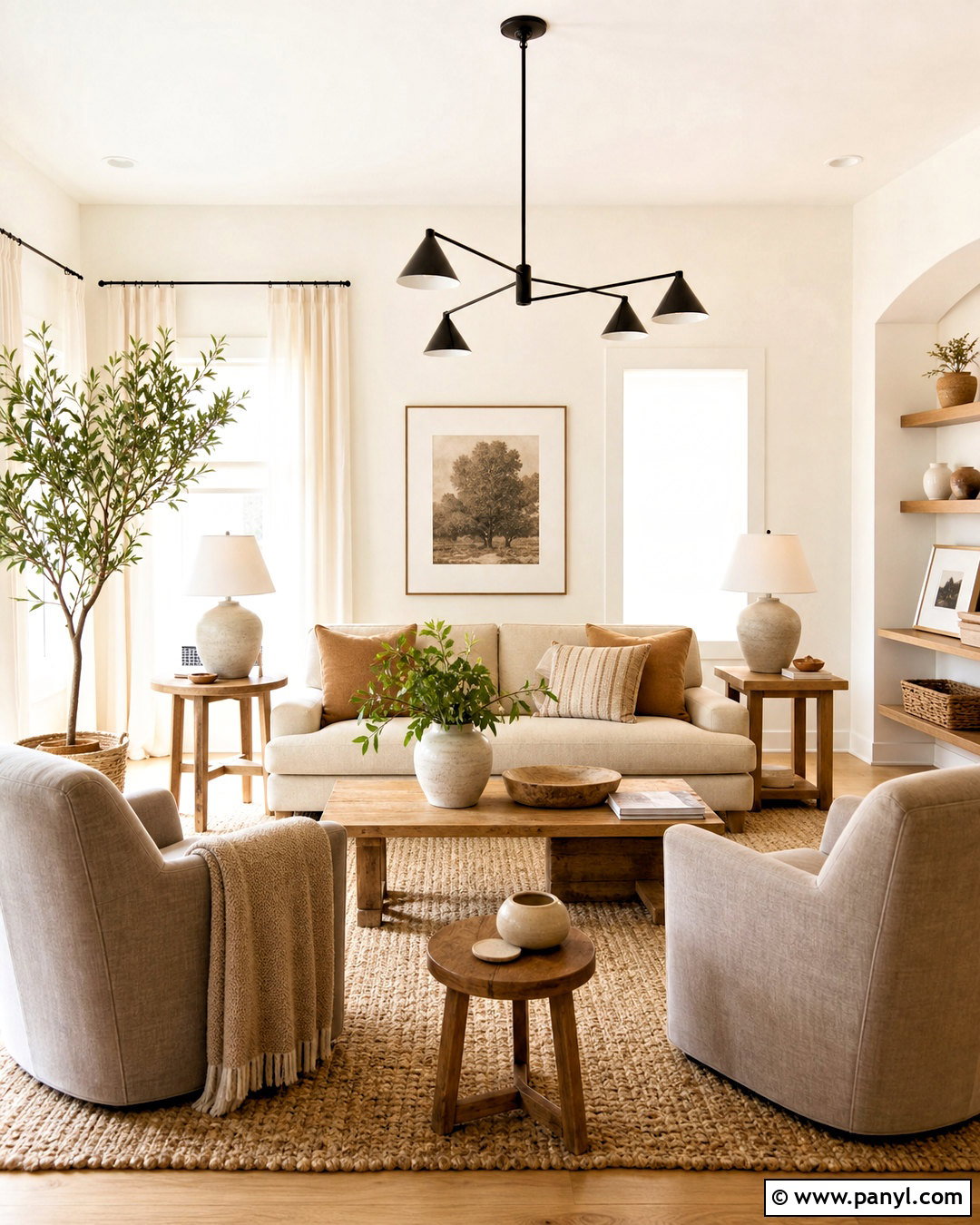
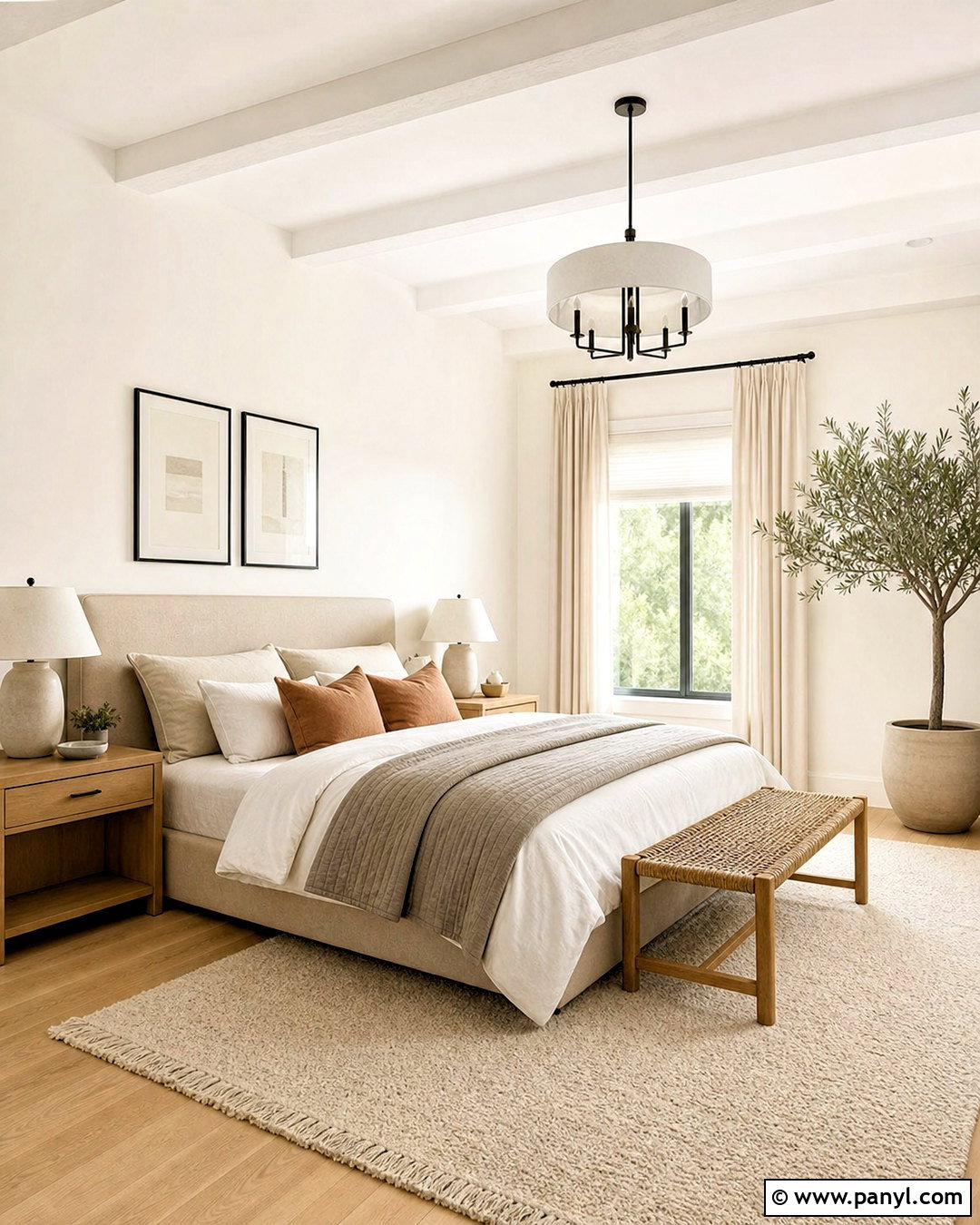
A warm white palette creates an airy sitting room without making it feel cold or unfinished. Choose creamy white walls with subtle beige or yellow undertones, then add an oatmeal linen sofa and two light taupe armchairs. A natural oak coffee table, woven jute rug, and off-white curtains bring gentle texture to the room. Use matte black picture frames and a slim black floor lamp for definition. Soft camel pillows, handmade ceramics, and leafy plants prevent the neutral scheme from appearing flat. Keep the ceiling and trim a slightly cleaner white to create a crisp outline. This complete color combination works especially well in small sitting rooms where light needs to travel freely while the layered natural materials maintain warmth and comfort.
2. Sage Green Sitting Room
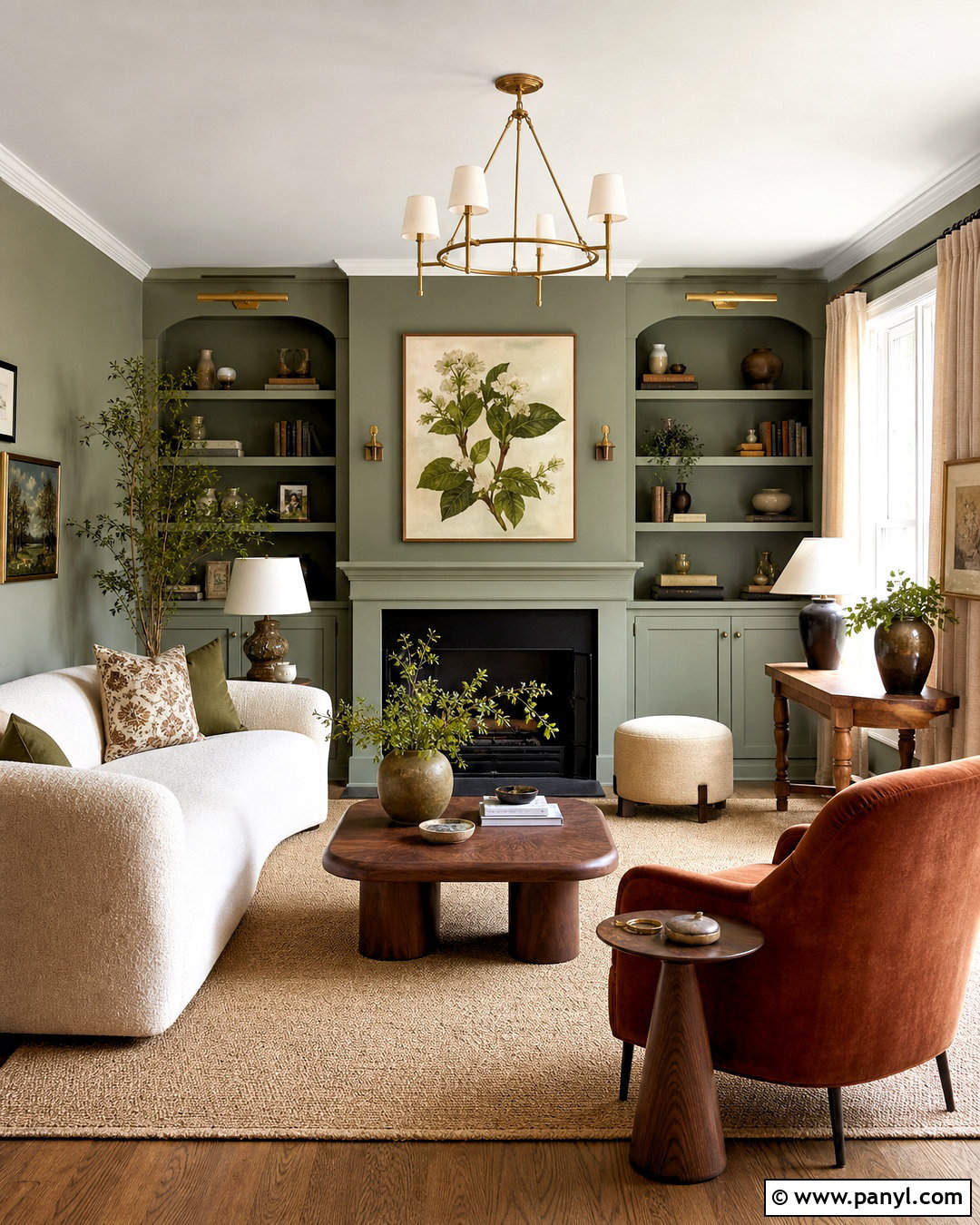
Soft sage green walls can give a sitting room a relaxed, nature-inspired character. Build the complete scheme around a cream boucle sofa, walnut side tables, and a warm beige wool rug. Add curtains in natural flax linen so the windows feel light rather than heavy. A rust-colored armchair or several muted terracotta pillows introduce an earthy contrast without disturbing the calm palette. Choose antique brass lighting, botanical artwork, and glazed green ceramics to reinforce the room’s organic quality. Medium-toned wood flooring grounds the lighter colors and keeps the arrangement balanced. For built-in shelves, use the same sage as the walls to produce a seamless finish. This sitting room color scheme suits modern farmhouse, transitional, and casual contemporary homes.
3. Navy Blue Sitting Room
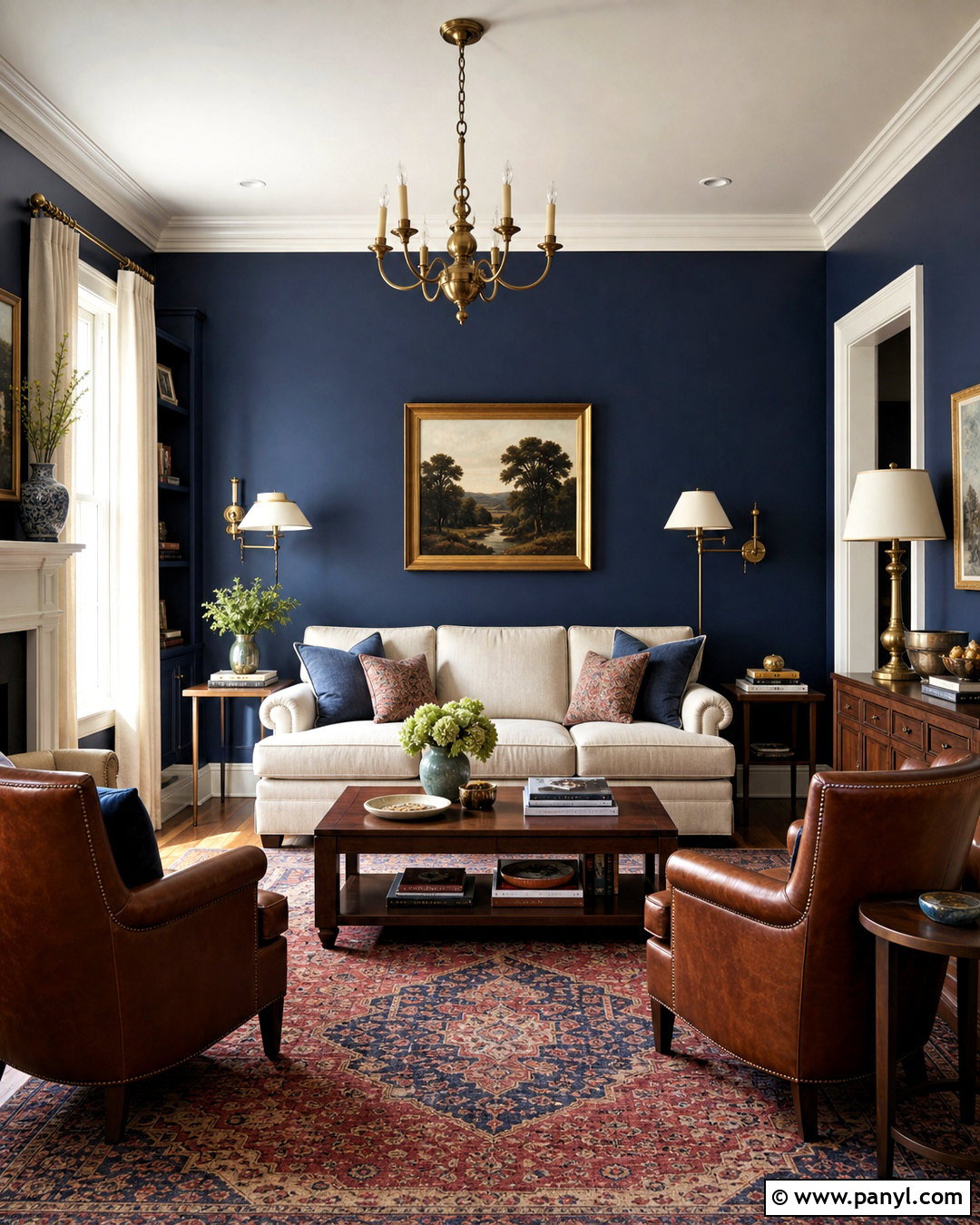
Deep navy can turn a sitting room into a smart, comfortable retreat when it is balanced with lighter furnishings. Paint every wall navy blue, then use clean white on the ceiling, trim, and fireplace surround. Place a large ivory sofa against the darkest wall and introduce caramel leather armchairs for warmth. A faded red and blue Persian-style rug connects the seating while adding pattern. Choose medium walnut tables, aged brass lamps, and framed artwork with generous white mats. Full-length ivory curtains soften the windows and reflect daylight around the space. Navy-painted built-in shelving can create an especially polished background for books and pale ceramics. The resulting room feels dramatic but approachable, with enough contrast to prevent the dark walls from overwhelming the layout.
4. Beige And Black Sitting Room
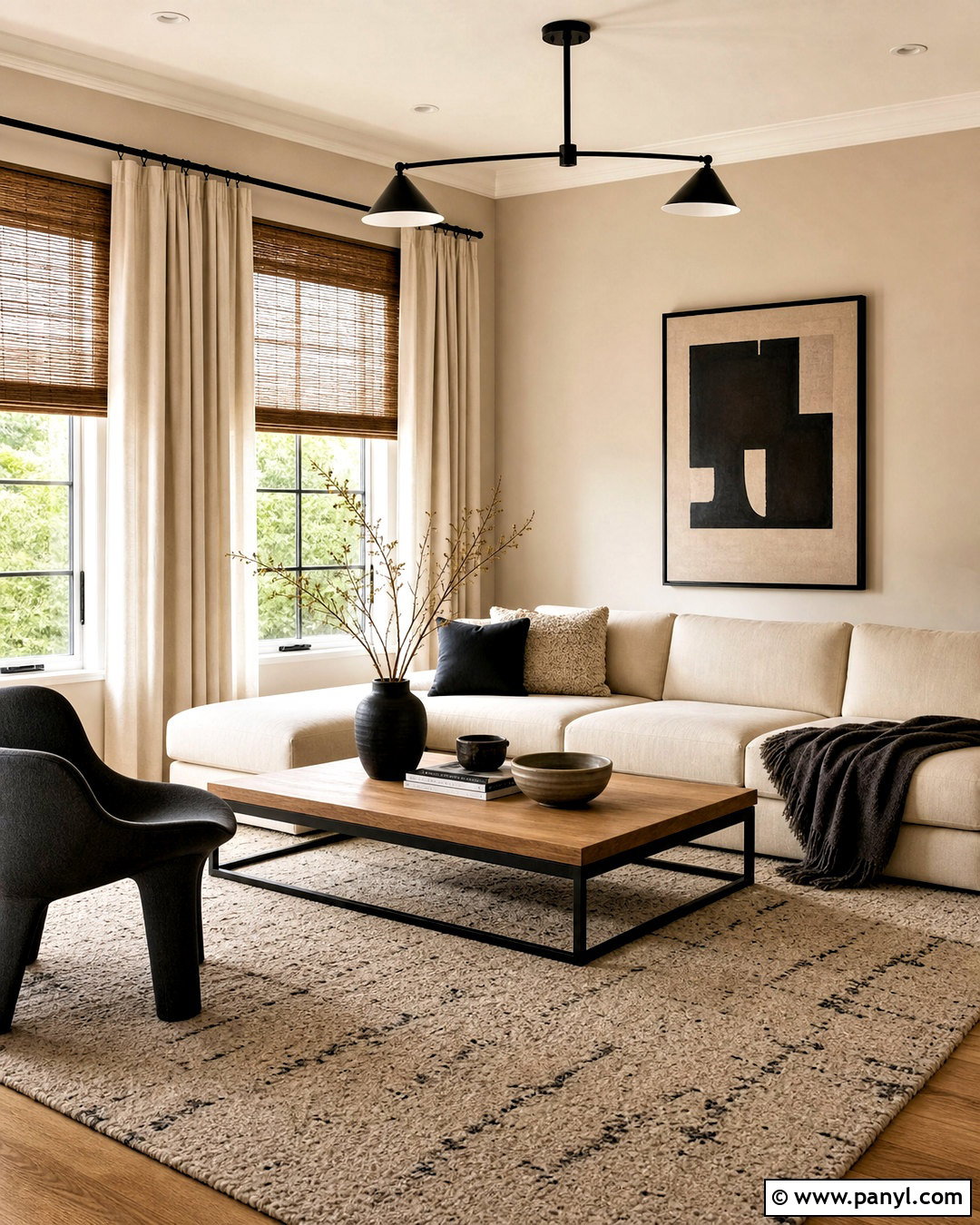
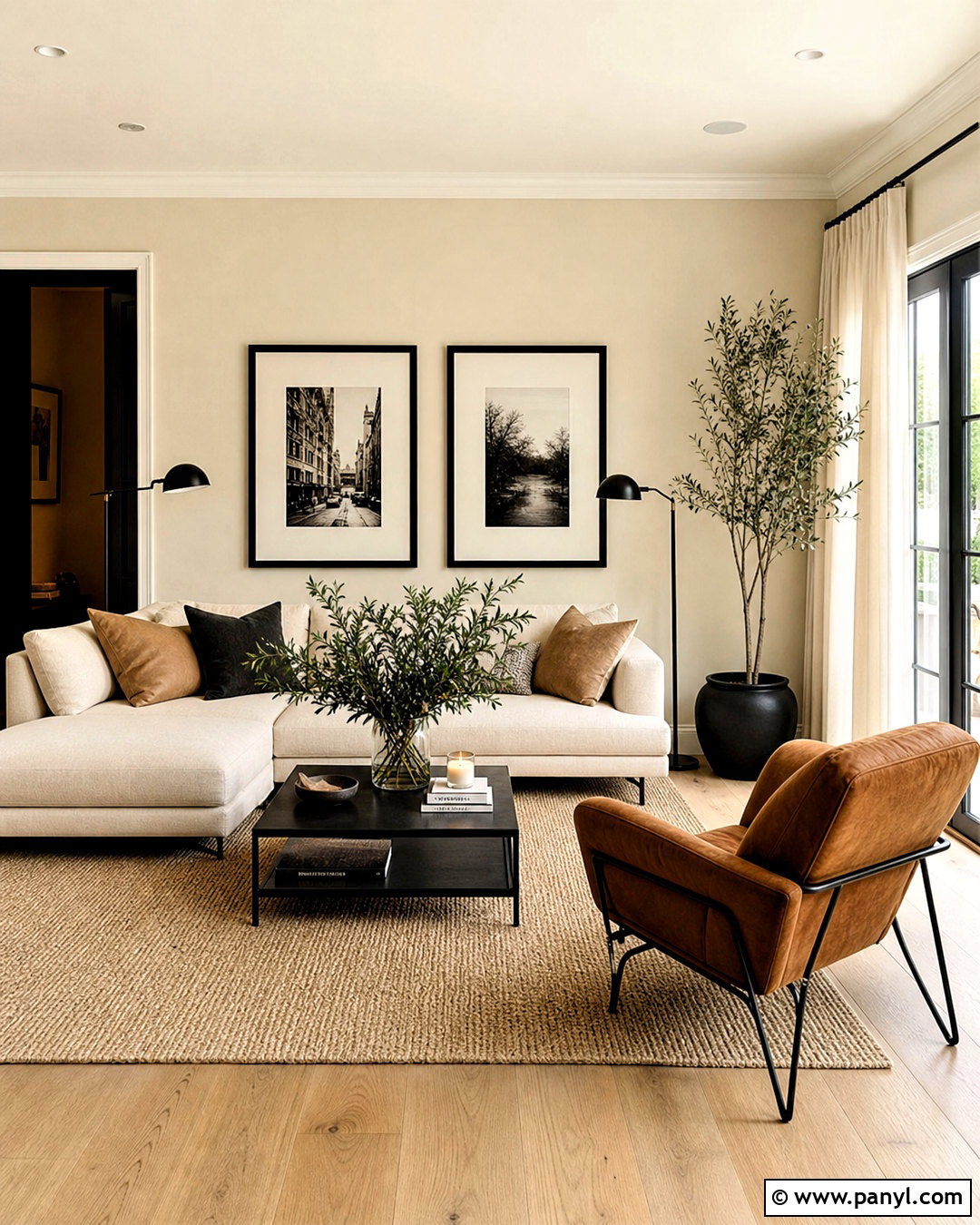
Beige and black create a clean sitting room palette that feels warmer than a basic monochrome scheme. Begin with light sandy beige walls and a generous cream sectional. Add a black-framed coffee table with a warm oak top, plus one sculptural black accent chair. A large ivory rug with a subtle charcoal pattern helps connect the contrasting pieces. Use woven shades under soft linen curtains to add depth around the windows. Black metal lighting, dark picture frames, and a few charcoal pillows repeat the stronger color without dominating the room. Introduce pale wood, stoneware, and dried branches for natural texture. This balanced combination works best when beige remains the primary color and black is reserved for outlines, accents, and a few carefully spaced furnishings.
5. Dusty Blue Sitting Room
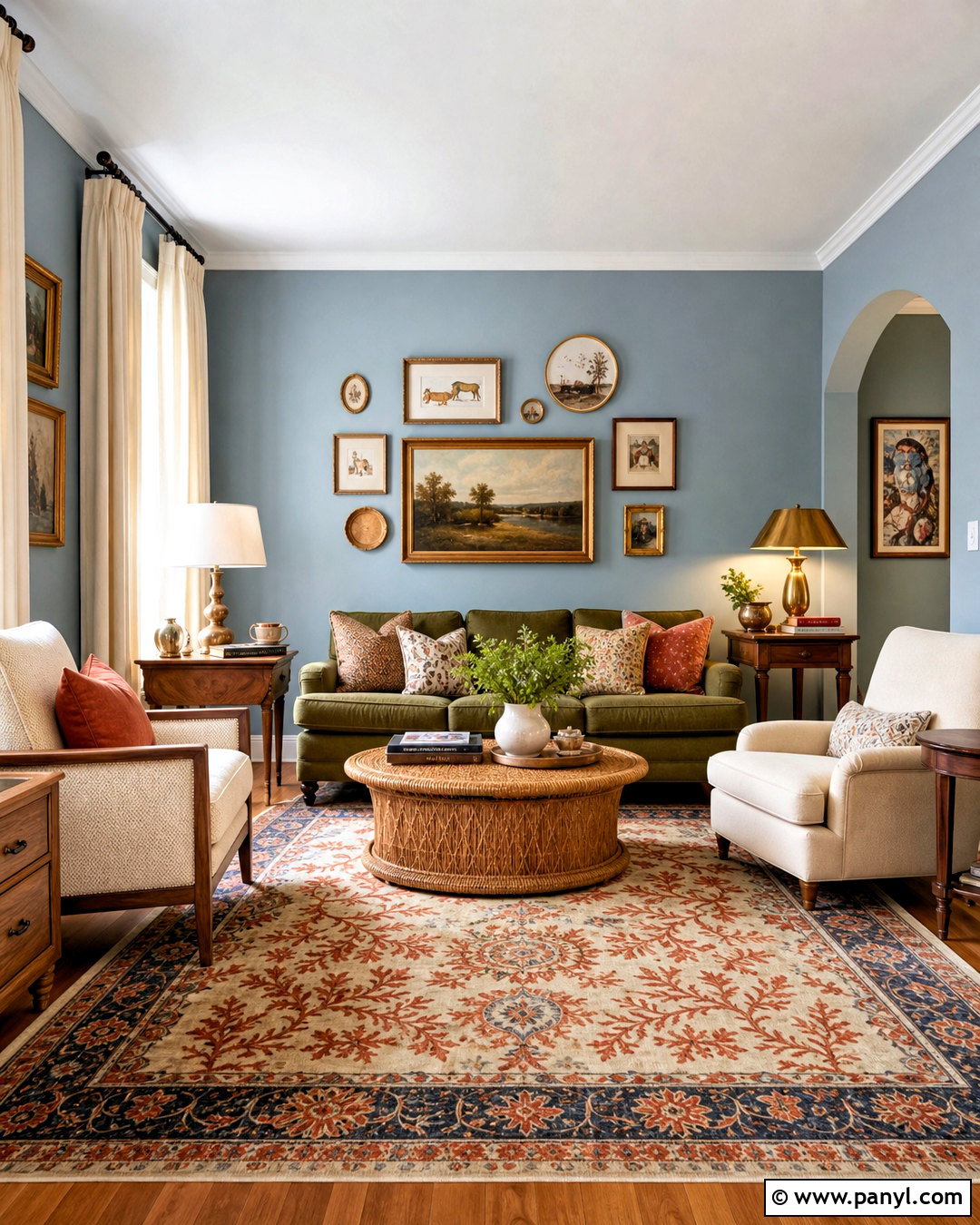
Dusty blue provides gentle color while remaining easy to coordinate with warm materials. Cover the sitting room walls in a muted powder blue, then pair them with a deep olive sofa and cream upholstered chairs. Select a natural rattan coffee table and medium oak side tables to keep the space casual. Coral, rust, and faded red accents can appear in patterned pillows, artwork, and a vintage-style rug. Finish the windows with ivory curtains that allow plenty of daylight into the room. Brushed brass lamps add warmth and a soft glow without looking overly formal. Paint the ceiling and trim warm white for a fresh boundary around the blue. This layered palette creates a collected sitting room that feels colorful, comfortable, and suitable for everyday family use.
6. Terracotta Sitting Room
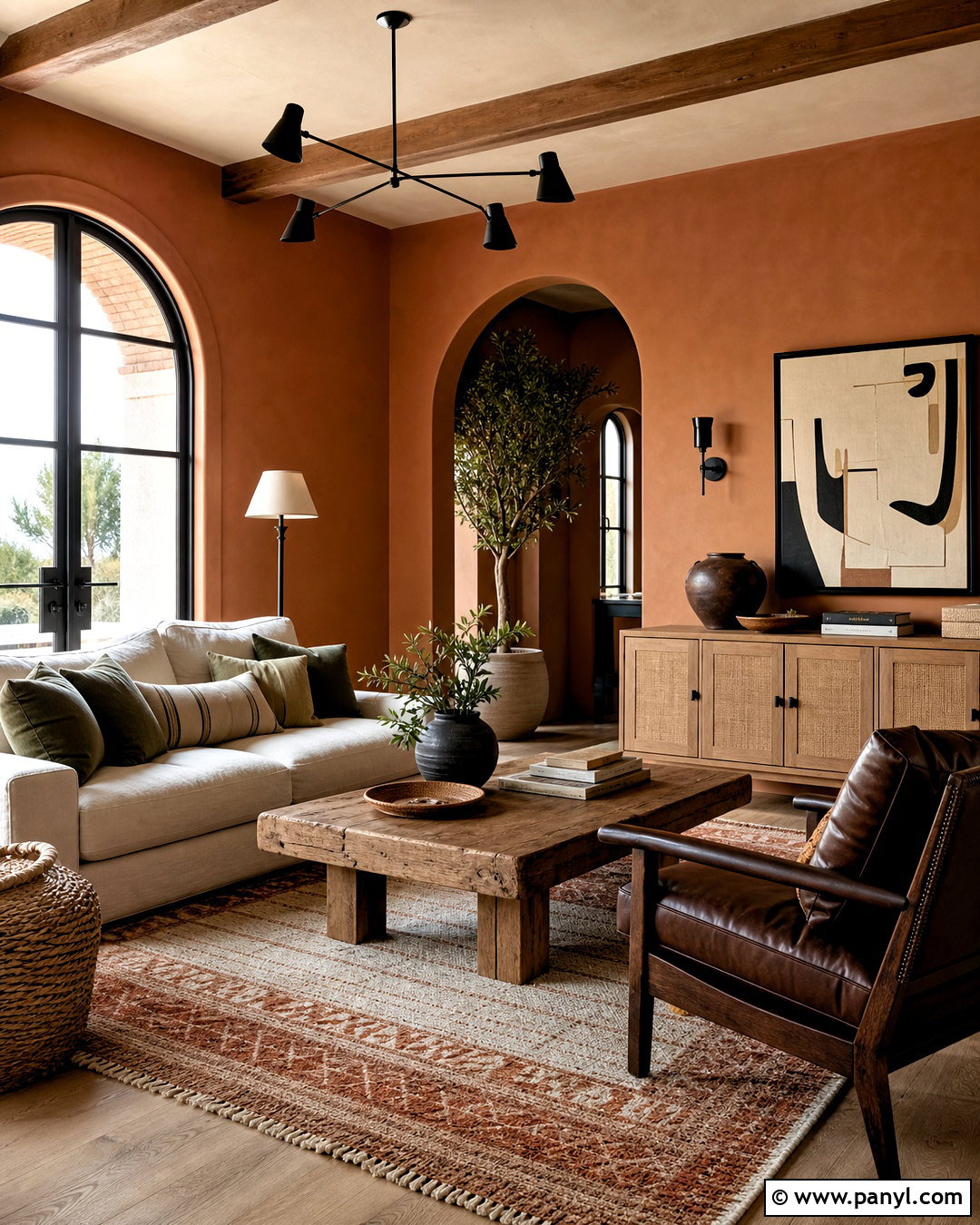
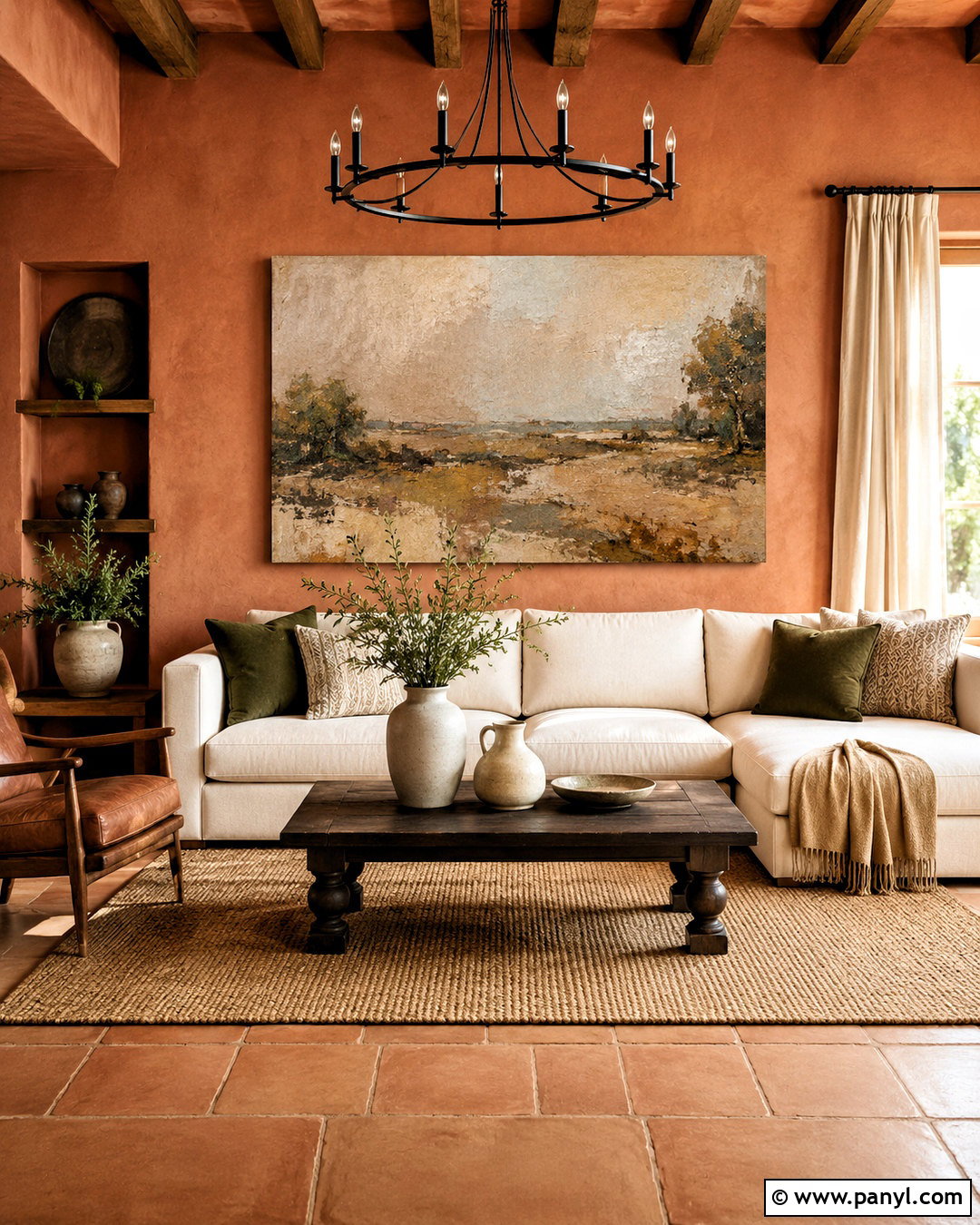
Terracotta walls bring sunbaked warmth into a sitting room and pair naturally with wood, linen, and woven finishes. Choose a muted clay shade rather than a bright orange, then furnish the space with an off-white linen sofa and dark brown leather lounge chair. Ground the layout with a cream and rust patterned rug. A chunky oak coffee table and woven cane sideboard continue the earthy character. Add olive green pillows, cream curtains, and handmade pottery to soften the strong wall color. Black metal lighting introduces a modern line, while large-scale abstract artwork breaks up broad areas of terracotta. Keep the ceiling warm white for brightness. The finished sitting room feels welcoming and grounded, with a balanced Southwestern or relaxed Mediterranean influence.
7. Olive Green Sitting Room
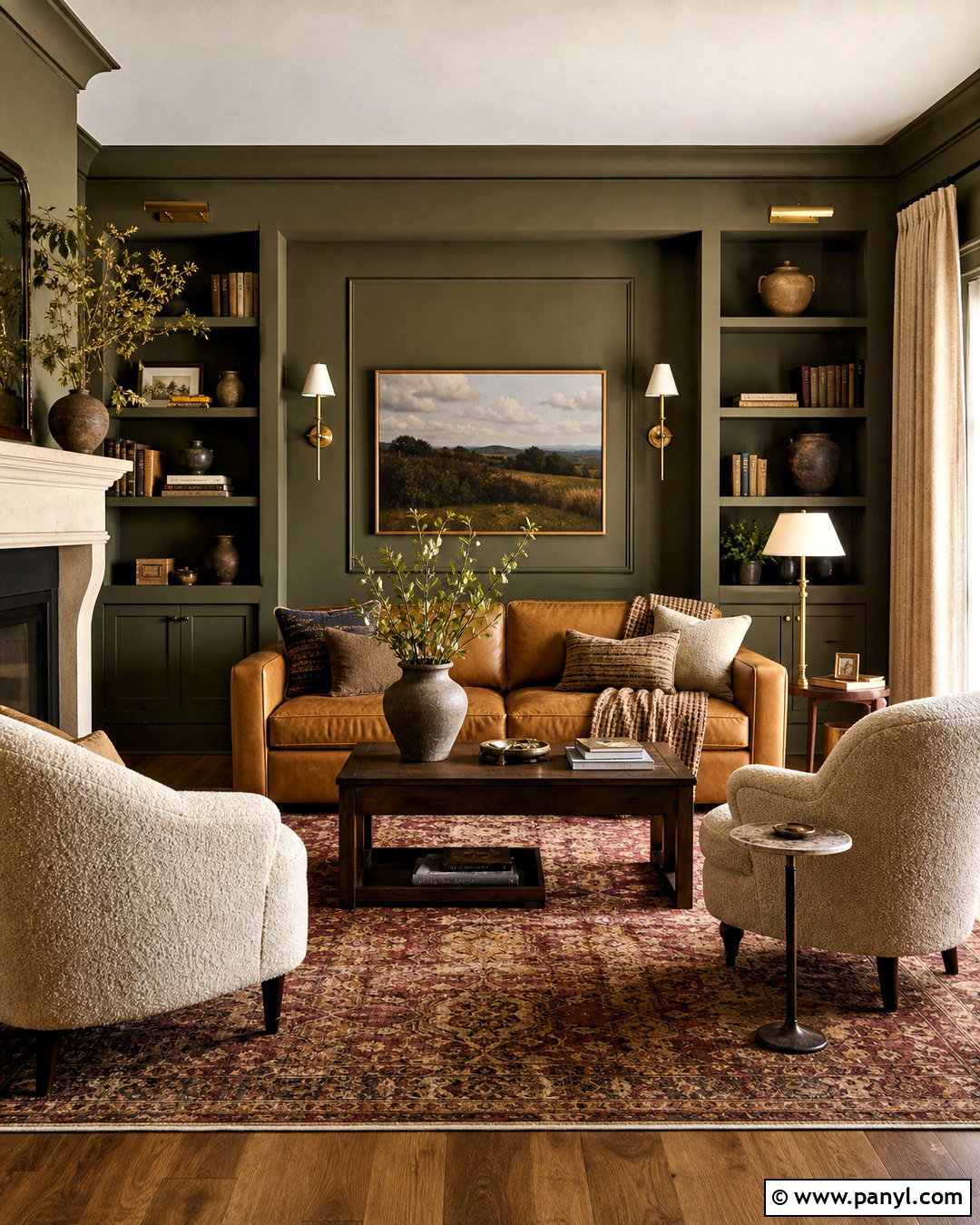
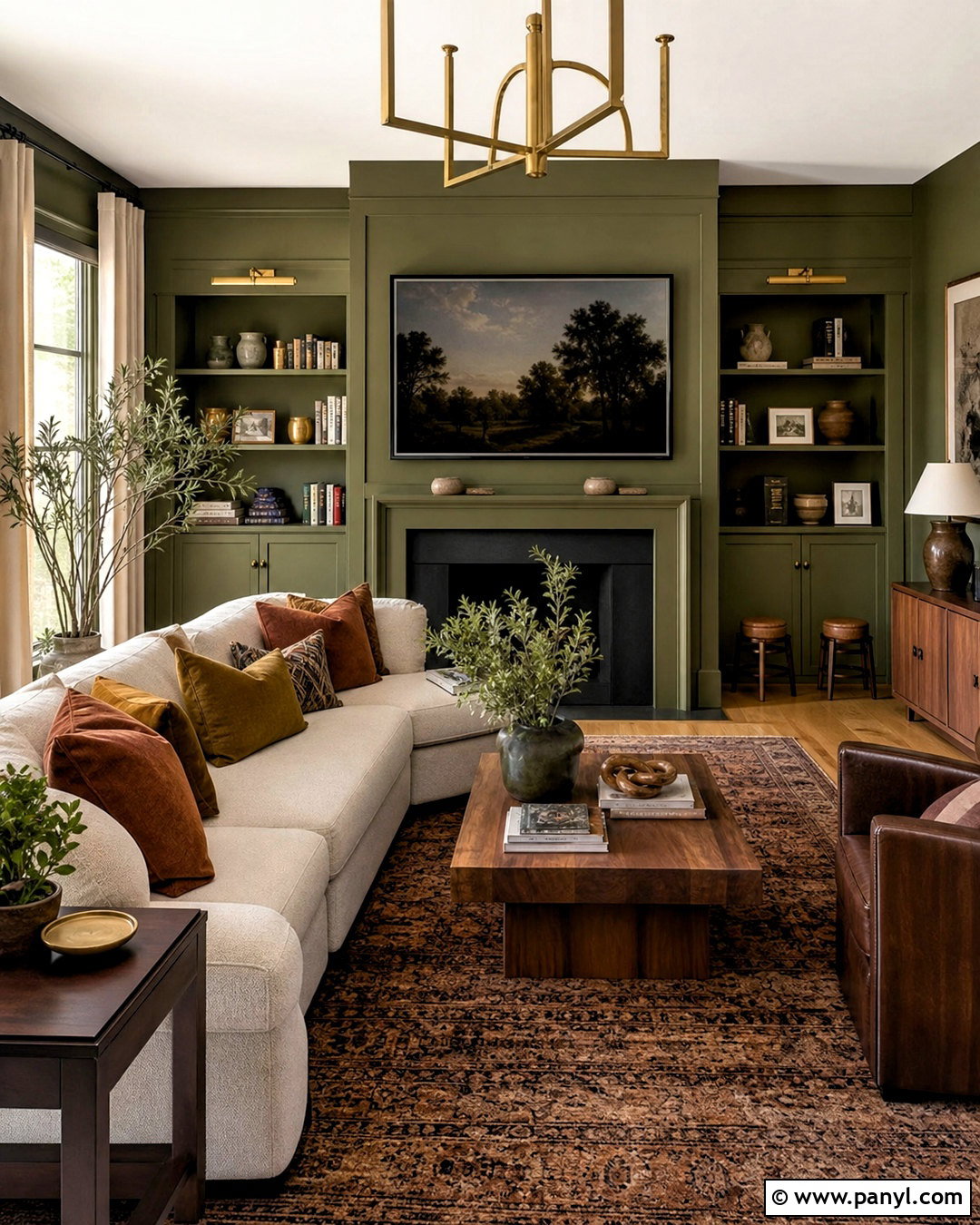
Olive green creates a rich sitting room that feels connected to nature without relying on pale colors. Use a warm, slightly muted olive across the walls and built-in shelves for a cohesive background. Add a camel leather sofa, two cream textured armchairs, and a dark walnut coffee table. A vintage rug containing olive, burgundy, and tan will unify the room’s deeper shades. Hang full-length oatmeal curtains and select antique brass sconces to introduce softer, light-reflecting details. Books, earthenware pots, and landscape artwork make the color feel intentional rather than overly themed. Medium or dark wood flooring supports the palette particularly well. Complete the arrangement with a few black accents, such as curtain rods or frames, to sharpen the room and prevent the earthy tones from blending together.
8. Blush Pink Sitting Room
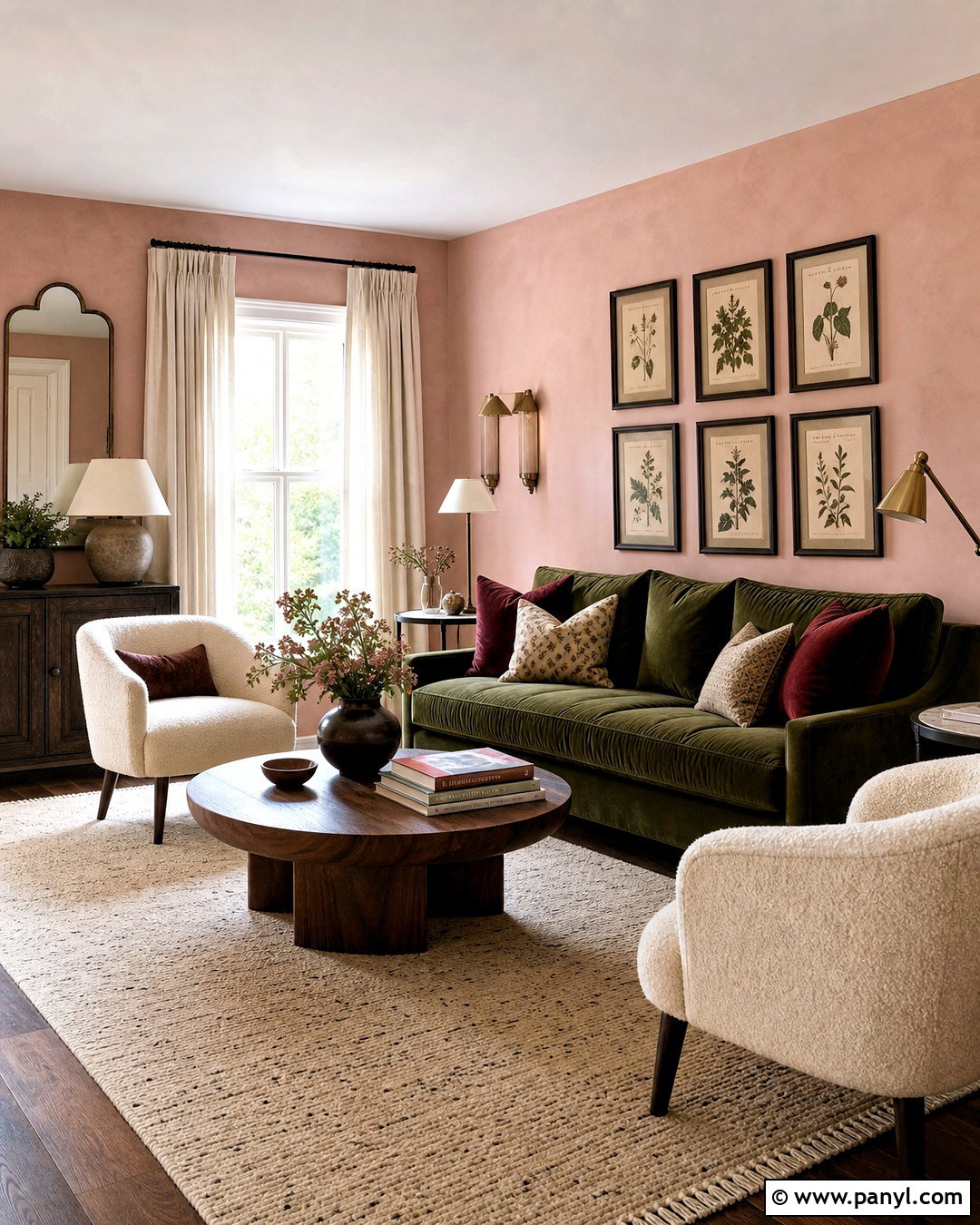
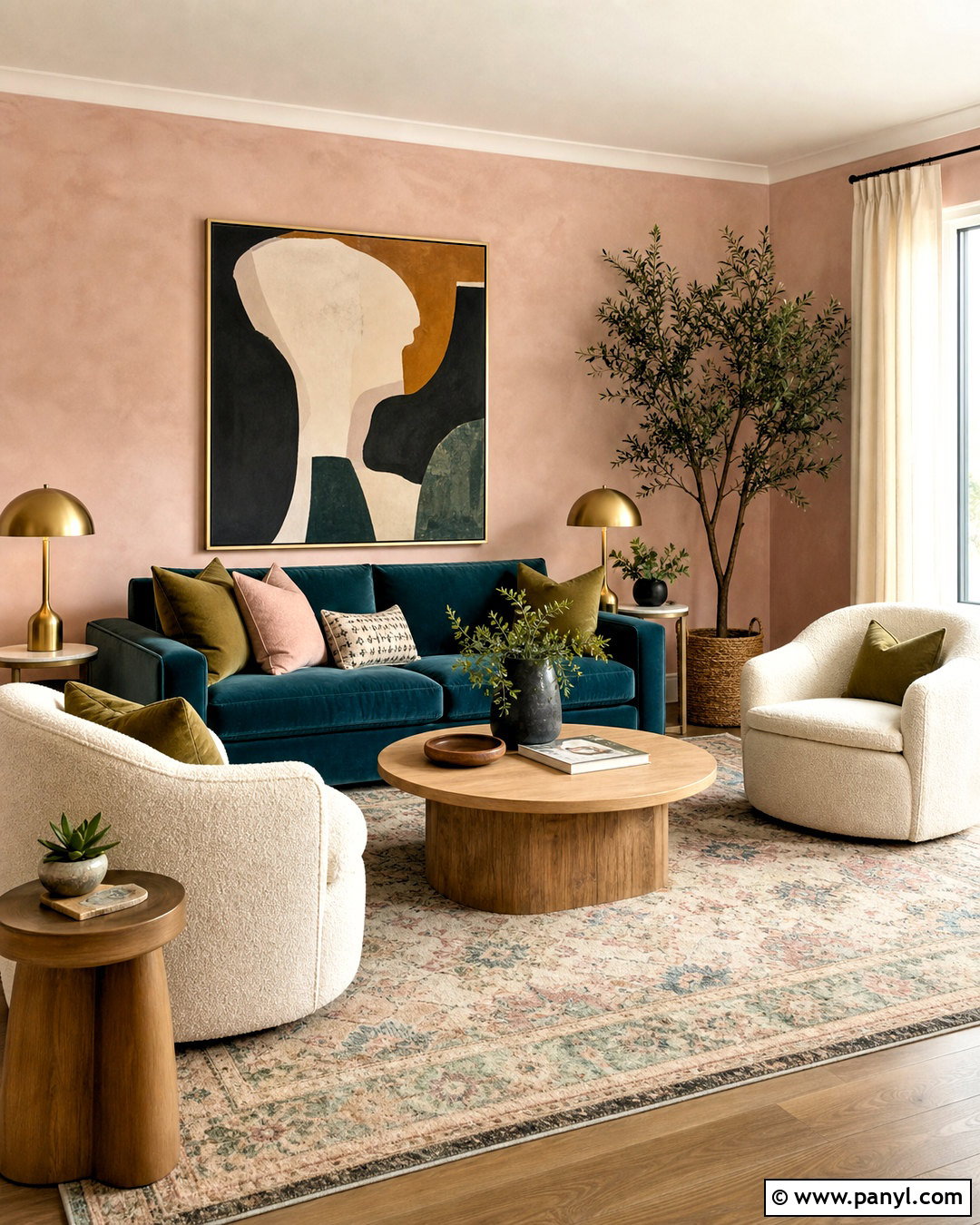
A blush pink sitting room can feel sophisticated when the color has dusty, plaster-like undertones. Paint the walls a muted rose and combine them with a moss green velvet sofa for a strong but natural contrast. Add cream boucle chairs, a walnut coffee table, and a beige wool rug to keep the room grounded. Deep burgundy pillows and a small amount of rust bring greater depth to the softer pink. Choose linen curtains in warm ivory and lighting in aged brass rather than shiny gold. Botanical prints, abstract artwork, and dark wood frames provide structure. Avoid filling the room with overly sweet accessories. By balancing pink with green, brown, cream, and burgundy, the complete sitting room appears warm, collected, and comfortable rather than delicate or overly decorative.
9. Charcoal Gray Sitting Room
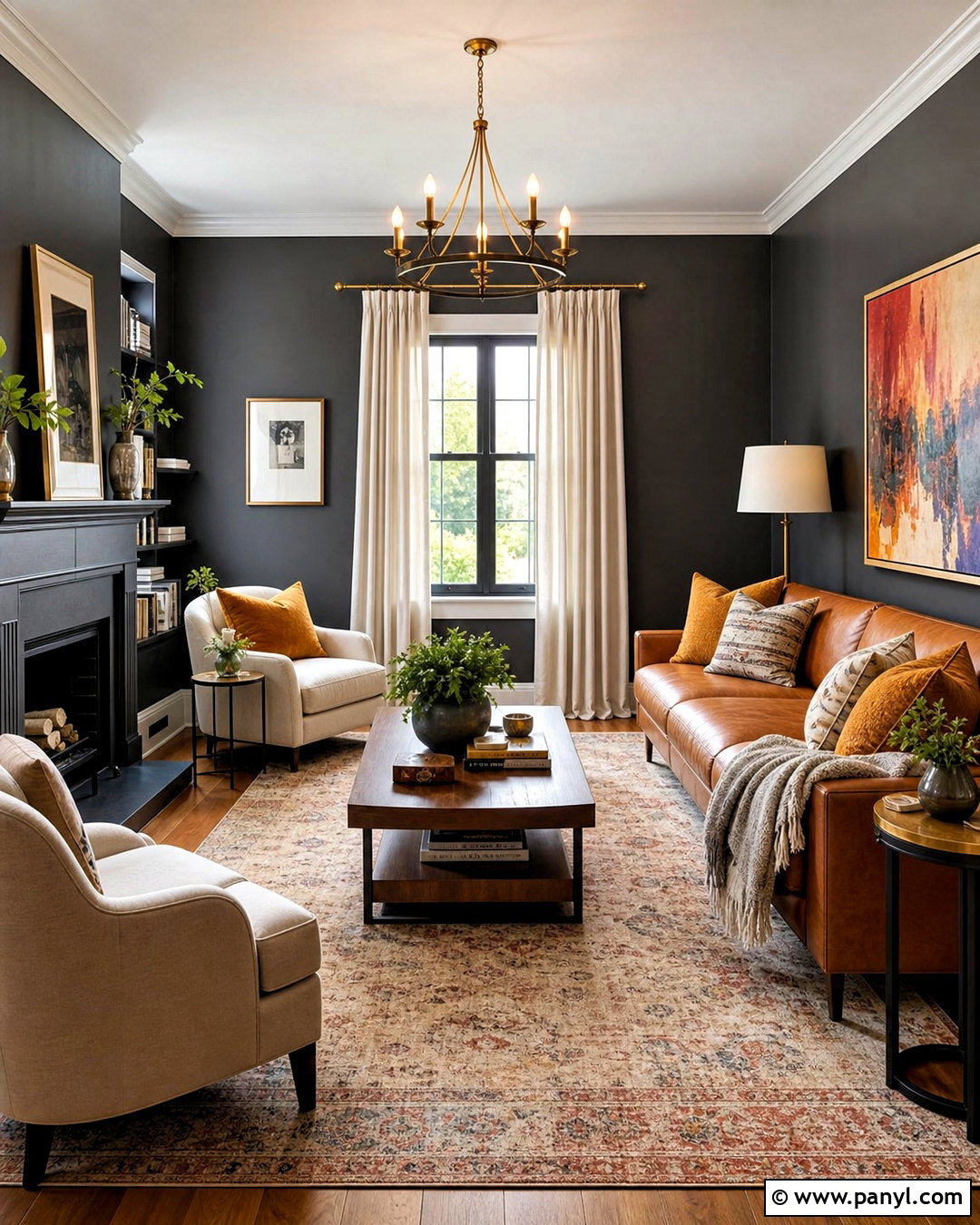
Charcoal gray can produce a cozy sitting room when warm upholstery and wood are included throughout the design. Paint the walls a deep charcoal with a soft rather than blue undertone. Place a camel leather sofa at the center of the scheme, accompanied by two oatmeal fabric chairs. Choose a substantial walnut coffee table and a faded beige and rust rug to soften the dark background. Full-length ivory curtains will frame the windows and increase contrast. Add warm brass lamps, colorful artwork, and cushions in ochre, burgundy, and cream. The ceiling can remain warm white, while the trim may match the walls for a streamlined effect. This palette works particularly well in rooms used mainly during the evening, creating an intimate setting without sacrificing visual warmth.
10. Mustard Yellow Sitting Room
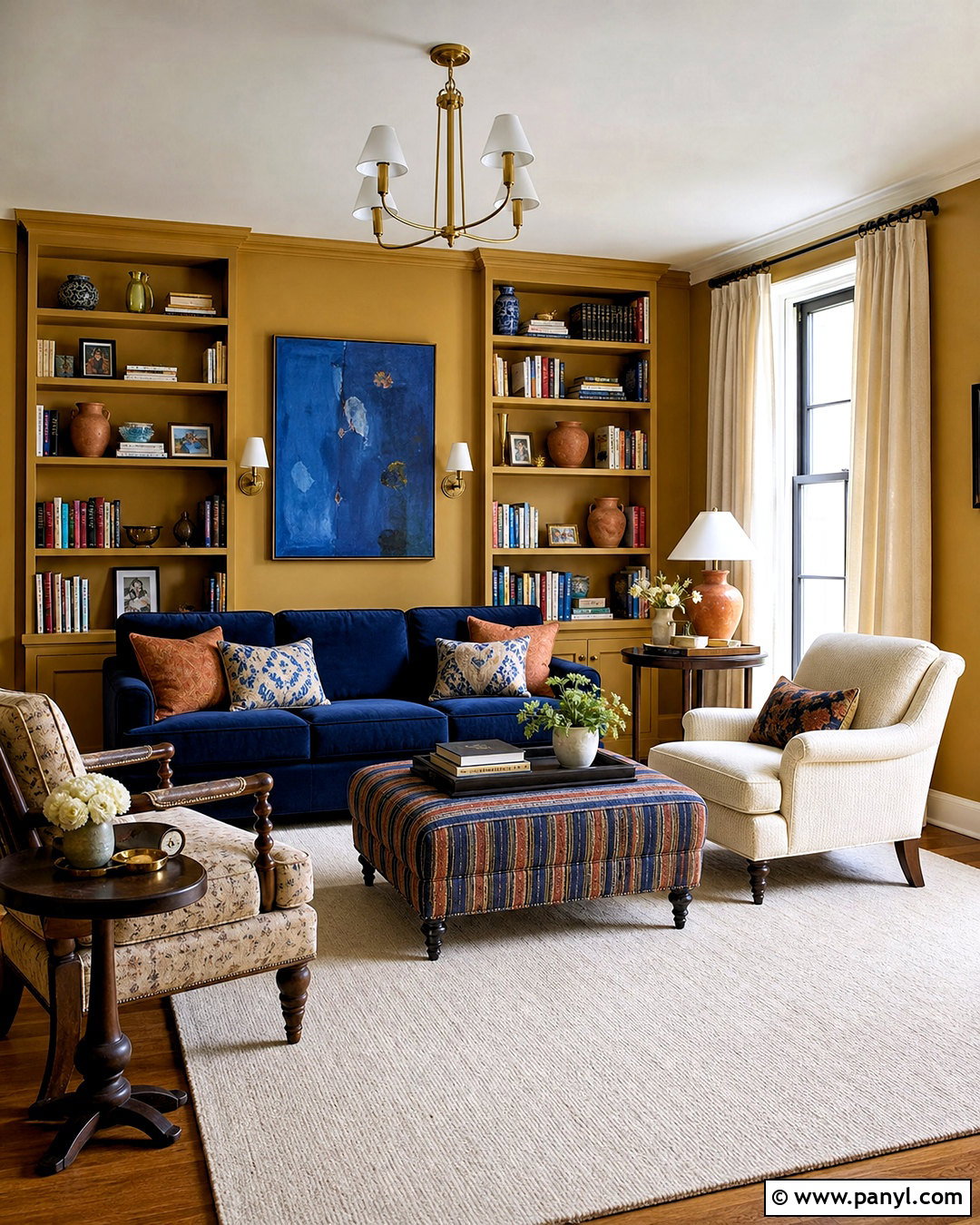
Muted mustard yellow gives a sitting room warmth, personality, and a cheerful glow without the intensity of brighter lemon shades. Carry the color across the walls and built-in bookcases to create one confident background. Introduce a deep navy sofa, a cream armchair, and a striped ottoman in blue, beige, and rust. Dark wood tables add weight, while a light neutral rug prevents the room from feeling too saturated. Use white or cream curtains and a warm white ceiling to balance the yellow. Blue artwork, terracotta pottery, and antique brass lighting will connect the contrasting colors. This complete scheme feels especially suitable for traditional or eclectic interiors. Repeating mustard in only one or two smaller accessories ensures the walls remain the clear focus.
11. Cream And Forest Green Sitting Room
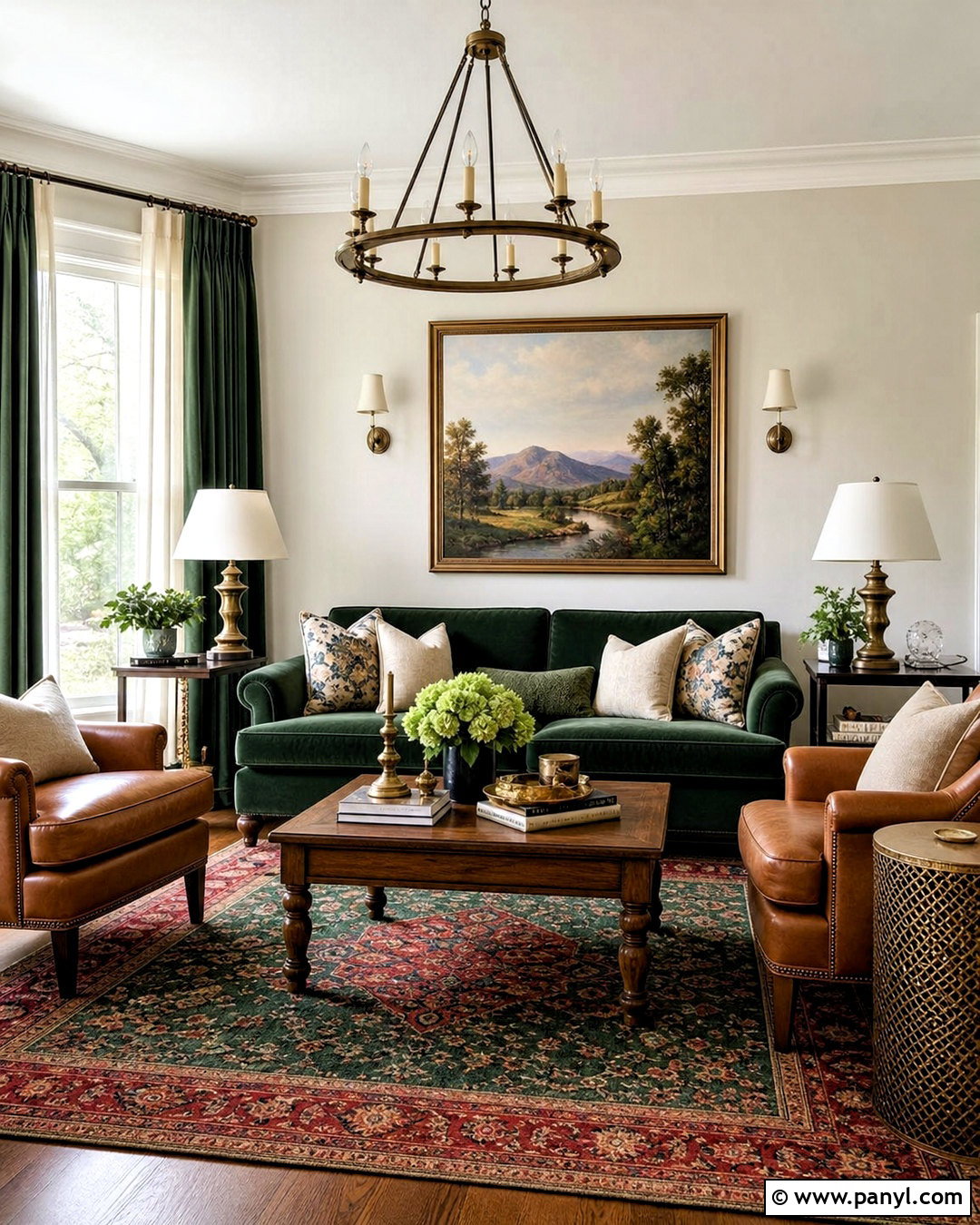
Cream walls and forest green upholstery create an elegant sitting room with strong contrast and enduring appeal. Begin with soft cream paint on the walls, ceiling, and trim to establish a bright envelope. Add a deep green velvet sofa and two tan leather chairs around a medium oak coffee table. Choose a traditional rug that combines cream, green, muted red, and touches of blue. Dark green curtains can frame the windows, although lightweight cream sheers underneath will keep the room from feeling enclosed. Finish the look with brass table lamps, dark wood frames, and landscape artwork. A few patterned pillows can repeat the rug’s colors across the seating. This balanced arrangement offers richness through furniture and textiles while keeping the room’s architectural background light and flexible.
12. Chocolate Brown Sitting Room
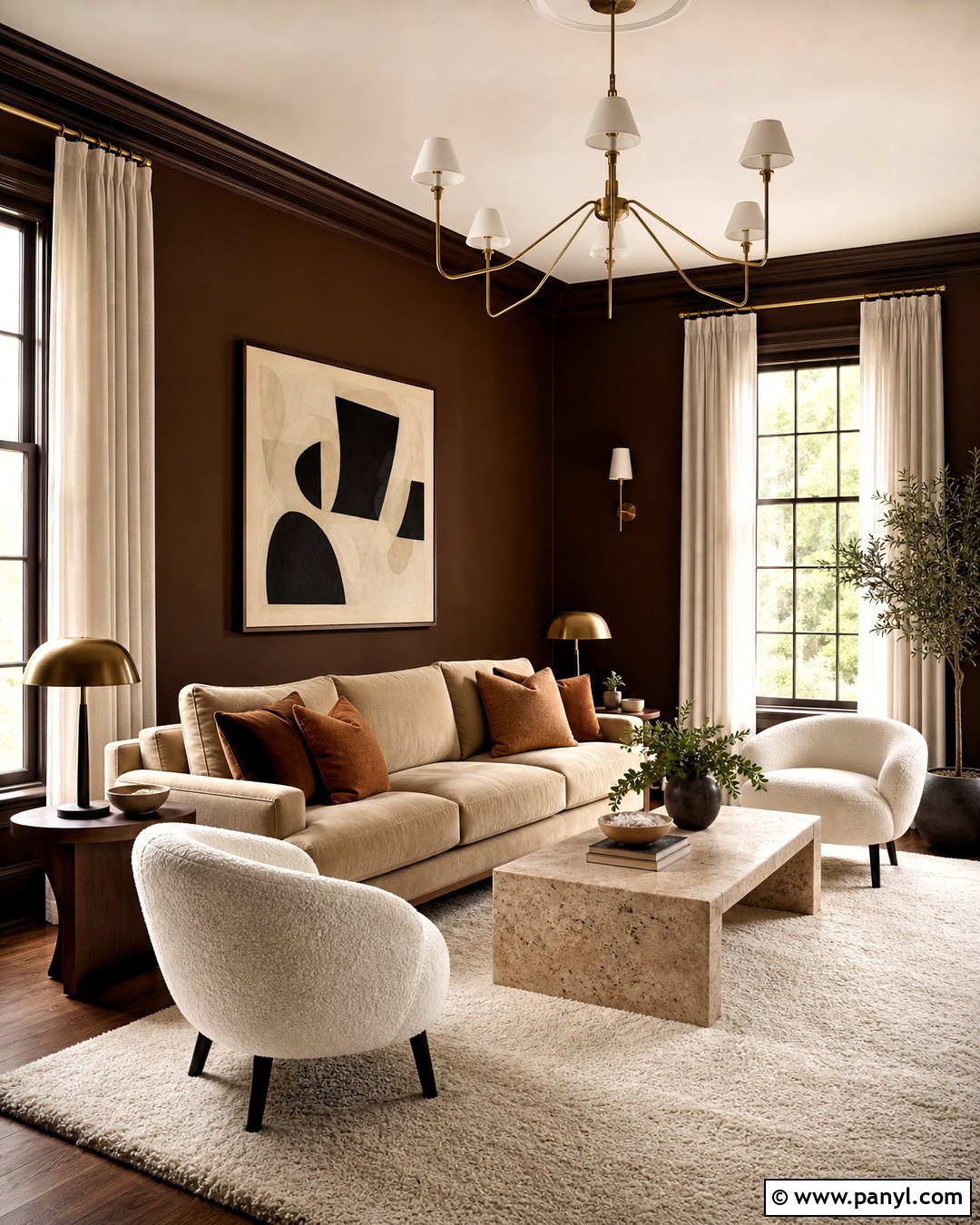
Chocolate brown walls can make a sitting room feel enveloping, polished, and surprisingly comfortable. Choose a deep cocoa shade with warm undertones and repeat it on the trim for an uninterrupted finish. Balance the walls with a large flax-colored sofa, cream boucle chairs, and an ivory wool rug. A travertine coffee table introduces a lighter natural surface, while walnut side tables provide tonal depth. Use pale linen curtains to brighten the windows and aged brass lamps to reflect warm light. Artwork containing cream, rust, and soft blue will break up the brown without competing with it. Add caramel pillows and textured throws for a layered effect. The finished room feels luxurious yet livable because every dark surface is offset by tactile, light-colored furnishings.
13. Teal And Rust Sitting Room
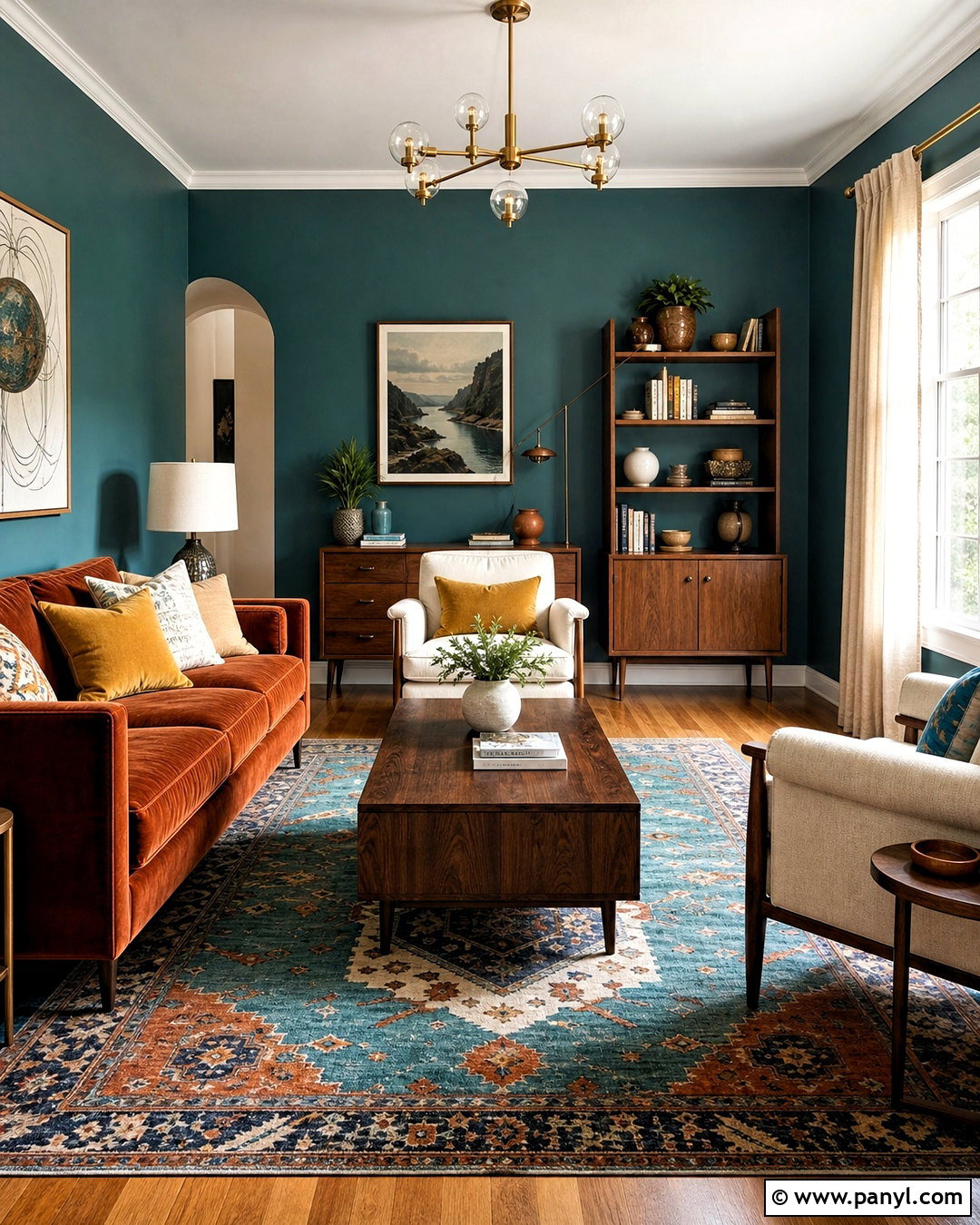
Teal and rust form a lively sitting room palette because the cool and warm tones balance one another. Paint the walls a muted deep teal, then introduce a rust velvet sofa as the main focal point. Add two cream armchairs, a dark oak coffee table, and a patterned rug containing teal, rust, tan, and ivory. Natural linen curtains stop the room from becoming too dark, while brass lighting highlights the rich colors. Use walnut shelving or a wood media console to bridge the teal walls and orange-toned upholstery. Cushions in mustard, cream, and dark blue can provide smaller transitions across the seating. Keep decorative pieces simple and generously spaced. This complete scheme suits eclectic and midcentury-inspired rooms that need color, comfort, and a clear visual structure.
14. Greige Sitting Room
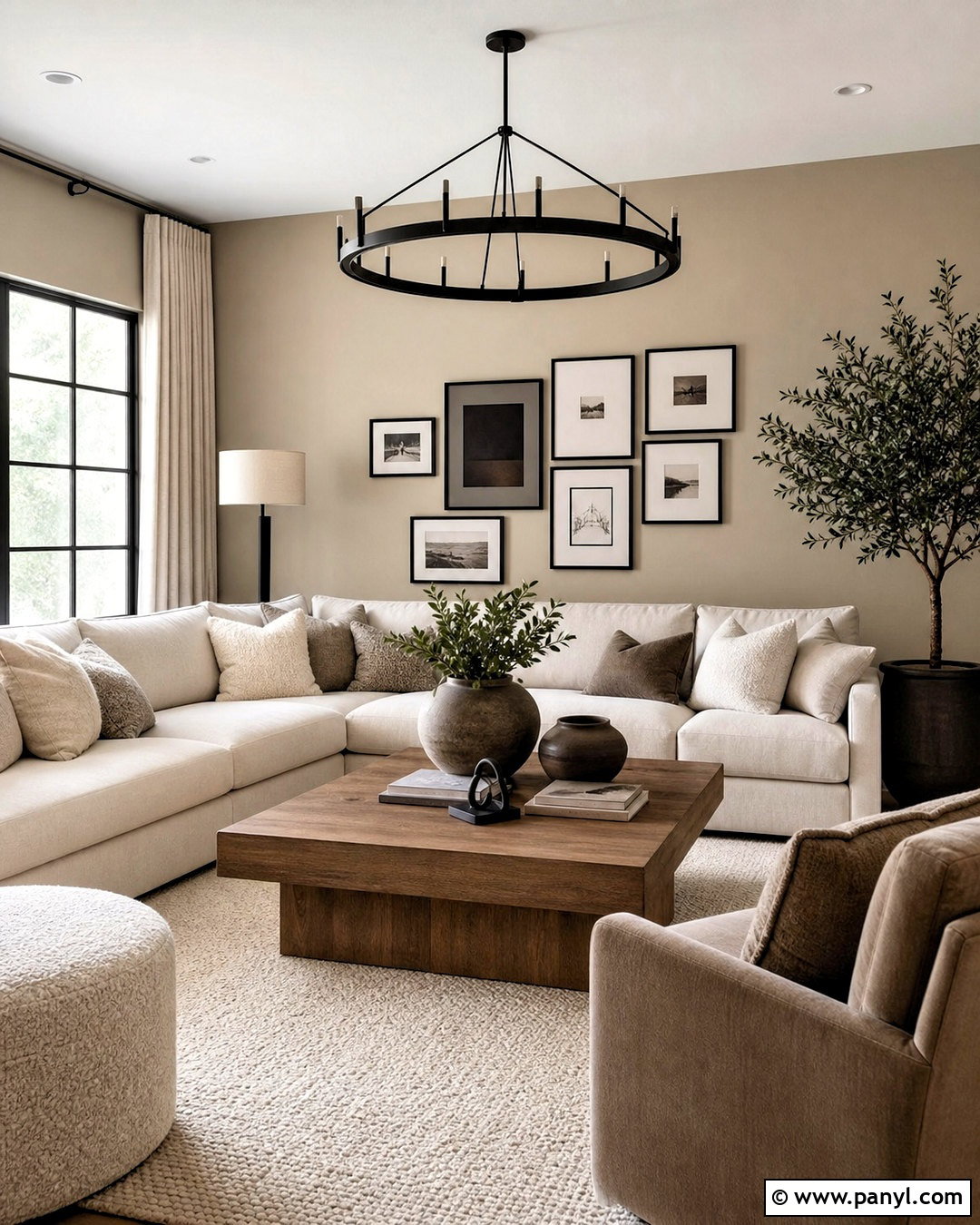
Greige combines the softness of beige with the clean appearance of gray, making it a practical foundation for a calm sitting room. Select a warm greige wall paint that coordinates with both the flooring and natural daylight. Add an ivory sectional, a taupe armchair, and a medium oak coffee table. Layer a textured cream rug beneath the seating to distinguish it from the walls. Use charcoal in slim doses through curtain rods, picture frames, and a modern floor lamp. Full-length oatmeal drapes, boucle pillows, and a knitted throw provide subtle tonal variation. Introduce muted green through a large plant and one or two ceramic accessories. The completed space feels simple but not bare because its interest comes from texture, shape, natural materials, and gentle shifts between related neutral colors.
15. Burgundy Sitting Room
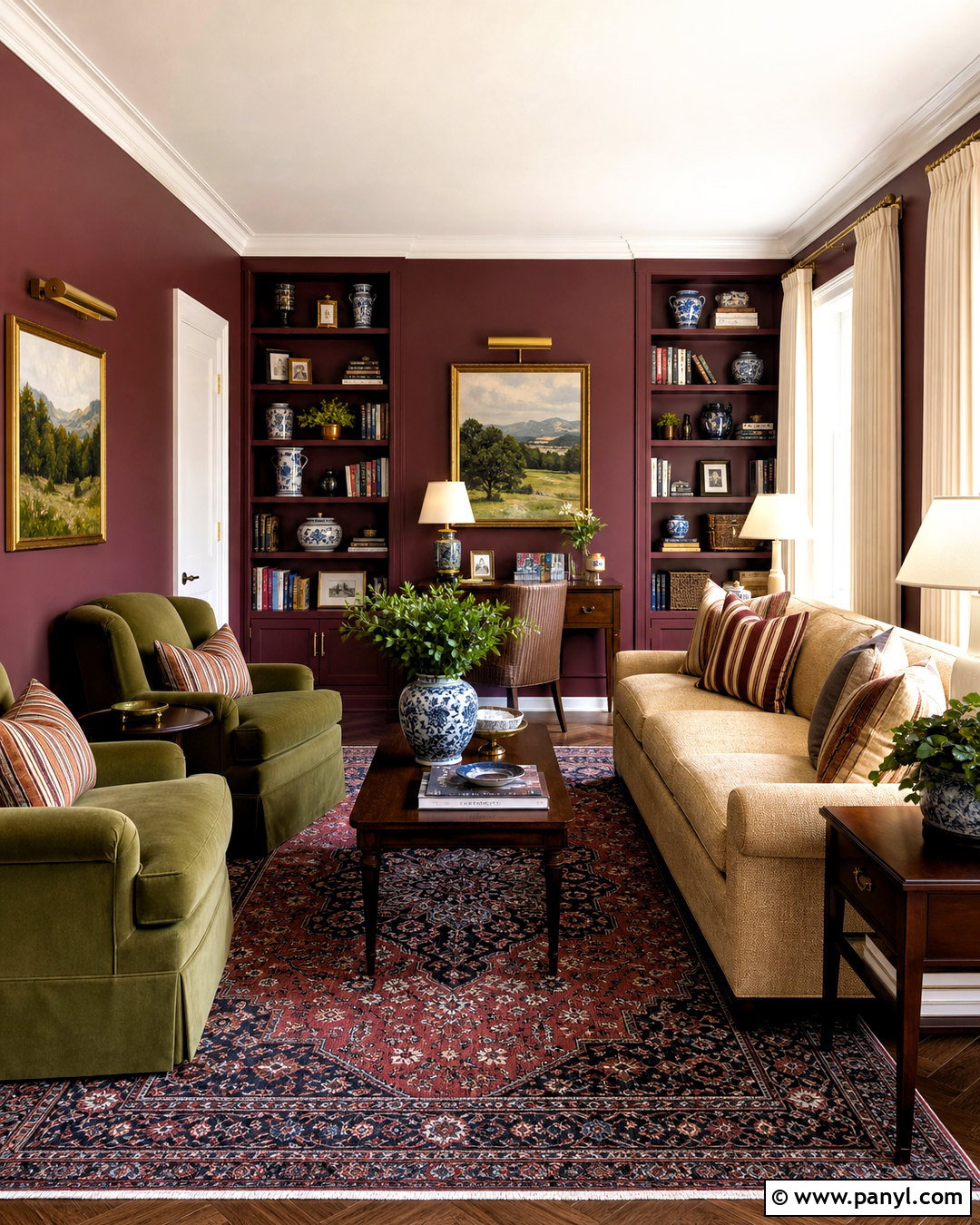
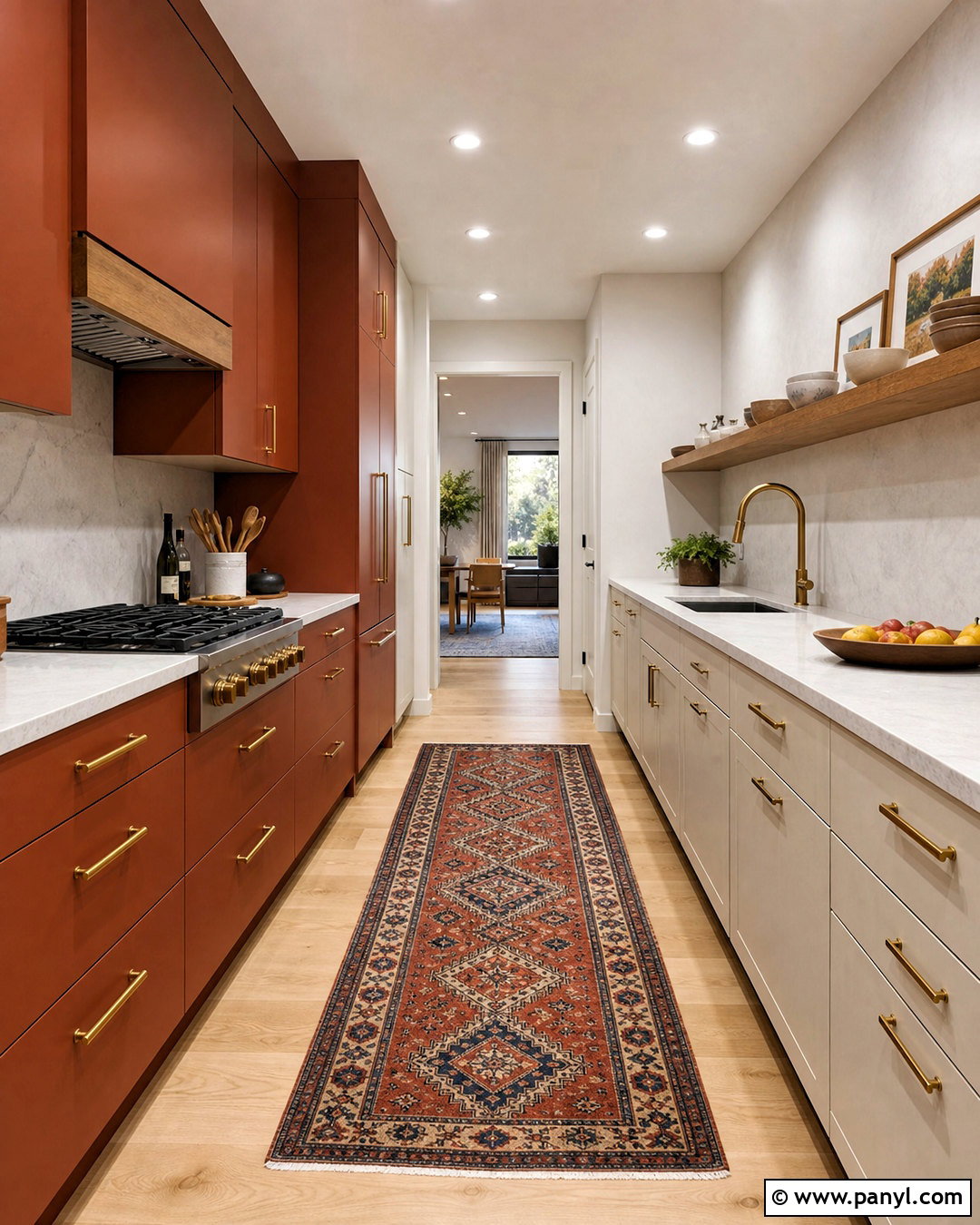
Burgundy creates a confident, traditional sitting room that can still look fresh with streamlined furniture. Paint the walls a softened wine-red shade with brown undertones, avoiding anything excessively bright or purple. Pair the color with a light camel sofa and two olive green chairs. An antique-style rug in burgundy, cream, navy, and tan will connect the whole seating area. Choose dark walnut tables and warm brass picture lights to strengthen the classic mood. Ivory curtains and a warm white ceiling provide essential brightness. Add framed landscapes, striped pillows, and a few blue ceramic pieces for contrast. Painting the bookcases burgundy can make them appear integrated into the architecture. The resulting room feels rich and intimate while remaining balanced enough for regular relaxation and conversation.
16. Pale Gray And Soft Blue Sitting Room
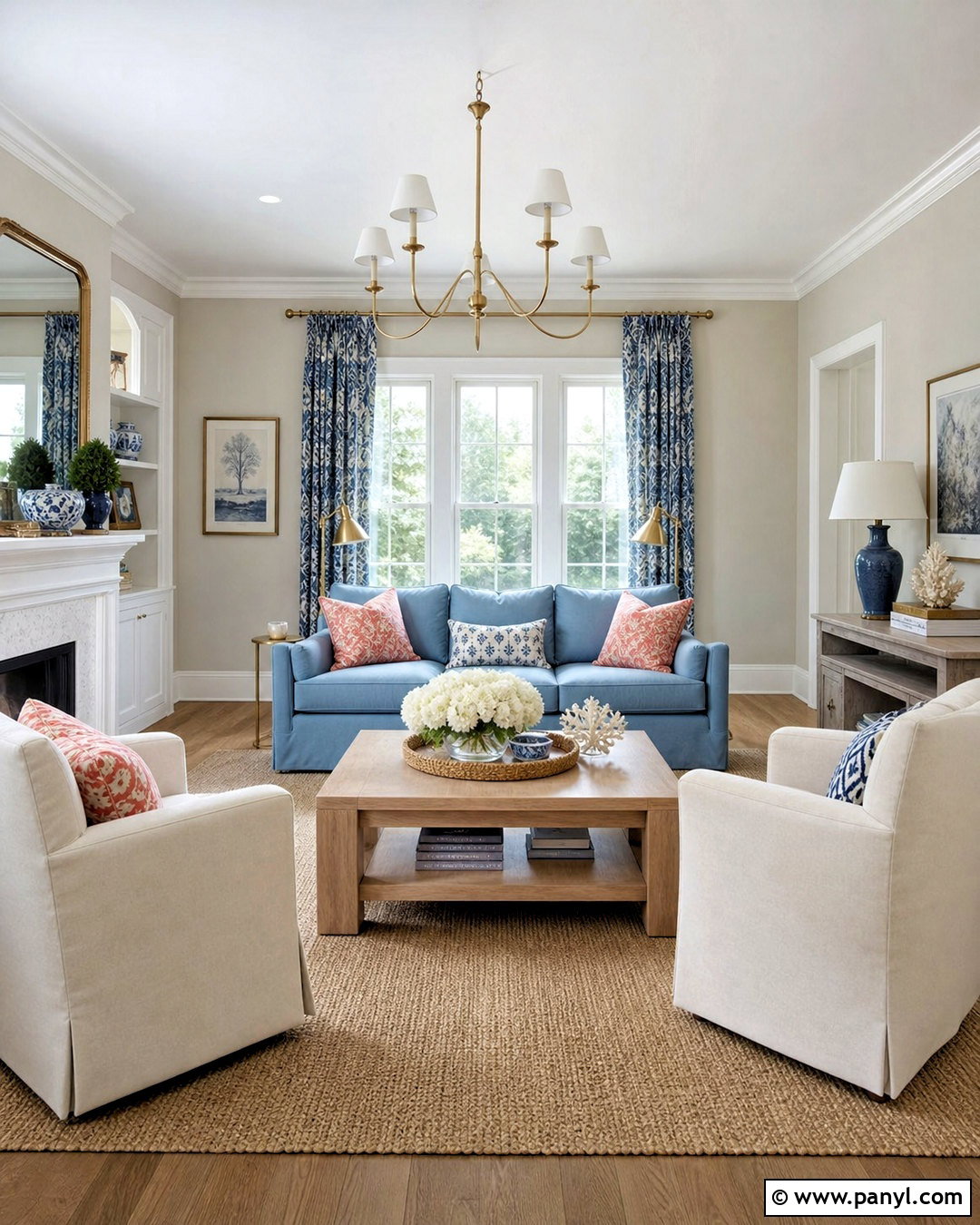
Pale gray and soft blue can create a light sitting room when both shades have gentle, warm undertones. Use pale gray on the walls and reserve dusty blue for a comfortable sofa, patterned curtains, and selected cushions. Add two cream armchairs and a light oak coffee table to prevent the scheme from becoming too cool. A beige woven rug brings warmth underfoot, while brushed nickel or soft brass lighting keeps the look understated. Incorporate muted coral through artwork or a single lumbar pillow for a small contrasting accent. White trim and a white ceiling will maintain a crisp appearance. This complete color combination is useful in coastal, transitional, or compact sitting rooms where an airy atmosphere is preferred without relying entirely on white furnishings and walls.
17. Plum And Taupe Sitting Room
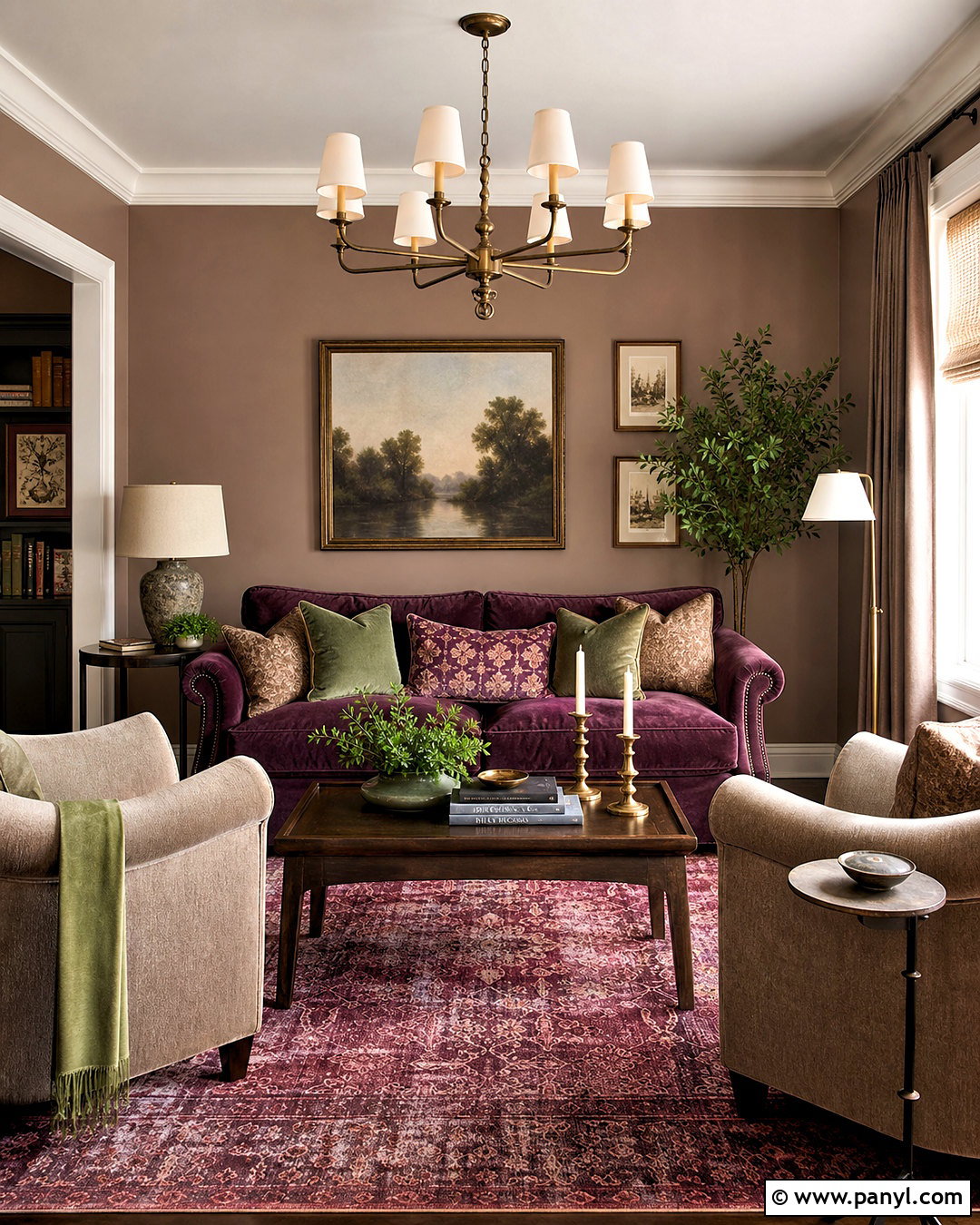
Plum and taupe create a layered sitting room that feels dramatic without becoming overly dark. Start with warm taupe walls, then introduce a deep plum sofa as the main color statement. Add two oatmeal chairs, a dark wood coffee table, and a patterned rug containing plum, dusty pink, cream, and muted green. Floor-length taupe curtains can blend gently with the walls while adding softness around the windows. Choose antique brass lighting and walnut frames to complement the purple-red undertones. A few sage green accessories will bring natural contrast and keep the room from feeling too formal. Repeat plum carefully through one pillow or a piece of artwork rather than every accessory. This restrained approach produces an inviting, coordinated sitting room with both warmth and distinctive personality.
18. Sky Blue And Natural Wood Sitting Room
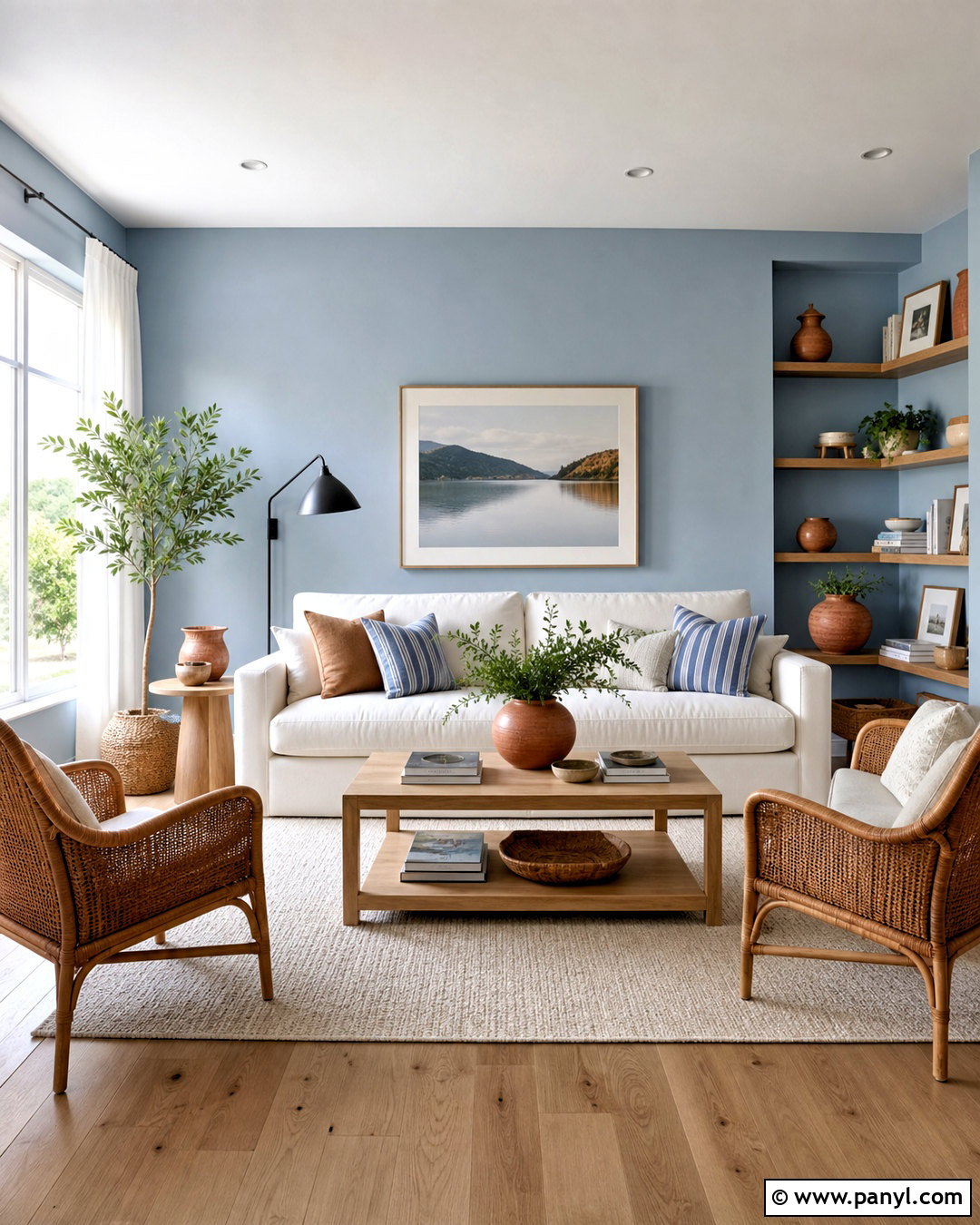
Sky blue walls and natural wood furniture give a sitting room a clean, open character that feels relaxed rather than themed. Choose a soft blue with slight gray undertones, then add a warm white sofa and woven rattan chairs. A light oak coffee table, oak shelving, and honey-toned wood flooring will provide warmth against the cooler walls. Use an ivory rug and simple white curtains to maximize brightness. Introduce small accents of terracotta and leafy green through pillows, pottery, plants, and artwork. Matte black lighting or curtain rods can supply a crisp modern outline. Keep patterns understated, using stripes or small geometric designs in blue and cream. The entire palette feels balanced, casual, and well suited to rooms that receive generous natural daylight.
19. Peach And Olive Sitting Room
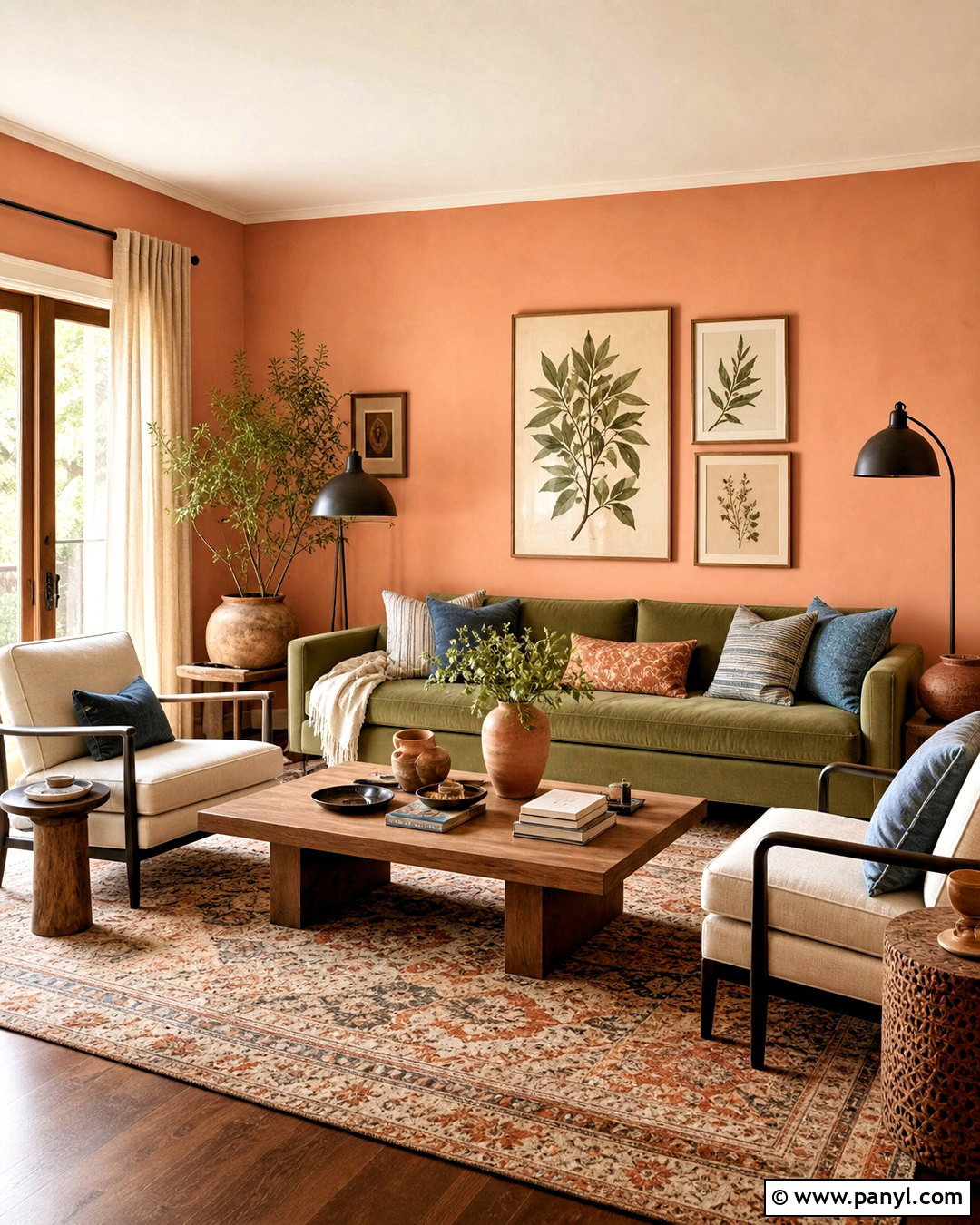
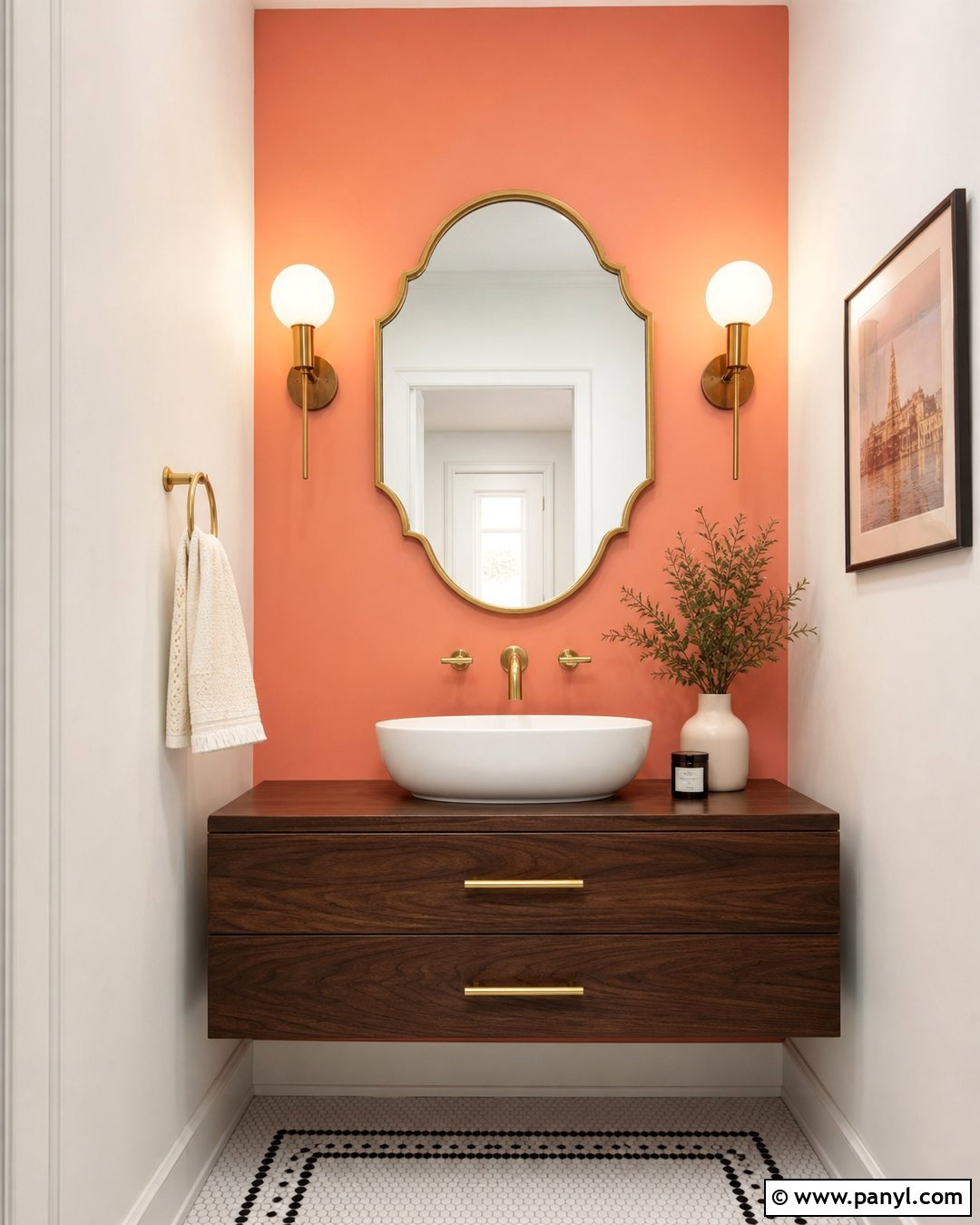
Soft peach walls can warm a sitting room beautifully when they are paired with muted olive green and grounded neutrals. Select a chalky peach rather than a bright coral, then position an olive sofa against the warm background. Add cream upholstered chairs, a medium walnut coffee table, and a beige rug with a subtle rust pattern. Natural linen curtains allow the peach to remain the room’s main light-reflecting color. Use dark bronze lighting and frames for definition, along with terracotta ceramics and botanical artwork. A small amount of dusty blue in cushions or books adds an unexpected cool note. This complete palette feels welcoming and cheerful while retaining an earthy quality. It works particularly well in casual contemporary, bohemian, and updated traditional sitting rooms.
20. Black And Warm Neutral Sitting Room
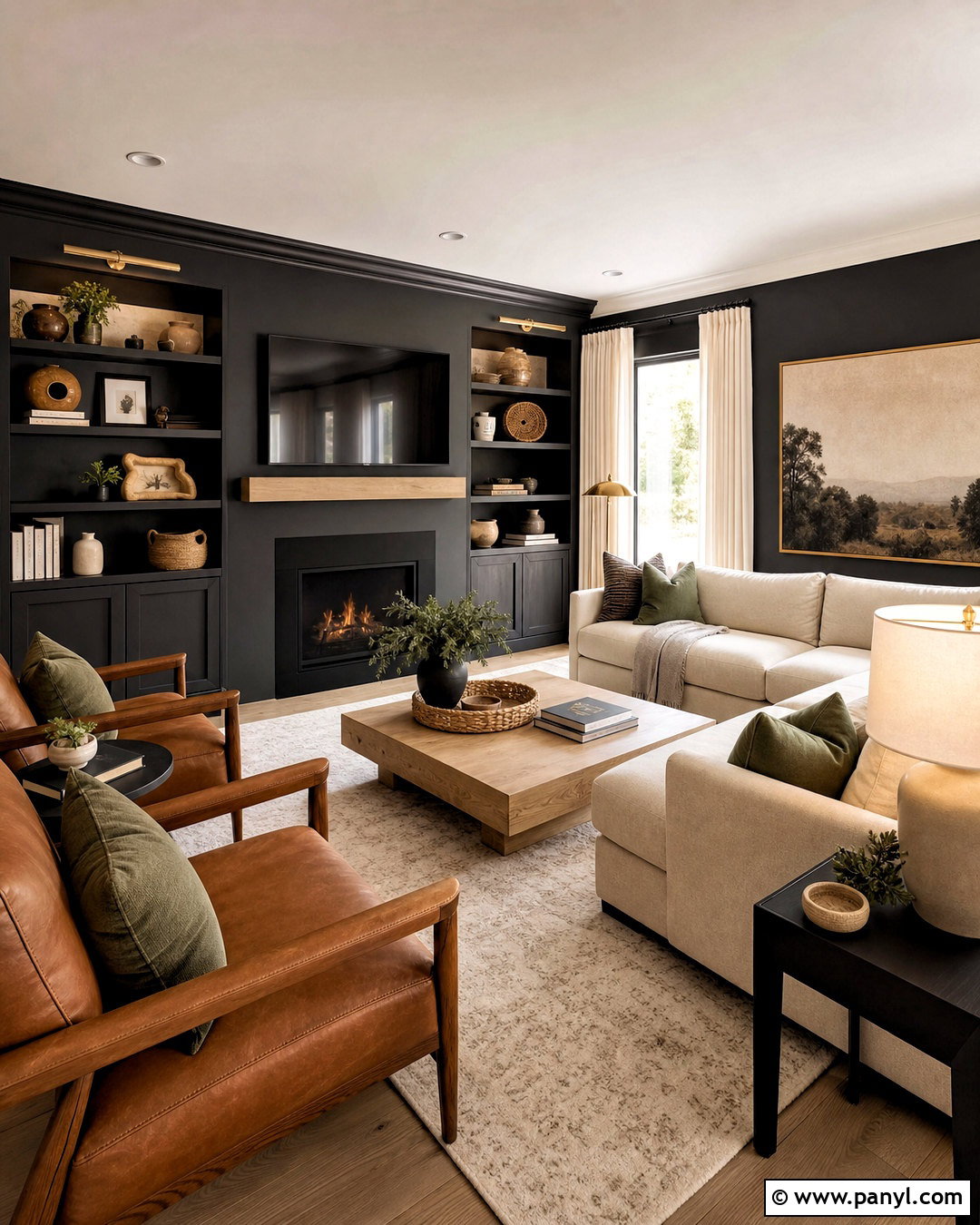
Black walls can create a striking sitting room when most of the furnishings remain light, warm, and tactile. Choose a softened off-black paint and apply it to the walls, trim, and built-in shelving for a smooth, unified backdrop. Add a generous oatmeal sectional, two caramel leather chairs, and a large ivory rug. A pale oak coffee table will stand out clearly against the dark setting. Hang warm white curtains to frame the windows and select oversized artwork containing cream, rust, and muted green. Brass lamps and natural woven accessories prevent the scheme from looking severe. Use bright ceiling lighting and several table lamps to support the darker surfaces. The finished sitting room feels contemporary and cozy, with strong contrast balanced by approachable materials and comfortable furniture.
Conclusion:
The most successful sitting room palette connects every major surface and furnishing rather than treating wall color as a separate decision. Consider how paint, upholstery, flooring, curtains, rugs, wood tones, and metal finishes will appear together before purchasing anything. Light neutrals can improve openness, while greens, blues, browns, and deeper reds provide stronger character. Bold colors become easier to live with when they are balanced by cream textiles, natural wood, and thoughtful lighting. Always test samples beside your existing sofa and flooring during both daylight and evening hours. With careful layering and consistent undertones, these 20 sitting room colour ideas can help you create a complete, comfortable space that feels personal, coordinated, and practical.

Related Ideas and Inspiration:
Leave a Reply