
Black cabinets create a strong focal point, but the surrounding wall color determines whether the room feels bright, warm, dramatic, or relaxed. When deciding **What Wall Color Goes With Black Cabinets**, consider the cabinet undertone, natural light, countertop, backsplash, flooring, and metal finishes as one connected palette. Light neutrals provide reliable contrast, while muted greens, blues, and earth tones add personality without competing with the cabinetry. Deeper walls can also work when layered lighting and reflective surfaces prevent the space from feeling flat. Current kitchen palettes favor warm neutrals and softer contrast, though classic black and white remains a lasting combination. () The complete looks below make it easier to choose **What Wall Color Goes With Black Cabinets**.

1. Crisp White Walls With Black Cabinets
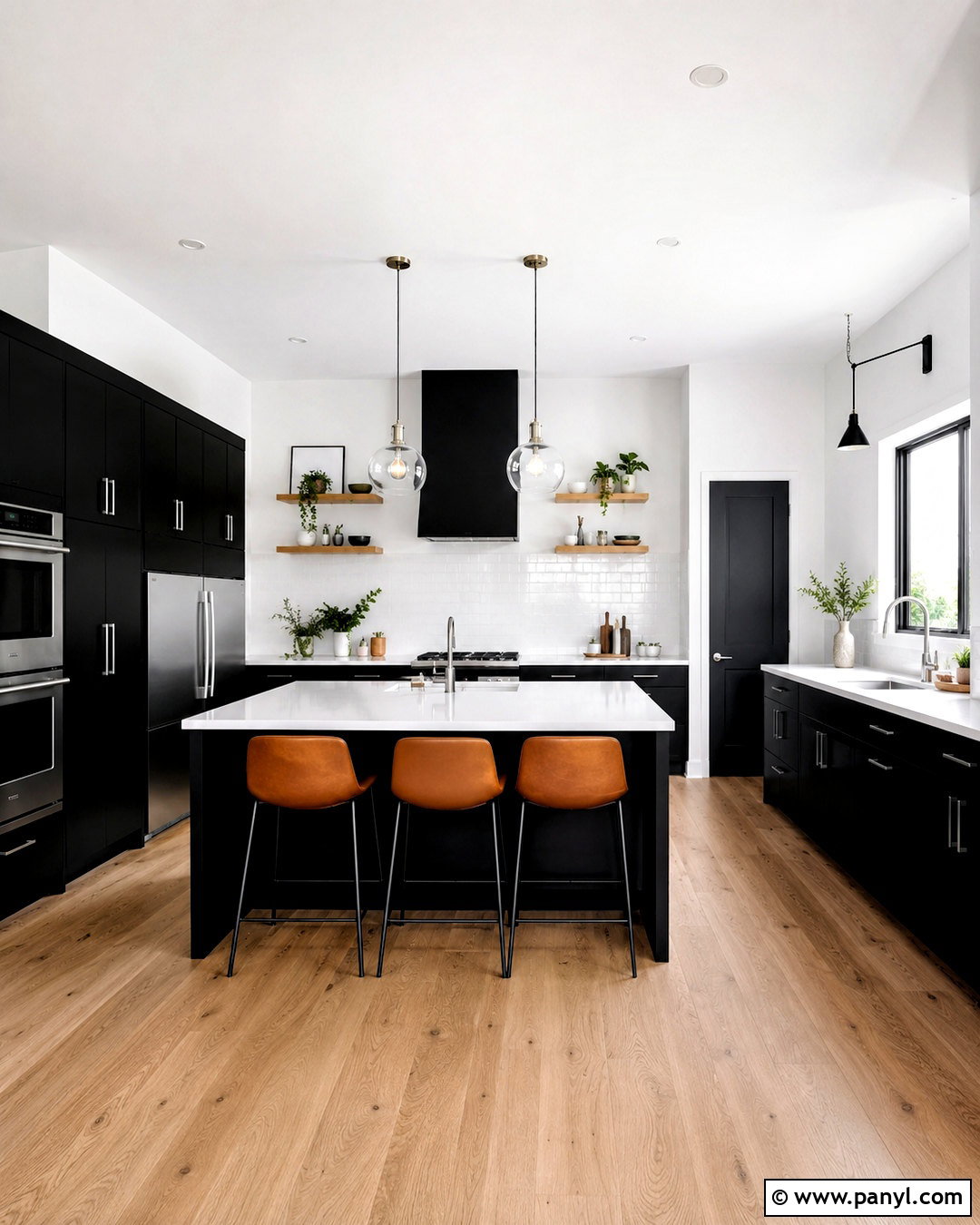
Crisp white walls create the clearest contrast with black cabinets, making cabinet lines and architectural details look sharp. This combination works especially well in a modern kitchen with flat-panel cabinetry and limited natural light. Add white quartz countertops with subtle gray veining and a glossy white subway tile backsplash to reflect light around the room. Pale oak flooring prevents the black-and-white palette from appearing cold. Choose brushed nickel hardware for a clean finish, or use brass pulls for gentle warmth. Simple glass pendants, open wood shelving, and a few green plants complete the room without adding visual clutter. Black window frames can repeat the cabinetry and make the entire kitchen feel connected. ()
2. Warm White Walls With Black Cabinets
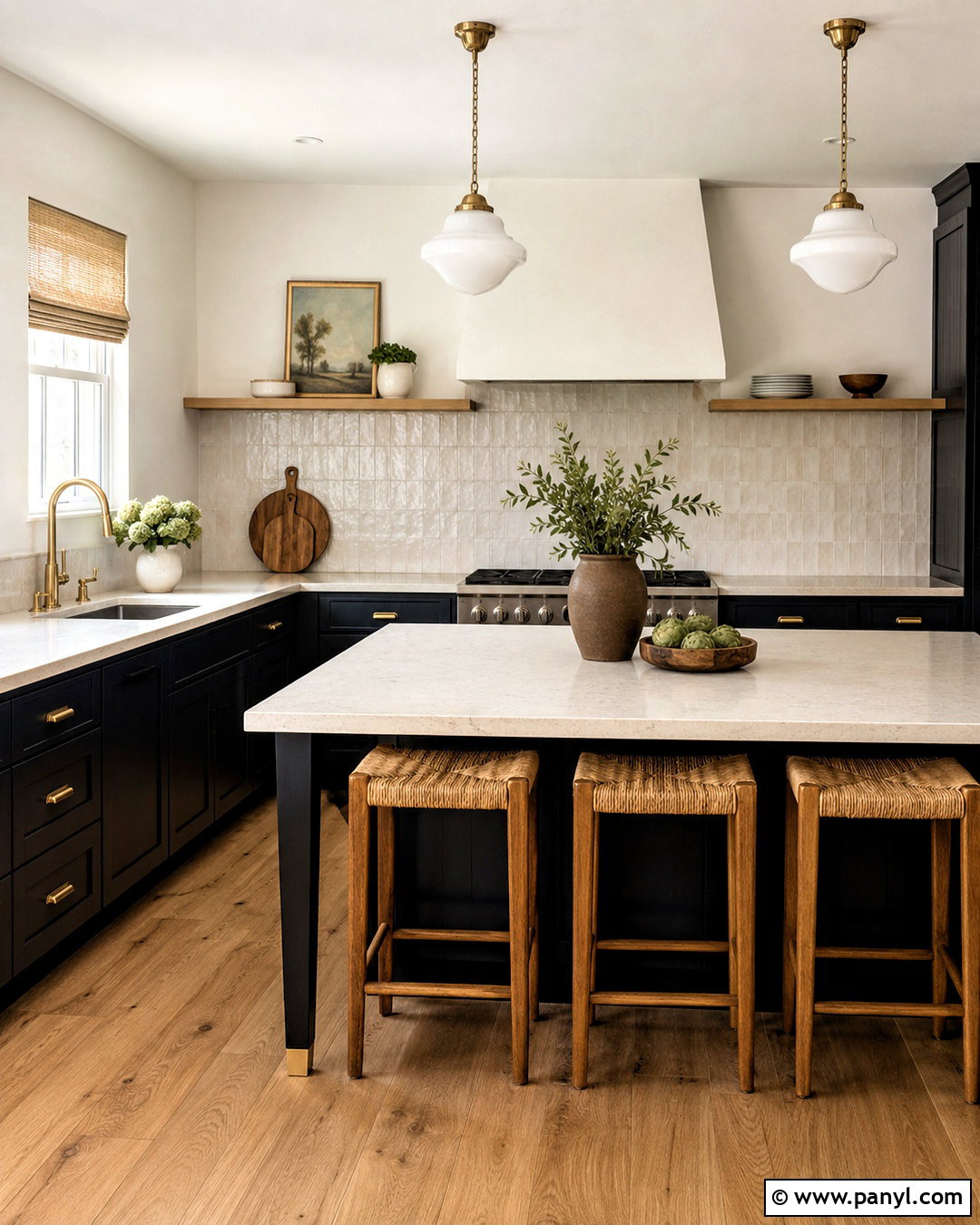
Warm white walls soften the boldness of black cabinets while keeping the kitchen open and bright. Look for a white with gentle cream, beige, or yellow undertones rather than a cool blue base. Pair the walls with creamy quartz counters, handmade off-white backsplash tile, and medium oak flooring. These warmer materials help matte black cabinets feel inviting instead of severe. Brushed brass handles, woven counter stools, and linen window shades support the relaxed palette. For lighting, use milk-glass pendants and warm-white under-cabinet strips that brighten work surfaces evenly. This complete scheme suits transitional, farmhouse, and organic modern kitchens, particularly when adjoining rooms contain beige upholstery, natural wood, or other warm finishes.
3. Cream Walls With Black Cabinets
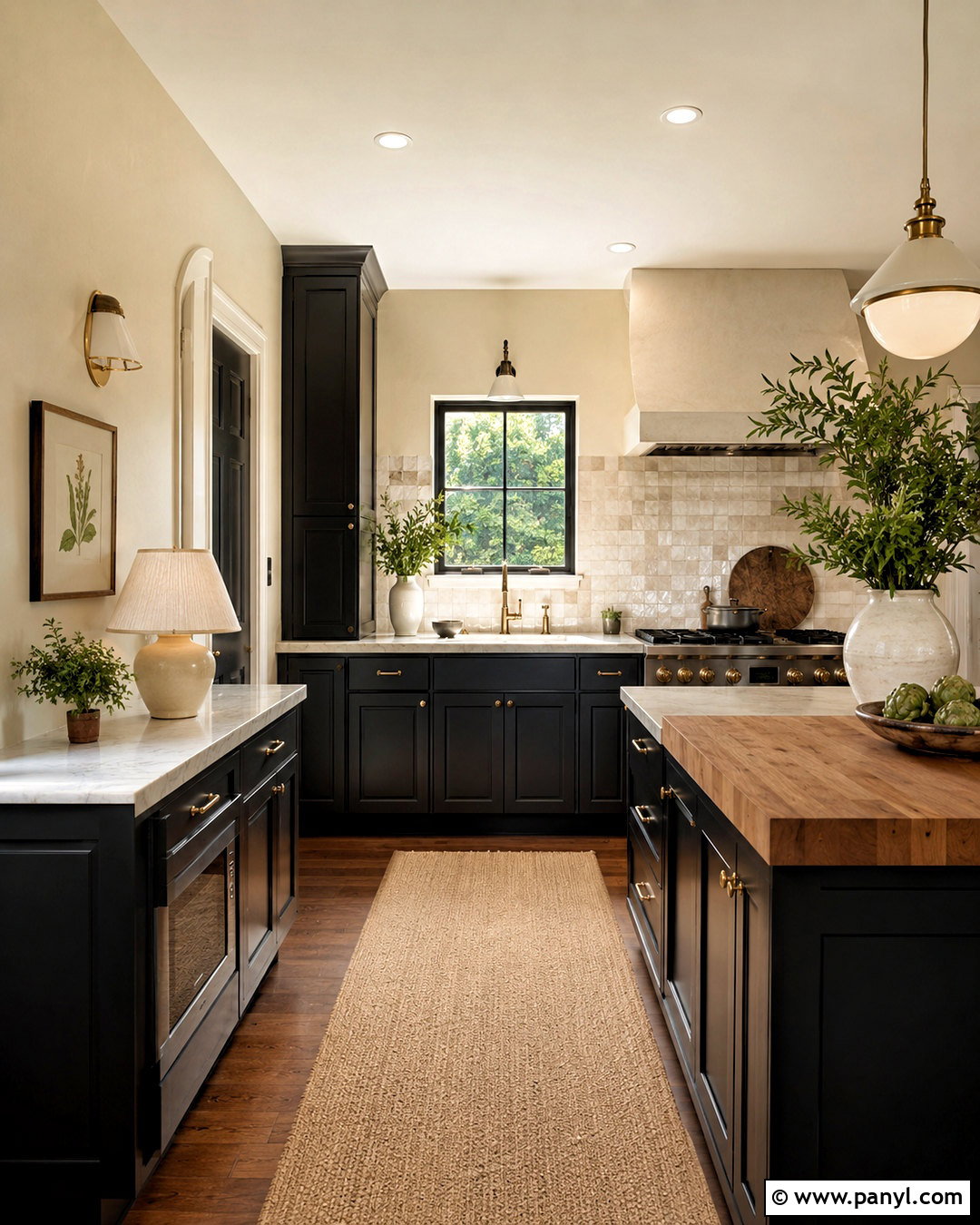
Can a black kitchen feel cozy and traditional? Cream walls make it possible by replacing stark contrast with a softer, more comfortable transition. Choose a restrained cream that looks warm without appearing overly yellow. Use honed marble or marble-look quartz countertops, creamy zellige tile, and walnut flooring to build depth. Black Shaker cabinets provide structure, while antique brass knobs and bridge faucets add traditional character. A wood island or butcher-block section can introduce another natural finish. Finish the room with ceramic lamps, framed botanical artwork, and a washable neutral runner. Cream is particularly effective in north-facing kitchens because it counteracts cooler daylight and gives black cabinetry a less imposing presence.
4. Ivory Walls With Black Cabinets
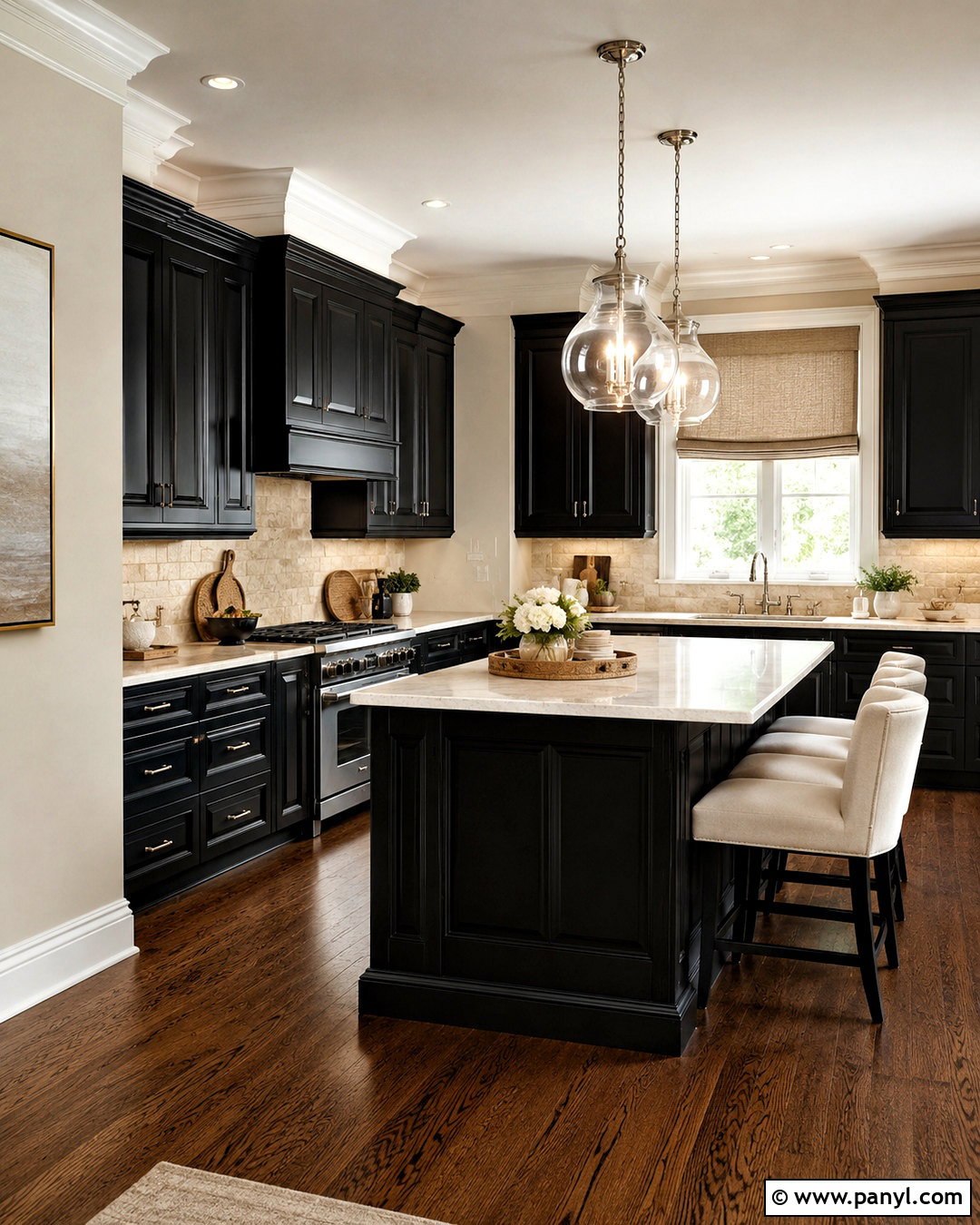
Ivory offers a polished alternative to plain white, especially in kitchens with classic cabinet details. The slight warmth complements black raised-panel or slim Shaker cabinets without making the room look dated. Continue the refined look with light quartzite countertops, an ivory stone backsplash, and dark-stained oak flooring. Polished nickel hardware introduces brightness, while small touches of brass can provide a layered, collected finish. Consider a black island with ivory upholstered stools to repeat the wall color at the center of the room. A tailored Roman shade, clear glass pendants, and simple ceramic accessories keep the design elegant. The result feels balanced, bright, and slightly formal without becoming fussy.
5. Light Greige Walls With Black Cabinets
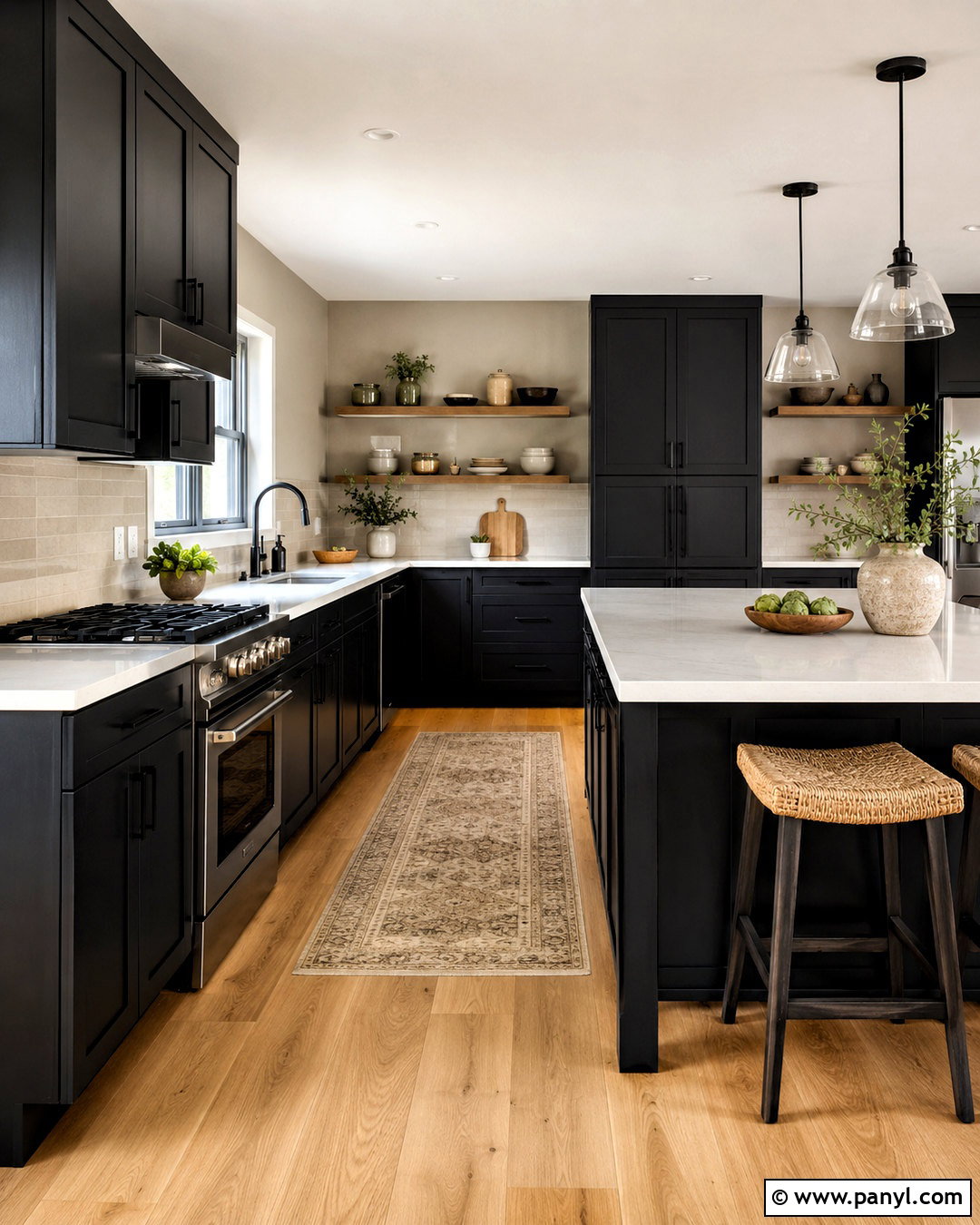
Light greige combines the softness of beige with the calm appearance of gray, making it one of the most flexible companions for black cabinets. It creates less contrast than white but still keeps the kitchen feeling spacious. Pair greige walls with black Shaker cabinetry, warm white quartz counters, and a backsplash containing beige and gray variation. Natural white oak floors and open shelves add warmth, while matte black hardware creates a streamlined finish. Bring in woven stools, stoneware, and a textured neutral runner to prevent the room from feeling too smooth or plain. This palette works particularly well in open-concept homes because greige connects easily with both cool gray furnishings and warmer wood tones. ()
6. Warm Beige Walls With Black Cabinets
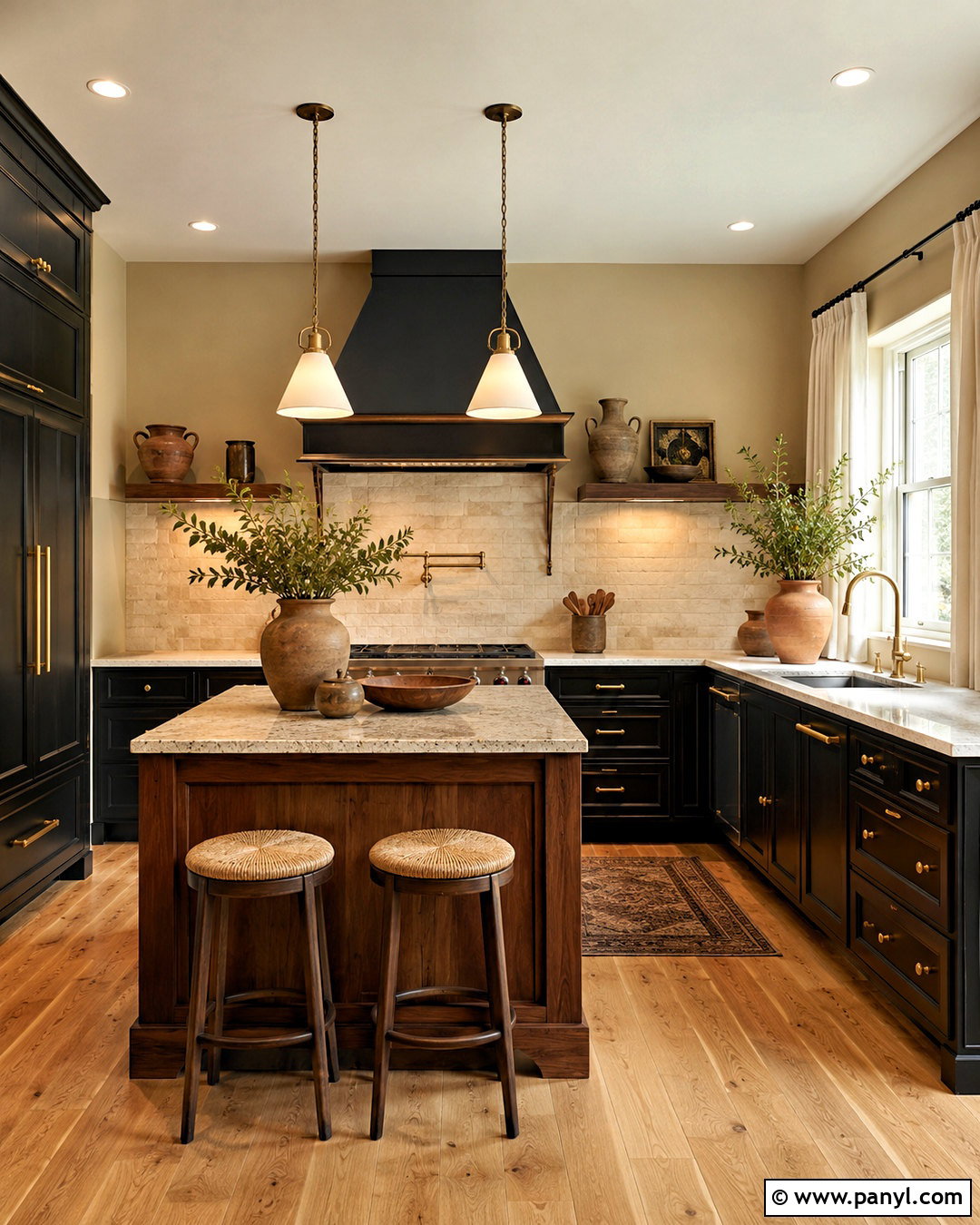
Warm beige walls give black cabinets a grounded, welcoming backdrop. This pairing is ideal when the kitchen already includes honey oak floors, tan stone, or brown-veined countertops. Select a light beige with muted undertones so the color feels natural rather than golden. Add creamy limestone-look backsplash tile, light granite or quartz counters, and aged brass cabinet pulls. A walnut dining table or island accent creates another visual bridge between the beige walls and black cabinetry. Use off-white curtains and simple clay pottery to keep the palette relaxed. Balanced ceiling lights and under-cabinet lighting are important because beige can appear dull in shadow. The finished space feels warm, practical, and comfortable for everyday living.
7. Taupe Walls With Black Cabinets
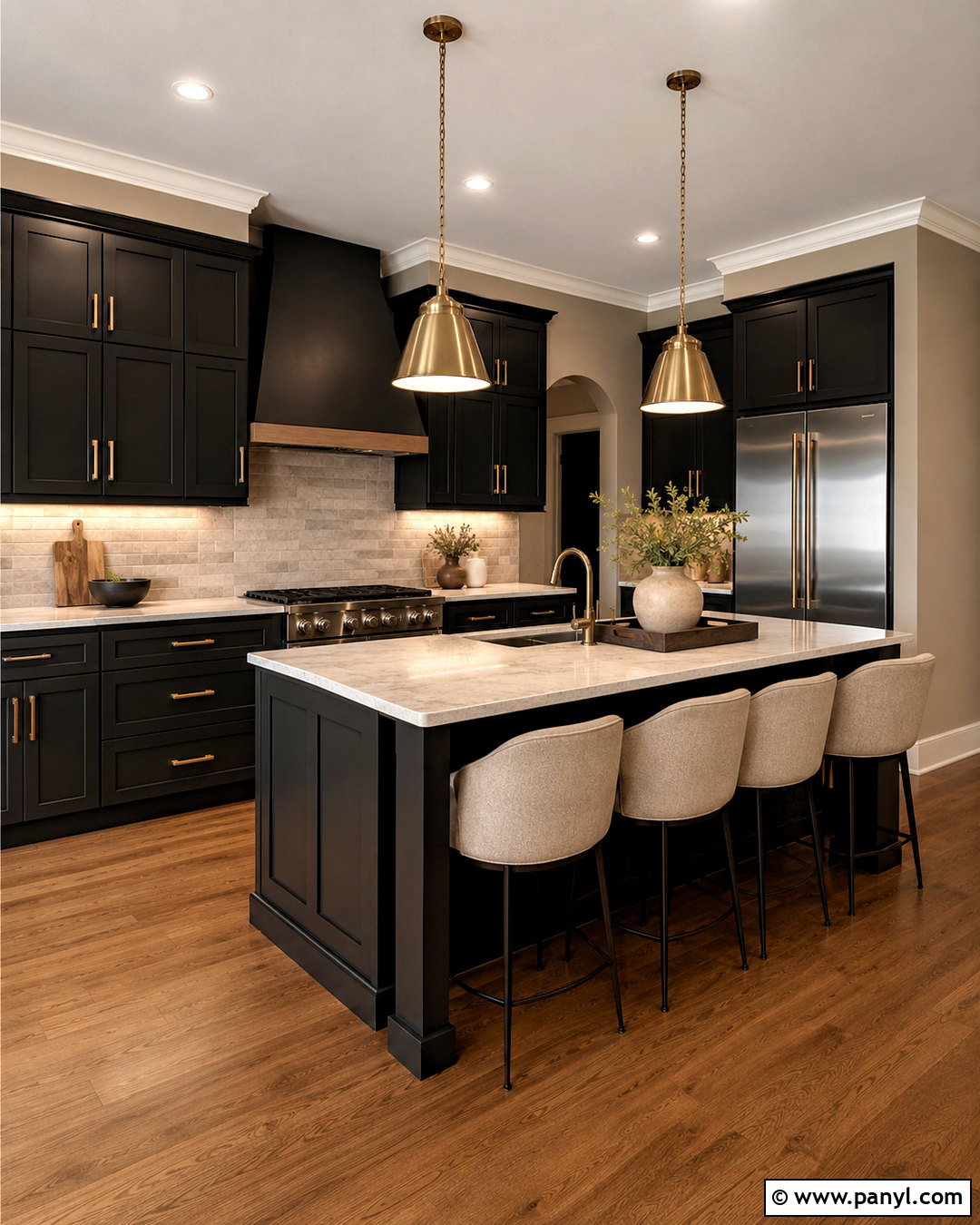
Taupe walls create a sophisticated kitchen without relying on a sharp black-and-white contrast. This brown-gray neutral looks especially attractive beside warm black cabinets with subtle brown undertones. Use pale stone countertops, a textured taupe backsplash, and medium walnut flooring to create a quiet tonal palette. Brushed brass hardware and warm metallic pendants add definition against the dark doors. Keep the ceiling and trim a soft white so the room still has a lighter visual boundary. Upholstered counter stools in oatmeal fabric, dark wood cutting boards, and simple cream ceramics complete the design. Taupe is best in kitchens with moderate or strong natural light, where its complex undertones can remain visible throughout the day.
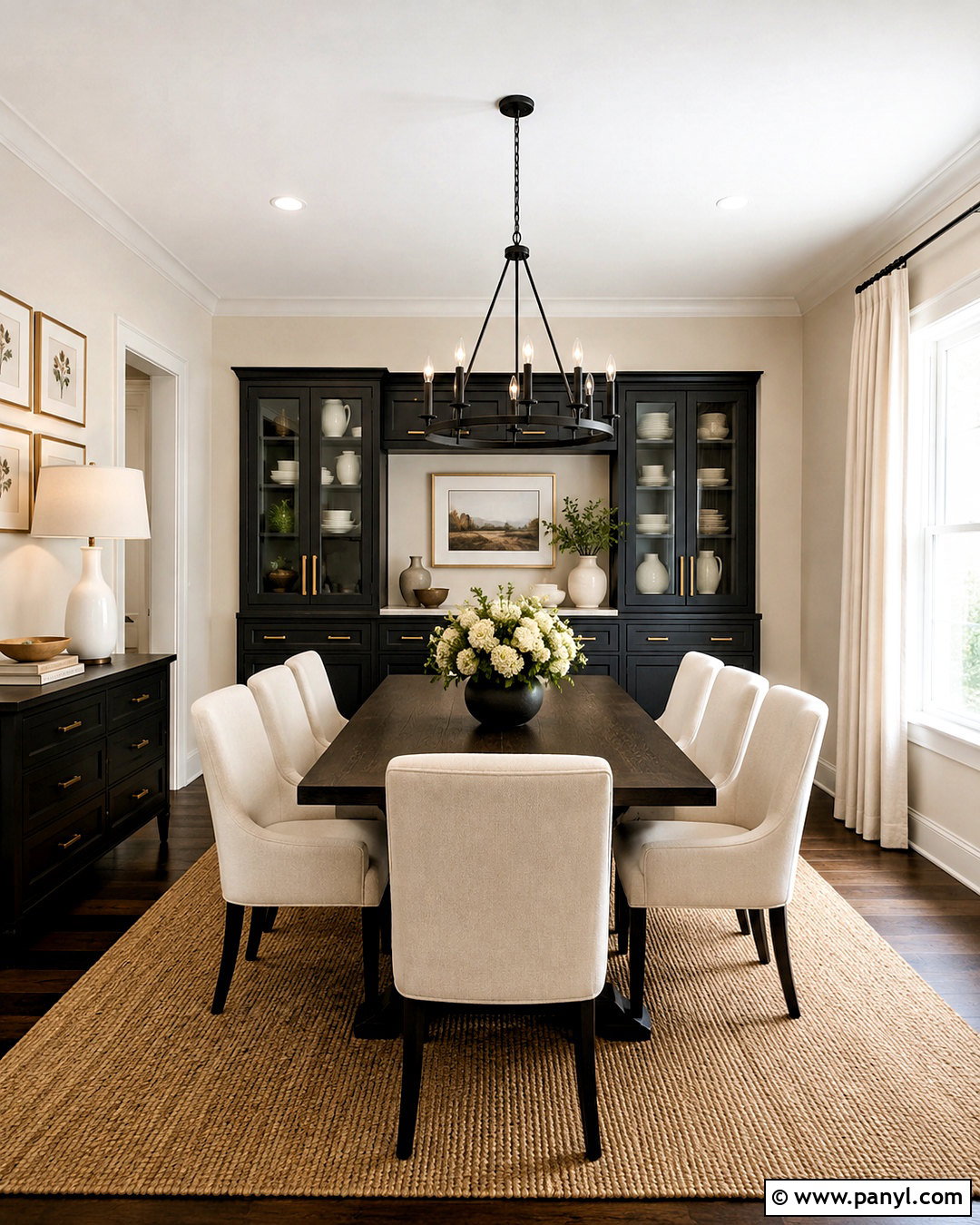
8. Pale Gray Walls With Black Cabinets
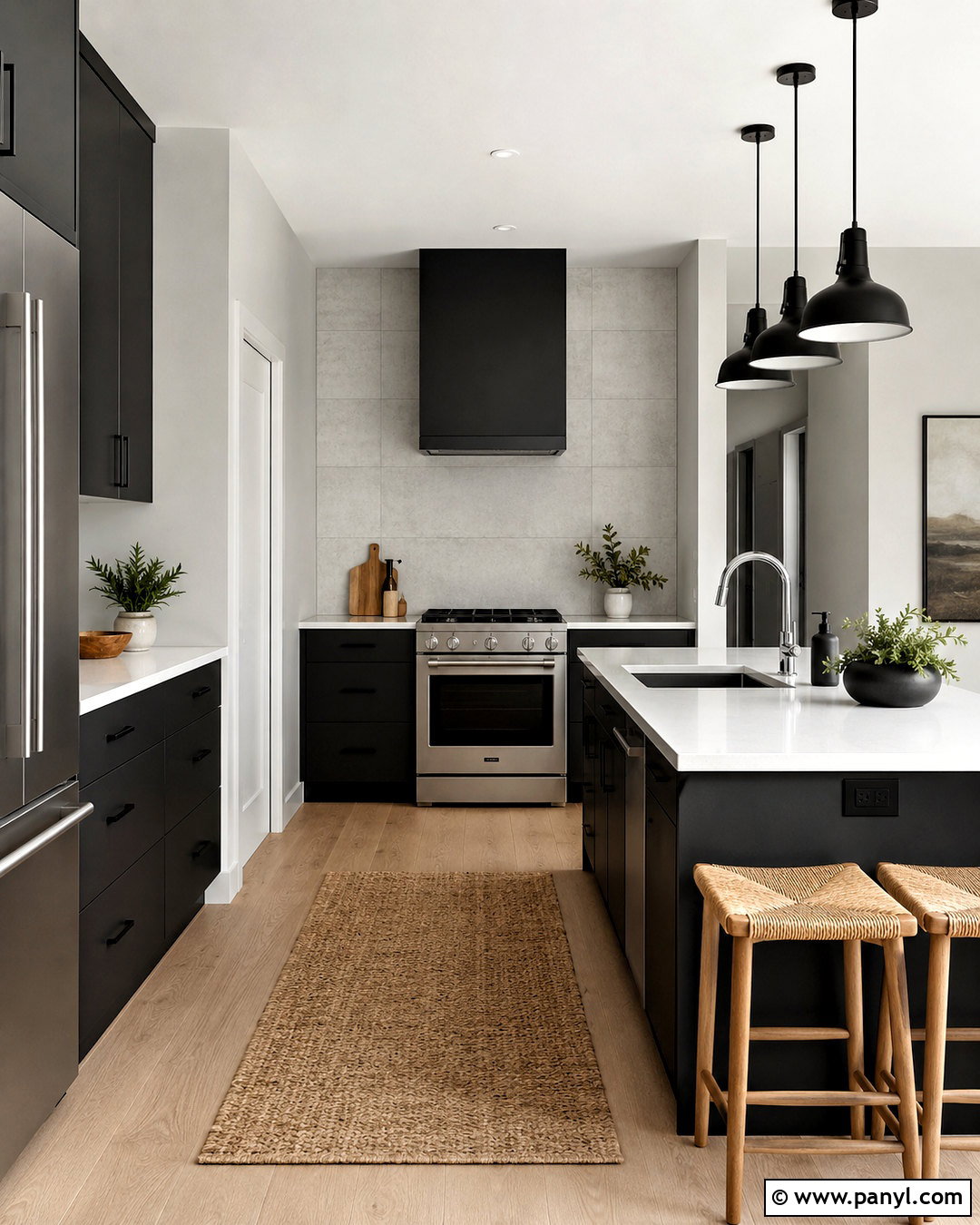
A pale gray wall can make black cabinets look sleek and contemporary without creating the starkness of pure white. Choose a soft gray with balanced undertones and test it beside the countertop before painting the entire room. Combine it with white quartz counters, large-format light gray backsplash tile, and pale wood or concrete-look flooring. Matte black pulls maintain the modern character, while chrome fixtures add a clean reflective surface. Warm the room with oak stools, a natural fiber runner, and a few leafy plants. Recessed ceiling lights and under-cabinet strips help prevent gray walls from becoming shadowy. This complete look is especially suitable for compact urban kitchens and minimalist interiors.
9. Blue Gray Walls With Black Cabinets
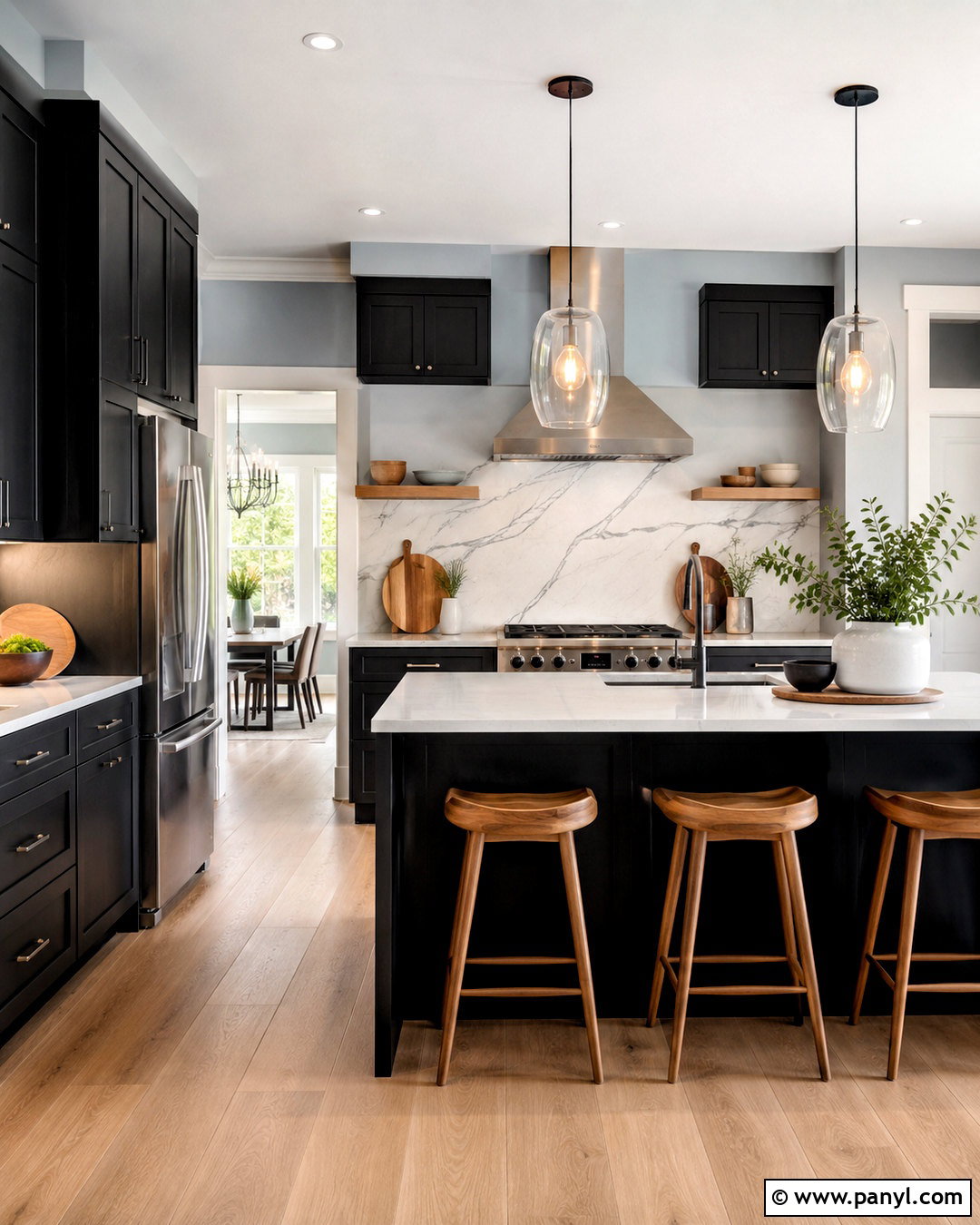
Blue-gray walls bring a cool, calming quality to black cabinetry. The color feels more distinctive than neutral gray but remains easy to coordinate with stone and metal finishes. Pair it with black slab cabinets, white quartz countertops, and a pale marble backsplash containing soft blue-gray veining. Light oak floors balance the cooler colors, while brushed nickel or stainless steel hardware creates a crisp connection with appliances. Add warm wood stools and off-white textiles so the room does not become overly cool. A row of clear glass pendants keeps sightlines open above the island. This palette works beautifully in kitchens receiving warm southern or western sunlight, which softens the blue undertone.
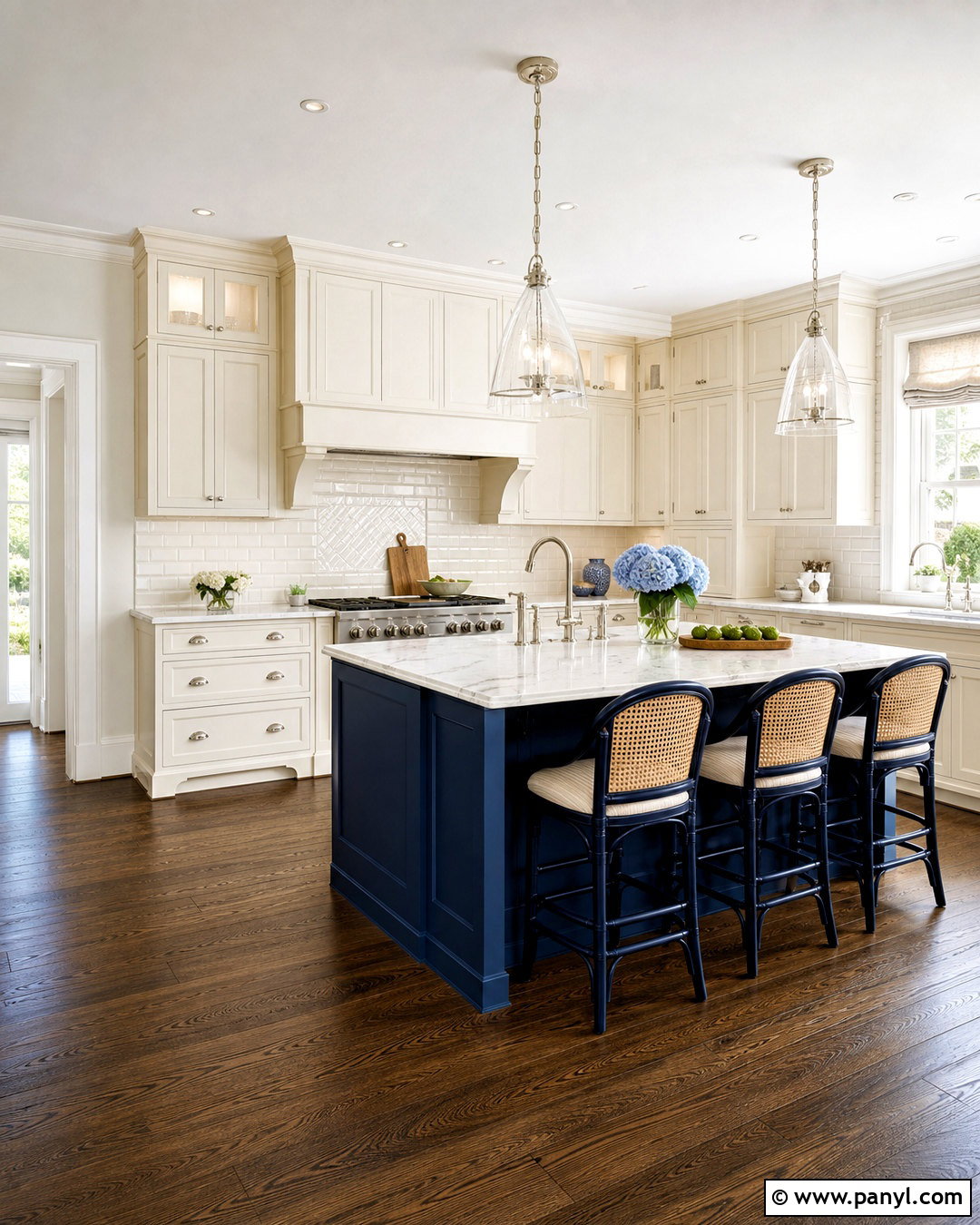
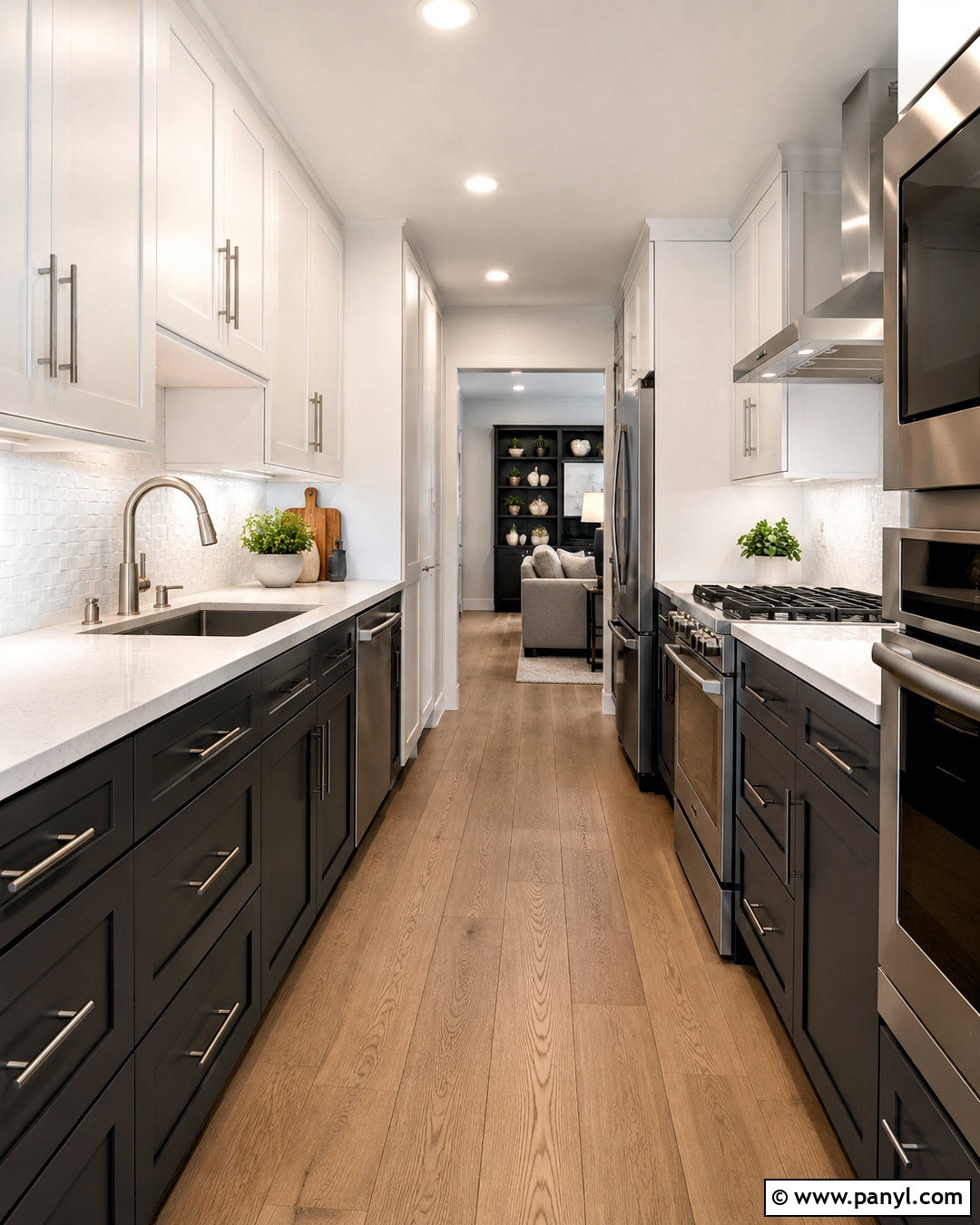
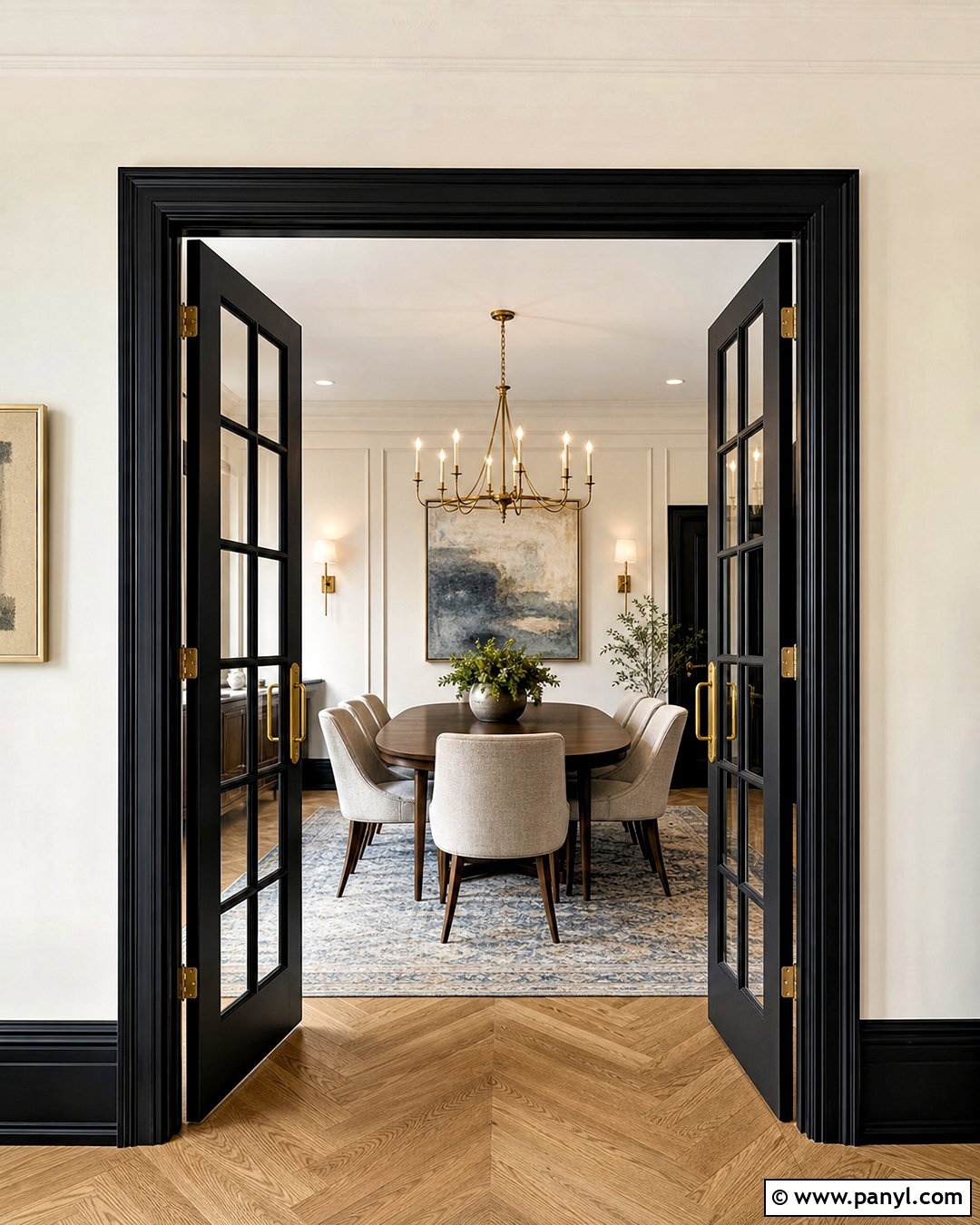
10. Sage Green Walls With Black Cabinets
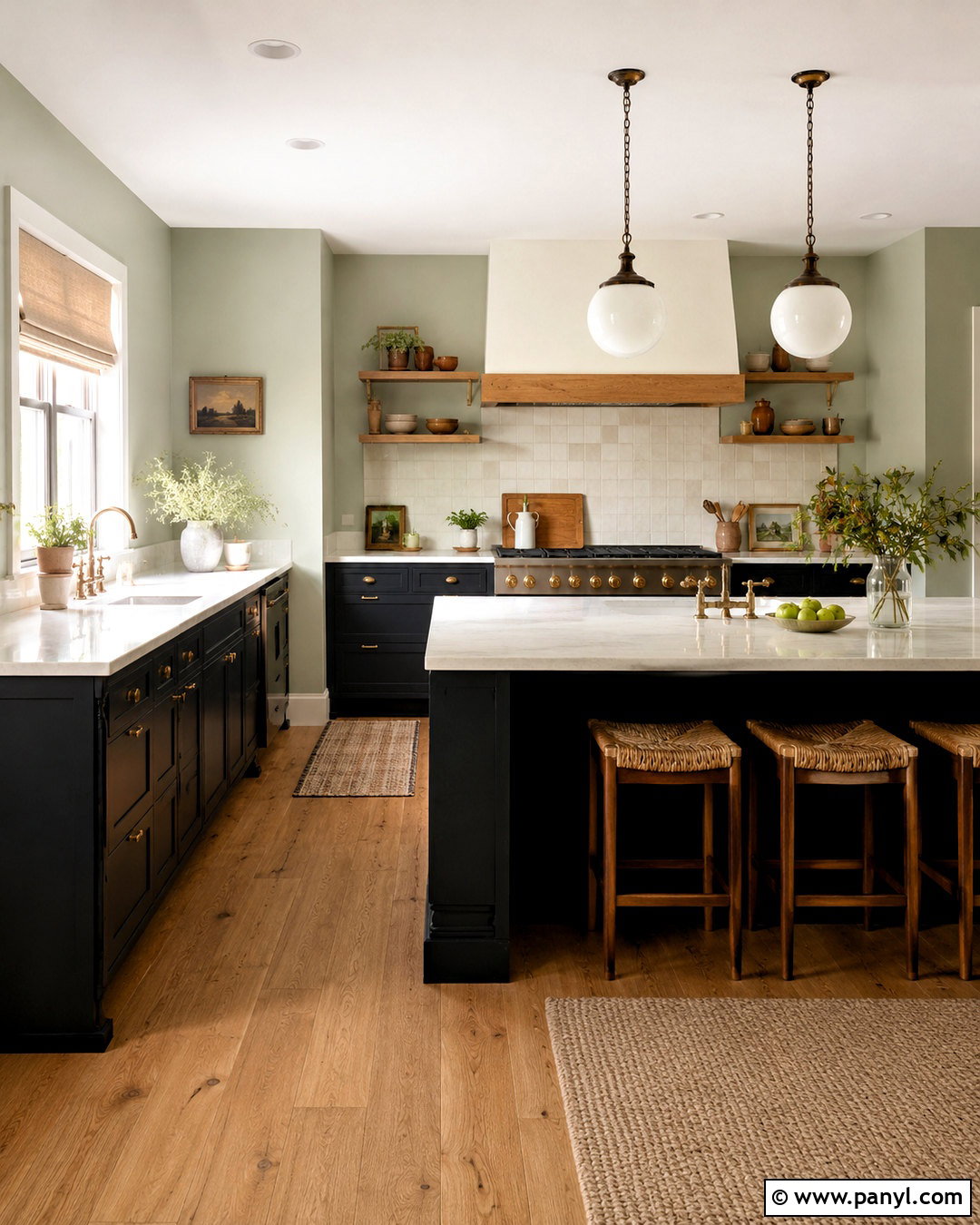
Soft sage green walls give black cabinets an organic, relaxed character. Choose a muted sage with noticeable gray undertones so it complements the cabinetry rather than competing with it. Complete the kitchen with creamy quartz countertops, handmade ivory backsplash tile, and natural oak floors. Aged brass pulls and warm wood shelves strengthen the earthy palette. Display simple white dishes, green glassware, and a few potted herbs without overcrowding the counters. Linen shades and woven stools introduce texture, while globe pendants provide clean, even light. Sage works with modern, farmhouse, and transitional cabinetry, making it a versatile choice when you want noticeable color that still feels calm and livable. ()
11. Olive Green Walls With Black Cabinets
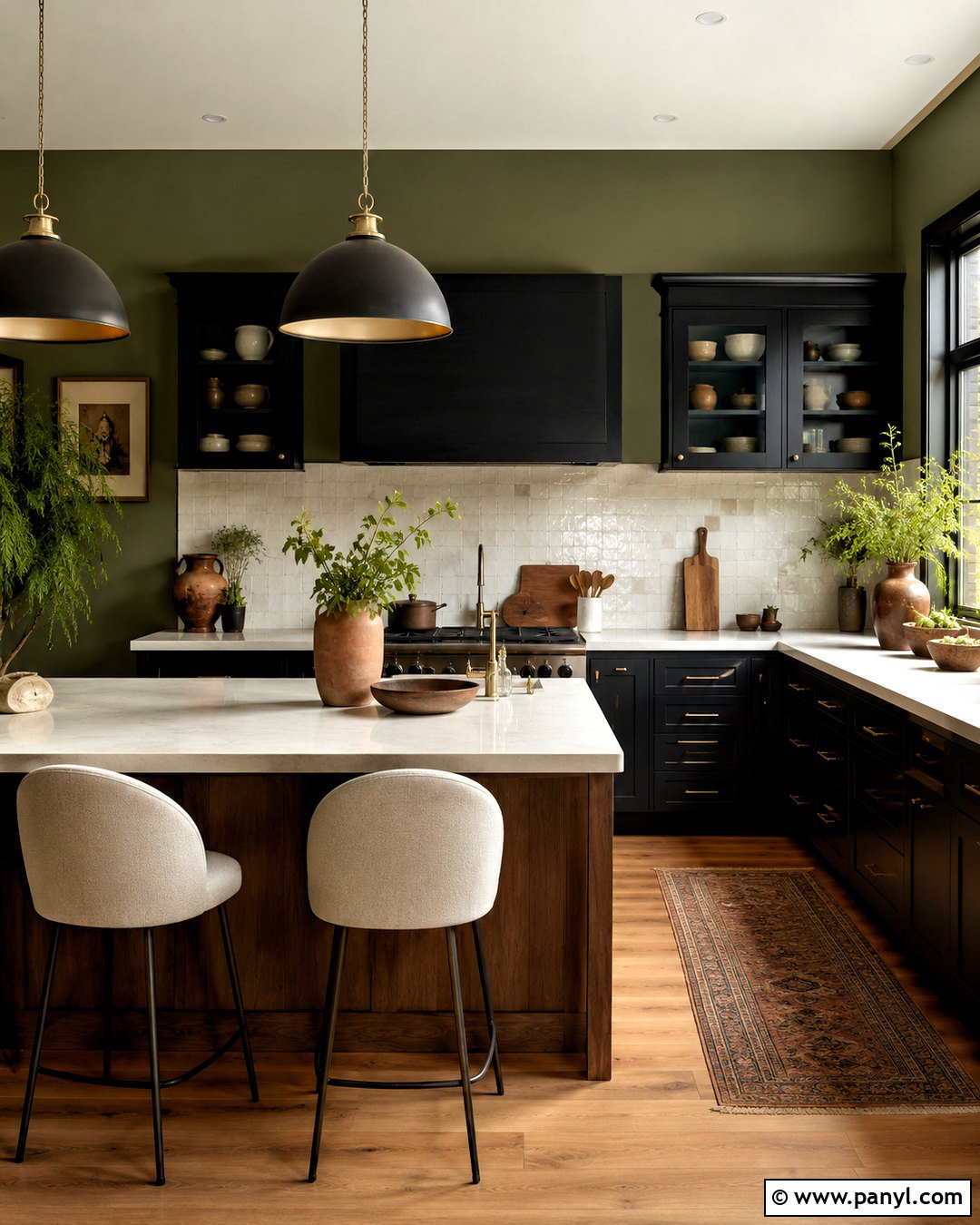
Olive green walls create a richer, more grounded kitchen than pale sage. This deeper green is most successful in rooms with generous windows or strong layered lighting. Pair olive walls with matte black cabinets, creamy stone counters, and a warm white backsplash to maintain balance. Walnut floors or a walnut island panel reinforce the natural character of the palette. Add aged brass hardware, simple dome pendants, and off-white counter stools for contrast. Keep window treatments light and understated so available daylight can enter freely. Terracotta pottery and small leafy plants provide restrained accents. The result is an earthy, enveloping kitchen that feels dramatic while remaining connected to natural materials and familiar colors.
12. Pale Blue Walls With Black Cabinets
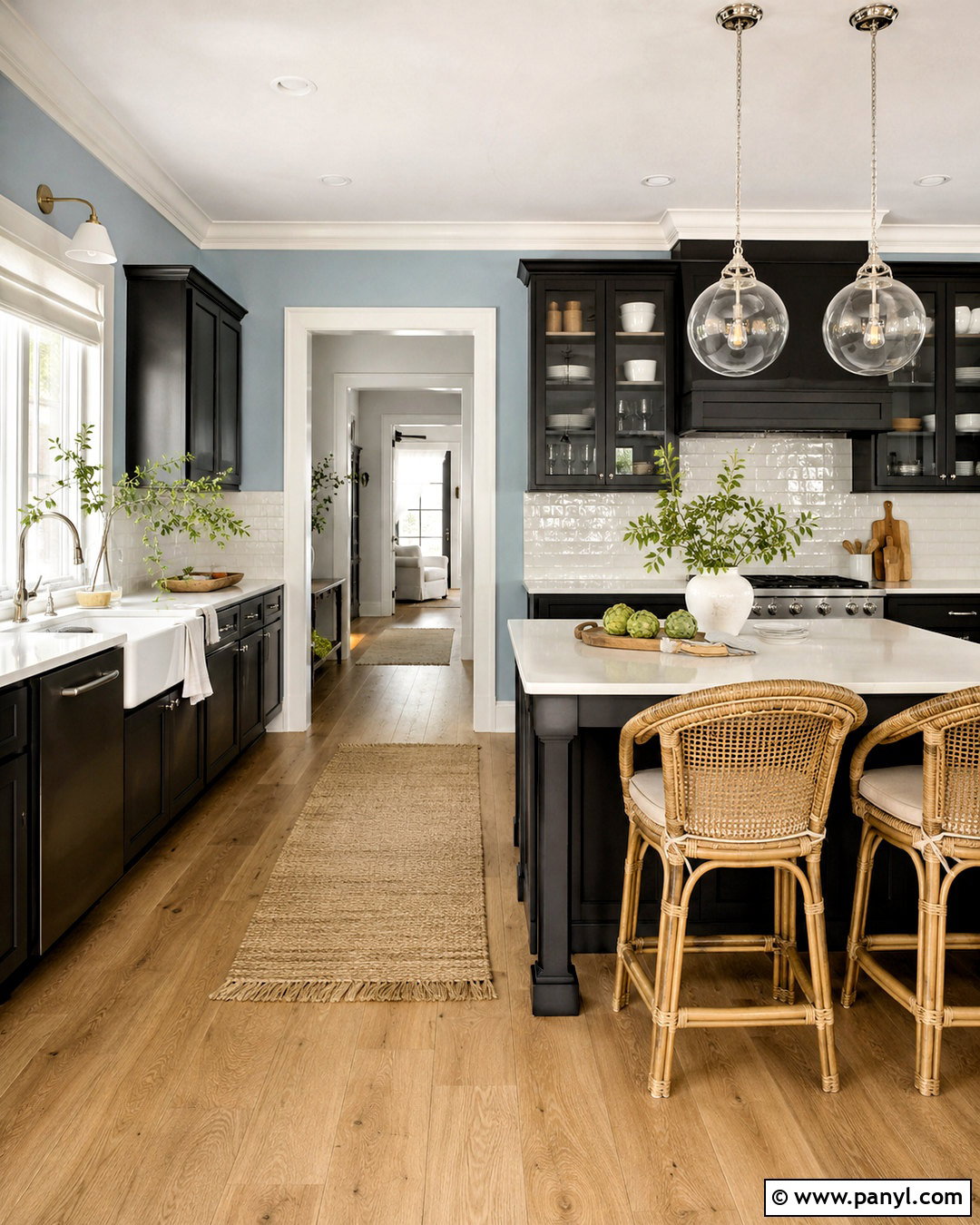
Pale blue walls offer a fresh, airy contrast to visually heavy black cabinets. Select a dusty or slightly gray blue rather than a bright nursery shade. Use white quartz counters, pearly white backsplash tile, and light oak flooring to keep the room bright. Polished nickel hardware and glass pendants support the clean palette, while rattan stools add warmth and casual texture. White trim provides a crisp edge around windows and doorways. For a subtle coastal influence, include striped linen towels and a simple natural runner, but avoid themed decorations. This complete kitchen look feels refreshing and relaxed. It is especially useful in smaller spaces where a darker accent wall could make the cabinetry feel overwhelming.
13. Dusty Blue Walls With Black Cabinets
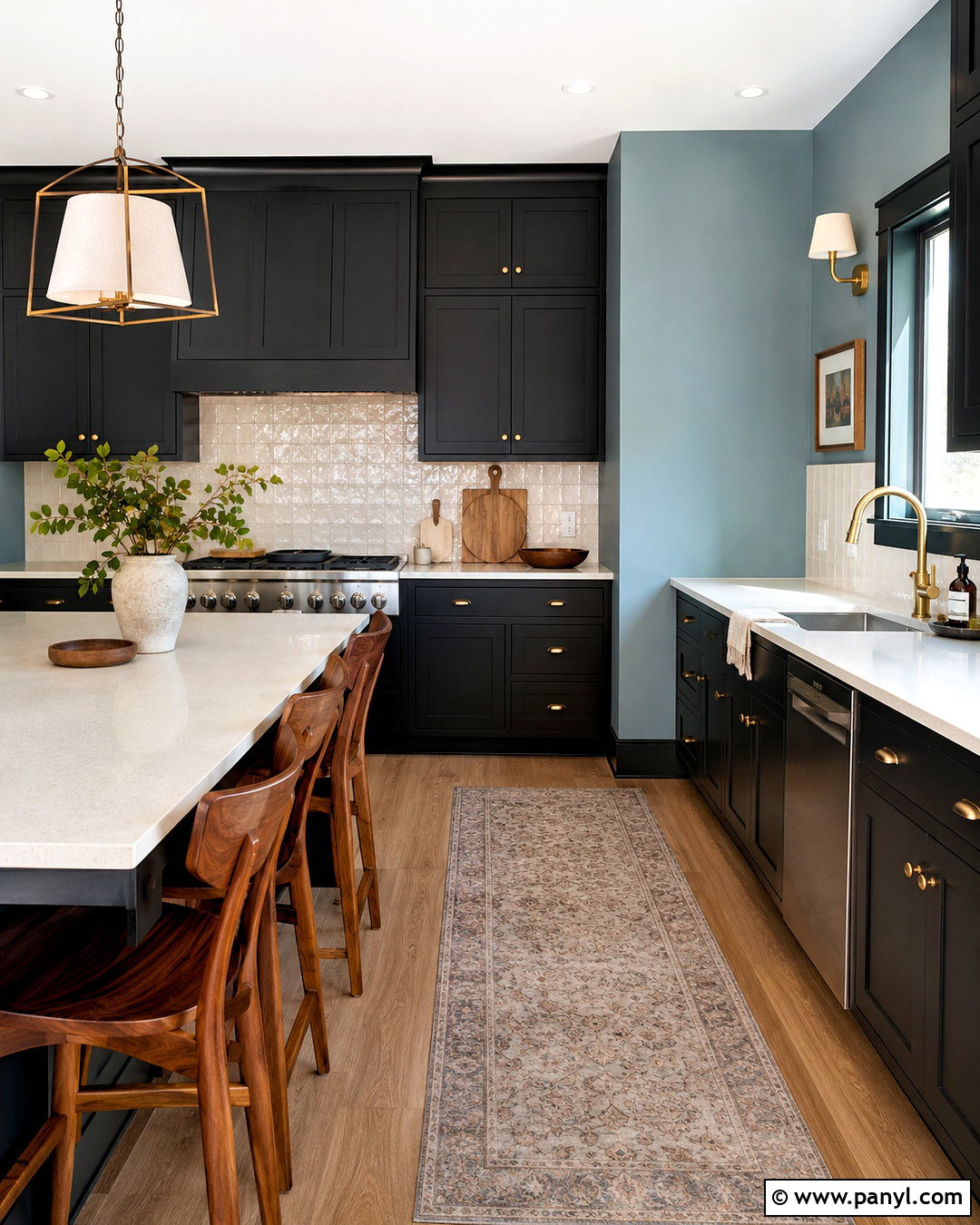
Dusty blue provides more depth than pale blue while maintaining a calm, subdued appearance. It pairs naturally with black Shaker cabinets, especially when the room includes warm wood or brass. Install creamy quartz countertops and a white backsplash with slight handmade variation. Medium oak floors, walnut stools, and a wood-framed pendant prevent the blue and black combination from becoming cold. Choose aged brass handles for warmth and repeat the finish at the faucet. Keep the ceiling, trim, and interior doors soft white to frame the stronger wall color. Neutral pottery, linen shades, and one patterned runner finish the kitchen. Dusty blue creates a collected transitional look that feels colorful but not overly trendy.
14. Navy Walls With Black Cabinets
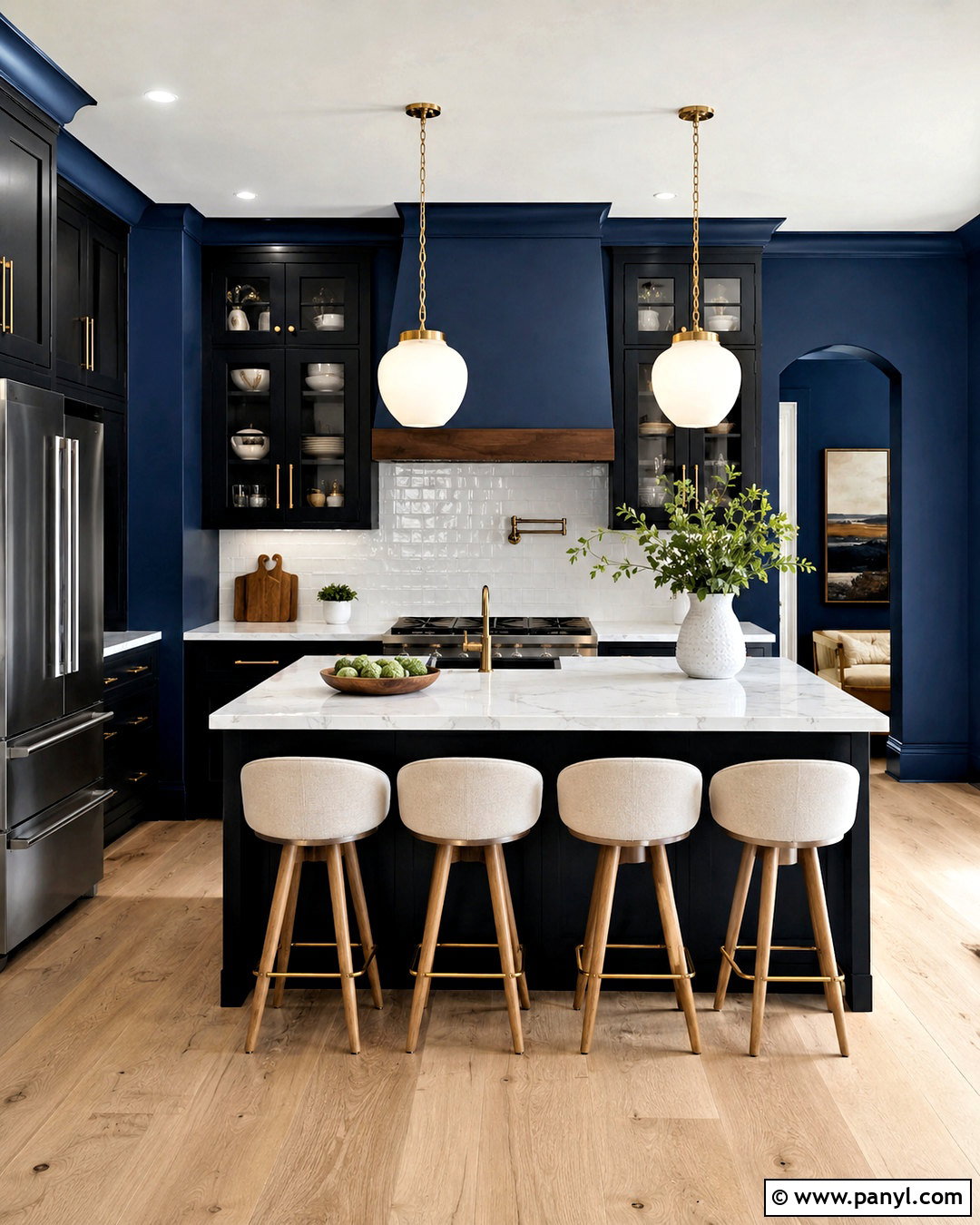
Navy walls and black cabinets form a bold, low-contrast palette with a tailored appearance. Because both colors are deep, this scheme needs bright countertops, a reflective backsplash, and several lighting sources. Choose white marble-look quartz, glossy white tile, and light oak flooring to break up the darker surfaces. Use brass hardware and oversized milk-glass pendants for warmth and visibility. Painting the ceiling and trim warm white creates a clean upper boundary. Navy is particularly effective on walls surrounding a black pantry bank or a single cabinet run, while nearby open areas can remain lighter. Add cream stools and simple wood accessories to produce a dramatic kitchen that still feels functional and balanced.
15. Soft Blush Walls With Black Cabinets
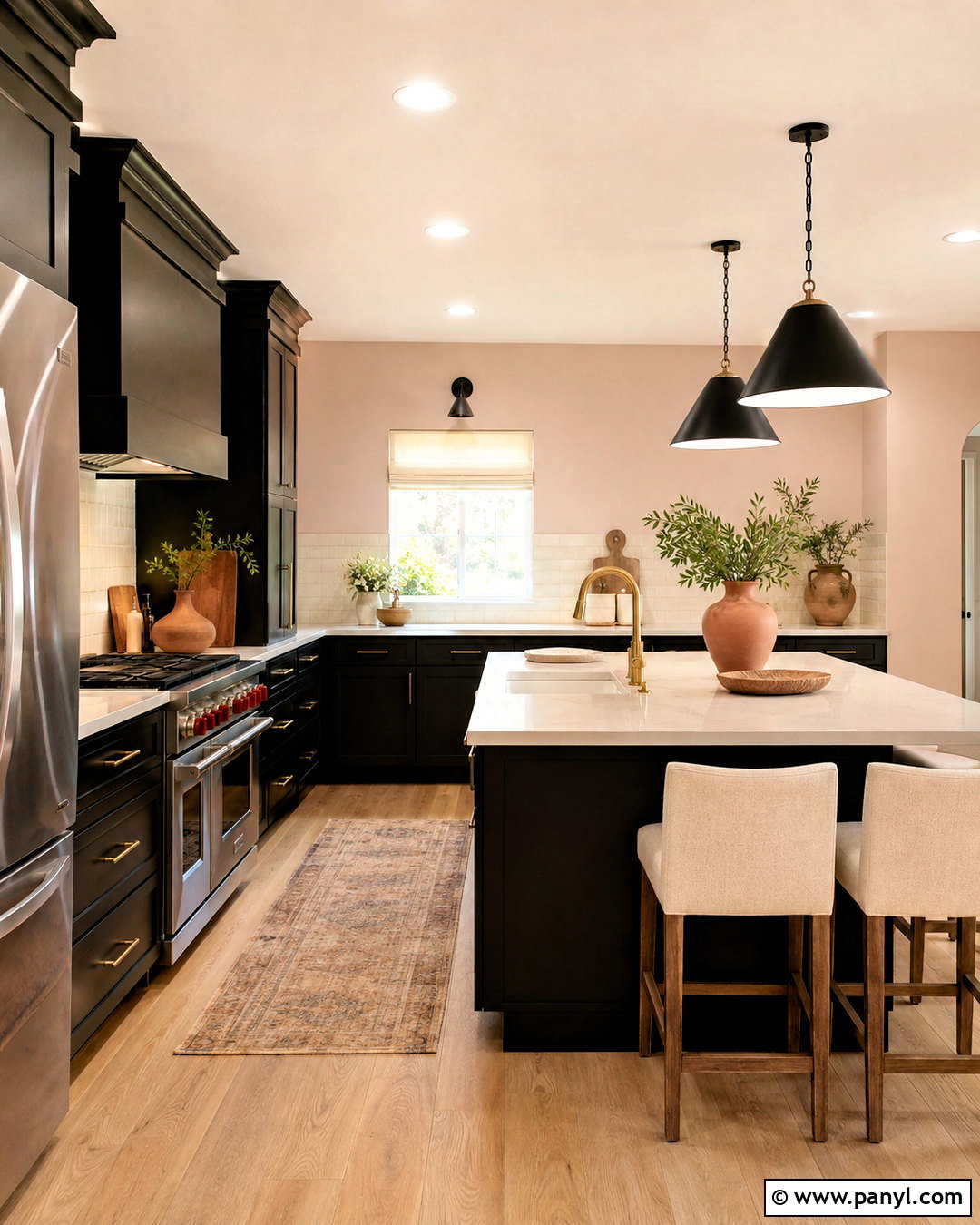
Soft blush walls introduce gentle warmth without turning the kitchen overly pink. Choose a dusty, beige-based blush that behaves almost like a neutral. Against matte black cabinets, it creates a stylish contrast that feels softer than white or gray. Add pale quartz counters, warm white backsplash tile, and natural oak flooring. Brushed brass pulls complement the wall’s warmth, while black pendants repeat the cabinet finish above the island. Keep textiles simple with oatmeal stools, cream shades, and a muted patterned runner. Small terracotta planters can reinforce the rosy undertone. This complete look suits a modern or transitional kitchen and provides subtle color while allowing the black cabinetry to remain the room’s strongest feature.
16. Dusty Rose Walls With Black Cabinets
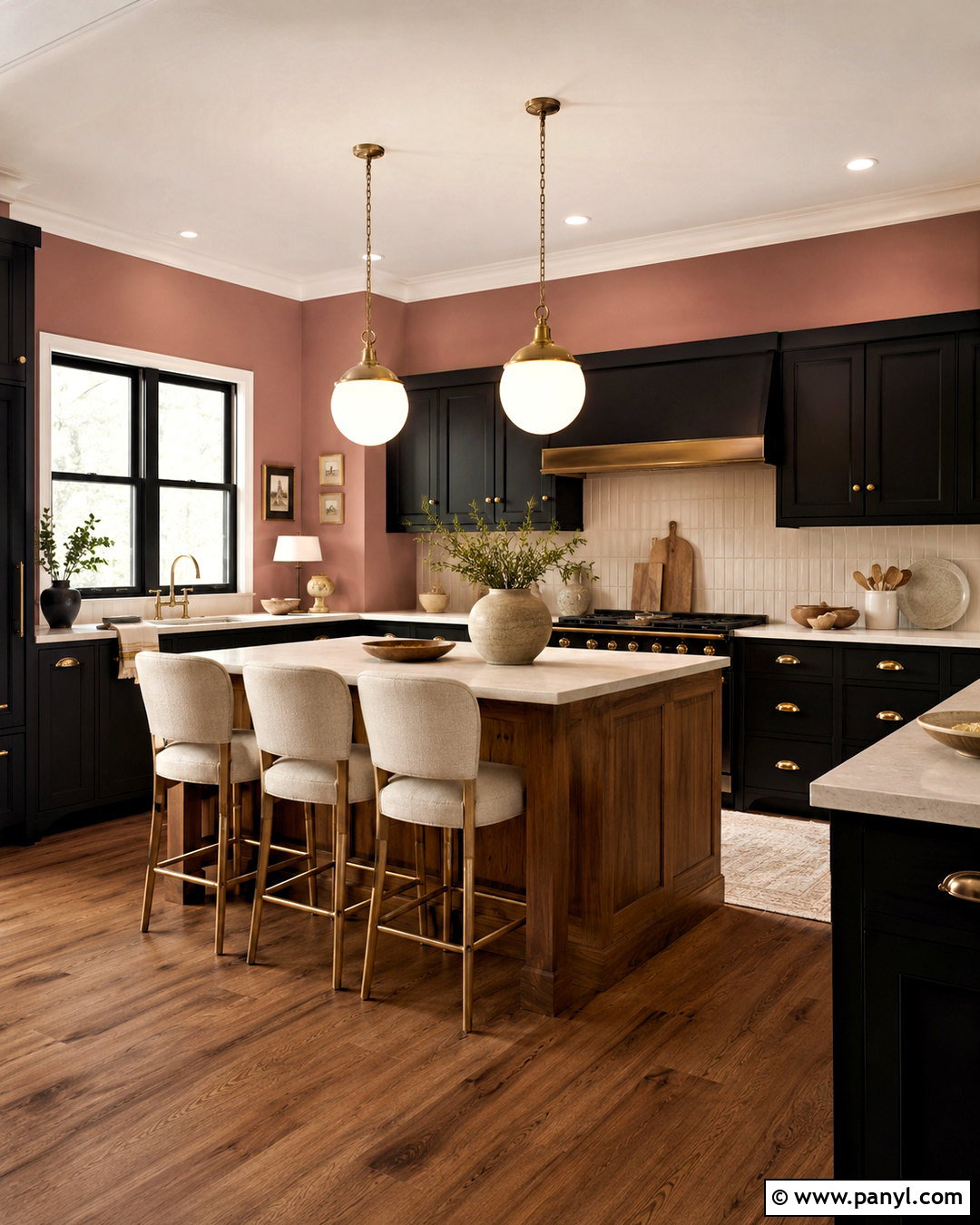
A kitchen with dusty rose walls feels warm, distinctive, and surprisingly grounded beside black cabinets. Unlike pastel pink, dusty rose contains gray or brown undertones that give it a more mature appearance. Pair it with black Shaker cabinetry, creamy countertops, and vertically stacked ivory tile. Use walnut flooring or a wood island to deepen the warmth. Aged bronze or antique brass hardware complements both main colors without looking overly shiny. Soft white trim keeps the scheme fresh, while globe lighting distributes brightness across the darker surfaces. Finish with neutral stools, simple ceramic dishes, and natural linen. Use dusty rose in a bright kitchen where daylight can reveal its muted complexity rather than intensifying the pink.
17. Muted Yellow Walls With Black Cabinets
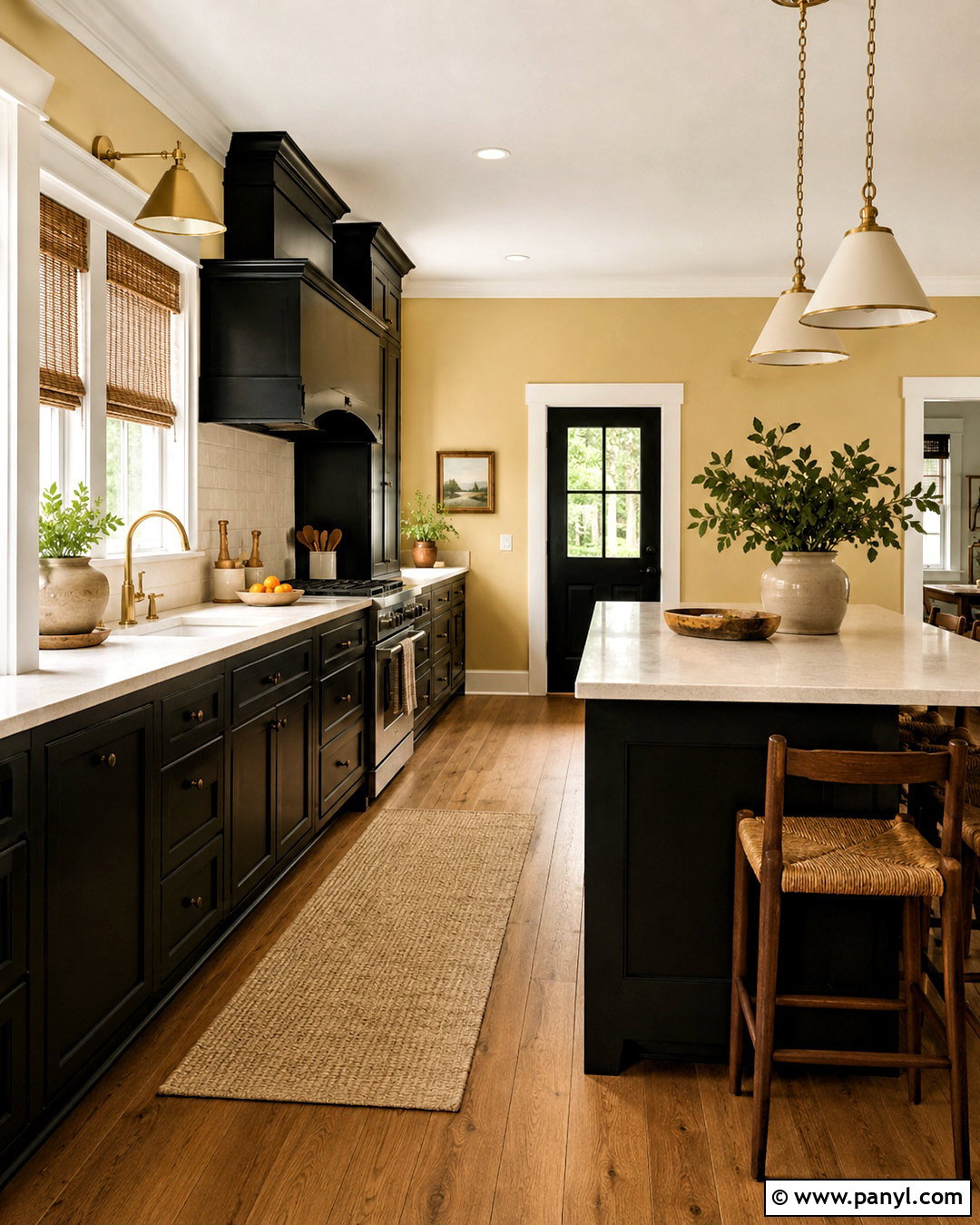
Muted yellow walls can brighten black cabinetry without producing an overly bold or playful effect. Look for a soft straw, wheat, or buttery shade with plenty of neutral undertone. Combine it with warm white countertops, cream backsplash tile, and medium oak floors for a sunny, comfortable palette. Black knobs maintain continuity with the cabinets, while brushed brass lighting adds a warmer metallic layer. White trim and a white ceiling prevent the yellow from surrounding the room too heavily. Add woven shades, simple wooden stools, and a washable beige runner. This finished look works particularly well in kitchens with limited direct sunlight because the wall color creates a gentle sense of warmth throughout the day.
18. Terracotta Walls With Black Cabinets
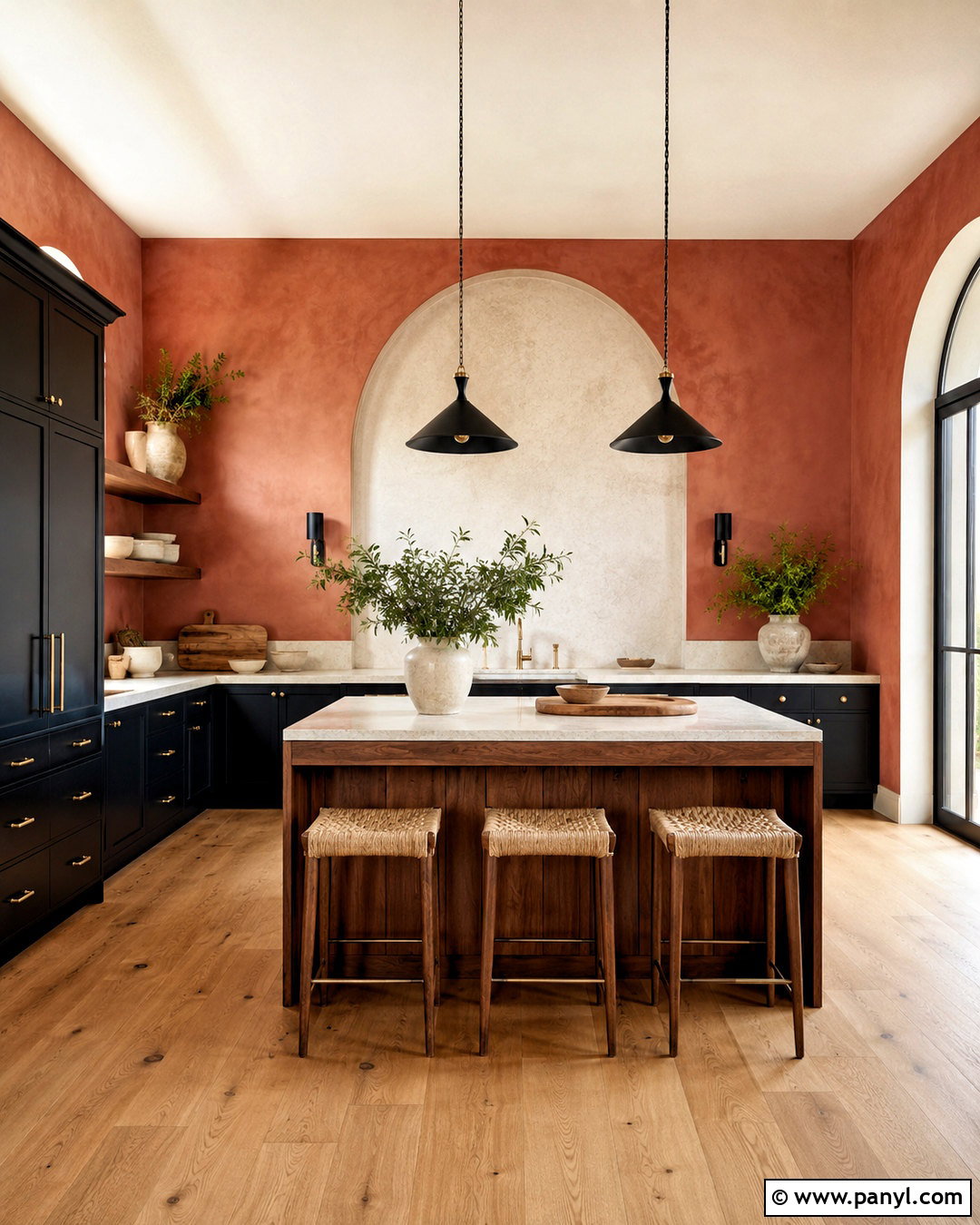
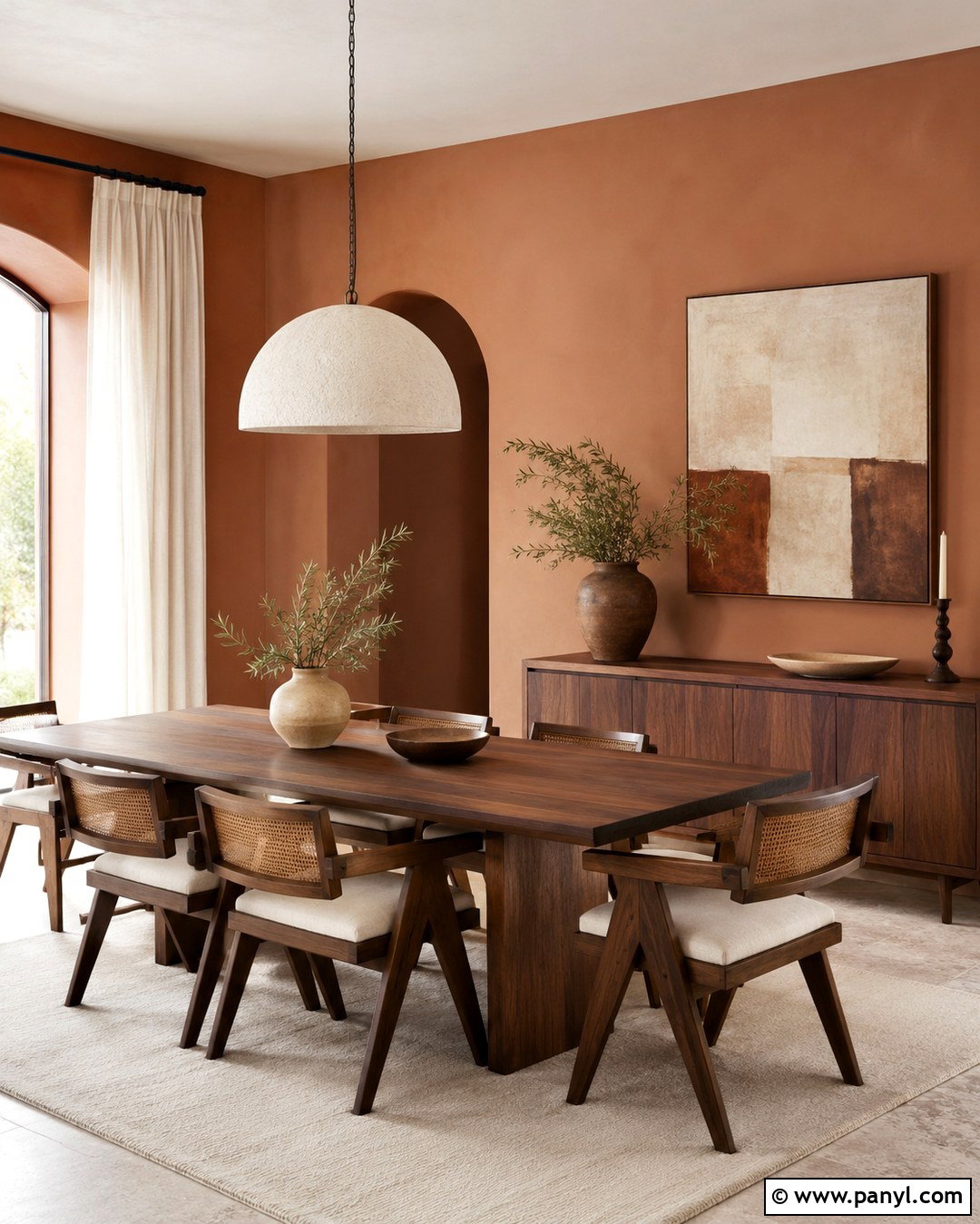
Terracotta walls bring earthy color and strong personality to a kitchen with black cabinets. Select a muted clay shade instead of a bright orange tone, and use it where natural or artificial light can show its warmth. Pair the cabinets with creamy quartz counters, an off-white plaster-style backsplash, and oak or brick-look flooring. A walnut island and woven stools strengthen the layered earth-tone palette. Choose aged brass hardware and simple black pendants to connect the warm walls with the dark cabinetry. Cream trim keeps the edges soft rather than stark. Finish with pale ceramics, linen towels, and restrained greenery. This combination creates an inviting Mediterranean-inspired or organic modern kitchen without requiring ornate decorative details.
19. Charcoal Walls With Black Cabinets
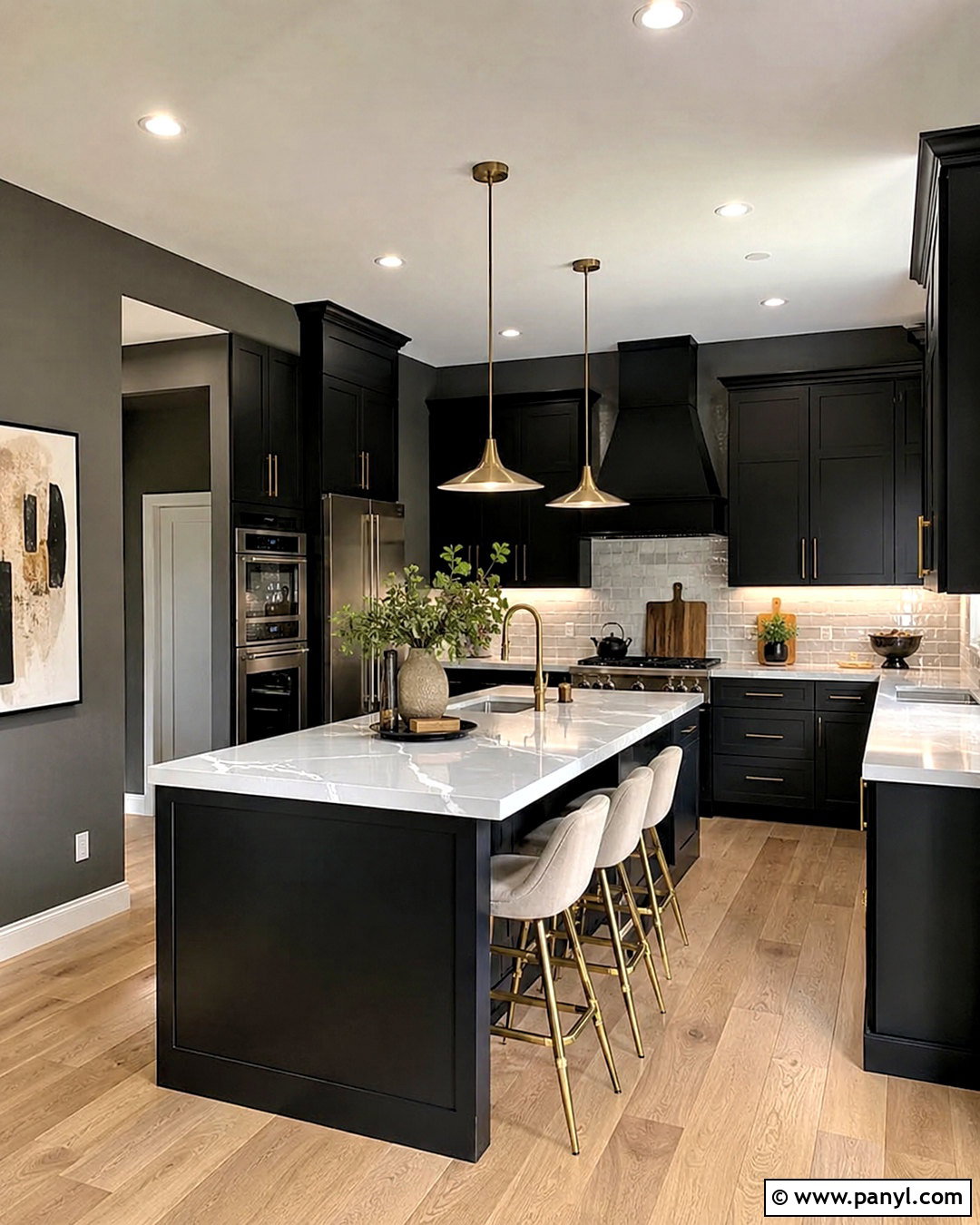
Charcoal walls allow black cabinets to blend into a dramatic, nearly monochromatic background. The key is creating definition through different finishes and lighter horizontal surfaces. Use matte black cabinets, soft charcoal walls, and white-veined quartz countertops. A glossy light gray backsplash reflects under-cabinet lighting and separates the upper and lower cabinetry. Pale oak floors introduce necessary warmth, while brushed brass hardware stands out against the dark doors. Keep the ceiling warm white and install multiple light sources, including recessed fixtures, pendants, and task lighting. Cream stools and light artwork prevent the design from feeling closed in. This complete palette is best suited to an open kitchen with good daylight and uncluttered surfaces.
20. Black Walls With Black Cabinets
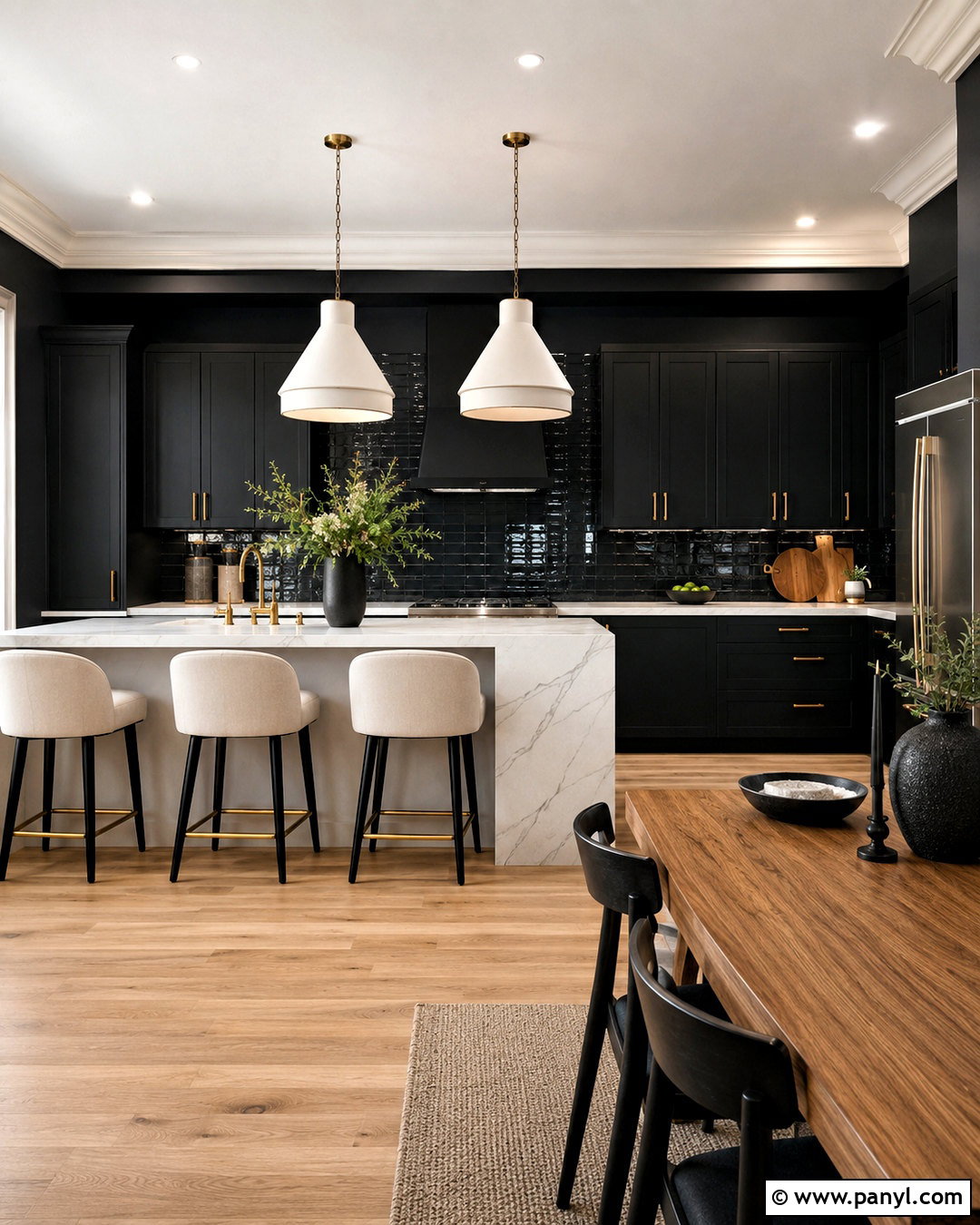
For maximum drama, black walls can continue the cabinetry into a seamless color-drenched kitchen. Variation in texture is essential. Combine satin or matte black walls with flat black cabinets, glossy black backsplash tile, and bright white or boldly veined stone countertops. Light oak floors and a wood dining area keep the room approachable. Brass hardware, pale upholstered stools, and sculptural white pendants create visible highlights throughout the dark envelope. Paint the ceiling warm white if the room is small, or continue black overhead in a large kitchen with abundant windows. Concealed under-cabinet strips and strong ceiling lighting protect functionality. This confident look feels cohesive and intentional rather than like unrelated dark surfaces. ()
Conclusion:
The best answer to **What Wall Color Goes With Black Cabinets** depends on how much contrast, warmth, and drama you want in the room. Crisp white, warm white, greige, and pale gray provide dependable brightness. Sage, dusty blue, blush, and muted yellow add controlled color, while navy, charcoal, and black create a deeper statement. Whatever shade you choose, coordinate it with the countertops, backsplash, flooring, hardware, and lighting before making a final decision. Sample several colors directly beside the cabinets and observe them during the morning, afternoon, and evening. A thoughtfully tested wall color will balance the visual weight of black cabinetry and make the complete kitchen feel comfortable, cohesive, and intentional.

Related Ideas and Inspiration:
Leave a Reply