
Beige bathroom tile is warm, flexible, and much easier to update than it may first appear. If you are wondering What Color Goes With Beige Bathroom Tiles, start by identifying whether the tile has yellow, pink, brown, or gray undertones. That small detail helps you choose colors that feel connected rather than mismatched. Warm whites and earthy shades create a soft, natural bathroom, while blue, green, charcoal, or burgundy can add stronger contrast. The best results come from treating the room as one complete palette. Coordinate the walls, vanity, countertop, hardware, towels, lighting, and accessories instead of adding color in random places. These finished bathroom schemes offer practical ways to answer What Color Goes With Beige Bathroom Tiles.

1. Warm White Walls With Beige Bathroom Tiles
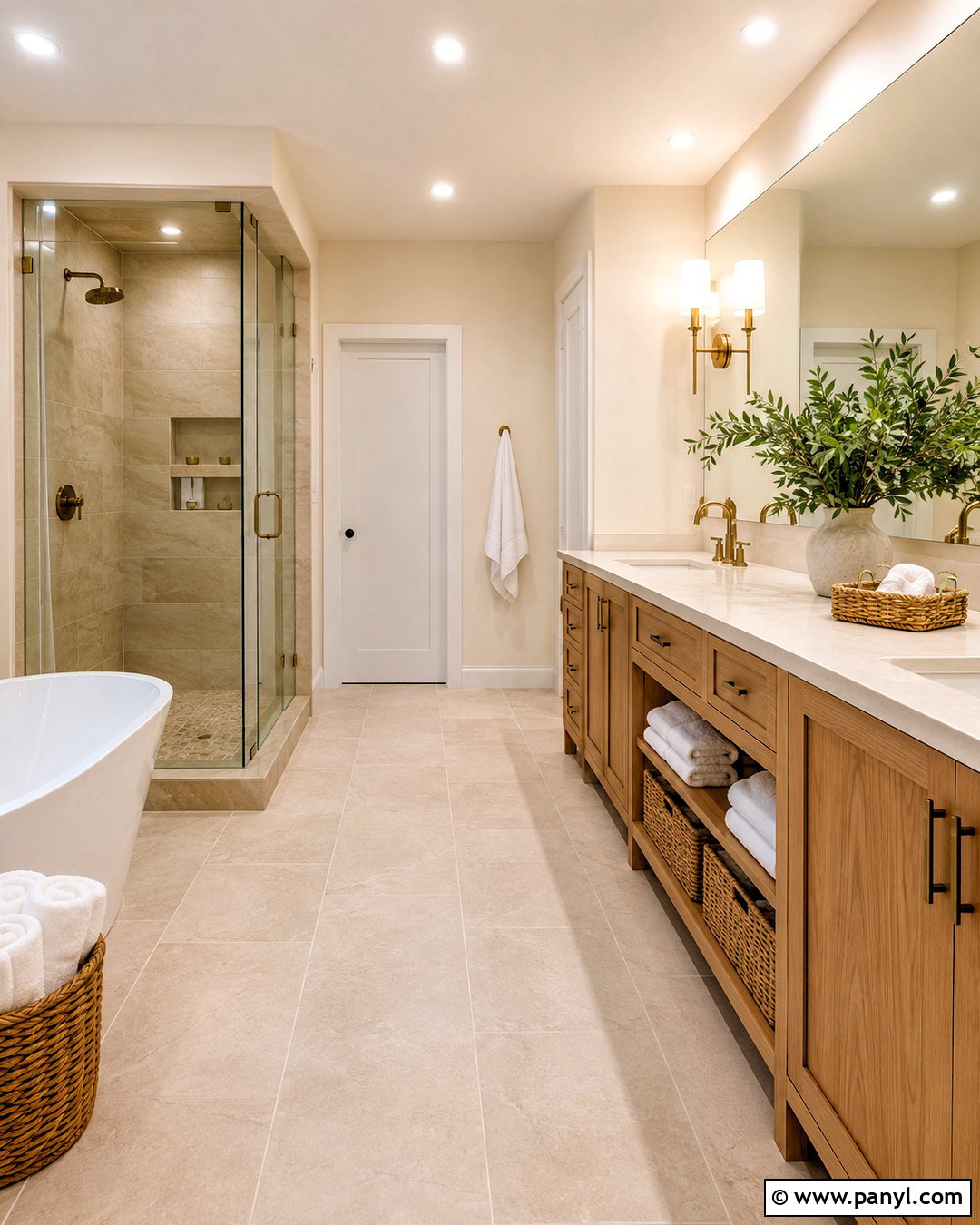
Warm white is one of the safest choices when beige tile already covers a large part of the bathroom. Choose a white with creamy or slightly yellow undertones rather than a sharp blue-white, which can make warm beige look muddy. Paint the upper walls and ceiling warm white, then repeat the shade through the countertop, shower curtain, and ceramic accessories. A light oak vanity adds gentle texture without introducing another competing color. Finish the room with brushed brass fixtures, a frameless mirror, and woven baskets. White towels keep the overall look fresh and bright. This complete palette works especially well in small bathrooms because it reflects light while allowing the beige tile to provide warmth and visual depth.
2. Cream Walls With Beige Bathroom Tiles
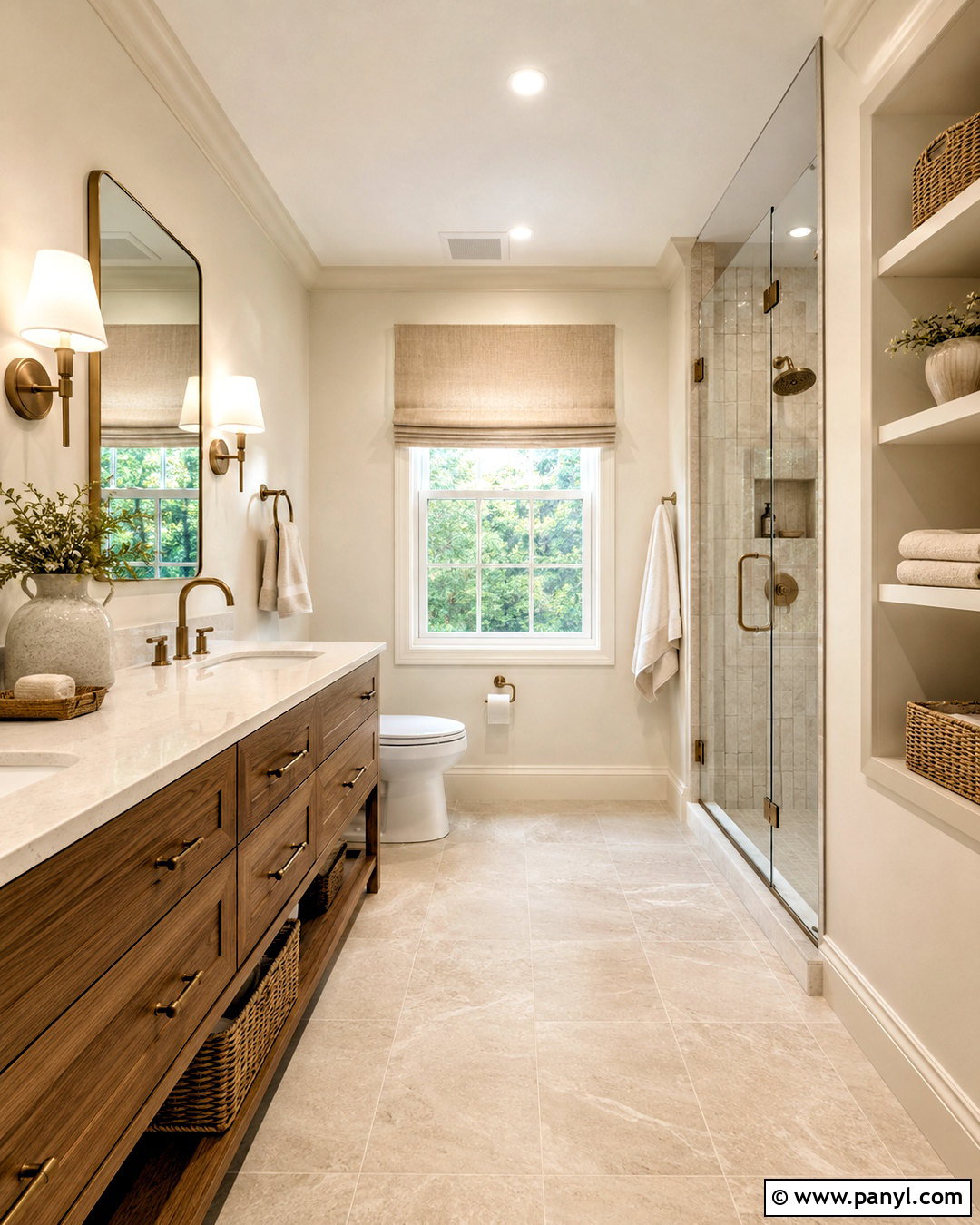
Cream creates a soft, seamless bathroom when you want the beige tiles to blend into the background. Select a cream that is one or two shades lighter than the tile, keeping both colors within the same warm undertone family. Use cream paint above tiled walls and continue it onto the ceiling for a calm, enveloping effect. A medium walnut vanity prevents the room from looking washed out, while an ivory quartz countertop keeps the surfaces light. Add antique brass hardware, a linen Roman shade, and textured cream towels. Small touches of caramel brown in baskets and framed artwork provide definition. The finished bathroom feels layered and comfortable rather than monochromatic, making this pairing suitable for traditional, transitional, or softly rustic interiors.
3. Greige Walls With Beige Bathroom Tiles
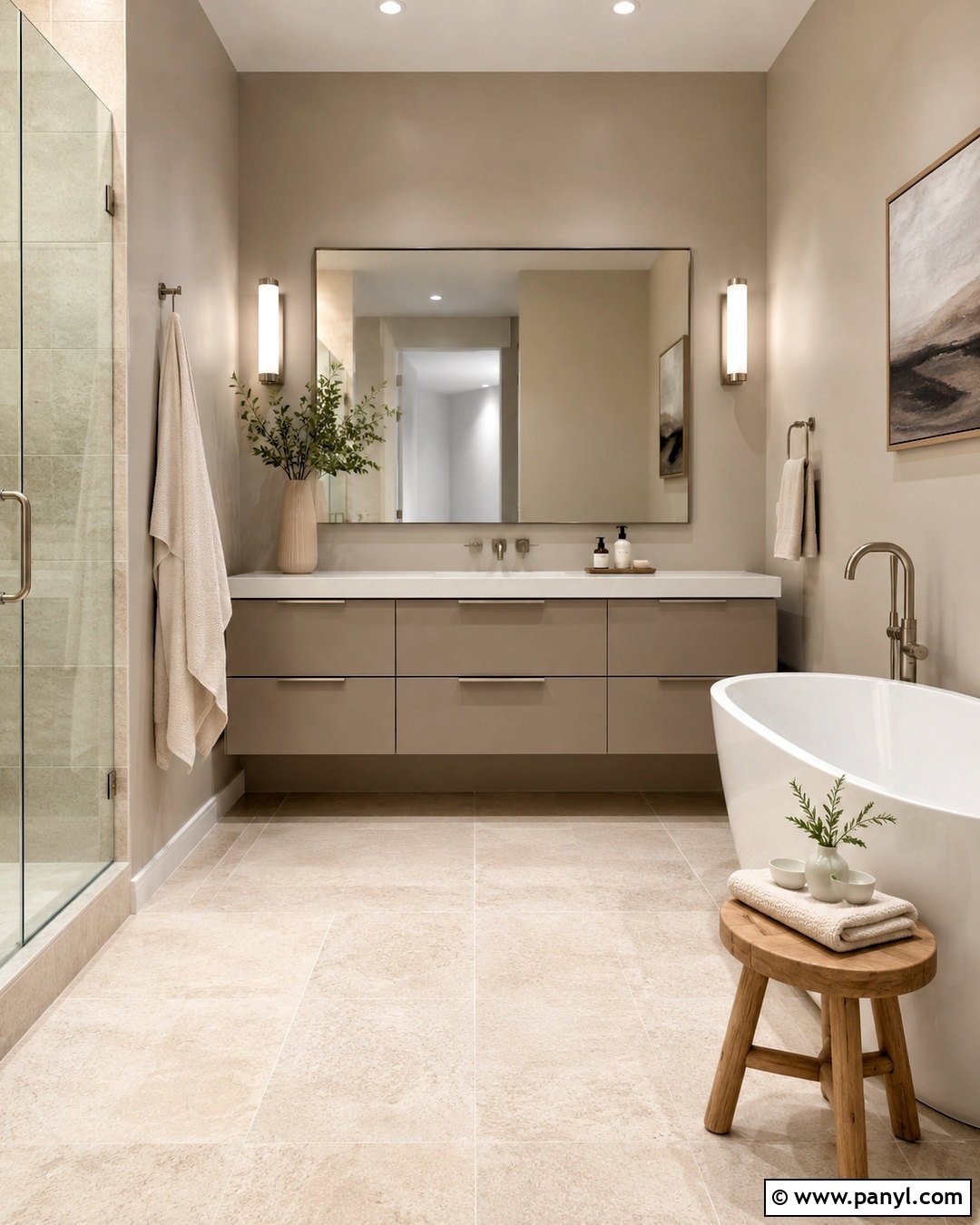
Greige can modernize beige bathroom tiles without creating the harsh contrast associated with cooler gray paint. Look for a warm greige containing more beige than blue, particularly if the existing tile has tan or brown movement. Apply it to the walls, then introduce a flat-panel vanity in a slightly deeper mushroom greige. A white quartz countertop and simple rectangular mirror keep the room crisp. Use brushed nickel fixtures if the tile leans neutral, or aged brass if it appears golden. Natural linen towels, a pale wood stool, and one leafy plant soften the clean lines. This coordinated scheme works well with large-format beige floor tiles because the subtle wall contrast defines the surfaces while maintaining an open, quiet, and contemporary atmosphere.
4. Soft Gray Walls With Beige Bathroom Tiles
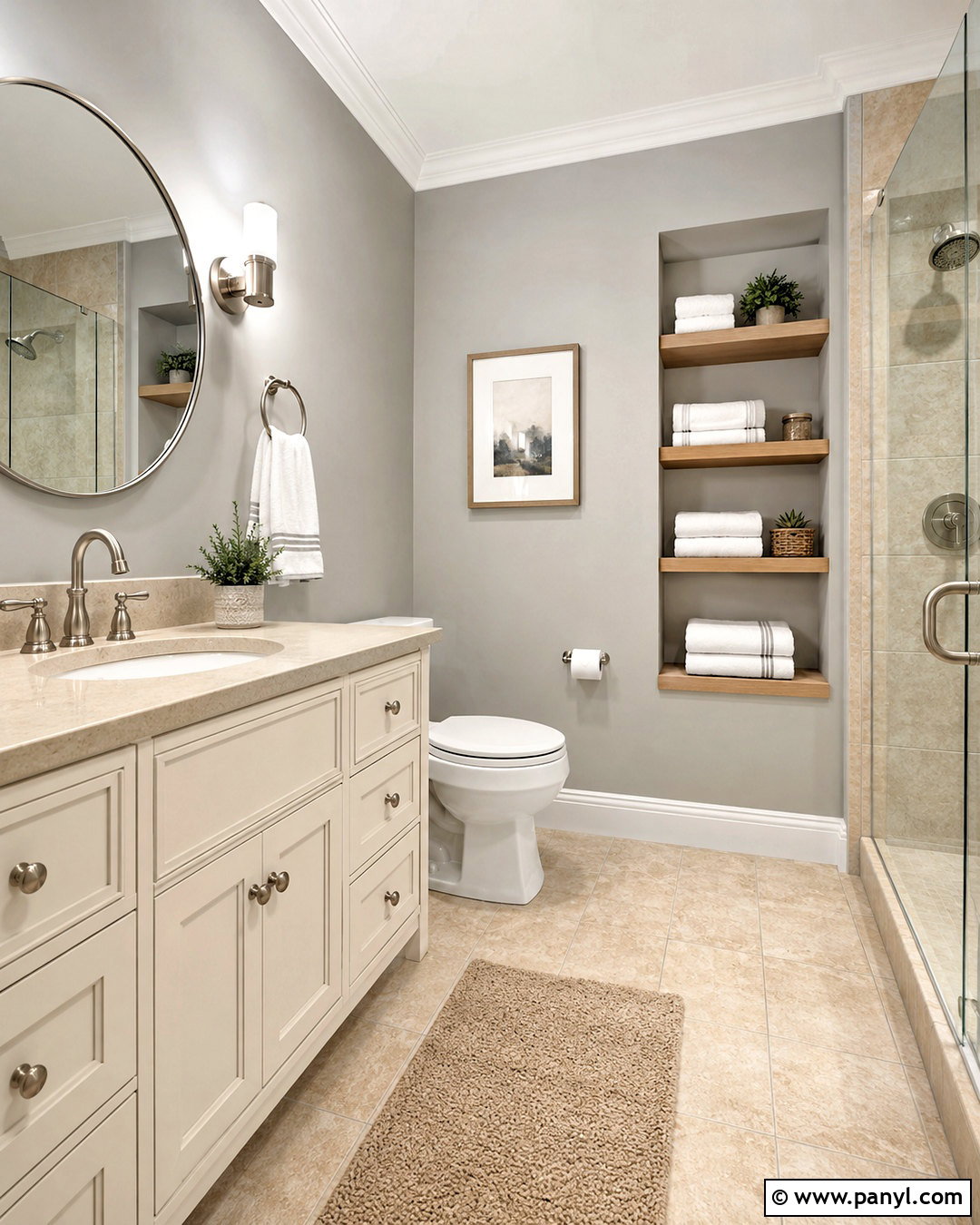
Can gray and beige work together without looking disconnected? They can when the gray is light, warm, and slightly muted. Choose a soft dove gray with a beige or green undertone rather than an icy silver shade. Paint the walls gray and balance them with a warm white vanity, creamy countertop, and beige tile flooring. Polished nickel faucets connect naturally with the gray, while light wood shelving brings the warmth of the tile upward. Add white towels with narrow gray borders and a simple beige bath mat. Keep patterns minimal so the undertone relationship remains clear. This complete look gives an older beige bathroom a cleaner appearance while preserving warmth, making it a useful option for compact bathrooms with moderate natural light.
5. Taupe Walls With Beige Bathroom Tiles
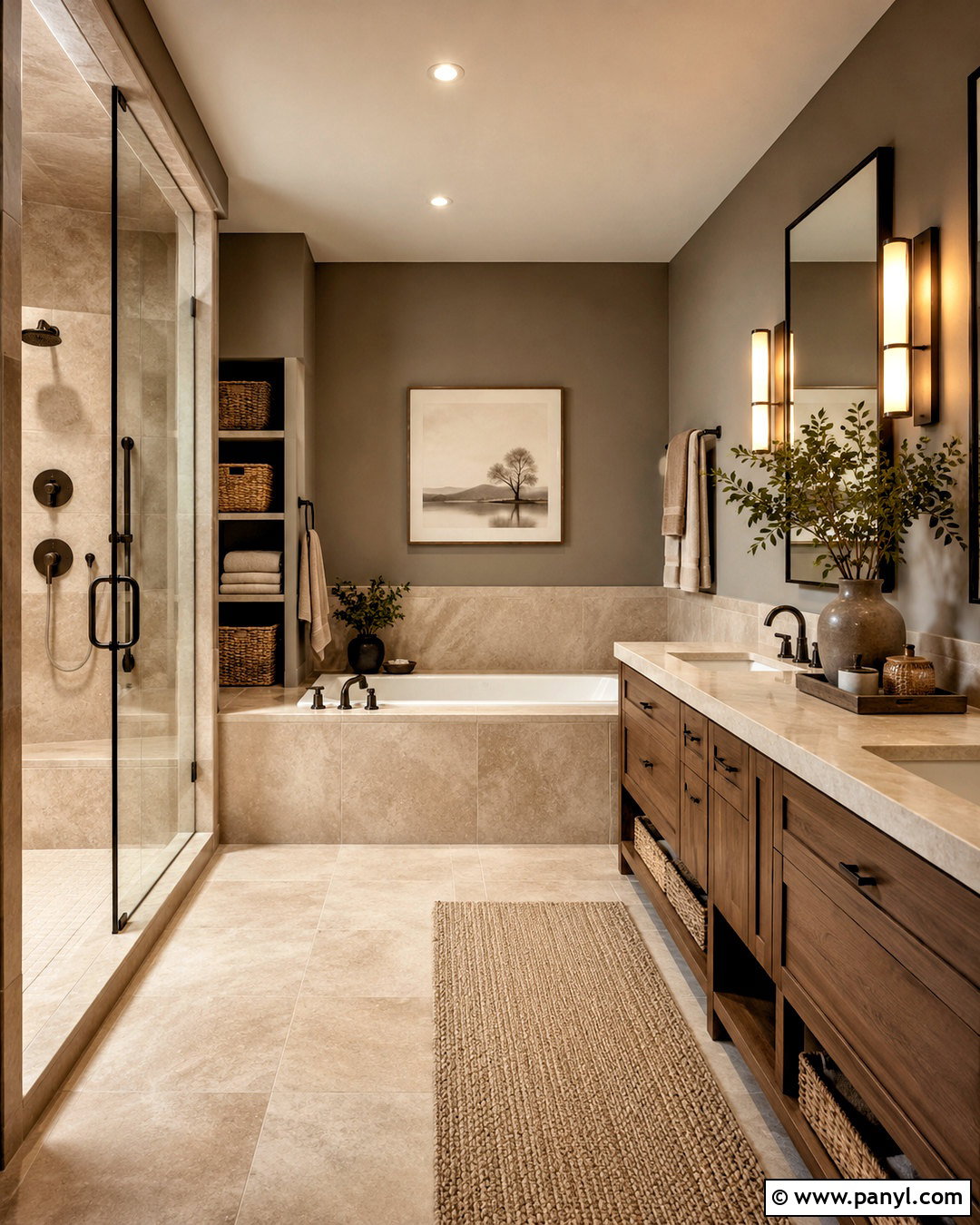
Taupe creates a richer neutral bathroom by emphasizing the brown or gray notes already present in beige tiles. For the most cohesive result, select a taupe that matches the tile’s undertone but is noticeably darker. Use it on the upper walls or vanity rather than every surface, especially in a small room. Pair the taupe with a creamy stone countertop, warm white ceiling, and softly veined beige tiles. Dark bronze faucets and cabinet pulls add definition without feeling as sharp as black. Complete the room with natural flax towels, walnut-framed artwork, and woven storage. Layered lighting around the mirror prevents the deeper walls from appearing dull. The final palette feels sophisticated, grounded, and comfortable without relying on bright accent colors.
6. Sage Green Walls With Beige Bathroom Tiles
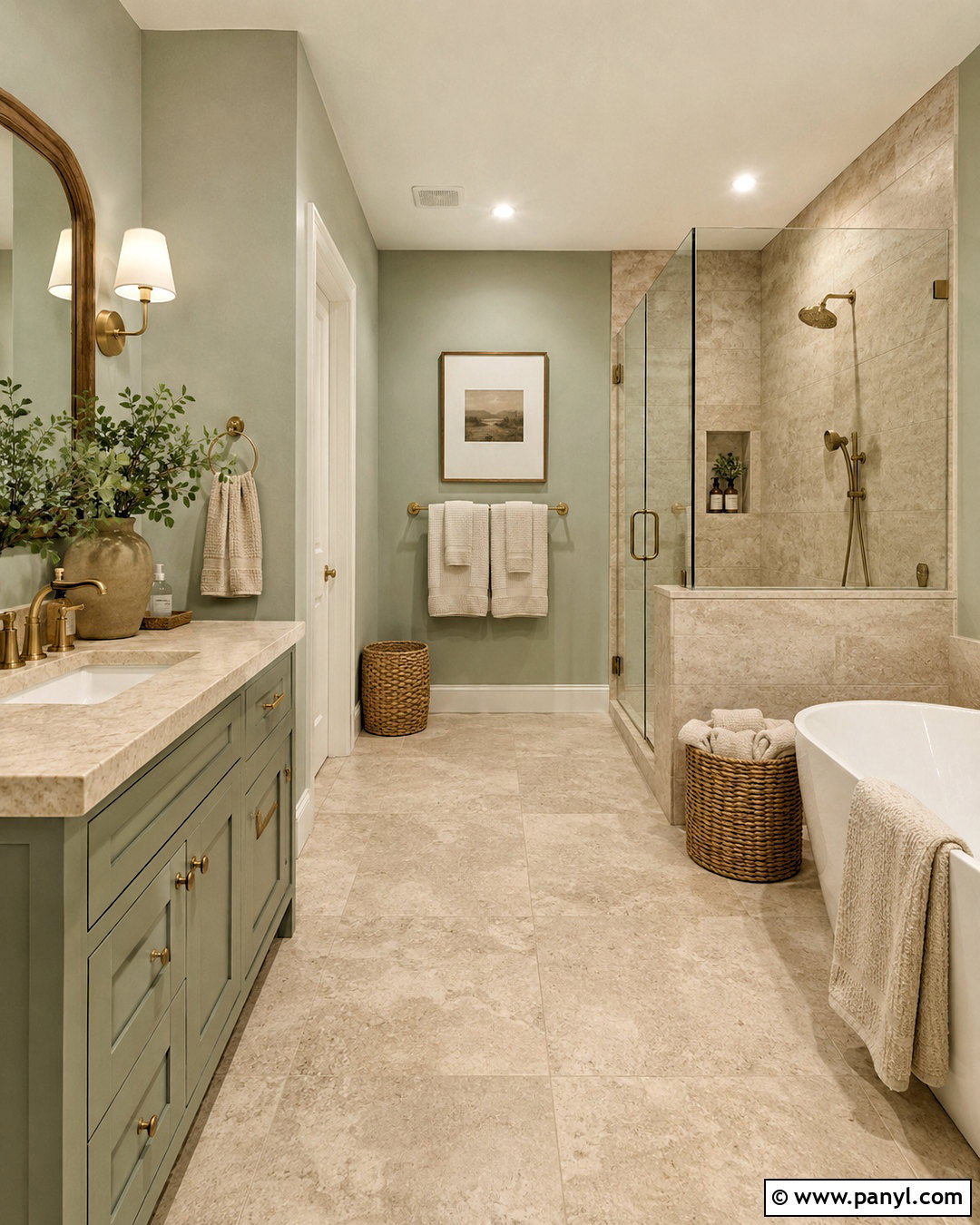
Sage green brings a fresh botanical quality to beige bathroom tiles while preserving their natural warmth. Choose a dusty sage rather than a highly saturated green, then use it across the upper walls or on a Shaker-style vanity. Warm beige floor and shower tiles provide the earthy foundation. Add an ivory countertop, aged brass fixtures, and a rounded wood-framed mirror for a relaxed spa-inspired look. White or cream towels keep the green from dominating, while eucalyptus stems and woven baskets repeat the organic theme. If the bathroom has limited daylight, select a pale sage with a higher light value. This full scheme looks especially cohesive with travertine-like beige tile because both colors resemble tones found in natural landscapes.
7. Olive Green Vanity With Beige Bathroom Tiles
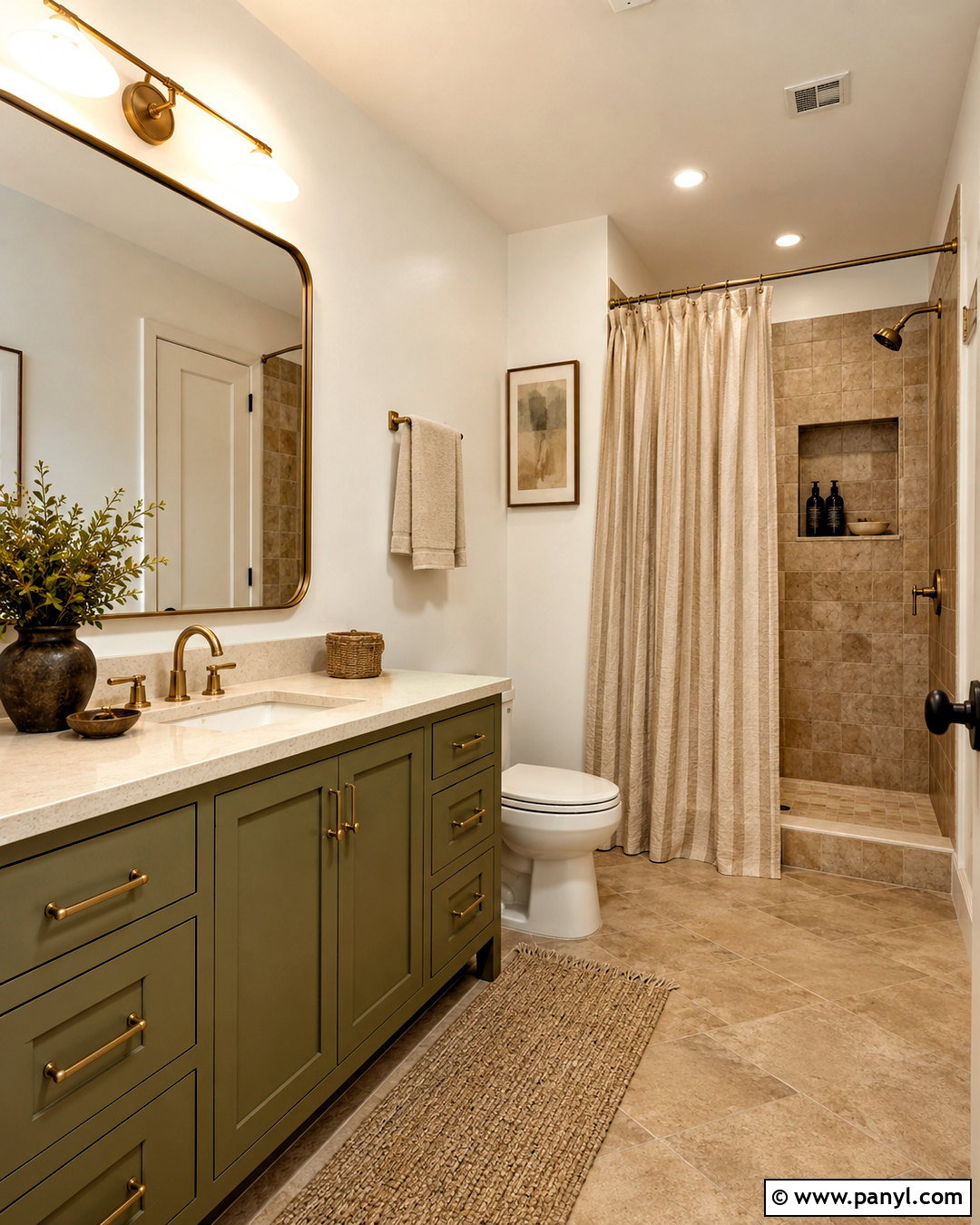
For a stronger, grounded bathroom palette, combine beige tiles with an olive green vanity. The darker cabinet color creates a clear focal point, while neutral walls prevent the room from becoming too heavy. Paint the walls warm white or pale cream and use olive only on the vanity, linen cabinet, or built-in storage. Choose a lightly veined cream quartz countertop and an undermount white sink. Brushed brass hardware enhances the earthy warmth, while a bronze-framed mirror provides additional depth. Finish with oatmeal towels, a striped beige shower curtain, and simple pottery. This complete look works best in bathrooms with good lighting, although illuminated wall sconces can make it successful in windowless spaces. The result feels natural, established, and pleasantly dramatic.
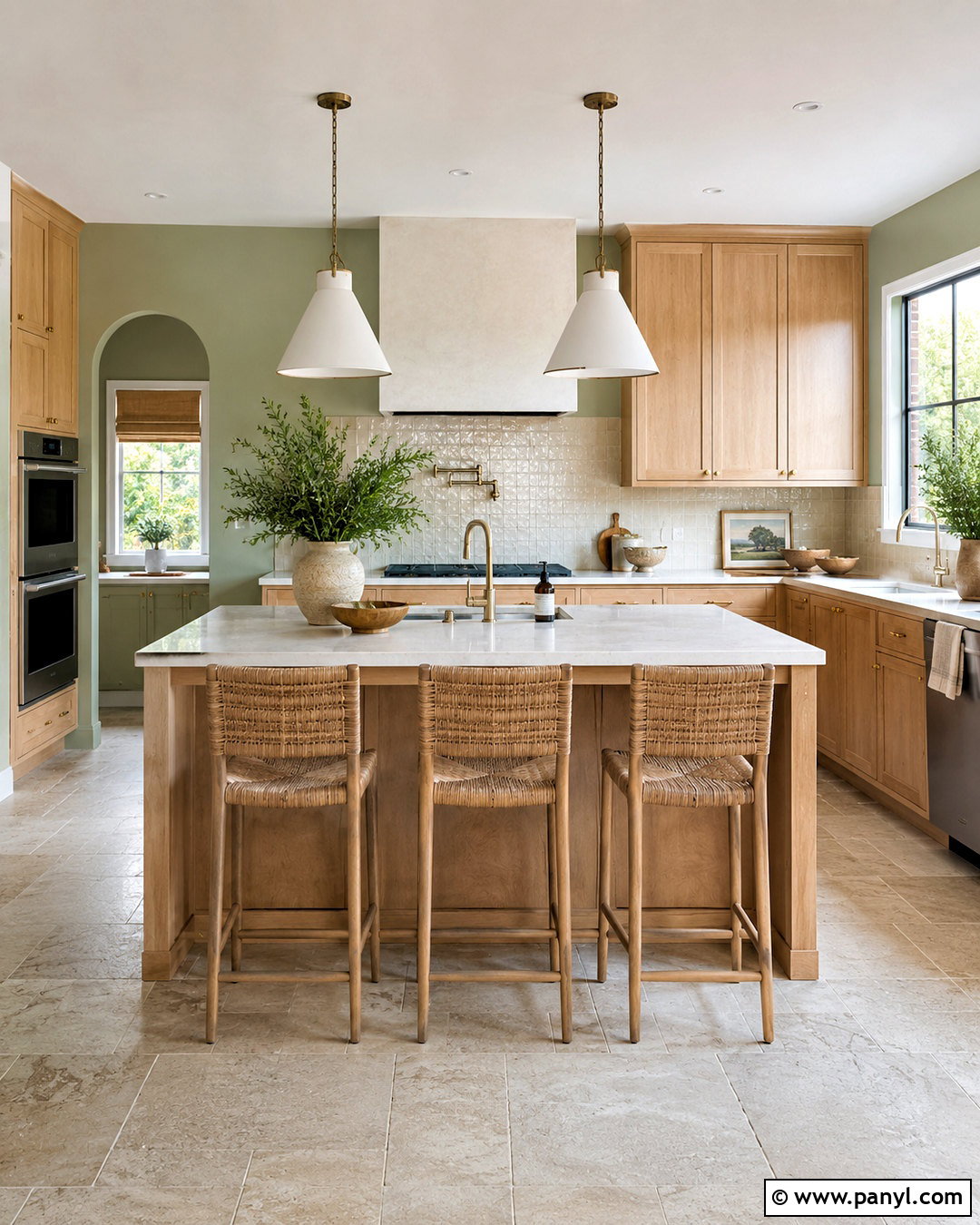
8. Eucalyptus Green Walls With Beige Bathroom Tiles
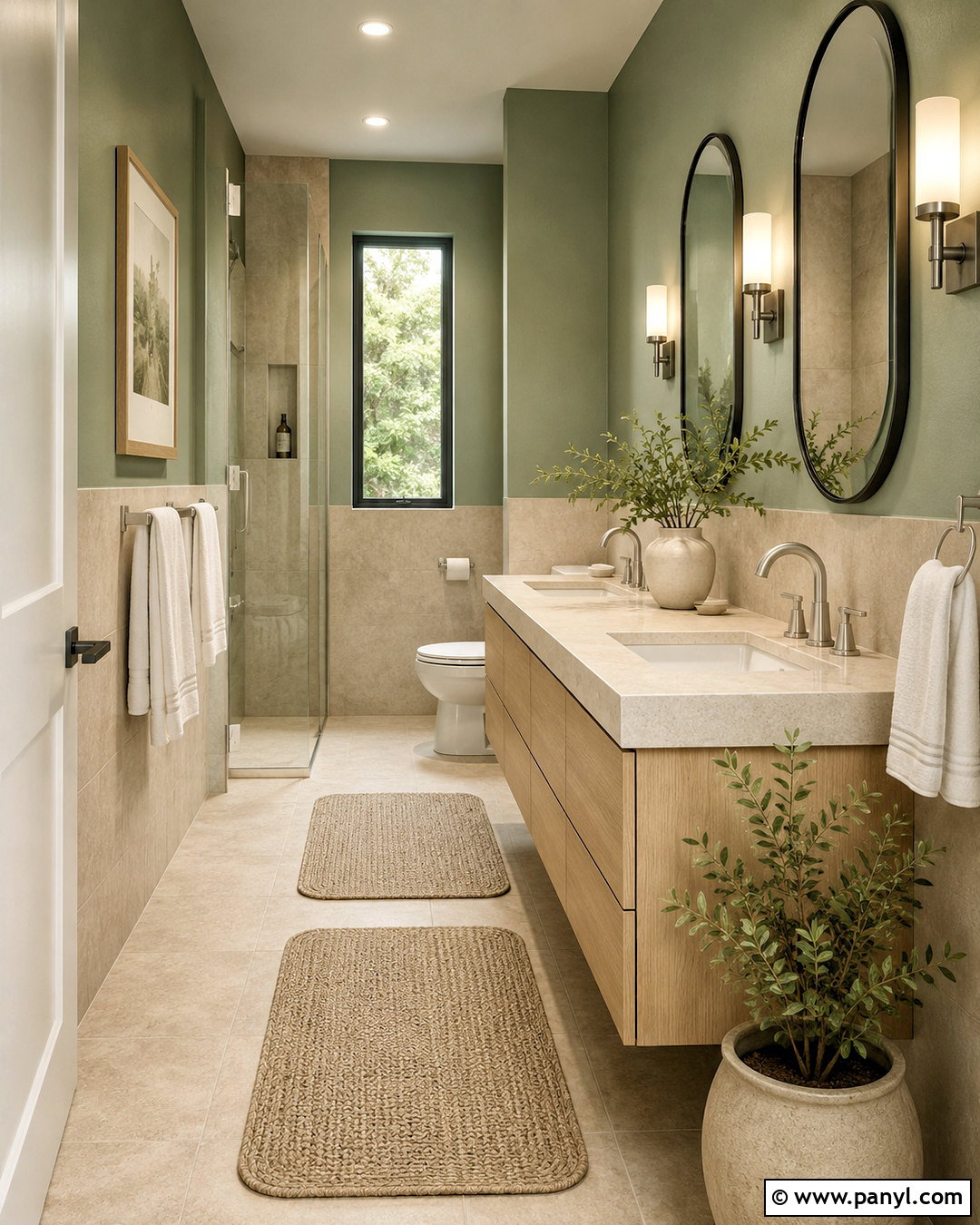
Eucalyptus green offers a lighter, slightly cooler alternative to sage while still complementing warm beige surfaces. Use this muted blue-green on the walls above beige tile wainscoting, leaving the ceiling and trim a gentle off-white. A pale oak floating vanity maintains an airy appearance and adds natural grain. Select a cream countertop, brushed nickel fixtures, and softly rounded mirrors to support the relaxed palette. White towels introduce freshness, while beige floor mats connect the accessories to the tile. Add one or two ceramic planters rather than filling the room with greenery. This balanced design is particularly effective in narrow bathrooms because the pale wall color visually opens the space. The beige tile keeps the cool green from feeling sterile or overly coastal.
9. Powder Blue Walls With Beige Bathroom Tiles
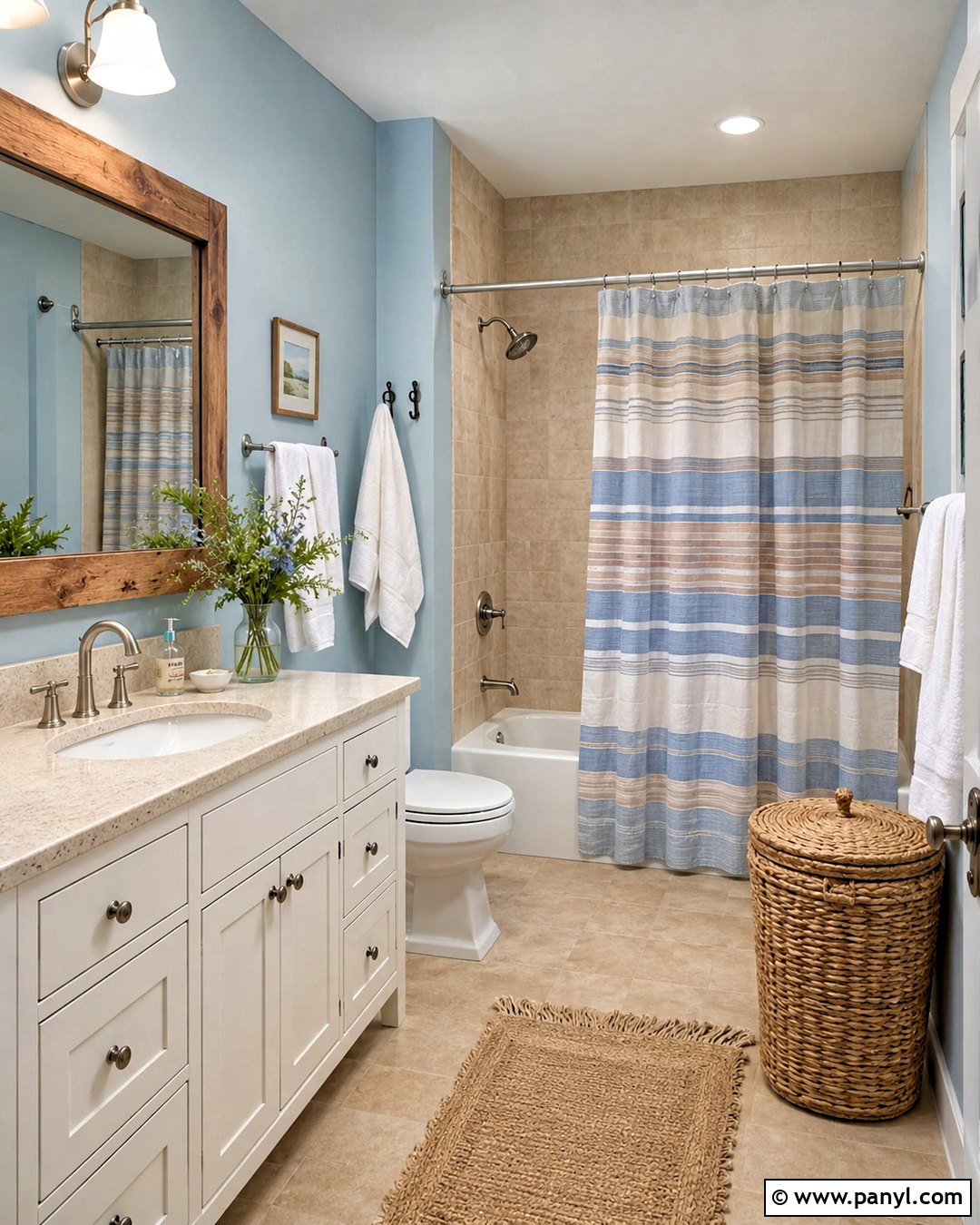
Powder blue provides gentle contrast that can make beige bathroom tiles appear cleaner and more intentional. Choose a muted blue with a soft gray undertone, avoiding bright baby blue shades that may look overly sweet. Paint the upper walls powder blue and use a warm white vanity with a beige or cream countertop. Polished nickel fixtures reinforce the cooler accent color without clashing with the tile. Add white towels, a natural wood mirror, and a woven beige hamper to maintain warmth. A simple striped shower curtain can repeat blue, cream, and tan in balanced proportions. This finished palette suits traditional and cottage bathrooms, especially those with good natural light. It feels refreshing but remains soft enough for everyday use.
10. Slate Blue Vanity With Beige Bathroom Tiles
Slate blue creates a refined focal point when used on bathroom cabinetry against beige tile. Its gray undertone gives it a mature appearance, while the blue adds enough contrast to update the room. Keep the walls warm white and choose a slate blue vanity with simple recessed-panel doors. Add a creamy quartz countertop, polished nickel faucets, and a large frameless mirror. Beige shower tiles and flooring should remain the dominant warm surface. Repeat the blue through a narrow towel border or small framed print rather than introducing several bold accessories. Natural wood shelves can bridge the warm and cool tones. This complete bathroom looks tailored and balanced, making it an appealing choice for transitional homes where navy might feel too dark.
11. Navy Blue Vanity With Beige Bathroom Tiles
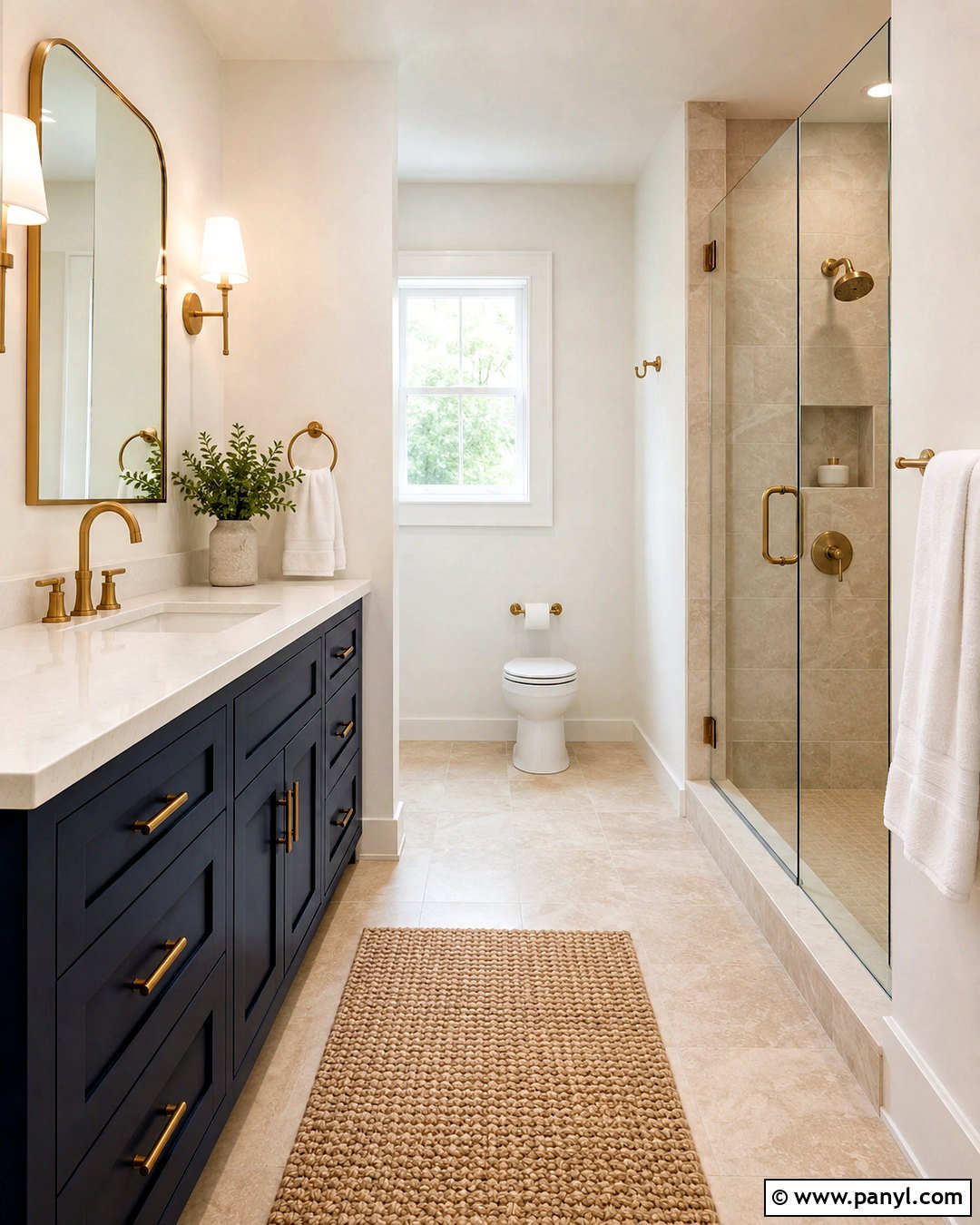
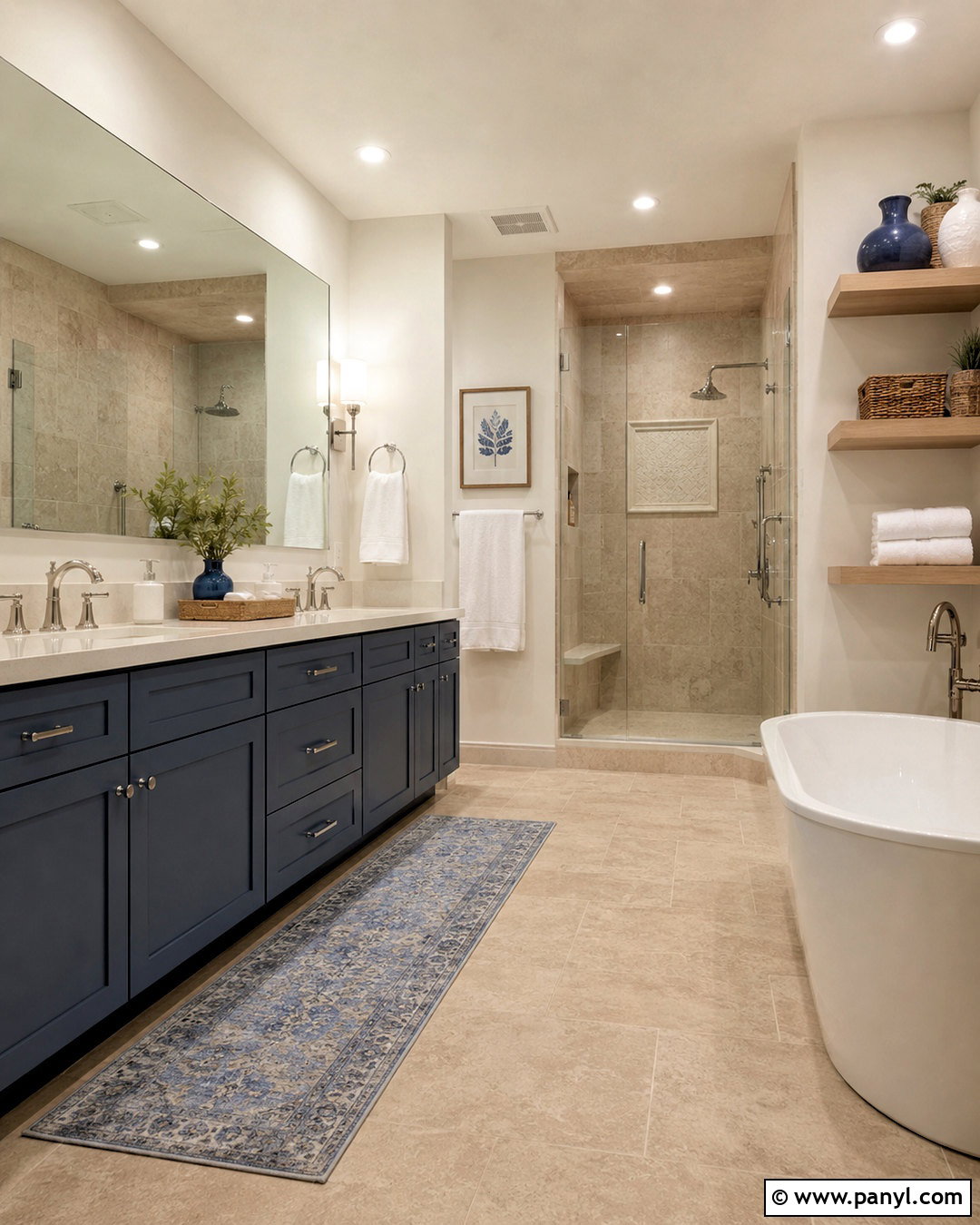
Navy blue gives beige bathroom tiles a bold, classic update. Use the color on a substantial vanity or tall storage cabinet, then keep the walls and ceiling a warm white to balance its depth. A white quartz countertop creates a clean break between the navy cabinetry and beige floor. Choose brass hardware for a warmer, more traditional look, or polished nickel for a sharper coastal influence. Add a large mirror with a thin brass or wood frame, plus white towels and a textured tan bath mat. Strong vanity lighting is important because dark cabinetry absorbs light. This coordinated palette works particularly well in medium or large bathrooms, where the navy can anchor the design without making the entire room feel smaller.
12. Deep Teal Walls With Beige Bathroom Tiles
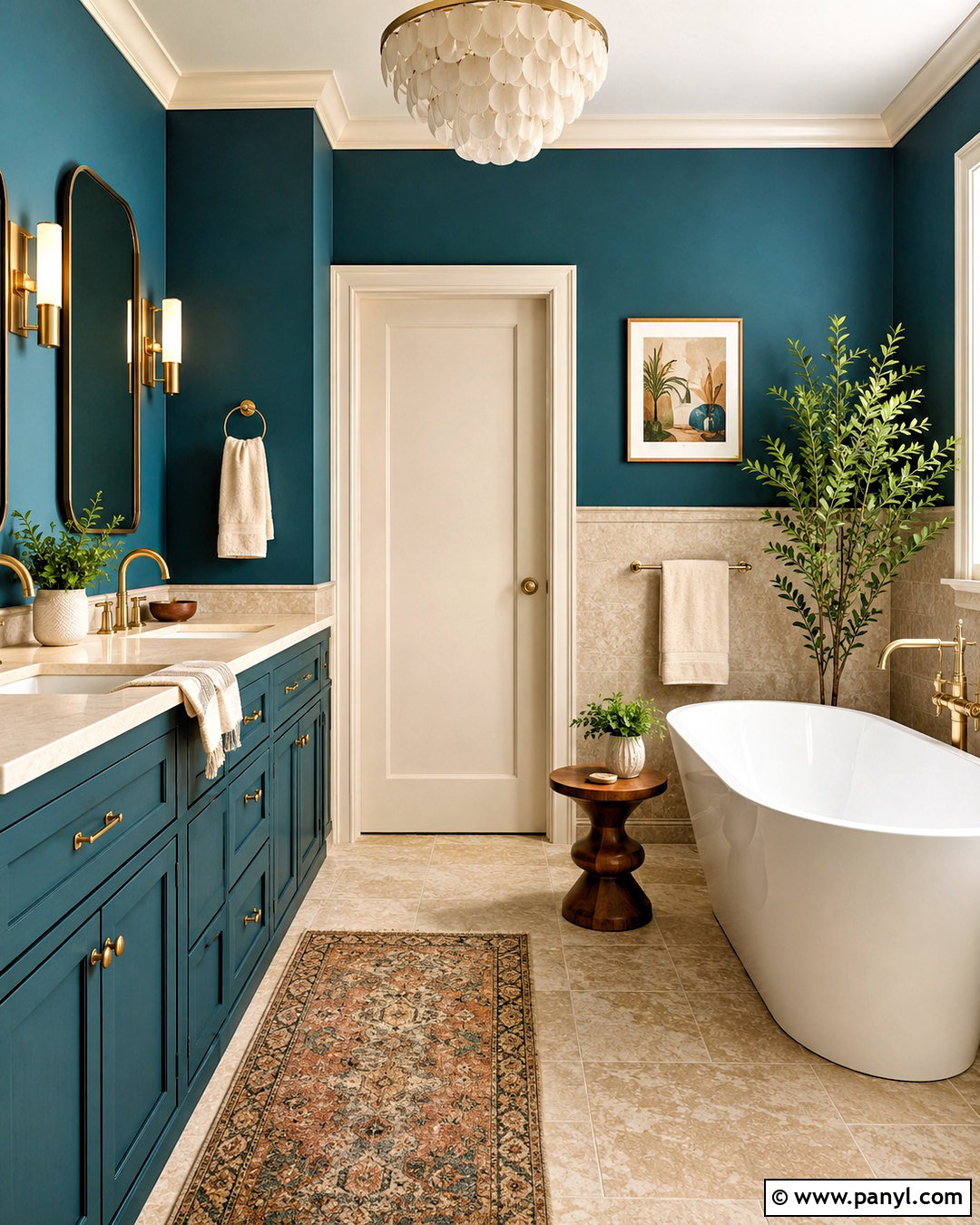
Deep teal can transform a plain beige bathroom into a colorful, polished retreat. Because teal combines blue and green, it creates lively contrast while remaining connected to earthy tile. Use the color on one main wall, the vanity, or both in a powder room. Keep the remaining surfaces simple with beige floor tile, an ivory countertop, and warm white trim. Brushed brass faucets and sconces bring out the green warmth in the teal, while walnut accessories support the beige. Choose solid cream towels and minimal artwork so the room does not become visually busy. In a larger bathroom, teal walls can surround a freestanding white tub. Bright layered lighting ensures this deeper scheme feels rich and clear rather than dark.
13. Charcoal Gray Vanity With Beige Bathroom Tiles
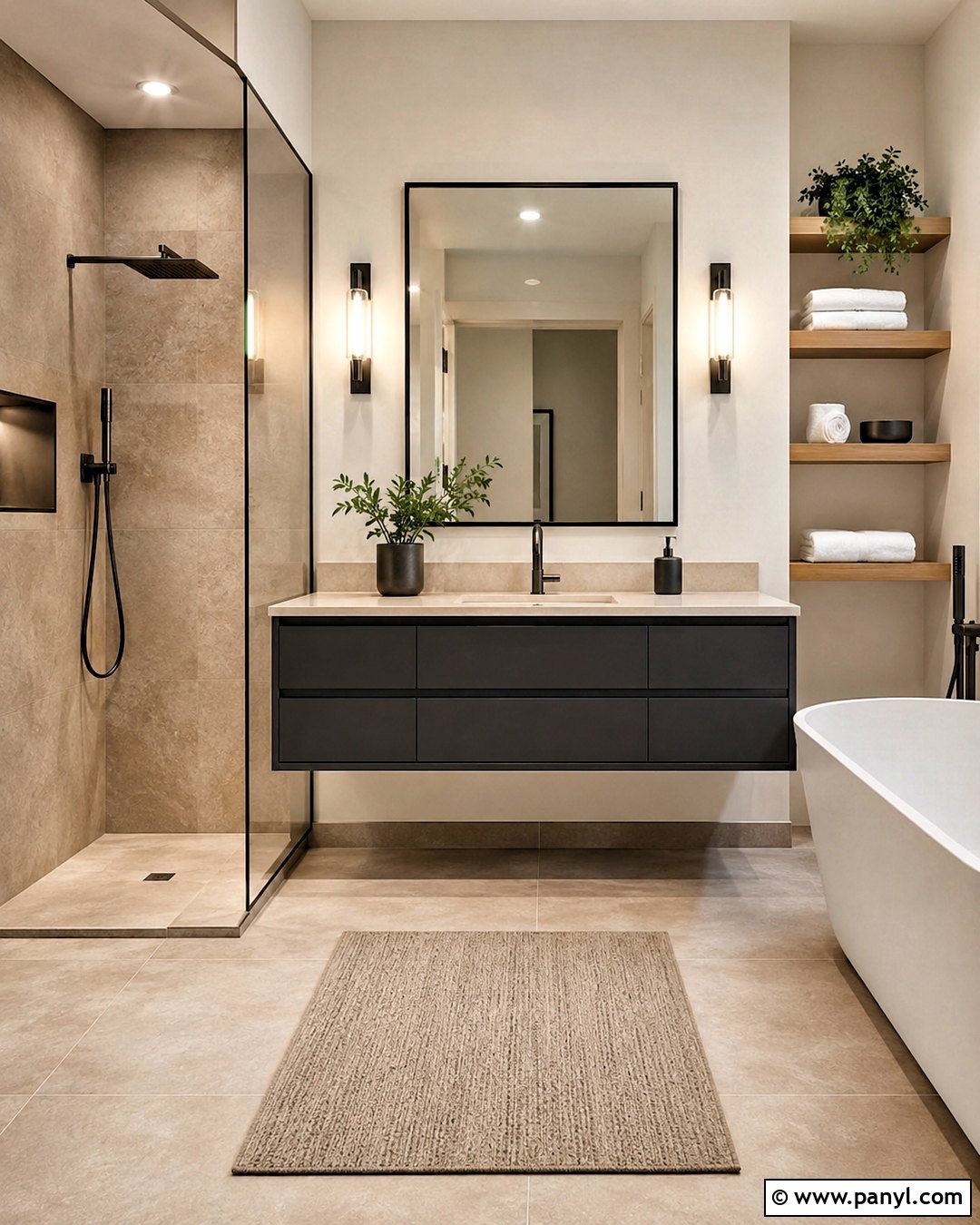
Charcoal gray gives beige tiles a modern architectural edge without requiring a complete renovation. Use charcoal on a streamlined vanity and repeat it sparingly through a mirror frame or shower enclosure. Keep the walls warm white so the room remains bright, and select a creamy countertop that connects the cabinet to the beige tile. Matte black or gunmetal hardware creates a cohesive contemporary finish. Add pale wood shelves, white towels, and a taupe rug to soften the strong contrast. If the beige tile contains gray veining, charcoal will highlight that detail and make the material feel more deliberate. This complete bathroom palette suits modern and industrial interiors, but natural textures prevent it from becoming cold, stark, or overly masculine.
14. Matte Black Accents With Beige Bathroom Tiles
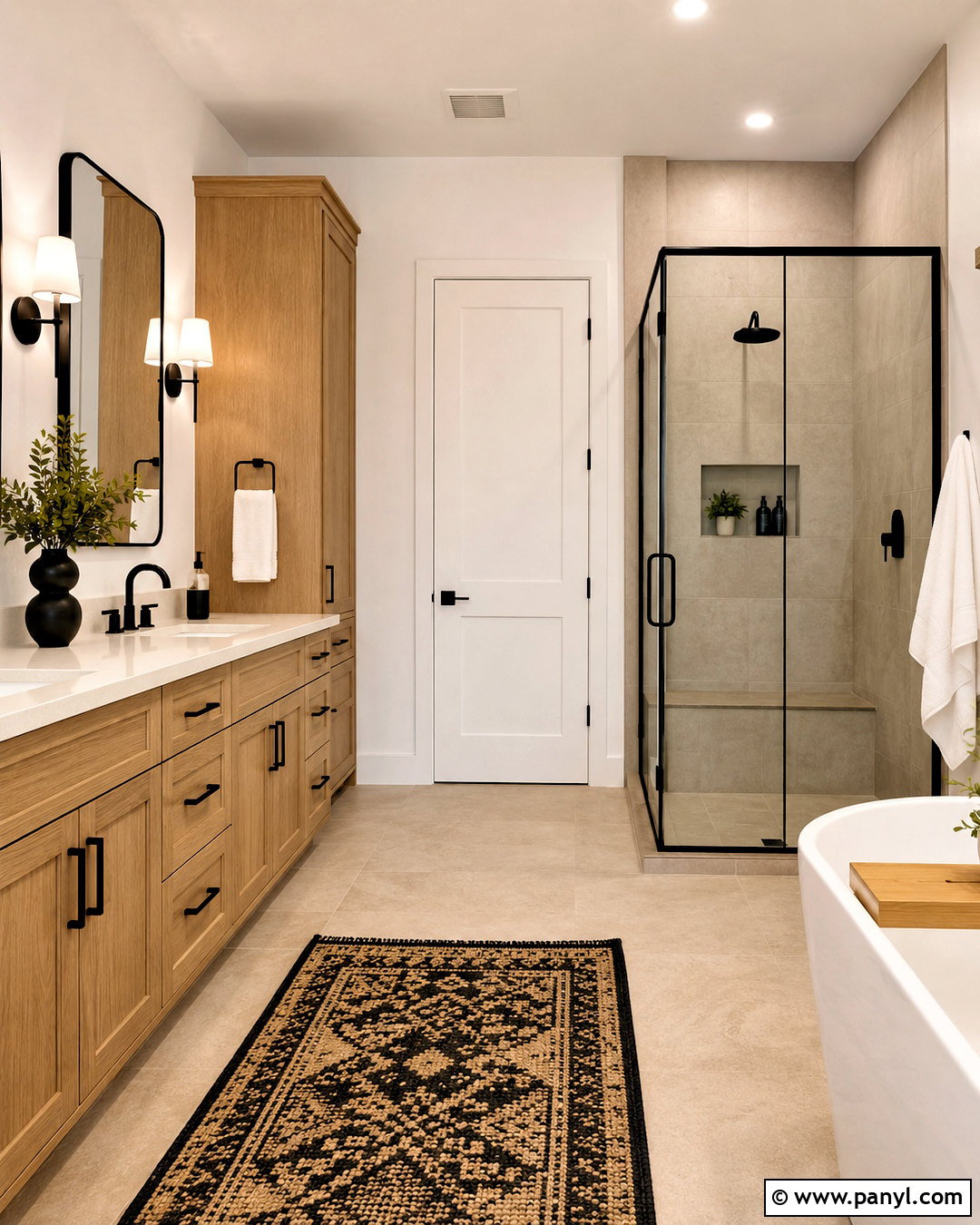
Black works best with beige bathroom tiles when it appears in a controlled series of accents rather than across every large surface. Begin with warm white walls and a light oak or cream vanity. Then add a matte black faucet, shower frame, mirror, sconces, and cabinet pulls. Repeating the finish throughout the room makes the contrast look planned. Use an ivory countertop and simple white towels to keep the palette bright. A beige-and-black patterned rug can connect the two main colors without overwhelming the floor. Avoid introducing several other metals, since that can weaken the graphic effect. The finished bathroom feels crisp and current, while the beige tiles soften the black and keep the space from looking severe or overly high-contrast.
15. Terracotta Walls With Beige Bathroom Tiles
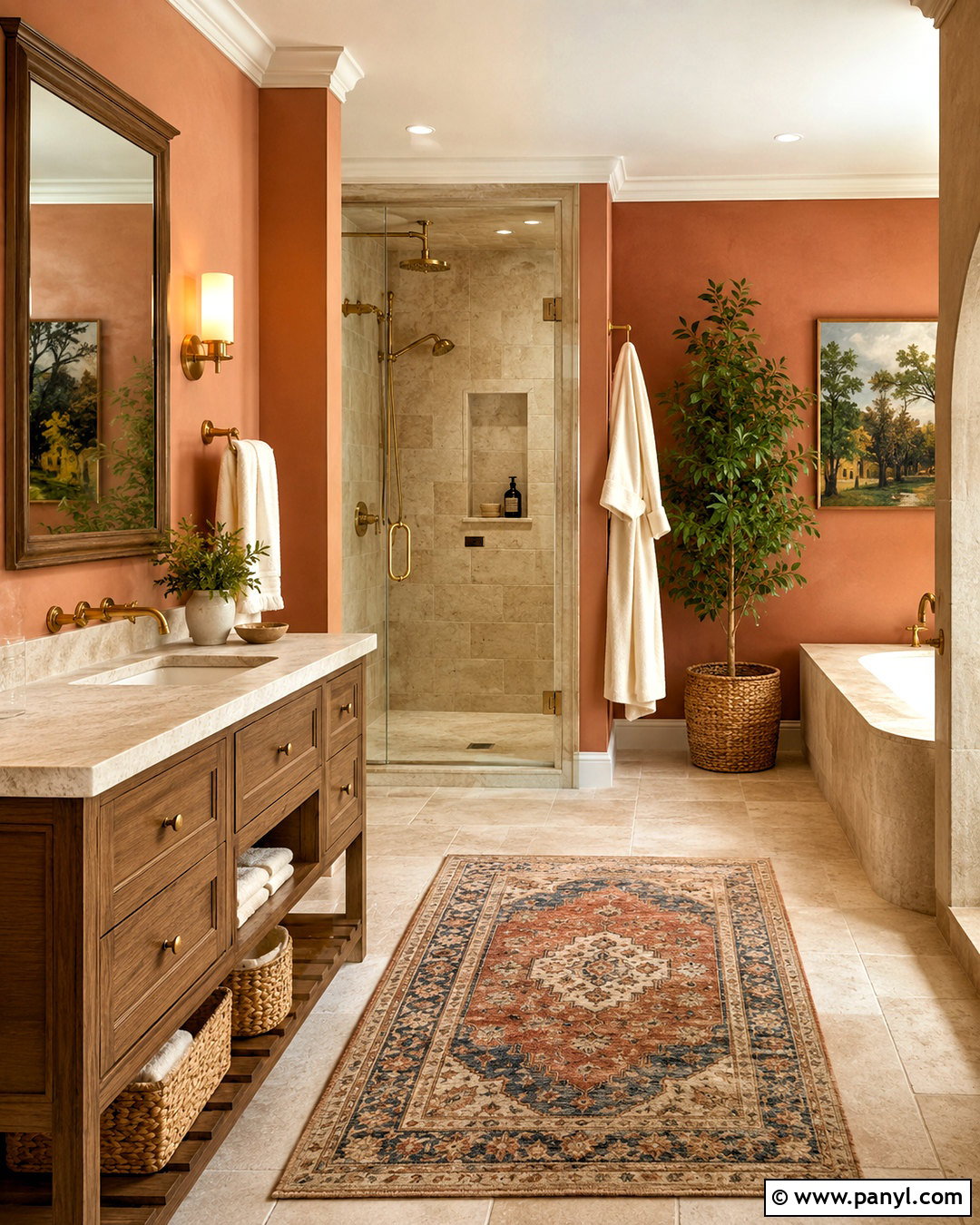
Terracotta emphasizes the sun-warmed character of beige tile and creates an inviting Mediterranean-inspired bathroom. Choose a muted clay shade with brown undertones rather than a vivid orange. Use it on the walls above beige tile or on a painted vanity, then balance it with cream trim and a light stone countertop. A walnut mirror, aged brass fixtures, and natural woven baskets reinforce the earthy palette. Add ivory towels and a small patterned rug containing terracotta, sand, and faded blue. Keep the shower curtain plain to avoid excessive pattern. This complete design is particularly attractive with textured ceramic or travertine-look beige tiles. Soft white lighting helps the clay color stay warm and clear without turning overly red or muddy.
16. Rust Orange Vanity With Beige Bathroom Tiles
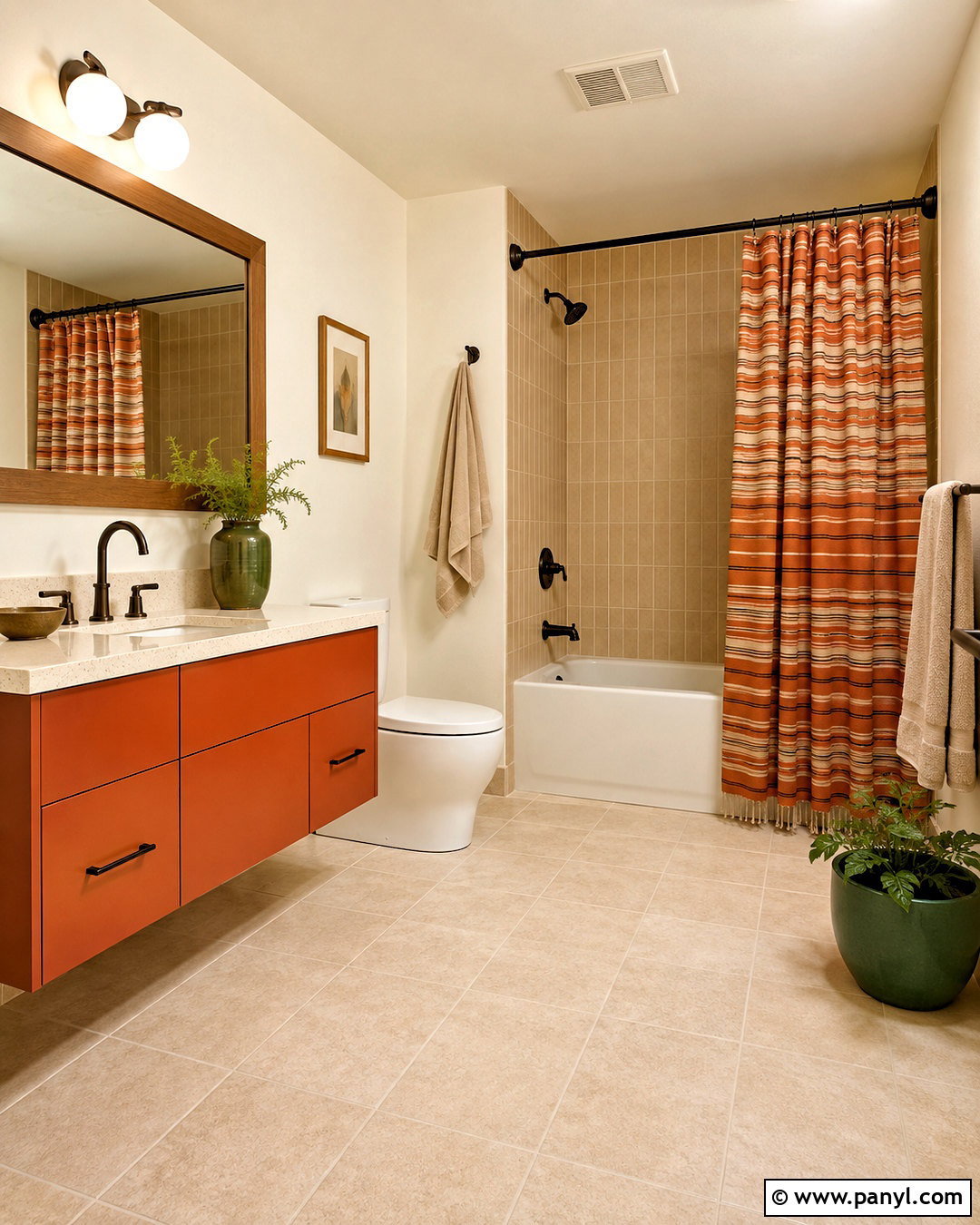
Rust orange brings stronger color to beige bathroom tiles while remaining grounded and earthy. For a balanced result, use rust on a compact vanity or storage cabinet instead of painting every wall. Surround it with creamy white paint, beige floor tile, and a light quartz countertop. Dark bronze or aged brass hardware supports the warm palette, while a walnut-framed mirror adds another natural layer. Introduce oatmeal towels and a simple shower curtain with narrow rust stripes. A small amount of deep green through a plant or ceramic accessory provides contrast. This full scheme works especially well in midcentury-inspired bathrooms, where warm wood, geometric shapes, and saturated cabinet colors feel appropriate. Clean lines keep the rich palette looking updated rather than retro-themed.
17. Blush Pink Walls With Beige Bathroom Tiles
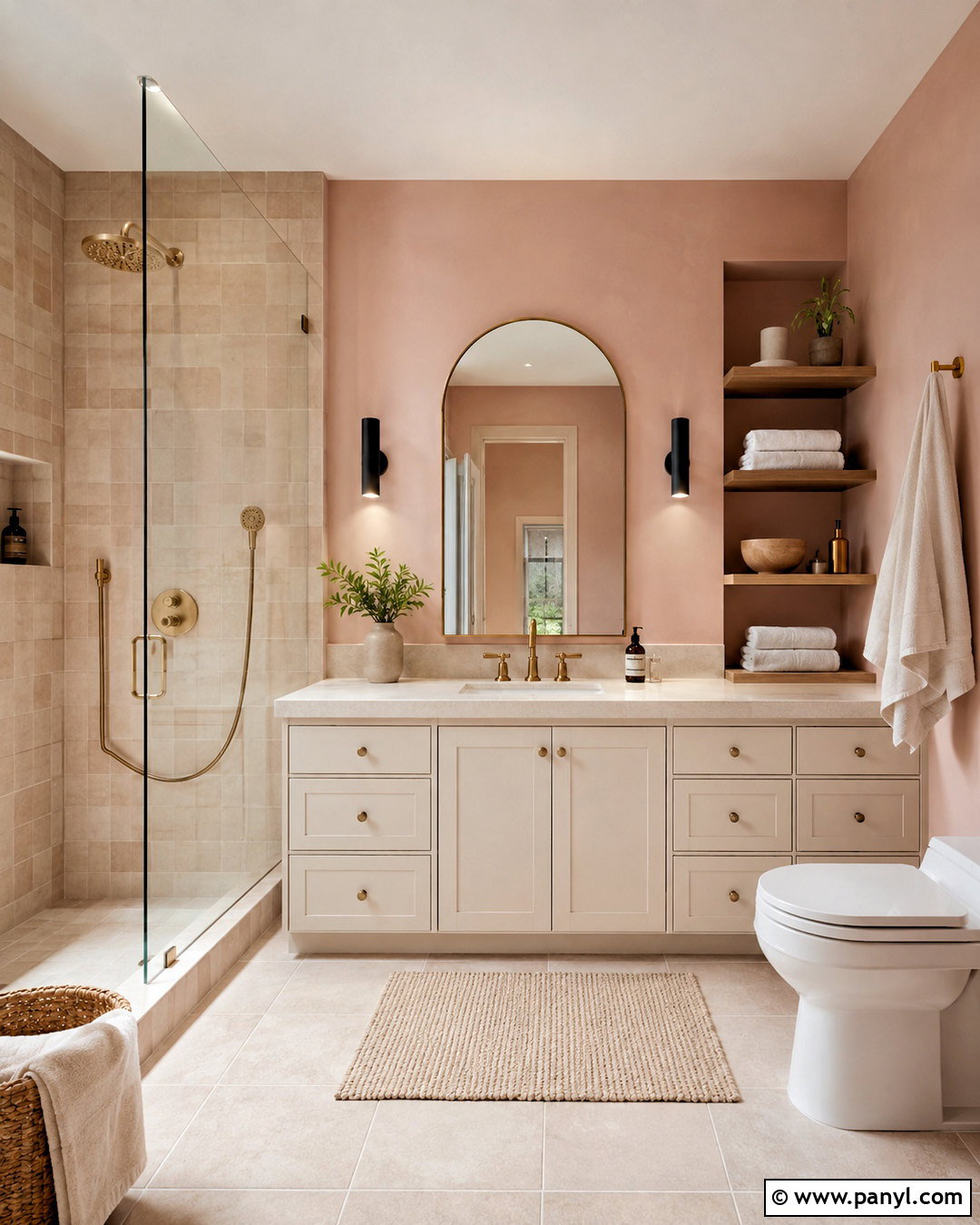
Blush pink can soften beige bathroom tiles and create a flattering, light-filled room. Select a dusty blush with beige or brown undertones instead of a cool candy pink. Apply it to the upper walls and pair it with a warm white vanity, cream countertop, and brushed brass fixtures. Beige floor tile anchors the pastel color and prevents the room from feeling overly delicate. Add an arched mirror, ivory towels, and pale oak shelving for a balanced contemporary look. A small amount of charcoal in the light fixtures or framed artwork gives the palette definition. This coordinated scheme is especially useful when existing beige tiles have subtle peach or pink undertones. Matching those undertones helps the bathroom look intentionally layered rather than accidentally mismatched.
18. Burgundy Vanity With Beige Bathroom Tiles
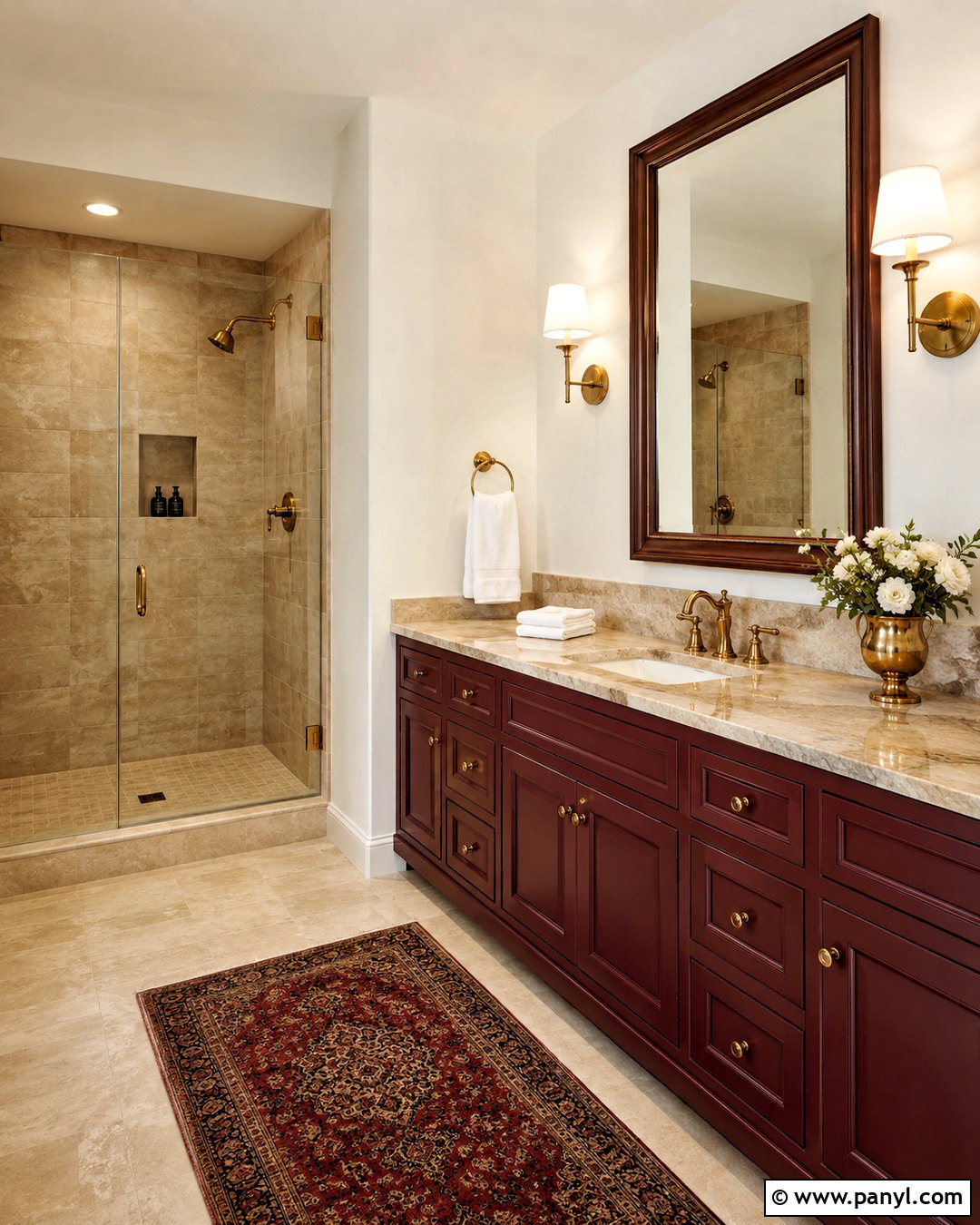
Burgundy introduces luxurious depth while allowing beige bathroom tiles to remain a warm neutral backdrop. Use this rich red-brown shade on the vanity, keeping the surrounding walls creamy white or pale beige. Select a light stone countertop with subtle warm veining and add aged brass faucets, pulls, and sconces. A walnut mirror frame strengthens the traditional character, while simple white towels prevent the palette from becoming too heavy. Repeat burgundy only once or twice through a small rug or framed artwork. The color works best in bathrooms with strong overhead and vanity lighting. This complete scheme can suit traditional, vintage, or modern rooms depending on the cabinet shape. Beige softens burgundy’s intensity, producing a sophisticated and comfortably layered finish.
19. Chocolate Brown Cabinets With Beige Bathroom Tiles
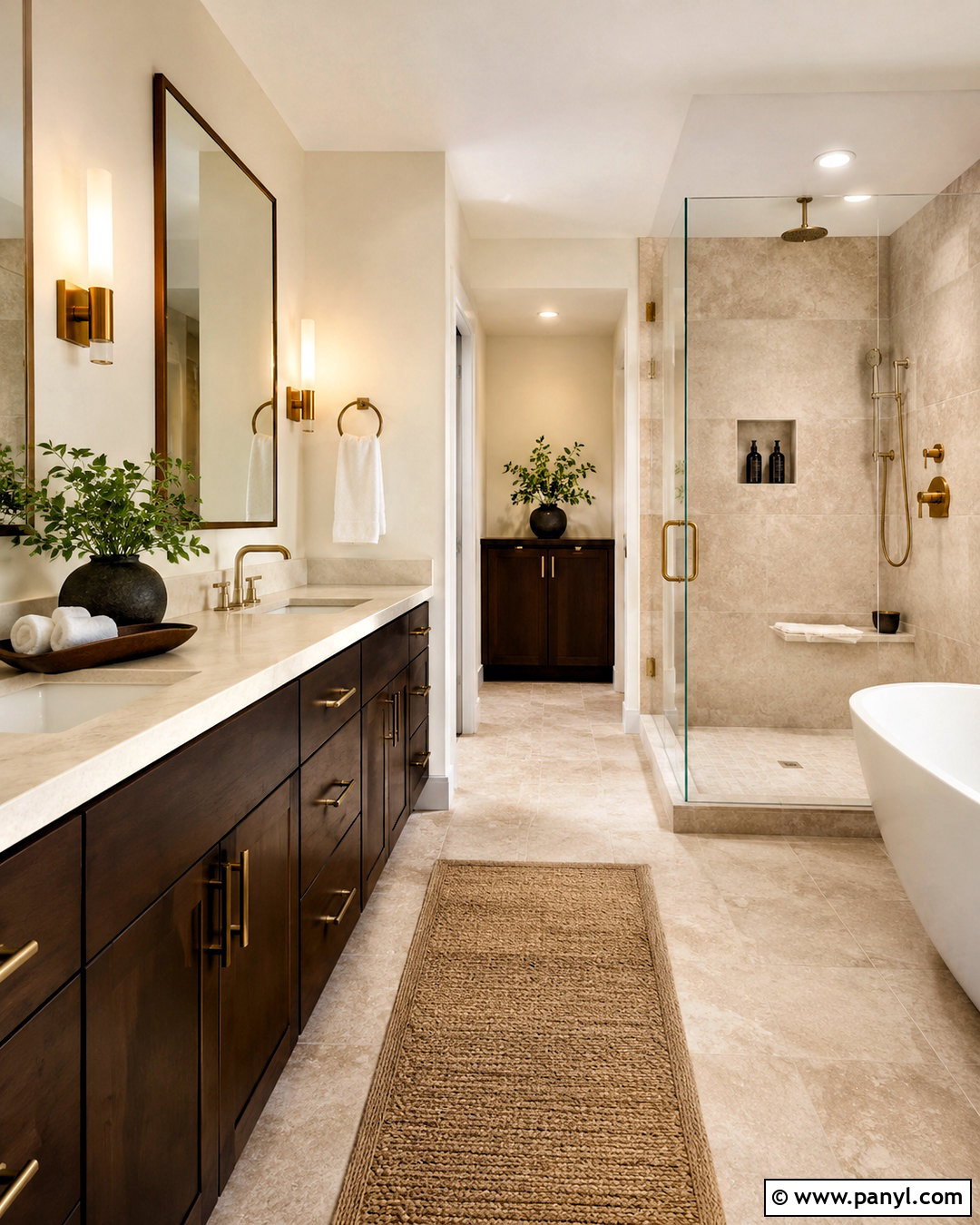
Chocolate brown cabinetry creates a warm, substantial bathroom when paired with lighter beige tiles. Choose a rich brown wood stain or painted finish that is dark enough to stand apart from the floor. Keep the walls creamy white and select an ivory quartz countertop to brighten the cabinet area. Brass hardware highlights the warm tones, while a frameless glass shower preserves an open view of the beige tile. Add white towels, a camel-colored rug, and a few dark wood accessories for repetition. Good lighting is essential, particularly if the room lacks windows. This complete tonal palette feels calm and grounded because every color belongs to the same warm family. Variation in texture keeps the neutral room from appearing flat or dated.
20. Ochre Yellow Accents With Beige Bathroom Tiles
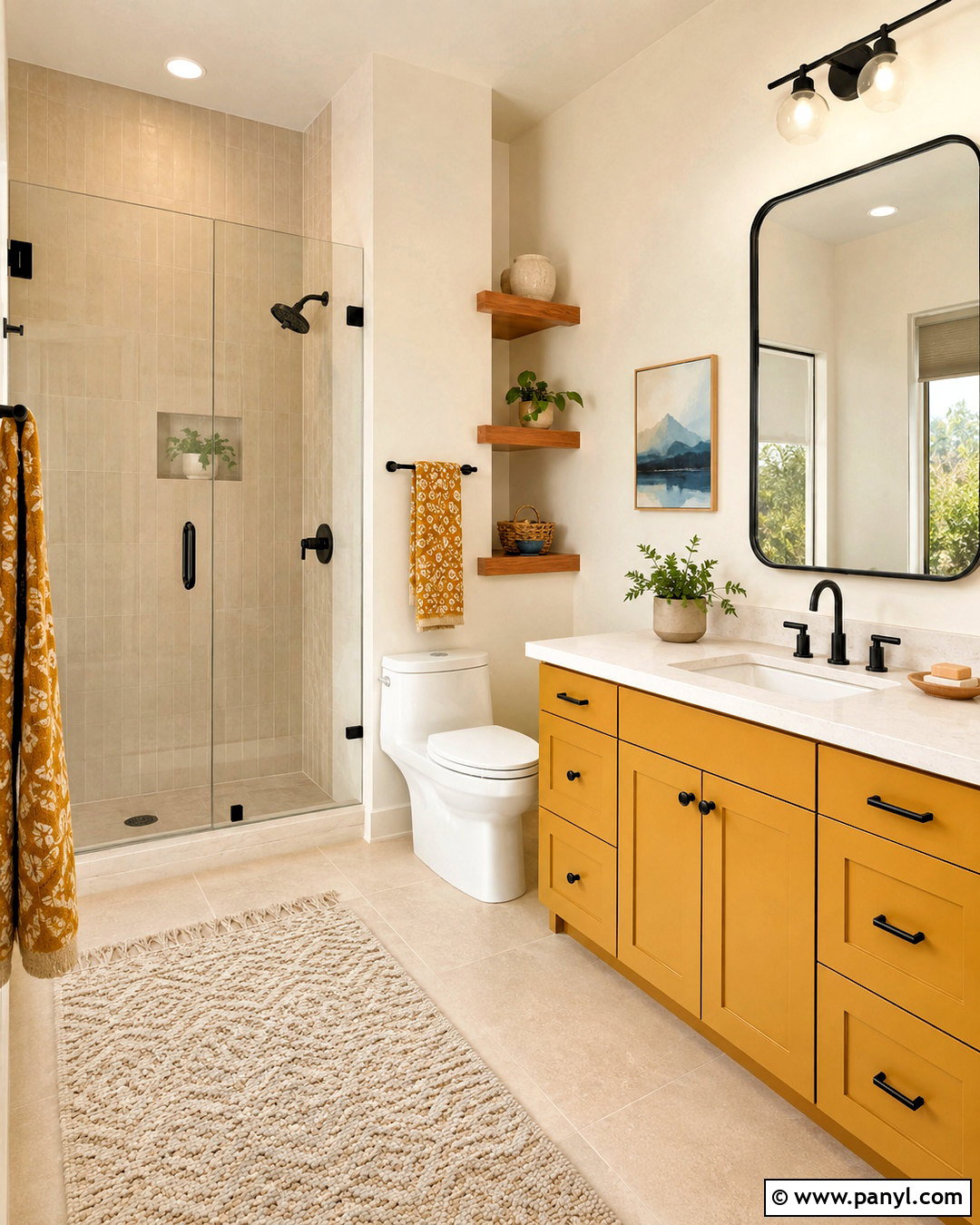
Ochre yellow adds cheerful warmth to beige bathroom tiles without the sharpness of bright lemon yellow. Use it as a focused accent through a painted vanity, upholstered stool, shower curtain pattern, or coordinated towels. Keep the walls warm white and choose a simple cream countertop so the ochre remains the main feature. Beige floor and shower tiles create a quiet foundation, while medium oak shelving strengthens the golden undertones. Add matte black fixtures for modern contrast or aged brass for a softer, tonal finish. A small amount of muted blue in artwork can balance the warmth. This full bathroom scheme feels sunny and energetic, yet the earthy quality of ochre keeps it sophisticated enough for a primary bathroom or guest bath.
Conclusion:
The best answer to What Color Goes With Beige Bathroom Tiles depends on the tile’s undertone, the room’s lighting, and the atmosphere you want to create. Warm white, cream, taupe, and chocolate brown produce a quiet tonal bathroom. Sage, olive, eucalyptus, and blue introduce calming natural contrast. For a bolder update, consider navy, teal, charcoal, terracotta, burgundy, or ochre. Whichever color you choose, repeat it thoughtfully through the vanity, walls, textiles, hardware, or artwork. Keep countertops and large fixtures relatively simple so the palette does not become crowded. Most importantly, test color samples beside the actual tile in daylight and artificial light before committing to the finished bathroom scheme.

Related Ideas and Inspiration:

Leave a Reply