
The right color scheme can turn an ordinary bathroom into a calm retreat, an energizing morning space, or a memorable powder room. These 20 bathroom color palette ideas explore warm neutrals, nature-inspired greens, soft mineral blues, expressive pastels, and rich saturated shades. Current bathroom design is moving toward warmer, earthier colors, while classic white with natural wood and softer blues remain popular choices. () Each palette below creates a complete look by coordinating wall color, tile, flooring, vanity finishes, fixtures, lighting, textiles, and decor. You will also find options for small bathrooms, spacious primary suites, modern homes, and traditional interiors. Use these practical combinations to confidently narrow down your favorite 20 bathroom color palette ideas.

1. Sage Green And Warm White Bathroom
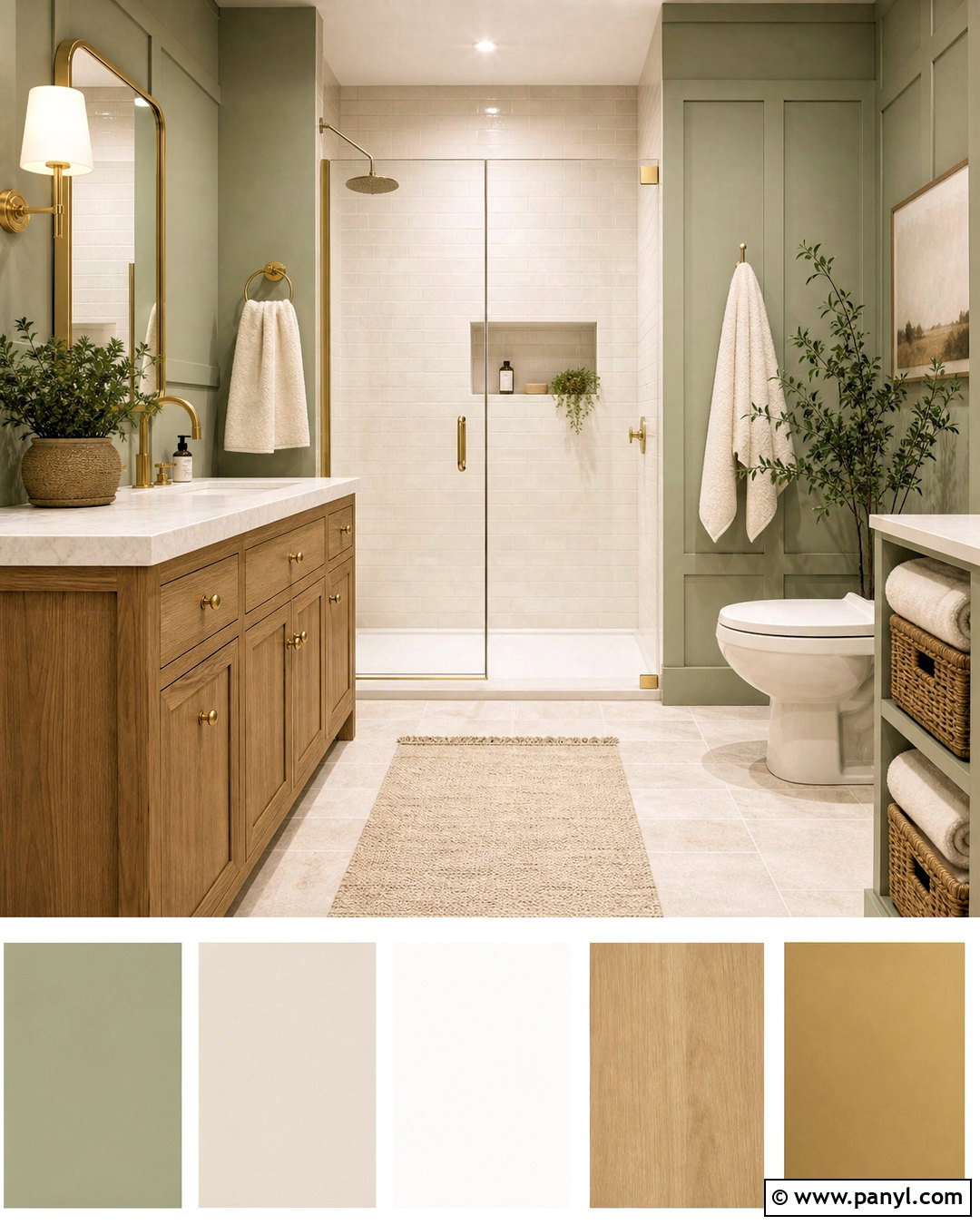
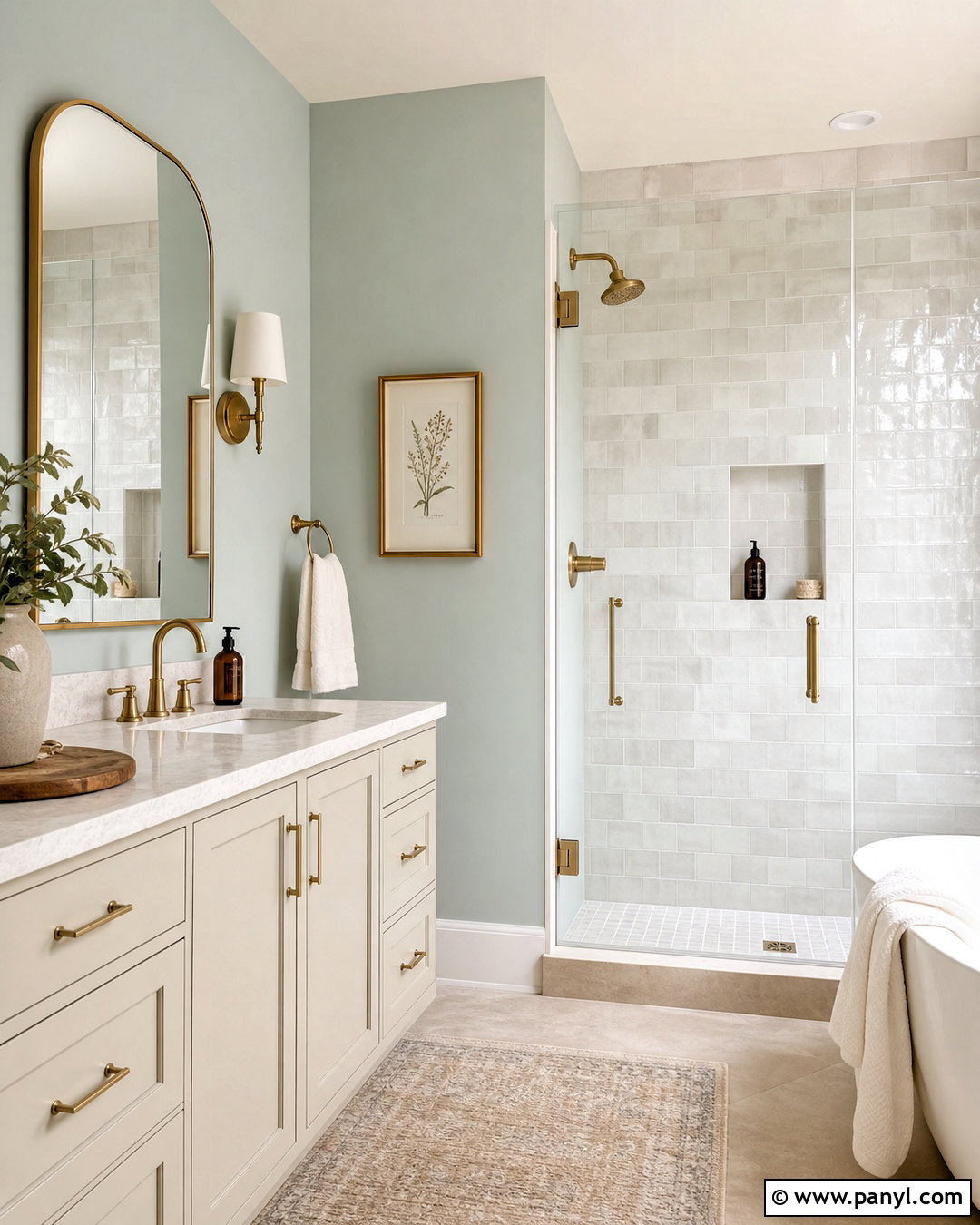
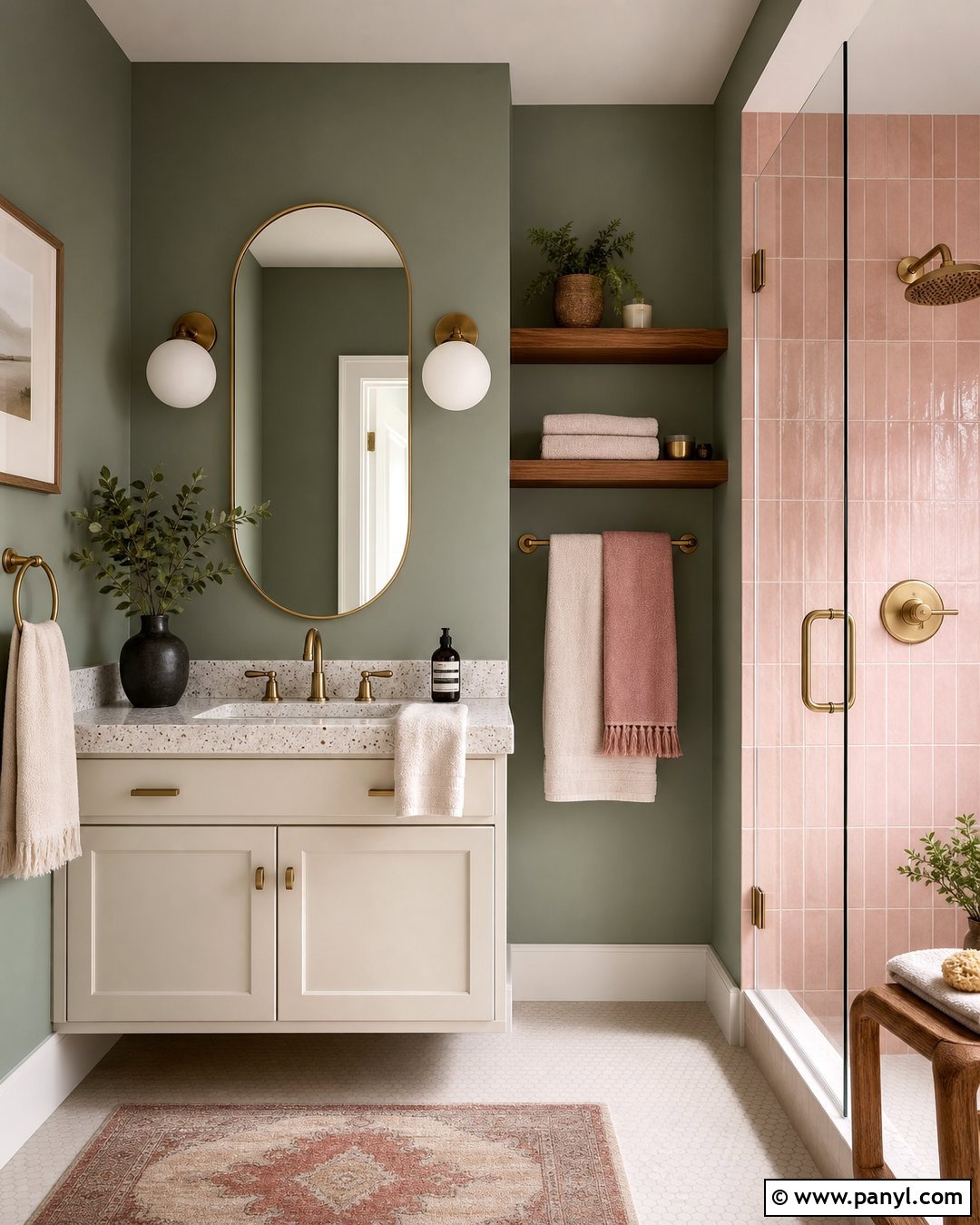
Soft sage green creates a restful bathroom without making the room feel colorless. Use it on painted walls or vertical wall paneling, then add warm white tile around the shower and bathtub. A white oak vanity introduces natural texture, while a pale quartz countertop keeps the surfaces bright and practical. Choose brushed brass faucets, sconces, and cabinet pulls for gentle warmth. Cream towels, a woven laundry basket, and a beige bath mat soften the harder finishes. Light limestone-look floor tile completes the organic palette. In a small bathroom, keep the ceiling and upper walls warm white. This prevents the green from closing in the room while maintaining the peaceful, nature-inspired atmosphere.
2. Terracotta And Cream Bathroom
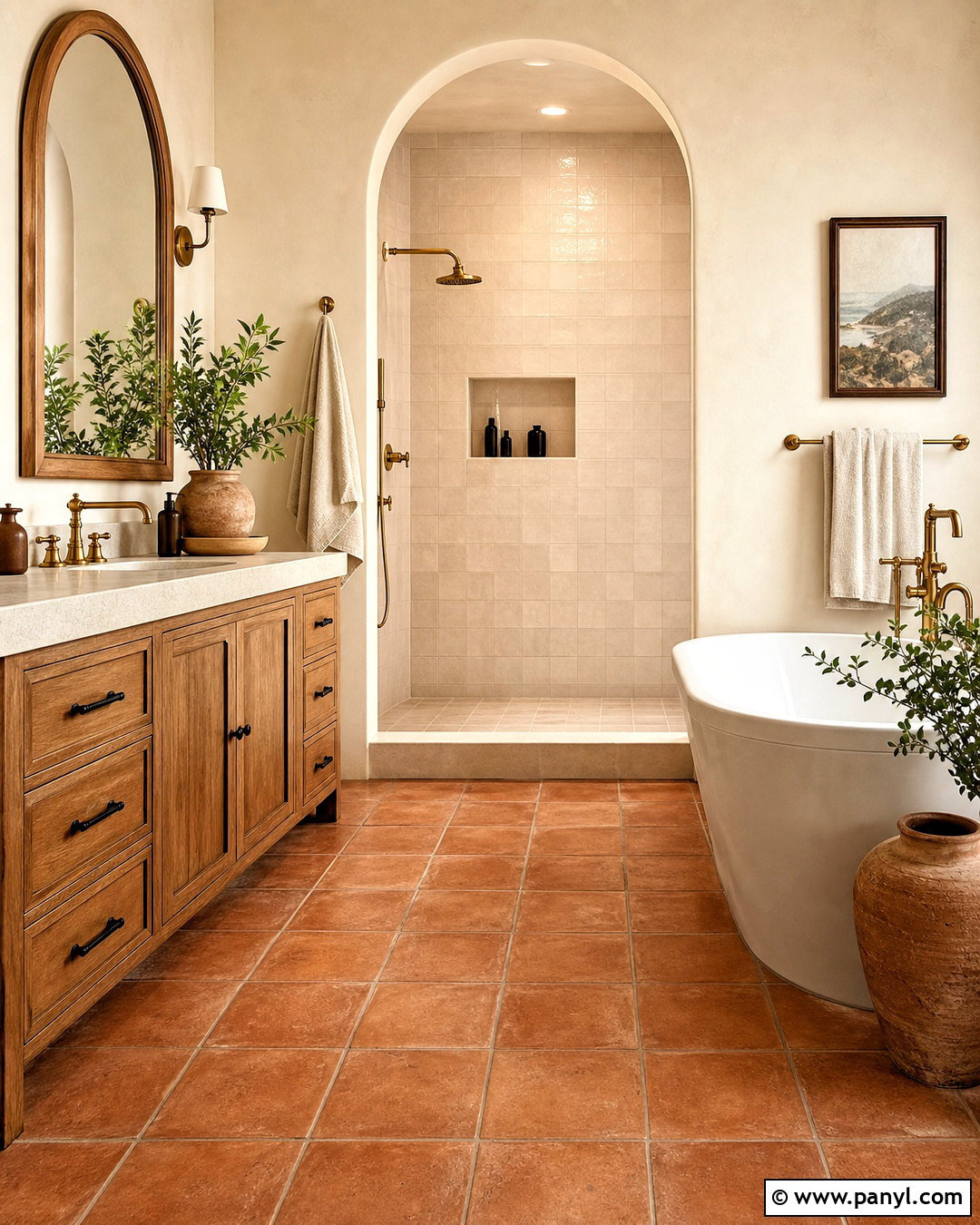
Terracotta gives a bathroom warmth, depth, and a relaxed Mediterranean character. Start with matte terracotta floor tiles, preferably in a simple square or rectangular shape. Balance their rich orange-brown color with creamy walls and an ivory shower surround. A medium-tone oak vanity connects the floor to the lighter surfaces without creating harsh contrast. Add aged brass fixtures, a plaster-style wall finish, and an arched wood-framed mirror. Natural linen towels in cream and muted rust help repeat the palette around the room. Keep the countertop pale, such as warm white quartz or honed limestone. One leafy plant in a clay pot adds freshness while preserving the earthy, sun-washed bathroom look.
3. Navy Blue And Walnut Bathroom
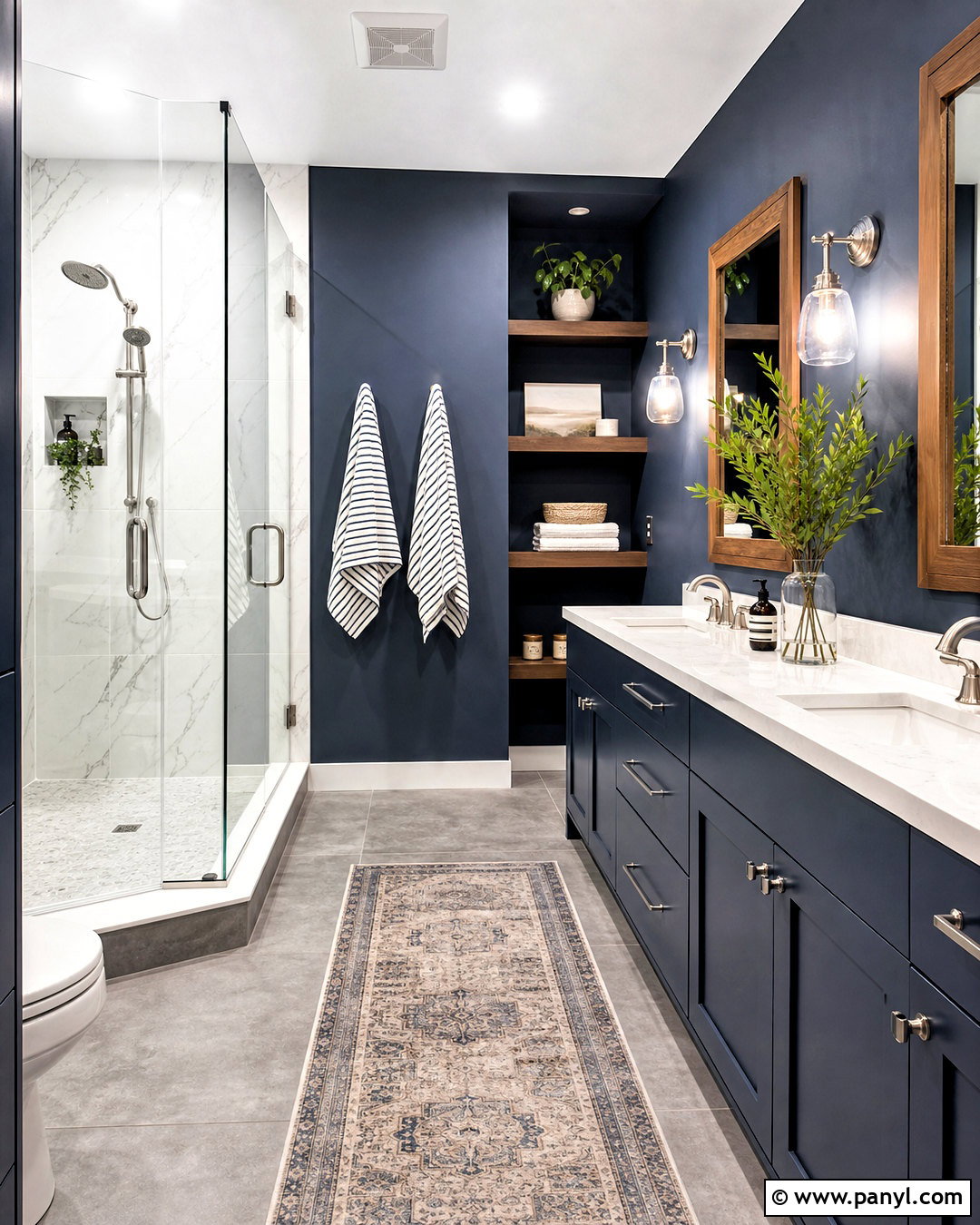
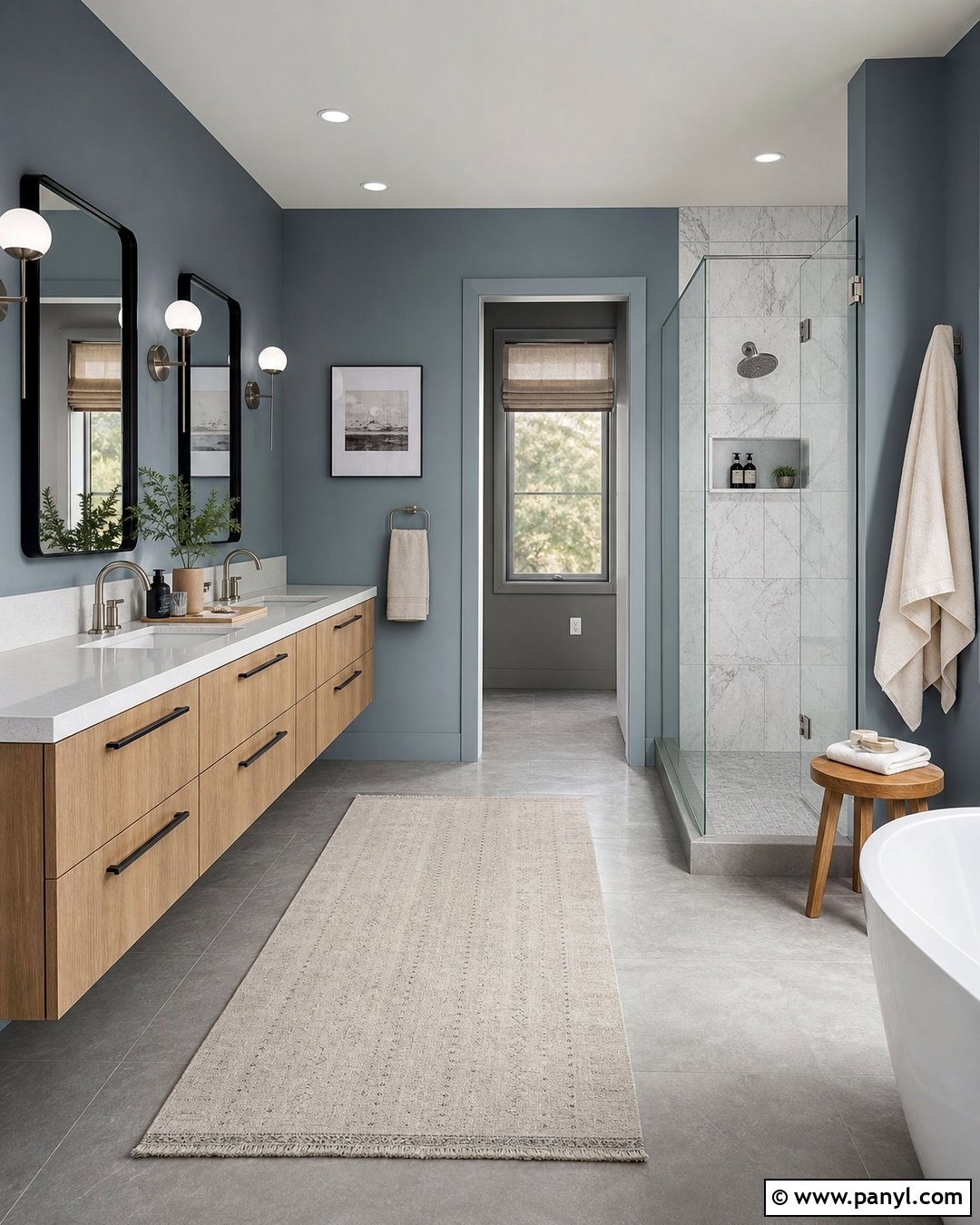
Deep navy blue can make a bathroom feel polished and intimate when it is balanced with warm materials. Apply navy to the vanity and one feature wall, leaving the remaining surfaces a soft off-white. Walnut-framed mirrors, open shelves, or storage cabinets add richness and prevent the blue from feeling cold. Use white marble-look shower tile with subtle gray veining to brighten the room. Brushed nickel fixtures create a crisp finish, although warm brass works well for a more traditional result. Choose medium-gray porcelain flooring to anchor the scheme. White towels, striped navy accents, and simple glass lighting complete the design. Strong overhead and vanity lighting will keep this darker palette clear and inviting.
4. Soft Blue And Sand Bathroom
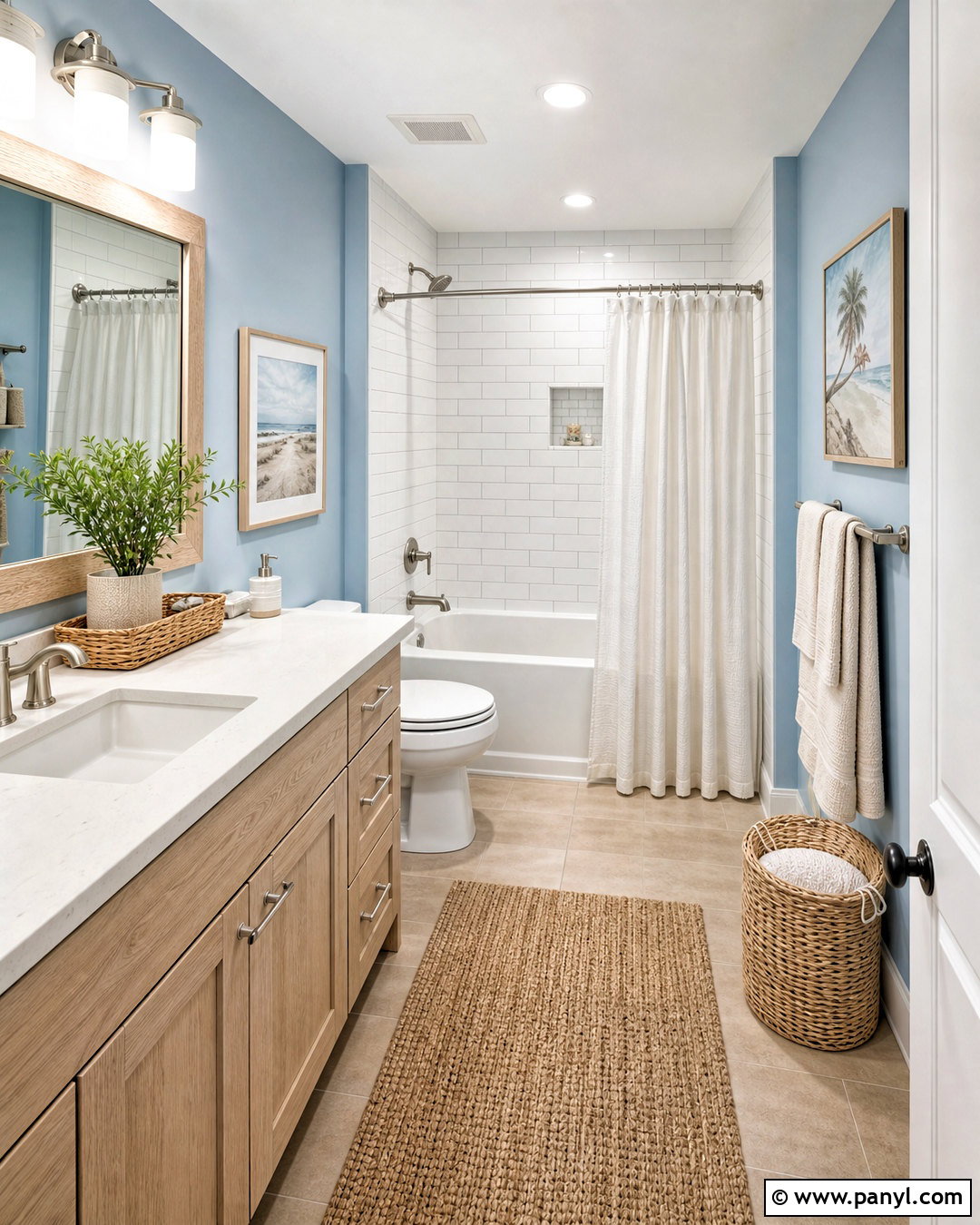
Imagine the quiet colors of an uncrowded beach translated into a clean, comfortable bathroom. Paint the walls a muted sky blue and pair them with sandy beige floor tile. White subway tile around the shower keeps the wet area fresh, while light grout creates a softer transition than dark contrasting lines. Select a pale oak vanity with a white countertop and brushed nickel hardware. A natural jute-look bath mat, cream towels, and woven storage baskets reinforce the coastal influence without relying on themed decorations. Add a large round mirror and simple frosted-glass sconces. This bathroom palette is especially effective in compact rooms because the light blue walls reflect brightness while the sand tones provide warmth and visual stability.
5. Blush Pink And Ivory Bathroom
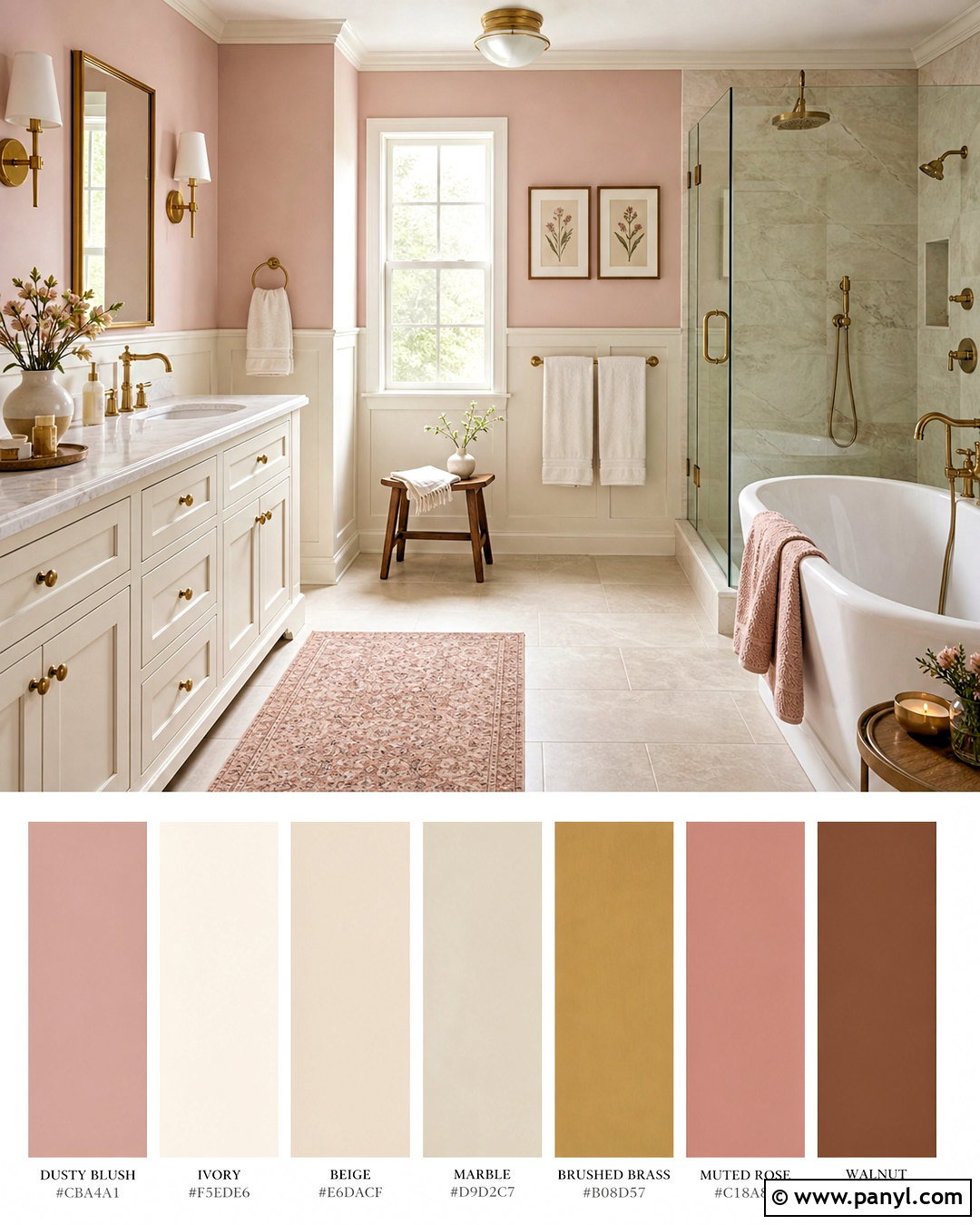
Blush pink offers a warm alternative to beige while remaining soft enough for an everyday bathroom. Use dusty blush paint above ivory wall tile or paneling, creating a balanced two-tone treatment. An ivory vanity with a pale marble countertop keeps the room elegant rather than overly sweet. Introduce brushed brass through the faucet, mirror frame, shower hardware, and slim wall sconces. Warm beige porcelain flooring grounds the pink and makes maintenance easier than a very light floor. Towels in cream, muted rose, and tan add gentle layering. For a sophisticated finishing touch, include a small walnut stool or framed botanical print. Avoid bright white accents, which can make the blush look sharper and less harmonious.
6. Taupe And Travertine Bathroom
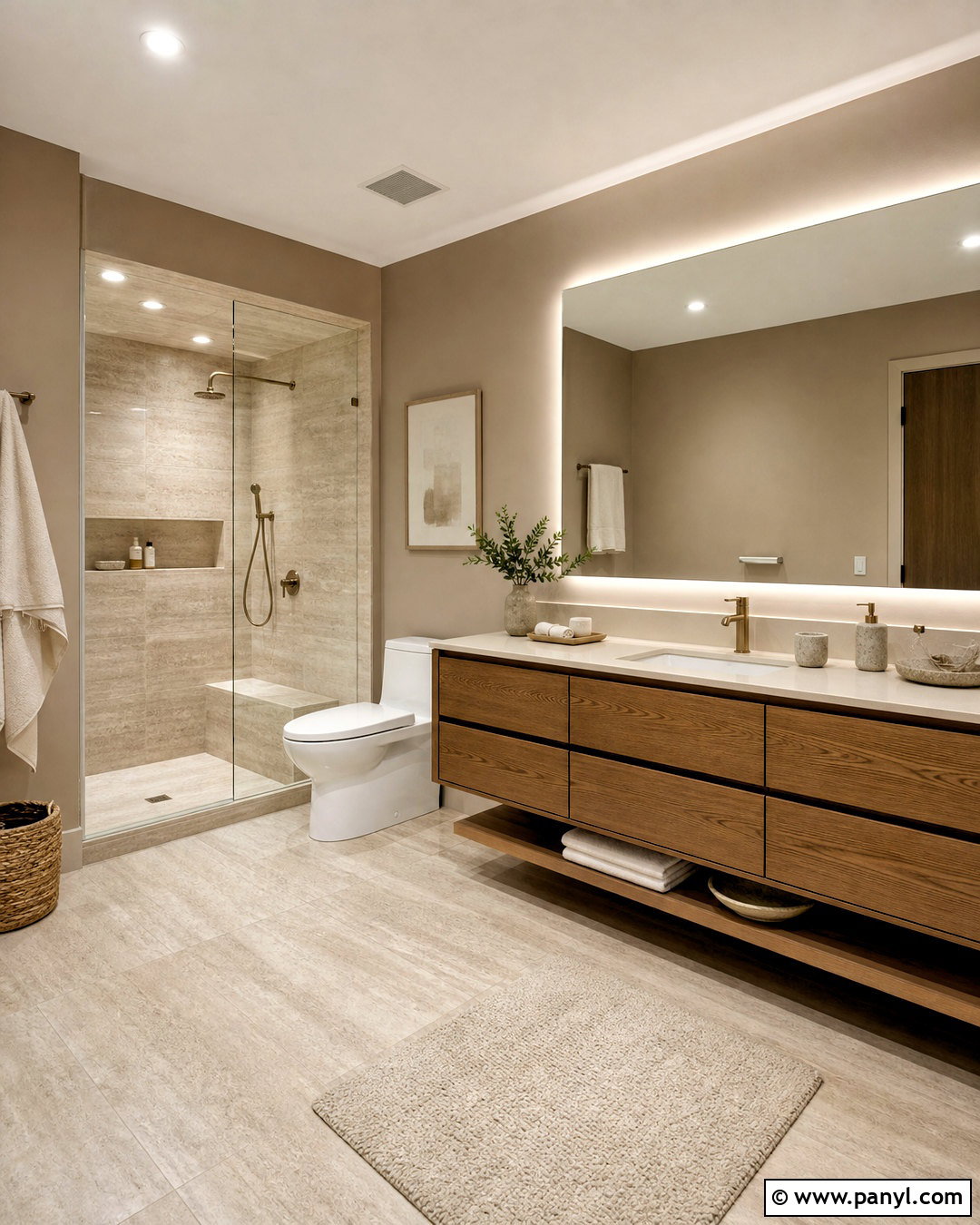
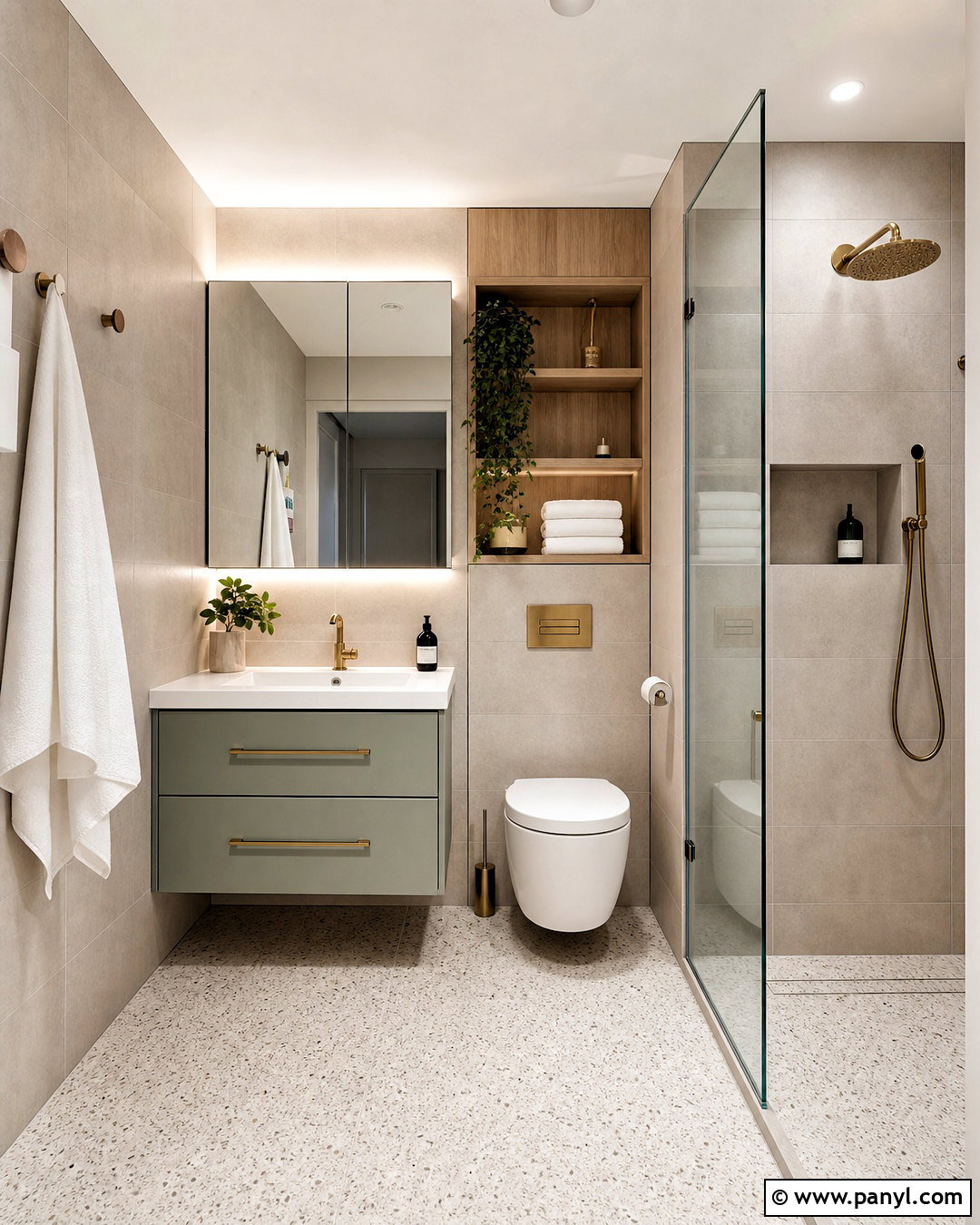
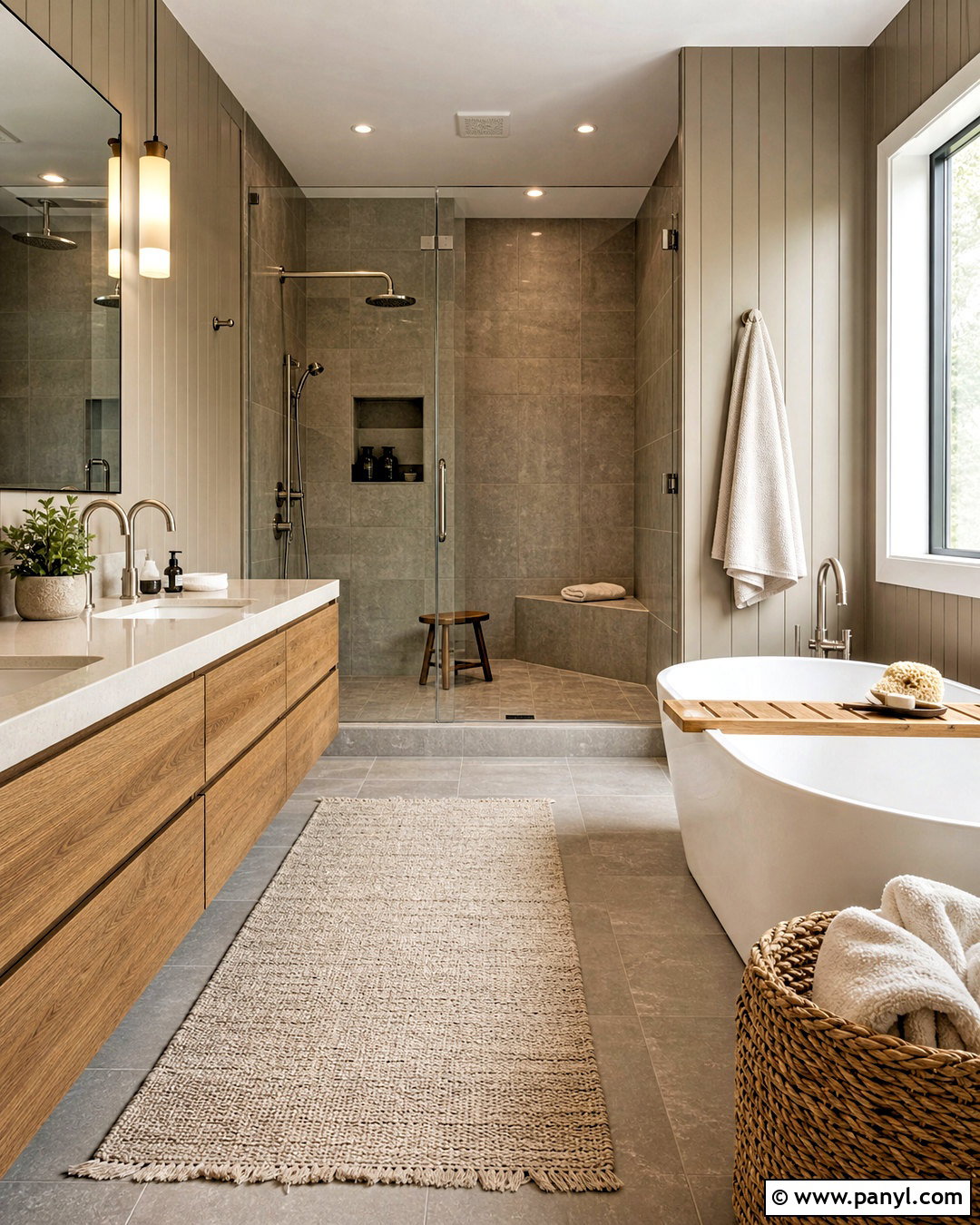
Warm taupe and travertine form a quiet, spa-like bathroom palette with plenty of natural texture. Cover the floor and shower walls in travertine-look porcelain tile, selecting a finish with soft beige movement rather than dramatic veining. Paint the remaining walls a mid-light taupe. A floating oak vanity makes the room feel open, while an integrated cream countertop maintains a seamless appearance. Choose champagne-bronze fixtures for subtle warmth and install a wide backlit mirror above the sink. Layer ivory towels, a stone soap tray, and ribbed ceramic containers into the space. Because the colors are closely related, vary the textures through fluted wood, woven fabric, matte tile, and smooth metal to keep the neutral design interesting.
7. Charcoal And Oak Bathroom
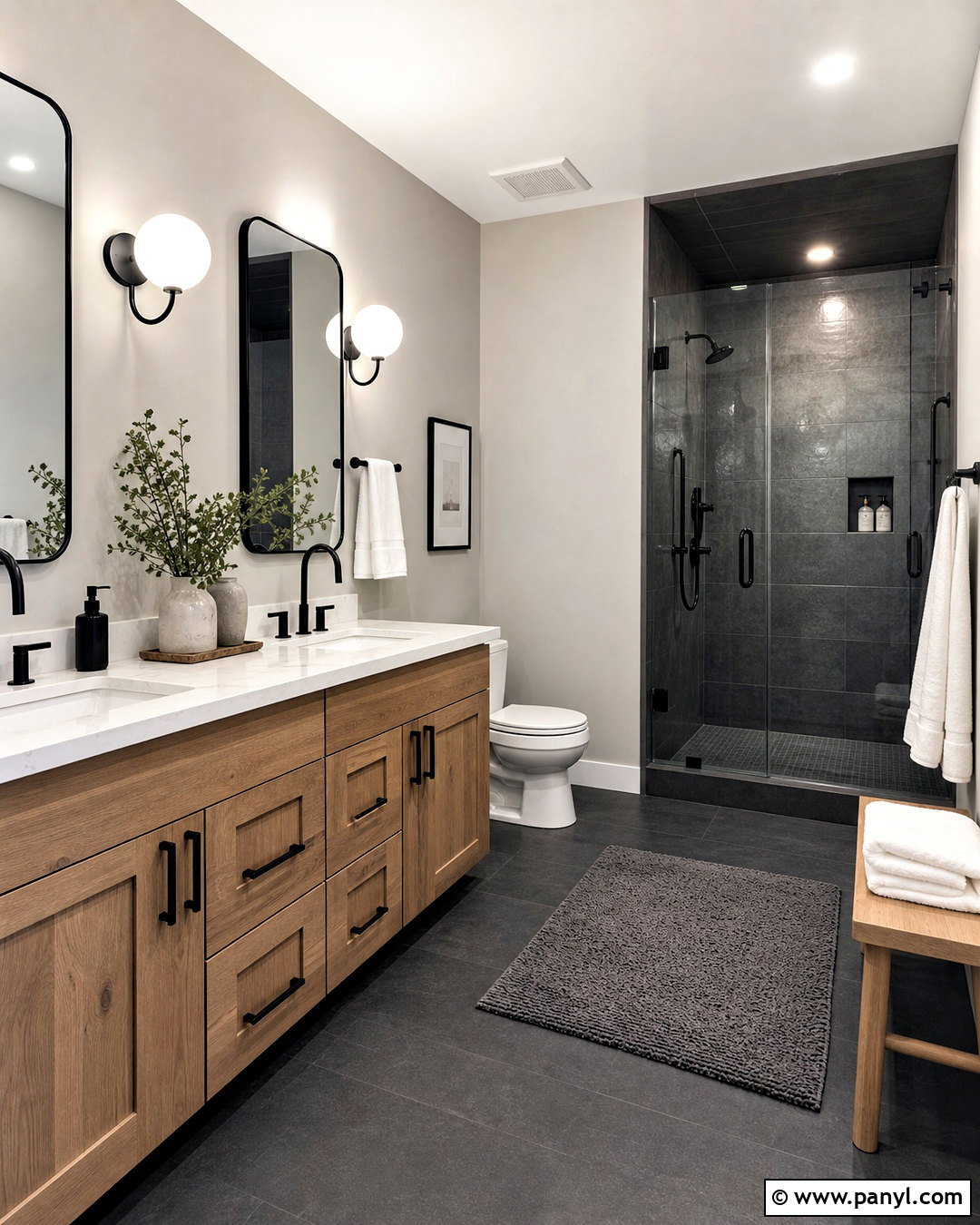
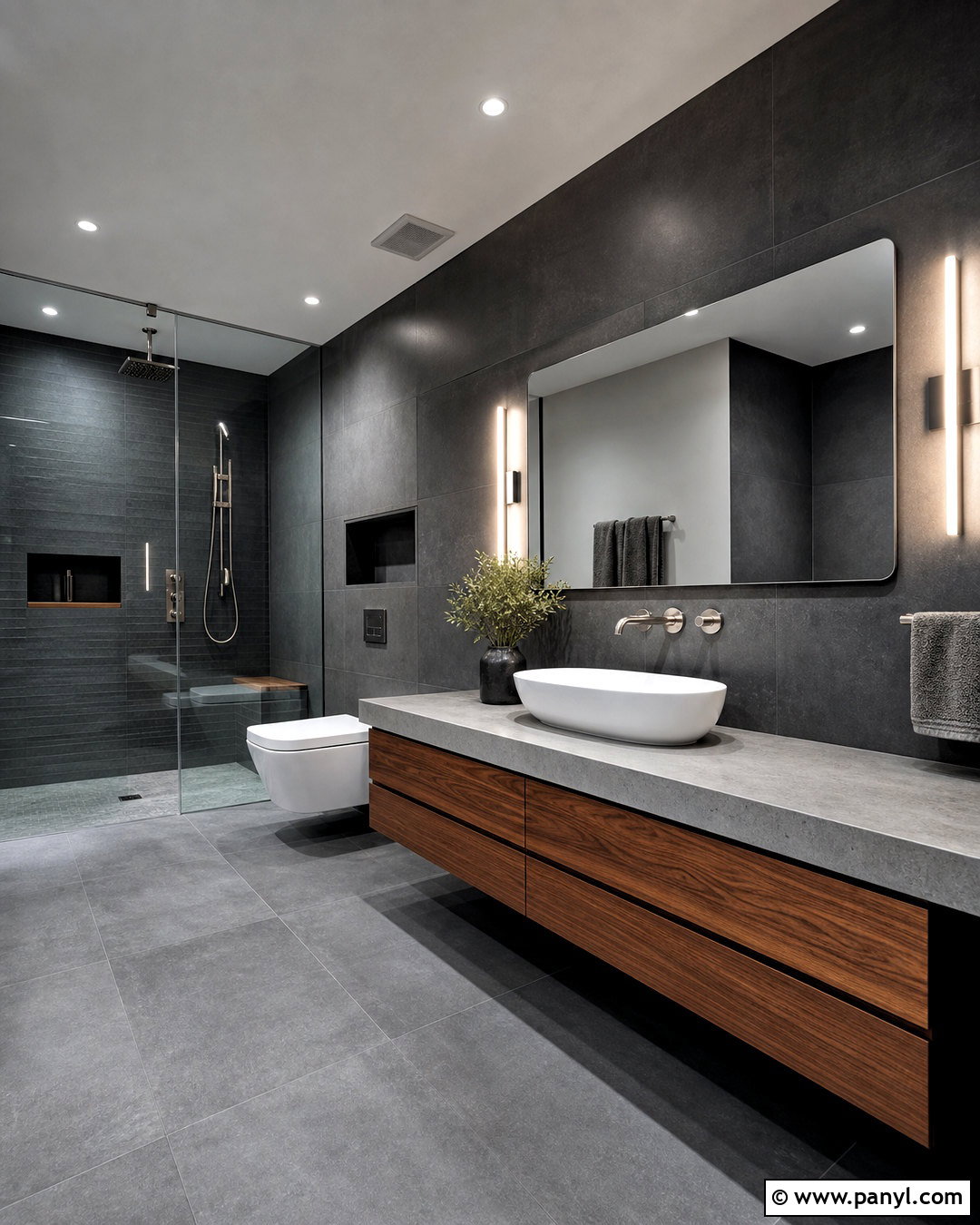
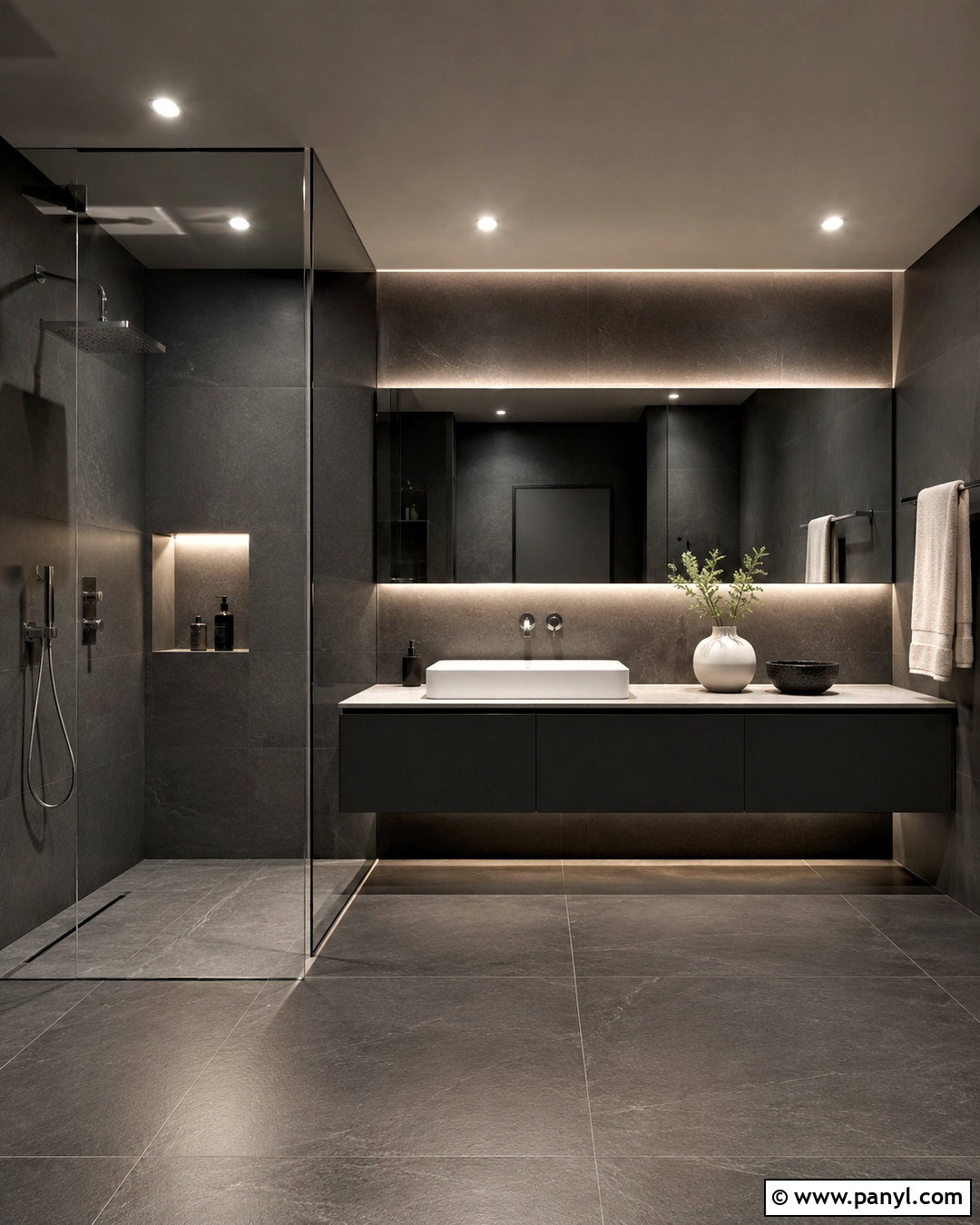
A charcoal bathroom can feel modern and comfortable rather than dark and severe. Use charcoal porcelain tile on the floor and inside a glass shower, then paint the other walls a pale warm gray. A natural oak vanity becomes the visual centerpiece, bringing needed warmth and visible grain to the room. Select a white quartz countertop and an undermount sink to create a bright horizontal break. Matte black fixtures connect with the charcoal surfaces, while clear glass prevents the shower from feeling boxed in. Add a large mirror, bright globe sconces, white towels, and one textured gray bath mat. Keeping the ceiling white and lighting each functional area carefully ensures this dramatic palette remains practical for daily routines.
8. Forest Green And Brass Bathroom
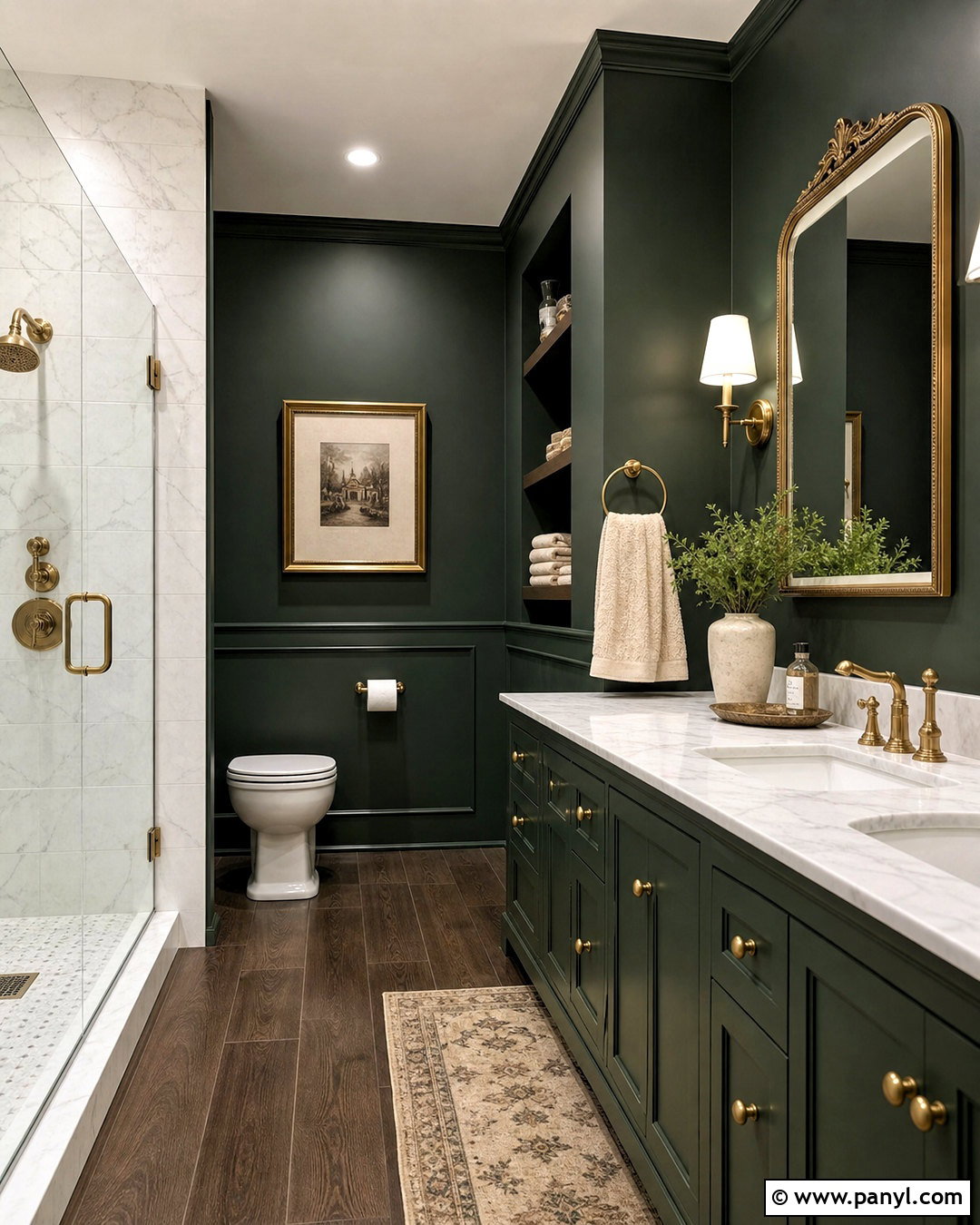
Forest green creates an enveloping bathroom with a classic, luxurious personality. Use the color on painted walls, cabinetry, and trim for a coordinated color-drenched effect. Break up the depth with a white marble vanity top and matching marble shower tile. Brass faucets, exposed shower fittings, towel bars, and sconces bring out the green’s warmer undertones. Choose dark-stained wood flooring or realistic wood-look porcelain tile to reinforce the traditional character. An antique-inspired brass mirror and cream linen towels soften the design without competing for attention. If the bathroom is small, use the darker palette confidently but add excellent lighting. A ceiling fixture, two vanity sconces, and reflected light from the mirror will prevent shadowy corners.
9. Black And White Bathroom
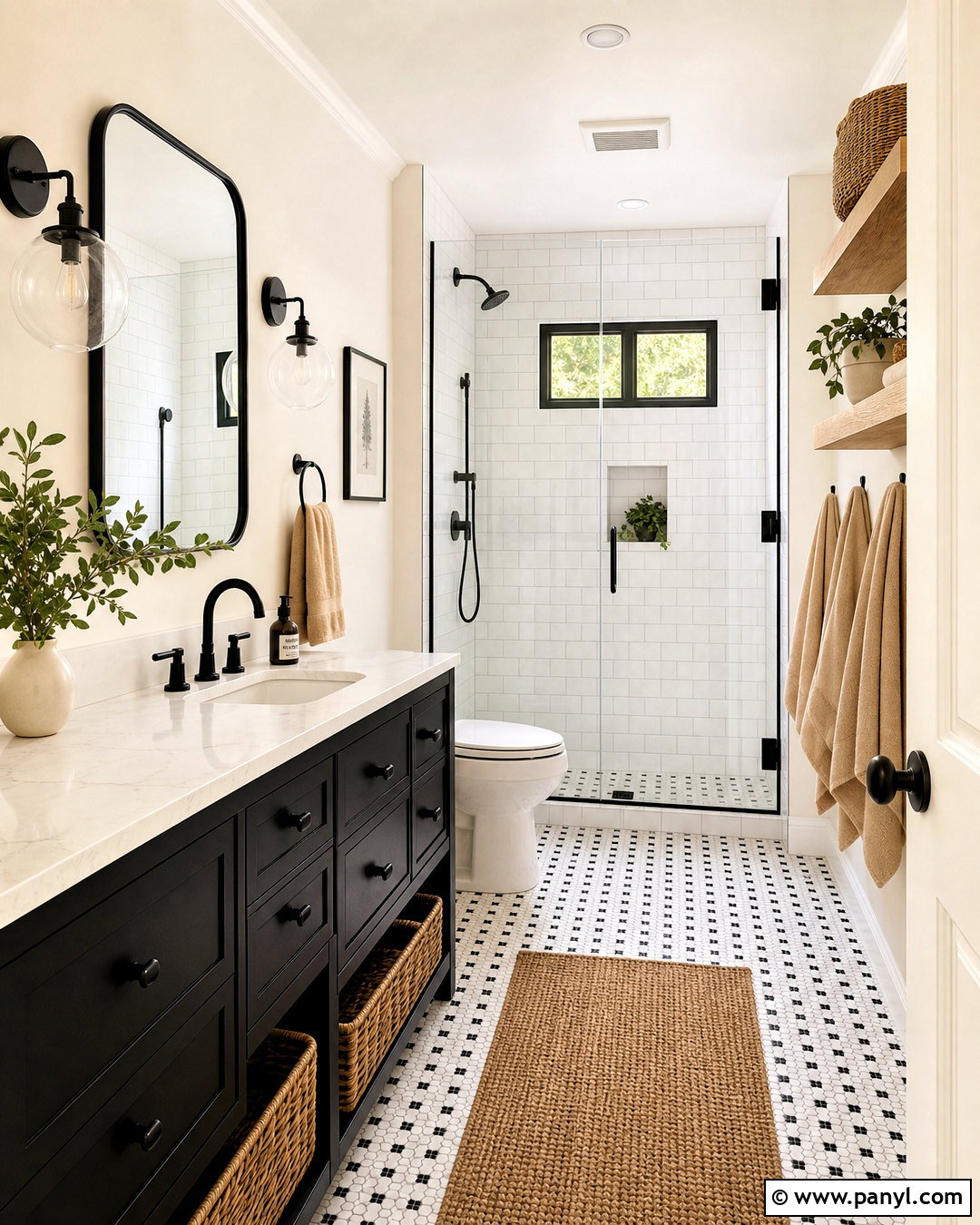
Black and white works best when the bathroom includes varied scale, texture, and a small amount of warmth. Install white subway tile in the shower with medium-gray grout, then use small black-and-white mosaic tile across the floor. Paint the walls a clean but slightly warm white. A black vanity creates a strong anchor and looks especially crisp with a white quartz countertop. Continue the darker finish through the mirror frame, shower enclosure, and cabinet hardware. Natural oak shelves, beige towels, and a woven basket keep the scheme from feeling clinical. Choose simple globe sconces to soften the sharp contrast. Repeating black in several balanced locations makes the entire bathroom feel intentional instead of relying on one isolated dark feature.
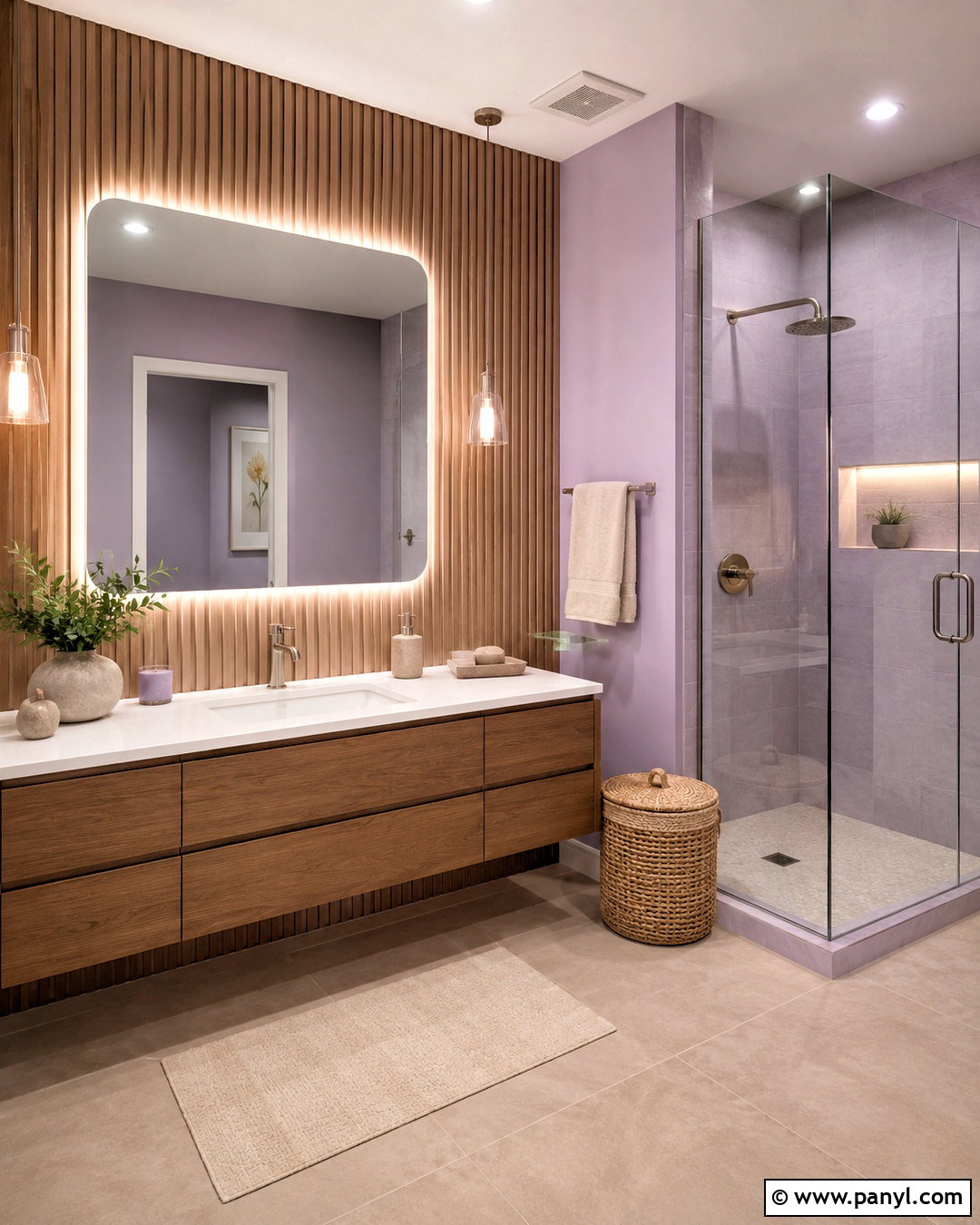
10. Seafoam And Natural Wood Bathroom
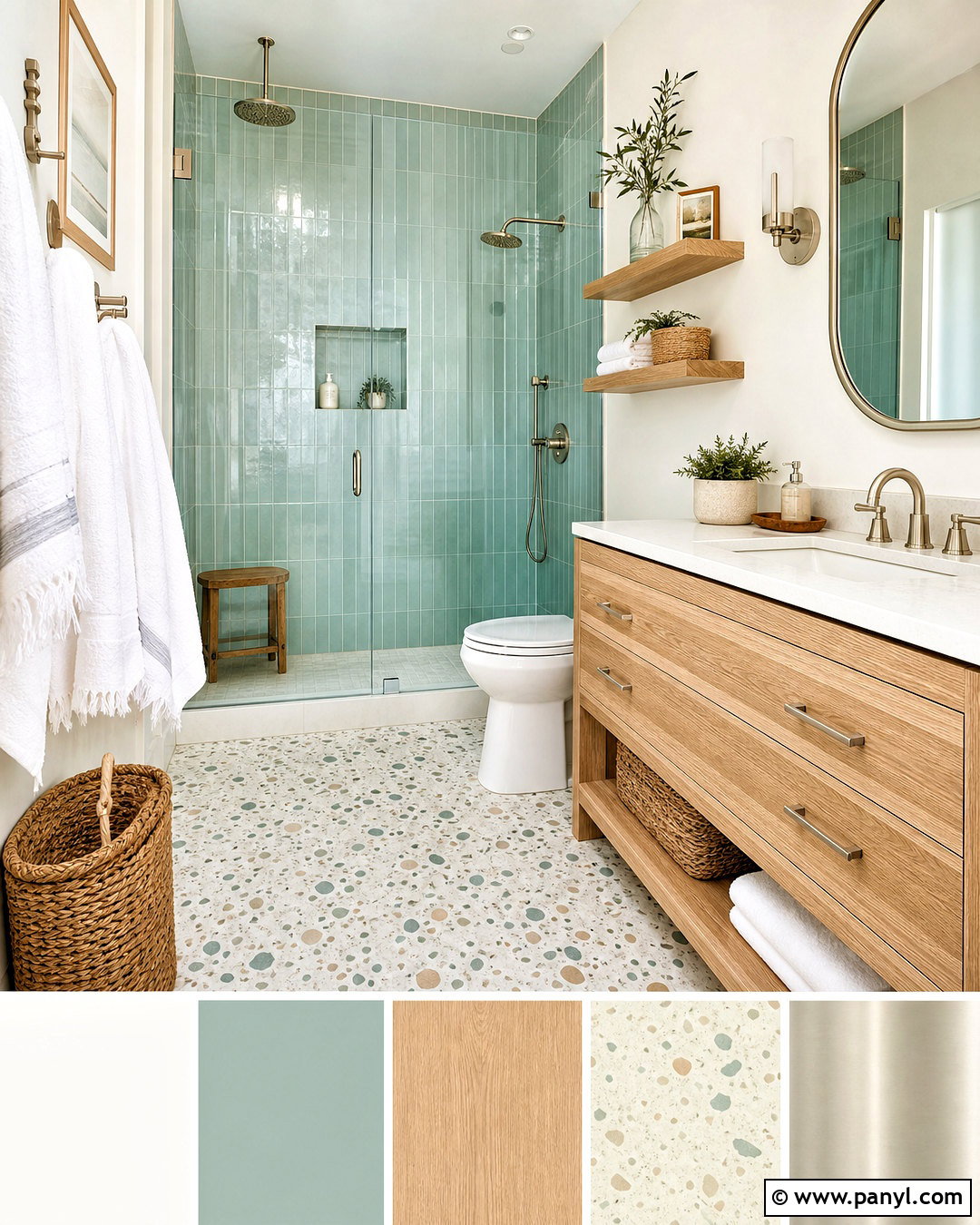
Seafoam green brings a fresh, watery quality to a bathroom while feeling more distinctive than pale gray. Cover the shower walls with glossy seafoam tiles to reflect light and reveal subtle color variation. Paint the remaining walls warm white and install a natural maple or white oak vanity. A cream terrazzo floor with small green and tan chips connects the room’s colors in one durable surface. Use brushed nickel fixtures for a clean finish that does not compete with the tile. White towels, light wood shelves, and a woven hamper complete the relaxed look. Keep decorative accessories minimal, allowing the tile and wood grain to provide visual interest. This combination suits contemporary, coastal, and Scandinavian-inspired bathrooms equally well.
11. Lavender And Soft Gray Bathroom
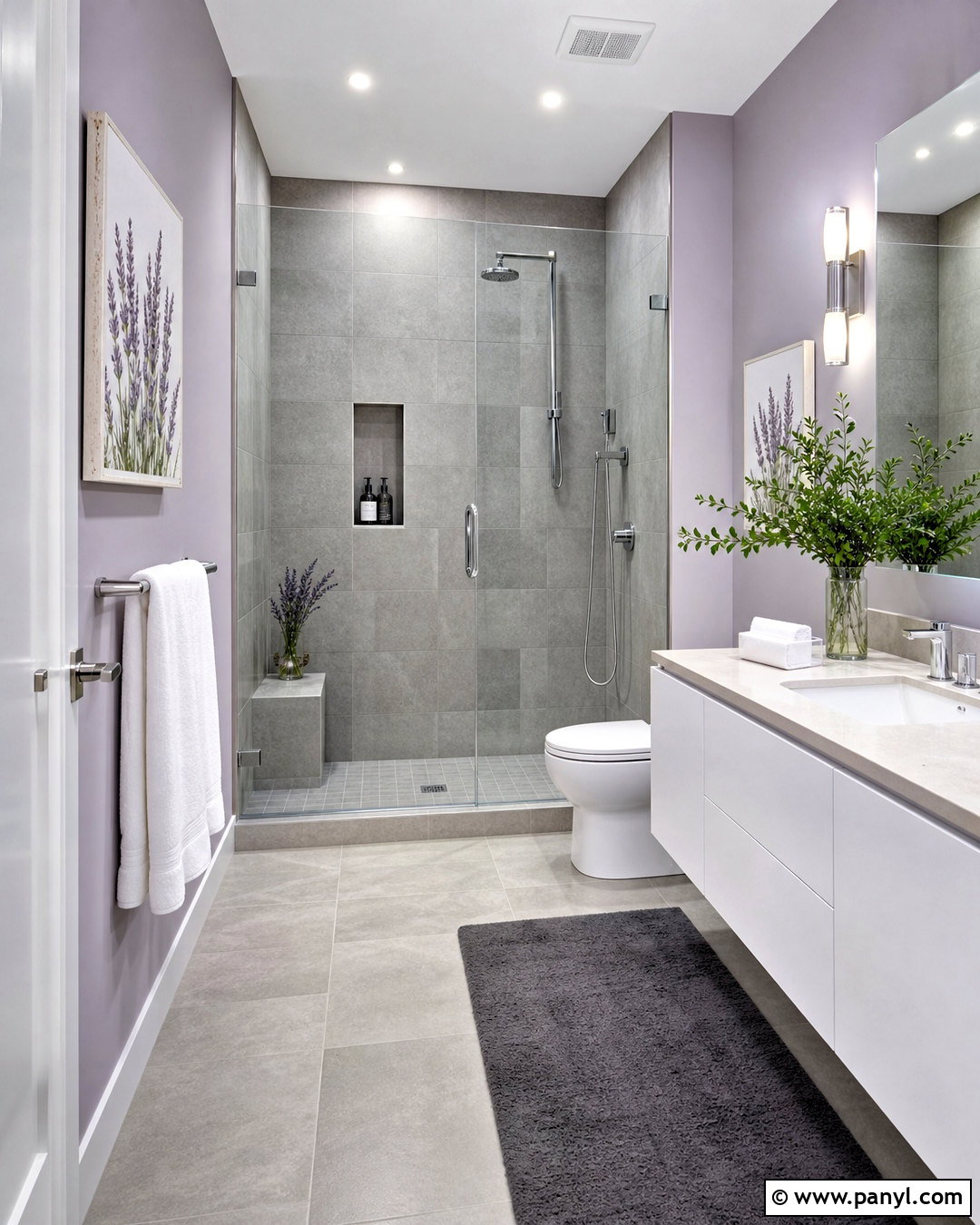
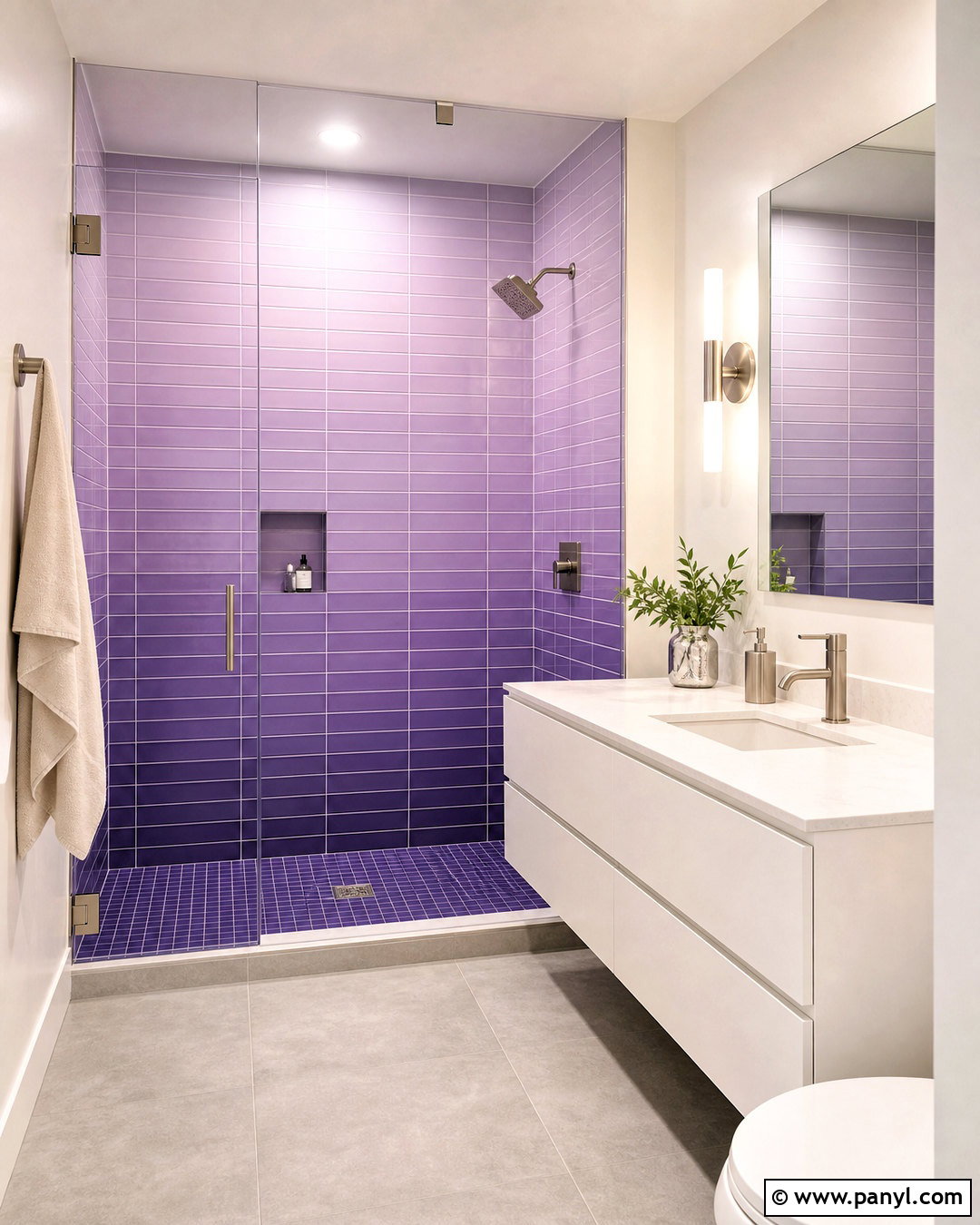
Could a lavender bathroom feel modern rather than overly decorative? The key is choosing a muted, gray-based lavender and combining it with streamlined finishes. Paint the walls in this gentle purple tone, then add large-format soft gray tile around the shower and across the floor. A floating white vanity keeps the lower half of the room light and uncluttered. Choose polished chrome fixtures, a frameless mirror, and simple linear sconces for a clean contemporary direction. White towels and a charcoal bath mat provide useful contrast. A small arrangement of green foliage introduces a natural accent without adding another pastel. Keep grout, caulk, and trim colors consistent so the lavender remains the clear focus of the finished bathroom.
12. Burgundy And Warm Beige Bathroom
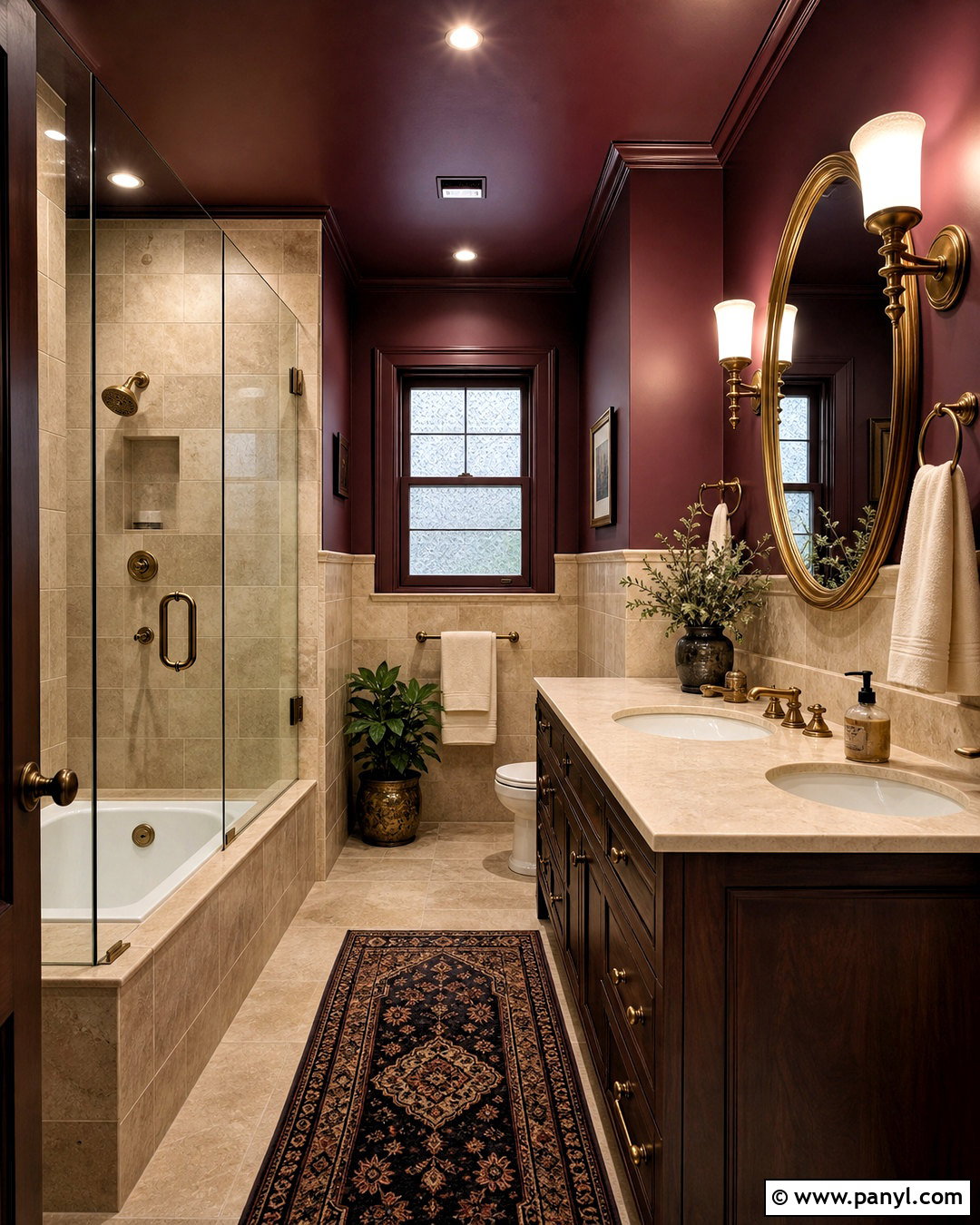
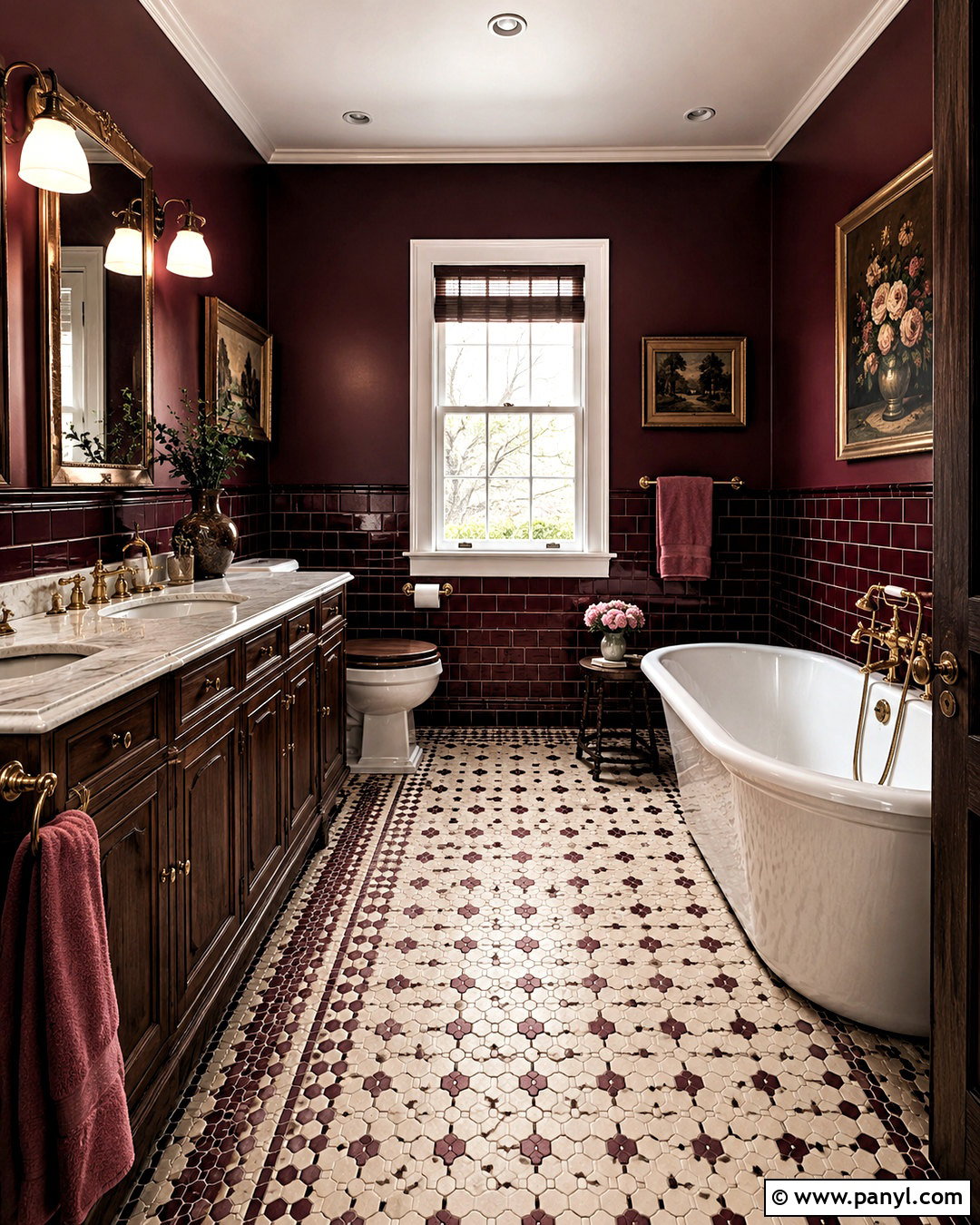
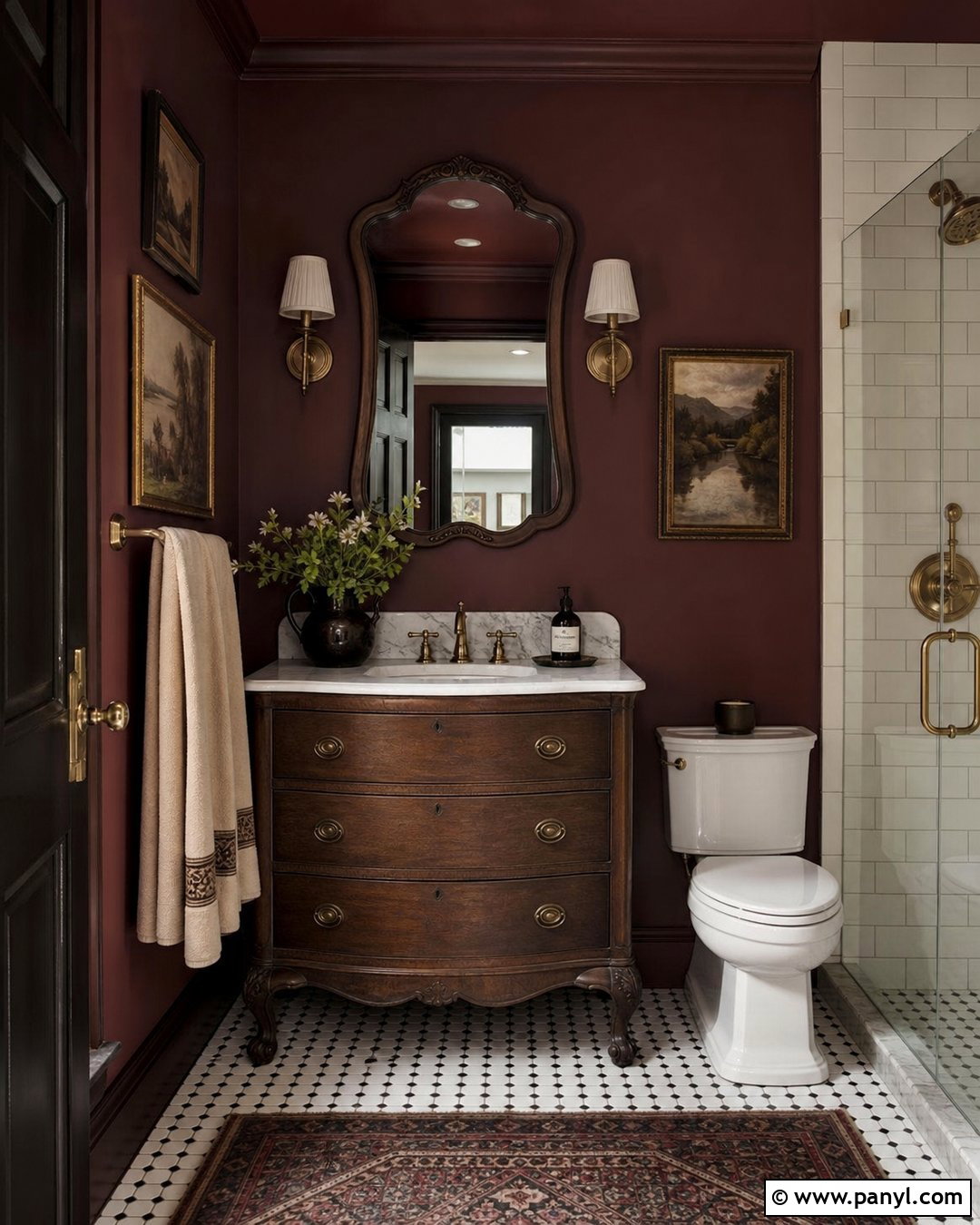
Rich burgundy turns a powder room or primary bathroom into a warm, memorable space. Apply burgundy paint to the upper walls and ceiling, then use warm beige stone-look tile below. A dark walnut vanity supports the deeper color scheme, while a cream countertop and sink provide necessary brightness. Antique brass fixtures feel softer against burgundy than polished silver or stark black. Include an oval brass mirror, frosted-glass sconces, and thick ivory towels to create a finished traditional look. For flooring, choose beige tile with subtle brown variation rather than a busy pattern. In a compact powder room, continue the burgundy across every painted surface. This creates a cohesive jewel-box effect instead of visually dividing the limited wall area.
13. Butter Yellow And White Bathroom
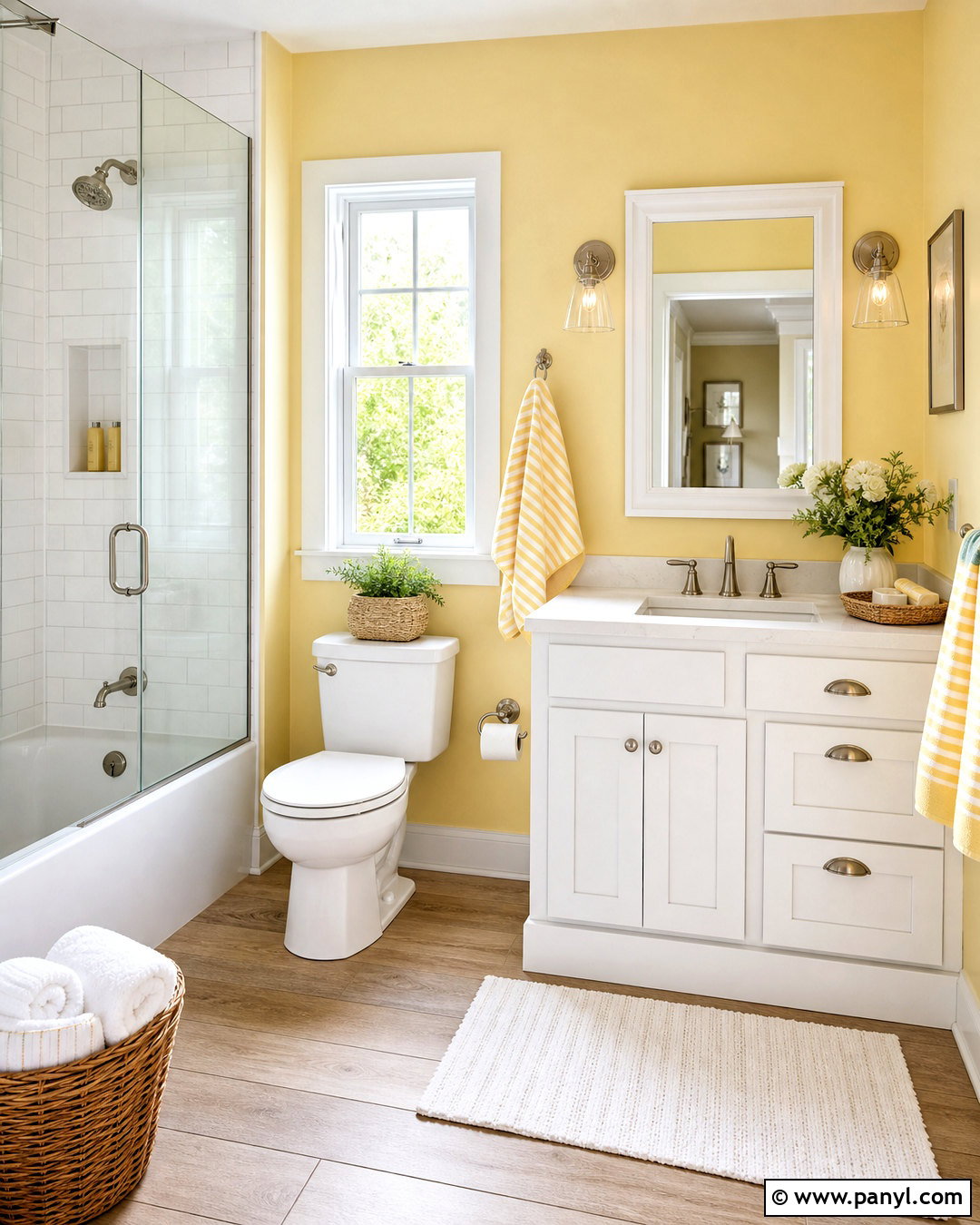
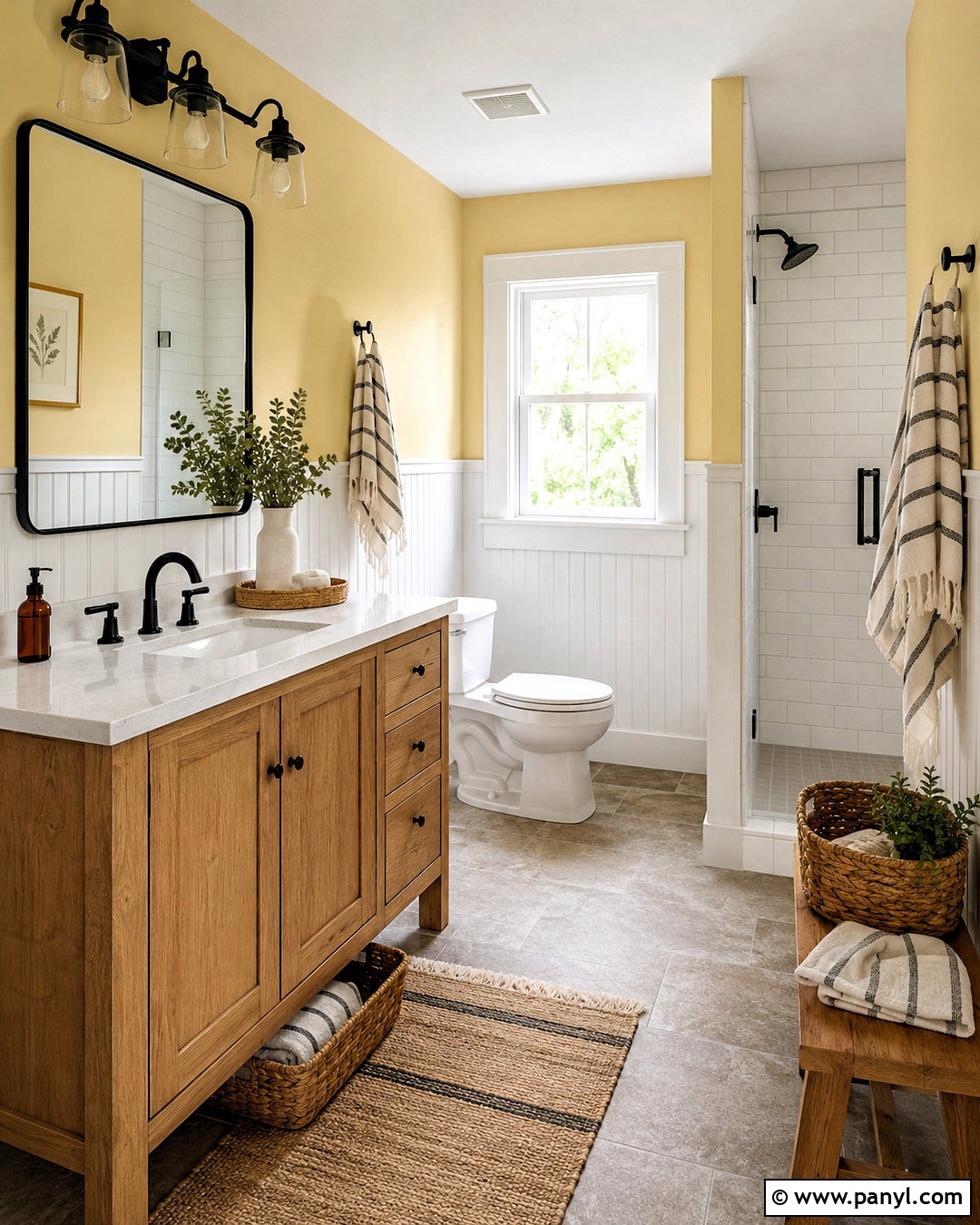
Butter yellow fills a bathroom with cheerful warmth while remaining softer than primary yellow. Paint the walls this creamy shade and pair them with white ceramic shower tile and a classic white vanity. A light oak floor or wood-look porcelain tile adds natural warmth beneath the brighter surfaces. Use polished nickel fixtures for a clean, reflective touch, then repeat yellow through one striped towel or small ceramic container. A simple white-framed mirror and clear glass sconces keep the room airy. This palette works particularly well in bathrooms with limited natural light because it creates a sunlit impression. Select a muted yellow with beige undertones, avoiding neon or overly green versions that can become unflattering under bathroom lighting.
14. Clay Pink And Rust Bathroom
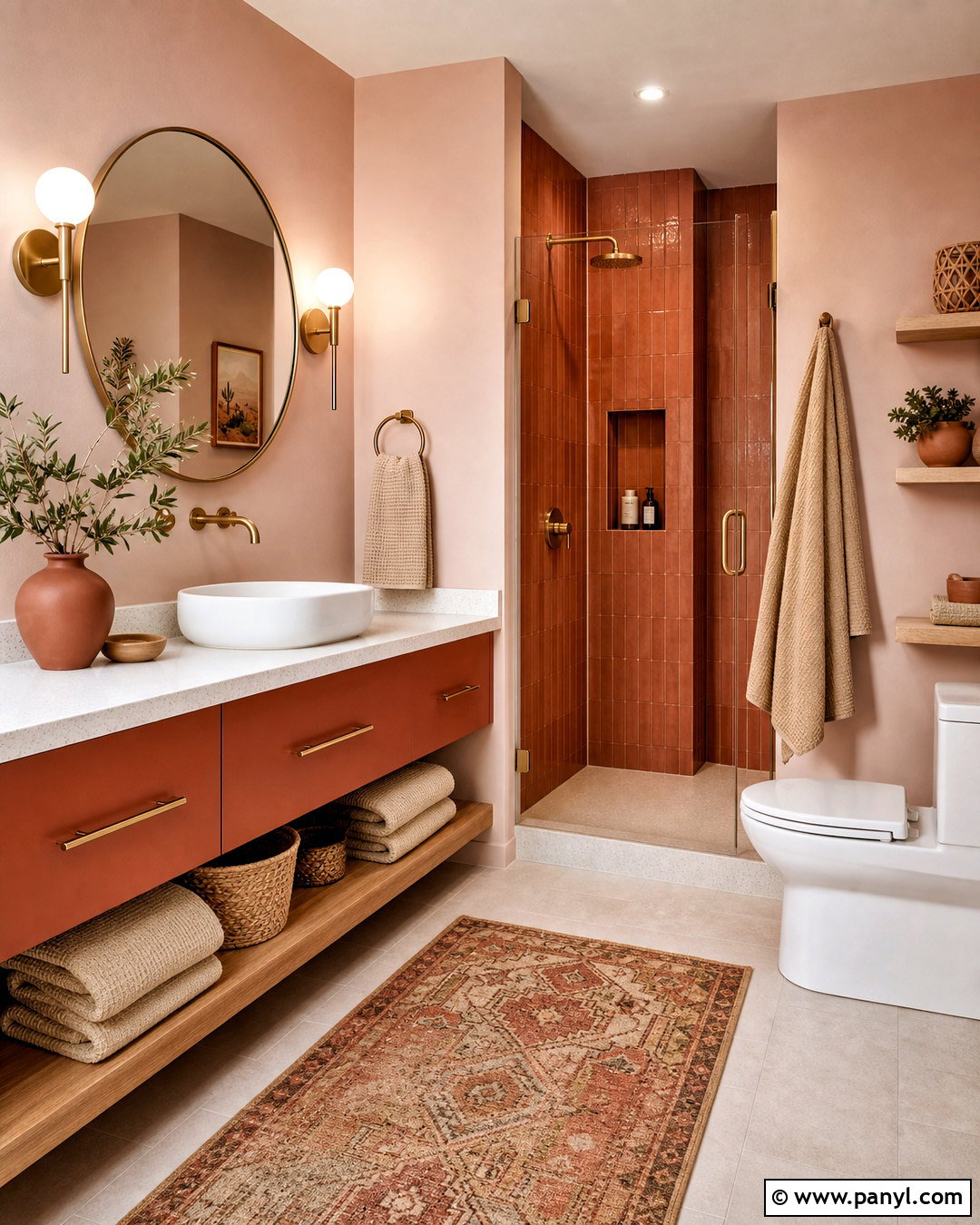
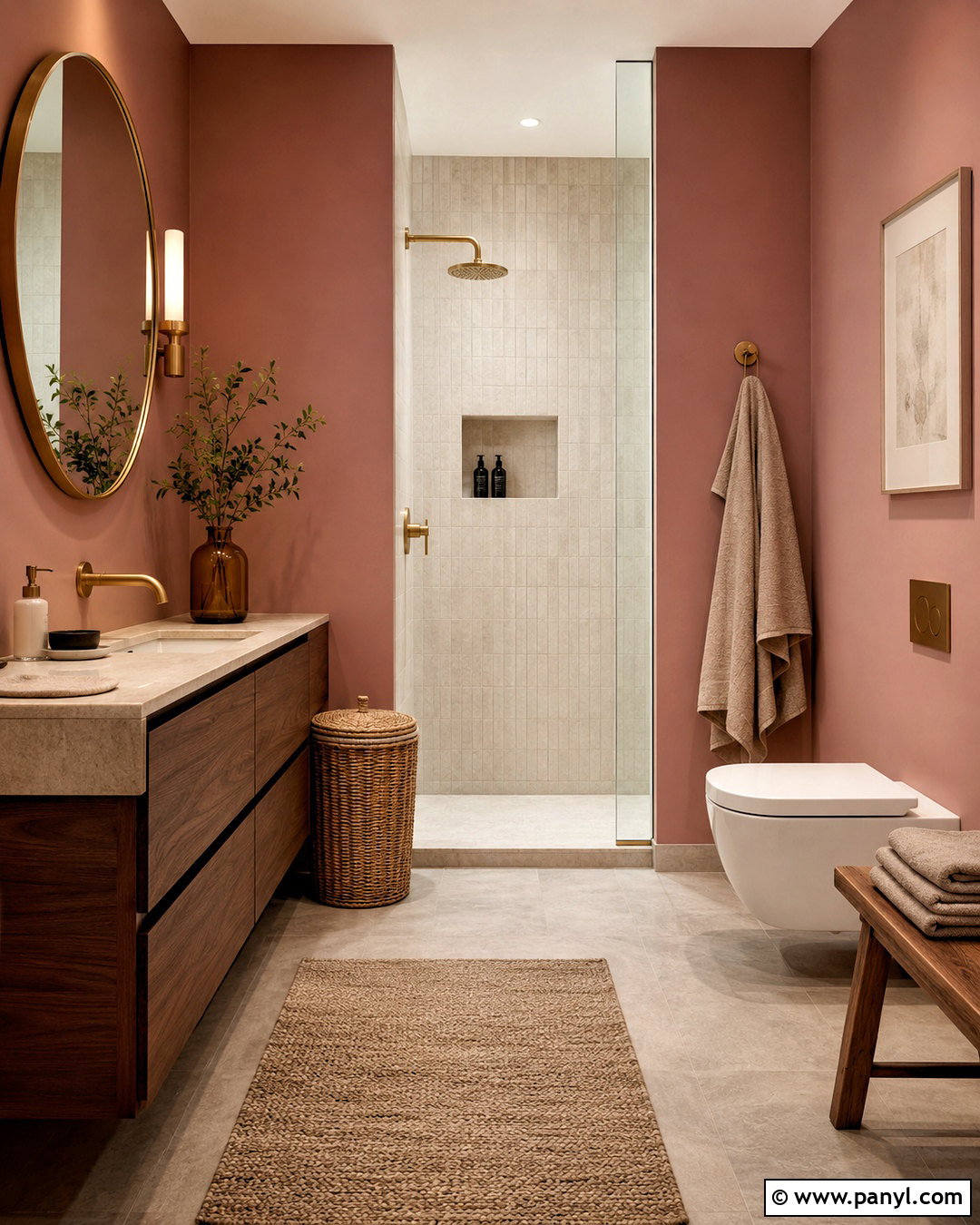
Clay pink and rust create a layered desert-inspired bathroom that feels warm, grounded, and contemporary. Cover the walls in muted clay pink paint, then introduce rust through a tiled shower niche, patterned floor tile, or painted vanity. Keep the countertop, sink, and bathtub creamy white to give the stronger colors breathing room. Light oak shelving and brushed brass fixtures continue the warm undertones. Add towels in sand, ivory, and faded terracotta rather than matching every textile to the walls. A rounded mirror and globe lighting soften the room’s straight architectural lines. Because clay and rust are closely related, use clear differences in depth. The lighter pink should dominate, while deeper rust appears in smaller, carefully repeated areas.
15. Teal And Marble Bathroom
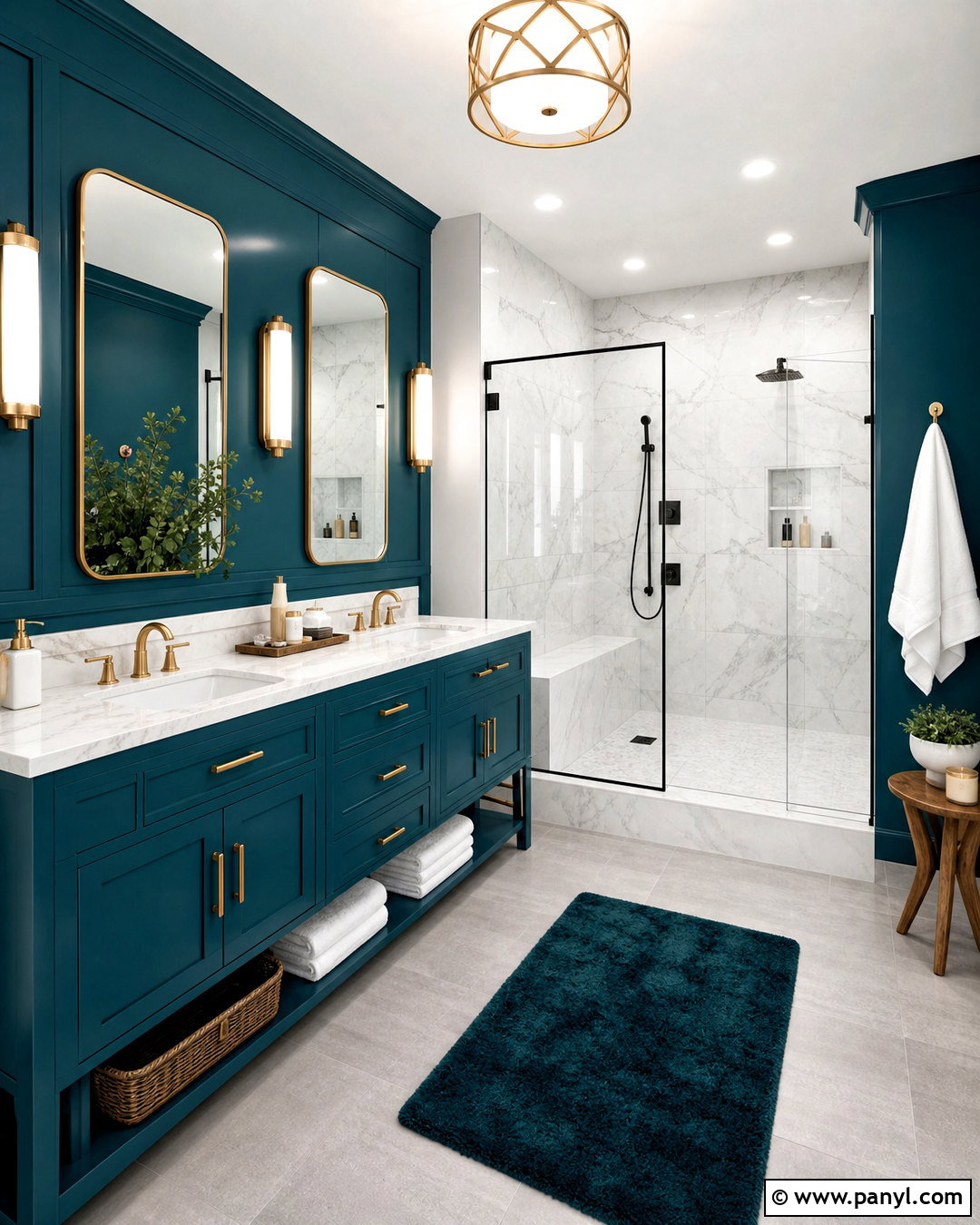
Teal delivers bold color while still connecting naturally to water and stone. Use deep teal on a wide vanity and continue it onto one wall behind the mirrors. Cover the shower with white marble-look porcelain tile featuring restrained gray veining. A pale gray floor creates a quiet bridge between the saturated cabinetry and bright shower walls. Brushed brass faucets and mirror frames add warmth, while clear glass shower panels maintain an open view through the room. Finish the bathroom with white towels, one teal bath mat, and walnut trays or shelves. If the room has two sinks, install individual mirrors and sconces to break up the teal wall. This balanced arrangement makes the dramatic color look architectural rather than overwhelming.
16. Mocha Brown And Cream Bathroom
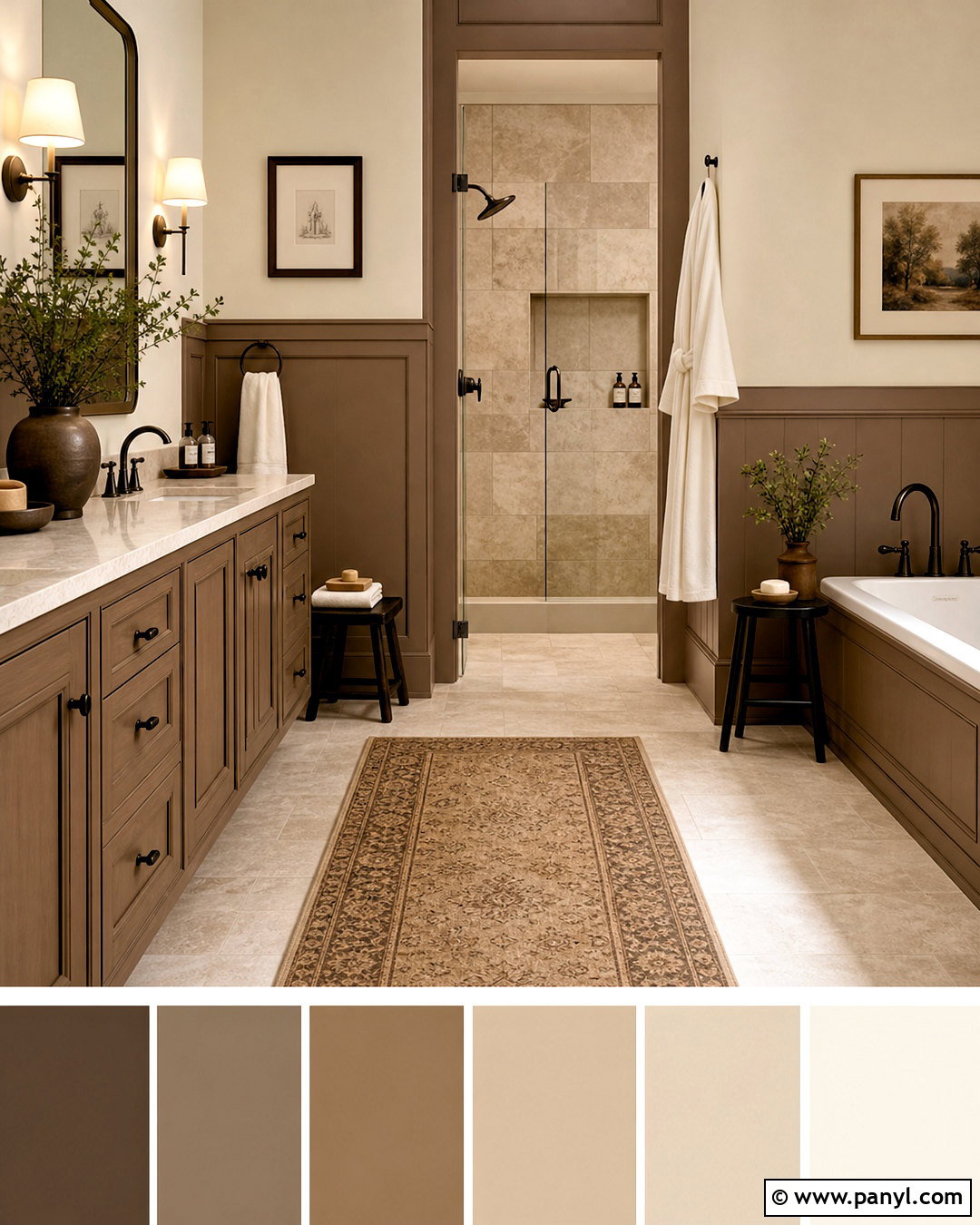
Mocha brown creates a comforting bathroom when paired with creamy surfaces and layered lighting. Paint the vanity and lower wall paneling in a medium mocha shade, leaving the upper walls warm cream. Install beige limestone-look tile on the floor and inside the shower for a seamless, natural foundation. A cream quartz countertop keeps the vanity area bright, while bronze fixtures complement the brown without disappearing into it. Add an oversized mirror, linen-shaded sconces, and recessed ceiling lights to prevent the palette from appearing heavy. Towels in ivory and camel provide subtle tonal variation. One dark wood stool or framed artwork can deepen the scheme. The finished room should feel warm and tailored, not monochromatic or dim.
17. Dusty Blue And Greige Bathroom
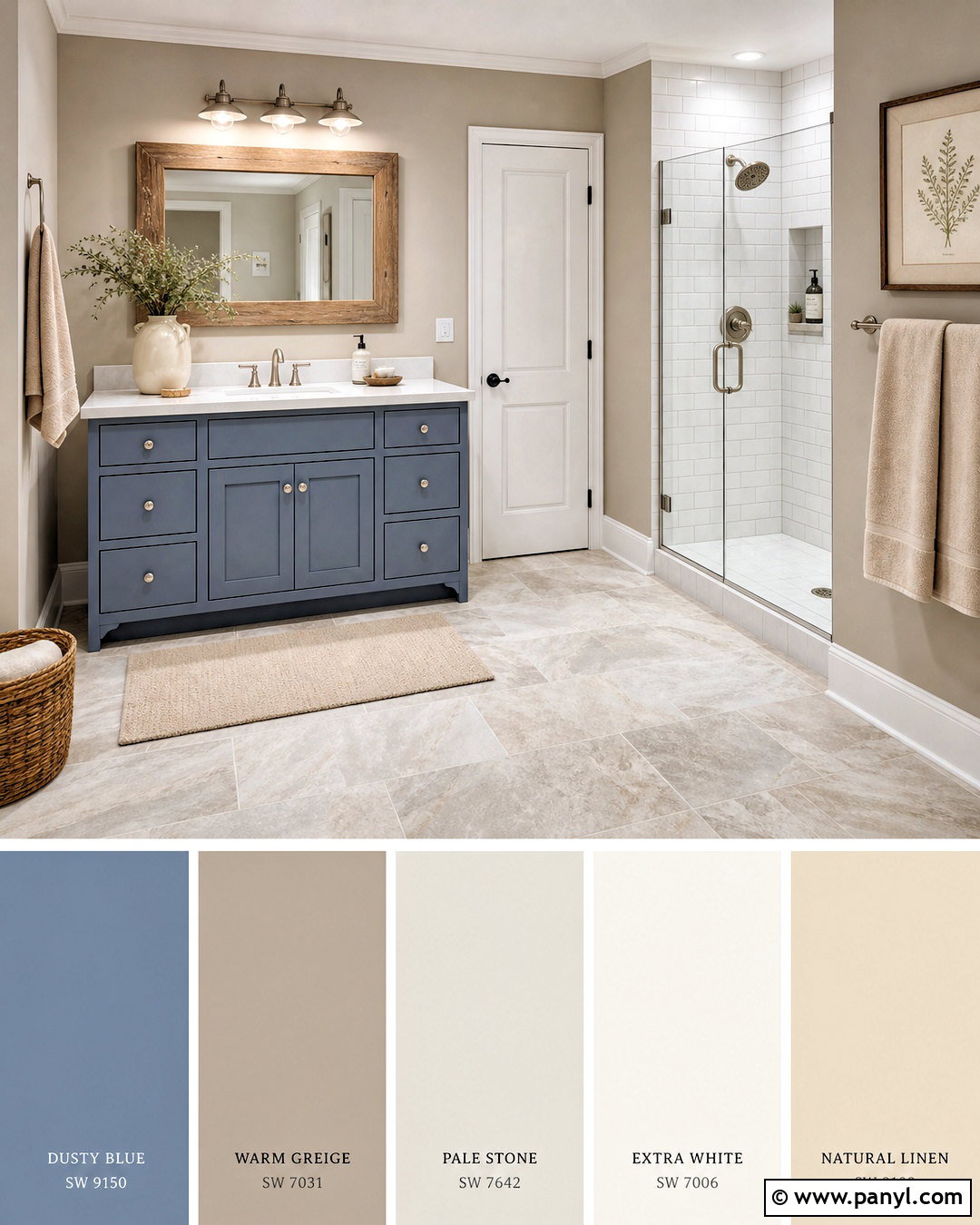
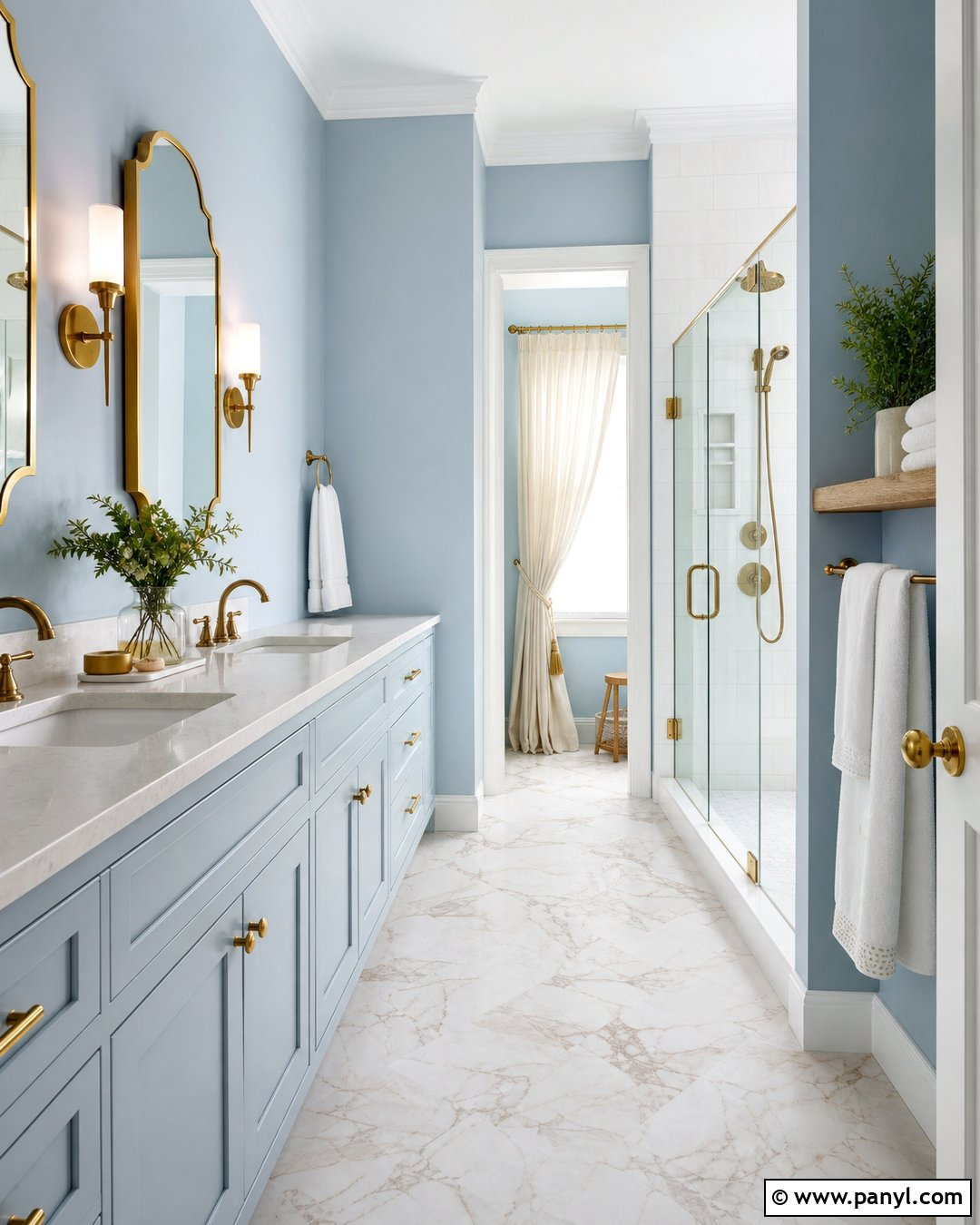
Dusty blue and greige create a versatile bathroom that feels calm in both natural and artificial light. Use dusty blue on the vanity and greige on the walls, then join the two colors with pale stone floor tile. White shower tile and a white quartz countertop add clean contrast without dominating the room. Choose brushed nickel hardware for a subtle finish, or aged brass if the bathroom needs additional warmth. A wood-framed mirror, oatmeal towels, and simple ceramic accessories prevent the cooler colors from feeling flat. Carry the blue into one shower niche or narrow tile border for continuity. This balanced palette fits modern farmhouse, transitional, and coastal interiors, making it a practical choice for a long-term bathroom update.
18. Olive Green And Tan Bathroom
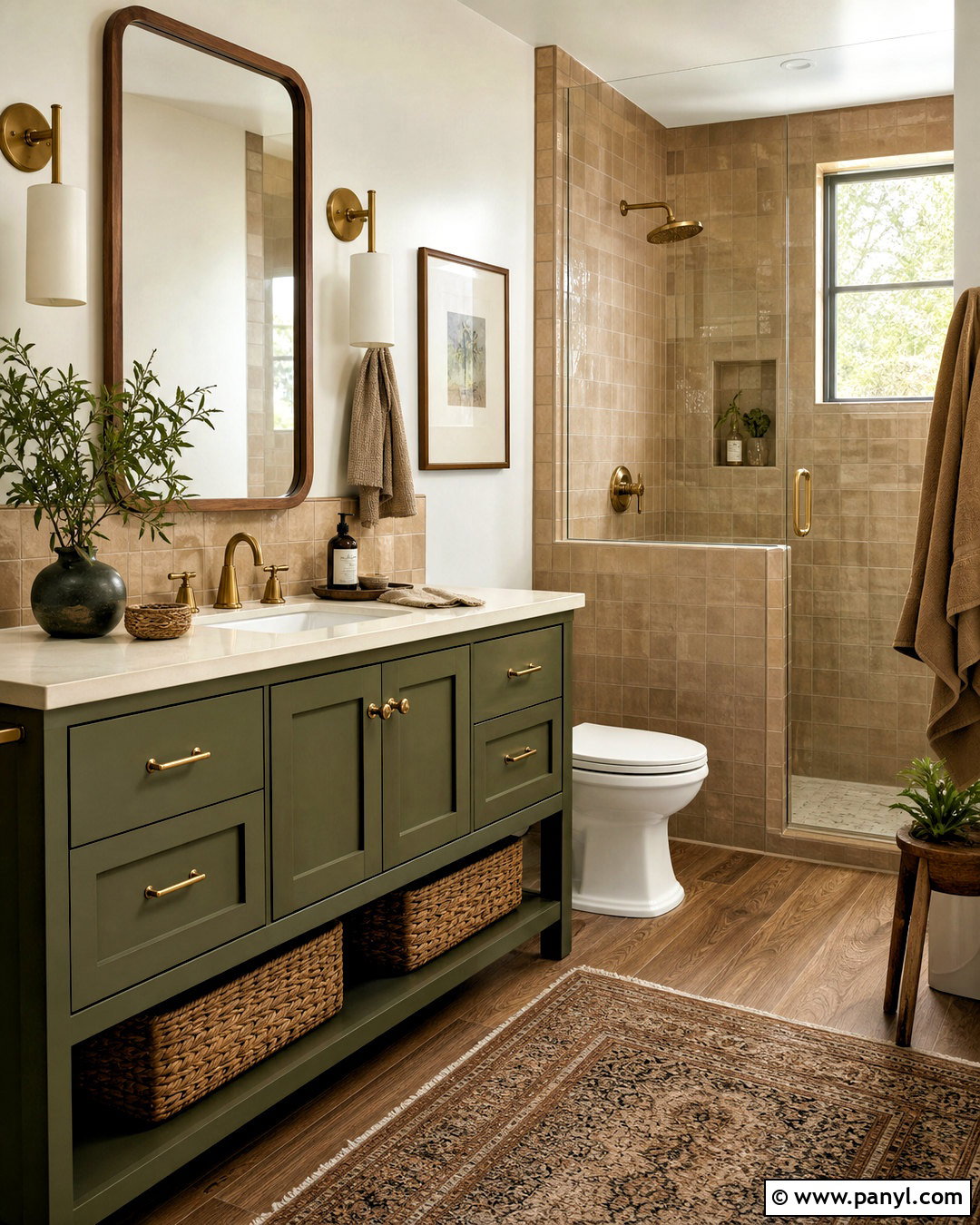
Olive green and tan bring an earthy, established character to a bathroom. Paint the vanity olive green and use warm tan zellige-style tile behind it and throughout the shower. The tile’s slight surface variation will keep the neutral background from appearing plain. Choose a cream solid-surface countertop, aged brass fixtures, and a walnut-framed mirror to reinforce the warmth. Medium-tone brown floor tile gives the room visual weight and hides everyday marks more effectively than bright white flooring. Complete the palette with flax-colored towels, a woven basket, and one leafy plant. Keep the walls a light warm beige so the darker vanity remains prominent. The overall bathroom should feel natural, collected, and connected rather than heavily themed.
19. Cobalt Blue And White Bathroom
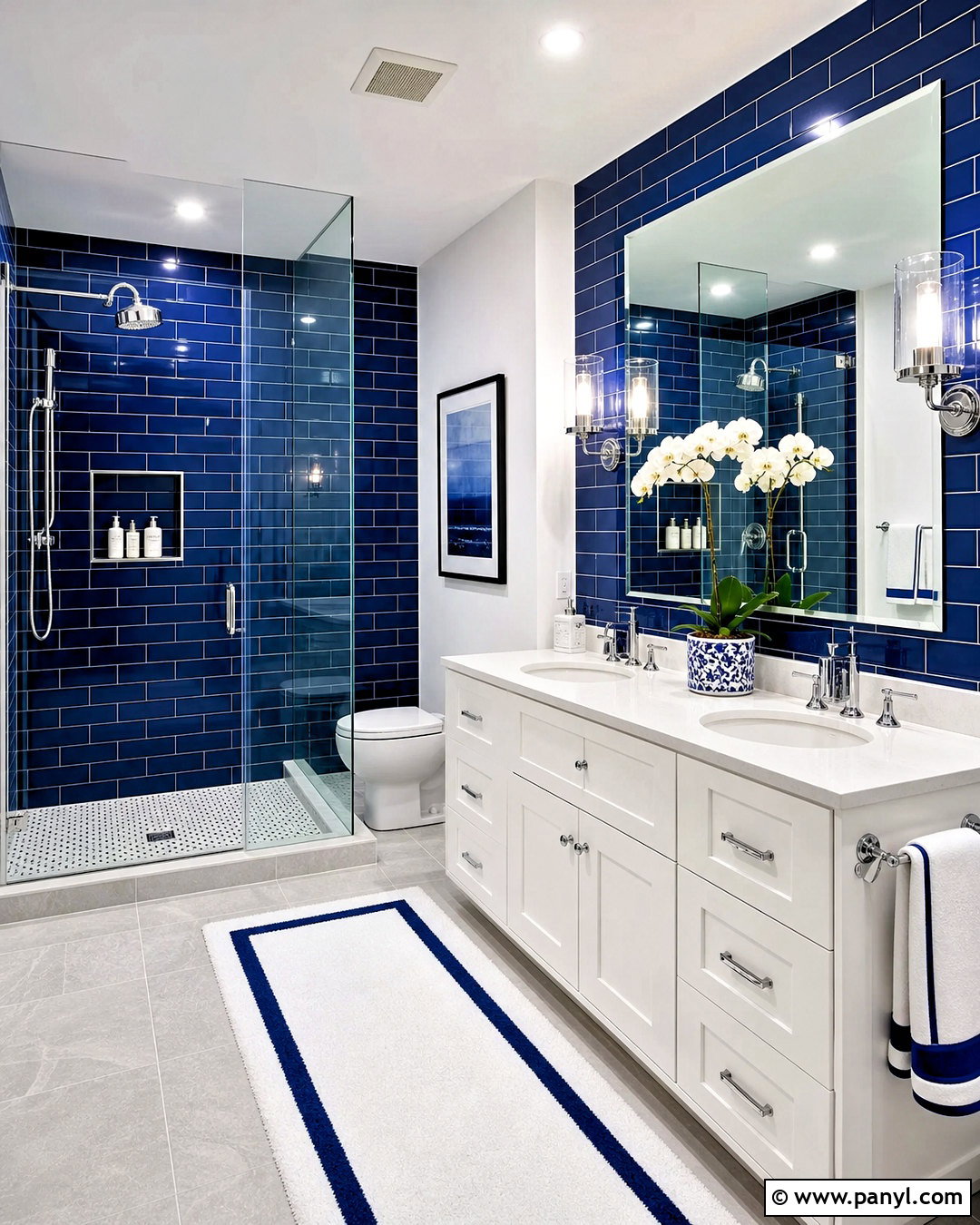
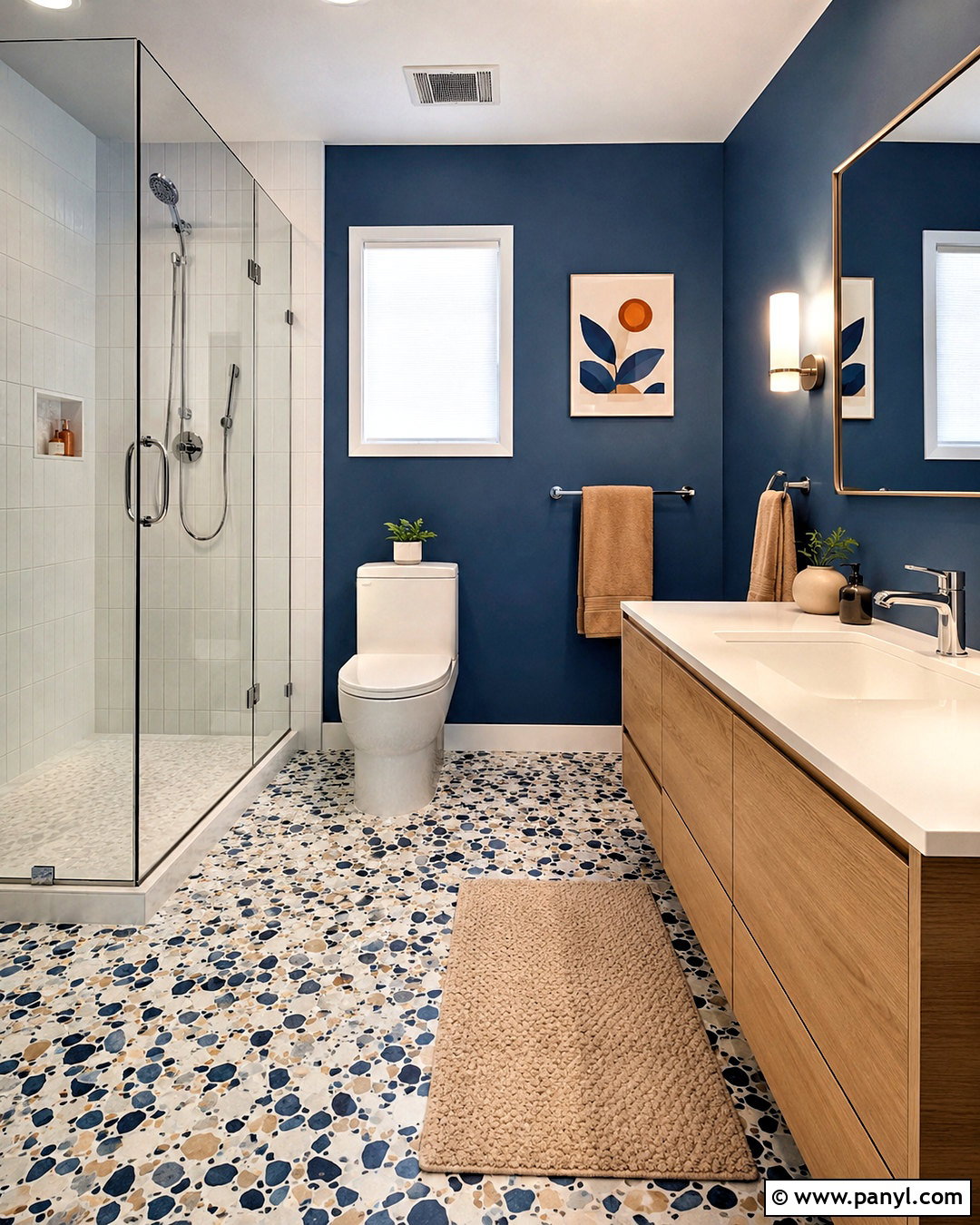
Cobalt blue gives a bathroom crisp energy and works especially well in tile. Use glossy cobalt tile across the shower walls or as full-height tile behind the vanity. Balance this vivid surface with a white vanity, white countertop, and clean white walls. A pale gray floor controls the contrast and makes the blue feel more sophisticated. Polished chrome faucets and shower fittings reflect the saturated color without introducing another warm or dark finish. Add white towels with narrow blue borders, a frameless mirror, and simple glass lighting. Limit cobalt to one or two connected surfaces rather than scattering small blue accessories around the room. A concentrated area of color produces a stronger, more organized bathroom design.
20. Peach And Pale Aqua Bathroom
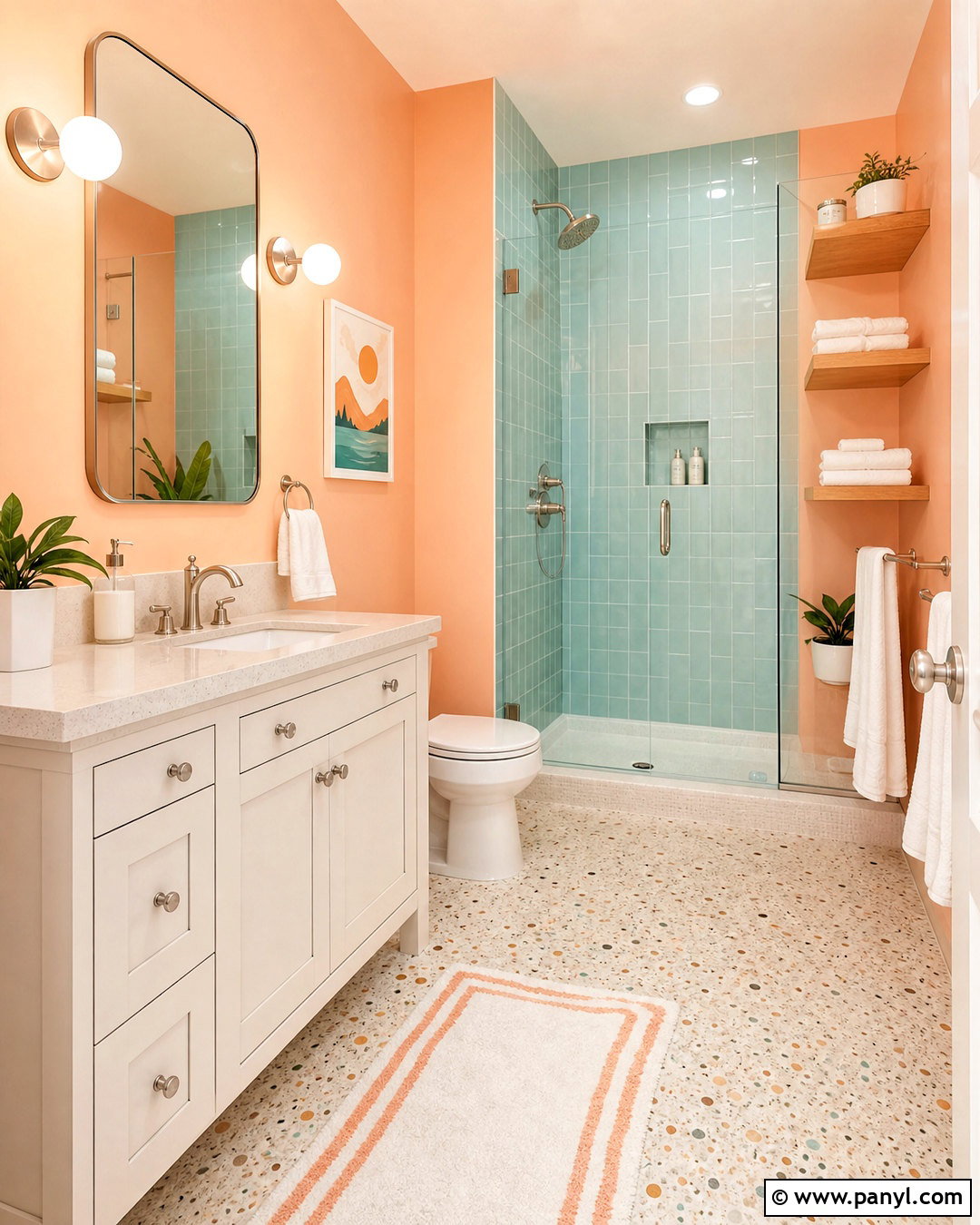
Peach and pale aqua form a bright, playful bathroom palette inspired by vintage interiors but suited to modern homes. Paint the walls a soft peach and use pale aqua tile inside the shower or across the vanity backsplash. A warm white vanity and countertop calm the two-color combination, while light terrazzo flooring introduces small flecks that visually connect the shades. Choose brushed nickel fixtures and simple white globe lights to keep the result clean. Natural maple shelves, white towels, and a peach-edged bath mat provide gentle finishing details. Avoid highly saturated versions of either color. Dusty peach and watery aqua will feel softer and more livable, particularly in a small guest bathroom or cheerful family bathroom.
Conclusion:
Choosing a bathroom palette becomes easier when every surface and fixture is considered together. Begin with the feature you cannot easily change, such as existing floor tile, a bathtub, or a vanity. Build the wall color, metals, textiles, and storage finishes around it. Light palettes can visually open a compact bathroom, while deeper colors add intimacy and definition when supported by good lighting. Always test paint and material samples in the room during morning and evening hours. Undertones can shift beside tile, countertops, and artificial light. Whether you prefer earthy neutrals, soothing greens, gentle pastels, or dramatic jewel tones, these 20 bathroom color palette ideas offer complete, practical looks you can adapt to your home.

Related Ideas and Inspiration:
Leave a Reply