
Dark walls can turn an ordinary bathroom into a polished, memorable retreat. This collection of **30 Bathroom Dark Walls** explores complete looks built around black, charcoal, navy, forest green, burgundy, brown, and other saturated shades. Current bathroom inspiration favors cohesive palettes that carry rich color across walls, trim, cabinetry, tile, and architectural details. () The key is balancing those deep surfaces with thoughtful lighting, reflective finishes, warm wood, pale stone, or crisp white fixtures. Whether you are updating a compact powder room or planning a spacious primary bath, every option below combines color, furniture, fixtures, flooring, and decor into one practical design. Use these **30 Bathroom Dark Walls** as inspiration for creating a dramatic space that still feels comfortable and inviting.

1. Black Bathroom Walls With White Marble
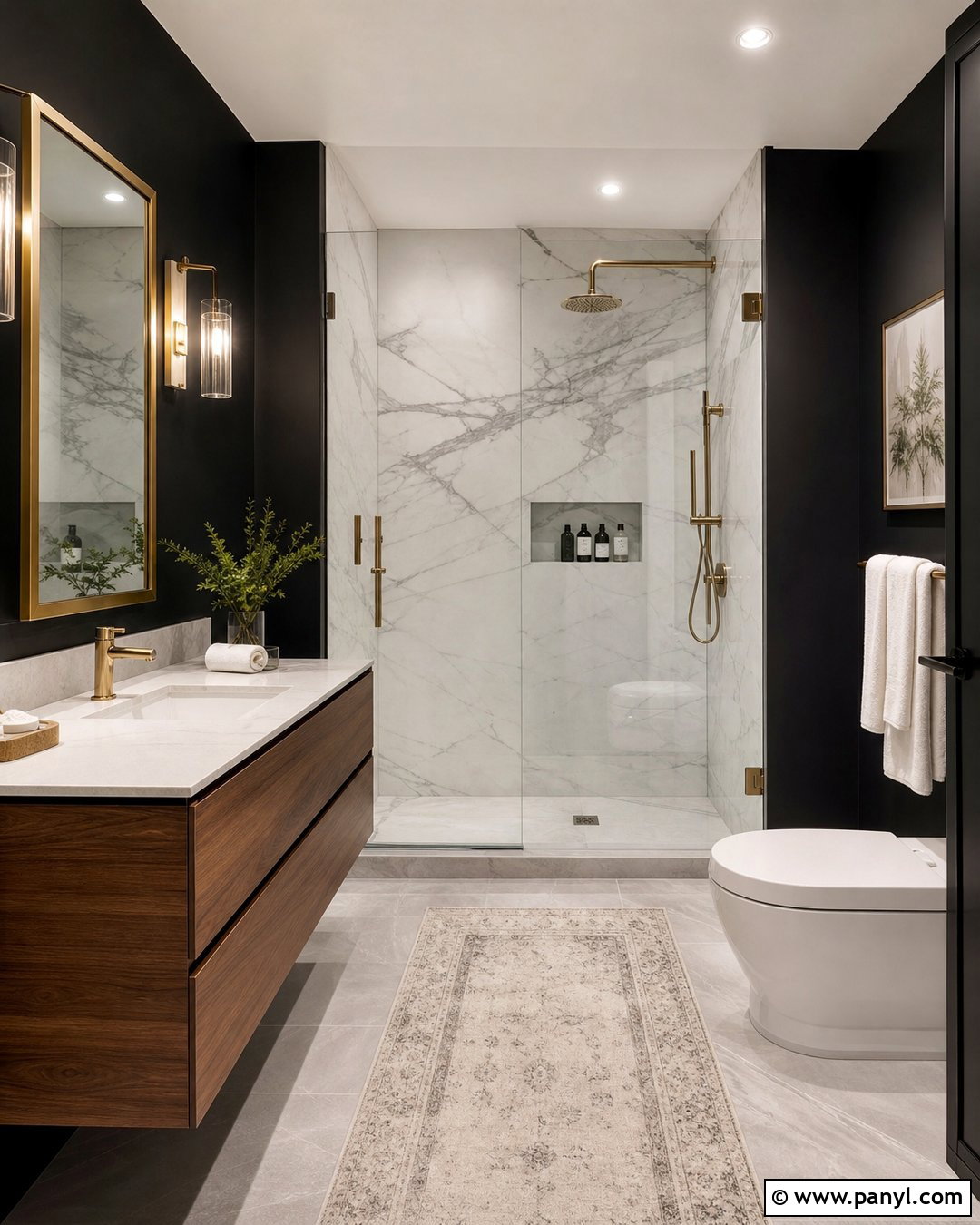
Crisp white marble keeps matte black bathroom walls from feeling flat or overly heavy. Use black paint across the vanity wall and surrounding trim, then install large white marble tiles with gray veining inside the walk-in shower. A walnut floating vanity introduces natural warmth, while a white quartz counter connects visually with the shower. Choose brushed brass faucets, sconces, and cabinet pulls for a softer contrast than chrome. A frameless glass enclosure lets the marble remain visible from every angle. Finish the room with a light gray porcelain floor, an oversized round mirror, and neatly folded white towels. The finished bathroom feels modern and sophisticated, yet the pale stone, open vanity, and reflective glass keep the overall composition balanced.
2. Charcoal Bathroom Walls With Oak Vanity
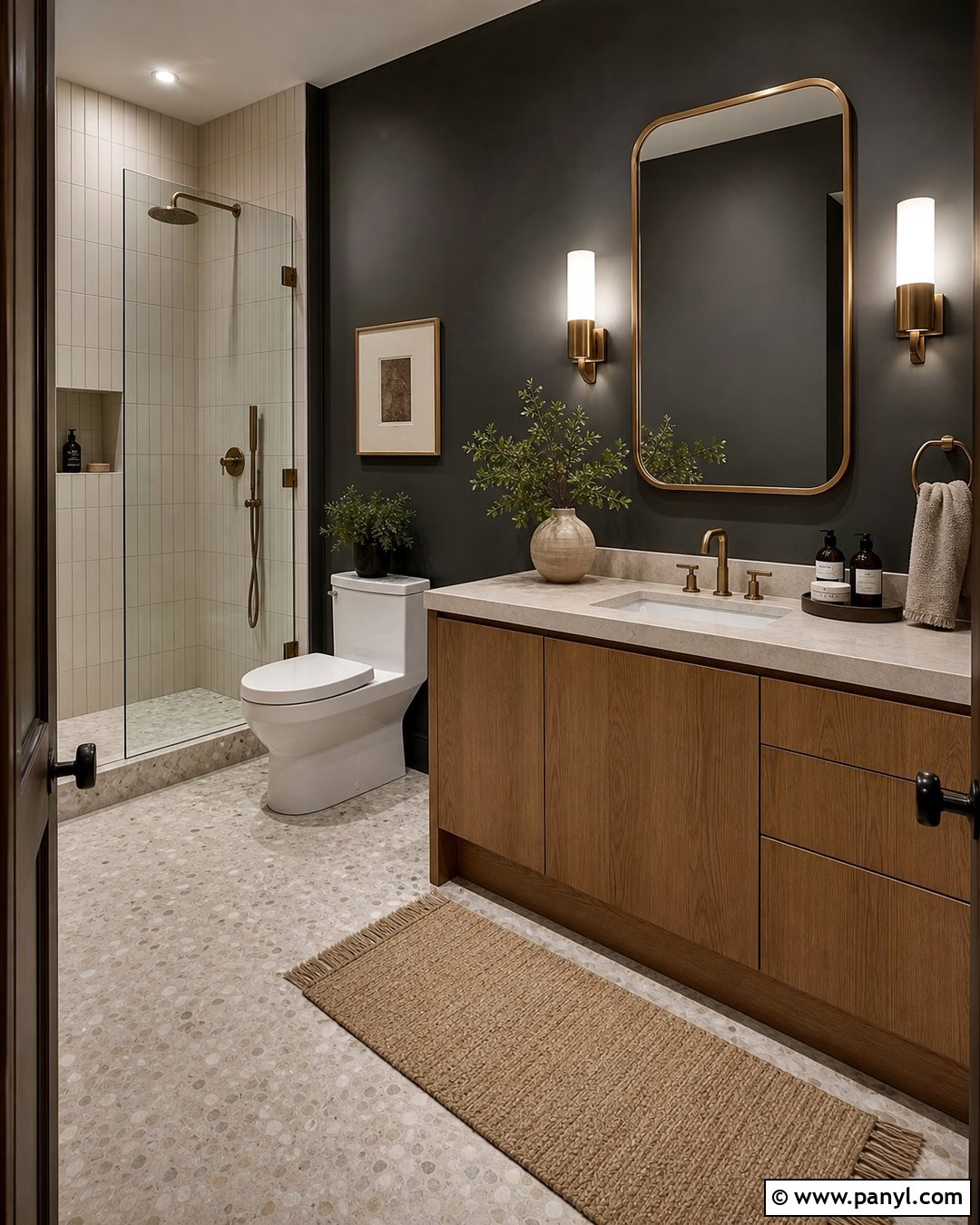
Charcoal walls create a grounded background for a warm oak vanity and creamy neutral surfaces. Paint every wall a deep graphite gray, including the door and trim, for a clean color-drenched finish. Place a wide natural oak vanity along the main wall with flat-panel drawers and a pale limestone countertop. Above it, hang a simple rectangular mirror framed in aged brass. Use off-white vertical tiles in the shower to add subtle movement without competing with the walls. Light terrazzo flooring brings together gray, beige, and ivory tones. Finish with woven baskets, oatmeal-colored towels, and two frosted glass sconces. This complete scheme suits a modern family bathroom because it feels relaxed, practical, and rich without relying on stark black-and-white contrast.
3. Navy Bathroom Walls With Brass Fixtures
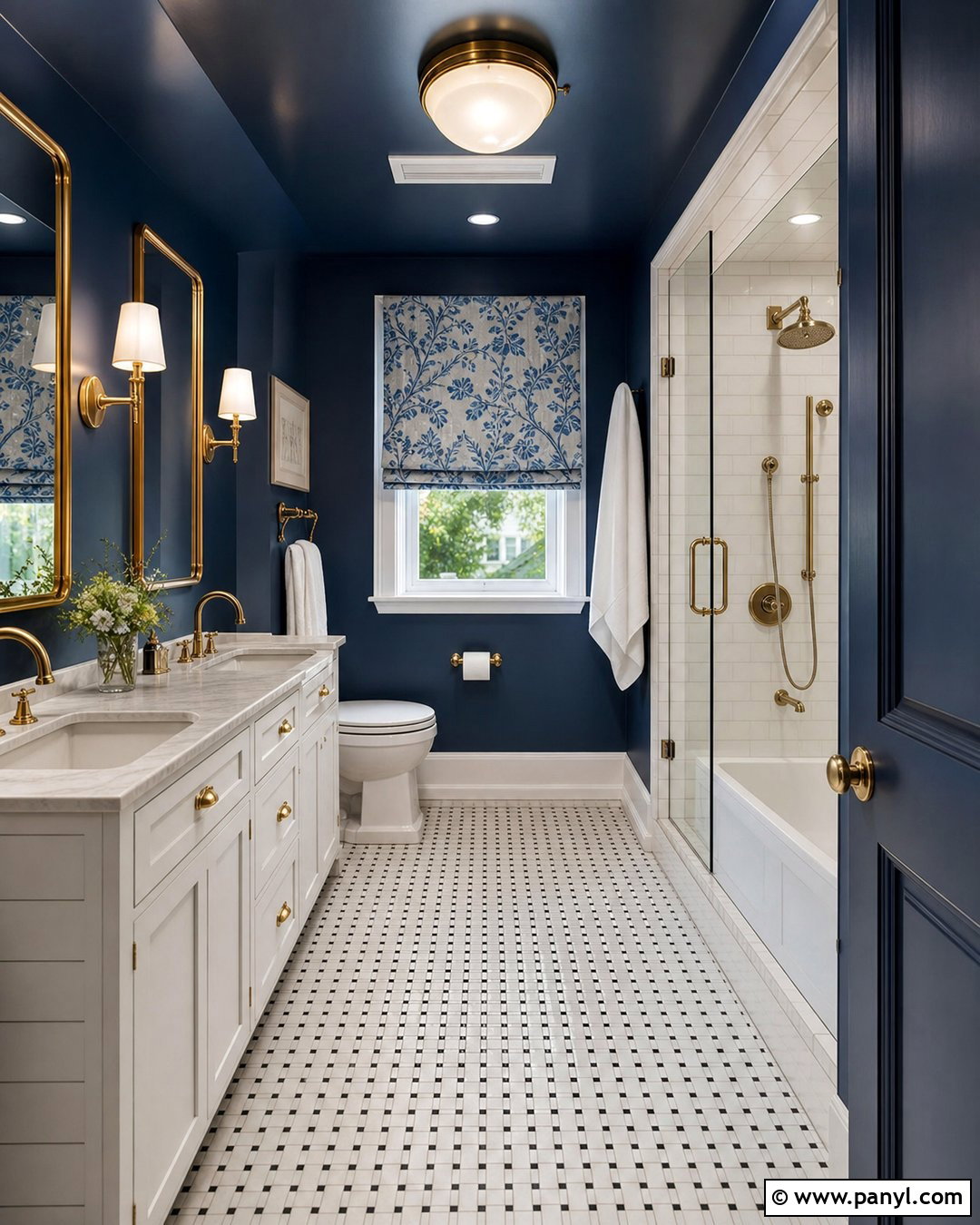
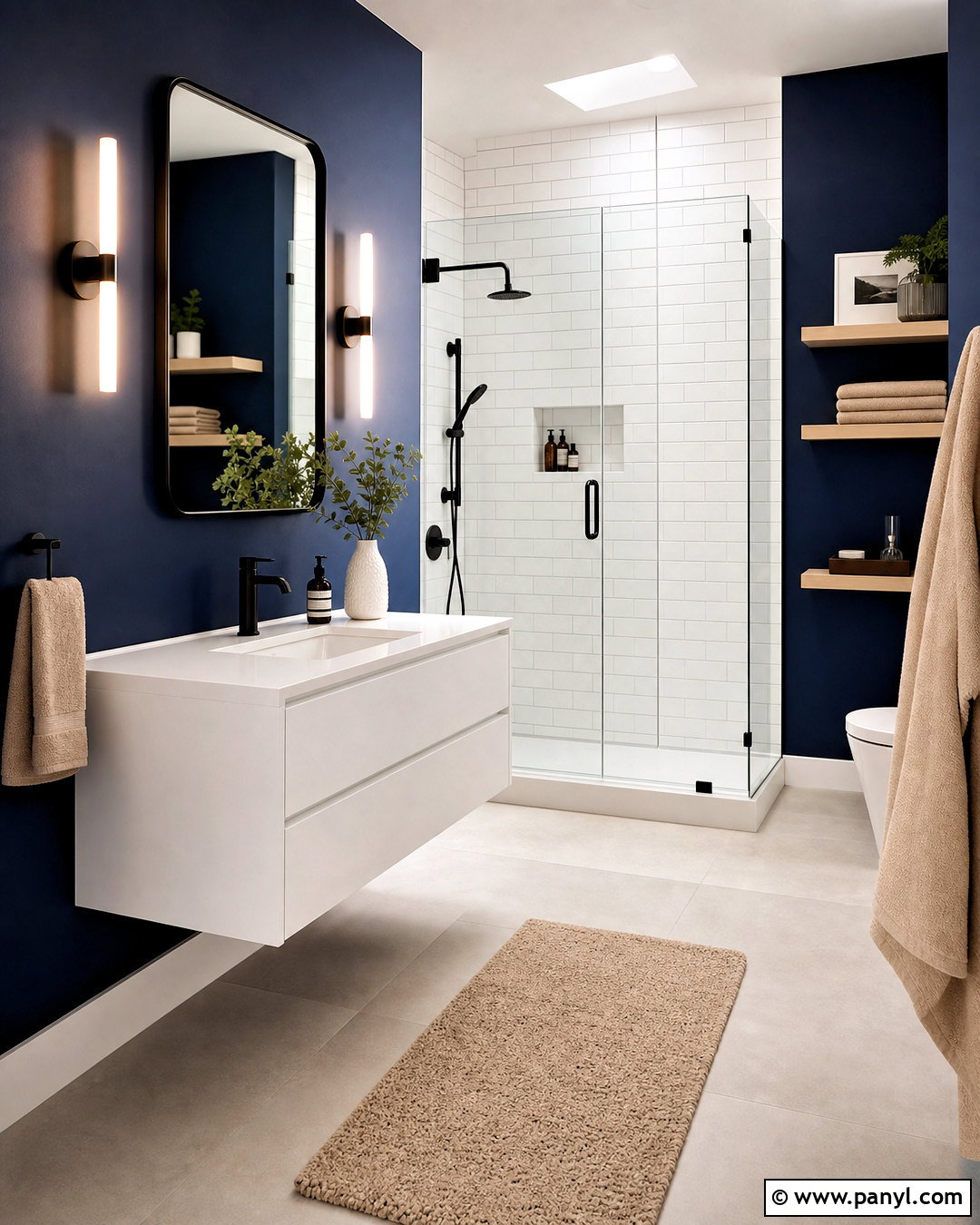
Deep navy walls and warm brass fixtures make a classic bathroom feel richer and more tailored. Cover the walls and ceiling in an inky blue shade, then install a white double vanity with Shaker-style doors to create a strong focal point. Choose polished brass faucets, framed mirrors, drawer pulls, and picture lights so the metal repeats evenly around the room. White subway tile with navy grout can line the shower and bathtub area. Add a black-and-white basketweave floor for traditional character without introducing another major color. A Roman shade in a small blue botanical print softens the window. Complete the look with ivory towels, a vintage-inspired runner, and framed coastal sketches for a bathroom that feels established rather than overly themed.
4. Forest Green Bathroom Walls With Wood Accents
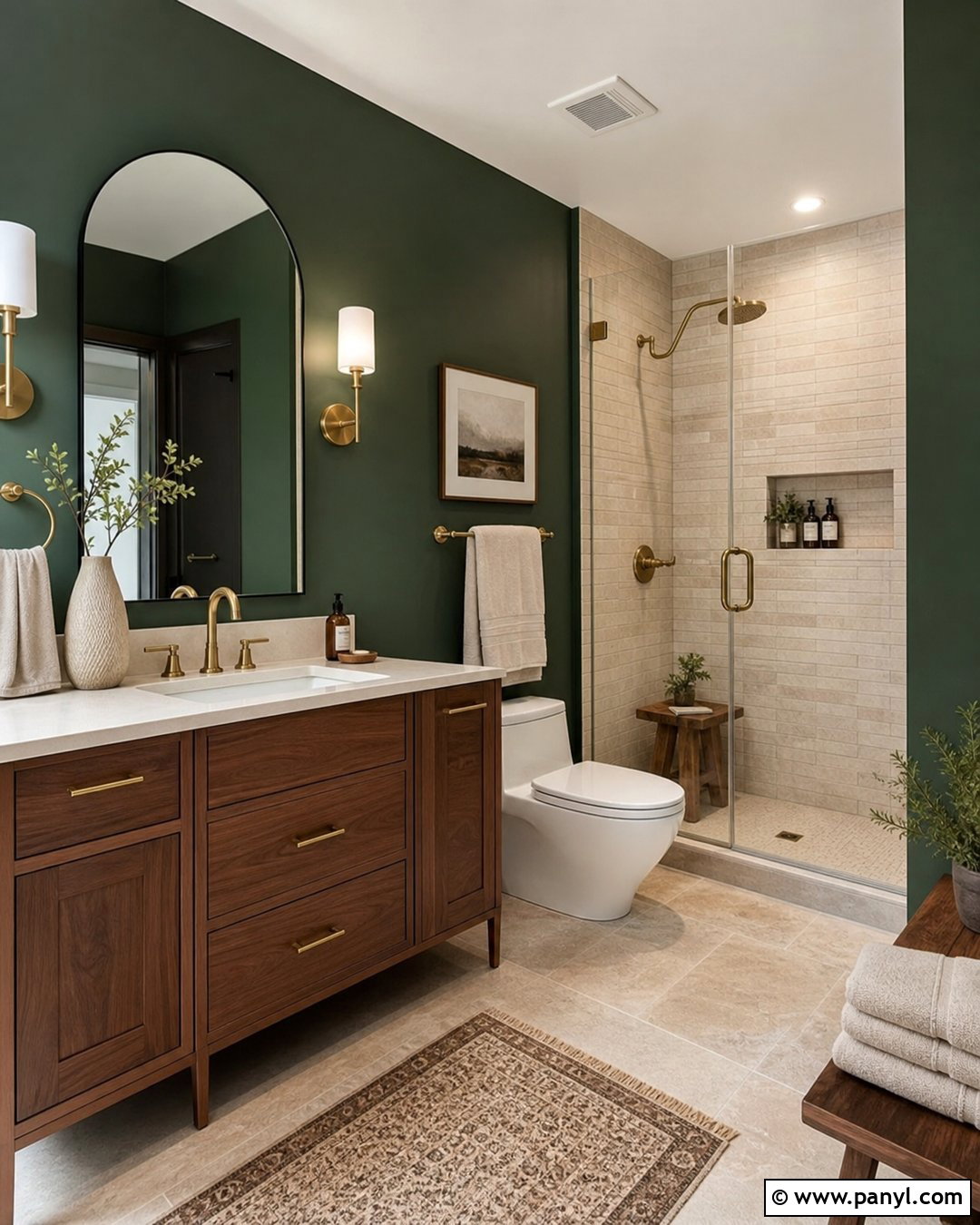
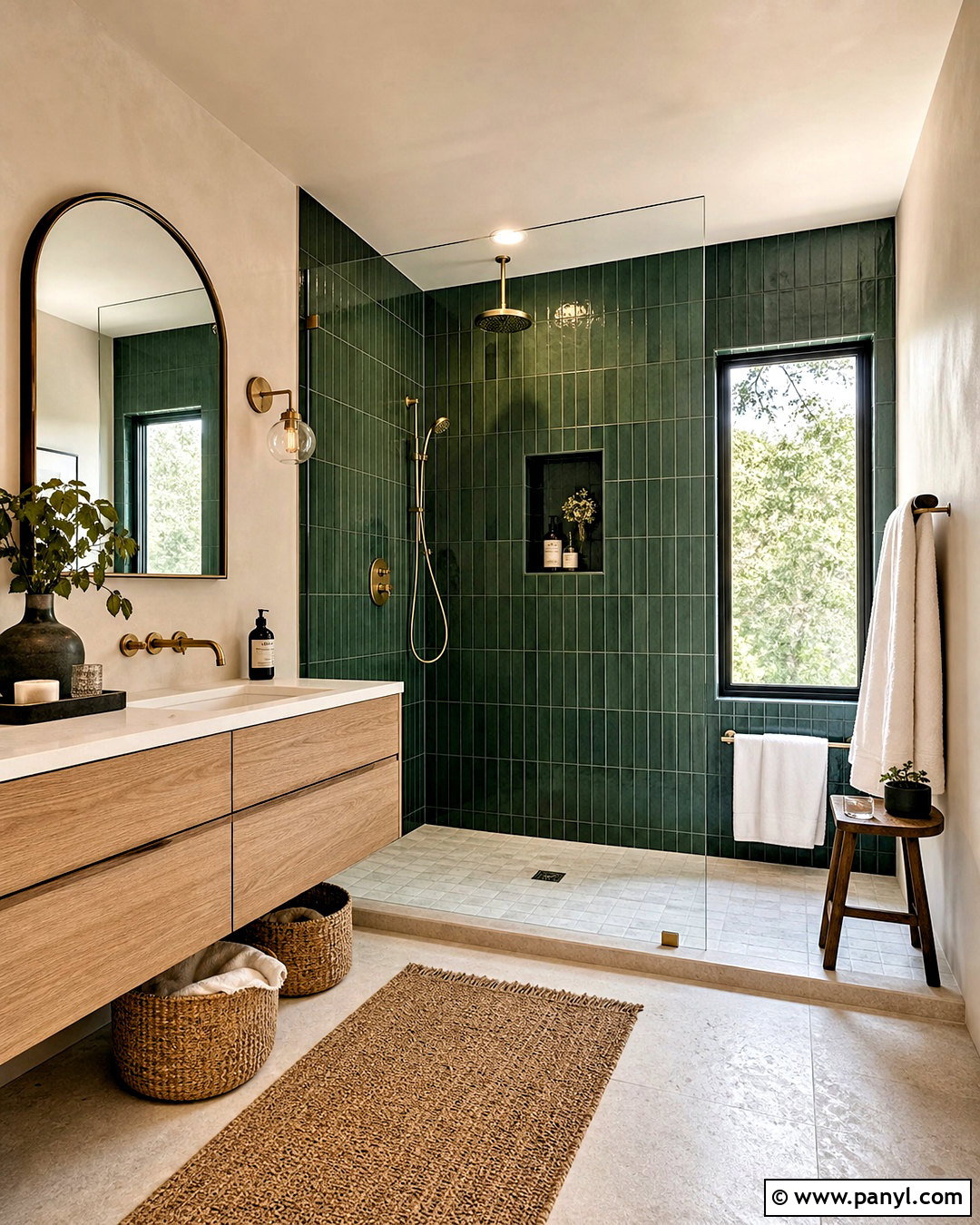
Forest green walls feel calm and natural when paired with medium-toned wood and warm cream finishes. Use the green across the upper walls and ceiling, then cover the lower half with slender cream tiles in a stacked layout. A teak or walnut vanity adds visible grain and keeps the scheme from looking too formal. Select a warm white countertop, an undermount sink, and antique brass fixtures. On the floor, use matte stone-look porcelain in a sandy beige tone. A frameless shower enclosure maintains an open layout, while a recessed tiled niche provides storage. Finish with linen towels, small potted ferns, and an arched brass mirror. Together, these elements create an earthy dark bathroom that feels welcoming in both contemporary and transitional homes.
5. Dark Teal Bathroom Walls With Pink Tile
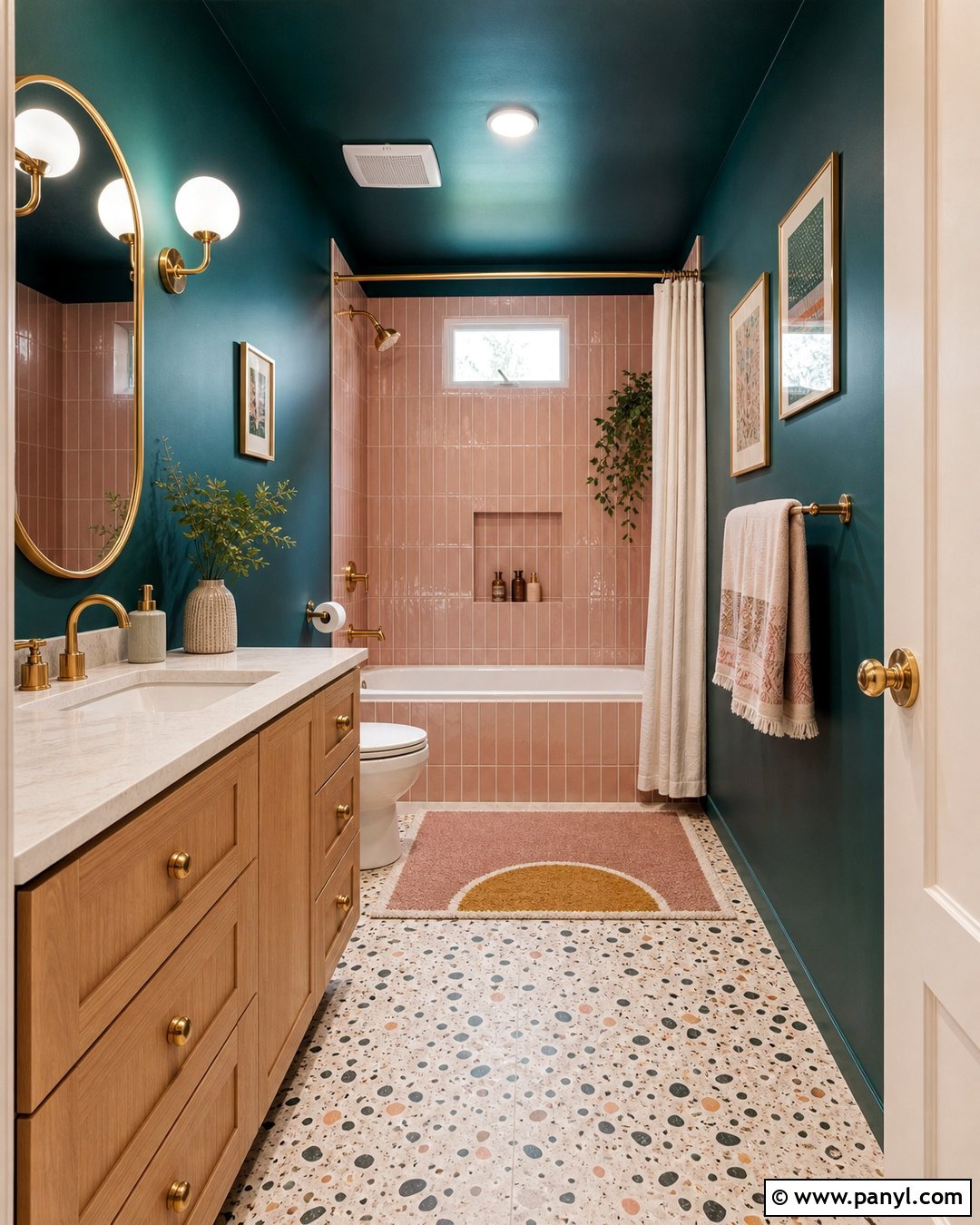
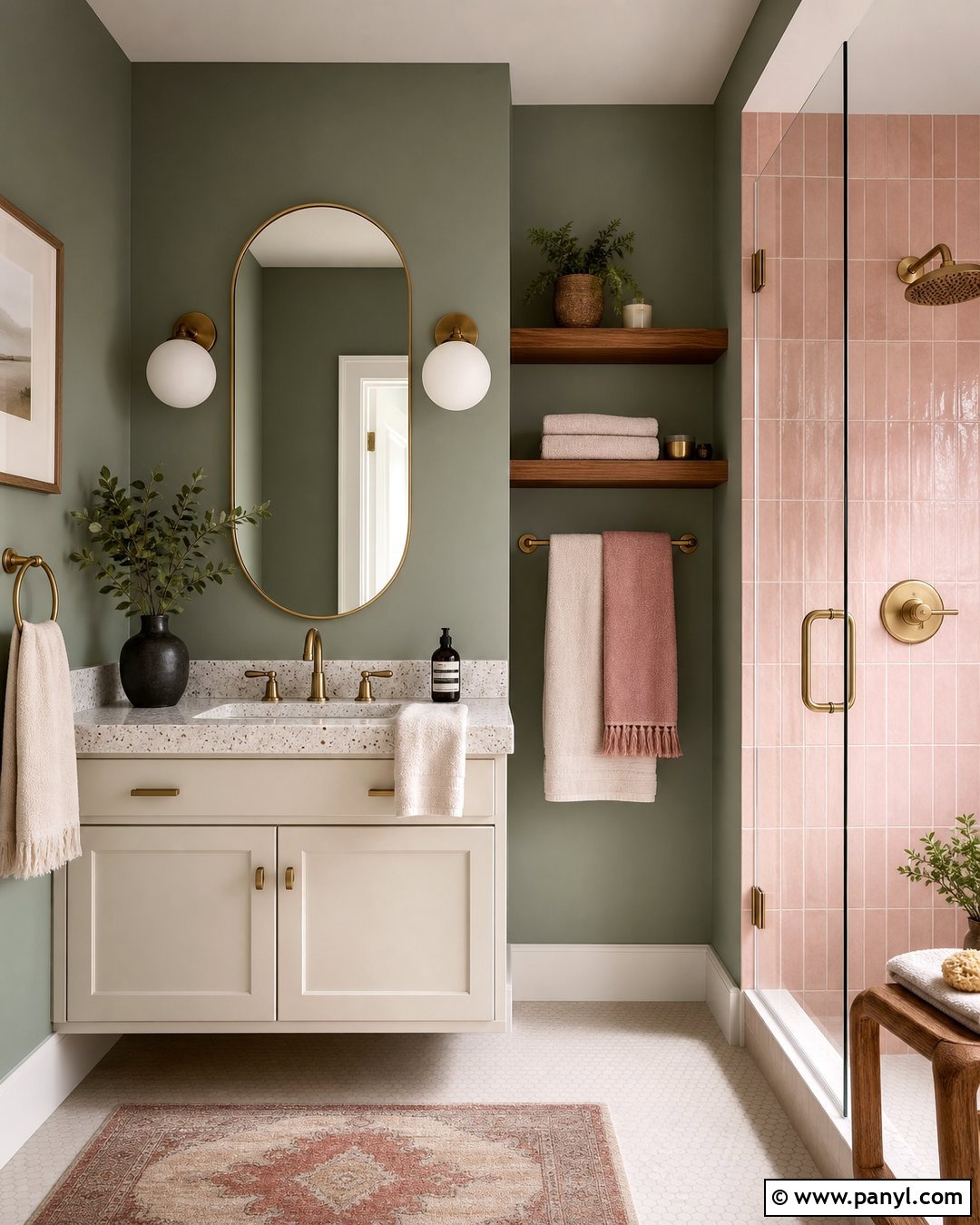
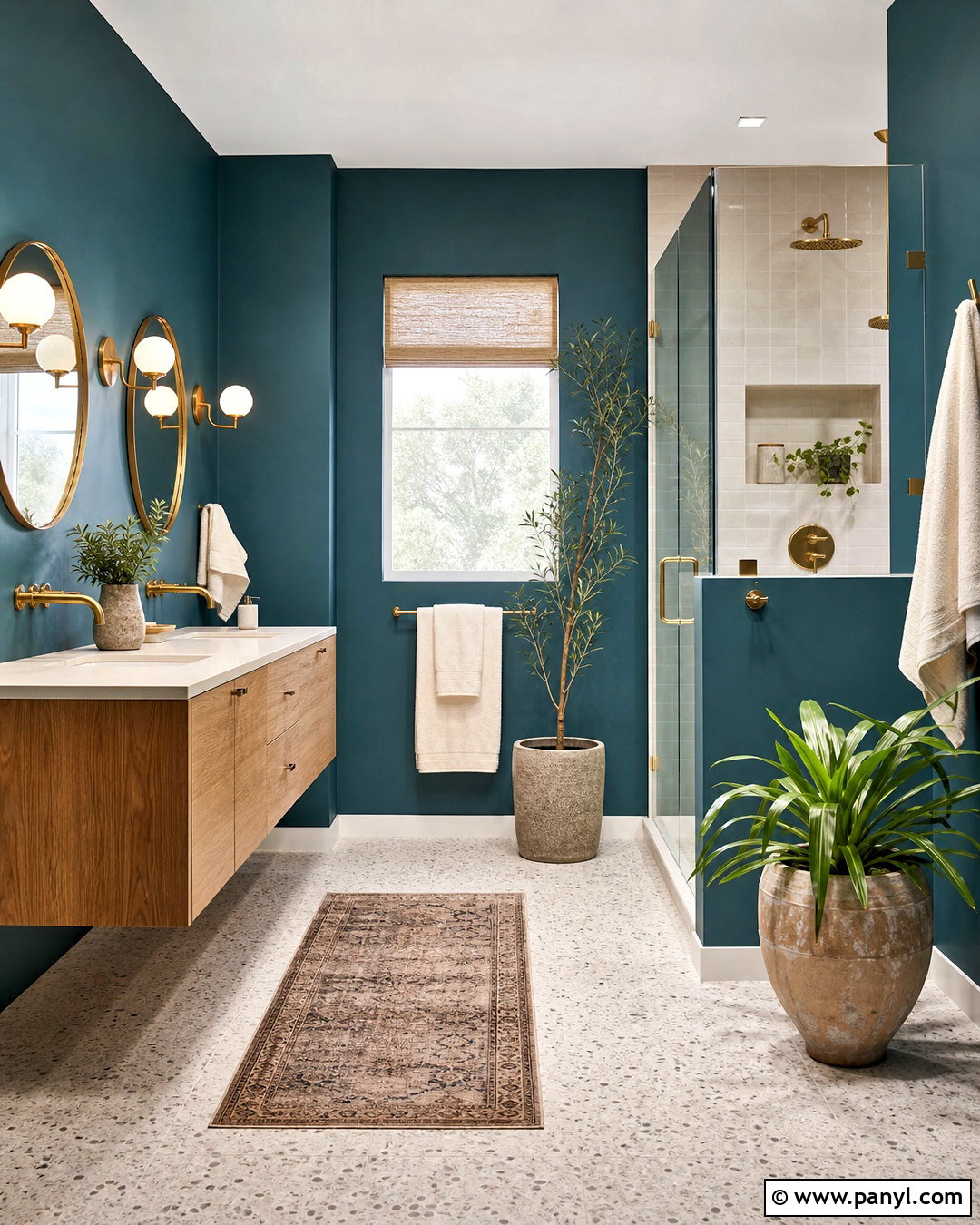
Would you like a dark bathroom that still feels playful? Deep teal walls paired with muted pink tile create a colorful design without becoming childish. Paint the upper walls and ceiling teal, then install dusty rose rectangular tiles around the bathtub and across the vanity backsplash. Use a pale oak vanity with a white solid-surface countertop to give the bold colors breathing room. Brushed brass hardware connects beautifully with both teal and pink. Choose a terrazzo floor containing small rose, green, and cream chips for a coordinated finish. A rounded rectangular mirror and globe sconces reinforce the soft shapes in the room. Add ivory towels and minimal ceramic accessories so the main palette remains clear, cohesive, and easy to appreciate.
6. Chocolate Brown Bathroom Walls With Travertine
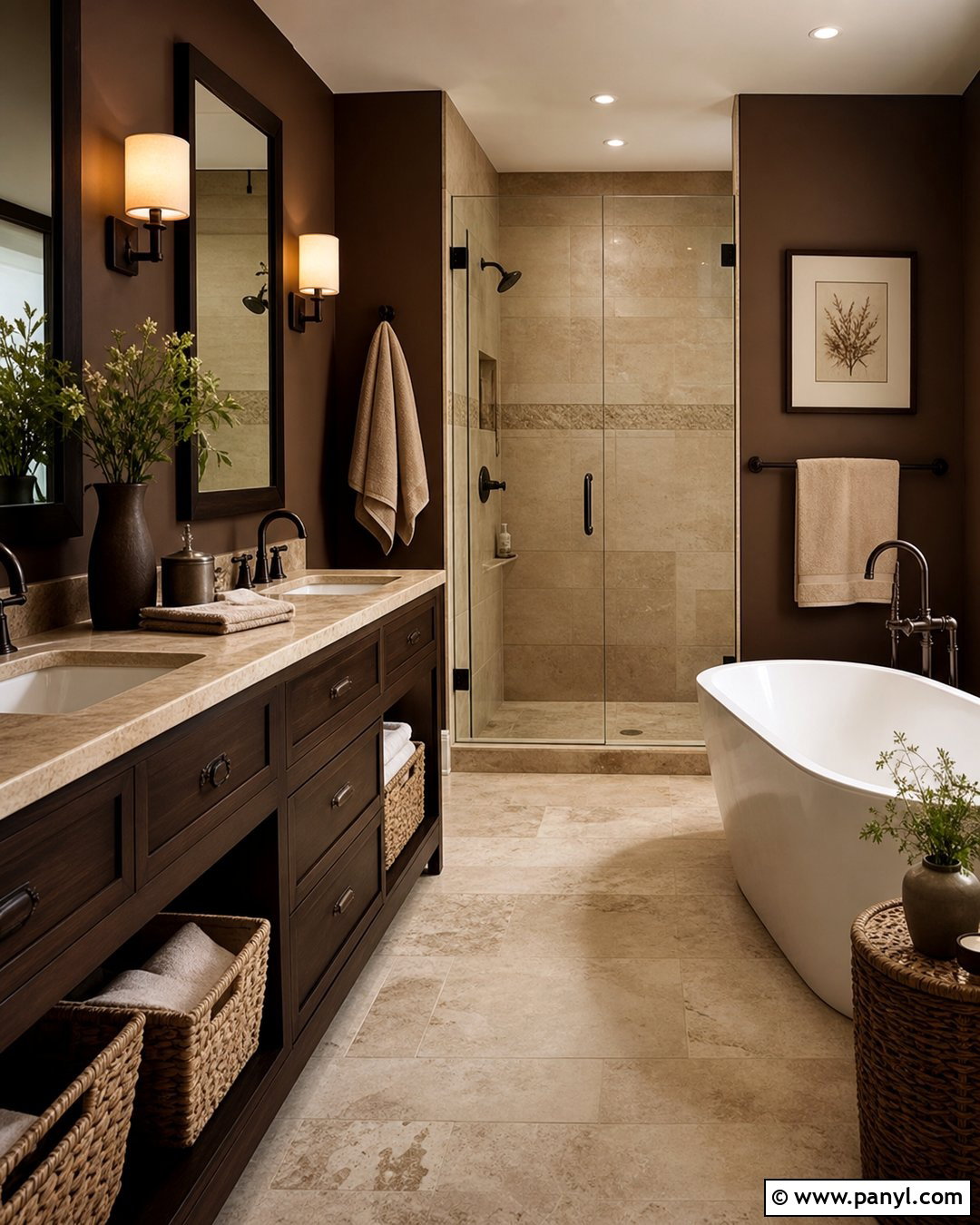
Chocolate brown walls can make a bathroom feel warm, enveloping, and surprisingly timeless. Pair the paint with honed travertine flooring and matching stone around a walk-in shower. Select a dark walnut vanity with simple recessed doors, then add a creamy stone countertop that blends gently with the travertine. Bronze faucets and lighting maintain the warm undertones without creating sharp contrast. A large frameless mirror reflects the pale stone and makes the vanity area feel more open. Use soft beige towels, a woven hamper, and one understated ceramic vessel for decoration. If the room has a bathtub, choose a clean white freestanding model to provide a visual pause. The resulting brown bathroom looks layered and comfortable rather than dated or overly rustic.
7. Burgundy Bathroom Walls With Cream Vanity
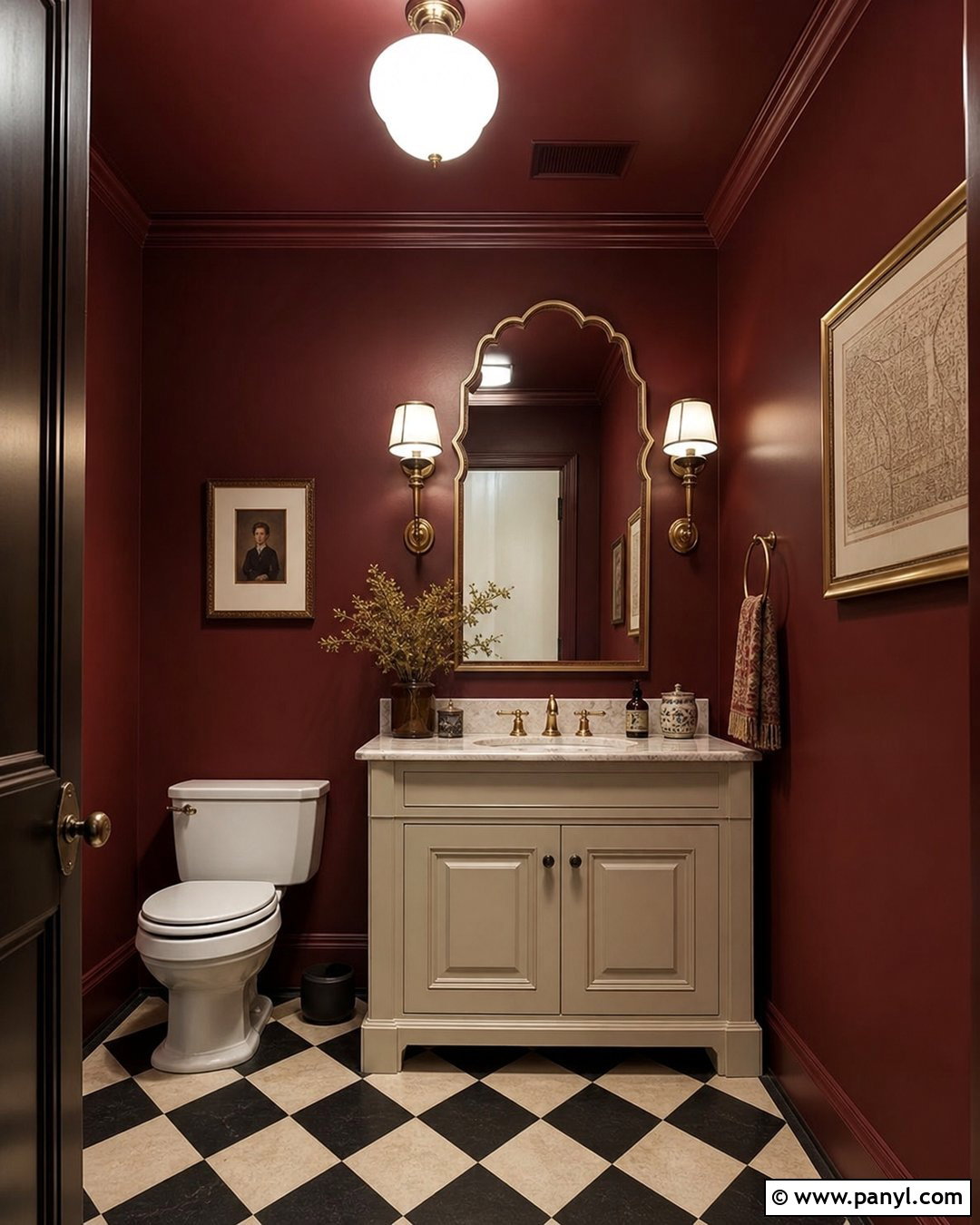
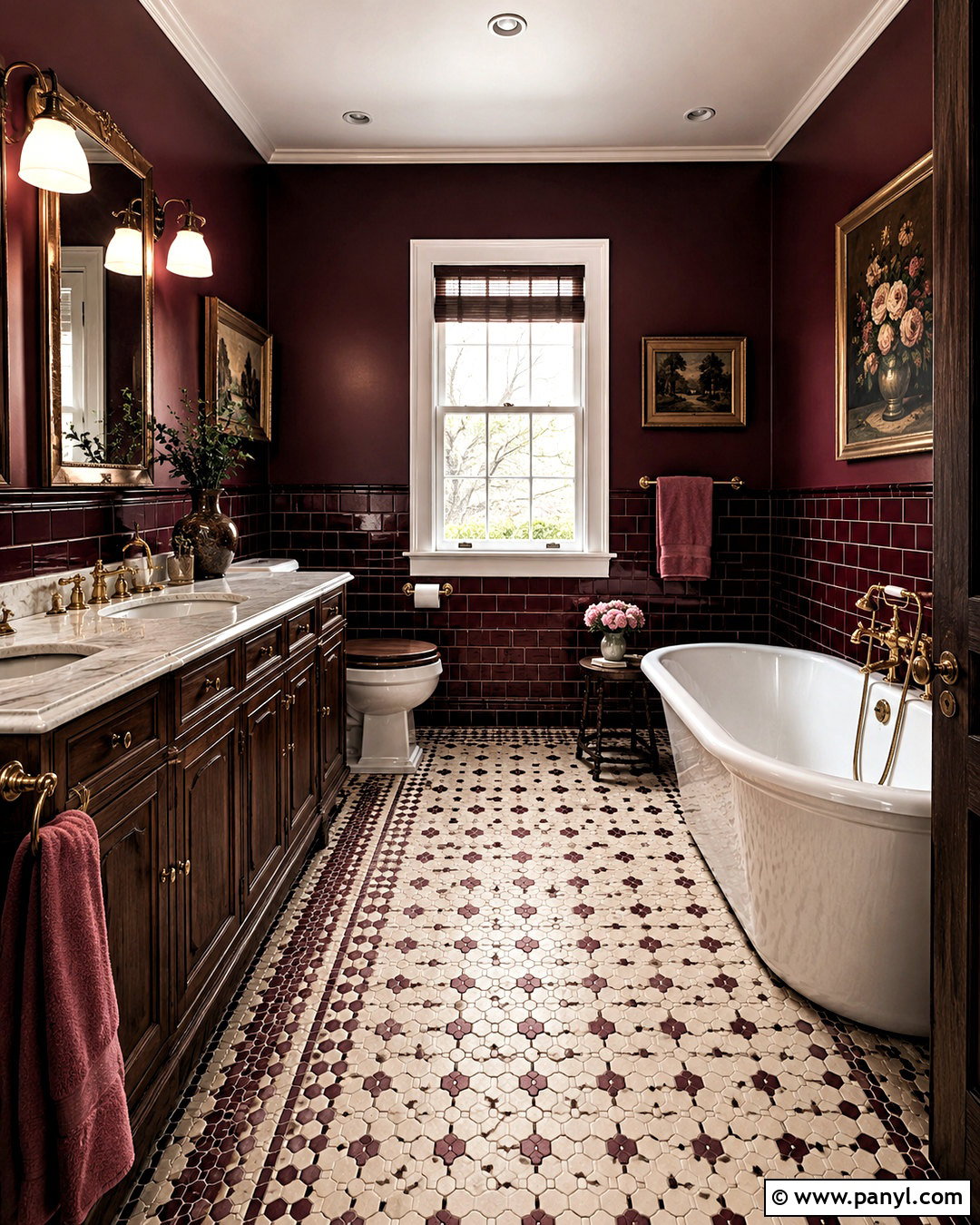
Rich burgundy walls give a powder room or guest bathroom an elegant jewel-box character. Apply the color across the walls, ceiling, trim, and door for a seamless backdrop. Balance it with a cream-painted vanity featuring traditional panel doors and a lightly veined marble counter. Antique brass hardware, a scalloped mirror, and small shaded sconces support the vintage direction. For flooring, choose black-and-cream checkerboard tile laid diagonally to widen the visual field. A white toilet and sink keep the essential fixtures crisp. Add one framed landscape print, a burgundy hand towel, and a small vase of leafy branches. This complete palette works especially well in a windowless bathroom because it embraces the intimate setting instead of attempting to make it look artificially bright.
8. Eggplant Bathroom Walls With Walnut Vanity
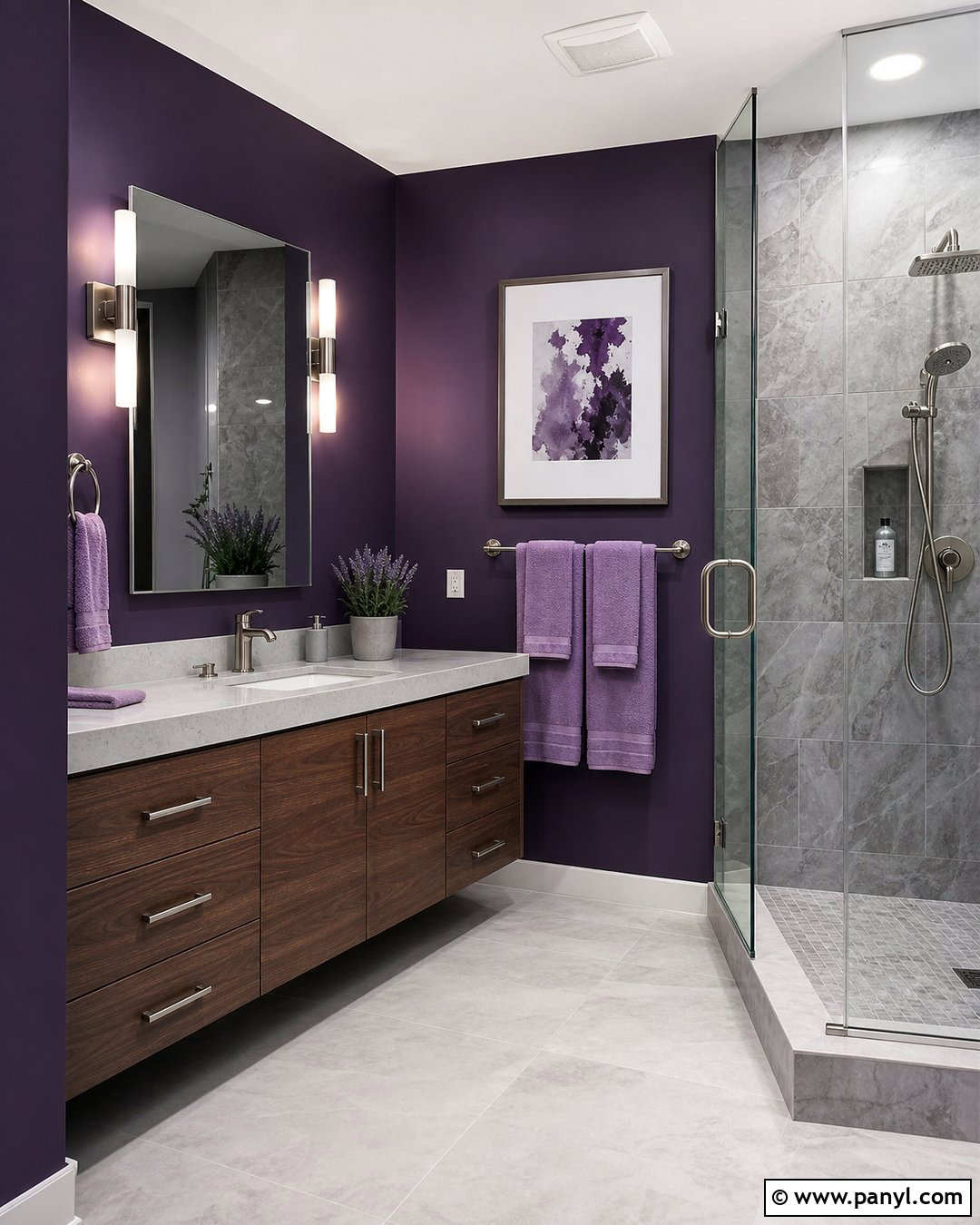
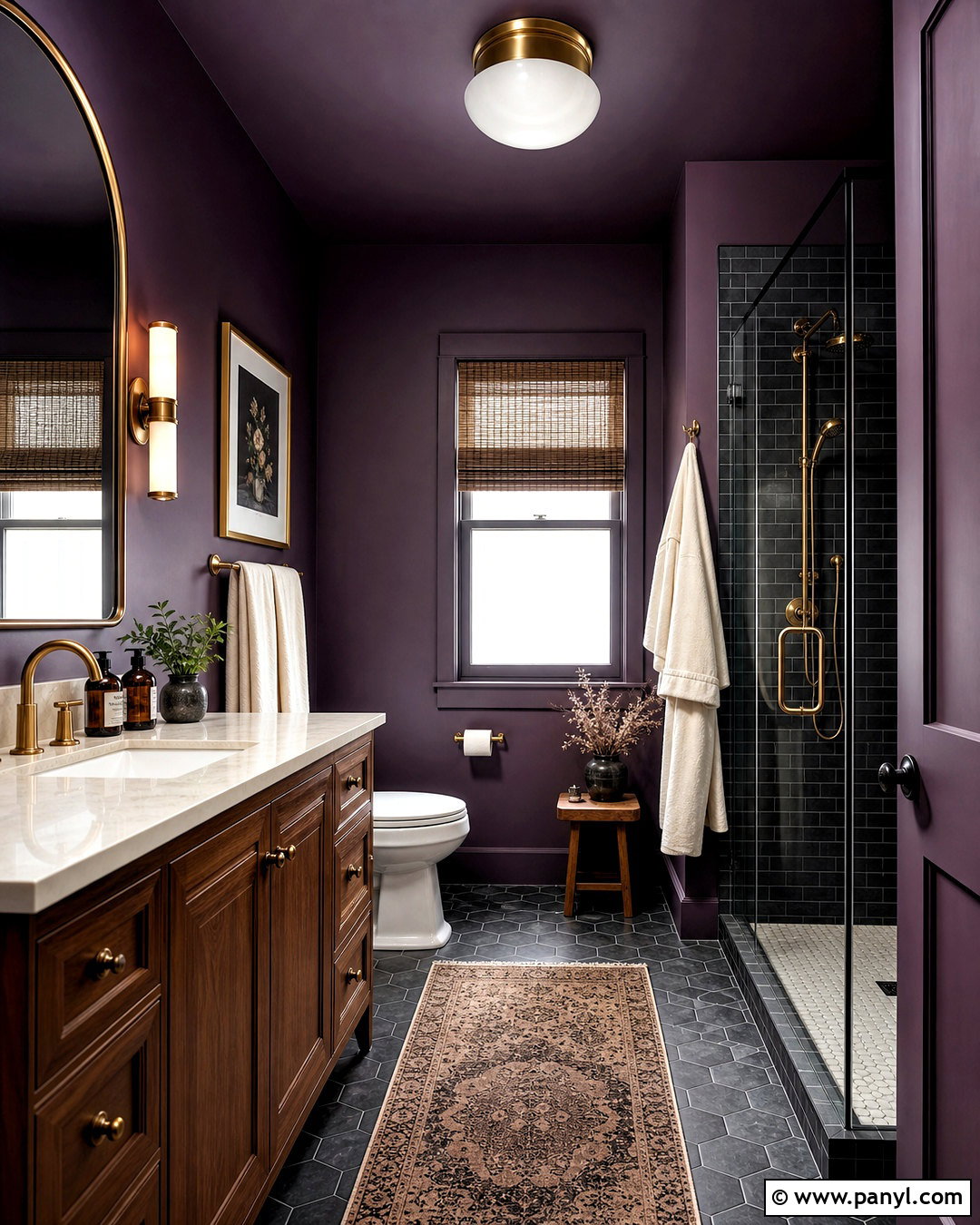
Eggplant purple offers the depth of black with a softer, more distinctive personality. Use it on every painted surface, including trim and cabinetry around built-in storage. Place a streamlined walnut vanity against the darkest wall and top it with pale gray quartz. Brushed nickel faucets and slim vertical sconces add a cool metallic note that prevents the palette from becoming too warm. Inside the shower, choose softly marbled gray porcelain tiles and a clear glass door. A large-format light gray floor creates a calm foundation. Introduce dusty lavender towels, ribbed glass containers, and one abstract print containing cream and plum. This bathroom feels dramatic but polished, with enough pale material around the sink, shower, and floor to define each practical area clearly.
9. Slate Blue Bathroom Walls With White Tile
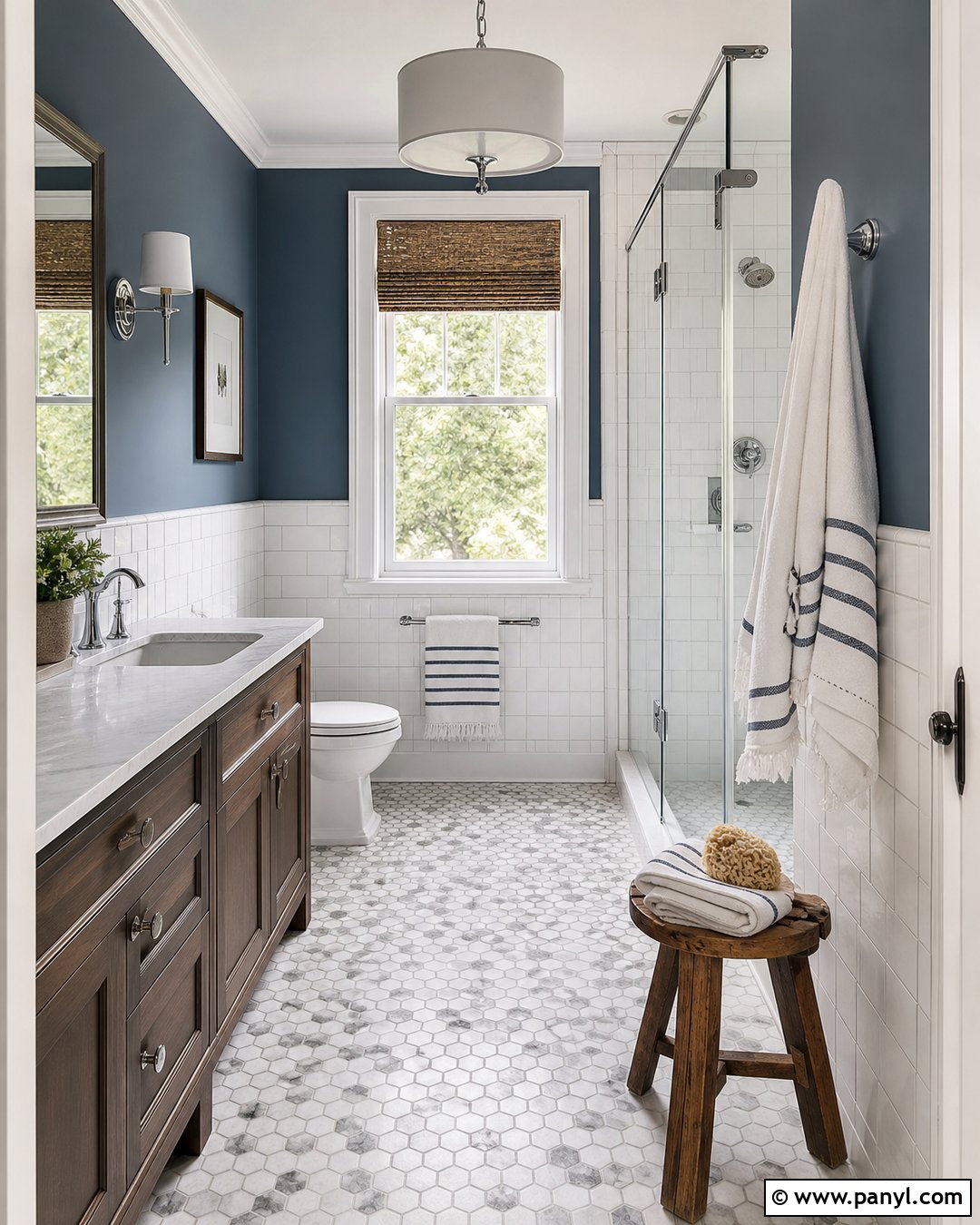
Slate blue walls deliver moody color while remaining quieter than traditional navy. Paint the upper walls in a deep blue-gray and use glossy white square tile across the lower half of the room. Continue that tile through the shower to create one bright, durable-looking surface. A dark oak vanity adds contrast without blending completely into the walls. Choose chrome fixtures, a frameless rectangular mirror, and simple glass sconces for a clean transitional finish. The floor can feature small gray-and-white hexagon tiles that connect the wall color with the white fixtures. Add striped hand towels and a narrow wooden stool beside the bathtub. The final room feels fresh, balanced, and familiar, making this approach an easy introduction to dark walls for homeowners who usually prefer neutral bathrooms.
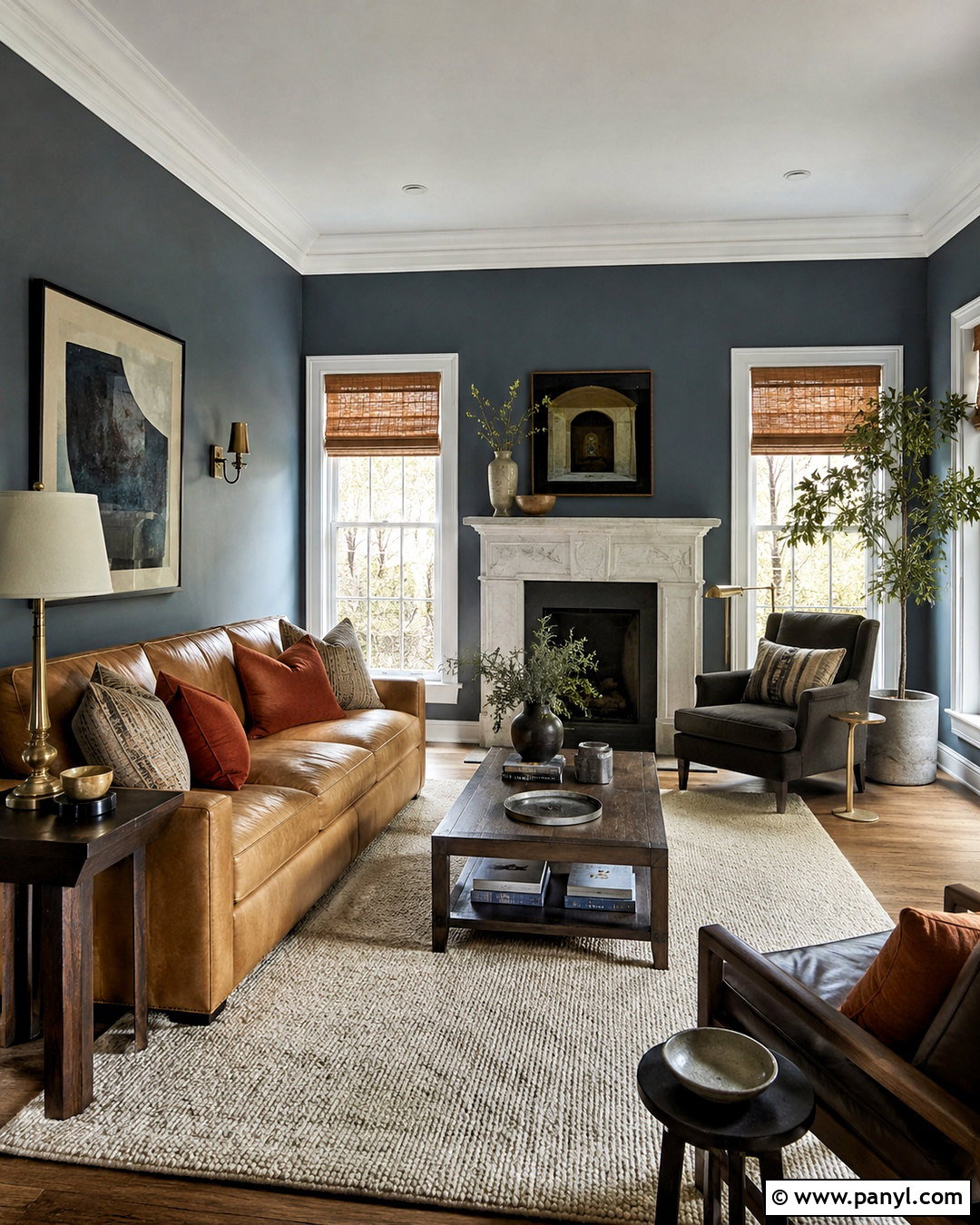
10. Black Beadboard Bathroom Walls
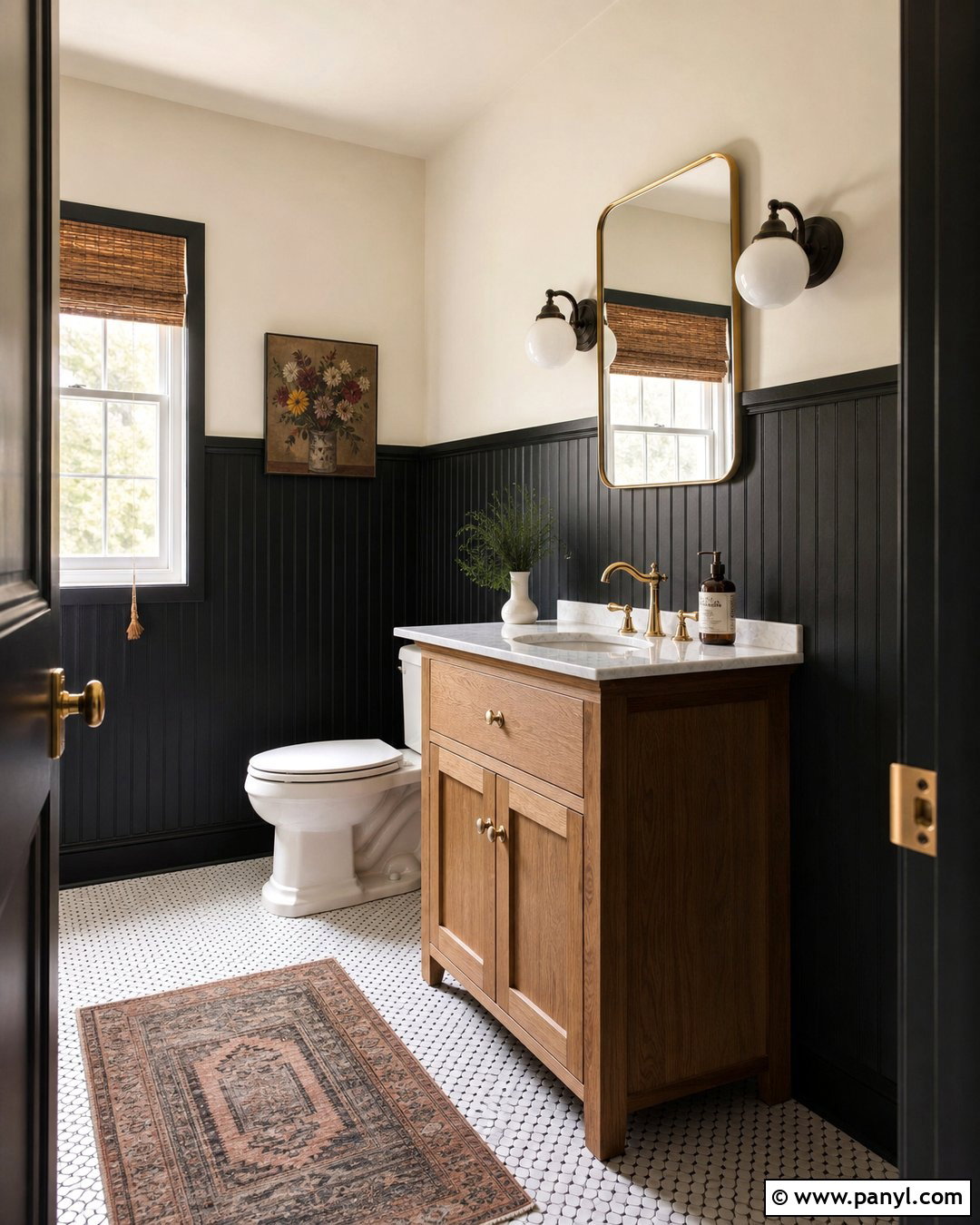
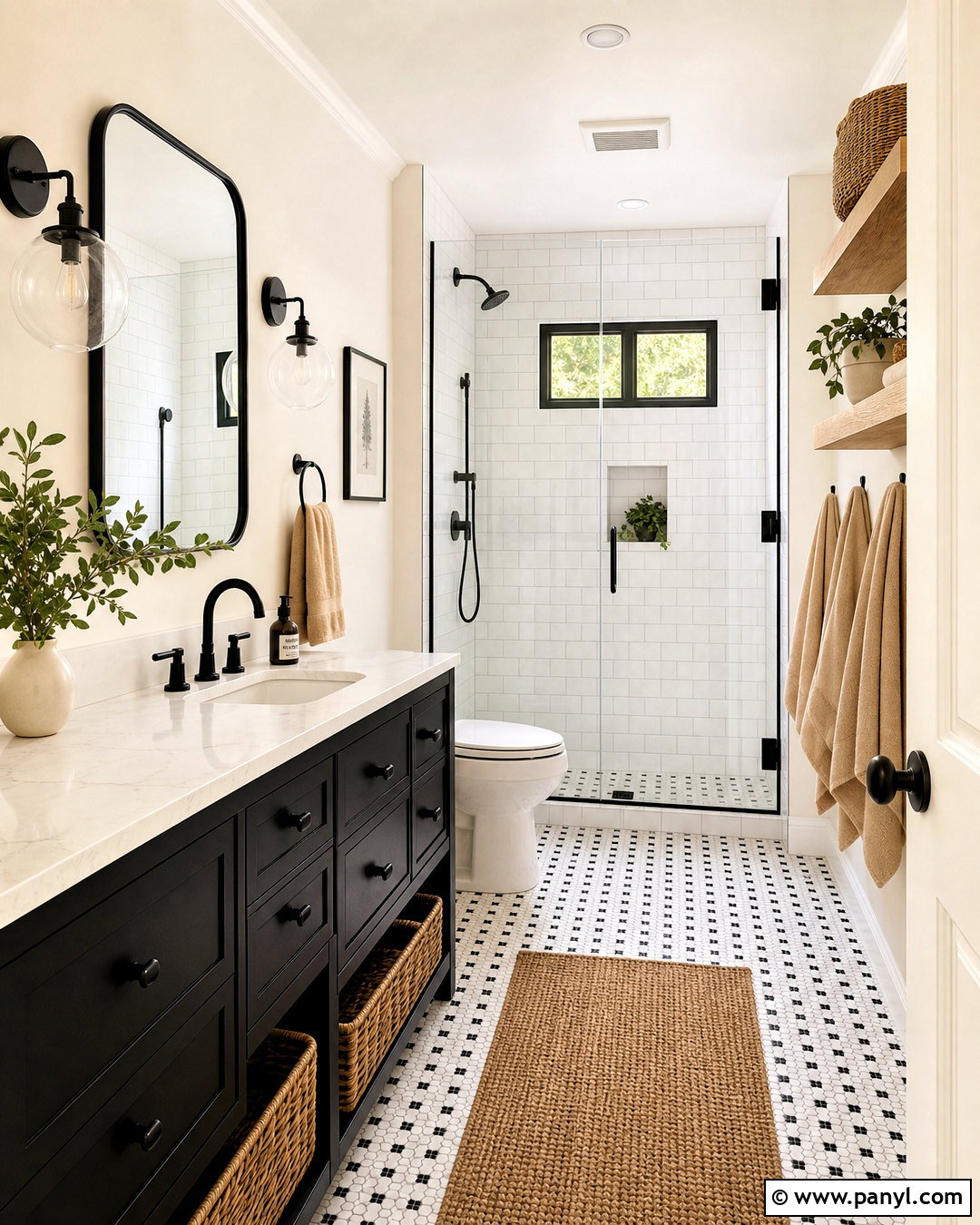
Black beadboard brings texture and architectural character to a small bathroom without requiring elaborate construction. Install it from the floor to approximately two-thirds of the wall height, then paint the upper walls and ceiling a warm off-white. A compact oak vanity with a white marble top prevents the lower half of the room from appearing too dense. Choose a black-framed mirror, unlacquered brass faucet, and traditional milk-glass sconces to combine modern and vintage influences. Small white penny tile works well underfoot and makes the beadboard stand out. Around the shower, use simple white subway tile with pale grout. Finish with cream towels, a woven shade, and a narrow framed print. The complete room feels detailed, approachable, and suitable for a modest home.
11. Dark Gray Bathroom Walls With Concrete
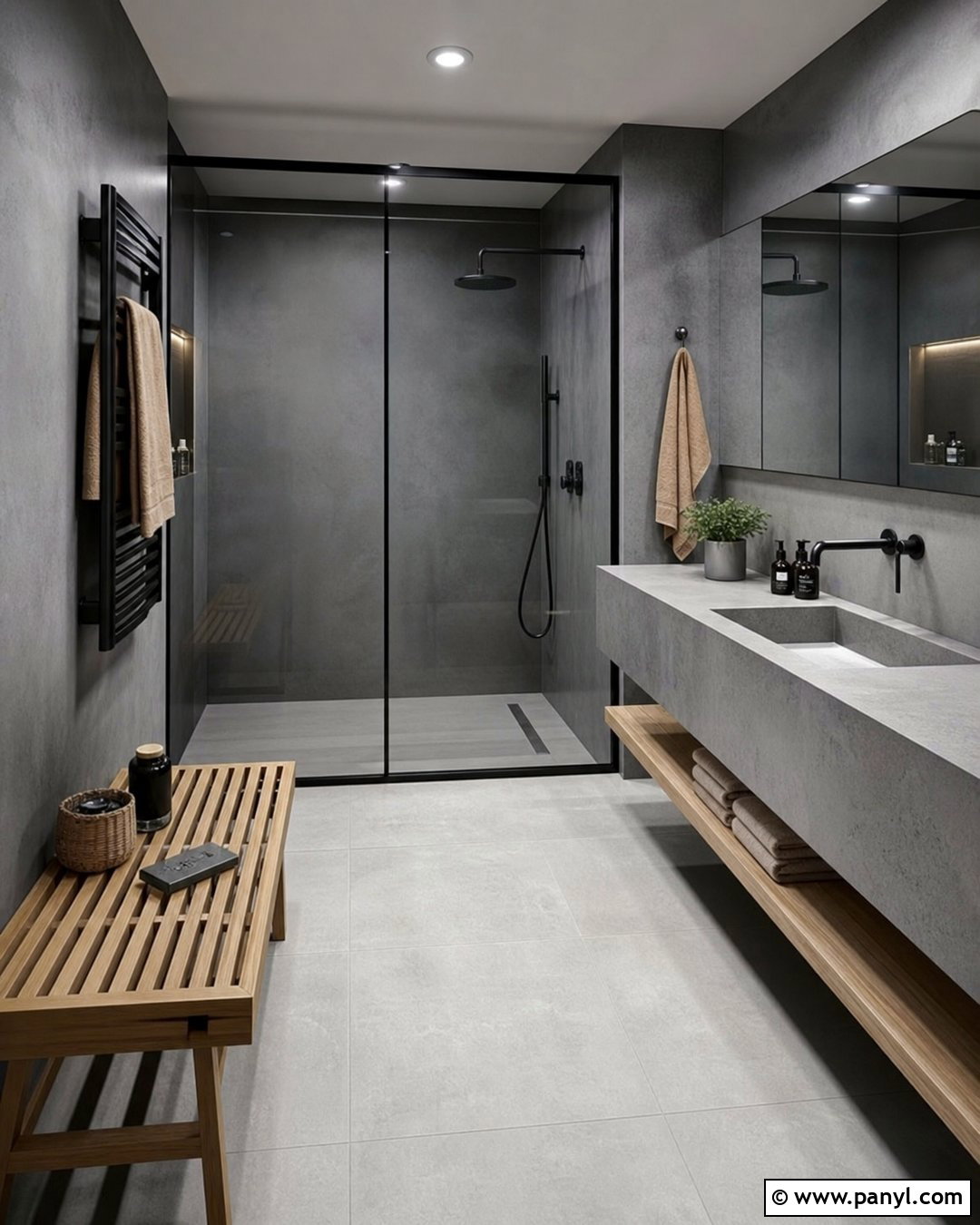
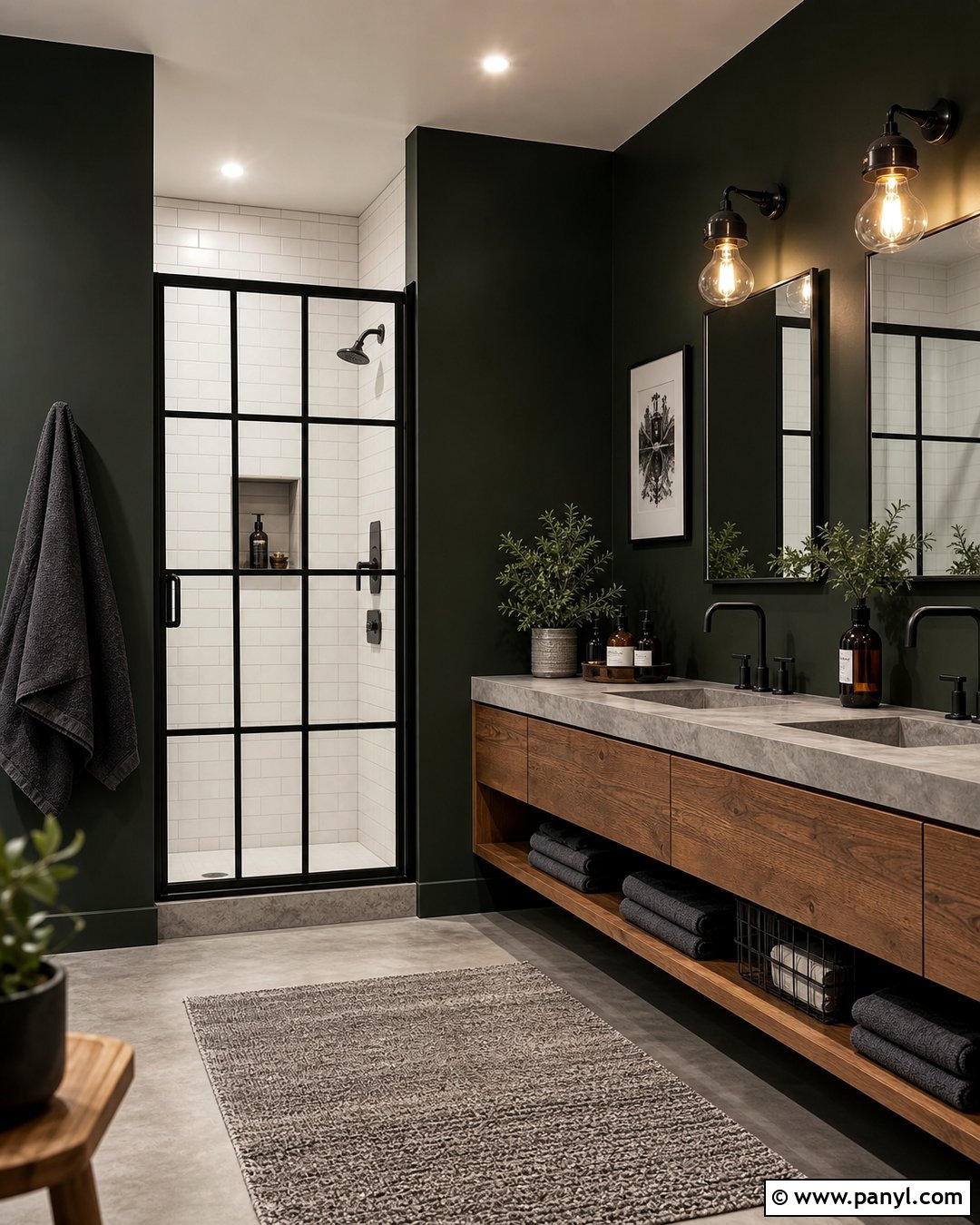
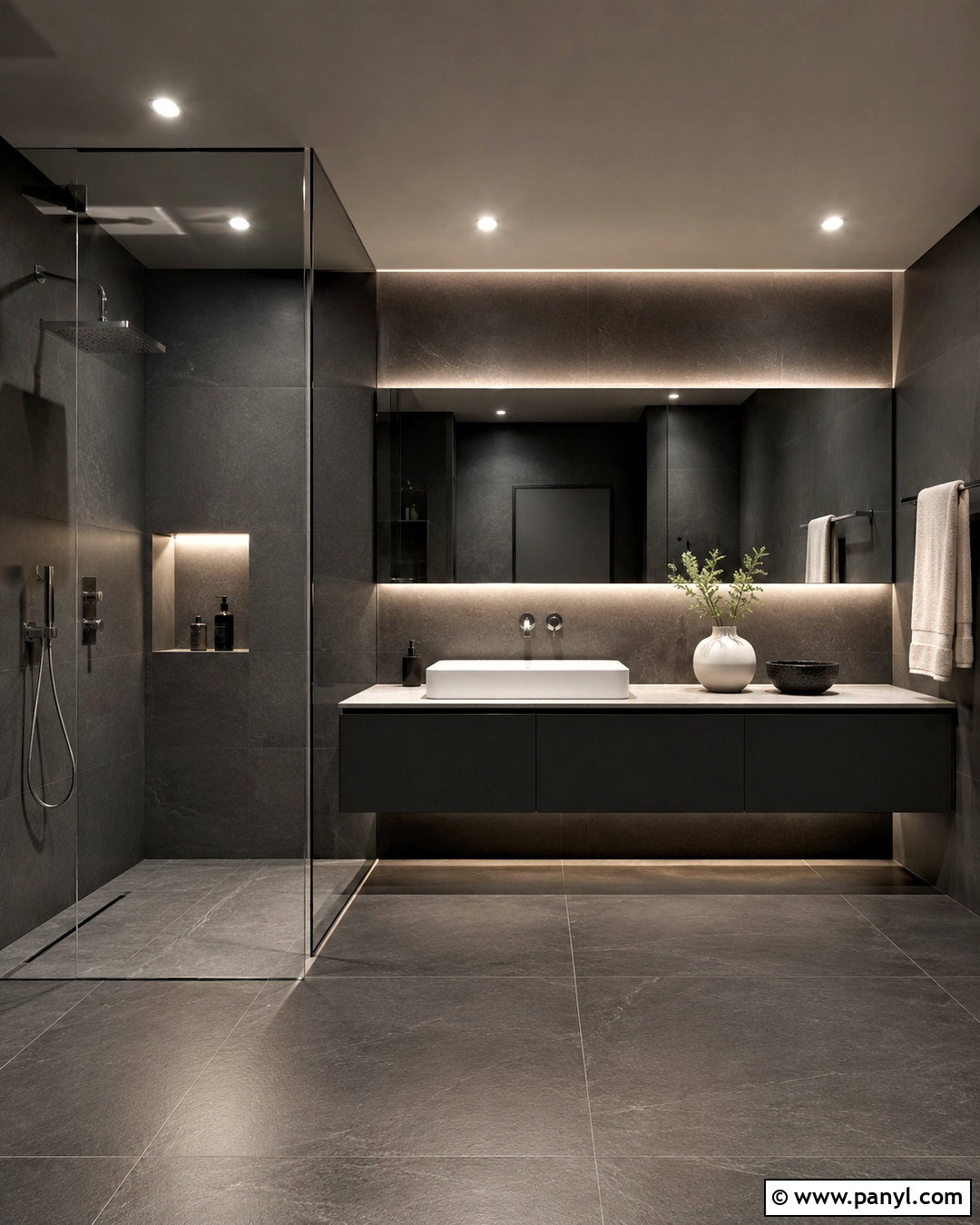
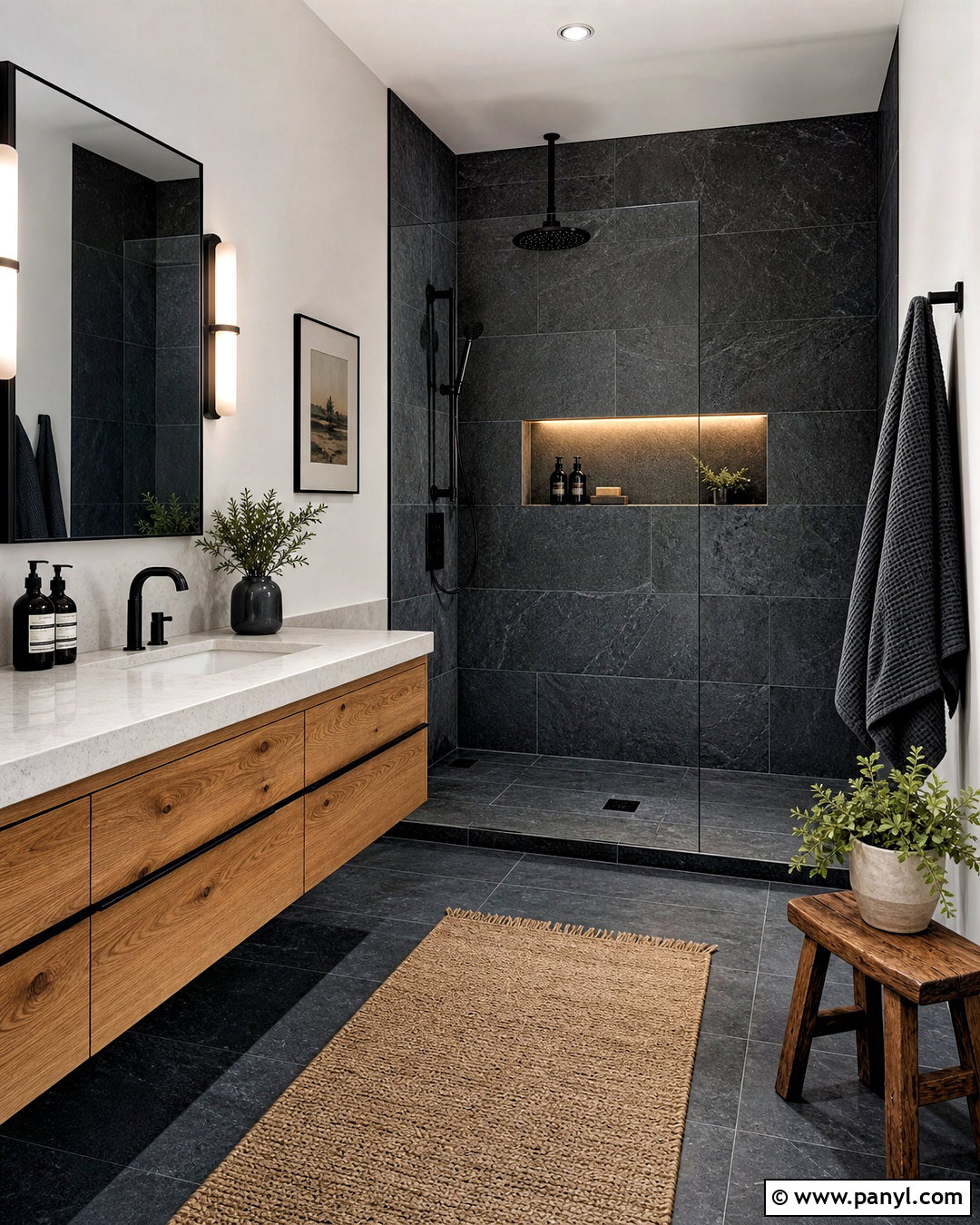
For an understated industrial bathroom, combine dark gray walls with smooth concrete surfaces and matte black hardware. Paint the walls a deep cement gray, then use a floating concrete-look vanity with an integrated rectangular sink. Continue similar large-format porcelain panels through the walk-in shower for a seamless appearance without covering every surface in identical material. Black wall-mounted faucets, shower fittings, and a thin mirror frame sharpen the design. Warm the room with a slatted oak bench, tan towels, and a small wood stool. The floor can be a slightly lighter gray tile to define the horizontal plane. Add linear vanity lighting and recessed ceiling fixtures so the bathroom remains functional. This restrained scheme feels urban and modern while the wood prevents it from becoming cold.
12. Dark Green Bathroom Walls With Black Tile
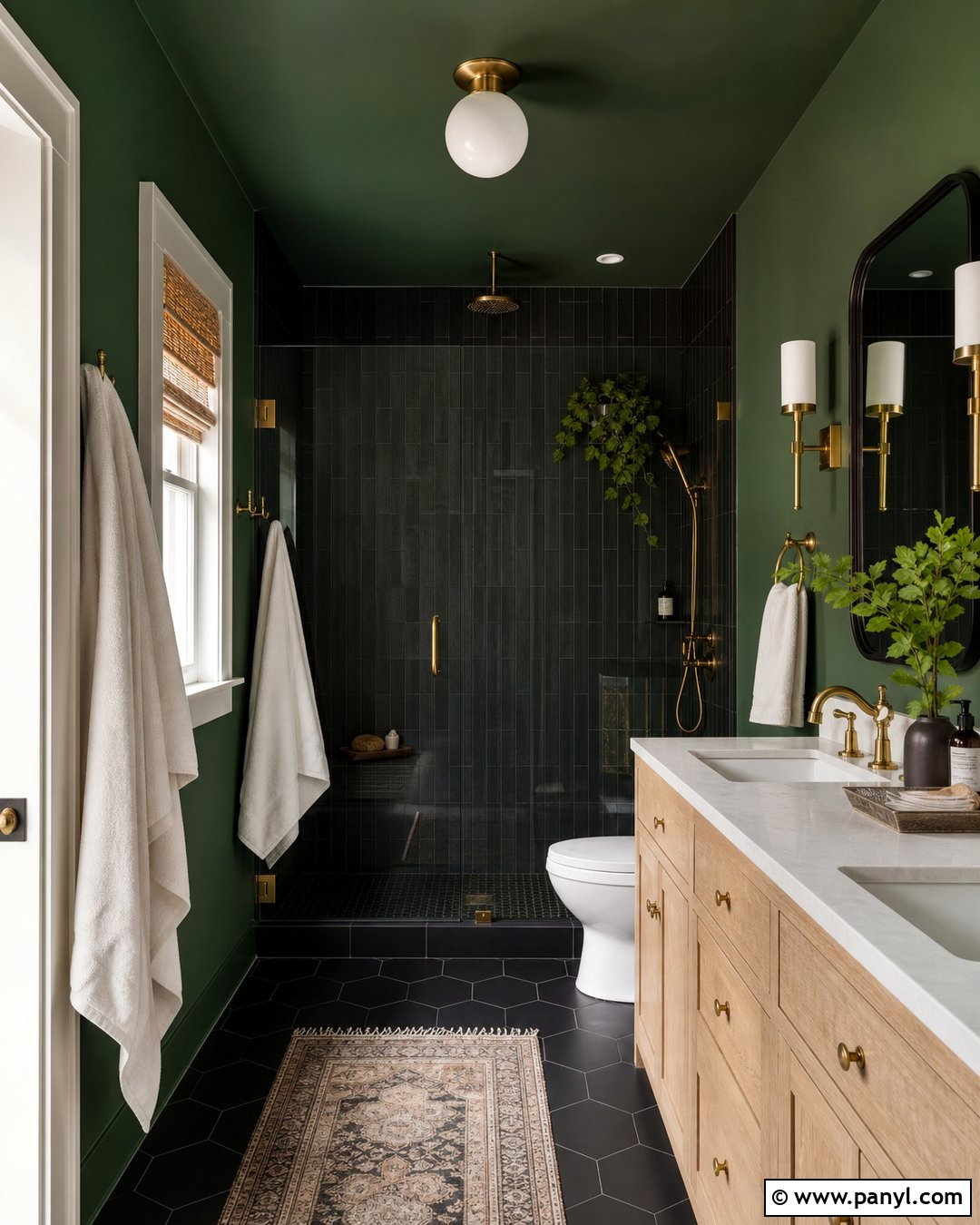
Dark green walls and black tile create an immersive bathroom that feels bold but connected to nature. Paint the vanity wall and ceiling a rich evergreen, then use matte black rectangular tile inside the shower and across the floor. A light oak vanity provides essential warmth and gives the eye a clear place to rest. Top it with white quartz and install a white vessel sink for controlled contrast. Brushed brass faucets, cabinet pulls, and sconces bring subtle brightness to the deeper palette. Add a frameless glass shower panel to avoid dividing the room visually. Cream towels, a natural linen shower mat, and one leafy plant complete the design. Keeping accessories simple allows the variation between green paint, black ceramic, wood, and metal to remain the main decorative feature.
13. Black Bathroom Walls With Wood Slats
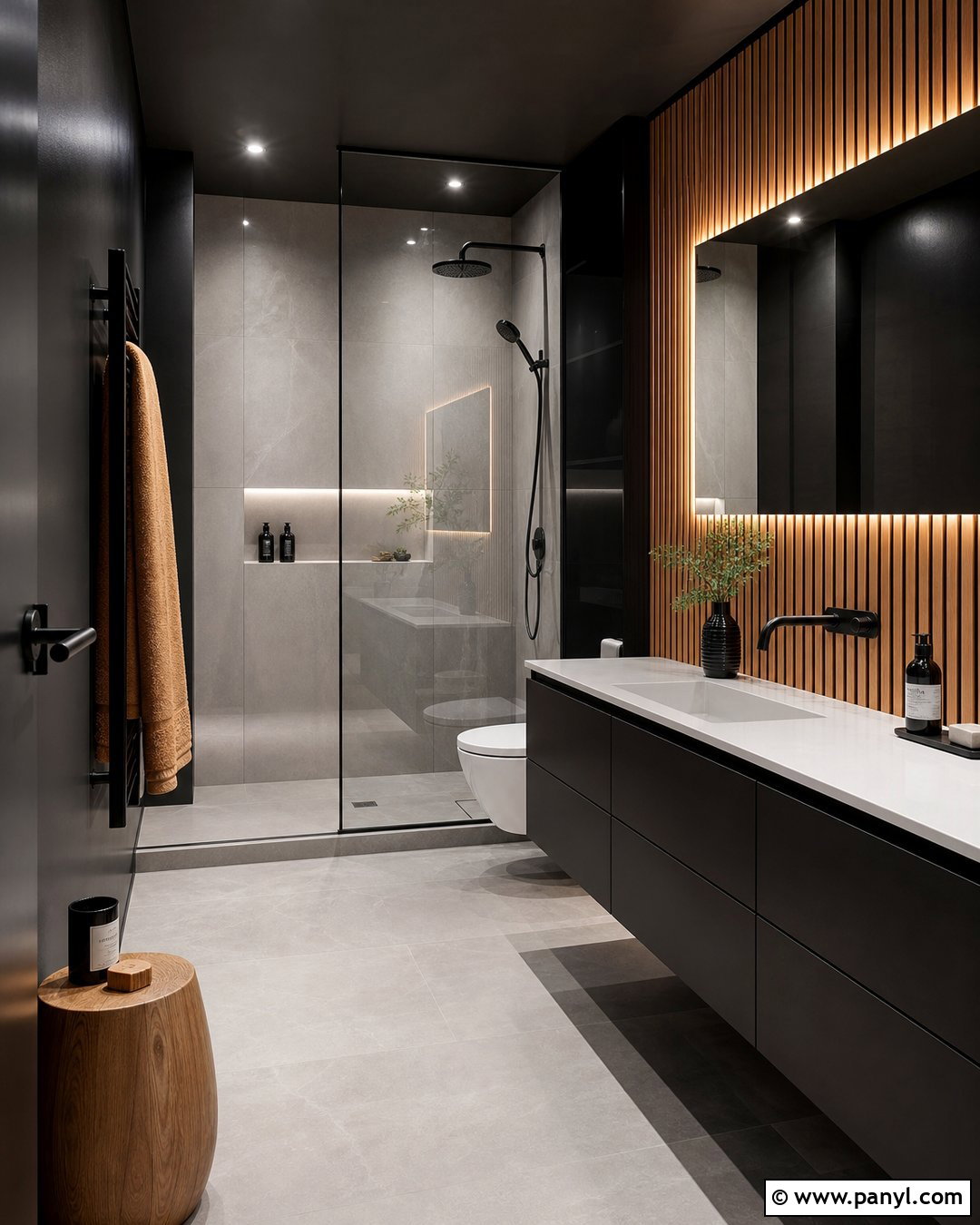
Matte black walls become warmer and more architectural when balanced with vertical wood slats. Cover the wall behind a floating vanity with evenly spaced oak slats, while painting the surrounding walls and ceiling black. Choose a black vanity that blends into the background and top it with a thick white quartz counter. Install a wide backlit mirror over the slatted section so soft illumination highlights the wood grain. Use pale gray floor tile and matching shower panels to keep the remaining surfaces quiet. Matte black fixtures maintain consistency, while camel-colored towels repeat the warmth of the oak. A frameless shower screen and wall-mounted toilet preserve open floor space. This bathroom has a contemporary spa character but remains realistic enough for an average primary suite.
14. Dark Floral Bathroom Walls
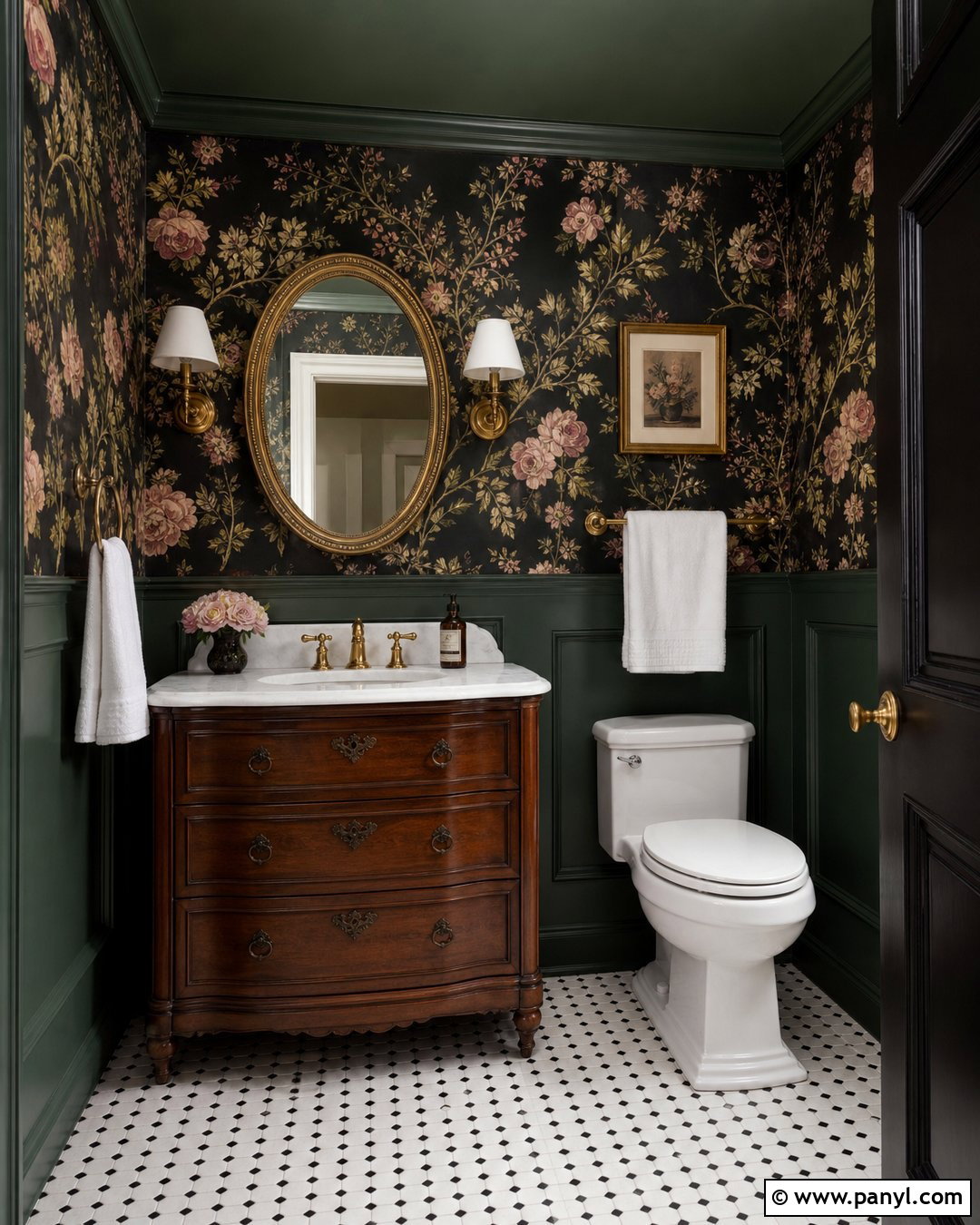
A dark floral wallpaper can turn a powder room into a complete decorative moment. Choose a moisture-suitable black-background pattern featuring muted green leaves, dusty rose flowers, and small cream details. Use the wallpaper on every wall above deep green wainscoting, then paint the ceiling the same green for a connected finish. A vintage-style walnut vanity with a white marble top supports the traditional mood. Select aged brass faucets, a decorative oval mirror, and shaded wall sconces. Black-and-white mosaic flooring adds pattern at a smaller scale without copying the floral motif. Keep the toilet, sink, and towels bright white to create clean visual breaks. Because the room already includes strong pattern and color, limit accessories to a small tray, framed miniature artwork, and one simple vase.
15. Dark Blue Bathroom Walls With Coastal Decor
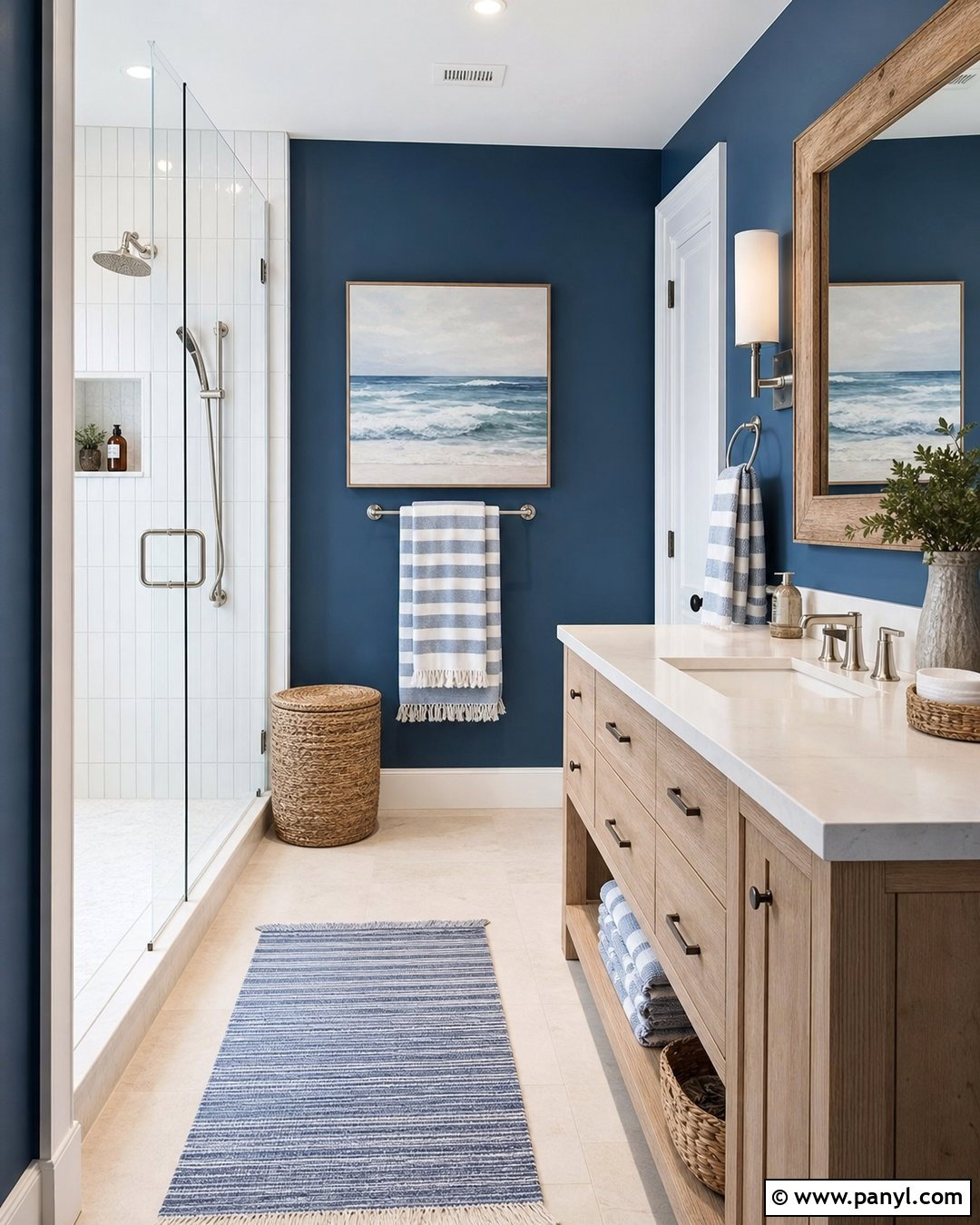
Dark blue walls can support coastal decor without relying on anchors, shells, or obvious nautical symbols. Select a deep ocean blue for the walls and pair it with a bleached oak vanity, white quartz counter, and brushed nickel fixtures. Use narrow white tiles in the shower, arranged vertically to give the room a taller appearance. A pale limestone-look floor adds a sandy undertone that complements the wood. Hang a large round mirror with a light oak frame and install simple opal glass sconces on each side. Soft striped towels, a woven basket, and one abstract seascape provide enough coastal character. The finished bathroom feels breezy despite the saturated walls because the remaining materials stay pale, natural, and clean, creating a relaxed scheme suitable for everyday use.
16. Charcoal Bathroom Walls With Black Fixtures
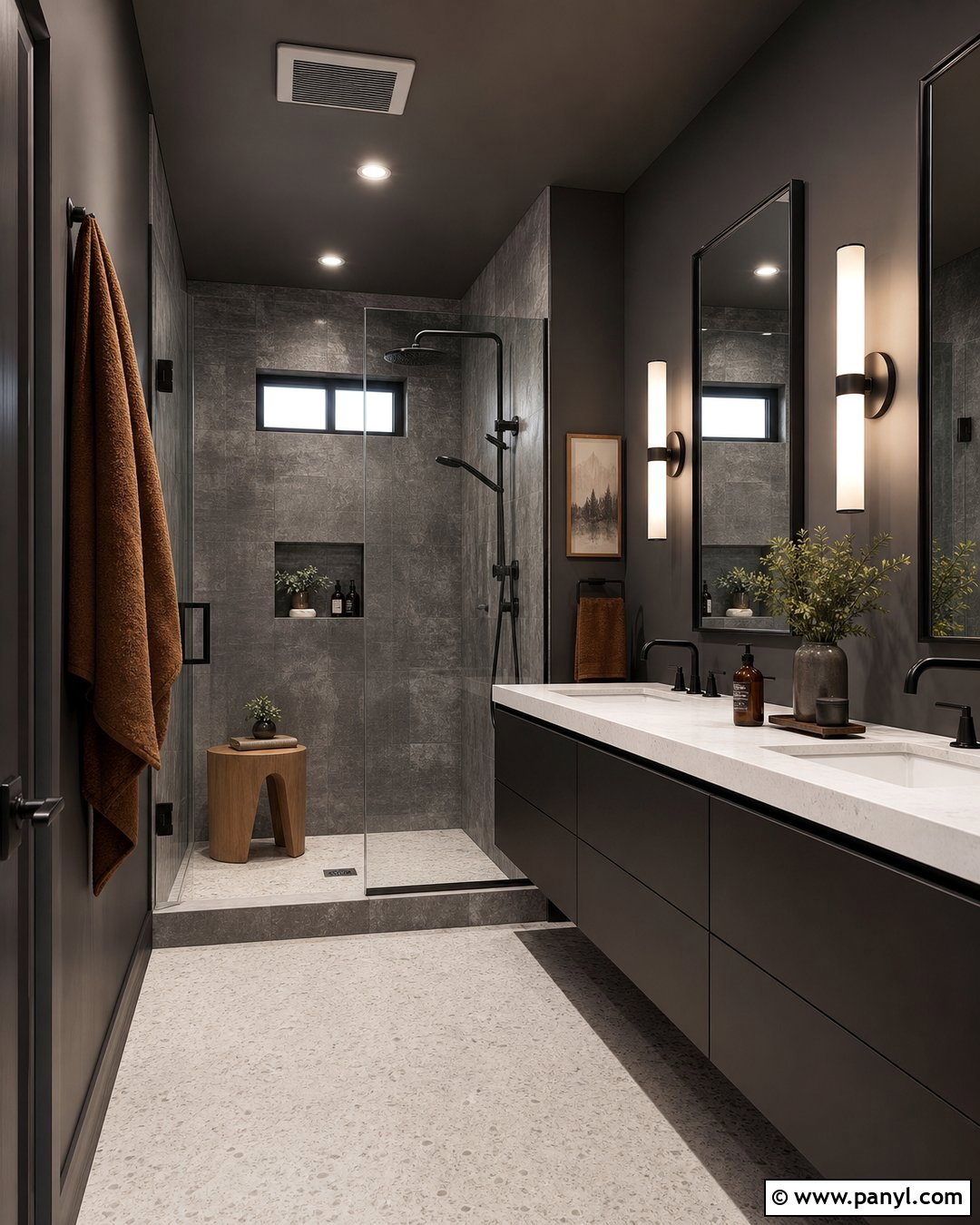
Layering charcoal walls with black fixtures creates subtle depth rather than high contrast. Start with warm charcoal paint across the walls and ceiling, then install a black floating vanity with a thin white countertop. A matte black faucet, shower frame, mirror, and towel rail continue the tonal approach. Use smoky gray shower tile with slight color variation so the enclosure does not disappear completely. Pale gray terrazzo flooring containing black and white chips helps connect every finish. Bring warmth through cognac-colored towels, a natural oak stool, and a woven storage basket. Two vertical frosted sconces provide symmetry around the mirror. This coordinated bathroom works best when the finishes vary slightly in sheen, allowing matte paint, ceramic tile, metal, glass, and terrazzo to remain visually distinct.
17. Dark Olive Bathroom Walls With Beige Stone
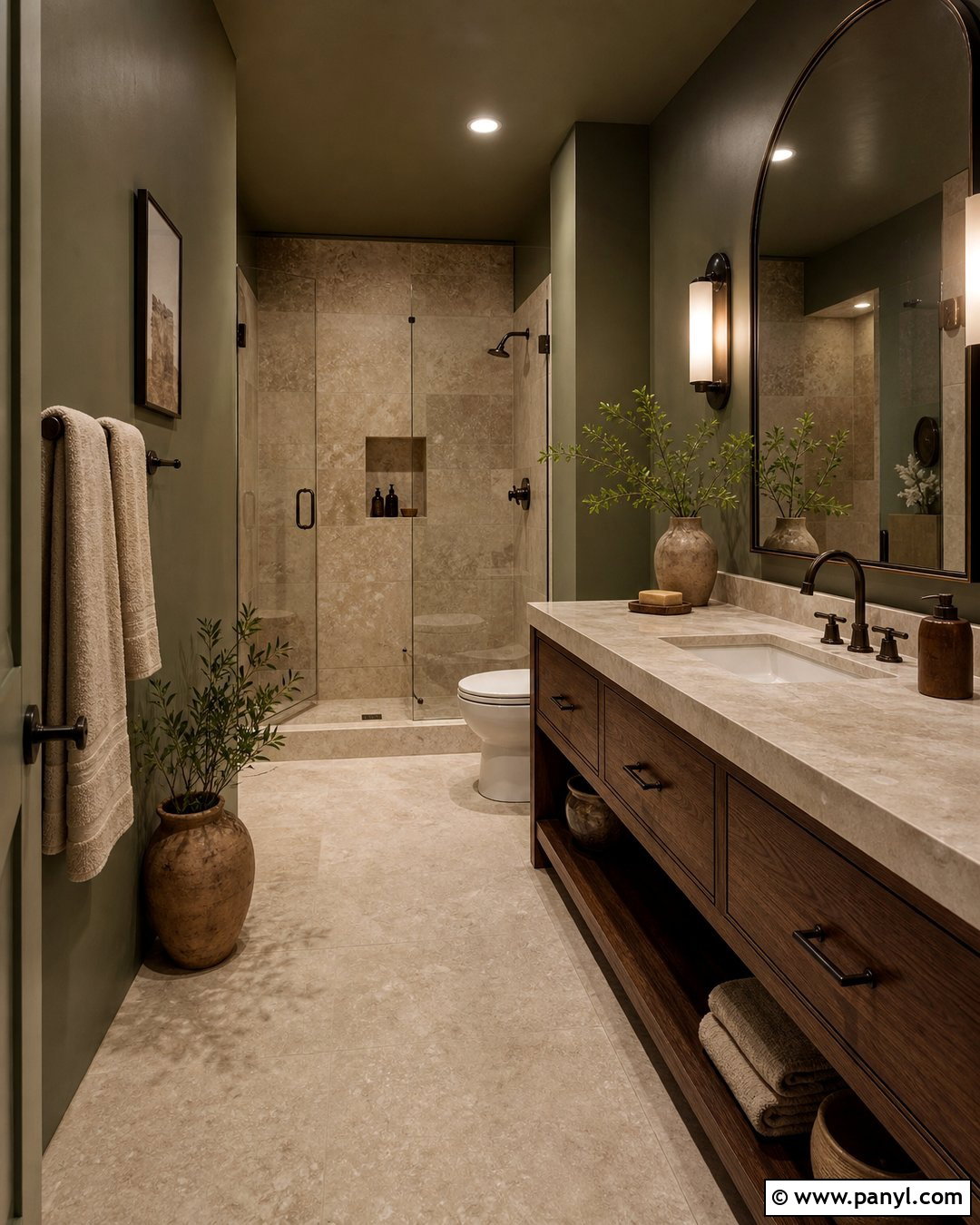
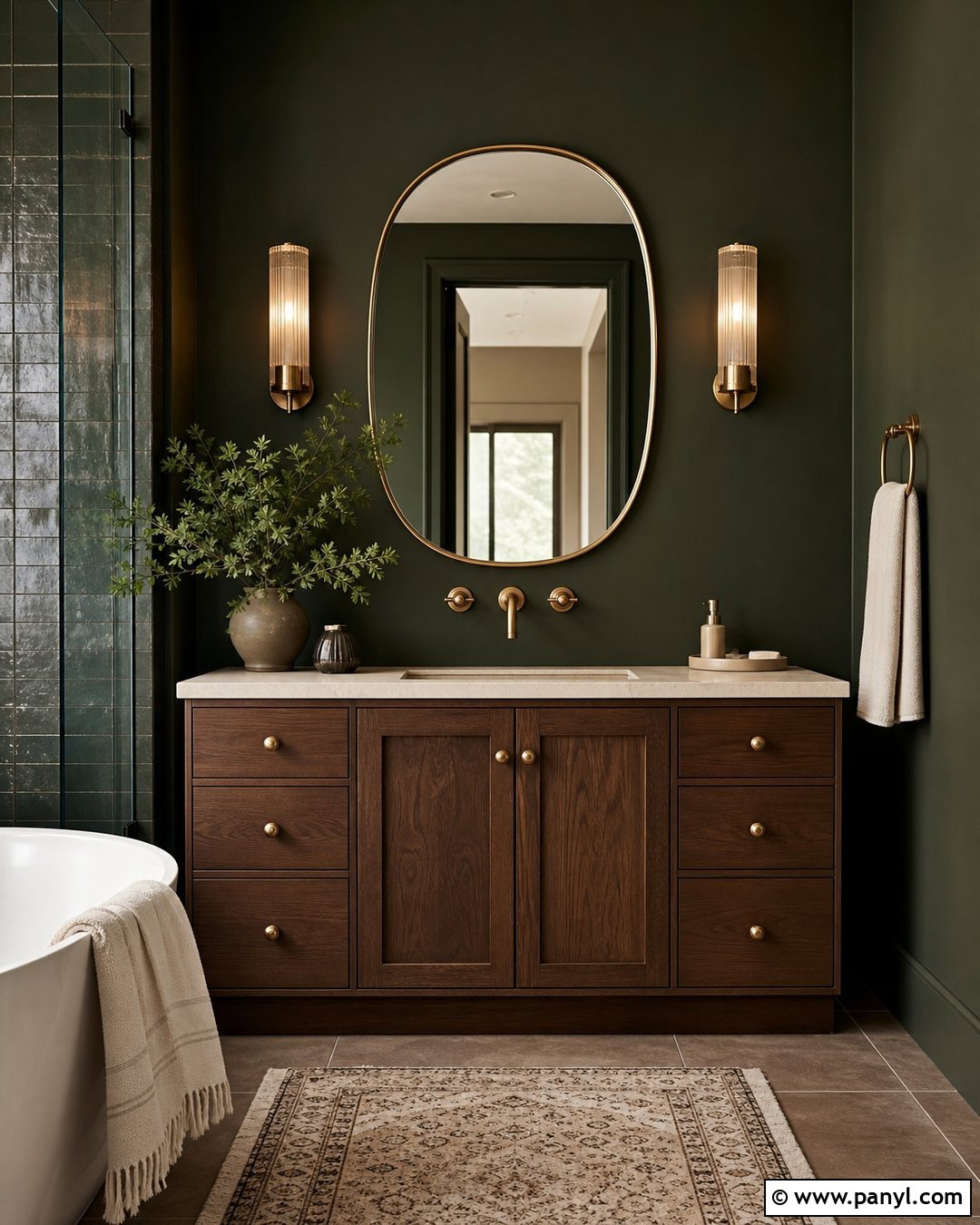
Dark olive walls offer an earthy alternative to forest green, especially when paired with beige stone. Paint the walls, trim, and ceiling in a muted olive shade with warm undertones. Use limestone-look porcelain across the floor and throughout a generous walk-in shower. A walnut vanity with a creamy stone counter reinforces the natural palette. Choose aged bronze fixtures rather than bright brass for a softer transition between brown, green, and beige. An arched mirror and two simple ceramic sconces introduce gentle curves. Add oatmeal towels, a low wooden bench, and handmade clay accessories for texture. The finished space feels grounded and quietly luxurious. Since every color shares a warm undertone, the bathroom remains cohesive even though it combines painted surfaces, wood grain, stone patterns, metal, and fabric.
18. Black Bathroom Walls With Checkerboard Floor
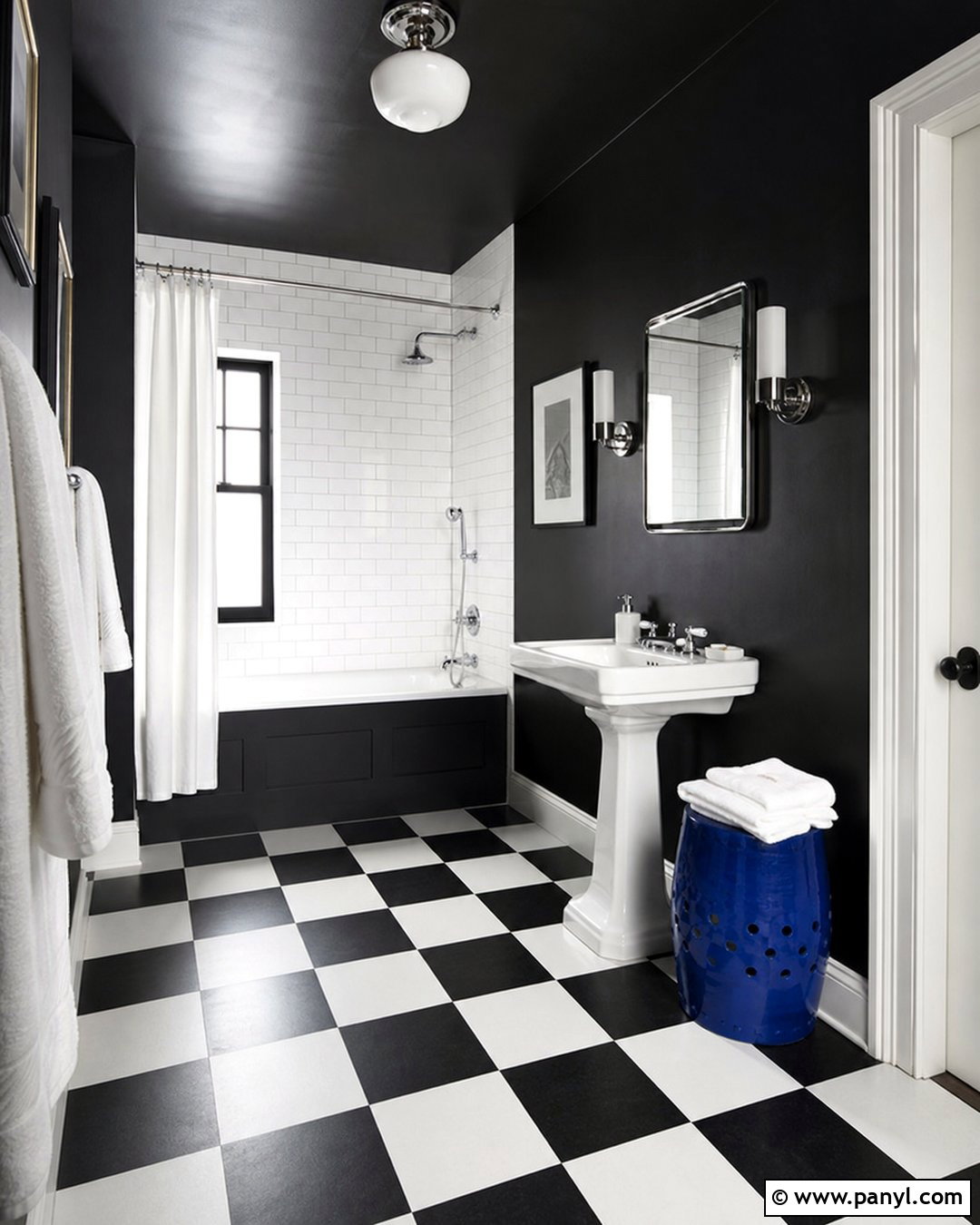
A checkerboard floor gives black bathroom walls a crisp, graphic foundation. Paint the walls and ceiling matte black, then install large black-and-white floor tiles in a classic grid. Choose a white pedestal sink or compact white vanity to stand clearly against the dark background. Polished chrome fixtures bring a brighter, cleaner finish than matte black hardware. Use white subway tile around the bathtub, finishing it with black grout and a narrow black border. A large rectangular mirror helps reflect the white surfaces throughout the room. Keep window treatments and towels white, then introduce one red or cobalt blue stool as a controlled accent. The entire bathroom feels energetic and timeless because the bold contrast appears across the architecture, fixtures, and flooring rather than through scattered decorations.
19. Dark Brown Bathroom Walls With Brass
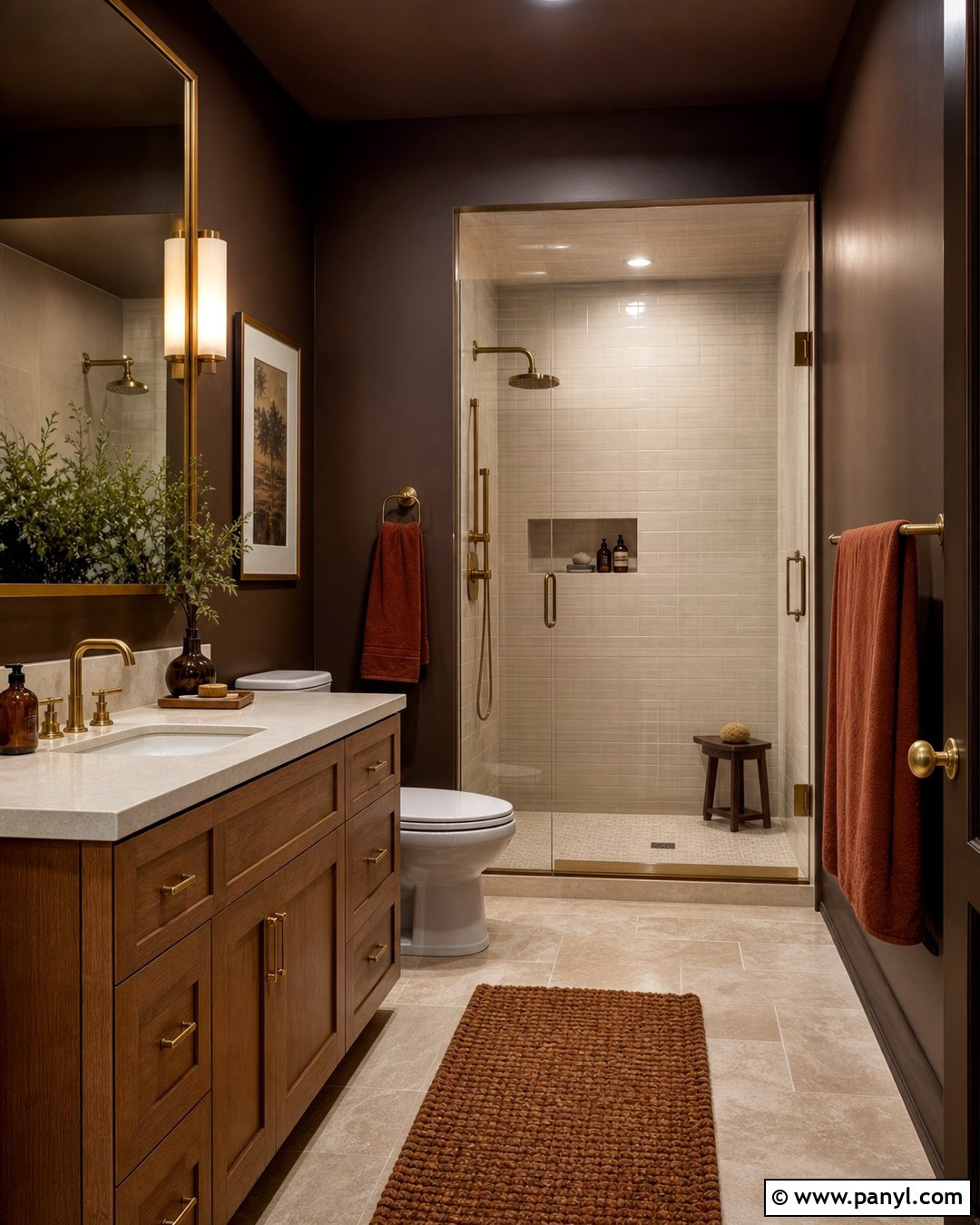
Deep brown walls paired with brass create a bathroom that feels warm, tailored, and comfortable. Choose an espresso-brown paint with subtle red undertones, then use it across the walls, ceiling, and trim. Install a medium oak vanity so its grain remains visible against the darker background. A cream quartz countertop, rectangular undermount sink, and warm white shower tile keep the design from becoming too shadowy. Repeat brushed brass through the faucet, mirror frame, sconces, shower fittings, and cabinet hardware. Use beige porcelain flooring with a light stone texture to anchor the room. Finish with rust-colored towels, a woven bath mat, and simple amber glass containers. The result has depth and elegance while still feeling approachable enough for a guest bathroom or everyday primary suite.
20. Dark Plum Bathroom Walls With Marble
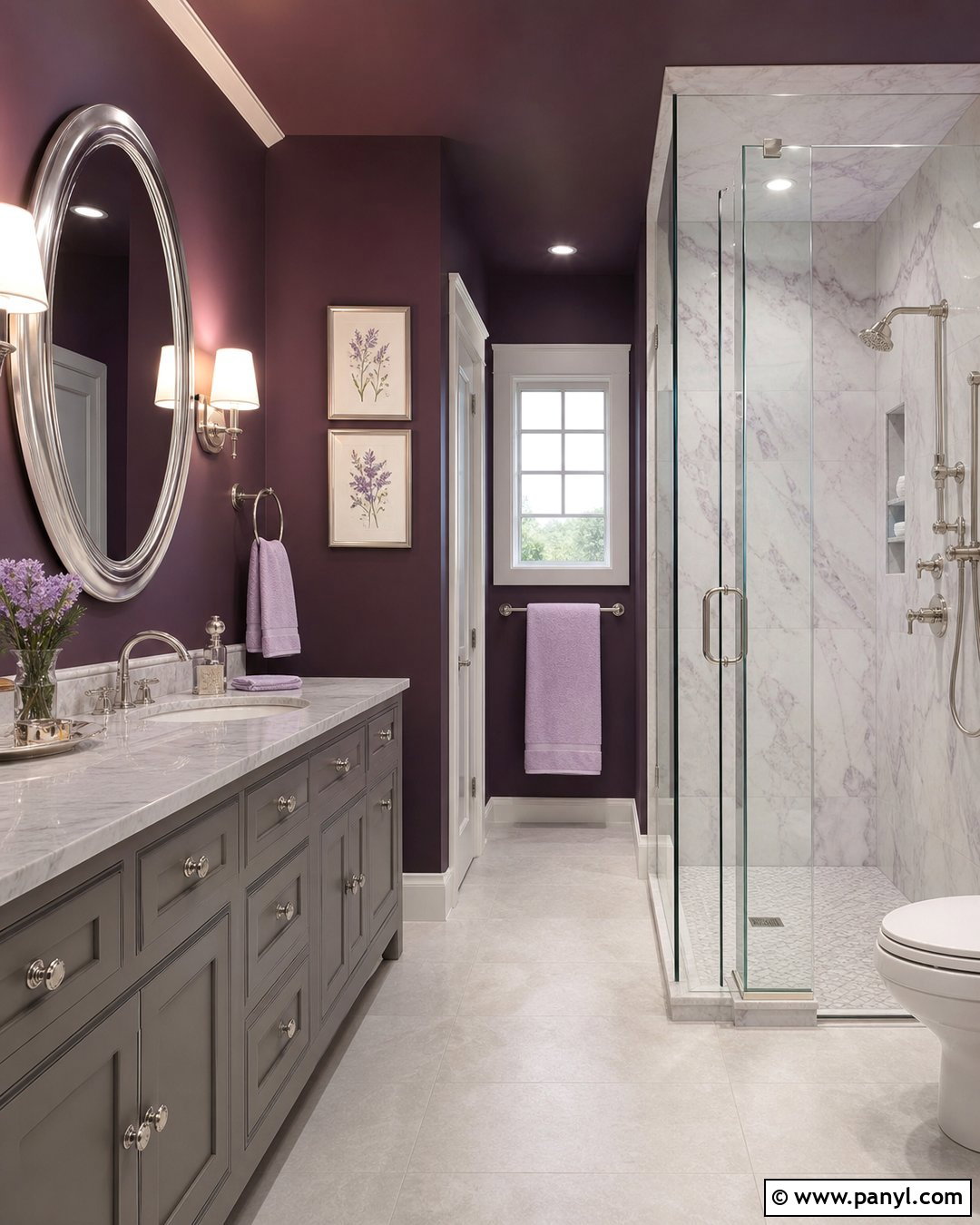
Dark plum walls provide rich color without the formality of black or navy. Pair them with soft white marble tile featuring quiet lavender-gray veining. Use the marble around the shower, behind the bathtub, and as the countertop on a warm gray vanity. Polished nickel fixtures add a gentle reflective finish that suits the cool undertones. Continue plum paint across the ceiling for an immersive effect, but keep the trim warm white to frame doors and windows. A pale gray porcelain floor supports the palette without adding another pattern. Choose a silver-framed oval mirror, small glass sconces, and light lavender towels. With carefully repeated purple, gray, and white tones, the entire room feels coordinated and graceful rather than overly colorful or heavily decorated.
21. Dark Bathroom Walls With Light Wood Vanity
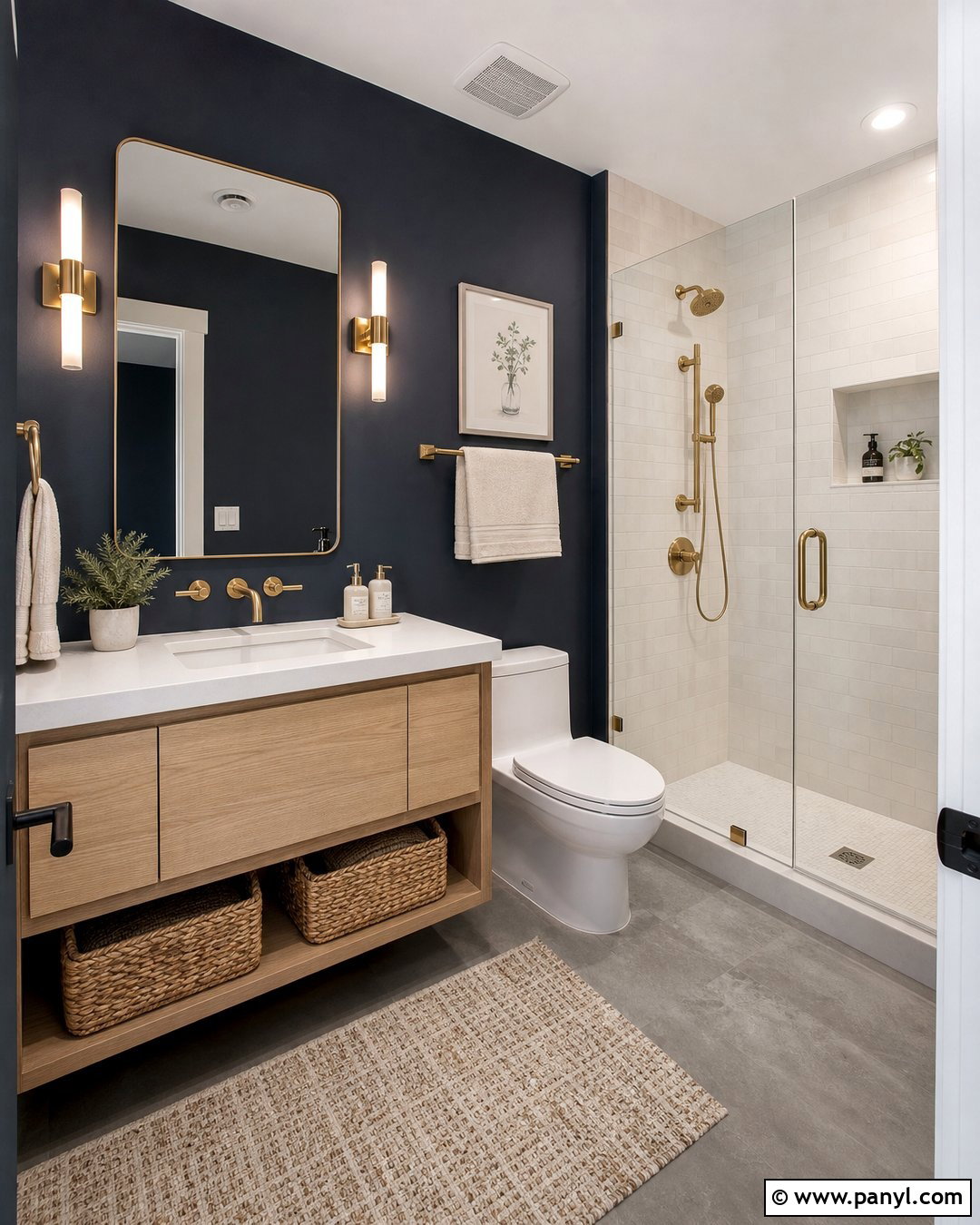
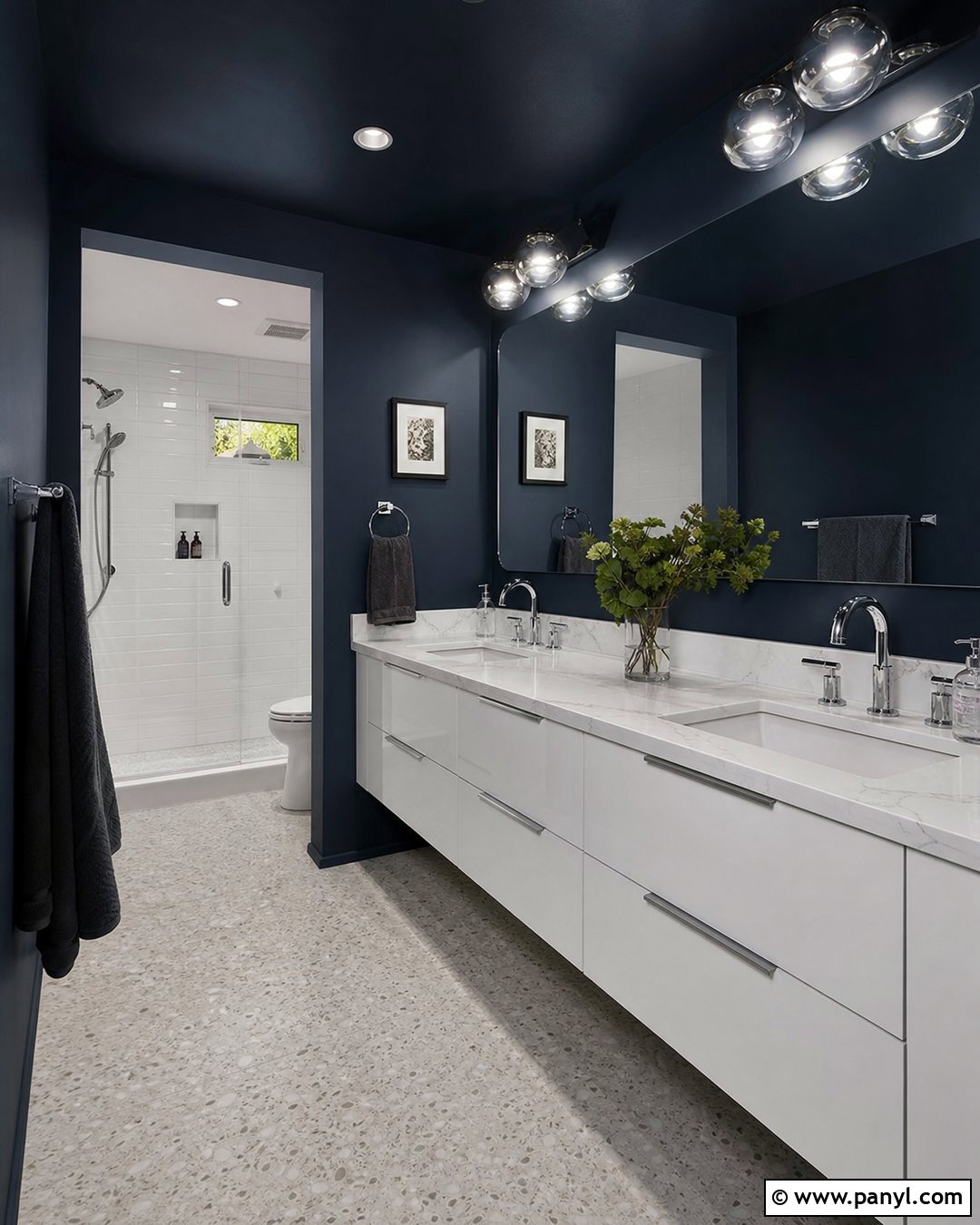
Light wood can transform almost any dark-walled bathroom into a warmer and more balanced space. Paint the walls a near-black blue and place a pale white oak vanity at the center of the design. Select flat-panel cabinetry, a white quartz top, and an integrated sink for a clean modern profile. Large off-white tiles can cover the shower walls, while light gray porcelain provides an easy transition across the floor. Use brushed brass fixtures for warmth or polished nickel for a cooler finish. A wide frameless mirror reflects the pale vanity and shower surfaces. Add cream towels, woven baskets, and a simple linen window shade. This complete approach is especially useful in compact bathrooms because the floating vanity exposes more flooring and makes the darker background feel intentional.
22. Dark Bathroom Walls With White Wainscoting
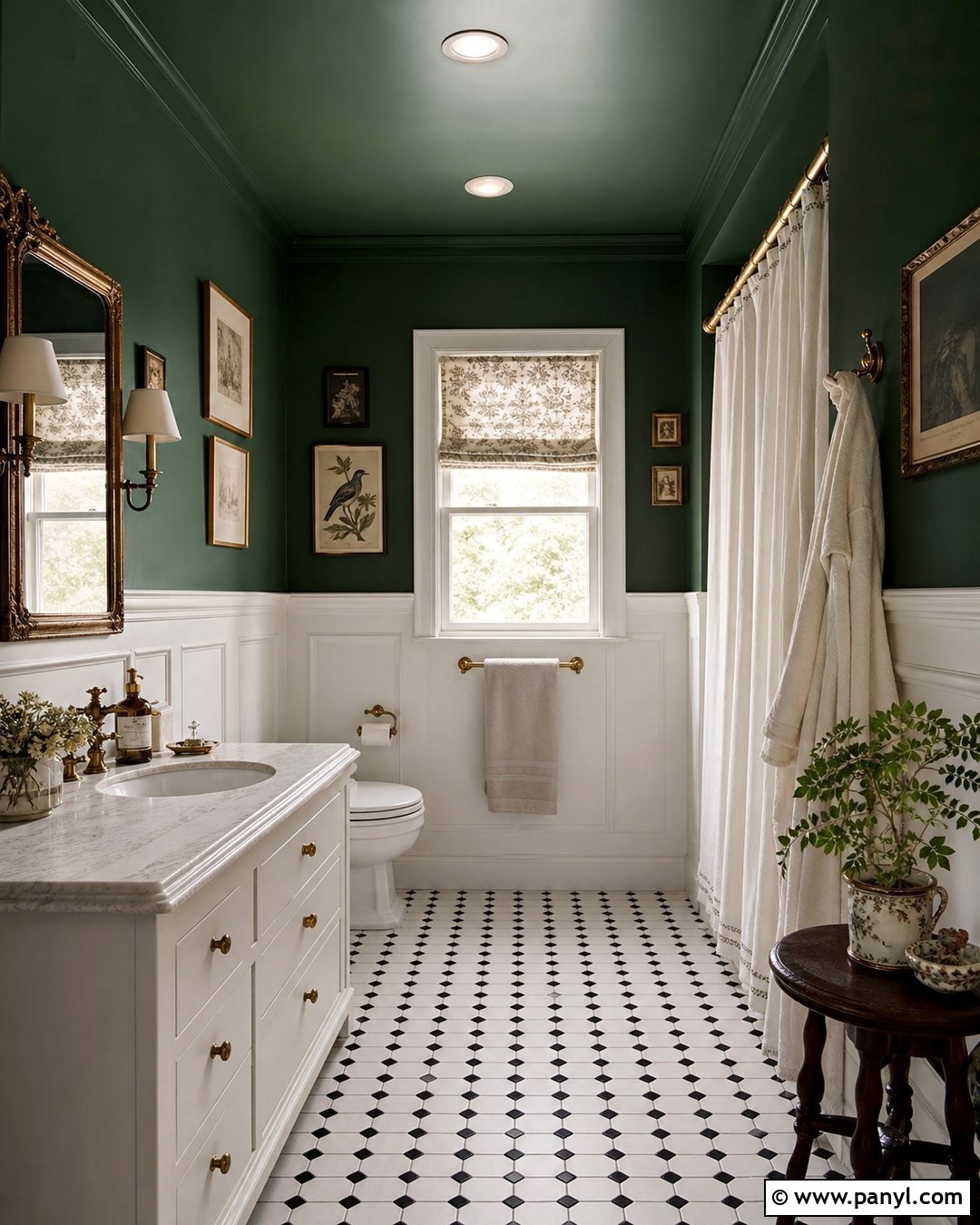
White wainscoting offers a practical-looking visual break beneath deeply colored bathroom walls. Install traditional paneled wainscoting around the lower third of the room and paint it a warm white. Above it, use deep navy, charcoal, or bottle green paint across the walls and ceiling. A white vanity with a marble counter keeps the lower half bright, while an antique brass mirror and faucet introduce warmth. Choose small black-and-white hexagon floor tiles to connect both halves of the color scheme. Inside the shower, continue white tile to the ceiling and add a narrow dark border. Finish with dark hand towels, framed vintage prints, and a fabric Roman shade. The bathroom feels classic and structured, making it suitable for traditional homes, cottages, and older properties with existing architectural details.
23. Dark Bathroom Walls With Freestanding Tub
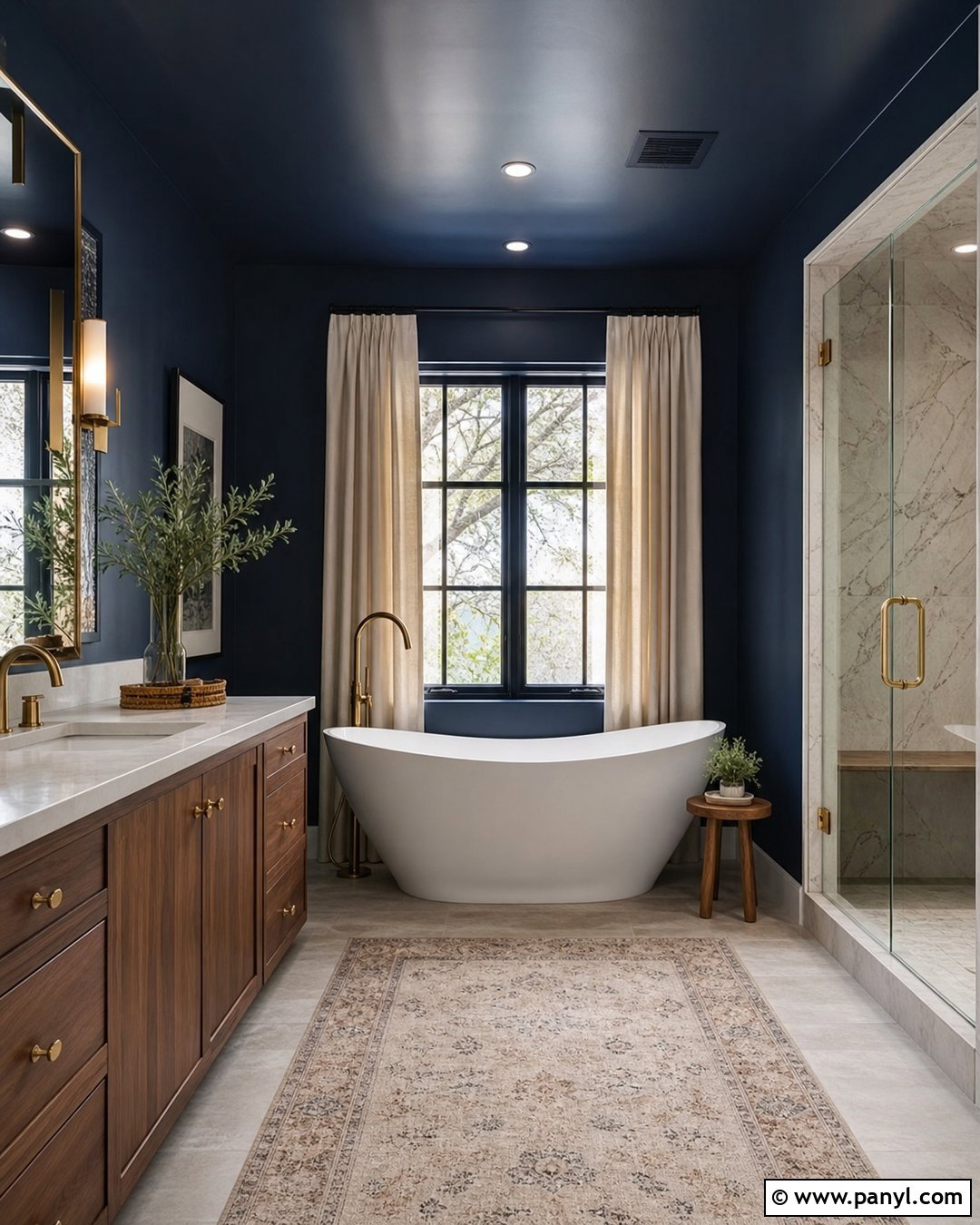
A white freestanding tub becomes a striking focal point against dark bathroom walls. Paint the room deep charcoal or midnight blue, including the ceiling and window trim. Center a sculptural white tub beneath the window or along the longest wall, then install a brushed brass floor-mounted faucet beside it. Use pale stone flooring to outline the tub and reflect light around its base. A walnut vanity with a white counter balances the warmth of the metal and the coolness of the walls. Add a frameless shower with light marble-look tile at the opposite end. Linen curtains, cream towels, and a narrow wood stool make the bathing area feel comfortable. The final layout celebrates the tub while keeping every supporting material connected to the larger dark-wall palette.
24. Dark Bathroom Walls With Color Drenching
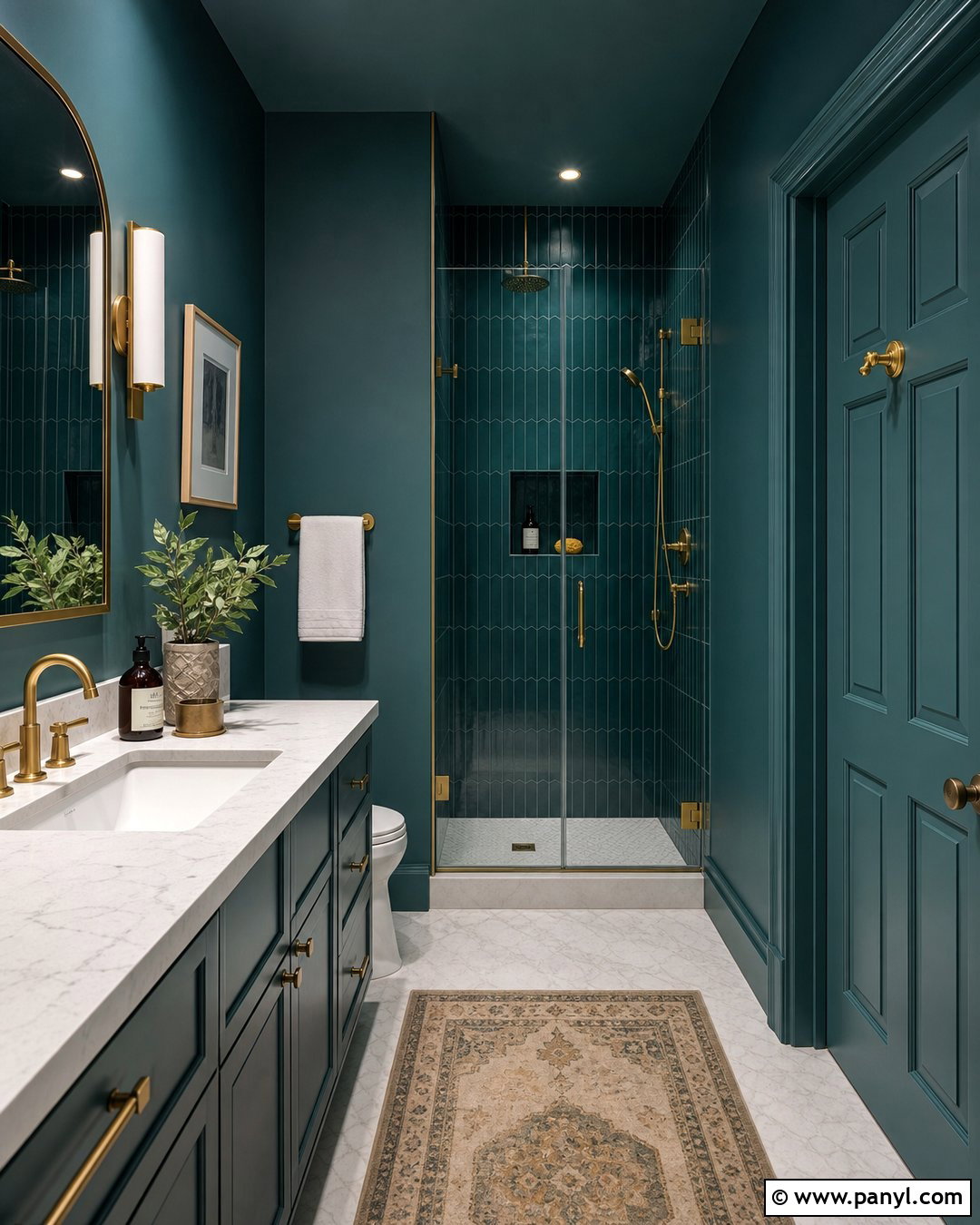
Color drenching creates a seamless bathroom by carrying one dark shade across walls, ceiling, doors, trim, and cabinetry. Choose deep teal, smoky blue, or earthy burgundy, then vary the finish slightly so each surface remains readable. Use matte paint on walls, durable satin on trim, and a smooth sprayed finish on the vanity. A pale quartz countertop and white sink create a useful break at the center of the room. Continue the chosen color through shower tile in a related tone rather than an exact match. Brushed brass or nickel fittings add controlled shine. Select a simple pale floor, clear shower glass, and towels one shade lighter than the walls. The result feels immersive and coordinated because the color defines the architecture instead of acting like a single accent.
25. Dark Bathroom Walls With Terrazzo Floor
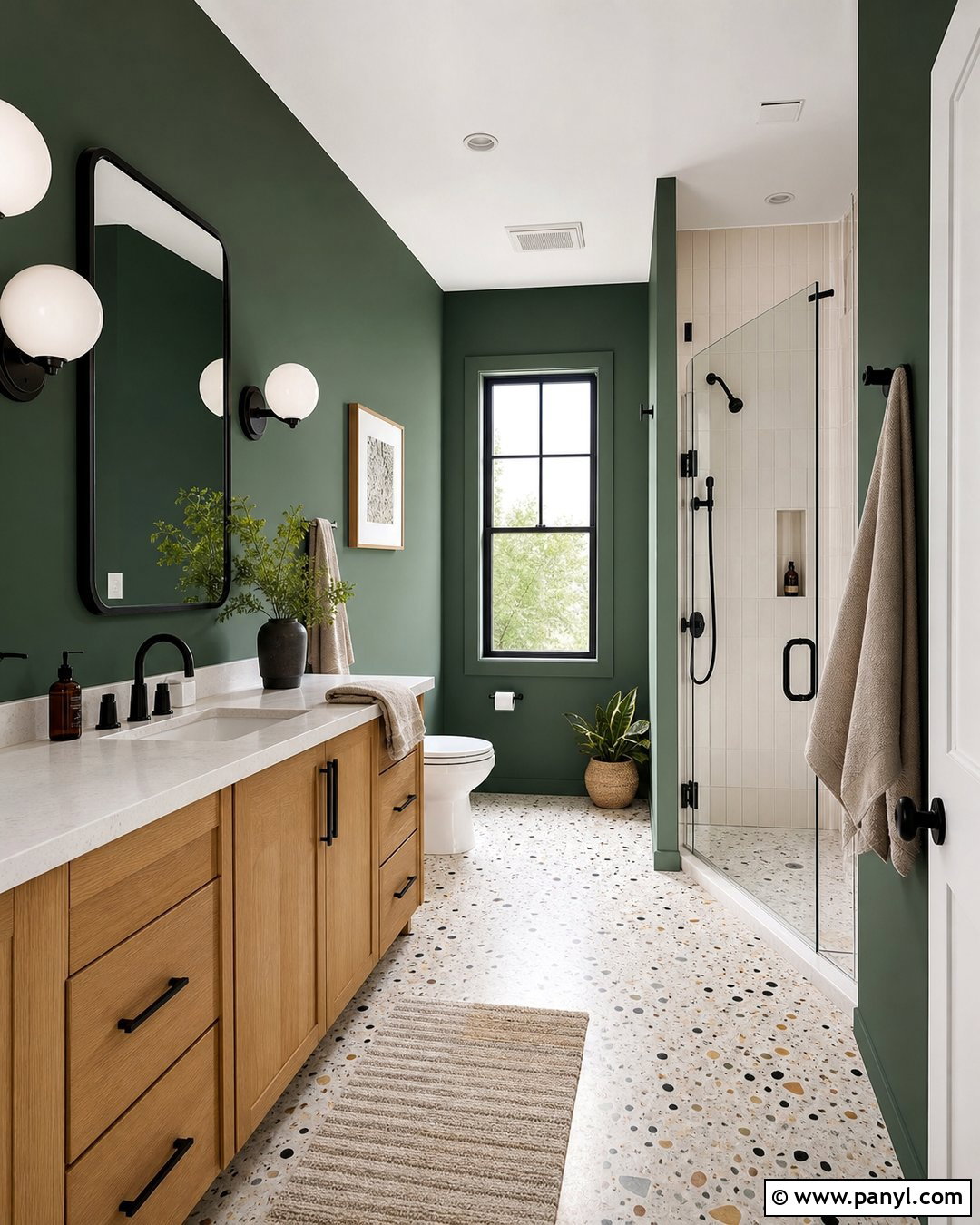
Terrazzo flooring can connect dark walls with lighter fixtures through its varied chips and colors. Paint the walls deep green, navy, or charcoal, then choose a pale terrazzo containing small black, gray, tan, and cream fragments. Install a natural oak vanity with a white counter to echo the warmer chips in the floor. Inside the shower, use simple cream tile so the terrazzo remains the primary pattern. Black fixtures add definition, while brushed brass hardware can provide a warmer alternative. Hang a wide mirror over the vanity and add globe sconces for soft geometric contrast. Keep towels in cream and muted gray. This bathroom feels lively but controlled because the floor provides pattern, the walls provide depth, and the furniture introduces natural texture without competing for attention.
26. Dark Bathroom Walls With Arched Mirror
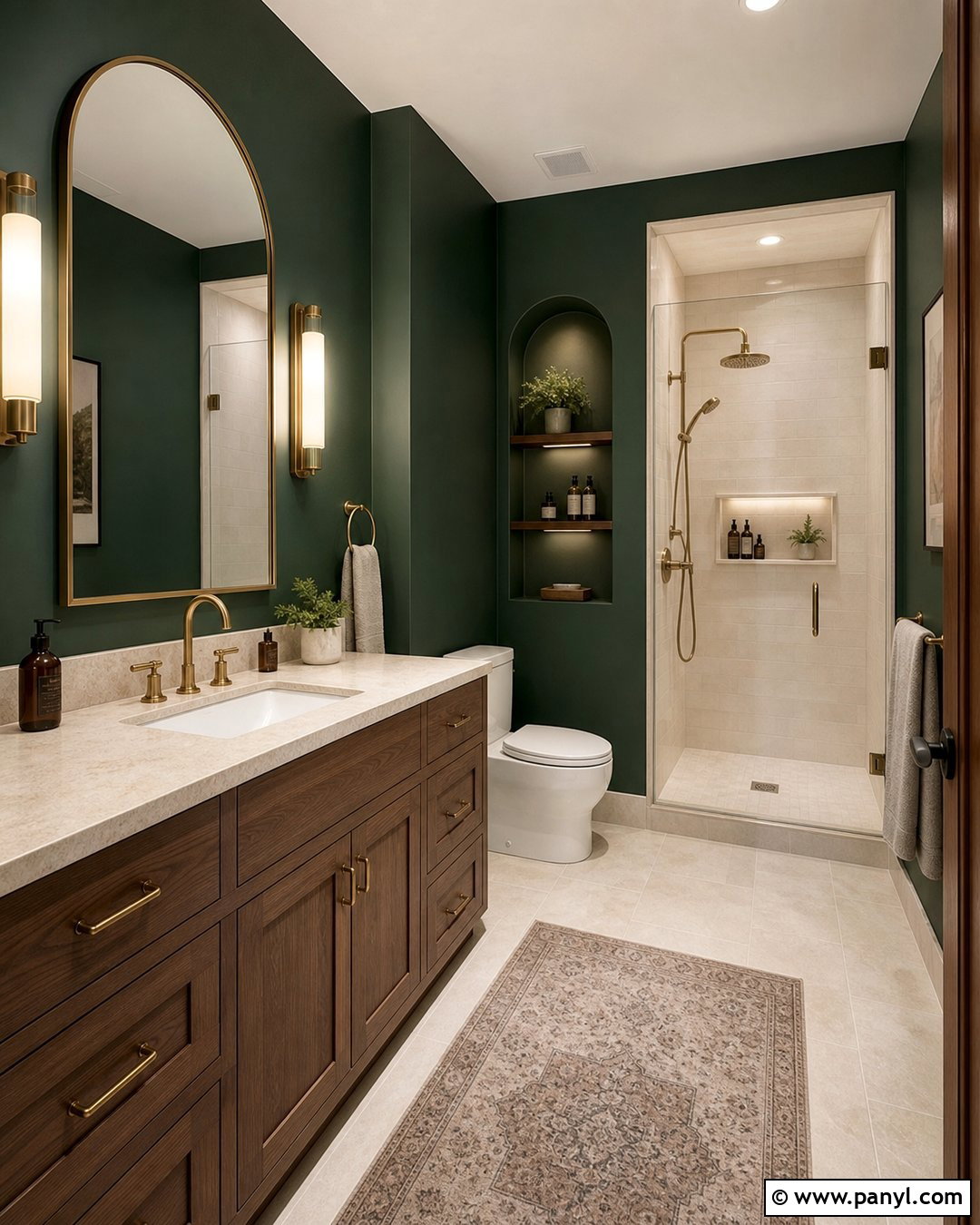
An oversized arched mirror softens the strong lines of a bathroom with dark walls. Paint the vanity wall deep black, charcoal, or forest green and place a wide wood vanity directly beneath the mirror. Choose a thin brass frame for warmth or matte black for a quieter, monochromatic finish. A pale stone countertop and white undermount sink brighten the central area. Install two vertical sconces beside the arch so the mirror remains evenly framed. Use large beige floor tiles and warm white shower tile to balance the darker paint. Repeat the arch through a shower niche or doorway if the architecture allows. Minimal towels, a ceramic soap tray, and one leafy branch complete the look. The mirror becomes a functional centerpiece while making the room appear taller and more graceful.
27. Dark Bathroom Walls With Vintage Vanity
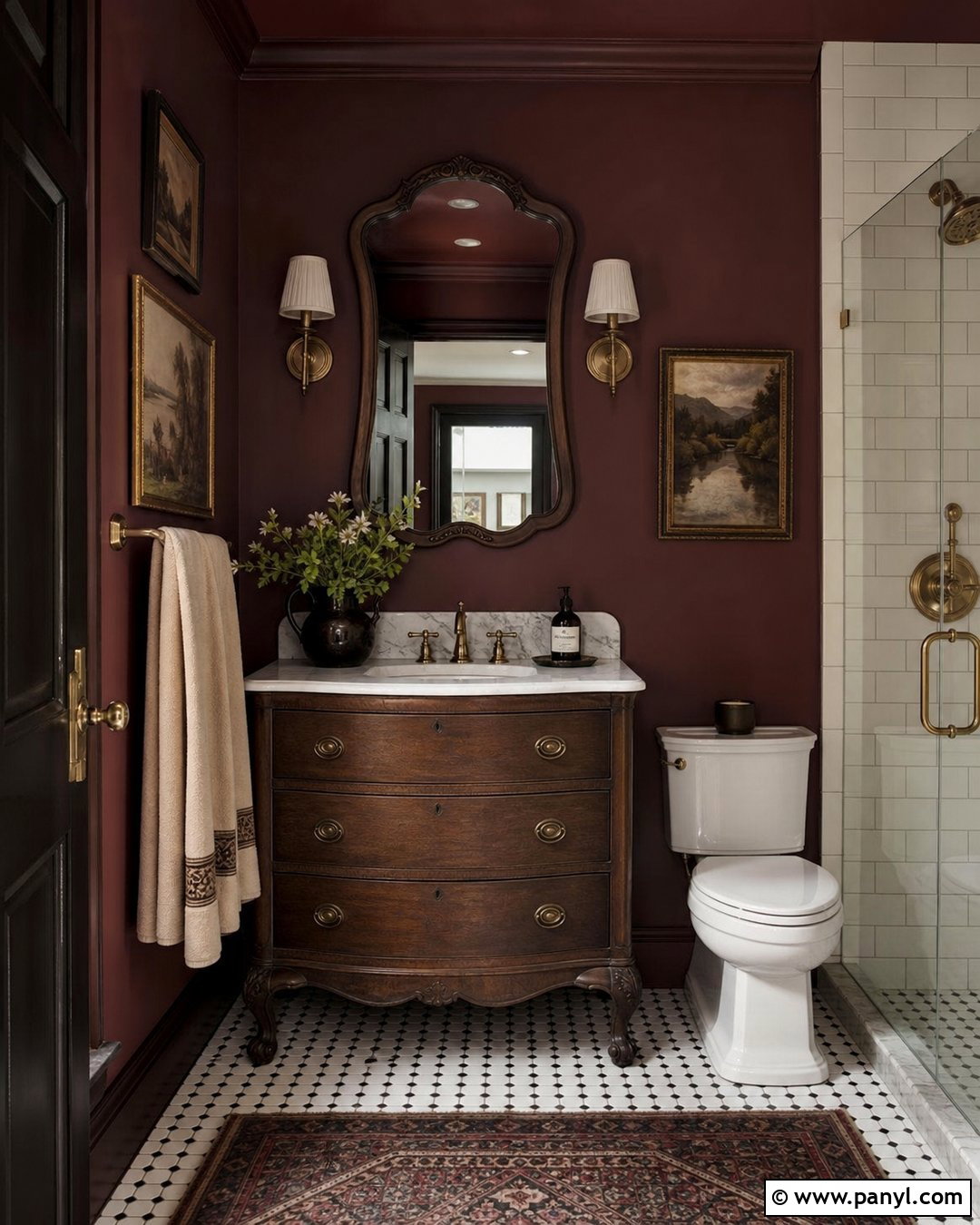
A converted furniture-style vanity gives dark bathroom walls a collected, personal character. Begin with burgundy, black, or deep green paint on the walls and ceiling. Choose a solid wood dresser with visible grain, curved legs, and traditional drawers, then adapt it with a white marble top and undermount sink. Antique brass faucets, an ornate mirror, and small pleated sconces reinforce the vintage direction. Use cream subway tile around the shower and black-and-white mosaic tile across the floor. Add a framed landscape, linen towels, and a small ceramic vase rather than filling the room with unrelated antiques. The contrast between saturated walls, pale functional surfaces, and aged wood creates a complete bathroom that feels historic but still organized, useful, and suitable for a renovated home.
28. Dark Bathroom Walls With Fluted Tile
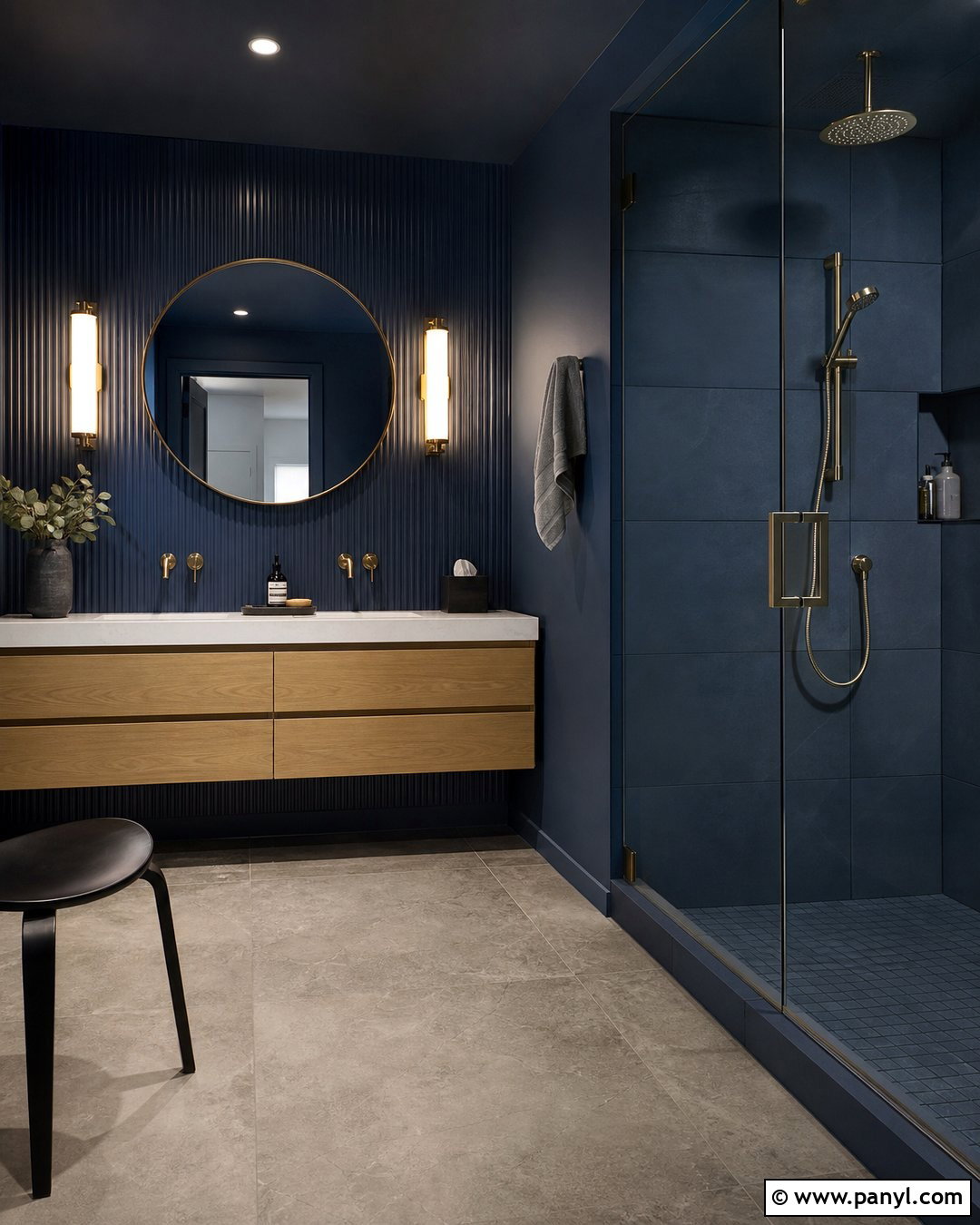
Fluted tile introduces shadow and texture that complements dark painted walls. Cover the vanity backsplash or lower half of the room with vertically ribbed tile in charcoal, deep green, or midnight blue. Paint the remaining walls and ceiling in a closely related shade for a cohesive tonal effect. Choose a floating oak vanity with a pale quartz top to contrast with the textured background. A simple round mirror keeps the ribbed surface visible, while wall-mounted brass faucets save counter space. Use smooth large-format floor tile so the room does not contain too many competing textures. Inside the shower, repeat the dark color with flat tile for easier visual flow. Soft cream towels and a frameless glass screen finish this structured, contemporary bathroom without distracting from the fluted feature.
29. Dark Bathroom Walls With Gold Accents
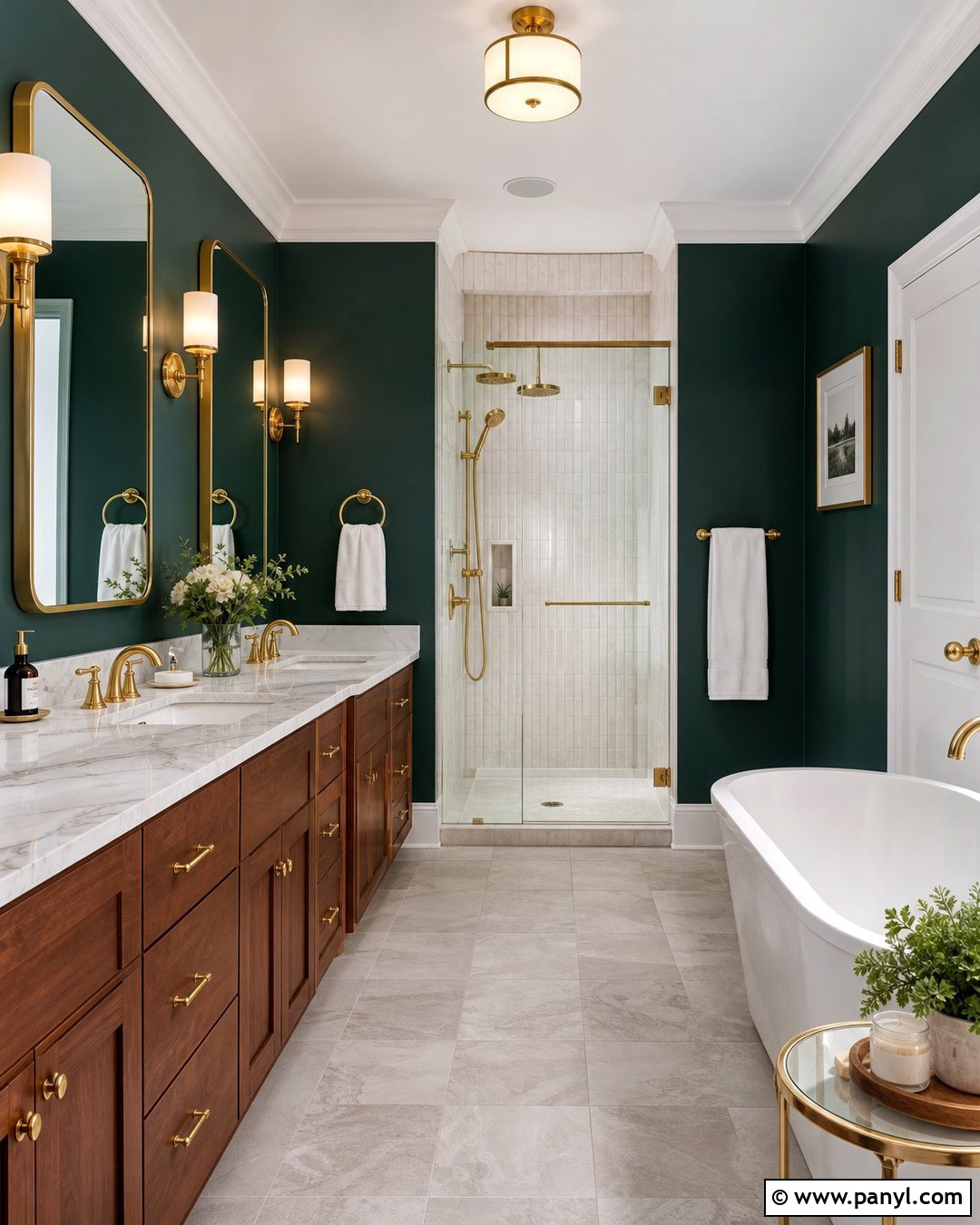
Gold accents appear especially luminous against deep bathroom walls, but restraint keeps the finished space sophisticated. Paint the room matte black, navy, or emerald green, then repeat brushed gold through the faucets, shower fittings, mirror frames, sconces, and cabinet pulls. Select a walnut double vanity with a white marble or quartz counter to bridge the dark paint and warm metal. Use creamy vertical tiles in the shower and pale gray stone flooring underfoot. Clear glass, white towels, and simple ceramic accessories prevent the gold from becoming overwhelming. Choose fixtures with the same brushed finish rather than mixing several shiny metals. The completed bathroom feels luxurious because each gold detail has a functional purpose and appears consistently around the room instead of being added as unrelated decoration.
30. Dark Bathroom Walls With Skylight
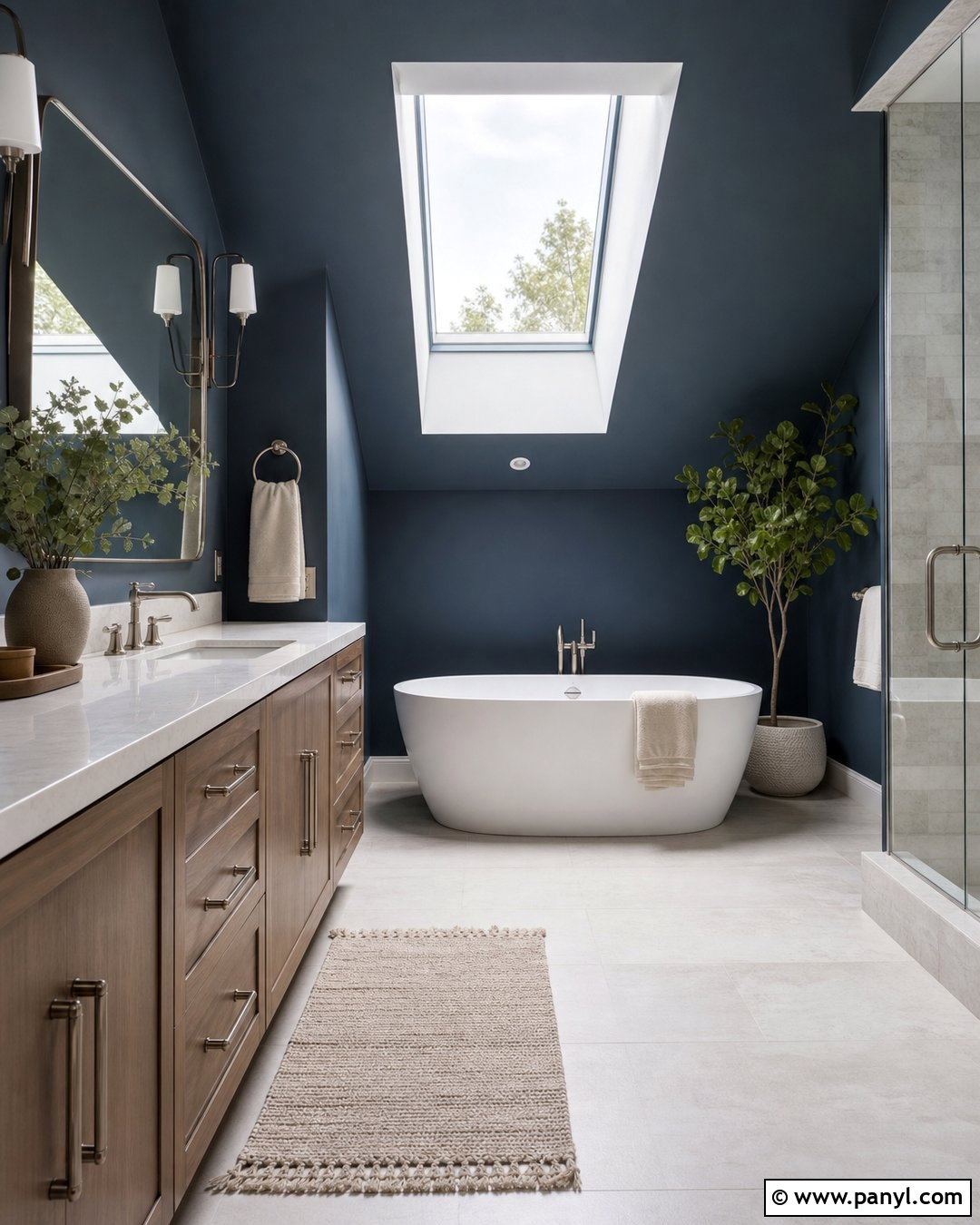
A skylight allows dark bathroom walls to feel rich while maintaining a strong connection to natural brightness. Paint the walls and sloped ceiling deep blue-gray or forest green, leaving the skylight recess crisp white to emphasize its shape. Position a white freestanding tub or walk-in shower beneath the opening where daylight can highlight pale surfaces. Use a medium oak vanity, white quartz counter, and brushed nickel fittings for a relaxed contemporary palette. Light limestone-look flooring spreads the brighter tone across the room. Add a large frameless mirror opposite the skylight to reflect the architecture. Cream towels, a wood bath tray, and a few simple plants complete the setting. The dark color frames the light from above and gives the bathroom a calm, sheltered quality.
Conclusion:
The most successful dark bathroom is more than a room with dramatic paint. It brings walls, flooring, tile, furniture, fixtures, lighting, and textiles together as one thoughtful composition. Pale stone can sharpen black walls, while warm wood and brass soften navy, green, brown, or burgundy. White fixtures provide clean contrast, and tonal color drenching creates a more immersive result. Before committing, compare finishes and materials together so their undertones feel connected. You can also begin with a powder room before using deep color in a larger primary bath. Whether you prefer classic paneling, modern concrete, patterned wallpaper, or natural stone, these **30 Bathroom Dark Walls** offer practical ways to create depth, comfort, and memorable character.

Related Ideas and Inspiration:
Leave a Reply