
Dark paint can turn an ordinary bathroom into a polished, comforting retreat. These 20 dark bathroom paint colors cover rich blacks, blues, greens, browns, purples, and warm red-based shades that work with many home styles. The key is building a balanced room around each color. Light tile, reflective mirrors, layered lighting, warm wood, and metallic fixtures keep deeper walls from feeling flat or unfinished. Always test large paint samples beside the existing floor, countertop, and tile because undertones can shift under bathroom lighting. Choose a washable, moisture-resistant finish for easier upkeep, especially near sinks and showers. Whether you are updating a compact powder room or a spacious primary bath, explore these 20 dark bathroom paint colors.
1. Soft Black Bathroom Paint
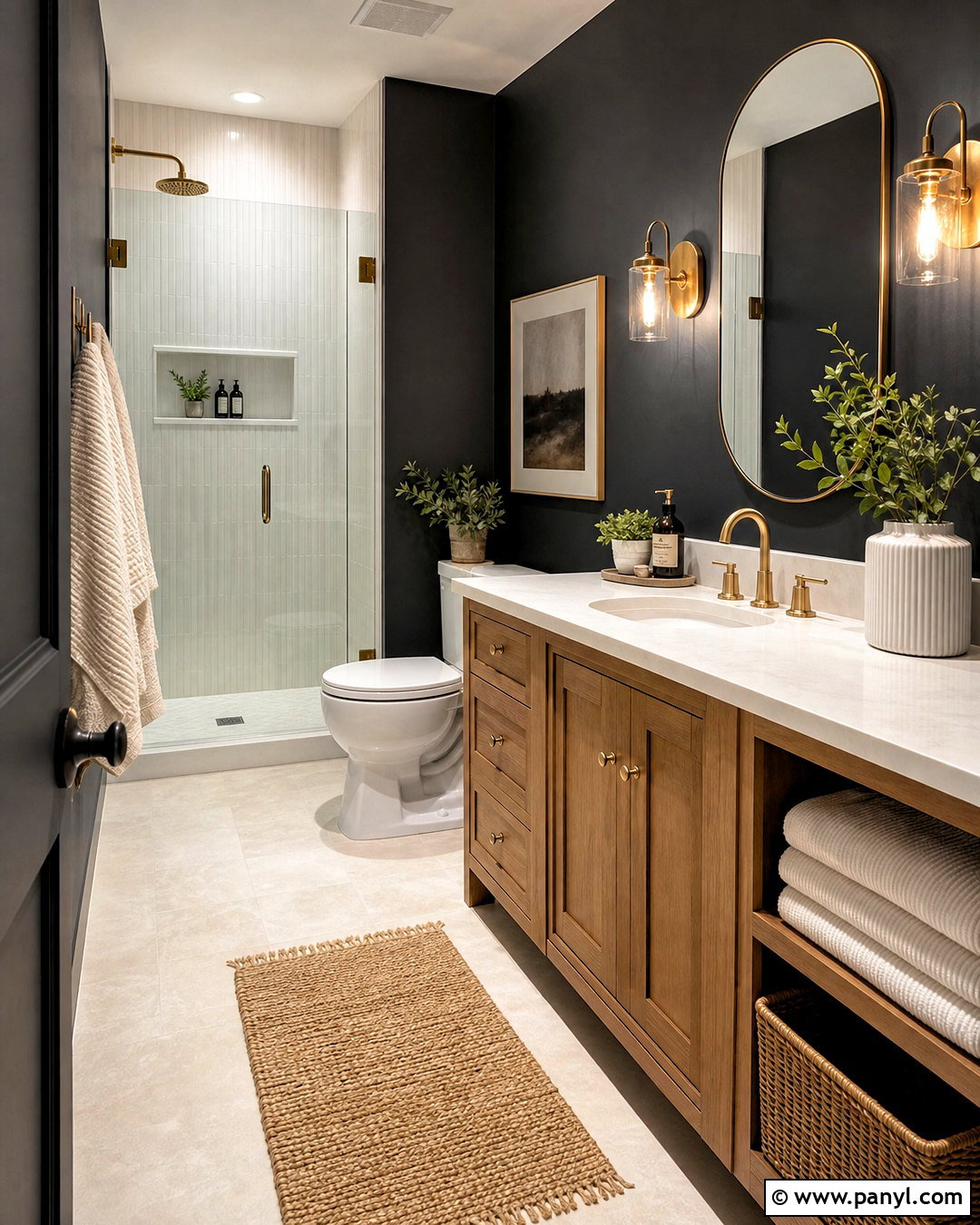
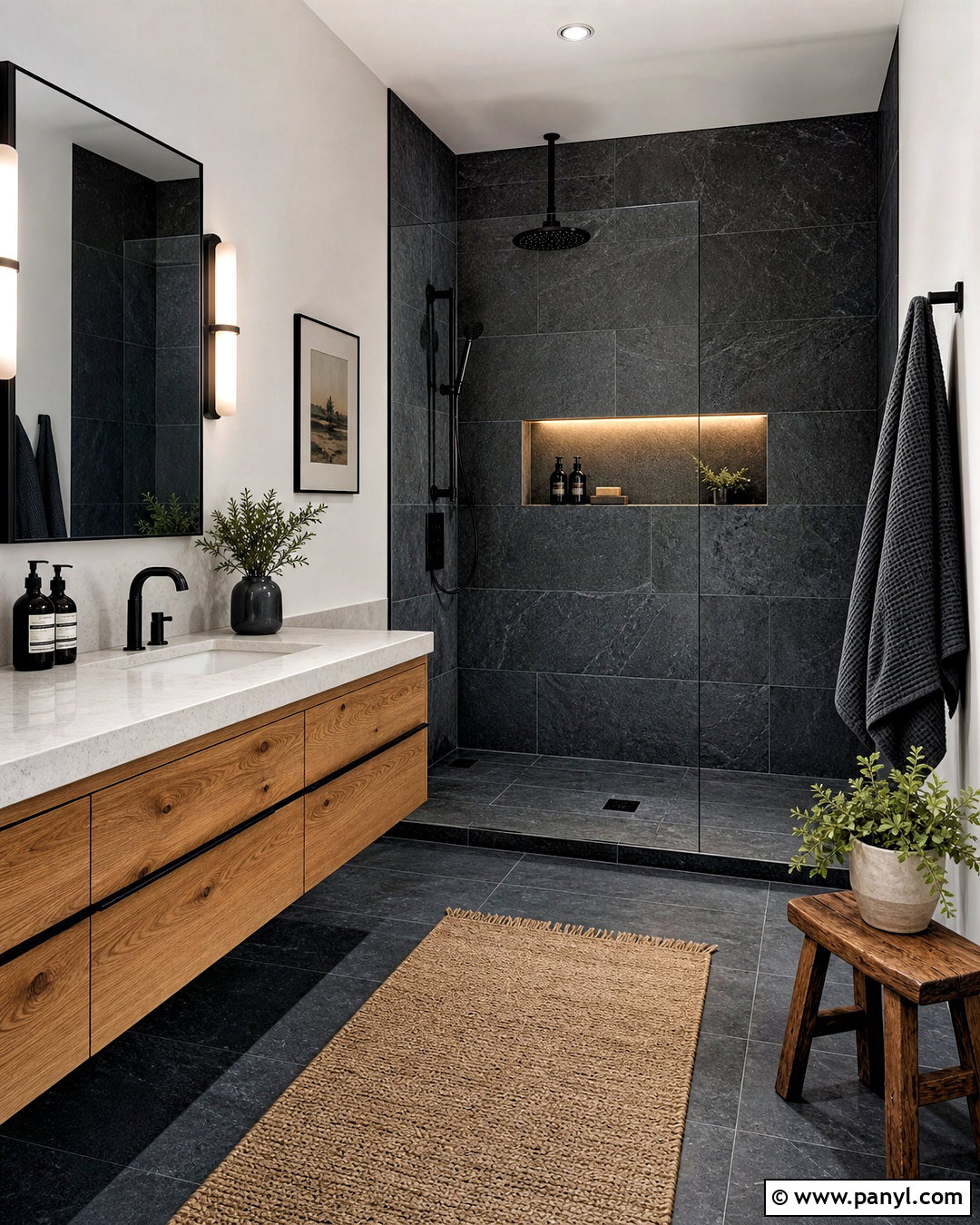
Soft black walls create drama without the severe appearance of a pure, blue-based black. Choose a shade with warm charcoal or brown undertones, then balance it with creamy white floor tile and an oak vanity. A white quartz countertop keeps the sink area crisp, while brushed brass faucets and sconces bring warmth to the darker backdrop. Use a large rounded mirror to reflect light across the room. Paint the walls in washable satin and keep the ceiling warm white unless you want a fully wrapped effect. Ribbed towels, a woven hamper, and one leafy plant add texture. This complete scheme works especially well in a powder room where bold color can feel intentional rather than overwhelming.
2. Charcoal Gray Bathroom Paint
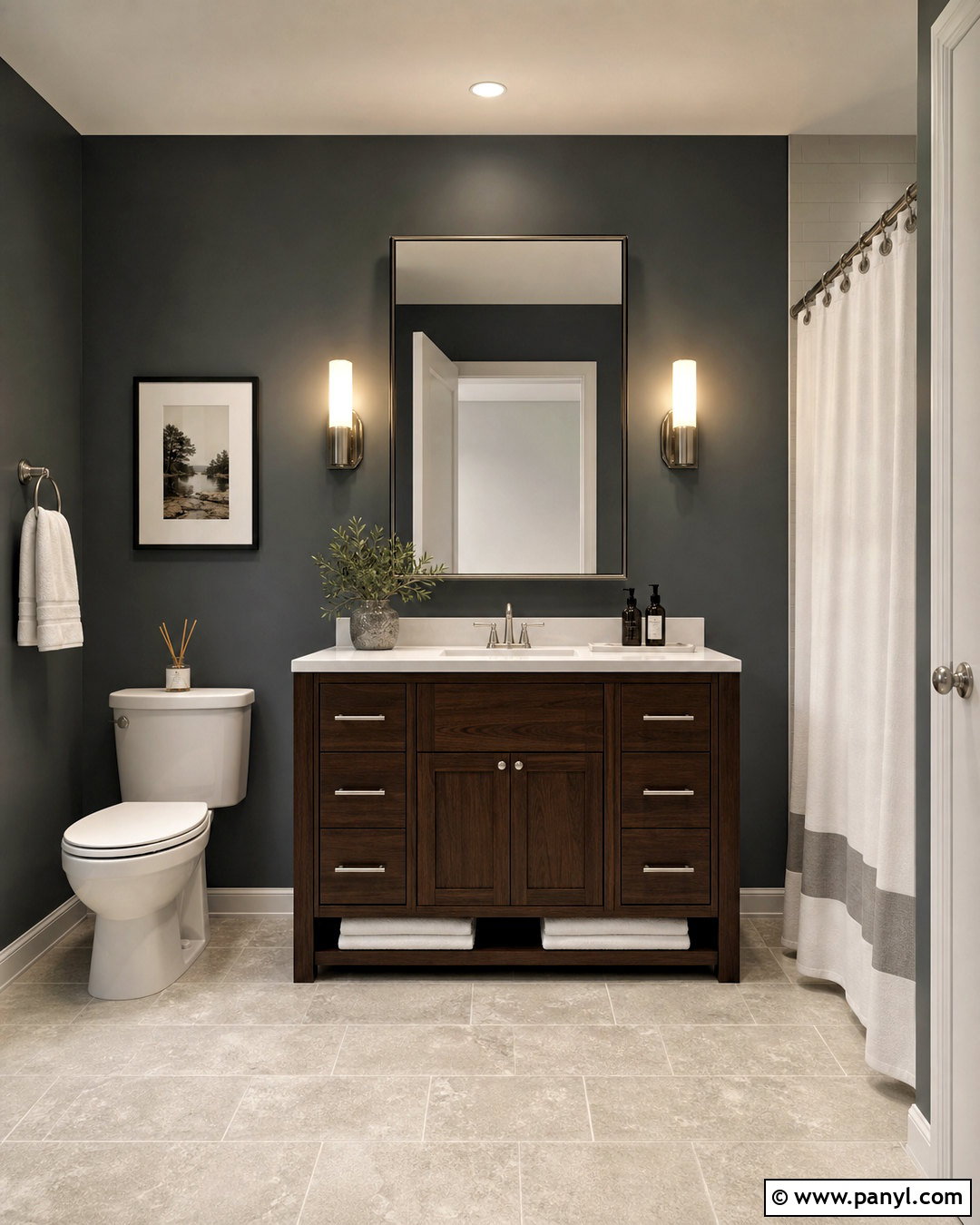
Charcoal gray gives a bathroom strong contrast while remaining softer and more flexible than black. Pair deep gray walls with pale gray limestone-look tile to create a layered, tonal foundation. Add a walnut vanity with simple slab-front drawers and a white undermount sink for warmth and clean definition. Matte black fixtures can blend into the wall, while nickel or brass hardware will stand out more clearly. Install sconces on both sides of the mirror so faces are evenly illuminated. White towels and a light shower curtain prevent the scheme from becoming visually heavy. For a cohesive finish, paint the trim charcoal too, but leave the ceiling a lighter gray-white that complements the tile rather than creating stark contrast.
3. Graphite Bathroom Paint
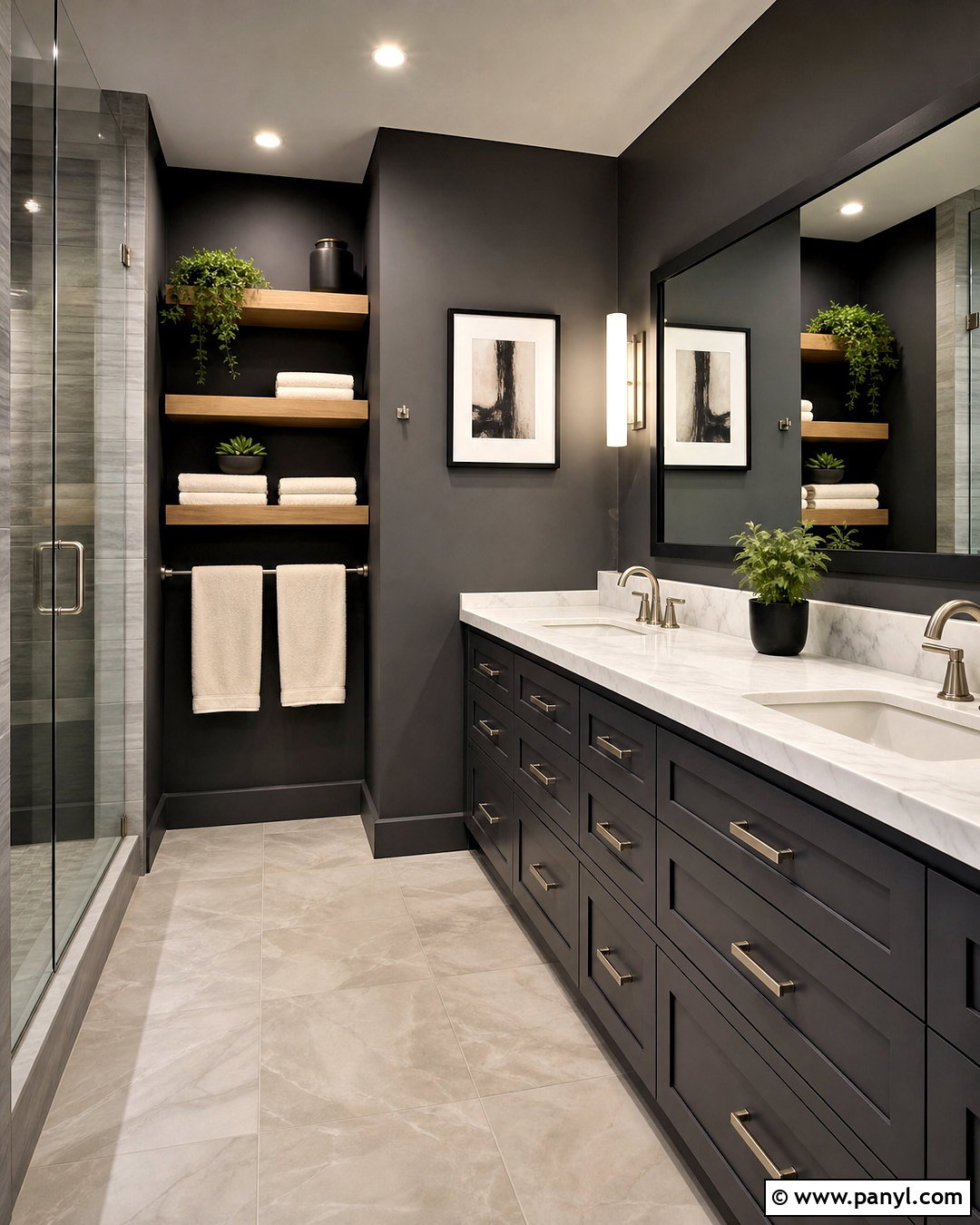
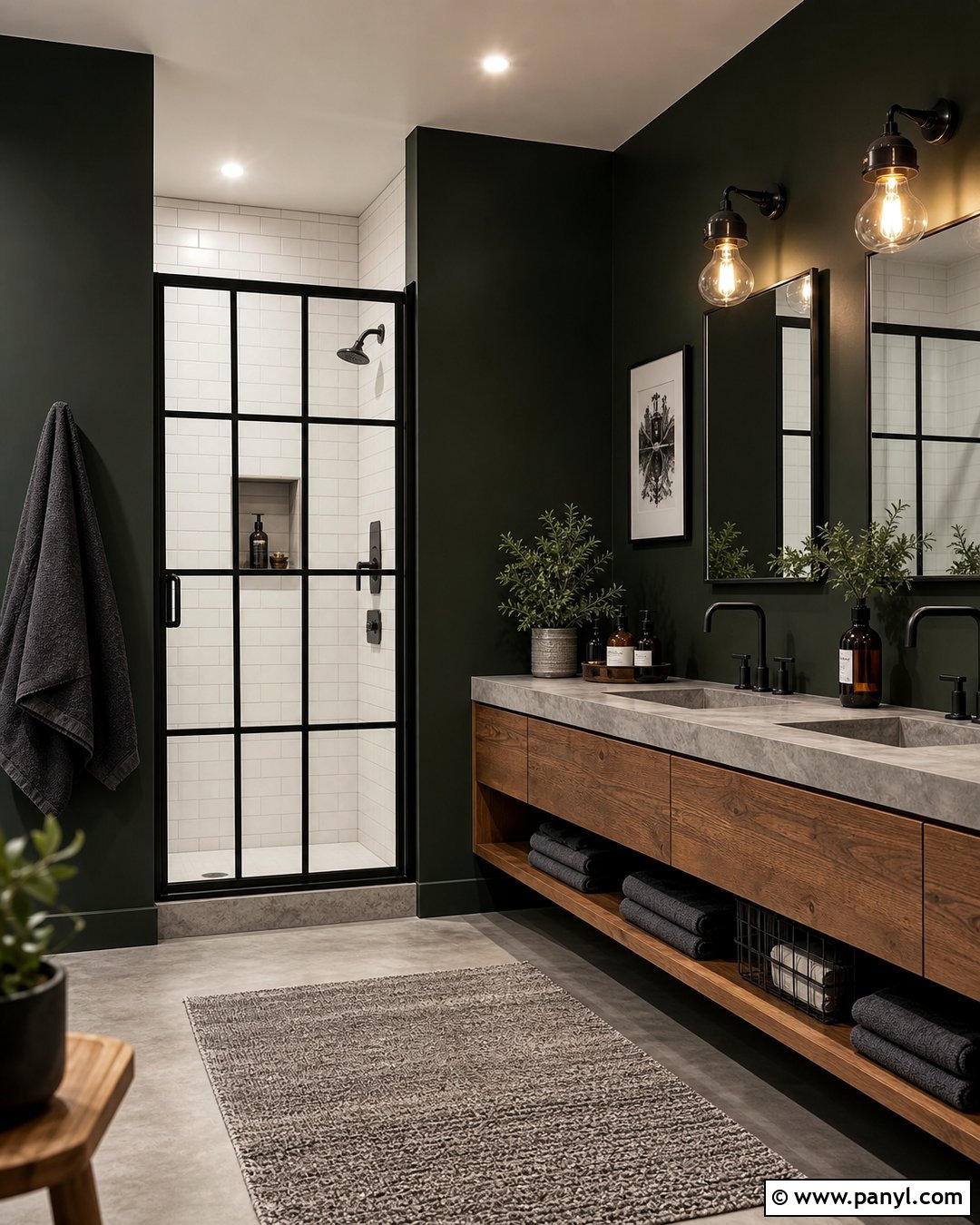
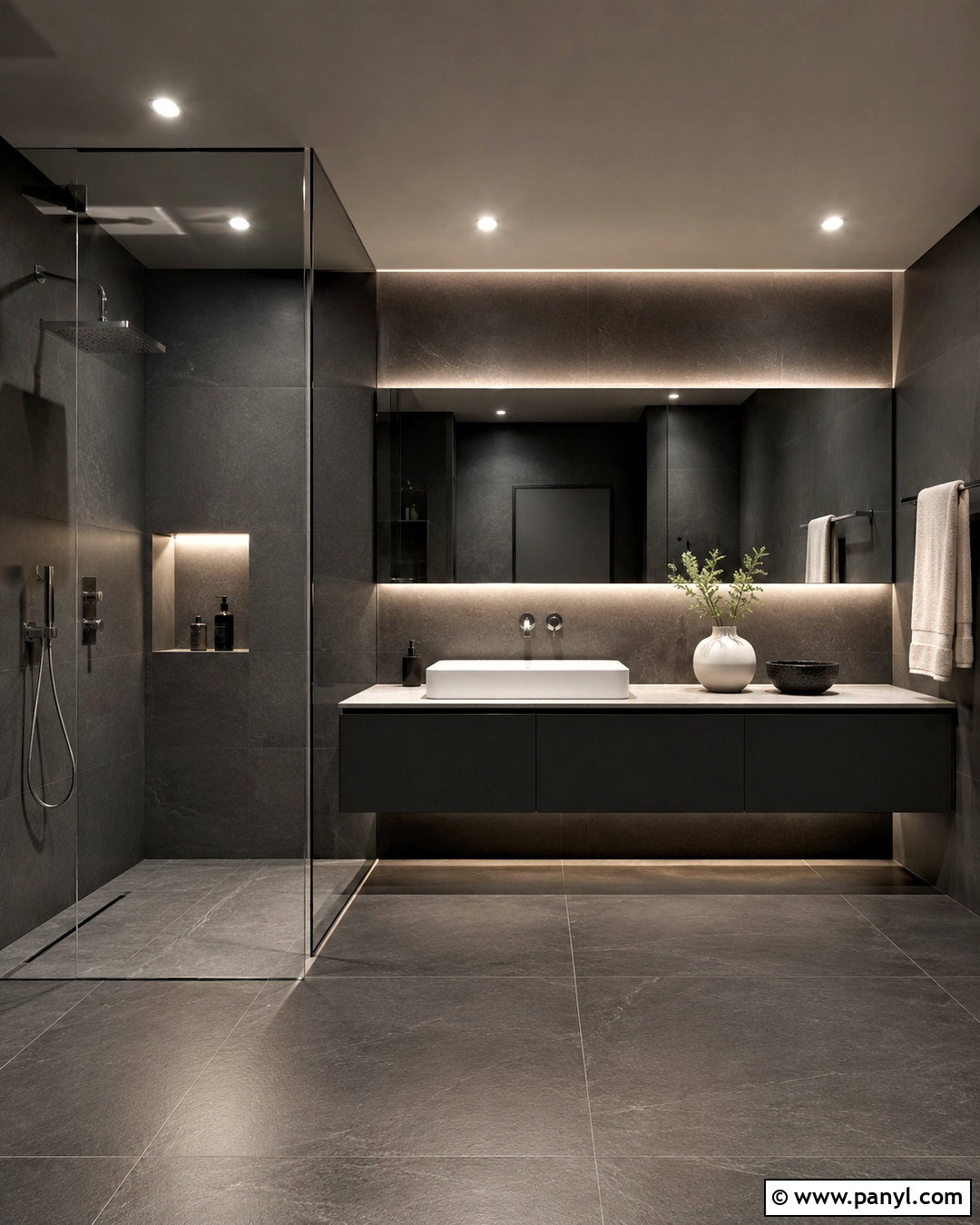
Graphite is a deep mineral gray that looks especially attractive in modern bathrooms with streamlined features. Use it on the walls and vanity for a coordinated color-drenched effect, then introduce visual relief through white marble-look countertops and large-format porcelain floor tile. Brushed stainless steel faucets, a frameless glass shower, and a slim rectangular mirror support the clean design. Because graphite can reveal cool blue undertones under certain bulbs, select warm-neutral white lighting that keeps the room comfortable. Add pale oak shelving and folded ivory towels to soften the architectural lines. A single piece of black-and-white artwork can finish the wall without creating clutter. The result feels contemporary, practical, and dramatic without relying on pure black.
4. Dark Navy Bathroom Paint
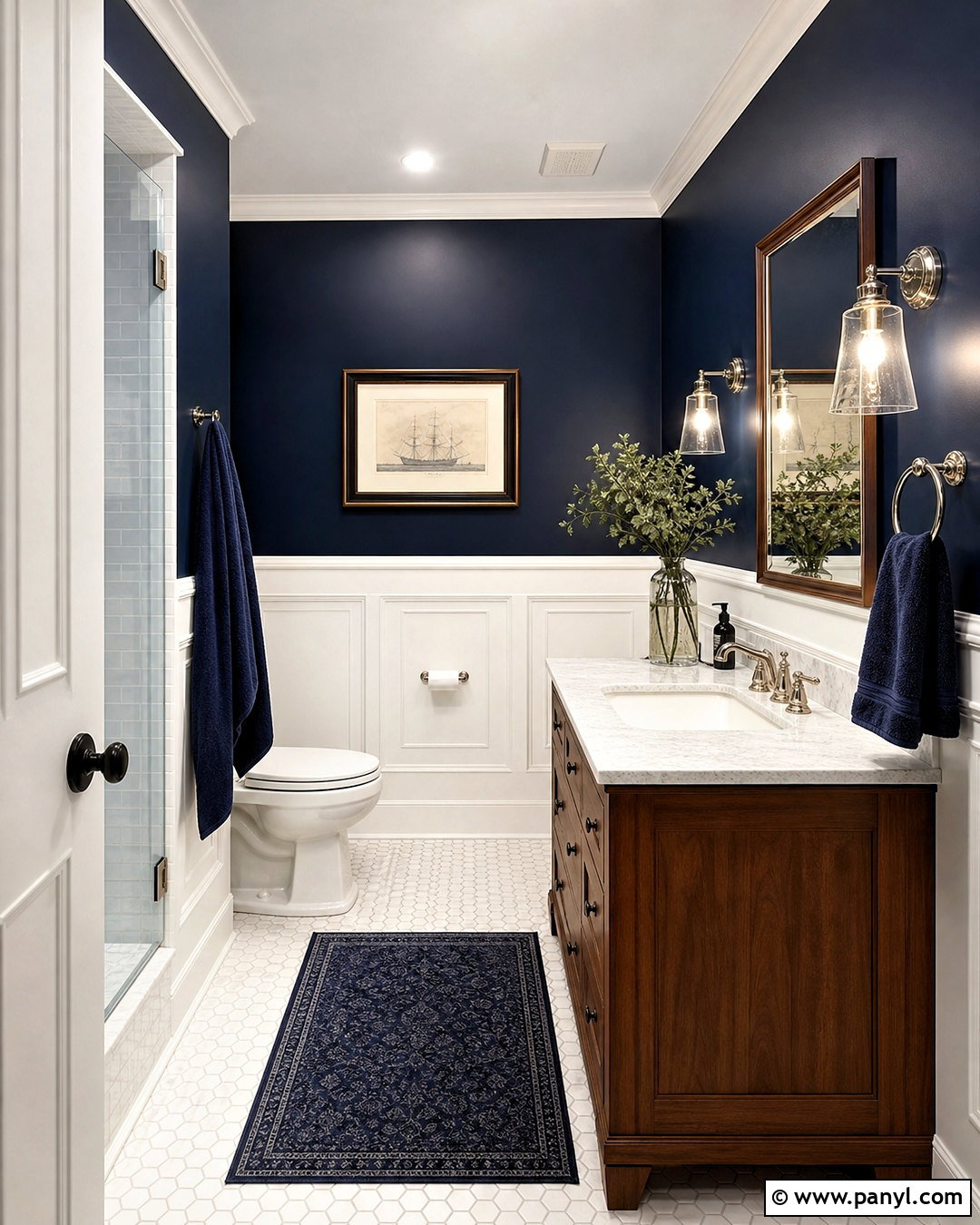
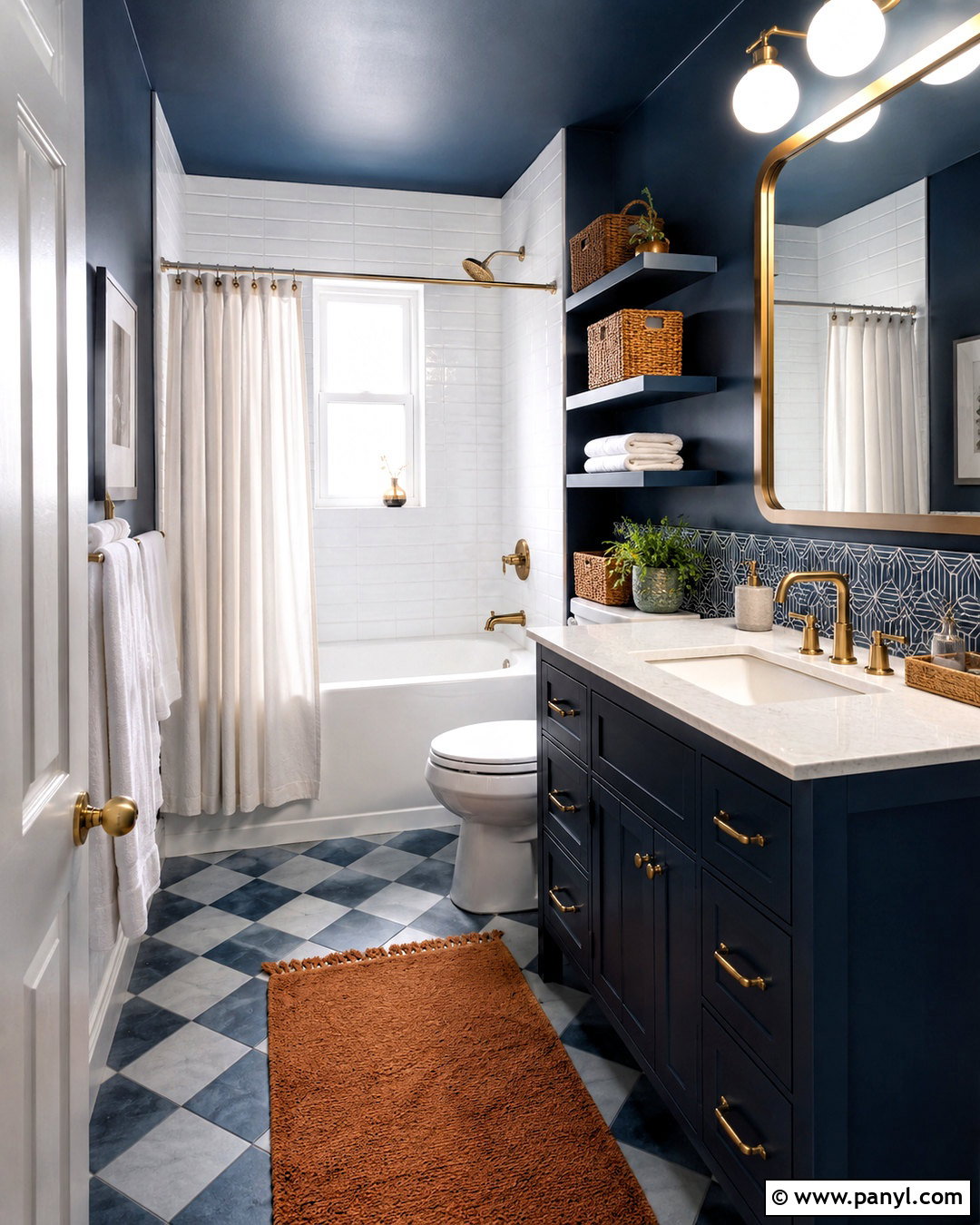
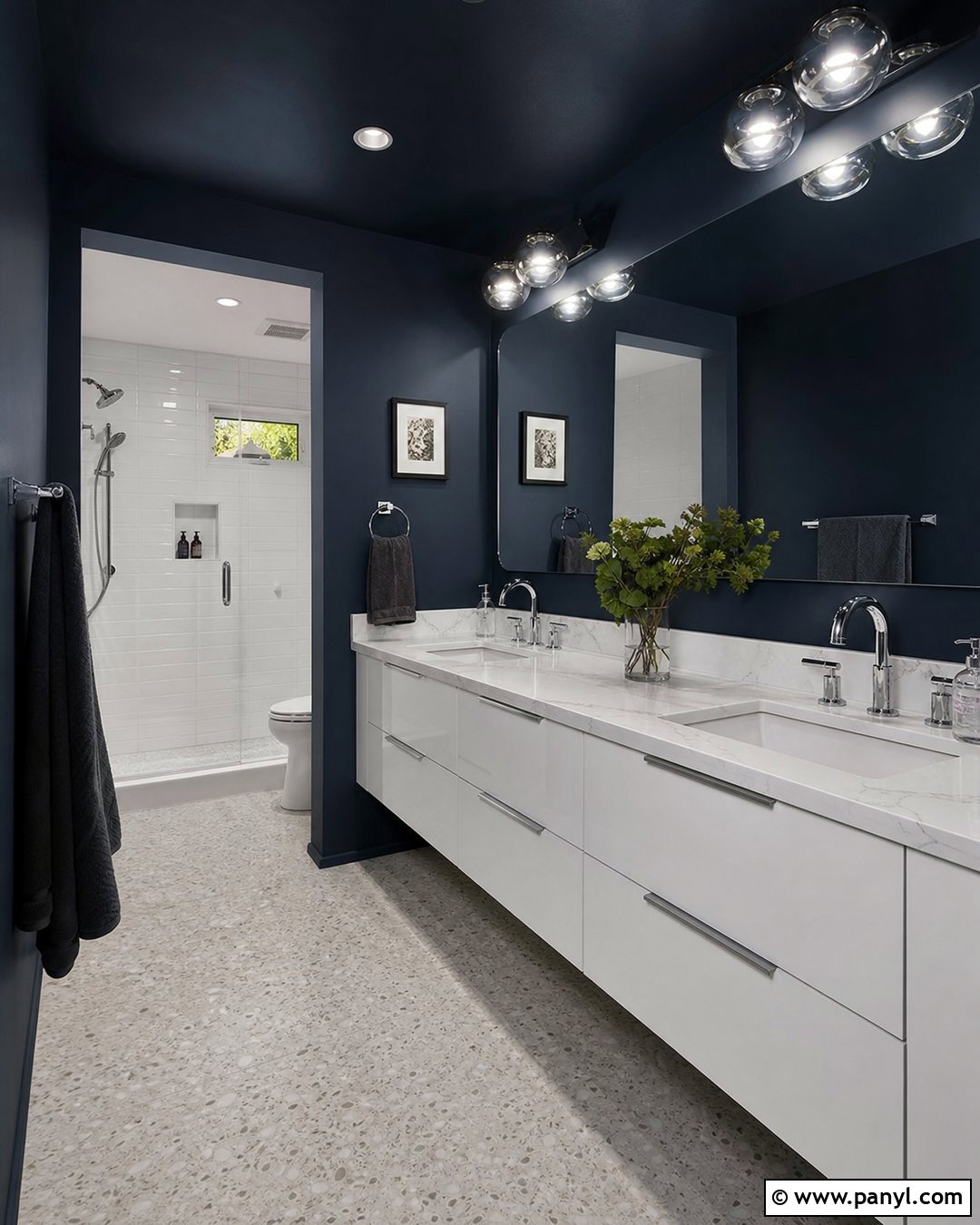
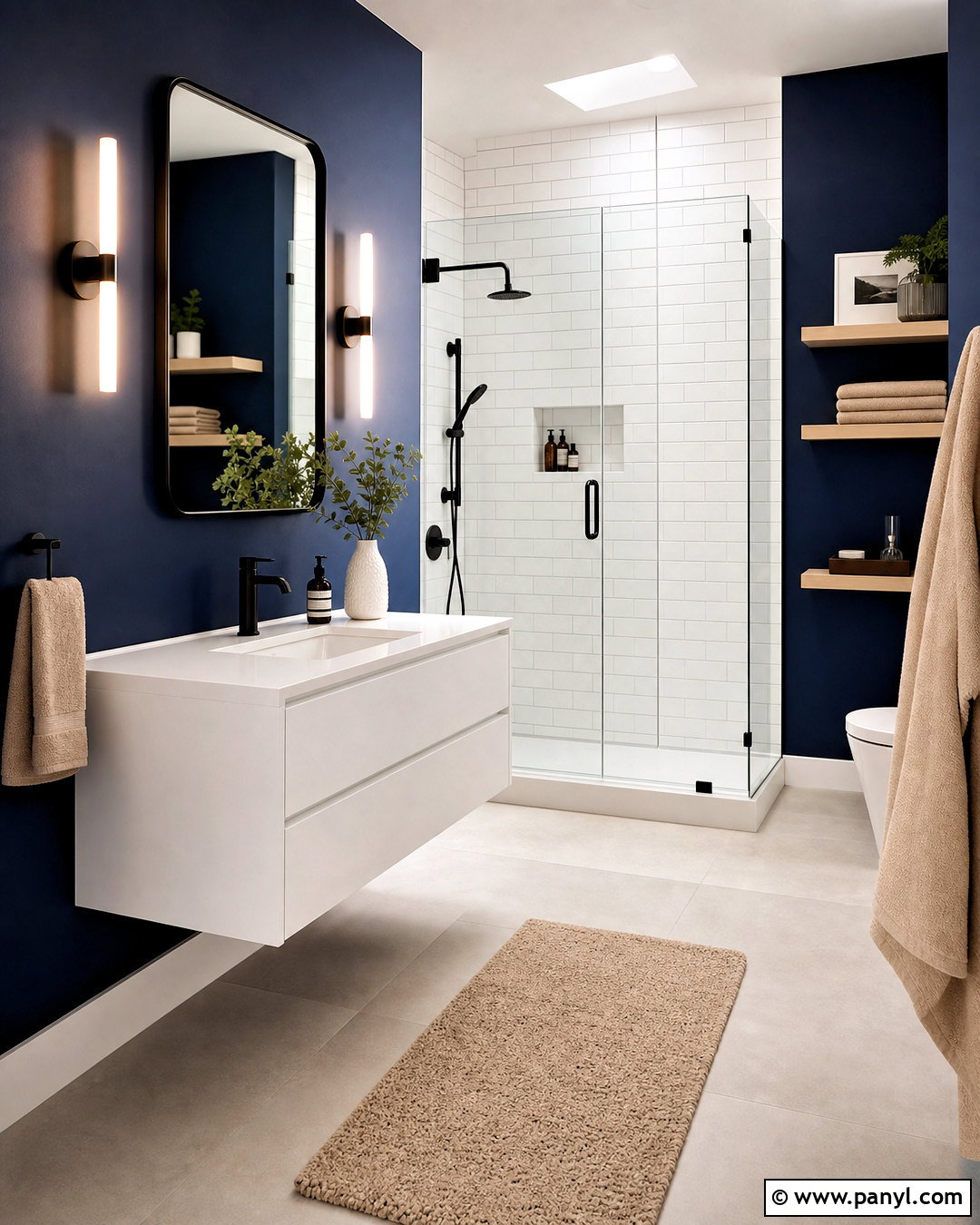
Dark navy creates a classic bathroom that feels tailored, calm, and easy to coordinate. Cover the upper walls in a rich navy with neutral undertones, then install white vertical paneling or glossy subway tile below. A medium-tone wood vanity prevents the blue-and-white palette from feeling cold. Complete the room with polished nickel faucets, clear glass sconces, and a framed mirror that matches the vanity. Small white hexagon floor tile provides a timeless foundation, while navy towels repeat the wall color at a lower level. If the bathroom has strong natural light, consider carrying navy onto the ceiling. In a windowless room, keep the ceiling soft white and use multiple light sources to preserve clarity around the sink and shower.
5. Deep Blue Gray Bathroom Paint
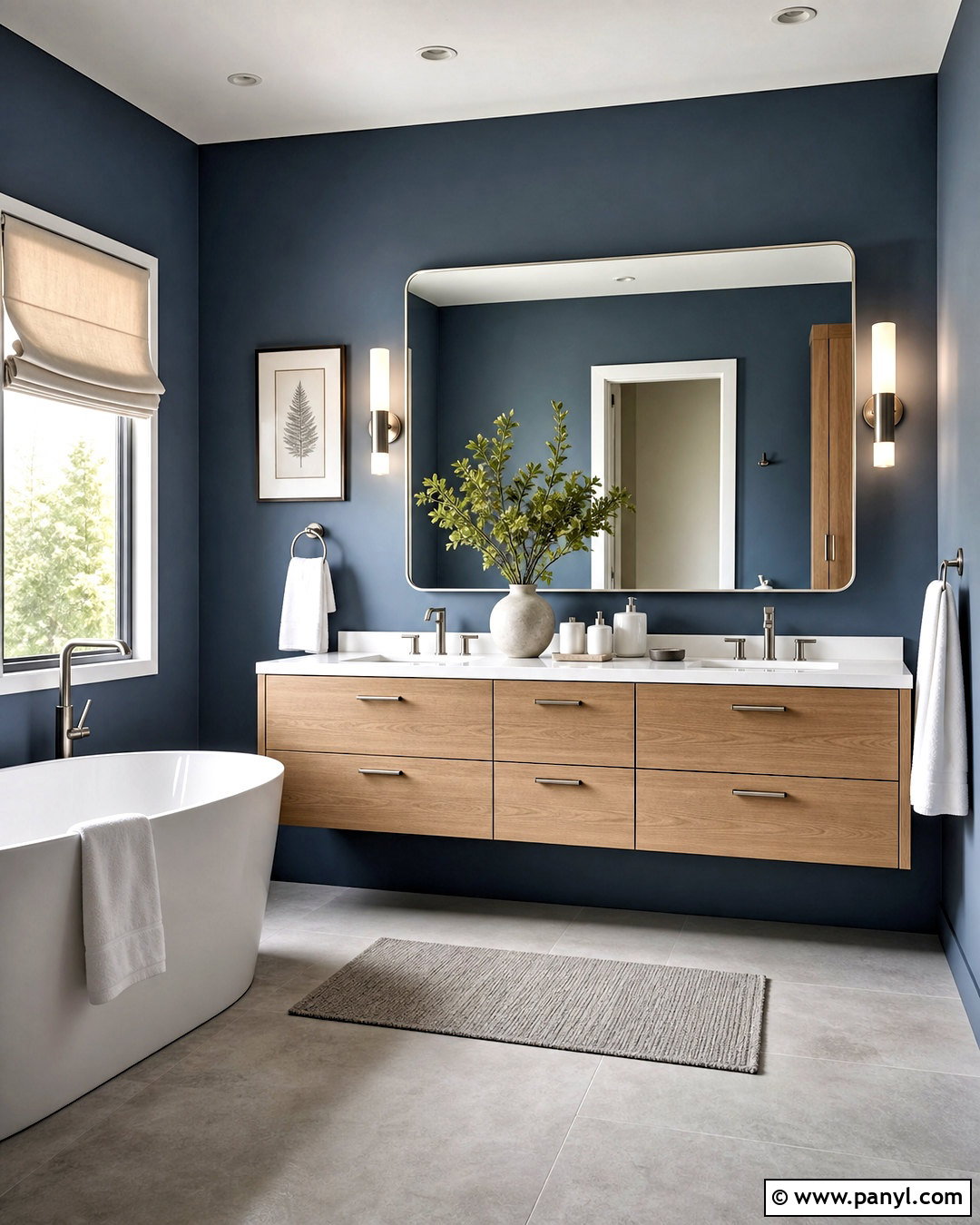
Deep blue-gray provides moody color without the stronger saturation of traditional navy. It works beautifully with cool white tile, pale concrete-look flooring, and light natural wood. Paint all walls in the blue-gray shade, then choose a floating oak vanity to expose more floor and maintain an open appearance. Brushed nickel hardware reinforces the cool palette, while a warm linen Roman shade keeps it from feeling sterile. Add an oversized mirror and bright vanity lighting to lift the darker walls. Soft white towels, ceramic accessories, and a simple eucalyptus arrangement complete the quiet look. This balanced bathroom scheme is ideal when you want noticeable color that still functions like a versatile neutral alongside existing gray, white, or marble surfaces.
6. Dark Slate Blue Bathroom Paint
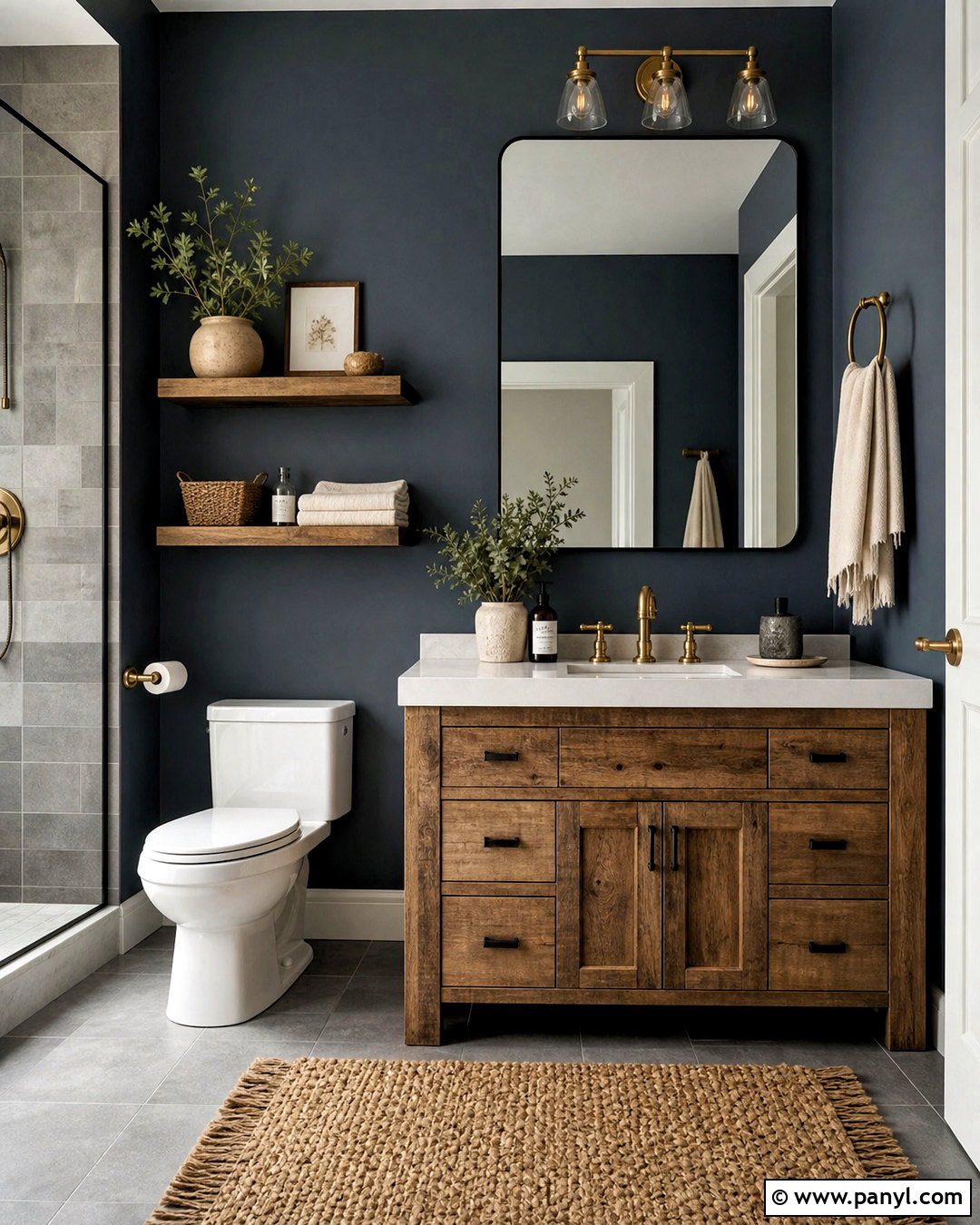
Dark slate blue has muted gray undertones that complement stone, concrete, and weathered wood. Build a relaxed bathroom around it with slate-painted walls, a reclaimed-look oak vanity, and honed gray floor tile. Choose a thick white countertop and an apron-front or rectangular sink to brighten the central work area. Aged brass faucets and cabinet pulls add subtle warmth without making the room overly decorative. Use a frameless mirror to keep the arrangement clean, or select a thin black frame for additional definition. Ivory towels and a natural woven bath mat soften the hard finishes. Continue the wall color onto trim for a seamless effect, but use a pale ceiling and strong mirror lighting in smaller rooms with limited daylight.
7. Midnight Blue Bathroom Paint
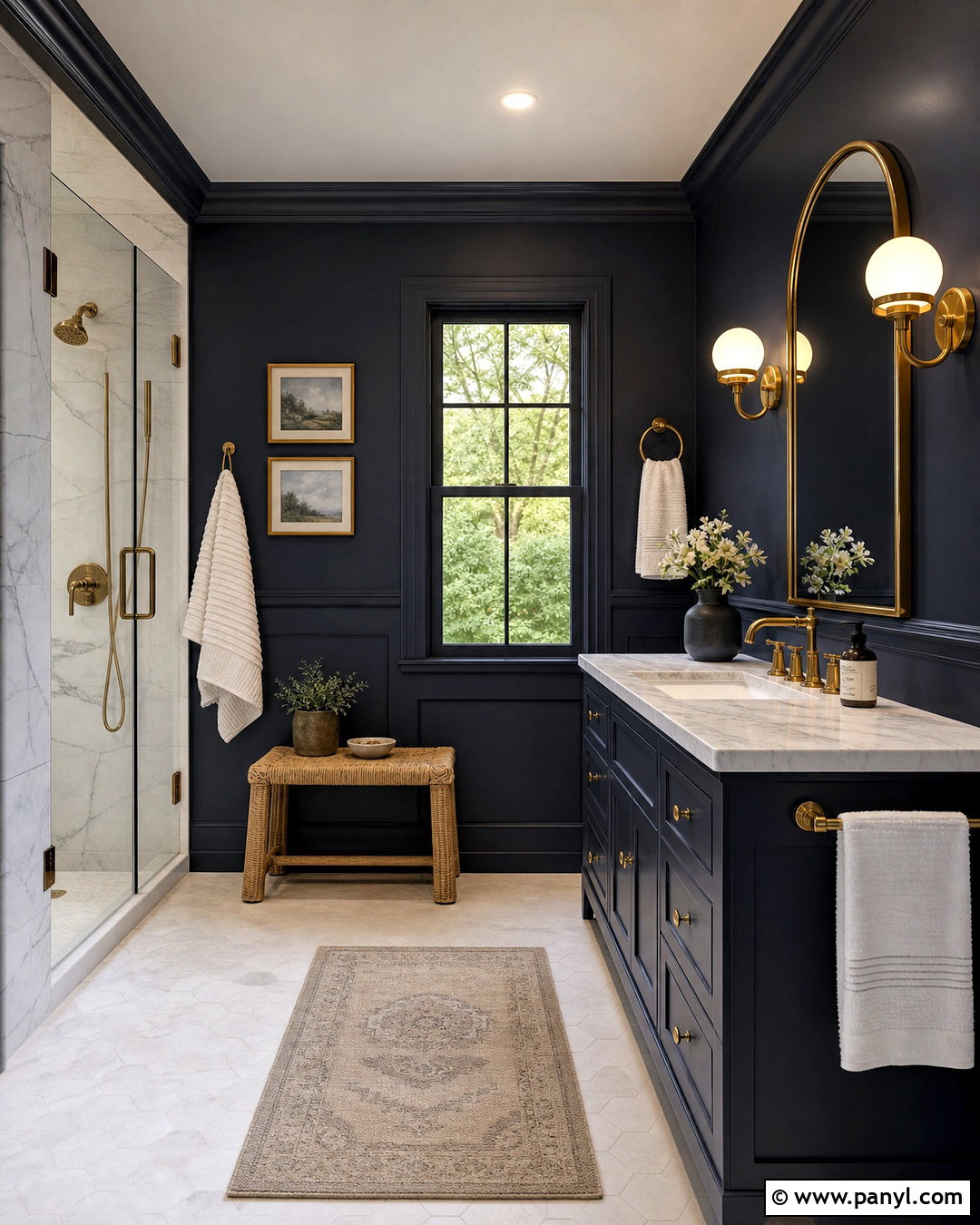
Midnight blue can appear almost black in shadow while revealing rich blue color under bright light. Use it throughout a sophisticated bathroom with white marble-look shower tile and a matching countertop. A midnight-painted vanity creates a seamless built-in appearance, especially when finished with unlacquered brass pulls and faucets. Choose a large brass-framed mirror and opal glass sconces to spread light gently across the walls. Warm white floor tile prevents the palette from leaning too cool. For additional texture, add ribbed cotton towels, a woven stool, and one small landscape print. This color is particularly effective in bathrooms with traditional molding because the deep paint emphasizes architectural detail. A satin finish also helps the walls reflect a controlled amount of light.
8. Dark Teal Bathroom Paint
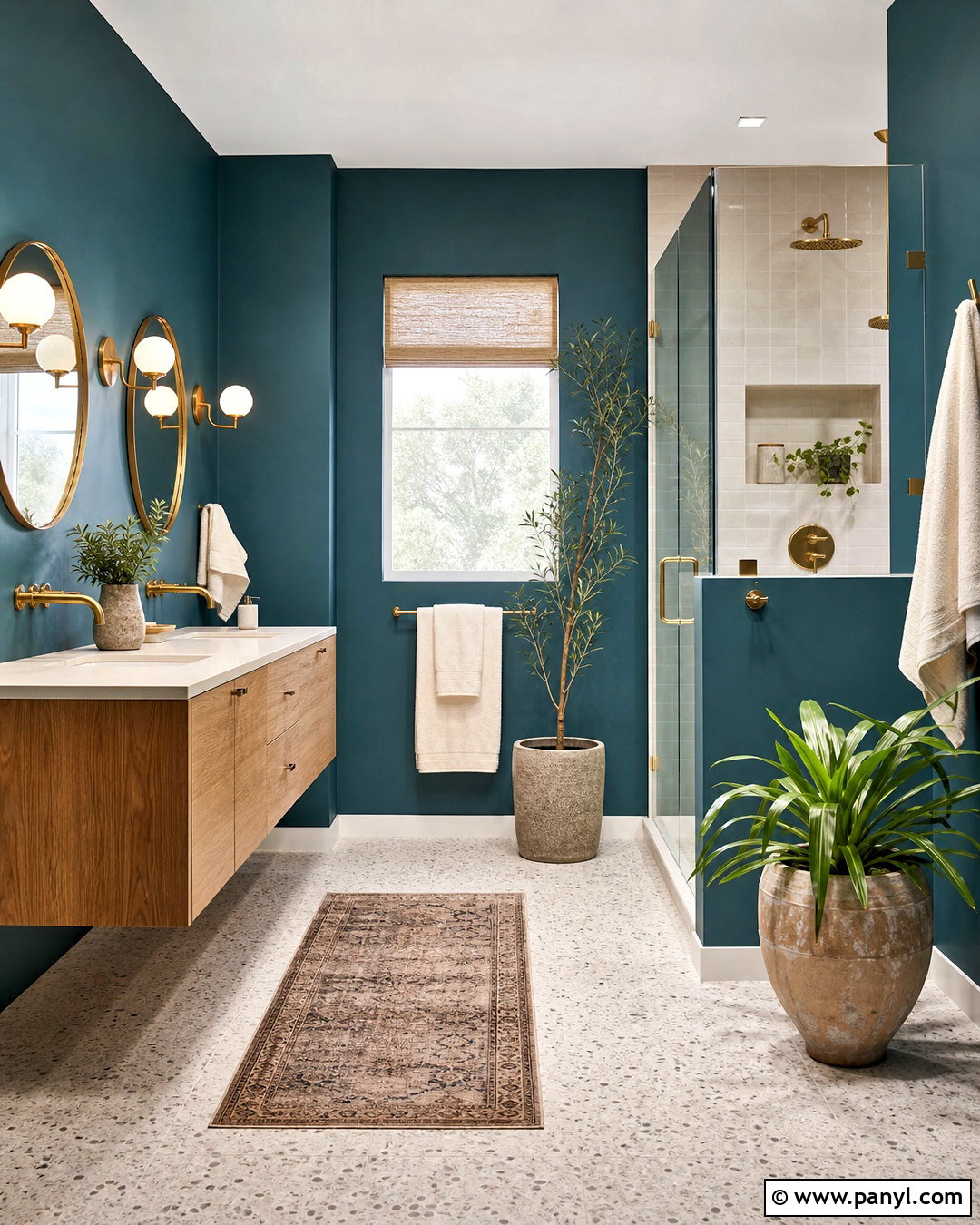
Dark teal combines blue’s calm character with green’s natural warmth, making it an excellent choice for a spa-inspired bathroom. Paint the walls a deep, slightly muted teal and pair them with creamy terrazzo flooring containing subtle green and tan flecks. Select a warm oak vanity, an ivory countertop, and brushed brass fixtures to enhance the color’s softer side. A walk-in shower with clear glass keeps the teal visible across the room. Add round mirrors, globe sconces, and off-white towels for brighter contrast. Small plants in stoneware pots reinforce the organic palette without turning the room into a theme. Keep accessories simple because the wall color already provides strong personality. The completed space feels rich, restorative, and visually balanced.
9. Peacock Blue Bathroom Paint
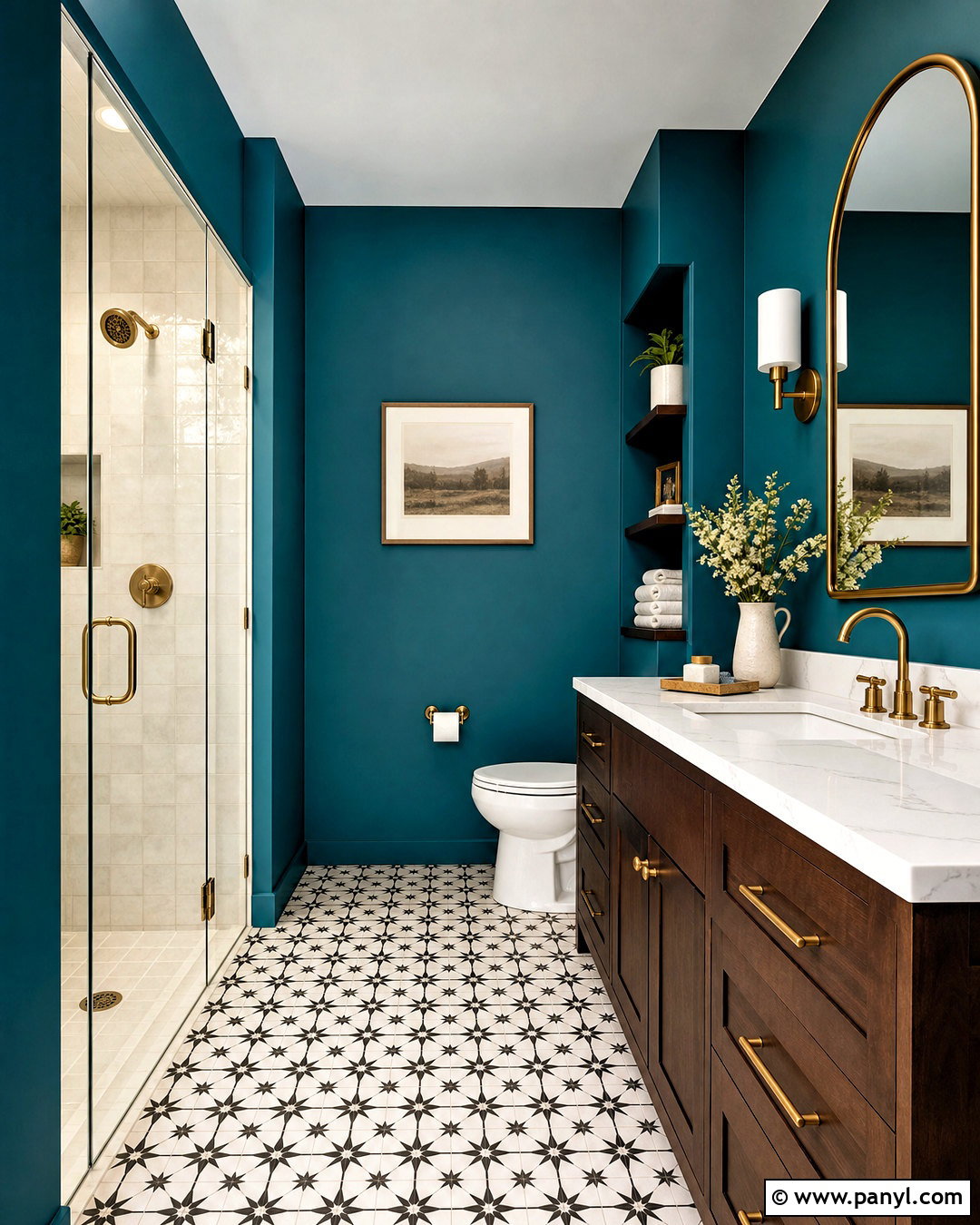
Peacock blue delivers saturated color with a sophisticated blend of blue and green. It suits a statement powder room or a primary bathroom with plenty of white surfaces. Paint the walls peacock blue, then anchor the design with a dark walnut vanity and a veined white quartz countertop. Brass hardware emphasizes the color’s richness, while a curved mirror introduces a softer shape. Use ivory zellige-look tile inside the shower so its uneven surface reflects light and adds movement. A black-and-white patterned floor can provide graphic contrast without competing with the walls. Finish the space with solid cream towels and minimal ceramic accessories. Bright, balanced lighting is essential because peacock shades can appear much darker in corners than they do beside the mirror.
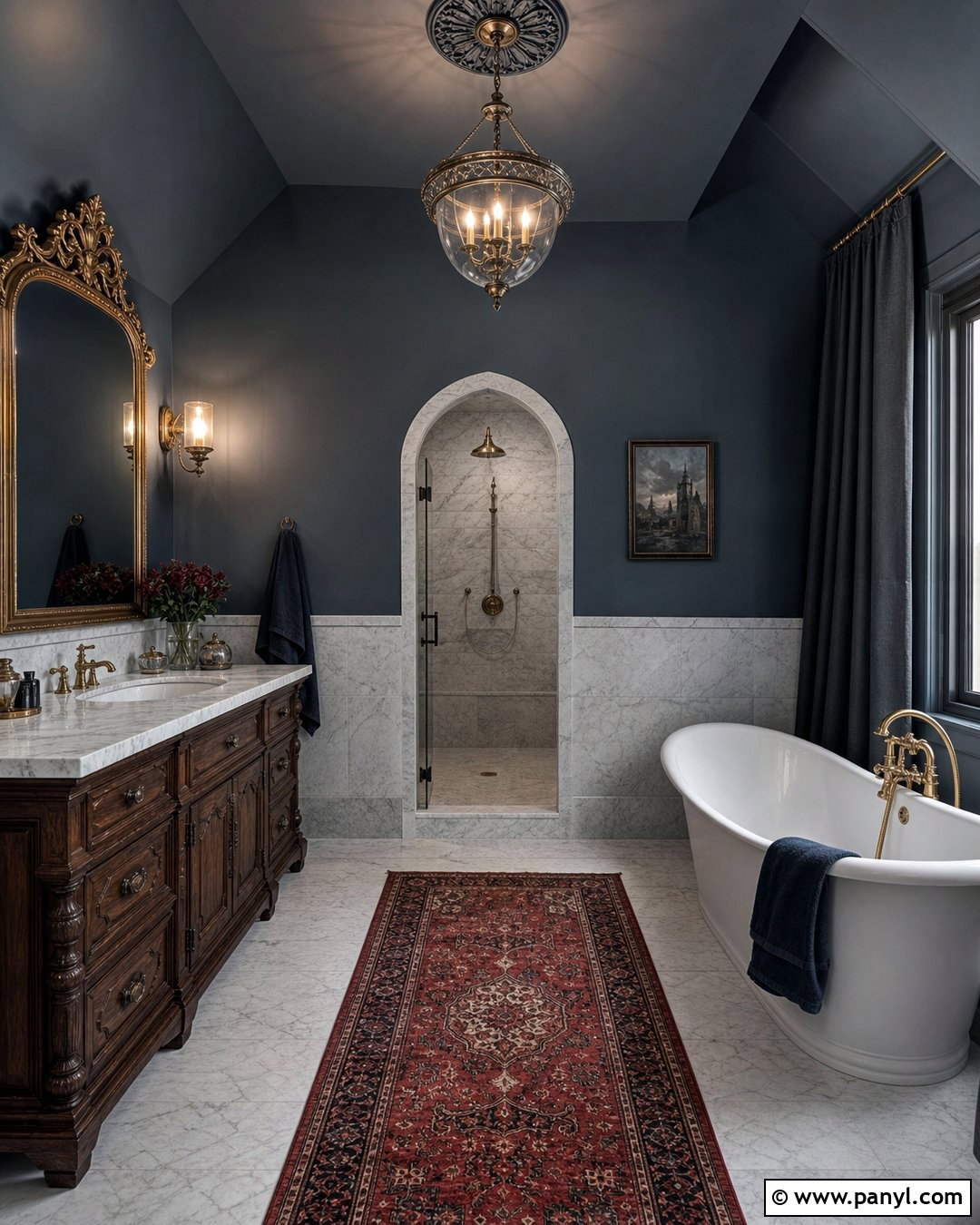
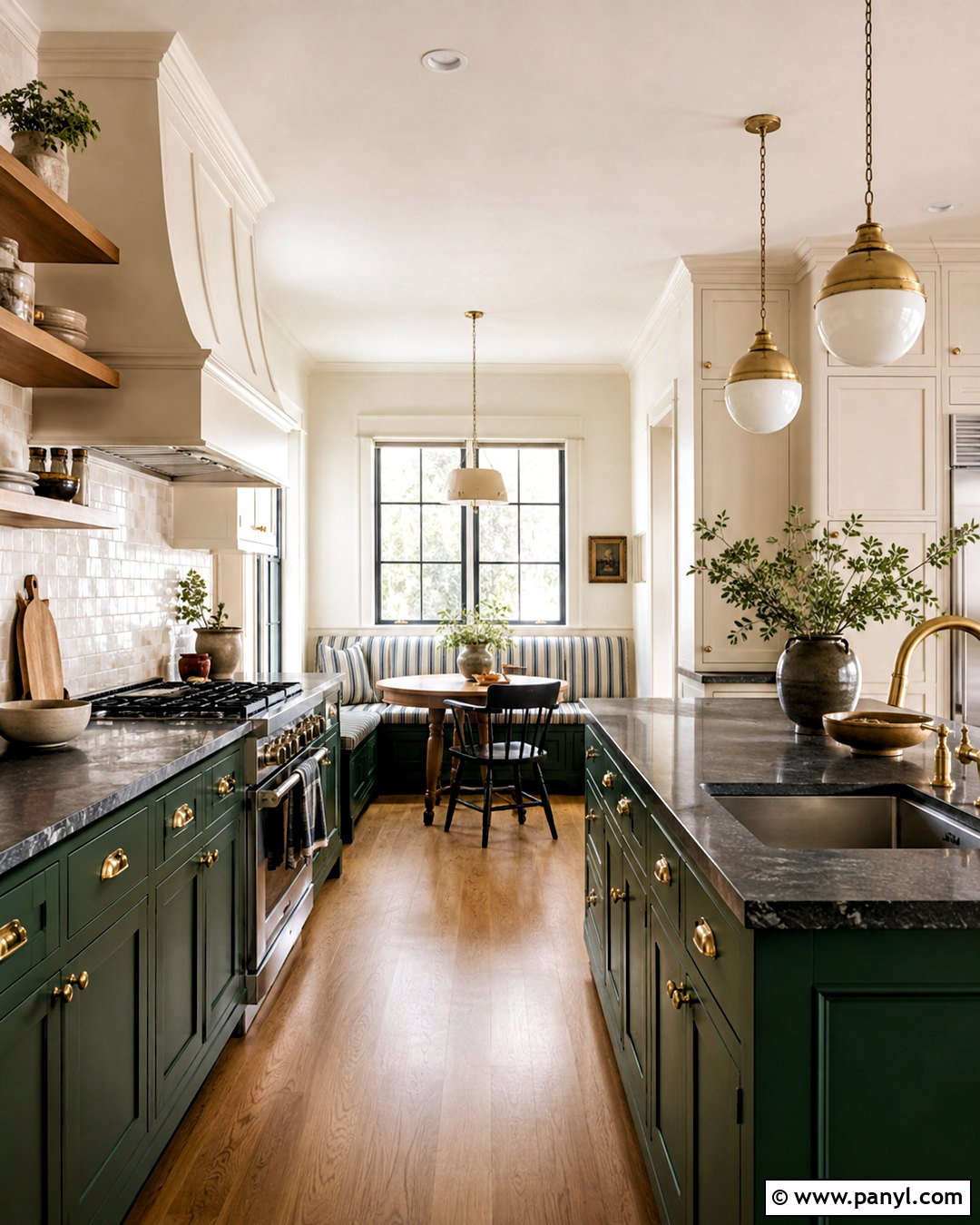
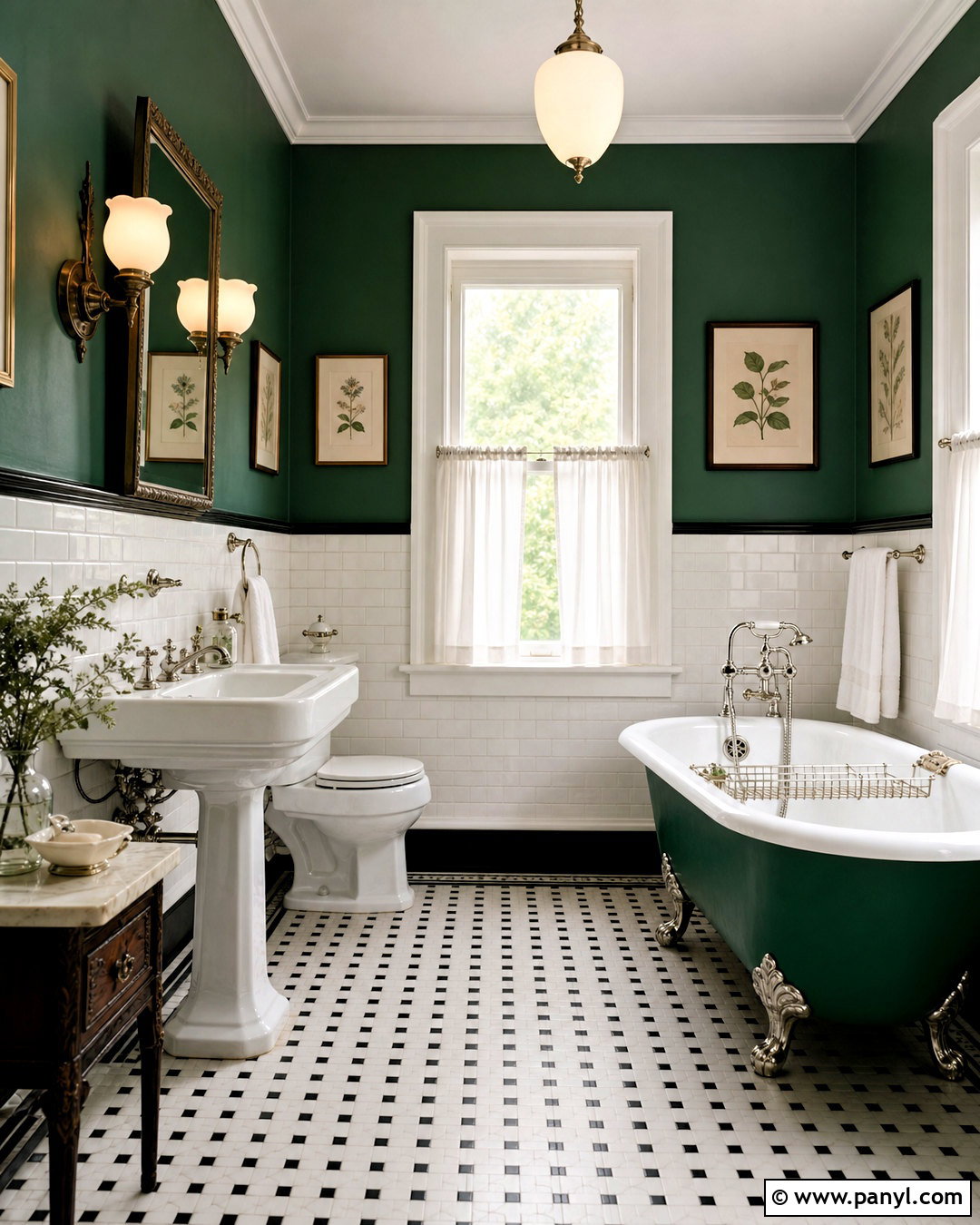
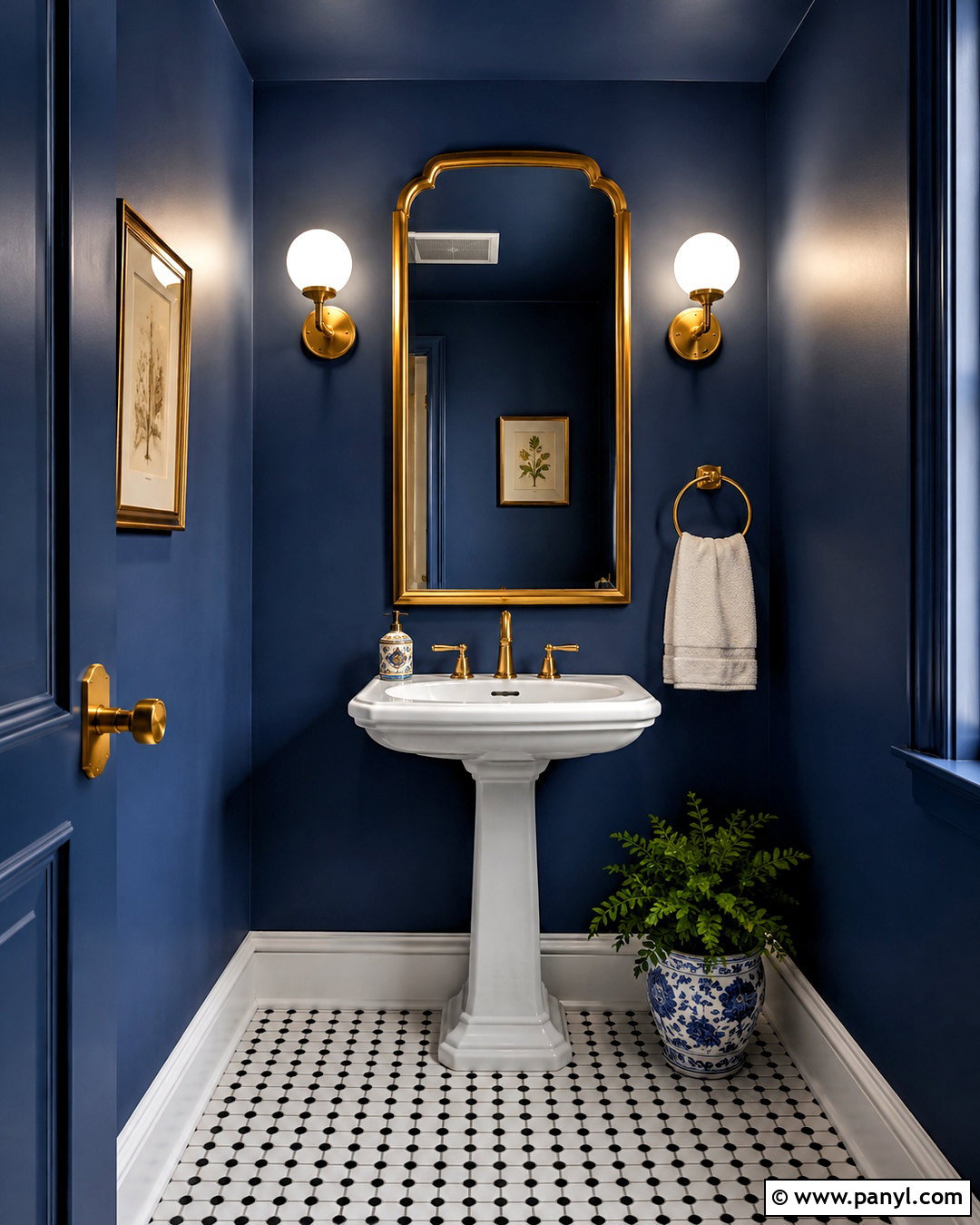
10. Forest Green Bathroom Paint
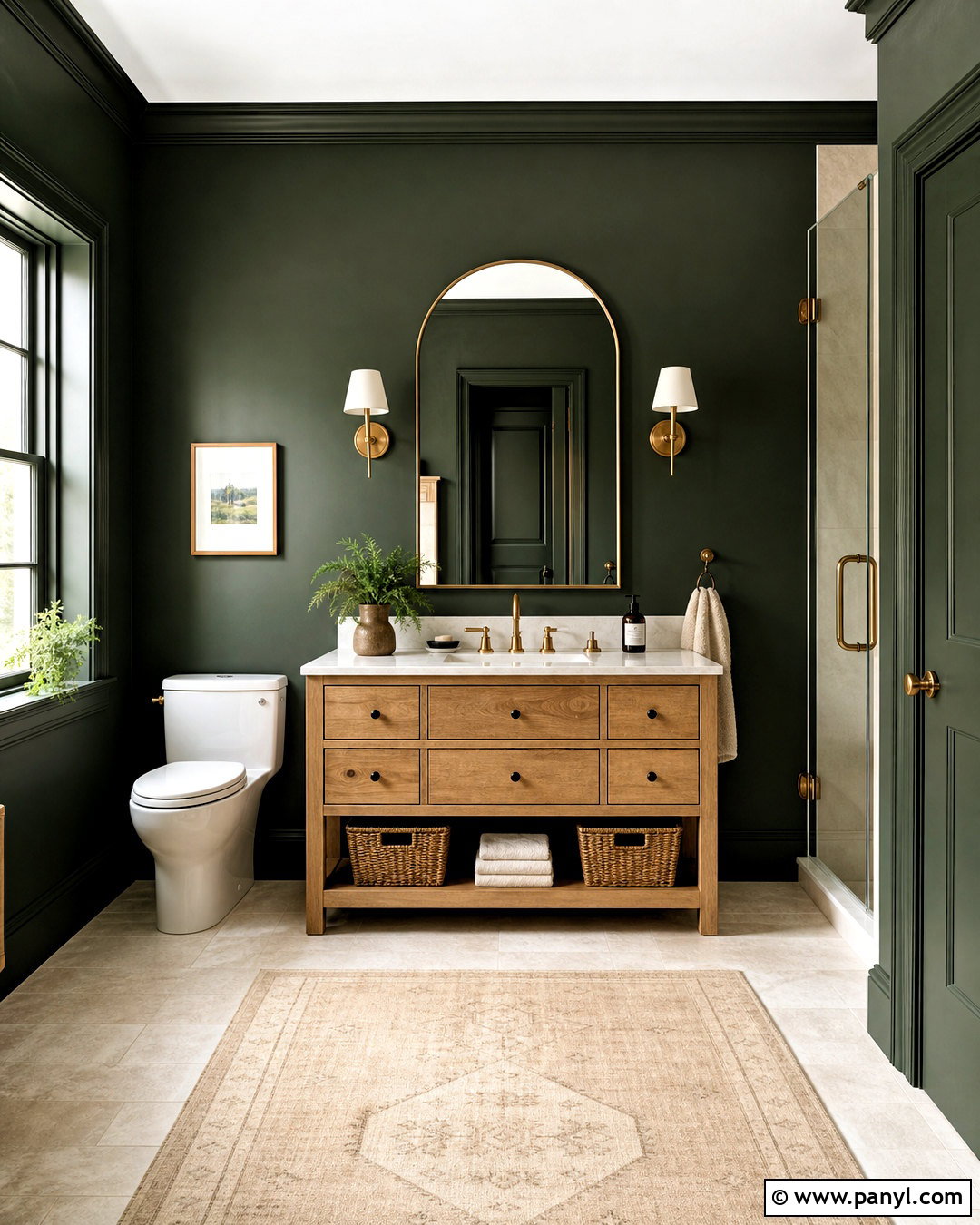
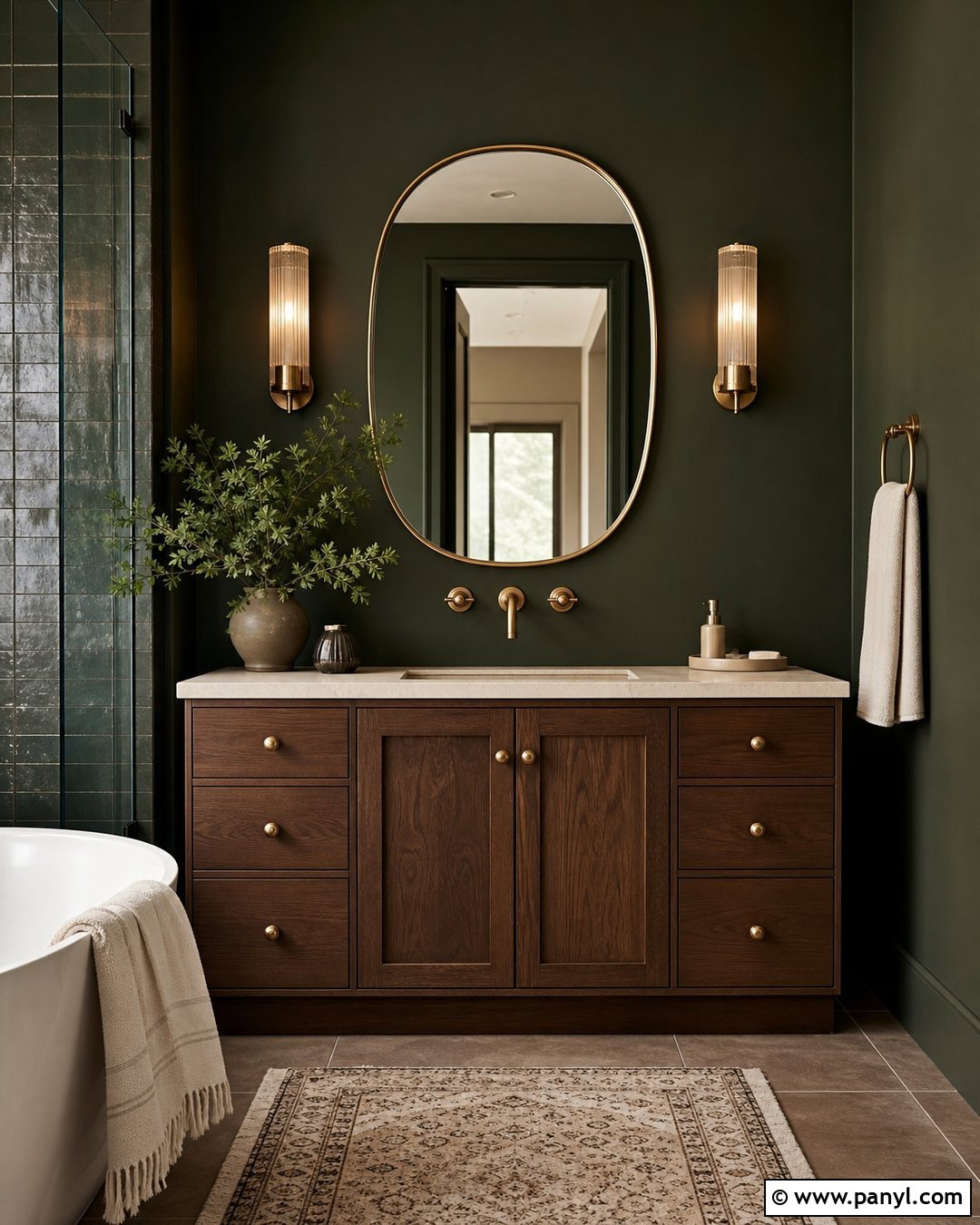
Forest green gives a bathroom an enveloping, nature-inspired quality that pairs beautifully with warm wood and stone. Use the deep green on walls and trim, then bring in a natural oak vanity with visible grain. Cream limestone-look floor tile and an off-white countertop provide gentle contrast rather than sharp black-and-white division. Choose antique brass faucets, pulls, and sconces to highlight the warm undertones. A large arched mirror adds height and reflects the lighter surfaces across the room. Include woven baskets, beige towels, and a small fern to support the organic look. If the bathroom is compact, keep the shower enclosure clear and uncluttered. The full palette feels grounded and refined, with enough warmth to remain comfortable throughout the year.
11. Dark Olive Bathroom Paint
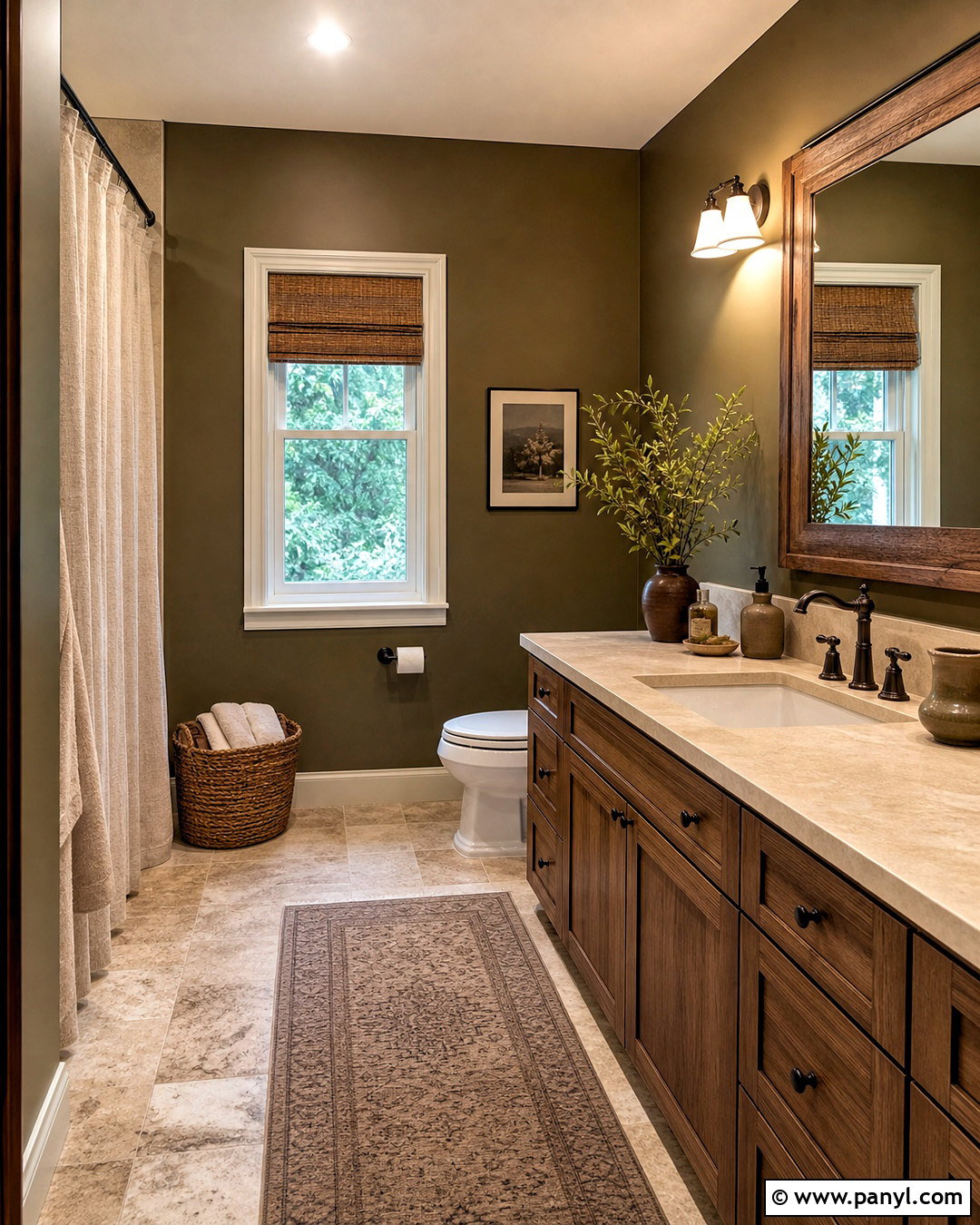
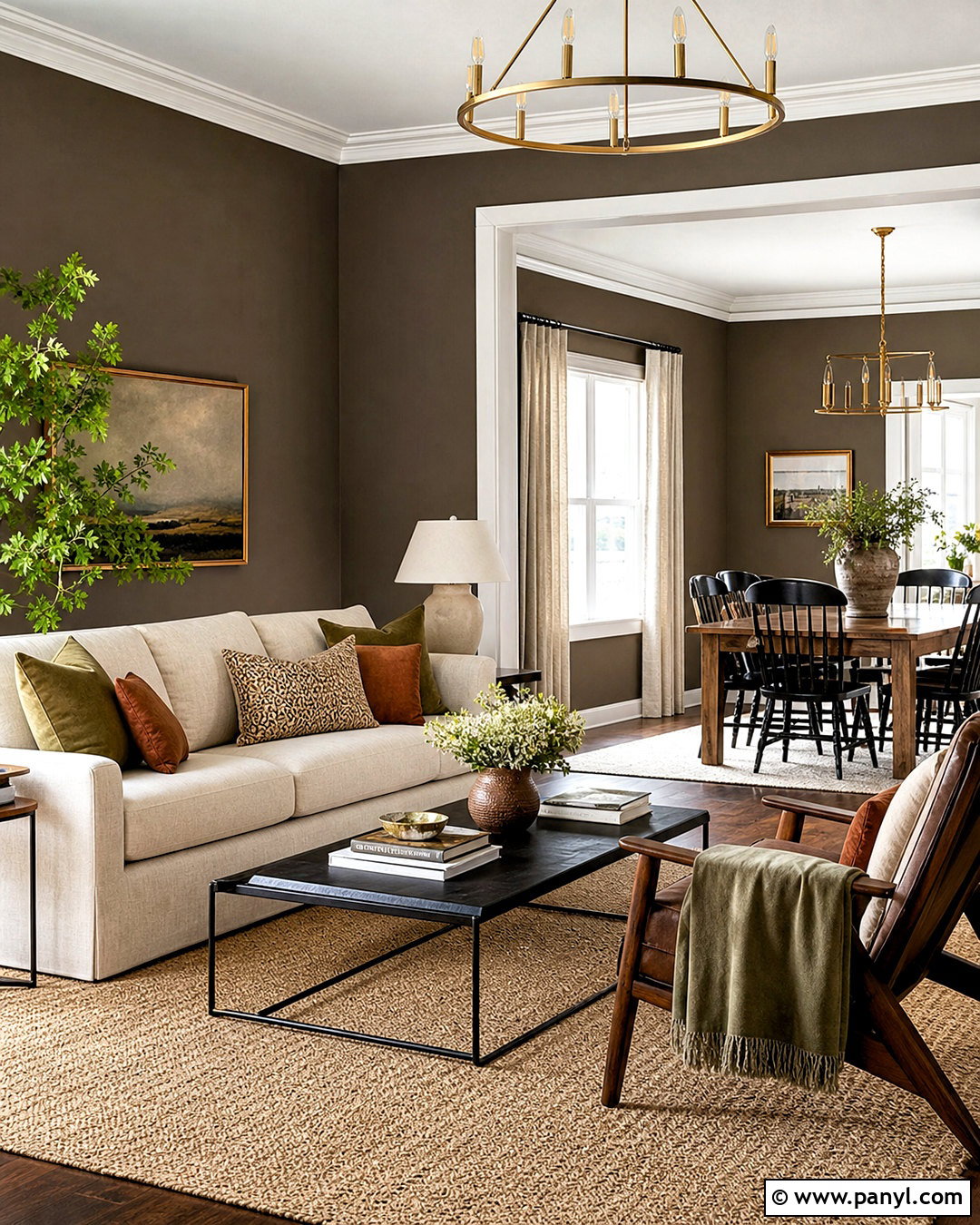
Dark olive creates a warm, earthy bathroom that works especially well with beige tile and aged metal finishes. Paint the walls a brown-based olive rather than a bright yellow-green, then install a walnut vanity and creamy stone countertop. Tumbled limestone floor tile supports the muted palette, while bronze faucets and cabinet hardware add depth. Choose a rectangular wood-framed mirror to connect visually with the vanity. Soft oatmeal towels, a flax-colored shower curtain, and handmade ceramic containers prevent the room from feeling overly formal. Dark olive can shift noticeably under artificial lighting, so test it beside the floor and countertop before painting every wall. With layered sconces and ceiling lights, the finished bathroom feels cozy, natural, and intentionally understated.
12. Dark Sage Bathroom Paint
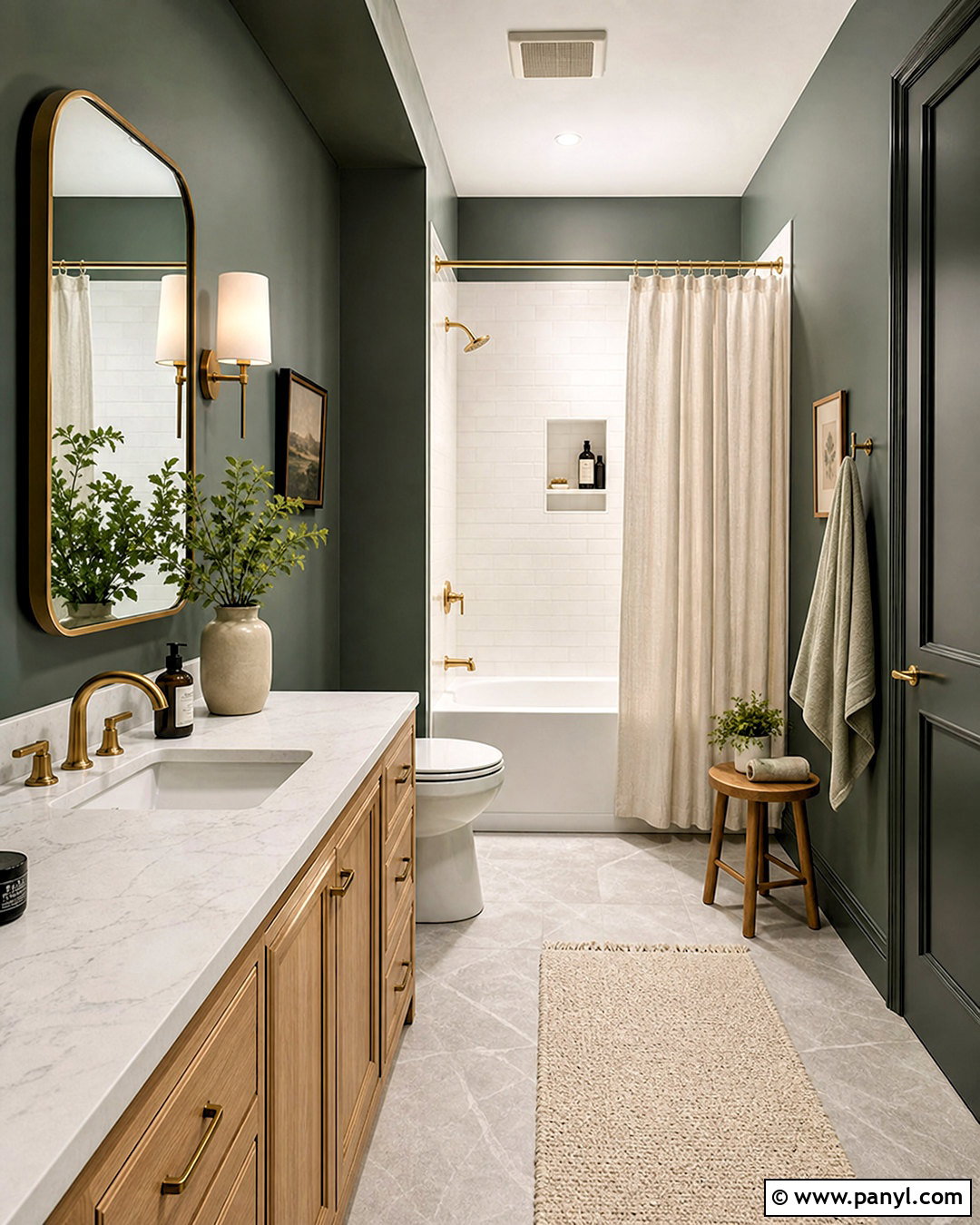
Dark sage offers a gentler alternative to forest green while still producing a distinctly moody room. Choose a saturated gray-green and pair it with warm white shower tile, pale oak cabinetry, and lightly veined quartz. Brushed brass fixtures add polish, but matte black hardware can create a more contemporary result. Paint the walls and trim the same sage color to reduce visual breaks and make the room feel cohesive. Keep the ceiling warm white to reflect overhead lighting. A linen shower curtain, cream bath mat, and simple wood stool complete the relaxed palette. This scheme works well in bathrooms that receive moderate natural light because the color changes subtly throughout the day. It feels restful, approachable, and easy to coordinate with existing neutral finishes.
13. Deep Emerald Bathroom Paint
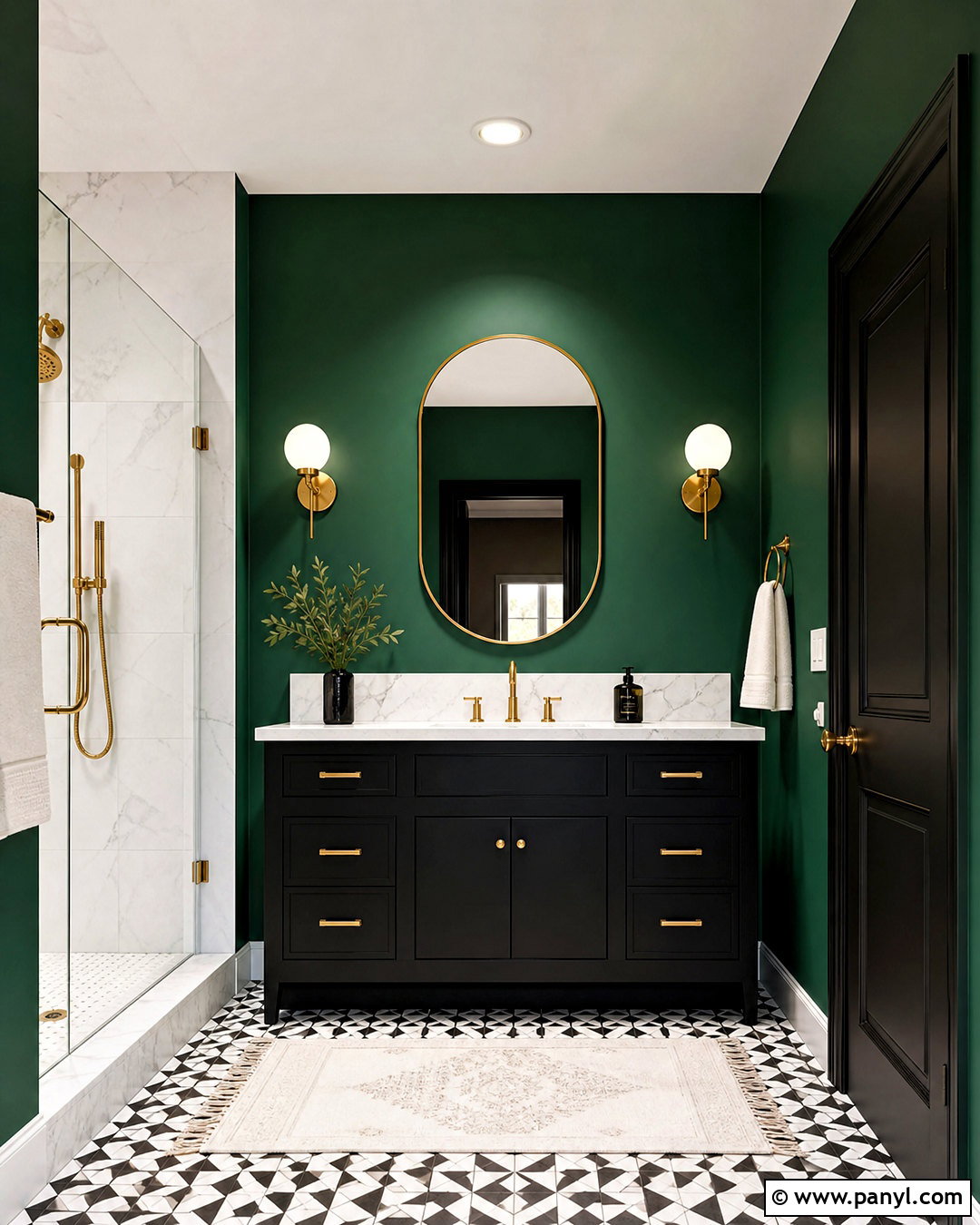
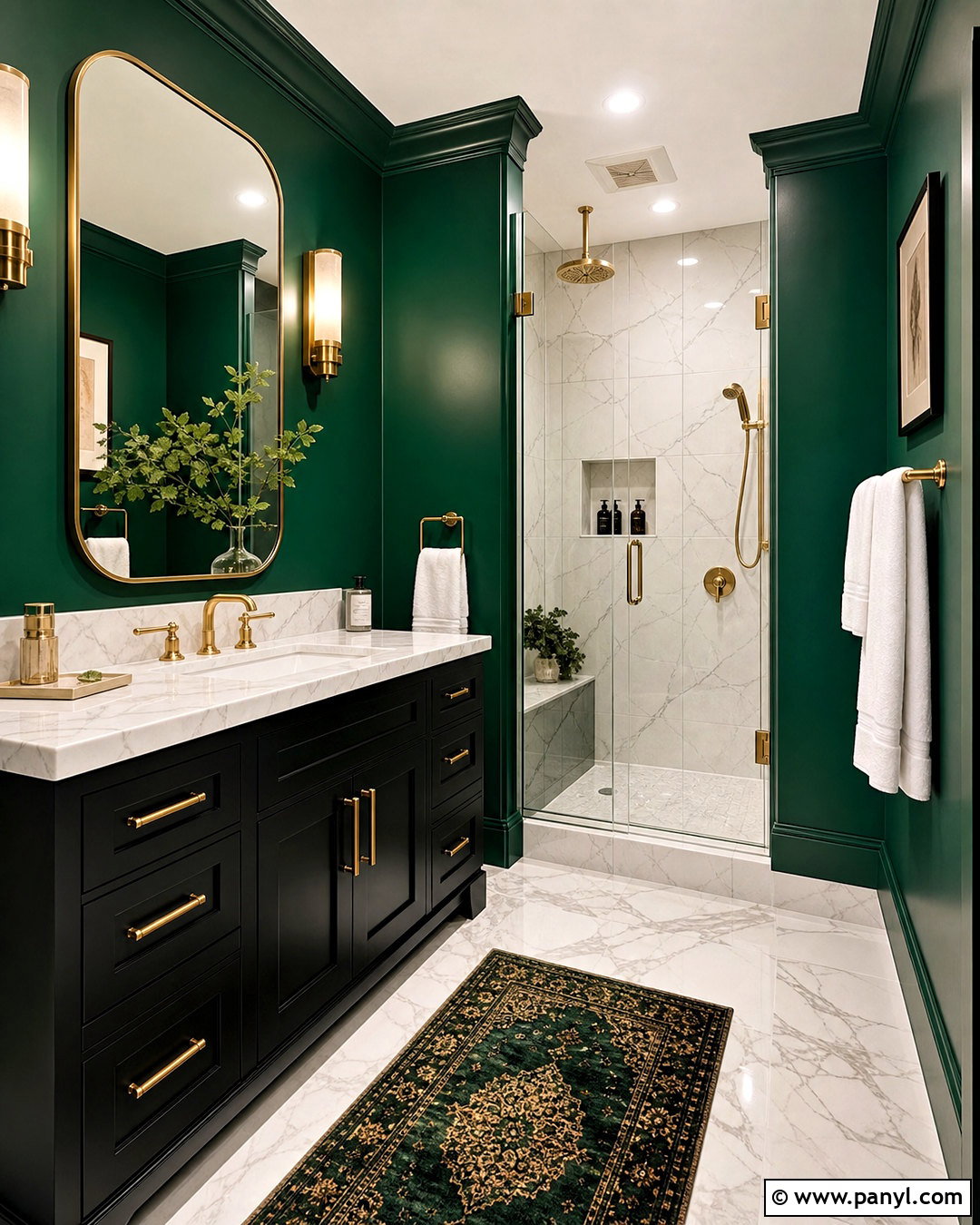
Deep emerald green produces a glamorous bathroom when balanced with clean stone and restrained metallic accents. Use emerald on the walls, then pair it with white marble-look tile featuring soft gray veining. A black vanity provides a strong foundation, while brass faucets and pulls create bright points against both dark colors. Add an oversized pill-shaped mirror and two opal globe sconces for an elegant, symmetrical sink area. Keep towels, window treatments, and countertop accessories ivory so the saturated walls remain the focus. A geometric black-and-white floor can sharpen the scheme, although plain pale tile offers a quieter alternative. Emerald works best when the rest of the room is carefully edited. Too many decorative colors can weaken its rich, jewel-like effect.
14. Aubergine Bathroom Paint

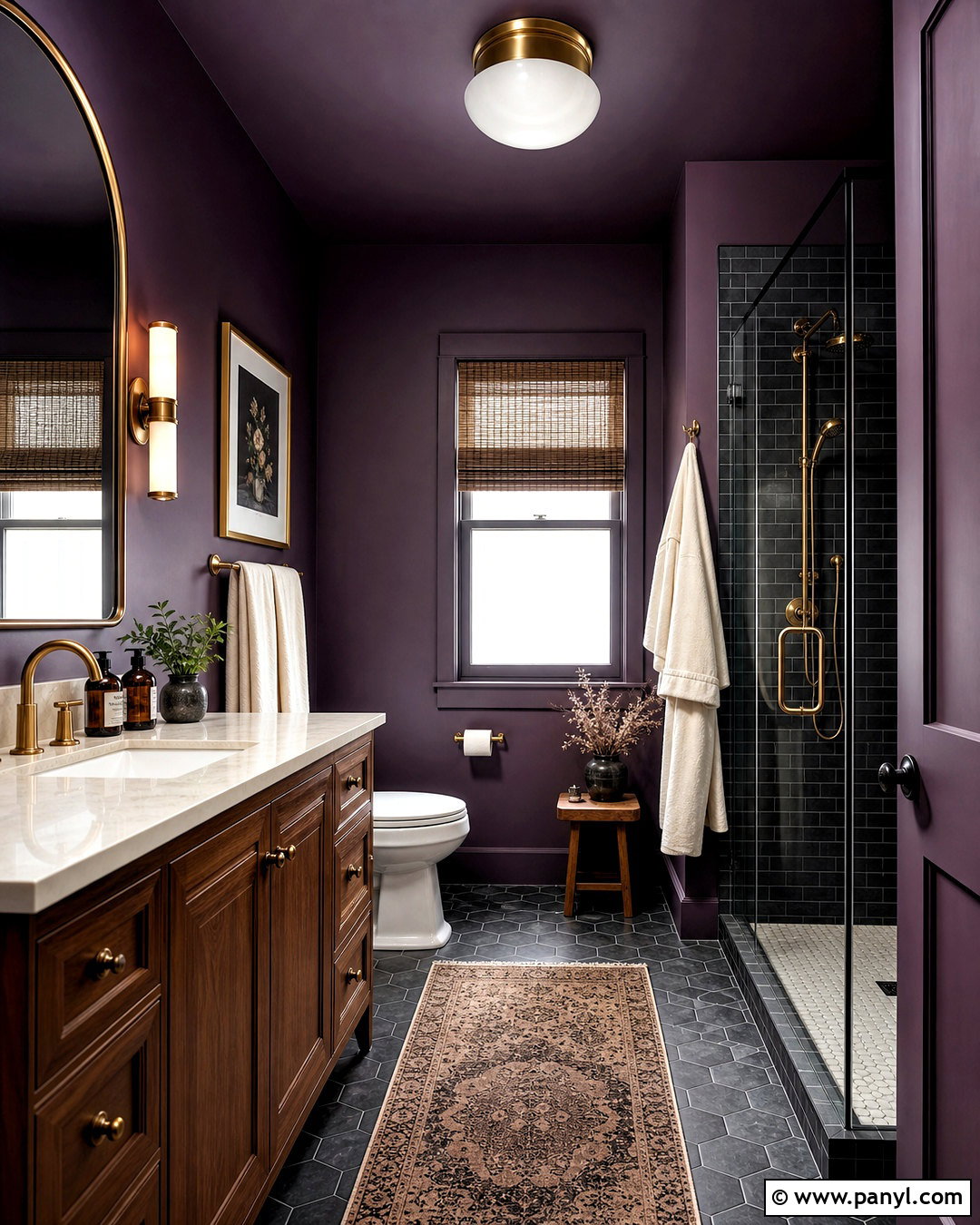
Aubergine is a deep eggplant purple with enough brown or red underneath to feel warm and inviting. Create a complete bathroom around it with painted walls, a walnut vanity, and creamy marble-look surfaces. Brushed brass hardware draws out the color’s warmth, while a large frameless mirror keeps the room from becoming too ornate. Choose warm white floor tile instead of cool gray, which can make aubergine appear harsh. Pale blush towels or muted beige textiles provide subtle contrast without turning the palette overly feminine. For a sophisticated color-drenched approach, paint the trim and door in the same shade. Add strong vanity lighting and a bright ceiling fixture so the purple undertones remain visible. The finished space feels distinctive, layered, and surprisingly comfortable.
15. Dark Plum Bathroom Paint
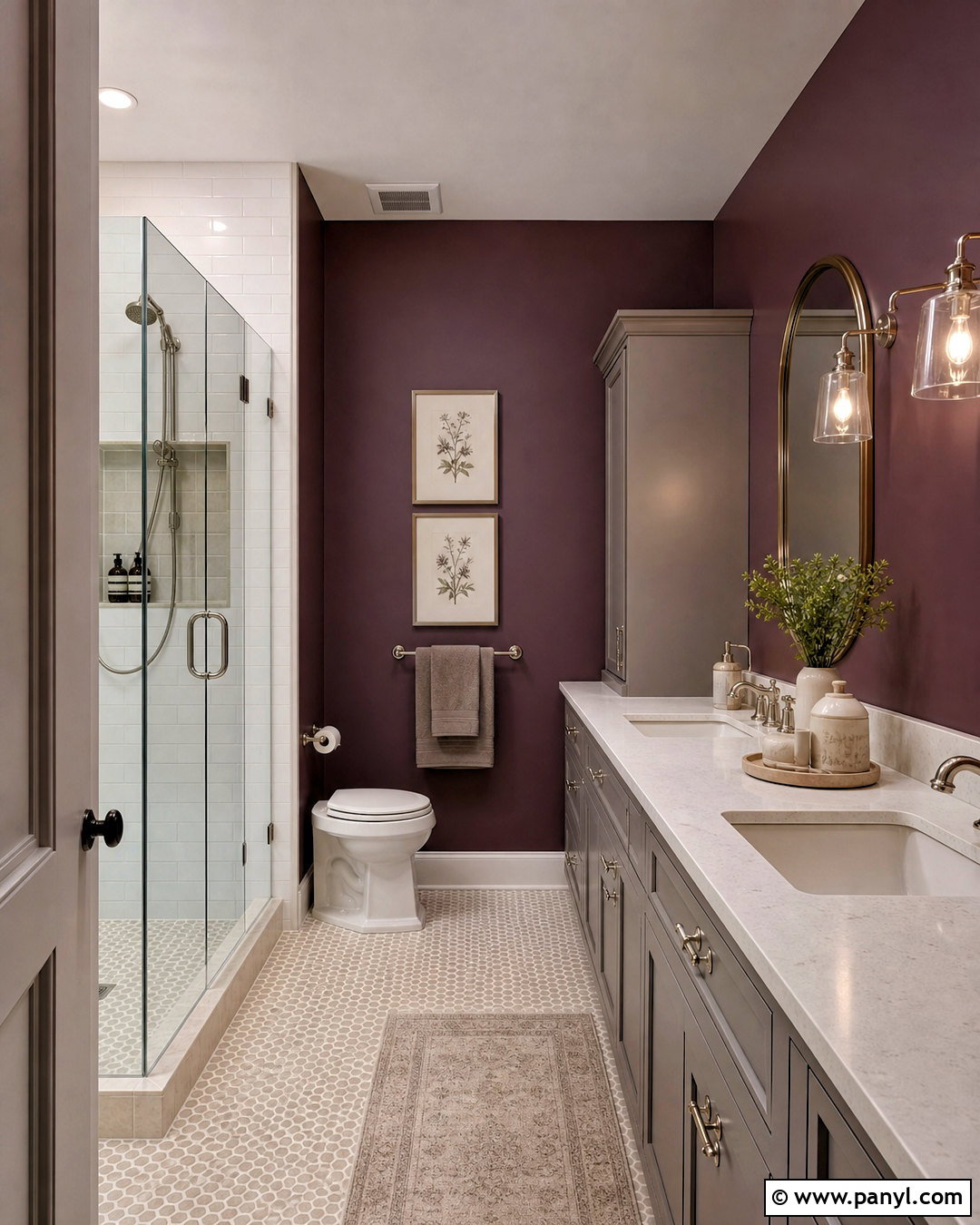
Dark plum brings soft red-violet warmth to a bathroom while maintaining a dramatic, cocooning atmosphere. Pair plum-painted walls with a warm gray vanity and a pale quartz countertop for a balanced transitional look. Polished nickel faucets offer cool contrast, while aged brass creates a warmer and more traditional result. Use creamy white wall tile around wet areas and a small-scale mosaic floor that blends ivory, taupe, and gray. A rounded mirror and simple glass sconces prevent the strong paint color from feeling heavy. Repeat plum once through a hand towel or framed print, but keep other accessories neutral. This complete scheme works particularly well in powder rooms, where the bold walls can create impact without competing with a large shower or extensive cabinetry.
16. Burgundy Bathroom Paint
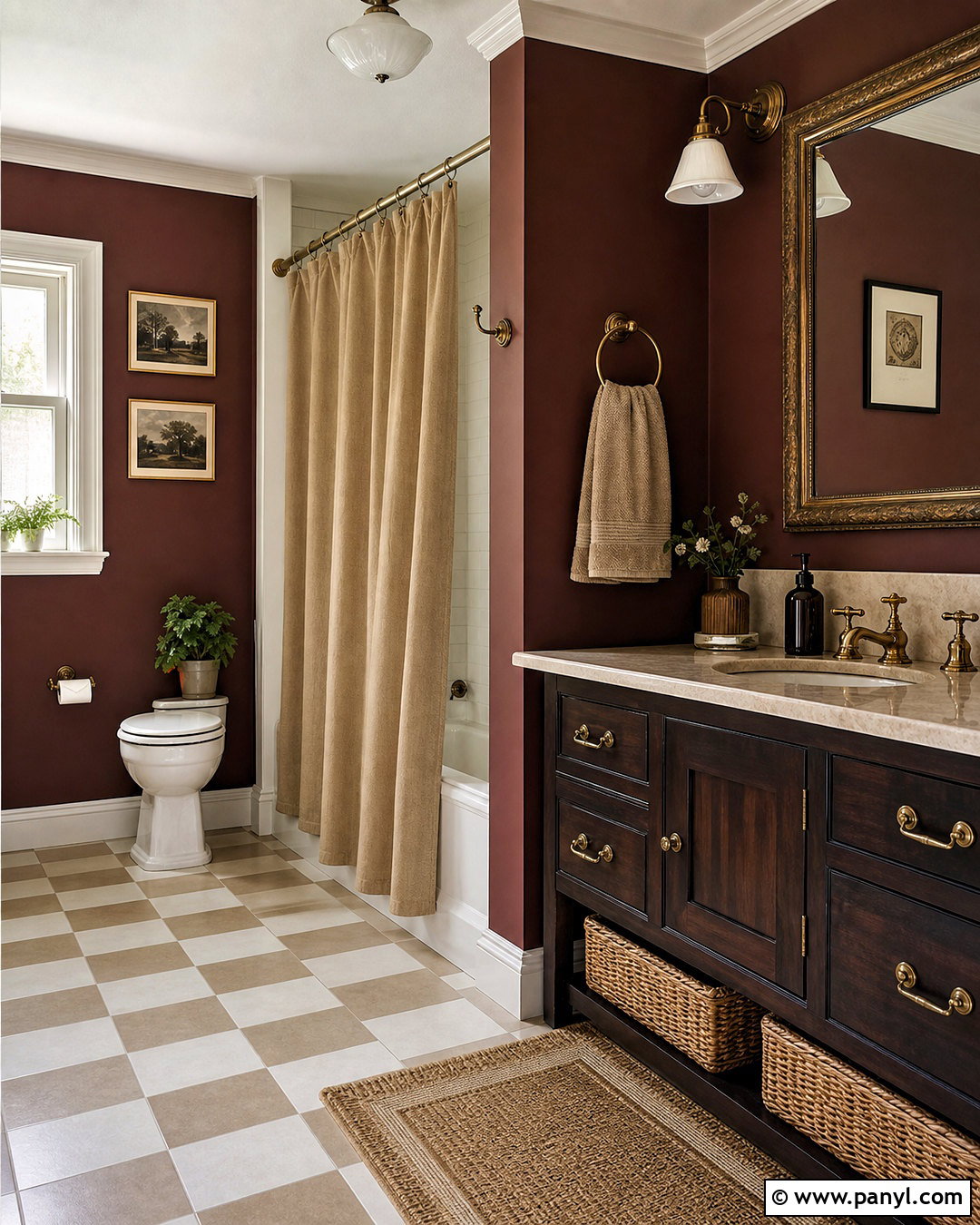
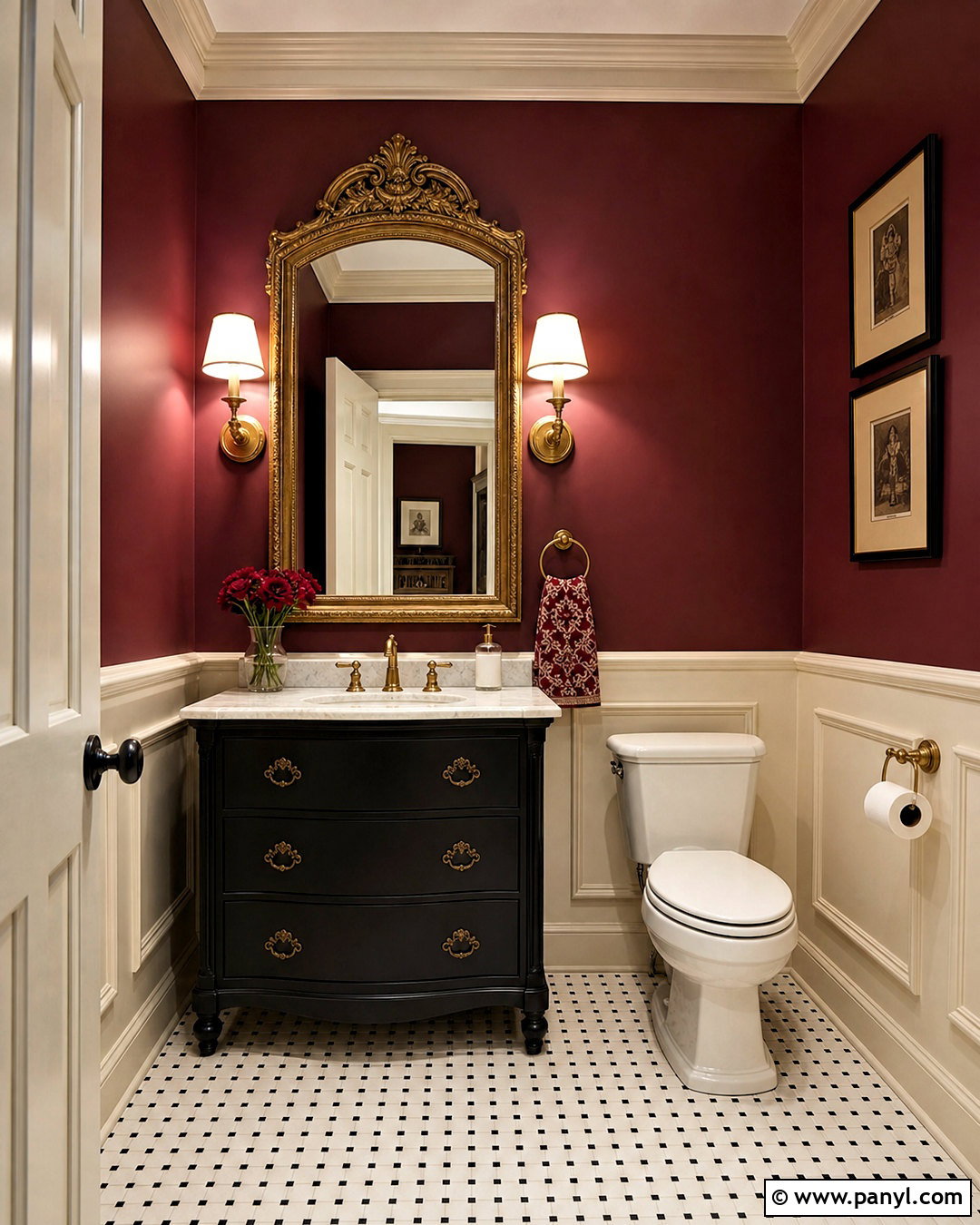
Burgundy walls can make a bathroom feel warm, tailored, and full of character. Select a muted wine-red with brown undertones rather than a bright crimson shade. Pair it with a dark wood vanity, creamy countertop, and warm white ceramic tile. Antique brass faucets and a traditional framed mirror reinforce the classic palette, while simple cabinet fronts keep it from looking dated. Use checkerboard flooring in soft ivory and tan for subtle pattern, or choose plain limestone-look porcelain for a calmer finish. Bright sconces on either side of the mirror are important because burgundy absorbs considerable light. Add beige towels and minimal artwork with warm neutral tones. The finished bathroom feels sophisticated and welcoming, especially in historic, traditional, or cottage-inspired homes.
17. Oxblood Bathroom Paint
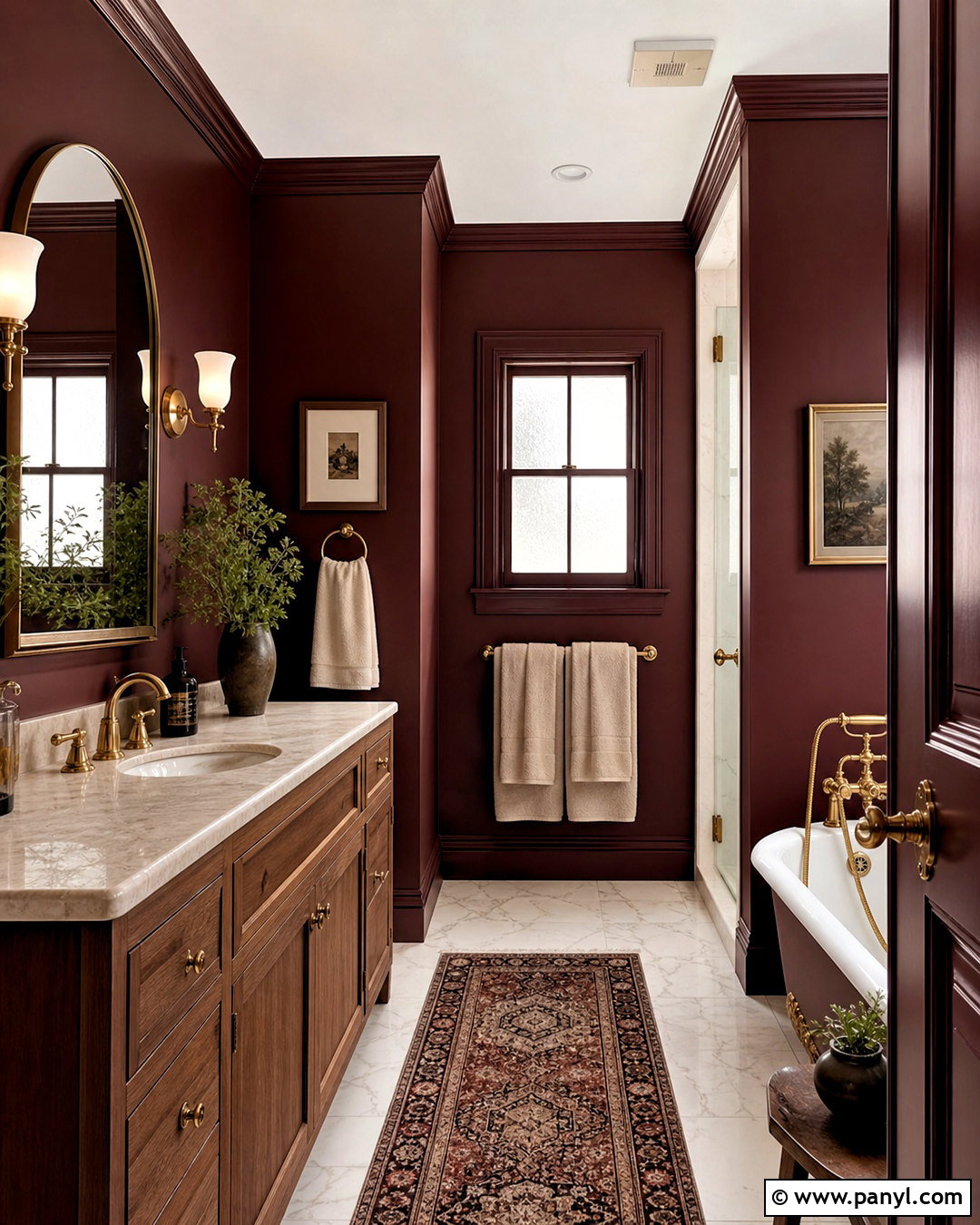
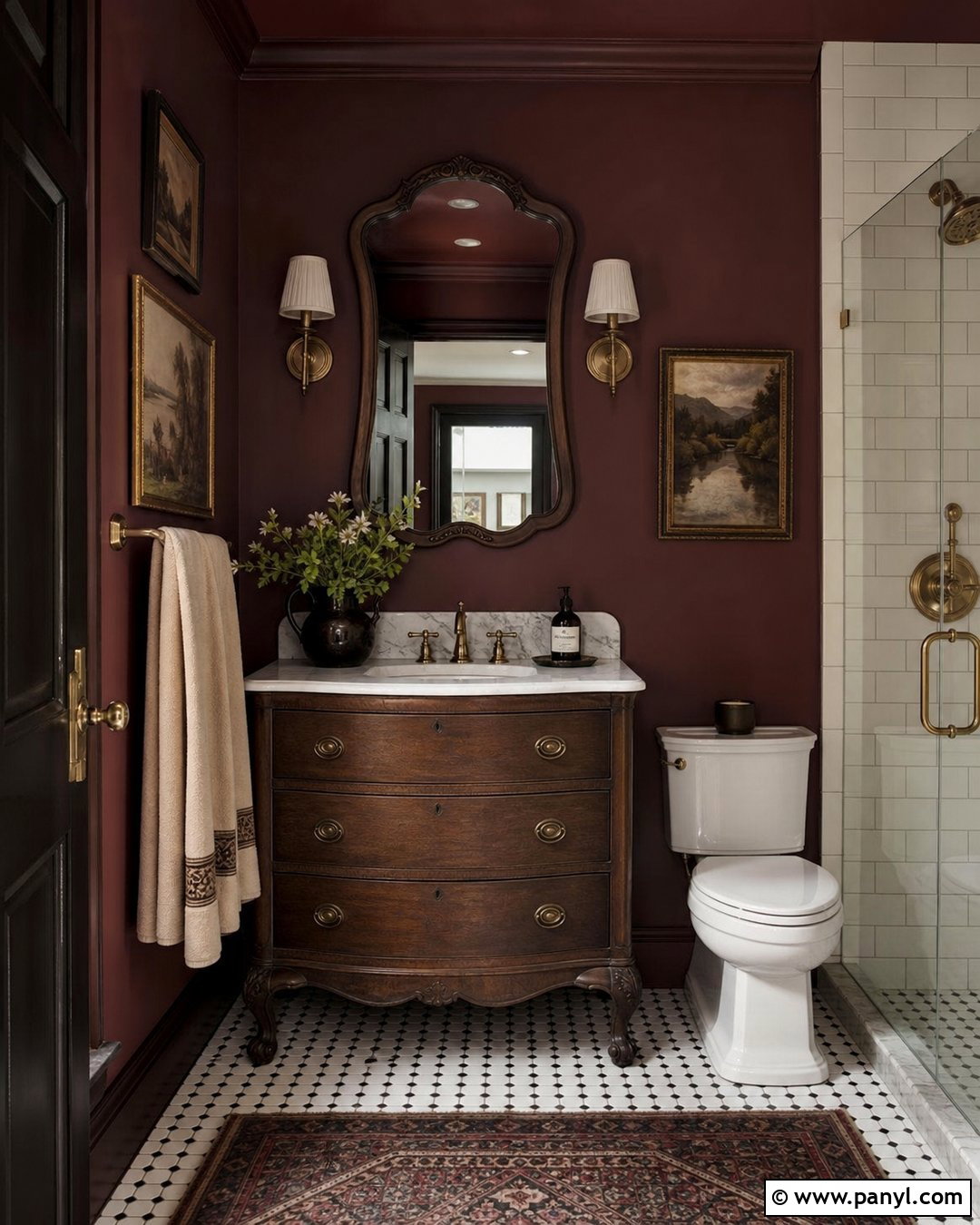
Oxblood is a very deep brown-red that creates a luxurious bathroom without relying on black or navy. Use it across the walls and trim, then offset its intensity with creamy marble-look tile and a pale stone countertop. A medium walnut vanity connects naturally to the paint’s brown undertones. Add aged brass fixtures, a curved mirror, and frosted glass sconces for a warm, polished sink area. Keep the ceiling ivory so overhead light can spread more effectively. Black accents should be limited to small details, such as a picture frame or shower enclosure, because too much black can make the palette feel dense. Finished with oatmeal towels and a patterned vintage-style runner, the space feels collected, comfortable, and rich in color.
18. Chocolate Brown Bathroom Paint
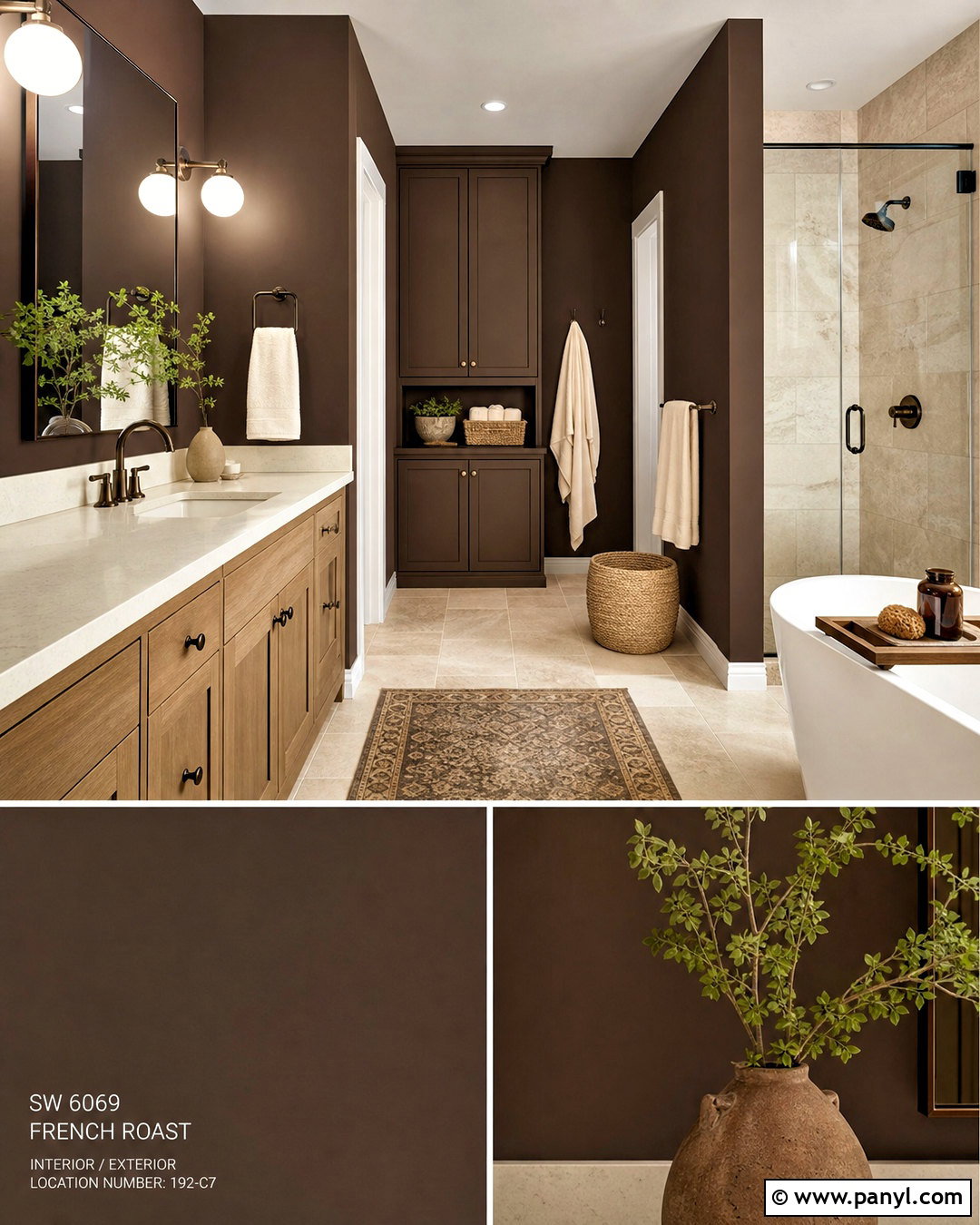
Chocolate brown creates a cozy, grounded bathroom and pairs naturally with cream, tan, stone, and wood. Choose a deep cocoa shade with warm undertones, then paint the walls and built-in storage for a smooth, enveloping background. Install a light oak vanity to introduce contrast without leaving the earthy palette. A creamy quartz countertop, travertine-look floor tile, and bronze fixtures complete the warm foundation. Use a large mirror and bright globe sconces to reflect light across the brown surfaces. White can feel too sharp here, so select ivory towels and warm off-white trim instead. Add one clay vase and a woven basket for texture. The result is an inviting bathroom that feels modern, natural, and more nuanced than a standard neutral scheme.
19. Espresso Bathroom Paint
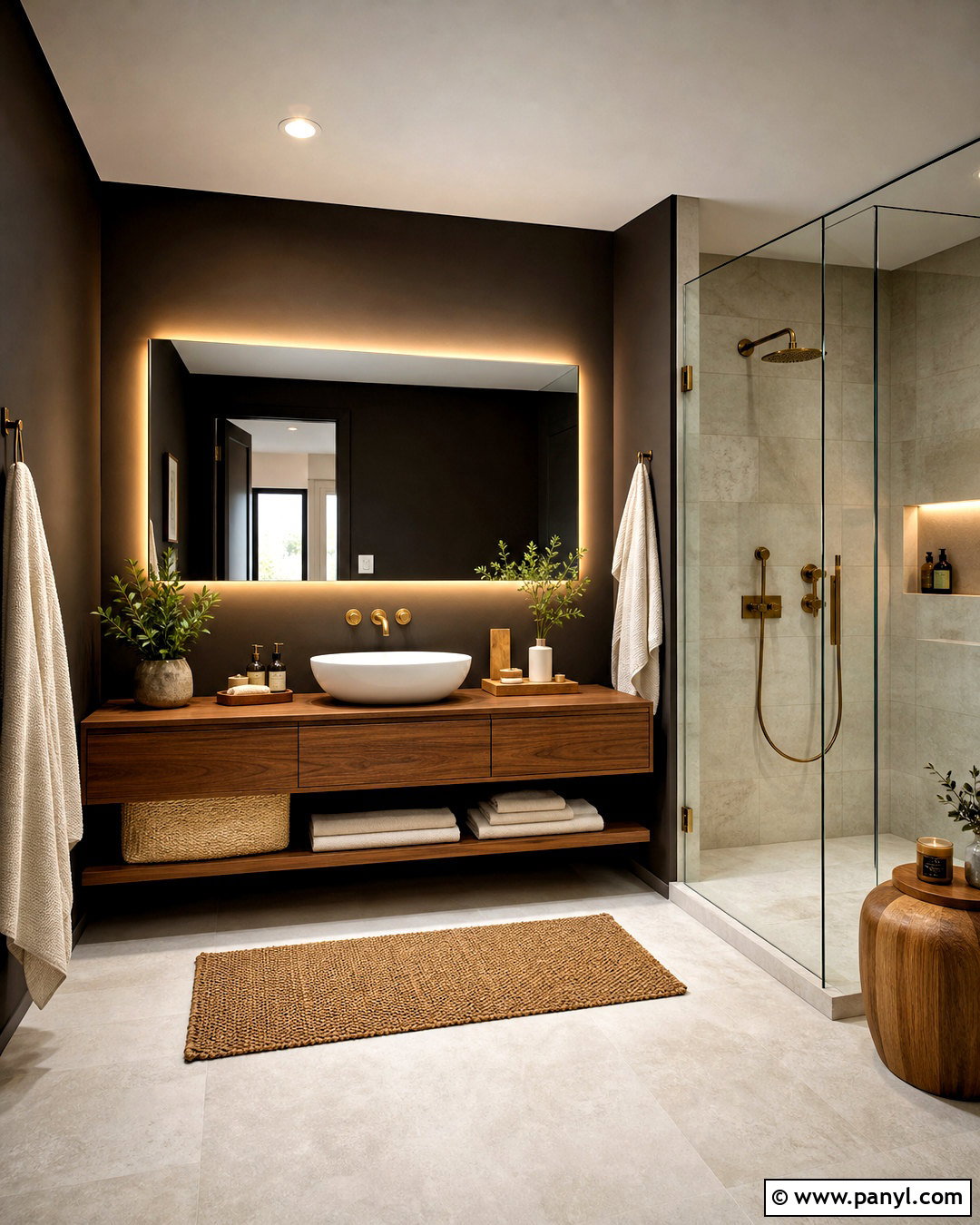
Espresso paint sits between deep brown and near-black, creating a strong backdrop with subtle warmth. Pair espresso walls with a floating walnut vanity, white vessel sink, and pale porcelain floor tile for clear visual balance. Matte black faucets will blend into the deeper palette, while brass fixtures provide a brighter, more decorative contrast. Install a wide backlit mirror to illuminate the sink area and emphasize the brown undertones. Use a frameless glass shower and light stone wall tile so the room maintains an open sightline. Cream towels, a natural bath mat, and minimal wood accessories soften the modern lines. Espresso is especially useful when existing tile contains beige or brown veining because it can connect those warmer details into one cohesive bathroom design.
20. Dark Terracotta Bathroom Paint
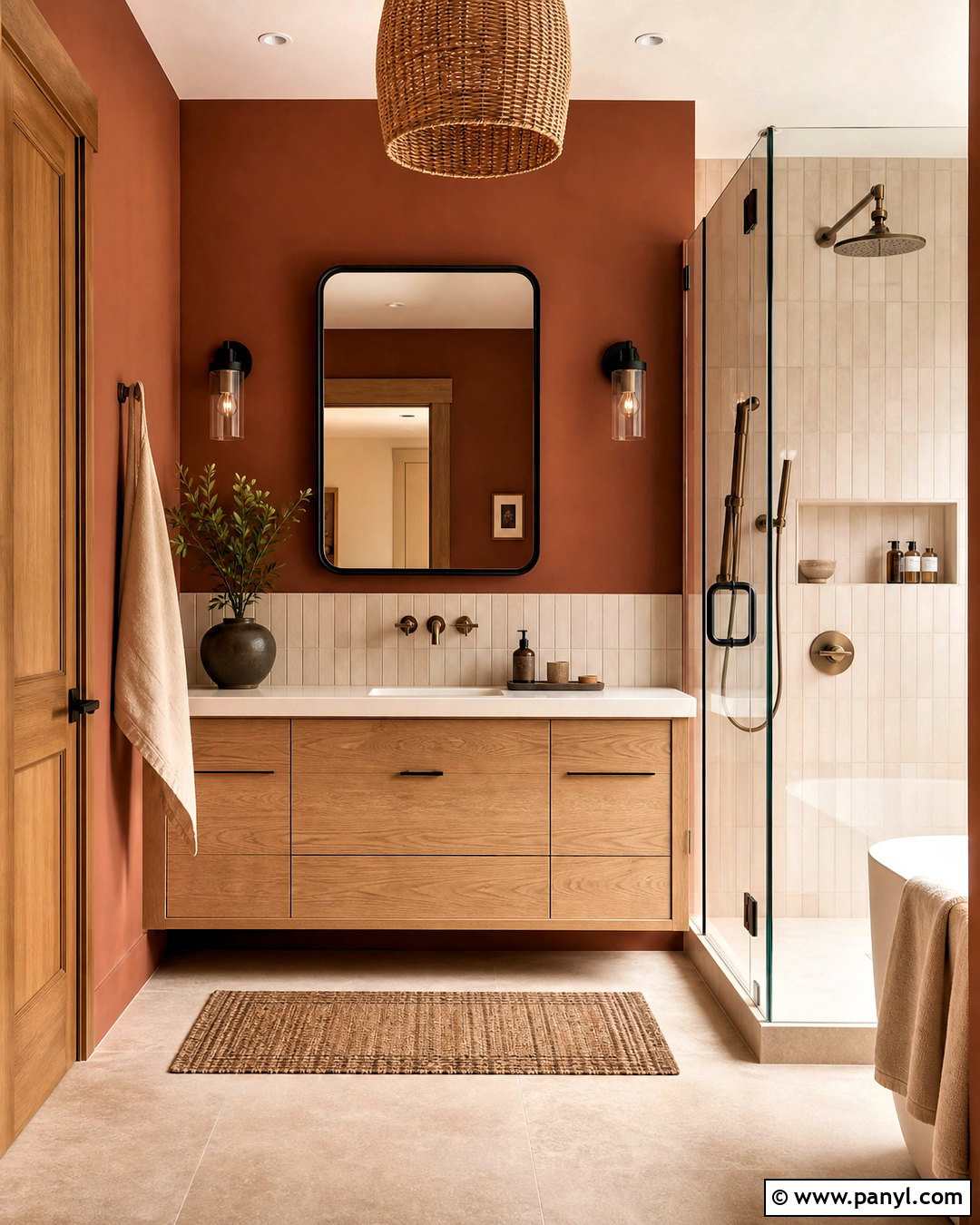
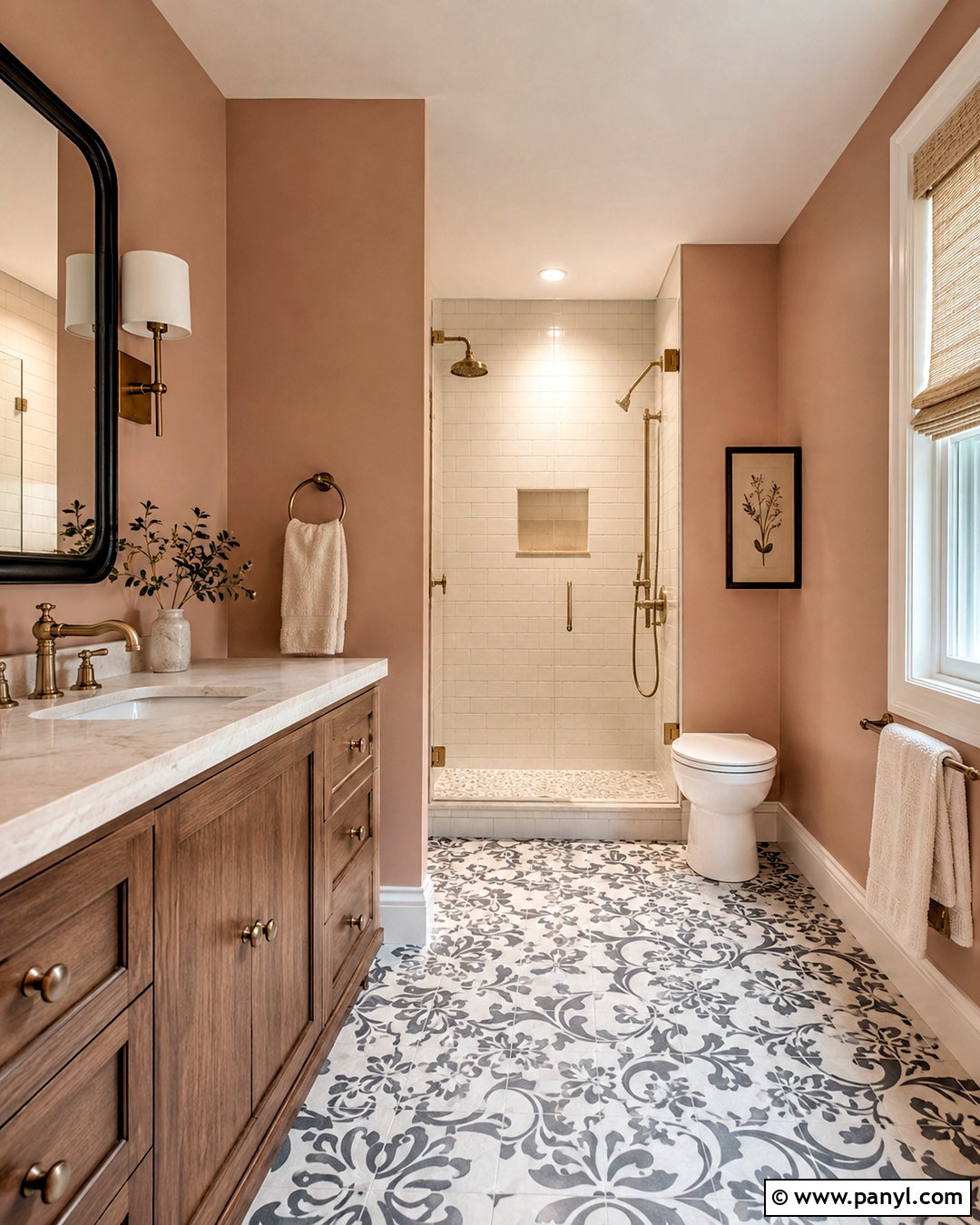
Dark terracotta introduces earthy red-orange color while remaining rich enough for a moody bathroom. Look for a shade closer to baked clay or deep rust than bright orange. Combine it with warm ivory wall tile, a pale oak vanity, and honed beige stone flooring. Brushed brass faucets highlight the warm palette, while matte black details provide definition around mirrors and shower glass. Add cream towels, a woven pendant-style ceiling fixture rated for suitable bathroom use, and handmade ceramic accessories. Keep the countertop light and uncluttered so the room feels fresh rather than visually dense. Dark terracotta works beautifully in Mediterranean, Southwestern, and organic modern interiors, but its natural materials and simple shapes can also suit an updated traditional home.
Conclusion:
Choosing among these 20 dark bathroom paint colors becomes easier when you consider the room’s fixed finishes, lighting, and overall mood. Blue and gray shades feel tailored and versatile. Deep greens create a restorative, organic look, while plum, burgundy, and aubergine bring unexpected warmth. Brown-based colors work especially well with natural wood, beige stone, and brass. Before committing, paint large sample areas and view them during the morning, afternoon, and evening. Support the final color with a bright mirror, layered fixtures, light textiles, and moisture-appropriate paint. With those practical details in place, even a small bathroom can carry deep color confidently and feel cohesive rather than closed in.

Related Ideas and Inspiration:
Leave a Reply