
Green can make a bathroom feel fresh, restful, dramatic, or cheerful depending on its undertone and depth. The best green bathroom paint colors also work beautifully with common finishes such as white porcelain, warm wood, marble, brass, chrome, and matte black. Pale greens can visually open a compact bathroom, while dark forest and emerald shades create an intimate, polished mood. Green is especially versatile because yellow-based tones feel earthy and warm, while blue-green shades appear cooler and more spa-like. () Before painting, test large samples beside your tile, flooring, vanity, and lighting throughout the day. The complete room schemes below will help you confidently compare 20 green bathroom paint colors.

1. Sage Green Bathroom
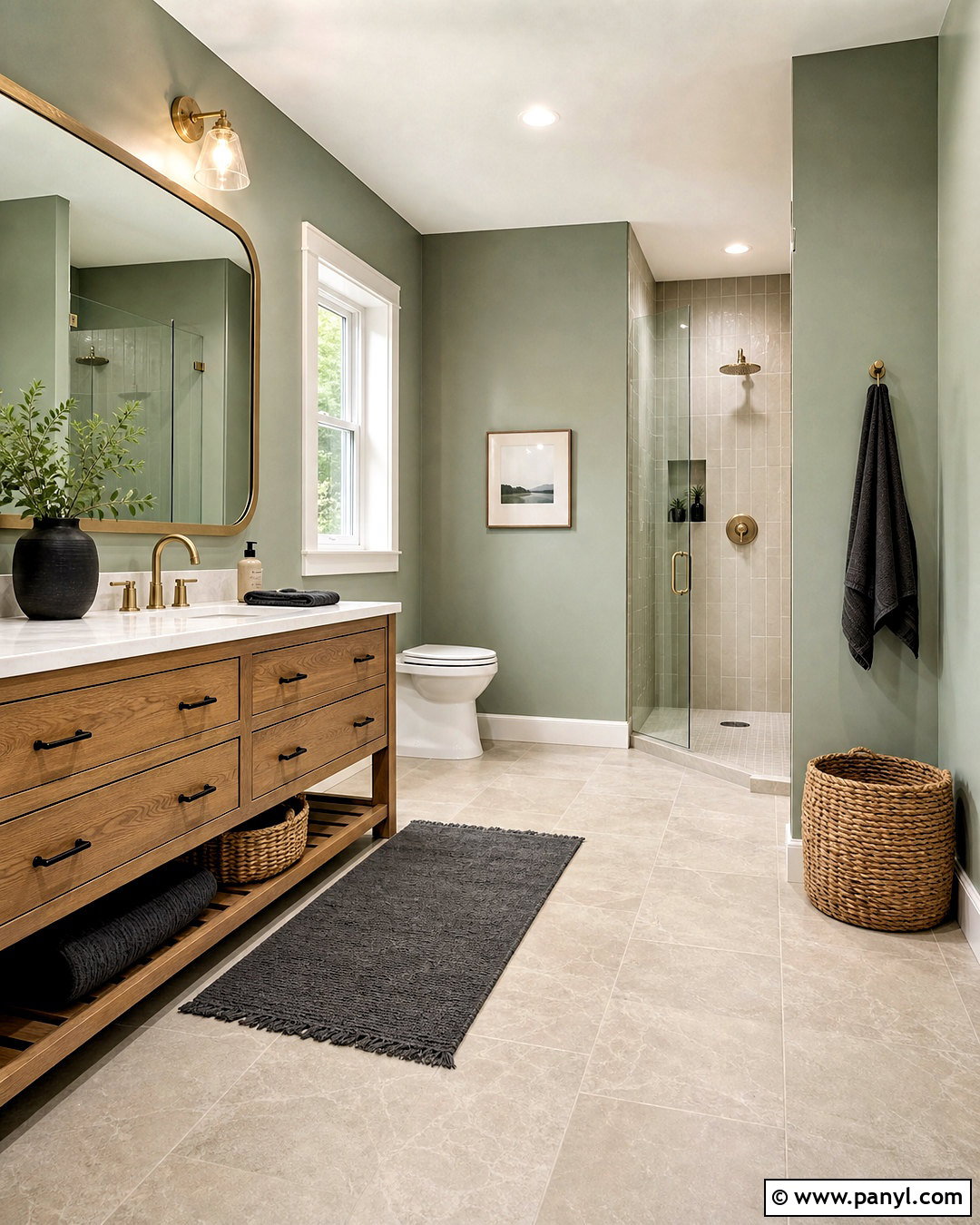
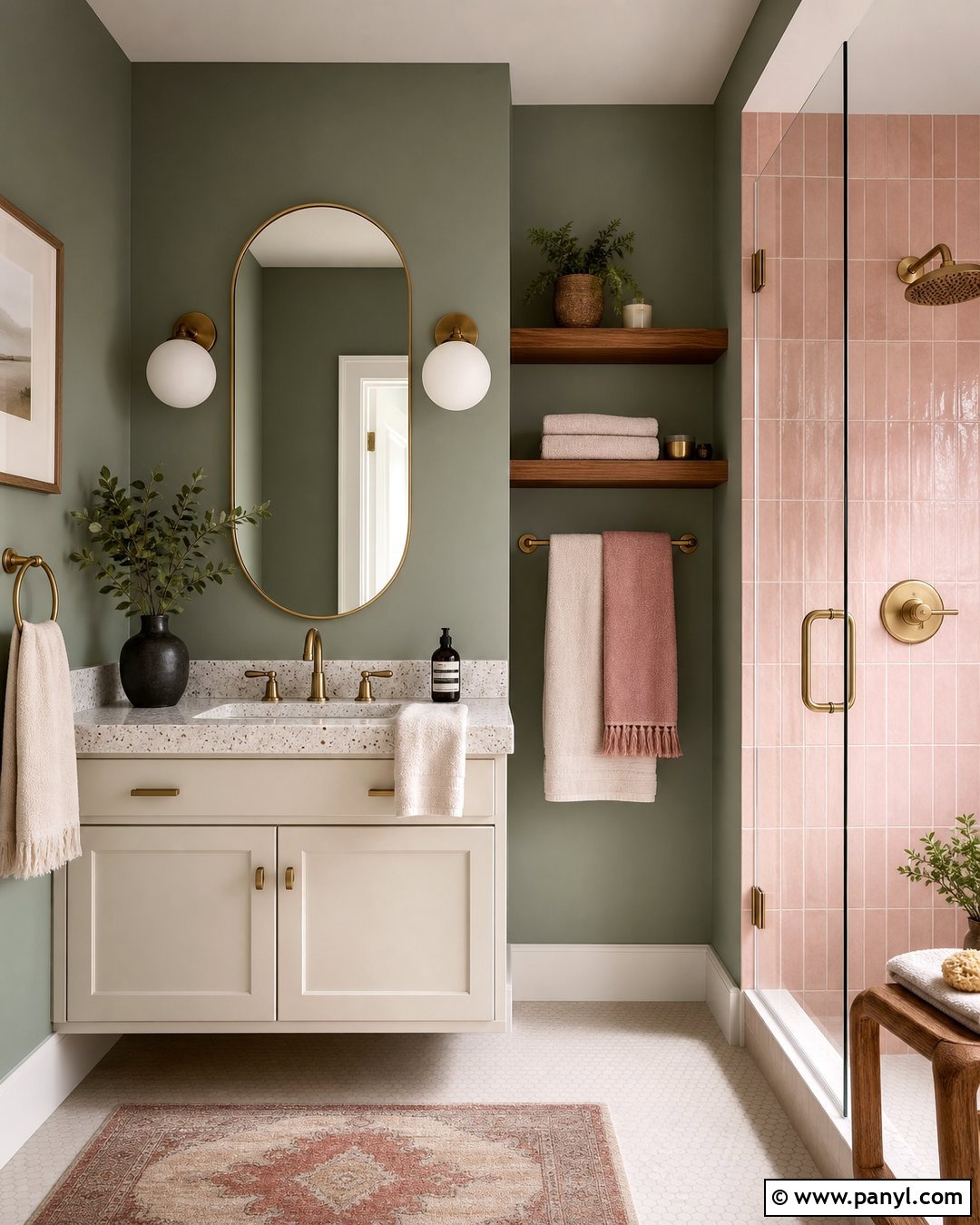
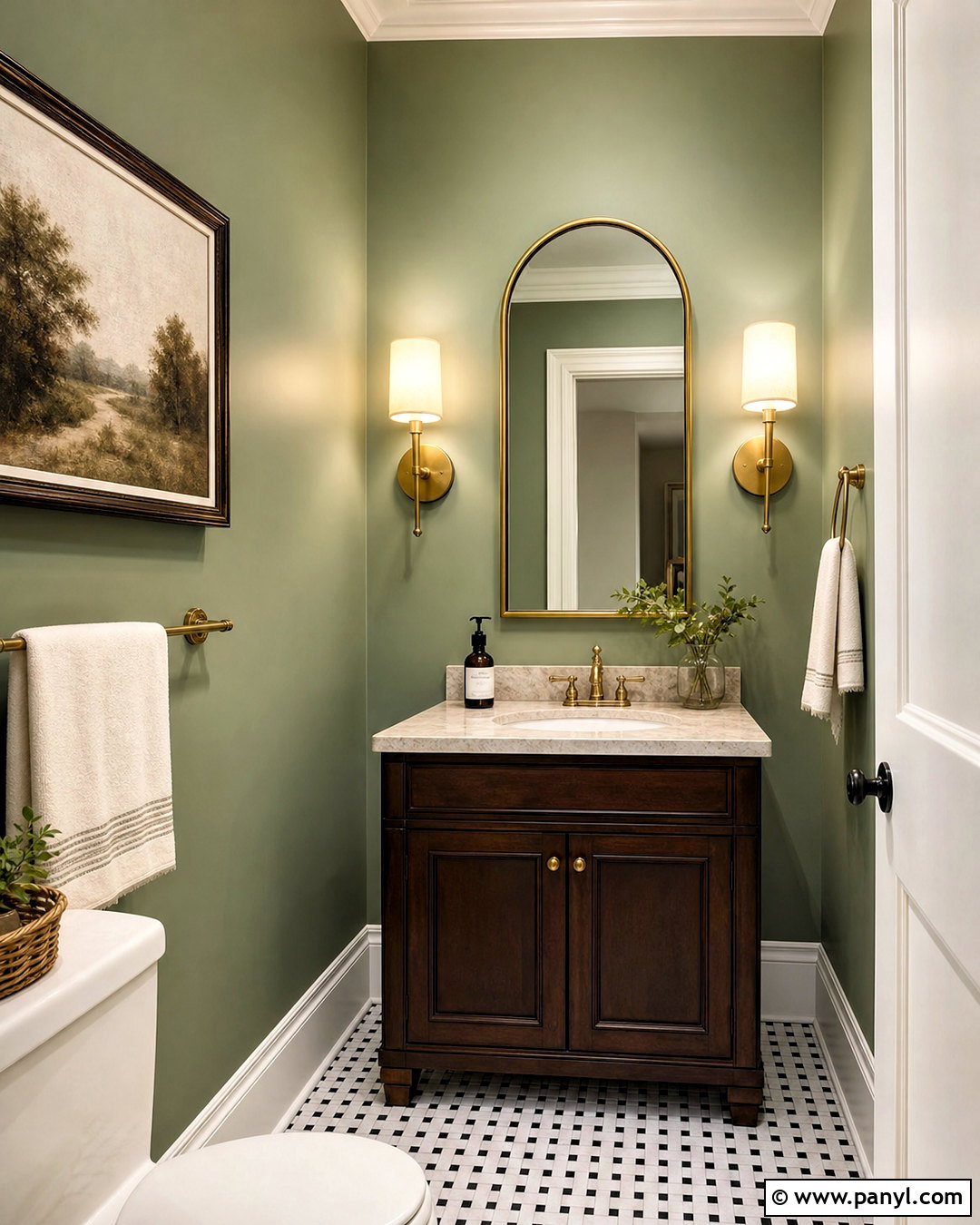
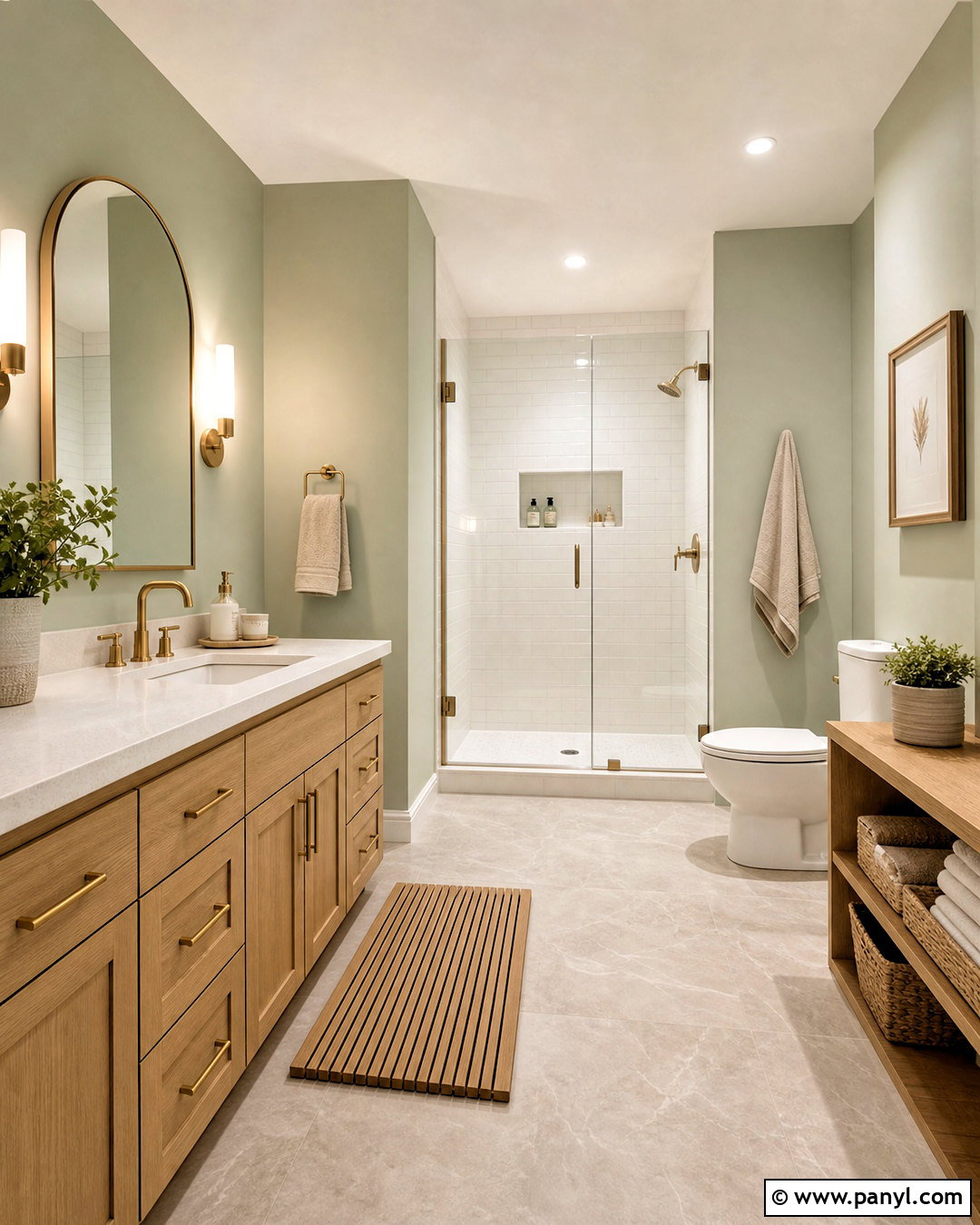
Soft sage green creates a relaxed bathroom that feels clean without looking stark. Paint the walls in a muted sage with warm gray undertones, then balance them with creamy white trim and a white quartz countertop. A light oak vanity keeps the palette natural, while brushed brass faucets and sconces add gentle warmth. Choose ivory floor tile rather than bright white so the room remains soft and cohesive. A frameless glass shower, simple linen shower curtain, and woven storage baskets complete the easygoing look. For subtle contrast, introduce charcoal through the mirror frame and cabinet hardware. This complete sage green bathroom works especially well in small spaces because the restrained colors make each surface flow naturally into the next.
2. Olive Green Bathroom
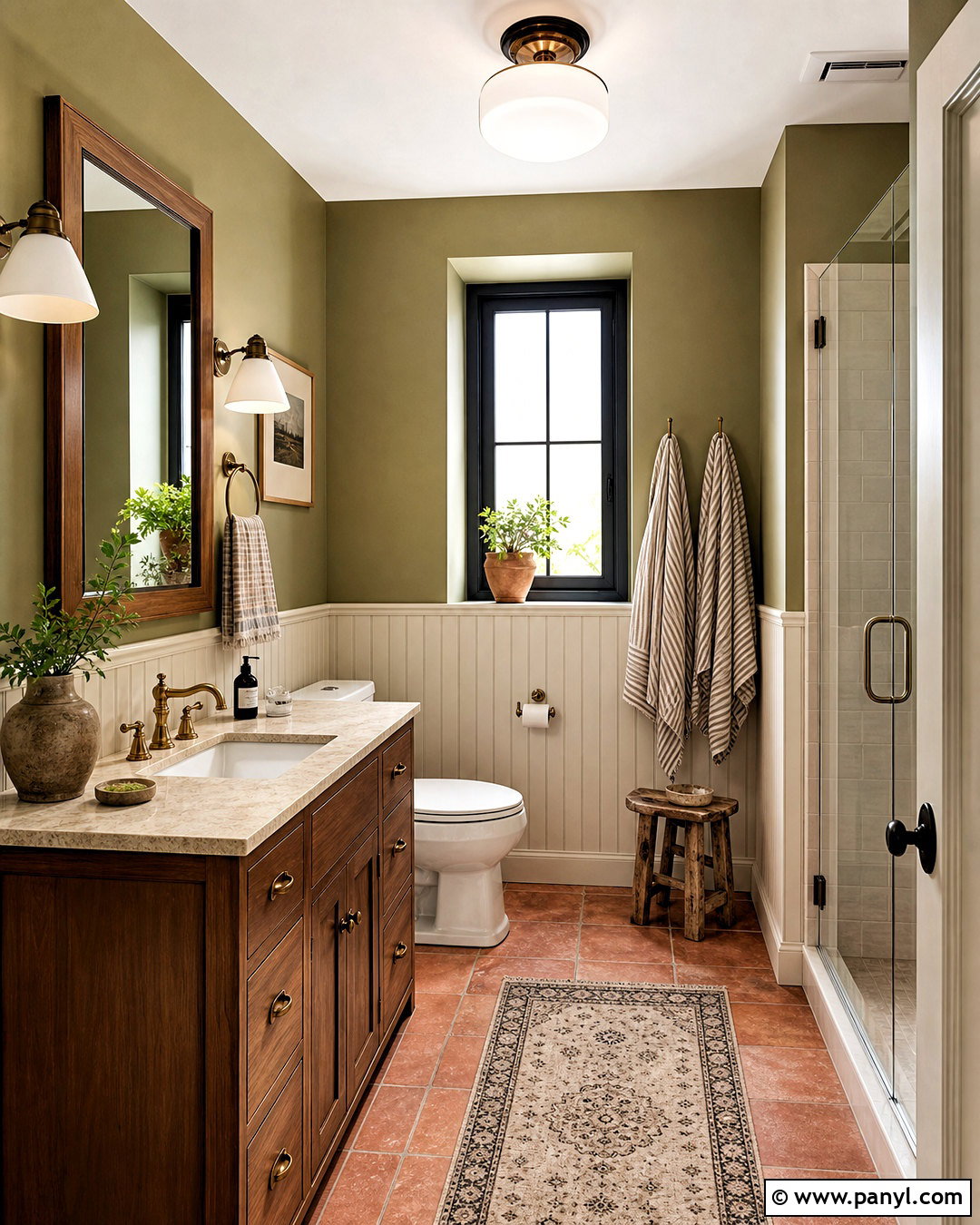
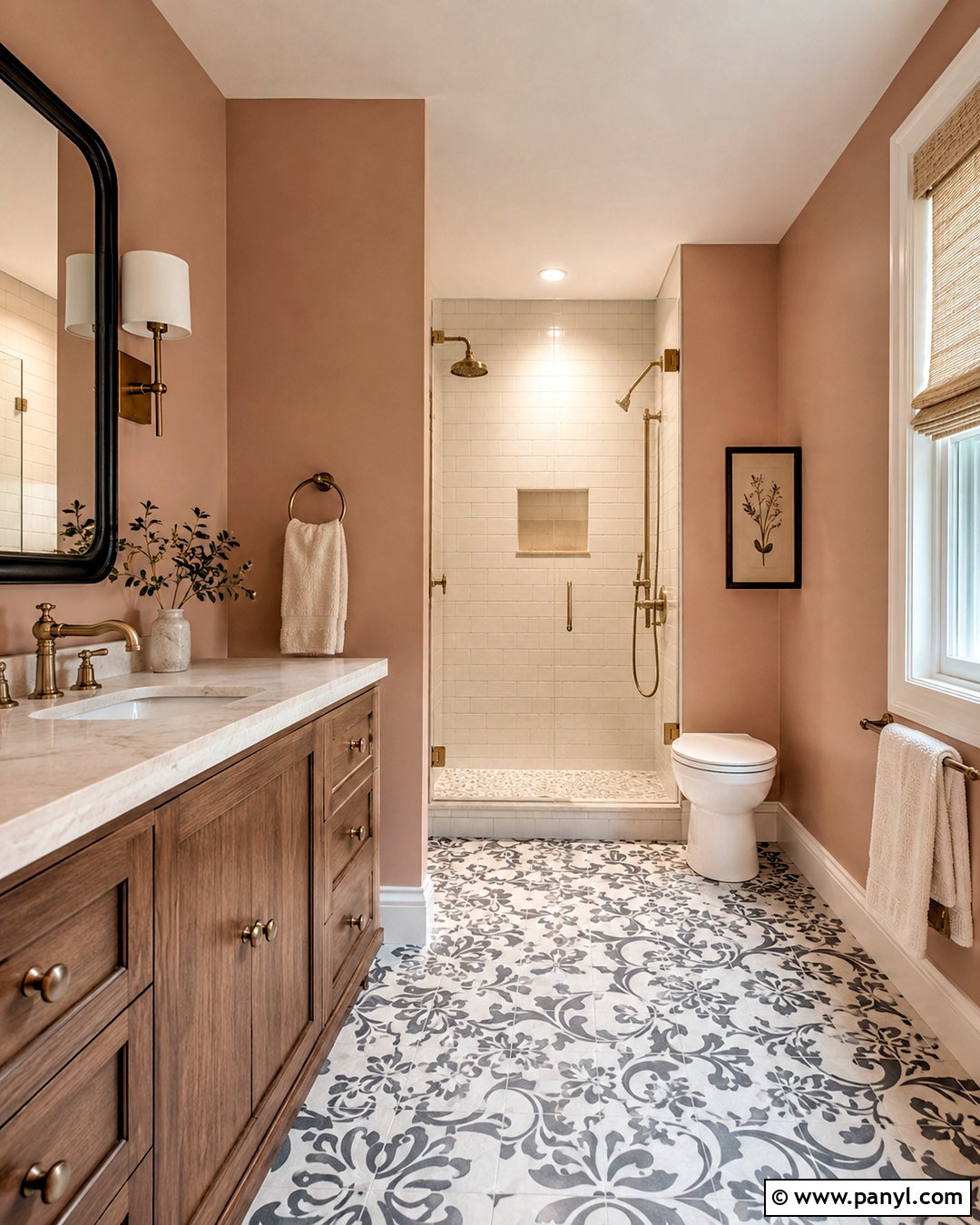
Olive green gives a bathroom an earthy, established look that pairs naturally with warm materials. Use a medium olive paint above cream beadboard or paneling to prevent the color from overwhelming the room. Add a walnut vanity with a beige stone countertop, antique brass fixtures, and warm white globe lights. Terracotta floor tile brings out the yellow and brown undertones in the walls, creating a balanced Mediterranean-inspired palette. Keep the tub, sink, and toilet white for freshness. A wood-framed mirror, striped cotton towels, and one leafy plant provide simple finishing touches. If the bathroom receives limited natural light, choose a softened olive rather than a muddy or extremely dark shade. The finished space should feel warm, grounded, and comfortably layered.
3. Mint Green Bathroom
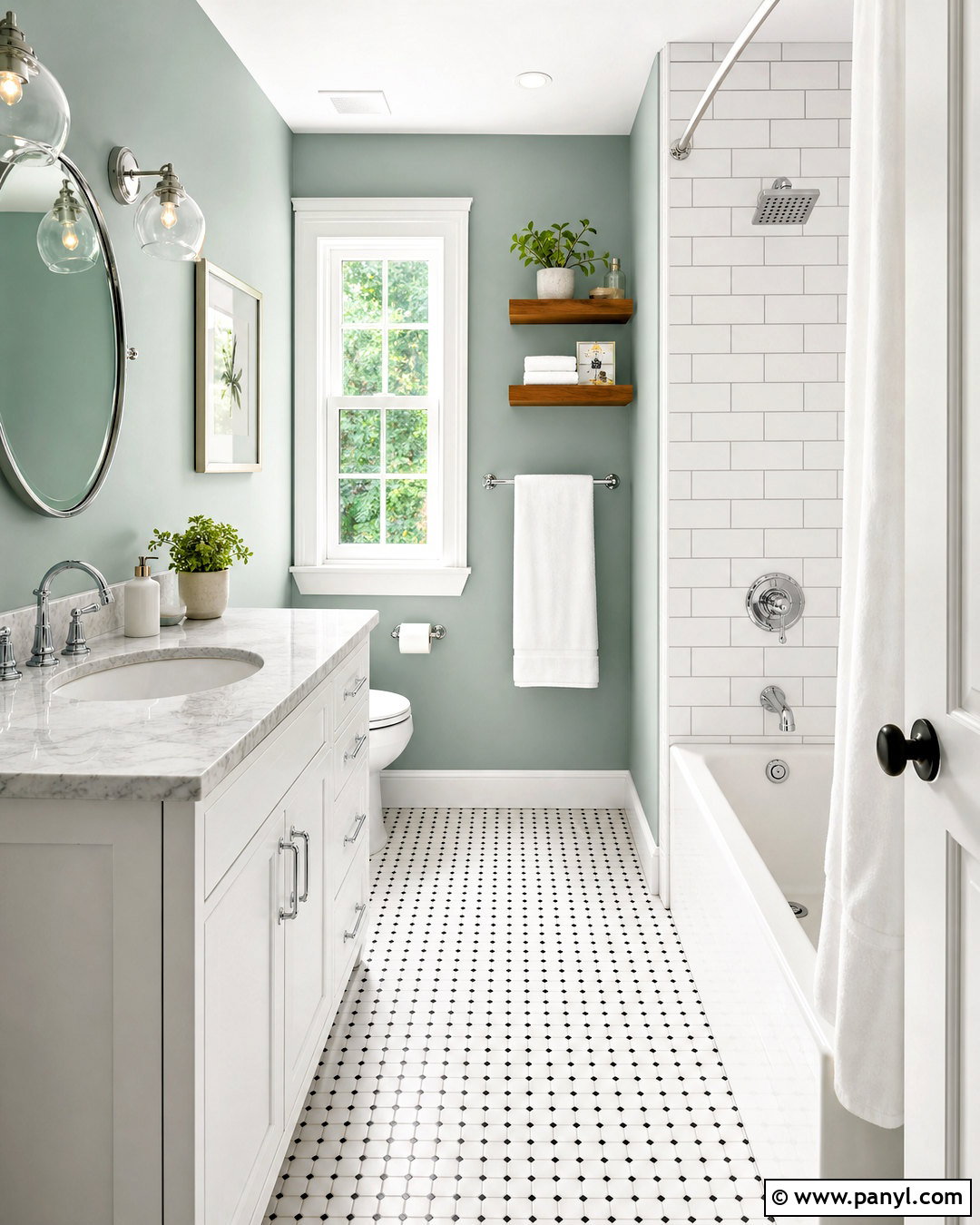
Mint green brings a light, cheerful quality to a bathroom without requiring a bold decorating commitment. Select a softened mint with a slight gray undertone so it feels modern rather than sugary. Pair the walls with crisp white subway tile, pale gray grout, and a white vanity topped with light marble. Polished chrome faucets and clear glass lighting enhance the fresh, reflective character of the room. A small black-and-white mosaic floor adds definition beneath the airy palette. Keep textiles simple with white towels, a pale gray bath mat, and a subtly striped shower curtain. Natural wood shelves can warm the scheme without changing its clean appearance. This mint green bathroom is particularly effective for a compact family bathroom or a bright guest bath.
4. Seafoam Green Bathroom
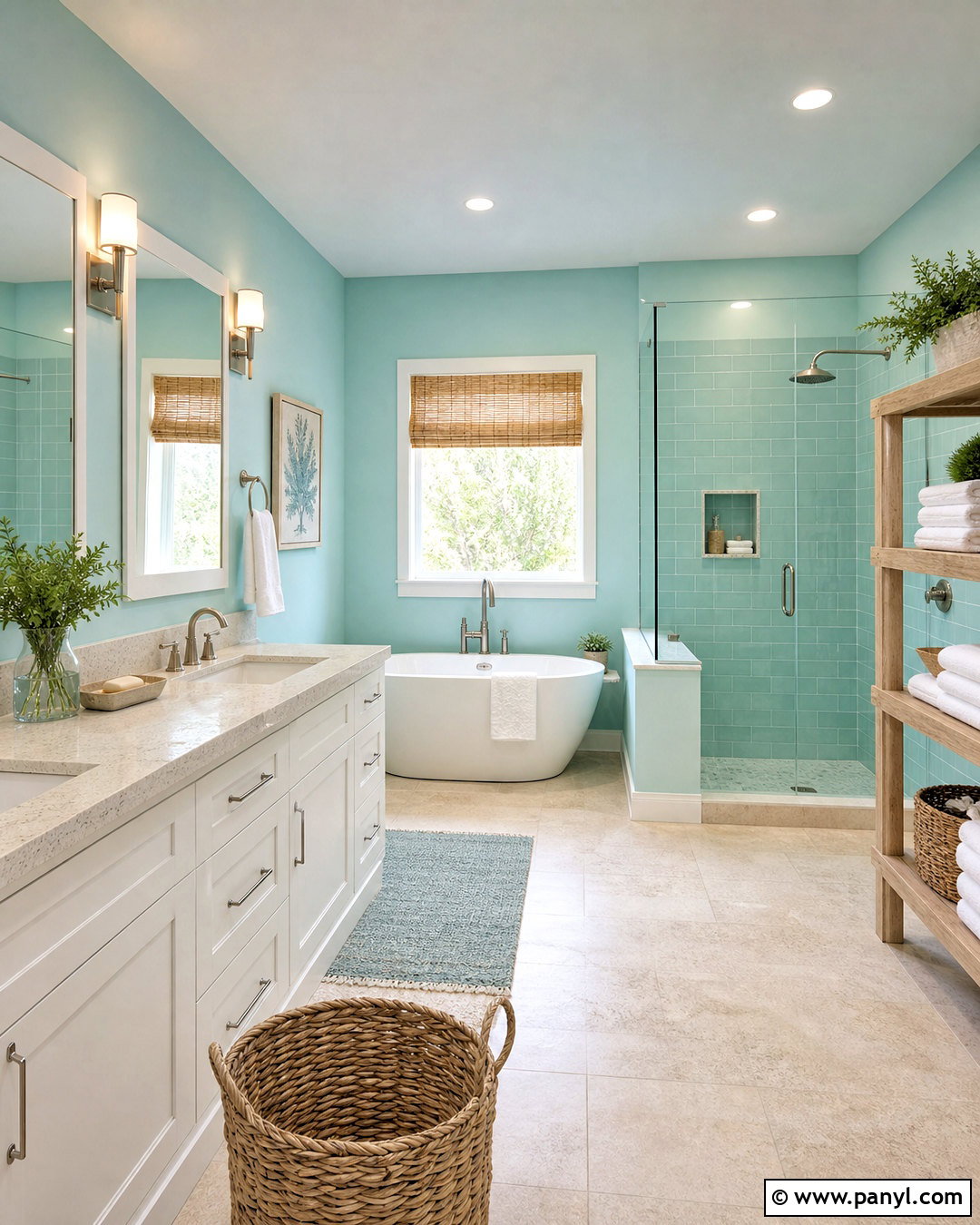
Imagine a bathroom that feels as light and refreshing as a quiet coastal morning. Seafoam green walls provide that effect by combining soft green with cool blue undertones. Build the room around a white vanity, a pale quartz counter, and brushed nickel hardware. Large ivory floor tiles keep the space bright, while a light blue-green glass shower tile creates gentle tonal variation. Add a frameless mirror and streamlined sconces to maintain an open appearance. Small touches of bleached oak, woven seagrass, and white cotton prevent the room from feeling cold. Avoid overly literal coastal accessories. Instead, let color, texture, and natural materials suggest the setting. The result is a polished seafoam green bathroom that feels breezy, calm, and suitable for daily use.
5. Eucalyptus Green Bathroom
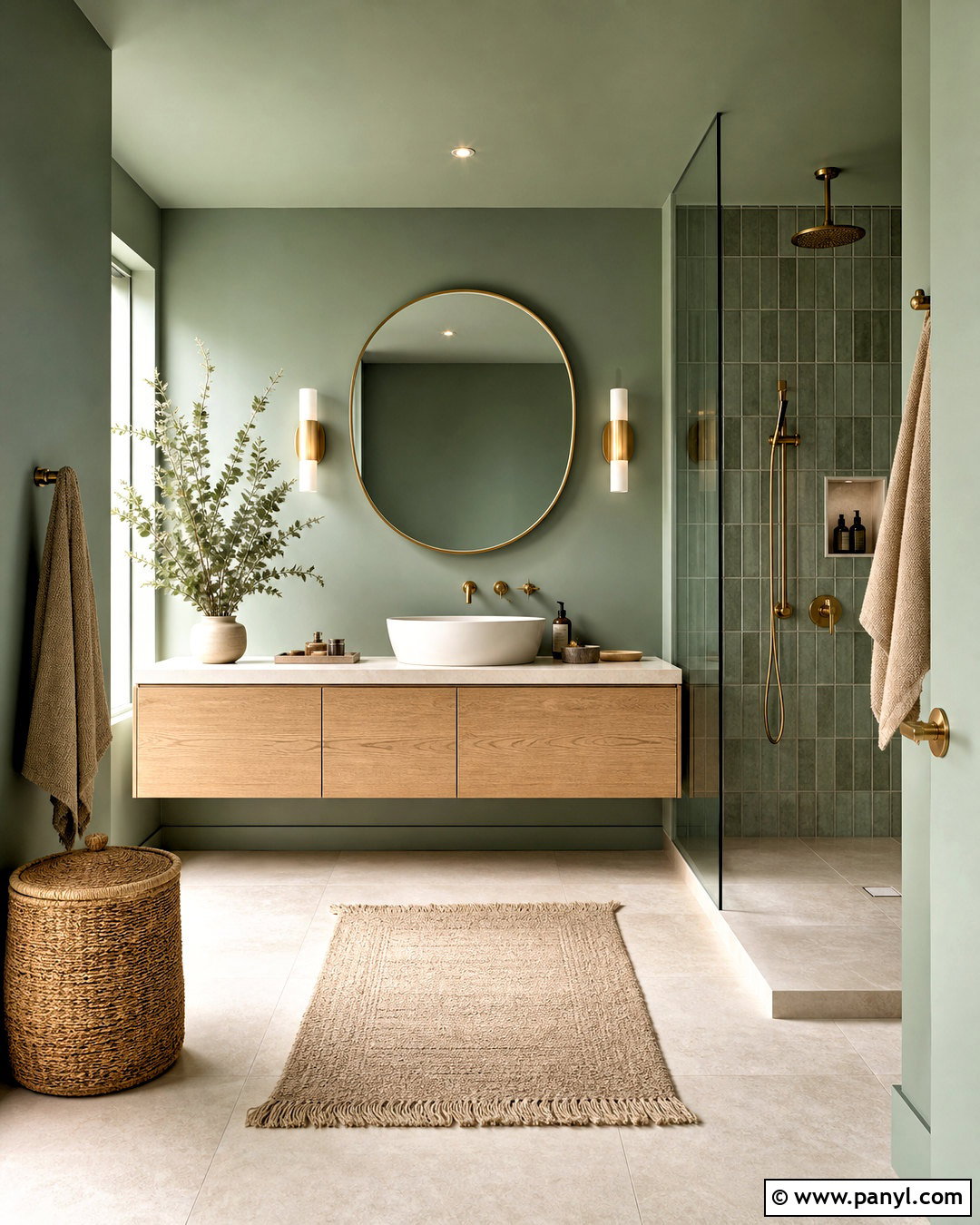
Eucalyptus green falls between sage and blue-green, giving a bathroom a soothing color with noticeable depth. Cover the walls and ceiling in the same muted eucalyptus paint for a soft color-drenched effect. Use a floating white oak vanity to break up the green, then add an off-white stone countertop and a round brass mirror. Cream porcelain floor tile and a white shower surround keep the larger surfaces quiet. For extra interest, install narrow vertical tiles behind the vanity in a slightly deeper eucalyptus shade. Choose warm brass faucets, simple globe lights, and oatmeal-colored towels to complement the paint’s natural undertones. This cohesive bathroom feels current yet comfortable. It also works well with both modern organic decor and clean transitional fixtures.
6. Moss Green Bathroom
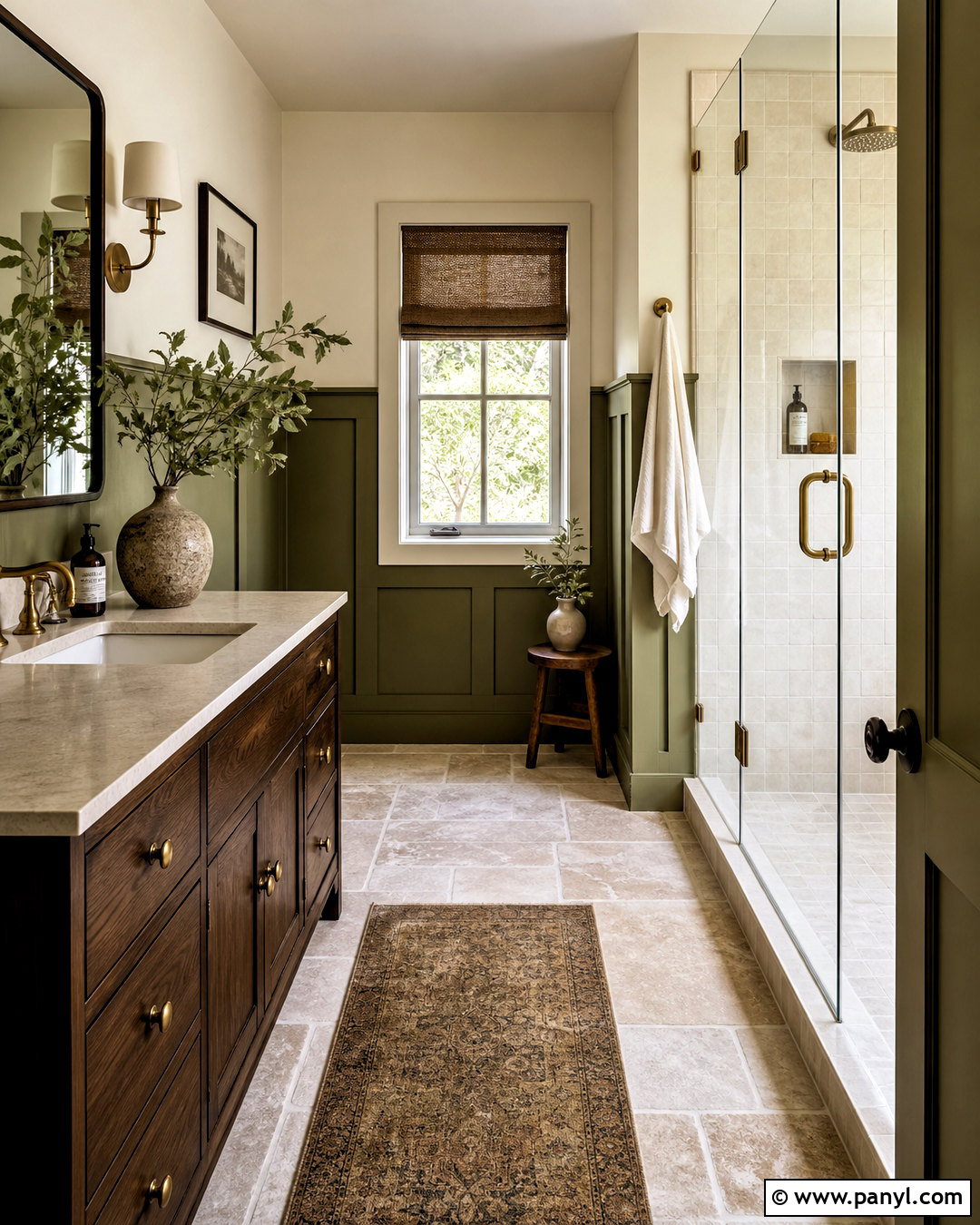
Moss green can transform an ordinary bathroom into a rich, nature-inspired retreat. Use the color on paneled walls or moisture-resistant beadboard, then paint the upper wall in a warm off-white to create breathing room. A dark-stained oak vanity grounds the design, while a honed limestone countertop introduces soft variation. Choose aged brass hardware, creamy ceramic sconces, and tumbled stone floor tile for a collected appearance. Inside the shower, use simple ivory tile so the painted green remains the main feature. Finish the room with linen towels, wooden trays, and a restrained botanical print. Moss green looks best beside warm, imperfect materials rather than bright synthetic finishes. The completed palette feels organic, substantial, and inviting without becoming overly rustic.
7. Forest Green Bathroom
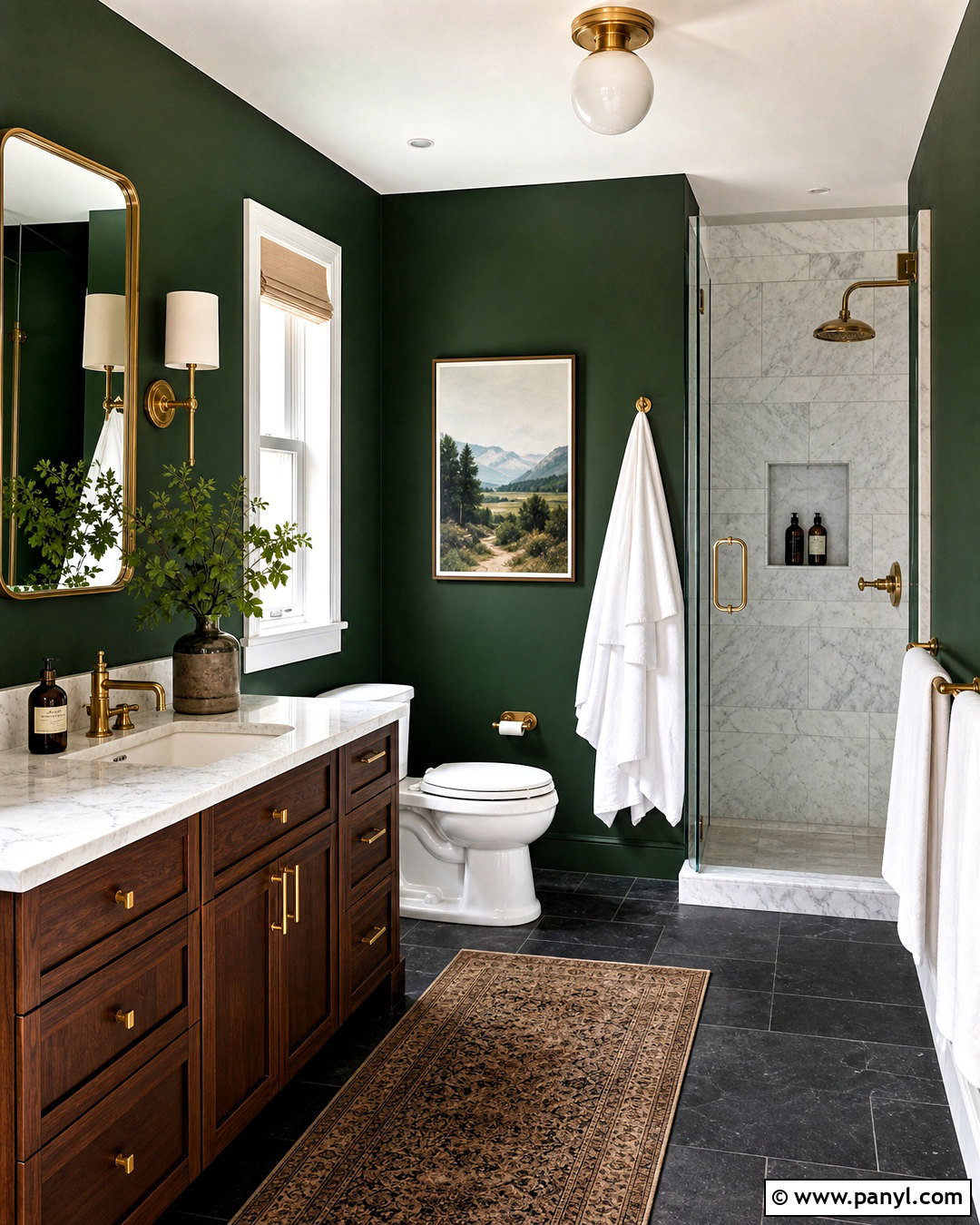
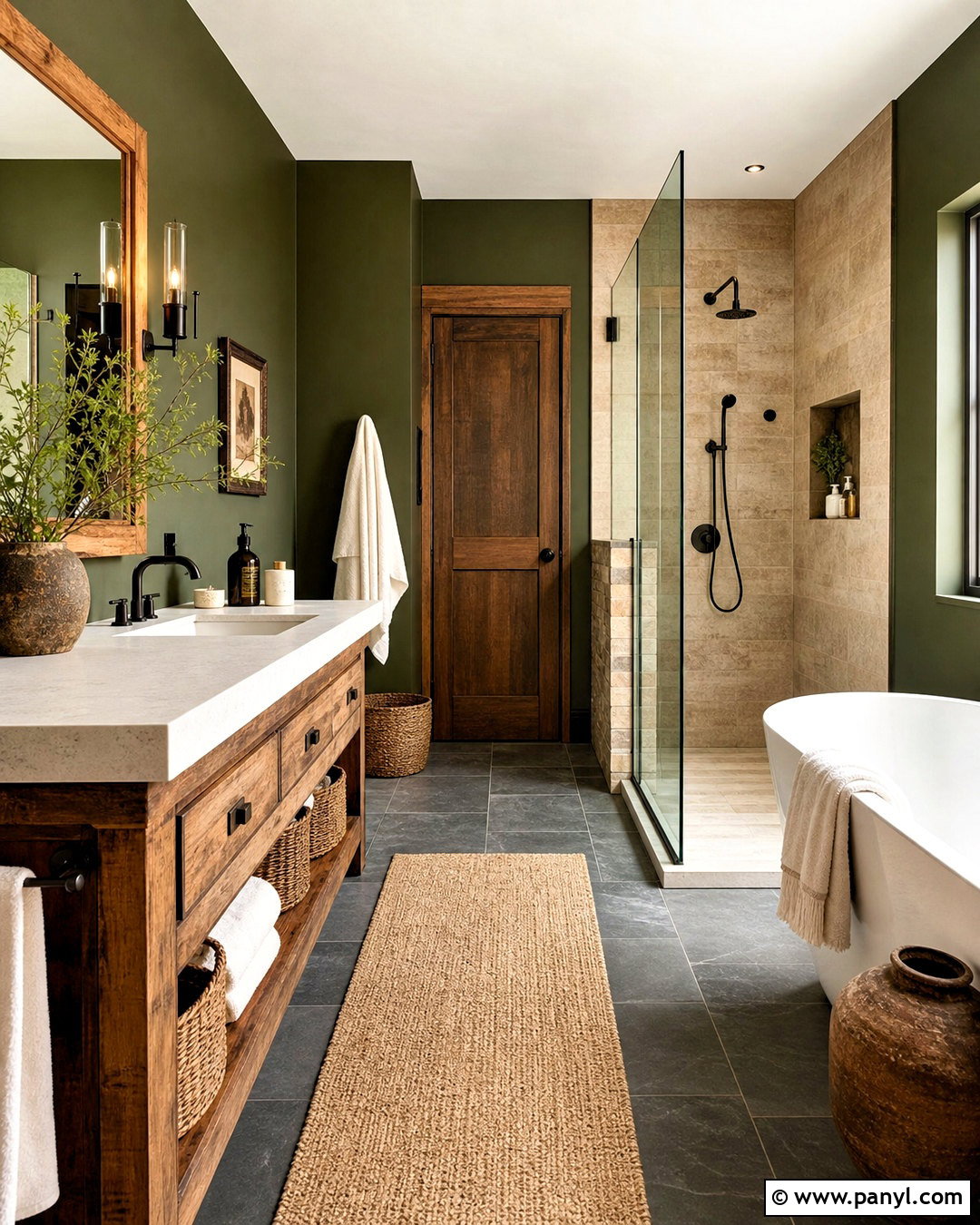
Deep forest green creates a striking bathroom with a sophisticated, enveloping mood. Paint all four walls in a rich forest shade, but keep the ceiling warm white to preserve visual height. Pair the dramatic color with a walnut vanity, white marble countertop, and polished brass fixtures. White marble shower tile reflects light across the darker walls, while charcoal slate flooring gives the scheme a strong foundation. Install a large mirror to increase brightness and place sconces on both sides for even illumination. White towels and a simple ivory shower curtain offer necessary contrast. A framed landscape print or small fern can reinforce the natural palette without making it themed. This full design works particularly well in a powder room or bathroom with generous lighting.
8. Hunter Green Bathroom
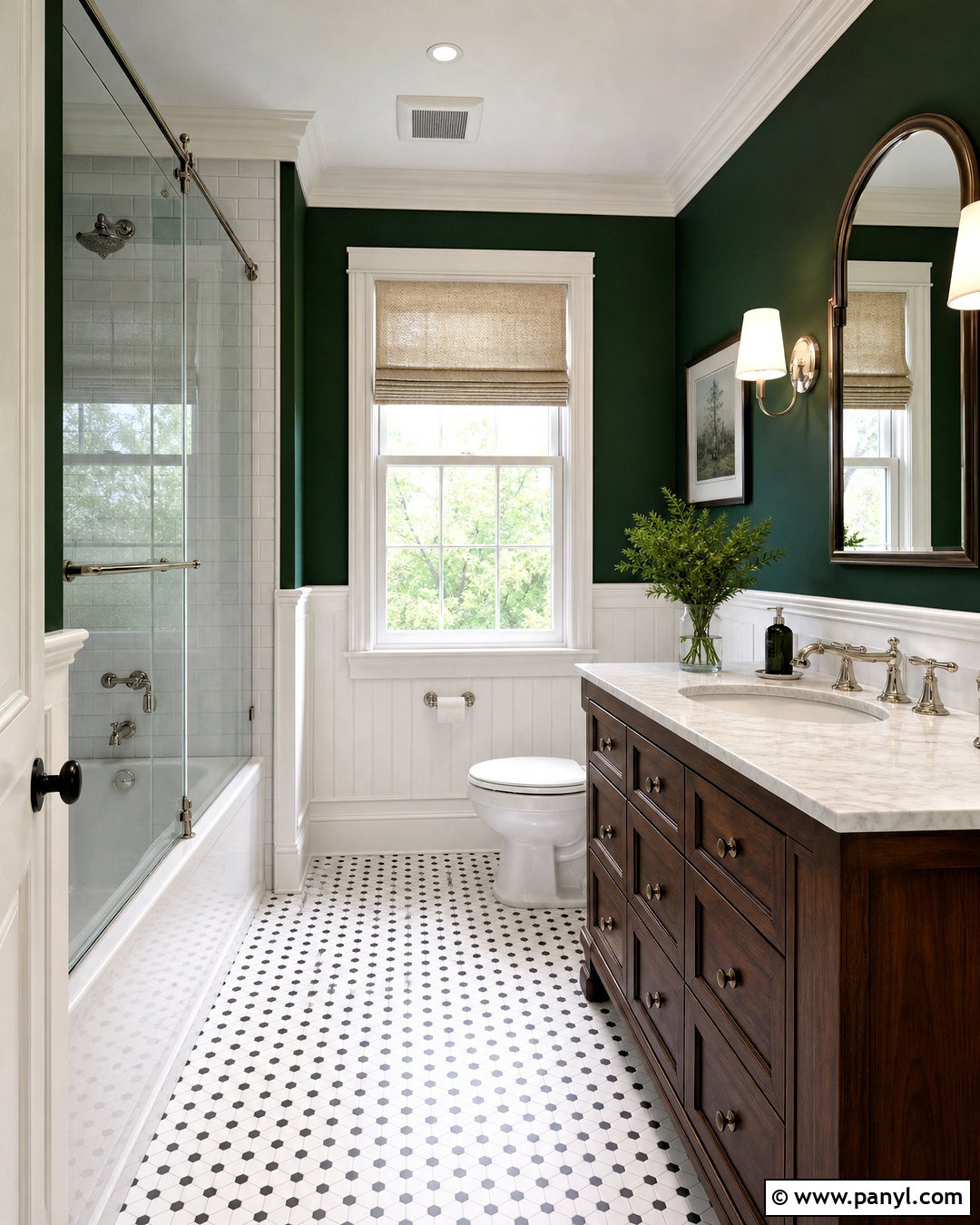
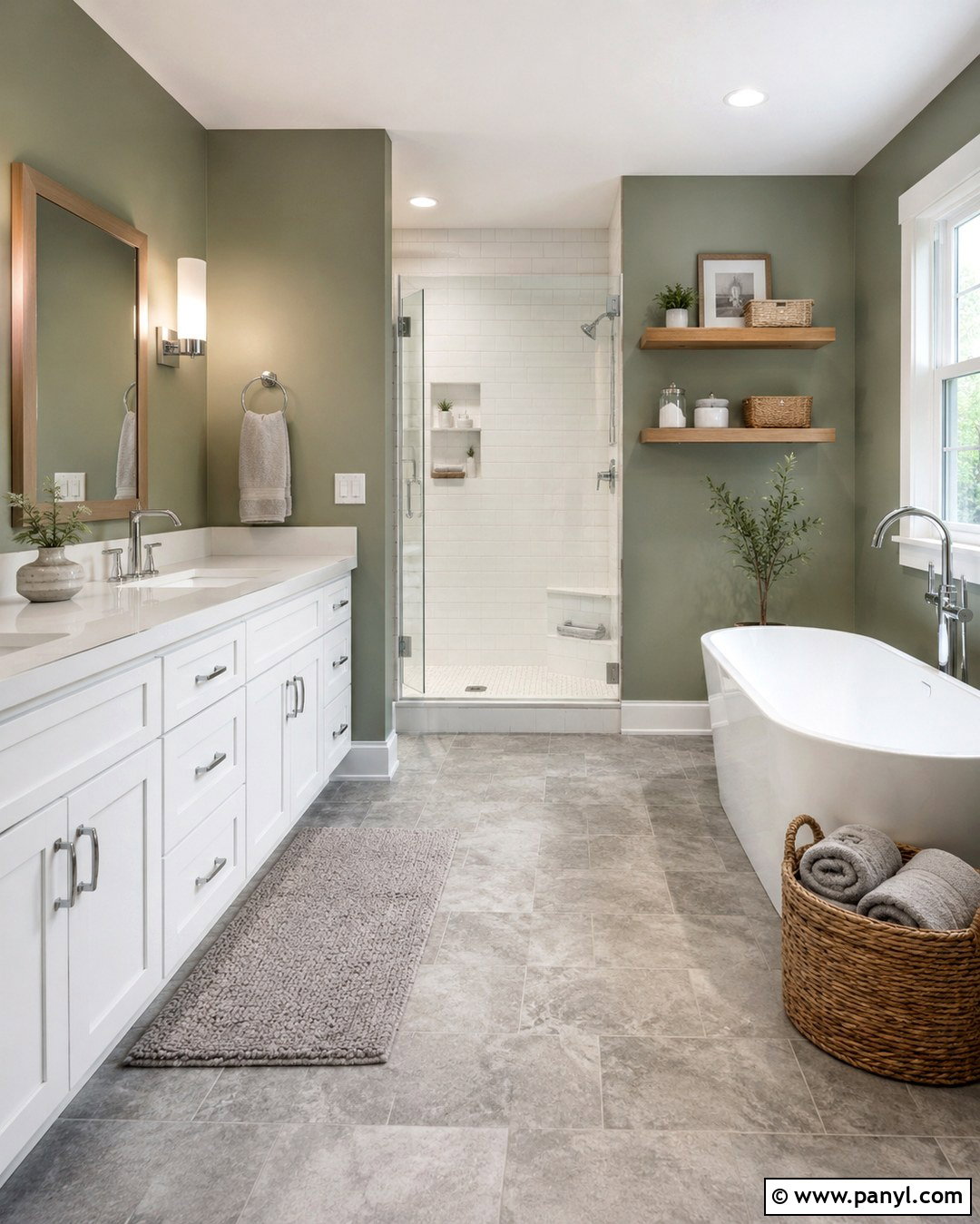
Hunter green has a classic character that suits bathrooms with traditional details. Apply it to the walls above white wainscoting for a balanced two-tone treatment. A freestanding wood vanity with inset doors, a white marble top, and polished nickel faucets supports the timeless look. Use small black-and-white hexagonal floor tiles and a white subway-tile shower to introduce familiar bathroom materials. An arched metal mirror and shaded wall sconces add refinement without becoming ornate. Include white towels with a thin green border and a simple Roman shade in neutral linen. Because hunter green is strong, repeat it sparingly in one or two accessories instead of covering every surface. The final room feels tailored, practical, and appropriate for an older home or traditional interior.
9. Emerald Green Bathroom
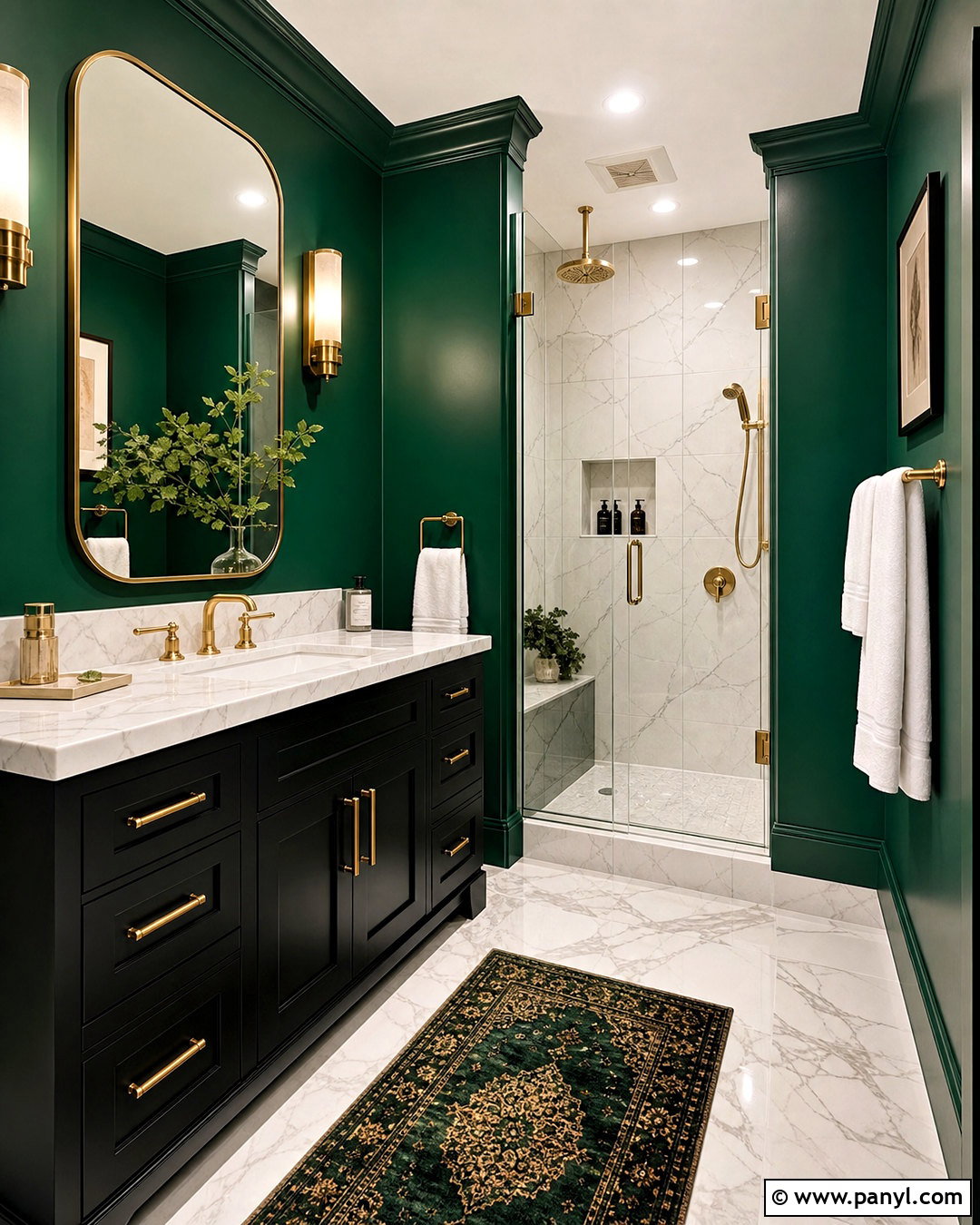
Emerald green brings energy and elegance to a bathroom, especially when it is paired with polished finishes. Use saturated emerald paint on the walls and continue it across matching trim for a confident, immersive effect. A black vanity with a white marble countertop provides sharp contrast, while brushed gold faucets and cabinet pulls add warmth. Choose white marble-look floor tile with subtle gray veining and a clear glass shower enclosure to keep the design visually open. A large rounded mirror softens the strong color blocks. Finish with white towels, a sculptural brass light fixture, and one small green glass accessory. Emerald works best when surrounding materials remain controlled. This complete scheme creates a glamorous bathroom without relying on excessive decoration or impractical luxury features.
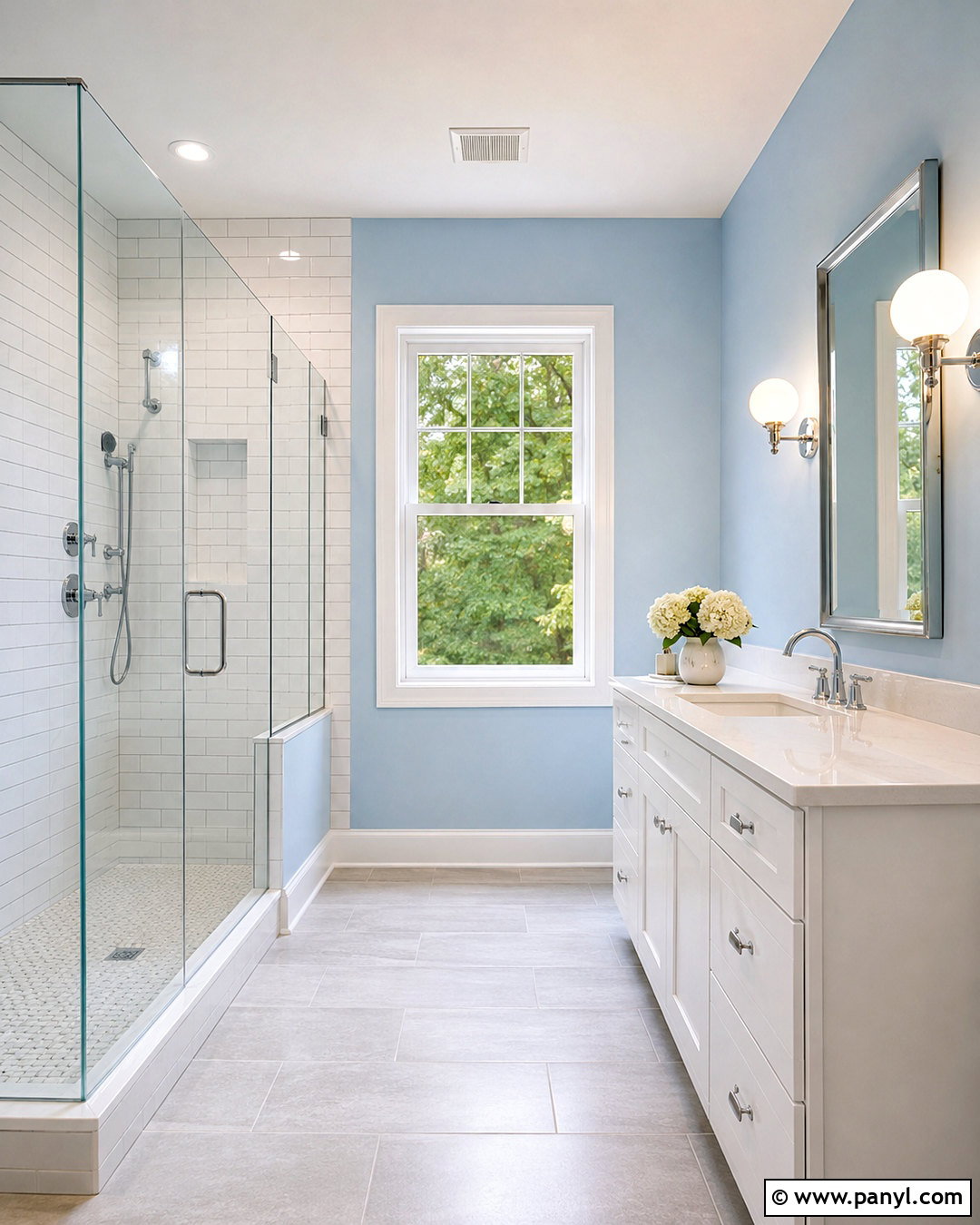
10. Jade Green Bathroom
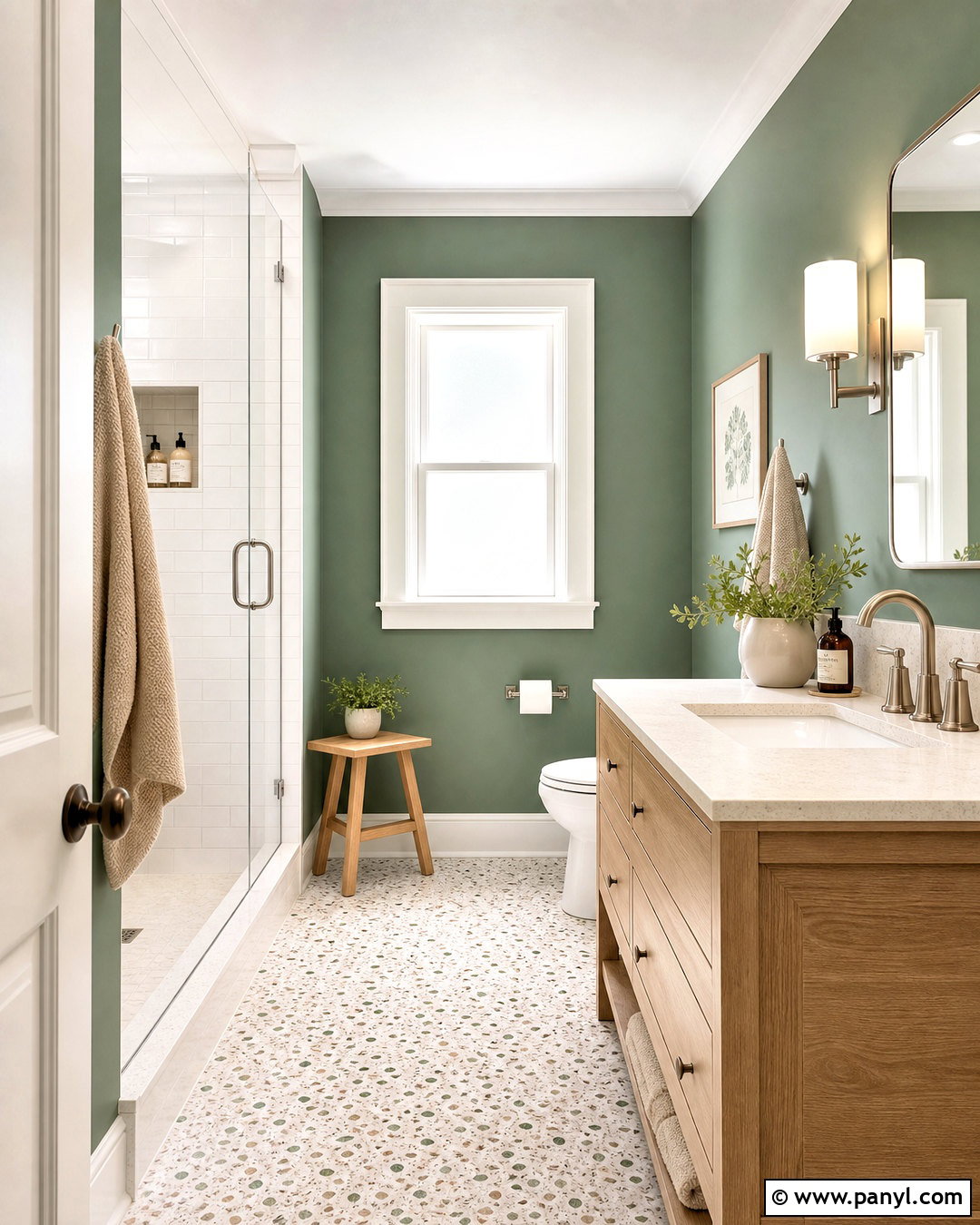
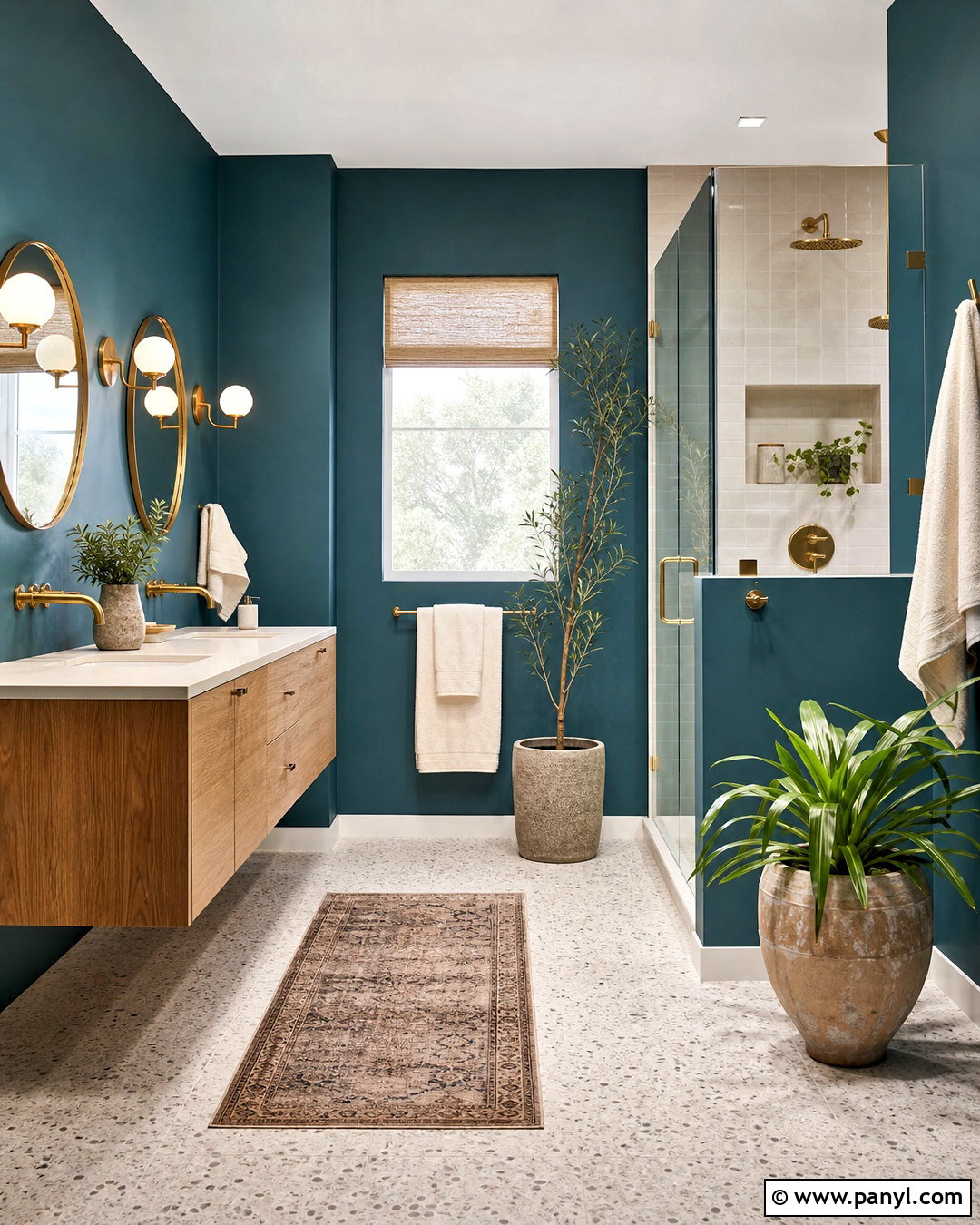
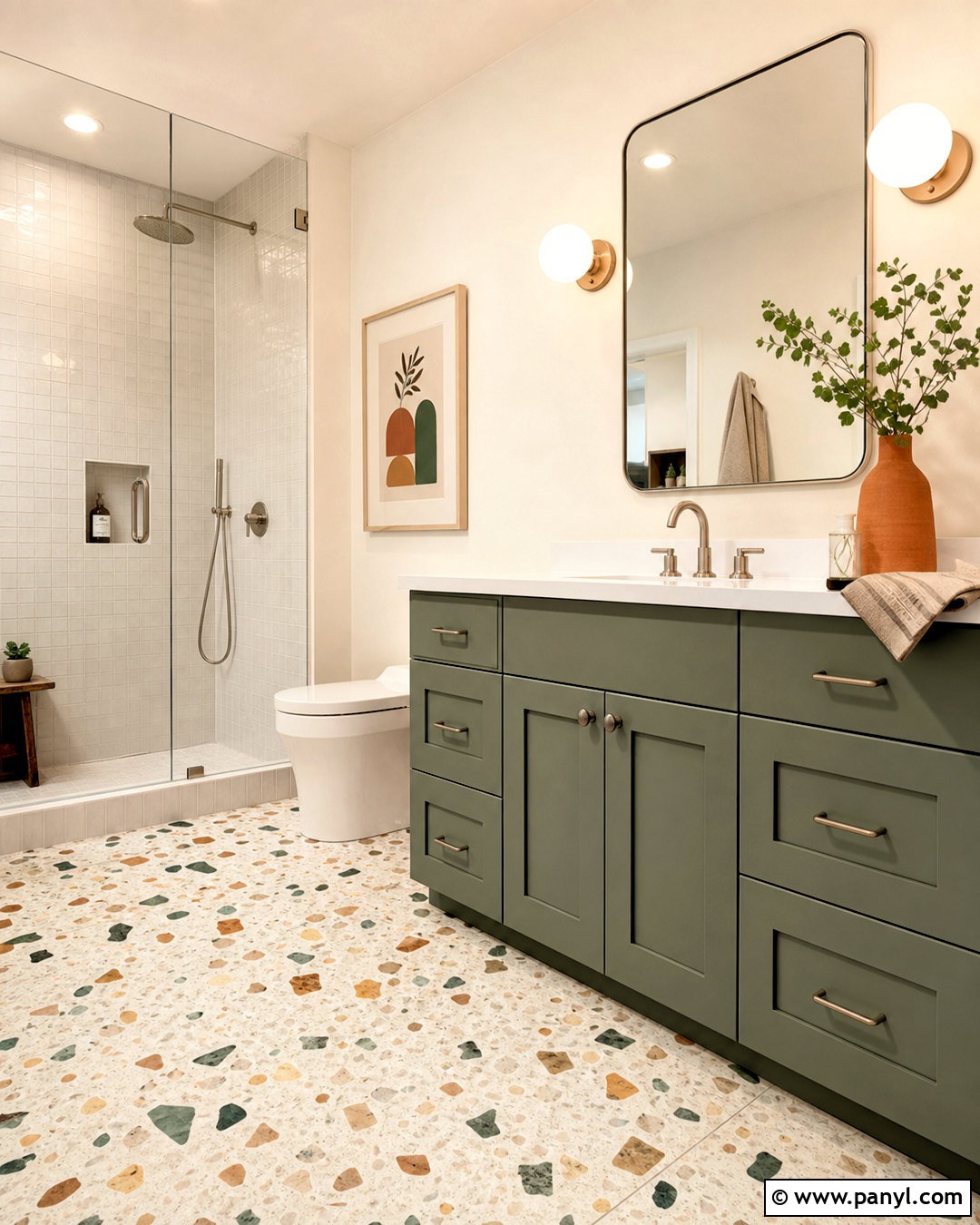
Jade green offers a balanced mix of freshness and richness, making it suitable for both modern and vintage bathrooms. Paint the walls in a medium jade shade, then pair them with warm white trim and a pale oak vanity. A softly veined cream countertop keeps the room from feeling too cool. Use brushed nickel faucets, frosted globe lights, and a simple rectangular mirror for a clean transitional look. On the floor, choose terrazzo containing small green, beige, and gray pieces to connect the entire palette. White shower tile and clear glass maintain brightness around the bathing area. Add oatmeal towels and a slim wooden stool for warmth. The completed jade green bathroom feels colorful but controlled, with enough neutral material to remain comfortable over time.
11. Pistachio Green Bathroom
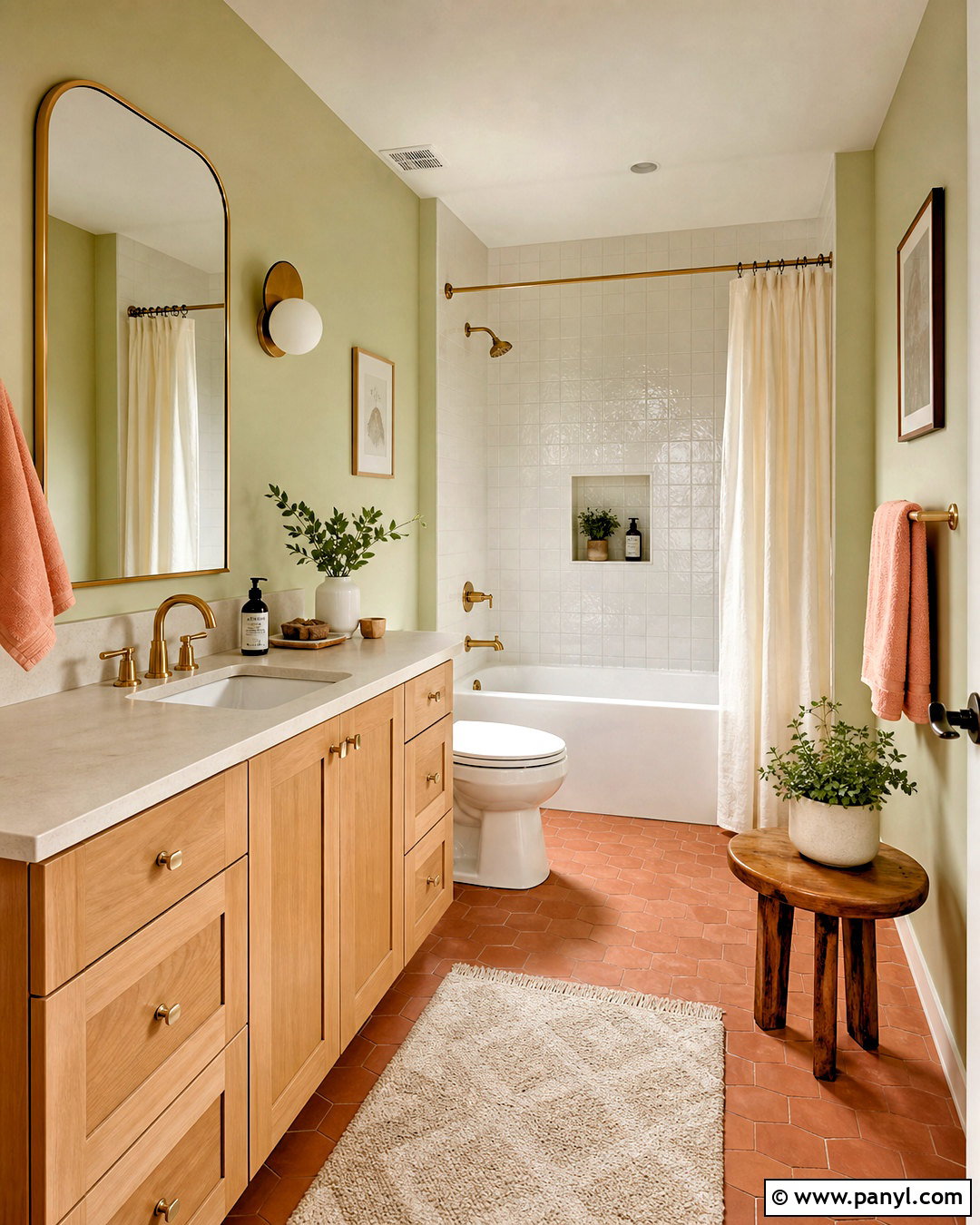
Pistachio green can make a bathroom feel playful while still appearing polished. Choose a muted pistachio paint with a creamy yellow undertone rather than a bright, candy-like version. Combine it with warm white trim, a natural maple vanity, and a pale beige quartz countertop. Soft white square shower tiles keep the room simple, while small terracotta floor tiles introduce earthy contrast. Use satin brass fixtures and rounded lighting to continue the warm direction. A cream shower curtain, woven basket, and peach-toned hand towels add restrained color without competing with the walls. This palette works especially well in a bathroom with morning sunlight, which enhances the paint’s gentle warmth. The finished design feels happy, welcoming, and more distinctive than a standard neutral bathroom.
12. Celadon Green Bathroom
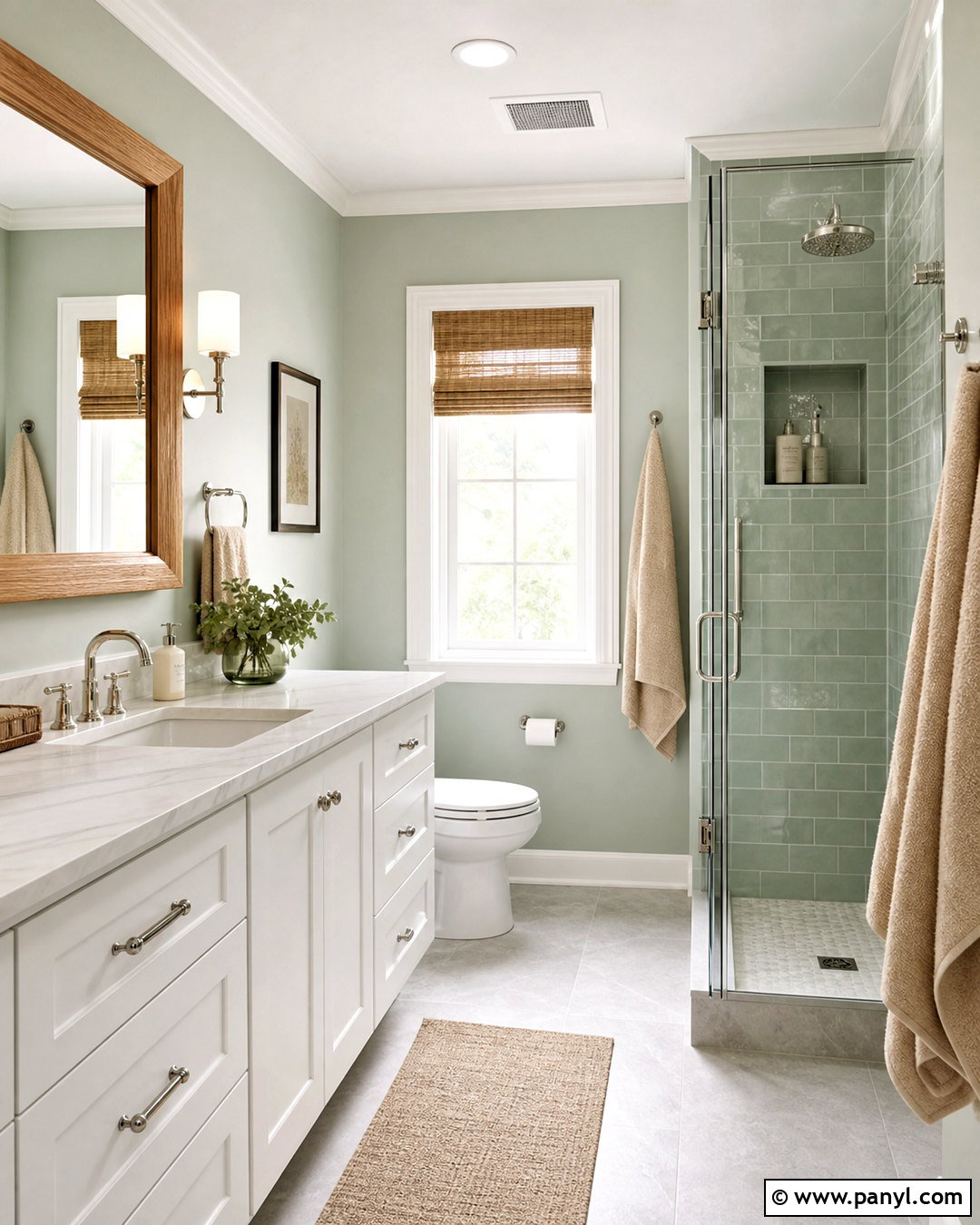
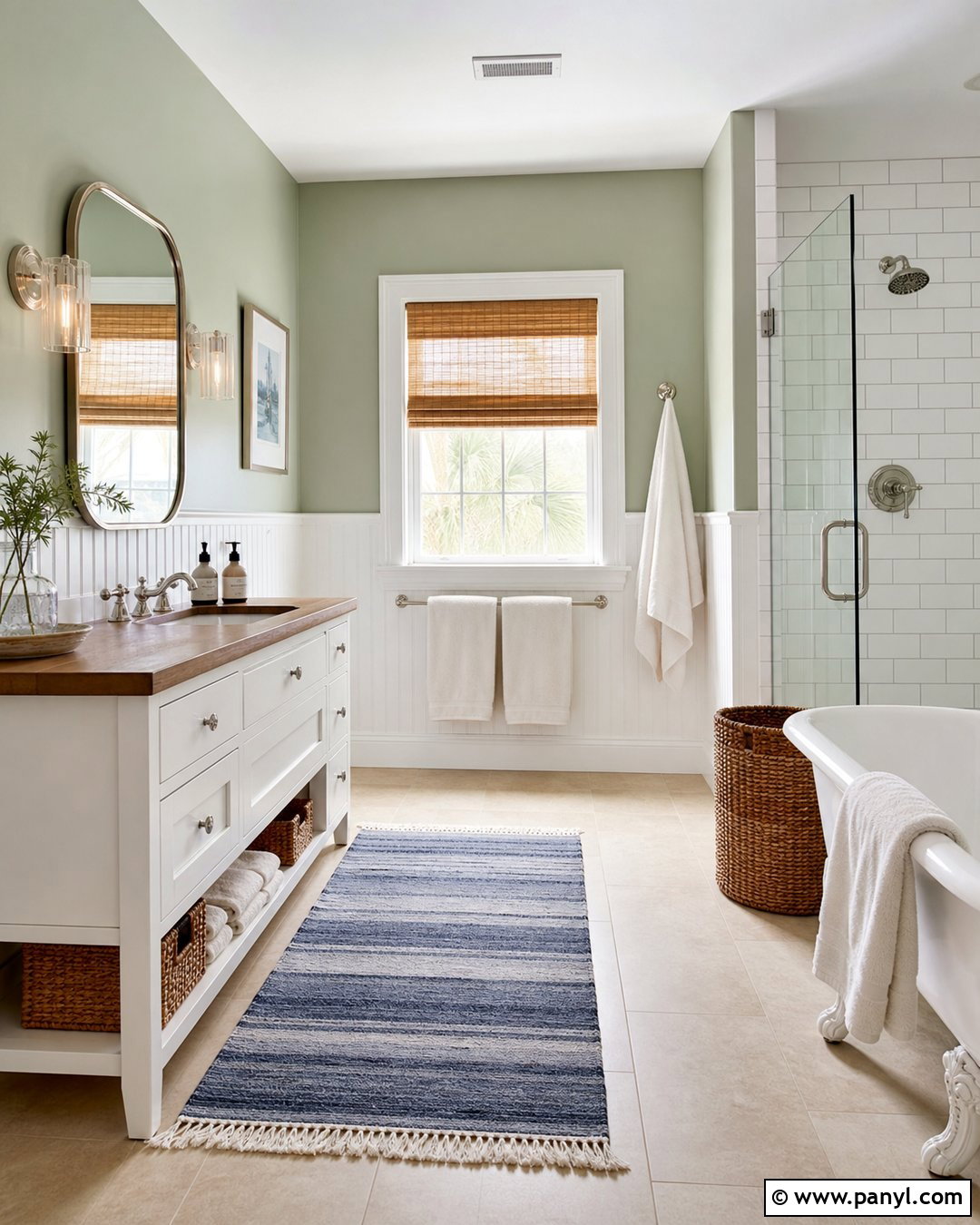
Celadon green is an understated option for anyone who wants color that still behaves like a neutral. Cover the walls with a pale gray-green celadon, pairing it with soft white trim and a painted white vanity. Add a light marble countertop, polished nickel hardware, and classic white ceramic fixtures for a clean foundation. A pale gray stone floor reinforces the quiet color palette without making the room look flat. Introduce warmth through an oak-framed mirror, a woven hamper, and beige cotton towels. In the shower, glossy celadon tiles can echo the wall color while reflecting additional light. Keep accessories minimal so the subtle variations in paint, stone, wood, and tile remain visible. This complete bathroom feels serene, spacious, and gently refined.
13. Avocado Green Bathroom
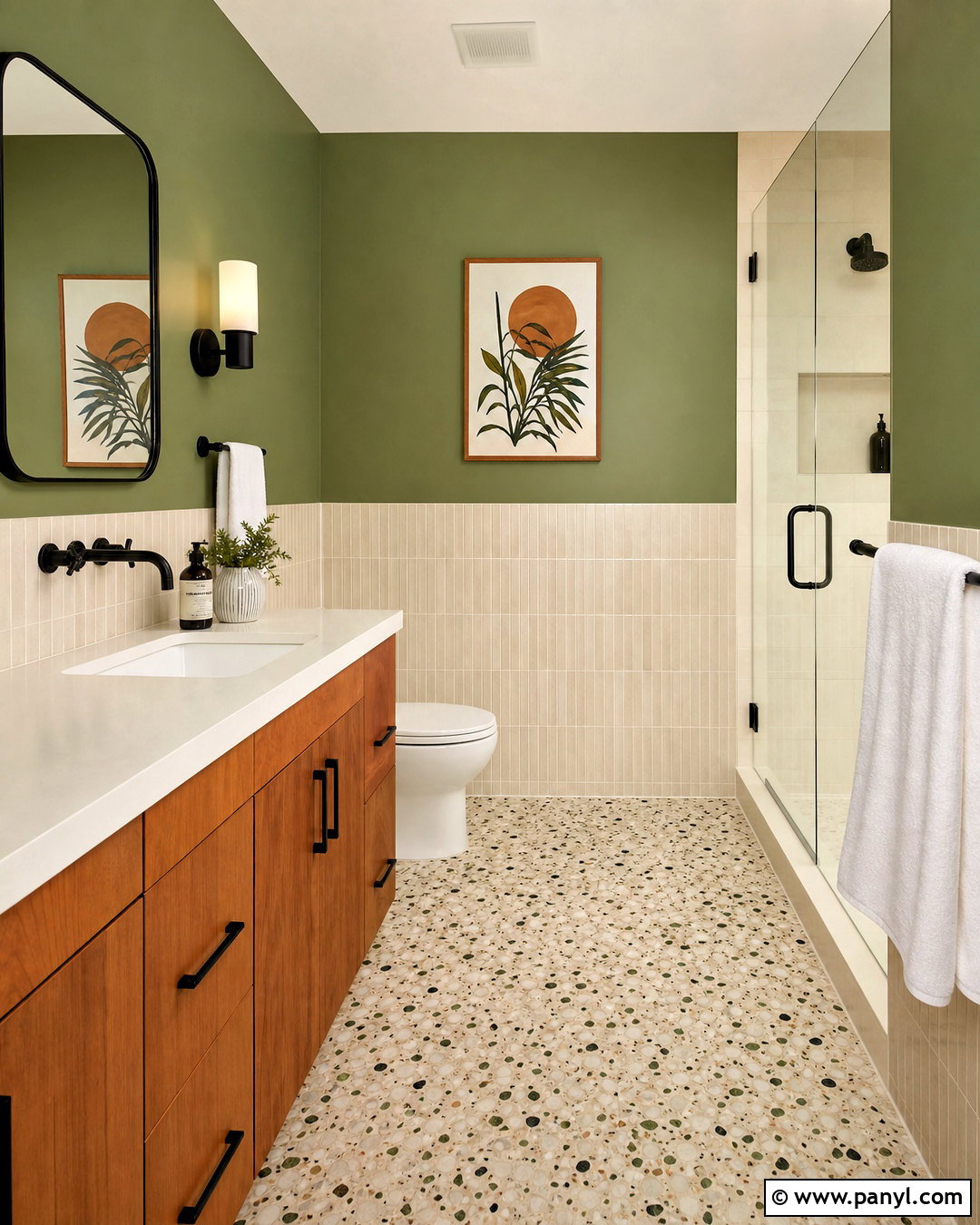
Avocado green can look stylish and intentional when it is surrounded by modern materials. Select a softened avocado shade with olive undertones and apply it to the walls above a simple cream tile wainscot. Add a medium-tone teak vanity with a white countertop and matte black hardware. Large terrazzo floor tiles containing cream, tan, and dark green flecks connect the vintage-inspired paint to the contemporary finishes. Choose a black-framed mirror, streamlined sconces, and a frameless shower enclosure. White towels and a cream shower curtain prevent the palette from becoming heavy. Instead of adding retro patterns everywhere, keep the shapes simple and let the distinctive green provide personality. The result is a warm, updated bathroom with a subtle midcentury influence.
14. Fern Green Bathroom
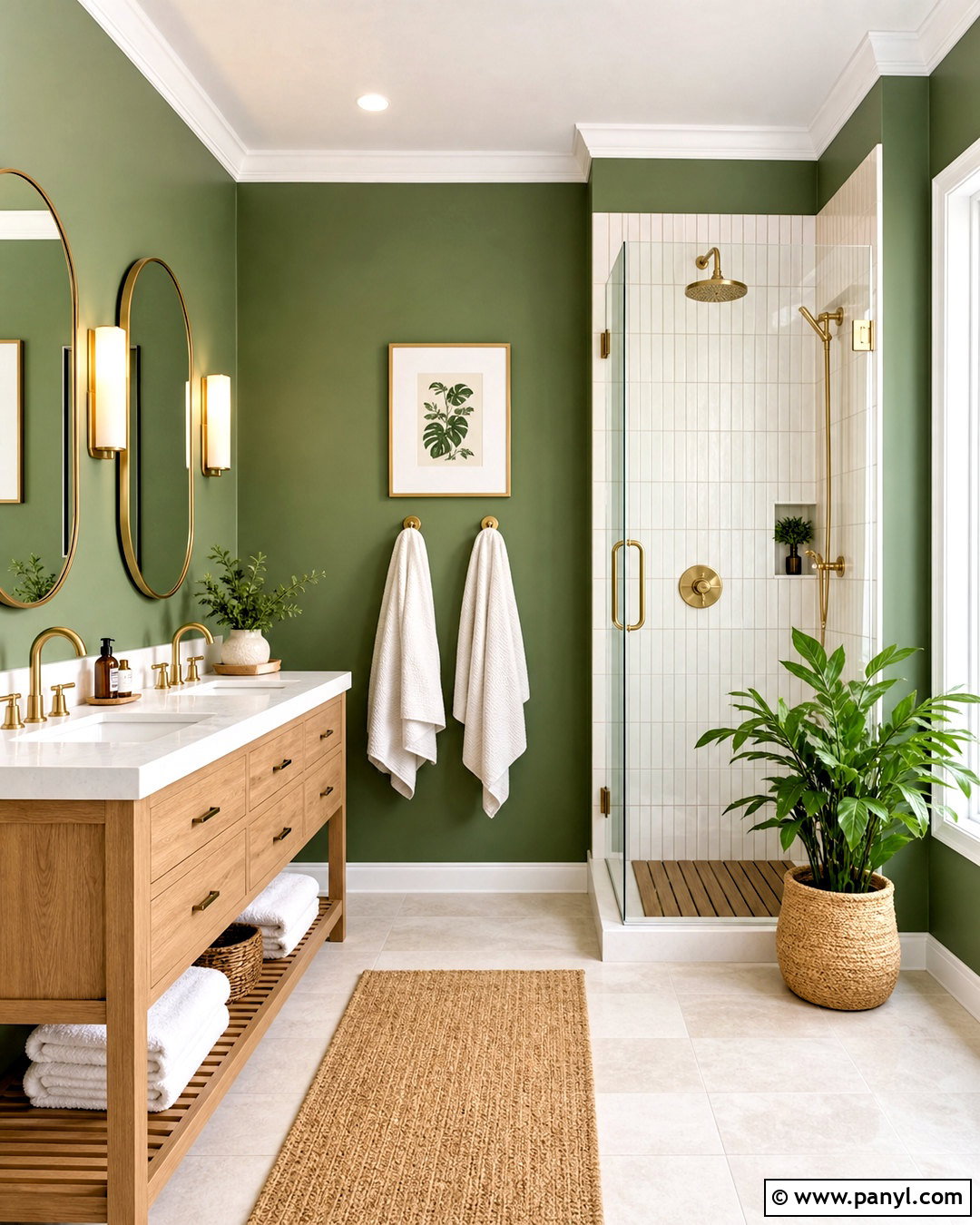
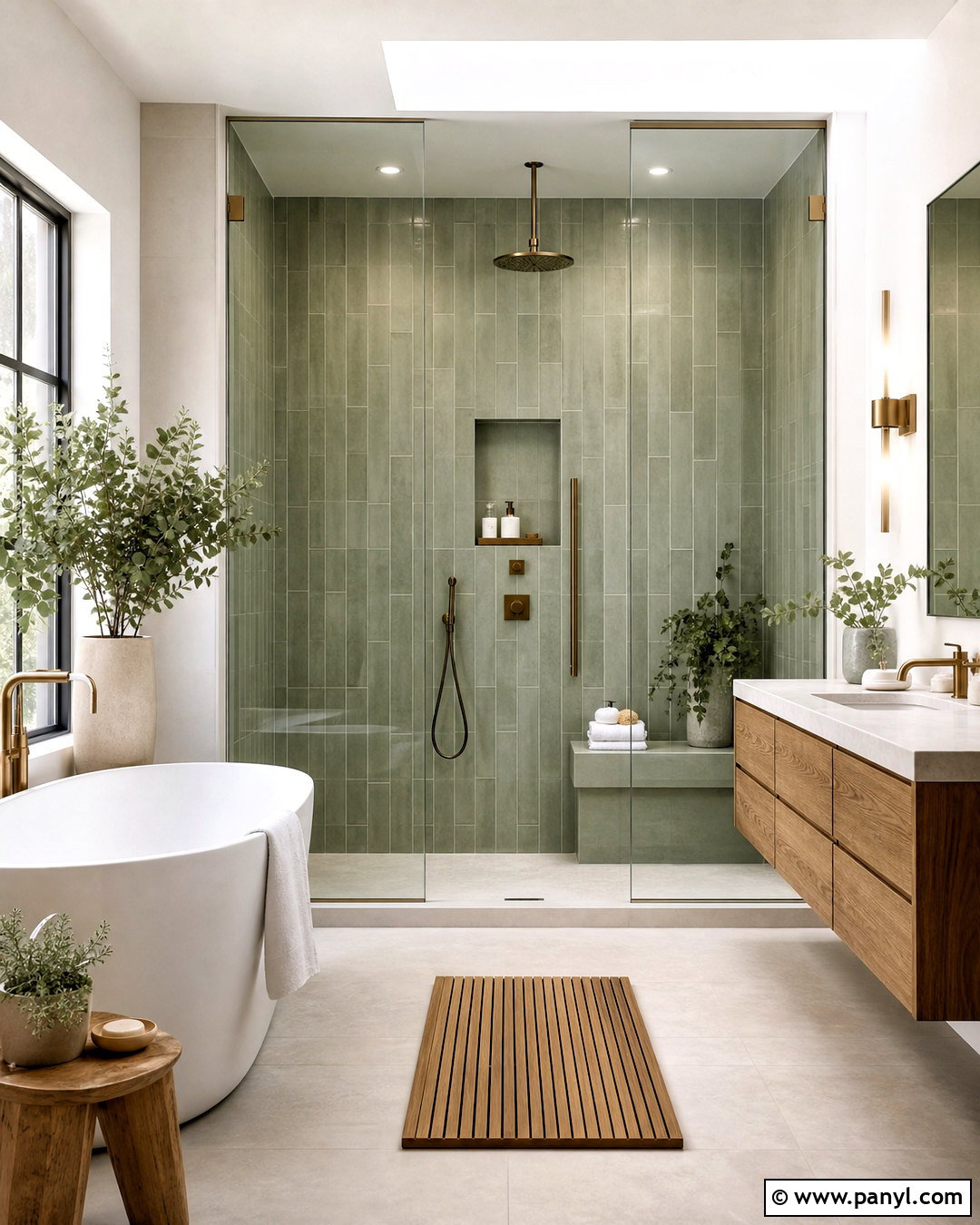
Fern green has a lively botanical quality that can energize a bathroom while remaining connected to nature. Paint the walls in a medium fern shade and pair them with crisp white trim for clear contrast. A light oak vanity, white quartz top, and brushed brass fixtures create a fresh modern-organic foundation. Use warm white vertical shower tiles and pale limestone-look flooring to soften the stronger wall color. A large round mirror and simple globe sconces keep the layout uncluttered. Add natural linen towels, a slatted wood bath mat, and one real plant suited to bathroom humidity. Avoid covering the room with leaf prints, since the wall color already delivers a botanical mood. The finished fern green bathroom feels vibrant, balanced, and easy to personalize.
15. Pewter Green Bathroom
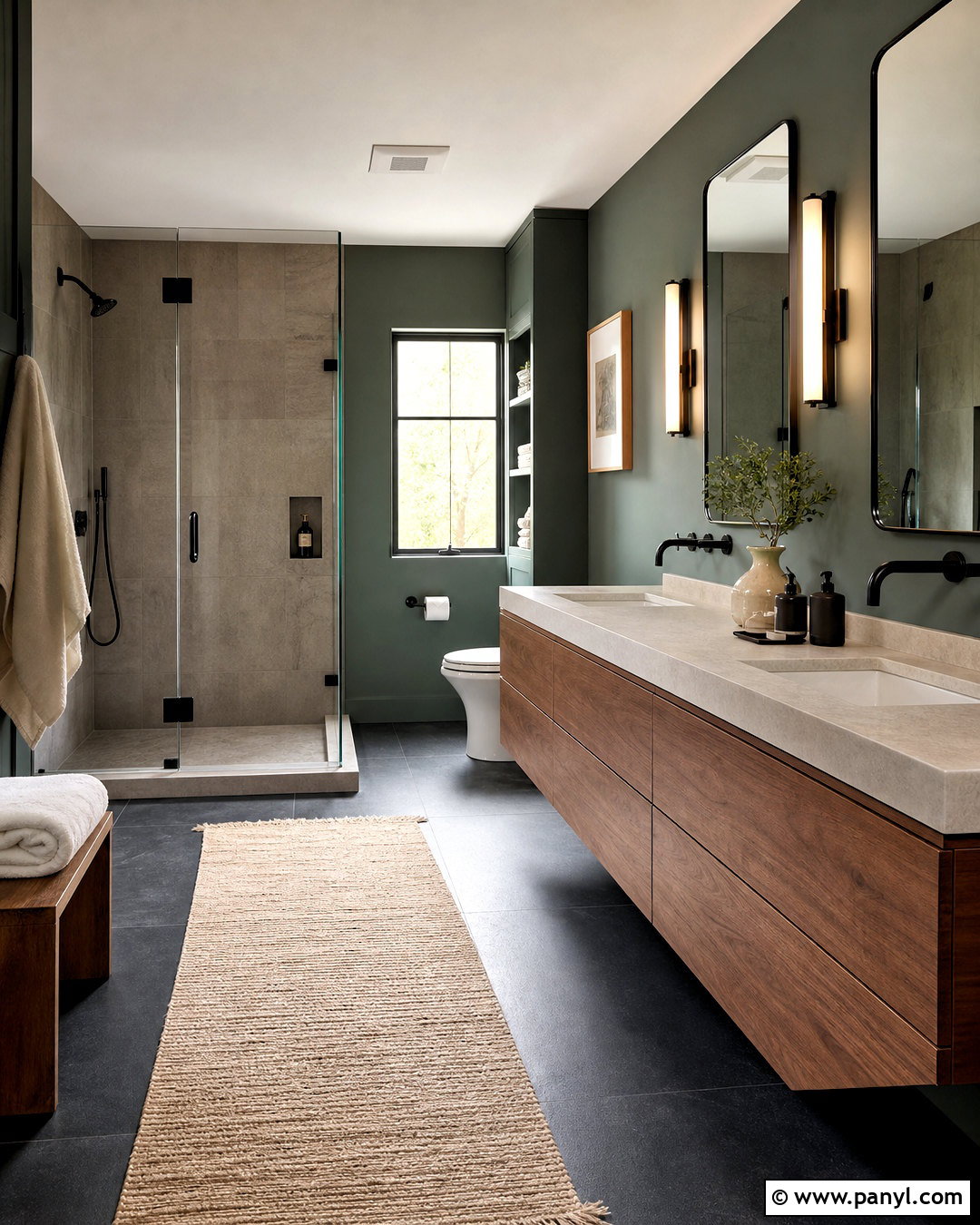
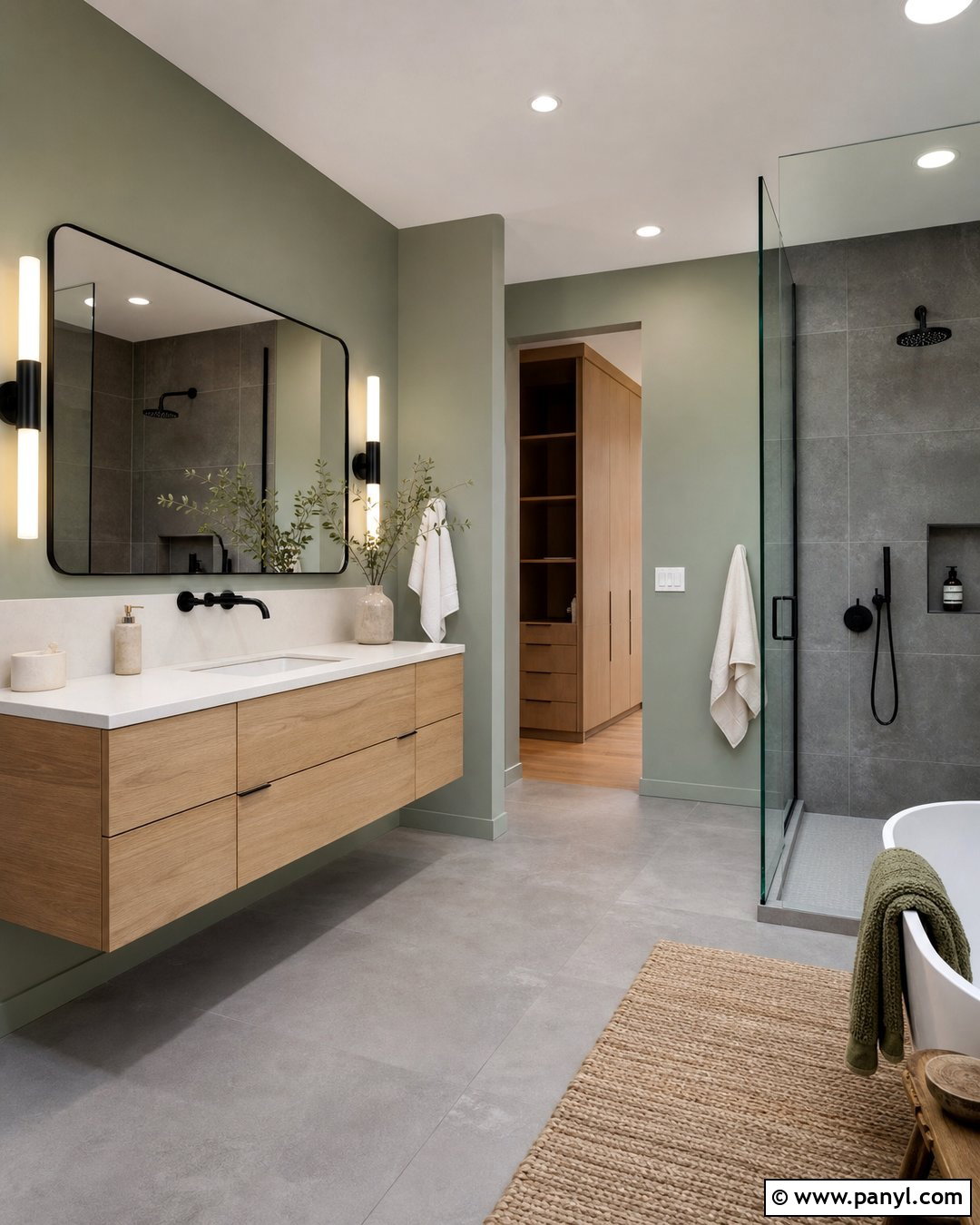
Pewter green combines deep green with smoky gray, producing a bathroom that feels dramatic but not overly saturated. Use it across the walls and built-in cabinetry, then lighten the composition with a white ceiling and creamy stone surfaces. A floating walnut vanity adds warmth beneath a honed limestone countertop. Matte black faucets, a thin black mirror frame, and charcoal floor tile create a streamlined contemporary structure. Inside the shower, choose large warm gray tiles with minimal grout lines. Soft white towels and a pale woven runner provide contrast against the darker finishes. Strong vanity lighting is important because this color absorbs more light than a pale green. The complete room feels refined, grounded, and especially effective in a spacious primary bathroom.
16. Blue Green Bathroom
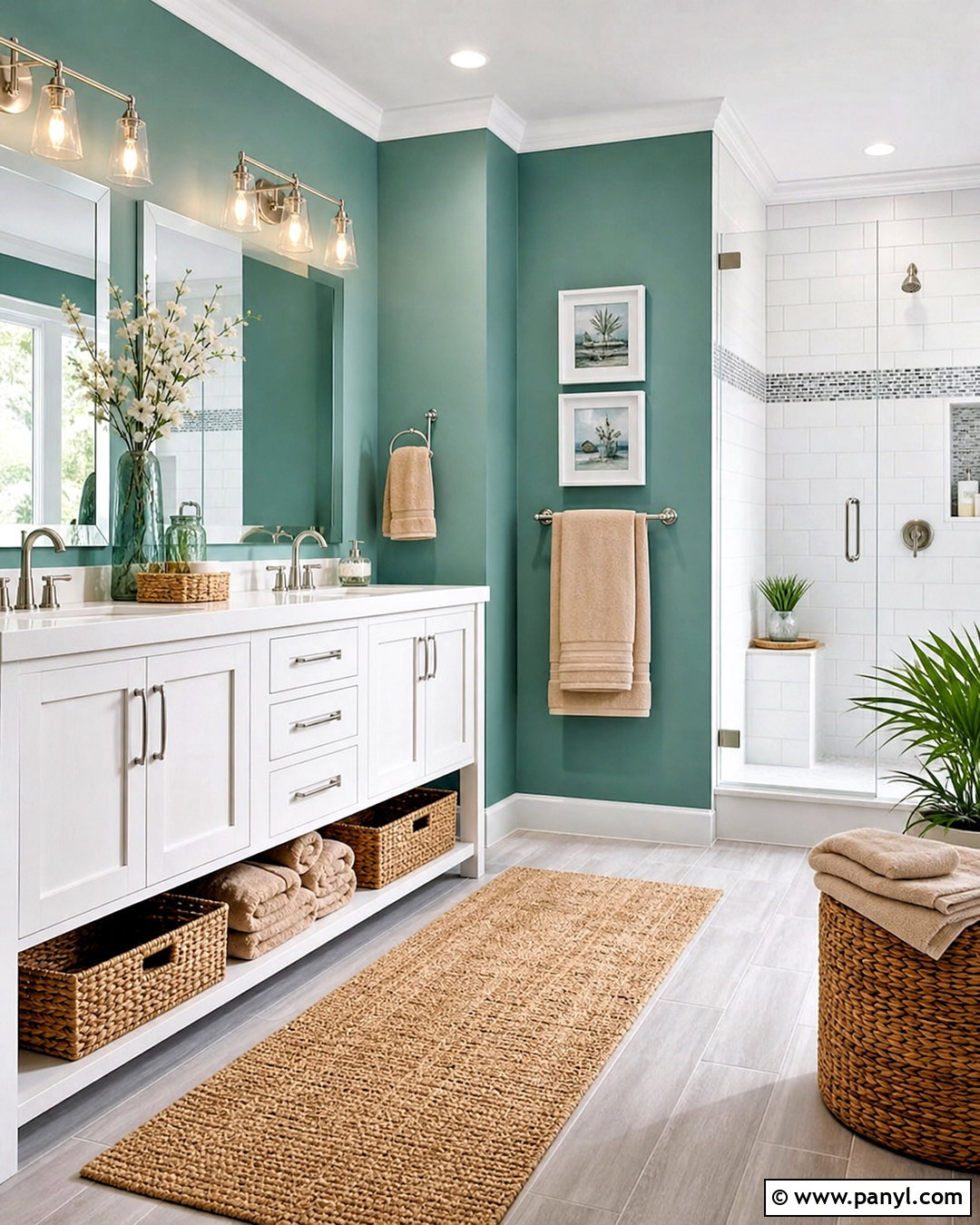
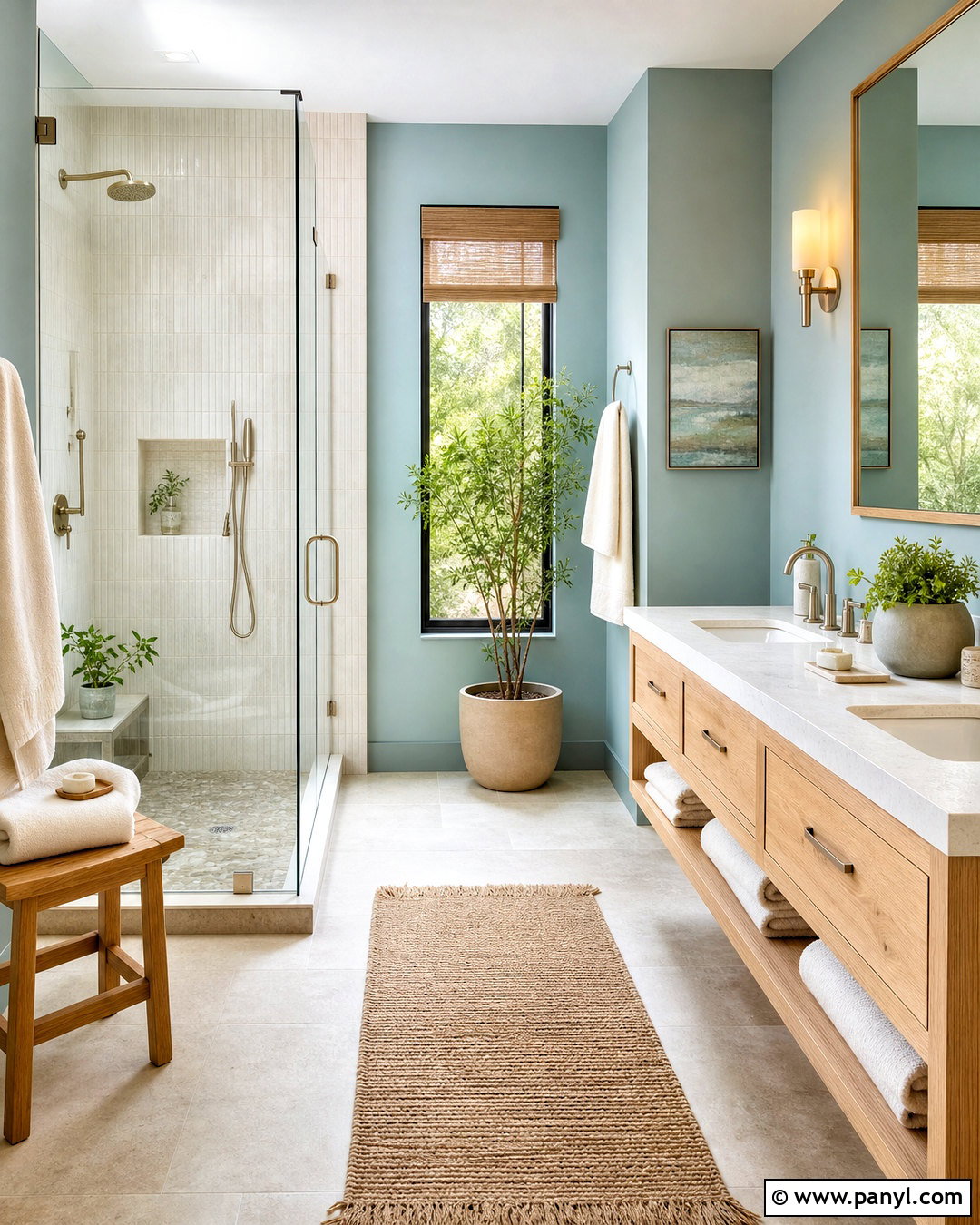
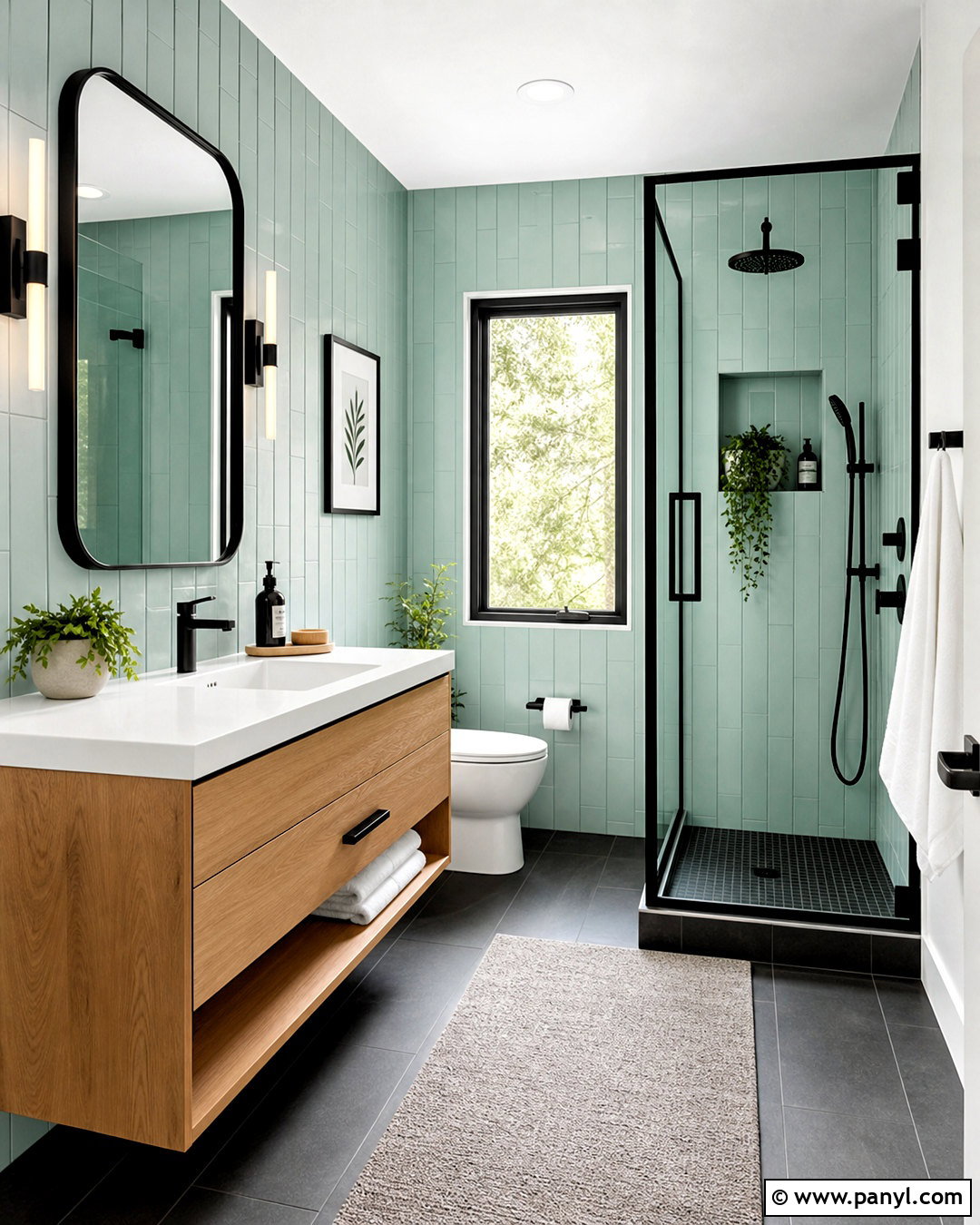
Blue-green paint creates a refreshing bathroom that sits comfortably between coastal and contemporary design. Choose a medium shade with balanced teal undertones, then pair it with white oak cabinetry and a bright white quartz counter. Brushed nickel fixtures complement the cooler wall color without creating harsh contrast. Use pale gray floor tile and glossy white shower tile to maintain a bright foundation. A wide frameless mirror will reflect the blue-green walls and make the room feel more expansive. Add sandy beige towels, a woven storage basket, and a simple white shower curtain to warm the scheme. Keep decorative accents restrained and avoid adding several competing blues. This coordinated bathroom delivers clear color, clean lines, and a peaceful atmosphere without becoming overly themed.
17. Gray Green Bathroom
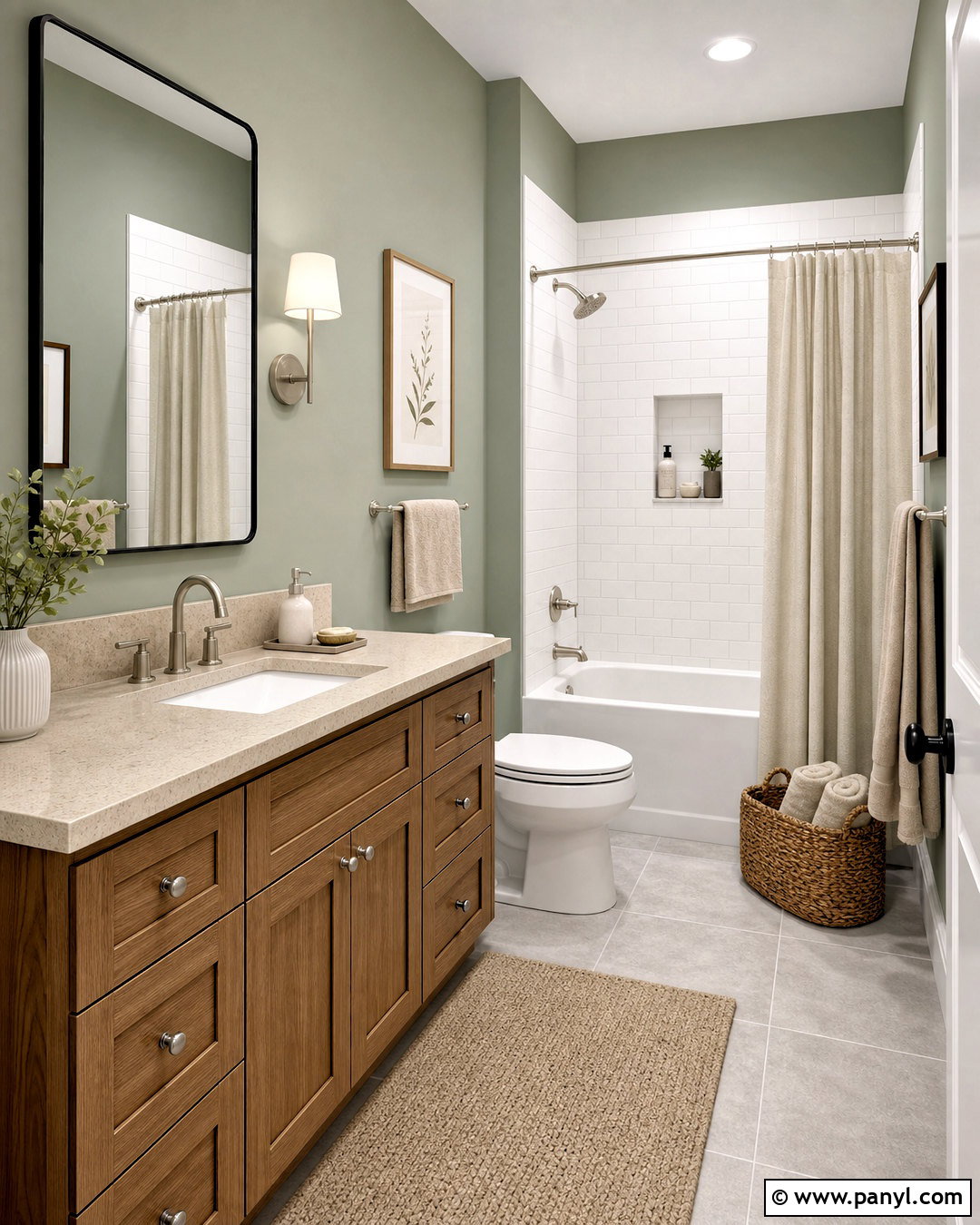
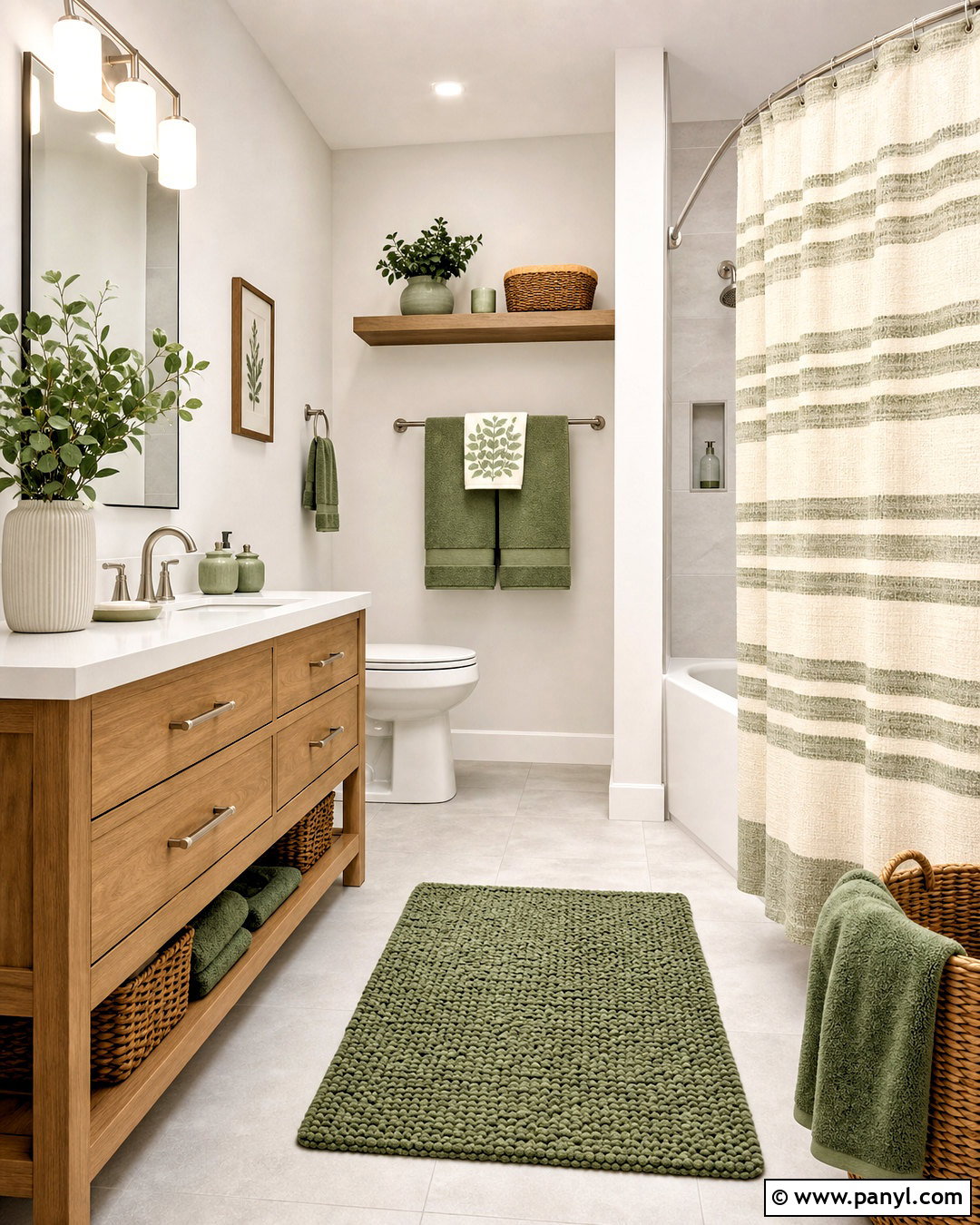
Gray-green is a practical choice when pure green feels too colorful but ordinary gray seems lifeless. Paint the walls in a balanced gray-green with subtle warm undertones, then use soft white on the ceiling, doors, and trim. A medium oak vanity and beige quartz countertop prevent the room from looking cool or clinical. Choose brushed nickel fixtures for a quiet finish, or aged brass if you prefer greater warmth. Large light-gray floor tiles and white shower tile provide a versatile background. Complete the room with an oatmeal bath mat, natural linen towels, and a black-framed mirror for gentle definition. Since gray-green changes noticeably under artificial light, test it beside the vanity bulbs. The finished bathroom feels calm, adaptable, and thoughtfully coordinated.
18. Yellow Green Bathroom
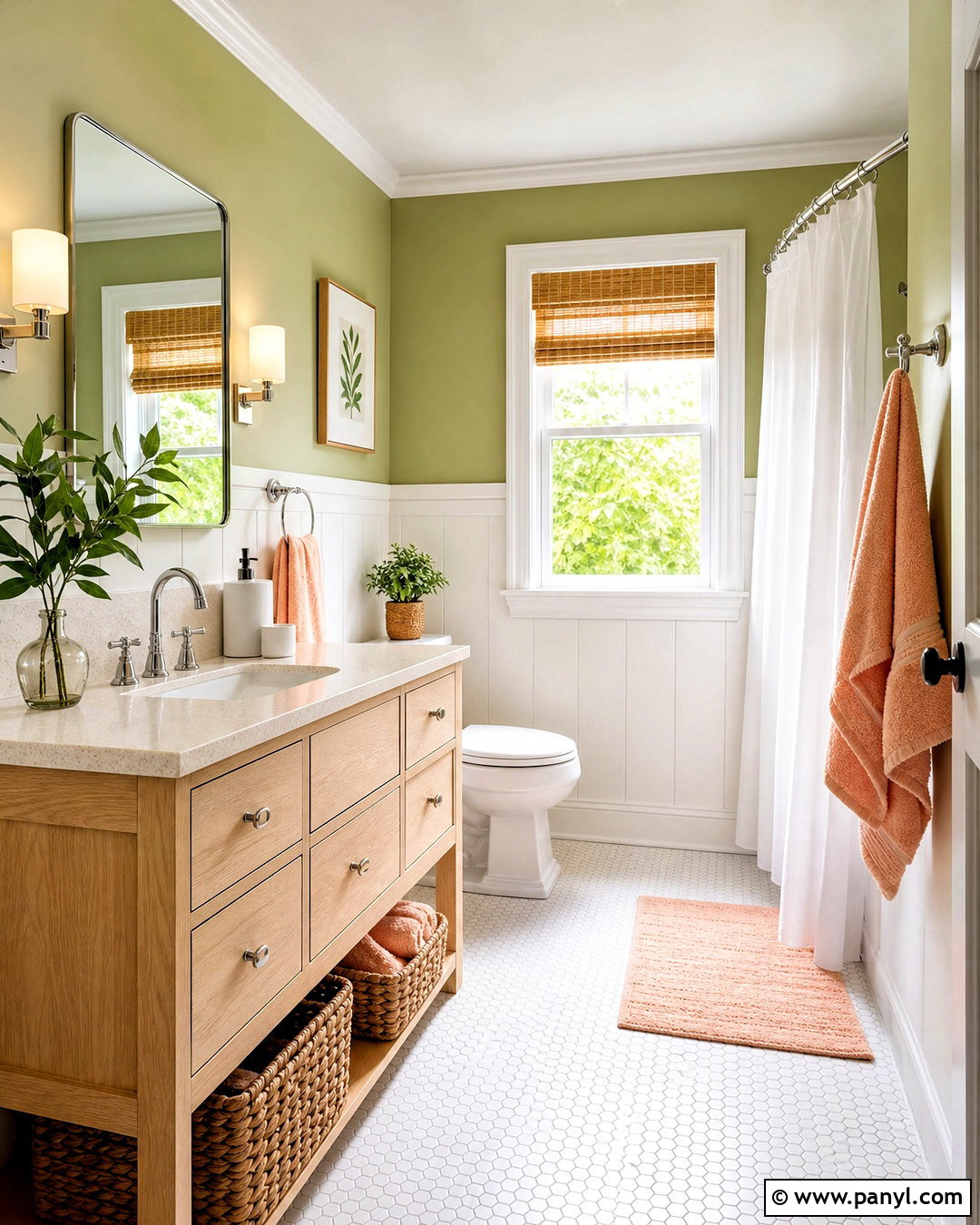
A softened yellow-green can make a bathroom feel sunny even when natural light is limited. Choose a muted pear or leafy shade rather than fluorescent lime. Paint the upper walls yellow-green and use warm white tile or paneling below to control the intensity. Pair the color with a pale maple vanity, cream quartz countertop, and polished chrome fixtures. Small white mosaic floor tiles preserve the room’s fresh character, while a simple white shower curtain prevents visual clutter. Introduce a few warm accents through apricot towels, a woven basket, or a natural wood mirror. Keep strong pattern to a minimum because the wall color already provides energy. This complete scheme is well suited to a children’s bathroom, guest bath, or cheerful powder room.
19. Black Green Bathroom
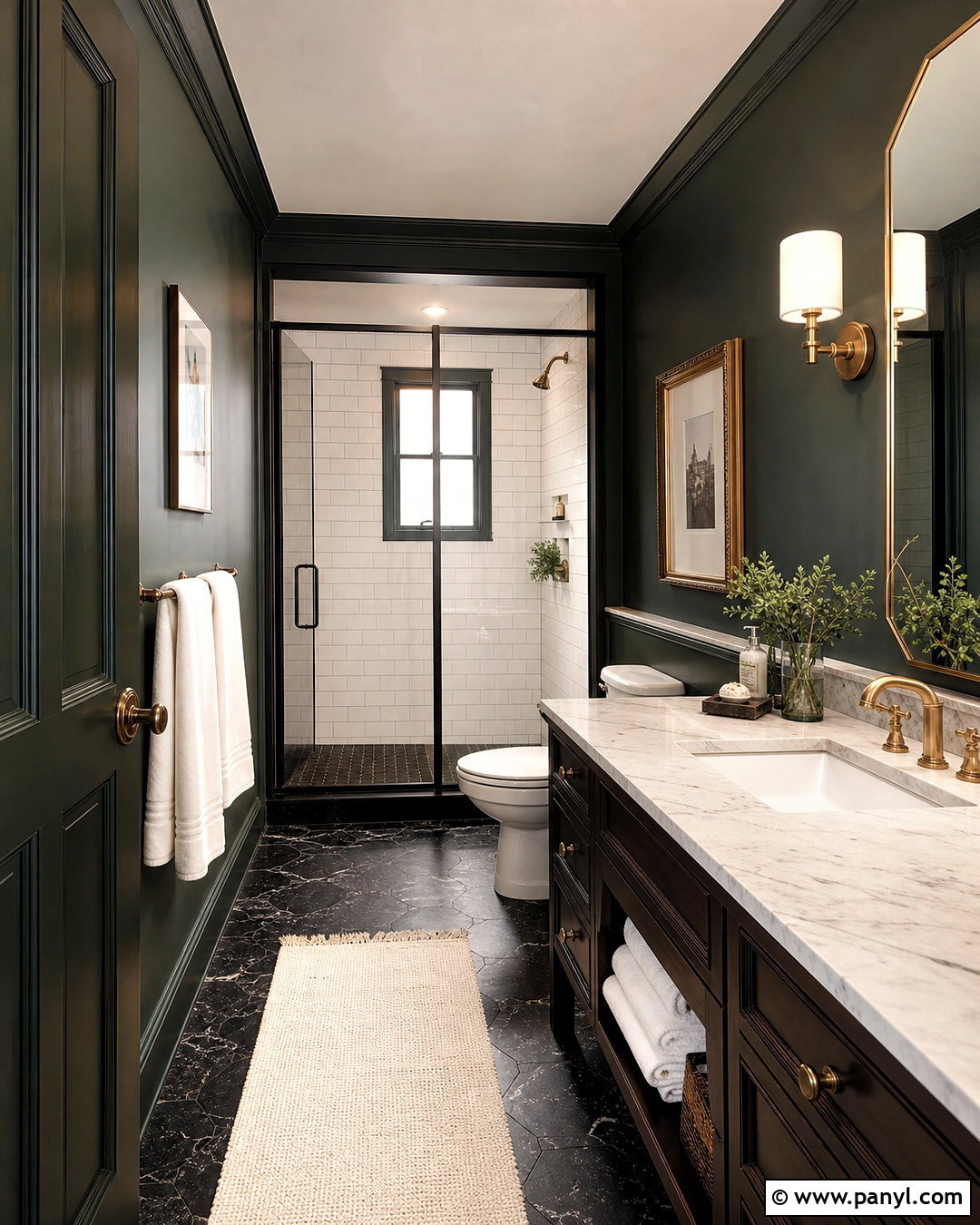
Black-green paint can create an intimate, architectural bathroom that feels softer than solid black. Cover the walls and trim in a nearly black shade with visible green undertones, using a satin finish to reflect a controlled amount of light. Add a white marble vanity top, a dark walnut cabinet, and aged brass faucets for rich contrast. White shower tile keeps the bathing area bright, while dark stone flooring continues the enveloping effect below. Install a generously sized mirror and bright, flattering sconces near the face. Crisp white towels, a cream bath mat, and one simple framed artwork stop the palette from becoming severe. This finished bathroom is especially effective in a powder room, where bold color can make a memorable statement.
20. Light Green Bathroom
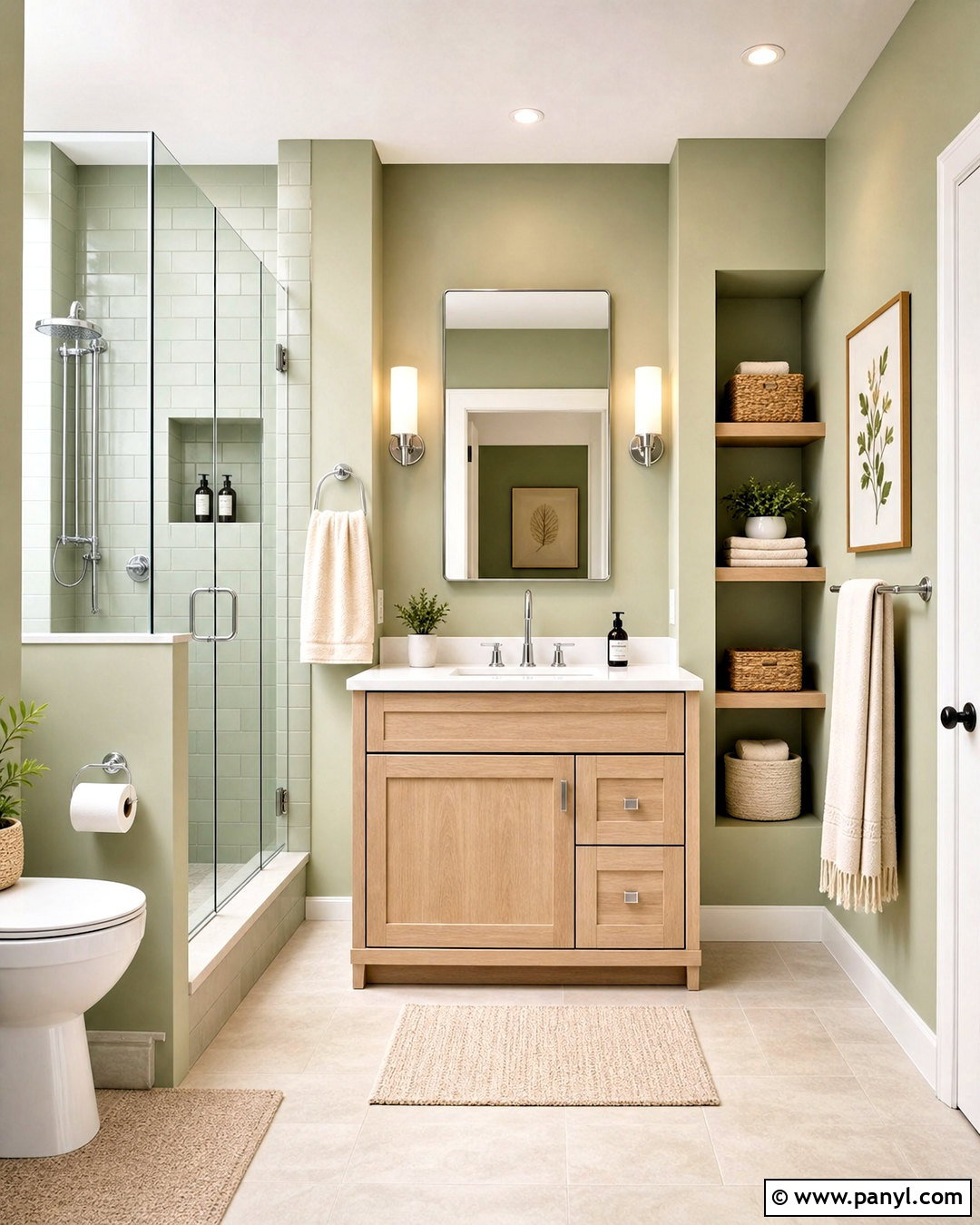
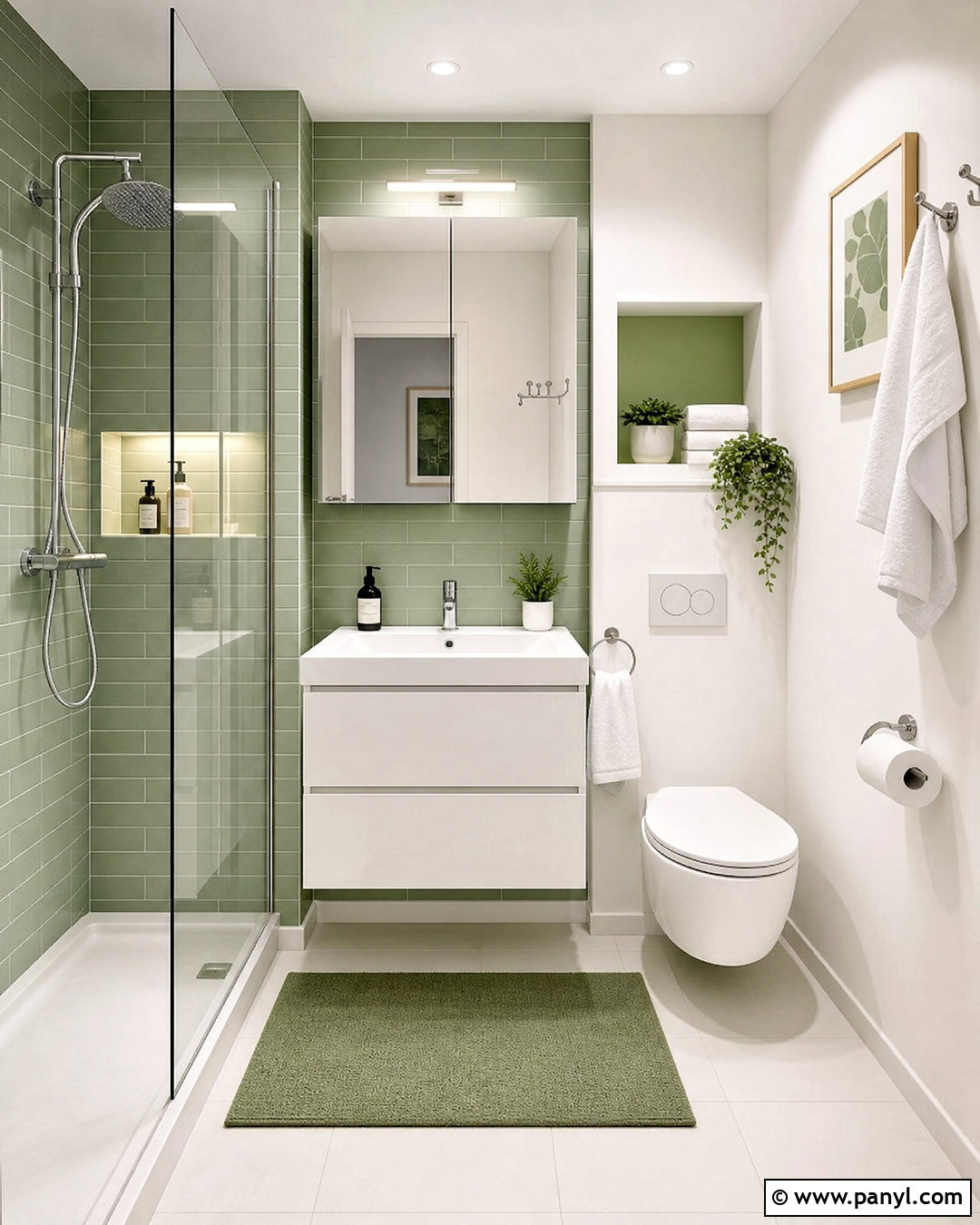
Light green provides a gentle wash of color that can make an everyday bathroom feel more open and refreshed. Select a pale green with soft gray undertones, especially if the room has limited square footage. Pair it with white trim, a compact white oak vanity, and a clean white countertop. Polished chrome fixtures and a frameless glass shower help reflect light through the space. Use warm white floor tile instead of cool gray so the green does not appear washed out. A recessed medicine cabinet, floating shelves, and matching storage containers keep the layout organized. Finish with white towels, a light beige bath mat, and one understated botanical print. The complete design feels airy, functional, and easy to update with changing accessories.
Conclusion:
Choosing among these 20 green bathroom paint colors becomes easier when you consider the room’s lighting, fixed surfaces, and desired atmosphere. Pale sage, celadon, mint, and light green can brighten compact bathrooms. Olive, moss, and avocado pair beautifully with wood and warm stone. Forest, emerald, hunter, and black-green deliver greater drama when balanced with white tile and effective lighting. Always place a large paint sample beside the vanity, flooring, shower tile, and countertop before committing. Check it in morning and evening light, then use a moisture-resistant bathroom paint in an appropriate washable finish. With a coordinated palette of fixtures, materials, textiles, and storage, green can create a bathroom that feels colorful, cohesive, and comfortable.

Related Ideas and Inspiration:
Leave a Reply