
Choosing the right **20 paint colors for bathroom walls** can transform a plain, practical room into a space that feels fresh, relaxing, and complete. Current bathroom palettes range from airy whites and muted greens to earthy clay tones and dramatic blues. The strongest schemes also consider tile, countertops, cabinetry, flooring, metal finishes, and lighting rather than treating wall color as an isolated choice. () Before committing, test large samples beside permanent finishes and view them during the morning, afternoon, and evening. For durability, select quality interior paint made to handle humid spaces, typically in a washable satin or similar moisture-resistant finish. () The complete room combinations below make it easier to compare and recreate **20 paint colors for bathroom walls**.

1. Warm White Bathroom Walls
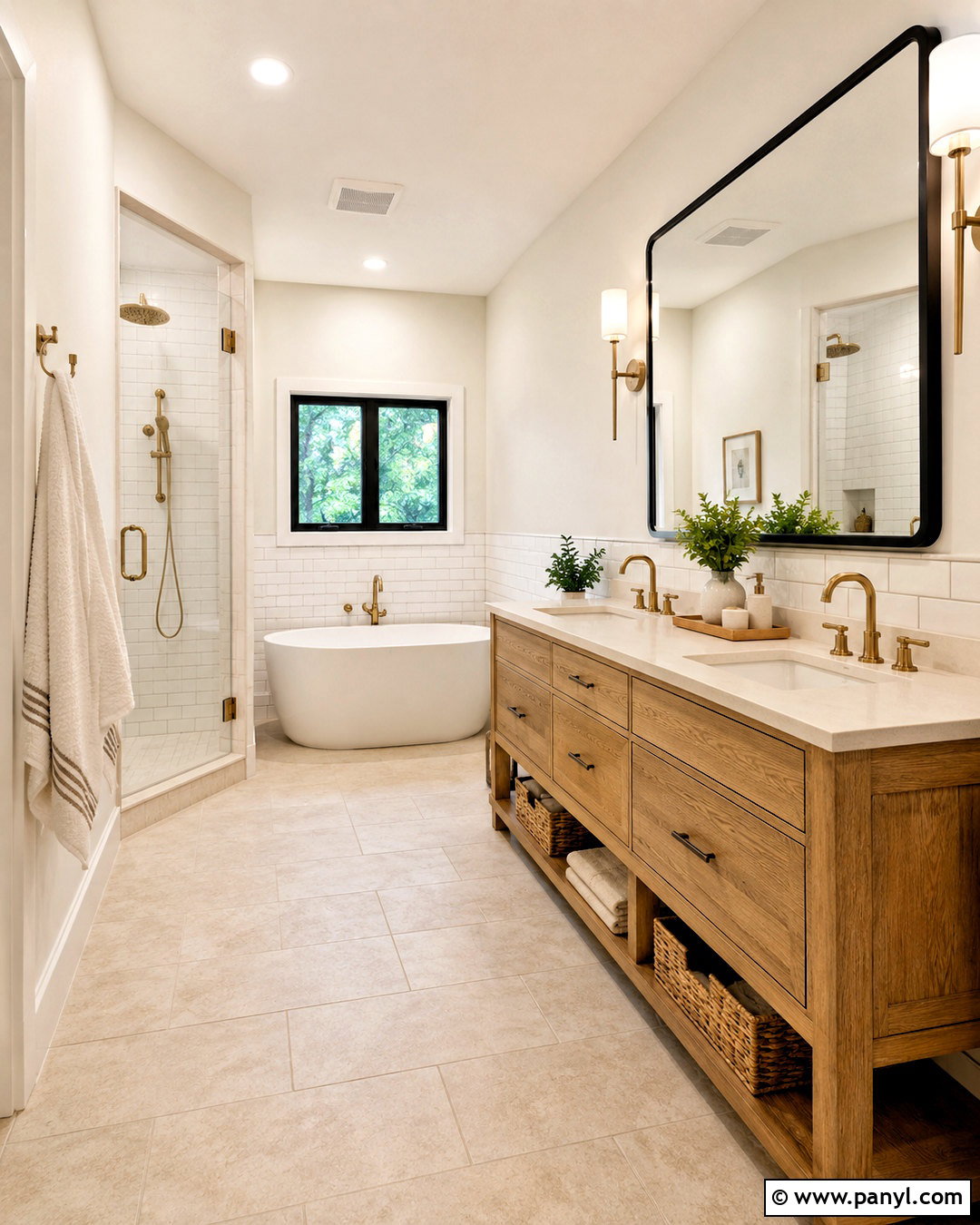
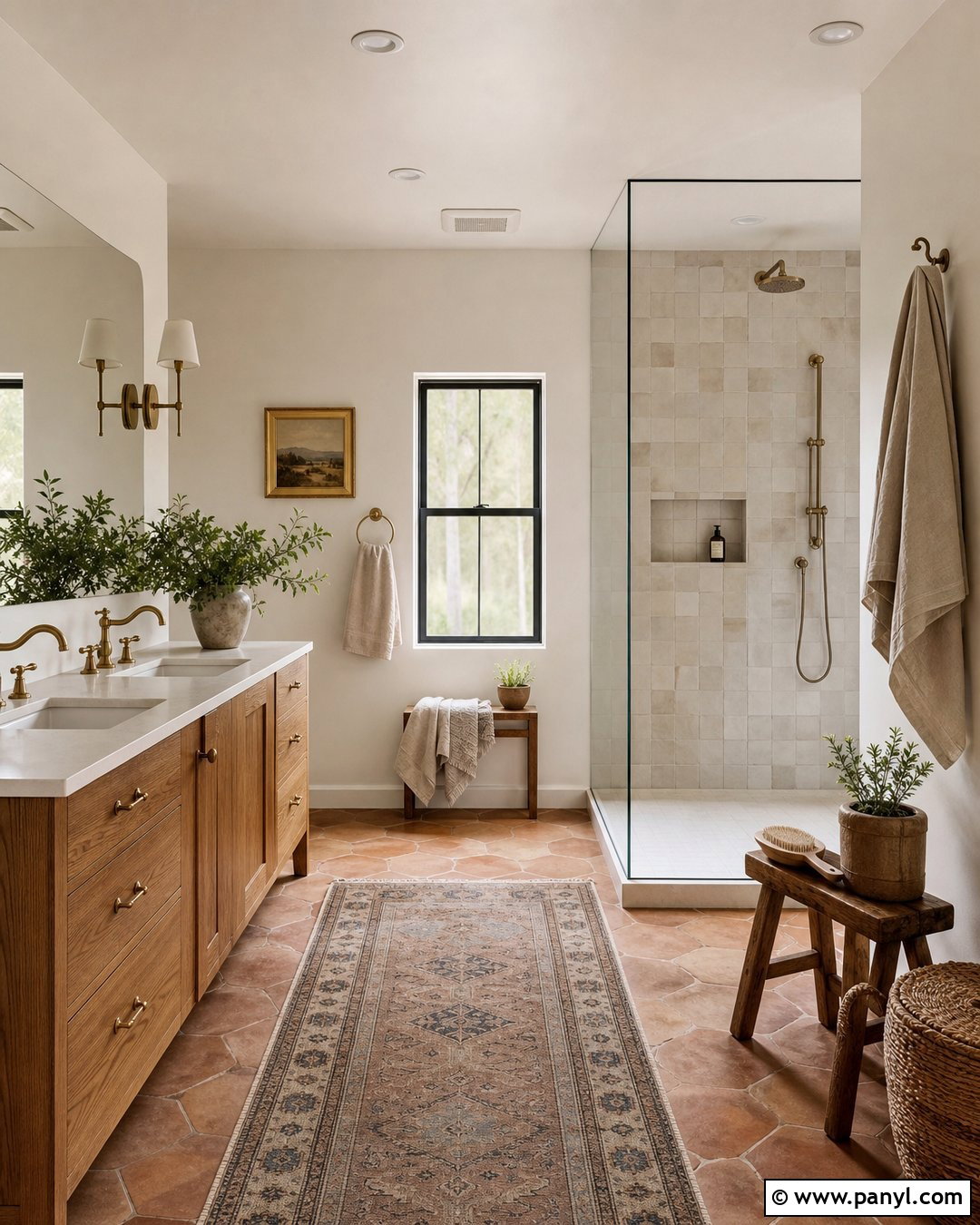
Warm white walls create a clean bathroom without the stark feeling that can come from a blue-based white. Choose a creamy white with subtle beige or yellow undertones, then repeat the warmth through an oak vanity, woven baskets, and brushed brass hardware. White subway tile can still work beautifully, especially when paired with soft gray or warm taupe grout. Add a pale stone countertop and sandy porcelain floor tile to ground the brightness. For contrast, use a thin black-framed mirror or simple black sconces. This complete palette suits small bathrooms, primary suites, and windowless spaces because it feels open yet comfortable. Keep towels ivory rather than brilliant white so the entire room remains layered, welcoming, and intentionally coordinated.
2. Soft Cream Bathroom Walls
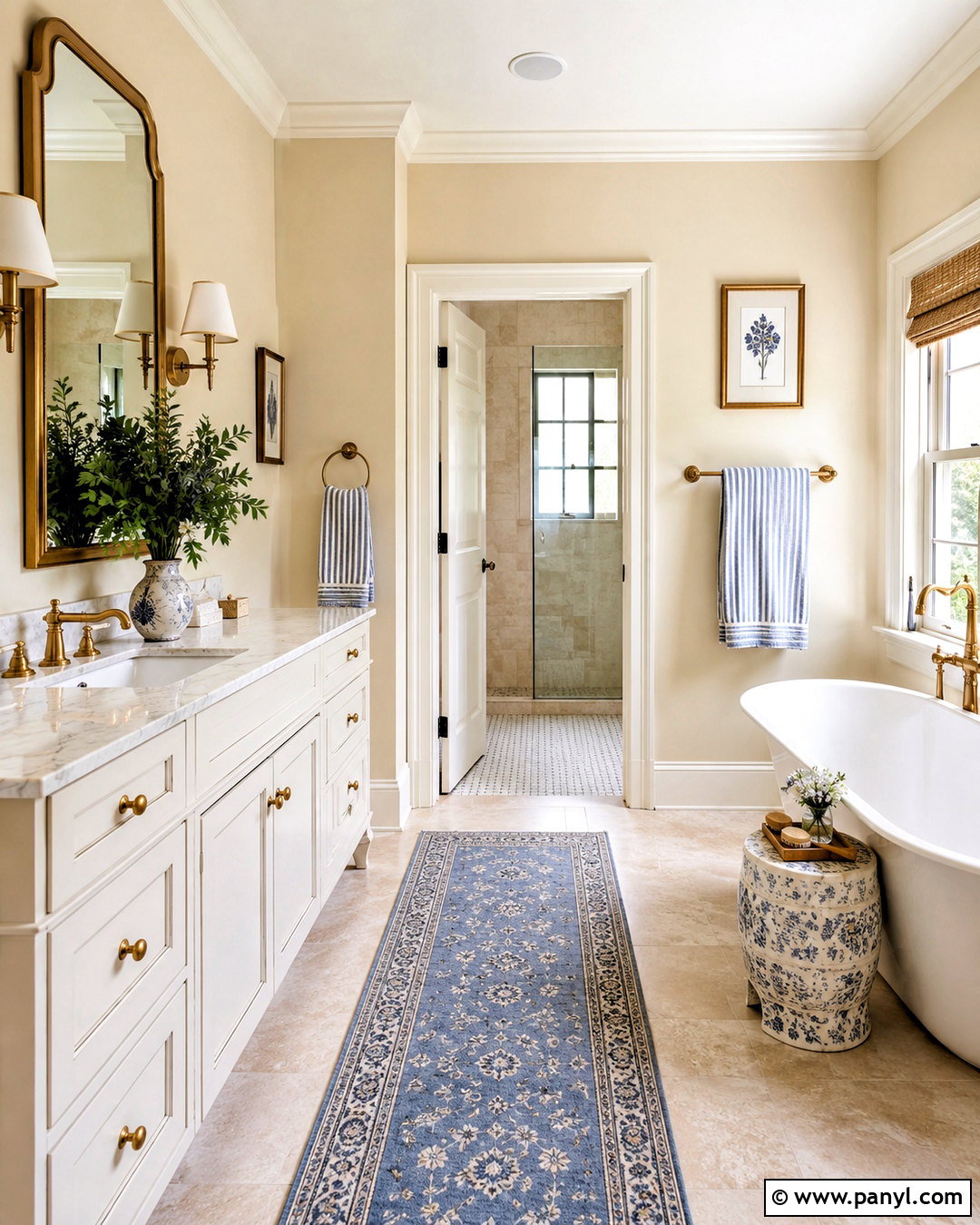
Soft cream gives bathroom walls a gentle glow that complements traditional fixtures and warmer materials. Build the room around cream paint, an off-white vanity, and beige limestone-look flooring. A marble countertop with subtle gold veining brings pattern without disrupting the quiet palette. Antique brass faucets, framed sconces, and cabinet pulls reinforce the classic character. Use white trim for slight definition, but avoid an extremely cool white that could make the walls look yellow. A muted blue runner, striped hand towels, and one ceramic vase provide restrained color. This scheme works especially well in bathrooms with limited natural light because cream feels warmer under artificial lighting. The finished room should appear bright and polished, with enough tonal variation to prevent the neutral surfaces from blending together.
3. Light Greige Bathroom Walls
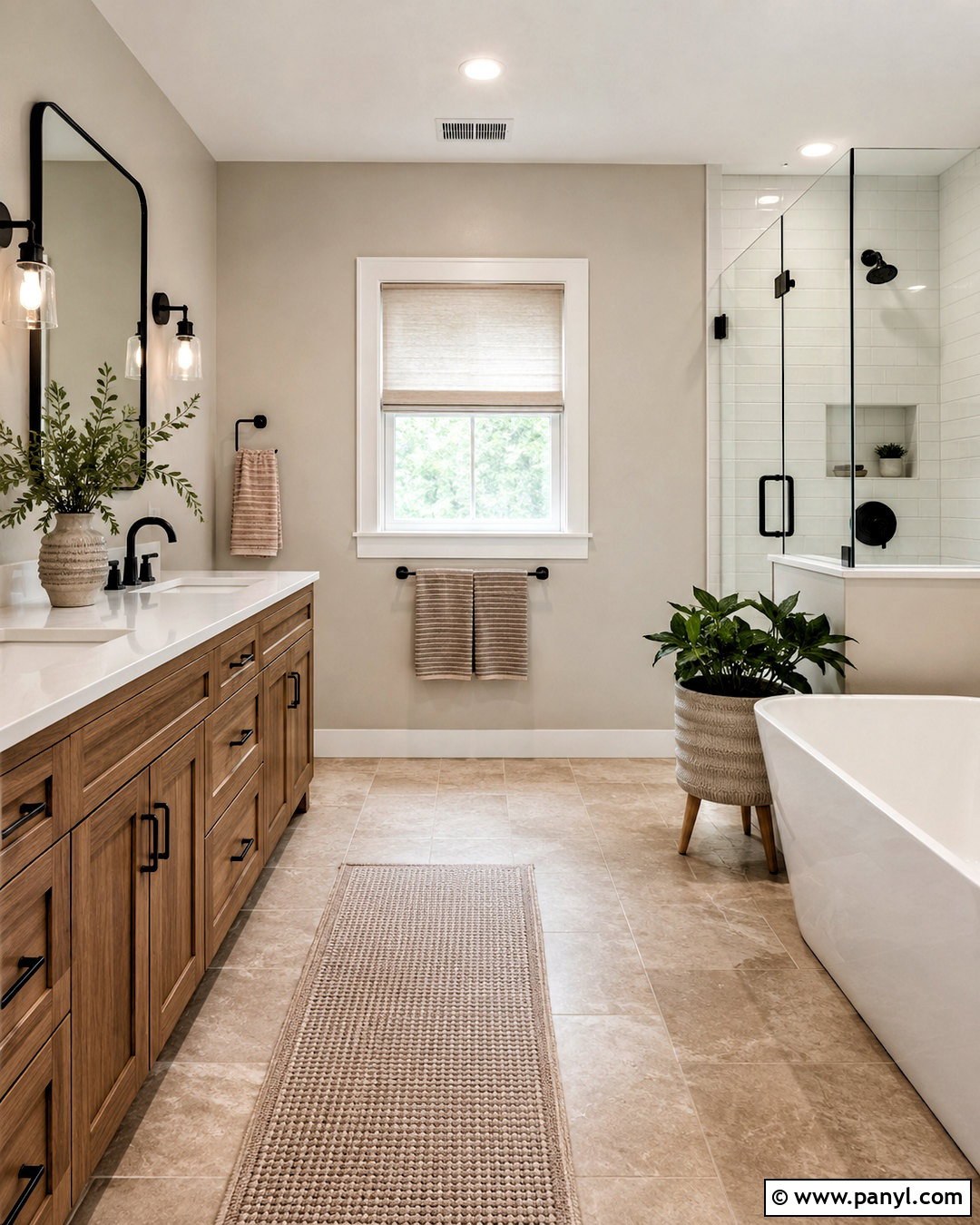
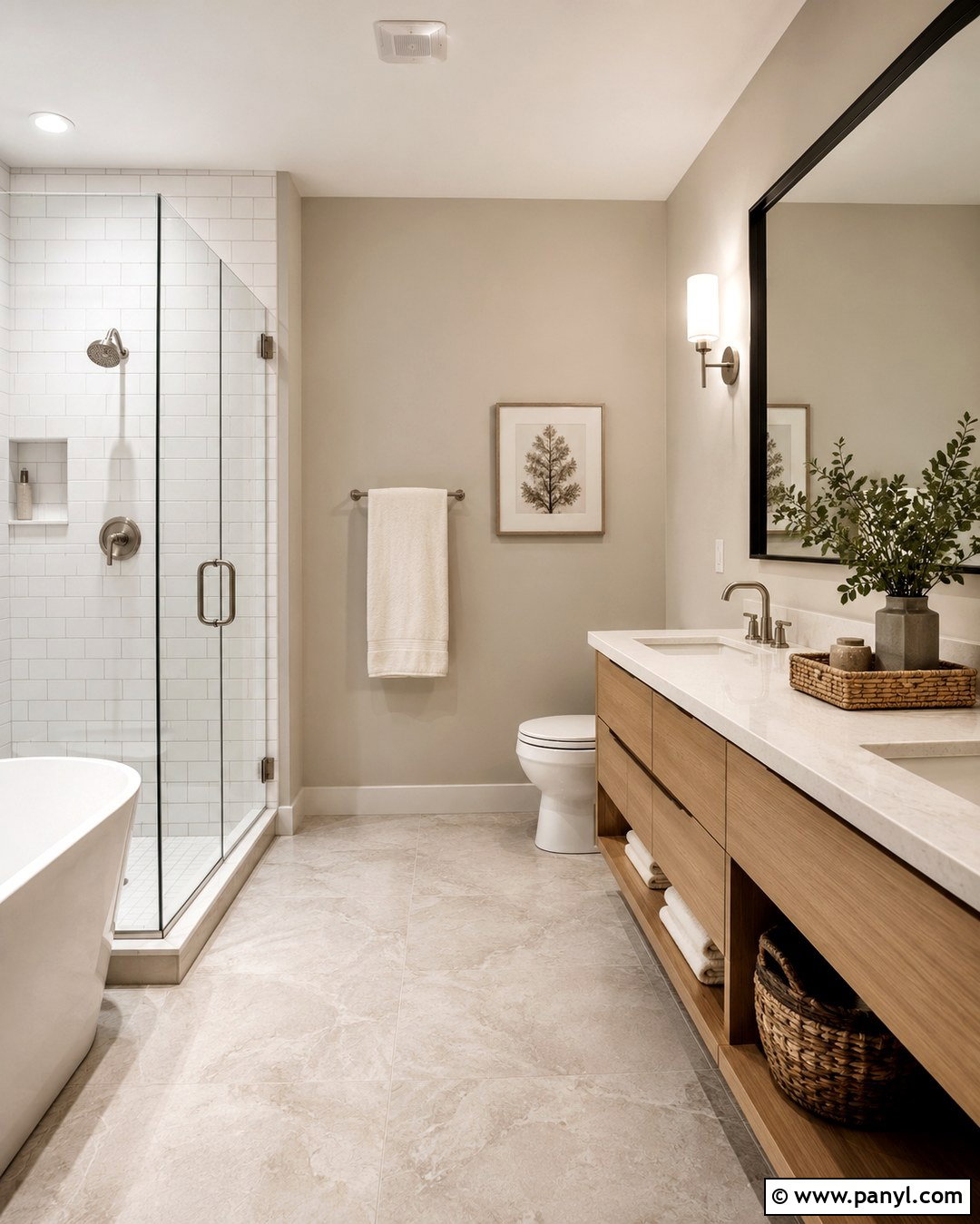
Light greige balances the softness of beige with the crisp appearance of gray. It is particularly useful when a bathroom contains both cool tile and warm wood cabinetry. Pair the walls with a medium oak vanity, white quartz countertop, and large-format stone-look floor tile. Matte black faucets and mirror frames add clean definition, while brushed nickel can create a quieter alternative. Keep the shower tile creamy white and introduce texture through ribbed towels, a linen Roman shade, and a simple ceramic planter. Paint the trim a warm white rather than a bright builder white. This coordinated look feels modern but not cold, making it suitable for a family bathroom that needs to remain versatile. Greige also provides a calm background for changing towels, artwork, and countertop accessories later.
4. Mushroom Taupe Bathroom Walls
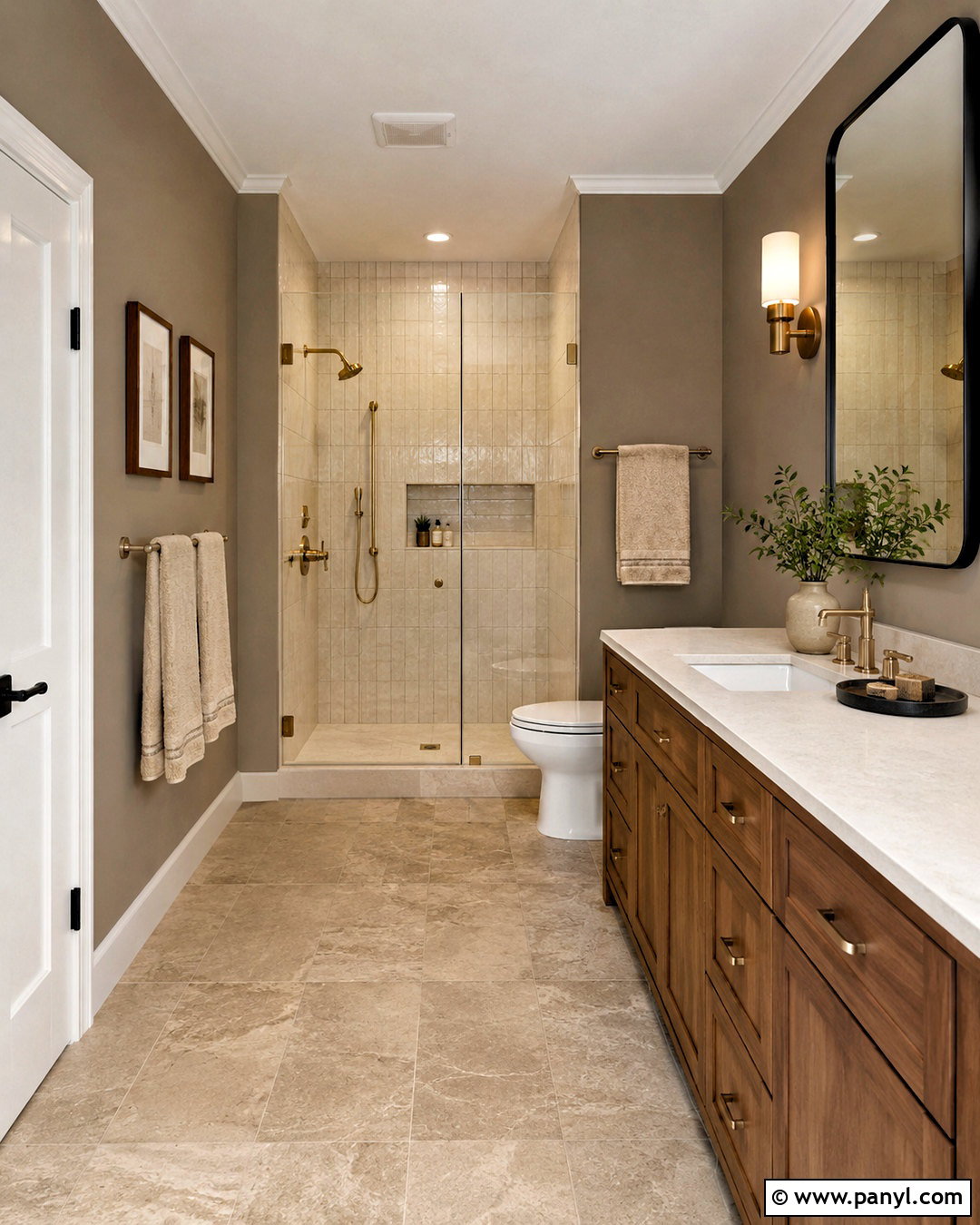
Mushroom taupe brings earthy depth to a bathroom while remaining easy to live with. Select a shade that combines brown, gray, and a faint rosy undertone. Surround it with a walnut vanity, creamy quartz countertop, and ivory vertical shower tile. Aged brass fixtures emphasize the warmth, while a charcoal-framed mirror adds a sharper edge. Continue the grounded palette with travertine-look flooring and oatmeal-colored towels. If the room is small, keep the ceiling and trim a warm white to preserve visual openness. A larger bathroom can handle taupe-painted trim for a more enveloping effect. The final space feels sophisticated and natural rather than beige or flat. This color is especially effective when existing stone contains mixed warm and cool veining that is difficult to match.
5. Dove Gray Bathroom Walls
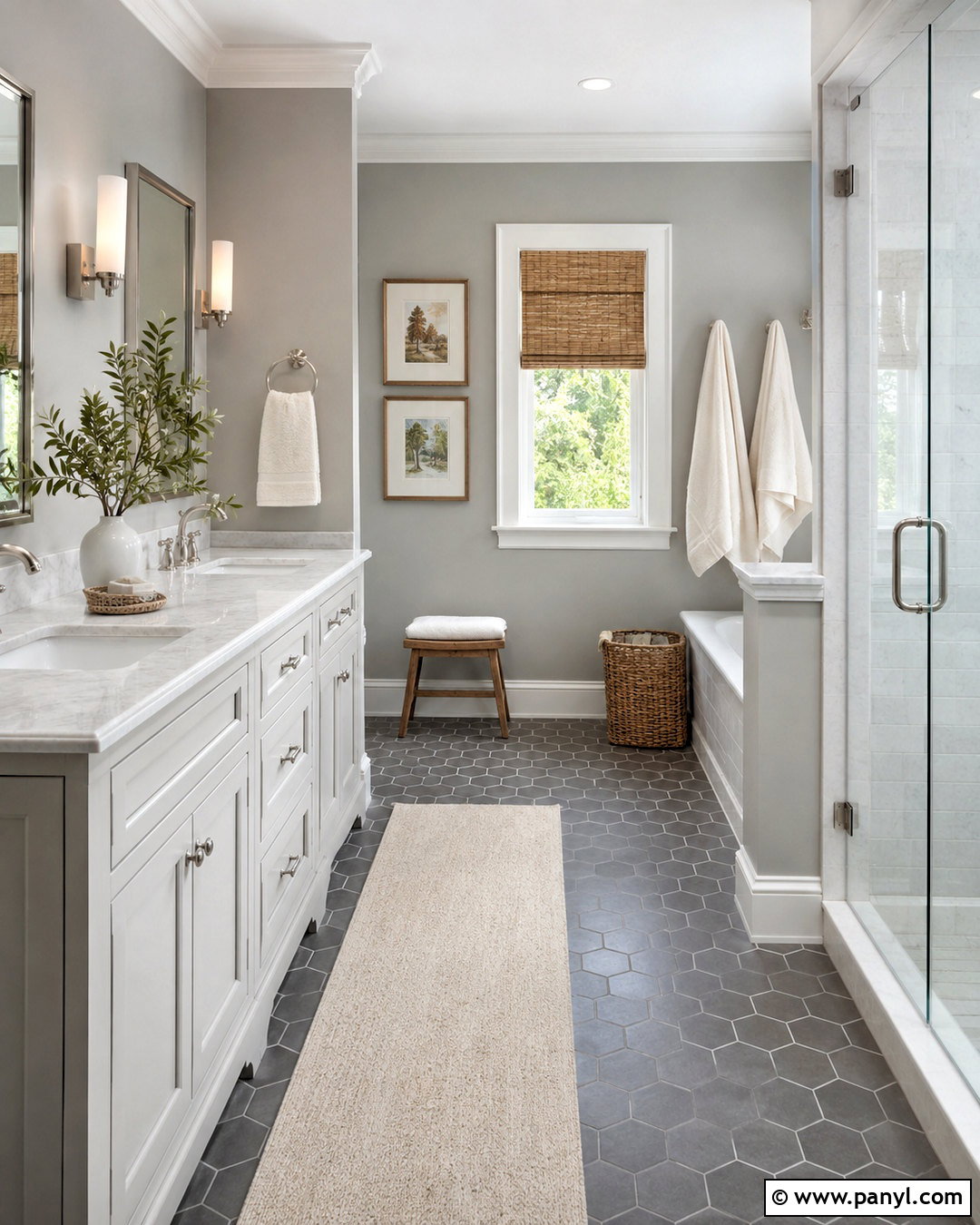
Dove gray offers a soft, polished background for a classic white bathroom. Choose a pale gray with balanced undertones so it does not turn noticeably blue or purple under vanity lights. Pair it with white paneled cabinetry, marble-look counters, and polished nickel faucets for an elegant foundation. A dark gray hexagon floor adds definition and hides everyday marks better than an all-white surface. Bring in warmth with a light wood stool, natural woven shade, and cream towels. Clear glass shower doors help the gray walls remain visible across the room, creating continuity. This complete scheme is ideal for homeowners who want a neutral bathroom with more dimension than white. Finish it with simple framed artwork and a silver-toned mirror to maintain the clean, tailored appearance.
6. Charcoal Gray Bathroom Walls
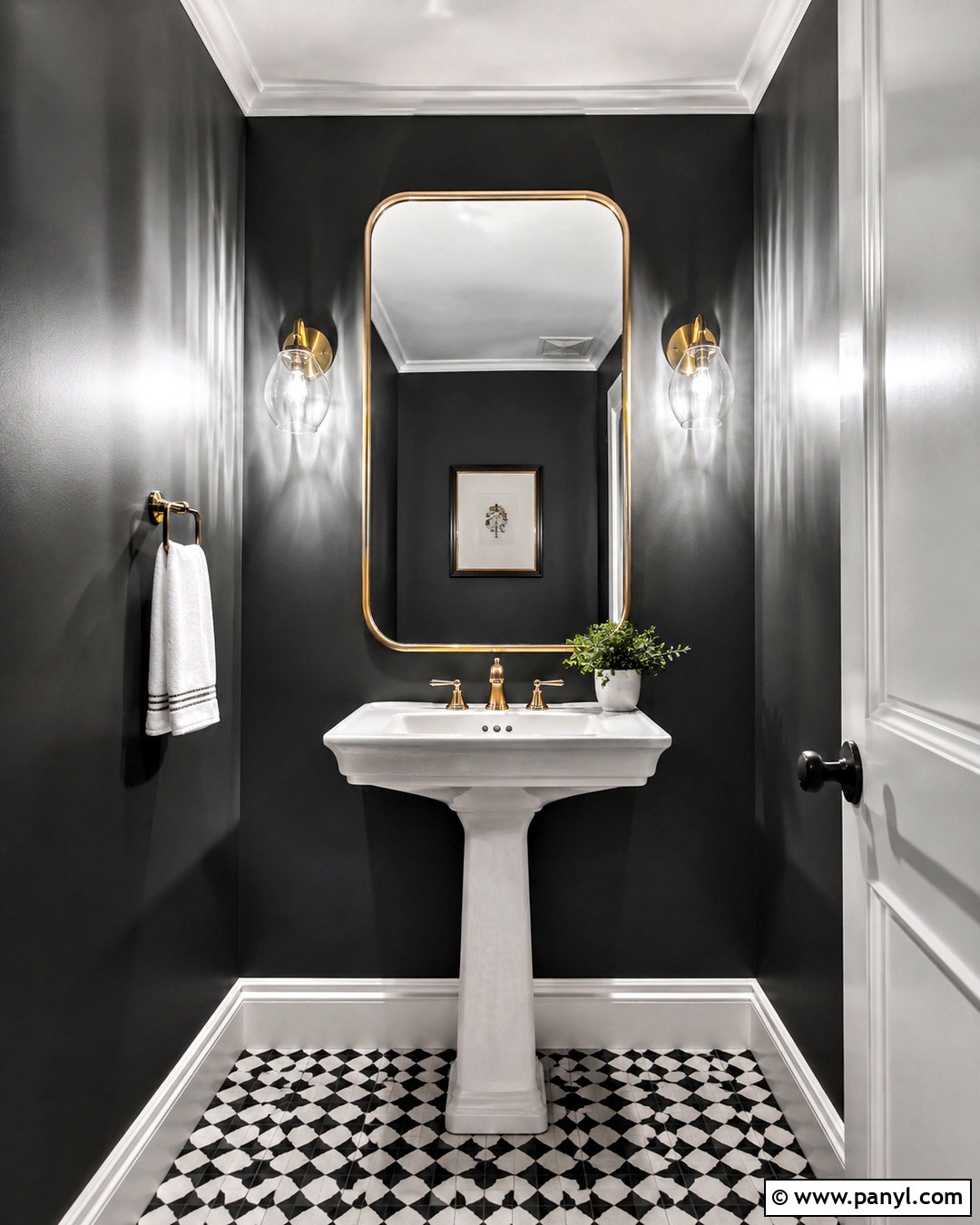
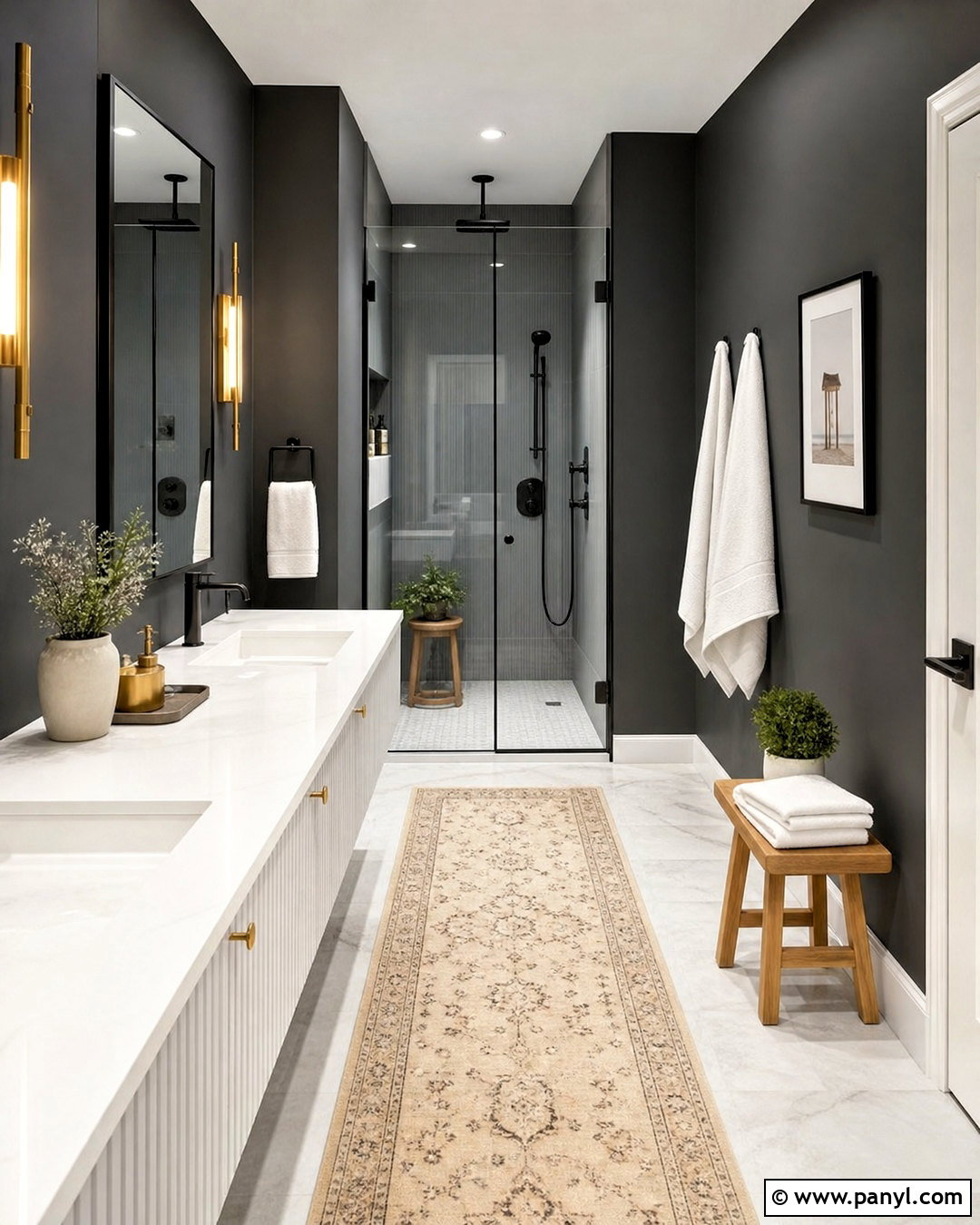
Charcoal walls can turn a small powder room into a dramatic, finished space. Use the deep gray across every wall, then balance it with a crisp white pedestal sink, white ceiling, and bright baseboards. A black-and-white patterned tile floor adds movement without introducing competing colors. Choose polished chrome or brass fixtures so they stand out against the dark background. A large mirror is essential because it reflects both the wall color and available light, making the room feel intentional rather than closed in. Add two bright sconces at face level and keep countertop decor minimal. White towels and one small green plant provide freshness. For a larger bathroom, charcoal can frame a white tiled shower and pale oak vanity, producing a bold contemporary contrast.
7. Powder Blue Bathroom Walls
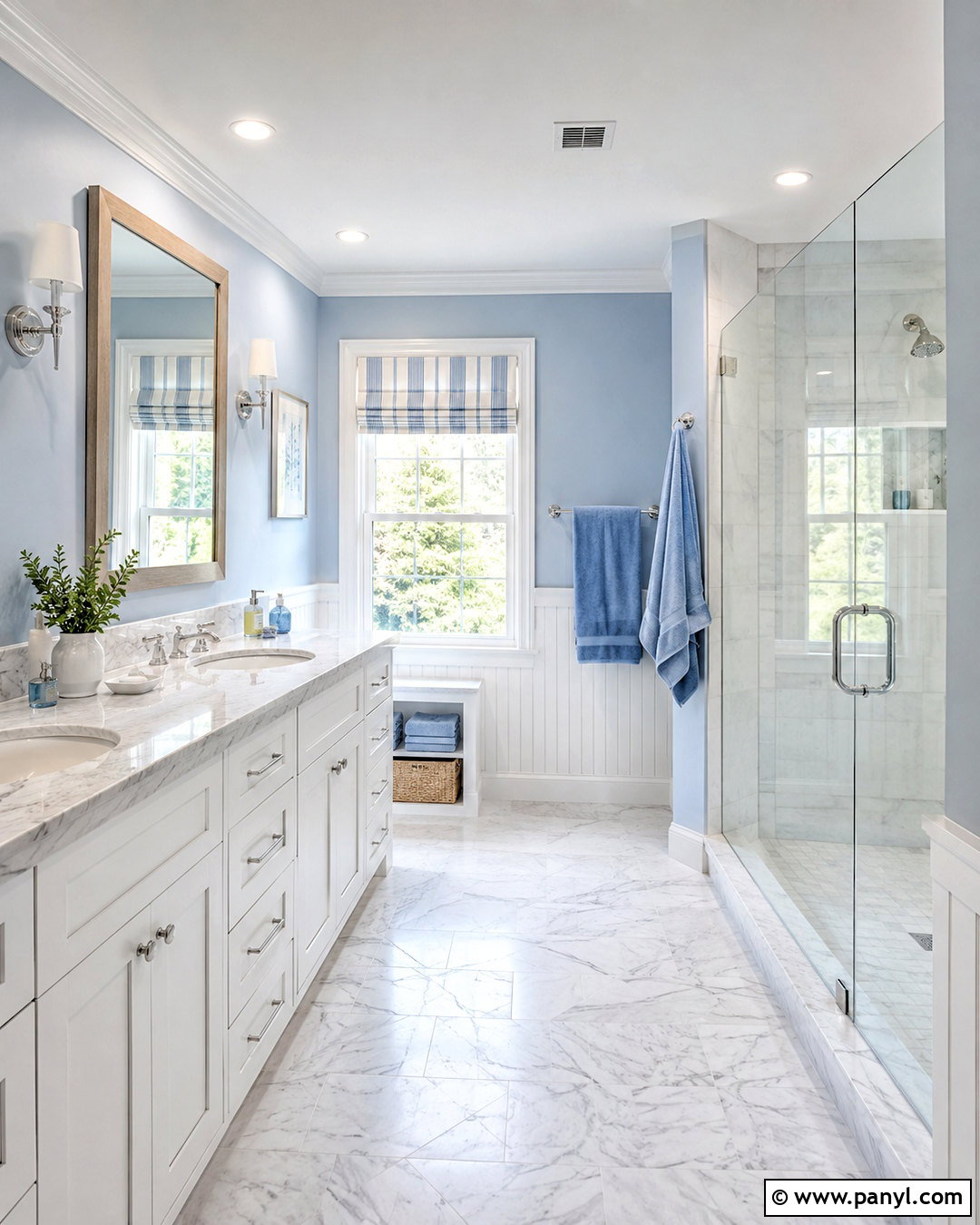
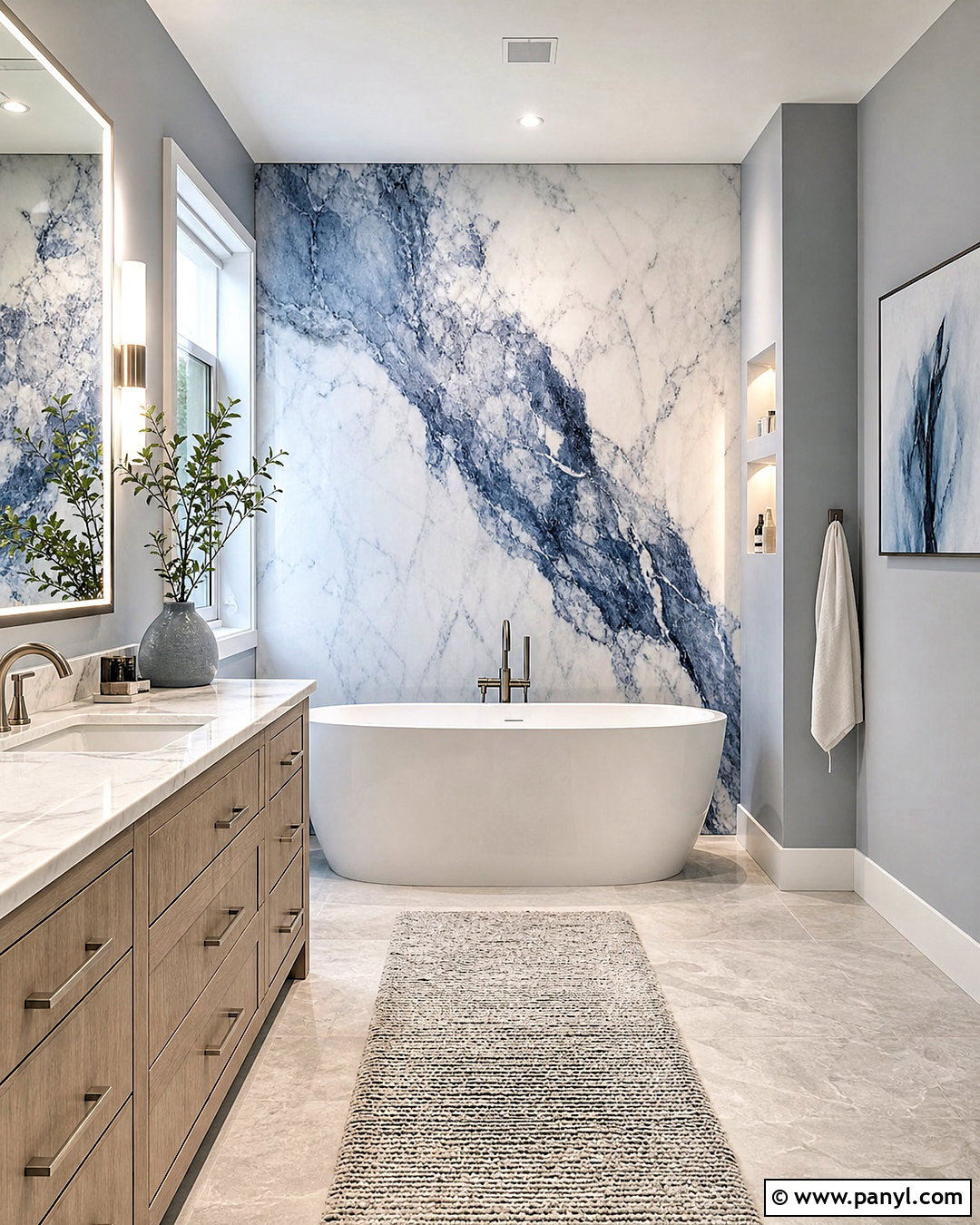
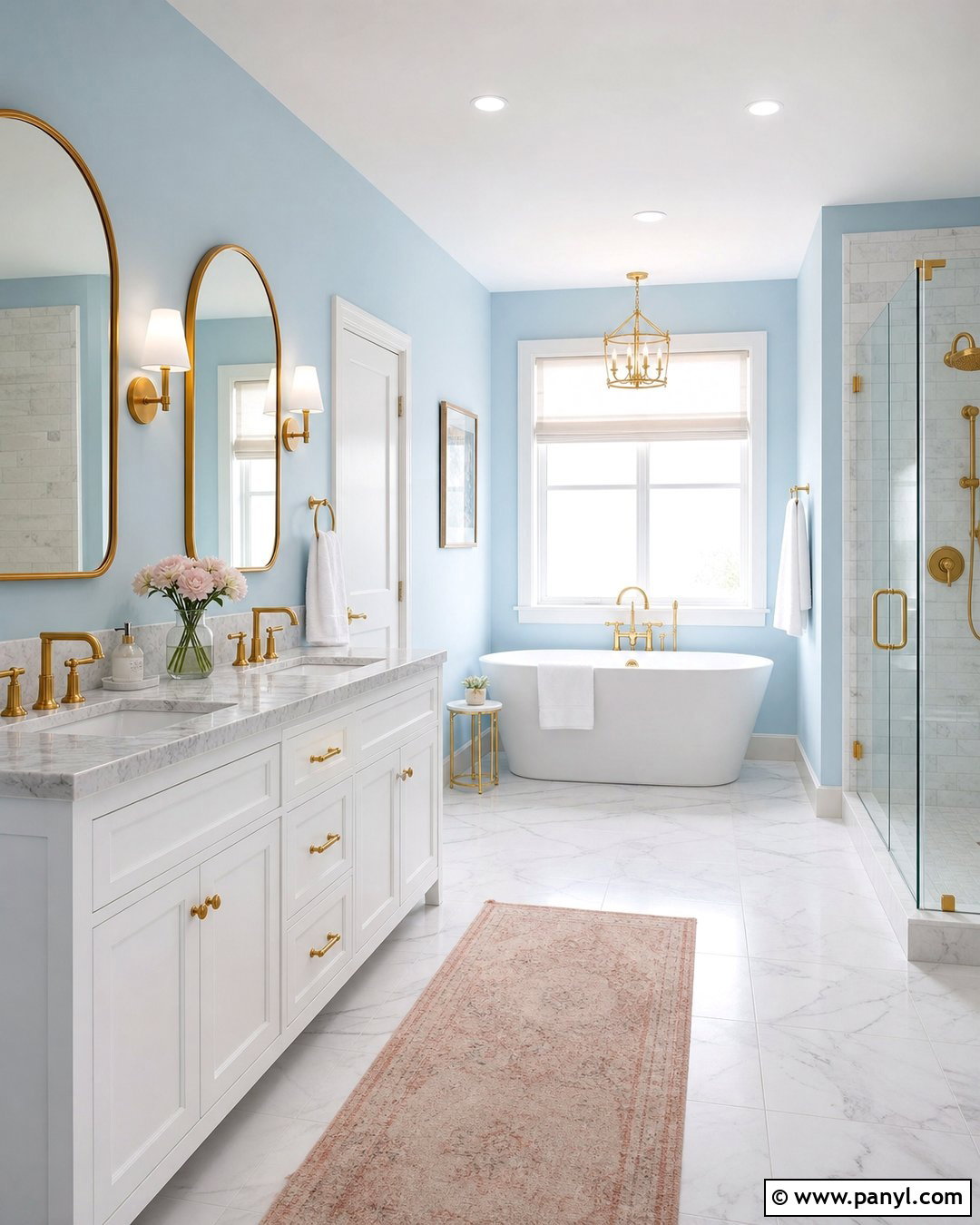
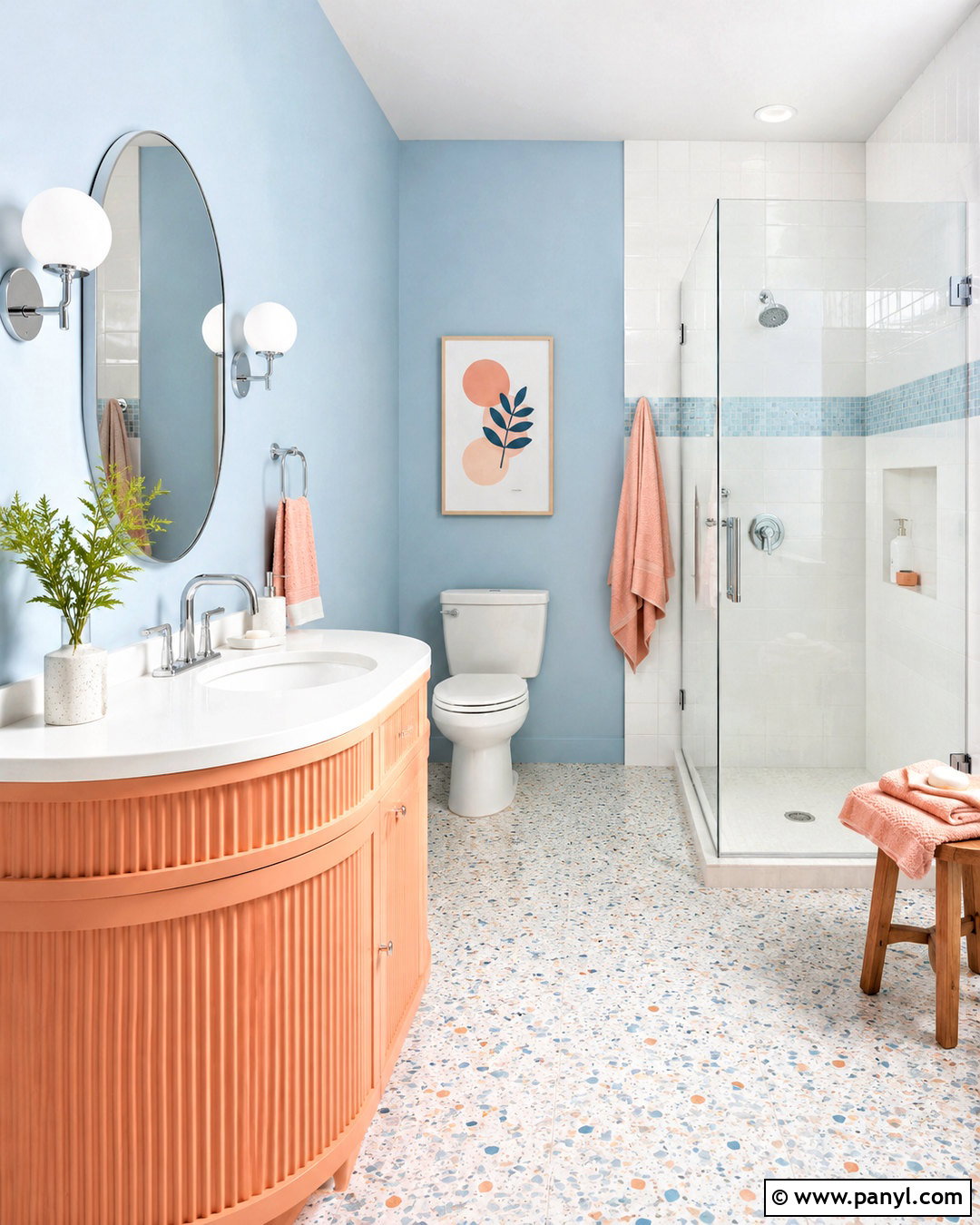
Powder blue creates an airy, peaceful bathroom that feels fresh without becoming overly themed. Choose a pale blue with a softened gray undertone and combine it with white shaker cabinetry, polished chrome hardware, and marble-look flooring. A white vanity top keeps the room bright, while a light oak mirror introduces natural warmth. Continue the gentle palette through white shower tile, sky-blue towels, and a subtle striped window shade. Avoid adding too many nautical accessories; clean lines and restrained decor make the color feel more modern. This scheme works beautifully in a guest bathroom or compact primary bath where a lighter wall color is preferred. Use bright neutral bulbs near the mirror so the blue appears clear and soft rather than dull under artificial lighting.
8. Dusty Blue Bathroom Walls
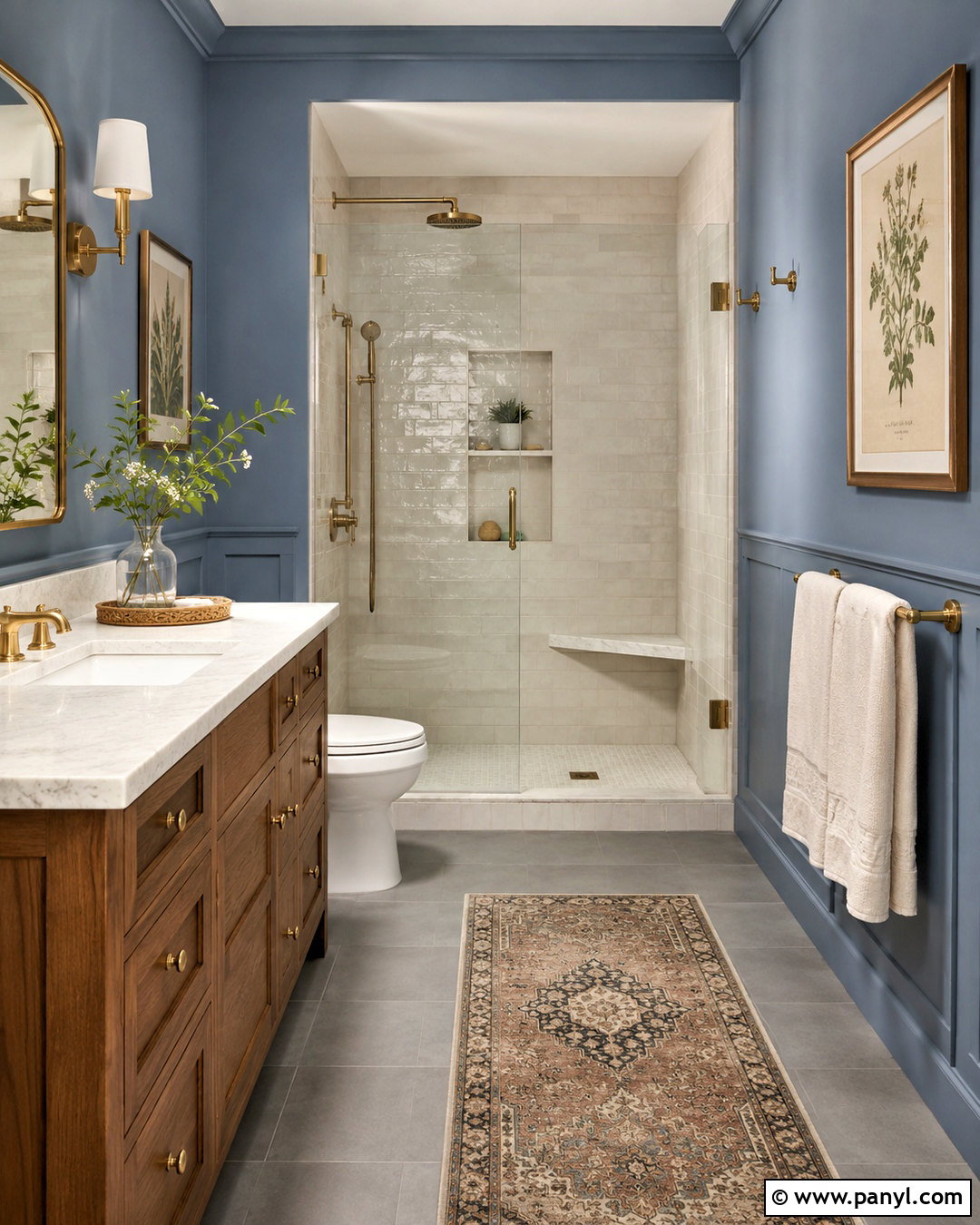
Dusty blue walls add more depth than a pastel while preserving a calm, relaxing atmosphere. Pair this muted blue with a medium walnut vanity and creamy white countertop to create a balanced mix of cool and warm tones. Brushed brass faucets, cabinet pulls, and sconces provide a refined contrast. Use off-white zellige-style tile in the shower, where its uneven surface can reflect light and add texture. A warm gray floor connects the blue walls to the wood cabinetry. Complete the design with ivory towels, a small vintage-inspired rug, and simple botanical artwork. The result feels collected but uncluttered. Dusty blue is a practical choice for transitional bathrooms because it works with traditional molding, contemporary fixtures, and natural materials without strongly committing the space to one decorative theme.
9. Deep Navy Bathroom Walls
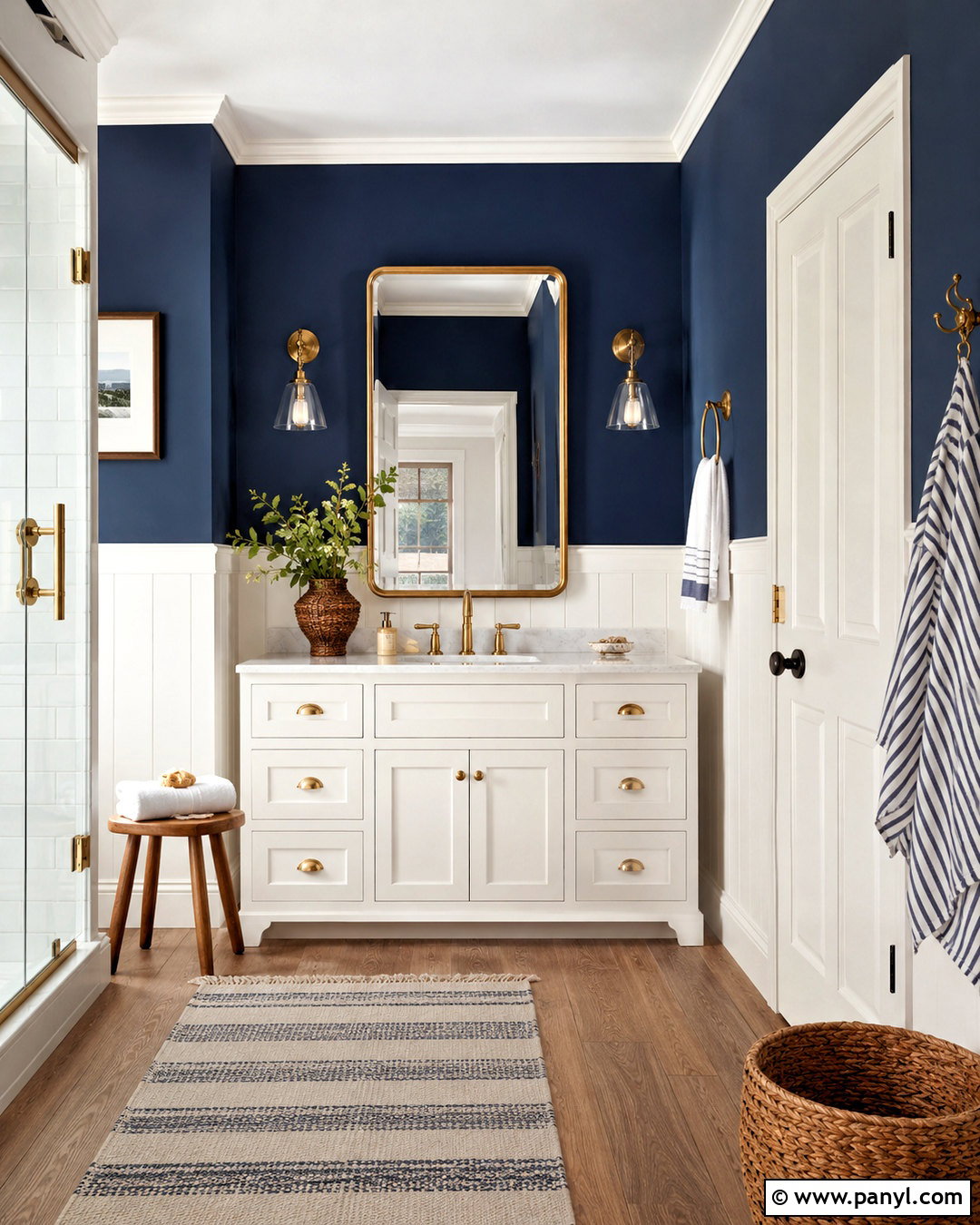
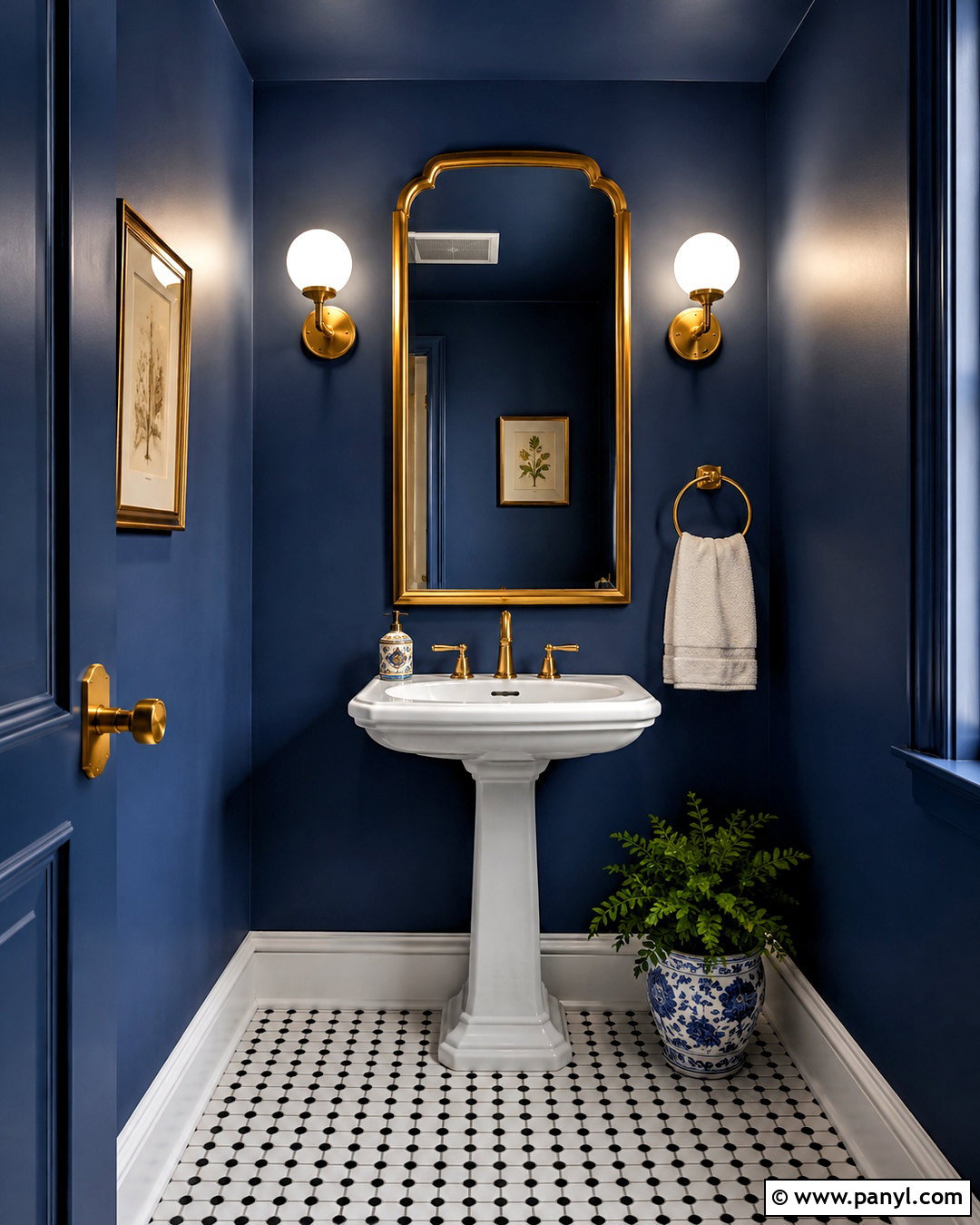
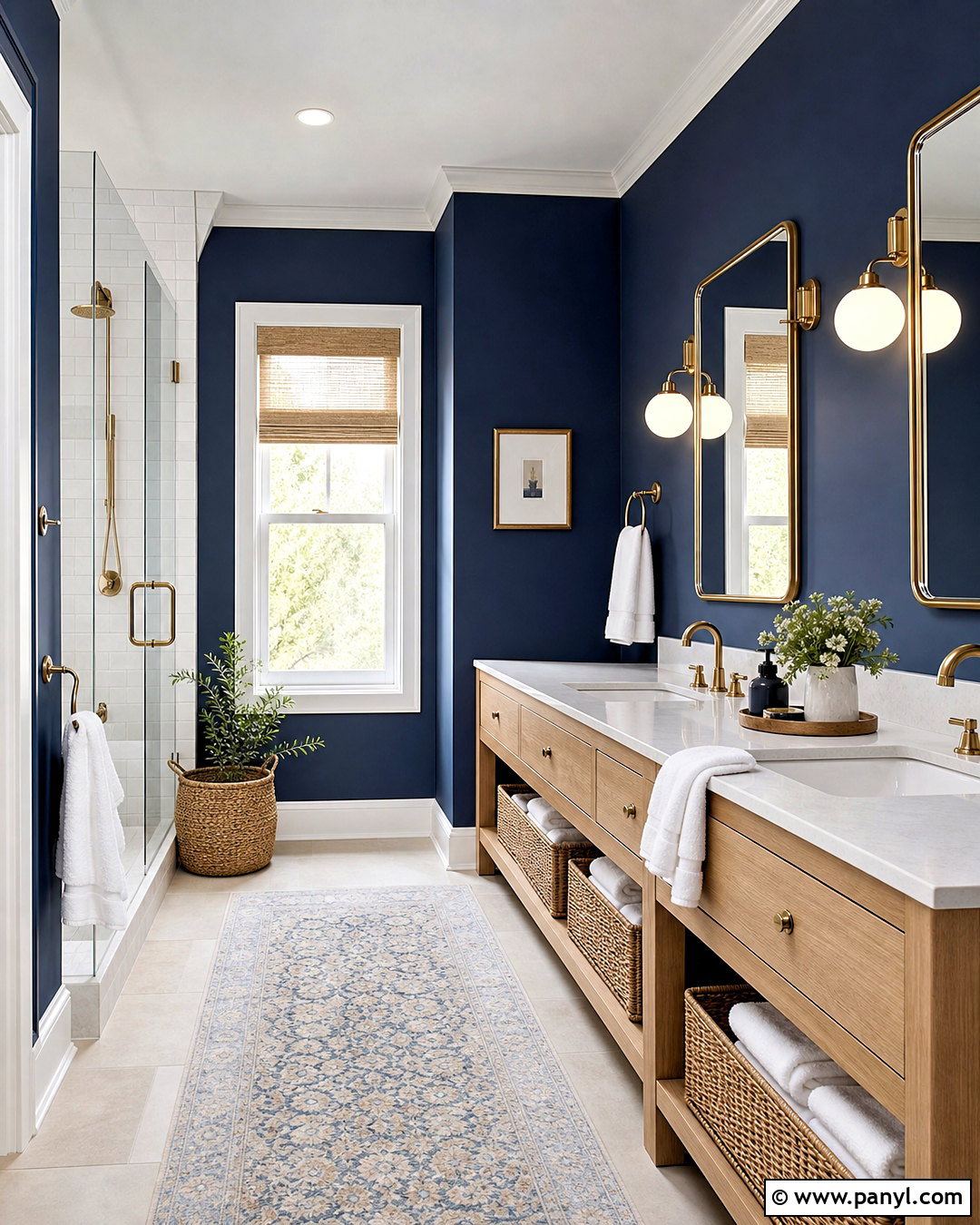
Deep navy creates a confident bathroom with a rich, tailored appearance. Use it above white wainscoting or across full walls in a well-lit powder room. Combine the color with a white vanity, pale marble countertop, and unlacquered brass hardware for crisp contrast. A warm white ceiling prevents the scheme from feeling heavy, while medium-tone wood flooring or wood-look porcelain introduces another layer of warmth. Choose a large brass-framed mirror and clear glass sconces to reflect light around the room. White towels, striped textiles, and one natural woven basket keep the palette approachable. Navy also works with an oak vanity if a softer look is preferred. The complete room should balance dark painted surfaces with generous areas of white, reflective metal, and bright lighting.
10. Seafoam Green Bathroom Walls
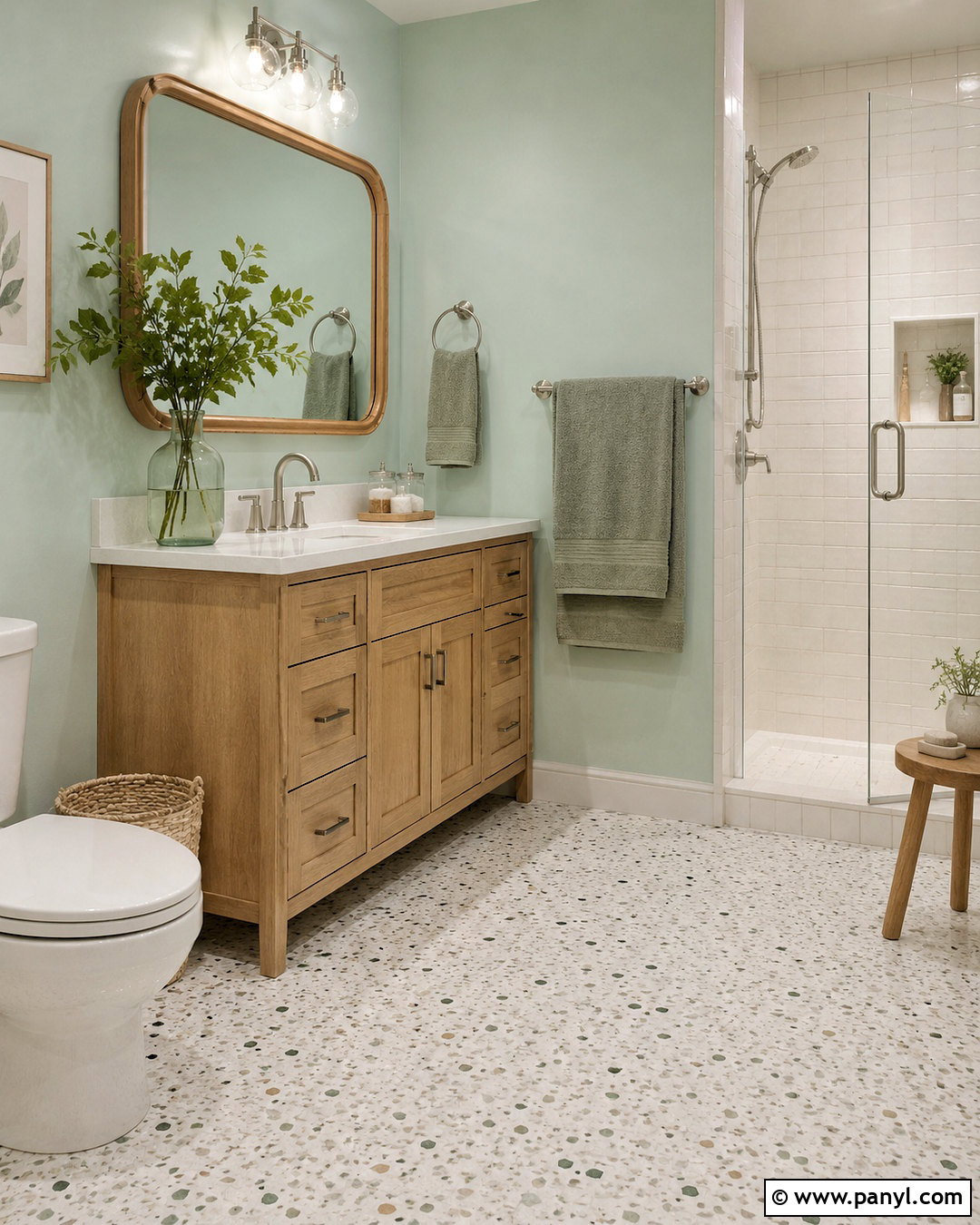
Seafoam green brings a light, watery quality to bathroom walls while remaining softer than turquoise. Pair the paint with a white oak vanity, white quartz top, and warm white shower tile. Brushed nickel fixtures support the fresh palette without adding strong contrast. Choose pale terrazzo flooring containing small green, beige, and gray flecks to connect the room’s colors. White trim and a rounded wood-framed mirror maintain the casual, modern character. Finish the space with sage towels, a woven laundry basket, and clear glass accessories. This scheme is particularly effective in a bathroom with natural light, although neutral white bulbs can preserve the color in a windowless room. Keep decorative accents simple so the seafoam walls remain the main feature without making the room feel overly coastal.
11. Soft Sage Green Bathroom Walls
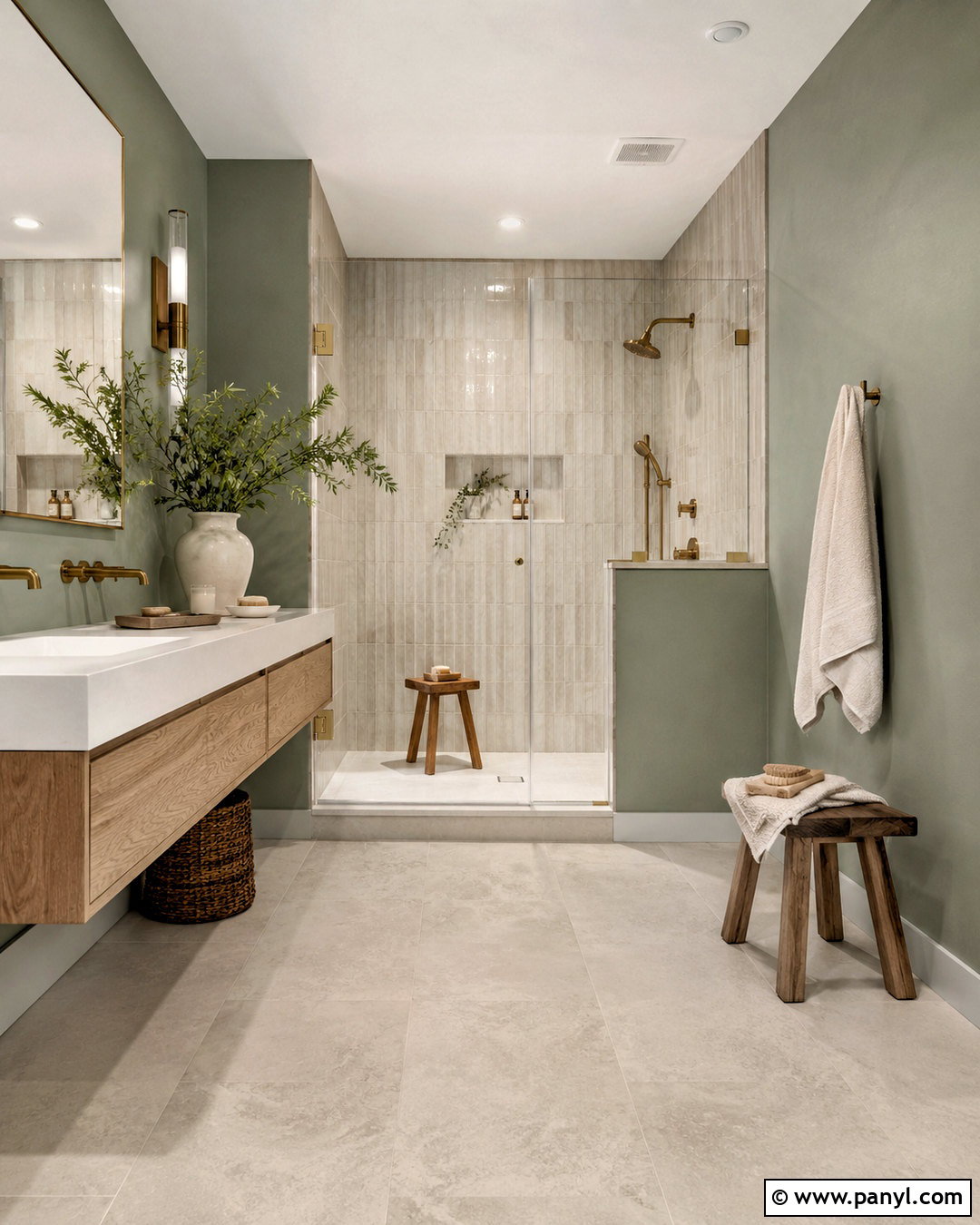
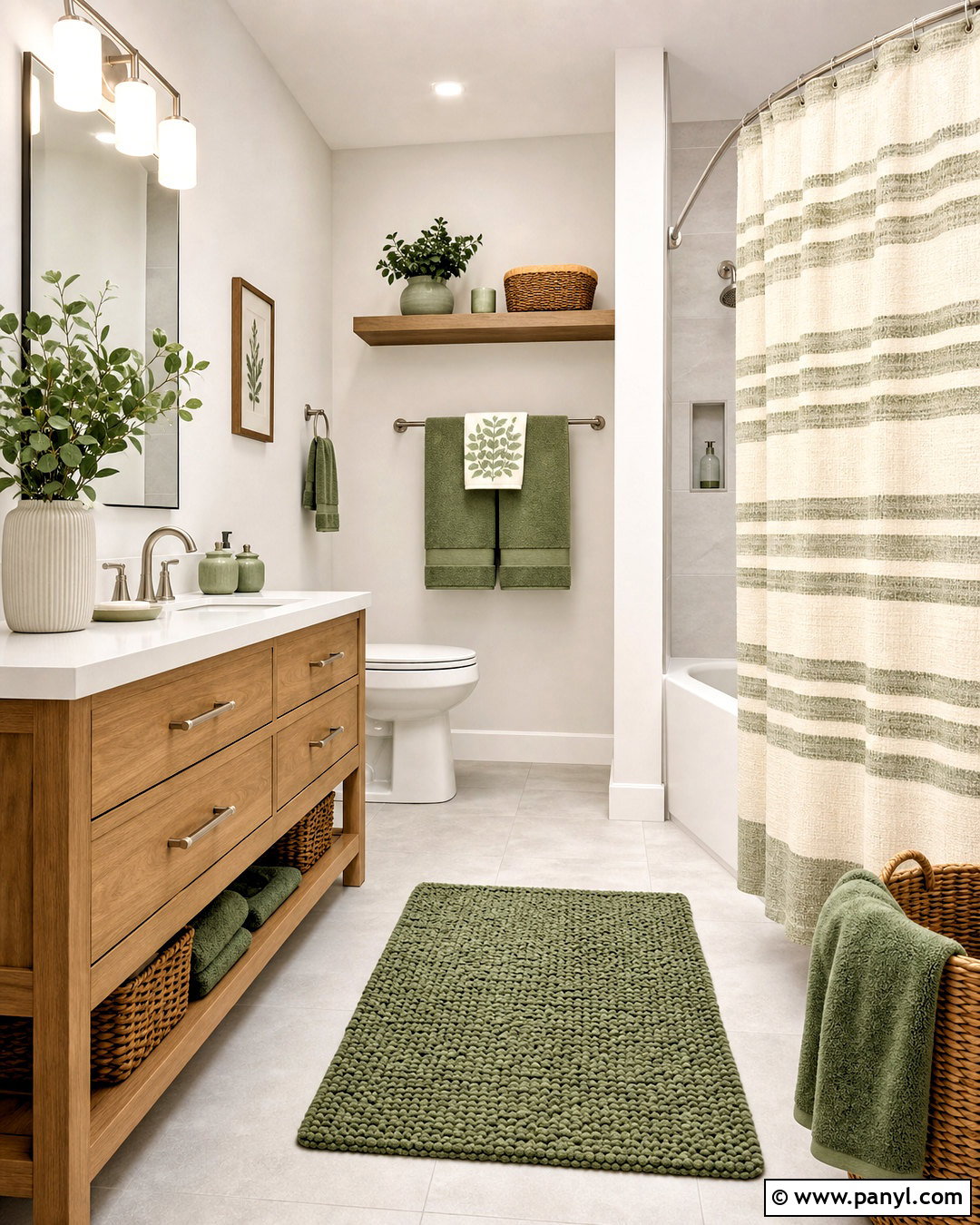
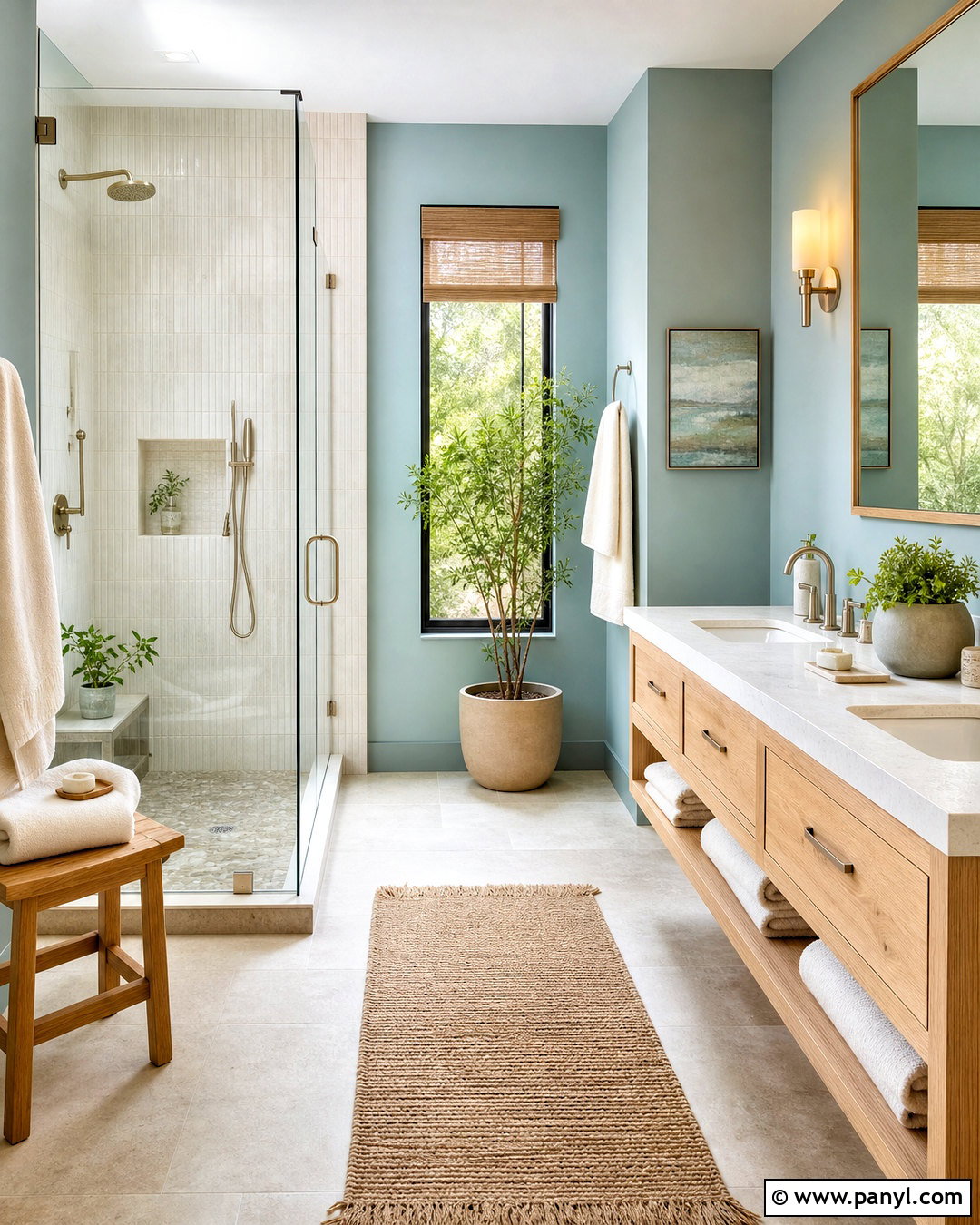
Soft sage is one of the easiest green paint colors to coordinate because its gray undertone behaves almost like a neutral. Build a spa-inspired bathroom with sage walls, a light oak floating vanity, and honed white quartz. Add warm brass fixtures and cream vertical tile for subtle contrast. Limestone-look flooring continues the natural palette and makes the room feel grounded. Use off-white towels, a teak bath stool, and a few leafy stems rather than filling the bathroom with decorative greenery. A large frameless mirror keeps the design visually light. Sage can also soften an older bathroom containing beige tile that feels difficult to update. The completed scheme feels organic, restful, and current while remaining practical enough for a primary bathroom, guest bath, or compact powder room.
12. Eucalyptus Green Bathroom Walls
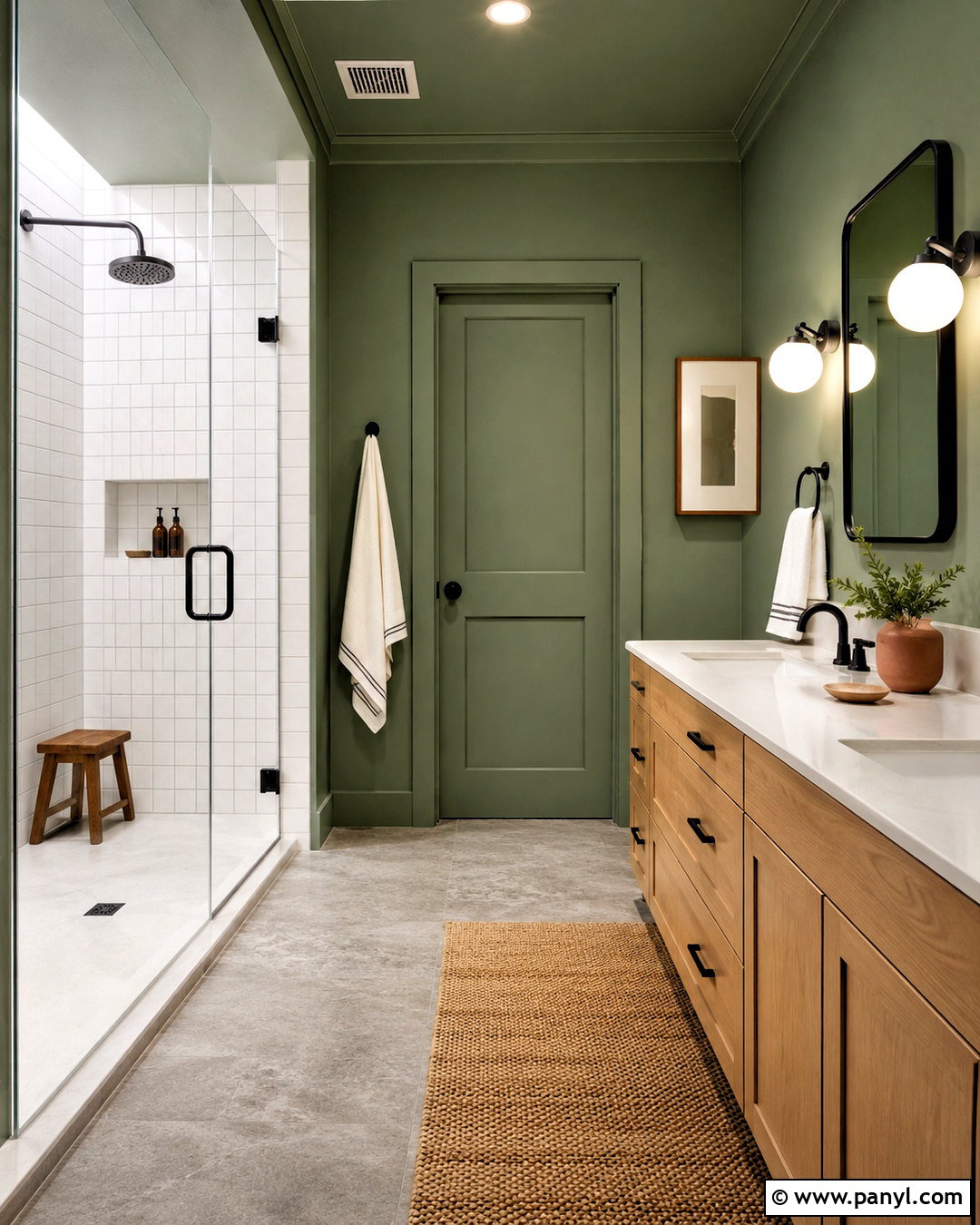
Eucalyptus green is slightly cooler and more saturated than sage, creating a refreshing bathroom with visible color. Pair it with white square shower tile, pale maple cabinetry, and concrete-look porcelain flooring. Matte black fixtures introduce a contemporary edge, while natural wood prevents the room from appearing too cool. Choose a simple black-framed mirror, globe sconces, and white towels with narrow green borders. If the bathroom has architectural molding, paint it the same eucalyptus tone for a seamless, color-drenched effect. Keep the ceiling warm white unless the room receives abundant daylight. This complete design works especially well in midcentury-inspired or modern bathrooms. Small terracotta accessories can provide a warm complementary accent, but use them sparingly so the green remains clear, balanced, and relaxing.
13. Deep Olive Bathroom Walls
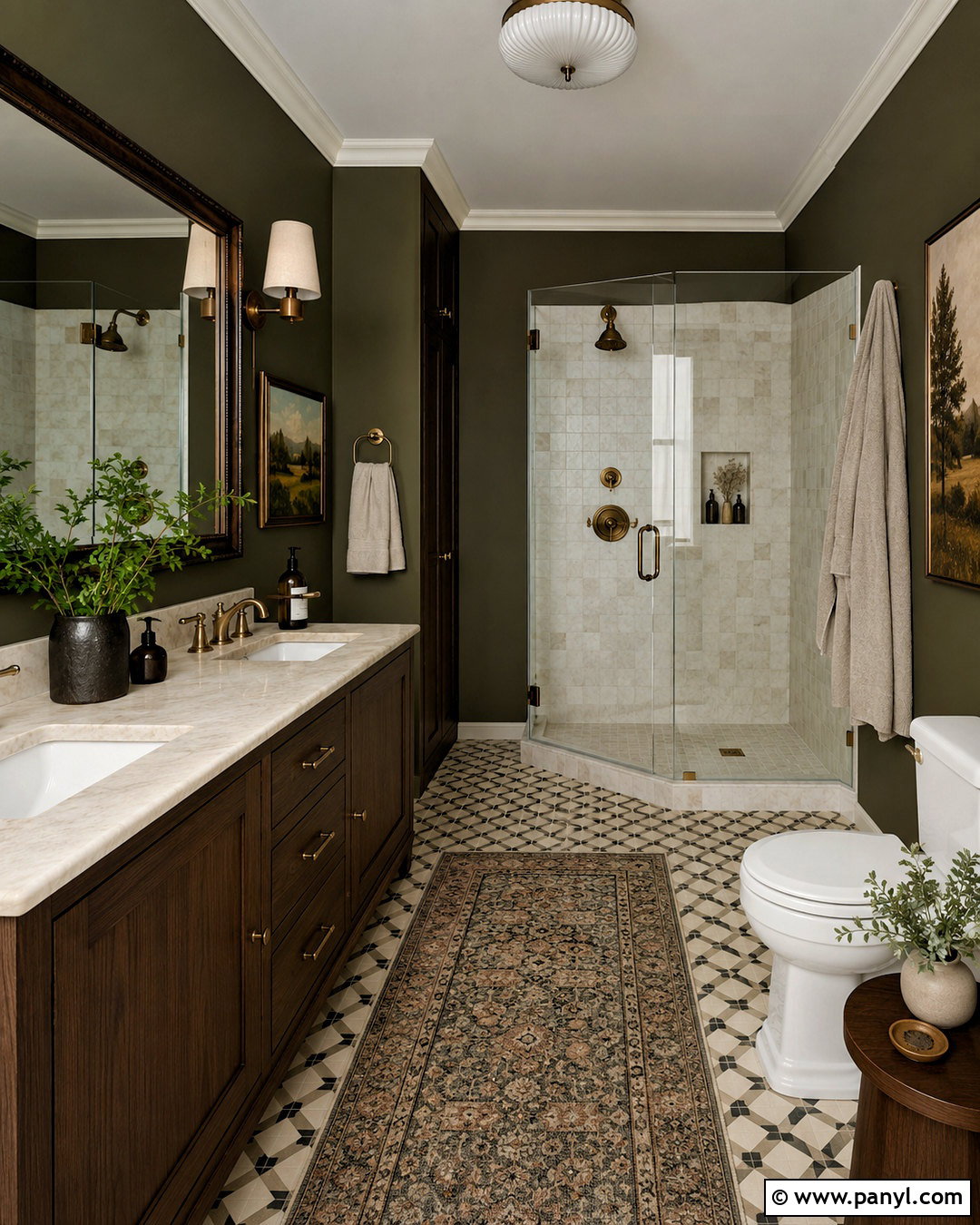
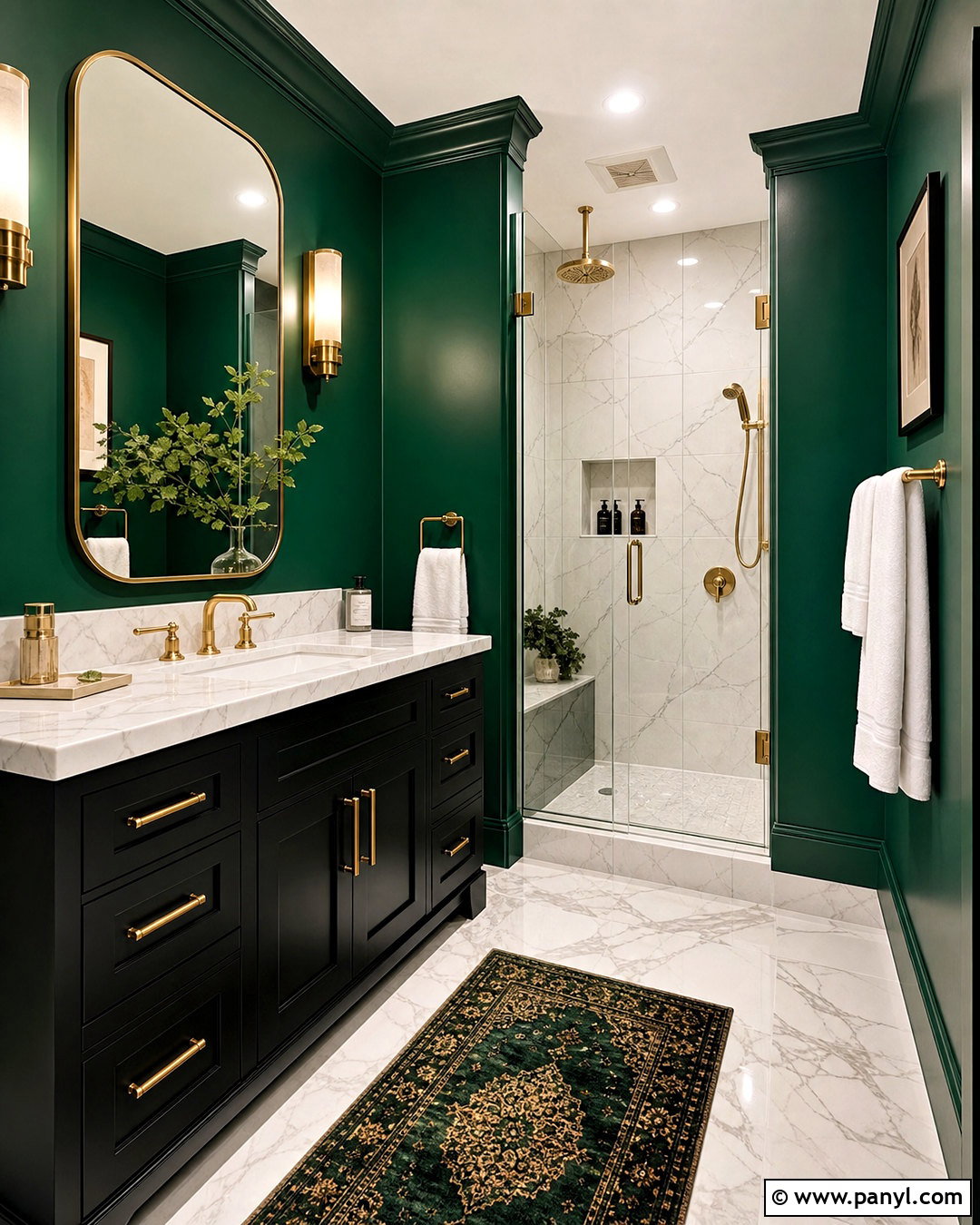
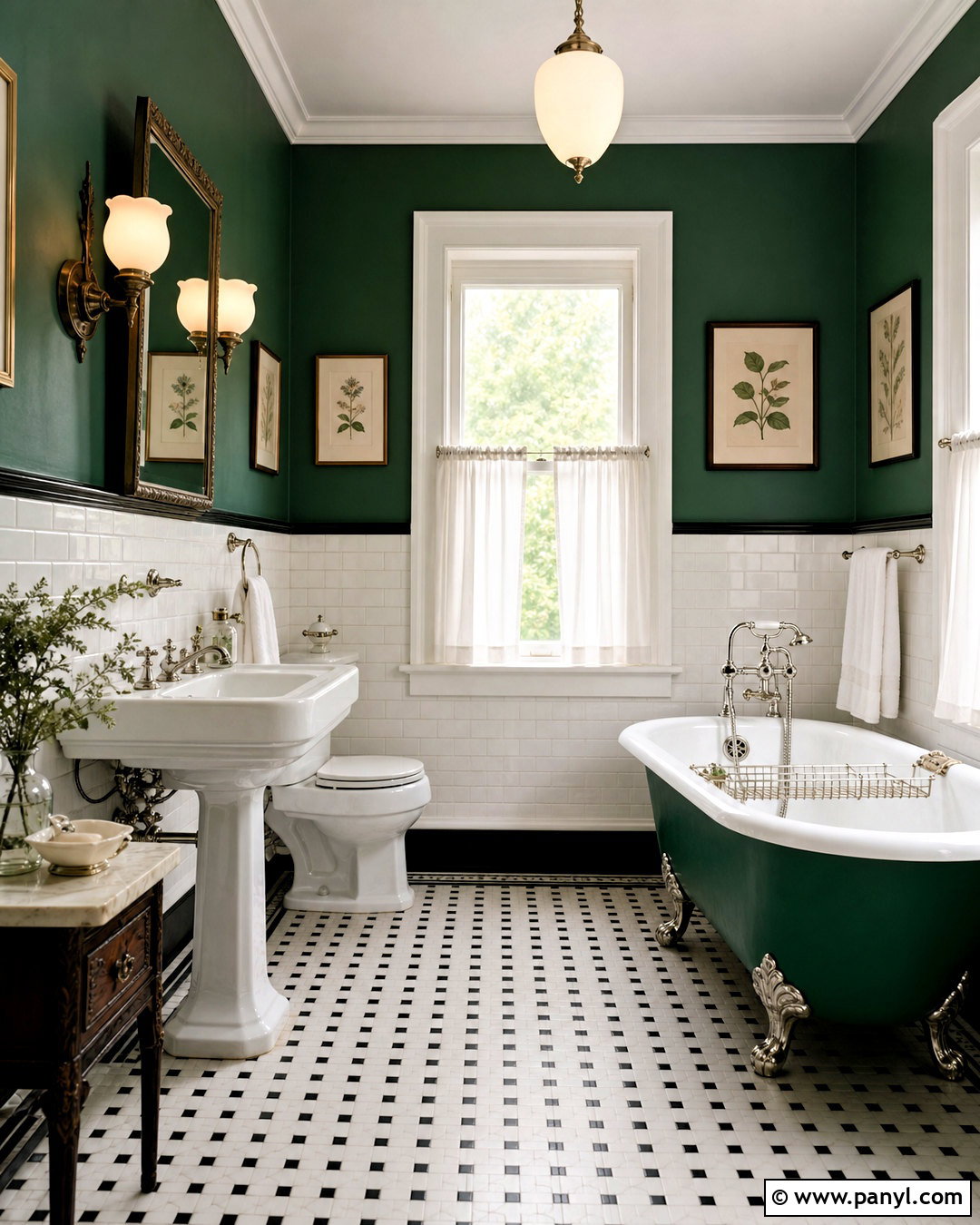
Deep olive walls create a grounded, intimate bathroom with strong natural character. Use this color in a powder room or a larger bathroom with good lighting, then pair it with a dark walnut vanity and creamy stone countertop. Aged brass faucets and sconces enhance the earthy warmth. Choose handmade ivory shower tile and a black-and-cream geometric floor to prevent the scheme from looking overly rustic. Paint the trim olive for a dramatic enveloping finish, or use warm white trim for sharper contrast. A substantial framed mirror helps bounce light across the darker walls. Add neutral towels, amber glass containers, and one small landscape print. The finished bathroom feels rich and considered, with enough pale stone and reflective metal to balance the saturated green paint.
14. Deep Teal Bathroom Walls
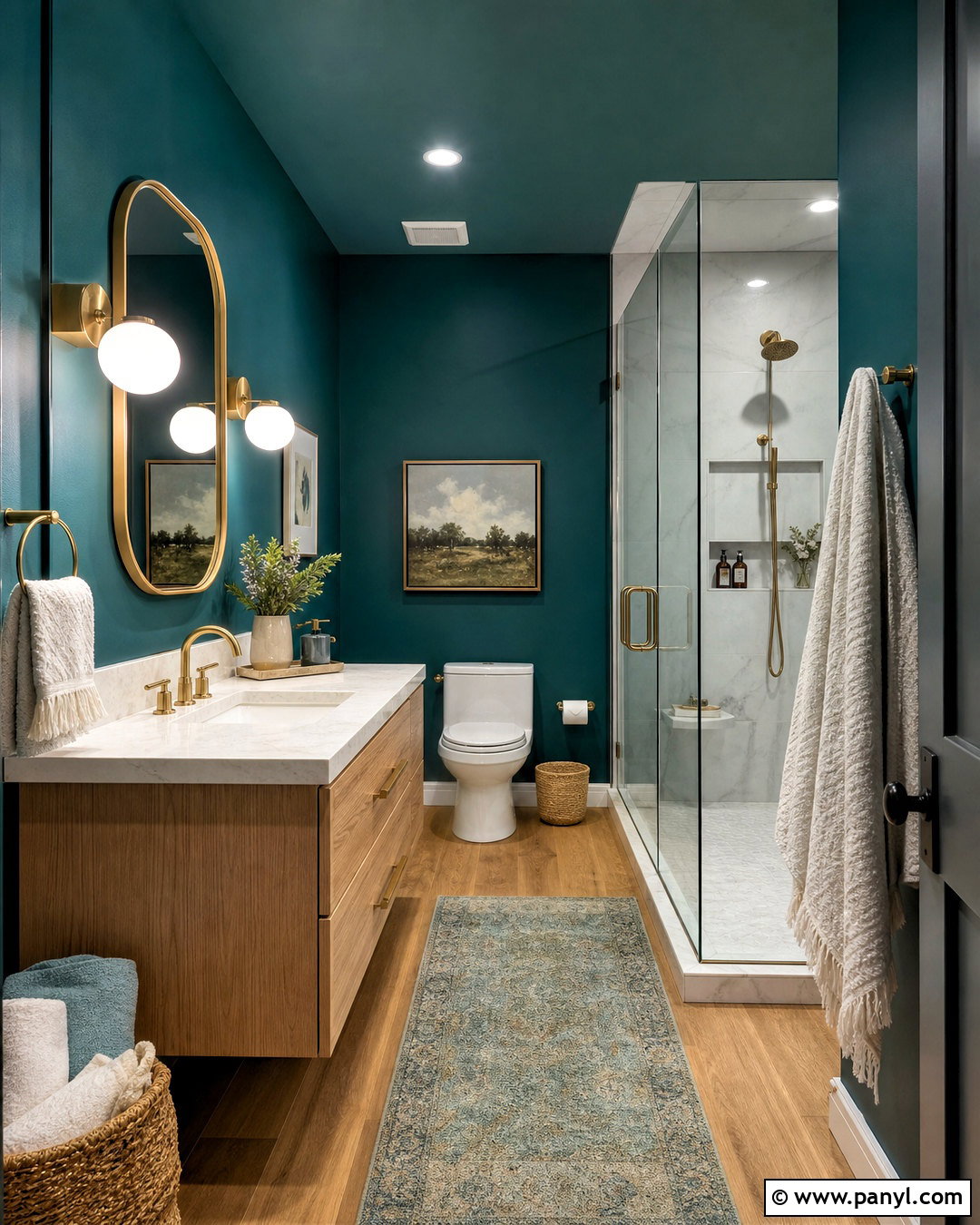
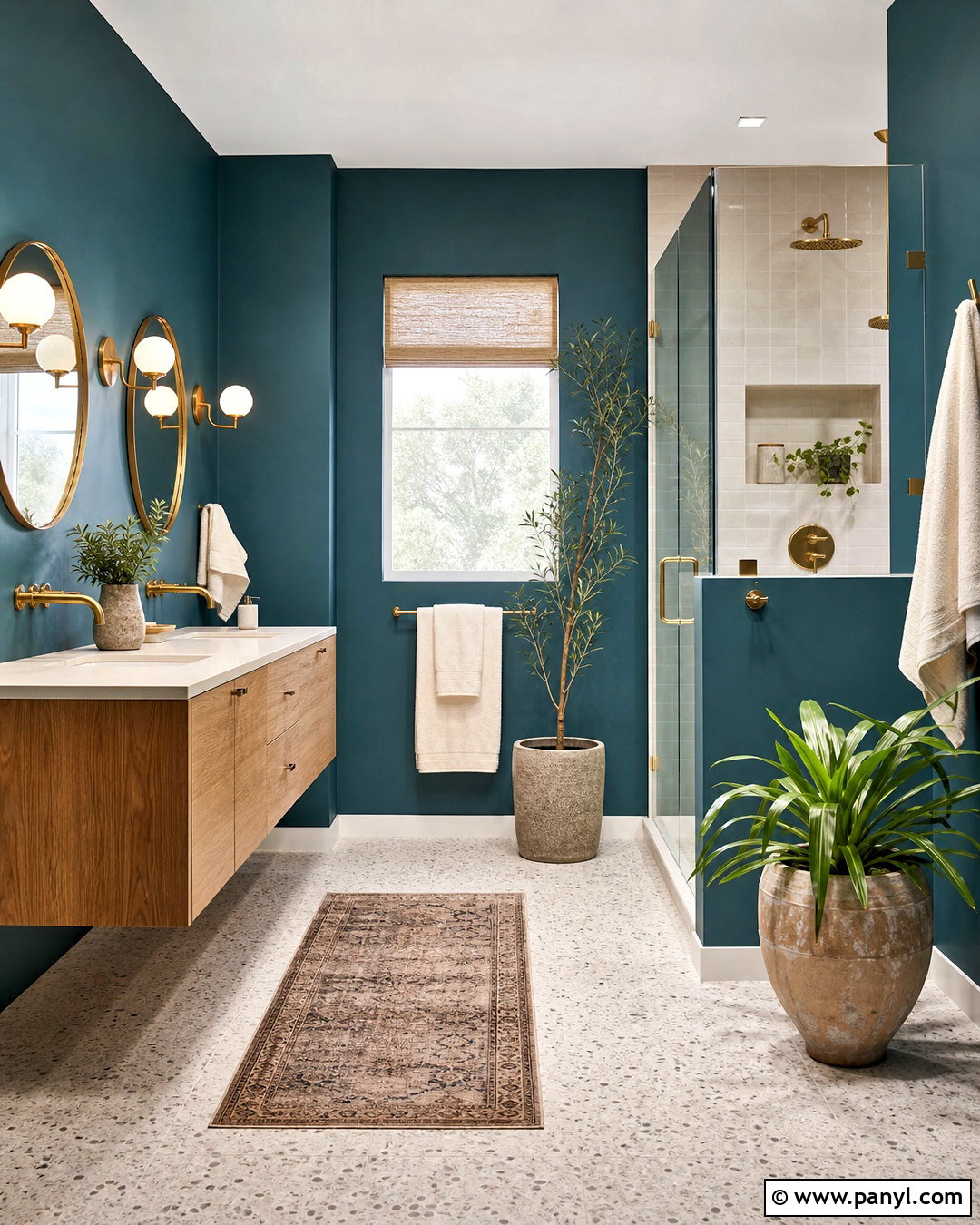
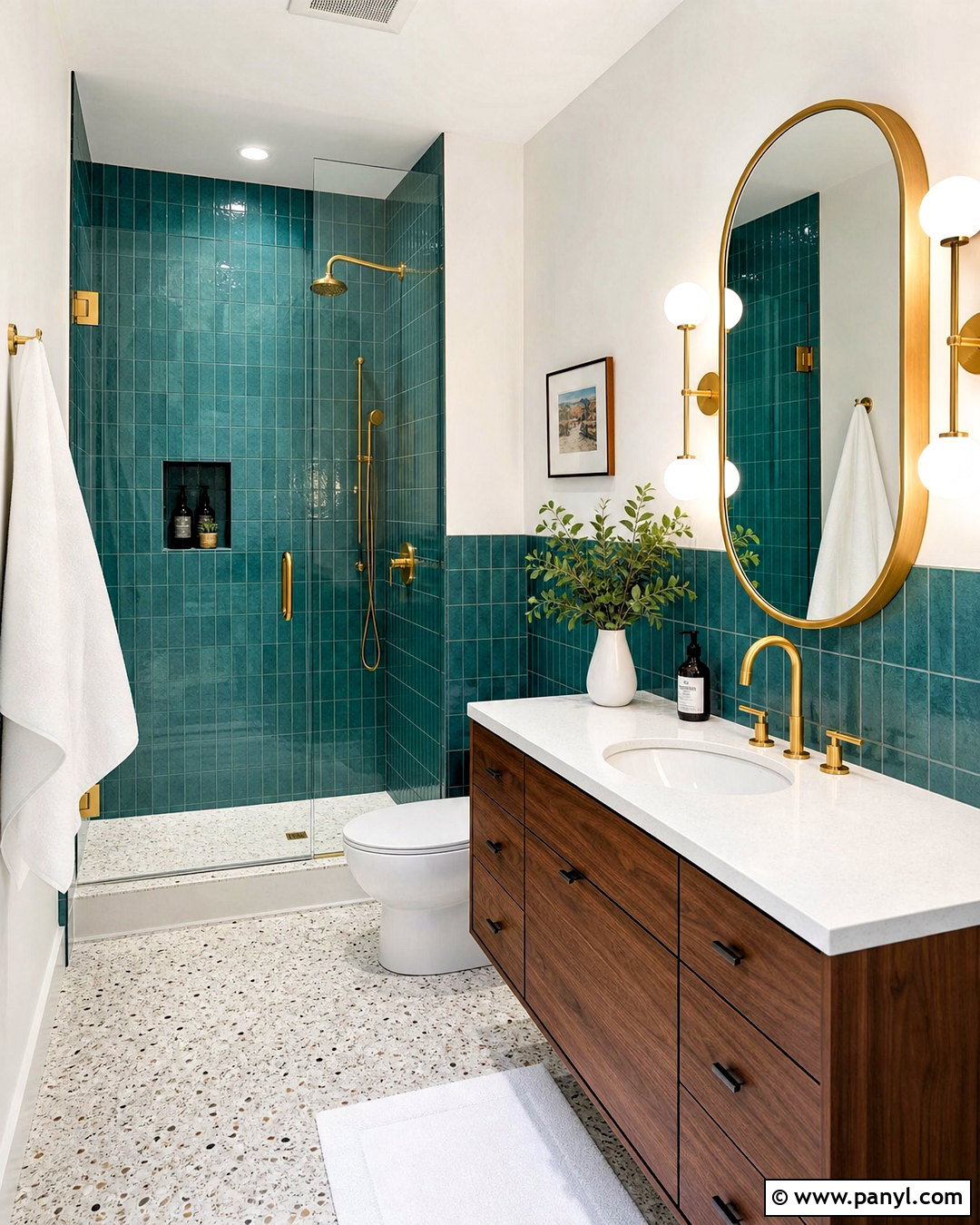
Deep teal combines the calming quality of blue with the richness of green. Create a bold bathroom by pairing teal walls with a white floating vanity, white quartz countertop, and fluted oak storage cabinet. Brushed brass fixtures glow against the saturated color, while large cream floor tiles keep the room from feeling busy. Use a frameless glass shower lined with pale green-blue tile for a layered but coordinated effect. A wide round mirror and two bright wall sconces improve reflection and visibility. Keep towels white or light beige and limit decorative accents to natural wood and clear glass. This full scheme suits contemporary bathrooms and statement powder rooms. Teal can look especially polished when the doors and trim are painted in the same color for uninterrupted depth.
15. Blush Pink Bathroom Walls
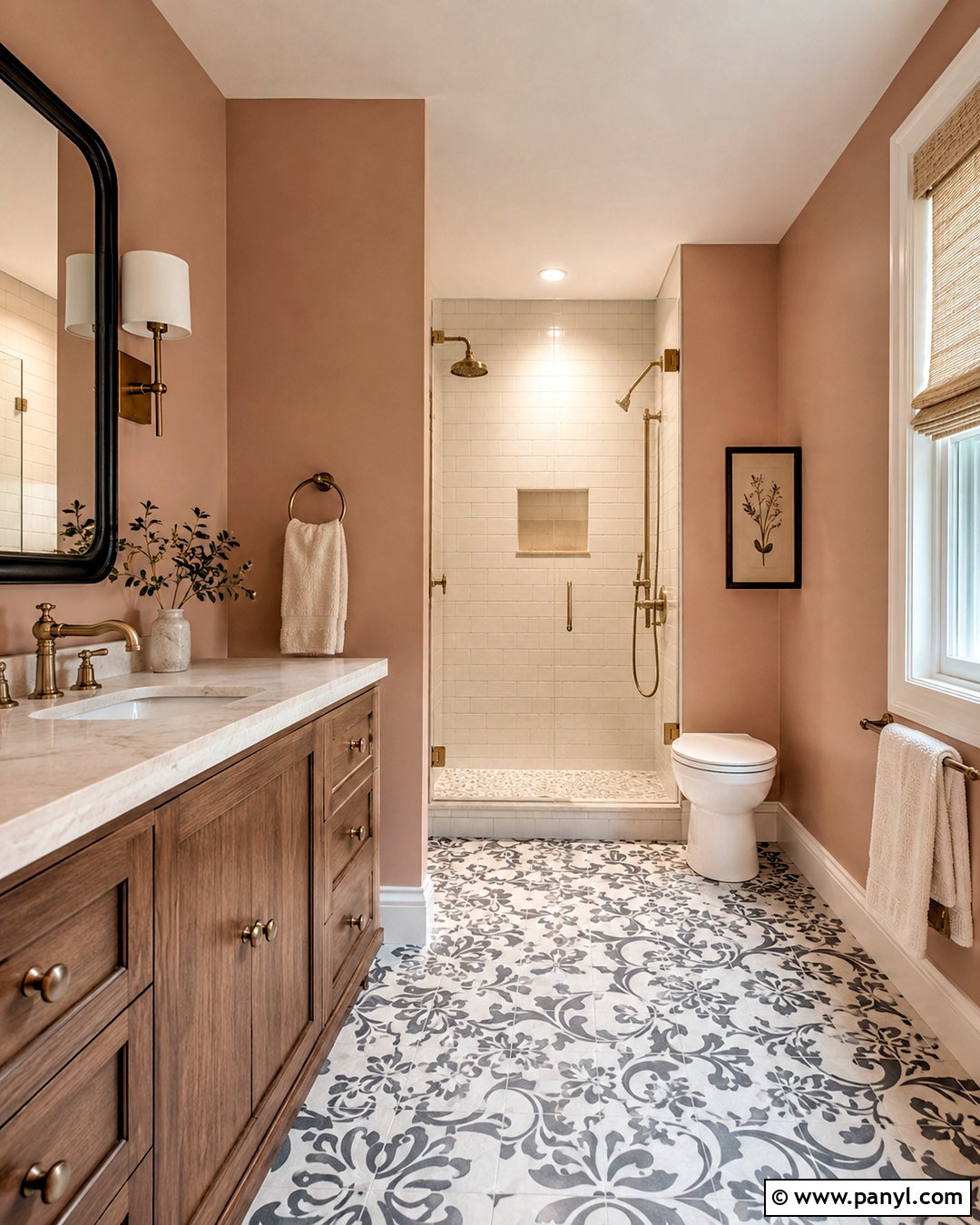
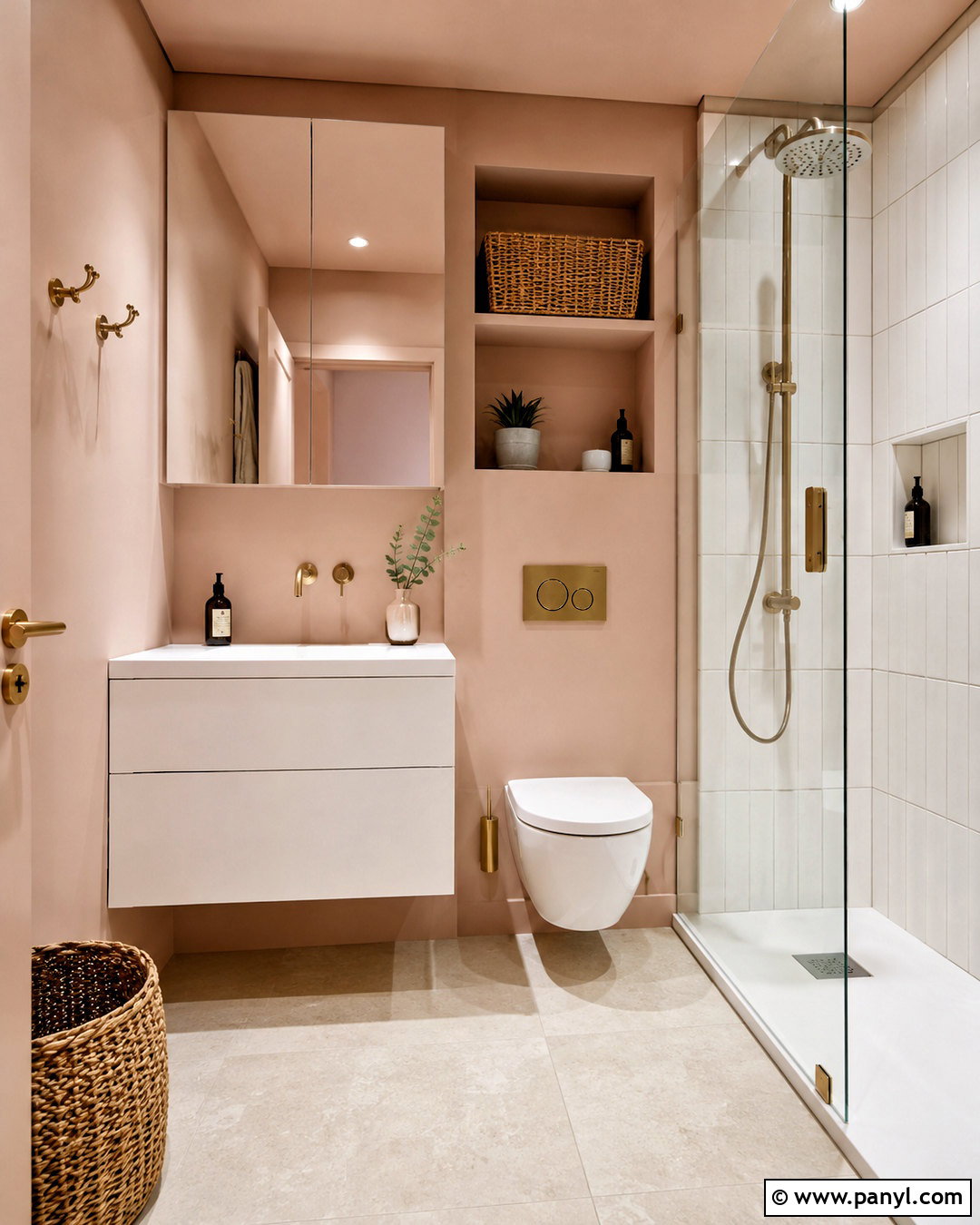
Blush pink adds flattering warmth without turning the bathroom into an overly sweet space. Choose a dusty, beige-based pink and pair it with a walnut vanity, creamy marble countertop, and warm white tile. Brushed brass fixtures reinforce the soft glow, while black accents can make the room feel more modern. Consider a black-framed mirror, thin black cabinet pulls, or a monochrome patterned floor. Use ivory towels and a natural linen window treatment rather than adding more pink accessories. The wall color should act as a warm background, not a decorative theme. This design works particularly well in a powder room, guest bathroom, or vintage-inspired space. For a cohesive finish, repeat the blush tone subtly in stone veining, artwork, or a small washable rug.
16. Dusty Rose Bathroom Walls
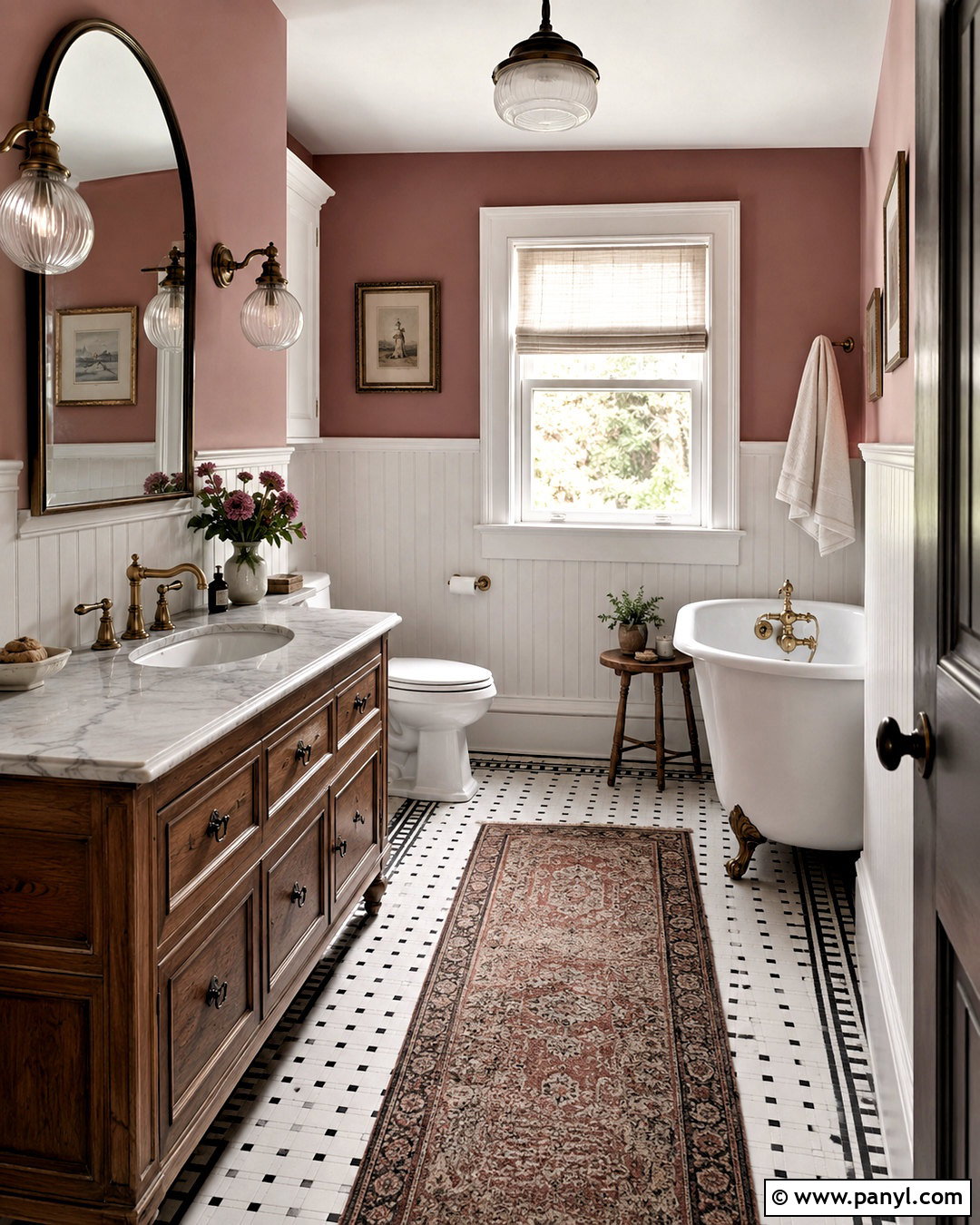
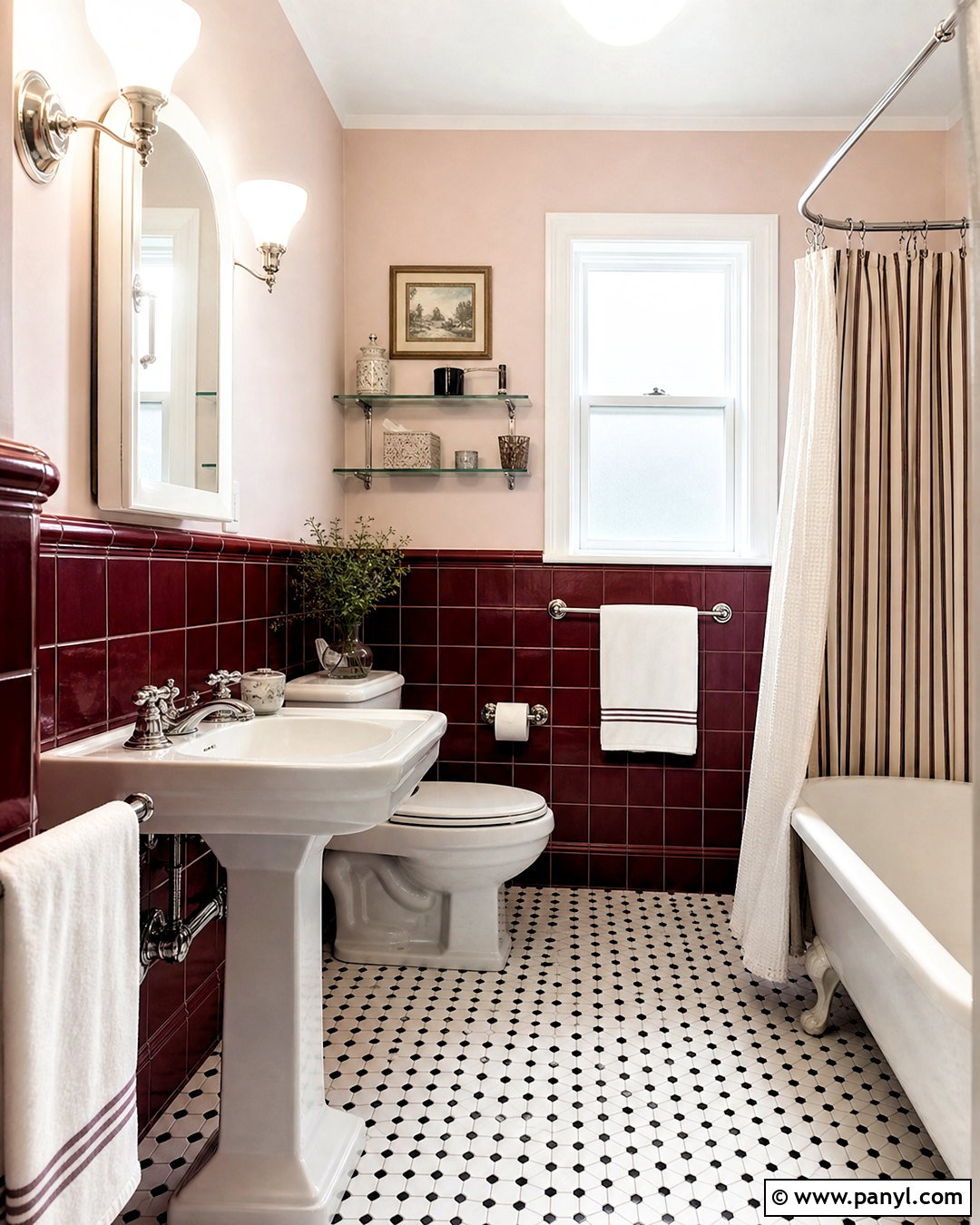
Dusty rose offers more depth than blush and works beautifully with traditional bathroom details. Pair the muted rosy walls with an antique-style wood vanity, white marble top, and aged brass fixtures. Add white beadboard on the lower portion of the walls if the room needs additional brightness and architectural texture. A small-scale black-and-white mosaic floor provides classic contrast. Choose a scalloped mirror or a simple arched design, then install clear glass sconces to keep the arrangement light. Cream towels and a faded patterned runner complete the room without competing with the wall color. Dusty rose is especially attractive in bathrooms with warm natural light. The finished scheme feels inviting and established, combining vintage references with practical, clean surfaces suitable for everyday use.
17. Soft Lavender Bathroom Walls
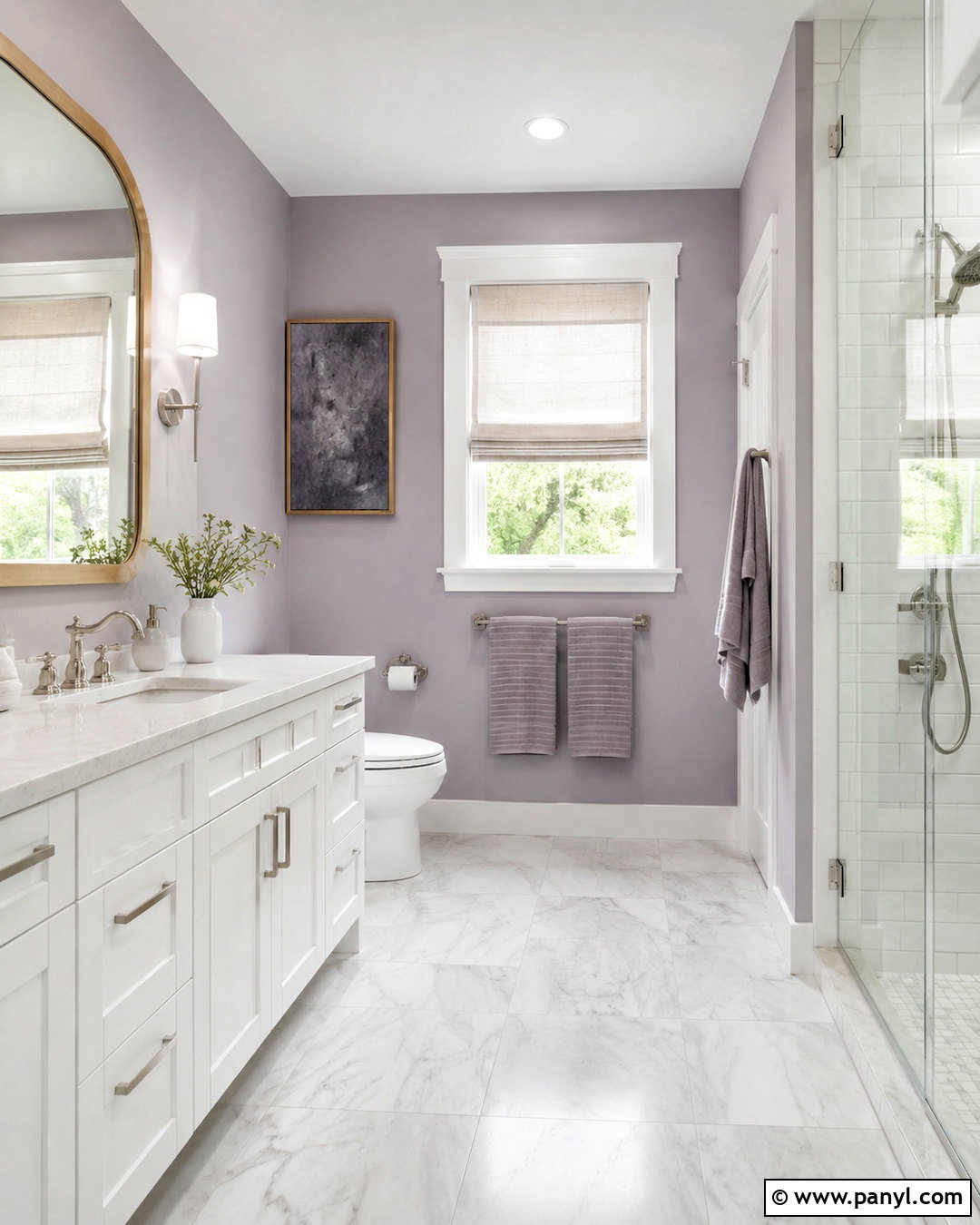
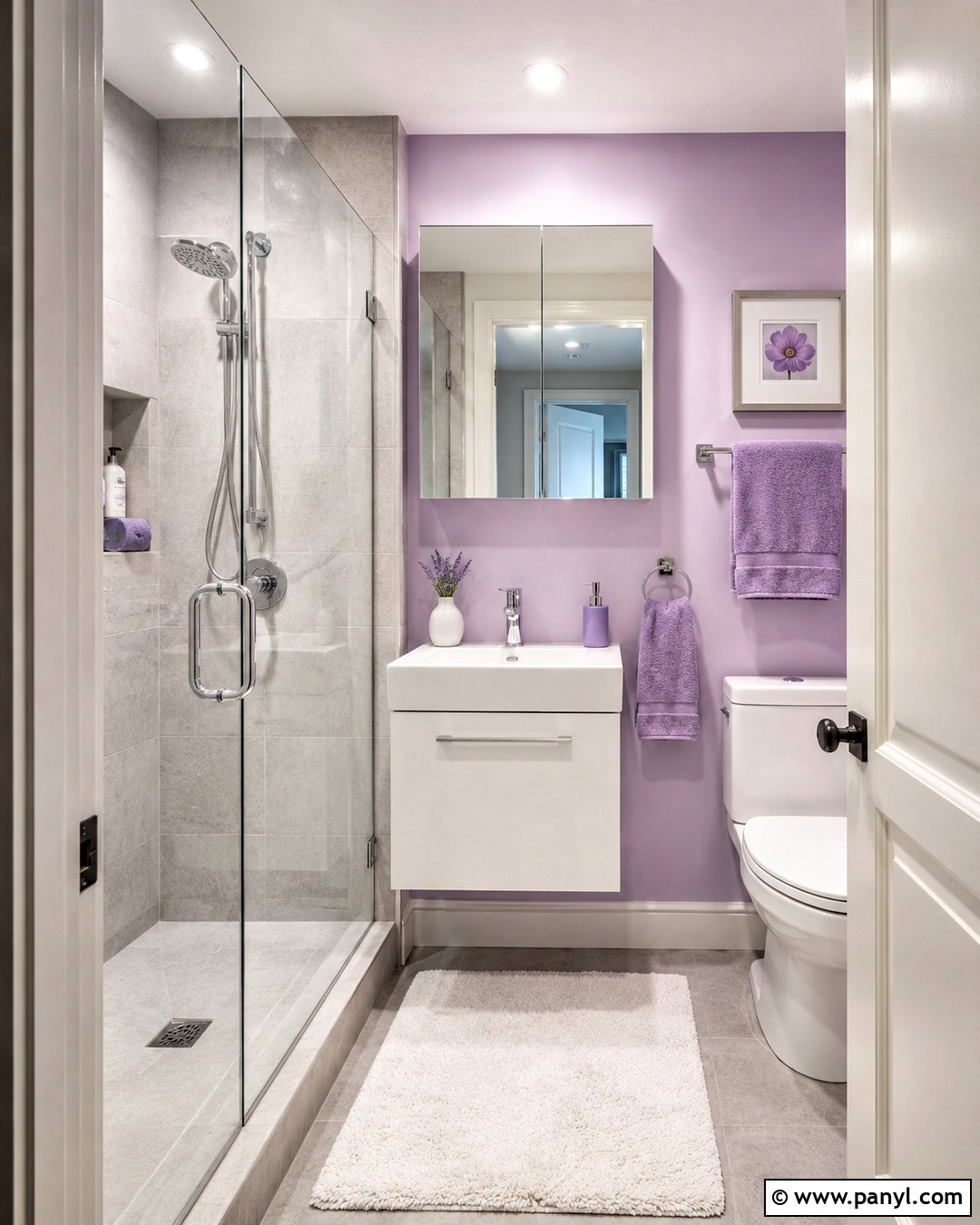
Soft lavender can make a bathroom feel light, distinctive, and surprisingly sophisticated. Select a muted lavender with a visible gray undertone rather than a bright purple pastel. Pair it with white cabinetry, white quartz, and pale gray marble-look floor tile. Polished nickel hardware maintains a cool, crisp appearance, while a light wood mirror prevents the scheme from feeling chilly. Use simple white shower tile and introduce texture through ribbed towels and a linen Roman shade. A small charcoal vanity stool or framed print adds definition. Lavender is particularly useful in guest bathrooms where a gentle color can create personality without overwhelming permanent finishes. Under neutral white lighting, the completed room should read as calm and softly colored, with balanced white, gray, and natural wood elements.
18. Butter Yellow Bathroom Walls
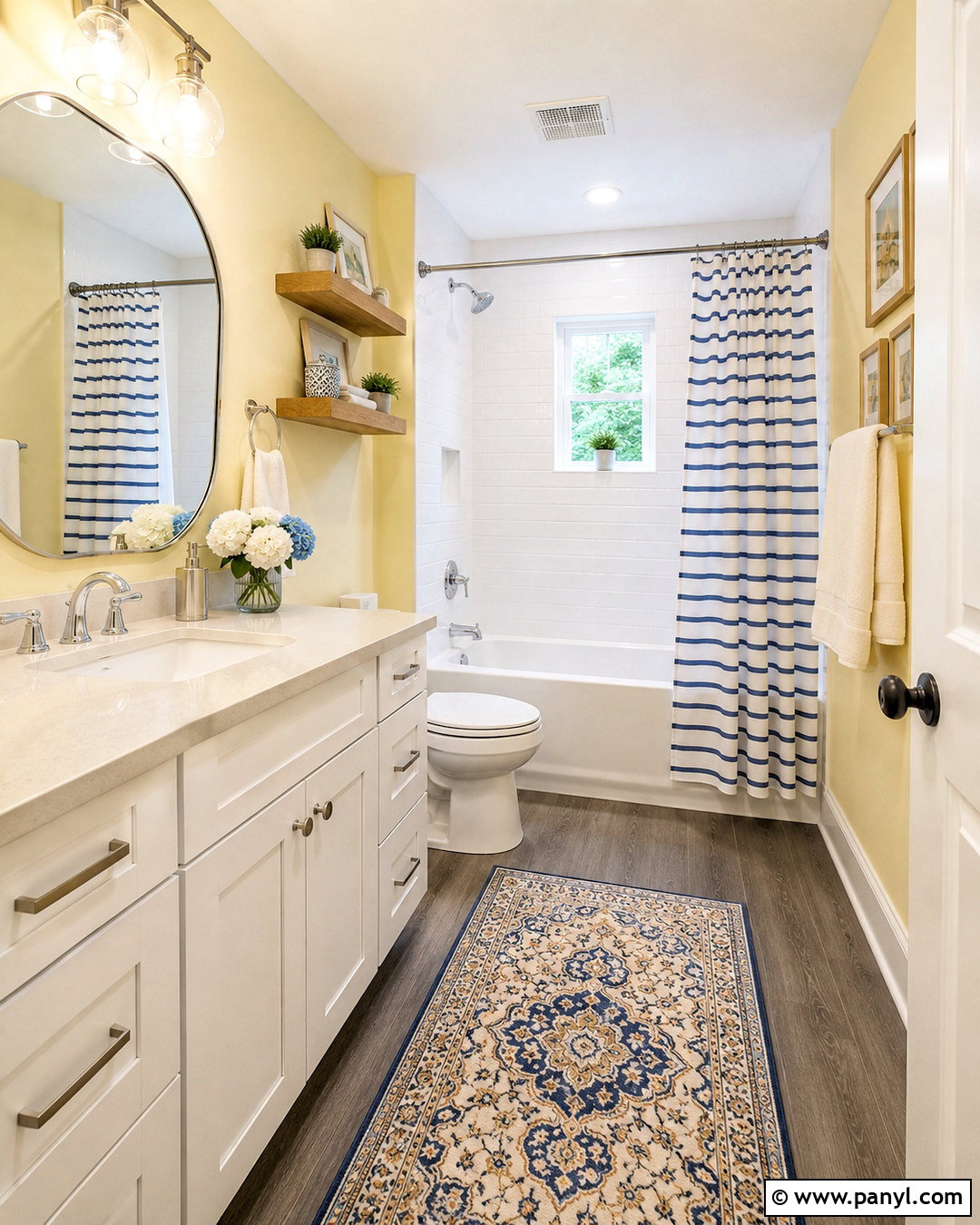
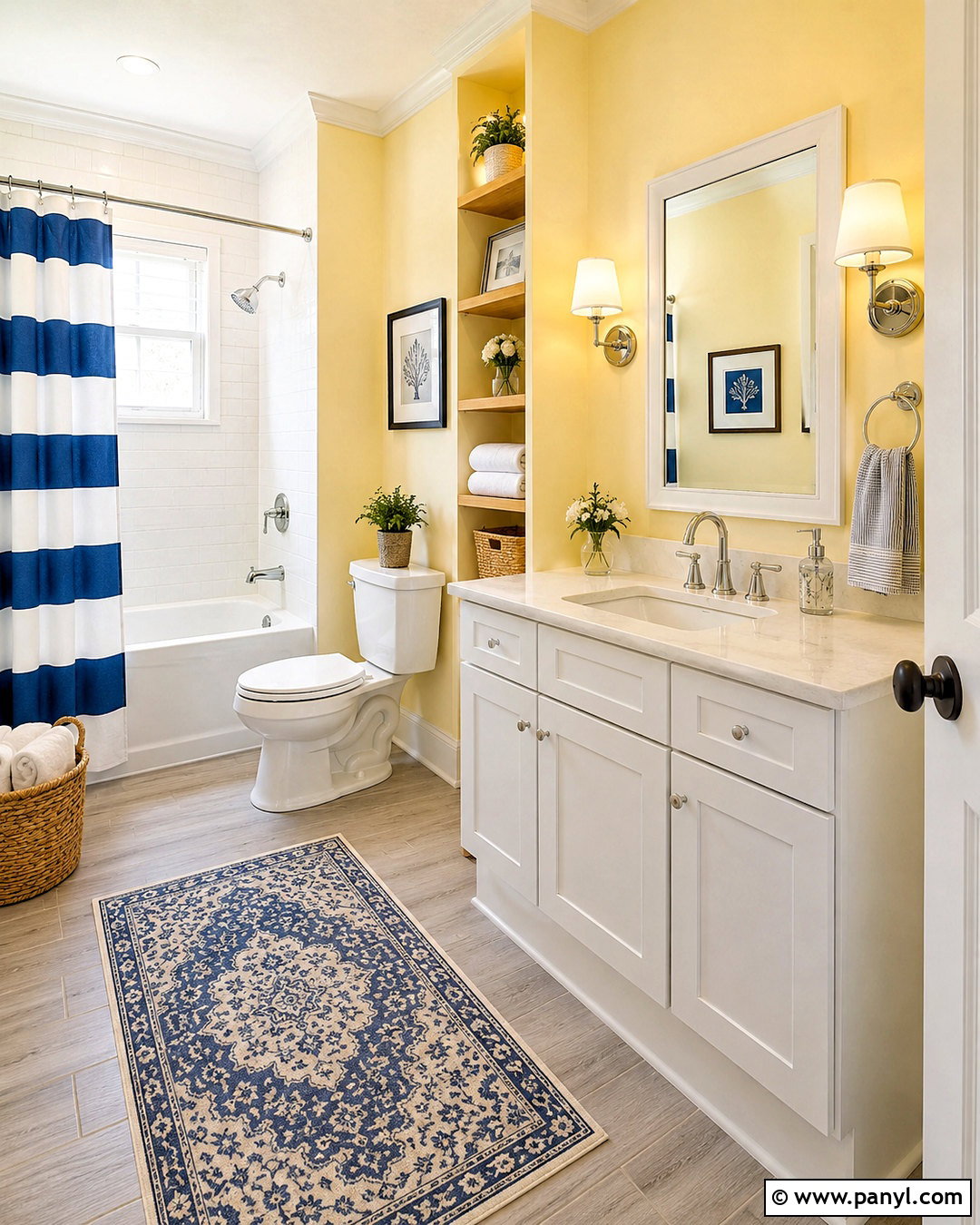
Butter yellow gives a bathroom a sunny, cheerful appearance without the intensity of a bright primary yellow. Choose a pale shade with creamy undertones and combine it with white cabinetry, white tile, and warm gray flooring. Polished chrome fixtures keep the scheme looking fresh, while natural oak shelves add warmth and practical storage. A blue-and-white striped shower curtain or small patterned rug provides a restrained complementary accent. Keep the trim clean white so the yellow remains clear around doors and windows. This color is a helpful option for a bathroom that receives weak daylight or faces a shaded side of the house. The complete room should feel bright and comfortable, supported by simple fixtures, reflective surfaces, and enough neutral elements to balance the cheerful wall color.
19. Soft Peach Bathroom Walls
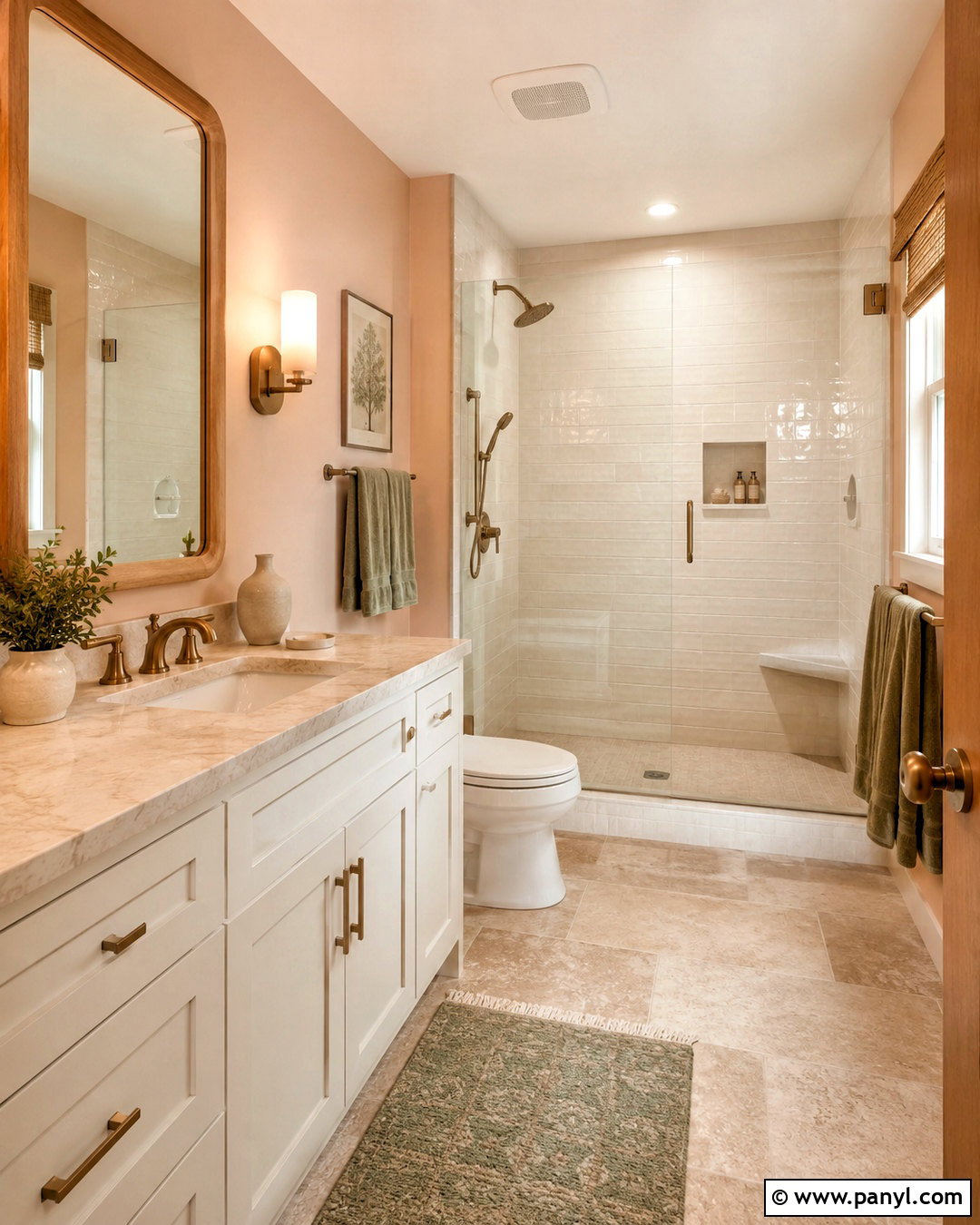
Soft peach surrounds a bathroom with warmth while remaining lighter and easier to coordinate than orange. Select a pale, muted peach and pair it with an ivory vanity, cream countertop, and travertine-look floor. Champagne bronze fixtures complement the wall color, while a light oak mirror adds natural texture. Use warm white shower tile with matching grout for a quiet background. Sage green towels or a small green-gray rug provide gentle contrast and prevent the palette from becoming too warm. A woven shade and ceramic accessories complete the relaxed look. This color works well in bathrooms with warm artificial light, but sampling remains important because peach undertones can intensify after sunset. The final design should feel fresh, softly sunlit, and comfortably layered rather than overly colorful.
20. Muted Terracotta Bathroom Walls
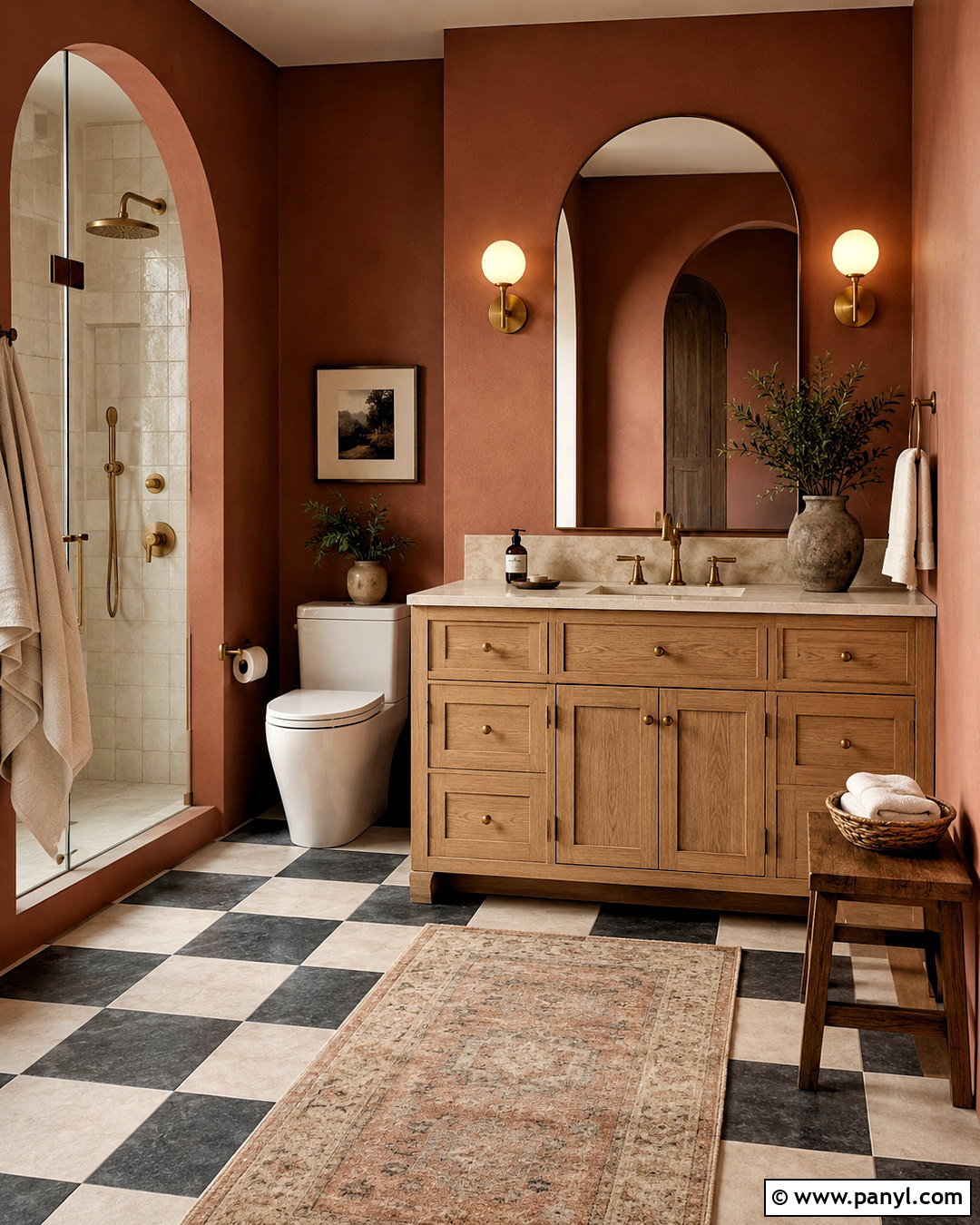
Muted terracotta creates an earthy, memorable bathroom inspired by clay and sun-warmed stone. Choose a softened reddish-brown rather than a vivid orange, then pair it with a white oak vanity and creamy limestone countertop. Brushed brass fixtures support the warm palette, while ivory shower tile provides essential brightness. Use charcoal floor tile or a black-and-cream checkerboard pattern to ground the color. A large arched mirror and simple globe sconces bring balance to the saturated walls. Keep towels cream, tan, or muted olive and avoid filling the room with additional orange accents. Terracotta works especially well in a powder room or bathroom with Southwestern, Mediterranean, or organic modern influences. The completed space feels warm and expressive while still featuring practical, neutral permanent finishes.
Conclusion:
The best bathroom color creates a clear connection between the walls, tile, vanity, flooring, fixtures, and lighting. Warm whites and greiges offer flexibility, while sage, dusty blue, and seafoam establish a soothing spa atmosphere. Navy, charcoal, olive, and teal deliver drama when balanced with pale surfaces and strong lighting. Warmer choices such as blush, peach, and terracotta make the room feel welcoming and distinctive. Before painting, place large samples beside the countertop and tile, then check them at several times of day. Also choose a durable, washable product appropriate for humid rooms. With thoughtful testing and a coordinated design plan, these **20 paint colors for bathroom walls** can inspire a polished bathroom at any size or budget.

Related Ideas and Inspiration:
Leave a Reply